EP2045776B1 - Erroneous erasure determination apparatus, method and computer program product for an image file - Google Patents
Erroneous erasure determination apparatus, method and computer program product for an image file Download PDFInfo
- Publication number
- EP2045776B1 EP2045776B1 EP08253225.0A EP08253225A EP2045776B1 EP 2045776 B1 EP2045776 B1 EP 2045776B1 EP 08253225 A EP08253225 A EP 08253225A EP 2045776 B1 EP2045776 B1 EP 2045776B1
- Authority
- EP
- European Patent Office
- Prior art keywords
- image data
- image file
- recorded
- image
- erroneous erasure
- Prior art date
- Legal status (The legal status is an assumption and is not a legal conclusion. Google has not performed a legal analysis and makes no representation as to the accuracy of the status listed.)
- Not-in-force
Links
Images



Classifications
-
- H—ELECTRICITY
- H04—ELECTRIC COMMUNICATION TECHNIQUE
- H04N—PICTORIAL COMMUNICATION, e.g. TELEVISION
- H04N5/00—Details of television systems
- H04N5/222—Studio circuitry; Studio devices; Studio equipment
- H04N5/262—Studio circuits, e.g. for mixing, switching-over, change of character of image, other special effects ; Cameras specially adapted for the electronic generation of special effects
- H04N5/265—Mixing
-
- G—PHYSICS
- G06—COMPUTING OR CALCULATING; COUNTING
- G06T—IMAGE DATA PROCESSING OR GENERATION, IN GENERAL
- G06T11/00—Two-dimensional [2D] image generation
-
- G—PHYSICS
- G11—INFORMATION STORAGE
- G11B—INFORMATION STORAGE BASED ON RELATIVE MOVEMENT BETWEEN RECORD CARRIER AND TRANSDUCER
- G11B27/00—Editing; Indexing; Addressing; Timing or synchronising; Monitoring; Measuring tape travel
- G11B27/36—Monitoring, i.e. supervising the progress of recording or reproducing
-
- H—ELECTRICITY
- H04—ELECTRIC COMMUNICATION TECHNIQUE
- H04N—PICTORIAL COMMUNICATION, e.g. TELEVISION
- H04N1/00—Scanning, transmission or reproduction of documents or the like, e.g. facsimile transmission; Details thereof
- H04N1/32—Circuits or arrangements for control or supervision between transmitter and receiver or between image input and image output device, e.g. between a still-image camera and its memory or between a still-image camera and a printer device
- H04N1/32101—Display, printing, storage or transmission of additional information, e.g. ID code, date and time or title
- H04N1/32128—Display, printing, storage or transmission of additional information, e.g. ID code, date and time or title attached to the image data, e.g. file header, transmitted message header, information on the same page or in the same computer file as the image
-
- H—ELECTRICITY
- H04—ELECTRIC COMMUNICATION TECHNIQUE
- H04N—PICTORIAL COMMUNICATION, e.g. TELEVISION
- H04N13/00—Stereoscopic video systems; Multi-view video systems; Details thereof
-
- H—ELECTRICITY
- H04—ELECTRIC COMMUNICATION TECHNIQUE
- H04N—PICTORIAL COMMUNICATION, e.g. TELEVISION
- H04N5/00—Details of television systems
- H04N5/222—Studio circuitry; Studio devices; Studio equipment
- H04N5/262—Studio circuits, e.g. for mixing, switching-over, change of character of image, other special effects ; Cameras specially adapted for the electronic generation of special effects
-
- G—PHYSICS
- G06—COMPUTING OR CALCULATING; COUNTING
- G06T—IMAGE DATA PROCESSING OR GENERATION, IN GENERAL
- G06T2210/00—Indexing scheme for image generation or computer graphics
- G06T2210/32—Image data format
-
- H—ELECTRICITY
- H04—ELECTRIC COMMUNICATION TECHNIQUE
- H04N—PICTORIAL COMMUNICATION, e.g. TELEVISION
- H04N2101/00—Still video cameras
-
- H—ELECTRICITY
- H04—ELECTRIC COMMUNICATION TECHNIQUE
- H04N—PICTORIAL COMMUNICATION, e.g. TELEVISION
- H04N2201/00—Indexing scheme relating to scanning, transmission or reproduction of documents or the like, and to details thereof
- H04N2201/32—Circuits or arrangements for control or supervision between transmitter and receiver or between image input and image output device, e.g. between a still-image camera and its memory or between a still-image camera and a printer device
- H04N2201/3201—Display, printing, storage or transmission of additional information, e.g. ID code, date and time or title
- H04N2201/3225—Display, printing, storage or transmission of additional information, e.g. ID code, date and time or title of data relating to an image, a page or a document
- H04N2201/3247—Data linking a set of images to one another, e.g. sequence, burst or continuous capture mode
-
- H—ELECTRICITY
- H04—ELECTRIC COMMUNICATION TECHNIQUE
- H04N—PICTORIAL COMMUNICATION, e.g. TELEVISION
- H04N2201/00—Indexing scheme relating to scanning, transmission or reproduction of documents or the like, and to details thereof
- H04N2201/32—Circuits or arrangements for control or supervision between transmitter and receiver or between image input and image output device, e.g. between a still-image camera and its memory or between a still-image camera and a printer device
- H04N2201/3201—Display, printing, storage or transmission of additional information, e.g. ID code, date and time or title
- H04N2201/3274—Storage or retrieval of prestored additional information
- H04N2201/3277—The additional information being stored in the same storage device as the image data
Definitions
- the present invention relates to an erroneous erasure determination apparatus, method, and computer program product for determining the likelihood of erroneous erasure of image data In an image file.
- Japanese Unexamined Patent Publication No. 2006-013759 proposes a method for generating a stereoscopic image file by storing two Image data (left image data and right image data) that form a stereoscopically viewable image with an identifier for delimiting the image data.
- Japanese Unexamined Patent Publication No. 11(1999)-266420 proposes a method for combining and recording a serially photographed plurality of image data as a single compressed continuous still image file.
- US 2005/0243187 and JP 2006-013759 are concerned with file formats for image data, and disclose multi-image file formats, such as files storing two Images for stereoscopic display.
- US 2006/0195486 is concerned with determining whether there are Inconsistencies between a content file (in which images are stored) and an index file (in which information about the images is stored), and in particular an inconsistency between the number of images actually present In the content file and the number recorded in the index file as the number of images present.
- an erroneous erasure determination apparatus for determining the likelihood of erroneous erasure of one or more pages of image data in an image file, comprising an erroneous erasure determination means for determining whether or not one or more pages of image data recorded in an image file are likely to have been erroneously erased based on auxiliary information attached thereto which indicates whether or not the image file is recorded in a multi-page format, and information which indicates the number of pages of image data recorded in the image file; wherein the erroneous erasure determination means includes a format judging unit that judges whether or not the image file is a file recorded in the multi-page format based on the auxiliary information, and an image data count judging unit that judges whether or not two or more pages of image data are recorded in the image file, and determines that one or more pages of image data in the image file are likely to have been erroneously erased when the image file is judged by the format judging unit as recorded
- the image data count judging unit may be a unit that judges whether or not two or more image data sets are recorded in the image file judged by the format judging unit as recorded in the format in which a plurality of image data sets are recorded In one image file.
- image data sets in the context of "two or more image data sets are recorded” means image data recorded as principal data and does not include the other image data, such as the image data of a thumbnail image and the like.
- the auxiliary information is recorded at a known position of the header of the image file.
- the format in which a plurality of image data sets are recorded in one image file may be a recording format in which a plurality of image data sets are recorded in a single image file delimited by a specific identifier between each image data set; and the image data count judging unit may be a unit that judges whether or not two or more image data sets are recorded in the image file based on whether or not one or more image data sets are present following the specific identifier first appearing in the image file.
- the erroneous erasure determination means may be a means that, when it has determined that erroneous erasure of one or more image data sets is likely to have occurred, outputs the determination result.
- the apparatus described above may further include a display means
- the erroneous erasure determination means may be a means that, when it has determined that the erroneous erasure of one or more image data sets is likely to have occurred, outputs the determination result that erroneous erasure is likely to have occurred to the display means to cause the display means to display that one or more image data sets are ,likely to have been erroneously erased.
- the specific identifier may be an EOI marker.
- an erroneous erasure determination method for determining the likelihood of erroneous erasure of one or more pages of image data in an image file, comprising the steps of: determining whether or not the image file is recorded in a multi-page format, based on auxiliary information attached thereto which indicates whether or not the image file is recorded in a multi-page format; judging whether or not multiple pages of image data are recorded in the image file, based on information which indicates the number of pages of image data recorded in the image file; determining that one or more pages of Image data in an image file are likely to have been erroneously erased, when an image file is determined to be recorded in a multi-page format and it is judged that multiple pages of image data are not recorded in the image file; and, when it is determined that erroneous erasure is likely to have occurred. attaching auxiliary information to the image file indicating that erroneous erasure of one or more pages of image data is likely to have occurred in
- a computer readable recording medium on which a program for determining the likelihood of erroneous erasure of one or more pages of image data in an image file is recorded, the program causing a computer to perform the steps of: determining whether or not the image file is recorded in a multi-page format, based on auxiliary information attached thereto which indicates whether or not the image file is recorded in a multi-page format; judging whether or not multiple pages of image data are recorded in the image file, based on information which indicates the number of pages of image data recorded in the image file; and determining that one or more pages of image data in an image file are likely to have been erroneously erased, when an image file is determined to be recorded in a multi-page format and it is judged that multiple pages of image data are not recorded in the image file; and, when it is determined that erroneous erasure is likely to have occurred, attaching auxiliary information to the image file indicating that erroneous erasure of one
- the known position may be a portion of the image unique ID tag area of a format standard Exif.
- the likelihood of erroneous erasure of image data in an image file may be determined by determining whether or not image data in the image file are likely to have been erroneously erased based on auxiliary information attached thereto which indicates whether or not the image file is recorded in a multi-page format, and Information which indicates the number of image data recorded in the image file.
- the determination result may be outputted to a display means to cause the display means to display that image data are likely to have been erroneously erased, or auxiliary information may be attached to the image file indicating that erroneous erasure of image data is likely to have occurred in the image file, thereby the management capability for image data In an image file recorded in the multi-page format may be improved.
- Figure 1 is a schematic block diagram of a camera system 1 to which the erroneous erasure determination apparatus of the present invention are applied, illustrating a configuration thereof.
- the camera system 1 includes two imaging units 21A, 21B, an imaging control unit 22, an image processing unit 23, a compression/expansion processing unit 24, a frame memory 25, a media control unit 26, an internal memory 27, a display control unit 28, and the like, which send and receive various signals and data through a data bus 35.
- the imaging units 21A, 21 B include lenses 10A, 10B, apertures 11A, 11B, shutters 12A, 12B, CCDs 13A, 13B, analogue front ends (AFEs) 14A, 14B, and A/D conversion units 15A, 15B respectively.
- Each of the lenses 10A, 10B includes a plurality of lenses having different functions, such as a focus lens for bringing a subject into focus, a zoom lens for realizing a zoom function, and the like, and their positions are controlled by not shown lens drive units.
- the aperture diameter of each of the aperture units 11A, 11B is controlled by a not shown aperture drive unit based on aperture value data obtained through AE processing.
- Each of the shutters 12A, 12B is a mechanical shutter and is driven by a not shown shutter drive unit according to the shutter speed obtained through AF processing.
- Each of the CCDs 13A, 13B has a photoelectric surface which includes multitudes of light receiving elements arranged two-dimensionally on which subject light is focused and photoelectrically converted, thereby an analogue imaging signal is obtained.
- the AFEs 14A, 14B perform noise elimination processing and gain control processing (collectively referred to as analogue processing) on the analogue imaging signals outputted from the CCDs 13A, 13B respectively.
- the A/D conversion units 15A, 15B convert the analogue imaging signals analogue-processed by the AFEs 14A, 14B to' digital signals respectively.
- the imaging control unit 22 includes an AF processing unit and an AE processing unit. Where the focus is under adjustable conditions, the AF processing unit determines the positions of the focus lenses of the lenses 10A, 10B based on pre-images obtained by the imaging units 21A, 21B through a halfway depression of the release button, and outputs the determined positions to the imaging units 21A, 21B. The AE processing unit determines aperture values and shutter speeds based on the pre-images, and outputs the determined values to the imaging units 21A, 21B.
- the image processing unit 23 performs image processing, such as white balance control, tone correction, sharpness correction, colour correction, YC conversion, and the like, on image data obtained by the imaging units 21A, 21B.
- the compression/expansion processing unit 24 performs compression processing on the image data processed by the image processing unit 23 in a compression format such as JPEG, and outputs the compressed image data to the frame memory 25.
- the frame memory 25 is a work memory used when various types of processing, including the processing performed by the image processing unit, are performed on the image data obtained by the imaging units 21A, 21B.
- the media control unit 26 accesses a recording medium 29 to perform read/write control of an image file.
- the internal memory 27 has stored therein various constants to be set in the camera system 1, programs to be executed by a CPU 32, and the like.
- the display control unit 28 is provided for causing image data stored in the frame memory 25 or image data recorded in the recording medium 29 to be displayed on a monitor 20.
- the display control unit 28 and monitor 20 constitute a display means.
- An operation unit (photographing mode setting means) 33 includes a release button, an operation mode switch, a menu/OK button, a zoom/up-down lever, a left-right button, a back button, display switching button, and the like provided on the body of the camera system 1, and constitutes an input means that allows the user to perform various setting operations.
- the user may select a photographing mode for photographing performed by the imaging units 21A, 21B by operating the operation unit 33. Further, switching of the operation mode switch allows selection of a recording mode (photographing mode) or a reproduction mode.
- the photographing mode includes normal mode, action mode, bracket mode, panorama mode, stereoscopic mode, multiview image mode, and the like.
- Normal mode is a mode in which single image data (image data of one image) are obtained by depressing the release button.
- Action mode is a mode in which photographing is performed continuously while the release button is depressed to obtain a plurality of image data.
- Bracket mode is a mode in which photographing is performed continuously while various setting values, including the exposure, white balance, focus position, and the like are changed according to predetermined conditions to obtain a plurality of image data.
- Panorama mode is a mode in which photographing is performed repeatedly while moving the camera system 1 in up-down directions or left-right directions within a range desired to be obtained as a panorama image to obtain a plurality of image data.
- Stereoscopic mode is a mode in which the same subject is photographed from different angles to obtain two image data stereoscopically viewable with the help of parallax.
- the same subject is photographed using the imaging units 21A, 21B disposed spaced apart to each other or using either one of them by photographing the subject a plurality of times while changing the position of the imaging unit.
- Multiview Image Mode is a mode in which the same subject is photographed from various angles to obtain a plurality of image data for building motion capture, obtaining sport event data, and the like.
- the CPU 32 controls each unit of the camera system 1 in response to signals from the operation unit 33 and each processing unit.
- the CPU 32 receives the setting of photographing mode from the operation unit 33, and stores the setting result in the internal memory.
- the CPU 32 further identifies two or more image data obtained by either one of the imaging unit 21A, 21B or by both in either one of action mode, bracket mode, panorama mode, stereoscopic mode, and multiview image mode as the image data desired to be recorded in a multi-page format.
- the CPU 32 causes various processing, such as image processing, compression processing, and the like, to be performed on the identified two or more image data and the processed two or more image data to be recorded in the multi-page format as a single image file, which is then stored in the recording medium 29 through the media control unit 26.
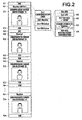
- Figure 2 illustrates an example structure of an image file recorded in the multi-page format.
- a header (APPx, application marker segment) H1 is recorded immediately after an SOI marker that indicates the start of the file.
- the header (APPx) H1 includes Exif identification code, Tiff Header, and auxiliary information (0th IFD/Value, 1st IFD/Value).
- 0th IFD/Value includes 0th IFD, Exif IFD, MP file management information and the like, and auxiliary information related to a compressed image is recorded therein.
- a code indicating the standard version of the file for example, "0230" is recorded in an Exif Version tag area 61 of the Exif IFD
- a code indicating that the file is recorded in multi-page format for example, "E3" is recorded in the first two bytes of an image unique ID tag area 62 of the Exif IFD.
- MP multi-page format
- n image data identified as the image data desired to be recorded in the multi-page format are recorded following the header (APPx) H1 delimited by a specific identifier, such as an EOI marker or the like, between each image.
- An EOI marker E1 is recorded immediately after the front image data (first image data) D1, then a SOI marker S2, a header H2, a second image data D2, an EOI marker E2, a SOI marker S3, header H3, a third image data D3, an EOI marker E3, -----, a SOI marker Sn, header Hn, an nth image data Dn, and an EOI marker En are recorded sequentially.
- the recording position of the auxiliary information indicating whether or not the image file is recorded in multi-page format is not limited to the image unique ID tag area, and the information may be recorded at any other arbitrarily determined position as long as it is a known position of the header recognizable by an image reader device that reads in the image file and performs processing thereon, such as reproduction and editing processing.
- the CPU 32 causes various processing, such as image processing, compression processing, and the like to be performed on single image data obtained by photographing with either one of the imaging units 21A, 21B in the normal mode and the processed image data to be recorded in the normal format, in which single image data are recorded in a single image file, to generate a single image file, which is then stored in the recording medium 29 through the media control unit 26.
- various processing such as image processing, compression processing, and the like to be performed on single image data obtained by photographing with either one of the imaging units 21A, 21B in the normal mode and the processed image data to be recorded in the normal format, in which single image data are recorded in a single image file, to generate a single image file, which is then stored in the recording medium 29 through the media control unit 26.
- Figure 3 illustrates an example structure of an image file recorded in the normal format.
- the structure of the image file recorded in the normal format shown in Figure 3 differs from the structure of the image file recorded in the multi-page format shown in Figure 2 in that a code representing that the file is not recorded in the multi-page format, that is, a code which is different from the code representing that the file is recorded in the multi-page format, for example, "AD" is recorded in the first two bytes of the image unique ID tag area 62 of the Exif IFD, and it does not have the tag area of the multi-page format (MP) file management information 64 shown in Figure 2 .
- single image data DB and an EOI marker EB are recorded following the header (APPx) HB.
- a plurality of image data may be read out from the external recording medium 29 and deployed in the frame memory 25.
- two or more image data may be identified as the image data desired to be recorded in the multi-page format from the deployed image data by the CPU 32 based on the date and time information or subject distance information attached to each image data, or an evaluation result of correlation between the image data, and the identified image data may be recorded in the multi-page format as a single image file as shown in Figure 2 .
- the processing for identifying two or more image data desired to be recorded in multi-page format based on the date and time information of the image data is processing performed by the CPU 32 in which the date and time information attached to each image data is referenced and, for example, two or more image data having a time interval between the dates and times which falls within a predetermined time range are assumed to be highly related image data to each other and identified as image data desired to be recorded in the multi-page format.
- two or more highly related image data may be identified based on each type of tag information of imaging conditions, such as subject distance, subject position, subject type, and the like attached to each image data, as well as the date and time information, and so identified images may be determined as the image data desired to be recorded in the multi-page format.
- the processing for identifying two or more image data desired to be recorded in the multi-page format based on the evaluation result of correlation between the image data is processing performed by the CPU 32 in which image characteristics, such as colour distribution, luminance distribution, shape extraction result (face extraction result, or the like), and the like are obtained from each image data, then a correlation between the image data is calculated with respect to each of the image characteristics, and two or more image data having evaluation values obtained by comprehensively evaluating the calculated correlations greater than a predetermined threshold value are assumed to be highly related image data to each other and identified as the image data desired to be recorded in multi-page format.
- image characteristics such as colour distribution, luminance distribution, shape extraction result (face extraction result, or the like), and the like
- the CPU 32 determines the operation mode of the camera system 1, and if it is determined to be the reproduction mode, an image file is read out from the external recording medium 29 and deployed in the frame memory 25. Next, a determination is made as to whether or not image data in the image file is likely to have been erroneously erased and if not, the image data of the image file recorded in the frame memory 25 are expanded by the compression/ expansion processing unit 24 and displayed on the monitor 20 through the display control unit 28.
- the front image data of the image file recorded in the frame memory 25 are expanded by the compression/expansion processing unit 24 and displayed on the monitor 20 through the display control unit 28, and the determination result that erroneous erasure is likely to have occurred is outputted to the display control unit 24 to display a message on the monitor 20 indicating that image data are likely to have been erroneously erased.
- a message 71 like "The file is likely to be a damaged MP file" is displayed on the screen 70 of the monitor 20 together with the front image.
- auxiliary information is attached to the image file indicating that erroneous erasure of image data is likely to have occurred in the image file, together with or without the display described above.
- an error code representing the likelihood of erroneous erasure of image data in the image file for example, "ER” may be recorded in the first two bytes of the image unique ID tag area 62 of the Exif IFD.
- an error information comment indicating that erroneous erasure of image data is likely to have occurred in the image file for example, "(MP file error)" may be additionally recorded in the beginning of the existing user comment of user comment tag area 63 which is a tag provided for the user for writing a key word or a comment for the image file.
- auxiliary information indicating that erroneous erasure of image data is likely to have occurred in an image file is attached to the image file by the illustrated methods described above, the likelihood of erroneous erasure of image data may be easily recognized by referring to the auxiliary information, thereby image data management capability may be improved.
- image data recorded following the front image data may possibly be erroneously erased.
- a code indicating that the file is recorded in the multi-page format for example, "E3" is recorded in the first two bytes of the image unique ID tag area 62 of the Exif IFD, but, for example, the file includes only single image data as shown in Figure 4 .
- the CPU 32 performs format judgment processing for judging whether or not the image file is recorded in the multi-page format and image data count judgment processing for judging whether or not two or more image data are recorded. Then, the CPU 32 determines that image data in the image file are likely to have been erroneously erased if the image file is judged as recorded in the multi-page format and judged that two or more image data are not recorded.
- the code recorded in the first two bytes of the image unique ID tag area of the Exif IFD that is, auxiliary information indicating whether or not the image file is recorded in the multi-page format is referenced to determine whether or not the image file is recorded in the multi-page format. More specifically, if "E3" which is defined as the code indicating that the image file is recorded in the multi-page format is recorded in the first two bytes of the image unique ID tag area of the Exif IFD, the image file is judged as recorded in the multi-page format, and if a code different from "E3" is recorded, the image file is judged as recorded in the normal format in which single image data are recorded in a single image file.
- the multi-page format is of a type that records a plurality of image data in a single image file by delimiting each image data by a specific identifier, such as an EOI marker or the like
- a judgment as to whether or not two or more image data are recorded in the image file is made based on whether or not image data are present following the specific identifier, such as the EOI marker or the like, first appearing in the image file.
- the CPU 32 may perform the format judgment processing and image data count judgment processing on all target image files for determining the likelihood of erroneous erasure of image data and determine the likelihood of erroneous erasure based on both of the results. Alternatively, the CPU 32 may perform either one of the format judgment processing and image data count judgment processing first, and then the other processing is performed only when it is determined necessary based on the determination result in order to determine the likelihood of erroneous erasure, and may determine the likelihood of erroneous erasure based on these determination results.
- the format judgment processing is performed first, and if the image file is judged as recorded in the normal format in which single image data are recorded in a single image file, it is determined that image data in the image file are not likely to have been erroneously erased, while if the image file is judged as recorded in the multi-page format, the image data count judgment processing is further performed.
- the image data count judgment processing if it is judged that two or more image data are recorded, it may be determined that image data in the image file are not likely to have been erroneously erased, while if it is judged that two or more image data are not recorded, it may be determined that image data in the image file are likely to have been erroneously erased.
- the image data count judgment processing may be performed first, and then the format judgment processing is further performed only when it is judged that two or more image data are not recorded. Then, if the image file is judged as recorded in the multi-page format, a determination may be made that image data in the image file are likely to have been erroneously erased.
- step ST1 the user operates the operation unit 33 to select the photographing mode of the camera system 1 (step ST1). Then, the selection information of the photographing mode is received by the CPU 32 from the operation unit 33, and a determination is made as to whether or not the selected photographing mode is one of the action mode, bracket mode, panorama mode, stereoscopic mode, and multiview image mode (step ST2). If step ST2 is positive, the mode flag of multi-page format (MP) is set to TRUE and stored in the internal memory 27 (step ST3). On the other hand, if step ST2 is negative, the mode flag of multi-page format (MP) is set to FALSE and stored in the internal memory 27 (step ST4).
- step ST2 the mode flag of multi-page format (MP) is set to TRUE and stored in the internal memory 27 (step ST3).
- step ST4 the mode flag of multi-page format (MP) is set to FALSE and stored in the internal memory 27 (step ST4).
- step ST5 photographing is performed by either one of the imaging units 21A, 21B or by both according to the selected photographing mode in step ST1, and image data obtained by the photographing are stored in the frame memory 25 after various processing, including compression, is performed thereon (step ST5).
- common header information is generated by the CPU 32 regardless of whether or not the mode flag of the multi-page format (MP) is TRUE when generating an image file (step ST6).
- step ST7 a determination is made as to whether or not the mode flag of the multi-page format (MP) is TRUE (step ST7).
- step ST7 If the step ST7 is positive, a code representing that the image file is recorded in the multi-page format is recorded in the first two bytes of an image unique ID tag area of the Exif IFD, and MP management information is recorded to generate the header of the image file (step ST8). Then, an image file in the multi-page format is generated by reading out the two or more image data recorded in the frame memory 25 in step ST5 and recording the readout two or more image data following the header generated in step ST8 delimited by a specific identifier, such as an EOI marker or the like, between each image data (step ST9), which is then stored in the recording medium 29 through the media control unit 26.
- a specific identifier such as an EOI marker or the like
- step ST7 a code representing that the image file is not recorded in the multi-page format, that is, a code which is different from the code representing that the file is recorded in the multi-page format is recorded in the first two bytes of the image unique ID tag area of the Exif IFD to generate the header of the image file (step ST10).
- an image file in the normal format is generated by reading out the single image data recorded in the frame memory 25 in step ST5 and recording the readout single image data following the header generated in step ST10 (step ST11), which is then stored in the recording medium 29 through the media control unit 26.
- an example erroneous erasure determination process (image file reproduction process) performed by the camera system 1 will be described with reference to Figure 8 .
- an image file is read out from the external recording medium 29 and deployed in the frame memory 25 by the CPU 32 (step ST21).
- the header information of the image file deployed in the frame memory 25 is obtained (step ST22), and a determination is made as to whether or not the Exif Version tag value recorded in the Exif Version tag area of the header is greater than or equal to "0230" (step ST23). If step ST23 is negative, it is determined that image data in the image file are not likely to have been erroneously erased, and the process is terminated.
- step ST23 a determination is made as to whether or not the image unique ID tag is present in the header of the image file (step ST24). If the step ST24 is negative, it is determined that image data in the image file are not likely to have been erroneously erased and the process is terminated.
- step ST24 a determination is made as to whether or not the file is recorded in the multi-page format by referring to the code recorded in the first two bytes of the image unique ID tag area, that is, the auxiliary information indicating whether or not the image file is recorded in the multi-page format (step ST25). If step ST25 is negative, it is determined that image data in the image file are not likely to have been erroneously erased and the process is terminated. If step ST25 is positive, a determination is made as to whether or not image data are recorded following the specific identifier, such as an EOI marker or the like, first appearing in the image file (step ST26). If step ST26 is positive, it is determined that image data in the image file are not likely to have been erroneously erased (step ST26) and the process is terminated.
- step ST26 a determination is made as to whether or not image data are recorded following the specific identifier, such as an EOI marker or the like, first appearing in the image file (step ST26). If step ST26 is
- step ST26 it is determined that image data in the image file are likely to have been erroneously erased, and the front image data of the image file recorded in the frame memory 25 are expanded by the compression/expansion processing unit 24 and displayed on the monitor 20 through the display control unit 28, and at the same time the determination result that erroneous erasure is likely to have occurred is outputted to the display control unit 28 to display a message on the monitor 20 indicating that image data are likely to have been erroneously erased (step ST27).
- step ST31 an image file is read out from the external recording medium 29 and deployed in the frame memory 25 by the CPU 32 (step ST31). Then, the data in the image file deployed in the frame memory 25 are scanned sequentially from the front data to obtain the appearance order of JPEG markers (step ST32), in order to determine whether or not there is one or more locations where an EOI marker is followed by an SOI marker (step ST33). If step ST33 is positive, it is determined that image data in the image file are not likely to have been erroneously erased, and the process is terminated.
- step ST34 a determination is made as to whether or not the Exif Version tag value recorded in the Exif Version tag area of the header is greater than or equal to "0230" (step ST34). If step ST34 is negative, it is determined that image data in the image file are not likely to have been erroneously erased, and the process is terminated. On the other hand, if step ST34 is positive, a determination is made as to whether or not the image unique ID tag is present in the header of the image file (step ST35). If step ST35 is negative, it is determined that image data in the image file are not likely to have been erroneously erased, and the process is terminated.
- step ST35 a judgment is made as to whether or not the file is recorded in the multi-page format by referring to the code recorded in the first two bytes of the image unique ID tag area, that is, the auxiliary information indicating whether or not the image file is recorded in the multi-page format (step ST36). If step ST36 is negative, it is determined that image data in the image file are not likely to have been erroneously erased, and the process is terminated.
- step ST36 it is determined that image data in the image file are likely to have been erroneously erased, and the front image data of the image file recorded in the frame memory 25 are expanded by the compression/expansion processing unit 24 and displayed on the monitor 20 through the display control unit 28, and at the same time the determination result that erroneous erasure is likely to have occurred is outputted to the display control unit 28 to display a message on the monitor 20 indicating that image data are likely to have been erroneously erased (step ST37).
- the erroneous erasure determination apparatus of the present invention may also be realized by executing the erroneous erasure determination program read in an auxiliary storage device on a computer (e.g., personal computer).
- the erroneous erasure determination program is stored in information recording media, or distributed through a network, such as the internet, and installed on the computer.
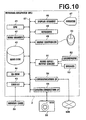
- FIG. 10 is a schematic block diagram of the personal computer 2, illustrating a configuration thereof.
- the personal computer 2 includes a CPU 41, a main memory 42, a hard disk 43, a card I/F 45, a display memory 46, a keyboard 48, a mouse controller 49, an audio input/output circuit 51, a communication I/F 54, and a camera connection I/F 55, and the like, which send and receive various signals and data through a data bus 57.
- a CD-ROM 44 has stored therein various programs executed by the CPU 41, including the erroneous erasure determination program according to the present invention.
- the CPU 41 controls each unit of the personal computer, 2 by the programs stored in the CD-ROM 44.
- Image file generation processing performed by the CPU 41 by controlling each unit of the personal computer 2 using an Image file generation program stored in the CD-ROM 44 will be described.
- a plurality of image data are read out from an external camera system 58 through the camera connection I/F 55 or from an external memory card 59 through the card I/F 45 and deployed in the main memory 42.
- two or more image data assumed to have a high relation to each other are identified as the image data desired to be recorded in the multi-page format from the image data deployed in the main memory 42 based on the date and time information attached to each image data and evaluation result of correlation between the image data and, as in the image file generation processing in the camera system 1 described above, a single image file in which the identified image data are recorded in the multi-page format shown in Figure 2 is generated, and the generated image file is stored in the main memory 42 or in the external memory card 59 through the card I/F 45.
- An image file is read out from an external camera system 58 through the camera connection I/F 55 or from an external memory card 59 through the card I/F 45 and deployed in the main memory 42.
- E3 which is defined as the code representing that the image file is recorded in the multi-page format is recorded in the first two bytes of the image unique ID tag area of the Exif IFD of the image file deployed in the main memory 42
- processing for judging whether or not two or more image data are recorded in the image file by judging whether or not image data are present following a specific identifier, such as the EOI marker or the like, first appearing in the image file are performed.
- the determination result that erroneous erasure is likely to have occurred is outputted to the display memory 46 to display a message, for example like that shown in Figure 5 , on the monitor 47 indicating that image data are likely to have been erroneously erased.
- auxiliary information may be attached to the image file indicating that erroneous erasure of image data is likely to have occurred in the image file, together with or without the display described above in the manner, for example, as shown in Figure 6 .
- the present Invention is capable of determining whether or not two or more image data remain in multiview image data.
- the erroneous erasure determination apparatus of the present invention are applicable not only to a camera system and a personal computer but also to various types of apparatuses that record an Image file in the multi-page format, or reproduce and edit an image file recorded in the multi-page format.
- the apparatus is applicable to a medical image management system for recording, reproducing, and editing multitudes of image data obtained by medical imaging systems, such as CT, MRI, ultrasonograph, and the like, an image reproduction apparatus, such as a photo viewer, for reproducing an image recorded in a recording medium, an image server system that provides on-line album service through a network, such as the internet, and the like.
Landscapes
- Engineering & Computer Science (AREA)
- Multimedia (AREA)
- Signal Processing (AREA)
- Physics & Mathematics (AREA)
- General Physics & Mathematics (AREA)
- Theoretical Computer Science (AREA)
- General Engineering & Computer Science (AREA)
- Television Signal Processing For Recording (AREA)
- Information Retrieval, Db Structures And Fs Structures Therefor (AREA)
- Studio Devices (AREA)
- Processing Or Creating Images (AREA)
Priority Applications (1)
| Application Number | Priority Date | Filing Date | Title |
|---|---|---|---|
| EP09015581A EP2172904A1 (en) | 2007-10-03 | 2008-10-03 | Erroneous erasure determination apparatus, method and computer program product, and image file generation apparatus |
Applications Claiming Priority (1)
| Application Number | Priority Date | Filing Date | Title |
|---|---|---|---|
| JP2007259659 | 2007-10-03 |
Related Child Applications (1)
| Application Number | Title | Priority Date | Filing Date |
|---|---|---|---|
| EP09015581.3 Division-Into | 2009-12-16 |
Publications (3)
| Publication Number | Publication Date |
|---|---|
| EP2045776A2 EP2045776A2 (en) | 2009-04-08 |
| EP2045776A3 EP2045776A3 (en) | 2009-06-03 |
| EP2045776B1 true EP2045776B1 (en) | 2013-07-03 |
Family
ID=40202846
Family Applications (2)
| Application Number | Title | Priority Date | Filing Date |
|---|---|---|---|
| EP08253225.0A Not-in-force EP2045776B1 (en) | 2007-10-03 | 2008-10-03 | Erroneous erasure determination apparatus, method and computer program product for an image file |
| EP09015581A Withdrawn EP2172904A1 (en) | 2007-10-03 | 2008-10-03 | Erroneous erasure determination apparatus, method and computer program product, and image file generation apparatus |
Family Applications After (1)
| Application Number | Title | Priority Date | Filing Date |
|---|---|---|---|
| EP09015581A Withdrawn EP2172904A1 (en) | 2007-10-03 | 2008-10-03 | Erroneous erasure determination apparatus, method and computer program product, and image file generation apparatus |
Country Status (5)
| Country | Link |
|---|---|
| US (2) | US8139124B2 (https=) |
| EP (2) | EP2045776B1 (https=) |
| JP (2) | JP4672764B2 (https=) |
| KR (1) | KR101455126B1 (https=) |
| CN (1) | CN101404706A (https=) |
Families Citing this family (8)
| Publication number | Priority date | Publication date | Assignee | Title |
|---|---|---|---|---|
| US8271544B2 (en) * | 2009-05-01 | 2012-09-18 | Creative Technology Ltd | Data file having more than one mode of operation |
| JP2011015215A (ja) * | 2009-07-02 | 2011-01-20 | Canon Inc | 画像表示装置、画像表示装置の制御方法、及びプログラム |
| KR20120119794A (ko) * | 2011-04-22 | 2012-10-31 | 삼성전자주식회사 | 특수 효과들을 사용한 촬영 방법 및 장치 |
| CN103385005B (zh) * | 2011-05-03 | 2015-10-21 | 奥林巴斯映像株式会社 | 立体图像处理装置以及立体图像处理方法 |
| JP5860634B2 (ja) * | 2011-08-23 | 2016-02-16 | 任天堂株式会社 | 情報処理システム、情報処理方法、サーバプログラム、サーバ装置、および、サーバシステム |
| CN103955421A (zh) * | 2014-05-06 | 2014-07-30 | 珠海市君天电子科技有限公司 | 一种针对文件删除的方法及系统 |
| CN106682032B (zh) * | 2015-11-10 | 2019-11-12 | 北京国双科技有限公司 | 操作记录处理方法和装置 |
| KR102673036B1 (ko) * | 2016-12-06 | 2024-06-05 | 한화비전 주식회사 | 데이터 관리 장치 및 방법 |
Citations (6)
| Publication number | Priority date | Publication date | Assignee | Title |
|---|---|---|---|---|
| US20030113099A1 (en) * | 2001-12-18 | 2003-06-19 | Sanyo Electric Co., Ltd. | Image recording apparatus |
| US6912531B1 (en) * | 1999-07-30 | 2005-06-28 | Canon Kabushiki Kaisha | Image storage method and apparatus |
| US6928612B1 (en) * | 1999-12-01 | 2005-08-09 | Xerox Corporation | Creating multi-page documents using tiff files |
| US20050243187A1 (en) * | 2004-03-05 | 2005-11-03 | Fuji Photo Film Co., Ltd. | Image file generating apparatus and method, and image file reproducing apparatus and method |
| JP2006013759A (ja) * | 2004-06-24 | 2006-01-12 | Matsushita Electric Ind Co Ltd | 立体視用の画像ファイルを生成する電子機器、3次元画像データを生成する電子機器、画像ファイル生成方法、3次元画像データ生成方法および画像ファイルのファイル構造 |
| US20060195486A1 (en) * | 2005-02-25 | 2006-08-31 | Sony Corporation | File management apparatus and method, program therefore, and recording medium |
Family Cites Families (14)
| Publication number | Priority date | Publication date | Assignee | Title |
|---|---|---|---|---|
| US5983229A (en) * | 1997-06-05 | 1999-11-09 | Eastman Kodak Company | Extension persistence mechanism for a digital image format |
| JPH11266420A (ja) * | 1998-03-17 | 1999-09-28 | Hitachi Ltd | 画像データ記録方法及び画像データ記録装置 |
| JPH11308562A (ja) * | 1998-04-20 | 1999-11-05 | Minolta Co Ltd | デジタルカメラシステム |
| US6624909B1 (en) * | 1999-05-27 | 2003-09-23 | International Business Machines Corporation | Image file format for storing graphical matter and related information |
| JPWO2002041629A1 (ja) * | 2000-11-16 | 2004-03-25 | セイコーエプソン株式会社 | 画像ファイル生成装置及びディジタルスチルカメラ |
| JP3554271B2 (ja) * | 2000-12-13 | 2004-08-18 | パナソニック コミュニケーションズ株式会社 | 情報通信装置 |
| JP2005110183A (ja) * | 2003-10-02 | 2005-04-21 | Murata Mach Ltd | 画像処理装置 |
| JP2005164832A (ja) * | 2003-12-01 | 2005-06-23 | Fuji Photo Film Co Ltd | 立体視画像生成装置および方法並びにプログラム |
| EP1742488B1 (en) * | 2004-04-26 | 2014-10-15 | Olympus Corporation | Image file reproducing apparatus and method |
| JP4140605B2 (ja) | 2004-12-22 | 2008-08-27 | 村田機械株式会社 | 画像処理装置 |
| JP4561475B2 (ja) * | 2005-05-24 | 2010-10-13 | カシオ計算機株式会社 | デジタルカメラ装置およびそのプログラム |
| JP4638783B2 (ja) * | 2005-07-19 | 2011-02-23 | オリンパスイメージング株式会社 | 3d画像ファイルの生成装置、撮像装置、画像再生装置、画像加工装置、及び3d画像ファイルの生成方法 |
| US7843582B2 (en) * | 2005-08-31 | 2010-11-30 | Sharp Laboratories Of America, Inc. | Systems and methods for driverless N-up and duplexed imaging |
| JP2007074504A (ja) * | 2005-09-08 | 2007-03-22 | Konica Minolta Opto Inc | 撮像装置 |
-
2008
- 2008-09-29 JP JP2008250401A patent/JP4672764B2/ja not_active Expired - Fee Related
- 2008-10-01 US US12/285,301 patent/US8139124B2/en not_active Expired - Fee Related
- 2008-10-02 KR KR1020080097307A patent/KR101455126B1/ko not_active Expired - Fee Related
- 2008-10-03 EP EP08253225.0A patent/EP2045776B1/en not_active Not-in-force
- 2008-10-03 EP EP09015581A patent/EP2172904A1/en not_active Withdrawn
- 2008-10-06 CN CNA2008101619460A patent/CN101404706A/zh active Pending
-
2010
- 2010-12-03 JP JP2010270180A patent/JP2011101383A/ja not_active Abandoned
-
2012
- 2012-02-14 US US13/396,358 patent/US20120147215A1/en not_active Abandoned
Patent Citations (6)
| Publication number | Priority date | Publication date | Assignee | Title |
|---|---|---|---|---|
| US6912531B1 (en) * | 1999-07-30 | 2005-06-28 | Canon Kabushiki Kaisha | Image storage method and apparatus |
| US6928612B1 (en) * | 1999-12-01 | 2005-08-09 | Xerox Corporation | Creating multi-page documents using tiff files |
| US20030113099A1 (en) * | 2001-12-18 | 2003-06-19 | Sanyo Electric Co., Ltd. | Image recording apparatus |
| US20050243187A1 (en) * | 2004-03-05 | 2005-11-03 | Fuji Photo Film Co., Ltd. | Image file generating apparatus and method, and image file reproducing apparatus and method |
| JP2006013759A (ja) * | 2004-06-24 | 2006-01-12 | Matsushita Electric Ind Co Ltd | 立体視用の画像ファイルを生成する電子機器、3次元画像データを生成する電子機器、画像ファイル生成方法、3次元画像データ生成方法および画像ファイルのファイル構造 |
| US20060195486A1 (en) * | 2005-02-25 | 2006-08-31 | Sony Corporation | File management apparatus and method, program therefore, and recording medium |
Non-Patent Citations (2)
| Title |
|---|
| "Translation of JP2006013759", 12 January 2006, THOMSON SCIENTIFIC, EUROPEAN PATENT OFFICE, article MAEDA KENJI: "ELECTRONIC EQUIPMENT FOR GENERATING IMAGE FILE FOR STEREOSCOPIC VISION, ELECTRONIC EQUIPMENT FOR GENERATING THREE-DIMENSIONAL IMAGE DATA, IMAGE FILE GENERATING METHOD, THREE-DIMENSIONAL IMAGE DATA GENERATING METHOD, AND FILE STRUCTURE OF IMAGE FILE", pages: 1 - 23, XP055024398 * |
| DATABASE WPI Week 200607, Derwent World Patents Index; AN 2006-062877 * |
Also Published As
| Publication number | Publication date |
|---|---|
| US20090091638A1 (en) | 2009-04-09 |
| KR20090034777A (ko) | 2009-04-08 |
| JP4672764B2 (ja) | 2011-04-20 |
| CN101404706A (zh) | 2009-04-08 |
| US8139124B2 (en) | 2012-03-20 |
| EP2172904A1 (en) | 2010-04-07 |
| JP2009105888A (ja) | 2009-05-14 |
| KR101455126B1 (ko) | 2014-10-27 |
| EP2045776A2 (en) | 2009-04-08 |
| JP2011101383A (ja) | 2011-05-19 |
| US20120147215A1 (en) | 2012-06-14 |
| EP2045776A3 (en) | 2009-06-03 |
Similar Documents
| Publication | Publication Date | Title |
|---|---|---|
| EP2045776B1 (en) | Erroneous erasure determination apparatus, method and computer program product for an image file | |
| US8072485B2 (en) | Image taking apparatus, image reproducing apparatus, image taking method and program | |
| CN1534985A (zh) | 摄影装置及摄影方法 | |
| EP2023620A1 (en) | Recording apparatus, reproducing apparatus, recording/reproducing apparatus, image pickup apparatus, recording method, and program | |
| US7684679B2 (en) | Image recording apparatus | |
| EP1998547B1 (en) | Imaging apparatus and method and computer program product for display of a number of still images and a time length of moving pictures still recordable on a recording medium | |
| US20060290788A1 (en) | Image capturing apparatus, control method and program therefor | |
| JP4909063B2 (ja) | 撮像装置及び画像記録方法 | |
| JP3907227B2 (ja) | デジタルカメラ、その記録方法及びその記録再生方法 | |
| KR20070026205A (ko) | 정보 처리 장치 및 방법 및 프로그램 | |
| JP4948014B2 (ja) | 電子カメラ | |
| JP4992597B2 (ja) | 撮像装置およびプログラム | |
| JP5229413B2 (ja) | 撮像装置、プログラムおよび表示制御装置 | |
| JP5228888B2 (ja) | 画像データ処理装置 | |
| JP4666064B2 (ja) | 撮影データ記録装置、撮影データの記録方法 | |
| JP4782212B2 (ja) | 撮影装置、撮影データのコピー方法 | |
| JP4277291B2 (ja) | 撮影装置、撮影データのコピー方法 | |
| US20100253786A1 (en) | Image file generating device and image reproducing device | |
| JP2021164061A (ja) | 撮像装置とその制御方法 | |
| JP2007215109A (ja) | デジタルスチルカメラ | |
| JP2003023591A (ja) | 画像処理システム、画像処理装置、撮像装置、画像処理方法、記録媒体及びプログラム | |
| JP2005148777A (ja) | 注釈情報付き画像の転送システムおよび転送方法 | |
| JPH0998363A (ja) | 記録装置 | |
| JP2007124071A (ja) | 画像処理装置および方法、並びにプログラム | |
| JP2018196070A (ja) | 画像処理装置およびプログラム |
Legal Events
| Date | Code | Title | Description |
|---|---|---|---|
| PUAI | Public reference made under article 153(3) epc to a published international application that has entered the european phase |
Free format text: ORIGINAL CODE: 0009012 |
|
| AK | Designated contracting states |
Kind code of ref document: A2 Designated state(s): AT BE BG CH CY CZ DE DK EE ES FI FR GB GR HR HU IE IS IT LI LT LU LV MC MT NL NO PL PT RO SE SI SK TR |
|
| AX | Request for extension of the european patent |
Extension state: AL BA MK RS |
|
| PUAL | Search report despatched |
Free format text: ORIGINAL CODE: 0009013 |
|
| AK | Designated contracting states |
Kind code of ref document: A3 Designated state(s): AT BE BG CH CY CZ DE DK EE ES FI FR GB GR HR HU IE IS IT LI LT LU LV MC MT NL NO PL PT RO SE SI SK TR |
|
| AX | Request for extension of the european patent |
Extension state: AL BA MK RS |
|
| 17P | Request for examination filed |
Effective date: 20091202 |
|
| AKX | Designation fees paid |
Designated state(s): DE FR GB |
|
| 17Q | First examination report despatched |
Effective date: 20120420 |
|
| GRAP | Despatch of communication of intention to grant a patent |
Free format text: ORIGINAL CODE: EPIDOSNIGR1 |
|
| GRAS | Grant fee paid |
Free format text: ORIGINAL CODE: EPIDOSNIGR3 |
|
| GRAA | (expected) grant |
Free format text: ORIGINAL CODE: 0009210 |
|
| AK | Designated contracting states |
Kind code of ref document: B1 Designated state(s): DE FR GB |
|
| REG | Reference to a national code |
Ref country code: GB Ref legal event code: FG4D |
|
| REG | Reference to a national code |
Ref country code: DE Ref legal event code: R096 Ref document number: 602008025708 Country of ref document: DE Effective date: 20130829 |
|
| PLBE | No opposition filed within time limit |
Free format text: ORIGINAL CODE: 0009261 |
|
| STAA | Information on the status of an ep patent application or granted ep patent |
Free format text: STATUS: NO OPPOSITION FILED WITHIN TIME LIMIT |
|
| 26N | No opposition filed |
Effective date: 20140404 |
|
| REG | Reference to a national code |
Ref country code: DE Ref legal event code: R097 Ref document number: 602008025708 Country of ref document: DE Effective date: 20140404 |
|
| REG | Reference to a national code |
Ref country code: FR Ref legal event code: ST Effective date: 20140630 |
|
| PG25 | Lapsed in a contracting state [announced via postgrant information from national office to epo] |
Ref country code: FR Free format text: LAPSE BECAUSE OF NON-PAYMENT OF DUE FEES Effective date: 20131031 |
|
| PGFP | Annual fee paid to national office [announced via postgrant information from national office to epo] |
Ref country code: GB Payment date: 20170927 Year of fee payment: 10 |
|
| PGFP | Annual fee paid to national office [announced via postgrant information from national office to epo] |
Ref country code: DE Payment date: 20170927 Year of fee payment: 10 |
|
| REG | Reference to a national code |
Ref country code: DE Ref legal event code: R119 Ref document number: 602008025708 Country of ref document: DE |
|
| GBPC | Gb: european patent ceased through non-payment of renewal fee |
Effective date: 20181003 |
|
| PG25 | Lapsed in a contracting state [announced via postgrant information from national office to epo] |
Ref country code: DE Free format text: LAPSE BECAUSE OF NON-PAYMENT OF DUE FEES Effective date: 20190501 |
|
| PG25 | Lapsed in a contracting state [announced via postgrant information from national office to epo] |
Ref country code: GB Free format text: LAPSE BECAUSE OF NON-PAYMENT OF DUE FEES Effective date: 20181003 |