EP2039352A1 - Aqueous-core lipid nanocapsules for encapsulating hydrophilic and/or lipophilic molecules - Google Patents
Aqueous-core lipid nanocapsules for encapsulating hydrophilic and/or lipophilic molecules Download PDFInfo
- Publication number
- EP2039352A1 EP2039352A1 EP07291109A EP07291109A EP2039352A1 EP 2039352 A1 EP2039352 A1 EP 2039352A1 EP 07291109 A EP07291109 A EP 07291109A EP 07291109 A EP07291109 A EP 07291109A EP 2039352 A1 EP2039352 A1 EP 2039352A1
- Authority
- EP
- European Patent Office
- Prior art keywords
- oil
- water
- surfactant
- phase
- hydrophilic
- Prior art date
- Legal status (The legal status is an assumption and is not a legal conclusion. Google has not performed a legal analysis and makes no representation as to the accuracy of the status listed.)
- Ceased
Links
- 239000002088 nanocapsule Substances 0.000 title claims abstract description 57
- 150000002433 hydrophilic molecules Chemical class 0.000 title description 8
- 150000002632 lipids Chemical class 0.000 title description 8
- 150000002634 lipophilic molecules Chemical class 0.000 title description 5
- 239000012071 phase Substances 0.000 claims abstract description 59
- 239000004094 surface-active agent Substances 0.000 claims abstract description 50
- 239000000203 mixture Substances 0.000 claims abstract description 48
- 239000002245 particle Substances 0.000 claims abstract description 32
- 239000000126 substance Substances 0.000 claims abstract description 18
- 239000008346 aqueous phase Substances 0.000 claims abstract description 6
- XLYOFNOQVPJJNP-UHFFFAOYSA-N water Substances O XLYOFNOQVPJJNP-UHFFFAOYSA-N 0.000 claims description 78
- 238000000034 method Methods 0.000 claims description 69
- 239000003921 oil Substances 0.000 claims description 66
- 239000000178 monomer Substances 0.000 claims description 40
- QWTDNUCVQCZILF-UHFFFAOYSA-N isopentane Chemical compound CCC(C)C QWTDNUCVQCZILF-UHFFFAOYSA-N 0.000 claims description 35
- 238000005538 encapsulation Methods 0.000 claims description 29
- 239000000341 volatile oil Substances 0.000 claims description 22
- 239000000839 emulsion Substances 0.000 claims description 20
- 239000000346 nonvolatile oil Substances 0.000 claims description 20
- AFABGHUZZDYHJO-UHFFFAOYSA-N dimethyl butane Natural products CCCC(C)C AFABGHUZZDYHJO-UHFFFAOYSA-N 0.000 claims description 17
- 230000001351 cycling effect Effects 0.000 claims description 11
- DVKJHBMWWAPEIU-UHFFFAOYSA-N toluene 2,4-diisocyanate Chemical group CC1=CC=C(N=C=O)C=C1N=C=O DVKJHBMWWAPEIU-UHFFFAOYSA-N 0.000 claims description 9
- 229920002396 Polyurea Polymers 0.000 claims description 8
- -1 polyoxyethylene moiety Polymers 0.000 claims description 8
- 239000007762 w/o emulsion Substances 0.000 claims description 8
- 229920003171 Poly (ethylene oxide) Polymers 0.000 claims description 7
- OFBQJSOFQDEBGM-UHFFFAOYSA-N Pentane Chemical compound CCCCC OFBQJSOFQDEBGM-UHFFFAOYSA-N 0.000 claims description 6
- 229940059904 light mineral oil Drugs 0.000 claims description 6
- 238000006116 polymerization reaction Methods 0.000 claims description 6
- 239000007864 aqueous solution Substances 0.000 claims description 5
- 235000014113 dietary fatty acids Nutrition 0.000 claims description 3
- 239000000194 fatty acid Substances 0.000 claims description 3
- 229930195729 fatty acid Natural products 0.000 claims description 3
- 239000005058 Isophorone diisocyanate Substances 0.000 claims description 2
- 239000002537 cosmetic Substances 0.000 claims description 2
- 125000005442 diisocyanate group Chemical group 0.000 claims description 2
- NIMLQBUJDJZYEJ-UHFFFAOYSA-N isophorone diisocyanate Chemical compound CC1(C)CC(N=C=O)CC(C)(CN=C=O)C1 NIMLQBUJDJZYEJ-UHFFFAOYSA-N 0.000 claims description 2
- DGTNSSLYPYDJGL-UHFFFAOYSA-N phenyl isocyanate Chemical compound O=C=NC1=CC=CC=C1 DGTNSSLYPYDJGL-UHFFFAOYSA-N 0.000 claims description 2
- 239000007908 nanoemulsion Substances 0.000 description 32
- AOJJSUZBOXZQNB-TZSSRYMLSA-N Doxorubicin Chemical compound O([C@H]1C[C@@](O)(CC=2C(O)=C3C(=O)C=4C=CC=C(C=4C(=O)C3=C(O)C=21)OC)C(=O)CO)[C@H]1C[C@H](N)[C@H](O)[C@H](C)O1 AOJJSUZBOXZQNB-TZSSRYMLSA-N 0.000 description 24
- 229920000642 polymer Polymers 0.000 description 19
- 230000008569 process Effects 0.000 description 19
- RBTBFTRPCNLSDE-UHFFFAOYSA-N 3,7-bis(dimethylamino)phenothiazin-5-ium Chemical compound C1=CC(N(C)C)=CC2=[S+]C3=CC(N(C)C)=CC=C3N=C21 RBTBFTRPCNLSDE-UHFFFAOYSA-N 0.000 description 18
- 229960000907 methylthioninium chloride Drugs 0.000 description 18
- 238000001704 evaporation Methods 0.000 description 12
- 230000008020 evaporation Effects 0.000 description 12
- 238000002360 preparation method Methods 0.000 description 12
- 238000009472 formulation Methods 0.000 description 10
- 239000004530 micro-emulsion Substances 0.000 description 10
- 241000894007 species Species 0.000 description 10
- 238000010790 dilution Methods 0.000 description 9
- 239000012895 dilution Substances 0.000 description 9
- 239000002480 mineral oil Substances 0.000 description 9
- 235000010446 mineral oil Nutrition 0.000 description 9
- 238000006068 polycondensation reaction Methods 0.000 description 9
- 238000004627 transmission electron microscopy Methods 0.000 description 9
- FAPWRFPIFSIZLT-UHFFFAOYSA-M Sodium chloride Chemical compound [Na+].[Cl-] FAPWRFPIFSIZLT-UHFFFAOYSA-M 0.000 description 8
- 230000015572 biosynthetic process Effects 0.000 description 8
- 229940079593 drug Drugs 0.000 description 8
- 239000003814 drug Substances 0.000 description 8
- 239000007788 liquid Substances 0.000 description 8
- 238000000604 cryogenic transmission electron microscopy Methods 0.000 description 7
- 230000006641 stabilisation Effects 0.000 description 7
- 238000011105 stabilization Methods 0.000 description 7
- YMWUJEATGCHHMB-UHFFFAOYSA-N Dichloromethane Chemical compound ClCCl YMWUJEATGCHHMB-UHFFFAOYSA-N 0.000 description 6
- 230000002776 aggregation Effects 0.000 description 6
- 238000004220 aggregation Methods 0.000 description 6
- 238000009835 boiling Methods 0.000 description 6
- 230000000694 effects Effects 0.000 description 6
- 239000000463 material Substances 0.000 description 6
- 238000005259 measurement Methods 0.000 description 6
- QIQXTHQIDYTFRH-UHFFFAOYSA-N octadecanoic acid Chemical compound CCCCCCCCCCCCCCCCCC(O)=O QIQXTHQIDYTFRH-UHFFFAOYSA-N 0.000 description 6
- 239000003795 chemical substances by application Substances 0.000 description 5
- 239000000725 suspension Substances 0.000 description 5
- IJGRMHOSHXDMSA-UHFFFAOYSA-N Atomic nitrogen Chemical compound N#N IJGRMHOSHXDMSA-UHFFFAOYSA-N 0.000 description 4
- OKTJSMMVPCPJKN-UHFFFAOYSA-N Carbon Chemical compound [C] OKTJSMMVPCPJKN-UHFFFAOYSA-N 0.000 description 4
- 238000012696 Interfacial polycondensation Methods 0.000 description 4
- 229910052799 carbon Inorganic materials 0.000 description 4
- 230000015556 catabolic process Effects 0.000 description 4
- 238000006731 degradation reaction Methods 0.000 description 4
- 230000001965 increasing effect Effects 0.000 description 4
- 239000002736 nonionic surfactant Substances 0.000 description 4
- 239000011780 sodium chloride Substances 0.000 description 4
- 239000007787 solid Substances 0.000 description 4
- 238000010186 staining Methods 0.000 description 4
- IAYPIBMASNFSPL-UHFFFAOYSA-N Ethylene oxide Chemical compound C1CO1 IAYPIBMASNFSPL-UHFFFAOYSA-N 0.000 description 3
- 238000012695 Interfacial polymerization Methods 0.000 description 3
- COQLPRJCUIATTQ-UHFFFAOYSA-N Uranyl acetate Chemical compound O.O.O=[U]=O.CC(O)=O.CC(O)=O COQLPRJCUIATTQ-UHFFFAOYSA-N 0.000 description 3
- 230000008901 benefit Effects 0.000 description 3
- 238000012512 characterization method Methods 0.000 description 3
- 238000006243 chemical reaction Methods 0.000 description 3
- 230000001427 coherent effect Effects 0.000 description 3
- 238000001816 cooling Methods 0.000 description 3
- 230000007423 decrease Effects 0.000 description 3
- 239000006185 dispersion Substances 0.000 description 3
- 239000000975 dye Substances 0.000 description 3
- 238000002474 experimental method Methods 0.000 description 3
- 238000010438 heat treatment Methods 0.000 description 3
- 238000000265 homogenisation Methods 0.000 description 3
- 230000007246 mechanism Effects 0.000 description 3
- 239000012528 membrane Substances 0.000 description 3
- 239000002953 phosphate buffered saline Substances 0.000 description 3
- 229920006254 polymer film Polymers 0.000 description 3
- 238000012545 processing Methods 0.000 description 3
- 238000011002 quantification Methods 0.000 description 3
- 230000002829 reductive effect Effects 0.000 description 3
- 230000000087 stabilizing effect Effects 0.000 description 3
- 238000003756 stirring Methods 0.000 description 3
- 239000004907 Macro-emulsion Substances 0.000 description 2
- 125000003277 amino group Chemical group 0.000 description 2
- 239000002775 capsule Substances 0.000 description 2
- 239000000084 colloidal system Substances 0.000 description 2
- 230000000295 complement effect Effects 0.000 description 2
- 230000003247 decreasing effect Effects 0.000 description 2
- 238000007865 diluting Methods 0.000 description 2
- 238000009826 distribution Methods 0.000 description 2
- 229960004679 doxorubicin Drugs 0.000 description 2
- 238000001493 electron microscopy Methods 0.000 description 2
- 230000001747 exhibiting effect Effects 0.000 description 2
- 239000012530 fluid Substances 0.000 description 2
- 238000011065 in-situ storage Methods 0.000 description 2
- 238000010348 incorporation Methods 0.000 description 2
- 230000001939 inductive effect Effects 0.000 description 2
- 230000003993 interaction Effects 0.000 description 2
- IQPQWNKOIGAROB-UHFFFAOYSA-N isocyanate group Chemical group [N-]=C=O IQPQWNKOIGAROB-UHFFFAOYSA-N 0.000 description 2
- 238000004519 manufacturing process Methods 0.000 description 2
- 239000002105 nanoparticle Substances 0.000 description 2
- 239000002077 nanosphere Substances 0.000 description 2
- 229910052757 nitrogen Inorganic materials 0.000 description 2
- 239000003208 petroleum Substances 0.000 description 2
- 102000004169 proteins and genes Human genes 0.000 description 2
- 108090000623 proteins and genes Proteins 0.000 description 2
- 229930195734 saturated hydrocarbon Natural products 0.000 description 2
- JVKUCNQGESRUCL-UHFFFAOYSA-N 2-Hydroxyethyl 12-hydroxyoctadecanoate Chemical compound CCCCCCC(O)CCCCCCCCCCC(=O)OCCO JVKUCNQGESRUCL-UHFFFAOYSA-N 0.000 description 1
- RYGMFSIKBFXOCR-UHFFFAOYSA-N Copper Chemical compound [Cu] RYGMFSIKBFXOCR-UHFFFAOYSA-N 0.000 description 1
- OTMSDBZUPAUEDD-UHFFFAOYSA-N Ethane Chemical compound CC OTMSDBZUPAUEDD-UHFFFAOYSA-N 0.000 description 1
- 241000282414 Homo sapiens Species 0.000 description 1
- SHBUUTHKGIVMJT-UHFFFAOYSA-N Hydroxystearate Chemical compound CCCCCCCCCCCCCCCCCC(=O)OO SHBUUTHKGIVMJT-UHFFFAOYSA-N 0.000 description 1
- 229910025794 LaB6 Inorganic materials 0.000 description 1
- 241001465754 Metazoa Species 0.000 description 1
- 239000005662 Paraffin oil Substances 0.000 description 1
- 102000007562 Serum Albumin Human genes 0.000 description 1
- 108010071390 Serum Albumin Proteins 0.000 description 1
- 229920001304 Solutol HS 15 Polymers 0.000 description 1
- 238000003917 TEM image Methods 0.000 description 1
- QYZIDAZFCCVJNS-UHFFFAOYSA-M [6-(dimethylamino)thioxanthen-3-ylidene]-dimethylazanium;chloride Chemical compound [Cl-].C1=CC(=[N+](C)C)C=C2SC3=CC(N(C)C)=CC=C3C=C21 QYZIDAZFCCVJNS-UHFFFAOYSA-M 0.000 description 1
- 238000007605 air drying Methods 0.000 description 1
- 208000026935 allergic disease Diseases 0.000 description 1
- 239000002246 antineoplastic agent Substances 0.000 description 1
- 229940041181 antineoplastic drug Drugs 0.000 description 1
- 239000007900 aqueous suspension Substances 0.000 description 1
- 238000000429 assembly Methods 0.000 description 1
- 239000012888 bovine serum Substances 0.000 description 1
- 239000000969 carrier Substances 0.000 description 1
- 238000005119 centrifugation Methods 0.000 description 1
- 230000008859 change Effects 0.000 description 1
- 239000013065 commercial product Substances 0.000 description 1
- 150000001875 compounds Chemical class 0.000 description 1
- 239000002872 contrast media Substances 0.000 description 1
- 238000007796 conventional method Methods 0.000 description 1
- 229910052802 copper Inorganic materials 0.000 description 1
- 239000010949 copper Substances 0.000 description 1
- 239000007771 core particle Substances 0.000 description 1
- 239000011258 core-shell material Substances 0.000 description 1
- 230000006378 damage Effects 0.000 description 1
- 230000001687 destabilization Effects 0.000 description 1
- 238000003745 diagnosis Methods 0.000 description 1
- 238000000502 dialysis Methods 0.000 description 1
- 238000009792 diffusion process Methods 0.000 description 1
- OGQYPPBGSLZBEG-UHFFFAOYSA-N dimethyl(dioctadecyl)azanium Chemical compound CCCCCCCCCCCCCCCCCC[N+](C)(C)CCCCCCCCCCCCCCCCCC OGQYPPBGSLZBEG-UHFFFAOYSA-N 0.000 description 1
- LOKCTEFSRHRXRJ-UHFFFAOYSA-I dipotassium trisodium dihydrogen phosphate hydrogen phosphate dichloride Chemical compound P(=O)(O)(O)[O-].[K+].P(=O)(O)([O-])[O-].[Na+].[Na+].[Cl-].[K+].[Cl-].[Na+] LOKCTEFSRHRXRJ-UHFFFAOYSA-I 0.000 description 1
- 239000012153 distilled water Substances 0.000 description 1
- 239000003937 drug carrier Substances 0.000 description 1
- 238000012377 drug delivery Methods 0.000 description 1
- 238000002296 dynamic light scattering Methods 0.000 description 1
- 239000003792 electrolyte Substances 0.000 description 1
- 238000004945 emulsification Methods 0.000 description 1
- 230000001804 emulsifying effect Effects 0.000 description 1
- 150000004665 fatty acids Chemical class 0.000 description 1
- 238000001914 filtration Methods 0.000 description 1
- 239000007850 fluorescent dye Substances 0.000 description 1
- 239000007970 homogeneous dispersion Substances 0.000 description 1
- 229940072106 hydroxystearate Drugs 0.000 description 1
- 239000004615 ingredient Substances 0.000 description 1
- 238000005184 irreversible process Methods 0.000 description 1
- 230000007794 irritation Effects 0.000 description 1
- 239000012948 isocyanate Substances 0.000 description 1
- 150000002513 isocyanates Chemical class 0.000 description 1
- 239000002502 liposome Substances 0.000 description 1
- 239000003550 marker Substances 0.000 description 1
- 239000011159 matrix material Substances 0.000 description 1
- 238000001000 micrograph Methods 0.000 description 1
- 238000000386 microscopy Methods 0.000 description 1
- 239000002086 nanomaterial Substances 0.000 description 1
- 239000011368 organic material Substances 0.000 description 1
- 230000037361 pathway Effects 0.000 description 1
- 229920005594 polymer fiber Polymers 0.000 description 1
- 239000000047 product Substances 0.000 description 1
- 230000001681 protective effect Effects 0.000 description 1
- 230000009257 reactivity Effects 0.000 description 1
- 230000000717 retained effect Effects 0.000 description 1
- 239000010420 shell particle Substances 0.000 description 1
- 239000000243 solution Substances 0.000 description 1
- 239000002904 solvent Substances 0.000 description 1
- 238000001179 sorption measurement Methods 0.000 description 1
- 238000001228 spectrum Methods 0.000 description 1
- 230000002269 spontaneous effect Effects 0.000 description 1
- 238000003860 storage Methods 0.000 description 1
- 239000000758 substrate Substances 0.000 description 1
- 238000003786 synthesis reaction Methods 0.000 description 1
- 230000001225 therapeutic effect Effects 0.000 description 1
- 230000001988 toxicity Effects 0.000 description 1
- 231100000419 toxicity Toxicity 0.000 description 1
- 229910021642 ultra pure water Inorganic materials 0.000 description 1
- 239000012498 ultrapure water Substances 0.000 description 1
Images



Classifications
-
- A—HUMAN NECESSITIES
- A61—MEDICAL OR VETERINARY SCIENCE; HYGIENE
- A61K—PREPARATIONS FOR MEDICAL, DENTAL OR TOILETRY PURPOSES
- A61K9/00—Medicinal preparations characterised by special physical form
- A61K9/48—Preparations in capsules, e.g. of gelatin, of chocolate
- A61K9/50—Microcapsules having a gas, liquid or semi-solid filling; Solid microparticles or pellets surrounded by a distinct coating layer, e.g. coated microspheres, coated drug crystals
- A61K9/51—Nanocapsules; Nanoparticles
- A61K9/5107—Excipients; Inactive ingredients
- A61K9/513—Organic macromolecular compounds; Dendrimers
- A61K9/5146—Organic macromolecular compounds; Dendrimers obtained otherwise than by reactions only involving carbon-to-carbon unsaturated bonds, e.g. polyethylene glycol, polyamines, polyanhydrides
-
- A—HUMAN NECESSITIES
- A23—FOODS OR FOODSTUFFS; TREATMENT THEREOF, NOT COVERED BY OTHER CLASSES
- A23P—SHAPING OR WORKING OF FOODSTUFFS, NOT FULLY COVERED BY A SINGLE OTHER SUBCLASS
- A23P10/00—Shaping or working of foodstuffs characterised by the products
- A23P10/30—Encapsulation of particles, e.g. foodstuff additives
-
- A—HUMAN NECESSITIES
- A23—FOODS OR FOODSTUFFS; TREATMENT THEREOF, NOT COVERED BY OTHER CLASSES
- A23P—SHAPING OR WORKING OF FOODSTUFFS, NOT FULLY COVERED BY A SINGLE OTHER SUBCLASS
- A23P10/00—Shaping or working of foodstuffs characterised by the products
- A23P10/30—Encapsulation of particles, e.g. foodstuff additives
- A23P10/35—Encapsulation of particles, e.g. foodstuff additives with oils, lipids, monoglycerides or diglycerides
-
- A—HUMAN NECESSITIES
- A61—MEDICAL OR VETERINARY SCIENCE; HYGIENE
- A61K—PREPARATIONS FOR MEDICAL, DENTAL OR TOILETRY PURPOSES
- A61K8/00—Cosmetics or similar toiletry preparations
- A61K8/02—Cosmetics or similar toiletry preparations characterised by special physical form
- A61K8/11—Encapsulated compositions
-
- A—HUMAN NECESSITIES
- A61—MEDICAL OR VETERINARY SCIENCE; HYGIENE
- A61K—PREPARATIONS FOR MEDICAL, DENTAL OR TOILETRY PURPOSES
- A61K8/00—Cosmetics or similar toiletry preparations
- A61K8/18—Cosmetics or similar toiletry preparations characterised by the composition
- A61K8/72—Cosmetics or similar toiletry preparations characterised by the composition containing organic macromolecular compounds
- A61K8/84—Cosmetics or similar toiletry preparations characterised by the composition containing organic macromolecular compounds obtained by reactions otherwise than those involving only carbon-carbon unsaturated bonds
- A61K8/87—Polyurethanes
-
- A—HUMAN NECESSITIES
- A61—MEDICAL OR VETERINARY SCIENCE; HYGIENE
- A61K—PREPARATIONS FOR MEDICAL, DENTAL OR TOILETRY PURPOSES
- A61K9/00—Medicinal preparations characterised by special physical form
- A61K9/10—Dispersions; Emulsions
- A61K9/107—Emulsions ; Emulsion preconcentrates; Micelles
- A61K9/1075—Microemulsions or submicron emulsions; Preconcentrates or solids thereof; Micelles, e.g. made of phospholipids or block copolymers
-
- A—HUMAN NECESSITIES
- A61—MEDICAL OR VETERINARY SCIENCE; HYGIENE
- A61Q—SPECIFIC USE OF COSMETICS OR SIMILAR TOILETRY PREPARATIONS
- A61Q19/00—Preparations for care of the skin
-
- B—PERFORMING OPERATIONS; TRANSPORTING
- B01—PHYSICAL OR CHEMICAL PROCESSES OR APPARATUS IN GENERAL
- B01J—CHEMICAL OR PHYSICAL PROCESSES, e.g. CATALYSIS OR COLLOID CHEMISTRY; THEIR RELEVANT APPARATUS
- B01J13/00—Colloid chemistry, e.g. the production of colloidal materials or their solutions, not otherwise provided for; Making microcapsules or microballoons
- B01J13/02—Making microcapsules or microballoons
- B01J13/06—Making microcapsules or microballoons by phase separation
- B01J13/14—Polymerisation; cross-linking
- B01J13/16—Interfacial polymerisation
-
- A—HUMAN NECESSITIES
- A61—MEDICAL OR VETERINARY SCIENCE; HYGIENE
- A61K—PREPARATIONS FOR MEDICAL, DENTAL OR TOILETRY PURPOSES
- A61K2800/00—Properties of cosmetic compositions or active ingredients thereof or formulation aids used therein and process related aspects
- A61K2800/40—Chemical, physico-chemical or functional or structural properties of particular ingredients
- A61K2800/41—Particular ingredients further characterized by their size
- A61K2800/412—Microsized, i.e. having sizes between 0.1 and 100 microns
-
- A—HUMAN NECESSITIES
- A61—MEDICAL OR VETERINARY SCIENCE; HYGIENE
- A61K—PREPARATIONS FOR MEDICAL, DENTAL OR TOILETRY PURPOSES
- A61K2800/00—Properties of cosmetic compositions or active ingredients thereof or formulation aids used therein and process related aspects
- A61K2800/40—Chemical, physico-chemical or functional or structural properties of particular ingredients
- A61K2800/41—Particular ingredients further characterized by their size
- A61K2800/413—Nanosized, i.e. having sizes below 100 nm
Definitions
- the invention relates to novel compositions comprising aqueous core lipid nanocapsules, their method of preparation and their use for the encapsulation of hydrophilic and/or lipophilic molecules.
- NC Nanocapsules
- NC The two fundamentally different kinds of NC are defined following the nature of the materials constituting their liquid core, that is, either oil- or aqueous-core nanocapsules, and both dispersed in a water continuous phase.
- oil-core NC the former sort that constitutes the most widely encountered systems, owing to their easier formulation ways in water bulk phase, generally from oil-in-water nanoemulsions systems to either in situ interfacial polymer shell synthesis or nanoprecipitation of preformed polymers.
- aqueous core nanocapsules are particularly useful for the encapsulation and the delivery of hydrophilic or lipophilic species, notably of fragile drugs. Further, they also offer the particular advantage of enabling simultaneously the encapsulation of hydrophilic species in the aqueous core and of lipophilic species in the lipid shell with high yields.
- the invention relates to a method for preparing a composition
- a method for preparing a composition comprising in an aqueous phase, particles (P) having a diameter in the range of 20 to 500 nm, said particles containing :
- mean diameter refers to the sum of the size measurements of all measurable particles measured divided by the total number of particles measured.
- the "hydrodynamic mean diameter" of the droplets of the emulsion E 1 according to the invention is determined by virtue of a particle size measurement performed on the emulsion according to the method based on Dynamic Light Scattering.
- the diameter of the particles (P) is determined by virtue of a particle size measurement performed on Transmission Electron Microscopy (TEM) and/or on Cryo-TEM.
- TEM Transmission Electron Microscopy
- the water-in-oil (w/o) emulsion (E 1 ) may be prepared according to any conventional techniques known in the art, including notably the so-called high-energy methods that involve high-shear devices such as high pressure homogenizers or sonifiers, and the low-energy methods such as the spontaneous emulsification (or solvent diffusion) and the phase inversion temperature (PIT) method.
- high-energy methods that involve high-shear devices such as high pressure homogenizers or sonifiers
- the low-energy methods such as the spontaneous emulsification (or solvent diffusion) and the phase inversion temperature (PIT) method.
- low energy methods and more particularly the PIT method, are preferred, notably for drug encapsulation, as they may prevent the degradation during processing of the fragile molecules to be encapsulated.
- the PIT method is an organic solvent-free method introduce for thirty years by Shinoda and Saito (Shinoda, K. et al., 1968; Shinoda, K. et al., 1969), and which has been essentially reported for the preparation of oil-in-water emulsions.
- This method consists in stabilizing water/oil emulsion by a thermo-sensitive nonionic surfactant, which sees its own solubility for the two immiscible phases varying as a function of the temperature. In that way, the whole macro-emulsions undergo a transitional phase inversion, when at fixed composition, a temperature gradual change is applied to the sample.
- a water-in-oil (w/o) emulsion will become an oil-in-water (o/w) one, following an increase of the sample temperature, and vice versa with a decrease.
- PIT phase inversion temperature
- the affinities of the surfactants for water and oil are balanced, resulting in the establishment of bicontinuous microemulsions, nanometric-scale structured.
- the 'PIT method' applied to the preparation of oil/water emulsions, assimilated to an irreversible process forming kinetically stable nanoemulsions droplets, consists in suddenly breaking-up such a bicontinous nanometric network by performing at the PIT, a rapid cooling and/or a sudden water dilution.
- the inventors have recently developed a method based on the PIT method, which has been modified and adapted for generating the nanoemulsions in oil continuous phase. Mainly, the process is divided-up into (i 1 ) a stage of temperature cycling around the PIT, and (i 2 ) a stage of sudden dilution for breaking-up the transitional microemulsion structure immediately generating nano-emulsions.
- this step is usually performed by water dilution for creating o/w nanoemulsions, the transitional microemulsion is suddenly diluted with oil, leading to the formation of w/o nanoemulsion.
- the (w/o) emulsion (E 1 ) is prepared according to the PIT method and comprises a surfactant (S 1 ), which is more soluble in the non volatile oil (O 2 ) than in water when the temperature is superior to the phase inversion temperature (PIT) and more soluble in water than in the non volatile oil (O 2 ) phase when the temperature is inferior to the PIT.
- S 1 surfactant
- water-in-oil (w/o) emulsion (E 1 ) is prepared according to a method comprising the steps of:
- volatile oil means an oil that is more volatile than water, that is an oil which has a boiling point inferior to that of water and notably inferior to 50°C, preferably comprised in the range of 25°C and 50°C.
- non volatile oil means an oil which is less volatile than water, that is having a boiling point superior to that of water, preferably superior to 150°C.
- the non volatile oil (O 2 ) is pharmaceutically acceptable.
- pharmaceutically acceptable refers to those oils which are, within the scope of sound medical judgement, suitable for contact with the tissues of human beings and animals without excessive toxicity, irritation, allergic response, or other problem complications commensurate with a reasonable benefit/risk ratio.
- the non volatile oil (O 2 ) is a so-called 'light mineral oil' which is a standardized denomination to refer to a mixture of saturated hydrocarbons obtained from petroleum and which is advantageously pharmaceutically acceptable.
- the volume ratio of O 1 /O 2 is superior to 1, notably to 3 and more particularly to 5.
- phase inversion temperature (PIT) of the surfactant (S 1 ) is inferior to 50°C.
- the surfactant (S 1 ) is nonionic.
- it comprises a polyoxyethylene moiety and is notably a polyoxyethylene C 6 -C 18 fatty acid ester such as the POE-300-stearate.
- the 100 x water/(water + oil) weight ratio is preferably comprised in the range of 30 to 90 and/or the (S 1 ) surfactant amount is in the range of 5 to 15 weight percent relative to the total weight of the ternary mixture, and preferably in the range of 8 to 13.
- nanostructured bicontinuous system means that both the oil and water phases coexist in interconnected continuous domain with surfactant molecules located at the interface. These nanostructured bicontinuous systems are also called “Winsor IV bicontinuous microemulsions”.
- the temperature cycling consists essentially in increasing the temperature above the PIT, notably up to 30°C above, and decreasing the temperature down to the PIT. For this reason, the PIT is preferably not superior to 70°C. This temperature cycling allows to form and to lead to the stabilization of the bicontinuous system. Further, the inventors have observed that the quality of the obtained nanoemulsion (E 1 ) is increased in terms of lowering the droplet diameter and polydispersity index (PDI) along with the number of cycles.
- PDI polydispersity index
- the obtained bicontinuous system is stabilized at a temperature near the PIT, preferably still under moderate stirring.
- step i 2 the bicontinuous system which already shows a translucent and bluish aspect at this given temperature, is suddenly diluted with a volatile oil O 1 and the w/o nanoemulsion E 1 is immediately and irreversibly generated.
- the continuous phase is now actually a mixture of volatile oil O 1 and non volatile oil O 2 .
- the stirring of the bicontinuous system during the dilution step do not influence the mechanism of nano-droplets formation, but allows to improves and insures the homogenization of the middle, thereby obtaining nanoemulsion having notably low polydispersity index.
- the volatile oil O 1 is preferably one having a viscosity lower than water such as pentane or isopentane.
- a volume of O 1 at least equal to twice the bicontinuous system volume is added to generate the w/o nanoemulsions (E 1 ).
- This volatile oil O 1 will interpenetrate the interconnected bicontinuous domain all the more quickly that its viscosity is low relative to water, thus generating the emulsion water-in-oil (E 1 ).
- the PIT method according to the invention may also comprise the addition of a further amount of a surfactant (S 2 ) in a step i 3 ). Indeed, it has been observed that the addition of further surfactant within the nanoemulsion continuous oil phase irreversibly results in stabilizing the suspension, that is, in preventing the aggregation process of the droplets.
- the further amount of surfactant (S 2 ) represents 30% to 40% by weight of the total surfactant amount.
- the surfactant molecules (S 2 ) are assumed to wrap and coat the aqueous droplets, thereby inducing a steric stabilization between them.
- the additional surfactant (S 2 ) may be identical or different to (S 1 ) implemented in step i 1 ).
- the surfactant (S 2 ) is more soluble in the oil phase than in the water phase.
- the surfactant (S 2 ) may be notably a polyoxyethylene fatty acid such as POE 300 stearate.
- step ii) of the method the interface of the emulsion (E 1 ) droplets is reinforced by a bidimensional network of polymer.
- the monomer is reactive with the aqueous phase so as to initiate the interfacial polymerization, soluble in the oil phase, i. e. more soluble in the oil phase than in the water phase, and/or non reactive with the surfactant(s) (S 1 ) and/or (S 2 ), or any other compound which is present in the emulsion E 1 .
- monomer mention may be made of tolylene-2,4-diisocyanate (TDI), isophorone diisocyanate or 4,4-methyl-bis(phenylisocyanate).
- TDI tolylene-2,4-diisocyanate
- the polymer "grid” density may vary according to the monomer concentration.
- a lower concentration of monomer will be needed than for the encapsulation of smaller ones.
- the concentration of monomer in the oil phase of the emulsion (E 1 ) is superior to 0.05 mg.L -1 and notably superior to 0.5 mg.L -1 and ranges notably from 0.6 to 0.8 mg.L -1 .
- the system obtained in step ii) comprises polymeric shell aqueous core nanocapsules (NC), dispersed in a mixture of volatile oil O 1 and non volatile oil O 2 .
- NC polymeric shell aqueous core nanocapsules
- step iii) the composition of particles (P) is obtained by adding a volume of water, representing preferably 4 to 5 times the volume of the dispersion obtained at step ii) and by removing, preferably simultaneously, the volatile oil O 1 , notably through evaporation, by heating at a temperature superior to the boiling point of O 1 and preferably superior to 20°C of the boiling point of (E 1 ).
- the energy provided to remove, notably to evaporate, the volatile oil enables a good homogenization of the system, and more specifically when the amount of volatile oil becomes very low.
- the non volatile oil O 2 spreads over the nanocapsules (NC) initially present in the oil phase, thereby obtaining small aqueous core lipid shell particles (P).
- the size of the particles (P) may advantageously be adapted according to the residual amount of non-volatile oil (O 2 ).
- the method further comprises the step iv) of adding a hydrophilic surfactant (S 3 ) in the water phase.
- This additional step indeed advantageously allows to stabilize the obtained particles (P) and to prevent their aggregation.
- hydrophilic surfactant means a surfactant having a “Hydrophilic Lyophilic Balance” (HLB) superior to 12, and more particularly to 14.
- HLB Hydrophilic Lyophilic Balance
- hydrophilic surfactant S 3
- POE 660 hydroxystearate Solutol HS15 ®
- HLB HLB comprised between 14 and 16.
- the method may also comprise an additional step consisting in further diluting the composition obtained in step iii) with water.
- the particles (P) obtainable by the method according to the invention may incorporate either a hydrophilic, or a lipophilic substance or both.
- Hydrophilic and lipophilic substances may be notably selected from pharmaceutical, diagnostic, cosmetic, veterinary, phytosanitary products, or processed foodstuffs.
- Hydrophilic substances may be incorporated in step i) of the method, more specifically in the water phase intended to form the nanostructured bicontinuous system.
- an aqueous solution containing an hydrophilic substance is added after the formation of a bicontinous system according to step i 1 ), prior to the addition of volatile oil O 1 according to step i 2 ).
- the temperature treatment to which the ternary mixture ⁇ non volatile oil (O 2 )/water/surfactant (S 1 ) ⁇ is subjected to form the bicontinuous system does not affect advantageously the hydrophilic substance to be encapsulated.
- the volume of the added aqueous solution is preferably very low, and may notably represent 1 to 5 % by volume relative to the volume of the bicontinuous system.
- this concentrated solution will very rapidly integrate the aqueous part of the bicontinuous system and the nanoemulsion E 1 will be generated identically after dilution with the volatile oil O 1 according to step i 2 ).
- lipophilic substances they are preferably added after the interfacial polymerization step ii) and before step iii). Thereby, after the complete volatile oil evaporation, the lipophilic substances are equally shared onto the oil phase of particles (P).
- the invention is directed to a composition
- a composition comprising in an aqueous phase, particles (P) having a diameter in the range of 20 to 500 nm, said particles containing:
- composition is obtainable according to the method of the invention.
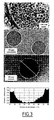
- the nanocapsules (NC) of the particles (P) have a diameter in the range of 10 to 400 nm, and notably of about 50 nm, as determined by virtue of a particle size measurement performed on Transmission Electron Microscopy (TEM) and/or on Cryo-TEM.
- TEM Transmission Electron Microscopy
- the aqueous core contains a hydrophilic substance.
- the oil phase contains a lipophilic substance.
- the polymeric shell is composed of a polyurea.
- compositions according to the invention are characterized by a polydispersity index inferior to 0.5, notably of about 0.1.
- the invention relates to the use of the compositions of particles (P) according to the invention for encapsulating a hydrophilic and/or a lipophilic substance.
- a technical grade polyethoxylated surfactant C18E6 was kindly furnished by Stearinerie-Dubois (Boulogne, France). It is a typical commercial product with a Poisson-like ethylene oxide (EO) distribution around six. This rather lipophilic amphiphile, i.e. presenting a low EO number, will stabilize the emulsions composed of 'light mineral oil' and water plus electrolyte (NaCl). Ligh mineral oil was purchased from Cooper (Melun, France), and it is a standardized denomination to refer to a mixture of saturated hydrocarbons obtained from petroleum.
- EO ethylene oxide
- Methylene Blue (MB), Bovine Serum Albumin-Fluorescein Isothiocyanate labeled (BSA-FITC), Red Soudan (RS) were purchased from Sigma.
- a composition of particles (P) was prepared according to the following general procedure on the basis of the following ingredients (table 1).
- Table 1 Microemulsion preparation Amounts NaCl 0.8 g MilliQ water 26.88 g Paraffin oil 40.32 g POE 300 stearate 7.46 g Nanoemulsion preparation (E 1 ) POE 300 stearate 0.4 g Isopentane 30 ml Interfacial polycondensation Tolylene-2,4-diisocyanate 0,7 mg/L in isopentane Evaporation MilliQ water 20 ml
- PEO-300 stearate is given freely soluble in such "light mineral oil” and insoluble in water (Yu, C. D., 1994).
- this nanometric bicontinuous system at the PIT is suddenly diluted with another oil (isopentane), very fluid as compared as water.
- the water-in-oil nanoemulsions are immediately generated, typically exhibiting a droplet hydrodynamic diameter of ⁇ 40 nm and a very satisfactory polydispersity index of ⁇ 0.05 (measurements performed using a Nano ZS Malvern Instruments).
- Destabilization mechanisms of such w/o nanoemulsions has been shown to follow a colloidal aggregation process, typical of inverted emulsions for which inter-droplets interaction profile generally presents a deep primary minimum.
- the interfacial polycondensation stage is a stepwise process creating a bidimentional polyurea film onto the w/o nanoemulsion template.
- the criteria met by the chosen monomer was (i) a free solubility in the continuous oil mixture (isopentane plus mineral oil), and (ii) a good reactivity with the dispersed aqueous phase:
- the tolylene-2-4-diisocyanate (TDI) see Figure 1 , was chosen in this embodiment. In that way, an isocyanate function of a monomer molecule, on contact with a water droplet, will give rise to the formation of an amine group, which afterwards is more reactive than water and will preferentially react with another TDI molecule.
- the chemical reaction is a stepwise polymerization
- the polyurea chains need, for growing, to be continuously on contact with both water and oil (monomer reservoir)
- the resulting thickness of the polymer shell will be in the molecular range, and forms an interfacial network which could be imagined as a grid (a concept that will be supported by the following results regarding the encapsulation yields).
- the reactions between monomer and potential NH 2 groups of molecules to be encapsulated will not interfere with the formation of the polymer film.
- the effects of the polycondensation time, tp, on the encapsulation yields are investigated below, and are eventually fixed at 2 hours for an optimized formulation.
- the experimental system is composed of aqueous nano-droplets, surrounded by a polyurea bidimentional film assumed to exhibit a grid-like structure, and dispersed in a bulk oil mixture of isopentane (from the PIT dilution) and of mineral oil (from initial emulsions).
- a bulk oil mixture of isopentane from the PIT dilution
- mineral oil from initial emulsions
- the energy provided during this evaporation stage not only allows a rapid removing of the volatile oil, but also it ensures a suitable homogenization of the sample which will prevent the immediate droplets aggregation whilst the global oil volume is decreasing.
- the aqueous droplets may likely be equally spread out over the apolar phase, leading to the generation of distinct colloidal objects in water. In that way, owing to the presence in the apolar phase of the non-volatile mineral oil, it will be, when the isopentane evaporation is completed, finally shared out onto the newly-formed colloidal particles.
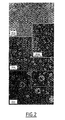
- TEM Transmission electron microscopy
- a drop of each aqueous dispersion specimen was first placed on a carbon-coated TEM copper grid (Quantifoil, Germany) and let to air-drying.
- the sample was then negatively stained with uranyl acetate (Merck, Germany).
- the sample-coated TEM grid was successively placed on a drop of an aqueous solution of uranyl acetate (2 wt.%) and on a drop of distilled water.
- the grid was then air-dried before introducing them in the electron microscope.
- the samples were viewed using a JEOL JEM-1230 TEM operating at 80 kV.
- Cryo-TEM The specimens for cryo-TEM observation were prepared using a cryoplunge cryo-fixation device (Gatan, USA) in which a drop of the aqueous suspension was deposited on to glow-discharged holey-type carbon-coated grids (Ted Pella Inc., USA). The TEM grid was then prepared by blotting a drop containing the specimen to a thin liquid layer of approximately 50-500 nm in thickness remained across the holes in the support carbon film. The liquid film was vitrified by rapidly plunging the grid into liquid ethane cooled by liquid nitrogen.
- the vitrified specimens were mounted in a Gatan 910 specimen holder (Gatan, USA) that was inserted in the microscope using a cryotransfert system (Gatan, USA) and cooled with liquid nitrogen.
- the TEM images were then obtained from specimens preserved in vitreous ice and suspended across a hole in the supporting carbon substrate.
- the samples were observed under low dose conditions (lower than 10 e ⁇ A2), at -178°C, using a JEM 1230 'Cryo' microscope (Jeol, Japan) operated at 80 kV and equipped with a LaB6 filament. All the micrographs were recorded on a Gatan 1.35 K ⁇ 1, 04 K ⁇ 12 bit ES500W Erlangshen CCD camera.
- the nanocapsules Owing to the particular nanocapsule structure, the presence of polymer constituting the shell framework, since the surfactant used has a short PEO-chain with regards to its lipophilic part and also since it is mostly crystallized in the oil shell, the repulsive contributions forces as much of electrostatic as of steric origins appear very low.
- the nanocapsules freshly-formed exhibit a very good monodispersity as well as a polydispersity index (from Nano ZS Malvern, in suitable dilution conditions) relatively good, that is, lower than 0.1.
- the concentrated NC suspension is rapidly destabilized clearly through a colloidal aggregation process in water, showing after about one month storage a creamed concentration of NC. Indeed, when large enough (> 1 ⁇ m), the clusters are subjected to the gravitational forced. On the other hand, this process is significantly reduced by simply diluting the samples (e.g. 1/100), and the suspensions appear stable for months.
- the first result will concern the extent in which the selected hydrophilic species, methylene blue and BSA-FITC, can be encapsulated into such colloids.
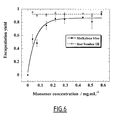
- the molecules incorporation during the nanoemulsion generation step as well as the molecule quantification for determining the encapsulation yield follow the above-described procedures. Thereby, the effects of the formulation parameters, the quantity of monomer introduced in the formulation, and the polymerization time tp, on the encapsulation yield are disclosed in Figure 4 .
- the Figure 4 compares the effects of the monomer amount added within the w/o nanoemulsion, on the encapsulation yields, and for both different hydrophilic molecules MB and BSA-FITC.
- the trends appear very similar, from an impossible encapsulation with the absence of monomer where the yield is assumed to be null and the internal water totally escapes towards the external one, to very satisfactory yields at the highest monomer contents.
- the plateaus attained for both BM and BSA-FITC result very similar about 0.9, but the very interesting point appears in the shift which exists between the two molecules. Indeed, compared with the little dyes, the big proteins are retained for lower monomer amounts.
- these objects not only show an interesting ability to encapsulate hydrophilic species with a particular influence of the polymer inner framework, but also they present a significant ability to simultaneously encapsulate hydrophilic (MB) and lipophilic (RS) model molecules.
- MB hydrophilic
- RS lipophilic
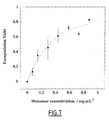
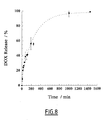
- Figure 7 represents the encapsulation yields of the DOX as a function of the amount of monomer.
- the yield of encapsulated DOX attains a plateau at 80% from an amount of monomer of about 0.7 mg.
Landscapes
- Health & Medical Sciences (AREA)
- Life Sciences & Earth Sciences (AREA)
- Chemical & Material Sciences (AREA)
- Animal Behavior & Ethology (AREA)
- Veterinary Medicine (AREA)
- Public Health (AREA)
- General Health & Medical Sciences (AREA)
- Engineering & Computer Science (AREA)
- Epidemiology (AREA)
- Pharmacology & Pharmacy (AREA)
- Medicinal Chemistry (AREA)
- Dispersion Chemistry (AREA)
- Molecular Biology (AREA)
- Organic Chemistry (AREA)
- Biophysics (AREA)
- Food Science & Technology (AREA)
- Polymers & Plastics (AREA)
- Birds (AREA)
- Bioinformatics & Cheminformatics (AREA)
- Nanotechnology (AREA)
- Biomedical Technology (AREA)
- Optics & Photonics (AREA)
- Physics & Mathematics (AREA)
- Dermatology (AREA)
- Chemical Kinetics & Catalysis (AREA)
- Manufacturing Of Micro-Capsules (AREA)
- Medicinal Preparation (AREA)
- Pharmaceuticals Containing Other Organic And Inorganic Compounds (AREA)
- Colloid Chemistry (AREA)
- Compositions Of Macromolecular Compounds (AREA)
Priority Applications (10)
| Application Number | Priority Date | Filing Date | Title |
|---|---|---|---|
| EP07291109A EP2039352A1 (en) | 2007-09-18 | 2007-09-18 | Aqueous-core lipid nanocapsules for encapsulating hydrophilic and/or lipophilic molecules |
| US12/678,868 US9522121B2 (en) | 2007-09-18 | 2008-09-18 | Aqueous-core lipid nanocapsules for encapsulating hydrophilic and/or lipophilic molecules |
| JP2010525348A JP5989964B2 (ja) | 2007-09-18 | 2008-09-18 | 親水性及び/又は親油性分子をカプセル化するための、水性コア脂質ナノカプセル |
| CN200880114087.8A CN101842088B (zh) | 2007-09-18 | 2008-09-18 | 用于包封亲水性和/或亲油性分子的水性-核脂质纳米胶囊 |
| CA2699802A CA2699802A1 (en) | 2007-09-18 | 2008-09-18 | Aqueous-core lipid nanocapsules for encapsulating hydrophilic and/or lipophilic molecules |
| CN201410049011.9A CN103800304A (zh) | 2007-09-18 | 2008-09-18 | 用于包封亲水性和/或亲油性分子的组合物 |
| EP08804375A EP2187877A2 (en) | 2007-09-18 | 2008-09-18 | Aqueous-core lipid nanocapsules for encapsulating hydrophilic and/or lipophilic molecules |
| KR1020107008347A KR20100074196A (ko) | 2007-09-18 | 2008-09-18 | 친수성 및/또는 친지성 분자를 캡슐화하기 위한 수계-코어 지질 나노캡슐 |
| PCT/EP2008/062435 WO2009037310A2 (en) | 2007-09-18 | 2008-09-18 | Aqueous-core lipid nanocapsules for encapsulating hydrophilic and/or lipophilic molecules |
| JP2014143421A JP2014221802A (ja) | 2007-09-18 | 2014-07-11 | 親水性及び/又は親油性分子をカプセル化するための、水性コア脂質ナノカプセル |
Applications Claiming Priority (1)
| Application Number | Priority Date | Filing Date | Title |
|---|---|---|---|
| EP07291109A EP2039352A1 (en) | 2007-09-18 | 2007-09-18 | Aqueous-core lipid nanocapsules for encapsulating hydrophilic and/or lipophilic molecules |
Publications (1)
| Publication Number | Publication Date |
|---|---|
| EP2039352A1 true EP2039352A1 (en) | 2009-03-25 |
Family
ID=38785137
Family Applications (2)
| Application Number | Title | Priority Date | Filing Date |
|---|---|---|---|
| EP07291109A Ceased EP2039352A1 (en) | 2007-09-18 | 2007-09-18 | Aqueous-core lipid nanocapsules for encapsulating hydrophilic and/or lipophilic molecules |
| EP08804375A Withdrawn EP2187877A2 (en) | 2007-09-18 | 2008-09-18 | Aqueous-core lipid nanocapsules for encapsulating hydrophilic and/or lipophilic molecules |
Family Applications After (1)
| Application Number | Title | Priority Date | Filing Date |
|---|---|---|---|
| EP08804375A Withdrawn EP2187877A2 (en) | 2007-09-18 | 2008-09-18 | Aqueous-core lipid nanocapsules for encapsulating hydrophilic and/or lipophilic molecules |
Country Status (7)
| Country | Link |
|---|---|
| US (1) | US9522121B2 (enExample) |
| EP (2) | EP2039352A1 (enExample) |
| JP (2) | JP5989964B2 (enExample) |
| KR (1) | KR20100074196A (enExample) |
| CN (2) | CN101842088B (enExample) |
| CA (1) | CA2699802A1 (enExample) |
| WO (1) | WO2009037310A2 (enExample) |
Cited By (1)
| Publication number | Priority date | Publication date | Assignee | Title |
|---|---|---|---|---|
| EP3797279A4 (en) * | 2018-07-11 | 2022-08-03 | The University of Hong Kong | Automatic microfluidic system for continuous and quantitive collection of droplets |
Families Citing this family (20)
| Publication number | Priority date | Publication date | Assignee | Title |
|---|---|---|---|---|
| US9393315B2 (en) | 2011-06-08 | 2016-07-19 | Nitto Denko Corporation | Compounds for targeting drug delivery and enhancing siRNA activity |
| FR2950253B1 (fr) * | 2009-09-24 | 2011-09-23 | Ethypharm Sa | Nanocapsules lipidiques, procede de preparation et utilisation comme medicament |
| JP4834775B2 (ja) | 2010-03-04 | 2011-12-14 | 株式会社 資生堂 | 日焼け止め用組成物 |
| US10196637B2 (en) | 2011-06-08 | 2019-02-05 | Nitto Denko Corporation | Retinoid-lipid drug carrier |
| CN102441355B (zh) * | 2011-08-29 | 2013-10-30 | 华南理工大学 | 一种嵌段离聚体水相自组装纳米胶囊及其制备方法 |
| US20130251855A1 (en) * | 2012-03-21 | 2013-09-26 | Pepsico, Inc. | Aqueous product comprising oil-containing microcapsules and method for the manufacture thereof |
| EP2808355B1 (en) | 2012-06-25 | 2016-12-21 | LG Chem, Ltd. | Emulsion composition for preparing polyakylene carbonate molded foam and resin molded foam prepared using same |
| ES2670995T3 (es) | 2013-03-12 | 2018-06-04 | Cephalon, Inc. | Formulaciones de nanopartículas y macropartículas |
| JP6377913B2 (ja) * | 2013-04-16 | 2018-08-22 | 積水化学工業株式会社 | マイクロカプセルの製造方法及びマイクロカプセル |
| TWI482782B (zh) * | 2013-05-31 | 2015-05-01 | Univ Nat Chiao Tung | 架接抗體之雙乳化核殼奈米結構 |
| CN103271406B (zh) * | 2013-06-08 | 2014-07-16 | 吉林大学 | 一种复合型两亲性芯材微胶囊冲剂及其制备方法 |
| FR3008900B1 (fr) * | 2013-07-25 | 2018-03-30 | Centre Nat Rech Scient | Nanoparticules lipidiques multicompartimentees |
| GB2520370B (en) | 2014-05-01 | 2016-09-14 | Frito Lay Trading Co Gmbh | Snack food seasoning |
| GB2520371B (en) * | 2014-05-01 | 2016-09-14 | Frito Lay Trading Co Gmbh | Snack food seasoning |
| AU2015265874B2 (en) * | 2014-05-30 | 2020-05-14 | AbbVie Deutschland GmbH & Co. KG | Highly drug-loaded poly(alkyl 2-cyanoacrylate) nanocapsules |
| JP6572598B2 (ja) * | 2015-04-02 | 2019-09-11 | 日本製鉄株式会社 | ナノ粒子の粒径測定方法 |
| CN111545143A (zh) * | 2015-04-09 | 2020-08-18 | 沙特阿拉伯石油公司 | 用于提高烃采收的胶囊型纳米组合物及其制备方法 |
| KR102692648B1 (ko) * | 2015-12-04 | 2024-08-06 | (주)아모레퍼시픽 | 변성 단백질 수상 분산입자를 포함하는 화장료 조성물 및 이의 제조방법 |
| CN106942771A (zh) * | 2017-04-06 | 2017-07-14 | 贝因美婴童食品股份有限公司 | 一种用于制备营养品的胶囊 |
| FR3092833B1 (fr) * | 2019-02-18 | 2021-07-16 | Commissariat Energie Atomique | Procede de fabrication de nanoparticules hybrides metal/polymere a faible distribution de tailles par polymerisation en mini-emulsion |
Citations (2)
| Publication number | Priority date | Publication date | Assignee | Title |
|---|---|---|---|---|
| WO2004112695A2 (en) * | 2003-05-20 | 2004-12-29 | Erimos Pharmaceutical Llc | Methods and compositions for delivery of catecholic butanes for treatment of obesity |
| WO2007083316A2 (en) * | 2006-01-23 | 2007-07-26 | Yissum Research Development Company Of The Hebrew University Of Jerusalem | Microspheres comprising nanocapsules containing a lipophilic drug |
Family Cites Families (21)
| Publication number | Priority date | Publication date | Assignee | Title |
|---|---|---|---|---|
| GB9414318D0 (en) * | 1994-07-15 | 1994-09-07 | Dowelanco Ltd | Preparation of aqueous emulsions |
| FR2725369B1 (fr) * | 1994-10-07 | 1997-01-03 | Oreal | Composition cosmetique ou dermatologique constituee d'une emulsion huile dans eau a base de globules huileux pourvus d'un enrobage cristal liquide lamellaire |
| DE19630176C2 (de) * | 1996-07-26 | 2000-11-02 | Babor Gmbh & Co Dr | Kosmetische und pharmazeutische Mittel, gebildet durch eine nach dem Phaseninversionsverfahren erzeugte W/O/W-Emulsion |
| IL140899A0 (en) * | 1998-07-17 | 2002-02-10 | Skyepharma Inc | Lipid/polymer containing pharmaceutical compositions and processes for the preparation thereof |
| FR2805761B1 (fr) * | 2000-03-02 | 2002-08-30 | Mainelab | Nanocapsules lipidiques, procede de preparation et utilisation comme medicament |
| GB0009735D0 (en) * | 2000-04-19 | 2000-06-07 | Zeneca Ltd | Formulation |
| US20020155084A1 (en) * | 2000-06-02 | 2002-10-24 | The Regents Of The University Of The Michigan | Nanoemulsion formulations |
| AU2003220670A1 (en) | 2002-04-05 | 2003-10-27 | University Of Florida | Oil-filled nanocapsules from microemulsions utilizing cross-linkable surfactants |
| WO2004026453A2 (en) * | 2002-09-06 | 2004-04-01 | Genteric, Inc. | Microcapsules and methods of use |
| CN1460468A (zh) * | 2003-06-05 | 2003-12-10 | 浙江大学 | 改进的包埋蛋白类药物和疫苗的高分子微球的制备方法 |
| WO2005003543A1 (en) * | 2003-07-02 | 2005-01-13 | Tiax Llc | Free piston stirling engine control |
| CN100402109C (zh) * | 2003-08-01 | 2008-07-16 | 卡拉科科学公司 | 经颅电刺激设备和方法 |
| JP4747534B2 (ja) * | 2003-09-01 | 2011-08-17 | 大正製薬株式会社 | W/o/w型複合エマルション |
| DE10351644A1 (de) * | 2003-11-05 | 2005-06-09 | Bayer Technology Services Gmbh | Verfahren zur Herstellung von lagerstabilen multiplen Emulsionen |
| AU2003292763A1 (en) * | 2003-12-24 | 2005-07-14 | Amato Pharmaceutical Products, Ltd. | Process for producing microsphere and apparatus for producing the same |
| JP2005263647A (ja) * | 2004-03-16 | 2005-09-29 | Konica Minolta Medical & Graphic Inc | エマルション粒子含有造影剤 |
| US20110135734A1 (en) * | 2004-04-20 | 2011-06-09 | Yissum Research Development Company Of The Hebrew University Of Jerusalem | Method For the Preparation of Nanoparticles From Nanoemulsions |
| US8211415B2 (en) * | 2004-10-13 | 2012-07-03 | L'oreal | Easily removable waterproof cosmetic care and/or makeup composition comprising at least one latex or pseudolatex |
| US8029709B2 (en) * | 2004-10-29 | 2011-10-04 | The University Of Cincinnati | Liquid core capsules and methods of synthesis thereof through interfacial polymerization |
| JP2009516724A (ja) * | 2005-11-22 | 2009-04-23 | ネステク ソシエテ アノニム | 水中油型エマルション及び機能性送達のためのその使用 |
| CN100999656A (zh) * | 2006-12-22 | 2007-07-18 | 华南理工大学 | 潜热型纳米流体传热工质及其制备方法 |
-
2007
- 2007-09-18 EP EP07291109A patent/EP2039352A1/en not_active Ceased
-
2008
- 2008-09-18 WO PCT/EP2008/062435 patent/WO2009037310A2/en not_active Ceased
- 2008-09-18 US US12/678,868 patent/US9522121B2/en not_active Expired - Fee Related
- 2008-09-18 EP EP08804375A patent/EP2187877A2/en not_active Withdrawn
- 2008-09-18 CN CN200880114087.8A patent/CN101842088B/zh not_active Expired - Fee Related
- 2008-09-18 CN CN201410049011.9A patent/CN103800304A/zh active Pending
- 2008-09-18 KR KR1020107008347A patent/KR20100074196A/ko not_active Ceased
- 2008-09-18 CA CA2699802A patent/CA2699802A1/en not_active Abandoned
- 2008-09-18 JP JP2010525348A patent/JP5989964B2/ja not_active Expired - Fee Related
-
2014
- 2014-07-11 JP JP2014143421A patent/JP2014221802A/ja active Pending
Patent Citations (2)
| Publication number | Priority date | Publication date | Assignee | Title |
|---|---|---|---|---|
| WO2004112695A2 (en) * | 2003-05-20 | 2004-12-29 | Erimos Pharmaceutical Llc | Methods and compositions for delivery of catecholic butanes for treatment of obesity |
| WO2007083316A2 (en) * | 2006-01-23 | 2007-07-26 | Yissum Research Development Company Of The Hebrew University Of Jerusalem | Microspheres comprising nanocapsules containing a lipophilic drug |
Non-Patent Citations (11)
Cited By (1)
| Publication number | Priority date | Publication date | Assignee | Title |
|---|---|---|---|---|
| EP3797279A4 (en) * | 2018-07-11 | 2022-08-03 | The University of Hong Kong | Automatic microfluidic system for continuous and quantitive collection of droplets |
Also Published As
| Publication number | Publication date |
|---|---|
| WO2009037310A3 (en) | 2010-02-18 |
| US20100297247A1 (en) | 2010-11-25 |
| EP2187877A2 (en) | 2010-05-26 |
| JP2014221802A (ja) | 2014-11-27 |
| WO2009037310A2 (en) | 2009-03-26 |
| CN103800304A (zh) | 2014-05-21 |
| JP2010539221A (ja) | 2010-12-16 |
| CN101842088B (zh) | 2014-03-12 |
| CA2699802A1 (en) | 2009-03-26 |
| JP5989964B2 (ja) | 2016-09-07 |
| KR20100074196A (ko) | 2010-07-01 |
| CN101842088A (zh) | 2010-09-22 |
| US9522121B2 (en) | 2016-12-20 |
Similar Documents
| Publication | Publication Date | Title |
|---|---|---|
| EP2039352A1 (en) | Aqueous-core lipid nanocapsules for encapsulating hydrophilic and/or lipophilic molecules | |
| AU2007247770B2 (en) | Drug release from nanoparticle-coated capsules | |
| US9005666B2 (en) | Process for preparing lipid nanoparticles | |
| Lemos-Senna et al. | Preparation of amphiphilic cyclodextrin nanospheres using the emulsification solvent evaporation method. Influence of the surfactant on preparation and hydrophobic drug loading | |
| Mudrić et al. | Double emulsions (W/O/W emulsions): encapsulation of plant biactives. | |
| Hu et al. | Fabrication and spray-drying microencapsulation of vitamin C-loaded W1/O/W2 emulsions: Influence of gel polymers in the internal water phase on encapsulation efficiency, reconstituted stability, and controlled release properties | |
| Wang et al. | Carboxymethyl konjac glucomannan coating on multilayered emulsions for improved bioavailability and targeted delivery of curcumin | |
| EP2376218B1 (fr) | Procede de preparation de nanoparticules lipidiques | |
| Anton et al. | Reverse micelle-loaded lipid nano-emulsions: new technology for nano-encapsulation of hydrophilic materials | |
| CA2690471A1 (fr) | Nanocapsules a coeur lipidique liquide chargees en actif(s) hydrosoluble(s) ou hydrodispersible(s) | |
| Muhamad et al. | Improving the delivery system and bioavailability of beverages through nanoencapsulation | |
| Ibrahim et al. | Lyophilized tablets of felodipine-loaded polymeric nanocapsules to enhance aqueous solubility: Formulation and optimization | |
| Popiolski et al. | Preparation of polymeric micelles of poly (ethylene oxide-b-lactic acid) and their encapsulation with lavender oil | |
| Montasser et al. | The effect of monomers on the formulation of polymeric nanocapsules based on polyureas and polyamides | |
| Khoee et al. | Effect of O/S/W process parameters on 17β-EV loaded nanoparticles properties | |
| JP7445283B2 (ja) | 多糖膜で被覆されたマイクロカプセル及びその製造方法 | |
| EP1830949B1 (fr) | Nouveau procede de preparation de particules dont au moins la surface peripherique est de nature polymerique, mettant en oeuvre un reacteur membranaire | |
| Zhang et al. | Optimization of formulation variables affecting spray-dried oily core nanocapsules by response surface methodology | |
| Auychaipornlert et al. | Interfacial tension of turmeric nanoparticles | |
| Brzozowska | On the Use of Complex Coacervates for Encapsulation | |
| Tamaddon et al. | Vahid Alimardani, Zahra Rahiminezhad, Neetu Talreja, Divya Chauhan, Samira Sadat Abolmaali, Gholamhossein Yousefi | |
| Chen et al. | 4 Lipid-Based Nanosystems | |
| Chen et al. | Lipid-Based Nanosystems Production | |
| Dutta et al. | Multilayer Encapsulation Techniques | |
| Dutta et al. | 18 MultilayerTechniques Encapsulation |
Legal Events
| Date | Code | Title | Description |
|---|---|---|---|
| PUAI | Public reference made under article 153(3) epc to a published international application that has entered the european phase |
Free format text: ORIGINAL CODE: 0009012 |
|
| AK | Designated contracting states |
Kind code of ref document: A1 Designated state(s): AT BE BG CH CY CZ DE DK EE ES FI FR GB GR HU IE IS IT LI LT LU LV MC MT NL PL PT RO SE SI SK TR |
|
| AX | Request for extension of the european patent |
Extension state: AL BA HR MK RS |
|
| STAA | Information on the status of an ep patent application or granted ep patent |
Free format text: STATUS: THE APPLICATION HAS BEEN REFUSED |
|
| 18R | Application refused |
Effective date: 20090430 |