EP2016198B1 - Method for predicting a risk of adverse drug reactions by determination of hla-b 1502 - Google Patents
Method for predicting a risk of adverse drug reactions by determination of hla-b 1502 Download PDFInfo
- Publication number
- EP2016198B1 EP2016198B1 EP07797432.7A EP07797432A EP2016198B1 EP 2016198 B1 EP2016198 B1 EP 2016198B1 EP 07797432 A EP07797432 A EP 07797432A EP 2016198 B1 EP2016198 B1 EP 2016198B1
- Authority
- EP
- European Patent Office
- Prior art keywords
- hla
- sjs
- allele
- allopurinol
- patients
- Prior art date
- Legal status (The legal status is an assumption and is not a legal conclusion. Google has not performed a legal analysis and makes no representation as to the accuracy of the status listed.)
- Revoked
Links
Images
Classifications
-
- C—CHEMISTRY; METALLURGY
- C12—BIOCHEMISTRY; BEER; SPIRITS; WINE; VINEGAR; MICROBIOLOGY; ENZYMOLOGY; MUTATION OR GENETIC ENGINEERING
- C12Q—MEASURING OR TESTING PROCESSES INVOLVING ENZYMES, NUCLEIC ACIDS OR MICROORGANISMS; COMPOSITIONS OR TEST PAPERS THEREFOR; PROCESSES OF PREPARING SUCH COMPOSITIONS; CONDITION-RESPONSIVE CONTROL IN MICROBIOLOGICAL OR ENZYMOLOGICAL PROCESSES
- C12Q1/00—Measuring or testing processes involving enzymes, nucleic acids or microorganisms; Compositions therefor; Processes of preparing such compositions
- C12Q1/68—Measuring or testing processes involving enzymes, nucleic acids or microorganisms; Compositions therefor; Processes of preparing such compositions involving nucleic acids
- C12Q1/6876—Nucleic acid products used in the analysis of nucleic acids, e.g. primers or probes
- C12Q1/6881—Nucleic acid products used in the analysis of nucleic acids, e.g. primers or probes for tissue or cell typing, e.g. human leukocyte antigen [HLA] probes
-
- C—CHEMISTRY; METALLURGY
- C12—BIOCHEMISTRY; BEER; SPIRITS; WINE; VINEGAR; MICROBIOLOGY; ENZYMOLOGY; MUTATION OR GENETIC ENGINEERING
- C12Q—MEASURING OR TESTING PROCESSES INVOLVING ENZYMES, NUCLEIC ACIDS OR MICROORGANISMS; COMPOSITIONS OR TEST PAPERS THEREFOR; PROCESSES OF PREPARING SUCH COMPOSITIONS; CONDITION-RESPONSIVE CONTROL IN MICROBIOLOGICAL OR ENZYMOLOGICAL PROCESSES
- C12Q1/00—Measuring or testing processes involving enzymes, nucleic acids or microorganisms; Compositions therefor; Processes of preparing such compositions
- C12Q1/68—Measuring or testing processes involving enzymes, nucleic acids or microorganisms; Compositions therefor; Processes of preparing such compositions involving nucleic acids
- C12Q1/6876—Nucleic acid products used in the analysis of nucleic acids, e.g. primers or probes
- C12Q1/6883—Nucleic acid products used in the analysis of nucleic acids, e.g. primers or probes for diseases caused by alterations of genetic material
-
- G—PHYSICS
- G01—MEASURING; TESTING
- G01N—INVESTIGATING OR ANALYSING MATERIALS BY DETERMINING THEIR CHEMICAL OR PHYSICAL PROPERTIES
- G01N33/00—Investigating or analysing materials by specific methods not covered by groups G01N1/00 - G01N31/00
- G01N33/15—Medicinal preparations ; Physical properties thereof, e.g. dissolubility
-
- C—CHEMISTRY; METALLURGY
- C12—BIOCHEMISTRY; BEER; SPIRITS; WINE; VINEGAR; MICROBIOLOGY; ENZYMOLOGY; MUTATION OR GENETIC ENGINEERING
- C12Q—MEASURING OR TESTING PROCESSES INVOLVING ENZYMES, NUCLEIC ACIDS OR MICROORGANISMS; COMPOSITIONS OR TEST PAPERS THEREFOR; PROCESSES OF PREPARING SUCH COMPOSITIONS; CONDITION-RESPONSIVE CONTROL IN MICROBIOLOGICAL OR ENZYMOLOGICAL PROCESSES
- C12Q2600/00—Oligonucleotides characterized by their use
- C12Q2600/136—Screening for pharmacological compounds
-
- C—CHEMISTRY; METALLURGY
- C12—BIOCHEMISTRY; BEER; SPIRITS; WINE; VINEGAR; MICROBIOLOGY; ENZYMOLOGY; MUTATION OR GENETIC ENGINEERING
- C12Q—MEASURING OR TESTING PROCESSES INVOLVING ENZYMES, NUCLEIC ACIDS OR MICROORGANISMS; COMPOSITIONS OR TEST PAPERS THEREFOR; PROCESSES OF PREPARING SUCH COMPOSITIONS; CONDITION-RESPONSIVE CONTROL IN MICROBIOLOGICAL OR ENZYMOLOGICAL PROCESSES
- C12Q2600/00—Oligonucleotides characterized by their use
- C12Q2600/142—Toxicological screening, e.g. expression profiles which identify toxicity
-
- C—CHEMISTRY; METALLURGY
- C12—BIOCHEMISTRY; BEER; SPIRITS; WINE; VINEGAR; MICROBIOLOGY; ENZYMOLOGY; MUTATION OR GENETIC ENGINEERING
- C12Q—MEASURING OR TESTING PROCESSES INVOLVING ENZYMES, NUCLEIC ACIDS OR MICROORGANISMS; COMPOSITIONS OR TEST PAPERS THEREFOR; PROCESSES OF PREPARING SUCH COMPOSITIONS; CONDITION-RESPONSIVE CONTROL IN MICROBIOLOGICAL OR ENZYMOLOGICAL PROCESSES
- C12Q2600/00—Oligonucleotides characterized by their use
- C12Q2600/156—Polymorphic or mutational markers
-
- C—CHEMISTRY; METALLURGY
- C12—BIOCHEMISTRY; BEER; SPIRITS; WINE; VINEGAR; MICROBIOLOGY; ENZYMOLOGY; MUTATION OR GENETIC ENGINEERING
- C12Q—MEASURING OR TESTING PROCESSES INVOLVING ENZYMES, NUCLEIC ACIDS OR MICROORGANISMS; COMPOSITIONS OR TEST PAPERS THEREFOR; PROCESSES OF PREPARING SUCH COMPOSITIONS; CONDITION-RESPONSIVE CONTROL IN MICROBIOLOGICAL OR ENZYMOLOGICAL PROCESSES
- C12Q2600/00—Oligonucleotides characterized by their use
- C12Q2600/16—Primer sets for multiplex assays
-
- C—CHEMISTRY; METALLURGY
- C12—BIOCHEMISTRY; BEER; SPIRITS; WINE; VINEGAR; MICROBIOLOGY; ENZYMOLOGY; MUTATION OR GENETIC ENGINEERING
- C12Q—MEASURING OR TESTING PROCESSES INVOLVING ENZYMES, NUCLEIC ACIDS OR MICROORGANISMS; COMPOSITIONS OR TEST PAPERS THEREFOR; PROCESSES OF PREPARING SUCH COMPOSITIONS; CONDITION-RESPONSIVE CONTROL IN MICROBIOLOGICAL OR ENZYMOLOGICAL PROCESSES
- C12Q2600/00—Oligonucleotides characterized by their use
- C12Q2600/172—Haplotypes
-
- Y—GENERAL TAGGING OF NEW TECHNOLOGICAL DEVELOPMENTS; GENERAL TAGGING OF CROSS-SECTIONAL TECHNOLOGIES SPANNING OVER SEVERAL SECTIONS OF THE IPC; TECHNICAL SUBJECTS COVERED BY FORMER USPC CROSS-REFERENCE ART COLLECTIONS [XRACs] AND DIGESTS
- Y10—TECHNICAL SUBJECTS COVERED BY FORMER USPC
- Y10T—TECHNICAL SUBJECTS COVERED BY FORMER US CLASSIFICATION
- Y10T436/00—Chemistry: analytical and immunological testing
- Y10T436/14—Heterocyclic carbon compound [i.e., O, S, N, Se, Te, as only ring hetero atom]
- Y10T436/142222—Hetero-O [e.g., ascorbic acid, etc.]
- Y10T436/143333—Saccharide [e.g., DNA, etc.]
Definitions
- An adverse drug reaction is an undesired and unintended effect of a drug.
- an adverse drug reaction occurs at doses used for prophylaxis, diagnosis or therapy.
- ADRs were ranked between the fourth and sixth most common cause of death ( Lazarou et al., JAMA, 279(15): 1200-1205, 1998 ). Cutaneous ADRs account for about 2-3% of all hospital admissions ( Bigby et al. JAMA, 256(24):3358-3363, 1986 ).
- MPE maculopapular
- ADRs such as hypersensitivity syndrome (HSS), Stevens-Johnson syndrome (SJS) and toxic epidermal necrolysis (TEN; Lyell's syndrome).
- HSS hypersensitivity syndrome
- SJS Stevens-Johnson syndrome
- TEN toxic epidermal necrolysis
- the mortality rate of the latter can be as high as 40%.
- HSS is characterized by multi-organ involvements (e.g. hepatitis or nephritis) accompanied with systemic manifestations (e.g. fever, arthragis, cosinophilia and lymphadenopathy) in additional to skin rashes ( Roujeau et al.. N. Eng). J. Med., 331: 1272-1285, 1994 ).
- SJS and TEN are immune-complex-mediated hypersensitivily disorders characterized by rapid development of blistering exanthema of purpuric macules and target-like lesions accompanied with mucules involvement and skin detachments ( Roujeau et al. J Invest Dermatol, 1994, 102:218S-30S ).
- drugs such as sulfonamides, anticonvulsants, allopurinol, nonsteroidal antiinflammatory drugs, and antimalarials ( Roujeau et al., N. Engl. J. Med., 333(24):1600-1607, 1995 ).
- anticonvulsants e.g., CBZ, phenytoin and phenobarbital
- allopurinol are the most common drugs causing SJS/TEN.
- HLA-B1502 is significantly associated with SJS/TEN induced by corbama zepine.
- HLA-B allele e.g., HLA-B* 1502 or HLA-B*5801
- HLA-B* 1502 or HLA-B*5801 requires detecting at least 6 regions within that allele.
- the present invention provides a method of predicting the risk of a patient for developing adverse drug reactions, particularly SJS, TEN, or HSS. It was discovered that HLA-B* 1502 is associated with SJS/TEN induced by a variety of drugs, e.g., carbamazepine (CBZ). In addition, HLA-B*5801 is particularly associated with SJS/TEN induced by allopurinol. HLA-B*5801 is also associated with allopurinol-induced HSS. Milder cutaneous reactions induced by CBZ, such as maculopapular rash, erythema multiforme, urticaria, and fixed drug eruption, are particularly associated with HLA-B*4601.
- CBZ carbamazepine
- the present application provides a method of assessing the risk of a patient according to the claims.
- a genetic allele can be detected by direct detection of regions/nucleotides within the allele using genomic DNAs prepared from biosamples, e.g., blood, saliva, urine or hair.
- the allele can also be detected by, for example, serological or microcytotoxicity methods. It also can be determined by detecting an equivalent genetic marker of the allele, which can be, e.g ., an SNP (single nucleotide polymorphism), a microsatellite marker or other kinds of genetic polymorphisms.
- an equivalent genetic marker of the allele which can be, e.g ., an SNP (single nucleotide polymorphism), a microsatellite marker or other kinds of genetic polymorphisms.
- an equivalent genetic marker of HLA-B*1502 haplotype include DRB1 *1202, Cw*080.1, Cw*0806, A*1101, and MICA*019.
- This method includes determining the presence of at least one HLA-B allele selected from the group consisting of HLA-B*1502, HLA-B*5801, and HLA-B*4601.
- the presence of at least two alleles selected from the group may be determined, such as HLA-B*1502 and HLA-B*5801 or the presence of all three alleles is determined.
- the method can optionally comprise the determination of other genetic factors. Those other genetic factors can be associated with the predisposition for any disease or medical condition, including ADRs. For example, these other genetic factors can be selected from the group consisting of thiopurine methyltransferase and the genes for the long-QT syndrome.
- This method includes the steps of: (1) detecting a first region selected from either Regions 1-6 of HLA-B*1502 or Regions 1-6 of HLA-B*5801, (2) detecting a second region selected from either Regions 1-6 of HLA-B*1502 or Regions 1-6 of HLA-B*5801, the second region being different from the first region, and (3) determining whether the patient carries the allele of interest, the presence of the first and second regions indicating that the patient carries HLA-B*1502 or HLA-B*5801.
- regions can be detected by Real-Time PCR or Competitive Sequence-Specific Oligonucleotide hybridization assay coupled with ELISA (CSSO-ELISA).
- CSSO-ELISA Competitive Sequence-Specific Oligonucleotide hybridization assay coupled with ELISA
- detecting two regions selected from Regions 1-6 of HLA-B*1502 or from Regions 1-6 of HLA-B*5801 is sufficient to determine the presence or absence of HLA-B*1502 or HLA-B*5801.
- three or more regions within HLA-B*1502 or HLA-B*580 are detected.
- Detection of Region 1, Region 2, and Region 3 of HLA-B*1502 can be achieved respectively by identifying nucleotides at positions 1 and 3 within Region 1, at positions 1 and 6 within Region 2, and at positions 1 and 3 within Region 3 (including the nucleotides in either the sense strand or the anti-sense strand at these positions).
- Detection of Regions 1-6 of HLA-B*5801 can be achieved respectively by identifying nucleotides at positions 1, 2, and 5 within Region 1, at positions 1, 4, 6, 7, 8, 15, 16, and 20 within Region 2, at positions 2, 4, 5, 8, and 9 within Region 3, at positions 3 and 5 within Region 4, at positions 1 and 9 swithin Region 5, and at positions 3 and 10 within Region 6.
- kits for detecting a genetic allele e.g., HLA-B*1502 or HLA-B*5801.
- This kit may contain a first probe and a second probe, each targeting a region selected from Regions 1-6 of HLA-B* 1502 or Regions 1-6 of HLA-B*5801. The two probes target different regions.
- the kit can further include a third probe that targets an internal control allele. It can also include one or more additional probes for detecting one or more additional regions within HLA-B*1502 or HLA-B*5801.
- a method for determining whether a compound is a candidate that induces an ADR e.g., SJS/TEN, HSS, or a milder cutaneous ADR
- an ADR e.g., SJS/TEN, HSS, or a milder cutaneous ADR
- HLA allele e.g., HLA-B*1502, HLA-B*5801, or HLA-B*4601
- a drug e.g., CBZ, allopurinol, or phenytoin.
- This method includes the steps of: (1) isolating T cells an ADR patient carrying an HLA allege associated with the ADR, (2) expanding T cells reactive to the drug that induces the ADR, (3) isolating antigen-presenting cells from the patient (4) contracting the expanded or cell, with a compound in the presence of the APCs and (5) examining whether the compound activates the expanded T cells compound that activates the T cells is a candidate that induces the ADR in a patient carrying the same HLA allele.
- a patient has a "risk" for an ADR if the probability of the patient to develop an ADR is higher than the probability of the general population to develop the ADR.
- the probability of the patient to develop the ADR is at least about 1.3 fold, more preferably at least about 2 fold, still more preferably at least about 3, 4, 5, 6. 7, 8 or 9 fold, and most preferably at least about 10 fold as high as the probability of the general population to develop the ADR.
- the probability can be determined by any method known in the art, such as by using the incidence of risk factors.
- a given risk factor is present in 5% of the general population, If this factor is present in 10% of the patients who have an ADR, then the probability of a patient with this risk factor to develop the ADR is 2 fold as high as the probability of the general population to develop the ADR.
- a "risk factor" for an ADR is a factor that is associated with the ADR.
- the sensitivity of a risk factor is preferably at least about 40%, more preferably at least about 50%, 60%, 70%, 80%, 85% or 90%. Most preferably, the sensitivity is at least 95%.
- the "sensitivity" of a risk factor for predicting an ADR is the percentage of patients with the ADR that possess the risk factor. In other words, if every SJS patient has allele A, the sensitivity of allele A for predicting SJS is 100%. If 20 out of 40 SJS patients have allele B, then the sensitivity of allele B for predicting SJS is 50%.
- An "equivalent genetic marker" of an allele of interest refers to a genetic marker that is linked to the allele of interest, i.e., it displays a linkage disequilibrium with the allele of interest.
- “Pharmacogenomics profiling” refers to the determination of genetic factors present in a subject that are associated with diseases or medical conditions, particularly adverse reactions to drugs. Typically, a panel of genetic factors is determined in pharmacogenomics profiling, and the factors may or may not be associated with the same disease, medical condition, or reaction to drug.
- HLA-B*1502, HLA-B*5801, and HLA-B*4601 are respectively associated with SJS/TEN induced by CBZ, with SJS/TEN/HSS induced by allopurinol, and with milder cutaneous ADRs (e.g., maculopapular rash, erythema multiforme, articaria, or fixed drug eruption) induced by CBZ.
- these HLA-B alleles are useful genetic markers for determining whether a patient is at risk for developing ADRs (e.g., SJS, TEN, HSS, or milder cutaneous ADRs) induced by CBZ compounds, allopurinol compounds, or drugs otherwise having similar structures thereof.
- CBZ also know as Tegretol, Tegol, G-32883, Biston, Calepsin, Carbatrol, Epitol, Finlepsin, Sirtal, Stazepine, Telesmin, or Timonil, is an aromatic anticonvulsant.
- Other aromatic anticonvulsants including phenytoin (Dilantin) and phenobarbital, cause similar ADRs as CBZ. Therefore, HLA-B* 1502 can be employed to assess the risk for ADRs to these other aromatic anticonvulsants as well.
- the aromatic anticonvulsants for which HLA-B* 1502 can be used as a risk factor also include compounds or metabolites of CBZ, phenytoin or phenobarbital.
- Metabolites of these drugs are known in the art (see, e.g . , Gennis et a!., 1991: Leeder, Epilepsia, 39 Suppl. 7:S8-16, 1998 ; Naisbitt et al., Mol.
- Allopurinol is a drug for hyperuricemia and chronic gout.
- Table I shows examples of compounds that can induce SJS/TEN in an HLA-B*1502 carrier.
- Drug compounds associated with SJS in patients with HLA-B* 1502 Names of active ingredient or the Brand Name Structures of the active ingredient carbamazepine, Epitol, Tegretol, Microtrol Bipotrol, carbamazepine, carbamazepine, Pharmavene, carbamazepine, Carbatrol, SPD-417 5H-Dibenz[b,f]azepine-5-carboxamide [CAS] Oxcarbazepine, Trileptal GP-47680, GP-47779, GP-47779 MHD, KIN-493, oxacarbazepine, TRI-476, TRI-477, TRI-477 (MHD), Trileptal NP, [CAS] : 5H-Dibenz[b,f]azepine-5-carboxamide, 10,11-dihydro-10-oxo licarbazepine BIA-
- HLA-B*5801 The presence of HLA-B*5801 in a patient indicates that the patient is at risk for SJS/TEN or HSS induced by allopurinol compounds, compounds otherwise structurally similar to allopurinol, or metabolites thereof.
- Table II shows examples of compounds that can induce SJS/TEN or HSS in patients carrying HLA-B*5801.
- TableII Drug compounds associated with SJS in patients carrying HLA-B* 5801 Names Structure of the active ingredient Allopurinol , Aloprim, zyloprim, Apo-Allopurinol, Purinol Oxypurinol, Oxyprim [CAS] : 1H-Pyrazolo[3,4-d]pyrimidine-4,6(5H,7H)-dione Febuxostat, TEI-6720, TMX-67 [CAS]: 5-Thiazolecarboxylic acid, 2-[3-cyano-4-(2-methylpropoxy)phenyl]-4-methyl- Y-700 1-(3-Cyano-4-neopentyloxyphenyl)pyrazole-4-carboxylic acid modafinil, Sparlon(New Formulation drug), [CAS] : Acetamide, 2-[(diphenylmethyl)sulfinyl]-
- HLA-B*4601 The presence of HLA-B*4601 in a patient indicates that the patient is at risk for developing mild cutaneous ADRs, e.g., maculopapular rash, induced by CBZ.
- HLA-B alleles can also be predispos ⁇ tive for cutaneous ADRs.
- ankylosing spondylitis is strongly associated with HLA-B27 alleles, such as B*2701-B*2723. ( Khan, Curr. Opin. Rheumatol., 12(4):235-238, 2000 ; Feltkamp et al., Curr. Opin. Rheumatol., 13(4):285-290, 2001 ).
- a genetic marker e.g., an HLA allele
- Genomic DNAs for allele detection can be prepared from a patient by methods well known in the art, e.g., PUREGENE DNA purification system from Centra Systems, Minnesota.
- Detection of a region within a genetic marker of interest includes examining the nucleotide(s) located at either the sense or the anti-sense strand within that region. Methods known in the art can be used to detect a particular region, e.g., Sequence specific oligonucleotides-hybridization, Real-time PCR, or CSSO-ELISA ( M. Hiratsuka et al. J. of Biochemical and Biophysic. Methods, 67:87-94, 2006 ).
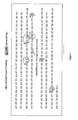
- the presence of HLA-B*1 1502 can be determined by detecting at least two of Regions 1-6 shown in Fig. 1 .
- the presence of these regions can be determined by detecting nucleotides at certain positions within these regions, e.g., positions 1 and 3 in Region 1, positions 1 and 6 in Region 2, and positions 1 and 3 in Region 3. Presence of any two of Regions 1-6 indicates that the patient is an HLA-B*1502 carrier.
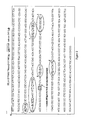
- the presence of HLA-B*5801 can be determined by detecting at least two of Regions 1-6 shown in Fig. 2 .
- the presence of these regions can be determined by detecting the nucleotides at certain positions within these regions, e.g., positions 1, 2, and 5 in Region 1, positions 1, 4, 6, 7, 8, 15, 16, and 20 in Region 2, positions 2, 4, 5, 8, and 9 in Region 3, positions 3 and 5 in Region 4, positions 1 and 9 in Region 5, and positions 3 and 10 in Region 6. Presence of any two of Regions 1-6 indicates that the patient is an HLA-B*5801 carrier.
- the DNA products obtained from PCR can be detected using sequence-specific probes, e.g., hydrolysis probes from TaqMan, Beacons, Scorpions; or hybridization probes these probes are designed such that they bind to the regions of interest, e.g., Regions 1-6 of HLA-B*1502 or Regions 1-6 of HLA-B*5801.
- sequence-specific probes e.g., hydrolysis probes from TaqMan, Beacons, Scorpions
- hybridization probes these probes are designed such that they bind to the regions of interest, e.g., Regions 1-6 of HLA-B*1502 or Regions 1-6 of HLA-B*5801.
- the PCR products also can be detected by DNA-binding agents, e.g., SYBR® Green.
- the presence of an allele of interest also can be determined by detecting genetic markers equivalent to the allele. Genetic markers near the allele of interest tend to co-segregate, or show a linkage disequilibrium, with the allele. Consequently, the presence of these markers (equivalent genetic markers) is indicative of the presence of the allele of interest, which, in turn, is indicative of a risk for ADR development.
- Exemplary genetic markers equivalent to HLA-B*1502 include DRB1* 1202, Cw*0801, Cw*0806, A*1101, and MICA*019.
- Exemplary markers equivalent to HLA-B*5801 include A*3303, Cw*0302, DRB1*0301, and MICA*00201.
- An equivalent genetic marker can be of any type, e.g., an HLA allele, a microsatellite marker, or a single nucleotide polymorphism (SNP) marker.
- a useful equivalent genetic marker is normally about 200 kb or less (e.g., 100 kb, 80 kb, 60 kb, 40 kb, or 20 kb) from The allele of interest. Methods described above or known in the art can be used to detect the presence or absence of an equivalent genetic marker.
- RNAs, cDNAs, or protein products of alleles of interest can be detected to determine the presence or absence of the allele.
- serotyping or microcytotoxity methods can be used to determine the protein product of an HLA allele.
- the allele of interest and/or its equivalent genetic marker can be determined along with the genetic markers of accessory molecules and co-stimulatory molecules which are involved in the interaction between antigen-presenting cells and T-cells.
- These genetic markers include microsatellite and single nucleotide polymorphism (SNP) markers.
- the accessory and co-stimulatory molecules include cell surface molecules (e.g., CD80, CD86, CD28, CD4, CD8, T cell receptor (TCR), ICAM-1, CD11a, CD58, CD2, etc.) and inflammatory or pro-inflammatory cytokines, chemokines (e.g., TNF- ⁇ ), and mediators (e.g ., complements, apoptosis proteins, enzymes, extracellular matrix components, etc.).
- cell surface molecules e.g., CD80, CD86, CD28, CD4, CD8, T cell receptor (TCR), ICAM-1, CD11a, CD58, CD2, etc.
- cytokines e.g., chemokines
- mediators e.g., complements, apoptosis proteins, enzymes, extracellular matrix components, etc.
- genetic markers of drug metabolizing enzymes which are involved in the bioactivation or detoxification of drugs. These genetic markers also include microsatellite and SNP markers.
- the drug metabolizing enzymes include phase I enzymes (e.g., cytochrome P450 superfamily etc.) and phase II enzymes (e.g., microsomal epoxide hydrolase, arylamine N-acetyltransferase, UDP-glucoronosyl-transferase, etc.).
- phase I enzymes e.g., cytochrome P450 superfamily etc.
- phase II enzymes e.g., microsomal epoxide hydrolase, arylamine N-acetyltransferase, UDP-glucoronosyl-transferase, etc.
- a panel of genetic factors is determined for a given individual, and each genetic factor is associated with the predisposition for a disease or medical condition, including ADRs.
- the panel of genetic factors includes at least one allele selected from the group consisting of HLA-B* 1502, HLA-B*5801 and HLA-B*4601.
- the panel can include two alleles or all three alleles from the group.
- the panel can include any other known genetic factors, such as thiopurine methyltransferase and genes for the long-QT syndrome.
- the genetic markers for accessory molecules, co-stimulatory molecules and/or drug metabolizing enzymes described above can also be included.
- a probe for detecting genetic markers, e.g., HLA-B*1502, HLA-B*5801 or HLA-B*4601.
- the term "probe” used herein refers to any substance useful for detecting another substance.
- a probe can be an oligonucleotide or conjugated oligonucleotide that specifically hybridizes to a particular region within an allele of interest.
- the conjugated oligonucleotide refers to an oligonucleotide covalently bound to chromophore or a molecules containing a ligand (e.g., an antigen), which is highly specific to a receptor molecular (e.g., an antibody specific to the antigen).
- the probe can also be a PCR primer, together with another primer, for amplifying a particular region within the allele of interest.
- the probe can be an antibody that recognizes an allele of interest or a protein product of the allele.
- the kit can contain a probe that targets an internal control allele, which can be any allele presented in the general population, e.g. CAPDH, ⁇ -actin, KIR. Detection of an internal control allele is designed to assure the performance of the kit.
- the kit can further include tools and/or reagents for collecting biological samples from patients, as well as those for preparing genomic DNA, cDNAs, RNAs or proteins from the samples. For example, PCR primers for amplifying the relevant regions of the genomic DNA may be included.
- the kit can also contain probes for genetic factors useful in pharmacogenomic profiling, e.g., thiopurine methyltransferase.
- the kit may contain a first probe and a second probe, each for detecting a region selected from Regions 1-6 of HLA-B*1502 or from Regions 1-6 of HLA-B*5801.
- the first and second probes target different regions.
- These two probes can be a pair of PCR primers, or labeled oligonucleotides useful in hybridization assays.
- the kit can include a third probe for detecting an internal control allele. It can also include additional probes for detecting additional regions within HLA-B*1502 or HLA-B*5801.
- an ADR e.g., SJS/TEN or HSS
- drugs can be presented by certain HLA complexes to activate T lymphocytes, consequently inducing ADRs.
- T cells reactive to these drugs are suggested to be involved in the development of ADRs induced by these drugs.
- compounds that can activate these cells are candidates for inducing ADRs in a patient carrying one or more HLA alleles associated with these ADRs.
- this method can be used as a screening method in new drug development to find out drug compounds that could induce such ADRs.
- Genotyping can be performed on an ADR patient to determine whether the patient carries an HLA allele associated with the disease.
- T lymphocytes and antigen-presenting cells e.g., B cells or monocytes
- B cells so isolated can be transformed by Epstein-Bar virus to generate B cell lines.
- T cells reactive to a drug can be expanded in the presence of both the drug and autologous antigen-presenting cells.
- the expanded T cells can then be exposed to a test compound in the presence of autologous antigen-presenting cells to determine whether the test compound can activate the T cells. If so, the test compound is a candidate that can induce the ADR in a patient carrying the same HLA allele.
- Genomic DNAs were extracted from a patient's blood or saliva. Three pairs of PCR primers each targeting Regions 1 and 5, Regions 1 and 4, or Regions 1, 3 and 4 of HLA-B*1502 (see Fig. 1 ) were synthesized. In addition, one pair of primers targeting Regions 2 and 4 of HLA-B*5801 (see Fig. 2 ) were synthesized. The targeted regions were amplified and detected using SYBR ® Green Real-Time PCR system (Applied Biosystem).
- the primers, the genomic DNAs, and the Power SYBR ® Green PCR master mixture were mixed together and the PCR was carried out by: (i) activating polymerase at 95° C for 10 minutes, (ii) denaturing at 95° C for 15 seconds and annealing/elongating DNA chains at 71° C for 1 minute, (iii) conducting 40 cycles of denaturing/annealing/elongating, and (iv) disassociating the amplified product from its template at 95° C for 15 seconds, and 60° C for 1 minute.
- PCR amplification of a killer-cell immunoglobulin-like receptor (KIR) was applied as an internal control.
- the presence or absence of HLA-B*1502 or HLA-B*5801 in a patient was determined based on the Ct value of HLA-B*1502 or HLA-B*5801 and the difference of Ct values ( ⁇ Ct value) between HLA-B*1502/HLA-B*5801 and KIR.
- the Ct value (threshold cycle) is determined by identifying the cycle number at which the reporter dye emission intensity is above background noise.
- the threshold cycle is determined at the most exponential phase of the reaction and is more reliable than end-point measurements of accumulated PCR products used by traditional PCR methods.
- the threshold cycle is inversely proportional to the copy number of the target template, the greater the template number, the lower the threshold cycle measured.
- HLA-B*1502 170 genomic DNA samples extracted from human B cell lines and 35 genomic DNA samples prepared from human blood or saliva were tested for detecting the presence of HLA-B*1502 following the method described above.
- the Ct values of HLA-B*1502 and KIR were in the range of 23-27 and 19-25, respectively.
- the HLA-B*1502 were recognized as positive when the range of ACt between HLA-B*1502 and KIR was smaller than 7.
- 15 gDNA with HLA-B*1502 were present and were verified by Dynal SSO kits, and the results indicate that both the sensitivity and specificity of this method reach >99%.
- HLA-B*5801 170 genomic DNA samples extracted from human B cell lines and 87 genomic DNA samples prepared from human blood or saliva were tested for detecting the presence of HLA-B*5801 following the method described above.
- the Ct values of HLA-B*5801 and KIR were in the range of 22-28 and 10-26, respectively.
- the HLA-B*5801 were recognized as positive when the range of ACt between HLA-B*5801 and KIR was smaller than 7.
- the Ct value of HLA-B*5801 was about 34 and the ⁇ Ct was greater than 13.
- 51 gDNA were found HLA-B*5801 positive and were verified by Dynal SSO kits.
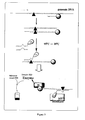
- PCRs were conducted to produce products which contain the specific regions shown in Figure 1 or Figure 2 .
- Either the Forward primer or the Reversed Primer was labeled with a Ligand 1 (L1), which was recognizable by the Molecular I linked with an enzyme (e.g. HRP)
- L1 Ligand 1
- HRP an enzyme
- the PCR reactions were designed and conducted to produce the products containing one or more specific regions, i.e., Regions 1-6 of HLA-B*1502 or Regions 1-6 of HLA-B*5801.
- Two competitive sequence specific oligonucleotides (CSSO1 and CSSO2) were designed.
- CSSO1 specifically recognizes one of Regions 1-6 of HLA-B*1502 or Regions 1-6 of HLA-B*5801, and CSSO2 was designed to prime to the common type of HLA-B*15 (i.e. non-B*1502 alleles or non-B*-5801.
- the CSSO1 was labeled with Ligand 2, which is recognizable by Molecular II coated onto a reaction plateor strip. The PCR products thus obtained were hybridized with the two CSSOs on the reaction plate or a strip. After washing away any free molecule, substrate of the enzyme was added to the reaction plate. The enzymatic reaction, signaled by the presence of a color, is indicative of the presence of HLA-B*1502 or HLA-B*5801.
- a total of 238 ADR patients were recruited either from Chang Gung Memorial Hospital or from several other medical centers throughout Taiwan for this study. Their drug-taking history including dosage and duration, and the phenotypes of ADRs were recorded.
- the diagnostic criteria of clinical morphology were defined according to Roujeau, J. Invest Dermatol., 102(6):28S-30S, 1994.
- SJS was defined as skin detachment of less than 10% of body-surface area
- overlap SJS-TEN as skin detachment of 10-30%
- TEN as greater than 30%.
- SJS, overlap SJS-TEN and TEN are collectively referred to as SJS/TEN.
- 112 patients were diagnosed with SJS/TEN and 126 patients had a milder hypersensitivity reaction to various drugs.
- 42 were exposed to CBZ (tegretol)
- 17 had taken allopurinol
- 53 were under medications other than CBZ and allopurinol.
- reagents for performing a reverse line blot assay using sequence-specific oligonucleotide (SSO) were purchased from DYNAL Biotech Ltd. (Bromborough, UK). PCR products were generated using biotinylated primers for the second and the third exons of the HLA class I or class II loci, and then hybridized to a line blot of SSO of probes immobilized on a nylon membrane.
- SSO sequence-specific oligonucleotide
- biotinylated PCR product bound to a specific probe is detected using streptavidin-horseradish peroxidase (HRP) and a chromogenic, soluble substrate to produce a blue "line" at the position of the positive probe.
- HRP streptavidin-horseradish peroxidase
- a chromogenic, soluble substrate to produce a blue "line” at the position of the positive probe.
- the probe reactivity pattern was interpreted by the genotyping software Dynal RELITM SSO (DYNAL Biotech Ltd.; Bromborough, UK). Potential ambiguities were further resolved by sequence-based typing and DNA sequencing performed according to the IHWG Technical Manual (International Histocompatibility Working Group), see Genomic Analysis of the Human MHC DNABased Typing for HLA Alleles and Linked Polymorphism. Marcel G.J. Tilanus, Editor in Chief, ISBN No. 0-945278-02-0.
- SNP genotyping was performed using high throughput MALDI-TOF mass spectrometry. Briefly, primers and probes were designed using the SpectroDESIGNER software (Sequenom, San Diego, CA, USA). Multiplex polymerase chain reactions (PCR) were performed, the unincorporated dNTPs were dephosphorylated using the shrimp alkaline phosphatase Hoffman-LaRoche, Basel, Switzerland), followed by primer extension.
- PCR polymerase chain reactions
- the purified primer extension reaction was spotted onto a 384-element silicon chip (SpectroCHIP, Sequenom), analyzed using Bruker Biflex III MALDI-TOF SpectroREADER mass spectrometer (Sequenom) and spectra processed with SpectroTYPER (Sequenom).
- HLA-B*1502 a DNA variant allele in the HLA-B locus (HLA-B*1502) was associated in patients with drug-induced SJS/TEN, particulary in patients receiving CBZ (tegretol).
- HLA-B* 1502 was detected in 42 of 42 (100%) SJS/TEN patients who received CBZ. The allele was also found in 17 of 53 (32%) SJS/TEN patients who received other drugs (8 phenytoin, 2 allopurinol, 2 amoxicillin, 1 sulfsalazine, 1 ketoprofen, 1 Ibuprofen, and 2 unknown drugs). Particularly, 8 of 17 patients (47.05%) who developed SJS/TEN after taking phenytoin also carried the HLA-B*) 1502 allele.
- the allele was only found in 4.1% (3/73) of the CBZ-tolerant group, 0% (0/32) of the phenytoin-tolerant group, 6.3% (9/142) of the patients who had milder ADRs other than SJS, and 5.3% (5/94) of the general population.
- the odds ratio, sensitivity, specificity, positive predictive value, and negative predictive value for B* 1502 associated CBZ-induced SJS/TEN were 1712, 1.00%, 95.89%, 96.0%, and 100%, respectively.
- typing of this HLA-B allele can be used in identifying high-risk patients for drug-induced SJS/TEN, particularly CBZ or phenytoin induced SJS/TEN.
- Phenotype/genotype data of patients having CBZ-induced cutaneous ADRs ID Suspected drug Phenotype HLA-B Genotype 1 Carbamazepine SJS B*1502/*3802 2 Carbamazepine SJS B*1502/B*3501 3 Carbamazepine SJS B*1502/B*4006 4 Carbamazepine SJS B*1502/B*3802 5 Carbamazepine SJS B*1502/B*3802 6 carbamazepine, phenytoin SJS B*1502/B*3802 7 Carbamazepine SJS B*1502/B*4001 8 Carbamazepine SJS B*1502/B*3901 9 Carbamazepine SJS B*1502/B*5801 10 Carbamazepine SJS B*1502/B*5801 11 Carbamazepine SJS B*1502/B*1525 12 Carbamazepine SJS B*1502/B*4002 13 Carbamazepine S
- Phenotype/genotype data of patients with allopurinol-induced cutaneous ADRs Patient ID Suspected drug Phenotype HLA-B Genotype 59 allopurinol SJS B*0705/B*5081 60 allopurinol SJS B*4001/B*5801 61 allopurinol SJS B*1554/B*5801 62 allopurinol SJS B*3901/B*5801 63 allopurinol SJS B*5801 64 allopurinol SJS B*3901/B*5801 65 allopurinol SJS B*3901/B*5801 66 allopurinol SJS B*4001/B*5801 67 Allopirinol SJS B*1502/B*5801 68 allopurinol SJS B*4001/B*5801 69 allopurinol SJS and vasculitis on leg B*4601/B*5801 70 allopurinol SJS,
- HLA-B*5801 was also found to be linked to allopurinol-induced BSS, which includes cutaneous rash (e.g., diffuse macuopapular, exfoliative dermatitis), fever, eosinophilia, atypical circulating lymphocytes, leukocytosis, acute hepatocellular injury, or worsening renal function ( Arellano et al., Ann. Pharmacother., 27:337, 1993 ).
- cutaneous rash e.g., diffuse macuopapular, exfoliative dermatitis
- fever eosinophilia
- atypical circulating lymphocytes e.g., leukocytosis
- leukocytosis e.g., acute hepatocellular injury
- worsening renal function Arellano et al., Ann. Pharmacother., 27:337, 1993 ).
- HLA-B*5801 allele was present in all 31 (100%) of the patients having allopurinol-induced severe ADRs, in 16 (16.3%) of the 98 allopurinol-tolerant patients (odds ratio 315, Pc ⁇ 10 -15 ), and in 19 (20%) of the 93 normal subjects (odds ratio 241, Pc ⁇ 10 -13 ), Relative to the alolpurinol-tolerant group, the absence of HLA-B*5801 had a negative predictive value of 100% for allopurinol-induced ADRs, and the presence of this allele had a positive predictive value of 66%.
- HLA-B*5801 is a useful marker with high specificity (84%) and sensitivity (100%) for allopurinol-induced severe.
- ADRs including cutaneous ADRs (e.g., SJS/TEN or HSS) and allopurinol-induced DRESS (drug reaction with eosinophilia and systemic symptoms).
- HLA markers of the HLA-B*1502 haplotype such as DRB1*1202, Cw*0801, Cw*0806, A*1101, and MICA*019, had a significantly high frequency in SJS/TEN patients who had been exposed to CBZ (Table 6).
- HLA-B*5801 Markers associated with HLA-B*5801 were also determined. Allele distribution was analyzed in 4 patients who were homozygous for HLA-B*5801 and the ancestral haplotype of this allele was defined as including HLA-A*3303. Cw*0302, B*5801 and DRB1*0301. This ancestral haplotype was presented in 12 (38.7%) of the 31 allopurinol-ADRs patients (Table 7), but only in 7.1% of the tolerant patients and 9.7% of the normal subjects. Table 6.
- MHC markers associated with HLA-B*5801 were also determined using short tandem repeat polymorphism assay (STRP). Briefly, twenty highly polymorphic microsatellite markers located in the MHC region were selected from NCBI database (i.e. , D6S258, D6S2972, D6S510, D6S265, D6S388, D6S2814, HLAC_CA1, HLABC_CA2, MIB, MICA, TNFd, BAT2_CA, D6S273, D6S1615, DQCAR, G51152, D6S2414, D6S1867, D6S1560, and D6S1583). The average heterozygosity of these markers was 0.72 with an estimated spacing of 230kb.
- NCBI database i.e. , D6S258, D6S2972, D6S510, D6S265, D6S388, D6S2814, HLAC_CA1, HLABC_CA2, MIB, MICA, TNFd
- Primers were designed based on the sequences of these markers described in the database. PCRs were carried out to amplify and detect the presence or absence of these markers in patients using GeneAmp 9700 thermocyclers (Applied Biosystems, Foster City, CA, USA) (in a 5- ⁇ l volume containing 10 ng of genomic DNA and 0.33 ⁇ M of each primer). Up to 6 PCR products having appropriate sizes and displaying fluorescent signals were pooled before capillary gel electrophoresis. The size of polymorphic amplicons was determined by electrophoresis of ABI 3730 DNA sequencer (Applied Biosystems), using the LIZ500 size standard as an internal size standard (Applied Biosystems). Allele sizing was calculated using the GENMAPPER program version 3.0 (Applied Biosystems). Allele calling and binning were performed using the SAS program. Three CEPH control individuals (1331-01, 1331-02, 1347-2) and H20 were included in all genotyping experiments for quality control purposes.
- PBMCs Peripheral blood mononuclear cells
- T cells reactive to CBZ were expanded as described below, PBMCs prepared from the patients were cultured in complete RPMI medium containing 10% heat-inactivated human serum, IL-2 (25U/ml), and CBZ (25 ⁇ g/ml)(Sigma) in a 37°C, 5% CO 2 incubator for 7 days. The T cells were then expanded by co-culturing with irradiated (50Gy) autologous B cells in the presence of CBZ for 10 days. After 2 cycles of the above co-culturing procedure, the CBZ-activated T cells were collected and subjected to ELISPOT assays (eBioscience).
- T lymphocytes (5x10 3 cells) were mixed with autologous B cells (5x10 4 cells) in 200 ⁇ l RPMI medium containing 10% FBS in the presence or absence of a test compound. The cells were then incubated for 24 hours in the wells of an ELISPOT plate coated with anti-interferon ⁇ antibodies (Millipore). After incubation, the supernatant of the cell culture was collected and interferon- ⁇ contained therein was detected using antibody-mediated methods known in the art.
Landscapes
- Chemical & Material Sciences (AREA)
- Life Sciences & Earth Sciences (AREA)
- Health & Medical Sciences (AREA)
- Organic Chemistry (AREA)
- Proteomics, Peptides & Aminoacids (AREA)
- Engineering & Computer Science (AREA)
- Analytical Chemistry (AREA)
- Zoology (AREA)
- Wood Science & Technology (AREA)
- Immunology (AREA)
- Genetics & Genomics (AREA)
- Physics & Mathematics (AREA)
- Bioinformatics & Cheminformatics (AREA)
- General Health & Medical Sciences (AREA)
- Biochemistry (AREA)
- Biophysics (AREA)
- Molecular Biology (AREA)
- General Engineering & Computer Science (AREA)
- Biotechnology (AREA)
- Microbiology (AREA)
- Pathology (AREA)
- Cell Biology (AREA)
- Food Science & Technology (AREA)
- Medicinal Chemistry (AREA)
- Pharmacology & Pharmacy (AREA)
- General Physics & Mathematics (AREA)
- Pharmaceuticals Containing Other Organic And Inorganic Compounds (AREA)
- Measuring Or Testing Involving Enzymes Or Micro-Organisms (AREA)
- Investigating Or Analysing Biological Materials (AREA)
Priority Applications (1)
| Application Number | Priority Date | Filing Date | Title |
|---|---|---|---|
| PL07797432T PL2016198T3 (pl) | 2006-05-11 | 2007-05-11 | Sposób przewidywania ryzyka działań niepożądanych leku poprzez określanie HLA-B 1502 |
Applications Claiming Priority (2)
| Application Number | Priority Date | Filing Date | Title |
|---|---|---|---|
| US80012106P | 2006-05-11 | 2006-05-11 | |
| PCT/US2007/068782 WO2007134235A2 (en) | 2006-05-11 | 2007-05-11 | Hla alleles associated with adverse drug reactions and methods for detecting such |
Publications (3)
| Publication Number | Publication Date |
|---|---|
| EP2016198A2 EP2016198A2 (en) | 2009-01-21 |
| EP2016198A4 EP2016198A4 (en) | 2010-07-21 |
| EP2016198B1 true EP2016198B1 (en) | 2013-05-01 |
Family
ID=38694734
Family Applications (1)
| Application Number | Title | Priority Date | Filing Date |
|---|---|---|---|
| EP07797432.7A Revoked EP2016198B1 (en) | 2006-05-11 | 2007-05-11 | Method for predicting a risk of adverse drug reactions by determination of hla-b 1502 |
Country Status (17)
| Country | Link |
|---|---|
| US (2) | US7943309B2 (enExample) |
| EP (1) | EP2016198B1 (enExample) |
| JP (1) | JP2009536828A (enExample) |
| KR (1) | KR101450348B1 (enExample) |
| CN (1) | CN101454462A (enExample) |
| AU (1) | AU2007249225B2 (enExample) |
| BR (1) | BRPI0710436A8 (enExample) |
| CA (1) | CA2651954C (enExample) |
| DK (1) | DK2016198T3 (enExample) |
| ES (1) | ES2422735T3 (enExample) |
| IL (1) | IL194900A (enExample) |
| MY (1) | MY150648A (enExample) |
| NZ (2) | NZ597628A (enExample) |
| PL (1) | PL2016198T3 (enExample) |
| PT (1) | PT2016198E (enExample) |
| TW (1) | TWI335937B (enExample) |
| WO (1) | WO2007134235A2 (enExample) |
Families Citing this family (19)
| Publication number | Priority date | Publication date | Assignee | Title |
|---|---|---|---|---|
| EP1536021A1 (en) * | 2003-11-27 | 2005-06-01 | Consortium National de Recherche en Genomique (CNRG) | Method for HLA typing |
| US8927462B2 (en) | 2010-04-12 | 2015-01-06 | Academia Sinica | Method for identifying HLA complexes associated with adverse drug reactions |
| JP5959634B2 (ja) * | 2011-06-23 | 2016-08-02 | チャン グン メディカル ファンデーション チャン グン メモリアル ホスピタル アット キールン | フェニトインによって誘発される薬の副作用のリスク評価 |
| CN102296109A (zh) * | 2011-06-30 | 2011-12-28 | 北京思尔成生物技术有限公司 | HLA-B*1502基因的SYBR Green I检测方法及其专用引物与试剂盒 |
| US20150225788A1 (en) | 2011-12-12 | 2015-08-13 | Wen-Hung Chung | Risk assessment for phenytoin-induced adverse drug reactions |
| CN102660635B (zh) * | 2012-01-14 | 2014-03-12 | 长沙三济生物科技有限公司 | 一种定性检测hla-b*1502基因亚型的荧光pcr试剂盒 |
| CN103114138B (zh) * | 2013-01-27 | 2014-12-03 | 复旦大学 | Pcr-ssp法定性检测hla-b*1502基因的方法及临床试剂盒 |
| WO2015041603A1 (en) * | 2013-09-17 | 2015-03-26 | Agency For Science, Technology And Research | Method for detection of a genetic variant |
| CN104017898B (zh) * | 2014-06-25 | 2016-04-27 | 上海荻硕贝肯生物科技有限公司 | 快速检测hla-b*5801等位基因的引物、试剂盒及方法 |
| CN104232781B (zh) * | 2014-09-26 | 2017-04-19 | 陕西佰美基因股份有限公司 | 一种检测HLA‑B*5801等位基因的TaqMan探针实时荧光PCR方法 |
| CN106119362B (zh) * | 2016-06-30 | 2019-09-10 | 江苏伟禾生物科技有限公司 | 一种用于检测hla-b*1502等位基因的引物组及试剂盒 |
| CN108929902B (zh) * | 2018-07-28 | 2022-03-25 | 北京博奥晶典生物技术有限公司 | 用于检测等位基因hla-b*5801的肽核酸引物组合物、试剂盒及方法 |
| CN109355358A (zh) * | 2018-10-22 | 2019-02-19 | 江苏美因康生物科技有限公司 | 一种快速高效检测药源性皮肤不良反应相关基因多态性的试剂盒及方法 |
| CN109554460B (zh) * | 2018-12-17 | 2022-03-22 | 上海市疾病预防控制中心 | 一种基于hla基因多态性位点预测h7n9易感人群的检测方法及其用途 |
| SG11202111473UA (en) * | 2019-05-06 | 2021-11-29 | Chang Gung Memorial Hospital Linkou | Methods for assessing the risk of developing severe cutaneous adverse drug reactions induced by disease-modifying antirheumatic drugs, detection kit thereof and uses thereof |
| TWI804620B (zh) * | 2019-05-06 | 2023-06-11 | 長庚醫療財團法人林口長庚紀念醫院 | 評估疾病調節抗風濕藥物引發嚴重皮膚藥物不良反應風險的方法、其檢測套組及其用途 |
| CN111620924B (zh) * | 2020-06-04 | 2026-07-31 | 华中农业大学 | 基于天然产物的药物设计方法、五环三萜类化合物、其制备方法及应用 |
| CN113308532A (zh) * | 2021-05-28 | 2021-08-27 | 上海康黎诊断技术有限公司 | 一种用于检测人hla-b*1502基因突变的特异性引物探针组合及其试剂盒,以及方法 |
| WO2023080478A1 (ko) * | 2021-11-02 | 2023-05-11 | 주식회사 랩 지노믹스 | Hla-b*5801 대립유전자 검출용 핵산 분자 및 이를 이용한 방법 |
Family Cites Families (6)
| Publication number | Priority date | Publication date | Assignee | Title |
|---|---|---|---|---|
| US5583238A (en) * | 1990-11-19 | 1996-12-10 | G. D. Searle & Co. | Method for making intermediates useful in synthesis of retroviral protease inhibitors |
| WO1994021818A1 (en) * | 1993-03-18 | 1994-09-29 | N.V. Innogenetics S.A. | Process for typing hla-b using specific primers and probes sets |
| US5550039A (en) * | 1995-03-07 | 1996-08-27 | Hoffmann-La Roche Inc. | Oligonucleotide primers for HLA class I B locus DNA typing |
| US6583139B1 (en) * | 1997-07-31 | 2003-06-24 | Eugene D. Thorsett | Compounds which inhibit leukocyte adhesion mediated by VLA-4 |
| BRPI0407569A (pt) * | 2003-02-17 | 2006-02-14 | Novartis Ag | uso de s-10-hidróxi-10, 11-diidro-carbamazepina para o tratamento de ansiendade e distúrbios bipolares |
| US7470513B2 (en) * | 2003-11-10 | 2008-12-30 | Academia Sinica | Risk assessment for adverse drug reactions |
-
2007
- 2007-05-11 EP EP07797432.7A patent/EP2016198B1/en not_active Revoked
- 2007-05-11 KR KR1020087027562A patent/KR101450348B1/ko not_active Expired - Fee Related
- 2007-05-11 PT PT77974327T patent/PT2016198E/pt unknown
- 2007-05-11 BR BRPI0710436A patent/BRPI0710436A8/pt not_active Application Discontinuation
- 2007-05-11 DK DK07797432.7T patent/DK2016198T3/da active
- 2007-05-11 MY MYPI20084331 patent/MY150648A/en unknown
- 2007-05-11 PL PL07797432T patent/PL2016198T3/pl unknown
- 2007-05-11 US US11/747,674 patent/US7943309B2/en active Active
- 2007-05-11 CA CA2651954A patent/CA2651954C/en active Active
- 2007-05-11 NZ NZ597628A patent/NZ597628A/xx not_active IP Right Cessation
- 2007-05-11 TW TW096116910A patent/TWI335937B/zh active
- 2007-05-11 AU AU2007249225A patent/AU2007249225B2/en not_active Ceased
- 2007-05-11 JP JP2009510183A patent/JP2009536828A/ja active Pending
- 2007-05-11 WO PCT/US2007/068782 patent/WO2007134235A2/en not_active Ceased
- 2007-05-11 CN CNA2007800170212A patent/CN101454462A/zh active Pending
- 2007-05-11 ES ES07797432T patent/ES2422735T3/es active Active
- 2007-05-11 NZ NZ572259A patent/NZ572259A/en not_active IP Right Cessation
-
2008
- 2008-10-23 IL IL194900A patent/IL194900A/en active IP Right Grant
-
2011
- 2011-05-04 US US13/100,665 patent/US8142999B2/en active Active
Non-Patent Citations (3)
| Title |
|---|
| HUNG SHUEN-IU ET AL: "Genetic susceptibility to carbamazepine-induced cutaneous adverse drug reactions.", PHARMACOGENETICS AND GENOMICS APR 2006 LNKD- PUBMED:16538176, vol. 16, no. 4, April 2006 (2006-04-01), pages 297 - 306, ISSN: 1744-6872 * |
| WARNOCK JULIA K ET AL: "Adverse cutaneous reactions to mood stabilizers", AMERICAN JOURNAL OF CLINICAL DERMATOLOGY, ADIS, US, vol. 4, no. 1, 1 January 2003 (2003-01-01), pages 21 - 30, XP009145045, ISSN: 1175-0561 * |
| Y-C CHEN ET AL: "Oxcarbazepine-induced Stevens-Johnson syndrome in a patient with HLA-B*1502 genotype", JOURNAL OF THE EUROPEAN ACADEMY OF DERMATOLOGY AND VENEREOLOGY, vol. 23, no. 6, 1 June 2009 (2009-06-01), pages 702 - 703, XP055042151, ISSN: 0926-9959, DOI: 10.1111/j.1468-3083.2008.02988.x * |
Also Published As
| Publication number | Publication date |
|---|---|
| CN101454462A (zh) | 2009-06-10 |
| AU2007249225B2 (en) | 2013-06-27 |
| IL194900A0 (en) | 2009-08-03 |
| TWI335937B (en) | 2011-01-11 |
| EP2016198A4 (en) | 2010-07-21 |
| WO2007134235A3 (en) | 2008-01-17 |
| US20080145846A1 (en) | 2008-06-19 |
| KR101450348B1 (ko) | 2014-10-14 |
| CA2651954A1 (en) | 2007-11-22 |
| JP2009536828A (ja) | 2009-10-22 |
| US8142999B2 (en) | 2012-03-27 |
| NZ572259A (en) | 2012-03-30 |
| TW200844238A (en) | 2008-11-16 |
| EP2016198A2 (en) | 2009-01-21 |
| ES2422735T3 (es) | 2013-09-13 |
| BRPI0710436A8 (pt) | 2018-06-26 |
| NZ597628A (en) | 2013-07-26 |
| WO2007134235A2 (en) | 2007-11-22 |
| MY150648A (en) | 2014-02-14 |
| AU2007249225A1 (en) | 2007-11-22 |
| PT2016198E (pt) | 2013-07-29 |
| US7943309B2 (en) | 2011-05-17 |
| US20110212439A1 (en) | 2011-09-01 |
| CA2651954C (en) | 2014-02-25 |
| DK2016198T3 (en) | 2013-07-15 |
| BRPI0710436A2 (pt) | 2012-10-09 |
| KR20090031671A (ko) | 2009-03-27 |
| PL2016198T3 (pl) | 2013-12-31 |
| IL194900A (en) | 2013-02-28 |
Similar Documents
| Publication | Publication Date | Title |
|---|---|---|
| US8142999B2 (en) | HLA alleles associated with adverse drug reactions and methods for detecting such | |
| AU2004289951B2 (en) | Risk assessment for adverse drug reactions | |
| Ozeki et al. | Genome-wide association study identifies HLA-A* 3101 allele as a genetic risk factor for carbamazepine-induced cutaneous adverse drug reactions in Japanese population | |
| AU2009313999B2 (en) | Autism associated genetic markers | |
| US20090306099A1 (en) | Method of Screening for Drug Hypersensitivity Reaction | |
| US20040126794A1 (en) | Detection of susceptibility to autoimmune diseases | |
| Gambelunghe et al. | Lack of association of CCR2–64I and CCR5-Δ32 with type 1 diabetes and latent autoimmune diabetes in adults | |
| US8236497B2 (en) | Methods of diagnosing cardiovascular disease | |
| AU2013219191A1 (en) | Hla alleles associated with adverse drug reactions and methods for detecting such | |
| WO2008110206A1 (en) | Method for determining a hla-dq haplotype in a subject | |
| HK1134325A (en) | Hla alleles associated with adverse drug reactions and methods for detecting such | |
| JP6082693B2 (ja) | 喫煙感受性加齢黄斑変性易罹患性の判定方法及び判定キット | |
| WO2015037681A1 (ja) | 抗甲状腺薬誘発性無顆粒球症リスクを判定するための検査方法及び判定用キット | |
| WO2011147763A1 (en) | Biomarkers | |
| JPWO2006098401A1 (ja) | 関節リウマチ罹患リスクの測定方法 |
Legal Events
| Date | Code | Title | Description |
|---|---|---|---|
| PUAI | Public reference made under article 153(3) epc to a published international application that has entered the european phase |
Free format text: ORIGINAL CODE: 0009012 |
|
| 17P | Request for examination filed |
Effective date: 20081127 |
|
| AK | Designated contracting states |
Kind code of ref document: A2 Designated state(s): AT BE BG CH CY CZ DE DK EE ES FI FR GB GR HU IE IS IT LI LT LU LV MC MT NL PL PT RO SE SI SK TR |
|
| AX | Request for extension of the european patent |
Extension state: AL BA HR MK RS |
|
| DAX | Request for extension of the european patent (deleted) | ||
| A4 | Supplementary search report drawn up and despatched |
Effective date: 20100618 |
|
| 17Q | First examination report despatched |
Effective date: 20110307 |
|
| GRAP | Despatch of communication of intention to grant a patent |
Free format text: ORIGINAL CODE: EPIDOSNIGR1 |
|
| GRAS | Grant fee paid |
Free format text: ORIGINAL CODE: EPIDOSNIGR3 |
|
| GRAA | (expected) grant |
Free format text: ORIGINAL CODE: 0009210 |
|
| AK | Designated contracting states |
Kind code of ref document: B1 Designated state(s): AT BE BG CH CY CZ DE DK EE ES FI FR GB GR HU IE IS IT LI LT LU LV MC MT NL PL PT RO SE SI SK TR |
|
| REG | Reference to a national code |
Ref country code: GB Ref legal event code: FG4D |
|
| REG | Reference to a national code |
Ref country code: CH Ref legal event code: EP Ref country code: AT Ref legal event code: REF Ref document number: 609995 Country of ref document: AT Kind code of ref document: T Effective date: 20130515 |
|
| REG | Reference to a national code |
Ref country code: IE Ref legal event code: FG4D |
|
| REG | Reference to a national code |
Ref country code: DE Ref legal event code: R096 Ref document number: 602007030193 Country of ref document: DE Effective date: 20130627 |
|
| REG | Reference to a national code |
Ref country code: RO Ref legal event code: EPE |
|
| REG | Reference to a national code |
Ref country code: DK Ref legal event code: T3 |
|
| REG | Reference to a national code |
Ref country code: PT Ref legal event code: SC4A Free format text: AVAILABILITY OF NATIONAL TRANSLATION Effective date: 20130723 |
|
| REG | Reference to a national code |
Ref country code: SE Ref legal event code: TRGR |
|
| REG | Reference to a national code |
Ref country code: ES Ref legal event code: FG2A Ref document number: 2422735 Country of ref document: ES Kind code of ref document: T3 Effective date: 20130913 |
|
| REG | Reference to a national code |
Ref country code: GR Ref legal event code: EP Ref document number: 20130401573 Country of ref document: GR Effective date: 20130829 |
|
| REG | Reference to a national code |
Ref country code: LT Ref legal event code: MG4D |
|
| PG25 | Lapsed in a contracting state [announced via postgrant information from national office to epo] |
Ref country code: LT Free format text: LAPSE BECAUSE OF FAILURE TO SUBMIT A TRANSLATION OF THE DESCRIPTION OR TO PAY THE FEE WITHIN THE PRESCRIBED TIME-LIMIT Effective date: 20130501 Ref country code: SI Free format text: LAPSE BECAUSE OF FAILURE TO SUBMIT A TRANSLATION OF THE DESCRIPTION OR TO PAY THE FEE WITHIN THE PRESCRIBED TIME-LIMIT Effective date: 20130501 |
|
| REG | Reference to a national code |
Ref country code: NL Ref legal event code: VDEP Effective date: 20130501 |
|
| PG25 | Lapsed in a contracting state [announced via postgrant information from national office to epo] |
Ref country code: CY Free format text: LAPSE BECAUSE OF FAILURE TO SUBMIT A TRANSLATION OF THE DESCRIPTION OR TO PAY THE FEE WITHIN THE PRESCRIBED TIME-LIMIT Effective date: 20130501 |
|
| PG25 | Lapsed in a contracting state [announced via postgrant information from national office to epo] |
Ref country code: LV Free format text: LAPSE BECAUSE OF FAILURE TO SUBMIT A TRANSLATION OF THE DESCRIPTION OR TO PAY THE FEE WITHIN THE PRESCRIBED TIME-LIMIT Effective date: 20130501 |
|
| REG | Reference to a national code |
Ref country code: PL Ref legal event code: T3 |
|
| PG25 | Lapsed in a contracting state [announced via postgrant information from national office to epo] |
Ref country code: MC Free format text: LAPSE BECAUSE OF FAILURE TO SUBMIT A TRANSLATION OF THE DESCRIPTION OR TO PAY THE FEE WITHIN THE PRESCRIBED TIME-LIMIT Effective date: 20130501 Ref country code: SK Free format text: LAPSE BECAUSE OF FAILURE TO SUBMIT A TRANSLATION OF THE DESCRIPTION OR TO PAY THE FEE WITHIN THE PRESCRIBED TIME-LIMIT Effective date: 20130501 Ref country code: EE Free format text: LAPSE BECAUSE OF FAILURE TO SUBMIT A TRANSLATION OF THE DESCRIPTION OR TO PAY THE FEE WITHIN THE PRESCRIBED TIME-LIMIT Effective date: 20130501 |
|
| PLBI | Opposition filed |
Free format text: ORIGINAL CODE: 0009260 |
|
| PLAX | Notice of opposition and request to file observation + time limit sent |
Free format text: ORIGINAL CODE: EPIDOSNOBS2 |
|
| 26 | Opposition filed |
Opponent name: ZBM PATENTS APS Effective date: 20140129 |
|
| REG | Reference to a national code |
Ref country code: DE Ref legal event code: R026 Ref document number: 602007030193 Country of ref document: DE Effective date: 20140129 |
|
| REG | Reference to a national code |
Ref country code: HU Ref legal event code: AG4A Ref document number: E018747 Country of ref document: HU |
|
| PLAF | Information modified related to communication of a notice of opposition and request to file observations + time limit |
Free format text: ORIGINAL CODE: EPIDOSCOBS2 |
|
| REG | Reference to a national code |
Ref country code: NL Ref legal event code: RD1H Effective date: 20140729 |
|
| PLBB | Reply of patent proprietor to notice(s) of opposition received |
Free format text: ORIGINAL CODE: EPIDOSNOBS3 |
|
| REG | Reference to a national code |
Ref country code: NL Ref legal event code: BK Free format text: TEN ONTERECHTE VERVALLENPUBLIKATIE I.E. 2013/45UITGEGEVEN 2013.11.06 |
|
| REG | Reference to a national code |
Ref country code: NL Ref legal event code: T3 |
|
| PG25 | Lapsed in a contracting state [announced via postgrant information from national office to epo] |
Ref country code: MT Free format text: LAPSE BECAUSE OF FAILURE TO SUBMIT A TRANSLATION OF THE DESCRIPTION OR TO PAY THE FEE WITHIN THE PRESCRIBED TIME-LIMIT Effective date: 20130501 |
|
| PG25 | Lapsed in a contracting state [announced via postgrant information from national office to epo] |
Ref country code: LU Free format text: LAPSE BECAUSE OF NON-PAYMENT OF DUE FEES Effective date: 20130511 |
|
| REG | Reference to a national code |
Ref country code: NL Ref legal event code: RD2H Effective date: 20150812 |
|
| PLCK | Communication despatched that opposition was rejected |
Free format text: ORIGINAL CODE: EPIDOSNREJ1 |
|
| APBM | Appeal reference recorded |
Free format text: ORIGINAL CODE: EPIDOSNREFNO |
|
| APBP | Date of receipt of notice of appeal recorded |
Free format text: ORIGINAL CODE: EPIDOSNNOA2O |
|
| APAH | Appeal reference modified |
Free format text: ORIGINAL CODE: EPIDOSCREFNO |
|
| REG | Reference to a national code |
Ref country code: FR Ref legal event code: PLFP Year of fee payment: 10 |
|
| APBQ | Date of receipt of statement of grounds of appeal recorded |
Free format text: ORIGINAL CODE: EPIDOSNNOA3O |
|
| PGFP | Annual fee paid to national office [announced via postgrant information from national office to epo] |
Ref country code: BG Payment date: 20160531 Year of fee payment: 10 Ref country code: IE Payment date: 20160527 Year of fee payment: 10 Ref country code: CZ Payment date: 20160428 Year of fee payment: 10 Ref country code: GR Payment date: 20160527 Year of fee payment: 10 Ref country code: FI Payment date: 20160527 Year of fee payment: 10 |
|
| PGFP | Annual fee paid to national office [announced via postgrant information from national office to epo] |
Ref country code: AT Payment date: 20160420 Year of fee payment: 10 Ref country code: PT Payment date: 20160421 Year of fee payment: 10 Ref country code: IS Payment date: 20160419 Year of fee payment: 10 Ref country code: SE Payment date: 20160527 Year of fee payment: 10 Ref country code: DK Payment date: 20160525 Year of fee payment: 10 Ref country code: RO Payment date: 20160420 Year of fee payment: 10 |
|
| REG | Reference to a national code |
Ref country code: FR Ref legal event code: PLFP Year of fee payment: 11 |
|
| REG | Reference to a national code |
Ref country code: SE Ref legal event code: EUG Ref country code: DK Ref legal event code: EBP Effective date: 20170531 |
|
| REG | Reference to a national code |
Ref country code: AT Ref legal event code: MM01 Ref document number: 609995 Country of ref document: AT Kind code of ref document: T Effective date: 20170511 |
|
| PG25 | Lapsed in a contracting state [announced via postgrant information from national office to epo] |
Ref country code: AT Free format text: LAPSE BECAUSE OF NON-PAYMENT OF DUE FEES Effective date: 20170511 Ref country code: CZ Free format text: LAPSE BECAUSE OF NON-PAYMENT OF DUE FEES Effective date: 20170511 Ref country code: RO Free format text: LAPSE BECAUSE OF NON-PAYMENT OF DUE FEES Effective date: 20170511 Ref country code: FI Free format text: LAPSE BECAUSE OF NON-PAYMENT OF DUE FEES Effective date: 20170511 |
|
| REG | Reference to a national code |
Ref country code: IE Ref legal event code: MM4A |
|
| PG25 | Lapsed in a contracting state [announced via postgrant information from national office to epo] |
Ref country code: IS Free format text: LAPSE BECAUSE OF FAILURE TO SUBMIT A TRANSLATION OF THE DESCRIPTION OR TO PAY THE FEE WITHIN THE PRESCRIBED TIME-LIMIT Effective date: 20171201 Ref country code: PT Free format text: LAPSE BECAUSE OF NON-PAYMENT OF DUE FEES Effective date: 20171113 Ref country code: SE Free format text: LAPSE BECAUSE OF NON-PAYMENT OF DUE FEES Effective date: 20170512 Ref country code: GR Free format text: LAPSE BECAUSE OF NON-PAYMENT OF DUE FEES Effective date: 20171206 |
|
| PG25 | Lapsed in a contracting state [announced via postgrant information from national office to epo] |
Ref country code: IE Free format text: LAPSE BECAUSE OF NON-PAYMENT OF DUE FEES Effective date: 20170511 Ref country code: DK Free format text: LAPSE BECAUSE OF NON-PAYMENT OF DUE FEES Effective date: 20170531 |
|
| REG | Reference to a national code |
Ref country code: FR Ref legal event code: PLFP Year of fee payment: 12 |
|
| APBY | Invitation to file observations in appeal sent |
Free format text: ORIGINAL CODE: EPIDOSNOBA2O |
|
| APCA | Receipt of observations in appeal recorded |
Free format text: ORIGINAL CODE: EPIDOSNOBA4O |
|
| APAR | Information on invitation to file observation in appeal modified |
Free format text: ORIGINAL CODE: EPIDOSCOBA2O |
|
| PG25 | Lapsed in a contracting state [announced via postgrant information from national office to epo] |
Ref country code: BG Free format text: LAPSE BECAUSE OF NON-PAYMENT OF DUE FEES Effective date: 20171206 |
|
| PGFP | Annual fee paid to national office [announced via postgrant information from national office to epo] |
Ref country code: NL Payment date: 20200526 Year of fee payment: 14 Ref country code: DE Payment date: 20200528 Year of fee payment: 14 Ref country code: CH Payment date: 20200603 Year of fee payment: 14 Ref country code: FR Payment date: 20200525 Year of fee payment: 14 Ref country code: ES Payment date: 20200601 Year of fee payment: 14 |
|
| REG | Reference to a national code |
Ref country code: DE Ref legal event code: R064 Ref document number: 602007030193 Country of ref document: DE Ref country code: DE Ref legal event code: R103 Ref document number: 602007030193 Country of ref document: DE |
|
| PGFP | Annual fee paid to national office [announced via postgrant information from national office to epo] |
Ref country code: IT Payment date: 20200522 Year of fee payment: 14 Ref country code: BE Payment date: 20200527 Year of fee payment: 14 Ref country code: PL Payment date: 20200507 Year of fee payment: 14 Ref country code: GB Payment date: 20200527 Year of fee payment: 14 |
|
| APBU | Appeal procedure closed |
Free format text: ORIGINAL CODE: EPIDOSNNOA9O |
|
| RDAF | Communication despatched that patent is revoked |
Free format text: ORIGINAL CODE: EPIDOSNREV1 |
|
| STAA | Information on the status of an ep patent application or granted ep patent |
Free format text: STATUS: PATENT REVOKED |
|
| RDAG | Patent revoked |
Free format text: ORIGINAL CODE: 0009271 |
|
| REG | Reference to a national code |
Ref country code: CH Ref legal event code: PL |
|
| REG | Reference to a national code |
Ref country code: FI Ref legal event code: MGE |
|
| 27W | Patent revoked |
Effective date: 20200804 |
|
| GBPR | Gb: patent revoked under art. 102 of the ep convention designating the uk as contracting state |
Effective date: 20200804 |
|
| REG | Reference to a national code |
Ref country code: AT Ref legal event code: MA03 Ref document number: 609995 Country of ref document: AT Kind code of ref document: T Effective date: 20200804 |
|
| PGFP | Annual fee paid to national office [announced via postgrant information from national office to epo] |
Ref country code: HU Payment date: 20210426 Year of fee payment: 15 |
|
| PGFP | Annual fee paid to national office [announced via postgrant information from national office to epo] |
Ref country code: TR Payment date: 20240430 Year of fee payment: 18 |