EP2016186B1 - Procédés et dispositif pour des réactions d'amplification séquentielles - Google Patents
Procédés et dispositif pour des réactions d'amplification séquentielles Download PDFInfo
- Publication number
- EP2016186B1 EP2016186B1 EP07782999A EP07782999A EP2016186B1 EP 2016186 B1 EP2016186 B1 EP 2016186B1 EP 07782999 A EP07782999 A EP 07782999A EP 07782999 A EP07782999 A EP 07782999A EP 2016186 B1 EP2016186 B1 EP 2016186B1
- Authority
- EP
- European Patent Office
- Prior art keywords
- reaction
- sample
- amplification
- reaction mixture
- chamber
- Prior art date
- Legal status (The legal status is an assumption and is not a legal conclusion. Google has not performed a legal analysis and makes no representation as to the accuracy of the status listed.)
- Active
Links
Images











Classifications
-
- C—CHEMISTRY; METALLURGY
- C12—BIOCHEMISTRY; BEER; SPIRITS; WINE; VINEGAR; MICROBIOLOGY; ENZYMOLOGY; MUTATION OR GENETIC ENGINEERING
- C12Q—MEASURING OR TESTING PROCESSES INVOLVING ENZYMES, NUCLEIC ACIDS OR MICROORGANISMS; COMPOSITIONS OR TEST PAPERS THEREFOR; PROCESSES OF PREPARING SUCH COMPOSITIONS; CONDITION-RESPONSIVE CONTROL IN MICROBIOLOGICAL OR ENZYMOLOGICAL PROCESSES
- C12Q1/00—Measuring or testing processes involving enzymes, nucleic acids or microorganisms; Compositions therefor; Processes of preparing such compositions
- C12Q1/68—Measuring or testing processes involving enzymes, nucleic acids or microorganisms; Compositions therefor; Processes of preparing such compositions involving nucleic acids
- C12Q1/6844—Nucleic acid amplification reactions
- C12Q1/686—Polymerase chain reaction [PCR]
-
- B—PERFORMING OPERATIONS; TRANSPORTING
- B01—PHYSICAL OR CHEMICAL PROCESSES OR APPARATUS IN GENERAL
- B01L—CHEMICAL OR PHYSICAL LABORATORY APPARATUS FOR GENERAL USE
- B01L3/00—Containers or dishes for laboratory use, e.g. laboratory glassware; Droppers
- B01L3/50—Containers for the purpose of retaining a material to be analysed, e.g. test tubes
- B01L3/502—Containers for the purpose of retaining a material to be analysed, e.g. test tubes with fluid transport, e.g. in multi-compartment structures
- B01L3/5027—Containers for the purpose of retaining a material to be analysed, e.g. test tubes with fluid transport, e.g. in multi-compartment structures by integrated microfluidic structures, i.e. dimensions of channels and chambers are such that surface tension forces are important, e.g. lab-on-a-chip
- B01L3/502738—Containers for the purpose of retaining a material to be analysed, e.g. test tubes with fluid transport, e.g. in multi-compartment structures by integrated microfluidic structures, i.e. dimensions of channels and chambers are such that surface tension forces are important, e.g. lab-on-a-chip characterised by integrated valves
-
- B—PERFORMING OPERATIONS; TRANSPORTING
- B01—PHYSICAL OR CHEMICAL PROCESSES OR APPARATUS IN GENERAL
- B01L—CHEMICAL OR PHYSICAL LABORATORY APPARATUS FOR GENERAL USE
- B01L7/00—Heating or cooling apparatus; Heat insulating devices
- B01L7/52—Heating or cooling apparatus; Heat insulating devices with provision for submitting samples to a predetermined sequence of different temperatures, e.g. for treating nucleic acid samples
-
- C—CHEMISTRY; METALLURGY
- C12—BIOCHEMISTRY; BEER; SPIRITS; WINE; VINEGAR; MICROBIOLOGY; ENZYMOLOGY; MUTATION OR GENETIC ENGINEERING
- C12Q—MEASURING OR TESTING PROCESSES INVOLVING ENZYMES, NUCLEIC ACIDS OR MICROORGANISMS; COMPOSITIONS OR TEST PAPERS THEREFOR; PROCESSES OF PREPARING SUCH COMPOSITIONS; CONDITION-RESPONSIVE CONTROL IN MICROBIOLOGICAL OR ENZYMOLOGICAL PROCESSES
- C12Q1/00—Measuring or testing processes involving enzymes, nucleic acids or microorganisms; Compositions therefor; Processes of preparing such compositions
- C12Q1/68—Measuring or testing processes involving enzymes, nucleic acids or microorganisms; Compositions therefor; Processes of preparing such compositions involving nucleic acids
- C12Q1/6844—Nucleic acid amplification reactions
- C12Q1/6848—Nucleic acid amplification reactions characterised by the means for preventing contamination or increasing the specificity or sensitivity of an amplification reaction
-
- C—CHEMISTRY; METALLURGY
- C12—BIOCHEMISTRY; BEER; SPIRITS; WINE; VINEGAR; MICROBIOLOGY; ENZYMOLOGY; MUTATION OR GENETIC ENGINEERING
- C12Q—MEASURING OR TESTING PROCESSES INVOLVING ENZYMES, NUCLEIC ACIDS OR MICROORGANISMS; COMPOSITIONS OR TEST PAPERS THEREFOR; PROCESSES OF PREPARING SUCH COMPOSITIONS; CONDITION-RESPONSIVE CONTROL IN MICROBIOLOGICAL OR ENZYMOLOGICAL PROCESSES
- C12Q1/00—Measuring or testing processes involving enzymes, nucleic acids or microorganisms; Compositions therefor; Processes of preparing such compositions
- C12Q1/68—Measuring or testing processes involving enzymes, nucleic acids or microorganisms; Compositions therefor; Processes of preparing such compositions involving nucleic acids
- C12Q1/6844—Nucleic acid amplification reactions
- C12Q1/6851—Quantitative amplification
-
- C—CHEMISTRY; METALLURGY
- C12—BIOCHEMISTRY; BEER; SPIRITS; WINE; VINEGAR; MICROBIOLOGY; ENZYMOLOGY; MUTATION OR GENETIC ENGINEERING
- C12Q—MEASURING OR TESTING PROCESSES INVOLVING ENZYMES, NUCLEIC ACIDS OR MICROORGANISMS; COMPOSITIONS OR TEST PAPERS THEREFOR; PROCESSES OF PREPARING SUCH COMPOSITIONS; CONDITION-RESPONSIVE CONTROL IN MICROBIOLOGICAL OR ENZYMOLOGICAL PROCESSES
- C12Q1/00—Measuring or testing processes involving enzymes, nucleic acids or microorganisms; Compositions therefor; Processes of preparing such compositions
- C12Q1/68—Measuring or testing processes involving enzymes, nucleic acids or microorganisms; Compositions therefor; Processes of preparing such compositions involving nucleic acids
- C12Q1/6876—Nucleic acid products used in the analysis of nucleic acids, e.g. primers or probes
- C12Q1/6888—Nucleic acid products used in the analysis of nucleic acids, e.g. primers or probes for detection or identification of organisms
- C12Q1/689—Nucleic acid products used in the analysis of nucleic acids, e.g. primers or probes for detection or identification of organisms for bacteria
-
- B—PERFORMING OPERATIONS; TRANSPORTING
- B01—PHYSICAL OR CHEMICAL PROCESSES OR APPARATUS IN GENERAL
- B01L—CHEMICAL OR PHYSICAL LABORATORY APPARATUS FOR GENERAL USE
- B01L2300/00—Additional constructional details
- B01L2300/06—Auxiliary integrated devices, integrated components
- B01L2300/0627—Sensor or part of a sensor is integrated
- B01L2300/0654—Lenses; Optical fibres
-
- B—PERFORMING OPERATIONS; TRANSPORTING
- B01—PHYSICAL OR CHEMICAL PROCESSES OR APPARATUS IN GENERAL
- B01L—CHEMICAL OR PHYSICAL LABORATORY APPARATUS FOR GENERAL USE
- B01L2300/00—Additional constructional details
- B01L2300/08—Geometry, shape and general structure
- B01L2300/0809—Geometry, shape and general structure rectangular shaped
- B01L2300/0816—Cards, e.g. flat sample carriers usually with flow in two horizontal directions
-
- B—PERFORMING OPERATIONS; TRANSPORTING
- B01—PHYSICAL OR CHEMICAL PROCESSES OR APPARATUS IN GENERAL
- B01L—CHEMICAL OR PHYSICAL LABORATORY APPARATUS FOR GENERAL USE
- B01L2300/00—Additional constructional details
- B01L2300/08—Geometry, shape and general structure
- B01L2300/0861—Configuration of multiple channels and/or chambers in a single devices
- B01L2300/0864—Configuration of multiple channels and/or chambers in a single devices comprising only one inlet and multiple receiving wells, e.g. for separation, splitting
-
- B—PERFORMING OPERATIONS; TRANSPORTING
- B01—PHYSICAL OR CHEMICAL PROCESSES OR APPARATUS IN GENERAL
- B01L—CHEMICAL OR PHYSICAL LABORATORY APPARATUS FOR GENERAL USE
- B01L2400/00—Moving or stopping fluids
- B01L2400/06—Valves, specific forms thereof
- B01L2400/0633—Valves, specific forms thereof with moving parts
- B01L2400/0644—Valves, specific forms thereof with moving parts rotary valves
Definitions
- the invention relates generally to methods for analyzing a sample for the presence of one or more nucleic acids, and more particularly, to methods for conducting multi-stage nucleic acid amplification reactions, especially polymerase chain reactions (PCRs).
- PCRs polymerase chain reactions
- Nucleic acid amplification is a crucial component of many techniques used in research, medicine, and industry. Such reactions are used in clinical and biological research, detection and monitoring of infectious diseases, detection of mutations, detection of cancer markers, environmental monitoring, genetic identification, detection of pathogens in biodefense applications, and the like, e.g . Schweitzer et al. Current Opinion in Biotechnology, 12:21-27 (2001 ); Koch, Nature Reviews Drug Discovery, 3:749-761 (2004 ).
- PCRs polymerase chain reactions
- viral and bacterial detection include viral load monitoring, detection of rare and/or difficult-to-culture pathogens, rapid detection of bio-terror threats, detection of minimal residual disease in cancer patients, food pathogen testing, blood supply screening, and the like, e.g. Mackay, Clin. Microbiol. Infect., 10:190-212 (2004 ); Bernard et al. Clinical Chemistry, 48:1178-1185 (2002 ).
- the first approach has proven difficult to implement routinely because of the difficulty in finding reaction conditions under which all reactants, such as different primers and target sequences, are amplified at approximately the same rates.
- the second approach has had some success particularly where rapid amplification of a few sequences of widely varying abundances is required; however, there are severe constraints on available reaction parameters to manipulate in order to obtain preferential amplification of different sequences.
- the third approach has the potential for permitting multiple amplification reactions to be run on single samples; however, microfluidic devices are generally difficult to manufacture and require complex valving and fluid distribution networks that have impeded their widespread application.
- the present invention is concerned with a method for carrying out multiple amplification reactions in a single reaction chamber by successive cycles of loading reaction mixture, amplifying, and removing spent reaction mixture in a fluidly closed reaction system.
- the present invention allow amplification of a plurality of different target polynucleotides from a single sample by carrying out successive amplifications of different target polynucleotides from different portions of the sample.
- the invention provides a method according to claim 1.
- a fluidly closed reaction system may be used in the method of the invention, the fluidly closed reaction system for performing multiple sequential amplification reactions comprising: (i) a reaction chamber selectably in fluid communication with a sample reservoir, a waste reservoir, and a plurality of reactant reservoirs containing different amplification reagents, each of the reservoirs being fluidly closed; and (ii) a pump operationally associated with a rotary valve for performing repeated cycles of (a) fluidly transferring a portion of a sample from the sample reservoir and amplification reagents from at least one of the reactant reservoirs to the reaction chamber, wherein an amplification reaction occurs to form one or more amplicons in a reaction mixture; (b) removing the reaction mixture from the reaction chamber and fluidly transferring it to the waste reservoir after the one or more amplicons are detected.
- a computer-readable product embodying a computer executable program to control the performance of a plurality of sequential amplification reactions may be used in the method of the invention.
- the program comprising instructions for: (a) reading values of an optical signal from an amplification reaction chamber, where the signal is the most recent value of an optical signal monotonically related to a concentration of an amplicon in the amplification reaction; (b) determining a baseline signal level from the values of the optical signal; (c) computing a pre-determined value from the values of the optical signal; (d) comparing the predetermined value with the most recent value of the optical signal; and (e) repeating step (d) until the most recent value of the optical signal is equal to or greater than the predetermined level, whereupon a subsequent amplification reaction is initiated.
- the method includes a step of rinsing the reaction chamber after the step of fluidly transferring and/or, heating the empty reaction chamber to a DNA denaturation temperature and cooling the empty reaction chamber to a DNA annealing temperature between successive reactions.
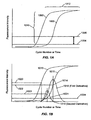
- Figs. 1A-1B illustrate signal v. cycle number (or reaction time) curves for amplification reactions, such as real-time PCRs.
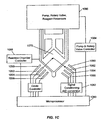
- Fig. 1C is a diagram of an apparatus for implementing methods of the invention.
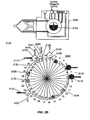
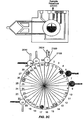
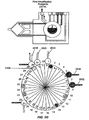
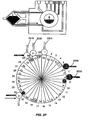
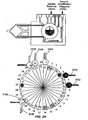
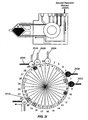
- Figs. 2A-2K diagrammatically illustrate implementation of sequential amplification reactions in a fluidly closed reaction system that employs a rotary valve and a piston-type fluid pump.
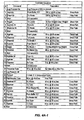
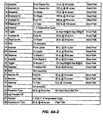
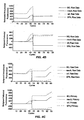
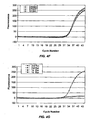
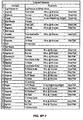
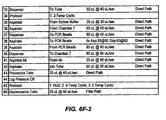
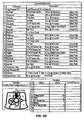
- Figs. 3A-3C show instrumentation protocol and results from sequential amplifications for detecting methicillin-resistant staphylococcus aureus (MRSA) carried out in a Cepheid GENEXPERT TM amplification system.
- MRSA methicillin-resistant staphylococcus aureus
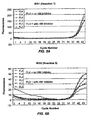
- Figs. 4A-4H show instrumentation protocol and results from sequential amplifications for detecting methicillin-resistant staphylococcus aureus (MRSA) carried out in a Cepheid GENEXPERT TM amplification system using non-lyophilized reagents.
- MRSA methicillin-resistant staphylococcus aureus
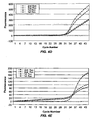
- Figs 5A and 5B show results from replicate experiments for amplification of an internal control sequence.
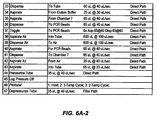
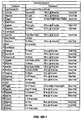
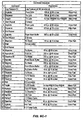
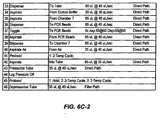
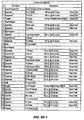
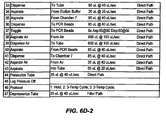
- Figs. 6A-6H show instrumentation protocols and results from RT-PCRs with interreaction heating steps carried out in a Cepheid GENEXPERT TM amplification system.
- Amplicon means the product of a polynucleotide amplification reaction. That is, it is a population of polynucleotides, usually double stranded, that are replicated from one or more starting sequences. The one or more starting sequences may be one or more copies of the same sequence, or it may be a mixture of different sequences. Amplicons may be produced by a variety of amplification reactions whose products are multiple replicates of one or more target nucleic acids. Generally, amplification reactions producing amplicons are "template-driven” in that base pairing of reactants, either nucleotides or oligonucleotides, to a target sequence or its complement is required for the creation of reaction products.
- template-driven reactions are primer extensions with a nucleic acid polymerase or oligonucleotide ligations with a nucleic acid ligase.
- Such reactions include, but are not limited to, polymerase chain reactions (PCRs), linear polymerase reactions, ligase chain reactions (LCRs), strand-displacement reactions (SDAs), nucleic acid sequence-based amplification (NASBAs), rolling circle amplifications, and the like, disclosed in the following references Mullis et al. U.S. Patent Nos. 4,683,195 ; 4,965,188 ; 4,683,202 ; 4,800,159 (PCR); Gelfand et al. U.S.
- Patent 5,210,015 real-time PCR with "TAQMAN TM " probes); Wittwer et al. U.S. Patent 6,174,670 ; Landegren et al. U.S. Patent 4,988,617 (“LCR”); Birkenmeyer et al. U.S. Patent 5,427,930 (“gap-LCR”); Kacian et al. U.S. Patent 5,399,491 (“NASBA”); Walker, U.S. Patent Nos. 5,648,211 ; 5,712,124 (“SDA”); Lizardi, U.S. Patent 5,854,033 ; Aono et al. Japanese Patent Pub. No. JP 4-262799 (rolling circle amplification); and the like.
- amplicons of the invention are produced in a temperature-cycling amplification reaction that includes repeated steps of denaturing reaction products, usually double stranded DNA, at a first temperature, and annealing primers for polymerase extension at a second temperature.
- a temperature-cycling amplification reactions of special interest are PCRs.
- An amplification reaction may be a "real-time” amplification if a detection chemistry is available that permits a reaction product to be measured as the amplification reaction progresses, e.g. "real-time PCR” described below, or “real-time NASBA” as described in Leone et al. Nucleic Acids Research, 26:2150-2155 (1998 ), and like references.
- reaction mixture means a solution containing all the necessary reactants for performing a reaction, which may include, but not be limited to, buffering agents to maintain pH at a selected level during a reaction, salts, cofactors, scavengers, and the like.
- a vessel, chamber, or container containing a closed amplification reaction may include a port or vent that is gas permeable but liquid impermeable, for example, a port that permits the venting of air through a filter membrane but not liquids under conventional reaction conditions.
- Suitable membranes for such ports or vents include woven polyolefin films, such as TYREK® film (DuPont), or the like.
- Complementary or substantially complementary refers to the hybridization or base pairing or the formation of a duplex between nucleotides or nucleic acids, such as, for instance, between the two strands of a double stranded DNA molecule or between an oligonucleotide primer and a primer binding site on a single stranded nucleic acid.
- Complementary nucleotides are, generally, A and T (or A and U), or C and G.
- Two single stranded RNA or DNA molecules are said to be substantially complementary when the nucleotides of one strand, optimally aligned and compared and with appropriate nucleotide insertions or deletions, pair with at least about 80% of the nucleotides of the other strand, usually at least about 90% to 95%, and more preferably from about 98 to 100%.
- substantial complementarity exists when an RNA or DNA strand will hybridize under selective hybridization conditions to its complement.
- selective hybridization will occur when there is at least about 65% complementary over a stretch of at least 14 to 25 nucleotides, preferably at least about 75%, more preferably at least about 90% complementary. See, M. Kanehisa Nucleic Acids Res. 12:203 (1984 ) .
- Computer-readable product means any tangible medium for storing information that can be read by or transmitted into a computer.
- Computer-readable products include, but are not limited to, magnetic diskettes, magnetic tapes, optical disks, CD-ROMs, punched tape or cards, read-only memory devices, direct access storage devices, gate arrays, electrostatic memory, and any other like medium.
- Duplex means at least two oligonucleotides and/or polynucleotides that are fully or partially complementary undergo Watson-Crick type base pairing among all or most of their nucleotides so that a stable complex is formed.
- annealing and “hybridization” are used interchangeably to mean the formation of a stable duplex.
- Perfectly matched in reference to a duplex means that the poly- or oligonucleotide strands making up the duplex form a double stranded structure with one another such that every nucleotide in each strand undergoes Watson-Crick base pairing with a nucleotide in the other strand.
- duplex comprehends the pairing of nucleoside analogs, such as deoxyinosine, nucleosides with 2-aminopurine bases, PNAs, and the like, that may be employed.
- a "mismatch" in a duplex between two oligonucleotides or polynucleotides means that a pair of nucleotides in the duplex fails to undergo Watson-Crick bonding.
- Fluidly closed means that; under conventional operating conditions, liquids within a system that comprises one or more vessels, chambers, valves, and/or passages, possibly interconnected and in communication with one another, cannot communicate with the exterior of such a system, and likewise liquids on the exterior of such a system cannot communicate with liquids contained within the interior of the system.
- conventional operating conditions means that vessels, chambers, valves, and passages of a fluidly closed system are pressurized to an extent less than 100 psi, or in another aspect, to an extent less than 50 psi, or to an extent less than 30 psi.
- “Indicator” means a probe that is capable of generating an optical signal in the presence of a product of an amplification reaction (i.e. an "amplification product”) such that as product accumulates in the reaction mixture the optical signal of the indicator increases, at least over a predetermined range of concentrations.
- the optical signals includes, but are not limited to, fluorescent signals, chemiluminescent signals, electrochemiluminescent signals, colorimetric signals, and the like.
- “Fluorescent indicator” means an indicator capable of generating a fluorescent signal in the presence of a product of an amplification reaction (i.e. an "amplification product”) such that as product accumulates in the reaction mixture the signal of the fluorescent indicator increases, at least over a predetermined range of concentrations.
- Fluorescent indicators may be non-specific, such as intercalating dyes that bind to double stranded DNA products, e.g. YO-PRO-1, SYBR green 1, and the like, Ishiguro et al. Anal. Biochem., 229: 207-213 (1995 ); Tseng et al. Anal. Biochem., 245: 207-212 (1997 ); Morrison et al. Biotechniques, 24: 954-962 (1998 ); or such as primers having hairpin structures with a fluorescent molecule held in proximity to a fluorescent quencher until forced apart by primer extension, e.g . Whitecombe et al.
- Fluorescent indicators also may be target sequence specific, usually comprising a fluorescent molecule in proximity to a fluorescent quencher until an oligonucleotide moiety to which they are attached specifically binds to an amplification product, e.g . Gelfand et al. U.S. Patent 5,210,015 (“TAQMAN TM "); Nazarenko et al. Nucleic Acids Research, 25: 2516-2521 (1997 )("scorpion probes”); Tyagi et al. Nature Biotechnology, 16:49-53 (1998 ) ("molecular beacons”). Fluorescent indicators may be used in connection with real-time PCR, or they may be used to measure the total amount of reaction product at the completion of a reaction.
- Internal standard means a nucleic acid sequence that is amplified in the same amplification reaction as a target polynucleotide in order to permit absolute or relative quantification of the target polynucleotide in a sample.
- An internal standard may be endogenous or exogenous. That is, an internal standard may occur naturally in the sample, or it may be added to the sample prior to amplification.
- multiple exogenous internal standard sequences may be added to a reaction mixture in a series of predetermined concentrations to provide a calibration to which a target amplicon may be compared to determine the quantity of its corresponding target polynucleotide in a sample.
- exogenous internal standards are sequences natural to a sample that correspond to minimally regulated genes that exhibit a constant and cell cycle-independent level of transcription, e.g . Selvey et al. Mol. Cell Probes, 15:307-311 (2001 ).
- Exemplary reference sequences include, but are not limited to, sequences from the following genes: GAPDH, ⁇ 2-microglobulin, 18S ribosomal RNA, and ⁇ -actin ( see also, Selvey et al., supra ).
- Kit refers to any delivery system for delivering materials or reagents for carrying out a method of the invention.
- delivery systems include systems that allow for the storage, transport, or delivery of reaction reagents (e.g ., probes, enzymes, etc. in the appropriate containers) and/or supporting materials (e.g ., buffers, written instructions for performing the assay etc.) from one location to another.
- reaction reagents e.g ., probes, enzymes, etc. in the appropriate containers
- supporting materials e.g ., buffers, written instructions for performing the assay etc.
- kits include one or more enclosures (e.g ., boxes) containing the relevant reaction reagents and/or supporting materials.
- Such contents may be delivered to the intended recipient together or separately.
- a first container may contain an enzyme for use in an assay, while a second container contains probes.
- Ligation means to form a covalent bond or linkage between the termini of two or more nucleic acids, e.g. oligonucleotides and/or polynucleotides, in a template-driven reaction.
- the nature of the bond or linkage may vary widely and the ligation may be carried out enzymatically or chemically.
- ligations are usually carried out enzymatically to form a phosphodiester linkage between a 5' carbon of a terminal nucleotide of one oligonucleotide with 3' carbon of another oligonucleotide.
- a variety of template-driven ligation reactions are described in the following references, which are incorporated by reference: Whitely et al.
- Microfluidics device means an integrated system of one or more chambers, ports, and channels that are interconnected and in fluid communication and designed for carrying out an analytical reaction or process, either alone or in cooperation with an appliance or instrument that provides support functions, such as sample introduction, fluid and/or reagent driving means, temperature control, and a detection system.
- Microfluidics may further include valves, pumps, and specialized functional coatings on their interior walls, e.g . to prevent adsorption of sample components or reactants, facilitate reagent movement by electroosmosis, or the like.
- Such devices are usually fabricated in or as a solid substrate, which may be glass, plastic, or other solid polymeric materials, and typically have a planar format for ease of detecting and monitoring sample and reagent movement, especially via optical or electrochemical methods.
- a microfluidic device usually have cross-sectional dimensions of less than a few hundred square micrometers and passages typically have capillary dimensions, e.g. having maximal cross-sectional dimensions of from about 500 ⁇ m to about 0.1 ⁇ m.
- Microfluidics devices typically have volume capacities in the range of from 1 ⁇ L to a few nL, e.g. 10-100 nL.
- Nucleic acid sequence-based amplification or “NASBA” is an amplification reaction based on the simultaneous activity of a reverse transcriptase (usually avian myeloblastosis virus (AMV) reverse transcriptase), an RNase H, and an RNA polymerase (usually T7 RNA polymerase) that uses two oligonucleotide primers, and which under conventional conditions can amplify a target sequence by a factor in the range of 10 9 to 10 12 in 90 to 120 minutes.
- AMV avian myeloblastosis virus
- RNase H RNase H
- RNA polymerase usually T7 RNA polymerase
- nucleic acids are a template for the amplification reaction only if they are single stranded and contain a primer binding site.
- NASBA isothermal (usually carried out at 41°C with the above enzymes)
- specific amplification of single stranded RNA may be accomplished if denaturation of double stranded DNA is prevented in the sample preparation procedure. That is, it is possible to detect a single stranded RNA target in a double stranded DNA background without getting false positive results caused by complex genomic DNA, in contrast with other techniques, such as RT-PCR.
- fluorescent indicators compatible with the reaction such as molecular beacons
- NASBAs may be carried out with real-time detection of the amplicon.
- Molecular beacons are stem-and-loop-structured oligonucleotides with a fluorescent label at one end and a quencher at the other end, e.g .
- An exemplary molecular beacon may have complementary stem strands of six nucleotides, e.g . 4 G's or C's and 2 A's or T's, and a target-specific loop of about 20 nucleotides, so that the molecular beacon can form a stable hybrid with a target sequence at reaction temperature, e.g . 41°C.
- a typical NASBA reaction mix is 80 mM Tris-HCl [pH 8.5], 24 mM MgCl 2 , 140 mM KCI, 1.0 mM DTT, 2.0 mM of each dNTP, 4.0 mM each of ATP, UTP and CTP, 3.0 mM GTP, and 1.0 mM ITP in 30% DMSO.
- Primer concentration is 0.1 ⁇ M and molecular beacon concentration is 40 nM.
- Enzyme mix is 375 mM sorbitol, 2.1 ⁇ g BSA, 0.08 U RNase H, 32 U T7 RNA polymerase, and 6.4 U AMV reverse transcriptase.
- a reaction may comprise 5 ⁇ L sample, 10 ⁇ L NASBA reaction mix, and 5 ⁇ L enzyme mix, for a total reaction volume of 20 ⁇ L.
- Further guidance for carrying out real-time NASBA reactions is disclosed in the following references that are incorporated by reference: Polstra et al. BMC Infectious Diseases, 2:18 (2002 ); Leone et al. Nucleic Acids Research, 26:2150-2155 (1998 ); Gulliksen et al. Anal. Chem., 76:9-14 (2004 ); Weusten et al. Nucleic Acids Research, 30(6) e26 (2002 ); Deiman et al. Mol. Biotechnol., 20:163-179 (2002 ).
- Nested NASBA reactions are carried out similarly to nested PCRs; namely, the amplicon of a first NASBA reaction becomes the sample for a second NASBA reaction using a new set of primers, at least one of which binds to an interior location of the first amplicon.
- Nucleoside as used herein includes the natural nucleosides, including 2'-deoxy and 2'-hydroxyl forms, e.g . as described in Kornberg and Baker, DNA Replication, 2nd Ed. (Freeman, San Francisco, 1992 ).
- "Analogs" in reference to nucleosides includes synthetic nucleosides having modified base moieties and/or modified sugar moieties, e.g . described by Scheit, Nucleotide Analogs (John Wiley, New York, 1980 ); Uhlman and Peyman, Chemical Reviews, 90:543-584 (1990 ), or the like, with the proviso that they are capable of specific hybridization.
- Such analogs include synthetic nucleosides designed to enhance binding properties, reduce complexity, increase specificity, and the like.
- Polynucleotides comprising analogs with enhanced hybridization or nuclease resistance properties are described in Uhlman and Peyman (cited above); Crooke et al. Exp. Opin. Ther. Patents, 6:855-870 (1996 ); Mesmaeker et al. Current Opinion in Structual Biology, 5:343-355 (1995 ); and the like.
- Exemplary types of polynucleotides that are capable of enhancing duplex stability include oligonucleotide N3 ⁇ P5' phosphoramidates (referred to herein as “amidates”), peptide nucleic acids (referred to herein as “PNAs”), oligo-2'-O-alkylribonucleotides, polynucleotides containing C-5 propynylpyrimidines, locked nucleic acids (LNAs), and like compounds.
- Such oligonucleotides are either available commercially or may be synthesized using methods described in the literature.
- PCR Polymerase chain reaction
- PCR is a reaction for making multiple copies or replicates of a target nucleic acid flanked by primer binding sites, such reaction comprising one or more repetitions of the following steps: (i) denaturing the target nucleic acid, (ii) annealing primers to the primer binding sites, and (iii) extending the primers by a nucleic acid polymerase in the presence of nucleoside triphosphates.
- the reaction is cycled through different temperatures optimized for each step in a thermal cycler instrument.
- a double stranded target nucleic acid may be denatured at a temperature >90oC, primers annealed at a temperature in the range 50-75°C, and primers extended at a temperature in the range 72-78°C.
- PCR encompasses derivative forms of the reaction, including but not limited to, RT-PCR, real-time PCR, nested PCR, quantitative PCR, multiplexed PCR, and the like. Reaction volumes range from a few hundred nanoliters, e.g . 200 nL, to a few hundred ⁇ L, e.g. 200 ⁇ L.
- Reverse transcription PCR or "RT-PCR,” means a PCR that is preceded by a reverse transcription reaction that converts a target RNA to a complementary single stranded DNA, which is then amplified, e.g . Tecott et al. U.S.
- Real-time PCR means a PCR for which the amount of reaction product, i.e . amplicon, is monitored as the reaction proceeds.
- Nested PCR means a two-stage PCR wherein the amplicon of a first PCR becomes the sample for a second PCR using a new set of primers, at least one of which binds to an interior location of the first amplicon.
- initial primers in reference to a nested amplification reaction mean the primers used to generate a first amplicon
- secondary primers mean the one or more primers used to generate a second, or nested, amplicon.
- Multiplexed PCR means a PCR wherein multiple target sequences (or a single target sequence and one or more reference sequences) are simultaneously carried out in the same reaction mixture, e.g . Bernard et al. Anal. Biochem., 273:221-228 (1999 )(two-color real-time PCR). Usually, distinct sets of primers are employed for each sequence being amplified. Typically, the number of target sequences in a multiplex PCR is in the range of from 2 to 10, or from 2 to 6, or more typically, from 2 to 4. [0038] "Quantitative PCR” means a PCR designed to measure the abundance of one or more specific target sequences in a sample or specimen.
- Quantitative PCR includes both absolute quantitation and relative quantitation of such target sequences. Quantitative measurements are made using one or more reference sequences that may be assayed separately or together with a target sequence.
- the reference sequence may be endogenous or exogenous to a sample or specimen, and in the latter case, may comprise one or more competitor templates.
- Typical endogenous reference sequences include segments of transcripts of the following genes: ⁇ -actin, GAPDH, ⁇ 2-microglobulin, ribosomal RNA, and the like.
- Polynucleotide and “oligonucleotide” are used interchangeably and each means a linear polymer of nucleotide monomers.
- Monomers making up polynucleotides and oligonucleotides are capable of specifically binding to a natural polynucleotide by way of a regular pattern of monomer-to-monomer interactions, such as Watson-Crick type of base pairing, base stacking, Hoogsteen or reverse Hoogsteen types of base pairing, or the like.
- Such monomers and their internucleosidic linkages may be naturally occurring or may be analogs thereof, e.g . naturally occurring or non-naturally occurring analogs.
- Non-naturally occurring analogs may include PNAs, phosphorothioate internucleosidic linkages, bases containing linking groups permitting the attachment of labels, such as fluorophores, or haptens, and the like.
- PNAs phosphorothioate internucleosidic linkages
- bases containing linking groups permitting the attachment of labels such as fluorophores, or haptens, and the like.
- Polynucleotides typically range in size from a few monomeric units, e.g . 5-40, when they are usually referred to as “oligonucleotides,” to several thousand monomeric units.
- oligonucleotides typically range in size from a few monomeric units, e.g . 5-40, when they are usually referred to as “oligonucleotides,” to several thousand monomeric units.
- A denotes deoxyadenosine
- C denotes deoxycytidine
- G denotes deoxyguanosine
- T denotes thymidine
- I denotes deoxyinosine
- U denotes uridine, unless otherwise indicated or obvious from context.
- polynucleotides comprise the four natural nucleosides (e.g . deoxyadenosine, deoxycytidine, deoxyguanosine, deoxythymidine for DNA or their ribose counterparts for RNA) linked by phosphodiester linkages; however, they may also comprise non-natural nucleotide analogs, e.g . including modified bases, sugars, or internucleosidic linkages.
- nucleosides e.g . deoxyadenosine, deoxycytidine, deoxyguanosine, deoxythymidine for DNA or their ribose counterparts for RNA
- non-natural nucleotide analogs e.g . including modified bases, sugars, or internucleosidic linkages.
- Primer means an oligonucleotide, either natural or synthetic that is capable, upon forming a duplex with a polynucleotide template, of acting as a point of initiation of nucleic acid synthesis and being extended from its 3' end along the template so that an extended duplex is formed.
- Extension of a primer is usually carried out with a nucleic acid polymerase, such as a DNA or RNA polymerase.
- the sequence of nucleotides added in the extension process is determined by the sequence of the template polynucleotide.
- primers are extended by a DNA polymerase. Primers usually have a length in the range of from 14 to 40 nucleotides, or in the range of from 18 to 36 nucleotides.
- Primers are employed in a variety of nucleic amplification reactions, for example, linear amplification reactions using a single primer, or polymerase chain reactions, employing two or more primers.
- Guidance for selecting the lengths and sequences of primers for particular applications is well known to those of ordinary skill in the art, as evidenced by the following references that are incorporated by reference: Dieffenbach, editor, PCR Primer: A Laboratory Manual, 2nd Edition (Cold Spring Harbor Press, New York, 2003 ).
- Readout means a parameter, or parameters, which are measured and/or detected that can be converted to a number or value.
- readout may refer to an actual numerical representation of such collected or recorded data.
- a readout of fluorescent intensity signals from a microarray is the address and fluorescence intensity of a signal being generated at each hybridization site of the microarray; thus, such a readout may be registered or stored in various ways, for example, as an image of the microarray, as a table of numbers, or the like.
- a readout of a real-time PCR can be one or more fluorescent intensity signals within specified frequency bands as functions of time, or other reaction parameter related to time.
- Specific or “specificity” in reference to the binding of one molecule to another molecule means the recognition, contact, and formation of a stable complex between the two molecules, together with substantially less recognition, contact, or complex formation of that molecule with other molecules.
- “specific” in reference to the binding of a first molecule to a second molecule means that to the extent the first molecule recognizes and forms a complex with another molecule in a reaction or sample, it forms the largest number of the complexes with the second molecule. Preferably, this largest number is at least fifty percent.
- molecules involved in a specific binding event have areas on their surfaces or in cavities giving rise to specific recognition between the molecules binding to each other.
- specific binding examples include antibody-antigen interactions, enzyme-substrate interactions, formation of duplexes or triplexes among polynucleotides and/or oligonucleotides, receptor-ligand interactions, and the like.
- contact in reference to specificity or specific binding means two molecules are close enough that weak noncovalent chemical interactions, such as Van der Waal forces, hydrogen bonding, base-stacking interactions, ionic and hydrophobic interactions, and the like, dominate the interaction of the molecules.
- Tm or “melting temperature” means the temperature at which a population of double-stranded nucleic acid molecules becomes half dissociated into single strands.
- Tm melting temperature
- sample means a quantity of material from a biological, environmental, medical, or patient source in which detection or measurement of target nucleic acids is sought. On the one hand it is meant to include a specimen or culture (e.g ., microbiological cultures). On the other hand, it is meant to include both biological and environmental samples.
- a sample may include a specimen of synthetic origin. Biological samples may be animal, including human, fluid, solid ( e.g ., stool) or tissue, as well as liquid and solid food and feed products and ingredients such as dairy items, vegetables, meat and meat by-products, and waste.
- Biological samples may include materials taken from a patient including, but not limited to cultures, blood, saliva, cerebral spinal fluid, pleural fluid, milk, lymph, sputum, semen, needle aspirates, and the like. Biological samples may be obtained from all of the various families of domestic animals, as well as feral or wild animals, including, but not limited to, such animals as ungulates, bear, fish, rodents, etc. Environmental samples include environmental material such as surface matter, soil, water and industrial samples, as well as samples obtained from food and dairy processing instruments, apparatus, equipment, utensils, disposable and non-disposable items. These examples are not to be construed as limiting the sample types applicable to the present invention. The terms "sample” and “specimen” are used interchangeably.
- “Spectrally resolvable" in reference to a plurality of fluorescent labels means that the fluorescent emission bands of the labels are sufficiently distinct, i.e. sufficiently nonoverlapping, that molecular tags to which the respective labels are attached can be distinguished on the basis of the fluorescent signal generated by the respective labels by standard photodetection systems, e.g. employing a system of band pass filters and photomultiplier tubes, or the like, as exemplified by the systems described in U.S. Patent Nos. 4,230,558 ; 4,8111,218 , or the like, or in Wheeless et al. pages. 21-76, in Flow Cytometry: Instrumentation and Data Analysis (Academic Press, New York, 1985 ).
- the practice of the present invention may employ, unless otherwise indicated, conventional techniques and descriptions of organic chemistry, polymer technology, molecular biology (including recombinant techniques), cell biology, biochemistry, and analytical instrumentation, which are within the skill of the art.
- Such conventional techniques include fluorescence measurement, optical signal collection, instrumentation control, data analysis, electronics, mechanical engineering, fluid handling, and the like. Specific illustrations of suitable techniques can be had by reference to the examples herein below. However, other equivalent conventional procedures can, of course, also be used.
- Such conventional techniques and descriptions can be found in standard laboratory manuals such as Genome Analysis: A Laboratory Manual Series (Vols. I-IV), Using Antibodies: A Laboratory Manual, Cells: A Laboratory Manual, PCR Primer: A Laboratory Manual, and Molecular Cloning: A Laboratory Manual (all from Cold Spring Harbor Laboratory Press ), as well as other treatises and guides cited below.
- the invention is concerned with a method for carrying out multiple amplification reactions, such as PCRs, in a single reaction chamber, especially under fluidly closed conditions.
- a sequence of amplication reactions is employed to amplify and detect different target polynucleotides from the same biological sample.
- the method is carried out in a fluidly closed reaction system.
- Embodiments of the method of the invention include a plurality of amplification reactions in the range of from 2 to 20, inclusive; in another aspect, the plurality is in the range of from 2 to 10, inclusive; and in another aspect, the plurality is in the range of from 2 to 3, inclusive.
- two amplification reactions are implemented by the method of the invention.
- typically a fluidly closed reaction system is prepared with, or provided with (in case of commercial reactors), amplification reagents preloaded, usually in lyophilized form, in distinct reservoirs, e.g. one for each amplification reaction performed.
- the one or more target polynucleotides sought to be amplified in each reaction can include one or more reference sequences, or internal standards, as positive controls.
- amplicons are detected and monitored in real time using one or more indicators, as described below.
- real-time amplification reactions are employed.
- the reaction mixture is removed from the reaction chamber and transferred to a waste reservoir.
- the waste reservoir can be used for each amplification reaction.
- the waste reservoir contains, or can be loaded with, reagents to neutralize, secure, or otherwise render the amplification waste and/or reaction chamber rinses safe for handling and transport.
- Such reagents include, but are not limited to, disinfectants, fungicides, bactericides, neutralizing buffers, liquid absorbing compounds, and the like.
- Embodiments of the method of the invention a method for automated control of a sequence of amplification reactions that is implemented with the following steps: (i) amplifying one or more target polynucleotides from a portion of a sample in the presence of an indicator in a reaction mixture, the indicator being capable of generating an optical signal related to a quantity of an amplicon of the target polynucleotide in the amplification reaction, and the reaction mixture being disposed in a reaction chamber; (ii) monitoring the optical signal of the indicator in the reaction mixture; (iii) automatically removing the reaction mixture from the reaction chamber and transferring to the reaction chamber with a subsequent reaction mixture whenever the optical signal reaches or exceeds a predetermined level; and (iv) repeating steps (i) through (iii) until the sequence of amplification reactions has been carried out.
- This embodiment further contemplates the automatic termination of a sequence of reactions based on current reaction results.
- Such embodiments are particularly useful where rapid production of test results, especially negative test results, is highly desirable.
- related microorganisms frequently exist in both benign as well as pathogenic strains, wherein the pathogenic strains may be identified by a particular genetic element, e.g. a plasmid containing a gene that confers pathogenicity. Consequently, tests for a pathogenic strain of a microorganism frequently involve two or more steps, where a first step of the test determines the presence or absence of any member of a genus or species of the microorganism, followed by one or more successive tests that identify a particular pathogenic form.
- a sequential test may be conducted for Staphylococcus aureus (SA) methicillin-resistant strain that comprises a first step of amplifying and detecting a conserved SA gene sequence and a second step of amplifying and detecting a segment of the mecA gene, which is largely responsible for methicillin resistance.
- SA Staphylococcus aureus
- an embodiment of the above form of the invention provides a method for identifying an organism by a plurality of amplification reactions carried out in sequence, wherein at least the first amplification reaction determines the presence or absence of a genus or species and subsequent reaction(s) determine a specific strain.
- Such an embodiment is implemented with the following steps: (i) amplifying one or more target polynucleotides from a portion of a sample in the presence of an indicator in a reaction mixture, the indicator being capable of generating an optical signal related to a quantity of an amplicon of the target polynucleotide in the amplification reaction, the reaction mixture being disposed in a reaction chamber; (ii) monitoring the optical signal of the indicator in the reaction mixture; (iii) automatically removing the reaction mixture from the reaction chamber and transferring to the reaction chamber with a subsequent reaction mixture whenever the optical signal reaches or exceeds a predetermined level, otherwise automatically terminating the sequence of amplification reactions; and (iv) repeating steps (i) through (iii) until the sequence of amplification reactions has been carried out or the sequence of amplification reactions has been terminated.
- the step of removing a reaction mixture from the reaction chamber includes a step of rinsing the reaction chamber with a wash solution.
- the used wash solution i.e . the "rinsate”
- Embodiments of the method of the invention addresses problems which are associated with foaming and bubble formation caused by transferring reaction mixtures into and out of a reaction chamber. It is highly desirable to avoid the formation of bubbles or foams in analytical instruments as their presence can frequently degrade sensitivity and lead to the generation of spurious signals, particularly in the detection or quantification of fluorescent analytes or probes in a liquid phase, e.g . Jekelis (2005), Biomed Instrum Technol, 39:232-236 . It has been discovered that the formation of foam or bubbles is reduced or eliminated in a reaction chamber of the invention by heating the empty reaction chamber after removal of a reaction mixture and prior to the loading of a subsequent reaction mixture.
- the reaction chamber is purged of all liquid by transferring air into the chamber (either by aspiration, i.e . sucking fluid out, or by dispensing, i.e . forcing fluid in) and is heated for a period of time immediately prior to loading a successive reaction mixture.
- the purging and heating steps may be carried out successively or may be carried out such that they overlap in time.
- the steps are carried out successively wherein the reaction chamber is first purged by transferring air into it, after which it is heated.
- the heating step is implemented in two phases, wherein the chamber is heated to a first temperature and held for a first interval of time followed by changing to a second temperature which is held for a second interval of time.
- the first temperature is approximately DNA denaturation temperature, which is usually in the range of from 85°C to 100°C, or in the range of from 92°C to 99°C, and the first interval is from 0.5s to 10s, or from 1s to 3s; and the second temperature is approximately DNA annealing temperature, which is usually in the range of from 35°C to 75°C, or in the range of from 45°C to 72°C, and the second interval is from 0.5s to 10s, or from 1s to 3s.
- the first temperature is in the range of from 94°C to 96°C and the first interval is from 0.5s to 2s; and the second temperature is in the range of from 45°C to 70°C and the second interval is from 1s to 2s.
- all of the methods described above have embodiments wherein they further include a step of heating the empty reaction chamber to a DNA denaturation temperature for a period of time in the indicated ranges. In a further aspect, such heating step is followed by a cooling step wherein the empty reaction chamber is cooled to a DNA annealing temperature prior to fluidly transferring a subsequent reaction mixture to the reaction chamber.
- an apparatus for conducting the sequence of amplification reactions using different portions, usually aliquots, of a single sample under fluidly closed conditions.
- the apparatus comprises: a) a body having at least first and second channels formed therein; and b) a reaction vessel extending from the body, the reaction vessel having: i) a reaction chamber for receiving liquid; ii) an inlet port connected to the reaction chamber via an inlet channel; and iii) an outlet port connected to the reaction chamber via an outlet channel, wherein the inlet port of the vessel is connected to the first channel in the body and wherein the outlet port of the vessel is connected to the second channel in the body.
- the apparatus optionally further includes a vent in fluid communication with the second channel for venting gas from the second channel.
- the apparatus optionally further comprises a differential pressure source for forcing fluid in the first channel in the body to flow through the inlet port of the vessel and into the reaction chamber.
- the vessel optionally further includes: i) a rigid frame defining side walls of the reaction chamber; and ii) first and second polymeric films attached to opposite sides of the rigid frame to form opposing major walls of the reaction chamber.
- the body of the apparatus further includes a mixing chamber for mixing a fluid sample with amplification reagents, the mixing chamber being connected to the inlet port of the vessel via the first channel.
- the body of the apparatus further includes a waste chamber, or reservoir, for receiving the remainder of the liquid removed through the outlet channel, the waste chamber being connected to the outlet port of the vessel via the second channel.
- the body of the apparatus further has formed therein: i) a sample flow path; and ii) a separation region in the sample flow path for separating a desired analyte from a fluid sample, the separation region being connected to the inlet port of the vessel via the first channel.
- the separation region in the body comprises: a) a lysing chamber in the sample flow path for lysing cells or viruses in the sample to release material therefrom; and b) at least one solid support positioned in the lysing chamber for capturing the cells or viruses to be lysed.
- the vessel of the apparatus includes a plurality of walls defining the reaction chamber, at least one of the walls comprising a flexible sheet or film, and the apparatus further comprises: a) at least one thermal surface for contacting the sheet or film; b) means for increasing the pressure in the reaction chamber, wherein the pressure increase in the chamber is sufficient to force the sheet or film to conform to the thermal surface; and c) at least one thermal element for heating or cooling the surface to induce a temperature change within the chamber.
- the vessel of the apparatus further includes two opposing major walls and sidewalls connecting the major walls to each other to form the reaction chamber, at least two of the side walls are optically transmissive and angularly offset from each other, and the apparatus further comprises an optics system having at least one light source for transmitting light to the reaction chamber through a first one of the optically transmissive side walls and having at least one detector for detecting light emitted from the chamber through a second one of the optically transmissive side walls.
- such apparatus is preferably operated under fluidly closed conditions wherein fluids and reagents are moved by way of one or more valves and pumps that can create differential pressures on such fluids and reagents under programmed control.
- a piston-type pump in operational association with a rotary valve that permits chambers and/or reservoirs to be selectably placed in fluid communication for transferring fluids and reagents to desired locations.
- the operation of such pumps and valves is controlled by a microprocessor using conventional techniques.
- Such microprocessor may also receive data from one or more detectors that monitor optical signals from reaction products in the reaction chamber and on the basis of such data transmit control signals to the pumps and valves of the apparatus to terminate reactions, initiate reactions, initiate rinse steps, and the like.
- Embodiments of the invention include sequential amplification reactions which are a plurality of separate amplifications of different target polynucleotides from the same sample, which take place in the same reaction chamber of a fluidly closed reaction system.
- Embodiments of the invention include the metering of portions of a single sample into a reaction chamber under fluidly closed reaction conditions.
- portions of a sample used in the separate amplifications may be equal in volume, or they may be unequal, and the plurality of portions used may comprise the entire sample ( i.e . they may be aliquots of a sample) or it may comprise a part of the sample ( i.e. they may be aliquants of a sample).
- PCR-PCR for two-amplification reactions: PCR-PCR, NASBA-NASBA, PCR-NASBA, and the like.
- amplification reactions are either successive PCRs or successive NASBA reactions and are carried out under conventional reaction conditions.
- the same indicators are used in each amplification reaction of a sequence.
- each amplification reaction occurs in a reaction mixture comprising a portion of a sample and amplification reagents.
- Selecting the size of a portion for a particular amplification reaction is a design choice of one of ordinary skill that depends on factors such as (i) the nature (e.g . sequence, susceptibility of forming secondary structures, etc.) of the target polynucleotides, (ii) the expected concentration or amount of target polynucleotide, (iii) the concentrations and nature of the amplification reagents, and the like.
- factors such as (i) the nature (e.g . sequence, susceptibility of forming secondary structures, etc.) of the target polynucleotides, (ii) the expected concentration or amount of target polynucleotide, (iii) the concentrations and nature of the amplification reagents, and the like.
- an effective portion of a sample is mixed with amplification reagents to form a reaction mixture.
- an effective portion is an amount sufficient to permit the initiation of an amplification reaction.
- an effective portion is an amount sufficient to provide in a reaction mixture a target concentration of at least 1 target polynucleotide per ⁇ L, or in another aspect, at least 10 target polynucleotides per ⁇ L, or in another aspect, at least 50 target polynucleotides per ⁇ L, or in another aspect at least 100 target polynucleotides per ⁇ L, or in another aspect, at least 500 target polynucleotides per ⁇ L, or in another aspect, at least 1000 target polynucleotides per ⁇ L.
- an effective portion is an amount that is from 0.5 to 50 percent of the volume of the sample, or an amount that is from 10 to 50 percent of the volume of the sample.
- the invention includes methods of conducting reverse transcriptase reactions in series with a multi-stage amplification reaction.
- a plurality of RNA sequences such as selected mRNAs extracted from a cell or tissue sample, may be amplified as follows: (i) transcribing with reverse transcription reagents RNA sequences, for example, in a fluidly closed reaction system, to form a sample of complementary single stranded target polynucleotides; (ii) transferring a portion of the sample and amplification reagents to a reaction chamber to form a reaction mixture; (iii) amplifying in the reaction mixture at least one target polynucleotide from the portion in the presence of a fluorescent indicator, the fluorescent indicator being capable of generating an optical signal related to a quantity of an amplicon in the reaction mixture; (iv) monitoring the optical signal of the fluorescent indicator; and (v) removing the reaction mixture from the reaction chamber and initiating a subsequent amplification reaction whenever the optical signal reaches or
- the step of transcribing is carried out with a conventional reverse transcriptase reaction, components of which, i.e . reverse transcriptase reagents (a reverse transcriptase, nucleoside triphosphates, reaction buffer), are readily available commercially, e.g . Ambion, Inc.
- reverse transcriptase reagents a reverse transcriptase, nucleoside triphosphates, reaction buffer
- the above aspect of the invention is performed in a fluidly closed reaction system.
- the invention includes a method for automatically terminating and/or initiating successive amplification reactions, either under open-loop control, or closed-loop control based on real-time measurements of certain reaction parameters.
- an amplification reaction is carried out for a predetermined number of cycles or for a predetermined reaction time, after which the reaction is terminated, e.g. simply by removing the reaction mixture from the reaction chamber, an effective portion of the sample is mixed with appropriate amplification reagents to form a new reaction mixture, the new reaction mixture is loaded into the reaction chamber, and a timed program of temperatures is selected to carry out an amplification reaction.
- the reaction chamber can be rinsed to further remove traces of the current reaction mixture remaining in the chamber.
- rinsing is accomplished by carrying out one or more cycles of transferring wash solution from a wash solution reservoir to the reaction chamber and transferring the wash solution in the reaction chamber, or rinsing, to the waste reservoir.
- Wash solutions can be water, or it can be water mixed with other reagents such as detergents, nucleases, or the like, that are added for the purpose of reducing spurious signals generated by material left over from a previous amplification reaction.
- a reaction parameter of an amplification reaction is monitored and when it takes on a predetermined value, or crosses a predetermined threshold value, the reaction is stopped, at least an effective portion of the sample is mixed with appropriate amplification reagents, and a subsequent amplification reaction is initiated.
- the reaction parameter used for determining when to initiate a successive amplification may be any parameter that has a well-defined relationship with the accumulation of reaction products, or in other words, with the degree of completion of a reaction.
- the reaction parameter has a monotonic relationship with the accumulation of one or more products in a reaction, so that increasing values of the parameter may be either positively or negatively correlated with the amount(s) of such products, which are usually one or more amplicons.
- Reaction parameters may include, but are not limited to, optical density of the reaction mixture; temperature; pH; concentration of secondary reaction products; amplicon concentration, the latter, for example, being based on one or more fluorescent signals, colorimetric signals, chemiluminescent signals, electrochemiluminescent signals, or electrochemical signals; and the like.
- a reaction parameter is monotonically related to the concentration of at least one amplicon an amplification reaction.
- Such an amplicon may be produced from a target polynucleotide, or a reference sequence or other internal standard.
- the amplification reactions are real-time PCRs.
- the reaction parameter is an amplicon detected by a fluorescent indicator whose signal is monotonically related to the concentration of the amplicon in the reaction mixture. Where there is variability in the amount or quality of target polynucleotide in a sample or specimen, closed-loop control of the reactions can produce more consistent and less variable readouts.
- a sample may or may not contain a target polynucleotide of interest.
- the amplicon of one or more reference sequences, or other internal standard is monitored for determining when to initiate successive reactions. That is, such an internal standard serves as a positive control and reaction parameter for initiating a successive reaction.
- both amplicons of an internal standard and of a target polynucleotide must reach or exceed predetermined levels, which may be the same or different, in order to initiate a successive reaction.
- the number of cycles carried out prior to initiation of the next reaction is in the range of between 20 and 40, or in another aspect, in the range of between 20 and 30.
- the predetermined time may be selected empirically for the particular type of sample that is being analyzed. For example, in samples having reference sequences, a predetermined time may be selected as the average time it takes to amplify a selected reference sequence to some fraction, e.g. quarter, third, half, or the like, of its plateau value in an average sample.
- such automatic termination of one reaction and initiation of a subsequent amplification reaction is under closed-loop control. That is, amplification reactions of the invention are preferably carried out in apparatus that permit parameters associated with multiple classes of amplicons to be monitored. Such parameters include, but are not limited to, fluorescent signals generated by different fluorescent indicators associated with each of at least two (and usually three) different target polynucleotides.
- Such monitoring includes collecting signals, converting them into digital form, processing the digital information in a processor to determine whether to terminate a current reaction and to initiate a subsequent reaction, and generating control signals to implement such changes.
- the value of the reaction parameter at which a subsequent reaction is initiated may be selected in a variety of ways.
- the value is determined as a function of a baseline signal level, or background noise, value, or as a characteristic of a function that describes the accumulation of one or more amplicons in the reaction mixture, as illustrated in Figs. 1A and 1B .
- curves (1000) and (1002) represent accumulated amplicon of, for example, a reference sequence and target polynucleotide, respectively, as determined by two different fluorescent signals generated by amplicon-specific probes, e.g. molecular beacons having fluorescent dyes that emit fluorescence at distinguishable wavelengths.
- Such curves are typically sigmoid as illustrated, each having a region of low positive slope below a noise level, or baseline signal, (1004), a log-linear region (1010) of high positive slope, and a plateau region (1012) of low positive slope that corresponds to the stage in the reaction where reactants become exhausted and/or interfering side products accumulate.
- a subsequent reaction is initiated when curve (1002) of the target amplicon reaches or exceeds a predetermined level (1006), which may be a function of baseline signal (1004).
- a subsequent reaction is initiated when both curve (1002) of the target amplicon and curve (1000) of a reference sequence both reach or exceed a predetermined level (1006).
- predetermined level (1006) is a routine design choice for one of ordinary skill in the art that may depend on a variety of factors, e.g. the likelihood of sequences closely related to the target being amplified in the reaction (i.e. lack of specificity in an assay), the quality of the sample and the extent to which it contributes to the baseline signal value, the type of amplification reaction used, the signal detection system employed, and the like.
- predetermined level (1006) is a multiple of baseline signal value (1004). By way of example, predetermined level (1006) may be selected from a range between 1.5 and 25 times a baseline signal value.
- predetermined level is 1.5 times the baseline signal value, or 2 times the baseline signal value, or 3 times the baseline signal value, or 5 times the baseline signal value, or 10 times the baseline signal value.
- a baseline signal value may be a function, e.g. an average, of fluorescent measurements of a predetermined number of cycles, or for a predetermined time interval, near the beginning of an amplification reaction. The fluorescent measurements may be, or include, measurements of signals from the same channel as that for the fluorescent signal generated by the amplicon being monitored.
- a baseline signal value is a function of the initial 10, or 25, or 50, or 100 optical signal values measured for at least one amplicon growth curve. In embodiments, such function is an arithmetic average of such initial optical signal values.
- predetermined level (1006) intersects curve (1002) and/or curve (1000) in their respective log-linear regions (1010).
- Amplicons may be identified and/or measured with a variety of labels that generate optical signals, including but not limited to fluorescent indicators, colorimetric labels, chemiluminescent labels, electrochemiluminescent labels, and the like.
- the value of a reaction parameter at which a subsequent reaction is initiated may be determined by a characteristic of a curve describing the relationship of an accumulated amplicon and cycle number or time in an amplification reaction, as illustrated in Fig. 1B (referred to herein as an "amplicon growth curve").
- curve (1013) and curve (1015) describe the accumulation of amplicons corresponding to a reference sequence and a target polynucleotide, respectively. Both curves at each point have positive slopes, however, the magnitude of the slopes changes from early in the reaction to late in the reaction, with the slopes being flat in the beginning, steep in the log-linear region, and flat again in the plateau region.
- a roughly symmetrical function (1018) is produced that has a maximum at time or cycle value (1019).
- Value (1019) is a root of the first derivative of curve (1015).
- Value (1019) corresponds to the point (1014) at which the slope of curve (1015) stops increasing and starts decreasing, that is, it is an inflexion point, which is located in approximately the middle of the log-linear region, which makes it an attractive characteristic of curve (1015) for determining a signal value (1022) at which to initiate a subsequent reaction.
- a second derivative of curve (1015) may be determined to produce another roughly symmetrical function illustrated by curve (1021).
- the root of curve (1021) provides another candidate characteristic for determining a signal value, e.g .
- amplicon growth curve means a curve, such as curves (1000), (1002), (1013), or (1015), that describes the accumulation of amplicon in a reaction mixture as a function of cycle number or time, or as a function of a related parameter, e.g . temperature in a non-temperature regulated amplification reaction, or the like.
- characteristics, such as first or second derivatives, of amplicon growth curves are repeatedly computed during an assay as data making up the curve is collected: It is also understood that because of the real-time nature of the above assays, it may only be possible to determine certain characteristics of an amplicon growth curve retrospectively; thus, such characteristics may not be suitable in every situation for determining when a subsequent amplification reaction should be initiated. Selecting an appropriate characteristic of an amplicon growth curve for determining when to initiate a subsequent amplification reaction is a routine design choice for one of ordinary skill in the art.
- closed-loop control of initiation of a subsequent reaction is implemented by detecting an optical signal corresponding to a reaction parameter that reaches or exceeds a predetermined value.
- the reaction parameter is concentration of an amplicon, usually the amplicon corresponding to a target polynucleotide.
- fluorescent signal generating schemes include, but are not limited to, molecular beacons, intercalating dyes, such as SYBR green, TAQMAN TM probes, AMPLIFLUOR TM primers, "scorpion" primers, and the like, which are disclosed in references cited above.
- a variety of instrumentation systems may be employed to carry out such closed-loop control based on an optical signal generated by a reaction parameter, such as amplicon concentration.
- a reaction parameter such as amplicon concentration.
- a multichannel optical detection system disclosed by Christel et al. U.S. Patent 6,369,893 is well-suited for such measurements.
- a schematic of such a system applicable to the present invention is illustrated in Fig. 1C .
- Christel et al. provide diode lasers (1050) through (1056) for illuminating a reaction mixture in reaction chamber (1070). Fluorescence excited by laser diodes (1050) through (1056) is collected by detectors (1060) through (1066), which typically are each operationally associated with a bandpass filter that restricts the wavelength of light that is detected.
- the excitation beams of laser diodes (1050) through (1056) may be the same or different.
- bandpass filters are selected to selectively pass fluorescence emitted by a plurality of spectrally resolvable fluorescent dyes so that each detector (1060) through (1066) collects fluorescence primarily from only one of the plurality of fluorescent dyes.
- one of the laser diode-detector pairs for example (1052) and (1062) is allocated to detecting the fluorescent signal from an amplicon corresponding to a target polynucleotide
- one of the laser diode-detector pairs, for example (1056) and (1066) is allocated to detecting fluorescent signal from an amplicon corresponding to a reference sequence.
- microprocessor (1080) Control of all components of the detection system and fluidly closed reaction system (1086) are controlled by microprocessor (1080).
- Optical signals collected by detectors (1060) through (1066) are processed by conventional optics and converted into electrical signals, which, after conventional pre-amplification and conditioning (1082), are digitized for storage and/or further processing by microprocessor (1080).
- the microprocessor (1080) is programmed to continuously monitor the value of the signal collected by one of the detectors, such as detector (1062). When the value reaches or exceeds a pre-programmed level, then microprocessor (1080) initiates a subroutine that provides controllers (1084) with a series of commands to actuate components of fluidly closed reaction system (1086) to initiate a subsequent amplification reaction.
- Microprocessor (1080) also changes and/or regulates the temperature of reaction chamber (1070) through controller (1088).
- microprocessor (1080) may calculate values of characteristics of curves, such as (1013) or (1015) of Fig. 1B , at predetermined intervals so that they may be compared to a predetermined level. When such calculated value reaches or exceeds a predetermined level, then microprocessor (1080) initiates the subroutine to start a subsequent amplification reaction, as described above.
- a computer preferably performs steps of the method of initiating a subsequent reaction, as described above.
- a computer comprises a processing unit, memory, I/O device, and associated address/data bus structures for communicating information therebetween.
- the processing unit may be a conventional microprocessor driven by an appropriate operating system, including RISC and CISC processors, a dedicated microprocessor using embedded firmware, or a customized digital signal processing circuit (DSP), which is dedicated to the specific processing tasks of the method.
- the memory may be within the microprocessor, i.e. level 1 cache, fast S-RAM, i.e. level 2 cache, D-RAM, or disk, either optical or magnetic.
- the I/O device may be any device capable of transmitting information between the computer and the user, e.g. a keyboard, mouse, network card, or the like.
- the address/data bus may be a PCI bus, NU bus, ISA, or any other like bus structure.
- the computer performs the method of the invention, the above-described method steps may be embodied in a program stored in or on a computer-readable product.
- Such computer-readable product may also include programs for graphical user interfaces and programs to change settings on electrophoresis systems or data collection devices.
- algorithms and computer-readable products may be used for controlling the operations described in Fig. 1C in a selected fluidly closed reaction system.
- a computer-readable product comprising a program for execution by a computer may be used to control the performance of a nested amplification reaction in a fluidly closed reaction system in the method of the invention.
- the program may comprise instructions for the following: (a) reading values of an optical signal from a current amplification reaction, the optical signal being monotonically related to a concentration of an amplicon in the current amplification reaction, and the values of the optical signal having a most recent value; (b) determining a baseline signal level from the values of the optical signal; (c) computing a predetermined level from the values of the optical signal; (d) comparing the predetermined value with the most recent value of the optical signal; (e) initiating a subsequent amplification reaction whenever the most recent value of the optical signal is equal to or greater than the predetermined level; and (f) repeating steps (d) and (e) until the subsequent reaction is initiated.
- a most recent value in reference to an optical signal means the value corresponding to the most recent measurement of an optical signal by a detection system that is monitoring the amplification reaction. In other words, it is the most recent value of an amplicon growth curve as it is generated in the course of an amplification reaction.
- the step of initiating a subsequent amplification step further includes reading a sample portion table for a value of a sample portion to be used in the subsequent reaction, the sample portion table listing values of portion sizes to be used in each reaction of a sequence, generating commands to remove the current reaction mixture from the reaction chamber, generating commands to transfer a portion of the sample to a mixing chamber, generating commands to transfer amplification reagents of the subsequent reaction to the mixing chamber to form a reaction mixture, and generating commands to transfer the reaction mixture to the reaction chamber.
- the step of initiating may further include the steps of reading a reaction parameter table for values of reaction parameters to be used in the subsequent reaction, the reaction parameter table listing values of reaction parameters to be employed in each reaction of the sequence.
- a fluorescent indicator that can be used with the invention is an AMPLIFLUOR TM hairpin primer is used to generate a fluorescent signal whose intensity is monotonically related to the concentration of an amplicon, e.g. Whitcombe et al. Nature Biotechnology, 17: 804-808 (1999 ).
- an AMPLIFLUOR TM hairpin primer has a target-binding portion, which is selected as with a conventional primer, and a hairpin portion at the 5' end of the target-binding portion, which maintains a fluorophore-quencher pair in close proximity whenever the hairpin is present, thereby quenching any fluorescent signal from the fluorophore.
- the duplex region of the hairpin is displaced as the reverse strand is extended through it to the end of the target polynucleotide, thereby moving the quencher away from the proximity of the fluorophore so that a fluorescent signal is generated.
- the fluorescent signal from the reaction mixture increases.
- a target-sensitive parameter is automatically changed to preclude further amplification of such amplicon.
- a sample may or may not contain a target polynucleotide.
- the amplicon of one or more reference sequences, or other internal standard is monitored for determining whether or when to initiate a subsequent-stage reaction. That is, such an internal standard serves as a positive control and reaction parameter for initiating a subsequent-stage reaction.
- both amplicons of an internal standard and of a target polynucleotide must reach or exceed predetermined levels, which may be the same or different, in order to initiate a subsequent-stage reaction.
- Methods of the invention may be implemented by a variety of systems and apparatus that are based on different engineering approaches for sequestering reagents, moving reagents and reaction products into and out of reactions, controlling temperature, and detecting reaction products. Selection of a system depends on many factors including, but not limited to, availability of samples or specimens, form of samples or specimens, degree of hazard or infectivity posed by samples or specimens, desirability of portability, nature of the amplification reaction employed, how many samples need to be assayed, and the like.
- Exemplary systems that may be used to implement methods of the invention include fluidly closed reaction systems employing a rotary valve and a piston-type fluid pump under microprocessor control, such as disclosed in Christel et al. U.S.
- Patent 6,369,893 and Dority U.S. Patent 6,374,684 ; closed disposable cuvettes having flexible reagent reservoirs for mechanically driving samples, reactants and products through reaction chambers and detection stations, as disclosed in Schnipelsky et al. U.S. Patent 5,229,297 ; and Findlay et al. Clin. Chem., 39:1927-1933 (1993 ); and microfluidics devices, such as disclosed in the references cited under Definitions, and further disclosed in Shoji et al. Appl. Biochem. Biotechnol., 41:21-34 (1993 ) and J. Micromech. Microeng., 4:157-171 (1994 ); McCormick et al. Anal.
- Such systems are capable of fluidly transferring reactants, samples, and reaction products between reservoirs and reaction chambers in a controlled manner. That is, such systems move reactants, samples, reaction products, and the like, in liquid solutions under liquid-moving force in a directed manner.
- Liquid-moving forces include differential pressure generated by various kinds of pumps or compressed gas reservoirs, electrokinetic pumps, and the like.
- the method of the invention may be conveniently implemented by specific designs and methods of operation of rotary valves, reactant and waste reservoirs, and reaction chambers generally disclosed in Dority (cited above).
- such apparatus is conveniently used with the temperature controller and fluorometer disclosed by Christel et al (cited above).
- Christel et al may further be used to provide closed-loop control of the initiation of a second-stage reaction in the fluidly closed reaction system of Dority.
- Figs. 2A-2K show diagrammatically the operation of an apparatus that follows the general design approach disclosed in Dority (cited above) for carrying out a sequence of two amplification reactions to amplify different target polynucleotides from two portions of the same sample under fluidly closed conditions.
- a sample or specimen is loaded into the reaction system and pre-conditioned, e.g . by disrupting tissue, lysing cells, and the like, the resulting solution, referred to as the "sample,” is fluidly transferred to a sample reservoir from which portions are dispensed to a reaction chamber under programmed control.
- the reaction system performs two cycles of sample/amplification reagent mixing, reaction mixture loading, amplifying and detecting, and reaction mixture removing, all under fluidly closed conditions.
- a rinsing step is included after each amplification step for removing traces of a prior reaction mixture, thereby reducing potential background and/or interfering reaction products. The rinsing step may be repeated.
- Fig. 2A shows housing (2000) that contains rotary valve (2002) having internal chamber (2004) that is operationally connected to piston-type pump (2006).
- Up-strokes of piston (2056) of pump (2006) pressurize chamber (2004) and force fluid contents out through whatever ports that may be in communication with reservoirs or the like; likewise, down strokes of piston (2056) of pump (2006) depressurize chamber (2004) and draw fluids in through whatever ports may be open and in communication with reservoirs or the like.
- Dority cited above
- Rotary valve (2002) has various ports, for example (2050) and (2052), and associated passages, (2008) and (2012), that permit chamber (2004) to be in fluid communication with various reservoirs (described more fully below) or reaction chamber (2042) whenever such ports are aligned with corresponding ports to passages to such reservoirs or reaction chamber (2042).
- the longitudinal axes of such associated passages are radially disposed in rotary valve (2002) within either one of two planes perpendicular to the axis of rotary valve (2002)(shown with dashed lines (2048) and (2049)), such that chamber (2004) may be placed in fluid communication with ports of passages to reservoirs, and the like, disposed in housing (2000).
- Rotary valve (2002) further includes connecting passages (2010), (2011), and (2013), which permit a port in one plane of the valve to be placed in fluid communication with ports of housing (2000) that are in the other plane of rotary valve (2002).
- Such connection passages do not permit fluid communication with interior chamber (2004).
- FIG. 2A when such connecting passages are aligned at (2046) with ports of passages (2044) and (2016), passages (2044) and (2016) are in fluid communication.
- passages (2040) and (2036) are in fluid communication.
- cross-hatched passages and reservoirs in housing (2000) are in the pump-proximal plane of rotary valve (2002)(illustrated in the bottom panel of Fig. 2A by dotted line (2049)), whereas the non-hatched passages and reservoirs are in the pump-distal plane (illustrated in the bottom panel of Fig. 2A by dotted line (2048)).
- rotary valve (2002) may place interior chamber (2004) in fluid communication with various reservoirs and reaction chamber (2042) that are connected by passages and have ports in the seat of housing (2000) that rotary valve (2002) rotates within.
- such reservoirs include the following: (i) reservoir (2014) containing first amplification reagents, which may be fluidly connected to rotary valve (2002) by passage (2016); (ii) reservoir (2016) containing lysing reagents, for example, for disrupting surface membranes of cellular samples, which reservoir may be fluidly connected to rotary valve (2002) by passage (2020); (iii) sample reservoir (2022) containing sample or specimen material, which may be fluidly connected to rotary valve (2002) by passage (2024); (iv) reservoir (2026) containing wash solution, or wash reagent, which may be fluidly connected to rotary valve (2002) by passage (2028); (v) waste reservoir (2030), which may be fluidly connected to rotary valve (2002) by passage (2032); and (vi) reservoir (2034) containing second amplification reagents, which may be fluidly connected to rotary valve (2002) by passage (2036).
- Figs. 2B to 2I illustrate the operation of the apparatus of Fig. 2A for carrying out a sequence of two amplification reactions under fluidly closed conditions.
- rotary valve (2002) is shown diagrammatically in each of Figs. 2B to 2I divided into 32 sectors, which are numbered. Adjacent to each numbered sector of rotary valve (2002) there is a corresponding location in the seat of housing (2000) that is also numbered.
- the number 32 is merely a design choice that reflects, among other things, the capacity of rotary valve (2002) to provide interconnections in a complex system of reservoirs and chambers.
- a sample or specimen e.g. collected using an ordinary filter paper wipe
- rotary valve (2002) is shown at a starting position in which port 1 (2108) of the valve is aligned with port 31 (2021) of housing (2000) so that lysing reagent reservoir (2016) is in fluid communication with interior chamber (2004) where sample preparation procedures are carried out.
- a down-stroke of pump (2056) With a down-stroke of pump (2056), lysing reagent is drawn through the path defined by passage (2020), ports (2021) and (2108), and passage (2012) to fill (2104) interior chamber (2004) where it interacts with the sample. Wash steps may be performed as shown in Figs. 2J and 2K and described below, either before or after lysing, depending on the nature of the specimen being analyzed.
- rotary valve (2002) is rotated to align port 1 (2108) of the valve with port 1 (2109) of housing (2000), thereby putting interior chamber (2004) in fluid communication with sample reservoir (2022).
- An up-stroke of piston (2056) drives the mixture of lysing reagent and sample, referred to as the "lysate” or simply the “sample,” from interior chamber (2004) into sample reservoir (2022).
- a portion of the sample is then drawn out of sample reservoir (2022) and transferred into interior chamber (2004) by a partial down stroke of piston (2056), after which rotary valve (2002) is rotated to align port 1 (2108) with the port of passage (2016) (at sector 30) of housing (2000), thereby placing first amplification reagents reservoir (2014) in fluid communication with interior chamber (2004), as shown in Fig. 2D .
- An up-stroke of piston (2056) drives the sample from interior chamber (2004) to first amplification reagent reservoir (2014) where the first amplification reagents mix with the sample to form a first reaction mixture.
- rotary valve (2002) is rotated to align the connecting passage (2011) at sector 26 with ports of passage (2016) and passage (2044) so that there is fluid communication between first amplification reagent reservoir (2014) and reaction chamber (2042).
- rotary valve passage (2035) is aligned with the port of passage (2040) (represented as a shaded circle at sector 17 of rotary valve (2002)) to provide fluid communication between reaction chamber (2042) and interior chamber (2004).
- rotary valve (2002) can be rotated to close off passages (2044) and (2040) during the amplification reaction.
- the first reaction mixture is removed from reaction chamber (2042) by a down stroke of piston (2056), which draws the mixture into interior chamber (2004), as illustrated in the top panel of Fig. 2F , after which rotary valve (2002) is rotated to align passage (2035) with the port of passage (2032) so that waste reservoir (2030) is in fluid communication with interior chamber (2004).
- the spent first reaction mixture is transferred from interior chamber (2004) through passage (2032) to waste reservoir (2030), as shown in Fig. 2G .
- Rotary valve (2002) is then rotated to align passage (2012) with passage (2024) (not shown in the figure) so that sample reservoir (2022) is in fluid communication with interior chamber (2004), after which a down stroke of piston (2056) draws a portion of the sample into interior chamber (2004).
- Rotary valve (2002) is rotated to align passage (2012) (shown as port 1 in Fig. 2H ) with passage (2036) so that second amplification reagent reservoir (2034) is brought into fluid communication with interior chamber (2004).
- An up-stroke of piston (2056) drives the portion of sample into second amplification reagent reservoir (2034) where it mixes with second amplification reagents to form a second reaction mixture.
- Rotary valve (2002) rotates to align passage (2008) (port 5 in shaded circle in Fig.
- second amplification reagent reservoir (2034) is in fluid communication with reaction chamber (2042) which, in turn, is in fluid communication with interior chamber (2004).
- second reaction mixture is drawn from second amplification reagent reservoir (2034) through passage (2036), through passage (2040), and into reaction chamber (2042), where a second amplification reaction takes place.
- the sample may optionally be washed as shown in Figs. 2J and 2K .
- rotary valve (2002) is rotated so that port (2128) in sector 5 aligns with port 6 (2110) of housing (2000) so that with an down-stroke of piston (2056) wash solution in reservoir (2026) is drawn (2200) (and (2204)) into interior chamber (2004).
- port 5 (2128) aligns with port 8 of housing (2000) permitting fluid communication between interior chamber (2004) and waste reservoir (2030
- wash solution in interior chamber (2004) may be expelled (2202) into waste reservoir (2030) upon an up-stroke of piston (2056). This process may be repeated as needed.
- Table I Exemplary Reference Sequences Reference Gene Gene Product Name NCBI Accession No. GAPDH glyceraldehydes 3-phosphate dehydrogenase J02642 G6PDH glucose 6-phosphate dehydrogenase X03674 HPRT hypoxanthine-guanine phosphoribosyltransferase L29382 PBGD porphobilinogen deaminase X04808 Alb L00132 Act ⁇ -actin M10277 Tub ⁇ -tubulin X01703 TBP TATA-box binding protein M55654 L13 ribosomal protein L13 X56923 ⁇ 2M ⁇ 2-microglobulin J00115 PPIA peptidyl prolyl isomerase A Y00052 PLA phospholipase A2 M86400 18S and 28S ribo
- an internal sample that is known to be present can be amplified as a positive control along with the target polynucleotide, so that if the target polynucleotide is absent a positive signal is still generated.
- an internal standard can be an endogenous polynucleotide or it can be an exogenous polynucleotide added to the reaction mixture for such purpose.
- Samples or specimens containing target polynucleotides may come from a wide variety of sources for use with the present invention, including cell cultures, animal or plant tissues, patient biopsies, environmental samples, or the like. Samples are prepared for assays of the invention using conventional techniques, which typically depend on the source from which a sample or specimen is taken.
- Samples or specimens are collected so as to minimize the chance of contamination of the sample or specimen by external elements, or the environment by the sample or specimen if it contains hazardous components. Generally, this is carried out by introducing a sample for analysis, e.g. tissue, blood, saliva, etc., directly into a sample collection chamber within a fluidly closed system. Typically, the prevention of cross-contamination of the sample may be accomplished by directly injecting the sample into the sample collection chamber through a sealable opening, e.g. an injection valve, or a septum. Generally, sealable valves are preferred to reduce any potential threat of leakage during or after sample injection.
- the sample collection portion of the device may also include reagents and/or treatments for neutralization of infectious agents, stabilization of the specimen or sample, pH adjustments, and the like.
- Stabilization and pH adjustment treatments may include, e.g. introduction of heparin to prevent clotting of blood samples, addition of buffering agents, addition of protease or nuclease inhibitors, preservatives and the like.
- Such reagents may generally be stored within the sample collection chamber of the device or may be stored within a separately accessible chamber, wherein the reagents may be added to or mixed with the sample upon introduction of the sample into the device.
- These reagents may be incorporated within the device in either liquid or lyophilized form, depending upon the nature and stability of the particular reagent used.
- sample preparation operations Prior to carrying out amplification reactions on a sample, it will often be desirable to perform one or more sample preparation operations upon the sample.
- sample preparation operations will include such manipulations as extraction of intracellular material, e.g. nucleic acids from whole cell samples, viruses and the like.
- intracellular material e.g. nucleic acids from whole cell samples, viruses and the like.
- these various operations may be readily incorporated into the fluidly closed systems contemplated by the present invention.
- nucleic acids may be liberated from the collected cells, viral coat, etc., into a crude extract, followed by additional treatments to prepare the sample for subsequent operations, e.g. denaturation of contaminating (DNA binding) proteins, purification, filtration, desalting, and the like.
- Liberation of nucleic acids from the sample cells or viruses, and denaturation of DNA binding proteins may generally be performed by chemical, physical, or electrolytic lysis methods.
- chemical methods generally employ lysing agents to disrupt the cells and extract the nucleic acids from the cells, followed by treatment of the extract with chaotropic salts such as guanidinium isothiocyanate or urea to denature any contaminating and potentially interfering proteins.
- chaotropic salts such as guanidinium isothiocyanate or urea
- the appropriate reagents may be incorporated within a sample preparation chamber, a separate accessible chamber, or may be externally introduced.
- cell extraction and denaturing of contaminating proteins may be carried out by applying an alternating electrical current to the sample. More specifically, the sample of cells is flowed through a microtubular array while an alternating electric current is applied across the fluid flow.
- alternating electrical current is applied across the fluid flow.
- a variety of other methods may be utilized within the device of the present invention to perform cell lysis/extraction, including, e.g . subjecting cells to ultrasonic agitation, or forcing cells through small apertures, thereby subjecting the cells to high shear stress resulting in rupture.
- nucleic acids Following extraction, it will often be desirable to separate the nucleic acids from other elements of the crude extract, e.g . denatured proteins, cell membrane particles, salts, and the like. Removal of particulate matter is generally accomplished by filtration, flocculation or the like. A variety of filter types may be readily incorporated into the device. Further, where chemical denaturing methods are used, it may be desirable to desalt the sample prior to proceeding to the next step. Desalting of the sample, and isolation of the nucleic acid may generally be carried out in a single step, e.g. by binding the nucleic acids to a solid phase and washing away the contaminating salts or performing gel filtration chromatography on the sample, passing salts through dialysis membranes, and the like.
- Suitable solid supports for nucleic acid binding include, e.g. diatomaceous earth, silica ( i.e ., glass wool), or the like.
- Suitable gel exclusion media also well known in the art, may also be readily incorporated into the devices of the present invention, and is commercially available from, e.g . Pharmacia and Sigma Chemical Co.
- the isolation and/or gel filtration/desalting may be carried out in an additional chamber, or alternatively, the particular chromatographic media may be incorporated in a channel or fluid passage leading to a subsequent reaction chamber.
- the interior surfaces of one or more fluid passages or chambers may themselves be derivatized to provide functional groups appropriate for the desired purification, e.g. charged groups, affinity binding groups and the like, i. e. poly-T oligonucleotides for mRNA purification.
- desalting methods may generally take advantage of the high electrophoretic mobility and negative charge of DNA compared to other elements. Electrophoretic methods may also be utilized in the purification of nucleic acids from other cell contaminants and debris.
- a separation channel or chamber of the device is fluidly connected to two separate "field" channels or chambers having electrodes, e.g. platinum electrodes, disposed therein.
- the two field channels are separated from the separation channel using an appropriate barrier or "capture membrane” which allows for passage of current without allowing passage of nucleic acids or other large molecules.
- the barrier generally serves two basic functions: first, the barrier acts to retain the nucleic acids which migrate toward the positive electrode within the separation chamber; and second, the barriers prevent the adverse effects associated with electrolysis at the electrode from entering into the reaction chamber ( e.g . acting as a salt junction).
- Such barriers may include, e.g. dialysis membranes, dense gels, PEI filters, or other suitable materials.
- the nucleic acids present in the sample will migrate toward the positive electrode and become trapped on the capture membrane.
- Sample impurities remaining free of the membrane are then washed from the chamber by applying an appropriate fluid flow.
- the nucleic acids are released from the membrane in a substantially purer form.
- the field channels may be disposed on the same or opposite sides or ends of a separation chamber or channel, and may be used in conjunction with mixing elements described herein, to ensure maximal efficiency of operation.
- coarse filters may also be overlaid on the barriers to avoid any fouling of the barriers by particulate matter, proteins or nucleic acids, thereby permitting repeated use.
- the high electrophoretic mobility of nucleic acids with their negative charges may be utilized to separate nucleic acids from contaminants by utilizing a short column of a gel or other appropriate matrix or gel which will slow or retard the flow of other contaminants while allowing the faster nucleic acids to pass.
- a system of the present invention may, in some cases, include an mRNA purification chamber or channel.
- such purification takes advantage of the poly-A tails on mRNA.
- poly-T oligonucleotides may be immobilized within a chamber or channel of the device to serve as affinity ligands for mRNA.
- Poly-T oligonucleotides may be immobilized upon a solid support incorporated within the chamber or channel, or alternatively, may be immobilized upon the surface(s) of the chamber or channel itself.
- an enrichment step may be carried out prior to conducting an assay, such as by immunomagnetic isolation.
- isolation or enrichment may be carried out using a variety of techniques and materials known in the art, as disclosed in the following representative references that are incorporated by reference: Terstappen et al. U.S. Patent 6,365,362 ; Terstappen et al. U.S. Patent 5,646,001 ; Rohr et al. U.S. Patent 5,998,224 ; Kausch et al. U.S. Patent 5,665,582 ; Kresse et al. U.S.
- Patent 6,048,515 Kausch et al. U.S. Patent 5,508,164 ; Miltenyi et al. U.S. Patent 5,691,208 ; Molday, U.S. Patent 4,452,773 ; Kronick, U.S. Patent 4,375,407 ; Radbruch et al. chapter 23, in Methods in Cell Biology, Vol, 42 (Academic Press, New York, 1994 ); Uhlen et al. Advances in Biomagnetic Separation (Eaton Publishing, Natick, 1994 ); Safarik et al. J. Chromatography B, 722:33-53 (1999 ); Miltenyi et al. Cytometry, 11 :231-238 (1990 ); Nakamura et al.
- the preferred magnetic particles for use in carrying out this invention are particles that behave as colloids. Such particles are characterized by their sub-micron particle size, which is generally less than about 200 nanometers (nm) (0.20 microns), and their stability to gravitational separation from solution for extended periods of time. In addition to the many other advantages, this size range makes them essentially invisible to analytical techniques commonly applied to cell analysis. Particles within the range of 90-150 nm and having between 70-90% magnetic mass are contemplated for use in the present invention. Suitable magnetic particles are composed of a crystalline core of superparamagnetic material surrounded by molecules which are bonded, e.g . physically absorbed or covalently attached, to the magnetic core and which confer stabilizing colloidal properties.
- the coating material should preferably be applied in an amount effective to prevent non specific interactions between biological macromolecules found in the sample and the magnetic cores.
- biological macromolecules may include sialic acid residues on the surface of non-target cells, lectins, glyproteins and other membrane components.
- the material should contain as much magnetic mass/nanoparticle as possible.
- the size of the magnetic crystals comprising the core is sufficiently small that they do not contain a complete magnetic domain.
- the size of the nanoparticles is sufficiently small such that their Brownian energy exceeds their magnetic moment. As a consequence, North Pole, South Pole alignment and subsequent mutual attraction/repulsion of these colloidal magnetic particles does not appear to occur even in moderately strong magnetic fields, contributing to their solution stability.
- magnetic particles should be separable in high magnetic gradient external field separators. That characteristic facilitates sample handling and provides economic advantages over the more complicated internal gradient columns loaded with ferromagnetic beads or steel wool.
- Magnetic particles having the above-described properties can be prepared by modification of base materials described in U.S. Pat. Nos. 4,795,698 , 5,597,531 and 5,698,271 , which patents are incorporated by reference.
- MRSA Methicillin-Resistant Staphylococcus aureus
- the system was programmed to carry out the following steps: (i) filling the reaction chamber with a first reaction mixture, (ii) performing a first PCR in the reaction chamber, (iii) emptying the reaction chamber of the reaction mixture, (iv) rinsing the reaction chamber with a wash solution [implemented by steps (iva) filling the reaction chamber with TET buffer and (ivb) emptying the reaction chamber of TET buffer], (v) purging the reaction chamber with air and heating the reaction chamber; (vi) filling the reaction chamber with a second reaction mixture [which in the first test was simply TET buffer]; and (vii) performing a second PCR in the reaction chamber.
- the reaction mixtures (first in the first test, and first and second in the second test) had identical compositions.
- GENEXPERT TM amplification system cartridges were prepared as follows: (1) a sample was made by mixing 0.8 ⁇ L of MRSA DNA (ATCC) at 1000 copies/ ⁇ L with 199.2 ⁇ L TET buffer for a final concentration of 4 copies/ ⁇ L or 100 copies per reaction (TET buffer is a conventional Tris-based buffer containing a divalent chelator and mild detergent, e.g.
- the step 65 temperature protocol was the same as that for step 26.
- Results for test 1 are shown in Fig. 3B , where curve 1 (BG) is a control amplicon (from bacillus globigii), curve 2 is a mecA gene amplicon from MRSA, curve 3 is a orfH gene amplicon from MRSA, and curve 4 is an SPA amplicon from MRSA.
- BG control amplicon
- curve 2 is a mecA gene amplicon from MRSA
- curve 3 is a orfH gene amplicon from MRSA
- curve 4 is an SPA amplicon from MRSA.
- the data indicate that no further reaction occurs in the second PCR when the reaction chamber is rinsed and loaded with buffer.
- Results for test 2 are shown in Fig. 3C (curve numbers being the same as those for Fig. 3B ).
- the data show similar amplification of MRSA targets in both the first and second PCRs.
- reaction mixtures were prepared: a first reaction mixture (MM1) containing the MRSA genes, mecA (labeled with an Alexa 647 probe (A647)) and SPA (labeled with a tetramethylrhodamine probe (TxR)) and the internal control BG (labeled with an Alexa 532 probe (A532)); and second reaction mixture (MM2) containing the MRSA gene, orfH, (labeled with a fluorescein probe (FAM)) and the internal control BG (in this case labeled with a tetramethylrhodamine probe (TxR)).
- FAM fluorescein probe
- sample was prepared by combining MRSA DNA and BG DNA in a TET buffer for a final concentration of 100 MRSA DNA copies per 25 ⁇ L reaction volume and 1000 BG DNA copies per 25 ⁇ L reaction volume.
- reservoirs of two GENEXPERT TM amplification system cartridges were loaded as follows: 40 ⁇ L of MM1 was loaded into chamber 9, 40 ⁇ L of MM2 was loaded into chamber 11, 180 ⁇ L of sample was loaded into chamber 10, and 500 ⁇ L of TET buffer was loaded into chamber 2.
- the GENEXPERT TM amplification system was programmed substantially the same as in Example 1, a detailed listing of programming steps being set forth in Fig. 4A . Results are shown in Figs. 4B-4H .
- Fig. 4B Data from the first test (MM1 followed by MM2) is shown in Fig. 4B and data from the second test (MM2 followed by MM1) is shown in Fig. 4C .
- Signals for amplicons of BG, mecA, orf, and SPA are given in curves 1, 2, 3, and 4, respectively in both figures.
- the data indicate that the second reaction in each case only produced a low degree of amplification of the target sequences. Since the reaction mixtures were prepared beforehand, it is speculated that the second reaction reagent degraded prior to initiation of the reaction.
- Figs. 4D-4H gives a direct comparison of the same target sequences amplified in the first reaction and the second reaction. The only target sequence that amplified equivalently in both reactions was orf.
- bubbles in a reaction chamber between successive amplification reactions can degrade the performance of a system, particularly when amplification products are detected by optical signals. It is believed that bubbles form due to a film of reaction mixture that remains in the reaction chamber after a first (or prior) reaction.
- purging and/or heating steps were implemented to eliminate the formation of bubbles in the reaction chamber after a reaction mixture is removed, but before the reaction chamber is refilled with a subsequent reaction mixture. Such steps were implemented for successive mock reverse transcriptase reactions and PCRs, i.e.
- RT-PCRs and actual RT-PCRs using a Cepheid GENEXPERT TM amplification system, under the programs listed in Figs 6A-6F (mock) and Figs. 6G-6H (actual).
- the reactions were "mock” in the sense that the reagents did not contain probe, primers, or enzymes.
- RNA mix was made by adding 1.76 ⁇ L of human lymph node total RNA and 0.44 ⁇ L of human breast total RNA to 107.8 ⁇ L of DEPC H2O.
- Three GENEXPERT TM amplification system cartridges were loaded as follows: 400 ⁇ L of water was added to chamber 5; 25 ⁇ L of RNA mix was added to chamber 6; 42 ⁇ L of RT Master Mix was added to chamber 7; and 20 ⁇ L of PCR Master Mix was added.
- the reaction chamber was emptied between the RT reaction and PCR, but not heated (protocol shown in Fig. 6G ).
- the reaction chamber was emptied, heated to 95°C for 1 sec, followed by cooling to 70°C for 1 sec, between the RT reaction and the PCR (protocol shown in Fig. 6H ). There was no significant difference in the detection of amplicons between the two protocols.
Landscapes
- Chemical & Material Sciences (AREA)
- Life Sciences & Earth Sciences (AREA)
- Organic Chemistry (AREA)
- Health & Medical Sciences (AREA)
- Proteomics, Peptides & Aminoacids (AREA)
- Engineering & Computer Science (AREA)
- Zoology (AREA)
- Wood Science & Technology (AREA)
- Chemical Kinetics & Catalysis (AREA)
- Analytical Chemistry (AREA)
- General Health & Medical Sciences (AREA)
- Molecular Biology (AREA)
- Biochemistry (AREA)
- Immunology (AREA)
- Bioinformatics & Cheminformatics (AREA)
- Microbiology (AREA)
- Genetics & Genomics (AREA)
- Biotechnology (AREA)
- General Engineering & Computer Science (AREA)
- Physics & Mathematics (AREA)
- Biophysics (AREA)
- Clinical Laboratory Science (AREA)
- Dispersion Chemistry (AREA)
- Hematology (AREA)
- Measuring Or Testing Involving Enzymes Or Micro-Organisms (AREA)
- Apparatus Associated With Microorganisms And Enzymes (AREA)
- Automatic Analysis And Handling Materials Therefor (AREA)
- Preparation Of Compounds By Using Micro-Organisms (AREA)
Claims (13)
- Procédé de détermination de la présence ou de l'absence d'une pluralité de différents polynucléotides cibles dans un échantillon en exécutant des amplifications successives de différents polynucléotides de différentes portions de l'échantillon, le procédé comprenant les étapes de:(i) réaliser une chambre de réaction sélectivement en communication fluidique avec un réservoir de déchets, un réservoir d'échantillon contenant un échantillon, un premier réservoir de réactif contenant des premiers réactifs d'amplification, et un deuxième réservoir de réactif contenant des deuxièmes réactifs d'amplification;(ii) combiner une première portion de l'échantillon et les premiers réactifs d'amplification pour former un premier mélange de réaction;(iii) soumettre le premier mélange de réaction à des conditions de réaction d'amplification dans la chambre de réaction pour produire un premier amplicon d'un ou de plusieurs polynucléotides cibles à chaque fois que ces polynucléotides sont présents dans l'échantillon;(iv) transférer fluidement le premier mélange de réaction au réservoir de déchets;(v) combiner une deuxième portion de l'échantillon et les deuxièmes réactifs d'amplification pour former un deuxième mélange de réaction; et(vi) soumettre le deuxième mélange de réaction à des conditions de réaction d'amplification dans la chambre de réaction pour produire un deuxième amplicon d'un ou de plusieurs polynucléotides cibles à chaque fois que ces polynucléotides sont présents dans l'échantillon, où la détection des premier et deuxième amplicons détermine la présence ou l'absence de la pluralité de différents polynucléotides cibles dans l'échantillon.
- Procédé selon la revendication 1, comprenant en outre une étape consistant à rincer la chambre de réaction après l'étape de transférer fluidement le premier mélange de réaction au réservoir de déchets.
- Procédé selon la revendication 1, où l'étape consistant à transférer fluidement le premier mélange de réaction au réservoir de déchets comprend les étapes de: (i) surveiller un signal optique d'un indicateur dans le premier mélange de réaction, le signal optique étant lié à une quantité d'un amplicon d'au moins un des polynucléotides cibles ou d'un standard interne dans le premier mélange de réaction; et (ii) transférer automatiquement fluidement le premier mélange de réaction de la chambre de réaction au réservoir de déchets à chaque fois que le signal optique atteint ou dépasse un niveau prédéterminé.
- Procédé selon la revendication 3, comprenant en outre les étapes consistant à transférer de l'air dans la chambre de réaction et à chauffer la chambre de réaction à une température de dénaturation d'ADN après l'étape consistant à transférer fluidement le premier mélange de réaction au réservoir de déchets.
- Procédé selon la revendication 4, où ladite température de dénaturation d'ADN est dans la plage de 85 à 100°C.
- Procédé selon la revendication 4, où ladite température de dénaturation d'ADN est dans la plage d'environ 90°C à 99°C, et où après l'étape de chauffage, la chambre de réaction est refroidie à une température liant l'ADN.
- Procédé selon la revendication 1, où l'étape consistant à combiner la première portion de l'échantillon et les premiers réactifs d'amplification comprend le transfert fluidique de la première portion de l'échantillon au premier réservoir de réactif pour former le premier mélange de réaction et le transfert fluidique du premier mélange de réaction du premier réservoir de réactif à la chambre de réaction.
- Procédé selon la revendication 7, où l'étape de la combinaison de la deuxième portion de l'échantillon et des deuxièmes réactifs d'amplification comprend le transfert fluidique de la deuxième portion de l'échantillon au deuxième réservoir de réactif pour former le deuxième mélange de réaction et pour transférer fluidement le deuxième mélange de réaction du deuxième réservoir de réactif à la chambre de réaction.
- Procédé selon la revendication 1, où chacune des réactions d'amplification est une réaction en chaîne de polymérase.
- Procédé selon la revendication 1, où l'échantillon comprend un micro-organisme.
- Procédé selon la revendication 1, où la réaction d'amplification est une de: une réaction en chaîne de polymérase, une réaction de polymérase linéaire, une réaction en chaîne de ligase, une réaction de déplacement de brin, une amplification à base de séquence d'acide nucléique et une réaction d'amplification par cercle roulant.
- Procédé selon la revendication 3, où le signal optique est sélectionné dans le groupe consistant en un signal fluorescent, un signal chimioluminescent, un signal électro-chimioluminescent et un signal colorimétrique.
- Procédé selon la revendication 12, où le signal optique est un signal optique fluorescent produit par un indicateur fluorescent.
Applications Claiming Priority (3)
| Application Number | Priority Date | Filing Date | Title |
|---|---|---|---|
| US79680406P | 2006-05-01 | 2006-05-01 | |
| US11/742,028 US8900828B2 (en) | 2006-05-01 | 2007-04-30 | Methods and apparatus for sequential amplification reactions |
| PCT/US2007/067895 WO2007130951A2 (fr) | 2006-05-01 | 2007-05-01 | Procédés et dispositif pour des réactions d'amplification séquentielles |
Publications (3)
| Publication Number | Publication Date |
|---|---|
| EP2016186A2 EP2016186A2 (fr) | 2009-01-21 |
| EP2016186A4 EP2016186A4 (fr) | 2009-06-03 |
| EP2016186B1 true EP2016186B1 (fr) | 2013-01-16 |
Family
ID=38668482
Family Applications (1)
| Application Number | Title | Priority Date | Filing Date |
|---|---|---|---|
| EP07782999A Active EP2016186B1 (fr) | 2006-05-01 | 2007-05-01 | Procédés et dispositif pour des réactions d'amplification séquentielles |
Country Status (7)
| Country | Link |
|---|---|
| US (4) | US8900828B2 (fr) |
| EP (1) | EP2016186B1 (fr) |
| JP (7) | JP5425620B2 (fr) |
| AU (1) | AU2007248149B2 (fr) |
| CA (1) | CA2653533C (fr) |
| ES (1) | ES2402155T3 (fr) |
| WO (1) | WO2007130951A2 (fr) |
Cited By (7)
| Publication number | Priority date | Publication date | Assignee | Title |
|---|---|---|---|---|
| US9415392B2 (en) | 2009-03-24 | 2016-08-16 | The University Of Chicago | Slip chip device and methods |
| US9447461B2 (en) | 2009-03-24 | 2016-09-20 | California Institute Of Technology | Analysis devices, kits, and related methods for digital quantification of nucleic acids and other analytes |
| US9464319B2 (en) | 2009-03-24 | 2016-10-11 | California Institute Of Technology | Multivolume devices, kits and related methods for quantification of nucleic acids and other analytes |
| US9777335B2 (en) | 2001-06-04 | 2017-10-03 | Geneohm Sciences Canada Inc. | Method for the detection and identification of methicillin-resistant Staphylococcus aureus |
| US10196700B2 (en) | 2009-03-24 | 2019-02-05 | University Of Chicago | Multivolume devices, kits and related methods for quantification and detection of nucleic acids and other analytes |
| WO2022112655A1 (fr) * | 2020-11-24 | 2022-06-02 | Mobidiag Oy | Procédé et système pour effectuer une réaction d'amplification d'acide nucléique cumulative |
| US11834720B2 (en) | 2005-10-11 | 2023-12-05 | Geneohm Sciences, Inc. | Sequences for detection and identification of methicillin-resistant Staphylococcus aureus (MRSA) of MREJ types xi to xx |
Families Citing this family (64)
| Publication number | Priority date | Publication date | Assignee | Title |
|---|---|---|---|---|
| BRPI0418081A (pt) | 2003-12-24 | 2007-04-17 | Halliburton Energy Serv Inc | métodos para estimar nìveis de contaminação em fluidos em um furo de sondagem, e para testagem de formação no furo descendente, aparelho para estimar nìveis de contaminação de fluidos de formação em um furo de sondagem, e, meio utilizável por computador |
| WO2006039293A2 (fr) * | 2004-09-29 | 2006-04-13 | University Of Virginia Patent Foundation | Regulation localisee de proprietes thermiques sur des dispositifs microfluidiques et applications associees |
| US8056881B2 (en) | 2004-10-13 | 2011-11-15 | University Of Virginia Patent Foundation | Electrostatic actuation for management of flow in micro-total analysis systems (μ-TAS) and related method thereof |
| JP4922185B2 (ja) * | 2004-12-22 | 2012-04-25 | ユニバーシティ・オブ・ヴァージニア・パテント・ファウンデーション | マイクロデバイスまたはナノスケールデバイスにおける熱用途または非熱用途のためのマイクロ波の使用 |
| US8343755B2 (en) * | 2005-08-01 | 2013-01-01 | University Of Virginia Patent Foundation | Microdevices for chemical sensing and chemical actuation |
| EP1938425A4 (fr) * | 2005-08-23 | 2010-09-15 | Univ Virginia | Composants passifs pour profilage d'un debit microfluide, et procede associe |
| WO2007041671A2 (fr) * | 2005-10-04 | 2007-04-12 | University Of Virginia Patent Foundation | Piegeage acoustique fonde sur une micropuce ou capture de cellules pour une analyse medico-legale et methodes associees |
| US8916375B2 (en) * | 2005-10-12 | 2014-12-23 | University Of Virginia Patent Foundation | Integrated microfluidic analysis systems |
| US8900828B2 (en) * | 2006-05-01 | 2014-12-02 | Cepheid | Methods and apparatus for sequential amplification reactions |
| AU2007353522B2 (en) | 2006-12-19 | 2013-09-26 | Becton Dickinson Infusion Therapy Systems Inc. | Detection of staphylococcus aureus and identification of methicillin-resistant staphylococcus aureus |
| EP2101092A1 (fr) | 2008-03-11 | 2009-09-16 | Qiagen GmbH | Dispositif de commande de fluide pour système de micro-écoulement |
| DE102009027352A1 (de) | 2009-06-30 | 2011-01-05 | Qiagen Gmbh | Mikroventildichtung |
| DE102010043030A1 (de) * | 2010-10-28 | 2012-05-03 | Robert Bosch Gmbh | Mikrofluidische Vorrichtung und mikrofluidisches Verfahren zur Verarbeitung von Biopartikeln |
| SI3270141T1 (sl) | 2011-03-08 | 2021-03-31 | Universite Laval | Fluidična centripetalna naprava |
| BR122021002358B8 (pt) * | 2012-04-03 | 2022-03-03 | Illumina Inc | Sistema fluídico |
| US9914968B2 (en) | 2012-09-26 | 2018-03-13 | Cepheid | Honeycomb tube |
| US9987576B2 (en) | 2012-12-10 | 2018-06-05 | University Of Virginia Patent Foundation | Frequency-based filtering of mechanical actuation using fluidic device |
| WO2015138343A1 (fr) | 2014-03-10 | 2015-09-17 | Click Diagnostics, Inc. | Thermocycleur à base de cartouches |
| CN103881911B (zh) * | 2014-03-25 | 2015-09-09 | 广州中国科学院先进技术研究所 | 一种细胞培养与实验装置 |
| DE102014105437A1 (de) * | 2014-04-16 | 2015-10-22 | Amodia Bioservice Gmbh | Mikrofluidik-Modul und Kassette für die immunologische und molekulare Diagnostik in einem Analyseautomaten |
| CN116328860A (zh) * | 2014-06-05 | 2023-06-27 | 伊鲁米那股份有限公司 | 用于样品制备或样品分析中的至少一个的包括旋转阀的系统和方法 |
| US9839910B2 (en) * | 2014-09-29 | 2017-12-12 | Illumina, Inc. | Fluidic cartridges, systems, and methods for conducting biochemical reactions |
| CN107429281B (zh) | 2014-12-31 | 2022-05-27 | 维斯比医学公司 | 用于分子诊断测试的装置和方法 |
| USD799715S1 (en) | 2015-10-23 | 2017-10-10 | Gene POC, Inc. | Fluidic centripetal device |
| US10987674B2 (en) | 2016-04-22 | 2021-04-27 | Visby Medical, Inc. | Printed circuit board heater for an amplification module |
| WO2017197040A1 (fr) | 2016-05-11 | 2017-11-16 | Click Diagnostics, Inc. | Compositions et méthodes d'extraction d'acides nucléiques |
| USD800331S1 (en) | 2016-06-29 | 2017-10-17 | Click Diagnostics, Inc. | Molecular diagnostic device |
| EP3478857A1 (fr) | 2016-06-29 | 2019-05-08 | Click Diagnostics, Inc. | Dispositifs et procédés pour la détection de molécules au moyen d'une cuve à circulation |
| USD800913S1 (en) | 2016-06-30 | 2017-10-24 | Click Diagnostics, Inc. | Detection window for molecular diagnostic device |
| USD800914S1 (en) | 2016-06-30 | 2017-10-24 | Click Diagnostics, Inc. | Status indicator for molecular diagnostic device |
| CN107817227B (zh) | 2016-09-12 | 2020-08-28 | 台达电子国际(新加坡)私人有限公司 | 荧光检测装置 |
| KR20190066619A (ko) | 2016-10-07 | 2019-06-13 | 베링거잉겔하임베트메디카게엠베하 | 샘플을 테스트하기 위한 방법 및 분석 시스템 |
| EP3523029B1 (fr) * | 2016-10-07 | 2021-05-26 | Boehringer Ingelheim Vetmedica GmbH | Procédé d'examen d'un échantillon |
| SG10201609334WA (en) | 2016-11-08 | 2018-06-28 | Delta Electronics Intl Singapore Pte Ltd | Multi-Channel Fluorescence Detection Device |
| CN110769925A (zh) | 2017-03-29 | 2020-02-07 | 康奈尔大学 | 使用组合的核酸酶、连结酶、聚合酶以及测序反应测定核酸序列、表达、拷贝数或甲基化变化的装置、方法以及系统 |
| JP2018174826A (ja) * | 2017-04-14 | 2018-11-15 | キヤノンメディカルシステムズ株式会社 | 核酸調製器具 |
| CN107460109A (zh) * | 2017-07-23 | 2017-12-12 | 新疆昆泰锐生物技术有限公司 | 一种用于菌落pcr的反应体系配制及进样装置及pcr仪 |
| AU2018364741B2 (en) | 2017-11-09 | 2021-03-25 | Visby Medical, Inc. | Portable molecular diagnostic device and methods for the detection of target viruses |
| WO2019103122A1 (fr) * | 2017-11-24 | 2019-05-31 | Ricoh Company, Ltd. | Procédé de détermination de détection, dispositif de détermination de détection, programme de détermination de détection et dispositif |
| JP7322386B2 (ja) * | 2017-11-24 | 2023-08-08 | 株式会社リコー | 検出判定方法、検出判定装置、検出判定プログラム、及びデバイス |
| GB2589159B (en) | 2017-12-29 | 2023-04-05 | Clear Labs Inc | Nucleic acid sequencing apparatus |
| US10527192B2 (en) | 2018-02-15 | 2020-01-07 | Talis Biomedical Corporation | Rotary valve |
| SG10201801853WA (en) | 2018-03-02 | 2019-10-30 | Delta Electronics Int’L Singapore Pte Ltd | Portable multi-color fluorescence detection device |
| EP3714066A4 (fr) * | 2018-03-23 | 2020-11-11 | Hewlett-Packard Development Company, L.P. | Tests d'acides nucléiques à l'aide de signaux fluorescents temporels |
| MX2021002533A (es) | 2018-09-03 | 2021-05-27 | Visby Medical Inc | Dispositivos y metodos para pruebas de susceptibilidad a antibioticos. |
| NL2021970B1 (en) * | 2018-10-05 | 2020-05-12 | Illumina Inc | System and method for sequestered wash buffered reuse |
| CN111218383B (zh) * | 2018-11-26 | 2025-09-09 | 杭州比格飞序生物科技有限公司 | 一种核酸提取装置及其方法 |
| JP7164927B2 (ja) * | 2019-03-19 | 2022-11-02 | 株式会社日立製作所 | デジタルpcr計測装置 |
| WO2020223257A1 (fr) | 2019-04-28 | 2020-11-05 | Visby Medical, Inc. | Dispositifs de diagnostic moléculaire avec capacité de détection numérique et connectivité sans fil |
| US10820847B1 (en) | 2019-08-15 | 2020-11-03 | Talis Biomedical Corporation | Diagnostic system |
| CN110564584B (zh) * | 2019-08-23 | 2023-03-31 | 默礼生物(杭州)有限公司 | 一种多重pcr反应管及其组装方法和应用 |
| WO2021067650A1 (fr) * | 2019-10-02 | 2021-04-08 | The Regents Of The University Of California | Analyse de libération synchronisée de cellules incubées dans des nœuds de microenvironnement |
| US11352675B2 (en) | 2020-01-03 | 2022-06-07 | Visby Medical, Inc. | Devices and methods for antibiotic susceptability testing |
| TWI722785B (zh) | 2020-01-31 | 2021-03-21 | 台達電子工業股份有限公司 | 光學校正工具 |
| KR20230142832A (ko) | 2021-01-08 | 2023-10-11 | 셀라노메, 인크. | 생물학적 샘플을 분석하기 위한 디바이스 및 방법 |
| US20220298572A1 (en) | 2021-03-16 | 2022-09-22 | Cepheid | Compositions and methods for discriminating bacterial and viral infections in a human subject |
| CN118234564A (zh) | 2021-07-09 | 2024-06-21 | 塞弗德公司 | 高级多路复用反应容器、试剂点样装置和相关方法 |
| USD1064314S1 (en) | 2021-08-13 | 2025-02-25 | Visby Medical, Inc. | Molecular diagnostic device |
| EP4405499A4 (fr) | 2021-09-23 | 2025-08-06 | N6 Tec Inc | Procédés et systèmes d'analyse d'échantillon |
| CN116635538A (zh) | 2021-10-22 | 2023-08-22 | 塞弗德公司 | 诊断和治疗结核病的组合物和方法 |
| EP4282980A1 (fr) * | 2022-05-23 | 2023-11-29 | Mobidiag Oy | Procédés d'amplification d'un acide nucléique |
| WO2025064410A1 (fr) * | 2023-09-18 | 2025-03-27 | Cepheid | Amplification nichée en trois phases et détection multiphasique |
| WO2025072571A1 (fr) | 2023-09-27 | 2025-04-03 | Cellanome, Inc. | Culture cellulaire dans des structures microfluidiques |
| CN119913037B (zh) * | 2025-02-20 | 2025-09-19 | 中国科学院半导体研究所 | 检测系统 |
Family Cites Families (60)
| Publication number | Priority date | Publication date | Assignee | Title |
|---|---|---|---|---|
| US4230558A (en) | 1978-10-02 | 1980-10-28 | Coulter Electronics, Inc. | Single drop separator |
| US4883750A (en) | 1984-12-13 | 1989-11-28 | Applied Biosystems, Inc. | Detection of specific sequences in nucleic acids |
| US4683202A (en) | 1985-03-28 | 1987-07-28 | Cetus Corporation | Process for amplifying nucleic acid sequences |
| US4683195A (en) | 1986-01-30 | 1987-07-28 | Cetus Corporation | Process for amplifying, detecting, and/or-cloning nucleic acid sequences |
| US4965188A (en) | 1986-08-22 | 1990-10-23 | Cetus Corporation | Process for amplifying, detecting, and/or cloning nucleic acid sequences using a thermostable enzyme |
| US4800159A (en) | 1986-02-07 | 1989-01-24 | Cetus Corporation | Process for amplifying, detecting, and/or cloning nucleic acid sequences |
| US4811218A (en) | 1986-06-02 | 1989-03-07 | Applied Biosystems, Inc. | Real time scanning electrophoresis apparatus for DNA sequencing |
| US5714380A (en) | 1986-10-23 | 1998-02-03 | Amoco Corporation | Closed vessel for isolating target molecules and for performing amplification |
| US4988617A (en) | 1988-03-25 | 1991-01-29 | California Institute Of Technology | Method of detecting a nucleotide change in nucleic acids |
| CA1339731C (fr) | 1988-10-12 | 1998-03-17 | Charles T. Caskey | Amplification multiplex de l'dn genomique pour la detection de la detection de la deletion |
| US5229297A (en) | 1989-02-03 | 1993-07-20 | Eastman Kodak Company | Containment cuvette for PCR and method of use |
| CA2020958C (fr) | 1989-07-11 | 2005-01-11 | Daniel L. Kacian | Methodes d'amplification de sequences d'acide nucleique |
| US5427930A (en) | 1990-01-26 | 1995-06-27 | Abbott Laboratories | Amplification of target nucleic acids using gap filling ligase chain reaction |
| US6054034A (en) | 1990-02-28 | 2000-04-25 | Aclara Biosciences, Inc. | Acrylic microchannels and their use in electrophoretic applications |
| US5126022A (en) | 1990-02-28 | 1992-06-30 | Soane Tecnologies, Inc. | Method and device for moving molecules by the application of a plurality of electrical fields |
| US5210015A (en) | 1990-08-06 | 1993-05-11 | Hoffman-La Roche Inc. | Homogeneous assay system using the nuclease activity of a nucleic acid polymerase |
| US5665582A (en) | 1990-10-29 | 1997-09-09 | Dekalb Genetics Corp. | Isolation of biological materials |
| US5455166A (en) | 1991-01-31 | 1995-10-03 | Becton, Dickinson And Company | Strand displacement amplification |
| JP3080178B2 (ja) | 1991-02-18 | 2000-08-21 | 東洋紡績株式会社 | 核酸配列の増幅方法およびそのための試薬キット |
| US5646001A (en) | 1991-03-25 | 1997-07-08 | Immunivest Corporation | Affinity-binding separation and release of one or more selected subset of biological entities from a mixed population thereof |
| US5994056A (en) | 1991-05-02 | 1999-11-30 | Roche Molecular Systems, Inc. | Homogeneous methods for nucleic acid amplification and detection |
| US5587128A (en) | 1992-05-01 | 1996-12-24 | The Trustees Of The University Of Pennsylvania | Mesoscale polynucleotide amplification devices |
| DE69319427T2 (de) | 1992-05-01 | 1998-12-10 | Univ Pennsylvania | Analyse bei messung des durchflusswiderstandes |
| US5498392A (en) | 1992-05-01 | 1996-03-12 | Trustees Of The University Of Pennsylvania | Mesoscale polynucleotide amplification device and method |
| US5593826A (en) | 1993-03-22 | 1997-01-14 | Perkin-Elmer Corporation, Applied Biosystems, Inc. | Enzymatic ligation of 3'amino-substituted oligonucleotides |
| AU684279B2 (en) | 1993-04-12 | 1997-12-11 | Northwestern University | Method of forming oligonucleotides |
| EP0636413B1 (fr) * | 1993-07-28 | 2001-11-14 | PE Corporation (NY) | Dispositif et procédé d'amplification d'acide nucléique |
| US5556773A (en) * | 1993-08-06 | 1996-09-17 | Yourno; Joseph | Method and apparatus for nested polymerase chain reaction (PCR) with single closed reaction tubes |
| US5925517A (en) | 1993-11-12 | 1999-07-20 | The Public Health Research Institute Of The City Of New York, Inc. | Detectably labeled dual conformation oligonucleotide probes, assays and kits |
| US5648211A (en) | 1994-04-18 | 1997-07-15 | Becton, Dickinson And Company | Strand displacement amplification using thermophilic enzymes |
| DE4420732A1 (de) | 1994-06-15 | 1995-12-21 | Boehringer Mannheim Gmbh | Vorrichtung zur Behandlung von Nukleinsäuren aus einer Probe |
| US6001229A (en) | 1994-08-01 | 1999-12-14 | Lockheed Martin Energy Systems, Inc. | Apparatus and method for performing microfluidic manipulations for chemical analysis |
| US5589136A (en) | 1995-06-20 | 1996-12-31 | Regents Of The University Of California | Silicon-based sleeve devices for chemical reactions |
| US6168948B1 (en) | 1995-06-29 | 2001-01-02 | Affymetrix, Inc. | Miniaturized genetic analysis systems and methods |
| KR970706902A (ko) | 1995-09-12 | 1997-12-01 | 로드릭 리차드 제이 | Dna 증폭 및 검정 방법 및 장치(device and method for dna amplification and assay) |
| US5854033A (en) | 1995-11-21 | 1998-12-29 | Yale University | Rolling circle replication reporter systems |
| US6126899A (en) | 1996-04-03 | 2000-10-03 | The Perkins-Elmer Corporation | Device for multiple analyte detection |
| DK1179600T3 (da) | 1996-06-04 | 2005-09-05 | Univ Utah Res Found | Overvågning af hybridisering under PCR |
| US6074827A (en) | 1996-07-30 | 2000-06-13 | Aclara Biosciences, Inc. | Microfluidic method for nucleic acid purification and processing |
| US5998224A (en) | 1997-05-16 | 1999-12-07 | Abbott Laboratories | Magnetically assisted binding assays utilizing a magnetically responsive reagent |
| CA2306126A1 (fr) | 1997-10-15 | 1999-04-22 | Aclara Biosciences, Inc. | Dispositif a microstructure stratifiee et procede de fabrication de ce dispositif |
| WO1999041613A1 (fr) | 1998-02-12 | 1999-08-19 | Immunivest | Methodes et reactifs pour l'isolation rapide et efficace de cellules cancereuses circulantes |
| US6369893B1 (en) | 1998-05-19 | 2002-04-09 | Cepheid | Multi-channel optical detection system |
| EP1062510A2 (fr) | 1998-03-10 | 2000-12-27 | Strategic Diagnostics Inc. | Dispositif de dosage integre et ses procedes de production |
| ES2322859T3 (es) | 1998-05-01 | 2009-06-30 | Gen-Probe Incorporated | Analizador de diagnostico automatizado. |
| EP1192447A2 (fr) | 1999-05-12 | 2002-04-03 | Aclara BioSciences, Inc. | Detection multiplex de fluorescence dans des dispositifs microfluidiques |
| US6818185B1 (en) * | 1999-05-28 | 2004-11-16 | Cepheid | Cartridge for conducting a chemical reaction |
| EP1208189B1 (fr) * | 1999-05-28 | 2004-10-06 | Cepheid | Dispositif et procede d'analyse d'ehantillons liquides |
| US6403037B1 (en) | 2000-02-04 | 2002-06-11 | Cepheid | Reaction vessel and temperature control system |
| US6783934B1 (en) | 2000-05-01 | 2004-08-31 | Cepheid, Inc. | Methods for quantitative analysis of nucleic acid amplification reaction |
| US6605451B1 (en) | 2000-06-06 | 2003-08-12 | Xtrana, Inc. | Methods and devices for multiplexing amplification reactions |
| US6374684B1 (en) | 2000-08-25 | 2002-04-23 | Cepheid | Fluid control and processing system |
| US6939451B2 (en) | 2000-09-19 | 2005-09-06 | Aclara Biosciences, Inc. | Microfluidic chip having integrated electrodes |
| US6569927B1 (en) * | 2000-10-06 | 2003-05-27 | Uniroyal Chemical Company, Inc. | Thermoplastic resins stabilized by blends of sterically hindered phenols, secondary amines, and lactones |
| AU2002307152A1 (en) | 2001-04-06 | 2002-10-21 | California Institute Of Technology | Nucleic acid amplification utilizing microfluidic devices |
| US20050233314A1 (en) * | 2003-06-30 | 2005-10-20 | National Health Research Institutes | Sensitive and quantitative detection of pathogens by real-time nested PCR |
| CA2587085C (fr) * | 2004-10-27 | 2017-08-08 | Cepheid | Reactions d'amplification d'acide nucleique a stades multiples en systeme ferme |
| US20060246493A1 (en) * | 2005-04-04 | 2006-11-02 | Caliper Life Sciences, Inc. | Method and apparatus for use in temperature controlled processing of microfluidic samples |
| JP4848773B2 (ja) | 2006-01-06 | 2011-12-28 | リコープリンティングシステムズ株式会社 | 多ビーム光源およびその製造方法ならびにその多ビーム光源を用いた光走査装置、画像形成装置 |
| US8900828B2 (en) * | 2006-05-01 | 2014-12-02 | Cepheid | Methods and apparatus for sequential amplification reactions |
-
2007
- 2007-04-30 US US11/742,028 patent/US8900828B2/en active Active
- 2007-05-01 EP EP07782999A patent/EP2016186B1/fr active Active
- 2007-05-01 JP JP2009510015A patent/JP5425620B2/ja active Active
- 2007-05-01 AU AU2007248149A patent/AU2007248149B2/en active Active
- 2007-05-01 WO PCT/US2007/067895 patent/WO2007130951A2/fr not_active Ceased
- 2007-05-01 CA CA2653533A patent/CA2653533C/fr active Active
- 2007-05-01 ES ES07782999T patent/ES2402155T3/es active Active
-
2013
- 2013-11-27 JP JP2013245161A patent/JP6002654B2/ja active Active
-
2014
- 2014-11-25 US US14/553,622 patent/US9873909B2/en active Active
-
2015
- 2015-09-24 JP JP2015187130A patent/JP6189388B2/ja active Active
-
2017
- 2017-08-02 JP JP2017149790A patent/JP6669699B2/ja active Active
- 2017-12-20 US US15/849,125 patent/US10907202B2/en active Active
-
2020
- 2020-01-09 JP JP2020002250A patent/JP7104730B2/ja active Active
- 2020-12-22 US US17/130,394 patent/US12123052B2/en active Active
-
2022
- 2022-07-08 JP JP2022110404A patent/JP2022130735A/ja active Pending
-
2024
- 2024-05-15 JP JP2024079080A patent/JP2024102334A/ja not_active Withdrawn
Cited By (10)
| Publication number | Priority date | Publication date | Assignee | Title |
|---|---|---|---|---|
| US9777335B2 (en) | 2001-06-04 | 2017-10-03 | Geneohm Sciences Canada Inc. | Method for the detection and identification of methicillin-resistant Staphylococcus aureus |
| US10577664B2 (en) | 2001-06-04 | 2020-03-03 | Geneohm Sciences Canada, Inc. | Method for the detection and identification of methicillin-resistant Staphylococcus aureus |
| US10801074B2 (en) | 2001-06-04 | 2020-10-13 | Geneohm Sciences Canada, Inc. | Method for the detection and identification of methicillin-resistant Staphylococcus aureus |
| US11834720B2 (en) | 2005-10-11 | 2023-12-05 | Geneohm Sciences, Inc. | Sequences for detection and identification of methicillin-resistant Staphylococcus aureus (MRSA) of MREJ types xi to xx |
| US9415392B2 (en) | 2009-03-24 | 2016-08-16 | The University Of Chicago | Slip chip device and methods |
| US9447461B2 (en) | 2009-03-24 | 2016-09-20 | California Institute Of Technology | Analysis devices, kits, and related methods for digital quantification of nucleic acids and other analytes |
| US9464319B2 (en) | 2009-03-24 | 2016-10-11 | California Institute Of Technology | Multivolume devices, kits and related methods for quantification of nucleic acids and other analytes |
| US9493826B2 (en) | 2009-03-24 | 2016-11-15 | California Institute Of Technology | Multivolume devices, kits and related methods for quantification and detection of nucleic acids and other analytes |
| US10196700B2 (en) | 2009-03-24 | 2019-02-05 | University Of Chicago | Multivolume devices, kits and related methods for quantification and detection of nucleic acids and other analytes |
| WO2022112655A1 (fr) * | 2020-11-24 | 2022-06-02 | Mobidiag Oy | Procédé et système pour effectuer une réaction d'amplification d'acide nucléique cumulative |
Also Published As
| Publication number | Publication date |
|---|---|
| US20080038737A1 (en) | 2008-02-14 |
| US12123052B2 (en) | 2024-10-22 |
| JP2020072721A (ja) | 2020-05-14 |
| JP2014060999A (ja) | 2014-04-10 |
| US20180187243A1 (en) | 2018-07-05 |
| JP7104730B2 (ja) | 2022-07-21 |
| US8900828B2 (en) | 2014-12-02 |
| CA2653533A1 (fr) | 2007-11-15 |
| EP2016186A4 (fr) | 2009-06-03 |
| JP2017221214A (ja) | 2017-12-21 |
| WO2007130951A3 (fr) | 2008-01-03 |
| JP2009535066A (ja) | 2009-10-01 |
| JP6002654B2 (ja) | 2016-10-05 |
| CA2653533C (fr) | 2015-07-07 |
| AU2007248149A2 (en) | 2009-02-26 |
| JP2016013134A (ja) | 2016-01-28 |
| WO2007130951A2 (fr) | 2007-11-15 |
| JP6669699B2 (ja) | 2020-03-18 |
| JP2024102334A (ja) | 2024-07-30 |
| AU2007248149B2 (en) | 2013-08-15 |
| US9873909B2 (en) | 2018-01-23 |
| EP2016186A2 (fr) | 2009-01-21 |
| ES2402155T3 (es) | 2013-04-29 |
| US20150176057A1 (en) | 2015-06-25 |
| AU2007248149A1 (en) | 2007-11-15 |
| JP5425620B2 (ja) | 2014-02-26 |
| US20210285025A1 (en) | 2021-09-16 |
| JP6189388B2 (ja) | 2017-08-30 |
| JP2022130735A (ja) | 2022-09-06 |
| US10907202B2 (en) | 2021-02-02 |
Similar Documents
| Publication | Publication Date | Title |
|---|---|---|
| US12123052B2 (en) | Methods and apparatus for sequential amplification reactions | |
| EP1805318B1 (fr) | Reactions d'amplification d'acide nucleique a stades multiples en systeme ferme | |
| HK1115163B (en) | Closed-system multi-stage nucleic acid amplification reactions |
Legal Events
| Date | Code | Title | Description |
|---|---|---|---|
| PUAI | Public reference made under article 153(3) epc to a published international application that has entered the european phase |
Free format text: ORIGINAL CODE: 0009012 |
|
| 17P | Request for examination filed |
Effective date: 20081124 |
|
| AK | Designated contracting states |
Kind code of ref document: A2 Designated state(s): AT BE BG CH CY CZ DE DK EE ES FI FR GB GR HU IE IS IT LI LT LU LV MC MT NL PL PT RO SE SI SK TR |
|
| AX | Request for extension of the european patent |
Extension state: AL BA HR MK RS |
|
| RIN1 | Information on inventor provided before grant (corrected) |
Inventor name: SWENSON, DAVID Inventor name: SMITH, JOSEPH, H. Inventor name: WORTMAN, ALAN Inventor name: PERSING, DAVID, H. Inventor name: CHANG, RONALD |
|
| A4 | Supplementary search report drawn up and despatched |
Effective date: 20090504 |
|
| RIC1 | Information provided on ipc code assigned before grant |
Ipc: C12Q 1/68 20060101AFI20090424BHEP Ipc: C12P 19/34 20060101ALI20090424BHEP |
|
| DAX | Request for extension of the european patent (deleted) | ||
| 17Q | First examination report despatched |
Effective date: 20090821 |
|
| GRAP | Despatch of communication of intention to grant a patent |
Free format text: ORIGINAL CODE: EPIDOSNIGR1 |
|
| GRAS | Grant fee paid |
Free format text: ORIGINAL CODE: EPIDOSNIGR3 |
|
| GRAA | (expected) grant |
Free format text: ORIGINAL CODE: 0009210 |
|
| AK | Designated contracting states |
Kind code of ref document: B1 Designated state(s): AT BE BG CH CY CZ DE DK EE ES FI FR GB GR HU IE IS IT LI LT LU LV MC MT NL PL PT RO SE SI SK TR |
|
| REG | Reference to a national code |
Ref country code: GB Ref legal event code: FG4D |
|
| REG | Reference to a national code |
Ref country code: CH Ref legal event code: EP |
|
| REG | Reference to a national code |
Ref country code: IE Ref legal event code: FG4D |
|
| REG | Reference to a national code |
Ref country code: AT Ref legal event code: REF Ref document number: 593957 Country of ref document: AT Kind code of ref document: T Effective date: 20130215 Ref country code: CH Ref legal event code: EP |
|
| REG | Reference to a national code |
Ref country code: DE Ref legal event code: R096 Ref document number: 602007028104 Country of ref document: DE Effective date: 20130314 |
|
| REG | Reference to a national code |
Ref country code: ES Ref legal event code: FG2A Ref document number: 2402155 Country of ref document: ES Kind code of ref document: T3 Effective date: 20130429 |
|
| REG | Reference to a national code |
Ref country code: SE Ref legal event code: TRGR |
|
| REG | Reference to a national code |
Ref country code: AT Ref legal event code: MK05 Ref document number: 593957 Country of ref document: AT Kind code of ref document: T Effective date: 20130116 |
|
| REG | Reference to a national code |
Ref country code: NL Ref legal event code: VDEP Effective date: 20130116 |
|
| REG | Reference to a national code |
Ref country code: LT Ref legal event code: MG4D |
|
| PG25 | Lapsed in a contracting state [announced via postgrant information from national office to epo] |
Ref country code: BG Free format text: LAPSE BECAUSE OF FAILURE TO SUBMIT A TRANSLATION OF THE DESCRIPTION OR TO PAY THE FEE WITHIN THE PRESCRIBED TIME-LIMIT Effective date: 20130416 Ref country code: IS Free format text: LAPSE BECAUSE OF FAILURE TO SUBMIT A TRANSLATION OF THE DESCRIPTION OR TO PAY THE FEE WITHIN THE PRESCRIBED TIME-LIMIT Effective date: 20130516 Ref country code: LT Free format text: LAPSE BECAUSE OF FAILURE TO SUBMIT A TRANSLATION OF THE DESCRIPTION OR TO PAY THE FEE WITHIN THE PRESCRIBED TIME-LIMIT Effective date: 20130116 Ref country code: BE Free format text: LAPSE BECAUSE OF FAILURE TO SUBMIT A TRANSLATION OF THE DESCRIPTION OR TO PAY THE FEE WITHIN THE PRESCRIBED TIME-LIMIT Effective date: 20130116 Ref country code: AT Free format text: LAPSE BECAUSE OF FAILURE TO SUBMIT A TRANSLATION OF THE DESCRIPTION OR TO PAY THE FEE WITHIN THE PRESCRIBED TIME-LIMIT Effective date: 20130116 |
|
| PG25 | Lapsed in a contracting state [announced via postgrant information from national office to epo] |
Ref country code: LV Free format text: LAPSE BECAUSE OF FAILURE TO SUBMIT A TRANSLATION OF THE DESCRIPTION OR TO PAY THE FEE WITHIN THE PRESCRIBED TIME-LIMIT Effective date: 20130116 Ref country code: PL Free format text: LAPSE BECAUSE OF FAILURE TO SUBMIT A TRANSLATION OF THE DESCRIPTION OR TO PAY THE FEE WITHIN THE PRESCRIBED TIME-LIMIT Effective date: 20130116 Ref country code: PT Free format text: LAPSE BECAUSE OF FAILURE TO SUBMIT A TRANSLATION OF THE DESCRIPTION OR TO PAY THE FEE WITHIN THE PRESCRIBED TIME-LIMIT Effective date: 20130516 Ref country code: NL Free format text: LAPSE BECAUSE OF FAILURE TO SUBMIT A TRANSLATION OF THE DESCRIPTION OR TO PAY THE FEE WITHIN THE PRESCRIBED TIME-LIMIT Effective date: 20130116 Ref country code: FI Free format text: LAPSE BECAUSE OF FAILURE TO SUBMIT A TRANSLATION OF THE DESCRIPTION OR TO PAY THE FEE WITHIN THE PRESCRIBED TIME-LIMIT Effective date: 20130116 Ref country code: GR Free format text: LAPSE BECAUSE OF FAILURE TO SUBMIT A TRANSLATION OF THE DESCRIPTION OR TO PAY THE FEE WITHIN THE PRESCRIBED TIME-LIMIT Effective date: 20130417 Ref country code: SI Free format text: LAPSE BECAUSE OF FAILURE TO SUBMIT A TRANSLATION OF THE DESCRIPTION OR TO PAY THE FEE WITHIN THE PRESCRIBED TIME-LIMIT Effective date: 20130116 |
|
| PG25 | Lapsed in a contracting state [announced via postgrant information from national office to epo] |
Ref country code: CZ Free format text: LAPSE BECAUSE OF FAILURE TO SUBMIT A TRANSLATION OF THE DESCRIPTION OR TO PAY THE FEE WITHIN THE PRESCRIBED TIME-LIMIT Effective date: 20130116 Ref country code: DK Free format text: LAPSE BECAUSE OF FAILURE TO SUBMIT A TRANSLATION OF THE DESCRIPTION OR TO PAY THE FEE WITHIN THE PRESCRIBED TIME-LIMIT Effective date: 20130116 Ref country code: EE Free format text: LAPSE BECAUSE OF FAILURE TO SUBMIT A TRANSLATION OF THE DESCRIPTION OR TO PAY THE FEE WITHIN THE PRESCRIBED TIME-LIMIT Effective date: 20130116 Ref country code: RO Free format text: LAPSE BECAUSE OF FAILURE TO SUBMIT A TRANSLATION OF THE DESCRIPTION OR TO PAY THE FEE WITHIN THE PRESCRIBED TIME-LIMIT Effective date: 20130116 Ref country code: SK Free format text: LAPSE BECAUSE OF FAILURE TO SUBMIT A TRANSLATION OF THE DESCRIPTION OR TO PAY THE FEE WITHIN THE PRESCRIBED TIME-LIMIT Effective date: 20130116 |
|
| PLBE | No opposition filed within time limit |
Free format text: ORIGINAL CODE: 0009261 |
|
| STAA | Information on the status of an ep patent application or granted ep patent |
Free format text: STATUS: NO OPPOSITION FILED WITHIN TIME LIMIT |
|
| PG25 | Lapsed in a contracting state [announced via postgrant information from national office to epo] |
Ref country code: CY Free format text: LAPSE BECAUSE OF FAILURE TO SUBMIT A TRANSLATION OF THE DESCRIPTION OR TO PAY THE FEE WITHIN THE PRESCRIBED TIME-LIMIT Effective date: 20130116 |
|
| 26N | No opposition filed |
Effective date: 20131017 |
|
| PG25 | Lapsed in a contracting state [announced via postgrant information from national office to epo] |
Ref country code: MC Free format text: LAPSE BECAUSE OF FAILURE TO SUBMIT A TRANSLATION OF THE DESCRIPTION OR TO PAY THE FEE WITHIN THE PRESCRIBED TIME-LIMIT Effective date: 20130116 |
|
| REG | Reference to a national code |
Ref country code: DE Ref legal event code: R097 Ref document number: 602007028104 Country of ref document: DE Effective date: 20131017 |
|
| REG | Reference to a national code |
Ref country code: IE Ref legal event code: MM4A |
|
| PG25 | Lapsed in a contracting state [announced via postgrant information from national office to epo] |
Ref country code: IE Free format text: LAPSE BECAUSE OF NON-PAYMENT OF DUE FEES Effective date: 20130501 |
|
| PG25 | Lapsed in a contracting state [announced via postgrant information from national office to epo] |
Ref country code: MT Free format text: LAPSE BECAUSE OF FAILURE TO SUBMIT A TRANSLATION OF THE DESCRIPTION OR TO PAY THE FEE WITHIN THE PRESCRIBED TIME-LIMIT Effective date: 20130116 |
|
| PG25 | Lapsed in a contracting state [announced via postgrant information from national office to epo] |
Ref country code: TR Free format text: LAPSE BECAUSE OF FAILURE TO SUBMIT A TRANSLATION OF THE DESCRIPTION OR TO PAY THE FEE WITHIN THE PRESCRIBED TIME-LIMIT Effective date: 20130116 |
|
| PG25 | Lapsed in a contracting state [announced via postgrant information from national office to epo] |
Ref country code: LU Free format text: LAPSE BECAUSE OF NON-PAYMENT OF DUE FEES Effective date: 20130501 Ref country code: HU Free format text: LAPSE BECAUSE OF FAILURE TO SUBMIT A TRANSLATION OF THE DESCRIPTION OR TO PAY THE FEE WITHIN THE PRESCRIBED TIME-LIMIT; INVALID AB INITIO Effective date: 20070501 |
|
| REG | Reference to a national code |
Ref country code: FR Ref legal event code: PLFP Year of fee payment: 10 |
|
| REG | Reference to a national code |
Ref country code: FR Ref legal event code: PLFP Year of fee payment: 11 |
|
| REG | Reference to a national code |
Ref country code: FR Ref legal event code: PLFP Year of fee payment: 12 |
|
| P01 | Opt-out of the competence of the unified patent court (upc) registered |
Effective date: 20230718 |
|
| REG | Reference to a national code |
Ref country code: DE Ref legal event code: R082 Ref document number: 602007028104 Country of ref document: DE Representative=s name: MAIWALD GMBH, DE |
|
| PGFP | Annual fee paid to national office [announced via postgrant information from national office to epo] |
Ref country code: DE Payment date: 20250528 Year of fee payment: 19 |
|
| PGFP | Annual fee paid to national office [announced via postgrant information from national office to epo] |
Ref country code: GB Payment date: 20250520 Year of fee payment: 19 Ref country code: ES Payment date: 20250611 Year of fee payment: 19 |
|
| PGFP | Annual fee paid to national office [announced via postgrant information from national office to epo] |
Ref country code: IT Payment date: 20250522 Year of fee payment: 19 |
|
| PGFP | Annual fee paid to national office [announced via postgrant information from national office to epo] |
Ref country code: FR Payment date: 20250526 Year of fee payment: 19 |
|
| PGFP | Annual fee paid to national office [announced via postgrant information from national office to epo] |
Ref country code: CH Payment date: 20250601 Year of fee payment: 19 |
|
| PGFP | Annual fee paid to national office [announced via postgrant information from national office to epo] |
Ref country code: SE Payment date: 20250526 Year of fee payment: 19 |