EP2014749B1 - Verwendung eines GRUNDÖLs für KÄLTEMASCHINENÖL mit KOHLENDIOXID-KÄLTEMITTEL - Google Patents
Verwendung eines GRUNDÖLs für KÄLTEMASCHINENÖL mit KOHLENDIOXID-KÄLTEMITTEL Download PDFInfo
- Publication number
- EP2014749B1 EP2014749B1 EP07739170A EP07739170A EP2014749B1 EP 2014749 B1 EP2014749 B1 EP 2014749B1 EP 07739170 A EP07739170 A EP 07739170A EP 07739170 A EP07739170 A EP 07739170A EP 2014749 B1 EP2014749 B1 EP 2014749B1
- Authority
- EP
- European Patent Office
- Prior art keywords
- base oil
- fatty acid
- refrigerating machine
- acid
- mass
- Prior art date
- Legal status (The legal status is an assumption and is not a legal conclusion. Google has not performed a legal analysis and makes no representation as to the accuracy of the status listed.)
- Not-in-force
Links
Images
Classifications
-
- C—CHEMISTRY; METALLURGY
- C10—PETROLEUM, GAS OR COKE INDUSTRIES; TECHNICAL GASES CONTAINING CARBON MONOXIDE; FUELS; LUBRICANTS; PEAT
- C10M—LUBRICATING COMPOSITIONS; USE OF CHEMICAL SUBSTANCES EITHER ALONE OR AS LUBRICATING INGREDIENTS IN A LUBRICATING COMPOSITION
- C10M105/00—Lubricating compositions characterised by the base-material being a non-macromolecular organic compound
- C10M105/08—Lubricating compositions characterised by the base-material being a non-macromolecular organic compound containing oxygen
- C10M105/32—Esters
- C10M105/38—Esters of polyhydroxy compounds
-
- C—CHEMISTRY; METALLURGY
- C10—PETROLEUM, GAS OR COKE INDUSTRIES; TECHNICAL GASES CONTAINING CARBON MONOXIDE; FUELS; LUBRICANTS; PEAT
- C10M—LUBRICATING COMPOSITIONS; USE OF CHEMICAL SUBSTANCES EITHER ALONE OR AS LUBRICATING INGREDIENTS IN A LUBRICATING COMPOSITION
- C10M171/00—Lubricating compositions characterised by purely physical criteria, e.g. containing as base-material, thickener or additive, ingredients which are characterised exclusively by their numerically specified physical properties, i.e. containing ingredients which are physically well-defined but for which the chemical nature is either unspecified or only very vaguely indicated
- C10M171/008—Lubricant compositions compatible with refrigerants
-
- C—CHEMISTRY; METALLURGY
- C10—PETROLEUM, GAS OR COKE INDUSTRIES; TECHNICAL GASES CONTAINING CARBON MONOXIDE; FUELS; LUBRICANTS; PEAT
- C10M—LUBRICATING COMPOSITIONS; USE OF CHEMICAL SUBSTANCES EITHER ALONE OR AS LUBRICATING INGREDIENTS IN A LUBRICATING COMPOSITION
- C10M2207/00—Organic non-macromolecular hydrocarbon compounds containing hydrogen, carbon and oxygen as ingredients in lubricant compositions
- C10M2207/28—Esters
- C10M2207/283—Esters of polyhydroxy compounds
- C10M2207/2835—Esters of polyhydroxy compounds used as base material
-
- C—CHEMISTRY; METALLURGY
- C10—PETROLEUM, GAS OR COKE INDUSTRIES; TECHNICAL GASES CONTAINING CARBON MONOXIDE; FUELS; LUBRICANTS; PEAT
- C10N—INDEXING SCHEME ASSOCIATED WITH SUBCLASS C10M RELATING TO LUBRICATING COMPOSITIONS
- C10N2020/00—Specified physical or chemical properties or characteristics, i.e. function, of component of lubricating compositions
- C10N2020/09—Characteristics associated with water
- C10N2020/097—Refrigerants
- C10N2020/106—Containing Carbon dioxide
-
- C—CHEMISTRY; METALLURGY
- C10—PETROLEUM, GAS OR COKE INDUSTRIES; TECHNICAL GASES CONTAINING CARBON MONOXIDE; FUELS; LUBRICANTS; PEAT
- C10N—INDEXING SCHEME ASSOCIATED WITH SUBCLASS C10M RELATING TO LUBRICATING COMPOSITIONS
- C10N2030/00—Specified physical or chemical properties which is improved by the additive characterising the lubricating composition, e.g. multifunctional additives
- C10N2030/02—Pour-point; Viscosity index
-
- C—CHEMISTRY; METALLURGY
- C10—PETROLEUM, GAS OR COKE INDUSTRIES; TECHNICAL GASES CONTAINING CARBON MONOXIDE; FUELS; LUBRICANTS; PEAT
- C10N—INDEXING SCHEME ASSOCIATED WITH SUBCLASS C10M RELATING TO LUBRICATING COMPOSITIONS
- C10N2030/00—Specified physical or chemical properties which is improved by the additive characterising the lubricating composition, e.g. multifunctional additives
- C10N2030/06—Oiliness; Film-strength; Anti-wear; Resistance to extreme pressure
-
- C—CHEMISTRY; METALLURGY
- C10—PETROLEUM, GAS OR COKE INDUSTRIES; TECHNICAL GASES CONTAINING CARBON MONOXIDE; FUELS; LUBRICANTS; PEAT
- C10N—INDEXING SCHEME ASSOCIATED WITH SUBCLASS C10M RELATING TO LUBRICATING COMPOSITIONS
- C10N2040/00—Specified use or application for which the lubricating composition is intended
- C10N2040/30—Refrigerators lubricants or compressors lubricants
Definitions
- carbon dioxide refrigerants are known to be harmless to the environment and highly safe, while also having advantages such as compatibility with oils and mechanical materials and being readily available, and they have also been used as refrigerants for refrigerating machines in the past.
- GB-A-1441918 discloses a lubricant base fluid comprising an ester mixture obtained by fully esterifying a hindered alcohol with a mixture of 5 to 90 mole percent of isostearic acid and 10 to 95 mole percent of at least one straight or branched chain monocarboxylic alkanoic acid having 3 to 12 carbon atoms in the molecule.
- the hindered alcohol may be a polyhydric alcohol.
- GB-A-1444826 discloses an ester oil being a fully ester of a branched C14-C22 monocarboxylic acid and a branched polyhydric alcohol.
- EP-A-632124 discloses a complete ester obtained by reacting pentaerythritol with an acid mixture comprising isotridecanoic acid, isomyristic acid and isostearic acid.
- EP-A-1008643 discloses a refrigerator oil composition comprising a refrigerant that comprises carbon dioxide as the essential component, and an ester-based lubricating oil composition.
- the ester of the oil composition may be a polyol ester of a polyhydric alcohol and a C3-C12 branched fatty acid.
- the present inventors first examined how to improve the lubricity of esteric refrigerating machine oils in the presence of a carbon dioxide refrigerant. As a result, it was found that the lubricity is not necessarily improved to a satisfactory degree by simply increasing the viscosity of the base oil or limiting the reduction in dissolved viscosity, and that the fatty acid composition of the fatty acid and the polyhydric alcohol ester is an important deciding factor on the lubricity in the presence of a carbon dioxide refrigerant.
- the present invention is directed to the use of a base oil for a refrigerating machine oil used with a carbon dioxide refrigerant, wherein the base oil comprises a complete ester of a fatty acid in which the proportion of C14-C22 branched fatty acid is 40-100 % by mole and a polyhydric alcohol (hereinafter also referred to as "polyol ester"), wherein the content of the complete ester is 50 % by mass or greater based on the total amount of the refrigerating machine oil.
- polyol ester polyhydric alcohol
- the invention is further directed to the use of a refrigerating machine oil for a refrigerating machine used with a carbon dioxide refrigerant, wherein the refrigerating machine oil comprises the base oil as defined above.
- the invention provides a refrigerating machine fluid composition
- a refrigerating machine fluid composition comprising a refrigerating machine oil comprising the base oil as defined above, and a refrigerant containing carbon dioxide.
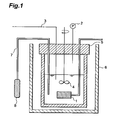
- Fig. 1 is a general schematic drawing of an apparatus for measuring refrigerant dissolved viscosity, used for the examples.
- the refrigerating machine oil used in the invention contains the polyol ester used according to the invention when it contains the base oil used in the invention, and when the refrigerating machine oil used in the invention includes components other than the polyol ester used according to the invention, the refrigerating machine oil used in the invention may be prepared using a base oil which already contains those components, or the refrigerating machine oil may be prepared with addition of those components separately from the base oil used in invention.
- the refrigerating machine oil used in the invention may contain a base oil other than the polyol ester used according to the invention, in which case the base oil other than the polyol ester used according to the invention may be added to the base oil used in the invention beforehand, or it may be added separately as a base oil that does not contain the polyol ester used according to the invention (hereinafter also referred to as "second base oil" for convenience) during preparation of the refrigerating machine oil.
- the refrigerating machine oil used in the invention may include various additives, and such additives may either be included in the base oil or second base oil beforehand or added separately from the refrigerating machine oil or second base oil during preparation of the refrigerating machine oil used in the invention.
- the components other than the polyol ester used according to the invention in the base oil and refrigerating machine oil may be derived from the base oil, the second base oil or the additives, without any particular restrictions.
- the refrigerating machine oil used with a carbon dioxide refrigerant used according to the invention comprises a complete ester of a fatty acid in which the proportion of C14-C22 branched fatty acids is 40-100 % by mole and a polyhydric alcohol.
- the proportion of C14-C22 branched fatty acids in the fatty acid of the polyol ester (hereinafter referred to as "constituent fatty acid”) is 40-100 % by mole as mentioned above, but it is preferably 50-100 % by mole and more preferably 60-100 % by mole.
- the proportion of C14-C22 branched fatty acid is less than 40 % by mole will result in insufficient lubricity in the presence of a carbon dioxide refrigerant.
- branched fatty acids there may be mentioned, specifically, branched tetradecanoic acids, branched pentadecanoic acids, branched hexadecanoic acids, branched heptadecanoic acids, branched octadecanoic acids, branched nonadecanoic acids, branched eicosanoic acids, branched heneicosanoic acid and branched docosanoic acids, among which branched hexadecanoic acids, branched heptadecanoic acids and branched octadecanoic acids are preferred, and branched octadecanoic acids are more preferred.
- fatty acids other than C 14-C22 branched fatty acids there may be mentioned C6-C24 straight-chain fatty acids and C6-C 13, C23 or C24 branched fatty acids, and more specifically there may be mentioned straight-chain or branched hexanoic acids, straight-chain or branched heptanoic acids, straight-chain or branched octanoic acids, straight-chain or branched nonanoic acids, straight-chain or branched decanoic acids, straight-chain or branched undecanoic acids, straight-chain or branched dodecanoic acids, straight-chain or branched tridecanoic acids, straight-chain tetradecanoic acids, straight-chain pentadecanoic acids, straight-chain hexadecanoic acids, straight-chain heptadecanoic acids, straight-chain octadecanoic acids, straight-chain nonadecanoic acids, straight-chain eicosa
- the carbon number distribution of the constituent fatty acid is not particularly restricted so long as the proportion of the C14-C22 branched fatty acid satisfies the condition specified above, but from the viewpoint of ensuring satisfactory flow properties and lubricity in the presence of a carbon dioxide refrigerant, the proportion of the C16-C18 fatty acid (including straight-chain fatty acid and branched fatty acid) is preferably 40-100 % by mole, more preferably 50-100 % by mole, even more preferably 60-100 % by mole, yet more preferably 80-100 % by mole, even yet more preferably 90-100 % by mole and most preferably 95-100 % by mole.
- the proportion of C16-C18 fatty acid proportion is less than 40 % by mole will result in reduced lubricity in the presence of a carbon dioxide refrigerant.
- the polyhydric alcohol composing the polyol ester is preferably a polyhydric alcohol with 2-6 hydroxyl groups. From the viewpoint of obtaining a high level of lubricity in the presence of a carbon dioxide refrigerant, it is preferred to use a polyhydric alcohol with 4-6 hydroxyl groups. From the viewpoint of energy efficiency, low viscosity is sometimes desired for refrigerating machine oils used with a carbon dioxide refrigerant, and when a polyhydric alcohol with two or three hydroxyls is used as the polyhydric alcohol composing the polyol ester it is possible to achieve satisfactory levels of both lubricity and low viscosity in the presence of carbon dioxide refrigerants.
- dihydric alcohols there may be mentioned ethylene glycol, 1,3-propanediol, propylene glycol, 1,4-butanediol, 1,2-butanediol, 2-methyl-1,3-propanediol, 1,5-pentanediol, neopentyl glycol, 1,6-hexanediol, 2-ethyl-2-methyl-1,3-propanediol, 1,7-heptanediol, 2-methyl-2-propyl-1,3-propanediol, 2,2-diethyl-1,3-propanediol, 1,8-octanediol, 1,9-nonanediol, 1,10-decanediol, 1,11-undecanediol, and 1,12-dodecanediol.
- dihydric alcohols dihydric alcohols
- the polyol ester may consist of one type of polyol ester with a single structure, or it may be a mixture of polyol esters with different structures.
- the polyol ester may be a complete ester of one fatty acid and one polyhydric alcohol, a complete ester of two or more fatty acids and one polyhydric alcohol, a complete ester of one fatty acid and two or more polyhydric alcohols, or a complete ester of two or more fatty acids and two or more polyhydric alcohols.
- polyol esters employing mixed fatty acids and especially polyol esters comprising two or more fatty acids in the complete ester molecule have low-temperature characteristics and excellent compatibility with refrigerants.
- the polyol ester used in the invention is a complete ester obtained by esterification of all of the hydroxyl groups of a polyhydric alcohol, but the refrigerating machine oil used with a carbon dioxide refrigerant may also contain a partial ester of a polyhydric alcohol and a fatty acid with a C 14-C22 branched fatty acid proportion of 40-100 % by mole, so long as the excellent effect of the polyol ester used in the invention is not impaired.
- a partial ester is a polyol ester having some of the hydroxyl groups of the polyhydric alcohol remaining as hydroxyl groups without esterification.
- the partial ester may also exist as a by-product of synthesis of the polyol ester used in the invention.
- the purity of a polyol ester obtained by synthesis is specified by the hydroxyl value of the synthesis product, and the hydroxyl value is preferably not greater than 20 mgKOH/g, more preferably not greater than 10 mgKOH/g and even more preferably not greater than 5 mgKOH/g.
- the refrigerating machine oil used with a carbon dioxide refrigerant used according to the invention may consist entirely of the polyol ester used in the invention, or it may also contain a base oil other than the polyol ester.
- base oils other than polyol ester used in the invention there may be used hydrocarbon-based oils including mineral oils, olefin polymers, naphthalene compounds, and alkyklbenzenes, esteric base oils other than polyol esters used in the invention (monoesters, and polyol esters containing only straight-chain fatty acids as constituent fatty acids), and oxygen-containing synthetic oils such as polyglycols, polyvinyl ethers, ketones, polyphenyl ethers, silicones, polysiloxanes and perfluoroethers. Preferred oxygen-containing synthetic oils among these are polyglycols, polyvinyl ethers and ketones.
- the content of the polyol ester in the refrigerating machine oil used with a carbon dioxide refrigerant is, in view of excellent performance including lubricity, refrigerant compatibility, heat and chemical stability and electrical insulating properties, 50 % by mass or greater, based on the total amount of the refrigerating machine oil.
- the content of complete esters in the base oil for the refrigerating machine oil used with a carbon dioxide refrigerant is preferably selected so that the content of polyol esters used according to the invention based on the total amount of refrigerating machine oil satisfies the conditions specified above when the base oil is used in a refrigerating machine oil.
- the refrigerating machine oil used with a carbon dioxide refrigerant used according to the invention comprises the base oil for the refrigerating machine oil used with a carbon dioxide refrigerant used according to the invention, and because the base oil contains the polyol ester used in the invention it may be satisfactorily used without addition of additives, although various additives may be combined therewith if necessary.
- phosphoric acid esters there may be mentioned tributyl phosphate, tripentyl phosphate, trihexyl phosphate, triheptyl phosphate, trioctyl phosphate, trinonyl phosphate, tridecyl phosphate, triundecyl phosphate, tridodecyl phosphate, tritridecyl phosphate, tritetradecyl phosphate, tripentadecyl phosphate, trihexadecyl phosphate, triheptadecyl phosphate, trioctadecyl phosphate, trioleyl phosphate, triphenyl phosphate, tricresyl phosphate, trixylenyl phosphate, cresyldiphenyl phosphate and xylenyldiphenyl phosphate.
- tributyl phosphorothionate tripentyl phosphorothionate, trihexyl phosphorothionate, triheptyl phosphorothionate, trioctyl phosphorothionate, trinonyl phosphorothionate, tridecyl phosphorothionate, triundecyl phosphorothionate, tridodecyl phosphorothionate, tritridecyl phosphorothionate, tritetradecyl phosphorothionate, tripentadecyl phosphorothionate, trihexadecyl phosphorothionate, triheptadecyl phosphorothionate, trioctadecyl phosphorothionate, trioleyl phosphorothionate, triphenyl phosphorothionate, tricresyl phosphorothionate, trixylenyl phosphorothionate,
- acidic phosphoric acid ester amine salts there may be mentioned amine salts of amines, such as methylamines, ethylamines, propylamines, butylamines, pentylamines, hexylamines, heptylamines, octylamines, dimethylamines, diethylamines, dipropylamines, dibutylamines, dipentylamines, dihexylamines, diheptylamines, dioctylamines, trimethylamines, triethylamines, tripropylamines, tributylamines, tripentylamines, trihexylamines, triheptylamines and trioctylamines, with the aforementioned acidic phosphoric acid esters.
- amine salts of amines such as methylamines, ethylamines, propylamines, butylamines, pent
- chlorinated phosphoric acid esters there may be mentioned tris-dichloropropyl phosphate, tris-chloroethyl phosphate, tris-chlorophenyl phosphate and polyoxyalkylene-bis[di(chloroalkyl)] phosphate.
- dibutyl phosphite dipentyl phosphite, dihexyl phosphite, diheptyl phosphite, dioctyl phosphite, dinonyl phosphite, didecyl phosphite, diundecyl phosphite, didodecyl phosphite, dioleyl phosphite, diphenyl phosphite, dicresyl phosphite, tributyl phosphite, tripentyl phosphite, trihexyl phosphite, triheptyl phosphite, trioctyl phosphite, trinonyl phosphite, tridecyl phosphite, triundecyl phosphite, tridodec
- the phosphorus compound content is not particularly restricted but is preferably 0.01-5.0 % by mass and more preferably 0.02-3.0 % by mass based on the total amount of the refrigerating machine oil (the total amount of the base oil and all of the additives).
- a phosphorus compound may be used alone or two or more may be used in combination.
- phenylglycidyl ether-type epoxy compounds include phenylglycidyl ether and alkylphenylglycidyl ether.
- the alkylphenylglycidyl ether may have one to three C1-C13 alkyl groups, and preferably one C4-10 alkyl group such as n-butylphenylglycidyl ether, i-butylphenylglycidyl ether, sec-butylphenylglycidyl ether, tert-butylphenylglycidyl ether, pentylphenylglycidyl ether, hexylphenylglycidyl ether, heptylphenylglycidyl ether, octylphenylglycidyl ether, nonylphenylglycidyl ether or decylphenylglycidyl ether.
- alkylglycidyl ether-type epoxy compounds include decylglycidyl ether, undecylglycidyl ether, dodecylglycidyl ether, tridecylglycidyl ether, tetradecylglycidyl ether, 2-ethylhexylglycidyl ether, neopentyl glycol diglycidyl ether, trimethylolpropanetriglycidyl ether, pentaerythritoltetraglycidyl ether, 1,6-hexanediol diglycidyl ether, sorbitolpolyglycidyl ether, polyalkyleneglycol monoglycidyl ether and polyalkyleneglycol diglycidyl ether.
- glycidyl ester-type epoxy compounds include phenylglycidyl esters, alkylglycidyl esters and alkenylglycidyl esters, among which glycidyl-2,2-dimethyloctanoate, glycidylbenzoate, glycidyl acrylate and glycidyl methacrylate are preferred.
- alkyloxirane compounds include 1,2-epoxybutane, 1,2-epoxypentane, 1,2-epoxyhexane, 1,2-epoxyheptane, 1,2-epoxyoctane, 1,2-epoxynonane, 1,2-epoxydecane, 1,2-epoxyundecane, 1,2-epoxydodecane, 1,2-epoxytridecane, 1,2-epoxytetradecane, 1,2-epoxypentadecane, 1,2-epoxyhexadecane, 1,2-epoxyheptadecane, 1,1,2-epoxyoctadecane, 2-epoxynonadecane and 1,2-epoxyeicosane.
- alicyclic epoxy compounds include 1,2-epoxycyclohexane, 1,2-epoxycyclopentane, 3,4-epoxycyclohexylmethyl-3,4-epoxycyclohexane carboxylate, bis(3,4-epoxycyclohexylmethyl)adipate, exo-2,3-epoxynorbornane, bis(3,4-epoxy-6-methylcyclohexylmethyl)adipate, 2-(7-oxabicyclo[4.1.0]hept-3-yl)-spiro(1,3-dioxane-5,3'-[7]oxabicyclo[4.1.0]heptane, 4-(1 '-methylepoxyethyl)-1,2-epoxy-2-methylcyclohexane and 4-epoxyethyl-1,2-epoxycyclohexane.
- epoxidated fatty acid monoesters include epoxidated esters of C12-C20 fatty acids and C1-C8 alcohols, phenol or alkylphenols. Particularly preferred for use are butyl, hexyl, benzyl, cyclohexyl, methoxyethyl, octyl, phenyl and butylphenyl esters of epoxystearic acids.
- epoxy compounds Preferred among these epoxy compounds are phenylglycidyl ether-type epoxy compounds, glycidyl ester-type epoxy compounds, alicyclic epoxy compounds and epoxidated fatty acid monoesters. More preferred among these are phenylglycidyl ether-type epoxy compounds and glycidyl ester-type epoxy compounds, and phenylglycidyl ether, butylphenylglycidyl ether, alkylglycidyl ester or mixtures thereof being especially preferred.
- the epoxy compound content is not particularly restricted but is preferably 0.1-5.0 % by mass and more preferably 0.2-2.0 % by mass based on the total amount of the refrigerating machine oil.
- Such an epoxy compound may be used alone, or two or more may be used in combination.
- refrigerating machine oil additives that are known in the prior art.
- phenol-based antioxidants such as di-tert-butyl-p-cresol and bisphenol A
- amine-based antioxidants such as phenyl-a-naphthylamine and N,N-di(2-naphthyl)-p-phenylenediamine
- anti-wear agents such as zinc dithiophosphate
- extreme-pressure agents such as chlorinated paraffins and sulfur compounds
- oiliness improvers such as fatty acids, silicone-based and other types of antifoaming agents
- metal deactivators such as benzotriazoles, viscosity index improvers, pour point depressants, and detergent dispersants.
- Such additives may be used alone or in combinations of two or more. There are no particular restrictions on the content of such additives, but it is preferably not greater than 10 % by mass and more preferably not greater than 5 % by mass based on the total amount of the refrigerating machine oil.
- the kinematic viscosity of the refrigerating machine oil used with a carbon dioxide refrigerant is not particularly restricted, but the kinematic viscosity at 40°C is preferably 3-1000 mm 2 /s, more preferably 4-500 mm 2 /s and most preferably 5-400 mm 2 /s.
- the kinematic viscosity at 100°C is preferably 1-100 mm 2 /s and more preferably 2-50 mm 2 /s.
- the volume resistivity of the refrigerating machine oil used with a carbon dioxide refrigerant is also not particularly restricted, but is preferably 1.0 ⁇ 10 12 ⁇ cm or greater, more preferably 1.0 ⁇ 10 13 ⁇ cm or greater and most preferably 1.0 x 10 14 ⁇ cm or greater. Electrical insulating properties will usually be required for use in refrigerating machines with hermetic type compressor.
- the volume resistivity is the value measured according to JIS C 2101, "Electrical Insulation Oil Test Method", at 25°C.
- the moisture content of the refrigerating machine oil used with a carbon dioxide refrigerant is not particularly restricted but is preferably not greater than 200 ppm, more preferably not greater than 100 ppm and most preferably not greater than 50 ppm based on the total amount of the refrigerating machine oil.
- a lower moisture content is desired from the viewpoint of effect on the stability and electrical insulating properties of the oil, especially for use in refrigerating machines with hermetic type compressor.
- the refrigerating machine oil used with a carbon dioxide refrigerant exhibits an excellent effect when used with a carbon dioxide refrigerant, and the refrigerant used may be a single carbon dioxide refrigerant or a mixed refrigerant comprising a carbon dioxide refrigerant and another refrigerant.
- refrigerants there may be mentioned HFC refrigerants, fluorinated ether-based refrigerants such as perfluoroethers, dimethyl ether, ammonia, and hydrocarbons.
- HFC refrigerants there may be mentioned C1-C3 and preferably C1-C2 hydrofluorocarbons.
- HFCs such as difluoromethane (HFC-32), trifluoromethane (HFC-23), pentafluoroethane (HFC-125), 1,1,2,2-tetrafluoroethane (HFC-134), 1,1,1,2-tetrafluoroethane (HFC-134a), 1,1,1-trifluoroethane (HFC-143a) and 1,1-difluoroethane (HFC-152a), as well as mixtures of two or more of the above.
- HFCs such as difluoromethane (HFC-32), trifluoromethane (HFC-23), pentafluoroethane (HFC-125), 1,1,2,2-tetrafluoroethane (HFC-134), 1,1,1,2-tetrafluoroethane (HFC-134a), 1,1,1-
- fluorinated ether-based refrigerants there may be mentioned HFE-134p, HFE-245mc, HFE-236mf, HFE-236me, HFE-338mcf, HFE-365mcf, HFE-245mf, HFE-347mmy, HFE-347mcc, HFE-125, HFE-143m, and HFN-227me.
- hydrocarbon refrigerants there are preferably used those that are gases at 25°C, under 1 atmosphere. More specifically preferred are C1-C5 and preferably C1-C4 alkanes, cycloalkanes and alkenes, and their mixtures. Specific examples thereof include methane, ethylene, ethane, propylene, propane, cyclopropane, butane, isobutane, cyclobutane, methylcyclopropane and mixtures of two or more of the above. Preferred among the above are propane, butane, isobutane and their mixtures.
- the mixing ratio of the carbon dioxide refrigerant with an HFC refrigerant, fluorinated ether-based refrigerant, dimethyl ether or ammonia but the total amount of refrigerant used with the carbon dioxide refrigerant is preferably 1-200 parts by mass and more preferably 10-100 parts by mass with respect to 100 parts by mass of the carbon dioxide.
- a mixed refrigerant comprising a mixture of a carbon dioxide refrigerant and a hydrofluorocarbon and/or hydrocarbon, at preferably 1-200 parts by mass and more preferably 10-100 parts by mass as the total of hydrofluorocarbon/hydrocarbon with respect to 100 parts by mass of the carbon dioxide.
- refrigerating machine oils were prepared using base oils 1-39 listed below. The properties of the obtained refrigerating machine oils are shown in Tables 2-6.
- the apparatus shown in Fig. 1 comprises a pressure vessel 5 (stainless steel, interior volume: 200 ml) that includes a viscometer 1, pressure gauge 2, thermocouple 3 and stirrer 4, a thermostatic bath 6 for temperature control in the pressure vessel 5, and a sampling cylinder 8 connected to the pressure vessel 5 through a flow channel 7 and including a valve.
- the sampling cylinder 8 and flow channel 7 are detachable, and the sampling cylinder 8 can be weighed during measurement, after vacuum deaeration, or after weighing out the carbon dioxide refrigerant and refrigerating machine oil mixture.
- thermocouple 3 and thermostatic bath 6 are both electrically connected to temperature control means (not shown), and a data signal for the temperature of the sample oil (or mixture of carbon dioxide refrigerant and refrigerating machine oil) is sent from the thermocouple 3 to the temperature control means while a control signal is sent from the temperature control means to the thermostatic bath 6 to allow control of the temperature of the refrigerating machine oil or mixture.
- the viscometer 1 is electrically connected to an information processor (not shown), and measurement data for the viscosity of the fluid in the pressure vessel 5 is sent from the viscometer 1 to the information processor to allow measurement of the viscosity under prescribed conditions.
- Running-in was performed for 1 minute under a load of 150 lb at a refrigerating machine oil temperature of 100°C, according to the ASTM D 2670 "FALEX WEAR TEST (Standard Test Method for Measuring Wear Properties of Fluid Lubricants (Falex Pin and Vee Block Method) ".
- the tester was operated for 2 hours under a load of 250 lb while blowing in 10 L/h of carbon dioxide refrigerant, and the abrasion wear of the test journal (pin) was measured after the test.
- the results are shown in Tables 2 to 6.
- Example 1 Example 2
- Example 3 Example 4 Comp. Ex. 1 Comp. Ex. 2 Comp. Ex.
- the refrigerating machine oils of Examples 1-23 when used with a carbon dioxide refrigerant, exhibited an excellent balance of performance in terms of lubricity, refrigerant compatibility, thermostability, electrical insulating properties and kinematic viscosity.
- the refrigerating machine oils of Examples 1-23 exhibited excellent lubricity in the presence of a carbon dioxide refrigerant, compared to the refrigerating machine oils of the comparative examples that had similar refrigerant dissolved viscosities at 40°C.
- the present invention provides a useful refrigerating machine fluid composition comprising a refrigerating machine oil, and a refrigerant containing carbon dioxide.
Landscapes
- Chemical & Material Sciences (AREA)
- Chemical Kinetics & Catalysis (AREA)
- General Chemical & Material Sciences (AREA)
- Oil, Petroleum & Natural Gas (AREA)
- Organic Chemistry (AREA)
- Health & Medical Sciences (AREA)
- Emergency Medicine (AREA)
- Lubricants (AREA)
Claims (8)
- Verwendung eines Basisöls für ein Kühlmaschinenöl, das mit einem Kohlendioxidkältemittel verwendet wird, worin das Basisöl einen kompletten Ester einer Fettsäure, in welcher der Anteil der C14-C22 verzweigten Fettsäure 40-100 Mol-% beträgt, und eines mehrwertigen Alkohols umfasst, worin der Anteil des kompletten Esters 50 Masse-% oder mehr ist, basierend auf der Gesamtmenge des Kühlmaschinenöls.
- Die Verwendung nach Anspruch 1, worin der mehrwertige Alkohol 2-6 Hydroxylgruppen hat.
- Die Verwendung nach Anspruch 1 oder 2, worin der Anteil der C16-C18 Fettsäuren in der Fettsäure 40-100 Mol-% beträgt.
- Die Verwendung nach einem der Ansprüche 1 bis 3, worin der Anteil der C16-C18 verzweigten Fettsäuren in der Fettsäure 40-100 Mol-% beträgt.
- Die Verwendung nach einem der Ansprüche 1 bis 4, worin der Anteil der C18 verzweigten Fettsäuren in der Fettsäure 50-100 Mol-% beträgt.
- Die Verwendung nach einem der Ansprüche 1 bis 5, worin der Anteil der tertiären Kohlenstoffatome unter den konstituierenden Kohlenstoffatomen der Fettsäure 2 Masse-% oder mehr beträgt, wie es durch 13C-NMR-Analyse bestimmt wird.
- Verwendung eines Kühlmaschinenöls für eine Kühlmaschine, das mit einem Kohlendioxidkältemittel verwendet wird, worin das Kühlmaschinenöl das Basisöl umfasst, wie es in einem der Ansprüche 1 bis 6 definiert ist.
- Kühlmaschinenfluidzusammensetzung, umfassend ein Kühlmaschinenöl, umfassend das Basisöl wie in einem der Ansprüche 1 bis 6 definiert, und ein Kältemittel enthaltend Kohlendioxid.
Applications Claiming Priority (3)
| Application Number | Priority Date | Filing Date | Title |
|---|---|---|---|
| JP2006081317 | 2006-03-23 | ||
| JP2006317560A JP4000337B1 (ja) | 2006-03-23 | 2006-11-24 | 二酸化炭素冷媒用冷凍機油用基油、二酸化炭素冷媒用冷凍機油 |
| PCT/JP2007/055727 WO2007108484A1 (ja) | 2006-03-23 | 2007-03-20 | 二酸化炭素冷媒用冷凍機油用基油、二酸化炭素冷媒用冷凍機油 |
Publications (3)
| Publication Number | Publication Date |
|---|---|
| EP2014749A1 EP2014749A1 (de) | 2009-01-14 |
| EP2014749A4 EP2014749A4 (de) | 2010-08-18 |
| EP2014749B1 true EP2014749B1 (de) | 2013-02-20 |
Family
ID=38522512
Family Applications (1)
| Application Number | Title | Priority Date | Filing Date |
|---|---|---|---|
| EP07739170A Not-in-force EP2014749B1 (de) | 2006-03-23 | 2007-03-20 | Verwendung eines GRUNDÖLs für KÄLTEMASCHINENÖL mit KOHLENDIOXID-KÄLTEMITTEL |
Country Status (5)
| Country | Link |
|---|---|
| US (1) | US7993543B2 (de) |
| EP (1) | EP2014749B1 (de) |
| JP (1) | JP4000337B1 (de) |
| CN (1) | CN101405374B (de) |
| WO (1) | WO2007108484A1 (de) |
Families Citing this family (12)
| Publication number | Priority date | Publication date | Assignee | Title |
|---|---|---|---|---|
| JP5572284B2 (ja) | 2007-02-27 | 2014-08-13 | Jx日鉱日石エネルギー株式会社 | 冷凍機油および冷凍機用作動流体組成物 |
| JP2009074018A (ja) * | 2007-02-27 | 2009-04-09 | Nippon Oil Corp | 冷凍機油および冷凍機用作動流体組成物 |
| JP5143545B2 (ja) * | 2007-03-06 | 2013-02-13 | Jx日鉱日石エネルギー株式会社 | 冷凍機油および冷凍機用作動流体組成物 |
| JP5193485B2 (ja) * | 2007-03-27 | 2013-05-08 | Jx日鉱日石エネルギー株式会社 | 冷凍機油及び冷凍機用作動流体組成物 |
| JP5143517B2 (ja) * | 2007-09-26 | 2013-02-13 | Jx日鉱日石エネルギー株式会社 | 二酸化炭素冷媒用冷凍機油用基油及び二酸化炭素冷媒用冷凍機油 |
| WO2009055009A2 (en) | 2007-10-24 | 2009-04-30 | Emerson Climate Technologies, Inc. | Scroll compressor for carbon dioxide refrigerant |
| WO2009057475A1 (ja) * | 2007-10-29 | 2009-05-07 | Nippon Oil Corporation | 冷凍機油および冷凍機用作動流体組成物 |
| JP2009138037A (ja) * | 2007-12-04 | 2009-06-25 | Hitachi Appliances Inc | 冷媒圧縮機およびヒートポンプ式給湯機 |
| JP5265294B2 (ja) * | 2008-10-08 | 2013-08-14 | Jx日鉱日石エネルギー株式会社 | 炭化水素冷媒用冷凍機油及び冷凍機用作動流体組成物 |
| JP5390638B2 (ja) * | 2009-01-26 | 2014-01-15 | ケムチュア コーポレイション | 冷蔵システムのためのポリオールエステル潤滑剤の製造 |
| EP2158896A3 (de) | 2009-11-02 | 2010-09-29 | Symrise GmbH & Co. KG | Riechstoffhaltige Zusammensetzungen umfassend Neopentylglycoldiisononanoat |
| WO2012086518A1 (ja) * | 2010-12-20 | 2012-06-28 | 日立アプライアンス株式会社 | 冷凍空調用圧縮機及び冷凍空調装置 |
Family Cites Families (13)
| Publication number | Priority date | Publication date | Assignee | Title |
|---|---|---|---|---|
| GB1441918A (en) * | 1972-07-20 | 1976-07-07 | Unilever Emery | Ester mixtures |
| DE2302918C2 (de) * | 1973-01-22 | 1982-04-08 | Henkel KGaA, 4000 Düsseldorf | Neue Esteröle, sowie deren Verwendung in Schmiermitteln und Hydraulikflüssigkeiten |
| JPS5212256A (en) * | 1975-07-18 | 1977-01-29 | Lion Corp | Halogen-containing resin compositions |
| SG59958A1 (en) * | 1993-06-30 | 1999-02-22 | Nof Corp | Synthetic lubricating oil and working fluid composition for refrigeration machine |
| DE69636652T2 (de) * | 1995-02-14 | 2007-10-04 | Kao Corp. | Die verwendung von biologisch abbaubaren schmier-grundöl |
| DE19719132A1 (de) * | 1997-05-07 | 1998-11-12 | Rwe Dea Ag | Polyol-Ester als Schmiermittel für CO¶2¶-Kältemaschinen |
| JP4005711B2 (ja) * | 1998-09-29 | 2007-11-14 | 新日本石油株式会社 | 冷凍機油 |
| JP4278749B2 (ja) | 1998-12-11 | 2009-06-17 | 出光興産株式会社 | 冷凍機油組成物及び該組成物を用いた潤滑方法 |
| TW546372B (en) | 1998-12-11 | 2003-08-11 | Idemitsu Kosan Co | Refrigerator oil composition, and method of using the composition for lubrication |
| JP4393625B2 (ja) * | 1999-06-18 | 2010-01-06 | 花王株式会社 | 合成潤滑油基油 |
| JP2001107066A (ja) | 1999-10-08 | 2001-04-17 | New Japan Chem Co Ltd | 冷凍機用潤滑油 |
| JP5265068B2 (ja) | 2000-10-30 | 2013-08-14 | Jx日鉱日石エネルギー株式会社 | 冷凍機用流体組成物 |
| JP5097402B2 (ja) * | 2004-08-24 | 2012-12-12 | 出光興産株式会社 | 熱交換器の熱交換効率を高くする方法 |
-
2006
- 2006-11-24 JP JP2006317560A patent/JP4000337B1/ja active Active
-
2007
- 2007-03-20 WO PCT/JP2007/055727 patent/WO2007108484A1/ja not_active Ceased
- 2007-03-20 US US12/293,846 patent/US7993543B2/en not_active Expired - Fee Related
- 2007-03-20 EP EP07739170A patent/EP2014749B1/de not_active Not-in-force
- 2007-03-20 CN CN2007800099509A patent/CN101405374B/zh active Active
Also Published As
| Publication number | Publication date |
|---|---|
| CN101405374A (zh) | 2009-04-08 |
| US20090200507A1 (en) | 2009-08-13 |
| CN101405374B (zh) | 2013-04-24 |
| EP2014749A4 (de) | 2010-08-18 |
| WO2007108484A1 (ja) | 2007-09-27 |
| JP4000337B1 (ja) | 2007-10-31 |
| EP2014749A1 (de) | 2009-01-14 |
| US7993543B2 (en) | 2011-08-09 |
| JP2007284654A (ja) | 2007-11-01 |
Similar Documents
| Publication | Publication Date | Title |
|---|---|---|
| EP2014749B1 (de) | Verwendung eines GRUNDÖLs für KÄLTEMASCHINENÖL mit KOHLENDIOXID-KÄLTEMITTEL | |
| US8318040B2 (en) | Refrigerator oil and working fluid composition for refrigerating machine | |
| EP2119759B1 (de) | Kühlschranköl und arbeitsflüssigkeitszusammensetzung für einen kühlschrank | |
| KR100632727B1 (ko) | 냉각 기재 오일용 펜타에리트리톨의 혼합 에스테르 | |
| JP5265121B2 (ja) | 冷凍機油組成物および冷凍機用作動流体組成物 | |
| US20100282999A1 (en) | Refrigerator oil and working fluid composition for refrigerating machine | |
| JP5914912B2 (ja) | 冷凍機油および冷凍機用作動流体組成物 | |
| JP5265294B2 (ja) | 炭化水素冷媒用冷凍機油及び冷凍機用作動流体組成物 | |
| JP5143517B2 (ja) | 二酸化炭素冷媒用冷凍機油用基油及び二酸化炭素冷媒用冷凍機油 | |
| JP5171185B2 (ja) | 二酸化炭素冷媒用冷凍機油用基油及び二酸化炭素冷媒用冷凍機油 | |
| JP5068618B2 (ja) | 二酸化炭素冷媒用冷凍機油用基油及び二酸化炭素冷媒用冷凍機油 | |
| JP5275577B2 (ja) | 冷凍機油及び冷凍機用作動流体組成物 | |
| JP5068619B2 (ja) | 二酸化炭素冷媒用冷凍機油用基油及び二酸化炭素冷媒用冷凍機油 | |
| JP5084425B2 (ja) | 二酸化炭素冷媒用冷凍機油用基油及び二酸化炭素冷媒用冷凍機油 | |
| JP5198822B2 (ja) | 二酸化炭素冷媒用冷凍機油用基油及び二酸化炭素冷媒用冷凍機油 | |
| JP5143459B2 (ja) | 1,1−ジフルオロエタン冷媒用冷凍機油及び冷凍機用作動流体組成物 | |
| JP5275578B2 (ja) | 冷凍機油及び冷凍機用作動流体組成物 |
Legal Events
| Date | Code | Title | Description |
|---|---|---|---|
| PUAI | Public reference made under article 153(3) epc to a published international application that has entered the european phase |
Free format text: ORIGINAL CODE: 0009012 |
|
| 17P | Request for examination filed |
Effective date: 20081022 |
|
| AK | Designated contracting states |
Kind code of ref document: A1 Designated state(s): AT BE BG CH CY CZ DE DK EE ES FI FR GB GR HU IE IS IT LI LT LU LV MC MT NL PL PT RO SE SI SK TR |
|
| AX | Request for extension of the european patent |
Extension state: AL BA HR MK RS |
|
| A4 | Supplementary search report drawn up and despatched |
Effective date: 20100715 |
|
| 17Q | First examination report despatched |
Effective date: 20110317 |
|
| DAX | Request for extension of the european patent (deleted) | ||
| GRAP | Despatch of communication of intention to grant a patent |
Free format text: ORIGINAL CODE: EPIDOSNIGR1 |
|
| GRAS | Grant fee paid |
Free format text: ORIGINAL CODE: EPIDOSNIGR3 |
|
| GRAA | (expected) grant |
Free format text: ORIGINAL CODE: 0009210 |
|
| RAP1 | Party data changed (applicant data changed or rights of an application transferred) |
Owner name: KAO CORPORATION Owner name: JX NIPPON OIL & ENERGY CORPORATION |
|
| AK | Designated contracting states |
Kind code of ref document: B1 Designated state(s): AT BE BG CH CY CZ DE DK EE ES FI FR GB GR HU IE IS IT LI LT LU LV MC MT NL PL PT RO SE SI SK TR |
|
| REG | Reference to a national code |
Ref country code: GB Ref legal event code: FG4D |
|
| REG | Reference to a national code |
Ref country code: CH Ref legal event code: EP |
|
| REG | Reference to a national code |
Ref country code: AT Ref legal event code: REF Ref document number: 597573 Country of ref document: AT Kind code of ref document: T Effective date: 20130315 |
|
| REG | Reference to a national code |
Ref country code: IE Ref legal event code: FG4D |
|
| REG | Reference to a national code |
Ref country code: DE Ref legal event code: R096 Ref document number: 602007028542 Country of ref document: DE Effective date: 20130418 |
|
| REG | Reference to a national code |
Ref country code: AT Ref legal event code: MK05 Ref document number: 597573 Country of ref document: AT Kind code of ref document: T Effective date: 20130220 |
|
| REG | Reference to a national code |
Ref country code: NL Ref legal event code: VDEP Effective date: 20130220 |
|
| REG | Reference to a national code |
Ref country code: LT Ref legal event code: MG4D |
|
| PG25 | Lapsed in a contracting state [announced via postgrant information from national office to epo] |
Ref country code: LT Free format text: LAPSE BECAUSE OF FAILURE TO SUBMIT A TRANSLATION OF THE DESCRIPTION OR TO PAY THE FEE WITHIN THE PRESCRIBED TIME-LIMIT Effective date: 20130220 Ref country code: IS Free format text: LAPSE BECAUSE OF FAILURE TO SUBMIT A TRANSLATION OF THE DESCRIPTION OR TO PAY THE FEE WITHIN THE PRESCRIBED TIME-LIMIT Effective date: 20130620 Ref country code: SE Free format text: LAPSE BECAUSE OF FAILURE TO SUBMIT A TRANSLATION OF THE DESCRIPTION OR TO PAY THE FEE WITHIN THE PRESCRIBED TIME-LIMIT Effective date: 20130220 Ref country code: ES Free format text: LAPSE BECAUSE OF FAILURE TO SUBMIT A TRANSLATION OF THE DESCRIPTION OR TO PAY THE FEE WITHIN THE PRESCRIBED TIME-LIMIT Effective date: 20130531 Ref country code: BG Free format text: LAPSE BECAUSE OF FAILURE TO SUBMIT A TRANSLATION OF THE DESCRIPTION OR TO PAY THE FEE WITHIN THE PRESCRIBED TIME-LIMIT Effective date: 20130520 Ref country code: AT Free format text: LAPSE BECAUSE OF FAILURE TO SUBMIT A TRANSLATION OF THE DESCRIPTION OR TO PAY THE FEE WITHIN THE PRESCRIBED TIME-LIMIT Effective date: 20130220 |
|
| PG25 | Lapsed in a contracting state [announced via postgrant information from national office to epo] |
Ref country code: FI Free format text: LAPSE BECAUSE OF FAILURE TO SUBMIT A TRANSLATION OF THE DESCRIPTION OR TO PAY THE FEE WITHIN THE PRESCRIBED TIME-LIMIT Effective date: 20130220 Ref country code: LV Free format text: LAPSE BECAUSE OF FAILURE TO SUBMIT A TRANSLATION OF THE DESCRIPTION OR TO PAY THE FEE WITHIN THE PRESCRIBED TIME-LIMIT Effective date: 20130220 Ref country code: PL Free format text: LAPSE BECAUSE OF FAILURE TO SUBMIT A TRANSLATION OF THE DESCRIPTION OR TO PAY THE FEE WITHIN THE PRESCRIBED TIME-LIMIT Effective date: 20130220 Ref country code: GR Free format text: LAPSE BECAUSE OF FAILURE TO SUBMIT A TRANSLATION OF THE DESCRIPTION OR TO PAY THE FEE WITHIN THE PRESCRIBED TIME-LIMIT Effective date: 20130521 Ref country code: PT Free format text: LAPSE BECAUSE OF FAILURE TO SUBMIT A TRANSLATION OF THE DESCRIPTION OR TO PAY THE FEE WITHIN THE PRESCRIBED TIME-LIMIT Effective date: 20130620 Ref country code: SI Free format text: LAPSE BECAUSE OF FAILURE TO SUBMIT A TRANSLATION OF THE DESCRIPTION OR TO PAY THE FEE WITHIN THE PRESCRIBED TIME-LIMIT Effective date: 20130220 |
|
| PG25 | Lapsed in a contracting state [announced via postgrant information from national office to epo] |
Ref country code: DK Free format text: LAPSE BECAUSE OF FAILURE TO SUBMIT A TRANSLATION OF THE DESCRIPTION OR TO PAY THE FEE WITHIN THE PRESCRIBED TIME-LIMIT Effective date: 20130220 Ref country code: EE Free format text: LAPSE BECAUSE OF FAILURE TO SUBMIT A TRANSLATION OF THE DESCRIPTION OR TO PAY THE FEE WITHIN THE PRESCRIBED TIME-LIMIT Effective date: 20130220 Ref country code: RO Free format text: LAPSE BECAUSE OF FAILURE TO SUBMIT A TRANSLATION OF THE DESCRIPTION OR TO PAY THE FEE WITHIN THE PRESCRIBED TIME-LIMIT Effective date: 20130220 Ref country code: NL Free format text: LAPSE BECAUSE OF FAILURE TO SUBMIT A TRANSLATION OF THE DESCRIPTION OR TO PAY THE FEE WITHIN THE PRESCRIBED TIME-LIMIT Effective date: 20130220 Ref country code: CZ Free format text: LAPSE BECAUSE OF FAILURE TO SUBMIT A TRANSLATION OF THE DESCRIPTION OR TO PAY THE FEE WITHIN THE PRESCRIBED TIME-LIMIT Effective date: 20130220 Ref country code: SK Free format text: LAPSE BECAUSE OF FAILURE TO SUBMIT A TRANSLATION OF THE DESCRIPTION OR TO PAY THE FEE WITHIN THE PRESCRIBED TIME-LIMIT Effective date: 20130220 Ref country code: MC Free format text: LAPSE BECAUSE OF NON-PAYMENT OF DUE FEES Effective date: 20130331 |
|
| REG | Reference to a national code |
Ref country code: CH Ref legal event code: PL |
|
| PG25 | Lapsed in a contracting state [announced via postgrant information from national office to epo] |
Ref country code: CY Free format text: LAPSE BECAUSE OF FAILURE TO SUBMIT A TRANSLATION OF THE DESCRIPTION OR TO PAY THE FEE WITHIN THE PRESCRIBED TIME-LIMIT Effective date: 20130220 |
|
| PLBE | No opposition filed within time limit |
Free format text: ORIGINAL CODE: 0009261 |
|
| STAA | Information on the status of an ep patent application or granted ep patent |
Free format text: STATUS: NO OPPOSITION FILED WITHIN TIME LIMIT |
|
| REG | Reference to a national code |
Ref country code: IE Ref legal event code: MM4A |
|
| 26N | No opposition filed |
Effective date: 20131121 |
|
| PG25 | Lapsed in a contracting state [announced via postgrant information from national office to epo] |
Ref country code: CH Free format text: LAPSE BECAUSE OF NON-PAYMENT OF DUE FEES Effective date: 20130331 Ref country code: LI Free format text: LAPSE BECAUSE OF NON-PAYMENT OF DUE FEES Effective date: 20130331 Ref country code: IE Free format text: LAPSE BECAUSE OF NON-PAYMENT OF DUE FEES Effective date: 20130320 |
|
| REG | Reference to a national code |
Ref country code: DE Ref legal event code: R097 Ref document number: 602007028542 Country of ref document: DE Effective date: 20131121 |
|
| PG25 | Lapsed in a contracting state [announced via postgrant information from national office to epo] |
Ref country code: MT Free format text: LAPSE BECAUSE OF FAILURE TO SUBMIT A TRANSLATION OF THE DESCRIPTION OR TO PAY THE FEE WITHIN THE PRESCRIBED TIME-LIMIT Effective date: 20130220 |
|
| PG25 | Lapsed in a contracting state [announced via postgrant information from national office to epo] |
Ref country code: TR Free format text: LAPSE BECAUSE OF FAILURE TO SUBMIT A TRANSLATION OF THE DESCRIPTION OR TO PAY THE FEE WITHIN THE PRESCRIBED TIME-LIMIT Effective date: 20130220 |
|
| PG25 | Lapsed in a contracting state [announced via postgrant information from national office to epo] |
Ref country code: HU Free format text: LAPSE BECAUSE OF FAILURE TO SUBMIT A TRANSLATION OF THE DESCRIPTION OR TO PAY THE FEE WITHIN THE PRESCRIBED TIME-LIMIT; INVALID AB INITIO Effective date: 20070320 Ref country code: LU Free format text: LAPSE BECAUSE OF NON-PAYMENT OF DUE FEES Effective date: 20130320 |
|
| REG | Reference to a national code |
Ref country code: FR Ref legal event code: PLFP Year of fee payment: 10 |
|
| REG | Reference to a national code |
Ref country code: FR Ref legal event code: PLFP Year of fee payment: 11 |
|
| REG | Reference to a national code |
Ref country code: FR Ref legal event code: PLFP Year of fee payment: 12 |
|
| PGFP | Annual fee paid to national office [announced via postgrant information from national office to epo] |
Ref country code: BE Payment date: 20180312 Year of fee payment: 12 |
|
| PGFP | Annual fee paid to national office [announced via postgrant information from national office to epo] |
Ref country code: IT Payment date: 20180330 Year of fee payment: 12 |
|
| REG | Reference to a national code |
Ref country code: BE Ref legal event code: MM Effective date: 20190331 |
|
| PG25 | Lapsed in a contracting state [announced via postgrant information from national office to epo] |
Ref country code: BE Free format text: LAPSE BECAUSE OF NON-PAYMENT OF DUE FEES Effective date: 20190331 Ref country code: IT Free format text: LAPSE BECAUSE OF NON-PAYMENT OF DUE FEES Effective date: 20190320 |
|
| PGFP | Annual fee paid to national office [announced via postgrant information from national office to epo] |
Ref country code: GB Payment date: 20220321 Year of fee payment: 16 Ref country code: DE Payment date: 20220324 Year of fee payment: 16 |
|
| PGFP | Annual fee paid to national office [announced via postgrant information from national office to epo] |
Ref country code: FR Payment date: 20220321 Year of fee payment: 16 |
|
| REG | Reference to a national code |
Ref country code: DE Ref legal event code: R119 Ref document number: 602007028542 Country of ref document: DE |
|
| GBPC | Gb: european patent ceased through non-payment of renewal fee |
Effective date: 20230320 |
|
| PG25 | Lapsed in a contracting state [announced via postgrant information from national office to epo] |
Ref country code: GB Free format text: LAPSE BECAUSE OF NON-PAYMENT OF DUE FEES Effective date: 20230320 |
|
| PG25 | Lapsed in a contracting state [announced via postgrant information from national office to epo] |
Ref country code: GB Free format text: LAPSE BECAUSE OF NON-PAYMENT OF DUE FEES Effective date: 20230320 Ref country code: FR Free format text: LAPSE BECAUSE OF NON-PAYMENT OF DUE FEES Effective date: 20230331 Ref country code: DE Free format text: LAPSE BECAUSE OF NON-PAYMENT OF DUE FEES Effective date: 20231003 |