EP2014670B1 - Herstellung von Glucosinolaten aus landwirtschaftlichen Nebenprodukten und Abfall - Google Patents
Herstellung von Glucosinolaten aus landwirtschaftlichen Nebenprodukten und Abfall Download PDFInfo
- Publication number
- EP2014670B1 EP2014670B1 EP08104378A EP08104378A EP2014670B1 EP 2014670 B1 EP2014670 B1 EP 2014670B1 EP 08104378 A EP08104378 A EP 08104378A EP 08104378 A EP08104378 A EP 08104378A EP 2014670 B1 EP2014670 B1 EP 2014670B1
- Authority
- EP
- European Patent Office
- Prior art keywords
- glucosinolates
- glucosinolate
- kale
- anion exchange
- exchange membrane
- Prior art date
- Legal status (The legal status is an assumption and is not a legal conclusion. Google has not performed a legal analysis and makes no representation as to the accuracy of the status listed.)
- Not-in-force
Links
- 125000004383 glucosinolate group Chemical group 0.000 title claims description 128
- 239000006227 byproduct Substances 0.000 title description 5
- 239000002699 waste material Substances 0.000 title description 5
- 238000004519 manufacturing process Methods 0.000 title description 3
- 241000196324 Embryophyta Species 0.000 claims description 84
- 239000000463 material Substances 0.000 claims description 76
- 238000000034 method Methods 0.000 claims description 56
- 239000003011 anion exchange membrane Substances 0.000 claims description 41
- 239000000203 mixture Substances 0.000 claims description 35
- 240000003259 Brassica oleracea var. botrytis Species 0.000 claims description 23
- 235000011299 Brassica oleracea var botrytis Nutrition 0.000 claims description 21
- GMMLNKINDDUDCF-JRWRFYLSSA-N [(2s,3r,4s,5s,6r)-3,4,5-trihydroxy-6-(hydroxymethyl)oxan-2-yl] (1e)-5-[(r)-methylsulfinyl]-n-sulfooxypentanimidothioate Chemical compound C[S@@](=O)CCCC\C(=N/OS(O)(=O)=O)S[C@@H]1O[C@H](CO)[C@@H](O)[C@H](O)[C@H]1O GMMLNKINDDUDCF-JRWRFYLSSA-N 0.000 claims description 20
- RUQCCAGSFPUGSZ-OBWQKADXSA-N Glucoraphanin Natural products C[S@](=O)CCCCC(=NS(=O)(=O)O)S[C@@H]1O[C@H](CO)[C@@H](O)[C@H](O)[C@H]1O RUQCCAGSFPUGSZ-OBWQKADXSA-N 0.000 claims description 19
- 239000007788 liquid Substances 0.000 claims description 19
- 235000017647 Brassica oleracea var italica Nutrition 0.000 claims description 18
- 108090000790 Enzymes Proteins 0.000 claims description 13
- 102000004190 Enzymes Human genes 0.000 claims description 13
- 238000010438 heat treatment Methods 0.000 claims description 13
- 150000003839 salts Chemical class 0.000 claims description 13
- 235000003899 Brassica oleracea var acephala Nutrition 0.000 claims description 12
- 235000012905 Brassica oleracea var viridis Nutrition 0.000 claims description 9
- 244000128884 Zier Kohl Species 0.000 claims description 9
- 244000178920 Brassica alboglabra Species 0.000 claims description 6
- 235000011303 Brassica alboglabra Nutrition 0.000 claims description 6
- 244000064816 Brassica oleracea var. acephala Species 0.000 claims description 6
- 235000000536 Brassica rapa subsp pekinensis Nutrition 0.000 claims description 6
- 241000499436 Brassica rapa subsp. pekinensis Species 0.000 claims description 6
- 240000002791 Brassica napus Species 0.000 claims description 4
- 235000011293 Brassica napus Nutrition 0.000 claims description 4
- 239000012736 aqueous medium Substances 0.000 claims description 4
- 238000007710 freezing Methods 0.000 claims description 4
- 230000008014 freezing Effects 0.000 claims description 4
- 240000003291 Armoracia rusticana Species 0.000 claims description 3
- 235000011330 Armoracia rusticana Nutrition 0.000 claims description 3
- 241000219198 Brassica Species 0.000 claims description 3
- 235000003351 Brassica cretica Nutrition 0.000 claims description 3
- 235000011297 Brassica napobrassica Nutrition 0.000 claims description 3
- 241000219192 Brassica napus subsp. rapifera Species 0.000 claims description 3
- 235000011301 Brassica oleracea var capitata Nutrition 0.000 claims description 3
- 235000004221 Brassica oleracea var gemmifera Nutrition 0.000 claims description 3
- 235000004219 Brassica oleracea var medullosa Nutrition 0.000 claims description 3
- 235000001169 Brassica oleracea var oleracea Nutrition 0.000 claims description 3
- 235000004222 Brassica oleracea var ramosa Nutrition 0.000 claims description 3
- 244000308368 Brassica oleracea var. gemmifera Species 0.000 claims description 3
- 244000304217 Brassica oleracea var. gongylodes Species 0.000 claims description 3
- 244000308366 Brassica oleracea var. medullosa Species 0.000 claims description 3
- 235000001138 Brassica oleracea var. palmifolia Nutrition 0.000 claims description 3
- 240000002000 Brassica oleracea var. ramosa Species 0.000 claims description 3
- 235000004214 Brassica oleracea var. sabauda Nutrition 0.000 claims description 3
- 241001332183 Brassica oleracea var. sabauda Species 0.000 claims description 3
- 240000004073 Brassica oleracea var. viridis Species 0.000 claims description 3
- 235000010149 Brassica rapa subsp chinensis Nutrition 0.000 claims description 3
- 235000000540 Brassica rapa subsp rapa Nutrition 0.000 claims description 3
- 235000003343 Brassica rupestris Nutrition 0.000 claims description 3
- 244000024675 Eruca sativa Species 0.000 claims description 3
- 235000014755 Eruca sativa Nutrition 0.000 claims description 3
- 244000211187 Lepidium sativum Species 0.000 claims description 3
- 235000007849 Lepidium sativum Nutrition 0.000 claims description 3
- 235000017879 Nasturtium officinale Nutrition 0.000 claims description 3
- 240000005407 Nasturtium officinale Species 0.000 claims description 3
- 244000088415 Raphanus sativus Species 0.000 claims description 3
- 235000005733 Raphanus sativus var niger Nutrition 0.000 claims description 3
- 235000006140 Raphanus sativus var sativus Nutrition 0.000 claims description 3
- 244000155437 Raphanus sativus var. niger Species 0.000 claims description 3
- 235000000183 arugula Nutrition 0.000 claims description 3
- QKSKPIVNLNLAAV-UHFFFAOYSA-N bis(2-chloroethyl) sulfide Chemical compound ClCCSCCCl QKSKPIVNLNLAAV-UHFFFAOYSA-N 0.000 claims description 3
- 244000048394 giant Jersey kale Species 0.000 claims description 3
- 235000010460 mustard Nutrition 0.000 claims description 3
- 238000010298 pulverizing process Methods 0.000 claims description 2
- 239000007864 aqueous solution Substances 0.000 claims 1
- 230000008569 process Effects 0.000 description 22
- 235000013305 food Nutrition 0.000 description 21
- 239000000284 extract Substances 0.000 description 19
- 239000012528 membrane Substances 0.000 description 18
- 238000000605 extraction Methods 0.000 description 13
- 238000003306 harvesting Methods 0.000 description 12
- 235000015872 dietary supplement Nutrition 0.000 description 9
- 150000002540 isothiocyanates Chemical class 0.000 description 9
- SUVMJBTUFCVSAD-UHFFFAOYSA-N sulforaphane Chemical compound CS(=O)CCCCN=C=S SUVMJBTUFCVSAD-UHFFFAOYSA-N 0.000 description 8
- 238000006243 chemical reaction Methods 0.000 description 7
- 239000008367 deionised water Substances 0.000 description 7
- XLYOFNOQVPJJNP-UHFFFAOYSA-N water Substances O XLYOFNOQVPJJNP-UHFFFAOYSA-N 0.000 description 7
- 239000000126 substance Substances 0.000 description 6
- 239000002243 precursor Substances 0.000 description 5
- SUVMJBTUFCVSAD-JTQLQIEISA-N 4-Methylsulfinylbutyl isothiocyanate Natural products C[S@](=O)CCCCN=C=S SUVMJBTUFCVSAD-JTQLQIEISA-N 0.000 description 4
- 241001465754 Metazoa Species 0.000 description 4
- 206010028980 Neoplasm Diseases 0.000 description 4
- 210000003850 cellular structure Anatomy 0.000 description 4
- 239000003814 drug Substances 0.000 description 4
- 238000004108 freeze drying Methods 0.000 description 4
- 239000000047 product Substances 0.000 description 4
- 235000015487 sulforaphane Nutrition 0.000 description 4
- 229960005559 sulforaphane Drugs 0.000 description 4
- 108010058651 thioglucosidase Proteins 0.000 description 4
- 238000001291 vacuum drying Methods 0.000 description 4
- 235000013311 vegetables Nutrition 0.000 description 4
- 239000000654 additive Substances 0.000 description 3
- 229920002678 cellulose Polymers 0.000 description 3
- 239000003795 chemical substances by application Substances 0.000 description 3
- 150000001875 compounds Chemical class 0.000 description 3
- 230000000694 effects Effects 0.000 description 3
- 239000004615 ingredient Substances 0.000 description 3
- VLKZOEOYAKHREP-UHFFFAOYSA-N n-Hexane Chemical compound CCCCCC VLKZOEOYAKHREP-UHFFFAOYSA-N 0.000 description 3
- 239000008194 pharmaceutical composition Substances 0.000 description 3
- 235000017807 phytochemicals Nutrition 0.000 description 3
- 229930000223 plant secondary metabolite Natural products 0.000 description 3
- 238000001694 spray drying Methods 0.000 description 3
- 239000007858 starting material Substances 0.000 description 3
- 235000011960 Brassica ruvo Nutrition 0.000 description 2
- OKTJSMMVPCPJKN-UHFFFAOYSA-N Carbon Chemical compound [C] OKTJSMMVPCPJKN-UHFFFAOYSA-N 0.000 description 2
- VEXZGXHMUGYJMC-UHFFFAOYSA-M Chloride anion Chemical compound [Cl-] VEXZGXHMUGYJMC-UHFFFAOYSA-M 0.000 description 2
- LFQSCWFLJHTTHZ-UHFFFAOYSA-N Ethanol Chemical compound CCO LFQSCWFLJHTTHZ-UHFFFAOYSA-N 0.000 description 2
- 240000008415 Lactuca sativa Species 0.000 description 2
- 240000002129 Malva sylvestris Species 0.000 description 2
- 235000006770 Malva sylvestris Nutrition 0.000 description 2
- 238000007605 air drying Methods 0.000 description 2
- 235000015173 baked goods and baking mixes Nutrition 0.000 description 2
- XMQFTWRPUQYINF-UHFFFAOYSA-N bensulfuron-methyl Chemical compound COC(=O)C1=CC=CC=C1CS(=O)(=O)NC(=O)NC1=NC(OC)=CC(OC)=N1 XMQFTWRPUQYINF-UHFFFAOYSA-N 0.000 description 2
- 238000009835 boiling Methods 0.000 description 2
- 201000011510 cancer Diseases 0.000 description 2
- 231100000357 carcinogen Toxicity 0.000 description 2
- 239000003183 carcinogenic agent Substances 0.000 description 2
- 210000002421 cell wall Anatomy 0.000 description 2
- 238000005119 centrifugation Methods 0.000 description 2
- 235000013339 cereals Nutrition 0.000 description 2
- 235000013351 cheese Nutrition 0.000 description 2
- 230000001767 chemoprotection Effects 0.000 description 2
- 230000001055 chewing effect Effects 0.000 description 2
- 235000016213 coffee Nutrition 0.000 description 2
- 235000013353 coffee beverage Nutrition 0.000 description 2
- 238000005520 cutting process Methods 0.000 description 2
- 229910021641 deionized water Inorganic materials 0.000 description 2
- 238000001035 drying Methods 0.000 description 2
- 235000020650 eye health related herbal supplements Nutrition 0.000 description 2
- 238000001914 filtration Methods 0.000 description 2
- 230000036541 health Effects 0.000 description 2
- 230000007407 health benefit Effects 0.000 description 2
- 238000004128 high performance liquid chromatography Methods 0.000 description 2
- 210000004962 mammalian cell Anatomy 0.000 description 2
- 230000007246 mechanism Effects 0.000 description 2
- 230000000813 microbial effect Effects 0.000 description 2
- 239000006187 pill Substances 0.000 description 2
- 230000003389 potentiating effect Effects 0.000 description 2
- 238000011084 recovery Methods 0.000 description 2
- 235000012045 salad Nutrition 0.000 description 2
- 235000014438 salad dressings Nutrition 0.000 description 2
- 235000015067 sauces Nutrition 0.000 description 2
- 239000002689 soil Substances 0.000 description 2
- 235000014347 soups Nutrition 0.000 description 2
- -1 sulforaphane Chemical class 0.000 description 2
- 239000013589 supplement Substances 0.000 description 2
- 235000013616 tea Nutrition 0.000 description 2
- 235000013618 yogurt Nutrition 0.000 description 2
- 241000219193 Brassicaceae Species 0.000 description 1
- 241000218980 Brassicales Species 0.000 description 1
- 241000873224 Capparaceae Species 0.000 description 1
- 208000024172 Cardiovascular disease Diseases 0.000 description 1
- 241000032989 Ipomoea lacunosa Species 0.000 description 1
- 241001544487 Macromiidae Species 0.000 description 1
- 241000124008 Mammalia Species 0.000 description 1
- 208000022873 Ocular disease Diseases 0.000 description 1
- 241001128145 Resedaceae Species 0.000 description 1
- 208000007107 Stomach Ulcer Diseases 0.000 description 1
- NINIDFKCEFEMDL-UHFFFAOYSA-N Sulfur Chemical compound [S] NINIDFKCEFEMDL-UHFFFAOYSA-N 0.000 description 1
- 230000002378 acidificating effect Effects 0.000 description 1
- 230000000996 additive effect Effects 0.000 description 1
- 230000002411 adverse Effects 0.000 description 1
- 150000001413 amino acids Chemical class 0.000 description 1
- 150000001449 anionic compounds Chemical class 0.000 description 1
- 125000000129 anionic group Chemical group 0.000 description 1
- 239000003963 antioxidant agent Substances 0.000 description 1
- 238000013459 approach Methods 0.000 description 1
- 230000008901 benefit Effects 0.000 description 1
- 230000000975 bioactive effect Effects 0.000 description 1
- 230000000711 cancerogenic effect Effects 0.000 description 1
- 229910052799 carbon Inorganic materials 0.000 description 1
- 230000006800 cellular catabolic process Effects 0.000 description 1
- 230000010094 cellular senescence Effects 0.000 description 1
- 239000003086 colorant Substances 0.000 description 1
- 238000004440 column chromatography Methods 0.000 description 1
- 238000007796 conventional method Methods 0.000 description 1
- 239000012084 conversion product Substances 0.000 description 1
- 238000001816 cooling Methods 0.000 description 1
- 230000002939 deleterious effect Effects 0.000 description 1
- 238000001784 detoxification Methods 0.000 description 1
- 238000000502 dialysis Methods 0.000 description 1
- 235000005911 diet Nutrition 0.000 description 1
- 230000037213 diet Effects 0.000 description 1
- 238000009826 distribution Methods 0.000 description 1
- 238000002036 drum drying Methods 0.000 description 1
- 235000013399 edible fruits Nutrition 0.000 description 1
- 230000002526 effect on cardiovascular system Effects 0.000 description 1
- 230000002255 enzymatic effect Effects 0.000 description 1
- 235000019441 ethanol Nutrition 0.000 description 1
- 239000012467 final product Substances 0.000 description 1
- 239000000796 flavoring agent Substances 0.000 description 1
- 235000019634 flavors Nutrition 0.000 description 1
- 235000012055 fruits and vegetables Nutrition 0.000 description 1
- QUSSPXNPULRXKG-UHFFFAOYSA-N galleon Natural products O1C(=CC=2)C(OC)=CC=2CCCCC(=O)CCC2=CC=C(O)C1=C2 QUSSPXNPULRXKG-UHFFFAOYSA-N 0.000 description 1
- HWABDHHTQMTFMW-OOLORDSESA-N glucoraphenin Chemical compound CS(=O)C=CCC\C(S[C@@H]1O[C@H](CO)[C@@H](O)[C@H](O)[C@H]1O)=N\S(O)(=O)=O HWABDHHTQMTFMW-OOLORDSESA-N 0.000 description 1
- ZFLXCZJBYSPSKU-YYSSDTNZSA-N glucoraphenin Natural products C[S@](=O)C=CCCC(=NOS(=O)(=O)O)S[C@@H]1O[C@H](CO)[C@@H](O)[C@H](O)[C@H]1O ZFLXCZJBYSPSKU-YYSSDTNZSA-N 0.000 description 1
- 238000005342 ion exchange Methods 0.000 description 1
- 150000002500 ions Chemical class 0.000 description 1
- 238000002955 isolation Methods 0.000 description 1
- 244000005700 microbiome Species 0.000 description 1
- 238000002156 mixing Methods 0.000 description 1
- 230000001613 neoplastic effect Effects 0.000 description 1
- 239000002417 nutraceutical Substances 0.000 description 1
- 235000021436 nutraceutical agent Nutrition 0.000 description 1
- 235000015097 nutrients Nutrition 0.000 description 1
- 239000003960 organic solvent Substances 0.000 description 1
- 238000000643 oven drying Methods 0.000 description 1
- 150000002923 oximes Chemical class 0.000 description 1
- 230000035515 penetration Effects 0.000 description 1
- 238000002360 preparation method Methods 0.000 description 1
- 238000002203 pretreatment Methods 0.000 description 1
- 239000006041 probiotic Substances 0.000 description 1
- 235000018291 probiotics Nutrition 0.000 description 1
- FROBCXTULYFHEJ-OAHLLOKOSA-N propaquizafop Chemical compound C1=CC(O[C@H](C)C(=O)OCCON=C(C)C)=CC=C1OC1=CN=C(C=C(Cl)C=C2)C2=N1 FROBCXTULYFHEJ-OAHLLOKOSA-N 0.000 description 1
- 230000004224 protection Effects 0.000 description 1
- 239000012264 purified product Substances 0.000 description 1
- 230000009257 reactivity Effects 0.000 description 1
- 230000008707 rearrangement Effects 0.000 description 1
- 239000002002 slurry Substances 0.000 description 1
- 238000002791 soaking Methods 0.000 description 1
- 238000012358 sourcing Methods 0.000 description 1
- 230000002269 spontaneous effect Effects 0.000 description 1
- 238000010025 steaming Methods 0.000 description 1
- 239000012258 stirred mixture Substances 0.000 description 1
- 238000003756 stirring Methods 0.000 description 1
- QAOWNCQODCNURD-UHFFFAOYSA-L sulfate group Chemical group S(=O)(=O)([O-])[O-] QAOWNCQODCNURD-UHFFFAOYSA-L 0.000 description 1
- 229910052717 sulfur Inorganic materials 0.000 description 1
- 239000011593 sulfur Substances 0.000 description 1
- 238000010257 thawing Methods 0.000 description 1
- 238000007669 thermal treatment Methods 0.000 description 1
- 231100000331 toxic Toxicity 0.000 description 1
- 230000002588 toxic effect Effects 0.000 description 1
- 235000013343 vitamin Nutrition 0.000 description 1
- 239000011782 vitamin Substances 0.000 description 1
- 229940088594 vitamin Drugs 0.000 description 1
- 229930003231 vitamin Natural products 0.000 description 1
Images


Classifications
-
- C—CHEMISTRY; METALLURGY
- C07—ORGANIC CHEMISTRY
- C07H—SUGARS; DERIVATIVES THEREOF; NUCLEOSIDES; NUCLEOTIDES; NUCLEIC ACIDS
- C07H15/00—Compounds containing hydrocarbon or substituted hydrocarbon radicals directly attached to hetero atoms of saccharide radicals
- C07H15/02—Acyclic radicals, not substituted by cyclic structures
- C07H15/14—Acyclic radicals, not substituted by cyclic structures attached to a sulfur, selenium or tellurium atom of a saccharide radical
-
- A—HUMAN NECESSITIES
- A61—MEDICAL OR VETERINARY SCIENCE; HYGIENE
- A61P—SPECIFIC THERAPEUTIC ACTIVITY OF CHEMICAL COMPOUNDS OR MEDICINAL PREPARATIONS
- A61P35/00—Antineoplastic agents
-
- A—HUMAN NECESSITIES
- A61—MEDICAL OR VETERINARY SCIENCE; HYGIENE
- A61P—SPECIFIC THERAPEUTIC ACTIVITY OF CHEMICAL COMPOUNDS OR MEDICINAL PREPARATIONS
- A61P39/00—General protective or antinoxious agents
- A61P39/02—Antidotes
-
- C—CHEMISTRY; METALLURGY
- C07—ORGANIC CHEMISTRY
- C07H—SUGARS; DERIVATIVES THEREOF; NUCLEOSIDES; NUCLEOTIDES; NUCLEIC ACIDS
- C07H1/00—Processes for the preparation of sugar derivatives
- C07H1/06—Separation; Purification
- C07H1/08—Separation; Purification from natural products
Definitions
- the present invention relates to a process for producing glucosinolates, particularly glucoraphanin, from agricultural by-products and waste.
- Glucosinolates are chemoprotective precursor compounds.
- the glucosinolates produced by the method of the invention may be incorporated into a variety of food products, pharmaceuticals, health supplements, and related products.
- Glucosinolates ( ⁇ -thioglucoside- N -hydroxysulfates) are found in dicotyledenous plants and many plants of the order Capparales. Glucosinolates are found in the Brasicaceae, Resedaceae, and Capparaceae families but most commonly in the Brassicaceae family. Over one hundred glucosinolates have been characterized. Glucosinolates are sulfur-containing, water-soluble, anionic compounds of the general structure: Glucosinolates include an R-group derived from amino acids and a thioglucosidic link to the carbon of a sulphonated oxime. The sulfate group imparts strongly acidic properties to glucosinolates.
- glucosinolates particularly glucoraphanin (also known as sulforaphane glucosinolate or 4-methylsulfinyibutyl glucosinolate), are phytochemical precursors to potent chemoprotectants, such as sulforaphane.
- Glucosinolates and beta-thioglucosidase enzymes co-exist in glucosinolate-containing plants but are physically segregated until the cellular structure of the plant material is disrupted, such as by chewing, cutting, crushing, freeze-thawing, thermal treatment, or the like.
- the thioglucosidic bonds of the glucosinolates are hydrolyzed by beta-thioglucosidases, particularly myrosinase, into unstable glucosinolate aglycones, which undergo spontaneous rearrangement into potent chemoprotectants called isothiocyanates and other compounds.
- Isothiocyanates are biologically active and have high chemical reactivity. Isothiocyanates, particularly sulforaphane, appear to trigger carcinogen detoxification mechanisms when delivered to mammalian cells.
- glucoraphanin In addition to reducing the risk of certain cancers, glucoraphanin, through its bioactive conversion product sulforaphane, has recently been shown effective in destroying organisms responsible for causing stomach ulcers and may provide novel approaches for reducing the risk of developing cardiovascular and ocular diseases. Efforts are being undertaken to gain approval for making label claims on food products either naturally high in these agents or for foods containing added crucifer chemoprotectants. Products containing chemoprotectant additives, although without such label claims, are already on the market.
- glucosinolates particularly glucoraphanin
- glucoraphanin The production of glucosinolates, particularly glucoraphanin, is problematic because of their high cost.
- the best source of glucoraphanin has been expensive specialty broccoli cultivars.
- the considerable health potential of glucosinolates has not been realized due to the high cost of sourcing glucoraphanin.
- the present invention is directed to a cost-effective process for obtaining glucosinolates, particularly glucoraphanin, from agricultural by-products and waste.
- Post-harvest and discarded plant materials including non-saleable plant materials, make effective and inexpensive starting materials for the process of the invention.
- Cruciferous vegetables have been identified as a good source of chemoprotectant precursor phytochemicals.
- Cruciferous vegetables include, but are not limited to, broccoli, kale, collard, curly kale, marrowstem kale, thousand head kale, Chinese kale, cauliflower, Portuguese kale, brussel sprouts, kohlrabi, Jersey kale, Chinese broccoli, rutabaga, mustard, daikon, horseradish, cabbage, savoy cabbage, Chinese cabbage, napa cabbage, broccoli rabe, arugula, watercress, cress, turnip, borecole, radish, and the like.
- broccoli plant materials are utilized.
- the plant materials should be processed relatively quickly after harvesting.
- the plant materials may be chopped or cut but should not be crushed or puréed until immediately before use in the process of the invention in order to minimize damage to cellular structures.
- the cell wall structures of the plant materials breaks down, thus bringing glucosinolates into contact with the enzymes that convert glucosinolates into Isothiocyanates. Therefore, damage to the glucosinolate-containing plant materials should be minimized prior to utilizing the plant materials in the method of the invention.
- the glucosinolate-containing plant materials can be preserved by any conventional means, such as by freezing or drying, such as by air drying, freeze drying, vacuum drying, drum drying, spray drying, or the like. Generally, however, it is preferred that the plant material be used as soon as possible after harvesting.
- the process of the invention is effective for relatively crude starting materials.
- the plant materials do not need to be washed or filtered to remove soil or other debris before use.
- the method of the invention generally comprises (1) providing a mixture of glucosinolate-containing plant material and liquid, (2) heating the mixture to inactivate enzymes in the plant material (3) contacting the heat inactivated mixture with an anion exchange membrane for 4 to 24 hours and at a temperature of 2°C to 7°C whereby at least a portion of the glucosinolates are absorbed onto the anion exchange membrane, and (4) releasing the glucosinolates from the anion exchange membrane.
- the method may further comprise removing salt from the extracted glucosinolates.
- the method comprises the following steps: (1) providing a mixture of glucosinolate-containing plant material and liquid; (2) heating the mixture to inactivate enzymes in the plant material; (3) contacting the heat inactivated mixture with an anion exchange membrane for 4 to 24 hours at a temperature of 2°C to 7°C, whereby at least a portion of the glucosinolates are absorbed onto the anion exchange membrane; (4) releasing the glucosinolates from the anion exchange membrane; (5) contacting the heat inactivated mixture with an anion exchange membrane whereby at least a portion of the glucosinolates are absorbed onto the anion exchange membrane; and (6) releasing the glucosinolates form the anion exchange membrane.
- the method may further comprise removing salt from the extracted glucosinolates.
- glucosinolates will bind to the membrane and the choice of plant material will dictate the final composition. Therefore, it is desirable to select plant materials containing higher levels of the glucosinolate desired to be extracted.
- plant materials containing glucoraphenin or glucoraphanin are selected. More preferably, plant materials containing glucoraphanin are selected.
- the glucosinolate extract produced by the method of the invention may be incorporated into food products, pharmaceuticals, and health supplements.
- the glucosinolate extract may be incorporated directly into food products or dried, cooled, frozen, or freeze-dried and then incorporated into the food products.
- Food product into which the glucosinolate extract may be incorporated include food supplements, drinks, shakes, baked goods, teas, soups, cereals, pills, tablets, salads, sandwiches, granolas, salad dressings, sauces, coffee, cheeses, yogurts, energy bars, and the like as well as mixtures thereof.
- Supplements include dietary supplements, nutritional supplements, herbal supplements, and the like.
- the food product may contain an effective amount of the glucosinolate extract, such as about 1 to about 100 mg per single serving of the food product.
- An effective amount of the glucosinolate extract may also be incorporated into pharmaceutical compositions, such as about 1 to about 100 mg per single dosage.
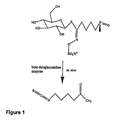
- FIG. 1 provides the principal reactions for conversion of glucoraphanin to sulforaphane.
- FIG. 2 provides a flowchart illustrating one embodiment of the process of the invention.
- FIG. 3 provides a flowchart illustrating another embodiment of the process of the invention.
- the present process is both technically straightforward and attractive from a production cost standpoint. Indeed, the present process makes it possible to obtain glucosinolates from agricultural by-products and waste, particularly post-harvest glucosinolate-containing plants and discarded materials that would otherwise be discarded or plowed under in the fields, such as non-saleable produce, leaves, stems, seeds, and the like.
- the glucosinolates, particularly glucoraphanin, obtained from the process of the invention offer the health benefits of glucosinolates prepared from substantially more expensive processes.
- chemoprotectants and “chemoprotective compounds” refer to agents of plant origin that are effective for reducing the susceptibility of mammals to the toxic and neoplastic effects of carcinogens.
- Chemoprotectant “precursors” refer to agents which give rise to chemoprotectants by enzymatic and/or chemical means. Talalay, P. et al., J. Nutr., 131 (11 Supp.): 30275-30335 (2001 ). Examples of such chemoprotectant precursors include alkyl glucosinolates, such as glucoraphanin.
- the thioglucosidic bonds of glucoraphanin are hydrolyzed in vivo by gut microflora into unstable glucosinolate aglycones, which undergo spontaneous rearrangement into isothiocyanates, such as sulforaphane, and other compounds, such as nitriles and thiocyanates.
- the conversion can also be catalyzed by beta-thioglucosidases, particularly myrosinase, which are found in glucosinolate-containing plants. The principal reactions are illustrated in FIG. 1 .
- effective amount is an amount of additive which provides the desired effect or benefit upon consumption. Generally, about 1 to about 100 mg of the glucosinolates of the invention, particularly glucoraphanin, per single serving of the food product or about 1 to about 100 mg per single dosage of a pharmaceutical composition; higher amounts can be used if desired.
- plant materials generally includes whole plants, leaves, plant tissue, sprouts, stems, seeds, florets, fruits, flowers, tubers, roots, the like, and mixtures thereof. While the amount of glucosinolates may vary from one part of the plant to another, from one type of plant to another, and may depend on the age of the plant, any combination of plant materials can be used so as to reduce the amount of sorting and preparation time prior to using the plant materials in the process of the invention although it is preferable to utilize the plant materials that contain desirable levels of the glucosinolates desired to be extracted.
- Cruciferous vegetables have been identified as a good source of chemoprotectant precursor phytochemicals.
- Cruciferous vegetables include, but are not limited to, broccoli, kale, collard, curly kale, marrowstem kale, thousand head kale, Chinese kale, cauliflower, Portuguese kale, brussel sprouts, kohlrabi, Jersey kale, Chinese broccoli, rutabaga, mustard, daikon, horseradish, cabbage, savoy cabbage, Chinese cabbage, napa cabbage, broccoli rabe, arugula, watercress, cress, turnip, borecole, radish, and the like.
- broccoli plant materials are utilized.
- Particularly useful broccoli cultivars that may be used in the claimed method are Saga, DeCicco, Everest, Emerald City, Packman, Corvet, Dandy, Early, Emperor, Mariner, Green Comet, Green Valiant, Arcadia, Calabrese Caravel, Chancellor, Citation, Cruiser, Early Purple Sprouting Red Arrow, Eureka, Excelsior, Galleon, Ginga , Goliath, Green Duke, Greenblet, Italian Sprouting, Late Purple Sprouting, Late Winter Sprouting, White Star, Legend, Leprechaun, Marathon, Mariner, Minaret (Romanesco), Paragon, Patriot, Premium Crop, Rapine (Spring Raab), Rosalind, Salade (Fall Raab), Samurai, Shogun, Sprinter, Sultan, Taiko, Trixie, San Miguel, Arcadia, Gypsy, Everest, Patron, Southern Comet, Green Comet, Destiny, Climax and Pirate.
- the invention can be carried out in batch, semi-batch, semi-continuous, or continuous mode.
- the method of the invention generally comprises (1) providing a mixture of glucosinolate-containing plant material and liquid, (2) heating the mixture to inactivate enzymes in the plant material, (3) contacting the heat inactivated mixture with an anion exchange membrane whereby at least a portion of the glucosinolates are absorbed onto the anion exchange membrane, and (4) releasing the glucosinolates from the anion exchange membrane.
- the method may further comprise removing salt from the extracted glucosinolates.
- FIG. 3 Another embodiment of the present invention is illustrated in FIG. 3 .
- This method includes the following steps: (1) providing a mixture of glucosinolate-containing plant material and liquid; (2) heating the mixture to inactivate enzymes in the plant material; (3) contacting the heat inactivated mixture with an anion exchange membrane whereby at least a portion of the glucosinolates are absorbed onto the anion exchange membrane; (4) releasing the glucosinolates from the anion exchange membrane; (5) contacting the heat inactivated mixture with an anion exchange membrane whereby at least a portion of the glucosinolates are absorbed onto the anion exchange membrane; and (6) releasing the glucosinolates form the anion exchange membrane.
- the method may further comprise removing salt from the extracted glucosinolates.
- the method of the invention is suitable for agricultural by-products and waste plant materials, the plant materials should be relatively fresh and not show spoilage.
- the process of the invention is suitable for extremely crude samples, which is not commonly found in traditional processes for extracting glucosinolates from plant materials.
- the method of the invention does not require that the plant materials undergo any sort of purifying pretreatment (e.g., the plant materials do not need to be washed, filtered, centrifuged, or the like to remove soil, debris, or other insoluble components before use).
- the plant materials should be processed by the method of the invention relatively quickly after harvesting, such as within a few hours.
- Glucosinolates remain intact in the plant materials until contacted by beta-thioglucosidase enzymes.
- the cell walls of the plant materials begin to break down post-harvest due to cellular senescence. Cellular breakdown brings the glucosinolates into contact with the enzymes, such as myrosinase, that convert glucosinolates into isothiocyanates.
- glucosinolate-containing plant materials such as by freezing, or drying, such as by air drying, freeze drying, vacuum drying, oven drying, or the like.
- Preserving the glucosinolate-containing plant materials serves to reduce the amount of conversion of glucosinolates to isothiocyanates by beta-thioglucosidases in the plant material as well as to reduce the activity of spoilage microorganisms. Generally, however, it is preferred that the materials be used soon after harvesting.
- damage to the glucosinolate-containing plant materials should be minimized until immediately before use in the method of the invention (i.e., within a few hours). Damage to the plant materials, such as by chewing, crushing, or cutting, also triggers the conversion of glucosinolates to isothiocyanates by beta-thioglucoisdases. Therefore, damage to the glucosinolate-containing plant materials should be minimized prior to utilizing the plant materials in the method of the invention.
- the glucosinolate-containing plant materials should be treated to disrupt the cellular structure in order to facilitate the release of glucosinolates. Suitable treatment steps include, but are not limited to, pulverizing, crushing, chopping, puréeing, the like, or a combination thereof. If the plant materials include seeds, the seeds can be pulverized and defatted prior to use. In one aspect, the seeds may be defatted using known defatting procedures, such as described in West, L., J. Agric. Food Chem., 52: 916-926 (2004 ).
- the plant materials should then be heated for a time and temperature sufficient to inactivate enzymes in the glucosinolate-containing plant material.
- the plant materials are heated to 60°C to 110°C for at least about five minutes.
- the heat treatment may be by any conventional means, such as by boiling, steaming, microwaving.
- the heat treatment step inactivates beta-thioglucosidase enzymes, preferably myrosinase, present in the plant materials in order to prevent the conversion of glucosinolates to isothiocyanates.
- the heat treatment also inactivates microbes in the mixture.
- the heat treatment improves the extraction of glucosinolates from the plant materials by increasing solubility and increasing water penetration into the plant materials.
- the amount of liquid is not critical as long as there is sufficient liquid to thoroughly and evenly heat the plant materials.
- the liquid is water but may be water containing an organic solvent, such as ethyl alcohol.
- the liquid is water.
- the amount of liquid in the mixture should be sufficient to make a stirrabie slurry.
- the heat inactivated mixture is then contacted with an anion exchange membrane to extract glucosinolates from the heat inactivated mixture.
- the anion exchange membrane is a strong base type membrane but weak base membranes may be used, if desired. Depending on the type of membrane selected, the membrane may require pre-treatment, such as soaking to "swell" the membrane.
- the anion exchange membrane is formed as a sheet and is immersed in the heat inactivated mixture. It is generally preferred to circulate the heat inactivated mixture during the extraction step, such as by stirring, mixing, or agitating by any convenient means.
- the anion exchange membrane contacts the heat inactivated mixture for 4 to 24 hours to allow glucosinolates to absorb to the anion exchange membrane.
- Suitable anion exchange membranes include strongly basic membranes, such as Electropure Excellion anion exchange membrane i 200 from Snowpure, LLC in San Clemente, CA.
- the surface of the membrane has "locked in place” groups having a positive charge and an appropriate counter ion, such as chloride. Glucosinolates have a stronger negative charge and take the place of the chloride ion, thus binding the glucosinolates to the membrane.
- the anion exchange membrane having bound glucosinolates is then contacted with an aqueous liquid containing salts, such as KCI, NaCI, or other food-grade inorganic salts, to facilitate the release of bound glucosinolates from the anion exchange membrane into the aqueous liquid.
- the aqueous liquid contains 1 M KCI.
- the amount of liquid is not critical as long as there is sufficient liquid to cover the membrane. Generally, about 4 to about 5 hours is sufficient time to release the glucosinolates from the membrane. Generally, at least about 80 percent of the glucosinolates are removed from the membrane.
- the temperature should be sufficiently low as to reduce the risk of microbial outgrowth during the release step, such as a temperature of 2 to 7°C.
- the extraction and release steps are at least once to maximize the amount of glucosinolates removed from the heat inactivated mixture.
- the same anion exchange membrane used in the previous extraction and release steps is used although a new anion exchange membrane may be used if desired.
- the glucosinolates released into the aqueous liquid may be further treated if desired.
- the aqueous medium containing the glucosinolates is treated to remove salt.
- Salt is removed because salt is generally undesired in the final product.
- salt can be removed from the aqueous medium by any conventional technique including, for example, dialyzing against deionized water using one or more cellulose ester membrane.
- salt is removed by dialyzing against de-ionized water for 12 to 24 hours at 2 to 7°C using one or more 100 molecular weight cutoff (MWCO) cellulose ester membranes.
- MWCO molecular weight cutoff
- the glucosinolates released into the aqueous liquid may be further processed into a variety of forms, if desired.
- the glucosinolates may be dried, such as by spray drying, freeze drying, vacuum drying, or the like, to form a dried glucosinolate extract.
- the resulting extract can then be dried for a time sufficient to reduce the water content of the extract to less than about 10 percent, preferably to less than about 5 percent, to form a dried glucosinolate extract.
- the extract may be dried using any known method, such as, but not limited to, freeze drying, spray drying, vacuum drying, and the like.
- the glucosinolate extract may also be further processed by cooling or freezing, or may be subjected to membrane processing, chromatographic processing, or dialysis to remove unwanted anionic substances that were bound to and were released from the anion exchange membrane, such as to form a glucosinolate isolate or purified product.
- the glucosinolate extract may also have introduced optional ingredients or components, such as, for example, flavorants, nutrients, vitamins, colorants, nutraceutical additives, antioxidants, probiotics, and the like, so long as the optional ingredients do not adversely affect the stability in a significant manner.
- optional ingredients or components such as, for example, flavorants, nutrients, vitamins, colorants, nutraceutical additives, antioxidants, probiotics, and the like, so long as the optional ingredients do not adversely affect the stability in a significant manner.
- the presence and amount of such optional ingredients can, of course, vary considerably depending on the product in which the extract is incorporated.
- the glucosinolate extract may be included in a variety of products, including food products and pharmaceuticals.
- the glucosinolate extract may also be used as a food fortificant.
- Food product into which the glucosinolate extract may be incorporated include food supplements, drinks, shakes, baked goods, teas, soups, cereals, pills, tablets, salads, sandwiches, granolas, salad dressings, sauces, coffee, cheeses, yogurts, energy bars, and the like as well as mixtures thereof.
- Supplements include dietary supplements, nutritional supplements, herbal supplements, or the like.
- the food product may contain an effective amount of glucosinolate extract, such as about 1 to about 100 mg per single serving of the food product.
- An effective amount of the glucosinolate extract may also be incorporated into pharmaceutical compositions, such as about 1 to about 100 mg. Of course, higher amounts can be included if desired.
- the spent plant materials used in the invention may be recycled and used as feed material for animals.
- the spent plant material can be separated from the aqueous liquid by filtration, centrifugation, decanting, or the like, to provide plant materials suitable for animal feed.
- the spent plant materials are uniquely useful as feed material because the materials no longer contain glucosinolates. It is generally desired that plant materials used for animal feed have low levels of glucosinolates because glucosinolate-containing plant materials have been found to have undesired effects on animals when used as a primary food source.
- the anion exchange membrane was briefly washed with deionized water and the membrane was placed in a stirred tank containing 4500 ml of 1 N KCI at 5°C for 4 hours to release the glucosinolates from the anion exchange membrane.
- the glucoraphanin concentration of the aqueous medium was measured by HPLC. Extraction over 24 hours resulted in 58 percent removal of total available glucoraphanin. 1 N KCI released essentially all bound glucoraphanin in 4 hours.
- both the extraction and release steps are repeated.
- the same anion exchange membrane was returned to the extraction tank for an additional 18 hours.
- the anion exchange membrane was then returned to the same 1 N KCI tank for four hours.
- the total removal of glucoraphanin was increased to 81 percent by repeating the process as described.
- a 4 hour treatment in the same 1 N KCl tank again released essentially all of the bound glucoraphanin.
- salt was removed by dialyzing against de-ionized water overnight at 5°C using 100 molecular weight cutoff (MWCO) cellulose ester membranes.
- MWCO molecular weight cutoff
- Example 1 The process of Example 1 was repeated using 150 g dried and pulverized broccoli florets.
- the broccoli florets were pulverized to pass through a #18 sieve. The process resulted in greater than 80 percent recovery of glucosinolates.
- Example 1 The process of Example 1 was repeated using 1 kg freshly harvested broccoli leaves and stems.
- the broccoli leaves and stems were steamed to inactivate the beta-thioglucosidase enzymes for 20 minutes.
- the broccoli leaves and stems were then puréed.
- the process resulted in recovery of glucosinolates similar to that of Example 1.
Landscapes
- Chemical & Material Sciences (AREA)
- Organic Chemistry (AREA)
- Health & Medical Sciences (AREA)
- General Health & Medical Sciences (AREA)
- Life Sciences & Earth Sciences (AREA)
- Molecular Biology (AREA)
- Engineering & Computer Science (AREA)
- Genetics & Genomics (AREA)
- Biotechnology (AREA)
- Biochemistry (AREA)
- Public Health (AREA)
- Pharmacology & Pharmacy (AREA)
- Veterinary Medicine (AREA)
- Crystallography & Structural Chemistry (AREA)
- General Chemical & Material Sciences (AREA)
- Animal Behavior & Ethology (AREA)
- Medicinal Chemistry (AREA)
- Nuclear Medicine, Radiotherapy & Molecular Imaging (AREA)
- Chemical Kinetics & Catalysis (AREA)
- Toxicology (AREA)
- Medicines Containing Plant Substances (AREA)
- Coloring Foods And Improving Nutritive Qualities (AREA)
- Pharmaceuticals Containing Other Organic And Inorganic Compounds (AREA)
- Medicines That Contain Protein Lipid Enzymes And Other Medicines (AREA)
- Saccharide Compounds (AREA)
- Separation Using Semi-Permeable Membranes (AREA)
Claims (8)
- Verfahren zum Extrahieren von Glukosinolaten von glukosinolathaltigem Planzenmaterial, wobei das genannte Verfahren Folgendes beinhaltet:(i) Bereitstellen eines Gemischs von glukosinolathaltigem Pflanzenmaterial und Flüssigkeit;(ii) Erhitzen des Gemischs für eine Zeit und bei einer Temperatur, die ausreichen, um Enzyme in dem glukosinolathaltigen Pflanzenmaterial zu inaktivierten, um ein hitzeinaktiviertes Gemisch zu bilden;(iii) Inkontaktbringen des hitzeinaktivierten Gemischs mit einer Anionenaustauschmembran für 4 bis 24 Stunden und bei einer Temperatur von 2 bis 7°C, so dass wenigstens ein Teil der Glukosinolate auf die Anionenaustauschmembran absorbiert wird; und(iv) Inkontaktbringen der absorbierte Glukosinolate aufweisenden Anionenaustauschmembran mit einer wässrigen Lösung für eine Zeit, die ausreicht, um die extrahierten Glukosinolate von der Anionenaustauschmembran freizusetzen, um ein die Glukosinolate enthaltendes wässriges Medium zu bilden.
- Verfahren nach Anspruch 1, wobei das glukosinolathaltige Pflanzenmaterial ausgewählt wird aus der Gruppe bestehend aus Brokkoli, Grünkohl, Blattkohl, Krauskohl, Futterkohl, Tausendkopfkohl, Chinakohl, Blumenkohl, portugiesischem Grünkohl, Rosenkohl, Kohlrabi, Spazierstockkohl, chinesischem Brokkoli, Kohlrübe, Senf, Daikon, Meerrettich, Kraut, Wirsingkohl, chinesische Kohl, Selleriekohl, Wildbrokkoli, Rukola, Wasserkresse, Kresse, Kohlrübe, Federkohl, Rettich und dergleichen und Gemischen davon.
- Verfahren nach Anspruch 1 oder 2, wobei das glukosinolathaltige Pflanzenmaterial wenigstens ein Mitglied der Gruppe bestehend aus Blüten, Samen, Blättern, Sprossen und Stielen umfasst.
- Verfahren nach einem der Ansprüche 1 bis 3, das ferner das Vorbehandeln des glukosinolathaltigen Pflanzenmaterials in Schritt (i) mit wenigstens einem Mitglied der Gruppe bestehend aus Dehydrieren, Entfetten, Frieren, Pulverisieren, Zermahlen, Zerhacken, Pürieren oder einer Kombination davon beinhaltet.
- Verfahren nach einem der Ansprüche 1 bis 4, wobei der Erhitzungsschritt bei einer Temperatur von 60 bis 110°C für 5 bis 15 Minuten erfolgt.
- Verfahren nach eine der Ansprüche 1 bis 5, wobei die extrahierten Glukosinolate Glukoraphanin sind.
- Verfahren nach einem der Ansprüche 1 bis 6, das ferner das Wiederholen der Schritte (iii) und (iv) nach Schritt (iv) beinhaltet.
- Vorfahren nach eine der sprüche 1 bis 7, das ferner das Entfernen von Salz aus den extrahierten Glukosinolaten beinhaltet.
Priority Applications (1)
| Application Number | Priority Date | Filing Date | Title |
|---|---|---|---|
| PL08104378T PL2014670T3 (pl) | 2007-06-12 | 2008-06-11 | Wytwarzanie glukozynolanów z rolniczych produktów ubocznych i odpadów |
Applications Claiming Priority (1)
| Application Number | Priority Date | Filing Date | Title |
|---|---|---|---|
| US11/761,883 US20080311276A1 (en) | 2007-06-12 | 2007-06-12 | Production of Glucosinolates from Agricultural By-Products & Waste |
Publications (3)
| Publication Number | Publication Date |
|---|---|
| EP2014670A2 EP2014670A2 (de) | 2009-01-14 |
| EP2014670A3 EP2014670A3 (de) | 2010-05-19 |
| EP2014670B1 true EP2014670B1 (de) | 2012-11-14 |
Family
ID=39828486
Family Applications (1)
| Application Number | Title | Priority Date | Filing Date |
|---|---|---|---|
| EP08104378A Not-in-force EP2014670B1 (de) | 2007-06-12 | 2008-06-11 | Herstellung von Glucosinolaten aus landwirtschaftlichen Nebenprodukten und Abfall |
Country Status (12)
| Country | Link |
|---|---|
| US (1) | US20080311276A1 (de) |
| EP (1) | EP2014670B1 (de) |
| CN (1) | CN101328197A (de) |
| AR (1) | AR066966A1 (de) |
| AU (1) | AU2008202575B2 (de) |
| BR (1) | BRPI0803074A2 (de) |
| CA (1) | CA2634786A1 (de) |
| MX (1) | MX2008007705A (de) |
| NO (1) | NO20082692L (de) |
| NZ (1) | NZ569018A (de) |
| PL (1) | PL2014670T3 (de) |
| RU (1) | RU2466567C2 (de) |
Cited By (1)
| Publication number | Priority date | Publication date | Assignee | Title |
|---|---|---|---|---|
| CN108727101A (zh) * | 2018-06-12 | 2018-11-02 | 安徽云峰农业发展有限公司 | 一种小麦专用有机肥及其制备方法和用途 |
Families Citing this family (29)
| Publication number | Priority date | Publication date | Assignee | Title |
|---|---|---|---|---|
| EP2213280A1 (de) * | 2009-01-30 | 2010-08-04 | DSM IP Assets B.V. | Formulierungen mit Glukosinolat und Myrosinase |
| IT1394763B1 (it) * | 2009-06-19 | 2012-07-13 | Bios Line S P A | Metodo di preparazione di estratti purificati da cavolo laciniato nero toscano e composizioni degli stessi |
| GB0922505D0 (en) * | 2009-12-23 | 2010-02-10 | Plant Bioscience Ltd | Use |
| CN102905713A (zh) * | 2010-03-11 | 2013-01-30 | 健康研究股份有限公司 | 一种递送和采用异硫氰酸酯预防和/或治疗膀胱癌的新型方法 |
| US10640464B2 (en) | 2011-01-03 | 2020-05-05 | The William M. Yarbrough Foundation | Use of isothiocyanate functional surfactants as Nrf2 inducers to treat epidermolysis bullosa simplex and related diseases |
| US11279674B2 (en) | 2011-01-03 | 2022-03-22 | The William M. Yarbrough Foundation | Isothiocyanate functional surfactant and associated method of use |
| US10273205B2 (en) | 2011-01-03 | 2019-04-30 | The William M. Yarbrough Foundation | Isothiocyanate functional surfactants, formulations incorporating isothiocyanate functional surfactants and associated methods for treating biofilms |
| US9962361B2 (en) | 2011-01-03 | 2018-05-08 | The William M. Yarbrough Foundation | Isothiocyanate functional surfactants, formulations incorporating the same, and associated methods of use |
| US8933119B2 (en) | 2011-01-03 | 2015-01-13 | The William M. Yarbrough Foundation | Method for treating phytophotodermatitis |
| US10308599B2 (en) | 2011-01-03 | 2019-06-04 | The William M. Yarbrough Foundation | Isothiocyanate functional surfactants, formulations incorporating the same, and associated methods of use |
| US11407713B2 (en) | 2011-01-03 | 2022-08-09 | The William M. Yarbrough Foundation | Isothiocyanate functional surfactants, formulations incorporating the same, and associated methods of use |
| US10647668B2 (en) | 2011-01-03 | 2020-05-12 | The William M. Yarbrough Foundation | Isothiocyanate functional surfactant and associated method of use |
| US8865765B2 (en) | 2011-01-12 | 2014-10-21 | The William M. Yarbrough Foundation | Method for treating eczema |
| US9532969B2 (en) | 2011-02-08 | 2017-01-03 | The William M. Yarbrough Foundation | Method for treating psoriasis |
| GB201109706D0 (en) * | 2011-06-09 | 2011-07-27 | Erapoil As | Method |
| CN102295667B (zh) * | 2011-06-28 | 2014-07-30 | 浙江省农业科学院 | 从青花菜花椰菜提取萝卜硫苷化合物的方法 |
| CN102286029A (zh) * | 2011-08-24 | 2011-12-21 | 天津商业大学 | 一种菜粕中提取的芥子油甙的精制方法 |
| EP2782583B1 (de) * | 2011-11-22 | 2019-09-25 | The John Hopkins University | Verfahren und zusammensetzungen zur reduzierung einer alkoholtoxizität |
| CN103416733A (zh) * | 2012-05-24 | 2013-12-04 | 宁波海逸生物科技有限公司 | 一种新鲜西兰花的硫代葡萄糖苷提取物及其制备方法 |
| US9949943B2 (en) | 2012-07-26 | 2018-04-24 | The William M. Yarbrough Foundation | Method for treating neurodegenerative diseases |
| US10434081B2 (en) | 2012-07-26 | 2019-10-08 | The William M. Yarbrough Foundation | Inhibitors of macrophage migration inhibitory factor |
| US10335387B2 (en) | 2012-07-26 | 2019-07-02 | The William M. Yarbrough Foundation | Method for treating infectious diseases with isothiocyanate functional compounds |
| US10434082B2 (en) | 2012-07-26 | 2019-10-08 | The William M. Yarbrough Foundation | Isothiocyanate functional compounds augmented with secondary antineoplastic medicaments and associated methods for treating neoplasms |
| US10080734B2 (en) | 2012-07-26 | 2018-09-25 | The William M. Yarbrough Foundation | Method for treating autism and other neurodevelopmental disorders |
| US10441561B2 (en) | 2012-07-26 | 2019-10-15 | The William M. Yanbrough Foundation | Method for treating benign prostatic hyperplasia (BPH), prostatitis, and prostate cancer |
| US9839621B2 (en) | 2012-07-26 | 2017-12-12 | The William M. Yarbrough Foundation | Method for treating bladder cancer |
| US8865772B2 (en) | 2012-07-26 | 2014-10-21 | The William M. Yarbrough Foundation | Method for treating skin cancer |
| CN108690103B (zh) * | 2018-04-03 | 2022-02-25 | 山东中医药大学 | 一种以莱菔子为原料制备高纯度萝卜苷提取物的方法 |
| CN110878109B (zh) * | 2019-12-12 | 2023-05-12 | 成都市三禾田生物技术有限公司 | 一种从西兰花种子中提取萝卜硫苷的微波前处理方法 |
Family Cites Families (41)
| Publication number | Priority date | Publication date | Assignee | Title |
|---|---|---|---|---|
| US3493652A (en) * | 1962-09-14 | 1970-02-03 | Charles W Hartman | Controlled release medicament |
| US4083836A (en) * | 1974-05-17 | 1978-04-11 | Alfa-Laval Ab | Production of rapeseed protein concentrate for human consumption |
| US5043178A (en) * | 1988-02-09 | 1991-08-27 | Kraft General Foods, Inc. | Method for the extraction of roasted and ground coffee |
| US5077071A (en) * | 1989-09-06 | 1991-12-31 | Epe Incorporated | Oil extrusion process |
| US5725895B1 (en) * | 1995-09-15 | 2000-10-10 | Hopkins J School Of Medicine | Method of preparing food product from cruciferous seeds |
| US5686108A (en) * | 1995-09-27 | 1997-11-11 | Amway Corporation | Brassica vegetable supplement and process for manufacture |
| US6086936A (en) * | 1995-12-14 | 2000-07-11 | Kal Kan Foods, Inc. | High temperature/ultra-high pressure sterilization of foods |
| DE19653677C1 (de) * | 1996-12-16 | 1997-09-18 | Fritz Kortschack | Verfahren zur Herstellung stabiler, in Anwesenheit von Mikroorganismen hergestellter Fleisch- und Wurstwaren, die einer Reifung und Trocknung unterworfen werden |
| US6242018B1 (en) * | 1997-04-11 | 2001-06-05 | Johns Hopkins School Of Medicine | Cancer Chemoprotective food products |
| US6521818B1 (en) * | 1998-07-01 | 2003-02-18 | John Hopkins School Of Medicine | Development of novel highly chemoprotectant crucifer germplasm |
| US6348220B1 (en) * | 1999-04-09 | 2002-02-19 | Rutgers, The State University Of New Jersey | Phenethylisothiocyanate nutraceutical compositions and methods |
| WO2000067749A1 (en) * | 1999-05-05 | 2000-11-16 | Unilever N.V. | Food product |
| US6361812B1 (en) * | 1999-11-18 | 2002-03-26 | The Procter & Gamble Co. | Products comprising an isothiocyanate preservative system and methods of their use |
| AU5440901A (en) * | 1999-12-20 | 2001-07-03 | Cognis France, S.A. | Cosmetic and/or pharmaceutical preparations |
| IT1317033B1 (it) * | 2000-05-30 | 2003-05-26 | Istituto Di Medicina Speriment | Metodo di estrazione di prodotti ad attivita' farmaceutica da piantespermatofite, prodotti cosi' ottenuti e loro impiego in medicina, in |
| WO2002002190A2 (en) * | 2000-07-05 | 2002-01-10 | Johns Hopkins School Of Medicine | Prevention and treatment of neurodegenerative diseases by glutathione and phase ii detoxification enzymes |
| GB0020331D0 (en) * | 2000-08-17 | 2000-10-04 | Imperial College | Enzyme |
| WO2002015722A2 (en) * | 2000-08-21 | 2002-02-28 | Fahey Jed W | Treatment of helicobacter with isothiocyanates |
| WO2002022145A2 (en) * | 2000-09-15 | 2002-03-21 | Kgk Synergize | Components of canola for the treatment of cancer |
| US6436450B1 (en) * | 2000-12-08 | 2002-08-20 | Access Business Group International Llc | Brassica vegetable composition and method for manufacture of same |
| US20020147155A1 (en) * | 2001-04-06 | 2002-10-10 | Foster Warren G. | Prevention and treatment of endometriosis with aryl hydrocarbon receptor binding ligands |
| WO2003004619A2 (en) * | 2001-07-05 | 2003-01-16 | The Regents Of The University Of California | Nucleic acids encoding glucosinolate biosynthesis enzymes and methods of their use |
| WO2003051313A2 (en) * | 2001-12-18 | 2003-06-26 | Brassica Foundation For Chemoprotection Research, Inc. | Prevention and treatment of oxidative stress disorders by glutathione and phase ii detoxification enzymes |
| NZ516876A (en) * | 2002-01-28 | 2004-05-28 | New Zealand Botan Oils Ltd | A method of producing an oil extract from the seeds of the plants meadowfoam, brassicas and crambe and its use in skin conditions e.g. eczema, psoriasis and burns |
| WO2003068202A1 (en) * | 2002-02-15 | 2003-08-21 | Dsm Ip Assets B.V. | Compositions comprising lycopene for the treatment and prevention of angiogenesis associated pathologies |
| US20040001817A1 (en) * | 2002-05-14 | 2004-01-01 | Giampapa Vincent C. | Anti-aging nutritional supplement |
| US6824796B2 (en) * | 2002-06-21 | 2004-11-30 | Access Business Group International Llc | Extraction of non-polar isothiocyanates from plants |
| NL1023179C2 (nl) * | 2003-04-14 | 2004-10-18 | Bejo Zaden Bv | Brassica varianten met hoge gehaltes aan anti-carcinogene glucosinolaten. |
| US20060102236A1 (en) * | 2003-05-28 | 2006-05-18 | Alan Phillips | Integrated pressure regulator and pressure gauge |
| GB0317985D0 (en) * | 2003-07-31 | 2003-09-03 | Unilever Plc | Plant and plant extracts and their use |
| CA2436711A1 (en) * | 2003-08-07 | 2005-02-07 | Shiro Sakai | Fractionation of allyl isothiocyanate, p-hydroxybenzyl-isothiocyanate, protein and fiber from mustard |
| US20050123560A1 (en) * | 2003-12-04 | 2005-06-09 | Sinnott Robert A. | High purity and water dispersible extract and formulations of larrea tridentata leaf resin, and methods of making and using the same |
| IL159729A0 (en) * | 2004-01-06 | 2004-06-20 | Doron I Friedman | Non-aqueous composition for oral delivery of insoluble bioactive agents |
| JP2007535940A (ja) * | 2004-05-07 | 2007-12-13 | ウイスコンシン アラムニ リサーチ ファンデーション | 乳清タンパク質単離物が関与する方法および組成物 |
| RU2292899C2 (ru) * | 2004-06-29 | 2007-02-10 | Дмитрий Николаевич Мясников | Средство и способ профилактики и уменьшения неблагоприятных проявлений острой алкогольной интоксикации (варианты) и способ получения средства |
| WO2006065736A2 (en) * | 2004-12-14 | 2006-06-22 | Johns Hopkins University | Method of extraction of isothiocyanates into oil from glucosinolsate-containing plants |
| WO2006102236A1 (en) * | 2005-03-18 | 2006-09-28 | Caudill Seed Inc. | Cancer chemoprotective compositions and natural oils and methods for making same |
| US20070031583A1 (en) | 2005-08-08 | 2007-02-08 | Parker Francis J | Organic-oil-based food product |
| US7744937B2 (en) * | 2005-08-09 | 2010-06-29 | Kraft Foods Global Brands Llc | Chemoprotectants from crucifer seeds and sprouts |
| KR101563528B1 (ko) * | 2006-02-10 | 2015-10-27 | 마나테크, 인코포레이티드 | 흡수 및 생물학적 이용 증진을 위한 완전 천연 종합 비타민 및 종합 미네랄 건강 보조제 |
| US7371419B1 (en) | 2006-12-29 | 2008-05-13 | Kraft Foods Holdings, Inc. | Method of enriching glucoraphanin in radish seed preparations |
-
2007
- 2007-06-12 US US11/761,883 patent/US20080311276A1/en not_active Abandoned
-
2008
- 2008-06-10 CA CA002634786A patent/CA2634786A1/en not_active Abandoned
- 2008-06-10 NZ NZ569018A patent/NZ569018A/en not_active IP Right Cessation
- 2008-06-11 NO NO20082692A patent/NO20082692L/no not_active Application Discontinuation
- 2008-06-11 RU RU2008124160/13A patent/RU2466567C2/ru not_active IP Right Cessation
- 2008-06-11 CN CNA2008101314922A patent/CN101328197A/zh active Pending
- 2008-06-11 PL PL08104378T patent/PL2014670T3/pl unknown
- 2008-06-11 EP EP08104378A patent/EP2014670B1/de not_active Not-in-force
- 2008-06-11 AR ARP080102491A patent/AR066966A1/es unknown
- 2008-06-11 AU AU2008202575A patent/AU2008202575B2/en not_active Ceased
- 2008-06-12 BR BRPI0803074-0A patent/BRPI0803074A2/pt not_active IP Right Cessation
- 2008-06-12 MX MX2008007705A patent/MX2008007705A/es active IP Right Grant
Non-Patent Citations (1)
| Title |
|---|
| A.M. SZMIGIELSKA, J.J. SCHOENAU: "Use of anion-exchange membrane extraction for the high-performance liquid chromatographic analysis of mustard seed glucosinolates", J. AGRIC. FOOD. CHEM., vol. 48, 2000, pages 5190 - 5194 * |
Cited By (1)
| Publication number | Priority date | Publication date | Assignee | Title |
|---|---|---|---|---|
| CN108727101A (zh) * | 2018-06-12 | 2018-11-02 | 安徽云峰农业发展有限公司 | 一种小麦专用有机肥及其制备方法和用途 |
Also Published As
| Publication number | Publication date |
|---|---|
| AU2008202575A1 (en) | 2009-01-08 |
| CN101328197A (zh) | 2008-12-24 |
| CA2634786A1 (en) | 2008-12-12 |
| RU2466567C2 (ru) | 2012-11-20 |
| AR066966A1 (es) | 2009-09-23 |
| BRPI0803074A2 (pt) | 2009-08-25 |
| PL2014670T3 (pl) | 2013-03-29 |
| EP2014670A2 (de) | 2009-01-14 |
| US20080311276A1 (en) | 2008-12-18 |
| NO20082692L (no) | 2008-12-15 |
| RU2008124160A (ru) | 2009-12-20 |
| EP2014670A3 (de) | 2010-05-19 |
| MX2008007705A (es) | 2009-02-23 |
| NZ569018A (en) | 2010-07-30 |
| AU2008202575B2 (en) | 2012-09-13 |
Similar Documents
| Publication | Publication Date | Title |
|---|---|---|
| EP2014670B1 (de) | Herstellung von Glucosinolaten aus landwirtschaftlichen Nebenprodukten und Abfall | |
| EP1752052B1 (de) | Chemoprotectanten aus Brassica Samen und Keimen | |
| Galali et al. | Biologically active components in by‐products of food processing | |
| Kammerer et al. | Recovery of polyphenols from the by-products of plant food processing and application as valuable food ingredients | |
| Deng et al. | The effects of conventional and non-conventional processing on glucosinolates and its derived forms, isothiocyanates: extraction, degradation, and applications | |
| Pimentel-Moral et al. | Recent advances in extraction technologies of phytochemicals applied for the revaluation of agri-food by-products | |
| EP2332424B1 (de) | Verfahren zur lipidherstellung | |
| JP5885153B2 (ja) | ショウガ加工物の製造方法 | |
| WO2006102236A1 (en) | Cancer chemoprotective compositions and natural oils and methods for making same | |
| KR101978336B1 (ko) | 아로니아 농축액의 제조방법 | |
| Sabatini | Recent patents in olive oil industry: new technologies for the recovery of phenols compounds from olive oil, olive oil industrial by-products and waste waters | |
| Sheikh et al. | Plum wastes and by-products: Chemistry, processing, and utilization | |
| Godara et al. | Beneficial ingredients from kinnow peel-extraction and uses: A review | |
| Fayaz et al. | Food processing byproducts: their applications as sources of valuable bioenergy and recoverable products | |
| JP2010202600A (ja) | 血中脂質上昇抑制剤 | |
| Schulz | Carotenoid bioavailability from the food matrix: toward efficient extraction procedures | |
| CN102125595B (zh) | 一种用油菜籽浸渣(粕)提取制备酚酸的方法 | |
| KR102765518B1 (ko) | 항산화 활성을 가진 마늘 및 뽕잎 복합 발효물 및 이의 용도 | |
| KR20170072055A (ko) | 얌빈 지하부 껍질 추출물을 포함하는 항산화용 조성물 | |
| JP2019189531A (ja) | カプシノイドの抽出方法 | |
| MXPA06009031A (es) | Quimio-protectores de semillas y brotes de plantas cruciferas | |
| Franca et al. | FOOD WASTES AS SOURCES OF NATURAL ANTIOXIDANTS | |
| Sruthi | Extraction of paraben from blue berries and separation by column chromatography | |
| TW201626902A (zh) | 含有來自水果之成分的飲食品 | |
| KR20230150465A (ko) | 간보호 및 숙취해소 증진 기능을 갖는 초고압 초음파 추출물 |
Legal Events
| Date | Code | Title | Description |
|---|---|---|---|
| PUAI | Public reference made under article 153(3) epc to a published international application that has entered the european phase |
Free format text: ORIGINAL CODE: 0009012 |
|
| PUAI | Public reference made under article 153(3) epc to a published international application that has entered the european phase |
Free format text: ORIGINAL CODE: 0009012 |
|
| AK | Designated contracting states |
Kind code of ref document: A2 Designated state(s): AT BE BG CH CY CZ DE DK EE ES FI FR GB GR HR HU IE IS IT LI LT LU LV MC MT NL NO PL PT RO SE SI SK TR |
|
| AX | Request for extension of the european patent |
Extension state: AL BA MK RS |
|
| RAP1 | Party data changed (applicant data changed or rights of an application transferred) |
Owner name: KRAFT FOODS GLOBAL BRANDS LLC |
|
| PUAL | Search report despatched |
Free format text: ORIGINAL CODE: 0009013 |
|
| AK | Designated contracting states |
Kind code of ref document: A3 Designated state(s): AT BE BG CH CY CZ DE DK EE ES FI FR GB GR HR HU IE IS IT LI LT LU LV MC MT NL NO PL PT RO SE SI SK TR |
|
| AX | Request for extension of the european patent |
Extension state: AL BA MK RS |
|
| 17P | Request for examination filed |
Effective date: 20101006 |
|
| 17Q | First examination report despatched |
Effective date: 20101227 |
|
| AKX | Designation fees paid |
Designated state(s): AT BE BG CH CY CZ DE DK EE ES FI FR GB GR HR HU IE IS IT LI LT LU LV MC MT NL NO PL PT RO SE SI SK TR |
|
| GRAP | Despatch of communication of intention to grant a patent |
Free format text: ORIGINAL CODE: EPIDOSNIGR1 |
|
| GRAS | Grant fee paid |
Free format text: ORIGINAL CODE: EPIDOSNIGR3 |
|
| GRAA | (expected) grant |
Free format text: ORIGINAL CODE: 0009210 |
|
| AK | Designated contracting states |
Kind code of ref document: B1 Designated state(s): AT BE BG CH CY CZ DE DK EE ES FI FR GB GR HR HU IE IS IT LI LT LU LV MC MT NL NO PL PT RO SE SI SK TR |
|
| REG | Reference to a national code |
Ref country code: GB Ref legal event code: FG4D |
|
| REG | Reference to a national code |
Ref country code: CH Ref legal event code: EP Ref country code: AT Ref legal event code: REF Ref document number: 583948 Country of ref document: AT Kind code of ref document: T Effective date: 20121115 |
|
| REG | Reference to a national code |
Ref country code: IE Ref legal event code: FG4D |
|
| RAP2 | Party data changed (patent owner data changed or rights of a patent transferred) |
Owner name: KRAFT FOODS GROUP BRANDS LLC |
|
| REG | Reference to a national code |
Ref country code: DE Ref legal event code: R096 Ref document number: 602008020056 Country of ref document: DE Effective date: 20130110 |
|
| REG | Reference to a national code |
Ref country code: PL Ref legal event code: T3 |
|
| REG | Reference to a national code |
Ref country code: NL Ref legal event code: VDEP Effective date: 20121114 |
|
| REG | Reference to a national code |
Ref country code: AT Ref legal event code: MK05 Ref document number: 583948 Country of ref document: AT Kind code of ref document: T Effective date: 20121114 |
|
| REG | Reference to a national code |
Ref country code: LT Ref legal event code: MG4D |
|
| PG25 | Lapsed in a contracting state [announced via postgrant information from national office to epo] |
Ref country code: FI Free format text: LAPSE BECAUSE OF FAILURE TO SUBMIT A TRANSLATION OF THE DESCRIPTION OR TO PAY THE FEE WITHIN THE PRESCRIBED TIME-LIMIT Effective date: 20121114 Ref country code: ES Free format text: LAPSE BECAUSE OF FAILURE TO SUBMIT A TRANSLATION OF THE DESCRIPTION OR TO PAY THE FEE WITHIN THE PRESCRIBED TIME-LIMIT Effective date: 20130225 Ref country code: SE Free format text: LAPSE BECAUSE OF FAILURE TO SUBMIT A TRANSLATION OF THE DESCRIPTION OR TO PAY THE FEE WITHIN THE PRESCRIBED TIME-LIMIT Effective date: 20121114 Ref country code: HR Free format text: LAPSE BECAUSE OF FAILURE TO SUBMIT A TRANSLATION OF THE DESCRIPTION OR TO PAY THE FEE WITHIN THE PRESCRIBED TIME-LIMIT Effective date: 20121114 Ref country code: LT Free format text: LAPSE BECAUSE OF FAILURE TO SUBMIT A TRANSLATION OF THE DESCRIPTION OR TO PAY THE FEE WITHIN THE PRESCRIBED TIME-LIMIT Effective date: 20121114 Ref country code: NO Free format text: LAPSE BECAUSE OF FAILURE TO SUBMIT A TRANSLATION OF THE DESCRIPTION OR TO PAY THE FEE WITHIN THE PRESCRIBED TIME-LIMIT Effective date: 20130214 |
|
| PG25 | Lapsed in a contracting state [announced via postgrant information from national office to epo] |
Ref country code: LV Free format text: LAPSE BECAUSE OF FAILURE TO SUBMIT A TRANSLATION OF THE DESCRIPTION OR TO PAY THE FEE WITHIN THE PRESCRIBED TIME-LIMIT Effective date: 20121114 Ref country code: GR Free format text: LAPSE BECAUSE OF FAILURE TO SUBMIT A TRANSLATION OF THE DESCRIPTION OR TO PAY THE FEE WITHIN THE PRESCRIBED TIME-LIMIT Effective date: 20130215 Ref country code: SI Free format text: LAPSE BECAUSE OF FAILURE TO SUBMIT A TRANSLATION OF THE DESCRIPTION OR TO PAY THE FEE WITHIN THE PRESCRIBED TIME-LIMIT Effective date: 20121114 Ref country code: CY Free format text: LAPSE BECAUSE OF FAILURE TO SUBMIT A TRANSLATION OF THE DESCRIPTION OR TO PAY THE FEE WITHIN THE PRESCRIBED TIME-LIMIT Effective date: 20121114 Ref country code: PT Free format text: LAPSE BECAUSE OF FAILURE TO SUBMIT A TRANSLATION OF THE DESCRIPTION OR TO PAY THE FEE WITHIN THE PRESCRIBED TIME-LIMIT Effective date: 20130314 Ref country code: BE Free format text: LAPSE BECAUSE OF FAILURE TO SUBMIT A TRANSLATION OF THE DESCRIPTION OR TO PAY THE FEE WITHIN THE PRESCRIBED TIME-LIMIT Effective date: 20121114 |
|
| PG25 | Lapsed in a contracting state [announced via postgrant information from national office to epo] |
Ref country code: AT Free format text: LAPSE BECAUSE OF FAILURE TO SUBMIT A TRANSLATION OF THE DESCRIPTION OR TO PAY THE FEE WITHIN THE PRESCRIBED TIME-LIMIT Effective date: 20121114 |
|
| PG25 | Lapsed in a contracting state [announced via postgrant information from national office to epo] |
Ref country code: EE Free format text: LAPSE BECAUSE OF FAILURE TO SUBMIT A TRANSLATION OF THE DESCRIPTION OR TO PAY THE FEE WITHIN THE PRESCRIBED TIME-LIMIT Effective date: 20121114 Ref country code: DK Free format text: LAPSE BECAUSE OF FAILURE TO SUBMIT A TRANSLATION OF THE DESCRIPTION OR TO PAY THE FEE WITHIN THE PRESCRIBED TIME-LIMIT Effective date: 20121114 Ref country code: SK Free format text: LAPSE BECAUSE OF FAILURE TO SUBMIT A TRANSLATION OF THE DESCRIPTION OR TO PAY THE FEE WITHIN THE PRESCRIBED TIME-LIMIT Effective date: 20121114 Ref country code: BG Free format text: LAPSE BECAUSE OF FAILURE TO SUBMIT A TRANSLATION OF THE DESCRIPTION OR TO PAY THE FEE WITHIN THE PRESCRIBED TIME-LIMIT Effective date: 20130214 |
|
| PG25 | Lapsed in a contracting state [announced via postgrant information from national office to epo] |
Ref country code: NL Free format text: LAPSE BECAUSE OF FAILURE TO SUBMIT A TRANSLATION OF THE DESCRIPTION OR TO PAY THE FEE WITHIN THE PRESCRIBED TIME-LIMIT Effective date: 20121114 Ref country code: IT Free format text: LAPSE BECAUSE OF FAILURE TO SUBMIT A TRANSLATION OF THE DESCRIPTION OR TO PAY THE FEE WITHIN THE PRESCRIBED TIME-LIMIT Effective date: 20121114 Ref country code: RO Free format text: LAPSE BECAUSE OF FAILURE TO SUBMIT A TRANSLATION OF THE DESCRIPTION OR TO PAY THE FEE WITHIN THE PRESCRIBED TIME-LIMIT Effective date: 20121114 |
|
| PLBE | No opposition filed within time limit |
Free format text: ORIGINAL CODE: 0009261 |
|
| STAA | Information on the status of an ep patent application or granted ep patent |
Free format text: STATUS: NO OPPOSITION FILED WITHIN TIME LIMIT |
|
| 26N | No opposition filed |
Effective date: 20130815 |
|
| REG | Reference to a national code |
Ref country code: DE Ref legal event code: R097 Ref document number: 602008020056 Country of ref document: DE Effective date: 20130815 |
|
| PG25 | Lapsed in a contracting state [announced via postgrant information from national office to epo] |
Ref country code: MC Free format text: LAPSE BECAUSE OF FAILURE TO SUBMIT A TRANSLATION OF THE DESCRIPTION OR TO PAY THE FEE WITHIN THE PRESCRIBED TIME-LIMIT Effective date: 20121114 |
|
| REG | Reference to a national code |
Ref country code: CH Ref legal event code: PL |
|
| GBPC | Gb: european patent ceased through non-payment of renewal fee |
Effective date: 20130611 |
|
| REG | Reference to a national code |
Ref country code: IE Ref legal event code: MM4A |
|
| REG | Reference to a national code |
Ref country code: DE Ref legal event code: R119 Ref document number: 602008020056 Country of ref document: DE Effective date: 20140101 |
|
| REG | Reference to a national code |
Ref country code: FR Ref legal event code: ST Effective date: 20140228 |
|
| PG25 | Lapsed in a contracting state [announced via postgrant information from national office to epo] |
Ref country code: IE Free format text: LAPSE BECAUSE OF NON-PAYMENT OF DUE FEES Effective date: 20130611 Ref country code: CH Free format text: LAPSE BECAUSE OF NON-PAYMENT OF DUE FEES Effective date: 20130630 Ref country code: GB Free format text: LAPSE BECAUSE OF NON-PAYMENT OF DUE FEES Effective date: 20130611 Ref country code: DE Free format text: LAPSE BECAUSE OF NON-PAYMENT OF DUE FEES Effective date: 20140101 Ref country code: LI Free format text: LAPSE BECAUSE OF NON-PAYMENT OF DUE FEES Effective date: 20130630 |
|
| PG25 | Lapsed in a contracting state [announced via postgrant information from national office to epo] |
Ref country code: FR Free format text: LAPSE BECAUSE OF NON-PAYMENT OF DUE FEES Effective date: 20130701 |
|
| PGFP | Annual fee paid to national office [announced via postgrant information from national office to epo] |
Ref country code: CZ Payment date: 20140523 Year of fee payment: 7 |
|
| PGFP | Annual fee paid to national office [announced via postgrant information from national office to epo] |
Ref country code: PL Payment date: 20140603 Year of fee payment: 7 |
|
| PG25 | Lapsed in a contracting state [announced via postgrant information from national office to epo] |
Ref country code: MT Free format text: LAPSE BECAUSE OF FAILURE TO SUBMIT A TRANSLATION OF THE DESCRIPTION OR TO PAY THE FEE WITHIN THE PRESCRIBED TIME-LIMIT Effective date: 20121114 |
|
| PG25 | Lapsed in a contracting state [announced via postgrant information from national office to epo] |
Ref country code: TR Free format text: LAPSE BECAUSE OF FAILURE TO SUBMIT A TRANSLATION OF THE DESCRIPTION OR TO PAY THE FEE WITHIN THE PRESCRIBED TIME-LIMIT Effective date: 20121114 |
|
| PG25 | Lapsed in a contracting state [announced via postgrant information from national office to epo] |
Ref country code: HU Free format text: LAPSE BECAUSE OF FAILURE TO SUBMIT A TRANSLATION OF THE DESCRIPTION OR TO PAY THE FEE WITHIN THE PRESCRIBED TIME-LIMIT; INVALID AB INITIO Effective date: 20080611 Ref country code: LU Free format text: LAPSE BECAUSE OF NON-PAYMENT OF DUE FEES Effective date: 20130611 |
|
| PG25 | Lapsed in a contracting state [announced via postgrant information from national office to epo] |
Ref country code: CZ Free format text: LAPSE BECAUSE OF NON-PAYMENT OF DUE FEES Effective date: 20150611 |
|
| PG25 | Lapsed in a contracting state [announced via postgrant information from national office to epo] |
Ref country code: IS Free format text: LAPSE BECAUSE OF FAILURE TO SUBMIT A TRANSLATION OF THE DESCRIPTION OR TO PAY THE FEE WITHIN THE PRESCRIBED TIME-LIMIT Effective date: 20121114 |
|
| PG25 | Lapsed in a contracting state [announced via postgrant information from national office to epo] |
Ref country code: PL Free format text: LAPSE BECAUSE OF NON-PAYMENT OF DUE FEES Effective date: 20150611 |