EP1990730B1 - Cache-steuerung und cache-steuerverfahren - Google Patents
Cache-steuerung und cache-steuerverfahren Download PDFInfo
- Publication number
- EP1990730B1 EP1990730B1 EP06714759.5A EP06714759A EP1990730B1 EP 1990730 B1 EP1990730 B1 EP 1990730B1 EP 06714759 A EP06714759 A EP 06714759A EP 1990730 B1 EP1990730 B1 EP 1990730B1
- Authority
- EP
- European Patent Office
- Prior art keywords
- data
- buffer unit
- unit
- cache
- output
- Prior art date
- Legal status (The legal status is an assumption and is not a legal conclusion. Google has not performed a legal analysis and makes no representation as to the accuracy of the status listed.)
- Ceased
Links
Images



Classifications
-
- G—PHYSICS
- G06—COMPUTING OR CALCULATING; COUNTING
- G06F—ELECTRIC DIGITAL DATA PROCESSING
- G06F12/00—Accessing, addressing or allocating within memory systems or architectures
- G06F12/02—Addressing or allocation; Relocation
- G06F12/08—Addressing or allocation; Relocation in hierarchically structured memory systems, e.g. virtual memory systems
- G06F12/0802—Addressing of a memory level in which the access to the desired data or data block requires associative addressing means, e.g. caches
- G06F12/0893—Caches characterised by their organisation or structure
-
- G—PHYSICS
- G06—COMPUTING OR CALCULATING; COUNTING
- G06F—ELECTRIC DIGITAL DATA PROCESSING
- G06F12/00—Accessing, addressing or allocating within memory systems or architectures
- G06F12/02—Addressing or allocation; Relocation
- G06F12/08—Addressing or allocation; Relocation in hierarchically structured memory systems, e.g. virtual memory systems
- G06F12/0802—Addressing of a memory level in which the access to the desired data or data block requires associative addressing means, e.g. caches
- G06F12/0844—Multiple simultaneous or quasi-simultaneous cache accessing
-
- G—PHYSICS
- G06—COMPUTING OR CALCULATING; COUNTING
- G06F—ELECTRIC DIGITAL DATA PROCESSING
- G06F12/00—Accessing, addressing or allocating within memory systems or architectures
- G06F12/02—Addressing or allocation; Relocation
- G06F12/08—Addressing or allocation; Relocation in hierarchically structured memory systems, e.g. virtual memory systems
- G06F12/0802—Addressing of a memory level in which the access to the desired data or data block requires associative addressing means, e.g. caches
- G06F12/0844—Multiple simultaneous or quasi-simultaneous cache accessing
- G06F12/0855—Overlapped cache accessing, e.g. pipeline
- G06F12/0857—Overlapped cache accessing, e.g. pipeline by multiple requestors
-
- G—PHYSICS
- G06—COMPUTING OR CALCULATING; COUNTING
- G06F—ELECTRIC DIGITAL DATA PROCESSING
- G06F12/00—Accessing, addressing or allocating within memory systems or architectures
- G06F12/02—Addressing or allocation; Relocation
- G06F12/08—Addressing or allocation; Relocation in hierarchically structured memory systems, e.g. virtual memory systems
- G06F12/0802—Addressing of a memory level in which the access to the desired data or data block requires associative addressing means, e.g. caches
- G06F12/0844—Multiple simultaneous or quasi-simultaneous cache accessing
- G06F12/0855—Overlapped cache accessing, e.g. pipeline
- G06F12/0859—Overlapped cache accessing, e.g. pipeline with reload from main memory
-
- G—PHYSICS
- G06—COMPUTING OR CALCULATING; COUNTING
- G06F—ELECTRIC DIGITAL DATA PROCESSING
- G06F2212/00—Indexing scheme relating to accessing, addressing or allocation within memory systems or architectures
- G06F2212/10—Providing a specific technical effect
- G06F2212/1016—Performance improvement
-
- G—PHYSICS
- G06—COMPUTING OR CALCULATING; COUNTING
- G06F—ELECTRIC DIGITAL DATA PROCESSING
- G06F2212/00—Indexing scheme relating to accessing, addressing or allocation within memory systems or architectures
- G06F2212/10—Providing a specific technical effect
- G06F2212/1056—Simplification
Definitions
- the present invention relates to a cache controller and a cache control method for writing data to a cache memory.
- the invention particularly relates to a cache controller and a cache control method that enable retrieval of large amounts of data to be written to a cache memory, while achieving downsizing and cost reduction of a chip.
- CPU central processing unit
- cache memory is accessible at high speed.
- the cache memory does not always store therein data required by the CPU (i.e., cache miss).
- data stored in an upper-level cache such as a secondary cache or in the main memory needs to be moved in the cache memory on the CPU.
- data to be moved in the cache memory is temporarily retrieved in a data register connected to the cache memory, and then written to the cache memory from the data register.
- Patent Document 1 discloses a technology that reduces the amount of data to be moved-in when a main memory has increased loads, and that resumes a move-in of data having an equivalent amount to the reduced data when the load of the main memory becomes smaller.
- Patent Document 1 can efficiently adjust the data move-in when a cache miss occurs.
- the CPU using the data to be moved-in runs at a processing speed limited by the speed of the main memory, thus the technology cannot offset the increased memory latency completely.
- the CPU may execute subsequent processes one after another, while performing the move-in of the data for handling the cache miss to improve throughput. This may cause more cache misses simultaneously, increasing the amount of data to be moved-in.
- US Patent Publication No. US 6,219,773 B1 discloses a cache controller wherein a first buffer stores data from the external buses, a second buffer to store data from the first buffer before writing data to the cache memory.
- Patent Document 1 Japanese Patent Application Laid-open No. H7-210460
- a low cost random access memory may be used as a substitute for the data register.
- the RAM serving as a substitute for the data register only needs to have a significantly small size compared with the cache memory.
- the amounts of inflow data and outflow data to and from the RAM per unit time need to be increased according to the amount of data to be written to the cache memory.
- a control circuit and a data bus used for the RAM occupy a large area, causing an increase in space and cost of the portion substituting for the data register.
- the present invention is made in view of the above problems, and an object of the present invention is to provide a cache controller and a cache control method according to the claims.
- a cache controller that writes data to a cache memory comprising: an external bus controlling unit that controls data flowing in from a plurality of external buses; a first buffer unit that retains data flowing in from the external buses to be written to the cache memory; a second buffer unit that retains a data piece to be currently written to the cache memory, among pieces of the data retained in the first buffer units; a bypass unit that allows data flowing in from the external buses to bypass the first buffer unit; a monitoring unit that monitors the second buffer unit and reports whether the second buffer unit has an available area; a selecting unit that selectively outputs either data output from the first buffer unit or data output from the bypass unit; and an input and output controller that causes the selecting unit to output to the second buffer unit the data output from the bypass unit when it is reported by the monitoring unit that the second buffer unit has an available area and the first buffer unit stores therein no data, and that causes the selecting unit to output to the second buffer unit the data output from the first buffer unit when it is reported by the monitoring unit that the second buffer unit has an available area and the first buffer unit
- the first buffer unit includes a RAM capable of storing therein all data pieces that can be simultaneously requested to be written to the cache memory.
- the second buffer unit is disposed near the cache memory, and the first buffer unit is disposed farther away from the cache memory than the second buffer unit.
- the second buffer unit includes areas that correspond to the external buses, and that retain equal amounts of data.
- the second buffer unit includes an area for retaining two sets of write data for each of the external buses.
- the write controlling unit controls the second buffer unit to write the data to the cache memory.
- a cache control method of writing data to a cache memory comprising: controlling data flowing in from a plurality of external buses; storing in a first buffer unit data flowing in from the external buses to be written to the cache memory; monitoring a second buffer unit and reporting to an input and output controller when the second buffer unit has an available area; outputting selectively either data output from the first buffer unit, or data output from a bypass unit that allows data flowing in from the external buses to bypass the first buffer unit; and storing in the second buffer unit the data output from the bypass unit, when it is reported that the second buffer unit has an available area and the first buffer unit stores therein no data, and storing in the second buffer unit the data output from the first buffer unit when it is reported by the monitoring unit that the second buffer unit has an available area and the first buffer unit stores therein the data.
- the first buffer can employ a RAM that has small amounts of inflow data and outflow data per unit time, and that incorporates a small size circuit. This enables retrieval of large amounts of data to be written to the cache memory, while achieving downsizing and cost reduction of a chip.
- the first buffer includes a RAM of a size capable of storing therein all data pieces that can be simultaneously requested to be written to the cache memory. This enables storage of, for example, data pieces of responses corresponding to all move-in requests issued when a cache miss occurs and allows the CPU to perform the subsequent processes, thereby increasing throughput.
- the first buffer outputs data to the second buffer. This prevents data overflow in the second buffer that retains data to be written directly to the cache memory, thereby reliably writing all the data to the cache memory.
- the second buffer is disposed near the cache memory, and the first buffer is disposed farther away from the cache memory than the second buffer.
- data can be written quickly from the second buffer to the cache memory, and the position of the first buffer can be flexibly determined on the chip.
- the first buffer controls data flowing in from a plurality of external buses
- the second buffer includes areas that correspond to the external buses, and that respectively retain data pieces of equal amounts.
- the second buffer includes an area that retains two sets of write data for each of the external buses. Therefore, while the first set of write data is being written to the cache memory, the next set of write data can be retrieved from the first buffer, thus data can be efficiently written to the cache memory.
- data flowing in from the outside is allowed to bypass the first buffer, and either data output from the first buffer or data that has bypassed the first buffer is selectively output to the second buffer.
- This enables the second buffer to directly retrieve data as necessary, thus shortening the time required for input and output of data to and from the first buffer.
- the data that has bypassed the first buffer is selected. This shortens the time for data to be written to the cache memory after its flowing in the chip, when the second buffer has an available area and the time required for input and output of data to and from the first buffer will be wasted.
- the second buffer when data is output from the first buffer to the second buffer, the second buffer writes the data to the cache memory. Because the data to be written to the cache memory has been retrieved in the second buffer at write operation performed to the cache memory, the data flowed in the chip can be reliably written to the cache memory.
- Fig. 1 is a block diagram of a relevant structure of a chip according to an embodiment of the present invention.
- the chip shown in Fig. 1 includes an external bus controller 101, a move-in (hereinafter, "MI") data RAM 102, a bypass path 103, a selector 104, an input and output controller 105, a monitoring unit 106, CPU cores 107-1 and 107-2, L1 caches 107a-1 and 107a-2, a data register 108, a move-in buffer (hereinafter, "MIB”) 109, a write controller 110, and an L2 cache 111.
- MIB move-in buffer
- FIG. 1 depicts four inflow paths for MI data to the chip, the number of inflow paths for MI data may be one or a plural number other than four.
- the external bus controller 101 is connected to an upper-level cache, a main memory, or other chips (all not shown) provided outside of the chip through external buses.
- the external bus controller 101 controls a plurality of external buses (four in Fig. 1 ) that serve as paths through which data is flowed in the chip, and temporarily registers MI data flowing in from the external buses in an internal register thereof. Further, the external bus controller 101 inputs MI data from any of the external buses to the MI data RAM 102 and the bypass path 103, in synchronization with the control performed by the input and output controller 105.
- the MI data RAM 102 stores therein MI data output from the external bus controller 101.
- the MI data RAM 102 outputs MI data to the data register 108 via the selector 104.
- the MI data RAM 102 serves as a buffer provided upstream of the data register 108.
- the MI data RAM 102 is constituted by a static random access memory (SRAM) capable of storing therein all pieces of MI data that are transferred in response to all move-in requests issued in same time period.
- SRAM static random access memory
- the MI data RAM 102 is a buffer for the data register 108, there is no need to increase the amounts of inflow data and outflow data per unit time according to the amount of data to be written to the cache. However, a certain throughput needs to be achieved that can process the amount of inflow data from the external buses.
- the bypass path 103 allows bypassing of MI data output from the external bus controller 101. If the data register 108 has an area available for retrieving the MI data or if the bypass path 103 needs to output MI data directly to the CPU cores 107-1 and 107-2, the bypass path 103 outputs the MI data to the data register 108 or the CPU cores 107-1 and 107-2 via the selector 104.
- the selector 104 selectively outputs either MI data stored in the MI data RAM 102 or MI data passed through the bypass path 103 to the data register 108 and the CPU cores 107-1 and 107-2.
- the input and output controller 105 performs control such that MI data flowing in the external bus controller 101 in the cycle of the external buses is input to the MI data RAM 102 and the bypass path 103 in the CPU cycle, and that the selector 104 outputs the MI data supplied from the MI data RAM 102 or the bypass path 103.
- the input and output controller 105 selectively determines either the MI data RAM 102 or the bypass path 103 as a source of MI data depending on whether an available space is in the data register 108 based on a report from the monitoring unit 106, so as to control the selector 104 to output MI data from the determined source.
- the input and output controller 105 After causing the selector 104 to output the MI data, the input and output controller 105 notifies the MIB 109 of information about the MI data thus output. As to when the MI data is input or output under the control of the input and output controller 105, details will be described later.
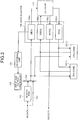
- the monitoring unit 106 monitors whether an available space is in the data register 108. If the data register 108 has a size available for retrieving MI data, the monitoring unit 106 reports it to the input and output controller 105. As shown in Fig. 2 , the monitoring unit 106 monitors whether an available space is in a move-in data queue (hereinafter, "MIDQ") 108a in the data register 108, which will be described later in detail.
- MIDQ move-in data queue
- the size of the MIDQ 108a may be equally divided according to the number of external buses so that the monitoring unit 106 may monitor available areas of the divided sizes corresponding to the external buses. In this way, when a plurality of external buses are connected to the chip, data pieces flowing in from the respective external buses can be equally retrieved in the MIDQ 108a.
- the CPU cores 107-1 and 107-2 incorporate the L1 caches 107a-1 and 107a-2, respectively, and perform predetermined processes using data stored in the L1 caches 107a-1 and 107a-2, data read from the L2 cache 111, and MI data supplied from the outside of the chip.
- the data register 108 once retrieves data to be written to the L2 cache 111 and data read from the L2 cache 111, writes write data including MI data to the L2 cache 111, and outputs the read out data to, for example, the L1 caches 107a-1 and 107a-2 of the CPU cores 107-1 and 107-2.
- the data register 108 includes the MIDQ 108a, a write-back data queue (hereinafter, "WBDQ”) 108b, a move-out data queue (hereinafter, "MODQ”) 108c, and a read data queue (hereinafter, "RDQ”) 108d, for example as shown in Fig. 2 .
- the MIDQ 108a retrieves MI data output from the selector 104, and writes the MI data thus retrieved to the L2 cache 111.
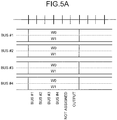
- the MIDQ 108a has a size allowing retrieval of two data sets for one external bus. In the present embodiment, because four external buses are connected to the chip, the MIDQ 108a has a size allowing retrieval of eight data sets in total. With this structure, data from all the external buses can be processed such that while a data piece is being retrieved in the MIDQ 108a, a data piece already stored in the MIDQ 108a is written to the L2 cache 111.
- the WBDQ 108b retrieves write-back data to be written back from the L1 caches 107a-1 and 107a-2, and writes to the L2 cache 111 the write-back data thus retrieved.
- the MODQ 108c reads from the L2 cache 111 move-out data ("MO data" in Fig. 2 ) that is externally requested outside of the chip to be moved out from the L2 cache 111, so as to output it to an external destination, outside of the chip, having made the move-out request.
- the RDQ 108d reads from the L2 cache 111 read data that is requested by the CPU cores 107-1 and 107-2 to be read out, so as to output it to the CPU cores 107-1 and 107-2.
- the MIB 109 is a buffer that stores therein requests for moving data into the L2 cache 111.
- the MIB 109 deletes a request that corresponds to the MI data, and notifies the write controller 110 of the deletion.
- the write controller 110 controls the data register 108 to write to the L2 cache 111 MI data that corresponds to the request thus deleted from the MIB 109. Specifically, when notified that the request has been deleted by the MIB 109, the write controller 110 instructs the data register 108 to write to the L2 cache 111 MI data that has been retrieved in the MIDQ 108a, and that corresponds to the deleted request.
- the L2 cache 111 stores therein data required by the CPU cores 107-1 and 107-2.
- desirable data is moved in from the upper-level cache, the main memory, or other chips outside of the chip.
- the external bus controller 101, the MI data RAM 102, the bypass path 103, the selector 104, the input and output controller 105, the monitoring unit 106, the data register 108, the MIB 109, and the write controller 110 control writing of MI data to the L2 cache 111, constituting a cache controller according to the present embodiment.
- MI data is flowed in the external bus controller 101 of the chip.
- pieces of MI data are flowed in the external bus controller 101 from respective external buses.
- the timing as to when the pieces of MI data are flowed in from the external buses may differ.
- the following describes an arrangement in which MI data is flowed in from any one of the external buses.
- MI data flowing in the external bus controller 101 is configured as a packet, for example, as shown in Fig. 3 .
- the header of four bytes is flowed in the external bus controller 101 in the first cycle of the external bus, and the body of the MI data, i.e., response data (WORD0 to WORD7), is flowed in the external bus controller 101 in the second to the ninth cycles of the external bus.
- the header of the packet of the MI data includes: an operation code (OPCODE) indicating that the packet is a data packet, not a command packet or the like; and a parity bit (PA) used for detecting errors in the packet.
- OPCODE operation code
- PA parity bit
- Data of four bytes flows in each cycle of the external bus.
- Each cycle begins with a tag added for indicating whether the cycle is a header or data.
- a cycle with a tag "001" is a header
- a cycle with a tag "100” is data
- a cycle with a tag "101” is an end of the data.
- Such a packet i.e., the MI data flowed in the external bus controller 101 from the external bus, is once registered in the register of the external bus controller 101, and then input from the external bus controller 101 to the MI data RAM 102 and the bypass path 103 under the control of the input and output controller 105.
- the input and output controller 105 causes the external bus controller 101 to output MI data at a speed that allows MI data flowing in from the external bus not to exceed the acceptable amount of data in the register in the external bus controller 101, so that the MI data is input to the MI data RAM 102 and the bypass path 103.
- the data passed through the bypass path 103 can be retransmitted from the MI data RAM 102.
- the data may be input to either the MI data RAM 102 or the bypass path 103 according to the selection made by the selector 104 as described below.
- the monitoring unit 106 constantly monitors whether an available space is in the MIDQ 108a of the data register 108. If an available area for retrieving MI data is found in the MIDQ 108a, it is reported to the input and output controller 105. Specifically, if an available area is found in the MIDQ 108a, the input and output controller 105 causes the selector 104 to output MI data from the MI data RAM 102 or the bypass path 103 to the MIDQ 108a.
- the input and output controller 105 causes the selector 104 to output MI data supplied from the bypass path 103.
- the input and output controller 105 causes the selector 104 to output the MI data supplied from the MI data RAM 102.
- MI data is selectively output from the selector 104. This allows MI data to be output to the MIDQ 108a in order of the MI data flowed in the chip from the external bus. Further, if no MI data has been stored in the MI data RAM 102, MI data is output to the MIDQ 108a directly from the bypass path 103. This enables to reduce the time for writing MI data to the MI data RAM 102.
- the input and output controller 105 may control the selector 104 to output MI data supplied from the bypass path 103 directly to the CPU cores 107-1 and 107-2.
- the input and output controller 105 controls the selector 104 and the MI data is output to the MIDQ 108a
- information about the MI data is reported to the MIB 109.
- the MIB 109 deletes the move-in request that corresponds to the MI data thus notified by the input and output controller 105, and the deletion is notified to the write controller 110.
- the write controller 110 provides, aiming to complete the move-in of the corresponding MI data, the MIDQ 108a of the data register 108 with an instruction for writing to the L2 cache 111 the MI data that corresponds to the request deleted from the MIB 109.
- the MIDQ 108a writes the MI data to the L2 cache 111, and the move-in is complete.
- the MIDQ 108a Upon completion of the move-in, the MIDQ 108a has an available area. Thus, the monitoring unit 106 reports the available area to the input and output controller 105, causing again the selector 104 to output MI data supplied either from the MI data RAM 102 or the bypass path 103.
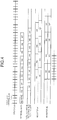
- the following describes the timing as to when MI data is input to and output from the MI data RAM 102 under the control of the input and output controller 105. Assume that the CPU cycle is three times as fast as the cycle of the external bus and the transferable volume in the internal bus is twice as much as the transferable volume in the external bus. Further, as MI data, the packet shown in Fig. 3 is flowed in the external bus controller 101.
- the MI data is received by the chip every cycle of the external bus (three CPU cycles) in the order of the header, data W0, data W1, ..., and data W7.
- data of four bytes is received every three CPU cycles, and the data thus received is flowed in the external bus controller 101 and retained in a register #1 in the external bus controller 101.
- the data thus received in units of four bytes is bundled into data of eight bytes including the data W0 to the data W7, and retained in a register #2. Because the register #2 retains the data in units of eight bytes, the data W0 to the data W7 of four bytes each are retained for a time required for receiving data of eight bytes, i.e., six CPU cycles.
- MI data flows in the external bus controller 101 from four inflow paths, i.e., the external buses #1 to #4.
- MI data flows in from any of the external buses #1 and #4 in a similar manner as described above, and therefore data from all the four external buses needs to be input to the MI data RAM 102 and the bypass path 103 during the six CPU cycles.
- data from each of the external buses may be input to the MI data RAM 102 and the bypass path 103 during the assigned cycle.
- the data from the four external buses #1 to #4 is input to the MI data RAM 102 and the bypass path 103 during four CPU cycles, thus preventing data overflow in the register of the external bus controller 101.
- the amount of data to be input to the MI data RAM 102 in one cycle differs depending on the number of external buses, the clock rate of the chip, the difference in transferable volume between the external bus and the internal bus, and other factors. Therefore, the MI data RAM 102 needs to be capable of accepting the amount of data input in one cycle. Because this amount of data is significantly less than the amount of data accepted in one cycle at the MIDQ 108a of the data register 108, a control circuit and a data bus used for the MI data RAM 102 are dimensionally negligible compared with those used for a RAM serving as a substitute for the data register.
- the MI data RAM 102 can perform only either reading or writing of data during one cycle in general. Thus, when four cycles out of six cycles are used for inputting data from the external buses #1 to #4, one cycle of the remaining two cycles is used for outputting data.
- the other remaining cycle is desirably set as an idle cycle for an interval between data input and data output, thereby preventing interference between input data and output data.
- the data from the four external buses #1 to #4 is input to and output from the MI data RAM 102 so that no data overflows from the MI data RAM 102.
- This enables retrieval of more data to be written to the L2 cache 111, compared with a chip including only the data register 108.
- the MI data RAM 102 is connected to the MIDQ 108a of the data register 108, not directly to the L2 cache 111, so that a two-stage buffer is constituted.
- the amounts of inflow data and outflow data per unit time at the MI data RAM 102 may be significantly less than those at the MIDQ 108a, thus achieving downsizing and cost reduction of a control circuit and a data bus used for the MI data RAM 102.
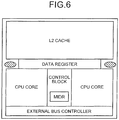
- the distance between the RAM and the MIDQ 108a is not spatially limited, and the position of the MI data RAM 102 is flexibly determined on the chip. Accordingly, circuit placement on the chip can be flexibly determined. Further, because the data register 108 does not change in size, for example, as shown in Fig. 6 , dead zones serving no function on the chip (area indicated by hatched lines in Fig. 6 ) can be suppressed to the minimum.
- MIDR indicates the position of the MI data RAM 102
- CONTROL BLOCK indicates the position of the processing blocks such as the input and output controller 105, the monitoring unit 106, the MIB 109, and the write controller 110.
- the RAM that stores therein MI data is provided upstream of the data register in the chip, so as to store therein MI data flowing in the chip. This enables retrieval of large amounts of MI data to be written to the cache memory. Further, because the RAM itself does not perform write operation to the cache memory, an increase in circuit size and cost due to the provision of the RAM is minimized.
- data is written to the L2 cache 111 in the order that the data is output from the MI data RAM 102 to the MIDQ 108a.
- a wait may be required to write data from the MIDQ 108a to the L2 cache 111.
- Such a state may be found by the MIB 109 based on the notification made by the input and output controller 105 and the request being stored.
- data once retrieved in the MIDQ 108a may be discarded to retrieve subsequent data from the MI data RAM 102 for write operation. Further, the data thus discarded may be retrieved in the MIDQ 108a again for write operation.
- the present invention is applicable to retrieval of large amounts of data to be written to a cache memory, achieving downsizing and cost reduction of a chip.
Landscapes
- Engineering & Computer Science (AREA)
- Theoretical Computer Science (AREA)
- Physics & Mathematics (AREA)
- General Engineering & Computer Science (AREA)
- General Physics & Mathematics (AREA)
- Memory System Of A Hierarchy Structure (AREA)
Claims (7)
- Cache-Controller, der Daten in einen Cache-Speicher (111) schreibt und Folgendes umfasst:eine Steuereinheit (101) für externe Busse, die Daten steuert, die von mehreren externen Bussen einströmen;eine erste Puffereinheit (102), die Daten, die von den externen Bussen einströmen und die in den Cache-Speicher (111) geschrieben werden sollen, aufbewahrt;eine zweite Puffereinheit (108), die ein Datenelement, das aktuell in den Cache-Speicher (111) geschrieben werden soll, aus Elementen der Daten, die in der ersten Puffereinheit (102) aufbewahrt werden, aufbewahrt;gekennzeichnet durcheine Umgehungseinheit (103), die Daten, die von den externen Bussen einströmen, ermöglicht, die erste Puffereinheit (102) zu umgehen;eine Überwachungseinheit (106), die die zweite Puffereinheit (108) überwacht und meldet, ob die zweite Puffereinheit (108) einen verfügbaren Bereich aufweist;eine Auswahleinheit (104), die selektiv entweder Daten, die von der ersten Puffereinheit (102) ausgegeben werden, oder Daten, die von der Umgehungseinheit (103) ausgegeben werden, ausgibt; undeinen Eingabe- und Ausgabe-Controller (105), der bewirkt, dass die Auswahleinheit (104) die Daten, die von der Umgehungseinheit (103) ausgegeben wurden, an die zweite Puffereinheit (108) ausgibt, wenn von der Überwachungseinheit (106) gemeldet wird, dass die zweite Puffereinheit (108) einen verfügbaren Bereich aufweist und die erste Puffereinheit (102) darin keine Daten speichert, und der bewirkt, dass die Auswahleinheit (104) die Daten, die von der ersten Puffereinheit (102) ausgegeben wurden, an die zweite Puffereinheit (108) ausgibt, wenn von der Überwachungseinheit (106) gemeldet wird, dass die zweite Puffereinheit (108) einen verfügbaren Bereich aufweist und die erste Puffereinheit (102) darin die Daten speichert.
- Cache-Controller nach Anspruch 1, wobei die erste Puffereinheit (102) einen Direktzugriffsspeicher (RAM) beinhaltet, der dazu in der Lage ist, darin alle Datenelemente zu speichern, von denen gleichzeitig angefordert werden kann, dass sie in den Cache-Speicher (111) geschrieben werden.
- Cache-Controller nach Anspruch 1, wobei
die zweite Puffereinheit (108) nahe dem Cache-Speicher (111) angeordnet ist und
die erste Puffereinheit (102) weiter von dem Cache-Speicher (111) weg angeordnet ist als die zweite Puffereinheit (108). - Cache-Controller nach Anspruch 1, wobei
die zweite Puffereinheit (108) Bereiche beinhaltet, die den externen Bussen entsprechen und die gleiche Datenmengen aufbewahren. - Cache-Controller nach Anspruch 4, wobei die zweite Puffereinheit (108) einen Bereich zum Aufbewahren von zwei Sätzen von Schreibdaten für jeden der externen Busse beinhaltet.
- Cache-Controller nach Anspruch 1, der weiterhin eine Schreibsteuereinheit (110) umfasst, die die zweite Puffereinheit (108) dahingehend steuert, die Daten in den Cache-Speicher (111) zu schreiben.
- Cache-Steuerverfahren zum Schreiben von Daten in einen Cache-Speicher (111), das Folgendes umfasst:Steuern von Daten, die von mehreren externen Bussen einströmen;Speichern von Daten, die von den externen Bussen einströmen und die in den Cache-Speicher (111) geschrieben werden sollen, in einer ersten Puffereinheit (102),gekennzeichnet durchÜberwachen einer zweiten Puffereinheit (108) und Melden an einen Eingabe- und Ausgabe-Controller (105), wenn die zweite Puffereinheit (108) einen verfügbaren Bereich aufweist;selektives Ausgeben von entweder Daten, die von der ersten Puffereinheit (102) ausgegeben werden, oder Daten, die von einer Umgehungseinheit (103) ausgegeben werden, die Daten, die von den externen Bussen einströmen, ermöglicht, die erste Puffereinheit (102) zu umgehen; undSpeichern der Daten, die von der Umgehungseinheit (103) ausgegeben wurden, in der zweiten Puffereinheit (108), wenn gemeldet wird, dass die zweite Puffereinheit (108) einen verfügbaren Bereich aufweist und die erste Puffereinheit (102) darin keine Daten speichert, und Speichern von Daten, die von der ersten Puffereinheit (102) ausgegeben wurden, in der zweiten Puffereinheit (108), wenn von der Überwachungseinheit (106) gemeldet wird, dass die zweite Puffereinheit (108) einen verfügbaren Bereich aufweist und die erste Puffereinheit (102) darin die Daten speichert.
Priority Applications (1)
| Application Number | Priority Date | Filing Date | Title |
|---|---|---|---|
| EP10174845.7A EP2261804B1 (de) | 2006-02-27 | 2006-02-27 | Cache-steuerung und Cache-steuerverfahren |
Applications Claiming Priority (1)
| Application Number | Priority Date | Filing Date | Title |
|---|---|---|---|
| PCT/JP2006/303622 WO2007097030A1 (ja) | 2006-02-27 | 2006-02-27 | キャッシュ制御装置およびキャッシュ制御方法 |
Related Child Applications (2)
| Application Number | Title | Priority Date | Filing Date |
|---|---|---|---|
| EP10174845.7A Division-Into EP2261804B1 (de) | 2006-02-27 | 2006-02-27 | Cache-steuerung und Cache-steuerverfahren |
| EP10174845.7A Division EP2261804B1 (de) | 2006-02-27 | 2006-02-27 | Cache-steuerung und Cache-steuerverfahren |
Publications (3)
| Publication Number | Publication Date |
|---|---|
| EP1990730A1 EP1990730A1 (de) | 2008-11-12 |
| EP1990730A4 EP1990730A4 (de) | 2009-07-08 |
| EP1990730B1 true EP1990730B1 (de) | 2017-09-27 |
Family
ID=38437089
Family Applications (2)
| Application Number | Title | Priority Date | Filing Date |
|---|---|---|---|
| EP06714759.5A Ceased EP1990730B1 (de) | 2006-02-27 | 2006-02-27 | Cache-steuerung und cache-steuerverfahren |
| EP10174845.7A Ceased EP2261804B1 (de) | 2006-02-27 | 2006-02-27 | Cache-steuerung und Cache-steuerverfahren |
Family Applications After (1)
| Application Number | Title | Priority Date | Filing Date |
|---|---|---|---|
| EP10174845.7A Ceased EP2261804B1 (de) | 2006-02-27 | 2006-02-27 | Cache-steuerung und Cache-steuerverfahren |
Country Status (4)
| Country | Link |
|---|---|
| US (1) | US8312218B2 (de) |
| EP (2) | EP1990730B1 (de) |
| JP (1) | JP4409620B2 (de) |
| WO (1) | WO2007097030A1 (de) |
Families Citing this family (4)
| Publication number | Priority date | Publication date | Assignee | Title |
|---|---|---|---|---|
| CN103810116B (zh) * | 2013-12-24 | 2017-06-20 | 苏州国芯科技有限公司 | 用于嵌入式系统的指令存储装置 |
| CN103810117B (zh) * | 2013-12-24 | 2017-03-22 | 苏州国芯科技有限公司 | 处理器用指令存储系统 |
| CN103810122B (zh) * | 2013-12-24 | 2017-03-22 | 苏州国芯科技有限公司 | 用于嵌入式系统的高速缓存器 |
| CN107959694B (zh) * | 2016-10-14 | 2021-04-06 | 中兴通讯股份有限公司 | 数据同步缓存的方法和装置 |
Family Cites Families (25)
| Publication number | Priority date | Publication date | Assignee | Title |
|---|---|---|---|---|
| JPS5837633B2 (ja) | 1979-07-23 | 1983-08-17 | 富士通株式会社 | バッフア・メモリ記憶制御方式 |
| JPS6320640A (ja) | 1986-07-15 | 1988-01-28 | Nec Corp | メモリアクセス制御装置 |
| JPS6320639A (ja) | 1986-07-15 | 1988-01-28 | Nec Corp | メモリアクセス制御装置 |
| JPH0769862B2 (ja) | 1988-02-12 | 1995-07-31 | 日本電気株式会社 | キャッシュメモリ装置 |
| JPH0322053A (ja) * | 1989-06-20 | 1991-01-30 | Fujitsu Ltd | ムーブ・イン・バッファ制御方式 |
| JPH03116345A (ja) * | 1989-09-29 | 1991-05-17 | Nec Ibaraki Ltd | データ処理装置 |
| JPH04153751A (ja) * | 1990-10-17 | 1992-05-27 | Fujitsu Ltd | バッファ記憶制御方式 |
| US5454093A (en) * | 1991-02-25 | 1995-09-26 | International Business Machines Corporation | Buffer bypass for quick data access |
| JP2637320B2 (ja) * | 1991-10-04 | 1997-08-06 | 富士通株式会社 | バッファ記憶制御方式 |
| JP3093446B2 (ja) | 1992-06-16 | 2000-10-03 | 富士通株式会社 | 情報処理装置 |
| JPH06222990A (ja) * | 1992-10-16 | 1994-08-12 | Fujitsu Ltd | データ処理装置 |
| US5668971A (en) * | 1992-12-01 | 1997-09-16 | Compaq Computer Corporation | Posted disk read operations performed by signalling a disk read complete to the system prior to completion of data transfer |
| US6219773B1 (en) * | 1993-10-18 | 2001-04-17 | Via-Cyrix, Inc. | System and method of retiring misaligned write operands from a write buffer |
| KR970010368B1 (ko) * | 1994-01-18 | 1997-06-25 | 삼성전자 주식회사 | 캐시라인 리프레이스장치 및 방법 |
| JP3174211B2 (ja) | 1994-01-25 | 2001-06-11 | 富士通株式会社 | バッファストレイジのムーブイン制御方法 |
| JP3490502B2 (ja) | 1994-08-01 | 2004-01-26 | 富士通株式会社 | メモリ制御装置 |
| US5737550A (en) * | 1995-03-28 | 1998-04-07 | Advanced Micro Devices, Inc. | Cache memory to processor bus interface and method thereof |
| JP3116345B2 (ja) | 1995-07-27 | 2000-12-11 | 日本ポリウレタン工業株式会社 | 土壌安定化ポリウレタン系発泡樹脂用組成物、及びこれを用いた土壌安定化方法 |
| US6349379B2 (en) * | 1997-04-30 | 2002-02-19 | Canon Kabushiki Kaisha | System for executing instructions having flag for indicating direct or indirect specification of a length of operand data |
| US6055649A (en) * | 1997-11-19 | 2000-04-25 | Texas Instruments Incorporated | Processor test port with scan chains and data streaming |
| WO1999049395A1 (fr) | 1998-03-23 | 1999-09-30 | Hitachi, Ltd. | Controleur de memoire tampon |
| JP2003122632A (ja) * | 2001-10-17 | 2003-04-25 | Nec Corp | キャッシュデータ登録システム及び登録方法 |
| JP3845043B2 (ja) * | 2002-06-28 | 2006-11-15 | 富士通株式会社 | 命令フェッチ制御装置 |
| JP4153751B2 (ja) | 2002-08-19 | 2008-09-24 | ニチバン株式会社 | 医療用粘着テープ及びその製造方法 |
| US7739451B1 (en) * | 2002-12-27 | 2010-06-15 | Unisys Corporation | Method and apparatus for stacked address, bus to memory data transfer |
-
2006
- 2006-02-27 EP EP06714759.5A patent/EP1990730B1/de not_active Ceased
- 2006-02-27 WO PCT/JP2006/303622 patent/WO2007097030A1/ja not_active Ceased
- 2006-02-27 JP JP2008501580A patent/JP4409620B2/ja not_active Expired - Fee Related
- 2006-02-27 EP EP10174845.7A patent/EP2261804B1/de not_active Ceased
-
2008
- 2008-08-26 US US12/230,244 patent/US8312218B2/en not_active Expired - Fee Related
Non-Patent Citations (1)
| Title |
|---|
| None * |
Also Published As
| Publication number | Publication date |
|---|---|
| EP2261804A1 (de) | 2010-12-15 |
| US8312218B2 (en) | 2012-11-13 |
| WO2007097030A1 (ja) | 2007-08-30 |
| EP1990730A4 (de) | 2009-07-08 |
| EP2261804B1 (de) | 2019-08-07 |
| JPWO2007097030A1 (ja) | 2009-07-09 |
| US20080320223A1 (en) | 2008-12-25 |
| JP4409620B2 (ja) | 2010-02-03 |
| EP1990730A1 (de) | 2008-11-12 |
Similar Documents
| Publication | Publication Date | Title |
|---|---|---|
| US5581734A (en) | Multiprocessor system with shared cache and data input/output circuitry for transferring data amount greater than system bus capacity | |
| US10210117B2 (en) | Computing architecture with peripherals | |
| US20100191918A1 (en) | Cache Controller Device, Interfacing Method and Programming Method Using the Same | |
| US20120226865A1 (en) | Network-on-chip system including active memory processor | |
| EP1069509B1 (de) | Verbesserungen in oder bezüglich von Mikroprozessoren | |
| US7284102B2 (en) | System and method of re-ordering store operations within a processor | |
| JPH0452741A (ja) | キャッシュメモリ装置 | |
| JP2006059068A (ja) | プロセッサ装置 | |
| KR20070086640A (ko) | 메모리내의 명령을 실행하기 위한 우선순위 부여 방식 | |
| JP5030796B2 (ja) | データ転送中にキャッシュへのアクセスを制限するシステムおよびその方法 | |
| US7447845B2 (en) | Data processing system, processor and method of data processing in which local memory access requests are serviced by state machines with differing functionality | |
| US6427189B1 (en) | Multiple issue algorithm with over subscription avoidance feature to get high bandwidth through cache pipeline | |
| US8312218B2 (en) | Cache controller and cache control method | |
| US7882309B2 (en) | Method and apparatus for handling excess data during memory access | |
| EP1668513B1 (de) | Cache-Bank-Schnittstelleneinheit | |
| EP2128771B1 (de) | Verfahren und Vorrichtung zur Steuerung des Cachespeichers | |
| US20220100423A1 (en) | Memory controller system and a method for memory scheduling of a storage device | |
| US6240487B1 (en) | Integrated cache buffers | |
| JP4173858B2 (ja) | 命令キャッシュ、及びメモリ競合を低減する方法 | |
| US8327079B2 (en) | Cache memory control device and pipeline control method | |
| US7181575B2 (en) | Instruction cache using single-ported memories | |
| JP3181001B2 (ja) | キャッシュ・メモリ・システム並びにキャッシュ・メモリ・アクセス方法及びシステム | |
| JPH1055308A (ja) | キャッシュメモリ | |
| JPH11143777A (ja) | キャッシュメモリ装置 | |
| JPH04102146A (ja) | 高性能キャッシュ |
Legal Events
| Date | Code | Title | Description |
|---|---|---|---|
| PUAI | Public reference made under article 153(3) epc to a published international application that has entered the european phase |
Free format text: ORIGINAL CODE: 0009012 |
|
| 17P | Request for examination filed |
Effective date: 20080820 |
|
| AK | Designated contracting states |
Kind code of ref document: A1 Designated state(s): DE FR GB |
|
| DAX | Request for extension of the european patent (deleted) | ||
| RBV | Designated contracting states (corrected) |
Designated state(s): DE FR GB |
|
| A4 | Supplementary search report drawn up and despatched |
Effective date: 20090605 |
|
| 17Q | First examination report despatched |
Effective date: 20100218 |
|
| REG | Reference to a national code |
Ref country code: DE Ref legal event code: R079 Ref document number: 602006053712 Country of ref document: DE Free format text: PREVIOUS MAIN CLASS: G06F0012080000 Ipc: G06F0012084400 |
|
| GRAP | Despatch of communication of intention to grant a patent |
Free format text: ORIGINAL CODE: EPIDOSNIGR1 |
|
| STAA | Information on the status of an ep patent application or granted ep patent |
Free format text: STATUS: GRANT OF PATENT IS INTENDED |
|
| RIC1 | Information provided on ipc code assigned before grant |
Ipc: G06F 12/0893 20160101ALI20170314BHEP Ipc: G06F 12/0855 20160101ALI20170314BHEP Ipc: G06F 12/0844 20160101AFI20170314BHEP |
|
| INTG | Intention to grant announced |
Effective date: 20170412 |
|
| GRAS | Grant fee paid |
Free format text: ORIGINAL CODE: EPIDOSNIGR3 |
|
| GRAA | (expected) grant |
Free format text: ORIGINAL CODE: 0009210 |
|
| STAA | Information on the status of an ep patent application or granted ep patent |
Free format text: STATUS: THE PATENT HAS BEEN GRANTED |
|
| AK | Designated contracting states |
Kind code of ref document: B1 Designated state(s): DE FR GB |
|
| REG | Reference to a national code |
Ref country code: GB Ref legal event code: FG4D |
|
| RIN1 | Information on inventor provided before grant (corrected) |
Inventor name: UKAI, MASAKI |
|
| REG | Reference to a national code |
Ref country code: DE Ref legal event code: R096 Ref document number: 602006053712 Country of ref document: DE |
|
| REG | Reference to a national code |
Ref country code: FR Ref legal event code: PLFP Year of fee payment: 13 |
|
| REG | Reference to a national code |
Ref country code: DE Ref legal event code: R097 Ref document number: 602006053712 Country of ref document: DE |
|
| PLBE | No opposition filed within time limit |
Free format text: ORIGINAL CODE: 0009261 |
|
| STAA | Information on the status of an ep patent application or granted ep patent |
Free format text: STATUS: NO OPPOSITION FILED WITHIN TIME LIMIT |
|
| 26N | No opposition filed |
Effective date: 20180628 |
|
| REG | Reference to a national code |
Ref country code: DE Ref legal event code: R082 Ref document number: 602006053712 Country of ref document: DE Representative=s name: HL KEMPNER PATENTANWALT, RECHTSANWALT, SOLICIT, DE |
|
| PGFP | Annual fee paid to national office [announced via postgrant information from national office to epo] |
Ref country code: FR Payment date: 20210113 Year of fee payment: 16 |
|
| PGFP | Annual fee paid to national office [announced via postgrant information from national office to epo] |
Ref country code: GB Payment date: 20210217 Year of fee payment: 16 Ref country code: DE Payment date: 20210216 Year of fee payment: 16 |
|
| REG | Reference to a national code |
Ref country code: DE Ref legal event code: R119 Ref document number: 602006053712 Country of ref document: DE |
|
| GBPC | Gb: european patent ceased through non-payment of renewal fee |
Effective date: 20220227 |
|
| PG25 | Lapsed in a contracting state [announced via postgrant information from national office to epo] |
Ref country code: FR Free format text: LAPSE BECAUSE OF NON-PAYMENT OF DUE FEES Effective date: 20220228 |
|
| PG25 | Lapsed in a contracting state [announced via postgrant information from national office to epo] |
Ref country code: GB Free format text: LAPSE BECAUSE OF NON-PAYMENT OF DUE FEES Effective date: 20220227 Ref country code: DE Free format text: LAPSE BECAUSE OF NON-PAYMENT OF DUE FEES Effective date: 20220901 |