EP1985609A1 - Verfahren zur Wiederherstellung von Cyclohexanonoxim - Google Patents
Verfahren zur Wiederherstellung von Cyclohexanonoxim Download PDFInfo
- Publication number
- EP1985609A1 EP1985609A1 EP08153394A EP08153394A EP1985609A1 EP 1985609 A1 EP1985609 A1 EP 1985609A1 EP 08153394 A EP08153394 A EP 08153394A EP 08153394 A EP08153394 A EP 08153394A EP 1985609 A1 EP1985609 A1 EP 1985609A1
- Authority
- EP
- European Patent Office
- Prior art keywords
- cyclohexanone oxime
- gas
- recovering
- residue
- pressure
- Prior art date
- Legal status (The legal status is an assumption and is not a legal conclusion. Google has not performed a legal analysis and makes no representation as to the accuracy of the status listed.)
- Granted
Links
Images


Classifications
-
- C—CHEMISTRY; METALLURGY
- C07—ORGANIC CHEMISTRY
- C07C—ACYCLIC OR CARBOCYCLIC COMPOUNDS
- C07C249/00—Preparation of compounds containing nitrogen atoms doubly-bound to a carbon skeleton
- C07C249/04—Preparation of compounds containing nitrogen atoms doubly-bound to a carbon skeleton of oximes
- C07C249/14—Separation; Purification; Stabilisation; Use of additives
-
- C—CHEMISTRY; METALLURGY
- C07—ORGANIC CHEMISTRY
- C07C—ACYCLIC OR CARBOCYCLIC COMPOUNDS
- C07C2601/00—Systems containing only non-condensed rings
- C07C2601/12—Systems containing only non-condensed rings with a six-membered ring
- C07C2601/14—The ring being saturated
Definitions
- the present invention relates to a process for recovering cyclohexanone oxime contained in the residue remaining after vaporizing a liquid cyclohexanone oxime by heating.
- ⁇ -caprolactam (hereinafter referred sometimes to as "lactam”) is a monomer which is mainly used to synthesize nylon-6 used in the production of fibers and engineering plastics.
- lactam a process of carrying out a vapor-phase Beckmann rearrangement reaction using a gaseous cyclohexanone oxime as a starting material is known.
- a liquid cyclohexanone oxime is usually evaporated by heating using a wetted-wall evaporator to obtain a gaseous cyclohexanone oxime (refer to US2002/0143181A1 ).
- cyclohexanone oxime may cause thermal decomposition or thermal condensation during the step of vaporizing by heating to produce tar as a by-product since it is inferior in thermostability. It is necessary to remove tar out of the system in the form of a residue since it causes clogging of the wetted-wall evaporator. In this case, there arises a problem that the liquid cyclohexanone oxime is also removed out of the system together with tar and thus gaseous cyclohexanone oxime cannot be obtained in high yield.
- an object of the present invention is to provide a process for efficiently recovering cyclohexanone oxime from the residue remaining after vaporizing the liquid cyclohexanone oxime by heating, using a simple and easy process, while taking account of the thermostability of cyclohexanone oxime.
- the present invention provides a process for recovering cyclohexanone oxime, which comprises vaporizing a liquid cyclohexanone oxime by heating to obtain a cyclohexanone oxime gas (A1), distilling the remaining residue under a pressure lower than the pressure upon vaporization by heating, and recovering cyclohexanone oxime contained in the residue.
- the present inventors have tested condensing a cyclohexanone oxime gas by a condenser so as to recover a cyclohexanone oxime gas separated by distillation under a low pressure in a liquid state in light of handiness in the case of reusing the recovered cyclohexanone oxime.
- a cooling medium at a temperature of lower than 90°C is used, a crystal of cyclohexanone oxime may be deposited in a condenser thereby causing clogging in the condenser since cyclohexanone oxime has a high melting point of 90°C.
- the operation pressure upon distillation is controlled to normal pressure or higher so as to reduce the uncondensed gas when hot water at a temperature of 90°C or higher is used as the cooling medium of the condenser. In that case, production of the tar component as the by-product is promoted.
- the present inventors have intensively studied so as to solve these problems, thus providing the following inventions.
- the present invention exerts the effect of being capable of obtaining cyclohexanone oxime in a high recovery ratio, simply and easily, from a mixture of cyclohexanone oxime obtained as the residue after vaporizing the liquid cyclohexanone oxime and a tar component derived from cyclohexanone oxime. Moreover, according to the present invention, cyclohexanone oxime can be separated at a comparatively low temperature and also thermal degradation of the resulting cyclohexanone oxime can be suppressed since the residue is distilled under a low pressure.
- Fig. 1 is a flow chart showing one embodiment of a process for recovering cyclohexanone oxime of the present invention.
- Fig. 2 is a flow chart showing another embodiment of a process for recovering cyclohexanone oxime of the present invention.
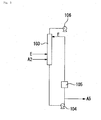
- Fig. 3 is a flow chart showing still another embodiment of a process for recovering cyclohexanone oxime of the present invention.
- the process for recovering cyclohexanone oxime of the present invention is a process for recovering cyclohexanone oxime from the residue remaining after vaporizing a liquid cyclohexanone oxime by heating so as to obtain a cyclohexanone oxime gas (A1) used as a raw material in the production of ⁇ -caprolactam by a vapor-phase Beckmann rearrangement reaction.
- the residue is a mixture of cyclohexanone oxime and a tar component composed of a thermally decomposed product of the cyclohexanone oxime
- the present invention pertains to a process for recovering cyclohexanone oxime by separating from the mixture.
- Evaporation of the liquid cyclohexanone oxime by heating in the case of obtaining the residue is usually carried out in a state where the pressure is not reduced, namely, a state of normal pressure to an increased pressure. Specifically, evaporation is carried out by heating at a temperature of 130 to 170°C under a pressure of 101 to 140 kPa (absolute pressure).
- the residue is distilled under a pressure which is lower than the pressure upon vaporization by heating for obtaining a cyclohexanone oxime gas (A1) (hereinafter referred sometimes as to "Low Pressure").
- A1 cyclohexanone oxime gas
- the distillation is preferably carried out under reduced pressure of 1.4 to 10 kPa (absolute pressure), and more preferably 1.4 to 8 kPa (absolute pressure).
- the temperature (distillation temperature) upon distillation is preferably from 90 to 135°C, and more preferably from 90 to 125°C.
- the distillation temperature is lower than 90°C, cyclohexanone oxime tends to be agglomerated. In contrast, when the distillation temperature is too high, thermal degradation of cyclohexanone oxime tends to proceed.
- the cyclohexanone oxime gas (A2) separated by distilling the residue under Low Pressure is (I) recovered as a cyclohexanone oxime solution by bringing into contact with a solvent capable of dissolving cyclohexanone oxime, or (II) condensed by a condenser in which a cooling medium at a temperature of 90°C or higher circulates to obtain a cyclohexanone oxime condensate liquid (A3), and then the uncondensed cyclohexanone oxime gas (A4) obtained simultaneously is preferably brought into contact with a solvent capable of dissolving cyclohexanone oxime to obtain a cyclohexanone oxime solution, which is then recovered.
- solvents capable of dissolving cyclohexanone oxime can be used.
- alcohols such as methanol, ethanol, n-propanol, isopropanol, and t-butanol; toluene and cyclohexanone are preferably used.
- a gas-liquid contactor which can bring the cyclohexanone oxime gas (A2) or (A4) as a vapor into contact with the solvent
- a condenser which can bring the cyclohexanone oxime gas (A2) or (A4) into contact with the solvent on the surface of a cooling body
- the gas-liquid contactor (i) may be a contactor in which the solvent cooled to the temperature lower than a boiling point under an operation pressure of distillation under Low Pressure is sprayed in the vapor of the cyclohexanone oxime gas (A2) or (A4) using a spray nozzle and, for example, conventional gas absorption equipment such as a spray column and a packed column can be employed.
- the condenser (ii) may be a condenser in which the solvent is sprayed over a condensate produced by cooling vapor of the cyclohexanone oxime gas (A2) or (A4) on the surface of a cooling body (heat exchanger, etc.) and, for example, conventional heat exchangers such as a multitubular heat exchanger can be employed.
- a liquid cyclohexanone oxime A was supplied to an evaporator 100 heated by steam (not shown) and then vaporized by heating under a pressure of 116 kPa (absolute pressure).
- a cyclohexanone oxime gas A1 was generated and also a mixture of cyclohexanone oxime and a tar component derived from cyclohexanone oxime was obtained as a residue C at a rate of 10 parts by weight/hour.
- the residue C was introduced into a vacuum distiller 101 heated by steam (not shown) and then distilled at 120°C after evacuating the distiller 101 to 4.9 kPa (absolute pressure) using a vacuum pump (not shown).
- the cyclohexanone oxime A2 was separated at a rate of 9 parts by weight/hour and also a tar component D as a distilled residue was discharged from the bottom of the vacuum distiller 101 at a rate of 1 part by weight/hour.
- cyclohexanone oxime A2 obtained by separating using the vacuum distiller 101 in Example 1, cyclohexanone oxime was recovered in accordance with the flow chart shown in Fig. 2 .
- the separated cyclohexanone oxime A2 was introduced into a first stage condenser 102 using hot water at 90°C and a liquid cyclohexanone oxime A3 condensed in the first stage condenser 102 was recovered, and also an uncondensed cyclohexanone oxime gas A4 was introduced into a gas-liquid contactor 103 while maintaining at 95°C.
- the gas-liquid contactor 103 is a packed column in which methanol E introduced continuously is circulated by a pump 104 and is sprayed through a spray nozzle (not shown) from the upper portion of the gas-liquid contactor 103, and then the cyclohexanone oxime gas A4 is liquefied by bringing methanol E cooled to -6°C using a cooling unit 105 directly into contact with the introduced cyclohexanone oxime gas A4 through spraying. Methanol containing the liquefied cyclohexanone oxime was extracted as a methanol solution A5 of cyclohexanone oxime during circulation. Cyclohexanone oximes A2 and A4 were introduced into the first stage condenser 102 and the gas-liquid contactor 103 using a vacuum pump 106.
- cyclohexanone oxime A2 obtained by separating using the vacuum distiller 101 in Example 1, cyclohexanone oxime is recovered in accordance with the flow chart shown in Fig. 3 .
- the separated cyclohexanone oxime A2 was introduced into the gas-liquid contactor 103 using the vacuum pump 106.
- the gas-liquid contactor 103 is an equipment in which methanol E introduced continuously is circulated by the pump 104 and is sprayed through a spray nozzle (not shown) from the upper portion of the gas-liquid contactor 103, and then cyclohexanone oxime A2 is liquefied by bringing methanol E cooled to -6°C using the cooling unit 105 directly into contact with the introduced cyclohexanone oxime gas A4 through spraying.
- Methanol containing the liquefied cyclohexanone oxime can be extracted as a methanol solution A5 of cyclohexanone oxime during circulation.
- the present invention exerts the effect of being capable of obtaining cyclohexanone oxime in a high recovery ratio, simply and easily, from a mixture of cyclohexanone oxime obtained as the residue after vaporizing the liquid cyclohexanone oxime and a tar component derived from cyclohexanone oxime. Moreover, according to the present invention, cyclohexanone oxime can be separated at a comparatively low temperature and also thermal degradation of the resulting cyclohexanone oxime can be suppressed since the residue is distilled under Low Pressure.
Landscapes
- Chemical & Material Sciences (AREA)
- Organic Chemistry (AREA)
- Organic Low-Molecular-Weight Compounds And Preparation Thereof (AREA)
Applications Claiming Priority (2)
| Application Number | Priority Date | Filing Date | Title |
|---|---|---|---|
| JP2007087734 | 2007-03-29 | ||
| JP2007327759A JP5236273B2 (ja) | 2007-03-29 | 2007-12-19 | シクロヘキサノンオキシムの回収方法 |
Publications (2)
| Publication Number | Publication Date |
|---|---|
| EP1985609A1 true EP1985609A1 (de) | 2008-10-29 |
| EP1985609B1 EP1985609B1 (de) | 2010-09-01 |
Family
ID=39576007
Family Applications (1)
| Application Number | Title | Priority Date | Filing Date |
|---|---|---|---|
| EP08153394A Not-in-force EP1985609B1 (de) | 2007-03-29 | 2008-03-27 | Verfahren zur Rückgewinnung von Cyclohexanonoxim |
Country Status (3)
| Country | Link |
|---|---|
| US (1) | US20080242891A1 (de) |
| EP (1) | EP1985609B1 (de) |
| SG (1) | SG146598A1 (de) |
Citations (4)
| Publication number | Priority date | Publication date | Assignee | Title |
|---|---|---|---|---|
| US4141896A (en) * | 1976-09-15 | 1979-02-27 | Bayer Aktiengesellschaft | Process for the producing ε-caprolactam from the distillation of cyclohexanone oxime |
| US20020143181A1 (en) | 2001-03-28 | 2002-10-03 | Yasumoto Shimazu | Method for evaporating cyclohexanone oxime |
| JP2007087734A (ja) | 2005-09-21 | 2007-04-05 | Sumitomo Electric Ind Ltd | 超電導テープ線材の製造方法、超電導テープ線材、および超電導機器 |
| JP2007327759A (ja) | 2006-06-06 | 2007-12-20 | Jasco Corp | ミクロセル及びミクロセルホルダ |
Family Cites Families (4)
| Publication number | Priority date | Publication date | Assignee | Title |
|---|---|---|---|---|
| NL1003564C2 (nl) * | 1996-07-11 | 1998-01-15 | Dsm Nv | Werkwijze voor het scheiden van een ketoxim of aldoxim van een amide. |
| JP2002105039A (ja) * | 2000-09-29 | 2002-04-10 | Sumitomo Chem Co Ltd | シクロヘキサノンオキシムの蒸発方法とこれに使用する蒸発器、ならびにε−カプロラクタムの製造方法とその製造装置 |
| BR0117189B1 (pt) * | 2001-12-04 | 2011-08-09 | processo para tratar um meio aquoso que contém oxima de ciclohexanona e ciclohexanona. | |
| KR101078927B1 (ko) * | 2003-01-30 | 2011-11-01 | 디에스엠 아이피 어셋츠 비.브이. | 사이클로헥산온 옥심, 사이클로헥산온 및 유기 용매를포함하는 유기 용액을 처리하는 방법 |
-
2008
- 2008-03-27 EP EP08153394A patent/EP1985609B1/de not_active Not-in-force
- 2008-03-28 SG SG200802529-8A patent/SG146598A1/en unknown
- 2008-03-28 US US12/078,278 patent/US20080242891A1/en not_active Abandoned
Patent Citations (4)
| Publication number | Priority date | Publication date | Assignee | Title |
|---|---|---|---|---|
| US4141896A (en) * | 1976-09-15 | 1979-02-27 | Bayer Aktiengesellschaft | Process for the producing ε-caprolactam from the distillation of cyclohexanone oxime |
| US20020143181A1 (en) | 2001-03-28 | 2002-10-03 | Yasumoto Shimazu | Method for evaporating cyclohexanone oxime |
| JP2007087734A (ja) | 2005-09-21 | 2007-04-05 | Sumitomo Electric Ind Ltd | 超電導テープ線材の製造方法、超電導テープ線材、および超電導機器 |
| JP2007327759A (ja) | 2006-06-06 | 2007-12-20 | Jasco Corp | ミクロセル及びミクロセルホルダ |
Also Published As
| Publication number | Publication date |
|---|---|
| US20080242891A1 (en) | 2008-10-02 |
| SG146598A1 (en) | 2008-10-30 |
| EP1985609B1 (de) | 2010-09-01 |
Similar Documents
| Publication | Publication Date | Title |
|---|---|---|
| US4560807A (en) | Process for the production of dimethyl ether useful as a propellant | |
| CN101429148B (zh) | 一种ε-己内酰胺的生产方法 | |
| US11111211B2 (en) | Method of distilling dimethyl sulfoxide and multistage distillation tower | |
| JP4975205B2 (ja) | ガス状混合物からのアンモニア回収方法 | |
| JP2004504364A (ja) | 純粋あるいは実質的に純粋な有機金属化合物を単離するための方法と装置 | |
| CN102875468A (zh) | 一种环己酮肟气相重排生产己内酰胺的方法 | |
| US4433146A (en) | Process for the preparation of melamine | |
| JP4064352B2 (ja) | イソシアネートの製造方法 | |
| EP1985609B1 (de) | Verfahren zur Rückgewinnung von Cyclohexanonoxim | |
| KR20080088432A (ko) | 시클로헥사논 옥심을 회수하는 방법 | |
| CN115108956B (zh) | 经气相贝克曼重排法制取己内酰胺粗品的纯化方法 | |
| EP0424436B1 (de) | Verfahren zur herstellung von wasserfreiem oxim aus wässrigen lösungen | |
| JP2679557B2 (ja) | メチルイソシアネートの連続的製造法 | |
| US6716977B1 (en) | Method for making caprolactam from impure ACN wherein ammonia and water are removed from crude caprolactam in a simple separation step and then THA is removed from the resulting caprolactam melt | |
| CN111087291B (zh) | 一种氨肟化反应多元醇酮分离回收环己酮的工艺 | |
| JPS63132850A (ja) | 水蒸気ストリッピング方法 | |
| US6858728B2 (en) | Method for making caprolactam from impure ACN in which THA is not removed until after caprolactam is produced | |
| CN121288704A (zh) | 一种敌敌畏的合成工艺及合成系统 | |
| JP2002510663A (ja) | 1,2−ジクロロエタンの分解によって生じる分解生成ガスの処理方法 | |
| JPH0651668B2 (ja) | N―ビニルホルムアミドの製造方法 | |
| WO2026036022A1 (en) | Method to separate water and caprolactam from steam stripping polycaprolactam | |
| CN120865019A (zh) | 一种r和s-4-氯-3-羟基丁腈的立体选择性合成方法 | |
| AU2023384849A1 (en) | Coupled urea melamine plant | |
| KR100897335B1 (ko) | 아로마틱 디알데히드의 정제 방법, 및 이에 사용되는 정제장치 | |
| IE914485A1 (en) | A method and apparatus for producing chlormequat |
Legal Events
| Date | Code | Title | Description |
|---|---|---|---|
| PUAI | Public reference made under article 153(3) epc to a published international application that has entered the european phase |
Free format text: ORIGINAL CODE: 0009012 |
|
| AK | Designated contracting states |
Kind code of ref document: A1 Designated state(s): AT BE BG CH CY CZ DE DK EE ES FI FR GB GR HR HU IE IS IT LI LT LU LV MC MT NL NO PL PT RO SE SI SK TR |
|
| AX | Request for extension of the european patent |
Extension state: AL BA MK RS |
|
| 17P | Request for examination filed |
Effective date: 20090409 |
|
| AKX | Designation fees paid |
Designated state(s): BE DE ES IT NL |
|
| GRAP | Despatch of communication of intention to grant a patent |
Free format text: ORIGINAL CODE: EPIDOSNIGR1 |
|
| GRAS | Grant fee paid |
Free format text: ORIGINAL CODE: EPIDOSNIGR3 |
|
| GRAA | (expected) grant |
Free format text: ORIGINAL CODE: 0009210 |
|
| AK | Designated contracting states |
Kind code of ref document: B1 Designated state(s): BE DE ES IT NL |
|
| REG | Reference to a national code |
Ref country code: NL Ref legal event code: T3 |
|
| REF | Corresponds to: |
Ref document number: 602008002353 Country of ref document: DE Date of ref document: 20101014 Kind code of ref document: P |
|
| REG | Reference to a national code |
Ref country code: ES Ref legal event code: FG2A Effective date: 20101203 |
|
| PLBE | No opposition filed within time limit |
Free format text: ORIGINAL CODE: 0009261 |
|
| STAA | Information on the status of an ep patent application or granted ep patent |
Free format text: STATUS: NO OPPOSITION FILED WITHIN TIME LIMIT |
|
| 26N | No opposition filed |
Effective date: 20110606 |
|
| REG | Reference to a national code |
Ref country code: DE Ref legal event code: R097 Ref document number: 602008002353 Country of ref document: DE Effective date: 20110606 |
|
| PGFP | Annual fee paid to national office [announced via postgrant information from national office to epo] |
Ref country code: IT Payment date: 20120321 Year of fee payment: 5 |
|
| PGFP | Annual fee paid to national office [announced via postgrant information from national office to epo] |
Ref country code: DE Payment date: 20130320 Year of fee payment: 6 Ref country code: ES Payment date: 20130313 Year of fee payment: 6 |
|
| PGFP | Annual fee paid to national office [announced via postgrant information from national office to epo] |
Ref country code: NL Payment date: 20130309 Year of fee payment: 6 |
|
| PGFP | Annual fee paid to national office [announced via postgrant information from national office to epo] |
Ref country code: BE Payment date: 20130312 Year of fee payment: 6 |
|
| REG | Reference to a national code |
Ref country code: DE Ref legal event code: R119 Ref document number: 602008002353 Country of ref document: DE |
|
| REG | Reference to a national code |
Ref country code: NL Ref legal event code: V1 Effective date: 20141001 |
|
| REG | Reference to a national code |
Ref country code: DE Ref legal event code: R119 Ref document number: 602008002353 Country of ref document: DE Effective date: 20141001 |
|
| PG25 | Lapsed in a contracting state [announced via postgrant information from national office to epo] |
Ref country code: DE Free format text: LAPSE BECAUSE OF NON-PAYMENT OF DUE FEES Effective date: 20141001 |
|
| PG25 | Lapsed in a contracting state [announced via postgrant information from national office to epo] |
Ref country code: NL Free format text: LAPSE BECAUSE OF NON-PAYMENT OF DUE FEES Effective date: 20141001 |
|
| PG25 | Lapsed in a contracting state [announced via postgrant information from national office to epo] |
Ref country code: IT Free format text: LAPSE BECAUSE OF NON-PAYMENT OF DUE FEES Effective date: 20140327 |
|
| REG | Reference to a national code |
Ref country code: ES Ref legal event code: FD2A Effective date: 20151002 |
|
| PG25 | Lapsed in a contracting state [announced via postgrant information from national office to epo] |
Ref country code: ES Free format text: LAPSE BECAUSE OF NON-PAYMENT OF DUE FEES Effective date: 20140328 |
|
| PG25 | Lapsed in a contracting state [announced via postgrant information from national office to epo] |
Ref country code: BE Free format text: LAPSE BECAUSE OF NON-PAYMENT OF DUE FEES Effective date: 20140331 |