EP1982995A1 - Verbesserte rekombinante Staphylokinasen - Google Patents
Verbesserte rekombinante Staphylokinasen Download PDFInfo
- Publication number
- EP1982995A1 EP1982995A1 EP08007487A EP08007487A EP1982995A1 EP 1982995 A1 EP1982995 A1 EP 1982995A1 EP 08007487 A EP08007487 A EP 08007487A EP 08007487 A EP08007487 A EP 08007487A EP 1982995 A1 EP1982995 A1 EP 1982995A1
- Authority
- EP
- European Patent Office
- Prior art keywords
- sak
- dna
- staphylokinase
- plasmid
- modified
- Prior art date
- Legal status (The legal status is an assumption and is not a legal conclusion. Google has not performed a legal analysis and makes no representation as to the accuracy of the status listed.)
- Granted
Links
- 101710145796 Staphylokinase Proteins 0.000 title claims abstract description 45
- 108090000623 proteins and genes Proteins 0.000 claims abstract description 47
- 108090000765 processed proteins & peptides Proteins 0.000 claims abstract description 11
- 238000002360 preparation method Methods 0.000 claims abstract description 8
- 208000007536 Thrombosis Diseases 0.000 claims abstract description 7
- 102000004169 proteins and genes Human genes 0.000 claims description 26
- 235000018102 proteins Nutrition 0.000 claims description 17
- 239000003814 drug Substances 0.000 claims description 5
- VTYYLEPIZMXCLO-UHFFFAOYSA-L Calcium carbonate Chemical compound [Ca+2].[O-]C([O-])=O VTYYLEPIZMXCLO-UHFFFAOYSA-L 0.000 claims description 4
- 239000000654 additive Substances 0.000 claims description 4
- 230000000996 additive effect Effects 0.000 claims description 4
- HQKMJHAJHXVSDF-UHFFFAOYSA-L magnesium stearate Chemical compound [Mg+2].CCCCCCCCCCCCCCCCCC([O-])=O.CCCCCCCCCCCCCCCCCC([O-])=O HQKMJHAJHXVSDF-UHFFFAOYSA-L 0.000 claims description 4
- 229910000019 calcium carbonate Inorganic materials 0.000 claims description 2
- 235000014633 carbohydrates Nutrition 0.000 claims description 2
- 150000001720 carbohydrates Chemical class 0.000 claims description 2
- 239000001913 cellulose Substances 0.000 claims description 2
- 229920002678 cellulose Polymers 0.000 claims description 2
- 239000003085 diluting agent Substances 0.000 claims description 2
- 239000003937 drug carrier Substances 0.000 claims description 2
- 239000008273 gelatin Substances 0.000 claims description 2
- 229920000159 gelatin Polymers 0.000 claims description 2
- 235000019359 magnesium stearate Nutrition 0.000 claims description 2
- 235000015097 nutrients Nutrition 0.000 claims description 2
- 239000000546 pharmaceutical excipient Substances 0.000 claims description 2
- 239000002904 solvent Substances 0.000 claims description 2
- 235000000346 sugar Nutrition 0.000 claims description 2
- 239000000454 talc Substances 0.000 claims description 2
- 229910052623 talc Inorganic materials 0.000 claims description 2
- 108020004707 nucleic acids Proteins 0.000 claims 1
- 102000039446 nucleic acids Human genes 0.000 claims 1
- 150000007523 nucleic acids Chemical class 0.000 claims 1
- 238000000034 method Methods 0.000 abstract description 38
- 239000000203 mixture Substances 0.000 abstract description 9
- 239000000463 material Substances 0.000 abstract description 3
- 108020004414 DNA Proteins 0.000 description 52
- 239000013612 plasmid Substances 0.000 description 34
- 241000588724 Escherichia coli Species 0.000 description 28
- 238000004519 manufacturing process Methods 0.000 description 26
- QVGXLLKOCUKJST-UHFFFAOYSA-N atomic oxygen Chemical compound [O] QVGXLLKOCUKJST-UHFFFAOYSA-N 0.000 description 17
- 210000004027 cell Anatomy 0.000 description 17
- 229910052760 oxygen Inorganic materials 0.000 description 17
- 239000001301 oxygen Substances 0.000 description 17
- 239000013600 plasmid vector Substances 0.000 description 14
- 230000000813 microbial effect Effects 0.000 description 13
- 230000008569 process Effects 0.000 description 13
- PEDCQBHIVMGVHV-UHFFFAOYSA-N Glycerine Chemical compound OCC(O)CO PEDCQBHIVMGVHV-UHFFFAOYSA-N 0.000 description 12
- 238000010276 construction Methods 0.000 description 12
- 108091028043 Nucleic acid sequence Proteins 0.000 description 10
- 101150049281 PRM1 gene Proteins 0.000 description 10
- 230000008021 deposition Effects 0.000 description 9
- 239000013615 primer Substances 0.000 description 9
- 239000000047 product Substances 0.000 description 9
- 101150076271 SAK gene Proteins 0.000 description 8
- FAPWRFPIFSIZLT-UHFFFAOYSA-M Sodium chloride Chemical compound [Na+].[Cl-] FAPWRFPIFSIZLT-UHFFFAOYSA-M 0.000 description 8
- 239000002773 nucleotide Substances 0.000 description 8
- 125000003729 nucleotide group Chemical group 0.000 description 8
- 102000009123 Fibrin Human genes 0.000 description 7
- 108010073385 Fibrin Proteins 0.000 description 7
- BWGVNKXGVNDBDI-UHFFFAOYSA-N Fibrin monomer Chemical compound CNC(=O)CNC(=O)CN BWGVNKXGVNDBDI-UHFFFAOYSA-N 0.000 description 7
- 108020004511 Recombinant DNA Proteins 0.000 description 7
- 239000000872 buffer Substances 0.000 description 7
- 229950003499 fibrin Drugs 0.000 description 7
- LFQSCWFLJHTTHZ-UHFFFAOYSA-N Ethanol Chemical compound CCO LFQSCWFLJHTTHZ-UHFFFAOYSA-N 0.000 description 6
- 241000191967 Staphylococcus aureus Species 0.000 description 6
- 125000000539 amino acid group Chemical group 0.000 description 6
- 230000009089 cytolysis Effects 0.000 description 6
- 238000005516 engineering process Methods 0.000 description 6
- 239000013613 expression plasmid Substances 0.000 description 6
- 229940012957 plasmin Drugs 0.000 description 6
- 108091008146 restriction endonucleases Proteins 0.000 description 6
- 101000605403 Homo sapiens Plasminogen Proteins 0.000 description 5
- 239000006137 Luria-Bertani broth Substances 0.000 description 5
- 102000013566 Plasminogen Human genes 0.000 description 5
- 108010051456 Plasminogen Proteins 0.000 description 5
- 238000005119 centrifugation Methods 0.000 description 5
- 230000000694 effects Effects 0.000 description 5
- 238000011031 large-scale manufacturing process Methods 0.000 description 5
- 239000002609 medium Substances 0.000 description 5
- 230000033885 plasminogen activation Effects 0.000 description 5
- XLYOFNOQVPJJNP-UHFFFAOYSA-N water Substances O XLYOFNOQVPJJNP-UHFFFAOYSA-N 0.000 description 5
- 241000193830 Bacillus <bacterium> Species 0.000 description 4
- DHMQDGOQFOQNFH-UHFFFAOYSA-N Glycine Chemical compound NCC(O)=O DHMQDGOQFOQNFH-UHFFFAOYSA-N 0.000 description 4
- 108091034117 Oligonucleotide Proteins 0.000 description 4
- 240000004808 Saccharomyces cerevisiae Species 0.000 description 4
- 239000011543 agarose gel Substances 0.000 description 4
- 229960000723 ampicillin Drugs 0.000 description 4
- AVKUERGKIZMTKX-NJBDSQKTSA-N ampicillin Chemical compound C1([C@@H](N)C(=O)N[C@H]2[C@H]3SC([C@@H](N3C2=O)C(O)=O)(C)C)=CC=CC=C1 AVKUERGKIZMTKX-NJBDSQKTSA-N 0.000 description 4
- 230000002068 genetic effect Effects 0.000 description 4
- 230000012010 growth Effects 0.000 description 4
- 239000001963 growth medium Substances 0.000 description 4
- 238000012986 modification Methods 0.000 description 4
- 230000004048 modification Effects 0.000 description 4
- 239000011780 sodium chloride Substances 0.000 description 4
- 238000002415 sodium dodecyl sulfate polyacrylamide gel electrophoresis Methods 0.000 description 4
- 102000012410 DNA Ligases Human genes 0.000 description 3
- 108010061982 DNA Ligases Proteins 0.000 description 3
- 239000003155 DNA primer Substances 0.000 description 3
- 102000007056 Recombinant Fusion Proteins Human genes 0.000 description 3
- 108010008281 Recombinant Fusion Proteins Proteins 0.000 description 3
- 238000012300 Sequence Analysis Methods 0.000 description 3
- 101000865057 Thermococcus litoralis DNA polymerase Proteins 0.000 description 3
- 239000007983 Tris buffer Substances 0.000 description 3
- 238000003556 assay Methods 0.000 description 3
- 230000001580 bacterial effect Effects 0.000 description 3
- 230000004071 biological effect Effects 0.000 description 3
- 239000013592 cell lysate Substances 0.000 description 3
- 230000001413 cellular effect Effects 0.000 description 3
- 238000000855 fermentation Methods 0.000 description 3
- 230000004151 fermentation Effects 0.000 description 3
- 230000020764 fibrinolysis Effects 0.000 description 3
- 239000000411 inducer Substances 0.000 description 3
- 230000002934 lysing effect Effects 0.000 description 3
- 238000010369 molecular cloning Methods 0.000 description 3
- 230000007935 neutral effect Effects 0.000 description 3
- 239000008188 pellet Substances 0.000 description 3
- 239000008363 phosphate buffer Substances 0.000 description 3
- 238000012545 processing Methods 0.000 description 3
- 238000000746 purification Methods 0.000 description 3
- 230000003362 replicative effect Effects 0.000 description 3
- 239000000126 substance Substances 0.000 description 3
- 239000006228 supernatant Substances 0.000 description 3
- 230000002537 thrombolytic effect Effects 0.000 description 3
- LENZDBCJOHFCAS-UHFFFAOYSA-N tris Chemical compound OCC(N)(CO)CO LENZDBCJOHFCAS-UHFFFAOYSA-N 0.000 description 3
- 239000013598 vector Substances 0.000 description 3
- 229920000936 Agarose Polymers 0.000 description 2
- 241000894006 Bacteria Species 0.000 description 2
- 239000004471 Glycine Substances 0.000 description 2
- QNAYBMKLOCPYGJ-REOHCLBHSA-N L-alanine Chemical compound C[C@H](N)C(O)=O QNAYBMKLOCPYGJ-REOHCLBHSA-N 0.000 description 2
- 125000000729 N-terminal amino-acid group Chemical group 0.000 description 2
- 229920002684 Sepharose Polymers 0.000 description 2
- JLCPHMBAVCMARE-UHFFFAOYSA-N [3-[[3-[[3-[[3-[[3-[[3-[[3-[[3-[[3-[[3-[[3-[[5-(2-amino-6-oxo-1H-purin-9-yl)-3-[[3-[[3-[[3-[[3-[[3-[[5-(2-amino-6-oxo-1H-purin-9-yl)-3-[[5-(2-amino-6-oxo-1H-purin-9-yl)-3-hydroxyoxolan-2-yl]methoxy-hydroxyphosphoryl]oxyoxolan-2-yl]methoxy-hydroxyphosphoryl]oxy-5-(5-methyl-2,4-dioxopyrimidin-1-yl)oxolan-2-yl]methoxy-hydroxyphosphoryl]oxy-5-(6-aminopurin-9-yl)oxolan-2-yl]methoxy-hydroxyphosphoryl]oxy-5-(6-aminopurin-9-yl)oxolan-2-yl]methoxy-hydroxyphosphoryl]oxy-5-(6-aminopurin-9-yl)oxolan-2-yl]methoxy-hydroxyphosphoryl]oxy-5-(6-aminopurin-9-yl)oxolan-2-yl]methoxy-hydroxyphosphoryl]oxyoxolan-2-yl]methoxy-hydroxyphosphoryl]oxy-5-(5-methyl-2,4-dioxopyrimidin-1-yl)oxolan-2-yl]methoxy-hydroxyphosphoryl]oxy-5-(4-amino-2-oxopyrimidin-1-yl)oxolan-2-yl]methoxy-hydroxyphosphoryl]oxy-5-(5-methyl-2,4-dioxopyrimidin-1-yl)oxolan-2-yl]methoxy-hydroxyphosphoryl]oxy-5-(5-methyl-2,4-dioxopyrimidin-1-yl)oxolan-2-yl]methoxy-hydroxyphosphoryl]oxy-5-(6-aminopurin-9-yl)oxolan-2-yl]methoxy-hydroxyphosphoryl]oxy-5-(6-aminopurin-9-yl)oxolan-2-yl]methoxy-hydroxyphosphoryl]oxy-5-(4-amino-2-oxopyrimidin-1-yl)oxolan-2-yl]methoxy-hydroxyphosphoryl]oxy-5-(4-amino-2-oxopyrimidin-1-yl)oxolan-2-yl]methoxy-hydroxyphosphoryl]oxy-5-(4-amino-2-oxopyrimidin-1-yl)oxolan-2-yl]methoxy-hydroxyphosphoryl]oxy-5-(6-aminopurin-9-yl)oxolan-2-yl]methoxy-hydroxyphosphoryl]oxy-5-(4-amino-2-oxopyrimidin-1-yl)oxolan-2-yl]methyl [5-(6-aminopurin-9-yl)-2-(hydroxymethyl)oxolan-3-yl] hydrogen phosphate Polymers Cc1cn(C2CC(OP(O)(=O)OCC3OC(CC3OP(O)(=O)OCC3OC(CC3O)n3cnc4c3nc(N)[nH]c4=O)n3cnc4c3nc(N)[nH]c4=O)C(COP(O)(=O)OC3CC(OC3COP(O)(=O)OC3CC(OC3COP(O)(=O)OC3CC(OC3COP(O)(=O)OC3CC(OC3COP(O)(=O)OC3CC(OC3COP(O)(=O)OC3CC(OC3COP(O)(=O)OC3CC(OC3COP(O)(=O)OC3CC(OC3COP(O)(=O)OC3CC(OC3COP(O)(=O)OC3CC(OC3COP(O)(=O)OC3CC(OC3COP(O)(=O)OC3CC(OC3COP(O)(=O)OC3CC(OC3COP(O)(=O)OC3CC(OC3COP(O)(=O)OC3CC(OC3COP(O)(=O)OC3CC(OC3COP(O)(=O)OC3CC(OC3CO)n3cnc4c(N)ncnc34)n3ccc(N)nc3=O)n3cnc4c(N)ncnc34)n3ccc(N)nc3=O)n3ccc(N)nc3=O)n3ccc(N)nc3=O)n3cnc4c(N)ncnc34)n3cnc4c(N)ncnc34)n3cc(C)c(=O)[nH]c3=O)n3cc(C)c(=O)[nH]c3=O)n3ccc(N)nc3=O)n3cc(C)c(=O)[nH]c3=O)n3cnc4c3nc(N)[nH]c4=O)n3cnc4c(N)ncnc34)n3cnc4c(N)ncnc34)n3cnc4c(N)ncnc34)n3cnc4c(N)ncnc34)O2)c(=O)[nH]c1=O JLCPHMBAVCMARE-UHFFFAOYSA-N 0.000 description 2
- 238000002835 absorbance Methods 0.000 description 2
- 238000005273 aeration Methods 0.000 description 2
- 235000004279 alanine Nutrition 0.000 description 2
- 239000003146 anticoagulant agent Substances 0.000 description 2
- 238000013459 approach Methods 0.000 description 2
- 239000008280 blood Substances 0.000 description 2
- 210000004369 blood Anatomy 0.000 description 2
- 230000015556 catabolic process Effects 0.000 description 2
- 238000004113 cell culture Methods 0.000 description 2
- 238000012258 culturing Methods 0.000 description 2
- 238000006731 degradation reaction Methods 0.000 description 2
- 238000013461 design Methods 0.000 description 2
- 208000037265 diseases, disorders, signs and symptoms Diseases 0.000 description 2
- 208000035475 disorder Diseases 0.000 description 2
- WZHBYTVHUFURPY-UHFFFAOYSA-N ethyl 8'-methyl-2',5-dioxo-2-piperidin-1-ylspiro[cyclopentene-3,3'-imidazo[1,2-a]pyridine]-1-carboxylate Chemical compound N12C=CC=C(C)C2=NC(=O)C21CC(=O)C(C(=O)OCC)=C2N1CCCCC1 WZHBYTVHUFURPY-UHFFFAOYSA-N 0.000 description 2
- 239000012634 fragment Substances 0.000 description 2
- 230000004927 fusion Effects 0.000 description 2
- 239000000499 gel Substances 0.000 description 2
- 238000001727 in vivo Methods 0.000 description 2
- 230000001939 inductive effect Effects 0.000 description 2
- 230000003834 intracellular effect Effects 0.000 description 2
- BPHPUYQFMNQIOC-NXRLNHOXSA-N isopropyl beta-D-thiogalactopyranoside Chemical compound CC(C)S[C@@H]1O[C@H](CO)[C@H](O)[C@H](O)[C@H]1O BPHPUYQFMNQIOC-NXRLNHOXSA-N 0.000 description 2
- 239000011541 reaction mixture Substances 0.000 description 2
- 238000011218 seed culture Methods 0.000 description 2
- 238000012807 shake-flask culturing Methods 0.000 description 2
- 238000000527 sonication Methods 0.000 description 2
- 238000010561 standard procedure Methods 0.000 description 2
- 239000000758 substrate Substances 0.000 description 2
- QOPBEBWGSGFROG-UHFFFAOYSA-N 2-(1h-indol-2-yl)acetic acid Chemical compound C1=CC=C2NC(CC(=O)O)=CC2=C1 QOPBEBWGSGFROG-UHFFFAOYSA-N 0.000 description 1
- 229920001817 Agar Polymers 0.000 description 1
- 102000004506 Blood Proteins Human genes 0.000 description 1
- 108010017384 Blood Proteins Proteins 0.000 description 1
- 238000007399 DNA isolation Methods 0.000 description 1
- 102000010911 Enzyme Precursors Human genes 0.000 description 1
- 108010062466 Enzyme Precursors Proteins 0.000 description 1
- 108050001049 Extracellular proteins Proteins 0.000 description 1
- 102000008946 Fibrinogen Human genes 0.000 description 1
- 108010049003 Fibrinogen Proteins 0.000 description 1
- 108700007698 Genetic Terminator Regions Proteins 0.000 description 1
- VEXZGXHMUGYJMC-UHFFFAOYSA-N Hydrochloric acid Chemical compound Cl VEXZGXHMUGYJMC-UHFFFAOYSA-N 0.000 description 1
- QIVBCDIJIAJPQS-VIFPVBQESA-N L-tryptophane Chemical compound C1=CC=C2C(C[C@H](N)C(O)=O)=CNC2=C1 QIVBCDIJIAJPQS-VIFPVBQESA-N 0.000 description 1
- 102000003960 Ligases Human genes 0.000 description 1
- 108090000364 Ligases Proteins 0.000 description 1
- 238000012408 PCR amplification Methods 0.000 description 1
- 102000035195 Peptidases Human genes 0.000 description 1
- 108091005804 Peptidases Proteins 0.000 description 1
- 108010076504 Protein Sorting Signals Proteins 0.000 description 1
- 101150042742 SAK1 gene Proteins 0.000 description 1
- 101100256114 Saccharomyces cerevisiae (strain ATCC 204508 / S288c) SAK1 gene Proteins 0.000 description 1
- 102000012479 Serine Proteases Human genes 0.000 description 1
- 108010022999 Serine Proteases Proteins 0.000 description 1
- VMHLLURERBWHNL-UHFFFAOYSA-M Sodium acetate Chemical compound [Na+].CC([O-])=O VMHLLURERBWHNL-UHFFFAOYSA-M 0.000 description 1
- QAOWNCQODCNURD-UHFFFAOYSA-L Sulfate Chemical compound [O-]S([O-])(=O)=O QAOWNCQODCNURD-UHFFFAOYSA-L 0.000 description 1
- QIVBCDIJIAJPQS-UHFFFAOYSA-N Tryptophan Natural products C1=CC=C2C(CC(N)C(O)=O)=CNC2=C1 QIVBCDIJIAJPQS-UHFFFAOYSA-N 0.000 description 1
- 239000006035 Tryptophane Substances 0.000 description 1
- 239000008272 agar Substances 0.000 description 1
- 102000003801 alpha-2-Antiplasmin Human genes 0.000 description 1
- 108090000183 alpha-2-Antiplasmin Proteins 0.000 description 1
- 235000001014 amino acid Nutrition 0.000 description 1
- 150000001413 amino acids Chemical class 0.000 description 1
- 238000004458 analytical method Methods 0.000 description 1
- 238000000137 annealing Methods 0.000 description 1
- 230000008901 benefit Effects 0.000 description 1
- 230000015572 biosynthetic process Effects 0.000 description 1
- 235000010216 calcium carbonate Nutrition 0.000 description 1
- 239000005018 casein Substances 0.000 description 1
- BECPQYXYKAMYBN-UHFFFAOYSA-N casein, tech. Chemical compound NCCCCC(C(O)=O)N=C(O)C(CC(O)=O)N=C(O)C(CCC(O)=N)N=C(O)C(CC(C)C)N=C(O)C(CCC(O)=O)N=C(O)C(CC(O)=O)N=C(O)C(CCC(O)=O)N=C(O)C(C(C)O)N=C(O)C(CCC(O)=N)N=C(O)C(CCC(O)=N)N=C(O)C(CCC(O)=N)N=C(O)C(CCC(O)=O)N=C(O)C(CCC(O)=O)N=C(O)C(COP(O)(O)=O)N=C(O)C(CCC(O)=N)N=C(O)C(N)CC1=CC=CC=C1 BECPQYXYKAMYBN-UHFFFAOYSA-N 0.000 description 1
- 235000021240 caseins Nutrition 0.000 description 1
- 230000010261 cell growth Effects 0.000 description 1
- 230000019522 cellular metabolic process Effects 0.000 description 1
- 235000010980 cellulose Nutrition 0.000 description 1
- 238000012512 characterization method Methods 0.000 description 1
- 238000006243 chemical reaction Methods 0.000 description 1
- 239000003795 chemical substances by application Substances 0.000 description 1
- 238000011210 chromatographic step Methods 0.000 description 1
- 239000003593 chromogenic compound Substances 0.000 description 1
- 230000009918 complex formation Effects 0.000 description 1
- 239000000470 constituent Substances 0.000 description 1
- 238000007796 conventional method Methods 0.000 description 1
- 230000000593 degrading effect Effects 0.000 description 1
- 238000001514 detection method Methods 0.000 description 1
- 238000011161 development Methods 0.000 description 1
- 239000012470 diluted sample Substances 0.000 description 1
- 230000003292 diminished effect Effects 0.000 description 1
- 239000012153 distilled water Substances 0.000 description 1
- 238000001962 electrophoresis Methods 0.000 description 1
- 230000001747 exhibiting effect Effects 0.000 description 1
- 229940012952 fibrinogen Drugs 0.000 description 1
- 230000003480 fibrinolytic effect Effects 0.000 description 1
- 238000001914 filtration Methods 0.000 description 1
- 230000005714 functional activity Effects 0.000 description 1
- 102000034356 gene-regulatory proteins Human genes 0.000 description 1
- 108091006104 gene-regulatory proteins Proteins 0.000 description 1
- 238000007429 general method Methods 0.000 description 1
- 229940106780 human fibrinogen Drugs 0.000 description 1
- 238000004191 hydrophobic interaction chromatography Methods 0.000 description 1
- 238000011534 incubation Methods 0.000 description 1
- 230000005764 inhibitory process Effects 0.000 description 1
- 238000011081 inoculation Methods 0.000 description 1
- 239000002054 inoculum Substances 0.000 description 1
- 230000010354 integration Effects 0.000 description 1
- 230000003993 interaction Effects 0.000 description 1
- 238000002955 isolation Methods 0.000 description 1
- 229930027917 kanamycin Natural products 0.000 description 1
- 229960000318 kanamycin Drugs 0.000 description 1
- SBUJHOSQTJFQJX-NOAMYHISSA-N kanamycin Chemical compound O[C@@H]1[C@@H](O)[C@H](O)[C@@H](CN)O[C@@H]1O[C@H]1[C@H](O)[C@@H](O[C@@H]2[C@@H]([C@@H](N)[C@H](O)[C@@H](CO)O2)O)[C@H](N)C[C@@H]1N SBUJHOSQTJFQJX-NOAMYHISSA-N 0.000 description 1
- 229930182823 kanamycin A Natural products 0.000 description 1
- 239000006166 lysate Substances 0.000 description 1
- 238000002156 mixing Methods 0.000 description 1
- 230000002107 myocardial effect Effects 0.000 description 1
- 208000010125 myocardial infarction Diseases 0.000 description 1
- 210000004897 n-terminal region Anatomy 0.000 description 1
- 238000012261 overproduction Methods 0.000 description 1
- 108010052258 oxygen-regulated proteins Proteins 0.000 description 1
- -1 pOXYSAK (Fig. 8) Substances 0.000 description 1
- 230000010412 perfusion Effects 0.000 description 1
- 125000001997 phenyl group Chemical group [H]C1=C([H])C([H])=C(*)C([H])=C1[H] 0.000 description 1
- 125000002924 primary amino group Chemical group [H]N([H])* 0.000 description 1
- 230000017854 proteolysis Effects 0.000 description 1
- 238000011084 recovery Methods 0.000 description 1
- 238000011160 research Methods 0.000 description 1
- 230000000717 retained effect Effects 0.000 description 1
- 239000012723 sample buffer Substances 0.000 description 1
- 238000013341 scale-up Methods 0.000 description 1
- 235000020183 skimmed milk Nutrition 0.000 description 1
- 239000001632 sodium acetate Substances 0.000 description 1
- 235000017281 sodium acetate Nutrition 0.000 description 1
- 239000012064 sodium phosphate buffer Substances 0.000 description 1
- 239000007787 solid Substances 0.000 description 1
- 241000894007 species Species 0.000 description 1
- 238000009987 spinning Methods 0.000 description 1
- 229910021653 sulphate ion Inorganic materials 0.000 description 1
- 238000003786 synthesis reaction Methods 0.000 description 1
- 235000012222 talc Nutrition 0.000 description 1
- 238000012360 testing method Methods 0.000 description 1
- 230000001225 therapeutic effect Effects 0.000 description 1
- 238000002560 therapeutic procedure Methods 0.000 description 1
- 230000009424 thromboembolic effect Effects 0.000 description 1
- 238000012546 transfer Methods 0.000 description 1
- 230000009466 transformation Effects 0.000 description 1
- 230000014616 translation Effects 0.000 description 1
- 229960004799 tryptophan Drugs 0.000 description 1
Images




Classifications
-
- C—CHEMISTRY; METALLURGY
- C07—ORGANIC CHEMISTRY
- C07K—PEPTIDES
- C07K14/00—Peptides having more than 20 amino acids; Gastrins; Somatostatins; Melanotropins; Derivatives thereof
- C07K14/195—Peptides having more than 20 amino acids; Gastrins; Somatostatins; Melanotropins; Derivatives thereof from bacteria
- C07K14/305—Peptides having more than 20 amino acids; Gastrins; Somatostatins; Melanotropins; Derivatives thereof from bacteria from Micrococcaceae (F)
- C07K14/31—Peptides having more than 20 amino acids; Gastrins; Somatostatins; Melanotropins; Derivatives thereof from bacteria from Micrococcaceae (F) from Staphylococcus (G)
Definitions
- the present invention relates to DNA and peptide sequences that encode for modified staphylokinase forms according to the invention and recombinant plasmids in which these DNA sequences are present, coupled with a highly effective expression signals that are controlled by the supply of oxygen.
- Staphylokinase an extracellular protein of several strains of Staphylococcus aureus, is a promising blood-clot dissolving agent that carries many desirable thrombolytic properties and is useful for the treatment of patients suffering from a thromboembolic disorders and myocardial infarcation [ Collen et. al., Fibrinolysis, vol. 6; 232-242, 1992 ; Collen et. al., vol. 87, 996-1006, 1993].
- SAK is able to dissolve fibrin clots without any associated fibrinogen degradation [ Collen et. al., J. Biol. Chem. 268, 8284-8289, 1993 ; Lijnen et. al., J. Biol. Chem. 266, 11826-11823 ].
- This fibrin-specificity of SAK is the result of inhibition of staphylokinase-plasmin complex formation by alpha-2-antiplasmin during circulation in blood but highly diminished interaction with staphylokinase-plasmin complex at the fibrin surface, resulting in very localized plasminogen activation at the fibrin surface.
- staphylokinase has weak affinity for circulating plasminogen but a high affinity for fibrin-bound plasminogen.
- Recent clinical trials have shown that staphylokinase is as effective as t-PA at achieving early perfusion in myocardial infarction patients.
- its utility in thrombolytic treatment has now been established by several limited clinical trials [ Collen et. al., Circulation, 87, 996-1006, 1993 ; Lijnen and Collen, Fibrinolysis,10, 119-126, 1996 ].
- Staphylokinase is a single chain 16 kD protein, consisting of 136 amino-acid residues. It is produced in very low amounts by its natural host, Staphylococcus aureus [ Lack, Nature 161, 558-560, 1948 ; Robbinson et. al., J. Biol. Chem 242, 2333-2342, 1967 ].
- the present invention is concerned with a new DNA and peptide sequences that encode the staphylokinase forms for use in methods for the high yield production of staphylokinase and its analogs using a new protein expression signal that does not require use of any expensive exogenous chemicals to induce the protein production and therefore provides an economic advantage over the currently known procedure for the production of staphylokinase.
- the staphylokinase and its derivatives produced via this process display specific clot lysis activity and human plasminogen activation capability that is comparable to its native counterpart.
- the prime objective of the present invention is to develop biologically functional SAK analogs that do not exhibit N-terminal truncation and retain their full biological activity when produced at large scale.
- Another objective of the invention is to prepare a piece of DNA carrying complete genetic information for the production of SAK in a suitable host such as E. coli, Bacillus, Yeast or any microbial system which has the characteristics of being modified as a host.
- a suitable host such as E. coli, Bacillus, Yeast or any microbial system which has the characteristics of being modified as a host.
- Yet another objective of the invention is to modify 1-10 amino-terminal amino acid residues of SAK to block its truncation during large scale production without affecting its overall functional activity.
- Yet another objective of the invention to design a piece of DNA and integrate it with the DNA sequences of SAK to express SAK and N-terminally modified form of SAK for the high level expression of proteins.
- Yet another objective of this invention is to prepare an expression plasmid DNA carrying the genetic information for the production of SAK inside the cell of recombinant E . coli.
- the present invention relates to a modified staphylokinase analogue gene of SEQ ID No. 2 or 9, a peptide sequence of modified staphylokinase analogue gene, of SEQ ID No. 3 or a peptide sequence encoded by either SEQ ID No. 2 or 9, three plasmids having International Deposition Nos BPL-0019, BPL-0020, and BPL-0021 and lastly the use of these materials in the preparation of compositions for us in a method of dissolving blood clot in a subject in need thereof.
- the present invention relates to a modified staphylokinase analogue gene of SEQ ID No. 2 or, a peptide sequence of modified staphylokinase analogue gene, of SEQ ID No. 3 a peptide sequence encoded by either SEQ ID No. 2 or 9, three plasmids having International Deposition Nos BPL-0019, BPL-0020, and BPL-0021, and their corresponding three recombinant E. Coli; also invention relates to a process for over-producing staphylokinase and its analogues by modulating level of oxygen of its growth medium in a host system, and lastly, a method of dissolving blood clot in a subject in need thereof.
- the International Depository is "Microbial Type Culture Collection" at Institute of Microbial Technology, Chandigarh, India, having a plasmid pRM1 of International DepositionNo. BPL-0019.
- the International Depository is "Microbial Type Culture Collection" at Institute of Microbial Technology, Chandigarh, India, having a plasmid pOXYSAK-1 of International Deposition No. BPL-0020.
- the International Depository is "Microbial Type Culture Collection" at Institute of Microbial Technology, Chandigarh, India, having a plasmid pOXYSAK-2 of International Deposition No. BPL-0021.
- amino acids are selected from a group comprising Alanine, and Glycine.
- a staphylokinase analogue according to the present invention, for the preparation of a medicament for the treatment of a blood clot in a subject in need thereof.
- said medicament further comprises an additive which is selected from the group comprising: nutrients consisting of proteins, carbohydrates, sugar, talc, magnesium stearate, cellulose, calcium carbonate, starch-gelatin paste, and/or pharmaceutically acceptable carrier, excipient, diluent, or solvent.
- an additive which is selected from the group comprising: nutrients consisting of proteins, carbohydrates, sugar, talc, magnesium stearate, cellulose, calcium carbonate, starch-gelatin paste, and/or pharmaceutically acceptable carrier, excipient, diluent, or solvent.
- the staphylokinase analogue and additive are in a ratio ranging between 1:10 to 10:1.
- the present process pertains to the isolation of a piece of DNA from the Staphylococcus aureus, carrying complete sequence for the production of SAK and its modification using known procedures [Sambrook et. al., Molecular Cloning: A laboratory Manual, 1989, Cold Spring Harbor] to produce SAK forms that lack N-terminal truncation resulting in single species of biologically active SAK.
- a newly designed piece of DNA has been constructed and linked with the SAK encoding DNA on a suitable plasmid vector, capable of replicating in an appropriate E. coli host, to produce large amount of SAK and its analogs when the oxygen level of the growth condition is lower than 5% of atmospheric oxygen. Following these steps, high level SAK proteins can be obtained without showing any protein degradation.
- SAK or its analogs thus produced, may be obtained by lysing the E. coli cells and separating the contaminating cellular proteins, following conventional chromatographic steps.
- Staphylokinase and its modified forms produced following these procedures are capable of exhibiting clot-lysis and plasminogen activation ability comparable to its natural counterpart and may find its utility in clinical medicine for the treatment of various circulatory disorders.
- the present invention relates to a novel process for the production of staphylokinase and its derivatives by modulating the level of oxygen of its growth medium using a genetically engineered strain of E. coli and comprises :
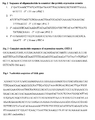
- the overall process developed and disclosed herein is based on the use of a new DNA sequence ( Fig.3 ) linked with the SAK and SAK forms that allows production of large amounts of staphylokinase by changing the oxygen parameters of the culture condition and does not require use of any external source to induce the production of recombinant SAK in E. coli.
- E. coli as host for high level production of recombinant proteins is widespread in modem biotechnological practices.
- Large scale production of useful proteins is typically achieved via two-stage fed-batch fermentations.
- cells are grown to a high cell density under reasonably balanced growth conditions. This requires that the synthesis of the heterologous proteins be minimized.
- high level expression of the recombinant proteins is activated.
- the relative performance of different promoters varies from protein to protein. The properties of the promoter that regulates the expression of the recombinant protein are therefore crucial for the process productivity.
- SAK encoding gene has been cloned under inducible promoters, e.g., tac or T7 that required use of a gratutious inducer molecule or increasing the temperature of the growth conditions.
- inducible promoters e.g., tac or T7
- the former approach tends to interfere less with host cell metabolism, gratutious inducers are generally expensive and hence affect the economics of scale up.
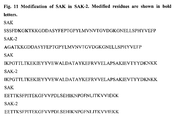
- native SAK gene when integrated with these expression systems exhibited processing of the N-terminal region of SAK resulting in microheterogeneity in the protein product. Therefore, the modification of Lys6 and Lys 8 amino acid residues were made at the N-terminal sequence to block the N-terminal processing of SAK without affecting its overall functional properties. When these SAK forms were linked with the newly designed DNA expression sequences, they were able to produce large amount of SAK in cell culture of E. coli.
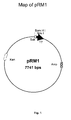
- the novel SAK expression system was developed using the prototype SAK expression system pRM1 ( Fig. 1 , [ Rajamohan and Kanak L. Dikshit, FEBS Letters 474, 151-158 , 2000 ]) that carries SAK encoding gene under the IPTG inducible T7 promoter and a novel protein expression cassette ( Fig. 3 ) that carries DNA sequence for the binding of oxygen sensitive regulatory proteins such as FNR (Ferredoxin-NADP+ reductase) at specific position.
- SAK encoding gene ( Fig. 4 ) was linked with the protein expression cassette using recombinant DNA techniques and this fusion product was subsequently cloned on a suitable replicating plasmid vector ( Fig.
- SAK expression plasmid vector carrying SAK gene or its modified forms ( Fig.6 , Fig.9 ) under the novel expression cassette, designated as pOXYPRO ( Fig. 6 ) that is activated for the protein expression when oxygen level low ( ⁇ less than 5% of atmospheric oxygen).
- the present invention discloses the design of a plasmid vector that utilizes the fusion of a novel protein expression sequence ( Fig. 3 ) with the DNA sequences of SAK ( Fig. 4 ) or its N-terminally modified forms ( Fig. 5 and Fig. 6 ) to produce large amount of staphylokinase or its analogs when oxygen level of its growth condition goes below 5% of atmospheric oxygen level.
- a synthetic cassette carrying a defined DNA sequence ( Fig. 3 ) was made using known procedure and joined at the N-terminus of SAK encoding DNA and cloned on a suitable plasmid which could be pUC or Bluescript.
- E. coli strain has been utilized for the SAK expression plasmid vectors ( Fig. 8 and Fig. 9 ) encoding SAK or SAK forms.
- EXAMPLE 1 Construction of expression system for the production of intracellular Staphylokinase
- the PCR was carried out using the DNA template of S. aureus and SAK-1 and SAK-2 primers in 100 ul reaction mixture carrying 10 nanograms of template DNA, 20 picomoles of SAK-1 and SAK2, 2.5 units of Vent DNA polymerase (NEB) and 20 ⁇ l of each dNTPs and 10 ⁇ l of standard PCR buffer (10xbuffer; commercially available from NEB). A total number of 30 cycles and a final extension of 10 minutes at 72 °C was used for PCR. It resulted in 606 bp amplified DNA product as observed on 1% agarose gel.
- NEB Vent DNA polymerase
- This DNA product was digested with restriction enzymes , cloned at NdeI and BamHI site of pET9b plasmid vector ,and the presence of SAK gene on the recombinant plasmid was further verified by nucleotide sequence analysis ( Fig.4 ) by following the standard recombinant DNA techniques. It resulted in construction of a plasmid vector, pRM1 (deposited as BPL-0019 in Microbial Type Culture Collection, a national culture depository located at the Institute of Microbial Technology, Chandigarh, a constituent laboratory of Council of Scientific and Industrial Research. BPL stands for the plasmid in bacteria and 0019 denotes the serial number of deposited material).
- Glycerol stocks of E . coli carrying recombinant plasmid, pRM1 ( Fig. 1 ) was made as described in standard recombinant DNA text book (Sambrook et. al., Molecular Cloning: A laboratory Manual 1989; Cold Spring Harbor) and maintained at -70 °C.
- seed culture of recombinant bacteria carrying SAK expression plasmid, pRM1 was raised by inoculating freshly thawed glycerol stock into 100ml of standard Luria Broth (LB) medium (in a 500 ml conical flask) containing 25 ⁇ g/ml Kanamycin sulphate.
- LB Luria Broth
- Step 2 Second step involves construction of a synthetic DNA cassette , OXY-1 for the expression of SAK and its derivatives.
- the construction of 150 base DNA cassette, OXY-1 was synthesized using synthetic oligonucleotides. These oligonucleotides were synthesized commercially and their sequence is given in Fig. 2 . 1 ⁇ g of each oligonucleotide was mixed together and heated in a water bath at 100 °C for 2 min and thereafter cooled down slowly at room temperature for 30 min.
- the annealing mixture so obtained was run on a 2% agarose gel and 150 base DNA band was gel purified using commercially available DNA purification kits (Wizard DNA purification kit, Promega Biotech.).This 150 base purified DNA fragment was digested with restriction enzymes Hind III and BamHI and joined on plasmid vector pUC18 (New England Bio labs) at HindIII -BamHI site. The resulting plasmid vector was designated as pOXY-1 ( Fig.7 ). The entire sequence of 150 base DNA inserted on pUC18 was checked through nucleotide sequence analysis and is depicted in Fig. 3 .
- Step 3 involves construction of expression plasmid vector, pOXYSAK-1 (deposited as BPL-0020 in Microbial Type Culture Collection, a national culture depository located at the Institute of Microbial Technology, Chandigarh), carrying novel expression signal for the intracellular production of SAK in E. coli.
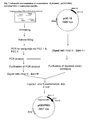
- Construction of plasmid vector encoding SAK under the control of oxygen-regulated protein expression signal was done by retrieving SAK encoding DNA from the plasmid, pRM 1 (described in step 1, Fig.1 ) and combining it with the novel protein expression signals of plasmid, pOXYPRO resulting in the plasmid vector, pOXYSAK-1.
- Fig. 8 Schematic construction of plasmid, pOXYSAK-1, is depicted in Fig. 8 .
- SAK encoding DNA sequence was amplified through PCR from pRM1 using following set of oligonucleotide primers SAK-3 primer: 5'-GAACTTAAGGAAGATATACATATGTCAAGTTCATTCGACAA AGGA-3' (45 mer).
- SAK-2 primer 5'- CGGCTACTGGATCCTCCACTTTTATCCAAACTGATTT -3' (37 mer).
- the PCR was carried out using the DNA template of pRM1 and SAK-3 and SAK-2 primers in 100 ⁇ l reaction mixture carrying 10 nanograms of template DNA, 20 picomoles of SAK-1 and SAK2, 2.5 units of Vent DNA polymerase (NEB) and 20 ⁇ l of each dNTPs and 10 ⁇ l of standard PCR buffer (10xbuffer; commercially available from NEB). A total number of 30 cycles and a final extension of 10 minutes at 72°C was used for PCR. It resulted in 606 bp amplified DNA product as observed on 1% agarose gel. This DNA product was digested with restriction enzymes and cloned at Afl II and BamHI site of OXY-1 plasmid vector following the standard recombinant DNA techniques.
- plasmid DNA pOXYPRO prepared at step 2 , was digested with 2 units each of Afl II and BamHI restriction enzyme at 37°C for two hours and mixed up with the 606 base gel purified fragment carrying entire SAK gene. This mixture of DNA was precipitated by adding 2x volume of absolute alcohol and incubating it at -20°C for 1h. The DNA was recovered after centrifugation of this mixture for 20 min at 14000 rpm. Supernatant was discarded and pellet was dissolved in 17 ⁇ l of water. DNA mixture was then ligated in the presence of 10 units of DNA ligase and 1x ligase buffer (New England Biolabs) at 20°C for overnight.
- DNA ligase and 1x ligase buffer New England Biolabs
- Example. 2 Production of recombinant staphylokinase from E. coli
- glycerol stocks of E. coli JM109 strain harboring plasmid, pOXYSAK-1, maintained at -70 °C were used to prepare a seed culture by inoculating freshly thawed glycerol stock (approx. 100 ul) into a 500 ml flask carrying 100 ml of LB medium with 100 ⁇ g/ml of ampicillin. The flask was incubated at 37 °C with shaking on a rotary shaker at 200 rpm for 16-18 h. This cell culture of E.
- coli was used to seed four 2 Liter Erlenmyer flasks each containing 500 ml of the same medium (LB containing 100 ⁇ g/ml ampicillin) using 5% of the inoculum.
- the flasks were incubated at 37 °C with shaking at 200 rpm until the absorbance of the culture at 600 nm reached to 0.8 (around 5-6 h after inoculation). Thereafter, shaking of the culture was changed to 50 rpm and culture was allowed to grow for another 6-8 h to build up the SAK protein inside the cells.
- the cell lysate was centrifuged at 6000xg at 4 °C for 15 min and clear lysates were diluted four fold with distilled water and thereafter applied at room temperature to a 10x32 cm column of SP-sepharose at a flow rate of 1 liter per hour.
- the column was washed with 0.1M phosphate buffer, pH 6.2 and eluted with a gradient of 0.1 to 0.5M NaCl.
- the SAK containing fraction was checked by spot test by mixing 1 ul of fraction with 1 ⁇ l of human plasminogen (100mg/ml) and 1 ⁇ l of chromozyme PL.
- the SAK containing fractions exhibited development of yellow color.
- Example 4 Production of N-terminally modified SAK-derivative under OXYPRO expression signal.
- a SAK derivative, that carry modified amino terminus but retained its full biological activity was designed and fused with the OXYPRO sequences to overcome the problem of N-terminal processing of SAK that has been observed usually during large scale production of SAK. 5 N- terminal residues were deleted and Lys6 and Lys8 were replaced with Ala.
- Total genomic DNA of Staphylococcus aureus (SAK-11 as mentioned in Example I step 1) was isolated and used as a template for the PCR amplification using following set of oligonucleotide primers :
- the PCR was carried out using 10 nanograms of template DNA, 20 picomoles of SAK-4 and SAK-2 primers, 2.5 units of Vent DNA polymerase and 20 units of dNTPs and 10 ⁇ l of commercially available standard PCR buffer (New England Biolabs). A total number of 30 cycles and a final extension of 10 minutes at 72 °C were used for PCR. It resulted in nearly 581 base pair amplified DNA product as observed on 1 % agarose gel. This amplified DNA product was digested with restriction enzymes Afl II and BamH I.
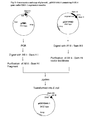
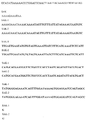
- This mixture was then ligated in the presence of 10 units of DNA ligase and 1 ⁇ l of DNA ligase buffer at 20 C for overnight. After that approx 10 ng of this ligated DNA was used to transform E. coli JM105 elctrocompetant cells using standard procedure. Transformed cells were plated on LB plates carrying 100 ⁇ g ampicillin/ml. After overnight incubation at 37 °C, several colonies appeared on the plates and out of that 10 colonies were analyzed for the presence of 430 base DNA insert carrying modified SAK gene i.e. SAK -2. 591 base DNA encoding modified SAK gene was sequenced and its sequence is given in Figure 6 . This plasmid construct was designated as pOXYSAK-2 ( Fig. 9 ). This plasmid vector has been deposited in Microbial Type Culture Collection as BPL-0021.
- E. coli JM105 carrying pOXYSAK-2 was grown into 500 ml flask carrying 100 ml LB medium with 100 ⁇ g/ml of ampicillin and incubated at 37°C with shaking on a rotary shaker at 200 rpm for 5-6 hr till the absorbance of the culture at 600 nm reached to 0.8. Thereafter shaking of the culture was changed to 50 rpm and culture was allowed to grow for another 6-8 hr. From this culture, SAK was purified following the steps described in the example 3. SDS-PAGE analysis of purified protein preparation indicated the presence of a single band corresponding to 16 kD. Specific activity of purified SAK protein was estimated as 1.70,000 U/mg of protein that was comparable to the purified preparation of standard SAK obtained from the native host, S. aureus.
Landscapes
- Chemical & Material Sciences (AREA)
- Organic Chemistry (AREA)
- Health & Medical Sciences (AREA)
- Medicinal Chemistry (AREA)
- Biochemistry (AREA)
- Biophysics (AREA)
- General Health & Medical Sciences (AREA)
- Genetics & Genomics (AREA)
- Life Sciences & Earth Sciences (AREA)
- Molecular Biology (AREA)
- Proteomics, Peptides & Aminoacids (AREA)
- Gastroenterology & Hepatology (AREA)
- Micro-Organisms Or Cultivation Processes Thereof (AREA)
- Enzymes And Modification Thereof (AREA)
- Preparation Of Compounds By Using Micro-Organisms (AREA)
- Medicines That Contain Protein Lipid Enzymes And Other Medicines (AREA)
Applications Claiming Priority (2)
| Application Number | Priority Date | Filing Date | Title |
|---|---|---|---|
| US45943903P | 2003-04-01 | 2003-04-01 | |
| EP04724700A EP1608677B1 (de) | 2003-04-01 | 2004-03-31 | Verfahren zur sauerstoff-regulierten produktion von recombinanter staphylokinase |
Related Parent Applications (2)
| Application Number | Title | Priority Date | Filing Date |
|---|---|---|---|
| EP04724700.2 Division | 2004-03-31 | ||
| EP04724700A Division EP1608677B1 (de) | 2003-04-01 | 2004-03-31 | Verfahren zur sauerstoff-regulierten produktion von recombinanter staphylokinase |
Publications (2)
| Publication Number | Publication Date |
|---|---|
| EP1982995A1 true EP1982995A1 (de) | 2008-10-22 |
| EP1982995B1 EP1982995B1 (de) | 2013-01-02 |
Family
ID=33131885
Family Applications (2)
| Application Number | Title | Priority Date | Filing Date |
|---|---|---|---|
| EP08007487A Expired - Lifetime EP1982995B1 (de) | 2003-04-01 | 2004-03-31 | Verbesserte rekombinante Staphylokinasen |
| EP04724700A Expired - Lifetime EP1608677B1 (de) | 2003-04-01 | 2004-03-31 | Verfahren zur sauerstoff-regulierten produktion von recombinanter staphylokinase |
Family Applications After (1)
| Application Number | Title | Priority Date | Filing Date |
|---|---|---|---|
| EP04724700A Expired - Lifetime EP1608677B1 (de) | 2003-04-01 | 2004-03-31 | Verfahren zur sauerstoff-regulierten produktion von recombinanter staphylokinase |
Country Status (6)
| Country | Link |
|---|---|
| US (1) | US7524644B2 (de) |
| EP (2) | EP1982995B1 (de) |
| AT (1) | ATE529437T1 (de) |
| RU (2) | RU2373281C2 (de) |
| WO (1) | WO2004087750A2 (de) |
| ZA (1) | ZA200507966B (de) |
Family Cites Families (7)
| Publication number | Priority date | Publication date | Assignee | Title |
|---|---|---|---|---|
| US5956487A (en) * | 1996-10-25 | 1999-09-21 | Hewlett-Packard Company | Embedding web access mechanism in an appliance for user interface functions including a web server and web browser |
| JP3634099B2 (ja) * | 1997-02-17 | 2005-03-30 | 株式会社リコー | 文書情報管理システム,媒体用紙情報作成装置および文書情報管理装置 |
| US6964374B1 (en) * | 1998-10-02 | 2005-11-15 | Lucent Technologies Inc. | Retrieval and manipulation of electronically stored information via pointers embedded in the associated printed material |
| JP3480688B2 (ja) * | 1998-12-14 | 2003-12-22 | パナソニック コミュニケーションズ株式会社 | 通信端末装置 |
| RU2156299C1 (ru) * | 1999-02-03 | 2000-09-20 | Закрытое акционерное общество "Фосфосорб" | Рекомбинантная плазмидная днк, кодирующая полную последовательность стафилокиназы, штамм escherichia coli sa 9325 - продуцент рекомбинантного белка |
| US6856415B1 (en) * | 1999-11-29 | 2005-02-15 | Xerox Corporation | Document production system for capturing web page content |
| US7075676B2 (en) * | 2000-12-19 | 2006-07-11 | Sharp Laboratories Of America, Inc. | Method for attaching file as a barcode to the printout |
-
2004
- 2004-03-31 EP EP08007487A patent/EP1982995B1/de not_active Expired - Lifetime
- 2004-03-31 US US10/814,850 patent/US7524644B2/en not_active Expired - Fee Related
- 2004-03-31 WO PCT/IN2004/000077 patent/WO2004087750A2/en not_active Ceased
- 2004-03-31 AT AT04724700T patent/ATE529437T1/de not_active IP Right Cessation
- 2004-03-31 RU RU2005133633/13A patent/RU2373281C2/ru not_active IP Right Cessation
- 2004-03-31 EP EP04724700A patent/EP1608677B1/de not_active Expired - Lifetime
-
2005
- 2005-10-03 ZA ZA200507966A patent/ZA200507966B/xx unknown
-
2008
- 2008-07-25 RU RU2008130819/10A patent/RU2486249C2/ru not_active IP Right Cessation
Non-Patent Citations (22)
| Title |
|---|
| "British Pharmacopia", 1980 |
| COLLEN, CIRCULATION, vol. 87, 1993, pages 996 - 1006 |
| COLLEN, FIBRINOLYSIS, vol. 6, 1992, pages 203 - 213 |
| COLLEN, FIBRINOLYSIS, vol. 6, 1992, pages 232 - 242 |
| COLLEN, J. BIOL. CHEM., vol. 268, 1993, pages 8284 - 8289 |
| GERLACH, ZBL. BAKT. HYG., vol. A269, 1988 |
| LACK, NATURE, vol. 161, 1948, pages 558 - 560 |
| LIJNEN, J. BIOL. CHEM., vol. 266, pages 11826 - 11823 |
| LIJNEN; COLLEN, FIBRINOLYSIS, vol. 10, 1996, pages 119 - 126 |
| MALKE, H.; FERRETI, J. J., PROC. NATL. ACAD. SC., vol. 81, 1984, pages 3557 |
| METHODS OF ENZYMOLOGY, vol. 80, pages 387 |
| MIELE, J. BIOL. CHEM., vol. 274, 1999, pages 7769 - 7776 |
| NATURE, vol. 227, 1970, pages 680 |
| RAJAMOHAN G ET AL: "Role of the N-terminal region of staphylokinase (SAK): evidence for the participation of the N-terminal region of SAK in the enzyme-substrate complex formation", FEBS LETTERS, ELSEVIER SCIENCE PUBLISHERS, AMSTERDAM, NL, vol. 474, no. 2-3, 2 June 2000 (2000-06-02), pages 151 - 158, XP004337198, ISSN: 0014-5793 * |
| RAJAMOHAN; KANAK L. DIKSHIT, FEBS LETTERS, vol. 474, 2000, pages 151 - 158 |
| ROBBINSON, J. BIOL. CHEM, vol. 242, 1967, pages 2333 - 2342 |
| RUIQIONG, BIOTECHNOL. BIOENG., vol. 62, 1998, pages 87 - 96 |
| SAKO T ET AL: "NUCLEOTIDE SEQUENCE OF THE STAPHYLOKINASE GENE FROM STAPHYLOCOCCUS AUREUS", NUCLEIC ACIDS RESEARCH, OXFORD UNIVERSITY PRESS, SURREY, GB, vol. 11, no. 22, 1983, pages 7679 - 7693, XP000938612, ISSN: 0305-1048 * |
| SAKO, MOL. GEN. GENET., vol. 190, 1983, pages 271 - 277 |
| SAMBROOK: "Molecular Cloning: A laboratory Manual", 1989, COLD SPRING HARBOR |
| SAMBROOK: "Molecular Cloning: A Laboratory Manual", 1989, COLD SPRING HARBOR PRESS |
| YE RUIQIONG ET AL: "High-level secretory production of intact, biologically active staphylokinase from Bacillus subtilis", BIOTECHNOLOGY AND BIOENGINEERING, vol. 62, no. 1, 5 January 1999 (1999-01-05), pages 87 - 96, XP002495021, ISSN: 0006-3592 * |
Also Published As
| Publication number | Publication date |
|---|---|
| EP1608677A2 (de) | 2005-12-28 |
| ATE529437T1 (de) | 2011-11-15 |
| RU2486249C2 (ru) | 2013-06-27 |
| RU2008130819A (ru) | 2010-01-27 |
| ZA200507966B (en) | 2007-04-25 |
| RU2373281C2 (ru) | 2009-11-20 |
| WO2004087750A3 (en) | 2005-09-01 |
| WO2004087750A2 (en) | 2004-10-14 |
| RU2005133633A (ru) | 2006-05-10 |
| US20050019862A1 (en) | 2005-01-27 |
| EP1608677B1 (de) | 2011-10-19 |
| EP1982995B1 (de) | 2013-01-02 |
| US7524644B2 (en) | 2009-04-28 |
Similar Documents
| Publication | Publication Date | Title |
|---|---|---|
| Hardie et al. | In vitro activation of Escherichia coli prohaemolysin to the mature membrane‐targeted toxin requires HlyC and a low molecular‐weight cytosolic polypeptide | |
| CA2018273C (en) | Thermally stable cytosine deaminase | |
| JPS62207297A (ja) | 超高度原核発現系 | |
| JPH04166085A (ja) | 新規プロテアーゼ | |
| EP1024192B1 (de) | Thromben-spezifische Streptokinasen mit veränderten plasminogen-aktivierenden Eigenschaften und ein Verfahren zu deren Herstellung | |
| CA2025070C (en) | Recombinant aprotinin variants genetically engineered process for the microbial preparation of homgeneously processed aprotinin variants and the therapeutic use thereof | |
| US5187098A (en) | DNA encoding hybrid streptokinases with plasminogen fibrin binding domains | |
| US5801037A (en) | Expression of signal-peptide-free staphylokinases | |
| DK164001B (da) | Rekombinant-dna, der kan udtrykke staphylokinase og er afledt fra en temperat phag af staphylococcus aureus, fremgangsmaade til fremstilling af rekominant-dna samt fremgangsmaade til fremstilling af staphylokinase | |
| JPH05320197A (ja) | スタヒロコッカス・アウレウス菌株27r由来のペニシリン結合タンパク質2aのdnaおよびアミノ酸配列およびその精製に用いるための誘導体およびメシチリン耐性生物に対して有効な化合物の検定法 | |
| EP1982995B1 (de) | Verbesserte rekombinante Staphylokinasen | |
| Reddy et al. | Isolation, cloning and expression of recombinant staphylokinase gene against thrombosis | |
| US5837485A (en) | DNA encoding and biosynthetic process for the preparation of chemical compounds, lantibiotics | |
| RU2127758C1 (ru) | Способ получения рекомбинантной стрептокиназы | |
| US7189557B2 (en) | Process for the intracellular over-production of streptokinase using genetically engineered strain of E. coli | |
| RU2156299C1 (ru) | Рекомбинантная плазмидная днк, кодирующая полную последовательность стафилокиназы, штамм escherichia coli sa 9325 - продуцент рекомбинантного белка | |
| WO1991019741A1 (en) | Albumin binding proteins | |
| JPH0670765A (ja) | プロテアーゼ、それをコードする遺伝子、そのプロテアーゼの製造方法および用途 | |
| AU2003295182B2 (en) | Process for producing streptokinase using genetically modified Escherichia coli | |
| Manosroi et al. | Lekteplase—a Secreted Tissue Plasminogen Activator Derivative from Escherichia coli | |
| RU2089612C1 (ru) | Рекомбинантная плазмидная днк purvgf, определяющая синтез фактора роста вируса осповакцины штамма л-ивп совместно с бета - галактозидазой escherichia coli, и штамм бактерий escherichia coli, содержащий рекомбинантную плазмидную днк purvgf - продуцент фактора роста вируса осповакцины штамма л-ивп | |
| KR20030059252A (ko) | 재조합체 DNA-유도된 tPA 또는 K2S 분자의 대규모제조 방법 | |
| JPH06329699A (ja) | 水溶性のペニシリン結合性プロテイン2aの精製方法 | |
| JP3089287B2 (ja) | う蝕ワクチンの製造法 | |
| Seifkordi | Purification of recombinant streptokinases by Ion-exchange chromatography |
Legal Events
| Date | Code | Title | Description |
|---|---|---|---|
| PUAI | Public reference made under article 153(3) epc to a published international application that has entered the european phase |
Free format text: ORIGINAL CODE: 0009012 |
|
| AC | Divisional application: reference to earlier application |
Ref document number: 1608677 Country of ref document: EP Kind code of ref document: P |
|
| AK | Designated contracting states |
Kind code of ref document: A1 Designated state(s): AT BE BG CH CY CZ DE DK EE ES FI FR GB GR HU IE IT LI LU MC NL PL PT RO SE SI SK TR |
|
| 17P | Request for examination filed |
Effective date: 20090128 |
|
| 17Q | First examination report despatched |
Effective date: 20090306 |
|
| AKX | Designation fees paid |
Designated state(s): AT BE BG CH CY CZ DE DK EE ES FI FR GB GR HU IE IT LI LU MC NL PL PT RO SE SI SK TR |
|
| GRAP | Despatch of communication of intention to grant a patent |
Free format text: ORIGINAL CODE: EPIDOSNIGR1 |
|
| GRAS | Grant fee paid |
Free format text: ORIGINAL CODE: EPIDOSNIGR3 |
|
| GRAA | (expected) grant |
Free format text: ORIGINAL CODE: 0009210 |
|
| AC | Divisional application: reference to earlier application |
Ref document number: 1608677 Country of ref document: EP Kind code of ref document: P |
|
| AK | Designated contracting states |
Kind code of ref document: B1 Designated state(s): AT BE BG CH CY CZ DE DK EE ES FI FR GB GR HU IE IT LI LU MC NL PL PT RO SE SI SK TR |
|
| REG | Reference to a national code |
Ref country code: GB Ref legal event code: FG4D |
|
| REG | Reference to a national code |
Ref country code: CH Ref legal event code: EP Ref country code: AT Ref legal event code: REF Ref document number: 591574 Country of ref document: AT Kind code of ref document: T Effective date: 20130115 |
|
| REG | Reference to a national code |
Ref country code: IE Ref legal event code: FG4D |
|
| REG | Reference to a national code |
Ref country code: DE Ref legal event code: R096 Ref document number: 602004040682 Country of ref document: DE Effective date: 20130307 |
|
| REG | Reference to a national code |
Ref country code: AT Ref legal event code: MK05 Ref document number: 591574 Country of ref document: AT Kind code of ref document: T Effective date: 20130102 |
|
| REG | Reference to a national code |
Ref country code: NL Ref legal event code: VDEP Effective date: 20130102 |
|
| PG25 | Lapsed in a contracting state [announced via postgrant information from national office to epo] |
Ref country code: SI Free format text: LAPSE BECAUSE OF FAILURE TO SUBMIT A TRANSLATION OF THE DESCRIPTION OR TO PAY THE FEE WITHIN THE PRESCRIBED TIME-LIMIT Effective date: 20130102 |
|
| PG25 | Lapsed in a contracting state [announced via postgrant information from national office to epo] |
Ref country code: AT Free format text: LAPSE BECAUSE OF FAILURE TO SUBMIT A TRANSLATION OF THE DESCRIPTION OR TO PAY THE FEE WITHIN THE PRESCRIBED TIME-LIMIT Effective date: 20130102 Ref country code: ES Free format text: LAPSE BECAUSE OF FAILURE TO SUBMIT A TRANSLATION OF THE DESCRIPTION OR TO PAY THE FEE WITHIN THE PRESCRIBED TIME-LIMIT Effective date: 20130413 Ref country code: CZ Free format text: LAPSE BECAUSE OF FAILURE TO SUBMIT A TRANSLATION OF THE DESCRIPTION OR TO PAY THE FEE WITHIN THE PRESCRIBED TIME-LIMIT Effective date: 20130102 Ref country code: SE Free format text: LAPSE BECAUSE OF FAILURE TO SUBMIT A TRANSLATION OF THE DESCRIPTION OR TO PAY THE FEE WITHIN THE PRESCRIBED TIME-LIMIT Effective date: 20130102 Ref country code: CY Free format text: LAPSE BECAUSE OF FAILURE TO SUBMIT A TRANSLATION OF THE DESCRIPTION OR TO PAY THE FEE WITHIN THE PRESCRIBED TIME-LIMIT Effective date: 20130102 Ref country code: BE Free format text: LAPSE BECAUSE OF FAILURE TO SUBMIT A TRANSLATION OF THE DESCRIPTION OR TO PAY THE FEE WITHIN THE PRESCRIBED TIME-LIMIT Effective date: 20130102 Ref country code: BG Free format text: LAPSE BECAUSE OF FAILURE TO SUBMIT A TRANSLATION OF THE DESCRIPTION OR TO PAY THE FEE WITHIN THE PRESCRIBED TIME-LIMIT Effective date: 20130402 |
|
| PG25 | Lapsed in a contracting state [announced via postgrant information from national office to epo] |
Ref country code: PL Free format text: LAPSE BECAUSE OF FAILURE TO SUBMIT A TRANSLATION OF THE DESCRIPTION OR TO PAY THE FEE WITHIN THE PRESCRIBED TIME-LIMIT Effective date: 20130102 Ref country code: GR Free format text: LAPSE BECAUSE OF FAILURE TO SUBMIT A TRANSLATION OF THE DESCRIPTION OR TO PAY THE FEE WITHIN THE PRESCRIBED TIME-LIMIT Effective date: 20130403 Ref country code: FI Free format text: LAPSE BECAUSE OF FAILURE TO SUBMIT A TRANSLATION OF THE DESCRIPTION OR TO PAY THE FEE WITHIN THE PRESCRIBED TIME-LIMIT Effective date: 20130102 Ref country code: PT Free format text: LAPSE BECAUSE OF FAILURE TO SUBMIT A TRANSLATION OF THE DESCRIPTION OR TO PAY THE FEE WITHIN THE PRESCRIBED TIME-LIMIT Effective date: 20130502 Ref country code: NL Free format text: LAPSE BECAUSE OF FAILURE TO SUBMIT A TRANSLATION OF THE DESCRIPTION OR TO PAY THE FEE WITHIN THE PRESCRIBED TIME-LIMIT Effective date: 20130102 |
|
| PG25 | Lapsed in a contracting state [announced via postgrant information from national office to epo] |
Ref country code: MC Free format text: LAPSE BECAUSE OF NON-PAYMENT OF DUE FEES Effective date: 20130331 Ref country code: DK Free format text: LAPSE BECAUSE OF FAILURE TO SUBMIT A TRANSLATION OF THE DESCRIPTION OR TO PAY THE FEE WITHIN THE PRESCRIBED TIME-LIMIT Effective date: 20130102 Ref country code: EE Free format text: LAPSE BECAUSE OF FAILURE TO SUBMIT A TRANSLATION OF THE DESCRIPTION OR TO PAY THE FEE WITHIN THE PRESCRIBED TIME-LIMIT Effective date: 20130102 Ref country code: SK Free format text: LAPSE BECAUSE OF FAILURE TO SUBMIT A TRANSLATION OF THE DESCRIPTION OR TO PAY THE FEE WITHIN THE PRESCRIBED TIME-LIMIT Effective date: 20130102 Ref country code: RO Free format text: LAPSE BECAUSE OF FAILURE TO SUBMIT A TRANSLATION OF THE DESCRIPTION OR TO PAY THE FEE WITHIN THE PRESCRIBED TIME-LIMIT Effective date: 20130102 |
|
| REG | Reference to a national code |
Ref country code: CH Ref legal event code: PL |
|
| PLBE | No opposition filed within time limit |
Free format text: ORIGINAL CODE: 0009261 |
|
| STAA | Information on the status of an ep patent application or granted ep patent |
Free format text: STATUS: NO OPPOSITION FILED WITHIN TIME LIMIT |
|
| 26N | No opposition filed |
Effective date: 20131003 |
|
| PG25 | Lapsed in a contracting state [announced via postgrant information from national office to epo] |
Ref country code: IT Free format text: LAPSE BECAUSE OF FAILURE TO SUBMIT A TRANSLATION OF THE DESCRIPTION OR TO PAY THE FEE WITHIN THE PRESCRIBED TIME-LIMIT Effective date: 20130102 |
|
| REG | Reference to a national code |
Ref country code: IE Ref legal event code: MM4A |
|
| REG | Reference to a national code |
Ref country code: DE Ref legal event code: R097 Ref document number: 602004040682 Country of ref document: DE Effective date: 20131003 |
|
| PG25 | Lapsed in a contracting state [announced via postgrant information from national office to epo] |
Ref country code: IE Free format text: LAPSE BECAUSE OF NON-PAYMENT OF DUE FEES Effective date: 20130331 Ref country code: CH Free format text: LAPSE BECAUSE OF NON-PAYMENT OF DUE FEES Effective date: 20130331 Ref country code: LI Free format text: LAPSE BECAUSE OF NON-PAYMENT OF DUE FEES Effective date: 20130331 |
|
| PG25 | Lapsed in a contracting state [announced via postgrant information from national office to epo] |
Ref country code: TR Free format text: LAPSE BECAUSE OF FAILURE TO SUBMIT A TRANSLATION OF THE DESCRIPTION OR TO PAY THE FEE WITHIN THE PRESCRIBED TIME-LIMIT Effective date: 20130102 |
|
| PG25 | Lapsed in a contracting state [announced via postgrant information from national office to epo] |
Ref country code: HU Free format text: LAPSE BECAUSE OF FAILURE TO SUBMIT A TRANSLATION OF THE DESCRIPTION OR TO PAY THE FEE WITHIN THE PRESCRIBED TIME-LIMIT; INVALID AB INITIO Effective date: 20040331 Ref country code: LU Free format text: LAPSE BECAUSE OF NON-PAYMENT OF DUE FEES Effective date: 20130331 |
|
| REG | Reference to a national code |
Ref country code: FR Ref legal event code: PLFP Year of fee payment: 13 |
|
| REG | Reference to a national code |
Ref country code: FR Ref legal event code: PLFP Year of fee payment: 14 |
|
| REG | Reference to a national code |
Ref country code: FR Ref legal event code: PLFP Year of fee payment: 15 |
|
| PGFP | Annual fee paid to national office [announced via postgrant information from national office to epo] |
Ref country code: FR Payment date: 20190329 Year of fee payment: 16 Ref country code: GB Payment date: 20190326 Year of fee payment: 16 Ref country code: DE Payment date: 20190328 Year of fee payment: 16 |
|
| REG | Reference to a national code |
Ref country code: DE Ref legal event code: R119 Ref document number: 602004040682 Country of ref document: DE |
|
| PG25 | Lapsed in a contracting state [announced via postgrant information from national office to epo] |
Ref country code: DE Free format text: LAPSE BECAUSE OF NON-PAYMENT OF DUE FEES Effective date: 20201001 Ref country code: FR Free format text: LAPSE BECAUSE OF NON-PAYMENT OF DUE FEES Effective date: 20200331 |
|
| GBPC | Gb: european patent ceased through non-payment of renewal fee |
Effective date: 20200331 |
|
| PG25 | Lapsed in a contracting state [announced via postgrant information from national office to epo] |
Ref country code: GB Free format text: LAPSE BECAUSE OF NON-PAYMENT OF DUE FEES Effective date: 20200331 |