EP1978230B1 - Wärmekraftanlage, insbesondere zur Nutzung von Wärmequellen niedriger Temperatur - Google Patents
Wärmekraftanlage, insbesondere zur Nutzung von Wärmequellen niedriger Temperatur Download PDFInfo
- Publication number
- EP1978230B1 EP1978230B1 EP08005628.6A EP08005628A EP1978230B1 EP 1978230 B1 EP1978230 B1 EP 1978230B1 EP 08005628 A EP08005628 A EP 08005628A EP 1978230 B1 EP1978230 B1 EP 1978230B1
- Authority
- EP
- European Patent Office
- Prior art keywords
- piston
- working medium
- working chamber
- working
- valve
- Prior art date
- Legal status (The legal status is an assumption and is not a legal conclusion. Google has not performed a legal analysis and makes no representation as to the accuracy of the status listed.)
- Active
Links
Images
Classifications
-
- F—MECHANICAL ENGINEERING; LIGHTING; HEATING; WEAPONS; BLASTING
- F02—COMBUSTION ENGINES; HOT-GAS OR COMBUSTION-PRODUCT ENGINE PLANTS
- F02G—HOT GAS OR COMBUSTION-PRODUCT POSITIVE-DISPLACEMENT ENGINE PLANTS; USE OF WASTE HEAT OF COMBUSTION ENGINES; NOT OTHERWISE PROVIDED FOR
- F02G1/00—Hot gas positive-displacement engine plants
- F02G1/02—Hot gas positive-displacement engine plants of open-cycle type
-
- F—MECHANICAL ENGINEERING; LIGHTING; HEATING; WEAPONS; BLASTING
- F01—MACHINES OR ENGINES IN GENERAL; ENGINE PLANTS IN GENERAL; STEAM ENGINES
- F01C—ROTARY-PISTON OR OSCILLATING-PISTON MACHINES OR ENGINES
- F01C1/00—Rotary-piston machines or engines
- F01C1/30—Rotary-piston machines or engines having the characteristics covered by two or more groups F01C1/02, F01C1/08, F01C1/22, F01C1/24 or having the characteristics covered by one of these groups together with some other type of movement between co-operating members
- F01C1/34—Rotary-piston machines or engines having the characteristics covered by two or more groups F01C1/02, F01C1/08, F01C1/22, F01C1/24 or having the characteristics covered by one of these groups together with some other type of movement between co-operating members having the movement defined in group F01C1/08 or F01C1/22 and relative reciprocation between the co-operating members
- F01C1/344—Rotary-piston machines or engines having the characteristics covered by two or more groups F01C1/02, F01C1/08, F01C1/22, F01C1/24 or having the characteristics covered by one of these groups together with some other type of movement between co-operating members having the movement defined in group F01C1/08 or F01C1/22 and relative reciprocation between the co-operating members with vanes reciprocating with respect to the inner member
-
- F—MECHANICAL ENGINEERING; LIGHTING; HEATING; WEAPONS; BLASTING
- F01—MACHINES OR ENGINES IN GENERAL; ENGINE PLANTS IN GENERAL; STEAM ENGINES
- F01C—ROTARY-PISTON OR OSCILLATING-PISTON MACHINES OR ENGINES
- F01C21/00—Component parts, details or accessories not provided for in groups F01C1/00 - F01C20/00
- F01C21/18—Arrangements for admission or discharge of the working fluid, e.g. constructional features of the inlet or outlet
-
- F—MECHANICAL ENGINEERING; LIGHTING; HEATING; WEAPONS; BLASTING
- F01—MACHINES OR ENGINES IN GENERAL; ENGINE PLANTS IN GENERAL; STEAM ENGINES
- F01K—STEAM ENGINE PLANTS; STEAM ACCUMULATORS; ENGINE PLANTS NOT OTHERWISE PROVIDED FOR; ENGINES USING SPECIAL WORKING FLUIDS OR CYCLES
- F01K25/00—Plants or engines characterised by use of special working fluids, not otherwise provided for; Plants operating in closed cycles and not otherwise provided for
- F01K25/08—Plants or engines characterised by use of special working fluids, not otherwise provided for; Plants operating in closed cycles and not otherwise provided for using special vapours
-
- F—MECHANICAL ENGINEERING; LIGHTING; HEATING; WEAPONS; BLASTING
- F01—MACHINES OR ENGINES IN GENERAL; ENGINE PLANTS IN GENERAL; STEAM ENGINES
- F01K—STEAM ENGINE PLANTS; STEAM ACCUMULATORS; ENGINE PLANTS NOT OTHERWISE PROVIDED FOR; ENGINES USING SPECIAL WORKING FLUIDS OR CYCLES
- F01K7/00—Steam engine plants characterised by the use of specific types of engine; Plants or engines characterised by their use of special steam systems, cycles or processes; Control means specially adapted for such systems, cycles or processes; Use of withdrawn or exhaust steam for feed-water heating
-
- F—MECHANICAL ENGINEERING; LIGHTING; HEATING; WEAPONS; BLASTING
- F01—MACHINES OR ENGINES IN GENERAL; ENGINE PLANTS IN GENERAL; STEAM ENGINES
- F01L—CYCLICALLY OPERATING VALVES FOR MACHINES OR ENGINES
- F01L23/00—Valves controlled by impact by piston, e.g. in free-piston machines
-
- F—MECHANICAL ENGINEERING; LIGHTING; HEATING; WEAPONS; BLASTING
- F02—COMBUSTION ENGINES; HOT-GAS OR COMBUSTION-PRODUCT ENGINE PLANTS
- F02G—HOT GAS OR COMBUSTION-PRODUCT POSITIVE-DISPLACEMENT ENGINE PLANTS; USE OF WASTE HEAT OF COMBUSTION ENGINES; NOT OTHERWISE PROVIDED FOR
- F02G5/00—Profiting from waste heat of combustion engines, not otherwise provided for
- F02G5/02—Profiting from waste heat of exhaust gases
-
- Y—GENERAL TAGGING OF NEW TECHNOLOGICAL DEVELOPMENTS; GENERAL TAGGING OF CROSS-SECTIONAL TECHNOLOGIES SPANNING OVER SEVERAL SECTIONS OF THE IPC; TECHNICAL SUBJECTS COVERED BY FORMER USPC CROSS-REFERENCE ART COLLECTIONS [XRACs] AND DIGESTS
- Y02—TECHNOLOGIES OR APPLICATIONS FOR MITIGATION OR ADAPTATION AGAINST CLIMATE CHANGE
- Y02T—CLIMATE CHANGE MITIGATION TECHNOLOGIES RELATED TO TRANSPORTATION
- Y02T10/00—Road transport of goods or passengers
- Y02T10/10—Internal combustion engine [ICE] based vehicles
- Y02T10/12—Improving ICE efficiencies
Definitions
- the invention relates to a thermal power plant according to the preamble of claim 1.
- a system for motor vehicles which uses the waste heat from the exhaust gas to obtain additional mechanical drive energy, in particular for driving auxiliary units such as the alternator.
- Water serves as the working medium.
- a steam engine drives the steam generated by the exhaust heat.
- thermal power plant of the type mentioned at the outset for the use of heat sources of low temperature emerges from the FR 2531746 A1 forth.
- An organic liquid with a boiling temperature below that of water is used as the working medium.
- the thermal power plant comprises an expansion machine which forms the working space and which has an impeller which is eccentrically mounted in a housing and has displaceable vanes.
- a similar thermal power plant is out DE 102004032215 known.
- Thermal power plant with an inlet valve which can be actuated by a holben are off US 4,050,357 , US 1,203,018 or JP 557 21 2311 known
- the invention has for its object to reduce the effort for obtaining mechanical drive energy from heat sources, in particular heat sources of low temperature.
- the thermal energy contained in the working medium itself is converted into mechanical drive energy. There can be a large difference between the temperatures of the working medium before and after the relaxation and thus a high degree of efficiency.
- Suitable working media are e.g. Ammonia, ethanol, hexane or other hydrocarbons.
- the end values of temperature and pressure which can be achieved by relaxation can be approximated more than that of water vapor to the ambient temperature and the ambient air pressure, which further increases the efficiency.
- the working medium can be introduced into the working space via an inlet valve and this valve comprises an actuating element for bearing against a displaceable boundary wall of the working space formed by the piston, the actuating element being expediently movable against the force of a spring when the limiting wall is displaced.
- the piston connected to a crankshaft comes to a stop near its top dead center against the actuator.
- the pressurized working medium which is brought in from a heat exchanger arranged on the heat source, enters the working space. From the closed position of the valve, the working medium is then enclosed in the work space and can perform mechanical work with relaxation and conversion of the thermal energy contained therein.
- the actuator is expediently connected in one piece to a valve body pressed into a valve seat by the spring.
- the actuator can be a pin coaxial to the valve body, which protrudes into the working space and whose longitudinal axis e.g. coincides with the cylinder axis.
- an outlet valve can be provided which opens at the bottom dead center of the piston and closes when the piston rests against the actuating member.
- Such an outlet valve can be operate a separate linkage driven by the crankshaft. But it is also possible to control the exhaust valve via the actuator.
- thermal power plant can be expediently used to utilize the waste heat from stationary heat engines, from vehicle engines or the waste heat from production processes which generate or consume heat.
- incinerators e.g. for biomass or the like can serve as a heat source.
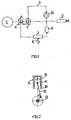
- the heat source 1 shown supplies hot exhaust gases which, in the exemplary embodiment in question, are passed into the atmosphere via a discharge device 2, for example a chimney.
- a discharge device 2 for example a chimney.
- liquids and even solids can also be used as carriers of thermal energy.
- a circuit 3 which e.g. Contains ethanol or another organic substance as the working medium, has a heat exchanger 4 serving as an evaporator 5 and superheater 6, in which heat is transferred from the hot exhaust gases of the heat source 1 to the working medium.
- the pressurized hot steam of the working medium reaches an expansion machine 7, which converts thermal energy contained in the steam of the working medium into mechanical work.
- An arrow 8 is intended to indicate that this mechanical drive energy e.g. can be used to operate a generator.
- the vapor of the working medium expanded in the expansion machine is then liquefied in a condenser 9 and the liquefied working medium is finally fed back to the heat exchanger 4 or evaporator 5 with the aid of a pump 10.
- the heat source 1 is, for example, a stationary motor, possibly a turbine of a power plant.
- the heat source could also be a vehicle engine and both heat from its coolant and its exhaust system can be used.
- Possible heat sources are heat generating or generating Manufacturing processes, for example in chemical industrial plants. All of these heat sources have in common a relatively low temperature of the heat carrier which emits heat to the working medium in the heat exchanger 4.
- possible heat sources are also combustion plants, for example for mine gas, biomass and the like.
- the expansion machine 7 like an internal combustion engine, may have one or more pistons 11, each of which is connected to a crankshaft 13 via a connecting rod 12.
- the piston 11 moves back and forth between an upper dead center 15 and a lower dead center 16.
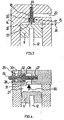
- each of the cylinders 14 comprises an inlet valve 17 with a valve body 18 which is pressed into a valve seat 20 by a coil spring 19 coaxial with the valve body, so that an inlet channel 22 leading into the working space 21 of the piston-cylinder unit is blocked when the valve is closed.
- an actuator 23 is formed on the valve body 18 in the form of a pin coaxially projecting from the valve body, which protrudes into the working space 21 and whose axis coincides approximately with the axis of the cylinder 14 in the embodiment concerned.
- a short displacement area 24 before the top dead center of the piston 11 the valve body 18 is lifted out of the valve seat 20 by the piston via the actuating member 23 against the force of the coil spring 19 and the inlet channel 22 is released.
- Working medium under pressure can now flow into the work area.
- the inflow process is completed when the piston 11 has reached the lower limit of the displacement area 24 again.
- the short displacement area 24 corresponds to a relatively large angle of rotation of the crankshaft and thus a relatively large period in which the working medium can flow into the working space.
- the working medium now enclosed in the working space 21 expands approximately adiabatically in the working space by displacing the piston 11 and the connecting rod 12, thermal energy contained in the working medium being converted into mechanical work. With the expansion, at which the pressure of the working medium continuously decreases, the working medium cools down.
- the mechanical work performed is approximately equal to the thermal energy, that of the difference between the temperatures of the working medium before and after its relaxation corresponds.
- the total amount of (positive and negative) mechanical work performed during the inflow process is negligible compared to the mechanical work given off during the expansion of the working medium.
- the cylinders further include an exhaust valve 25 which is opened via a control linkage (not shown) driven by the crankshaft 13 when the piston 11 has reached bottom dead center 16, and is closed again when the piston against the actuator 23 of the valve 17 strikes.
- the outlet valve 25 has a valve body 26 which is pressed against a valve seat 28 by a spring 27.
- An integral part of the valve body 26 is an actuator 29 which projects laterally from the cylinder and which bears against the control linkage mentioned.
- the expansion machine described above can largely be composed of parts of conventional internal combustion engines.
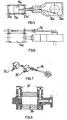
- Expansion machine shown with a piston 11a, a connecting rod 12a and a crankshaft 13a has two working spaces 21a and 21a ', which are formed on opposite sides of the piston which reciprocates in a cylinder 14a.
- a control linkage 34 is used to open and close the work spaces 21 a and 21 a ', as previously described with reference to the embodiment of FIG 3 and 4 is described.
- Valve bodies 35 and 35 ' are connected to the control linkage 34 and are moved into and out of a valve seat by the control linkage 34 depending on the position of the piston 11a or the crankshaft 13a connected to the control linkage.
- a piston rod 38 connected to the piston 11a seals the lubricant-containing space of the crankshaft 13a against the working spaces 21a and 21a '.
- the working medium such as ethanol, is thus kept away from the lubricant.
- the reference number 36 in Fig. 8 indicates the running surface of the piston 11a, the reference number 37 to outlet blocks.
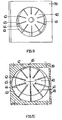
- One in 9 and 10 Expansion machine shown has a housing 39 and an impeller 40 arranged eccentrically in the housing 39. From a circumferential surface 44 of the impeller 40, vanes 42 project radially in guides 41 in the impeller 40. Adjacent vanes each form a working space 43. At the point at which the impeller 40 comes radially closest to an inner surface 45 of the housing 39, the housing 39 has an opening 46 through which working medium under pressure is passed can each enter work space 43 aligned with opening 46. With the rotation of the impeller 40 according to arrow 47, the working medium is enclosed in the relevant working space. The working medium can then expand and relax the working space while driving the impeller.
- the spring-loaded, movable blades 42 adapt to the increased distance between the peripheral surface 44 and the inner surface 45 when the impeller rotates. After a rotation of approximately 180 °, the working space 43 in question has reached its greatest extent. The expanded gas can emerge from the housing 39 at 48.
- thermal power plants or heat engines described above can largely be adapted to heat sources of different temperatures without any structural changes, simply by exchanging the working medium.
Landscapes
- Engineering & Computer Science (AREA)
- Mechanical Engineering (AREA)
- General Engineering & Computer Science (AREA)
- Chemical & Material Sciences (AREA)
- Combustion & Propulsion (AREA)
- Engine Equipment That Uses Special Cycles (AREA)
- Fluid-Driven Valves (AREA)
Description
- Die Erfindung betrifft eine Wärmekraftanlage nach dem Oberbegriff des Anspruchs 1.
- Aus der
DE 102 33 763 A1 ist eine Anlage für Kraftfahrzeuge bekannt, welche die Abwärme des Abgases nutzt, um weitere mechanische Antriebsenergie, insbesondere zum Antrieb von Nebenaggregaten, wie z.B. der Lichtmaschine, zu gewinnen. Als Arbeitsmedium dient Wasser. Durch die Auspuffwärme erzeugter Wasserdampf treibt eine Kolbendampfmaschine an. - Eine Wärmekraftanlage der eingangs erwähnten Art für die Nutzung von Wärmequellen niedriger Temperatur geht aus der
FR 2531746 A1 DE 102004032215 bekannt. Wärmekraftanlage mit einem durch einen holben betätigbaren Einlaßventil sind ausUS 4 050 357 ,US 1 203 018 oderJP 557 21 2311 - Der Erfindung liegt die Aufgabe zugrunde, den Aufwand zur Gewinnung mechanischer Antriebsenergie aus Wärmequellen, insbesondere Wärmequellen niedriger Temperatur, zu verringern.
- Diese Aufgabe wird durch eine Wärmekraftanlage mit den Merkmalen des Anspruchs 1 gelöst.
- Bei der Entspannung des Arbeitsmediums im Arbeitsraum wird hauptsächlich im Arbeitsmedium selbst enthaltene Wärmeenergie in mechanische Antriebsenergie umgewandelt. Es lässt sich eine große Differenz zwischen den Temperaturen des Arbeitsmediums vor und nach der Entspannung und damit ein hoher Wirkungsgrad erreichen.
- Als Arbeitsmedium geeignet sind z.B. Ammoniak, Ethanol, Hexan oder andere Kohlenwasserstoffe. Bei solchen Arbeitsmedien können die durch Entspannung erreichbaren Endwerte von Temperatur und Druck mehr als bei Wasserdampf der Umgebungstemperatur und dem Umgebungsluftdruck angenähert sein, wodurch sich der Wirkungsgrad weiter erhöht.
- Erfindungsgemäß ist das Arbeitsmedium über ein Einlassventil in den Arbeitsraum einleitbar und dieses Ventil umfasst ein Betätigungsglied zur Anlage gegen eine verschiebbare, durch den Kolben gebildete Begrenzungswand des Arbeitsraums, wobei das Betätigungsglied bei Verschiebung der Begrenzungswand zweckmäßig gegen die Kraft einer Feder bewegbar ist.
- Der mit einer Kurbelwelle verbundene Kolben kommt nahe seinem oberen Totpunkt gegen das Betätigungsglied zum Anschlag. Während der Bewegung des Kolbens von der Anschlagstellung bis zum oberen Totpunkt und zurück, die trotz geringer Verschiebungsweglänge des Kolbens einen verhältnismäßigen großen Zeitraum einnimmt, tritt das unter Druck stehende Arbeitsmedium, das von einem an der Wärmequelle angeordneten Wärmetauscher herangeführt wird, in den Arbeitsraum ein. Von der Schließstellung des Ventils an ist das Arbeitsmedium im Arbeitsraum dann eingeschlossen und kann unter Entspannung und Umwandlung darin enthaltener Wärmeenergie mechanische Arbeit leisten.
- Zweckmäßig ist das Betätigungsglied einstückig mit einem durch die Feder in einen Ventilsitz gepressten Ventilkörper verbunden. Bei dem Betätigungsglied kann es sich um einen zum Ventilkörper koaxialen Stift handeln, der in den Arbeitsraum hineinragt und dessen Längsachse z.B. mit der Zylinderachse zusammenfällt.
- Zum Entfernen des entspannten Gases aus dem Arbeitsraum kann ein Auslassventil vorgesehen sein, dass am unteren Totpunkt des Kolbens öffnet und bei Anlage des Kolbens gegen das Betätigungsglied schließt. Ein solches Auslassventil lässt sich durch ein gesondertes, durch die Kurbelwelle angetriebenes Gestänge betätigen. Es ist aber auch möglich, das Auslassventil über das Betätigungsglied zu steuern.
- Eine solche Wärmekraftanlage kann zweckmäßig zur Nutzung der Abwärme stationäre Wärmekraftmaschinen, von Fahrzeugmotoren oder der Abwärme wärmeerzeugender oder-verbrauchender Produktionsprozesse verwendet werden. Aber auch Verbrennungsanlagen, z.B. für Biomasse oder dergleichen, können als Wärmequelle dienen.
- Die Erfindung wird nachfolgend anhand von Ausführungsbeispielen und der beiliegenden, sich auf diese Ausführungsbeispiele beziehenden Zeichnungen weiter erläutert. Es zeigen:
- Fig. 1
- eine schematische Darstellung einer Wärmekraftanlage nach der Erfindung,
- Fig. 2
- eine Schnittansicht einer in der Wärmekraftanlage von
Fig. 1 verwendeten Expansionsmaschine, - Fig. 3 und 4
- Detailansichten der Expansionsmaschine von
Fig. 2 , - Fig. 5
- eine Schnittansicht einer weiteren in einer Wärmekraftanlage gemäß
Fig. 1 verwendbaren Expansionsmaschine, - Fig. 6
- die Expansionsmaschine von
Fig. 5 in einer zu der Ansicht vonFig. 5 um 90° gedrehten Seitenansicht, - Fig. 7
- ein in der Expansionsmaschine von
Fig. 5 und 6 verwendbares Ventilsteuergestänge, - Fig. 8
- eine geschnittene Detailansicht der Expansionsmaschine von
Fig. 5 und 6 , - Fig. 9
- eine in einer Wärmekraftanlage gemäß
Fig. 1 verwendbare Expansionsmaschine nach dem Stand der Technik in einer geschnittenen perspektivischen Ansicht, und - Fig. 10
- eine geschnittene Seitenansicht der Expansionsmaschine von
Fig. 9 . - Eine in
Fig. 1 gezeigte Wärmequelle 1 liefert heiße Abgase, die in dem betreffenden Ausführungsbeispiel über eine Ableiteinrichtung 2, z.B. einen Schlot, in die Atmosphäre geleitet werden. Prinzipiell kommen als Träger von Wärmeenergie auch Flüssigkeiten und sogar Feststoffe in Betracht. - Ein Kreislauf 3, welcher z.B. Ethanol oder eine andere organische Substanz als Arbeitsmedium enthält, weist einen als Verdampfer 5 und Überhitzer 6 dienenden Wärmetauscher 4 auf, in welchem Wärme von den heißen Abgasen der Wärmequelle 1 auf das Arbeitsmedium übergeht. Der unter Druck stehende heiße Dampf des Arbeitsmediums gelangt in eine Expansionsmaschine 7, welche in dem Dampf des Arbeitsmediums enthaltene Wärmeenergie in mechanische Arbeit umwandelt. Ein Pfeil 8 soll andeuten, dass diese mechanische Antriebsenergie z.B. zum Betreiben eines Generators genutzt werden kann.
- Der in der Expansionsmaschine entspannte Dampf des Arbeitsmediums wird anschließend in einem Kondensator 9 verflüssigt und das verflüssigte Arbeitsmedium mit Hilfe einer Pumpe 10 schließlich wieder dem Wärmetauscher 4 bzw. Verdampfer 5 zugeführt.
- Bei der Wärmequelle 1 handelt es sich z.B. um einen stationären Motor, ggf. eine Turbine einer Kraftwerksanlage. Die Wärmequelle könnte aber auch ein Fahrzeugmotor sein und sowohl Wärme von dessen Kühlmittel als auch dessen Abgasanlage genutzt werden. Als Wärmequelle in Betracht kommen wärmeerfordernde oder erzeugende Herstellungsprozesse z.B. in chemischen Industrieanlagen. Allen diesen Wärmequellen ist eine verhältnismäßig niedrige Temperatur des im Wärmetauscher 4 Wärme an das Arbeitsmedium abgebenden Wärmeträgers gemeinsam. Mögliche Wärmequellen sind aber auch Verbrennungsanlagen, z.B. für Grubengas, Biomasse und dergleichen.
- Gemäß
Fig. 2 kann die Expansionsmaschine 7 wie ein Verbrennungsmotor einen oder mehrere Kolben 11 aufweisen, die jeweils über ein Pleuel 12 mit einer Kurbelwelle 13 verbunden sind. In einem Zylinder 14 bewegt sich der Kolben 11 zwischen einem oberen Totpunkt 15 und einem unteren Totpunkt 16 hin und her. - Wie
Fig. 3 zeigt, umfasst jeder der Zylinder 14 ein Einlassventil 17 mit einem Ventilkörper 18, der durch eine zum Ventilkörper koaxiale Schraubenfeder 19 in einen Ventilsitz 20 gedrückt wird, so dass im geschlossenen Zustand des Ventils ein in den Arbeitsraum 21 der Kolbenzylindereinheit führender Einlasskanal 22 versperrt ist. - Wie
Fig. 3 ferner erkennen lässt, ist an den Ventilkörper 18 ein Betätigungsglied 23 in Form eines vom Ventilkörper koaxial vorstehenden Stiftes angeformt, der in den Arbeitsraum 21 hineinragt und dessen Achse in dem betreffenden Ausführungsbeispiel etwa mit der Achse des Zylinders 14 zusammenfällt. - In einem kurzen Verschiebungsbereich 24 vor dem oberen Totpunkt des Kolbens 11 ist der Ventilkörper 18 durch den Kolben über das Betätigungsglied 23 gegen die Kraft der Schraubenfeder 19 aus dem Ventilsitz 20 gehoben und der Einlasskanal 22 freigegeben. Unter Druck stehendes Arbeitsmedium kann nun in den Arbeitsraum einströmen. Der Einströmvorgang ist abgeschlossen, wenn der Kolben 11 wieder die untere Grenze des Verschiebungsbereichs 24 erreicht hat. Dem kurzen Verschiebungsbereich 24 entspricht ein verhältnismäßig großer Drehwinkel der Kurbelwelle und damit ein verhältnismäßig großer Zeitraum, in welchem das Arbeitsmedium in den Arbeitsraum einströmen kann.
- Das nun in dem Arbeitsraum 21 eingeschlossene Arbeitsmedium dehnt sich in dem Arbeitsraum unter Verschiebung des Kolbens 11 und des Pleuels 12 annähernd adiabatisch aus, wobei als innere Energie in dem Arbeitsmedium enthaltene Wärmeenergie in mechanische Arbeit umgesetzt wird. Bei der Ausdehnung, bei welcher der Druck des Arbeitsmediums ständig abnimmt, kühlt sich das Arbeitsmedium ab. Die verrichtete mechanische Arbeit ist etwa gleich der Wärmeenergie, die der Differenz zwischen den Temperaturen des Arbeitsmediums vor und nach dessen Entspannung entspricht. Die während des Einströmvorgangs insgesamt geleistete (positive und negative) mechanische Arbeit ist vernachlässigbar klein gegenüber der während der Entspannung des Arbeitsmediums abgegebenen mechanischen Arbeit.
- Wie
Fig. 4 zeigt, weisen die Zylinder ferner ein Auslassventil 25 auf, das über ein durch die Kurbelwelle 13 angetriebenes Steuergestänge (nicht gezeigt) geöffnet wird, wenn der Kolben 11 den unteren Totpunkt 16 erreicht hat, und wieder geschlossen wird, wenn der Kolben gegen das Betätigungsglied 23 des Ventils 17 anschlägt. - Das Auslassventil 25 weist einen Ventilkörper 26 auf, der durch eine Feder 27 gegen einen Ventilsitz 28 gepresst wird. Mit dem Ventilkörper 26 einstückig verbunden ist ein vom Zylinder seitlich vorstehendes Betätigungsglied 29, das gegen das genannte Steuergestänge anliegt. Bei der Bewegung des Kolbens 11 gemäß Pfeil 30 tritt das entspannte Arbeitsmedium durch eine Öffnung 31, den geöffneten Ventilsitz 28, einen durch eine Verengung des Ventilkörpers 26 gebildeten Kanal 32 und schließlich eine Öffnung 33 hindurch aus dem Zylinder 14 aus.
- Die vorangehend beschriebene Expansionsmaschine kann weitgehend aus Teilen herkömmlicher Verbrennungsmotoren zusammengesetzt sein.
- Eine in den
Figuren 5 und 6 gezeigte Expansionsmaschine mit einem Kolben 11a, einem Pleuel 12a und einer Kurbelwelle 13a weist zwei Arbeitsräume 21a und 21a' auf, die auf gegenüberliegenden Seiten des sich in einem Zylinder 14a hin und her bewegenden Kolbens gebildet sind. Ein Steuergestänge 34 dient zum Öffnen und Schließen der Arbeitsräume 21 a und 21a', wie dies vorangehend anhand des Ausführungsbeispiels vonFig. 3 und 4 beschrieben ist. Mit dem Steuergestänge 34 verbunden sind Ventilkörper 35 und 35', die durch das Steuergestänge 34 abwechselnd je nach Stellung des Kolbens 11a bzw. der mit dem Steuergestänge verbundenen Kurbelwelle 13a in einen Ventilsitz hinein und aus einem Ventilsitz heraus bewegt werden. - Eine mit dem Kolben 11a verbundene Kolbenstange 38 dichtet den Schmiermittel enthaltenen Raum der Kurbelwelle 13a gegen die Arbeitsräume 21a und 21a' ab. Das Arbeitsmedium, z.B. Ethanol, wird somit vom Schmiermittel ferngehalten.
- Das Bezugszeichen 36 in
Fig. 8 weist auf die Lauffläche des Kolbens 11a hin, das Bezugszeichen 37 auf Auslassböcke. - Eine in
Fig. 9 und 10 gezeigte Expansionsmaschine weist ein Gehäuse 39 und ein in dem Gehäuse 39 exzentrisch angeordnetes Flügelrad 40 auf. Von einer Umfangsfläche 44 des Flügelrads 40 stehen radial in Führungen 41 im Flügelrad 40 bewegliche Flügel 42 vor. Benachbarte Flügel bilden jeweils einen Arbeitsraum 43. An der Stelle, an welcher das Flügelrad 40 mit seiner Umfangsfläche 44 einer Innenfläche 45 des Gehäuses 39 radial am nächsten kommt, weist das Gehäuse 39 eine Öffnung 46 auf, durch die hindurch unter Druck stehendes Arbeitsmedium in den jeweils zu der Öffnung 46 ausgerichteten Arbeitsraum 43 eintreten kann. Mit der Drehung des Flügelrads 40 gemäß Pfeil 47 wird das Arbeitsmedium in dem betreffenden Arbeitsraum eingeschlossen. Das Arbeitsmedium kann dann unter Antrieb des Flügelrads den Arbeitsraum ausdehnen und dabei entspannen. Die federbeaufschlagten, beweglichen Flügel 42 passen sich bei der Drehung des Flügelrads jeweils dem vergrößerten Abstand zwischen der Umfangsfläche 44 und der Innenfläche 45 an. Nach einer Drehung um etwa 180° hat der betreffende Arbeitsraum 43 seine größte Ausdehnung erreicht. Das entspannte Gas kann bei 48 aus dem Gehäuse 39 austreten. - Die vorangehend beschriebenen Wärmekraftanlagen bzw. Wärmekraftmaschinen können weitgehend ohne bauliche Veränderung lediglich durch Austausch des Arbeitsmediums an Wärmequellen unterschiedlicher Temperatur angepasst werden.
Claims (3)
- Wärmekraftanlage zur Nutzung von Wärmequellen niedriger Temperatur zur Nutzung der Abwärme stationärer Wärmekraftmaschinen, der Abwärme von Produktionsprozessen oder der Abwärme von Verbrennungsanlagen, mit einem Arbeitsraum (21), in den ein unter Druck stehendes Arbeitsmedium mit einer Siedetemperatur kleiner als die Siedetemperatur von Wasser einleitbar und der durch das Arbeitsmedium unter Verrichtung mechanischer Arbeit ausdehnbar ist, wobei das Arbeitsmedium zur Verrichtung der mechanischen Arbeit ausschließlich unter Entspannung in dem Arbeitsraum (21) einschließbar ist, wobei der Arbeitsraum (21) durch einen Zylinder (14) und einen in dem Zylinder (14) verschiebbaren, eine Kurbelwelle (13) antreibenden Kolben (11) gebildet ist, wobei das Arbeitsmedium über ein Einlassventil (17) in den Arbeitsraum (21) einleitbar ist, dadurch gekennzeichnet, dass das Einlassventil (17) ein Betätigungsglied (23) zur Anlage gegen eine den Arbeitsraum (21) begrenzende Kolbenoberfläche des Kolbens (11) nahe dem oberen Totpunkt (15) des Kolbens (11) unter Öffnung des Einlassventils (17) aufweist, wobei das Betätigungsglied (23) durch Verschiebung des Kolbens (11) gegen die Kraft einer Schraubenfeder (19) bewegbar ist, dass das Betätigungsglied (23) einstückig mit einem durch eine Schraubenfeder (19) in einen Ventilsitz (20) gepressten Ventilkörper (18) verbunden ist, und dass der Ventilkörper (18) eine die Schraubenfeder (19) umgebende Hülse aufweist.
- Wärmekraftanlage nach Anspruch 1, dadurch gekennzeichnet, dass das Arbeitsmedium einen Kohlenwasserstoff oder/und Ammoniak umfasst.
- Wärmekraftanlage nach Anspruch 1 oder 2, dadurch gekennzeichnet, dass der Arbeitsraum über ein durch das Betätigungsglied gesteuertes Auslassventil entleerbar ist.
Applications Claiming Priority (1)
| Application Number | Priority Date | Filing Date | Title |
|---|---|---|---|
| DE102007017357A DE102007017357A1 (de) | 2007-04-03 | 2007-04-03 | Wärmekraftanlage, insbesondere zur Nutzung von Wärmequellen niedriger Temperatur |
Publications (3)
| Publication Number | Publication Date |
|---|---|
| EP1978230A2 EP1978230A2 (de) | 2008-10-08 |
| EP1978230A3 EP1978230A3 (de) | 2013-05-29 |
| EP1978230B1 true EP1978230B1 (de) | 2020-07-22 |
Family
ID=39620259
Family Applications (1)
| Application Number | Title | Priority Date | Filing Date |
|---|---|---|---|
| EP08005628.6A Active EP1978230B1 (de) | 2007-04-03 | 2008-03-26 | Wärmekraftanlage, insbesondere zur Nutzung von Wärmequellen niedriger Temperatur |
Country Status (3)
| Country | Link |
|---|---|
| EP (1) | EP1978230B1 (de) |
| DE (1) | DE102007017357A1 (de) |
| ES (1) | ES2821742T3 (de) |
Families Citing this family (2)
| Publication number | Priority date | Publication date | Assignee | Title |
|---|---|---|---|---|
| EP3271557B1 (de) * | 2015-03-16 | 2020-11-25 | RD Estate GmbH & Co. KG | Dampfmotor |
| DE102016102650A1 (de) | 2016-02-16 | 2017-08-17 | Devetec Gmbh | Wärmekraftmaschine, insbesondere ORC-Motor |
Citations (4)
| Publication number | Priority date | Publication date | Assignee | Title |
|---|---|---|---|---|
| US4283995A (en) * | 1977-10-31 | 1981-08-18 | The United States Of America As Represented By The Administrator Of The National Aeronautics And Space Administration | Reciprocating engines |
| JPS57212311A (en) * | 1981-06-23 | 1982-12-27 | Komatsu Ltd | Piston poppet valve of steam engine |
| DE4219498A1 (de) * | 1992-06-13 | 1993-12-16 | Georg Haase | Solar-Generator |
| DE102004032215A1 (de) * | 2004-07-02 | 2006-01-26 | Richter, Manfred | Durch Über- und Unterdruck angetriebene Kraftmaschine |
Family Cites Families (8)
| Publication number | Priority date | Publication date | Assignee | Title |
|---|---|---|---|---|
| DE166081C (de) * | 1903-07-18 | 1905-12-16 | ||
| US1203018A (en) * | 1916-02-25 | 1916-10-31 | Chris Larson | Gearless valve mechanism for steam-engines. |
| US4050357A (en) * | 1974-06-25 | 1977-09-27 | Carter Sr J Warne | Steam admission valve and variable clearance volume steam cylinder |
| JPS57131807A (en) * | 1981-02-09 | 1982-08-14 | Tatsuzo Hayashi | Generator set |
| FR2531746B1 (fr) | 1982-08-13 | 1987-04-30 | Centre Atel Const | Installation pour la production d'energie a partir de la chaleur cedee par une source chaude |
| DE19938543A1 (de) * | 1999-08-18 | 2001-02-22 | F & E Ingenieurgmbh Fuer Energ | Automatische Motorventile |
| DE10233763A1 (de) | 2002-07-25 | 2003-04-30 | Devetec Ingenieurgmbh | Hilfsaggregat für Kraftfahrzeuge |
| DE102008013673B3 (de) * | 2008-03-11 | 2009-09-17 | Richard Engelmann | Kolbendampfmaschine für einen solar betriebenen Rankine-Kreislauf |
-
2007
- 2007-04-03 DE DE102007017357A patent/DE102007017357A1/de not_active Ceased
-
2008
- 2008-03-26 EP EP08005628.6A patent/EP1978230B1/de active Active
- 2008-03-26 ES ES08005628T patent/ES2821742T3/es active Active
Patent Citations (4)
| Publication number | Priority date | Publication date | Assignee | Title |
|---|---|---|---|---|
| US4283995A (en) * | 1977-10-31 | 1981-08-18 | The United States Of America As Represented By The Administrator Of The National Aeronautics And Space Administration | Reciprocating engines |
| JPS57212311A (en) * | 1981-06-23 | 1982-12-27 | Komatsu Ltd | Piston poppet valve of steam engine |
| DE4219498A1 (de) * | 1992-06-13 | 1993-12-16 | Georg Haase | Solar-Generator |
| DE102004032215A1 (de) * | 2004-07-02 | 2006-01-26 | Richter, Manfred | Durch Über- und Unterdruck angetriebene Kraftmaschine |
Also Published As
| Publication number | Publication date |
|---|---|
| DE102007017357A1 (de) | 2008-10-09 |
| EP1978230A2 (de) | 2008-10-08 |
| EP1978230A3 (de) | 2013-05-29 |
| ES2821742T3 (es) | 2021-04-27 |
Similar Documents
| Publication | Publication Date | Title |
|---|---|---|
| DE10054022A1 (de) | Verfahren zum Betreiben einer Wärmekraftmaschine | |
| DE102010020325A1 (de) | Thermokompressionsmotor | |
| EP1978230B1 (de) | Wärmekraftanlage, insbesondere zur Nutzung von Wärmequellen niedriger Temperatur | |
| EP3417150B1 (de) | Wärmekraftmaschine, insbesondere orc-motor | |
| EP2154400B1 (de) | Hubkolbenexpansionsmaschine | |
| DE102007049366A1 (de) | Vorrichtung und Verfahren zur Gewinnung von mechanischer Energie aus heißen Gasströmen insbesondere eines Verbrennungsmotors | |
| DE102004004692A1 (de) | Ventilgesteuerte Expansionsmaschine | |
| EP2116697B1 (de) | Antriebseinheit mit einer Brennkraftmaschine und einer regelungsfrei selbstanlaufenden Hubkolbenmaschine | |
| EP3798413B1 (de) | Steuerventil für einen dampfmotor, ein das steuerventil aufweisender dampfmotor sowie eine den dampfmotor aufweisende kraft-wärme-kopplungsanlage | |
| WO2012013462A1 (de) | Über einen dampfkraftprozess antreibbare kolbenmaschine | |
| DE102016119889A1 (de) | Axialkolbenmotor sowie Verfahren zum Betrieb eines Axialkolbenmotors | |
| DE102010018654B4 (de) | Zyklisch arbeitende Wärme-Kraftmaschine | |
| DE102010038543A1 (de) | Über einen Dampfkraftprozess antreibbare Kolbenmaschine | |
| DE102010038542A1 (de) | Kolbenmaschine | |
| DE102017206172A1 (de) | Scroll-Expansionsmaschine und Abgasrestwärmenutzungseinrichtung, insbesondere eines Fahrzeuges, mit einer solchen Expansionsmaschine | |
| WO2018103910A1 (de) | System zum betreiben einer brennkraftmaschine | |
| DE102016006475A1 (de) | Verfahren zum Betreiben einer Brennkraftmaschine sowie entsprechende Brennkraftmaschine | |
| DE102007047280A1 (de) | Heißgasmaschine sowie Verfahren zu deren Betrieb | |
| DE102006021928A1 (de) | Vorrichtung zur Erzeugung mechanischer Energie | |
| EP2410140B1 (de) | Schmiereinrichtung für einen Kolben | |
| DE102012210636A1 (de) | Ladungswechseleinrichtung für eine Expansionsmaschine | |
| WO2018153981A1 (de) | Vorrichtung zum umwandeln von thermischer energie | |
| DE102017105611A1 (de) | Expansionsvorrichtung, Kreisprozessvorrichtung und Verfahren zum Betreiben einer solchen Kreisprozessvorrichtung | |
| EP3596310B1 (de) | Axialkolbenmotor, kreisprozessvorrichtung, antriebseinheit und kraftfahrzeug | |
| DE20117394U1 (de) | Hubkolben- oder Hubdruckplattenmotor ohne Einlaßkanal |
Legal Events
| Date | Code | Title | Description |
|---|---|---|---|
| PUAI | Public reference made under article 153(3) epc to a published international application that has entered the european phase |
Free format text: ORIGINAL CODE: 0009012 |
|
| AK | Designated contracting states |
Kind code of ref document: A2 Designated state(s): AT BE BG CH CY CZ DE DK EE ES FI FR GB GR HR HU IE IS IT LI LT LU LV MC MT NL NO PL PT RO SE SI SK TR |
|
| AX | Request for extension of the european patent |
Extension state: AL BA MK RS |
|
| PUAL | Search report despatched |
Free format text: ORIGINAL CODE: 0009013 |
|
| AK | Designated contracting states |
Kind code of ref document: A3 Designated state(s): AT BE BG CH CY CZ DE DK EE ES FI FR GB GR HR HU IE IS IT LI LT LU LV MC MT NL NO PL PT RO SE SI SK TR |
|
| AX | Request for extension of the european patent |
Extension state: AL BA MK RS |
|
| RIC1 | Information provided on ipc code assigned before grant |
Ipc: F01C 21/08 20060101ALI20130422BHEP Ipc: F02G 1/02 20060101AFI20130422BHEP Ipc: F02B 25/10 20060101ALI20130422BHEP Ipc: F01K 25/08 20060101ALI20130422BHEP Ipc: F02G 5/02 20060101ALI20130422BHEP |
|
| 17P | Request for examination filed |
Effective date: 20131128 |
|
| RBV | Designated contracting states (corrected) |
Designated state(s): AT BE BG CH CY CZ DE DK EE ES FI FR GB GR HR HU IE IS IT LI LT LU LV MC MT NL NO PL PT RO SE SI SK TR |
|
| AKX | Designation fees paid |
Designated state(s): AT BE BG CH CY CZ DE DK EE ES FI FR GB GR HR HU IE IS IT LI LT LU LV MC MT NL NO PL PT RO SE SI SK TR |
|
| RAP1 | Party data changed (applicant data changed or rights of an application transferred) |
Owner name: DEVETEC GMBH |
|
| STAA | Information on the status of an ep patent application or granted ep patent |
Free format text: STATUS: EXAMINATION IS IN PROGRESS |
|
| 17Q | First examination report despatched |
Effective date: 20180413 |
|
| 17Q | First examination report despatched |
Effective date: 20180423 |
|
| 17Q | First examination report despatched |
Effective date: 20180607 |
|
| GRAP | Despatch of communication of intention to grant a patent |
Free format text: ORIGINAL CODE: EPIDOSNIGR1 |
|
| STAA | Information on the status of an ep patent application or granted ep patent |
Free format text: STATUS: GRANT OF PATENT IS INTENDED |
|
| INTG | Intention to grant announced |
Effective date: 20200323 |
|
| GRAS | Grant fee paid |
Free format text: ORIGINAL CODE: EPIDOSNIGR3 |
|
| GRAA | (expected) grant |
Free format text: ORIGINAL CODE: 0009210 |
|
| STAA | Information on the status of an ep patent application or granted ep patent |
Free format text: STATUS: THE PATENT HAS BEEN GRANTED |
|
| AK | Designated contracting states |
Kind code of ref document: B1 Designated state(s): AT BE BG CH CY CZ DE DK EE ES FI FR GB GR HR HU IE IS IT LI LT LU LV MC MT NL NO PL PT RO SE SI SK TR |
|
| REG | Reference to a national code |
Ref country code: GB Ref legal event code: FG4D Free format text: NOT ENGLISH |
|
| REG | Reference to a national code |
Ref country code: CH Ref legal event code: EP |
|
| REG | Reference to a national code |
Ref country code: DE Ref legal event code: R096 Ref document number: 502008017118 Country of ref document: DE |
|
| REG | Reference to a national code |
Ref country code: AT Ref legal event code: REF Ref document number: 1293606 Country of ref document: AT Kind code of ref document: T Effective date: 20200815 |
|
| REG | Reference to a national code |
Ref country code: IE Ref legal event code: FG4D Free format text: LANGUAGE OF EP DOCUMENT: GERMAN |
|
| REG | Reference to a national code |
Ref country code: FI Ref legal event code: FGE |
|
| REG | Reference to a national code |
Ref country code: NL Ref legal event code: FP |
|
| REG | Reference to a national code |
Ref country code: NO Ref legal event code: T2 Effective date: 20200722 |
|
| REG | Reference to a national code |
Ref country code: SE Ref legal event code: TRGR |
|
| REG | Reference to a national code |
Ref country code: LT Ref legal event code: MG4D |
|
| PG25 | Lapsed in a contracting state [announced via postgrant information from national office to epo] |
Ref country code: PT Free format text: LAPSE BECAUSE OF FAILURE TO SUBMIT A TRANSLATION OF THE DESCRIPTION OR TO PAY THE FEE WITHIN THE PRESCRIBED TIME-LIMIT Effective date: 20201123 Ref country code: BG Free format text: LAPSE BECAUSE OF FAILURE TO SUBMIT A TRANSLATION OF THE DESCRIPTION OR TO PAY THE FEE WITHIN THE PRESCRIBED TIME-LIMIT Effective date: 20201022 Ref country code: LT Free format text: LAPSE BECAUSE OF FAILURE TO SUBMIT A TRANSLATION OF THE DESCRIPTION OR TO PAY THE FEE WITHIN THE PRESCRIBED TIME-LIMIT Effective date: 20200722 Ref country code: HR Free format text: LAPSE BECAUSE OF FAILURE TO SUBMIT A TRANSLATION OF THE DESCRIPTION OR TO PAY THE FEE WITHIN THE PRESCRIBED TIME-LIMIT Effective date: 20200722 Ref country code: GR Free format text: LAPSE BECAUSE OF FAILURE TO SUBMIT A TRANSLATION OF THE DESCRIPTION OR TO PAY THE FEE WITHIN THE PRESCRIBED TIME-LIMIT Effective date: 20201023 |
|
| PG25 | Lapsed in a contracting state [announced via postgrant information from national office to epo] |
Ref country code: PL Free format text: LAPSE BECAUSE OF FAILURE TO SUBMIT A TRANSLATION OF THE DESCRIPTION OR TO PAY THE FEE WITHIN THE PRESCRIBED TIME-LIMIT Effective date: 20200722 Ref country code: LV Free format text: LAPSE BECAUSE OF FAILURE TO SUBMIT A TRANSLATION OF THE DESCRIPTION OR TO PAY THE FEE WITHIN THE PRESCRIBED TIME-LIMIT Effective date: 20200722 Ref country code: IS Free format text: LAPSE BECAUSE OF FAILURE TO SUBMIT A TRANSLATION OF THE DESCRIPTION OR TO PAY THE FEE WITHIN THE PRESCRIBED TIME-LIMIT Effective date: 20201122 |
|
| REG | Reference to a national code |
Ref country code: DE Ref legal event code: R097 Ref document number: 502008017118 Country of ref document: DE |
|
| REG | Reference to a national code |
Ref country code: ES Ref legal event code: FG2A Ref document number: 2821742 Country of ref document: ES Kind code of ref document: T3 Effective date: 20210427 |
|
| PG25 | Lapsed in a contracting state [announced via postgrant information from national office to epo] |
Ref country code: RO Free format text: LAPSE BECAUSE OF FAILURE TO SUBMIT A TRANSLATION OF THE DESCRIPTION OR TO PAY THE FEE WITHIN THE PRESCRIBED TIME-LIMIT Effective date: 20200722 Ref country code: DK Free format text: LAPSE BECAUSE OF FAILURE TO SUBMIT A TRANSLATION OF THE DESCRIPTION OR TO PAY THE FEE WITHIN THE PRESCRIBED TIME-LIMIT Effective date: 20200722 Ref country code: EE Free format text: LAPSE BECAUSE OF FAILURE TO SUBMIT A TRANSLATION OF THE DESCRIPTION OR TO PAY THE FEE WITHIN THE PRESCRIBED TIME-LIMIT Effective date: 20200722 Ref country code: CZ Free format text: LAPSE BECAUSE OF FAILURE TO SUBMIT A TRANSLATION OF THE DESCRIPTION OR TO PAY THE FEE WITHIN THE PRESCRIBED TIME-LIMIT Effective date: 20200722 |
|
| PLBE | No opposition filed within time limit |
Free format text: ORIGINAL CODE: 0009261 |
|
| STAA | Information on the status of an ep patent application or granted ep patent |
Free format text: STATUS: NO OPPOSITION FILED WITHIN TIME LIMIT |
|
| 26N | No opposition filed |
Effective date: 20210423 |
|
| PG25 | Lapsed in a contracting state [announced via postgrant information from national office to epo] |
Ref country code: SK Free format text: LAPSE BECAUSE OF FAILURE TO SUBMIT A TRANSLATION OF THE DESCRIPTION OR TO PAY THE FEE WITHIN THE PRESCRIBED TIME-LIMIT Effective date: 20200722 |
|
| PG25 | Lapsed in a contracting state [announced via postgrant information from national office to epo] |
Ref country code: SI Free format text: LAPSE BECAUSE OF FAILURE TO SUBMIT A TRANSLATION OF THE DESCRIPTION OR TO PAY THE FEE WITHIN THE PRESCRIBED TIME-LIMIT Effective date: 20200722 |
|
| PG25 | Lapsed in a contracting state [announced via postgrant information from national office to epo] |
Ref country code: MC Free format text: LAPSE BECAUSE OF FAILURE TO SUBMIT A TRANSLATION OF THE DESCRIPTION OR TO PAY THE FEE WITHIN THE PRESCRIBED TIME-LIMIT Effective date: 20200722 |
|
| REG | Reference to a national code |
Ref country code: BE Ref legal event code: MM Effective date: 20210331 |
|
| PG25 | Lapsed in a contracting state [announced via postgrant information from national office to epo] |
Ref country code: IE Free format text: LAPSE BECAUSE OF NON-PAYMENT OF DUE FEES Effective date: 20210326 |
|
| PG25 | Lapsed in a contracting state [announced via postgrant information from national office to epo] |
Ref country code: BE Free format text: LAPSE BECAUSE OF NON-PAYMENT OF DUE FEES Effective date: 20210331 |
|
| PG25 | Lapsed in a contracting state [announced via postgrant information from national office to epo] |
Ref country code: HU Free format text: LAPSE BECAUSE OF FAILURE TO SUBMIT A TRANSLATION OF THE DESCRIPTION OR TO PAY THE FEE WITHIN THE PRESCRIBED TIME-LIMIT; INVALID AB INITIO Effective date: 20080326 Ref country code: CY Free format text: LAPSE BECAUSE OF FAILURE TO SUBMIT A TRANSLATION OF THE DESCRIPTION OR TO PAY THE FEE WITHIN THE PRESCRIBED TIME-LIMIT Effective date: 20200722 |
|
| P01 | Opt-out of the competence of the unified patent court (upc) registered |
Effective date: 20230613 |
|
| PGFP | Annual fee paid to national office [announced via postgrant information from national office to epo] |
Ref country code: LU Payment date: 20240321 Year of fee payment: 17 Ref country code: NL Payment date: 20240320 Year of fee payment: 17 |
|
| PGFP | Annual fee paid to national office [announced via postgrant information from national office to epo] |
Ref country code: AT Payment date: 20240318 Year of fee payment: 17 |
|
| PGFP | Annual fee paid to national office [announced via postgrant information from national office to epo] |
Ref country code: FI Payment date: 20240319 Year of fee payment: 17 Ref country code: DE Payment date: 20240321 Year of fee payment: 17 Ref country code: GB Payment date: 20240322 Year of fee payment: 17 |
|
| PGFP | Annual fee paid to national office [announced via postgrant information from national office to epo] |
Ref country code: SE Payment date: 20240321 Year of fee payment: 17 Ref country code: NO Payment date: 20240227 Year of fee payment: 17 Ref country code: IT Payment date: 20240329 Year of fee payment: 17 Ref country code: FR Payment date: 20240320 Year of fee payment: 17 |
|
| PG25 | Lapsed in a contracting state [announced via postgrant information from national office to epo] |
Ref country code: TR Free format text: LAPSE BECAUSE OF FAILURE TO SUBMIT A TRANSLATION OF THE DESCRIPTION OR TO PAY THE FEE WITHIN THE PRESCRIBED TIME-LIMIT Effective date: 20200722 |
|
| PGFP | Annual fee paid to national office [announced via postgrant information from national office to epo] |
Ref country code: CH Payment date: 20240401 Year of fee payment: 17 |
|
| PGFP | Annual fee paid to national office [announced via postgrant information from national office to epo] |
Ref country code: ES Payment date: 20240417 Year of fee payment: 17 |
|
| PG25 | Lapsed in a contracting state [announced via postgrant information from national office to epo] |
Ref country code: MT Free format text: LAPSE BECAUSE OF FAILURE TO SUBMIT A TRANSLATION OF THE DESCRIPTION OR TO PAY THE FEE WITHIN THE PRESCRIBED TIME-LIMIT Effective date: 20200722 |
|
| REG | Reference to a national code |
Ref country code: DE Ref legal event code: R119 Ref document number: 502008017118 Country of ref document: DE |
|
| PG25 | Lapsed in a contracting state [announced via postgrant information from national office to epo] |
Ref country code: FI Free format text: LAPSE BECAUSE OF NON-PAYMENT OF DUE FEES Effective date: 20250326 |
|
| REG | Reference to a national code |
Ref country code: CH Ref legal event code: H13 Free format text: ST27 STATUS EVENT CODE: U-0-0-H10-H13 (AS PROVIDED BY THE NATIONAL OFFICE) Effective date: 20251023 |
|
| REG | Reference to a national code |
Ref country code: SE Ref legal event code: EUG |
|
| REG | Reference to a national code |
Ref country code: NL Ref legal event code: MM Effective date: 20250401 |
|
| REG | Reference to a national code |
Ref country code: AT Ref legal event code: MM01 Ref document number: 1293606 Country of ref document: AT Kind code of ref document: T Effective date: 20250326 |
|
| PG25 | Lapsed in a contracting state [announced via postgrant information from national office to epo] |
Ref country code: LU Free format text: LAPSE BECAUSE OF NON-PAYMENT OF DUE FEES Effective date: 20250326 |
|
| GBPC | Gb: european patent ceased through non-payment of renewal fee |
Effective date: 20250326 |
|
| PG25 | Lapsed in a contracting state [announced via postgrant information from national office to epo] |
Ref country code: NL Free format text: LAPSE BECAUSE OF NON-PAYMENT OF DUE FEES Effective date: 20250401 |
|
| PG25 | Lapsed in a contracting state [announced via postgrant information from national office to epo] |
Ref country code: DE Free format text: LAPSE BECAUSE OF NON-PAYMENT OF DUE FEES Effective date: 20251001 |
|
| PG25 | Lapsed in a contracting state [announced via postgrant information from national office to epo] |
Ref country code: GB Free format text: LAPSE BECAUSE OF NON-PAYMENT OF DUE FEES Effective date: 20250326 |
|
| PG25 | Lapsed in a contracting state [announced via postgrant information from national office to epo] |
Ref country code: NO Free format text: LAPSE BECAUSE OF NON-PAYMENT OF DUE FEES Effective date: 20250331 |
|
| PG25 | Lapsed in a contracting state [announced via postgrant information from national office to epo] |
Ref country code: AT Free format text: LAPSE BECAUSE OF NON-PAYMENT OF DUE FEES Effective date: 20250326 |
|
| PG25 | Lapsed in a contracting state [announced via postgrant information from national office to epo] |
Ref country code: FR Free format text: LAPSE BECAUSE OF NON-PAYMENT OF DUE FEES Effective date: 20250331 Ref country code: IT Free format text: LAPSE BECAUSE OF NON-PAYMENT OF DUE FEES Effective date: 20250326 |
|
| PG25 | Lapsed in a contracting state [announced via postgrant information from national office to epo] |
Ref country code: CH Free format text: LAPSE BECAUSE OF NON-PAYMENT OF DUE FEES Effective date: 20250331 |
|
| PG25 | Lapsed in a contracting state [announced via postgrant information from national office to epo] |
Ref country code: SE Free format text: LAPSE BECAUSE OF NON-PAYMENT OF DUE FEES Effective date: 20250327 |