EP1957504B1 - Trennung von chlorsilanen - Google Patents
Trennung von chlorsilanen Download PDFInfo
- Publication number
- EP1957504B1 EP1957504B1 EP06839189A EP06839189A EP1957504B1 EP 1957504 B1 EP1957504 B1 EP 1957504B1 EP 06839189 A EP06839189 A EP 06839189A EP 06839189 A EP06839189 A EP 06839189A EP 1957504 B1 EP1957504 B1 EP 1957504B1
- Authority
- EP
- European Patent Office
- Prior art keywords
- distillation aid
- distillation
- silane
- aid
- crude chlorosilane
- Prior art date
- Legal status (The legal status is an assumption and is not a legal conclusion. Google has not performed a legal analysis and makes no representation as to the accuracy of the status listed.)
- Active
Links
Images

Classifications
-
- C—CHEMISTRY; METALLURGY
- C07—ORGANIC CHEMISTRY
- C07F—ACYCLIC, CARBOCYCLIC OR HETEROCYCLIC COMPOUNDS CONTAINING ELEMENTS OTHER THAN CARBON, HYDROGEN, HALOGEN, OXYGEN, NITROGEN, SULFUR, SELENIUM OR TELLURIUM
- C07F7/00—Compounds containing elements of Groups 4 or 14 of the Periodic Table
- C07F7/02—Silicon compounds
- C07F7/08—Compounds having one or more C—Si linkages
- C07F7/20—Purification, separation
-
- C—CHEMISTRY; METALLURGY
- C07—ORGANIC CHEMISTRY
- C07F—ACYCLIC, CARBOCYCLIC OR HETEROCYCLIC COMPOUNDS CONTAINING ELEMENTS OTHER THAN CARBON, HYDROGEN, HALOGEN, OXYGEN, NITROGEN, SULFUR, SELENIUM OR TELLURIUM
- C07F7/00—Compounds containing elements of Groups 4 or 14 of the Periodic Table
- C07F7/02—Silicon compounds
- C07F7/08—Compounds having one or more C—Si linkages
- C07F7/12—Organo silicon halides
Definitions
- This invention is directed to a method of separating crude chlorosilane streams containing mixtures of close-boiling chlorosilanes with a distillation aid that is a mono-cyano-substituted organic compound, a nitro-substituted organic compound, a mono-cyano-substituted organosilicon compound, a nitro-substituted organosilicon compound, or a mixture thereof.
- Lower-boiling chlorosilanes are removed from the crude chlorosilane stream, and the distillation aid and the higher-boiling chlorosilanes are separated from one another.
- methyl chloride During the reaction of methyl chloride with silicon, a crude chlorosilane stream is produced. These are normally separated by distillation. Two of the largest volume chlorosilanes are dimethyldichlorosilane Me 2 SiCl 2 and methyltrichlorosilane MeSiCl 3 . In order to prepare satisfactory siloxane polymers from dimethyldichlorosilane, it is sometimes necessary that the methyltrichlorosilane content of the dimethyldichlorosilane be reduced to trace amounts. The boiling points of methyltrichlorosilane (66.1 °C) and dimethyldichlorosilane (70.1 °C) are sufficiently close that distillation columns of 200 stages or more are required to satisfactorily separate these materials in commercial operations.
- the present invention is therefore directed to a method of separating crude chlorosilane streams containing close-boiling chlorosilanes such as dimethyldichlorosilane and methyltrichlorosilane which uses smaller distillation columns, and that requires less energy, thereby reducing the capital investment necessary in basic chlorosilane plants.
- the present invention uses a mono-cyano-substituted organic compound, a nitro-substituted organic compound, a mono-cyano-substituted organosilicon compound, a nitro-substituted organosilicon compound, or a mixture thereof for separating crude chlorosilane streams containing mixtures of close-boiling chlorosilanes.
- Mono-cyano-substituted organic compounds are lower boiling materials with normal boiling points that are more than 100°C lower than the corresponding dinitrile compounds. This distinction allows the separation steps to be conducted at correspondingly lower temperatures, thus avoiding the risk of decomposing the distillation aid in operation.
- the invention relates to a method of separating crude chlorosilane streams of lower-boiling chlorosilanes and higher-boiling chlorosilanes.
- the method comprises contacting the crude chlorosilane stream with a distillation aid selected from the group consisting of mono-cyano-substituted organic compounds, nitro-substituted organic compounds, mono-cyano-substituted organosilicon compounds, nitro-substituted organosilicon compounds, and mixtures thereof.
- the lower-boiling chlorosilanes are recovered from the crude chlorosilane stream.
- the distillation aid is separated from the higher-boiling chlorosilanes.
- Figure 1 is a graphical representation of the MeSiCl 3 /Me 2 SiCl 2 relative volatility enhancement which can be obtained according to the invention.
- Figure 1 is a plot of MeSiCl 3 /Me 2 SiCl 2 relative volatility, with and without benzonitrile added, versus MeSiCl 3 concentration.
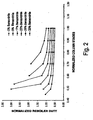
- Figure 2 is a graphical representation showing the reduction in distillation column stages and re-boiler duty, i.e., capital and energy savings, that can be obtained according to the invention.
- Figure 2 is a plot of the normalized column re-boiler duty, i.e., the energy requirement, versus normalized column stages, i.e., size, each normalized versus a base case with no distillation aid.
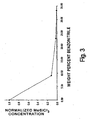
- Figure 3 is a graphical representation showing the improved Me 2 SiCl 2 purity that can be obtained according to the invention.
- Figure 3 is a plot of the normalized residual MeSiCl 3 in the Me 2 SiCl 2 product coming out of the bottom of the distillation column versus the weight percent of benzonitrile in the column, normalized versus a base case with no distillation aid.
- the invention relates to a method of separating crude chlorosilane streams containing mixtures of chlorosilanes.
- the method comprises contacting the crude chlorosilane stream with a distillation aid, separating the lower-boiling chlorosilanes from the crude chlorosilane stream and separating the distillation aid from the higher-boiling chlorosilanes.
- crude chlorosilane streams means mixtures of lower-boiling chlorosilanes and higher-boiling chlorosilanes.
- the crude chlorosilane stream contains close-boiling chlorosilanes.
- Representative examples of crude chlorosilane streams include those produced in the so-called direct process reaction of methyl chloride and silicon and mixtures of chlorosilane products utilized in the organosilicon industry.
- Another example of a crude chlorosilane stream is one containing methyltrichlorosilane and dimethyldichlorosilane.
- close-boiling chlorosilanes is intended to mean chlorosilanes which have boiling points
- distillation aid examples include mono-cyano-substituted organic compounds, nitro-substituted organic compounds, mono-cyano-substituted organosilicon compounds, nitro-substituted organosilicon compounds, or mixtures thereof.
- the distillation aid should be a liquid at the separation temperature and preferably at ambient temperature. Additionally, the distillation aid should generally have a boiling point higher than that of the chlorosilanes to be separated, and should generally not react with the chlorosilanes nor decompose at the maximum separation temperatures employed.
- mono-cyano-substituted organic compounds that can be used include acrylonitrile, benzonitrile, butyronitrile, caprylonitrile, propionitrile, 2-methyl-2-butenenitrile, 2-pentenenitrile, 4-pentenitrile, and cyanoacetate esters.
- Some preferred examples are caprylonitrile CH 3 (CH 2 ) 6 CN and benzonitrile C 6 H 5 CN.
- mono-cyano-substituted organosilicon compounds that can be used include 3-cyanopropyldimethylchlorosilane N ⁇ C-CH 2 CH 2 CH 2 Si(CH 3 ) 2 Cl, 3-cyanopropylmethyldichlorosilane N ⁇ C-CH 2 CH 2 CH 2 Si(CH 3 )Cl 2 , 3-cyanopropylphenyldichlorosilane N ⁇ C-CH 2 CH 2 CH 2 SiC 6 H 5 Cl 2 , 3-cyanopropyltrichlorosilane N ⁇ C-CH 2 CH 2 CH 2 SiCl 3 , and 3-cyanoethyltrichlorosilane N ⁇ C-CH 2 CH 2 SiCl 3 .
- nitro-substituted organic compounds that can be used include nitroethane C 2 H 5 NO 2 , and 1-nitropropane CH 3 CH 2 CH 2 NO 2 .
- a preferred example is 1-nitropropane.
- nitro-substituted organosilicon compounds that can be used include trichloro(nitropropyl)silane Cl 3 Si(CH 2 ) 3 NO 2 , methyldichloro(nitropropyl)silane CH 3 Cl 2 Si(CH 2 ) 3 NO 2 , ethyldichloro(nitropropyl)silane C 2 H 5 Cl 2 Si(CH 2 ) 3 NO 2 , and methyldichloro(nitroethyl)silane CH 3 Cl 2 Si(CH 2 ) 2 NO 2 .
- the distillation aid should generally be as dry as possible to minimize hydrolysis of the chlorosilanes.
- One method of removing residual water from the distillation aid is to dry the distillation aid over molecular sieves. To prevent the reintroduction of water, the dried distillation aid should not be exposed to water vapor.
- any concentration of distillation aid enhances the separation of close-boiling chlorosilanes by promoting, in the case of crude chlorosilane streams containing dimethyldichlorosilane (70.1 °C) and methyltrichlorosilane (66.1 °C), the removal of methyltrichlorosilane from the crude chlorosilane stream.
- the crude chlorosilane streams are contacted with a distillation aid, and the lower-boiling chlorosilanes are separated from the crude chlorosilane stream.
- the separation can be carried out in any suitable manner such as by mixing the crude chlorosilane stream and the distillation aid in a retort, and then heating the mixture to remove the lower-boiling chlorosilane.
- the vapors of the mixed chlorosilanes (crude chlorosilane) can be passed into the distillation aid which is maintained at a temperature above the boiling point of the lower-boiling chlorosilane.
- the distillation aid is passed counter-currently to the vapors of the mixed silanes in a distillation column or tower.
- the temperature of the column or tower should be regulated so that liquid distillation aid flowing to the column or tower comes into contact with the vapors of the mixed chlorosilanes rising in the column or tower, and with the condensed vapors on each tray or stage in the column or tower below the distillation aid feed point.
- the distillation aid and the higher-boiling chlorosilane can be separated in any suitable manner such as by gas-liquid chromatography, distillation, or flash distillation.
- the method of the instant invention can be carried out at above atmospheric pressure, at atmospheric pressure, or at reduced pressure. It is preferred that the pressure should be sufficiently low so that the re-boiler temperature is not high enough to thermally decompose the distillation aid to a significant extent.
- distillation aid In large scale commercial operations, the distillation aid is employed in amounts which reduce the required distillation reflux ratio and corresponding energy requirements on the one hand, while minimizing the required distillation column size (contacting stages and column diameter) to reduce capital costs on the other hand. As is known in the art, this requires balancing capital equipment costs, energy costs and distillation aid costs, along with business expectations for return on investment.
- workable distillation aid concentrations are up to 50 weight % concentration of distillation aid in the chlorosilane mixture, or alternately 1% to 50 weight % concentration of distillation aid in the chlorosilane mixture, or alternately between 25% and 45 weight % concentration of distillation aid in the chlorosilane mixture.
- the invention can be carried out in the presence of other silanes which may be present in the crude chlorosilane streams.
- other silanes which may be present in the crude chlorosilane streams.
- silicon tetrachloride SiCl 4 trimethylchlorosilane (CH 3 ) 3 SiCl, methyldichlorosilane CH 3 SiHCl, and dimethylchlorosilane (CH 3 ) 2 SiHCl
- These other silanes will distill before, or along with methyltrichlorosilane.
- ⁇ MeSiCl 3 v ⁇ Me 2 ⁇ SiCl 2 l ⁇ MeSiCl 3 l ⁇ Me 2 ⁇ SiCl 2 v
- a the relative volatility
- Me is ⁇ methyl
- v and 1 are the measured mole percent concentrations of MeSiCl 3 and Me 2 SiCl 2 in the vapor and liquid phases, respectively.
- the relative volatility of a 50/50 mole percent mixture of MeSiCl 3 and Me 2 SiCl 2 was measured in the same way as a control for comparison. The results are shown in Table 1.
- Relative volatilities for MeSiCl 3 /Me 2 SiCl 2 were calculated from rigorous VLE data collected for mixtures of MeSiCl 3 /Me 2 SiCl 2 /Benzonitrile, where the Benzonitrile/Me 2 SiCl 2 ratio was fixed at one, and the molar ratio of MeSiCl 3 /Me 2 SiCl 2 was varied between 10:90 and 50:50.
- the relative volatilities for the ternary system were than compared to results obtained for the MeSiCl 3 /Me 2 SiCl 2 binary system. Graphical representation of the results is shown in Figure 1 .
- the benefits included capital cost savings, i.e., reduction in column size, shown in Figure 2 , variable cost savings, i.e., steam/energy savings associated with column operation, shown in Figure 2 , increased rate shown in Table 2, and higher Me 2 SiCl 2 purity shown in Figure 3 .
- Table 3 shows that at the re-boiler duty, i.e., energy normally required to separate MeSiCl 3 from Me 2 SiCl 2 , the addition of benzonitrile approximately doubled the throughput, i.e., distillate rate, of the column.
Landscapes
- Chemical & Material Sciences (AREA)
- Organic Chemistry (AREA)
- Silicon Compounds (AREA)
- Organic Low-Molecular-Weight Compounds And Preparation Thereof (AREA)
Claims (9)
- Ein Verfahren zum Trennen von Chlorsilanrohströmen niedrig siedender Chlorsilane und höher siedender Chlorsilane, umfassend:(A) In-Kontakt-Bringen der Chlorsilanrohströme mit einer Destillationshilfe, ausgewählt aus der Gruppe bestehend aus monocyanosubstituierten organischen Verbindungen, nitrosubstituierten organischen Verbindungen, monocyanosubstituierten Organosiliciumverbindungen, nitrosubstituierten Organosiliciumverbindungen und Mischungen daraus;(B) Gewinnen der niedrig siedenden Chlorsilane aus dem Chlorsilanrohstrom; und(C) Trennen der Destillationshilfe und der höher siedenden Chlorsilane.
- Ein Verfahren gemäß Anspruch 1, wobei die Destillationshilfe ausgewählt ist aus der Gruppe bestehend aus: Acrylnitril, Benzonitril, Butyronitril, Caprylonitril, Propionitril, 2-Methyl-2-butennitril, 2-Pentennitril, 4-Pentennitril, 3-Cyanpropyldimethylchlorsilan, 3-Cyanpropylmethyldichlorsilan, 3-Cyanpropylphenyldichlorsilan, 3-Cyanpropyltrichlorsilan, 3-Cyanethyltrichlorsilan, Nitroethan, 1-Nitropropan, Trichlor(nitropropyl)-silan, Methyldichlor(nitropropyl)silan, Ethyldichlor(nitropropyl)silan, Methyldichlor(nitroethyl)silan und Mischungen davon.
- Ein Verfahren gemäß Anspruch 1, wobei die Destillationshilfe ausgewählt ist aus der Gruppe bestehend aus: Acrylnitril, Benzonitril, Butyronitril, Caprylonitril, Propionitril, 2-Methyl-2-butennitril, 2-Pentennitril, 4-Pentennitril, 3-Cyanpropyldimethylchlorsilan, 3-Cyanpropylmethyldichlorsilan, 3-Cyanpropylphenyldichlorsilan, 3-Cyanpropyltrichlorsilan, 3-Cyanethyldichlorsilan, 1-Nitropropan, Trichlor(nitropropyl)silan, Methyldichlor(nitropropyl)silan, Ethyldichlor(nitropropyl)silan, Methyldichlor(nitroethyl)silan und Mischungen davon.
- Ein Verfahren gemäß Anspruch 1, wobei die Destillationshilfe ausgewählt ist aus der Gruppe bestehend aus: Benzonitril, Caprylonitril, 1-Nitropropan und Mischungen davon.
- Ein Verfahren gemäß den Ansprüchen 1-4, wobei der Chlorsilanrohstrom ausgewählt ist aus der Gruppe bestehend aus Strömen, die Dimethyldichlorsilan und Ethyldichlorsilan enthalten, Strömen, die Phenyltrichlorsilan und Phenylmethyldichlorsilan enthalten, und Strömen, die Methylvinyldichlorsilan und Vinyltrichlorsilan enthalten.
- Ein Verfahren gemäß den Ansprüchen 1-4, wobei der Chlorsilanrohstrom Dimethyldichlorsilan und Methyltrichlorsilan enthält.
- Ein Verfahren gemäß den Ansprüchen 1-6, wobei die Destillationshilfe in einer Konzentration der Destillationshilfe von bis zu 50 Gew.-% in dem Chlorsilanrohstrom eingesetzt wird.
- Ein Verfahren gemäß den Ansprüchen 1-6, wobei die Destillationshilfe in einer Konzentration der Destillationshilfe von 1 bis 50 Gew.-% in dem Chlorsilanrohstrom eingesetzt wird.
- Ein Verfahren gemäß den Ansprüchen 1-6, wobei die Destillationshilfe in einer Konzentration der Destillationshilfe von 25 bis zu 45 Gew.-% in dem Chlorsilanrohstrom eingesetzt wird.
Applications Claiming Priority (2)
| Application Number | Priority Date | Filing Date | Title |
|---|---|---|---|
| US74269005P | 2005-12-06 | 2005-12-06 | |
| PCT/US2006/046809 WO2007067723A1 (en) | 2005-12-06 | 2006-12-06 | Separation of chlorosilanes |
Publications (2)
| Publication Number | Publication Date |
|---|---|
| EP1957504A1 EP1957504A1 (de) | 2008-08-20 |
| EP1957504B1 true EP1957504B1 (de) | 2009-09-30 |
Family
ID=37939339
Family Applications (1)
| Application Number | Title | Priority Date | Filing Date |
|---|---|---|---|
| EP06839189A Active EP1957504B1 (de) | 2005-12-06 | 2006-12-06 | Trennung von chlorsilanen |
Country Status (8)
| Country | Link |
|---|---|
| US (1) | US8062483B2 (de) |
| EP (1) | EP1957504B1 (de) |
| JP (1) | JP5149197B2 (de) |
| KR (1) | KR101409726B1 (de) |
| CN (1) | CN101326190B (de) |
| AT (1) | ATE444300T1 (de) |
| DE (1) | DE602006009554D1 (de) |
| WO (1) | WO2007067723A1 (de) |
Families Citing this family (5)
| Publication number | Priority date | Publication date | Assignee | Title |
|---|---|---|---|---|
| EP2806931B1 (de) * | 2012-01-23 | 2019-04-10 | AEON Research and Technology, LLC | Modulares pulmonales behandlungssystem |
| DE102014206874A1 (de) * | 2014-04-09 | 2015-10-15 | Wacker Chemie Ag | Destillation von Silangemischen in Anwesenheit eines Nitrils oder Amins |
| DE102014206875A1 (de) | 2014-04-09 | 2015-10-15 | Wacker Chemie Ag | Verfahren zur Reinigung von technischen Anlagenteilen von Metallhalogeniden |
| CN108864169A (zh) * | 2018-06-09 | 2018-11-23 | 河北晟凯新材料科技有限公司 | 一种提高异氰酸酯基丙基三乙氧基硅烷收率的方法 |
| CN114478615B (zh) * | 2022-02-25 | 2023-09-22 | 天津大学 | 一种甲基氯硅烷单体分离及其热集成工艺设计方法 |
Family Cites Families (9)
| Publication number | Priority date | Publication date | Assignee | Title |
|---|---|---|---|---|
| US2388575A (en) * | 1943-06-23 | 1945-11-06 | Gen Electric | Resolution of mixtures of chlorosilanes |
| BE523301A (de) * | 1952-10-29 | 1953-10-31 | ||
| US3007956A (en) * | 1960-07-01 | 1961-11-07 | Gen Electric | Process for separating organosilanes |
| US3624166A (en) * | 1968-11-01 | 1971-11-30 | Allied Chem | Process for the solvent extraction of haloalkanes |
| US3658657A (en) * | 1970-07-23 | 1972-04-25 | Vulcan Materials Co | Separation and recovery of 1,1,1-trichloroethane by extractive distillation |
| DD138322A1 (de) * | 1978-01-23 | 1979-10-24 | Hiltraud Schumann | Verfahren zur gewinnung von dimethylhydrogenchlorsilan |
| US4402797A (en) * | 1982-09-20 | 1983-09-06 | Dow Corning Corporation | Separation of chlorosilanes by extractive distillation |
| US4402796A (en) * | 1982-09-20 | 1983-09-06 | Dow Corning Corporation | Separation of chlorosilanes by liquid extraction |
| US4411740A (en) * | 1982-09-20 | 1983-10-25 | Dow Corning Corporation | Separation of chlorosilanes by extractive distillation |
-
2006
- 2006-12-06 US US12/096,197 patent/US8062483B2/en active Active
- 2006-12-06 WO PCT/US2006/046809 patent/WO2007067723A1/en not_active Ceased
- 2006-12-06 DE DE602006009554T patent/DE602006009554D1/de active Active
- 2006-12-06 CN CN2006800461209A patent/CN101326190B/zh active Active
- 2006-12-06 EP EP06839189A patent/EP1957504B1/de active Active
- 2006-12-06 JP JP2008544525A patent/JP5149197B2/ja active Active
- 2006-12-06 KR KR1020087013610A patent/KR101409726B1/ko active Active
- 2006-12-06 AT AT06839189T patent/ATE444300T1/de not_active IP Right Cessation
Also Published As
| Publication number | Publication date |
|---|---|
| US8062483B2 (en) | 2011-11-22 |
| KR20080077151A (ko) | 2008-08-21 |
| EP1957504A1 (de) | 2008-08-20 |
| KR101409726B1 (ko) | 2014-06-19 |
| CN101326190A (zh) | 2008-12-17 |
| US20090026062A1 (en) | 2009-01-29 |
| WO2007067723A1 (en) | 2007-06-14 |
| CN101326190B (zh) | 2012-09-05 |
| DE602006009554D1 (de) | 2009-11-12 |
| ATE444300T1 (de) | 2009-10-15 |
| JP2009518430A (ja) | 2009-05-07 |
| JP5149197B2 (ja) | 2013-02-20 |
Similar Documents
| Publication | Publication Date | Title |
|---|---|---|
| EP0103827B1 (de) | Trennung von Chlorsilanen | |
| US8859709B2 (en) | Method of forming polyhedral oligomeric silsesquioxane compounds | |
| CA2025864C (en) | Removal of hydrogen-containing silanes from organosilane mixtures | |
| US8062483B2 (en) | Separation of chlorosilanes | |
| US5493043A (en) | Method for redistribution and purification of methylsilanes | |
| US3007956A (en) | Process for separating organosilanes | |
| US4402796A (en) | Separation of chlorosilanes by liquid extraction | |
| EP0103822B1 (de) | Trennung von Chlorsilanen | |
| US6168652B1 (en) | Process for purifying halosilanes | |
| US5569775A (en) | Process for separation of dimethyldichlorosilane from methyltrichlorosilane | |
| US7368590B2 (en) | Method for separating aluminium chloride from organochlorosilanes | |
| JPH09194483A (ja) | 有機シラン類の改善された熱分別方法 | |
| US5264084A (en) | Process for separating off alkenes during methylchlorosilane distillation | |
| KR102618387B1 (ko) | 할로실란 함유 조성물내 보론 화합물의 함량을 감소시키는 방법 | |
| JPH0354954B2 (de) | ||
| JPH06211882A (ja) | 共沸混合物テトラクロルシラン−トリメチルクロルシランを蒸留により分離する方法 |
Legal Events
| Date | Code | Title | Description |
|---|---|---|---|
| PUAI | Public reference made under article 153(3) epc to a published international application that has entered the european phase |
Free format text: ORIGINAL CODE: 0009012 |
|
| 17P | Request for examination filed |
Effective date: 20080521 |
|
| AK | Designated contracting states |
Kind code of ref document: A1 Designated state(s): AT BE BG CH CY CZ DE DK EE ES FI FR GB GR HU IE IS IT LI LT LU LV MC NL PL PT RO SE SI SK TR |
|
| DAX | Request for extension of the european patent (deleted) | ||
| RIN1 | Information on inventor provided before grant (corrected) |
Inventor name: MILLER, DAVID, CLAY Inventor name: WINELAND, JONATHAN, DAVID Inventor name: FLANINGAM, ORA, L. |
|
| GRAP | Despatch of communication of intention to grant a patent |
Free format text: ORIGINAL CODE: EPIDOSNIGR1 |
|
| GRAS | Grant fee paid |
Free format text: ORIGINAL CODE: EPIDOSNIGR3 |
|
| GRAA | (expected) grant |
Free format text: ORIGINAL CODE: 0009210 |
|
| AK | Designated contracting states |
Kind code of ref document: B1 Designated state(s): AT BE BG CH CY CZ DE DK EE ES FI FR GB GR HU IE IS IT LI LT LU LV MC NL PL PT RO SE SI SK TR |
|
| REG | Reference to a national code |
Ref country code: CH Ref legal event code: EP Ref country code: GB Ref legal event code: FG4D |
|
| REG | Reference to a national code |
Ref country code: IE Ref legal event code: FG4D |
|
| REF | Corresponds to: |
Ref document number: 602006009554 Country of ref document: DE Date of ref document: 20091112 Kind code of ref document: P |
|
| PG25 | Lapsed in a contracting state [announced via postgrant information from national office to epo] |
Ref country code: SE Free format text: LAPSE BECAUSE OF FAILURE TO SUBMIT A TRANSLATION OF THE DESCRIPTION OR TO PAY THE FEE WITHIN THE PRESCRIBED TIME-LIMIT Effective date: 20090930 Ref country code: FI Free format text: LAPSE BECAUSE OF FAILURE TO SUBMIT A TRANSLATION OF THE DESCRIPTION OR TO PAY THE FEE WITHIN THE PRESCRIBED TIME-LIMIT Effective date: 20090930 Ref country code: LT Free format text: LAPSE BECAUSE OF FAILURE TO SUBMIT A TRANSLATION OF THE DESCRIPTION OR TO PAY THE FEE WITHIN THE PRESCRIBED TIME-LIMIT Effective date: 20090930 |
|
| LTIE | Lt: invalidation of european patent or patent extension |
Effective date: 20090930 |
|
| PG25 | Lapsed in a contracting state [announced via postgrant information from national office to epo] |
Ref country code: PL Free format text: LAPSE BECAUSE OF FAILURE TO SUBMIT A TRANSLATION OF THE DESCRIPTION OR TO PAY THE FEE WITHIN THE PRESCRIBED TIME-LIMIT Effective date: 20090930 Ref country code: SI Free format text: LAPSE BECAUSE OF FAILURE TO SUBMIT A TRANSLATION OF THE DESCRIPTION OR TO PAY THE FEE WITHIN THE PRESCRIBED TIME-LIMIT Effective date: 20090930 Ref country code: LV Free format text: LAPSE BECAUSE OF FAILURE TO SUBMIT A TRANSLATION OF THE DESCRIPTION OR TO PAY THE FEE WITHIN THE PRESCRIBED TIME-LIMIT Effective date: 20090930 |
|
| NLV1 | Nl: lapsed or annulled due to failure to fulfill the requirements of art. 29p and 29m of the patents act | ||
| PG25 | Lapsed in a contracting state [announced via postgrant information from national office to epo] |
Ref country code: PT Free format text: LAPSE BECAUSE OF FAILURE TO SUBMIT A TRANSLATION OF THE DESCRIPTION OR TO PAY THE FEE WITHIN THE PRESCRIBED TIME-LIMIT Effective date: 20100201 Ref country code: ES Free format text: LAPSE BECAUSE OF FAILURE TO SUBMIT A TRANSLATION OF THE DESCRIPTION OR TO PAY THE FEE WITHIN THE PRESCRIBED TIME-LIMIT Effective date: 20100110 Ref country code: EE Free format text: LAPSE BECAUSE OF FAILURE TO SUBMIT A TRANSLATION OF THE DESCRIPTION OR TO PAY THE FEE WITHIN THE PRESCRIBED TIME-LIMIT Effective date: 20090930 Ref country code: RO Free format text: LAPSE BECAUSE OF FAILURE TO SUBMIT A TRANSLATION OF THE DESCRIPTION OR TO PAY THE FEE WITHIN THE PRESCRIBED TIME-LIMIT Effective date: 20090930 Ref country code: IS Free format text: LAPSE BECAUSE OF FAILURE TO SUBMIT A TRANSLATION OF THE DESCRIPTION OR TO PAY THE FEE WITHIN THE PRESCRIBED TIME-LIMIT Effective date: 20100130 Ref country code: CZ Free format text: LAPSE BECAUSE OF FAILURE TO SUBMIT A TRANSLATION OF THE DESCRIPTION OR TO PAY THE FEE WITHIN THE PRESCRIBED TIME-LIMIT Effective date: 20090930 |
|
| PG25 | Lapsed in a contracting state [announced via postgrant information from national office to epo] |
Ref country code: SK Free format text: LAPSE BECAUSE OF FAILURE TO SUBMIT A TRANSLATION OF THE DESCRIPTION OR TO PAY THE FEE WITHIN THE PRESCRIBED TIME-LIMIT Effective date: 20090930 |
|
| PG25 | Lapsed in a contracting state [announced via postgrant information from national office to epo] |
Ref country code: BE Free format text: LAPSE BECAUSE OF FAILURE TO SUBMIT A TRANSLATION OF THE DESCRIPTION OR TO PAY THE FEE WITHIN THE PRESCRIBED TIME-LIMIT Effective date: 20090930 Ref country code: AT Free format text: LAPSE BECAUSE OF FAILURE TO SUBMIT A TRANSLATION OF THE DESCRIPTION OR TO PAY THE FEE WITHIN THE PRESCRIBED TIME-LIMIT Effective date: 20090930 |
|
| PG25 | Lapsed in a contracting state [announced via postgrant information from national office to epo] |
Ref country code: DK Free format text: LAPSE BECAUSE OF FAILURE TO SUBMIT A TRANSLATION OF THE DESCRIPTION OR TO PAY THE FEE WITHIN THE PRESCRIBED TIME-LIMIT Effective date: 20090930 Ref country code: MC Free format text: LAPSE BECAUSE OF NON-PAYMENT OF DUE FEES Effective date: 20100701 Ref country code: NL Free format text: LAPSE BECAUSE OF FAILURE TO SUBMIT A TRANSLATION OF THE DESCRIPTION OR TO PAY THE FEE WITHIN THE PRESCRIBED TIME-LIMIT Effective date: 20090930 |
|
| PLBE | No opposition filed within time limit |
Free format text: ORIGINAL CODE: 0009261 |
|
| STAA | Information on the status of an ep patent application or granted ep patent |
Free format text: STATUS: NO OPPOSITION FILED WITHIN TIME LIMIT |
|
| 26N | No opposition filed |
Effective date: 20100701 |
|
| PG25 | Lapsed in a contracting state [announced via postgrant information from national office to epo] |
Ref country code: IE Free format text: LAPSE BECAUSE OF NON-PAYMENT OF DUE FEES Effective date: 20091206 Ref country code: GR Free format text: LAPSE BECAUSE OF FAILURE TO SUBMIT A TRANSLATION OF THE DESCRIPTION OR TO PAY THE FEE WITHIN THE PRESCRIBED TIME-LIMIT Effective date: 20091231 |
|
| PG25 | Lapsed in a contracting state [announced via postgrant information from national office to epo] |
Ref country code: BG Free format text: LAPSE BECAUSE OF FAILURE TO SUBMIT A TRANSLATION OF THE DESCRIPTION OR TO PAY THE FEE WITHIN THE PRESCRIBED TIME-LIMIT Effective date: 20091231 Ref country code: IT Free format text: LAPSE BECAUSE OF FAILURE TO SUBMIT A TRANSLATION OF THE DESCRIPTION OR TO PAY THE FEE WITHIN THE PRESCRIBED TIME-LIMIT Effective date: 20090930 |
|
| PG25 | Lapsed in a contracting state [announced via postgrant information from national office to epo] |
Ref country code: LU Free format text: LAPSE BECAUSE OF NON-PAYMENT OF DUE FEES Effective date: 20091206 |
|
| PG25 | Lapsed in a contracting state [announced via postgrant information from national office to epo] |
Ref country code: HU Free format text: LAPSE BECAUSE OF FAILURE TO SUBMIT A TRANSLATION OF THE DESCRIPTION OR TO PAY THE FEE WITHIN THE PRESCRIBED TIME-LIMIT Effective date: 20100401 |
|
| REG | Reference to a national code |
Ref country code: CH Ref legal event code: PL |
|
| GBPC | Gb: european patent ceased through non-payment of renewal fee |
Effective date: 20101206 |
|
| PG25 | Lapsed in a contracting state [announced via postgrant information from national office to epo] |
Ref country code: TR Free format text: LAPSE BECAUSE OF FAILURE TO SUBMIT A TRANSLATION OF THE DESCRIPTION OR TO PAY THE FEE WITHIN THE PRESCRIBED TIME-LIMIT Effective date: 20090930 |
|
| PG25 | Lapsed in a contracting state [announced via postgrant information from national office to epo] |
Ref country code: CY Free format text: LAPSE BECAUSE OF FAILURE TO SUBMIT A TRANSLATION OF THE DESCRIPTION OR TO PAY THE FEE WITHIN THE PRESCRIBED TIME-LIMIT Effective date: 20090930 |
|
| PG25 | Lapsed in a contracting state [announced via postgrant information from national office to epo] |
Ref country code: CH Free format text: LAPSE BECAUSE OF NON-PAYMENT OF DUE FEES Effective date: 20101231 Ref country code: LI Free format text: LAPSE BECAUSE OF NON-PAYMENT OF DUE FEES Effective date: 20101231 |
|
| PG25 | Lapsed in a contracting state [announced via postgrant information from national office to epo] |
Ref country code: GB Free format text: LAPSE BECAUSE OF NON-PAYMENT OF DUE FEES Effective date: 20101206 |
|
| REG | Reference to a national code |
Ref country code: DE Ref legal event code: R082 Ref document number: 602006009554 Country of ref document: DE Representative=s name: FLEISCHER, ENGELS & PARTNER MBB, PATENTANWAELT, DE |
|
| REG | Reference to a national code |
Ref country code: FR Ref legal event code: PLFP Year of fee payment: 10 |
|
| REG | Reference to a national code |
Ref country code: FR Ref legal event code: PLFP Year of fee payment: 11 |
|
| REG | Reference to a national code |
Ref country code: FR Ref legal event code: PLFP Year of fee payment: 12 |
|
| P01 | Opt-out of the competence of the unified patent court (upc) registered |
Effective date: 20230525 |
|
| PGFP | Annual fee paid to national office [announced via postgrant information from national office to epo] |
Ref country code: FR Payment date: 20250930 Year of fee payment: 20 |
|
| PGFP | Annual fee paid to national office [announced via postgrant information from national office to epo] |
Ref country code: DE Payment date: 20250930 Year of fee payment: 20 |