EP1957481B1 - In 3-position heterocyclisch substituierte pyrrolidin(thi)one - Google Patents
In 3-position heterocyclisch substituierte pyrrolidin(thi)one Download PDFInfo
- Publication number
- EP1957481B1 EP1957481B1 EP06818896A EP06818896A EP1957481B1 EP 1957481 B1 EP1957481 B1 EP 1957481B1 EP 06818896 A EP06818896 A EP 06818896A EP 06818896 A EP06818896 A EP 06818896A EP 1957481 B1 EP1957481 B1 EP 1957481B1
- Authority
- EP
- European Patent Office
- Prior art keywords
- pyrrolidine
- quinazolin
- dione
- methyl
- general formula
- Prior art date
- Legal status (The legal status is an assumption and is not a legal conclusion. Google has not performed a legal analysis and makes no representation as to the accuracy of the status listed.)
- Not-in-force
Links
- RWRDLPDLKQPQOW-UHFFFAOYSA-N Pyrrolidine Chemical compound C1CCNC1 RWRDLPDLKQPQOW-UHFFFAOYSA-N 0.000 title claims description 31
- 201000010099 disease Diseases 0.000 claims abstract description 17
- 208000037265 diseases, disorders, signs and symptoms Diseases 0.000 claims abstract description 17
- 238000002360 preparation method Methods 0.000 claims abstract description 17
- 208000023275 Autoimmune disease Diseases 0.000 claims abstract description 9
- 238000011282 treatment Methods 0.000 claims abstract description 9
- 208000027866 inflammatory disease Diseases 0.000 claims abstract description 5
- 230000002757 inflammatory effect Effects 0.000 claims abstract description 5
- 125000000719 pyrrolidinyl group Chemical group 0.000 claims abstract 6
- 229910052739 hydrogen Inorganic materials 0.000 claims description 236
- 150000001875 compounds Chemical class 0.000 claims description 111
- XEKOWRVHYACXOJ-UHFFFAOYSA-N Ethyl acetate Chemical compound CCOC(C)=O XEKOWRVHYACXOJ-UHFFFAOYSA-N 0.000 claims description 87
- QTBSBXVTEAMEQO-UHFFFAOYSA-N Acetic acid Chemical compound CC(O)=O QTBSBXVTEAMEQO-UHFFFAOYSA-N 0.000 claims description 60
- 239000000203 mixture Substances 0.000 claims description 49
- 238000000034 method Methods 0.000 claims description 43
- VEXZGXHMUGYJMC-UHFFFAOYSA-N Hydrochloric acid Chemical compound Cl VEXZGXHMUGYJMC-UHFFFAOYSA-N 0.000 claims description 40
- -1 acyl radicals Chemical class 0.000 claims description 38
- 238000006243 chemical reaction Methods 0.000 claims description 37
- 239000011541 reaction mixture Substances 0.000 claims description 22
- GVOYKJPMUUJXBS-UHFFFAOYSA-N 2-(aminomethyl)aniline Chemical class NCC1=CC=CC=C1N GVOYKJPMUUJXBS-UHFFFAOYSA-N 0.000 claims description 18
- 150000003254 radicals Chemical class 0.000 claims description 18
- PEEHTFAAVSWFBL-UHFFFAOYSA-N Maleimide Chemical class O=C1NC(=O)C=C1 PEEHTFAAVSWFBL-UHFFFAOYSA-N 0.000 claims description 17
- 125000000217 alkyl group Chemical group 0.000 claims description 17
- 125000004432 carbon atom Chemical group C* 0.000 claims description 17
- 125000003118 aryl group Chemical group 0.000 claims description 16
- 239000001257 hydrogen Substances 0.000 claims description 16
- 125000002496 methyl group Chemical group [H]C([H])([H])* 0.000 claims description 15
- 239000000460 chlorine Substances 0.000 claims description 13
- 230000008569 process Effects 0.000 claims description 13
- WBUSAWQVZFQODH-UHFFFAOYSA-N 3-(5-hydroxy-2-methyl-4h-quinazolin-3-yl)pyrrolidine-2,5-dione;hydrochloride Chemical compound Cl.CC1=NC2=CC=CC(O)=C2CN1C1CC(=O)NC1=O WBUSAWQVZFQODH-UHFFFAOYSA-N 0.000 claims description 11
- 125000001997 phenyl group Chemical group [H]C1=C([H])C([H])=C(*)C([H])=C1[H] 0.000 claims description 11
- SCXSPQOGYYPXKA-UHFFFAOYSA-N 3-(5-chloro-7-fluoro-4h-quinazolin-3-yl)pyrrolidine-2,5-dione Chemical compound C1=NC2=CC(F)=CC(Cl)=C2CN1C1CC(=O)NC1=O SCXSPQOGYYPXKA-UHFFFAOYSA-N 0.000 claims description 10
- 229910052731 fluorine Inorganic materials 0.000 claims description 10
- 125000001072 heteroaryl group Chemical group 0.000 claims description 10
- 229910052760 oxygen Inorganic materials 0.000 claims description 10
- 229910052801 chlorine Inorganic materials 0.000 claims description 9
- KZNICNPSHKQLFF-UHFFFAOYSA-N succinimide Chemical compound O=C1CCC(=O)N1 KZNICNPSHKQLFF-UHFFFAOYSA-N 0.000 claims description 9
- OYYQNECCVZQOJL-UHFFFAOYSA-N 3-(2-methylsulfanyl-4h-quinazolin-3-yl)pyrrolidine-2,5-dione;hydroiodide Chemical compound I.CSC1=NC2=CC=CC=C2CN1C1CC(=O)NC1=O OYYQNECCVZQOJL-UHFFFAOYSA-N 0.000 claims description 8
- ZJCLMLRMTXSHNQ-UHFFFAOYSA-N 3-(4h-quinazolin-3-yl)pyrrolidin-2-one Chemical compound O=C1NCCC1N1C=NC2=CC=CC=C2C1 ZJCLMLRMTXSHNQ-UHFFFAOYSA-N 0.000 claims description 8
- CWBMWMUPGMKANL-UHFFFAOYSA-N 3-(5,7-dichloro-4h-quinazolin-3-yl)pyrrolidine-2,5-dione Chemical compound C1=NC2=CC(Cl)=CC(Cl)=C2CN1C1CC(=O)NC1=O CWBMWMUPGMKANL-UHFFFAOYSA-N 0.000 claims description 8
- OJXPSOMZGRHLBY-UHFFFAOYSA-N 3-(5-hydroxy-4h-quinazolin-3-yl)pyrrolidine-2,5-dione;hydrochloride Chemical compound Cl.C1C=2C(O)=CC=CC=2N=CN1C1CC(=O)NC1=O OJXPSOMZGRHLBY-UHFFFAOYSA-N 0.000 claims description 8
- MJUJSGSQUPOGRF-UHFFFAOYSA-N 3-(5-nitro-4h-quinazolin-3-yl)pyrrolidine-2,5-dione Chemical compound C1C=2C([N+](=O)[O-])=CC=CC=2N=CN1C1CC(=O)NC1=O MJUJSGSQUPOGRF-UHFFFAOYSA-N 0.000 claims description 8
- CBMWHZQECDYDOJ-UHFFFAOYSA-N 3-(7-chloro-5-fluoro-4h-quinazolin-3-yl)pyrrolidine-2,5-dione Chemical compound C1C=2C(F)=CC(Cl)=CC=2N=CN1C1CC(=O)NC1=O CBMWHZQECDYDOJ-UHFFFAOYSA-N 0.000 claims description 8
- UFHFLCQGNIYNRP-UHFFFAOYSA-N Hydrogen Chemical compound [H][H] UFHFLCQGNIYNRP-UHFFFAOYSA-N 0.000 claims description 8
- BKPMEGRJCGEDKQ-UHFFFAOYSA-N 3-(2-methyl-4h-quinazolin-3-yl)pyrrolidine-2,5-dione Chemical compound CC1=NC2=CC=CC=C2CN1C1CC(=O)NC1=O BKPMEGRJCGEDKQ-UHFFFAOYSA-N 0.000 claims description 7
- KTNYSUIXLLFACK-UHFFFAOYSA-N 3-(2-oxo-1,4-dihydroquinazolin-3-yl)pyrrolidine-2,5-dione Chemical compound O=C1NC(=O)CC1N1C(=O)NC2=CC=CC=C2C1 KTNYSUIXLLFACK-UHFFFAOYSA-N 0.000 claims description 7
- JGPGQIMOIWGIKM-UHFFFAOYSA-N 3-(4h-quinazolin-3-yl)pyrrolidine-2,5-dione Chemical compound O=C1NC(=O)CC1N1C=NC2=CC=CC=C2C1 JGPGQIMOIWGIKM-UHFFFAOYSA-N 0.000 claims description 7
- UYOSEWSXHPGTBU-UHFFFAOYSA-N 3-(5-bromo-4h-quinazolin-3-yl)pyrrolidine-2,5-dione Chemical compound C1C=2C(Br)=CC=CC=2N=CN1C1CC(=O)NC1=O UYOSEWSXHPGTBU-UHFFFAOYSA-N 0.000 claims description 7
- XXJIKGAKOSORCS-UHFFFAOYSA-N 3-(5-ethylsulfonyl-4h-quinazolin-3-yl)pyrrolidine-2,5-dione Chemical compound C1C=2C(S(=O)(=O)CC)=CC=CC=2N=CN1C1CC(=O)NC1=O XXJIKGAKOSORCS-UHFFFAOYSA-N 0.000 claims description 7
- SLYOACUDEXUIBJ-UHFFFAOYSA-N 3-(5-propan-2-yloxy-4h-quinazolin-3-yl)pyrrolidine-2,5-dione Chemical compound C1C=2C(OC(C)C)=CC=CC=2N=CN1C1CC(=O)NC1=O SLYOACUDEXUIBJ-UHFFFAOYSA-N 0.000 claims description 7
- OYUQKRCAHVIQNX-UHFFFAOYSA-N 3-(7-amino-4h-quinazolin-3-yl)pyrrolidine-2,5-dione;hydrochloride Chemical compound Cl.C1=NC2=CC(N)=CC=C2CN1C1CC(=O)NC1=O OYUQKRCAHVIQNX-UHFFFAOYSA-N 0.000 claims description 7
- FWEUXKDYLHCPGJ-UHFFFAOYSA-N 3-(7-fluoro-4h-quinazolin-3-yl)-5-sulfanylidenepyrrolidin-2-one;hydrobromide Chemical compound Br.C1=NC2=CC(F)=CC=C2CN1C1CC(=S)NC1=O FWEUXKDYLHCPGJ-UHFFFAOYSA-N 0.000 claims description 7
- JJTQAVUFHPLBDU-UHFFFAOYSA-N 3-[7-(trifluoromethyl)-4h-quinazolin-3-yl]pyrrolidine-2,5-dione Chemical compound C1=NC2=CC(C(F)(F)F)=CC=C2CN1C1CC(=O)NC1=O JJTQAVUFHPLBDU-UHFFFAOYSA-N 0.000 claims description 7
- ZEKCFQUUUMJKBA-UHFFFAOYSA-N 3-methyl-3-(4h-quinazolin-3-yl)pyrrolidine-2,5-dione Chemical compound C1C2=CC=CC=C2N=CN1C1(C)CC(=O)NC1=O ZEKCFQUUUMJKBA-UHFFFAOYSA-N 0.000 claims description 7
- HBAQYPYDRFILMT-UHFFFAOYSA-N 8-[3-(1-cyclopropylpyrazol-4-yl)-1H-pyrazolo[4,3-d]pyrimidin-5-yl]-3-methyl-3,8-diazabicyclo[3.2.1]octan-2-one Chemical class C1(CC1)N1N=CC(=C1)C1=NNC2=C1N=C(N=C2)N1C2C(N(CC1CC2)C)=O HBAQYPYDRFILMT-UHFFFAOYSA-N 0.000 claims description 7
- NQRYJNQNLNOLGT-UHFFFAOYSA-N Piperidine Chemical compound C1CCNCC1 NQRYJNQNLNOLGT-UHFFFAOYSA-N 0.000 claims description 7
- 239000002253 acid Substances 0.000 claims description 7
- 125000002915 carbonyl group Chemical group [*:2]C([*:1])=O 0.000 claims description 7
- 239000002904 solvent Substances 0.000 claims description 7
- LNKTZRLUFKOHMR-UHFFFAOYSA-N 1-methyl-3-(2-methyl-4h-quinazolin-3-yl)pyrrolidine-2,5-dione Chemical compound O=C1N(C)C(=O)CC1N1C(C)=NC2=CC=CC=C2C1 LNKTZRLUFKOHMR-UHFFFAOYSA-N 0.000 claims description 6
- UXYLKIFTFRYLNY-UHFFFAOYSA-N 1-methyl-3-(4h-quinazolin-3-yl)pyrrolidine-2,5-dione Chemical compound O=C1N(C)C(=O)CC1N1C=NC2=CC=CC=C2C1 UXYLKIFTFRYLNY-UHFFFAOYSA-N 0.000 claims description 6
- YTUVQEMNGINXEQ-UHFFFAOYSA-N 3-(2,5-dimethyl-4h-quinazolin-3-yl)pyrrolidine-2,5-dione Chemical compound CC1=NC2=CC=CC(C)=C2CN1C1CC(=O)NC1=O YTUVQEMNGINXEQ-UHFFFAOYSA-N 0.000 claims description 6
- KXWHJGGXCIPGSW-UHFFFAOYSA-N 3-(2-methyl-4h-benzo[g]quinazolin-3-yl)pyrrolidine-2,5-dione Chemical compound CC1=NC2=CC3=CC=CC=C3C=C2CN1C1CC(=O)NC1=O KXWHJGGXCIPGSW-UHFFFAOYSA-N 0.000 claims description 6
- NUIRNDZAXGQKRO-UHFFFAOYSA-N 3-(2-methyl-5-nitro-4h-quinazolin-3-yl)pyrrolidine-2,5-dione Chemical compound CC1=NC2=CC=CC([N+]([O-])=O)=C2CN1C1CC(=O)NC1=O NUIRNDZAXGQKRO-UHFFFAOYSA-N 0.000 claims description 6
- LAFHTURONWTSKK-UHFFFAOYSA-N 3-(2-methyl-5-phenylmethoxy-4h-quinazolin-3-yl)pyrrolidine-2,5-dione Chemical compound C=12CN(C3C(NC(=O)C3)=O)C(C)=NC2=CC=CC=1OCC1=CC=CC=C1 LAFHTURONWTSKK-UHFFFAOYSA-N 0.000 claims description 6
- DWDXSCAPRIDPKY-UHFFFAOYSA-N 3-(2-methyl-5-propan-2-yloxy-4h-quinazolin-3-yl)pyrrolidine-2,5-dione Chemical compound C1C=2C(OC(C)C)=CC=CC=2N=C(C)N1C1CC(=O)NC1=O DWDXSCAPRIDPKY-UHFFFAOYSA-N 0.000 claims description 6
- CDNTUWNCLRWFPM-UHFFFAOYSA-N 3-(2-methyl-6-nitro-4h-quinazolin-3-yl)pyrrolidine-2,5-dione Chemical compound CC1=NC2=CC=C([N+]([O-])=O)C=C2CN1C1CC(=O)NC1=O CDNTUWNCLRWFPM-UHFFFAOYSA-N 0.000 claims description 6
- QAKXUDVHVXTVMM-UHFFFAOYSA-N 3-(2-methyl-6-phenylmethoxy-4h-quinazolin-3-yl)pyrrolidine-2,5-dione Chemical compound C1=C2CN(C3C(NC(=O)C3)=O)C(C)=NC2=CC=C1OCC1=CC=CC=C1 QAKXUDVHVXTVMM-UHFFFAOYSA-N 0.000 claims description 6
- NYSDYCRITFWRIK-UHFFFAOYSA-N 3-(2-methyl-7-nitro-4h-quinazolin-3-yl)pyrrolidine-2,5-dione Chemical compound CC1=NC2=CC([N+]([O-])=O)=CC=C2CN1C1CC(=O)NC1=O NYSDYCRITFWRIK-UHFFFAOYSA-N 0.000 claims description 6
- HKKKGOWCHFCMJN-UHFFFAOYSA-N 3-(2-oxo-1,4-dihydroquinazolin-3-yl)-4-phenylpyrrolidine-2,5-dione Chemical compound C1C2=CC=CC=C2NC(=O)N1C1C(=O)NC(=O)C1C1=CC=CC=C1 HKKKGOWCHFCMJN-UHFFFAOYSA-N 0.000 claims description 6
- TZJHHQQFMQSIJS-UHFFFAOYSA-N 3-(4h-benzo[g]quinazolin-3-yl)pyrrolidine-2,5-dione Chemical compound O=C1NC(=O)CC1N1C=NC2=CC3=CC=CC=C3C=C2C1 TZJHHQQFMQSIJS-UHFFFAOYSA-N 0.000 claims description 6
- YHXIZJNFUJGJGI-UHFFFAOYSA-N 3-(4h-quinazolin-3-yl)-5-sulfanylidenepyrrolidin-2-one;hydrobromide Chemical compound Br.O=C1NC(=S)CC1N1C=NC2=CC=CC=C2C1 YHXIZJNFUJGJGI-UHFFFAOYSA-N 0.000 claims description 6
- AYEYWSHLMZJPPA-UHFFFAOYSA-N 3-(5,6-dichloro-2-methyl-4h-quinazolin-3-yl)pyrrolidine-2,5-dione Chemical compound CC1=NC2=CC=C(Cl)C(Cl)=C2CN1C1CC(=O)NC1=O AYEYWSHLMZJPPA-UHFFFAOYSA-N 0.000 claims description 6
- CRQXRXSTADQBEO-UHFFFAOYSA-N 3-(5,6-dichloro-4h-quinazolin-3-yl)pyrrolidine-2,5-dione Chemical compound C1C2=C(Cl)C(Cl)=CC=C2N=CN1C1CC(=O)NC1=O CRQXRXSTADQBEO-UHFFFAOYSA-N 0.000 claims description 6
- ORHDPWNYHBFLJT-UHFFFAOYSA-N 3-(5,7-dichloro-2-methyl-4h-quinazolin-3-yl)pyrrolidine-2,5-dione Chemical compound CC1=NC2=CC(Cl)=CC(Cl)=C2CN1C1CC(=O)NC1=O ORHDPWNYHBFLJT-UHFFFAOYSA-N 0.000 claims description 6
- CQXYRLJXJFCHHT-UHFFFAOYSA-N 3-(5,8-dichloro-2-methyl-4h-quinazolin-3-yl)pyrrolidine-2,5-dione Chemical compound CC1=NC2=C(Cl)C=CC(Cl)=C2CN1C1CC(=O)NC1=O CQXYRLJXJFCHHT-UHFFFAOYSA-N 0.000 claims description 6
- PWSMOMHQDYSSSJ-UHFFFAOYSA-N 3-(5,8-dichloro-4h-quinazolin-3-yl)pyrrolidine-2,5-dione Chemical compound C1C=2C(Cl)=CC=C(Cl)C=2N=CN1C1CC(=O)NC1=O PWSMOMHQDYSSSJ-UHFFFAOYSA-N 0.000 claims description 6
- CKKPKTFLGBSBDW-UHFFFAOYSA-N 3-(5-amino-2-methyl-4h-quinazolin-3-yl)pyrrolidine-2,5-dione;hydrochloride Chemical compound Cl.CC1=NC2=CC=CC(N)=C2CN1C1CC(=O)NC1=O CKKPKTFLGBSBDW-UHFFFAOYSA-N 0.000 claims description 6
- HBZXOJFCWBNDMO-UHFFFAOYSA-N 3-(5-amino-4h-quinazolin-3-yl)pyrrolidine-2,5-dione;hydrochloride Chemical compound Cl.C1C=2C(N)=CC=CC=2N=CN1C1CC(=O)NC1=O HBZXOJFCWBNDMO-UHFFFAOYSA-N 0.000 claims description 6
- MUWPAQZAYVXMGA-UHFFFAOYSA-N 3-(5-bromo-2-methyl-4h-quinazolin-3-yl)pyrrolidine-2,5-dione Chemical compound CC1=NC2=CC=CC(Br)=C2CN1C1CC(=O)NC1=O MUWPAQZAYVXMGA-UHFFFAOYSA-N 0.000 claims description 6
- NZJNRUGFWIRKFO-UHFFFAOYSA-N 3-(5-bromo-4h-quinazolin-3-yl)-3-methylpyrrolidine-2,5-dione Chemical compound C1C2=C(Br)C=CC=C2N=CN1C1(C)CC(=O)NC1=O NZJNRUGFWIRKFO-UHFFFAOYSA-N 0.000 claims description 6
- WRORVLLVNHLWBO-UHFFFAOYSA-N 3-(5-chloro-2-methyl-4h-quinazolin-3-yl)pyrrolidine-2,5-dione Chemical compound CC1=NC2=CC=CC(Cl)=C2CN1C1CC(=O)NC1=O WRORVLLVNHLWBO-UHFFFAOYSA-N 0.000 claims description 6
- HFIROVBAFUJIRO-UHFFFAOYSA-N 3-(5-chloro-4h-quinazolin-3-yl)pyrrolidine-2,5-dione Chemical compound C1C=2C(Cl)=CC=CC=2N=CN1C1CC(=O)NC1=O HFIROVBAFUJIRO-UHFFFAOYSA-N 0.000 claims description 6
- RMDYAIIEQFESDN-UHFFFAOYSA-N 3-(5-ethoxy-2-methyl-4h-quinazolin-3-yl)pyrrolidine-2,5-dione Chemical compound C1C=2C(OCC)=CC=CC=2N=C(C)N1C1CC(=O)NC1=O RMDYAIIEQFESDN-UHFFFAOYSA-N 0.000 claims description 6
- IANQWVSSCMTWPA-UHFFFAOYSA-N 3-(5-ethoxy-4h-quinazolin-3-yl)pyrrolidine-2,5-dione Chemical compound C1C=2C(OCC)=CC=CC=2N=CN1C1CC(=O)NC1=O IANQWVSSCMTWPA-UHFFFAOYSA-N 0.000 claims description 6
- FLWIQSOZSVTZRS-UHFFFAOYSA-N 3-(5-ethylsulfanyl-4h-quinazolin-3-yl)pyrrolidine-2,5-dione Chemical compound C1C=2C(SCC)=CC=CC=2N=CN1C1CC(=O)NC1=O FLWIQSOZSVTZRS-UHFFFAOYSA-N 0.000 claims description 6
- VTPHYLNSGBUEHG-UHFFFAOYSA-N 3-(5-ethylsulfinyl-4h-quinazolin-3-yl)pyrrolidine-2,5-dione Chemical compound C1C=2C(S(=O)CC)=CC=CC=2N=CN1C1CC(=O)NC1=O VTPHYLNSGBUEHG-UHFFFAOYSA-N 0.000 claims description 6
- CISHZIQIQATOQP-UHFFFAOYSA-N 3-(5-ethylsulfonyl-2-methyl-4h-quinazolin-3-yl)pyrrolidine-2,5-dione Chemical compound C1C=2C(S(=O)(=O)CC)=CC=CC=2N=C(C)N1C1CC(=O)NC1=O CISHZIQIQATOQP-UHFFFAOYSA-N 0.000 claims description 6
- XTFAKFLNNRLZLS-UHFFFAOYSA-N 3-(5-fluoro-2-methyl-4h-quinazolin-3-yl)pyrrolidine-2,5-dione Chemical compound CC1=NC2=CC=CC(F)=C2CN1C1CC(=O)NC1=O XTFAKFLNNRLZLS-UHFFFAOYSA-N 0.000 claims description 6
- NEMUPLGMAYJLPB-UHFFFAOYSA-N 3-(5-fluoro-4h-quinazolin-3-yl)pyrrolidine-2,5-dione Chemical compound C1C=2C(F)=CC=CC=2N=CN1C1CC(=O)NC1=O NEMUPLGMAYJLPB-UHFFFAOYSA-N 0.000 claims description 6
- ZJTYRCCFEWMHRZ-UHFFFAOYSA-N 3-(5-methoxy-2-methyl-4h-quinazolin-3-yl)pyrrolidine-2,5-dione Chemical compound C1C=2C(OC)=CC=CC=2N=C(C)N1C1CC(=O)NC1=O ZJTYRCCFEWMHRZ-UHFFFAOYSA-N 0.000 claims description 6
- LHERMWGOHXJSMN-UHFFFAOYSA-N 3-(5-methoxy-4h-quinazolin-3-yl)pyrrolidine-2,5-dione Chemical compound C1C=2C(OC)=CC=CC=2N=CN1C1CC(=O)NC1=O LHERMWGOHXJSMN-UHFFFAOYSA-N 0.000 claims description 6
- VZWPSBBAHDAVGA-UHFFFAOYSA-N 3-(5-methyl-4h-quinazolin-3-yl)pyrrolidine-2,5-dione Chemical compound C1C=2C(C)=CC=CC=2N=CN1C1CC(=O)NC1=O VZWPSBBAHDAVGA-UHFFFAOYSA-N 0.000 claims description 6
- FIIVOKYBLPFWSI-UHFFFAOYSA-N 3-(5-pentoxy-4h-quinazolin-3-yl)pyrrolidine-2,5-dione Chemical compound C1C=2C(OCCCCC)=CC=CC=2N=CN1C1CC(=O)NC1=O FIIVOKYBLPFWSI-UHFFFAOYSA-N 0.000 claims description 6
- ZTGYLFYHUSEZNI-UHFFFAOYSA-N 3-(5-phenylmethoxy-4h-quinazolin-3-yl)pyrrolidine-2,5-dione Chemical compound O=C1NC(=O)CC1N1C=NC2=CC=CC(OCC=3C=CC=CC=3)=C2C1 ZTGYLFYHUSEZNI-UHFFFAOYSA-N 0.000 claims description 6
- HWRYXUZMRASCJN-UHFFFAOYSA-N 3-(6,7-difluoro-2-methyl-4h-quinazolin-3-yl)pyrrolidine-2,5-dione Chemical compound CC1=NC2=CC(F)=C(F)C=C2CN1C1CC(=O)NC1=O HWRYXUZMRASCJN-UHFFFAOYSA-N 0.000 claims description 6
- VSSLDFBHHHIZLF-UHFFFAOYSA-N 3-(6,7-dimethoxy-4h-quinazolin-3-yl)pyrrolidine-2,5-dione Chemical compound C1=NC=2C=C(OC)C(OC)=CC=2CN1C1CC(=O)NC1=O VSSLDFBHHHIZLF-UHFFFAOYSA-N 0.000 claims description 6
- DLQSJVCJDRGIFU-UHFFFAOYSA-N 3-(6,8-dichloro-2-methyl-4h-quinazolin-3-yl)pyrrolidine-2,5-dione Chemical compound CC1=NC2=C(Cl)C=C(Cl)C=C2CN1C1CC(=O)NC1=O DLQSJVCJDRGIFU-UHFFFAOYSA-N 0.000 claims description 6
- QHIRRXRHWIWKRJ-UHFFFAOYSA-N 3-(6,8-dichloro-4h-quinazolin-3-yl)pyrrolidine-2,5-dione Chemical compound C1C2=CC(Cl)=CC(Cl)=C2N=CN1C1CC(=O)NC1=O QHIRRXRHWIWKRJ-UHFFFAOYSA-N 0.000 claims description 6
- BUXRXFCJWABUON-UHFFFAOYSA-N 3-(6-amino-2-methyl-4h-quinazolin-3-yl)pyrrolidine-2,5-dione;hydrochloride Chemical compound Cl.CC1=NC2=CC=C(N)C=C2CN1C1CC(=O)NC1=O BUXRXFCJWABUON-UHFFFAOYSA-N 0.000 claims description 6
- RDYMIBZIEAJYTK-UHFFFAOYSA-N 3-(6-amino-4h-quinazolin-3-yl)pyrrolidine-2,5-dione;hydrochloride Chemical compound Cl.C1C2=CC(N)=CC=C2N=CN1C1CC(=O)NC1=O RDYMIBZIEAJYTK-UHFFFAOYSA-N 0.000 claims description 6
- NGBMQQXPIBASCI-UHFFFAOYSA-N 3-(6-chloro-2-methyl-4h-quinazolin-3-yl)pyrrolidine-2,5-dione Chemical compound CC1=NC2=CC=C(Cl)C=C2CN1C1CC(=O)NC1=O NGBMQQXPIBASCI-UHFFFAOYSA-N 0.000 claims description 6
- NULXGLMKOKVIIV-UHFFFAOYSA-N 3-(6-hydroxy-2-methyl-4h-quinazolin-3-yl)pyrrolidine-2,5-dione;hydrochloride Chemical compound Cl.CC1=NC2=CC=C(O)C=C2CN1C1CC(=O)NC1=O NULXGLMKOKVIIV-UHFFFAOYSA-N 0.000 claims description 6
- YJNXPJJWKIPKAZ-UHFFFAOYSA-N 3-(6-phenylmethoxy-4h-quinazolin-3-yl)pyrrolidine-2,5-dione Chemical compound O=C1NC(=O)CC1N1C=NC2=CC=C(OCC=3C=CC=CC=3)C=C2C1 YJNXPJJWKIPKAZ-UHFFFAOYSA-N 0.000 claims description 6
- LKENWTKWFTUJNH-UHFFFAOYSA-N 3-(7-amino-2-methyl-4h-quinazolin-3-yl)pyrrolidine-2,5-dione;hydrochloride Chemical compound Cl.CC1=NC2=CC(N)=CC=C2CN1C1CC(=O)NC1=O LKENWTKWFTUJNH-UHFFFAOYSA-N 0.000 claims description 6
- LNPVHNGUGDYOQY-UHFFFAOYSA-N 3-(7-chloro-2-methyl-4h-quinazolin-3-yl)pyrrolidine-2,5-dione Chemical compound CC1=NC2=CC(Cl)=CC=C2CN1C1CC(=O)NC1=O LNPVHNGUGDYOQY-UHFFFAOYSA-N 0.000 claims description 6
- XRXJZZUPZBWNQD-UHFFFAOYSA-N 3-(7-chloro-4h-quinazolin-3-yl)pyrrolidine-2,5-dione Chemical compound C1=NC2=CC(Cl)=CC=C2CN1C1CC(=O)NC1=O XRXJZZUPZBWNQD-UHFFFAOYSA-N 0.000 claims description 6
- ZPDDXNSWFCAEPC-UHFFFAOYSA-N 3-(7-fluoro-2-methyl-4h-quinazolin-3-yl)pyrrolidine-2,5-dione Chemical compound CC1=NC2=CC(F)=CC=C2CN1C1CC(=O)NC1=O ZPDDXNSWFCAEPC-UHFFFAOYSA-N 0.000 claims description 6
- FJFYHQNFYXJTDJ-UHFFFAOYSA-N 3-(7-fluoro-2-oxo-1,4-dihydroquinazolin-3-yl)pyrrolidine-2,5-dione Chemical compound O=C1NC2=CC(F)=CC=C2CN1C1CC(=O)NC1=O FJFYHQNFYXJTDJ-UHFFFAOYSA-N 0.000 claims description 6
- PLWSDGAAIMTKSE-UHFFFAOYSA-N 3-(7-fluoro-4h-quinazolin-3-yl)-1-methylpyrrolidine-2,5-dione Chemical compound O=C1N(C)C(=O)CC1N1C=NC2=CC(F)=CC=C2C1 PLWSDGAAIMTKSE-UHFFFAOYSA-N 0.000 claims description 6
- VKKDOKIZKOXEIP-UHFFFAOYSA-N 3-(7-methoxy-2-methyl-4h-quinazolin-3-yl)pyrrolidine-2,5-dione Chemical compound CC1=NC2=CC(OC)=CC=C2CN1C1CC(=O)NC1=O VKKDOKIZKOXEIP-UHFFFAOYSA-N 0.000 claims description 6
- ZDIMHMNPOVMWHA-UHFFFAOYSA-N 3-(7-methoxy-4h-quinazolin-3-yl)pyrrolidine-2,5-dione Chemical compound C1=NC2=CC(OC)=CC=C2CN1C1CC(=O)NC1=O ZDIMHMNPOVMWHA-UHFFFAOYSA-N 0.000 claims description 6
- SWAINAKMLHQREE-UHFFFAOYSA-N 3-(8-bromo-2,6-dimethyl-4h-quinazolin-3-yl)pyrrolidine-2,5-dione Chemical compound CC1=NC2=C(Br)C=C(C)C=C2CN1C1CC(=O)NC1=O SWAINAKMLHQREE-UHFFFAOYSA-N 0.000 claims description 6
- HDLUOWRZBYMFFG-UHFFFAOYSA-N 3-(8-bromo-6-methyl-4h-quinazolin-3-yl)pyrrolidine-2,5-dione Chemical compound C1C2=CC(C)=CC(Br)=C2N=CN1C1CC(=O)NC1=O HDLUOWRZBYMFFG-UHFFFAOYSA-N 0.000 claims description 6
- BZBIWGDOFMOSTJ-UHFFFAOYSA-N 3-(8-chloro-2-methyl-4h-quinazolin-3-yl)pyrrolidine-2,5-dione Chemical compound CC1=NC2=C(Cl)C=CC=C2CN1C1CC(=O)NC1=O BZBIWGDOFMOSTJ-UHFFFAOYSA-N 0.000 claims description 6
- ZOGHVGILUMAIPW-UHFFFAOYSA-N 3-(8-methoxy-4h-quinazolin-3-yl)pyrrolidine-2,5-dione Chemical compound C1=NC=2C(OC)=CC=CC=2CN1C1CC(=O)NC1=O ZOGHVGILUMAIPW-UHFFFAOYSA-N 0.000 claims description 6
- BAUVIPXTIVCQPE-UHFFFAOYSA-N 3-[2-methyl-8-(trifluoromethyl)-4h-quinazolin-3-yl]pyrrolidine-2,5-dione Chemical compound CC1=NC(C(=CC=C2)C(F)(F)F)=C2CN1C1CC(=O)NC1=O BAUVIPXTIVCQPE-UHFFFAOYSA-N 0.000 claims description 6
- IQYOMWCWTKIXHK-UHFFFAOYSA-N 3-[5-(2-methoxyethoxy)-2-methyl-4h-quinazolin-3-yl]pyrrolidine-2,5-dione Chemical compound C1C=2C(OCCOC)=CC=CC=2N=C(C)N1C1CC(=O)NC1=O IQYOMWCWTKIXHK-UHFFFAOYSA-N 0.000 claims description 6
- RNWOGGKLRJBUDS-UHFFFAOYSA-N 3-[5-(2-methoxyethoxy)-4h-quinazolin-3-yl]pyrrolidine-2,5-dione Chemical compound C1C=2C(OCCOC)=CC=CC=2N=CN1C1CC(=O)NC1=O RNWOGGKLRJBUDS-UHFFFAOYSA-N 0.000 claims description 6
- CNTBGEFVEQZGHR-UHFFFAOYSA-N 3-[8-(trifluoromethyl)-4h-quinazolin-3-yl]pyrrolidine-2,5-dione Chemical compound C1=NC=2C(C(F)(F)F)=CC=CC=2CN1C1CC(=O)NC1=O CNTBGEFVEQZGHR-UHFFFAOYSA-N 0.000 claims description 6
- 150000001412 amines Chemical class 0.000 claims description 6
- 239000003814 drug Substances 0.000 claims description 6
- 239000012442 inert solvent Substances 0.000 claims description 6
- 150000003839 salts Chemical class 0.000 claims description 6
- 229910052717 sulfur Inorganic materials 0.000 claims description 6
- XSBZLPSHZPECCS-UHFFFAOYSA-N 3-(2-methyl-5-pentoxy-4h-quinazolin-3-yl)pyrrolidine-2,5-dione Chemical compound C1C=2C(OCCCCC)=CC=CC=2N=C(C)N1C1CC(=O)NC1=O XSBZLPSHZPECCS-UHFFFAOYSA-N 0.000 claims description 5
- VZYACYPUEHTJIE-UHFFFAOYSA-N 3-(5,7-difluoro-4h-quinazolin-3-yl)pyrrolidine-2,5-dione Chemical compound C1=NC2=CC(F)=CC(F)=C2CN1C1CC(=O)NC1=O VZYACYPUEHTJIE-UHFFFAOYSA-N 0.000 claims description 5
- GYLVIQDBVHWYDC-UHFFFAOYSA-N 3-(6,7-dimethoxy-2-methyl-4h-quinazolin-3-yl)pyrrolidine-2,5-dione Chemical compound CC1=NC=2C=C(OC)C(OC)=CC=2CN1C1CC(=O)NC1=O GYLVIQDBVHWYDC-UHFFFAOYSA-N 0.000 claims description 5
- JBSLIYMZWJQZOG-UHFFFAOYSA-N 3-(6-nitro-4h-quinazolin-3-yl)pyrrolidine-2,5-dione Chemical compound C1C2=CC([N+](=O)[O-])=CC=C2N=CN1C1CC(=O)NC1=O JBSLIYMZWJQZOG-UHFFFAOYSA-N 0.000 claims description 5
- XUHBRRCGQBXANC-UHFFFAOYSA-N 3-(7-fluoro-4h-quinazolin-3-yl)pyrrolidine-2,5-dione Chemical compound C1=NC2=CC(F)=CC=C2CN1C1CC(=O)NC1=O XUHBRRCGQBXANC-UHFFFAOYSA-N 0.000 claims description 5
- ZZAPHBQLHOWFBI-UHFFFAOYSA-N 3-(7-nitro-4h-quinazolin-3-yl)pyrrolidine-2,5-dione Chemical compound C1=NC2=CC([N+](=O)[O-])=CC=C2CN1C1CC(=O)NC1=O ZZAPHBQLHOWFBI-UHFFFAOYSA-N 0.000 claims description 5
- DQNYUZNLNAUIEW-UHFFFAOYSA-N 3-(8-chloro-4h-quinazolin-3-yl)pyrrolidine-2,5-dione Chemical compound C1=NC=2C(Cl)=CC=CC=2CN1C1CC(=O)NC1=O DQNYUZNLNAUIEW-UHFFFAOYSA-N 0.000 claims description 5
- GYMIXPKEAOEKQG-UHFFFAOYSA-N 3-(8-methoxy-2-methyl-4h-quinazolin-3-yl)pyrrolidine-2,5-dione Chemical compound CC1=NC=2C(OC)=CC=CC=2CN1C1CC(=O)NC1=O GYMIXPKEAOEKQG-UHFFFAOYSA-N 0.000 claims description 5
- 125000003545 alkoxy group Chemical group 0.000 claims description 5
- 229910052794 bromium Inorganic materials 0.000 claims description 5
- 125000004435 hydrogen atom Chemical class [H]* 0.000 claims description 5
- 230000002519 immonomodulatory effect Effects 0.000 claims description 5
- 150000007522 mineralic acids Chemical class 0.000 claims description 5
- 125000004433 nitrogen atom Chemical group N* 0.000 claims description 5
- 150000007524 organic acids Chemical class 0.000 claims description 5
- RGGHUQDHEZMUGK-UHFFFAOYSA-N 3-(6-chloro-4h-quinazolin-3-yl)pyrrolidine-2,5-dione Chemical compound C1C2=CC(Cl)=CC=C2N=CN1C1CC(=O)NC1=O RGGHUQDHEZMUGK-UHFFFAOYSA-N 0.000 claims description 4
- JNETYVLEGPSOFY-UHFFFAOYSA-N 3-bromopyrrolidine-2,5-dione Chemical class BrC1CC(=O)NC1=O JNETYVLEGPSOFY-UHFFFAOYSA-N 0.000 claims description 4
- HUMNYLRZRPPJDN-UHFFFAOYSA-N benzaldehyde Chemical compound O=CC1=CC=CC=C1 HUMNYLRZRPPJDN-UHFFFAOYSA-N 0.000 claims description 4
- XMBWDFGMSWQBCA-UHFFFAOYSA-N hydrogen iodide Chemical compound I XMBWDFGMSWQBCA-UHFFFAOYSA-N 0.000 claims description 4
- 125000000449 nitro group Chemical group [O-][N+](*)=O 0.000 claims description 4
- 238000006268 reductive amination reaction Methods 0.000 claims description 4
- HJWRBFWLYDFNHQ-UHFFFAOYSA-N 3-(5-chloro-7-fluoro-2-methyl-4h-quinazolin-3-yl)pyrrolidine-2,5-dione Chemical compound CC1=NC2=CC(F)=CC(Cl)=C2CN1C1CC(=O)NC1=O HJWRBFWLYDFNHQ-UHFFFAOYSA-N 0.000 claims description 3
- FZJUBRHSEYPMMN-UHFFFAOYSA-N 3-(5-ethylsulfanyl-2-methyl-4h-quinazolin-3-yl)pyrrolidine-2,5-dione Chemical compound C1C=2C(SCC)=CC=CC=2N=C(C)N1C1CC(=O)NC1=O FZJUBRHSEYPMMN-UHFFFAOYSA-N 0.000 claims description 3
- ZIVDIUNQJAAURB-UHFFFAOYSA-N 3-(6,7-difluoro-4h-quinazolin-3-yl)pyrrolidine-2,5-dione Chemical compound C1=NC=2C=C(F)C(F)=CC=2CN1C1CC(=O)NC1=O ZIVDIUNQJAAURB-UHFFFAOYSA-N 0.000 claims description 3
- ARKYZSVYRBHVRE-UHFFFAOYSA-N 3-[2-methyl-7-(trifluoromethyl)-4h-quinazolin-3-yl]pyrrolidine-2,5-dione Chemical compound CC1=NC2=CC(C(F)(F)F)=CC=C2CN1C1CC(=O)NC1=O ARKYZSVYRBHVRE-UHFFFAOYSA-N 0.000 claims description 3
- 125000004644 alkyl sulfinyl group Chemical group 0.000 claims description 3
- 125000004390 alkyl sulfonyl group Chemical group 0.000 claims description 3
- 125000004414 alkyl thio group Chemical group 0.000 claims description 3
- QVGXLLKOCUKJST-UHFFFAOYSA-N atomic oxygen Chemical compound [O] QVGXLLKOCUKJST-UHFFFAOYSA-N 0.000 claims description 3
- 238000010511 deprotection reaction Methods 0.000 claims description 3
- 239000011737 fluorine Chemical group 0.000 claims description 3
- 229910052740 iodine Inorganic materials 0.000 claims description 3
- 239000001301 oxygen Substances 0.000 claims description 3
- 238000011321 prophylaxis Methods 0.000 claims description 3
- 239000003586 protic polar solvent Substances 0.000 claims description 3
- 238000007363 ring formation reaction Methods 0.000 claims description 3
- 125000001424 substituent group Chemical group 0.000 claims description 3
- 238000005987 sulfurization reaction Methods 0.000 claims description 3
- HZOZCFSAZZQDKJ-UHFFFAOYSA-N 3-(5,7-difluoro-2-methyl-4h-quinazolin-3-yl)pyrrolidine-2,5-dione Chemical compound CC1=NC2=CC(F)=CC(F)=C2CN1C1CC(=O)NC1=O HZOZCFSAZZQDKJ-UHFFFAOYSA-N 0.000 claims description 2
- GVPDRYJFYUWXQK-UHFFFAOYSA-N 3-bromopyrrolidin-2-one Chemical class BrC1CCNC1=O GVPDRYJFYUWXQK-UHFFFAOYSA-N 0.000 claims description 2
- 125000001255 4-fluorophenyl group Chemical group [H]C1=C([H])C(*)=C([H])C([H])=C1F 0.000 claims description 2
- DCXYFEDJOCDNAF-UHFFFAOYSA-N Asparagine Natural products OC(=O)C(N)CC(N)=O DCXYFEDJOCDNAF-UHFFFAOYSA-N 0.000 claims description 2
- ZAMOUSCENKQFHK-UHFFFAOYSA-N Chlorine atom Chemical group [Cl] ZAMOUSCENKQFHK-UHFFFAOYSA-N 0.000 claims description 2
- DCXYFEDJOCDNAF-REOHCLBHSA-N L-asparagine Chemical compound OC(=O)[C@@H](N)CC(N)=O DCXYFEDJOCDNAF-REOHCLBHSA-N 0.000 claims description 2
- YNAVUWVOSKDBBP-UHFFFAOYSA-N Morpholine Chemical group C1COCCN1 YNAVUWVOSKDBBP-UHFFFAOYSA-N 0.000 claims description 2
- 238000007171 acid catalysis Methods 0.000 claims description 2
- 150000007513 acids Chemical class 0.000 claims description 2
- 150000001450 anions Chemical class 0.000 claims description 2
- 229960001230 asparagine Drugs 0.000 claims description 2
- 235000009582 asparagine Nutrition 0.000 claims description 2
- NHOWLEZFTHYCTP-UHFFFAOYSA-N benzylhydrazine Chemical class NNCC1=CC=CC=C1 NHOWLEZFTHYCTP-UHFFFAOYSA-N 0.000 claims description 2
- 150000001732 carboxylic acid derivatives Chemical class 0.000 claims description 2
- 150000001733 carboxylic acid esters Chemical class 0.000 claims description 2
- 239000003153 chemical reaction reagent Substances 0.000 claims description 2
- AOGYCOYQMAVAFD-UHFFFAOYSA-N chlorocarbonic acid Chemical compound OC(Cl)=O AOGYCOYQMAVAFD-UHFFFAOYSA-N 0.000 claims description 2
- QUPDWYMUPZLYJZ-UHFFFAOYSA-N ethyl Chemical compound C[CH2] QUPDWYMUPZLYJZ-UHFFFAOYSA-N 0.000 claims description 2
- 150000003948 formamides Chemical class 0.000 claims description 2
- 150000002576 ketones Chemical class 0.000 claims description 2
- WSFSSNUMVMOOMR-NJFSPNSNSA-N methanone Chemical compound O=[14CH2] WSFSSNUMVMOOMR-NJFSPNSNSA-N 0.000 claims description 2
- 125000003854 p-chlorophenyl group Chemical group [H]C1=C([H])C(*)=C([H])C([H])=C1Cl 0.000 claims description 2
- QNGNSVIICDLXHT-UHFFFAOYSA-N para-ethylbenzaldehyde Natural products CCC1=CC=C(C=O)C=C1 QNGNSVIICDLXHT-UHFFFAOYSA-N 0.000 claims description 2
- 229960002317 succinimide Drugs 0.000 claims description 2
- 125000004055 thiomethyl group Chemical group [H]SC([H])([H])* 0.000 claims description 2
- 238000007280 thionation reaction Methods 0.000 claims description 2
- 125000006273 (C1-C3) alkyl group Chemical group 0.000 claims 1
- 125000006274 (C1-C3)alkoxy group Chemical group 0.000 claims 1
- 125000004178 (C1-C4) alkyl group Chemical group 0.000 claims 1
- 125000000229 (C1-C4)alkoxy group Chemical group 0.000 claims 1
- PXGOKWXKJXAPGV-UHFFFAOYSA-N Fluorine Chemical group FF PXGOKWXKJXAPGV-UHFFFAOYSA-N 0.000 claims 1
- JCXJVPUVTGWSNB-UHFFFAOYSA-N Nitrogen dioxide Chemical compound O=[N]=O JCXJVPUVTGWSNB-UHFFFAOYSA-N 0.000 claims 1
- MDFFNEOEWAXZRQ-UHFFFAOYSA-N aminyl Chemical compound [NH2] MDFFNEOEWAXZRQ-UHFFFAOYSA-N 0.000 claims 1
- 125000004029 hydroxymethyl group Chemical group [H]OC([H])([H])* 0.000 claims 1
- 230000001590 oxidative effect Effects 0.000 claims 1
- 150000003464 sulfur compounds Chemical class 0.000 claims 1
- 125000002023 trifluoromethyl group Chemical group FC(F)(F)* 0.000 claims 1
- 230000005764 inhibitory process Effects 0.000 abstract description 5
- 239000002955 immunomodulating agent Substances 0.000 abstract description 3
- 229940121354 immunomodulator Drugs 0.000 abstract description 3
- 239000008194 pharmaceutical composition Substances 0.000 abstract description 2
- OKKJLVBELUTLKV-UHFFFAOYSA-N Methanol Chemical compound OC OKKJLVBELUTLKV-UHFFFAOYSA-N 0.000 description 108
- 239000000243 solution Substances 0.000 description 94
- 238000002844 melting Methods 0.000 description 88
- 230000008018 melting Effects 0.000 description 88
- 239000007787 solid Substances 0.000 description 66
- WYURNTSHIVDZCO-UHFFFAOYSA-N Tetrahydrofuran Chemical compound C1CCOC1 WYURNTSHIVDZCO-UHFFFAOYSA-N 0.000 description 58
- 238000005160 1H NMR spectroscopy Methods 0.000 description 51
- 239000000047 product Substances 0.000 description 49
- XLYOFNOQVPJJNP-UHFFFAOYSA-N water Substances O XLYOFNOQVPJJNP-UHFFFAOYSA-N 0.000 description 47
- IAZDPXIOMUYVGZ-WFGJKAKNSA-N Dimethyl sulfoxide Chemical compound [2H]C([2H])([2H])S(=O)C([2H])([2H])[2H] IAZDPXIOMUYVGZ-WFGJKAKNSA-N 0.000 description 44
- HEDRZPFGACZZDS-UHFFFAOYSA-N Chloroform Chemical compound ClC(Cl)Cl HEDRZPFGACZZDS-UHFFFAOYSA-N 0.000 description 42
- RTZKZFJDLAIYFH-UHFFFAOYSA-N Diethyl ether Chemical compound CCOCC RTZKZFJDLAIYFH-UHFFFAOYSA-N 0.000 description 39
- YXFVVABEGXRONW-UHFFFAOYSA-N Toluene Chemical compound CC1=CC=CC=C1 YXFVVABEGXRONW-UHFFFAOYSA-N 0.000 description 33
- ZMANZCXQSJIPKH-UHFFFAOYSA-N Triethylamine Chemical compound CCN(CC)CC ZMANZCXQSJIPKH-UHFFFAOYSA-N 0.000 description 33
- YLQBMQCUIZJEEH-UHFFFAOYSA-N tetrahydrofuran Natural products C=1C=COC=1 YLQBMQCUIZJEEH-UHFFFAOYSA-N 0.000 description 31
- CSCPPACGZOOCGX-UHFFFAOYSA-N Acetone Chemical compound CC(C)=O CSCPPACGZOOCGX-UHFFFAOYSA-N 0.000 description 30
- 238000003818 flash chromatography Methods 0.000 description 28
- 102000013462 Interleukin-12 Human genes 0.000 description 24
- 108010065805 Interleukin-12 Proteins 0.000 description 24
- 229940117681 interleukin-12 Drugs 0.000 description 24
- HEMHJVSKTPXQMS-UHFFFAOYSA-M Sodium hydroxide Chemical compound [OH-].[Na+] HEMHJVSKTPXQMS-UHFFFAOYSA-M 0.000 description 20
- 229960000583 acetic acid Drugs 0.000 description 18
- 239000000725 suspension Substances 0.000 description 18
- 210000001616 monocyte Anatomy 0.000 description 17
- DLYUQMMRRRQYAE-UHFFFAOYSA-N tetraphosphorus decaoxide Chemical compound O1P(O2)(=O)OP3(=O)OP1(=O)OP2(=O)O3 DLYUQMMRRRQYAE-UHFFFAOYSA-N 0.000 description 17
- LFQSCWFLJHTTHZ-UHFFFAOYSA-N Ethanol Chemical compound CCO LFQSCWFLJHTTHZ-UHFFFAOYSA-N 0.000 description 16
- 102000003814 Interleukin-10 Human genes 0.000 description 15
- 108090000174 Interleukin-10 Proteins 0.000 description 15
- YMWUJEATGCHHMB-UHFFFAOYSA-N Dichloromethane Chemical compound ClCCl YMWUJEATGCHHMB-UHFFFAOYSA-N 0.000 description 14
- BDAGIHXWWSANSR-UHFFFAOYSA-N methanoic acid Natural products OC=O BDAGIHXWWSANSR-UHFFFAOYSA-N 0.000 description 14
- 239000007858 starting material Substances 0.000 description 14
- ZMXDDKWLCZADIW-UHFFFAOYSA-N N,N-Dimethylformamide Chemical compound CN(C)C=O ZMXDDKWLCZADIW-UHFFFAOYSA-N 0.000 description 12
- PMZURENOXWZQFD-UHFFFAOYSA-L Sodium Sulfate Chemical compound [Na+].[Na+].[O-]S([O-])(=O)=O PMZURENOXWZQFD-UHFFFAOYSA-L 0.000 description 12
- RWZYAGGXGHYGMB-UHFFFAOYSA-N anthranilic acid Chemical class NC1=CC=CC=C1C(O)=O RWZYAGGXGHYGMB-UHFFFAOYSA-N 0.000 description 12
- 229910052938 sodium sulfate Inorganic materials 0.000 description 12
- 235000011152 sodium sulphate Nutrition 0.000 description 12
- 238000010992 reflux Methods 0.000 description 11
- UEJJHQNACJXSKW-UHFFFAOYSA-N 2-(2,6-dioxopiperidin-3-yl)-1H-isoindole-1,3(2H)-dione Chemical compound O=C1C2=CC=CC=C2C(=O)N1C1CCC(=O)NC1=O UEJJHQNACJXSKW-UHFFFAOYSA-N 0.000 description 10
- 230000015572 biosynthetic process Effects 0.000 description 10
- 239000012074 organic phase Substances 0.000 description 10
- RYHBNJHYFVUHQT-UHFFFAOYSA-N 1,4-Dioxane Chemical compound C1COCCO1 RYHBNJHYFVUHQT-UHFFFAOYSA-N 0.000 description 9
- PXBFMLJZNCDSMP-UHFFFAOYSA-N 2-Aminobenzamide Chemical class NC(=O)C1=CC=CC=C1N PXBFMLJZNCDSMP-UHFFFAOYSA-N 0.000 description 9
- WEVYAHXRMPXWCK-UHFFFAOYSA-N Acetonitrile Chemical compound CC#N WEVYAHXRMPXWCK-UHFFFAOYSA-N 0.000 description 9
- 239000012043 crude product Substances 0.000 description 9
- 239000002158 endotoxin Substances 0.000 description 9
- 239000000706 filtrate Substances 0.000 description 9
- 229920006008 lipopolysaccharide Polymers 0.000 description 9
- 230000009467 reduction Effects 0.000 description 9
- 238000006722 reduction reaction Methods 0.000 description 9
- 229960003433 thalidomide Drugs 0.000 description 9
- GKASDNZWUGIAMG-UHFFFAOYSA-N triethyl orthoformate Chemical compound CCOC(OCC)OCC GKASDNZWUGIAMG-UHFFFAOYSA-N 0.000 description 9
- XDTMQSROBMDMFD-UHFFFAOYSA-N Cyclohexane Chemical compound C1CCCCC1 XDTMQSROBMDMFD-UHFFFAOYSA-N 0.000 description 8
- PFKFTWBEEFSNDU-UHFFFAOYSA-N carbonyldiimidazole Chemical compound C1=CN=CN1C(=O)N1C=CN=C1 PFKFTWBEEFSNDU-UHFFFAOYSA-N 0.000 description 8
- 210000004027 cell Anatomy 0.000 description 8
- 238000006467 substitution reaction Methods 0.000 description 8
- 238000003786 synthesis reaction Methods 0.000 description 8
- 238000001644 13C nuclear magnetic resonance spectroscopy Methods 0.000 description 7
- 229910004373 HOAc Inorganic materials 0.000 description 7
- 210000001744 T-lymphocyte Anatomy 0.000 description 7
- MCQRPQCQMGVWIQ-UHFFFAOYSA-N boron;methylsulfanylmethane Chemical compound [B].CSC MCQRPQCQMGVWIQ-UHFFFAOYSA-N 0.000 description 7
- 238000001816 cooling Methods 0.000 description 7
- IIEWJVIFRVWJOD-UHFFFAOYSA-N ethyl cyclohexane Natural products CCC1CCCCC1 IIEWJVIFRVWJOD-UHFFFAOYSA-N 0.000 description 7
- 210000002540 macrophage Anatomy 0.000 description 7
- 210000003819 peripheral blood mononuclear cell Anatomy 0.000 description 7
- 239000000126 substance Substances 0.000 description 7
- 0 CC=[C@@]=CC(*)=C(*N)C=C Chemical compound CC=[C@@]=CC(*)=C(*N)C=C 0.000 description 6
- WTDHULULXKLSOZ-UHFFFAOYSA-N Hydroxylamine hydrochloride Chemical compound Cl.ON WTDHULULXKLSOZ-UHFFFAOYSA-N 0.000 description 6
- KWYUFKZDYYNOTN-UHFFFAOYSA-M Potassium hydroxide Chemical compound [OH-].[K+] KWYUFKZDYYNOTN-UHFFFAOYSA-M 0.000 description 6
- WGLPBDUCMAPZCE-UHFFFAOYSA-N Trioxochromium Chemical compound O=[Cr](=O)=O WGLPBDUCMAPZCE-UHFFFAOYSA-N 0.000 description 6
- IJOOHPMOJXWVHK-UHFFFAOYSA-N chlorotrimethylsilane Chemical compound C[Si](C)(C)Cl IJOOHPMOJXWVHK-UHFFFAOYSA-N 0.000 description 6
- 238000000354 decomposition reaction Methods 0.000 description 6
- JQWHASGSAFIOCM-UHFFFAOYSA-M sodium periodate Chemical compound [Na+].[O-]I(=O)(=O)=O JQWHASGSAFIOCM-UHFFFAOYSA-M 0.000 description 6
- ZWEHNKRNPOVVGH-UHFFFAOYSA-N 2-Butanone Chemical compound CCC(C)=O ZWEHNKRNPOVVGH-UHFFFAOYSA-N 0.000 description 5
- OSWFIVFLDKOXQC-UHFFFAOYSA-N 4-(3-methoxyphenyl)aniline Chemical compound COC1=CC=CC(C=2C=CC(N)=CC=2)=C1 OSWFIVFLDKOXQC-UHFFFAOYSA-N 0.000 description 5
- QGZKDVFQNNGYKY-UHFFFAOYSA-N Ammonia Chemical compound N QGZKDVFQNNGYKY-UHFFFAOYSA-N 0.000 description 5
- CPELXLSAUQHCOX-UHFFFAOYSA-N Hydrogen bromide Chemical compound Br CPELXLSAUQHCOX-UHFFFAOYSA-N 0.000 description 5
- MHAJPDPJQMAIIY-UHFFFAOYSA-N Hydrogen peroxide Chemical compound OO MHAJPDPJQMAIIY-UHFFFAOYSA-N 0.000 description 5
- KDLHZDBZIXYQEI-UHFFFAOYSA-N Palladium Chemical compound [Pd] KDLHZDBZIXYQEI-UHFFFAOYSA-N 0.000 description 5
- 235000019253 formic acid Nutrition 0.000 description 5
- 150000002431 hydrogen Chemical class 0.000 description 5
- 230000019734 interleukin-12 production Effects 0.000 description 5
- 239000002244 precipitate Substances 0.000 description 5
- 230000000770 proinflammatory effect Effects 0.000 description 5
- VBSNVDGIHSXRKJ-UHFFFAOYSA-N pyrrolidine-2,5-dione;hydroiodide Chemical compound I.O=C1CCC(=O)N1 VBSNVDGIHSXRKJ-UHFFFAOYSA-N 0.000 description 5
- 150000003235 pyrrolidines Chemical class 0.000 description 5
- 238000003756 stirring Methods 0.000 description 5
- PAYRUJLWNCNPSJ-UHFFFAOYSA-N Aniline Chemical compound NC1=CC=CC=C1 PAYRUJLWNCNPSJ-UHFFFAOYSA-N 0.000 description 4
- IJGRMHOSHXDMSA-UHFFFAOYSA-N Atomic nitrogen Chemical compound N#N IJGRMHOSHXDMSA-UHFFFAOYSA-N 0.000 description 4
- KFZMGEQAYNKOFK-UHFFFAOYSA-N Isopropanol Chemical compound CC(C)O KFZMGEQAYNKOFK-UHFFFAOYSA-N 0.000 description 4
- 239000007868 Raney catalyst Substances 0.000 description 4
- NPXOKRUENSOPAO-UHFFFAOYSA-N Raney nickel Chemical compound [Al].[Ni] NPXOKRUENSOPAO-UHFFFAOYSA-N 0.000 description 4
- 229910000564 Raney nickel Inorganic materials 0.000 description 4
- FAPWRFPIFSIZLT-UHFFFAOYSA-M Sodium chloride Chemical compound [Na+].[Cl-] FAPWRFPIFSIZLT-UHFFFAOYSA-M 0.000 description 4
- WQDUMFSSJAZKTM-UHFFFAOYSA-N Sodium methoxide Chemical compound [Na+].[O-]C WQDUMFSSJAZKTM-UHFFFAOYSA-N 0.000 description 4
- DKGAVHZHDRPRBM-UHFFFAOYSA-N Tert-Butanol Chemical compound CC(C)(C)O DKGAVHZHDRPRBM-UHFFFAOYSA-N 0.000 description 4
- 150000001448 anilines Chemical class 0.000 description 4
- 210000004369 blood Anatomy 0.000 description 4
- 239000008280 blood Substances 0.000 description 4
- 125000000484 butyl group Chemical group [H]C([*])([H])C([H])([H])C([H])([H])C([H])([H])[H] 0.000 description 4
- 230000000052 comparative effect Effects 0.000 description 4
- 239000012362 glacial acetic acid Substances 0.000 description 4
- 238000010438 heat treatment Methods 0.000 description 4
- 125000000623 heterocyclic group Chemical group 0.000 description 4
- IXCSERBJSXMMFS-UHFFFAOYSA-N hydrogen chloride Substances Cl.Cl IXCSERBJSXMMFS-UHFFFAOYSA-N 0.000 description 4
- 229910000041 hydrogen chloride Inorganic materials 0.000 description 4
- 239000012280 lithium aluminium hydride Substances 0.000 description 4
- 239000011159 matrix material Substances 0.000 description 4
- 239000011325 microbead Substances 0.000 description 4
- 150000005459 piperidine-2,6-diones Chemical class 0.000 description 4
- NWZSZGALRFJKBT-KNIFDHDWSA-N (2s)-2,6-diaminohexanoic acid;(2s)-2-hydroxybutanedioic acid Chemical compound OC(=O)[C@@H](O)CC(O)=O.NCCCC[C@H](N)C(O)=O NWZSZGALRFJKBT-KNIFDHDWSA-N 0.000 description 3
- GGKYLHNARFFORH-UHFFFAOYSA-N 2-amino-6-nitrobenzoic acid Chemical compound NC1=CC=CC([N+]([O-])=O)=C1C(O)=O GGKYLHNARFFORH-UHFFFAOYSA-N 0.000 description 3
- HLCPWBZNUKCSBN-UHFFFAOYSA-N 2-aminobenzonitrile Chemical compound NC1=CC=CC=C1C#N HLCPWBZNUKCSBN-UHFFFAOYSA-N 0.000 description 3
- WFDIJRYMOXRFFG-UHFFFAOYSA-N Acetic anhydride Chemical compound CC(=O)OC(C)=O WFDIJRYMOXRFFG-UHFFFAOYSA-N 0.000 description 3
- VHUUQVKOLVNVRT-UHFFFAOYSA-N Ammonium hydroxide Chemical compound [NH4+].[OH-] VHUUQVKOLVNVRT-UHFFFAOYSA-N 0.000 description 3
- RENMDAKOXSCIGH-UHFFFAOYSA-N Chloroacetonitrile Chemical compound ClCC#N RENMDAKOXSCIGH-UHFFFAOYSA-N 0.000 description 3
- 201000004624 Dermatitis Diseases 0.000 description 3
- IAZDPXIOMUYVGZ-UHFFFAOYSA-N Dimethylsulphoxide Chemical group CS(C)=O IAZDPXIOMUYVGZ-UHFFFAOYSA-N 0.000 description 3
- 101000946889 Homo sapiens Monocyte differentiation antigen CD14 Proteins 0.000 description 3
- 208000022559 Inflammatory bowel disease Diseases 0.000 description 3
- 102100035877 Monocyte differentiation antigen CD14 Human genes 0.000 description 3
- JGFZNNIVVJXRND-UHFFFAOYSA-N N,N-Diisopropylethylamine (DIPEA) Chemical compound CCN(C(C)C)C(C)C JGFZNNIVVJXRND-UHFFFAOYSA-N 0.000 description 3
- IMNFDUFMRHMDMM-UHFFFAOYSA-N N-Heptane Chemical compound CCCCCCC IMNFDUFMRHMDMM-UHFFFAOYSA-N 0.000 description 3
- 206010035226 Plasma cell myeloma Diseases 0.000 description 3
- 229910000831 Steel Inorganic materials 0.000 description 3
- 235000011114 ammonium hydroxide Nutrition 0.000 description 3
- 239000002585 base Substances 0.000 description 3
- MJSHDCCLFGOEIK-UHFFFAOYSA-N benzyl (2,5-dioxopyrrolidin-1-yl) carbonate Chemical compound O=C1CCC(=O)N1OC(=O)OCC1=CC=CC=C1 MJSHDCCLFGOEIK-UHFFFAOYSA-N 0.000 description 3
- 125000001584 benzyloxycarbonyl group Chemical group C(=O)(OCC1=CC=CC=C1)* 0.000 description 3
- 229940079593 drug Drugs 0.000 description 3
- IKDUDTNKRLTJSI-UHFFFAOYSA-N hydrazine monohydrate Substances O.NN IKDUDTNKRLTJSI-UHFFFAOYSA-N 0.000 description 3
- 230000031261 interleukin-10 production Effects 0.000 description 3
- 238000001990 intravenous administration Methods 0.000 description 3
- 201000006417 multiple sclerosis Diseases 0.000 description 3
- 229910052757 nitrogen Inorganic materials 0.000 description 3
- 230000036470 plasma concentration Effects 0.000 description 3
- 239000010959 steel Substances 0.000 description 3
- 230000004083 survival effect Effects 0.000 description 3
- 230000001225 therapeutic effect Effects 0.000 description 3
- LGACUMPRRMLUFZ-UHFFFAOYSA-N 1,4-dihydroquinazoline Chemical compound C1=CC=C2CN=CNC2=C1 LGACUMPRRMLUFZ-UHFFFAOYSA-N 0.000 description 2
- AWNXKZVIZARMME-UHFFFAOYSA-N 1-[[5-[2-[(2-chloropyridin-4-yl)amino]pyrimidin-4-yl]-4-(cyclopropylmethyl)pyrimidin-2-yl]amino]-2-methylpropan-2-ol Chemical compound N=1C(NCC(C)(O)C)=NC=C(C=2N=C(NC=3C=C(Cl)N=CC=3)N=CC=2)C=1CC1CC1 AWNXKZVIZARMME-UHFFFAOYSA-N 0.000 description 2
- ZYDGHQSJZAFMLU-UHFFFAOYSA-N 2,6-dinitrobenzonitrile Chemical compound [O-][N+](=O)C1=CC=CC([N+]([O-])=O)=C1C#N ZYDGHQSJZAFMLU-UHFFFAOYSA-N 0.000 description 2
- TUHYDTNBNBJCRJ-UHFFFAOYSA-N 2-(aminomethyl)-3-methoxyaniline Chemical compound COC1=CC=CC(N)=C1CN TUHYDTNBNBJCRJ-UHFFFAOYSA-N 0.000 description 2
- DUMUIHDIDFCUCW-UHFFFAOYSA-N 2-(aminomethyl)-4,5-dimethoxyaniline Chemical compound COC1=CC(N)=C(CN)C=C1OC DUMUIHDIDFCUCW-UHFFFAOYSA-N 0.000 description 2
- SRJQMTVOAGWOGP-UHFFFAOYSA-N 2-(aminomethyl)-5-chloroaniline Chemical compound NCC1=CC=C(Cl)C=C1N SRJQMTVOAGWOGP-UHFFFAOYSA-N 0.000 description 2
- NQTLZJODEOHALT-UHFFFAOYSA-N 2-amino-4-(trifluoromethyl)benzoic acid Chemical compound NC1=CC(C(F)(F)F)=CC=C1C(O)=O NQTLZJODEOHALT-UHFFFAOYSA-N 0.000 description 2
- FNXZMHNQECQCNX-UHFFFAOYSA-N 2-amino-4-methoxybenzamide Chemical compound COC1=CC=C(C(N)=O)C(N)=C1 FNXZMHNQECQCNX-UHFFFAOYSA-N 0.000 description 2
- FHVFMMVAAUIJQE-UHFFFAOYSA-N 2-amino-5-phenylmethoxybenzoic acid Chemical compound C1=C(C(O)=O)C(N)=CC=C1OCC1=CC=CC=C1 FHVFMMVAAUIJQE-UHFFFAOYSA-N 0.000 description 2
- MEJVTQKBWPYBFG-UHFFFAOYSA-N 2-amino-6-chlorobenzonitrile Chemical compound NC1=CC=CC(Cl)=C1C#N MEJVTQKBWPYBFG-UHFFFAOYSA-N 0.000 description 2
- SWBDKCMOLSUXRH-UHFFFAOYSA-N 2-nitrobenzonitrile Chemical compound [O-][N+](=O)C1=CC=CC=C1C#N SWBDKCMOLSUXRH-UHFFFAOYSA-N 0.000 description 2
- WAAJLDKJIZRUTB-UHFFFAOYSA-N 3-[(2-aminophenyl)methylamino]pyrrolidine-2,5-dione Chemical compound NC1=CC=CC=C1CNC1C(=O)NC(=O)C1 WAAJLDKJIZRUTB-UHFFFAOYSA-N 0.000 description 2
- NRWLJAQMHXXGRB-UHFFFAOYSA-N 6-amino-2,3-dichlorobenzamide Chemical compound NC(=O)C1=C(N)C=CC(Cl)=C1Cl NRWLJAQMHXXGRB-UHFFFAOYSA-N 0.000 description 2
- PZASAAIJIFDWSB-CKPDSHCKSA-N 8-[(1S)-1-[8-(trifluoromethyl)-7-[4-(trifluoromethyl)cyclohexyl]oxynaphthalen-2-yl]ethyl]-8-azabicyclo[3.2.1]octane-3-carboxylic acid Chemical compound FC(F)(F)C=1C2=CC([C@@H](N3C4CCC3CC(C4)C(O)=O)C)=CC=C2C=CC=1OC1CCC(C(F)(F)F)CC1 PZASAAIJIFDWSB-CKPDSHCKSA-N 0.000 description 2
- 206010001052 Acute respiratory distress syndrome Diseases 0.000 description 2
- XKRFYHLGVUSROY-UHFFFAOYSA-N Argon Chemical compound [Ar] XKRFYHLGVUSROY-UHFFFAOYSA-N 0.000 description 2
- PQMJLYSBEWMAQR-UHFFFAOYSA-N C(C)(C)(C)OC(=O)C1=C(N)C=CC=C1.C(C)(C)(C)O Chemical class C(C)(C)(C)OC(=O)C1=C(N)C=CC=C1.C(C)(C)(C)O PQMJLYSBEWMAQR-UHFFFAOYSA-N 0.000 description 2
- OKTJSMMVPCPJKN-UHFFFAOYSA-N Carbon Chemical compound [C] OKTJSMMVPCPJKN-UHFFFAOYSA-N 0.000 description 2
- 208000011231 Crohn disease Diseases 0.000 description 2
- 102000004127 Cytokines Human genes 0.000 description 2
- 108090000695 Cytokines Proteins 0.000 description 2
- 241000588724 Escherichia coli Species 0.000 description 2
- OAKJQQAXSVQMHS-UHFFFAOYSA-N Hydrazine Chemical compound NN OAKJQQAXSVQMHS-UHFFFAOYSA-N 0.000 description 2
- 206010061218 Inflammation Diseases 0.000 description 2
- 102100037850 Interferon gamma Human genes 0.000 description 2
- 108010074328 Interferon-gamma Proteins 0.000 description 2
- XEEYBQQBJWHFJM-UHFFFAOYSA-N Iron Chemical compound [Fe] XEEYBQQBJWHFJM-UHFFFAOYSA-N 0.000 description 2
- CSNNHWWHGAXBCP-UHFFFAOYSA-L Magnesium sulfate Chemical compound [Mg+2].[O-][S+2]([O-])([O-])[O-] CSNNHWWHGAXBCP-UHFFFAOYSA-L 0.000 description 2
- 241001465754 Metazoa Species 0.000 description 2
- 208000034578 Multiple myelomas Diseases 0.000 description 2
- 238000005481 NMR spectroscopy Methods 0.000 description 2
- 206010028980 Neoplasm Diseases 0.000 description 2
- OFBQJSOFQDEBGM-UHFFFAOYSA-N Pentane Chemical compound CCCCC OFBQJSOFQDEBGM-UHFFFAOYSA-N 0.000 description 2
- 201000004681 Psoriasis Diseases 0.000 description 2
- JUJWROOIHBZHMG-UHFFFAOYSA-N Pyridine Chemical compound C1=CC=NC=C1 JUJWROOIHBZHMG-UHFFFAOYSA-N 0.000 description 2
- KAESVJOAVNADME-UHFFFAOYSA-N Pyrrole Chemical compound C=1C=CNC=1 KAESVJOAVNADME-UHFFFAOYSA-N 0.000 description 2
- SMWDFEZZVXVKRB-UHFFFAOYSA-N Quinoline Chemical compound N1=CC=CC2=CC=CC=C21 SMWDFEZZVXVKRB-UHFFFAOYSA-N 0.000 description 2
- 241000700159 Rattus Species 0.000 description 2
- 208000013616 Respiratory Distress Syndrome Diseases 0.000 description 2
- 239000006146 Roswell Park Memorial Institute medium Substances 0.000 description 2
- VYPSYNLAJGMNEJ-UHFFFAOYSA-N Silicium dioxide Chemical compound O=[Si]=O VYPSYNLAJGMNEJ-UHFFFAOYSA-N 0.000 description 2
- UIIMBOGNXHQVGW-UHFFFAOYSA-M Sodium bicarbonate Chemical compound [Na+].OC([O-])=O UIIMBOGNXHQVGW-UHFFFAOYSA-M 0.000 description 2
- YTPLMLYBLZKORZ-UHFFFAOYSA-N Thiophene Chemical compound C=1C=CSC=1 YTPLMLYBLZKORZ-UHFFFAOYSA-N 0.000 description 2
- 206010070517 Type 2 lepra reaction Diseases 0.000 description 2
- PZAOALVSENBAGU-UHFFFAOYSA-N [2-(aminomethyl)-4-fluorophenyl]methanamine Chemical compound NCC1=CC=C(F)C=C1CN PZAOALVSENBAGU-UHFFFAOYSA-N 0.000 description 2
- 230000004913 activation Effects 0.000 description 2
- 208000011341 adult acute respiratory distress syndrome Diseases 0.000 description 2
- 201000000028 adult respiratory distress syndrome Diseases 0.000 description 2
- 125000003277 amino group Chemical group 0.000 description 2
- 238000010171 animal model Methods 0.000 description 2
- 230000002424 anti-apoptotic effect Effects 0.000 description 2
- 210000000612 antigen-presenting cell Anatomy 0.000 description 2
- 239000008346 aqueous phase Substances 0.000 description 2
- 239000012298 atmosphere Substances 0.000 description 2
- OZWLAZNWQNRHAE-UHFFFAOYSA-N benzyl n-(2,5-dioxopyrrolidin-3-yl)-n-[[4-fluoro-2-(phenylmethoxycarbonylamino)phenyl]methyl]carbamate Chemical compound C=1C=CC=CC=1COC(=O)NC1=CC(F)=CC=C1CN(C(=O)OCC=1C=CC=CC=1)C1CC(=O)NC1=O OZWLAZNWQNRHAE-UHFFFAOYSA-N 0.000 description 2
- 239000000872 buffer Substances 0.000 description 2
- 238000001460 carbon-13 nuclear magnetic resonance spectrum Methods 0.000 description 2
- 150000001735 carboxylic acids Chemical class 0.000 description 2
- 239000003054 catalyst Substances 0.000 description 2
- 239000003795 chemical substances by application Substances 0.000 description 2
- RNFNDJAIBTYOQL-UHFFFAOYSA-N chloral hydrate Chemical compound OC(O)C(Cl)(Cl)Cl RNFNDJAIBTYOQL-UHFFFAOYSA-N 0.000 description 2
- 229960002327 chloral hydrate Drugs 0.000 description 2
- ORTQZVOHEJQUHG-UHFFFAOYSA-L copper(II) chloride Chemical compound Cl[Cu]Cl ORTQZVOHEJQUHG-UHFFFAOYSA-L 0.000 description 2
- 239000006071 cream Substances 0.000 description 2
- 239000012228 culture supernatant Substances 0.000 description 2
- BPPUNLZOUSBBGN-UHFFFAOYSA-N cyanomethyl 2-aminobenzoate Chemical compound NC1=CC=CC=C1C(=O)OCC#N BPPUNLZOUSBBGN-UHFFFAOYSA-N 0.000 description 2
- DIOQZVSQGTUSAI-UHFFFAOYSA-N decane Chemical compound CCCCCCCCCC DIOQZVSQGTUSAI-UHFFFAOYSA-N 0.000 description 2
- IJKVHSBPTUYDLN-UHFFFAOYSA-N dihydroxy(oxo)silane Chemical compound O[Si](O)=O IJKVHSBPTUYDLN-UHFFFAOYSA-N 0.000 description 2
- 125000002147 dimethylamino group Chemical group [H]C([H])([H])N(*)C([H])([H])[H] 0.000 description 2
- 238000009826 distribution Methods 0.000 description 2
- 239000006196 drop Substances 0.000 description 2
- 238000001035 drying Methods 0.000 description 2
- 230000000694 effects Effects 0.000 description 2
- DNJIEGIFACGWOD-UHFFFAOYSA-N ethanethiol Chemical compound CCS DNJIEGIFACGWOD-UHFFFAOYSA-N 0.000 description 2
- 125000001153 fluoro group Chemical group F* 0.000 description 2
- 239000006260 foam Substances 0.000 description 2
- 238000005187 foaming Methods 0.000 description 2
- 239000012458 free base Substances 0.000 description 2
- 239000007789 gas Substances 0.000 description 2
- 239000000499 gel Substances 0.000 description 2
- FFUAGWLWBBFQJT-UHFFFAOYSA-N hexamethyldisilazane Chemical compound C[Si](C)(C)N[Si](C)(C)C FFUAGWLWBBFQJT-UHFFFAOYSA-N 0.000 description 2
- 229930195733 hydrocarbon Natural products 0.000 description 2
- 150000002430 hydrocarbons Chemical class 0.000 description 2
- 230000007062 hydrolysis Effects 0.000 description 2
- 238000006460 hydrolysis reaction Methods 0.000 description 2
- 230000004054 inflammatory process Effects 0.000 description 2
- 230000003993 interaction Effects 0.000 description 2
- VYFOAVADNIHPTR-UHFFFAOYSA-N isatoic anhydride Chemical compound NC1=CC=CC=C1CO VYFOAVADNIHPTR-UHFFFAOYSA-N 0.000 description 2
- AWJUIBRHMBBTKR-UHFFFAOYSA-N isoquinoline Chemical compound C1=NC=CC2=CC=CC=C21 AWJUIBRHMBBTKR-UHFFFAOYSA-N 0.000 description 2
- 230000005291 magnetic effect Effects 0.000 description 2
- 238000004519 manufacturing process Methods 0.000 description 2
- 150000004702 methyl esters Chemical class 0.000 description 2
- VLKZOEOYAKHREP-UHFFFAOYSA-N n-Hexane Chemical compound CCCCCC VLKZOEOYAKHREP-UHFFFAOYSA-N 0.000 description 2
- IJDNQMDRQITEOD-UHFFFAOYSA-N n-butane Chemical compound CCCC IJDNQMDRQITEOD-UHFFFAOYSA-N 0.000 description 2
- SEEYREPSKCQBBF-UHFFFAOYSA-N n-methylmaleimide Chemical compound CN1C(=O)C=CC1=O SEEYREPSKCQBBF-UHFFFAOYSA-N 0.000 description 2
- 230000007935 neutral effect Effects 0.000 description 2
- BKIMMITUMNQMOS-UHFFFAOYSA-N nonane Chemical compound CCCCCCCCC BKIMMITUMNQMOS-UHFFFAOYSA-N 0.000 description 2
- TVMXDCGIABBOFY-UHFFFAOYSA-N octane Chemical compound CCCCCCCC TVMXDCGIABBOFY-UHFFFAOYSA-N 0.000 description 2
- 239000002674 ointment Substances 0.000 description 2
- 230000008506 pathogenesis Effects 0.000 description 2
- KHIWWQKSHDUIBK-UHFFFAOYSA-N periodic acid Chemical compound OI(=O)(=O)=O KHIWWQKSHDUIBK-UHFFFAOYSA-N 0.000 description 2
- 238000000425 proton nuclear magnetic resonance spectrum Methods 0.000 description 2
- 230000009257 reactivity Effects 0.000 description 2
- 206010039073 rheumatoid arthritis Diseases 0.000 description 2
- WOCIAKWEIIZHES-UHFFFAOYSA-N ruthenium(iv) oxide Chemical compound O=[Ru]=O WOCIAKWEIIZHES-UHFFFAOYSA-N 0.000 description 2
- 208000017520 skin disease Diseases 0.000 description 2
- LPXPTNMVRIOKMN-UHFFFAOYSA-M sodium nitrite Chemical compound [Na+].[O-]N=O LPXPTNMVRIOKMN-UHFFFAOYSA-M 0.000 description 2
- QAOWNCQODCNURD-UHFFFAOYSA-N sulfuric acid Substances OS(O)(=O)=O QAOWNCQODCNURD-UHFFFAOYSA-N 0.000 description 2
- 208000011580 syndromic disease Diseases 0.000 description 2
- 210000001519 tissue Anatomy 0.000 description 2
- 230000000699 topical effect Effects 0.000 description 2
- HFFLGKNGCAIQMO-UHFFFAOYSA-N trichloroacetaldehyde Chemical compound ClC(Cl)(Cl)C=O HFFLGKNGCAIQMO-UHFFFAOYSA-N 0.000 description 2
- 125000006832 (C1-C10) alkylene group Chemical group 0.000 description 1
- GVTLFGJNTIRUEG-ZHACJKMWSA-N (e)-n-(3-methoxyphenyl)-3-phenylprop-2-enamide Chemical compound COC1=CC=CC(NC(=O)\C=C\C=2C=CC=CC=2)=C1 GVTLFGJNTIRUEG-ZHACJKMWSA-N 0.000 description 1
- NDQXKKFRNOPRDW-UHFFFAOYSA-N 1,1,1-triethoxyethane Chemical compound CCOC(C)(OCC)OCC NDQXKKFRNOPRDW-UHFFFAOYSA-N 0.000 description 1
- WSLDOOZREJYCGB-UHFFFAOYSA-N 1,2-Dichloroethane Chemical compound ClCCCl WSLDOOZREJYCGB-UHFFFAOYSA-N 0.000 description 1
- RNHDAKUGFHSZEV-UHFFFAOYSA-N 1,4-dioxane;hydrate Chemical compound O.C1COCCO1 RNHDAKUGFHSZEV-UHFFFAOYSA-N 0.000 description 1
- YPBLNCRVEYJNER-UHFFFAOYSA-N 1h-indole-2,3-dione Chemical compound C1=CC=C2C(=O)C(=O)NC2=C1.C1=CC=C2C(=O)C(=O)NC2=C1 YPBLNCRVEYJNER-UHFFFAOYSA-N 0.000 description 1
- RDFDRMZYAXQLRT-UHFFFAOYSA-N 2,3-dichloro-6-nitrobenzonitrile Chemical compound [O-][N+](=O)C1=CC=C(Cl)C(Cl)=C1C#N RDFDRMZYAXQLRT-UHFFFAOYSA-N 0.000 description 1
- BLIPJNHFQUBALY-UHFFFAOYSA-N 2,6-diaminobenzonitrile Chemical compound NC1=CC=CC(N)=C1C#N BLIPJNHFQUBALY-UHFFFAOYSA-N 0.000 description 1
- VSNMIAXOGBPRIQ-UHFFFAOYSA-N 2-(2,5-dioxopyrrolidin-3-yl)isoindole-1,3-dione Chemical compound O=C1NC(=O)CC1N1C(=O)C2=CC=CC=C2C1=O VSNMIAXOGBPRIQ-UHFFFAOYSA-N 0.000 description 1
- GALMHWSXJAMIOA-UHFFFAOYSA-N 2-(aminomethyl)-3-bromoaniline Chemical compound NCC1=C(N)C=CC=C1Br GALMHWSXJAMIOA-UHFFFAOYSA-N 0.000 description 1
- MGOWSQJAYZTXQS-UHFFFAOYSA-N 2-(aminomethyl)-3-chloro-5-fluoroaniline Chemical compound NCC1=C(N)C=C(F)C=C1Cl MGOWSQJAYZTXQS-UHFFFAOYSA-N 0.000 description 1
- ADQFGDPCDVPXBL-UHFFFAOYSA-N 2-(aminomethyl)-3-ethylsulfonylaniline Chemical compound CCS(=O)(=O)C1=CC=CC(N)=C1CN ADQFGDPCDVPXBL-UHFFFAOYSA-N 0.000 description 1
- MNTHXTVSTMCXJD-UHFFFAOYSA-N 2-(aminomethyl)-5-fluoroaniline Chemical compound NCC1=CC=C(F)C=C1N MNTHXTVSTMCXJD-UHFFFAOYSA-N 0.000 description 1
- BJAYMNUBIULRMF-UHFFFAOYSA-N 2-amino-4,5-dimethoxybenzonitrile Chemical compound COC1=CC(N)=C(C#N)C=C1OC BJAYMNUBIULRMF-UHFFFAOYSA-N 0.000 description 1
- DQQQRPHXKFTQOB-UHFFFAOYSA-N 2-amino-4,6-difluorobenzamide Chemical compound NC(=O)C1=C(N)C=C(F)C=C1F DQQQRPHXKFTQOB-UHFFFAOYSA-N 0.000 description 1
- TWSZCEBPTKBNBR-UHFFFAOYSA-N 2-amino-4,6-difluorobenzoic acid Chemical compound NC1=CC(F)=CC(F)=C1C(O)=O TWSZCEBPTKBNBR-UHFFFAOYSA-N 0.000 description 1
- FLUQFTOEORJHGR-UHFFFAOYSA-N 2-amino-4-chloro-6-fluorobenzamide Chemical compound NC(=O)C1=C(N)C=C(Cl)C=C1F FLUQFTOEORJHGR-UHFFFAOYSA-N 0.000 description 1
- KEHJRQSZDZOFHU-UHFFFAOYSA-N 2-amino-4-chloro-6-fluorobenzoic acid Chemical compound NC1=CC(Cl)=CC(F)=C1C(O)=O KEHJRQSZDZOFHU-UHFFFAOYSA-N 0.000 description 1
- LGPVTNAJFDUWLF-UHFFFAOYSA-N 2-amino-4-fluorobenzoic acid Chemical compound NC1=CC(F)=CC=C1C(O)=O LGPVTNAJFDUWLF-UHFFFAOYSA-N 0.000 description 1
- XHORBXSIXWQFND-UHFFFAOYSA-N 2-amino-6-chloro-4-fluorobenzamide Chemical compound NC(=O)C1=C(N)C=C(F)C=C1Cl XHORBXSIXWQFND-UHFFFAOYSA-N 0.000 description 1
- IYEJFIJSRZFQFV-UHFFFAOYSA-N 2-amino-6-chloro-4-fluorobenzoic acid Chemical compound NC1=CC(F)=CC(Cl)=C1C(O)=O IYEJFIJSRZFQFV-UHFFFAOYSA-N 0.000 description 1
- BCNOHMQARUOKFX-UHFFFAOYSA-N 2-amino-6-ethylsulfonylbenzamide Chemical compound CCS(=O)(=O)C1=CC=CC(N)=C1C(N)=O BCNOHMQARUOKFX-UHFFFAOYSA-N 0.000 description 1
- VVNDVNUDEWGBJT-UHFFFAOYSA-N 2-ethylsulfanyl-6-nitrobenzonitrile Chemical compound CCSC1=CC=CC([N+]([O-])=O)=C1C#N VVNDVNUDEWGBJT-UHFFFAOYSA-N 0.000 description 1
- PVIMSPYDDGDCTG-UHFFFAOYSA-N 2-formylphenylformamide Chemical compound O=CNC1=CC=CC=C1C=O PVIMSPYDDGDCTG-UHFFFAOYSA-N 0.000 description 1
- OMXVPPKIGHREJO-UHFFFAOYSA-N 2-methyl-1,4-dihydroquinazoline Chemical compound C1=CC=C2NC(C)=NCC2=C1 OMXVPPKIGHREJO-UHFFFAOYSA-N 0.000 description 1
- MYSAXQPTXWKDPQ-UHFFFAOYSA-N 2-nitro-4-(trifluoromethyl)benzoic acid Chemical compound OC(=O)C1=CC=C(C(F)(F)F)C=C1[N+]([O-])=O MYSAXQPTXWKDPQ-UHFFFAOYSA-N 0.000 description 1
- SLAMLWHELXOEJZ-UHFFFAOYSA-N 2-nitrobenzoic acid Chemical compound OC(=O)C1=CC=CC=C1[N+]([O-])=O SLAMLWHELXOEJZ-UHFFFAOYSA-N 0.000 description 1
- MGADZUXDNSDTHW-UHFFFAOYSA-N 2H-pyran Chemical compound C1OC=CC=C1 MGADZUXDNSDTHW-UHFFFAOYSA-N 0.000 description 1
- KQOIBXZRCYFZSO-UHFFFAOYSA-N 3,5-difluoroaniline Chemical compound NC1=CC(F)=CC(F)=C1 KQOIBXZRCYFZSO-UHFFFAOYSA-N 0.000 description 1
- JKDONQCRLQLTIR-UHFFFAOYSA-N 3-(5,7-difluoro-2-methyl-4h-quinazolin-3-yl)pyrrolidine-2,5-dione;hydrochloride Chemical compound Cl.CC1=NC2=CC(F)=CC(F)=C2CN1C1CC(=O)NC1=O JKDONQCRLQLTIR-UHFFFAOYSA-N 0.000 description 1
- GZXGUMSEISEAKP-UHFFFAOYSA-N 3-(5,7-difluoro-2-oxo-1,4-dihydroquinazolin-3-yl)pyrrolidine-2,5-dione Chemical compound O=C1NC2=CC(F)=CC(F)=C2CN1C1CC(=O)NC1=O GZXGUMSEISEAKP-UHFFFAOYSA-N 0.000 description 1
- MVBAFFNEOQJNMY-UHFFFAOYSA-N 3-(5,7-difluoro-4h-quinazolin-3-yl)pyrrolidine-2,5-dione;hydrochloride Chemical compound Cl.C1=NC2=CC(F)=CC(F)=C2CN1C1CC(=O)NC1=O MVBAFFNEOQJNMY-UHFFFAOYSA-N 0.000 description 1
- MHRVYMVUXVCGDD-UHFFFAOYSA-N 3-(5-hydroxy-4h-quinazolin-3-yl)pyrrolidine-2,5-dione Chemical compound C1C=2C(O)=CC=CC=2N=CN1C1CC(=O)NC1=O MHRVYMVUXVCGDD-UHFFFAOYSA-N 0.000 description 1
- DNCOOTRWPHAOIY-UHFFFAOYSA-N 3-(7-amino-4h-quinazolin-3-yl)pyrrolidine-2,5-dione Chemical compound C1=NC2=CC(N)=CC=C2CN1C1CC(=O)NC1=O DNCOOTRWPHAOIY-UHFFFAOYSA-N 0.000 description 1
- GHNNWUNUQAGHHX-UHFFFAOYSA-N 3-(7-fluoro-4h-quinazolin-3-yl)pyrrolidine-2,5-dione;hydrochloride Chemical compound Cl.C1=NC2=CC(F)=CC=C2CN1C1CC(=O)NC1=O GHNNWUNUQAGHHX-UHFFFAOYSA-N 0.000 description 1
- CUECBASCVKYBOI-UHFFFAOYSA-N 3-[(2-amino-4,6-difluorophenyl)methylamino]pyrrolidine-2,5-dione Chemical compound NC1=CC(F)=CC(F)=C1CNC1C(=O)NC(=O)C1 CUECBASCVKYBOI-UHFFFAOYSA-N 0.000 description 1
- OPDFTYBHSBETGX-UHFFFAOYSA-N 3-[(2-amino-4-fluorophenyl)methylamino]-5-sulfanylidenepyrrolidin-2-one;dihydrobromide Chemical compound Br.Br.NC1=CC(F)=CC=C1CNC1C(=O)NC(=S)C1 OPDFTYBHSBETGX-UHFFFAOYSA-N 0.000 description 1
- DHGLPJOEDDBRBA-UHFFFAOYSA-N 3-[(2-amino-6-chloro-4-fluorophenyl)methylamino]pyrrolidine-2,5-dione Chemical compound NC1=CC(F)=CC(Cl)=C1CNC1C(=O)NC(=O)C1 DHGLPJOEDDBRBA-UHFFFAOYSA-N 0.000 description 1
- NUFFUIBUVUUCNF-UHFFFAOYSA-N 3-[(2-amino-6-ethylsulfonylphenyl)methylamino]pyrrolidine-2,5-dione Chemical compound CCS(=O)(=O)C1=CC=CC(N)=C1CNC1C(=O)NC(=O)C1 NUFFUIBUVUUCNF-UHFFFAOYSA-N 0.000 description 1
- KXZGJTFRZSMMGE-UHFFFAOYSA-N 3-[(2-aminophenyl)methylamino]-3-methylpyrrolidine-2,5-dione Chemical compound C=1C=CC=C(N)C=1CNC1(C)CC(=O)NC1=O KXZGJTFRZSMMGE-UHFFFAOYSA-N 0.000 description 1
- ZHGQMGTTZRFFGB-UHFFFAOYSA-N 3-[(2-aminophenyl)methylamino]-4-phenylpyrrolidine-2,5-dione Chemical compound NC1=CC=CC=C1CNC1C(=O)NC(=O)C1C1=CC=CC=C1 ZHGQMGTTZRFFGB-UHFFFAOYSA-N 0.000 description 1
- YNDAMDVOGKACTP-UHFFFAOYSA-N 3-aminopyrrolidin-2-one Chemical compound NC1CCNC1=O YNDAMDVOGKACTP-UHFFFAOYSA-N 0.000 description 1
- UYUFQEXGALYVQH-UHFFFAOYSA-N 3-chloro-5-fluoroaniline;hydrochloride Chemical compound Cl.NC1=CC(F)=CC(Cl)=C1 UYUFQEXGALYVQH-UHFFFAOYSA-N 0.000 description 1
- QFMRANWPGGSNHS-UHFFFAOYSA-N 3-chloro-5-fluorobenzoic acid Chemical compound OC(=O)C1=CC(F)=CC(Cl)=C1 QFMRANWPGGSNHS-UHFFFAOYSA-N 0.000 description 1
- NHQDETIJWKXCTC-UHFFFAOYSA-N 3-chloroperbenzoic acid Chemical compound OOC(=O)C1=CC=CC(Cl)=C1 NHQDETIJWKXCTC-UHFFFAOYSA-N 0.000 description 1
- AYKYXWQEBUNJCN-UHFFFAOYSA-N 3-methylfuran-2,5-dione Chemical compound CC1=CC(=O)OC1=O AYKYXWQEBUNJCN-UHFFFAOYSA-N 0.000 description 1
- ZLPORNPZJNRGCO-UHFFFAOYSA-N 3-methylpyrrole-2,5-dione Chemical compound CC1=CC(=O)NC1=O ZLPORNPZJNRGCO-UHFFFAOYSA-N 0.000 description 1
- IYMZEPRSPLASMS-UHFFFAOYSA-N 3-phenylpyrrole-2,5-dione Chemical compound O=C1NC(=O)C(C=2C=CC=CC=2)=C1 IYMZEPRSPLASMS-UHFFFAOYSA-N 0.000 description 1
- YIVXDNUTNIKQMY-UHFFFAOYSA-N 4,6-difluoro-1h-indole-2,3-dione Chemical compound FC1=CC(F)=CC2=C1C(=O)C(=O)N2 YIVXDNUTNIKQMY-UHFFFAOYSA-N 0.000 description 1
- VXDPVOKLIGCRAN-UHFFFAOYSA-N 4-chloro-6-fluoro-1h-indole-2,3-dione Chemical compound ClC1=CC(F)=CC2=C1C(=O)C(=O)N2 VXDPVOKLIGCRAN-UHFFFAOYSA-N 0.000 description 1
- BONIIQYTWOPUQI-UHFFFAOYSA-N 4-nitroisoindole-1,3-dione Chemical compound [O-][N+](=O)C1=CC=CC2=C1C(=O)NC2=O BONIIQYTWOPUQI-UHFFFAOYSA-N 0.000 description 1
- DUGKMJMMYFYCOO-UHFFFAOYSA-N 6-chloro-4-fluoro-1h-indole-2,3-dione Chemical compound FC1=CC(Cl)=CC2=C1C(=O)C(=O)N2 DUGKMJMMYFYCOO-UHFFFAOYSA-N 0.000 description 1
- 208000030507 AIDS Diseases 0.000 description 1
- NLXLAEXVIDQMFP-UHFFFAOYSA-N Ammonium chloride Substances [NH4+].[Cl-] NLXLAEXVIDQMFP-UHFFFAOYSA-N 0.000 description 1
- 206010002556 Ankylosing Spondylitis Diseases 0.000 description 1
- 206010003011 Appendicitis Diseases 0.000 description 1
- 201000001320 Atherosclerosis Diseases 0.000 description 1
- 108020000946 Bacterial DNA Proteins 0.000 description 1
- 108091003079 Bovine Serum Albumin Proteins 0.000 description 1
- 101100273064 Brassica oleracea var. botrytis CAL-B gene Proteins 0.000 description 1
- 125000006374 C2-C10 alkenyl group Chemical group 0.000 description 1
- 125000005865 C2-C10alkynyl group Chemical group 0.000 description 1
- VKSJJHNAGZWXPB-UHFFFAOYSA-N CCC(C)C(CC(C)N)C(C)C Chemical compound CCC(C)C(CC(C)N)C(C)C VKSJJHNAGZWXPB-UHFFFAOYSA-N 0.000 description 1
- 206010006895 Cachexia Diseases 0.000 description 1
- 206010007558 Cardiac failure chronic Diseases 0.000 description 1
- 208000000094 Chronic Pain Diseases 0.000 description 1
- 206010009900 Colitis ulcerative Diseases 0.000 description 1
- 206010009944 Colon cancer Diseases 0.000 description 1
- 208000001333 Colorectal Neoplasms Diseases 0.000 description 1
- 208000013586 Complex regional pain syndrome type 1 Diseases 0.000 description 1
- 206010010741 Conjunctivitis Diseases 0.000 description 1
- 229910021592 Copper(II) chloride Inorganic materials 0.000 description 1
- 238000006969 Curtius rearrangement reaction Methods 0.000 description 1
- 206010012438 Dermatitis atopic Diseases 0.000 description 1
- 238000002965 ELISA Methods 0.000 description 1
- 208000001640 Fibromyalgia Diseases 0.000 description 1
- 206010016654 Fibrosis Diseases 0.000 description 1
- 229920001917 Ficoll Polymers 0.000 description 1
- 230000005526 G1 to G0 transition Effects 0.000 description 1
- 241001295925 Gegenes Species 0.000 description 1
- 108010017213 Granulocyte-Macrophage Colony-Stimulating Factor Proteins 0.000 description 1
- 102100039620 Granulocyte-macrophage colony-stimulating factor Human genes 0.000 description 1
- 102000012153 HLA-B27 Antigen Human genes 0.000 description 1
- 108010061486 HLA-B27 Antigen Proteins 0.000 description 1
- 206010019280 Heart failures Diseases 0.000 description 1
- 101001033233 Homo sapiens Interleukin-10 Proteins 0.000 description 1
- DGAQECJNVWCQMB-PUAWFVPOSA-M Ilexoside XXIX Chemical compound C[C@@H]1CC[C@@]2(CC[C@@]3(C(=CC[C@H]4[C@]3(CC[C@@H]5[C@@]4(CC[C@@H](C5(C)C)OS(=O)(=O)[O-])C)C)[C@@H]2[C@]1(C)O)C)C(=O)O[C@H]6[C@@H]([C@H]([C@@H]([C@H](O6)CO)O)O)O.[Na+] DGAQECJNVWCQMB-PUAWFVPOSA-M 0.000 description 1
- 201000004029 Immune dysregulation-polyendocrinopathy-enteropathy-X-linked syndrome Diseases 0.000 description 1
- 102000000589 Interleukin-1 Human genes 0.000 description 1
- 108010002352 Interleukin-1 Proteins 0.000 description 1
- 102000004889 Interleukin-6 Human genes 0.000 description 1
- 108090001005 Interleukin-6 Proteins 0.000 description 1
- 102000004890 Interleukin-8 Human genes 0.000 description 1
- 108090001007 Interleukin-8 Proteins 0.000 description 1
- 208000007766 Kaposi sarcoma Diseases 0.000 description 1
- 239000005909 Kieselgur Substances 0.000 description 1
- 108010028921 Lipopeptides Proteins 0.000 description 1
- 206010027202 Meningitis bacterial Diseases 0.000 description 1
- 208000034493 Mucous membrane disease Diseases 0.000 description 1
- 241001529936 Murinae Species 0.000 description 1
- 206010062207 Mycobacterial infection Diseases 0.000 description 1
- 125000003047 N-acetyl group Chemical group 0.000 description 1
- 208000001388 Opportunistic Infections Diseases 0.000 description 1
- 208000002193 Pain Diseases 0.000 description 1
- 206010033645 Pancreatitis Diseases 0.000 description 1
- 208000008469 Peptic Ulcer Diseases 0.000 description 1
- 206010035664 Pneumonia Diseases 0.000 description 1
- JXDYKVIHCLTXOP-UHFFFAOYSA-N Pseudoisatin Natural products C1=CC=C2C(=O)C(=O)NC2=C1 JXDYKVIHCLTXOP-UHFFFAOYSA-N 0.000 description 1
- CZPWVGJYEJSRLH-UHFFFAOYSA-N Pyrimidine Chemical compound C1=CN=CN=C1 CZPWVGJYEJSRLH-UHFFFAOYSA-N 0.000 description 1
- 201000001947 Reflex Sympathetic Dystrophy Diseases 0.000 description 1
- 206010068956 Respiratory tract inflammation Diseases 0.000 description 1
- 206010039897 Sedation Diseases 0.000 description 1
- 206010040047 Sepsis Diseases 0.000 description 1
- 206010040070 Septic Shock Diseases 0.000 description 1
- 201000010001 Silicosis Diseases 0.000 description 1
- VMHLLURERBWHNL-UHFFFAOYSA-M Sodium acetate Chemical compound [Na+].CC([O-])=O VMHLLURERBWHNL-UHFFFAOYSA-M 0.000 description 1
- NINIDFKCEFEMDL-UHFFFAOYSA-N Sulfur Chemical compound [S] NINIDFKCEFEMDL-UHFFFAOYSA-N 0.000 description 1
- 230000029662 T-helper 1 type immune response Effects 0.000 description 1
- 206010043275 Teratogenicity Diseases 0.000 description 1
- 229910021626 Tin(II) chloride Inorganic materials 0.000 description 1
- 206010052779 Transplant rejections Diseases 0.000 description 1
- 108060008682 Tumor Necrosis Factor Proteins 0.000 description 1
- 102000000852 Tumor Necrosis Factor-alpha Human genes 0.000 description 1
- 206010067584 Type 1 diabetes mellitus Diseases 0.000 description 1
- 201000006704 Ulcerative Colitis Diseases 0.000 description 1
- 206010046851 Uveitis Diseases 0.000 description 1
- OBTITNOKENUPNQ-UHFFFAOYSA-N [2-(aminomethyl)-3,5-difluorophenyl]methanamine Chemical compound NCC1=CC(F)=CC(F)=C1CN OBTITNOKENUPNQ-UHFFFAOYSA-N 0.000 description 1
- GKXVJHDEWHKBFH-UHFFFAOYSA-N [2-(aminomethyl)phenyl]methanamine Chemical compound NCC1=CC=CC=C1CN GKXVJHDEWHKBFH-UHFFFAOYSA-N 0.000 description 1
- SORGEQQSQGNZFI-UHFFFAOYSA-N [azido(phenoxy)phosphoryl]oxybenzene Chemical compound C=1C=CC=CC=1OP(=O)(N=[N+]=[N-])OC1=CC=CC=C1 SORGEQQSQGNZFI-UHFFFAOYSA-N 0.000 description 1
- WETWJCDKMRHUPV-UHFFFAOYSA-N acetyl chloride Chemical compound CC(Cl)=O WETWJCDKMRHUPV-UHFFFAOYSA-N 0.000 description 1
- 239000012346 acetyl chloride Substances 0.000 description 1
- 230000009471 action Effects 0.000 description 1
- 230000003213 activating effect Effects 0.000 description 1
- 125000004442 acylamino group Chemical group 0.000 description 1
- 238000005917 acylation reaction Methods 0.000 description 1
- 150000004703 alkoxides Chemical class 0.000 description 1
- 125000002877 alkyl aryl group Chemical group 0.000 description 1
- 230000029936 alkylation Effects 0.000 description 1
- 238000005804 alkylation reaction Methods 0.000 description 1
- HSFWRNGVRCDJHI-UHFFFAOYSA-N alpha-acetylene Natural products C#C HSFWRNGVRCDJHI-UHFFFAOYSA-N 0.000 description 1
- 229910021529 ammonia Inorganic materials 0.000 description 1
- 230000003110 anti-inflammatory effect Effects 0.000 description 1
- 239000000427 antigen Substances 0.000 description 1
- 238000003782 apoptosis assay Methods 0.000 description 1
- 230000006907 apoptotic process Effects 0.000 description 1
- 239000007864 aqueous solution Substances 0.000 description 1
- 229910052786 argon Inorganic materials 0.000 description 1
- 239000012300 argon atmosphere Substances 0.000 description 1
- 150000001491 aromatic compounds Chemical class 0.000 description 1
- 238000007080 aromatic substitution reaction Methods 0.000 description 1
- 230000002917 arthritic effect Effects 0.000 description 1
- 208000006673 asthma Diseases 0.000 description 1
- 201000008937 atopic dermatitis Diseases 0.000 description 1
- 208000010668 atopic eczema Diseases 0.000 description 1
- ZSIQJIWKELUFRJ-UHFFFAOYSA-N azepane Chemical compound C1CCCNCC1 ZSIQJIWKELUFRJ-UHFFFAOYSA-N 0.000 description 1
- 210000003719 b-lymphocyte Anatomy 0.000 description 1
- 230000001580 bacterial effect Effects 0.000 description 1
- 201000009904 bacterial meningitis Diseases 0.000 description 1
- 230000008901 benefit Effects 0.000 description 1
- 150000003935 benzaldehydes Chemical class 0.000 description 1
- XSCHRSMBECNVNS-UHFFFAOYSA-N benzopyrazine Natural products N1=CC=NC2=CC=CC=C21 XSCHRSMBECNVNS-UHFFFAOYSA-N 0.000 description 1
- NMWGTEPEDMEAGW-UHFFFAOYSA-N benzyl 3-amino-2,6-dioxopiperidine-3-carboxylate Chemical compound C=1C=CC=CC=1COC(=O)C1(N)CCC(=O)NC1=O NMWGTEPEDMEAGW-UHFFFAOYSA-N 0.000 description 1
- 125000001797 benzyl group Chemical group [H]C1=C([H])C([H])=C(C([H])=C1[H])C([H])([H])* 0.000 description 1
- 125000000051 benzyloxy group Chemical group [H]C1=C([H])C([H])=C(C([H])=C1[H])C([H])([H])O* 0.000 description 1
- 239000011230 binding agent Substances 0.000 description 1
- 238000004638 bioanalytical method Methods 0.000 description 1
- 206010006451 bronchitis Diseases 0.000 description 1
- 125000004369 butenyl group Chemical group C(=CCC)* 0.000 description 1
- 125000000480 butynyl group Chemical group [*]C#CC([H])([H])C([H])([H])[H] 0.000 description 1
- 239000002775 capsule Substances 0.000 description 1
- 229910002091 carbon monoxide Inorganic materials 0.000 description 1
- 239000012876 carrier material Substances 0.000 description 1
- 230000015556 catabolic process Effects 0.000 description 1
- 238000004113 cell culture Methods 0.000 description 1
- 230000010261 cell growth Effects 0.000 description 1
- 230000009134 cell regulation Effects 0.000 description 1
- 239000006285 cell suspension Substances 0.000 description 1
- 239000007910 chewable tablet Substances 0.000 description 1
- 238000013375 chromatographic separation Methods 0.000 description 1
- 238000004587 chromatography analysis Methods 0.000 description 1
- 230000001684 chronic effect Effects 0.000 description 1
- 238000005345 coagulation Methods 0.000 description 1
- 230000015271 coagulation Effects 0.000 description 1
- 201000010989 colorectal carcinoma Diseases 0.000 description 1
- 238000004440 column chromatography Methods 0.000 description 1
- 239000003246 corticosteroid Substances 0.000 description 1
- 229960001334 corticosteroids Drugs 0.000 description 1
- 238000002425 crystallisation Methods 0.000 description 1
- 230000008025 crystallization Effects 0.000 description 1
- FGLURSNAYXDRPF-UHFFFAOYSA-N cyanomethyl 2-amino-4-chloro-6-fluorobenzoate Chemical compound NC1=CC(Cl)=CC(F)=C1C(=O)OCC#N FGLURSNAYXDRPF-UHFFFAOYSA-N 0.000 description 1
- XJALFKUSICEGRD-UHFFFAOYSA-N cyanomethyl 2-amino-6-chloro-4-fluorobenzoate Chemical compound NC1=CC(F)=CC(Cl)=C1C(=O)OCC#N XJALFKUSICEGRD-UHFFFAOYSA-N 0.000 description 1
- 125000000753 cycloalkyl group Chemical group 0.000 description 1
- 125000001995 cyclobutyl group Chemical group [H]C1([H])C([H])([H])C([H])(*)C1([H])[H] 0.000 description 1
- 125000001162 cycloheptenyl group Chemical group C1(=CCCCCC1)* 0.000 description 1
- 125000000582 cycloheptyl group Chemical group [H]C1([H])C([H])([H])C([H])([H])C([H])([H])C([H])(*)C([H])([H])C1([H])[H] 0.000 description 1
- WACQKHWOTAEEFS-UHFFFAOYSA-N cyclohexane;ethyl acetate Chemical compound CCOC(C)=O.C1CCCCC1 WACQKHWOTAEEFS-UHFFFAOYSA-N 0.000 description 1
- 125000000596 cyclohexenyl group Chemical group C1(=CCCCC1)* 0.000 description 1
- 125000000113 cyclohexyl group Chemical group [H]C1([H])C([H])([H])C([H])([H])C([H])(*)C([H])([H])C1([H])[H] 0.000 description 1
- 125000001511 cyclopentyl group Chemical group [H]C1([H])C([H])([H])C([H])([H])C([H])(*)C1([H])[H] 0.000 description 1
- 125000001559 cyclopropyl group Chemical group [H]C1([H])C([H])([H])C1([H])* 0.000 description 1
- 230000006378 damage Effects 0.000 description 1
- 230000009849 deactivation Effects 0.000 description 1
- 230000007812 deficiency Effects 0.000 description 1
- 238000006731 degradation reaction Methods 0.000 description 1
- 238000010520 demethylation reaction Methods 0.000 description 1
- 210000004443 dendritic cell Anatomy 0.000 description 1
- 238000000432 density-gradient centrifugation Methods 0.000 description 1
- 230000001419 dependent effect Effects 0.000 description 1
- 238000001514 detection method Methods 0.000 description 1
- 229960003957 dexamethasone Drugs 0.000 description 1
- UREBDLICKHMUKA-CXSFZGCWSA-N dexamethasone Chemical compound C1CC2=CC(=O)C=C[C@]2(C)[C@]2(F)[C@@H]1[C@@H]1C[C@@H](C)[C@@](C(=O)CO)(O)[C@@]1(C)C[C@@H]2O UREBDLICKHMUKA-CXSFZGCWSA-N 0.000 description 1
- RAFNCPHFRHZCPS-UHFFFAOYSA-N di(imidazol-1-yl)methanethione Chemical compound C1=CN=CN1C(=S)N1C=CN=C1 RAFNCPHFRHZCPS-UHFFFAOYSA-N 0.000 description 1
- 206010012601 diabetes mellitus Diseases 0.000 description 1
- 239000003085 diluting agent Substances 0.000 description 1
- CJYQQUPRURWLOW-YDLUHMIOSA-M dmsc Chemical compound [Na+].OP(=O)=O.OP(=O)=O.OP(=O)=O.[O-]P(=O)=O.O=C1C2=C(O)C=CC=C2[C@H](C)[C@@H]2C1=C(O)[C@]1(O)C(=O)C(C(N)=O)=C(O)[C@@H](N(C)C)[C@@H]1[C@H]2O CJYQQUPRURWLOW-YDLUHMIOSA-M 0.000 description 1
- DGXRZJSPDXZJFG-UHFFFAOYSA-N docosanedioic acid Chemical compound OC(=O)CCCCCCCCCCCCCCCCCCCCC(O)=O DGXRZJSPDXZJFG-UHFFFAOYSA-N 0.000 description 1
- 239000008298 dragée Substances 0.000 description 1
- 239000000975 dye Substances 0.000 description 1
- 239000003480 eluent Substances 0.000 description 1
- 239000000839 emulsion Substances 0.000 description 1
- 125000001495 ethyl group Chemical group [H]C([H])([H])C([H])([H])* 0.000 description 1
- 125000002534 ethynyl group Chemical group [H]C#C* 0.000 description 1
- 208000021045 exocrine pancreatic carcinoma Diseases 0.000 description 1
- 239000000284 extract Substances 0.000 description 1
- 230000005294 ferromagnetic effect Effects 0.000 description 1
- 239000012894 fetal calf serum Substances 0.000 description 1
- 230000004761 fibrosis Effects 0.000 description 1
- 239000000945 filler Substances 0.000 description 1
- 238000009472 formulation Methods 0.000 description 1
- 230000022244 formylation Effects 0.000 description 1
- 238000006170 formylation reaction Methods 0.000 description 1
- 235000011389 fruit/vegetable juice Nutrition 0.000 description 1
- 231100000029 gastro-duodenal ulcer Toxicity 0.000 description 1
- 210000001035 gastrointestinal tract Anatomy 0.000 description 1
- 208000005017 glioblastoma Diseases 0.000 description 1
- 208000024908 graft versus host disease Diseases 0.000 description 1
- 239000008187 granular material Substances 0.000 description 1
- 239000001963 growth medium Substances 0.000 description 1
- 238000005658 halogenation reaction Methods 0.000 description 1
- 201000003911 head and neck carcinoma Diseases 0.000 description 1
- 230000035876 healing Effects 0.000 description 1
- 208000014951 hematologic disease Diseases 0.000 description 1
- 208000006454 hepatitis Diseases 0.000 description 1
- 231100000283 hepatitis Toxicity 0.000 description 1
- 125000005842 heteroatom Chemical group 0.000 description 1
- 125000006038 hexenyl group Chemical group 0.000 description 1
- 125000005980 hexynyl group Chemical group 0.000 description 1
- 102000052620 human IL10 Human genes 0.000 description 1
- 229910000042 hydrogen bromide Inorganic materials 0.000 description 1
- RCBVKBFIWMOMHF-UHFFFAOYSA-L hydroxy-(hydroxy(dioxo)chromio)oxy-dioxochromium;pyridine Chemical compound C1=CC=NC=C1.C1=CC=NC=C1.O[Cr](=O)(=O)O[Cr](O)(=O)=O RCBVKBFIWMOMHF-UHFFFAOYSA-L 0.000 description 1
- 210000000987 immune system Anatomy 0.000 description 1
- 230000036039 immunity Effects 0.000 description 1
- 230000004957 immunoregulator effect Effects 0.000 description 1
- 208000030603 inherited susceptibility to asthma Diseases 0.000 description 1
- 239000003112 inhibitor Substances 0.000 description 1
- 238000007918 intramuscular administration Methods 0.000 description 1
- 238000011835 investigation Methods 0.000 description 1
- INQOMBQAUSQDDS-UHFFFAOYSA-N iodomethane Chemical compound IC INQOMBQAUSQDDS-UHFFFAOYSA-N 0.000 description 1
- 229910052742 iron Inorganic materials 0.000 description 1
- 125000001449 isopropyl group Chemical group [H]C([H])([H])C([H])(*)C([H])([H])[H] 0.000 description 1
- 206010023332 keratitis Diseases 0.000 description 1
- 208000032839 leukemia Diseases 0.000 description 1
- 206010025135 lupus erythematosus Diseases 0.000 description 1
- 210000004698 lymphocyte Anatomy 0.000 description 1
- 229910052943 magnesium sulfate Inorganic materials 0.000 description 1
- 235000019341 magnesium sulphate Nutrition 0.000 description 1
- 125000005439 maleimidyl group Chemical group C1(C=CC(N1*)=O)=O 0.000 description 1
- 201000001441 melanoma Diseases 0.000 description 1
- 239000000155 melt Substances 0.000 description 1
- 229910052751 metal Inorganic materials 0.000 description 1
- 239000002184 metal Substances 0.000 description 1
- NMGNTUSTMIVJOX-UHFFFAOYSA-N methyl 2-acetamido-5-phenylmethoxybenzoate Chemical compound C1=C(NC(C)=O)C(C(=O)OC)=CC(OCC=2C=CC=CC=2)=C1 NMGNTUSTMIVJOX-UHFFFAOYSA-N 0.000 description 1
- 239000013586 microbial product Substances 0.000 description 1
- 238000002156 mixing Methods 0.000 description 1
- 208000027531 mycobacterial infectious disease Diseases 0.000 description 1
- 201000000050 myeloid neoplasm Diseases 0.000 description 1
- TWOOAMDLPKEARC-UHFFFAOYSA-N n-(3,5-difluorophenyl)-2-hydroxyiminoacetamide Chemical compound ON=CC(=O)NC1=CC(F)=CC(F)=C1 TWOOAMDLPKEARC-UHFFFAOYSA-N 0.000 description 1
- RHAUXDKOETVFFQ-UHFFFAOYSA-N n-(3-chloro-5-fluorophenyl)-2-hydroxyiminoacetamide Chemical compound ON=CC(=O)NC1=CC(F)=CC(Cl)=C1 RHAUXDKOETVFFQ-UHFFFAOYSA-N 0.000 description 1
- IFYDWYVPVAMGRO-UHFFFAOYSA-N n-[3-(dimethylamino)propyl]tetradecanamide Chemical compound CCCCCCCCCCCCCC(=O)NCCCN(C)C IFYDWYVPVAMGRO-UHFFFAOYSA-N 0.000 description 1
- 125000001624 naphthyl group Chemical group 0.000 description 1
- 125000001971 neopentyl group Chemical group [H]C([*])([H])C(C([H])([H])[H])(C([H])([H])[H])C([H])([H])[H] 0.000 description 1
- 201000008383 nephritis Diseases 0.000 description 1
- 201000001119 neuropathy Diseases 0.000 description 1
- 230000007823 neuropathy Effects 0.000 description 1
- 238000006386 neutralization reaction Methods 0.000 description 1
- 150000002828 nitro derivatives Chemical class 0.000 description 1
- 125000004365 octenyl group Chemical group C(=CCCCCCC)* 0.000 description 1
- 125000005069 octynyl group Chemical group [H]C([H])([H])C([H])([H])C([H])([H])C([H])([H])C([H])([H])C([H])([H])C#C* 0.000 description 1
- 230000000771 oncological effect Effects 0.000 description 1
- 239000006195 ophthalmic dosage form Substances 0.000 description 1
- 238000012261 overproduction Methods 0.000 description 1
- 239000007800 oxidant agent Substances 0.000 description 1
- 230000003647 oxidation Effects 0.000 description 1
- 238000007254 oxidation reaction Methods 0.000 description 1
- UUEVFMOUBSLVJW-UHFFFAOYSA-N oxo-[[1-[2-[2-[2-[4-(oxoazaniumylmethylidene)pyridin-1-yl]ethoxy]ethoxy]ethyl]pyridin-4-ylidene]methyl]azanium;dibromide Chemical compound [Br-].[Br-].C1=CC(=C[NH+]=O)C=CN1CCOCCOCCN1C=CC(=C[NH+]=O)C=C1 UUEVFMOUBSLVJW-UHFFFAOYSA-N 0.000 description 1
- 125000000636 p-nitrophenyl group Chemical group [H]C1=C([H])C(=C([H])C([H])=C1*)[N+]([O-])=O 0.000 description 1
- 229910052763 palladium Inorganic materials 0.000 description 1
- 208000008443 pancreatic carcinoma Diseases 0.000 description 1
- 239000006072 paste Substances 0.000 description 1
- 230000001991 pathophysiological effect Effects 0.000 description 1
- 230000007310 pathophysiology Effects 0.000 description 1
- 230000035515 penetration Effects 0.000 description 1
- 125000002255 pentenyl group Chemical group C(=CCCC)* 0.000 description 1
- 125000005981 pentynyl group Chemical group 0.000 description 1
- 208000033808 peripheral neuropathy Diseases 0.000 description 1
- 206010034674 peritonitis Diseases 0.000 description 1
- 239000000546 pharmaceutical excipient Substances 0.000 description 1
- 238000005191 phase separation Methods 0.000 description 1
- UYWQUFXKFGHYNT-UHFFFAOYSA-N phenylmethyl ester of formic acid Natural products O=COCC1=CC=CC=C1 UYWQUFXKFGHYNT-UHFFFAOYSA-N 0.000 description 1
- LFSXCDWNBUNEEM-UHFFFAOYSA-N phthalazine Chemical compound C1=NN=CC2=CC=CC=C21 LFSXCDWNBUNEEM-UHFFFAOYSA-N 0.000 description 1
- 239000002504 physiological saline solution Substances 0.000 description 1
- KNCYXPMJDCCGSJ-UHFFFAOYSA-N piperidine-2,6-dione Chemical group O=C1CCCC(=O)N1 KNCYXPMJDCCGSJ-UHFFFAOYSA-N 0.000 description 1
- 239000011505 plaster Substances 0.000 description 1
- 239000002798 polar solvent Substances 0.000 description 1
- 238000001556 precipitation Methods 0.000 description 1
- 230000005522 programmed cell death Effects 0.000 description 1
- 230000035755 proliferation Effects 0.000 description 1
- 230000002035 prolonged effect Effects 0.000 description 1
- 230000001737 promoting effect Effects 0.000 description 1
- 125000004368 propenyl group Chemical group C(=CC)* 0.000 description 1
- 125000001436 propyl group Chemical group [H]C([*])([H])C([H])([H])C([H])([H])[H] 0.000 description 1
- 125000002568 propynyl group Chemical group [*]C#CC([H])([H])[H] 0.000 description 1
- 210000002307 prostate Anatomy 0.000 description 1
- 125000006239 protecting group Chemical group 0.000 description 1
- 238000000746 purification Methods 0.000 description 1
- UMJSCPRVCHMLSP-UHFFFAOYSA-N pyridine Natural products COC1=CC=CN=C1 UMJSCPRVCHMLSP-UHFFFAOYSA-N 0.000 description 1
- 150000004040 pyrrolidinones Chemical class 0.000 description 1
- JWVCLYRUEFBMGU-UHFFFAOYSA-N quinazoline Chemical compound N1=CN=CC2=CC=CC=C21 JWVCLYRUEFBMGU-UHFFFAOYSA-N 0.000 description 1
- 230000002829 reductive effect Effects 0.000 description 1
- 230000001105 regulatory effect Effects 0.000 description 1
- 230000010410 reperfusion Effects 0.000 description 1
- 206010039083 rhinitis Diseases 0.000 description 1
- 238000003118 sandwich ELISA Methods 0.000 description 1
- 238000007127 saponification reaction Methods 0.000 description 1
- 201000000306 sarcoidosis Diseases 0.000 description 1
- 229920006395 saturated elastomer Polymers 0.000 description 1
- 230000028327 secretion Effects 0.000 description 1
- 230000036280 sedation Effects 0.000 description 1
- 238000000926 separation method Methods 0.000 description 1
- 230000036303 septic shock Effects 0.000 description 1
- 239000011734 sodium Substances 0.000 description 1
- 229910052708 sodium Inorganic materials 0.000 description 1
- 239000001632 sodium acetate Substances 0.000 description 1
- 235000017281 sodium acetate Nutrition 0.000 description 1
- 235000017557 sodium bicarbonate Nutrition 0.000 description 1
- 229910000030 sodium bicarbonate Inorganic materials 0.000 description 1
- 239000012279 sodium borohydride Substances 0.000 description 1
- 229910000033 sodium borohydride Inorganic materials 0.000 description 1
- 239000011780 sodium chloride Substances 0.000 description 1
- 235000010288 sodium nitrite Nutrition 0.000 description 1
- GEHJYWRUCIMESM-UHFFFAOYSA-L sodium sulfite Chemical class [Na+].[Na+].[O-]S([O-])=O GEHJYWRUCIMESM-UHFFFAOYSA-L 0.000 description 1
- 239000012321 sodium triacetoxyborohydride Substances 0.000 description 1
- CRWJEUDFKNYSBX-UHFFFAOYSA-N sodium;hypobromite Chemical compound [Na+].Br[O-] CRWJEUDFKNYSBX-UHFFFAOYSA-N 0.000 description 1
- 239000012265 solid product Substances 0.000 description 1
- 238000001228 spectrum Methods 0.000 description 1
- 239000007921 spray Substances 0.000 description 1
- 235000011150 stannous chloride Nutrition 0.000 description 1
- 230000000638 stimulation Effects 0.000 description 1
- 238000007920 subcutaneous administration Methods 0.000 description 1
- 239000011593 sulfur Substances 0.000 description 1
- 239000006228 supernatant Substances 0.000 description 1
- 235000020357 syrup Nutrition 0.000 description 1
- 239000006188 syrup Substances 0.000 description 1
- 239000003826 tablet Substances 0.000 description 1
- 231100000211 teratogenicity Toxicity 0.000 description 1
- CCTXSNQWBVUAEK-UHFFFAOYSA-N tert-butyl n-(3-chloro-5-fluorophenyl)carbamate Chemical compound CC(C)(C)OC(=O)NC1=CC(F)=CC(Cl)=C1 CCTXSNQWBVUAEK-UHFFFAOYSA-N 0.000 description 1
- RAOIDOHSFRTOEL-UHFFFAOYSA-N tetrahydrothiophene Chemical compound C1CCSC1 RAOIDOHSFRTOEL-UHFFFAOYSA-N 0.000 description 1
- CZDYPVPMEAXLPK-UHFFFAOYSA-N tetramethylsilane Chemical compound C[Si](C)(C)C CZDYPVPMEAXLPK-UHFFFAOYSA-N 0.000 description 1
- 238000002560 therapeutic procedure Methods 0.000 description 1
- 125000002813 thiocarbonyl group Chemical group *C(*)=S 0.000 description 1
- 150000007944 thiolates Chemical class 0.000 description 1
- 229930192474 thiophene Natural products 0.000 description 1
- 210000001685 thyroid gland Anatomy 0.000 description 1
- AXZWODMDQAVCJE-UHFFFAOYSA-L tin(II) chloride (anhydrous) Chemical compound [Cl-].[Cl-].[Sn+2] AXZWODMDQAVCJE-UHFFFAOYSA-L 0.000 description 1
- 229940029273 trichloroacetaldehyde Drugs 0.000 description 1
- 230000001960 triggered effect Effects 0.000 description 1
- 210000004881 tumor cell Anatomy 0.000 description 1
- 238000002604 ultrasonography Methods 0.000 description 1
- 210000003462 vein Anatomy 0.000 description 1
- 125000000391 vinyl group Chemical group [H]C([*])=C([H])[H] 0.000 description 1
Classifications
-
- C—CHEMISTRY; METALLURGY
- C07—ORGANIC CHEMISTRY
- C07D—HETEROCYCLIC COMPOUNDS
- C07D403/00—Heterocyclic compounds containing two or more hetero rings, having nitrogen atoms as the only ring hetero atoms, not provided for by group C07D401/00
- C07D403/02—Heterocyclic compounds containing two or more hetero rings, having nitrogen atoms as the only ring hetero atoms, not provided for by group C07D401/00 containing two hetero rings
- C07D403/04—Heterocyclic compounds containing two or more hetero rings, having nitrogen atoms as the only ring hetero atoms, not provided for by group C07D401/00 containing two hetero rings directly linked by a ring-member-to-ring-member bond
-
- A—HUMAN NECESSITIES
- A61—MEDICAL OR VETERINARY SCIENCE; HYGIENE
- A61P—SPECIFIC THERAPEUTIC ACTIVITY OF CHEMICAL COMPOUNDS OR MEDICINAL PREPARATIONS
- A61P29/00—Non-central analgesic, antipyretic or antiinflammatory agents, e.g. antirheumatic agents; Non-steroidal antiinflammatory drugs [NSAID]
-
- A—HUMAN NECESSITIES
- A61—MEDICAL OR VETERINARY SCIENCE; HYGIENE
- A61P—SPECIFIC THERAPEUTIC ACTIVITY OF CHEMICAL COMPOUNDS OR MEDICINAL PREPARATIONS
- A61P37/00—Drugs for immunological or allergic disorders
-
- A—HUMAN NECESSITIES
- A61—MEDICAL OR VETERINARY SCIENCE; HYGIENE
- A61P—SPECIFIC THERAPEUTIC ACTIVITY OF CHEMICAL COMPOUNDS OR MEDICINAL PREPARATIONS
- A61P37/00—Drugs for immunological or allergic disorders
- A61P37/02—Immunomodulators
Definitions
- the invention relates in the 3-position heterocyclic substituted pyrrolidine (thi) one of the general formula (I) their preparation and their use in medicines.
- IL-12 is a heterodimeric molecule consisting of a covalently linked p35 and p40 chain. It is produced by antigen-presenting cells (monocytes / macrophages, dendritic cells, B lymphocytes) after activation by various microbial products such as LPS, lipopeptides, bacterial DNA or in interaction with activated T lymphocytes (Trinchieri 1995, Ann. Rev. Immunol. 13: 251). IL-12 has a central immunoregulatory significance and is responsible for the development of proinflammatory TH1 reactivities. The presence of a TH1 immune response to self-antigens results in the development of severe disease, as clearly documented in numerous animal and clinical studies.
- IL-12 By application of IL-12, the respective disease could be triggered or after neutralization of endogenous IL-12 showed a weakened disease course to a healing of the animals.
- Antibodies to IL-12 are already in clinical trials for the treatment of Crohn's disease, psoriasis and multiple sclerosis.
- the cytokine IL-10 inhibits the synthesis of the pro-inflammatory cytokines TNF ⁇ , IL-1, IL-6, IL-8, IL-12 and GM-CSF by human and murine monocytes / macrophages ( Fiorentino et al., 1991. J. Immunol. 146: 3444 ; De Waal Malefyt et al. 1991. J.Exp.Med. 174: 1209 ). This indirectly leads to an inhibition of the synthesis of IFN- ⁇ by TH1 lymphocytes. Interestingly, the formation of IL-10 by monocytes / macrophages occurs with a slight delay towards the synthesis of pro-inflammatory cytokines.
- IL-10 antigen-presenting cells
- T lymphocytes for the proliferation or synthesis of IFN- ⁇ .
- T-lymphocytes secrete large amounts of IL-10 themselves and are able to suppress inflammatory reactions, as demonstrated by the example of an animal model of inflammatory bowel disease ( Groux et al., 1997. Nature 389: 737 ).
- the development of inflammatory skin diseases can also be prevented by IL-10 ( Enk et al., 1994. J.Exp. Med. 179: 1397 ).
- IL-12 is also involved in the regulation of cell survival. Uncontrolled cell growth is regulated, inter alia, by apoptosis (programmed cell death). T lymphocytes have been shown to have anti-apoptotic activity and promote T cell survival ( Clerici et al. 1994. Proc. Natl. Acad. Sci. USA 91: 11811 ; Estaquier et al. 1995. J.Exp.Med. 182: 1759 ). Local overproduction of IL-12 may therefore contribute to the survival of tumor cells. Inhibitors of the formation of IL-12 therefore also have a great therapeutic potential in tumor therapy.
- thalidomide One substance with the immunomodulatory action principle of IL-12 inhibition and IL-10 enhancement is thalidomide. Clinical studies have recently shown the positive influence of thalidomide on the following diseases: Erythema nodosum leprosum ( Sampaio et al. 1,993th J.Infect.Dis. 168: 408 ), Aphthosis ( Jacobson et al. 1997. N. Eng.J.Med. 336: 1487 ), chronic rejection reactions ( Vogelsang, et al. 1992. N.Engl.J.Med. 326: 1055 ), inflammatory bowel disease ( Ehrenschen et al. 1999. Gastroenterology 117: 1271 ; Vasiliauskas et al. 1999.
- Gastroenterology 117: 1278 as well as numerous skin diseases ( Bernal et al. 1992. Int.J.Derm. 31: 599 ). Clinical trials are currently underway for the treatment of a number of tumors ( Rajkumar, 2001. Oncology 15: 867 ). Efficacy in multiple myeloma seems safe ( Singhal, 1999. N.Engl.J.Med. 341: 1565 ). However, thalidomide also causes a number of side effects, including sedation, teratogenicity and neuropathy. Furthermore, the substance is difficult to dissolve and very sensitive to hydrolysis.
- the object underlying the invention was to generate new compounds having the immunomodulating principle described above.
- C 1 -C 10 -alkyl in the context of this invention means hydrocarbons having 1 to 10 carbon atoms. Examples are methyl, ethyl, propyl, isopropyl, n-butane, sec. Butyl, tert. Butyl, n-pentane, neopentyl, n-butane, sec. Butyl, tert. Butyl, n-hexane, n-heptane, n-octane, n-nonane, n-decane unsubstituted or mono- or polysubstituted called.
- C 2 -C 10 -alkenyl or "C 2 -C 10 -alkynyl means hydrocarbons having 2 to 10 carbon atoms.” Examples include ethenyl, propenyl, butenyl, pentenyl, hexenyl, heptenyl, octenyl unsubstituted or mono- or polysubstituted or ethynyl, propynyl, butynyl, pentynyl, hexynyl, heptynyl, octynyl unsubstituted or monosubstituted or polysubstituted.
- C 3 -C 7 -cycloalkyl in the context of this invention means cyclic hydrocarbons having 3 to 7 carbon atoms.
- cyclopropyl, cyclobutyl, cyclopentyl, cyclohexyl, cycloheptyl, cyclohexenyl or cycloheptenyl may be saturated or unsaturated, unsubstituted or monosubstituted or polysubstituted.
- a "corresponding heterocycle” is understood as meaning a C 3 -C 7 -cycloalkyl in which at least one C atom in the ring is replaced by S, O or N. is replaced.
- pyrrolidine, pyran, thiolane, piperidine or tetrahydrofuran are listed.
- aryl in the context of this invention means phenyls or naphthyls.
- alkylaryl in the context of this invention means aryls substituted with C 1 -C 10 -alkylene, where the terms aryl and alkyl have the same meaning as above.
- heteroaryl in the context of this invention means 5- or 6-membered, optionally provided with a fused aryl system, aromatic compounds containing one or two heteroatoms from the group of nitrogen, oxygen and / or sulfur.
- Furan, thiophene, pyrrole, pyridine, pyrimidine, quinoline, isoquinoline, phthalazine or quinazoline are examples in this group.
- the compounds according to the invention can be present as pure enantiomers or nonracemic mixtures of enantiomers, racemates, diastereomers or mixtures of diastereomers both in the form of their free bases and of salts with physiologically tolerated organic or inorganic acids.
- a further subject of the present invention are processes for the preparation of the compounds of the formula (I) according to the invention.
- the invention accordingly provides a process for the preparation of compounds of the formula (I) in which X 1 and X 2 are oxygen, in which 2-aminobenzylamines of the general formula (II) in which R 1 and R 2 are as defined above, first with pyrrole-2,5-diones of the general formula (III), in which R 4a and R 4b are as defined above, to give amines of the general formula (IVa).
- pyrrole-2,5-diones it is also possible to use 3-bromo-pyrrolidine-2,5-diones of the general formula (IIIa) be used.
- Compounds of general formula (IVb) in which at least one O from formula (IVa) has been replaced by S. can, preferably after protection of the two nitrogen atoms which are not connected to R 5 , more preferably after protection with benzyloxycarbonyl groups, with known to those skilled Thion michsreagenzien of (IVa) by exchanging at least one O by X 1 or X 2 equal to S and following Deprotection can be obtained.
- this sulfurization is carried out with Tetraphosphordecasulfid, more preferably in an inert solvent using ultrasound at temperatures of less than 40 ° C.
- the deprotection may preferably be carried out with hydrogen bromide in acetic acid, in which case the hydrobromides are obtained.
- carboxylic acid esters of the general formula (Vb) can also be used for this purpose.
- the compounds prepared according to the invention can be obtained as pure enantiomers or nonracemic mixtures of enantiomers, racemates, diastereomers or mixtures of diastereomers both in the form of their free bases and of salts with physiologically tolerated organic or inorganic acids.
- the compounds of the formula (I) are also obtained by initially preparing an amino compound of the general formula (IX) with a pyrrole-2,5-dione of the general formula (III) or a 3-bromopyrrolidine-2,5-dione derivative of the general formula (IIIa) alkylated to a compound of general formula (Ia), wherein in the compounds (Ia), (II) and (III) the radicals R 1 to R 4b are as defined above, and then, when R 5 is not intended to be hydrogen, this radical by reaction with formaldehyde, optionally together with a Amine of the general formula HNR 6 R 7 , in which R 6 and R 7 are as defined above, introduced, and optionally for X 1 and / or X 2 equal to S, the sulfurization method described above applies.
- radical R 4a in the compound of the formula (Ia) is hydrogen, this can be replaced by the known alkylation or halogenation reactions with the other R 4a substituents defined in the definition.
- R 1 and / or R 2 in the compound of the formula (Ia) represent a nitro group
- compounds (Ia) in which R 1 and / can be prepared in a manner known per se, for example by reduction with catalytically excited hydrogen. or R 2 is the amino group.
- R 1 and / or R 2 in the compound of the formula (Ia) stand for an amino group
- acylamino groups can be introduced therefrom in a manner known per se by acylation reactions R 1 and / or R 2 .
- R 1 and / or R 2 in the compound of the formula (Ia) stand for a benzyl-protected group, for example benzyloxy, they can be prepared therefrom in a manner known per se, for example by reduction with catalytically excited Produce hydrogen, compounds (Ia) in which R 1 and / or R 2 denote the deprotected group, for example OH.
- Compounds of the formula (I) are also obtained by initially reacting an amino compound of the formula (II) with a 3-bromopyrrolidin-2-one derivative of the formula (X) alkylated to a compound of general formula (Ib), this, preferably with m-chloro-perbenzoic acid or ruthenium (IV) oxide / sodium periodate, oxidized to a compound of the above formula (Ia) and optionally other radicals R 4 and / or the radical R 5 introduced.
- 2-Aminobenzylamines of the general formula (II) are either commercially available or are described in the literature or by reduction of corresponding anthranilic acid amides of the general formula (XI) prepared by methods known in the art, for example by reduction with the borane-dimethyl sulfide complex or with lithium aluminum hydride, in an inert solvent, for example tetrahydrofuran, with or without heating.
- Anthranilic acid amides of the general formula (XI) are either commercially available or, according to references or from corresponding anthranilic acids (XII) prepared by methods known to the person skilled in the art, for example by conversion into anthranilic acid cyanomethyl ester (XIII) and subsequent reaction with ammonia, for example in dioxane / water mixture, if appropriate under pressure and at elevated temperature.
- Anthranilic acids of the general formula (XII) are either commercially available or are prepared according to references or methods known to the person skilled in the art, for example by reacting corresponding isins of the general formula (XIV) eg with alkaline hydrogen peroxide solution, and subsequent addition of acid, for example of formic acid.
- Isolates of the general formula (XIV) are either commercially available or are prepared according to references or methods known to the person skilled in the art, for example by reacting corresponding anilines of the general formula (XV) with trichloroacetaldehyde and hydroxylamine hydrochloride to corresponding 2-hydroxyimino- N- aryl-acetamides (XVI) and subsequent acid cyclization.
- corresponding anilines of the general formula (XV) with trichloroacetaldehyde and hydroxylamine hydrochloride to corresponding 2-hydroxyimino- N- aryl-acetamides (XVI) and subsequent acid cyclization.
- XVI 2-hydroxyimino- N- aryl-acetamides
- Separation into the isomers can be carried out either at this stage or in the subsequent syntheses by using purification methods known to those skilled in the art, for example crystallization or chromatography.
- Anilines of the general formula (XV) are either commercially available or are obtained according to references or from corresponding carboxylic acids (XVII) produced, for example, by reactions that proceed in the manner of a Curtius rearrangement. It is advantageous to use reagents such as Azidophosphorklarediphenylester in the presence of tert-butanol and a
- Base for example ethyldiisopropylamine
- inert solvent for example toluene
- XVIII tert-butanol 2-tert-butoxycarbonyl-anilines
- XV anilines
- polar solvents such as methanol
- Another way of preparing the 2-aminobenzylamines of the general formula (II) is the reduction of corresponding 2-aminobenzonitriles of the general formula (XIX) by methods known to those skilled in the art, for example by reduction with the borane-dimethyl sulfide complex or with lithium aluminum hydride, in an inert solvent, for example tetrahydrofuran, with or without heating.
- 2-Aminobenzonitriles of the general formula (XIX) are either commercially available or are obtained from the literature or from corresponding nitrobenzonitriles of the general formula (XX) prepared by methods known to those skilled in the art, for example by reduction with hydrogen in the presence of a catalyst, for example palladium on activated carbon, in methanol, or with a metal in a suitable oxidation state, eg elemental iron, in eg acetic acid, or with tin (II) chloride in a protic solvent.
- a catalyst for example palladium on activated carbon, in methanol, or with a metal in a suitable oxidation state, eg elemental iron, in eg acetic acid, or with tin (II) chloride in a protic solvent.
- the conversion of nitrobenzonitriles of the general formula (XX) into anthranilic acid amides of the general formula (XI) can be effected in one step by using hydrazine in the presence of Raney nickel.
- Another way of preparing the 2-aminobenzylamines of the general formula (II) is the aromatic substitution of suitable activating radicals, for example the substitution of a nitro group, in dinitrobenzonitriles of the general formula (XXI), for example, by alkoxides or thiolates, with coagulation of alkoxy or alkylthio-2-nitrobenzonitriles of the general formulas (XXIIa) or (XXIIb).
- XXIII formamide derivative of general formula (XXIII)
- R 1 and R 2 are as defined above and which is accessible by selective N- formylation of the corresponding 2-aminobenzyl alcohol or by selective O-demethylation of the N, 0-bisformyl derivative, for example enzy
- Benzaldehydes of the general formula (XXIV) can be converted into compounds of the general formula (XXV) by reductive amination with asparagine or corresponding derivatives having a radical R 4 other than H using complex borohydrides, for example sodium borohydride.
- the compounds of the invention possess immunomodulatory activity, induce a reduction in IL-12 production in LPS-activated monocytes while increasing 1L-10 production. Because of this mode of action, these compounds have great therapeutic potential in diseases where excessive IL-12 production and relative lack of IL-10 are implicated in pathogenesis, that is, such compounds are useful for the treatment and / or prophylaxis of inflammatory diseases. and autoimmune diseases. Due to the anti-apoptotic effect of IL-12, the compounds of the invention are also useful for suppressing the production of IL-12 in hematologic-oncological diseases.
- corticosteroids e.g., dexamethasone
- the present invention in the 3-position heterocyclic substituted pyrrolidine (thi) one of the general formula (I) over the thalidomide analog in which the glutarimide was replaced by a succinimide (XXVIII), a good activity (Comparative Example 1), the z , T. the effectiveness of thalidomide is comparable.
- Diseases of the above-mentioned types include inflammation of the skin (eg atopic dermatitis, psoriasis, eczema, erythema nodosum leprosum), respiratory tract inflammation (eg bronchitis, pneumonia, bronchial asthma, adult respiratory distress syndrome (ARDS), sarcoidosis, silicosis / Fibrosis), inflammation of the gastrointestinal tract (eg gastroduodenal ulcers, Crohn's disease, ulcerative colitis), as well as diseases such as hepatitis, pancreatitis.
- inflammation of the skin eg atopic dermatitis, psoriasis, eczema, erythema nodosum leprosum
- respiratory tract inflammation eg bronchitis, pneumonia, bronchial asthma, adult respiratory distress syndrome (ARDS), sarcoidosis, silicosis / Fibrosis
- inflammation of the gastrointestinal tract eg gastroduo
- autoimmune diseases include, for example, diseases of the arthritic type (eg rheumatoid arthritis, HLA-B27 associated diseases, rheumatoid spondylitis), also multiple sclerosis, juvenile diabetes or lupus erythematosus.
- diseases of the arthritic type eg rheumatoid arthritis, HLA-B27 associated diseases, rheumatoid spondylitis
- multiple sclerosis juvenile diabetes or lupus erythematosus.
- indications include sepsis, septic shock, bacterial meningitis, mycobacterial infections, opportunistic infections in AIDS, cachexia, graft rejection, graft versus host Reactions as well as chronic heart failure, heart failure, the reperfusion syndrome and atherosclerosis.
- indications include chronic pain, fibromyalgia.
- Sudeck's disease reflex sympathetic dystrophy (RSD)) to the indications.
- hematological disorders such as multiple myeloma, myelodisplastic syndrome and leukemias as well as other oncological diseases such as myeloma.
- compositions according to the invention comprise, in addition to at least one compound of the general formula I, carrier materials, fillers, solvents, diluents. Dyes and / or binders.
- carrier materials for example, tal, ophthalmic (intravitreal, intracameral), nasal, topical (including buccal and sublingual), vaginal or parenteral (including subcutaneous, intramuscular, intravenous, intradermal, intratracheal and epidurally).
- formulations in the form of tablets, chewable tablets, dragees, capsules, granules, drops, juices or syrups are suitable, for parenteral, topical and inhalative administration solutions, suspensions, readily reconstitutable dry preparations and sprays.
- Cutaneous forms of application are ointments, gels, creams and pastes.
- Ophthalmic dosage forms include drops, ointments and gels.
- Compounds of the invention in a depot in dissolved form, a carrier film or a plaster, optionally with the addition of skin penetration promoting agents are examples of suitable percutaneous agents Application forms. From orally or percutaneously applicable preparation forms, the compounds according to the invention can be released with a delay.
- the amount of drug to be administered to patients varies depending on the weight of the patient, the mode of administration, the indication and the severity of the disease.
- the stationary phase for the chromatographic separations was silica gel 60 (0.040 to 0.063 mm) from E. Merck. Darmstadt, used.
- the mixing ratios of the eluents are always given in volume / volume.
- the substances were characterized by their melting point, the 1 H-NMR and / or the 13 C-NMR spectrum.
- the spectra were recorded at 300 MHz using the Gemini 300 device from Varian. The chemical shifts are indicated in ppm (8-scale).
- TMS tetramethylsilane
- the example compounds may optionally contain varying small residues of acetic acid, which generally correspond to between 0 and 3 molar equivalents of acetic acid, based on the respective title compound.
- Step 1 To the product of Step 1 (27.2 g, 0.11 mmol) in a mixture of 1,4-dioxane (40 mL) and methanol (80 mL) was added a 30% solution of hydrogen chloride in 1,4-dioxane ( 45 mL) and stirred at room temperature for 20 h. The reaction mixture was concentrated in vacuo and treated with diethyl ether (200 mL). The precipitate was filtered off, washed with diethyl ether and dried in vacuo. Yield: 18.2 g (91%), white solid. Melting point: 156-159 ° C
- step 2 When replacing the 1- H- indole-2,3-dione used in Example 4, step 2 with the corresponding 4-bromoisomer and using the procedure described in steps 2 to 8, the title compound was obtained as a yellow solid. Melting point: 214-217 ° C
- Example 12a The 6-methoxy-2-aminobenzylamine required for the preparation of Example 12a was used as described in the literature ( JH Sellstedt et al. J. Med. Chem. 1975, 18, 926-933 ), starting from 2,6-dinitrobenzonitrile. In the first stage, reaction is carried out with sodium methoxide in anhydrous methanol.
- 2,6-dinitrobenzonitrile can either be obtained commercially or according to literature ( JR Beck, J. Org. Chem. 1972, 37, 3224-3226 ) getting produced.
- Example 13 When sodium metaperiodate is used in place of periodic acid and chromium (VI) oxide in Example 13, step 2, and using the procedures described in Example 13, step 1 and in steps 3 through 6, the title compound is obtained in the form of a mixture of the diastereomers in a ratio from about 1: 1.
- the concentration of IL-12 and IL-10 in the cell culture supernatants was determined by sandwich ELISAs using two anti-IL-12 and IL-10 monoclonal antibodies, respectively (Biosource Europe, Fleurus, Belgium). A reference standard curve with human IL-10 or IL-12 was included. The detection limit of ELISAs was 15 pg / ml. ⁇ b> ⁇ i> Influence of the test substances compared to thalidomide and the compound XXVIII (V1 ⁇ Comparative Example 1) on the IL-12 and IL-10 production of LPS-activated monocytes Example no.
- the 3-position heterocyclic substituted pyrrolidine (thi) ones of the basic structure described in Formula I potently inhibited IL-12 production of LPS-activated monocytes in a concentration-dependent manner. Interestingly, IL-10 production was increased.
- the maximum IL-12 inhibition and the IC 50 values are significantly higher than those of compound XXVIII (Comparative Example 1).
- the most effective compounds are those whose aromatic ring has a fluorine substitution at position 7 or has fluorine substitutions at positions 5 and 7, respectively. The potency is comparable to that of thalidomide.
- Example 3 and its piperidine-2,6-dione analogue were dissolved together in a concentration of 5 mg / ml in physiological saline. Volumes of 2 mL / kg were administered intravenously to rats through the tail vein. After defined times, blood samples were taken from the retro-orbital plexus and plasma was obtained. Plasma concentrations of both compounds were determined by valid bioanalytical methods. The volume of distribution of Example 3 was estimated to be 0.26 Ukg, that of the piperidine-2,6-dione analog was estimated to be 1.0 L / kg.
Landscapes
- Health & Medical Sciences (AREA)
- Chemical & Material Sciences (AREA)
- Organic Chemistry (AREA)
- Pharmacology & Pharmacy (AREA)
- Animal Behavior & Ethology (AREA)
- Chemical Kinetics & Catalysis (AREA)
- General Chemical & Material Sciences (AREA)
- Medicinal Chemistry (AREA)
- Nuclear Medicine, Radiotherapy & Molecular Imaging (AREA)
- Veterinary Medicine (AREA)
- Immunology (AREA)
- Life Sciences & Earth Sciences (AREA)
- Public Health (AREA)
- General Health & Medical Sciences (AREA)
- Bioinformatics & Cheminformatics (AREA)
- Engineering & Computer Science (AREA)
- Pain & Pain Management (AREA)
- Rheumatology (AREA)
- Pharmaceuticals Containing Other Organic And Inorganic Compounds (AREA)
- Plural Heterocyclic Compounds (AREA)
Description
- Die Erfindung betrifft in 3-Position heterocyclisch substituierte Pyrrolidin(thi)one der allgemeinen Formel (I)

- Autoimmunerkrankungen entstehen aufgrund einer Reaktivität des Immunsystems gegen körpereigene Strukturen. Dabei ist die normalerweise vorhandene Toleranz gegenüber körpereigenem Gewebe aufgehoben. In der Pathogenese der verschiedenen Autoimmunerkrankungen spielen neben Antikörpern insbesondere T-Lymphozyten und Monozyten/Makrophagen eine entscheidende Rolle. Aktivierte Monozyten/Makrophagen sezernieren eine Vielzahl verschiedener entzündungsfördemder Mediatoren, die direkt oder indirekt für die Zerstörung der von der Autoimmunerkrankung betroffenen Gewebe verantwortlich sind. Die Aktivierung von Monozyten/Makrophagen erfolgt entweder in der Interaktion mit T-Lymphozyten oder über bakterielle Produkte wie Lipopolysaccharid (LPS). Eine von aktivierten Monozyten/Makrophagen gebildete entzündungsfördernde Substanz ist das Interleukin-12 (IL-12).
- IL-12 ist ein heterodimeres Molekül, welches aus einer kovalent verbundenen p35 und p40 Kette besteht. Es wird von antigenpräsentierenden Zellen (Monozyten/Makrophagen, dendritische Zellen, B-Lymphozyten) nach Aktivierung durch verschiedene mikrobielle Produkte wie LPS, Lipopeptide, bakterielle DNA oder in der Interaktion mit aktivierten T-Lymphozyten gebildet (Trinchieri 1995. Ann.Rev.lmmunol. 13: 251). IL-12 hat eine zentrale immunregulatorische Bedeutung und ist verantwortlich für die Entwicklung entzündungsfördernder TH1 Reaktivitäten. Beim Vorliegen einer TH1 Immunreaktion gegen Eigenantigene kommt es zum Auftreten schwerer Erkrankungen, wie in zahlreichen tierexperimentellen und ersten klinischen Untersuchungen klar dokumentiert wird. In verschiedenen Tiermodellen für Erkrankungen wie Rheumatoide Arthritis, Multiple Sklerose, Diabetes mellitus sowie entzündliche Darm-, Haut- und Schleimhauterkrankungen zeigt sich die pathophysiologische Bedeutung von IL-12 (Trembleau et al. 1995. Immunol.Today 16: 383; Müller et al. 1995. J.Immunol. 155: 4661; Neurath et al. 1995. J.Exp.Med. 182: 1281; Segal et al. 1998. J.Exp.Med. 187: 537; Powrie et al. 1995. Immunity 3: 171; Rudolphi et al. 1996. Eur.J.lmmunol. 26: 1156; Bregenholt et al. 1998. Eur.J.Immunol. 28: 379). Durch Applikation von IL-12 ließ sich die jeweilige Erkrankung auslösen bzw. nach Neutralisierung von endogenem IL-12 zeigte sich ein abgeschwächter Krankheitsverlauf bis hin zu einer Heilung der Tiere. Antikörper gegen IL-12 sind bereits in der klinischen Prüfung für die Behandlung von Morbus Crohn, Psoriasis und Multiple Sklerose.
- Das Zytokin IL-10 inhibiert die Synthese der entzündungsfördernden Zytokine TNFα, IL-1, IL-6, IL-8, IL-12 und GM-CSF durch humane und murine Monozyten/Makrophagen (Fiorentino et al., 1991. J.Immunol. 146: 3444; De Waal Malefyt et al. 1991. J.Exp.Med. 174:1209). Dadurch kommt es indirekt auch zu einer Hemmung der Synthese von IFN-γ durch TH1 Lymphozyten. Interessanterweise tritt die Bildung von IL-10 durch Monozyten/Makrophagen mit einer geringen zeitlichen Verzögerung gegenüber der Synthese der entzündungsfördernden Zytokine auf. Die Behandlung von antigenpräsentierenden Zellen mit IL-10 resultiert in deren Deaktivierung. Solche Zellen sind nicht in der Lage, T-Lymphozyten zur Proliferation bzw. zur Synthese von IFN-γ zu aktivieren. Jedoch sezernieren diese T-Lymphozyten selbst große Mengen an IL-10 und vermögen Entzündungsreaktionen zu unterdrücken, wie am Beispiel eines Tiermodells zu entzündlichen Darmerkrankungen gezeigt werden konnte (Groux et al., 1997. Nature 389: 737). Auch die Entwicklung entzündlicher Hauterkrankungen kann durch IL-10 verhindert werden (Enk et al., 1994. J.Exp.Med. 179: 1397).
- Zusammenfassend lässt sich sagen, dass ein Überschuss an IL-12 bzw. ein Mangel an IL-10 die Pathophysiologie einer Vielzahl entzündlicher/Autoimmun-Erkrankungen bedingt. Ansätze zur Wiederherstellung des Gleichgewichts zwischen entzündungsfördernden (IL-12) und entzündungshemmenden (IL-10) Zytokinen haben daher ein großes therapeutisches Potential bei oben genannten Erkrankungen.
- IL-12 ist darüber hinaus auch an der Regulation des Überlebens von Zellen beteiligt. Unkontrolliertes Zellwachstum wird u. a. durch Apoptose (programmierter Zelltod) reguliert. An T-Lymphozyten wurde gezeigt, dass IL-12 eine anti-apoptotische Wirkung besitzt und das Überleben von T-Zellen fördert (Clerici et al. 1994. Proc.Natl.Acad.Sci.USA 91: 11811; Estaquier et al. 1995. J.Exp.Med. 182: 1759). Eine lokale Überproduktion von IL-12 kann daher zum Überleben von Tumorzellen beitragen. Inhibitoren der Bildung von IL-12 besitzen daher auch in der Tumortherapie ein großes therapeutisches Potential.
- Eine Substanz mit dem immunmodulatorischen Wirkprinzip der IL-12 Hemmung und der IL-10 Steigerung ist Thalidomid. Klinische Studien haben in jüngster Zeit den positiven Einfluss von Thalidomid auf folgende Erkrankungen gezeigt: Erythema nodosum leprosum (Sampaio et al. 1993. J.Infect.Dis. 168: 408), Aphthosis (Jacobson et al. 1997. N.EngLJ.Med. 336: 1487), chronische Abstoßungsreaktionen (Vogelsang, et al. 1992. N.Engl.J.Med. 326: 1055), entzündliche Darmerkrankungen (Ehrenpreis et al. 1999. Gastroenterology 117: 1271; Vasiliauskas et al. 1999. Gastroenterology 117: 1278) sowie zahlreiche Hauterkrankungen (Bernal et al. 1992. Int.J.Derm. 31: 599). Klinische Studien laufen derzeit auch zur Therapie für eine Reihe von Tumorerkrankungen (Rajkumar, 2001. Oncology 15: 867). Eine Wirksamkeit bei multiplem Myelom scheint sicher (Singhal, 1999. N.Engl.J.Med. 341: 1565).
Thalidomid löst jedoch auch eine Reihe von Nebenwirkungen aus, zu denen Sedation, Teratogenität und Neuropathie zählen. Ferner ist die Substanz schwer löslich und stark hydrolyseempfindlich. - Die der Erfindung zugrunde liegende Aufgabe bestand deshalb darin, neue Verbindungen zu generieren, die das oben beschriebene immunmodulierende Prinzip besitzen.
- Diese an die zu generierenden Verbindungen gestellten Anforderungen werden von bestimmten substituierten Pyrrolidin(thi)onen erfüllt.
- Gegenstand der Erfindung sind dementsprechend in 3-Position heterocyclisch substituierte Pyrrolidin(thi)one der allgemeinen Formel (I),

- R1 und R2,
- gleich oder verschieden voneinander, H, Br, Cl, F, I, CF3, OH, NO3, NR5 R6, Alkyl, Alkoxy, Alkylthio, Alkylsulfinyl, Alkylsulfonyl, Aryl, Heteroaryl, jeweils verzweigt oder unverzweigt sein können oder zusammengenommen einen ankondensierten Benzolring bedeuten, wobei die Ringe gegebenenfalls mit R1 und/oder R2 substituiert und R1 und R2 wie oben definiert sind, und R5 und R6 ausgewählt sind aus H, Alkyl- oder Acylresten,
- R3
- H, die Methylgruppe oder, für den Fall, dass eine C-N-Einfachbindung vorliegt, zusammen mit dem C-Atom eine Carbonyl-Gruppe darstellt,
- R4a und/oder R4b
- H, Alkyl, Aryl oder Heteroaryl bedeutet,
- R5
- für H, Aryl, Heteroaryl, Alkyl, eine CH2-OH- Gruppe oder einen Rest CH2-NR6R7, in dem R6 und R7 gleich oder verschieden sind und eine Alkylgruppe mit 1-6 C-Atomen (geradkettig oder verzweigt) oder zusammen mit dem N-Atom einen Pyrrolidin-, Piperidin-, Hexamethylenimin- oder Morpholinring bedeuten, steht,
- X1 und/oder X2
- für O oder S stehen und die verbleibenden X1 oder X2 H2 bedeuten,
- n
- 0 oder 1 und
- m
- 1 oder 2 bedeutet.
- Besonders bevorzugte Verbindungen sind solche mit C=N-Doppeibindung, in denen R1 und R2, gleich oder verschieden voneinander, H, Br, Cl, F, CF3, NO2, NH2, C1-3-Alkyl, C1-3-Alkoxy, oder zusammengenommen einen ankondensierten Benzolring bedeuten, R3 für H oder eine Methylgruppe , R4a für H oder eine Methylgruppe, R4b für H oder eine Phenylgruppe und R5 für H oder Methyl steht, X1 und X2 für O stehen und n = 0 und m = 1 ist.
- Wiederum bevorzugt sind Verbindungen mit C=N-Doppelbindung, in denen R1 und R2, gleich oder verschieden voneinander, H, Cl, oder F bedeuten, R3, R4a, R4b und R5 Wasserstoff bedeuten, X1 und X2 für O stehen, und n=Oundm=1 1 ist.
- Zu weiteren bevorzugten Verbindungen zählen:
- 3-(5-Chlor-7-fluor-4H-chinazolin-3-yl)-pyrrolidin-2,5-dion (1)
- 3-(7-Chlor-5-fluor-4H-chinazolin-3-yl)-pyrrolidin-2,5-dion (2)
- 3-(7-Fluor-4H-chinazolin-3-yl)-pyrrolidin-2,5-dion und dessen Hydrochlorid (3)
- 3-(5,7-Difluor-4H-chinazolin-3-yl)-pyrrolidin-2,5-dion und dessen Hydrochlorid (4)
- 3-(5,7-Dichlor-4H-chinazolin-3-yl)-pyrrolidin-2,5-dion (5)
- 3-(5-Brom-4H-chinazolin-3-yl)-pyrrolidin-2,5-dion (6)
- 3-(7-Trifluormethyl-4H-chinazolin-3-yl)pyrrolidin-2,5-dion (7)
- 3-(5,8-Dichlor-4H-chinazolin-3-yl)-pyrrolidin-2,5-dion (8a)
- 3-(5-Methyl-4H-chinazolin-3-yl)-pyrrolidin-2,5-dion (8b)
- 3-(4H-Benzo[g]chinazolin-3-yl)-pyrrolidin-2,5-dion (8c)
- 3-(6,7-Diftuor-4H-chinazolin-3-yl)-pyrrolidin-2,5-dion (8d)
- 3-(6,8-Dichlor-4H-chinazolin-3-yl)-pyrrolidin-2,5-dion (8e)
- 3-(6-Nitro-4H-chinazolin-3-yl)-pyrrolidin-2,5-dion (8f)
- 3-(7-Chlor-4H-chinazolin-3-yl)-pyrrolidin-2,5-dion (8g)
- 3-(7-Nitro-4H-chinazolin-3-yl)-pyrrolidin-2,5-dion (8h)
- 3-(8-Brom-6-methyl-4H-chinazolin-3-yl)-pyrrolidin-2,5-dion (8i)
- 3-(8-Chlor-4H-chinazolin-3-yl)-pyrrolidin-2,5-dion (8j)
- 3-(8-Methoxy-4H-chinazolin-3-yl)-pyrrolidin-2,5-dion (8k)
- 3-(6-Benzyloxy-4H-chinazolin-3-yl)-pyrrolidin-2,5-dion (8l)
- 3-(5,6-Dichlor-4H-chinazolin-3-yl)-pyrrolidin-2,5-dion (9a)
- 3-(7-Methoxy-4H-chinazolin-3-yl)-pyrrolidin-2,5-dion (9b)
- 3-(5-Chlor-4H-chinazolin-3-yl)-pyrrolidin-2,5-dion (10a)
- 3-(6,7-Dimethoxy-4H-chinazolin-3-yl)-pyrrolidin-2,5-dion (10b)
- 3-(6-Chlor-4H-chinazolin-3-yl)-pyrrolidin-2,5-dion (10c)
- 3-(4H-Chinazolin-3-yl)-pyrrolidin-2,5-dion (11a)
- 3-(5-Fluor-4H-chinazolin-3-yl)-pyrrolidin-2,5-dion (11b)
- 3-(8-Trifluormethyl-4H-chinazolin-3-yl)-pyrrolidin-2,5-dion (11c)
- 1-Methyl-3-(4H-chinazolin-3-yl)-pyrrolidin-2,5-dion (11d)
- 7-Fluor-1-methyl-3-(4H-chinazolin-3-yl)-pyrrolidin-2,5-dion (11e)
- 3-(5-Methoxy-4H-chinazolin-3-yl)-pyrrolidin-2,5-dion (12a)
- 3-(5-Ethoxy-4H-chinazolin-3-yl)-pyrrolidin-2,5-dion (12b)
- 3-(5-Pentyloxy-4H-chinazolin-3-yl)-pyrrolidin-2,5-dion (12c)
- 3-(5-Benzyloxy-4H-chinazolin-3-yl)-pyrrolidin-2,5-dion (12d)
- 3-(5-lsopropoxy-4H-chinazolin-3-yl)-pyrrolidin-2,5-dion (12e)
- 3-(5-(2-Methoxyethoxy)-4H-chinazolin-3-yl)-pyrrolidin-2,5-dion (12f)
- 3-(5-Ethansulfonyl-4H-chinazolin-3-yl)-pyrrolidin-2,5-dion (13a)
- 3-(5-Ethansulfinyl-4H-chinazolin-3-yl)-pyrrolidin-2,5-dion (13c)
- 3-(5-Ethylthio-4H-chinazolin-3-yl)-pyrrolidin-2,5-dion (13b)
- 3-(5-Nitro-4H-chinazolin-3-yl)-pyrrolidin-2,5-dion (14)
- 1-Methyl-3-(2-methyl-4H-chinazolin-3-yl)-pyrrolidin-2,5-dion (15a)
- 3-(2-Methyl-4H-chinazolin-3-yl)-pyrrolidin-2,5-dion (15b)
- 3-(5,6-Dichlor-2-methyl-4H-chinazolin-3-yl)-pyrrolidin-2,5-dion (15c)
- 3-(5,7-Dichlor-2-methyl-4H-chinazolin-3-yl)-pyrrolidin-2,5-dion (15d)
- 3-(5,7-Difluor-2-methyl-4H-chinazolin-3-yl)-pyrrolidin-2,5-dion und dessen Hydrochlorid (15e)
- 3-(5,8-Dichlor-2-methyl-4H-chinazolin-3-yl)-pyrrolidin-2,5-dion (15f)
- 3-(5-Benzyloxy-2-methyl-4H-chinazolin-3-yl)-pyrrolidin-2,5-dion (15g)
- 3-(5-Brom-2-methyl-4H-chinazolin-3-yl)-pyrrolidin-2,5-dion (15h)
- 3-(5-Chlor-2-methyl-4H-chinazolin-3-yl)-pyrrolidin-2,5-dion (15i)
- 3-(5-Chlor-7-fluor-2-methyl-4H-chinazolin-3-yl)-pyrrolidin-2,5-dion und dessen Hydrochlorid (15j)
- 3-(5-Ethoxy-2-methyl-4H-chinazolin-3-yl)-pyrrolidin-2,5-dion (15k)
- 3-(5-FLuor-2-methyl-4H-chinazolin-3-yl)-pyrrolidin-2,5-dion (15l)
- 3-(5-Isopropoxy-2-methyl-4H-chinazolin-3-yl)-pyrrolidin-2,5-dion (15m)
- 3-(2,5-Dimethyl-4H-chinazolin-3-yl)-pyrrolidin-2,5-dion (15n)
- 3-(5-Methoxy-2-methyl-4H-chinazolin-3-yl)-pyrrolidin-2,5-dion (15o)
- 3-(2-Methyl-5-nitro-4H-chinazolin-3-yl)-pyrrolidin-2,5-dion (15p)
- 3-(2-Methyl-5-pentyloxy-4H-chinazolin-3-yl)-pyrrolidin-2,5-dion (15q)
- 3-(5-Ethylthio-2-Methyl-4H-chinaznlin-3-yl)-pyrrolidin-2,5-dion (15r)
- 3-(5-Ethansulfonyl-2-methyl-4H-chinazolin-3-yl)-pyrrolidin-2,5-dion (15s)
- 3-(2-Methyl-4H-benzo[g]chinazolin-3-yl)-pyrrolidin-2,5-dion (15t)
- 3-(6,7-Difluor-2-methyl-4H-chinazolin-3-yl)-pyrrolidin-2,5-dion (15u)
- 3-(6,7-Dimethoxy-2-methyl-4H-chinazolin-3-yl)-pyrrolidin-2,5-dion (15v)
- 3-(6,8-Dichlor-2-methyl-4H-chinazolin-3-yl)-pyrrolidin-2,5-dion (15w)
- 3-(6-Benzyloxy-2-methyl-4H-chinazolin-3-yl)-pyrrolidin-2,5-dion (15x)
- 3-(6-Chlor-2-methyl-4H-chinazolin-3-yl)-pyrrolidin-2,5-dion (15y)
- 3-(2-Methyl-6-nitro-4H-chinazolin-3-yl)-pyrrolidin-2,5-dion (15z)
- 3-(2-Methyl-7-tritluormethyl-4H-chinazolin-3-yl)-pyrrolidin-2,5-dion (15aa)
- 3-(7-Chlor-2-methyl-4H-chinazolin-3-yl)-pyrrolidin-2,5-dion (15bb)
- 3-(7-Fluor-2-methyl-4H-chinazolin-3-yl)-pyrrolidin-2,5-dion (15cc)
- 3-(7-Methoxy-2-methyl-4H-chinazolin-3-yl)-pyrrolidin-2,5-dion (15dd)
- 3-(2-Methyl-7-nitro-4H-chinazolin-3-yl)-pyrrolidin-2,5-dion (15ee)
- 3-(8-Brom-2,6-dimethyl-4H-chinazolin-3-yl)-pyrrolidin-2,5-dion (15ff)
- 3-(2-Methyl-8-trifluormethyl-4H-chinazolin-3-yl)-pyrrolidin-2,5-dion (15gg)
- 3-(8-Chlor-2-methyl-4H-chinazolin-3-yl)-pyrrolidin-2,5-dion (15hh)
- 3-(8-Methoxy-2-methyl-4H-chinazolin-3-yl)-pyrrolidin-2,5-dion (15ii)
- 3-(5-(2-Methoxyethoxy)-2-methyl-4H-chinazolin-3-yl) pyrrolidin-2,5-dion (15jj)
- 3-(7-Amino-4H-chinazolin-3-yl)-pyrrolidin-2,5-dion-Hydrochlorid (16a)
- 3-(7-Amino-2-methyl-4H-chinazolin-3-yl)-pyrrolidin-2,5-dion Hydrochlorid (16b)
- 3-(6-Amino-4H-chinazolin-3-yl)-pyrrolidin-2,5-dion Hydrochlorid (16c)
- 3-(6-Amino-2-methyl-4H-chinazolin-3-yl)-pyrrolidin-2,5-dion-Hydrochlorid (16d)
- 3-(5-Amino-4H-chinazolin-3-yl)-pyrrolidin-2,5-dion Hydrochlorid (16e)
- 3-(5-Amino-2-methyl-4H-chinazolin-3-yl)-pyrrolidin-2,5-dion Hydrochlorid (16f)
- 3-(5-Hydroxy-4H-chinazolin-3-yl)-pyrrolidin-2,5-dion Hydrochlorid (17a)
- 3-(6-Hydroxy-2-methyl-4H-chinazolin-3-yl)-pyrrolidin-2,5-dion Hydrochlorid (17b)
- 3-(5-Hydroxy-2-methyl-4H-chinazolin-3-yl)-pyrrolidin-2,5-dion Hydrochlorid (17c)
- 3-(5-Hydroxy-2-methyl-4H-chinazolin-3-yl)-pyrrolidin-2,5-dion Hydrochlorid (17d)
- 3-(7-Fluor-4H-chinazolin-3-yl)-5-thioxopyrrolidin-2-on-Hydrobromid (18a)
- 3-(4H-Chinazolin-3-yl)-5-thioxopyrrolidin-2-on-Hydrobromid (18b)
- 3-Methyl-3-(4H-chinazolin-3-yl)-pyrrolidin-2,5-dion (19a)
- 3-(5-Brom-4H-chinazolin-3-yl)-3-methyl-pyrrolidin-2,5-dion (19b)
- 3-(2-Oxo-1,4-dihydro-2H-chinazolin-3-yl)-pyrrolidin-2,5-dion (20a)
- 3-(7-Fluor-2-oxo-1,4-dihydro-2H-chinazolin-3-yl)-pyrrolidin-2,5-dion (20b)
- 3-(2-Oxo-1,4-dihydro-2H-chinazolin-3-yl)-4-phenylpyrrolidin-2,5-dion (20c)
- 3-(2-Thio-1,4-dihydro-2H-chinazolin-3-yl)-pyrrolidin-2,5-dion (20d)
- 3-(2-(Methylthio)-4H-chinazolin-3-yl)pyrrolidin-2,5-dion Hydroiodid (21)
- 3-(2-(Dimethylamino)-4-chinazolin-3-yl)pyrrolidin-2,5-dion Hydroiodid (22)
- 3-(4H-Chinazolin-3-yl)-pyrrolidin-2-on (23).
- Ganz besonders bevorzugt sind davon die Verbindungen:
- 3-(7-Fluor-4H-chinazolin-3-yl)-pyrrolidin-2,5-dion und dessen Hydrochlorid (3)
- 3-(5,7-Difiuor-4H-chinazolin-3-yl)-pyrrolidin-2,5-dion und dessen Hydrochlorid (4).
- Der Ausdruck "C1-C10-Alkyl" bedeutet im Sinne dieser Erfindung Kohlenwasserstoffe mit 1 bis 10 Kohlenstoffatomen. Beispielhaft seien Methyl, Ethyl, Propyl, Isopropyl, n-Butan, sek. Butyl, tert. Butyl, n-Pentan, Neopentyl, n-Butan, sek. Butyl, tert. Butyl, n-Hexan, n-Heptan, n-Octan, n-Nonan, n-Decan unsubstituiert oder ein oder mehrfach substituiert genannt.
- Der Ausdruck "C2-C10-Alkenyl" bzw. "C2-C10-Alkinyl bedeutet im Sinne dieser Erfindung Kohlenwasserstoffe mit 2 bis 10 Kohlenstoffatomen. Beispielhaft genannt seien Ethenyl, Propenyl, Butenyl, Pentenyl, Hexenyl, Heptenyl, Octenyl unsubstituiert oder ein oder mehrfach substituiert bzw. Ethinyl, Propinyl, Butinyl, Pentinyl, Hexinyl, Heptinyl, Octinyl unsubstituiert oder ein oder mehrfach substituiert.
- Der Ausdruck C3-C7-Cycloalkyl bedeutet im Sinne dieser Erfindung cyclische Kohlenwasserstoffe mit 3 bis 7 Kohlenstoffatomen. Beispielhaft seien Cyclopropyl, Cyclobutyl, Cyclopentyl, Cyclohexyl, Cycloheptyl, Cyclohexenyl oder Cycloheptenyl gesättigt oder ungesättigt, unsubstituiert oder ein oder mehrfach substituiert genannt. Dabei versteht man im Sinne der Erfindung unter einem "entsprechenden Heterocyclus" ein C3-C7-Cycloalkyl, bei dem mindestens ein C-Atom im Ring durch S, O oder N ersetzt ist. Beispielhaft seien hierfür Pyrrolidin, Pyran, Thiolan, Piperidin oder Tetrahydrofuran aufgeführt.
- Der Ausdruck "Aryl" bedeutet im Sinne dieser Erfindung Phenyle oder Naphthyle.
- Der Ausdruck "Alkylaryl" bedeutet im Sinne dieser Erfindung mit C1-C10-Alkylen substituierte Aryle, wobei die Ausdrücke Aryl und Alkyl die gleiche Bedeutung haben wie oben.
- Der Ausdruck "Heteroaryl" bedeutet im Sinne dieser Erfindung 5- oder 6-gliedrige, gegebenenfalls mit einem ankondensierten Arylsystem versehene, aromatische Verbindungen, die ein oder zwei Heteroatome aus der Gruppe von Stickstoff, Sauerstoff und/oder Schwefel enthalten. In dieser Gruppe seien beispielhaft Furan, Thiophen, Pyrrol, Pyridin, Pyrimidin, Chinolin, Isochinolin, Phthalazin oder Chinazolin aufgeführt.
- Die erfindungsgemäßen Verbindungen können als reine Enantiomere oder nichtracemische Enantiomerengemische, Racemate, Diastereomere oder Diastereomerengemische sowohl in Form ihrer freien Basen als auch von Salzen mit physiologisch verträglichen organischen oder anorganischen Säuren vorliegen.
- Ein weiterer Gegenstand der vorliegenden Erfindung sind Verfahren zur Herstellung der erfindungsgemäßen Verbindungen der Formel (I)
- Gegenstand der Erfindung ist dementsprechend ein Verfahren zur Herstellung von Verbindungen der Formel (I), in denen X1 und X2 Sauerstoff bedeuten, wobei man 2-Aminobenzylamine der allgemeinen Formel (II),


- Verbindungen der allgemeinen Formel (IVb), in denen mindestens ein O aus Formel (IVa) durch S ersetzt wurde

- Durch Reaktion von (IVa) oder (IVb) mit Verbindungen der allgemeinen Formel (V),
R3- C(ORy)3 (V)
in der R3 Wasserstoff oder die Methylgruppe bedeutet und Ry für einen geradkettigen oder verzweigten C1-C4-Alkylrest steht, oder mit Amidinsalzen der allgemeinen Formel (VI),
- Alternativ können hierfür auch Carbonsäureester der allgemeinen Formel (Vb) eingesetzt werden.

- Erfindungsgemäß herzustellende Verbindungen der allgemeinen Formel (I), in der R3 zusammen mit dem C-Atom ein geminal substituiertes C-Atom darstellt, werden durch Reaktion von (IVa) oder (IVb) mit Ketonen der allgemeinen Formel (Vc),

- Erfindungsgemäß herzustellende Verbindungen der allgemeinen Formel (I), in der R3 zusammen mit dem C-Atom eine Carbonylgruppe darstellt, werden durch Reaktion von (IVa) oder (IVb) mit C1-Bausteinen der allgemeinen Formel (VII),

- Erfindungsgemäß herzustellende Verbindungen der allgemeinen Formel (I), in der R3 zusammen mit dem C-Atom eine Carbonylgruppe darstellt, werden auch durch Reaktion von (IVa) oder (IVb) mit einem C1-Baustein der allgemeinen Formel VIII,
C(OR7)4 (VIII)
in der R7 für den Methyl- oder Ethylrest steht, erhalten. - Bevorzugt erfolgt bei dem erfindungsgemäßen Verfahren die Umsetzung der Aminobenzylamine der allgemeinen Formel (II) mit den Pyrrol-2,5-dionen der allgemeinen Formel (III) in inerten Lösungsmitteln, vorzugsweise Essigsäureethylester, bei Raumtemperatur.
- Ebenfalls bevorzugt wird die Reaktion der Verbindungen der allgemeinen Formel (IVa und IVb) mit den Verbindungen der allgemeinen Formel (V) entweder ohne Lösungsmittel oder in einer organischen Carbonsäure, vorzugsweise Essigsäure, in einem Temperaturbereich von 10 bis 150 °C durchgeführt.
- Die erfindungsgemäß hergestellten Verbindungen können als reine Enantiomere oder nichtracemische Enantiomerengemische, Racemate, Diastereomere, oder Diastereomerengemische sowohl in Form ihrer freien Basen als auch von Salzen mit physiologisch verträglichen organischen oder anorganischen Säuren erhalten werden.
- Die Verbindungen der Formel (I) werden auch dadurch erhalten, dass man zunächst eine Aminoverbindung der allgemeinen Formel (IX)


- Steht in der Verbindung der Formel (Ia) der Rest R4a für Wasserstoff, so lässt sich dieser durch an sich bekannte Alkylierungs- oder Halogenierungsreaktionen gegen die übrigen definitionsgemäßen R4a-Substituenten austauschen.
- Stehen in der Verbindung der Formel (Ia) R1 und/oder R2 für eine Nitrogruppe, so lassen sich daraus in an sich bekannter Weise, z.B. durch Reduktion mit katalytisch angeregtem Wasserstoff, Verbindungen (Ia) herstellen, in denen R1 und/oder R2 die Aminogruppe bedeuten.
- Stehen in der Verbindung der Formel (Ia) R1 und/oder R2 für eine Aminogruppe, so lassen sich daraus in an sich bekannter Weise durch Acylierungsreaktionen R1 und/oder R2 gleich Acylaminogruppe einführen.
- Stehen in der Verbindung der Formel (Ia) R1 und/oder R2 für eine benzylgeschützte Gruppe, z.B. Benzyloxy, so lassen sich daraus in an sich bekannter Weise, z.B. durch Reduktion mit katalytisch angeregtem Wasserstoff, Verbindungen (Ia) herstellen, in denen R1 und/oder R2 die entschützte Gruppe bedeuten, z.B. OH.
- Verbindungen der Formel (I) werden auch dadurch erhalten, dass man eine Aminoverbindung der Formel (II) zunächst mit einem 3-Brompyrrolidin-2-onderivat der Formel (X)


- 2-Aminobenzylamine der allgemeinen Formel (II) sind entweder kommerziell verfügbar oder werden nach Literaturangaben oder durch Reduktion entsprechender Anthranilsäureamide der allgemeinen Formel (XI)

- Anthranilsäureamide der allgemeinen Formel (XI) sind entweder kommerziell verfügbar oder werden nach Literaturangaben oder aus entsprechenden Anthranilsäuren (XII)


- Anthranilsäuren der allgemeinen Formel (XII) sind entweder kommerziell verfügbar oder werden nach Literaturangaben oder nach dem Fachmann bekannten Methoden hergestellt, z.B. durch Umsetzung entsprechender lsatine der allgemeinen Formel (XIV)

- lsatine der allgemeinen Formel (XIV) sind entweder kommerziell verfügbar oder werden nach Literaturangaben oder nach dem Fachmann bekannten Methoden hergestellt, z.B. durch Umsetzung entsprechender Aniline der allgemeinen Formel (XV)


- Aniline der allgemeinen Formel (XV) sind entweder kommerziell verfügbar oder werden nach Literaturangaben oder aus entsprechenden Carbonsäuren (XVII)


- Base ein, z.B. Ethyldiisopropylamin, in einem inerten Lösungsmittel, z.B. Toluol, unter Erhitzen. Die im Falle der Verwendung von tert.-Butanol entstehenden 2-tert.-Butoxycarbonyl-aniline (XVIII)
können nach dem Fachmann bekannten Methoden in die Aniline (XV) oder deren Salze übergeführt werden, z.B. durch Behandlung mit Chlorwasserstoff in Dioxan, ggf. unter Zusatz polarer Lösungsmittel wie z.B. Methanol. - Ein weiterer Weg zur Herstellung der 2-Aminobenzylamine der allgemeinen Formel (II) ist die Reduktion von entsprechenden 2-Aminobenzonitrilen der allgemeinen Formel (XIX)

- 2-Aminobenzonitrile der allgemeinen Formel (XIX) sind entweder kommerziell verfügbar oder werden nach Literaturangaben oder aus entsprechenden Nitrobenzonitrilen der allgemeinen Formel (XX)

- Vorteilhaft kann die Umwandlung von Nitrobenzonitrilen der allgemeinen Formel (XX) in Anthranilsäureamide der allgemeinen Formel (XI) in einem Schritt durch Verwendung von Hydrazin in Gegenwart von Raney-Nickel erfolgen.
- Ein weiterer Weg zur Herstellung der 2-Aminobenzylamine der allgemeinen Formel (II) ist die aromatische Substitution geeigneter aktivierender Reste, z.B. die Substitution einer Nitrogruppe, in Dinitrobenzonitrilen der allgemeinen Formel (XXI),


- Bevorzugte Verbindungen der Formel (I), in denen m = 1 und n = 0 bedeuten und R3 für H oder OH steht, können auch analog zu dem in
WO 03/053956 A1 

- Benzaldehyde der allgemeinen Formel (XXIV) können durch reduktive Aminierung mit Asparagin oder entsprechenden Derivaten mit einem Rest R4 ungleich H unter Einsatz von komplexen Borhydriden, wie z.B. Natriumborhydrid, in Verbindungen der allgemeinen Formel (XXV) übergeführt werden.

- Diese Verbindungen der allgemeinen Formel (XXV) lassen sich dann, z.B. mit N,N'-Carbonyldiimidazol, zu Succinimiden der allgemeinen Formel (XXVI) cyclisieren, vorzugsweise nach vorherigem Schutz der Aminfunktion durch z.B. die Benzyloxycarbonylgruppe, die anschließend, z.B. mit Bromwasserstoff in Eisessig, wieder abgespalten wird.

- Aus den Verbindungen der allgemeinen Formel (XXVI) werden in protischen Lösungsmitteln wie z.B. Wasser unter Säurekatalyse schließlich Verbindungen der allgemeinen Formel (I) erhalten, in denen R1, R2 und R4a wie oben definiert sind, m für 1, n für 0 steht, eine C=N-Doppelbindung vorliegt und R3 bzw. R5 ein Wasserstoffatom darstellen, das sich im Falle von R5 wie oben beschrieben gegen die übrigen definitionsgemäßen Substituenten austauschen lässt.
- Wird nach reduktiver Aminierung der Verbindungen der allgemeinen Formel (XXIV) das Reaktionsgemisch mit Säuren behandelt, entstehen daraus Verbindungen der allgemeinen Formel (XXVII), in denen R1, R2 und R4 wie oben definiert sind,

- In analoger Weise lassen sich damit auch Verbindungen der Formel (I) erhalten, in denen m = 2 bedeutet und die übrigen Reste wie oben definiert sind.
- Die erfindungsgemäßen Verbindungen besitzen immunmodulatorische Aktivität, sie induzieren eine Reduktion der IL-12 Produktion in LPS-aktivierten Monozyten bei gleichzeitiger Steigerung der 1L-10 Produktion. Aufgrund dieses Wirkprinzips haben diese Verbindungen ein großes therapeutisches Potential bei Krankheiten, wo eine überschießende IL-12 Produktion und ein relativer Mangel an IL-10 für die Pathogenese verantwortlich gemacht wird, das heißt, solche Verbindungen sind zur Behandlung und/oder Prophylaxe von Entzündungs- und Autoimmunerkrankungen zu nutzen. Aufgrund der anti-apoptotischen Wirkung von IL-12 sind die erfindungsgemäßen Verbindungen auch zur Suppression der Bildung von IL-12 bei hämatologisch-onkologischen Erkrankungen geeignet.
- Dies unterscheidet die beanspruchten Verbindungen von bekannten Immunmodulatoren wie Corticosteroiden (z.B. Dexamethason), die sowohl die Synthese von IL-12 als auch die von IL-10 durch Monozyten supprimieren.
- Überraschenderweise zeigen die erfindungsgemäßen in 3-Position heterocyclisch substituierte Pyrrolidin(thi)one der allgemeinen Formel (I) gegenüber dem Thalidomid-Analogon, in dem das Glutarimid durch ein Succinimid ersetzt wurde (XXVIII), eine gute Wirksamkeit (Vergleichsbeispiel 1), die z. T. der Wirksamkeit des Thalidomids vergleichbar ist.

- Ferner bewirken intravenöse oder orale Applikationen von bestimmten in 3-Position herterocyclisch substitutierten Pyrrolidonen der allgemeinen Formel (I) überraschenderweise im Vergleich zur Applikation gleicher Dosen analoger Piperidin-2,6-dione hohe Plasmakonzentrationen. Diese sind auf eine starke Verringerung der Verteilungsvolumina gegenüber Thalidomid zurückzuführen. Da sich alle Zielzellen entweder im Blut befinden oder intensiv mit Blut versorgt werden, bedeuten erhöhte Plasmakonzentrationen verbesserte klinische Behandlungsmöglichkeiten.
- Die bereits in
WO 03/053956 A1 - Zu den Erkrankungen oben genannter Formenkreise zählen unter anderem Entzündungen der Haut (z.B. atopische Dermatitis, Psoriasis, Ekzeme, Erythema nodosum leprosum), Entzündungen der Atemwege (z.B. Bronchitis, Pneumonie, Asthma bronchiale, ARDS (adult respiratory distress syndrome), Sarkoidose, Silikose/Fibrose), Entzündungen des Gastrointestinaltraktes (z.B. gastroduodenale Ulcera, Morbus Crohn, ulcerative Colitis), ferner Erkrankungen wie Hepatitis, Pankreatitis. Appendizitis, Peritonitis, Nephritis, Aphthosis, Konjunktivitis, Keratitis, Uveitis, Rhinitis.
Die Autoimmunerkrankungen umfassen z.B. Erkrankungen des arthritischen Formenkreises (z.B. rheumatoide Arthritis, HLA-B27 assoziierte Erkrankungen, rheumatoide Spondylitis), ferner Multiple Sklerose, jugendlicher Diabetes oder Lupus erythematosus.
Weitere Indikationen sind Sepsis, septischer Schock, bakterielle Meningitis, mycobakterielle Infektionen, opportunistische Infektionen bei AIDS, Kachexie, Transplantat-Abstoßungs-Reaktionen, Graft-versus-Host Reaktionen sowie chronisches Herzversagen, Herzinsuffizienz, das Reperfusions-Syndrom sowie Atherosklerose.
Darüber hinaus zählen auch chronische Schmerzzustände, Fibromyalgie. Morbus Sudeck (reflex sympathetic dystrophy (RSD)) zu den Indikationen. - Ferner gehören hämatologische Erkrankungen wie multiples Myelom, Myelodisplastisches Syndrom und Leukämien sowie weitere onkologische Erkrankungen wie z.B. Glioblastom, Prostata-, Nierenzell-, Mamma-, Schilddrüsen-, Kopf- und Hals-, Pancreas- und colorectales Carcinom sowie Melanom und Kaposi's Sarcom zu den Krankheitsbildern, bei denen die beschriebenen Immunmodulatoren einzusetzen sind.
- Erfindungsgemäße Arzneimittel enthalten neben mindestens einer Verbindung der allgemeinen Formel I Trägermaterialien, Füllstoffe, Lösungsmittel, Verdünnungsmittel. Farbstoffe und/oder Bindemittel. Die Auswahl der Hilfsstoffe sowie die einzusetzenden Mengen hängen davon ab, ob das Arzneimittel oral, rektal, ophthalmisch (intravitreal, intracameral), nasal, topisch (einschließlich buccal und sublingual), vaginal oder parenteral (einschließlich subkutan, intramuskulär, intravenös, intradermal, intratracheal und epidural) verabreicht werden soll.
- Für die orale Applikation eignen sich Zubereitungen in Form von Tabletten, Kautabletten, Dragees, Kapseln, Granulaten, Tropfen, Säften oder Sirupen, für die parentale, topische und inhalative Applikation Lösungen, Suspensionen, leicht rekonstituierbare Trockenzubereitungen sowie Sprays. Kutane Applikationsformen sind Salben, Gele, Cremes und Pasten. Ophthalmische Applikationsformen umfassen Tropfen, Salben und Gele. Erfindungsgemäße Verbindungen in einem Depot in gelöster Form, einer Trägerfolie oder einem Pflaster, gegebenenfalls unter Zusatz von die Hautpenetration fördemden Mitteln, sind Beispiele für geeignete perkutane Applikationsformen. Aus oral oder perkutan anwendbaren Zubereitungsformen können die erfindungsgemäßen Verbindungen verzögert freigesetzt werden.
- Die an Patienten zu verabreichende Wirkstoffmenge variiert in Abhängigkeit vom Gewicht des Patienten, von der Applikationsart, der Indikation und dem Schweregrad der Erkrankung.
- Die folgenden Beispiele dienen zur näheren Erläuterung der vorliegenden Erfindung.
- Als stationäre Phase für die chromatographischen Trennungen wurde Kieselgel 60 (0,040 bis 0.063 mm) der Firma E. Merck. Darmstadt, eingesetzt. Die Mischungsverhältnisse der Elutionsmittel sind stets in Volumen/Volumen angegeben.
- Die Substanzen wurden über ihren Schmelzpunkt, das 1H-NMR- und/oder das 13C-NMR-Spektrum charakterisiert. Die Aufnahme der Spektren erfolgte bei 300 MHz mit dem Gerät Gemini 300 der Firma Varian. Die chemischen Verschiebungen sind in ppm angegeben (8-Skala). Als interner Standard wurde Tetramethylsilan (TMS) verwendet.
- Die Beispielverbindungen können ggf. wechselnde geringe Rückstände an Essigsäure enthalten, die in der Regel zwischen 0 und 3 Moläquivalenten Essigsäure, bezogen auf die jeweilige Titelverbindung, entsprechen.
- Die Herstellung der Titelverbindung kann nach Literatur (D. Misiti et al. J. Med. Chem. 1963, 6 464) erfolgen.
- Siehe auch Patentschrift
GB 1185273 - Eine Lösung von 3-Chlor-5-fluorbenzoesäure (2,44 g, 14,0 mmol), Diisopropylethylamin (2,8 mL, 2,20 g, 17 mmol) und Azidophosphorsäurediphenylester (3,7 mL, 4,70 g. 17 mmol) in Toluol (10 mL) und tert-Butanol (10 mL) wurde 16 h unter Rückfluss erhitzt. Das Reaktionsgemisch wurde anschließend im Vakuum eingeengt. Der Rückstand wurde in Wasser (20 mL) aufgenommen und mit Essigsäureethylester / Cyclohexan 1:4 (4 x 10 mL) extrahiert. Die vereinigten organischen Phasen wurden mit Natriumchlorid-Lösung gewaschen, mit Magnesiumsulfat getrocknet und eingeengt. Das Rohprodukt (4,1 g) wurde durch Flashchromatographie mit Essigsäureethylester / Cyclohexan (1:6) gereinigt.
Ausbeute: 2,79 g (81 %), weißer Feststoff.
Schmelzpunkt: 55-58 °C - Zum Produkt aus Stufe 1 (27,2 g, 0,11 mmol) in einem Gemisch aus 1,4-Dioxan (40 mL) und Methanol (80 mL) wurde eine 30%ige Lösung von Chlorwasserstoff in 1,4-Dioxan (45 mL) gegeben und 20 h bei Raumtemperatur gerührt. Das Reaktionsgemisch wurde im Vakuum aufkonzentriert und mit Diethylether (200 mL) versetzt. Der ausgefallene Niederschlag wurde abfiltriert, mit Diethylether gewaschen und im Vakuum getrocknet.
Ausbeute: 18,2 g (91 %), weißer Feststoff.
Schmelzpunkt: 156-159 °C - Zu einer Lösung von Chloralhydrat (17,4 g, 105 mmol) und Natriumsulfat (113 g) in Wasser (380 mL) wurde eine Suspension des Produkts aus Stufe 2 (17,9 g, 98 mmol) in Wasser (10 mL) gegeben. Diese Mischung wurde mit einer Lösung von Hydroxylamin-Hydrochlorid (21,7 g, 313 mmol) in Wasser (100 mL) versetzt. Das Reaktionsgemisch wurde 40 min unter Rückfluss erhitzt. Anschließend wurde noch 16 h bei Raumtemperatur gerührt, das ausgefallene Produkt abfiltriert, mit Wasser gewaschen und im Vakuum über Phosphorpentoxid getrocknet.
Ausbeute: 20,7 g (97 %), weißer Feststoff.
Schmelzpunkt: 179 °C - Das Produkt aus Stufe 3 (20,6 g. 95 mmol) wurde innerhalb von 15 min zu 50-60 °C warmer konzentrierter Schwefelsäure (104 mL) gegeben. Die Mischung wurde anschließend auf 100 °C erwärmt, 30 min gerührt und nach dem Abkühlen auf Raumtemperatur auf Eis (1 kg) gegossen. Der ausgefallene Feststoff wurde abfiltriert, mit Wasser neutral gewaschen und im Vakuum über Phosphorpentoxid getrocknet.
Ausbeute: 15,5 g (82 %) des Gemisches der Regioisomeren im Verhältnis 9:1, gelber Feststoff.
Hauptisomer: - 1H-NMR (DMSO-d6): 6.72 (0.9 H, dd, J = 8.8 und 2.0 Hz); 6.77 (0.1 H, d, J = 2.0 Hz); 7.05 (0.9 H, dd, J = 9.2 und 2.0 Hz); 7.08 (0.1 H, dd, J = 9.2 und 4.0 Hz); 11.36 (1 H, s).
- Zu einer Suspension des Produktgemisches aus Stufe 4 (8,00 g, 40 mmol) in Wasser (200 mL) wurde bei 0 °C zuerst Natriumhydroxid (10,7 g, 267 mmol) und dann 30 % Wasserstoffperoxid (10.7 mL) in Wasser (96 mL) gegeben. Die Mischung wurde über Nacht bei Raumtemperatur gerührt und dann mit Ameisensäure (ca. 20 mL, starkes Schäumen) auf pH 3,3 gebracht. Die ausgefallene Titelverbindung wurde abfiltriert und im Vakuum über Phosphorpentoxid getrocknet. Die wässrige Lösung wurde mit Essigsäureethylester (2 x 150 mL) extrahiert. Der pH der wässrigen Phase wurde auf 3,3 korrigiert und erneut mit Essigsäureethylester (150 mL) extrahiert. Die vereinigten organischen Phasen wurden mit Natriumsulfat getrocknet, eingeengt und der Rückstand im Vakuum getrocknet. Ausbeute: 7,30 g (95 %) des Gemisches der Regioisomeren im Verhältnis 9:1, brauner Feststoff.
- Hauptisomer:
- 13C-NMR (DMSO-d6): 100.2 (d, J = 24 Hz); 104.5 (d, J = 26 Hz); 112.0; 133.7 (d, J = 15 Hz); 151.0 (d, J = 13 Hz); 162.9 (d, J = 244 Hz); 167.1 .
- Eine Lösung des Produktgemisches aus Stufe 5 (7,00 g, 37 mmol) in Aceton (128 mL) wurde mit Triethylamin (7,6 mL, 55 mmol) und mit einer Lösung von Chloracetonitril (3,9 mL, 60 mmol) in Aceton (25 mL) versetzt und 76 h bei Raumtemperatur gerührt. Anschließend wurde filtriert und das Filtrat im Vakuum eingeengt. Der Rückstand (12,8 g) wurde in Essigsäureethylester gelöst, die Lösung mit Wasser gewaschen, die organische Phase mit Natriumsulfat getrocknet und im Vakuum eingeengt. Ausbeute: 6,00 g (70 %) des Gemisches der Regioisomeren im Verhältnis 9:1, braunes Öl.
- Hauptisomer :
- 1H-NMR (DMSO-d6): 5.17(2 H, s); 6.37 (2 H, s); 6.40-6.60 (2 H, m).
- Eine Lösung des rohen Produktgemisches aus Stufe 6 (1,80 g) in 1,4-Dioxan (3 mL) wurde mit 25 % wässrigem Ammoniak (7 mL) versetzt und im Stahlautoklaven über Nacht bei 100 °C gerührt. Nach Abkühlen der Reaktionslösung wurde diese im Vakuum eingeengt. Das Rohprodukt (1 g) wurde durch Flashchromatographie mit Essigsäureethylester / Cyclohexan (1:1) gereinigt.
- Minderisomer:
- Ausbeute: 55 mg (5 %), gelber Feststoff
- Schmelzpunkt: 142-145 °C (Zersetzung)
- 1H-NMR (DMSO-d6): 6.41 (2 H, s); 6.45 (1 H, dd, J = 10.8 und 2.0 Hz); 6.59 (1 H, t, J = 2.0 Hz); 7.55 (1 H, s); 7.59 (1 H, s).
- 13C-NMR (DMSO-d6): 102.0 (d, J = 28 Hz); 104.8 (d, J = 18 Hz); 110.7; 135.0 (d, J = 16 Hz); 151.7 ( d, J = 8 Hz); 160.8 (d, J = 245 Hz); 165.7.
- Hauptisomer:
- Ausbeute: 500 mg (47 %), weißer Feststoff.
- Schmelzpunkt: 101-104 °C 1H-NMR (DMSO-d6); 5.56 (2 H, m); 6.40-6.50 (2 H, m); 7.60 (1 H, s); 7.82 (1 H. s).
- 13C-NMR (DMSO-d6): 99.6 (d, J = 23 Hz); 103.1 (d, J = 26 Hz); 118.3; 131.1 (d, J = 14 Hz); 148.7 (d, J =13dz): 162.1 (d. J = 244 Hz); 166.9.
- Eine Lösung des Hauptisomers aus Stufe 7 (4,8 g, 25 mmol) in wasserfreiem Tetrahydrofuran (85 mL) wurde mit 2 M Boran-Dimethylsulfid-Komplex (40 mL, 80 mmol) in Tetrahydrofuran versetzt und 6 h unter Rückfluss erhitzt. Die abgekühlte Reaktionslösung wurde vorsichtig mit Wasser (6.5 mL) versetzt und dann im Vakuum eingeengt. Der Rückstand wurde wiederholt (3 x) in Methanol gelöst und jeweils wieder eingeengt. Das Rohprodukt (9 g) wurde durch Flashchromatographie mit Chloroform / Methanol (4:1) und 1 % Triethylamin gereinigt.
- Ausbeute: 2,97 g (68 %), gelblicher Feststoff.
- Schmelzpunkt: 71-74 °C
- Eine Lösung des Produkts aus Stufe 8 (600 mg, 3.4 mmol) und Maleinimid (500 mg, 5.1 mmol) in Essigsäureethylester (9 mL) wurde bei Raumtemperatur 22 h gerührt. Das ausgefallene Produkt wurde abfiltriert und im Vakuum getrocknet.
Ausbeute: 820 mg (88 %), weißer Feststoff.
Schmelzpunkt: 143-144 °C - Eine Lösung des Produkt aus Stufe 9 (308 mg, 1.1 mmol) und Orthoartieisensäuretriethylester (326 mg, 361 µL, 2,2 mmol) in Essigsäure (10 mL) wurde 6 h bei Raumtemperatur gerührt. Das Reaktionsgemisch wurde im Vakuum eingeengt, der Rückstand mit Toluol versetzt und erneut eingeengt.
Ausbeute: 400 mg (100%) der Titelverbindung, weißer Feststoff, der 1 Moläquivalent Essigsäure enthält.
Schmelzpunkt: 203-204 °C - Bei Ersatz des in Beispiel 1, Stufe 8, verwendeten Hauptisomers durch das Minderisomer und Anwendung der in den Stufen 8 bis 10 beschriebenen Verfahrensweise erhielt man die Titelverbindung in Form eines weißen Feststoffs.
Schmelzpunkt: 179-181 °C - Eine Lösung von 2-Amino-4-fluorbenzoesäure (3,93 g, 25,3 mmol) in Aceton (90 mL) wurde zuerst mit Triethylamin (5,03 mL, 36,1 mmol), dann mit einer Lösung von Chloracetonitril (2,44 mL, 38,7 mmol) in Aceton (15 mL) versetzt und anschließend 2 d bei Raumtemperatur gerührt. Das Reaktionsgemisch wurde filtriert, der feste Rückstand mit Aceton gewaschen und das Filtrat im Vakuum eingeengt. Der Rückstand wurde in Ethylacetat gelöst und mit halbgesättigter Natriumchloridlösung gewaschen. Die organische Phase wurde mit Natriumsulfat getrocknet und im Vakuum eingeengt.
Ausbeute: 4,22 g (86 %), weißer Feststoff.
Schmelzpunkt: 69-70 °C - Eine Lösung des Produkt aus Stufe 1 (3,50 g, 18 mmol) in 1,4-Dioxan (10 mL) wurde mit 33 % wässriger Ammoniaklösung (40 mL) versetzt und 20 h bei 100 °C Badtemperatur im verschlossenen 80 mL-Stahlautoklaven gerührt. Anschließend wurde die auf Raumtemperatur abgekühlte Reaktionslösung im Vakuum eingeengt und der Rückstand durch Flashchromatographie mit Chloroform / Methanol (95:5) gereinigt. Ausbeute: 2,45 g (88 %), weißer Feststoff.
Schmelzpunkt: 118-123 °C
1H-NMR (DMSO-d6): 6.27 (1 H, dt, J = 8.6 und 3.1 Hz); 6.43 (1 H, dd, J = 11.7 und 3.1 Hz); 6.87 (2 H, b s); 7.04 (1 H br s); 7.59 (1 H, dd J = 8.6 und 6.3 Hz); 7.67 (1 H br s). - Eine Lösung des Produkts aus Stufe 2 (2,45 g, 16 mmol) in wasserfreiem Tetrahydrofuran (50 mL) wurde mit 2 M Boran-Dimethylsulfid-Komplex (40 mL, 80 mmol) in Tetrahydrofuran versetzt und 9 h unter Rückfluss erhitzt. Die abgekühlte Reaktionslösung wurde vorsichtig mit Wasser (4 mL) versetzt und dann im Vakuum eingeengt. Der Rückstand wurde mit Toluol (2×) versetzt und jeweils wieder eingeengt. Anschließend wurde der Rückstand wiederholt in Methanol (3×) gelöst und jeweils eingeengt. Das Rohprodukt wurde durch Flashchromatographie mit Chloroform / Methanol (7:3) und 1 % Triethylamin gereinigt.
Ausbeute: 1,37 g (61 %), weißer Feststoff.
Schmelzpunkt: 49-51 °C - Eine Lösung des Produkts aus Stufe 3 (280 mg, 2 mmol) und Maleinimid (194 mg, 2 mmol) in Essigsäureethylester (5 mL) wurde 20 h bei Raumtemperatur gerührt. Anschließend wurde 3 h bei 50 °C gerührt. Da die Reaktion nicht vollständig war, wurde weiteres Maleinimid (49 mg, 0.5 mmol) zugesetzt und erneut 18 h bei 50 °C gerührt. Das Reaktionsgemisch wurde im Vakuum eingeengt und der Rückstand durch Flashchromatographie mit Chloroform / Methanol (95:5) gereinigt.
Ausbeute: 358 mg (75 %). - 1H-NMR (DMSO-d6): 2.42 (1 H, dd, J = 17.6 und 5.9 Hz); 2.64 (1 H, br s); 2.75 (1 H, dd, J = 17.6 und 8.8 Hz); 3.57-3.74 (3 H, m); 5.47 (2 H, s); 6.24 (1 H, dt, J = 8.8 und 2.9 Hz); 6.37 (1 H, dd, J = 11.7 und 2.0 Hz); 6.97 (1 H. dd, J = 7.8 und 7.8 Hz); 11.13 (1 H, s).
- Eine Lösung des Produkts aus Stufe 4 (311 mg. 1,3 mmol) in Essigsäure (10 mL) und Orthoameisensäuretriethylester (428 µL, 2.6 mmol) wurde 24 h bei Raumtemperatur gerührt. Das Reaktionsgemisch wurde im Vakuum eingeengt, der Rückstand in Toluol aufgenommen, erneut eingeengt und durch Flashchromatographie mit Essigsäureethylester / Methanol (4:1) gereinigt.
Ausbeute: 243 mg (76 %), gelblicher Feststoff.
Schmelzpunkt: 191 °C - Eine Lösung des Produktes aus Stufe 5 (230 mg, 0,93 mmol) in Butan-2-on (3 ml) wurde unter Rühren mit Wasser (0,02 ml) und anschließend mit Chlortrimethylsilan (0,12 ml) versetzt und für 30 Minuten bei Raumtemperatur gerührt. Der entstandene Feststoff wurde abgesaugt, mit Diethylether gewaschen und bei 70°C im Trockenschrank für 15 Stunden getrocknet.
Ausbeute: 258 mg (98 %), beigefarbener Feststoff.
Zersetzung ab 214° C - Zu einer Lösung von Chloralhydrat (20,5 g. 124 mmol) und Natriumsulfat (133,8 g) in Wasser (450 mL) wurde eine Suspension von 3,5-Difluoranilin (15,0 g, 116 mmol) in konzentrierter Salzsäure (10 mL) gegeben. Diese Mischung wurde mit einer Lösung von Hydroxylamin-Hydrochlorid (25,7 g, 370 mmol) in Wasser (120 mL) versetzt. Die Mischung wurde 30 min unter Rückfluss erhitzt, wobei eine klare Lösung entstand, aus der dann Feststoff ausfiel. Anschließend wurde noch 3,5 h bei Raumtemperatur gerührt, das ausgefallene Produkt abfiltriert, mit viel Wasser gewaschen und im Exsikkator über Phosphorpentoxid getrocknet.
Ausbeute: 21,1 g (91 %), weißer Feststoff.
Schmelzpunkt: 190-192 °C - Das Produkt aus Stufe 1 (21,1 g, 105 mmol) wurde innerhalb von 15 min zu 50-60 °C warmer konzentrierter Schwefelsäure (115 mL) gegeben. Die Mischung wurde anschließend auf 100 °C erwärmt, 30 min gerührt und nach dem Abkühlen auf Raumtemperatur langsam auf Eis (1,2 kg) gegossen. Der ausgefallene Feststoff wurde abfiltriert, mit Wasser neutral gewaschen und im Exsikkator über Phosphorpentoxid getrocknet. Ausbeute: 18,4 g (95 %), gelber Feststoff.
- 1H-NMR (DMSO-d6): 6.60 (1 H, dd, J = 8.8 und 2.0 Hz); 6.84 (1 H, dt, J = 9.8 und 2.0 Hz); 11.20 (1 H, br s).
- Zu einer Suspension des Produkts aus Stufe 2 (4,58 g, 25 mmol) in Wasser (125 mL) wurde bei 0 °C zuerst Natriumhydroxid (6,70 g, 167 mmol) und dann 30 % Wasserstoffperoxid (6.7 mL) in Wasser (60 mL) gegeben. Die Mischung wurde 20 h bei Raumtemperatur gerührt und dann mit Ameisensäure (ca. 11 mL, starkes Schäumen) auf pH 3 gebracht, wobei die Titelverbindung ausfiel. Anschließend wurde filtriert und im Exsikkator über Phosphorpentoxid getrocknet.
Ausbeute: 3,72 g (86 %), weißer Feststoff.
Schmelzpunkt: 198-202 °C - Eine Lösung des Produkts aus Stufe 3 (1,00 g, 5,8 mmol) in Aceton (20 mL) wurde zuerst mit Triethylamin (580 mg, 1,2 mL, 8,7 mmol) und dann mit einer Lösung von Chloracetonitril (0,6 mL, 9,5 mmol) in Aceton (4 mL) versetzt und über Nacht bei Raumtemperatur gerührt. Anschließend wurde filtriert, das Filtrat im Vakuum eingeengt, der Rückstand in Essigsäureethylester gelöst, vom ungelösten Feststoff abfiltriert und erneut eingeengt. Der Rückstand wurde durch Flashchromatographie mit Cyclohexan / Essigsäureethylester (4:1) gereinigt.
Ausbeute: 1,01 g (82 %), weißer Feststoff.
Schmelzpunkt: 71-72 °C - Eine Lösung des Produkts aus Stufe 4 (6,88 g, 32,5 mmol) in 1,4-dioxan (10 mL) wurde mit 25 % wässrigem Ammoniak versetzt und im Stahlautoklaven übers Wochenende bei 100 °C gerührt. Nach Abkühlen der Reaktionslösung wurde im Vakuum eingeengt.
Ein zweiter Reaktionsansatz wurde parallel genauso durchgeführt. Die Rohprodukte wurden vereinigt und zusammen durch Flashchromatographie mit Chloroform / Methanol (95:5) gereinigt. Ausbeute: 9,04 g (81 %), weißer Feststoff.
Schmelzpunkt: 113-114 °C - Eine Lösung des Produkts aus Stufe 5 (5,00 g, 29 mmol) in wasserfreiem Tetrahydrofuran (100 mL) wurde mit 2 M Boran-Dimethylsulfid-Komplex (46,5 mL, 93 mmol) in Tetrahydrofuran versetzt und 8 h unter Rückfluss erhitzt. Die abgekühlte Reaktionslösung wurde vorsichtig mit Wasser (7,5 mL) versetzt und dann im Vakuum eingeengt. Der Rückstand wurde mit Toluol (2x) versetzt und jeweils wieder eingeengt. Anschließend wurde der Rückstand wiederholt in Methanol (3x) gelöst und jeweils eingeengt. Das Rohprodukt wurde durch Flashchromatographie mit Chloroform / Methanol (7:3) und 1 % Triethylamin gereinigt.
Ausbeute: 3,16 g (69 %), bräunliches Öl. - 1H-NMR (DMSO-d6): 1.73 (2 H, sehr br s); 3.65 (2 H, s); 5.87 (2 H; br s); 6.10-6.30 (2 H, m).
- Eine Lösung des Produkts aus Stufe 6 (1,00 g, 6,32 mmol) und Maleinimid (776 mg, 8 mmol) in Essigsäureethylester (15 mL) wurde 70 h bei 50 °C gerührt. Anschließend wurde das ausgefallene Produkt abfiltriert und getrocknet.
Ausbeute: 1,20 g (75 %), farbloser Feststoff.
Schmelzpunkt: 178 °C - Eine Lösung des Produkts aus Stufe 7 (300 mg, 1,18 mmol) in Essigsäure (10 mL) und Orthoameisensäuretriethylester (351 mg, 390 µL, 2,37 mmol) wurde 24 h bei Raumtemperatur gerührt. Da die Umsetzung noch nicht vollständig war, wurde weitere 3,5 h bei 50 °C gerührt, dann mit weiterem Orthoameisensäuretriethylester (390 µL) versetzt und 2 h bei Raumtemperatur gerührt. Das Reaktionsgemisch wurde im Vakuum eingeengt, der Rückstand in Toluol aufgenommen, das Gemisch erneut eingeengt und das Rohprodukt durch Flashchromatographie mit
Chloroform / Methanol (9:1) gereinigt.
Ausbeute: 247 mg (75 %), weißer Feststoff.
Schmelzpunkt: 198 °C - Eine Suspension des Produktes aus Stufe 8 (220 mg, 0,84 mmol) in Butan-2-on (3 ml) wurde unter Rühren mit Wasser (0,02 ml) und anschließend mit Chlortrimethylsilan (0,11 ml) versetzt und für 30 Minuten im Eisbad bei 0° C gerührt. Der entstandene Feststoff wurde abgesaugt, mit Diethylether gewaschen und bei 70°C im Trockenschrank für 15 Stunden getrocknet. Ausbeute: 245 mg (98 %), weißer Feststoff.
Zersetzung ab 290° C - Bei Ersatz der in Beispiel 4, Stufe 1, verwendeten Anilins durch das entsprechende 3,5-Dichlorisomer und Anwendung der in Stufen 1 bis 8 beschriebenen Verfahrensweise erhielt man die Titelverbindung in Form eines gelblicher Feststoffs:
Schmelzpunkt: 215-217 °C - Bei Ersatz der in Beispiel 4, Stufe 2, verwendeten 1-H-Indol-2,3-dions durch das entsprechende 4-Bromisomer und Anwendung der in Stufen 2 bis 8 beschriebenen Verfahrensweise erhielt man die Titelverbindung in Form eines gelben Feststoffs.
Schmelzpunkt: 214-217 °C - Bei Ersatz der in Beispiel 4, Stufe 3, verwendeten 2-Aminobenzoesäure durch das entsprechende Ausgangsmaterial und Anwendung der in Stufen 3 bis 8 beschriebenen Verfahrensweise erhielt man die Titelverbindung.
Schmelzpunkt: 213-215 °C - Die in diesem Beispiel als Ausgangsmaterial verwendete 2-Aminobenzoesäure ließ sich in einem Schritt aus der entsprechenden 2-Nitrobenzosäure herstellen:
- 2-Amino-4-trifluormethylbenzoesäure
- Ein Lösung von 2-Nitro-4-trifluormethylbenzoesäure (10,0 g, 42,6 mmol) in Methanol (20 mL) wurde mit 10 % Palladium auf Aktivkohle (1.00 g) versetzt und bei Raumtemperatur unter 3 bar Wasserstoffatmosphäre hydriert bis 128 mmol Wasserstoff aufgenommen waren. Das Gemisch wurde über Kieselgur filtriert und das Filtrat im Vakuum eingeengt. Ausbeute: 8,48 g (97 %), weißer Feststoff.
Schmelzpunkt: 174-178 °C - Bei Ersatz der in Beispiel 4, Stufe 3, verwendeten 2-Aminobenzoesäure durch das entsprechende Ausgangsmaterial und Anwendung der in Stufen 3 bis 8 beschriebenen Verfahrensweise erhielt man die nachfolgenden Verbindungen:
- a) 3-(5,8-Dichlor-4H-chinazolin-3-yl)-pyrrolidin-2,5-dion 1H-NMR (DMSO-d6): 1.91 (3 H, s, HOAc): 2.86 (1 H, dd, J = 18.6 und 9.8 Hz), 3.11 (1H, dd, J = 18.6 und 5.9 Hz); 4.14 (1 H, d, J = 14.7 Hz); 4.67 (1 H, d, J = 15.7 Hz); 4.94 (1 H, dd, J = 8.8 und 6.8 Hz); 7.06 (1 H, d, J = 8.8 Hz); 7.23-7.34 (2 H, s und d überlagert); 11.65 (1 H, brs); 11.97 (1 H, br s, HOAc).
- b) 3-(5-Methyl-4H-chinazolin-3-yl)-pyrrolidin-2,5-dion Schmelzpunkt: 221-224 °C
- c) 3-(4H-Benzo[g]chinazolin-3-yl)-pyrrolidin-2,5-dion Schmelzpunkt: 100-102 °C
- d) 3-(6,7-Difluor-4H-chinazolin-3-yl)-pyrrolidin-2,5-dion
- e) 3-(6,8-Dichlor-4H-chinazolin-3-yl)-pyrrolidin-2,5-dion Schmelzpunkt: 230-232 °C
- f) 3-(6-Nitro-4H-chinazolin-3-yl)-pyrrolidn-2,5-dion Schmelzpunkt: 168-172 °C
- g) 3-(7-Chlor-4H-chinazolin-3-yl)pyrrolidin-2,5-dion Schmelzpunkt: 194 °C
- h) 3-(7-Nitro-4H-chinazolin-3-yl)-pyrrolidin-2,5-dion Schmelzpunkt: 212-225 °C
- i) 3-(8-Brom-6-methyl-4H-chinazolin-3-yl)-pyrrolidin-2,5-dion Schmelzpunkt: 240-241 °C
- j) 3-(8-Chlor-4H-chinazolin-3-yl)-pyrrolidin-2,5-dion Schmelzpunkt: 194 °C
- k) 3-(8-Methoxy-4H-chinazolin-3-yl)-pyrrolidin-2,5-dion Schmelzpunkt: 195-200 °C
- l) 3-(6-Benzyloxy-4H-chinazolin-3yl)-pyrrolidin-2,5-dion Schmelzpunkt: 171-173 °C
- Bei der Herstellung der eingesetzten 2-Amino-5-benzyloxybenzoesäure wurde mit Ausnahme des letzten Schritt wie in der Literatur (A. Witt, J. Bergman J. Org. Chem. 2001, 66, 2784) beschrieben vorgegangen.
- Überraschenderweise wurde im letzten Schritt festgestellt, dass bei Behandlung mit Salzsäure nicht nur der Methylester und die N-Acetylgruppe wie erforderlich verseift wurden, sondern auch die Benzylgruppe entfernt wurde. Daher wurde die Verseifung des Methylesters durch längeres Erhitzen unter Rückfluss in Gegenwart von Natriumhydroxid in einem Wasser-Dioxan-Gemisch wie folgt durchgeführt:
- Zu einer Suspension von 2-Acetylamino-5-benzyloxybenzoesäuremethylester (13,9 g, 46,4 mmol) in Wasser (120 mL) und 1,4-Dioxan (120 mL) wurde Natriumhydroxid (4,64 g, 116 mmol) gegeben. Das Gemisch wurde 5 h unter Rückfluss erhitzt, wobei eine Lösung entstand. Es wurde anschließend über Nacht weiter bei 80 °C gerührt, das Gemisch im Vakuum eingeengt, der Rückstand in Wasser aufgenommen und die Lösung mit Ameisensäure auf pH 3-4 gestellt. Der ausgefallene Feststoff wurde abfiltriert und getrocknet. Das entstandene Gemisch wurde erneut in Wasser (250 mL) gelöst, mit Natriumhydroxid (4,64 g, 116 mmol) versetzt, 8 h unter Rückfluss und über Nacht bei 80 °C gerührt. Das Reaktionsgemisch wurde abgekühlt und die Lösung mit Ameisensäure auf pH 3-4 gestellt. Das ausgefallene Produkt wurde abfiltriert und im Vakuum über Phosphorpentoxid getrocknet.
- Ausbeute: 10,2 g (90 %) 2-Amino-5-benzyloxybenzoesäute, grauer Feststoff.
- 1 H-NMR (DMSO-d6): 4.97 (2 H, s); 6.70 (1 H, d, J = 9.8 Hz); 7.01 (1 H, dd, J = 8.8 und 2.9 Hz); 7.28-7.43 (6 H, m); 8.40 (3 H, sehr br s).
- Bei Ersatz des in Beispiel 4, Stufe 5, verwendeten 2-Aminobenzamids durch das entsprechende Ausgangsmaterial und Anwendung der in Stufen 5 bis 8 beschriebenen Verfahrensweise erhielt man die nachfolgenden Verbindungen:
- Das in diesem Beispiel als Ausgangsmaterial verwendete 2-Aminobenzamid ließ sich in einem Schritt aus dem entsprechenden 2-Nitrobenzonitril herstellen:
- 6-Amino-2,3-dichlorbenzamid
- Eine Lösung von 2,3-Dichlor-6-nitrobenzonitril (2,17 g, 10 mmol) in Ethanol (45 mL) wurde bei 45 °C mit 85 %igem Hydrazinhydrat (0,6 mL, 40 mmol) versetzt. Zu dieser Lösung wurde portionsweise wässrige 50 % Raney-Nickel-Suspension gegeben, bis keine Gasentwicklung mehr zu beobachten war. Anschließend wurde 2,5 h unter Rückfluss gekocht. Nach Abkühlen auf Raumtemperatur wurde das Reaktionsgemisch filtriert, der Filterrückstand mit heißem Ethanol gewaschen und das Filtrat im Vakuum eingeengt. Der Rückstand wurde wiederholt in Ethanol (2×) aufgenommen, jeweils im Vakuum eingeengt und anschließend durch Flashchromatographie mit Chloroform / Methanol (95:5) gereinigt.
Ausbeute: 1,48 g (72 %), weißer Feststoff.
Schmelzpunkt: 110-112 °C - Schmelzpunkt: 174-184 °C
- Das in diesem Beispiel verwendeten 2-Aminobenzamid ließ sich analog zum vorhergehenden Beispiel aus dem entsprechenden 2-Nitrobenzonitril herstellen:
- 2-Amino-4-methoxybenzamid
- Schmelzpunkt: 152-155 °C
- Bei Ersatz des in Beispiel 4, Stufe 6, verwendeten 2-Aminobenzylamins durch das entsprechende Ausgangsmaterial und Anwendung der in Stufen 6 bis 8 beschriebenen Verfahrensweise erhielt man die nachfolgenden Verbindungen:
- Schmelzpunkt: 218 °C
- Das in diesem Beispiel als Ausgangsmaterial verwendete 2-Aminobenzylamin ließ sich in einem Schritt aus dem entsprechenden 2-Aminobenzonitril herstellen:
- Zu 10,0 g (253 mmol) Lithiumaluminiumhydrid in wasserfreiem Tetrahydrofuran (520 mL) wurde eine Lösung von 2-Amino-6-chlor-benzonitril (19,0 g, 125 mmol) in wasserfreiem Tetrahydrofuran (150 mL) bei 20 - 30 °C zugetropft und anschließend 1 h unter Rückfluss gerührt. Bei 0 - 10°C wurde überschüssiges Lithiumaluminiumhydrid vorsichtig mit 125 mL THFNVasser (2:1) zerstört. Die erhaltene Suspension wurde über Kieselgur abgesaugt und mit Tetrahydrofuran gewaschen. Das Filtrat wurde im Vakuum eingeengt. Der Rückstand wurde durch Säulenchromatographie mit Dichlormethan / Methanol (4:1) gereinigt.
- Ausbeute: 17,3 g (88.4 %), gelber Feststoff.
- 1H-NMR (DMSO-d6, 300 MHz): 1.76 (2 H, br s); 3.81 (2 H, s); 5.52 (2 H, br s); 6.59 (2 H, dd, J = 7.9 und 7.9 Hz); 6.91 (1 H, t, J = 7.9 Hz).
- Schmelzpunkt: 189-200 °C
- Das in diesem Beispiel als Ausgangsmaterial verwendete 2-Aminobenzylamin ließ sich in einem Schritt aus dem entsprechenden 2-Aminobenzonitril herstellen:
- 2-Aminomethyl-4,5-dimethoxyphenylamin
- Eine Lösung von 2-Amino-4,5-dimethoxybenzonitril (2,00 g, 11,2 mmol) in Tetrahydrofuran (50 mL) und 2 M Boran-Dimethylsulfid-Komplex in Tetrahydrofuran (28 mL, 56 mmol) wurde 7 h unter Rückfluss gekocht. Die abgekühlte Reaktionslösung wurde vorsichtig mit Wasser (5 mL) versetzt und dann im Vakuum eingeengt. Der Rückstand wurde mehrmals in Toluol und dann in Methanol aufgenommen und jeweils wieder eingeengt. Der Rückstand wurde durch Flashchromatographie mit Chloroform / Methanol (9:1 und 1 % Triethylamin) gereinigt.
Ausbeute: 1,51 g (74 %), bräunlicher Feststoff.
Schmelzpunkt: 86-87 °C - Schmelzpunkt: 166 °C
- Das in diesem Beispiel als Ausgangsmaterial verwendete 2-Aminobenzylamin ließ sich analog zu dem Ausgangsmaterial in Beispiel 10b in einem Schritt aus dem entsprechenden 2-Aminobenzonitril herstellen:
- 2-Aminomethyl-5-chlorphenylamin
- 1H-NMR (DMSO-d6): 1.82 (2 H, s); 3.58 (2 H, s); 5.21 (2 H, br s); 6.57 (1 H, d, J = 8.8 Hz); 6.92 (1 H, dd, J = 7.8 und 2.0 Hz); 7.07 (1 H, d, J = 2.0 Hz).
- Bei Ersatz des in Beispiel 4, Stufe 6, verwendeten 2-Aminobenzylamins durch das entsprechende Ausgangsmaterial und Anwendung der in Stufen 6 bis 8 beschriebenen Verfahrensweise erhielt man die nachfolgenden Verbindungen:
- Schmelzpunkt: 168-174 °C
- 1 H-NMR (DMSO-d6): 2.87 (1 H, dd, J = 18.6 und 8,8 Hz); 3.00 (1 H, dd, J = 18.6 und 5.6 Hz); 4.13 (1 H, d, J = 13.7 Hz); 4.61 (1 H, d, J = 13.7 Hz); 4.84 (1 H, dd, J = 8.8 und 5.9 Hz); 6.90 (2 H, dd, J = 8.8 und 8.8 Hz); 6.98 (1 H, dd, J = 7.8 und 7.8 Hz); 7.11 (1 H, d, J = 7.8 Hz); 7.13 (1 H, s); 11.60 (1 H, br s).
- Schmelzpunkt: 184-191 °C
- Bei Ersatz des in Beispiel 11a verwendeten Maleinimids durch N-Methylmaleinimid erhielt man die nachfolgende Verbindung:
- Bei Ersatz des in Beispiel 11a verwendeten Maleinimids durch N-Methylmaleinimid sowie Ersatz des 2-Aminomethylbenzylamins durch 2-Aminomethyl-5-fluorbenzylamin erhielt man die nachfolgende Verbindung:
- Bei Ersatz des in Beispiel 4, Stufe 6, verwendeten 2-Aminobenzylamins durch 6-Methoxy-2-aminobenzylamin und Anwendung der in Stufen 6 bis 8 beschriebenen Verfahrensweise erhielt man die Zielverbindung. Ausbeute: 131 mg (100 %), gelblicher Feststoff.
Schmelzpunkt: 222 °C (Zersetzung) - Das für die Herstellung von Beispiel 12a benötigte 6-Methoxy-2-aminobenzylamin wurde wie in der Literatur (J. H. Sellstedt et al. J. Med. Chem. 1975, 18, 926-933) beschrieben hergestellt, von 2,6-Dinitrobenzonitril ausgehend. Dabei erfolgt in der 1. Stufe Umsetzung mit Natriummethanolat in wasserfreiem Methanol.
- 2,6-Dinitrobenzonitril kann entweder kommerziell erworben oder nach Literatur (J. R. Beck, J. Org. Chem. 1972, 37, 3224-3226) hergestellt werden.
- Bei Ersatz des in Beispiel 12a, Stufe 1 verwendeten Natriummethanolates in wasserfreiem Methanol durch entsprechende Natriumalkoholate im entsprechenden wasserfreien Alkohol und Anwendung der oben beschriebenen Verfahrensweise erhielt man die folgenden Zielverbindungen:
- Schmelzpunkt: 203-205 °C
- Schmelzpunkt: 154-160 °C
- Schmelzpunkt: 100-108 °C
- Schmelzpunkt: 191-192 °C
- Schmelzpunkt: 288-290 °C
- Eine Lösung von 2,6-Diaminobenzonitril (4,72 g, 24,4 mmol) und Triethylamin (2,60 g, 3,55 mL, 25,7 mmol) in N,N-Dimethylformamid (50 mL) wurde bei 0 °C mit einer Lösung von Ethanthiol (1,59 g, 1,9 mL, 25,7 mmol) in N,N-Dimethylformamid (10 mL) versetzt. Anschließend wurde 4 h bei Raumtemperatur gerührt. Nach Zugabe von Wasser (100 mL) wurde das ausgefallene Produkt abfiltriert, mit Wasser gewaschen und über Phosphorpentoxid getrocknet.
Ausbeute: 4,50 g (88 %), gelber Feststoff. - Schmelzpunkt: 126-127 °C
- Eine Suspension von Periodsäure (8,76 g, 38,4 mmol) in Acetonitril (160 mL) wurde bei Raumtemperatur 30 min kräftig gerührt und dann mit Chrom(VI)-oxid (19,2 mg, 0,19 mmol) versetzt. Die Mischung wurde 5 min bei Raumtemperatur gerührt, wobei sie sich gelborange färbte. Zu dieser Mischung wurde eine Lösung des Produkts aus Stufe 1 (2,00 g, 9,6 mmol) in Acetonitril (40 mL) getropft, wobei ein weißer Niederschlag ausfiel. Das Reaktionsgemisch wurde über Nacht gerührt, der ausgefallene Niederschlag abfiltriert und das Filtrat im Vakuum eingeengt. Der Rückstand wurde in Essigsäureethylester (150 mL) aufgenommen und mit gesättigter Natriumsulfitlösung (dreimal 50 mL) und gesättigter Natriumchloridlösung (60 mL) gewaschen. Die organische Phase wurde mit Natriumsulfat getrocknet und im Vakuum eingeengt.
Ausbeute: 2,19 g (95 %), weißer Feststoff. - Schmelzpunkt: 162-163 °C
- Eine Lösung des Produkts aus Stufe 2 (2,10 g, 8,74 mmol) in Ethanol (200 mL) wurde bei 70 °C mit 99%igem Hydrazinhydrat (500 mg, 486 µL, 10 mmol) versetzt. Zu dieser Lösung wurde portionsweise wässrige 50%ige Raney-Nickel-Suspension gegeben, bis keine GasentwiCklung mehr zu beobachten war. Anschließend wurde 2 h unter Rückfluss gerührt. Es wurde nochmals Hydrazinhydrat (500 mg, 486 µL, 10 mmol) und Raney-Nickel-Suspension zugegeben sowie weitere 2 h unter Rückfluss erhitzt. Nach Abkühlen auf Raumtemperatur wurde der Katalysator abfiltriert, der Filterrückstand mit heißem Ethanol und Ethylacetat gewaschen und das Filtrat im Vakuum eingeengt. Der erhaltene Rückstand wurde in Essigsäureethylester (150 mL) aufgenommen, mit Natriumsulfat getrocknet und erneut im Vakuum eingeengt.
Ausbeute: 1,88 g (94 %), cremefarbener Feststoff. - Schmelzpunkt: 128-134 °C
- Eine Lösung des Produkts aus Stufe 3 (1,88 g, 8,2 mmol) in absolutem Tetrahydrofuran (100 mL) wurde mit einer 2 M Lösung des Boran-Dimethylsulfid-Komplexes in Tetrahydrofuran (12,3 mL, 24,6 mmol) versetzt und 8 h unter Rückfluss erhitzt. Anschließend wurde Wasser (3 mL) zugegeben, die Reaktionslösung im Vakuum eingeengt, der Rückstand mit Toluol und Methanol (je zweimal) versetzt und jeweils wieder eingeengt. Das Rohprodukt (2,12 g) wurde durch Flashchromatographie mit Chloroform und 1 % Triethylamin und später mit Chloroform / Methanol (9:1) und 1 % Triethylamin gereinigt.
Ausbeute: 1,41 g (80 %), gelbliches Öl. - 1 H-NMR (DMSO-d6): 1.10 (3 H, t, J = 7.3 Hz); 3.30 (2 H, q, J = 6.8 Hz); 3.98 (2 H, s); 5.71 (2 H, s, austauschbar); 6.99 (1 H, d, J = 7.8 Hz); 7.08 (1 H, d, J = 7.8 Hz); 7.19 (1 H, t, J = 7.8 Hz). 2 austauschbare Signale liegen unter dem HDO-Signal.
- Eine Lösung des Produkts aus Stufe 4 (220 mg, 1 mmol) in Tetrahydrofuran (50 mL) wurde mit Maleinimid (146 mg, 1,5 mmol) versetzt und 24 h bei Raumtemperatur gerührt. Das Lösungsmittel wurde im Vakuum entfernt und der Rückstand durch Flashchromatographie mit Chloroform / Methanol (9:1) gereinigt.
- Ausbeute: 109 mg (35 %), weißer Feststoff.
- 1 H-NMR (DMSO-d6): 1.12 (3 H, t, J = 6.8 Hz); 2.46-2.49 (1 H, m); 2.51-2.58 (1 H, m); 2.85 (1 H, dd, J = 17.6 und 8.8 Hz); 3.22-3.32 (2 H, m); 3.79-3.96 (2 H, m); 4.17 (1 H, dd, J = 12.9 und 5.7 Hz); 5.12 (2 H, s); 7.00 (1 H, d, J = 7.8 Hz); 7.11 (1 H, d, J = 6.8 Hz); 7.22 (1 H, t, J = 7.8 Hz); 11.20 (1 H, s).
- Eine Lösung des Produkts aus Stufe 5 (100 mg, 0,32 mmol) in Eisessig (5 mL) wurde mit Orthoameisensäuretriethylester (95 mg, 105 µL, 0.64 mmol) versetzt und 24 h bei Raumtemperatur gerührt. Das Lösungsmittel wurde im Vakuum entfernt und der Rückstand wiederholt mit Toluol versetzt und jeweils wieder eingeengt.
Ausbeute: 92 mg (88 %), weißer Feststoff. - Schmelzpunkt: 210-212 °C
- Bei Verwendung von Natriummetaperiodat anstelle von Periodsäure und Chrom(VI)oxid in Beispiel 13, Stufe 2, und Anwendung der in Beispiel 13, Stufe 1 sowie in Stufe 3 bis 6 beschriebenen Verfahren erhält man die Titelverbindung in Form eines Gemisches der Diastereomeren in einem Verhältnis von ca. 1 : 1.
1H-NMR (DMSO-d6): 1.02-1.11 (3 H, m); 2.50-3.14 (4 H, m); 4.17 (0.5 H, d, J = 14.7 Hz); 4.29 (0.5 H, d, J = 14.7 Hz); 4.57 (0.5 H, d, J = 14.7 H); 4.74 (0.5 H, d, J = 13.7 Hz); 4.85-4.95 (1 H, m); 6.99-7.08 (1H, m); 7.21 (1 H, d, J = 6.8 Dz); 7.35-7.44 (2 H, m); 11.57, br s) - Bei Auslassung der Stufe 2 in Beispiel 13a, und Anwendung der in Beispiel 13a, Stufe 1 sowie in Stufe 3 bis 6 beschriebenen Verfahren erhielt man die Titelverbindung.
- Bei Ersatz der in Beispiel 4, Stufe 3, verwendeten 2-Aminobenzoesäure durch 2-Amino-6-nitrobenzoesäure und Anwendung der in Stufen 3 bis 8 beschriebenen Verfahrensweise erhielt man die Zielverbindung. Schmelzpunkt: 125-129 °C
- Die Herstellung der 2-Amino-6-nitrobenzoesäure erfolgte nach Literatur (R. Kahn, Chem. Ber. 1902, 35, 3857-3884; W. S. Saari, J. E. Schwering, J. Heterocyct. Chem. 1986, 23, 1253-1255) über die regioselektive Öffnung von 3-Nitrophthalimid mit wässrigem Kaliumhydroxid zur Phthalamidsäure. und anschließendem Hofmann-Abbau mit Natriumhypobromit zur 2-Amino-6-nitrobenzoesäure.
- Bei Ersatz des in Beispiel 3, Stufe 5, verwendeten Orthoameisensäuretriethylester durch Orthoessigsäuretriethylester sowie Einsatz entsprechender Ausgangsverbindungen erhielt man analog die nachfolgenden Verbindungen:
- 1H-NMR (DMSO-d6): 2.14 (3 H, s); 2.90 (3 H, s); 2.99 (2 H, m); 4.01 (1 H, m); 4.48 (1 H, d); 5.22 (1 H, m); 6.88 (3 H, m); 7.11 (1 H, m).
- Schmelzpunkt: 72-75 °C
1H-NMR (DMSO-d6): 2.12 (3 H, s); 2.91 (1 H, dd, J = 17.6 und 8.8 Hz); 2.97 (1 H, dd, J = 17.6 und 5.9 Hz); 4.02 (1 H, d, J = 13.7 Hz); 4.52 (1 H, d, J = 13.7 Hz); 5.22 (1 H, dd, J = 8.8 und 5.9 Hz); 6.88 (1 H, d, J = 7.8 Hz); 6.94 (2 H, d, J = 4.9 Hz); 7.06 -7.13 (1 H, m); 11.33 (1 H, br s). - Schmelzpunkt: 161-166 °C
- Schmelzpunkt: 199-201 °C
- Freie Base:
- Schmelzpunkt: 176 - 178 °C
- Das Hydrochlorid der Titelverbindung wurde durch Fällung aus 2-Butanon mit Chlortrimethylsilan und Wasser im Eisbad hergestellt:
- 3-(5,7-Difluor-2-methyl-4H-chinazolin-3-yl)-pyrrolidin-2,5-dion Hydrochlorid 1H-NMR (DMSO-d6): 13.6 (1 H, s); 11.8 (1 H, s); 7.24 (1 H, dd, J = 9.8 und 9.0 Hz); 7.3 (1 H, d, J = 9.0 Hz); 5.6 (1 H, t, J = 8.0 Hz); 4.91 (1 H, d, J = 15.1 Hz); 4.53 (1 H, d, J = 15.1 Hz); 3.24 (1 H, dd, J = 18.1 und 6.8 Hz); 3.01 (1 H, dd, J = 18.1 und 9.0 Hz); 2.57 (3 H, s).
- Schmelzpunkt: 186-191 °C
- 1H-NMR (DMSO-d6): 1.90 (4 H, s, HOAc); 2.10 (3 H, s); 2.92 (1 H, dd, J = 17.6 und 8.8 Hz); 3.05 (1 H, dd, J = 18.6 und 5.9 Hz); 4.09 (1 H, d, J = 13.7 Hz); 4.43 (1 H, d, J = 14.7 Hz); 5.11 (2 H, s); 5.25 (1 H, dd, J = 8.8 und 5.9 Hz); 6.49 (1 H, d, J = 7.8 Hz); 6.67 (1 H, d, J = 7.8 Hz); 7.02 (1 H, t, J = 7.8 Hz); 7.09-7.44 (5 H, m); ca. 11.7 (1 H, sehr br s).
- 1H-NMR (DMSO-d6): 2.11 (3 H, s); 2.94 (1 H, dd, J = 18.0 und 9.3 Hz); 3.10 (1 H, dd, J = 17.6 und 5.9 Hz); 4.07 (1 H, d, J = 13.7 Hz); 4.48 (1 H, d, J = 13.7 Hz); 5.27 (1 H, dd, J = 8.8 und 5.9 Hz); 6.86 (1 H, t, J = 8.8 Hz); 7.07 (1 H, t, J = 8.3 Hz); 7.20 (1 H, d, J = 7.8 Hz); 11.92 (1 H, s).
- Schmelzpunkt: 163-170 °C
- Freie Base:
- Schmelzpunkt: 179-181 °C
- Das Hydrochlorid der Titelverbindung wurde auf übliche Weise erhalten:
- 3-5-Chlor-7-fluor-2-methyl-4H-chinazolin-3-yl)-pyrrolidin-2,5-dion Hydrochlorid
- Schmelzpunkt: 130-133 °C
- Schmelzpunkt: 185 °C
- Schmelzpunkt: 116-119 °C
- Schmelzpunkt: 200-201 °C
- Schmelzpunkt: 122 °C
- Schmelzpunkt: > 260 °C Zersetzung
- Schmelzpunkt: 154-156 °C
- 1 H-NMR (DMSO-d6): 1.08 (3 H, t, J = 7.3 Hz); 2.15 (3 H, s); 3.00 (2 H, d, J = 6.8 Hz); 3.16-3.30 (2 H, m); 4.48 (1 H, d, J = 14.7 Hz); 4.67 (1 H, d, J = 14.7 Hz); 5.26 (1 H, t, J = 7.3 Hz); 7.23 (1 H, d, J = 7.8 Hz); 7.43 (1 H, t, J = 7.8 Hz); 7.49 (1 H, d, J = 7.8 Hz).
- Schmelzpunkt: 106-110 °C
- Schmelzpunkt: 183-185 °C
- Schmelzpunkt: 200-202 °C
- Schmelzpunkt: 180-182 °C
- Schmelzpunkt: 132-143 °C
- Schmelzpunkt: 195-203 °C
- Schmelzpunkt: 170-175 °C
- Schmelzpunkt: 205-206 °C
- Schmelzpunkt: 153-155 °C
- 1H-NMR (DMSO-d6) 2.12 (3 H, s); 2.90 (1 H, dd, J = 17.6 und 8.8 Hz); 3.00 (1 H, dd, J = 18.0 und 6.0 Hz); 4.02 (1 H, d, J = 13.7 Hz); 4.51 (1 H, d, J = 13.7 Hz); 5.25 (1 H, dd, J = 8.8 und 6.8 Hz); 6.65 (1 H, d, J = 10.8 Hz); 6.77 (1 H, dt, J = 8.8 und 2.0 Hz); 6.98 (1 H, t, J = 6.8 Hz); ca. 11.8 (1 H, sehr br s).
- 1H-NMR (DMSO-d6): 2.12 (3 H, s); 2.90 (1 H, dd, J = 18.0 und 9.0 Hz); 2.98 (1 H, dd, J = 18.0 und 6.0 Hz); 3.69 (3 H, s); 3.98 (1 H, d, J = 13.7 Hz); 4.45 (1 H, d, J = 13.7 Hz); 5.23 (1 H, dd, J = 8.8 und 6.8 Hz); 6.46 (1 H, d, J = 2.0 Hz); 6.55 (1 H, dd, J = 7.8 und 2.0 Hz); 6.86 (1 H, d, J = 7.8 Hz); 11-12 (1 H, sehr br s).
- Schmelzpunkt: 203-210 °C
- Schmelzpunkt: 145-150 °C
- 1H-NMR (DMSO-d6): 2.16 (3 H, s); 2.91 (1 H, dd, J = 18.6 und 8.8 Hz); 3.00 (1 H, dd, J = 18.6 und 6.8 Hz); 4.10 (1 H, d, J = 13.7 Hz); 4.59 (1 H, d, J = 13.7 Hz); 5.26 (1H, dd, J = 8.6 und 6.8 Hz); 7.07 (1 H, t, J = 7.8 Hz); 7.21 (1 H, d, J = 7.8 Hz); 7.42 (1 H, d, J = 7.8 Hz); 11.60 (1 H, br s).
- Schmelzpunkt: 176-178 °C
- 1H-NMR (DMSO-d6): 1.90 (6 H, s, HOAc); 2.13 (3 H, s); 2.90 (1 H, dd, J =18.6 und 8.8 Hz); 2.96 (1 H, dd, J = 18.6 und 6.8 Hz); 3.72 (3 H, s); 3.98 (1 H, d, J = 13.7 Hz); 4.46 (1 H, d, J = 13.7 Hz); 5.22 (1 H, dd, J = 8.8 und 6.8 H); 6.53 (1 H, d, J = 7.8 Hz); 6.77 (1 H, d, J = 8.8 Hz); 6.92 (1 H, t, J = 7.8 Hz).
- 1 H-NMR (DMSO-d6): 2.10 (3 H, s); 2.94-3.00 (2 H, m); 3.28 (3 H, s); 3.59-3.62 (2 H, m); 4.01 (1 H, d, J = 13.7 Hz); 4.05-4.08 (2 H, m); 4.37 (1 H, d, J = 13.7 Hz); 5.24 (1 H, dd, J = 8.8 und 6.8 Hz); 6.50 (1 H, d, J = 7.8 Hz); 6.64 (1 H, d, J = 7.8 Hz); 7.05 (1 H, t, J = 7.8 Hz); 11.52 (1 H br s).
- Eine Lösung der Nitroverbindung aus Beispiel 14 (93 mg, 0,34 mmol) in Essigsäure (25 mL) wurde mit Palladium auf Aktivkohle (20 mg, 10 %) 20 min bei 3 bar Wasserstoffatmosphäre und Raumtemperatur hydriert. Anschließend wurde das Reaktionsgemisch filtriert und im Vakuum eingeengt.
Ausbeute: 80 mg (99 %), bräunliches Öl.
1H-NMR (DMSO-d6): 2.90 (1 H, dd, J = 16.6 und 9.7 Hz); 3.48 (1 H, t, J = 5.3 Hz); 3.96 (1 H, d, J = 12.7 Hz); 4.42 (1 H, d, J = 12.7 Hz); 4.82 (1 H, m); 6.22 (1 H, m); 6.58 (1 H, m); 7.06-7.30 (2 H, m). - Eine Lösung der Aminoverbindung aus Stufe 1 (93 mg, 0,34 mmol) in Methanol (3 mL) wurde unter Rühren mit einer Lösung von Chlorwasserstoff in Diethylether (1 mL) versetzt, wobei sofort ein heller Niederschlag ausfiel. Nach Zugabe von Diethylether wurde dekantiert, erneut mit Diethylether versetzt und dekantiert. Der Rückstand wurde im Vakuum getrocknet.
Ausbeute: 50 mg (53 %), gelber Feststoff. - 13C-NMR (DMSO-d6): 32.3; 43.2; 62.1; 100.9; 106.9; 111.8; 118.1; 127.9; 130.0; 151.8; 173.6; 174.8.
- Bei Ersatz des in Beispiel 15a, Stufe 1, verwendeten Ausgangsmaterials durch entsprechende Ausgangsverbindungen und Anwendung der in Stufen 1 bis 2 beschriebenen Verfahrensweise erhielt man analog die nachfolgenden Verbindungen:
- 1H-NMR (DMSO-d6): 2.57 (3 H, s); 2.98-3.10 (2 H, m); 4.47 (1 H, d, J = 14.7 Hz); 4.90 (1 H, d, J = 14.7 Hz); 5.53 (1 H, t, J = 7.8 Hz); 7.10 (1 H, d, J 7.8 Hz); 7.19 (2 H, d, J = 6.8 Hz); 11.92 (1 H, s); 13.34 (1 H, s).
- 1H-NMR (DMSO-d6): 2.98 (1 H, dd, J = 18.0 und 9.0 Hz); 3.18 (1 H, dd, J = 17.6 und 5.9 Hz); 4.56 (1 H, d, J = 15.6 Hz); 4.99 (1 H, d, J = 8.8 Hz); 5.25 (1 H, dd, J = 9.8 und 5.8 Hz); 7.02 (1 H, s); 7.19 (1 H, d, J = 8.8 Hz); 7.24 (1 H, d, J = 8.8 Hz); 8.69 (1 H, s); 11.86 (1 H, s); 13.10 (1 H, sehr br s).
- 1H-NMR (DMSO-d6): 2.56 (3 H, s); 2.99 (1 H, dd, J = 18. 0 und 9.0 Hz); 3.18(1 H, dd, J = 18.6 und 5.9 Hz); 4.51 (1 H, d, J = 15.6 Hz); 4.95 (1 H, d, J = 15.6 Hz); 5.53 (1 H, dd, J = 8.9 und 6.8 Hz); 7.07 (1 H, s); 7.22 (1 H, d, J = 7.8 Hz); 7.32 (1 H, d, J = 7.8 Hz); 11.90 (1 H, s); 13.3 (1 H, s).
- 1H-NMR (DMSD-d6): 2.96 (1 H, dd, J = 17.6 und 9.0 Hz), 3.20 (1 H, dd, J = 17.6 und 5.9 Hz); 4.27 (1 H, d, J = 14.7 Hz); 4.87 (1 H, d, J = 15.6 Hz); 5.27 (1 H, dd, J = 9.0 und 6.0 Hz); 6.61 (1 H, d, J = 7.8 Hz); 6.78 (1 H, d, J = 7.8 Hz); 6.84 (2 H, sehr br s); 7.13 (1 H, t, J = 7.8 Hz); 11.92 (1 H, s); 13.03 (1 H, s).
- 1H-NMR (DMSO-d6): 2.33 (3 H, s); 2.99 (1 H, dd, J = 18.0 und 9.0 Hz); 3.26 (1 H, dd, J = 18.0 und 6.0 Hz), 4.30 (1 H, d, J = 14.7 Hz); 4.83 (1 H, d, J = 14.7 Hz); 5.55 (1 H, dd, J = 9.0 und 6.8 Hz); 6.49-7.04 (2 H, sehr br s); 6.73 (1 H, d, J = 7.8 Hz); 6.79 (1 H, d, J = 7.8 Hz); 7.14 (1 H, t, J = 7.8 Hz); 11.90 (1 H, s); 13.02 (1 H, s).
- Eine Lösung des Produkts aus Beispiel 12e (550 mg, 1,64 mmol) in Eisessig (50 mL) wurde unter Argon mit 10 % Palladium auf Aktivkohle (144 mg) versetzt und anschließend 3 h bei Raumtemperatur und 3 bar Wasserstoff hydriert. Die Reaktionslösung wurde filtriert und im Vakuum eingeengt.
Ausbeute: 606 mg, braunes Öl.
1H-NMR (DMSO-d6): 2.83 (1 H, dd, J = 18.6 und 8.8 Hz); 3.02 (1 H, dd, J = 17.6 und 5.9 Hz); 3.98 (1 H, d, J = 13.7 Hz); 4.45 (1 H, d, J = 14.7 Hz); 4.85 (1 H, dd, J = 9.8 und 5-9 Hz); 6.35 (1 H, d, J = 7.8 Hz); 6.48 (1 H, d, J = 7.8 Hz); 6.91 (1 H, t, J = 7.8 Hz); 7.09 (1 H, s). - Eine Lösung des Produkts aus Stufe 1 (650 mg, 2,01 mmol) in Eisessig (1 mL) wurde mit einer Lösung von Chlorwasserstoff in Diethylether (5 mL) versetzt. Der Überstand wurde dekantiert, der Feststoff wiederholt mit Diethylether versetzt und jeweils wieder dekantiert. Das feste Produkt wurde über Kaliumhydroxid im Exsikkator getrocknet.
Ausbeute: 373 mg (61 %), weißer Feststoff. - Schmelzpunkt: 182-188 °C
- Bei Ersatz des Produkts aus Beispiel 12e in Beispiel 17a durch die Produkte aus Beispiel 9b, 15f und 15v und Anwendung der in Beispiel 17a, Stufen 1 bis 2, beschriebenen Verfahrensweise, erhielt man analog die nachfolgenden Verbindungen:
- 1H-NMR (DMSO-d6): ca. 2.5 (3 H, s); 3.01 (1 H, dd, J = 18.0 und 9.4 Hz); 3.16 (1 H, dd, J = 18.4 und 6.7 Hz); 4.39 (1 H, d, J = 14.9 Hz); 4.84 (1 H, d, J = 15.6 Hz); 5.47 (1 H, dd, J = 9.4 und 6.3 Hz); 6.60 (1 H, d, J = 2.3 Hz); 6.75 (1 H, dd, J = 8.6 und 3.1 Hz); 7.05 (1 H, dd, J = 5.8 und 2.8 Hz); 9.92 (1 H, s); 11.84 (1 H, s); ca. 12.6 (1 H sehr br s).
- 1H-NMR (DMSO-d6): ca. 2.5 (3 H, s, überlagert von DMSO-Signal); 3.01 (1 H, dd, J = 18.0 und 9.4 Hz); 3.16 (1 H, dd, J = 18.4 und 6.7 Hz); 4.39 (1 H, d, J = 14.9 H); 4.84 (1 H, d, J = 15.6 Hz); 5.47 (1 H, dd, J = 9.4 und 6.3 Hz); 6.60 (1 H, d, J = 2.3 Hz); 6.75 (1 H, dd, J = 8.6 und 3.1 Hz); 7.05 (1 H, dd, J = 5.8 und 2.8 Hz); 9.92 (1 H, s); 11.84 (1 H, s); ca. 12.6 (1 H sehr br s).
- 1H-NMR (DMSO-d6): 1.90 (3 H, s, HOAc); 2.53 (3 H, s); 3.02 (1 H, dd, J = 18.6 und 8.8 Hz); 3.25 (1 H, dd, J = 18.6 und 5.9 Hz); 4.31 (1 H, d, J = 14.7 Hz); 4.70 (1 H, d, J = 15.7); 5.51 (1 H, dd, J = 8.8 und 6.8 Hz); 6.69 (1 H, d, J = 7.8 Hz); 6.77 (1 H, d, J = 7.8 Hz); 7.15 (1 H, t, J = 7.8 Hz); 10.48 (1 H, s); 11.91 (1 H, s); 12.00 (1 H, br s); 12.93 (1 H, s).
- Die Position der Thiocarbonylgruppe ist bisher nicht bewiesen. Sie folgt als Analogieschluss aus den Untersuchungen zur Thionierung von 2-Benzyloxycarbonyl-Aminoglutarimid, wobei die Carbonylgruppe am schnellsten reagierte, die sterisch am wenigsten gehindert war.
- Eine Lösung des Produkts aus Beispiel 3, Stufe 4 (9,83 g, 41 mmol), Kohlensäurebenzylester-2,5-dioxopyrrolidin-1-yl-ester (22,0 g, 88 mmol) und 4-N,N-Dimethylaminopyridin (100 mg) in wasserfreiem Tetrahydrofuran (50 mL) wurde 24 h bei Raumtemperatur gerührt. Das Reaktionsgemisch wurde im Vakuum eingeengt, der Rückstand in Essigsäureethylester gelöst und die organische Phase zweimal mit Wasser gewaschen. Die organische Phase wurde mit Natriumsulfat getrocknet und im Vakuum eingeengt. Die Hälfte des Rückstandes wurde durch Flashchromatographie mit Essigsäureethylester / Cyclohexan (2:3) gereinigt, wodurch 5,54 g eines Gemisches aus mono- und di-Benzyloxycarbonyl-substituiertem Produkt im Verhältnis von ca. 1:-1 erhalten wurden. Wiederholte Umsetzung mit Kohlensäurebenzylester-2,5-dioxopyrrolidin-1-yl-ester und anschließende wiederholte Flashchromatographie der Reaktionsgemische und Mischfraktionen mit Chloroform / Isopropanol (99:1) lieferte die Titelverbindung.
Ausbeute: 6,16 g (29 %), farbloser Schaum.
1H-NMR (DMSO-d6): 2.61 (1 H, dd, J = 17.6 und 5.9 Hz); 2.74 (1 H, dd, J = 17.6 und 9.8 Hz); 4.20-4.62 (3 H, m); 5.00-5.20 (4 H, m); 6.99 (1 H, dt, J = 8.8 und 2.9 Hz); 7.18-7.52 (12 H, m); 9.27 und 9.30 (1 H, 2 s); 11.25 und 11.28 (1 H, 2 s). - Ein Mischung aus dem Produkt aus Stufe 1 (2,1 g, 4,5 mmol) und Tetraphosphordecasulfid (4,0 g, 18 mmol, bezogen auf P2S5) in Tetrahydrofuran (60 mL) wurde unter Argon-Atmosphäre 40 min bei 90 °C in der Mikrowelle behandelt. Der ausgefallene Niederschlag wurde abfiltriert und mit heißem Chloroform gewaschen. Die vereinigten Filtrate wurden mit Kieselgel 60 (0,2-0,5 mm) versetzt, die Suspension im Vakuum eingeengt und der Rückstand durch Flashchromatographie mit Essigsäureethylester / Cyclohexan (1:2) gereinigt.
Ausbeute: 1,44 g (62 %), gelber Feststoff. - 1H-NMR (DMSO-d6): 2.88-3.24 (2 H, m); 4.20-4.68 (3 H, m); 4.92-5.70 (4 H, m); 6.92-7.52 (13 H, m); 9.27 (1 H, s); 12.78 und 12.84 (1 H, 2 s).
Das 13C-NMR-Spektrum (DMSO-d6) zeigt charakteristische Signale bei 211.3 ppm (C=S) und bei 177.7 ppm (C=O). - Zu einer Suspension des Produkts aus Stufe 2 (770 mg, 1,5 mmol) in Essigsäure (2 mL) und Dichlormethan (3 mL) wurde eine 33 % Lösung von Bromwasserstoff in Essigsäure (3 mL) gegeben. Das Reaktionsgemisch wurde 3 h bei Raumtemperatur gerührt, anschließend mit Diethylether (ca. 20 mL) versetzt und über Nacht stehen gelassen. Der ausgefallene Feststoff wurde abfiltriert, mit Diethylether gewaschen und im Vakuum getrocknet.
Ausbeute: 570 mg (93 %), beigefarbene Feststoff. - Schmelzpunkt: 150-153 °C
- Eine Mischung des Produkts aus Stufe 3 (200 mg, 0,48 mmol) in Essigsäure (5 mL), Dichlormethan (5 mL) und Orthoameisensäuretriethylester (142 mg, 157 µL, 0,96 mmol) wurde bei Raumtemperatur gerührt. Nach 3 h wurde zum Reaktionsgemisch weiterer Orthoameisensäuretriethylester (71 mg, 80 µL, 0,48 mmol) zugefügt, 2 h bei Raumtemperatur gerührt, das Gemisch im Vakuum eingeengt und der Rückstand im Vakuum getrocknet.
Ausbeute: 175 mg (90 %), gelblicher Feststoff. - Schmelzpunkt: 202-208°C (Zersetzung)
- Eine Lösung von 3-(2-Amino-benzylamino)-pyrrolidin-2,5-dion (4,38 g, 20 mmol) und 4-N,N-Dimethylaminopyridin (Spatelspitze) in Tetrahydrofuran (40 mL) wurde mit einer Lösung von Kohlensäurebenzylester-2,5-dioxopyrrolidin-1-yl-ester (10,2 g, 41 mmol) in Tetrahydrofuran (10 mL) versetzt. Anschließend wurde die Lösung bei Raumtemperatur über Nacht gerührt und dann im Vakuum eingeengt. Der Rückstand wurde in Chloroform gelöst und mit Wasser (3x100 mL) gewaschen. Die organische Phase wurde mit Natriumsulfat getrocknet und im Vakuum eingeengt. Der Rückstand (10,7 g) wurde durch Flashchromatographie mit Essigsäureethylester / Cyclohexan (1:1) gereinigt.
Ausbeute: 6,45 g (66 %), weißer Feststoff. - Durch Ersatz von (2-{[Benzyloxycarbonyl-(2,5-dioxopyrrolidin-3-yl)-amino]-methyl}-5-fluorphenyl)-carbamidsäurebenzylester in Beispiel 16a, Stufe 2, durch (2-{[Benzyloxycarbonyl-(2,5-dioxopyrrolidin-3-yl)amino]methy}-phenyl)carbamoyl-säurebenzylester und Anwendung der im Beispiel 16a, Stufe 2 bis 4, verwendeten Verfahren wurde die Zielverbindung erhalten:
- Schmelzpunkt: 215-217 °C
- Zu einer Lösung von Citraconsäureanhydrid (5,60 g, 4,49 mL, 50 mmol) in N,N-Dimethylformamid (170 mL) wurde bei 0 °C eine Lösung von Hexamethyldisilazan (80,7 g, 104,8 mL, 500 mmol) in Methanol getropft. Die Reaktionslösung wurde 20 h bei Raumtemperatur gerührt, danach mit Methanol (100 mL) versetzt und weitere 20 min gerührt. Das Lösungsmittel wurde im Vakuum eingeengt und der Rückstand in einem Gemisch von Essigsäureethylester / Wasser (150 mL:50 ml) aufgenommen. Die organische Phase wurde abgetrennt, mit Wasser (2 × 50 mL), Natriumhydrogencarbonat-Lösung (50 mL) und erneut mit Wasser (50 mL) gewaschen und dann mit Natriumsulfat getrocknet. Das Lösungsmittel wurde eingeengt und der Rückstand im Vakuum getrocknet.
Ausbeute: 2,30 g (40 %), weißer Feststoff
Schmelzpunkt: 100-102 °C [Lit. 101-104°C (K. R. Shah, C. DeWitt Blanton, J. Org. Chem. 1982, 47, 502)]. - Eine Lösung des Produkts aus Stufe 1 (1,94 g, 17,5 mmol) und 2-Aminobenzylamin (1,49 g, 12,2 mmol) in Essigsäureethylester (44 mL) wurden 48 h bei 50° C gerührt und danach im Vakuum eingeengt. Der Rückstand (3,8 g) wurde durch Flashchromatographie mit Chloroform / Methanol (9:1) fraktioniert.
Ausbeute: 1,07 g (37 %), weißer Feststoff.
Schmelzpunkt: 129-134 °C - Eine Lösung des Produkts aus Stufe 2 (233 mg, 1.0 mmol) in Essigsäure (10 mL) wurde mit Orthoameisensäuretriethylester (296 mg, 328 µL, 2 mmol) versetzt und 5 h bei Raumtemperatur gerührt. Das Reaktionsgemisch wurde eingeengt und im Vakuum getrocknet. Der Rückstand wurde mit Diethylether versetzt, das Gemisch 20 h bei 4°C stehengelassen, der ausgefallene Feststoff abfiltriert, mit Diethylether gewaschen und im Vakuum getrocknet.
Ausbeute: 206 mg (68 %), weißer Feststoff.
Schmelzpunkt: 112-125°C - Bei Ersatz des 2-Aminobenzylamins in Beispiel 19a, Stufe 1, durch 2-Aminomethyl-3-brom-phenylamin, und Anwendung der in Beispiel 19a, Stufe 2 und 3 beschriebenen Verfahren, wurde die Zielverbindung erhalten:
- Schmelzpunkt: 124-125°C
- Ein Gemisch aus Maleinimid (485 mg, 5 mmol) und 2-Aminobenzylamin (671 mg, 5.5 mmol) in Essigsäureethylester (7 mL) wurde 20 h bei Raumtemperatur gerührt. Die Lösung wurde im Vakuum eingeengt und der Rückstand durch Flashchromatographie mit Chloroform / Methanol (97:3) gereinigt.
Ausbeute: 1,09 g (100 %), zähes Öl
1H-NMR (DMSC)-d6): 2.40 (1 H, dd, J = 17.6 und 4.9); 2.65 (1 H, br s); 2.75 (1 H, dd, J = 17.6 und 7.8 Hz); 3.60-3.80 (3 H , m); 5.15 (2 H, s); 6.49 (1 H, dd, J = 7.8 und 7.8 Hz); 6.59 (1 H, d, J = 7.8 Hz); 6.93-6.98 (2 H, m); 11.10 (1 H, s). - Eine Lösung des Produkts aus Stufe 1 (300 mg, 1,37 mmol) und N,N'-Carbonyldiimidazol (447 mg, 2,74 mmol) in Tetrahydrofuran (40 mL) wurde 3 h unter Rückfluss gekocht, über Nacht bei Raumtemperatur gerührt., erneut 5 h unter Rückfluss gekocht und nochmals Carbonyldiimidazol zugegeben (447 mg, 2,74 mmol) und weitere 3 Stunden unter Rückfluss gekocht. Das Reaktionsgemisch wurde im Vakuum eingeengt und der Rückstand durch Flashchromatographie mit Chloroform / Isopropanol (95:5) gereinigt.
Ausbeute: 264 mg (79 %), weißer Feststoff. - Schmelzpunkt: 251 °C
- Bei Ersatz des 2-Aminobenzylamins durch 2-(Aminomethyl)-5-fluorbenzylamin in Beispiel 20a, Stufe 1, sowie Anwendung der in Beispiel 20a, Stufe 1 bis 2, beschriebenen Verfahren, erhielt man die Titelverbindung.
- Schmelzpunkt: 283 -285 °C
- Bei Ersatz des 2-Aminobenzylamins durch 2-(Aminomethyl)-3,5-difluorbenzylamin in Beispiel 20a, Stufe 1, sowie Anwendung der in Beispiel 20a, Stufe 1 bis 2, beschriebenen Verfahren, erhielt man die Titelverbindung.
- Eine Lösung von Anilin (4,66 g, 50 mmol) in konzentrierter Salzsäure (15 mL) und Wasser (10 mL) wurde unter kräftigem Rühren auf 0 °C abgekühlt und mit Eis (10 g) versetzt. Zur gebildeten Emulsion wurde eine Lösung von Natriumnitrit 3,45 g (50 mmol) in Wasser (15 mL) so zugetropft, dass die Innentemperatur 5 °C nicht überstieg. Die kalte Suspension wurde in einer Portion zu einer auf 0 °C gekühlten Suspension von Maleinimid (5,82 g. 60 mmol) in Aceton (15 mL) gegeben. Der pH-Wert dieser Mischung wurde durch Zugabe von festem Natriumacetat auf 3 eingestellt. Anschließend wurde Kupfer(II)-chlorid (1.0 g) und danach soviel Aceton zugegeben, bis eine klare Lösung entstanden war. Nach 30 min Rühren bei 0 °C wurde auf 40 °C erwärmt, wobei Stickstoffentwicklung begann. Bei dieser Temperatur wurde über Nacht gerührt, bevor Aceton im Vakuum bei einer Badtemperatur von maximal 20 °C abgezogen wurde. Der Rückstand wurde mit Essigsäureethylester (dreimal 50 moL) extrahiert. Die vereinigten organischen Extrakte wurden mit Natriumsulfat getrocknet, im Vakuum eingeengt und der Rückstand durch Flashchromatographie mit Cyclohexan 1 Essigsäureethylester (4:1) gereinigt.
Ausbeute: 1,48 g (17 %), gelber Feststoff. - Schmelzpunkt: 160-164 °C
- Zu einer Lösung des Produkts aus Stufe 1 (1,20 g, 6,9 mmol) in Essigsäureethylester (20 mL) wurde 2-Aminobenzylamin (843 mg, 6.9 mmol) gegeben und 24 h bei Raumtemperatur gerührt. Der ausgefallene Feststoff wurde abfiltriert und im Vakuum getrocknet. Ausbeute: 403 mg (32 %), weißer Feststoff.
- Schmelzpunkt: 167-169 °C
- Zu einer unter Rückfluss kochenden Lösung von N,N'-Carbonyldiimidazol (1,21 g, 7,44 mmol) in Tetrahydrofuran (100 mL) wurde portionsweise das Produkt aus Stufe 2 (1,10 g, 3,72 mmol) gegeben. Das Reaktionsgemisch wurde anschließend 6 h unter Rückfluss erhitzt und nach dem Abkühlen auf Raumtemperatur im Vakuum eingeengt. Der Rückstand wurde mittels Flashchromatographie mit Chloroform / Methanol (9:1) und anschließende Flashchromatographie mit Essigsäureethylester / Cyclohexan (2:1) gereinigt.
Ausbeute: 230 mg (19 %), gelber Feststoff, der an der Luft zerfließt. - Schmelzpunkt: 226-236 °C
- Bei Ersatz des Carbonyldiimidazols in Beispiel 20a, Stufe 2, durch N,N'-Thiocarbonyldiimidazol, sowie Anwendung der in Beispiel 20a, Stufe 1 bis 2, beschriebenen Verfahren, erhielt man die Titelverbindung.
- Schmelzpunkt: 235-239 °C
- Eine Lösung des Produkts aus Beispiel 20 d (194 mg, 0,74 mmol) in absolutem Tetrahydrofuran (20 mL) wurde mit Methyliodid (527 mg, 0,231 mL, 3.7 mmol) versetzt und 7 d bei Raumtemperatur gerührt. Die Reaktionslösung wurde anschließend im Vakuum eingeengt.
Ausbeute: 300 mg (100 %), brauner Feststoff
1H-NMR (DMSO-d6): 2.60 (3 H, s); 2.80-3.05 (2 H, m); 4.18-4.30 (1 H, m); 4.58-4.75 (1 H, m); 5.50 (1 H, br s); 8.95-7.18 (3 H, m); 7.20-7.36 (1 H, m); 11.69 (1 H, s). - Eine Lösung des Produkts aus Beispiel 21 (138 mg, 0,34 mmol) in absolutem Tetrahydrofuran (10 mL) wurde mit 2 M Dimethylamin-Lösung in Tetrahydrofuran (0,17 mL, 0,34 mmol) versetzt und 2 d bei Raumtemperatur gerührt. Die Reaktionslösung wurde anschließend im Vakuum eingeengt.
Ausbeute: 121 mg (89 %), brauner Feststoff. - 1H-NMR (DMS-d6): 2.45 (3 H, s); 2.54 (3 H, s); 2.90 (2 H, dd, J = 11.7 und 5.9 Hz); 4.05 (1 H, d, J = 13.7 Hz); 4.53 (1 H, dd, J,= 13.7 Hz); 5.34 (1 H, dd, J = 8.8 und 5.9 Hz); 6.80-7.05 (3 H, m); 7.12-7.20 (1 H, m); 8.01-8.30 (1 H, br s); 11.58 (1 H, s).
- Die Synthese erfolgte nach Literatur (R. Pellegata et al., Synthesis, 1978, 614-616).
- Eine Lösung des Produkts aus Stufe 1 (1.00 g, 10mmol) in absolutem 1,2-Dichlorethan (150 mL) wurde mit 2-Formylamino-benzaldehyd (1,49 g, 10 mmol, Verfahren zur Herstellung siehe
WO 03/053956 A1
Ausbeute: 78 mg (3,6 %), gelblicher Feststoff.
Schmelzpunkt: 222-225 °C - Eine Lösung von 3,4-Dihydrochinazolin (505 mg, 2 mmol), Maleinimid (292 mg, 3 mmol) und Triethylamin (607 mg, 832 µL, 6 mmol) in N,N-Dimethylformamid (10 mL) wurde über Nacht bei Raumtemperatur gerührt. Anschließend wurde das Gemisch im Vakuum eingeengt, der Rückstand in Toluol aufgenommen, erneut eingeengt und durch Flashchromatographie mit Essigsäureethylester / Methanol (2:1) gereinigt.
Ausbeute: 341 mg (74 %), beigefarbener Schaum. - Das 1H-NMR-Spektrum war mit dem des Beispiels 11a identisch.
- Bei Ersatz des 3,4-Dihydrochinazolin durch 2-Methyl-3,4-dihydrochinazolin in Beispiel 24a, sowie Anwendung der dort beschriebenen Verfahren, erhielt man die Titelverbindung.
- Das 1H-NMR-Spektrum war mit dem des Beispiels 15b identisch.
- Stimulation humaner Monozyten mit Lipopolysaccharid zur Sekretion von IL-10 und IL-12:
- Humane Monozyten wurden aus peripheren Blut-mononucleären Zellen (PBMC), die mittels einer Ficoll-Dichtegradientenzentrifugation von heparinisiertem Vollblut gewonnen wurden, isoliert. Dazu wurden die PBMC mit einem monoklonalen Antikörper inkubiert, der gegen das Monozyten-spezifische Oberflächenmolekül CD14 gerichtet ist und an den superparamagnetische Microbeads (Miltenyi Biotech. Bergisch Gladbach) gekoppelt sind. Zur positiven Selektion der markierten Monozyten aus dem Zellgemisch der PBMC wurde die Gesamtzellsuspension auf eine Säule mit ferromagnetischer Trägermatrix aufgebracht und diese in ein Magnetfeld gestellt. Dadurch wurden die Zellen, die mit Microbeads beladen waren, an die Trägermatrix gebunden, unmarkierte Zellen passierten die Säule und wurden verworfen. Nach Herausnehmen der Matrix aus dem Magnetfeld wurden die Antikörper-beladenen Zellen durch Spülen der nun entmagnetisierten Säule mit Puffer eluiert. Die Reinheit dieser so erhaltenen CD14-positiven Monozytenpopulation beträgt etwa 95-98%. Diese Monozyten wurden in einer Dichte von 106 Zellen/ml Kulturmedium (RPMI, supplementiert mit 10% foetalem Kälberserum) mit den in DMSO-gelösten Prüfsubstanzen für eine Stunde bei 37°C und 5% CO2 inkubiert. Anschließend wurde 10 µg/mt LPS aus E. coli zugegeben. Nach 24 Stunden wurden zellfreie Kulturüberstände genommen und auf den Gehalt an IL-10 sowie IL-12 getestet.
- Die Konzentration von IL-12 und IL-10 in den Zellkulturüberständen wurde mittels Sandwich-ELISAs unter Verwendung zweier anti-IL-12 bzw. IL-10 monoklonaler Antikörper (Biosource Europe, Fleurus, Belgien) bestimmt. Eine Referenzstandardkurve mit humanem IL-10 bzw. IL-12 wurde eingeschlossen. Das Detektionslimit der ELISAs betrug 15 pg/ml.
Tabelle 1: Einfluss der Prüfsubstanzen im Vergleich zu Thalidomid und die Verbindung XXVIII (V1 → Vergleichsbeispiel 1) auf die IL-12 und IL-10 Produktion von LPS-aktivierten Monozyten Beispiel-Nr. Hemmung der
IL-12 Produktion
IC50 (ng/ml)Steigerung der
IL-10 Produktion
EC200 (ng/ml)1 1500 4000 2 1400 1000 3 130 400 4 107 620 8b 7300 > 50000 8c 4000 > 50000 8d 715 > 50000 8g 620 1000 9b 15000 16000 10a 303 16000 10c 1172 > 50000 11a 600 5000 11b 514 5600 12a 1800 > 50000 14 5706 20000 15b 4004 > 50000 15bb 419 5600 15cc 6000 20000 15e 520 3000 15h 4000 > 50000 15i 884 15000 15j 521 5000 151 2000 5600 15u 1800 > 50000 XXVIII = V1 > 50000 Keine Steigerung Thalidomid 70 20000 - Die in 3-Position heterocyclisch substituierten Pyrrolidin(thi)one der in Formel I beschriebenen Grundstruktur supprimierten in potenter Weise die IL-12 Produktion LPS-aktivierter Monozyten in einer konzentrationsabhängigen Weise. Interessanterweise wurde die IL-10 Produktion gesteigert. Die maximale IL-12 Hemmung sowie die IC50 Werte liegen deutlich über denen von Verbindung XXVIII (Vergleichsbeispiel 1). Die wirksamsten Verbindungen sind die, deren aromatischer Ring eine Fluor-Substitution in Position 7 aufweist bzw. Fluor-Substitutionen in den Positionen 5 und 7 aufweist. Die Wirkstärke ist der von Thalidomid vergleichbar.
-

- Beispiel 3 und dessen Piperidin-2,6-dion Analogon wurden zusammen in einer Konzentration von je 5 mg/mL in physiologischer Kochsalzlösung gelöst. Volumina von 2 mL/kg wurden Ratten durch die Schwanzvene intravenös verabreicht. Nach definierten Zeiten wurden Blutproben aus dem retro-orbitalen Plexus genommen und Plasma gewonnen. Plasmakonzentrationen von beiden Verbindungen wurden mit validen bioanalytischen Methoden bestimmt. Das Verteilungsvolumen von Beispiel 3 wurde als 0.26 Ukg, das des Piperidin-2,6-dion Analogons als 1.0 L/kg geschätzt.
Claims (16)
- In 3-Position heterocyclisch substituierte Pyrrolidin(thi)one der allgemeinen Formel (I),
 R1 und R2 gleich oder verschieden voneinander, H, Br, Cl, F, I, CF3, OH, NO2, NR5'R6', Alkyl, Alkoxy, Alkylthio, Alkylsulfinyl, Alkylsulfonyl, Aryl, Heteroaryl, jeweils verzweigt oder unverzweigt sein können oder zusammengenommen einen ankondensierten Benzolring bedeuten, wobei die Ringe gegebenenfalls mit R1 und/oder R2 substituiert und R1 und R2 wie oben definiert sind, und R5' und R6' ausgewählt sind aus H, Alkyl- oder AcylrestenR3 H, die Methylgruppe oder, für den Fall, dass eine C-N-Einfachbindung vorliegt, zusammen mit dem C-Atom eine Carbonyl-Gruppe darstellt,R4a und/oder R4b H, Alkyl, Aryl oder Heteroaryl bedeutet,R5 für H, Aryl, Heteroaryl, Alkyl, eine CH2-OH- Gruppe oder einen Rest CH2-NR6R7, in dem R6 und R7 gleich oder verschieden sind und eine Alkylgruppe mit 1-6 C-Atomen (geradkettig oder verzweigt) oder zusammen mit dem N-Atom einen Pyrrolidin-, Piperidin-, Hexamethylenimin- oder Morpholinring bedeuten, steht,X1 und/oder X2 für O oder S stehen und die verbleibenden X1 oder X2 H2 bedeuten,n 0 oder 1 undm 1 oder 2 bedeutet,und deren reine Enantiomere oder nichtracemische Enantiomerengemische Racemate, Diasteremere oder Diastereomerengemische sowohl in Form ihrer freien Basen als auch von Salzen mit physiologisch verträglichen organischen oder anorganischen Säuren.
 - Verbindungen nach Anspruch 1, dadurch gekennzeichnet, dass sie eine C=N-Doppelbindung aufweisen und R1 und R2, gleich oder verschieden voneinander, H, Br, Cl, F, CF3, NO2, NH2, C1-3-Alkyl, C1-3-Alkoxy, oder zusammengenommen einen ankondensierten Benzolring bedeuten, R3 für H oder eine Methylgruppe , R4a für H oder eine Methylgruppe, R4b für H oder eine Phenylgruppe und R5 für H oder Methyl steht, X1 und X2 für O stehen und n = 0 und m = 1 ist.
- Verbindungen nach einem der Ansprüche 1 oder 2, dadurch gekennzeichnet, dass sie eine C=N-Doppelbindung aufweisen und R1 und R2, gleich oder verschieden voneinander, H, Cl, oder F bedeuten, R3, R4a, R4b und R5 Wasserstoff bedeuten, X1 und X2 für O stehen und n = 0 und m = 1 ist.
- Verbindungen nach Anspruch 1:3-(5-Chlor-7-fluor-4H-chinazolin-3-yl)pyrrolidin-2,5-dion (1)3-(7-Chlor-5-fluor-4H-chinazolin-3-yl)-pyrrolidin-2,5-dion (2)3-(7-Fluor-4H-chinazolin-3-yl)-pyrrolidin-2,5-dion und dessen Hydrochlorid (3)3-(5,7-Difluor-4H-chinazolin-3-yl)-pyrrolidin-2,5-dion und dessen Hydrochlorid (4)3-(5,7-Dichlor-4H-chinazolin-3-yl)-pyrrolidin-2,5-dion (5)3-(5-Brom-4H-chinazolin-3-yl)-pyrrolidin-2,5-dion (6)3-(7-Trifluormethyl-4H-chinazolin-3-yl)pyrrolidin-2,5-dion (7)3-(5,8-Dichlor-4H-chinazolin-3-yl)-pyrrolidin-2,5-dion (8a)3-(5-Methyl-4H-chinazolin-3-yl)-pyrrolidin-2,5-dion (8b)3-(4H-Benzo[g]chinazolin-3-yl)-pyrrolidin-2,5-dion (8c)3-(6,7-Difluor-4H-chinazolin-3-yl)-pyrrolidin-2,5-dion (8d)3-(6,8-Dichlor-4H-chinazolin-3-yl)-pyrrolidin-2,5-dion (8e)3-(6-Nitro-4H-chinazolin-3-yl)-pyrrolidin-2,5-dion (8f)3-(7-Chlor-4H-chinazolin-3-yl)-pyrrolidin-2,5-dion (8g)3-(7-Nitro-4H-chinazolin-3-yl)-pyrrolidin-2,5-dion (8h)3-(8-Brom-6-methyl-4H-chinazolin-3-yl)-pyrrolidin-2,5-dion (8i)3-(8-Chlor-4H-chinazolin-3-yl)-pyrrolidin-2,5-dion (8j)3-(8-Methoxy-4H-chinazolin-3-yl)-pyrrolidin-2,5-dion (8k)3-(6-Benzyloxy-4H-chinazolin-3-yl)-pyrrolidin-2,5-dion (8l)3-(5,6-Dichlor-4H-chinazolin-3-yl)-pyrrolidin-2,5-dion (9a)3-(7-Methoxy-4H-chinazolin-3-yl)-pyrrolidin-2,5-dion (9b)3-(5-Chlor-4H-chinazolin-3-yl)-pyrrolidin-2,5-dion (10a)3-(6,7-Dimethoxy-4H-chinazolin-3-yl)-pyrrolidin-2,5-dion (10b)3-(6-Chlor-4H-chinazolin-3-yl)-pyrrolidin-2,5-dion (10c)3-(4H-Chinazolin-3-yl)-pyrrolidin-2,5-dion (11a)3-(5-Fluor-4H-chinazolin-3-yl)-pyrrolidin-2,5-dion (11b)3-(8-Trifluormethyl-4H-chinazolin-3-yl)-pyrrolidin-2,5-dion (11c)1-Methyl-3-(4H-chinazolin-3-yl)-pyrrolidin-2,5-dion (11d)7-Fluor-1-methyl-3-(4H-chinazolin-3-yl)-pyrrolidin-2,5-dion (11e)3-(5-Methoxy-4H-chinazolin-3-yl)-pyrrolidin-2,5-dion (12a)3-(5-Ethoxy-4H-chinazolin-3-yl)-pyrrolidin-2,5-dion (12b)3-(5-Pentyloxy-4H-chinazolin-3-yl)-pyrrolidin-2,5-dion (12c)3-(5-Benzyloxy-4H-chinazolin-3-yl)-pyrrolidin -2,5-dion (12d)3-(5-Isopropoxy-4H-chinazolin-3-yl)-pyrrolidin-2,5-dion (12e)3-(5-(2-Methoxyethoxy)-4H-chinazolin-3-yl)-pyrrolidin -2,5-dion (12f)3-(5-Ethansulfonyl-4H-chinazolin-3-yl)-pyrrolidin-2,5-dion (13a)3-(5-Ethansulfinyl-4H-chinazolin-3-yl)-pyrrolidin-2,5-dion (13c)3-(5-Ethylthio-4H-chinazolin-3-yl)-pyrrolidin-2,5-dion (13b)3-(5-Nitro-4H-chinazolin-3-yl)-pyrrolidin-2,5-dion (14)1-Methyl-3-(2-methyl-4H-chinazolin-3-yl)-pyrrolidin-2,5-dion (15a)3-(2-Methyl-4H-chinazolin-3-yl)-pyrrolidin-2,5-dion (15b)3-(5,6-Dichlor-2-methyl-4H-chinazolin-3-yl)-pyrrolidin-2,5-dion (15c)3-(5,7-Dichlor-2-methyl-4H-chinazolin-3-yl)-pyrrolidin-2,5-dion (15d)3-(5,7-Difluor-2-methyl-4H-chinazolin-3-yl)-pyrrolidin-2,5-dion und dessen Hydrochlorid (15e)3-(5,8-Dichlor-2-methyl-4H-chinazolin-3-yl)-pyrrolidin-2,5-dion (15f)3-(5-Benzyloxy-2-methyl-4H-chinazolin-3-yl)-pyrrolidin-2,5-dion (15g)3-(5-Brom-2-methyl-4H-chinazolin-3-yl)-pyrrolidin-2,5-dion (15h)3-(5-Chlor-2-methyl-4H-chinazolin-3-yl)-pyrrolidin-2,5-dion (15i)3-(5-Chlor-7-fluor-2-methyl-4H-chinazolin-3-yl)-pyrrolidin-2,5-dion und dessen Hydrochlorid (15j)3-(5-Ethoxy-2-methyl-4H-chinazolin-3-yl)-pyrrolidin-2,5-dion(15k)3-(5-Fluor-2-methyl-4H-chinazolin-3-yl)-pyrrolidin-2,5-dion(15l)3-(5-Isopropoxy-2-methyl-4H-chinazolin-3-yl)-pyrrolidin-2,5-dion (15m)3-(2,5-Dimethyl-4H-chinazolin-3-yl)-pyrrolidin-2,5-dion (15n)3-(5-Methoxy-2-methyl-4H-chinazolin-3-yl)-pyrrolidin-2,5-dion (15o)3-(2-Methyl-5-nitro-4H-chinazolin-3-yl)-pyrrolidin-2,5-dion (15p)3-(2-Methyl-5-pentyloxy-4H-chinazolin-3-yl)-pyrrolidin-2,5-dion (15q)3-(5-Ethylthio-2-Methyl-4H-chinazolin-3-yl)-pyrrolidin-2,5-dion (15r)3-(5-Ethansulfonyl-2-methyl-4H-chinazolin-3-yl)-pyrrolidin-2,5-dion (15s)3-(2-Methyl-4H-benzo[g]chinazolin-3-yl)-pyrrolidin-2,5-dion (15t) 3-(6,7-Difluor-2-methyl-4H-chinazolin-3-yl)-pyrrolidin-2,5-dion (15u)3-(6,7-Dimethoxy-2-methyl-4H-chinazolin-3-yl)-pyrrolidin-2,5-dion (15v)3-(6,8-Dichlor-2-methyl-4H-chinazolin-3-yl)-pyrrolidin-2.5-dion (15w)3-(6-Benzyloxy-2-methyl-4H-chinazolin-3-yl)-pyrrolidin-2,5-dion (15x)3-(6-Chlor-2-methyl-4H-chinazolin-3-yl)-pyrrolidin-2,5-dion (15y)3-(2-Methyl-6-nitro-4H-chinazolin-3-yl)-pyrrolidin-2,5-dion (15z)3-(2-Methyl-7-trifluormethyl-4H-chinazolin-3-yl)-pyrrolidin-2,5-dion (15aa)3-(7-Chlor-2-methyl-4H-chinazolin-3-yl)-pyrrolidin-2,5-dion (15bb)3-(7-Fluor-2-methyl-4H-chinazolin-3-yl)-pyrrolidin-2,5-dion (15cc)3-(7-Methoxy-2-methyl-4H-chinazolin-3-yl)-pyrrolidin-2,5-dion (15dd)3-(2-Methyl-7-nitro-4H-chinazolin-3-yl)-pyrrolidin-2,5-dion (15ee)3-(8-Brom-2,6-dimethyl-4H-chinazolin-3-yl)-pyrrolidin-2,5-dion (15ff) 3-(2-Methyl-8-trifluormethyl-4H-chinazolin-3-yl)-pyrrolidin-2,5-dion (15gg)3-(8-Chlor-2-methyl-4H-chinazolin-3-yl)-pyrrolidin-2,5-dion (15hh)3-(8-Methoxy-2-methyl-4H-chinazolin-3-yl)-pyrrolidin-2,5-dion (15ii)3-(5-(2-Methoxyethoxy)-2-methyl-4H-chinazolin-3-yl) pyrrolidin-2,5-dion (15jj)3-(7-Amino-4H-chinazolin-3-yl)-pyrrolidin-2,5-dion-Hydrochlorid (16a)3-(7-Amino-2-methyl-4H-chinazolin-3-yl)-pyrrolidin-2,5-dion Hydrochlorid (16b)3-(6-Amino-4H-chinazolin-3-yl)-pyrrolidin-2,5-dion Hydrochlorid (16c)3-(6-Amino-2-methyl-4H-chinazolin-3-yl)-pyrrolidin-2,5-dion-Hydrochlorid (16d)3-(5-Amino-4H-chinazolin-3-yl)-pyrrolidin-2,5-dion Hydrochlorid (16e)3-(5-Amino-2-methyl-4H-chinazolin-3-yl)-pyrrolidin-2,5-dion Hydrochlorid (16f)3-(5-Hydroxy-4H-chinazolin-3-yl)-pyrrolidin-2,5-dion Hydrochlorid (17a)3-(6-Hydroxy-2-methyl-4H-chinazolin-3-yl)-pyrrolidin-2,5-dion Hydrochlorid (17b)3-(5-Hydroxy-2-methyl-4H-chinazolin-3-yl)-pyrrolidin-2,5-dion Hydrochlorid (17c)3-(5-Hydroxy-2-methyl-4H-chinazolin-3yl)-pyrrolidin-2,5-dion Hydrochlorid (17d)3-(7-Fluor-4H-chinazolin-3-yl)-5-thioxopyrrolidin-2-on-Hydrobromid (18a)3-(4H-Chinazolin-3-yl)-5-thioxopyrrolidin-2-on-Hydrobromid (18b)3-Methyl-3-(4H-chinazolin-3-yl)-pyrrolidin-2,5-dion (19a)3-(5-Brom-4H-chinazolin-3-yl)-3-methyl-pyrrolidin-2,5-dion (19b)3-(2-Oxo-1,4-dihydro-2H-chinazolin-3-yl)-pyrrolidin-2,5-dion (20a)3-(7-Fluor-2-oxo-1,4-dihydro-2H-chinazolin-3-yl)-pyrrolidin-2,5-dion (20b)3-(2-Oxo-1,4-dihydro-2H-chinazolin-3-yl)-4-phenylpyrrolidin-2,5-dion (20c)3-(2-Thio-1,4-dihydro-2H-chinazolin-3-yl)-pyrrolidin-2,5-dion (20d)3-(2-(Methylthio)-4H-chinazolin-3-yl)pyrrolidin-2,5-dion Hydroiodid (21)3-(2-(Dimethylamino)-4-chinazolin-3-yl)pyrrolidin-2,5-dion Hydroiodid (22)3-(4H-Chinazolin-3-yl)-pyrrolidin-2-on (23).
- Verfahren zur Herstellung von in 3-Position heterocyclisch substituierten Pyrrolidin(thi)onen der allgemeinen Formel (I) nach Anspruch 1, wobei mana) für die Herstellung der Verbindungen mit x1 und x2 gleich Sauerstoff 2-Aminobenzylamine der allgemeinen Formel (II),


 b) für die Herstellung der Verbindungen, in denen mindestens einer der Reste X1 und X2 Schwefel bedeutet,
Verbindungen der allgemeinen Formel (IVb), in denen mindestens ein O aus Formel (IVa) durch S ersetzt ist
wobei durch anschließend Reaktion von (IVa) oder (IVb) mit Verbindungen der allgemeinen Formel (V),
R3 - C(ORy)3 (V)
in der R3 Wasserstoff oder die Methylgruppe bedeutet und Ry für einen geradkettigen oder verzweigten C1-C4-Alkylrest steht, oder mit Amidinsalzen der allgemeinen Formel (VI),
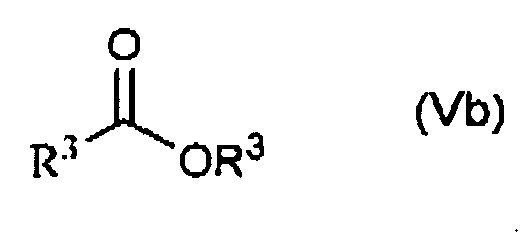
- Verfahren nach Anspruch 5, dadurch gekennzeichnet, dass Verbindungen der allgemeinen Formel (I), in der R3 zusammen mit dem C-Atom ein geminal substituiertes C-Atom darstellt, durch Reaktion von (IVa) oder (IVb) mit Ketonen der allgemeinen Formel (Vc),

- Verfahren nach Anspruch 5, dadurch gekennzeichnet, dass Verbindungen der allgemeinen Formel (I), in der R3 zusammen mit dem C-Atom eine Carbonylgruppe darstellt, durch Reaktion von (IVa) oder (IVb) mit C1-Bausteinen der allgemeinen Formel (VII),

- Verfahren nach Anspruch 5, dadurch gekennzeichnet, dass Verbindungen der allgemeinen Formel (I), in der R3 zusammen mit dem C-Atom eine Carbonylgruppe darstellt, durch Reaktion von (IVa) oder (IVb) mit einem C1-Baustein der allgemeinen Formel VIII,
C(OR7)4 (VIII)
in der R7 für den Methyl- oder Ethylrest steht, hergestellt werden. - Verfahren nach Anspruch 5, dadurch gekennzeichnet, dass die Umsetzung der Aminobenzylamine der allgemeinen Formel (II) mit den Pyrrol-2,5-dionen der allgemeinen Formel (III) in inerten Lösungsmitteln, vorzugsweise Essigsäureethylester, bei Raumtemperatur erfolgt.
- Verfahren nach Anspruch 5, dadurch gekennzeichnet, dass die Reaktion der Verbindungen der allgemeinen Formel (IVa und IVb) mit den Verbindungen der allgemeinen Formel (V) entweder ohne Lösungsmittel oder in einer organischen Carbonsäure, vorzugsweise Essigsäure, in einem Temperaturbereich von 10 bis 150 °C durchgeführt wird.
- Verfahren zur Herstellung von in 3-Position heterocyclisch substituierten Pyrrolidin(thi)onen der allgemeinen Formel (I) nach Anspruch 1, wobei man zunächst eine Aminoverbindung der allgemeinen Formel (IX)


- Verfahren zur Herstellung von in 3-Position heterocyclisch substituierten Pyrrolidin(thi)onen der allgemeinen Formel (I) nach Anspruch 1, wobei man eine Aminoverbindung der Formel (II) zunächst mit einem 3-Brompyrrolidin-2-onderivat der Formel (X)


- Verfahren zur Herstellung von in 3-Position heterocyclisch substituierten Pyrrolidin(thi)onen der allgemeinen Formel (I), in denen m = 1 und n = 0 bedeuten und R3 für H oder OH steht, indem ein Formamidderivat der allgemeinen Formel (XXIII),
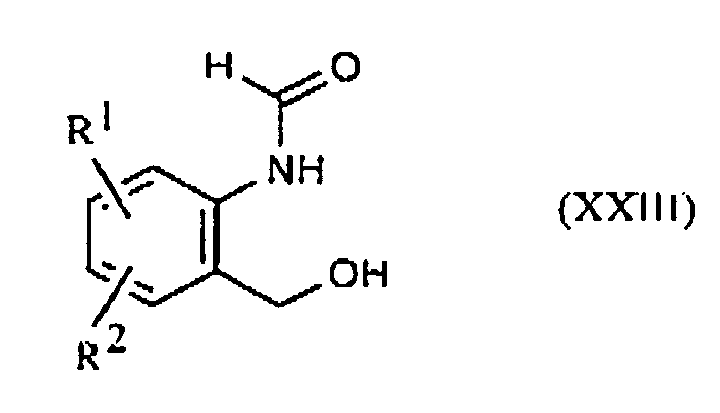


und wobei
wenn nach dem Schritt der reduktiven Aminierung der Verbindung der allgemeinen Formel (XXIV) das Reaktionsgemisch mit Säuren behandelt wird, daraus Verbindungen der allgemeinen Formel (XXVII), in denen R1, R2 und R4 wie oben definiert sind, hergestellt werden
wonach gegebenenfalls andere definitionsgemäße Reste R4 und /oder R5 eingeführt werden. - Arzneimittel enthaltend als Wirkstoff wenigstens eine Verbindung der allgemeinen Formel (I) nach Anspruch 1 und/oder deren Enantiomere, Diastereomere, Basen, oder Salze von physiologisch verträglichen organischen oder anorganischen Säuren.
- Arzneimittel nach Anspruch 14 mit immunmodulatorischer Wirkung zur Behandlung und/oder Prophylaxe von Entzündungs- sowie Autoimmunerkrankungen und/oder hämatologisch-onkologischen Erkrankungen.
- Verwendung wenigstens einer Verbindung der allgemeinen Formel (I) nach Anspruch 1 und/oder deren Enantiomeren, Diastereomeren, Basen oder Salzen von physiologisch verträglichen organischen oder anorganischen Säuren zur Herstellung eines Arzneimittels zur Behandlung und/oder Prophylaxe von Entzündungs- und Autoimmunerkrankungen.
Priority Applications (1)
| Application Number | Priority Date | Filing Date | Title |
|---|---|---|---|
| PL06818896T PL1957481T3 (pl) | 2005-12-02 | 2006-11-29 | Heterocyklicznie w położeniu-3 podstawione pirolidyno(tio)ny |
Applications Claiming Priority (2)
| Application Number | Priority Date | Filing Date | Title |
|---|---|---|---|
| DE102005057912A DE102005057912A1 (de) | 2005-12-02 | 2005-12-02 | In 3-Position heterocyclisch substituierte Pyrrolidin(thi)one |
| PCT/EP2006/011440 WO2007062817A1 (de) | 2005-12-02 | 2006-11-29 | In 3-position heterocyclisch substituierte pyrrolidin(thi)one |
Publications (2)
| Publication Number | Publication Date |
|---|---|
| EP1957481A1 EP1957481A1 (de) | 2008-08-20 |
| EP1957481B1 true EP1957481B1 (de) | 2011-03-02 |
Family
ID=37912487
Family Applications (1)
| Application Number | Title | Priority Date | Filing Date |
|---|---|---|---|
| EP06818896A Not-in-force EP1957481B1 (de) | 2005-12-02 | 2006-11-29 | In 3-position heterocyclisch substituierte pyrrolidin(thi)one |
Country Status (7)
| Country | Link |
|---|---|
| US (1) | US20080293749A1 (de) |
| EP (1) | EP1957481B1 (de) |
| AT (1) | ATE500246T1 (de) |
| DE (2) | DE102005057912A1 (de) |
| ES (1) | ES2360820T3 (de) |
| PL (1) | PL1957481T3 (de) |
| WO (1) | WO2007062817A1 (de) |
Families Citing this family (4)
| Publication number | Priority date | Publication date | Assignee | Title |
|---|---|---|---|---|
| CA3017740A1 (en) | 2016-03-16 | 2017-09-21 | Pearlie BURNETTE | Small molecules against cereblon to enhance effector t cell function |
| WO2019005685A1 (en) * | 2017-06-30 | 2019-01-03 | University Of Pittsburgh-Of The Commonwealth System Of Higher Education | CHEMICAL INHIBITION OF E3 FBX07 LIGASE LIGASE PROVIDING NEUROPROTECTION AND ANTI-INFLAMMATORY ACTIVITY BY STABILIZING MITOCHONDRIA |
| EP3680232B1 (de) | 2017-08-07 | 2024-12-11 | Amenis Biosciences, Inc. | Neue verbindung auf der basis von anthranilsäure und pin1-inhibitor, therapeutikum für entzündliche erkrankungen und therapeutikum für krebs damit |
| EA202190248A1 (ru) | 2018-07-11 | 2021-06-16 | Х. Ли Моффитт Кэнсер Сентер Энд Рисерч Инститьют, Инк. | Димерные иммуномодулирующие соединения против механизмов на основе цереблона |
Family Cites Families (3)
| Publication number | Priority date | Publication date | Assignee | Title |
|---|---|---|---|---|
| DE1670443A1 (de) * | 1967-07-01 | 1971-02-11 | Gruenenthal Chemie | Phthalimidinderivate und Verfahren zu ihrer Herstellung |
| DE10163595A1 (de) * | 2001-12-21 | 2003-08-07 | Gruenenthal Gmbh | In 3-Position heterocyclisch substituierte Piperidin-2,6-dione |
| JP4239463B2 (ja) * | 2002-04-09 | 2009-03-18 | 大正製薬株式会社 | 3−トリフルオロメチルアニリド誘導体 |
-
2005
- 2005-12-02 DE DE102005057912A patent/DE102005057912A1/de not_active Withdrawn
-
2006
- 2006-11-29 AT AT06818896T patent/ATE500246T1/de active
- 2006-11-29 ES ES06818896T patent/ES2360820T3/es active Active
- 2006-11-29 WO PCT/EP2006/011440 patent/WO2007062817A1/de not_active Ceased
- 2006-11-29 EP EP06818896A patent/EP1957481B1/de not_active Not-in-force
- 2006-11-29 DE DE502006009028T patent/DE502006009028D1/de active Active
- 2006-11-29 PL PL06818896T patent/PL1957481T3/pl unknown
-
2008
- 2008-06-02 US US12/131,574 patent/US20080293749A1/en not_active Abandoned
Also Published As
| Publication number | Publication date |
|---|---|
| DE502006009028D1 (en) | 2011-04-14 |
| PL1957481T3 (pl) | 2011-07-29 |
| ES2360820T3 (es) | 2011-06-09 |
| EP1957481A1 (de) | 2008-08-20 |
| DE102005057912A1 (de) | 2007-07-19 |
| ATE500246T1 (de) | 2011-03-15 |
| US20080293749A1 (en) | 2008-11-27 |
| WO2007062817A1 (de) | 2007-06-07 |
Similar Documents
| Publication | Publication Date | Title |
|---|---|---|
| DE69917296T2 (de) | Neue substituierte triazolverbindungen | |
| DE60319820T2 (de) | Pyrazoloä1,5-aüpyrimidin-verbindungen als antivirale agentien | |
| DE69914357T2 (de) | Pyridin-4-yl oder pyrimidin-4-yl substituierte pyrazine | |
| DE60315516T2 (de) | Pyridazinon-derivate als cdk2-hemmer | |
| DE60024854T2 (de) | 4,5-disubstituierte 2-aminopyrimidine | |
| DE69724246T2 (de) | Neue substituierte imidazolverbindungen | |
| DE60315615T2 (de) | Tricyclische verbindungen basierend auf thiophen und arzneimittel, die diese umfassen | |
| DE69610698T2 (de) | Chinazolin-derivate | |
| DE69933573T2 (de) | Chinazolinderivate als medikamente | |
| DE69322254T2 (de) | Pyridyl-substituierte imidazole | |
| TWI617308B (zh) | 犬尿胺酸-3-單氧化酶抑制劑、其醫藥組成物及其使用方法 | |
| EP0509398B1 (de) | Chinoxaline, Verfahren zu ihrer Herstellung und ihre Verwendung | |
| DE69729227T2 (de) | Substituierte 2,3-benzodiazepin-4-one und deren verwendung | |
| WO1991006545A1 (de) | Bicyclo-imidazole, verfahren zu ihrer herstellung und diese verbindungen enthaltende arzneimittel | |
| EP0189103B1 (de) | Neue Pyrrolo-Benzimidazole, Verfahren zu ihrer Herstellung und diese Verbindungen enthaltende Arzneimittel sowie Zwischenprodukte | |
| JP2002534385A (ja) | 新規化合物 | |
| CN107835810A (zh) | 作为hdac1/2抑制剂的哌啶衍生物 | |
| DE10023485A1 (de) | Anthranylalkyl- und -cycloalkylamide und deren Verwendung als Arzneimittel | |
| EP0271040A2 (de) | Neue Pyrrolobenzimidazole, Verfahren zu ihrer Herstellung, sowie Arzneimittel | |
| EP4006031A1 (de) | Dihydro-pyrrolo-pyrimidin-selektiver jak2-inhibitor | |
| EP1673354B1 (de) | Arylindenopyridin- und arylindenopyrimidinverbindungen und ihre verwendung als adenosin-a2a-rezeptor antagonisten | |
| JPWO2009041559A1 (ja) | インダゾールアクリル酸アミド化合物 | |
| EP0657166A1 (de) | Kombinationspräparate, enthaltend ein Chinoxalin und ein Nukleosid | |
| EP0214592A2 (de) | Neue Pyrrolo-Benzimidazole, Verfahren zu ihrer Herstellung und diese Verbindungen enthaltende Arzneimittel | |
| US20080293749A1 (en) | Pyrrolidine(thi)ones Substituted by Heterocyclic Substituents in The 3-Position |
Legal Events
| Date | Code | Title | Description |
|---|---|---|---|
| PUAI | Public reference made under article 153(3) epc to a published international application that has entered the european phase |
Free format text: ORIGINAL CODE: 0009012 |
|
| 17P | Request for examination filed |
Effective date: 20080529 |
|
| AK | Designated contracting states |
Kind code of ref document: A1 Designated state(s): AT BE BG CH CY CZ DE DK EE ES FI FR GB GR HU IE IS IT LI LT LU LV MC NL PL PT RO SE SI SK TR |
|
| RIN1 | Information on inventor provided before grant (corrected) |
Inventor name: SAUNDERS, DEREK Inventor name: FROSCH, STEFANIE Inventor name: FRORMANN, SVEN Inventor name: GRAUBAUM, HEINZ Inventor name: THEIL, FRITZ Inventor name: GRIEBEL, CARSTEN |
|
| RIN1 | Information on inventor provided before grant (corrected) |
Inventor name: SAUNDERS, DEREK Inventor name: FRORMANN, SVEN Inventor name: GRIEBEL, CARSTEN Inventor name: THEIL, FRITZ Inventor name: GRAUBAUM, HEINZ Inventor name: FROSCH, STEFANIE |
|
| 17Q | First examination report despatched |
Effective date: 20090403 |
|
| GRAP | Despatch of communication of intention to grant a patent |
Free format text: ORIGINAL CODE: EPIDOSNIGR1 |
|
| GRAS | Grant fee paid |
Free format text: ORIGINAL CODE: EPIDOSNIGR3 |
|
| GRAA | (expected) grant |
Free format text: ORIGINAL CODE: 0009210 |
|
| AK | Designated contracting states |
Kind code of ref document: B1 Designated state(s): AT BE BG CH CY CZ DE DK EE ES FI FR GB GR HU IE IS IT LI LT LU LV MC NL PL PT RO SE SI SK TR |
|
| REG | Reference to a national code |
Ref country code: GB Ref legal event code: FG4D Free format text: NOT ENGLISH |
|
| REG | Reference to a national code |
Ref country code: CH Ref legal event code: EP Ref country code: CH Ref legal event code: NV Representative=s name: BRAUNPAT BRAUN EDER AG |
|
| REG | Reference to a national code |
Ref country code: IE Ref legal event code: FG4D Free format text: LANGUAGE OF EP DOCUMENT: GERMAN |
|
| REF | Corresponds to: |
Ref document number: 502006009028 Country of ref document: DE Date of ref document: 20110414 Kind code of ref document: P |
|
| REG | Reference to a national code |
Ref country code: DE Ref legal event code: R096 Ref document number: 502006009028 Country of ref document: DE Effective date: 20110414 |
|
| REG | Reference to a national code |
Ref country code: NL Ref legal event code: T3 |
|
| REG | Reference to a national code |
Ref country code: ES Ref legal event code: FG2A Ref document number: 2360820 Country of ref document: ES Kind code of ref document: T3 Effective date: 20110609 |
|
| PG25 | Lapsed in a contracting state [announced via postgrant information from national office to epo] |
Ref country code: SE Free format text: LAPSE BECAUSE OF FAILURE TO SUBMIT A TRANSLATION OF THE DESCRIPTION OR TO PAY THE FEE WITHIN THE PRESCRIBED TIME-LIMIT Effective date: 20110302 Ref country code: GR Free format text: LAPSE BECAUSE OF FAILURE TO SUBMIT A TRANSLATION OF THE DESCRIPTION OR TO PAY THE FEE WITHIN THE PRESCRIBED TIME-LIMIT Effective date: 20110603 Ref country code: LV Free format text: LAPSE BECAUSE OF FAILURE TO SUBMIT A TRANSLATION OF THE DESCRIPTION OR TO PAY THE FEE WITHIN THE PRESCRIBED TIME-LIMIT Effective date: 20110302 Ref country code: LT Free format text: LAPSE BECAUSE OF FAILURE TO SUBMIT A TRANSLATION OF THE DESCRIPTION OR TO PAY THE FEE WITHIN THE PRESCRIBED TIME-LIMIT Effective date: 20110302 |
|
| REG | Reference to a national code |
Ref country code: PL Ref legal event code: T3 |
|
| LTIE | Lt: invalidation of european patent or patent extension |
Effective date: 20110302 |
|
| PG25 | Lapsed in a contracting state [announced via postgrant information from national office to epo] |
Ref country code: FI Free format text: LAPSE BECAUSE OF FAILURE TO SUBMIT A TRANSLATION OF THE DESCRIPTION OR TO PAY THE FEE WITHIN THE PRESCRIBED TIME-LIMIT Effective date: 20110302 Ref country code: SI Free format text: LAPSE BECAUSE OF FAILURE TO SUBMIT A TRANSLATION OF THE DESCRIPTION OR TO PAY THE FEE WITHIN THE PRESCRIBED TIME-LIMIT Effective date: 20110302 Ref country code: CY Free format text: LAPSE BECAUSE OF FAILURE TO SUBMIT A TRANSLATION OF THE DESCRIPTION OR TO PAY THE FEE WITHIN THE PRESCRIBED TIME-LIMIT Effective date: 20110302 Ref country code: BG Free format text: LAPSE BECAUSE OF FAILURE TO SUBMIT A TRANSLATION OF THE DESCRIPTION OR TO PAY THE FEE WITHIN THE PRESCRIBED TIME-LIMIT Effective date: 20110602 |
|
| REG | Reference to a national code |
Ref country code: HU Ref legal event code: AG4A Ref document number: E010919 Country of ref document: HU Ref country code: IE Ref legal event code: FD4D |
|
| PG25 | Lapsed in a contracting state [announced via postgrant information from national office to epo] |
Ref country code: EE Free format text: LAPSE BECAUSE OF FAILURE TO SUBMIT A TRANSLATION OF THE DESCRIPTION OR TO PAY THE FEE WITHIN THE PRESCRIBED TIME-LIMIT Effective date: 20110302 Ref country code: IE Free format text: LAPSE BECAUSE OF FAILURE TO SUBMIT A TRANSLATION OF THE DESCRIPTION OR TO PAY THE FEE WITHIN THE PRESCRIBED TIME-LIMIT Effective date: 20110302 Ref country code: PT Free format text: LAPSE BECAUSE OF FAILURE TO SUBMIT A TRANSLATION OF THE DESCRIPTION OR TO PAY THE FEE WITHIN THE PRESCRIBED TIME-LIMIT Effective date: 20110704 |
|
| PG25 | Lapsed in a contracting state [announced via postgrant information from national office to epo] |
Ref country code: SK Free format text: LAPSE BECAUSE OF FAILURE TO SUBMIT A TRANSLATION OF THE DESCRIPTION OR TO PAY THE FEE WITHIN THE PRESCRIBED TIME-LIMIT Effective date: 20110302 Ref country code: CZ Free format text: LAPSE BECAUSE OF FAILURE TO SUBMIT A TRANSLATION OF THE DESCRIPTION OR TO PAY THE FEE WITHIN THE PRESCRIBED TIME-LIMIT Effective date: 20110302 Ref country code: RO Free format text: LAPSE BECAUSE OF FAILURE TO SUBMIT A TRANSLATION OF THE DESCRIPTION OR TO PAY THE FEE WITHIN THE PRESCRIBED TIME-LIMIT Effective date: 20110302 Ref country code: IS Free format text: LAPSE BECAUSE OF FAILURE TO SUBMIT A TRANSLATION OF THE DESCRIPTION OR TO PAY THE FEE WITHIN THE PRESCRIBED TIME-LIMIT Effective date: 20110702 |
|
| PLBE | No opposition filed within time limit |
Free format text: ORIGINAL CODE: 0009261 |
|
| STAA | Information on the status of an ep patent application or granted ep patent |
Free format text: STATUS: NO OPPOSITION FILED WITHIN TIME LIMIT |
|
| PGFP | Annual fee paid to national office [announced via postgrant information from national office to epo] |
Ref country code: NL Payment date: 20111117 Year of fee payment: 6 Ref country code: CH Payment date: 20111114 Year of fee payment: 6 Ref country code: FR Payment date: 20111118 Year of fee payment: 6 Ref country code: ES Payment date: 20111216 Year of fee payment: 6 Ref country code: HU Payment date: 20111115 Year of fee payment: 6 |
|
| 26N | No opposition filed |
Effective date: 20111205 |
|
| PG25 | Lapsed in a contracting state [announced via postgrant information from national office to epo] |
Ref country code: DK Free format text: LAPSE BECAUSE OF FAILURE TO SUBMIT A TRANSLATION OF THE DESCRIPTION OR TO PAY THE FEE WITHIN THE PRESCRIBED TIME-LIMIT Effective date: 20110302 |
|
| REG | Reference to a national code |
Ref country code: DE Ref legal event code: R097 Ref document number: 502006009028 Country of ref document: DE Effective date: 20111205 |
|
| PGFP | Annual fee paid to national office [announced via postgrant information from national office to epo] |
Ref country code: BE Payment date: 20111114 Year of fee payment: 6 |
|
| PG25 | Lapsed in a contracting state [announced via postgrant information from national office to epo] |
Ref country code: MC Free format text: LAPSE BECAUSE OF NON-PAYMENT OF DUE FEES Effective date: 20111130 |
|
| PGFP | Annual fee paid to national office [announced via postgrant information from national office to epo] |
Ref country code: PL Payment date: 20120914 Year of fee payment: 7 |
|
| BERE | Be: lapsed |
Owner name: GRUNENTHAL G.M.B.H. Effective date: 20121130 |
|
| PG25 | Lapsed in a contracting state [announced via postgrant information from national office to epo] |
Ref country code: LU Free format text: LAPSE BECAUSE OF NON-PAYMENT OF DUE FEES Effective date: 20111129 |
|
| REG | Reference to a national code |
Ref country code: NL Ref legal event code: V1 Effective date: 20130601 |
|
| REG | Reference to a national code |
Ref country code: CH Ref legal event code: PL |
|
| REG | Reference to a national code |
Ref country code: AT Ref legal event code: MM01 Ref document number: 500246 Country of ref document: AT Kind code of ref document: T Effective date: 20121129 |
|
| GBPC | Gb: european patent ceased through non-payment of renewal fee |
Effective date: 20121129 |
|
| PG25 | Lapsed in a contracting state [announced via postgrant information from national office to epo] |
Ref country code: LI Free format text: LAPSE BECAUSE OF NON-PAYMENT OF DUE FEES Effective date: 20121130 Ref country code: AT Free format text: LAPSE BECAUSE OF NON-PAYMENT OF DUE FEES Effective date: 20121129 Ref country code: CH Free format text: LAPSE BECAUSE OF NON-PAYMENT OF DUE FEES Effective date: 20121130 |
|
| REG | Reference to a national code |
Ref country code: FR Ref legal event code: ST Effective date: 20130731 |
|
| PG25 | Lapsed in a contracting state [announced via postgrant information from national office to epo] |
Ref country code: BE Free format text: LAPSE BECAUSE OF NON-PAYMENT OF DUE FEES Effective date: 20121130 Ref country code: NL Free format text: LAPSE BECAUSE OF NON-PAYMENT OF DUE FEES Effective date: 20130601 Ref country code: HU Free format text: LAPSE BECAUSE OF NON-PAYMENT OF DUE FEES Effective date: 20121130 Ref country code: IT Free format text: LAPSE BECAUSE OF NON-PAYMENT OF DUE FEES Effective date: 20121129 |
|
| REG | Reference to a national code |
Ref country code: DE Ref legal event code: R119 Ref document number: 502006009028 Country of ref document: DE Effective date: 20130601 |
|
| PG25 | Lapsed in a contracting state [announced via postgrant information from national office to epo] |
Ref country code: TR Free format text: LAPSE BECAUSE OF FAILURE TO SUBMIT A TRANSLATION OF THE DESCRIPTION OR TO PAY THE FEE WITHIN THE PRESCRIBED TIME-LIMIT Effective date: 20110302 |
|
| PG25 | Lapsed in a contracting state [announced via postgrant information from national office to epo] |
Ref country code: DE Free format text: LAPSE BECAUSE OF NON-PAYMENT OF DUE FEES Effective date: 20130601 |
|
| PG25 | Lapsed in a contracting state [announced via postgrant information from national office to epo] |
Ref country code: GB Free format text: LAPSE BECAUSE OF NON-PAYMENT OF DUE FEES Effective date: 20121129 Ref country code: FR Free format text: LAPSE BECAUSE OF NON-PAYMENT OF DUE FEES Effective date: 20121130 |
|
| REG | Reference to a national code |
Ref country code: ES Ref legal event code: FD2A Effective date: 20140602 |
|
| PG25 | Lapsed in a contracting state [announced via postgrant information from national office to epo] |
Ref country code: ES Free format text: LAPSE BECAUSE OF NON-PAYMENT OF DUE FEES Effective date: 20121130 |
|
| PG25 | Lapsed in a contracting state [announced via postgrant information from national office to epo] |
Ref country code: PL Free format text: LAPSE BECAUSE OF NON-PAYMENT OF DUE FEES Effective date: 20131129 |
|
| REG | Reference to a national code |
Ref country code: PL Ref legal event code: LAPE |