EP1901388A1 - Overcharge and overdischarge protection in lithium-ion batteries - Google Patents
Overcharge and overdischarge protection in lithium-ion batteries Download PDFInfo
- Publication number
- EP1901388A1 EP1901388A1 EP06120697A EP06120697A EP1901388A1 EP 1901388 A1 EP1901388 A1 EP 1901388A1 EP 06120697 A EP06120697 A EP 06120697A EP 06120697 A EP06120697 A EP 06120697A EP 1901388 A1 EP1901388 A1 EP 1901388A1
- Authority
- EP
- European Patent Office
- Prior art keywords
- lithium
- ion battery
- overcharge
- electrolyte
- molecules
- Prior art date
- Legal status (The legal status is an assumption and is not a legal conclusion. Google has not performed a legal analysis and makes no representation as to the accuracy of the status listed.)
- Withdrawn
Links
Images
Classifications
-
- H—ELECTRICITY
- H01—ELECTRIC ELEMENTS
- H01M—PROCESSES OR MEANS, e.g. BATTERIES, FOR THE DIRECT CONVERSION OF CHEMICAL ENERGY INTO ELECTRICAL ENERGY
- H01M4/00—Electrodes
- H01M4/02—Electrodes composed of, or comprising, active material
- H01M4/36—Selection of substances as active materials, active masses, active liquids
- H01M4/60—Selection of substances as active materials, active masses, active liquids of organic compounds
-
- H—ELECTRICITY
- H01—ELECTRIC ELEMENTS
- H01M—PROCESSES OR MEANS, e.g. BATTERIES, FOR THE DIRECT CONVERSION OF CHEMICAL ENERGY INTO ELECTRICAL ENERGY
- H01M10/00—Secondary cells; Manufacture thereof
- H01M10/42—Methods or arrangements for servicing or maintenance of secondary cells or secondary half-cells
- H01M10/4235—Safety or regulating additives or arrangements in electrodes, separators or electrolyte
-
- H—ELECTRICITY
- H01—ELECTRIC ELEMENTS
- H01M—PROCESSES OR MEANS, e.g. BATTERIES, FOR THE DIRECT CONVERSION OF CHEMICAL ENERGY INTO ELECTRICAL ENERGY
- H01M10/00—Secondary cells; Manufacture thereof
- H01M10/05—Accumulators with non-aqueous electrolyte
- H01M10/052—Li-accumulators
- H01M10/0525—Rocking-chair batteries, i.e. batteries with lithium insertion or intercalation in both electrodes; Lithium-ion batteries
-
- H—ELECTRICITY
- H01—ELECTRIC ELEMENTS
- H01M—PROCESSES OR MEANS, e.g. BATTERIES, FOR THE DIRECT CONVERSION OF CHEMICAL ENERGY INTO ELECTRICAL ENERGY
- H01M10/00—Secondary cells; Manufacture thereof
- H01M10/05—Accumulators with non-aqueous electrolyte
- H01M10/056—Accumulators with non-aqueous electrolyte characterised by the materials used as electrolytes, e.g. mixed inorganic/organic electrolytes
- H01M10/0564—Accumulators with non-aqueous electrolyte characterised by the materials used as electrolytes, e.g. mixed inorganic/organic electrolytes the electrolyte being constituted of organic materials only
- H01M10/0566—Liquid materials
- H01M10/0567—Liquid materials characterised by the additives
-
- H—ELECTRICITY
- H01—ELECTRIC ELEMENTS
- H01M—PROCESSES OR MEANS, e.g. BATTERIES, FOR THE DIRECT CONVERSION OF CHEMICAL ENERGY INTO ELECTRICAL ENERGY
- H01M4/00—Electrodes
- H01M4/02—Electrodes composed of, or comprising, active material
- H01M4/36—Selection of substances as active materials, active masses, active liquids
- H01M4/48—Selection of substances as active materials, active masses, active liquids of inorganic oxides or hydroxides
- H01M4/485—Selection of substances as active materials, active masses, active liquids of inorganic oxides or hydroxides of mixed oxides or hydroxides for inserting or intercalating light metals, e.g. LiTi2O4 or LiTi2OxFy
-
- H—ELECTRICITY
- H01—ELECTRIC ELEMENTS
- H01M—PROCESSES OR MEANS, e.g. BATTERIES, FOR THE DIRECT CONVERSION OF CHEMICAL ENERGY INTO ELECTRICAL ENERGY
- H01M4/00—Electrodes
- H01M4/02—Electrodes composed of, or comprising, active material
- H01M4/36—Selection of substances as active materials, active masses, active liquids
- H01M4/58—Selection of substances as active materials, active masses, active liquids of inorganic compounds other than oxides or hydroxides, e.g. sulfides, selenides, tellurides, halogenides or LiCoFy; of polyanionic structures, e.g. phosphates, silicates or borates
- H01M4/5825—Oxygenated metallic salts or polyanionic structures, e.g. borates, phosphates, silicates, olivines
-
- B—PERFORMING OPERATIONS; TRANSPORTING
- B82—NANOTECHNOLOGY
- B82Y—SPECIFIC USES OR APPLICATIONS OF NANOSTRUCTURES; MEASUREMENT OR ANALYSIS OF NANOSTRUCTURES; MANUFACTURE OR TREATMENT OF NANOSTRUCTURES
- B82Y30/00—Nanotechnology for materials or surface science, e.g. nanocomposites
-
- Y—GENERAL TAGGING OF NEW TECHNOLOGICAL DEVELOPMENTS; GENERAL TAGGING OF CROSS-SECTIONAL TECHNOLOGIES SPANNING OVER SEVERAL SECTIONS OF THE IPC; TECHNICAL SUBJECTS COVERED BY FORMER USPC CROSS-REFERENCE ART COLLECTIONS [XRACs] AND DIGESTS
- Y02—TECHNOLOGIES OR APPLICATIONS FOR MITIGATION OR ADAPTATION AGAINST CLIMATE CHANGE
- Y02E—REDUCTION OF GREENHOUSE GAS [GHG] EMISSIONS, RELATED TO ENERGY GENERATION, TRANSMISSION OR DISTRIBUTION
- Y02E60/00—Enabling technologies; Technologies with a potential or indirect contribution to GHG emissions mitigation
- Y02E60/10—Energy storage using batteries
Definitions
- the present invention relates to lithium-ion batteries including an overcharge/discharge protection. It more precisely relates to an overcharge/discharge protection consisting of redox molecules.
- Lithium-ion are known since more than 15 years. Today they are used in different fields, in particular as power sources for portable consumer electronics. 1 When using lithium intercalation compounds as electrode material, lithium ion batteries show excellent performances of high energy density, long cycle life, and slow self-discharge rate, etc. Despite its success, the safety of single cell and its pack under aggressive conditions is still one big issue for using as "drugstore" or consumer-assembled batteries, where the hazard caused by overcharge or overdischarge is one of the critical reasons. 2 One approach for overcharge protection is using redox shuttle additives in the electrolyte 3 or embedded in a separator 4 .
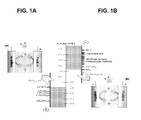
- the redox shuttles When the cell is overcharged, the redox shuttles start to be either oxidized at the positive electrode or reduced at the negative electrode when a characteristic cell potential is obtained.
- the mobile reaction products diffuse through the electrolyte to the opposite side of the cell where a second electron-transfer reaction returns it to its original state.
- the net effect is an internal shunt which prevents deterioration of the cell by imposing a limit on cell potential.
- the present invention offers an alternative to existing overcharge/discharge protection systems. It is based on the surprising effect that the use of redox molecules having reduction potential which is below than the reduction potential of the anode offers an efficient level of safety, against either overcharge or discharge.
- the invention relates to a lithium-ion battery comprising a first electrode made of cathodic material, a second electrode made of anodic material and an electrolyte, said lithium-ion battery containing an overcharge/discharge protection material consisting of redox molecules, characterized by the fact that said redox molecules have a reduction potential which is lower than said anodic material.
- n-type shuttles Compared to the conventional state-of-the-art p-type shuttles, the shuttles according to the invention, called n-type shuttles in the present text, provide several advantages, in particular : As the oxidation potential of the shuttle molecules is high enough, any cathodic material can be used in the battery. In addition. The use of n-type shuttle molecules also opens new opportunity for having molecules with much better stability.
- redox shuttle molecule In this strategy, except that the onset reduction potential of the redox shuttle molecule must be slightly lower than that of the anodic material to prevent self-discharge during storage and to allow for some overpotential during charging, requirements for such additives are similar to their p-type counterparts: firstly the redox shuttle molecule must be unreactive toward all cell components in both its oxidized and reduced forms; secondly it must be present in sufficient concentration and have a high enough diffusion coefficient to give a shuttle current at least as great as that at which the cell is charged; and very importantly the molecule must be stable enough or highly reversible to sustain long term cycling. En embodiment of the invention is discussed below wherein benzophenone (BP) is used as n-type shuttle in TiO 2 /LiFePO 4 and TiO 2 /LiCoO 2 cells.
- BP benzophenone
- BP benzophenone
- the mesoscopic anatase TiO 2 films (particle size ⁇ 20 nm) were prepared on F-doped conducting glass (FTO) by reported method.
- FTO F-doped conducting glass
- 6 LiCoO 2 (Degussa) and LiFePO 4 (ZSW) films were prepared by mixing the powders with 5 wt. % PVDF, 10 ⁇ 15 wt.% acetylene black, and stirring with N-methyl-2-pyrrolidone (NMP). The resulting homogeneous slurry was then doctor-bladed onto FTO.
- the electrolyte was 0.66 M LiClO 4 /PC+DME (2:1, w/w).
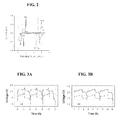
- Benzophenone (BP) was purchased from Fluka (>99.0%), and was dissolved in above electrolyte. Voltammetric and galvanostatic measurements employed a PC-controlled AutoLab® PSTA30 electrochemical workstation (Eco Chimie). Mesoscopic anatase TiO 2 has been extensively studied as anodic material for lithium ion batteries in many literatures. 7 Li + is inserted into the lattice of anatase TiO 2 at ⁇ 1.75 V (vs. Li + /Li) during charging. As the cyclic voltammograms shown in Figure 2, the onset reduction potential of BP is ⁇ 1.60 V, which is lower than that of TiO 2 .
- the oxidation potential of BP is very high, being far beyond the measured potential range, 4.50 V (vs. Li + /Li). In other words, it renders the validity of cathodic material with potential lower than this value when using BP as redox shuttle molecule.
- the charging potentials of the typical cathodic material LiFePO 4 and LiCoO 2 are perfectly located in this potential window, being 3.45 and 3.90 V, respectively.
- Figure 3A shows the galvanostatic voltage profiles of TiO 2 /LiFePO 4 and TiO 2 /LiCoO 2 full cells during continuous charge/discharge cycling, the cutoff voltage being 1.90 and 2.30 V, respectively. Consistent with the potentials of the electrode material, the voltage plateaus during charging process are around 1.70 and 2.15 V for TiO 2 /LiFePO 4 and TiO 2 /LiCoO 2 cells, respectively. When the cells reach full charge, the terminal voltage increases steeply.
- Figure 3B shows the voltage profiles of the cells in the presence of 0.4 M BP in the electrolyte as redox shuttle. As the cells are overcharged, the voltage increases rapidly at first.
- the n-type shuttle can also be used for overdischarge protection.
- the terminal voltage decreases rapidly as a consequence of steep dropping of the positive electrode potential.
- the potential of the fully lithiated positive electrode reaches that of the n-type shuttle molecule, the molecule will start to reduce, then the electrode potential is clamped there just as the case of overcharge.
- anodic material with high lithium insertion potentials, such as intermetallic alloys, 3D-nanostructured metal oxides (nitrides, sulfides, phosphides, fluorides) 9 , TiO 2 , and Li 4 Ti 5 O 12 .
- anodic material with high lithium insertion potentials such as intermetallic alloys, 3D-nanostructured metal oxides (nitrides, sulfides, phosphides, fluorides) 9 , TiO 2 , and Li 4 Ti 5 O 12 .
- n-type redox shuttle molecules has been successfully demonstrated.
- TiO 2 as anodic material
- LiFePO 4 and LiCoO 2 as cathodic material
- the benzophenone molecule has shown quite nice shuttle functions during overcharge of the cells.
- the invention constitutes therefore a very promising alternative strategy for achieving overcharge (overdischarge) protection in lithium ion batteries.
Landscapes
- Chemical & Material Sciences (AREA)
- Chemical Kinetics & Catalysis (AREA)
- Electrochemistry (AREA)
- General Chemical & Material Sciences (AREA)
- Engineering & Computer Science (AREA)
- Inorganic Chemistry (AREA)
- Manufacturing & Machinery (AREA)
- Materials Engineering (AREA)
- Crystallography & Structural Chemistry (AREA)
- Physics & Mathematics (AREA)
- Condensed Matter Physics & Semiconductors (AREA)
- General Physics & Mathematics (AREA)
- Secondary Cells (AREA)
- Battery Electrode And Active Subsutance (AREA)
- Cell Separators (AREA)
Priority Applications (6)
| Application Number | Priority Date | Filing Date | Title |
|---|---|---|---|
| EP06120697A EP1901388A1 (en) | 2006-09-14 | 2006-09-14 | Overcharge and overdischarge protection in lithium-ion batteries |
| EP07826271.4A EP2064769B1 (en) | 2006-09-14 | 2007-09-05 | Overcharge and overdischarge protection in lithium-ion batteries |
| JP2009527933A JP5192487B2 (ja) | 2006-09-14 | 2007-09-05 | リチウムイオン電池の過充電、放電保護 |
| KR1020097006116A KR101355259B1 (ko) | 2006-09-14 | 2007-09-05 | 과충전 또는 방전 보호를 위한 리튬-이온 배터리 |
| PCT/IB2007/053578 WO2008032240A2 (en) | 2006-09-14 | 2007-09-05 | Overcharge and overdischarge protection in lithium-ion batteries |
| US12/440,628 US8003260B2 (en) | 2006-09-14 | 2007-09-05 | Overcharge and overdischarge protection in lithium-ion batteries |
Applications Claiming Priority (1)
| Application Number | Priority Date | Filing Date | Title |
|---|---|---|---|
| EP06120697A EP1901388A1 (en) | 2006-09-14 | 2006-09-14 | Overcharge and overdischarge protection in lithium-ion batteries |
Publications (1)
| Publication Number | Publication Date |
|---|---|
| EP1901388A1 true EP1901388A1 (en) | 2008-03-19 |
Family
ID=37654887
Family Applications (2)
| Application Number | Title | Priority Date | Filing Date |
|---|---|---|---|
| EP06120697A Withdrawn EP1901388A1 (en) | 2006-09-14 | 2006-09-14 | Overcharge and overdischarge protection in lithium-ion batteries |
| EP07826271.4A Not-in-force EP2064769B1 (en) | 2006-09-14 | 2007-09-05 | Overcharge and overdischarge protection in lithium-ion batteries |
Family Applications After (1)
| Application Number | Title | Priority Date | Filing Date |
|---|---|---|---|
| EP07826271.4A Not-in-force EP2064769B1 (en) | 2006-09-14 | 2007-09-05 | Overcharge and overdischarge protection in lithium-ion batteries |
Country Status (5)
| Country | Link |
|---|---|
| US (1) | US8003260B2 (enExample) |
| EP (2) | EP1901388A1 (enExample) |
| JP (1) | JP5192487B2 (enExample) |
| KR (1) | KR101355259B1 (enExample) |
| WO (1) | WO2008032240A2 (enExample) |
Cited By (2)
| Publication number | Priority date | Publication date | Assignee | Title |
|---|---|---|---|---|
| EP3005447A4 (en) * | 2013-05-31 | 2017-01-18 | Scania CV AB | Intrinsic overcharge protection for battery cell |
| CN106298257B (zh) * | 2016-08-24 | 2018-07-24 | 深圳市贝特瑞新能源材料股份有限公司 | 一种高性能钛系氧化物、其制备方法及用途 |
Families Citing this family (16)
| Publication number | Priority date | Publication date | Assignee | Title |
|---|---|---|---|---|
| JP4991706B2 (ja) * | 2005-06-06 | 2012-08-01 | ダウ グローバル テクノロジーズ エルエルシー | リチウム再充電可能電気化学セル |
| WO2007093856A1 (en) * | 2006-02-14 | 2007-08-23 | High Power Lithium S.A. | Lithium manganese phosphate positive material for lithium secondary battery |
| US9431660B2 (en) | 2010-09-23 | 2016-08-30 | Robert Bosch Gmbh | Lithium battery with charging redox couple |
| US9761878B2 (en) | 2010-09-23 | 2017-09-12 | Robert Bosch Gmbh | Metal/oxygen battery with a clean surface for oxidizing redox additives |
| DE102011003197A1 (de) * | 2011-01-26 | 2012-07-26 | Robert Bosch Gmbh | Redoxadditiv für Sekundärzellen mit Flüssig-Fest-Phasenwechsel |
| JP5764526B2 (ja) * | 2011-05-24 | 2015-08-19 | 富士フイルム株式会社 | 非水二次電池用電解液及び二次電池 |
| US9966625B2 (en) | 2012-02-28 | 2018-05-08 | Uchicago Argonne, Llc | Organic non-aqueous cation-based redox flow batteries |
| US8652672B2 (en) | 2012-03-15 | 2014-02-18 | Aquion Energy, Inc. | Large format electrochemical energy storage device housing and module |
| US8945756B2 (en) | 2012-12-12 | 2015-02-03 | Aquion Energy Inc. | Composite anode structure for aqueous electrolyte energy storage and device containing same |
| EP3429013A4 (en) * | 2015-10-02 | 2019-11-27 | Kogakuin University | LITHIUM-ION SECONDARY BATTERY |
| US10637099B2 (en) | 2017-05-17 | 2020-04-28 | Uchicago Argonne, Llc | Annulated tetra-substituted hydroquinone ether-based redox shuttle additives for lithium-ion batteries |
| US10553890B2 (en) | 2017-06-23 | 2020-02-04 | Uchicago Argonne, Llc | Aqueous redox flow batteries |
| US10424805B2 (en) | 2017-08-15 | 2019-09-24 | Uchicago Argonne, Llc | Benzothiophene-based redox molecules for flow battery |
| US11271237B2 (en) | 2019-07-29 | 2022-03-08 | Uchicago Argonne, Llc | Organic redox molecules for flow batteries |
| JP7818421B2 (ja) * | 2022-03-02 | 2026-02-20 | 三井化学株式会社 | バインダー樹脂組成物、スラリー組成物、セパレータ及びリチウムイオン電池 |
| CN115015770B (zh) * | 2022-05-27 | 2023-11-03 | 上海玫克生储能科技有限公司 | 一种锂电池充放电截止的确定方法及装置 |
Citations (2)
| Publication number | Priority date | Publication date | Assignee | Title |
|---|---|---|---|---|
| US4547439A (en) * | 1982-09-01 | 1985-10-15 | Commissariat A L'energie Atomique | Electrochemical generator |
| US5442197A (en) * | 1991-12-13 | 1995-08-15 | Alcatel Alsthom Compagnie Generale D'electricite | Super-capacitor comprising positive and negative electrodes made of a p-doped electron conductive polymer and an electrolyte containing an organic redox compound |
Family Cites Families (30)
| Publication number | Priority date | Publication date | Assignee | Title |
|---|---|---|---|---|
| GB2081307A (en) * | 1980-07-08 | 1982-02-17 | Engelhard Min & Chem | Use of electrocatalytic anodes in photolysis |
| JPS6286673A (ja) * | 1985-10-11 | 1987-04-21 | Toyota Central Res & Dev Lab Inc | リチウム二次電池用電解液 |
| CH674596A5 (enExample) * | 1988-02-12 | 1990-06-15 | Sulzer Ag | |
| CA2102240A1 (en) | 1991-04-22 | 1992-10-23 | Heinrich Meyer | Method for selectively coating non-conductors with carbon particles and use of copper containing solutions therein |
| CH686206A5 (it) * | 1992-03-26 | 1996-01-31 | Asulab Sa | Cellule photoelectrochimique regeneratrice transparente. |
| FR2694451B1 (fr) * | 1992-07-29 | 1994-09-30 | Asulab Sa | Cellule photovoltaïque. |
| FR2715508B1 (fr) * | 1994-01-21 | 1996-03-29 | Renata Ag | Générateur électrochimique primaire ou secondaire à électrode nanoparticulaire. |
| JP3493873B2 (ja) * | 1995-04-28 | 2004-02-03 | ソニー株式会社 | 非水電解液二次電池 |
| AU714268B2 (en) * | 1995-09-25 | 1999-12-23 | Ecole Polytechnique Federale De Lausanne | Process for manufacturing an electrode for an electrochemical device |
| ATE209366T1 (de) * | 1996-03-15 | 2001-12-15 | Ecole Polytech | Elektrochrome oder photoelektrochrome vorrichtung |
| US5858573A (en) * | 1996-08-23 | 1999-01-12 | Eic Laboratories, Inc. | Chemical overcharge protection of lithium and lithium-ion secondary batteries |
| DE19731186C2 (de) * | 1997-07-10 | 2000-08-03 | Atotech Deutschland Gmbh | Feststofffreie Vorbehandlungslösung für elektrisch nichtleitende Oberflächen sowie Verfahren zur Herstellung der Lösung und deren Verwendung |
| DE19835615A1 (de) * | 1998-08-06 | 2000-02-10 | Basf Ag | Für elektrochemische Zellen geeignete Zusammensetzungen |
| JP2000251932A (ja) * | 1999-02-24 | 2000-09-14 | Sony Corp | 非水電解質二次電池 |
| JP4949543B2 (ja) | 1999-04-06 | 2012-06-13 | ソニー株式会社 | LiFePO4の合成方法及び非水電解質電池の製造方法 |
| WO2001027690A2 (en) * | 1999-10-11 | 2001-04-19 | University College Dublin | Electrochromic device |
| EP1213783A1 (fr) * | 2000-12-08 | 2002-06-12 | Renata AG | Batterie à électrodes bobinées avec dissipateur de chaleur |
| EP1217670A1 (fr) * | 2000-12-21 | 2002-06-26 | Renata AG | Event de sécurité pour stockage prolongé d'une batterie |
| EP1244168A1 (en) | 2001-03-20 | 2002-09-25 | Francois Sugnaux | Mesoporous network electrode for electrochemical cell |
| CA2490091C (en) | 2002-06-21 | 2012-10-30 | Umicore | Carbon-coated li-containing powders and process for production thereof |
| US7462425B2 (en) * | 2003-09-26 | 2008-12-09 | Kabushiki Kaisha Toshiba | Nonaqueous electrolyte secondary battery and battery module |
| US7785740B2 (en) * | 2004-04-09 | 2010-08-31 | Air Products And Chemicals, Inc. | Overcharge protection for electrochemical cells |
| TW200642135A (en) * | 2005-02-25 | 2006-12-01 | Lg Chemical Ltd | Lithium secondary battery with high performance |
| JP4991706B2 (ja) * | 2005-06-06 | 2012-08-01 | ダウ グローバル テクノロジーズ エルエルシー | リチウム再充電可能電気化学セル |
| JP5084131B2 (ja) * | 2005-10-28 | 2012-11-28 | トヨタ自動車株式会社 | LiMnPO4の製造方法 |
| WO2007093856A1 (en) * | 2006-02-14 | 2007-08-23 | High Power Lithium S.A. | Lithium manganese phosphate positive material for lithium secondary battery |
| US8313863B2 (en) * | 2006-04-06 | 2012-11-20 | Dow Global Technologies Llc | Synthesis of nanoparticles of lithium metal phosphate positive material for lithium secondary battery |
| KR101378029B1 (ko) * | 2006-04-07 | 2014-03-24 | 다우 글로벌 테크놀로지스 엘엘씨 | 리튬 재충전 가능한 전기화학 전지 |
| KR101444484B1 (ko) | 2006-10-18 | 2014-09-24 | 다우 글로벌 테크놀로지스 엘엘씨 | 나노튜브 와이어링 |
| EP2015382A1 (en) * | 2007-07-13 | 2009-01-14 | High Power Lithium S.A. | Carbon coated lithium manganese phosphate cathode material |
-
2006
- 2006-09-14 EP EP06120697A patent/EP1901388A1/en not_active Withdrawn
-
2007
- 2007-09-05 KR KR1020097006116A patent/KR101355259B1/ko not_active Expired - Fee Related
- 2007-09-05 JP JP2009527933A patent/JP5192487B2/ja not_active Expired - Fee Related
- 2007-09-05 WO PCT/IB2007/053578 patent/WO2008032240A2/en not_active Ceased
- 2007-09-05 US US12/440,628 patent/US8003260B2/en not_active Expired - Fee Related
- 2007-09-05 EP EP07826271.4A patent/EP2064769B1/en not_active Not-in-force
Patent Citations (2)
| Publication number | Priority date | Publication date | Assignee | Title |
|---|---|---|---|---|
| US4547439A (en) * | 1982-09-01 | 1985-10-15 | Commissariat A L'energie Atomique | Electrochemical generator |
| US5442197A (en) * | 1991-12-13 | 1995-08-15 | Alcatel Alsthom Compagnie Generale D'electricite | Super-capacitor comprising positive and negative electrodes made of a p-doped electron conductive polymer and an electrolyte containing an organic redox compound |
Non-Patent Citations (2)
| Title |
|---|
| BUHRMESTER C ET AL: "Phenothiazine Molecules - POSSIBLE REDOX SHUTTLE ADDITIVES FOR CHEMICAL OVERCHARGE AND OVERDISCHARGE PROTECTION FOR LITHIUM-ION BATTERIES", JOURNAL OF THE ELECTROCHEMICAL SOCIETY, PHILADELPHIA, US, US, vol. 153, no. 2, 23 December 2005 (2005-12-23), pages A288 - A294, XP002396171 * |
| RICHARDSON T J ET AL: "Overcharge protection for rechargeable lithium polymer electrolyte batteries", J.ELECTROCHEM.SOC, vol. 143, no. 12, December 1996 (1996-12-01), XP002087822 * |
Cited By (2)
| Publication number | Priority date | Publication date | Assignee | Title |
|---|---|---|---|---|
| EP3005447A4 (en) * | 2013-05-31 | 2017-01-18 | Scania CV AB | Intrinsic overcharge protection for battery cell |
| CN106298257B (zh) * | 2016-08-24 | 2018-07-24 | 深圳市贝特瑞新能源材料股份有限公司 | 一种高性能钛系氧化物、其制备方法及用途 |
Also Published As
| Publication number | Publication date |
|---|---|
| KR101355259B1 (ko) | 2014-01-27 |
| KR20090064549A (ko) | 2009-06-19 |
| JP2010503956A (ja) | 2010-02-04 |
| WO2008032240A2 (en) | 2008-03-20 |
| US20100081059A1 (en) | 2010-04-01 |
| EP2064769A2 (en) | 2009-06-03 |
| EP2064769B1 (en) | 2019-01-02 |
| WO2008032240A3 (en) | 2008-06-26 |
| JP5192487B2 (ja) | 2013-05-08 |
| US8003260B2 (en) | 2011-08-23 |
Similar Documents
| Publication | Publication Date | Title |
|---|---|---|
| US8003260B2 (en) | Overcharge and overdischarge protection in lithium-ion batteries | |
| US6387571B1 (en) | Electrolyte for a rechargeable cell | |
| Komaba et al. | Influence of manganese (II), cobalt (II), and nickel (II) additives in electrolyte on performance of graphite anode for lithium-ion batteries | |
| EP4029071B1 (en) | Positive electrode active materials for a lithium-ion secondary battery | |
| US20080070122A1 (en) | Cathode active material and lithium battery employing the same | |
| CN113348578A (zh) | 可充电电池单元 | |
| US9525197B2 (en) | Stable non-aqueous electrolyte promoting ideal reaction process in rechargeable lithium-air batteries | |
| KR20180086601A (ko) | 비수전해액용 첨가제, 이를 포함하는 리튬 이차전지용 비수전해액 및 리튬 이차전지 | |
| US11831001B2 (en) | Pre-lithiation method and pre-lithiated lithium-ion secondary battery | |
| US20140113203A1 (en) | Electrolyte additives for lithium ion battery and lithium ion battery containing same | |
| JP2007234565A (ja) | 非水電解質二次電池 | |
| JP2011222473A (ja) | リチウムイオン電池用電解液 | |
| KR20170051287A (ko) | 비수 전해액 첨가제, 이를 포함하는 비수전해액 및 이를 구비한 리튬 이차전지 | |
| KR20190022382A (ko) | 리튬 이차전지용 비수전해액 및 이를 포함하는 리튬 이차전지 | |
| Kumagai et al. | Electrochemical behavior of graphite electrode for lithium ion batteries in Mn and Co additive electrolytes | |
| JP2009163971A (ja) | 非水電解液二次電池 | |
| EP4773294A1 (en) | Electrolyte for rechargeable lithium battery and rechargeable lithium battery including same | |
| JP6057644B2 (ja) | リチウムイオン電池 | |
| KR20190131721A (ko) | 리튬 이차 전지용 전해질 및 이를 포함하는 리튬 이차 전지 | |
| EP4636892A1 (en) | Electrolyte for lithium secondary battery and lithium secondary battery comprising same | |
| JP2008226643A (ja) | 非水電解液二次電池 | |
| JP5082198B2 (ja) | リチウムイオン二次電池 | |
| KR102968722B1 (ko) | 리튬 이차 전지 | |
| Wang et al. | A new strategy of molecular overcharge protection shuttles for lithium ion batteries | |
| EP4421918A1 (en) | Lithium-ion secondary battery with electrolyte additive |
Legal Events
| Date | Code | Title | Description |
|---|---|---|---|
| PUAI | Public reference made under article 153(3) epc to a published international application that has entered the european phase |
Free format text: ORIGINAL CODE: 0009012 |
|
| AK | Designated contracting states |
Kind code of ref document: A1 Designated state(s): AT BE BG CH CY CZ DE DK EE ES FI FR GB GR HU IE IS IT LI LT LU LV MC NL PL PT RO SE SI SK TR |
|
| AX | Request for extension of the european patent |
Extension state: AL BA HR MK YU |
|
| AKX | Designation fees paid | ||
| REG | Reference to a national code |
Ref country code: DE Ref legal event code: 8566 |
|
| STAA | Information on the status of an ep patent application or granted ep patent |
Free format text: STATUS: THE APPLICATION IS DEEMED TO BE WITHDRAWN |
|
| 18D | Application deemed to be withdrawn |
Effective date: 20080920 |