EP1892571B1 - Verfahren zur Verwaltung einer Belichtungsmaske - Google Patents
Verfahren zur Verwaltung einer Belichtungsmaske Download PDFInfo
- Publication number
- EP1892571B1 EP1892571B1 EP07016206A EP07016206A EP1892571B1 EP 1892571 B1 EP1892571 B1 EP 1892571B1 EP 07016206 A EP07016206 A EP 07016206A EP 07016206 A EP07016206 A EP 07016206A EP 1892571 B1 EP1892571 B1 EP 1892571B1
- Authority
- EP
- European Patent Office
- Prior art keywords
- light exposure
- mask
- exposure mask
- sulfate ion
- amount
- Prior art date
- Legal status (The legal status is an assumption and is not a legal conclusion. Google has not performed a legal analysis and makes no representation as to the accuracy of the status listed.)
- Ceased
Links
Images

Classifications
-
- G—PHYSICS
- G03—PHOTOGRAPHY; CINEMATOGRAPHY; ANALOGOUS TECHNIQUES USING WAVES OTHER THAN OPTICAL WAVES; ELECTROGRAPHY; HOLOGRAPHY
- G03F—PHOTOMECHANICAL PRODUCTION OF TEXTURED OR PATTERNED SURFACES, e.g. FOR PRINTING, FOR PROCESSING OF SEMICONDUCTOR DEVICES; MATERIALS THEREFOR; ORIGINALS THEREFOR; APPARATUS SPECIALLY ADAPTED THEREFOR
- G03F1/00—Originals for photomechanical production of textured or patterned surfaces, e.g., masks, photo-masks, reticles; Mask blanks or pellicles therefor; Containers specially adapted therefor; Preparation thereof
- G03F1/68—Preparation processes not covered by groups G03F1/20 - G03F1/50
- G03F1/82—Auxiliary processes, e.g. cleaning or inspecting
-
- G—PHYSICS
- G03—PHOTOGRAPHY; CINEMATOGRAPHY; ANALOGOUS TECHNIQUES USING WAVES OTHER THAN OPTICAL WAVES; ELECTROGRAPHY; HOLOGRAPHY
- G03F—PHOTOMECHANICAL PRODUCTION OF TEXTURED OR PATTERNED SURFACES, e.g. FOR PRINTING, FOR PROCESSING OF SEMICONDUCTOR DEVICES; MATERIALS THEREFOR; ORIGINALS THEREFOR; APPARATUS SPECIALLY ADAPTED THEREFOR
- G03F7/00—Photomechanical, e.g. photolithographic, production of textured or patterned surfaces, e.g. printing surfaces; Materials therefor, e.g. comprising photoresists; Apparatus specially adapted therefor
- G03F7/70—Microphotolithographic exposure; Apparatus therefor
- G03F7/708—Construction of apparatus, e.g. environment aspects, hygiene aspects or materials
- G03F7/70908—Hygiene, e.g. preventing apparatus pollution, mitigating effect of pollution or removing pollutants from apparatus
- G03F7/70916—Pollution mitigation, i.e. mitigating effect of contamination or debris, e.g. foil traps
Definitions
- the present invention relates to a method for managing a light exposure mask (hereinafter, also referred to as "mask”) which is used in a lithographic step of a semiconductor manufacturing process, and to a light exposure mask.
- a light exposure mask hereinafter, also referred to as "mask”
- a shorter wavelength is being used.
- a light source of a light exposing apparatus such as g-ray (436 nm) and i-ray (365 nm) of a high pressure mercury arc lamp was conventionally used, but now, KrF excimer laser (248 nm) and ArF excimer laser (193 nm) are used. Because such an exposure light source emits light with a short wavelength and has a high output, the energy of the emitted light is high.
- a sulfate ion which is an acidic substance used for mask washing and remains on a mask surface after mask manufacturing, and a basic substance such as ammonia, which is present under a mask usage environment, are reacted by irradiation with an excimer laser during pattern transfer so that ammonium sulfate or the like occurs as a foreign matter (for example, see Japanese Patent Application Laid-Open ( JP-A) Nos.
- a method for managing a light exposure mask there are proposed, for example: a method of rewashing a mask at every time when an accumulated light exposure amount (accumulated irradiation amount) becomes a predetermined value; a method of rewashing a mask in a case of observing a foreign matter in inspection of the mask at every predetermined value of an accumulated.irradiation amount; a method of providing a foreign matter evaluation portion on a mask and evaluating a usage limit of the mask (for example, see JP-A-2005-308896 ); and a method of rewashing a mask in a case of observing a defect common to chips on a wafer surface, in inspection of every predetermined lots of light-exposed wafers.
- the above-described managing method using an accumulated irradiation amount has its disadvantage as follows.
- masks have the same quality regarding a remaining component on a substrate, the occurrence frequency of a foreign matter is different among the masks depending on the usage environment of the mask and the like. Therefore in some cases, failure occurs on a wafer before the accumulated irradiation amount becomes a predetermined value.
- the frequency of mask washing is increased in order to prevent such a failure from occurring, there is a problem of increasing manufacturing time and cost.
- the managing method of combining the accumulated irradiation amount with mask inspection has a problem that even though the failure is prevented from occurring, the inspection is weighted to cause increased costs depending on increase in inspection time.
- the managing method of providing a growing foreign matter evaluation portion on a mask is a restrictive method only used for a specific mask and has no general versatility.
- the managing method of inspecting a wafer includes a destructive inspection, and therefore there is a problem of causing a plurality of wafer chip defect failures.
- an object of the present invention is to provide a method for managing a light exposure mask wherein: a mask inspection or a wafer inspection, in order to manage a contamination of a light exposure mask by a growing foreign matter, is not necessary; the method has general versatility and high reliability regardless to the history of the mask; the method dose not increase time and cost for mask manufacturing and inspection; and the method is operated so that the.mask can always be used in a clean state.
- Another object of the present invention is to provide a light exposure mask wherein contamination by a growing foreign matter does not occur.
- the present invention provides a method for managing a light exposure mask, wherein the light exposure mask contaminated by a sulfate ion-based foreign matter is rewashed and used by: calculating a sulfate ion adsorption amount on a surface of the light exposure mask, after an elapse of a predetermined time, from a sulfate ion concentration actually measured in an environment of using the light exposure mask, a maximum amount of sulfate ions adsorbed on the surface of the light exposure mask, and a threshold value of an amount of sulfate ions present on the surface of the light exposure mask where the foreign matter occurs on the surface of the light exposure mask; setting an usable period of the light exposure mask, where the foreign matter does not occur; and using the light exposure mask while rewashing the light exposure mask before the usable period expires.
- the method for managing a light exposure is characterized in that the light exposure mask is a mask for use in a light exposure apparatus including an ArF excimer laser as an exposure light source, and the threshold value of an amount of sulfate ions present on the surface of the light exposure mask, of which the foreign matter occurs on the surface of the light exposure mask, is 1 ng/cm 2 or more.
- the method for managing a light exposure is characterized in that the light exposure mask is a mask for use in a light exposure apparatus including an KrF excimer laser as an exposure light source, and the threshold value of an amount of sulfate ions present on the surface of the light exposure mask, of which the foreign matter occurs on the surface of the light exposure mask, is 5 ng/cm 2 or more.
- the method for managing a light exposure is characterized in that the sulfate ion concentration actually measured in the environment and the sulfate ion adsorption amount are values measured by an ion chromatographic method.
- a light exposure mask comprising a mask pattern formed on a transparent substrate
- the light exposure mask is used for a light exposure apparatus including an ArF excimer laser as an exposure light source, and an amount of sulfate ions present on the surface of the light exposure mask, at least on a side where the mask pattern is formed, is less than 1 ng/cm 2 .
- a light exposure mask comprising a mask pattern formed on a transparent substrate
- the light exposure mask is used for a light exposure apparatus including an KrF excimer laser as an exposure light source, and an amount of sulfate ions present on the surface of the light exposure mask, at least on a side where the mask pattern is formed, is less than 5 ng/cm 2 .
- the method for managing a light exposure mask according to the present invention by setting a usable period of the light exposure mask, where the foreign matter does not occur; a mask inspection or a wafer inspection, in order to manage a contamination of a light exposure mask by a sulfate ion-based growing foreign matter, is not necessary; the method has general versatility and high reliability regardless to the history of the mask; the method does not increase time and cost for mask manufacturing and inspection; and the mask can always be used in a clean state so that wafer defects can be prevented.
- the method for managing a light exposure mask according to the invention makes it possible to prolong a mask lifetime before rewashing of the mask by suppressing an amount of sulfate ions adsorbed on the light exposure mask and improving the usage environment of the light exposure mask.
- the mask of the present invention for a light exposure apparatus having an ArF excimer laser or KrF excimer laser as an exposure light source, since contamination by sulfate ion-based growing foreign matter does not occur on the mask, transfer of a mask pattern with good quality is possible.
- a growing foreign matter on the surface of a light exposure mask is formed by reaction of an acid-based ion such as a sulfate ion and an alkaline ion such as an ammonium ion; among these ions , there are many foreign matters caused by a sulfate ion; and in occurrence of the sulfate ion-based growing foreign matter on the mask surface, there is a threshold value of the sulfate ion amount on the mask surface.
- the method of the present invention is a method for managing a light exposure mask, wherein the light exposure mask contaminated by a sulfate ion-based foreign matter is rewashed and used by: calculating a sulfate ion adsorption amount on a surface of the light exposure mask, after an elapse of a predetermined time (hereinafter, also referred to as "sulfate ion amount"), from a sulfate ion concentration actually measured in an environment of using the light exposure mask, a maximum amount of sulfate ions adsorbed on the surface of the light exposure mask, and a threshold value of an amount of sulfate ions present on the surface of the light-exposure mask where the foreign matter occurs on the surface of the light exposure mask; setting an usable periodof the light exposuremask, where the foreignmatter does not occur; and using the light exposure mask while rewashing the light exposure mask before the usable period expires.
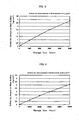
- FIG.1 shows a relationship between a sulfate ion amount on the surface of a light exposure mask (horizontal axis) and an occurred number of a sulfate ion-based foreign matter (vertical axis) in a case of varying the accumulated light exposure amount from 800 J/cm 2 to 3000 J/cm 2 using an ArF excimer laser as an exposure light source.
- the measurement of the sulfate ion amount on the surface of the light exposure mask can be obtained by: extracting ions present on the surface of the light exposure mask, that are object of the measurement, with pure water; and quantitatively analyzing the ion-extracted pure aqueous solution by using an ion chromatographic method. In this case, it is preferable to extract the ions by boiling the pure water.
- the sulfate ion-based foreign matter does not occur regardless of the light exposure amount, that is, respective accumulated light exposure amount of 800 J/cm 2 , 1,500 J/cm 2 and 3,000 J/ cm 2 .
- the sulfate ion amount on the surface of the light exposure mask exceeds 1 ng/cm 2 the sulfate ion-based foreign matter occurs regardless of the respective light exposure amounts .
- FIG. 2 shows a relationship between the accumulated light exposure amount by the ArF excimer laser (horizontal axis) and an occurred number of the sulfate ion-based foreign matter on the surface of the light exposure mask (vertical axis) in a case of varying the sulfate ion amount on the surface of the light exposure mask from 0.2 ng/cm 2 to 1.5 ng/cm 2 .
- a value obtained by measuring on the mask is used for the accumulated light exposure amount.
- the sulfate ion amount on the surface of the light exposure mask is 0.2 ng/cm 2 and 0 . 9 ng/cm 2
- the sulfate ion-based foreign matter does not occur even at the accumulated light exposure amount exceeding 1,000 J/cm 2 .
- the sulfate ion amount on the surface of the light exposure mask is 1.5 ng/cm 2
- the sulfate ion-based foreign matter occurs even at a low light exposure amount of immediately exceeding 100 J/cm 2 .
- the threshold value of the sulfate ion amount on the surface of the mask, where the sulfate ion-based foreign matter occurs is set to 1 ng/cm 2 or more in the case of using the ArF excimer laser in the present invention.
- the sulfate ion amount on the surface of the mask is 1 ng/cm 2 or more, which is the threshold value, the sulfate ion-based foreign matter occurs even at a very low accumulated light exposure amount.
- the amount of sulfate ions remaining on the mask surface after washing is around 0.4 ng/cm 2 .
- the present inventors analyzed the sulfate ion concentration present in the environment by using the following equation (1) of H. Habuka et al. obtained by improving Langumuir's adsorption equation ( H. Habuka et al, Jpn. J. Appl. Phys.
- dS / dt S max - S ⁇ k ad , C i i - k de , s i
- t denotes time (hour);
- S denotes a surface concentration of "i” species;
- S max denotes a maximum surface concentration;
- C i denotes a concentration of "i” species in the environment (g/cm 3 ) ;
- k ad denotes an adsorption rate of "i” species onto the mask surface (ng/cm 2 /h) ;
- k de,i denotes a release rate of "i” species from the mask surface (n g /cm 2 /h).
- M sulf M max - A ⁇ exp - B ⁇ C sulf ⁇ t
- M sulf denotes an amount of sulfate ions adsorbed after the elapse of a predetermined time "t" (ng/cm 2 )
- M max denotes a maximum sulfate ion adsorption amount (ng/cm 2 )
- a and B are constants
- C sulf denotes sulfate ion concentration in the environment ( ⁇ g/m 3 ).
- the sulfate ion concentration in the environment was measured by an environment analyzer CM505 (manufactured by Yokogawa Electric Corporation) using an ion chromatographic method.
- the sulfateion adsorption amount was obtained by immersing a glass substrate after adsorption into 100 ml of warm pure water and measuring the warm pure water with ion chromatography.
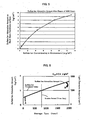
- FIG. 3 shows a relationship between the storage time of the light exposure mask and the sulfate ion adsorption amount M sulf on the mask surface, in a case where the sulfate ion concentration in the environment C sulf is 0.4 ⁇ g/m 3 .
- the maximum sulfate ion adsorption amount M max is 10 ng/cm 2
- the storage time of the light exposure mask includes the time of using the mask.
- the sulfate ion concentration in the environment can be measured as follows: a glass substrate for mask blanks having a washed clean surface is left in an environment for a predetermined time; ions adsorbed on the surface of the glass substrate for mask blanks are extracted by pure water with heating; and the ion-extracted pure water solution is quantitatively analyzed by using an ion chromatographic method.
- FIG. 4 shows a relationship between the storage time of the light exposure mask and the sulfate ion amount adsorbed on the mask surface M sulf , in a case where the sulfate ion concentration in the environment C sulf is 0.04 ⁇ g/m 3 .
- the sulfate ion concentration in the environment is 0.04 ⁇ g/m 3 .
- the time until the equivalent amount of sulfate ions are adsorbed to the surface of the mask would be ten times longer.
- a mask lifetime until rewashing is required is prolonged by ten times.
- FIG. 5 is a graph showing the sulfate ion amount adsorbed on the substrate surface M sulf , in a case of storing a glass substrate for mask blanks for 1000 hours in respective environments having different sulfate ion concentrations C sulf .
- the substrate for the mask for example, a glass substrate for mask blanks, which might be most affected by contamination by the foreign matter, was-used.
- FIG. 6 is a graph for illustrating one example of the method for managing the light exposure mask according to the present invention.
- the horizontal axis of FIG. 6 indicates the storage term (time: hour) in the storage environment of the light exposure mask; the left vertical axis indicates the sulfate ion amount adsorbed on the light exposure mask M sulf (ng/cm 2 ) ; and the right vertical axis indicates the light exposure amount (J/cm 2 ).
- the sulfate ion concentration in the environment C sulf actually measured by the ion chromatographic method is 0.4 ⁇ g/m 3 .
- the amount of sulfate ions adsorbed on the surface of the light exposure mask after the elapse of a predetermined time is shown by a bold line.
- the threshold value of the amount of sulfate ions present on the surface of the light exposure mask, where the foreign matter occurs, as described above, is 1 ng/cm 2 (thin line).
- the intersection of two lines indicates a usable period (represented by a broken line) and is set as the usable period (time: day).
- the bold line indicating the sulfate ion adsorption amount on the surface of the light exposure mask M sulf is lowered (as the direction "A" indicated by an outline arrow), or the slope of the bold line is made smaller (as the direction "B" indicated by a black solid arrow).
- the former means the decrease of the amount of sulfate ions remaining on the mask surface when the light exposure mask is washed.
- the latter means the decrease of the sulfate ion concentration in the storage environment of the light exposure mask.
- the usable period can be prolonged to 365 days by decreasing the sulfate ion concentration in the environment to 0.06 ⁇ g/m 3 .
- the method for managing a light exposure mask according to the present invention makes it possible to prolong the usable period until the mask is rewashed so as to prolong a mask lifetime by suppressing the amount of sulfate ions adsorbed on the light exposure mask and improving the storage environment of the light exposure mask.
- a threshold value of the amount of sulfate ions present on the surface of the light exposure mask, where the foreign matter occurs is 5 ng/cm 2 or more. Accordingly, the management value is preferably less than 5 ng/cm 2 .
- the sulfate ion amount on the surface of the mask for ArF excimer laser light exposure, at least on a side where the mask pattern is formed is set to a value less than 1 ng/cm 2 .
- the sulfate ion concentration on the mask surface is 1 ng/cm 2 or more, it is possible to use the mask for a long term while maintaining high quality without necessity of rewashing of the mask.
- the sulfate ion amount on the surface of the mask for KrF excimer laser light exposure, at least on a side where the mask pattern is formed is set to a value less than 5 ng/cm 2 .
- the sulfate ion concentration on the mask surface is set to a value less than 5 ng/cm 2 , it is possible to use the mask for a long term while maintaining high quality without necessity of rewashing of the mask.
- the measurement of the sulfate ion concentration on the surface of the light exposure mask can be obtained by: extracting ions present on the surface of the light exposure mask, that are object of the measurement, with pure water; and quantitatively analyzing the ion-extracted pure aqueous solution by using an ion chromatographic method.
- the light exposure mask according to the present invention shows a larger effect. That is, it shows an effect that a mask pattern with high quality can be transferred by using the mask of the present invention as a light exposure mask where the contamination, by the sulfate ion-based growing foreign matter, is not caused.
Landscapes
- Physics & Mathematics (AREA)
- General Physics & Mathematics (AREA)
- Life Sciences & Earth Sciences (AREA)
- Atmospheric Sciences (AREA)
- Health & Medical Sciences (AREA)
- Epidemiology (AREA)
- Public Health (AREA)
- Engineering & Computer Science (AREA)
- Environmental & Geological Engineering (AREA)
- Exposure And Positioning Against Photoresist Photosensitive Materials (AREA)
- Preparing Plates And Mask In Photomechanical Process (AREA)
- Exposure Of Semiconductors, Excluding Electron Or Ion Beam Exposure (AREA)
Claims (5)
- Verfahren zum Verwalten einer Belichtungsmaske, wobei die Belichtungsmaske, kontaminiert durch Fremdmaterial auf Sulfationen-Basis, wiedergewaschen und verwendet wird durch:Berechnen einer Sulfationenadsorptionsmenge auf einer Oberfläche der Belichtungsmaske nach einem Ablauf einer vorbestimmten Zeit aus einer Sulfationenkonzentration, tatsächlich gemessen in einer Umgebung unter Verwendung der Belichtungsmaske, und einer Maximalmenge von Sulfationen, adsorbiert auf der Oberfläche der Belichtungsmaske,Einrichten einer verwendbaren Periode der Belichtungsmaske, in welcher der Fremdgegenstand nicht auftritt, unter Verwendung der Sulfationenadsorptionsmenge auf der Oberfläche der Belichtungsmaske und eines Schwellenwerts einer Menge von Sulfationen, vorliegend auf der Oberfläche der Belichtungsmaske, wenn der Fremdbestandteil auf der Oberfläche der Belichtungsmaske auftritt, undVerwenden der Belichtungsmaske während des Wiederwaschens der Belichtungsmaske, bevor die verwendbare Periode abläuft.
- Verfahren zum Verwalten einer Belichtungsmaske gemäß Anspruch 1, wobei, wenn die Sulfationenkonzentration in der Umgebung als Csulf (µg/m3) definiert ist, die Maximalmenge der Sulfationen, adsorbiert auf der Belichtungsmaske, als Mmax (ng/cm2), definiert ist, die Menge an Sulfationen, adsorbiert auf der Oberfläche der Belichtungsmaske, nach Ablauf einer vorbestimmten Zeit (t) als Msulf (ng/cm2) definiert ist, und A und B Konstanten sind, wobei die Sulfationenadsorptionsmenge Msulf dem folgenden Ausdruck genügt:

- Verfahren zum Verwalten einer Belichtungsmaske gemäß Anspruch 1 oder 2, wobei die Belichtungsmaske eine Maske zur Verwendung in einer Belichtungsvorrichtung, einschließlich eines ArF-Excimerlasers, als eine Belichtungsquelle ist, und der Schwellenwert einer Menge an Sulfationen, die auf der Oberfläche der Belichtungsmaske vorliegen, wenn der Fremdbestandteil auf der Oberfläche der Belichtungsmaske auftritt, 1 ng/cm2 oder mehr beträgt.
- Verfahren zum Verwalten einer Belichtungsmaske gemäß Anspruch 1 oder 2, wobei die Belichtungsmaske eine Maske zur Verwendung in einer Belichtungsvorrichtung, einschließlich eines KrF-Excimerlasers, als eine Belichtungsquelle ist, und der Schwellenwert einer Menge an Sulfationen, die auf der Oberfläche der Belichtungsmaske vorliegen, wenn der Fremdbestandteil auf der Oberfläche der Belichtungsmaske auftritt, 5 ng/cm2 oder mehr beträgt.
- Verfahren zum Verwalten einer Belichtungsmaske gemäß einem der Ansprüche 1 bis 4, wobei die Sulfationenkonzentration, die tatsächlich in der Umgebung gemessen wird, und die Sulfationenadsorptionsmenge Werte sind, gemessen durch ein lonenchromatographieverfahren.
Applications Claiming Priority (1)
| Application Number | Priority Date | Filing Date | Title |
|---|---|---|---|
| JP2006225467A JP4863064B2 (ja) | 2006-08-22 | 2006-08-22 | 露光用マスクの管理方法 |
Publications (2)
| Publication Number | Publication Date |
|---|---|
| EP1892571A1 EP1892571A1 (de) | 2008-02-27 |
| EP1892571B1 true EP1892571B1 (de) | 2009-03-25 |
Family
ID=38515797
Family Applications (1)
| Application Number | Title | Priority Date | Filing Date |
|---|---|---|---|
| EP07016206A Ceased EP1892571B1 (de) | 2006-08-22 | 2007-08-17 | Verfahren zur Verwaltung einer Belichtungsmaske |
Country Status (5)
| Country | Link |
|---|---|
| US (1) | US8158311B2 (de) |
| EP (1) | EP1892571B1 (de) |
| JP (1) | JP4863064B2 (de) |
| DE (1) | DE602007000758D1 (de) |
| TW (1) | TWI365352B (de) |
Families Citing this family (5)
| Publication number | Priority date | Publication date | Assignee | Title |
|---|---|---|---|---|
| CN101699352B (zh) * | 2009-11-06 | 2011-10-19 | 常州瑞择微电子科技有限公司 | 去除光掩模中的硫酸根的方法 |
| JP5953715B2 (ja) * | 2010-12-01 | 2016-07-20 | 大日本印刷株式会社 | 露光用マスクの表面イオン濃度のモニター方法およびモニターシステム、該モニターシステムを備えた露光用マスク洗浄装置、並びに露光用マスクの製造方法 |
| KR102495226B1 (ko) * | 2021-08-20 | 2023-02-06 | 에스케이엔펄스 주식회사 | 블랭크 마스크용 기판의 세정방법, 블랭크 마스크용 기판 및 이를 포함하는 블랭크 마스크 |
| KR102526512B1 (ko) | 2021-11-29 | 2023-04-26 | 에스케이엔펄스 주식회사 | 블랭크 마스크용 적층체 및 이의 제조방법 |
| JP2026047162A (ja) | 2024-09-03 | 2026-03-13 | 信越化学工業株式会社 | 位相シフトマスクブランク、及び位相シフトマスクの製造方法 |
Family Cites Families (5)
| Publication number | Priority date | Publication date | Assignee | Title |
|---|---|---|---|---|
| JP3920429B2 (ja) * | 1997-12-02 | 2007-05-30 | 株式会社ルネサステクノロジ | 位相シフトフォトマスクの洗浄方法および洗浄装置 |
| US7304720B2 (en) | 2002-02-22 | 2007-12-04 | Asml Holding N.V. | System for using a two part cover for protecting a reticle |
| JP4267874B2 (ja) * | 2002-07-18 | 2009-05-27 | Hoya株式会社 | フォトマスクの製造方法 |
| JP2005308896A (ja) * | 2004-04-19 | 2005-11-04 | Fujitsu Ltd | フォトマスク及びその管理方法 |
| JP4475510B2 (ja) * | 2004-06-25 | 2010-06-09 | Hoya株式会社 | リソグラフィーマスクの製造方法、リソグラフィーマスク、及びリソグラフィーマスクの露光方法 |
-
2006
- 2006-08-22 JP JP2006225467A patent/JP4863064B2/ja not_active Expired - Fee Related
-
2007
- 2007-08-15 US US11/838,974 patent/US8158311B2/en active Active
- 2007-08-17 DE DE602007000758T patent/DE602007000758D1/de active Active
- 2007-08-17 EP EP07016206A patent/EP1892571B1/de not_active Ceased
- 2007-08-20 TW TW096130684A patent/TWI365352B/zh not_active IP Right Cessation
Also Published As
| Publication number | Publication date |
|---|---|
| TWI365352B (en) | 2012-06-01 |
| US8158311B2 (en) | 2012-04-17 |
| JP2008051880A (ja) | 2008-03-06 |
| DE602007000758D1 (de) | 2009-05-07 |
| TW200832049A (en) | 2008-08-01 |
| US20080102381A1 (en) | 2008-05-01 |
| EP1892571A1 (de) | 2008-02-27 |
| JP4863064B2 (ja) | 2012-01-25 |
Similar Documents
| Publication | Publication Date | Title |
|---|---|---|
| US8041106B2 (en) | Methods and systems for detecting defects on a reticle | |
| DE112006001768B4 (de) | Verwendung eines superkritischen Fluids zum Trocknen der Schreiben und zum Reinigen der Linsen in einer Immersionslithographie | |
| US8158311B2 (en) | Method for managing light exposure mask and light exposure mask | |
| DE102006029720A1 (de) | Verfahren und System zur Verhinderung von Defektbildung in der Immersionslithographie | |
| US20200124994A1 (en) | Mask treating method and system thereof | |
| JP5953715B2 (ja) | 露光用マスクの表面イオン濃度のモニター方法およびモニターシステム、該モニターシステムを備えた露光用マスク洗浄装置、並びに露光用マスクの製造方法 | |
| JP2011248384A (ja) | 露光用マスク | |
| US8148054B2 (en) | Immersion multiple-exposure method and immersion exposure system for separately performing multiple exposure of micropatterns and non-micropatterns | |
| JP2001033379A (ja) | 紫外線耐久性に優れた蛍石および蛍石の紫外線耐久性評価方法 | |
| JP2006516052A (ja) | 炭素層を有する透過マスクを用いてウエハ上にフォトレジストをパターンニングする方法 | |
| Kemp et al. | Effects of DUV resist sensitivities on lithographic process window | |
| Rangappan et al. | Yield improvement with pellicalised masks in projection printing technology | |
| TW200528918A (en) | Method and system for reducing and monitoring precipitated defects on mask reticles | |
| Robinson et al. | Leveraging sub-E0 dose assessment methodology to improve EUV lithography cluster dose performance | |
| KR100579859B1 (ko) | 오염 측정부를 구비하는 리소그래피 장비 | |
| Qin et al. | Haze prevention and phase/transmission preservation through cleaning process optimization | |
| US7244346B2 (en) | Concentration measuring mechanism, exposure apparatus, and device production method | |
| Kambara et al. | Airborne molecular contamination detection method for photomasks and ultra purging decontamination | |
| Gao et al. | P‐5.2: Study of Air Sampling and Database Analysis on Mask Haze in TFT Manufacturing | |
| JP3676315B2 (ja) | 現像装置の環境制御装置及びその環境制御方法 | |
| JP2001041876A (ja) | 紫外線耐久性に優れた蛍石および蛍石の紫外線耐久性評価方法 | |
| Levinson | Metrology requirements for lithography's next wave | |
| JP2007303971A (ja) | 薬液起因の欠陥検出方法及び半導体装置の製造方法 | |
| KR20080001469A (ko) | 포토 마스크의 펠리클 재작업 방법 | |
| Choi et al. | ArF pellicle degradation mechanism for resolving CD variation |
Legal Events
| Date | Code | Title | Description |
|---|---|---|---|
| PUAI | Public reference made under article 153(3) epc to a published international application that has entered the european phase |
Free format text: ORIGINAL CODE: 0009012 |
|
| AK | Designated contracting states |
Kind code of ref document: A1 Designated state(s): AT BE BG CH CY CZ DE DK EE ES FI FR GB GR HU IE IS IT LI LT LU LV MC MT NL PL PT RO SE SI SK TR |
|
| AX | Request for extension of the european patent |
Extension state: AL BA HR MK YU |
|
| 17P | Request for examination filed |
Effective date: 20080424 |
|
| GRAP | Despatch of communication of intention to grant a patent |
Free format text: ORIGINAL CODE: EPIDOSNIGR1 |
|
| RTI1 | Title (correction) |
Free format text: METHOD FOR MANAGING LIGHT EXPOSURE MASK |
|
| AKX | Designation fees paid |
Designated state(s): DE FR IT |
|
| GRAS | Grant fee paid |
Free format text: ORIGINAL CODE: EPIDOSNIGR3 |
|
| GRAA | (expected) grant |
Free format text: ORIGINAL CODE: 0009210 |
|
| AK | Designated contracting states |
Kind code of ref document: B1 Designated state(s): DE FR IT |
|
| REF | Corresponds to: |
Ref document number: 602007000758 Country of ref document: DE Date of ref document: 20090507 Kind code of ref document: P |
|
| PLBE | No opposition filed within time limit |
Free format text: ORIGINAL CODE: 0009261 |
|
| STAA | Information on the status of an ep patent application or granted ep patent |
Free format text: STATUS: NO OPPOSITION FILED WITHIN TIME LIMIT |
|
| 26N | No opposition filed |
Effective date: 20091229 |
|
| REG | Reference to a national code |
Ref country code: FR Ref legal event code: PLFP Year of fee payment: 10 |
|
| REG | Reference to a national code |
Ref country code: FR Ref legal event code: PLFP Year of fee payment: 11 |
|
| REG | Reference to a national code |
Ref country code: FR Ref legal event code: PLFP Year of fee payment: 12 |
|
| PGFP | Annual fee paid to national office [announced via postgrant information from national office to epo] |
Ref country code: FR Payment date: 20210819 Year of fee payment: 15 Ref country code: IT Payment date: 20210830 Year of fee payment: 15 |
|
| PGFP | Annual fee paid to national office [announced via postgrant information from national office to epo] |
Ref country code: DE Payment date: 20210819 Year of fee payment: 15 |
|
| REG | Reference to a national code |
Ref country code: DE Ref legal event code: R119 Ref document number: 602007000758 Country of ref document: DE |
|
| PG25 | Lapsed in a contracting state [announced via postgrant information from national office to epo] |
Ref country code: FR Free format text: LAPSE BECAUSE OF NON-PAYMENT OF DUE FEES Effective date: 20220831 Ref country code: DE Free format text: LAPSE BECAUSE OF NON-PAYMENT OF DUE FEES Effective date: 20230301 |
|
| PG25 | Lapsed in a contracting state [announced via postgrant information from national office to epo] |
Ref country code: IT Free format text: LAPSE BECAUSE OF NON-PAYMENT OF DUE FEES Effective date: 20220817 |