EP1887888B2 - Verwendung von polydextrose und galacto-oligosaccharide zur simulierung der funktionellen eigenschaften von humanmilcholigosacchariden bei babynahrung - Google Patents
Verwendung von polydextrose und galacto-oligosaccharide zur simulierung der funktionellen eigenschaften von humanmilcholigosacchariden bei babynahrung Download PDFInfo
- Publication number
- EP1887888B2 EP1887888B2 EP06739414.8A EP06739414A EP1887888B2 EP 1887888 B2 EP1887888 B2 EP 1887888B2 EP 06739414 A EP06739414 A EP 06739414A EP 1887888 B2 EP1887888 B2 EP 1887888B2
- Authority
- EP
- European Patent Office
- Prior art keywords
- pdx
- gos
- infant
- formula
- fermentation
- Prior art date
- Legal status (The legal status is an assumption and is not a legal conclusion. Google has not performed a legal analysis and makes no representation as to the accuracy of the status listed.)
- Expired - Lifetime
Links
Images









Classifications
-
- A—HUMAN NECESSITIES
- A23—FOODS OR FOODSTUFFS; TREATMENT THEREOF, NOT COVERED BY OTHER CLASSES
- A23L—FOODS, FOODSTUFFS OR NON-ALCOHOLIC BEVERAGES, NOT OTHERWISE PROVIDED FOR; PREPARATION OR TREATMENT THEREOF
- A23L2/00—Non-alcoholic beverages; Dry compositions or concentrates therefor; Preparation or treatment thereof
-
- A—HUMAN NECESSITIES
- A61—MEDICAL OR VETERINARY SCIENCE; HYGIENE
- A61K—PREPARATIONS FOR MEDICAL, DENTAL OR TOILETRY PURPOSES
- A61K31/00—Medicinal preparations containing organic active ingredients
- A61K31/70—Carbohydrates; Sugars; Derivatives thereof
- A61K31/715—Polysaccharides, i.e. having more than five saccharide radicals attached to each other by glycosidic linkages; Derivatives thereof, e.g. ethers, esters
- A61K31/716—Glucans
- A61K31/721—Dextrans
-
- A—HUMAN NECESSITIES
- A23—FOODS OR FOODSTUFFS; TREATMENT THEREOF, NOT COVERED BY OTHER CLASSES
- A23L—FOODS, FOODSTUFFS OR NON-ALCOHOLIC BEVERAGES, NOT OTHERWISE PROVIDED FOR; PREPARATION OR TREATMENT THEREOF
- A23L33/00—Modifying nutritive qualities of foods; Dietetic products; Preparation or treatment thereof
- A23L33/20—Reducing nutritive value; Dietetic products with reduced nutritive value
- A23L33/21—Addition of substantially indigestible substances, e.g. dietary fibres
- A23L33/25—Synthetic polymers, e.g. vinylic or acrylic polymers
- A23L33/26—Polyol polyesters, e.g. sucrose polyesters; Synthetic sugar polymers, e.g. polydextrose
-
- A—HUMAN NECESSITIES
- A23—FOODS OR FOODSTUFFS; TREATMENT THEREOF, NOT COVERED BY OTHER CLASSES
- A23L—FOODS, FOODSTUFFS OR NON-ALCOHOLIC BEVERAGES, NOT OTHERWISE PROVIDED FOR; PREPARATION OR TREATMENT THEREOF
- A23L33/00—Modifying nutritive qualities of foods; Dietetic products; Preparation or treatment thereof
- A23L33/40—Complete food formulations for specific consumer groups or specific purposes, e.g. infant formula
-
- A—HUMAN NECESSITIES
- A61—MEDICAL OR VETERINARY SCIENCE; HYGIENE
- A61P—SPECIFIC THERAPEUTIC ACTIVITY OF CHEMICAL COMPOUNDS OR MEDICINAL PREPARATIONS
- A61P1/00—Drugs for disorders of the alimentary tract or the digestive system
-
- A—HUMAN NECESSITIES
- A61—MEDICAL OR VETERINARY SCIENCE; HYGIENE
- A61P—SPECIFIC THERAPEUTIC ACTIVITY OF CHEMICAL COMPOUNDS OR MEDICINAL PREPARATIONS
- A61P43/00—Drugs for specific purposes, not provided for in groups A61P1/00-A61P41/00
-
- A—HUMAN NECESSITIES
- A23—FOODS OR FOODSTUFFS; TREATMENT THEREOF, NOT COVERED BY OTHER CLASSES
- A23V—INDEXING SCHEME RELATING TO FOODS, FOODSTUFFS OR NON-ALCOHOLIC BEVERAGES AND LACTIC OR PROPIONIC ACID BACTERIA USED IN FOODSTUFFS OR FOOD PREPARATION
- A23V2002/00—Food compositions, function of food ingredients or processes for food or foodstuffs
-
- Y—GENERAL TAGGING OF NEW TECHNOLOGICAL DEVELOPMENTS; GENERAL TAGGING OF CROSS-SECTIONAL TECHNOLOGIES SPANNING OVER SEVERAL SECTIONS OF THE IPC; TECHNICAL SUBJECTS COVERED BY FORMER USPC CROSS-REFERENCE ART COLLECTIONS [XRACs] AND DIGESTS
- Y10—TECHNICAL SUBJECTS COVERED BY FORMER USPC
- Y10S—TECHNICAL SUBJECTS COVERED BY FORMER USPC CROSS-REFERENCE ART COLLECTIONS [XRACs] AND DIGESTS
- Y10S426/00—Food or edible material: processes, compositions, and products
- Y10S426/801—Pediatric
Definitions
- the present invention relates to the use of polydextrose in simulating the functional attributes of human milk oligosaccharides in infants.
- the infant gut microflora is rapidly established in the first few weeks following birth.
- the nature of this intestinal colonization is initially determined by early exposure to environmental sources of microbes as well as the health of the infant. Whether the infant is breast-fed or formula fed also has a strong influence on the intestinal bacterial population.
- Bifidobacterium spp. dominate among intestinal bacteria, with Streptococcus spp. and Lactobacillus spp. as less common contributors.
- the microflora of formula-fed infants is more diverse, containing Bifidobacterium spp. and Bacteroides spp. as well as the more pathogenic species, Staphylococcus, Escherichia coli and Clostridia.
- the varied species of Bifidobacterium in the stools of breast-fed and formula-fed infants differ as well.
- Bifidobacteria are generally considered "beneficial" bacteria and are known to protect against colonization by pathogenic bacteria. This likely occurs through competition for cell surface receptors, competition for essential nutrients, production of anti-microbial agents, and production of inhibitory compounds such as short chain fatty acids (SCFA) which may decrease fecal pH and inhibit potentially pathogenic bacteria. Bifidobacteria are also associated with resistance to gastrointestinal (GI) tract and respiratory infection as well as an enhanced immune function in children and infants. Therefore, the promotion of an intestinal environment in which Bifidobacteria dominate has become a goal in the development of nutritional formulations for formula-fed infants.
- GI gastrointestinal
- HM Human milk
- HM Human milk
- HM oligosaccharides are believed to elicit an increase in the number of Bifidobacteria in the colonic flora, along with a reduction in the number of potentially pathogenic bacteria.
- Kunz, et al. Oligosaccharides in Human Milk: Structure, Functional, and Metabolic Aspects, Ann. Rev. Nutr. 20: 699-722 (2000 ); Newburg, Do the Binding Properties of Oligosaccharides in Milk Protect Human Infants from Gastrointestinal Bacteria?, J. Nutr. 217:S980-S984 (1997 ).
- HM oligosaccharides may increase the number of Bifidobacteria and reduce the number of potentially pathogenic bacteria is by acting as competitive receptors and inhibiting the binding of pathogens to the cell surface.
- SCFAs such as acetic, propionic and butyric acids.
- SCFAs are believed to contribute to caloric content, serve as a major energy source for the intestinal epithelium, stimulate sodium and water absorption in the colon, and enhance small bowel digestion and absorption.
- SCFA are believed to contribute to overall gastrointestinal health by modulating gastrointestinal development and immune function.
- HM oligosaccharides also reduces fecal ammonia, amine, and phenol concentrations, which have been implicated as the major odorous components of feces.
- Cummings & Macfarlane The Control and Consequences of Bacterial Fermentation in the Human Colon, J. Appl. Bacteriol. 70:443-459 (1991 ); Miner & Hazen, Ammonia and Amines: Components of Swine-Building Odor ASAE 12:772-774 (1969 ); Spoelstra, Origin of Objectionable Components in Piggery Wastes and the Possibility of Applying Indicator Components for Studying Odour Development, Agric. Environ.
- the SCFA profile of a breast-fed infant is very different from that of a formula-fed infant.
- breast-fed infants produce virtually no butyrate, with acetate comprising approximately 96% of the total SCFA production.
- Lifschitz, et al. Characterization of Carbohydrate Fermentation in Feces of Formula-Fed and Breast-Fed Infants, Pediatr. Res. 27:165-169 (1990 ); Siigur, et al., Faecal Short-Chain Fatty Acids in Breast-Fed and Bottle-Fed Infants. Acta. Paediatr.
- prebiotics are often used to supplement the diet of formula-fed infants.
- Prebiotics have been defined as "non-digestible food ingredients that beneficially affect the host by selectively stimulating the growth and/or activity of one or a limited number of bacteria in the colon that can improve the health of the host". Gibson, G.R. & Roberfroid, M.B., Dietary Modulation of the Human Colonic Microbiota-Introducing the Concept of Probiotics, J. Nutr. 125:1401-1412 (1995 ).
- Common prebiotics include fructo-oligosaccharide, gluco-oligosaccharide, galacto-oligosaccharide, isomalto-oligosaccharide, xylo-oligosaccharide and lactulose.
- U.S. Patent App. No. 20030072865 to Bindels, et al. discloses an infant formula with an improved protein content and at least one prebiotic.
- the prebiotic component can be lacto-N-tetaose, lacto-N-fuco-pentaose, lactulose (LOS), lactosucrose, raffinose, galacto-oligosaccharide (GOS), fructo-oligosaccharide (FOS), oligosaccharides derived from soybean polysaccharides, mannose-based oligosaccharides, arabino-oligosaccharides, xylo-oligosaccharides, isomalto-oligo-saccharides, glucans, sialyl oligosaccharides, and fuco-oligosaccharides.
- U.S. Patent App. No. 20040191234 to Haschke discloses a method for enhancing the immune response which comprises administering at least one prebiotic.
- the prebiotic can be an oligosaccharide produced from glucose, galactose, xylose, maltose, sucrose, lactose, starch, xylan, hemicellulose, inulin, or a mixture thereof.
- the prebiotic can be present in an infant cereal.
- prebiotic substance that simulates the functional attributes of human milk oligosaccharides in infants, such as an increase in the population and species of beneficial bacteria in the infant gut and production of a SCFA profile similar to that of a breast-fed infant. Additionally, the prebiotic substance should be well tolerated in infants and should not produce or cause excess gas, abdominal distension, bloating or diarrhea.
- the present invention is first directed to a novel use of polydextrose (PDX and GOS) in the manufacture of an infant formula for simulating the functional attributes of human milk oligosaccharides by increasing production of acetate and decreasing production of butyrate to produce a short-chain fatty acid profile in a formula-fed infant similar to that produced in a breast-fed infant, and by decreasing the rate and extent of fermentation of prebiotics within the gut of a formula-fed infant.
- PDX and GOS polydextrose
- the present invention is also directed to an infant formula comprising PDX and GOS, wherein the total amount of PDX and GOS in the infant formula is between 1.0 g/L and 10.0 g/L, to be administered daily.
- PDX and GOS may be used in the manufacture of an infant formula for increasing the population and species of beneficial bacteria in a formula-fed infant.
- PDX and GOS may be used in the manufacture of an infant formula for producing a short-chain fatty acid (SCFA) profile in a formula-fed infant which is similar to that of a breast-fed infant.
- SCFA short-chain fatty acid
- PDX and GOS can cause the SCFA profile to have an increased level of acetate and a decrease in butyrate.
- PDX and GO S may be used in the manufacture of an infant formula for decreasing the rate and extent of fermentation of prebiotics within the gut of a formula-fed infant. More particularly, the invention reduces the total gas production as well as the carbon dioxide production within the infant gut.
- the present invention is well tolerated in infants and simulates the functional attributes of human milk oligosaccharides in infants, such as an increased population and species of beneficial bacteria in the infant gut, optimization of stool characteristics, and production of a SCFA profile similar to that of a breast-fed infant.
- Figure 1 illustrates total SCFA production during the fermentation of GOS, LOS, PDX2 and FOS.
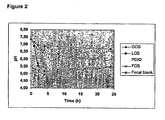
- Figure 2 illustrates pH changes during the fermentation of GOS, LOS, PDX2 and FOS.
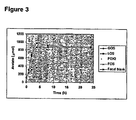
- Figure 3 illustrates the relative proportion of acetic acid production in the fermentation of GOS, LOS, PDX2 and FOS.
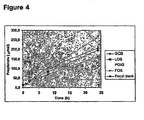
- Figure 4 illustrates the relative proportion of propionic acid production in the fermentation of GOS, LOS, PDX2 and FOS.
- Figure 5 illustrates the relative proportion of butyric acid production in the fermentation of GOS, LOS, PDX2 and FOS.
- Figure 6 illustrates the relative proportions of acetic acid, propionic acid, butyric acid and total SCFA production in the fermentation of GOS, LOS, PDX2 and FOS.
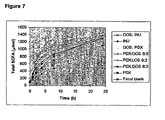
- Figure 7 illustrates the total SCFA production during the fermentation of various combinations of prebiotic carbohydrates.
- Figure 8 illustrates the pH changes during the fermentation of various combinations of prebiotic carbohydrates.
- Figure 9 illustrates the total SCFA production during the fermentation of different combinations of PDX and GOS.
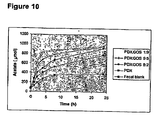
- Figure 10 illustrates the concentration of acetic acid produced during the fermentation of different combinations of PDX and GOS.
- Figure 11 illustrates the concentrations of propionic acid produced during the fermentation of different combinations of PDX and GOS.
- Figure 12 illustrates the concentration of butyric acid produced during the fermentation of different combinations of PDX and GOS.
- Figure 13 illustrates the formation of gases as total volume during the fermentation of GOS, LOS, PDX2 and FOS.
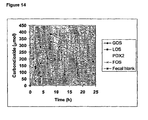
- Figure 14 illustrates the formation gases as carbon dioxide concentration during the fermentation of GOS, LOS, PDX2 and FOS.
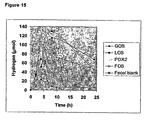
- Figure 15 illustrates the formation of gases as hydrogen concentration during the fermentation of GOS, LOS, PDX2 and FOS.
- Figure 16 illustrates the formation of gases as hydrogen disulphide concentration during the fermentation of GOS, LOS, PDX2 and FOS.
- Figure 17 is a summary of the prebiotic effect of human milk, FOS, LOS, GOS, PDX, and various combinations thereof on fecal microflora.
- prebiotic means a non-digestible food ingredient that beneficially affects the host by selectively stimulating the growth and/or activity of one or a limited number of bacteria in the colon that can improve the health of the host.
- probiotic means a microorganism with low or no pathogenicity that exerts beneficial effects on the health of the host.
- infant means a human that is less than about one year old.
- a “therapeutically effective amount”, as used in the present application, means an amount that provides a prebiotic effect in the subject.
- treating means having or taking the form or appearance of or having or producing a symptomatic resemblance to.
- functional attributes mean any inherent quality or characteristic that causes something to occur.
- Examples of functional attributes of human milk oligosaccharides in the present invention can include the increase of the population and species of beneficial bacteria, production of a SCFA profile that is high in acetic acid and low in butyric acid, and production of a slow rate and low extent of fermentation of prebiotics in the gut.
- infant formula means a composition that satisfies the nutrient requirements of an infant by being a substitute for human milk.
- content of an infant formula is dictated by the federal regulations set forth at 21 C.F.R. Sections 100, 106, and 107. These regulations define macronutrient, vitamin, mineral, and other ingredient levels in an effort to stimulate the nutritional and other properties of human breast milk.
- PDX and GOS in the manufacture of an infant formula for simulating the functional attributes of human milk oligosaccharides in formula-fed infants.
- the administration of PDX and GOS provides a beneficial effect on the population and species of probiotics, produces a SCFA profile that is similar to that of breast-fed infants and is physically well-tolerated by infants.
- PDX is a non-digestible carbohydrate that has been synthesized from randomly cross-linked glucose and sorbitol. It is not digested in the upper GI tract and is only partially fermented in the lower GI tract, making it a beneficial ingredient for digestive health.
- the physiological benefits of PDX include increased fecal bulk, reduced transit time, lower fecal pH and reduced concentration of putrefactive substances in the colon. In adults, PDX ingestion has also been shown to aid in the promotion and growth of beneficial bacteria in the intestine and production of SCFAs.
- PDX has been identified as a prebiotic substance for adults based on its functions in the GI tract.
- U.S. Patent App. No. 20040062758 to Mayra-Makinen, et al . relates to a composition which comprises a probiotic and one or more prebiotics, where the prebiotic can be GOS, palatinoseoligosaccharide, soybean oligosaccharide, gentiooligosaccharide, xylooligomers, nondegradable starch, lactosaccharose, LOS, lactitol, maltitol, or PDX.
- U.S. Patent No. 4,859,488 to Kan relates to a liquid food comprising PDX and oligosaccharides that is useful for curing constipation.
- PDX has not, however, been identified as a prebiotic that provides the benefits of the present invention and can be administered to infants.
- the gut microflora of infants is well known to be far less developed than that of an adult. While the microflora of the adult human consists of more than 10 13 microorganisms and nearly 500 species, the gut microflora of an infant contains only a fraction of those microorganisms, both in absolute number and in species diversity. Because the bacterial populations and species vary so dramatically between the gut of an infant and an adult, it cannot be assumed that a prebiotic substance that has a beneficial effect on adults would also have a beneficial effect on infants.
- PDX ingestion has been shown to increase the production of acetate and butyrate. Because butyrate is not noted in appreciable levels in breast-fed infants and has been associated with harmful effects if produced at significant levels in the infant intestine, PDX would not generally be considered appropriate for infant nutrition based on its observed effects in the adult GI system. Thus, it was surprising and unexpected that PDX was actually metabolized primarily to acetate and propionate, with little butyrate formation. Thus, not only did PDX have a positive impact on the population and species of beneficial bacteria in the infant intestinal tract, but PDX also created a SCFA profile that was very similar to that of a breast-fed infant and would be extremely well-tolerated by infants.
- PDX actually decreases the population of Bifidobacteria in the infant gut, it is in direct conflict with the teaching of the present application. Additionally, the reference does not demonstrate that PDX increases the production of acetate, decreases the production of butyrate or decreases the rate of fermentation of prebiotics within the infant gut.
- a therapeutically effective amount of PDX and GOS is to be administered to an infant for the purpose of simulating the functional attributes of human milk oligosaccharides.
- a therapeutically effective amount of PDX may be between 1.0 g/L and 10.0 g/L, to be administered daily. In another embodiment, a therapeutically effective amount of PDX may be between 2.0 g/L and 8.0 g/L, to be administered daily.
- PDX is commercially available from a variety of sources.
- STA-LITE ® PDX is available in 5 Ib bags from Honeyville Grain, Inc., located in Salt lake City, UT.
- Litesse® UltraTM PDX is commercially available from Danisco Sweeteners, Ltd., located in the United Kingdom.
- PDX is well-suited for incorporation into an infant formula, as it contains only 1 Cal/g, as compared to 4 Cal/g for typical prebiotics. It is also highly soluble and neutral tasting. Therefore, its addition to infant formula would not change the physical or taste characteristics of the composition.
- the PDX and GOS are supplemented into infant formula which is then to be fed to an infant.
- the infant formula for use in the present invention is preferably nutritionally complete and typically contains suitable types and amounts of lipid, carbohydrate, protein, vitamins and minerals.
- the amount of lipid or fat typically can vary from about 3 to about 7 g/100 kcal.
- the amount of protein typically can vary from about 1 to about 5 g/100 kcal.
- the amount of carbohydrate typically can vary from about 8 to about 12 g/100 kcal.
- Protein sources can be any used in the art, e.g., nonfat milk, whey protein, casein, casein protein, soy protein, hydrolyzed protein, amino acids, and the like.
- Carbohydrate sources can be any used in the art, e.g., lactose, glucose, corn syrup solids, maltodextrins, sucrose, starch, rice syrup solids, and the like.
- Lipid sources can be any used in the art, e.g., vegetable oils such as palm oil, soybean oil, palmolein, coconut oil, medium chain triglyceride oil, high oleic sunflower oil, high oleic safflower oil, and the like.
- infant formula can be used.
- Enfalac, Enfamil®, Enfamil® Premature Formula, Enfamil® with Iron, Lactofree®, Nutramigen®, Pregestimil®, or ProSobee® available from Mead Johnson & Company, Evansville, IN, U.S.A.
- suitable levels of PDX may be supplemented with suitable levels of PDX and used in practice of the invention.
- PDX and GOS are to be administered in combination with another prebiotic.
- the prebiotic selected can be any prebiotic known in the art.
- prebiotics include, but are not limited to: FOS, inulin, gluco-oligosaccharide, isomalto-oligosaccharide, xylo-oligosaccharide, soybean oligosaccharides, chito-oligosaccharide, gentio-oligosaccharide, manno-oligosacchaide, LOS, lactosucrose, raffinose, aribino-oligosaccharide, glucans, siallyl-oligosaccharide, and fuco-oligosaccharide.
- GOS is a mixture of oligosaccharides consisting of D-glucose and D-galactose. It is sometimes referred to as trans-galacto-oligosaccharide. It is produced from D-lactose by ⁇ -galactosidase, which can be obtained from Aspergillus oryzae. GOS has been suggested to increase calcium absorption and prevention of bone loss in adults. GOS has been identified as a prebiotic that is useful for administration to infants in U.S. Patent App. No. 20030072865 to Bindels, et al .
- PDX and GOS are to be administered in a ratio of PDX:GOS of between 9:1 and 1:9.
- the ratio of PDX:GOS can be between 5:1 and 1:5.
- the ratio of PDX:GOS can be between 1:3 and 3:1.
- the ratio of PDX to GOS can be about 5:5.
- the ratio of PDX to GOS can be about 8:2.
- a therapeutically effective amount of the PDX:GOS combination may be between 1.0 g/L and 10.0 g/L, to be administered daily. In another embodiment, a therapeutically effective amount of the PDX:GOS combination may be between 2.0 g/L and 8.0 g/L, to be administered daily. In a particular embodiment, a therapeutically effective amount of the PDX:GOS combination may be about 2 g/L of PDX and 2 g/L of GOS, to be administered daily.
- PDX and GOS are to be administered in combination with LOS.
- LOS is a semisynthetic disaccharide formed from D-galactose and D-fructose and joined by a ⁇ -glucosidic linkage. It is resistant to hydrolysis by human digestive enzymes, but is fermented in the small intestine. It is highly soluble and has a sweet taste.
- LOS has been identified as a prebiotic that is useful for administration to infants in U.S. Patent App. No. 20030072865 to Bindels, et al . LOS is commercially available from a variety of sources.
- the PDX:GOS:LOS combination can be administered in a ratio of about 50:33:17.
- the ratio of the PDX:GOS:LOS combination can be about 1:1:1.
- the ratio of PDX:GOS:LOS can be about 1:1.5:1.
- a therapeutically effective amount of the PDX:GOS:LOS combination may be between about 1.0 g/L and 10.0 g/L, to be administered daily. In another embodiment, a therapeutically effective amount of the PDX:GOS:LOS combination may be between about 2.0 g/L and 8.0 g/L, to be administered daily. In an embodiment, a therapeutically effective amount of the PDX:GOS:LOS combination may be about 2 g/L PDX, 2 g/L GOS and 2 g/L LOS, to be administered daily.
- a therapeutically effective amount of the PDX:GOS:LOS combination may be about 2 g/L PDX, 1.32 g/L GOS and 2.6 g/L LOS, to be administered daily.
- a therapeutically effective amount of the PDX:GOS:LOS combination may be about 4 g/L PDX, 2.64 g/L GOS and 3.6g/L LOS, to be administered daily.
- PDX and GOS can be combined with one or more probiotics for administration to an infant.
- Any probiotic known in the art will be acceptable in this embodiment.
- the probiotic is chosen from the group consisting of Bifidobacterium spp. or Lactobacillus spp.
- the probiotic is Lactobacillus rhamnosus GG (LGG).
- the probiotic is Bifidobacterium lactis.
- the probiotic is Bifidobacterium lactis Bb-12, available from Chr. Hansen Biosystems, located in Milwaukee, WI.
- the infant formula may contain other active agents such as long chain polyunsaturated fatty acids (LCPUFA).
- LCPUFAs include, but are not limited to, ⁇ -linoleic acid, ⁇ -linoleic acid, linoleic acid, linolenic acid, eicosapentaenoic acid (EPA), arachidonic (ARA) and docosahexaenoic acid (DHA).
- PDX and GOS are to be administered in combination with DHA.
- PDX and GOS are to be administered in combination with ARA.
- PDX and GOS are to be administered in combination with both DHA and ARA.
- infant formula that contains DHA, ARA, or a combination thereof may be supplemented with PDX and GOS and used in the present invention.
- Enfamil® LIPIL® which contains effective levels of DHA and ARA, is commercially available and may be supplemented with LGG and utilized in the present invention.
- both DHA and ARA are to be administered in combination with PDX and GOS.
- the weight ratio of ARA:DHA is typically from about 1:3 to about 9:1.
- this ratio can be from about 1:2 to about 4:1.
- the ratio can be from about 2:3 to about 2:1. In one particular embodiment the ratio is about 2:1.
- the effective amount of DHA in an embodiment of the present invention is typically from about 3 mg per kg of body weight per day to about 150 mg per kg of body weight per day. In one embodiment of the invention, the amount is from about 6 mg per kg of body weight per day to about 100 mg per kg of body weight per day. In another embodiment the amount is from about 10 mg per kg of body weight per day to about 60 mg per kg of body weight per day. In yet another embodiment the amount is from about 15 mg per kg of body weight per day to about 30 mg per kg of body weight per day.
- the effective amount of ARA in an embodiment of the present invention is typically from about 5 mg per kg of body weight per day to about 150 mg per kg of body weight per day. In one embodiment of this invention, the amount varies from about 10 mg per kg of body weight per day to about 120 mg per kg of body weight per day. In another embodiment, the amount varies from about 15 mg per kg of body weight per day to about 90 mg per kg of body weight per day. In yet another embodiment, the amount varies from about 20 mg per kg of body weight per day to about 60 mg per kg of body weight per day.
- the amount of DHA in infant formulas for use with the present invention typically varies from about 5 mg/100 kcal to about 80 mg/100 kcal. In one embodiment of the present invention it varies from about 10 mg/100 kcal to about 50 mg/100 kcal; and in another embodiment from about 15 mg/100 kcal to about 20 mg/100 kcal. In a particular embodiment of the present invention, the amount of DHA is about 17 mg/100 kcal.
- the amount of ARA in infant formulas for use with the present invention typically varies from about 10 mg/100 kcal to about 100 mg/100 kcal. In one embodiment of the present invention, the amount of ARA varies from about 15 mg/100 kcal to about 70 mg/100 kcal. In another embodiment the amount of ARA varies from about 20 mg/100 kcal to about 40 mg/100 kcal. In a particular embodiment of the present invention, the amount of ARA is about 34 mg/100 kcal.
- oils containing DHA and ARA for use with the present invention can be made using standard techniques known in the art. For example, they can be added to the formula by replacing an equivalent amount of an oil, such as high oleic sunflower oil, normally present in the formula. As another example, the oils containing DHA and ARA can be added to the formula by replacing an equivalent amount of the rest of the overall fat blend normally present in the formula without DHA and ARA.
- oils containing DHA and ARA can be added to the formula by replacing an equivalent amount of the rest of the overall fat blend normally present in the formula without DHA and ARA.
- the source of DHA and ARA can be any source known in the art.
- sources of DHA and ARA are single cell oils as taught in U.S. Pat. Nos. 5,374,567 ; 5,550,156 ; and 5,397,591 .
- the present invention is not limited to only such oils.
- DHA and ARA can be in natural or refined form.
- the source of DHA and ARA is substantially free of eicosapentaenoic acid (EPA).
- EPA eicosapentaenoic acid
- the infant formula contains less than about 16 mg EPA/1100 kcal; in another embodiment less than about 10 mg EPA/100 kcal; and in yet another embodiment less than about 5 mg EPA/100kcal.
- One particular embodiment contains substantially no EPA.
- Another embodiment is free of EPA in that even trace amounts of EPA are absent from the formula.
- the infant formula of the present invention can be prepared using any method known in the art.
- the PDX is provided in powder form. It can be mixed with water and other infant formula ingredients in a mixing tank GOS and/or LOS can be provided in powdered or liquid form. The mixture can then be pasteurized, homogenized and spray-dried to make a finished powder or canned and retorted to make a liquid product.
- the infant is formula-fed.
- the infant is formula-fed from birth.
- the infant is breast-fed from birth until an age which is less than one year, and is formula-fed thereafter, at which time PDX and GOS supplementation begins.
- Human milk oligosaccharides can increase the population and species of beneficial bacteria in the intestinal tract, have a SCFA profile that is high in acetate and very low in butyrate, and are slowly fermented, avoiding the production of excessive gases.
- the administration of PDX alone or in combination with other prebiotics, can be used to increase the population and species of beneficial bacteria in the intestinal tract, can preferentially shift the SCFA production toward more acetate and propionate production, thereby limiting butyrate production, and can slow down the fermentation rate in the gut so that gas production is limited, minimizing discomfort to the infant.
- the administration of PDX alone or in combination with one or more other prebiotics, can simulate the functional attributes of human milk oligosaccharides in a formula-fed infant.
- This example illustrates the in vitro fecal fermentation model utilized in the present invention.
- the fecal fermentation model in vitro mimics the action of the colon microbiota of infants. During fermentation, carbohydrates are consumed and SCFA and gases are produced. After fermentation, an analysis of the effect of the prebiotics on the populations and species of microorganisms present can be accomplished.
- the babies recruited for the first fermentation were 4, 4, 6, 6, 6, 8, 8, 9, 9, 9 and 10 months of age, for the second fermentation 3, 4, 6, 6, 6, 6, 7, 8, 9, 10, 10, 12 and 13 months of age, and for the third fermentation 2, 2.5, 3, 4, 4, 4, 4, 4.5, 5, 5, 6, 6, 6, 9, 9, 10, 10 and 11 months of age.
- the ages of the babies whose samples were used in the fermentation were Group 1: 6, 8, 9, 9, 9 months; Group 2: 4, 8, 10, 12, 13 months; and Group 3: 2.5, 5, 6, 10, 11 months.
- 10 babies (of which one baby twice) were able to donate an acceptable sample.
- the donors for the Group 4 fermentation were 2, 2.5, 4, 5, 7, 9, 9, 10, 11 and 15 months of age.
- twelve babies were able to donate samples, of which the four youngest donors were selected. Thus the donors were 5, 6, 6.5 and 6.5 months of age.
- Fermentation was finished by removing the bottles from the waterbath and placing them on ice except prior to gas measurement, when samples were kept at room temperature for immediate sampling. Gas volume was measured and gas sample (5 ml) was injected to a nitrogenated headspace bottle. The bottle was placed on ice after the sampling. The fermentation sample was transferred to a centrifugation tube, pH was measured and an aliquot (2ml) was drawn from the slurry for SCFA analysis and frozen rapidly with liquid nitrogen.
- This example illustrates the materials and methods necessary to determine the effectiveness of polydextrose as a prebiotic for formula-fed infants. Specifically, this example illustrates the materials and methods necessary to analyze SCFAs and gases.
- SCFAs were extracted with diethyl ether and analyzed with gas chromatography as described by Karppinen, et al. Karppinen S., et al., In Vitro Fermentation of Polysaccharides of Rye, Wheat, and Oat Brans and Inulin by Human Faecal Bacteria, J. Sci. Food Agric. 80:1469-76 (2000 ).
- Gases hydrogen, carbon dioxide, methane, hydrogen disulfide, and oxygen as a quality control
- FIG. 1 This example illustrates the effect of PDX on the in vitro SCFA profile produced by the infant colon microbiota.
- Figures 1 and 2 illustrate that the rate of fermentation varies among different prebiotics.
- the production of total SCFA (a sum of acetic, propionic and butyric acids) is shown in Figure 1 .
- a decrease in pH, shown in Figure 2 is also an indication of SCFA production.
- PDX2 is a slowly fermentable carbohydrate, whereas FOS, GOS and LOS were fermented fast and completely.
- the fermentation rate of PDX2 was comparable to cereal dietary fibers. Not only was PDX2 fermented at the slowest initial rate, but the extent of fermentation was only slightly above the fecal blank. In contrast, the fermentation rate of FOS was so rapid that it was consumed almost completely within the first sampling time points and produced the highest amount of SCFAs among prebiotics tested.
- This example illustrates the effect of combinations of prebiotics on the in vitro fermentation rate by infant colon microbiota.
- Various combinations of prebiotic carbohydrates were chosen in an attempt to achieve a desirable rate of microbial fermentation in vitro.
- the substrate combinations were compared for their fermentation rate (total SCFA production) and changes in pH, shown in Figures 7-8 .
- carbon dioxide production is an important measure of infant tolerance to dietary prebiotics.
- the major gas product of all prebiotics tested was carbon dioxide. It was produced in 3- and 44-76- fold higher amounts than hydrogen or hydrogen disulphide, respectively.
- the example illustrates the materials and methods necessary to determine the effect of PDX on the population and species of microbiota from the infant colon.
- the infant gut in vitro model utilized which was based on an adult model, was comprised of two 100 ml glass vessels, arranged in series to represent the proximal and distal regions of the infant colon.
- the feed flow was controlled at a rate that took into account the shorter passage time in the infant gut, as compared to an adult gut.
- vessel 1 (V1) was controlled at pH 5.2
- vessel 2 (V2) was controlled at pH 6.7.
- Temperature was controlled at 37°C by a circulating water bath.
- the feed and culture vessels were magnetically stirred and maintained under an anaerobic atmosphere by inflowing oxygen-free nitrogen (15mL/min).
- the two fermenter vessels were left for up to 24 hours in batch mode. This allowed the bacterial populations to equilibrate in their new environment and increase in density.
- the feed flow was then turned on and the fermenter ran in continuous culture mode for the remainder of the experiment.
- the feed flow rate was controlled at 11.11ml/h.
- the fermenters were run for 12 days, 6 days being fed Enfalac infant formula (Mead Johnson Nutritionals, Evansville, IN) and a further 6 days being fed Enfalac and the added prebiotic or prebiotic combination.
- FISH Fluorescence In Situ Hybridisation
- Prebiotics were added to the feed individually or in combinations, at a total concentration of 7.5 g/l (0.75 % w/v).
- the following oligosaccharides were used: Table 2.
- the microbial flora of the infant gut for fermentation tests was provided by freshly voided infant feces. A fecal sample of at least 3.5 g was usually required. The fecal sample was retained in the diaper which, immediately on removal from the infant, was placed by the caregiver into an anaerobic jar with an opened anaerobic gas pack. This was collected and processed as soon as possible (usually within the hour).
- feces were removed from the diaper and weighed.
- a 10% (w/v) fecal slurry was prepared by homogenizing the samples in anoxic and pre-warmed (overnight in the anaerobic cabinet) 1x PBS solution, using a stomacher at medium rate for 120 seconds.
- sample S A 375 ⁇ l sample of the fecal suspension (sample S) or of each fermenter sample was required in duplicate for bacterial counts by FISH. Each sample was fixed by mixing thoroughly in 1.125 ml cold, filtered 4% (w/v) paraformaldehyde solution in PBS pH7.2) and storing at 4°C overnight (or at least 4 hours).
- the fixed sample was centrifuged at 13,000 xg for 5 minutes and the supernatant discarded.
- the pellet was washed twice by resuspending in 1ml of cold, filtered 1xPBS, each time pelleting the cells by centrifugation and discarding the supernatant.
- the pellet was finally resuspended thoroughly in 150 ⁇ l of filtered PBS; 150 ⁇ l of 96% (v/v) ethanol is then mixed in well.
- the cell preparation was then stored at -20°C for at least 1 h before further processing.
- hybridization step 16 ⁇ l of the cell preparation (brought to ambient temperature) was mixed with 200 ⁇ l filtered, pre-warmed 2x hybridization buffer (30.3 mM Tris-HCl pH 7.2, 1.4 mM NaCl) containing 15.1 ml/l 10% (w/v) SDS. This mixture was warmed to the appropriate hybridization temperature and then mixed with the probe (50 ng/ ⁇ l) in the ratio 9:1, respectively. The hybridization preparation was then returned to the hybridization oven to incubate overnight.
- pre-warmed 2x hybridization buffer 30.3 mM Tris-HCl pH 7.2, 1.4 mM NaCl
- hybridized cell preparations were collected onto 0.2 ⁇ m filters for microscopic observation.
- the cell preparation was added to filtered, pre-warmed (to hybridization temperature) washing buffer (5-7 ml 20mM Tris-HCl pH 7.2, 0.9 M NaCl).
- 20 ⁇ l DAPI (4', 6-diamidino-2-phenylindole) was also added to the mixture to stain all cells and obtain total cell counts for each sample. This was then vacuum-filtered onto a 0.2m polycarbonate filter and placed on a microscope slide.
- FOS Fermentation run 1
- FOS was added to the formula feed and run in a fermenter system.
- FOS which has traditionally been considered a good prebiotic ingredient, resulted in increases in Bifidobacteria and Clostridia and decreases in Lactobacilli and Bacteroides in V1.
- the addition of FOS to formula feed resulted in no change in Blfidobacteria and Lactobacilli levels and increases in Clostridia and Bacteroides in V2.
- PDX and human milk were run in parallel fermenter systems.
- Human milk samples were provided by a maternity ward and stored frozen. These were early milk samples of varying volumes from several donors.
- the human milk feed was run without dilution or addition of lactose in order to maintain comparable levels of oligosaccharides and other nutrients.
- GOS was added to the formula feed and run in a fermenter system.
- the addition of GOS to the formula feed had little apparent effect on Lactobacilli in either vessel, but increased Bifidobacteria in V1 and V2, and decreased Clostridia and Bacteroides in V1 but not V2.
- the combination of LOS:GOS (1:1) was run against 1:1 PDX:LOS in a parallel fermenter system during F4.
- the LOS:GOS combination was effective in increasing numbers of Lactobacilli in both vessels and Bifidobacteria in V1, and in decreasing Bacteroides in V1. Clostridia decreased in V2 but increased in V1.
- LOS was supplemented into the formula feed and run in a parallel fermenter system against a 1:1 combination of PDX and GOS.
- the addition of LOS to the formula feed increased Lactobacilli in both vessels.
- Clostridia also increased in V2 and Bifidobacteria decreased in both vessels.
- Bacteroides decreased in V1 this was not maintained in V2.
- the addition of PDX:GOS to the formula feed increased levels of Bifidobacteria and Lactobacilli in both vessels, but also caused Clostridia levels to increase. Bacteroides levels increased in V2 only.
- Bifidobacteria increased in proportion to the total bacterial population in V1 with human milk, GOS, FOS, PDX and the PDX:GOS combination.
- GOS, the PDX:GOS combination and the LOS:GOS combination led to an increase in Bifidobacteria.
- Clostridia decreased in proportion to the total population in V1 with human milk, GOS and PDX, and decreased in V2 with human milk, PDX and the LOS:GOS combination.
- the Lactobacilli showed an increase following supplementation with LOS, PDX, human milk or PDX combinations, whereas increases in Lactobacilli were observed in V2 with LOS, PDX, human milk, and GOS combinations.
- the increases in the percentage of Lactobacilli were particularly marked with PDX and the PDX:GOS combination and the LOS:GOS combination in V2.
- PDX was effective in increasing Lactobacilli and decreasing levels of Clostridia and Bacteroides, with only slight increases in Bifidobacteria in V1.
- the PDX:GOS combination also looked favorable for Bifidobacteria, which increased amongst the total bacteria (although not as a percentage of the four groups) and increased Lactobacilli at a pH of 5.2, but it also had the unfavorable effect of increasing Bacteroides numbers.
- Table 5 Nutrient Information for Infant formula Ingredient Per 10,000 L Demineralized Whey Solids 534.337 kg Fat Blend 339.695 kg Nonfat Milk Solids 191.234 kg Lactose 136.321 kg Galactooligosaccharide Syrup Solid 35.096 kg Polydextrose 22.222 kg Potassium Citrate 7.797 kg Mono- and Diglycerides 7.233 kg Single Cell Arachidonic Acid Oil 6.486 kg Calcium Phosphate, Tribasic 4.185 kg Ascorbic Acid 1,403.323 g Sodium Ascorbate 1,1.68.402 g Inositol 407.029 g Taurine 402.962 g Corn Syrup Solids 188.300 g Niacimamide 89.857 g Calcium Pantothenate 42.443 g Vitamin B 12 23.613 g Biotin Trituration 23.613 g Thiamin HCl 8.022 g Pyridoxine HCl 6.176 g Folic Acid
- the product contains indigenous LOS.
- the level of indigenous LOS in the product is approximately 2 g/L.
- the product contains both added and indigenous LOS.
- the total level of LOS in the product, including both added and indigenous LOS, is approximately 2.6 g/L.
- the product contains both added and indigenous LOS.
- the total level of LOS in the product, including both added and indigenous LOS, is approximately 3.6 g/L.
Landscapes
- Health & Medical Sciences (AREA)
- Life Sciences & Earth Sciences (AREA)
- Chemical & Material Sciences (AREA)
- Engineering & Computer Science (AREA)
- Polymers & Plastics (AREA)
- Food Science & Technology (AREA)
- Nutrition Science (AREA)
- Medicinal Chemistry (AREA)
- Mycology (AREA)
- Pharmacology & Pharmacy (AREA)
- Veterinary Medicine (AREA)
- Animal Behavior & Ethology (AREA)
- General Health & Medical Sciences (AREA)
- Public Health (AREA)
- Molecular Biology (AREA)
- Pediatric Medicine (AREA)
- Organic Chemistry (AREA)
- General Chemical & Material Sciences (AREA)
- Chemical Kinetics & Catalysis (AREA)
- Bioinformatics & Cheminformatics (AREA)
- Nuclear Medicine, Radiotherapy & Molecular Imaging (AREA)
- Epidemiology (AREA)
- Pharmaceuticals Containing Other Organic And Inorganic Compounds (AREA)
- Medicines Containing Material From Animals Or Micro-Organisms (AREA)
- Dairy Products (AREA)
- Compositions Of Macromolecular Compounds (AREA)
- Coloring Foods And Improving Nutritive Qualities (AREA)
Claims (13)
- Verwendung von Polydextrose ("PDX") und Galactooligosaccharid ("GOS") zur Herstellung einer Säuglingsnahrung zur Simulation der funktionellen Eigenschaften von Oligosacchariden menschlicher Milch durch Erhöhen der Herstellung von Acetat und Erniedrigen der Herstellung von Butyrat, um ein Profil von kurzkettigen Fettsäuren in einem mit Säuglingsnahrung gefütterten Säugling zu erzeugen, welches ähnlich zu dem ist, welches in einem an der Brust gestillten Säugling erzeugt wird, und durch Erniedrigen der Rate und des Ausmaßes der Fermentation von präbiotischen Stoffen im Darm eines mit Säuglingsnahrung gefütterten Säuglings.
- Verwendung gemäß Anspruch 1, wobei die Menge an PDX in der Säuglingsnahrung zwischen 1,0 g/L und 10,0 g/L liegt, welche täglich verabreicht wird.
- Verwendung gemäß Anspruch 1, wobei die Menge an PDX in der Säuglingsnahrung zwischen 2,0 g/L und 8,0 g/L liegt, welche täglich verabreicht wird.
- Verwendung gemäß Anspruch 1, wobei das Verhältnis PDX:GOS zwischen 9:1 und 1:9 liegt.
- Verwendung gemäß Anspruch 1, wobei das Verhältnis PDX:GOS zwischen 5:1 und 1:5 liegt.
- Verwendung gemäß Anspruch 1, wobei das Verhältnis PDX:GOS zwischen 3:1 und 1:3 liegt.
- Verwendung gemäß Anspruch 1, wobei das Verhältnis PDX:GOS etwa 5:5 beträgt.
- Verwendung gemäß Anspruch 1, wobei das Verhältnis PDX:GOS etwa 8:2 beträgt.
- Säuglingsnahrung, umfassend PDX und GOS, wobei die Menge an PDX, welche in der Säuglingsnahrung vorhanden ist, etwa 2,0 g/L beträgt und die Menge von GOS, welche in der Säuglingsnahrung vorhanden ist, etwa 2,0 g/L beträgt, welche täglich verabreicht wird.
- Säuglingsnahrung, umfassend PDX und GOS, wobei die Gesamtmenge an PDX und GOS in der Säuglingsnahrung zwischen 1,0 g/L und 10,0 g/L liegt, welche täglich verabreicht wird.
- Säuglingsnahrung gemäß Anspruch 10, wobei das Verhältnis von PDX zu GOS zwischen 9:1 und 1:9 liegt.
- Säuglingsnahrung gemäß Anspruch 10, wobei die Formulierung ferner mindestens eine langkettige polyungesättigte Fettsäure umfasst.
- Säuglingsnahrung gemäß Anspruch 12, wobei die mindestens eine langkettige polyungesättigte Fettsäure aus der Gruppe ausgewählt ist, welche aus Docosahexaensäure, Arachidonsäure und Eicosapentaensäure besteht.
Priority Applications (2)
| Application Number | Priority Date | Filing Date | Title |
|---|---|---|---|
| EP10175784A EP2374362A3 (de) | 2005-06-01 | 2006-03-23 | Verwendung von Polydextrose zur Simulation der funktionellen Attribute von menschlicher Milch-Oligosaccharide bei mit Anfangsmilch gestillten Kindern |
| PL06739414T PL1887888T5 (pl) | 2005-06-01 | 2006-03-23 | Zastosowanie polidekstrozy i galaktooligoacharydu do symulacji funkcjonalnych właściwości oligosacharydów z ludzkiego mleka u niemowląt karmionych mieszanką |
Applications Claiming Priority (3)
| Application Number | Priority Date | Filing Date | Title |
|---|---|---|---|
| US68639005P | 2005-06-01 | 2005-06-01 | |
| US11/172,123 US7572474B2 (en) | 2005-06-01 | 2005-06-30 | Method for simulating the functional attributes of human milk oligosaccharides in formula-fed infants |
| PCT/US2006/010608 WO2006130205A1 (en) | 2005-06-01 | 2006-03-23 | Use of polydextrose for simulating the functional attributes of human milk oligosaccharides in formula-fed infants |
Related Child Applications (2)
| Application Number | Title | Priority Date | Filing Date |
|---|---|---|---|
| EP10175784A Division-Into EP2374362A3 (de) | 2005-06-01 | 2006-03-23 | Verwendung von Polydextrose zur Simulation der funktionellen Attribute von menschlicher Milch-Oligosaccharide bei mit Anfangsmilch gestillten Kindern |
| EP10175784.7 Division-Into | 2010-09-08 |
Publications (3)
| Publication Number | Publication Date |
|---|---|
| EP1887888A1 EP1887888A1 (de) | 2008-02-20 |
| EP1887888B1 EP1887888B1 (de) | 2010-10-27 |
| EP1887888B2 true EP1887888B2 (de) | 2014-08-13 |
Family
ID=36602547
Family Applications (2)
| Application Number | Title | Priority Date | Filing Date |
|---|---|---|---|
| EP06739414.8A Expired - Lifetime EP1887888B2 (de) | 2005-06-01 | 2006-03-23 | Verwendung von polydextrose und galacto-oligosaccharide zur simulierung der funktionellen eigenschaften von humanmilcholigosacchariden bei babynahrung |
| EP10175784A Ceased EP2374362A3 (de) | 2005-06-01 | 2006-03-23 | Verwendung von Polydextrose zur Simulation der funktionellen Attribute von menschlicher Milch-Oligosaccharide bei mit Anfangsmilch gestillten Kindern |
Family Applications After (1)
| Application Number | Title | Priority Date | Filing Date |
|---|---|---|---|
| EP10175784A Ceased EP2374362A3 (de) | 2005-06-01 | 2006-03-23 | Verwendung von Polydextrose zur Simulation der funktionellen Attribute von menschlicher Milch-Oligosaccharide bei mit Anfangsmilch gestillten Kindern |
Country Status (18)
| Country | Link |
|---|---|
| US (4) | US7572474B2 (de) |
| EP (2) | EP1887888B2 (de) |
| KR (1) | KR101244097B1 (de) |
| CN (2) | CN102657262B (de) |
| AT (1) | ATE485728T1 (de) |
| BR (1) | BRPI0611020B1 (de) |
| CA (3) | CA2815780C (de) |
| DE (1) | DE602006017830D1 (de) |
| DK (1) | DK1887888T4 (de) |
| ES (1) | ES2356196T5 (de) |
| MX (1) | MX2007014977A (de) |
| MY (1) | MY147771A (de) |
| NO (1) | NO335319B1 (de) |
| PL (1) | PL1887888T5 (de) |
| PT (1) | PT1887888E (de) |
| RU (1) | RU2415674C2 (de) |
| TW (1) | TWI391100B (de) |
| WO (1) | WO2006130205A1 (de) |
Families Citing this family (80)
| Publication number | Priority date | Publication date | Assignee | Title |
|---|---|---|---|---|
| US7572474B2 (en) * | 2005-06-01 | 2009-08-11 | Mead Johnson Nutrition Company | Method for simulating the functional attributes of human milk oligosaccharides in formula-fed infants |
| US8075934B2 (en) * | 2008-10-24 | 2011-12-13 | Mead Johnson Nutrition Company | Nutritional composition with improved digestibility |
| US8568712B2 (en) * | 2007-02-01 | 2013-10-29 | Master Supplements, Inc. | Enzyme and prebiotic combinations for enhancing probiotic efficacy |
| US8927253B2 (en) * | 2007-02-01 | 2015-01-06 | Master Supplements, Inc. | Administration of enzyme and prebiotic combinations that enhance probiotic growth and efficacy |
| US8889119B2 (en) * | 2007-02-01 | 2014-11-18 | Master Supplements, Inc. | Enzyme and prebiotic combinations for enhancing probiotic growth and efficacy |
| US10251899B2 (en) * | 2007-10-08 | 2019-04-09 | Mead Johnson Nutrition Company | Method for improving stool characteristics in infants |
| US8293264B2 (en) * | 2009-05-11 | 2012-10-23 | Mead Johnson Nutrition Company | Nutritional composition to promote healthy development and growth |
| IT1395068B1 (it) * | 2009-08-07 | 2012-09-05 | Inalco Spa | Processo per la produzione di galatto-oligosaccaridi ultrapuri |
| US20110070334A1 (en) * | 2009-09-20 | 2011-03-24 | Nagendra Rangavajla | Probiotic Stabilization |
| US20110189342A1 (en) * | 2010-02-01 | 2011-08-04 | Jeong Hea-Seok | High-purity galactooligosaccharides and uses thereof |
| US20110293783A1 (en) * | 2010-05-28 | 2011-12-01 | Anja Wittke | Nutritional compositions for enhancing immune function |
| US20110293784A1 (en) * | 2010-05-28 | 2011-12-01 | Anja Wittke | Milk-based nutritional compositions |
| EP2452571A1 (de) * | 2010-11-15 | 2012-05-16 | Nestec S.A. | Auswahl an ergänzenden Ernährungszusammensetzungen für Säuglinge und/oder Kleinkinder |
| US20120135103A1 (en) | 2010-11-30 | 2012-05-31 | Mead Johnson Nutrition Company | Staged Infant Feeding Regimen To Promote Healthy Development And Growth |
| WO2012087113A1 (en) * | 2010-12-24 | 2012-06-28 | N.V. Nutricia | Improved nutritional tablet |
| US20120171231A1 (en) | 2010-12-29 | 2012-07-05 | Anja Wittke | Use of nutritional compositions including lactoferrin in stimulating immune cells |
| US20120172288A1 (en) * | 2010-12-29 | 2012-07-05 | Anja Wittke | Use of nutritional compositions including lactoferrin in supporting resistance to diseases and conditions |
| US8648036B2 (en) * | 2010-12-29 | 2014-02-11 | Mead Johnson Nutrition Company | Use of nutritional compositions including lactoferrin and one or more prebiotics in inhibiting adhesion of pathogens in the gastrointestinal tract |
| US8968722B2 (en) * | 2010-12-29 | 2015-03-03 | Mead Johnson Nutrition Company | Milk-based nutritional compositions containing lactoferrin and uses thereof |
| US20120171164A1 (en) * | 2010-12-29 | 2012-07-05 | Anja Wittke | Use of nutritional compositions including lactoferrin in supporting resistance to viral respiratory tract infections |
| US20120171163A1 (en) * | 2010-12-29 | 2012-07-05 | Anja Wittke | Method for inhibiting a bacterial invasive mechanism using a nutritional composition |
| MX2013005943A (es) | 2010-12-29 | 2013-10-01 | Mjn Holdings Llc | Uso de composiciones nutricionales que incluyen lactoferrina en apoyo de la resistencia a enfermedades y condiciones. |
| PH12013500916A1 (en) * | 2010-12-29 | 2024-06-03 | Mjn Us Holdings Llc | Method for inhibiting pathogens using a nutritional composition |
| US20120171328A1 (en) | 2011-01-05 | 2012-07-05 | Dattatreya Banavara | Composition comprising heat labile milk proteins and process for preparing same |
| US20120269929A1 (en) | 2011-04-22 | 2012-10-25 | Hugh Lippman | Fortified Milk-Based Nutritional Compositions |
| US8183227B1 (en) | 2011-07-07 | 2012-05-22 | Chemo S. A. France | Compositions, kits and methods for nutrition supplementation |
| GB201112091D0 (en) | 2011-07-14 | 2011-08-31 | Gt Biolog Ltd | Bacterial strains isolated from pigs |
| RU2468087C1 (ru) * | 2011-08-09 | 2012-11-27 | Федеральное государственное бюджетное образовательное учреждение высшего профессионального образования "Вятский государственный университет" | Способ выявления жизнеспособных пробиотических микроорганизмов в условиях in vitro, имитирующих процесс пищеварения у человека |
| US8168611B1 (en) | 2011-09-29 | 2012-05-01 | Chemo S.A. France | Compositions, kits and methods for nutrition supplementation |
| GB201117313D0 (en) | 2011-10-07 | 2011-11-16 | Gt Biolog Ltd | Bacterium for use in medicine |
| US20130089638A1 (en) | 2011-10-11 | 2013-04-11 | Mead Johnson Nutrition Company | Compositions Comprising Maltotriose And Methods Of Using Same To Inhibit Damage Caused By Dehydration Processes |
| MX2014004722A (es) * | 2011-10-18 | 2015-02-05 | Nestec Sa | Composicion para ser usada en la promocion del crecimiento de hueso sano y/o en la prevencion y/o tratamiento de la enfermedad osea. |
| ES2672194T3 (es) * | 2012-12-18 | 2018-06-13 | Mjn U.S. Holdings Llc | Composiciones nutricionales a base de leche que contienen lactoferrina y sus usos |
| GB201306536D0 (en) | 2013-04-10 | 2013-05-22 | Gt Biolog Ltd | Polypeptide and immune modulation |
| US9609888B2 (en) * | 2013-07-31 | 2017-04-04 | Mead Johnson Nutrition Company | Nutritional compositions containing synergistic combination and uses thereof |
| CN103724446A (zh) * | 2013-12-27 | 2014-04-16 | 光明乳业股份有限公司 | 一种鼠李糖乳杆菌的胞外多糖及其制备方法和应用 |
| US20150290261A1 (en) * | 2014-04-10 | 2015-10-15 | Mead Johnson Nutrition Company | Methods of use for probiotics and prebiotics |
| US20150305359A1 (en) * | 2014-04-24 | 2015-10-29 | Mead Johnson Nutrition Company | Nutritional compositions directed to subjects having cow's milk protein allergies |
| US20150305385A1 (en) * | 2014-04-25 | 2015-10-29 | Mead Johnson Nutrition Company | Pediatric nutritional composition with human milk oligosaccahrides, prebiotics and probiotics |
| US20160029682A1 (en) * | 2014-08-01 | 2016-02-04 | Mead Johnson Nutrition Company | Hydrolyzed lactose-containing nutritional compositions and uses thereof |
| CA2971108C (en) | 2014-12-23 | 2019-09-17 | 4D Pharma Research Limited | A bacteroides thetaiotaomicron strain and use thereof in reducing inflammation |
| HUE037476T2 (hu) | 2014-12-23 | 2018-08-28 | 4D Pharma Res Ltd | Pirin polipeptid és immunmodulálás |
| US20160353774A1 (en) * | 2015-06-02 | 2016-12-08 | Mead Johnson Nutrition Company | Nutritional compositions comprising spore-forming probiotics |
| CN108271354B (zh) | 2015-06-15 | 2022-07-29 | 4D制药研究有限公司 | 包含细菌菌株的组合物 |
| MA41060B1 (fr) | 2015-06-15 | 2019-11-29 | 4D Pharma Res Ltd | Compositions comprenant des souches bactériennes |
| EA201890050A1 (ru) | 2015-06-15 | 2018-06-29 | 4Д Фарма Рисёрч Лимитед | Композиции, содержащие бактериальные штаммы |
| EP3650033B1 (de) | 2015-06-15 | 2022-02-16 | 4D Pharma Research Limited | Zusammensetzungen mit bakterienstämmen |
| MA41010B1 (fr) | 2015-06-15 | 2020-01-31 | 4D Pharma Res Ltd | Compositions comprenant des souches bactériennes |
| US10617701B2 (en) * | 2015-07-10 | 2020-04-14 | Mead Johnson Nutrition Company | Nutritional compositions containing phosphatidylethanolamine, sphingomyelin and docosahexaenoic acid |
| US10034937B2 (en) * | 2015-12-04 | 2018-07-31 | Mead Johnson Nutrition Company | Synergistic nutritional compositions and uses thereof |
| HRP20180501T1 (hr) | 2015-11-20 | 2018-06-01 | 4D Pharma Research Limited | Pripravci koje sadrže bakterijske sojeve |
| GB201520497D0 (en) | 2015-11-20 | 2016-01-06 | 4D Pharma Res Ltd | Compositions comprising bacterial strains |
| GB201520638D0 (en) | 2015-11-23 | 2016-01-06 | 4D Pharma Res Ltd | Compositions comprising bacterial strains |
| GB201520631D0 (en) | 2015-11-23 | 2016-01-06 | 4D Pharma Res Ltd | Compositions comprising bacterial strains |
| WO2017129644A1 (en) * | 2016-01-26 | 2017-08-03 | Nestec S.A. | Compositions with specific oligosaccharides to prevent or treat allergies |
| GB201612191D0 (en) | 2016-07-13 | 2016-08-24 | 4D Pharma Plc | Compositions comprising bacterial strains |
| BR112018067689A2 (pt) | 2016-03-04 | 2019-01-08 | 4D Pharma Plc | composições compreendendo cepas bacterianas do gênero blautia para tratar a hipersensibilidade visceral |
| CA3021022C (en) * | 2016-04-14 | 2024-04-23 | ChromaDex Inc. | Use of nicotinamide riboside, nicotinic acid riboside, nicotinamide mononucleotide, and nicotinoyl compound derivatives in infant formula |
| TW201821093A (zh) | 2016-07-13 | 2018-06-16 | 英商4D製藥有限公司 | 包含細菌菌株之組合物 |
| US20190269740A1 (en) * | 2016-10-26 | 2019-09-05 | Nutech Ventures | Use of probiotic bacterial strains and cell extracts to inhibit acidosis and liver abscesses in cattle |
| GB201621123D0 (en) | 2016-12-12 | 2017-01-25 | 4D Pharma Plc | Compositions comprising bacterial strains |
| AU2018272291A1 (en) | 2017-05-22 | 2020-01-16 | 4D Pharma Research Limited | Compositions comprising bacterial strains |
| MA41708A (fr) | 2017-05-24 | 2020-04-08 | 4D Pharma Res Ltd | Compositions comprenant des souches bactériennes |
| MA49373B1 (fr) | 2017-06-14 | 2021-02-26 | 4D Pharma Res Ltd | Compositions comprenant des souches bactériennes |
| DK3600363T3 (da) | 2017-06-14 | 2021-01-25 | 4D Pharma Res Ltd | Sammensætninger omfattende bakteriestammer |
| HUE052258T2 (hu) | 2017-06-14 | 2021-04-28 | 4D Pharma Res Ltd | Megasphaera nemzetségbe tartozó baktériumtörzset tartalmazó készítmény, és alkalmazása |
| US11197917B2 (en) | 2017-12-01 | 2021-12-14 | ByHeart, Inc. | Formulations for nutritional support in subjects in need thereof |
| CN108902325A (zh) * | 2018-09-06 | 2018-11-30 | 东北农业大学 | 一种具有益生功能的婴幼儿配方奶粉复合包及其制备方法 |
| NL2021737B1 (en) * | 2018-10-01 | 2020-05-07 | Nutricia Nv | Dietary fiber for treating patients suffering from methylmalonic acidemia and propionic acidemia |
| US12005083B1 (en) | 2019-06-24 | 2024-06-11 | PBM Nutritionals, LLC | Nutritional compositions with MFGM and certain human milk oligosaccharides and uses thereof |
| US11849747B1 (en) | 2019-06-24 | 2023-12-26 | PBM Nutritionals, LLC | Nutritional compositions with MFGM and certain human milk oligosaccharides and uses thereof |
| CN115024361A (zh) * | 2021-03-03 | 2022-09-09 | 内蒙古伊利实业集团股份有限公司 | 一种改善骨健康的配方牛奶及制备方法和应用 |
| CN113966845A (zh) * | 2021-10-22 | 2022-01-25 | 内蒙古蒙牛乳业(集团)股份有限公司 | 一种促进婴儿肠道健康的营养组合 |
| DK181911B1 (en) | 2022-07-15 | 2025-03-18 | Dsm Ip Assets Bv | GENETICALLY ENGINEERED CELLS COMPRISING A RECOMBINANT NUCLEIC ACID SEQUNCE ENCODING A FUCOSYLTRANSFERASE FOR IN VIVO SYNTHESIS OF COMPLEX FUCOSYLATED HUMAN MILK OLIGOSACCHARIDES (HMOs) AND METHODS FOR PRODUCING THE HMOs AND USE OF THE ENZYME |
| DK181765B1 (en) | 2022-07-15 | 2024-12-04 | Dsm Ip Assets Bv | Cells expressing new fucosyltransferases for in vivo synthesis of lnfp-iii, and methods and uses of same |
| CN119546755A (zh) | 2022-07-15 | 2025-02-28 | 帝斯曼知识产权资产管理有限公司 | 用于体内合成复杂岩藻糖基化人乳寡糖的新型岩藻糖基转移酶 |
| CN120018780A (zh) | 2022-08-25 | 2025-05-16 | 帝斯曼知识产权资产管理有限公司 | 生产复杂hmo的混合方法 |
| EP4623089A1 (de) | 2022-11-25 | 2025-10-01 | DSM IP Assets B.V. | System mit zwei stämmen zur herstellung von oligosacchariden |
| DK182292B1 (en) | 2022-12-22 | 2026-02-24 | Dsm Ip Assets Bv | Genetically engineered cells comprising new fucosyltransferases for in vivo synthesis of complex fucosylated human milk oligosaccharides mixtures comprising lndfh-iii and methods, uses, and mixtures produced using the same |
| DK182227B1 (en) | 2023-10-17 | 2025-12-18 | Dsm Ip Assets Bv | Genetically engineered cells comprising new fucosyltransferases for in vivo synthesis of complex fucosylated human milk oligosaccharides mixtures comprising lnfp-vi, methods using the same, and uses of new fucosyltransferases thereof. |
Citations (3)
| Publication number | Priority date | Publication date | Assignee | Title |
|---|---|---|---|---|
| WO2004026316A1 (en) † | 2002-09-17 | 2004-04-01 | Danisco A/S | Novel use of carbohydrates and compositions |
| US20040121042A1 (en) † | 2001-04-25 | 2004-06-24 | Kabushiki Kaisha Yakult Honsha | Fermented foods and process for producing the same |
| WO2005039319A2 (en) † | 2003-10-24 | 2005-05-06 | N.V. Nutricia | Synbiotic composition for infants |
Family Cites Families (63)
| Publication number | Priority date | Publication date | Assignee | Title |
|---|---|---|---|---|
| JPS6115645A (ja) * | 1984-07-03 | 1986-01-23 | Meiji Milk Prod Co Ltd | カルシウム強化飲料及びその製造法 |
| US4859488A (en) * | 1987-09-15 | 1989-08-22 | Kabushiki Kaisha Yakult Honsha | Liquid food for curing constipation: polydextrose and oligosaccharide |
| US4906482A (en) * | 1986-03-19 | 1990-03-06 | Zemel Michael B | Method of making calcium fortified soy milk and the calcium fortified soy milk |
| GB8723094D0 (en) | 1987-10-01 | 1987-11-04 | Ciba Geigy Ag | Polypeptide growth factor from milk |
| FI892006A7 (fi) * | 1988-04-29 | 1989-10-30 | Phil Gold | Laktalbumiini ruoan lisäaineena |
| CA1338682C (en) | 1988-12-23 | 1996-10-29 | Gustavo Bounous | Biologically active undenatured whey protein concentrate as food supplement |
| US5795611A (en) * | 1989-12-20 | 1998-08-18 | Slattery; Charles W. | Human infant formulas containing recombinant human alpha-lactalbumin and beta-casein |
| US5407957A (en) | 1990-02-13 | 1995-04-18 | Martek Corporation | Production of docosahexaenoic acid by dinoflagellates |
| US6319522B1 (en) * | 1990-07-13 | 2001-11-20 | Gropep Limited | Growth-promoting agent |
| NZ238890A (en) | 1990-07-13 | 1994-08-26 | Gropep Pty Ltd | Cell growth stimulating factor composition extracted from milk products and its use in culturing cells |
| EP0568606B1 (de) | 1991-01-24 | 2001-04-18 | Martek Corporation | Mikrobielle öle und ihre verwendungen |
| DK0527283T3 (da) * | 1991-08-12 | 1998-08-10 | Nestle Sa | Levnedsmiddelsammensætning |
| US5952034A (en) * | 1991-10-12 | 1999-09-14 | The Regents Of The University Of California | Increasing the digestibility of food proteins by thioredoxin reduction |
| JP2654529B2 (ja) * | 1992-03-27 | 1997-09-17 | 大塚製薬株式会社 | 健康飲料組成物 |
| US5397589A (en) * | 1992-09-02 | 1995-03-14 | Ohio State University Research Foundation | Preparation of calcium fortified powdered milk products with improved dispersibility |
| US6395494B1 (en) * | 1993-05-13 | 2002-05-28 | Neorx Corporation | Method to determine TGF-β |
| AU679940B2 (en) * | 1992-10-27 | 1997-07-17 | Fuso Chemical Co., Ltd. | Bifidobacterium growth promoter |
| US5374567A (en) | 1993-05-20 | 1994-12-20 | The United States Of America As Represented By The Secretary Of The Navy | Operational amplifier using bipolar junction transistors in silicon-on-sapphire |
| AUPM534794A0 (en) | 1994-04-28 | 1994-05-19 | Gropep Pty Ltd | Modified milk growth factor |
| TW440566B (en) * | 1994-07-25 | 2001-06-16 | Novartis Ag | Novel process for the production of biologically active dimeric protein |
| TW517059B (en) * | 1994-07-25 | 2003-01-11 | Ciba Geigy Ag | New process for the production of biologically active protein |
| RU2142711C1 (ru) * | 1996-01-18 | 1999-12-20 | Лотте Ко., Лтд. | Безлактозное молоко (варианты), пищевой продукт (варианты) и способы их получения |
| US6428832B2 (en) * | 1996-03-26 | 2002-08-06 | Dsm N.V. | Late addition of PUFA in infant formula preparation process |
| EP0852913A1 (de) | 1997-01-14 | 1998-07-15 | Societe Des Produits Nestle S.A. | Zusammensetzung und Methode zur Behandlung inflammatorischer Zustände des Magen-Darm-Traktes |
| CA2223198A1 (en) * | 1997-01-14 | 1998-07-14 | Societe Des Produits Nestle S.A. | Composition and method for treatment of inflammatory conditions of the gastro-intestinal tract |
| DE19701382A1 (de) * | 1997-01-16 | 1998-07-23 | Nutricia Nv | Kohlenhydratmischung |
| US5840361A (en) * | 1997-04-09 | 1998-11-24 | Beech-Nut Nutrition Corporation | Fructan-containing baby food compositions and methods therefor |
| WO1999002170A1 (en) | 1997-07-05 | 1999-01-21 | Societe Des Produits Nestle S.A. | Absorption of minerals by intestinal cells |
| US6841149B1 (en) * | 1998-05-29 | 2005-01-11 | Agri-King, Inc. | Probiotic mixture intended for monogastric animals to control intestinal flora populations |
| DE19836339B4 (de) | 1998-08-11 | 2011-12-22 | N.V. Nutricia | Kohlenhydratmischung |
| US6866877B2 (en) * | 1998-12-29 | 2005-03-15 | Mac Farms, Inc. | Carbonated fortified milk-based beverage and method for suppressing bacterial growth in the beverage |
| EP1034704A1 (de) | 1999-03-12 | 2000-09-13 | Societe Des Produits Nestle S.A. | Nahrungszusammensetzung insbesondere für die spezifische gastrointestinale Reifung in frühgeborenen Säugetieren |
| US20040161422A1 (en) | 1999-04-30 | 2004-08-19 | Natarajan Ranganathan | Nutritional compositions comprising probiotics |
| US6706287B2 (en) * | 2001-05-15 | 2004-03-16 | Kibow Biotech Inc. | Prebiotic and probiotic compositions and methods for their use in gut-based therapies |
| ATE297948T1 (de) | 1999-10-06 | 2005-07-15 | Campina Bv | Verfahren zur bereitstellung von wachstumsfaktozubereitungen (tgf-beta und igf-1) mit niedriger gegenseitiger verunreinigung aus milchprodukten |
| WO2001024812A1 (en) | 1999-10-06 | 2001-04-12 | N.V. Nutricia | USE OF TRANSFORMING GROWTH FACTOR β AND GROWTH FACTORS IN THE TREATMENT AND PREVENTION OF DISEASES OF THE INTESTINAL MUCOSA |
| DE19958985A1 (de) | 1999-12-07 | 2001-06-13 | Nutricia Nv | Oligosaccharidmischung |
| EP1062873A1 (de) | 1999-12-13 | 2000-12-27 | N.V. Nutricia | Verbessertes Säuglingsnährpräparat, Eiweisshydrolysat zur Verwendung in solchem Säuglingsnährpräparat, und Verfahren zur Herstellung solches Hydrolysates |
| US6630452B2 (en) | 2000-02-17 | 2003-10-07 | Wyeth | Nutritional formulation containing prebiotic substances |
| MXPA02008447A (es) | 2000-03-01 | 2002-12-13 | Nestle Sa | Formulacion de carbohidrato (adyuvante prebiotico) para el mejoramiento de la respuesta inmune. |
| RU2283665C2 (ru) * | 2000-12-22 | 2006-09-20 | Сосьете Де Продюи Нестле С.А. | Индуцирование толерантности |
| EP1355542B2 (de) | 2000-12-27 | 2012-04-04 | N.V. Nutricia | Ernährungszusammensetzung mit gesundheitsfördernder wirkung enthaltend oligosaccharide |
| FI109602B (fi) * | 2001-01-25 | 2002-09-13 | Valio Oy | Probioottiyhdistelmä |
| EP1228707A1 (de) | 2001-02-01 | 2002-08-07 | Campina Melkunie B.V. | Verwendung von alpha-lactalbumin als praebiotischer Wirkstoff |
| EP1243273A1 (de) | 2001-03-22 | 2002-09-25 | Societe Des Produits Nestle S.A. | Zubereitung enthaltend einen praebiotischen Stoff für die Behandlung von Entzündungen und abnormale Aktivierung von nicht-spezifischen immunologischen Parametern |
| CA2444470A1 (en) | 2001-04-10 | 2002-10-24 | Societe Des Produits Nestle S.A. | Method and composition for prophylaxis of diabetes |
| FR2827290B1 (fr) * | 2001-07-13 | 2004-07-09 | Pierre Jouan Biotechnologies Sa | Procede d'obtention d'une fraction proteique enrichie en tgf-beta sous forme activee, fraction proteique et applications therapeutiques |
| FI20020078A7 (fi) | 2002-01-15 | 2003-07-16 | Danisco | Immuunijärjestelmän stimulointi polydextroosilla |
| MXPA05003597A (es) | 2002-10-11 | 2005-06-03 | Wyeth Corp | Formulaciones nutricionales que contienen sustancias simbioticas. |
| US7138151B2 (en) * | 2002-11-22 | 2006-11-21 | Unilab Pharmatech, Ltd. | Calcium-fortified acidic beverages |
| GB0229015D0 (en) * | 2002-12-12 | 2003-01-15 | Novartis Nutrition Ag | New Compound |
| US20040191295A1 (en) * | 2003-03-28 | 2004-09-30 | Locniskar Mary Frances | Composition and method for viral inhibition |
| DE10328180A1 (de) * | 2003-06-16 | 2005-01-13 | Südzucker AG Mannheim/Ochsenfurt | Verwendung von Isomalt als Präbiotikum |
| NZ544642A (en) * | 2003-06-23 | 2009-01-31 | Nestec Sa | Infant or follow-on formula |
| PL1638416T3 (pl) * | 2003-06-23 | 2013-09-30 | Nestec Sa | Zastosowanie żywnościowego preparatu do optymalizowania działania bariery jelitowej |
| PL1638414T3 (pl) * | 2003-06-23 | 2009-12-31 | Nestec Sa | Mleko modyfikowane niemowlęce lub następne |
| CN1889856B (zh) | 2003-10-16 | 2011-03-02 | 雀巢技术公司 | 对抗化疗法和放射疗法的副作用的营养组合物 |
| AU2004283628B2 (en) | 2003-10-24 | 2010-07-22 | N.V. Nutricia | Immunemodulating oligosaccharides |
| US20050158425A1 (en) * | 2003-12-04 | 2005-07-21 | Purac Biochem Bv | Thin mouthfeel calcium-fortified beverage containing calcium lactate gluconate citrate |
| US20060233762A1 (en) * | 2005-04-15 | 2006-10-19 | Mcmahon Robert J | Method for treating or preventing systemic inflammation in formula-fed infants |
| US7572474B2 (en) * | 2005-06-01 | 2009-08-11 | Mead Johnson Nutrition Company | Method for simulating the functional attributes of human milk oligosaccharides in formula-fed infants |
| MX2007013028A (es) * | 2005-06-06 | 2008-01-11 | Bristol Myers Squibb Co | Formulas infantiles con bajo contenido de fitato. |
| US8075934B2 (en) * | 2008-10-24 | 2011-12-13 | Mead Johnson Nutrition Company | Nutritional composition with improved digestibility |
-
2005
- 2005-06-30 US US11/172,123 patent/US7572474B2/en active Active
-
2006
- 2006-03-23 DE DE602006017830T patent/DE602006017830D1/de not_active Expired - Lifetime
- 2006-03-23 CN CN201210150348.XA patent/CN102657262B/zh not_active Expired - Lifetime
- 2006-03-23 PT PT06739414T patent/PT1887888E/pt unknown
- 2006-03-23 EP EP06739414.8A patent/EP1887888B2/de not_active Expired - Lifetime
- 2006-03-23 EP EP10175784A patent/EP2374362A3/de not_active Ceased
- 2006-03-23 AT AT06739414T patent/ATE485728T1/de not_active IP Right Cessation
- 2006-03-23 WO PCT/US2006/010608 patent/WO2006130205A1/en not_active Ceased
- 2006-03-23 KR KR1020077027975A patent/KR101244097B1/ko not_active Expired - Fee Related
- 2006-03-23 CA CA2815780A patent/CA2815780C/en not_active Expired - Lifetime
- 2006-03-23 CA CA2610711A patent/CA2610711C/en not_active Expired - Lifetime
- 2006-03-23 CA CA2991450A patent/CA2991450C/en not_active Expired - Lifetime
- 2006-03-23 DK DK06739414.8T patent/DK1887888T4/da active
- 2006-03-23 RU RU2007144333/15A patent/RU2415674C2/ru not_active IP Right Cessation
- 2006-03-23 BR BRPI0611020-7A patent/BRPI0611020B1/pt active IP Right Grant
- 2006-03-23 ES ES06739414.8T patent/ES2356196T5/es not_active Expired - Lifetime
- 2006-03-23 MX MX2007014977A patent/MX2007014977A/es active IP Right Grant
- 2006-03-23 CN CN2006800195592A patent/CN101188947B/zh not_active Expired - Lifetime
- 2006-03-23 PL PL06739414T patent/PL1887888T5/pl unknown
- 2006-05-26 TW TW095118904A patent/TWI391100B/zh not_active IP Right Cessation
- 2006-05-30 MY MYPI20062497A patent/MY147771A/en unknown
-
2007
- 2007-11-02 NO NO20075543A patent/NO335319B1/no not_active IP Right Cessation
-
2009
- 2009-02-12 US US12/370,141 patent/US8021708B2/en not_active Expired - Lifetime
- 2009-07-02 US US12/497,091 patent/US8277863B2/en not_active Expired - Lifetime
-
2012
- 2012-09-04 US US13/602,592 patent/US8557320B2/en not_active Expired - Lifetime
Patent Citations (3)
| Publication number | Priority date | Publication date | Assignee | Title |
|---|---|---|---|---|
| US20040121042A1 (en) † | 2001-04-25 | 2004-06-24 | Kabushiki Kaisha Yakult Honsha | Fermented foods and process for producing the same |
| WO2004026316A1 (en) † | 2002-09-17 | 2004-04-01 | Danisco A/S | Novel use of carbohydrates and compositions |
| WO2005039319A2 (en) † | 2003-10-24 | 2005-05-06 | N.V. Nutricia | Synbiotic composition for infants |
Non-Patent Citations (3)
| Title |
|---|
| G.BOEHM ET AL: "Prebiotics in Infant Formulas", JOURNAL OF CLINICAL GASTROENTEROLOGY, vol. 2, July 2004 (2004-07-01), pages S76 - S79 † |
| L.T. WEAVER: "Improving Infant Milk Formulas: Near the End of the Trail for the Holy Grail?", JOURNAL OF PEDIATRIC GASTROENTEROLOGY AND NUTRITION, vol. 36, March 2003 (2003-03-01), pages 307 - 310 † |
| M.J.KULLEN ET AL: "The Delivery of Probiotics and Prebiotics to Infants", CURRENT PHARMACEUTICAL DESIGN, vol. 11, 2005, pages 55 - 74 † |
Also Published As
Similar Documents
| Publication | Publication Date | Title |
|---|---|---|
| EP1887888B2 (de) | Verwendung von polydextrose und galacto-oligosaccharide zur simulierung der funktionellen eigenschaften von humanmilcholigosacchariden bei babynahrung | |
| US8287932B2 (en) | Nutritional composition to promote healthy development and growth | |
| US10251899B2 (en) | Method for improving stool characteristics in infants | |
| US8293264B2 (en) | Nutritional composition to promote healthy development and growth | |
| US9439448B2 (en) | Nutritional composition to promote healthy development and growth | |
| HK1121645B (en) | Use of polydextrose for simulating the functional attributes of human milk oligosaccharides in formula-fed infants | |
| HK1175659B (en) | Use of polydextrose for simulating the functional attributes of human milk oligosaccharides in formula-fed infants |
Legal Events
| Date | Code | Title | Description |
|---|---|---|---|
| PUAI | Public reference made under article 153(3) epc to a published international application that has entered the european phase |
Free format text: ORIGINAL CODE: 0009012 |
|
| 17P | Request for examination filed |
Effective date: 20071129 |
|
| AK | Designated contracting states |
Kind code of ref document: A1 Designated state(s): AT BE BG CH CY CZ DE DK EE ES FI FR GB GR HU IE IS IT LI LT LU LV MC NL PL PT RO SE SI SK TR |
|
| DAX | Request for extension of the european patent (deleted) | ||
| RAP1 | Party data changed (applicant data changed or rights of an application transferred) |
Owner name: MEAD JOHNSON NUTRITION COMPANY |
|
| 17Q | First examination report despatched |
Effective date: 20090409 |
|
| GRAP | Despatch of communication of intention to grant a patent |
Free format text: ORIGINAL CODE: EPIDOSNIGR1 |
|
| GRAS | Grant fee paid |
Free format text: ORIGINAL CODE: EPIDOSNIGR3 |
|
| GRAA | (expected) grant |
Free format text: ORIGINAL CODE: 0009210 |
|
| AK | Designated contracting states |
Kind code of ref document: B1 Designated state(s): AT BE BG CH CY CZ DE DK EE ES FI FR GB GR HU IE IS IT LI LT LU LV MC NL PL PT RO SE SI SK TR |
|
| REG | Reference to a national code |
Ref country code: GB Ref legal event code: FG4D |
|
| REG | Reference to a national code |
Ref country code: CH Ref legal event code: EP |
|
| REG | Reference to a national code |
Ref country code: IE Ref legal event code: FG4D |
|
| REF | Corresponds to: |
Ref document number: 602006017830 Country of ref document: DE Date of ref document: 20101209 Kind code of ref document: P |
|
| REG | Reference to a national code |
Ref country code: CH Ref legal event code: NV Representative=s name: BOVARD AG PATENTANWAELTE |
|
| REG | Reference to a national code |
Ref country code: PT Ref legal event code: SC4A Free format text: AVAILABILITY OF NATIONAL TRANSLATION Effective date: 20101213 |
|
| REG | Reference to a national code |
Ref country code: SE Ref legal event code: TRGR |
|
| REG | Reference to a national code |
Ref country code: DK Ref legal event code: T3 |
|
| REG | Reference to a national code |
Ref country code: NL Ref legal event code: T3 |
|
| LTIE | Lt: invalidation of european patent or patent extension |
Effective date: 20101027 |
|
| REG | Reference to a national code |
Ref country code: CH Ref legal event code: PFA Owner name: MEAD JOHNSON NUTRITION COMPANY Free format text: MEAD JOHNSON NUTRITION COMPANY#2400 WEST LLOYD EXPRESSWAY#EVANSVILLE, IN 47721-0001 (US) -TRANSFER TO- MEAD JOHNSON NUTRITION COMPANY#2400 WEST LLOYD EXPRESSWAY#EVANSVILLE, IN 47721-0001 (US) |
|
| REG | Reference to a national code |
Ref country code: ES Ref legal event code: FG2A Ref document number: 2356196 Country of ref document: ES Kind code of ref document: T3 Effective date: 20110405 |
|
| PG25 | Lapsed in a contracting state [announced via postgrant information from national office to epo] |
Ref country code: LT Free format text: LAPSE BECAUSE OF FAILURE TO SUBMIT A TRANSLATION OF THE DESCRIPTION OR TO PAY THE FEE WITHIN THE PRESCRIBED TIME-LIMIT Effective date: 20101027 |
|
| PG25 | Lapsed in a contracting state [announced via postgrant information from national office to epo] |
Ref country code: FI Free format text: LAPSE BECAUSE OF FAILURE TO SUBMIT A TRANSLATION OF THE DESCRIPTION OR TO PAY THE FEE WITHIN THE PRESCRIBED TIME-LIMIT Effective date: 20101027 Ref country code: AT Free format text: LAPSE BECAUSE OF FAILURE TO SUBMIT A TRANSLATION OF THE DESCRIPTION OR TO PAY THE FEE WITHIN THE PRESCRIBED TIME-LIMIT Effective date: 20101027 Ref country code: SI Free format text: LAPSE BECAUSE OF FAILURE TO SUBMIT A TRANSLATION OF THE DESCRIPTION OR TO PAY THE FEE WITHIN THE PRESCRIBED TIME-LIMIT Effective date: 20101027 Ref country code: LV Free format text: LAPSE BECAUSE OF FAILURE TO SUBMIT A TRANSLATION OF THE DESCRIPTION OR TO PAY THE FEE WITHIN THE PRESCRIBED TIME-LIMIT Effective date: 20101027 Ref country code: IS Free format text: LAPSE BECAUSE OF FAILURE TO SUBMIT A TRANSLATION OF THE DESCRIPTION OR TO PAY THE FEE WITHIN THE PRESCRIBED TIME-LIMIT Effective date: 20110227 Ref country code: BG Free format text: LAPSE BECAUSE OF FAILURE TO SUBMIT A TRANSLATION OF THE DESCRIPTION OR TO PAY THE FEE WITHIN THE PRESCRIBED TIME-LIMIT Effective date: 20110127 |
|
| PG25 | Lapsed in a contracting state [announced via postgrant information from national office to epo] |
Ref country code: GR Free format text: LAPSE BECAUSE OF FAILURE TO SUBMIT A TRANSLATION OF THE DESCRIPTION OR TO PAY THE FEE WITHIN THE PRESCRIBED TIME-LIMIT Effective date: 20110128 |
|
| PG25 | Lapsed in a contracting state [announced via postgrant information from national office to epo] |
Ref country code: EE Free format text: LAPSE BECAUSE OF FAILURE TO SUBMIT A TRANSLATION OF THE DESCRIPTION OR TO PAY THE FEE WITHIN THE PRESCRIBED TIME-LIMIT Effective date: 20101027 Ref country code: CZ Free format text: LAPSE BECAUSE OF FAILURE TO SUBMIT A TRANSLATION OF THE DESCRIPTION OR TO PAY THE FEE WITHIN THE PRESCRIBED TIME-LIMIT Effective date: 20101027 |
|
| PLBI | Opposition filed |
Free format text: ORIGINAL CODE: 0009260 |
|
| REG | Reference to a national code |
Ref country code: PL Ref legal event code: T3 |
|
| PLAX | Notice of opposition and request to file observation + time limit sent |
Free format text: ORIGINAL CODE: EPIDOSNOBS2 |
|
| 26 | Opposition filed |
Opponent name: STRAWMAN LIMITED Effective date: 20110726 |
|
| PG25 | Lapsed in a contracting state [announced via postgrant information from national office to epo] |
Ref country code: RO Free format text: LAPSE BECAUSE OF FAILURE TO SUBMIT A TRANSLATION OF THE DESCRIPTION OR TO PAY THE FEE WITHIN THE PRESCRIBED TIME-LIMIT Effective date: 20101027 Ref country code: SK Free format text: LAPSE BECAUSE OF FAILURE TO SUBMIT A TRANSLATION OF THE DESCRIPTION OR TO PAY THE FEE WITHIN THE PRESCRIBED TIME-LIMIT Effective date: 20101027 |
|
| REG | Reference to a national code |
Ref country code: DE Ref legal event code: R026 Ref document number: 602006017830 Country of ref document: DE Effective date: 20110726 |
|
| PG25 | Lapsed in a contracting state [announced via postgrant information from national office to epo] |
Ref country code: MC Free format text: LAPSE BECAUSE OF NON-PAYMENT OF DUE FEES Effective date: 20110331 |
|
| PLAF | Information modified related to communication of a notice of opposition and request to file observations + time limit |
Free format text: ORIGINAL CODE: EPIDOSCOBS2 |
|
| PLBB | Reply of patent proprietor to notice(s) of opposition received |
Free format text: ORIGINAL CODE: EPIDOSNOBS3 |
|
| PG25 | Lapsed in a contracting state [announced via postgrant information from national office to epo] |
Ref country code: CY Free format text: LAPSE BECAUSE OF FAILURE TO SUBMIT A TRANSLATION OF THE DESCRIPTION OR TO PAY THE FEE WITHIN THE PRESCRIBED TIME-LIMIT Effective date: 20101027 Ref country code: LU Free format text: LAPSE BECAUSE OF NON-PAYMENT OF DUE FEES Effective date: 20110323 |
|
| RAP2 | Party data changed (patent owner data changed or rights of a patent transferred) |
Owner name: MJN U.S. HOLDINGS LLC |
|
| PG25 | Lapsed in a contracting state [announced via postgrant information from national office to epo] |
Ref country code: HU Free format text: LAPSE BECAUSE OF FAILURE TO SUBMIT A TRANSLATION OF THE DESCRIPTION OR TO PAY THE FEE WITHIN THE PRESCRIBED TIME-LIMIT Effective date: 20101027 |
|
| REG | Reference to a national code |
Ref country code: CH Ref legal event code: PUE Owner name: MJN U.S. HOLDINGS LLC, US Free format text: FORMER OWNER: MEAD JOHNSON NUTRITION COMPANY, US |
|
| REG | Reference to a national code |
Ref country code: GB Ref legal event code: 732E Free format text: REGISTERED BETWEEN 20140320 AND 20140326 |
|
| PUAH | Patent maintained in amended form |
Free format text: ORIGINAL CODE: 0009272 |
|
| STAA | Information on the status of an ep patent application or granted ep patent |
Free format text: STATUS: PATENT MAINTAINED AS AMENDED |
|
| 27A | Patent maintained in amended form |
Effective date: 20140813 |
|
| AK | Designated contracting states |
Kind code of ref document: B2 Designated state(s): AT BE BG CH CY CZ DE DK EE ES FI FR GB GR HU IE IS IT LI LT LU LV MC NL PL PT RO SE SI SK TR |
|
| REG | Reference to a national code |
Ref country code: DE Ref legal event code: R102 Ref document number: 602006017830 Country of ref document: DE |
|
| REG | Reference to a national code |
Ref country code: CH Ref legal event code: AELC |
|
| REG | Reference to a national code |
Ref country code: DE Ref legal event code: R102 Ref document number: 602006017830 Country of ref document: DE Effective date: 20140813 |
|
| REG | Reference to a national code |
Ref country code: SE Ref legal event code: RPEO |
|
| REG | Reference to a national code |
Ref country code: ES Ref legal event code: DC2A Ref document number: 2356196 Country of ref document: ES Kind code of ref document: T5 Effective date: 20141103 Ref country code: DK Ref legal event code: T4 Effective date: 20141028 |
|
| REG | Reference to a national code |
Ref country code: NL Ref legal event code: T3 |
|
| PG25 | Lapsed in a contracting state [announced via postgrant information from national office to epo] |
Ref country code: LV Free format text: LAPSE BECAUSE OF FAILURE TO SUBMIT A TRANSLATION OF THE DESCRIPTION OR TO PAY THE FEE WITHIN THE PRESCRIBED TIME-LIMIT Effective date: 20140813 |
|
| REG | Reference to a national code |
Ref country code: PL Ref legal event code: T5 |
|
| REG | Reference to a national code |
Ref country code: DE Ref legal event code: R082 Ref document number: 602006017830 Country of ref document: DE Representative=s name: VEREENIGDE OCTROOIBUREAUX V.O., DE Ref country code: DE Ref legal event code: R081 Ref document number: 602006017830 Country of ref document: DE Owner name: MJN U.S. HOLDINGS LLC, GLENVIEW, US Free format text: FORMER OWNER: MEAD JOHNSON NUTRITION CO., EVANSVILLE, IND., US |
|
| REG | Reference to a national code |
Ref country code: NL Ref legal event code: SD Effective date: 20150610 Ref country code: NL Ref legal event code: TD Effective date: 20150610 |
|
| REG | Reference to a national code |
Ref country code: PT Ref legal event code: PC4A Owner name: MJN U.S. HOLDINGS LLC, US Effective date: 20150609 |
|
| REG | Reference to a national code |
Ref country code: FR Ref legal event code: PLFP Year of fee payment: 11 |
|
| REG | Reference to a national code |
Ref country code: FR Ref legal event code: PLFP Year of fee payment: 12 |
|
| REG | Reference to a national code |
Ref country code: FR Ref legal event code: PLFP Year of fee payment: 13 |
|
| PGFP | Annual fee paid to national office [announced via postgrant information from national office to epo] |
Ref country code: PL Payment date: 20190114 Year of fee payment: 14 |
|
| PGFP | Annual fee paid to national office [announced via postgrant information from national office to epo] |
Ref country code: BE Payment date: 20190116 Year of fee payment: 14 Ref country code: DK Payment date: 20190312 Year of fee payment: 14 |
|
| PGFP | Annual fee paid to national office [announced via postgrant information from national office to epo] |
Ref country code: PT Payment date: 20190322 Year of fee payment: 14 |
|
| PG25 | Lapsed in a contracting state [announced via postgrant information from national office to epo] |
Ref country code: PT Free format text: LAPSE BECAUSE OF NON-PAYMENT OF DUE FEES Effective date: 20200923 |
|
| REG | Reference to a national code |
Ref country code: CH Ref legal event code: PL |
|
| REG | Reference to a national code |
Ref country code: DK Ref legal event code: EBP Effective date: 20200331 |
|
| REG | Reference to a national code |
Ref country code: BE Ref legal event code: MM Effective date: 20200331 |
|
| PG25 | Lapsed in a contracting state [announced via postgrant information from national office to epo] |
Ref country code: SE Free format text: LAPSE BECAUSE OF NON-PAYMENT OF DUE FEES Effective date: 20200324 Ref country code: LI Free format text: LAPSE BECAUSE OF NON-PAYMENT OF DUE FEES Effective date: 20200331 Ref country code: CH Free format text: LAPSE BECAUSE OF NON-PAYMENT OF DUE FEES Effective date: 20200331 |
|
| PG25 | Lapsed in a contracting state [announced via postgrant information from national office to epo] |
Ref country code: BE Free format text: LAPSE BECAUSE OF NON-PAYMENT OF DUE FEES Effective date: 20200331 |
|
| PG25 | Lapsed in a contracting state [announced via postgrant information from national office to epo] |
Ref country code: DK Free format text: LAPSE BECAUSE OF NON-PAYMENT OF DUE FEES Effective date: 20200331 |
|
| PG25 | Lapsed in a contracting state [announced via postgrant information from national office to epo] |
Ref country code: TR Free format text: LAPSE BECAUSE OF NON-PAYMENT OF DUE FEES Effective date: 20200323 |
|
| P01 | Opt-out of the competence of the unified patent court (upc) registered |
Effective date: 20230513 |
|
| PG25 | Lapsed in a contracting state [announced via postgrant information from national office to epo] |
Ref country code: PL Free format text: LAPSE BECAUSE OF NON-PAYMENT OF DUE FEES Effective date: 20200323 |
|
| PGFP | Annual fee paid to national office [announced via postgrant information from national office to epo] |
Ref country code: IE Payment date: 20241231 Year of fee payment: 20 |
|
| PGFP | Annual fee paid to national office [announced via postgrant information from national office to epo] |
Ref country code: NL Payment date: 20250107 Year of fee payment: 20 |
|
| PGFP | Annual fee paid to national office [announced via postgrant information from national office to epo] |
Ref country code: DE Payment date: 20241231 Year of fee payment: 20 |
|
| PGFP | Annual fee paid to national office [announced via postgrant information from national office to epo] |
Ref country code: FR Payment date: 20250210 Year of fee payment: 20 |
|
| PGFP | Annual fee paid to national office [announced via postgrant information from national office to epo] |
Ref country code: IT Payment date: 20250211 Year of fee payment: 20 Ref country code: GB Payment date: 20250102 Year of fee payment: 20 |
|
| PGFP | Annual fee paid to national office [announced via postgrant information from national office to epo] |
Ref country code: ES Payment date: 20250404 Year of fee payment: 20 |
|
| REG | Reference to a national code |
Ref country code: DE Ref legal event code: R071 Ref document number: 602006017830 Country of ref document: DE |