EP1864530B1 - Verfahren zum ausführen von ortspezifischen diensten, rundfunkeinheit und mobiles empfangsgerät - Google Patents
Verfahren zum ausführen von ortspezifischen diensten, rundfunkeinheit und mobiles empfangsgerät Download PDFInfo
- Publication number
- EP1864530B1 EP1864530B1 EP06705422A EP06705422A EP1864530B1 EP 1864530 B1 EP1864530 B1 EP 1864530B1 EP 06705422 A EP06705422 A EP 06705422A EP 06705422 A EP06705422 A EP 06705422A EP 1864530 B1 EP1864530 B1 EP 1864530B1
- Authority
- EP
- European Patent Office
- Prior art keywords
- cell
- receiving device
- mobile receiving
- data
- area
- Prior art date
- Legal status (The legal status is an assumption and is not a legal conclusion. Google has not performed a legal analysis and makes no representation as to the accuracy of the status listed.)
- Expired - Lifetime
Links
Images
Classifications
-
- H—ELECTRICITY
- H04—ELECTRIC COMMUNICATION TECHNIQUE
- H04W—WIRELESS COMMUNICATION NETWORKS
- H04W4/00—Services specially adapted for wireless communication networks; Facilities therefor
- H04W4/02—Services making use of location information
- H04W4/021—Services related to particular areas, e.g. point of interest [POI] services, venue services or geofences
-
- H—ELECTRICITY
- H04—ELECTRIC COMMUNICATION TECHNIQUE
- H04B—TRANSMISSION
- H04B7/00—Radio transmission systems, i.e. using radiation field
- H04B7/02—Diversity systems; Multi-antenna system, i.e. transmission or reception using multiple antennas
- H04B7/04—Diversity systems; Multi-antenna system, i.e. transmission or reception using multiple antennas using two or more spaced independent antennas
- H04B7/0413—MIMO systems
-
- H—ELECTRICITY
- H04—ELECTRIC COMMUNICATION TECHNIQUE
- H04B—TRANSMISSION
- H04B7/00—Radio transmission systems, i.e. using radiation field
- H04B7/02—Diversity systems; Multi-antenna system, i.e. transmission or reception using multiple antennas
- H04B7/04—Diversity systems; Multi-antenna system, i.e. transmission or reception using multiple antennas using two or more spaced independent antennas
- H04B7/0413—MIMO systems
- H04B7/0417—Feedback systems
-
- H—ELECTRICITY
- H04—ELECTRIC COMMUNICATION TECHNIQUE
- H04W—WIRELESS COMMUNICATION NETWORKS
- H04W16/00—Network planning, e.g. coverage or traffic planning tools; Network deployment, e.g. resource partitioning or cells structures
- H04W16/24—Cell structures
-
- H—ELECTRICITY
- H04—ELECTRIC COMMUNICATION TECHNIQUE
- H04W—WIRELESS COMMUNICATION NETWORKS
- H04W4/00—Services specially adapted for wireless communication networks; Facilities therefor
- H04W4/02—Services making use of location information
-
- H—ELECTRICITY
- H04—ELECTRIC COMMUNICATION TECHNIQUE
- H04W—WIRELESS COMMUNICATION NETWORKS
- H04W4/00—Services specially adapted for wireless communication networks; Facilities therefor
- H04W4/02—Services making use of location information
- H04W4/029—Location-based management or tracking services
-
- H—ELECTRICITY
- H04—ELECTRIC COMMUNICATION TECHNIQUE
- H04W—WIRELESS COMMUNICATION NETWORKS
- H04W4/00—Services specially adapted for wireless communication networks; Facilities therefor
- H04W4/06—Selective distribution of broadcast services, e.g. multimedia broadcast multicast service [MBMS]; Services to user groups; One-way selective calling services
-
- H—ELECTRICITY
- H04—ELECTRIC COMMUNICATION TECHNIQUE
- H04W—WIRELESS COMMUNICATION NETWORKS
- H04W72/00—Local resource management
- H04W72/30—Resource management for broadcast services
Definitions
- the present invention relates to a method for carrying out location-specific services, a radio unit suitable for this purpose and a mobile receiving device suitable for this purpose.
- the present invention relates to a method for performing location-specific services of a broadcasting unit, a broadcasting unit, a mobile receiving device adapted to determine its current position, and a computer program product for controlling the mobile receiving device.
- the present invention relates to a method and apparatus suitable therefor for setting up cells for site-specific services of a broadcasting unit.
- Location-specific services are known in particular in mobile communications, where mobile receiving devices are supplied with different services and / or information depending on their current geographical position.
- the known site-specific services are implemented using a variety of services and mechanisms, such as Enhanced Observed Time Difference (FOTA), Forte Timing Advance (FOTA), Timing Advance Multiple Access (TDMA), TDOA (Time Difference On Arrival), TOA (Time On Arrival).
- FOTA Enhanced Observed Time Difference
- FOTA Forte Timing Advance
- TDMA Timing Advance Multiple Access
- TDOA Time Difference On Arrival
- TOA Time On Arrival
- combination systems are used for the execution of site-specific services, in which satellite-based positioning systems, such as GPS (Global Positioning System) or Galileo, with communication systems, such as communication terminals for GSM (Global System for Mobile Communication) or UMTS (Universal Mobile Telecommunication System).
- a system for site-specific services starting from a broadcasting system is described.
- a mobile receiver is equipped with a positioning system (GPS), a radio receiver and a radio transmitter, it transmits the current position, the current set reception frequency as well as time and user information wirelessly to a control center.
- the center determines an information content in accordance with the received data and makes it available to the user in a database accessible via the Internet.
- GPS positioning system
- this system has the disadvantage that a return channel for the communication from the mobile receiving device to the center must be provided for the provision of the site-specific information content.
- Broadcasting systems are generally very large-scale systems with service areas of, for example, several hundred to several thousand square kilometers. For operators of broadcasting systems (broadcasters), it is economically important to reach as many listeners as possible with a few broadcasters.
- site-specific services are often useful or necessary only in a small to very small area, for example, one to ten meters in diameter, within the range mentioned supply.
- the known systems and methods for providing location-specific services and for transmitting location-specific information through a broadcasting system have the disadvantage that their often very large coverage areas can not be flexibly adapted to service-specific and / or geographical requirements and / or circumstances.
- EP 1420599 describes a method for defining geographical areas and associated services for mobile communication terminals, in particular mobile radiotelephones in a cellular mobile radio network.
- cell broadcasting centers which are responsible for covering the cells of the geographical area, transmit area information and service addresses to the communication terminals located in the respective cells.
- the transmission takes place by the base stations of the cells, for example by means of SMS (Short Message Service) or via a control channel.
- SMS Short Message Service
- the communication terminal is located in the geographical area, a corresponding notification is sent to the service address, and the communication terminal is activated based on this notification to use the service.
- US 2004/0203863 describes devices and a method for location-dependent triggering of services in mobile communication terminals, in particular in mobile telephones.
- identifications of service areas in particular identifications of base stations or cells of a cellular mobile radio network, are received and stored when they are selected as points of interest.
- the wireless communication device enters a service area that corresponds to a selected point of interest, a service associated with that point of interest is triggered.
- cells for the site-specific services are established by cell data that define a local cell area are transmitted by the broadcasting unit to a mobile receiving device, and the Cell data stored in the mobile receiving device.
- the cell ranges corresponding to target areas to be served are determined, for example, by center data and radius.
- the cell data defines a cluster of multiple local cell areas, which in particular allows more complex forms of contiguous areas to be defined.
- the current position of the mobile receiving device is determined and determined by the mobile receiving device based on the current position, the current presence of the mobile receiving device in the cell range.
- the mobile receiving device determines whether the mobile receiving device is located in the cell area defined by the cell data becomes. If the presence of the mobile receiving device in the cell area is positive, a service assigned to the cell data is executed in the mobile receiving device. That is, on the basis of other data items included in the cell data or associated with the cell data, services defined by the mobile receiving apparatus are defined when the mobile receiving apparatus is in the cell area defined by the cell data.
- the establishment of cells for the site-specific services by the broadcasting unit in a plurality of mobile receivers in the coverage area of the broadcasting unit enables the coverage area into smaller, interactive and virtual (supply) cells and cell clusters dynamically and optimally as needed and geographic and / or service-specific parameters divide.
- Such cells may be referred to as site-specific service broadcasting cells or Broadcast Location Based Services (BLBS) cells. It is possible to specify a plurality of partially or completely overlapping cell areas for different applications and services, which change dynamically, for example, according to defined time patterns.
- the cell areas can be defined very small and, for example, have a diameter of a few meters.
- the cell areas can even be defined within buildings.
- the cell areas can be located outside of the coverage areas of the broadcasting units (transmitters), so that mobile receiving devices receive and store cell data in the receiving area of the transmitters and react accordingly only later when they arrive in the cell areas defined by the cell data. For example, such a mobile receiver may receive cell data on cell areas in a second city on a first day in a first city and respond accordingly the next day in the corresponding cell areas in the second city.
- the location-specific services preferably include a data transmission from the broadcasting unit to the mobile receiving device. at positively determined presence of the mobile receiving device in the cell area, received data associated with the cell data are received and processed in the mobile receiving device.
- the cell data and user data are transmitted from the broadcasting unit together or separately (ie separately) to the mobile receiving device.
- the cell data includes cell identification and the broadcast unit transmits the payload data, along with cell identification, separately from the cell data to the mobile receiving device.
- the mobile receiving device assigns the received payload data to the stored cell data based on the cell identification. When the mobile receiving device is in the cell area defined by the cell data, the mobile receiving device receives the received payload for further processing.
- This preferred embodiment allows a method for transmitting data from the broadcasting unit to the mobile receiving device, in which method the cell data defining the local cell area is transmitted by a broadcasting unit to a mobile receiving device; the cell data is stored in the mobile receiving device; the current position of the mobile receiving device is determined; the current presence of the mobile receiving device in the cell area is determined on the basis of the current position by the mobile receiving device; and receive and receive data associated with the cell data in the mobile receiving device, in the presence of a positively determined presence of the mobile receiving device in the cell region. For example, information about the road condition may be communicated to a cell cluster along a highway, or an alert to an area where a chemical incident has occurred.
- the cell data includes an instruction (execute command).
- the instruction is for initiating and executing further instruction specific services associated with the cell data. If the presence of the mobile receiving device in the cell area is positive, the instruction is executed in the mobile receiving device.
- the receiving devices are also able to execute the instructions, even if the transmitter in question is out of order, since the cell data is stored in advance.
- the cell data comprise a cell type.
- received data associated with cell data is further processed depending on the cell type. That is, when the mobile receiving device is located in the cell area defined by the cell data to which the received data is assigned, the received data is further processed according to the cell type of that cell data.
- the cell type includes, for example, an alarm type for alarms, an information type for information data of various categories, an application type for executable application, and / or a link type for hyperlinks.
- the cell type defines the purpose of use, ie service type and / or data type, and in one embodiment also includes the above-mentioned instruction.
- each cell has a cell type which corresponds to the purpose of use and in addition to its designation also includes or defines an execution command (instruction).
- an execution command for example, in the parameter Alarm type (Emergency call, Emergency 911) in a receiving device whose position is in the cell area, the corresponding execution command ("Alarm”) is usually executed automatically.
- Alarm cells are for example intended only for authorized parties, eg authorities, and can not normally be deactivated (deselected) by users (see the following section).
- the parameter information type is preferably divided into several categories (subtypes) and is used for the targeted information of users who want to receive the corresponding categories of information and are located in the relevant cell area.
- the parameter Application type is used for the transmission of executable program sequences (modules) to mobile Receivers used in which this cell type is selected and located in the cell area concerned.
- the Link Type parameter is used to send executable or accessible hyperlinks to mobile receivers. The hyperlink is executed, for example, immediately after receipt or activated, if the cell type in question is activated and the receiving device in the cell area concerned.
- the mobile receiving device receives from the user selection commands for the selection of cell types.
- the service associated with the cell data is executed in the mobile receiving device with a positive presence of the mobile receiving device in a cell area with a selected cell type. That is, the service associated with the cell data is executed in the mobile receiving apparatus when the mobile receiving apparatus is in the cell area defined by the cell data and when the cell data has a cell type selected by the user. For example, received data associated with cell data having a selected cell type is received by the mobile receiving device for further processing when the mobile receiving device is in the cell range defined by that cell data.
- the cell data defines a three-dimensional local cell area.
- a current three-dimensional position of the mobile receiving device is determined and the current presence of the mobile receiving device is determined in the three-dimensional local cell range on the basis of the current three-dimensional position.
- the cell data comprise validity data, which is a temporal validity of the local cell area define.
- the validity data includes, for example, a start instruction for immediately activating the cell area (providing the cell), a stop instruction for immediately deactivating the cell area (turning off the cell), a start time value having a stop time value for defining a time window (lifetime of the cell), and / or a start time value with a time duration for defining the time window.
- the present invention also relates to a computer program product with computer program code means for controlling one or more processors of the mobile receiving device, such that the mobile receiving device receives and stores cell data which define a local cell area and which are broadcast by the broadcasting unit, determines a current presence of the mobile receiving device in the cell area based on the current position, and performs a service associated with the cell data, with positive presence of the mobile receiving device in the cell area.
- the computer program product comprises a computer-readable medium on which the computer program code means are stored. This computer program product has the advantage that it makes standard mobile receiving devices having position-determining means usable for the execution of site-specific services in virtual broadcasting cells.
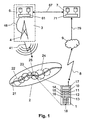
- the reference numeral 3 denotes a broadcasting unit with a broadcasting system 6 (broadcaster) and a broadcasting transmitter 4 (broadcast transmitter) for the wireless transmission of data, in particular to mobile receiving devices 1.
- the reference numeral 46 refers to the connection of the broadcasting system 6 and the broadcasting station 4, for example via a communication link and / or a sender feeder.
- the broadcasting unit 3 comprises a cell definition module 61, which is preferably designed as a programmed software module for controlling a computer of the broadcasting unit 3 and whose function will be described later.
- the broadcasting unit 3 is configured, for example, for the broadcast-based data transmission via DAB (Digital Audio Broadcasting), DMB (Digital Multimedia Broadcasting), DVB (Digital Video Broadcasting) and / or DVB-H (Digital Video Broadcasting - Handheld).
- DAB Digital Audio Broadcasting
- DMB Digital Multimedia Broadcasting
- DVB Digital Video Broadcasting
- DVB-H Digital Video Broadcasting - Handheld
- the radio unit 4 for example, especially for smaller coverage areas, set up for wireless data transmission via WLAN (Wireless Local Area Network, eg according to the 802.11 IEEE standards), the WLAN a return channel for the data communication from the receiving device 1 to the broadcasting unit 3 or at a content delivery system 7 (content provider), in the same frequency band as the broadcast channel or in a different frequency band.
- WLAN Wireless Local Area Network
- the content delivery system 7 is connected to the broadcasting unit 3 via the communication line 67.
- other suitable communication systems for the broadcast data transmission such as OFDM (Orthogonal Frequency Division Multiplexing), in particular in connection with UMA (Unleasured Mobile Access, Bluetooth) advantageous (inexpensive and flexible).
- OFDM Orthogonal Frequency Division Multiplexing
- UMA Unleasured Mobile Access, Bluetooth
- the mobile receiving device 1 is a bidirectional communication terminal or a purely unidirectional receiving device.
- the mobile receiving device 1 comprises a communication module 10, which is configured to receive broadcasts 41 from the broadcasting unit 3.
- the communication module 10 is also set up via the air interface 8 and the mobile network 9 to create a communication link 79 for feedback to the content delivery system 7 and / or the broadcasting system 6.
- the mobile radio network 9 comprises, for example, a GSM network (Global System for Mobile Communication), a UMTS network (Universal Mobile Telecommunication System) or another, for example satellite-based mobile radio network, a WLAN, an OFDM-based network or a Bluetooth cell.
- the mobile receiving device 1 is designed, for example, as a mobile telephone, PDA computer (personal digital assistant), notebook or laptop computer, or as a radio or television receiver.
- the mobile receiving device 1 comprises a plurality of functional modules, namely a control module 11, a cell fixing module 12, a position determination module 13, a presence determination module 14, a service module 15 and a selection module 16.
- the position determination module 13 is set up to determine the current (local, geographic) position of the mobile receiving device 1, for example by means of GPS, Galileo or terrestrial positioning systems, for example network-based positioning systems such as E-OTD.
- the position determination module 13 is set up the current position by means of A-GPS (Assisted Global Positioning System), e.g. by Global Locate Inc., even within buildings (indoor GPS), so that extremely small local cell areas can be defined within buildings.
- the position may also be determined based on information from a mobile network.
- the position determination module 13 is also set up to determine the current altitude and thus the current three-dimensional position of the mobile receiving device 1, for example by means of a height measuring module.
- the height measuring module is configured, for example, to determine the altitude via GPS.
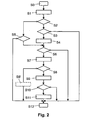
- the remaining functional modules whose functionality is referred to below FIG. 2 are preferably implemented as programmed software modules on a computer program product that is fixedly or removably connected to the mobile receiving device 1.
- the mobile receiving device 1 preferably also comprises a billing module for billing services, for example based on the conditional access method including ECM (Entitlement Checking Message), EMM (Entitlement Management Message) and the CW (Control Word).
- conditional access processes can be integrated, as described in the patent applications WO 01/67761 and WO 01/67762 to be discribed.
- Reference numeral 2 refers to the extended coverage area covered by the broadcasting unit 3. As in of the FIG. 1 is indicated, runs, for example, a road 21 through the coverage area 2.
- the current position of the mobile receiving device 1 is designated in the coverage area 2 by the reference numeral 25.
- the reference numerals 22, 23 and 24 designate different cells with different two-dimensional and / or three-dimensional local or spatial cell areas (areas, eg circle, and / or volume, eg sphere), for example by a cell center and a cell radius and / or other cell area data ( Coordinates, size specifications, area or area designations, sizes and / or shape information) are defined. For example, several cells form a cluster, the individual cell areas are assigned to a cell cluster, for example by cluster identification. In the FIG. 1 Different types of lines indicate inactive cells 22, active cells 23 and cells 24 in preparation.
- the individual cells 22, 23, 24 are described by cell data, which also define a cell type in addition to the cell area.
- cell types include, as previously described, the alarm type, the information type, the application type and / or the link type.
- the cell type defines the intended use of a cell, for example the service type of a location-specific service and / or the data type of location-specific information.
- the cell data preferably also includes an instruction or execution instruction.
- the cell data also include validity data, for example, which define a validity of the period of the expiring cell or cell range.
- the cell data also include a cell identification, for example a code, a number or a name.
- the cell type and / or the instruction are executed as logic data separately from the other cell data and associated, for example, via the cell identification with the cell data.
- the data and media contents of a broadcasting program 41 are provided in the content delivery system 7 or in the broadcasting system 6.
- the content provider combines the information to be sent (e.g., alarms) with position parameters, for two-dimensional (area), or three-dimensional (volume) BLBS cells.
- the cell data is generated in the broadcasting system 6 and / or in the content delivery system 7. If necessary, separate logic data are generated in the broadcasting system 6, in the content delivery system 7 and / or in a special logic delivery system.
- the content delivery system 7 for this purpose comprises a cell definition module 71 corresponding to the cell definition module 61.
- the cell data and possibly separate logic data are transmitted by the cell definition module 61 via the broadcast transmitter 4.
- User data, to which at least some of the cell data relate, are transmitted by the broadcasting unit 3 together with the corresponding cell data or via a cell identification separately from the cell data.
- the selection module 16 is set up to list the user on the display 17 available or subscribed cell types and to receive from the user via the input elements 18 instructions for the selection or deselection of these cell types. This is particularly useful if a large number of cell types is available and the user does not want to have the entire selection activated.
- certain cell types, in particular the alarm type can not be deselected by the user, so that the information, e.g. the alarm information, in case of emergency can actually be transmitted to all users in the target area.
- step S0 in FIG. 2 the user moves with his mobile receiving device 1 in the coverage area 2 of the broadcasting unit. 3
- step S1 the mobile receiving apparatus 1 receives data sent out from the broadcasting unit 3, for example, program-accompanying data embedded in broadcasting transmissions 41.
- step S2 the control module 11 determines whether the data received in step S1 includes cell data. If no cell data has been received, the control module continues in step S5, otherwise in step S3.
- step S3 the control module 11 determines whether the cell type of the received cell data in the mobile receiving apparatus 1 has been selected by the user (for example, in a local cell type table). If the cell type of the received cell data is not selected, the control module continues in step S12, otherwise in step S4.
- step S4 the cell setting module 12 receives the received cell data and stores it in the mobile receiving device 1.
- step S5 the control module 11 checks whether the data received in step S1 are already associated with existing cell data stored in the mobile receiving apparatus 1 and having a cell-type selected by the user. If the received data is not associated with cell data with selected cell type, the control module continues in step S12, otherwise in step S6.
- step S6 the control module 11 checks whether the cell or the cell area defined by the cell data stored in step S4 or in step S5, respectively, is active (valid). This means that the control module 11 checks whether the validity data of the relevant cell data define a time window that includes the current time, or whether the cell data stored in step S4 have a start instruction for the immediate activation of the relevant cell area. The current time can be taken, for example, from the GPS signal. if the Cell data or the cell range is active, the control module 11 continues in step S7, otherwise in step S12.
- step S7 the position determination module 13 determines the current two- or three-dimensional position of the mobile receiving device 1.
- step S8 the presence determination module 14 determines whether the current position determined in step S7 is in the cell area defined by the cell data stored in step S4 or assigned in step S5, respectively. That is, the presence determination module 14 determines the current presence of the mobile receiving device 1 in the relevant cell area. For example, the presence determination module 14 determines whether the current position of the mobile receiving device 1 is in a surface or sphere defined by the cell data. If the presence of the mobile receiving device 1 is positive in the relevant cell area, that is, if the mobile receiving device 1 is in the relevant cell area, the control module 11 continues in step S9, otherwise in step S12.
- step S9 the service module 15 executes the location-specific service which is determined by the cell data stored in step S4 or assigned in step S5, respectively.
- the aforementioned cell data and possibly further user data associated with the cell data are used, which were received in step S1 together with the cell data or received separately in step S1 and assigned to the stored cell data in step S5.
- the service module 15 determines the service to be performed on the basis of the logic data which includes the cell type and / or the associated instruction and which has been received separately as part of the cell data or associated with the cell data.
- the assigned Alarm information or categorized other information reproduced directly to the user, for example visually and / or acoustically.
- the associated executable program sequences, program files (applet), applications (data stored or stored together with the cell data) are executed on the mobile receiving device 1 or the associated link (stored or transmitted) is accessed.
- Location-dependent applications include, for example, executable multimedia files (eg only conditionally usable according to "conditional access"), which are additionally networked, for example, with a link in order to establish a connection via a communication network 9, so that further data is loaded onto the mobile receiving device 1.
- location-dependent links refer to paid information.
- step S10 the control module 11 checks whether the cell in question needs to be deactivated, that is, whether the cell data stored in step S4 includes a stop instruction for immediately deactivating the cell area, or if the cell data associated with step S5 includes validity data with an elapsed time window , If the cell in question needs to be deactivated, the control module 11 continues in step S11, otherwise in step S12.
- step S11 the control module 11 deactivates the relevant cell, for example, by deleting the corresponding cell data in the mobile receiving device 1.
- step S12 the control module 11 ends a cycle for processing received broadcast data in the service area 2, and receives new data from the broadcast unit 3 in step S1.
- the user can have information displayed by the control module 11 about available services in neighboring cells 22, 23, 24 on the display 17.
- the control module 11 stores, for example, cell data for cell areas in the vicinity of the current position 25 of the mobile terminal 1, for example limited to a specific perimeter of the current position 25.
Landscapes
- Engineering & Computer Science (AREA)
- Computer Networks & Wireless Communication (AREA)
- Signal Processing (AREA)
- Mobile Radio Communication Systems (AREA)
- Aviation & Aerospace Engineering (AREA)
- Telephonic Communication Services (AREA)
- Input Circuits Of Receivers And Coupling Of Receivers And Audio Equipment (AREA)
- Two-Way Televisions, Distribution Of Moving Picture Or The Like (AREA)
- Circuits Of Receivers In General (AREA)
Priority Applications (1)
| Application Number | Priority Date | Filing Date | Title |
|---|---|---|---|
| PL06705422T PL1864530T3 (pl) | 2005-03-29 | 2006-03-29 | Sposób wykonywania usług specyficznych dla miejsca, jednostka radiowa i ruchome urządzenie odbiorcze |
Applications Claiming Priority (2)
| Application Number | Priority Date | Filing Date | Title |
|---|---|---|---|
| CH5312005 | 2005-03-29 | ||
| PCT/CH2006/000182 WO2006102784A1 (de) | 2005-03-29 | 2006-03-29 | Verfahren zum ausführen von ortspezifischen dienten, rundfunkeinheit und mobiles empfangsgerät |
Publications (2)
| Publication Number | Publication Date |
|---|---|
| EP1864530A1 EP1864530A1 (de) | 2007-12-12 |
| EP1864530B1 true EP1864530B1 (de) | 2010-03-03 |
Family
ID=36450892
Family Applications (1)
| Application Number | Title | Priority Date | Filing Date |
|---|---|---|---|
| EP06705422A Expired - Lifetime EP1864530B1 (de) | 2005-03-29 | 2006-03-29 | Verfahren zum ausführen von ortspezifischen diensten, rundfunkeinheit und mobiles empfangsgerät |
Country Status (10)
| Country | Link |
|---|---|
| US (4) | US9392400B2 (pl) |
| EP (1) | EP1864530B1 (pl) |
| JP (1) | JP2008538171A (pl) |
| CN (1) | CN101151929B (pl) |
| AT (1) | ATE460055T1 (pl) |
| CA (1) | CA2602918A1 (pl) |
| DE (1) | DE502006006334D1 (pl) |
| ES (1) | ES2341880T3 (pl) |
| PL (1) | PL1864530T3 (pl) |
| WO (1) | WO2006102784A1 (pl) |
Families Citing this family (10)
| Publication number | Priority date | Publication date | Assignee | Title |
|---|---|---|---|---|
| CA2619642C (en) | 2005-10-21 | 2014-07-29 | T-Mobile Usa, Inc. | System and method for determining device location in an ip-based wireless telecommunications network |
| EP1841255A1 (en) * | 2006-03-28 | 2007-10-03 | Carlos Alberto Pérez Lafuente | Method and system for monitoring a mobile station presence in a special area |
| CA2620617A1 (en) | 2006-10-20 | 2008-04-20 | T-Mobile Usa, Inc. | System and method for utilizing ip-based wireless telecommunications client location data |
| EP2084917B1 (en) * | 2006-10-20 | 2019-05-01 | T-Mobile USA, Inc. | System and method for determining a subscriber's zone information |
| US8229457B2 (en) * | 2007-02-23 | 2012-07-24 | Ntt Docomo, Inc. | Positioning system, positioning method, and positioning program |
| US20100062784A1 (en) | 2008-09-05 | 2010-03-11 | Ornbo Lars | Method and apparatus for allocating a communication cell to a cluster |
| US20100113021A1 (en) * | 2008-10-31 | 2010-05-06 | Nokia Corporation | Association of Network Cells with Location Information |
| US8718592B2 (en) | 2009-05-15 | 2014-05-06 | T-Mobile Usa, Inc. | Mobile device location determination using micronetworks |
| US8838147B2 (en) * | 2011-08-31 | 2014-09-16 | Nokia Corporation | Method and apparatus for determining environmental context utilizing features obtained by multiple radio receivers |
| CN110225456B (zh) * | 2018-03-02 | 2021-09-10 | 北京佰才邦技术股份有限公司 | 一种移动性管理方法及终端 |
Family Cites Families (29)
| Publication number | Priority date | Publication date | Assignee | Title |
|---|---|---|---|---|
| JPH09223976A (ja) | 1996-02-16 | 1997-08-26 | Yazaki Corp | 車載fm多重データ受信装置の画面選択方法、及び画面選択装置 |
| US6088598A (en) * | 1996-12-17 | 2000-07-11 | Telefonaktiebolaget L M Ericsson | Method and system for displaying greetings in a mobile radio communications system |
| JPH10325732A (ja) | 1997-05-26 | 1998-12-08 | Nippon Telegr & Teleph Corp <Ntt> | データ情報放送システム |
| US7054635B1 (en) * | 1998-11-09 | 2006-05-30 | Telefonaktiebolaget Lm Ericsson (Publ) | Cellular communications network and method for dynamically changing the size of a cell due to speech quality |
| JP2000165826A (ja) * | 1998-11-26 | 2000-06-16 | Nec Home Electronics Ltd | データ放送装置 |
| JP2000269839A (ja) * | 1999-03-12 | 2000-09-29 | Tokyo Fm Broadcasting Co Ltd | デジタル放送受信端末及びデジタル放送受信プログラムを記録したコンピュータ読取り可能な記録媒体 |
| US6424840B1 (en) * | 1999-11-05 | 2002-07-23 | Signalsoft Corp. | Method and system for dynamic location-based zone assignment for a wireless communication network |
| US6628928B1 (en) | 1999-12-10 | 2003-09-30 | Ecarmerce Incorporated | Internet-based interactive radio system for use with broadcast radio stations |
| ES2220408T3 (es) | 2000-03-10 | 2004-12-16 | Rudolf Ritter | Procedimiento, sistema de comunicacion y dispositivo de recepcion para la facturacion de programas y/o datos con control de acceso de transmisores de radiodifusion. |
| GB0006028D0 (en) * | 2000-03-13 | 2000-05-03 | Nokia Networks Oy | Location service in a telecommunications system |
| DE60121924T2 (de) * | 2000-03-13 | 2007-02-15 | Nokia Corp. | Dienstanbietung in einem kommunikationssystem |
| US7024208B2 (en) * | 2000-09-05 | 2006-04-04 | Helios Co., Ltd. | Radio communication service providing system, radio communication device, radio communication service providing method, and radio communication method |
| JP4263377B2 (ja) | 2001-03-15 | 2009-05-13 | 日本放送協会 | 位置連動型データ放送サービス方法及び受信装置 |
| US7072666B1 (en) * | 2001-06-21 | 2006-07-04 | Spring Spectrum L.P. | Method and system for communicating location in a cellular wireless system |
| US7454217B2 (en) * | 2001-10-04 | 2008-11-18 | Stephen William Edge | Method and apparatus for wireless network timekeeping and synchronization |
| US20040021569A1 (en) * | 2001-11-21 | 2004-02-05 | Robert Lepkofker | Personnel and resource tracking method and system for enclosed spaces |
| JP2004032298A (ja) | 2002-06-25 | 2004-01-29 | Nippon Hoso Kyokai <Nhk> | データ放送における送信方法、受信方法、送信装置及び受信装置 |
| US7096030B2 (en) * | 2002-06-28 | 2006-08-22 | Nokia Corporation | System and method for initiating location-dependent applications on mobile devices |
| JP4299082B2 (ja) * | 2002-10-18 | 2009-07-22 | 株式会社エヌ・ティ・ティ・ドコモ | 移動局、移動通信システム、及びセル選択方法 |
| JP3748428B2 (ja) * | 2002-11-06 | 2006-02-22 | 株式会社日立製作所 | 移動通信端末装置および測位方法 |
| JP2004186741A (ja) * | 2002-11-29 | 2004-07-02 | Kenwood Corp | 送信装置、受信装置、送信方法、受信方法及びプログラム |
| US20070149208A1 (en) * | 2002-12-27 | 2007-06-28 | Hanno Syrbe | Location based services for mobile communication terminals |
| EP1678519A2 (en) * | 2003-10-06 | 2006-07-12 | Sirf Technology, Inc. | A system and method for augmenting a satellite-based navigation solution |
| US20050132075A1 (en) * | 2003-12-15 | 2005-06-16 | International Business Machines Corporation | Authentication of mobile communication devices using mobile networks, SIP and Parlay |
| US7194273B2 (en) * | 2004-02-12 | 2007-03-20 | Lucent Technologies Inc. | Location based service restrictions for mobile applications |
| US8509814B1 (en) * | 2004-03-24 | 2013-08-13 | Sprint Spectrum L.P. | Method and system for integrating location based services into retail applications |
| US20060064346A1 (en) * | 2004-08-31 | 2006-03-23 | Qualcomm Incorporated | Location based service (LBS) system and method for targeted advertising |
| US20060068788A1 (en) * | 2004-09-30 | 2006-03-30 | Miroslav Zivkovic | Transfer of a service session with a mobile from a first wireless local area network to one of its neighbours |
| JP2009223976A (ja) | 2008-03-17 | 2009-10-01 | Tdk Corp | 磁気記録装置及び磁気記録媒体 |
-
2006
- 2006-03-29 PL PL06705422T patent/PL1864530T3/pl unknown
- 2006-03-29 CA CA002602918A patent/CA2602918A1/en not_active Abandoned
- 2006-03-29 JP JP2008503345A patent/JP2008538171A/ja active Pending
- 2006-03-29 WO PCT/CH2006/000182 patent/WO2006102784A1/de not_active Ceased
- 2006-03-29 CN CN2006800103603A patent/CN101151929B/zh not_active Expired - Lifetime
- 2006-03-29 EP EP06705422A patent/EP1864530B1/de not_active Expired - Lifetime
- 2006-03-29 AT AT06705422T patent/ATE460055T1/de active
- 2006-03-29 ES ES06705422T patent/ES2341880T3/es not_active Expired - Lifetime
- 2006-03-29 US US11/909,766 patent/US9392400B2/en active Active
- 2006-03-29 DE DE502006006334T patent/DE502006006334D1/de not_active Expired - Lifetime
-
2016
- 2016-07-11 US US15/206,979 patent/US11159910B2/en active Active
-
2021
- 2021-09-21 US US17/480,671 patent/US11805387B2/en not_active Expired - Lifetime
-
2023
- 2023-09-26 US US18/474,603 patent/US12335808B2/en not_active Expired - Lifetime
Also Published As
| Publication number | Publication date |
|---|---|
| US20080261604A1 (en) | 2008-10-23 |
| ATE460055T1 (de) | 2010-03-15 |
| CA2602918A1 (en) | 2006-10-05 |
| WO2006102784A1 (de) | 2006-10-05 |
| JP2008538171A (ja) | 2008-10-09 |
| EP1864530A1 (de) | 2007-12-12 |
| US11805387B2 (en) | 2023-10-31 |
| ES2341880T3 (es) | 2010-06-29 |
| US20220248167A1 (en) | 2022-08-04 |
| CN101151929A (zh) | 2008-03-26 |
| PL1864530T3 (pl) | 2010-10-29 |
| CN101151929B (zh) | 2011-08-03 |
| US11159910B2 (en) | 2021-10-26 |
| US12335808B2 (en) | 2025-06-17 |
| US20240015476A1 (en) | 2024-01-11 |
| DE502006006334D1 (de) | 2010-04-15 |
| US9392400B2 (en) | 2016-07-12 |
| US20170013400A1 (en) | 2017-01-12 |
Similar Documents
| Publication | Publication Date | Title |
|---|---|---|
| US11805387B2 (en) | Method for performing location-specific services, broadcasting unit and mobile receiving device | |
| DE102011079823B4 (de) | Computerimplementiertes Verfahren zum Kommunizieren von Notfallinformationen zu einem Fahrzeug | |
| EP1135878B1 (de) | Mobilgerat und verfahren zum empfangen und filtern aus den programmbegleitenden daten auf grund der bestimmten position | |
| DE112012002184B4 (de) | Verbesserter Telematik-Notfallschutz | |
| DE102007036029A1 (de) | Verfahren und System zum Übertragen einer Information an einen Benutzer einer mobilen Plattform über Ausstrahlungsdienste | |
| EP3120339B1 (de) | Verfahren zum betreiben eines fahrzeugs und fahrzeug | |
| DE102007036031A1 (de) | Vorrichtung und Verfahren zum Übertragen eines Graphikbilds an eine mobile Plattform über Ausstrahlungsdienste | |
| DE102007036030A1 (de) | Verfahren und System zum Kommunizieren zwischen einer Kommunikationsquelle und einer mobilen Plattform | |
| JP2007102586A (ja) | サーバ及び車載ナビゲーション装置、車両、気象情報配信システム | |
| EP2380155B1 (de) | Vorrichtung und verfahren zur aktivierung eines schallzeichengebers eines kraftfahrzeugs, kraftfahrzeug und alarmierungssystem | |
| EP3688743B1 (de) | Einrichtung zur unterstützung der mobilität sehbehinderter personen im strassenverkehr | |
| DE10011702A1 (de) | Verfahren zur standortbezogenen Information von Verkehrsteilnehmern | |
| DE60221262T2 (de) | Positionsbestimmungssystem und -verfahren eines drahtlosen Kommunikationsgerätes | |
| DE102008000002A1 (de) | Positionsabhängiges Werbe- und Verkehrswarnsystem | |
| DE60122946T2 (de) | Zweiwegfolgesystem sowie Verfahren mittels eines bestehenden Netzwerkes | |
| EP1983726A1 (de) | Verfahren und Vorrichtung zur selektiven Erzeugung und Übermittlung von Nachrichten | |
| EP1977404A2 (de) | Globales informations- und risikowarnsystem unter verwendung von satellitennavigationssystemen und benutzerendgeräten | |
| DE102005061419B4 (de) | Verfahren zum Übertragen von verkehrsrelevanten Informationen | |
| EP1074965A2 (de) | Informationssäule zur Darstellung von Fahrgastinformationen | |
| DE60309880T2 (de) | Ortsspezifische Kommunikation von Rundsendeinhalten | |
| DE102022212312A1 (de) | Verfahren zum Anpassen einer Fahrroute und/oder -geschwindigkeit eines Kraftfahrzeugs, Verfahren für ein Sondereinsatzfahrzeug und ein Steuergerät | |
| DE102021131932A1 (de) | Verfahren zum Bestimmen eines Standortes eines Empfangsgerätes sowie Empfangsgerät | |
| DE102013114217B4 (de) | Verfahren zur servergestützten, positionsabhängigen Kommunikation über ein drahtloses Kommunikationsnetz | |
| CH701663A2 (de) | Endgerät für ein Telekommunikationsnetz und Verfahren zum Betreiben eines solchen Endgeräts. | |
| KR19990046519A (ko) | 대규모차량군에적용가능한위치의존적차량호출방법과장치 |
Legal Events
| Date | Code | Title | Description |
|---|---|---|---|
| PUAI | Public reference made under article 153(3) epc to a published international application that has entered the european phase |
Free format text: ORIGINAL CODE: 0009012 |
|
| 17P | Request for examination filed |
Effective date: 20070823 |
|
| AK | Designated contracting states |
Kind code of ref document: A1 Designated state(s): AT BE BG CH CY CZ DE DK EE ES FI FR GB GR HU IE IS IT LI LT LU LV MC NL PL PT RO SE SI SK TR |
|
| DAX | Request for extension of the european patent (deleted) | ||
| 17Q | First examination report despatched |
Effective date: 20090302 |
|
| GRAP | Despatch of communication of intention to grant a patent |
Free format text: ORIGINAL CODE: EPIDOSNIGR1 |
|
| RIC1 | Information provided on ipc code assigned before grant |
Ipc: H04W 4/02 20090101AFI20090929BHEP |
|
| GRAS | Grant fee paid |
Free format text: ORIGINAL CODE: EPIDOSNIGR3 |
|
| GRAA | (expected) grant |
Free format text: ORIGINAL CODE: 0009210 |
|
| RAP1 | Party data changed (applicant data changed or rights of an application transferred) |
Owner name: SWISSCOM AG |
|
| AK | Designated contracting states |
Kind code of ref document: B1 Designated state(s): AT BE BG CH CY CZ DE DK EE ES FI FR GB GR HU IE IS IT LI LT LU LV MC NL PL PT RO SE SI SK TR |
|
| REG | Reference to a national code |
Ref country code: GB Ref legal event code: FG4D Free format text: NOT ENGLISH |
|
| REG | Reference to a national code |
Ref country code: CH Ref legal event code: EP |
|
| REG | Reference to a national code |
Ref country code: IE Ref legal event code: FG4D |
|
| REF | Corresponds to: |
Ref document number: 502006006334 Country of ref document: DE Date of ref document: 20100415 Kind code of ref document: P |
|
| REG | Reference to a national code |
Ref country code: CH Ref legal event code: NV Representative=s name: RENTSCH & PARTNER |
|
| REG | Reference to a national code |
Ref country code: NL Ref legal event code: T3 |
|
| REG | Reference to a national code |
Ref country code: SE Ref legal event code: TRGR |
|
| REG | Reference to a national code |
Ref country code: ES Ref legal event code: FG2A Ref document number: 2341880 Country of ref document: ES Kind code of ref document: T3 |
|
| PG25 | Lapsed in a contracting state [announced via postgrant information from national office to epo] |
Ref country code: LT Free format text: LAPSE BECAUSE OF FAILURE TO SUBMIT A TRANSLATION OF THE DESCRIPTION OR TO PAY THE FEE WITHIN THE PRESCRIBED TIME-LIMIT Effective date: 20100303 |
|
| LTIE | Lt: invalidation of european patent or patent extension |
Effective date: 20100303 |
|
| PG25 | Lapsed in a contracting state [announced via postgrant information from national office to epo] |
Ref country code: SI Free format text: LAPSE BECAUSE OF FAILURE TO SUBMIT A TRANSLATION OF THE DESCRIPTION OR TO PAY THE FEE WITHIN THE PRESCRIBED TIME-LIMIT Effective date: 20100303 Ref country code: LV Free format text: LAPSE BECAUSE OF FAILURE TO SUBMIT A TRANSLATION OF THE DESCRIPTION OR TO PAY THE FEE WITHIN THE PRESCRIBED TIME-LIMIT Effective date: 20100303 |
|
| PG25 | Lapsed in a contracting state [announced via postgrant information from national office to epo] |
Ref country code: CY Free format text: LAPSE BECAUSE OF FAILURE TO SUBMIT A TRANSLATION OF THE DESCRIPTION OR TO PAY THE FEE WITHIN THE PRESCRIBED TIME-LIMIT Effective date: 20100303 Ref country code: EE Free format text: LAPSE BECAUSE OF FAILURE TO SUBMIT A TRANSLATION OF THE DESCRIPTION OR TO PAY THE FEE WITHIN THE PRESCRIBED TIME-LIMIT Effective date: 20100303 Ref country code: RO Free format text: LAPSE BECAUSE OF FAILURE TO SUBMIT A TRANSLATION OF THE DESCRIPTION OR TO PAY THE FEE WITHIN THE PRESCRIBED TIME-LIMIT Effective date: 20100303 Ref country code: MC Free format text: LAPSE BECAUSE OF NON-PAYMENT OF DUE FEES Effective date: 20100331 Ref country code: GR Free format text: LAPSE BECAUSE OF FAILURE TO SUBMIT A TRANSLATION OF THE DESCRIPTION OR TO PAY THE FEE WITHIN THE PRESCRIBED TIME-LIMIT Effective date: 20100604 |
|
| REG | Reference to a national code |
Ref country code: PL Ref legal event code: T3 |
|
| PG25 | Lapsed in a contracting state [announced via postgrant information from national office to epo] |
Ref country code: SK Free format text: LAPSE BECAUSE OF FAILURE TO SUBMIT A TRANSLATION OF THE DESCRIPTION OR TO PAY THE FEE WITHIN THE PRESCRIBED TIME-LIMIT Effective date: 20100303 Ref country code: CZ Free format text: LAPSE BECAUSE OF FAILURE TO SUBMIT A TRANSLATION OF THE DESCRIPTION OR TO PAY THE FEE WITHIN THE PRESCRIBED TIME-LIMIT Effective date: 20100303 Ref country code: IS Free format text: LAPSE BECAUSE OF FAILURE TO SUBMIT A TRANSLATION OF THE DESCRIPTION OR TO PAY THE FEE WITHIN THE PRESCRIBED TIME-LIMIT Effective date: 20100703 Ref country code: BG Free format text: LAPSE BECAUSE OF FAILURE TO SUBMIT A TRANSLATION OF THE DESCRIPTION OR TO PAY THE FEE WITHIN THE PRESCRIBED TIME-LIMIT Effective date: 20100603 |
|
| PLBE | No opposition filed within time limit |
Free format text: ORIGINAL CODE: 0009261 |
|
| STAA | Information on the status of an ep patent application or granted ep patent |
Free format text: STATUS: NO OPPOSITION FILED WITHIN TIME LIMIT |
|
| PG25 | Lapsed in a contracting state [announced via postgrant information from national office to epo] |
Ref country code: DK Free format text: LAPSE BECAUSE OF FAILURE TO SUBMIT A TRANSLATION OF THE DESCRIPTION OR TO PAY THE FEE WITHIN THE PRESCRIBED TIME-LIMIT Effective date: 20100303 Ref country code: PT Free format text: LAPSE BECAUSE OF FAILURE TO SUBMIT A TRANSLATION OF THE DESCRIPTION OR TO PAY THE FEE WITHIN THE PRESCRIBED TIME-LIMIT Effective date: 20100705 |
|
| 26N | No opposition filed |
Effective date: 20101206 |
|
| REG | Reference to a national code |
Ref country code: CH Ref legal event code: PFA Owner name: SWISSCOM AG Free format text: SWISSCOM AG#ALTE TIEFENAUSTRASSE 6#3050 BERN (CH) -TRANSFER TO- SWISSCOM AG#ALTE TIEFENAUSTRASSE 6#3050 BERN (CH) |
|
| PG25 | Lapsed in a contracting state [announced via postgrant information from national office to epo] |
Ref country code: LU Free format text: LAPSE BECAUSE OF NON-PAYMENT OF DUE FEES Effective date: 20100329 Ref country code: HU Free format text: LAPSE BECAUSE OF FAILURE TO SUBMIT A TRANSLATION OF THE DESCRIPTION OR TO PAY THE FEE WITHIN THE PRESCRIBED TIME-LIMIT Effective date: 20100904 |
|
| PG25 | Lapsed in a contracting state [announced via postgrant information from national office to epo] |
Ref country code: TR Free format text: LAPSE BECAUSE OF FAILURE TO SUBMIT A TRANSLATION OF THE DESCRIPTION OR TO PAY THE FEE WITHIN THE PRESCRIBED TIME-LIMIT Effective date: 20100303 |
|
| PGFP | Annual fee paid to national office [announced via postgrant information from national office to epo] |
Ref country code: IE Payment date: 20140325 Year of fee payment: 9 Ref country code: FI Payment date: 20140312 Year of fee payment: 9 Ref country code: SE Payment date: 20140319 Year of fee payment: 9 |
|
| PGFP | Annual fee paid to national office [announced via postgrant information from national office to epo] |
Ref country code: AT Payment date: 20140312 Year of fee payment: 9 Ref country code: PL Payment date: 20140220 Year of fee payment: 9 |
|
| PGFP | Annual fee paid to national office [announced via postgrant information from national office to epo] |
Ref country code: BE Payment date: 20140319 Year of fee payment: 9 |
|
| PGFP | Annual fee paid to national office [announced via postgrant information from national office to epo] |
Ref country code: IT Payment date: 20150323 Year of fee payment: 10 |
|
| PG25 | Lapsed in a contracting state [announced via postgrant information from national office to epo] |
Ref country code: FI Free format text: LAPSE BECAUSE OF NON-PAYMENT OF DUE FEES Effective date: 20150329 |
|
| REG | Reference to a national code |
Ref country code: AT Ref legal event code: MM01 Ref document number: 460055 Country of ref document: AT Kind code of ref document: T Effective date: 20150329 |
|
| PG25 | Lapsed in a contracting state [announced via postgrant information from national office to epo] |
Ref country code: SE Free format text: LAPSE BECAUSE OF NON-PAYMENT OF DUE FEES Effective date: 20150330 |
|
| REG | Reference to a national code |
Ref country code: SE Ref legal event code: EUG |
|
| REG | Reference to a national code |
Ref country code: IE Ref legal event code: MM4A |
|
| PG25 | Lapsed in a contracting state [announced via postgrant information from national office to epo] |
Ref country code: IE Free format text: LAPSE BECAUSE OF NON-PAYMENT OF DUE FEES Effective date: 20150329 |
|
| PG25 | Lapsed in a contracting state [announced via postgrant information from national office to epo] |
Ref country code: AT Free format text: LAPSE BECAUSE OF NON-PAYMENT OF DUE FEES Effective date: 20150329 |
|
| REG | Reference to a national code |
Ref country code: FR Ref legal event code: PLFP Year of fee payment: 11 |
|
| PG25 | Lapsed in a contracting state [announced via postgrant information from national office to epo] |
Ref country code: PL Free format text: LAPSE BECAUSE OF NON-PAYMENT OF DUE FEES Effective date: 20150329 |
|
| PG25 | Lapsed in a contracting state [announced via postgrant information from national office to epo] |
Ref country code: IT Free format text: LAPSE BECAUSE OF NON-PAYMENT OF DUE FEES Effective date: 20160329 |
|
| REG | Reference to a national code |
Ref country code: FR Ref legal event code: PLFP Year of fee payment: 12 |
|
| PG25 | Lapsed in a contracting state [announced via postgrant information from national office to epo] |
Ref country code: BE Free format text: LAPSE BECAUSE OF NON-PAYMENT OF DUE FEES Effective date: 20150331 |
|
| REG | Reference to a national code |
Ref country code: FR Ref legal event code: PLFP Year of fee payment: 13 |
|
| REG | Reference to a national code |
Ref country code: GB Ref legal event code: 732E Free format text: REGISTERED BETWEEN 20220526 AND 20220601 |
|
| REG | Reference to a national code |
Ref country code: DE Ref legal event code: R081 Ref document number: 502006006334 Country of ref document: DE Owner name: INTERDIGITAL CE PATENT HOLDINGS SAS, FR Free format text: FORMER OWNER: SWISSCOM AG, BERN, CH Ref country code: DE Ref legal event code: R082 Ref document number: 502006006334 Country of ref document: DE Representative=s name: RITTNER & PARTNER - PATENTANWAELTE MBB -, DE |
|
| REG | Reference to a national code |
Ref country code: NL Ref legal event code: PD Owner name: INTERDIGITAL CE PATENT HOLDINGS SAS; FR Free format text: DETAILS ASSIGNMENT: CHANGE OF OWNER(S), ASSIGNMENT; FORMER OWNER NAME: SWISSCOM AG Effective date: 20220809 |
|
| REG | Reference to a national code |
Ref country code: ES Ref legal event code: PC2A Owner name: INTERDIGITAL CE PATENT HOLDINGS SAS Effective date: 20220908 |
|
| P01 | Opt-out of the competence of the unified patent court (upc) registered |
Effective date: 20230511 |
|
| PGFP | Annual fee paid to national office [announced via postgrant information from national office to epo] |
Ref country code: DE Payment date: 20250327 Year of fee payment: 20 |
|
| PGFP | Annual fee paid to national office [announced via postgrant information from national office to epo] |
Ref country code: NL Payment date: 20250325 Year of fee payment: 20 |
|
| PGFP | Annual fee paid to national office [announced via postgrant information from national office to epo] |
Ref country code: FR Payment date: 20250324 Year of fee payment: 20 |
|
| PGFP | Annual fee paid to national office [announced via postgrant information from national office to epo] |
Ref country code: GB Payment date: 20250325 Year of fee payment: 20 |
|
| PGFP | Annual fee paid to national office [announced via postgrant information from national office to epo] |
Ref country code: ES Payment date: 20250415 Year of fee payment: 20 |
|
| PGFP | Annual fee paid to national office [announced via postgrant information from national office to epo] |
Ref country code: CH Payment date: 20250401 Year of fee payment: 20 |
|
| REG | Reference to a national code |
Ref country code: CH Ref legal event code: R18 Free format text: ST27 STATUS EVENT CODE: U-0-0-R10-R18 (AS PROVIDED BY THE NATIONAL OFFICE) Effective date: 20260209 |
|
| REG | Reference to a national code |
Ref country code: CH Ref legal event code: R18 Free format text: ST27 STATUS EVENT CODE: U-0-0-R10-R18 (AS PROVIDED BY THE NATIONAL OFFICE) Effective date: 20260320 |
|
| REG | Reference to a national code |
Ref country code: CH Ref legal event code: H14 Free format text: ST27 STATUS EVENT CODE: U-0-0-H10-H14 (AS PROVIDED BY THE NATIONAL OFFICE) Effective date: 20260329 Ref country code: DE Ref legal event code: R071 Ref document number: 502006006334 Country of ref document: DE |
|
| REG | Reference to a national code |
Ref country code: NL Ref legal event code: MK Effective date: 20260328 |
|
| REG | Reference to a national code |
Ref country code: ES Ref legal event code: FD2A Effective date: 20260407 |
|
| PG25 | Lapsed in a contracting state [announced via postgrant information from national office to epo] |
Ref country code: ES Free format text: LAPSE BECAUSE OF EXPIRATION OF PROTECTION Effective date: 20260330 |
|
| REG | Reference to a national code |
Ref country code: GB Ref legal event code: PE20 Expiry date: 20260328 |