EP1863630B1 - Verfahren und Vorrichtung zur Ultraschallverpressung einer Tablette oder einer multipartikulären Arzneiform - Google Patents
Verfahren und Vorrichtung zur Ultraschallverpressung einer Tablette oder einer multipartikulären Arzneiform Download PDFInfo
- Publication number
- EP1863630B1 EP1863630B1 EP06725248.6A EP06725248A EP1863630B1 EP 1863630 B1 EP1863630 B1 EP 1863630B1 EP 06725248 A EP06725248 A EP 06725248A EP 1863630 B1 EP1863630 B1 EP 1863630B1
- Authority
- EP
- European Patent Office
- Prior art keywords
- sonotrode
- die
- mould
- active substance
- pharmaceutically active
- Prior art date
- Legal status (The legal status is an assumption and is not a legal conclusion. Google has not performed a legal analysis and makes no representation as to the accuracy of the status listed.)
- Expired - Lifetime
Links
- UAEPNZWRGJTJPN-UHFFFAOYSA-N CC1CCCCC1 Chemical compound CC1CCCCC1 UAEPNZWRGJTJPN-UHFFFAOYSA-N 0.000 description 1
Images




Classifications
-
- B—PERFORMING OPERATIONS; TRANSPORTING
- B30—PRESSES
- B30B—PRESSES IN GENERAL
- B30B11/00—Presses specially adapted for forming shaped articles from material in particulate or plastic state, e.g. briquetting presses, tabletting presses
- B30B11/02—Presses specially adapted for forming shaped articles from material in particulate or plastic state, e.g. briquetting presses, tabletting presses using a ram exerting pressure on the material in a moulding space
- B30B11/022—Presses specially adapted for forming shaped articles from material in particulate or plastic state, e.g. briquetting presses, tabletting presses using a ram exerting pressure on the material in a moulding space whereby the material is subjected to vibrations
-
- A—HUMAN NECESSITIES
- A61—MEDICAL OR VETERINARY SCIENCE; HYGIENE
- A61P—SPECIFIC THERAPEUTIC ACTIVITY OF CHEMICAL COMPOUNDS OR MEDICINAL PREPARATIONS
- A61P23/00—Anaesthetics
-
- A—HUMAN NECESSITIES
- A61—MEDICAL OR VETERINARY SCIENCE; HYGIENE
- A61P—SPECIFIC THERAPEUTIC ACTIVITY OF CHEMICAL COMPOUNDS OR MEDICINAL PREPARATIONS
- A61P25/00—Drugs for disorders of the nervous system
- A61P25/18—Antipsychotics, i.e. neuroleptics; Drugs for mania or schizophrenia
-
- A—HUMAN NECESSITIES
- A61—MEDICAL OR VETERINARY SCIENCE; HYGIENE
- A61J—CONTAINERS SPECIALLY ADAPTED FOR MEDICAL OR PHARMACEUTICAL PURPOSES; DEVICES OR METHODS SPECIALLY ADAPTED FOR BRINGING PHARMACEUTICAL PRODUCTS INTO PARTICULAR PHYSICAL OR ADMINISTERING FORMS; DEVICES FOR ADMINISTERING FOOD OR MEDICINES ORALLY; BABY COMFORTERS; DEVICES FOR RECEIVING SPITTLE
- A61J3/00—Devices or methods specially adapted for bringing pharmaceutical products into particular physical or administering forms
- A61J3/10—Devices or methods specially adapted for bringing pharmaceutical products into particular physical or administering forms into the form of compressed tablets
Definitions
- the present invention relates to a method and an apparatus for shaping a pharmaceutically active substance, in particular medicaments in the form of powders, granules or multiparticulate dosage forms, such as e.g. Pellets and microcapsules, for the production of a tablet or a multiparticulate dosage form by means of ultrasound, which has an ultrasonic generator, a sonotrode and a die, in which the pharmaceutically active substance is fillable.
- a pharmaceutically active substance in particular medicaments in the form of powders, granules or multiparticulate dosage forms, such as e.g. Pellets and microcapsules
- a device for shaping a pharmaceutically active substance in particular drugs in the form of powders, granules or multiparticulate dosage forms, such.
- Pellets and microcapsules for the production of a tablet or a multiparticulate dosage form by means of ultrasound, with an ultrasound generator, a sonotrode and a matrix, in which the pharmaceutically active substance is fillable, wherein the sonotrode is in the shaping in direct contact with the pharmaceutically active substance , wherein the sonotrode does not penetrate into the matrix and there is no direct contact between the sonotrode and the die.
- a tablet or a multiparticulate dosage form can be produced in which an abuse of such a tablet, which contains, for example, psychotropic substances, at least significantly more difficult.
- a hard tablet also serves to avoid the misuse of drug forms with highly active substances, because such tablets can not be crushed by a crusher, such as a mortar, due to their hardness.
- the device according to the invention is suitable for shaping a pharmaceutically active substance, in particular for shaping powders, granules, multiparticulate dosage forms, for example pellets and microcapsules, for the production of a tablet or a multiparticulate dosage form with the use of ultrasound.
- Shaping in the sense of the invention means that pharmaceutically active substances as starting substances, in particular as powdered medicaments, are brought into the desired shape and at least partially compacted.
- the Starting substances ie in particular powdery medicaments, are heated and melted at least partially. The thus melted starting substances form a composite. Under some pressure, compression and additional curing of the resulting tablet or multiparticulate form may occur.
- Pharmaceutically active substance in the sense of the invention is a substance which on the one hand has the desired pharmaceutical action and on the other hand is suitable for shaping by means of the device according to the invention.
- the pharmaceutically active substance according to the invention may (and usually will) include a plurality of substances, of which a part predominantly or exclusively has the pharmaceutical activity and of which another part in the device according to the invention can be melted and can be welded or sintered together to form a composite or a matrix for the substantial mechanical inclusion of the pharmaceutically active part of the substances.
- the device according to the invention has an ultrasound generator which generates the ultrasound frequencies, which preferably move in a bandwidth between 10 and 70 kHz, particularly preferably between 10 and 40 kHz.
- These ultrasonic frequencies are optionally amplified and then transmitted to a so-called sonotrode, which oscillates in the ultrasonic range and emits the vibration energy to the starting substances to be formed.
- the sonotrode is preferably made of stainless steel, titanium, hardened titanium or an alloy containing at least one of said substances.
- the device according to the invention comprises a die, into which the pharmaceutically active substance is filled (temporally before its shaping), wherein the die represents at least partially the negative of the tablet form to be achieved.
- the die is preferably made of a material which, when coupled with ultrasound, makes no connection with the mixture to be tabletted, ie with the pharmaceutically active substance intended for compression, and which does not crack or shatter during the welding or shaping process (such as glass would be the case).
- the die with such properties made of ceramic, stainless steel, titanium, high-melting plastic and / or hardened titanium.
- the device of the invention is now designed so that the sonotrode while shaping is in direct contact with the pharmaceutically active substance, but there is no time of molding to a direct contact between the die and the sonotrode.
- the desired tablet or the desired multiparticulate dosage form having the desired shape and the desired hardness can be achieved, but on the other hand, the o. G. Dot welding not included.
- the gap there is a gap between the sonotrode and the die, the maximum size of which is dimensioned so that no portion of the pharmaceutically active substance, in particular at the beginning of the ultrasound shaping, can escape through it.
- the gap has a size of less than 2 mm, preferably less than 1 mm, more preferably less than 0.7 mm.
- a spacer is arranged between the sonotrode and the die.
- This preferred embodiment of the present invention is particularly advantageous when the sonotrode is moved during the molding of the pharmaceutically active substance, for example, to ensure that even during the molding of the pharmaceutically active substance compacting a good contact between the pharmaceutically active substance and the sonotrode exists and / or to perform the ultrasound-assisted shaping under pressure.
- the sonotrode is axially displaceable.
- This preferred embodiment of the present invention is in particular of Advantage, when the sonotrode is exposed to a certain pressure load and compresses the pharmaceutically active substance in the shaping.
- the die is also displaceably mounted or has the die on a Vor shimmere.
- the movement of the sonotrode and the die after setting the gap is uniform.
- the gap is neither reduced nor increased, so that neither powdered nor molten drug powder - i. Parts of the pharmaceutically active substance before their final shaping - can escape from the gap, nor the sonotrode is destroyed and / or the template with the lower puncture welded together.
- the device according to the invention has a stamp which is located on the side of the die opposite the sonotrode.
- the matrix is preferably designed only annular and the volume in which the pharmaceutically active substance is filled before its shaping according to the invention is limited from below by a stamp.
- this stamp is stored so that when coupling the ultrasound into the pharmaceutically active substance of the stamp is not or only so far resonates that a material bond between the punch and the die can be excluded.
- the stamp is preferably mounted positively and / or non-positively in a reverberant component.
- the punch is mounted axially displaceable.
- This embodiment has the particular advantage that the sonotrode can be designed to be fixed in the ultrasound shaping and the pressure possibly required for shaping can be introduced by the stamp into the pharmaceutically active substance. Furthermore, the stamp is preferably mounted so that its penetration depth is adjustable in the die. This embodiment has the particular advantage that the volume or the amount of the pharmaceutically active substance, which is filled into the matrix and then exposed to the shaping, is adjustable.
- the shaping takes place by means of ultrasound and under the action of a certain force during the ultrasonic coupling, wherein the force is preferably up to 10 kN, particularly preferably up to 5 kN and very particularly preferably up to 2 kN.
- This force may be transmitted through the sonotrode and / or through a die to the powdered drug, i. the pharmaceutically active substance.
- the duration of the ultrasound treatment or the course of the temperature depends in particular on the desired result and is determined experimentally by the person skilled in the art.
- Another object of the present invention is a method for shaping a pharmaceutically active substance, in particular drugs in the form of powders, granules or multiparticulate dosage forms, such.
- Pellets and microcapsules for the production of a tablet or a multiparticulate dosage form by means of ultrasound, with an ultrasound generator, a sonotrode and a die, in which the pharmaceutically active substance can be filled, in which the sonotrode and the die are moved during the shaping, that always a gap between the sonotrode and the die is maintained and the sonotrode is in the shaping in direct contact with the to be plasticized or compressed pharmaceutically active substance, preferably drugs.
- Another object of the present invention is a method for shaping a pharmaceutically active substance, in particular drugs in the form of powders, granules or multiparticulate dosage forms, such as pellets and microcapsules, for the production of a tablet or a multiparticulate dosage form by means of ultrasound with an ultrasonic generator, a Sonotrode and a die, in which the pharmaceutically active substance, in particular the powdered drug, can be filled, wherein in the process the sonotrode during welding in direct contact with the drug, ie the pharmaceutically active substance, and there is a gap between the sonotrode and the die and that during welding a punch is moved in the direction of the sonotrode.
- a pharmaceutically active substance in particular drugs in the form of powders, granules or multiparticulate dosage forms, such as pellets and microcapsules
- Both methods of the invention are simple and inexpensive to perform and are suitable for the production of tablets with high hardness, for example, have psychotropic substances and in which a misuse or a simple abuse can be excluded.
- Another object of the present invention is therefore the use of the device according to the invention and / or the inventive method for the production of such medicaments, in particular tablets or multiparticulate dosage forms containing psychotropic substances and are not prescription drugs or have a high hardness, so that misuse is reliably prevented.
- FIG. 1 shows an embodiment of the device according to the invention 1.
- the device 1 has a sonotrode 4, which is connected to an amplifier 11, in turn, from a converter 10, for example a piezoelectric element, which converts electrical signals from the generator 3 in vibrations, of the Amplifier 11 amplified and forwarded to the sonotrode 4.
- the device 1 has a press 8, with which the sonotrode 4 can be pressed vertically downward with a certain pressure.
- the device according to the invention has a die 2, which is in communication with a punch 6. By the die 2 and the punch 6, an interior is defined, which can be filled with a pharmaceutically active substance 15.
- the plunger 6 is mounted in a reverberant base plate 13 so that it does not or only so resonates when coupling the ultrasound in the pharmaceutically active substance 15 that there is no point welding between the die 2 and the punch 6.
- the lower punch is held in a position which is suitable for carrying out the method according to the invention, in particular such that the punch and the die do not weld together or that the tablet has the desired volume.
- the force for compacting the product is applied via the sonotrode during and optionally also after the welding process.
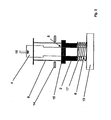
- FIG. 2 shows the punch-die sonotrode arrangement in detail. It can be seen that on the sonotrode 4, a spacer 9 is mounted, which moves up and down together with the sonotrode 4. Furthermore, it can be seen that the die 2 is slidably mounted relative to the punch 6 and that between the die 2 and the base plate 13, a spring 17 (also referred to as force transmitter) is arranged, the die 2 up against a limiting means 14th suppressed.
- the in FIG. 2 State shown is the configuration before forming an in FIG. 2 not shown tablet 19.
- the by the Die 2 and the punch 6 defined interior is filled with the pharmaceutically active substance 15.
- the position of the punch 6 can be changed relative to the die 2 in order to change the volume to be filled with the pharmaceutically active substance 15.
- the sonotrode 4 is made of hardened titanium in the present case.
- the die 2 can be made of either stainless steel, titanium, hardened titanium, high-melting plastic or ceramic.
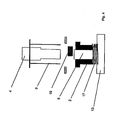
- FIG. 3 shows the shape of a tablet. Due to the vibrations of the sonotrode 4 in the ultrasonic frequency range and the pressure 16 shown by the double arrow, which acts on the sonotrode 4, the volume of the pharmaceutically active substance 15 is compressed, so that the sonotrode 4 during shaping, ie during compression and Welding the pharmaceutically active substance 15 for the preparation of the tablet moves down.
- the gap 5 is adjusted so that the sonotrode 4 does not contact the die 2, but it is ensured that during the shaping no pharmaceutically active substance, either in its original form (powder, granules, multiparticulate) or in an intermediate form during the implementation of the method according to the invention (for example, in molten form) escapes from the device 1 according to the invention and that the sonotrode 4 is in constant contact with the pharmaceutically active substance 15 to be processed.
- the spring 17 is compressed.
- FIG. 4 shows the ejection of the tablet 19.
- the die 2 is further pushed down until its upper edge is at least equal to the upper edge of the punch 6 and held in this position for a short moment.
- the sonotrode 4 and thus the spacer 9 is moved upward.
- the tablet 19 is now only on the punch 6 and can be easily removed thereby.
- the die 2 jumps back up until it runs against the Wegbegrenzer 14 and the volume thus formed can be filled again with pharmaceutically active substance 15, after which this new filling of pharmaceutically active substance 15 - according to the Figures 2 and 3 has been described - also compressed and can be welded.
- the person skilled in the art recognizes that the demoulding of the tablet 19 from the die can also take place by raising the punch 6.
- FIG. 5 shows another embodiment of the device according to the invention.
- the sonotrode 4 is arranged so stationary during the molding that an annular gap 5 (also referred to as axial gap) between sonotrode 4 and die 2 is present, which satisfies the above criteria.
- the volume loss of the pharmaceutically active substance during shaping is compensated in the present case by the vertically movable plunger 6, which is acted upon by the pressure means 17 (also referred to as force transmitter) and which moves upward during the shaping process.
- This stamp 6 is also arranged on the reverberant base plate 13 or on the reverberant printing means 17 such that it does not vibrate or only so that no spot welding can take place between the stamp 6 and the die 2.
- the demolding and removal of the finished tablet is essentially as in FIG. 4 shown.
- FIG. 6 an alternative embodiment of the device 1 according to the invention with a width 2c in the upper region 2a of the die 2 is shown.
- the die 2 is in FIG. 6 shown in a sectional view.
- the die 2 is provided in the lower region 2b cylindrical.
- the die 2 is wider than the sonotrode 4, in particular conically shaped.
- the sonotrode 4 travels until shortly before the transition between the lower, preferably cylindrical, region 2b of the die 2 and the upper region 2a, which corresponds to the prefix 2c.
- the sonotrode 4 at this transition between the regions 2 a and 2 b which may for example be designed as an edge 2 d, maintains a distance at each stage of the molding process which is preferably less than 1 mm, particularly preferably is less than 0.7 mm.
- the 2c must be chosen so that the Sonotrode 4 does not touch the die 2 when coupling ultrasound.
Landscapes
- Health & Medical Sciences (AREA)
- Engineering & Computer Science (AREA)
- Veterinary Medicine (AREA)
- Medicinal Chemistry (AREA)
- Mechanical Engineering (AREA)
- Bioinformatics & Cheminformatics (AREA)
- Public Health (AREA)
- Chemical & Material Sciences (AREA)
- Chemical Kinetics & Catalysis (AREA)
- Life Sciences & Earth Sciences (AREA)
- Pharmacology & Pharmacy (AREA)
- Nuclear Medicine, Radiotherapy & Molecular Imaging (AREA)
- General Health & Medical Sciences (AREA)
- Organic Chemistry (AREA)
- General Chemical & Material Sciences (AREA)
- Animal Behavior & Ethology (AREA)
- Psychiatry (AREA)
- Neurosurgery (AREA)
- Neurology (AREA)
- Anesthesiology (AREA)
- Biomedical Technology (AREA)
- Medicinal Preparation (AREA)
- Medical Preparation Storing Or Oral Administration Devices (AREA)
- Medicines That Contain Protein Lipid Enzymes And Other Medicines (AREA)
- Pharmaceuticals Containing Other Organic And Inorganic Compounds (AREA)
Description
- Die vorliegende Erfindung betrifft ein Verfahren und eine Vorrichtung zur Formgebung einer pharmazeutisch wirksamen Substanz, insbesondere Arzneimittel in Form von Pulvern, Granulaten oder multipartikulären Arzneiformen, wie z.B. Pellets und Mikrokapseln, für die Herstellung einer Tablette oder einer multipartikulären Arzneiform mittels Ultraschall, die einen Ultraschallgenerator, eine Sonotrode und eine Matrize, in die die pharmazeutisch wirksame Substanz einfüllbar ist, aufweist.
- Derartige Ultraschalleinrichtungen zum Aufschmelzen und Verpressen von Tabletten sind aus dem Stand der Technik bekannt und beispielsweise in dem Artikel "Principles and Application of Ultrasound in pharmaceutical powder compression", Pharmaceutical research, Vol. 17,No. 3, 2000, Seite 257 - 265 beschrieben. Dieser Artikel wird hiermit als Referenz eingeführt. Die im Stand der Technik beschriebene Tablettierung mittels Ultraschall hat jedoch den Nachteil, dass beim Einsatz von Ultraschall die Sonotrode, der Unterstempel und/oder die Matrize einem sehr hohen Verschleiß unterliegen und/oder dass der Unterstempel und/oder die Matrize und/oder Teile der Ultraschalleinrichtung punktförmig zusammenschweißen. Um dies zu vermeiden, wird vom Stand der Technik beispielsweise vorgeschlagen, die Teile durch Folien voneinander zu trennen. Dies hat sich in der Praxis jedoch als sehr aufwändig, nicht handhabbar und kostenintensiv herausgestellt.
- Ferner ist aus der Druckschrift
JP 06,220504 - Es war deshalb die Aufgabe der vorliegenden Erfindung, eine Vorrichtung zur Formgebung einer pharmazeutisch wirksamen Substanz, insbesondere Arzneimittel in Form von Pulvern, Granulaten oder multipartikulären Arzneiformen, wie z.B. Pellets und Mikrokapseln, für die Herstellung einer Tablette oder einer multipartikulären Arzneiform mittels Ultraschall zur Verfügung zu stellen, die die Nachteile des Standes der Technik nicht aufweist.
- Gelöst wird die Aufgabe mit einer Vorrichtung, zur Formgebung einer pharmazeutisch wirksamen Substanz, insbesondere Arzneimittel in Form von Pulvern, Granulaten oder multipartikulären Arzneiformen, wie z.B. Pellets und Mikrokapseln, für die Herstellung einer Tablette oder einer multipartikulären Arzneiform mittels Ultraschall, mit einem Ultraschallgenerator, einer Sonotrode und einer Matrize, in die die pharmazeutisch wirksame Substanz einfüllbar ist, wobei die Sonotrode bei der Formgebung in direktem Kontakt zu der pharmazeutisch wirksamen Substanz steht, wobei die Sonotrode nicht in die Matrize eindringt und kein direkter Kontakt zwischen Sonotrode und Matrize besteht.
- Es war für den Fachmann überaus erstaunlich und nicht zu erwarten, dass die erfindungsgemäße Vorrichtung einfach und kostengünstig herzustellen und zu betreiben ist. Die Standzeiten der Sonotorode und der Matrize sind deutlich erhöht. Mit der erfindungsgemäßen Vorrichtung kann eine Tablette oder eine multipartikuläre Arzneiform hergestellt werden, bei der ein Missbrauch einer solchen Tablette, die beispielsweise psychotrope Stoffe enthält, zumindest deutlich erschwert wird. Eine solchermaßen harte Tablette dient auch zum Vermeiden des Fehlgebrauchs von Arzneiformen mit hochaktiven Substanzen, denn solche Tabletten können aufgrund ihrer Härte nicht mittels eines Zerkleinerers, beispielsweise eines Mörsers, zerkleinert werden. Durch eine solche Zerkleinerung bzw. allgemein Zerstörung der mechanischen Struktur der Tablette kann nämlich die pharmakologische Wirksamkeit, insbesondere der zeitliche Verlauf der Abgabe der hochaktiven Substanz, insbesondere bei einer sogenannten Retard-Formulierung stark beeinträchtigt werden. Bei der Herstellung einer Tablette oder einer multipartikulären Arzneiform mittels der erfindungsgemäßen Vorrichtung werden keine Folien oder andere Trennmittel zwischen der Sonotrode und der zu komprimierenden pharmazeutischen Substanz benötigt.
- Die erfindungsgemäße Vorrichtung eignet sich zur Formgebung einer pharmazeutisch wirksamen Substanz, insbesondere zur Formgebung von Pulvern, Granulaten, multipartikulären Arzneiformen, wie z.B. Pellets und Mikrokapseln, für die Herstellung einer Tablette oder einer multipartikulären Arzneiform unter dem Einsatz von Ultraschall. Formgebung im Sinne der Erfindung bedeutet, dass pharmazeutisch wirksame Substanzen als Ausgangssubstanzen, insbesondere als pulverförmige Arzneimittel, in die gewünschte Form gebracht und dabei zumindest teilweise kompaktiert werden. Durch den Einsatz von Ultraschall werden die Ausgangssubstanzen, d.h. insbesondere pulverförmige Arzneimittel, erwärmt und schmelzen dabei zumindest teilweise auf. Die so geschmolzenen Ausgangssubstanzen bilden einen Verbund. Unter einem gewissen Druck kann eine Komprimierung und eine zusätzliche Härtung der resultierenden Tablette oder der resultierenden multipartikulären Arneiform erfolgen. Pharmazeutisch wirksame Substanz im Sinne der Erfindung ist eine Substanz, die zum einen die gewünschte pharmazeutische Wirkung aufweist und zum anderen für die Formgebung mittels der erfindungsgemäßen Vorrichtung geeignet ist. Dies bedeutet, dass die pharmazeutisch wirksame Substanz erfindungsgemäß durchaus eine Mehrzahl von Stoffen umfassen kann (und in der Regel auch umfassen wird), von denen ein Teil vorwiegend oder ausschließlich die pharmazeutische Wirksamkeit aufweist und von denen ein anderer Teil in der erfindungsgemäßen Vorrichtung derart aufschmelzbar und miteinander verschweißbar bzw. sinterbar ist, dass dadurch ein Verbund bzw. eine Matrix zum weitgehenden mechanischen Einschluss des pharmazeutisch wirksamen Teils der Stoffe entsteht.
- Weiterhin erfindungsgemäß weist die erfindungsgemäße Vorrichtung einen Ultraschallgenerator auf, der die Ultraschallfrequenzen, die sich vorzugsweise in einer Bandbreite zwischen 10 und 70 kHz, besonders bevorzugt zwischen 10 und 40 kHz bewegen, erzeugt. Diese Ultraschallfrequenzen werden gegebenenfalls verstärkt und dann an eine sogenannte Sonotrode übertragen, die im Ultraschallbereich schwingt und die Schwingungsenergie an die zu formenden Ausgangssubstanzen abgibt. Die Sonotrode ist vorzugsweise aus Edelstahl, Titan, gehärtetem Titan oder aus einer Legierung, die mindestens eine der genannten Substanzen enthält, gefertigt.
- Weiterhin erfindungsgemäß weist die erfindungsgemäße Vorrichtung eine Matrize auf, in die die pharmazeutisch wirksame Substanz (zeitlich vor ihrer Formgebung) eingefüllt wird, wobei die Matrize zumindest teilweise das Negativ der zu erzielenden Tablettenform darstellt. Die Matrize ist vorzugsweise aus einem Material gefertigt, das beim Einkoppeln von Ultraschall keine Verbindung mit der zu tablettierenden Mischung, d.h. mit der zur Komprimierung vorgesehenen pharmazeutisch wirksamen Substanz, eingeht und das während des Schweiß- bzw. Formgebungsprozesses nicht reißt oder zerspringt (wie dies etwa bei Glas der Fall wäre). Vorzugsweise ist die Matrize mit solchen Eigenschaften aus Keramik, Edelstahl, Titan, hochschmelzendem Kunststoff und/oder gehärtetem Titan gefertigt.
- Erfindungsgemäß ist die erfindungsgemäße Vorrichtung nun so gestaltet, dass die Sonotrode bei der Formgebung zwar in direktem Kontakt zu der pharmazeutisch wirksamen Substanz steht, es jedoch zu keinem Zeitpunkt der Formgebung zu einem direkten Kontakt zwischen der Matrize und der Sonotrode kommt. Dadurch ist zum einen die gewünschte Tablette bzw. die gewünschte multipartikuläre Arzneiform mit der gewünschten Form und der gewünschten Härte erzielbar, zum anderen tritt jedoch die o. g. Punktverschweißung nicht ein.
- Vorzugsweise besteht ein Spalt zwischen der Sonotrode und der Matrize, dessen maximale Größe so bemessen ist, dass durch ihn kein Anteil der pharmazeutisch wirksamen Substanz, insbesondere zu Beginn der Ultraschallformgebung, entweichen kann. Vorzugsweise hat der Spalt eine Größe von weniger als 2 mm, bevorzugt weniger als 1 mm, besonders bevorzugt weniger als 0,7 mm.
- In einer weiteren bevorzugten Ausführungsform ist zwischen der Sonotrode und der Matrize ein Abstandshalter angeordnet. Diese bevorzugte Ausführungsform der vorliegenden Erfindung ist insbesondere dann von Vorteil, wenn die Sonotrode während der Formgebung der pharmazeutisch wirksamen Substanz bewegt wird, beispielsweise um sicherzustellen, dass auch bei sich während der Formgebung verdichtender pharmazeutisch wirksamer Substanz immer ein guter Kontakt zwischen der pharmazeutisch wirksamen Substanz und der Sonotrode besteht und/oder um die ultraschallunterstützte Formgebung unter Druck durchführen zu können. Bei dieser Ausführungsform ist die Gefahr gegeben, dass die Sonotrode in die Matrize eindringt und dadurch ein direkter Kontakt zwischen der Sonotrode und der Matrize hergestellt wird, der zu einer Punktverschweißung und/oder zur Zerstörung der Sonotrode führen würde. Diese Kontaktbildung wird durch den Abstandstandhalter, der für einen konstanten Abstand zwischen Sonotrode und Matrize sorgt, verhindert.
- Vorzugsweise ist, wie bereits erwähnt, die Sonotrode axial verschieblich. Diese bevorzugte Ausführungsform der vorliegenden Erfindung ist insbesondere dann von Vorteil, wenn die Sonotrode einer gewissen Druckbelastung ausgesetzt ist und sich die pharmazeutisch wirksame Substanz bei der Formgebung komprimiert.
- Weiterhin bevorzugt ist die Matrize ebenfalls verschieblich gelagert bzw. weist die Matrize eine Vorweite auf.
- Ganz besonders bevorzugt ist die Bewegung der Sonotrode und der Matrize nach Einstellung des Spaltes gleichförmig. Dadurch wird erreicht, dass sich der Spalt weder verkleinert noch vergrößert, so dass weder pulverförmiges oder geschmolzenes Arzneimittelpulver - d.h. Anteile der pharmazeutisch wirksamen Substanz vor ihrer endgültigen Formgebung - aus dem Spalt austreten können, noch die Sonotrode zerstört wird und/oder die Matrize mit dem Unterstempel punktförmig miteinander verschweißen.
- In einer weiteren bevorzugten Ausführungsform weist die erfindungsgemäße Vorrichtung einen Stempel auf, der sich auf der der Sonotrode gegenüberliegenden Seite der Matrize befindet. In diesem Fall ist die Matrize vorzugsweise lediglich ringförmig gestaltet und das Volumen, in welches die pharmazeutisch wirksame Substanz vor ihrer erfindungsgemäßen Formgebung eingefüllt wird, wird von unten durch einen Stempel begrenzt. Vorzugsweise ist dieser Stempel so gelagert, dass beim Einkoppeln des Ultraschalls in die pharmazeutisch wirksame Substanz der Stempel nicht oder nur so weit mitschwingt, dass ein Stoffschluss zwischen dem Stempel und der Matrize ausgeschlossen werden kann. Dies wird vorzugsweise dadurch erreicht, dass der Stempel in einem schallharten Bauteil vorzugsweise form- und/oder kraftschlüssig gelagert ist. Vorzugsweise ist der Stempel axial verschieblich gelagert. Diese Ausführungsform hat insbesondere den Vorteil, dass die Sonotrode bei der Ultraschallformgebung feststehend gestaltet werden kann und der ggf. für die Formgebung benötigte Druck durch den Stempel in die pharmazeutisch wirksame Substanz eingebracht werden kann. Des weiteren ist der Stempel vorzugsweise so gelagert, dass seine Eindringtiefe in die Matrize einstellbar ist. Diese Ausführungsform hat insbesondere den Vorteil, dass das Volumen bzw. die Menge der pharmazeutisch wirksamen Substanz, das bzw. die in die Matrize eingefüllt und dann der Formgebung ausgesetzt wird, einstellbar ist.
- Wie bereits erwähnt, ist es in der Regel von Vorteil, wenn die Formgebung mittels Ultraschall und unter Einwirkung einer gewissen Kraft während der Ultraschallkopplung erfolgt, wobei die Kraft vorzugsweise bis 10 kN beträgt, besonders bevorzugt bis 5 kN und ganz besonders bevorzugt bis 2 kN. Diese Kraft kann durch die Sonotrode und/oder durch einen Stempel auf das pulverförmige Arzneimittel, d.h. die pharmazeutisch wirksame Substanz, übertragen werden.
- Die Dauer der Ultraschallbehandlung bzw. der Temperaturverlauf hängt insbesondere von dem gewünschten Resultat ab und wird von dem Fachmann experimentell ermittelt.
- Ein weiterer Gegenstand der vorliegenden Erfindung ist ein Verfahren zur Formgebung einer pharmazeutisch wirksamen Substanz, insbesondere Arzneimittel in Form von Pulvern, Granulaten oder multipartikulären Arzneiformen, wie z.B. Pellets und Mikrokapseln, für die Herstellung einer Tablette oder einer multipartikulären Arzneiform mittels Ultraschall, mit einem Ultraschallgenerator, einer Sonotrode und einer Matrize, in die die pharmazeutisch wirksame Substanz einfüllbar ist, bei dem die Sonotrode und die Matrize bei der Formgebung so bewegt werden, dass immer ein Spalt zwischen Sonotrode und Matrize aufrecht erhalten bleibt und die Sonotrode bei der Formgebung in direktem Kontakt zu der zu plastifizierenden bzw. zu komprimierenden pharmazeutisch wirksamen Substanz, vorzugsweise Arzneimittel, steht.
- Ein weiterer Gegenstand der vorliegenden Erfindung ist ein Verfahren zur Formgebung einer pharmazeutisch wirksamen Substanz, insbesondere Arzneimittel in Form von Pulvern, Granulaten oder multipartikulären Arzneiformen, wie z.B. Pellets und Mikrokapseln, für die Herstellung einer Tablette oder einer multipartikulären Arzneiform mittels Ultraschall mit einem Ultraschallgenerator, einer Sonotrode und einer Matrize, in die die pharmazeutisch wirksame Substanz, insbesondere das pulverförmige Arzneimittel, einfüllbar ist, wobei bei dem Verfahren die Sonotrode beim Schweißen in direktem Kontakt zu dem Arzneimittel, d.h. der pharmazeutisch wirksamen Substanz, steht und ein Spalt zwischen Sonotrode und Matrize besteht und dass beim Schweißen ein Stempel in Richtung der Sonotrode bewegt wird.
- Beide erfindungsgemäße Verfahren sind einfach und kostengünstig durchzuführen und eignen sich zur Herstellung von Tabletten mit hoher Härte, die beispielsweise psychotrope Substanzen aufweisen und bei denen ein Fehlgebrauch oder ein einfacher Missbrauch ausgeschlossen werden kann.
- Ein weiterer Gegenstand der vorliegenden Erfindung ist deshalb die Verwendung der erfindungsgemäßen Vorrichtung und/oder das erfindungsgemäße Verfahren zur Herstellung von solchen Arzneimitteln, insbesondere Tabletten oder multipartikuläre Arzneiformen, die psychotrope Stoffe enthalten und die nicht betäubungsmittelverschreibungspflichtig sind, bzw. die eine große Härte aufweisen, so dass ein Fehlgebrauch zuverlässig vermieden wird.
- Alle oben gemachten Ausführungen gelten für die erfindungsgemäße Vorrichtung und die erfindungsgemäßen Verfahren und die erfindungsgemäße Verwendung gleichermaßen.
- Im Folgenden wird die Erfindung anhand der
Figuren 1 - 5 erläutert. Diese Erläuterungen sind lediglich beispielhaft und schränken den allgemeinen Erfindungsgedanken nicht ein. Die Erläuterungen gelten für die erfindungsgemäße Vorrichtung, die erfindungsgemäßen Verfahren und die erfindungsgemäße Verwendung gleichermaßen. -
Figur 1 zeigt eine Prinzipskizze der erfindungsgemäßen Vorrichtung. -
Figur 2 zeigt eine Detaildarstellung der erfindungsgemäßen Vorrichtung insbesondere der Formgebung. -
Figur 3 zeigt ein Detail der erfindungsgemäßen Vorrichtung während der Formgebung. -
Figur 4 zeigt die Darstellung gemäßFigur 3 nach Fertigstellung der Tablette. -
Figur 5 zeigt eine weitere Ausführungsform der erfindungsgemäßen Vorrichtung. -
Figur 6 zeigt eine alternative Ausführungsform der erfindungsgemäßen Vorrichtung mit einer Vorweite im oberen Bereich der Matrize. -
Figur 1 zeigt eine Ausführungsform der erfindungsgemäßen Vorrichtung 1. Die Vorrichtung 1 weist eine Sonotrode 4 auf, die mit einem Verstärker 11 verbunden ist, der wiederum von einem Konverter 10, beispielsweise einem Piezoelement, das elektrische Signale von dem Generator 3 in Schwingungen umwandelt, die von dem Verstärker 11 verstärkt und and die Sonotrode 4 weitergeleitet werden. Des weiteren weist die Vorrichtung 1 eine Presse 8 auf, mit der die Sonotrode 4 mit einem gewissen Druck vertikal nach unten gedrückt werden kann. Des weiteren weist die erfindungsgemäße Vorrichtung eine Matrize 2 auf, die mit einem Stempel 6 in Verbindung steht. Durch die Matrize 2 und den Stempel 6 wird ein Innenraum definiert, der mit einer pharmazeutisch wirksamen Substanz 15 füllbar ist. Der Stempel 6 ist in einer schallharten Basisplatte 13 so gelagert, dass er beim Einkoppeln des Ultraschalls in die pharmazeutisch wirksame Substanz 15 nicht oder nur so mitschwingt, dass es zu keinen Punktverschweißungen zwischen der Matrize 2 und dem Stempel 6 kommt. Während des Schweiß- bzw. Sintervorgangs der pharmazeutisch wirksamen Substanz, während dem erfindungsgemäß gleichzeitig die Formgebung erfolgt, wird der Unterstempel auf einer Position gehalten, die zur Durchführung des erfindungsgemäßen Verfahrens geeignet ist, insbesondere derart, dass der Stempel und die Matrize nicht zusammenschweißen bzw. dass die Tablette das gewünschte Volumen hat. Die Kraft zum Verdichten des Produkts wird über die Sonotrode während und gegebenenfalls auch nach dem Schweißvorgang aufgebracht. -
Figur 2 zeigt die Stempel-Matrize-Sonotrodenanordnung im Detail. Es ist zu erkennen, dass an der Sonotrode 4 ein Abstandshalter 9 angebracht ist, der sich gemeinsam mit der Sonotrode 4 auf- und ab bewegt. Des weiteren ist zu erkennen, dass die Matrize 2 relativ zu dem Stempel 6 verschieblich gelagert ist und dass zwischen der Matrize 2 und der Basisplatte 13 eine Feder 17 (auch als Kraftgeber bezeichnet) angeordnet ist, die die Matrize 2 nach oben gegen ein Begrenzungsmittel 14 drückt. Der inFigur 2 dargestellte Zustand ist die Konfiguration vor dem Formen einer inFigur 2 nicht dargestellten Tablette 19. Der durch die Matrize 2 und den Stempel 6 definierte Innenraum ist mit der pharmazeutisch wirksamen Substanz 15 gefüllt. Die Lage des Stempels 6 kann relativ zu der Matrize 2 verändert werden, um das mit der pharmazeutisch wirksamen Substanz 15 zu füllende Volumen zu verändern. Dies kann beispielsweise dadurch erfolgen, dass in der Matrize 2 oder der Basisplatte 13 ein Gewinde angeordnet ist, das mit einem Gewinde in dem Stempel 6 korrespondiert. Durch Drehen des Stempels 6 kann das für das Arzneimittelpulver zur Verfügung stehende Volumen verändert werden. Die Sonotrode 4 ist in dem vorliegenden Fall aus gehärtetem Titan gefertigt. Die Matrize 2 kann entweder aus Edelstahl, Titan, gehärtetem Titan, hochschmelzendem Kunststoff oder Keramik gefertigt sein. -
Figur 3 zeigt die Formgebung einer Tablette. Durch die Schwingungen der Sonotrode 4 im Ultraschallfrequenzbereich und durch den mit dem Doppelpfeil dargestellten Druck 16, der auf die Sonotrode 4 wirkt, wird das Volumen der pharmazeutisch wirksamen Substanz 15 komprimiert, so dass die Sonotrode 4 sich während der Formgebung, d. h. während des Komprimierens und Schweißens der pharmazeutisch wirksamen Substanz 15 zur Herstellung der Tablette nach unten bewegt. Der Abstandshalter 9, der mit der Sonotrode 4 fest verbunden ist und dessen unteres Ende mit der Matrize 2 zusammenwirkt, drückt diese bei der Abwärtsbewegung der Sonotrode 4 ebenfalls mit nach unten, so dass der Ringspalt 5 (auch als axialer Spalt bezeichnet), der sich zwischen dem unteren Ende der Sonotrode 4 und der Matrize 2 befindet und der durch den Abstandshalter 9 einstellbar ist, während des gesamten Formgebungsvorganges nicht verändert. Der Spalt 5 wird so eingestellt, dass die Sonotrode 4 die Matrize 2 nicht berührt, dass jedoch sichergestellt ist, dass während der Formgebung keine pharmazeutisch wirksame Substanz, sei es in ihrer ursprünglichen Form (Pulver, Granulat, multipartikulär) oder in einer intermediären Form während der Durchführung des erfindungsgemäßen Verfahrens (beispielsweise in geschmolzener Form) aus der erfindungsgemäßen Vorrichtung 1 entweicht und dass die Sonotrode 4 sich im ständigen Kontakt zu der zu verarbeitenden pharmazeutisch wirksamen Substanz 15 befindet. Durch die Abwärtsbewegung der Matrize 2 wird die Feder 17 komprimiert. -
Figur 4 zeigt den Auswurf der Tablette 19. Nachdem die Tablette 19 fertiggestellt worden ist, wird die Matrize 2 noch weiter nach unten geschoben, bis ihre Oberkante zumindest auf gleicher Höhe mit der Oberkante des Stempels 6 ist und in dieser Position für einen kurzen Augenblick festgehalten. Gleichzeitig wird die Sonotrode 4 und damit der Abstandshalter 9 nach oben bewegt. Die Tablette 19 liegt nunmehr nur noch auf dem Stempel 6 auf und kann dadurch leicht entnommen werden. Sobald die Tablette 19 entfernt worden ist, schnellt die Matrize 2 wieder nach oben, bis sie gegen den Wegbegrenzer 14 läuft und das so gebildete Volumen kann erneut mit pharmazeutisch wirksamer Substanz 15 gefüllt werden, wonach diese neue Füllung von pharmazeutisch wirksamer Substanz 15 - wie es gemäß denFiguren 2 und3 beschrieben worden ist - ebenfalls komprimiert und verschweißt werden kann. Der Fachmann erkennt, dass die Entformung der Tablette 19 aus der Matrize auch durch ein Anheben des Stempels 6 erfolgen kann. -
Figur 5 zeigt eine andere Ausführungsform der erfindungsgemäßen Vorrichtung. In diesem Fall ist die Sonotrode 4 während der Formgebung so ortsfest angeordnet, dass ein Ringspalt 5 (auch als axialer Spalt bezeichnet) zwischen Sonotrode 4 und Matrize 2 vorhanden ist, der den oben genannten Kriterien genügt. Der Volumenverlust der pharmazeutisch wirksamen Substanz während der Formgebung wird in dem vorliegenden Fall durch den vertikal beweglichen Stempel 6 kompensiert, der durch das Druckmittel 17 (auch als Kraftgeber bezeichnet) mit Kraft beaufschlagt wird und der sich während des Formgebungsvorganges nach oben bewegt. Auch dieser Stempel 6 ist so an der schallharten Basisplatte13 bzw. an dem schallharten Druckmittel 17 angeordnet, dass er nicht oder nur so schwingt, dass keine Punktverschweißung zwischen dem Stempel 6 und der Matrize 2 erfolgen kann. Die Entformung und Entnahme der fertiggestellten Tablette erfolgt im Wesentlichen wie inFigur 4 dargestellt. - In
Figur 6 ist eine alternative Ausführungsform der erfindungsgemäßen Vorrichtung 1 mit einer Vorweite 2c im oberen Bereich 2a der Matrize 2 dargestellt. Die Matrize 2 ist inFigur 6 in einer Schnittdarstellung abgebildet. Die Matrize 2 ist im unteren Bereich 2b zylindrisch vorgesehen. Im Bereich der Vorweite 2c ist die Matrize 2 zur Sonotrode 4 hin sich weitend, insbesondere konisch geformt, vorgesehen. Durch diese Formgebung ist es erfindungsgemäß besonders effizient möglich, die inFigur 6 nicht dargestellte pharmazeutisch wirksame Substanz 15 vor ihrem Verschmelzen bzw. Verschweißen zu verdichten. Weiterhin ist es durch diese Formgebung der Matrize 2 besonders wirkungsvoll möglich, Lufteinschlüsse innerhalb der pharmazeutisch wirksamen Substanz und daher auch innerhalb der ebenfalls nicht dargestellten fertigen Tablette 19 zu verhindern. Bei der Durchführung des erfindungsgemäßen Verfahrens zur Formgebung fährt die Sonotrode 4 bis kurz vor den Übergang zwischen dem unteren, vorzugsweise zylindrischen, Bereich 2b der Matrize 2 und dem oberen Bereich 2a, welcher der Vorweite 2c entspricht. Erfindungsgemäß ist es bevorzugt vorgesehen, dass die Sonotrode 4 zu diesem Übergang zwischen den Bereichen 2a und 2b, der beispielsweise als eine Kante 2d ausgeführt sein kann, in jedem Stadium des Verfahrens zur Formgebung einen Abstand einhält, der bevorzugt kleiner als 1 mm, besonders bevorzugt kleiner als 0,7 mm ist. Die Vorweite 2c muss so gewählt werden, dass die Sonotrode 4 beim Einkoppeln von Ultraschall nicht die Matrize 2 berührt. -
- 1
- Vorrichtung
- 2
- Matrize
- 2a
- oberer Bereich der Matrize
- 2b
- unterer Bereich der Matrize
- 2c
- Vorweite
- 2d
- Kante zwischen oberem und unterem Bereich der Matrize
- 3
- Ultraschallgenerator
- 4
- Sonotrode
- 5
- Axialer Spalt
- 6
- Stempel
- 8
- Druckmittel
- 9
- Abstandshalter
- 10
- Konverter
- 11
- Verstärker, Booster
- 13
- schallharte Basisplatte
- 14
- obere Wegbegrenzung für die Matrize
- 15
- pharmazeutisch wirksame Substanz, insbesondere Arzneimittelpulver
- 16
- Druck, Axialbewegung der Sonotrode
- 17
- Kraftgeber (pneumatisch oder hydraulisch betrieben)
- 18
- axiale Längsverschiebung des Stempels 6
- 19
- fertiggestellte Tablette
Claims (14)
- Vorrichtung (1), zur Formgebung einer pharmazeutisch wirksamen Substanz (15) in Form von Pulvern, Granulaten, multipartikulären Arzneiformen, insbesondere Pellets und Mikrokapseln, für die Herstellung einer Tablette (19) oder einer multipartikulären Arzneiform mittels Ultraschall, mit einem Ultraschallgenerator (3), einer Sonotrode (4) und einer Matrize (2), in die die pharmazeutisch wirksame Substanz (15) einfüllbar ist, wobei die Sonotrode (4) bei der Formgebung in direktem Kontakt zu der pharmazeutisch wirksamen Substanz (15) steht, dadurch gekennzeichnet, dass die Sonotrode (4) nicht in die Matrize (2) eindringt und kein direkter Kontakt zwischen Sonotrode (4) und Matrize (2) besteht.
- Vorrichtung (1) nach Anspruch 1, dadurch gekennzeichnet, dass sich ein Spalt (5) zwischen der Sonotrode (4) und der Matrize (2) befindet, dessen maximale Größe so bemessen ist, dass durch ihn bei keine pharmazeutisch wirksame Substanz (15) entweicht.
- Vorrichtung (1) nach einem der voranstehenden Ansprüche, dadurch gekennzeichnet, dass zwischen der Sonotrode (4) und der Matrize (2) ein Abstandshalter (9) angeordnet ist.
- Vorrichtung (1) nach einem der voranstehenden Ansprüche, dadurch gekennzeichnet, dass die Sonotrode (4) axial verschieblich angeordnet ist.
- Vorrichtung (1) nach einem der voranstehenden Ansprüche, dadurch gekennzeichnet, dass die Matrize (2) verschieblich gelagert ist.
- Vorrichtung (1) nach einem der voranstehenden Ansprüche, dadurch gekennzeichnet, dass die Matrize (2) eine Vorweite (2c) aufweist.
- Vorrichtung (1) nach einem der voranstehenden Ansprüche, dadurch gekennzeichnet, dass die Bewegungen der Sonotrode (4) und der Matrize (2) nach Einstellung des Spaltes (5) gleichförmig erfolgt.
- Vorrichtung (1) nach einem der voranstehenden Ansprüche, dadurch gekennzeichnet, dass sie einen Stempel (6) aufweist, der sich auf der der Sonotrode (4) gegenüberliegenden Seite der Matrize (2) befindet.
- Vorrichtung (1) nach Anspruch 8, dadurch gekennzeichnet, dass der Stempel (6) so gelagert ist, dass beim Einkoppeln des Ultraschalls der Stempel (6) nicht mitschwingt.
- Vorrichtung (1) nach einem der voranstehenden Ansprüche, dadurch gekennzeichnet, dass der Stempel (6) beweglich angeordnet ist.
- Vorrichtung (1) nach einem der voranstehenden Ansprüche, dadurch gekennzeichnet, dass sie ein Druckmittel (8) aufweist, das auf die Sonotrode (4) und/oder auf den Stempel (6) einwirkt und die Formgebung der Tablette (19) oder der multipartikulären Arzneiform unterstützt.
- Verfahren zur Formgebung einer pharmazeutisch wirksamen Substanz (15), insbesondere Arzneimittel in Form von Pulvern, Granulaten, multipartikulären Arzneiformen, wie z.B. Pellets und Mikrokapseln, für die Herstellung einer Tablette (19) oder einer multipartikulären Arzneiform mittels Ultraschall, mit einem Ultraschallgenerator (3), einer Sonotrode (4) und einer Matrize (2), in die die pharmazeutisch wirksame Substanz (15) einfüllbar ist, wobei die Sonotrode (4) bei der Formgebung in direktem Kontakt zu der zu plastifizierenden pharmazeutisch wirksamen Substanz (15) steht, dadurch gekennzeichnet, dass die Sonotrode (4) und die Matrize (2) bei der Formgebung so bewegt werden, dass immer ein axialer Spalt (5) zwischen Sonotrode (4) und Matrize (2) aufrecht erhalten bleibt.
- Verfahren nach Anspruch 12, wobei in die Matrize (2) ein pulverförmiges Arzneimittel einfüllbar ist, wobei die Sonotrode (4) beim Schweißen in direktem Kontakt zu der pharmazeutisch wirksamen Substanz (15) steht und wobei die Sonotrode (4) nicht in die Matrize (2) eindringt und der Spalt (5) zwischen Sonotrode (4) und Matrize (2) besteht, wobei beim Schweißen ein Stempel (6) in Richtung der Sonotrode (4) bewegt wird.
- Verwendung der Vorrichtung und/oder des Verfahrens nach einem der voranstehenden Ansprüche zur Herstellung von Arzneimitteln, die psychotrope Stoffe enthalten und die nicht betäubungsmittelverschreibungspflichtig sind.
Applications Claiming Priority (3)
| Application Number | Priority Date | Filing Date | Title |
|---|---|---|---|
| DE102005013725 | 2005-03-22 | ||
| DE102005024171A DE102005024171A1 (de) | 2005-03-22 | 2005-05-23 | Verfahren und Vorrichtung zur Ultraschallverpressung einer Tablette oder einer multipartikulären Arzneiform |
| PCT/EP2006/060965 WO2006100274A1 (de) | 2005-03-22 | 2006-03-22 | Verfahren und vorrichtung zur ultraschallverpressung einer tablette oder einer multipartikulären arzneiform |
Publications (2)
| Publication Number | Publication Date |
|---|---|
| EP1863630A1 EP1863630A1 (de) | 2007-12-12 |
| EP1863630B1 true EP1863630B1 (de) | 2014-03-19 |
Family
ID=36577434
Family Applications (1)
| Application Number | Title | Priority Date | Filing Date |
|---|---|---|---|
| EP06725248.6A Expired - Lifetime EP1863630B1 (de) | 2005-03-22 | 2006-03-22 | Verfahren und Vorrichtung zur Ultraschallverpressung einer Tablette oder einer multipartikulären Arzneiform |
Country Status (7)
| Country | Link |
|---|---|
| US (1) | US8088322B2 (de) |
| EP (1) | EP1863630B1 (de) |
| JP (1) | JP5180059B2 (de) |
| AU (1) | AU2006226371B2 (de) |
| CA (1) | CA2600335C (de) |
| DE (1) | DE102005024171A1 (de) |
| WO (1) | WO2006100274A1 (de) |
Families Citing this family (12)
| Publication number | Priority date | Publication date | Assignee | Title |
|---|---|---|---|---|
| US7908729B2 (en) | 2005-06-03 | 2011-03-22 | Teva Women's Health, Inc. | Method for making a lollipop |
| WO2006133047A1 (en) | 2005-06-03 | 2006-12-14 | Duramed Pharmaceuticals, Inc. | Attachment of a handle to a solid oral dosage form |
| JP2008212533A (ja) * | 2007-03-07 | 2008-09-18 | Kao Corp | タブレット |
| CN102123854B (zh) * | 2008-08-28 | 2014-03-19 | 花王株式会社 | 粉体的压缩成型装置以及固形粉体成型体的制造方法 |
| FR2942733B1 (fr) * | 2009-03-04 | 2015-12-25 | Commissariat Energie Atomique | Outillage de presse |
| DE102010005780B4 (de) * | 2010-01-27 | 2013-07-11 | Fette Compacting Gmbh | Rundläufer-Tablettenpresse und Verfahren zum Pressen von Tabletten in einer Rundläufer-Tablettenpresse |
| SMP201200046B1 (it) * | 2012-10-24 | 2015-07-09 | Caffemotive Srl | Un metodo per la produzione di una compressa di unprodotto macinato in polvere per l'estrazione di bevande nonchè compressa ottenibile con tale metodo |
| JP6075874B2 (ja) * | 2013-06-21 | 2017-02-08 | 花王株式会社 | 粉体の圧縮成型装置 |
| GB2566712B (en) * | 2017-09-22 | 2019-09-25 | Specac Ltd | Die arrangement |
| CN108819334B (zh) * | 2018-05-17 | 2020-11-13 | 北京盛世龙药业有限公司 | 一种六神曲专用压块机 |
| CN108653419B (zh) * | 2018-05-17 | 2021-03-30 | 北京盛世龙药业有限公司 | 一种中药六神曲的制备方法及其加工设备 |
| CN114766692B (zh) * | 2022-04-12 | 2023-04-14 | 浙江龙泉山食品有限公司 | 一种破壁灵芝孢子粉片剂的制备设备及其制备工艺 |
Family Cites Families (20)
| Publication number | Priority date | Publication date | Assignee | Title |
|---|---|---|---|---|
| CH486317A (de) * | 1967-04-25 | 1970-02-28 | Von Roll Ag | Presse zum Verdichten von schüttbaren Massen |
| JP2520638B2 (ja) * | 1987-05-07 | 1996-07-31 | 株式会社コーセー | 粉体化粧料の成型法 |
| JPH02151398A (ja) * | 1988-12-03 | 1990-06-11 | Hori Takeshi | 粉体成型方法 |
| JPH02225409A (ja) * | 1989-02-28 | 1990-09-07 | Shiseido Co Ltd | 固形粉末化粧料の成形方法 |
| JPH03206016A (ja) * | 1989-12-29 | 1991-09-09 | Miyauchi Kako Kk | 二重ケース付化粧品及びその製造方法 |
| JPH0711133Y2 (ja) * | 1990-10-05 | 1995-03-15 | 株式会社神戸製鋼所 | 金属粉末用冷間鍛造装置 |
| DE4106645A1 (de) * | 1991-03-02 | 1992-09-03 | Philips Patentverwaltung | Vorrichtung zur ueberfuehrung von plastischen massen in einen zustand erniedrigter viskositaet |
| JPH04305399A (ja) * | 1991-03-29 | 1992-10-28 | Mitsubishi Materials Corp | 粉末成形用金型 |
| JP2563593Y2 (ja) * | 1991-12-04 | 1998-02-25 | ポーラ化成工業株式会社 | 容器汚れ防止リング及び化粧料充填プレス装置 |
| JP3194766B2 (ja) * | 1991-12-13 | 2001-08-06 | ポーラ化成工業株式会社 | 粉末化粧料プレス刻印方法、粉末化粧料プレス刻印装置、及びプレス刻印粉末化粧料 |
| IT1254529B (it) * | 1992-03-18 | 1995-09-25 | Procedimento e macchina per il riempimento di contenitori con prodotti cosmetici | |
| JP3145485B2 (ja) * | 1992-06-30 | 2001-03-12 | 株式会社コーセー | 複数種粉末化粧料の充填方法 |
| US5919493A (en) * | 1992-10-13 | 1999-07-06 | Ushers, Inc. | Apparatus for producing shaped articles |
| ATE183641T1 (de) * | 1992-12-23 | 1999-09-15 | Saitec Srl | Verfahren zur herstellung von arzneiformen und kontrollierte freigabe und die soerhaltenen arzneiformen |
| JPH06220504A (ja) * | 1993-01-29 | 1994-08-09 | Hitachi Metals Ltd | 粉末プレス成形機 |
| IL111194A (en) * | 1993-10-08 | 1998-02-08 | Fisons Plc | Process for the production of medicament formulations |
| JP4567827B2 (ja) * | 1999-08-26 | 2010-10-20 | 株式会社東芝 | 錠剤成形用杵および臼とその製造方法 |
| DE19945155A1 (de) * | 1999-09-21 | 2001-06-28 | Medsym Aerzteservice Informati | Verfahren zur Herstellung eines Medikaments |
| IL144468A0 (en) * | 2000-07-27 | 2002-05-23 | Pfizer Prod Inc | Use of growth hormone secretagogues for improvement of functional health status |
| DE102004020220A1 (de) * | 2004-04-22 | 2005-11-10 | Grünenthal GmbH | Verfahren zur Herstellung einer gegen Missbrauch gesicherten, festen Darreichungsform |
-
2005
- 2005-05-23 DE DE102005024171A patent/DE102005024171A1/de not_active Withdrawn
-
2006
- 2006-03-22 EP EP06725248.6A patent/EP1863630B1/de not_active Expired - Lifetime
- 2006-03-22 AU AU2006226371A patent/AU2006226371B2/en not_active Ceased
- 2006-03-22 US US11/909,364 patent/US8088322B2/en active Active
- 2006-03-22 WO PCT/EP2006/060965 patent/WO2006100274A1/de not_active Ceased
- 2006-03-22 JP JP2008502413A patent/JP5180059B2/ja not_active Expired - Fee Related
- 2006-03-22 CA CA2600335A patent/CA2600335C/en not_active Expired - Fee Related
Also Published As
| Publication number | Publication date |
|---|---|
| AU2006226371A1 (en) | 2006-09-28 |
| WO2006100274A1 (de) | 2006-09-28 |
| CA2600335C (en) | 2013-04-23 |
| JP2008534283A (ja) | 2008-08-28 |
| US20080213358A1 (en) | 2008-09-04 |
| EP1863630A1 (de) | 2007-12-12 |
| CA2600335A1 (en) | 2006-09-28 |
| AU2006226371B2 (en) | 2011-06-16 |
| DE102005024171A1 (de) | 2006-09-28 |
| JP5180059B2 (ja) | 2013-04-10 |
| US8088322B2 (en) | 2012-01-03 |
Similar Documents
| Publication | Publication Date | Title |
|---|---|---|
| EP1863630A1 (de) | Verfahren und vorrichtung zur ultraschallverpressung einer tablette oder einer multipartikulären arzneiform | |
| AT392210B (de) | Tablettiermaschine | |
| EP0679503A1 (de) | Verfahren zur Herstellung von Presslingen aus pulverförmigem Material sowie entsprechende Presse | |
| EP4434720B1 (de) | Formwerkzeug zur herstellung von formteilen und verfahren zur herstellung von formteilen unter verwendung eines formwerkzeugs | |
| EP1287978A2 (de) | Verfahren und Vorrichtung zum Pressen von Metallpulver zu einem Pressling | |
| EP1129802B1 (de) | Verfahren zur Steuerung der Pressskraft beim Pressen von Metallpulver | |
| EP3043985A1 (de) | Verfahren und vorrichtung zum besaeumen eines vorgefertigten halbzeugs | |
| EP0521179A1 (de) | Verfahren und Vorrichtung zur Herstellung von rohrförmigen Filterelementen | |
| EP1709343A1 (de) | Verfahren und vorrichtung zur herstellung von reibbelägen | |
| DE2046721B2 (de) | Verfahren zum pulvermetallurgischen herstellen einer mehrteiligen form | |
| DE2514703C2 (de) | Anlage zur erzeugung von einzelbriketts aus duktilem material | |
| DE19828004B4 (de) | Verfahren zur Erzielung einer konstanten Preßkraft bei Tablettiermaschinen | |
| DE10256654B4 (de) | Tablettierpresse | |
| EP4253027A1 (de) | Vorrichtung zum herstellen von randlosen presslingen | |
| WO2001021388A1 (de) | Verfahren zur herstellung eines medikamentes | |
| DE19745283C2 (de) | Verfahren zur Herstellung von Bauteilen aus Pulvern | |
| AT515747A1 (de) | Verfahren zur Herstellung einer Baugruppe | |
| EP3718720B1 (de) | Plattenproduktionsanlage mit ausstosseinrichtung | |
| DE2630355B2 (de) | Preßwerkzeug zum Herstellen keramischer Formlinge aus pulverförmiger Masse | |
| DE19955196A1 (de) | Verfahren zum Konstanthalten der Bruchhärte von Tabletten | |
| DE3527594A1 (de) | Presse, insbesondere fuer die herstellung von keramikfliesen | |
| DE3034775C2 (de) | Verfahren zur Herstellung einer Vorrichtung zur Wärmedämmung einer Wärmequelle | |
| CH603345A5 (en) | Powder metallurgy die for mfr. of electrode-wire nozzles | |
| DE2421660A1 (de) | Brikettierpresse fuer metallspaene | |
| WO1999011584A1 (de) | Verfahren zur herstellung von bauteilen aus pulvern |
Legal Events
| Date | Code | Title | Description |
|---|---|---|---|
| PUAI | Public reference made under article 153(3) epc to a published international application that has entered the european phase |
Free format text: ORIGINAL CODE: 0009012 |
|
| 17P | Request for examination filed |
Effective date: 20071022 |
|
| AK | Designated contracting states |
Kind code of ref document: A1 Designated state(s): AT BE BG CH CY CZ DE DK EE ES FI FR GB GR HU IE IS IT LI LT LU LV MC NL PL PT RO SE SI SK TR |
|
| RIN1 | Information on inventor provided before grant (corrected) |
Inventor name: BARTHOLOMAEUS, JOHANNES Inventor name: GEISSLER, ANJA Inventor name: JANSEN, RENE Inventor name: ARKENAU-MARIC, ELISABETH |
|
| DAX | Request for extension of the european patent (deleted) | ||
| 17Q | First examination report despatched |
Effective date: 20120302 |
|
| RIC1 | Information provided on ipc code assigned before grant |
Ipc: A61J 3/10 20060101ALI20130829BHEP Ipc: B30B 11/02 20060101AFI20130829BHEP |
|
| GRAP | Despatch of communication of intention to grant a patent |
Free format text: ORIGINAL CODE: EPIDOSNIGR1 |
|
| INTG | Intention to grant announced |
Effective date: 20131029 |
|
| RIN1 | Information on inventor provided before grant (corrected) |
Inventor name: JANSEN, RENE Inventor name: ARKENAU-MARIC, ELISABETH, DR. Inventor name: BARTHOLOMAEUS, JOHANNES, DR. Inventor name: GEISSLER, ANJA, DR. |
|
| GRAS | Grant fee paid |
Free format text: ORIGINAL CODE: EPIDOSNIGR3 |
|
| GRAA | (expected) grant |
Free format text: ORIGINAL CODE: 0009210 |
|
| AK | Designated contracting states |
Kind code of ref document: B1 Designated state(s): AT BE BG CH CY CZ DE DK EE ES FI FR GB GR HU IE IS IT LI LT LU LV MC NL PL PT RO SE SI SK TR |
|
| REG | Reference to a national code |
Ref country code: GB Ref legal event code: FG4D Free format text: NOT ENGLISH |
|
| REG | Reference to a national code |
Ref country code: CH Ref legal event code: EP |
|
| REG | Reference to a national code |
Ref country code: IE Ref legal event code: FG4D Free format text: LANGUAGE OF EP DOCUMENT: GERMAN |
|
| REG | Reference to a national code |
Ref country code: AT Ref legal event code: REF Ref document number: 657365 Country of ref document: AT Kind code of ref document: T Effective date: 20140415 |
|
| REG | Reference to a national code |
Ref country code: DE Ref legal event code: R096 Ref document number: 502006013612 Country of ref document: DE Effective date: 20140424 |
|
| PG25 | Lapsed in a contracting state [announced via postgrant information from national office to epo] |
Ref country code: LT Free format text: LAPSE BECAUSE OF FAILURE TO SUBMIT A TRANSLATION OF THE DESCRIPTION OR TO PAY THE FEE WITHIN THE PRESCRIBED TIME-LIMIT Effective date: 20140319 |
|
| REG | Reference to a national code |
Ref country code: NL Ref legal event code: VDEP Effective date: 20140319 |
|
| REG | Reference to a national code |
Ref country code: LT Ref legal event code: MG4D |
|
| PG25 | Lapsed in a contracting state [announced via postgrant information from national office to epo] |
Ref country code: SE Free format text: LAPSE BECAUSE OF FAILURE TO SUBMIT A TRANSLATION OF THE DESCRIPTION OR TO PAY THE FEE WITHIN THE PRESCRIBED TIME-LIMIT Effective date: 20140319 Ref country code: CY Free format text: LAPSE BECAUSE OF FAILURE TO SUBMIT A TRANSLATION OF THE DESCRIPTION OR TO PAY THE FEE WITHIN THE PRESCRIBED TIME-LIMIT Effective date: 20140319 Ref country code: FI Free format text: LAPSE BECAUSE OF FAILURE TO SUBMIT A TRANSLATION OF THE DESCRIPTION OR TO PAY THE FEE WITHIN THE PRESCRIBED TIME-LIMIT Effective date: 20140319 |
|
| PG25 | Lapsed in a contracting state [announced via postgrant information from national office to epo] |
Ref country code: LV Free format text: LAPSE BECAUSE OF FAILURE TO SUBMIT A TRANSLATION OF THE DESCRIPTION OR TO PAY THE FEE WITHIN THE PRESCRIBED TIME-LIMIT Effective date: 20140319 |
|
| PG25 | Lapsed in a contracting state [announced via postgrant information from national office to epo] |
Ref country code: EE Free format text: LAPSE BECAUSE OF FAILURE TO SUBMIT A TRANSLATION OF THE DESCRIPTION OR TO PAY THE FEE WITHIN THE PRESCRIBED TIME-LIMIT Effective date: 20140319 Ref country code: RO Free format text: LAPSE BECAUSE OF FAILURE TO SUBMIT A TRANSLATION OF THE DESCRIPTION OR TO PAY THE FEE WITHIN THE PRESCRIBED TIME-LIMIT Effective date: 20140319 Ref country code: IS Free format text: LAPSE BECAUSE OF FAILURE TO SUBMIT A TRANSLATION OF THE DESCRIPTION OR TO PAY THE FEE WITHIN THE PRESCRIBED TIME-LIMIT Effective date: 20140719 Ref country code: CZ Free format text: LAPSE BECAUSE OF FAILURE TO SUBMIT A TRANSLATION OF THE DESCRIPTION OR TO PAY THE FEE WITHIN THE PRESCRIBED TIME-LIMIT Effective date: 20140319 Ref country code: BG Free format text: LAPSE BECAUSE OF FAILURE TO SUBMIT A TRANSLATION OF THE DESCRIPTION OR TO PAY THE FEE WITHIN THE PRESCRIBED TIME-LIMIT Effective date: 20140619 Ref country code: NL Free format text: LAPSE BECAUSE OF FAILURE TO SUBMIT A TRANSLATION OF THE DESCRIPTION OR TO PAY THE FEE WITHIN THE PRESCRIBED TIME-LIMIT Effective date: 20140319 |
|
| PG25 | Lapsed in a contracting state [announced via postgrant information from national office to epo] |
Ref country code: SK Free format text: LAPSE BECAUSE OF FAILURE TO SUBMIT A TRANSLATION OF THE DESCRIPTION OR TO PAY THE FEE WITHIN THE PRESCRIBED TIME-LIMIT Effective date: 20140319 Ref country code: PL Free format text: LAPSE BECAUSE OF FAILURE TO SUBMIT A TRANSLATION OF THE DESCRIPTION OR TO PAY THE FEE WITHIN THE PRESCRIBED TIME-LIMIT Effective date: 20140319 Ref country code: ES Free format text: LAPSE BECAUSE OF FAILURE TO SUBMIT A TRANSLATION OF THE DESCRIPTION OR TO PAY THE FEE WITHIN THE PRESCRIBED TIME-LIMIT Effective date: 20140319 |
|
| REG | Reference to a national code |
Ref country code: DE Ref legal event code: R097 Ref document number: 502006013612 Country of ref document: DE |
|
| PG25 | Lapsed in a contracting state [announced via postgrant information from national office to epo] |
Ref country code: PT Free format text: LAPSE BECAUSE OF FAILURE TO SUBMIT A TRANSLATION OF THE DESCRIPTION OR TO PAY THE FEE WITHIN THE PRESCRIBED TIME-LIMIT Effective date: 20140721 |
|
| REG | Reference to a national code |
Ref country code: IE Ref legal event code: MM4A |
|
| PLBE | No opposition filed within time limit |
Free format text: ORIGINAL CODE: 0009261 |
|
| STAA | Information on the status of an ep patent application or granted ep patent |
Free format text: STATUS: NO OPPOSITION FILED WITHIN TIME LIMIT |
|
| PG25 | Lapsed in a contracting state [announced via postgrant information from national office to epo] |
Ref country code: MC Free format text: LAPSE BECAUSE OF FAILURE TO SUBMIT A TRANSLATION OF THE DESCRIPTION OR TO PAY THE FEE WITHIN THE PRESCRIBED TIME-LIMIT Effective date: 20140319 Ref country code: DK Free format text: LAPSE BECAUSE OF FAILURE TO SUBMIT A TRANSLATION OF THE DESCRIPTION OR TO PAY THE FEE WITHIN THE PRESCRIBED TIME-LIMIT Effective date: 20140319 Ref country code: IE Free format text: LAPSE BECAUSE OF NON-PAYMENT OF DUE FEES Effective date: 20140322 |
|
| 26N | No opposition filed |
Effective date: 20141222 |
|
| PG25 | Lapsed in a contracting state [announced via postgrant information from national office to epo] |
Ref country code: IT Free format text: LAPSE BECAUSE OF FAILURE TO SUBMIT A TRANSLATION OF THE DESCRIPTION OR TO PAY THE FEE WITHIN THE PRESCRIBED TIME-LIMIT Effective date: 20140319 |
|
| REG | Reference to a national code |
Ref country code: DE Ref legal event code: R097 Ref document number: 502006013612 Country of ref document: DE Effective date: 20141222 |
|
| PG25 | Lapsed in a contracting state [announced via postgrant information from national office to epo] |
Ref country code: SI Free format text: LAPSE BECAUSE OF FAILURE TO SUBMIT A TRANSLATION OF THE DESCRIPTION OR TO PAY THE FEE WITHIN THE PRESCRIBED TIME-LIMIT Effective date: 20140319 |
|
| REG | Reference to a national code |
Ref country code: FR Ref legal event code: PLFP Year of fee payment: 11 |
|
| PG25 | Lapsed in a contracting state [announced via postgrant information from national office to epo] |
Ref country code: GR Free format text: LAPSE BECAUSE OF FAILURE TO SUBMIT A TRANSLATION OF THE DESCRIPTION OR TO PAY THE FEE WITHIN THE PRESCRIBED TIME-LIMIT Effective date: 20140620 |
|
| PG25 | Lapsed in a contracting state [announced via postgrant information from national office to epo] |
Ref country code: TR Free format text: LAPSE BECAUSE OF FAILURE TO SUBMIT A TRANSLATION OF THE DESCRIPTION OR TO PAY THE FEE WITHIN THE PRESCRIBED TIME-LIMIT Effective date: 20140319 Ref country code: LU Free format text: LAPSE BECAUSE OF NON-PAYMENT OF DUE FEES Effective date: 20140322 Ref country code: HU Free format text: LAPSE BECAUSE OF FAILURE TO SUBMIT A TRANSLATION OF THE DESCRIPTION OR TO PAY THE FEE WITHIN THE PRESCRIBED TIME-LIMIT; INVALID AB INITIO Effective date: 20060322 |
|
| REG | Reference to a national code |
Ref country code: FR Ref legal event code: PLFP Year of fee payment: 12 |
|
| PGFP | Annual fee paid to national office [announced via postgrant information from national office to epo] |
Ref country code: FR Payment date: 20170213 Year of fee payment: 12 Ref country code: CH Payment date: 20170314 Year of fee payment: 12 |
|
| PGFP | Annual fee paid to national office [announced via postgrant information from national office to epo] |
Ref country code: BE Payment date: 20170124 Year of fee payment: 12 Ref country code: GB Payment date: 20170322 Year of fee payment: 12 Ref country code: AT Payment date: 20170227 Year of fee payment: 12 |
|
| PGFP | Annual fee paid to national office [announced via postgrant information from national office to epo] |
Ref country code: DE Payment date: 20170331 Year of fee payment: 12 |
|
| REG | Reference to a national code |
Ref country code: DE Ref legal event code: R119 Ref document number: 502006013612 Country of ref document: DE |
|
| REG | Reference to a national code |
Ref country code: CH Ref legal event code: PL |
|
| REG | Reference to a national code |
Ref country code: AT Ref legal event code: MM01 Ref document number: 657365 Country of ref document: AT Kind code of ref document: T Effective date: 20180322 |
|
| GBPC | Gb: european patent ceased through non-payment of renewal fee |
Effective date: 20180322 |
|
| REG | Reference to a national code |
Ref country code: BE Ref legal event code: MM Effective date: 20180331 |
|
| PG25 | Lapsed in a contracting state [announced via postgrant information from national office to epo] |
Ref country code: AT Free format text: LAPSE BECAUSE OF NON-PAYMENT OF DUE FEES Effective date: 20180322 Ref country code: DE Free format text: LAPSE BECAUSE OF NON-PAYMENT OF DUE FEES Effective date: 20181002 |
|
| PG25 | Lapsed in a contracting state [announced via postgrant information from national office to epo] |
Ref country code: GB Free format text: LAPSE BECAUSE OF NON-PAYMENT OF DUE FEES Effective date: 20180322 Ref country code: LI Free format text: LAPSE BECAUSE OF NON-PAYMENT OF DUE FEES Effective date: 20180331 Ref country code: CH Free format text: LAPSE BECAUSE OF NON-PAYMENT OF DUE FEES Effective date: 20180331 Ref country code: BE Free format text: LAPSE BECAUSE OF NON-PAYMENT OF DUE FEES Effective date: 20180331 |
|
| PG25 | Lapsed in a contracting state [announced via postgrant information from national office to epo] |
Ref country code: FR Free format text: LAPSE BECAUSE OF NON-PAYMENT OF DUE FEES Effective date: 20180331 |