EP1861442B1 - Verfahren zur herstellung von polyoxymethylenen - Google Patents
Verfahren zur herstellung von polyoxymethylenen Download PDFInfo
- Publication number
- EP1861442B1 EP1861442B1 EP06708776A EP06708776A EP1861442B1 EP 1861442 B1 EP1861442 B1 EP 1861442B1 EP 06708776 A EP06708776 A EP 06708776A EP 06708776 A EP06708776 A EP 06708776A EP 1861442 B1 EP1861442 B1 EP 1861442B1
- Authority
- EP
- European Patent Office
- Prior art keywords
- ppm
- process according
- acid
- monomers
- polymerization
- Prior art date
- Legal status (The legal status is an assumption and is not a legal conclusion. Google has not performed a legal analysis and makes no representation as to the accuracy of the status listed.)
- Revoked
Links
- 229920006324 polyoxymethylene Polymers 0.000 title claims abstract description 22
- -1 polyoxymethylenes Polymers 0.000 title claims abstract description 21
- 238000004519 manufacturing process Methods 0.000 title 1
- 239000000178 monomer Substances 0.000 claims abstract description 28
- 229920000642 polymer Polymers 0.000 claims abstract description 22
- 238000006116 polymerization reaction Methods 0.000 claims abstract description 22
- 238000000034 method Methods 0.000 claims abstract description 21
- 239000003999 initiator Substances 0.000 claims abstract description 12
- 230000009849 deactivation Effects 0.000 claims abstract description 5
- 238000010538 cationic polymerization reaction Methods 0.000 claims abstract description 4
- 238000002360 preparation method Methods 0.000 claims abstract description 4
- 238000002955 isolation Methods 0.000 claims abstract 2
- XLYOFNOQVPJJNP-UHFFFAOYSA-N water Substances O XLYOFNOQVPJJNP-UHFFFAOYSA-N 0.000 claims description 18
- 238000009835 boiling Methods 0.000 claims description 10
- 239000002253 acid Substances 0.000 claims description 8
- 239000000203 mixture Substances 0.000 claims description 8
- 150000007513 acids Chemical class 0.000 claims description 6
- 125000001931 aliphatic group Chemical group 0.000 claims description 6
- 125000002887 hydroxy group Chemical group [H]O* 0.000 claims description 2
- 239000000376 reactant Substances 0.000 claims description 2
- 239000002904 solvent Substances 0.000 description 18
- 150000001875 compounds Chemical class 0.000 description 15
- WSFSSNUMVMOOMR-UHFFFAOYSA-N Formaldehyde Chemical compound O=C WSFSSNUMVMOOMR-UHFFFAOYSA-N 0.000 description 14
- BGJSXRVXTHVRSN-UHFFFAOYSA-N 1,3,5-trioxane Chemical compound C1OCOCO1 BGJSXRVXTHVRSN-UHFFFAOYSA-N 0.000 description 12
- VLTRZXGMWDSKGL-UHFFFAOYSA-N perchloric acid Chemical compound OCl(=O)(=O)=O VLTRZXGMWDSKGL-UHFFFAOYSA-N 0.000 description 12
- OKKJLVBELUTLKV-UHFFFAOYSA-N Methanol Chemical compound OC OKKJLVBELUTLKV-UHFFFAOYSA-N 0.000 description 10
- 125000004432 carbon atom Chemical group C* 0.000 description 9
- LFQSCWFLJHTTHZ-UHFFFAOYSA-N Ethanol Chemical compound CCO LFQSCWFLJHTTHZ-UHFFFAOYSA-N 0.000 description 8
- ZMANZCXQSJIPKH-UHFFFAOYSA-N Triethylamine Chemical compound CCN(CC)CC ZMANZCXQSJIPKH-UHFFFAOYSA-N 0.000 description 8
- RYHBNJHYFVUHQT-UHFFFAOYSA-N 1,4-Dioxane Chemical compound C1COCCO1 RYHBNJHYFVUHQT-UHFFFAOYSA-N 0.000 description 7
- 239000003054 catalyst Substances 0.000 description 6
- 239000011541 reaction mixture Substances 0.000 description 6
- UFHFLCQGNIYNRP-UHFFFAOYSA-N Hydrogen Chemical compound [H][H] UFHFLCQGNIYNRP-UHFFFAOYSA-N 0.000 description 5
- 230000015572 biosynthetic process Effects 0.000 description 5
- 239000003795 chemical substances by application Substances 0.000 description 5
- 239000000126 substance Substances 0.000 description 5
- FTVFPPFZRRKJIH-UHFFFAOYSA-N 2,2,6,6-tetramethylpiperidin-4-amine Chemical compound CC1(C)CC(N)CC(C)(C)N1 FTVFPPFZRRKJIH-UHFFFAOYSA-N 0.000 description 4
- YEJRWHAVMIAJKC-UHFFFAOYSA-N 4-Butyrolactone Chemical compound O=C1CCCO1 YEJRWHAVMIAJKC-UHFFFAOYSA-N 0.000 description 4
- IJGRMHOSHXDMSA-UHFFFAOYSA-N Atomic nitrogen Chemical compound N#N IJGRMHOSHXDMSA-UHFFFAOYSA-N 0.000 description 4
- XDTMQSROBMDMFD-UHFFFAOYSA-N Cyclohexane Chemical compound C1CCCCC1 XDTMQSROBMDMFD-UHFFFAOYSA-N 0.000 description 4
- RTZKZFJDLAIYFH-UHFFFAOYSA-N Diethyl ether Chemical compound CCOCC RTZKZFJDLAIYFH-UHFFFAOYSA-N 0.000 description 4
- LYCAIKOWRPUZTN-UHFFFAOYSA-N Ethylene glycol Chemical compound OCCO LYCAIKOWRPUZTN-UHFFFAOYSA-N 0.000 description 4
- WQDUMFSSJAZKTM-UHFFFAOYSA-N Sodium methoxide Chemical compound [Na+].[O-]C WQDUMFSSJAZKTM-UHFFFAOYSA-N 0.000 description 4
- WTEOIRVLGSZEPR-UHFFFAOYSA-N boron trifluoride Chemical compound FB(F)F WTEOIRVLGSZEPR-UHFFFAOYSA-N 0.000 description 4
- 238000006243 chemical reaction Methods 0.000 description 4
- 150000004292 cyclic ethers Chemical class 0.000 description 4
- 238000007872 degassing Methods 0.000 description 4
- NKDDWNXOKDWJAK-UHFFFAOYSA-N dimethoxymethane Chemical compound COCOC NKDDWNXOKDWJAK-UHFFFAOYSA-N 0.000 description 4
- 238000005227 gel permeation chromatography Methods 0.000 description 4
- 125000004435 hydrogen atom Chemical group [H]* 0.000 description 4
- 239000007788 liquid Substances 0.000 description 4
- 150000003839 salts Chemical class 0.000 description 4
- 238000001542 size-exclusion chromatography Methods 0.000 description 4
- 239000007858 starting material Substances 0.000 description 4
- PUPZLCDOIYMWBV-UHFFFAOYSA-N (+/-)-1,3-Butanediol Chemical compound CC(O)CCO PUPZLCDOIYMWBV-UHFFFAOYSA-N 0.000 description 3
- WNXJIVFYUVYPPR-UHFFFAOYSA-N 1,3-dioxolane Chemical compound C1COCO1 WNXJIVFYUVYPPR-UHFFFAOYSA-N 0.000 description 3
- QLCJOAMJPCOIDI-UHFFFAOYSA-N 1-(butoxymethoxy)butane Chemical compound CCCCOCOCCCC QLCJOAMJPCOIDI-UHFFFAOYSA-N 0.000 description 3
- QTBSBXVTEAMEQO-UHFFFAOYSA-N Acetic acid Chemical class CC(O)=O QTBSBXVTEAMEQO-UHFFFAOYSA-N 0.000 description 3
- 229920012196 Polyoxymethylene Copolymer Polymers 0.000 description 3
- 150000001298 alcohols Chemical class 0.000 description 3
- 239000001257 hydrogen Substances 0.000 description 3
- 229910052739 hydrogen Inorganic materials 0.000 description 3
- 238000002844 melting Methods 0.000 description 3
- 230000008018 melting Effects 0.000 description 3
- 239000012071 phase Substances 0.000 description 3
- 238000004064 recycling Methods 0.000 description 3
- 239000011734 sodium Substances 0.000 description 3
- 229910052708 sodium Inorganic materials 0.000 description 3
- 125000000008 (C1-C10) alkyl group Chemical group 0.000 description 2
- ZPQAKYPOZRXKFA-UHFFFAOYSA-N 6-Undecanone Chemical compound CCCCCC(=O)CCCCC ZPQAKYPOZRXKFA-UHFFFAOYSA-N 0.000 description 2
- QGZKDVFQNNGYKY-UHFFFAOYSA-N Ammonia Chemical compound N QGZKDVFQNNGYKY-UHFFFAOYSA-N 0.000 description 2
- 229910015900 BF3 Inorganic materials 0.000 description 2
- FERIUCNNQQJTOY-UHFFFAOYSA-N Butyric acid Chemical class CCCC(O)=O FERIUCNNQQJTOY-UHFFFAOYSA-N 0.000 description 2
- KMTRUDSVKNLOMY-UHFFFAOYSA-N Ethylene carbonate Chemical compound O=C1OCCO1 KMTRUDSVKNLOMY-UHFFFAOYSA-N 0.000 description 2
- IAYPIBMASNFSPL-UHFFFAOYSA-N Ethylene oxide Chemical compound C1CO1 IAYPIBMASNFSPL-UHFFFAOYSA-N 0.000 description 2
- DGAQECJNVWCQMB-PUAWFVPOSA-M Ilexoside XXIX Chemical compound C[C@@H]1CC[C@@]2(CC[C@@]3(C(=CC[C@H]4[C@]3(CC[C@@H]5[C@@]4(CC[C@@H](C5(C)C)OS(=O)(=O)[O-])C)C)[C@@H]2[C@]1(C)O)C)C(=O)O[C@H]6[C@@H]([C@H]([C@@H]([C@H](O6)CO)O)O)O.[Na+] DGAQECJNVWCQMB-PUAWFVPOSA-M 0.000 description 2
- MZRVEZGGRBJDDB-UHFFFAOYSA-N N-Butyllithium Chemical compound [Li]CCCC MZRVEZGGRBJDDB-UHFFFAOYSA-N 0.000 description 2
- NBIIXXVUZAFLBC-UHFFFAOYSA-N Phosphoric acid Chemical compound OP(O)(O)=O NBIIXXVUZAFLBC-UHFFFAOYSA-N 0.000 description 2
- KKEYFWRCBNTPAC-UHFFFAOYSA-N Terephthalic acid Chemical compound OC(=O)C1=CC=C(C(O)=O)C=C1 KKEYFWRCBNTPAC-UHFFFAOYSA-N 0.000 description 2
- 239000000654 additive Substances 0.000 description 2
- WNLRTRBMVRJNCN-UHFFFAOYSA-N adipic acid Chemical compound OC(=O)CCCCC(O)=O WNLRTRBMVRJNCN-UHFFFAOYSA-N 0.000 description 2
- 229910052783 alkali metal Inorganic materials 0.000 description 2
- 239000000010 aprotic solvent Substances 0.000 description 2
- QVGXLLKOCUKJST-UHFFFAOYSA-N atomic oxygen Chemical compound [O] QVGXLLKOCUKJST-UHFFFAOYSA-N 0.000 description 2
- WPYMKLBDIGXBTP-UHFFFAOYSA-N benzoic acid Chemical compound OC(=O)C1=CC=CC=C1 WPYMKLBDIGXBTP-UHFFFAOYSA-N 0.000 description 2
- 235000010233 benzoic acid Nutrition 0.000 description 2
- WERYXYBDKMZEQL-UHFFFAOYSA-N butane-1,4-diol Chemical compound OCCCCO WERYXYBDKMZEQL-UHFFFAOYSA-N 0.000 description 2
- 229910052799 carbon Inorganic materials 0.000 description 2
- 125000003178 carboxy group Chemical group [H]OC(*)=O 0.000 description 2
- 230000000052 comparative effect Effects 0.000 description 2
- GYZLOYUZLJXAJU-UHFFFAOYSA-N diglycidyl ether Chemical compound C1OC1COCC1CO1 GYZLOYUZLJXAJU-UHFFFAOYSA-N 0.000 description 2
- XBDQKXXYIPTUBI-UHFFFAOYSA-N dimethylselenoniopropionate Chemical class CCC(O)=O XBDQKXXYIPTUBI-UHFFFAOYSA-N 0.000 description 2
- TVIDDXQYHWJXFK-UHFFFAOYSA-N dodecanedioic acid Chemical compound OC(=O)CCCCCCCCCCC(O)=O TVIDDXQYHWJXFK-UHFFFAOYSA-N 0.000 description 2
- 239000008187 granular material Substances 0.000 description 2
- KQNPFQTWMSNSAP-UHFFFAOYSA-N isobutyric acid Chemical class CC(C)C(O)=O KQNPFQTWMSNSAP-UHFFFAOYSA-N 0.000 description 2
- 150000002576 ketones Chemical class 0.000 description 2
- 150000002596 lactones Chemical class 0.000 description 2
- 238000005259 measurement Methods 0.000 description 2
- 239000000155 melt Substances 0.000 description 2
- BDAGIHXWWSANSR-UHFFFAOYSA-N methanoic acid Natural products OC=O BDAGIHXWWSANSR-UHFFFAOYSA-N 0.000 description 2
- 238000002156 mixing Methods 0.000 description 2
- 239000012170 montan wax Substances 0.000 description 2
- 125000004108 n-butyl group Chemical group [H]C([H])([H])C([H])([H])C([H])([H])C([H])([H])* 0.000 description 2
- 230000007935 neutral effect Effects 0.000 description 2
- 229910052757 nitrogen Inorganic materials 0.000 description 2
- WWZKQHOCKIZLMA-UHFFFAOYSA-N octanoic acid Chemical class CCCCCCCC(O)=O WWZKQHOCKIZLMA-UHFFFAOYSA-N 0.000 description 2
- 239000001301 oxygen Substances 0.000 description 2
- 229910052760 oxygen Inorganic materials 0.000 description 2
- RUOJZAUFBMNUDX-UHFFFAOYSA-N propylene carbonate Chemical compound CC1COC(=O)O1 RUOJZAUFBMNUDX-UHFFFAOYSA-N 0.000 description 2
- CYIDZMCFTVVTJO-UHFFFAOYSA-N pyromellitic acid Chemical compound OC(=O)C1=CC(C(O)=O)=C(C(O)=O)C=C1C(O)=O CYIDZMCFTVVTJO-UHFFFAOYSA-N 0.000 description 2
- 230000003068 static effect Effects 0.000 description 2
- TYFQFVWCELRYAO-UHFFFAOYSA-N suberic acid Chemical compound OC(=O)CCCCCCC(O)=O TYFQFVWCELRYAO-UHFFFAOYSA-N 0.000 description 2
- KQTIIICEAUMSDG-UHFFFAOYSA-N tricarballylic acid Chemical compound OC(=O)CC(C(O)=O)CC(O)=O KQTIIICEAUMSDG-UHFFFAOYSA-N 0.000 description 2
- YFNKIDBQEZZDLK-UHFFFAOYSA-N triglyme Chemical compound COCCOCCOCCOC YFNKIDBQEZZDLK-UHFFFAOYSA-N 0.000 description 2
- ARCGXLSVLAOJQL-UHFFFAOYSA-N trimellitic acid Chemical compound OC(=O)C1=CC=C(C(O)=O)C(C(O)=O)=C1 ARCGXLSVLAOJQL-UHFFFAOYSA-N 0.000 description 2
- CFQZKFWQLAHGSL-FNTYJUCDSA-N (3e,5e,7e,9e,11e,13e,15e,17e)-18-[(3e,5e,7e,9e,11e,13e,15e,17e)-18-[(3e,5e,7e,9e,11e,13e,15e)-octadeca-3,5,7,9,11,13,15,17-octaenoyl]oxyoctadeca-3,5,7,9,11,13,15,17-octaenoyl]oxyoctadeca-3,5,7,9,11,13,15,17-octaenoic acid Chemical compound OC(=O)C\C=C\C=C\C=C\C=C\C=C\C=C\C=C\C=C\OC(=O)C\C=C\C=C\C=C\C=C\C=C\C=C\C=C\C=C\OC(=O)C\C=C\C=C\C=C\C=C\C=C\C=C\C=C\C=C CFQZKFWQLAHGSL-FNTYJUCDSA-N 0.000 description 1
- 125000004178 (C1-C4) alkyl group Chemical group 0.000 description 1
- DNIAPMSPPWPWGF-GSVOUGTGSA-N (R)-(-)-Propylene glycol Chemical compound C[C@@H](O)CO DNIAPMSPPWPWGF-GSVOUGTGSA-N 0.000 description 1
- BYEAHWXPCBROCE-UHFFFAOYSA-N 1,1,1,3,3,3-hexafluoropropan-2-ol Chemical compound FC(F)(F)C(O)C(F)(F)F BYEAHWXPCBROCE-UHFFFAOYSA-N 0.000 description 1
- RBACIKXCRWGCBB-UHFFFAOYSA-N 1,2-Epoxybutane Chemical compound CCC1CO1 RBACIKXCRWGCBB-UHFFFAOYSA-N 0.000 description 1
- ZZXUZKXVROWEIF-UHFFFAOYSA-N 1,2-butylene carbonate Chemical compound CCC1COC(=O)O1 ZZXUZKXVROWEIF-UHFFFAOYSA-N 0.000 description 1
- VDFVNEFVBPFDSB-UHFFFAOYSA-N 1,3-dioxane Chemical compound C1COCOC1 VDFVNEFVBPFDSB-UHFFFAOYSA-N 0.000 description 1
- CZLMRJZAHXYRIX-UHFFFAOYSA-N 1,3-dioxepane Chemical compound C1CCOCOC1 CZLMRJZAHXYRIX-UHFFFAOYSA-N 0.000 description 1
- JXBJLPSIBJBZAW-UHFFFAOYSA-N 1,3-dioxolane;4-methyl-1,3-dioxolan-2-one Chemical compound C1COCO1.CC1COC(=O)O1 JXBJLPSIBJBZAW-UHFFFAOYSA-N 0.000 description 1
- PXGZQGDTEZPERC-UHFFFAOYSA-N 1,4-cyclohexanedicarboxylic acid Chemical compound OC(=O)C1CCC(C(O)=O)CC1 PXGZQGDTEZPERC-UHFFFAOYSA-N 0.000 description 1
- CMEPUAROFJSGJN-UHFFFAOYSA-N 1,4-dioxan-2-ylmethanol Chemical compound OCC1COCCO1 CMEPUAROFJSGJN-UHFFFAOYSA-N 0.000 description 1
- ZRQPUVXXCWZMKW-UHFFFAOYSA-N 1,4-dioxane;1,3-dioxolane Chemical compound C1COCO1.C1COCCO1 ZRQPUVXXCWZMKW-UHFFFAOYSA-N 0.000 description 1
- RNHDAKUGFHSZEV-UHFFFAOYSA-N 1,4-dioxane;hydrate Chemical compound O.C1COCCO1 RNHDAKUGFHSZEV-UHFFFAOYSA-N 0.000 description 1
- FZIIBDOXPQOKBP-UHFFFAOYSA-N 2-methyloxetane Chemical compound CC1CCO1 FZIIBDOXPQOKBP-UHFFFAOYSA-N 0.000 description 1
- FQCPSQATHSZOJB-UHFFFAOYSA-N 3-hydroxybutan-2-yl hydrogen carbonate Chemical compound CC(O)C(C)OC(O)=O FQCPSQATHSZOJB-UHFFFAOYSA-N 0.000 description 1
- PUEFXLJYTSRTGI-UHFFFAOYSA-N 4,4-dimethyl-1,3-dioxolan-2-one Chemical compound CC1(C)COC(=O)O1 PUEFXLJYTSRTGI-UHFFFAOYSA-N 0.000 description 1
- LWLOKSXSAUHTJO-UHFFFAOYSA-N 4,5-dimethyl-1,3-dioxolan-2-one Chemical compound CC1OC(=O)OC1C LWLOKSXSAUHTJO-UHFFFAOYSA-N 0.000 description 1
- OSWFIVFLDKOXQC-UHFFFAOYSA-N 4-(3-methoxyphenyl)aniline Chemical class COC1=CC=CC(C=2C=CC(N)=CC=2)=C1 OSWFIVFLDKOXQC-UHFFFAOYSA-N 0.000 description 1
- VWZPKYASRQCFPK-UHFFFAOYSA-N 4-methyl-5-phenyl-1,3-dioxolan-2-one Chemical compound CC1OC(=O)OC1C1=CC=CC=C1 VWZPKYASRQCFPK-UHFFFAOYSA-N 0.000 description 1
- ZKOGUIGAVNCCKH-UHFFFAOYSA-N 4-phenyl-1,3-dioxolan-2-one Chemical compound O1C(=O)OCC1C1=CC=CC=C1 ZKOGUIGAVNCCKH-UHFFFAOYSA-N 0.000 description 1
- 241001136792 Alle Species 0.000 description 1
- 239000005711 Benzoic acid Substances 0.000 description 1
- 239000005635 Caprylic acid (CAS 124-07-2) Chemical class 0.000 description 1
- OKTJSMMVPCPJKN-UHFFFAOYSA-N Carbon Chemical group [C] OKTJSMMVPCPJKN-UHFFFAOYSA-N 0.000 description 1
- VGGSQFUCUMXWEO-UHFFFAOYSA-N Ethene Chemical compound C=C VGGSQFUCUMXWEO-UHFFFAOYSA-N 0.000 description 1
- 239000005977 Ethylene Substances 0.000 description 1
- AEMRFAOFKBGASW-UHFFFAOYSA-N Glycolic acid Chemical class OCC(O)=O AEMRFAOFKBGASW-UHFFFAOYSA-N 0.000 description 1
- 239000002841 Lewis acid Substances 0.000 description 1
- YJLYANLCNIKXMG-UHFFFAOYSA-N N-Methyldioctylamine Chemical compound CCCCCCCCN(C)CCCCCCCC YJLYANLCNIKXMG-UHFFFAOYSA-N 0.000 description 1
- 229930040373 Paraformaldehyde Natural products 0.000 description 1
- 229920009382 Polyoxymethylene Homopolymer Polymers 0.000 description 1
- GOOHAUXETOMSMM-UHFFFAOYSA-N Propylene oxide Chemical compound CC1CO1 GOOHAUXETOMSMM-UHFFFAOYSA-N 0.000 description 1
- CDBYLPFSWZWCQE-UHFFFAOYSA-L Sodium Carbonate Chemical compound [Na+].[Na+].[O-]C([O-])=O CDBYLPFSWZWCQE-UHFFFAOYSA-L 0.000 description 1
- VMHLLURERBWHNL-UHFFFAOYSA-M Sodium acetate Chemical compound [Na+].CC([O-])=O VMHLLURERBWHNL-UHFFFAOYSA-M 0.000 description 1
- 235000021355 Stearic acid Nutrition 0.000 description 1
- KDYFGRWQOYBRFD-UHFFFAOYSA-N Succinic acid Natural products OC(=O)CCC(O)=O KDYFGRWQOYBRFD-UHFFFAOYSA-N 0.000 description 1
- NINIDFKCEFEMDL-UHFFFAOYSA-N Sulfur Chemical group [S] NINIDFKCEFEMDL-UHFFFAOYSA-N 0.000 description 1
- 229910021627 Tin(IV) chloride Inorganic materials 0.000 description 1
- CIUQDSCDWFSTQR-UHFFFAOYSA-N [C]1=CC=CC=C1 Chemical compound [C]1=CC=CC=C1 CIUQDSCDWFSTQR-UHFFFAOYSA-N 0.000 description 1
- 238000010521 absorption reaction Methods 0.000 description 1
- 150000001241 acetals Chemical class 0.000 description 1
- 235000011054 acetic acid Nutrition 0.000 description 1
- 239000001361 adipic acid Substances 0.000 description 1
- 235000011037 adipic acid Nutrition 0.000 description 1
- 230000001476 alcoholic effect Effects 0.000 description 1
- 150000001338 aliphatic hydrocarbons Chemical class 0.000 description 1
- 239000003513 alkali Substances 0.000 description 1
- 150000001339 alkali metal compounds Chemical class 0.000 description 1
- 150000001340 alkali metals Chemical class 0.000 description 1
- 150000001447 alkali salts Chemical class 0.000 description 1
- 229910052784 alkaline earth metal Inorganic materials 0.000 description 1
- 125000000217 alkyl group Chemical group 0.000 description 1
- 229910000147 aluminium phosphate Inorganic materials 0.000 description 1
- 229910021529 ammonia Inorganic materials 0.000 description 1
- 238000004458 analytical method Methods 0.000 description 1
- 239000008346 aqueous phase Substances 0.000 description 1
- 150000004982 aromatic amines Chemical class 0.000 description 1
- 239000003849 aromatic solvent Substances 0.000 description 1
- YBGKQGSCGDNZIB-UHFFFAOYSA-N arsenic pentafluoride Chemical compound F[As](F)(F)(F)F YBGKQGSCGDNZIB-UHFFFAOYSA-N 0.000 description 1
- 125000005228 aryl sulfonate group Chemical group 0.000 description 1
- 150000001559 benzoic acids Chemical class 0.000 description 1
- 230000001588 bifunctional effect Effects 0.000 description 1
- 229910021538 borax Inorganic materials 0.000 description 1
- CDQSJQSWAWPGKG-UHFFFAOYSA-N butane-1,1-diol Chemical compound CCCC(O)O CDQSJQSWAWPGKG-UHFFFAOYSA-N 0.000 description 1
- WZRZKFUVOSDSBQ-UHFFFAOYSA-N butane-1,2-diol;carbonic acid Chemical compound OC(O)=O.CCC(O)CO WZRZKFUVOSDSBQ-UHFFFAOYSA-N 0.000 description 1
- KDYFGRWQOYBRFD-NUQCWPJISA-N butanedioic acid Chemical compound O[14C](=O)CC[14C](O)=O KDYFGRWQOYBRFD-NUQCWPJISA-N 0.000 description 1
- 150000004651 carbonic acid esters Chemical class 0.000 description 1
- WOYOQLVBGYGWQY-UHFFFAOYSA-N carbonic acid;1-phenylethane-1,2-diol Chemical compound OC(O)=O.OCC(O)C1=CC=CC=C1 WOYOQLVBGYGWQY-UHFFFAOYSA-N 0.000 description 1
- FNECQYCNCNJNID-UHFFFAOYSA-N carbonic acid;1-phenylpropane-1,2-diol Chemical compound OC(O)=O.CC(O)C(O)C1=CC=CC=C1 FNECQYCNCNJNID-UHFFFAOYSA-N 0.000 description 1
- STEGWKVIDQJFFV-UHFFFAOYSA-N carbonic acid;2-methylpropane-1,2-diol Chemical compound OC(O)=O.CC(C)(O)CO STEGWKVIDQJFFV-UHFFFAOYSA-N 0.000 description 1
- NPAXBRSUVYCZGM-UHFFFAOYSA-N carbonic acid;propane-1,2-diol Chemical compound OC(O)=O.CC(O)CO NPAXBRSUVYCZGM-UHFFFAOYSA-N 0.000 description 1
- 125000002091 cationic group Chemical group 0.000 description 1
- 238000004140 cleaning Methods 0.000 description 1
- 229920001577 copolymer Polymers 0.000 description 1
- 238000007334 copolymerization reaction Methods 0.000 description 1
- 150000005676 cyclic carbonates Chemical class 0.000 description 1
- 125000004122 cyclic group Chemical group 0.000 description 1
- 125000002993 cycloalkylene group Chemical group 0.000 description 1
- STENYDAIMALDKF-UHFFFAOYSA-N cyclobutane-1,3-diol Chemical compound OC1CC(O)C1 STENYDAIMALDKF-UHFFFAOYSA-N 0.000 description 1
- JEDUMQDMQQZZGN-UHFFFAOYSA-N cyclohexane 1,3-dioxolane Chemical compound O1COCC1.C1CCCCC1 JEDUMQDMQQZZGN-UHFFFAOYSA-N 0.000 description 1
- VKONPUDBRVKQLM-UHFFFAOYSA-N cyclohexane-1,4-diol Chemical compound OC1CCC(O)CC1 VKONPUDBRVKQLM-UHFFFAOYSA-N 0.000 description 1
- WOSVXXBNNCUXMT-UHFFFAOYSA-N cyclopentane-1,2,3,4-tetracarboxylic acid Chemical compound OC(=O)C1CC(C(O)=O)C(C(O)=O)C1C(O)=O WOSVXXBNNCUXMT-UHFFFAOYSA-N 0.000 description 1
- 230000001419 dependent effect Effects 0.000 description 1
- 239000000539 dimer Chemical class 0.000 description 1
- 238000004821 distillation Methods 0.000 description 1
- 229920001971 elastomer Polymers 0.000 description 1
- 239000003480 eluent Substances 0.000 description 1
- 238000010828 elution Methods 0.000 description 1
- FPIQZBQZKBKLEI-UHFFFAOYSA-N ethyl 1-[[2-chloroethyl(nitroso)carbamoyl]amino]cyclohexane-1-carboxylate Chemical class ClCCN(N=O)C(=O)NC1(C(=O)OCC)CCCCC1 FPIQZBQZKBKLEI-UHFFFAOYSA-N 0.000 description 1
- 125000001495 ethyl group Chemical group [H]C([H])([H])C([H])([H])* 0.000 description 1
- 230000007717 exclusion Effects 0.000 description 1
- 238000013213 extrapolation Methods 0.000 description 1
- 239000000945 filler Substances 0.000 description 1
- 235000019253 formic acid Nutrition 0.000 description 1
- 239000007789 gas Substances 0.000 description 1
- 238000002290 gas chromatography-mass spectrometry Methods 0.000 description 1
- 238000010438 heat treatment Methods 0.000 description 1
- 125000000623 heterocyclic group Chemical group 0.000 description 1
- 229920001519 homopolymer Polymers 0.000 description 1
- 229930195733 hydrocarbon Natural products 0.000 description 1
- 150000002430 hydrocarbons Chemical class 0.000 description 1
- 230000007062 hydrolysis Effects 0.000 description 1
- 238000006460 hydrolysis reaction Methods 0.000 description 1
- 150000004679 hydroxides Chemical class 0.000 description 1
- WGCNASOHLSPBMP-UHFFFAOYSA-N hydroxyacetaldehyde Natural products OCC=O WGCNASOHLSPBMP-UHFFFAOYSA-N 0.000 description 1
- 239000011261 inert gas Substances 0.000 description 1
- 239000012442 inert solvent Substances 0.000 description 1
- 125000001449 isopropyl group Chemical group [H]C([H])([H])C([H])(*)C([H])([H])[H] 0.000 description 1
- 150000007517 lewis acids Chemical class 0.000 description 1
- 229910052744 lithium Inorganic materials 0.000 description 1
- 229910052749 magnesium Inorganic materials 0.000 description 1
- 229910052751 metal Inorganic materials 0.000 description 1
- 239000002184 metal Substances 0.000 description 1
- 150000002739 metals Chemical class 0.000 description 1
- WSFSSNUMVMOOMR-NJFSPNSNSA-N methanone Chemical compound O=[14CH2] WSFSSNUMVMOOMR-NJFSPNSNSA-N 0.000 description 1
- 125000002496 methyl group Chemical group [H]C([H])([H])* 0.000 description 1
- 125000001570 methylene group Chemical group [H]C([H])([*:1])[*:2] 0.000 description 1
- DNIAPMSPPWPWGF-UHFFFAOYSA-N monopropylene glycol Natural products CC(O)CO DNIAPMSPPWPWGF-UHFFFAOYSA-N 0.000 description 1
- 125000004123 n-propyl group Chemical group [H]C([H])([H])C([H])([H])C([H])([H])* 0.000 description 1
- QIQXTHQIDYTFRH-UHFFFAOYSA-N octadecanoic acid Chemical class CCCCCCCCCCCCCCCCCC(O)=O QIQXTHQIDYTFRH-UHFFFAOYSA-N 0.000 description 1
- OQCDKBAXFALNLD-UHFFFAOYSA-N octadecanoic acid Chemical class CCCCCCCC(C)CCCCCCCCC(O)=O OQCDKBAXFALNLD-UHFFFAOYSA-N 0.000 description 1
- 229960002446 octanoic acid Drugs 0.000 description 1
- 150000002894 organic compounds Chemical class 0.000 description 1
- 125000005704 oxymethylene group Chemical group [H]C([H])([*:2])O[*:1] 0.000 description 1
- 239000012188 paraffin wax Substances 0.000 description 1
- 150000004707 phenolate Chemical class 0.000 description 1
- 150000002989 phenols Chemical class 0.000 description 1
- 150000003053 piperidines Chemical class 0.000 description 1
- 229920003229 poly(methyl methacrylate) Polymers 0.000 description 1
- 239000004926 polymethyl methacrylate Substances 0.000 description 1
- CUNPJFGIODEJLQ-UHFFFAOYSA-M potassium;2,2,2-trifluoroacetate Chemical compound [K+].[O-]C(=O)C(F)(F)F CUNPJFGIODEJLQ-UHFFFAOYSA-M 0.000 description 1
- 235000019260 propionic acid Nutrition 0.000 description 1
- 235000013772 propylene glycol Nutrition 0.000 description 1
- 239000003586 protic polar solvent Substances 0.000 description 1
- 238000000746 purification Methods 0.000 description 1
- IUVKMZGDUIUOCP-BTNSXGMBSA-N quinbolone Chemical class O([C@H]1CC[C@H]2[C@H]3[C@@H]([C@]4(C=CC(=O)C=C4CC3)C)CC[C@@]21C)C1=CCCC1 IUVKMZGDUIUOCP-BTNSXGMBSA-N 0.000 description 1
- 238000007142 ring opening reaction Methods 0.000 description 1
- 239000005060 rubber Substances 0.000 description 1
- 229920006395 saturated elastomer Polymers 0.000 description 1
- 125000002914 sec-butyl group Chemical group [H]C([H])([H])C([H])([H])C([H])(*)C([H])([H])[H] 0.000 description 1
- 238000000926 separation method Methods 0.000 description 1
- 239000001632 sodium acetate Substances 0.000 description 1
- 235000017281 sodium acetate Nutrition 0.000 description 1
- MFBOGIVSZKQAPD-UHFFFAOYSA-M sodium butyrate Chemical compound [Na+].CCCC([O-])=O MFBOGIVSZKQAPD-UHFFFAOYSA-M 0.000 description 1
- QDRKDTQENPPHOJ-UHFFFAOYSA-N sodium ethoxide Chemical compound [Na+].CC[O-] QDRKDTQENPPHOJ-UHFFFAOYSA-N 0.000 description 1
- PRWXGRGLHYDWPS-UHFFFAOYSA-L sodium malonate Chemical compound [Na+].[Na+].[O-]C(=O)CC([O-])=O PRWXGRGLHYDWPS-UHFFFAOYSA-L 0.000 description 1
- ZNCPFRVNHGOPAG-UHFFFAOYSA-L sodium oxalate Chemical compound [Na+].[Na+].[O-]C(=O)C([O-])=O ZNCPFRVNHGOPAG-UHFFFAOYSA-L 0.000 description 1
- 229940039790 sodium oxalate Drugs 0.000 description 1
- JXKPEJDQGNYQSM-UHFFFAOYSA-M sodium propionate Chemical compound [Na+].CCC([O-])=O JXKPEJDQGNYQSM-UHFFFAOYSA-M 0.000 description 1
- 239000004324 sodium propionate Substances 0.000 description 1
- 235000010334 sodium propionate Nutrition 0.000 description 1
- 229960003212 sodium propionate Drugs 0.000 description 1
- 159000000000 sodium salts Chemical class 0.000 description 1
- 229940074404 sodium succinate Drugs 0.000 description 1
- ZDQYSKICYIVCPN-UHFFFAOYSA-L sodium succinate (anhydrous) Chemical compound [Na+].[Na+].[O-]C(=O)CCC([O-])=O ZDQYSKICYIVCPN-UHFFFAOYSA-L 0.000 description 1
- 239000004328 sodium tetraborate Substances 0.000 description 1
- 235000010339 sodium tetraborate Nutrition 0.000 description 1
- 239000007787 solid Substances 0.000 description 1
- 238000001179 sorption measurement Methods 0.000 description 1
- 230000006641 stabilisation Effects 0.000 description 1
- 238000011105 stabilization Methods 0.000 description 1
- 239000003381 stabilizer Substances 0.000 description 1
- 239000008117 stearic acid Chemical class 0.000 description 1
- 239000011593 sulfur Chemical group 0.000 description 1
- 229910052717 sulfur Chemical group 0.000 description 1
- 125000000999 tert-butyl group Chemical group [H]C([H])([H])C(*)(C([H])([H])[H])C([H])([H])[H] 0.000 description 1
- NGCMLEQSKQCTAK-UHFFFAOYSA-N tetraoxane Chemical compound C1COOOO1 NGCMLEQSKQCTAK-UHFFFAOYSA-N 0.000 description 1
- 230000008646 thermal stress Effects 0.000 description 1
- HPGGPRDJHPYFRM-UHFFFAOYSA-J tin(iv) chloride Chemical compound Cl[Sn](Cl)(Cl)Cl HPGGPRDJHPYFRM-UHFFFAOYSA-J 0.000 description 1
- ITMCEJHCFYSIIV-UHFFFAOYSA-N triflic acid Chemical compound OS(=O)(=O)C(F)(F)F ITMCEJHCFYSIIV-UHFFFAOYSA-N 0.000 description 1
- 235000019386 wax ester Nutrition 0.000 description 1
- 238000010626 work up procedure Methods 0.000 description 1
Classifications
-
- C—CHEMISTRY; METALLURGY
- C08—ORGANIC MACROMOLECULAR COMPOUNDS; THEIR PREPARATION OR CHEMICAL WORKING-UP; COMPOSITIONS BASED THEREON
- C08G—MACROMOLECULAR COMPOUNDS OBTAINED OTHERWISE THAN BY REACTIONS ONLY INVOLVING UNSATURATED CARBON-TO-CARBON BONDS
- C08G2/00—Addition polymers of aldehydes or cyclic oligomers thereof or of ketones; Addition copolymers thereof with less than 50 molar percent of other substances
- C08G2/18—Copolymerisation of aldehydes or ketones
-
- C—CHEMISTRY; METALLURGY
- C08—ORGANIC MACROMOLECULAR COMPOUNDS; THEIR PREPARATION OR CHEMICAL WORKING-UP; COMPOSITIONS BASED THEREON
- C08G—MACROMOLECULAR COMPOUNDS OBTAINED OTHERWISE THAN BY REACTIONS ONLY INVOLVING UNSATURATED CARBON-TO-CARBON BONDS
- C08G2/00—Addition polymers of aldehydes or cyclic oligomers thereof or of ketones; Addition copolymers thereof with less than 50 molar percent of other substances
- C08G2/12—Polymerisation of acetaldehyde or cyclic oligomers thereof
-
- C—CHEMISTRY; METALLURGY
- C08—ORGANIC MACROMOLECULAR COMPOUNDS; THEIR PREPARATION OR CHEMICAL WORKING-UP; COMPOSITIONS BASED THEREON
- C08G—MACROMOLECULAR COMPOUNDS OBTAINED OTHERWISE THAN BY REACTIONS ONLY INVOLVING UNSATURATED CARBON-TO-CARBON BONDS
- C08G2/00—Addition polymers of aldehydes or cyclic oligomers thereof or of ketones; Addition copolymers thereof with less than 50 molar percent of other substances
- C08G2/06—Catalysts
-
- C—CHEMISTRY; METALLURGY
- C08—ORGANIC MACROMOLECULAR COMPOUNDS; THEIR PREPARATION OR CHEMICAL WORKING-UP; COMPOSITIONS BASED THEREON
- C08G—MACROMOLECULAR COMPOUNDS OBTAINED OTHERWISE THAN BY REACTIONS ONLY INVOLVING UNSATURATED CARBON-TO-CARBON BONDS
- C08G59/00—Polycondensates containing more than one epoxy group per molecule; Macromolecules obtained by polymerising compounds containing more than one epoxy group per molecule using curing agents or catalysts which react with the epoxy groups
Definitions
- the invention relates to an improved process for the preparation of polyoxymethylenes.
- POM polymers can also be degassed with steam: DE-A 370 73 90 ,
- Fonts are used as solvents e.g. the catalysts used low boiling inert solvent (boiling point below 140 ° C), as they are easier to remove.
- trioxane usually gives yields of ⁇ 100%. In melt polymerization, for example, only 70% sales are achieved. The unreacted residual monomers are usually withdrawn in gaseous form and recycled. This recirculation of the vapors is greatly facilitated if they are largely free of low-boiling components. In this case, a complicated cleaning of the vapors can be avoided. If the vapors are free of proton donors, there is no (gas phase) polymerization, which leads to disturbing deposits in the supply lines.
- a decisive quality criterion for polyoxymethylenes is also the residual formaldehyde content (residual FA). It is desirable to reduce the residual FA to significantly ⁇ 10 ppm. Low residual FA is synonymous with high thermal stability of the polymer (i.e., low mass loss upon thermal stress).
- the present invention therefore an object of the invention to minimize the unstable chain ends and residual FA, to increase the thermal stability of the polymer and to simplify the recycling of the monomers, as well as to extend the service life of the lines and apparatus for the return.
- the stability of the POM chains (ends) can be considerably increased if the proportion of proton donors in the stated quantitative range is limited during the polymerization.
- the workup can be carried out more effectively and without wear, in particular with an additional limitation of the low boilers - except for the monomers used - in the reaction system.
- total polymerization encompasses all process steps from the monomer batch to the granules.
- the process may in principle be performed on any high mixing efficiency reactor, such as, for example, trays, ploughshare mixers, tubular reactors, lump reactors, kneaders, stirred reactors, extruders and belt reactors.
- trays ploughshare mixers
- tubular reactors such as, for example, trays, ploughshare mixers, tubular reactors, lump reactors, kneaders, stirred reactors, extruders and belt reactors.
- Suitable reactors include: Kenics (Chemineer Inc.); interfacial surface generator ISG and low pressure drop mixer (Ross Engineering Inc); SMV, SMX, SMXL, SMR (Sulzer Koch-Glitsch); Inliner series 45 (Lightnin Inc.); CSE mixer (Fluitec Georg AG).
- these polymers have at least 50 mole percent of repeating units - CH 2 O - in the polymer backbone.
- the homopolymers are generally prepared by the polymerization of monomers a) such as formaldehyde or trioxane, preferably in the presence of suitable catalysts.
- polyoxymethylene copolymers in particular those which, in addition to the repeating units -CH 2 O-, also contain up to 50, preferably from 0.01 to 20, in particular from 0.1 to 10, mol% and very particularly preferably from 0.5 to Contain 3 mol% of recurring units.
- R 1 to R 4 independently of one another are a hydrogen atom, a C 1 to C 4 alkyl group or a halogen-substituted alkyl group having 1 to 4 C atoms and R 5 is a - CH 2 -, -CH 2 O-, a C 1 - to C 4 alkyl or C 1 - to C 4 haloalkyl substituted methylene group or a corresponding oxymethylene group and n has a value in the range of 0 to 3.
- these groups can be introduced into the copolymers by ring opening of cyclic ethers.
- Preferred cyclic ethers are those of the formula wherein R 1 to R 5 and n have the abovementioned meaning.
- ethylene oxide, 1,2-propylene oxide, 1,2-butylene oxide, 1,3-butylene oxide, 1,3-dioxane, 1,3-dioxolane and 1,3-dioxepane are mentioned as cyclic ethers and linear oligo- or polyformals such as polydioxolane or polydioxepan called comonomers.
- Oxymethylenterpolymerisate for example, by reacting trioxane, one of the cyclic ethers described above with a third monomer, preferably bifunctional compounds of the formula and or wherein Z is a chemical bond, -O-, -ORO- (RC 1 - to C 8 alkylAn or C 3 - to C 8 cycloalkylene) are prepared.
- Preferred monomers of this type are ethylene diglycide, diglycidyl ether and diether from glycidylene and formaldehyde, dioxane or trioxane in the molar ratio 2: 1 and diether from 2 mol glycidyl compound and 1 mol of an aliphatic diol having 2 to 8 carbon atoms such as the diglycidyl ethers of ethylene glycol, 1 , 4-butanediol, 1,3-butanediol, cyclobutane-1,3-diol, 1,2-propanediol and cyclohexane-1,4-diol, to name just a few examples.
- End-group-stabilized polyoxymethylene polymers which have C-C or -O-CH 3 bonds at the chain ends are particularly preferred.
- the preferred polyoxymethylene copolymers have melting points of at least 150 ° C and weight average molecular weights M w in the range of 5,000 to 300,000, preferably 7,000 to 250,000.
- POM copolymers having a nonuniformity (M w / M n ) of from 2 to 15, preferably from 3 to 12, particularly preferably from 3.5 to 9.
- the measurements are generally carried out by GPC / SEC (size exclusion chromatography ), the M n value (number average molecular weight) is generally determined by GPC / SEC (size exclusion chromatography).
- the POM polymers obtainable by the process preferably have a unimodal molecular weight distribution, the low molecular weight fraction being low.
- the polyoxymethylene homopolymers or copolymers have in particular quotients of the d 50 / d 10 values (based on M w ) of 2.25 to 5.5, preferably of 2.75 to 5 and in particular 3.2 to 4.5.
- the quotient of the d 90 / d 50 values (based on M w ) is preferably 1.25 to 3.25, preferably 1.75 to 2.75 and in particular 2 to 2.5.
- the POM polymers have very low proportions of low molecular weight fractions and preferably an asymmetric, unimodal distribution curve, the difference of the abovementioned quotients d 50 / d 10 to d 90 / d 50 being at least 0.25, preferably 1 to 3 and in particular 1 , 0 to 2.3.
- a d 50 value is understood by the skilled person to mean the value at which 50% of the polymer has a smaller M w and correspondingly 50% has a larger M w .
- the crude polyoxymethylenes obtainable by the process according to the invention preferably have a residual formaldehyde content according to VDA 275 in the granules of not more than 1%, preferably not more than 0.1%, preferably not more than 0.01%.
- the process according to the invention is preferably used for the homo- and the copolymerization of trioxane.
- monomer a it is possible in principle to use any of the monomers described above, for example tetroxane.
- the monomers for example trioxane, are preferably metered in the molten state, generally at temperatures of 60 to 180 ° C.
- the molecular weights of the polymer can optionally be adjusted to the desired values by the regulators c) customary in the (trioxane) polymerization.
- Suitable regulators are acetals or formals of monohydric alcohols, the alcohols themselves and the small amounts of water, which function as chain transfer agents and whose presence as proton donors can generally never be completely avoided, are suitable.
- the regulators are used in amounts of from 10 to 10,000 ppm, preferably from 50 to 5,000 ppm. The amount of such regulators should be limited according to the invention as listed below.
- Initiators b) are the cationic initiators customary in (trioxane) polymerization.
- Proton acids are suitable, such as fluorinated or chlorinated alkyl and arylsulfonic acids, for example perchloric acid, trifluoromethanesulfonic acid or Lewis acids, for example tin tetrachloride, arsenic pentafluoride, Phosphoric acid pentafluoride and boron trifluoride and their complex compounds and salt-like compounds, such as boron trifluoride etherates and Triphenylmethylenhexafluorophosphat.
- fluorinated or chlorinated alkyl and arylsulfonic acids for example perchloric acid, trifluoromethanesulfonic acid or Lewis acids, for example tin tetrachloride, arsenic pentafluoride, Phosphoric acid pentafluoride and boron trifluoride and their complex
- the catalysts are used in amounts of about 0.001 to 1000 ppm, preferably 0.01 to 500 ppm and in particular from 0.05 to 10 ppm. In general, it is advisable to add the catalyst in dilute form, preferably in concentrations of 0.005 to 5 wt .-%.
- Suitable solvents for this purpose may be inert compounds such as aliphatic, cycloaliphatic hydrocarbons, for example cyclohexane, halogenated aliphatic hydrocarbons, glycol ethers, cyclic carbonates, such as propylene carbonate or lactones, for example ⁇ -butyrolactone or ketones, such as 6-undecanone, and triglyme (triethylene glycol dimethyl ether) and 1,4-dioxane be used.
- inert compounds such as aliphatic, cycloaliphatic hydrocarbons, for example cyclohexane, halogenated aliphatic hydrocarbons, glycol ethers, cyclic carbonates, such as propylene carbonate or lactones, for example ⁇ -butyrolactone or ketones, such as 6-undecanone, and triglyme (triethylene glycol dimethyl ether) and 1,4-dioxane be used.
- Monomers and comonomers a), initiators b) and, if appropriate, regulator c) can be premixed in any desired manner or else added separately to the polymerization reactor.
- components a), b) and / or c) may contain sterically hindered phenols for stabilization, as in EP-A 129 369 or EP-A 128 739 described.
- the polymerization is preferably carried out in a tubular reactor which has a mixing zone, a polymerization zone and a deactivation zone.
- the polymerization mixture is deactivated directly after the polymerization, preferably without a phase change taking place.
- the deactivation of the catalyst residues is usually carried out by adding at least one deactivator d).
- Suitable deactivators are e.g. Ammonia, aliphatic and aromatic amines, basic salts such as soda and borax. These are usually added to the polymers in amounts of preferably up to 1% by weight.
- the organic compounds of the (alkaline) alkali metals include the corresponding salts of (cyclo) aliphatic, araliphatic or aromatic carboxylic acids having preferably up to 30 carbon atoms and preferably 1 to 4 carboxyl groups.
- Salts with different acid residues such as alkali-paraffin, alkali-olefin and alkali arylsulfonates or phenolates and alcoholates such as methanolates, ethanolates, glycolates, can be used according to the invention.
- sodium salts of mono- and polycarboxylic acids in particular the aliphatic mono- and polycarboxylic acids, preferably those having 2 to 18 carbon atoms, in particular having 2 to 6 carbon atoms and up to four, preferably up to two carboxyl groups, and sodium with preferably 2 to 15, especially 2 to 8 carbon atoms used.
- particularly preferred representatives are sodium acetate, sodium propionate, sodium butyrate, sodium oxalate, sodium malonate, sodium succinate, sodium methoxide, sodium ethoxide, Natirumglykonat.
- Very particular preference is given to sodium methoxide, which is used particularly advantageously in an amount of 1-5 times equimolar to the component b) used. It is also possible to use mixtures of various (earth) alkali metal compounds, wherein hydroxides can also be used.
- alkaline earth metal alkyls are preferred as deactivators d) which have 2 to 30 C atoms in the alkyl radical.
- deactivators d particularly preferred metals called its Li, Mg and Na, with n-butyllithium being particularly preferred.
- R 1 to R 5 are independently hydrogen or a C 1 -C 4 alkyl group, such as methyl, ethyl, n-propyl, i-propyl, n-butyl, 1-butyl, s-butyl, t-butyl.
- deactivators d) are substituted N-containing heterocycles, in particular derivatives of piperidine, with triacetonediamine (4-amino-2,2,6,6-tetramethylpiperidine) being particularly preferred.
- the deactivator is, based on the throughput of trioxane in amounts of 0.001 to 25 ppm, preferably 0.01 to 5 ppm, in particular 0.05 to 2 ppm added.
- the deactivator is preferably diluted in one of the following carrier / solvents.
- the concentration of the deactivator in the carrier / solvent is 0.001 to 10%, preferably 0.01 to 5%, in particular 0.05 to 2%, very particularly preferably 0.1 to 1%.
- the deactivator d) is preferably added in an aprotic, non-aromatic solvent, for example the abovementioned monomers and comonomers, such as dioxolane, trioxane, butanediol formal, ethylene oxide or oligomeric to polymeric polyacetals.
- an aprotic, non-aromatic solvent for example the abovementioned monomers and comonomers, such as dioxolane, trioxane, butanediol formal, ethylene oxide or oligomeric to polymeric polyacetals.
- the deactivator d) is added to the polymerization mixture in a carrier with ether structural units.
- Carrier substances which have the same structural units which are present in the particular POM polymer to be produced are preferably suitable. These include, in particular, the monomers a) listed above and oligomeric to polymeric polyoxymethylene or polyacetals.
- the preferably liquid addition takes place at temperatures of 140 to 220 ° C.
- oligomeric or polymeric POM polymers are used as the carrier substances, addition in liquid form at temperatures of 160 to 220 ° C. is likewise preferred. Such polymers may optionally contain conventional additives.
- devices such as side extruder, plug screw, melt pump, etc. are preferably used.
- the resulting polymer is transferred to a degassing device.
- the corresponding polyoxymethylene polymer can be further processed with conventional additives such as stabilizers, rubbers, fillers, etc. in the usual way.
- the total amount of proton donors should be less than 5,000 ppm, preferably 0.1 to 2,000 ppm, in particular 1 to 1,000 ppm and very particularly preferably 10 to 750 ppm in the entire polymerization.
- these have a molecular weight ⁇ 250 g / mol, preferably ⁇ 200 g / mol.
- proton donors are compounds that can give off protons (see Rompp Chemie Lexikon, 9th edition 1992, pp. 3958 and 3959 ). These include in particular according to the procedure according to the invention aliphatic / aromatic alcohols (solvents for regulators c) and also d)), which may be saturated or unsaturated, and water or water-containing solutions of reactants as well as the aforementioned (Lewis) acids as initiators b ).
- cyclic carbonic acid esters are preferably used those with 5 ring members, in particular compounds of the formula in which R is a hydrogen atom, a phenyl radical or a lower alkyl radical, preferably having 1, 2 or 3 carbon atoms, and R 1 is in each case a hydrogen atom or a lower alkyl radical, preferably having 1, 2 or 3 carbon atoms.
- ethylene glycol carbonate 1,2-propylene glycol carbonate, 1,2-butylene glycol carbonate, 2,3-butylene glycol carbonate, phenylethylene glycol carbonate, 1-phenyl-1,2-propylene glycol carbonate and 2-methyl-1,2-propylene glycol carbonate
- 1,3 Dioxolan-2-one 4-methyl-1,3-dioxolan-2-one, 4-ethyl-1,3-dioxolan-2-one, 4,5-dimethyl-1,3-dioxolan-2-one , 4-phenyl-1,3-dioxolan-2-one, 4-methyl-5-phenyl-1,3-dioxolan-2-one, and 4,4-dimethyl-1,3-dioxolan-2-one) ,
- the cyclic carbonic acid esters used according to the invention have a purity value of at least 95%, preferably of at least 99.9%; they should be substantially free of water and alkalis.
- the purification is generally carried out by distillation at reduced pressure or by absorption or by adsorption.
- the purified cyclic carbonic acid ester under normal conditions in the solid state state, they must be brought to prepare the initiator solution by melting in the liquid state; This is done by heating to a temperature which is 5 to 10 ° C above the melting point of the respective carbonic acid ester. In general, this is sufficient for a temperature of 35 to 100, preferably from 45 to 80 ° C from.
- the degassing should take place with the exclusion of oxygen or under inert gas, in particular under nitrogen.
- the recycling of the residual monomers to limit the amount of low-boiling components in the reaction system, with the exception of the monomers used. from 0.1 to 15,000 ppm, preferably from 0.1 to 2000 ppm and especially from 0.1 to 750 ppm.
- low boilers are to be understood as meaning compounds having a boiling point ⁇ 160 ° C., preferably ⁇ 140 ° C. and in particular ⁇ 120 ° C.
- the molecular weight of such low boilers is preferably ⁇ 400 g / mol, preferably ⁇ 300 g / mol and in particular ⁇ 200 g / mol.
- such low boilers are already carried out in the system aprotic solvents as described above under b).
- Protic solvents contain relatively mobile protons, which are bound to oxygen, nitrogen or sulfur.
- all the hydrogen atoms are bonded to carbon (see F.A. Carey, R. J. Lundberg, Organic Chemistry Verlag VCH 1995, page 224).
- protic compounds can start and accelerate the polymerization (aqueous perchloric acid serves as a reaction starter), but can also effectively stop the reaction (TAD serves as a stopping agent and contains small amounts of water).
- Low molecular weight protic compounds are thus introduced into the reaction mixture only via the initiator (e.g., aqueous perchloric acid), the terminator (e.g., TAD), and the residual water in the feeds in the process of the present invention.
- the residual water makes up the largest proportion of the inventively introduced protic compounds.
- triacetonediamine was metered in as a terminating agent in the demolition zone of the reactor (as a 0.05% strength by weight solution in solvent B), so that TAD was present in 5-fold excess to perchloric acid, and mixed in via a static mixer.
- the product (crude POM) was released via a control valve into a degassing pot to a pressure of 4 bar, whereby the volatile components were separated from the polymer melt. Residues of trioxane and formaldehyde remained in the polymer melt.
- the gaseous monomers were transferred from the degassing pot via a heated to 130 ° C pipe - hereinafter referred to as vapor line - in a condenser and condensed.
- the condensate was analyzed by GC-MS measurements.
- the melt was degassed on an extruder, discharged, cooled in a water bath and granulated.
- the proportion of low-boiling components in the reaction mixture is - depending on the choice of solvent 5,000 ppm
- Solvent A eg 1,4-dioxane, cyclohexane
- Solvent B Amount of low-boiling components
- Amount of proton donors Analysis of the condensate Surface in the vapor lines Service life of the Brüdenön According to the invention propylene carbonate 1,3-dioxolane ⁇ 10 ppm 503 ppm Traces of solvent A No deposit formation > 240 h Comp. 1 cyclohexane 1,3-dioxolane 5,000 ppm 503 ppm Residues of cyclohexane No deposit formation > 240 h Comp.
- Comparative Examples 1 to 4 show considerable residues of 1,4-dioxane or cyclohexane in the monomer condensate. Before recycling the monomers, this must be separated in a complicated manner.
- Comparative Examples 3 and 4 in which> 5,000 ppm proton donors are present, also show deposits in the vapor lines and a significantly reduced service life.
Landscapes
- Chemical & Material Sciences (AREA)
- Health & Medical Sciences (AREA)
- Chemical Kinetics & Catalysis (AREA)
- Medicinal Chemistry (AREA)
- Polymers & Plastics (AREA)
- Organic Chemistry (AREA)
- Polyoxymethylene Polymers And Polymers With Carbon-To-Carbon Bonds (AREA)
- Processing And Handling Of Plastics And Other Materials For Molding In General (AREA)
Description
- Die Erfindung betrifft ein verbessertes Verfahren zur Herstellung von Polyoxymethylenen.
- Aus dem Stand der Technik sind verschiedene Verfahren bekannt, welche vorwiegend Protonendonatoren/protische Verbindungen in der Reaktionsmischung enthalten:
- In der
DE-A 361 77 54 oderDE-A 292 07 03 werden beispielsweise Alkohole als Regler/Kettenüberträger eingesetzt. In der Regel wird das Abbruchmittel in alkoholischen Lösungsmitteln in die Mischung eingeführt: -
DE-A 361 77 54 Hydrolyse mit H2O/Alkohol-Mischungen -
DE-A 250 99 24 NEt3 wird in MeOH/H2O zugegeben (NEt3=Triethylamin) -
JP-A 59/197 415 -
WO 97/24 384 -
EP-A 999 224 - Laut Lehrbüchern wie Echte, Handbuch der Polymerchemie, VCH, Weinheim, 1993, Kap. 8.5.2, werden POM-Copolymere nach kationischer Polymerisation alkalisch neutralisiert.
- Weiterhin können POM-Polymere auch mit Wasserdampf entgast werden:
DE-A 370 73 90 . - Aus der
EP-A 678 535 - In den o.g. Schriften werden als Lösungsmittel z.B. der Katalysatoren leichtsiedende inerte Lösungsmittel (Siedepunkt unterhalb von 140°C) eingesetzt, da diese einfacher zu entfernen sind.
- Die Polymerisation von Trioxan liefert in der Regel Ausbeuten von < 100 %. Bei der Schmelzepolymerisation werden beispielsweise nur 70 %ige Umsätze erreicht. Die nicht-umgesetzten Restmonomeren werden in der Regel gasförmig abgezogen und rezykliert. Diese Rückführung der Brüden wird erheblich erleichtert, wenn sie weitestgehend frei von Leichtsiedern sind. In diesem Fall kann eine aufwändige Reinigung der Brüden vermieden werden. Sind die Brüden frei von Protonendonatoren, so tritt keine (Gasphasen-)Polymerisation ein, die zu störenden Belägen in den Zuleitungen führt.
- Ein maßgebliches Gütekriterium für Polyoxymethylene ist außerdem der RestFormaldehydgehalt (Rest-FA). Wünschenswert ist es, den Rest-FA auf deutlich < 10 ppm zu reduzieren. Ein geringer Rest-FA ist gleichbedeutend mit einer hohen thermischen Stabilität des Polymers (i.e. mit einem geringen Massenverlust bei thermischer Belastung).
- Hierfür ist es entscheidend, dass die Polymerketten keine instabilen Endgruppen aufweisen.
- Der vorliegenden Erfindung lag daher die Aufgabe zugrunde, die instabilen Kettenenden sowie Rest-FA zu minimieren, die thermische Stabilität des Polymeren zu erhöhen und die Rückführung der Monomeren zu vereinfachen, sowie die Standzeiten der Leitungen und Apparaturen für die Rückführung zu verlängern.
- Demgemäß wurde ein Verfahren zur Herstellung von Polyoxymethylenen durch kationische Polymerisation der Monomeren a) in Gegenwart von Initiatoren b) sowie gegebenenfalls in Gegenwart von Reglern c) und anschließender Desaktivierung und Abtrennung der Polymeren gefunden, welches dadurch gekennzeichnet ist, dass bei der gesamten Polymerisation die gesamte Menge der Protonendonatoren kleiner 5.000 ppm beträgt. Bevorzugte Ausführungsformen sind den Unteransprüchen zu entnehmen.
- Überraschenderweise kann die Stabilität der POM-Ketten(enden) erheblich erhöht werden, wenn bei der Polymerisation der Anteil der Protonendonatoren im genannten Mengenbereich begrenzt wird. Die Aufarbeitung kann effektiver und verschleißfreier durchgeführt werden, insbesondere bei einer zusätzlichen Begrenzung der Leichtsieder - außer den eingesetzten Monomeren - im Reaktionssystem.
- Der Begriff "gesamte Polymerisation" umfasst alle Verfahrensschritte vom Monomeransatz bis zum Granulat.
- Das Verfahren kann grundsätzlich auf jeglichen Reaktoren mit hoher Mischwirkung durchgeführt werden, wie beispielsweise Schalen, Pflugscharmischern, Rohrreaktoren, List-Reaktoren, Knetern, Rührreaktoren, Extrudern und Bandreaktoren.
- Geeignete Reaktoren sind beispielsweise: Kenics (Chemineer Inc.); interfacial surface Generator-ISG und low pressure drop mixer (Ross Engineering Inc); SMV, SMX, SMXL, SMR (Sulzer Koch-Glitsch); Inliner series 45 (Lightnin Inc.); CSE-Mischer (Fluitec Georg AG).
- Die entstehenden POM-Polymerisate sind dem Fachmann an sich bekannt und in der Literatur beschrieben.
- Ganz allgemein weisen diese Polymere mindestens 50 mol-% an wiederkehrenden Einheiten - CH2O - in der Polymerhauptkette auf.
- Die Homopolymeren werden im allgemeinen durch die Polymerisation von Monomeren a) wie Formaldehyd oder Trioxan herstellt, vorzugsweise in der Gegenwart von geeigneten Katalysatoren.
- Im Rahmen der Erfindung werden Polyoxymethylencopolymere bevorzugt, insbesondere solche, die neben den wiederkehrenden Einheiten -CH2O- noch bis zu 50, vorzugsweise 0,01 bis 20, insbesondere 0,1 bis 10 mol-% und ganz besonders bevorzugt 0,5 bis 3 mol-% an wiederkehrenden Einheiten enthalten.

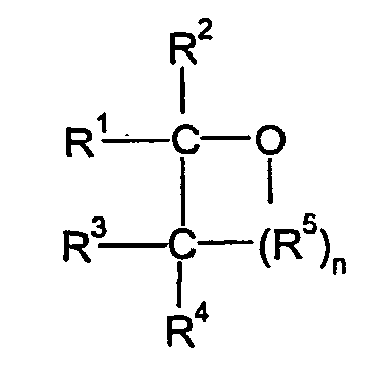
- Ebenfalls geeignet sind Oxymethylenterpolymerisate, die beispielsweise durch Umsetzung von Trioxan, einem der vorstehend beschriebenen cyclischen Ether mit einem dritten Monomeren, vorzugsweise bifunktionellen Verbindungen der Formel


- Bevorzugte Monomere dieser Art sind Ethylendiglycid, Diglycidylether und Diether aus Glycidylen und Formaldehyd, Dioxan oder Trioxan im Molverhältnis 2:1 sowie Diether aus 2 mol Glycidylverbindung und 1 mol eines aliphatischen Diols mit 2 bis 8 C-Atomen wie beispielsweise die Diglycidylether von Ethylenglykol, 1,4-Butandiol, 1,3-Butandiol, Cyclobutan-1,3-diol, 1,2-Propandiol und Cyclohexan-1,4-diol, um nur einige Beispiele zu nennen.
- Endgruppenstabilisierte Polyoxymethylenpolymerisate, die an den Kettenenden C-C-oder -O-CH3-Bindungen aufweisen, werden besonders bevorzugt.
- Die bevorzugten Polyoxymethylencopolymere haben Schmelzpunkte von mindestens 150°C und Molekulargewichte (Gewichtsmittelwert) Mw im Bereich von 5.000 bis 300.000, vorzugsweise von 7.000 bis 250.000.
- Insbesondere bevorzugt sind POM-Copolymerisate mit einer Uneinheitlichkeit (Mw/Mn) von 2 bis 15, bevorzugt von 3 bis 12, besonders bevorzugt von 3,5 bis 9. Die Messungen erfolgen in der Regel über GPC/SEC (size exclusion chromatography), der Mn-Wert (Zahlenmittel des Molekulargewichtes) wird im allgemeinen bestimmt mittels GPC/SEC (size exclusion chromatography).
- Die gemäß dem Verfahren erhältlichen POM-Polymerisate weisen bevorzugt eine unimodale Molekulargewichtsverteilung auf, wobei der niedermolekulare Anteil gering ist.
- Die Polyoxymethylenhomo- oder -copolymerisate weisen insbesondere Quotienten der d50/d10-Werte (bezogen auf Mw) von 2,25 bis 5,5, vorzugsweise von 2,75 bis 5 und insbesondere 3,2 bis 4,5 auf. Der Quotient der d90/d50-Werte (bezogen auf Mw) beträgt vorzugsweise 1,25 bis 3,25, bevorzugt 1,75 bis 2,75 und insbesondere 2 bis 2,5.
- Die POM-Polymerisate weisen sehr geringe Anteile an niedermolekularen Anteilen auf und vorzugsweise eine asymmetrische, unimodale Verteilungskurve auf, wobei die Differenz der o.g. Quotienten d50/d10 zu d90/d50 mindestens 0,25, bevorzugt 1 bis 3 und insbesondere 1,0 bis 2,3 beträgt.
- Die Molmassenbestimmung durch GPC (Gelpermeationschromatographie):
- Elutionsmittel: Hexafluorisopropanol + 0,05 % Trifluoressigsäure-Kaliumsalz Säulentemperatur: 40°C
Durchflussgeschwindigkeit: 0,5 mL/min
Detektor: Differentialrefraktometer Agilent G1362A. - Die Kalibrierung erfolgte mit eng verteilten PMMA-Standards der Fa. PSS mit Molekulargewichten von M = 505 bis M = 2.740.000. Außerhalb dieses Intervalls liegende Elutionsbereiche wurden durch Extrapolation geschätzt.
- Unter einem d50 Wert versteht der Fachmann in der Regel den Wert, bei welchem 50 % des Polymerisates ein kleineres Mw aufweisen und entsprechend 50 % ein größeres Mw aufweisen.
- Bevorzugt weisen die gemäß dem erfindungsgemäßen Verfahren erhältlichen Roh-Polyoxymethylene einen Restformaldehydgehalt gemäß VDA 275 im Granulat von maximal 1 %, bevorzugt maximal 0,1 %, vorzugsweise maximal 0,01 % auf.
- Das erfindungsgemäße Verfahren wird bevorzugt für die Homo- und die Copolymerisation von Trioxan angewandt. Als Monomeres a) kann aber grundsätzlich jegliches vorstehend beschriebene Monomere, beispielsweise auch Tetroxan eingesetzt werden.
- Die Monomeren, beispielsweise Trioxan, werden bevorzugt im geschmolzenen Zustand zudosiert, im allgemeinen bei Temperaturen von 60 bis 180°C.
- Vorzugsweise beträgt die Temperatur der Reaktionsmischung bei der Dosierung 62 bis 170°C, insbesondere 120 bis 160°C.
- Die Molekulargewichte des Polymeren können gegebenenfalls durch die bei der (Trioxan)polymerisation üblichen Regler c) auf die angestrebten Werte eingestellt werden. Als Regler kommen Acetale bzw. Formale einwertiger Alkohole, die Alkohole selbst sowie die als Kettenüberträger fungierenden geringen Mengen Wasser, deren Anwesenheit als Protonendonatoren sich in der Regel nie vollständig vermeiden lässt, in Frage. Die Regler werden in Mengen von 10 bis 10.000 ppm, vorzugsweise von 50 bis 5 000 ppm, eingesetzt. Die Menge derartiger Regler sollte erfindungsgemäß wie unten aufgeführt begrenzt werden.
- Als Initiatoren b) (auch als Katalysatoren bezeichnet) werden die bei der (Trioxan)polymerisation üblichen kationischen Starter verwendet. Es eignen sich Protonensäuren, wie fluorierte oder chlorierte Alkyl- und Arylsulfonsäuren, z.B. Perchlorsäure, Trifluormethansulfonsäure oder Lewis-Säuren, wie z.B. Zinntetrachlorid, Arsenpentafluorid, Phosphorsäurepentafluorid und Bortrifluorid sowie deren Komplexverbindungen und salzartige Verbindungen, z.B. Bortrifluorid-Etherate und Triphenylmethylenhexafluorophosphat. Die Katalysatoren (Initiatoren) werden in Mengen von etwa 0,001 bis 1.000 ppm, vorzugsweise 0,01 bis 500 ppm und insbesondere von 0,05 bis 10 ppm eingesetzt. Im allgemeinen empfiehlt es sich, den Katalysator in verdünnter Form zuzusetzen, vorzugsweise in Konzentrationen von 0,005 bis 5 Gew.-%. Als Lösungsmittel hierfür können inerte Verbindungen wie aliphatische, cycloaliphatische Kohlenwasserstoffe z.B. Cyclohexan, halogenierte aliphatische Kohlenwasserstoffe, Glykolether, zyklische Carbonate, wie Propylencarbonat oder Lactone, z.B. γ-Butyrolacton oder Ketone wie 6-Undecanon, sowie Triglyme (Triethylenglykoldimethylether) und 1,4-Dioxan verwendet werden. Die Mengen derartiger Leichtsieder sollen erfindungsgemäß wie unten ausgeführt begrenzt sein.
- Monomere sowie Comonomere a), Initiatoren b) und gegebenenfalls Regler c) können auf beliebige Weise vorgemischt oder auch getrennt voneinander dem Polymerisationsreaktor zugegeben werden. Ferner können die Komponenten a), b) und/oder c) zur Stabilisierung sterische gehinderte Phenole enthalten wie in
EP-A 129 369 EP-A 128 739 - Um den Anteil an instabilen Endgruppen zu minimieren, hat es sich als vorteilhaft erwiesen den Initiator b) im Regler c) vor dessen Zugabe zum Monomeren a) und gegebenenfalls Comonomer a) zu lösen.
- Die Polymerisation wird vorzugsweise in einem Rohrreaktor durchgeführt, welcher eine Mischungszone, eine Polymerisationszone und eine Desaktivierungszone aufweist.
- Erfindungsgemäß wird direkt anschließend an die Polymerisation die Polymerisationsmischung desaktiviert, vorzugsweise ohne dass eine Phasenveränderung erfolgt.
- Die Desaktivierung der Katalysatorreste erfolgt in der Regel durch Zugabe von mindestens einem Desaktivator d).
- Geeignete Desaktivatoren sind z.B. Ammoniak, aliphatische und aromatische Amine, basisch reagierende Salze, wie Soda und Borax. Diese werden üblicherweise den Polymeren in Mengen von vorzugsweise bis zu 1 Gew.-% zugesetzt.
- Zu den organischen Verbindungen der (Erd-)Alkalimetalle, vorzugsweise des Natriums gehören die entsprechenden Salze von (cyclo)aliphatischen, araliphatischen oder aromatischen Carbonsäuren mit vorzugsweise bis zu 30 C-Atomen und vorzugsweise 1 bis 4 Carboxylgruppen. Beispiele hierfür sind: Alkalimetallsalze der Ameisensäure, Essigsäure, Propionsäure, Buttersäure, Isobuttersäure, Caprylsäure, Stearinsäure, Cyclohexancarbonsäure, Bernsteinsäure, Adipinsäure, Korksäure, 1,10-Decandicarbonsäure, 1,4-Cyclohexandicarbonsäure, Terephthalsäure, 1,2,3-Propantricarbonsäure, 1,3,5-Cyclohexantricarbonsäure, Trimellithsäure, 1,2,3,4-Cyclopentantetracarborisäure, Pyromellithsäure, Benzoesäure, substituierten Benzoesäuren, Dimersäure und Trimersäure sowie neutrale und teilneutrale Montanwachssalze oder Montanwachsestersalze (Montanate). Auch Salze mit andersgearteten Säureresten, wie z.B. Alkali-Paraffin-, Alkali-Olefin- und Alkali-Arylsulfonate oder auch Phenolate sowie Alkoholate, wie z.B. Methanolate, Ethanolate, Glykolate, können erfindungsgemäß eingesetzt werden.
- Bevorzugt werden Natriumsalze von Mono-und Polycarbonsäuren, insbesondere die aliphatischer Mono- und Polycarbonsäuren, vorzugsweise solchen mit 2 bis 18 C-Atomen, insbesondere mit 2 bis 6 C-Atomen und bis zu vier, vorzugsweise bis zu zwei Carboxylgruppen, sowie Natriumalkoholate mit vorzugsweise 2 bis 15, insbesondere 2 bis 8 C-Atomen verwendet. Beispiele besonders bevorzugter Vertreter sind Natriumacetat, Natriumpropionat, Natriumbutyrat, Natriumoxalat, Natriuimmalonat, Natriumsuccinat, Natriummethanolat, Natriumethanolat, Natirumglykonat. Ganz besonders bevorzugt ist Natriummethanolat, welches besonders vorteilhaft in einer Menge von 1-5 fach äquimolar zur eingesetzten Komponente b) eingesetzt wird. Es können auch Gemische verschiedener (Erd-)Alkalimetall-Verbindungen eingesetzt werden, wobei auch Hydroxide einsetzbar sind.
- Weiterhin sind Erdalkalialkyle als Desaktivatoren d) bevorzugt, welche 2 bis 30 C-Atome im Alkylrest aufweisen. Als besonders bevorzugte Metalle seinen Li, Mg und Na genannt, wobei n-Butyllithium insbesondere bevorzugt ist.
- Bevorzugte Desaktivatoren d) sind solche der Formel I

- wobei R1, R3, R4 und R5 unabhängig voneinander Wasserstoff oder eine
- C1-C10-Alkylgruppe und
- R2 Wasserstoff oder eine C1-C10-Alkylgruppe oder O-R5 bedeutet.
- Bevorzugte Reste R1 bis R5 sind unabhängig voneinander Wasserstoff oder eine C1-C4-Alkylgruppe, wie Methyl, Ethyl, n-Propyl, i-Propyl, n-Butyl, 1-Butyl, s-Butyl, t-Butyl.
- Insbesondere bevorzugte Desaktivatoren d) sind substituierte N-haltige Heterozyklen, insbesondere Derivate des Piperidins, wobei Triacetondiamin (4-Amino-2,2,6,6-Tetramethylpiperidin) besonders bevorzugt ist.
- Der Desaktivator wird, bezogen auf den Durchsatz an Trioxan in Mengen von 0,001 bis 25 ppm, bevorzugt 0,01 bis 5 ppm, insbesondere 0,05 bis 2 ppm zudosiert. Der Desaktivator liegt vorzugsweise verdünnt in einem der nachstehend genannten Träger/- Lösungsmittel vor. Die Konzentration des Desaktivators im Träger/Lösungsmittel beträgt 0,001 bis 10 %, bevorzugt 0,01 bis 5 %, insbesondere 0,05 bis 2 %, ganz besonders bevorzugt 0,1 bis 1 %.
- Bevorzugt wird der Desaktivator d) in einem aprotischen, nicht aromatischen Lösungsmittel zugegeben, beispielsweise den vorstehend genannten Monomeren und Comonomeren wie Dioxolan, Trioxan, Butandiolformal, Ethylenoxid oder oligomere bis polymere Polyacetale.
- In einer besonders bevorzugten Ausführungsform des erfindungsgemäßen Verfahrens wird der Desaktivator d) in einer Trägersubstanz mit Etherstruktureinheiten in die Polymerisationsmischung zugegeben.
- Vorzugsweise eignen sich Trägersubstanzen, die dieselben Struktureinheiten aufweisen, die im jeweilig herzustellenden POM-Polymerisat vorhanden sind. Hierunter sind insbesondere die vorstehend aufgeführten Monomeren a) zu verstehen sowie oligomeres bis polymeres Polyoxymethylen oder Polyacetale.
- Die vorzugsweise flüssige Zugabe erfolgt bei Temperaturen von 140 bis 220°C.
- Werden als Trägersubstanzen oligomere oder polymere POM-Polymerisate verwendet, ist eine Zugabe in flüssiger Form bei Temperaturen von 160 bis 220°C ebenso bevorzugt. Derartige Polymerisate können gegebenenfalls übliche Additive enthalten. Zur Dosierung derartiger Schmelzen der Trägersubstanzen, welche die Desaktivatoren d) enthalten, werden vorzugsweise Vorrichtungen wie Seitenextruder, Stopfschnecke, Schmelzpumpe etc eingesetzt.
- Anschließend überführt man in der Regel das entstandene Polymerisat in eine Entgasungsvorrichtung.
- Anschließend kann das entsprechende Polyoxymethylenpolymerisat mit üblichen Additiven wie Stabilisatoren, Kautschuken, Füllstoffen usw. in üblicher Weise weiterverarbeitet werden.
- Erfindungsgemäß soll bei der gesamten Polymerisation die gesamte Menge der Protonendonatoren kleiner 5.000 ppm, vorzugsweise 0,1 bis 2.000 ppm, insbesondere 1 bis 1.000 ppm und ganz besonders bevorzugt 10 bis 750 ppm betragen.
- Bevorzugt werden Protonendonatoren mit mindestens einer OH-Gruppe eingesetzt. Insbesondere weisen diese ein Molgewicht < 250 g/mol, bevorzugt < 200 g/mol auf.
- Unter Protonendonatoren versteht man gemäß Brönstedt/Lowry Verbindungen, die Protonen abgeben können (siehe Römpp Chemie Lexikon, 9. Auflage 1992, S. 3958 und 3959). Hierzu zählen insbesondere gemäß der erfindungsgemäßen Fahrweise aliphatische/aromatische Alkohole (Lösungsmittel für Regler c) und auch d)), welche gesättigt oder ungesättigt sein können, sowie Wasser oder Wasser enthaltende Lösungen von Reaktanden wie auch die vorstehend genannten (Lewis)Säuren als Initiatoren b).
- Um diese Mengenbegrenzungen einzuhalten, ist es vorteilhaft insbesondere als Kettenregler c) ein Formal wie Methylal oder Butylal einzusetzen. Weiterhin ist es vorteilhaft, als Lösungsmittel für den Initiator b) oder das Abbruchmittel d) die vorstehenden Trägersubstanzen (mit Ethereinheiten) z.B. Lactone wie γ-Butyrolacton, Ketone wie 6-Undecanon oder cyclische Kohlensäureester einzusetzen.
- Als cyclische Kohlensäureester werden vorzugsweise solche mit 5 Ringgliedern verwendet, insbesondere Verbindungen der Formel

- Die erfindungsgemäß verwendeten cyclischen Kohlensäureester haben einen Reinheitswert von mindestens 95 %, vorzugsweise von mindestens 99,9 %; sie sollen im wesentlichen wasser- und alkalifrei sein. Die Reinigung erfolgt im allgemeinen durch Destillation bei vermindertem Druck oder durch Absorption oder durch Adsorption. Soweit die gereinigten cyclischen Kohlensäureester unter Normalbedingungen im festen Aggregatzustand vorliegen, müssen sie zur Herstellung der Initiatorlösung durch Schmelzen in den flüssigen Aggregatzustand gebracht werden; dies erfolgt durch Erwärmen auf eine Temperatur, die 5 bis 10°C oberhalb des Schmelzpunktes des jeweiligen Kohlensäureesters liegt. Im allgemeinen reicht hierzu eine Temperatur von 35 bis 100, vorzugsweise von 45 bis 80°C aus.
- Weiterhin sollte erfindungsgemäß die Entgasung unter Ausschluss von Sauerstoff oder unter Inertgas stattfinden, insbesondere unter Stickstoff.
- Zusätzlich ist es für die Rückführung der Restmonomeren vorteilhaft, die Menge der Leichtsieder im Reaktionssystem - mit Ausnahme der eingesetzten Monomeren - zu begrenzen u.z. von 0,1 bis 15.000 ppm, vorzugsweise von 0,1 bis 2000 ppm und insbesondere von 0,1 bis 750 ppm.
- Unter Leichtsiedern im Sinne der Erfindung wollen Verbindungen mit einem Siedepunkt < 160°C, vorzugsweise < 140°C und insbesondere < 120°C verstanden werden.
- Die Molmasse derartiger Leichtsieder beträgt vorzugsweise < 400 g/mol, bevorzugt < 300 g/mol und insbesondere < 200 g/mol.
- Vorzugsweise sind derartige Leichtsieder im System aprotische Lösungsmittel wie vorstehend unter b) bereits ausgeführt. Protische Lösungsmittel enthalten relativ bewegliche Protonen, die meinst an Sauerstoff, Stickstoff oder Schwefel gebunden sind. Bei den aprotischen Lösungsmitteln sind alle Wasserstoffatome an Kohlenstoff gebunden (s. F.A. Carey, R.J. Lundberg, Organische Chemie Verlag VCH 1995, S. 224).
- Es ist jedoch nicht vorteilhaft, komplett auf protische Verbindungen zu verzichten, da protische Verbindungen die Polymerisation starten und beschleunigen können (wässrige Perchlorsäure dient als Reaktionsstarter), aber auch die Reaktion effektiv abbrechen können (TAD dient als Abbruchmittel und enthält geringe Mengen Wasser).
- Durch die Kombination folgender erfindungsgemäßer Maßnahmen wird der Anteil an protischen Verbindungen im Reaktionsgemisch reduziert:
- 1. Als Kettenregler wird ein Formal verwendet, bevorzugt Methylal oder Butylal.
- 2. Als Lösungsmittel für das Abbruchmittel dient ein zyklisches Formal.
- 3. Als Lösungsmittel für den Starter dienen aprotische Verbindungen mit einem Siedepunkt > 160°C.
- 4. Alle Einsatzstoffe weisen einen Wasseranteil von höchstens 500 ppm auf.
- Niedermolekulare protische Verbindungen werden somit im erfindungsgemäßen Verfahren lediglich über den Starter (z.B. wässrige Perchlorsäure), das Abbruchmittel (z.B. TAD) und das Restwasser in den Einsatzstoffen in die Reaktionsmischung eingebracht. Das Restwasser macht den größten Anteil an den erfindungsgemäß eingebrachten protischen Verbindungen aus.
- 5 kg einer Mischung aus 96,495 Gew.-% flüssigem Trioxan, 3,5 Gew.-% Dioxolan und 0,005 Gew.-% Methylal wurden auf 160°C erwärmt und in einen Rohrreaktor mit statischen Mischern gepumpt. Der Restwassergehalt dieser Monomere betrug jeweils 0,05 %. Durch Zugabe von 0,5 ppm Perchlorsäure (als 0,01 gew.-%ige Lösung in Lösungsmittel A) startete man die Polymerisation, der Druck im Reaktor betrug 20 bar.
- Nach einer Verweilzeit von 2 min wurde in der Abbruchzone des Reaktors Triacetondiamin als Abbruchmittel (als 0,05 gew.-%ige Lösung in Lösungsmittel B) eindosiert, so dass TAD im 5fachen Überschuss zur Perchlorsäure vorlag, und über einen statischen Mischer eingemischt.
- Nach einer weiteren Verweilzeit von 3 min wurde das Produkt (Roh-POM) über ein Regelventil in einen Entgasungstopf auf einen Druck von 4 bar entspannt, wodurch die flüchtigen Komponenten von der Polymerschmelze abgetrennt wurden. In der Polymerschmelze verblieben Reste an Trioxan und Formaldehyd.
- Die gasförmigen Monomere wurden aus dem Entgasungstopf über eine auf 130°C beheizte Rohrleitung - nachfolgend als Brüdenleitung bezeichnet - in einen Kondensator überführt und kondensiert. Das Kondensat wurde durch GC-MS-Messungen untersucht.
- Die Schmelze wurde auf einem Extruder entgast, ausgetragen, im Wasserbad gekühlt und granuliert.
- Der Anteil an niedermolekularen protischen Verbindungen in der Reaktionsmischung betrug somit:
500 ppm (Restwasser der Monomere) + 0,25 ppm (aus der 70 %igen wässrigen Perchlorsäure) + 2,5 ppm (Triacetondiamin) = 502,75 ppm + 5.000 ppm Lösungsmittel B (z.B. Wasser, Methanol) - Der Anteil an Leichtsiedern in der Reaktionsmischung beträgt - je nach Wahl der Lösungsmittel
5.000 ppm Lösungsmittel A (z.B. 1,4-Dioxan, Cyclohexan) Beispiel Lösungsmittel A Lösungsmittel B Menge an Leichtsiedern Menge an Protonendonatoren Analyse des Kondensats Belag in den Brüdenleitungen Standzeit der Brüdenleitung Erfindungsgemäß Propylencarbonat 1,3-Dioxolan < 10 ppm 503 ppm Spuren von Lösungsmittel A Keine Belagsbildung > 240 h Vergleichsbsp. 1 Cyclohexan 1,3-Dioxolan 5.000 ppm 503 ppm Rückstände an Cyclohexan Keine Belagsbildung > 240 h Vergleichsbsp. 2 1,4-Dioxan 1,3-Dioxolan 5.000 ppm 503 ppm Rückstände an 1,4-Dioxan Keine Belagsbildung > 240 h Vergleichsbsp. 3 1,4-Dioxan Methanol 5.000 ppm 5.500 ppm Rückstände an 1,4-Dioxan Starke Belagsbildung 10 h Vergleichsbsp. 4 1,4-Dioxan Wasser 5.000 ppm 5.500 ppm Rückstände an 1,4-Dioxan Sehr starke Belagsbildung 2 h - Die Vergleichsbeispiele 1 bis 4 zeigen im Monomer-Kondensat erhebliche Rückstände an 1,4-Dioxan bzw. Cyclohexan. Vor einer Rezyklierung der Monomere muss dieses aufwendig abgetrennt werden.
- Die Vergleichsbeispiele 3 und 4, bei denen > 5.000 ppm Protonendonatoren vorliegen, zeigen ferner Belagsbildungen in den Brüdenleitungen und eine deutlich herabgesetzte Standzeit.
- Bei einer erfindungsgemäßen Begrenzung von Leichtsiedern und Protonendonatoren ergeben sich eine hohe Standzeit in Kombination mit hochreinem Kondensat.
Claims (9)
- Verfahren zur Herstellung von Polyoxymethylenen durch kationische Polymerisation der Monomeren a) in Gegenwart von Initiatoren b) sowie gegebenenfalls in Gegenwart von Reglern c) und anschließender Desaktivierung und Abtrennung des Polymeren, dadurch gekennzeichnet, dass bei der gesamten Polymerisation die gesamte Menge der Protonendonatoren kleiner 5.000 ppm beträgt und die Menge der Leichtsieder bei der gesamten Polymerisation - mit Ausnahme der eingesetzten Monomeren - 0,1 bis 15.000 ppm beträgt.
- Verfahren nach Anspruch 1, dadurch gekennzeichnet, dass die Protonendonatoren ein Molgewicht < 250 g/mol aufweisen.
- Verfahren nach den Ansprüchen 1 oder 2, dadurch gekennzeichnet, dass man Protonendonatoren mit mindestens einer OH-Gruppe einsetzt.
- Verfahren nach den Ansprüchen 1 bis 3, dadurch gekennzeichnet, dass die gesamte Menge der Protonendonatoren 0,1 bis 2.000 ppm beträgt.
- Verfahren nach den Ansprüchen 1 bis 4, dadurch gekennzeichnet, dass die Gruppe der Protonendonatoren ausgewählt ist aus der Gruppe der aliphatischen oder aromatischen Alkohole, Wasser oder Wasser enthaltende Lösungen von Reaktanden, Säuren oder deren Mischungen.
- Verfahren nach den Ansprüchen 1 bis 5, dadurch gekennzeichnet, dass man die Restmonomeren entfernt und in den Polymerisationsreaktor oder in die Monomeranlage zurückführt.
- Verfahren nach den Ansprüchen 1 bis 6, dadurch gekennzeichnet, dass die Leichtsieder aprotisch sind.
- Verfahren nach den Ansprüchen 1 bis 7, dadurch gekennzeichnet, dass die Leichtsieder eine Molmasse < 400 g/mol aufweisen.
- Verfahren nach den Ansprüchen 1 bis 8, dadurch gekennzeichnet, dass die Leichtsieder einen Siedepunkt < 160°C aufweisen.
Priority Applications (1)
| Application Number | Priority Date | Filing Date | Title |
|---|---|---|---|
| PL06708776T PL1861442T3 (pl) | 2005-03-16 | 2006-03-15 | Sposób wytwarzania polioksymetylenów |
Applications Claiming Priority (2)
| Application Number | Priority Date | Filing Date | Title |
|---|---|---|---|
| DE102005012482A DE102005012482A1 (de) | 2005-03-16 | 2005-03-16 | Verfahren zur Herstellung von Polyoxymethylenen |
| PCT/EP2006/060751 WO2006097487A1 (de) | 2005-03-16 | 2006-03-15 | Verfahren zur herstellung von polyoxymethylenen |
Publications (2)
| Publication Number | Publication Date |
|---|---|
| EP1861442A1 EP1861442A1 (de) | 2007-12-05 |
| EP1861442B1 true EP1861442B1 (de) | 2008-12-03 |
Family
ID=36499325
Family Applications (1)
| Application Number | Title | Priority Date | Filing Date |
|---|---|---|---|
| EP06708776A Revoked EP1861442B1 (de) | 2005-03-16 | 2006-03-15 | Verfahren zur herstellung von polyoxymethylenen |
Country Status (9)
| Country | Link |
|---|---|
| US (1) | US20080097077A1 (de) |
| EP (1) | EP1861442B1 (de) |
| JP (1) | JP2008533265A (de) |
| KR (1) | KR20070119696A (de) |
| CN (1) | CN101142248B (de) |
| AT (1) | ATE416208T1 (de) |
| DE (2) | DE102005012482A1 (de) |
| PL (1) | PL1861442T3 (de) |
| WO (1) | WO2006097487A1 (de) |
Families Citing this family (21)
| Publication number | Priority date | Publication date | Assignee | Title |
|---|---|---|---|---|
| DE102004005652A1 (de) | 2004-02-04 | 2005-08-25 | Basf Ag | Fließfähige Polyesterformmassen |
| DE102004005657A1 (de) | 2004-02-04 | 2005-08-25 | Basf Ag | Fließfähige Polyesterformmassen |
| DE102004035357A1 (de) | 2004-07-21 | 2006-03-16 | Basf Ag | Kontinuierliches Verfahren zur Herstellung von Polyalkylenarylaten mit hyperverzweigten Polyestern und/oder Polycarbonaten |
| DE102004038976A1 (de) | 2004-08-10 | 2006-02-23 | Basf Ag | Fließfähige Polyesterformmassen mit ASA/ABS und SAN |
| DE102004038979A1 (de) | 2004-08-10 | 2006-02-23 | Basf Ag | Schlagzähmodifizierte Polyester mit hyperverzweigten Polyestern |
| DE102004049342A1 (de) | 2004-10-08 | 2006-04-13 | Basf Ag | Fließfähige Thermoplaste mit halogenfreiem Flammschutz |
| DE102004050025A1 (de) | 2004-10-13 | 2006-04-20 | Basf Ag | Fließfähige Thermoplaste mit Halogenflammschutz |
| DE102004051241A1 (de) | 2004-10-20 | 2006-05-04 | Basf Ag | Fließfähige Polyamide mit hyperverzweigten Polyestern/Polycarbonaten |
| DE102004054629A1 (de) * | 2004-11-11 | 2006-05-18 | Basf Ag | Basische Desaktivatoren bei der POM-Herstellung |
| DE102005002044A1 (de) | 2005-01-14 | 2006-07-20 | Basf Ag | Fließfähige Polyester mit Hydrolyseschutz |
| DE102005004856A1 (de) | 2005-02-01 | 2006-08-03 | Basf Ag | Fliessfähige Polyester mit Carbodilmid-Stabilisatoren |
| DE102005027549A1 (de) | 2005-06-14 | 2006-12-21 | Basf Ag | Mehrkomponentenformkörper mit Polyesterschichten |
| DE102005034490A1 (de) | 2005-07-20 | 2007-01-25 | Basf Ag | Zusatzstoff-freies Verfahren zur Herstellung von Polyoxymethylenen |
| EP2177512B1 (de) * | 2007-08-01 | 2012-04-18 | Taisho Pharmaceutical Co., Ltd. | Hemmer der s1p1-bindung |
| DE102008018966A1 (de) | 2008-04-16 | 2009-10-22 | Ticona Gmbh | Verfahren zur Herstellung von Oxymethylen-Polymeren und dafür geeignete Vorrichtung |
| CN102079801A (zh) | 2009-09-25 | 2011-06-01 | 提克纳有限公司 | 氧亚甲基聚合物及其制备方法 |
| EP2546272A1 (de) | 2011-07-15 | 2013-01-16 | Ticona GmbH | Verfahren zur Herstellung von Oxymethylenpolymeren |
| TW201500443A (zh) * | 2013-04-18 | 2015-01-01 | Basf Se | 聚甲醛共聚物及熱塑性pom組成物 |
| JP6520708B2 (ja) * | 2013-07-01 | 2019-05-29 | 三菱瓦斯化学株式会社 | オキシメチレン共重合体の製造方法 |
| CN108484850A (zh) * | 2018-04-08 | 2018-09-04 | 开封龙宇化工有限公司 | 一种聚甲醛树脂及其制备方法 |
| CN111344322B (zh) * | 2018-08-01 | 2021-03-26 | 三菱瓦斯化学株式会社 | 氧亚甲基共聚物的制造方法 |
Family Cites Families (15)
| Publication number | Priority date | Publication date | Assignee | Title |
|---|---|---|---|---|
| DE2356531C2 (de) * | 1973-11-13 | 1982-06-03 | Degussa Ag, 6000 Frankfurt | Verfahren zur Herstellung von festen thermoplastischen Terpolymerisaten des Trioxans |
| JPS5638313A (en) * | 1979-09-05 | 1981-04-13 | Mitsubishi Gas Chem Co Inc | Continuous polymerization |
| JPS5915333B2 (ja) * | 1980-06-25 | 1984-04-09 | 旭化成株式会社 | ポリアセタ−ル共重合体及びその製法 |
| DE3147309A1 (de) * | 1981-11-28 | 1983-06-01 | Basf Ag, 6700 Ludwigshafen | Kontinuierliches verfahren zur herstellung von oxymethylenpolymeren |
| JPH0737504B2 (ja) * | 1987-12-25 | 1995-04-26 | ポリプラスチックス株式会社 | アセタール重合体又は共重合体の製造法 |
| DE4327245A1 (de) * | 1993-08-13 | 1995-02-16 | Hoechst Ag | Verfahren zur Herstellung von Polyacetalen |
| US5866670A (en) * | 1995-08-21 | 1999-02-02 | Polyplastics Co., Ltd. | Process for preparing polyacetal copolymer |
| JP3115515B2 (ja) * | 1995-10-03 | 2000-12-11 | ポリプラスチックス株式会社 | ポリアセタール共重合体の製造方法 |
| JP3093148B2 (ja) * | 1996-04-02 | 2000-10-03 | ポリプラスチックス株式会社 | ポリアセタール共重合体の製造方法 |
| JP3130469B2 (ja) * | 1996-04-09 | 2001-01-31 | ポリプラスチックス株式会社 | ポリアセタール共重合体の製造方法 |
| JP3037612B2 (ja) * | 1996-04-12 | 2000-04-24 | ポリプラスチックス株式会社 | ポリアセタール共重合体の製造方法 |
| JP3086423B2 (ja) * | 1996-10-15 | 2000-09-11 | ポリプラスチックス株式会社 | ポリアセタール樹脂の製造方法 |
| DE10006037A1 (de) * | 2000-02-10 | 2001-08-16 | Basf Ag | Verfahren zur Herstellung von Polyoxymethylenen |
| DE10335959A1 (de) * | 2003-08-04 | 2005-02-24 | Basf Ag | Alkohole als Cokatalysatoren bei der POM-Herstellung |
| DE10340780A1 (de) * | 2003-09-02 | 2005-03-24 | Basf Ag | Carbonsäuren als Cokatalysatoren bei der POM-Herstellung |
-
2005
- 2005-03-16 DE DE102005012482A patent/DE102005012482A1/de not_active Withdrawn
-
2006
- 2006-03-15 JP JP2008501300A patent/JP2008533265A/ja active Pending
- 2006-03-15 AT AT06708776T patent/ATE416208T1/de not_active IP Right Cessation
- 2006-03-15 KR KR1020077023571A patent/KR20070119696A/ko not_active Ceased
- 2006-03-15 CN CN2006800083101A patent/CN101142248B/zh not_active Expired - Fee Related
- 2006-03-15 DE DE502006002258T patent/DE502006002258D1/de not_active Expired - Lifetime
- 2006-03-15 WO PCT/EP2006/060751 patent/WO2006097487A1/de not_active Ceased
- 2006-03-15 EP EP06708776A patent/EP1861442B1/de not_active Revoked
- 2006-03-15 US US11/908,729 patent/US20080097077A1/en not_active Abandoned
- 2006-03-15 PL PL06708776T patent/PL1861442T3/pl unknown
Also Published As
| Publication number | Publication date |
|---|---|
| PL1861442T3 (pl) | 2009-06-30 |
| CN101142248A (zh) | 2008-03-12 |
| DE102005012482A1 (de) | 2006-09-21 |
| KR20070119696A (ko) | 2007-12-20 |
| EP1861442A1 (de) | 2007-12-05 |
| DE502006002258D1 (de) | 2009-01-15 |
| WO2006097487A1 (de) | 2006-09-21 |
| ATE416208T1 (de) | 2008-12-15 |
| US20080097077A1 (en) | 2008-04-24 |
| JP2008533265A (ja) | 2008-08-21 |
| CN101142248B (zh) | 2012-02-01 |
Similar Documents
| Publication | Publication Date | Title |
|---|---|---|
| EP1861442A1 (de) | Verfahren zur herstellung von polyoxymethylenen | |
| WO2006058679A1 (de) | Verfahren zur herstellung von polyoxymethylenen | |
| DE10251332B4 (de) | Polyoxymethylen-Copolymere, deren Herstellung und Verwendung | |
| WO2005012380A1 (de) | Alkohole als cokatalysatoren bei der pom-herstellung | |
| EP1913045B1 (de) | Verfahren zur herstellung von polyoxymethylenen | |
| EP2225296A1 (de) | Verfahren zur herstellung von polyoxymethylenhomo- oder -copolymeren durch homo- oder copolymerisation von trioxan, ausgehend von methanol | |
| WO2007023187A1 (de) | Verfahren zur herstellung von polyoxymethylenhomo- oder -copolymeren | |
| EP1861443B1 (de) | Verfahren zur entfernung von restmonomeren aus polyoxymethylenen | |
| EP1812486B1 (de) | Basische desaktivatoren bei der pom-herstellung | |
| EP2265652A1 (de) | Oxymethylenpolymere, verfahren zu deren herstellung und deren verwendung | |
| EP1969024A1 (de) | Verfahren zur herstellung von oxymethylen-polymeren, ausgewählte polymere und deren verwendung | |
| EP2066710B1 (de) | Ionische flüssigkeiten bei der pom-herstellung | |
| DE102004025366A1 (de) | Verfahren zur Enfernung von Restmonomeren aus Polyoxymethylenen | |
| DE3241115A1 (de) | Verfahren zur herstellung von polyoxymethylenen aus formaldehyd | |
| WO2007036476A1 (de) | Verfahren zur herstellung von polyoxymethylenen in einem rohrreaktor mit dynamischen mischungszonen | |
| WO2003085017A1 (de) | Herstellung von polyoxymethylen und dafür geeignete katalysatoren ii | |
| DE102005004855A1 (de) | Verfahren zur Entfernung von Restmonomeren aus Polyoxymethylenen in Gegenwart saurer Katalysatoren | |
| DE102005054877A1 (de) | Verfahren zur Herstellung eines Polyoxymethylenhomo- oder -Copolymer-Endproduktes | |
| DE10340770A1 (de) | Säureanhydride als Cokatalysatoren bei der POM-Herstellung | |
| WO2013113879A1 (de) | Polyoxymethylencopolymere | |
| DE10340780A1 (de) | Carbonsäuren als Cokatalysatoren bei der POM-Herstellung | |
| DE10340779A1 (de) | Ketone als Cokatalysatoren bei der POM-Herstellung | |
| DE10340782A1 (de) | Cyanverbindungen als Cokatalysatoren bei der POM-Herstellung | |
| DE10340776A1 (de) | Ether als Cokatalysatoren bei der POM-Herstellung | |
| DE10340778A1 (de) | Aldehyde als Cokatalysatoren bei der POM-Herstellung |
Legal Events
| Date | Code | Title | Description |
|---|---|---|---|
| PUAI | Public reference made under article 153(3) epc to a published international application that has entered the european phase |
Free format text: ORIGINAL CODE: 0009012 |
|
| 17P | Request for examination filed |
Effective date: 20071016 |
|
| AK | Designated contracting states |
Kind code of ref document: A1 Designated state(s): AT BE BG CH CY CZ DE DK EE ES FI FR GB GR HU IE IS IT LI LT LU LV MC NL PL PT RO SE SI SK TR |
|
| RAP1 | Party data changed (applicant data changed or rights of an application transferred) |
Owner name: BASF SE |
|
| 17Q | First examination report despatched |
Effective date: 20080207 |
|
| GRAP | Despatch of communication of intention to grant a patent |
Free format text: ORIGINAL CODE: EPIDOSNIGR1 |
|
| DAX | Request for extension of the european patent (deleted) | ||
| GRAS | Grant fee paid |
Free format text: ORIGINAL CODE: EPIDOSNIGR3 |
|
| GRAS | Grant fee paid |
Free format text: ORIGINAL CODE: EPIDOSNIGR3 |
|
| GRAA | (expected) grant |
Free format text: ORIGINAL CODE: 0009210 |
|
| AK | Designated contracting states |
Kind code of ref document: B1 Designated state(s): AT BE BG CH CY CZ DE DK EE ES FI FR GB GR HU IE IS IT LI LT LU LV MC NL PL PT RO SE SI SK TR |
|
| REG | Reference to a national code |
Ref country code: GB Ref legal event code: FG4D Free format text: NOT ENGLISH |
|
| REG | Reference to a national code |
Ref country code: CH Ref legal event code: EP |
|
| REG | Reference to a national code |
Ref country code: IE Ref legal event code: FG4D Free format text: LANGUAGE OF EP DOCUMENT: GERMAN |
|
| REF | Corresponds to: |
Ref document number: 502006002258 Country of ref document: DE Date of ref document: 20090115 Kind code of ref document: P |
|
| PG25 | Lapsed in a contracting state [announced via postgrant information from national office to epo] |
Ref country code: LT Free format text: LAPSE BECAUSE OF FAILURE TO SUBMIT A TRANSLATION OF THE DESCRIPTION OR TO PAY THE FEE WITHIN THE PRESCRIBED TIME-LIMIT Effective date: 20081203 Ref country code: ES Free format text: LAPSE BECAUSE OF FAILURE TO SUBMIT A TRANSLATION OF THE DESCRIPTION OR TO PAY THE FEE WITHIN THE PRESCRIBED TIME-LIMIT Effective date: 20090314 |
|
| PG25 | Lapsed in a contracting state [announced via postgrant information from national office to epo] |
Ref country code: SI Free format text: LAPSE BECAUSE OF FAILURE TO SUBMIT A TRANSLATION OF THE DESCRIPTION OR TO PAY THE FEE WITHIN THE PRESCRIBED TIME-LIMIT Effective date: 20081203 Ref country code: FI Free format text: LAPSE BECAUSE OF FAILURE TO SUBMIT A TRANSLATION OF THE DESCRIPTION OR TO PAY THE FEE WITHIN THE PRESCRIBED TIME-LIMIT Effective date: 20081203 Ref country code: LV Free format text: LAPSE BECAUSE OF FAILURE TO SUBMIT A TRANSLATION OF THE DESCRIPTION OR TO PAY THE FEE WITHIN THE PRESCRIBED TIME-LIMIT Effective date: 20081203 |
|
| REG | Reference to a national code |
Ref country code: PL Ref legal event code: T3 |
|
| REG | Reference to a national code |
Ref country code: IE Ref legal event code: FD4D |
|
| PG25 | Lapsed in a contracting state [announced via postgrant information from national office to epo] |
Ref country code: BG Free format text: LAPSE BECAUSE OF FAILURE TO SUBMIT A TRANSLATION OF THE DESCRIPTION OR TO PAY THE FEE WITHIN THE PRESCRIBED TIME-LIMIT Effective date: 20090303 Ref country code: EE Free format text: LAPSE BECAUSE OF FAILURE TO SUBMIT A TRANSLATION OF THE DESCRIPTION OR TO PAY THE FEE WITHIN THE PRESCRIBED TIME-LIMIT Effective date: 20081203 Ref country code: IE Free format text: LAPSE BECAUSE OF FAILURE TO SUBMIT A TRANSLATION OF THE DESCRIPTION OR TO PAY THE FEE WITHIN THE PRESCRIBED TIME-LIMIT Effective date: 20081203 Ref country code: RO Free format text: LAPSE BECAUSE OF FAILURE TO SUBMIT A TRANSLATION OF THE DESCRIPTION OR TO PAY THE FEE WITHIN THE PRESCRIBED TIME-LIMIT Effective date: 20081203 |
|
| PLBI | Opposition filed |
Free format text: ORIGINAL CODE: 0009260 |
|
| PG25 | Lapsed in a contracting state [announced via postgrant information from national office to epo] |
Ref country code: CZ Free format text: LAPSE BECAUSE OF FAILURE TO SUBMIT A TRANSLATION OF THE DESCRIPTION OR TO PAY THE FEE WITHIN THE PRESCRIBED TIME-LIMIT Effective date: 20081203 Ref country code: SE Free format text: LAPSE BECAUSE OF FAILURE TO SUBMIT A TRANSLATION OF THE DESCRIPTION OR TO PAY THE FEE WITHIN THE PRESCRIBED TIME-LIMIT Effective date: 20090303 Ref country code: PT Free format text: LAPSE BECAUSE OF FAILURE TO SUBMIT A TRANSLATION OF THE DESCRIPTION OR TO PAY THE FEE WITHIN THE PRESCRIBED TIME-LIMIT Effective date: 20090504 Ref country code: IS Free format text: LAPSE BECAUSE OF FAILURE TO SUBMIT A TRANSLATION OF THE DESCRIPTION OR TO PAY THE FEE WITHIN THE PRESCRIBED TIME-LIMIT Effective date: 20090403 |
|
| 26 | Opposition filed |
Opponent name: TICONA LLC Effective date: 20090826 |
|
| BERE | Be: lapsed |
Owner name: BASF SE Effective date: 20090331 |
|
| PG25 | Lapsed in a contracting state [announced via postgrant information from national office to epo] |
Ref country code: SK Free format text: LAPSE BECAUSE OF FAILURE TO SUBMIT A TRANSLATION OF THE DESCRIPTION OR TO PAY THE FEE WITHIN THE PRESCRIBED TIME-LIMIT Effective date: 20081203 |
|
| PLAX | Notice of opposition and request to file observation + time limit sent |
Free format text: ORIGINAL CODE: EPIDOSNOBS2 |
|
| PG25 | Lapsed in a contracting state [announced via postgrant information from national office to epo] |
Ref country code: MC Free format text: LAPSE BECAUSE OF NON-PAYMENT OF DUE FEES Effective date: 20090331 Ref country code: DK Free format text: LAPSE BECAUSE OF FAILURE TO SUBMIT A TRANSLATION OF THE DESCRIPTION OR TO PAY THE FEE WITHIN THE PRESCRIBED TIME-LIMIT Effective date: 20081203 |
|
| NLR1 | Nl: opposition has been filed with the epo |
Opponent name: TICONA LLC |
|
| PLAF | Information modified related to communication of a notice of opposition and request to file observations + time limit |
Free format text: ORIGINAL CODE: EPIDOSCOBS2 |
|
| PG25 | Lapsed in a contracting state [announced via postgrant information from national office to epo] |
Ref country code: BE Free format text: LAPSE BECAUSE OF NON-PAYMENT OF DUE FEES Effective date: 20090331 |
|
| PLBB | Reply of patent proprietor to notice(s) of opposition received |
Free format text: ORIGINAL CODE: EPIDOSNOBS3 |
|
| PG25 | Lapsed in a contracting state [announced via postgrant information from national office to epo] |
Ref country code: AT Free format text: LAPSE BECAUSE OF NON-PAYMENT OF DUE FEES Effective date: 20090315 |
|
| PG25 | Lapsed in a contracting state [announced via postgrant information from national office to epo] |
Ref country code: GR Free format text: LAPSE BECAUSE OF FAILURE TO SUBMIT A TRANSLATION OF THE DESCRIPTION OR TO PAY THE FEE WITHIN THE PRESCRIBED TIME-LIMIT Effective date: 20090304 |
|
| REG | Reference to a national code |
Ref country code: CH Ref legal event code: PL |
|
| PG25 | Lapsed in a contracting state [announced via postgrant information from national office to epo] |
Ref country code: LI Free format text: LAPSE BECAUSE OF NON-PAYMENT OF DUE FEES Effective date: 20100331 Ref country code: CH Free format text: LAPSE BECAUSE OF NON-PAYMENT OF DUE FEES Effective date: 20100331 |
|
| PG25 | Lapsed in a contracting state [announced via postgrant information from national office to epo] |
Ref country code: LU Free format text: LAPSE BECAUSE OF NON-PAYMENT OF DUE FEES Effective date: 20090315 |
|
| PG25 | Lapsed in a contracting state [announced via postgrant information from national office to epo] |
Ref country code: HU Free format text: LAPSE BECAUSE OF FAILURE TO SUBMIT A TRANSLATION OF THE DESCRIPTION OR TO PAY THE FEE WITHIN THE PRESCRIBED TIME-LIMIT Effective date: 20090604 |
|
| PGFP | Annual fee paid to national office [announced via postgrant information from national office to epo] |
Ref country code: FR Payment date: 20110414 Year of fee payment: 6 |
|
| PG25 | Lapsed in a contracting state [announced via postgrant information from national office to epo] |
Ref country code: TR Free format text: LAPSE BECAUSE OF FAILURE TO SUBMIT A TRANSLATION OF THE DESCRIPTION OR TO PAY THE FEE WITHIN THE PRESCRIBED TIME-LIMIT Effective date: 20081203 |
|
| PGFP | Annual fee paid to national office [announced via postgrant information from national office to epo] |
Ref country code: PL Payment date: 20110310 Year of fee payment: 6 |
|
| PG25 | Lapsed in a contracting state [announced via postgrant information from national office to epo] |
Ref country code: CY Free format text: LAPSE BECAUSE OF FAILURE TO SUBMIT A TRANSLATION OF THE DESCRIPTION OR TO PAY THE FEE WITHIN THE PRESCRIBED TIME-LIMIT Effective date: 20081203 |
|
| PGFP | Annual fee paid to national office [announced via postgrant information from national office to epo] |
Ref country code: DE Payment date: 20110526 Year of fee payment: 6 |
|
| REG | Reference to a national code |
Ref country code: DE Ref legal event code: R103 Ref document number: 502006002258 Country of ref document: DE Ref country code: DE Ref legal event code: R064 Ref document number: 502006002258 Country of ref document: DE |
|
| RDAF | Communication despatched that patent is revoked |
Free format text: ORIGINAL CODE: EPIDOSNREV1 |
|
| RDAG | Patent revoked |
Free format text: ORIGINAL CODE: 0009271 |
|
| STAA | Information on the status of an ep patent application or granted ep patent |
Free format text: STATUS: PATENT REVOKED |
|
| 27W | Patent revoked |
Effective date: 20111108 |
|
| GBPR | Gb: patent revoked under art. 102 of the ep convention designating the uk as contracting state |
Effective date: 20111108 |
|
| REG | Reference to a national code |
Ref country code: DE Ref legal event code: R107 Ref document number: 502006002258 Country of ref document: DE Effective date: 20120628 |
|
| PGFP | Annual fee paid to national office [announced via postgrant information from national office to epo] |
Ref country code: IT Payment date: 20120322 Year of fee payment: 7 |
|
| PGFP | Annual fee paid to national office [announced via postgrant information from national office to epo] |
Ref country code: NL Payment date: 20120402 Year of fee payment: 7 |
|
| PGFP | Annual fee paid to national office [announced via postgrant information from national office to epo] |
Ref country code: GB Payment date: 20120402 Year of fee payment: 7 |
|
| REG | Reference to a national code |
Ref country code: AT Ref legal event code: MA03 Ref document number: 416208 Country of ref document: AT Kind code of ref document: T Effective date: 20111108 |