EP1853318B1 - Layered nanoparticles - Google Patents
Layered nanoparticles Download PDFInfo
- Publication number
- EP1853318B1 EP1853318B1 EP06704870.2A EP06704870A EP1853318B1 EP 1853318 B1 EP1853318 B1 EP 1853318B1 EP 06704870 A EP06704870 A EP 06704870A EP 1853318 B1 EP1853318 B1 EP 1853318B1
- Authority
- EP
- European Patent Office
- Prior art keywords
- core
- liquid
- dopant
- particles
- nanoparticle
- Prior art date
- Legal status (The legal status is an assumption and is not a legal conclusion. Google has not performed a legal analysis and makes no representation as to the accuracy of the status listed.)
- Expired - Lifetime
Links
- 0 C*(N=*C=*C1=CC1=*I*)=* Chemical compound C*(N=*C=*C1=CC1=*I*)=* 0.000 description 1
Images














Classifications
-
- A—HUMAN NECESSITIES
- A61—MEDICAL OR VETERINARY SCIENCE; HYGIENE
- A61K—PREPARATIONS FOR MEDICAL, DENTAL OR TOILETRY PURPOSES
- A61K9/00—Medicinal preparations characterised by special physical form
- A61K9/48—Preparations in capsules, e.g. of gelatin, of chocolate
- A61K9/50—Microcapsules having a gas, liquid or semi-solid filling; Solid microparticles or pellets surrounded by a distinct coating layer, e.g. coated microspheres, coated drug crystals
- A61K9/51—Nanocapsules; Nanoparticles
-
- A—HUMAN NECESSITIES
- A61—MEDICAL OR VETERINARY SCIENCE; HYGIENE
- A61K—PREPARATIONS FOR MEDICAL, DENTAL OR TOILETRY PURPOSES
- A61K9/00—Medicinal preparations characterised by special physical form
- A61K9/48—Preparations in capsules, e.g. of gelatin, of chocolate
- A61K9/50—Microcapsules having a gas, liquid or semi-solid filling; Solid microparticles or pellets surrounded by a distinct coating layer, e.g. coated microspheres, coated drug crystals
- A61K9/51—Nanocapsules; Nanoparticles
- A61K9/5107—Excipients; Inactive ingredients
- A61K9/5115—Inorganic compounds
-
- A—HUMAN NECESSITIES
- A61—MEDICAL OR VETERINARY SCIENCE; HYGIENE
- A61K—PREPARATIONS FOR MEDICAL, DENTAL OR TOILETRY PURPOSES
- A61K47/00—Medicinal preparations characterised by the non-active ingredients used, e.g. carriers or inert additives; Targeting or modifying agents chemically bound to the active ingredient
- A61K47/02—Inorganic compounds
-
- A—HUMAN NECESSITIES
- A61—MEDICAL OR VETERINARY SCIENCE; HYGIENE
- A61K—PREPARATIONS FOR MEDICAL, DENTAL OR TOILETRY PURPOSES
- A61K49/00—Preparations for testing in vivo
- A61K49/001—Preparation for luminescence or biological staining
- A61K49/0063—Preparation for luminescence or biological staining characterised by a special physical or galenical form, e.g. emulsions, microspheres
- A61K49/0069—Preparation for luminescence or biological staining characterised by a special physical or galenical form, e.g. emulsions, microspheres the agent being in a particular physical galenical form
- A61K49/0089—Particulate, powder, adsorbate, bead, sphere
- A61K49/0091—Microparticle, microcapsule, microbubble, microsphere, microbead, i.e. having a size or diameter higher or equal to 1 micrometer
- A61K49/0093—Nanoparticle, nanocapsule, nanobubble, nanosphere, nanobead, i.e. having a size or diameter smaller than 1 micrometer, e.g. polymeric nanoparticle
-
- A—HUMAN NECESSITIES
- A61—MEDICAL OR VETERINARY SCIENCE; HYGIENE
- A61K—PREPARATIONS FOR MEDICAL, DENTAL OR TOILETRY PURPOSES
- A61K51/00—Preparations containing radioactive substances for use in therapy or testing in vivo
- A61K51/12—Preparations containing radioactive substances for use in therapy or testing in vivo characterised by a special physical form, e.g. emulsion, microcapsules, liposomes, characterized by a special physical form, e.g. emulsions, dispersions, microcapsules
- A61K51/1241—Preparations containing radioactive substances for use in therapy or testing in vivo characterised by a special physical form, e.g. emulsion, microcapsules, liposomes, characterized by a special physical form, e.g. emulsions, dispersions, microcapsules particles, powders, lyophilizates, adsorbates, e.g. polymers or resins for adsorption or ion-exchange resins
- A61K51/1244—Preparations containing radioactive substances for use in therapy or testing in vivo characterised by a special physical form, e.g. emulsion, microcapsules, liposomes, characterized by a special physical form, e.g. emulsions, dispersions, microcapsules particles, powders, lyophilizates, adsorbates, e.g. polymers or resins for adsorption or ion-exchange resins microparticles or nanoparticles, e.g. polymeric nanoparticles
-
- A—HUMAN NECESSITIES
- A61—MEDICAL OR VETERINARY SCIENCE; HYGIENE
- A61K—PREPARATIONS FOR MEDICAL, DENTAL OR TOILETRY PURPOSES
- A61K9/00—Medicinal preparations characterised by special physical form
- A61K9/48—Preparations in capsules, e.g. of gelatin, of chocolate
- A61K9/50—Microcapsules having a gas, liquid or semi-solid filling; Solid microparticles or pellets surrounded by a distinct coating layer, e.g. coated microspheres, coated drug crystals
- A61K9/51—Nanocapsules; Nanoparticles
- A61K9/5192—Processes
-
- C—CHEMISTRY; METALLURGY
- C01—INORGANIC CHEMISTRY
- C01B—NON-METALLIC ELEMENTS; COMPOUNDS THEREOF; METALLOIDS OR COMPOUNDS THEREOF NOT COVERED BY SUBCLASS C01C
- C01B33/00—Silicon; Compounds thereof
- C01B33/113—Silicon oxides; Hydrates thereof
- C01B33/12—Silica; Hydrates thereof, e.g. lepidoic silicic acid
- C01B33/14—Colloidal silica, e.g. dispersions, gels, sols
- C01B33/141—Preparation of hydrosols or aqueous dispersions
- C01B33/142—Preparation of hydrosols or aqueous dispersions by acidic treatment of silicates
-
- C—CHEMISTRY; METALLURGY
- C01—INORGANIC CHEMISTRY
- C01B—NON-METALLIC ELEMENTS; COMPOUNDS THEREOF; METALLOIDS OR COMPOUNDS THEREOF NOT COVERED BY SUBCLASS C01C
- C01B33/00—Silicon; Compounds thereof
- C01B33/113—Silicon oxides; Hydrates thereof
- C01B33/12—Silica; Hydrates thereof, e.g. lepidoic silicic acid
- C01B33/14—Colloidal silica, e.g. dispersions, gels, sols
- C01B33/146—After-treatment of sols
- C01B33/149—Coating
-
- B—PERFORMING OPERATIONS; TRANSPORTING
- B82—NANOTECHNOLOGY
- B82Y—SPECIFIC USES OR APPLICATIONS OF NANOSTRUCTURES; MEASUREMENT OR ANALYSIS OF NANOSTRUCTURES; MANUFACTURE OR TREATMENT OF NANOSTRUCTURES
- B82Y5/00—Nanobiotechnology or nanomedicine, e.g. protein engineering or drug delivery
-
- Y—GENERAL TAGGING OF NEW TECHNOLOGICAL DEVELOPMENTS; GENERAL TAGGING OF CROSS-SECTIONAL TECHNOLOGIES SPANNING OVER SEVERAL SECTIONS OF THE IPC; TECHNICAL SUBJECTS COVERED BY FORMER USPC CROSS-REFERENCE ART COLLECTIONS [XRACs] AND DIGESTS
- Y10—TECHNICAL SUBJECTS COVERED BY FORMER USPC
- Y10T—TECHNICAL SUBJECTS COVERED BY FORMER US CLASSIFICATION
- Y10T428/00—Stock material or miscellaneous articles
- Y10T428/29—Coated or structually defined flake, particle, cell, strand, strand portion, rod, filament, macroscopic fiber or mass thereof
- Y10T428/2982—Particulate matter [e.g., sphere, flake, etc.]
- Y10T428/2991—Coated
Definitions
- the present invention relates to layered nanoparticles, and to processes for making them.
- silica particles are biologically inert and have hydrophilic surfaces. They are also non-toxic, highly biocompatible and can be synthesised at low temperature in order to preserve the molecular structure of the drug. Furthermore, their size and porosity remain stable within a wide range of chemical environment. Sol-gel technology, an inorganic room temperature polymerisation technique (see Figure 1 ), has been used to successfully encapsulate organic molecules inside oxide matrices.
- the present inventors have developed a technology for producing ceramic particles for controlled release applications ( WO01/62232 ).
- This technology allows active molecules to be encapsulated in ceramic particles using a combination of sol-gel chemistry and water-in-oil (W/O) emulsion synthesis.
- the size of the particle is controlled by the size of the emulsion droplets and the release kinetics is controlled by the sol-gel chemistry.
- stable micro-emulsions are used.
- the water droplet size is usually restricted to several to a few tens of nanometers limiting the final particle size to less than 100 nm even in the presence of important Ostwald ripening.
- Substantial work has been performed during the last decade to try to achieve complex and tailored release pattern of active molecules from specific matrices.
- the delayed-release, timed-release, or sequential release of drug(s) from a variety of delivery vehicles have been investigated.
- the delivery system is either based on the modification of physico-chemical properties of the delivery materials or the modification of the morphology of the system such as using multi-layered structure. All these systems use an organic matrix in various forms: polymer gel, liposome, fibre, microcapsule, tablet etc. Particles, and more specifically nanoparticles, have not been investigated for these kinds of applications.
- Core-shell colloidal materials with tailored structural, optical, and surface properties have been intensely investigated over the last decade.
- the research in this area was driven by the potential applications of such colloids in a wide range of fields.
- Most of the research effort has concentrated on changing the surface properties of a given particle by coating or encapsulating it within a shell of a different material.
- the core may be a metal oxide, a semiconductor, a quantum dot, a magnetic particle, a crystalline particles etc.
- the shell usually changes the charge, the functionality, and the reactivity of the particle surface, and may also enhance the stability and dispersibility of the colloidal core.
- the material of core is different from shell materials, and the most commonly reported core-shell structures are ceramic core with polymer shell, or vice versa. Ceramic cores containing encapsulated actives and coated with a different kind of ceramic materials have also been reported in the literature. Further relevant prior art documents are WO2004/074504A and US2003/157330A .
- the particles can aggregate irreversibly into micron size agglomerates, and second, the procedure introduces an additional separation step to recover the solid particles from liquid, which can significantly decrease the overall yield.
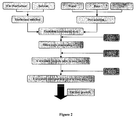
- Figure 2 Yet another process that can be used to increase particle size is described in Figure 2 .
- the active molecules can only be encapsulated in the core.
- the particles growth is limited by the fact that the alkoxide precursor needs to consume water for reaction. Since the amount of water is dictated by the formation of W/O microemulsion, only a limited supply of water is available. In fact, not all of the water introduced in the system is available for sol-gel reaction, as some water is bonded to the surfactant. As more alkoxide is being added more water is being consumed and less is available for further hydrolysis and growth.
- a layered nanoparticle in which a dopant is located in, and restricted to, the core of the nanoparticle and/or one or more of the layers surrounding the core, and for a process for making such a nanoparticle.
- Such a process may open up a wide range of novel potential applications such as optical storage, data encryption or security ink in addition to the controlled release of drugs described above.
- a process for forming a layered nanoparticle comprising exposing a catalyst to a reagent in the presence of a core particle, whereby the reagent reacts to form a layer on the core particle to form the layered nanoparticle.
- the catalyst, reagent and core particle may be disposed in a fluid.
- the fluid may be a liquid.
- the catalyst may be located on and/or in and/or around the core particle.
- the catalyst may be a catalyst for reaction of the reagent.
- the catalyst may be located on the surface of the particle.
- the reaction may comprise one or more of hydrolysis, condensation, polycondensation, crosslinking, polymerisation, precipitation and gelation.
- the core particle may form the core of the layered nanoparticle.
- the layered nanoparticle once formed, may comprise the core particle at least partially surrounded or encapsulated by the layer.
- the core particle may be completely surrounded or encapsulated by the layer.
- the core p[article may be a single particle or an agglomerate of two or more particles.
- the core particle may comprise the same material as the layer or it may comprise a different material.
- the present invention provides a process for forming layered nanoparticles, comprising:
- the second liquid may be immiscible with the first liquid.
- the step of combining with the second liquid may comprise depositing the second liquid on the core particle, for example on the surface of the core particle. If a precursor is added to the suspension, the precursor may be capable of reacting with the second liquid to form the reagent, i.e. it may be a precursor for the reagent.
- the reagent may be a condensable species, a crosslinkable species or a polymerisable species.
- the reaction of the reagent may form a solid layer or a gel layer on the core particle, and may comprise condensation, crosslinking and/or polymerisation of the reagent.
- the core particle may be a nanoparticle and may be between about 5 and 150nm in diameter, or may be a submicron particle, and may be less than about 500nm in diameter.
- the core particle and/or the layer may be solid, and may be porous, for example microporous and/or mesoporous.
- the second liquid may comprise a dopant, whereby the formation of the layer encapsulates the dopant in the layer.
- the step of adding the second liquid and adding the reagent may be repeated one or more times, thereby forming a plurality of layers.
- the core particle and each layer independently may or may not have a dopant, and the dopants, if present, may be the same or different.
- the or each dopant may be a releasable substance, and may be releasable from the nanoparticle.
- the process may generate a nanoparticulate substance comprising a plurality of layered nanoparticles, whereby the step of providing a suspension comprises providing a suspension comprising a plurality of core particles in the first liquid.
- the core particles, and independently the layered nanoparticles of the nanoparticulate substance may be homogeneous in shape or may be heterogeneous in shape. They may be monodispersed, or may have a narrow particle size distribution, or they may have a broad particle size distribution.
- the second non-polar liquid may be the same as or different to the first non-polar liquid.
- the second surfactant may be the same as or different to the first surfactant.
- the second co-surfactant may be the same as or different to the first co-surfactant.
- the second non-polar liquid, second surfactant and second co-surfactant may be added such that the ratios of first non-polar liquid plus second non-polar liquid to first surfactant plus second surfactant and to first co-surfactant plus second co-surfactant remain constant on a v/v. v/w, w/w, v/mol or w/mol basis.
- the suspension may be provided at a temperature of between about 1 and 70°C, or the process may comprise bringing the suspension to a temperature between about 1 and 70°C, commonly between about 15 and 40°C, and more commonly between 20 and 30°C, i.e. ambient temperature. Lower temperatures may be used provided that the temperature is such that neither the dispersed phase nor the continuous phase freezes. Higher temperatures may at times be used, depending on the volatility and boiling point of the two phases and the inversion temperature of the surfactant.
- Step d) may comprise providing a hydrolysable species to the suspension to form the layered nanoparticle, said hydrolysable species being capable of hydrolysing in the aqueous liquid to form the condensable species.
- Step d) may comprise the steps of hydrolyzing the hydrolysable species in the aqueous liquid and of condensing the condensable species in the aqueous liquid to form the layer.
- the process may comprise the step of maintaining the suspension at a sufficient temperature (for example between about 1 and 70°C) for a sufficient time (for example between about 6 and 96 hours) to hydrolyse the hydrolysable species, and optionally also to condense the condensable species.
- Steps b) to d) may be repeated at least once, or may be repeated 2, 3, 4, 5, 6, 7, 8, 9, 10 or more than 10 times.
- the aqueous liquid may comprise a dopant or a combination of dopants, or may comprise no dopant, and the dopant in any repetition, if present, may be the same as or different to the dopant in any other repetition.
- Each repetition may form a layer, and each layer may comprise a dopant, or may comprise no dopant.
- the or each dopant may be a releasable substance, or may be a non-releasable substance.
- the core particle may be between about 5 and 150nm in diameter or may be less than 500nm in diameter.
- the or each layer may have a mean thickness between about 1 and 100nm, or between about 1 and 50nm, 5 and 75nm or 5 and 30nm.
- the process may be capable of controlling the thickness of the or each layer.
- the core particle may be porous, and may be microporous and/or may be mesoporous and may have a pore size between about 0.5 and 20 nm.
- the core particle may comprise a dopant, which may be the same as or different to the dopant in the layer, or in any or all of the layers.
- the hydrolysable species in any repetition may be the same as or different to the hydrolysable species in any other repetition.
- One or both of the suspension and the aqueous liquid may comprise a surfactant.
- the process may generate a nanoparticulate substance comprising a plurality of layered nanoparticles, whereby the step of providing a suspension comprises providing a suspension comprising a plurality of core particles in the first non-polar liquid.
- the process may additionally comprise one or more of the following steps:
- Step b) may be conducted at room temperature, or may be conducted as high as 80°C (e.g. at about 20, 30, 40, 50, 60, 70 or 80°C).
- the organic liquid of step g) may be polar or non-polar. Its polarity may be selected depending on the solubility of dopants in the organic liquid.
- Step c) may be conducted at room temperature, or may be conducted as high as 70°C (e.g. at about 20, 30, 40, 50, 60 or 70°C), but should be conducted at or below the boiling point of the organic liquid.
- Steps b) and c) may be conducted more than once, and may be conducted in any order, or one or both may be omitted.
- the process may comprise (in that order) steps a) and d), or steps a), b) and d), or steps a), c) and d), or steps a), b), c) and d), or steps a), c), b) and d), or steps a), c), b), c) and d), or may comprise some other order of steps.
- Step d) may be conducted in a manner that prevents or inhibits aggregation, for example step h may comprise freeze drying as described in WO1/62332 (Barbé and Bartlett , "Controlled Release Ceramic Particles, Compositions thereof, Processes of Preparation and Methods of Use"). Step h may be performed directly after step e. In that case, the large amount of surfactant present at that stage may prevent physical contact between the particles and thus inhibit aggregation.
- the emulsion may be a water-in-oil (W/O) emulsion.
- the hydrolysable species may hydrolyse to form the first or second condensable species respectively, which may then condense due to the action of the catalyst(s) to form a layer at least partially surrounding the core particles.
- the first hydrolysable species and the second hydrolysable species may be the same or they may be different.
- the emulsion and/or the aqueous liquid may comprise a dopant, and at least one region selected from the group consisting of the core particles and the layer(s) may comprises at least one dopant.
- the hydrolysable species may hydrolyse to form the first or second condensable species respectively, which may then condense due to the action of the catalyst(s).
- the emulsion may be a microemulsion.
- a layered nanoparticle comprising a porous ceramic core particle (i.e. core) and one or more porous layers at least partially surrounding said core particle, wherein at least one region of the nanoparticle selected from the core and the one or more layers has a dopant substantially homogeneously distributed therein, said layered nanoparticle being capable of releasing the dopant.
- the layered nanoparticle may be spherical.
- the core particle may be a solid, and may be a porous solid, for example a microporous or mesoporous solid, and may be spherical or non-spherical.
- the mean diameter of the core may be between about 5 and 500nm.
- the or each layer may, independently, be a solid layer or a gel layer.
- At least one region of the layered nanoparticle selected from the group consisting of the core and the one or more layers may comprise a dopant, or a plurality (for example 2, 3, 4, 5 or more than 5) of dopants. Thus there may be a core dopant and/or one or more layer dopants.
- the or each dopant may be substantially homogeneously distributed in the region that comprises said dopant.
- the nanoparticle comprises a core and a single layer, and the core comprises a core dopant and the layer comprises a layer dopant, then the core dopant may be substantially homogeneously distributed in the core, and the layer dopant may be substantially homogeneously distributed in the layer.
- the layered nanoparticle may be a microporous or mesoporous ceramic nanoparticle.
- the core and the one or more layers may each, independently, be microporous or mesoporous.
- the or each layer, and optionally the core particle may, independently, comprise a hydrolysed silane, for example a hydrolysed alkoxysilane, and may comprise silica and/or a polysilsesquioxane.
- the or each layer, and optionally the core particle may, independently, comprise a ceramic or an oxide, e.g. a metal oxide. If more than one of the core and the one or more layers comprises a dopant, then the dopants in each of these may be the same or they may be different.
- the or each dopant may independently be releasable or non-releasable.
- the layered nanoparticle may be capable of sequential release and/or delayed release of one or more of the releasable dopants.
- the layered nanoparticle may have a mean diameter between about 10 and 500nm.
- the core and the or each layer may, independently, be microporous or mesoporous, and may have pores between about 0.5 and 10nm.
- the or each layer may, independently, have a mean thickness between about 1 and 50nm.
- the dopant may be an inorganic substance or an organic substance. It may be a salt, or a dye, a catalyst, an active material or active substance, e.g. a biologically active substance (for example a protein, polysaccharide, enzyme, drug, peptide etc.), a magnetic substance, a radioactive species, a radioactive tracer or some other type of dopant.
- a layered nanoparticle wherein the porous core particle has a core dopant substantially homogeneously distributed therein, and the one or more porous layer has a layer dopant substantially homogeneously distributed therein, said porous layer at least partially surrounding said core particle.
- At least one of the first and second dopants may be releasable from the layered nanoparticle.
- the nanoparticle may comprise a porous core particle comprising a first releasable dopant and a porous layer comprising a second releasable dopant at least partially surrounding said core particle.
- the nanoparticle may be capable of releasing the second releasable dopant and the first releasable dopant sequentially.
- the layered nanoparticle comprising a porous ceramic core particle may comprise a first releasable dopant, a first porous layer surrounding the core particle, said first layer comprising no releasable dopant, and a second porous layer comprising a second releasable dopant at least partially surrounding the first porous layer.
- the nanoparticle may be capable of releasing the second releasable dopant and the first releasable dopant sequentially, with a delay between release of the second and first dopants. The length of the delay may be dependent on the thickness and porosity of the first layer.
- the layered nanoparticle may comprise a core particle comprising no releasable dopant and a porous layer comprising a releasable dopant at least partially surrounding said core particle.
- the core particle may comprise a non-releasable dopant, for example a non-releasable pigment for colouring the nanoparticle.
- the core may be porous or non-porous.
- the core may comprise a magnetic material, so that the layered nanoparticle is magnetic.
- nanoparticulate substance comprising a plurality of layered nanoparticles each of which comprises a ceramic core particle and one or more porous ceramic layers at least partially surrounding said core particle, wherein at least one region of the nanoparticle selected from the core and the one or more layers comprises a dopant substantially homogeneously distributed therein, said dopant being releasable from the nanoparticle and said dopant being an active substance, said nanoparticulate substance having a narrow particle size distribution.
- the nanoparticulate substance may be monodispersed, or may have a narrow particle size distribution.
- a layered nanoparticle when made by the process of the invention.
- a layered nanoparticle for use in administering a drug to a patient, said layered nanoparticle comprising a ceramic core particle, and one or more porous ceramic layers at least partially surrounding said core particle, wherein at least one region of the nanoparticle selected from the core and the one or more layers is porous and comprises the drug substantially homogeneously distributed therein, said drug being releasable from the nanoparticle.
- a releasable substance can be delivered in to a fluid in a method comprising exposing a layered nanoparticle according to the invention, or a plurality of layered nanoparticles according to the invention, to the fluid, wherein the layered nanoparticle(s) has a releasable substance therein and/or thereon (e.g. in at least one of the layers or the core particle), and the fluid is capable of at least partially releasing the releasable substance from the layered nanoparticle(s).
- the fluid may be an aqueous fluid, for example a biological fluid, or may be a non-aqueous fluid, for example an organic solvent.
- the exposing may comprise stirring, shaking, swirling, sonicating or otherwise agitating the layered nanoparticle(s) with the fluid.
- the method may comprise releasing the releasable substance into the fluid, and may comprise releasing the releasable substance in a controlled manner.
- the release of the releasable substance may be controlled variable release, whereby the rate of release of the releasable substance is variable with time in a controlled and/or predetermined manner.
- the releasable substance can be a drug and the fluid a bodily fluid e.g. blood in a patient.
- the drug may be administered to the patient by a method comprising delivering to the patient, e.g. to the blood of the patient, a layered nanoparticle according to the invention, or a plurality of layered nanoparticles according to the invention, said layered nanoparticle(s) having the drug therein and/or thereon.
- the drug may be for example an anticancer drug.
- the layered nanoparticle(s) may have a diameter between about 10 and 500 nm, or between about 50 and 300 nm.
- the delivery may be intravenous (IV) delivery, and may comprise injecting into the patient a suspension comprising the nanoparticle(s).
- the suspension may comprise a suspending fluid.
- Suitable suspending fluids for injections are well known, and may comprise saline, Ringer's solution, glucose solution, fructose solution, dextrose solution, amino acid solution, protein hydrolysate, sodium lactate solution or some other aqueous liquid.
- a layered nanoparticle according to the invention for administering a drug to a patient, said layered nanoparticle having the drug therein and/or thereon.
- the present invention relates to inorganic/inorganic particles core shell particles and to particles made out of ceramic materials, with a ceramic core and one or more ceramic layer, or shell.
- the invention is applicable to a variety of porous metal oxide shells and non-porous or porous (oxide or non oxide) cores for example silica.
- Silica core-shell particles can be divided into:
- the first and third categories are of particular interest for the encapsulation and release from core-shell particles.
- the particles of the present invention differ from the prior art in that a dopant may be doped in any of the layers.
- the particles of the present invention may be considered as being multi-layered nanoparticles with at least one of the shell and a layer containing at one or more dopants being homogeneously distributed throughout the layer and capable of being released.
- the composition of each of the individual layers of the multi-layer particles it is possible to exploit the ability to change the micelle pool compositions. This may be achieved, as described herein, by sequential addition of the surfactant/water and a reagent precursor. It may be important to maintain the emulsion composition (i.e. the same spot in the ternary phase diagram: Surfactant-Oil-Water) that allows production of homogeneous multi-layered particles with identical core-shell structures and does not lead to generation of particles with different composition.
- the present invention provides a cyclic addition of emulsion and precursor that facilitates production of multilayered particles.
- the present specification discloses a sol-gel process for producing layered nanoparticles via a water-in-oil microemulsion (W/O) system.
- the nanoparticles may be multi-layered.
- the resulting nanoparticles may contain one or more active molecules, encapsulants and/or dopants, encapsulated in different locations within the nanoparticles, which may be released in a controlled fashion.
- the nanoparticles are ceramic nanoparticles. They may be synthesised by sequentially adding (different) active molecules (dopants) and (different) precursors (or organically modified precursors), as well as fresh W/O emulsions.
- the overall particle size as well as the core diameter and each layer thickness may be tailored by controlling the amount of precursor added.
- each layer may be controlled between about 1 and 50nm.
- the precursor may be a hydrolysable species, e.g. a hydrolysable silane. It may be capable of hydrolyzing to form the reagent.
- the precursor may be varied from silicon alkoxide to other metal alkoxide or a mixture of metal alkoxides.
- the active molecules may be released sequentially or in segmented fashion (e.g. release-no release-release).
- a nanoparticle is constructed having a releasable substance in the core and in an outer layer, with an inner layer between the outer layer and the core having no releasable substance, then release of the releasable substance would proceed stepwise, with release - no release - release steps occurring sequentially.
- the core particles may be formed in situ or they may be added as preformed particles.
- the core particles may be any species of ceramic powder, for example silica particles (such as fumed silica, colloidal silica or silica fume), metal oxide particles (such as indium oxide), mixed metal oxide particles (such as indium oxide doped silica particles), semiconductor particles, quantum dots, magnetic particles, crystalline particles or some other type of particles.
- the ceramic core particles may be spherical, or cubic, or may be in the shape of a triangular prism, a tetrahedron, a polyhedron (for example with 4, 5, 6, 7, 8, 9, 10, 11, 12, 13, 14, 15 ,16, 17, 18, 19 or 20 or more than 20 faces), a flake or an irregular shape.
- the core particles may be crystalline or non-crystalline, or may be partly crystalline. It may be porous or non-porous.
- the core particles may be between about 5 and 500nm in diameter, or between about 5 and 450, 5 and 400, 5 and 300, 5 and 200, 5 and 100, 5 and 50, 5 and 20, 10 and 500, 10 and 400, 10 and 200, 10 and 100, 50 and 500, 50 and 400, 50 and 200, 50 and 100, 100 and 500, 100 and 400, 100 and 200, 200 and 500 or 300 and 500nm, for example about 5, 10, 15, 20, 25, 30, 35, 40, 45, 50, 60, 70, 80, 90, 100, 150, 200, 250, 300, 350, 400, 450 or 500nm in diameter, or some other diameter.
- the non-polar liquid may be a hydrocarbon, and may have between 5 and 16 carbon atoms, or between 5 and 12, 5 and 8, 6 and 12 or 6 and 10, and may have 5, 6, 7, 8, 9, 10, 11, 12, 13, 14, 15 or 16 carbon atoms. It may be straight chain, branched, cyclic and may be aliphatic or aromatic. It may be a mixture of hydrocarbons. Alternatively it may be some other non-polar liquid, for example a haloalkane or haloaromatic liquid or a low viscosity silicone, for example a low viscosity dimethylsilicone or a low viscosity fluorosilicone.
- the low viscosity silicone may be a linear silicone or a cyclic silicone.
- the viscosity of the silicone may be below about 100cS, or below about 50, 20, 10, 5, 2 or 1cS, and may be about 0.5, 1, 2, 3, 4, 5, 10, 20, 30, 40, 50, 60, 70, 80, 90 or 100cS.
- the linear silicone may be a trimethylsiloxy ended silicone.
- the cyclic silicone may be a D3, D4, D5, D6, D7 or D8 cyclic silicone or may be a mixture of any two or more of these.
- a typical hydrocarbon that may be used is cyclohexane.
- the non-polar liquid may be recyclable. If a catalyst is applied, the catalyst may be a catalyst for the sol-gel process.
- a strong acid such as sulfuric acid, hydrochloric acid
- an organic acid such as acetic acid, trifluoroacetic acid
- a base for example a hydroxide such as KOH, NaOH, aqueous ammonia
- an amine for example ORMOSIL functionalized with amine such as APTES (amino
- the concentration of the catalyst in the aqueous liquid may be between about 0.1 and 5M and may be between about 0.1 and 2, 0.1 and 1, 0.1 and 0.5, 0.5 and 5, 1 and 5, 3 and 5, 0.5 and 2 or 1 and 2M, and may be about 0.1, 0.2, 0.3, 0.4, 0.5, 0.6, 0.7, 0.8, 0.9, 1, 1.1, 1.2, 1.3, 1.4, 1.5, 2, 2.5, 3, 3.5, 4, 4.5 or 5M.
- the pH of the aqueous liquid may be between about 8 and 14, or between about 8 and 13, 8 and 12, 8 and 11, 8 and 10, 9 and 13, 10 and 13, 11 and 13, 9 and 12, 10 and 12 or 11 and 12, and may be about 8, 8.5, 9, 9.5, 10, 10.5, 11, 11.5, 12, 12.5, 13, 13.5 or 14.
- the ratio of the aqueous liquid to the suspension of core particles on a v/v basis may be between about 0.1 and 10%, or between about 0.1 and 5, 0.1 and 2, 0.1 and 1, 0.5 and 10, 1 and 10, 5 and 10, 0.5 and 5, 0.5 and 2 or 1 and 2%, and may be about 0.1, 0.5, 1, 1.5, 2, 2.5, 3, 3.5, 4, 4.5, 5, 5.5, 6, 6.5, 7, 7.5, 8, 8.5, 9, 9.5 or 10%.
- the ratio of the hydrolysable species to the aqueous liquid may be between about 0.5 and 10% on a w/w, w/v, v/v or molar basis, and may be between about 0.5 and 5, 0.5, and 2, 0.5 and 1, 1 and 10, 5 and 10 or 2 and 5%, and may be about 0.5, 1, 1.5, 2, 2.5, 3, 3.5, 4, 4.5, 5, 5.5, 6, 6.5, 7, 7.5, 8, 8.5, 9, 9.5 or 10% on a w/w, w/v, v/v or molar basis.
- the hydrolysable species may be a hydrolysable metal species, for example a hydrolysable silicon, aluminium or titanium species.
- the hydrolysable species may be an alkoxide, such as a metal alkoxide (e.g. silicon alkoxide, titanium alkoxide or aluminium alkoxide).
- the alkoxide may be a C1 to C6 straight chain or branched chain alkoxide or may be a mixture of such alkoxides.
- the hydrolysable species may be an aryloxide, for example phenoxide, a silicon alkanoate, for example a silicon propionate, and aminosilane, an amidosilane or some other hydrolysable silane.
- the metal may have between 2 and 4 hydrolysable groups per molecule on average, and may have about 2, 2.5, 3, 3.5 or 4 hydrolysable groups per molecule on average.
- Suitable hydrolysable species include, but are not restricted to, tri- and tetra-alkoxysilanes such as tetramethoxysilane (TMOS), tetraethoxysilane (TEOS), tetrabutoxysilane (TBOS), tetrapropoxysilane (TPOS), methyltrimethoxysilane (MTMS), methyltriethoxysilane (MTES), ethyltriethoxysilane (ETES), ethyltrimethoxysilane (ETMS), octyltriethoxysilane (OTES), octyltrimethoxysilane (OTMS), hexadecyltrimethoxysilane (HDTMS), hexadecyltriethoxysilane (HDTES), octadecyltrimethoxysilane (ODTMS), octadecyltriethoxysilane
- the hydrolysable species may be capable of hydrolysing to produce a condensable species.
- the condensable species may be a partial or complete hydrolysate of any of the above hydrolysable species. It may be a silanol species, and may have 1, 2, 3 or 4 silanol groups per molecule, or more than 4 silanol groups per molecule. It may be an at least partially condensed material having 1 or more silanol groups per molecule. It may be a mixture of silanol species.
- the core and the one or more layers may, independently, comprise silica, polysilsesquioxane, alumina, titania or some other metal oxide.
- the hydrolysable species is organofunctional, this may provide a condensable species which is similarly organofunctional, and ultimately may lead to a nanoparticle which is similarly organofunctional, optionally selectively organofunctional in one or more of the core and the layer(s). This may provide selective affinity for a dopant or other species for the organofunctional core and/or layer(s).
- the sufficient temperature to hydrolyse may be between about 1 and 70°C, or between about 1 and 50, 1 and 30, 1 and 20, 1 and 10, 1 and 5, 10 and 50, 10 and 40, 10 and 30, 10 and 20, 15 and 40, 20 and 50, 50 and 70, 30 and 50, 20 and 40 or 20 and 30°C, and may be about 1, 2, 3, 4, 5, 6, 7, 8, 9, 10, 15, 20, 25, 30, 35, 40, 45, 50, 55, 60, 65 or 70°C.
- the sufficient time may be between about 6 and 96 hours, or between about 6 and 72, 6 and 48, 6 and 24, 12 and 96, 24 and 96, 36 and 96, 48 and 96, 60 and 96, 12 and 72, 24 and 60, 36 and 60 or 36 and 48 hours, and may be about 6, 12, 18, 24, 36, 48, 60, 72, 84 or 96 hours, or may be more than 96 hours.
- the core particles may be provided at a temperature between about 1 and 70°C, or may be brought to a temperature between about 1 and 70°C, or between about 10 and 70 °C or between about 1 and 10 °C or between about 1 and 50 °C or between about 1 and 20 °C or between about 10 and 50°C, or between about 10 and 40, 10 and 30, 10 and 20, 20 and 50, 50 and 70, 30 and 60, 30 and 50, 20 and 40 or 20 and 30°C, and may be about 1, 2, 3, 4, 5, 6, 7, 8, 9, 10, 15, 20, 25, 30, 35, 40, 45, 50, 55, 60, 65 or 70°C.
- the dopant may be a salt (e.g. comprising a metal complex ion such as copper tetramine), a dye, a catalyst, a biologically active substance (for example a protein, polysaccharide, enzyme, drug, peptide etc.), a magnetic substance, a radioactive tracer or other radioactive species, or some other type of dopant.
- a salt e.g. comprising a metal complex ion such as copper tetramine
- a dye e.g. comprising a metal complex ion such as copper tetramine
- a biologically active substance for example a protein, polysaccharide, enzyme, drug, peptide etc.
- a magnetic substance for example a protein, polysaccharide, enzyme, drug, peptide etc.
- radioactive tracer or other radioactive species for example a radioactive tracer or other radioactive species, or some other type of dopant.
- the or each dopant may be releasable or non-releasable. If more than one dopant is present, at least one dopant may be releasable and at least one dopant may be non-releasable, or all dopants may be releasable or all dopants may be non-releasable.
- a dopant in the core or a layer may be distributed through said core or layer, and may be distributed evenly or unevenly through said core or layer. It will be understood that where reference is made to a dopant, this may include a plurality of dopants (for example 2, 3, 4, 5 or more than 5 dopants).
- the core particle or any of the layers comprises a plurality of dopants, they may be all releasable, or at least one may be releasable and at least one non-releasable, or they may be all non-releasable.
- a layer may comprise a mixture of releasable dopants to be released simultaneously, or it may comprise a mixture of non-releasable dopants (e.g.
- a dye and a magnetic dopant to impart either a plurality of properties to the layer or a composite property (as for example if two different dyes were incorporated into a single layer), or it may comprise a releasable dopant for release to the environment surrounding the particle, together with a non-releasable dopant (for example a dye).
- the dopant in the core particle may be substantially homogeneously distributed through the core particle.
- the dopant in the layer, or any of the layers (if more than one layer is present) may be substantially homogeneously distributed through that layer.
- the layered nanoparticle may comprise a core particle having a non-releasable dye (e.g. red), and the core particle may be surrounded by a porous layer comprising a releasable dye of a different colour (e.g. green).
- a releasable dye of a different colour e.g. green
- the layered nanoparticle may adopt the colour of the releasable dye (e.g. green), or a composite colour of the releasable and non-releasable dyes (e.g. brown).
- a user may be alerted to the fact that the releasable dye has been released.
- the porous layer comprises a second releasable dopant (e.g. a reagent for a chemical reaction) in addition to the releasable dye.
- a second releasable dopant e.g. a reagent for a chemical reaction
- the layered nanoparticle adopts the colour of the non-releasable dye, a user may be alerted to the fact that it is necessary to add further nanoparticles in order to ensure continued release of the releasable dopant.
- the core particle may, for example, comprise a quantum dot, which may function as a non-releasable dye.
- the core particle may be any suitable particle, for example a porous or non-porous particle. It may be a nanoparticle.
- the dopant may comprise an immobilised reagent or catalyst.
- a nanoparticle may comprise a core particle and layer surrounding the core particle.
- the core particle may comprise a dopant (e.g. a prodrug) which is a precursor to a compound (e.g. a drug) to be released to the environment of the nanoparticle, and the layer may comprise a catalyst for converting the dopant into the compound.
- the dopant may pass from the core particle through the layer, where it would be converted under the influence of the catalyst into the compound, which would then be released from the nanoparticle. This may be useful in the case of a compound which is of limited long term stability.
- a layer may comprise a release rate modifier, either in the form of a non-releasable dopant or in the form of the material of the layer itself.
- the release rate modifier may be capable of modifying the release rate of a releasable dopant incorporated in the layer or in a layer closer to the core particle or in the core particle.
- the release rate modifier may be capable of accelerating or decelerating the release of a releasable dopant.
- the core may comprise a releasable dopant which has acidic groups.
- a layer surrounding the core may comprise amine groups, which would slow the release of the releasable dopant.
- the core or one or more layers may comprise a sorbent, either in the form of a non-releasable dopant or in the form of the material of the layer itself.
- the core particle or a layer may comprise a non-releasable amine dopant, or the material of the core particle or layer may comprise amine groups (for example derived from aminopropyltriethoxysilane used in making the core particle or the layer), for sorbing acidic species.
- amine groups for example derived from aminopropyltriethoxysilane used in making the core particle or the layer
- An example of the use of such a material may be the selective sorption of low molecular acids in the presence of high molecular weight acids.
- a porous core particle having amine groups may have a neutral porous layer applied to it to form a nanoparticle according to the present invention.
- the low molecular weight acids would be capable of penetrating the layer to be sorbed into the core particle, whereas higher molecular weight acids may be prevented from accessing the core particle.
- the high molecular weight acids would be shielded from the amine groups in the core particle, thus preventing coagulation of the liquid due to an interaction between the nanoparticles and the higher molecular weight acids. In that manner, the low molecular weight acids may be selectively removed from the mixture without coagulation of the liquid.
- Another example of the use of such a material may be the sorption of highly toxic materials.
- the nanoparticle having a porous core particle with amine groups surrounded by a neutral porous layer may be used for sorbing highly toxic acidic materials safely. On exposure to a liquid comprising the toxic acidic material, the nanoparticle may sorb the toxic acidic material from the liquid into the amino functional core particle, leaving the neutral porous layer essentially free of the toxic acidic material.
- the resultant nanoparticle with adsorbed toxic acidic material may be safe to handle, since the outer layer of the nanoparticle would be free of the toxic acidic material.
- the layered nanoparticle may comprise (in the core and/or in one or more layers) chelating and/or complexing groups that are capable of interacting specifically with a particular chemical species or class of chemical species in order to provide selective sorption of that chemical species or class of chemical species.
- the chelating and/or complexing groups may be either in the form of a non-releasable dopant or in the form of the material of the layer itself, or both.
- Such layered nanoparticles may be used for example for sorption of toxic chemicals, such as heavy metals.
- a layered nanoparticle having a non-releasable dopant comprising a group capable of chelating lead e.g. a bound EDTA group
- a group capable of chelating lead e.g. a bound EDTA group
- the mean nanoparticle bulk density may be in the range 0.075g/cm 3 to 2.2g/cm 3 , or about 0.15 to 1.5, 0.18 to 1.0, 0.5 to 1.0, 0.5 to 0.75 or 0.25 to 0.5g/cm 3 , and may be about 0.075, 0.1, 0.15, 0.2, 0.25, 0.3, 0.35, 0.4, 0.45, 0.5, 0.55, 0.6, 0.65, 0.7, 0.75, 0.8, 0.85, 0.9, 0.95, 1, 1.1, 1.2, 1.3, 1.4, 1.5, 1.6, 1.7, 1.8, 1.9, 2, 2.1 or 2.2g/cm 3 .
- the nanoparticulate substance may be monodispersed, or may have a narrow particle size distribution.
- the particle size distribution may be such that more than 50% of particles lie within 10% of the mean particle size, or more than 45%, 40%, 35%, 30%, 25%, 20%, 15% or 10%, and may be such that about 10, 20, 30, 40, 50, 60, 70 or 80% of particles lie within 10% of the mean particle size.
- the nanoparticulate substance may have a mean particle diameter between about 10 and 500 nm, or between about 10 and 100, 50 and 500, 50 and 300, 50 and 100, 100 and 500, 250 and 500, 100 and 300 or 200 and 300 nm, and may have a mean particle diameter of about 10, 20, 30, 40, 50, 100, 150, 200, 250, 300, 350, 400, 450 or 500 nm, or may have a larger mean particle diameter.
- the particles of the nanoparticulate substance may comprise a core and between 1 and 10 layers, or layers, at least partially surrounding the core. There may be between 1 and 8, 1 and 5, 1 and 3, 2 and 10, 5 and 10, 2 and 8 or 2 and 5 layers, and may be 1, 2, 3, 4, 5, 6, 7, 8, 9 or 10 layers, or may be more than 10 layers.
- the mean diameter of the core may be between about 5 and 500nm, or between about 5 and 150, 100 and 500, 100 and 500, 100 and 400, 100 and 300, 100 and 200, 100 and 150, 5 and 125, 5 and 100, 5 and 80, 5 and, 50, 5 and 30, 10 and 100, 30 and 100, 50 and 100, 100 and 150, 100 and 130, 130 and 150, 10 and 80, 20 and 70 or 30 and 70nm, and may be about 5, 10, 15, 20, 25, 30, 35, 40, 45, 50, 55, 60, 65, 70, 75, 80, 85, 90, 95, 100, 110, 120, 130, 140, 150, 200, 250, 300, 350, 400, 450 or 500nm.
- each layer or layer may, independently, be between about 1 and 50 nm, or between about 1 and 30, 1 and 20, and 10, 5 and 30, 5 and 10, 10 and 50, 10 and 40, 10 and 30, 10 and 20, 20 and 50, 30 and 50,40 and 50, 20 and 40 or 20 and 30 nm, and may be about 1, 2, 3, 4, 5, 10, 15, 20, 25, 30, 35,40,45 or 50 nm. If more than one layer or shell is present, they may be different thicknesses or the same thickness.
- the core and/or the layers may be porous and may be microporous, or mesoporous , and may have a mean pore size of between about 0.5 and 20nm, or between about 0.5 and 10, 0.5 and 5, 0.5 and 4, 0.5 and 3, 0.5 and 2, 0.5 and 1.7, 0.5 and 1, 1 and 5, 2 and 5, 3 and 5,4 and 5, 5 and 10, 7 and 10, 10 and 20, 5 and 15, 5 and 7, 1 and 3 or 1 and 2nm, and may have a pore size about 0.5, 0.6, 0.7, 0.8, 0.9, 1, 1.1, 1.2, 1.3, 1.4, 1.5, 1.6, 1.7, 1.8, 1.9, 2, 2.5, 3, 3.5, 4, 4.5, 5, 6, 7, 8, 9, 10, 11, 12, 13, 14, 15, 16, 17, 18, 19 or 20nm.
- both the core and all layers may be porous, or the core may be non-porous and the layers may be porous, or the core and an inner layer may be non-porous, and an outer layer may be porous.
- the core particle and the or each layer may, independently, have a porosity of between about 0 and 80%, or between about 0 and 70, 0 and 60, 0 and 50, 0 and 40, 0 and 30, 0 and 20, 0 and 10, 2 and 80, 10 and 80, 30 and 80, 50 and 80, 10 and 50, 30 and 50, 20 and 60 or 20 and 40%, and may have a porosity about 0, 10, 20, 30, 40, 50, 60, 70 or 80%.
- the dopant may represent between about 0 and 100wt% of the core (i.e. the core may have no dopant or may be an active material which may or may not also be a dopant in one or more layers: the core may for example comprise a micronised drug particle or marker or quantum dot, as in the example of the In 2 O 3 nanocrystals).
- the dopant may represent between about 0 and 50, 0 and 25, 0 and 10, 0 and 5, 10 and 100, 50 and 100, 5 and 95, 10 and 50 or 25 and 50wt% of the core, and may represent about 0, 1, 2, 3, 4, 5, 10, 15, 20, 25, 30, 35, 40, 45, 50, 55, 60, 65, 70, 75, 80, 85, 90, 95, 96, 97, 98, 99 or 100wt% or the core
- the dopant may represent between about 0 and 25wt% of any particular layer surrounding the core, or between about 0 and 20, 0 and 15, 0 and 10, 0 and 5, 5 and 25, 10 and 25, 15 and 25, 20 and 25, 5 and 20 or 10 and 20wt%, and may represent about 0, 0.1, 0.5, 1, 2, 3, 4, 5, 6, 7, 8, 9, 10, 11, 12, 13, 14, 15, 16, 17, 18, 19, 20, 21, 22, 23, 24 or 25wt% of any particular layer surrounding the core.
- the process of the invention may comprise that the precursor is a hydrolysable species and the second liquid is an aqueous liquid, and the process comprises the steps of:
- step of hydrolysing the hydrolysable species comprises maintaining the suspension at a sufficient temperature for a sufficient time to hydrolyse the hydrolysable species.
- the process of the invention may additionally comprise one or more of the following steps:
- the step of at least partially separating the layered nanoparticle(s) may comprise filtering, microfiltering, centrifuging, ultracentrifuging, settling, decanting or a combination of these. It may also comprise the step of destabilising the suspension, and the destabilising may be performed before said filtering, microfiltering, centrifuging, ultracentrifuging or settling.
- the step of destabilising may comprise adding to the suspension a destabilising liquid.
- the destabilising liquid may be polar, and may be miscible with the non-polar liquid.
- the destabilising liquid may be miscible with water. It may be for example acetone, ethanol, methanol or some other liquid.
- the step of destabilising may comprise changing temperature, for example to a temperature at which the suspension is not stable. Depending on the phase diagram, the changing may be heating or may be cooling.
- the steps of washing may comprise contacting the layered nanoparticle(s) with a washing liquid (either aqueous or organic) and separating the layered nanoparticle(s) from the washing liquid.
- a washing liquid either aqueous or organic
- any or all of the steps of washing may comprise suspending the layered nanoparticle(s)in the washing liquid, optionally agitating the combined washing liquid and the layered nanoparticle(s), and separating the layered nanoparticle(s)from the washing liquid, for example using any of the separation methods described above.
- any or all of the steps of washing may comprise passing the washing liquid past and/or through the layered nanoparticle(s), which may be retained, for example in a filter.
- the washing may be performed inside a decantation funnel by phase separation.
- the aqueous washing liquid may be water or an aqueous liquid, for example a salt solution.
- the organic washing liquid may be a solvent, and may be a polar or a non-polar solvent, for example methanol, ethanol, isopropanol, acetone, dichloromethane, chloroform, ethyl acetate, toluene or some other solvent, and may be a mixture of solvents.
- the step of washing may also comprise heating or cooling the suspension to between about 10 and 70°C, or between about 10 and 50, 10 and 30, 10 and 20, 20 and 70, 50 and 70, 20 and 50 or 30 and 50°C, and may comprise heating or cooling the suspension to about 10, 15, 20, 25, 30, 35, 40, 45, 50, 55, 60, 65 or 70°C.
- the heating or cooling may be to a temperature which prevents the system from forming a single stable phase by changing the phase diagram of the system.
- the system may also be prevented from forming a single stable phase by using a mixture of solvents to change the phase diagram.
- the step of drying may comprise heating the layered nanoparticle(s).
- the heating may be to a temperature below the temperature at which the dopant(s), if present, decomposes or deteriorates, and may be for example between about 30 and 80°C, or between about 30 and 60, 30 and 40, 40 and 80, 60 and 80 or 40 and 60°C, and may be about 30, 35, 40, 45, 50, 55, 60, 65, 70, 75 or 80°C.
- the step of drying may comprise freeze-drying, for example as described in WO1/62332 (Barbé and Bartlett , "Controlled Release Ceramic Particles, Compositions thereof, Processes of Preparation and Methods of Use").
- the step of drying may additionally or alternatively comprise passing a stream of gas over and/or through the layered nanoparticle(s).
- the gas may be a gas that is inert to the layered nanoparticle(s) and to any dopant therein and/or thereon, and may be for example air, nitrogen, argon, helium, carbon dioxide or a mixture of these, and may be dried.
- the step of drying may additionally or alternatively comprise applying a partial vacuum to the layered nanoparticle(s).
- the partial vacuum may have an absolute pressure of for example between about 0.01 and 0.5 atmospheres, or between about 0.01 and 0.1, 0.01 and 0.05, 0.1 and 0.5, 0.25 and 0.5, 0.05 and 0.1 or 0.1 and 0.25 atmospheres, and may have an absolute pressure of about 0.01, 0.05, 0.1, 0.2, 0.3, 0.4 or 0.5 atmospheres.
- the aqueous droplets may be between about 5 and 150nm in diameter, or between about 5 and 125, 5 and 100, 100 and 130, 120 and 150, 5 and 80, 5 and, 50, 5 and 30, 10 and 100, 30 and 100, 50 and 100, 10 and 80, 20 and 70 or 30 and 70nm, and may be about 5, 10, 15, 20, 25, 30, 35, 40, 45, 50, 55, 60, 65, 70, 75, 80, 85, 90, 95, 100, 110, 120, 130, 140 or 150nm in diameter.
- the step of providing an emulsion may comprise the steps of:
- the surfactant may be an anionic, cationic, non-ionic or zwitterionic surfactant, and may be a monomeric or polymeric surfactant.
- Suitable surfactants include nonylphenoxypolyethoxyethanol, C 9 H 19 C 6 H 4 (OCH 2 CH 2 ) n OH (NP series), or octylphenoxypolyethoxyethanol C 8 H 17 C 6 H 4 (OCH 2 CH 2 ) n OH (Triton series), where n is between 4 and 15, or between 4 and 9 or 9 and 15 or 7 and 12, and may be 4, 5, 6, 7, 8, 9, 10, 11, 12, 13, 14 or 15.
- Suitable cosurfactants include C5 to C10 n-alcohols (1-pentanol, 1-hexanol, 1-heptanol, 1-octanol, 1-nonanol, 1-decanol).
- the concentration of the surfactant in the surfactant solution may be sufficient to form a stable microemulsion in combination with suitable amounts of water and cosurfactant, and may be between about 0.05 and 1 M, or between about 0.05 and 0.5, 0.05 and 0.2, 0.05 and 0.1, 0.1 and 1, 0.5 and 1, 0.1 and 0.5 or 0.1 and 0.2M, and may be about 0.05, 0.06, 0.07, 0.08, 0.09, 0.1, 0.15, 0.2, 0.25, 0.3, 0.4, 0.5, 0.6, 0.7, 0.8, 0.9 or 1 M, or may be some other suitable concentration.
- the concentration of the cosurfactant in the surfactant solution may be between about 0 and 1 M, or between about 0.05 and 1, 0.05 and 0.5, 0.05 and 0.2, 0.05 and 0.1, 0.1 and 1, 0.5 and 1, 0.1 and 0.5 or 0.1 and 0.2M, and may be about 0, 0.05, 0.06, 0.07, 0.08, 0.09, 0.1, 0.15, 0.2, 0.25, 0.3, 0.4, 0.5, 0.6, 0.7, 0.8, 0.9 or 1 M.
- the molar ratio of cosurfactant to surfactant may be between 0 and 10 or between about 0 and 5, 0 and 2, 0 and 1.5, 0 and 1, 0 and 0.5, 0 and 0.2, 0 and 0.1, 0.5 and 2, 1 and 2, 1.5 and 2, 0.5 and 1.5 or 0.8 and 1.2, 0.5 and 10, 1 and 10, 2 and 10, 5 and 10, 0.5 and 5 or 1 and 5 and may be about 0. 0.1, 0.2, 0.3, 0.4, 0.5, 0.6, 0.7, 0.8, 0.9, 1, 1.1, 1.2, 1.3, 1.4, 1.5, 1.6, 1.7, 1.8, 1.9, 2, 2.5, 3, 3.5, 4, 4.5, 5, 6, 7, 8, 9 or 10.
- the ratio of water in the aqueous liquid to the surfactant may be between about 2:1 and 10:1, or between about 2:1 and 5:1, 3:1 and 10:1, 4:1 and 10:1, 5:1 and 10:1, 3:1 and 8:1 or 4:1 and 6:1, and may be about 2:1, 3:1, 4:1, 5:1, 6:1, 7:1, 8:1, 9:1 or 10:1 on a w/w, w/v, v/v or molar basis.
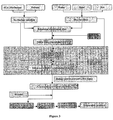
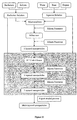
- FIG. 3 summarizes a process according to the present invention. The process may be described as follows:
- Factors that control the final particle size and size distribution include emulsion parameters (e . g . surfactant concentration, surfactant/water ratio, precursor/water ratio), the nature and amount of metal precursor, and the cycle time of step 4 and 5.
- emulsion parameters e . g . surfactant concentration, surfactant/water ratio, precursor/water ratio
- the number of layers depends on how many times steps 4 and 5 are repeated.
- the type and concentrations of active molecules (dopants) may be altered at each cycle.
- the location of each active molecule depends on when it is introduced in the process, and the thickness of each layer may be controlled by the amount of precursor added.
- a process according to the present invention uses a seed growth technique to produce core-shell layered nanoparticles by maintaining the same oil-water-surfactant (optionally with cosurfactant) phase diagram. This may be achieved by adding fresh W/O microemulsion, or fresh surfactant and non-polar solvent, to the reaction system during the growth of each layer.
- addition of a second non-polar solvent should not alter the oil-water-surfactant phase diagram significantly, and the second non-polar solvent should be miscible with the non-polar solvent which was used initially.
- the process may proceed continuously without extracting seeds.
- Another unique feature of the present invention is the possibility of introducing new active molecules during each addition of fresh microemulsion.
- a novel approach can be developed to form core-shell layered nanoparticles, by which more than one dopant can be encapsulated in the core or selected shell(s) (layer(s)).
- the encapsulated molecules may then be released in a predetermined release sequence depending on their location inside the multi-layered structure.
- This ability to control the payload in each layer enables the design of delayed (empty layer + loaded core), as well as pulsed (alternate empty and filled layer) and sequential release (layers filled with different payload) systems.
- the thickness of the core and each layer can be tailored, thus potentially controlling the length of the release cycles.
- TEOS Tetraethylorthosilicate
- Copper ( II) tetramine nitrate solution was prepared by adding 25 wt.% ammonia dropwise to a known quantity of copper (II) nitrate-hydrate, until a dark blue solution was formed. The solution was transferred to 100 mL volume flask and the volume was adjusted to 100 ml by adding diluted 25 volume percent of concentrated ammonia (i.e. 25wt% NH 3 ). The prepared solution contained copper 16.69 mg/mL and its pH was measured as 11.86.
- Cobalt (III) hexamine nitrate solution was prepared by similar procedure as described above for copper (II) tetramine nitrate solution, except that during dissolution of cobalt nitrate-hydrate by concentrated ammonia (25 wt.% NH 3 ), the solution was heated to boil for twenty minutes leading to formation of soluble cobalt (III) hexamine complexes. The final solution contained cobalt 16.69 mg/mL, and pH was 11.82.
- Rubpy [(tris(2,2'-bipyridyl)dichlororuthenium(II) hexahydrate] solution was prepared by dissolving a fixed amount of ruthenium complex in a fixed volume of diluted ammonia (10 vol% of concentrated 25 wt% NH 3 ) to make a solution with a concentration of 2.5 mg/mL of Rubpy.
- a CuPC [copper(II) phthalocyanine-tetrasulfonic acid tetrasodium salt] solution was prepared by dissolving a fixed amount of copper complex into a fixed volume of diluted ammonia (10 vol% of concentrated 25 wt% NH 3 ) to make a solution with a concentration of 5 mg/mL of CuPC.
- a fluorescein isothiocyanate solution was prepared by dissolving a fixed amount of fluorescein into a fixed volume of diluted ammonia (10 vol% of concentrated 25 wt.% NH 3 ) to make a solution with a concentration of 5 mg/mL of Fluorescein.
- In-DTPA or Ga-DTPA solution A known amount of InCl 3 or GaCl 3 was weighed in 100 mL beaker, 10 g Milli-Q water was added to dissolve the salt. A fixed amount of diethylenetriamine pentaacetic acid (DTPA) was added so that the DTPA to metal element molar ratio was kept at 1.1:1. Concentrated ammonia (25 wt% NH 3 ) was added dropwise as the mixture was stirred magnetically. After all of the DTPA was dissolved, the metal-DTPA chelate was formed with formula as [Me-DTPA] 2 -and structure as following: The concentrated ammonia was added continuously until the pH of solution was above 11.50 and total volume was just below 100 mL. The solution was transferred to 100 mL volume flask quantitatively, and water was added to a final volume of 100 mL.
- DTPA diethylenetriamine pentaacetic acid
- NP-9 NP-9 (12 mmol) was dissolved in 60 mL cyclohexane in a 250 mL screw capped container. 1.304 mL (12 mmol) of 1-pentanol was then added. This mixture was shaken vigorously for about 1 minute to prepare the surfactant solution. Then 1.333 mol/L of ammonia solution (NH 4 OH (pH ⁇ 11.86) 1.296 mL (i.e. 72 mmol of water) containing the active molecules, such as a dye, was added. The mixture was stirred vigorously for about thirty minutes to produce the microemulsion system.
- ammonia solution NH 4 OH (pH ⁇ 11.86) 1.296 mL (i.e. 72 mmol of water) containing the active molecules, such as a dye
- TEOS 2.4 mmol
- 50 mL of dry acetone 50 mL
- the silica particles usually flocculated and could be separated by decantation; if no significant sedimentation was observed, the mixture was centrifuged at 4000 rpm for 10 minutes. After sedimentation or centrifugation, the particles were separated from the organic phase and washed three times with 50 mL of dry acetone (each time) to remove the surfactant.
- the sodium chloride is used as a protective matrix to prevent the nanoparticles from aggregating and the weight ratio between silica and sodium chloride is kept around 15%.
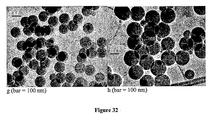
- the size and morphology of silica particles were monitored using a transmission electron microscope (JEOL 2000 FXII or JEOL 2010F).
- SBF simulated body fluid
- the composition of SBF can be seen from P. Kortesuo; M. Ahola; S. Karlsson; I. Kangasniemi; A. Yli-Urpo; J. Kiesvaara, "Silica xerogel as an implantable carrier for controlled drug delivery - evaluation of drug distribution and tissue effects after implanation", Biomater., 21, 193-198 (2000 ).
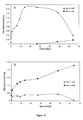
- the release was measured by centrifuging at 3000 rpm for half an hour the suspension and measuring the concentration of dopant released in the supernatant using UV-visible spectroscopy. During the release study, the samples were store in 37°C water bath, and kept in the dark.
- TEOS provides a significantly more important particle growth than TMOS
- the initial core was 22 nm and the average quantity added per cycle was 1.2 mmol to reach an average diameter of 36 after 4 additions. This represent a growth of 3 nm per cycle or 2.5 nm growth per mmol of TMOS added.
- the initial core for TEOS is 50 nm and the average diameter after 5 addition of a total value of 15.6 mmol is 137 nm. This represents a growth of 5.6 nm per mmol of TEOS added.
- This difference in growth rate may be explained by the difference in the number of nuclei (i.e. core particles) present in both cases. If all the silicon alkoxide is converted into silica, for an equivalent amount of silica the number of the smaller cores observed in the TMOS synthesis should be larger than the number of the larger cores observed in the TEOS synthesis. In fact the difference in core particle population should be inversely proportional to their size since the total volume of silica is constant. Furthermore, for an equivalent addition of silicon alkoxide, if the number of core particles to be coated is twice as large, the increase in the core-shell size would be expected to be approximately twice as small. Hence, the smaller growth observed for the TMOS.
- NP-9 was selected for producing microemulsion during the entire particle growing process. It is generally believed that increasing the alcohol concentration leads to the gradual increase of the polydispersity of particles, as the microemulsion phase diagram is sensitive to the alcohol content. This limits the maximum concentration of alkoxide precursor totally added since this precursor produces alcohol during its hydrolysis.
- the microemulsion with NP-9 as surfactant is less sensitive to alcohol content, thus higher concentration of alkoxide precursor may be utilised during the particle growth process.
- 1-pentanol as a cosurfactant makes the reverse micelles more rigid, and thus changes the microemulsion from unstable to stable, and also improves the uniformity of micelle size and subsequently the solid particle size.
- NP-9 microemulsions permit higher [water]/[surfactant] values, thus enabling the production of larger particles while maintaining the stability of microemulsion and the uniformity of particle size.
- the particle growth is limited to some extent by the limited supply of free water in the micelle core.
- the active molecules can only be loaded in core of the particles.
- the alternative process consists in providing an additional supply of water, in the form of additional micro-emulsion, to sustain the alkoxide hydrolysis and condensation, and thus particle growth.
- a schematic representation of the process is provided in Figure 10 .
- the concentration of silicon precursor remains below the supersaturation level and no extra nuclei are formed.
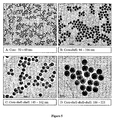
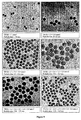
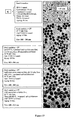
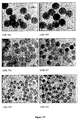
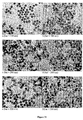
- the particles grow gradually by a classical monomer to nuclei addition. Examples of particle grown using this method are presented in Figure 5 .
- monodispersed ceramic particles may be produced in the size range of 50 - 500nm, commonly 10 - 300 nm.
- the final size of the ceramic particles depends on:
- Figure 13 shows the different ways of adding the fresh microemulsion composition.
- the seeds were prepared by using the following system (NP-9 3mmol, 15 ml of cyclohexane, 1 pentanol 3 mmol, 0.324 ml of NH 4 OH 1.33M, water 18 mmol, TEOS 0.6 mmol aged for 48h). Additional micro-emulsion (double the volume of initially used for the seeds) and TEOS were then added as follows:
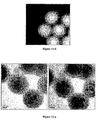
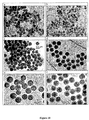
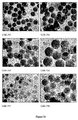
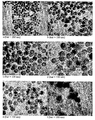
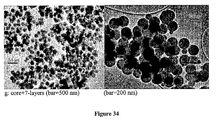
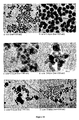
- Figure 14-a The TEM micrographs of the resulting particles (i.e. core+4 shells) are shown in Figure 14-a .
- particles with an extra shell i.e. core+5 shells
- Figure 14-b Figure 14 demonstrates that sequential growth beyond 200 nm leads to the production of polydispersed particles.
- Figure 14-a reveals a bimodal distribution with in addition to the targeted 230 nm particles a few smaller ones with a size around 150 nm.
- Another practical limitation, facing the sequential growth of large particles is the time necessary to complete the whole cycle. Typically to build three shells (i.e. 200 nm diameter) it may take 8-10 days. One way to decrease the processing time may be to increase the reaction temperature. Alternatively, using more hydrolysable alkoxide precursor may speed up the particle growth.
- Figure 16 shows the importance of the method used for mixing the emulsion containing the seed particles and the fresh microemulsion.
- a few different ways can be used to induce the coalescence of the fresh emulsion droplets with the existing droplets containing the seeds and thus ensuring the production of monodispersed particles.
- the first approach consists in shear mixing the resulting emulsion mixture at a very high shear rate (8000 rpm) to promote droplet collision and coalescence.
- the second approach relies on increasing the collision rate of the droplets by increasing the temperature of the mixed emulsion. It is important to note that, although theoretically full coalescence could be achieved at room temperature, the time required to achieve this make it impracticable, as demonstrated by the polydispersed sample obtained after 18h stirring at room temperature. Sonication (even for long period of time) does not induce droplet coalescence as demonstrated by the bimodal distribution observed in Figure 16-b .
- a less reactive silica precursor such as TEOS produces bigger cores than more reactive precursor like TMOS.
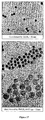
- TMOS is added in the same molar ratio as TEOS to the 50 nm pre-formed core particles, a bimodal distribution is obtained with 75 nm core-shell particles and smaller 21 nm secondary particles (see Figure 17 ).
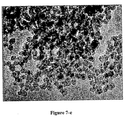
- the 21 nm particles correspond exactly to the core produced using TMOS (see Figure 7-b ).
- the concentration of hydrolysed monomers rises more slowly and therefore they can be consumed by reaction with the core surface before their concentration reaches supersaturation and induces nucleation.
- ORMOSIL Organic modified silica
- Sol-gel synthesis in base leads to the production of mesoporous particles (i.e. large pore size: about 4 nm), which generally exhibit a rapid and uncontrolled release of their payload (typically organic dye or small drug molecules ⁇ 2 nm).
- the ceramic matrix may be functionalised with active group (such as -NH 2 , -SH, -COOH etc.), which will form a chemical bond with the encapsulated molecules.
- active group such as -NH 2 , -SH, -COOH etc.
- FITC fluorescein isothiocyanate
- APTES amine groups
- ORMOSIL is either integrated in the particle core or inside the second shell.
- the proportion of TEOS is either 75 mol% and 25 mol%.
- the ORMOSIL precursor used in these experiments is aminopropyltriethoxysilane (APTES).
- APTES aminopropyltriethoxysilane
- Table 1 The composition of ORMOSIL core-shell particles Image of Fig.
- Another advantage of the present process is the possibility of encapsulating more than one dopant in the core particle or in any of the shells.
- Each molecule may be selectively encapsulated in different locations of the nanoparticles, and its concentration may also be controlled at each growth cycle.
- both the core size and the thickness of each shell may be tailored, thus potentially controlling the length of the release cycles as well as the different release rates.
- the following examples are aimed at demonstrating the versatility of this technique as well as the flexibility and control of the encapsulation process.
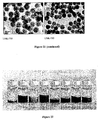
- Table 2 lists the composition of different samples with Cu(NH 3 ) 4 2+ and Ru(bPy) 3 2+ doped in different location of the nanoparticles.
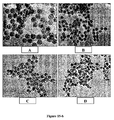
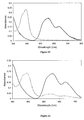
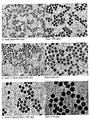
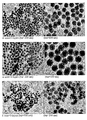
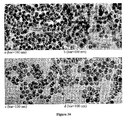
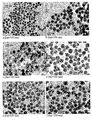
- the corresponding TEM images are presented in Figure 19 and the photographs of the particles suspended in acetone are showed in Figure 20 .
- Table 3 lists the composition of different samples with Cu(NH 3 ) 4 2+ and Co(NH 3 ) 6 3+ doped in different location of the nanoparticles.
- the corresponding TEM images are presented in Figure 21 and the photographs of the particles suspended in acetone are showed in Figure 22 .
- Table 4 lists the composition of different samples with CuPC 2- and Ru(bPy) 3 2+ doped in different location of the nanoparticles.
- Figure 23 shows the corresponding freeze-dried powders (SiO 2 /NaCl weight ratio: 15%) and the particles resuspended in water.
- Table 2 The components of product 1, Cu(NH 3 ) 4 2+ and Ru(bPy) 3 2+ as dopants
- An additional feature of the present invention is the ability to encapsulate solid particles inside a shell of metal oxide.
- the core may be any species of powder such as metal oxide, semiconductor, quantum dot, magnetic particles or crystalline particles.
- the shell(s) may comprise one metal oxide or a more than one different metal oxides, mixed metal oxides or metal oxide containing a dopant.
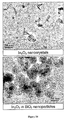
- An example of the preparation and encapsulation of crystalline In 2 O 3 nanocrystals inside silica shell is detailed below.
- In 2 O 3 nano crystals were prepared as follows: 1.017g InCl 3 was dissolved in 10 mL of pure water. 10 mL of NH 4 OH 10M was added dropwise to the solution while stirring and a precipitate was formed. Cl - and NH 4 + ions were remove by successive washing (5 -10 times with 50 mL of water each time) until no smell of ammonia was detectable. 0.92 mL HNO 3 (1 M) was then added to peptise the precipitate and the suspension stirred overnight at 55 ⁇ 5 °C. A further 0.45 mL of HNO 3 1 mol/L was added and the suspension stirred again overnight at 55 ⁇ 5°C. The final pH was measured at 2.284 and the TEM showed 50nm*10 nm crystallites with well defined facets.
- a solution B containing 6 mmol of NP-9, 6 mmol of 1-pentanol, 30 mL of cyclohexane, 0.324 mL of the In 2 O 3 nanocrystals in suspension was stirred until clear.
- the two solutions A and B were mixed together and 2.4 mmol of TEOS added to the mixture.
- the solution was aged for 72 hrs. 50 ml of dry acetone was then added to the resulting suspension to destabilise the microemulsion and recover the particles.
- the particles were washed several times with acetone and examined by TEM (see Figure 24 ). The TEM micrographs clearly demonstrated the encapsulation of the 50 nm rods inside silica nano-particles
- Radioactive tracers such as 67 Ga-DTPA may also be easily doped inside silica nanoparticles, thus producing particles that are traceable in vivo.
- Such particles were prepared by the following procedure.
- 67 GaCl 3 (t 1/2 : 3.261 days) was received from ANSTO-Cyclotron with activity 2 GBq/mL in 0.1 mol/L HCl solution. The solution was diluted 1 in 10 with water. 0.428 mL of concentrated ammonia (25 wt.% NH 3 ) containing DTPA 3.9 mg/l was added to 0.22 mL 67 GaCl 3 solution at pH about 2.
- the resulting solution may be used as the aqueous solution in the processes described earlier to produce particle with either active gallium in the core, in the outside shell or throughout the whole particle.
- These particles may be used in biodistribution studies to investigate the location of silica particles in rats using gamma counting as a detection method. Potential application of such nanoparticles may be envisaged both in radiotherapy and radio-imaging.
- base catalysed sol-gel synthesis leads to the production of mesoporous particles (i.e. about 4 nm), which generally exhibit a rapid and uncontrolled release of their payload.
- mesoporous particles i.e. about 4 nm
- the notable exception to this is the encapsulation of organometallic complexes, which may exhibit some interaction between metal cation and silica surface.
- the interaction of the surface with the complex ensures encapsulation and temporary locking of the molecule inside the silica nanoparticle structure.
- the strong affinity of the silica surface for water can gradually displaced the adsorption equilibrium with the active organometallic complex thus releasing the molecule out of the silica matrix. In most cases the release is achieved by gradual dissolution of the silica matrix.
- the ceramic matrix may be functionalised with active groups (such as -NH 2 , -SH, -COOH etc.), which can form a chemical bond with the encapsulated molecules.
- active groups such as -NH 2 , -SH, -COOH etc.
- FITC fluorescein isothiocyanate
- APTES amine groups
- Another possibility to encapsulate small molecules inside the mesoporous particles is to conjugate them with larger molecules such as dextran or a dendrimer prior to encapsulation.
- the present invention provides a process for manufacture layered nanoparticles, with core-shell structures and which contain one or more active molecules or dopants encapsulated in different locations (i.e. shells or layers) of the nanoparticles.
- Advantages of the technology include the ability to control precisely the overall particle size, core size, shell thickness, concentration of active species in each shell, as well as the release sequence and release rate of each encapsulated dopant.
- organometallic molecules can be encapsulated inside the particles.
- These molecules include metal complex compound (e.g. copper tetramine, cobalt hexamine, indium-DTPA, gallium-DTPA), inorganic dye such as Rubpy [(tris(2,2'-bipyridyl)dichlororuthenium(II) hexahydrate], CuPC [copper (II) phthalocyanine-tetrasulfonic acid tetrasodium salt], and fluorescence dye FITC (fluorescein isothiocyanate).
- metal complex compound e.g. copper tetramine, cobalt hexamine, indium-DTPA, gallium-DTPA
- inorganic dye such as Rubpy [(tris(2,2'-bipyridyl)dichlororuthenium(II) hexahydrate]
- CuPC copper (II) phthalocyanine-tetrasulfonic
- the nanoparticle structure i.e. core size and layer thicknesses may be precisely controlled by the processing parameters such as the nature and quantity of precursor added.
- the monodispersity of the particles may be maintained throughout the growth process by ensuring that all the water added at each cycle migrates to the surface of the existing particles. Residual empty water droplets (i.e. not containing a particle) may act as secondary nucleation centers.
- the growth kinetics may be accelerated by increasing the amount of precursor, adding a catalyst or using less seed materials, polydispersity is introduced after the 4 th cycle. Extreme dilution of the seed emulsion also leads to the production of polydispersed nanoparticles.
- the nanoparticles produced by the present process are suitable for intravenous drug delivery, they may have application in information technology for high-density optical memory storage, specific optical sensors or biosensors, and in the protection/surface modification of nanoparticles from corrosion/oxidation, sintering and coalescence, change of surface properties (surface, charge, zeta potential, suspensibility), etc.
- the technology may be employed to develop nanoparticles comprising core particles containing encapsulated active molecules coated by shell(s) comprising organic modified ceramic precursor exhibiting functional group like -NH 2 , -SH, -COOH, which may be easily functionalised by antibodies or peptides for active drug targeting application.
- Figures 28a to 28f show diagrammatic representations of several different layered nanoparticles according to the present invention. It should be noted that these representations show only a few of the many different types of nanoparticle which may be made according to the invention, and that the particular methods for using the nanoparticles are by way of example only. Other types of particles and methods for using them are possible and are envisaged in the present specification. Thus the descriptions below are to be taken as examples only, and are not to be taken in any way as being limiting with respect to the scope of the invention.
- layered nanoparticle 10 comprises porous core particle 15 comprising first releasable dopant A and a porous layer 20 comprising second releasable dopant B surrounding core particle 15.
- releasable dopant B is released first from nanoparticle 10, and then releasable dopant A is released.
- the period of time over which dopant B is released may depend on the thickness of layer 20, and the period of time over which dopant A is released may depend on the thickness of layer 20 as well as the size of core particle 15.
- the release rates may be dependent on the nature of the dopants as well as the nature and pore size of core particle 15 and layer 20.
- nanoparticle 10 will appear coloured by dopant A, and will release releasable dopant B.
- dopant B is a non-releasable dye and dopant A is a releasable dopant
- nanoparticle 10 will appear coloured by dopant B, and will release dopant A.
- layered nanoparticle 30 comprises porous core particle 35 comprising releasable dopant A and porous layer 40 comprising no releasable dopant. Porous layer 40 surrounds core particle 35.
- releasable dopant A is released from nanoparticle 10 after a delay. The length of the delay depends on the thickness and porosity of porous layer 40.
- layered nanoparticle 50 comprises porous core particle 55 comprising first releasable dopant A, first porous layer 60 surrounding core particle 55 and second porous layer 65 surrounding first porous layer 60.
- First layer 60 comprises no releasable dopant and second porous layer 65 comprises second releasable dopant B.
- second releasable dopant B and first releasable dopant A are released sequentially, with a delay between release of dopants B and A. The length of the delay is dependent on the thickness and porosity of first layer 60.
- layered nanoparticle 70 comprises porous core particle 75 comprising first releasable dopant A, first porous layer 80 comprising second releasable dopant B surrounding core particle 75 and second porous layer 85 comprising third releasable dopant C surrounding first layer 80.
- releasable dopant C is released first from nanoparticle 70, then releasable dopant B is released and finally releasable dopant A is released.
- the timing of the release of dopants A, B and C from nanoparticle 70 depend on the thicknesses and porosities of layers 80 and 85 and the size of core particle 75.
- nanoparticle 90 comprises porous core particle 95 with concentric porous layers 100, 105, 110 and 115 surrounding core particle 95.
- Core particle 95 and concentric layers 105 and 115 comprise releasable dopants A, B and C respectively, whereas layers 100 and 110 contain no releasable dopant.
- releasable dopant C is released first from nanoparticle 70, then releasable dopant B is released and finally releasable dopant A is released.
- the delays may be controlled by the thicknesses and porosities of layers 110 and 100 respectively.
- nanoparticle 120 comprises porous core particle 125 comprising releasable dopant A, and porous layer 130 surrounding core particle 125.
- Porous layer 130 comprises releasable dopants B and C.
- dopants B and C are released first from nanoparticle 120, and then dopant A is released.
- dopant A is a non-releasable dye
- nanoparticle 120 will appear coloured by dopant A, and will release releasable dopants B and C.
- nanoparticle 120 will appear coloured by dopant B, and will release dopants C and A sequentially.
- Figure 29 shows the dye release of each sample in PBS (phosphate buffer solution) at 37°C.
- Most of the dye released by the multi-layered particles was that encapsulated in the outer shell i.e. CuPc and Ru(bPy) 3 2+ for LNK879 ( Figure 29-A ) and LNK880 ( Figure 29-B ) respectively.
- LNK879 the concentration of CuPC remained roughly constant between day 18 and day 40. After that, it decreased substantially. The inventors hypothesise that this may have occurred due to decomposition of the CuPC or association of the CuPC with the walls of the container. In the early stages of the release profile, the concentration of CuPC increased or remained substantially constant.
- Figure 29-A shows that the dye (Ru(bPy) 3 2+ ) in the core started to release after about 30 days, suggesting that sequential release of the content of the multi-layer particles did occur.
- Figure 29-B the dye (Ru(bPy) 3 2+ ) in shell showed continuous release up to 64 days, while a slight amount of CuPC was leached simultaneously and then decomposed after 50 days. It appears from these results that the release rate profile may be adjustable depending upon the nature of different dopants in different locations in the particles.
- Figure 29A shows the sequential release, with an initial release of dye from the shell for the first two weeks and the release of another dye from the core after 30 days.
- the decrease in intensity of the dye from the shell may be explained by degradation with time of CuPc visible also from figure B (CuPc in the core).
- Figure 29-B does not show sequential release but a gradual release of the ruthenium dye from the shell and a small burst release from the core.
- Particles a represent the initial cores made with TEOS only.
- Particles b are the core made using a precursor mixture of 75% TEOS and 25% APTES.
- Particles c are core-shell particles made using TEOS only.
- Particles d and e have ORMOSIL modified shells, with 30 mol.% APTES for d and 50 mol.% APTES for e.
- Particles f have ORMOSIL core and ORMOSIL shell. All particles had approximately the same particle size, however ORMOSIL modified particles showed slight broader particle size range.
- the encapsulation efficiency of orange-II was measured by UV/Vis absorption after combining the organic phases during synthesis and washing procedures.
- Orange II is an organic dye, and thus differs significantly different from the previous example of RuBpy and CuPC in that it is purely organic and does not have strong interaction with the silica surface.
- ORMOSIL organic dye to silica weight ratio
- ORMOSIL mole percentage the organic groups of ORMOSIL precursor may play a role in preventing the dye leaching from silica matrix during synthesis and washing. Furthermore, this effect appears to be dependent on the function group of each ORMOSIL precursor. It was found that GLYMO (epoxyfunctional silane) was more efficient than most ORMOSILs in preventing dyes from leaching out very rapidly. Table 6: The components and particle size of ORMOSIL shelled particles.
- Figure 32 shows the TEM images of silica particles produced using various surfactant conditions.
- the initial seeds core-shell particles with diameter between 74 and 86 nm as shown in Figure 32 , a and b) were produced using the typical synthesis procedure with 0.2 mol/L NP-9 and 0.2 mol/L 1-pentanol with [water]/[NP-9] mole ratio at 6.
- the particle size increases gradually with more and more silicon precursor being introduced in the emulsion ( Figure 2 ).
- the addition of alkoxide only leads to the production of particles with a core containing the active dopants surrounded by an empty shell.
- all the water in the water pool is consumed and no further growth is possible. This is further exacerbated in microemulsions because only a small percentage of the water present in the water pool is free and able to participate in the condensation of the alkoxide. Most of the water is bound to the micellar wall as solvation water for the surfactant polar head.
- Figure 33 illustrates the process of production of layered particles by combining the two growth techniques described above (i.e. multi-addition of TEOS interspersed with addition of emulsion components). During each incubation cycle, the silicon precursor is added twice rather than once in typical method.
- Figure 34 displays the TEM images of particles at each growth stage with water to surfactant mole ratio at 6 for the whole process. The initial seeds were about 55 nm. After 3 incubation cycles the initial seeds were coated with 7 layers, with particle diameter in the range of approximately 200-240 nm. At this point, the water to silicon alkoxide mole ratio was slightly above 4. The results of this new method show that the particle size may be increased above 200 nm using a smaller number of incubation steps.
- Figure 36 shows the TEM images of nanoparticles synthesised at 35°C or 50°C.
- 35-50 nm particles were produced at 35°C for a 20 hours ageing time.
- the particle size increased to about 48-62 nm when an ageing time of 48 hours was used at the same temperature.
- the particle size increased from 37-52 nm to 48-70 nm as the ageing time was increased from 20 to 48 hours.
- the size range of nanoparticles was around 50-60 nm for 48 hour ageing ( Figure 34-a ). The results indicate that the particle size increases with time but is largely independent of the reaction temperature. High temperature reaction did not lead to quick completion of sol-gel reaction, but produced particles with a broader size distribution.
- Figure 37 shows core-shell particles produced at a higher reaction temperature with a water to surfactant mole ratio at 8.
- the average particle size increased about 10-15 nm as the reaction time was increased from 20 to 48 hours, regardless of reaction temperature (35 or 50°C).
- the seeds were manufactured at room temperature followed by an incubation stage at 55 ⁇ 5°C for one hour to ensure that the majority of TEOS was completely reacted.
- the new emulsion components were then added to the suspension followed by an incubation of the mixture at 55 ⁇ 5°C for 6 hours to allow all newly added water to adsorb on the existing particle surface.
- Figure 38 shows the silica particle size at different incubation stages. Before incubation, the particles were in the size range of approximately 76-88 nm. After incubation for one hour under 55 ⁇ 5 °C, the particle size increased slightly to about 82-96 nm.
Landscapes
- Health & Medical Sciences (AREA)
- Chemical & Material Sciences (AREA)
- Engineering & Computer Science (AREA)
- Bioinformatics & Cheminformatics (AREA)
- Veterinary Medicine (AREA)
- Animal Behavior & Ethology (AREA)
- Public Health (AREA)
- General Health & Medical Sciences (AREA)
- Epidemiology (AREA)
- Life Sciences & Earth Sciences (AREA)
- Inorganic Chemistry (AREA)
- Medicinal Chemistry (AREA)
- Pharmacology & Pharmacy (AREA)
- Organic Chemistry (AREA)
- Nanotechnology (AREA)
- Optics & Photonics (AREA)
- Physics & Mathematics (AREA)
- Biomedical Technology (AREA)
- Dispersion Chemistry (AREA)
- Medicinal Preparation (AREA)
- Manufacturing Of Micro-Capsules (AREA)
- Silicon Compounds (AREA)
- Colloid Chemistry (AREA)
- Physical Or Chemical Processes And Apparatus (AREA)
- Luminescent Compositions (AREA)
Applications Claiming Priority (2)
| Application Number | Priority Date | Filing Date | Title |
|---|---|---|---|
| AU2005900677A AU2005900677A0 (en) | 2005-02-14 | Layered Nanoparticles | |
| PCT/AU2006/000193 WO2006084339A1 (en) | 2005-02-14 | 2006-02-14 | Layered nanoparticles |
Publications (3)
| Publication Number | Publication Date |
|---|---|
| EP1853318A1 EP1853318A1 (en) | 2007-11-14 |
| EP1853318A4 EP1853318A4 (en) | 2011-10-19 |
| EP1853318B1 true EP1853318B1 (en) | 2016-05-18 |
Family
ID=36792857
Family Applications (1)
| Application Number | Title | Priority Date | Filing Date |
|---|---|---|---|
| EP06704870.2A Expired - Lifetime EP1853318B1 (en) | 2005-02-14 | 2006-02-14 | Layered nanoparticles |
Country Status (10)
| Country | Link |
|---|---|
| US (2) | US8871272B2 (enExample) |
| EP (1) | EP1853318B1 (enExample) |
| JP (2) | JP5557127B2 (enExample) |
| KR (1) | KR20070110084A (enExample) |
| CN (1) | CN101151052A (enExample) |
| BR (1) | BRPI0607321A2 (enExample) |
| CA (1) | CA2598558C (enExample) |
| MX (1) | MX2007009780A (enExample) |
| NZ (1) | NZ561491A (enExample) |
| WO (1) | WO2006084339A1 (enExample) |
Families Citing this family (59)
| Publication number | Priority date | Publication date | Assignee | Title |
|---|---|---|---|---|
| US8871272B2 (en) * | 2005-02-14 | 2014-10-28 | Australian Nuclear Science & Technology Organisation | Layered nanoparticles |
| US7687349B2 (en) * | 2006-10-30 | 2010-03-30 | Atmel Corporation | Growth of silicon nanodots having a metallic coating using gaseous precursors |
| EP2120891B9 (en) | 2006-12-28 | 2019-04-24 | Dow Silicones Corporation | Polynuclear microcapsules |
| CN101679021B (zh) * | 2007-03-02 | 2014-04-30 | 伊利诺伊大学评议会 | 药物颗粒送递 |
| US7994089B2 (en) * | 2007-09-07 | 2011-08-09 | University Of Houston System | De-alloyed platinum nanoparticles |
| US20090157165A1 (en) * | 2007-11-02 | 2009-06-18 | Boston Scientific Scimed, Inc. | Degradable Endoprosthesis |
| US7776350B2 (en) * | 2008-06-30 | 2010-08-17 | Conopco, Inc. | Sunscreen composite particles in cosmetic compositions |
| US8216961B2 (en) | 2008-08-27 | 2012-07-10 | Korea University Research And Business Foundation | Nanoparticles including metal oxide having catalytic activity |
| US20100054988A1 (en) * | 2008-08-29 | 2010-03-04 | Kwangyeol Lee | Photocatalytic nanocapsule and fiber for water treatment |
| WO2010078569A2 (en) * | 2009-01-05 | 2010-07-08 | Stc.Unm | Porous nanoparticle supported lipid bilayer nanostructures |
| US20100175984A1 (en) * | 2009-01-15 | 2010-07-15 | General Electric Company | Method for making nanoparticles |
| WO2010082643A1 (ja) * | 2009-01-16 | 2010-07-22 | 帝人ファイバー株式会社 | ポリエステル繊維およびその製造方法、並びにそのポリエステル繊維を含むタイヤコード、タイヤ、ベルト補強用繊維材料およびベルト |
| TWI384021B (zh) * | 2009-04-23 | 2013-02-01 | Ind Tech Res Inst | 奈米無機氧化物的相轉移方法 |
| KR101183831B1 (ko) * | 2009-05-25 | 2012-09-18 | (주)석경에이티 | 단분산의 복합 실리카 미세입자의 제조방법 |
| WO2011008881A2 (en) | 2009-07-14 | 2011-01-20 | Spectrawatt, Inc. | Light conversion efficiency-enhanced solar cell fabricated with downshifting nanomaterial |
| US8992984B1 (en) | 2009-10-21 | 2015-03-31 | Stc.Unm | Protocells and their use for targeted delivery of multicomponent cargos to cancer cells |
| FR2952368B1 (fr) * | 2009-11-10 | 2012-01-13 | Commissariat Energie Atomique | Particule de silice incorporant une molecule d'interet, son procede de preparation et ses utilisations. |
| US8518288B2 (en) | 2010-07-27 | 2013-08-27 | Toyota Motor Engineering & Manufacturing North America, Inc. | Synthesis of nanocomposite thermoelectric material |
| RU2600841C2 (ru) * | 2010-08-16 | 2016-10-27 | Острэйлиен Ньюклиар Сайенс Энд Текнолоджи Организейшн | Вещества, включающие керамические частицы для доставки биомолекул |
| US8591774B2 (en) | 2010-09-30 | 2013-11-26 | Uchicago Argonne, Llc | Methods for preparing materials for lithium ion batteries |
| CN103687590A (zh) | 2011-04-28 | 2014-03-26 | Stc·Unm公司 | 用于靶向给药的多孔纳米颗粒支撑脂双层(原始细胞)及其使用方法 |
| TW201302222A (zh) * | 2011-07-04 | 2013-01-16 | Univ Nat Chiao Tung | 具磁控制之奈米孔洞型藥物載體 |
| WO2013012891A1 (en) | 2011-07-19 | 2013-01-24 | Stc. Unm | Intraperitoneally-administered nanocarriers that release their therapeutic load based on the inflammatory environment of cancers |
| KR101943912B1 (ko) * | 2011-08-31 | 2019-01-31 | 삼성디스플레이 주식회사 | 나노 막대의 제조 방법 및 표시 기판의 제조 방법 |
| CN102435563B (zh) * | 2011-09-15 | 2013-06-19 | 金红叶纸业集团有限公司 | 微胶囊芯材包覆率的检测方法 |
| SG11201404728VA (en) * | 2012-02-10 | 2014-09-26 | Lockheed Corp | Nanoparticle paste formulations and methods for production and use thereof |
| CN104684398A (zh) * | 2012-08-31 | 2015-06-03 | 索隆-基特林癌症研究协会 | 粒子、方法以及其用途 |
| US20140170786A1 (en) * | 2012-12-13 | 2014-06-19 | Juanita N. Kurtin | Ceramic composition having dispersion of nano-particles therein and methods of fabricating same |
| EP2934600A4 (en) | 2012-12-19 | 2016-08-17 | Sloan Kettering Inst Cancer | MULTIMODAL PARTICLES, METHOD THEREFOR AND USES THEREOF |
| EP2958481A4 (en) | 2013-02-20 | 2017-03-08 | Sloan-Kettering Institute for Cancer Research | Wide field raman imaging apparatus and associated methods |
| US20160149091A1 (en) * | 2013-06-25 | 2016-05-26 | Konica Minolta, Inc. | Light-emitting material, method for producing same, optical film, and light-emitting device |
| EP3027691A4 (en) * | 2013-07-29 | 2017-04-19 | SG Ventures Pty Limited | Metallic pigments and method of coating a metallic substrate |
| WO2015013763A1 (en) * | 2013-07-29 | 2015-02-05 | Sg Ventures Pty Limited | Coated particles and method of coating particles |
| US9666766B2 (en) * | 2013-08-21 | 2017-05-30 | Pacific Light Technologies Corp. | Quantum dots having a nanocrystalline core, a nanocrystalline shell surrounding the core, and an insulator coating for the shell |
| US10912947B2 (en) | 2014-03-04 | 2021-02-09 | Memorial Sloan Kettering Cancer Center | Systems and methods for treatment of disease via application of mechanical force by controlled rotation of nanoparticles inside cells |
| CN106413951B (zh) | 2014-05-30 | 2019-05-03 | 韩国化学研究院 | 金属纳米颗粒及其制备方法 |
| JP6284443B2 (ja) * | 2014-06-25 | 2018-02-28 | 扶桑化学工業株式会社 | コアシェル型シリカ粒子を含有するコロイダルシリカの製造方法 |
| WO2016018896A1 (en) | 2014-07-28 | 2016-02-04 | Memorial Sloan Kettering Cancer Center | Metal(loid) chalcogen nanoparticles as universal binders for medical isotopes |
| JP6826803B2 (ja) * | 2014-08-26 | 2021-02-10 | 中国塗料株式会社 | 光硬化性樹脂組成物、該組成物から形成される硬化被膜および防眩フィルム、画像表示装置、並びに硬化被膜および防眩フィルムの製造方法 |
| KR101646610B1 (ko) | 2015-05-28 | 2016-08-09 | (주)바이오니아 | 생체 물질 정제용 고활성 실리카 자성나노입자 및 이의 제조 방법 |
| EP3317035A1 (en) | 2015-07-01 | 2018-05-09 | Memorial Sloan Kettering Cancer Center | Anisotropic particles, methods and uses thereof |
| WO2017120504A1 (en) | 2016-01-08 | 2017-07-13 | Durfee Paul N | Osteotropic nanoparticles for prevention or treatment of bone metastases |
| KR102371745B1 (ko) | 2016-04-05 | 2022-03-07 | 에스지 벤쳐스 피티와이 리미티드 | 방출가능한 도펀트를 갖는 세라믹 입자들을 함유하는 나노섬유질 매트 |
| TWI615457B (zh) * | 2016-06-08 | 2018-02-21 | 奇美實業股份有限公司 | 發光材料與發光材料的製備方法 |
| CN106115610B (zh) * | 2016-07-05 | 2018-03-27 | 武汉华星光电技术有限公司 | 纳米微结构的制作方法 |
| IL254053B (en) * | 2016-08-19 | 2021-03-25 | Univ Nat Taiwan | Nanoparticles of hollow silica with thermalized biologically active components, a process for their preparation and their applications |
| US10941298B2 (en) | 2016-08-19 | 2021-03-09 | Agency For Science, Technology And Research | Method for forming a titania-coated inorganic particle |
| CN108059955B (zh) | 2016-11-08 | 2021-03-05 | 财团法人工业技术研究院 | 量子点及其制备方法 |
| US20180229299A1 (en) * | 2017-02-15 | 2018-08-16 | The Board Of Trustees Of The University Of Arkansas | Copper-silica core-shell nanoparticles and methods |
| JP6972148B2 (ja) | 2017-03-01 | 2021-11-24 | ヴァイアヴィ・ソリューションズ・インコーポレイテッドViavi Solutions Inc. | ラメラ粒子および製造方法 |
| US11344629B2 (en) | 2017-03-01 | 2022-05-31 | Charles Jeffrey Brinker | Active targeting of cells by monosized protocells |
| WO2019140169A1 (en) * | 2018-01-11 | 2019-07-18 | The Curators Of The University Of Missouri | A method of forming conformable nanoscale coatings on substrates |
| WO2020010133A1 (en) | 2018-07-03 | 2020-01-09 | Rutgers, The State University Of New Jersey | A luminescent layered composition and a method for using the composition |
| JP2021533227A (ja) * | 2018-08-03 | 2021-12-02 | ボード オブ リージェンツ, ザ ユニバーシティ オブ テキサス システムBoard Of Regents, The University Of Texas System | ポリマー性マトリックスにおける蛍光体の分散を増進させるための方法及び組成物 |
| US12252708B2 (en) | 2018-09-24 | 2025-03-18 | Unm Rainforest Innovations | Living mammalian cells modified with functional modular nanoparticles |
| WO2020176716A1 (en) | 2019-02-28 | 2020-09-03 | Brinker C Jeffrey | Modular metal–organic polyhedra superassembly compositions |
| EP4075992B1 (en) * | 2019-12-16 | 2025-12-24 | Cargill, Incorporated | Isolated oleosome composition and process for preparing it |
| US12458602B2 (en) * | 2021-05-06 | 2025-11-04 | The Chinese University Of Hong Kong | Realizing the nano-amorphous state of materials inside nano-porous templates |
| US20250032667A1 (en) * | 2021-11-29 | 2025-01-30 | Collagen Matrix, Inc. | Bioactive ceramics customized for tissue healing and methods for producing same |
Family Cites Families (24)
| Publication number | Priority date | Publication date | Assignee | Title |
|---|---|---|---|---|
| US5024826A (en) * | 1990-03-05 | 1991-06-18 | E. I. Du Pont De Nemours And Company | Silica particulate composition |
| US5326692B1 (en) | 1992-05-13 | 1996-04-30 | Molecular Probes Inc | Fluorescent microparticles with controllable enhanced stokes shift |
| JPH0753835A (ja) * | 1993-08-10 | 1995-02-28 | Takeda Chem Ind Ltd | 有効成分を含有するコアポリマー、コアシェルポリマーおよびそれらの製造法 |
| KR100245773B1 (ko) | 1997-07-09 | 2000-04-01 | 유현식 | 알긴산을 이용한 서방성 의약 전달 시스템용 알긴산 비드(bead) 및 그 제조방법 |
| US6153252A (en) * | 1998-06-30 | 2000-11-28 | Ethicon, Inc. | Process for coating stents |
| JP2001038193A (ja) * | 1999-07-28 | 2001-02-13 | Nippon Millipore Kk | 複合シリカマイクロカプセルの製造方法と複合シリカマイクロカプセルの芯物質の固定化と徐放作用の制御方法。 |
| US6514481B1 (en) | 1999-11-22 | 2003-02-04 | The Research Foundation Of State University Of New York | Magnetic nanoparticles for selective therapy |
| US6785214B2 (en) | 1999-12-02 | 2004-08-31 | The Governing Council Of The University Of Toronto | Polymeric nanocomposite materials with a functional matrix and method of reading and writing thereto |
| US6602932B2 (en) * | 1999-12-15 | 2003-08-05 | North Carolina State University | Nanoparticle composites and nanocapsules for guest encapsulation and methods for synthesizing same |
| GB0002305D0 (en) | 2000-02-01 | 2000-03-22 | Phoqus Limited | Power material for electrostatic application |
| AUPQ573300A0 (en) * | 2000-02-21 | 2000-03-16 | Australian Nuclear Science & Technology Organisation | Controlled release ceramic particles, compositions thereof, processes of preparation and methods of use |
| US6436118B1 (en) | 2000-02-25 | 2002-08-20 | General Surgical Innovations, Inc. | IMA dissection device |
| MXPA02008361A (es) * | 2000-02-28 | 2004-05-17 | Genesegues Inc | Sistema y metodo de encapsulacion de nanocapsulas. |
| US6548264B1 (en) * | 2000-05-17 | 2003-04-15 | University Of Florida | Coated nanoparticles |
| DE10108808A1 (de) | 2001-02-16 | 2002-09-05 | Joerg Enderlein | Fluoreszierende Mikroteilchen |
| EP1243552B1 (de) * | 2001-03-24 | 2008-07-02 | Evonik Degussa GmbH | Mit einer Hülle umgebene, dotierte Oxidpartikeln |
| WO2002080885A1 (en) | 2001-04-03 | 2002-10-17 | University Of Florida | Detoxification and decontamination using nanotechnology therapy |
| US6913825B2 (en) * | 2001-09-20 | 2005-07-05 | University Of Notre Dame Du Lac | Process for making mesoporous silicate nanoparticle coatings and hollow mesoporous silica nano-shells |
| WO2003055469A1 (en) * | 2001-12-21 | 2003-07-10 | Celator Technologies Inc. | Improved polymer-lipid delivery vehicles |
| US20030215638A1 (en) * | 2001-11-05 | 2003-11-20 | Wm. Marsh Rice University | Reduced symmetry nanoparticles |
| JP2004075662A (ja) * | 2002-06-20 | 2004-03-11 | Mukku:Kk | 徐放性組成物、その製造方法およびその製剤 |
| US20040101822A1 (en) * | 2002-11-26 | 2004-05-27 | Ulrich Wiesner | Fluorescent silica-based nanoparticles |
| KR20070097439A (ko) | 2004-11-15 | 2007-10-04 | 오스트레일리언뉴클리어사이언스앤드테크놀로지오거나이제이션 | 마이크로에멀션의 제어된 비안정화로부터 제조된 고형분입자 |
| US8871272B2 (en) * | 2005-02-14 | 2014-10-28 | Australian Nuclear Science & Technology Organisation | Layered nanoparticles |
-
2006
- 2006-02-14 US US11/816,052 patent/US8871272B2/en not_active Expired - Fee Related
- 2006-02-14 MX MX2007009780A patent/MX2007009780A/es active IP Right Grant
- 2006-02-14 BR BRPI0607321-2A patent/BRPI0607321A2/pt not_active IP Right Cessation
- 2006-02-14 WO PCT/AU2006/000193 patent/WO2006084339A1/en not_active Ceased
- 2006-02-14 KR KR1020077020788A patent/KR20070110084A/ko not_active Ceased
- 2006-02-14 CN CNA200680010537XA patent/CN101151052A/zh active Pending
- 2006-02-14 NZ NZ561491A patent/NZ561491A/en not_active IP Right Cessation
- 2006-02-14 EP EP06704870.2A patent/EP1853318B1/en not_active Expired - Lifetime
- 2006-02-14 JP JP2007554395A patent/JP5557127B2/ja not_active Expired - Fee Related
- 2006-02-14 CA CA2598558A patent/CA2598558C/en not_active Expired - Fee Related
-
2012
- 2012-10-29 JP JP2012237897A patent/JP2013040202A/ja active Pending
-
2014
- 2014-09-04 US US14/477,525 patent/US9295654B2/en not_active Expired - Fee Related
Also Published As
| Publication number | Publication date |
|---|---|
| US20080095852A1 (en) | 2008-04-24 |
| EP1853318A1 (en) | 2007-11-14 |
| BRPI0607321A2 (pt) | 2009-09-01 |
| JP5557127B2 (ja) | 2014-07-23 |
| CN101151052A (zh) | 2008-03-26 |
| EP1853318A4 (en) | 2011-10-19 |
| NZ561491A (en) | 2009-10-30 |
| US20150086479A1 (en) | 2015-03-26 |
| JP2008530031A (ja) | 2008-08-07 |
| MX2007009780A (es) | 2007-09-26 |
| JP2013040202A (ja) | 2013-02-28 |
| US9295654B2 (en) | 2016-03-29 |
| US8871272B2 (en) | 2014-10-28 |
| WO2006084339A1 (en) | 2006-08-17 |
| KR20070110084A (ko) | 2007-11-15 |
| CA2598558C (en) | 2013-04-02 |
| CA2598558A1 (en) | 2006-08-17 |
Similar Documents
| Publication | Publication Date | Title |
|---|---|---|
| US9295654B2 (en) | Layered nanoparticles | |
| US7585521B2 (en) | Controlled release ceramic particles, compositions thereof, processes of preparation and methods of use | |
| US8815291B2 (en) | Particles comprising a releasable dopant therein | |
| US20090098044A1 (en) | Solid particles from controlled destabilisation of microemulsions | |
| KR20180033126A (ko) | 초미세 나노입자 및 이의 제조방법 및 이용 방법 | |
| Cichos et al. | A general and versatile procedure for coating of hydrophobic nanocrystals with a thin silica layer enabling facile biofunctionalization and dye incorporation | |
| KR20200071754A (ko) | 나노벡터 및 용도 | |
| EP1819324B1 (en) | Solid particles from controlled destabilisation of microemulsions | |
| AU2006212727B2 (en) | Layered nanoparticles | |
| JPWO2009057787A1 (ja) | シリカナノカプセル | |
| AU2005304290B2 (en) | Solid particles from controlled destabilisation of microemulsions | |
| AKPINAR | SILICA NANOPARTICLES AND THEIR CURRENT BIOMEDICAL APPLICATIONS | |
| AU2001235236B2 (en) | Controlled release ceramic particles, compositions thereof, processes of preparation and methods of use | |
| Martinez et al. | Physicochemical properties affect the synthesis, controlled delivery, degradation and pharmacokinetics of inorganic nanoporous materials | |
| CN118416097A (zh) | 一种铂纳米粒子/石墨烯量子点复合纳米材料及其制备方法和应用 |
Legal Events
| Date | Code | Title | Description |
|---|---|---|---|
| PUAI | Public reference made under article 153(3) epc to a published international application that has entered the european phase |
Free format text: ORIGINAL CODE: 0009012 |
|
| 17P | Request for examination filed |
Effective date: 20070912 |
|
| AK | Designated contracting states |
Kind code of ref document: A1 Designated state(s): AT BE BG CH CY CZ DE DK EE ES FI FR GB GR HU IE IS IT LI LT LU LV MC NL PL PT RO SE SI SK TR |
|
| REG | Reference to a national code |
Ref country code: HK Ref legal event code: DE Ref document number: 1104788 Country of ref document: HK |
|
| DAX | Request for extension of the european patent (deleted) | ||
| A4 | Supplementary search report drawn up and despatched |
Effective date: 20110916 |
|
| RIC1 | Information provided on ipc code assigned before grant |
Ipc: C01B 33/142 20060101ALI20110912BHEP Ipc: C01B 33/149 20060101ALI20110912BHEP Ipc: A61K 9/51 20060101ALI20110912BHEP Ipc: C01B 33/151 20060101ALI20110912BHEP Ipc: A61K 47/04 20060101AFI20110912BHEP Ipc: A61K 47/02 20060101ALI20110912BHEP |
|
| RIC1 | Information provided on ipc code assigned before grant |
Ipc: A61K 49/04 20060101ALI20120314BHEP Ipc: A61K 49/18 20060101AFI20120314BHEP |
|
| RTI1 | Title (correction) |
Free format text: LAYERED NANOPARTICLES |
|
| 17Q | First examination report despatched |
Effective date: 20120604 |
|
| REG | Reference to a national code |
Ref country code: DE Ref legal event code: R079 Ref document number: 602006049113 Country of ref document: DE Free format text: PREVIOUS MAIN CLASS: A61K0047040000 Ipc: A61K0047020000 |
|
| RIC1 | Information provided on ipc code assigned before grant |
Ipc: A61K 49/04 20060101ALI20151109BHEP Ipc: A61K 9/51 20060101ALI20151109BHEP Ipc: C01B 33/142 20060101ALI20151109BHEP Ipc: A61K 51/12 20060101ALI20151109BHEP Ipc: A61K 49/18 20060101ALI20151109BHEP Ipc: C01B 33/149 20060101ALI20151109BHEP Ipc: A61K 47/02 20060101AFI20151109BHEP |
|
| GRAP | Despatch of communication of intention to grant a patent |
Free format text: ORIGINAL CODE: EPIDOSNIGR1 |
|
| INTG | Intention to grant announced |
Effective date: 20151222 |
|
| GRAS | Grant fee paid |
Free format text: ORIGINAL CODE: EPIDOSNIGR3 |
|
| GRAA | (expected) grant |
Free format text: ORIGINAL CODE: 0009210 |
|
| AK | Designated contracting states |
Kind code of ref document: B1 Designated state(s): AT BE BG CH CY CZ DE DK EE ES FI FR GB GR HU IE IS IT LI LT LU LV MC NL PL PT RO SE SI SK TR |
|
| REG | Reference to a national code |
Ref country code: GB Ref legal event code: FG4D |
|
| REG | Reference to a national code |
Ref country code: CH Ref legal event code: EP |
|
| REG | Reference to a national code |
Ref country code: IE Ref legal event code: FG4D Ref country code: AT Ref legal event code: REF Ref document number: 799832 Country of ref document: AT Kind code of ref document: T Effective date: 20160615 |
|
| REG | Reference to a national code |
Ref country code: DE Ref legal event code: R096 Ref document number: 602006049113 Country of ref document: DE |
|
| REG | Reference to a national code |
Ref country code: HK Ref legal event code: WD Ref document number: 1104788 Country of ref document: HK |
|
| REG | Reference to a national code |
Ref country code: NL Ref legal event code: MP Effective date: 20160518 |
|
| REG | Reference to a national code |
Ref country code: LT Ref legal event code: MG4D |
|
| PG25 | Lapsed in a contracting state [announced via postgrant information from national office to epo] |
Ref country code: FI Free format text: LAPSE BECAUSE OF FAILURE TO SUBMIT A TRANSLATION OF THE DESCRIPTION OR TO PAY THE FEE WITHIN THE PRESCRIBED TIME-LIMIT Effective date: 20160518 Ref country code: NL Free format text: LAPSE BECAUSE OF FAILURE TO SUBMIT A TRANSLATION OF THE DESCRIPTION OR TO PAY THE FEE WITHIN THE PRESCRIBED TIME-LIMIT Effective date: 20160518 Ref country code: LT Free format text: LAPSE BECAUSE OF FAILURE TO SUBMIT A TRANSLATION OF THE DESCRIPTION OR TO PAY THE FEE WITHIN THE PRESCRIBED TIME-LIMIT Effective date: 20160518 |
|
| REG | Reference to a national code |
Ref country code: AT Ref legal event code: MK05 Ref document number: 799832 Country of ref document: AT Kind code of ref document: T Effective date: 20160518 |
|
| PG25 | Lapsed in a contracting state [announced via postgrant information from national office to epo] |
Ref country code: ES Free format text: LAPSE BECAUSE OF FAILURE TO SUBMIT A TRANSLATION OF THE DESCRIPTION OR TO PAY THE FEE WITHIN THE PRESCRIBED TIME-LIMIT Effective date: 20160518 Ref country code: PT Free format text: LAPSE BECAUSE OF FAILURE TO SUBMIT A TRANSLATION OF THE DESCRIPTION OR TO PAY THE FEE WITHIN THE PRESCRIBED TIME-LIMIT Effective date: 20160919 Ref country code: GR Free format text: LAPSE BECAUSE OF FAILURE TO SUBMIT A TRANSLATION OF THE DESCRIPTION OR TO PAY THE FEE WITHIN THE PRESCRIBED TIME-LIMIT Effective date: 20160819 Ref country code: LV Free format text: LAPSE BECAUSE OF FAILURE TO SUBMIT A TRANSLATION OF THE DESCRIPTION OR TO PAY THE FEE WITHIN THE PRESCRIBED TIME-LIMIT Effective date: 20160518 Ref country code: SE Free format text: LAPSE BECAUSE OF FAILURE TO SUBMIT A TRANSLATION OF THE DESCRIPTION OR TO PAY THE FEE WITHIN THE PRESCRIBED TIME-LIMIT Effective date: 20160518 |
|
| PG25 | Lapsed in a contracting state [announced via postgrant information from national office to epo] |
Ref country code: IT Free format text: LAPSE BECAUSE OF FAILURE TO SUBMIT A TRANSLATION OF THE DESCRIPTION OR TO PAY THE FEE WITHIN THE PRESCRIBED TIME-LIMIT Effective date: 20160518 |
|
| REG | Reference to a national code |
Ref country code: FR Ref legal event code: PLFP Year of fee payment: 12 |
|
| PG25 | Lapsed in a contracting state [announced via postgrant information from national office to epo] |
Ref country code: CZ Free format text: LAPSE BECAUSE OF FAILURE TO SUBMIT A TRANSLATION OF THE DESCRIPTION OR TO PAY THE FEE WITHIN THE PRESCRIBED TIME-LIMIT Effective date: 20160518 Ref country code: RO Free format text: LAPSE BECAUSE OF FAILURE TO SUBMIT A TRANSLATION OF THE DESCRIPTION OR TO PAY THE FEE WITHIN THE PRESCRIBED TIME-LIMIT Effective date: 20160518 Ref country code: SK Free format text: LAPSE BECAUSE OF FAILURE TO SUBMIT A TRANSLATION OF THE DESCRIPTION OR TO PAY THE FEE WITHIN THE PRESCRIBED TIME-LIMIT Effective date: 20160518 Ref country code: DK Free format text: LAPSE BECAUSE OF FAILURE TO SUBMIT A TRANSLATION OF THE DESCRIPTION OR TO PAY THE FEE WITHIN THE PRESCRIBED TIME-LIMIT Effective date: 20160518 Ref country code: EE Free format text: LAPSE BECAUSE OF FAILURE TO SUBMIT A TRANSLATION OF THE DESCRIPTION OR TO PAY THE FEE WITHIN THE PRESCRIBED TIME-LIMIT Effective date: 20160518 |
|
| REG | Reference to a national code |
Ref country code: DE Ref legal event code: R097 Ref document number: 602006049113 Country of ref document: DE |
|
| PG25 | Lapsed in a contracting state [announced via postgrant information from national office to epo] |
Ref country code: BE Free format text: LAPSE BECAUSE OF FAILURE TO SUBMIT A TRANSLATION OF THE DESCRIPTION OR TO PAY THE FEE WITHIN THE PRESCRIBED TIME-LIMIT Effective date: 20160518 Ref country code: PL Free format text: LAPSE BECAUSE OF FAILURE TO SUBMIT A TRANSLATION OF THE DESCRIPTION OR TO PAY THE FEE WITHIN THE PRESCRIBED TIME-LIMIT Effective date: 20160518 Ref country code: AT Free format text: LAPSE BECAUSE OF FAILURE TO SUBMIT A TRANSLATION OF THE DESCRIPTION OR TO PAY THE FEE WITHIN THE PRESCRIBED TIME-LIMIT Effective date: 20160518 |
|
| PLBE | No opposition filed within time limit |
Free format text: ORIGINAL CODE: 0009261 |
|
| STAA | Information on the status of an ep patent application or granted ep patent |
Free format text: STATUS: NO OPPOSITION FILED WITHIN TIME LIMIT |
|
| 26N | No opposition filed |
Effective date: 20170221 |
|
| PG25 | Lapsed in a contracting state [announced via postgrant information from national office to epo] |
Ref country code: SI Free format text: LAPSE BECAUSE OF FAILURE TO SUBMIT A TRANSLATION OF THE DESCRIPTION OR TO PAY THE FEE WITHIN THE PRESCRIBED TIME-LIMIT Effective date: 20160518 |
|
| PG25 | Lapsed in a contracting state [announced via postgrant information from national office to epo] |
Ref country code: MC Free format text: LAPSE BECAUSE OF FAILURE TO SUBMIT A TRANSLATION OF THE DESCRIPTION OR TO PAY THE FEE WITHIN THE PRESCRIBED TIME-LIMIT Effective date: 20160518 |
|
| REG | Reference to a national code |
Ref country code: CH Ref legal event code: PL |
|
| PG25 | Lapsed in a contracting state [announced via postgrant information from national office to epo] |
Ref country code: LI Free format text: LAPSE BECAUSE OF NON-PAYMENT OF DUE FEES Effective date: 20170228 Ref country code: CH Free format text: LAPSE BECAUSE OF NON-PAYMENT OF DUE FEES Effective date: 20170228 |
|
| REG | Reference to a national code |
Ref country code: IE Ref legal event code: MM4A |
|
| PG25 | Lapsed in a contracting state [announced via postgrant information from national office to epo] |
Ref country code: LU Free format text: LAPSE BECAUSE OF NON-PAYMENT OF DUE FEES Effective date: 20170214 |
|
| REG | Reference to a national code |
Ref country code: FR Ref legal event code: PLFP Year of fee payment: 13 |
|
| PG25 | Lapsed in a contracting state [announced via postgrant information from national office to epo] |
Ref country code: IE Free format text: LAPSE BECAUSE OF NON-PAYMENT OF DUE FEES Effective date: 20170214 |
|
| PG25 | Lapsed in a contracting state [announced via postgrant information from national office to epo] |
Ref country code: HU Free format text: LAPSE BECAUSE OF FAILURE TO SUBMIT A TRANSLATION OF THE DESCRIPTION OR TO PAY THE FEE WITHIN THE PRESCRIBED TIME-LIMIT; INVALID AB INITIO Effective date: 20060214 |
|
| PG25 | Lapsed in a contracting state [announced via postgrant information from national office to epo] |
Ref country code: BG Free format text: LAPSE BECAUSE OF FAILURE TO SUBMIT A TRANSLATION OF THE DESCRIPTION OR TO PAY THE FEE WITHIN THE PRESCRIBED TIME-LIMIT Effective date: 20160518 |
|
| PG25 | Lapsed in a contracting state [announced via postgrant information from national office to epo] |
Ref country code: CY Free format text: LAPSE BECAUSE OF NON-PAYMENT OF DUE FEES Effective date: 20160518 |
|
| PG25 | Lapsed in a contracting state [announced via postgrant information from national office to epo] |
Ref country code: TR Free format text: LAPSE BECAUSE OF FAILURE TO SUBMIT A TRANSLATION OF THE DESCRIPTION OR TO PAY THE FEE WITHIN THE PRESCRIBED TIME-LIMIT Effective date: 20160518 |
|
| PGFP | Annual fee paid to national office [announced via postgrant information from national office to epo] |
Ref country code: DE Payment date: 20200207 Year of fee payment: 15 Ref country code: GB Payment date: 20200226 Year of fee payment: 15 |
|
| PGFP | Annual fee paid to national office [announced via postgrant information from national office to epo] |
Ref country code: FR Payment date: 20200131 Year of fee payment: 15 |
|
| PG25 | Lapsed in a contracting state [announced via postgrant information from national office to epo] |
Ref country code: IS Free format text: LAPSE BECAUSE OF FAILURE TO SUBMIT A TRANSLATION OF THE DESCRIPTION OR TO PAY THE FEE WITHIN THE PRESCRIBED TIME-LIMIT Effective date: 20160918 |
|
| REG | Reference to a national code |
Ref country code: DE Ref legal event code: R119 Ref document number: 602006049113 Country of ref document: DE |
|
| GBPC | Gb: european patent ceased through non-payment of renewal fee |
Effective date: 20210214 |
|
| PG25 | Lapsed in a contracting state [announced via postgrant information from national office to epo] |
Ref country code: GB Free format text: LAPSE BECAUSE OF NON-PAYMENT OF DUE FEES Effective date: 20210214 Ref country code: FR Free format text: LAPSE BECAUSE OF NON-PAYMENT OF DUE FEES Effective date: 20210228 Ref country code: DE Free format text: LAPSE BECAUSE OF NON-PAYMENT OF DUE FEES Effective date: 20210901 |