EP1787970A1 - Procede d'obtention d'extraits polyphenoliques de feves de cacao , les extraits obtenus et leurs applications - Google Patents
Procede d'obtention d'extraits polyphenoliques de feves de cacao , les extraits obtenus et leurs applications Download PDFInfo
- Publication number
- EP1787970A1 EP1787970A1 EP07004829A EP07004829A EP1787970A1 EP 1787970 A1 EP1787970 A1 EP 1787970A1 EP 07004829 A EP07004829 A EP 07004829A EP 07004829 A EP07004829 A EP 07004829A EP 1787970 A1 EP1787970 A1 EP 1787970A1
- Authority
- EP
- European Patent Office
- Prior art keywords
- extracts
- extract
- beans
- solvent
- maceration
- Prior art date
- Legal status (The legal status is an assumption and is not a legal conclusion. Google has not performed a legal analysis and makes no representation as to the accuracy of the status listed.)
- Withdrawn
Links
Images
Classifications
-
- A—HUMAN NECESSITIES
- A61—MEDICAL OR VETERINARY SCIENCE; HYGIENE
- A61K—PREPARATIONS FOR MEDICAL, DENTAL OR TOILETRY PURPOSES
- A61K36/00—Medicinal preparations of undetermined constitution containing material from algae, lichens, fungi or plants, or derivatives thereof, e.g. traditional herbal medicines
- A61K36/18—Magnoliophyta (angiosperms)
- A61K36/185—Magnoliopsida (dicotyledons)
- A61K36/577—Malvaceae (Mallow family)
- A61K36/5777—Theobroma, e.g. cocao or cocoa
-
- A—HUMAN NECESSITIES
- A23—FOODS OR FOODSTUFFS; TREATMENT THEREOF, NOT COVERED BY OTHER CLASSES
- A23B—PRESERVATION OF FOODS, FOODSTUFFS OR NON-ALCOHOLIC BEVERAGES; CHEMICAL RIPENING OF FRUIT OR VEGETABLES
- A23B2/00—Preservation of foods or foodstuffs, in general
- A23B2/70—Preservation of foods or foodstuffs, in general by treatment with chemicals
- A23B2/725—Preservation of foods or foodstuffs, in general by treatment with chemicals in the form of liquids or solids
- A23B2/729—Organic compounds; Microorganisms; Enzymes
- A23B2/733—Compounds of undetermined constitution obtained from animals or plants
-
- A—HUMAN NECESSITIES
- A23—FOODS OR FOODSTUFFS; TREATMENT THEREOF, NOT COVERED BY OTHER CLASSES
- A23G—COCOA; COCOA PRODUCTS, e.g. CHOCOLATE; SUBSTITUTES FOR COCOA OR COCOA PRODUCTS; CONFECTIONERY; CHEWING GUM; ICE-CREAM; PREPARATION THEREOF
- A23G1/00—Cocoa; Cocoa products, e.g. chocolate; Substitutes therefor
- A23G1/04—Apparatus specially adapted for manufacture or treatment of cocoa or cocoa products
-
- A—HUMAN NECESSITIES
- A23—FOODS OR FOODSTUFFS; TREATMENT THEREOF, NOT COVERED BY OTHER CLASSES
- A23G—COCOA; COCOA PRODUCTS, e.g. CHOCOLATE; SUBSTITUTES FOR COCOA OR COCOA PRODUCTS; CONFECTIONERY; CHEWING GUM; ICE-CREAM; PREPARATION THEREOF
- A23G1/00—Cocoa; Cocoa products, e.g. chocolate; Substitutes therefor
- A23G1/30—Cocoa products, e.g. chocolate; Substitutes therefor
-
- A—HUMAN NECESSITIES
- A23—FOODS OR FOODSTUFFS; TREATMENT THEREOF, NOT COVERED BY OTHER CLASSES
- A23G—COCOA; COCOA PRODUCTS, e.g. CHOCOLATE; SUBSTITUTES FOR COCOA OR COCOA PRODUCTS; CONFECTIONERY; CHEWING GUM; ICE-CREAM; PREPARATION THEREOF
- A23G1/00—Cocoa; Cocoa products, e.g. chocolate; Substitutes therefor
- A23G1/30—Cocoa products, e.g. chocolate; Substitutes therefor
- A23G1/56—Liquid products; Solid products in the form of powders, flakes or granules for making liquid products, e.g. for making chocolate milk, drinks and the products for their preparation, pastes for spreading or milk crumb
-
- A—HUMAN NECESSITIES
- A23—FOODS OR FOODSTUFFS; TREATMENT THEREOF, NOT COVERED BY OTHER CLASSES
- A23L—FOODS, FOODSTUFFS OR NON-ALCOHOLIC BEVERAGES, NOT OTHERWISE PROVIDED FOR; PREPARATION OR TREATMENT THEREOF
- A23L33/00—Modifying nutritive qualities of foods; Dietetic products; Preparation or treatment thereof
- A23L33/10—Modifying nutritive qualities of foods; Dietetic products; Preparation or treatment thereof using additives
- A23L33/105—Plant extracts, their artificial duplicates or their derivatives
-
- A—HUMAN NECESSITIES
- A23—FOODS OR FOODSTUFFS; TREATMENT THEREOF, NOT COVERED BY OTHER CLASSES
- A23L—FOODS, FOODSTUFFS OR NON-ALCOHOLIC BEVERAGES, NOT OTHERWISE PROVIDED FOR; PREPARATION OR TREATMENT THEREOF
- A23L33/00—Modifying nutritive qualities of foods; Dietetic products; Preparation or treatment thereof
- A23L33/10—Modifying nutritive qualities of foods; Dietetic products; Preparation or treatment thereof using additives
- A23L33/105—Plant extracts, their artificial duplicates or their derivatives
- A23L33/11—Plant sterols or derivatives thereof, e.g. phytosterols
-
- A—HUMAN NECESSITIES
- A61—MEDICAL OR VETERINARY SCIENCE; HYGIENE
- A61K—PREPARATIONS FOR MEDICAL, DENTAL OR TOILETRY PURPOSES
- A61K36/00—Medicinal preparations of undetermined constitution containing material from algae, lichens, fungi or plants, or derivatives thereof, e.g. traditional herbal medicines
- A61K36/18—Magnoliophyta (angiosperms)
- A61K36/185—Magnoliopsida (dicotyledons)
- A61K36/74—Rubiaceae (Madder family)
- A61K36/742—Coffea, e.g. coffee
-
- A—HUMAN NECESSITIES
- A61—MEDICAL OR VETERINARY SCIENCE; HYGIENE
- A61K—PREPARATIONS FOR MEDICAL, DENTAL OR TOILETRY PURPOSES
- A61K8/00—Cosmetics or similar toiletry preparations
- A61K8/18—Cosmetics or similar toiletry preparations characterised by the composition
- A61K8/96—Cosmetics or similar toiletry preparations characterised by the composition containing materials, or derivatives thereof of undetermined constitution
- A61K8/97—Cosmetics or similar toiletry preparations characterised by the composition containing materials, or derivatives thereof of undetermined constitution from algae, fungi, lichens or plants; from derivatives thereof
- A61K8/9783—Angiosperms [Magnoliophyta]
- A61K8/9789—Magnoliopsida [dicotyledons]
-
- A—HUMAN NECESSITIES
- A61—MEDICAL OR VETERINARY SCIENCE; HYGIENE
- A61P—SPECIFIC THERAPEUTIC ACTIVITY OF CHEMICAL COMPOUNDS OR MEDICINAL PREPARATIONS
- A61P17/00—Drugs for dermatological disorders
-
- A—HUMAN NECESSITIES
- A61—MEDICAL OR VETERINARY SCIENCE; HYGIENE
- A61P—SPECIFIC THERAPEUTIC ACTIVITY OF CHEMICAL COMPOUNDS OR MEDICINAL PREPARATIONS
- A61P3/00—Drugs for disorders of the metabolism
- A61P3/06—Antihyperlipidemics
-
- A—HUMAN NECESSITIES
- A61—MEDICAL OR VETERINARY SCIENCE; HYGIENE
- A61P—SPECIFIC THERAPEUTIC ACTIVITY OF CHEMICAL COMPOUNDS OR MEDICINAL PREPARATIONS
- A61P31/00—Antiinfectives, i.e. antibiotics, antiseptics, chemotherapeutics
- A61P31/04—Antibacterial agents
-
- A—HUMAN NECESSITIES
- A61—MEDICAL OR VETERINARY SCIENCE; HYGIENE
- A61P—SPECIFIC THERAPEUTIC ACTIVITY OF CHEMICAL COMPOUNDS OR MEDICINAL PREPARATIONS
- A61P31/00—Antiinfectives, i.e. antibiotics, antiseptics, chemotherapeutics
- A61P31/12—Antivirals
-
- A—HUMAN NECESSITIES
- A61—MEDICAL OR VETERINARY SCIENCE; HYGIENE
- A61P—SPECIFIC THERAPEUTIC ACTIVITY OF CHEMICAL COMPOUNDS OR MEDICINAL PREPARATIONS
- A61P39/00—General protective or antinoxious agents
- A61P39/06—Free radical scavengers or antioxidants
-
- A—HUMAN NECESSITIES
- A61—MEDICAL OR VETERINARY SCIENCE; HYGIENE
- A61P—SPECIFIC THERAPEUTIC ACTIVITY OF CHEMICAL COMPOUNDS OR MEDICINAL PREPARATIONS
- A61P9/00—Drugs for disorders of the cardiovascular system
-
- A—HUMAN NECESSITIES
- A61—MEDICAL OR VETERINARY SCIENCE; HYGIENE
- A61P—SPECIFIC THERAPEUTIC ACTIVITY OF CHEMICAL COMPOUNDS OR MEDICINAL PREPARATIONS
- A61P9/00—Drugs for disorders of the cardiovascular system
- A61P9/10—Drugs for disorders of the cardiovascular system for treating ischaemic or atherosclerotic diseases, e.g. antianginal drugs, coronary vasodilators, drugs for myocardial infarction, retinopathy, cerebrovascula insufficiency, renal arteriosclerosis
-
- A—HUMAN NECESSITIES
- A61—MEDICAL OR VETERINARY SCIENCE; HYGIENE
- A61P—SPECIFIC THERAPEUTIC ACTIVITY OF CHEMICAL COMPOUNDS OR MEDICINAL PREPARATIONS
- A61P9/00—Drugs for disorders of the cardiovascular system
- A61P9/12—Antihypertensives
-
- A—HUMAN NECESSITIES
- A61—MEDICAL OR VETERINARY SCIENCE; HYGIENE
- A61P—SPECIFIC THERAPEUTIC ACTIVITY OF CHEMICAL COMPOUNDS OR MEDICINAL PREPARATIONS
- A61P9/00—Drugs for disorders of the cardiovascular system
- A61P9/14—Vasoprotectives; Antihaemorrhoidals; Drugs for varicose therapy; Capillary stabilisers
-
- A—HUMAN NECESSITIES
- A61—MEDICAL OR VETERINARY SCIENCE; HYGIENE
- A61Q—SPECIFIC USE OF COSMETICS OR SIMILAR TOILETRY PREPARATIONS
- A61Q19/00—Preparations for care of the skin
-
- A—HUMAN NECESSITIES
- A23—FOODS OR FOODSTUFFS; TREATMENT THEREOF, NOT COVERED BY OTHER CLASSES
- A23G—COCOA; COCOA PRODUCTS, e.g. CHOCOLATE; SUBSTITUTES FOR COCOA OR COCOA PRODUCTS; CONFECTIONERY; CHEWING GUM; ICE-CREAM; PREPARATION THEREOF
- A23G2200/00—COCOA; COCOA PRODUCTS, e.g. CHOCOLATE; SUBSTITUTES FOR COCOA OR COCOA PRODUCTS; CONFECTIONERY; CHEWING GUM; ICE-CREAM; PREPARATION THEREOF containing organic compounds, e.g. synthetic flavouring agents
-
- A—HUMAN NECESSITIES
- A61—MEDICAL OR VETERINARY SCIENCE; HYGIENE
- A61Q—SPECIFIC USE OF COSMETICS OR SIMILAR TOILETRY PREPARATIONS
- A61Q17/00—Barrier preparations; Preparations brought into direct contact with the skin for affording protection against external influences, e.g. sunlight, X-rays or other harmful rays, corrosive materials, bacteria or insect stings
- A61Q17/04—Topical preparations for affording protection against sunlight or other radiation; Topical sun tanning preparations
-
- A—HUMAN NECESSITIES
- A61—MEDICAL OR VETERINARY SCIENCE; HYGIENE
- A61Q—SPECIFIC USE OF COSMETICS OR SIMILAR TOILETRY PREPARATIONS
- A61Q19/00—Preparations for care of the skin
- A61Q19/08—Anti-ageing preparations
Definitions
- the present invention relates to a process for obtaining extracts based on polyphenolic compounds from cocoa beans, the extracts obtained and their applications.
- polyphenol refers to unsubstituted polyphenols, and substituted especially as glycosides. These polyphenols belong in particular to the class of anthocyanins, flavonoids and flavanols and their oligomers, types A and / or B.
- lipid or fat represents free fatty acids, sterols, in particular phytosterols, mono, di and triglycerides.
- pre-treatment is meant a fermentation and / or drying and / or washing operation.
- cocoa is native to South America and that its fruits or pods are picked, the beans undergo a pre-treatment which consists of fermenting for five to six days before being dried. During this fermentation, a certain number of biochemical reactions occur, in particular resulting in the destruction of pathogenic microorganisms, the formation of aroma precursors and partial degradation of the polyphenols as a result of enzymatic oxidation or protein tanning. It is considered that 70 to 80% of the polyphenols are degraded during fermentation.
- cocoa contains polyphenols and the importance of the use of polyphenols in the medical field, attempts have been made to extract cocoa, the polyphenolic compounds which it contains, in particular for the purpose of produce dietary foods and beverages containing this antioxidant.
- a pretreatment comprising a fermentation followed by a drying operation is a major drawback in that it affects the yield of extraction of polyphenols contained in cocoa.
- the object of the invention is therefore to provide a process for extracting cocoa beans making it possible to obtain extracts with a high polyphenol content and enriched (with respect to the initial contents in beans) with certain lipid derivatives of interest. It also aims to provide such extracts as new products.
- the invention also aims to take advantage of the properties or extracts in various applications, particularly in the food, cosmetic and therapeutic fields.
- the beans used are pre-processed or not.
- commercial cocoa beans are used, that is to say beans which have undergone a pretreatment comprising drying, the grains of which are remoistened before crushing, for example with 30 to 50% lukewarm water.
- the maceration step is carried out using water or a mixture of water and several solvents, capable of solubilizing polyphenols and lipids, without altering their properties, such as ethanol or acetone. , butanol 2, propanol 2.
- the solvent content is greater than 50% by volume.
- the mixture obtained is then filtered and the filtrate treated to recover the desired extract.
- the filter cake is first subjected to one or more washing steps.
- the same solvent as used in the maceration step is used.
- the recovery of the extract based on polyphenolic compounds consists in particular of a distillation, carried out so as to evaporate the solvent and obtain an extract.
- the extracts obtained have the advantage of a high content of polyphenolic compounds and an enrichment, relative to the composition of the starting beans, in phytosterols, especially ⁇ -sitosterol.
- the invention aims in particular extracts characterized by a content (% by weight relative to the total extract) of 15 to 65% polyphenols, 0 to 11% lipids and 0 to 20% xanthines.
- the invention is particularly directed to extracts in which the lipids comprise from 10 to 30% by weight of phystosterols with, preferably, 7 to 15% of ⁇ -sitosterol. This preferential rate is reached when the process according to the invention is carried out on fresh beans.
- Oxidized phytosterols are phytonutrients whose nutritional qualities in public health are particularly well documented. Numerous scientific studies have shown the role, in particular, of ⁇ -sitosterol in the protection and prevention against certain diseases.
- the extracts of the invention by their composition, therefore have a broad spectrum of activity and can be used in many fields of applications.
- the invention also aims to protect nutritional supplements containing an effective amount of extracts according to the invention.
- the nutritional supplements according to the invention comprise at least one extract according to the invention in a proportion of 25 to 300 mg, preferably of 100 to 200 mg.
- Oral administration in the form of tablets, capsules, capsules is particularly suitable.
- the extracts of the invention are also of particular interest in the cosmetic field, where their properties are advantageously used to enter the composition of formulations, as active ingredients, or in combination with other active ingredients.
- Such cosmetic compositions are therefore characterized in that they contain an effective amount, for cosmetic application, of the extracts of the invention, in combination with the vehicles conventionally used in cosmetology. These extracts will be used in the development of creams, lotions, foams, soaps and others.
- the properties of the extracts of the invention also give them great interest in therapy. As indicated above, the study of the pharmacological properties of their constituents has shown their effectiveness in various conditions. These properties are accompanied, in addition, a high safety of these products, which therefore have a particularly satisfactory therapeutic index.
- the invention thus aims at the use of the extract according to the invention as a source of choice for obtaining active ingredients intended for pharmaceutical use.
- the fresh beans are freed of the pulp and the shell by a plucking / peeling operation, for example by using a device of the "parmentière" type. Clean almonds are thus obtained which are crushed, for example in a knife mill, in the presence of a solvent.
- this solvent is advantageously chosen from the group comprising, in particular, water, ethanol, acetone, butanol 2 and propanol 2, in all proportions, mixed with water.
- the solvent content is greater than 50% by volume (taking into account the water supplied by the beans).
- crushed almonds / solvent mixture can be left to infuse for a few hours to several days, hot or cold. If this infusion is carried out hot, it is advisable to avoid excessively high temperatures (that is to say higher than 60 ° C), in order to limit the chemical oxidation and the chemical degradation of the compounds to be extracted.
- the mixture is then filtered and rinsed several times with the solvent used.
- This distillation is preferably carried out at a temperature of 50 to 60 ° C. in order to avoid a degradation of the polyphenic compounds, under a residual pressure of 12 to 20 KPa, in order to evaporate the mixture of solvents contained in the filtrate.
- the solvent recovered during the distillation step of the filtrate can be recycled in the almond crushing step.
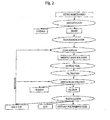
- the variant of the process illustrated in FIG. 2 differs from the process described above with reference to FIG. 1 only in that the process is carried out using commercial cocoa beans, that is to say beans. having undergone a pretreatment comprising a drying, the grains thus obtained being then subjected to a rehumidification step after dehulling, this step being carried out with 30 to 50% warm water, before the crushing step in the solvent.
- xanthines represent theobromine and caffeine
- the anti-radical activity was evaluated according to the DPPH test (1,1-diphenyl-picryl-hydroxy radical). It is necessary to know the molar concentration of the sample solutions subjected to the test. Since the nature of all the molecules present is not known, an "estimate" of a mean molecular weight (that of the catechin) is then chosen (arbitrarily) to express this molarity. The results are then expressed as the number of micromoles needed to reduce 50% of the free-radical forms of DPPH. Hence, the higher the value, the less anti-radical is the extract.
- Xanthines were assayed according to OICCC Method No. 107 (1988).
- composition of the fat was determined according to CC Young's method (see “ The interpretation of GLC Triglycerides Data for the Determination of Cocoa Butter Equivalents in chocolate. A new approach. "1984, JAOCS, 61, p 576-581 ). The exploitation of the results according to PADLEY makes it possible to interpret the composition of the lipid part (fatty acid, sterols, triglycerides %) of the extract.
- the extract containing the most interesting lipid fraction associated with the best anti-radical activity is obtained by mixing ethanol-water solvent (70:30 by volume).
- This solvent is therefore preferably chosen
- the comparison is made on the sterol content of the fat contained in the extracts of the invention.
- composition of the fat of the fresh bean is not very variable from one origin to another.
- the percentage of sterols in cocoa butter is 0.14 to 0.16%, while the percentage of ⁇ -sitosterol is 0.08 to 0.1%.
- the process according to the invention makes it possible to enrich the lipid fraction with sterols and, in particular, with ⁇ -sitosterol, relative to cocoa butter.
- Nonlimiting examples of the use of extracts according to the invention obtained by carrying out the process defined above are given below. These extracts can be used as supplementation in many food products.
- the holder tested the addition of extracts obtained with 70% ethanol in chocolate products. In all the examples indicated below, a comparison was made between the product with addition of extracts and a product free of such an addition:
- DARK CHOCOLATE Composition cocoa paste: 56% Sugar 26.99% Cocoa butter 16% Vanilla 0.01% Extract of the invention: 1% Tasting: the jury was composed of 18 people: 12 out of 18 people preferred chocolate with addition of extract according to the invention. It was found rounder and more aromatic.
- composition cocoa paste: 7.60% Sugar 41.30% Cocoa butter 27.50% Milk fat: 22.50% Lecithin 0.59% Vanillin: 0.01% Extract of the invention 0.50% Tasting: The jury consisted of 15 people. Result: slightly more pinkish color; no significant difference was found with respect to the taste of the product. Sugar composition: % 52.69 Highly defatted cocoa powder 14% vanillin 0.01% Milk (0% MF) 33% Extract of the invention 0.30% Tasting: The jury consisted of 9 people. 25 grams of this preparation were added 200 ml of hot water. Result: no significant difference was found between the two preparations.
- Anti-solar cosmetic preparation to fight skin aging and slimming Anti-solar cosmetic preparation to fight skin aging and slimming.
- a W / O emulsion is produced by mixing a sunscreen with the polyphenol extract of cocoa according to the invention and excipients for cream.
- This serum combines anti-solar properties (by the presence of a sunscreen and polyphenols of the extract according to the invention), anti-wrinkles (by the presence of the polyphenols of the extract according to the invention) and slimming (by the presence of xanthine bases of the extract according to the invention).
Landscapes
- Health & Medical Sciences (AREA)
- Life Sciences & Earth Sciences (AREA)
- Engineering & Computer Science (AREA)
- Chemical & Material Sciences (AREA)
- Veterinary Medicine (AREA)
- Public Health (AREA)
- General Health & Medical Sciences (AREA)
- Animal Behavior & Ethology (AREA)
- Natural Medicines & Medicinal Plants (AREA)
- Pharmacology & Pharmacy (AREA)
- Medicinal Chemistry (AREA)
- Polymers & Plastics (AREA)
- Botany (AREA)
- Food Science & Technology (AREA)
- Mycology (AREA)
- Organic Chemistry (AREA)
- Nuclear Medicine, Radiotherapy & Molecular Imaging (AREA)
- General Chemical & Material Sciences (AREA)
- Chemical Kinetics & Catalysis (AREA)
- Bioinformatics & Cheminformatics (AREA)
- Epidemiology (AREA)
- Microbiology (AREA)
- Biotechnology (AREA)
- Nutrition Science (AREA)
- Medical Informatics (AREA)
- Alternative & Traditional Medicine (AREA)
- Heart & Thoracic Surgery (AREA)
- Cardiology (AREA)
- Dermatology (AREA)
- Birds (AREA)
- Vascular Medicine (AREA)
- Zoology (AREA)
- Wood Science & Technology (AREA)
- Communicable Diseases (AREA)
- Oncology (AREA)
- Urology & Nephrology (AREA)
- Hematology (AREA)
- Diabetes (AREA)
- Toxicology (AREA)
- Virology (AREA)
Abstract
- la mise en oeuvre de fèves fraîches, n'ayant pas subi de pré-traitement, ni de dégraissage, ces fèves étant débarrassées de leurs pulpe et coque, de manière à obtenir des amandes propres,
- le concassage desdites amandes, en présence de solvant(s),
- la macération des amandes concassées dans des conditions permettant d'extraire les composés recherchés,
- la filtration du mélange de macération,
- la récupération d'un extrait renfermant lesdits composés à partir du filtrat,
Description
- La présente invention concerne un procédé d'obtention d'extraits à base de composés polyphénoliques à partir de fèves de cacao, les extraits obtenus et leurs applications.
- On sait que la graine fraîche de cacao contient environ 40% d'eau, 30 à 35% de lipides, 4 à 6% de polyphénols ou de dérivés de polyphénols, 1,5% de xanthines, le reste étant essentiellement constitué de protéines, d'amidon, de cellulose et de sucres. A cet égard, on peut se reporter notamment aux articles suivants :
- « Cacao procyanidins : major flavanoids and identification of some minor metabolites » de L.J. Porter, Z. Ma et B.G. Chan, publié dans Phytochemistry vol. 35, n° 5 p1657-1663, 1991 et
- Epicatechin content in fermented and unfermented cocao beans » de H. Kim et P.G. Keeney, publié dans Journal of Food Science - vol. 49 (1984) p 1090-1092.
- On notera que le terme « polyphénol », tel qu'utilisé dans la description et les revendications désigne les polyphénols non substitués, et substitués notamment sous forme de glycosides. Ces polyphénols appartiennent en particulier à la classe des anthocyanines, des flavonoïdes et, des flavanols et leurs oligomères, de types A et/ou B.
- De même, on notera que le terme lipide ou matière grasse représente des acides gras libres, des stérols, en particulier des phytostérols, des mono, di et triglycérides.
- Par pré-traitement, on entend une opération de fermentation et/ou séchage et/ou lavage.
- On sait que le cacao est originaire d'Amérique du Sud et que ses fruits ou cabosses sont cueillis, les fèves subissent un pré-traitement qui consiste à fermenter pendant cinq à six jours avant d'être séchées. Au cours de cette fermentation, il se produit un certain nombre de réactions biochimiques se traduisant, notamment, par la destruction de micro-organismes pathogènes, la formation de précurseurs d'arômes et une dégradation partielle des polyphénols par suite d'une oxydation enzymatique ou d'un tannage des protéines. On considère que 70 à 80% des polyphénols sont dégradés lors de la fermentation.
- Or, les polyphénols sont les substances naturelles anti-oxydantes et anti-radicalaires les plus puissantes que l'on connaisse. Les extraits polyphénoliques et les préparations qui en contiennent sont classiquement utilisés dans les indications suivantes : troubles circulatoires, insuffisances veino-lymphatiques, fragilité capillaire cutanée, troubles circulatoires de la rétine, crise hémorroïdaire, érythèmes solaires ou liés à l'action de radiations (prévention des dégâts causés par la radiothérapie), hypertension, hypercholestérolémie , diverses affections virales et microbiennes.
Ces dernières années, de nombreuses publications ont révélé au niveau moléculaire les modes d'action par lesquels ils sont capables de lutter contre les affections majeures que sont : - les maladies cardiovasculaires :
- Antiagrégants plaquettaires (Petroni, A., M. Blasevich, M. Salami, N. Papini, G.F. Montedoro and C. Galli, Inhibition of platelet aggregation and eicosanoid production by phenolic components of olive oil. Thromb Res, 1995. 78(2): p. 151-160)
- Anti-inflammatoires et protecteur de l'oxydation des LDL-cholestérol (Frankel, E., J. Kanner, J. German, E. Parks and J. Kinsella, Inhibition of oxidation of human low-density lipoprotein by phenolic substances in red wine. Lancet, 1993. 341(8843): p. 454-457)
- Protecteur de l'oxydation des éicosanoïdes (Pace-Asciak, C.R., S. Hahn, E.P. Diamandis, G. Soleas and D.M. Goldberg, The red wine phenolics trans-resveratrol and quercetin block human platelet aggregation and eicosanoid synthesis: implications for protection against coronary heart disease. Clin Chim Acta, 1995. 235(2): p. 207-219)
- Anti-athérosciérotiques (Yamakoshi, J., S. Kataoka, T. Koga and T. Ariga, Proanthocyanidin-rich extract from grape seeds attenuates the development of aortic atherosclerosis in cholesterol-fed rabbits. Atherosclerosis, 1999. 142(1): p. 139-149)
- Anti-thrombotiques (Fuhrman, B., A. Lavy and M. Aviram, Consumption of red wine with meals reduces the susceptibility of human plasma and low-density lipoprotein to lipid peroxidation. Am J Clin Nutr, 1995. 61(3): p. 549-554)
- l'Alzheimer (Orgogozo, J.M., J.F. Dartigues, S. Lafont, L. Letenneur, D. Commenges, R. Salamon, S. Renaud and M. Breteler, Wine consumption and dementia in the elderly: A prospective community study in the Bordeaux area. Rev Neurol, 1997. 153(3): p. 185-192)
- le cancer (Jang, M.S., E.N. Cai, G.O. Udeani, K.V. Slowing, C.F. Thomas, C.W.W. Beecher, H.H.S. Fong, N.R. Farnsworth, A.D. Kinghorn, R.G. Mehta, R.C. Moon and J.M. Pezzuto, Cancer chemopreventive activity of resveratrol, a natural product derived from grapes. Science, 1997. 275(5297): p. 218-220)
- Compte tenu du fait que le cacao contient des polyphénols et de l'importance de l'utilisation des polyphénols dans le domaine médical, on a été amené à tenter d'extraire du cacao, les composés polyphénoliques qu'il contient notamment dans le but de réaliser des aliments et boissons diététiques contenant cet anti-oxydant. Un pré-traitement comportant une fermentation suivie d'une opération de séchage constitue un inconvénient majeur en ce sens qu'il nuit au rendement de l'extraction des polyphénols contenus dans le cacao.
- En cherchant à pallier ces inconvénients, les inventeurs ont découvert que l'utilisation de fèves n'ayant pas subi de traitement préalable et la réalisation de l'extraction dans des conditions déterminées permettrait d'obtenir des extraits de composition originale, dotés de propriétés de grand intérêt.
- L'invention a donc pour but de fournir un procédé d'extraction de fèves de cacao permettant de disposer d'extraits à forte teneur en polyphénols et enrichis, (par rapport aux teneurs initiales dans les fèves) en certains dérivés lipidiques d'intérêt. Elle vise également à fournir de tels extraits en tant que produits nouveaux.
- L'invention vise en outre la mise à profit des propriétés ou des extraits dans diverses applications, notamment dans le domaine alimentaire, cosmétique et thérapeutique.
- Le procédé, selon l'invention, d'obtention d'extraits à base de composés polyphénoliques, à partir de fèves de cacao, est caractérisé en ce qu'il comprend
- la mise en oeuvre de fèves fraîches, n'ayant pas subi de pré-traitement, ni de dégraissage, ces fèves étant débarrassées de leurs pulpe et coque, de manière à obtenir des amandes propres,
- le concassage desdites amandes, en présence de solvant,
- la macération des amandes concassées dans des conditions permettant d'extraire les composés recherchés,
- la filtration du mélange de macération,
- la récupération d'extrait renfermant lesdits composés à partir du filtrat.
- Les fèves utilisées sont pré-traitées ou non.
- Selon une variante de la présente invention, on met en oeuvre des fèves de cacao marchandes, c'est-à-dire des fèves ayant subi un pré-traitement comportant un séchage, dont les grains sont réhumidifiés avant concassage, par exemple avec 30 à 50% d'eau tiède.
- L'étape de macération est réalisée à l'aide d'eau ou d'un mélange d'eau et de plusieurs solvants, capables de solubiliser les polyphénols et les lipides, sans altérer leurs propriétés, tels que l'éthanol, l'acétone, le butanol 2, le propanol 2. De préférence, la teneur en solvant est supérieure à 50% en volume.
- On opère avantageusement à une température, de l'ordre de 20 à 50°C, pendant 1 heure à plusieurs jours.
- Comme le montrent les exemples, une macération de seulement 1 h, avec un solvant tel que l'éthanol 70° permet d'obtenir des extraits de grande qualité, ce qui présente un grand intérêt pour les applications industrielles du procédé.
- Le mélange obtenu est alors filtré et le filtrat traité pour récupérer l'extrait recherché.
- De manière avantageuse, le gâteau de filtration est au préalable soumis à une ou plusieurs étapes dé lavage. On utilise en particulier le même solvant que celui mis en oeuvre dans l'étape de macération.
- La récupération de l'extrait à base de composés polyphénoliques consiste en particulier en une distillation, conduite de manière à évaporer le solvant et obtenir un extrait.
- Les extraits obtenus présentent l'avantage d'une teneur élevée en composés polyphénoliques et un enrichissement, par rapport à la composition des fèves de départ, en phytostérols, notamment en β-sitostérol.
- De tels extraits constituent des produits nouveaux et, à ce titre, entrent également dans le champ de l'invention.
- L'invention vise en particulier des extraits caractérisés par une teneur (% en poids par rapport à l'extrait total) de 15 à 65% en polyphénols, de 0 à 11% en lipides et de 0 à 20% en xanthines.
- L'invention vise en particulier les extraits dans lesquels les lipides comportent de 10 à 30% en poids de phystostérols avec de préférence, 7 à 15% de β-sitostérol. Ce taux préférentiel est atteint lorsque le procédé selon l'invention est mis en oeuvre sur les fèves fraîches.
- De tels extraits originaux constituent avantageusement une signature du procédé de l'invention.
- On a déjà indiqué en début de description les propriétés mises en évidence chez les polyphénols. De même, les phystostérols constituent des produits de grand intérêt.
- Les phytostérols oxydés sont des phytonutriments dont les qualités nutritionnelles en santé publique sont particulièrement bien documentées. De nombreux travaux scientifiques ont montré le rôle, en particulier, du β-sitostérol dans la protection et la prévention contre certaines maladies.
- On peut résumer ainsi ces qualités :
- un effet stimulant sur le système immunitaire en augmentant les défenses immunologiques contre des infections virales et bactériennes (Bouic, P.J.D. et al. International Journal of Immunopharmacology, vol. 18, no. 12, p. 693-700, Dec. 1996),
- un effet hypocholestérolémiant chez l'homme sans changement de diète alimentaire ni de modification de l'activité physique (Métab. Clin. Exper., vol. 38, p. 136-40 (1989) ; American J. Clin. Nutr., vol. 59, p. 1325-31 (1994)),
- combattre les désordres liés au stress (immunosuppression, douleurs et névralgies...), P.J.D. Bouic et al: International Journal of Sports Medicine, 1999,
- combattre les affections de la prostate, Klippel K. F. et al: British Journal of Urology, v. 80 (3), pp. 427-432, Sept. 1997,
- combattre le cancer de la prostate et du sein,
- combattre certaines maladies auto-immune comme le Lupus, le Psoriasis, le Syndrome de fatigue chronique ainsi que la polyarthrite rhumatoïde, (P.J.D. Bouic : Newsletter of the Arthritis Trust of America, Summer 1998),
- maintenir un certain taux de lymphocytes chez des patients atteints du SIDA et donc de prolonger leur vie (Bouic, P.J.D. AIDS Bulletin, v. 6 #3, p 18-20, Sept. 1997), et,
- un effet anti-diabétique, anti-hyperglycémique (M.D. Ivorra et al: Archives of the International Pharmacodyn, v. 296, pp. 224-231, April 1988) ainsi qu'un effet anti-ulcère, anti-inflammatoire et anti-pyrétique (M.B. Gupta et al: Planta medica (Journal of Medicinal Plant Research) vol. 39, p 157-163, 1980).
- Les extraits de l'invention, de par leur composition, présentent donc un large spectre d'activité et sont utilisables dans de nombreux domaines d'applications.
- On citera, en particulier, l'utilisation des extraits de l'invention dans le domaine alimentaire. Ces extraits constituent en effet des additifs à forte valeur ajoutée.
- Ils conviennent, en particulier, à la supplémentation, par exemple, de chocolats, boissons, produits laitiers.
- On citera ainsi l'utilisation des extraits selon l'invention comme additifs à certains aliments pour en faire de véritables aliments-santé (aussi appelés aliments fonctionnels ou alicaments) pour lesquels les allégations santé découleraient de l'ensemble des propriétés biologiques qu'on leur connaît.
- L'invention vise aussi à protéger les compléments nutritionnels renfermant une quantité efficace d'extraits selon l'invention.
- En particulier, les compléments nutritionnels selon l'invention comprennent au moins un extrait selon l'invention à raison de 25 à 300 mg, de préférence de 100 à 200 mg.
- Leur administration par voie orale, sous forme de comprimés, capsules, gélules est particulièrement adaptée.
- Les extraits de l'invention présentent également un intérêt tout particulier dans le domaine cosmétique, où leurs propriétés sont avantageusement mises à profit pour entrer dans la composition de formulations, en tant que principes actifs, ou en combinaison avec d'autres principes actifs.
- De telles compositions cosmétiques sont donc caractérisées en ce qu'elles renferment une quantité efficace, pour une application cosmétologique, des extraits de l'invention, en association avec les véhicules classiquement utilisés en cosmétologie. Ces extraits seront ainsi utilisés dans l'élaboration de crèmes, lotions, mousses, savons et autres.
- Les propriétés des extraits de l'invention leur confèrent également un grand intérêt en thérapeutique. Comme indiqué plus haut, l'étude des propriétés pharmacologiques de leurs constituants a montré leur efficacité dans diverses affections. Ces propriétés s'accompagnent, en outre, d'une grande innocuité de ces produits, qui présentent donc un indice thérapeutique particulièrement satisfaisant.
- L'invention vise ainsi l'utilisation de l'extrait selon l'invention comme source de choix pour l'obtention de principes actifs destinés à une utilisation pharmaceutique.
- D'autres caractéristiques et avantages de la présente invention ressortiront de la description faite ci-après en référence aux dessins annexés qui en illustrent deux exemples de mise en oeuvre dépourvus de tout caractère limitatif. Sur les dessins :
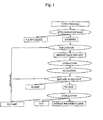
- la figure 1 est un schéma représentant les étapes successives du procédé, objet de l'invention, et,
- la figure 2 est un schéma similaire à celui de la figure 1 illustrant la variante du procédé de l'invention selon laquelle on met en oeuvre des fèves marchandes dont les grains sont réhumidifiés avant de subir les opérations de concassage dans un solvant d'extraction et de distillation.
- On se réfère en premier lieu à la figure 1.
- Selon l'invention, les fèves fraîches, pré-traitées ou non, sont débarrassées de la pulpe et de la coque par une opération d'épulpage/épluchage, par exemple en utilisant un dispositif du type « parmentière ». On obtient ainsi des amandes propres qui sont concassées, par exemple dans un broyeur à couteaux, en présence d'un solvant. Comme précisé ci-dessus, ce solvant est avantageusement choisi dans le groupe comprenant notamment l'eau, l'éthanol, l'acétone, le butanol 2, le propanol 2, en toutes proportions, en mélange avec de l'eau. De préférence, la teneur en solvant est supérieure à 50% en volume (en tenant compte de l'eau apportée par les fèves).
- Le mélange amandes concassées/solvant peut être laissé à infuser de quelques heures à plusieurs jours à chaud ou à froid. Si cette infusion est effectuée à chaud, il convient d'éviter les températures trop élevées (c'est-à-dire supérieures à 60°C), afin de limiter l'oxydation chimique et la dégradation chimique des composés à extraire.
- Le mélange est ensuite filtré et rincé plusieurs fois à l'aide du solvant utilisé.
- On effectue ensuite une distillation en vue d'obtenir un extrait.
- Cette distillation est de préférence conduite à une température de 50 à 60°C afin d'éviter une dégradation des composés polyphéniques, sous une pression résiduelle de 12 à 20 KPa, en vue d'évaporer le mélange de solvants contenus dans le filtrat.
Comme indiqué sur le schéma de la figure 1, le solvant récupéré lors de l'étape de distillation du filtrat peut être recyclé dans l'étape de concassage des amandes.
La variante du procédé illustrée par la figure 2 diffère du procédé décrit ci-dessus en référence à la figure 1 uniquement par le fait que le procédé est mis en oeuvre à partir de fèves marchandes de cacao, c'est-à-dire de fèves ayant subi un pré-traitement comportant un séchage, les grains ainsi obtenus étant ensuite soumis à une étape de réhumidification après décorticage, cette étape étant réalisée avec 30 à 50% d'eau tiède, avant l'étape de concassage dans le solvant. Une telle réhumidification permet aux parois cellulaires des amandes de retrouver leur élasticité et donc de ne pas être brisées lors du concassage en présence du solvant. Le pourcentage de lipides extraits est dans ce cas plus important qu'avec les fèves fraîches non réhumidifiées.
On donne ci-après des exemples d'extraits résultants de mises en oeuvre du procédé objet de l'invention. - Dans ces exemples, les xanthines représentent la théobromine et la caféine,
- On notera que les pourcentages en polyphénols sont exprimés en équivalent acide gallique, selon la méthode FOLIN CIOCALTEU.
- L'activité anti-radicalaire a été évaluée selon le test au DPPH (radical 1,1 diphenyl-2-picryl-hydroxy). Il est nécessaire de connaître la concentration molaire des solutions d'extraits soumis au test. Or, la nature de toutes les molécules présentes n'étant pas connue, une « estimation » d'un poids moléculaire moyen (celui de la catéchine) est alors choisie (arbitrairement) pour exprimer cette molarité. Les résultats sont alors exprimés par le nombre de micromoles nécessaires pour réduire 50% des formes radicalaires du DPPH. D'où, plus la valeur est élevée, moins l'extrait est anti-radicalaire.
- Le pourcentage d'extrait/sec (extrait exprimé sur la matière sèche) est déterminé à l'aide de la relation suivante :

où : - E désigne le poids de l'extrait en grammes,
- W désigne le poids des fèves en grammes, et,
- H désigne le taux d'humidité des fèves.
- Cette relation permet de rendre comparable les résultats obtenus sur des fèves d'origine différentes. En effet, le taux d'humidité d'une fève est variable selon son origine.
- Le dosage des xanthines a été effectué selon la méthode OICCC n°107 (1988).
- La composition de la matière grasse a été déterminée d'après la méthode de C.C. Young (voir " The interprétation of GLC Triglycérides Data for the Determination of Cocoa Butter Equivalents in chocolate. A new approach." 1984, JAOCS, 61, p 576-581). L'exploitation des résultats selon PADLEY permet d'interpréter la composition de la partie lipidique (acide gras, stérols, triglycérides...) de l'extrait.
-
Variation des rendements d'extraction en fonction du type de solvant (24h de macération) Eau froide MeOH (70%) Eau à 60°C Acétone (70%) Propanol 2 (70%) Ethanol (70%) Butanol 2 (70%) %extrait/sec 8,8 10,6 13,4 12 14,4 11,1 10,1 Composition extrait (%) Lipides 0,6 0 8,7 0,1 3,6 3,5 10,4 Xanthines 8,6 6 9,4 5,6 9,9 8,5 16,1 Polyphénols 17,2 41,2 19,1 61,1 45,5 54,3 37,6 Activité DPPH 88,5 36,4 147,6 25,9 39 31,2 41,6 - L'extrait renfermant la fraction lipidique la plus intéressante associée à la meilleure activité anti-radicalaire (due à la fraction polyphénolique) est obtenue par le mélange de solvant éthanol - eau (70:30 en volume).
- Ce solvant est donc choisi de manière préférentielle,
- La comparaison est effectuée sur la teneur en stérols de la matière grasse contenue dans les extraits de l'invention.
- On rappelle que la composition de la matière grasse de la fève fraîche est peu variable d'une origine à l'autre. Le pourcentage de stérols dans le beurre de cacao est de 0,14 à 0,16%, tandis que le pourcentage de β- sitostérol est de 0,08 à 0,1%.
- Dans le tableau ci-dessous, les extractions sont effectuées sur des fèves du Cameroun avec de l'éthanol à 70%.

- Dans le tableau ci-dessous, les extractions sont effectuées sur des fèves de Côte d'Ivoire avec de l'éthanol à 70%.

- On remarquera que le procédé selon l'invention permet d'enrichir la fraction lipidique en stérols et, en particulier, en β-sitostérol, par rapport au beurre de cacao.
-
Extraction à l'éthanol 70%. Cameroun Guinée EQ Côte d'ivoire Brésil % extrait/sec 11,1 9,5 8,4 12 Composition extrait % Lipides 3,5 4,9 9,2 3,4 Xanthines 8,5 8,3 10,4 14,2 Polyphénols 54,3 40,2 47,6 38,2 Activité DPPH 31,2 42 47,9 40,6 -
Extraction à l'éthanol 70%. Côte d'Ivoire % extrait/sec 9,4 Composition extrait (%) Lipides 9,5 Xanthines 10,5 Polyphénols 19 Activité anti-radicalaire 99 - On a indiqué ci-après des exemples non limitatifs d'utilisation d'extraits selon l'invention, obtenus par la mise en oeuvre du procédé défini ci-dessus. Ces extraits peuvent être utilisés en temps que supplémentation dans de nombreux produits alimentaires. Le titulaire a testé l'addition d'extraits obtenus avec de l'éthanol à 70%, dans des produits chocolatés. Dans tous les exemples indiqués ci-après, on a procédé à une comparaison entre le produit avec addition d'extraits et un produit exempt d'une telle addition :
CHOCOLAT NOIR Composition : pâte de cacao : 56% Sucre 26,99% Beurre de cacao 16% Vanille 0,01% Extrait de l'invention: 1% CHOCOLAT AU LAIT Composition : pâte de cacao : 7,60% Sucre 41,30% Beurre de cacao 27,50% Lait gras : 22,50% Lécithine 0,59% Vanilline : 0,01% Extrait de l'invention 0,50%
Résultat : couleur légèrement plus rosée; aucune différence significative n'a été relevée en ce qui concerne le goût du produit.PREPARATION DE BOISSON POUR DISTRIBUTEUR AUTOMATIQUE Composition sucre : 52,69% Poudre de cacao fortement dégraissée 14% Vaniline 0,01 % Lait (0% M.G.) 33% Extrait de l'invention 0,30%
25 grammes de cette préparation ont été additionnés de 200 ml d'eau chaude.
Résultat : aucune différence significative n'a été relevée entre les deux préparations. - Il demeure bien entendu que la présente invention n'est pas limitée aux divers exemples de mise en oeuvre mentionnés ci-dessus mais qu'elle en englobe toutes les variantes.
- Préparation cosmétique anti-solaire pour lutter contre le vieillissement cutané et amincissante.
- On réalise une émulsion E/H en mélangeant un filtre solaire avec l'extrait polyphénolique de cacao selon l'invention et des excipients pour crème. Ce sérum associe des propriétés anti-solaire (par la présence d'un filtre solaire et des polyphénols de l'extrait selon l'invention), anti-rides (par la présence des polyphénols de l'extrait selon l'invention) et amincissantes (par la présence des bases xanthiques de l'extrait selon l'invention).
Formulation : Isopropylméthoxycinnamate et éthyldiisopropylcinnamate (Néo Héliopan E 1000®) 3 % Extrait de fève de cacao selon l'invention 3 % Excipients pour sérum E/H Q.S. Composition des excipients : - Propylène glycol dicaprylate/dicarate + stearalkonium hectorite + propylène carbonate (Miglyol 840 gel B®) 20,0% - Bis-diglycéryl caprylate/caprate/isostéarate/hydroxystéarate adipate (softisan 649®) 5,0% - Isostéaryl diglycéryl succinate (Imwitor 780 K®) 5,0% - Huile de paraffine 8,0 % - Paraffine solide 3,0% - Sulfate de magnésium 2,0% - Eau q.s. 100, 0 %
Claims (18)
- Procédé d'obtention d'extraits à base de composés polyphénoliques contenus dans le cacao, caractérisé en ce qu'il comprend :- la mise en oeuvre de fèves fraîches, n'ayant pas subi de pré-traitement, ni de dégraissage, ces fèves étant débarrassées de leurs pulpe et coque, de manière à obtenir des amandes propres,- le concassage desdites amandes, en présence de solvant(s),- la macération des amandes concassées dans des conditions permettant d'extraire les composés recherchés,- la filtration du mélange de macération,- la récupération d'un extrait renfermant lesdits composés à partir du filtrat
- Procédé selon la revendication 1, caractérisé en ce qu'on met en oeuvre des fèves de cacao marchandes, c'est-à-dire des fèves ayant subi un pré-traitement comportant un séchage, dont les grains sont réhumidifiés avant concassage par exemple avec 30 à 50% d'eau tiède.
- Procédé selon la revendication 1 ou 2, caractérisé en ce que l'étape de macération est réalisée avec un ou plusieurs solvants capables de solubiliser les polyphénols et les lipides sans altérer leurs propriétés.
- Procédé selon la revendication 3, caractérisé en ce qu'on utilise de l'eau ou un mélange d'eau et de solvant, le solvant étant choisi dans le groupe comprenant l'éthanol, l'acétone, le butanol 2, et le propanol 2.
- Procédé selon la revendication 3 ou 4, caractérisé en ce qu'on utilise un mélange solvant/eau avec une teneur en solvant supérieure à 50% en volume.
- Procédé selon l'une quelconque des revendications 1 à 5, caractérisé en ce que l'étape de macération est réalisée durant 1 h à plusieurs jours, à chaud ou à froid.
- Procédé selon l'une quelconque des revendications 1 à 6, caractérisé en ce que la récupération de l'extrait est réalisée par distillation du filtrat obtenu, à une température comprise entre 50 et 60°C, sous une pression résiduelle de 12 à-20 KPa.
- Extraits à base de composés polyphénoliques, caractérisés par une teneur (% en poids par rapport à l'extrait total) de 15 à 65% en polyphénols, de 0 à 11% en lipides et de 5 à 20% en xanthines.
- Extraits selon la revendication 8, caractérisés en ce que les lipides comportent de 10 à 30% en poids de phystostérols avec de préférence, 7 à 15% de β-sitostérol.
- Utilisation des extraits selon la revendication 8 ou 9, dans le domaine alimentaire, en tant qu'additifs, notamment pour la supplémentation de chocolats, baissons, produits laitiers.
- Utilisation des extraits selon la revendication 8 ou 9, dans le domaine alimentaire, pour la fabrication d'aliments fonctionnels,
- Compléments nutritionnels caractérisés en ce qu'ils renferment une quantité efficace d'extraits selon la revendication 8 ou 9.
- Compléments nutritionnels selon la revendication 12, caractérisés en ce qu'ils comprennent au moins un extrait selon la revendication 8 ou 9, à raison de 25 à 300 mg, de préférence de 100 à 200 mg.
- Compléments nutritionnels selon la revendication 12 ou 13, caractérisés en ce qu'ils sont administrables par voie orale, en particulier sous forme de comprimés, capsules, gélules.
- Utilisation des extraits selon la revendication 8 ou 9, dans le domaine cosmétique, en tant que principes actifs ou en combinaison avec d'autres principes actifs.
- Compositions cosmétiques, caractérisées en ce qu'elles renferment une quantité efficace, pour une application cosmétologique, des extraits selon la revendication 8 ou 9, en association avec les véhicules classiquement utilisés en cosmétologie.
- Compositions cosmétiques selon la revendication 16, caractérisées en ce qu'elles se présentent sous forme de crèmes, lotions, mousses, savons.
- Utilisation de l'extrait selon la revendication 8 ou 9, comme source pour l'obtention de principes actifs dans le domaine pharmaceutique.
Applications Claiming Priority (2)
| Application Number | Priority Date | Filing Date | Title |
|---|---|---|---|
| FR0010603A FR2812873B1 (fr) | 2000-08-11 | 2000-08-11 | Procede de production de polyphenols a partir de feves de cacao |
| EP01963095A EP1309532B1 (fr) | 2000-08-11 | 2001-08-10 | Procede d'obtention d'extraits polyphenoliques de feves de cacao , les extraits obtenus et leurs applications |
Related Parent Applications (1)
| Application Number | Title | Priority Date | Filing Date |
|---|---|---|---|
| EP01963095A Division EP1309532B1 (fr) | 2000-08-11 | 2001-08-10 | Procede d'obtention d'extraits polyphenoliques de feves de cacao , les extraits obtenus et leurs applications |
Publications (1)
| Publication Number | Publication Date |
|---|---|
| EP1787970A1 true EP1787970A1 (fr) | 2007-05-23 |
Family
ID=8853517
Family Applications (2)
| Application Number | Title | Priority Date | Filing Date |
|---|---|---|---|
| EP07004829A Withdrawn EP1787970A1 (fr) | 2000-08-11 | 2001-08-10 | Procede d'obtention d'extraits polyphenoliques de feves de cacao , les extraits obtenus et leurs applications |
| EP01963095A Expired - Lifetime EP1309532B1 (fr) | 2000-08-11 | 2001-08-10 | Procede d'obtention d'extraits polyphenoliques de feves de cacao , les extraits obtenus et leurs applications |
Family Applications After (1)
| Application Number | Title | Priority Date | Filing Date |
|---|---|---|---|
| EP01963095A Expired - Lifetime EP1309532B1 (fr) | 2000-08-11 | 2001-08-10 | Procede d'obtention d'extraits polyphenoliques de feves de cacao , les extraits obtenus et leurs applications |
Country Status (12)
| Country | Link |
|---|---|
| US (2) | US7368144B2 (fr) |
| EP (2) | EP1787970A1 (fr) |
| JP (1) | JP5179695B2 (fr) |
| AP (1) | AP2003002727A0 (fr) |
| AU (1) | AU2001284138A1 (fr) |
| BR (1) | BR0113198A (fr) |
| CA (1) | CA2418984C (fr) |
| EC (1) | ECSP034476A (fr) |
| ES (1) | ES2405285T3 (fr) |
| FR (1) | FR2812873B1 (fr) |
| MX (1) | MXPA03001292A (fr) |
| WO (1) | WO2002014251A1 (fr) |
Cited By (6)
| Publication number | Priority date | Publication date | Assignee | Title |
|---|---|---|---|---|
| US8597692B2 (en) | 2007-04-26 | 2013-12-03 | Barry Callebaut Ag | Cocoa extract and use thereof |
| US8603547B2 (en) | 2007-04-26 | 2013-12-10 | Barry Callebaut Ag | Use of cocoa extract |
| US8709503B2 (en) | 2007-04-26 | 2014-04-29 | Barry Callebaut Ag | Use of cocoa extract |
| WO2014076425A1 (fr) | 2012-11-16 | 2014-05-22 | Valagro Carbone Renouvelable Poitou-Charentes | Procede d'obtention de polyphenols a partir d'une matiere premiere vegetale en contenant |
| US8765191B2 (en) | 2007-10-08 | 2014-07-01 | Barry Callebaut Ag | Cocoa extracts for use in providing skin benefits |
| FR3110420A1 (fr) | 2020-05-20 | 2021-11-26 | Laboratoire Dermatologique Inderma | Complexe vegetal a base d’acide betulinique et d’un extrait aqueux de chaga et applications en cosmetique |
Families Citing this family (32)
| Publication number | Priority date | Publication date | Assignee | Title |
|---|---|---|---|---|
| US6777005B1 (en) | 1994-10-03 | 2004-08-17 | Mars, Incorporated | Foods containing a cocoa polyphenol additive |
| US6905715B1 (en) | 1996-09-06 | 2005-06-14 | Mars, Incorporated | Cocoa solids having a high cocoa procyanidin content |
| US6627232B1 (en) | 2000-06-09 | 2003-09-30 | Mars Incorporated | Method for extracting cocoa procyanidins |
| KR100460103B1 (ko) * | 2001-10-18 | 2004-12-04 | 롯데제과주식회사 | 카카오 콩 또는 콩껍질 분획물을 함유하는 소화기계 발암 억제제 |
| US7514107B2 (en) * | 2002-03-21 | 2009-04-07 | Mars, Incorporated | Treatment of diseases involving defective gap junctional communication |
| FR2857450B1 (fr) * | 2003-07-10 | 2006-03-03 | Barry Callebaut Ag | Determination de l'origine geographique des feves de cacao et de leurs produits derives. |
| GB2414393B (en) * | 2004-05-24 | 2008-06-11 | Natraceutical Sa | Process for producing cocoa polyphenol concentrate |
| FR2873895B1 (fr) * | 2004-08-06 | 2007-07-27 | Elysee Lab | Procede d'obtention d'un cacao permettant de fabriquer un chocolat essentiellement exempt de sucre et d'edulcorants ainsi que produits issus de la mise en oeuvre de ce procede |
| US8435576B2 (en) | 2005-01-28 | 2013-05-07 | Barry Callebaut Ag | Use of cocoa polyphenols for treating a prostate hyperplasia, a specific cocoa extract and applications |
| FR2885299B1 (fr) * | 2005-05-03 | 2009-11-20 | Nuxe Lab | Utilisation de polyphenols de cacao pour reguler la pigmentation de la peau |
| DE602005011939D1 (de) | 2005-05-31 | 2009-02-05 | Kraft Foods R & D Inc | Verfahren zur Herstellung von Polyphenol angereicherten Zusammensetzungen aus Kakaoschale |
| WO2007082703A1 (fr) * | 2006-01-17 | 2007-07-26 | Barry Callebaut Ag | Utilisation de polyphenols de cacao dans la production de biere |
| WO2007091151A2 (fr) * | 2006-02-06 | 2007-08-16 | Indus Biotech Private Limited | Composition synergique pharmaceutique et/ou nutraceutique de flavanoides pour le traitement du diabete sucre |
| ES2280141B1 (es) * | 2006-02-27 | 2008-10-01 | Natraceutical, S.A. | "proceso para la obtencion de polvo de cacao rico en polifenoles y bajo contenido en materia grasa y polvo de cacao obtenido". |
| EP2071961B1 (fr) * | 2006-05-25 | 2015-11-18 | Naturex | Procédé d'obtention d'extraits de cacao présentant une teneur élevée en polyphénols |
| FR2904542B1 (fr) * | 2006-08-03 | 2011-06-24 | Soc Extraction Principes Actif | Utilisation d'un extrait de feves de cacao en tant qu'agent actif pour augmenter la synthese de melanine dans les melanocytes |
| EP1894473A1 (fr) * | 2006-08-28 | 2008-03-05 | Puratos N.V. | Méthode permettant d'augmenter l'activité antioxydante du chocolat |
| US8435547B2 (en) * | 2006-08-30 | 2013-05-07 | John P. Blass | Cream for stimulating mitochondrial activity in the skin |
| WO2009118418A1 (fr) * | 2008-03-28 | 2009-10-01 | Barry Callebaut Ag | Composition de cacao |
| US8372456B2 (en) | 2006-11-17 | 2013-02-12 | Barry Callebaut Ag | Method for producing a soluble cocoa product from cocoa powder |
| US8609174B2 (en) * | 2006-11-17 | 2013-12-17 | Barry Callebaut Ag | Method for producing a soluble cocoa product from cocoa powder |
| US9114114B2 (en) | 2007-06-21 | 2015-08-25 | Mars, Inc. | Edible products having a high cocoa polyphenol content and improved flavor and the milled cocoa extracts used therein |
| GB0724716D0 (en) | 2007-12-19 | 2008-01-30 | Barry Callebaut Ag | Process |
| GB0801119D0 (en) | 2008-01-22 | 2008-02-27 | Barry Callebaut Ag | Composition |
| GB0801401D0 (en) * | 2008-01-25 | 2008-03-05 | Barry Callebaut Ag | Composition |
| US20090263518A1 (en) * | 2008-04-17 | 2009-10-22 | Barry Callebaut Ag | Composition and Uses Thereof |
| EP2375911A4 (fr) * | 2008-12-12 | 2014-07-30 | Theo Chocolates Inc | Extrait de chocolat, procédé de réalisation, et utilisations de celui-ci |
| FR2939664B1 (fr) * | 2008-12-12 | 2011-01-07 | Natura Cosmeticos Sa | Procede d'obtention d'extraits contenant des derives de methylxanthine a partir de gateaux de vegetaux du genre theobroma, et composition et utilisation desdits extraits |
| CN103262927A (zh) * | 2013-06-07 | 2013-08-28 | 北京绿源求证科技发展有限责任公司 | 一种养益心脏的食品养生茶冲剂 |
| US9682112B2 (en) | 2013-08-05 | 2017-06-20 | Akay Flavours & Aromatics PVT. LTD | Ultrasound-assisted continuous extraction for complete fragmentation of cocoa beans into fractions |
| CN115486503A (zh) | 2021-06-17 | 2022-12-20 | 百事可乐公司 | 提供咖啡因的缓慢释放的组合物 |
| EP4442122A1 (fr) | 2023-04-06 | 2024-10-09 | ODC Lizenz AG | Procedes d'extraction de cacao et extraits obtenus par ceux-ci |
Citations (14)
| Publication number | Priority date | Publication date | Assignee | Title |
|---|---|---|---|---|
| US4352746A (en) | 1978-09-29 | 1982-10-05 | Societe D'assistance Technique Pour Produits Nestle S.A. | Process for the production of oxidation-inhibiting substances |
| GB2223944A (en) * | 1988-10-21 | 1990-04-25 | Lotte Confectionery Co Ltd | Chewing gum including cacao bean husk extract |
| JPH06128164A (ja) * | 1992-10-16 | 1994-05-10 | Hitoshi Ito | 抗癌活性を有する経口投与剤及び飲食品 |
| JPH07213251A (ja) | 1994-02-04 | 1995-08-15 | Meiji Seika Kaisha Ltd | 抗酸化物質を含有する健康飲食品および抗酸化物質の製造法 |
| JPH07274894A (ja) | 1994-04-01 | 1995-10-24 | Meiji Seika Kaisha Ltd | 胃潰瘍予防飲食品 |
| JPH09224606A (ja) | 1996-02-19 | 1997-09-02 | Meiji Seika Kaisha Ltd | 発ガン予防物質を含有する健康飲食品 |
| JPH09234018A (ja) | 1996-03-01 | 1997-09-09 | Meiji Seika Kaisha Ltd | 糖尿病合併症予防作用を有する飲食品 |
| WO1997036597A1 (fr) * | 1996-04-02 | 1997-10-09 | Mars, Incorporated | Composes a base d'extrait de cacao, techniques de fabrication et d'utilisation |
| EP0906761A2 (fr) | 1997-10-02 | 1999-04-07 | Archer-Daniels-Midland Company | Procédé de préparation et d'utilisation de produits phytochimiques |
| WO1999045788A1 (fr) * | 1998-03-12 | 1999-09-16 | Mars, Incorporated | Produits alimentaires a teneur accrue en polyphenols de cacao et procede de production correspondant |
| EP0943675A1 (fr) * | 1998-03-13 | 1999-09-22 | Dr. Frische GmbH | Procédé d'extraction par solvant de composés hydrophobes |
| JPH11308978A (ja) | 1998-04-28 | 1999-11-09 | Meiji Seika Kaisha Ltd | 高コレステロール血症予防飲食品 |
| US6015913A (en) | 1996-09-06 | 2000-01-18 | Mars, Incorporated | Method for producing fat and/or solids from cocoa beans |
| EP1026164A1 (fr) | 1999-02-02 | 2000-08-09 | ADM Cocoa B.V. | Procédé pour l'extraction d'antioxidants polyphénoliques de plantes contenant des purines |
Family Cites Families (39)
| Publication number | Priority date | Publication date | Assignee | Title |
|---|---|---|---|---|
| CA840382A (en) | 1970-04-28 | M. Weber Meyer | Method of making a cocoa extract and cocoa flavored chocolate beverage | |
| GB14624A (fr) | 1900-01-01 | |||
| GB189714624A (en) | 1897-06-16 | 1897-07-31 | Hans Christensen | A New or Improved Extract of Cocoa Husks, and a Method of Preparing the same. |
| GB341000A (en) | 1929-10-07 | 1931-01-07 | Monsanto Chemical Works | Process for recovering valuable products from cocoa by-products |
| GB345250A (en) | 1929-10-07 | 1931-03-09 | Monsanto Chemical Works | Improvements in and relating to the recovery and purification of alkaloids from cocoa products |
| US2275835A (en) * | 1940-10-03 | 1942-03-10 | Citro Chemical Co | Extraction of theobromine |
| US2380158A (en) | 1942-10-21 | 1945-07-10 | Inredeco Inc | Method of preparing a cocoa extract |
| GB562123A (en) | 1942-10-21 | 1944-06-19 | Inredeco Inc | Improvements in method of preparing a cocoa extract |
| GB751121A (en) | 1953-07-10 | 1956-06-27 | Gen Foods Corp | Improvements in or relating to chocolate flavoring material |
| DE2055030C3 (de) | 1970-11-09 | 1978-06-22 | Dragoco Gerberding & Co Gmbh, 3450 Holzminden | Verfahren zur Herstellung eines Kakaoextrakts |
| JPS57206391A (en) | 1981-06-12 | 1982-12-17 | Morinaga & Co Ltd | Preparation of flavonoid natural pigment by enzymic treatment |
| US4532147A (en) | 1983-08-03 | 1985-07-30 | General Foods Corporation | Cacao product and process therefor |
| JPS61239872A (ja) * | 1985-04-13 | 1986-10-25 | Naozo Kishida | 飲料用ココアの製造法 |
| JPS6322146A (ja) * | 1986-07-14 | 1988-01-29 | Morinaga & Co Ltd | カカオエキスの製造法 |
| FR2609395B1 (fr) | 1988-02-23 | 1992-01-10 | Serobiologiques Lab Sa | Utilisation de bases xanthiques comme principe actif d'une composition pharmaceutique, notamment dermatologique, ou cosmetique, composition notamment utile comme matiere de base pour la preparation de composition pharmaceutique ou cosmetique et composition pharmaceutique ou cosmetique ainsi preparee |
| JP2527788B2 (ja) | 1988-05-31 | 1996-08-28 | 株式会社ロッテ | 口腔用組成物 |
| US4970090A (en) | 1988-09-26 | 1990-11-13 | Mccormick & Company, Inc. | Enhanced cocoa extract flavorings |
| GB8901837D0 (en) * | 1989-01-27 | 1989-03-15 | Beecham Group Plc | Novel compositions |
| DE3912819A1 (de) | 1989-04-19 | 1990-11-08 | Jacobs Suchard Ag | Verfahren zur herstellung von kakao-extrakt |
| FR2654935B1 (fr) * | 1989-11-28 | 1994-07-01 | Lvmh Rech | Utilisation de xanthines, eventuellement incorporees dans des liposomes, pour favoriser la pigmentation de la peau ou des cheveux. |
| JPH0753094B2 (ja) * | 1990-06-14 | 1995-06-07 | 鐘紡株式会社 | カカオ風味飲料の製法 |
| GB9419715D0 (en) | 1994-09-30 | 1994-11-16 | Boots Co Plc | Hair stimulant composition |
| US5554645A (en) | 1994-10-03 | 1996-09-10 | Mars, Incorporated | Antineoplastic cocoa extracts and methods for making and using the same |
| ES2099676B1 (es) | 1995-07-19 | 1997-11-16 | Moner Y Llacuna S A | Nuevo producto de fibra de cacao a base de cascara de cacao tostada. |
| CA2250792C (fr) | 1996-04-02 | 2011-09-13 | Mars, Incorporated | Composes d'extraits de cacao et leurs procedes de fabrication et d'utilisation |
| JP2001524087A (ja) | 1997-04-18 | 2001-11-27 | クリンゲ ファーマ ジーエムビーエイチ | システイニル誘導体を含有する安定化された薬剤 |
| FR2768927B1 (fr) | 1997-10-01 | 2000-01-21 | Lvmh Rech | Utilisation de l'acide ellagique, de ses sels, de ses complexes metalliques, de ses derives mono- ou poly-ethers, mono- ou poly-acyles dans le domaine de la cosmetique et de la pharmacie, notamment de la dermatologie |
| US8507018B2 (en) * | 1998-03-12 | 2013-08-13 | Mars, Incorporated | Products containing polyphenol(s) and L-arginine and methods of use thereof |
| ATE405169T1 (de) | 1998-06-18 | 2008-09-15 | Meiji Seika Kaisha | Kakaopulver reich an polyphenolen, verfahren zur herstellung desselben sowie dieses enthaltender modifizierter kakao |
| DE19860754B4 (de) | 1998-06-24 | 2004-10-28 | Coty B.V. | Kosmetische Zubereitung |
| PT1094781E (pt) | 1998-07-07 | 2008-10-08 | Transdermal Technologies Inc | Composições para administração transdérmica rápida e não irritante de agentes farmacologicamente activos e métodos para formulação de tais composições e sua administração |
| PL357822A1 (pl) * | 2000-04-14 | 2004-07-26 | Mars Incorporated | Kompozycje i sposoby polepszania stanu zdrowia układu naczyniowego |
| FR2808691B1 (fr) | 2000-05-12 | 2005-06-24 | Coletica | Cyclodextrines substituees preferentiellement sur leur face primaire par des fonctions acide ou amine |
| US6627232B1 (en) * | 2000-06-09 | 2003-09-30 | Mars Incorporated | Method for extracting cocoa procyanidins |
| FR2810242B1 (fr) * | 2000-06-16 | 2003-01-17 | Nuxe Lab | Composition cosmetique et/ou dermatologique a base d'extraits de cacao |
| US20020022040A1 (en) | 2000-07-10 | 2002-02-21 | The Proctor & Gamble Company | Methods of enhancing delivery of oil-soluble skin care actives |
| PT102509A (pt) | 2000-08-16 | 2002-02-28 | Fundacao Essprit Icarus | Composicoes farmaceuticas, cosmeticas e dermo-cosmeticas, de higiene, alimentares e para-alimentares a base de oleo de foca, e sua utilizacao |
| US20020106388A1 (en) | 2000-11-24 | 2002-08-08 | Pugliese Peter T. | Formulation of flavones and isoflavones for treatment of cellulite |
| FR2818095B1 (fr) * | 2000-12-20 | 2003-04-25 | M3C | Procede de fabrication de poudre de cacao coloree |
-
2000
- 2000-08-11 FR FR0010603A patent/FR2812873B1/fr not_active Expired - Fee Related
-
2001
- 2001-08-10 MX MXPA03001292A patent/MXPA03001292A/es active IP Right Grant
- 2001-08-10 WO PCT/FR2001/002605 patent/WO2002014251A1/fr not_active Ceased
- 2001-08-10 EP EP07004829A patent/EP1787970A1/fr not_active Withdrawn
- 2001-08-10 EP EP01963095A patent/EP1309532B1/fr not_active Expired - Lifetime
- 2001-08-10 BR BR0113198-2A patent/BR0113198A/pt not_active IP Right Cessation
- 2001-08-10 AP APAP/P/2003/002727A patent/AP2003002727A0/en unknown
- 2001-08-10 ES ES01963095T patent/ES2405285T3/es not_active Expired - Lifetime
- 2001-08-10 CA CA2418984A patent/CA2418984C/fr not_active Expired - Fee Related
- 2001-08-10 JP JP2002519399A patent/JP5179695B2/ja not_active Expired - Fee Related
- 2001-08-10 US US10/344,250 patent/US7368144B2/en not_active Expired - Fee Related
- 2001-08-10 AU AU2001284138A patent/AU2001284138A1/en not_active Abandoned
-
2003
- 2003-02-10 EC EC2003004476A patent/ECSP034476A/es unknown
-
2007
- 2007-07-11 US US11/827,321 patent/US20070258920A1/en not_active Abandoned
Patent Citations (14)
| Publication number | Priority date | Publication date | Assignee | Title |
|---|---|---|---|---|
| US4352746A (en) | 1978-09-29 | 1982-10-05 | Societe D'assistance Technique Pour Produits Nestle S.A. | Process for the production of oxidation-inhibiting substances |
| GB2223944A (en) * | 1988-10-21 | 1990-04-25 | Lotte Confectionery Co Ltd | Chewing gum including cacao bean husk extract |
| JPH06128164A (ja) * | 1992-10-16 | 1994-05-10 | Hitoshi Ito | 抗癌活性を有する経口投与剤及び飲食品 |
| JPH07213251A (ja) | 1994-02-04 | 1995-08-15 | Meiji Seika Kaisha Ltd | 抗酸化物質を含有する健康飲食品および抗酸化物質の製造法 |
| JPH07274894A (ja) | 1994-04-01 | 1995-10-24 | Meiji Seika Kaisha Ltd | 胃潰瘍予防飲食品 |
| JPH09224606A (ja) | 1996-02-19 | 1997-09-02 | Meiji Seika Kaisha Ltd | 発ガン予防物質を含有する健康飲食品 |
| JPH09234018A (ja) | 1996-03-01 | 1997-09-09 | Meiji Seika Kaisha Ltd | 糖尿病合併症予防作用を有する飲食品 |
| WO1997036597A1 (fr) * | 1996-04-02 | 1997-10-09 | Mars, Incorporated | Composes a base d'extrait de cacao, techniques de fabrication et d'utilisation |
| US6015913A (en) | 1996-09-06 | 2000-01-18 | Mars, Incorporated | Method for producing fat and/or solids from cocoa beans |
| EP0906761A2 (fr) | 1997-10-02 | 1999-04-07 | Archer-Daniels-Midland Company | Procédé de préparation et d'utilisation de produits phytochimiques |
| WO1999045788A1 (fr) * | 1998-03-12 | 1999-09-16 | Mars, Incorporated | Produits alimentaires a teneur accrue en polyphenols de cacao et procede de production correspondant |
| EP0943675A1 (fr) * | 1998-03-13 | 1999-09-22 | Dr. Frische GmbH | Procédé d'extraction par solvant de composés hydrophobes |
| JPH11308978A (ja) | 1998-04-28 | 1999-11-09 | Meiji Seika Kaisha Ltd | 高コレステロール血症予防飲食品 |
| EP1026164A1 (fr) | 1999-02-02 | 2000-08-09 | ADM Cocoa B.V. | Procédé pour l'extraction d'antioxidants polyphénoliques de plantes contenant des purines |
Non-Patent Citations (15)
| Title |
|---|
| FUHRMAN, B.; A. LAVY; M. AVIRAM: "Consumption of red wine with meals reduces the susceptibility of human plasma and low-density lipoprotein to lipid peroxidation", AM J CLIN NUTR, vol. 61, no. 3, 1995, pages 549 - 554 |
| JANG, M. S. ET AL.: "Cancer chemopreventive activity of resveratrol, a natural product derived from grapes", SCIENCE, vol. 275, no. 5297, 1997, pages 218 - 220 |
| ORGOGOZO, J. M. ET AL.: "Wine consumption and dementia in the elderly : A prospective community study in the Bordeaux area", REV NEUROL, vol. 153, no. 3, 1997, pages 185 - 192 |
| PACE-ASCIAK, C. R. ET AL.: "The red wine phenolics trans- resveratrol and quercetin block human platelet aggregation and eicosanoid synthesis : implications for protection against coronary heart disease", CLIN CHIM ACTA, vol. 235, no. 2, 1995, pages 207 - 219 |
| PATENT ABSTRACT OF JAPAN, 1998 |
| PATENT ABSTRACTS OF JAPAN vol. 018, no. 427 (C - 1235) 10 August 1994 (1994-08-10) * |
| PATENT ABSTRACTS OF JAPAN vol. 1995, no. 11 26 December 1995 (1995-12-26) * |
| PATENT ABSTRACTS OF JAPAN vol. 1996, no. 02 29 February 1996 (1996-02-29) * |
| PATENT ABSTRACTS OF JAPAN vol. 1998, no. 01 30 January 1998 (1998-01-30) * |
| PATENT ABSTRACTS OF JAPAN vol. 2000, no. 02 29 February 2000 (2000-02-29) * |
| PATENT ABSTRACTS OF JAPAN, 1995 |
| PATENT ABSTRACTS OF JAPAN, 1996 |
| PATENT ABSTRACTS OF JAPAN, 1998 |
| PATENT ABSTRACTS OF JAPAN, 2000 |
| YAMAKOSHI, J. ET AL.: "Proanthocyanidin-rich extract from grape seeds attenuates the development of aortic atherosclerosis in cholesterol-fed rabbits", ATHEROSCLEROSIS, vol. 142, no. 1, 1999, pages 139 - 149 |
Cited By (7)
| Publication number | Priority date | Publication date | Assignee | Title |
|---|---|---|---|---|
| US8597692B2 (en) | 2007-04-26 | 2013-12-03 | Barry Callebaut Ag | Cocoa extract and use thereof |
| US8603547B2 (en) | 2007-04-26 | 2013-12-10 | Barry Callebaut Ag | Use of cocoa extract |
| US8709503B2 (en) | 2007-04-26 | 2014-04-29 | Barry Callebaut Ag | Use of cocoa extract |
| US8765191B2 (en) | 2007-10-08 | 2014-07-01 | Barry Callebaut Ag | Cocoa extracts for use in providing skin benefits |
| WO2014076425A1 (fr) | 2012-11-16 | 2014-05-22 | Valagro Carbone Renouvelable Poitou-Charentes | Procede d'obtention de polyphenols a partir d'une matiere premiere vegetale en contenant |
| US9862666B2 (en) | 2012-11-16 | 2018-01-09 | Valagro Carbone Renouvelable Poitou-Charentes | Method for obtaining polyphenols from a vegetable raw material containing same |
| FR3110420A1 (fr) | 2020-05-20 | 2021-11-26 | Laboratoire Dermatologique Inderma | Complexe vegetal a base d’acide betulinique et d’un extrait aqueux de chaga et applications en cosmetique |
Also Published As
| Publication number | Publication date |
|---|---|
| US7368144B2 (en) | 2008-05-06 |
| US20040096566A1 (en) | 2004-05-20 |
| AP2003002727A0 (en) | 2003-06-30 |
| JP5179695B2 (ja) | 2013-04-10 |
| BR0113198A (pt) | 2003-07-08 |
| WO2002014251A1 (fr) | 2002-02-21 |
| FR2812873A1 (fr) | 2002-02-15 |
| JP2005506948A (ja) | 2005-03-10 |
| EP1309532A1 (fr) | 2003-05-14 |
| ECSP034476A (es) | 2003-06-25 |
| CA2418984C (fr) | 2012-07-17 |
| FR2812873B1 (fr) | 2003-08-01 |
| MXPA03001292A (es) | 2004-07-30 |
| US20070258920A1 (en) | 2007-11-08 |
| EP1309532B1 (fr) | 2013-02-27 |
| AU2001284138A1 (en) | 2002-02-25 |
| CA2418984A1 (fr) | 2002-02-21 |
| ES2405285T3 (es) | 2013-05-30 |
Similar Documents
| Publication | Publication Date | Title |
|---|---|---|
| EP1309532B1 (fr) | Procede d'obtention d'extraits polyphenoliques de feves de cacao , les extraits obtenus et leurs applications | |
| US6361803B1 (en) | Antioxidant compositions extracted from a wastewater from olive oil production | |
| JPS59219384A (ja) | 天然抗酸化剤の製造方法 | |
| FR2790645A1 (fr) | Complement alimentaire et procede de traitement cosmetique a base d' un extrait de raisin riche en polyphenols | |
| US20110060039A1 (en) | Composition | |
| JP2946183B2 (ja) | Tnf産生抑制作用を有するシソ抽出液 | |
| JP2004189698A (ja) | 美白剤、抗酸化剤、コラゲナーゼ活性阻害剤、ヒアルロニダーゼ活性阻害剤、老化防止剤、皮膚外用剤、化粧料及び食料品 | |
| KR101836348B1 (ko) | 카카오닙스의 추출물 제조방법 및 그 추출물을 함유하는 피부노화 억제용 화장료 조성물 | |
| FR2935096A1 (fr) | Compositions riches en acide chlorogenique, leur procede d'obtention et leur utilisation | |
| EP1218021A1 (fr) | Extraits de branches de pommiers utiles en dermocosmetologie et leur procede de preparation | |
| FR3013985A1 (fr) | Compositions hydratantes comprenant au moins un extrait de caesalpinia spinosa, avec au moins de la vaseline et de la glycerine | |
| JP4164383B2 (ja) | 化合物、その製造方法及び用途 | |
| JP6012138B2 (ja) | 抗糖化剤 | |
| JP7262760B2 (ja) | シワ予防・改善用の医薬品、医薬部外品、化粧料又は飲食品組成物 | |
| KR102106440B1 (ko) | 블루베리 및 흑미 추출물 배양 유산균을 포함하는 피부상태 개선용 조성물 | |
| JP7262319B2 (ja) | メラニン生成抑制剤、及びメラニン生成抑制剤の製造方法 | |
| JP4034984B2 (ja) | 抗酸化組成物 | |
| EP4504229B1 (fr) | Association d'un extrait de garcinia mangostana et d'un jus d'avena sativa fraiche pour lutter contre l'inflammation induite par c. acnes | |
| EP4262738B1 (fr) | Procede d'obtention d'extraits aqueux de feuilles de thes, compositions comprenant de tels extraits et leurs utilisations cosmetiques | |
| EP4009940B1 (fr) | Nouvelle utilisation cosmétique d'un extrait d'epilobium angustifolium | |
| CN110769833A (zh) | 包含源自后发酵茶的新山柰酚类化合物的抗炎组合物 | |
| JP2005336137A (ja) | 活性酸素消去剤の製造方法および用途 | |
| WO2018178604A1 (fr) | Compositions cosmétiques comprenant une association d'ingrédients et leurs utilisations | |
| JP2002241294A (ja) | 抗アレルギー剤及びその製造方法 | |
| FR3066118A1 (fr) | Extrait de sechium edule pour lutter contre les effets nocifs des rayonnements ultraviolets |
Legal Events
| Date | Code | Title | Description |
|---|---|---|---|
| PUAI | Public reference made under article 153(3) epc to a published international application that has entered the european phase |
Free format text: ORIGINAL CODE: 0009012 |
|
| 17P | Request for examination filed |
Effective date: 20070308 |
|
| AC | Divisional application: reference to earlier application |
Ref document number: 1309532 Country of ref document: EP Kind code of ref document: P |
|
| AK | Designated contracting states |
Kind code of ref document: A1 Designated state(s): AT BE CH CY DE DK ES FI FR GB GR IE IT LI LU MC NL PT SE TR |
|
| RAP1 | Party data changed (applicant data changed or rights of an application transferred) |
Owner name: BARRY CALLEBAUT AG |
|
| AKX | Designation fees paid |
Designated state(s): AT BE CH CY DE DK ES FI FR GB GR IE IT LI LU MC NL PT SE TR |
|
| 17Q | First examination report despatched |
Effective date: 20080825 |
|
| STAA | Information on the status of an ep patent application or granted ep patent |
Free format text: STATUS: THE APPLICATION IS DEEMED TO BE WITHDRAWN |
|
| 18D | Application deemed to be withdrawn |
Effective date: 20140607 |