EP1786744B1 - Verfahren für die abbindeverzögerung von gips und gipszubereitungen - Google Patents
Verfahren für die abbindeverzögerung von gips und gipszubereitungen Download PDFInfo
- Publication number
- EP1786744B1 EP1786744B1 EP05782651A EP05782651A EP1786744B1 EP 1786744 B1 EP1786744 B1 EP 1786744B1 EP 05782651 A EP05782651 A EP 05782651A EP 05782651 A EP05782651 A EP 05782651A EP 1786744 B1 EP1786744 B1 EP 1786744B1
- Authority
- EP
- European Patent Office
- Prior art keywords
- plaster
- weight
- gypsum
- setting
- gew
- Prior art date
- Legal status (The legal status is an assumption and is not a legal conclusion. Google has not performed a legal analysis and makes no representation as to the accuracy of the status listed.)
- Expired - Lifetime
Links
Images


Classifications
-
- C—CHEMISTRY; METALLURGY
- C04—CEMENTS; CONCRETE; ARTIFICIAL STONE; CERAMICS; REFRACTORIES
- C04B—LIME, MAGNESIA; SLAG; CEMENTS; COMPOSITIONS THEREOF, e.g. MORTARS, CONCRETE OR LIKE BUILDING MATERIALS; ARTIFICIAL STONE; CERAMICS; REFRACTORIES; TREATMENT OF NATURAL STONE
- C04B28/00—Compositions of mortars, concrete or artificial stone, containing inorganic binders or the reaction product of an inorganic and an organic binder, e.g. polycarboxylate cements
- C04B28/14—Compositions of mortars, concrete or artificial stone, containing inorganic binders or the reaction product of an inorganic and an organic binder, e.g. polycarboxylate cements containing calcium sulfate cements
Definitions
- the present invention relates to a process for setting retardation of gypsum and gypsum compositions, as well as to the use of a composition for this process.
- plaster plaster In the construction industry, large quantities of gypsum and gypsum preparations are processed. To the Baugipsen one counts stucco, plaster plaster, which can be provided also with different additions to the achievement of certain characteristics.
- Stucco is a ⁇ -hemihydrate and is used essentially for the production of plasterboard, plasterboard, for the manufacture of interior plaster, such as gypsum plaster u. a. used.
- the gypsum plaster consists of dehydration products of calcium sulfate dihydrate in the high and low temperature range, in particular anhydrite 11 and ⁇ -hemihydrate. This plaster is also used for the production of interior plaster. It is slightly more advantageous because it sets a bit slower and can therefore be worked longer than stucco.
- the processing period of a plaster extends between stiffening beginning (VB) and stiffening end (VE).
- the setting process can be determined with the help of the released heat of hydration. (although indirect and not exact, see In Hans-Bertram Fischer, Martin Werner: Hydration behavior of Gypsum mixtures, stucco, plaster, drywall, 9/94 pp. 16-22 ), as well as according to the Vicat method, DIN 1168 part 2 or with the help of Ultrasound measurements, in Con. Chem. Journal, 4 year 3/96 ,
- Another method for setting retardation of gypsum and gypsum compositions which comprises adding 0.001 to 1% by weight, based on the weight of the gypsum, of at least one polymer having repeating succinyl units.
- the polymer may be a polyaspartic acid or a polysuccinimide or one of its salts and has a molecular weight of 500 to 10,000, preferably 1000 up to 5000.
- the effect of these polymers is very good, the difference between Abbindebeginn and Abbindende is in a pure beta hemihydrate in a dosage of 0.03 wt.% 25 minutes.
- US B1-6,406,537 is a joint plaster with several additives known including sodium trimetaphosphate as a means to increase the strength and tartaric acid, which was added to control the setting time.
- the combination according to the invention can not be deduced from this document.
- EP-A-1 106 588 A process for the conversion of anhydrite III into hemihydrate in fired stucco powder has been described. Thereby, sodium tripolyphosphate, sodium trimetaphosphate, an org. Carboxylic acid with at least 4 C-atoms, eg the tartaric acid, added to the mixture. Again, the combination of the invention, and the quantitative proportions, were not disclosed.
- the object of the present invention was to find another effective setting retarder for plasters and gypsum preparations, such as engine plaster, gypsum plaster, REA gypsum and natural gypsum.
- Another object was to complete or replace the known standard retarders, such as tartaric acid or polyphosphates, with other effective products.
- An essential task was above all to be able to control the course of setting, in particular the setting end better.
- the processor should have more time available for processing.
- the components b and c are dry-mixed with one another and, as a finely divided powder having a particle size distribution of at least 95% of the constituents smaller than 200 ⁇ m, are added to the gypsum to be retarded.
- the gypsum is then mixed or dressed and processed in the usual way with water.
- the selection of sodium trimetaphosphate from the abundance of known phosphates is novel and particularly inventive. In the solution of the task, to find another phosphate-retarding retarder, the inventors could take any suggestions from the known inventions.
- the component c is a sodium polyphosphate, is a condensed phosphate having a chain length of 4 to 50, ie 4 to 50 phosphate units are linearly connected to each other.
- the compound to be used according to the invention is sodium trimetaphosphate having the general formula (Na 3 (P 3 O 9 ), a cyclic phosphate having the CAS No. 7785-84-4 and is commercially available and also from BK Giulini GmbH under the type name Targon available.
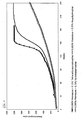
- the addition of sodium trimetaphosphate considerably increases the open time during the processing of the gypsum. This effect was tested in performance experiments. The results are presented below.
- the mixture 1 is not suitable, the open processing time is too short, the curve is too steep. In Mix 2, the processing time is slightly longer, which can be seen on the flatter curve.
- the mixture 3 is particularly well suited where the curve is flat and thus the setting delay at the end of setting is still quite long.
- the mixture 3 containing sodium trimetaphosphate hereby achieves the best result.
- the retarding effect of sodium trimetaphosphate is significantly better compared with the same dosage to sodium polyphosphate.
- sodium trimetaphosphate can even be reduced by 40% compared to the amount of sodium polyphosphate, and the setting process is still optimal, especially towards the end of the setting time.
- the phosphate salts used in this invention are all commercially available.
- Tetrasodium pyrophosphate has the formula Na 4 P 2 O 7
- These phosphates are available, inter alia, from the Applicant. They are all finely divided powders.
- Sodium polyphosphate is a condensed phosphate formed by thermal condensation with elimination of water from acidic monophosphates.
- Sodium trimetaphosphate is a ring-shaped phosphate prepared by cooling a corresponding polyphosphate melt and then annealing above 350 ° C.
- the production process of the phosphates is not the subject of this invention.
- the tartaric acid has the formula: C 4 H 6 O 6 and chemical name 2,3 dihydroxybutanedioic acid or even 2,3 Dihydroxybernsteinklae. It occurs in 3 stereoisomeric forms. It is a strong acid and readily soluble in water. In the context of this invention, the L-form is used, the use of other stereoisomers is not technically possible, these compounds are not suitable.
Landscapes
- Chemical & Material Sciences (AREA)
- Engineering & Computer Science (AREA)
- Ceramic Engineering (AREA)
- Chemical Kinetics & Catalysis (AREA)
- Inorganic Chemistry (AREA)
- Materials Engineering (AREA)
- Structural Engineering (AREA)
- Organic Chemistry (AREA)
- Curing Cements, Concrete, And Artificial Stone (AREA)
- Cosmetics (AREA)
- Seasonings (AREA)
Description
- Die vorliegende Erfindung bezieht sich auf ein Verfahren zur Abbindeverzögerung von Gips und Gipszubereitungen, sowie auf die Verwendung einer Zusammensetzung für dieses Verfahren.
- Im Baugewerbe werden große Mengen an Gips und Gipszubereitungen verarbeitet. Zu den Baugipsen zählt man Stuckgips, Putzgips, die auch mit unterschiedlichen Zusätzen versehen sein können zur Erzielung bestimmter Eigenschaften.
- Stuckgips ist ein β-Halbhydrat und wird im Wesentlichen zur Erzeugung von Gipskartonplatten, Gipsbauplatten, zum Herstellen von Innenputzen, wie Gipsputz u. a. verwendet.
- Der Putzgips besteht aus Dehydrationsprodukten des Calciumsulfat-Dihydrates im Hoch - und Niedertemperaturbereich, insbesondere Anhydrit 11 und β-Halbhydrat. Auch dieser Gips wird für die Herstellung von Innenputzen verwendet. Er ist etwas vorteilhafter, weil er etwas langsamer abbindet und kann deshalb länger bearbeitet werden als Stuckgips.
- Die relativ kurzen Abbindezeiten von Stuck- und Putzgips zwang den Verarbeiter schon früh, Additive zu finden, um an Ort und Stelle größere Mischungen hintereinander, ohne an kurze Taktzeiten gebunden zu sein, verarbeiten zu können.
- Zur Verzögerung der Abbindung geeignete Substanzen wurden im Stand der Technik und in der Literatur beschrieben, z. B. von Kruis und Späth, Benz, Harvey und Neville (vergl.. Kunze, R. A., Thayer, A. G., Gypsum and Plaster Cem. Res. Prog. (1986), S. 267-283)
- Der Verarbeitungszeitraum eines Gipses erstreckt sich zwischen Versteifungsbeginn (VB) und Versteifungsende (VE). Der Abbindeverlauf kann mit Hilfe der frei werdenden Hydratationswärme bestimmt werden. (obgleich indirekt und nicht exakt; siehe In Hans-Bertram Fischer, Martin Werner: Hydratationsverhalten von Gipsmischungen, Stuck, Putz, Trockenbau, 9/94 S. 16-22), sowie nach der Vicat-Methode, DIN 1168 Teil 2 oder mit Hilfe von Ultraschallmessungen, in Con. Chem. Journal, 4 Jahrgang 3/96.
- Die bekannten Abbindeverzögerer lassen sich im Wesentlichen in drei Gruppen zusammenfassen:
- a. Polymere/Copolymere auf Acrylatbasis, z.b. in der
EP 1270 530 beschrieben - b. Diverse Phosphatsalze, z. B. in der
US 5,746,822 beschrieben - c. Carbonsäuren- und Derivate z.b. in
DE PS 22 26 943 - In der
DE PS 22 26 943 - In Zement, Kalk, Gips, 1988, Seite 309 ff. wird die Verzögerungswirkung verschiedener Verbindungen In Abhängigkeit vom pH Wert des Gipses beschrieben. Es wurde festgestellt, dass die Abbindeverzögerung von Weinsäure und Weinsäuresalzen nur im hochalkalischen Bereich sehr gut ist. Die Weinsäure wurde hier in einer Dosierung von 0,2 Gew. % bezogen auf die Gipsmenge getestet. Mischungen mit Phosphaten wurden hier weder beschrieben, noch getestet.
- In der
DE 100 17 133 wird ein weiteres Verfahren zur Abbindeverzögerung von Gips und Gipszubereitungen bekannt gemacht, das dadurch gekennzeichnet ist, dass man eine Menge von 0,001 bis 1 Gew. % bezogen auf das Gewicht des Gipses, wenigstens eines Polymeren mit wiederkehrenden Succinyleinheiten zusetzt. Das Polymer kann eine Polyasparaginsäure oder ein Polysuccinimid oder eines ihrer Salze sein und es weist ein Molekulargewicht von 500 bis 10.000, bevorzugt 1000 bis 5000 auf. Die Wirkung dieser Polymeren ist sehr gut, die Differenz zwischen Abbindebeginn und Abbindeende beträgt bei einem reinen Beta-Halbhydrat in einer Dosierung von 0,03 Gew. % 25 Minuten. - Ein weiterer Abbindeverzögerer wurde in Zement, Kalk, Gips International, Nr. 9, 1999 bekannt gemacht. Die Wirkung von Imidodisuccinat als Verzögerer für Maschinenputzgips in einer Dosierung von 0,06 Gew.-% bezogen auf die Gipsmenge wird hier als sehr vorteilhaft beschrieben. Mischungen mit Phosphaten werden hier auch nicht erwähnt.
- In diesem Zusammenhang wird noch auf die US Veröffentlichung
US 20030100648 hingewiesen. In dieser Anmeldung wird die Verwendung eines Mittels beschrieben, das zur Verbesserung der Oberflächeneigenschaften eines abgebundenen Gipses /set gypsum containing material/ eingesetzt wird. Das hier verwendete Mittel besteht aus einer Mischung, die mindestens ein monobasisches Phosphat, ein Trimetaphosphat und ein Acrylpolyphosphat enthält. Als Aufgabe dieser Erfindung war die Verbesserung der Oberflächenhärte, Abriebfestigkeit und Wasserbeständigkeit der Gipsoberfläche. Diese Verbesserung kann offenbar nur dadurch erreicht werden, wenn es gelingt, die sog. Recalcination zu verhindern /inhibiting re-calcination /, was technisch die Rückbildung eines abgebundenen Gipses in die Halbhydrat-Form bedeutet. Dieser Vorgang ist mit der Verzögerung der Abbindung eines Halbhydrates nicht identisch. Als cyclisches Phosphat wird hier Natriumtrimetaphosphat eingesetzt. Das Natriumtrimetaphosphat wird in dieser Erfindung ausschließlich für die Lösung der oben genannten Aufgabe verwendet, die Verzögerung der Abbindung durch Natriumtrimetaphosphat ist nicht Gegenstand dieser Veröffentlichung. - In der
US 5,746,822 wird eine Fugendichtmasse für Zement beschrieben, das auch Calciumsulfat Halbhydrat als Füllstoff enthält. Um die Verarbeitungszeit steuern zu können, enthält diese Masse weitere Zusätze unter anderem auch Phosphate, welche die Abbindung der Masse in Gegenwart von Wasser verzögern. In Anspruch 2 werden die zur Abbindeverzögerung geeigneten Phosphatsalze beschrieben, z. B. Zinkphosphat, Tetranatriumpyrophosphat, Natriumpolyphosphat, Monoammoniumphosphat und monobasisches Kaliumphosphat. Ein cyclisches Natriumtrimetaphosphat ist hier nicht erwähnt oder beansprucht. - In der
US 6,342,284 wird die Herstellung von Gipskartonplatten beschrieben. Die Aufgabe dieser Erfindung bestand darin, die mechanische Stabilität der Gipskartonplatten unter Dauerbelastung zu verbessern. In dieser Erfindung wurden unterschiedliche Phosphatsalze getestet. Es wurden Gipsmischungen, die sowohl Calciumsulfat Halbhydrat, Calciumsulfat Dihydrat und auch Anhydrit enthalten in Kombination mit den unterschiedlichen Phosphatsalzen hergestellt. Gemäß Beispiel 1 wurden Gipsmischungen hergestellt, unter anderem auch mit Sodiumtrimetaphosphat /STMP/. In der Tabelle 1 wurde die Druckfestigkeit der Produkte untersucht. Es wurde gefunden, dass die Zugabe von STMP eine besonders gute Wirkung hatte in Bezug auf die Druckfestigkeit der Platten. In der Tabelle 2 wurde mit den Mischungen die mechanische Stabilität der mit diesen Gipsmischungen hergestellten Platten getestet. Auch hier war die Mischung, die STMP enthielt, besonders gut. Die Gipsplatten wurden in einer weiteren Testreihe nachträglich /post treatment/ Lösungen von STMP behandelt. Die Lösungen wurden auf die Calciumsulfat Dihydrat Oberfläche aufgesprüht und erneut getrocknet. In der Abbildung 5 kann man die hervorragende Wirkung von STMP in Bezug auf die sag deflection, d.h. die Biegefestigkeit der Platten sehen. Obwohl STMP in einer Reihe von mechanischen Tests der Platten sehr gut abgeschnitten hat, wurde festgestellt; Spalte 4, Zeilen 42 ff., dass STMP keine abbindeverzögernde Wirkung aufweist, d.h. die Umwandlungsrate von calciniertem Gips in Calciumsulfat Dihydrat nicht steigert. Damit war diese Wirkung aus dieserUS 6,342,284 nicht entnehmbar, im Gegenteil diese Wirkung wurde sogar ausdrücklich verneint. - Aus
US B1-6 406 537 ist ein Fugengips mit mehreren Zusätzen bekannt darunter auch Natriumtrimetaphosphat als Mittel zur Steigerung der Festigkeit und Weinsäure, welche zur Kontrolle de Abbindezeit zugesetzt wurde. Die erfindungsgemäße Kombination ist dieser Schrift nicht entnehmbar. - In
DE 20 23 853 A1 wurde eine Gipsmischung für Gussformen offenbart mit folgenden Zusätzen: Kalium-NatriumTartat zur Kontrolle der Ausdehnung, Natriumtrimetaphosphat, welche ebenfalls die Festigkeit und die Saugrate kontrolliert, sowie Weinsäurea als Abbindeverzögerer. Auch hier wurde die erfindungsgemäße Kombination nicht offenbart. - In
EP A-1 106 588 wurde ein Verfahren zur Umwandlung von Anhydrit III in Halbhydrat in gebranntem Stuckgipspulver beschrieben. Dabei wurden Natriumtripolyphosphat, Natriumtrimetaphosphat, eine org. Carbonsäure mit mind. 4 C-Atomen, z.B. die Weinsäure, der Mischung zugesetzt. Auch hier wurden die erfindungsgemäße Kombination, sowie die mengenmäßigen Anteile, nicht offenbart. - In
US-B1 6 355 099 wurde die Herstellung einer Gipsmischung beschrieben unter Verwendung von Weinsäure und Natrium-Tartrat als Abbindeverzögerer, sowie Tetranatriumpyrophosphat als Verdickungsmittel und Natriumtrimetaphosphat zur Verbesserung der Grünstandsfestigkeit beschrieben. Auch hier ist die erfinderische Kombination zur Abbindeverzögerung nicht beschrieben. - Die Aufgabe der vorliegenden Erfindung bestand darin, einen weiteren wirksamen Abbindeverzögerer für Gipse und Gipszubereitungen, wie Maschinenputzgips, Gipshandputz, REA Gips und auch Naturgips, zu finden.
Weiterhin war eine Aufgabe, die bekannten Standardverzögerer, wie Weinsäure oder Polyphosphate, durch weitere wirksame Produkte zu vervollständigen oder zu ersetzen. Eine wesentliche Aufgabenstellung war vor allem, den Verlauf der Abbindung, insbesondere das Abbindeende besser steuern zu können. Dem Verarbeiter sollte mehr Zeit für die Verarbeitung zur Verfügung stehen.
Ausgehend von den oben näher beschriebenen technischen Lösungen, war es umso überraschender, dass die Erfinder der vorliegenden Erfindung festgestellt haben, dass es möglich ist, den Standardverzögerer Weinsäure mit einer Phosphatsalzmischung zu kombinieren, wobei einerseits die Weinsäuremenge deutlich reduziert werden konnte, aber andererseits gelungen ist, den Abbindeverlauf, insbesondere das Abbindeende zu steuern, hier speziell den charakteristischen Kurvenverlauf während der Abbindung zu verflachen. Damit bleibt für den Verarbeiter eine längere Zeitspanne gegen Ende des Abbindevorganges für die Verarbeitung offen. - Das vorliegende erfinderische Verfahren ist dadurch gekennzeichnet, dass für die Verzögerung der Abbindung von Gips und Gipszubereitungen, eine Zusammensetzung, die aus den Komponenten besteht, eingesetzt wird
- a. Weinsäure in einer Menge von 0,01 bis 1,0 Gew.-% bezogen auf die Gipsmenge
- b. Natriumtrimetaphosphat in einer Menge von 0,05 bis 0,5 Gew.-% bezogen auf die Gipsmenge
- c. Natriumpolyphosphat, mit einer durchschnittlichen Kettenlänge von 4 bis 50 Phosphateinheiten und einem Mengenanteil von 0,01 Gew. % bezogen auf die Gipsmenge
- Die Komponenten b und c, werden miteinander trocken vermischt und als feinteiliges Pulver in einer Korngroßenverteilung in der mind. 95 % der Bestandteile kleiner als 200 µm aufweist, dem zu verzögernden Gips zugesetzt. Der Gips wird dann in der üblichen Art mit Wasser gemischt oder angemacht und weiterverarbeitet.
Die Auswahl des Natriumtrimetaphosphates aus der Fülle der bekannten Phosphate ist neu und besonders erfinderisch. Bei der Lösung der gestellten Aufgabe, einen weiteren phosphathaltigen Abbindeverzögerer zu finden, konnten die Erfinder keinerlei Anregungen aus den bekannten Erfindungen entnehmen. - Die Komponente c ein Natriumpolyphosphat, ist ein kondensiertes Phosphat mit einer Kettenlänge von 4 bis 50, d.h. 4 bis 50 Phosphateinheiten sind miteinander linear verbunden.
Die erfindungsgemäß zu verwendende Verbindung ist Natriumtrimetaphosphat mit der allg. Formel (Na3(P3O9), ein cyclisches Phosphat mit der CAS Nr.: 7785-84-4 und ist im Handel und auch von BK Giulini GmbH unter der Typenbezeichnung Targon erhältlich.
Durch den Zusatz von Natriumtrimetaphosphat wird die offene Zeit bei der Verarbeitung des Gipses beträchtlich verlängert. Diese Wirkung wurde in anwendungstechnischen Versuchen getestet. Die Ergebnisse werden nachfolgend präsentiert. - Anwendungstechnische Versuche und Ergebnisse:
- Bei diesem Versuch wurden 3 Mischungen in einem handelsüblichen Gips getestet:
- 1. 0,065 Gew.- % Weinsäure und 0,13 Gew.-% Tetranatriumpyrophosphat /Vergleich/
- 2. 0,065 Gew.- % Weinsäure und 0,13 Gew.-% Natriumpolyphosphat /Vergleich/
- 3. 0,065 Gew.-% Weinsäure und 0,13 Gew.-% Natriumtrimetaphosphat
- Die Mischung 1 ist nicht geeignet, die offene Verarbeitungszeit Zeit ist zu kurz, der Kurvenverlauf ist zu steil. Bei der Mischung 2 ist die Verarbeitungszeit etwas länger, was man am flacheren Kurveverlauf sehen kann. Ganz besonders gut geeignet ist die Mischung 3, wo der Kurvenverlauf flach ist und damit die Abbindeverzögerung am Abbindeende noch recht lang ist. Die Mischung 3, enthaltend Natriumtrimetaphosphat erreicht hiermit das beste Ergebnis.
- In diesem Versuch wurde Gipshandputz mit je 3 unterschiedlichen Abbindeverzögerer Zusammensetzungen vermischt.
- 1. 0,065 Gew.- % Weinsäure und 0,13 Gew.-% Natriumpolyphosphat
- 2. 0,065 Gew.- % Weinsäure und 0,13 Gew.-% Natriumtrimetaphosphat
- 3. 0,065 Gew.-% Weinsäure und 0,075 Gew.-% Natriumtrimetaphosphat
- Wie dieser Versuch zeigt, ist die Mischung 2 sehr gut geeignet, aber auch bei Reduktion der Natriumtrimetaphosphat Menge um 40 %, ist das Ergebnis immer noch besser, als die Ergebnisse mit der Mischung 1.
- Es wurde ein Maschinenputzgips mit 2 Mischungen jeweils vermischt und die Abbindung zeitlich untersucht.
- 1. 0,1 Gew.-% Weinsäure und 0,14 Gew.- % Natriumpolyphosphat
- 2. 0,1 Gew.-% Weinsäure und 0,14 Gew.-% Natriumtrimetaphosphat
- Die Verzögerungswirkung von Natriumtrimetaphosphat ist im Vergleich bei gleicher Dosierung zu Natriumpolyphosphat deutlich besser.
- Ein weiterer Test mit einem Maschinenputz wurde mit folgenden Mischungen durchgeführt:
- 1. 0,14 Gew.-% Weinsäure und 0,11 Gew.- % Natriumpolyphosphat
- 2. 0,14 Gew.-% Weinsäure und 0,11 Gew.-% erfindungsgemäße Phosphatsalz Kombination, wobei darin 0,033 Gew.-% Natriumpolyphosphat und 0,077 Gew.-% Natriumtrimetaphosphat enthalten sind
- 3. 0,1 Gew.-% Weinsäure und 0,07 Gew.-% erfindungsgemäße Phosphatsalz Kombination, mit 0,021 Gew.-% Natriumpolyphosphat und 0,049 Gew.-% Natriumtrimetaphosphat
- In Kombination mit dem Verzögerer Weinsäure in einer Menge von nur 0,1 Gew.-% kann Natriumtrimetaphosphat sogar um 40% im Vergleich zur Menge des Natriumpolyphosphates reduziert werden und der Abbindeprozess ist, vor allem gegen Ende der Abbindezeit, dennoch optimal.
- Die in dieser Erfindung verwendeten Phosphatsalze sind alle im Handel erhältlich.
- Tetranatriumpyrophosphat hat die Formel Na4P2O7, Natriumpolyphosphat die Formel NanPnO3n+1, mit n = 4 bis 50 und Natriumtrimetaphosphat die Formel (NaPO3)3. Diese Phosphate sind unter anderem von der Anmelderin beziehbar. Sie sind sämtlich feinteilige Pulver.
Bei Natriumpolyphosphat handelt es sich um ein kondensiertes Phosphat, das durch thermische Kondensation unter Abspaltung von Wasser aus saueren Monophosphaten entsteht. Die im Rahmen dieser Erfindung verwendbaren Salze haben einen Kondensationsgrad n von n= 4 bis 50. Der Kondensationsgrad gibt an, wieviel P-Atome im Mittel pro Molekül vorhanden sind.
Natriumtrimetaphosphat ist ein ringförmiges Phosphat, das durch Abkühlen einer entsprechenden Polyphosphatschmelze und anschließendes Tempern oberhalb von 350 °C hergestellt wird. Das Herstellungsverfahren der Phosphate ist nicht Gegenstand dieser Erfindung.
Die Weinsäure hat die Formel: C4H6O6 und chemische Bezeichnung 2,3 Dihydroxybutandiansäure oder auch 2,3 Dihydroxybernsteinsäuere. Sie tritt in 3 stereoisomeren Formen auf. Sie ist eine starke Säure und In Wasser gut löslich.
Im Rahmen dieser Erfindung wird die L-Form eingesetzt, die Verwendung der anderen Stereoisomeren ist technisch nicht möglich, diese Verbindungen sind nicht geeignet. - Die Messung des Abindeverlaufs geschieht mit der Ultraschallmethode.
- Diese Methode beruht auf der Tatsache, dass die Schallgeschwindigkeit in der zu untersuchenden Mischung während des gesamten Hydratationsverlaufes stetig zunimmt. Die Messung ist zerstörungsfrei und kann auch in langen Messzeiträumen beliebig häufig vorgenommen werden. Das Ultraschallmessgerät eignet sich aus folgenden Gründen hervorragend für die Messung von Abbinde-Prozessen:
- 1. Nach dem Anrühren des zu untersuchenden Materials, beispielsweise Putz, Gips, Mörtel oder Beton, nimmt infolge der stetig zunehmenden Verfestigung die Schallgeschwindigkeit fortlaufend zu und mit dem Ende des Abbindevorganges nähert sie sich schließlich einem Grenzwert.
- 2. Das Gerät arbeitet mit einer Schallfrequenz von ca. 45 kHz, die für die Messung des relativ inhomogenen Materials besonders geeignet ist.
- 3. Das Gerät kann etwa 500 Messwerte speichern. Diese Werte können nach der Messung an einen PC übergeben werden und von PC als Tabellen oder Kurvendarstellungen ausgegeben werden.
- Auf die weiterführende Literatur wird hiermit hingewiesen, vor allem auf die Aufsätze der Autoren T. Staffel, G. Brix, in "Untersuchungen des Abbindeverhaltens von Zementmischungen mit der Ultraschallmethode bei Einsatz verschiedener Verzögereradditive" in ConChem-Journal, 4. Jahrgang, 3/1996 und vom Autor J. Balau, ConChem-Journal, 2/1996.
Claims (3)
- Verfahren für die Verzögerung der Abbindung von Gips und Gipszubereitungen, dadurch gekennzeichnet, daß eine Zusammensetzung eingesetzt wird:a. Weinsäure in einer Menge von 0,01 bis 1,0 Gew.-% bezogen auf die Gipsmengeb. Natriumtrimetaphosphat in einer Menge von 0,05 bis 0,5 Gew.-% bezogen auf die Gipsmengec. Natriumpolyphosphat, mit einer durchschnittlichen Kettenlänge von 4 bis 50 Phosphateinheiten und einem Mengenanteil von 0,01 Gew. % bezogen auf die Gipsmenge
- Verfahren für die Verzögerung der Abbindung von Gips und Gipszubereitungen nach Anspruch 1, dadurch gekennzeichnet, daß die Komponenten b und c trocken vermischt und als feinteiliges Pulver mit einer Korngrößenverteilung in der mindestens 95 % der Bestandteile kleiner als 200 µm aufweist, dem zu verzögernden Gips zugesetzt wird.
- Verwendung einer Zusammensetzung für die Verzögerung der Abbindung von Gips und Gipszubereitungen bestehend aus den Komponentena. Weinsäure in einer Menge von 0,01 bis 1,0 Gew.-% bezogen auf die Gipsmengeb. Natriumtrimetaphosphat in einer Menge von 0,05 bis 0,5 Gew.-% bezogen auf die Gipsmenge undc. Natriumpolyphosphat, mit einer durchschnittlichen Kettenlänge von 4 bis 50 Phosphateinheiten und einem Mengenanteil von 0,01 Gew. % bezogen auf die Gipsmenge, wobei die Komponenten in Form eines feinteiligen Pulvers dem zu verzögernden Gips und der Gipszubereitung zugegeben werden.
Priority Applications (2)
| Application Number | Priority Date | Filing Date | Title |
|---|---|---|---|
| SI200531690T SI1786744T1 (sl) | 2004-08-24 | 2005-08-12 | Postopek za zaviranje vezave mavca in pripravkov iz mavca |
| PL05782651T PL1786744T3 (pl) | 2004-08-24 | 2005-08-12 | Sposób opóźniania wiązania gipsu i preparatów gipsowych |
Applications Claiming Priority (2)
| Application Number | Priority Date | Filing Date | Title |
|---|---|---|---|
| DE102004040879A DE102004040879B3 (de) | 2004-08-24 | 2004-08-24 | Verwendung einer Zusammensetzung zur Abbindeverzögerung von Gips- und Gipszubereitungen sowie diese Zusammensetzung enthaltende Zubereitungen |
| PCT/EP2005/008786 WO2006021332A2 (de) | 2004-08-24 | 2005-08-12 | Verfahren für die abbindeverzögerung von gips und gipszubereitungen |
Publications (2)
| Publication Number | Publication Date |
|---|---|
| EP1786744A2 EP1786744A2 (de) | 2007-05-23 |
| EP1786744B1 true EP1786744B1 (de) | 2013-01-02 |
Family
ID=35355226
Family Applications (1)
| Application Number | Title | Priority Date | Filing Date |
|---|---|---|---|
| EP05782651A Expired - Lifetime EP1786744B1 (de) | 2004-08-24 | 2005-08-12 | Verfahren für die abbindeverzögerung von gips und gipszubereitungen |
Country Status (9)
| Country | Link |
|---|---|
| US (1) | US7455728B2 (de) |
| EP (1) | EP1786744B1 (de) |
| AU (1) | AU2005276725B2 (de) |
| DE (1) | DE102004040879B3 (de) |
| ES (1) | ES2398692T3 (de) |
| PL (1) | PL1786744T3 (de) |
| RU (1) | RU2383507C2 (de) |
| SI (1) | SI1786744T1 (de) |
| WO (1) | WO2006021332A2 (de) |
Families Citing this family (15)
| Publication number | Priority date | Publication date | Assignee | Title |
|---|---|---|---|---|
| US7731794B2 (en) * | 2005-06-09 | 2010-06-08 | United States Gypsum Company | High starch light weight gypsum wallboard |
| USRE44070E1 (en) | 2005-06-09 | 2013-03-12 | United States Gypsum Company | Composite light weight gypsum wallboard |
| US20060278132A1 (en) * | 2005-06-09 | 2006-12-14 | United States Gypsum Company | Method of improving dispersant efficacy in making gypsum products |
| US11338548B2 (en) | 2005-06-09 | 2022-05-24 | United States Gypsum Company | Light weight gypsum board |
| US11306028B2 (en) | 2005-06-09 | 2022-04-19 | United States Gypsum Company | Light weight gypsum board |
| US9840066B2 (en) | 2005-06-09 | 2017-12-12 | United States Gypsum Company | Light weight gypsum board |
| US9802866B2 (en) | 2005-06-09 | 2017-10-31 | United States Gypsum Company | Light weight gypsum board |
| US8323785B2 (en) | 2011-02-25 | 2012-12-04 | United States Gypsum Company | Lightweight, reduced density fire rated gypsum panels |
| MX2014009534A (es) | 2012-02-17 | 2014-10-13 | United States Gypsum Co | Productos de yeso con aditivos disipadores de calor de alta eficiencia. |
| EP3109218A1 (de) | 2015-06-23 | 2016-12-28 | Jungbunzlauer International AG | Abbindeverzögerer für gips |
| US10421251B2 (en) | 2015-06-24 | 2019-09-24 | United States Gypsum Company | Composite gypsum board and methods related thereto |
| US10407344B2 (en) | 2015-10-01 | 2019-09-10 | United States Gypsum Company | Foam modifiers for gypsum slurries, methods, and products |
| US10662112B2 (en) | 2015-10-01 | 2020-05-26 | United States Gypsum Company | Method and system for on-line blending of foaming agent with foam modifier for addition to cementitious slurries |
| US11225046B2 (en) | 2016-09-08 | 2022-01-18 | United States Gypsum Company | Gypsum board with perforated cover sheet and system and method for manufacturing same |
| IT201700044538A1 (it) * | 2017-04-24 | 2018-10-24 | Aurora S R L | Additivo per vernici, stucchi, intonaci ed altri materiali destinati al rivestimento di superfici architettoniche |
Family Cites Families (18)
| Publication number | Priority date | Publication date | Assignee | Title |
|---|---|---|---|---|
| DE2023853B2 (de) * | 1970-05-15 | 1974-08-29 | Gebr. Knauf Westdeutsche Gipswerke, 8715 Iphofen | Verfahren zur Alterungs-Behandlung frisch gebrannten Stuckgipses |
| DE2226943C3 (de) | 1972-06-02 | 1978-11-09 | Hoechst Ag, 6000 Frankfurt | Abbindeverzögerer für Gips |
| US4028125A (en) * | 1976-03-25 | 1977-06-07 | The Dow Chemical Company | Cement composition |
| CA2139373C (en) * | 1994-05-12 | 2002-06-25 | Therese A. Espinoza | Ready-mixed, setting type joint compound |
| DE69520216T2 (de) * | 1995-11-14 | 2001-06-13 | Hercules Inc., Wilmington | Kalkenthaltender Gipsputz |
| DE19734465C2 (de) * | 1997-08-11 | 1999-11-25 | Sicowa Verfahrenstech | Trockenmörtel auf Basis von Calciumsulfat-Alphahalbhydrat und dessen Verwendungen |
| ID21641A (id) * | 1997-08-21 | 1999-07-08 | United States Gypsum Co | Produk yang mengandung gypsum dengan peningkatan ketahanan terhadap deformasi tetap dan metode serta komposisi untuk memproduksinya |
| US6342284B1 (en) * | 1997-08-21 | 2002-01-29 | United States Gysum Company | Gypsum-containing product having increased resistance to permanent deformation and method and composition for producing it |
| US6398864B1 (en) * | 1999-11-30 | 2002-06-04 | United States Gypsum Company | Pottery plaster formulations for the manufacture of plaster molds |
| US6228163B1 (en) * | 1999-12-29 | 2001-05-08 | United States Gypsum Company | Clay-free ready-mixed setting-type joint compound |
| US6355099B1 (en) * | 2000-02-11 | 2002-03-12 | United States Gypsum Company | Plaster mixture for forming a machinable composition |
| DE10017133B4 (de) | 2000-04-06 | 2005-09-29 | Bk Giulini Gmbh | Verwendung von Prepolymeren zur Abbindeverzögerung von Gips oder Gipszubereitungen |
| US6387172B1 (en) * | 2000-04-25 | 2002-05-14 | United States Gypsum Company | Gypsum compositions and related methods |
| US6406537B1 (en) * | 2000-11-22 | 2002-06-18 | United States Gypsum Company | High-strength joint compound |
| EP1270530A1 (de) | 2001-06-20 | 2003-01-02 | Cognis Iberia, S.L. | Abbindeverzögerer für Gips |
| US6822033B2 (en) | 2001-11-19 | 2004-11-23 | United States Gypsum Company | Compositions and methods for treating set gypsum |
| US6740395B2 (en) * | 2001-12-21 | 2004-05-25 | United States Gypsum Company | Substrate smoothed by coating with gypsum-containing composition and method of making |
| FR2848207A1 (fr) * | 2002-12-06 | 2004-06-11 | Lafarge Platres | Procede de reduction du fluage d'un element a base de platre, composition a base de platre et procede de fabrication d'un element a base de platre a fluage reduit |
-
2004
- 2004-08-24 DE DE102004040879A patent/DE102004040879B3/de not_active Expired - Fee Related
-
2005
- 2005-08-12 WO PCT/EP2005/008786 patent/WO2006021332A2/de not_active Ceased
- 2005-08-12 US US10/590,331 patent/US7455728B2/en not_active Expired - Lifetime
- 2005-08-12 ES ES05782651T patent/ES2398692T3/es not_active Expired - Lifetime
- 2005-08-12 RU RU2007110198/03A patent/RU2383507C2/ru active
- 2005-08-12 EP EP05782651A patent/EP1786744B1/de not_active Expired - Lifetime
- 2005-08-12 PL PL05782651T patent/PL1786744T3/pl unknown
- 2005-08-12 AU AU2005276725A patent/AU2005276725B2/en not_active Ceased
- 2005-08-12 SI SI200531690T patent/SI1786744T1/sl unknown
Also Published As
| Publication number | Publication date |
|---|---|
| SI1786744T1 (sl) | 2013-05-31 |
| ES2398692T3 (es) | 2013-03-21 |
| PL1786744T3 (pl) | 2013-05-31 |
| WO2006021332A3 (de) | 2006-06-15 |
| AU2005276725A1 (en) | 2006-03-02 |
| AU2005276725B2 (en) | 2010-08-05 |
| RU2007110198A (ru) | 2008-10-10 |
| US7455728B2 (en) | 2008-11-25 |
| RU2383507C2 (ru) | 2010-03-10 |
| EP1786744A2 (de) | 2007-05-23 |
| WO2006021332A2 (de) | 2006-03-02 |
| DE102004040879B3 (de) | 2006-05-04 |
| US20070169670A1 (en) | 2007-07-26 |
Similar Documents
| Publication | Publication Date | Title |
|---|---|---|
| DE102005004362C5 (de) | Fliesenkleberzusammensetzung mit Leichtfüllstoff und Verfahren zu ihrer Herstellung | |
| DE102004040879B3 (de) | Verwendung einer Zusammensetzung zur Abbindeverzögerung von Gips- und Gipszubereitungen sowie diese Zusammensetzung enthaltende Zubereitungen | |
| DE19846414B4 (de) | Phosphatzementbindemittel, Verfahren zu seiner Herstellung und seine Verwendung, insbesondere als Reparaturmörtel | |
| DE69729556T2 (de) | Verfahren zur Herstellung einer Gips-Holzfaserprodukt mit verbesserter Wasserbeständigkeit | |
| DE1646716B1 (de) | Abbindeverzoegerndes Zusatzmittel zu Moertel- und Betonmassen | |
| AT395145B (de) | Wasserbestaendige und abriebfeste sorelzementzusammensetzung fuer fussboeden sowie verfahren zum herstellen eines derartigen fussbodens | |
| DE2626426A1 (de) | Verfahren zur herstellung von zement-konglomeraten von hoher widerstandsfaehigkeit | |
| DE10063291A1 (de) | Verwendung von Fließmitteln auf Polycarboxylat-Basis für Anhydrit-basierte Fließestriche | |
| DE2709858A1 (de) | Verfahren zur herstellung silikathaltiger moertel-rohmischungen und deren verwendung | |
| DE19633447C2 (de) | Schnellerhärtende hydraulische Bindemittelmischungen, Verfahren zu deren Herstellung und deren Verwendung | |
| DE10017133B4 (de) | Verwendung von Prepolymeren zur Abbindeverzögerung von Gips oder Gipszubereitungen | |
| DE69912487T3 (de) | Zusatzmittel für anorganische Bindemittel auf Basis eines hydrogenierten Disaccharids, diese Zusatzmittel enthaltende anorganische Bindemittel und Verfahren zu ihrer Herstellung | |
| DE60005589T2 (de) | Zusatzstoff für mineralisches Bindemittel auf Basis eines Produkts der internen Entwässerung von hydrogeniertem Zucker, diesen Zusatzstoff enthaltendes Mineralbindemittel und Verfahren zur Herstellung | |
| EP0001591B1 (de) | Verfahren zur Herstellung von wässrigen Calcium-sulfat-Halbhydrat-Suspensionen und deren Verwendung | |
| DE69307961T2 (de) | Verwendung von Mitteln zum Beschleunigen die Härtungsgeschwindigkeit von Zement, Mörtel und Beton, unter beibehaltung ihrer Bearbeitbarkeit. | |
| DE2163604A1 (de) | Rasch härtender Portlandzementklinker und Verfahren zu dessen Herstellung | |
| EP3109218A1 (de) | Abbindeverzögerer für gips | |
| EP2730550A2 (de) | Abbindeverzögerer-Zusammensetzung für Gips-Zementmischungen | |
| AT524581B1 (de) | Zusatz für eine Spachtelmasse | |
| DE595925C (de) | Verfahren zur Herstellung einer poroesen Gipsmasse | |
| AT324198B (de) | Zement bzw. zementbeton und verfahren zu seiner herstellung | |
| DE336547C (de) | Verfahren zur Herstellung eines leichten Betons | |
| EP0152008B1 (de) | Verfahren zum Beeinflussen der Löschgeschwindigkeit von Branntkalken und dessen Verwendung | |
| AT393267B (de) | Wasserbestaendige sorel-zementzusammensetzung | |
| WO2002046117A1 (de) | VERWENDUNG VON FLIEssMITTELN AUF POLYCARBOXYLAT-BASIS FÜR TONERDESCHMELZZEMENT-HALTIGE, SELBSTVERLAUFENDE SPACHTEL- UND AUSGLEICHSMASSEN |
Legal Events
| Date | Code | Title | Description |
|---|---|---|---|
| PUAI | Public reference made under article 153(3) epc to a published international application that has entered the european phase |
Free format text: ORIGINAL CODE: 0009012 |
|
| 17P | Request for examination filed |
Effective date: 20070326 |
|
| AK | Designated contracting states |
Kind code of ref document: A2 Designated state(s): AT BE BG CH CY CZ DE DK EE ES FI FR GB GR HU IE IS IT LI LT LU LV MC NL PL PT RO SE SI SK TR |
|
| AX | Request for extension of the european patent |
Extension state: AL BA HR MK YU |
|
| 17Q | First examination report despatched |
Effective date: 20080429 |
|
| GRAP | Despatch of communication of intention to grant a patent |
Free format text: ORIGINAL CODE: EPIDOSNIGR1 |
|
| GRAS | Grant fee paid |
Free format text: ORIGINAL CODE: EPIDOSNIGR3 |
|
| GRAA | (expected) grant |
Free format text: ORIGINAL CODE: 0009210 |
|
| AK | Designated contracting states |
Kind code of ref document: B1 Designated state(s): AT BE BG CH CY CZ DE DK EE ES FI FR GB GR HU IE IS IT LI LT LU LV MC NL PL PT RO SE SI SK TR |
|
| AX | Request for extension of the european patent |
Extension state: AL BA HR MK YU |
|
| REG | Reference to a national code |
Ref country code: GB Ref legal event code: FG4D Free format text: NOT ENGLISH |
|
| REG | Reference to a national code |
Ref country code: CH Ref legal event code: EP Ref country code: AT Ref legal event code: REF Ref document number: 591520 Country of ref document: AT Kind code of ref document: T Effective date: 20130115 |
|
| REG | Reference to a national code |
Ref country code: CH Ref legal event code: NV Representative=s name: MEYER AND KOLLEGEN, CH |
|
| REG | Reference to a national code |
Ref country code: IE Ref legal event code: FG4D Free format text: LANGUAGE OF EP DOCUMENT: GERMAN |
|
| REG | Reference to a national code |
Ref country code: RO Ref legal event code: EPE |
|
| REG | Reference to a national code |
Ref country code: CH Ref legal event code: NV Representative=s name: MEYER AND KOLLEGEN, CH |
|
| REG | Reference to a national code |
Ref country code: DE Ref legal event code: R096 Ref document number: 502005013390 Country of ref document: DE Effective date: 20130228 |
|
| REG | Reference to a national code |
Ref country code: SE Ref legal event code: TRGR |
|
| REG | Reference to a national code |
Ref country code: ES Ref legal event code: FG2A Ref document number: 2398692 Country of ref document: ES Kind code of ref document: T3 Effective date: 20130321 |
|
| REG | Reference to a national code |
Ref country code: NL Ref legal event code: T3 |
|
| REG | Reference to a national code |
Ref country code: SK Ref legal event code: T3 Ref document number: E 13475 Country of ref document: SK |
|
| REG | Reference to a national code |
Ref country code: PL Ref legal event code: T3 |
|
| REG | Reference to a national code |
Ref country code: EE Ref legal event code: FG4A Ref document number: E007817 Country of ref document: EE Effective date: 20130320 |
|
| PG25 | Lapsed in a contracting state [announced via postgrant information from national office to epo] |
Ref country code: BG Free format text: LAPSE BECAUSE OF FAILURE TO SUBMIT A TRANSLATION OF THE DESCRIPTION OR TO PAY THE FEE WITHIN THE PRESCRIBED TIME-LIMIT Effective date: 20130402 Ref country code: IS Free format text: LAPSE BECAUSE OF FAILURE TO SUBMIT A TRANSLATION OF THE DESCRIPTION OR TO PAY THE FEE WITHIN THE PRESCRIBED TIME-LIMIT Effective date: 20130502 |
|
| PG25 | Lapsed in a contracting state [announced via postgrant information from national office to epo] |
Ref country code: FI Free format text: LAPSE BECAUSE OF FAILURE TO SUBMIT A TRANSLATION OF THE DESCRIPTION OR TO PAY THE FEE WITHIN THE PRESCRIBED TIME-LIMIT Effective date: 20130102 Ref country code: PT Free format text: LAPSE BECAUSE OF FAILURE TO SUBMIT A TRANSLATION OF THE DESCRIPTION OR TO PAY THE FEE WITHIN THE PRESCRIBED TIME-LIMIT Effective date: 20130502 Ref country code: GR Free format text: LAPSE BECAUSE OF FAILURE TO SUBMIT A TRANSLATION OF THE DESCRIPTION OR TO PAY THE FEE WITHIN THE PRESCRIBED TIME-LIMIT Effective date: 20130403 |
|
| PG25 | Lapsed in a contracting state [announced via postgrant information from national office to epo] |
Ref country code: DK Free format text: LAPSE BECAUSE OF FAILURE TO SUBMIT A TRANSLATION OF THE DESCRIPTION OR TO PAY THE FEE WITHIN THE PRESCRIBED TIME-LIMIT Effective date: 20130102 |
|
| PLBE | No opposition filed within time limit |
Free format text: ORIGINAL CODE: 0009261 |
|
| STAA | Information on the status of an ep patent application or granted ep patent |
Free format text: STATUS: NO OPPOSITION FILED WITHIN TIME LIMIT |
|
| REG | Reference to a national code |
Ref country code: HU Ref legal event code: AG4A Ref document number: E017456 Country of ref document: HU |
|
| PG25 | Lapsed in a contracting state [announced via postgrant information from national office to epo] |
Ref country code: CY Free format text: LAPSE BECAUSE OF FAILURE TO SUBMIT A TRANSLATION OF THE DESCRIPTION OR TO PAY THE FEE WITHIN THE PRESCRIBED TIME-LIMIT Effective date: 20130102 |
|
| 26N | No opposition filed |
Effective date: 20131003 |
|
| REG | Reference to a national code |
Ref country code: DE Ref legal event code: R097 Ref document number: 502005013390 Country of ref document: DE Effective date: 20131003 |
|
| BERE | Be: lapsed |
Owner name: BK GIULINI G.M.B.H. Effective date: 20130831 |
|
| REG | Reference to a national code |
Ref country code: NL Ref legal event code: V1 Effective date: 20140301 |
|
| PG25 | Lapsed in a contracting state [announced via postgrant information from national office to epo] |
Ref country code: NL Free format text: LAPSE BECAUSE OF NON-PAYMENT OF DUE FEES Effective date: 20140301 Ref country code: MC Free format text: LAPSE BECAUSE OF FAILURE TO SUBMIT A TRANSLATION OF THE DESCRIPTION OR TO PAY THE FEE WITHIN THE PRESCRIBED TIME-LIMIT Effective date: 20130102 |
|
| REG | Reference to a national code |
Ref country code: IE Ref legal event code: MM4A |
|
| REG | Reference to a national code |
Ref country code: FR Ref legal event code: ST Effective date: 20140430 |
|
| PG25 | Lapsed in a contracting state [announced via postgrant information from national office to epo] |
Ref country code: BE Free format text: LAPSE BECAUSE OF NON-PAYMENT OF DUE FEES Effective date: 20130831 |
|
| PG25 | Lapsed in a contracting state [announced via postgrant information from national office to epo] |
Ref country code: IE Free format text: LAPSE BECAUSE OF NON-PAYMENT OF DUE FEES Effective date: 20130812 |
|
| PG25 | Lapsed in a contracting state [announced via postgrant information from national office to epo] |
Ref country code: FR Free format text: LAPSE BECAUSE OF NON-PAYMENT OF DUE FEES Effective date: 20130902 |
|
| PG25 | Lapsed in a contracting state [announced via postgrant information from national office to epo] |
Ref country code: LU Free format text: LAPSE BECAUSE OF NON-PAYMENT OF DUE FEES Effective date: 20130812 |
|
| PGFP | Annual fee paid to national office [announced via postgrant information from national office to epo] |
Ref country code: DE Payment date: 20240819 Year of fee payment: 20 Ref country code: LT Payment date: 20240730 Year of fee payment: 20 |
|
| PGFP | Annual fee paid to national office [announced via postgrant information from national office to epo] |
Ref country code: GB Payment date: 20240822 Year of fee payment: 20 |
|
| PGFP | Annual fee paid to national office [announced via postgrant information from national office to epo] |
Ref country code: ES Payment date: 20240918 Year of fee payment: 20 Ref country code: CH Payment date: 20240901 Year of fee payment: 20 |
|
| PGFP | Annual fee paid to national office [announced via postgrant information from national office to epo] |
Ref country code: CZ Payment date: 20240801 Year of fee payment: 20 Ref country code: EE Payment date: 20240815 Year of fee payment: 20 |
|
| PGFP | Annual fee paid to national office [announced via postgrant information from national office to epo] |
Ref country code: AT Payment date: 20240819 Year of fee payment: 20 |
|
| PGFP | Annual fee paid to national office [announced via postgrant information from national office to epo] |
Ref country code: PL Payment date: 20240806 Year of fee payment: 20 |
|
| PGFP | Annual fee paid to national office [announced via postgrant information from national office to epo] |
Ref country code: HU Payment date: 20240813 Year of fee payment: 20 Ref country code: SK Payment date: 20240801 Year of fee payment: 20 Ref country code: SI Payment date: 20240731 Year of fee payment: 20 |
|
| PGFP | Annual fee paid to national office [announced via postgrant information from national office to epo] |
Ref country code: LV Payment date: 20240815 Year of fee payment: 20 |
|
| PGFP | Annual fee paid to national office [announced via postgrant information from national office to epo] |
Ref country code: RO Payment date: 20240731 Year of fee payment: 20 Ref country code: SE Payment date: 20240821 Year of fee payment: 20 Ref country code: IT Payment date: 20240830 Year of fee payment: 20 |
|
| PGFP | Annual fee paid to national office [announced via postgrant information from national office to epo] |
Ref country code: TR Payment date: 20240802 Year of fee payment: 20 |
|
| REG | Reference to a national code |
Ref country code: DE Ref legal event code: R071 Ref document number: 502005013390 Country of ref document: DE |
|
| REG | Reference to a national code |
Ref country code: CH Ref legal event code: PL |
|
| REG | Reference to a national code |
Ref country code: LT Ref legal event code: MM9A Effective date: 20250812 |
|
| REG | Reference to a national code |
Ref country code: SK Ref legal event code: MK4A Ref document number: E 13475 Country of ref document: SK Expiry date: 20250812 |
|
| REG | Reference to a national code |
Ref country code: ES Ref legal event code: FD2A Effective date: 20250829 |
|
| REG | Reference to a national code |
Ref country code: GB Ref legal event code: PE20 Expiry date: 20250811 |
|
| REG | Reference to a national code |
Ref country code: SE Ref legal event code: EUG |
|
| PG25 | Lapsed in a contracting state [announced via postgrant information from national office to epo] |
Ref country code: ES Free format text: LAPSE BECAUSE OF EXPIRATION OF PROTECTION Effective date: 20250813 |
|
| REG | Reference to a national code |
Ref country code: AT Ref legal event code: MK07 Ref document number: 591520 Country of ref document: AT Kind code of ref document: T Effective date: 20250812 |
|
| PG25 | Lapsed in a contracting state [announced via postgrant information from national office to epo] |
Ref country code: CZ Free format text: LAPSE BECAUSE OF EXPIRATION OF PROTECTION Effective date: 20250812 |
|
| PG25 | Lapsed in a contracting state [announced via postgrant information from national office to epo] |
Ref country code: SK Free format text: LAPSE BECAUSE OF EXPIRATION OF PROTECTION Effective date: 20250812 |