EP1780291A1 - Method of detecting specific fragments of DNA or RNA with the aid of a polymerase chain reaction - Google Patents
Method of detecting specific fragments of DNA or RNA with the aid of a polymerase chain reaction Download PDFInfo
- Publication number
- EP1780291A1 EP1780291A1 EP06122934A EP06122934A EP1780291A1 EP 1780291 A1 EP1780291 A1 EP 1780291A1 EP 06122934 A EP06122934 A EP 06122934A EP 06122934 A EP06122934 A EP 06122934A EP 1780291 A1 EP1780291 A1 EP 1780291A1
- Authority
- EP
- European Patent Office
- Prior art keywords
- dna
- pcr
- dye
- detection
- emission
- Prior art date
- Legal status (The legal status is an assumption and is not a legal conclusion. Google has not performed a legal analysis and makes no representation as to the accuracy of the status listed.)
- Withdrawn
Links
- 238000000034 method Methods 0.000 title claims abstract description 31
- 238000003752 polymerase chain reaction Methods 0.000 title claims abstract description 13
- 239000012634 fragment Substances 0.000 title claims abstract description 12
- 239000000975 dye Substances 0.000 claims abstract description 32
- 230000003321 amplification Effects 0.000 claims abstract description 18
- 238000003199 nucleic acid amplification method Methods 0.000 claims abstract description 18
- 238000001514 detection method Methods 0.000 claims abstract description 13
- 230000000694 effects Effects 0.000 claims abstract description 11
- 238000012546 transfer Methods 0.000 claims abstract description 6
- 230000009467 reduction Effects 0.000 claims abstract description 4
- 239000013615 primer Substances 0.000 claims description 38
- 239000000523 sample Substances 0.000 claims description 16
- 238000009396 hybridization Methods 0.000 claims description 10
- BFMYDTVEBKDAKJ-UHFFFAOYSA-L disodium;(2',7'-dibromo-3',6'-dioxido-3-oxospiro[2-benzofuran-1,9'-xanthene]-4'-yl)mercury;hydrate Chemical compound O.[Na+].[Na+].O1C(=O)C2=CC=CC=C2C21C1=CC(Br)=C([O-])C([Hg])=C1OC1=C2C=C(Br)C([O-])=C1 BFMYDTVEBKDAKJ-UHFFFAOYSA-L 0.000 claims description 6
- 239000007850 fluorescent dye Substances 0.000 claims description 5
- 239000003155 DNA primer Substances 0.000 claims description 4
- 238000009825 accumulation Methods 0.000 claims 2
- 235000013305 food Nutrition 0.000 abstract description 5
- 239000003814 drug Substances 0.000 abstract description 4
- 230000000171 quenching effect Effects 0.000 abstract description 4
- 238000013459 approach Methods 0.000 abstract description 3
- 238000003745 diagnosis Methods 0.000 abstract description 3
- 230000003287 optical effect Effects 0.000 abstract description 3
- 238000010791 quenching Methods 0.000 abstract description 3
- 239000002994 raw material Substances 0.000 abstract description 3
- 235000003869 genetically modified organism Nutrition 0.000 abstract description 2
- 208000015181 infectious disease Diseases 0.000 abstract description 2
- 244000052769 pathogen Species 0.000 abstract description 2
- 238000011160 research Methods 0.000 abstract description 2
- 238000003757 reverse transcription PCR Methods 0.000 abstract 1
- 108020004414 DNA Proteins 0.000 description 29
- 239000000047 product Substances 0.000 description 24
- 238000000137 annealing Methods 0.000 description 14
- 108091093088 Amplicon Proteins 0.000 description 10
- 238000006243 chemical reaction Methods 0.000 description 8
- 239000002773 nucleotide Substances 0.000 description 7
- TWRXJAOTZQYOKJ-UHFFFAOYSA-L Magnesium chloride Chemical compound [Mg+2].[Cl-].[Cl-] TWRXJAOTZQYOKJ-UHFFFAOYSA-L 0.000 description 6
- 230000008901 benefit Effects 0.000 description 6
- 238000004925 denaturation Methods 0.000 description 6
- 230000036425 denaturation Effects 0.000 description 6
- 125000003729 nucleotide group Chemical group 0.000 description 6
- 230000008569 process Effects 0.000 description 6
- 108091034117 Oligonucleotide Proteins 0.000 description 5
- 238000002844 melting Methods 0.000 description 5
- 230000008018 melting Effects 0.000 description 5
- 102000004190 Enzymes Human genes 0.000 description 4
- 108090000790 Enzymes Proteins 0.000 description 4
- 239000000203 mixture Substances 0.000 description 4
- 239000011541 reaction mixture Substances 0.000 description 4
- 241000239226 Scorpiones Species 0.000 description 3
- 108010006785 Taq Polymerase Proteins 0.000 description 3
- JLCPHMBAVCMARE-UHFFFAOYSA-N [3-[[3-[[3-[[3-[[3-[[3-[[3-[[3-[[3-[[3-[[3-[[5-(2-amino-6-oxo-1H-purin-9-yl)-3-[[3-[[3-[[3-[[3-[[3-[[5-(2-amino-6-oxo-1H-purin-9-yl)-3-[[5-(2-amino-6-oxo-1H-purin-9-yl)-3-hydroxyoxolan-2-yl]methoxy-hydroxyphosphoryl]oxyoxolan-2-yl]methoxy-hydroxyphosphoryl]oxy-5-(5-methyl-2,4-dioxopyrimidin-1-yl)oxolan-2-yl]methoxy-hydroxyphosphoryl]oxy-5-(6-aminopurin-9-yl)oxolan-2-yl]methoxy-hydroxyphosphoryl]oxy-5-(6-aminopurin-9-yl)oxolan-2-yl]methoxy-hydroxyphosphoryl]oxy-5-(6-aminopurin-9-yl)oxolan-2-yl]methoxy-hydroxyphosphoryl]oxy-5-(6-aminopurin-9-yl)oxolan-2-yl]methoxy-hydroxyphosphoryl]oxyoxolan-2-yl]methoxy-hydroxyphosphoryl]oxy-5-(5-methyl-2,4-dioxopyrimidin-1-yl)oxolan-2-yl]methoxy-hydroxyphosphoryl]oxy-5-(4-amino-2-oxopyrimidin-1-yl)oxolan-2-yl]methoxy-hydroxyphosphoryl]oxy-5-(5-methyl-2,4-dioxopyrimidin-1-yl)oxolan-2-yl]methoxy-hydroxyphosphoryl]oxy-5-(5-methyl-2,4-dioxopyrimidin-1-yl)oxolan-2-yl]methoxy-hydroxyphosphoryl]oxy-5-(6-aminopurin-9-yl)oxolan-2-yl]methoxy-hydroxyphosphoryl]oxy-5-(6-aminopurin-9-yl)oxolan-2-yl]methoxy-hydroxyphosphoryl]oxy-5-(4-amino-2-oxopyrimidin-1-yl)oxolan-2-yl]methoxy-hydroxyphosphoryl]oxy-5-(4-amino-2-oxopyrimidin-1-yl)oxolan-2-yl]methoxy-hydroxyphosphoryl]oxy-5-(4-amino-2-oxopyrimidin-1-yl)oxolan-2-yl]methoxy-hydroxyphosphoryl]oxy-5-(6-aminopurin-9-yl)oxolan-2-yl]methoxy-hydroxyphosphoryl]oxy-5-(4-amino-2-oxopyrimidin-1-yl)oxolan-2-yl]methyl [5-(6-aminopurin-9-yl)-2-(hydroxymethyl)oxolan-3-yl] hydrogen phosphate Polymers Cc1cn(C2CC(OP(O)(=O)OCC3OC(CC3OP(O)(=O)OCC3OC(CC3O)n3cnc4c3nc(N)[nH]c4=O)n3cnc4c3nc(N)[nH]c4=O)C(COP(O)(=O)OC3CC(OC3COP(O)(=O)OC3CC(OC3COP(O)(=O)OC3CC(OC3COP(O)(=O)OC3CC(OC3COP(O)(=O)OC3CC(OC3COP(O)(=O)OC3CC(OC3COP(O)(=O)OC3CC(OC3COP(O)(=O)OC3CC(OC3COP(O)(=O)OC3CC(OC3COP(O)(=O)OC3CC(OC3COP(O)(=O)OC3CC(OC3COP(O)(=O)OC3CC(OC3COP(O)(=O)OC3CC(OC3COP(O)(=O)OC3CC(OC3COP(O)(=O)OC3CC(OC3COP(O)(=O)OC3CC(OC3COP(O)(=O)OC3CC(OC3CO)n3cnc4c(N)ncnc34)n3ccc(N)nc3=O)n3cnc4c(N)ncnc34)n3ccc(N)nc3=O)n3ccc(N)nc3=O)n3ccc(N)nc3=O)n3cnc4c(N)ncnc34)n3cnc4c(N)ncnc34)n3cc(C)c(=O)[nH]c3=O)n3cc(C)c(=O)[nH]c3=O)n3ccc(N)nc3=O)n3cc(C)c(=O)[nH]c3=O)n3cnc4c3nc(N)[nH]c4=O)n3cnc4c(N)ncnc34)n3cnc4c(N)ncnc34)n3cnc4c(N)ncnc34)n3cnc4c(N)ncnc34)O2)c(=O)[nH]c1=O JLCPHMBAVCMARE-UHFFFAOYSA-N 0.000 description 3
- 230000008859 change Effects 0.000 description 3
- 230000000295 complement effect Effects 0.000 description 3
- 239000002299 complementary DNA Substances 0.000 description 3
- ZMMJGEGLRURXTF-UHFFFAOYSA-N ethidium bromide Chemical compound [Br-].C12=CC(N)=CC=C2C2=CC=C(N)C=C2[N+](CC)=C1C1=CC=CC=C1 ZMMJGEGLRURXTF-UHFFFAOYSA-N 0.000 description 3
- 229960005542 ethidium bromide Drugs 0.000 description 3
- 229910001629 magnesium chloride Inorganic materials 0.000 description 3
- 238000012986 modification Methods 0.000 description 3
- 230000004048 modification Effects 0.000 description 3
- 239000013641 positive control Substances 0.000 description 3
- 239000000243 solution Substances 0.000 description 3
- QKNYBSVHEMOAJP-UHFFFAOYSA-N 2-amino-2-(hydroxymethyl)propane-1,3-diol;hydron;chloride Chemical compound Cl.OCC(N)(CO)CO QKNYBSVHEMOAJP-UHFFFAOYSA-N 0.000 description 2
- 230000004544 DNA amplification Effects 0.000 description 2
- 108010014303 DNA-directed DNA polymerase Proteins 0.000 description 2
- 102000016928 DNA-directed DNA polymerase Human genes 0.000 description 2
- 238000004458 analytical method Methods 0.000 description 2
- 230000015572 biosynthetic process Effects 0.000 description 2
- 239000000872 buffer Substances 0.000 description 2
- 239000012153 distilled water Substances 0.000 description 2
- 238000001962 electrophoresis Methods 0.000 description 2
- 230000005284 excitation Effects 0.000 description 2
- 238000002474 experimental method Methods 0.000 description 2
- 238000009830 intercalation Methods 0.000 description 2
- 108020004707 nucleic acids Proteins 0.000 description 2
- 150000007523 nucleic acids Chemical class 0.000 description 2
- 102000039446 nucleic acids Human genes 0.000 description 2
- 238000003753 real-time PCR Methods 0.000 description 2
- 238000000926 separation method Methods 0.000 description 2
- ATHGHQPFGPMSJY-UHFFFAOYSA-N spermidine Chemical compound NCCCCNCCCN ATHGHQPFGPMSJY-UHFFFAOYSA-N 0.000 description 2
- 238000003786 synthesis reaction Methods 0.000 description 2
- XLYOFNOQVPJJNP-UHFFFAOYSA-N water Chemical compound O XLYOFNOQVPJJNP-UHFFFAOYSA-N 0.000 description 2
- 108020004635 Complementary DNA Proteins 0.000 description 1
- 102100031780 Endonuclease Human genes 0.000 description 1
- 108091028043 Nucleic acid sequence Proteins 0.000 description 1
- 108020005187 Oligonucleotide Probes Proteins 0.000 description 1
- 108010010677 Phosphodiesterase I Proteins 0.000 description 1
- 108010092799 RNA-directed DNA polymerase Proteins 0.000 description 1
- 238000011529 RT qPCR Methods 0.000 description 1
- CGNLCCVKSWNSDG-UHFFFAOYSA-N SYBR Green I Chemical compound CN(C)CCCN(CCC)C1=CC(C=C2N(C3=CC=CC=C3S2)C)=C2C=CC=CC2=[N+]1C1=CC=CC=C1 CGNLCCVKSWNSDG-UHFFFAOYSA-N 0.000 description 1
- 108010017842 Telomerase Proteins 0.000 description 1
- 239000008351 acetate buffer Substances 0.000 description 1
- 239000002253 acid Substances 0.000 description 1
- 150000007513 acids Chemical class 0.000 description 1
- 230000009471 action Effects 0.000 description 1
- 239000000443 aerosol Substances 0.000 description 1
- 238000010804 cDNA synthesis Methods 0.000 description 1
- 239000007795 chemical reaction product Substances 0.000 description 1
- 238000010276 construction Methods 0.000 description 1
- 238000001816 cooling Methods 0.000 description 1
- 230000006378 damage Effects 0.000 description 1
- 230000003247 decreasing effect Effects 0.000 description 1
- 238000003205 genotyping method Methods 0.000 description 1
- 238000010438 heat treatment Methods 0.000 description 1
- 239000004615 ingredient Substances 0.000 description 1
- 238000012423 maintenance Methods 0.000 description 1
- 238000004519 manufacturing process Methods 0.000 description 1
- 239000000463 material Substances 0.000 description 1
- 239000011159 matrix material Substances 0.000 description 1
- 239000002751 oligonucleotide probe Substances 0.000 description 1
- 229920002401 polyacrylamide Polymers 0.000 description 1
- 238000002360 preparation method Methods 0.000 description 1
- 238000012207 quantitative assay Methods 0.000 description 1
- 108091008146 restriction endonucleases Proteins 0.000 description 1
- 238000010839 reverse transcription Methods 0.000 description 1
- 238000009738 saturating Methods 0.000 description 1
- 238000011895 specific detection Methods 0.000 description 1
- 229940063673 spermidine Drugs 0.000 description 1
- 238000012360 testing method Methods 0.000 description 1
- ANRHNWWPFJCPAZ-UHFFFAOYSA-M thionine Chemical compound [Cl-].C1=CC(N)=CC2=[S+]C3=CC(N)=CC=C3N=C21 ANRHNWWPFJCPAZ-UHFFFAOYSA-M 0.000 description 1
- 239000001226 triphosphate Substances 0.000 description 1
- 235000011178 triphosphate Nutrition 0.000 description 1
- PIEPQKCYPFFYMG-UHFFFAOYSA-N tris acetate Chemical compound CC(O)=O.OCC(N)(CO)CO PIEPQKCYPFFYMG-UHFFFAOYSA-N 0.000 description 1
Images

Classifications
-
- C—CHEMISTRY; METALLURGY
- C12—BIOCHEMISTRY; BEER; SPIRITS; WINE; VINEGAR; MICROBIOLOGY; ENZYMOLOGY; MUTATION OR GENETIC ENGINEERING
- C12Q—MEASURING OR TESTING PROCESSES INVOLVING ENZYMES, NUCLEIC ACIDS OR MICROORGANISMS; COMPOSITIONS OR TEST PAPERS THEREFOR; PROCESSES OF PREPARING SUCH COMPOSITIONS; CONDITION-RESPONSIVE CONTROL IN MICROBIOLOGICAL OR ENZYMOLOGICAL PROCESSES
- C12Q1/00—Measuring or testing processes involving enzymes, nucleic acids or microorganisms; Compositions therefor; Processes of preparing such compositions
- C12Q1/68—Measuring or testing processes involving enzymes, nucleic acids or microorganisms; Compositions therefor; Processes of preparing such compositions involving nucleic acids
- C12Q1/6844—Nucleic acid amplification reactions
- C12Q1/686—Polymerase chain reaction [PCR]
Definitions
- the invention relates to molecular biology and biotechnology and is related to an analysis of DNA and/or RNA molecules. It may be used during the conduction of DNA diagnosis in medicine, veterinary medicine, sanitary-epidemiological research, criminalistics, food industry for detection of pathogens of dangerous infections, including possible bioterroristic attacks, identification of criminals, detection of food products made from genetically modified organisms, determination of the quality of raw materials, etc.
- the lowly-specific should include those which make it possible to detect only the appearance in the reaction mixture of new DNA fragments as such, independent of their nucleotide sequence, through the emission of intercalating dyes, such as ethidium bromide [Higuchi et al., 1992; 1993], SYBR Green I [Wittwer et al., 1997], BEBO [Bengtsson et al., 2003], LCGreen [Wittwer et al., 2003; Zhou et al., 2004], which in a complex with DNA emit significantly stronger as compared with their background fluorescence.
- intercalating dyes such as ethidium bromide [Higuchi et al., 1992; 1993], SYBR Green I [Wittwer et al., 1997], BEBO [Bengtsson et al., 2003], LCGreen [Wittwer et al., 2003; Zhou et al., 2004], which in a complex with DNA emit significantly stronger as
- the group of lowly-specific methods should also include variants of RT-PCR that are based on a change of the fluorescence of one of the primers, which occurs during the amplification and operation of double-chain DNA fragments.
- the reason for their low or at least reduced specificity is that a change of the emission in this case does not in any manner depend on the second primer, or more exactly, on the place where it is annealed.
- the proposed RT-PCR method designed for use of a hybridization universal UT probe [Zhang et al., 2003], has some advantage in the aspect that the probe may in fact be just one for almost all of the cases, which significantly reduces expenses related to RT-PCR, but the place for annealing it is positioned on one of the specially lengthened for this purpose primers and only in view of this the instant method should be recognized as being lowly-specific.
- the authors called their nonstandard method PriProET, but positioned the donor and acceptor dyes at an excessively large distance from each other and made the size of the amplicon unjustifiably large, which brought to nothing all the advantages of the instant still highly-specific approach.
- the methods of detection of the desired product in RT-PCR which are based on use of a hybridization probe, should be considered to be highly specific in view of the fact that in addition to the two specifically annealing primers, such systems also have a probe, marked in a corresponding manner, that confirms by its hybridization with the amplicon the identity of the product with the expected.
- TaqMan detection is based on the use of 5'-exonuclease activity of the Taq polymerase, under the effect of which destruction of the hybridization probe annealed on the amplicon and detachment of the fluorochrome, which begins emission, take place, while when it is in the structure of the probe together with the quencher its emission is extinguished [Lee et al., 1993; Livak et al., 1995].
- RT-PCR Another highly-specific method of RT-PCR is based on the use of so-called molecular signal lights (Beacon), which are an oligonucleotide hairpin with dye and quencher positioned on the 5'- and 3'-ends [Tyagi, Kramer, 1996; Tyagi et al., 2000, Horejsh et al., 2005].
- Beacon molecular signal lights
- a region of single-chain DNA that is complementary to this probe, is formed in the process of amplification, opening the hairpin and annealing it take place accompanied by spatial distancing of the dye from the quencher, which results in an increase of fluorescence.
- the object of the invention is to significantly simplify, accelerate and reduce the cost of obtaining the results of RT-PCR with maintenance of high specificity of the reaction.
- the essence of the invention consists in that highly-specific detection of desired products of PCR is carried out in a special DNA amplifier provided with an optical module, wherein in the process of the reaction of amplification itself, the increase of the amount of desired products is registered according to an increasing intensity of the emission of an acceptor dye after the transfer of fluorescent resonance energy thereto from a donor dye or, in another variant, according to a decreasing emission of the fluorescent dye as a result of the effect of a quencher, separately included in the structure of quite ordinary (if their modification in the form of fluorescent dyes is not taken into account), deprived of a secondary structure, forward and reverse primers, while either hybridization probes of the TaqMan or Beacon and other types or complex primer constructions of the Sunrise, Scorpion or Cyclicon type, which have a complex secondary structure or intercalating dyes characterized by very low specificity are used for this purpose in the RT-PCR methods used at the present time.
- UFA Universal Fluorescent Amplification
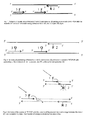
- the donor dye and the acceptor dye or, in another variant, the dye and quencher are included in the structure of different (forward and reverse) primers.
- this eliminates possible non-specific amplification (more precisely, its detection) only from one of the primers, and on the other hand - requires annealing of both primers in direct proximity to each other, which in accordance with the theory of probability is a virtually improbable event for a section that is not selected as the detected region.
- oligonucleotide primers The selection of oligonucleotide primers is carried out with the expectation that they would provide specificity of the reaction and limit the fragment of nucleotide sequence of the DNA (or RNA) to a size of 35-50 pairs of nucleotides (or nucleotides) respectively.
- the following circumstance should be taken into account during the selection of the primers - that in the process of synthesis of the oligonucleotide primers (or postsynthetic) they could be marked with corresponding fluorescent dyes and quenchers, characterized by suitable wavelengths of excitation and emission and thus composing either a donor/acceptor pair (Fig. 1) or a dye/quencher pair (Fig.
- Example 2 The conduction of preliminary DNA amplification in order to determine the melting temperature of a desired product
- a reaction mixture with a volume of 25 ⁇ l comprises a buffer (40 mM Tris-HCl pH 8.0, 2.5 mM MgCl 2 , 25 mM KCl); 20 fMol DNA; 1 unit of activity Taq DNA polymerase; 0.5 pMol of each of two primers, each marked with its fluorochrome (with a donor and acceptor or dye and quencher) and a corresponding amount of distilled water.
- a buffer 40 mM Tris-HCl pH 8.0, 2.5 mM MgCl 2 , 25 mM KCl
- 20 fMol DNA 1 unit of activity Taq DNA polymerase
- 0.5 pMol of each of two primers each marked with its fluorochrome (with a donor and acceptor or dye and quencher) and a corresponding amount of distilled water.
- RT-PCR was conducted in a DNA amplifier of the iCycler iQ model (Bio-Rad Laboratories, US) under the following conditions: denaturation of double-chain DNA in the first cycle was carried out at 95°C for 30 sec, then the primers were annealed and lengthened - 45°C, 10 sec with registration of the fluorescence at the end of this stage, denaturation of the desired product - 90°C, 10 sec, number of cycles - 25.
- Control of the production of the desired product was conducted, when it was presented in the form of a double-chain molecule, by registering an increase of the emission of the acceptor dye after its excitation with the fluorescent resonant energy of the donor dye or, in another variant - a decrease of the emission of the dye as a result of the quenching effect, which are present at this stage.
- the annealing temperature of the primers was varied somewhat in different experiments depending on the GC-structure of the used oligonucleotides. Determination of the melting temperature of the desired product of DNA amplification was carried out in the same DNA amplifier as provided for by the corresponding protocol of the program accompanying the device.
- RNA comprising material with the aid of RT-PCR with an enzyme of reverse transcriptase (RT-RT-PCR)
- RT-RT-PCR reverse transcriptase
- the step of building according to the RNA matrix of a complementary DNA with the aid of this enzyme is necessary.
- RNA and 0.001 o.e. of oligonucleotide 2, serving here as a primer were mixed in a microcentrifuge tube. The mixture was heated to 85°C and was allowed to slowly cool to 30°C.
- a reverse transcription reaction was carried out at 42°C during 10 min in a reaction volume of 20 ⁇ l of the following composition - 50 mM Tris-HC1 pH 8.3, 10 mM MgCl 2 , 10 mM DTT, 0.5 mM spermidine, 0.5 mM of each of dNTF and 5 units of activity of AMV-revertase.
- PCR was carried out in 25 ⁇ l of a reaction mixture comprising a buffer (40 mM Tris-HCl pH 8.0, 2.5 mM MgCl 2 , 25 mM KCl); 20 fMol DNA; 1 unit of activity Taq DNA polymerase; 0.5 pMol of each of 2 primers marked each with its own fluorochrome (donor and acceptor or dye and quencher) and a corresponding amount of distilled water.
- a buffer 40 mM Tris-HCl pH 8.0, 2.5 mM MgCl 2 , 25 mM KCl
- 20 fMol DNA 1 unit of activity Taq DNA polymerase
- RT-PCR was carried out in a DNA amplifier of the iCycler iQ model under the following conditions: denaturation of a double-chain DNA in the first cycle was conducted at 95°C for 30 sec, followed by annealing the primers and their lengthening - 45°C, 10 sec with registration of the fluorescence at the end of this step, denaturation of the desired product - 80°C, 10 sec, the number of cycles - 25.
- Denaturation of the desired product at a reduced temperature (80°C) for a brief period of time (10 sec) made it possible to reduce the duration of the reaction and reduce the time during which the DNA polymerase is in the critical temperature zone, since there is no necessity to heat the desired product to 95°C, because, as was determined in example 2, it denaturates at a lower temperature (75°C).
- the annealing temperature of the primers and also the melting temperature of the desired products varied somewhat in different experiments depending on the GC composition of the used oligonucleotides.
- the second variant of RT-PCR with primers marked in one case by a donor dye and in the second by a quencher was conducted in a similar manner.
- PCR was conducted without the addition of the studied DNA (or cDNA), and also with the addition of DNA, which does not comprise a region complementary to the used oligonucleotides.
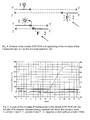
- the region of the nucleotide sequence was selected that was intended to be the location for annealing primer 3, was positioned from the annealing point of primer 2 at a significant distance, and through which fluorescent resonant energy is not transmitted and the effect of extinguishing is also absent (Figs. 1 - 4). Curves of an increase of the fluorescence of the desired product, limited by primers 1 and 2, and the absence of a similar rise for the pair of primers 3 and 2 in the variant with donor and acceptor dyes are seen in Fig. 5.
- Electrophoretic control (optional) of the RT-PCR products was conducted with the purpose of visually detecting the desired product. Separation of the RT-PCR products was carried out in an 8% polyacrylamide gel in a tris-acetate buffer pH 7.8 in undenaturated conditions at a voltage gradient of 4V per cm of gel length in a vertical type device during 4 hours. After completion of electrophoresis, the gel after being colored with ethidium bromide was photographed in a photo-documentary system - Gel Camera System (UVP, Inc., US). As may be seen from Fig.
- the desired product registered during the RT-PCR, has the expected size of 42 bp, while the negative-positive control in the form of a strip of 110 bp size did not show a change of the fluorescence signal during the RT-PCR, but if dyed with ethidium bromide is quite evident.
- their mobility is somewhat less than it was in the case of unmodified fragments of DNA of similar size.
Landscapes
- Chemical & Material Sciences (AREA)
- Organic Chemistry (AREA)
- Life Sciences & Earth Sciences (AREA)
- Chemical Kinetics & Catalysis (AREA)
- Zoology (AREA)
- Wood Science & Technology (AREA)
- Proteomics, Peptides & Aminoacids (AREA)
- Health & Medical Sciences (AREA)
- Engineering & Computer Science (AREA)
- Biophysics (AREA)
- Immunology (AREA)
- Microbiology (AREA)
- Molecular Biology (AREA)
- Biotechnology (AREA)
- Analytical Chemistry (AREA)
- Physics & Mathematics (AREA)
- Biochemistry (AREA)
- Bioinformatics & Cheminformatics (AREA)
- General Engineering & Computer Science (AREA)
- General Health & Medical Sciences (AREA)
- Genetics & Genomics (AREA)
- Measuring Or Testing Involving Enzymes Or Micro-Organisms (AREA)
Applications Claiming Priority (1)
| Application Number | Priority Date | Filing Date | Title |
|---|---|---|---|
| RU2005132940/13A RU2005132940A (ru) | 2006-03-01 | 2006-03-01 | Способ детекции специфических фрагментов днк или рнк с помощью полимеразной цепной реакции в режиме реального времени |
Publications (1)
| Publication Number | Publication Date |
|---|---|
| EP1780291A1 true EP1780291A1 (en) | 2007-05-02 |
Family
ID=37529272
Family Applications (1)
| Application Number | Title | Priority Date | Filing Date |
|---|---|---|---|
| EP06122934A Withdrawn EP1780291A1 (en) | 2006-03-01 | 2006-10-25 | Method of detecting specific fragments of DNA or RNA with the aid of a polymerase chain reaction |
Country Status (4)
| Country | Link |
|---|---|
| US (1) | US8198026B2 (enExample) |
| EP (1) | EP1780291A1 (enExample) |
| JP (1) | JP2007125011A (enExample) |
| RU (1) | RU2005132940A (enExample) |
Cited By (5)
| Publication number | Priority date | Publication date | Assignee | Title |
|---|---|---|---|---|
| US7393646B2 (en) * | 2005-06-20 | 2008-07-01 | Cargill, Inc. | Method, apparatus and system for quantifying the content of genetically modified material in a sample |
| WO2009042851A1 (en) * | 2007-09-28 | 2009-04-02 | 3M Innovative Properties Company | Dual oligonucleotide method of nucleic acid detection |
| WO2010072366A1 (en) * | 2008-12-22 | 2010-07-01 | Roche Diagnostics Gmbh | Method for detecting a target nucleic acid in a sample |
| WO2014116884A1 (en) | 2013-01-24 | 2014-07-31 | California Institute Of Technology | Chromophore-based characterization and detection methods |
| EP2157187A4 (en) * | 2007-06-14 | 2014-12-24 | Inst Biokhim I Genetiki Ufim Nauchnogo Tsentra Ran | METHOD FOR IMPLEMENTING CONVECTION POLYMERASE CHAIN REACTION |
Families Citing this family (2)
| Publication number | Priority date | Publication date | Assignee | Title |
|---|---|---|---|---|
| EP2315850B1 (en) * | 2008-07-18 | 2015-02-25 | TrovaGene, Inc. | Methods for pcr-based detection of "ultra short" nucleic acid sequences |
| US9657332B2 (en) * | 2013-08-09 | 2017-05-23 | Luminex Corporation | Probes for improved melt discrimination and multiplexing in nucleic acid assays |
Citations (5)
| Publication number | Priority date | Publication date | Assignee | Title |
|---|---|---|---|---|
| EP0566751A1 (en) * | 1992-03-23 | 1993-10-27 | F. Hoffmann-La Roche Ag | DNA detection method |
| WO1999042611A1 (en) * | 1998-02-19 | 1999-08-26 | The Secretary Of State For Defence | Method for detection of target nucleic acids using pcr |
| US20020197611A1 (en) * | 2001-06-21 | 2002-12-26 | Chagovetz Alexander Michael | Method for real-time detection and quantification of nucleic acid sequences using fluorescent primers |
| US20030104438A1 (en) * | 2001-08-31 | 2003-06-05 | Eyre David J. | Real-time gene quantification with internal standards |
| WO2003102239A2 (en) * | 2002-05-31 | 2003-12-11 | Secretary, Department Of Atomic Energy | Met/fret based method of target nucleic acid detection whereby the donor/acceptor moieties are on complementary strands |
Family Cites Families (2)
| Publication number | Priority date | Publication date | Assignee | Title |
|---|---|---|---|---|
| US7160996B1 (en) * | 1999-06-09 | 2007-01-09 | Bioresearch Technologies, Inc. | Fluorescence energy transfer probes with stabilized conformations |
| WO2003100019A2 (en) * | 2002-05-24 | 2003-12-04 | Invitrogen Corporation | Nested pcr employing degradable primers |
-
2006
- 2006-03-01 RU RU2005132940/13A patent/RU2005132940A/ru not_active Application Discontinuation
- 2006-10-25 EP EP06122934A patent/EP1780291A1/en not_active Withdrawn
- 2006-10-25 JP JP2006289339A patent/JP2007125011A/ja active Pending
- 2006-10-26 US US11/553,223 patent/US8198026B2/en not_active Expired - Fee Related
Patent Citations (5)
| Publication number | Priority date | Publication date | Assignee | Title |
|---|---|---|---|---|
| EP0566751A1 (en) * | 1992-03-23 | 1993-10-27 | F. Hoffmann-La Roche Ag | DNA detection method |
| WO1999042611A1 (en) * | 1998-02-19 | 1999-08-26 | The Secretary Of State For Defence | Method for detection of target nucleic acids using pcr |
| US20020197611A1 (en) * | 2001-06-21 | 2002-12-26 | Chagovetz Alexander Michael | Method for real-time detection and quantification of nucleic acid sequences using fluorescent primers |
| US20030104438A1 (en) * | 2001-08-31 | 2003-06-05 | Eyre David J. | Real-time gene quantification with internal standards |
| WO2003102239A2 (en) * | 2002-05-31 | 2003-12-11 | Secretary, Department Of Atomic Energy | Met/fret based method of target nucleic acid detection whereby the donor/acceptor moieties are on complementary strands |
Non-Patent Citations (2)
| Title |
|---|
| RASMUSSEN T B ET AL: "Development of a novel quantitative real-time RT-PCR assay for the simultaneous detection of all serotypes of foot-and-mouth disease virus.", ARCHIVES OF VIROLOGY. OCT 2003, vol. 148, no. 10, October 2003 (2003-10-01), pages 2005 - 2021, XP002413689, ISSN: 0304-8608 * |
| RASMUSSEN THOMAS B ET AL: "Quantitative multiplex assay for simultaneous detection and identification of Indiana and New Jersey serotypes of vesicular stomatitis virus.", JOURNAL OF CLINICAL MICROBIOLOGY. JAN 2005, vol. 43, no. 1, January 2005 (2005-01-01), pages 356 - 362, XP002413690, ISSN: 0095-1137 * |
Cited By (12)
| Publication number | Priority date | Publication date | Assignee | Title |
|---|---|---|---|---|
| US7393646B2 (en) * | 2005-06-20 | 2008-07-01 | Cargill, Inc. | Method, apparatus and system for quantifying the content of genetically modified material in a sample |
| US8150631B2 (en) | 2005-06-20 | 2012-04-03 | Cargill, Incorporated | Method, apparatus and system for quantifying the content of genetically modified material in a sample |
| EP2157187A4 (en) * | 2007-06-14 | 2014-12-24 | Inst Biokhim I Genetiki Ufim Nauchnogo Tsentra Ran | METHOD FOR IMPLEMENTING CONVECTION POLYMERASE CHAIN REACTION |
| WO2009042851A1 (en) * | 2007-09-28 | 2009-04-02 | 3M Innovative Properties Company | Dual oligonucleotide method of nucleic acid detection |
| US8313931B2 (en) | 2007-09-28 | 2012-11-20 | 3M Innovative Properties Company | Dual oligonucleotide method of nucleic acid detection |
| US8652812B2 (en) | 2007-09-28 | 2014-02-18 | 3M Innovative Properties Company | Dual oligonucleotide method of nucleic acid detection |
| CN101809170B (zh) * | 2007-09-28 | 2014-08-20 | 3M创新有限公司 | 用于检测核酸的双寡核苷酸方法 |
| WO2010072366A1 (en) * | 2008-12-22 | 2010-07-01 | Roche Diagnostics Gmbh | Method for detecting a target nucleic acid in a sample |
| CN102257163A (zh) * | 2008-12-22 | 2011-11-23 | 霍夫曼-拉罗奇有限公司 | 在样品中检测目标核酸的方法 |
| WO2014116884A1 (en) | 2013-01-24 | 2014-07-31 | California Institute Of Technology | Chromophore-based characterization and detection methods |
| US11879162B2 (en) | 2013-01-24 | 2024-01-23 | California Institute Of Technology | Chromophore-based detection of genetic variations in analytes |
| EP2948566B1 (en) * | 2013-01-24 | 2025-03-26 | California Institute of Technology | Chromophore-based characterization and detection methods |
Also Published As
| Publication number | Publication date |
|---|---|
| US8198026B2 (en) | 2012-06-12 |
| US20070117125A1 (en) | 2007-05-24 |
| JP2007125011A (ja) | 2007-05-24 |
| RU2005132940A (ru) | 2007-11-27 |
Similar Documents
| Publication | Publication Date | Title |
|---|---|---|
| Wang et al. | Ultrafast visual nucleic acid detection with CRISPR/Cas12a and rapid PCR in single capillary | |
| JP6321738B2 (ja) | 試料中の核酸配列を定量するための組成物および方法 | |
| CN104955959B (zh) | 用于增强pcr特异性的新颖组合物、方法和试剂盒 | |
| Rodríguez-Lázaro et al. | Real-time PCR in food science: introduction | |
| CN1468251B (zh) | 一种用于均相检测核酸的特异性双链探针及其实施方法 | |
| US20230220495A1 (en) | Compositions and methods for enhancing and/or predicting dna amplification | |
| CN105803074B (zh) | 一种被双向链置换的引物型核酸荧光探针 | |
| CN110343673B (zh) | 用于聚合酶链式反应(pcr)的新型组合物、方法和试剂盒 | |
| CN107430646A (zh) | 检测基因组编辑 | |
| WO2016165210A1 (en) | Oligonucleotide fragment, and method as well as application of selective amplifiction of variant of target nucleic acid sequence using the same | |
| CN103502475A (zh) | 包含内部标记引物的核酸的测序、扩增和检测方法 | |
| US11220708B2 (en) | Compositions and methods for detecting nicking enzyme and polymerase activity using a substrate molecule | |
| CN115867653A (zh) | 用于检测靶核酸的环状引物和loop-de-loop方法 | |
| EP1780291A1 (en) | Method of detecting specific fragments of DNA or RNA with the aid of a polymerase chain reaction | |
| CA2887840C (en) | Methods for detecting pathogen in coldwater fish | |
| CN116875664A (zh) | 一种实时荧光环介导等温核酸扩增检测方法 | |
| US10920270B2 (en) | Split-cycle and tape amplification | |
| CN109563530A (zh) | 乳液中的RNase H突变体 | |
| JP2007125011A5 (enExample) | ||
| KR102900467B1 (ko) | 토홀드 매개 가닥 치환 기반의 rpa-crispr 핵산 검출용 조성물 및 검출 방법 | |
| RU2414510C2 (ru) | Способ амплификации специфичных фрагментов нуклеиновых кислот с помощью рекуррентной цепной реакции | |
| CN105506082B (zh) | 利用链转移型引物扩增核酸及融合探针的方法 | |
| KR20250031669A (ko) | 저온 반응이 가능한 중합효소 연쇄반응 혼합물의 증폭방법 및 이의 최적화 방법 | |
| KR20250031668A (ko) | 체온을 활용한 중합효소 연쇄반응 및 이의 최적화 방법 | |
| KR20250031667A (ko) | 상대적 저온 상태에서 작용하는 중합효소 연쇄반응에 사용되는 반응혼합물의 제조방법 |
Legal Events
| Date | Code | Title | Description |
|---|---|---|---|
| PUAI | Public reference made under article 153(3) epc to a published international application that has entered the european phase |
Free format text: ORIGINAL CODE: 0009012 |
|
| AK | Designated contracting states |
Kind code of ref document: A1 Designated state(s): AT BE BG CH CY CZ DE DK EE ES FI FR GB GR HU IE IS IT LI LT LU LV MC NL PL PT RO SE SI SK TR |
|
| AX | Request for extension of the european patent |
Extension state: AL BA HR MK YU |
|
| AKX | Designation fees paid | ||
| REG | Reference to a national code |
Ref country code: DE Ref legal event code: 8566 |
|
| STAA | Information on the status of an ep patent application or granted ep patent |
Free format text: STATUS: THE APPLICATION IS DEEMED TO BE WITHDRAWN |
|
| 18D | Application deemed to be withdrawn |
Effective date: 20071103 |