EP1767862A2 - Verfahren zum Betreiben eines elektrischen Haushaltsgeräts und elektrisches Haushaltsgerät - Google Patents
Verfahren zum Betreiben eines elektrischen Haushaltsgeräts und elektrisches Haushaltsgerät Download PDFInfo
- Publication number
- EP1767862A2 EP1767862A2 EP06013416A EP06013416A EP1767862A2 EP 1767862 A2 EP1767862 A2 EP 1767862A2 EP 06013416 A EP06013416 A EP 06013416A EP 06013416 A EP06013416 A EP 06013416A EP 1767862 A2 EP1767862 A2 EP 1767862A2
- Authority
- EP
- European Patent Office
- Prior art keywords
- household
- programming
- appliance
- cycle
- domestic appliance
- Prior art date
- Legal status (The legal status is an assumption and is not a legal conclusion. Google has not performed a legal analysis and makes no representation as to the accuracy of the status listed.)
- Granted
Links
Images
Classifications
-
- F—MECHANICAL ENGINEERING; LIGHTING; HEATING; WEAPONS; BLASTING
- F24—HEATING; RANGES; VENTILATING
- F24C—DOMESTIC STOVES OR RANGES ; DETAILS OF DOMESTIC STOVES OR RANGES, OF GENERAL APPLICATION
- F24C7/00—Stoves or ranges heated by electric energy
- F24C7/08—Arrangement or mounting of control or safety devices
- F24C7/082—Arrangement or mounting of control or safety devices on ranges, e.g. control panels, illumination
-
- D—TEXTILES; PAPER
- D06—TREATMENT OF TEXTILES OR THE LIKE; LAUNDERING; FLEXIBLE MATERIALS NOT OTHERWISE PROVIDED FOR
- D06F—LAUNDERING, DRYING, IRONING, PRESSING OR FOLDING TEXTILE ARTICLES
- D06F34/00—Details of control systems for washing machines, washer-dryers or laundry dryers
- D06F34/28—Arrangements for programme selection, e.g. control panels therefor; Arrangements for indicating programme parameters, e.g. the selected programme or its progress
-
- F—MECHANICAL ENGINEERING; LIGHTING; HEATING; WEAPONS; BLASTING
- F24—HEATING; RANGES; VENTILATING
- F24C—DOMESTIC STOVES OR RANGES ; DETAILS OF DOMESTIC STOVES OR RANGES, OF GENERAL APPLICATION
- F24C7/00—Stoves or ranges heated by electric energy
- F24C7/08—Arrangement or mounting of control or safety devices
- F24C7/082—Arrangement or mounting of control or safety devices on ranges, e.g. control panels, illumination
- F24C7/085—Arrangement or mounting of control or safety devices on ranges, e.g. control panels, illumination on baking ovens
-
- D—TEXTILES; PAPER
- D06—TREATMENT OF TEXTILES OR THE LIKE; LAUNDERING; FLEXIBLE MATERIALS NOT OTHERWISE PROVIDED FOR
- D06F—LAUNDERING, DRYING, IRONING, PRESSING OR FOLDING TEXTILE ARTICLES
- D06F2101/00—User input for the control of domestic laundry washing machines, washer-dryers or laundry dryers
- D06F2101/12—Washing temperature
-
- D—TEXTILES; PAPER
- D06—TREATMENT OF TEXTILES OR THE LIKE; LAUNDERING; FLEXIBLE MATERIALS NOT OTHERWISE PROVIDED FOR
- D06F—LAUNDERING, DRYING, IRONING, PRESSING OR FOLDING TEXTILE ARTICLES
- D06F2101/00—User input for the control of domestic laundry washing machines, washer-dryers or laundry dryers
- D06F2101/20—Operation modes, e.g. delicate laundry washing programmes, service modes or refreshment cycles
-
- D—TEXTILES; PAPER
- D06—TREATMENT OF TEXTILES OR THE LIKE; LAUNDERING; FLEXIBLE MATERIALS NOT OTHERWISE PROVIDED FOR
- D06F—LAUNDERING, DRYING, IRONING, PRESSING OR FOLDING TEXTILE ARTICLES
- D06F2105/00—Systems or parameters controlled or affected by the control systems of washing machines, washer-dryers or laundry dryers
- D06F2105/54—Changing between normal operation mode and special operation modes, e.g. service mode, component cleaning mode or stand-by mode
-
- D—TEXTILES; PAPER
- D06—TREATMENT OF TEXTILES OR THE LIKE; LAUNDERING; FLEXIBLE MATERIALS NOT OTHERWISE PROVIDED FOR
- D06F—LAUNDERING, DRYING, IRONING, PRESSING OR FOLDING TEXTILE ARTICLES
- D06F2105/00—Systems or parameters controlled or affected by the control systems of washing machines, washer-dryers or laundry dryers
- D06F2105/62—Stopping or disabling machine operation
-
- D—TEXTILES; PAPER
- D06—TREATMENT OF TEXTILES OR THE LIKE; LAUNDERING; FLEXIBLE MATERIALS NOT OTHERWISE PROVIDED FOR
- D06F—LAUNDERING, DRYING, IRONING, PRESSING OR FOLDING TEXTILE ARTICLES
- D06F34/00—Details of control systems for washing machines, washer-dryers or laundry dryers
- D06F34/28—Arrangements for programme selection, e.g. control panels therefor; Arrangements for indicating programme parameters, e.g. the selected programme or its progress
- D06F34/30—Arrangements for programme selection, e.g. control panels therefor; Arrangements for indicating programme parameters, e.g. the selected programme or its progress characterised by mechanical features, e.g. buttons or rotary dials
Definitions
- the invention relates to a method for operating a household electrical appliance, wherein the household appliance has an electrical or electronic control, by means of which a programmable working cycle can be driven.
- Domestic appliances in particular household ovens, are known in the prior art, so that, in particular with regard to the operating time of the appliance, it is possible to make an adjustment so that the appliance starts operating at a predetermined time and then a predetermined program with a defined cooking time, before the appliance shuts off automatically.
- the device thus starts at the predetermined time, which results, for example, from the set end minus the cooking time; the shutdown takes place at the set end time.
- Another typical mode of operation which can be operated with known household appliances, is that the food to be prepared is prepared in the oven and the cooking parameters are set. Then the program is shut down after setting the cooking time manually triggered; it ends automatically after the specified cooking time has elapsed. After that, therefore, the duration of the cooking process is specified, so that an automatic shutdown can take place.
- the invention is therefore based on the object to provide a method for operating a household electrical appliance, in particular a domestic oven, and an associated household appliance, with which the disadvantages mentioned can be prevented. So it should be a simpler and safer operation of the device especially by untrained Users should be able to do without having to do without the full functionality of the device.
- the concept of the invention is based on the fact that - preferably using all the options of the household appliance - a desired working cycle is programmed by a person who is practiced and knowledgeable in handling the household appliance (step a). When this happens, that person puts the device into stand-by mode (step b). Another untrained person in dealing with the device then performs step c), d. H. it starts the working cycle by actuating a triggering means.
- the skilled person to operate the domestic oven for example, a housewife who knows and programs the required parameters for cooking or warming up a court. Later, for example, the man can prepare or warm up a meal, using only the triggering means. This eliminates the risk of incorrect operation or the choice of incorrect cooking parameters.
- a preferred embodiment provides that after the execution of the above step b) activation of the household electrical appliance can be made only by the release means. All other controls and switches can be switched to passive, so that the risk of incorrect operation can be further reduced.
- step c Before the operation after the above step c) can be provided that a main switch is actuated.
- the household appliance After reaching the end of the working cycle, the household appliance is preferably completely switched off.
- one or more tactile or switching elements of the household appliance can be used.
- the household appliance is a household oven.
- the programming of the working cycle after step a) above may include the selection of an operating mode in the household oven and the selection of a cooking or baking temperature in the household oven.
- the method is also suitable for other household appliances.
- the electrical household appliance which has an electrical or electronic control, by means of which a programmable duty cycle can be driven, according to the invention is characterized in that the device in addition to the programming means for programming the Duty cycle with a defined cycle time and defined operating parameters has triggering means for triggering the start of the programmed duty cycle, whereby the triggering means can be activated only after the programming of the duty cycle and the switching of the device into a standby mode.
- Activation of the household electrical appliance can preferably be carried out only by the release means.
- the device preferably has a main switch for switching on and off.
- the household appliance is preferably a household oven, whereby the invention can be used particularly preferably also in a washing machine.
- the operating mode of the washing machine and the washing temperature in the washing machine are preprogrammed in particular.
- the proposed invention reliably protects against accidental adjustment of preset working parameters or against incorrectly set working parameters.
- the proposal also leads to a kind of child safety, since the device, in particular the oven, yes always works only the pre-programmed time at a defined temperature. Accidental running of the oven after completion of cooking or warming is thus excluded.
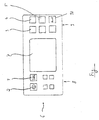
- the figure shows the interface 6 of a control of a domestic oven, which in addition to a display 7 two panels 8 and 9, in which switches or actuators are arranged.
- An important switch is the main switch 2, with which the device can be switched on and off.
- the meaning of the invention also has the "Set & Go” key 1 ("S & G"), which represents the triggering means for starting a preset program.
- keys 3, 4, 5 can be done in a known manner, a programming of the domestic furnace.
- the "S & G” button 1 (“Set & Go") is pressed, saving the program and putting the device into stand-by mode.
- step c) when it is to be prepared for consumption (step c) according to claim 1), only the main switch 2 and then the shutter button 1 is actuated first, d. H. now the "S & G" key 1 acts as a trigger to start the program.
- the illustrated "S & G” key 1 may be a dedicated key. But it is also possible that one or more, also provided for other device functions keys or switches of the device act as "Set & Go" buttons. In this case, in particular, a general option key or a general function switch is used, via which the aforementioned functionality of the "S & G" key can be called up, inter alia.
- the functionality according to the invention is stored in this case as a subfunction of the option key or the function switch.
- a reset button 10 is pressed and then the "S &G” button 1 is actuated.
- the sequence of actuation of the keys 10 and 1 must occur within a predetermined time (eg 2 seconds) to deactivate the program, to be sure that said key sequence actually is entered to deactivate the program.
- the housewife prepares a pizza in the morning and places it in the oven. Furthermore, it programs the cooking parameters, d. H. the cooking time (eg 30 minutes), the temperature (220 ° C) and the operating mode (eg "circulating air”). After programming, key 1 ("Set & Go") is pressed so that the oven switches to stand-by mode.
- the cooking parameters d. H. the cooking time (eg 30 minutes), the temperature (220 ° C) and the operating mode (eg "circulating air”).
- key 1 (“Set & Go") is pressed so that the oven switches to stand-by mode.
- the child comes home and should prepare the pizza. To do this, first press the main switch 2 and then the button 1 or any other button on the interface to shut down the program. After the program, for example, optically or acoustically can be displayed, the child takes the finished pizza from the oven and can eat them.
- the oven will then switch off completely and go into parental control mode and can only be switched on after entering a preset key combination.
- the electrical appliance is a washing machine.
- the housewife prepares the device for washing colored linen, d. H. it programs the washing mode and the temperature. Then press the "Set & Go" button 1.
Landscapes
- Engineering & Computer Science (AREA)
- Chemical & Material Sciences (AREA)
- Combustion & Propulsion (AREA)
- Mechanical Engineering (AREA)
- General Engineering & Computer Science (AREA)
- Textile Engineering (AREA)
- Electric Ovens (AREA)
- Electric Stoves And Ranges (AREA)
- Washing And Drying Of Tableware (AREA)
- Push-Button Switches (AREA)
Abstract
a) Programmieren eines Arbeitszyklus mit definierter Zyklusdauer und gegebenenfalls definierten Arbeitsparametern;
b) Schalten des Haushaltsgeräts in einen Standby-Modus;
c) Starten des Arbeitszyklus gemäß den programmieren Daten durch Betätigung eines Auslösemittels (1). Des weiteren betrifft die Erfindung ein elektrisches Haushaltsgerät.
Description
- Die Erfindung betrifft ein Verfahren zum Betreiben eines elektrischen Haushaltsgeräts, wobei das Haushaltsgerät eine elektrische oder elektronische Steuerung aufweist, mittels der ein programmierbarer Arbeitszyklus gefahren werden kann.
- Im Stand der Technik sind Haushaltsgeräte, insbesondere Haushaltsöfen, bekannt, die programmierbar sind, so dass insbesondere mit Blick auf die Betriebszeit des Geräts die Möglichkeit besteht, eine Einstellung so vorzunehmen, dass das Gerät zu einer vorbestimmten Zeit dem Betrieb aufnimmt und dann ein vorgegebenes Programm mit definierter Garzeit fährt, bevor das Gerät wieder selbsttätig abschaltet. Bei dieser Dauer/Ende-Programmierung startet das Gerät also zum vorgegebenen Zeitpunkt, der sich beispielsweise aus dem gesetzten Ende abzüglich der Garzeit ergibt; die Abschaltung findet zur gesetzten Ende-Zeit statt.
- Eine andere typische Betriebsweise, die mit vorbekannten Haushaltsgeräten gefahren werden kann, besteht darin, dass die zuzubereitende Speise im Ofen vorbereitet und die Garparameter eingestellt werden. Dann wird das Programm nach Vorgabe der Garzeit händisch ausgelöst abgefahren; es endet automatisch nach Ablauf der vorgegebenen Garzeit. Hiernach wird also die Dauer des Garvorgangs vorgegeben, so dass ein automatisches Abschalten erfolgen kann.
- Weiter alternativ ist es auch möglich, statt der Dauer der Garzeit eine Endzeit (Uhrzeit) anzugeben. Dann kann das Gerät händisch ausgelöst eingeschaltet werden; der Betrieb wird dann automatisch bei Erreichen der Abschalt(uhr)zeit beendet.
- Es hat sich herausgestellt, dass die Bedienung des Haushaltsgeräts, insbesondere eines Haushaltsofens, manchen Anwender vor Probleme stellt, weil er nicht im Umgang mit dem Gerät geübt ist. Das triff z. B. für Anwender zu, die nur sehr gelegentlich mit dem Gerät arbeiten, also beispielsweise eine Speise zubereiten müssen. Es besteht dabei die Gefahr einer Fehlbedienung und in der Konsequenz eines unbefriedigenden Kochergebnisses.
- Insbesondere stellt es manchen gelegentlichen Anwender eines Haushaltsofens vor Probleme, die richtigen Gar-, Koch- oder Backparameter zu wählen, also namentlich die Betriebsart des Ofens ("Umluft", "Oberhitze", etc.), die Betriebsdauer und die Temperatur im Ofen. Eine gewisse Komplexität des Interfaces der Steuerung des Geräts ist jedoch unvermeidbar, um dem geübten Anwender die Möglichkeit zu geben, alle Optionen zur Verfügung zu haben, um jeweils optimale Kochergebnisse zu erzielen.
- Auch besteht die Gefahr eines unabsichtlichen Einschaltens des Ofens, was vor allem im Zusammenhang mit der Sicherung von Kindern und Senioren problematisch sein kann.
- Der Erfindung liegt daher die Aufgabe zugrunde, ein Verfahren zum Betreiben eines elektrischen Haushaltsgeräts, insbesondere eines Haushaltsofens, sowie ein zugehöriges Haushaltsgerät zu schaffen, mit dem die genannten Nachteile verhindert werden können. Es soll also eine einfachere und sicherere Bedienung des Geräts vor allem durch ungeübte Benutzer möglich sein, ohne auf die volle Funktionalität des Geräts verzichten zu müssen.
- Die Lösung dieser Aufgabe durch die Erfindung ist dadurch gekennzeichnet, dass das Verfahren die Schritte umfasst:
- a) Programmieren eines Arbeitszyklus mit definierter Zyklusdauer und gegebenenfalls definierten Arbeitsparametern;
- b) Schalten des Haushaltsgeräts in einen Stand-by-Modus;
- c) Starten des Arbeitszyklus gemäß den programmieren Daten durch Betätigung eines Auslösemittels.
- Das Erfindungskonzept stellt also darauf ab, dass - bevorzugt unter Nutzung aller Optionen des Haushaltsgeräts - ein gewünschter Arbeitszyklus programmiert wird, und zwar von einer Person, die im Umgang mit dem Haushaltsgerät geübt und sachkundig ist (Schritt a). Ist dies geschehen, schaltet diese Person das Gerät in den Stand-by-Modus (Schritt b). Eine andere, im Umgang mit dem Gerät ungeübte Person vollzieht dann Schritt c), d. h. sie startet den Arbeitszyklus durch Betätigung eines Auslösemittels.
- Die geübte Person zur Bedienung des Haushaltsofens ist beispielsweise eine Hausfrau, die für das Garen oder Aufwärmen eines Gerichts die benötigten Parameter kennt und programmiert. Später kann beispielsweise der Mann sich eine Speise zubereiten oder aufwärmen, wobei er lediglich das Auslösemittel betätigen muss. Damit ist die Gefahr einer Fehlbedienung bzw. der Wahl falscher Garparameter gebannt.
- Eine bevorzugte Ausführungsform sieht vor, dass nach der Ausführung des obigen Schritts b) eine Aktivierung des elektrischen Haushaltsgeräts nur durch die Auslösemittel vorgenommen werden kann. Alle anderen Bedienelemente und Schalter können passiv geschaltet sein, so dass die Gefahr einer Fehlbedienung weiter reduziert werden kann.
- Vor der Betätigung nach obigem Schritt c) kann vorgesehen werden, dass ein Hauptschalter betätigt wird.
- Nach Erreichen des Endes des Arbeitszyklus wird das Haushaltsgerät bevorzugt vollständig abschaltet.
- Als Auslösemittel kann ein oder können mehrere Tast- oder Schaltelemente des Haushaltsgeräts verwendet werden.
- Ferner kann vorgesehen sein, dass ein Ausschalten des Haushaltsgeräts nach Betätigung der Auslösemittel ausschließlich durch Betätigung des Hauptschalters möglich ist.
- Besonders bevorzugt ist das Haushaltsgerät ein Haushaltsofen. In diesem Falle kann das Programmieren des Arbeitszyklus nach obigem Schritt a) die Auswahl einer Betriebsart in dem Haushaltsofen und die Auswahl einer Gar- oder Backtemperatur in dem Haushaltsofen umfassen. Das Verfahren eignet sich jedoch auch für andere Haushaltsgeräte.
- Das elektrische Haushaltsgerät, das eine elektrische oder elektronische Steuerung aufweist, mittels der ein programmierbarer Arbeitszyklus gefahren werden kann, zeichnet sich erfindungsgemäß dadurch aus, dass das Gerät neben den Programmiermitteln zur Programmierung des Arbeitszyklus mit einer definierten Zyklusdauer und definierten Arbeitsparametern Auslösemittel zum Auslösen des Starts des programmierten Arbeitszyklus aufweist, wobei die Auslösemittel erst nach der Programmierung des Arbeitszyklus und der Schaltung des Geräts in einen Stand-by-Modus aktivierbar sind.
- Eine Aktivierung des elektrischen Haushaltsgeräts kann vorzugsweise nur durch die Auslösemittel vorgenommen werden.
- Das Gerät hat vorzugsweise einen Hauptschalter zum Ein- und Abschalten.
- Wie bereits erwähnt, ist das Haushaltsgerät bevorzugt ein Haushaltsofen, wobei sich die Erfindung besonders bevorzugt auch in einer Waschmaschine einsetzen lässt. In letzterem Falle werden insbesondere die Betriebsart der Waschmaschine sowie die Waschtemperatur in der Waschmaschine vorprogrammiert.
- Der Erfindungsvorschlag schützt zuverlässig vor einem versehentlich Verstellen voreingestellter Arbeitsparameter bzw. vor falsch eingestellten Arbeitsparametern.
- Der Vorschlag führt auch zu einer Art Kindersicherung, da das Gerät, insbesondere der Ofen, ja stets nur die vorprogrammierte Zeit bei definierter Temperatur arbeitet. Ein versehentliches Laufenlassen des Ofens nach Beendigung des Garens bzw. Aufwärmens ist damit ausgeschlossen.
- Auch unversierten Bedienern ermöglicht das Verfahren, den vollen Funktionsumfang des Geräts zu nutzen, da lediglich eine Auslösung des voreingestellten Programms vorgenommen werden muss.
- Auch bei motorischen Problemen (z. B. bei Behinderten und Senioren) ist eine Nutzung des Geräts problemlos, da lediglich eine (beliebige) Taste gedrückt werden muss, um das Gerät zu starten.
- In der Zeichnung ist ein Ausführungsbeispiel der Erfindung dargestellt. Die einzige Figur zeigt die Ansicht eines Bedienfeldes eines Haushaltsofens.
- Die Figur zeigt das Interface 6 einer Steuerung eines Haushaltsofens, das neben einem Display 7 zwei Felder 8 und 9 aufweist, in denen Schalter bzw. Betätigungsorgane angeordnet sind.
- Ein wichtiger Schalter ist der Hauptschalter 2, mit dem das Gerät ein- und ausgeschaltet werden kann. Erfindungsgemäße Bedeutung hat ferner die "Set & Go" - Taste 1 ("S & G"), die das Auslösemittel zum Start eines voreingestellten Programms darstellt.
- Mittels weiterer, teilweise nicht bezeichneter Tasten 3, 4, 5 kann in bekannter Weise eine Programmierung des Haushaltsofens erfolgen. Ist dies erfolgt, wird die "S & G" - Taste 1 ("Set & Go") betätigt, wodurch das Programm gespeichert und das Gerät in den Stand-By-Modus versetzt wird.
- Damit sind die Schritte a) und b) gemäß Anspruch 1 vollzogen.
- Die vorbereitete Speise befindet sich nunmehr bereits im Ofen. Bei Bedarf, also dann, wenn sie zum Verbrauch vorbereitet werden soll (Schritt c) gemäß Anspruch 1), wird lediglich zunächst der Hauptschalter 2 und dann die Auslösetaste 1 betätigt, d. h. jetzt fungiert die "S & G" - Taste 1 als Auslösemittel, um das Programm zu starten.
- Bei der dargestellten "S & G"-Taste 1 kann es sich um eine eigens vorgesehene Taste handeln. Es ist aber ebenso möglich, dass eine oder mehrere, auch für andere Gerätefunktionen vorgesehene Tasten bzw. Schalter des Geräts als "Set & Go"-Tasten fungieren. In Betracht kommt hierbei insbesondere eine allgemeine Optionstaste bzw. ein allgemeiner Funktionsschalter, über die bzw. den sich unter anderem die vorgenannte Funktionalität der "S & G"-Taste abrufen lässt. Die Funktionalität gemäß der Erfindung ist in diesem Fall als Unterfunktion der Optionstaste bzw. des Funktionsschalters hinterlegt.
- Es kann programmtechnisch aber auch weiter vorgesehen sein, dass bei der Betätigung irgendeiner der Tasten 1, 3, 4, 5 etc. das Programm gestartet wird. Nach der vorprogrammierten Zeit erfolgt eine automatische vollständige Abschaltung des Ofens.
- Programmtechnisch kann ferner vorgesehen werden, dass zwecks Aufhebung der "Set & Go" - Funktion zunächst (nach Einschalten des Geräts mittels des Hauptschalters 2) eine Reset-Taste 10 gedrückt und anschließend die "S & G" - Taste 1 betätigt wird. Dabei kann beispielsweise vorgesehen werden, dass die Abfolge der Betätigung der Tasten 10 und 1 innerhalb einer vorgegebenen Zeit (z. B. 2 Sekunden) erfolgen muss, um das Programm zu deaktivieren, um sicher zu sein, dass die genannte Tastenfolge tatsächlich eingegeben wird, um eine Deaktivierung des Programms vorzunehmen.
- Somit kann der Ofen nach Bringen in den Stand-by-Modus (abgesehen von einer Deaktivierung des Programms wie erläutert) nur gestartet und dann mit den programmierten Parametern betrieben werden. Ein Ausschalten des Geräts mittels dem Hauptschalter 2 bleibt indes jederzeit möglich. Es kann jedoch keine Verstellung der programmierten Garparameter während des Programmablaufs erfolgen.
- Ergänzend ist es möglich, programmtechnisch vorzusehen, dass nach Ablauf des Programms nach der Betätigung des Auslösemittels 1, 3, 4, 5 der Ofen in einen Kindersicherungs-Modus gebracht wird, so dass ein Aktivieren beispielsweise nur nach Betätigung einer vorgegebenen Tastenfolge möglich ist.
- Die Hausfrau bereitet morgens eine Pizza vor und platziert diese im Garraum. Weiterhin programmiert sie die Garparameter, d. h. die Garzeit (z. B. 30 Minuten), die Temperatur (220 °C) und die Betriebsart (z. B. "Umluft"). Nach der Programmierung wird die Taste 1 ("Set & Go") gedrückt, so dass der Ofen in den Stand-by-Modus schaltet.
- Mittags kommt das Kind nach Hause und soll sich die Pizza zubereiten. Hierzu drückt es erst den Hauptschalter 2 und dann die Taste 1 oder irgendeine andere Taste des Interfaces, um das Programm abzufahren. Nach dem Programmablauf, der beispielsweise optisch oder akustisch angezeigt werden kann, entnimmt das Kind die fertige Pizza dem Garraum und kann sie essen.
- Der Ofen schaltet dann vollständig ab und in den Kindersicherungs-Modus und kann nur nach Eingabe einer vorgegebenen Tastenkombination wieder eingeschaltet werden.
- Es besteht kein Risiko, dass eine falsche Taste betätigt wird. Auch können keine falschen Garparameter verwendet werden.
- Das elektrische Gerät ist eine Waschmaschine. Die Hausfrau bereitet das Gerät zum Waschen von Buntwäsche vor, d. h. sie programmiert den Waschmodus und die Temperatur. Dann betätigt sie die "Set & Go" - Taste 1.
- Der zeitweise alleine das Haus bewirtschaftende Mann möchte waschen und füllt die Trommel mit der zu waschenden Wäsche. Dann hat er lediglich nach dem Einschalten der Waschmaschine mittels des Hauptschalters 2 das Auslösemittel 1 oder eine andere Taste 3, 4, 5 zu betätigen, um den "richtigen" Waschvorgang zu starten.
-
- 1
- Auslösemittel
- 2
- Hauptschalter
- 3
- Tast- oder Schaltelement
- 4
- Tast- oder Schaltelement
- 5
- Tast- oder Schaltelement
- 6
- Interface
- 7
- Display
- 8
- Feld des Interface
- 9
- Feld des Interface
- 10
- Reset-Taste
Claims (18)
- Verfahren zum Betreiben eines elektrischen Haushaltsgeräts, wobei das Haushaltsgerät eine elektrische oder elektronische Steuerung aufweist, mittels der ein programmierbarer Arbeitszyklus gefahren werden kann,
dadurch gekennzeichnet,
dass das Verfahren die Schritte umfasst:a) Programmieren eines Arbeitszyklus mit definierter Zyklusdauer und gegebenenfalls definierten Arbeitsparametern;b) Schalten des Haushaltsgeräts in einen Stand-by-Modus;c) Starten des Arbeitszyklus gemäß den programmieren Daten durch Betätigung eines Auslösemittels (1). - Verfahren nach Anspruch 1, dadurch gekennzeichnet, dass nach der Ausführung des Schritts b) gemäß Anspruch 1 eine Aktivierung des elektrischen Haushaltsgeräts nur durch die Auslösemittel (1) vorgenommen werden kann.
- Verfahren nach Anspruch 2, dadurch gekennzeichnet, dass vor der Betätigung nach Schritt c) gemäß Anspruch 1 ein Hauptschalter (2) betätigt wird.
- Verfahren nach einem der Ansprüche 1 bis 3, dadurch gekennzeichnet, dass nach Erreichen des Endes des Arbeitszyklus das Haushaltsgerät vollständig abschaltet.
- Verfahren nach einem der Ansprüche 1 bis 4, dadurch gekennzeichnet, dass als Auslösemittel (1) ein oder mehrere Tast- oder Schaltelemente (1, 3, 4, 5) des Haushaltsgeräts verwendet werden.
- Verfahren nach einem der Ansprüche 1 bis 5, dadurch gekennzeichnet, dass ein Ausschalten des Haushaltsgeräts nach Betätigung der Auslösemittel (1, 3, 4, 5) ausschließlich durch Betätigung des Hauptschalters (2) möglich ist.
- Verfahren nach einem der Ansprüche 1 bis 6, dadurch gekennzeichnet, dass das Haushaltsgerät ein Haushaltsofen ist.
- Verfahren nach Anspruch 7, dadurch gekennzeichnet, dass das Programmieren des Arbeitszyklus nach Schritt a) gemäß Anspruch 1 die Auswahl einer Betriebsart in dem Haushaltsofen umfasst.
- Verfahren nach Anspruch 7 oder 8, dadurch gekennzeichnet, dass das Programmieren des Arbeitszyklus nach Schritt a) gemäß Anspruch 1 die Auswahl einer Gar- oder Backtemperatur in dem Haushaltsofen umfasst.
- Elektrisches Haushaltsgerät, das eine elektrische oder elektronische Steuerung aufweist, mittels der ein programmierbarer Arbeitszyklus gefahren werden kann, insbesondere zur Durchführung des Verfahrens nach einem der Ansprüche 1 bis 9,
dadurch gekennzeichnet, dass
das Gerät neben den Programmiermitteln zur Programmierung des Arbeitszyklus mit einer definierten Zyklusdauer und definierten Arbeitsparametern Auslösemittel (2, 3, 4, 5) zum Auslösen des Starts des programmierten Arbeitszyklus aufweist, wobei die Auslösemittel (1, 3, 4, 5) erst nach der Programmierung des Arbeitszyklus und der Schaltung des Geräts in einen Stand-by-Modus aktivierbar sind. - Haushaltsgerät nach Anspruch 10, dadurch gekennzeichnet, dass eine Aktivierung des elektrischen Haushaltsgeräts nur durch die Auslösemittel (1, 3, 4, 5) vorgenommen werden kann.
- Haushaltsgerät nach Anspruch 10 oder 11, gekennzeichnet durch einen Hauptschalter (2) zum Ein- und Abschalten des Haushaltsgeräts.
- Haushaltsgerät nach einem der Ansprüche 10 bis 12, dadurch gekennzeichnet, dass es ein Haushaltsofen ist.
- Haushaltsgerät nach Anspruch 13, dadurch gekennzeichnet, dass die Programmiermittel zur Auswahl einer Betriebsart in dem Haushaltsofen geeignet sind.
- Haushaltsgerät nach Anspruch 13 oder 14, dadurch gekennzeichnet, dass die Programmiermittel zur Auswahl einer Gar- oder Backtemperatur in dem Haushaltsofen geeignet sind.
- Haushaltsgerät nach einem der Ansprüche 10 bis 12, dadurch gekennzeichnet, dass es eine Waschmaschine ist.
- Haushaltsgerät nach Anspruch 16, dadurch gekennzeichnet, dass die Programmiermittel zur Auswahl einer Betriebsart der Waschmaschine geeignet sind.
- Haushaltsgerät nach Anspruch 16 oder 17, dadurch gekennzeichnet, dass die Programmiermittel zur Auswahl einer Waschtemperatur in der Waschmaschine geeignet sind.
Applications Claiming Priority (1)
| Application Number | Priority Date | Filing Date | Title |
|---|---|---|---|
| DE102005043215.8A DE102005043215C5 (de) | 2005-09-09 | 2005-09-09 | Verfahren zum Betreiben eines elektrischen Haushaltsgeräts und elektrisches Haushaltsgerät |
Publications (3)
| Publication Number | Publication Date |
|---|---|
| EP1767862A2 true EP1767862A2 (de) | 2007-03-28 |
| EP1767862A3 EP1767862A3 (de) | 2017-10-11 |
| EP1767862B1 EP1767862B1 (de) | 2019-05-01 |
Family
ID=37714398
Family Applications (1)
| Application Number | Title | Priority Date | Filing Date |
|---|---|---|---|
| EP06013416.0A Expired - Lifetime EP1767862B1 (de) | 2005-09-09 | 2006-06-29 | Verfahren zum betreiben eines elektrischen haushaltsgeräts und elektrisches haushaltsgerät |
Country Status (2)
| Country | Link |
|---|---|
| EP (1) | EP1767862B1 (de) |
| DE (1) | DE102005043215C5 (de) |
Families Citing this family (1)
| Publication number | Priority date | Publication date | Assignee | Title |
|---|---|---|---|---|
| DE102024211761A1 (de) * | 2024-12-10 | 2026-06-11 | BSH Hausgeräte GmbH | Haushaltsgerät zum Behandeln von Gegenständen |
Family Cites Families (10)
| Publication number | Priority date | Publication date | Assignee | Title |
|---|---|---|---|---|
| CN2037039U (zh) * | 1988-06-25 | 1989-05-03 | 常德育 | 儿童电热温饭炉 |
| DE3912121A1 (de) * | 1989-04-13 | 1990-10-18 | Miele & Cie | Verfahren und anordnung fuer die programmeingabe und programmsteuerung von haushaltsgeraeten |
| KR930007513B1 (ko) * | 1991-04-01 | 1993-08-12 | 주식회사 금성사 | 전자레인지의 요리완료시간 예약방법 |
| DE4422128A1 (de) * | 1994-06-24 | 1996-01-04 | Licentia Gmbh | Programmgesteuertes Haushaltsgerät |
| DE4435931C2 (de) * | 1994-10-07 | 1998-06-04 | Convotherm Elektrogeraete | Bedienungseinrichtung für ein Gargerät |
| DE19905533A1 (de) * | 1999-02-10 | 2000-08-17 | Bsh Bosch Siemens Hausgeraete | Verfahren zum Einrichten einer Bedienvorrichtung eines programmgesteuerten Haushaltgerätes sowie Bedienvorrichtung zur Durchführung des Verfahrens |
| DE10035642C1 (de) * | 2000-07-20 | 2001-12-13 | Miele & Cie | Wäschebehandlungsgerät mit einer Programmsteuereinrichtung und einer Bedienoberfläche zur cursorunterstützten Benutzerführung |
| DE10205895A1 (de) * | 2002-02-13 | 2003-08-21 | Bsh Bosch Siemens Hausgeraete | Programmgesteuertes Haushaltgerät mit einem Anzeigefeld |
| CN2643191Y (zh) * | 2003-05-14 | 2004-09-22 | 广东格兰仕集团有限公司 | 带记忆功能的微波炉 |
| DE10342320A1 (de) * | 2003-09-12 | 2005-04-07 | BSH Bosch und Siemens Hausgeräte GmbH | Steuerung für ein Gargerät |
-
2005
- 2005-09-09 DE DE102005043215.8A patent/DE102005043215C5/de not_active Expired - Fee Related
-
2006
- 2006-06-29 EP EP06013416.0A patent/EP1767862B1/de not_active Expired - Lifetime
Also Published As
| Publication number | Publication date |
|---|---|
| DE102005043215A1 (de) | 2007-03-22 |
| DE102005043215B4 (de) | 2014-04-24 |
| DE102005043215C5 (de) | 2020-11-12 |
| EP1767862B1 (de) | 2019-05-01 |
| EP1767862A3 (de) | 2017-10-11 |
Similar Documents
| Publication | Publication Date | Title |
|---|---|---|
| US6180934B1 (en) | Cooking apparatus having means for storing and displaying cooking recipes | |
| EP2628841B1 (de) | Verfahren und vorrichtung zum schnellen anschalten und aktivieren eines haushaltsgeräts aus der kategorie der weissen waren | |
| EP2041353B1 (de) | Programmgesteuertes haushaltsgerät mit einer vereinfachten memory- funktion und verfahren zur programmeingabe | |
| EP0448005B1 (de) | Bedienvorrichtung für elektronisch gesteuerte Haushaltsgeräte | |
| DE3528229A1 (de) | Anordnung zur ansteuerung von elektrischen verbrauchern in backoefen | |
| EP1852658A2 (de) | Verfahren zur Durchführung eines Reinigungsvorgangs in einem elektrischen Haushaltsgerät und eletrisches Haushaltsgerät | |
| DE1554739A1 (de) | Selbstreinigender Haushaltshochtemperaturherd | |
| WO2009092649A2 (de) | Hausgerätekombination mit mindestens zwei hausgeräten sowie verfahren zu ihrem betrieb | |
| DE3528228A1 (de) | Anordnung zum ansteuern von herden mit mikrowellenenergie und/oder waermeenergie | |
| DE10203614B4 (de) | Verfahren und Bedienvorrichtung zum Betrieb eines Haushaltsgerätes | |
| DE3329300C2 (de) | ||
| EP2702922A2 (de) | Verfahren zum Bedienen eines Haushaltsgeräts sowie Haushaltsgerät mit ergonomischer Bedienvorrichtung | |
| DE102005043215B4 (de) | Verfahren zum Betreiben eines elektrischen Haushaltsgeräts und elektrisches Haushaltsgerät | |
| DE102004046521B3 (de) | Verfahren zum Einstellen oder Auswählen eines Arbeitsprogrammes eines Gargeräts und Gargerät zum Durchführen solch eines Verfahrens | |
| DE10156771A1 (de) | Elektrisches Haushaltsgerät | |
| EP1882886B1 (de) | Verfahren zum Betreiben eines elektrischen Haushaltsgarofens oder Dampfgarers | |
| DE102004026319B4 (de) | Vorrichtung und Verfahren zum Einstellen und Anzeigen von Zeitfunktionen für ein Haushaltsgerät | |
| DE10141754A1 (de) | Verfahren und Vorrichtung zum Steuern eines Gargerätes, insbesondere Haushaltsgargerätes | |
| DE3737712C2 (de) | ||
| DE102004008244B4 (de) | Vorrichtung mit einer Zentraleinheit zum Betätigen eines Haushaltsgeräts | |
| DE29605567U1 (de) | Vorrichtung zur elektronischen Steuerung von Gas- und/oder Elektrokochstellen und/oder -backöfen, -grills o.dgl. | |
| EP3816517B1 (de) | Gargerätesteuerung mit betriebsartenschalter und schaltuhr | |
| DE29825187U1 (de) | Programmgesteuertes Haushaltgerät | |
| EP1601105A1 (de) | Vorrichtung und Verfahren zur Sicherung eines Haushaltsgeräts vor unbeabsichtigtem Betrieb | |
| DE19937630A1 (de) | Elektrisches Haushaltsgerät |
Legal Events
| Date | Code | Title | Description |
|---|---|---|---|
| PUAI | Public reference made under article 153(3) epc to a published international application that has entered the european phase |
Free format text: ORIGINAL CODE: 0009012 |
|
| AK | Designated contracting states |
Kind code of ref document: A2 Designated state(s): AT BE BG CH CY CZ DE DK EE ES FI FR GB GR HU IE IS IT LI LT LU LV MC NL PL PT RO SE SI SK TR |
|
| AX | Request for extension of the european patent |
Extension state: AL BA HR MK YU |
|
| RAP1 | Party data changed (applicant data changed or rights of an application transferred) |
Owner name: ELECTROLUX HOME PRODUCTS CORPORATION N.V. |
|
| RAP1 | Party data changed (applicant data changed or rights of an application transferred) |
Owner name: ELECTROLUX HOME PRODUCTS CORPORATION N.V. |
|
| PUAL | Search report despatched |
Free format text: ORIGINAL CODE: 0009013 |
|
| AK | Designated contracting states |
Kind code of ref document: A3 Designated state(s): AT BE BG CH CY CZ DE DK EE ES FI FR GB GR HU IE IS IT LI LT LU LV MC NL PL PT RO SE SI SK TR |
|
| AX | Request for extension of the european patent |
Extension state: AL BA HR MK RS |
|
| RIC1 | Information provided on ipc code assigned before grant |
Ipc: F24C 7/08 20060101AFI20170906BHEP |
|
| STAA | Information on the status of an ep patent application or granted ep patent |
Free format text: STATUS: REQUEST FOR EXAMINATION WAS MADE |
|
| 17P | Request for examination filed |
Effective date: 20180411 |
|
| RBV | Designated contracting states (corrected) |
Designated state(s): AT BE BG CH CY CZ DE DK EE ES FI FR GB GR HU IE IS IT LI LT LU LV MC NL PL PT RO SE SI SK TR |
|
| AKX | Designation fees paid |
Designated state(s): AT BE BG CH CY CZ DE DK EE ES FI FR GB GR HU IE IS IT LI LT LU LV MC NL PL PT RO SE SI SK TR |
|
| AXX | Extension fees paid |
Extension state: RS Extension state: AL Extension state: BA Extension state: HR Extension state: MK |
|
| REG | Reference to a national code |
Ref country code: DE Ref legal event code: R079 Ref document number: 502006016237 Country of ref document: DE Free format text: PREVIOUS MAIN CLASS: F24C0007080000 Ipc: D06F0039000000 |
|
| GRAP | Despatch of communication of intention to grant a patent |
Free format text: ORIGINAL CODE: EPIDOSNIGR1 |
|
| STAA | Information on the status of an ep patent application or granted ep patent |
Free format text: STATUS: GRANT OF PATENT IS INTENDED |
|
| RIC1 | Information provided on ipc code assigned before grant |
Ipc: D06F 39/00 20060101AFI20181105BHEP Ipc: F24C 7/08 20060101ALI20181105BHEP |
|
| INTG | Intention to grant announced |
Effective date: 20181204 |
|
| GRAS | Grant fee paid |
Free format text: ORIGINAL CODE: EPIDOSNIGR3 |
|
| GRAA | (expected) grant |
Free format text: ORIGINAL CODE: 0009210 |
|
| STAA | Information on the status of an ep patent application or granted ep patent |
Free format text: STATUS: THE PATENT HAS BEEN GRANTED |
|
| AK | Designated contracting states |
Kind code of ref document: B1 Designated state(s): AT BE BG CH CY CZ DE DK EE ES FI FR GB GR HU IE IS IT LI LT LU LV MC NL PL PT RO SE SI SK TR |
|
| REG | Reference to a national code |
Ref country code: GB Ref legal event code: FG4D Free format text: NOT ENGLISH |
|
| REG | Reference to a national code |
Ref country code: CH Ref legal event code: EP Ref country code: AT Ref legal event code: REF Ref document number: 1127020 Country of ref document: AT Kind code of ref document: T Effective date: 20190515 |
|
| REG | Reference to a national code |
Ref country code: DE Ref legal event code: R096 Ref document number: 502006016237 Country of ref document: DE |
|
| REG | Reference to a national code |
Ref country code: IE Ref legal event code: FG4D Free format text: LANGUAGE OF EP DOCUMENT: GERMAN |
|
| REG | Reference to a national code |
Ref country code: NL Ref legal event code: MP Effective date: 20190501 |
|
| REG | Reference to a national code |
Ref country code: LT Ref legal event code: MG4D |
|
| PG25 | Lapsed in a contracting state [announced via postgrant information from national office to epo] |
Ref country code: PT Free format text: LAPSE BECAUSE OF FAILURE TO SUBMIT A TRANSLATION OF THE DESCRIPTION OR TO PAY THE FEE WITHIN THE PRESCRIBED TIME-LIMIT Effective date: 20190901 Ref country code: SE Free format text: LAPSE BECAUSE OF FAILURE TO SUBMIT A TRANSLATION OF THE DESCRIPTION OR TO PAY THE FEE WITHIN THE PRESCRIBED TIME-LIMIT Effective date: 20190501 Ref country code: NL Free format text: LAPSE BECAUSE OF FAILURE TO SUBMIT A TRANSLATION OF THE DESCRIPTION OR TO PAY THE FEE WITHIN THE PRESCRIBED TIME-LIMIT Effective date: 20190501 Ref country code: ES Free format text: LAPSE BECAUSE OF FAILURE TO SUBMIT A TRANSLATION OF THE DESCRIPTION OR TO PAY THE FEE WITHIN THE PRESCRIBED TIME-LIMIT Effective date: 20190501 Ref country code: LT Free format text: LAPSE BECAUSE OF FAILURE TO SUBMIT A TRANSLATION OF THE DESCRIPTION OR TO PAY THE FEE WITHIN THE PRESCRIBED TIME-LIMIT Effective date: 20190501 Ref country code: FI Free format text: LAPSE BECAUSE OF FAILURE TO SUBMIT A TRANSLATION OF THE DESCRIPTION OR TO PAY THE FEE WITHIN THE PRESCRIBED TIME-LIMIT Effective date: 20190501 |
|
| PG25 | Lapsed in a contracting state [announced via postgrant information from national office to epo] |
Ref country code: BG Free format text: LAPSE BECAUSE OF FAILURE TO SUBMIT A TRANSLATION OF THE DESCRIPTION OR TO PAY THE FEE WITHIN THE PRESCRIBED TIME-LIMIT Effective date: 20190801 Ref country code: LV Free format text: LAPSE BECAUSE OF FAILURE TO SUBMIT A TRANSLATION OF THE DESCRIPTION OR TO PAY THE FEE WITHIN THE PRESCRIBED TIME-LIMIT Effective date: 20190501 Ref country code: GR Free format text: LAPSE BECAUSE OF FAILURE TO SUBMIT A TRANSLATION OF THE DESCRIPTION OR TO PAY THE FEE WITHIN THE PRESCRIBED TIME-LIMIT Effective date: 20190802 |
|
| PG25 | Lapsed in a contracting state [announced via postgrant information from national office to epo] |
Ref country code: IS Free format text: LAPSE BECAUSE OF FAILURE TO SUBMIT A TRANSLATION OF THE DESCRIPTION OR TO PAY THE FEE WITHIN THE PRESCRIBED TIME-LIMIT Effective date: 20190901 |
|
| PG25 | Lapsed in a contracting state [announced via postgrant information from national office to epo] |
Ref country code: DK Free format text: LAPSE BECAUSE OF FAILURE TO SUBMIT A TRANSLATION OF THE DESCRIPTION OR TO PAY THE FEE WITHIN THE PRESCRIBED TIME-LIMIT Effective date: 20190501 Ref country code: MC Free format text: LAPSE BECAUSE OF FAILURE TO SUBMIT A TRANSLATION OF THE DESCRIPTION OR TO PAY THE FEE WITHIN THE PRESCRIBED TIME-LIMIT Effective date: 20190501 Ref country code: RO Free format text: LAPSE BECAUSE OF FAILURE TO SUBMIT A TRANSLATION OF THE DESCRIPTION OR TO PAY THE FEE WITHIN THE PRESCRIBED TIME-LIMIT Effective date: 20190501 Ref country code: SK Free format text: LAPSE BECAUSE OF FAILURE TO SUBMIT A TRANSLATION OF THE DESCRIPTION OR TO PAY THE FEE WITHIN THE PRESCRIBED TIME-LIMIT Effective date: 20190501 Ref country code: CZ Free format text: LAPSE BECAUSE OF FAILURE TO SUBMIT A TRANSLATION OF THE DESCRIPTION OR TO PAY THE FEE WITHIN THE PRESCRIBED TIME-LIMIT Effective date: 20190501 Ref country code: EE Free format text: LAPSE BECAUSE OF FAILURE TO SUBMIT A TRANSLATION OF THE DESCRIPTION OR TO PAY THE FEE WITHIN THE PRESCRIBED TIME-LIMIT Effective date: 20190501 |
|
| REG | Reference to a national code |
Ref country code: CH Ref legal event code: PL |
|
| REG | Reference to a national code |
Ref country code: DE Ref legal event code: R097 Ref document number: 502006016237 Country of ref document: DE |
|
| PLBE | No opposition filed within time limit |
Free format text: ORIGINAL CODE: 0009261 |
|
| STAA | Information on the status of an ep patent application or granted ep patent |
Free format text: STATUS: NO OPPOSITION FILED WITHIN TIME LIMIT |
|
| REG | Reference to a national code |
Ref country code: BE Ref legal event code: MM Effective date: 20190630 |
|
| PG25 | Lapsed in a contracting state [announced via postgrant information from national office to epo] |
Ref country code: TR Free format text: LAPSE BECAUSE OF FAILURE TO SUBMIT A TRANSLATION OF THE DESCRIPTION OR TO PAY THE FEE WITHIN THE PRESCRIBED TIME-LIMIT Effective date: 20190501 |
|
| 26N | No opposition filed |
Effective date: 20200204 |
|
| GBPC | Gb: european patent ceased through non-payment of renewal fee |
Effective date: 20190801 |
|
| PG25 | Lapsed in a contracting state [announced via postgrant information from national office to epo] |
Ref country code: IE Free format text: LAPSE BECAUSE OF NON-PAYMENT OF DUE FEES Effective date: 20190629 Ref country code: PL Free format text: LAPSE BECAUSE OF FAILURE TO SUBMIT A TRANSLATION OF THE DESCRIPTION OR TO PAY THE FEE WITHIN THE PRESCRIBED TIME-LIMIT Effective date: 20190501 |
|
| PG25 | Lapsed in a contracting state [announced via postgrant information from national office to epo] |
Ref country code: LU Free format text: LAPSE BECAUSE OF NON-PAYMENT OF DUE FEES Effective date: 20190629 Ref country code: CH Free format text: LAPSE BECAUSE OF NON-PAYMENT OF DUE FEES Effective date: 20190630 Ref country code: LI Free format text: LAPSE BECAUSE OF NON-PAYMENT OF DUE FEES Effective date: 20190630 Ref country code: BE Free format text: LAPSE BECAUSE OF NON-PAYMENT OF DUE FEES Effective date: 20190630 Ref country code: SI Free format text: LAPSE BECAUSE OF FAILURE TO SUBMIT A TRANSLATION OF THE DESCRIPTION OR TO PAY THE FEE WITHIN THE PRESCRIBED TIME-LIMIT Effective date: 20190501 |
|
| REG | Reference to a national code |
Ref country code: AT Ref legal event code: MM01 Ref document number: 1127020 Country of ref document: AT Kind code of ref document: T Effective date: 20190629 |
|
| PG25 | Lapsed in a contracting state [announced via postgrant information from national office to epo] |
Ref country code: GB Free format text: LAPSE BECAUSE OF NON-PAYMENT OF DUE FEES Effective date: 20190801 |
|
| PG25 | Lapsed in a contracting state [announced via postgrant information from national office to epo] |
Ref country code: AT Free format text: LAPSE BECAUSE OF NON-PAYMENT OF DUE FEES Effective date: 20190629 |
|
| PG25 | Lapsed in a contracting state [announced via postgrant information from national office to epo] |
Ref country code: CY Free format text: LAPSE BECAUSE OF FAILURE TO SUBMIT A TRANSLATION OF THE DESCRIPTION OR TO PAY THE FEE WITHIN THE PRESCRIBED TIME-LIMIT Effective date: 20190501 |
|
| PG25 | Lapsed in a contracting state [announced via postgrant information from national office to epo] |
Ref country code: HU Free format text: LAPSE BECAUSE OF FAILURE TO SUBMIT A TRANSLATION OF THE DESCRIPTION OR TO PAY THE FEE WITHIN THE PRESCRIBED TIME-LIMIT; INVALID AB INITIO Effective date: 20060629 |
|
| PGFP | Annual fee paid to national office [announced via postgrant information from national office to epo] |
Ref country code: IT Payment date: 20220627 Year of fee payment: 17 |
|
| PGFP | Annual fee paid to national office [announced via postgrant information from national office to epo] |
Ref country code: FR Payment date: 20220628 Year of fee payment: 17 |
|
| PGFP | Annual fee paid to national office [announced via postgrant information from national office to epo] |
Ref country code: DE Payment date: 20220620 Year of fee payment: 17 |
|
| REG | Reference to a national code |
Ref country code: DE Ref legal event code: R119 Ref document number: 502006016237 Country of ref document: DE |
|
| PG25 | Lapsed in a contracting state [announced via postgrant information from national office to epo] |
Ref country code: DE Free format text: LAPSE BECAUSE OF NON-PAYMENT OF DUE FEES Effective date: 20240103 |
|
| PG25 | Lapsed in a contracting state [announced via postgrant information from national office to epo] |
Ref country code: FR Free format text: LAPSE BECAUSE OF NON-PAYMENT OF DUE FEES Effective date: 20230630 |
|
| PG25 | Lapsed in a contracting state [announced via postgrant information from national office to epo] |
Ref country code: IT Free format text: LAPSE BECAUSE OF NON-PAYMENT OF DUE FEES Effective date: 20230629 |