EP1760718A2 - Vorrichtung, Verfahren und Programm zum Schneiden von Informationen - Google Patents
Vorrichtung, Verfahren und Programm zum Schneiden von Informationen Download PDFInfo
- Publication number
- EP1760718A2 EP1760718A2 EP06117814A EP06117814A EP1760718A2 EP 1760718 A2 EP1760718 A2 EP 1760718A2 EP 06117814 A EP06117814 A EP 06117814A EP 06117814 A EP06117814 A EP 06117814A EP 1760718 A2 EP1760718 A2 EP 1760718A2
- Authority
- EP
- European Patent Office
- Prior art keywords
- chapter division
- audio
- point
- video information
- timing
- Prior art date
- Legal status (The legal status is an assumption and is not a legal conclusion. Google has not performed a legal analysis and makes no representation as to the accuracy of the status listed.)
- Withdrawn
Links
- 238000000034 method Methods 0.000 title claims description 23
- 230000007423 decrease Effects 0.000 description 8
- 238000010586 diagram Methods 0.000 description 5
- 238000001514 detection method Methods 0.000 description 1
- 230000005236 sound signal Effects 0.000 description 1
Images



Classifications
-
- G—PHYSICS
- G11—INFORMATION STORAGE
- G11B—INFORMATION STORAGE BASED ON RELATIVE MOVEMENT BETWEEN RECORD CARRIER AND TRANSDUCER
- G11B27/00—Editing; Indexing; Addressing; Timing or synchronising; Monitoring; Measuring tape travel
- G11B27/10—Indexing; Addressing; Timing or synchronising; Measuring tape travel
- G11B27/19—Indexing; Addressing; Timing or synchronising; Measuring tape travel by using information detectable on the record carrier
- G11B27/28—Indexing; Addressing; Timing or synchronising; Measuring tape travel by using information detectable on the record carrier by using information signals recorded by the same method as the main recording
- G11B27/32—Indexing; Addressing; Timing or synchronising; Measuring tape travel by using information detectable on the record carrier by using information signals recorded by the same method as the main recording on separate auxiliary tracks of the same or an auxiliary record carrier
- G11B27/327—Table of contents
- G11B27/329—Table of contents on a disc [VTOC]
-
- G—PHYSICS
- G11—INFORMATION STORAGE
- G11B—INFORMATION STORAGE BASED ON RELATIVE MOVEMENT BETWEEN RECORD CARRIER AND TRANSDUCER
- G11B27/00—Editing; Indexing; Addressing; Timing or synchronising; Monitoring; Measuring tape travel
- G11B27/02—Editing, e.g. varying the order of information signals recorded on, or reproduced from, record carriers
- G11B27/031—Electronic editing of digitised analogue information signals, e.g. audio or video signals
- G11B27/034—Electronic editing of digitised analogue information signals, e.g. audio or video signals on discs
-
- G—PHYSICS
- G11—INFORMATION STORAGE
- G11B—INFORMATION STORAGE BASED ON RELATIVE MOVEMENT BETWEEN RECORD CARRIER AND TRANSDUCER
- G11B27/00—Editing; Indexing; Addressing; Timing or synchronising; Monitoring; Measuring tape travel
- G11B27/10—Indexing; Addressing; Timing or synchronising; Measuring tape travel
- G11B27/102—Programmed access in sequence to addressed parts of tracks of operating record carriers
- G11B27/105—Programmed access in sequence to addressed parts of tracks of operating record carriers of operating discs
-
- G—PHYSICS
- G11—INFORMATION STORAGE
- G11B—INFORMATION STORAGE BASED ON RELATIVE MOVEMENT BETWEEN RECORD CARRIER AND TRANSDUCER
- G11B27/00—Editing; Indexing; Addressing; Timing or synchronising; Monitoring; Measuring tape travel
- G11B27/10—Indexing; Addressing; Timing or synchronising; Measuring tape travel
- G11B27/19—Indexing; Addressing; Timing or synchronising; Measuring tape travel by using information detectable on the record carrier
- G11B27/28—Indexing; Addressing; Timing or synchronising; Measuring tape travel by using information detectable on the record carrier by using information signals recorded by the same method as the main recording
-
- G—PHYSICS
- G11—INFORMATION STORAGE
- G11B—INFORMATION STORAGE BASED ON RELATIVE MOVEMENT BETWEEN RECORD CARRIER AND TRANSDUCER
- G11B27/00—Editing; Indexing; Addressing; Timing or synchronising; Monitoring; Measuring tape travel
- G11B27/10—Indexing; Addressing; Timing or synchronising; Measuring tape travel
- G11B27/34—Indicating arrangements
Definitions
- This invention relates to an information editing apparatus, an information editing method, and an information editing program which record audio-video information and which divide and edit the recorded audio-video information in units called chapters.
- a recording and reproducing apparatus capable of recording audio-video information onto a DVD or an HD (hard disk) in digital form has been popularized remarkably.
- Such a recording and reproducing apparatus can record audio-video information in digital form and divide and edit the recorded audio-video information in units called chapters.
- the user presses the chapter division button at the time when he or she wants division, while reproducing the target audio-video information with the recording and reproducing apparatus in the normal mode (checking an ordinary playback screen).
- the recording and reproducing apparatus detects the pressing of the chapter division button (with the timing of pressing the chapter division button) and sets a chapter division point in the target audio-video information.
- the user presses the chapter division button at the time when he or she wants division, while reproducing the target audio-video information with the recording and reproducing apparatus in the chapter editing mode (checking a chapter editing screen).
- the recording and reproducing apparatus detects the pressing of the chapter division button (with the timing of pressing the chapter division button) and sets a chapter division point in the target audio-video information.
- An object of the present invention is to provide an information editing apparatus, an information editing method, and an information editing program which enable a division point the user wants to be set easily.
- an information editing apparatus comprising: a reproducing unit configured to reproduce audio-video information; a boundary detecting unit configured to analyze the audio-video information reproduced by the reproducing unit and detect a boundary point in the audio-video information; a chapter division specifying unit configured to specify chapter division according to the input of chapter division operation during the reproduction of the audio-video information by the reproducing unit; and a chapter setting unit configured to correct a chapter division point corresponding to the timing of specifying chapter division on the basis of the boundary point in the audio-video information detected before or after the timing of specifying chapter division at the chapter division specifying unit and set the corrected chapter division point.
- an information editing method comprising: on the basis of a boundary point in audio-video information detected before or after the timing of specifying chapter division according to a chapter division instruction during the reproduction of audio-video information, correcting a chapter division point corresponding to the timing of specifying chapter division; and setting the corrected chapter division point.
- an information editing program comprising: causing an information editing apparatus to carry out a step of, on the basis of a boundary point in audio-video information detected before or after the timing of specifying chapter division according to a chapter division instruction during the reproduction of audio-video information, correcting a chapter division point corresponding to the timing of specifying chapter division and a step of setting the corrected chapter division point.
- an information editing method comprising: on the basis of a boundary point in audio-video information detected before or after the timing of specifying chapter division according to a chapter division instruction during the reproduction of audio-video information, correcting a chapter division point corresponding to the timing of specifying chapter division; and setting the corrected chapter division point.
- FIG. 1 schematically shows the configuration of an information recording and reproducing apparatus (or information editing apparatus) according to an embodiment of the present invention.
- the information recording and reproducing apparatus comprises a tuner 1, a transport decoder 2, an AV decoder 3, a boundary detecting section 4, a chapter setting section 5, an OSD (on-screen display) controller 6, a direct RDRAM 7, an SDRAM 8, an EEPROM 9, a main bus 10, a control section (CPU) 11, a modem interface 12a, a LAN terminal 12b, a Bluetooth (registered trademark) interface 12c, a remote-control interface 12d, an ATAPI interface 12e, and an HDD (hard disk drive) 13.
- the tuner 1 receives, for example, a broadcast signal.
- the transport decoder 2 and AV decoder 3 decode the received signal.
- the AV decoder 3 outputs the decoded audio signal and video signal separately.
- the combining circuit may combine the video signal from the AV decoder 3 with the video signal from the OSD controller 6 and output the resulting signal.
- the boundary detecting section 4 analyzes the audio-video signal decoded by the AV decoder 3 and detects a boundary point in the audio-video signal. For example, the boundary detecting section 4 detects a scene change point on the basis of the result of the analysis of the similarity between frames included in the audio-video signal and sets the scene change point as a boundary point. That is, when similar frames follow one after another, it is determined that there is no scene change and that a point to which a different frame is connected is a scene change.
- the boundary detecting section 4 sets as a boundary point the scene change point detected on the basis of the result of the analysis of the luminance signals of a plurality of frames included in the audio-video information.
- the boundary detecting section 4 sets as a boundary point the audio output change point (scene change point) detected on the basis of the result of the analysis of the audio-video information.
- the audio output change point is, for example, a monaural/stereo change point or a non-multiple broadcasting/multiple broadcasting (bilingual broadcast) change point.
- the boundary detecting section 4 detects a change point (scene change point) where the bit rate changes greatly on the basis of the result of the analysis of the audio-video information and sets the change point where the bit rate changes greatly as a boundary point.
- a change point scene change point
- audio-video information about CM or the like has a relatively large amount of change
- audio-video information about the main story has a relatively small amount of change. Therefore, it is possible to distinguish between CM and the main story from a change point in the bit rate.
- the boundary detecting section 4 sets as boundary points the first silent section (scene change point) and the last silent section (scene change point) among a plurality of silent sections regularly following one after another detected on the basis of the result of the analysis of the audio-video information.
- the duration of a commercial is determined to be a multiple of a specific time (e.g., 15 seconds).
- a commercial interval where a plurality of commercials continue is also a multiple of the specific time.
- a silent section Between the main story and a commercial and between commercials, there is a silent section. Taking all of these into account, the first silent section among the silent sections regularly following one after another is a change point at which the main story is changed to a commercial interval and the last silent section is a change point at which a commercial interval is changed to the main story.
- the chapter setting section 5 sets a chapter division point in the audio-video information being reproduced.
- the setting of a chapter division point by the chapter setting section 5 will be explained later in further detail.
- the direct RDRAM 7 temporarily stores the data from the AV decoder 3 or OSD controller 6.
- the SDRAM 8 temporarily stores the received signal for, for example, an error correction process.
- the EEPROM 9 stores, for example, various operation programs or parameters.
- the transport decoder 2, AV decoder 3, OSD controller 6, SDRAM 8, and EEPROM 9 are connected to the main bus 10. Further connected to the main bus 10 is the control section 11.
- the information recording and reproducing apparatus can be further connected to an external unit via the main bus 10.
- the model interface 12a, LAN terminal 12b, Bluetooth (registered trademark) interface 12c, remote-control interface 12d, and ATAPI interface 12e are connected to the main bus 10.
- the HDD 13 is connected to the main bus 10 via the ATAPI interface 12e.
- the AV encoder 14 converts an audio-video signal into a signal in a specific format (e.g., complying with the DVD standard) to record the audio-video signal into a recording medium.
- a chapter division point is set at the time when the chapter division button is pressed during reproduction.
- a chapter division point can be set with relatively high accuracy, which causes no problem.
- a specific image pattern or a specific motion change pattern is detected from the data digitally compressed according to the MPEG standard and the image is recognized.
- the scene can be divided.
- the scene can be divided by detecting a change in the audio output.
- the scene can be divided by detecting a silent section.
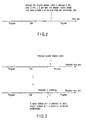
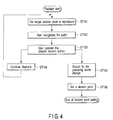
- the information recording and reproducing apparatus of the embodiment uses, for example, those scene dividing techniques, thereby detecting a scene change point closest to and earlier (or later) than the time at which the chapter division button 15a was pressed during the reproduction and automatically setting a chapter division point to the scene change point.
- the information recording and reproducing apparatus of the embodiment can solve the above problem by using a scene detecting function.
- the boundary detecting section 4 analyzes audio-video information and detects a boundary point (or a scene change point) in the audio-video information.
- the chapter setting section 5 corrects the chapter division point corresponding to the timing of specifying chapter division by the chapter division button 15a of the remote controller 15 during the reproduction of the audio-video information to a boundary point in the audio-video information detected before the timing of specifying chapter division and sets the corrected chapter division point.
- the chapter setting section 5 corrects the chapter division point corresponding to the timing of specifying chapter division by the chapter division button 15a of the remote controller 15 during the reproduction of the audio-video information to a boundary point in the audio-video information detected after the timing of specifying chapter division and sets the corrected chapter division point.
- the boundary detecting section 4 has only to detect a boundary point from audio-video information in a specific time (of about several seconds) before the timing of specifying chapter division. That is, grasping the characteristics of the user operation makes it possible to provide the user with a great advantage even with a low-cost scene change function.
- a boundary point While a boundary point has been detected from audio-video information in a specific time (of about several seconds) before the timing of specifying chapter division, a boundary point may be detected from audio-video information in a specific time (of about several seconds) after the timing of specifying chapter division.
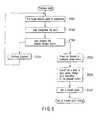
- FIG. 4 is a flowchart to help explain the setting of a chapter division point.
- the user waits for the timing of setting a chapter division point, while reproducing (or viewing) audio-video information in which the user is going to set a chapter division point. For example, when the scene changes in the middle of viewing (ST101), the user recognizes the scene change (ST102) and presses the chapter division button 15a of the remote controller 15 (ST103). At this time, the audio-video information is reproduced directly (ST104).
- the chapter setting section 5 searches for a boundary point (or a scene change point) in the audio-video information detected before (or immediately before) the timing of specifying chapter division (ST105), corrects the chapter division point corresponding to the timing of specifying chapter division to the boundary point, and sets the corrected chapter division point (ST106).
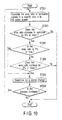
- FIG. 5 is a flowchart to help explain the process of selecting a first correction that corrects a chapter division point so as to put the point before the timing of specifying chapter division and a second correction that corrects a chapter point so as to put the point after the timing of specifying chapter division and then setting them.
- the user waits for the timing of setting a chapter division point, while reproducing (or viewing) audio-video information in which the user is going to set a chapter division point. For example, when the scene changes in the middle of viewing (ST201), the user recognizes the scene change (ST202) and presses the chapter division button 15a of the remote controller 15 (ST203). At this time, the audio-video information is reproduced directly (ST204). The user further presses the forward key 15b or backward key 15c of the remote controller 15 (ST205).
- the chapter setting section 5 searches for a boundary point (or a scene change point) in the audio-video information detected before (or immediately before) the timing of specifying chapter division (ST206), corrects the chapter division point corresponding to the timing of specifying chapter division to the boundary point, and sets the corrected chapter division point (ST207).
- the chapter setting section 5 searches for a boundary point (or a scene change point) in the audio-video information detected after (or immediately after) the timing of specifying chapter division (ST206), corrects the chapter division point corresponding to the timing of specifying chapter division to the boundary point, and sets the corrected chapter division point (ST207).
- the direction in which the chapter division point is to be corrected may be specified in advance and all subsequent chapter divisions may be set to the specified correction direction. That is, first, the user presses the forward key 15b (specifying the first correction) and corrects all of the chapter division points corresponding to the subsequent presses of the chapter division button 15a to the boundary point (or scene change point) in the audio-video information detected before (immediately before) the timing of specifying chapter division. Alternatively, first, the user presses the backward key 15c (specifying the second correction) and corrects all of the chapter division points corresponding to the subsequent presses of the chapter division button 15a to the boundary point (or scene change point) in the audio-video information detected after (immediately after) the timing of specifying chapter division.
- FIG. 6 is a timing chart to help explain the basic principle of detecting a scene change.
- the boundary detecting section 4 calculates the average of the area ratio of the luminance signals in a specific range (0 to 25 IRE) of the total range (0 to 100 IRE) of luminance signal levels to the entire screen in units of, for example, 6 frames (see FIG. 6(1)).
- 6 frames the unit of computing the average of the area ratio, is illustrative, and not restrictive.
- the boundary detecting section 4 uses the latest average of the area ratio and the preceding one to determine whether to set the boundary between the preceding frame group (frame n-5 to frame n) and the following frame group (frame n-11 to frame n-6) as a scene change place (see FIG. 6(2)). This determination is made, depending on whether the following conditions are satisfied:
- the boundary detecting section 4 determines that the place is not a scene change place.
- the condition for the amount of change is satisfied in both (A) ⁇ (B) and (B) ⁇ (A). If this condition is satisfied, then the boundary detecting section 4 checks whether the condition for the area ratio shown below is fulfilled.
- the area ratio is Y (e.g., 25)% or less.
- the boundary detecting section 4 basically suppresses the setting of the place as a scene change place, even when the area ratio increases or decreases by X% or more. In contrast, if the condition is satisfied, the boundary detecting section 4 determines at that time that the place is a scene change place. In the example of FIG. 8, since the area ratio of the luminance signals in the range of 0 to 25 IRE to the entire screen exceeds 25%, the condition for the area ratio is not basically fulfilled.
- the boundary detecting section 4 further checks whether the following condition is satisfied as a secondary condition:
- the area ratio has increased by Z (e.g., 10)% or more.
- the boundary detecting section 4 determines that the place is a scene change place, even when y% has been exceeded. That is, as shown in the example of FIG. 8, even when the area ratio has exceeded 25%, it involves an increase of 10% or more as in (A) ⁇ (B) as shown in FIGS. 9A and 9B, the boundary detecting section 4 determines on an exceptional basis that the condition for the area ratio has been fulfilled.
- the boundary detecting section 4 can detect a scene change place by measuring only (1) the amount of change and (2) the area ratio.
- the boundary detecting section 4 calculates the area ratio of the luminance signals in a specific range to the entire screen for the video data of the broadcast signal received from the tuner 1 (ST301). After calculating the area ratio, the boundary detecting section 4 determines whether the increase or decrease is X (e.g., 3)% or more (ST302).
- the boundary detecting section 4 determines whether the area ratio itself is Y (e.g., 25)% or less (ST303). At this time, if Y% has been exceeded (NO in ST303), the boundary detecting section 4 further determines whether the area ratio has exceeded Z (e.g., 25)% or more (ST304).
- the boundary detecting section 4 determines that the place is a scene change place (ST305) and continues the process as needed (ST306).
- the boundary detecting section 4 determines that the place is not a scene change place and continues the process as needed (ST306).
- the boundary detecting section 4 detects a commercial interval on the basis of the change of the audio mode (stereo ⁇ ⁇ monaural) and then detects the starting point and ending point of the commercial interval as boundary points.
- the boundary detecting section 4 detects a plurality of silent points (the changes of commercials) appearing at short intervals and then detects the first and last silent points (corresponding to the starting point and ending point of the commercial) of the plurality of silent points detected as boundary points.
- the boundary detecting section 4 detects a plurality of silent points (the changes of commercials) appearing at short intervals and then detects the first and last silent points (corresponding to the starting point and ending point of the commercial) of the plurality of silent points detected as boundary points.
- a chapter division point is set to the starting point of the commercial interval. As soon as the commercial interval has ended, when the user presses the chapter division button 15a, the ending point of the commercial interval immediately before the button is pressed is detected. A chapter division point is set to the ending point of the commercial interval.
- the information recording and reproducing apparatus of the embodiment can set a chapter division point to a scene change point immediately before (or immediately after) the chapter division button 15a is pressed, not at the time when the chapter division button 15a is pressed. Consequently, even if the chapter division button is pressed a little before or after the scene change point when a chapter division point is set, while audio video is being reproduced in the normal mode (or reproduced at constant speed), the chapter division point is corrected automatically to the scene change point. Therefore, the apparatus is easy for novice users to use and enables even advanced users to improve operationality.
Landscapes
- Engineering & Computer Science (AREA)
- Multimedia (AREA)
- Television Signal Processing For Recording (AREA)
- Management Or Editing Of Information On Record Carriers (AREA)
Applications Claiming Priority (1)
| Application Number | Priority Date | Filing Date | Title |
|---|---|---|---|
| JP2005247777A JP2007067522A (ja) | 2005-08-29 | 2005-08-29 | 情報編集装置、情報編集方法、及び情報編集プログラム |
Publications (1)
| Publication Number | Publication Date |
|---|---|
| EP1760718A2 true EP1760718A2 (de) | 2007-03-07 |
Family
ID=37461359
Family Applications (1)
| Application Number | Title | Priority Date | Filing Date |
|---|---|---|---|
| EP06117814A Withdrawn EP1760718A2 (de) | 2005-08-29 | 2006-07-25 | Vorrichtung, Verfahren und Programm zum Schneiden von Informationen |
Country Status (3)
| Country | Link |
|---|---|
| US (1) | US20070047911A1 (de) |
| EP (1) | EP1760718A2 (de) |
| JP (1) | JP2007067522A (de) |
Cited By (2)
| Publication number | Priority date | Publication date | Assignee | Title |
|---|---|---|---|---|
| US20080304813A1 (en) * | 2007-05-29 | 2008-12-11 | Sony Corporation | Data processing apparatus, data processing method, data processing program, recording apparatus, recording method, and recording program |
| WO2014159898A1 (en) * | 2013-03-29 | 2014-10-02 | Dolby Laboratories Licensing Corporation | Methods and apparatuses for generating and using low-resolution preview tracks with high-quality encoded object and multichannel audio signals |
Families Citing this family (6)
| Publication number | Priority date | Publication date | Assignee | Title |
|---|---|---|---|---|
| WO2008032448A1 (en) * | 2006-09-13 | 2008-03-20 | Nikon Corporation | Headgear type display |
| US8358381B1 (en) * | 2007-04-10 | 2013-01-22 | Nvidia Corporation | Real-time video segmentation on a GPU for scene and take indexing |
| KR101462116B1 (ko) * | 2007-07-25 | 2014-11-17 | 삼성전자 주식회사 | 방송처리장치 및 그 제어방법 |
| JP2009094966A (ja) * | 2007-10-11 | 2009-04-30 | Toshiba Corp | 再生装置、再生方法および再生制御プログラム |
| JP7502221B2 (ja) * | 2021-03-05 | 2024-06-18 | 株式会社日立国際電気 | 映像編集送出システム |
| CN116546264B (zh) * | 2023-04-10 | 2024-08-30 | 北京度友信息技术有限公司 | 视频处理方法及装置、电子设备和存储介质 |
Family Cites Families (4)
| Publication number | Priority date | Publication date | Assignee | Title |
|---|---|---|---|---|
| JP2765674B2 (ja) * | 1993-12-16 | 1998-06-18 | インターナショナル・ビジネス・マシーンズ・コーポレイション | データ供給装置 |
| JP4178629B2 (ja) * | 1998-11-30 | 2008-11-12 | ソニー株式会社 | 情報処理装置および方法、並びに記録媒体 |
| US20020127001A1 (en) * | 2000-11-08 | 2002-09-12 | Masanori Gunji | Recording/reproducing apparatus |
| JP4003697B2 (ja) * | 2003-05-28 | 2007-11-07 | 船井電機株式会社 | 映像再生装置 |
-
2005
- 2005-08-29 JP JP2005247777A patent/JP2007067522A/ja active Pending
-
2006
- 2006-07-25 EP EP06117814A patent/EP1760718A2/de not_active Withdrawn
- 2006-08-11 US US11/502,362 patent/US20070047911A1/en not_active Abandoned
Cited By (4)
| Publication number | Priority date | Publication date | Assignee | Title |
|---|---|---|---|---|
| US20080304813A1 (en) * | 2007-05-29 | 2008-12-11 | Sony Corporation | Data processing apparatus, data processing method, data processing program, recording apparatus, recording method, and recording program |
| US8687942B2 (en) * | 2007-05-29 | 2014-04-01 | Sony Corporation | Data processing apparatus, data processing method, data processing program, recording apparatus, recording method, and recording program |
| WO2014159898A1 (en) * | 2013-03-29 | 2014-10-02 | Dolby Laboratories Licensing Corporation | Methods and apparatuses for generating and using low-resolution preview tracks with high-quality encoded object and multichannel audio signals |
| US9786286B2 (en) | 2013-03-29 | 2017-10-10 | Dolby Laboratories Licensing Corporation | Methods and apparatuses for generating and using low-resolution preview tracks with high-quality encoded object and multichannel audio signals |
Also Published As
| Publication number | Publication date |
|---|---|
| JP2007067522A (ja) | 2007-03-15 |
| US20070047911A1 (en) | 2007-03-01 |
Similar Documents
| Publication | Publication Date | Title |
|---|---|---|
| US20070212030A1 (en) | Video playback apparatus | |
| EP1043892A1 (de) | Aufnahme und Wiedergabe von Videoprogrammen im Paketformat | |
| EP1760718A2 (de) | Vorrichtung, Verfahren und Programm zum Schneiden von Informationen | |
| US20030228131A1 (en) | File information reproducing apparatus and file information reproducing method | |
| EP1206132B1 (de) | Bildwiedergabegerät mit Sprungfunktion | |
| JP4698453B2 (ja) | コマーシャル検出装置、映像再生装置 | |
| US7764862B2 (en) | Method of and apparatus for setting video signal delimiter information judged from audio and video signals | |
| US8369681B2 (en) | Video reproducing apparatus | |
| EP1326440B1 (de) | Aufzeichnungsvorrichtung und -verfahren | |
| US7362954B2 (en) | Recording apparatus and method, recording medium, and program | |
| US8150233B2 (en) | Apparatus for and method of analyzing video contents | |
| US20070279267A1 (en) | Compressed data transfer apparatus and compressed data transfer method | |
| JP2000069414A (ja) | 記録装置および記録方法、再生装置および再生方法、ならびに、cm検出方法 | |
| EP1359584B1 (de) | Gerät und Verfahren zur Videowiedergabe | |
| JP2008098960A (ja) | 情報記録再生装置 | |
| US20060259261A1 (en) | Specific-condition-section detection apparatus and method of detecting specific condition section | |
| US7756390B2 (en) | Video signal separation information setting method and apparatus using audio modes | |
| JP3138235B2 (ja) | テレビジョン放送の記録再生装置 | |
| US20060263062A1 (en) | Method of and apparatus for setting video signal delimiter information using silent portions | |
| US7822316B2 (en) | Digital video recorder to be connected to DV camcorder via IEEE 1394 serial bus | |
| JP2006135524A (ja) | 情報記録再生装置 | |
| JP3955278B2 (ja) | 再生装置 | |
| JP2008141383A (ja) | 映像編集装置、映像編集システムおよび映像編集方法 | |
| JP2002135728A (ja) | 録画再生装置 | |
| JP4836198B2 (ja) | テレビジョン放送のcm放送判定方法、放送番組再生方法及び放送番組記録再生装置 |
Legal Events
| Date | Code | Title | Description |
|---|---|---|---|
| PUAI | Public reference made under article 153(3) epc to a published international application that has entered the european phase |
Free format text: ORIGINAL CODE: 0009012 |
|
| 17P | Request for examination filed |
Effective date: 20060726 |
|
| AK | Designated contracting states |
Kind code of ref document: A2 Designated state(s): AT BE BG CH CY CZ DE DK EE ES FI FR GB GR HU IE IS IT LI LT LU LV MC NL PL PT RO SE SI SK TR |
|
| AX | Request for extension of the european patent |
Extension state: AL BA HR MK YU |
|
| STAA | Information on the status of an ep patent application or granted ep patent |
Free format text: STATUS: THE APPLICATION HAS BEEN WITHDRAWN |
|
| 18W | Application withdrawn |
Effective date: 20090306 |
|
| RIC1 | Information provided on ipc code assigned before grant |
Ipc: G11B 27/34 20060101ALI20090311BHEP Ipc: G11B 27/32 20060101ALI20090311BHEP Ipc: G11B 27/28 20060101ALI20090311BHEP Ipc: G11B 27/10 20060101ALI20090311BHEP Ipc: G11B 27/034 20060101AFI20061212BHEP |