EP1750285B1 - Method of manufacture of noble metal/zinc oxide hybrid product for simultaneous dose reduction and mitigation of Stress Corrosion Cracking (SCC) of nuclear power plants - Google Patents
Method of manufacture of noble metal/zinc oxide hybrid product for simultaneous dose reduction and mitigation of Stress Corrosion Cracking (SCC) of nuclear power plants Download PDFInfo
- Publication number
- EP1750285B1 EP1750285B1 EP20060253947 EP06253947A EP1750285B1 EP 1750285 B1 EP1750285 B1 EP 1750285B1 EP 20060253947 EP20060253947 EP 20060253947 EP 06253947 A EP06253947 A EP 06253947A EP 1750285 B1 EP1750285 B1 EP 1750285B1
- Authority
- EP
- European Patent Office
- Prior art keywords
- noble metal
- dzo
- zinc
- zinc oxide
- particles
- Prior art date
- Legal status (The legal status is an assumption and is not a legal conclusion. Google has not performed a legal analysis and makes no representation as to the accuracy of the status listed.)
- Active
Links
Images

Classifications
-
- G—PHYSICS
- G21—NUCLEAR PHYSICS; NUCLEAR ENGINEERING
- G21C—NUCLEAR REACTORS
- G21C17/00—Monitoring; Testing ; Maintaining
- G21C17/02—Devices or arrangements for monitoring coolant or moderator
- G21C17/022—Devices or arrangements for monitoring coolant or moderator for monitoring liquid coolants or moderators
- G21C17/0225—Chemical surface treatment, e.g. corrosion
-
- B—PERFORMING OPERATIONS; TRANSPORTING
- B01—PHYSICAL OR CHEMICAL PROCESSES OR APPARATUS IN GENERAL
- B01J—CHEMICAL OR PHYSICAL PROCESSES, e.g. CATALYSIS OR COLLOID CHEMISTRY; THEIR RELEVANT APPARATUS
- B01J23/00—Catalysts comprising metals or metal oxides or hydroxides, not provided for in group B01J21/00
- B01J23/38—Catalysts comprising metals or metal oxides or hydroxides, not provided for in group B01J21/00 of noble metals
- B01J23/54—Catalysts comprising metals or metal oxides or hydroxides, not provided for in group B01J21/00 of noble metals combined with metals, oxides or hydroxides provided for in groups B01J23/02 - B01J23/36
- B01J23/56—Platinum group metals
- B01J23/60—Platinum group metals with zinc, cadmium or mercury
-
- B—PERFORMING OPERATIONS; TRANSPORTING
- B22—CASTING; POWDER METALLURGY
- B22F—WORKING METALLIC POWDER; MANUFACTURE OF ARTICLES FROM METALLIC POWDER; MAKING METALLIC POWDER; APPARATUS OR DEVICES SPECIALLY ADAPTED FOR METALLIC POWDER
- B22F1/00—Metallic powder; Treatment of metallic powder, e.g. to facilitate working or to improve properties
- B22F1/18—Non-metallic particles coated with metal
-
- B—PERFORMING OPERATIONS; TRANSPORTING
- B22—CASTING; POWDER METALLURGY
- B22F—WORKING METALLIC POWDER; MANUFACTURE OF ARTICLES FROM METALLIC POWDER; MAKING METALLIC POWDER; APPARATUS OR DEVICES SPECIALLY ADAPTED FOR METALLIC POWDER
- B22F9/00—Making metallic powder or suspensions thereof
- B22F9/16—Making metallic powder or suspensions thereof using chemical processes
- B22F9/18—Making metallic powder or suspensions thereof using chemical processes with reduction of metal compounds
- B22F9/24—Making metallic powder or suspensions thereof using chemical processes with reduction of metal compounds starting from liquid metal compounds, e.g. solutions
-
- C—CHEMISTRY; METALLURGY
- C01—INORGANIC CHEMISTRY
- C01G—COMPOUNDS CONTAINING METALS NOT COVERED BY SUBCLASSES C01D OR C01F
- C01G55/00—Compounds of ruthenium, rhodium, palladium, osmium, iridium, or platinum
-
- C—CHEMISTRY; METALLURGY
- C01—INORGANIC CHEMISTRY
- C01G—COMPOUNDS CONTAINING METALS NOT COVERED BY SUBCLASSES C01D OR C01F
- C01G9/00—Compounds of zinc
-
- G—PHYSICS
- G21—NUCLEAR PHYSICS; NUCLEAR ENGINEERING
- G21C—NUCLEAR REACTORS
- G21C19/00—Arrangements for treating, for handling, or for facilitating the handling of, fuel or other materials which are used within the reactor, e.g. within its pressure vessel
- G21C19/28—Arrangements for introducing fluent material into the reactor core; Arrangements for removing fluent material from the reactor core
- G21C19/30—Arrangements for introducing fluent material into the reactor core; Arrangements for removing fluent material from the reactor core with continuous purification of circulating fluent material, e.g. by extraction of fission products deterioration or corrosion products, impurities, e.g. by cold traps
- G21C19/307—Arrangements for introducing fluent material into the reactor core; Arrangements for removing fluent material from the reactor core with continuous purification of circulating fluent material, e.g. by extraction of fission products deterioration or corrosion products, impurities, e.g. by cold traps specially adapted for liquids
-
- C—CHEMISTRY; METALLURGY
- C01—INORGANIC CHEMISTRY
- C01P—INDEXING SCHEME RELATING TO STRUCTURAL AND PHYSICAL ASPECTS OF SOLID INORGANIC COMPOUNDS
- C01P2004/00—Particle morphology
- C01P2004/60—Particles characterised by their size
- C01P2004/61—Micrometer sized, i.e. from 1-100 micrometer
-
- C—CHEMISTRY; METALLURGY
- C01—INORGANIC CHEMISTRY
- C01P—INDEXING SCHEME RELATING TO STRUCTURAL AND PHYSICAL ASPECTS OF SOLID INORGANIC COMPOUNDS
- C01P2004/00—Particle morphology
- C01P2004/60—Particles characterised by their size
- C01P2004/62—Submicrometer sized, i.e. from 0.1-1 micrometer
-
- C—CHEMISTRY; METALLURGY
- C01—INORGANIC CHEMISTRY
- C01P—INDEXING SCHEME RELATING TO STRUCTURAL AND PHYSICAL ASPECTS OF SOLID INORGANIC COMPOUNDS
- C01P2004/00—Particle morphology
- C01P2004/80—Particles consisting of a mixture of two or more inorganic phases
-
- C—CHEMISTRY; METALLURGY
- C01—INORGANIC CHEMISTRY
- C01P—INDEXING SCHEME RELATING TO STRUCTURAL AND PHYSICAL ASPECTS OF SOLID INORGANIC COMPOUNDS
- C01P2004/00—Particle morphology
- C01P2004/80—Particles consisting of a mixture of two or more inorganic phases
- C01P2004/82—Particles consisting of a mixture of two or more inorganic phases two phases having the same anion, e.g. both oxidic phases
- C01P2004/84—Particles consisting of a mixture of two or more inorganic phases two phases having the same anion, e.g. both oxidic phases one phase coated with the other
-
- Y—GENERAL TAGGING OF NEW TECHNOLOGICAL DEVELOPMENTS; GENERAL TAGGING OF CROSS-SECTIONAL TECHNOLOGIES SPANNING OVER SEVERAL SECTIONS OF THE IPC; TECHNICAL SUBJECTS COVERED BY FORMER USPC CROSS-REFERENCE ART COLLECTIONS [XRACs] AND DIGESTS
- Y02—TECHNOLOGIES OR APPLICATIONS FOR MITIGATION OR ADAPTATION AGAINST CLIMATE CHANGE
- Y02E—REDUCTION OF GREENHOUSE GAS [GHG] EMISSIONS, RELATED TO ENERGY GENERATION, TRANSMISSION OR DISTRIBUTION
- Y02E30/00—Energy generation of nuclear origin
- Y02E30/30—Nuclear fission reactors
-
- Y—GENERAL TAGGING OF NEW TECHNOLOGICAL DEVELOPMENTS; GENERAL TAGGING OF CROSS-SECTIONAL TECHNOLOGIES SPANNING OVER SEVERAL SECTIONS OF THE IPC; TECHNICAL SUBJECTS COVERED BY FORMER USPC CROSS-REFERENCE ART COLLECTIONS [XRACs] AND DIGESTS
- Y10—TECHNICAL SUBJECTS COVERED BY FORMER USPC
- Y10T—TECHNICAL SUBJECTS COVERED BY FORMER US CLASSIFICATION
- Y10T137/00—Fluid handling
- Y10T137/0318—Processes
- Y10T137/0324—With control of flow by a condition or characteristic of a fluid
Definitions
- the present invention relates to composite particles of a zinc containing compound and a noble metal for use in nuclear power reactors. More specifically, the present invention provides a process for the preparation of composite particles of zinc oxide coated with a noble metal.
- U.S. patents 5,448,605 , 5,600,691 and 5,600,692 describe the doping of metallic surfaces with noble metals to impart catalytic properties on the surfaces.
- the methods described in these patents deviate significantly from the conventional methods such as electroplating and electroless plating that are commonly used to impart such catalytic properties on metal surfaces.
- electroplating requires the use of an externally applied voltage
- electroless plating requires the use of strong chemical reducing agents to deposit noble metals on surfaces.
- electroplating and electroless plating require high concentration of metal to be deposited, low or high pH and addition of other undesirable chemical species such as chlorides and sulfates.
- deposition of noble metals can be achieved by injecting noble metal containing chemicals in to the reactor water.
- noble metals or platinum group metals such as Palladium, Platinum, Iridium, Rhodium, etc.
- They impart catalytic properties on these surfaces as shown by low ECPs and very low crack growth rates in the presence of a stoichiometric excess of hydrogen and in high temperature water.
- the presence of noble metal on these noble metal doped surfaces has been proven by surface analysis using Auger Spectroscopy, Atomic Absorption Spectroscopy and ESCA.
- U.S. patents 4,756,874 , 4,950,449 , 4,759,900 and 5,896,433 describe the addition of either zinc oxide (ZnO), depleted ZnO (DZO) or Zn ions to nuclear reactor water to suppress radio nuclide build-up on out of core reactor internals surfaces.
- ZnO zinc oxide
- DZO depleted ZnO
- Zn ions or ZnO in suppressing radioactive build-up of out of core surfaces and reducing drywell dose rates as well as lowering personnel exposure have been well demonstrated in operating nuclear reactors.
- DZO addition has been practiced in 43 BWRs worldwide as a means of controlling shut down dose rates arising largely from the accumulation of the undesirable isotope Cobalt-60 (Co 60 ) in the recirculation piping.
- the zinc addition results in a zinc containing spinel type oxide film on BWR internal surfaces where the zinc atoms preferentially occupy the sites that would otherwise have been occupied by Co 60 .
- DZO depleted ZnO
- noble metal has been added to reactor water as a solution
- DZO has been added to feedwater as Zn ions in the form of a slurry or by allowing feedwater to flow through a bed of solid DZO pellets.
- the addition of the two species occurs at two different temperatures, in one case DZO addition to feedwater (350° to 450° F) and in the other case noble metal addition to reactor water at a much lower temperature (240° to 300° F).
- noble metal addition is active (res pumps for injection) and intermittent, while the DZO addition is passive and continuous during plant operation.
- the cumulative noble metal addition experience in nuclear power plants is about 120 reactor operating years and the DZO experience is in excess of 300 reactor operating years, demonstrating that the two technologies are widely accepted by the nuclear industry.
- the present invention seeks to address that need.
- the present invention provides a unique noble metal/zinc-containing compound composite product that will enable plants to practice both technologies at the same time using a passive (no pumps) approach where operator intervention is minimal.
- the invention involves identifying the optimum chemistry conditions for maximum or optimum incorporation of noble metals into the zinc-containing compound, so that the micron or sub-micron size zinc-containing particles are individually coated with a noble metal(s) that are of nano-meter size distribution, such as platinum. Nano-meter size distribution of platinum is achievable because platinum is deposited on zinc oxide particles from an ionic solution of a platinum compound.
- the present invention resides in the discovery that it is possible, by way of a composite particle containing a zinc-containing compound, typically zinc oxide or depleted zinc oxide, and a noble metal, to introduce both zinc and noble metal into a reactor while the reactor is operating, thereby obviating the need to shut-down the reactor to facilitate addition of either species.
- the invention provides a solution chemistry process that permits a selected surface interaction to occur between the particles and the noble metal ionic species or particles to achieve a desired loading of noble metal on the surface of the particles.
- FIG. 1 there is shown, schematically, an apparatus 2 for introducing composite particles into reactor water which is then fed to a reactor 4.
- the noble metal and zinc containing solution is automatically fed back into the feedwater through lines 6,8 by using the differential pressure of flow control valve (FCV) 10 and final feedwater pump 12.
- FCV flow control valve
- the equipment requires no power, no pumps or other mechanical devices to simultaneously inject noble metals and zinc into the reactor. Minimum operator intervention is required to manipulate the valve, to change the concentration of zinc or noble metal entering the reactor vessel, when necessary. This approach will require tailor-making the DZO/noble metal hybrid depending on the zinc demand of the reactor and its efficiency of depositing noble metal.
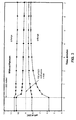
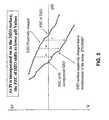
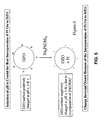
- Figure 2 shows an example from the literature of surface charge effect (zeta potential and fraction of particles adhered onto a surface) as a function of pH. It will be seen that a maximum interaction occurs at a pH of between about 5 & 6. From this and from Figures 3 through 6 , it will be appreciated that it is possible, in the present invention, to select a pH depending on the desired level of loading of noble metal on the DZO particle.
- the purpose of this Figure and Figure 5 is to illustrate that interaction between DZO and Pt can be optimized by a judicious selection of the pH during the equilibration process.
- FIG 3 shows actual experimental pH data before and after the addition of depleted zinc oxide (DZO) to water.
- DZO depleted zinc oxide
- the pH of the water was adjusted to the desired value by adding a few micro-liters of 0.1 M NaOH or 0.1 M HNO 3 to 35 ml of deionized (DI) water bubbled with Argon gas to maintain the solution free of carbon dioxide.
- DI deionized
- the initial pHs of the solutions are indicated by pH values at time zero before DZO addition.
- the pH variation was monitored after adding 0.5 g of DZO powder while the solution was being stirred with a magnetic stirrer and bubbled with Argon gas.
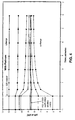
- Figure 4 is similar to Figure 3 , except the starting solution contains 50 ppb Pt as Na 2 Pt(OH) 6 .
- Strong interaction between positively charged DZO and the [Pt(OH) 6 ] anions occur at low pHs and the pzc in this case has shifted to lower values, i.e. 8.63 as shown in the Figure.
- the filtered pH 5.13 solution showed a remaining Pt concentration of 0.047 ppb, indicating that most of the Pt has interacted with DZO.
- the pH 12.03 solution showed a remaining Pt concentration of 19.8 ppb, and the pH change was very small down to 11.97 over a 6 minute period.
- the data confirmed that optimum interaction of Pt on DZO at a microscopic level occurs at low pHs, and more specifically, close to pH 5.
- DZO powder having micron or submicron particle size 0.1 to 50 micron, and more specifically 1 to 10 micron is employed together with available noble metal chemicals, such as H 2 Pt(OH) 6 , Na 2 Pt(OH) 6 , Na 2 Rh(NO 2 ) 6 or similar compounds of other noble metals.
- available noble metal chemicals such as H 2 Pt(OH) 6 , Na 2 Pt(OH) 6 , Na 2 Rh(NO 2 ) 6 or similar compounds of other noble metals.
- M is a metal acceptable in a reactor water environment such as sodium, potassium, iron, nickel, titanium, zirconium, zinc, tungsten, niobium, tantalum, yttrium, platinum, palladium, osmium, iridium, ruthenium, rhodium, vanadium, chromium, manganese and the anion is a hydroxide, nitrate, nitrite or any other simple or complex anion acceptable in a nuclear reactor water environment.
- the metal selected from any of the above listed metals
- the cation could be any of the metal ions acceptable in a nuclear reactor water environment.
- An example of such a compound is Na 2 Pt(OH) 6 .
- the invention resides in the discovery that it is possible to manufacture a hybrid noble metal/zinc product by using specific chemistry conditions favorable for the formation of particles coated with noble metal to the desired levels, such that the optimum amounts of noble metal and zinc ions/particles are injected into the feedwater. It has been found according to the invention that simple mixing of noble metal solution or noble metal particles with zinc-contain particles is not adequate, since there will be no control of the amount of zinc or the noble metal entering the feedwater due to the heterogeneity of the mixture. As an example, if the feedwater zinc concentration is 0.4 ppb, the noble metal concentration could be 0.1 ppb or 5 ppb depending on the heterogeneity of the mixed compounds. Since the mix between two chemicals is macroscopically heterogeneous, individual control of the concentration of the two species would not be possible.
- the composite particles of the invention may be prepared using a known quantity of the zinc oxide powder or depleted zinc oxide powder having a surface area of 1 to 100 m 2 /g or more specifically about 10 m 2 /g, and equilibrating it with pH adjusted Pt containing anion solutions such as H 2 Pt(OH) 6 , Na 2 Pt(OH) 6 under well stirred or ultrasonicated conditions.
- the pH is adjusted to maintain the desired strong interaction between the positively charged DZO particles and the negatively charged Pt containing anions, such as Pt(OH) 6 2- .
- the pH is maintained in the range of 5 to 6.
- the pH of the suspension will be maintained at the pH of highest interaction or adhesion, i.e. at a pH of about 5.5 before making the pellets.
- the pH is selected to have less interaction, for example a pH of higher than 5.5 depending the noble metal loading needed.
- very low noble metal loading the pH is maintained in a region of very low interaction, i.e. a pH > 9.0 the pzc of DZO.
- the composite particles of the invention can be tailor-made to have the desired noble metal loading and the zinc input into the feedwater.
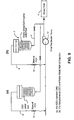
- An alternate method is to employ the highest noble metal loaded zinc oxide or depleted zinc oxide bed in parallel with just a zinc oxide/depleted zinc oxide bed with a separate flow control valve as shown Figure 9 . This allows an independent control of zinc concentration and noble metal into the feedwater depending on the flow through each individual bed. Any flow through just the depleted zinc oxide bed lowers the concentration input of noble metal into the feedwater.
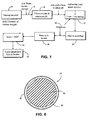
- FIG. 7 is a schematic of a typical process to produce a composite particle of the invention.
- Starting material from supply 14 is mixed with water at 16 and the resulting aqueous suspension is fed to a well stirred or an ultrasonication bath 18.
- Ultrasonication may be necessary if the DZO particles are agglomerated.
- the suspension is subjected to ultrasonication using conventional ultrasonics apparatus, if necessary, to reduce the particles to the desired particle size range, typically micron (1 to 10 microns) or submicron (0.1 to 1 micron) size entities.
- Preliminary studies have indicated that the zinc oxide/depleted zinc oxide particles in water have a surface positive charge.
- the present invention utilizes this property to create a strong interaction between the zinc-containing particles and anionic Pt containing species.
- the interaction is enhanced by utilizing stirring or ultrasonication to breakdown zinc-containing particles to micron or submicron size to increase the surface area and create maximum loading of noble metal onto the zinc containing material in the aqueous suspension.
- the pH of the well stirred or ultrasonicated aqueous suspension is measured at station 18 and adjusted in line 20 as it is fed to mixing station 22 where noble metal is added in the form of a noble metal anion solution , example a solution of Na 2 Pt(OH) 6 .
- a 50 ppb Pt solution at a pH of about 5.1 can be equilibrated with 0.5 g DZO having a surface area of 1 to 100 m 2 /g or more specifically 1 to 10 m 2 /g for 10 minutes to one hour with stirring.
- the mixture is stirred for a period of about 5 minutes to 5 hours, more usually about 10 minutes to 1 hour at the mixing station 22.
- the material is centrifuged, filtered or dried at 24 to obtain the composite product.
- the hybrid product is treated with additives 26 such as binders, sintering agents, etc., either at 22 or at 24, and then dried, pressed in to pellets at 28, calcined at a temperature of about 500°C, and then sintered at about 800°C at 30 for 4 to 8 hours to densify the final product obtained at 32.
- Figure 8 shows a cross-section of a composite particle 34 according to the invention.
- the particle comprises a zinc-containing compound 36 and a noble metal 38.
- the zinc containing compound 36 is depleted zinc oxide.
- Depleted zinc oxide is zinc oxide depleted in the Zn-64 isotope to prevent activation of Zn-64 in the reactor to Zn-65 which is a gamma radiation emitter.
- the noble metal 38 is selected from platinum, rhodium, ruthenium, palladium, osmium and iridium, usually platinum.
- the noble metal is present as a deposit 40 on the DZO particle, and is present as an anionic species, for example Pt(OH) 6 2- , initially, but is converted to metallic Pt or oxide of Pt during the calcining process.
- the deposited noble metal may have a thickness of molecular dimensions since it is deposited from an ionic state for example from several angstroms to 1 micron and more specifically 5 to 1000 angstroms.
- the noble metal particle deposits may be continuous or discontinuous.
- the composite particle normally has a size in the range of 0.1 to 50 microns, for example 1 to 20 microns.
- Composite particle may further comprise a binder.
- a typical binder for this application include zinc stearate which acts as a binder as well as a solid lubricant.
- the amount of zinc stearate is 0.1 to 5% and more specifically in the range 0.5 to 1%.
- Figure 9 shows schematically a modification of the apparatus of Figure 1 wherein two reservoirs a and b are provided for (a) supplying DZO pellets only and (b) for simultaneous injection of DZO and noble metal hybrid pellets.
- the components are otherwise the same as described above for Figure 1 .
- the composite noble metal/DZO hybrid product is used to simultaneously introduce both noble metal and DZO into the reactor feedwater. This approach eliminates the current practice of adding noble metal species into reactors during plant shutdown that requires prohibitively expensive critical path time.
- the process is passive whereby the noble metal and zinc containing hybrid product is loaded into a container ( Figure 1 ) through which reactor feedwater is allowed to pass, thereby introducing both zinc and noble metal into the reactor in one operation.
Landscapes
- Chemical & Material Sciences (AREA)
- Engineering & Computer Science (AREA)
- Organic Chemistry (AREA)
- Physics & Mathematics (AREA)
- Inorganic Chemistry (AREA)
- Plasma & Fusion (AREA)
- General Engineering & Computer Science (AREA)
- High Energy & Nuclear Physics (AREA)
- Chemical Kinetics & Catalysis (AREA)
- Materials Engineering (AREA)
- General Chemical & Material Sciences (AREA)
- Catalysts (AREA)
- Inorganic Compounds Of Heavy Metals (AREA)
- Compositions Of Oxide Ceramics (AREA)
Applications Claiming Priority (1)
| Application Number | Priority Date | Filing Date | Title |
|---|---|---|---|
| US11/195,592 US20070028719A1 (en) | 2005-08-03 | 2005-08-03 | Method of manufacture of noble metal/zinc oxide hybrid product for simultaneous dose reduction and SCC mitigation of nuclear power plants |
Publications (2)
| Publication Number | Publication Date |
|---|---|
| EP1750285A1 EP1750285A1 (en) | 2007-02-07 |
| EP1750285B1 true EP1750285B1 (en) | 2011-02-09 |
Family
ID=37084624
Family Applications (1)
| Application Number | Title | Priority Date | Filing Date |
|---|---|---|---|
| EP20060253947 Active EP1750285B1 (en) | 2005-08-03 | 2006-07-27 | Method of manufacture of noble metal/zinc oxide hybrid product for simultaneous dose reduction and mitigation of Stress Corrosion Cracking (SCC) of nuclear power plants |
Country Status (7)
| Country | Link |
|---|---|
| US (4) | US20070028719A1 (enExample) |
| EP (1) | EP1750285B1 (enExample) |
| JP (1) | JP5362950B2 (enExample) |
| DE (1) | DE602006019999D1 (enExample) |
| ES (1) | ES2357900T3 (enExample) |
| MX (1) | MXPA06008821A (enExample) |
| TW (1) | TWI409826B (enExample) |
Families Citing this family (7)
| Publication number | Priority date | Publication date | Assignee | Title |
|---|---|---|---|---|
| JP5619685B2 (ja) * | 2011-06-23 | 2014-11-05 | 日立Geニュークリア・エナジー株式会社 | 白金添着酸化物ナノ粒子の製造方法 |
| CN103566843B (zh) * | 2012-07-24 | 2015-09-09 | 上海纳米技术及应用国家工程研究中心有限公司 | 一种氧化锌/二氧化锡复合微球的制备方法 |
| JP6049384B2 (ja) * | 2012-10-03 | 2016-12-21 | 株式会社東芝 | 光触媒注入方法および光触媒注入システム |
| CN103252227B (zh) * | 2013-04-27 | 2015-01-21 | 北京交通大学 | 一种四针状氧化锌/石墨烯复合材料及其制备方法 |
| JP6591416B2 (ja) * | 2013-08-14 | 2019-10-16 | フラマトム ゲゼルシャフト ミット ベシュレンクテル ハフツング | 原子炉に使用する部品表面の放射能汚染を低減するプロセス |
| US9793018B2 (en) | 2013-10-29 | 2017-10-17 | Westinghouse Electric Company Llc | Ambient temperature decontamination of nuclear power plant component surfaces containing radionuclides in a metal oxide |
| ES2892949T3 (es) | 2016-08-04 | 2022-02-07 | Dominion Eng Inc | Supresión de la deposición de radionuclidos en los componentes de las plantas de energía nuclear |
Family Cites Families (19)
| Publication number | Priority date | Publication date | Assignee | Title |
|---|---|---|---|---|
| US4950449A (en) * | 1986-08-27 | 1990-08-21 | General Electric Company | Inhibition of radioactive cobalt deposition in water-cooled nuclear reactors |
| US4759900A (en) * | 1986-08-27 | 1988-07-26 | General Electric Company | Inhibition of radioactive cobalt deposition in water-cooled nuclear reactors |
| US4756874A (en) * | 1986-12-22 | 1988-07-12 | General Electric Company | Minimization of radioactive material deposition in water-cooled nuclear reactors |
| GB2214514B (en) * | 1988-01-29 | 1992-01-08 | Ici Plc | Composite particle dispersions |
| US5434896A (en) * | 1990-09-04 | 1995-07-18 | Combustion Engineering, Inc. | Wear resistant coating for components of fuel assemblies and control assemblies, and method of enhancing wear resistance of fuel assembly and control assembly components using wear-resistant coating |
| US5391354A (en) * | 1993-08-30 | 1995-02-21 | General Electric Company | Process for gas phase conversion of diethylzinc to zinc oxide powder |
| US5448605A (en) * | 1993-10-29 | 1995-09-05 | General Electric Company | Palladium acetylacetonate solution and related method of manufacture |
| US5818893A (en) * | 1993-10-29 | 1998-10-06 | General Electric Company | In-situ palladium doping or coating of stainless steel surfaces |
| US5600192A (en) * | 1994-07-29 | 1997-02-04 | Sorvall Products, L.P. | DC electric motor having a flux concentrating member thereon |
| US5600191A (en) * | 1994-12-19 | 1997-02-04 | Yang; Chen-Chi | Driving assembly for motor wheels |
| EP0727504A3 (en) * | 1995-02-14 | 1996-10-23 | Gen Electric | Coating process for plasma to improve bonding of coatings to substrates |
| SE506009C2 (sv) * | 1996-02-15 | 1997-11-03 | Asea Atom Ab | Förfarande för att i nukleära anläggningar förhindra deponering av radioaktiva korrosionsprodukter på ytor utanför reaktorhärden |
| US5897945A (en) * | 1996-02-26 | 1999-04-27 | President And Fellows Of Harvard College | Metal oxide nanorods |
| JPH1043589A (ja) * | 1996-08-07 | 1998-02-17 | Mitsui Mining & Smelting Co Ltd | 触媒体及びその製造方法 |
| US6162530A (en) * | 1996-11-18 | 2000-12-19 | University Of Connecticut | Nanostructured oxides and hydroxides and methods of synthesis therefor |
| JP3961728B2 (ja) * | 1999-09-17 | 2007-08-22 | 三ツ星ベルト株式会社 | 超微粒子担持物の製造方法 |
| US6793883B2 (en) * | 2001-07-05 | 2004-09-21 | General Electric Company | Application of catalytic nanoparticles to high temperature water systems to reduce stress corrosion cracking |
| JP2003215289A (ja) * | 2002-01-18 | 2003-07-30 | Hitachi Ltd | 中性物質注入系統を有する原子力プラント |
| JP4528499B2 (ja) * | 2003-06-13 | 2010-08-18 | 株式会社東芝 | 原子炉構造材料の腐食低減方法 |
-
2005
- 2005-08-03 US US11/195,592 patent/US20070028719A1/en not_active Abandoned
-
2006
- 2006-07-21 TW TW95126797A patent/TWI409826B/zh active
- 2006-07-27 ES ES06253947T patent/ES2357900T3/es active Active
- 2006-07-27 EP EP20060253947 patent/EP1750285B1/en active Active
- 2006-07-27 DE DE200660019999 patent/DE602006019999D1/de active Active
- 2006-07-31 JP JP2006207323A patent/JP5362950B2/ja active Active
- 2006-08-03 MX MXPA06008821A patent/MXPA06008821A/es active IP Right Grant
-
2007
- 2007-11-02 US US11/979,419 patent/US20080107228A1/en not_active Abandoned
- 2007-11-02 US US11/979,429 patent/US20110218094A1/en not_active Abandoned
-
2010
- 2010-06-21 US US12/801,678 patent/US20100323883A1/en not_active Abandoned
Also Published As
| Publication number | Publication date |
|---|---|
| DE602006019999D1 (de) | 2011-03-24 |
| MXPA06008821A (es) | 2007-04-16 |
| US20100323883A1 (en) | 2010-12-23 |
| JP5362950B2 (ja) | 2013-12-11 |
| EP1750285A1 (en) | 2007-02-07 |
| US20080107228A1 (en) | 2008-05-08 |
| ES2357900T3 (es) | 2011-05-03 |
| US20070028719A1 (en) | 2007-02-08 |
| US20110218094A1 (en) | 2011-09-08 |
| JP2007039326A (ja) | 2007-02-15 |
| TW200717543A (en) | 2007-05-01 |
| TWI409826B (zh) | 2013-09-21 |
Similar Documents
| Publication | Publication Date | Title |
|---|---|---|
| US20100323883A1 (en) | Method of manufacture of noble metal/zinc oxide hybrid product for simultaneous dose reduction and SCC mitigation of nuclear power plants | |
| US6793883B2 (en) | Application of catalytic nanoparticles to high temperature water systems to reduce stress corrosion cracking | |
| RU2408537C2 (ru) | Способ соосаждения актиноидов с разной степенью окисления и способ получения смешанных соединений актиноидов | |
| US7264770B2 (en) | Mitigation of stress corrosion cracking of structural materials exposed to a high temperature water | |
| EP1489625A1 (en) | Process to mitigate stress corrosion cracking of structural materials in high temperature water | |
| TWI416543B (zh) | 抑制對原子能發電所構成構件附著放射性核素的方法及被膜形成裝置、原子能發電所 | |
| JP4334106B2 (ja) | 原子炉構造材料の光触媒付着方法 | |
| JP4067721B2 (ja) | 沸騰水型原子力発電プラント | |
| JP2003139891A (ja) | 原子炉構造材料の光触媒皮膜形成方法 | |
| Grundler et al. | Noble metal chemical addition for mitigation of stress corrosion cracking: theoretical insights and applications | |
| RU2505484C2 (ru) | Способы приготовления оксалата актиноидов и приготовления соединений актиноидов | |
| EP1939891B1 (en) | Methods for operating and methods for reducing post-shutdown radiation levels of nuclear reactors | |
| JP3709514B2 (ja) | 原子力プラント及びその運転方法 | |
| CN101250698B (zh) | 用复合微粒镍基合金对气缸套进行修复或表面强化的方法 | |
| JP2009210307A (ja) | 原子力プラント構成部材への放射性核種の付着抑制方法及びフェライト皮膜形成装置 | |
| JP7344132B2 (ja) | 原子力プラントの炭素鋼部材への貴金属付着方法及び原子力プラントの炭素鋼部材への放射性核種の付着抑制方法 | |
| JP6899302B2 (ja) | 白金酸化物コロイド溶液の製造方法 | |
| US20060153983A1 (en) | Hydrothermal deposition of thin and adherent metal oxide coatings for high temperature corrosion protection | |
| JP7104616B2 (ja) | 原子力プラントの炭素鋼部材への放射性核種の付着抑制方法 | |
| JP3972050B1 (ja) | フェライト皮膜形成後における溶液の処理方法 | |
| WO1999049472A2 (en) | Method for managing water-chemistry | |
| JPH06214093A (ja) | 水冷型原子炉の含水容器内における放射性コバルトの沈着を防止する方法 | |
| WO2019176264A1 (ja) | 原子力プラントの炭素鋼部材への放射性核種付着抑制方法 | |
| JP2019191076A (ja) | 原子力プラントの構造部材への放射性核種の付着抑制方法 |
Legal Events
| Date | Code | Title | Description |
|---|---|---|---|
| PUAI | Public reference made under article 153(3) epc to a published international application that has entered the european phase |
Free format text: ORIGINAL CODE: 0009012 |
|
| AK | Designated contracting states |
Kind code of ref document: A1 Designated state(s): AT BE BG CH CY CZ DE DK EE ES FI FR GB GR HU IE IS IT LI LT LU LV MC NL PL PT RO SE SI SK TR |
|
| AX | Request for extension of the european patent |
Extension state: AL BA HR MK YU |
|
| RIN1 | Information on inventor provided before grant (corrected) |
Inventor name: HETTIARACHCHI, SAMSON Inventor name: GONZAGA, ANGELITO FOZ Inventor name: DIAZ, THOMAS POMPILLIO |
|
| 17P | Request for examination filed |
Effective date: 20070807 |
|
| 17Q | First examination report despatched |
Effective date: 20070907 |
|
| AKX | Designation fees paid |
Designated state(s): CH DE ES FI LI SE |
|
| GRAP | Despatch of communication of intention to grant a patent |
Free format text: ORIGINAL CODE: EPIDOSNIGR1 |
|
| RTI1 | Title (correction) |
Free format text: METHOD OF MANUFACTURE OF NOBLE METAL/ZINC OXIDE HYBRID PRODUCT FOR SIMULTANEOUS DOSE REDUCTION AND MITIGATION OF STRESS CORROSION CRACKING (SCC) OF NUCLEAR POWER PLANTS |
|
| GRAS | Grant fee paid |
Free format text: ORIGINAL CODE: EPIDOSNIGR3 |
|
| GRAA | (expected) grant |
Free format text: ORIGINAL CODE: 0009210 |
|
| AK | Designated contracting states |
Kind code of ref document: B1 Designated state(s): CH DE ES FI LI SE |
|
| REG | Reference to a national code |
Ref country code: CH Ref legal event code: EP Ref country code: CH Ref legal event code: NV Representative=s name: SERVOPATENT GMBH |
|
| REF | Corresponds to: |
Ref document number: 602006019999 Country of ref document: DE Date of ref document: 20110324 Kind code of ref document: P |
|
| REG | Reference to a national code |
Ref country code: DE Ref legal event code: R096 Ref document number: 602006019999 Country of ref document: DE Effective date: 20110324 |
|
| REG | Reference to a national code |
Ref country code: ES Ref legal event code: FG2A Ref document number: 2357900 Country of ref document: ES Kind code of ref document: T3 Effective date: 20110503 |
|
| REG | Reference to a national code |
Ref country code: SE Ref legal event code: TRGR |
|
| PLBE | No opposition filed within time limit |
Free format text: ORIGINAL CODE: 0009261 |
|
| STAA | Information on the status of an ep patent application or granted ep patent |
Free format text: STATUS: NO OPPOSITION FILED WITHIN TIME LIMIT |
|
| 26N | No opposition filed |
Effective date: 20111110 |
|
| REG | Reference to a national code |
Ref country code: DE Ref legal event code: R097 Ref document number: 602006019999 Country of ref document: DE Effective date: 20111110 |
|
| REG | Reference to a national code |
Ref country code: CH Ref legal event code: PCAR Free format text: NEW ADDRESS: WANNERSTRASSE 9/1, 8045 ZUERICH (CH) |
|
| REG | Reference to a national code |
Ref country code: FI Ref legal event code: PCE Owner name: GE HITACHI NUCLEAR ENERGY AMERICAS LLC |
|
| REG | Reference to a national code |
Ref country code: DE Ref legal event code: R082 Ref document number: 602006019999 Country of ref document: DE Ref country code: DE Ref legal event code: R081 Ref document number: 602006019999 Country of ref document: DE Owner name: GE-HITACHI NUCLEAR ENERGY AMERICAS LLC, WILMIN, US Free format text: FORMER OWNER: GENERAL ELECTRIC CO., SCHENECTADY, N.Y., US |
|
| REG | Reference to a national code |
Ref country code: ES Ref legal event code: PC2A Owner name: GE HITACHI NUCLEAR ENERGY AMERICAS LLC Effective date: 20240709 |
|
| PGFP | Annual fee paid to national office [announced via postgrant information from national office to epo] |
Ref country code: FI Payment date: 20250620 Year of fee payment: 20 |
|
| PGFP | Annual fee paid to national office [announced via postgrant information from national office to epo] |
Ref country code: SE Payment date: 20250619 Year of fee payment: 20 |
|
| PGFP | Annual fee paid to national office [announced via postgrant information from national office to epo] |
Ref country code: ES Payment date: 20250801 Year of fee payment: 20 |
|
| PGFP | Annual fee paid to national office [announced via postgrant information from national office to epo] |
Ref country code: DE Payment date: 20250620 Year of fee payment: 20 |
|
| PGFP | Annual fee paid to national office [announced via postgrant information from national office to epo] |
Ref country code: CH Payment date: 20250801 Year of fee payment: 20 |