EP1737231A2 - Verfahren und System zur MPEG-Chroma-Entschachtelung - Google Patents
Verfahren und System zur MPEG-Chroma-Entschachtelung Download PDFInfo
- Publication number
- EP1737231A2 EP1737231A2 EP06019486A EP06019486A EP1737231A2 EP 1737231 A2 EP1737231 A2 EP 1737231A2 EP 06019486 A EP06019486 A EP 06019486A EP 06019486 A EP06019486 A EP 06019486A EP 1737231 A2 EP1737231 A2 EP 1737231A2
- Authority
- EP
- European Patent Office
- Prior art keywords
- chroma
- video signal
- lines
- interpolated
- luma
- Prior art date
- Legal status (The legal status is an assumption and is not a legal conclusion. Google has not performed a legal analysis and makes no representation as to the accuracy of the status listed.)
- Granted
Links
Images


Classifications
-
- H—ELECTRICITY
- H04—ELECTRIC COMMUNICATION TECHNIQUE
- H04N—PICTORIAL COMMUNICATION, e.g. TELEVISION
- H04N7/00—Television systems
- H04N7/01—Conversion of standards, e.g. involving analogue television standards or digital television standards processed at pixel level
- H04N7/0117—Conversion of standards, e.g. involving analogue television standards or digital television standards processed at pixel level involving conversion of the spatial resolution of the incoming video signal
- H04N7/012—Conversion between an interlaced and a progressive signal
-
- H—ELECTRICITY
- H04—ELECTRIC COMMUNICATION TECHNIQUE
- H04N—PICTORIAL COMMUNICATION, e.g. TELEVISION
- H04N7/00—Television systems
- H04N7/01—Conversion of standards, e.g. involving analogue television standards or digital television standards processed at pixel level
-
- G—PHYSICS
- G06—COMPUTING OR CALCULATING; COUNTING
- G06T—IMAGE DATA PROCESSING OR GENERATION, IN GENERAL
- G06T9/00—Image coding
- G06T9/007—Transform coding, e.g. discrete cosine transform
-
- H—ELECTRICITY
- H04—ELECTRIC COMMUNICATION TECHNIQUE
- H04N—PICTORIAL COMMUNICATION, e.g. TELEVISION
- H04N21/00—Selective content distribution, e.g. interactive television or video on demand [VOD]
- H04N21/40—Client devices specifically adapted for the reception of or interaction with content, e.g. set-top-box [STB]; Operations thereof
- H04N21/41—Structure of client; Structure of client peripherals
- H04N21/426—Internal components of the client ; Characteristics thereof
-
- H—ELECTRICITY
- H04—ELECTRIC COMMUNICATION TECHNIQUE
- H04N—PICTORIAL COMMUNICATION, e.g. TELEVISION
- H04N21/00—Selective content distribution, e.g. interactive television or video on demand [VOD]
- H04N21/40—Client devices specifically adapted for the reception of or interaction with content, e.g. set-top-box [STB]; Operations thereof
- H04N21/43—Processing of content or additional data, e.g. demultiplexing additional data from a digital video stream; Elementary client operations, e.g. monitoring of home network or synchronising decoder's clock; Client middleware
- H04N21/44—Processing of video elementary streams, e.g. splicing a video clip retrieved from local storage with an incoming video stream or rendering scenes according to encoded video stream scene graphs
- H04N21/4402—Processing of video elementary streams, e.g. splicing a video clip retrieved from local storage with an incoming video stream or rendering scenes according to encoded video stream scene graphs involving reformatting operations of video signals for household redistribution, storage or real-time display
- H04N21/440218—Processing of video elementary streams, e.g. splicing a video clip retrieved from local storage with an incoming video stream or rendering scenes according to encoded video stream scene graphs involving reformatting operations of video signals for household redistribution, storage or real-time display by transcoding between formats or standards, e.g. from MPEG-2 to MPEG-4
-
- H—ELECTRICITY
- H04—ELECTRIC COMMUNICATION TECHNIQUE
- H04N—PICTORIAL COMMUNICATION, e.g. TELEVISION
- H04N7/00—Television systems
- H04N7/01—Conversion of standards, e.g. involving analogue television standards or digital television standards processed at pixel level
- H04N7/0135—Conversion of standards, e.g. involving analogue television standards or digital television standards processed at pixel level involving interpolation processes
-
- H—ELECTRICITY
- H04—ELECTRIC COMMUNICATION TECHNIQUE
- H04N—PICTORIAL COMMUNICATION, e.g. TELEVISION
- H04N9/00—Details of colour television systems
- H04N9/64—Circuits for processing colour signals
-
- H—ELECTRICITY
- H04—ELECTRIC COMMUNICATION TECHNIQUE
- H04N—PICTORIAL COMMUNICATION, e.g. TELEVISION
- H04N5/00—Details of television systems
- H04N5/66—Transforming electric information into light information
Definitions
- the present invention relates to the processing of video signals, and more particularly, to the conversion of interlaced video formats into progressive video formats known as deinterlacing.
- the transmitted and broadcast TV signals are interlaced. Many of these signals are transmitted in Moving Picture Experts Group (MPEG) form.
- MPEG Moving Picture Experts Group
- ATSC Advanced Television Systems Committee
- Some of the ATSC formats are interlaced, for example 480i and 1080i video signals.
- These MPEG signals are in the so-called 4:2:0 format.
- the MPEG signals contain chroma, the difference signal portion of the video signal, of half-spatial resolution in both horizontal and vertical directions. In order to display this chroma with the associated luma, the matrixed red, green, and blue portion of the video signal, the chroma must be converted back to 4:4:4 form.
- MPEG decoders output the chroma component after it has been formatted to match the interlaced luma output.
- MPEG decoders will convert the interlaced 4:2:0 chroma into interlaced 4:2:2 chroma. If the resulting chroma and luma are to be deinterlaced and possibly converted to a different number of lines, the chroma vertical resolution will be degraded if the usual chroma output of the decoder is deinterlaced.
- both the chroma and luma components of the signal would be deinterlaced producing a 1080p signal.
- This sequence degrades the vertical resolution.
- the down-conversion of the luma from 1080 to 720 lines, and up-conversion of the chroma from 540 to 720 lines can further degrade the vertical resolution.
- the present invention is directed towards reducing this degradation.
- the invention disclosed herein provides a method and system for deinterlacing and vertically format converting an interlaced Moving Picture Experts Group (MPEG) video signal.
- MPEG Moving Picture Experts Group
- the interlaced video signal is deinterlaced prior to vertically expanding the chroma component of the interlaced video signal to retain a high degree of vertical resolution for the chroma component.
- One aspect of the present invention can include a method of converting interlaced video signals to progressive video signals.
- the method can include receiving an interlaced video signal representing a luma component specifying luma lines and a chroma component specifying chroma lines.
- the chroma component can specify approximately one-half the number of lines of the luma component.
- the interlaced video signal can be decoded and the number of chroma lines can be increased to approximately the same as the number of the luma lines.
- the number of chroma lines of the interlaced video signal can be decreased back to approximately one-half of the number of the luma lines, thereby substantially reversing the step of increasing the chroma lines.
- the interlaced video signal then can be deinterlaced. Accordingly, the deinterlacing can result in a progressive video signal representing a luma component specifying luma lines and a chroma component specifying chroma lines.
- the progressive video signal can be processed
- Another embodiment of the invention can include a method of converting interlaced MPEG video signals to progressive video signals including receiving an interlaced 4:2:0 formatted video signal.
- the interlaced 4:2:0 formatted video signal can be decoded and converted to an interlaced 4:2:2 formatted video signal.
- the interlaced 4:2:2 formatted video signal can be re-converted to an interlaced 4:2:0 formatted video signal, which then can be deinterlaced resulting in a 4:2:0 formatted progressive video signal.
- the 4:2:0 formatted progressive video signal can be processed further as may be necessary.
- Another aspect of the invention can include a method of converting interlaced video signals to progressive video signals including receiving an interlaced video signal representing a luma component specifying luma lines and a chroma component specifying non-interpolated chroma lines.
- the interlaced video signal can be decoded.
- the non-interpolated chroma lines can be interpolated to produce a processed chroma component specifying interpolated and the non-interpolated chroma lines.
- the decoded interlaced video signal can be deinterlaced based on the luma lines and the non-interpolated chroma lines.
- the deinterlacing results in a progressive video signal representing a luma component specifying luma lines and a chroma component specifying chroma lines.
- the video signal can be processed further as necessary.
- Another aspect of the invention can include an MPEG decoder including a chroma vertical interpolator configured to receive an interlaced video signal representing a luma component specifying luma lines and a chroma component specifying non-interpolated chroma lines.
- the MPEG decoder can be configured to decode the interlaced video signal and interpolate the non-interpolated chroma lines to produce a processed chroma component specifying interpolated and the non-interpolated chroma lines.
- the processed chroma component can specify alternate interpolated chroma and the non-interpolated chroma, such that the processed chroma component can include all of the non-interpolated chroma lines.
- the system can include a decoder configured to receive an interlaced video signal representing a luma component specifying luma lines and a chroma component specifying chroma lines.
- the chroma component can specify approximately one-half the number of lines of the luma component.
- the decoder can be configured to decode the interlaced video signal and increase the number of the chroma lines to approximately the same as the number of the luma lines.
- the system also can include a deinterlacer configured to first decrease the number of the chroma lines of the interlaced video signal back to approximately one-half of the number of the luma lines, substantially reversing the increasing step. The deinterlacer then can be configured to deinterlace the interlaced video signal.
- a processor can be included which can be configured to coordinate the decoder and the deinterlacer.
- Another embodiment of the invention can include a system including a decoder configured to receive an interlaced video signal representing a luma component specifying luma lines and a chroma component specifying non-interpolated chroma lines,
- the decoder can be configured to decode the interlaced video signal and interpolate the non-interpolated chroma lines to produce a processed chroma component specifying interpolated and the non-interpolated chroma lines.
- a deinterlacer can be included which is configured to deinterlace the decoded interlaced video signal based on the luma lines and the non-interpolated chroma lines.
- a processor can be included. The processor can be configured to coordinate the decoder and the deinterlacer.
- the invention disclosed herein provides a method and system for deinterlacing and vertically format converting an interlaced Moving Picture Experts Group (MPEG) video signal.
- MPEG Moving Picture Experts Group
- the interlaced video signal is deinterlaced prior to vertically expanding the chroma component of the interlaced video signal.
- the invention retains a high degree of vertical resolution for the chroma component (which is, at most, 50% of the luma vertical resolution) when performing deinterlacing and chroma vertical format conversions.
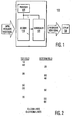
- Figure 1 is a schematic diagram illustrating an exemplary system 100 for converting interlaced video formats to progressive video formats.
- the system 100 can include an MPEG 2 video decoder module (decoder) 110, an interlace to progressive video processing system (deinterlacer) 120, and a processor 105.
- the decoder 110 can decode and convert a received, interlaced 4:2:0 formatted MPEG video signal to an interlaced 4:2:2 formatted video signal.
- the deinterlacer 120 can be configured to convert a 4:2:2 formatted video signal to a 4:2:0 formatted video signal prior to deinterlacing the video signal. After performing the conversion, the deinterlacer 120 can convert the reformatted video signal to a progressive video signal.
- the processor 105 can coordinate the actions of the decoder 110 and the deinterlacer 120. Each of the aforementioned components can be communicatively linked through an appropriate data connection, for example a data communications bus or other connection circuitry.
- the system can include an imaging system or display device 130 such as a high definition television (HDTV) receiver having a liquid crystal on silicon (LCOS) display or other suitable progressive image.
- HDTV high definition television
- LCOS liquid crystal on silicon
- the system 100 can receive an interlaced MPEG video signal and convert it to a. progressive video signal having a high degree of chroma vertical resolution.
- the decoder 110 can receive an interlaced MPEG 4:2:0 formatted video signal.
- the decoder 110 can decode the interlaced MPEG signal and convert the signal to an interlaced 4:2:2 formatted signal.
- the deinterlacer converts the 4:2:2 interlaced signal back to an interlaced 4:2:0 formatted signal, thereby reversing the 4:2:0 to 4:2:2 conversion step done by the decoder 110.
- the deinterlacer 120 proceeds to process the interlaced 4:2:0 formatted video signal in the optimum order. Specifically, the deinterlacer 120 first deinterlaces the interlaced 4:2:0 formatted video signal and then converts the resulting progressive 4:2:0 formatted video signal into a progressive 4:2:2 formatted video signal. That is, the number of lines of the chroma component can be expanded to be equal to the number of lines of the luma component of the resulting progressive video signal. The video signal can be processed further as necessary depending upon the vertical resolution of the display to which the video signal is to be provided.
- the chroma line number expansion, or conversion of the deinterlaced 4:2:0 video signal to a 4:2:2 formatted video signal can be illustrated in the case where a 4:2:0 formatted 1080p signal is to be displayed on a 720p display.
- the chroma lines can be up-converted from 270 to 540.
- the video signal can be processed further using a variety of techniques.
- the luma lines can be down-converted from 1080 to 720, and the chroma lines can be up-converted from 540 to 720.
- the chroma lines first can be up-converted from 540 to 1080 lines.
- the luma then can be down-converted from 1080 to 720, and the chroma also can be down-converted from 1080 to 720.
- a 720p display was used for purposes of illustration, any of a variety of display devices having disparate resolutions can be used. Accordingly, it should be appreciated that the luma and chroma each can be up-converted or down-converted as may be required to make the number of luma and chroma lines substantially equal. This processing largely is dependent upon the resolution of the particular display device being used.
- the luma is output as is, but the chroma is up-converted to the same number of lines as the luma, and with the same vertical position.
- the received MPEG 4:2:0 interlaced signal is decoded and converted into a 4:2:2 interlaced signal.
- One exemplary process that is utilized by the decoder to create chroma for lines 3 and 5 of luma may be to utilize lines A and C to derive Cr3 and Cr5.
- the MPEG decoder would derive the rest of the 4:2:2 chroma lines for the top field in the same way, starting with the appropriate pair of 4:2:0 chroma lines.
- the present invention reconverts the 4:2:2 interlaced line back to a 4:2:0 interlaced line.
- A can be calculated from Cr3 and Cr5
- C can be calculated from Cr7 and Cr9 (not shown).
- FIG. 3 is a flow chart 300 illustrating an exemplary method of MPEG chroma deinterlacing as performed by the inventive arrangements of Figure 1.
- the method can begin in step 310 where an interlaced MPEG video signal is received.
- the video signal can be a 4:2:0 formatted video signal.
- the number of chroma lines of the chroma component of the video signal can be approximately one-half the number of luma lines of the luma component of the video signal.
- the interlaced 4:2:0 formatted video signal can be decoded and converted to an interlaced 4:2:2 formatted video signal. That is, typically, a decoder will not only decode the received video signal, but also increase, or up-convert, the number of chroma lines of the chroma component to substantially match that of the luma component.
- the resulting interlaced 4:2:2 formatted video signal can be provided to the deinterlacer.
- the interlaced video signal can be converted back to an interlaced 4:2:0 formatted video signal.
- the deinterlacer can down-convert the chroma, or effectively reverse the chroma processing of the decoder. Accordingly, the number of chroma lines can be reduced to approximately one-half the number of luma lines.
- the interlaced 4:2:0 formatted video signal then can be deinterlaced.
- step 360 having avoided the degradation of the vertical resolution, the resulting progressive video signal can be processed further as necessary.
- the resulting progressive video signal can be converted to a 4:2:2 formatted video signal or a 4:4:4 video signal.
- the signal can be vertically format converted as previously described based upon the vertical resolution of the display being used.
- the video signal can be provided to a display device for viewing. After completion of step 370, the method can repeat as necessary to process further video signals.
- Figure 4 is a schematic diagram illustrating another exemplary system 400 for converting interlaced video formats to progressive video formats.
- System 400 is substantially similar to the system of Figure 1, in that the system 400 can include a decoder 410, a deinterlacer 420, a processor 405, and a display device 430.
- the decoder 410 can include a modified MPEG decoder chroma vertical interpolator 415.
- the decoder can output a video signal wherein some of the chroma output lines are not interpolated and all of the original 4:2:0 chroma lines can be present at the output at selected times in the output signal as non-interpolated lines.
- the deinterlacer 420 need not be configured to reduce the number of chroma lines to be substantially equal to the number of luma lines (convert the 4:2:2 formatted signal back to a 4:2:0 formatted video signal).
- every-other line of decoder output chroma can be an original 4:2:0 chroma line, wherein the in-between lines can be interpolated lines.
- the deinterlacer 420 can be configured to ignore the interpolated chroma lines and keep the original chroma lines. In this manner, the maximum chroma vertical resolution on still (non-moving) pictures can be retained in the deinterlaced output.
- FIG. 5 is a flow chart 500 illustrating an exemplary method of MPEG chroma deinterlacing as performed by the inventive arrangements of Figure 4.
- the method can begin in step 510 where an interlaced MPEG video signal is received.
- the video signal can be a 4:2:0 formatted video signal wherein the number of chroma lines of the chroma component is approximately one-half the number of luma lines of the luma component of the video signal.
- the interlaced video signal can be decoded. The number of chroma lines can be increased through interpolation.
- This process results in the video signal having approximately the same number of chroma lines as luma lines, for example an interlaced 4:2:2 formatted video signal.
- the resulting video signal can include original, or non-interpolated chroma lines.
- all of the original 4:2:0 chroma lines can be present at the output at selected times in the output signal as non-interpolated lines.
- every-other line of decoder output chroma can be an original one of the non-interpolated chroma lines, wherein the in-between lines can be interpolated lines.
- the video signal can be deinterlaced.
- the interpolated chroma lines can be discarded or ignored during this process. Accordingly, only the non-interpolated chroma lines need be processed in addition to the luma lines.
- the deinterlaced video signal can be processed further as previously mentioned.
- the progressive video signal can be converted to a 4:2:2 or a 4:4:4 formatted video signal.
- the signal can be vertically format converted based upon the particular display used for displaying the video signal.
- the resulting video signal can be provided to an imaging system or display device. Still, the method can repeat as necessary to process further video signals.
Landscapes
- Engineering & Computer Science (AREA)
- Multimedia (AREA)
- Signal Processing (AREA)
- Physics & Mathematics (AREA)
- General Physics & Mathematics (AREA)
- Computer Graphics (AREA)
- Discrete Mathematics (AREA)
- Theoretical Computer Science (AREA)
- Television Systems (AREA)
- Color Television Systems (AREA)
- Compression Or Coding Systems Of Tv Signals (AREA)
Applications Claiming Priority (4)
| Application Number | Priority Date | Filing Date | Title |
|---|---|---|---|
| US25772300P | 2000-12-22 | 2000-12-22 | |
| US25953101P | 2001-01-03 | 2001-01-03 | |
| US10/003,565 US7006147B2 (en) | 2000-12-22 | 2001-10-24 | Method and system for MPEG chroma de-interlacing |
| EP01985034A EP1364532B1 (de) | 2000-12-22 | 2001-12-10 | Verfahren und system zur mpeg-chroma-entschachtelung |
Related Parent Applications (2)
| Application Number | Title | Priority Date | Filing Date |
|---|---|---|---|
| EP01985034.6 Division | 2001-12-10 | ||
| EP01985034A Division EP1364532B1 (de) | 2000-12-22 | 2001-12-10 | Verfahren und system zur mpeg-chroma-entschachtelung |
Publications (3)
| Publication Number | Publication Date |
|---|---|
| EP1737231A2 true EP1737231A2 (de) | 2006-12-27 |
| EP1737231A3 EP1737231A3 (de) | 2007-05-30 |
| EP1737231B1 EP1737231B1 (de) | 2010-08-25 |
Family
ID=27357434
Family Applications (2)
| Application Number | Title | Priority Date | Filing Date |
|---|---|---|---|
| EP06019486A Expired - Lifetime EP1737231B1 (de) | 2000-12-22 | 2001-12-10 | Verfahren und System zur MPEG-Chroma-Entschachtelung |
| EP01985034A Expired - Lifetime EP1364532B1 (de) | 2000-12-22 | 2001-12-10 | Verfahren und system zur mpeg-chroma-entschachtelung |
Family Applications After (1)
| Application Number | Title | Priority Date | Filing Date |
|---|---|---|---|
| EP01985034A Expired - Lifetime EP1364532B1 (de) | 2000-12-22 | 2001-12-10 | Verfahren und system zur mpeg-chroma-entschachtelung |
Country Status (9)
| Country | Link |
|---|---|
| US (2) | US7006147B2 (de) |
| EP (2) | EP1737231B1 (de) |
| JP (3) | JP4037264B2 (de) |
| KR (2) | KR100769244B1 (de) |
| CN (1) | CN1330181C (de) |
| BR (1) | BR0116167A (de) |
| DE (2) | DE60130803T2 (de) |
| MX (1) | MXPA03005689A (de) |
| WO (1) | WO2002052849A1 (de) |
Families Citing this family (23)
| Publication number | Priority date | Publication date | Assignee | Title |
|---|---|---|---|---|
| US7006147B2 (en) * | 2000-12-22 | 2006-02-28 | Thomson Lincensing | Method and system for MPEG chroma de-interlacing |
| US7202907B2 (en) | 2002-04-09 | 2007-04-10 | Zoran Corporation | 2:2 and 3:2 pull-down detection techniques |
| JP2005526469A (ja) * | 2002-05-17 | 2005-09-02 | トムソン ライセンシング ソシエテ アノニム | 垂直フォーマットコンバータのメモリ管理のための方法及びシステム |
| US7136417B2 (en) * | 2002-07-15 | 2006-11-14 | Scientific-Atlanta, Inc. | Chroma conversion optimization |
| EP1543683B1 (de) * | 2002-09-23 | 2012-09-12 | Silicon Image, Inc. | ERKENNUNG UND REPARATUR VON MPEG-2-CHROMAAUFWûRTSUMSETZUNGSARTEFAKTEN |
| US7474355B2 (en) * | 2003-08-06 | 2009-01-06 | Zoran Corporation | Chroma upsampling method and apparatus therefor |
| US7274403B2 (en) * | 2004-01-30 | 2007-09-25 | Broadcom Corporation | Motion adaptive deinterlacer with integrated dynamic format change filter |
| US8015590B2 (en) | 2004-12-30 | 2011-09-06 | Mondo Systems, Inc. | Integrated multimedia signal processing system using centralized processing of signals |
| US7653447B2 (en) * | 2004-12-30 | 2010-01-26 | Mondo Systems, Inc. | Integrated audio video signal processing system using centralized processing of signals |
| US8880205B2 (en) | 2004-12-30 | 2014-11-04 | Mondo Systems, Inc. | Integrated multimedia signal processing system using centralized processing of signals |
| KR100736366B1 (ko) * | 2006-02-02 | 2007-07-06 | 삼성전자주식회사 | 비디오 신호 처리 장치 및 방법 |
| US7746408B2 (en) * | 2006-02-08 | 2010-06-29 | Broadcom Corporation | Method and system for improving the appearance of deinterlaced chroma formatted video |
| US7724305B2 (en) * | 2006-03-21 | 2010-05-25 | Mediatek Inc. | Video data conversion method and system for multiple receivers |
| US7952643B2 (en) | 2006-03-30 | 2011-05-31 | Intel Corporation | Pipelining techniques for deinterlacing video information |
| WO2008038442A1 (en) * | 2006-09-26 | 2008-04-03 | Panasonic Corporation | Color difference signal ip converting method |
| US8295357B2 (en) * | 2006-12-27 | 2012-10-23 | Intel Corporation | Method and apparatus for angular-directed spatial deinterlacer |
| JP5183231B2 (ja) * | 2008-02-05 | 2013-04-17 | キヤノン株式会社 | 映像再生装置及び制御方法 |
| JP5505691B2 (ja) * | 2009-09-15 | 2014-05-28 | カシオ計算機株式会社 | 色差成分補正装置及び色差成分補正装置を備えるプロジェクタ |
| US8068173B2 (en) | 2009-09-30 | 2011-11-29 | Kabushiki Kaisha Toshiba | Color difference signal format conversion device and method |
| JP4665061B1 (ja) * | 2010-09-08 | 2011-04-06 | 株式会社東芝 | 色差信号フォーマット変換装置及び方法 |
| CN102801948B (zh) * | 2012-08-14 | 2015-12-02 | 武汉微创光电股份有限公司 | 高清数字串行接口数据转换方法及装置 |
| CA2890174A1 (en) | 2012-11-05 | 2014-05-08 | 360 Heros, Inc. | 360 degree camera mount and related photographic and video system |
| US9998750B2 (en) | 2013-03-15 | 2018-06-12 | Cisco Technology, Inc. | Systems and methods for guided conversion of video from a first to a second compression format |
Family Cites Families (47)
| Publication number | Priority date | Publication date | Assignee | Title |
|---|---|---|---|---|
| GB2158674B (en) | 1981-04-10 | 1986-05-29 | Ampex | Television video signal processor |
| US4608594A (en) * | 1984-05-25 | 1986-08-26 | Rca Corporation | Television receiver using non-interlaced scanning format with motion compensation |
| US4672424A (en) * | 1985-02-14 | 1987-06-09 | Rca Corporation | Progressively scanned television system with reduced chrominance bandwidth |
| US4672445A (en) * | 1985-05-29 | 1987-06-09 | Rca Corporation | Progressive scan processor employing interpolation in luminance channel controlled by a motion signal and a vertical detail representative signal |
| JPH01251980A (ja) * | 1988-03-31 | 1989-10-06 | Hitachi Ltd | ディジタル映像信号処理回路 |
| US5161006A (en) * | 1990-07-26 | 1992-11-03 | Massachusetts Institute Of Technology | Method for separating chrominance and luminance components of a television signal |
| DE4126950A1 (de) * | 1991-08-16 | 1993-02-18 | Thomson Brandt Gmbh | Verfahren, coder und decoder zur kompatiblen uebertragung und/oder aufzeichnung von progressiven bildsignalen |
| KR930015760A (ko) * | 1991-12-31 | 1993-07-24 | 강진구 | 텔레비젼모드 자동변환장치 |
| US5790197A (en) * | 1994-01-12 | 1998-08-04 | Thomson Consumer Electronics,. Inc. | Multimode interpolation filter as for a TV receiver |
| US5625421A (en) * | 1994-01-14 | 1997-04-29 | Yves C. Faroudja | Suppression of sawtooth artifacts in an interlace-to-progressive converted signal |
| JPH07236151A (ja) * | 1994-02-23 | 1995-09-05 | Sony Corp | デジタルビデオスイッチャ |
| JP2933487B2 (ja) * | 1994-07-15 | 1999-08-16 | 松下電器産業株式会社 | クロマフォーマット変換の方法 |
| US5610661A (en) * | 1995-05-19 | 1997-03-11 | Thomson Multimedia S.A. | Automatic image scanning format converter with seamless switching |
| US5844617A (en) * | 1995-10-05 | 1998-12-01 | Yves C. Faroudja | Method and apparatus for enhancing the vertical resolution of a television signal having degraded vertical chrominance transitions |
| DE69608410T2 (de) * | 1995-10-05 | 2000-11-23 | Faroudja Laboratories, Inc. | Verfahren zur erzeugung eines aus einem standardbandbreite-farbfernsehsignal erzeugten farbvideosignals mit erhöhter vertikaler auflösung |
| JP3377667B2 (ja) * | 1995-12-25 | 2003-02-17 | 株式会社日立製作所 | 画像表示装置 |
| JP2835829B2 (ja) * | 1996-04-26 | 1998-12-14 | 日本テレビ放送網株式会社 | 走査線変換装置、及び走査線変換方法 |
| JPH1084558A (ja) * | 1996-07-19 | 1998-03-31 | Hitachi Ltd | ディジタル圧縮画像復号表示装置 |
| JP3407556B2 (ja) * | 1996-08-14 | 2003-05-19 | ソニー株式会社 | 映像符号化変換装置 |
| JP3953561B2 (ja) * | 1996-10-15 | 2007-08-08 | 株式会社日立製作所 | 画像信号のフォーマット変換信号処理方法及び回路 |
| DE69719365T2 (de) * | 1996-12-18 | 2003-10-16 | Thomson Consumer Electronics, Inc. | Effiziente kompression und dekompression von blocks fester länge |
| JP3901287B2 (ja) * | 1997-02-27 | 2007-04-04 | 松下電器産業株式会社 | 映像信号変換装置、映像信号変換方法及び映像提供システム |
| US5926220A (en) * | 1997-06-18 | 1999-07-20 | C-Cube Microsystems, Inc. | Composite digital video decoder and digital compressor |
| US6118486A (en) * | 1997-09-26 | 2000-09-12 | Sarnoff Corporation | Synchronized multiple format video processing method and apparatus |
| KR100244227B1 (ko) * | 1997-12-01 | 2000-02-01 | 구자홍 | 에이치디티브이의 디스플레이용 영상 처리장치 |
| JP3890715B2 (ja) * | 1997-12-04 | 2007-03-07 | ソニー株式会社 | 信号処理装置および方法 |
| JPH11308574A (ja) * | 1998-04-22 | 1999-11-05 | Sony Corp | 走査線数変換装置及び方法 |
| US6501507B1 (en) * | 1998-05-13 | 2002-12-31 | Barth Alan Canfield | Multimode interpolation filter as for a TV receiver |
| US6542162B1 (en) * | 1998-06-15 | 2003-04-01 | International Business Machines Corporation | Color mapped and direct color OSD region processor with support for 4:2:2 profile decode function |
| US6483951B1 (en) * | 1998-06-26 | 2002-11-19 | Lsi Logic Corporation | Digital video filter sequence for bandwidth constrained systems |
| KR100275700B1 (ko) * | 1998-07-10 | 2000-12-15 | 윤종용 | 영상신호 규격 변환장치 |
| US6297848B1 (en) * | 1998-11-25 | 2001-10-02 | Sharp Laboratories Of America, Inc. | Low-delay conversion of 3:2 pulldown video to progressive format with field averaging |
| US6188437B1 (en) * | 1998-12-23 | 2001-02-13 | Ati International Srl | Deinterlacing technique |
| JP2000209611A (ja) | 1999-01-19 | 2000-07-28 | Sony Corp | 色信号垂直補間フィルタ及び色信号垂直補間方法 |
| US6175389B1 (en) * | 1999-02-04 | 2001-01-16 | Conexant Systems, Inc. | Comb filtered signal separation |
| US6493005B1 (en) * | 1999-03-30 | 2002-12-10 | Sony Corporation | On screen display |
| US6411333B1 (en) * | 1999-04-02 | 2002-06-25 | Teralogic, Inc. | Format conversion using patch-based filtering |
| US6417891B1 (en) * | 1999-04-16 | 2002-07-09 | Avid Technology, Inc. | Color modification on a digital nonlinear editing system |
| US6542196B1 (en) * | 1999-11-05 | 2003-04-01 | Lsi Logic Corporation | Adaptive field pairing system for de-interlacing |
| US6674479B2 (en) * | 2000-01-07 | 2004-01-06 | Intel Corporation | Method and apparatus for implementing 4:2:0 to 4:2:2 and 4:2:2 to 4:2:0 color space conversion |
| KR100351816B1 (ko) * | 2000-03-24 | 2002-09-11 | 엘지전자 주식회사 | 포맷 변환 장치 |
| US6717987B1 (en) * | 2000-05-04 | 2004-04-06 | Ati International Srl | Video compression method and apparatus employing error generation and error compression |
| US6831701B2 (en) * | 2000-11-30 | 2004-12-14 | Thomson Licensing S.A. | Optimizing display of progressive frame signals up converted to interlaced signals |
| US7006147B2 (en) * | 2000-12-22 | 2006-02-28 | Thomson Lincensing | Method and system for MPEG chroma de-interlacing |
| US6741263B1 (en) * | 2001-09-21 | 2004-05-25 | Lsi Logic Corporation | Video sampling structure conversion in BMME |
| WO2003030113A1 (en) | 2001-09-28 | 2003-04-10 | Cummins-Allison Corp. | Currency handling system having multiple output receptacles interfaced with one or more cash processing devices |
| JP2005526469A (ja) * | 2002-05-17 | 2005-09-02 | トムソン ライセンシング ソシエテ アノニム | 垂直フォーマットコンバータのメモリ管理のための方法及びシステム |
-
2001
- 2001-10-24 US US10/003,565 patent/US7006147B2/en not_active Expired - Lifetime
- 2001-12-10 KR KR1020037008085A patent/KR100769244B1/ko not_active Expired - Fee Related
- 2001-12-10 WO PCT/US2001/048365 patent/WO2002052849A1/en not_active Ceased
- 2001-12-10 JP JP2002553823A patent/JP4037264B2/ja not_active Expired - Fee Related
- 2001-12-10 KR KR1020067025549A patent/KR100809571B1/ko not_active Expired - Fee Related
- 2001-12-10 DE DE60130803T patent/DE60130803T2/de not_active Expired - Lifetime
- 2001-12-10 EP EP06019486A patent/EP1737231B1/de not_active Expired - Lifetime
- 2001-12-10 CN CNB018211836A patent/CN1330181C/zh not_active Expired - Fee Related
- 2001-12-10 BR BR0116167-9A patent/BR0116167A/pt not_active IP Right Cessation
- 2001-12-10 EP EP01985034A patent/EP1364532B1/de not_active Expired - Lifetime
- 2001-12-10 MX MXPA03005689A patent/MXPA03005689A/es active IP Right Grant
- 2001-12-10 DE DE60142937T patent/DE60142937D1/de not_active Expired - Lifetime
-
2005
- 2005-11-18 US US11/282,994 patent/US7728907B2/en not_active Expired - Lifetime
-
2006
- 2006-02-09 JP JP2006032855A patent/JP4243282B2/ja not_active Expired - Fee Related
-
2008
- 2008-01-07 JP JP2008000425A patent/JP2008125119A/ja not_active Ceased
Also Published As
| Publication number | Publication date |
|---|---|
| US7728907B2 (en) | 2010-06-01 |
| DE60130803T2 (de) | 2008-03-13 |
| EP1364532A1 (de) | 2003-11-26 |
| EP1737231A3 (de) | 2007-05-30 |
| JP2004517529A (ja) | 2004-06-10 |
| CN1330181C (zh) | 2007-08-01 |
| JP4243282B2 (ja) | 2009-03-25 |
| KR20070014192A (ko) | 2007-01-31 |
| KR100769244B1 (ko) | 2007-10-23 |
| US7006147B2 (en) | 2006-02-28 |
| CN1628458A (zh) | 2005-06-15 |
| US20020080268A1 (en) | 2002-06-27 |
| DE60130803D1 (de) | 2007-11-15 |
| DE60142937D1 (de) | 2010-10-07 |
| BR0116167A (pt) | 2003-11-11 |
| JP2006187033A (ja) | 2006-07-13 |
| KR20030062432A (ko) | 2003-07-25 |
| WO2002052849A1 (en) | 2002-07-04 |
| EP1737231B1 (de) | 2010-08-25 |
| EP1364532B1 (de) | 2007-10-03 |
| KR100809571B1 (ko) | 2008-03-04 |
| JP4037264B2 (ja) | 2008-01-23 |
| US20060077293A1 (en) | 2006-04-13 |
| JP2008125119A (ja) | 2008-05-29 |
| MXPA03005689A (es) | 2003-10-06 |
| EP1364532A4 (de) | 2005-12-14 |
Similar Documents
| Publication | Publication Date | Title |
|---|---|---|
| EP1364532B1 (de) | Verfahren und system zur mpeg-chroma-entschachtelung | |
| US6256045B1 (en) | Device and method for processing picture in MPEG decoder | |
| JP3514063B2 (ja) | 受信装置 | |
| US7880808B2 (en) | Video signal processing apparatus to generate both progressive and interlace video signals | |
| US20050195325A1 (en) | Image processing apparatus and image processing method | |
| US7667772B2 (en) | Video processing apparatus and method | |
| US6836294B2 (en) | Method of decreasing delay through frame based format converters | |
| JP2002057993A (ja) | インタレース・プログレッシブ変換装置、インタレース・プログレッシブ変換方法及び記録媒体 | |
| JP2008098691A (ja) | 映像処理装置 | |
| JPH0346479A (ja) | テレビジョン信号変換装置 | |
| JP4292853B2 (ja) | デジタル放送受信装置 | |
| KR100385975B1 (ko) | 비디오 포맷 변환장치 및 방법 | |
| US6831701B2 (en) | Optimizing display of progressive frame signals up converted to interlaced signals | |
| JPH07288780A (ja) | テレビジョン信号処理方法 | |
| JP3265825B2 (ja) | テレビジョン信号処理回路 | |
| CN101072317A (zh) | 运动图像专家组色度隔行扫描消除处理的方法和系统 | |
| JPH0346478A (ja) | テレビジョン信号変換装置 | |
| JPH0435586A (ja) | Museデコーダ | |
| JPH05347750A (ja) | Museデコーダ | |
| JPH04238481A (ja) | テレビジョン信号変換器 | |
| JP2005525754A (ja) | 結合されたプログレッシブ系列とノンプログレッシブ系列のデインタレース | |
| JPH04240984A (ja) | テレビジョン信号変換器 | |
| JPH04273682A (ja) | テレビジョン信号の受信、処理装置 | |
| JPH06113264A (ja) | テレビジョン信号デコード装置 |
Legal Events
| Date | Code | Title | Description |
|---|---|---|---|
| PUAI | Public reference made under article 153(3) epc to a published international application that has entered the european phase |
Free format text: ORIGINAL CODE: 0009012 |
|
| 17P | Request for examination filed |
Effective date: 20060918 |
|
| AC | Divisional application: reference to earlier application |
Ref document number: 1364532 Country of ref document: EP Kind code of ref document: P |
|
| AK | Designated contracting states |
Kind code of ref document: A2 Designated state(s): DE FR GB IT |
|
| PUAL | Search report despatched |
Free format text: ORIGINAL CODE: 0009013 |
|
| AK | Designated contracting states |
Kind code of ref document: A3 Designated state(s): DE FR GB IT |
|
| 17Q | First examination report despatched |
Effective date: 20071213 |
|
| AKX | Designation fees paid |
Designated state(s): DE FR GB IT |
|
| RAP1 | Party data changed (applicant data changed or rights of an application transferred) |
Owner name: THOMSON LICENSING |
|
| GRAP | Despatch of communication of intention to grant a patent |
Free format text: ORIGINAL CODE: EPIDOSNIGR1 |
|
| GRAS | Grant fee paid |
Free format text: ORIGINAL CODE: EPIDOSNIGR3 |
|
| GRAA | (expected) grant |
Free format text: ORIGINAL CODE: 0009210 |
|
| AC | Divisional application: reference to earlier application |
Ref document number: 1364532 Country of ref document: EP Kind code of ref document: P |
|
| AK | Designated contracting states |
Kind code of ref document: B1 Designated state(s): DE FR GB IT |
|
| REG | Reference to a national code |
Ref country code: GB Ref legal event code: FG4D |
|
| REG | Reference to a national code |
Ref country code: GB Ref legal event code: 746 Effective date: 20100906 |
|
| REF | Corresponds to: |
Ref document number: 60142937 Country of ref document: DE Date of ref document: 20101007 Kind code of ref document: P |
|
| PGFP | Annual fee paid to national office [announced via postgrant information from national office to epo] |
Ref country code: GB Payment date: 20101231 Year of fee payment: 10 |
|
| PG25 | Lapsed in a contracting state [announced via postgrant information from national office to epo] |
Ref country code: IT Free format text: LAPSE BECAUSE OF FAILURE TO SUBMIT A TRANSLATION OF THE DESCRIPTION OR TO PAY THE FEE WITHIN THE PRESCRIBED TIME-LIMIT Effective date: 20100825 |
|
| PGFP | Annual fee paid to national office [announced via postgrant information from national office to epo] |
Ref country code: FR Payment date: 20110118 Year of fee payment: 10 Ref country code: DE Payment date: 20101216 Year of fee payment: 10 |
|
| PLBE | No opposition filed within time limit |
Free format text: ORIGINAL CODE: 0009261 |
|
| 26N | No opposition filed |
Effective date: 20110526 |
|
| REG | Reference to a national code |
Ref country code: DE Ref legal event code: R097 Ref document number: 60142937 Country of ref document: DE Effective date: 20110526 |
|
| GBPC | Gb: european patent ceased through non-payment of renewal fee |
Effective date: 20111210 |
|
| REG | Reference to a national code |
Ref country code: FR Ref legal event code: ST Effective date: 20120831 |
|
| REG | Reference to a national code |
Ref country code: DE Ref legal event code: R119 Ref document number: 60142937 Country of ref document: DE Effective date: 20120703 |
|
| PG25 | Lapsed in a contracting state [announced via postgrant information from national office to epo] |
Ref country code: DE Free format text: LAPSE BECAUSE OF NON-PAYMENT OF DUE FEES Effective date: 20120703 Ref country code: GB Free format text: LAPSE BECAUSE OF NON-PAYMENT OF DUE FEES Effective date: 20111210 |
|
| PG25 | Lapsed in a contracting state [announced via postgrant information from national office to epo] |
Ref country code: FR Free format text: LAPSE BECAUSE OF NON-PAYMENT OF DUE FEES Effective date: 20120102 |