EP1707115B1 - Drahtloses Patientenüberwachungsgerät - Google Patents
Drahtloses Patientenüberwachungsgerät Download PDFInfo
- Publication number
- EP1707115B1 EP1707115B1 EP06251860A EP06251860A EP1707115B1 EP 1707115 B1 EP1707115 B1 EP 1707115B1 EP 06251860 A EP06251860 A EP 06251860A EP 06251860 A EP06251860 A EP 06251860A EP 1707115 B1 EP1707115 B1 EP 1707115B1
- Authority
- EP
- European Patent Office
- Prior art keywords
- transmitter
- sensor data
- sensing device
- receiver
- unique
- Prior art date
- Legal status (The legal status is an assumption and is not a legal conclusion. Google has not performed a legal analysis and makes no representation as to the accuracy of the status listed.)
- Expired - Lifetime
Links
Images



Classifications
-
- A—HUMAN NECESSITIES
- A61—MEDICAL OR VETERINARY SCIENCE; HYGIENE
- A61B—DIAGNOSIS; SURGERY; IDENTIFICATION
- A61B5/00—Measuring for diagnostic purposes; Identification of persons
- A61B5/0002—Remote monitoring of patients using telemetry, e.g. transmission of vital signals via a communication network
-
- A—HUMAN NECESSITIES
- A61—MEDICAL OR VETERINARY SCIENCE; HYGIENE
- A61B—DIAGNOSIS; SURGERY; IDENTIFICATION
- A61B5/00—Measuring for diagnostic purposes; Identification of persons
- A61B5/0002—Remote monitoring of patients using telemetry, e.g. transmission of vital signals via a communication network
- A61B5/0031—Implanted circuitry
-
- A—HUMAN NECESSITIES
- A61—MEDICAL OR VETERINARY SCIENCE; HYGIENE
- A61B—DIAGNOSIS; SURGERY; IDENTIFICATION
- A61B5/00—Measuring for diagnostic purposes; Identification of persons
- A61B5/72—Signal processing specially adapted for physiological signals or for diagnostic purposes
- A61B5/7232—Signal processing specially adapted for physiological signals or for diagnostic purposes involving compression of the physiological signal, e.g. to extend the signal recording period
Definitions
- This invention relates to a system and method for measuring, storing and communicating sensor readings from a patient to a central system for display and analysis.
- US-A-4,519,401 discloses a minimized "pulse" power scheme wherein the sensors and transmitters are placed in a low power cycle when readings are not being taken and then pulse powered up to take a sensor reading and transmit it to a receiver.
- This power conservation scheme is useful for sensor readings that are only taken at intervals and not continuously. Continuous data sampling would defeat US-A-4,519,401 's pulse power scheme, as the sensors and transmitter can never power down.
- US-A-6,533,733 discloses a sensing system wherein the sensor readings are continuously read and stored. The stored data is then periodically transmitted to a receiver. The sensors are continuously powered and transmitter is also continuously powered and draws additional power during power transmission. US-A-6,533,733 realizes that this system is power consumptive and solves the problem by using a combination of power supplies. US-A-6,533,733 is silent regarding powering down the system and US-A-6,533,733 's system could not take continuous readings without constant power. Further, since US-A-6,533,733 's sensor data is stored, the sensor readings are not resented to the caregiver in approximately real-time. Thus, there is a time lag between when the sensor data is taken and displayed. US-A-6,533,733 compensates for this lag by providing the sensor controller with an alarm function to notify a caregiver of an anomalous sensor reading.
- US-A-6,731,976 discloses a passive sensing system wherein sensor readings are taken and transmitted only when powered externally. The sensing and transmission only last as long as the external power is supplied. This embodiment provides "real-time" sensor data but only while the system is externally powered. Further, US-A-6,731,976 discloses an embodiment of providing a power supply for the system but, as US-A-6,533,733 does, US-A-6,731,976 takes and stores the sensor data but does not disclose powering down the transmitter to conserve energy. Further, US-A-6,731,976 does not disclose how to compensate for the lag between when the sensor data is taken and when it is transmitted.
- US 2003/0004403 discloses a device comprising the features of the preamble of claim 1.
- a device for monitoring a patient sensor has a sensing device disposed on or in the patient and takes sensor data continuously.
- a transmitter is located on the patient and internally powered. The transmitter is normally in a power-down state and typically only powered-up for transmitting the sensor data.
- a first link if formed between the sensing device and the transmitter so the transmitter can receive the sensor data.
- the first link can include a wired and a wireless link. Further, the wireless transmission can be sent over any known wireless frequencies and utilize any protocols known in the art.
- a receiver is located remote from the patient and receives the sensor data transmitted wirelessly from the transmitter. The transmission is typically a burst and can also be initiated on a command.
- a method of monitoring a patent sensor having the steps of acquiring sensor data from the sensing device and linking the sensor data to the transmitter.
- the transmitter is powered internally and located on the patient.
- the transmitter is powered down in a normal state and powered up to transmit the sensor data from the transmitter to a receiver, which is disposed remote from the transmitter.
- the transmission can be sent by a burst or upon command.
- Another embodiment of the present method includes acquiring sensor data from the sensing device.
- sensor data is acquired continuously, but can also be taken at intervals.
- the sensor data is linked to a transmitter by the first communication link and the transmitter is powered internally by a power supply.
- the sensor data is accumulated over a first period of time which can be a few seconds to a few minutes and, in one embodiment, is a one minute interval.
- the transmitter can be powered-up and transmitting the sensor data from the transmitter to the receiver over a second period of time.
- the second period of time is shorter than the first period of time and is typically a factor of shorter.
- transmitter can be powered down.
- a further step displays the sensor data at the receiver in pseudo real-time.
- the display is shifted by a sum of the first and the second period of time. For example, if the sensor data is accumulated over 1 minute and the burst transmission is 6 seconds, the displayed data is time shifted (or lagged) 66 seconds from real-time.
- the sensor data can be compressed prior to transmitting the sensor data and then it can be decompressed prior to the displaying the sensor data. Compressing the sensor data can assist in shorting the second period of time and thus shortening the burst period and the lag time.
- One or more sensing devices can be linked to a single transmitter.
- Each sensing device can include a unique sensing device ID which identifies each sensing device.
- the unique sensing device ID can include the serial number of the sensing device and an identifier to identify the type, model, manufacturer and calibration information of the sensing device.
- the unique sensing device ID can identify the sensing device for the transmitter.
- the transmitter can have a unique transmitter ID identifying the transmitter to a receiver and the receiver can also have a unique receiver ID.
- Receiver ID identifies the receiver to a central server and the sensor data can be encoded/encrypted with the unique receiver ID as outlined above regarding the other unique IDs.
- the receiver is located within 15 feet of the transmitter.
- the proximity of the receiver to the transmitter can prolong the life of power supply because less power is needed if the transmission is over a short distance. Also, the proximity prevents dropped signals and interference from outside sources.
- the sensor data can be encrypted before it is transmitted wirelessly to prevent unauthorized access or tampering with the sensor data.
- one or both of the unique sensing device ID and the transmitter ID can be used as base keys for encrypting the data.
- the IDs can be used as a public key and thus either every sensing device's or transmitter's sensor data can be uniquely encrypted.
- the first link can include a power link to provide power to the sensing device from the transmitter.
- the receiver can send a confirmation signal to the transmitter to acknowledging receipt of the sensor data.
- the confirmation signal is a safety feature to assure that the sensor data is received by the receiver.
- the system 100 includes a sensing device 102 disposed on the surface of or implanted in the patient 10 that takes sensor data 104.
- the sensing device can be disposed or implanted anywhere on the patient 10, including implanted in the patient's brain.
- Sensing device 102 can be any medical sensing device, including a pressure sensor, an oxygen sensor, neural impulse sensor, temperature sensor, pH sensor, an electroencephalogram and a fetal heart monitor.
- the sensing device 102 can collect sensor data 104 over many different time periods. Sensor data 104 can be collected continuously, over either a predetermined or random interval, or upon a command issued from a caregiver.
- Sensing device 102 can be powered internally by, for example, disposable batteries, rechargeable batteries, or a capacitive device capable of storing energy transmitted through an inductive power coupling or directly through the inductive power coupling.
- Sensing device 102 transmits the sensor data 104 to a transmitter 106 located outside the patient 10.
- the transmitter 106 is typically located on or very close to the patient 10 but not implanted in the patient 10.
- transmitter 106 can be strapped to the nearest appendage or adhered to the patient's skin.
- Transmitter 106 is internally powered by power supply 108.
- Power supply 108 can be, for example disposable batteries, rechargeable batteries, or a capacitive device capable of storing energy transmitted through an inductive power coupling.
- the transmitter 106 receives the sensor data 104 over a first link 110 between the sensing device 102 and the transmitter 106.
- the first link 110 can be a wired 110a or a wireless link 110b. If the first link 110 is wired link 110a, the transmitter 106 can have multiple leads or ports to accept one or more wired links. The leads and ports can be any type known in the art to transmit at least analogue or digital data to allow the transmission of sensor data 104 to the transmitter 106. If the first link 110 is a wireless link 110b, the transmission can be sent over any known wireless frequencies and utilize any protocols known in the art. Further, wireless link 110b can be transmitted inductively by using the patient's body at the antenna.
- the sensing device 102 and the transmitter 106 can undergo handshake protocols to "introduce" the sensing device 102 to the transmitter 106.
- the handshake can be performed automatically upon the powering up or the plugging in of either the sensing device 102 or the transmitter 106. Alternately, the caregiver can initiate a handshake protocol manually.
- One or more sensing devices 102 can be linked to a single transmitter 106.
- Each sensing device 102 can include a unique sensing device ID which identifies each sensing device 102.
- the unique sensing device ID can include the serial number of the sensing device 102 and an identifier to identify the type, model, manufacturer and calibration information of the sensing device 102.
- the unique sensing device ID can identify the sensing device 102 for the transmitter 106.
- the transmitter 106 can have a unique transmitter ID identifying the transmitter 106 to a receiver 112.
- Receiver 112 is typically located remote from the patient 10. In one embodiment, the receiver 112 is located within 15 feet of the transmitter. The proximity of the receiver 112 to the transmitter 106 can prolong the life of power supply 108 because less power is needed if the transmission is over a short distance. Also, the proximity prevents dropped signals and interference from outside sources.
- the receiver 112 and the transmitter 106 communicate wirelessly, thus allowing patient 10 the freedom to move around and shift position or be moved to aid caregivers activities without disrupting the communications between the two.
- the communication between the transmitter 106 and the receiver 112 can take place continuously, at an interval, or upon a command.
- the interval can be either predetermined or random and in one embodiment, the transmitter 106 provides a burst transmission at least every minute. Burst transmissions are used to conserve the power of the transmitter 106. Sending the transmission to the receiver 112 is power consumptive and minimizing the number of transmissions can extend the life of the internal power supply 108. Short interval bursts allow a caregiver to receive nearly real-time sensor data 104 and still conserve the power supply 108.
- transmitter 106 can process sensor data 104 through a compression algorithm to compress the data before transmitting it to receiver 112.
- Compressing sensor data 104 allows for a shorter burst period and assists in reducing the overall power consumption of the transmitter 106 and prolong the life of the power supply 108.
- Compressed sensor data 104 also conserves storage space on the receiver 112 or server 114.
- Compressed sensor data 104 can be stored compressed and decompressed for processing or display to the caregiver.
- the receiver can decompress the sensor data 104 upon receipt and store it decompressed to reduce the wait time for processing or displaying.
- the wireless transmission can be sent over any known wireless frequencies and utilize any protocols known in the art.
- the transmitter 106 and the receiver 112 can undergo handshake protocols to "introduce" the transmitter 106 to the receiver 112.
- the handshake can be performed automatically upon the powering up or the plugging in of either the transmitter 106 or the receiver 112. Alternately, the caregiver can initiate a handshake protocol manually.
- transmitter 106 communicates with receiver 112 utilizing a "burst mode."
- Burst mode collects and stores sensor data 104 in the transmitter 106 over a set period of time. Typically, the sensor data 104 is compressed to reduce the size of the data packet.
- Transmitter 106 at the predetermined time, powers up and transmit the stored sensor data 104 in a burst that is typically much, much shorter than the time period over which the sensor data 104 is collected. Transmitter 106 then powers down.
- the receiver 112 receives and collects the sensor data 104 from the transmitter 106 and decompresses the sensor data 104 back to the original timescale for display or analysis.
- the receiver 112 displays the data in pseudo real-time - the sensor data 104 is displayed in the same spatial resolution that it was collected with but delayed from real-time by the length of the time period over which it was originally collected plus the communications "burst" time.
- This embodiment allows transmitter 106 to limit the power expenditure overhead of powering on and establishing link 110 by not requiring the transmitter 106 to perform these tasks for each individual sensor reading taken.
- the receiver 112 can be powered by any source, but typically is powered externally, i.e. plugged into the nearest electrical outlet. In an embodiment, receiver 112 can be designed as a permanent or semi-permanent device in the patent's room. Utilizing an external power source to power receiver 112 has advantages. Receiver 112 can be active continuously and can perform storage, analysis, and display functions. Receiver 112 can store and accumulate sensor data 104 for an extended period of time and can store sensor data 104 from numerous transmitters 106 and/or patients 10. Receiver 112 can analyze the sensor data 104 and display it for the caregiver. Additionally, an external power supply allows receiver 112 more flexibility in communicating the sensor data 104, analyzed or not, to a central server 114 located remote from the receiver 112.
- Receiver 112 and central server 114 can be linked directly or through a network, LAN, WAN, or the Internet. The connection can be wired or wireless using any protocols known in the art.
- Central server 114 can be remote from the receiver, i.e. in another room, building or state and a patient 10 can be monitored by a caregiver remote from the patient's location.
- central server 114 can be a portable device (e.g. PDA, cell phone, beeper, Blackberry®) or a semi-portable device (laptop and desktop on wheels) that can be carried by the caregiver or kept in proximity to patent 10 so the caregiver can move into proximity with the patient 10 and display the sensor data 104 at, for example, the patient's bedside.
- Central server 114 can also store, analyze, and display the sensor data 104.
- either the receiver 112 or the central server 114 analyzes the data, or receiver 112 can perform basic analysis and central server 114 performs more detailed analysis if required.
- Receiver 112 can also send notifications to central server 114 in response to a number of preset or programmed conditions. For example, if the sensor data 104 shows that there is a critical condition (e.g. the patient's heart stops beating) a notification can be sent (e.g. messaging a pager, ringing a cell phone) notifying the caregiver of the critical condition. As described below, the caregiver can then issue remote instructions to further monitor the patient 10.
- a critical condition e.g. the patient's heart stops beating
- a notification can be sent (e.g. messaging a pager, ringing a cell phone) notifying the caregiver of the critical condition.
- the caregiver can then issue remote instructions to further monitor the patient 10.
- receiver 112 and the central server 114 communicate wirelessly, all the protocols, handshake procedures and frequencies described above can be used here as described above.
- sensor data 104 can be encoded with the unique sensing device ID and the encoded sensor data is transmitted to the receiver 112 and to the central server 114.
- the unique sensing device ID can identify the specific sensor and thus the specific patient 10. This can help the organization of the sensor data 104 when stored and can assist in the search and retrieval of the sensor data 104 at a later time.
- sensor data 104 can be encoded with the unique transmitter ID alone or in combination with the unique sensing device ID. The unique transmitter ID can further assist in storage, searching and retrieval.
- the sensor data 104 can be encrypted before it is transmitted wirelessly to prevent unauthorized access or tampering with the sensor data 104.
- one or both of the unique sensing device ID and the transmitter ID can be used as base keys for encrypting the data.
- the IDs can be used as a public key and thus either every sensing device's or transmitter's sensor data 104 can be uniquely encrypted.
- the first link 110 can include a power link to provide power to the sensing device 102 from the transmitter 106.
- sensing device 102 does not have a stand alone power supply.
- the power link can be an induced connection.
- An induction coil from the transmitter 106 can be placed in proximity to an inductance coil in the sensing device 102 to provide power to the sensing device 102.
- Power supply 108 can provide continuous power or act as a charging station to charge the sensing device 102 on demand. This can be used especially with implanted sensing devices 102. Since transmitter 106 is disposed outside of patient 10, it is easier to recharge power supply 108 and use the transmitter to power sensing device 102.
- transmitter 106 includes a first memory 116 that temporarily stores the sensor data 104 prior to the transmission to the receiver 112.
- the first memory 116 can be flash RAM or any other type of permanent or removable memory known in the art.
- First memory 116 can be kept small to allow transmitter 106 to be light weight.
- receiver 112 can include a confirmation signal 118 transmitted from the receiver 112 to the transmitter 106 to acknowledging receipt of the sensor data 104.
- the confirmation signal 118 is a safety feature to assure that the sensor data 104 is received by the receiver 112.
- the confirmation signal 118 can also be used as a trigger for the transmitter 106 to erase the first memory 116.
- the transmitter 106 can repeat the transmission one or more times until the confirmation signal 118 is received. Also, the transmitter 106 can include an alarm 120 that can send an alarm signal when the confirmation signal 118 is not received once or for a period of time.
- transmitter 106 can resend the "old" sensor data 104 from the unconfirmed transmission as an add-on to the next transmission of "new" sensor data 104. If the transmitter 106 is set to burst transmissions, adding-on sensor data 104 can lengthen the transmission time but maintains the interval so keep power consumption at a minimum.
- transmitter 106 can be used to communicate with sensing device 102.
- First link 110 can provide an instruction to the sensing device 102. Examples of instructions can be to turn on/off, change data retrieval intervals, perform a diagnostic test, report power and/or communication status and to take sensor data essentially contemporaneous with the instruction. This allows a caregiver to receive real-time sensor data 104, if the caregiver deems it necessary.
- the instructions can be originated at the transmitter 106 or at the receiver 112 and/or central server 114 to be transmitted to the transmitter 106 to be relayed to sensing device 104. This configuration allows instructions to originate anywhere the caregiver is located.
- Embodiments include using one transmitter 106 per patient 10 and linking multiple sensing devices 104 to the single transmitter 106.
- a second sensing device 122 can be implanted in the patient 10.
- the second sensing device 122 takes second sensor data 124 and can include any or all of the features described above for sensing device 102.
- second sensing device can include a unique second sensing device ID.
- Unique second sensing device ID can be used as above, to identify second sensing device and to encode or encrypt second sensor data 124.
- a second link 126 between the second sensing device 122 and the transmitter 106 can be formed similarly to first link 110.
- Transmitter 106 can receive both sensor data 104 and second sensor data 124.
- the transmitter 106 can be programmed to combine the sensor data 104, 124 into a single sensor data file to be transmitted to receiver 112 or can keep the sensor data 104 and the second sensor data 124 separate.
- the unique sensing device ID and the unique second sensing device ID can be used to encode and separate the data.
- a further embodiment includes using multiple transmitters with one receiver 112.
- a second transmitter 128 is linked to a second sensing device 122 implanted in a second patient 20.
- multiple transmitters can be used with the same patient 10, if the positioning of the sensing devices 102 or receiver 112 dictates.
- second sensing device 122 takes second sensor data 124 and transmits it to second transmitter 128 via second link 126.
- Second transmitter 128 can include a unique second transmitter ID identifying it.
- Receiver 112 can receive sensor data 104 and second sensor data 124 from the transmitter 106 and the second transmitter 128, respectively.
- the sensor data 104, 124 can be encoded or encrypted using the unique transmitter and second transmitter IDs.
- the sensor data can be encoded with both the unique sensing device ID and the unique transmitter ID.
- Receiver 112 can also have a unique receiver ID to identify the receiver to the central server 114 and the sensor data 104 can be encoded/encrypted with the unique receiver ID as outlined above regarding the other unique IDs.
- FIG. 2 illustrates a method of monitoring a patient sensor.
- Sensor data 104 can be acquired from sensing device 102 implanted in the patient (step 200) and linked to the transmitter 106 either continuously, at an interval, a burst, or upon command (step 202).
- the transmitter 106 is powered internally (step 204) and located external to the patient 10 (step 206).
- transmitter 106 is in a powered down condition (step 207).
- the transmitter 106 is powered up and then transmits the sensor data from the transmitter 106 to receiver 112 (step 208) and the receiver 112 is disposed remote from the transmitter 106 (step 210).
- the sensor data 104 is communicated from the receiver 112 to the central server 114 (step 212) and central server 114 can store, analyze, or display the sensor data 104 (step 214).
- the receiver 112 can store, analyze and display the sensor data 104 for an individual patient.
- Embodiments include, identifying the sensing device 102 with a unique sensing device ID (step 216) and optionally encoding the sensor data 104 with the unique sensing device ID (Step 218). Further embodiments include powering the sensing device 102 from the transmitter 106 using a power link (step 220) by optionally, transmitting energy over a wire from the transmitter 106 to the sensing device 102 (step 222) or inducing energy through induction coils in the transmitter 106 and the sensing device 102 (step 224). Another embodiment is temporarily storing the sensor data 102 in a first memory 116 prior to the transmitting step (step 226) and erasing and/or overwriting the sensor data after the transmitting step (step 228).
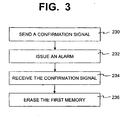
- the method can further include sending a confirmation signal acknowledging receipt of the sensor data 104 (step 230) and issuing an alarm upon failure to receive the confirmation signal (step 232). Additionally, the transmitter 106 can receive the confirmation signal (step 234) and erase the first memory 116 storing the sensor data 104 upon receipt of the confirmation signal (step 236).
- the transmitter 106 can provide an instruction to the sensing device (step 238).
- the receiver can optionally, store the sensor data 104 (step 240), analyze the sensor data 104 (step 242) or display the sensor data 104 (step 244).
- the communicating step above can include communicating the analyzed sensor data 104 to the central server 114 (step 246).
- the transmitter 106 can be identified with a unique transmitter ID (step 248).
- transmitter 106 can compress sensor data 104 (step 250) and receiver 112 can decompress the data (step 252).
- central server 114 can decompress the sensor data.
- the method of monitoring a patent sensor includes acquiring sensor data 104 from a sensing device 102 disposed on the patient 10 (step 300). Typically sensor data 104 is acquired continuously, but can also be taken at intervals.
- the sensor data can be linked to a transmitter by the first communication link 110 (step 302).
- the transmitter is powered internally (step 304) by power supply 108 and is typically located on patient 10 (step 306).
- the sensor data can be accumulated over a first period of time (step 308).
- the first period of time can be a few seconds to a few minutes and, in one embodiment, is a one minute interval.
- Transmitter 106 is powered-up and transmits the sensor data 104 from the transmitter 106 to receiver 112 over a second period of time (step 310).
- the second period of time is shorter than the first period of time and is typically a factor of shorter.
- transmitter 106 is powered down (step 312).
- a further step is displaying the sensor data at the receiver in pseudo real-time (step 314).
- the display is shifted by a sum of the first and the second period of time. For example, if the sensor data is accumulated over 1 minute and the burst transmission is 6 seconds, the displayed data is time shifted (or lagged) 66 seconds from real-time.
- the sensor data can be compressed prior to transmitting the sensor data 104 (step 316) and then it can be decompressed prior to the displaying the sensor data 104 (step 318).
- Compressing the sensor data 104 can assist in shorting the second period of time and thus shortening the burst period and the lag time.
- the compression compresses the waveform of the sensor data and the decompression returns the waveform of the sensor data back to its original data.
- any analogue signals can be converted to digital signals before transmission and converted back to analogue signals, if necessary, for display and analysis.
Landscapes
- Health & Medical Sciences (AREA)
- Life Sciences & Earth Sciences (AREA)
- Engineering & Computer Science (AREA)
- Heart & Thoracic Surgery (AREA)
- Molecular Biology (AREA)
- Biophysics (AREA)
- Pathology (AREA)
- Biomedical Technology (AREA)
- Computer Networks & Wireless Communication (AREA)
- Medical Informatics (AREA)
- Physics & Mathematics (AREA)
- Surgery (AREA)
- Animal Behavior & Ethology (AREA)
- General Health & Medical Sciences (AREA)
- Public Health (AREA)
- Veterinary Medicine (AREA)
- Measuring And Recording Apparatus For Diagnosis (AREA)
- Arrangements For Transmission Of Measured Signals (AREA)
Claims (30)
- Vorrichtung (100) zum Überwachen eines Patientensensors, die aufweist:eine Abfühleinrichtung (102) zur Anordnung auf oder in dem Patienten (10) zum kontinuierlichen Aufnehmen von Sensordaten (104);einen intern mit Energie versorgten Sender (106) zur Einrichtung auf dem Patienten (10), wobei der Sender (106) normalerweise in einem heruntergefahrenen Zustand ist und zum Senden der (104) hochgefahren wird, wobei der Sensor einen ersten Speicher (116) zum zeitweiligen Speichern von Sensordaten (104) aufweist;eine verdrahtete oder drahtlose erste Verbindung (110) zwischen der Abfühleinrichtung (102) und dem Sender (106), wobei der Sender (106) die Sensordaten (104) von der Abfühleinrichtung (102) erhält; undeinen Empfänger (112) zum Einrichten entfernt von dem Patienten (10) zum Empfangen der Sensordaten (104), die drahtlos von dem Sender (106) gesendet werden,wobei die Übertragung der Sensordaten (104) ein Impuls ist oder auf einen Befehl hin eingeleitet wird und ein Bestätigungssignal (118) von dem Empfänger (112) an den Sender (106) gesendet wird, um den Empfang der Sensordaten (104) zu bestätigen; dadurch gekennzeichnet, dass:das Bestätigungssignal (112) den Sender (106) anweist, den ersten Speicher (116), der die Sensordaten (104) zeitweilig speichert, zu löschen und/oder zu überschreiben.
- Vorrichtung (100) nach Anspruch 1, bei der die Abfühleinrichtung (102) eine eindeutige Abfühleinhchtung-ID aufweist und die Abfühleinrichtung (102) von dem Sender (106) identifiziert wird, indem die eindeutige Abfühleiurichtung-ID verwendet wird.
- Vorrichtung (100) nach Anspruch 2, bei der die Sensordaten (104) mit der eindeutigen Abfühleinrichtung-ID codiert werden und die codierten Sensordaten an den Empfänger (112) und an einen Zentralserver (114) gesendet werden.
- Vorrichtung (100) nach einem der Ansprüche 1 bis 3, bei der die erste Verbindung (110) weiter eine Energieverbindung aufweist, um der Abfühleinrichtung (102) von dem Sender (106) Energie zur Verfügung zu stellen, wobei die Energieverbindung die Energie durch eine direkte Verbindung oder eine induzierte Verbindung zur Verfügung stellt.
- Vorrichtung nach Anspruch 1, bei der der Sender (106) weiter einen Alarm (120) zum Senden eines Alarmsignals bei einem Fehler beim Empfangen des Bestätigungssignals (118) aufweist.
- Vorrichtung (100) nach einem der Ansprüche 1 bis 5, bei der der Sender (106) einen Befehl an die Abfühleinrichtung (102) liefert.
- Vorrichtung (100) nach einem der Ansprüche 1 bis 7, weiter mit einem Zentralserver (114) zur Anordnung entfernt von dem Empfänger (112), zum Empfangen der Sensordaten (104) von dem Empfänger (112) und zum Speichern, Analysieren und/oder Anzeigen der Sensordaten (104), wobei der Empfänger (112) dazu ausgelegt ist, die Sensordaten (104) kontinuierlich, intervallweise oder auf einen Befehl hin an den Zentralserver (114) zu senden.
- Vorrichtung (100) nach einem der Ansprüche 1 bis 7, bei der der Empfänger (112) die Sensordaten (104) speichert, analysiert und/oder anzeigt.
- Vorrichtung (100) nach Anspruch 8, bei der der Empfänger (112) die analysierten Sensordaten (104) an einen Zentralserver (114) sendet.
- Vorrichtung (100) nach einem der Ansprüche 1 bis 9, bei der der Sender (106) eine eindeutige Sender-ID aufweist und der Sender (106) durch den Empfänger (112) identifiziert wird, indem die eindeutige Sender-ID verwendet wird.
- Vorrichtung (100) nach Anspruch 10, bei der die Abfühlvorrichtung (102) eine eindeutige Abfühleinrichtung-ID aufweist und die Abfühleinrichtung (102) von dem Sender (106) identifiziert wird, indem die eindeutige Abfühleinrichtung-ID verwendet wird, wobei die Sensordaten (104) mit der eindeutigen Abfühleinrichtung-ID codiert werden und die eindeutige Sender-ID und die codierten Sensordaten an den Empfänger (112) gesendet werden.
- Vorrichtung (100) nach einem der Ansprüche 1 bis 11, die weiter aufweist:eine zweite Abfühleinrichtung (122) zum Implantieren in den Patienten zum kontinuierlichen, intervallweisen und/oder auf einen Befehl hin Aufnehmen von zweiten Sensordaten (124), die eine eindeutige zweite Abfühleinrichtung-ID aufweist, und wobei die zweite Abfühleinrichtung von dem Sender (106) identifiziert wird, indem die eindeutige zweite Abfühleinrichtung-ID verwendet wird, wobei die zweiten Sensordaten (124) mit der eindeutigen zweiten Abfühleinrichtung-ID codiert werden; undeine verdrahtete oder drahtlose zweite Verbindung (126) zwischen der zweiten Abfühleinrichtung (122) und dem Sender (106), wobei der Sender (106) die zweiten Sensordaten (124) von der zweiten Abfühleinrichtung (122) und der zweiten Verbindung (126) empfängt;wobei die zweite Abfühleinrichtung (102) eine eindeutige Abfühleinhchtung-ID aufweist, die Abfühleinrichtung (102) von dem Sender (106) identifiziert wird, indem die eindeutige Abfühleinrichtung-ID verwendet wird, und die Sensordaten (104) mit der eindeutigen Abfühleinrichtung-ID codiert werden, und
wobei die codierten Sensordaten und die codierten zweiten Sensordaten an den Empfänger (112) gesendet werden. - Vorrichtung (100) nach einem der Ansprüche 1 bis 12, die weiter aufweist:eine zweite Abfühleinrichtung (122) zum Implantieren in einen zweiten Patienten (20) zum kontinuierlichen, intervallweisen und/oder auf einen Befehl hin Aufnehmen von zweiten Sensordaten (124);einen intern mit Energie versorgten zweiten Sender (128) zur Anordnung außerhalb des zweiten Patienten (20), zum kontinuierlichen, intervallweisen und/oder auf einen Befehl hin Senden der zweiten Sensordaten (124) an den Empfänger (122) und mit einer zweiten Sender-ID und wobei der zweite Sender (128) von dem Empfänger (112) identifiziert wird, indem die eindeutige zweite Sender-ID verwendet wird; undeine verdrahtete oder drahtlose zweite Verbindung (126) zwischen der zweiten Abfühleinrichtung (122) und dem zweiten Sender (128), wobei der zweite Sender (128) die zweiten Sensordaten (124) von der zweiten Abfühleinrichtung (122) erhält.
- Vorrichtung (100) nach einem der Ansprüche 1 bis 13, bei der der Sender (106, 128) die Sensordaten (104, 124) vor dem Senden an den Empfänger (112) komprimiert und bei der der Empfänger (112) die komprimierten Sensordaten (104, 124) dekomprimiert.
- Vorrichtung (100) nach Anspruch 7, weiter mit einer Meldung, die von dem Empfänger (112) an den Zentralserver (114) bei einer erfüllten Bedingung gesendet wird.
- Vorrichtung (100) nach einem der Ansprüche 1 bis 15, bei der der Sender (106, 128) einen ersten Speicher (116) zum zeitweiligen Speichern der Sensordaten (104, 124) vor dem Senden an den Empfänger (112) speichert, wobei die Sensordaten (104, 124) vor dem Senden komprimiert und von dem Empfänger (112) dekomprimiert werden.
- Verfahren zum Überwachen eines Patientensensors, das die Schritte aufweist:Erlangen von Sensordaten (104) von einer Abfühleinrichtung (102) auf oder in den Patienten (10);kontinuierliches, intervallweises und/oder auf einen Befehl hin Einkoppeln der Sensordaten (104) in einen Sender (106), wobei der Sender (106) einen ersten Speicher (116) hat;zeitweilige Speichern der Sensordaten (104) in dem ersten Speicher (116);internes Versorgen des Senders (106) mit Energie;Anordnen des Senders (106) auf dem Patienten (10);Herunterfahren des Senders (106) in einen normalen Zustand;Hochfahren des Senders (106) und Senden der Sensordaten (104), die in dem ersten Speicher (116) gespeichert sind, von dem Sender (106) an einen Empfänger (112) in einem Impuls und/oder auf einen Befehl hin;Empfangen eines Bestätigungssignals (118), das von dem Empfänger (112) an den Sender (106) geschickt wird, um den Empfang der Sensordaten (104) zu bestätigen;Löschen und/oder Überschreiben der Sensordaten (104), die in dem ersten Speicher (116) gespeichert sind, auf den Empfang des Bestätigungssignals (118) hin; undAnordnen des Empfängers (112) entfernt von dem Sender (106).
- Verfahren nach Anspruch 17, das weiter die Schritte aufweist:Kommunizieren der Sensordaten (104) von dem Empfänger (112) an einen Zentralserver (114); und Speichern, Analysieren und/oder Anzeigen der Sensordaten in dem Zentralserver (114).
- Verfahren nach Anspruch 17 oder Anspruch 18, das weiter die Schritte aufweist:Identifizieren der Abfühleinrichtung (102) mit einer eindeutigen Abfühleinrichtung-ID; undals Option Codieren der Sensordaten (104) mit der eindeutigen Abfühleinrichtung-ID.
- Verfahren nach einem der Ansprüche 17 bis 19, weiter mit dem Schritt des Versorgens der Abfühleinrichtung (102) von dem Sender (106) durch Senden von Energie über einen Draht von dem Sender (106) an die Abfühleinrichtung (102) oder durch Induzieren von Energie durch Induktionsspulen in dem Sender (106) und in der Abfühleinrichtung (102).
- Verfahren nach Anspruch 17, weiter mit dem Schritt des Ausgebens eines Alarms (120) bei einem Fehler beim Empfang des Bestätigungssignals (118).
- Verfahren nach einem der Ansprüche 17 bis 21, weiter mit dem Schritt des Lieferns eines Befehls von dem Sender (106) an die Abfühleinrichtung (102).
- Verfahren nach einem der Ansprüche 17 bis 22, weiter mit dem Speichern der Sensordaten (104) im Empfänger (112), dem Analysieren der Sensordaten (104) im Empfänger (112) und/oder dem Anzeigen der Sensordaten (104) am Empfänger (112).
- Verfahren nach einem der Ansprüche 17 bis 23, welches das Kommunizieren der analysierten Sensordaten (104) an einen Zentralserver (114) umfasst.
- Verfahren nach einem der Ansprüche 17 bis 24, weiter mit dem Schritt des Identifizierens des Senders (106) mit einer eindeutigen Sender-ID.
- Verfahren nach einem der Ansprüche 17 bis 25, weiter mit dem Schritt des Komprimierens der Sensordaten (104) vor dem Sendeschritt.
- Verfahren nach Anspruch 26, weiter mit dem Schritt des Dekomprimierens der Sensordaten (104) vor der Analyse.
- Verfahren nach einem der Ansprüche 17 bis 27, weiter mit dem Schritt des Kommunizierens einer Meldung an einen Zentralserver (114).
- Verfahren nach Anspruch 17, das weiter die Schritte aufweist:Sammeln der Sensordaten (104) über eine erste Zeitdauer;Senden der Sensordaten (104) von dem Sender (106) an den Empfänger (112) über eine zweite Zeitdauer, die kürzer ist als die erste Zeitdauer;Abschalten des Senders (106); undAnzeigen der Sensordaten (104) an dem Empfänger (112) in Pseudo-Echtzeit, verschoben um eine Summe aus der ersten und der zweiten Zeitdauer.
- Verfahren nach Anspruch 29, das weiter die Schritte aufweist:Komprimieren der Sensordaten (104) vor dem Sendeschritt; undDekomprimieren der Sensordaten (104) vor dem Anzeigeschritt.
Applications Claiming Priority (1)
| Application Number | Priority Date | Filing Date | Title |
|---|---|---|---|
| US11/097,499 US7889069B2 (en) | 2005-04-01 | 2005-04-01 | Wireless patient monitoring system |
Publications (3)
| Publication Number | Publication Date |
|---|---|
| EP1707115A2 EP1707115A2 (de) | 2006-10-04 |
| EP1707115A3 EP1707115A3 (de) | 2007-01-24 |
| EP1707115B1 true EP1707115B1 (de) | 2009-05-06 |
Family
ID=36645807
Family Applications (1)
| Application Number | Title | Priority Date | Filing Date |
|---|---|---|---|
| EP06251860A Expired - Lifetime EP1707115B1 (de) | 2005-04-01 | 2006-03-31 | Drahtloses Patientenüberwachungsgerät |
Country Status (8)
| Country | Link |
|---|---|
| US (1) | US7889069B2 (de) |
| EP (1) | EP1707115B1 (de) |
| JP (1) | JP2006289081A (de) |
| AT (1) | ATE430513T1 (de) |
| AU (1) | AU2006201148B2 (de) |
| CA (1) | CA2541268C (de) |
| DE (1) | DE602006006610D1 (de) |
| ES (1) | ES2325418T3 (de) |
Families Citing this family (198)
| Publication number | Priority date | Publication date | Assignee | Title |
|---|---|---|---|---|
| CA2408230A1 (en) | 2000-05-05 | 2001-11-15 | Hill-Rom Services, Inc. | Patient point of care computer system |
| CA2408342A1 (en) | 2000-05-05 | 2001-11-15 | Hill-Rom Services, Inc. | Remote control for a hospital bed |
| US7044911B2 (en) * | 2001-06-29 | 2006-05-16 | Philometron, Inc. | Gateway platform for biological monitoring and delivery of therapeutic compounds |
| US7257438B2 (en) * | 2002-07-23 | 2007-08-14 | Datascope Investment Corp. | Patient-worn medical monitoring device |
| AU2003303597A1 (en) | 2002-12-31 | 2004-07-29 | Therasense, Inc. | Continuous glucose monitoring system and methods of use |
| US8771183B2 (en) | 2004-02-17 | 2014-07-08 | Abbott Diabetes Care Inc. | Method and system for providing data communication in continuous glucose monitoring and management system |
| US8066639B2 (en) | 2003-06-10 | 2011-11-29 | Abbott Diabetes Care Inc. | Glucose measuring device for use in personal area network |
| US20190357827A1 (en) | 2003-08-01 | 2019-11-28 | Dexcom, Inc. | Analyte sensor |
| US7399205B2 (en) | 2003-08-21 | 2008-07-15 | Hill-Rom Services, Inc. | Plug and receptacle having wired and wireless coupling |
| US7319386B2 (en) | 2004-08-02 | 2008-01-15 | Hill-Rom Services, Inc. | Configurable system for alerting caregivers |
| EP1812880A2 (de) * | 2004-09-30 | 2007-08-01 | Koninklijke Philips Electronics N.V. | System zur automatischen kontinuierlichen und zuverlässigen patientenidentifikation zur assoziation von drahtlosen medizinischen diensten mit patienten |
| US9636450B2 (en) * | 2007-02-19 | 2017-05-02 | Udo Hoss | Pump system modular components for delivering medication and analyte sensing at seperate insertion sites |
| US9788771B2 (en) | 2006-10-23 | 2017-10-17 | Abbott Diabetes Care Inc. | Variable speed sensor insertion devices and methods of use |
| US7697967B2 (en) | 2005-12-28 | 2010-04-13 | Abbott Diabetes Care Inc. | Method and apparatus for providing analyte sensor insertion |
| US8565867B2 (en) | 2005-01-28 | 2013-10-22 | Cyberonics, Inc. | Changeable electrode polarity stimulation by an implantable medical device |
| US9314633B2 (en) | 2008-01-25 | 2016-04-19 | Cyberonics, Inc. | Contingent cardio-protection for epilepsy patients |
| US8260426B2 (en) | 2008-01-25 | 2012-09-04 | Cyberonics, Inc. | Method, apparatus and system for bipolar charge utilization during stimulation by an implantable medical device |
| CA2620586A1 (en) | 2005-08-31 | 2007-03-08 | Boris P. Kovatchev | Improving the accuracy of continuous glucose sensors |
| US8880138B2 (en) * | 2005-09-30 | 2014-11-04 | Abbott Diabetes Care Inc. | Device for channeling fluid and methods of use |
| US7766829B2 (en) | 2005-11-04 | 2010-08-03 | Abbott Diabetes Care Inc. | Method and system for providing basal profile modification in analyte monitoring and management systems |
| US11298058B2 (en) | 2005-12-28 | 2022-04-12 | Abbott Diabetes Care Inc. | Method and apparatus for providing analyte sensor insertion |
| US7996079B2 (en) | 2006-01-24 | 2011-08-09 | Cyberonics, Inc. | Input response override for an implantable medical device |
| US7736310B2 (en) | 2006-01-30 | 2010-06-15 | Abbott Diabetes Care Inc. | On-body medical device securement |
| US7981034B2 (en) | 2006-02-28 | 2011-07-19 | Abbott Diabetes Care Inc. | Smart messages and alerts for an infusion delivery and management system |
| US7826879B2 (en) | 2006-02-28 | 2010-11-02 | Abbott Diabetes Care Inc. | Analyte sensors and methods of use |
| US7885698B2 (en) | 2006-02-28 | 2011-02-08 | Abbott Diabetes Care Inc. | Method and system for providing continuous calibration of implantable analyte sensors |
| WO2007115103A1 (en) | 2006-03-29 | 2007-10-11 | Catholic Healthcare West | Microburst electrical stimulation of cranial nerves for the treatment of medical conditions |
| US8226891B2 (en) | 2006-03-31 | 2012-07-24 | Abbott Diabetes Care Inc. | Analyte monitoring devices and methods therefor |
| US9392969B2 (en) | 2008-08-31 | 2016-07-19 | Abbott Diabetes Care Inc. | Closed loop control and signal attenuation detection |
| US7618369B2 (en) | 2006-10-02 | 2009-11-17 | Abbott Diabetes Care Inc. | Method and system for dynamically updating calibration parameters for an analyte sensor |
| US8473022B2 (en) | 2008-01-31 | 2013-06-25 | Abbott Diabetes Care Inc. | Analyte sensor with time lag compensation |
| US8478557B2 (en) | 2009-07-31 | 2013-07-02 | Abbott Diabetes Care Inc. | Method and apparatus for providing analyte monitoring system calibration accuracy |
| US8219173B2 (en) | 2008-09-30 | 2012-07-10 | Abbott Diabetes Care Inc. | Optimizing analyte sensor calibration |
| US7620438B2 (en) | 2006-03-31 | 2009-11-17 | Abbott Diabetes Care Inc. | Method and system for powering an electronic device |
| US8346335B2 (en) | 2008-03-28 | 2013-01-01 | Abbott Diabetes Care Inc. | Analyte sensor calibration management |
| US7653425B2 (en) | 2006-08-09 | 2010-01-26 | Abbott Diabetes Care Inc. | Method and system for providing calibration of an analyte sensor in an analyte monitoring system |
| US9675290B2 (en) | 2012-10-30 | 2017-06-13 | Abbott Diabetes Care Inc. | Sensitivity calibration of in vivo sensors used to measure analyte concentration |
| US8224415B2 (en) | 2009-01-29 | 2012-07-17 | Abbott Diabetes Care Inc. | Method and device for providing offset model based calibration for analyte sensor |
| US8374668B1 (en) | 2007-10-23 | 2013-02-12 | Abbott Diabetes Care Inc. | Analyte sensor with lag compensation |
| US7630748B2 (en) | 2006-10-25 | 2009-12-08 | Abbott Diabetes Care Inc. | Method and system for providing analyte monitoring |
| US8140312B2 (en) | 2007-05-14 | 2012-03-20 | Abbott Diabetes Care Inc. | Method and system for determining analyte levels |
| US7869885B2 (en) | 2006-04-28 | 2011-01-11 | Cyberonics, Inc | Threshold optimization for tissue stimulation therapy |
| US7962220B2 (en) | 2006-04-28 | 2011-06-14 | Cyberonics, Inc. | Compensation reduction in tissue stimulation therapy |
| US8206296B2 (en) | 2006-08-07 | 2012-06-26 | Abbott Diabetes Care Inc. | Method and system for providing integrated analyte monitoring and infusion system therapy management |
| US8932216B2 (en) | 2006-08-07 | 2015-01-13 | Abbott Diabetes Care Inc. | Method and system for providing data management in integrated analyte monitoring and infusion system |
| DE102006049137B4 (de) * | 2006-10-18 | 2019-09-19 | Drägerwerk AG & Co. KGaA | Medizinisches Überwachungssystem und Verfahren zur Verarbeitung von Alarmsignalen |
| JP5593070B2 (ja) * | 2006-10-20 | 2014-09-17 | エリクシアー メディカル コーポレイション | 管腔内人工装具および管腔内人工装具を被膜するための方法 |
| AU2007308804A1 (en) | 2006-10-26 | 2008-05-02 | Abbott Diabetes Care, Inc. | Method, system and computer program product for real-time detection of sensitivity decline in analyte sensors |
| US7869867B2 (en) | 2006-10-27 | 2011-01-11 | Cyberonics, Inc. | Implantable neurostimulator with refractory stimulation |
| US20080199894A1 (en) | 2007-02-15 | 2008-08-21 | Abbott Diabetes Care, Inc. | Device and method for automatic data acquisition and/or detection |
| US8732188B2 (en) | 2007-02-18 | 2014-05-20 | Abbott Diabetes Care Inc. | Method and system for providing contextual based medication dosage determination |
| US8930203B2 (en) * | 2007-02-18 | 2015-01-06 | Abbott Diabetes Care Inc. | Multi-function analyte test device and methods therefor |
| US8123686B2 (en) | 2007-03-01 | 2012-02-28 | Abbott Diabetes Care Inc. | Method and apparatus for providing rolling data in communication systems |
| EP2143239A2 (de) * | 2007-04-04 | 2010-01-13 | Magneto Inertial Sensing Technology, Inc. | Dynamisch konfigurierbare drahtlose sensornetzwerke |
| ES2461090T3 (es) | 2007-04-14 | 2014-05-16 | Abbott Diabetes Care Inc. | Procedimiento y aparato para proporcionar tratamiento y control de datos en un sistema de comunicación médica |
| EP2146622B1 (de) | 2007-04-14 | 2016-05-11 | Abbott Diabetes Care Inc. | Verfahren und vorrichtung für dynamische mehrstufige signalverstärkung bei einer medizinischen vorrichtung |
| CA2683959C (en) | 2007-04-14 | 2017-08-29 | Abbott Diabetes Care Inc. | Method and apparatus for providing data processing and control in medical communication system |
| WO2009096992A1 (en) | 2007-04-14 | 2009-08-06 | Abbott Diabetes Care, Inc. | Method and apparatus for providing data processing and control in medical communication system |
| WO2008130898A1 (en) | 2007-04-14 | 2008-10-30 | Abbott Diabetes Care, Inc. | Method and apparatus for providing data processing and control in medical communication system |
| US7974701B2 (en) | 2007-04-27 | 2011-07-05 | Cyberonics, Inc. | Dosing limitation for an implantable medical device |
| US8665091B2 (en) | 2007-05-08 | 2014-03-04 | Abbott Diabetes Care Inc. | Method and device for determining elapsed sensor life |
| US8456301B2 (en) | 2007-05-08 | 2013-06-04 | Abbott Diabetes Care Inc. | Analyte monitoring system and methods |
| US20080281179A1 (en) * | 2007-05-08 | 2008-11-13 | Abbott Diabetes Care, Inc. | Analyte monitoring system and methods |
| US7928850B2 (en) | 2007-05-08 | 2011-04-19 | Abbott Diabetes Care Inc. | Analyte monitoring system and methods |
| US20080278332A1 (en) * | 2007-05-08 | 2008-11-13 | Abbott Diabetes Care, Inc. | Analyte monitoring system and methods |
| US8461985B2 (en) | 2007-05-08 | 2013-06-11 | Abbott Diabetes Care Inc. | Analyte monitoring system and methods |
| US8600681B2 (en) | 2007-05-14 | 2013-12-03 | Abbott Diabetes Care Inc. | Method and apparatus for providing data processing and control in a medical communication system |
| US8444560B2 (en) | 2007-05-14 | 2013-05-21 | Abbott Diabetes Care Inc. | Method and apparatus for providing data processing and control in a medical communication system |
| US8239166B2 (en) | 2007-05-14 | 2012-08-07 | Abbott Diabetes Care Inc. | Method and apparatus for providing data processing and control in a medical communication system |
| US8260558B2 (en) | 2007-05-14 | 2012-09-04 | Abbott Diabetes Care Inc. | Method and apparatus for providing data processing and control in a medical communication system |
| US10002233B2 (en) | 2007-05-14 | 2018-06-19 | Abbott Diabetes Care Inc. | Method and apparatus for providing data processing and control in a medical communication system |
| US9125548B2 (en) | 2007-05-14 | 2015-09-08 | Abbott Diabetes Care Inc. | Method and apparatus for providing data processing and control in a medical communication system |
| US8103471B2 (en) | 2007-05-14 | 2012-01-24 | Abbott Diabetes Care Inc. | Method and apparatus for providing data processing and control in a medical communication system |
| US8560038B2 (en) | 2007-05-14 | 2013-10-15 | Abbott Diabetes Care Inc. | Method and apparatus for providing data processing and control in a medical communication system |
| NZ555918A (en) * | 2007-06-15 | 2008-07-31 | L & D Technology Ltd | Orientation system and method |
| CN103251414B (zh) * | 2007-06-21 | 2017-05-24 | 雅培糖尿病护理公司 | 用于分析物水平的检测的设备 |
| EP2171031B1 (de) * | 2007-06-21 | 2018-12-05 | Abbott Diabetes Care Inc. | Health management devices and methods |
| US8160900B2 (en) | 2007-06-29 | 2012-04-17 | Abbott Diabetes Care Inc. | Analyte monitoring and management device and method to analyze the frequency of user interaction with the device |
| US8834366B2 (en) | 2007-07-31 | 2014-09-16 | Abbott Diabetes Care Inc. | Method and apparatus for providing analyte sensor calibration |
| US7978062B2 (en) | 2007-08-31 | 2011-07-12 | Cardiac Pacemakers, Inc. | Medical data transport over wireless life critical network |
| US9848058B2 (en) * | 2007-08-31 | 2017-12-19 | Cardiac Pacemakers, Inc. | Medical data transport over wireless life critical network employing dynamic communication link mapping |
| US20090063402A1 (en) * | 2007-08-31 | 2009-03-05 | Abbott Diabetes Care, Inc. | Method and System for Providing Medication Level Determination |
| US8199000B2 (en) | 2007-09-27 | 2012-06-12 | General Electric Company | System and method for interference mitigation in a wireless sensor network |
| US20090085768A1 (en) * | 2007-10-02 | 2009-04-02 | Medtronic Minimed, Inc. | Glucose sensor transceiver |
| US8377031B2 (en) | 2007-10-23 | 2013-02-19 | Abbott Diabetes Care Inc. | Closed loop control system with safety parameters and methods |
| US8409093B2 (en) | 2007-10-23 | 2013-04-02 | Abbott Diabetes Care Inc. | Assessing measures of glycemic variability |
| US8082160B2 (en) | 2007-10-26 | 2011-12-20 | Hill-Rom Services, Inc. | System and method for collection and communication of data from multiple patient care devices |
| US20090164190A1 (en) * | 2007-12-19 | 2009-06-25 | Abbott Diabetes Care, Inc. | Physiological condition simulation device and method |
| US20090164239A1 (en) | 2007-12-19 | 2009-06-25 | Abbott Diabetes Care, Inc. | Dynamic Display Of Glucose Information |
| US9560994B2 (en) | 2008-03-26 | 2017-02-07 | Covidien Lp | Pulse oximeter with adaptive power conservation |
| JP2009251649A (ja) * | 2008-04-01 | 2009-10-29 | Olympus Corp | サーバシステム、電子機器、通信端末及び認証方法 |
| WO2009131664A2 (en) * | 2008-04-21 | 2009-10-29 | Carl Frederick Edman | Metabolic energy monitoring system |
| US8204603B2 (en) | 2008-04-25 | 2012-06-19 | Cyberonics, Inc. | Blocking exogenous action potentials by an implantable medical device |
| US8591410B2 (en) | 2008-05-30 | 2013-11-26 | Abbott Diabetes Care Inc. | Method and apparatus for providing glycemic control |
| US8924159B2 (en) | 2008-05-30 | 2014-12-30 | Abbott Diabetes Care Inc. | Method and apparatus for providing glycemic control |
| US8876755B2 (en) | 2008-07-14 | 2014-11-04 | Abbott Diabetes Care Inc. | Closed loop control system interface and methods |
| US20100045425A1 (en) * | 2008-08-21 | 2010-02-25 | Chivallier M Laurent | data transmission of sensors |
| US8622988B2 (en) * | 2008-08-31 | 2014-01-07 | Abbott Diabetes Care Inc. | Variable rate closed loop control and methods |
| US20100057040A1 (en) | 2008-08-31 | 2010-03-04 | Abbott Diabetes Care, Inc. | Robust Closed Loop Control And Methods |
| US8734422B2 (en) * | 2008-08-31 | 2014-05-27 | Abbott Diabetes Care Inc. | Closed loop control with improved alarm functions |
| US9943644B2 (en) | 2008-08-31 | 2018-04-17 | Abbott Diabetes Care Inc. | Closed loop control with reference measurement and methods thereof |
| US8986208B2 (en) | 2008-09-30 | 2015-03-24 | Abbott Diabetes Care Inc. | Analyte sensor sensitivity attenuation mitigation |
| US8457747B2 (en) | 2008-10-20 | 2013-06-04 | Cyberonics, Inc. | Neurostimulation with signal duration determined by a cardiac cycle |
| US9326707B2 (en) | 2008-11-10 | 2016-05-03 | Abbott Diabetes Care Inc. | Alarm characterization for analyte monitoring devices and systems |
| US20100191304A1 (en) | 2009-01-23 | 2010-07-29 | Scott Timothy L | Implantable Medical Device for Providing Chronic Condition Therapy and Acute Condition Therapy Using Vagus Nerve Stimulation |
| US8103456B2 (en) | 2009-01-29 | 2012-01-24 | Abbott Diabetes Care Inc. | Method and device for early signal attenuation detection using blood glucose measurements |
| US9402544B2 (en) | 2009-02-03 | 2016-08-02 | Abbott Diabetes Care Inc. | Analyte sensor and apparatus for insertion of the sensor |
| US8812841B2 (en) | 2009-03-04 | 2014-08-19 | Cardiac Pacemakers, Inc. | Communications hub for use in life critical network |
| US8319631B2 (en) | 2009-03-04 | 2012-11-27 | Cardiac Pacemakers, Inc. | Modular patient portable communicator for use in life critical network |
| US8497777B2 (en) | 2009-04-15 | 2013-07-30 | Abbott Diabetes Care Inc. | Analyte monitoring system having an alert |
| WO2010127050A1 (en) | 2009-04-28 | 2010-11-04 | Abbott Diabetes Care Inc. | Error detection in critical repeating data in a wireless sensor system |
| US8483967B2 (en) | 2009-04-29 | 2013-07-09 | Abbott Diabetes Care Inc. | Method and system for providing real time analyte sensor calibration with retrospective backfill |
| US8597274B2 (en) | 2009-05-22 | 2013-12-03 | Abbott Diabetes Care Inc. | Usability features for integrated insulin delivery system |
| WO2010138856A1 (en) | 2009-05-29 | 2010-12-02 | Abbott Diabetes Care Inc. | Medical device antenna systems having external antenna configurations |
| DK3173014T4 (da) | 2009-07-23 | 2026-03-30 | Abbott Diabetes Care Inc | Realtidsstyring af data vedrørende fysiologisk kontrol af glucoseniveauer |
| EP3689237B1 (de) | 2009-07-23 | 2021-05-19 | Abbott Diabetes Care, Inc. | Herstellungsverfahren und system zur kontinuierlichen analytmessung |
| US8902797B2 (en) * | 2009-08-11 | 2014-12-02 | Empire Technology Development Llc | Approach for optimizing energy consumption of multiple-input multiple-output system |
| EP4070727B1 (de) | 2009-08-31 | 2023-07-05 | Abbott Diabetes Care, Inc. | Anzeigeeinheiten für ein medizinisches gerät |
| EP2473099A4 (de) | 2009-08-31 | 2015-01-14 | Abbott Diabetes Care Inc | Analytüberwachungssystem und -verfahren zur leistungs- und rauschverwaltung |
| WO2011026147A1 (en) | 2009-08-31 | 2011-03-03 | Abbott Diabetes Care Inc. | Analyte signal processing device and methods |
| JP5795584B2 (ja) | 2009-08-31 | 2015-10-14 | アボット ダイアベティス ケア インコーポレイテッドAbbott Diabetes Care Inc. | 医療用装置 |
| WO2011034468A1 (en) * | 2009-09-16 | 2011-03-24 | St.Jude Medical Ab | Implantable medical device power saving communication |
| US9320461B2 (en) | 2009-09-29 | 2016-04-26 | Abbott Diabetes Care Inc. | Method and apparatus for providing notification function in analyte monitoring systems |
| US20110218756A1 (en) * | 2009-10-01 | 2011-09-08 | Mc10, Inc. | Methods and apparatus for conformal sensing of force and/or acceleration at a person's head |
| WO2011053881A1 (en) | 2009-10-30 | 2011-05-05 | Abbott Diabetes Care Inc. | Method and apparatus for detecting false hypoglycemic conditions |
| WO2011112753A1 (en) | 2010-03-10 | 2011-09-15 | Abbott Diabetes Care Inc. | Systems, devices and methods for managing glucose levels |
| WO2011112972A2 (en) * | 2010-03-11 | 2011-09-15 | Philometron, Inc. | Physiological monitor system for determining medication delivery and outcome |
| ES2881798T3 (es) | 2010-03-24 | 2021-11-30 | Abbott Diabetes Care Inc | Insertadores de dispositivos médicos y procedimientos de inserción y uso de dispositivos médicos |
| US8635046B2 (en) | 2010-06-23 | 2014-01-21 | Abbott Diabetes Care Inc. | Method and system for evaluating analyte sensor response characteristics |
| US10092229B2 (en) | 2010-06-29 | 2018-10-09 | Abbott Diabetes Care Inc. | Calibration of analyte measurement system |
| US9314175B2 (en) | 2010-07-08 | 2016-04-19 | TCI3—Pressure Applications, LLC | Compartment syndrome monitoring systems and methods |
| US8260989B2 (en) * | 2010-08-18 | 2012-09-04 | Hewlett-Packard Development Company, L.P. | Method and system for low-powered data transmission |
| EP4333325B1 (de) * | 2010-09-29 | 2026-02-25 | Dexcom, Inc. | Erweitertes kontinuierliches analytüberwachungssystem |
| WO2012048168A2 (en) | 2010-10-07 | 2012-04-12 | Abbott Diabetes Care Inc. | Analyte monitoring devices and methods |
| JP2014500538A (ja) | 2010-10-12 | 2014-01-09 | タニス,ケヴィン ジェイ. | 医療機器 |
| CN103619255B (zh) | 2011-02-28 | 2016-11-02 | 雅培糖尿病护理公司 | 与分析物监测装置关联的装置、系统和方法以及结合了它们的装置 |
| US10136845B2 (en) | 2011-02-28 | 2018-11-27 | Abbott Diabetes Care Inc. | Devices, systems, and methods associated with analyte monitoring devices and devices incorporating the same |
| JP6144670B2 (ja) | 2011-04-08 | 2017-06-07 | ボルケーノ コーポレイション | 分散医療感知システムおよび方法 |
| EP3575796B1 (de) | 2011-04-15 | 2020-11-11 | DexCom, Inc. | Erweiterte analytsensorkalibrierung und fehlererkennung |
| EP4122384A1 (de) | 2011-06-16 | 2023-01-25 | Abbott Diabetes Care, Inc. | Analytüberwachungsvorrichtungen, -verfahren und -systeme mit temperaturkompensation |
| US9622691B2 (en) | 2011-10-31 | 2017-04-18 | Abbott Diabetes Care Inc. | Model based variable risk false glucose threshold alarm prevention mechanism |
| US9069536B2 (en) | 2011-10-31 | 2015-06-30 | Abbott Diabetes Care Inc. | Electronic devices having integrated reset systems and methods thereof |
| US8710993B2 (en) | 2011-11-23 | 2014-04-29 | Abbott Diabetes Care Inc. | Mitigating single point failure of devices in an analyte monitoring system and methods thereof |
| US9317656B2 (en) | 2011-11-23 | 2016-04-19 | Abbott Diabetes Care Inc. | Compatibility mechanisms for devices in a continuous analyte monitoring system and methods thereof |
| WO2013078426A2 (en) | 2011-11-25 | 2013-05-30 | Abbott Diabetes Care Inc. | Analyte monitoring system and methods of use |
| AU2012352560B2 (en) | 2011-12-11 | 2017-01-19 | Abbott Diabetes Care Inc. | Analyte sensor devices, connections, and methods |
| CN104661601B (zh) | 2012-05-22 | 2018-06-22 | 史密夫及内修公开有限公司 | 用于伤口治疗的设备和方法 |
| US10132793B2 (en) | 2012-08-30 | 2018-11-20 | Abbott Diabetes Care Inc. | Dropout detection in continuous analyte monitoring data during data excursions |
| US9968306B2 (en) | 2012-09-17 | 2018-05-15 | Abbott Diabetes Care Inc. | Methods and apparatuses for providing adverse condition notification with enhanced wireless communication range in analyte monitoring systems |
| WO2014045451A1 (ja) * | 2012-09-24 | 2014-03-27 | テルモ株式会社 | センサ部及び測定システム |
| EP2901153A4 (de) | 2012-09-26 | 2016-04-27 | Abbott Diabetes Care Inc | Verfahren und vorrichtung zur verbesserung einer verzögerungskorrekturfunktion während der in-vivo-messung einer analytkonzentration mit analytkonzentrationsvariabilität und bereichsdaten |
| US9526437B2 (en) | 2012-11-21 | 2016-12-27 | i4c Innovations Inc. | Animal health and wellness monitoring using UWB radar |
| US9737649B2 (en) | 2013-03-14 | 2017-08-22 | Smith & Nephew, Inc. | Systems and methods for applying reduced pressure therapy |
| RU2015143724A (ru) | 2013-03-14 | 2017-04-17 | Смит Энд Нефью Инк. | Системы и способы применения терапии с использованием пониженного давления |
| US10433773B1 (en) | 2013-03-15 | 2019-10-08 | Abbott Diabetes Care Inc. | Noise rejection methods and apparatus for sparsely sampled analyte sensor data |
| US10149617B2 (en) | 2013-03-15 | 2018-12-11 | i4c Innovations Inc. | Multiple sensors for monitoring health and wellness of an animal |
| US9474475B1 (en) | 2013-03-15 | 2016-10-25 | Abbott Diabetes Care Inc. | Multi-rate analyte sensor data collection with sample rate configurable signal processing |
| US10076285B2 (en) | 2013-03-15 | 2018-09-18 | Abbott Diabetes Care Inc. | Sensor fault detection using analyte sensor data pattern comparison |
| JP2015119909A (ja) * | 2013-12-25 | 2015-07-02 | セイコーエプソン株式会社 | 生体情報測定装置、情報処理装置及び生体情報測定システム |
| AU2014374361B9 (en) | 2013-12-31 | 2019-07-04 | Abbott Diabetes Care Inc. | Self-powered analyte sensor and devices using the same |
| US10188330B1 (en) | 2014-02-05 | 2019-01-29 | Covidien Lp | Methods and systems for determining a light drive parameter limit in a physiological monitor |
| US11013408B2 (en) | 2014-03-19 | 2021-05-25 | Ascensia Diabetes Care Holdings Ag | Clinical data obfuscation and enhancement systems and methods for wireless medical devices |
| US20170185748A1 (en) | 2014-03-30 | 2017-06-29 | Abbott Diabetes Care Inc. | Method and Apparatus for Determining Meal Start and Peak Events in Analyte Monitoring Systems |
| US12133789B2 (en) | 2014-07-31 | 2024-11-05 | Smith & Nephew, Inc. | Reduced pressure therapy apparatus construction and control |
| JP5888826B1 (ja) * | 2015-04-27 | 2016-03-22 | 株式会社ソディック | 積層造形装置 |
| CA2984939A1 (en) | 2015-05-14 | 2016-11-17 | Abbott Diabetes Care Inc. | Compact medical device inserters and related systems and methods |
| US11553883B2 (en) | 2015-07-10 | 2023-01-17 | Abbott Diabetes Care Inc. | System, device and method of dynamic glucose profile response to physiological parameters |
| KR102143402B1 (ko) * | 2015-07-31 | 2020-08-11 | 전자부품연구원 | 무선 센서 및 이의 전력 제어 방법 |
| WO2017062042A1 (en) | 2015-10-07 | 2017-04-13 | Smith & Nephew, Inc. | Systems and methods for applying reduced pressure therapy |
| EP3178379A1 (de) * | 2015-12-09 | 2017-06-14 | Rythm | Verfahren und vorrichtung zur erfassung und verarbeitung bioelektrischer physiologischer signale |
| JP2019508124A (ja) | 2016-02-12 | 2019-03-28 | スミス アンド ネフュー インコーポレイテッド | 減圧療法の動作条件を検出するシステムおよび方法 |
| US10360787B2 (en) | 2016-05-05 | 2019-07-23 | Hill-Rom Services, Inc. | Discriminating patient care communications system |
| AU2017261814B2 (en) | 2016-05-13 | 2022-05-19 | Smith & Nephew, Inc. | Automatic wound coupling detection in negative pressure wound therapy systems |
| US12263294B2 (en) | 2016-09-28 | 2025-04-01 | T.J.Smith And Nephew, Limited | Systems and methods for operating negative pressure wound therapy devices |
| AU2017335635B2 (en) | 2016-09-29 | 2023-01-05 | Smith & Nephew, Inc. | Construction and protection of components in negative pressure wound therapy systems |
| JP6861033B2 (ja) * | 2017-01-04 | 2021-04-21 | オムロン株式会社 | ユーザ端末、サーバ、改善提案作成装置の作動方法および状態データ生成方法 |
| US11071478B2 (en) | 2017-01-23 | 2021-07-27 | Abbott Diabetes Care Inc. | Systems, devices and methods for analyte sensor insertion |
| CN110545766A (zh) | 2017-03-07 | 2019-12-06 | 史密夫和内修有限公司 | 包括天线的减压治疗系统和方法 |
| US11596330B2 (en) | 2017-03-21 | 2023-03-07 | Abbott Diabetes Care Inc. | Methods, devices and system for providing diabetic condition diagnosis and therapy |
| WO2019014141A1 (en) | 2017-07-10 | 2019-01-17 | Smith & Nephew, Inc. | SYSTEMS AND METHODS FOR INTERACTING DIRECTLY WITH A COMMUNICATION MODULE OF A WOUND PROCESSING APPARATUS |
| US11382540B2 (en) | 2017-10-24 | 2022-07-12 | Dexcom, Inc. | Pre-connected analyte sensors |
| US11331022B2 (en) | 2017-10-24 | 2022-05-17 | Dexcom, Inc. | Pre-connected analyte sensors |
| US20190139441A1 (en) * | 2017-11-03 | 2019-05-09 | Drishti Technologies, Inc. | Contextual training systems and methods |
| EP3787507B1 (de) | 2018-05-03 | 2024-12-11 | Dexcom, Inc. | Systeme und verfahren zur aktivierung einer analyt-sensorelektronik |
| US10777318B2 (en) * | 2018-08-13 | 2020-09-15 | Biosense Webster (Israel) Ltd. | Physician related selective data compression |
| GB201820668D0 (en) | 2018-12-19 | 2019-01-30 | Smith & Nephew Inc | Systems and methods for delivering prescribed wound therapy |
| MX2021007294A (es) | 2018-12-21 | 2021-07-15 | Abbott Diabetes Care Inc | Sistemas, dispositivos y metodos para la insercion de sensores de analito. |
| EP3931840A1 (de) | 2019-02-27 | 2022-01-05 | T.J.Smith And Nephew, Limited | Systeme und verfahren zur synchronisierung einer geräteuhr in systemen zur wundüberwachung und/oder behandlung |
| US11401033B2 (en) * | 2019-05-09 | 2022-08-02 | Noa, Inc. | Remote sensor data acquisition using autonomous drones |
| GB201911693D0 (en) | 2019-08-15 | 2019-10-02 | Smith & Nephew | Systems and methods for monitoring essential performance of wound therapy |
| EP4203819B1 (de) | 2020-08-31 | 2024-07-31 | Abbott Diabetes Care Inc. | Systeme, vorrichtungen und verfahren zur analytsensoreinfügung |
| ES3000715T3 (en) | 2020-09-15 | 2025-03-03 | Abbott Diabetes Care Inc | Device for analyte monitoring |
| US12279999B2 (en) | 2021-01-22 | 2025-04-22 | Hill-Rom Services, Inc. | Wireless configuration and authorization of a wall unit that pairs with a medical device |
| US12186241B2 (en) | 2021-01-22 | 2025-01-07 | Hill-Rom Services, Inc. | Time-based wireless pairing between a medical device and a wall unit |
| EP4284248B1 (de) * | 2021-01-29 | 2026-01-14 | Abbott Diabetes Care Inc. | Analytüberwachung durch dritte |
| EP4327579A1 (de) | 2021-04-21 | 2024-02-28 | T.J. Smith and Nephew, Limited | Kommunikationssysteme und verfahren für unterdruckwundtherapievorrichtungen |
| JP2024527596A (ja) | 2021-07-16 | 2024-07-25 | アボット ダイアベティス ケア インコーポレイテッド | 検体監視のためのシステム、装置、及び方法 |
| JP2024104059A (ja) * | 2023-01-23 | 2024-08-02 | オムロンヘルスケア株式会社 | 生体測定システム |
Family Cites Families (21)
| Publication number | Priority date | Publication date | Assignee | Title |
|---|---|---|---|---|
| US4519401A (en) * | 1983-09-20 | 1985-05-28 | Case Western Reserve University | Pressure telemetry implant |
| US5252962A (en) * | 1990-08-03 | 1993-10-12 | Bio Medic Data Systems | System monitoring programmable implantable transponder |
| JPH0646983B2 (ja) * | 1992-03-02 | 1994-06-22 | 日本コーリン株式会社 | 医療用通信装置 |
| US5917425A (en) * | 1996-01-22 | 1999-06-29 | Wireless Communiations Products, Llc | IR/RF locator |
| DE19638585A1 (de) | 1996-09-20 | 1998-03-26 | Biotronik Mess & Therapieg | Vorrichtung zur Rejektionsdiagnostik nach Organtransplantationen |
| US6731976B2 (en) * | 1997-09-03 | 2004-05-04 | Medtronic, Inc. | Device and method to measure and communicate body parameters |
| US7034690B2 (en) * | 1999-02-09 | 2006-04-25 | Hill-Rom Services, Inc. | Infant monitoring system and method |
| US6270457B1 (en) | 1999-06-03 | 2001-08-07 | Cardiac Intelligence Corp. | System and method for automated collection and analysis of regularly retrieved patient information for remote patient care |
| US6533733B1 (en) * | 1999-09-24 | 2003-03-18 | Ut-Battelle, Llc | Implantable device for in-vivo intracranial and cerebrospinal fluid pressure monitoring |
| US6562001B2 (en) * | 2000-01-21 | 2003-05-13 | Medtronic Minimed, Inc. | Microprocessor controlled ambulatory medical apparatus with hand held communication device |
| US6871211B2 (en) * | 2000-03-28 | 2005-03-22 | Ge Medical Systems Information Technologies, Inc. | Intranet-based medical data distribution system |
| JP3606790B2 (ja) * | 2000-06-22 | 2005-01-05 | パナソニック コミュニケーションズ株式会社 | インターネットファクシミリ装置およびインターネットファクシミリ通信方法 |
| US7044911B2 (en) * | 2001-06-29 | 2006-05-16 | Philometron, Inc. | Gateway platform for biological monitoring and delivery of therapeutic compounds |
| JP3962250B2 (ja) * | 2001-08-29 | 2007-08-22 | 株式会社レアメタル | 生体内情報検出システム及びこれに用いるタグ装置、中継装置 |
| US6643541B2 (en) * | 2001-12-07 | 2003-11-04 | Motorola, Inc | Wireless electromyography sensor and system |
| US20030197595A1 (en) * | 2002-04-22 | 2003-10-23 | Johnson Controls Technology Company | System and method for wireless control of multiple remote electronic systems |
| JP2004024551A (ja) * | 2002-06-26 | 2004-01-29 | Renesas Technology Corp | センサシステム用半導体装置 |
| JP2004141558A (ja) * | 2002-10-28 | 2004-05-20 | Mitsubishi Electric Corp | 移動体通信装置及び救急搬送車及び移動体通信監視装置 |
| JP2004216125A (ja) * | 2002-11-19 | 2004-08-05 | Seiko Instruments Inc | 生体情報検出端末制御システム |
| US20040199056A1 (en) * | 2003-04-03 | 2004-10-07 | International Business Machines Corporation | Body monitoring using local area wireless interfaces |
| JP4053937B2 (ja) * | 2003-07-01 | 2008-02-27 | 株式会社東芝 | 生体情報計測通信システム |
-
2005
- 2005-04-01 US US11/097,499 patent/US7889069B2/en not_active Expired - Lifetime
-
2006
- 2006-03-20 AU AU2006201148A patent/AU2006201148B2/en not_active Ceased
- 2006-03-30 CA CA2541268A patent/CA2541268C/en not_active Expired - Lifetime
- 2006-03-31 JP JP2006099504A patent/JP2006289081A/ja active Pending
- 2006-03-31 AT AT06251860T patent/ATE430513T1/de not_active IP Right Cessation
- 2006-03-31 EP EP06251860A patent/EP1707115B1/de not_active Expired - Lifetime
- 2006-03-31 ES ES06251860T patent/ES2325418T3/es not_active Expired - Lifetime
- 2006-03-31 DE DE602006006610T patent/DE602006006610D1/de not_active Expired - Lifetime
Also Published As
| Publication number | Publication date |
|---|---|
| US7889069B2 (en) | 2011-02-15 |
| ATE430513T1 (de) | 2009-05-15 |
| AU2006201148B2 (en) | 2012-05-03 |
| ES2325418T3 (es) | 2009-09-03 |
| CA2541268A1 (en) | 2006-10-01 |
| US20060220839A1 (en) | 2006-10-05 |
| AU2006201148A1 (en) | 2006-10-19 |
| JP2006289081A (ja) | 2006-10-26 |
| CA2541268C (en) | 2013-11-19 |
| EP1707115A2 (de) | 2006-10-04 |
| DE602006006610D1 (de) | 2009-06-18 |
| EP1707115A3 (de) | 2007-01-24 |
Similar Documents
| Publication | Publication Date | Title |
|---|---|---|
| EP1707115B1 (de) | Drahtloses Patientenüberwachungsgerät | |
| US6559620B2 (en) | System and method for remote monitoring utilizing a rechargeable battery | |
| JP4271868B2 (ja) | リモート局にエネルギーを供給する装置及び関連する方法 | |
| US8301254B2 (en) | Cross-band communications in an implantable device | |
| CN102551665B (zh) | 医用遥测系统和医用遥测仪 | |
| CA2410548A1 (en) | System and method for remotely monitoring | |
| US20020140559A1 (en) | System and method for remotely monitoring | |
| US20140135591A1 (en) | Footwear capable of being wirelessly charged and transmitting biological information, method for managing health in wireless communication system including the footwear, and wireless communication system to which the method is applied | |
| US20160045134A1 (en) | Ecg monitor with an implantable part | |
| US20120293340A1 (en) | Triggering recharging and wireless transmission of remote patient monitoring device | |
| JP2003076791A (ja) | 健康管理支援システム | |
| US8660659B2 (en) | Cross-band communications in an implantable device | |
| CN100581445C (zh) | 移动监视 | |
| CN210428461U (zh) | 医用手腕带及病房巡检系统 | |
| US20110224511A1 (en) | Method and system for measuring vital functions of human body | |
| WO2002003344A1 (en) | System and method for remotely monitoring |
Legal Events
| Date | Code | Title | Description |
|---|---|---|---|
| PUAI | Public reference made under article 153(3) epc to a published international application that has entered the european phase |
Free format text: ORIGINAL CODE: 0009012 |
|
| AK | Designated contracting states |
Kind code of ref document: A2 Designated state(s): AT BE BG CH CY CZ DE DK EE ES FI FR GB GR HU IE IS IT LI LT LU LV MC NL PL PT RO SE SI SK TR |
|
| AX | Request for extension of the european patent |
Extension state: AL BA HR MK YU |
|
| PUAL | Search report despatched |
Free format text: ORIGINAL CODE: 0009013 |
|
| AK | Designated contracting states |
Kind code of ref document: A3 Designated state(s): AT BE BG CH CY CZ DE DK EE ES FI FR GB GR HU IE IS IT LI LT LU LV MC NL PL PT RO SE SI SK TR |
|
| AX | Request for extension of the european patent |
Extension state: AL BA HR MK YU |
|
| 17P | Request for examination filed |
Effective date: 20070703 |
|
| 17Q | First examination report despatched |
Effective date: 20070813 |
|
| AKX | Designation fees paid |
Designated state(s): AT BE BG CH CY CZ DE DK EE ES FI FR GB GR HU IE IS IT LI LT LU LV MC NL PL PT RO SE SI SK TR |
|
| GRAP | Despatch of communication of intention to grant a patent |
Free format text: ORIGINAL CODE: EPIDOSNIGR1 |
|
| GRAP | Despatch of communication of intention to grant a patent |
Free format text: ORIGINAL CODE: EPIDOSNIGR1 |
|
| GRAS | Grant fee paid |
Free format text: ORIGINAL CODE: EPIDOSNIGR3 |
|
| GRAA | (expected) grant |
Free format text: ORIGINAL CODE: 0009210 |
|
| AK | Designated contracting states |
Kind code of ref document: B1 Designated state(s): AT BE BG CH CY CZ DE DK EE ES FI FR GB GR HU IE IS IT LI LT LU LV MC NL PL PT RO SE SI SK TR |
|
| REG | Reference to a national code |
Ref country code: GB Ref legal event code: FG4D |
|
| REG | Reference to a national code |
Ref country code: CH Ref legal event code: NV Representative=s name: E. BLUM & CO. AG PATENT- UND MARKENANWAELTE VSP Ref country code: CH Ref legal event code: EP |
|
| REG | Reference to a national code |
Ref country code: IE Ref legal event code: FG4D |
|
| REF | Corresponds to: |
Ref document number: 602006006610 Country of ref document: DE Date of ref document: 20090618 Kind code of ref document: P |
|
| REG | Reference to a national code |
Ref country code: SE Ref legal event code: TRGR |
|
| REG | Reference to a national code |
Ref country code: ES Ref legal event code: FG2A Ref document number: 2325418 Country of ref document: ES Kind code of ref document: T3 |
|
| PG25 | Lapsed in a contracting state [announced via postgrant information from national office to epo] |
Ref country code: LT Free format text: LAPSE BECAUSE OF FAILURE TO SUBMIT A TRANSLATION OF THE DESCRIPTION OR TO PAY THE FEE WITHIN THE PRESCRIBED TIME-LIMIT Effective date: 20090506 Ref country code: AT Free format text: LAPSE BECAUSE OF FAILURE TO SUBMIT A TRANSLATION OF THE DESCRIPTION OR TO PAY THE FEE WITHIN THE PRESCRIBED TIME-LIMIT Effective date: 20090506 Ref country code: FI Free format text: LAPSE BECAUSE OF FAILURE TO SUBMIT A TRANSLATION OF THE DESCRIPTION OR TO PAY THE FEE WITHIN THE PRESCRIBED TIME-LIMIT Effective date: 20090506 Ref country code: PT Free format text: LAPSE BECAUSE OF FAILURE TO SUBMIT A TRANSLATION OF THE DESCRIPTION OR TO PAY THE FEE WITHIN THE PRESCRIBED TIME-LIMIT Effective date: 20090906 |
|
| NLV1 | Nl: lapsed or annulled due to failure to fulfill the requirements of art. 29p and 29m of the patents act | ||
| PG25 | Lapsed in a contracting state [announced via postgrant information from national office to epo] |
Ref country code: SI Free format text: LAPSE BECAUSE OF FAILURE TO SUBMIT A TRANSLATION OF THE DESCRIPTION OR TO PAY THE FEE WITHIN THE PRESCRIBED TIME-LIMIT Effective date: 20090506 Ref country code: LV Free format text: LAPSE BECAUSE OF FAILURE TO SUBMIT A TRANSLATION OF THE DESCRIPTION OR TO PAY THE FEE WITHIN THE PRESCRIBED TIME-LIMIT Effective date: 20090506 Ref country code: PL Free format text: LAPSE BECAUSE OF FAILURE TO SUBMIT A TRANSLATION OF THE DESCRIPTION OR TO PAY THE FEE WITHIN THE PRESCRIBED TIME-LIMIT Effective date: 20090506 Ref country code: IS Free format text: LAPSE BECAUSE OF FAILURE TO SUBMIT A TRANSLATION OF THE DESCRIPTION OR TO PAY THE FEE WITHIN THE PRESCRIBED TIME-LIMIT Effective date: 20090906 Ref country code: NL Free format text: LAPSE BECAUSE OF FAILURE TO SUBMIT A TRANSLATION OF THE DESCRIPTION OR TO PAY THE FEE WITHIN THE PRESCRIBED TIME-LIMIT Effective date: 20090506 |
|
| PG25 | Lapsed in a contracting state [announced via postgrant information from national office to epo] |
Ref country code: CZ Free format text: LAPSE BECAUSE OF FAILURE TO SUBMIT A TRANSLATION OF THE DESCRIPTION OR TO PAY THE FEE WITHIN THE PRESCRIBED TIME-LIMIT Effective date: 20090506 Ref country code: DK Free format text: LAPSE BECAUSE OF FAILURE TO SUBMIT A TRANSLATION OF THE DESCRIPTION OR TO PAY THE FEE WITHIN THE PRESCRIBED TIME-LIMIT Effective date: 20090506 Ref country code: EE Free format text: LAPSE BECAUSE OF FAILURE TO SUBMIT A TRANSLATION OF THE DESCRIPTION OR TO PAY THE FEE WITHIN THE PRESCRIBED TIME-LIMIT Effective date: 20090506 Ref country code: RO Free format text: LAPSE BECAUSE OF FAILURE TO SUBMIT A TRANSLATION OF THE DESCRIPTION OR TO PAY THE FEE WITHIN THE PRESCRIBED TIME-LIMIT Effective date: 20090506 |
|
| PG25 | Lapsed in a contracting state [announced via postgrant information from national office to epo] |
Ref country code: SK Free format text: LAPSE BECAUSE OF FAILURE TO SUBMIT A TRANSLATION OF THE DESCRIPTION OR TO PAY THE FEE WITHIN THE PRESCRIBED TIME-LIMIT Effective date: 20090506 Ref country code: BE Free format text: LAPSE BECAUSE OF FAILURE TO SUBMIT A TRANSLATION OF THE DESCRIPTION OR TO PAY THE FEE WITHIN THE PRESCRIBED TIME-LIMIT Effective date: 20090506 |
|
| PLBE | No opposition filed within time limit |
Free format text: ORIGINAL CODE: 0009261 |
|
| STAA | Information on the status of an ep patent application or granted ep patent |
Free format text: STATUS: NO OPPOSITION FILED WITHIN TIME LIMIT |
|
| PG25 | Lapsed in a contracting state [announced via postgrant information from national office to epo] |
Ref country code: BG Free format text: LAPSE BECAUSE OF FAILURE TO SUBMIT A TRANSLATION OF THE DESCRIPTION OR TO PAY THE FEE WITHIN THE PRESCRIBED TIME-LIMIT Effective date: 20090806 |
|
| 26N | No opposition filed |
Effective date: 20100209 |
|
| PG25 | Lapsed in a contracting state [announced via postgrant information from national office to epo] |
Ref country code: MC Free format text: LAPSE BECAUSE OF NON-PAYMENT OF DUE FEES Effective date: 20100331 Ref country code: GR Free format text: LAPSE BECAUSE OF FAILURE TO SUBMIT A TRANSLATION OF THE DESCRIPTION OR TO PAY THE FEE WITHIN THE PRESCRIBED TIME-LIMIT Effective date: 20090807 |
|
| PG25 | Lapsed in a contracting state [announced via postgrant information from national office to epo] |
Ref country code: IE Free format text: LAPSE BECAUSE OF NON-PAYMENT OF DUE FEES Effective date: 20100331 |
|
| PG25 | Lapsed in a contracting state [announced via postgrant information from national office to epo] |
Ref country code: CY Free format text: LAPSE BECAUSE OF FAILURE TO SUBMIT A TRANSLATION OF THE DESCRIPTION OR TO PAY THE FEE WITHIN THE PRESCRIBED TIME-LIMIT Effective date: 20090506 |
|
| PG25 | Lapsed in a contracting state [announced via postgrant information from national office to epo] |
Ref country code: HU Free format text: LAPSE BECAUSE OF FAILURE TO SUBMIT A TRANSLATION OF THE DESCRIPTION OR TO PAY THE FEE WITHIN THE PRESCRIBED TIME-LIMIT Effective date: 20091107 Ref country code: LU Free format text: LAPSE BECAUSE OF NON-PAYMENT OF DUE FEES Effective date: 20100331 |
|
| PG25 | Lapsed in a contracting state [announced via postgrant information from national office to epo] |
Ref country code: TR Free format text: LAPSE BECAUSE OF FAILURE TO SUBMIT A TRANSLATION OF THE DESCRIPTION OR TO PAY THE FEE WITHIN THE PRESCRIBED TIME-LIMIT Effective date: 20090506 |
|
| REG | Reference to a national code |
Ref country code: FR Ref legal event code: PLFP Year of fee payment: 11 |
|
| REG | Reference to a national code |
Ref country code: FR Ref legal event code: PLFP Year of fee payment: 12 |
|
| REG | Reference to a national code |
Ref country code: FR Ref legal event code: PLFP Year of fee payment: 13 |
|
| REG | Reference to a national code |
Ref country code: GB Ref legal event code: 732E Free format text: REGISTERED BETWEEN 20180712 AND 20180718 |
|
| REG | Reference to a national code |
Ref country code: DE Ref legal event code: R082 Ref document number: 602006006610 Country of ref document: DE Representative=s name: MUELLER-BORE & PARTNER PATENTANWAELTE PARTG MB, DE Ref country code: DE Ref legal event code: R081 Ref document number: 602006006610 Country of ref document: DE Owner name: INTEGRA LIFE SCIENCES CORPORATION, PLAINSBORO, US Free format text: FORMER OWNER: CODMAN & SHURTLEFF, INC., RAYNHAM, MASS., US |
|
| REG | Reference to a national code |
Ref country code: CH Ref legal event code: PUE Owner name: INTEGRA LIFESCIENCES CORPORATION, US Free format text: FORMER OWNER: DEPUY SYNTHES PRODUCTS, INC., US Ref country code: CH Ref legal event code: PUE Owner name: DEPUY SPINE, LLC, US Free format text: FORMER OWNER: CODMAN AND SHURTLEFF, INC., US Ref country code: CH Ref legal event code: PUE Owner name: DEPUY SYNTHES PRODUCTS, INC., US Free format text: FORMER OWNER: DEPUY SPINE, LLC, US |
|
| REG | Reference to a national code |
Ref country code: ES Ref legal event code: PC2A Owner name: DEPUY SYNTHES PRODUCTS, INC Effective date: 20200102 |
|
| REG | Reference to a national code |
Ref country code: ES Ref legal event code: PC2A Owner name: INTEGRA LIFESCIENCES CORPORATION Effective date: 20200103 |
|
| PGFP | Annual fee paid to national office [announced via postgrant information from national office to epo] |
Ref country code: SE Payment date: 20230210 Year of fee payment: 18 Ref country code: IT Payment date: 20230213 Year of fee payment: 18 |
|
| P01 | Opt-out of the competence of the unified patent court (upc) registered |
Effective date: 20230522 |
|
| PGFP | Annual fee paid to national office [announced via postgrant information from national office to epo] |
Ref country code: ES Payment date: 20230407 Year of fee payment: 18 |
|
| PGFP | Annual fee paid to national office [announced via postgrant information from national office to epo] |
Ref country code: DE Payment date: 20240206 Year of fee payment: 19 Ref country code: GB Payment date: 20240108 Year of fee payment: 19 |
|
| PGFP | Annual fee paid to national office [announced via postgrant information from national office to epo] |
Ref country code: FR Payment date: 20240213 Year of fee payment: 19 |
|
| PGFP | Annual fee paid to national office [announced via postgrant information from national office to epo] |
Ref country code: CH Payment date: 20240401 Year of fee payment: 19 |
|
| REG | Reference to a national code |
Ref country code: SE Ref legal event code: EUG |
|
| PG25 | Lapsed in a contracting state [announced via postgrant information from national office to epo] |
Ref country code: IT Free format text: LAPSE BECAUSE OF NON-PAYMENT OF DUE FEES Effective date: 20240331 |
|
| REG | Reference to a national code |
Ref country code: ES Ref legal event code: FD2A Effective date: 20250506 |
|
| PG25 | Lapsed in a contracting state [announced via postgrant information from national office to epo] |
Ref country code: ES Free format text: LAPSE BECAUSE OF NON-PAYMENT OF DUE FEES Effective date: 20240401 |
|
| REG | Reference to a national code |
Ref country code: DE Ref legal event code: R119 Ref document number: 602006006610 Country of ref document: DE |
|
| PG25 | Lapsed in a contracting state [announced via postgrant information from national office to epo] |
Ref country code: SE Free format text: LAPSE BECAUSE OF NON-PAYMENT OF DUE FEES Effective date: 20240401 |
|
| REG | Reference to a national code |
Ref country code: CH Ref legal event code: H13 Free format text: ST27 STATUS EVENT CODE: U-0-0-H10-H13 (AS PROVIDED BY THE NATIONAL OFFICE) Effective date: 20251023 |
|
| GBPC | Gb: european patent ceased through non-payment of renewal fee |
Effective date: 20250331 |
|
| PG25 | Lapsed in a contracting state [announced via postgrant information from national office to epo] |
Ref country code: DE Free format text: LAPSE BECAUSE OF NON-PAYMENT OF DUE FEES Effective date: 20251001 |
|
| PG25 | Lapsed in a contracting state [announced via postgrant information from national office to epo] |
Ref country code: GB Free format text: LAPSE BECAUSE OF NON-PAYMENT OF DUE FEES Effective date: 20250331 |
|
| PG25 | Lapsed in a contracting state [announced via postgrant information from national office to epo] |
Ref country code: FR Free format text: LAPSE BECAUSE OF NON-PAYMENT OF DUE FEES Effective date: 20250331 |
|
| PG25 | Lapsed in a contracting state [announced via postgrant information from national office to epo] |
Ref country code: CH Free format text: LAPSE BECAUSE OF NON-PAYMENT OF DUE FEES Effective date: 20250331 |