EP1691892B1 - Tamper resistant co-extruded dosage form containing an active agent and an adverse agent and process of making same - Google Patents
Tamper resistant co-extruded dosage form containing an active agent and an adverse agent and process of making same Download PDFInfo
- Publication number
- EP1691892B1 EP1691892B1 EP04813471A EP04813471A EP1691892B1 EP 1691892 B1 EP1691892 B1 EP 1691892B1 EP 04813471 A EP04813471 A EP 04813471A EP 04813471 A EP04813471 A EP 04813471A EP 1691892 B1 EP1691892 B1 EP 1691892B1
- Authority
- EP
- European Patent Office
- Prior art keywords
- dosage form
- core
- active agent
- agent
- shell
- Prior art date
- Legal status (The legal status is an assumption and is not a legal conclusion. Google has not performed a legal analysis and makes no representation as to the accuracy of the status listed.)
- Expired - Lifetime
Links
Images

Classifications
-
- A—HUMAN NECESSITIES
- A61—MEDICAL OR VETERINARY SCIENCE; HYGIENE
- A61K—PREPARATIONS FOR MEDICAL, DENTAL OR TOILETRY PURPOSES
- A61K31/00—Medicinal preparations containing organic active ingredients
- A61K31/33—Heterocyclic compounds
- A61K31/395—Heterocyclic compounds having nitrogen as a ring hetero atom, e.g. guanethidine or rifamycins
- A61K31/435—Heterocyclic compounds having nitrogen as a ring hetero atom, e.g. guanethidine or rifamycins having six-membered rings with one nitrogen as the only ring hetero atom
- A61K31/47—Quinolines; Isoquinolines
- A61K31/485—Morphinan derivatives, e.g. morphine, codeine
-
- A—HUMAN NECESSITIES
- A61—MEDICAL OR VETERINARY SCIENCE; HYGIENE
- A61K—PREPARATIONS FOR MEDICAL, DENTAL OR TOILETRY PURPOSES
- A61K9/00—Medicinal preparations characterised by special physical form
- A61K9/48—Preparations in capsules, e.g. of gelatin, of chocolate
- A61K9/50—Microcapsules having a gas, liquid or semi-solid filling; Solid microparticles or pellets surrounded by a distinct coating layer, e.g. coated microspheres, coated drug crystals
- A61K9/5084—Mixtures of one or more drugs in different galenical forms, at least one of which being granules, microcapsules or (coated) microparticles according to A61K9/16 or A61K9/50, e.g. for obtaining a specific release pattern or for combining different drugs
-
- A—HUMAN NECESSITIES
- A61—MEDICAL OR VETERINARY SCIENCE; HYGIENE
- A61P—SPECIFIC THERAPEUTIC ACTIVITY OF CHEMICAL COMPOUNDS OR MEDICINAL PREPARATIONS
- A61P25/00—Drugs for disorders of the nervous system
-
- A—HUMAN NECESSITIES
- A61—MEDICAL OR VETERINARY SCIENCE; HYGIENE
- A61P—SPECIFIC THERAPEUTIC ACTIVITY OF CHEMICAL COMPOUNDS OR MEDICINAL PREPARATIONS
- A61P25/00—Drugs for disorders of the nervous system
- A61P25/04—Centrally acting analgesics, e.g. opioids
-
- A—HUMAN NECESSITIES
- A61—MEDICAL OR VETERINARY SCIENCE; HYGIENE
- A61P—SPECIFIC THERAPEUTIC ACTIVITY OF CHEMICAL COMPOUNDS OR MEDICINAL PREPARATIONS
- A61P25/00—Drugs for disorders of the nervous system
- A61P25/30—Drugs for disorders of the nervous system for treating abuse or dependence
- A61P25/36—Opioid-abuse
-
- A—HUMAN NECESSITIES
- A61—MEDICAL OR VETERINARY SCIENCE; HYGIENE
- A61P—SPECIFIC THERAPEUTIC ACTIVITY OF CHEMICAL COMPOUNDS OR MEDICINAL PREPARATIONS
- A61P43/00—Drugs for specific purposes, not provided for in groups A61P1/00-A61P41/00
Definitions
- the present invention relates to co-extruded pharmaceutical compositions and dosage forms including an active agent, such as an opioid agonist, and an adverse agent, such as an opioid antagonist, which are useful for preventing or discouraging tampering, abuse, misuse or diversion of the dosage form.
- the present invention also relates to methods of treating a patient with such a dosage form, as well as kits containing such a dosage form with instructions for using the dosage form to treat a patient.
- the present invention further relates to a co-extrusion process for the preparation of such pharmaceutical compositions and dosage forms.
- Prior approaches to developing tamper resistant opioid dosage forms have included combining an opioid agonist with an opioid antagonist.
- Particular examples of such combinations include compositions including naloxone and morphine or oxymorphone (U.S. Patent No. 3,493,657 to Lewenstein et al.); methadone and naloxone (U.S. Patent No. 3,773,955 to Pachter et al.); methadol or acetyl methadol and naloxone (U.S. Patent No. 3,966,940 to Pachter et al.); oxycodone and naloxone (U.S. Patent No. 4,457,933 to Gordon et al.); and buprenorphine and naloxone (U.S. Patent No. 4,582,835 to Lewis et al.).
- the present invention relates to co-extruded pharmaceutical compositions and dosage forms including an active agent and an adverse agent, and to co-extrusion methods of making such compositions and dosage forms.
- the present invention also relates to methods of treating a patient with such pharmaceutical compositions or dosage forms, as well as kits including such pharmaceutical compositions or dosage forms and instructions directing the usage of the composition or dosage form to treat a patient.
- the dosage forms in accordance with the present invention include oral dosage forms, including but not limited to, capsules or tablets, rectal suppositories and vaginal suppositories.
- the dosage forms comprise co-extruded compositions, including but not limited to one or more particles such as melt-extruded multiparticulates ("MEMs”) made by a process comprising co-extrusion.
- MEMs melt-extruded multiparticulates
- pharmaceutically acceptable salt can alternatively be a salt prepared from an active agent or an adverse agent having an acidic functional group, such as a carboxylic acid or sulfonic acid functional group, and a pharmaceutically acceptable inorganic or organic base.
- examples of such bases include, but are not limited to, hydroxides of alkali metals such as sodium, potassium, and lithium; hydroxides of alkaline earth metal such as calcium and magnesium; hydroxides of other metals, such as aluminum and zinc; ammonia, and organic amines, such as unsubstituted or hydroxy-substituted mono-, di-, or trialkylamines; dicyclohexylamine; tributyl amine; pyridine; N-methylamine, N-ethylamine; diethylamine; triethylamine; mono-, bis-, or tris-(2-hydroxy-lower alkyl amines), such as mono-, bis-, or tris-(2-hydroxyethyl)amine, 2-hydroxy-tert-butylamine, or tris-(hydroxymethyl)methylamine, N, N,-di-lower alkyl-N-(hydroxy lower alkyl)-amines, such as N, N,-dimethyl-N
- a "patient” or an “animal” is preferably a mammal, and includes, but is not limited to, a cow, monkey, horse, sheep, pig, chicken, turkey, quail, cat, dog, mouse, rat, rabbit, and guinea pig, and most preferably a human.
- active agent refers to a pharmaceutical agent that causes a biological effect when absorbed in sufficient amount into the blood stream of a patient.
- the phrase "adverse agent” refers to a pharmaceutical agent that partially or completely negates or reverses at least one biological effect of an active agent present in the dosage form, e.g. euphoric effect, or produces one or more unpleasant physiological reactions, e.g ., vomiting, nausea, diarrhea, bad taste, when absorbed in sufficient amount into the blood stream of a patient or animal.
- laminate refers to a structure comprising more than one layer, i.e., a multilayer structure.
- opioid agonist refers to an active agent which binds, optionally stereospecifically, to any one or more of several subspecies of opioid receptors and produces agonist activity.
- opioid antagonist refers to an adverse agent that either reduces, delays or reverses at least one biological effect of an opioid agonist, e.g., euphoric effect, when absorbed in sufficient amount into the blood stream of a patient or animal.
- the adverse agent is not sequestered. In those embodiments, the adverse agent can be released in vivo at any rate, including immediate release and controlled release.
- the sequestered adverse agent is an opioid antagonist
- preferably less than about 0.5 mg, and more preferably less than about 0.05 mg, of the opioid antagonist is released in vivo following administration as intended of the intact dosage form to a patient.
- the sequestered adverse agent is naltrexone
- preferably less than 0.0625 mg of naltrexone is released in vivo following administration as intended of the intact dosage form to a patient.
- the dosage form is produced by a process which comprises a co-extrusion of the core, the sheath component(s) and the shell component(s).
- the core is at least partially surrounded or covered by the sheath, and a portion of the adverse agent-containing core can be exposed.
- the sheath can comprise two sheath layers or components that cover or surround at least a portion of, preferably a majority, of the core.
- the sheath covers or surrounds a majority of the top and bottom of the core, while leaving some or all of the sides of the core uncovered.
- the sheath covers or surrounds substantially all of the top, the bottom and the sides of the core.
- the sheath does not cover or surround all of the core.
- a portion of the shell can be adjacent to and cover or surround some or all of the portion of the core which is not covered or surrounded by the sheath.
- the present invention relates to solid dosage forms including a plurality of co-extruded particles including an active agent and an adverse agent, wherein the particles comprise a core containing the adverse agent and the core is at least partially surrounded by a shell comprising the active agent.
- the particles are made by a process comprising co-extrusion of the core and the shell.
- the shell surrounds a majority of the core component.
- the core can include an adverse agent and a hydrophobic material
- the shell can include an active agent and a hydrophobic material.
- the adverse agent is sequestered.
- the shell does not include any adverse agent.
- the shell can include an adverse agent.
- the amount of adverse agent present in the shell is less than the amount of adverse agent present in the core. If present, the adverse agent included in the shell can be immediate release or controlled release, or can be sequestered.
- an oral dosage form is prepared to include an effective amount of melt-extruded multiparticulates ("MEMs") within a hard or soft gelatin capsule.
- MEMs melt-extruded multiparticulates
- a plurality of MEMs containing a core, a sheath and a shell can be placed in a gelatin capsule in an amount sufficient to provide an effective sustained-release dose of the active agent when ingested and contacted by body fluid, without significant release of the sequestered adverse agent.
- the particle size of the multiparticulates of the dosage form of the invention is from about 0.1 mm to about 5.0 mm in all dimensions; in another embodiment, from about 0.1 mm to about 3.0 mm in all dimensions.
- the release rate of the active agent and the adverse agent can be measured by in vivo methods or in vitro methods, the inventors do not represent that there is a direct correlation between the results obtained via the two different methods.
- the in vivo release of any adverse agent from the intact dosage form will preferably be sufficiently low so that it will not substantially reduce the benefits of the active agent or produce any unpleasant physiological reaction.
- the release rate of the adverse agent will be determined in large part by the composition of the core, the sheath and the shell.
- the dosage form of the invention will typically release less than about 10% by weight of, preferably less than about 1% by weight of, more preferably substantially no sequestered adverse agent in vivo following administration as intended of the intact dosage form.
- the sequestered adverse agent is an opioid antagonist
- the dosage form will preferably release less than about 0.5 mg, more preferably less than about 0.05 mg, of the opioid antagonist in vivo following administration as intended of the intact dosage form.
- the adverse agent is naltrexone opioid antagonist
- preferably less than 0.0625 mg of naltrexone is released in vivo following administration of the intact dosage form as intended.
- the adverse agent is then available to exert its effect by either reducing at least one effect of the active agent, e.g. , euphoric effect, or eliciting one or more unpleasant effects in the patient.
- the adverse agent is an antagonist of the active agent
- at least one effect of the active agent is preferably substantially diminished, or even eliminated, by the effect of the adverse agent.
- the active agent is an opioid agonist and the adverse agent is an opioid antagonist
- an increased amount of opioid antagonist will become bioavailable when the dosage form is tampered with, interfering with opioid-receptor binding and reducing the opioid agonist's euphoric effect.
- the solid dosage form can optionally be covered by a cosmetic coating.
- a cosmetic coating Any known type of cosmetic coating used for pharmaceutical dosage forms can be used so long as the release of the coated dosage form achieves the intended purpose of the invention.
- the dosage form can be cured by exposure to prolonged elevated temperatures in order to achieve increased stability.
- curing means the heat treatment of the dosage form (or intermediate product) for purposes of obtaining a stabilized final dosage form.
- a heat treatment causes a curing effect and the polymer possibly cross-links with itself into a more stable state.
- the formulations of the invention include a hydrophobic material such as, e.g ., hydrogenated vegetable oil or stearyl alcohol, the heat treatment can be more akin to an annealing of the formulation rather than a curing of the polymer.
- curing is deemed to encompass both curing and annealing.
- curing can be accomplished at a temperature from about 35°C to about 65°C, for a time period sufficient to achieve maximum stability, such as for a time period from about 4 to about 72 hours.
- curing is conducted at a temperature of from about 40°C to about 60°C, for a time period from about 5 to about 48 hours or more, and preferably at least about 24 hours. Suitable curing times that achieve the intended result of a stabilized dosage form can be determined by those of skill in the art.
- the opioid agonist is selected from the group consisting of hydrocodone, morphine, hydromorphone, oxycodone, codeine, levorphanol, meperidine, methadone, oxymorphone, buprenorphine, fentanyl and derivatives thereof, dipipanone, heroin, tramadol, etorphine, dihydroetorphine, butorphanol, levorphanol and mixtures thereof.
- the opioid agonist is oxycodone, hydromorphone or hydrocodone.
- Barbiturates refer to sedative-hypnotic drugs derived from barbituric acid (2, 4, 6,-trioxohexahydropyrimidine). Barbiturates include, but are not limited to, amobarbital, aprobarbotal, butabarbital, butalbital, methohexital, mephobarbital, metharbital, pentobarbital, phenobarbital, secobarbital and mixtures of any two or more of the foregoing.
- Stimulants refer to drugs that stimulate the central nervous system. Stimulants include, but are not limited to, amphetamines, such as amphetamine, dextroamphetamine resin complex, dextroamphetamine, methamphetamine, methylphenidate and mixtures of any two or more of the foregoing.
- amphetamines such as amphetamine, dextroamphetamine resin complex, dextroamphetamine, methamphetamine, methylphenidate and mixtures of any two or more of the foregoing.
- the active agent can be an agent intended for delivery to the colon, including, but not limited to, agents that act locally in the colonic region to treat a colon diseases such as irritable bowel syndrome, irritable bowel disease, Crohns disease, constipation, post operative atony, gastrointestinal infections, and therapeutic agents that deliver antigenic material to the lymphoid tissue.
- agents that act locally in the colonic region to treat a colon diseases such as irritable bowel syndrome, irritable bowel disease, Crohns disease, constipation, post operative atony, gastrointestinal infections, and therapeutic agents that deliver antigenic material to the lymphoid tissue.
- Active agents for the treatment of colon disease include, but are not limited to 5-ASA; steroids, such as hydrocortisone and budesonide; laxatives; stool softeners; octreotide; cisapride; anticholinergics; opioids; calcium channel blockers; DNA for delivery to the cells of the colon; glucosamine; thromboxane A 2 synthetase inhibitors, such as Ridogrel; 5HT3-antagonists, such as ondansetron; antibodies against infectious bacteria, such as Clostridium difficile ; and antiviral agents, for example, for the prophylaxis of HIV.
- the active agent can be an agent that is systemically active and for which absorption is improved in the colon region.
- drugs include polar compounds such as: heparins; insulin; calcitonins; human growth hormone (HGH); growth hormone releasing hormone (GHRH); interferons; somatostatin and analogues such as octreotide and vapreotide; erythropoietin (EPO); granulocyte colony stimulating factor (GCSF); parathyroid hormone (PTH); luteinising hormone releasing hormone (LHRH) and analogues thereof; atrial natriuretic factor (ANF); vasopressin; desmopressin; calcitonin gene related peptide (CGRP); and analgesics.
- polar compounds such as: heparins; insulin; calcitonins; human growth hormone (HGH); growth hormone releasing hormone (GHRH); interferons; somatostatin and analogues such as
- the active agent particles can further comprise hydrophobic materials, binders, plasticizers, excipients, and combinations of any two or more of the foregoing.
- Suitable matrix materials include those which allow release of the active agent at a rate sufficient to achieve the desired result, e.g. , immediate release or sustained release.
- permeable matrix material is used, allowing for diffusive release of the active agent into the gastrointestinal fluid.
- the present invention is directed to co-extruded dosage forms and pharmaceutical compositions including an active agent and an adverse agent, which can be sequestered, as well as co-extrusion methods for making and administering such dosage forms and compositions.
- the invention relates to dosage forms including a plurality of particles including a an active agent and an adverse agent, which can be sequestered.
- the adverse agent can be any pharmaceutical active agent which at least partially reduces or blocks the biological effect of an active agent or which creates an unpleasant effect when absorbed into an animal's or patient's blood stream.
- adverse agents include, but are not limited to, antagonists of any therapeutically active agonist.
- an opioid agonist is used as the active agent in the dosage form of the present invention
- an opioid antagonist can be used as the adverse agent.
- a benzodiazepine is used as the active agent in the dosage form of the present invention
- a benzodiazepine antagonist can be used as the adverse agent.
- a barbiturate is used as an active agent in the dosage form of the present invention
- a barbiturate antagonist can be used as the adverse agent.
- an amphetamine antagonist can be used as the adverse agent.
- the active agent is toxic when dosed above its normal therapeutic range, i.e ., when there is a significant potential for an overdose, then an antidote of the toxic active agent can be used as the adverse agent.
- the adverse agent is an opioid antagonist.
- Opioid antagonists useful in the present invention include, but are not limited to, naloxone, naltrexone, nalmefene, nalbuphine, nalorphine, cyclazacine, cyclazocine, levallorphan, pharmaceutically acceptable salts thereof, and mixtures of any two or more of the foregoing.
- opioid antagonist salts include salts formed from an acid and the basic nitrogen group of an opioid antagonist.
- opioid antagonist salts include, but are not limited, to sulfate, citrate, acetate, oxalate, chloride, bromide, iodide, nitrate, bisulfate, phosphate, acid phosphate, isonicotinate, lactate, salicylate, acid citrate, tartrate, oleate, tannate, pantothenate, bitartrate, ascorbate, succinate, maleate, gentisinate, fumarate, gluconate, glucaronate, saccharate, formate, benzoate, glutamate, methanesulfonate, ethanesulfonate, benzenesulfonate, p -toluenesulfonate, and palmoate ( i.e., 1,1'-methylene-bis-(2-hydroxy-3-naphthoate)) salts
- opioid antagonist salts include salts prepared from an antagonist having an acidic functional group, such as a carboxylic acid or sulfonic acid functional group, and a pharmaceutically acceptable inorganic or organic base.
- Suitable bases include, but are not limited to those identified above in Section 5.1 in the paragraph which references the term "pharmaceutically acceptable salt”.
- the opioid antagonist is nalmefene, naloxone, naltrexone, or a pharmaceutically acceptable salt thereof.
- the opioid antagonist is a naltrexone salt, such as naltrexone hydrochloride.
- Stimulant antagonists that can be used as the adverse agent of the present invention include, but are not limited to, benzodiazepines, described herein.
- the adverse agent is an agent that causes an undesired physiological reaction, such as emesis.
- This type of adverse agent can be used with any kind of therapeutic agent including an opioid, a benzodiazepine, a barbiturate, or a stimulant.
- emetic agents suitable for use as the adverse agent in the present invention includes any drug that safely and effectively induces vomiting after administration including, but not limited to, ipecac and apomorphine.
- the adverse agent which can be sequestered, can be present in the core or in an inner layer of a co-extruded, multi-layer particle.
- the adverse agent-containing core of the present invention preferably includes a hydrophobic matrix material.
- Hydrophobic matrix materials useful in the present invention include those that are known in the art to be insoluble or to have a low solubility in the gastrointestinal tract. Such materials include, but are not limited to, a hydrophobic material selected from the group consisting of acrylic and methacrylic acid polymers and copolymers, and alkylcelluloses.
- the matrix can also include additional hydrophobic materials such as zein, shellac, hydrogenated castor oil, hydrogenated vegetable oil or mixtures thereof.
- hydrophobic materials can degrade over time, thereby eventually releasing some portion of the adverse agent.
- One of ordinary skill in the pharmaceutical arts can control the rate of such release by, for example, altering the content of the hydrophobic matrix material in the adverse agent core in order to alter the in vivo release of the adverse agent.
- the hydrophobic matrix material includes acrylic polymers.
- suitable acrylic polymers include, but are not limited to acrylic acid and methacrylic acid copolymers, methyl methacrylate copolymers, ethoxyethyl methacrylates, cyanoethyl methacrylates, aminoalkyl methacrylate copolymer, poly(acrylic acid), poly(methacrylic acid), methacrylic acid alkylamide copolymers, poly(methyl methacrylate), polymethacrylate, poly(methyl methacrylate) copolymer, poly(methacrylic acid) (anhydride), methyl methacrylate, polyacrylamide, aminoalkyl methacrylate copolymer, poly(methacrylic acid anhydride), and glycidyl methacrylate copolymers.
- acrylic polymers include, but are not limited to, acrylic resins including copolymers synthesized from acrylic and methacrylic acid esters (e.g. , the copolymer of acrylic acid lower alkyl ester and methacrylic acid lower alkyl ester) containing about 0.02 to 0.03 moles of a tri (lower alkyl) ammonium group per mole of acrylic and methacrylic monomer.
- acrylic resins including copolymers synthesized from acrylic and methacrylic acid esters (e.g. , the copolymer of acrylic acid lower alkyl ester and methacrylic acid lower alkyl ester) containing about 0.02 to 0.03 moles of a tri (lower alkyl) ammonium group per mole of acrylic and methacrylic monomer.
- the acrylic polymer can comprise one or more ammonio methacrylate copolymers.
- Ammonio methacrylate copolymers are well known in the art, and are fully polymerized copolymers of acrylic and methacrylic acid esters with a low content of quaternary ammonium groups.
- Copolymers of acrylate and methacrylate having a quaternary ammonium group functionality are commercially available as EUDRAGIT RS TM and EUDRAGIT RL TM (Röhm Pharma, GmbH, Rothstat, Germany).
- Preferred ammonio methacrylate resins include EUDRAGIT RS TM in all forms, such as EUDRAGIT RS PO TM .
- the hydrophobic matrix material includes a water insoluble cellulose polymer.
- the cellulose polymer is a cellulose ether, a cellulose ester, or a cellulose ester ether.
- the cellulose polymers have a degree of substitution ("D.S.") on the anhydroglucose unit of from about zero up to and including about 3.
- D.S. means the average number of hydroxyl groups present on the anhydroglucose unit of the cellulose polymer that are replaced by a substituent group.
- the cellulose polymer is ethylcellulose, cellulose acetate, cellulose propionate (low, medium, or high molecular weight), cellulose acetate propionate, cellulose acetate butyrate, cellulose acetate phthalate, or cellulose triacetate.
- a more preferred cellulose is ethylcellulose.
- cellulose disuccinate such as cellulose disuccinate, cellulose dipalmitate, cellulose dioctanoate, cellulose dipentanoate,; and coesters of cellulose such as cellulose acetate butyrate, cellulose acetate octanoate butyrate, and cellulose acetate propionate.
- the core can comprise one or more of the materials disclosed in Section 5.7 with respect to the shell of the dosage form of the present invention.
- the hydrophobic material of the sheath includes one or more materials selected from the group consisting of acrylic and methacrylic acid polymers and copolymers, and water insoluble alkylcelluloses as described above for the core.
- the sheath can optionally comprise one or more additional hydrophobic materials, such as shellac, zein, hydrogenated castor oil, hydrogenated vegetable oil and mixtures thereof, as described above for the core.
- the sheath can comprise from about 10% to about 99% by weight, preferably from about 40% to about 95% by weight, and more preferably from about 60% to about 90% by weight of the one or more hydrophobic matrix materials.
- the sheath can further comprise one or more additional retardants or one or more binders or plasticizers or excipients, or any combination thereof, such as those described above for the adverse agent-containing core.
- the co-extruded dosage form of the present invention includes a shell comprising an active agent.
- the dosage form can provide immediate release and/or controlled release of the active agent in vivo following administration.
- the dosage form provides a controlled release of the active agent, such as an opioid agonist.
- Formulations and extrusion methods of manufacture of controlled release dosage forms of opioid agonists are known in the art. For example, U.S. Patents No. 5,958,452; 5,965,161; 5,968,551; 6,294,195 and 6,335,033, disclose controlled release opioid agonist dosage forms.
- the active agent can be dispersed in a matrix which provides controlled release of the active agent in vivo following oral administration.
- Any suitable controlled-release matrix can be used to make the pharmaceutical compositions or dosage forms.
- Certain controlled-release matrices are known for oral formulations ( See, e.g., Remington's Pharmaceutical Sciences 1684-85 (18th ed. 1990)).
- other examples of useful controlled-release matrices are described in U.S. Patents No.
- the controlled-release matrix can include fusible hydrophobic material(s), optionally combined with hydrophilic material(s).
- the hydrophobic fusible material(s) can be, for example, a hydrophobic polymer or a natural or synthetic wax or oil, such as hydrogenated vegetable oil or hydrogenated castor oil, which can, for example, have a melting point of from about 45°C to about 100°C, and in one embodiment from about 50°C to about 90°C.
- the hydrophilic material can be a hydrophilic polymer such as a hydroxycellulose; a water soluble fusible material, such as polyethylene glycol; or a water soluble particulate material, such as dicalcium phosphate or lactose.
- the preferred method is melt co-extrusion of the ingredients with suitable matrix materials.
- the shell comprising an active agent dispersed in a controlled-release matrix can be prepared by, e.g., extruding the active agent with a suitable non-fusible material including, but are not limited to, one or more of the following:
- Hydrophilic or hydrophobic polymers such as gums, cellulose ethers, protein-derived materials, nylon, acrylic resins, polylactic acid, polyvinylchloride, starches, polyvinylpyrrolidones, and cellulose acetate phthalate.
- cellulose ethers for example, substituted cellulose ethers such as alkylcelluloses ( e.g., ethylcellulose), C 1 - C 6 hydroxyalkylcelluloses ( e.g., hydroxypropylcellulose and hydroxyethyl cellulose), and acrylic resins ( e.g ., methacrylates such as methacrylic acid copolymers) can be used.
- the controlled-release matrix can conveniently contain from about 1% to about 80% (by weight) of the hydrophobic and/or hydrophilic polymer.
- Digestible, long chain (C 8 - C 50 , in one embodiment C 8 - C 40 ) substituted or unsubstituted hydrocarbons such as fatty acids; hydrogenated vegetable oils; fatty alcohols, such as lauryl, myristyl, stearyl, cetyl or, in one embodiment cetostearyl alcohol; glyceryl esters of fatty acids, for example, glyceryl monostearate; mineral oils; and waxes, such as beeswax, glycowax, castor wax, and carnauba wax.
- Hydrocarbons having a melting point of from about 25°C to about 90°C are used in one embodiment.
- fatty (aliphatic) alcohols are useful in one embodiment.
- the controlled-release matrix can contain up to about 60% (by weight) of at least one digestible, long chain hydrocarbon.
- the controlled-release matrix can contain up to about 60% (by weight) of at least one polyalkylene glycol.
- a suitable controlled-release matrix for use in the dosage form of the invention can include one or more cellulose ethers or acrylic resins, one or more C 12 - C 36 aliphatic alcohols, in one embodiment C 12 - C 22 aliphatic alcohols, and/or one or more hydrogenated vegetable oils.
- a particular suitable matrix includes one or more alkylcelluloses, one or more C 12 - C 36 aliphatic alcohols, in one embodiment C 12 - C 22 aliphatic alcohols, and optionally one or more polyalkylene glycols.
- the matrix contains from about 0.5% to about 60% by weight, and in another embodiment from about 1% to about 50% by weight, of the cellulose ether.
- the acrylic resin can be, for example, a methacrylate such as methacrylic acid copolymer USNF Type A (EUDRAGIT L TM ), Type B (EUDRAGIT S TM ), Type C (EUDRAGIT L 100-55 TM ), EUDRAGIT NE 30 D TM , EUDRAGIT E TM , EUDRAGIT RL TM , or EUDRAGIT RS TM (commercially available from Röhm Pharma GmbH,mannstat, Germany).
- the matrix contains from about 0.5% to about 95% by weight of acrylic resin, and in another embodiment from about 10% to about 50% by weight of acrylic resin.
- the matrix in one embodiment contains from about 1% to about 40% by weight, in another embodiment from about 2% to about 36% by weight of the aliphatic alcohol.
- the combined weight of the aliphatic alcohol and the polyalkylene glycol in one embodiment constitutes from about 2% to about 40% by weight, in another embodiment from about 2 to about 36% by weight of the matrix.
- the polyalkylene glycol can be, for example, polypropylene glycol or, in one embodiment, polyethylene glycol.
- the number average molecular weight of the polyalkylene glycol is in one embodiment from about 200 to about 15,000 Daltons, and in another embodiment from about 400 to about 12,000 Daltons.
- a co-extrusion process is used to make multilayer pharmaceutical compositions or dosage forms including an active agent and an adverse agent, which can be sequestered.
- the dosage form is made by a process which comprises co-extruding a core, a shell and, optionally, a sheath, and rendering the extrudate into particles using a rolling punch.
- the invention relates to methods of making a dosage form by: a) co-extruding a core including an adverse agent; a sheath, which at least partially surrounds the core, preferably which surrounds a majority of the core, more preferably which substantially or completely surrounds the core; and a shell including an active agent, which at least partially surrounds the sheath, preferably which surrounds a majority of the sheath, more preferably which substantially or completely surrounds the sheath, to form a multilayer extrudate sheet or laminate; and b) forming the multilayer extrudate sheet into dosage forms, such as tablets, caplets or a plurality of particles.
- the method comprises the use of a rolling punch to render the multilayer extrudate sheet into particles.
- the dosage form comprises a plurality of particles comprising a core, optionally a sheath, and a shell which are placed in a capsule, preferably a gelatin capsule.
- the present invention further relates to methods of preparing a dosage form including charging a core formulation including an adverse agent and a hydrophobic matrix material into a first extruder; charging a shell formulation including an active agent and a hydrophobic matrix material into a second extruder; heating and extruding the formulations through a multilayer die to form a multilayer extrudate sheet or laminate including an adverse agent core covered at least partially by the shell comprising the active agent; and rendering the multilayer extrudate sheet into dosage forms, such as tablets, caplets or a plurality of particles.
- the method can comprise the use of a rolling punch to render the multiplayer extrudate into one or more particles or dosage forms.
- An example of an apparatus useful for one embodiment the present invention includes two powder-feeder hoppers, one for loading the adverse agent core components and one for loading the shell components.
- the core components can include the adverse agent and the hydrophobic matrix material, and optionally additional materials including, but not limited to, additional retardants, binders, plasticizers, processing agents, and excipients, as described above.
- the shell components comprise the active agent and the hydrophobic matrix materials, and optionally additional materials including, but not limited to retardants, binders, plasticizers, processing agents, and excipients, as described above.
- the contents of each hopper are charged to an extruder.
- each extruder is attached to a co-extrusion die orifice (all extruders are connected to the same co-extrusion die) that is sized, dimensioned, and configured to be used in the co-extrusion process, thereby forming a multilayer extrudate sheet or laminate, with the adverse agent in the core and the active agent in the shell.
- the multilayer extrudate sheet is configured such that the shell covers the top and bottom of the core.
- the multilayer extrudate sheet is then rendered into dosage forms.
- the method comprises the use of a rolling punch to render the multilayer extrudate sheet into particles or dosage forms.
- the invention further relates to methods of preparing a dosage form including charging a core formulation including an adverse agent and a hydrophobic matrix material into a first extruder; charging a sheath formulation including a hydrophobic matrix material into a second extruder; and charging a shell formulation including an active agent and a hydrophobic material into a third extruder; heating and extruding the formulations in the first, second and third extruders; co-extruding the formulations through a multilayer die to form a multilayer extrudate sheet or laminate; and rendering the multilayer extrudate sheet into dosage forms or particles including a core comprising an adverse agent; a sheath which at least partially covers the core; and a shell including an active agent that at least partially covers the sheath.
- An example of an apparatus useful for this embodiment of the invention includes three powder-feeder hoppers, one for loading the core components, one for loading the sheath components and one for loading the shell components.
- the core components can include the adverse agent and the hydrophobic matrix material, and optionally additional materials including, but not limited to, additional retardants, binders, plasticizers, processing agents, and excipients, as described above.
- the sheath components can include a hydrophobic matrix material and additional materials including, but not limited to, additional retardants, binders, plasticizers and excipients as described above. Also, as stated above, the sheath components can include the active agent and/or the adverse agent.
- each extruder is attached to a co-extrusion die orifice (all extruders are connected to the same co-extrusion die) that is sized, dimensioned, and configured to be used in the co-extrusion of a multilayer sheet or laminate, thereby forming a multilayer extrudate sheet or laminate with the adverse agent in the core; a sheath which at least partially surrounds the core, e.g., at least on the top and bottom of the core; and a shell comprising an active agent that at least partially covers the sheath, e.g. , at least on the top and bottom of the sheath.
- the method comprises the use of a rolling punch to render the multilayer extrudate sheet into particles or dosage forms.
- Each extruder can, independently, have a sole discharge port located at the end of its housing or a radial discharge port.
- Each screw extruder can, independently, have drive means at each end of the screw or a drive means present at only one end.
- Each screw extruder can, independently, have a length to diameter, or L/D, ratio of from 5-70, preferably from 20-60.
- Those in the art are familiar with such apparati, e.g., a Leistritz twin screw extruder having a vacuum attachment, a Leistritz Micro 18/GL 40D twin screw extruder, or a Warner & Pfleiderer model ZSK-30 twin screw extruder.
- each individually adjustable barrel zone of each extruder is set to the required temperature for a given formulation, and the extruder can be allowed to thermally equilibrate, typically for about 30 minutes.
- the inside pressure of the twin screw extruder can be maintained from about 600 to about 980 mbar negative.
- each powder-feeder hopper After a steady state temperature is attained, the contents of each powder-feeder hopper are fed into a separate pre-heated extruder, thereby forming in each extruder an intimately mixed molten mass typically from about 30°C to about 200°C in temperature, preferably from about 50°C to about 150°C, through heating and mixing, as it is driven through a series of zones by intermeshing screws and kneading elements.
- a vent port can be present in the extruder. If it is desired to add a liquid component, independently of any powdered formulation, to a molten mass, the liquid can be injected into the extruder by any known means, for example, by an injection port supplied by a positive displacement pump, such as a gear pump.
- the molten masses exiting each extruder are connected to a co-extrusion die orifice, which is optionally downstream of a combining block and/or a main gate adaptor, then passed through the die orifice(s), thereby forming a multilayer extrudate sheet or laminate including an adverse agent core; an optional sheath at least partially surrounding the core; and a shell at least partially covering the core, or if present, the sheath.
- the rotation speed, in rpm, of each extruder is adjusted such that their combined output, at the die orifice exit, is from about 1 to about 20 kg/hr or greater, for example from about 6 to about 8 kg/hr.
- the rotation speed of each extruder is one of the parameters that can be adjusted so that the output of each extruder yields the desired ratio of the core to the shell and, optionally, the sheath.
- the dimensions and/or cross-sectional profile of the die orifice can be adjusted to vary the thickness and shape of the resulting multilayer sheet.
- the die orifice is not limited to a rectangular cross-sectional profile, but can have a trapezoidal character (i.e., where the width of the top of the extrudate is smaller than width of the bottom of the extrudate, or vice versa); can have some degree of curvature associated with the width and/or thickness of the multilayer sheet or laminate ( i.e.
- top and/or bottom sides can have concave and/or convex curvature, such that the thickness changes across the width of the extrudate; in one embodiment, the die orifice opening has a very oblate oval shape); or can have any combination thereof.
- an orifice having a circular cross-section can be adjusted to provide a multilayer sheet or laminate having a diameter from about 0.1 mm to about 50 mm, alternately from about 0.5 mm to about 20 mm, for example from about 1 mm to about 10 mm.
- the co-extruded multilayer extrudate is cut, pinched, or crimped to form a number of tablets or particulates, such as, for example, those shown in FIG. 1, where the adverse agent-containing core is substantially or completely enveloped by the sheath layer(s) and the shell layer(s).
- the action of a rolling punch device crimps or pinches the shell and sheath layers such that the sheath substantially or completely surrounds the core and the shell substantially or completely surrounds the sheath.
- the compositions of the core and the sheath should be formulated accordingly to limit or prevent the rate of in vivo release of the sequestered adverse agent.
- the tablets or particles can be any geometrical shape within a desired size range, such as a bead, a seed, a pellet, etc., depending the method of producing the tablets or particulates from the co-extruded multilayer sheet or laminate.
- the dosage form comprises a plurality of MEM's.
- the particles can be passed through a separator, for example, using #16 TBC (approximately 0.054") and #26 TBC (approximately 0.031") opening screens, and collected.
- the particles are placed in hard or soft gelatin capsules for oral dosage to patients.
- Figures 1a, 1b and 1c illustrate perspective views of three embodiments of a co-extruded particle of the present invention.
- core 3 comprises an adverse agent and a hydrophobic material.
- sheath 2 which comprises a hydrophobic material, completely covers and surrounds core 3.
- Shell 1 comprises an active agent and a hydrophobic material, and completely covers and surrounds sheath 2.
- the sheath 2 comprises upper sheath component 2a and lower sheath component 2b.
- the sheath 2 surrounds the top and the bottom portions of core 3, but leaves a small amount of core 3 exposed along the side of the particle.
- the shell 1 comprises uppers shell component 1a and lower shell component 1b. Shell 1 surrounds the top and the bottom of the sheath 2 while leaving a small portion of the sheath 2 and/or the core 3 exposed along the side of the particle.
- the sheath 2 comprises upper sheath component 2a and lower sheath component 2b which surround the top and the bottom of core 3 while leaving a small portion of core 3 exposed along the side.
- the shell 1 completely covers and surrounds both sheath 2 and core 3.
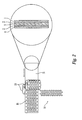
- FIG. 2 shows a non-limiting example of one method of forming the dosage form of the invention comprising the use of a rolling punch to render the multilayer extrudate into a plurality of particles.
- a co-extruded multilayer extrudate sheet 16 exits the co-extrusion die.
- the multilayer extrudate comprises a core 3 comprising an adverse agent, a sheath 2 comprising a hydrophobic material and a shell 1 comprising an active agent.
- the multilayer extrudate 16 is conveyed from the co-extrusion die exit orifice to a rolling punch 10 which renders the multilayer extrudate 16 into a plurality of particles 14.
- the shell and sheath are pinched or crimped by the rolling punch to substantially encapsulate the core, thus creating an ellipsoid-shaped multilayer particle.
- an exposed area of the core and/or sheath can exist, such as at the sides or edges of the dosage form or particle.
- the present invention is also directed to the use of the dosage form of the invention in the production of a medicament for treating a condition in a patient in need of said treatment.
- the dosage form can be, for example, an oral dosage form, such as a tablet or capsule, or a rectal or vaginal dosage form, such as a suppository.
- the condition is pain and the dosage form includes an opioid and a sequestered opioid antagonist.
- the dosage form is administered to a patient twice a day, and in other embodiments, once a day.
- the amount of the active agent per dosage unit is that which is an effective amount for its particular indication and is independent of the amount of the adverse agent.
- the amount of the opioid agonist in the dosage form of the present invention is generally from about 1 mg to about 800 mg; in one embodiment from about 5 mg to about 160 mg.
- One of ordinary skill in the art can readily determine, without undue experimentation, the amount of therapeutic agent needed for a particular indication.
- the amount of the adverse agent in the dosage form of the present invention is such that the adverse agent can give the intended adverse effect if, when tampered with, a substantial amount of the adverse agent is released immediately from the dosage form and absorbed into an animal's blood.
- the adverse agent is intended to reduce or eliminate one or more of the pharmacological effects of the active agent, such as euphoria
- the amount of the adverse agent in the dosage form is at least sufficient to reduce or eliminate those effects of the active agent when both agents are substantially or completely released from the dosage form and absorbed into an animal's blood after tampering has occurred.
- the amount of the opioid antagonist present in a dosage form of the present invention can be from about 0.5 mg to about 50 mg.
- the amount of the adverse agent in the dosage form is at least sufficient to cause such effect upon release after tampering has occurred.
- the amount of the adverse agent present in the dosage form should elicit the intended adverse effect without being harmful to humans even if it is all immediately released.
- the ratio of the therapeutic agent to the adverse agent in the dosage form can be from about 1:1 to about 50:1 by weight, in one embodiment from about 1:1 to about 20:1 by weight. In certain other embodiments, the ratio can be about 1:1 to about 10:1 by weight.
- the controlled release dosage forms can include analgesic doses from about 5 mg to about 80 mg of hydrocodone per dosage unit.
- the opioid agonist is hydrocodone
- it can be included in an amount from about 2 mg to about 64 mg hydromorphone hydrochloride per dosage unit.
- the opioid agonist is morphine
- it can be present in the dosage form from about 2.5 mg to about 800 mg morphine per dosage unit.
- the opioid agonist is oxycodone
- the dosage forms can include from about 2.5 mg to about 160 mg oxycodone, and in another embodiment from about 20 mg to about 30 mg oxycodone per dosage unit.
- unit dose is defined for purposes of the present invention as the total amount of dosage form needed to administer a single desired dose of active agent (e.g. , opioid agonist) to a patient.
- active agent e.g. , opioid agonist
- each extruder barrel is attached to the outlet end of the respective powder-feeder hopper.
- the outlet of the separate core, sheath and shell extruder barrels can be connected to the appropriate inlet orifice of a co-extrusion die to form a multilayer extrudate sheet or laminate.
- the rotation speed of each extruder can be set to a level to produce the desired combined output, at the die orifice, such as about 5 to 15 kg/hr.
- the formulations can be heated with mixing until respective molten masses form. Each resultant viscous mass can then be extruded through the respective extruder barrel to the respective co-extrusion die inlet ports to form the multilayer extrudate sheet containing the core, the sheath and the shell.
- the multilayer extrudate sheet can then be transported on a continuous movable belt to a rolling punch device as it partially cools and congeals.
- the partially congealed hardened multilayer sheet can be pelletized with a rolling punch device into hexagonal particles each having a major axis diameter of about 0.1 to about 3.0 mm, a minor axis diameter of about 0.1 to about 3.0 mm, and a thickness of about 0.1 to about 3.0 mm.
- the average thickness of the core can be about 0.05 to about 3.0 mm
- the average thickness of the sheath can be about 0.05 to about 3.0 mm
- the average thickness of the shell can be about 0.05 to about 3.0 mm.
Landscapes
- Health & Medical Sciences (AREA)
- General Health & Medical Sciences (AREA)
- Life Sciences & Earth Sciences (AREA)
- Chemical & Material Sciences (AREA)
- Public Health (AREA)
- Veterinary Medicine (AREA)
- Medicinal Chemistry (AREA)
- Bioinformatics & Cheminformatics (AREA)
- Engineering & Computer Science (AREA)
- Pharmacology & Pharmacy (AREA)
- Animal Behavior & Ethology (AREA)
- Epidemiology (AREA)
- Organic Chemistry (AREA)
- Nuclear Medicine, Radiotherapy & Molecular Imaging (AREA)
- General Chemical & Material Sciences (AREA)
- Chemical Kinetics & Catalysis (AREA)
- Neurology (AREA)
- Neurosurgery (AREA)
- Biomedical Technology (AREA)
- Emergency Medicine (AREA)
- Addiction (AREA)
- Pain & Pain Management (AREA)
- Psychiatry (AREA)
- Medicinal Preparation (AREA)
- Pharmaceuticals Containing Other Organic And Inorganic Compounds (AREA)
- Medicines That Contain Protein Lipid Enzymes And Other Medicines (AREA)
- Acyclic And Carbocyclic Compounds In Medicinal Compositions (AREA)
Priority Applications (2)
| Application Number | Priority Date | Filing Date | Title |
|---|---|---|---|
| SI200430281T SI1691892T1 (sl) | 2003-12-09 | 2004-12-08 | Varnostna koekstrudirana dozirna oblika, ki vsebuje aktivno sredstvo in protisredstvo, in postopek njene izdelave |
| PL04813471T PL1691892T3 (pl) | 2003-12-09 | 2004-12-08 | Odporna na fizyczne manipulowanie, współwytłaczana postać dawkowania zawierająca środek aktywny i środek przeciwdziałający oraz sposób wytwarzania tej postaci |
Applications Claiming Priority (2)
| Application Number | Priority Date | Filing Date | Title |
|---|---|---|---|
| US52855003P | 2003-12-09 | 2003-12-09 | |
| PCT/US2004/041154 WO2005055981A2 (en) | 2003-12-09 | 2004-12-08 | Tamper resistant co-extruded dosage form containing an active agent and an adverse agent and process of making same |
Publications (2)
| Publication Number | Publication Date |
|---|---|
| EP1691892A2 EP1691892A2 (en) | 2006-08-23 |
| EP1691892B1 true EP1691892B1 (en) | 2007-02-28 |
Family
ID=34676850
Family Applications (1)
| Application Number | Title | Priority Date | Filing Date |
|---|---|---|---|
| EP04813471A Expired - Lifetime EP1691892B1 (en) | 2003-12-09 | 2004-12-08 | Tamper resistant co-extruded dosage form containing an active agent and an adverse agent and process of making same |
Country Status (13)
| Country | Link |
|---|---|
| US (1) | US20070269505A1 (enExample) |
| EP (1) | EP1691892B1 (enExample) |
| JP (3) | JP4917893B2 (enExample) |
| AT (1) | ATE355103T1 (enExample) |
| CA (1) | CA2548834C (enExample) |
| CY (1) | CY1106600T1 (enExample) |
| DE (1) | DE602004005076T2 (enExample) |
| DK (1) | DK1691892T3 (enExample) |
| ES (1) | ES2281851T3 (enExample) |
| PL (1) | PL1691892T3 (enExample) |
| PT (1) | PT1691892E (enExample) |
| SI (1) | SI1691892T1 (enExample) |
| WO (1) | WO2005055981A2 (enExample) |
Families Citing this family (58)
| Publication number | Priority date | Publication date | Assignee | Title |
|---|---|---|---|---|
| CA2778114A1 (en) * | 2001-05-11 | 2002-11-21 | Endo Pharmaceuticals, Inc. | Abuse-resistant opioid dosage form |
| US20030157168A1 (en) | 2001-08-06 | 2003-08-21 | Christopher Breder | Sequestered antagonist formulations |
| US7776314B2 (en) | 2002-06-17 | 2010-08-17 | Grunenthal Gmbh | Abuse-proofed dosage system |
| US9579286B2 (en) | 2003-04-21 | 2017-02-28 | Purdue Pharma L.P. | Tamper resistant dosage form comprising co-extruded, sequestered adverse agent particles and process of making same |
| DE102005005446A1 (de) | 2005-02-04 | 2006-08-10 | Grünenthal GmbH | Bruchfeste Darreichungsformen mit retardierter Freisetzung |
| US8075872B2 (en) | 2003-08-06 | 2011-12-13 | Gruenenthal Gmbh | Abuse-proofed dosage form |
| DE10361596A1 (de) | 2003-12-24 | 2005-09-29 | Grünenthal GmbH | Verfahren zur Herstellung einer gegen Missbrauch gesicherten Darreichungsform |
| US20070048228A1 (en) | 2003-08-06 | 2007-03-01 | Elisabeth Arkenau-Maric | Abuse-proofed dosage form |
| DE10336400A1 (de) | 2003-08-06 | 2005-03-24 | Grünenthal GmbH | Gegen Missbrauch gesicherte Darreichungsform |
| DE102004032051A1 (de) | 2004-07-01 | 2006-01-19 | Grünenthal GmbH | Verfahren zur Herstellung einer gegen Missbrauch gesicherten, festen Darreichungsform |
| PL1691892T3 (pl) * | 2003-12-09 | 2007-07-31 | Euro Celtique Sa | Odporna na fizyczne manipulowanie, współwytłaczana postać dawkowania zawierająca środek aktywny i środek przeciwdziałający oraz sposób wytwarzania tej postaci |
| HRP20090203T1 (en) | 2004-03-30 | 2009-05-31 | Euro-Celtique S.A. | Tamper resistant dosage form comprising an adsorbent and an adverse agent |
| DE102004032049A1 (de) | 2004-07-01 | 2006-01-19 | Grünenthal GmbH | Gegen Missbrauch gesicherte, orale Darreichungsform |
| DE102005005449A1 (de) | 2005-02-04 | 2006-08-10 | Grünenthal GmbH | Verfahren zur Herstellung einer gegen Missbrauch gesicherten Darreichungsform |
| AU2006326377B2 (en) * | 2005-12-13 | 2010-10-07 | Biodelivery Sciences International, Inc. | Abuse resistant transmucosal drug delivery device |
| EP2719378B1 (en) * | 2006-06-19 | 2016-08-31 | Alpharma Pharmaceuticals LLC | Pharmaceutical compositions |
| SI2054031T1 (sl) | 2006-07-21 | 2016-09-30 | Biodelivery Sciences International, Inc. | Transmukozne naprave za administracijo z izboljšanim vnosom |
| AU2007322269A1 (en) * | 2006-10-11 | 2008-05-29 | Alpharma Pharmaceuticals, Llc | Pharmaceutical compositions |
| DE102007011485A1 (de) | 2007-03-07 | 2008-09-11 | Grünenthal GmbH | Darreichungsform mit erschwertem Missbrauch |
| JP5965583B2 (ja) * | 2007-08-13 | 2016-08-10 | インスピリオン デリバリー テクノロジーズ エルエルシー | 乱用抵抗性医薬組成物、その使用方法および作製方法 |
| EP2224808A4 (en) * | 2007-12-17 | 2013-11-27 | Alpharma Pharmaceuticals Llc | PHARMACEUTICAL COMPOSITION |
| AU2015200313B2 (en) * | 2007-12-17 | 2016-12-01 | Alpharma Pharmaceuticals, Llc | Pharmaceutical composition |
| CA2709905A1 (en) * | 2007-12-17 | 2009-06-25 | Alfred Liang | Abuse-resistant oxycodone composition |
| EP2224915A4 (en) * | 2007-12-17 | 2014-01-22 | Alpharma Pharmaceuticals Llc | PHARMACEUTICAL COMPOSITIONS |
| CN101969930A (zh) | 2007-12-17 | 2011-02-09 | 莱博法姆公司 | 防滥用控制释放制剂 |
| WO2009079518A1 (en) * | 2007-12-17 | 2009-06-25 | Alpharma Pharmaceuticals. Llc | Pharmaceutical composition |
| JP5774853B2 (ja) | 2008-01-25 | 2015-09-09 | グリュネンタール・ゲゼルシャフト・ミト・ベシュレンクテル・ハフツング | 医薬投薬形 |
| US9226907B2 (en) | 2008-02-01 | 2016-01-05 | Abbvie Inc. | Extended release hydrocodone acetaminophen and related methods and uses thereof |
| MX2010012039A (es) | 2008-05-09 | 2010-11-30 | Gruenenthal Gmbh | Proceso para la preparacion de una formulacion de polvo intermedia y una forma de dosificacion solida final bajo el uso de un paso de congelacion por rocio. |
| US20110262407A1 (en) * | 2008-11-11 | 2011-10-27 | Targacept, Inc. | Treatment with alpha7 selective ligands |
| ES2414856T3 (es) | 2008-12-12 | 2013-07-23 | Paladin Labs Inc. | Formulaciones de fármaco narcótico con potencial de adicción disminuido |
| EP2367541B1 (en) | 2008-12-16 | 2014-07-16 | Paladin Labs Inc. | Misuse preventative, controlled release formulation |
| CN101904813A (zh) * | 2009-04-22 | 2010-12-08 | 苏维拉克皮肤及健康护理公司 | 冻干包衣的模制品 |
| BR112012001547A2 (pt) | 2009-07-22 | 2016-03-08 | Gruenenthal Gmbh | forma de dosagem farmacêutica extrusada por fusão a quente |
| ES2428938T3 (es) | 2009-07-22 | 2013-11-12 | Grünenthal GmbH | Forma de dosificación resistente a la manipulación y estabilizada frente a la oxidación |
| CN103179954A (zh) | 2010-09-02 | 2013-06-26 | 格吕伦塔尔有限公司 | 包含阴离子聚合物的抗破碎剂型 |
| CA2808219C (en) | 2010-09-02 | 2019-05-14 | Gruenenthal Gmbh | Tamper resistant dosage form comprising inorganic salt |
| ITVR20110069A1 (it) * | 2011-04-06 | 2012-10-07 | Eurocoating S P A | Metodo per la realizzazione di un biomateriale a base di calcio fosfato sotto forma di granuli e/o loro aggregati e biomateriale ottenuto con lo stesso |
| PL2736497T3 (pl) | 2011-07-29 | 2018-01-31 | Gruenenthal Gmbh | Tabletka odporna na ingerencję, zapewniająca natychmiastowe uwalnianie leku |
| CA2839123A1 (en) | 2011-07-29 | 2013-02-07 | Grunenthal Gmbh | Tamper-resistant tablet providing immediate drug release |
| SG10201610097WA (en) | 2011-08-18 | 2017-01-27 | Biodelivery Sciences Int Inc | Abuse-resistant mucoadhesive devices for delivery of buprenorphine |
| US20140294947A1 (en) * | 2011-09-16 | 2014-10-02 | Purdue Pharma L.P. | Tamper resistant immediate release formulations |
| US9901539B2 (en) | 2011-12-21 | 2018-02-27 | Biodelivery Sciences International, Inc. | Transmucosal drug delivery devices for use in chronic pain relief |
| MX356421B (es) | 2012-02-28 | 2018-05-29 | Gruenenthal Gmbh | Forma de dosificacion resistente a la manipulacion indebida que comprende un compuesto farmacologicamente activo y un polimero anionico. |
| PL2838512T3 (pl) | 2012-04-18 | 2018-12-31 | Grünenthal GmbH | Farmaceutyczna postać dawkowania odporna na niewłaściwe użycie i odporna na uderzeniowe uwalnianie dawki |
| US10064945B2 (en) | 2012-05-11 | 2018-09-04 | Gruenenthal Gmbh | Thermoformed, tamper-resistant pharmaceutical dosage form containing zinc |
| CA2907428A1 (en) | 2013-03-15 | 2014-09-18 | Inspirion Delivery Technologies, Llc | Abuse deterrent compositions and methods of use |
| MX371432B (es) | 2013-05-29 | 2020-01-30 | Gruenenthal Gmbh | Forma de dosificacion resistente al uso indebido que contiene una o mas particulas. |
| WO2014191396A1 (en) | 2013-05-29 | 2014-12-04 | Grünenthal GmbH | Tamper resistant dosage form with bimodal release profile |
| US10624862B2 (en) | 2013-07-12 | 2020-04-21 | Grünenthal GmbH | Tamper-resistant dosage form containing ethylene-vinyl acetate polymer |
| EP2835246A1 (en) * | 2013-08-05 | 2015-02-11 | Ansa Termoplastici S.r.l. | Method and apparatus for producing extruded plastic elements |
| WO2015078891A1 (en) | 2013-11-26 | 2015-06-04 | Farmaceutici Formenti S.P.A. | Preparation of a powdery pharmaceutical composition by means of cryo-milling |
| US20150320690A1 (en) | 2014-05-12 | 2015-11-12 | Grünenthal GmbH | Tamper resistant immediate release capsule formulation comprising tapentadol |
| EP3148512A1 (en) | 2014-05-26 | 2017-04-05 | Grünenthal GmbH | Multiparticles safeguarded against ethanolic dose-dumping |
| US10729685B2 (en) | 2014-09-15 | 2020-08-04 | Ohemo Life Sciences Inc. | Orally administrable compositions and methods of deterring abuse by intranasal administration |
| BR112017021475A2 (pt) | 2015-04-24 | 2018-07-10 | Gruenenthal Gmbh | forma de dosagem resistente à adulteração (tamper) com liberação imediata e resistência contra extração de solvente |
| AU2016319203A1 (en) | 2015-09-10 | 2018-02-22 | Grünenthal GmbH | Protecting oral overdose with abuse deterrent immediate release formulations |
| US12303604B1 (en) | 2024-10-16 | 2025-05-20 | Currax Pharmaceuticals Llc | Pharmaceutical formulations comprising naltrexone and/or bupropion |
Family Cites Families (35)
| Publication number | Priority date | Publication date | Assignee | Title |
|---|---|---|---|---|
| US3493657A (en) * | 1961-03-14 | 1970-02-03 | Mozes Juda Lewenstein | Therapeutic compositions of n-allyl-14-hydroxy - dihydronormorphinane and morphine |
| US3773955A (en) * | 1970-08-03 | 1973-11-20 | Bristol Myers Co | Analgetic compositions |
| US3966940A (en) * | 1973-11-09 | 1976-06-29 | Bristol-Myers Company | Analgetic compositions |
| US4457933A (en) * | 1980-01-24 | 1984-07-03 | Bristol-Myers Company | Prevention of analgesic abuse |
| GB8332556D0 (en) * | 1983-12-06 | 1984-01-11 | Reckitt & Colmann Prod Ltd | Analgesic compositions |
| US5316759A (en) * | 1986-03-17 | 1994-05-31 | Robert J. Schaap | Agonist-antagonist combination to reduce the use of nicotine and other drugs |
| DE3612211A1 (de) * | 1986-04-11 | 1987-10-15 | Basf Ag | Kontinuierliches verfahren zum tablettieren |
| US5200193A (en) * | 1987-04-22 | 1993-04-06 | Mcneilab, Inc. | Pharmaceutical sustained release matrix and process |
| DE3812567A1 (de) * | 1988-04-15 | 1989-10-26 | Basf Ag | Verfahren zur herstellung pharmazeutischer mischungen |
| DE3830353A1 (de) * | 1988-09-07 | 1990-03-15 | Basf Ag | Verfahren zur kontinuierlichen herstellung von festen pharmazeutischen formen |
| FR2677886B1 (fr) * | 1991-06-18 | 1995-03-31 | Adir | Comprime matriciel permettant la liberation prolongee d'indapamide apres administration par voie orale. |
| US5656295A (en) * | 1991-11-27 | 1997-08-12 | Euro-Celtique, S.A. | Controlled release oxycodone compositions |
| US5266331A (en) * | 1991-11-27 | 1993-11-30 | Euroceltique, S.A. | Controlled release oxycodone compositions |
| US5968551A (en) * | 1991-12-24 | 1999-10-19 | Purdue Pharma L.P. | Orally administrable opioid formulations having extended duration of effect |
| US5472712A (en) * | 1991-12-24 | 1995-12-05 | Euroceltique, S.A. | Controlled-release formulations coated with aqueous dispersions of ethylcellulose |
| US5324351A (en) * | 1992-08-13 | 1994-06-28 | Euroceltique | Aqueous dispersions of zein and preparation thereof |
| US5879705A (en) * | 1993-07-27 | 1999-03-09 | Euro-Celtique S.A. | Sustained release compositions of morphine and a method of preparing pharmaceutical compositions |
| US5492692A (en) * | 1993-08-17 | 1996-02-20 | University Of Kentucky Research Foundation | Coated products with potent anti-HIV and antimicrobial properties |
| US5451409A (en) * | 1993-11-22 | 1995-09-19 | Rencher; William F. | Sustained release matrix system using hydroxyethyl cellulose and hydroxypropyl cellulose polymer blends |
| US5965161A (en) * | 1994-11-04 | 1999-10-12 | Euro-Celtique, S.A. | Extruded multi-particulates |
| US6007843A (en) * | 1995-09-29 | 1999-12-28 | Lam Pharmaceuticals Corp. | Sustained release delivery system |
| AUPN605795A0 (en) * | 1995-10-19 | 1995-11-09 | F.H. Faulding & Co. Limited | Analgesic pharmaceutical composition |
| DE19539361A1 (de) * | 1995-10-23 | 1997-04-24 | Basf Ag | Verfahren zur Herstellung von mehrschichtigen, festen Arzneiformen zur oralen oder rektalen Verabreichung |
| DE19710008A1 (de) * | 1997-03-12 | 1998-09-17 | Basf Ag | Feste, mindestens zweiphasige Zubereitungsformen eines Opioid-Analgeticums mit verzögerter Freisetzung |
| IN183097B (enExample) * | 1997-03-27 | 1999-09-04 | Rajiv Indravadan Dr Modi | |
| BR9813826A (pt) * | 1997-12-22 | 2000-10-10 | Euro Celtique Sa | Potencial de uso abusivo de administração oral de opióide analgésico |
| DE19812688A1 (de) * | 1998-03-23 | 1999-09-30 | Basf Ag | Verfahren zur Herstellung von festen Dosierungsformen |
| EP2517710B1 (en) * | 2000-02-08 | 2015-03-25 | Euro-Celtique S.A. | Tamper-resistant oral opioid agonist formulations |
| EP1213014B1 (en) * | 2000-12-07 | 2005-04-20 | Warner-Lambert Company LLC | Process and system for uniform release drug delivery |
| CA2778114A1 (en) * | 2001-05-11 | 2002-11-21 | Endo Pharmaceuticals, Inc. | Abuse-resistant opioid dosage form |
| US20030157168A1 (en) * | 2001-08-06 | 2003-08-21 | Christopher Breder | Sequestered antagonist formulations |
| US7144587B2 (en) * | 2001-08-06 | 2006-12-05 | Euro-Celtique S.A. | Pharmaceutical formulation containing opioid agonist, opioid antagonist and bittering agent |
| SI1551372T1 (en) * | 2002-09-20 | 2018-08-31 | Alpharma Pharmaceuticals Llc | SUBVENCATION DATA AND RELATED CONSTRUCTIONS AND PROCEDURES |
| US9579286B2 (en) * | 2003-04-21 | 2017-02-28 | Purdue Pharma L.P. | Tamper resistant dosage form comprising co-extruded, sequestered adverse agent particles and process of making same |
| PL1691892T3 (pl) * | 2003-12-09 | 2007-07-31 | Euro Celtique Sa | Odporna na fizyczne manipulowanie, współwytłaczana postać dawkowania zawierająca środek aktywny i środek przeciwdziałający oraz sposób wytwarzania tej postaci |
-
2004
- 2004-12-08 PL PL04813471T patent/PL1691892T3/pl unknown
- 2004-12-08 DK DK04813471T patent/DK1691892T3/da active
- 2004-12-08 PT PT04813471T patent/PT1691892E/pt unknown
- 2004-12-08 US US10/582,256 patent/US20070269505A1/en not_active Abandoned
- 2004-12-08 EP EP04813471A patent/EP1691892B1/en not_active Expired - Lifetime
- 2004-12-08 DE DE602004005076T patent/DE602004005076T2/de not_active Expired - Lifetime
- 2004-12-08 CA CA002548834A patent/CA2548834C/en not_active Expired - Lifetime
- 2004-12-08 SI SI200430281T patent/SI1691892T1/sl unknown
- 2004-12-08 ES ES04813471T patent/ES2281851T3/es not_active Expired - Lifetime
- 2004-12-08 AT AT04813471T patent/ATE355103T1/de active
- 2004-12-08 WO PCT/US2004/041154 patent/WO2005055981A2/en not_active Ceased
- 2004-12-08 JP JP2006543959A patent/JP4917893B2/ja not_active Expired - Lifetime
-
2007
- 2007-05-17 CY CY20071100667T patent/CY1106600T1/el unknown
-
2011
- 2011-02-02 JP JP2011020960A patent/JP5473958B2/ja not_active Expired - Lifetime
- 2011-12-13 JP JP2011272389A patent/JP2012082214A/ja active Pending
Also Published As
| Publication number | Publication date |
|---|---|
| ES2281851T3 (es) | 2007-10-01 |
| WO2005055981A3 (en) | 2005-08-11 |
| DE602004005076T2 (de) | 2007-11-15 |
| JP2012082214A (ja) | 2012-04-26 |
| US20070269505A1 (en) | 2007-11-22 |
| PT1691892E (pt) | 2007-05-31 |
| ATE355103T1 (de) | 2006-03-15 |
| JP2011126895A (ja) | 2011-06-30 |
| DK1691892T3 (da) | 2007-06-25 |
| CA2548834C (en) | 2009-08-11 |
| JP2007513960A (ja) | 2007-05-31 |
| CA2548834A1 (en) | 2005-06-23 |
| CY1106600T1 (el) | 2012-01-25 |
| JP4917893B2 (ja) | 2012-04-18 |
| PL1691892T3 (pl) | 2007-07-31 |
| EP1691892A2 (en) | 2006-08-23 |
| WO2005055981A2 (en) | 2005-06-23 |
| SI1691892T1 (sl) | 2007-08-31 |
| DE602004005076D1 (de) | 2007-04-12 |
| JP5473958B2 (ja) | 2014-04-16 |
Similar Documents
| Publication | Publication Date | Title |
|---|---|---|
| EP1691892B1 (en) | Tamper resistant co-extruded dosage form containing an active agent and an adverse agent and process of making same | |
| US10039720B2 (en) | Tamper resistant dosage form comprising co-extruded, adverse agent particles and process of making same | |
| US10441547B2 (en) | Tamper resistant co-extruded dosage form containing an active agent and an adverse agent and process of making same | |
| EP1729730B1 (en) | Tamper resistant dosage form comprising an adsorbent and an adverse agent | |
| EP1348429B1 (en) | Melt-extruded orally administrable opioid formulations | |
| US9034377B2 (en) | Opioid dosage forms having dose proportional steady state Cave and AUC and less than dose proportional single dose Cmax | |
| MXPA06006154A (en) | Tamper resistant co-extruded dosage form containing an active agent and an adverse agent and process of making same |
Legal Events
| Date | Code | Title | Description |
|---|---|---|---|
| PUAI | Public reference made under article 153(3) epc to a published international application that has entered the european phase |
Free format text: ORIGINAL CODE: 0009012 |
|
| 17P | Request for examination filed |
Effective date: 20060426 |
|
| AK | Designated contracting states |
Kind code of ref document: A2 Designated state(s): AT BE BG CH CY CZ DE DK EE ES FI FR GB GR HU IE IS IT LI LT LU MC NL PL PT RO SE SI SK TR |
|
| GRAP | Despatch of communication of intention to grant a patent |
Free format text: ORIGINAL CODE: EPIDOSNIGR1 |
|
| GRAS | Grant fee paid |
Free format text: ORIGINAL CODE: EPIDOSNIGR3 |
|
| GRAA | (expected) grant |
Free format text: ORIGINAL CODE: 0009210 |
|
| AK | Designated contracting states |
Kind code of ref document: B1 Designated state(s): AT BE BG CH CY CZ DE DK EE ES FI FR GB GR HU IE IS IT LI LT LU MC NL PL PT RO SE SI SK TR |
|
| DAX | Request for extension of the european patent (deleted) | ||
| REG | Reference to a national code |
Ref country code: GB Ref legal event code: FG4D |
|
| REG | Reference to a national code |
Ref country code: CH Ref legal event code: EP |
|
| REF | Corresponds to: |
Ref document number: 602004005076 Country of ref document: DE Date of ref document: 20070412 Kind code of ref document: P |
|
| REG | Reference to a national code |
Ref country code: IE Ref legal event code: FG4D |
|
| REG | Reference to a national code |
Ref country code: CH Ref legal event code: NV Representative=s name: MAIWALD PATENTANWALTSGESELLSCHAFT (SCHWEIZ) MBH |
|
| REG | Reference to a national code |
Ref country code: RO Ref legal event code: EPE |
|
| REG | Reference to a national code |
Ref country code: SE Ref legal event code: TRGR |
|
| REG | Reference to a national code |
Ref country code: PT Ref legal event code: SC4A Free format text: AVAILABILITY OF NATIONAL TRANSLATION Effective date: 20070516 |
|
| REG | Reference to a national code |
Ref country code: GR Ref legal event code: EP Ref document number: 20070401507 Country of ref document: GR |
|
| REG | Reference to a national code |
Ref country code: DK Ref legal event code: T3 |
|
| REG | Reference to a national code |
Ref country code: HU Ref legal event code: AG4A Ref document number: E001708 Country of ref document: HU |
|
| REG | Reference to a national code |
Ref country code: PL Ref legal event code: T3 |
|
| ET | Fr: translation filed | ||
| REG | Reference to a national code |
Ref country code: ES Ref legal event code: FG2A Ref document number: 2281851 Country of ref document: ES Kind code of ref document: T3 |
|
| PLBE | No opposition filed within time limit |
Free format text: ORIGINAL CODE: 0009261 |
|
| STAA | Information on the status of an ep patent application or granted ep patent |
Free format text: STATUS: NO OPPOSITION FILED WITHIN TIME LIMIT |
|
| 26N | No opposition filed |
Effective date: 20071129 |
|
| REG | Reference to a national code |
Ref country code: CH Ref legal event code: PCAR Free format text: MAIWALD PATENTANWALTSGESELLSCHAFT (SCHWEIZ) MBH;SEEFELDSTRASSE 45;8008 ZUERICH (CH) |
|
| REG | Reference to a national code |
Ref country code: CH Ref legal event code: PCOW Free format text: EURO-CELTIQUE S.A.;2, AVENUE CHARLES DE GAULLE;1653 LUXEMBOURG (LU) |
|
| REG | Reference to a national code |
Ref country code: EE Ref legal event code: HC1A Ref document number: E001196 Country of ref document: EE Ref country code: EE Ref legal event code: HE1A Ref document number: E001196 Country of ref document: EE |
|
| REG | Reference to a national code |
Ref country code: CH Ref legal event code: PFA Owner name: EURO-CELTIQUE S.A. Free format text: EURO-CELTIQUE S.A.#2, AVENUE CHARLES DE GAULLE#1653 LUXEMBOURG (LU) -TRANSFER TO- EURO-CELTIQUE S.A.#2, AVENUE CHARLES DE GAULLE#1653 LUXEMBOURG (LU) |
|
| REG | Reference to a national code |
Ref country code: HU Ref legal event code: HC9C Owner name: EURO-CELTIQUE S.A., LU Free format text: FORMER OWNER(S): EURO-CELTIQUE S.A., LU |
|
| REG | Reference to a national code |
Ref country code: FR Ref legal event code: PLFP Year of fee payment: 12 |
|
| REG | Reference to a national code |
Ref country code: DE Ref legal event code: R082 Ref document number: 602004005076 Country of ref document: DE Representative=s name: MAIWALD PATENTANWALTSGESELLSCHAFT MBH, DE Ref country code: DE Ref legal event code: R081 Ref document number: 602004005076 Country of ref document: DE Owner name: EURO-CELTIQUE S.A., LU Free format text: FORMER OWNER: EURO-CELTIQUE S.A., LUXEMBURG, LU Ref country code: DE Ref legal event code: R082 Ref document number: 602004005076 Country of ref document: DE Representative=s name: MAIWALD PATENTANWALTS- UND RECHTSANWALTSGESELL, DE |
|
| REG | Reference to a national code |
Ref country code: DE Ref legal event code: R081 Ref document number: 602004005076 Country of ref document: DE Owner name: EURO-CELTIQUE S.A., LU Free format text: FORMER OWNER: EURO-CELTIQUE S.A., LUXEMBURG, LU Ref country code: DE Ref legal event code: R082 Ref document number: 602004005076 Country of ref document: DE Representative=s name: MAIWALD PATENTANWALTSGESELLSCHAFT MBH, DE Ref country code: DE Ref legal event code: R082 Ref document number: 602004005076 Country of ref document: DE Representative=s name: MAIWALD PATENTANWALTS- UND RECHTSANWALTSGESELL, DE |
|
| REG | Reference to a national code |
Ref country code: CH Ref legal event code: PFA Owner name: EURO-CELTIQUE S.A., LU Free format text: FORMER OWNER: EURO-CELTIQUE S.A., LU |
|
| REG | Reference to a national code |
Ref country code: FR Ref legal event code: PLFP Year of fee payment: 13 |
|
| REG | Reference to a national code |
Ref country code: FR Ref legal event code: PLFP Year of fee payment: 14 |
|
| PGFP | Annual fee paid to national office [announced via postgrant information from national office to epo] |
Ref country code: LU Payment date: 20171122 Year of fee payment: 14 |
|
| PGFP | Annual fee paid to national office [announced via postgrant information from national office to epo] |
Ref country code: LT Payment date: 20171120 Year of fee payment: 14 Ref country code: FI Payment date: 20171121 Year of fee payment: 14 Ref country code: RO Payment date: 20171207 Year of fee payment: 14 Ref country code: CZ Payment date: 20171122 Year of fee payment: 14 Ref country code: EE Payment date: 20171120 Year of fee payment: 14 Ref country code: MC Payment date: 20171123 Year of fee payment: 14 Ref country code: HU Payment date: 20171218 Year of fee payment: 14 Ref country code: DK Payment date: 20171121 Year of fee payment: 14 Ref country code: TR Payment date: 20171124 Year of fee payment: 14 Ref country code: SK Payment date: 20171121 Year of fee payment: 14 |
|
| PGFP | Annual fee paid to national office [announced via postgrant information from national office to epo] |
Ref country code: IE Payment date: 20171020 Year of fee payment: 19 Ref country code: BE Payment date: 20171122 Year of fee payment: 14 Ref country code: SE Payment date: 20171123 Year of fee payment: 14 Ref country code: AT Payment date: 20171121 Year of fee payment: 14 Ref country code: BG Payment date: 20171120 Year of fee payment: 14 Ref country code: GR Payment date: 20171121 Year of fee payment: 14 Ref country code: PT Payment date: 20171204 Year of fee payment: 14 Ref country code: SI Payment date: 20171121 Year of fee payment: 14 Ref country code: IS Payment date: 20171120 Year of fee payment: 14 Ref country code: PL Payment date: 20171121 Year of fee payment: 14 |
|
| PGFP | Annual fee paid to national office [announced via postgrant information from national office to epo] |
Ref country code: CY Payment date: 20171120 Year of fee payment: 14 |
|
| REG | Reference to a national code |
Ref country code: LT Ref legal event code: MM4D Effective date: 20181208 |
|
| REG | Reference to a national code |
Ref country code: EE Ref legal event code: MM4A Ref document number: E001196 Country of ref document: EE Effective date: 20181231 |
|
| REG | Reference to a national code |
Ref country code: DK Ref legal event code: EBP Effective date: 20181231 |
|
| REG | Reference to a national code |
Ref country code: SE Ref legal event code: EUG |
|
| PG25 | Lapsed in a contracting state [announced via postgrant information from national office to epo] |
Ref country code: CY Free format text: LAPSE BECAUSE OF NON-PAYMENT OF DUE FEES Effective date: 20181208 Ref country code: LT Free format text: LAPSE BECAUSE OF NON-PAYMENT OF DUE FEES Effective date: 20181208 Ref country code: SE Free format text: LAPSE BECAUSE OF NON-PAYMENT OF DUE FEES Effective date: 20181209 Ref country code: CZ Free format text: LAPSE BECAUSE OF NON-PAYMENT OF DUE FEES Effective date: 20181208 Ref country code: FI Free format text: LAPSE BECAUSE OF NON-PAYMENT OF DUE FEES Effective date: 20181208 Ref country code: PT Free format text: LAPSE BECAUSE OF NON-PAYMENT OF DUE FEES Effective date: 20190611 |
|
| REG | Reference to a national code |
Ref country code: AT Ref legal event code: MM01 Ref document number: 355103 Country of ref document: AT Kind code of ref document: T Effective date: 20181208 |
|
| PG25 | Lapsed in a contracting state [announced via postgrant information from national office to epo] |
Ref country code: MC Free format text: LAPSE BECAUSE OF NON-PAYMENT OF DUE FEES Effective date: 20190102 Ref country code: RO Free format text: LAPSE BECAUSE OF NON-PAYMENT OF DUE FEES Effective date: 20181208 Ref country code: LU Free format text: LAPSE BECAUSE OF NON-PAYMENT OF DUE FEES Effective date: 20181208 |
|
| REG | Reference to a national code |
Ref country code: SK Ref legal event code: MM4A Ref document number: E 1925 Country of ref document: SK Effective date: 20181208 |
|
| REG | Reference to a national code |
Ref country code: IE Ref legal event code: MM4A |
|
| REG | Reference to a national code |
Ref country code: SI Ref legal event code: KO00 Effective date: 20190805 |
|
| REG | Reference to a national code |
Ref country code: BE Ref legal event code: MM Effective date: 20181231 |
|
| PG25 | Lapsed in a contracting state [announced via postgrant information from national office to epo] |
Ref country code: SK Free format text: LAPSE BECAUSE OF NON-PAYMENT OF DUE FEES Effective date: 20181208 Ref country code: EE Free format text: LAPSE BECAUSE OF NON-PAYMENT OF DUE FEES Effective date: 20181231 Ref country code: IE Free format text: LAPSE BECAUSE OF NON-PAYMENT OF DUE FEES Effective date: 20181208 Ref country code: SI Free format text: LAPSE BECAUSE OF NON-PAYMENT OF DUE FEES Effective date: 20181209 |
|
| PG25 | Lapsed in a contracting state [announced via postgrant information from national office to epo] |
Ref country code: BE Free format text: LAPSE BECAUSE OF NON-PAYMENT OF DUE FEES Effective date: 20181231 Ref country code: BG Free format text: LAPSE BECAUSE OF NON-PAYMENT OF DUE FEES Effective date: 20190630 Ref country code: HU Free format text: LAPSE BECAUSE OF NON-PAYMENT OF DUE FEES Effective date: 20181209 Ref country code: GR Free format text: LAPSE BECAUSE OF NON-PAYMENT OF DUE FEES Effective date: 20190702 |
|
| PG25 | Lapsed in a contracting state [announced via postgrant information from national office to epo] |
Ref country code: IS Free format text: LAPSE BECAUSE OF FAILURE TO SUBMIT A TRANSLATION OF THE DESCRIPTION OR TO PAY THE FEE WITHIN THE PRESCRIBED TIME-LIMIT Effective date: 20190701 Ref country code: AT Free format text: LAPSE BECAUSE OF NON-PAYMENT OF DUE FEES Effective date: 20181208 |
|
| PG25 | Lapsed in a contracting state [announced via postgrant information from national office to epo] |
Ref country code: DK Free format text: LAPSE BECAUSE OF NON-PAYMENT OF DUE FEES Effective date: 20181231 |
|
| PG25 | Lapsed in a contracting state [announced via postgrant information from national office to epo] |
Ref country code: PL Free format text: LAPSE BECAUSE OF NON-PAYMENT OF DUE FEES Effective date: 20181208 |
|
| PG25 | Lapsed in a contracting state [announced via postgrant information from national office to epo] |
Ref country code: TR Free format text: LAPSE BECAUSE OF NON-PAYMENT OF DUE FEES Effective date: 20181208 |
|
| P01 | Opt-out of the competence of the unified patent court (upc) registered |
Effective date: 20230505 |
|
| PGFP | Annual fee paid to national office [announced via postgrant information from national office to epo] |
Ref country code: NL Payment date: 20231121 Year of fee payment: 20 |
|
| PGFP | Annual fee paid to national office [announced via postgrant information from national office to epo] |
Ref country code: GB Payment date: 20231121 Year of fee payment: 20 |
|
| PGFP | Annual fee paid to national office [announced via postgrant information from national office to epo] |
Ref country code: FR Payment date: 20231122 Year of fee payment: 20 Ref country code: DE Payment date: 20231121 Year of fee payment: 20 |
|
| PGFP | Annual fee paid to national office [announced via postgrant information from national office to epo] |
Ref country code: ES Payment date: 20240102 Year of fee payment: 20 |
|
| PGFP | Annual fee paid to national office [announced via postgrant information from national office to epo] |
Ref country code: CH Payment date: 20240101 Year of fee payment: 20 |
|
| REG | Reference to a national code |
Ref country code: DE Ref legal event code: R071 Ref document number: 602004005076 Country of ref document: DE |
|
| REG | Reference to a national code |
Ref country code: NL Ref legal event code: MK Effective date: 20241207 |
|
| REG | Reference to a national code |
Ref country code: CH Ref legal event code: PL |
|
| REG | Reference to a national code |
Ref country code: GB Ref legal event code: PE20 Expiry date: 20241207 |
|
| REG | Reference to a national code |
Ref country code: ES Ref legal event code: FD2A Effective date: 20250102 |
|
| PG25 | Lapsed in a contracting state [announced via postgrant information from national office to epo] |
Ref country code: GB Free format text: LAPSE BECAUSE OF EXPIRATION OF PROTECTION Effective date: 20241207 |
|
| PG25 | Lapsed in a contracting state [announced via postgrant information from national office to epo] |
Ref country code: ES Free format text: LAPSE BECAUSE OF EXPIRATION OF PROTECTION Effective date: 20241209 |
|
| PG25 | Lapsed in a contracting state [announced via postgrant information from national office to epo] |
Ref country code: GB Free format text: LAPSE BECAUSE OF EXPIRATION OF PROTECTION Effective date: 20241207 Ref country code: ES Free format text: LAPSE BECAUSE OF EXPIRATION OF PROTECTION Effective date: 20241209 |
|
| PGFP | Annual fee paid to national office [announced via postgrant information from national office to epo] |
Ref country code: IT Payment date: 20231121 Year of fee payment: 20 |