EP1686516A1 - System zum bewerten eines unternehemns und programm zum bewerten eines unternehmens - Google Patents
System zum bewerten eines unternehemns und programm zum bewerten eines unternehmens Download PDFInfo
- Publication number
- EP1686516A1 EP1686516A1 EP04723751A EP04723751A EP1686516A1 EP 1686516 A1 EP1686516 A1 EP 1686516A1 EP 04723751 A EP04723751 A EP 04723751A EP 04723751 A EP04723751 A EP 04723751A EP 1686516 A1 EP1686516 A1 EP 1686516A1
- Authority
- EP
- European Patent Office
- Prior art keywords
- publications
- registration
- registrations
- period
- acquisition means
- Prior art date
- Legal status (The legal status is an assumption and is not a legal conclusion. Google has not performed a legal analysis and makes no representation as to the accuracy of the status listed.)
- Withdrawn
Links
Images










Classifications
-
- G—PHYSICS
- G06—COMPUTING OR CALCULATING; COUNTING
- G06Q—INFORMATION AND COMMUNICATION TECHNOLOGY [ICT] SPECIALLY ADAPTED FOR ADMINISTRATIVE, COMMERCIAL, FINANCIAL, MANAGERIAL OR SUPERVISORY PURPOSES; SYSTEMS OR METHODS SPECIALLY ADAPTED FOR ADMINISTRATIVE, COMMERCIAL, FINANCIAL, MANAGERIAL OR SUPERVISORY PURPOSES, NOT OTHERWISE PROVIDED FOR
- G06Q10/00—Administration; Management
- G06Q10/06—Resources, workflows, human or project management; Enterprise or organisation planning; Enterprise or organisation modelling
-
- G—PHYSICS
- G06—COMPUTING OR CALCULATING; COUNTING
- G06Q—INFORMATION AND COMMUNICATION TECHNOLOGY [ICT] SPECIALLY ADAPTED FOR ADMINISTRATIVE, COMMERCIAL, FINANCIAL, MANAGERIAL OR SUPERVISORY PURPOSES; SYSTEMS OR METHODS SPECIALLY ADAPTED FOR ADMINISTRATIVE, COMMERCIAL, FINANCIAL, MANAGERIAL OR SUPERVISORY PURPOSES, NOT OTHERWISE PROVIDED FOR
- G06Q10/00—Administration; Management
- G06Q10/10—Office automation; Time management
Definitions
- the present invention relates to an enterprise evaluation device and enterprise evaluation program for evaluating the value of an enterprise based on patent documents.
- Japanese Patent Laid-Open Publication No. 2000-348015 describes a system, method and recording medium for evaluating an evaluation item based on first data having a predetermined renewal interval and second data having a renewal interval that is shorter than the first data.
- This evaluation system has (a) means for creating a first evaluation model according to input of the first data of sample targets, (b) means for applying the first data of the sample targets to the first evaluation model and calculating first evaluation output, (c) means for creating a second evaluation model according to input of the second data and the first evaluation output of the sample targets, (d) means for applying the first data to the first evaluation model according to the input of the first data of an evaluation target and calculating second evaluation output, and (e) means for applying the second data and the second evaluation output of the evaluation target to the second evaluation model and calculating the evaluation output of the evaluation target, and thereby evaluates the evaluation item of the evaluation target that could change with time.
- Japanese Patent Laid-Open Publication No. 2001-76042 describes an intellectual property evaluation device and intellectual property evaluation method for evaluating the proprietary nature of intellectual property relating to a pending or registered invention or the like.
- This evaluation device has an actual profit input means for inputting data regarding the actual profit, a compound cost rate input means for inputting data regarding the compound cost rate per year, a compound present value calculation means for calculating the compound present values of annual compensation by multiplying the data regarding the actual profit with the data regarding the compound cost rates per year, an intellectual property price calculation means for calculating an intellectual property price by totaling the compound present value of the calculated annual compensation amounts, and an output means for outputting the calculated intellectual property value amount calculated with the intellectual property price calculation means.
- Laid-Open Publication No. 2001-76042 describes a technique of comprehending the asset value of currently remaining patents by depreciating registered patents and the related sales volume and profits. Moreover, with respect to the evaluation of the value of each patent, the input ranking of evaluation conducted by one's own company and evaluation conducted by other companies is evaluated as the contribution.
- the intellectual property evaluation device described in Japanese Patent Laid-Open Publication No. 2001-76042 is to evaluate the intellectual property such as patents one by one each year, and there is a drawback in that it is not possible to judge the enterprise value.
- the total market value is determined by the stock prices in the market. Thus, whether the current stock price and the value of intangible assets calculated based on the stockholders' equity in the book are valid is an extremely important element for investors in the decision-making of stock trading. Enterprises are hoping to increase their value of intangible assets and thereby increase their enterprise value by procuring funds and continuing technical developments. Therefore, increasing the value of intangible assets will be positioned as an important issue in the management strategy for enterprises.
- an object of the present invention is to provide an enterprise evaluation device and an enterprise evaluation program capable of acquiring the unexamined publications or publications of registrations based on patent applications of a specified enterprise, analyzing the research and development strategy and intellectual property strategy of such enterprise, and combining this with management-finance information for evaluating the enterprise value.
- an enterprise evaluation device comprising:
- the average period required for registration calculation means calculate the average period required for registration through dividing the accumulated required registration period by the total number of patents subjected to the registration and the average number of days of one year or one month.
- an enterprise evaluation device comprising:
- the average period required for registration calculation means calculate the average period required for registration through dividing the accumulated required registration period by the total number of patents subjected to the registration and the average number of days of one year or one month.
- the present invention uses, as the publications of registrations for calculation of the average period required for registration, publications of patent registrations, publications of examined patent applications, publications of examined utility model applications or publications of utility model registrations.
- an enterprise evaluation device comprising:
- the average period before examination request calculation means calculate the average period before examination request through dividing the accumulated period before examination request by the total number of patents requested for examination and the average number of days of one year or one month.
- an enterprise evaluation device comprising:
- the average period before examination request calculation means calculate the average period before examination request through dividing the accumulated period before examination request by the total number of patents requested for examination and the average number of days of one year or one month.
- the present invention uses, as the publications of registrations, publications of patent registrations, publications of examined patent applications, publications of examined utility model applications or publications of utility model registrations, and uses, as the unexamined publications, publications of unexamined patent applications, published Japanese translations of PCT international applications for patents, publications of unexamined utility model applications or published Japanese translations of PCT international applications for utility models for calculation of the average period before examination request.
- an enterprise evaluation device comprising:
- number-of-inventions-per-applicant acquisition means acquire the number of patent applications or utility model applications or the number of claims from each of the acquired unexamined publications or publications of registrations, acquire the number of applicants indicated in each of the acquired publications, and acquire the number of inventions per unit of applicants through dividing the number of patent applications or utility model applications or the number of claims by the number of applicants; and the number-of-inventions acquisition means acquire the total number of inventions by counting the acquired number of inventions per unit of applicants for all of the acquired publications.
- the enterprise evaluation device of the present invention calculates the patent application productivity in a predetermined technical field and in a specified enterprise.
- an enterprise evaluation device comprising:
- an enterprise evaluation device comprising:
- the present invention uses, as the predetermined technical field, a technical field classified by IPC sub-classes, keywords or inventors.
- the present invention comprises:
- the present invention comprises:
- the present invention comprises:
- official gazette acquisition means acquire, from a database, publications of patent registrations subjected to registration from among the patent applications filed by a specified enterprise within a specified period; average period required for registration calculation means calculate a required registration period for individual applications by subtracting the filing date from the registration date indicated in the acquired publications of registrations, calculate an accumulated required registration period by counting the calculated required registration period for all patents subjected to the registration, and calculate an average period required for registration through dividing the accumulated required registration period by the total number of patents subjected to the registration and average number of days of one year or one month.
- the average years required for registration can be calculated and displayed upon classification per technical area such as based on enterprises, based on workplaces, based on inventors, based on IPC and the like, and the user will be able to know which technical field the enterprise to be researched is laying emphasis, or which technical field the enterprise to be researched is defensively positioning the inventions. Further, a user will be able to judge that a business department having a short average period required for registration is a department that is advancing development with strategic emphasis, and, contrarily, a user will be able to judge that a technical field having a long average period required for registration is a relatively defensive department. Like this, by perusing the average period required for registration, a user will be able to judge the attitude of an enterprise to patents.
- the average period required for registration calculation means calculates the average period required for registration through dividing the accumulated required registration period by the total number of patents subjected to registration and average number of days of one year or one month, the results can be displayed to the user in a.easy-to-view manner, and the user will be able to instantaneously understand the average period required for registration in units of years or months. For instance, if the average period required for registration per patent application is 365.25 days, this can be notified as 1 year or 12 months.
- the average period required for registration is calculated based on patent applications per predetermined technical field in a specified enterprise, it will be possible to compare the average period required for registration with competitors per technical field, and use this as information for deciding on whether one's company should enter into a new technical field.
- the present invention comprises:
- the present invention comprises:
- the present invention comprises:
- the present invention comprises:
- the present invention comprises:
- the present invention comprises:
- the present invention comprises:
- FIG. 1 is a diagram showing the overall configuration of an enterprise evaluation system according to the present invention.
- the enterprise value evaluation system is configured from a database 20 recording various types of information such as management-finance information, technical documents (in addition to patent information, numerical value information relating to utility models and technical journals), market value information (numerical value information of the market value), threshold for determining the validity of the enterprise value, determination result of the validity and category based on such threshold; an enterprise evaluation device 30 for inputting various types of information such as management-finance information, technical documents and market value information and outputting the judgment results of the validity of the enterprise value; and a communication network 10 such as the Internet or dedicated communication line for communicably connecting the enterprise evaluation device 30 and database 20.
- a communication network 10 such as the Internet or dedicated communication line for communicably connecting the enterprise evaluation device 30 and database 20.
- the database 20 may be provided inside the enterprise evaluation device 30.
- FIG. 2 is a signal processing system block diagram of an enterprise evaluation device 30 according to the present invention.
- the information transmission-reception unit of the enterprise evaluation device 30 is provided with a transmission-reception means 365 (including the functions of a management-finance information acquisition means, official gazette acquisition means or output means) for transmitting and receiving information to and from another telecommunications device via the communication network 364 such as a public line or telecommunications network.
- a transmission-reception means 365 including the functions of a management-finance information acquisition means, official gazette acquisition means or output means for transmitting and receiving information to and from another telecommunications device via the communication network 364 such as a public line or telecommunications network.
- the enterprise evaluation device 30 is also provided with an input interface 371 for acquiring various types of information input by the user via the input means 370 and transmitting this to the information processing means described later, and outputting display commands to an LCD or the like based on instructions from the information processing means, a display means 372 for displaying information such as images or texts, graphs or charts, a display interface 373 (including the function of an output means) for outputting image signals for display to the display means 372 based on the command from the information processing means, and a printer interface 374 for outputting information such as images or texts, graphs or charts to a printer 32 or the like.
- the input means 370 includes input devices such as a keyboard, mouse, tablet and the like.
- the enterprise evaluation device 30 is also provided with a recording medium mounting unit 378 for detachably mounting a recording medium 377, and a recording medium interface 379 (including the functions of a management-finance information acquisition means, official gazette acquisition means or output means) for recording and reading various types of information in and from the recording medium 377.
- the recording medium 377 is a detachable recording medium in a magnetic recording format or optical recording format as represented by semiconductors such as a memory card, MO, magnetic disk and so on.
- the enterprise evaluation device 30 is also provided with an information processing means 380 for controlling the overall enterprise evaluation device 30, and a memory 381 configured from a ROM recording programs to be executed by the information processing means 380 and various constants, or a RAM which is a recording means to become the working area upon the information processing means 380 executing processing.
- the information processing means 380 is able to realize the various functions of a management-finance information acquisition means, official gazette acquisition means, average period required for registration calculation means, average period before examination request calculation means, number-of-inventions acquisition means, patent application productivity calculation means, number-of-inventions-per-applicant acquisition means, publication in which an examination request period has passed acquisition means, estimated examination request ratio acquisition means, examination request productivity calculation means, cumulative number of patent applications acquisition means, cumulative number of patent registrations acquisition means, cumulative patent registration ratio calculation means, estimated registration ratio calculation means, patent acquisition productivity calculation means, display data generation means and output means.
- a plurality of dedicated processing devices may be provided so that the respective processing devices can share and execute such processing in order to achieve the objects of the present invention.
- the enterprise evaluation device 30 is also provided with a recording means 384 such as a hard disk recording various types of information; for example, various constants relating to the processing of the enterprise evaluation device 30, attribute information upon communicably connecting to a telecommunications device on a network, connection information such as a URL (Uniform Resource Locators), gateway information, DNS (Domain Name System), management-finance information relating to the management of the enterprise, technical documents relating to patents, market value information, threshold for determining the enterprise value and determination results of validity based on such threshold; recording means interface 385 (including the functions of a management-finance information acquisition means, official gazette acquisition means or output means) for reading information recorded in the recording means 384 and writing information to the recording means 384; and a calendar clock 390 for clocking the time.
- a recording means 384 such as a hard disk recording various types of information; for example, various constants relating to the processing of the enterprise evaluation device 30, attribute information upon communicably connecting to a telecommunications device on a network
- the respective peripheral circuits of the information processing means 380, display interface 373, memory 381, recording means interface 385 and calendar clock 390 in the enterprise evaluation device 30 is connected to a bus 399, and the respective peripheral circuits can be controlled based on the processing program to be executed by the information processing means 380.
- various databases of the management-finance information, technical documents and market value information may be stored in the recording means 384, provided by the storage medium 377 such as a CD-ROM, CD-RW, DVD or MO, or acquired from another telecommunications device (database 20 or the like) via the communication network 364.
- the enterprise evaluation device 30 can be realized by using various types of computers such as a personal computer or workstation. Moreover, computers may be connected via a network to share and implement the functions.
- the management-finance information acquisition means of the transmission-reception means 365, recording means interface 385, recording medium interface 379 and information processing means 380 is capable of acquiring management-finance information in a period to be researched from a management-finance information database (database 20, recording means 384, recording medium 377 or the like) recording information showing the size of the enterprise to be researched or management-finance information such as the finance information of the enterprise.
- a management-finance information database database 20, recording means 384, recording medium 377 or the like
- the technical document acquisition means of the transmission-reception means 365, recording means interface 385, recording medium interface 379 and information processing means 380 is capable of acquiring technical documents in an enterprise to be researched, technical field to be researched or period to be researched from a technical document database (database 20, recording means 384, recording medium 377 or the like) recording technical documents relating to unexamined applications of patents or utility models which have been filed, or publications of registrations of patents or utility models which have been subject to registration and owned by the enterprise to be researched.
- the official gazette acquisition means is capable of acquiring publications of registrations such as publications of patent registrations, publications of examined patent applications, publications of examined utility model applications or publications of utility model registrations, or unexamined publications such as publications of unexamined patent applications, published Japanese translations of PCT international applications for patents, publications of unexamined utility model applications or published Japanese translations of PCT international applications for utility models from a technical document database (database 20, recording means 384, recording medium 377 or the like).
- the output means of the transmission-reception means 365, recording means interface 385, recording medium interface 379, printer interface 374 and information processing means 380 is capable of outputting various indexes such as the average period required for registration, average period before examination request, patent application productivity, examination request productivity or patent acquisition productivity to a display means, printing means, recording medium, or another telecommunications device via a communication line.
- the output means of the transmission-reception means 365, recording means interface 385, recording medium interface 379, printer interface 374 and information processing means 380 is capable of outputting display data for associating and displaying the patent application productivity and examination request productivity, display data for associating and displaying the patent application productivity and patent acquisition productivity, and display data for associating and displaying the examination request productivity and patent acquisition productivity to a display means, printing means, recording medium, or another telecommunications device via a communication line.
- the average period required for registration calculation means of the information processing means 380 and the like is capable of calculating a required registration period for individual applications by subtracting the filing date from the registration date indicated in the acquired publications of registrations, calculating an accumulated required registration period by counting the calculated required registration period for all patents subjected to the registration, and calculating an average period required for registration through dividing the accumulated required registration period by the total number of patents subjected to the registration.
- the average period required for registration calculation means of the information processing means 380 and the like is capable of calculating a required registration period for individual applications by subtracting the filing date from the registration date indicated in the acquired publications of registrations, calculating an accumulated required registration period by counting the calculated required registration period for all patents subjected to the registration, and calculating an average period required for registration through dividing the accumulated required registration period by the total number of patents subjected to the registration and the average number of days of one year or one month.
- the average period before examination request calculation means of the information processing means 380 and the like is capable of calculating a period before examination request for individual applications by subtracting the filing date from the date of examination request described in the acquired unexamined publications or publications of registrations, calculating an accumulated period before examination request by counting the calculated period before examination request for all patents requested for examination, and calculating an average period before examination request through dividing the accumulated period before examination request by the total number of patents requested for examination.
- the average period before examination request calculation means of the information processing means 380 and the like is capable of calculating a period before examination request for individual applications by subtracting the filing date from the date of examination request described in the acquired unexamined publications or publications of registrations, calculating an accumulated period before examination request by counting the calculated period before examination request for all patents requested for examination, and calculating an average period before examination request through dividing the accumulated period before examination request by the total number of patents requested for examination and the average number of days of one year or one month.
- the number-of-inventions acquisition means of the information processing means 380 and the like is capable of acquiring the number of patent applications or utility model applications or number of inventions such as the number of claims from the acquired unexamined publications or publications of registrations.
- the number-of-inventions-per-applicant acquisition means of the information processing means 380 and the like is capable of acquiring the number of patent applications or utility model applications or the number of claims from each of the acquired unexamined publications or publications of registrations, acquiring the number of applicants indicated in each of the acquired publications, and acquiring the number of inventions per unit of applicants through dividing the number of patent applications or utility model applications or the number of claims by the number of applicants.
- the number-of-inventions acquisition means of the information processing means 380 and the like is capable of acquiring the total number of inventions by counting the acquired number of inventions per unit of applicants for all of the acquired publications.
- the patent application productivity calculation means of the information processing means 380 and the like is capable of calculating the number of inventions per unit of R&D cost as the patent application productivity through dividing the acquired number of inventions by the R&D cost.
- the patent application productivity calculation means of the information processing means 380 and the like is capable of calculating the number of inventions per unit of R&D cost as the patent application productivity through dividing the acquired number of inventions by the R&D cost.
- the estimated examination request ratio acquisition means of the information processing means 380 and the like is capable of acquiring from a database the number of patent applications and the number of examination requests made in the applications from the unexamined publications or publications of registrations based on patent applications or utility model applications filed within the third specified period, and calculating the estimated examination request ratio through dividing the acquired number of examination requests by the acquired number of patent applications.
- the examination request productivity calculation means of the information processing means 380 and the like is capable of calculating the examination request productivity by multiplying the calculated patent application productivity with the estimated examination request ratio.
- the publication in which an examination request period has passed acquisition means of the information processing means 380 and the like is capable of acquiring from a database the unexamined publications or publications of registrations based on patent applications or utility model applications filed by the specified enterprise within a third specified period so that the examination request period pass before tabulation.
- the estimated examination request ratio acquisition means of the information processing means 380 and the like is capable of acquiring from a database the number of patent applications and the number of examination requests made in the applications from the unexamined publications or publications of registrations based on patent applications or utility model applications filed within the third specified period, and calculating the estimated examination request ratio through dividing the acquired number of examination requests by the acquired number of patent applications.
- the examination request productivity calculation means of the information processing means 380 and the like is capable of calculating the examination request productivity by multiplying the calculated patent application productivity with the estimated examination request ratio.
- the cumulative number of patent applications acquisition means of the information processing means 380 and the like is capable of acquiring, for each predetermined period, the cumulative number of patent applications filed by a specified enterprise within a specified period based on the acquired unexamined publications or publications of registrations.
- the cumulative number of patent registrations acquisition means of the information processing means 380 and the like is capable of acquiring, for each predetermined time, the cumulative number of patent registrations of patents subjected to registration by each predetermined time based on the acquired publications of registrations.
- the cumulative number of patent registrations acquisition means of the information processing means 380 and the like is capable of calculating, for each predetermined time, the cumulative patent registration ratio through dividing the acquired cumulative number of patent registrations by the cumulative number of patent applications.
- the estimated registration ratio calculation means of the information processing means 380 and the like is capable of calculating, for each predetermined time, the natural logarithm of the cumulative patent registration ratio and calculating the regression line or regression curve thereof, and calculating the future estimated registration ratio by substituting the calculated average period required for registration for the calculated regression line or regression curve.
- the patent acquisition productivity calculation means of the information processing means 380 and the like is capable of calculating the patent acquisition productivity by multiplying the calculated patent application productivity with the estimated registration ratio.
- the display data generation means of the information processing means 380 and the like is capable of creating display data for displaying the respective indexes of patent application productivity and examination request productivity, patent application productivity and patent acquisition productivity, and examination request productivity and patent acquisition productivity in a chart format or graph format.
- FIG. 3 is a chart representing an example of management-finance information recorded in the recording means of the database 20 or the like.
- management-finance information includes information showing the size of the company, information showing the financial information of the company, and combined information of the company calculated by combining the various types of information of the company.
- the data of management-finance information the annual security report of the company to be researched, and information acquired from commercial databases provided by newspaper publishers and research institutes may be used.
- Information showing the size of the company includes the number of employees, number of officers, capital, number of plants, number of offices, ground floor area, total floor area, ownership ratio of premises, ownership ratio of building, number of employees (consolidated basis), number of officers (consolidated basis), capital (consolidated basis), number of plants (consolidated basis), number of offices (consolidated basis), ground floor area (consolidated basis), total floor area (consolidated basis), ownership ratio of premises (consolidated basis) or ownership ratio of building (consolidated basis).
- the financial information of the company includes the sales volume, sales profit, operating profit, sales profit ratio, operating profit ratio, total market value to total assets ratio, total market value to stockholders' equity ratio, total market value to sales volume ratio, total market value to gross operating profit ratio, total market value to operating profit ratio, gross operating profit to total assets ratio, gross operating profit to stockholders' equity ratio, operating profit to total assets ratio, operating profit to stockholders' equity ratio, balance of total market value and stockholders' equity, R&D cost, R&D cost to sales volume ratio, R&D cost to gross operating profit ratio, gross operating profit ratio, R&D cost to operating profit ratio or gross operating profit.
- finance information of the company includes total assets, tangible fixed assets, amount of capital investment, depreciation costs, patent royalty income, financial assets (liquid assets and liquid liabilities), interests paid, discounts, long-term prime rate (long-term borrowing rate), short-term prime rate, interest on bonds, 10-year government bond yield ratio, personnel costs (including officers' compensation and labor costs), welfare expenses, capital stock, total number of outstanding shares, stock price (Nikkei Stock Average) or taxes and public charges.
- the combined information of the company includes the sales volume per employee, R&D cost per employee, sales profit per employee, operating profit per employee, gross operating profit per employee and so on.
- the sales profit is the gross margin sought by subtracting the manufacturing cost from the sales volume. Nevertheless, some R&D cost are included in manufacturing costs, whereas others are included in general administrative expenses. Thus, strictly speaking, the gross operating profit cannot be called a profit index positioned between the sales profit and operating profit.
- the relationship of the gross operating profit and other profit indexes can be represented with the formula indicated below.
- FIGS. 4A and 4B are diagrams showing an example of a technical document recorded in a recording means of the database 20 or the like.
- technical documents contain patent documents such as filing information and registration information of patents and utility models.
- data of technical documents for instance, the Industrial Property Digital Library database of the Japanese Patent Office, information relating to patents and utility models acquired from CD-ROM gazettes or other technical journals may be used.
- Application information of the present invention includes, for instance, per enterprise, the following: the filing date, application number, title of the invention, inventors, applicants, scope of claims, abstract, IPC, FI, F Term, agents, publication date, publication number, existence of request for examination, date of request for examination, priority date, priority number, date of publication of translations of PCT international application, number for publication of translations of PCT international application, date of domestic re-publication of PCT international application, number for domestic re-publication of PCT international application, international filing date, international application number, international publication date, international publication number, designated country, number of filings, number of examinations requested, number of filings based on IPC, number of filings based on keywords, number of claims filed, years spent on examination requests, number of inventors, number of applicants (number of joint applications), number of domestic priority-claiming applications, number of domestic priority bases claimed in applications, number of priority bases from foreign countries, number of applications in which an exception to loss of novelty is requested, number of applications in which examination is requested before laid-open
- registration information of the present invention includes, for example, per enterprise, the following: the registration date, issue date of registration, registration number; scheduled day of expiration of right, date of publication of examined application, publication number of examined application, annual maintenance fee payment status, number of final decisions for rejection, date of final decision for rejection, number of claims decided to be finally rejected, number of appeals against final decision for rejection, number of abandoned/withdrawn applications after request for examination, number of abandoned/withdrawn claims after request for examination, number of invalidation trials, appeal/trial number, date of decision to appeal/trial, number of claims demanded for invalidation trial, number of appeals to dismissals of amendment or trials for correction, number of oppositions, number of claims demanded for opposition, inventors of registered patent, number of inventors of registered patent, applicants of registered patent, references cited, number of registrations, number of claims registered, number of expired patents after registration, years spent from application to registration, patent registration rate, patent allowance rate, years spent from request for examination to registration, number of applications in which preferential examination is conducted, number of rejections issued, number of
- the present invention provides several indexes that will become a criterion for investors, banks, engineers and others to search for enterprises with ingenious technical strength and a promising future among a plurality of enterprises.
- indexes may also be calculated for patent applications filed by natural persons in addition to enterprises.
- the present invention is not limited thereto, and, as the number of inventions, the number of patent or utility model registrations, number of claims registered, number of examination requests, number of claims requested for examination, number of final decisions for registration, number of claims decided to be registered, number of final decisions for rejection, number of claims decided to be rejected, number of demands for trial, number of claims demanded for trial and so on may also be used according to the intended purpose.
- a value combining two or more number of inventions, for instance, may also be used according to the intended purpose.
- IPC sub-classes are used as the technical field of the invention.
- technical information is not limited to IPC sub-classes, and the classifications of IPC sections, classes, sub-classes, main groups, sub groups, F terms, FI, facets, keywords contained in the patent documents may also be used according to the intended purpose.
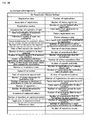
- FIG. 5 and FIG. 6 are charts illustrating examples of the respective indexes of "business, profit, market value” calculated by the enterprise evaluation device and the calculating formula thereof.
- index groups "(A) investment”, “(B) management-finance analysis”, “(C) profit related”, “(D) excess profit analysis”, “(M) market value related”, and “(PE) patent profitability” are provided, and the names and outline of the respective indexes and the calculating formula thereof are indicated in each of these groups.
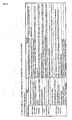
- FIG. 7 and FIG. 8 are charts illustrating examples of the index of "R&D, patent" calculated by the enterprise evaluation device.
- index groups "(R) research and development related”, “(PA) patent application related”, “(PB) examination request related”, “(PT) patent acquisition (registration) related”, “(PP) patent productivity” and “(PS) patent stock related” are provided, and the names and outline of the respective indexes and the calculating formula thereof are indicated in each of these groups.
- FIG. 9 is a chart illustrating an example of the "patent portfolio” index calculated by the enterprise evaluation device and the calculating formula thereof.
- index groups "(PAP) patent portfolio analysis”, “(PAK) characteristic keywords”, and “(PSI) patent similarity ratio analysis” are provided, and the names and outline of the respective indexes and the calculating formula thereof are indicated in each of these groups.
- number of patent registrations is obtained by acquiring and accumulating the publications of unexamined patent applications issued by the Patent Office.
- a joint application may be accumulated as one (1) application.
- An enterprise having a large value for the number of patent registrations (PTRD) in a specified period can be considered as an enterprise generally focusing on research and development.
- Number of claims registered (1.2)
- the number of claims registered (PTCL) is an index showing the total number of claims of patents of a specified enterprise subjected to registration within a specified period.
- the calculating formula thereof is shown below (Formula 2).
- Number of claims registered ( PTCL ) total number of claims of patents of a specified enterprise subjected to registration within a specified period
- Number of claims registered can be considered as the number of inventions included in the patents subjected to registration.
- an enterprise showing a large value for this number of claims registered can be judged as creating numerous inventions, but the number of claims may differ depending on the business category. Therefore, even though an enterprise has a small value for the number of claims registered (PTCL), it is not necessarily the case that such enterprise has a small number of inventions.
- the number of patent applications decreased after the adoption of the multiple claim system, the number of claims is of a gradually increasing trend. From this perspective, instead of evaluating enterprises based on patent applications or number of registrations, there is a higher possibility of being able to grasp the accurate number of inventions by evaluating enterprises based on the number of claims filed or number of claims registered.
- Patent applications not possessing much inventive step or which cannot expect much profit in terms of product strategy that is, patent applications which were most likely filed for defensive purposes often request examination after the lapse of a reasonable period of time from the filing thereof in order to assess the trend of products. Meanwhile, strategic filings for obtaining patents ahead of time often request examination at a relatively early stage.
- the official gazette acquisition means acquires from a database the publications of patent registrations subjected to registration among the patent applications filed by a specified enterprise within a specified period. Further, the average period required for registration calculation means calculates a required registration period for individual applications by subtracting the filing date from the registration date indicated in the acquired publications of registrations, calculating an accumulated required registration period by counting the calculated required registration period for all patents subjected to the registration, and calculating an average period required for registration through dividing the accumulated required registration period by the total number of patents subjected to the registration and the average number of days of one year or one month (average years required for registration (PTMY) is calculated here).
- the average years required for registration may be calculated based on patent applications of a predetermined technical field filed by a specified enterprise within a specified period. Further, in place of calculating the average period required for registration through dividing the accumulated required registration period by the total number of patents subjected to the registration and average number of days of one year or one month, the average period required for registration may be calculated through dividing the accumulated required registration period only by the total number of patents subjected to the registration.
- the average years required for registration can be calculated and displayed upon classification per technical area such as based on enterprises, based on workplaces, based on inventors, based on IPC and the like, and the user will be able to know which technical field the enterprise to be researched is laying emphasis, or which technical field the enterprise to be researched is defensively positioning the inventions.
- the index of average years required for registration does not necessarily indicate that an enterprise has superior technical development strength the smaller the value thereof, and, therefore, value of the average years required for registration (PTMY) being small does not have any significant meaning.
- the official gazette acquisition means acquires from a database the unexamined publications requested for examination or publications of patent registrations subjected to registration among the patent applications filed by a specified enterprise within a specified period.
- the average period before examination request calculation means calculates a period before examination request for individual applications by subtracting the filing date from the date of examination request described in the acquired unexamined publications or publications of registrations, calculating an accumulated period before examination request by counting the calculated period before examination request for all patents requested for examination, and calculating an average period before examination request through dividing the accumulated period before examination request by the total number of patents requested for examination and the average number of days of one year or one month (average years before examination request (PBMY) is calculated here).
- the average years required for registration may be calculated based on the patent applications of a predetermined technical field filed by a specified enterprise within a specified period.
- the average period before examination request may be calculated through dividing the accumulated period before examination request by only the total number of patents requesting examination.
- the average period before examination request can be calculated and displayed upon classification per technical area such as based on enterprises, based on workplaces, based on inventors, based on IPC and the like, and the user will be able to know which technical field the enterprise to be researched is laying emphasis, or which technical field the enterprise to be researched is defensively positioning the inventions.
- the patent registration ratio defined in (Formula 5) above among the number of patent applications filed within the respective specified periods, the number of patents subjected to registration will change with the course of time.
- the initial registrations are counted, and consideration is not given to the extinguishment of patents based on decision for cancellation due to opposition or invalidation decision due to invalidation trials.
- the patent registration ratio will always increase each year, and the patents that have completed the registration will be converged into a fixed value.
- cumulative number of patent registrations includes patents that lapsed due to the expiration of its term. However, patent rights may be subtracted based on those that were extinguished as a result of decision for cancellation due to opposition or invalidation decision due to invalidation trials, or patent rights may be subtracted based on those that were extinguished due to abandonment, withdrawal or rejection. Further, the number of patent registrations could be increased when subjected to registration as a patent as a result of filing an appeal against the decision of rejection, but this is omitted here. It will be possible to judge that enterprises having a large value for the number of patent registrations (PTSP) are promptly making examination requests for patent applications and have acquired numerous patents.
- cumulative patent registration ratio (PTSR) and cumulative number of patent applications (PTSA) are calculated by counting the applications filed in 1994 onward when publications and registrations are available in the Japanese Patent Office's CD-ROM gazettes. If the data of patent publications and registrations can be obtained, these may be counted from an older year. Further, this is not limited to 1994 onward, and the respective indexes may be calculated by counting the data from a new year such as 2000 onward.
- the value of the patent allowance ratio will change each fiscal year as described above.
- the period required for examination will largely differ based on the technical field or subject matter of the invention, examination process and so on of the respective inventions, but the period from examination request to the first action is generally said to be roughly 2 years. Therefore, when assuming that a decision will be rendered within 3 years from the examination request, among the patent allowance ratio relating to the examination request of 4 years from 1999 to 2002 shown in the present embodiment, the patent allowance ratio pertaining to the examination requests made in 1999 are presumed to be near a maximum value. Further, the patent allowance ratio relating to the examination requests made in 2002 is presumed to increase up until 2005 to 2006. Therefore, when 2004 is set as the deadline for acquiring publication data, it is possible to consider that enterprises having a relatively large patent allowance ratio of patent applications requested for examination in 1999 are enterprises having a high probability of obtaining patents on the patent applications that requested examination.
- Cumulative patent allowance ratio is an index showing the ratio of how many patents that requested examination were granted. Therefore, the cumulative patent allowance ratio (PTSE) will increase with the course of time.
- the index of cumulative patent allowance ratio is also calculated by counting the patent applications filed in 1994 onward up to a predetermined time when publications and registrations are available in the Japanese Patent Office's CD-ROM gazettes, and the cumulative number of examination requests from 1997 onward having sufficient statistical data are calculated as the cumulative patent allowance ratio (PTSE) for each predetermined time such as at the end of each business year. If the data of patent publications and registrations of older years can be obtained, these may be counted from an older year. Further, this is not limited to 1994 onward, and the respective indexes may be calculated by counting the data from a new year such as 2000 onward.
- Number of effective patents is an index showing the ratio of patents existing at the nearest term end among the patents registered in the respective years. Generally speaking, since patent rights will extinguish with the course of time, the number of effective patents (PTEF) tend to decrease within the respective specified periods.
- FIG. 10 and FIG. 11 show display examples of the patent acquisition (registration) related index according to the present invention.
- FIG. 10 is a chart showing a display example of a patent acquisition (registration) related index in the electrical equipment industry
- FIG. 11 is a chart showing a display example of a patent acquisition (registration) related index in the chemical industry.
- the cumulative number of patent registrations is obtained by calculating the cumulative number of patents subjected to registration by the end of each business year regarding patent applications filed in 1994 onward when patent publications and registrations are available in the Japanese Patent Office's CD-ROM publications. Therefore, there may be cases where this is of a smaller value in comparison to the number of patent registrations (PTRD), which is an index showing the number of patents of a specified enterprise filed before 1994 and subjected to registration within that year (within a specified period).
- Cumulative patent registration ratio is a percentage indication obtained through dividing the cumulative number of patents subjected to registration on or before the end of each business year regarding patents filed in 1994 onward by the cumulative number of patent applications (PTSA) filed in 1994 onward.
- FIG. 12 is a chart denoting the average years required for registration (PTMY) per enterprise in the electrical equipment industry based on the calculation of a four-year period from 1994. Further, FIG. 13 is a chart similarly denoting the average years required for registration (PTMY) per enterprise in the chemical industry.
- Company NC is ranked 1st in terms of the shortest average years required for registration (PTMY) in each year.
- the average years required for registration (PTMY) of Company NC in 2002 is a short period at 4 years or less, and it is possible to assume that examination requests are made simultaneously with the filing, or expedited examination requests are being made.
- PTMY shortest average years required for registration
- results of patent applications and utility model applications may be considered as a part of the injection of R&D cost. Since the use of R&D cost is diversified, it cannot be said that patent applications and utility model applications fully represent the results of the injected R&D cost. Nevertheless, this information can be used as an index for measuring the efficiency of research and development being conducted by the enterprise.
- the official gazette acquisition means acquires from a database the unexamined publications or unexamined publications of patent applications filed by a specified enterprise within a first specified period.
- the number-of-inventions acquisition means acquires the number of patent applications or number of inventions such as the number of claims from the acquired unexamined publications or publications of registrations
- the management-finance information acquisition means acquires the R&D cost within a second specified period of a specified company from a management-finance database recording management-finance information of the enterprise, and the number of inventions per unit of R&D cost is calculated as the patent application productivity (PPFI) through dividing the acquired number of inventions by the R&D cost.
- the patent application productivity (PPFI) can similarly be calculated for utility model applications.
- the patent application productivity may be calculated based on patent applications in a predetermined technical field filed by a specified enterprise within a first specified period.
- the patent application productivity is calculated by using applications filed within the first specified period as the patent publications to be counted, and the value within the second specified period (before the first specified period) as the R&D cost.
- Patent application productivity (PPFI) ( number of claims filed ( PACL ) in the year 2000 ( Jan . to Dec . 2000 ) ) / ( R & D cost in the fiscal year 1999 ( April 1999 to March 2000 ) ) Provided,
- the patent application productivity was calculated using the R&D cost (RDE) of the previous year (within a second specified period) of patent applications that were filed by a specified enterprise within a first specified period.
- RDE R&D cost
- PPFI patent application productivity
- the patent application productivity may be calculated by acquiring the number of inventions per unit of applicants and multiplying this with all acquired publications.
- the official gazette acquisition means acquires from a database unexamined publications or publications of registrations based on patent applications or utility model applications filed by a specified enterprise within a first specified period. Then, number-of-inventions-per-applicant acquisition means acquires the number of patent applications or utility model applications or the number of claims from each of the acquired unexamined publications or publications of registrations, acquires the number of applicants indicated in each of the acquired publications, and acquires the number of inventions per unit of applicants through dividing the number of patent applications or utility model applications or the number of claims by the number of applicants. Further, the number-of-inventions acquisition means acquires the total number of inventions by counting the acquired number of inventions per unit of applicants for all of the acquired publications.
- management-finance information acquisition means acquires R&D cost in a specified enterprise within a second specified period from a management-finance database storing management-finance information of enterprises. Then, the patent application productivity calculation means calculates the number of inventions per unit of R&D cost as the patent application productivity through dividing the acquired number of inventions by the R&D cost.
- R&D cost also, ideally, it would be preferable to use a "research and development injection stock” value, which is an accumulation of the research and development going back several years.
- a "research and development injection stock” value which is an accumulation of the research and development going back several years.
- the "total amount of R&D cost” needed to be entirely recorded as administrative expenses, and disclosed in the explanatory notes in the income statement, in the present embodiment, from the perspective of fairness and reliability of analyzed data, the “total amount of R&D cost” from 1999 onward is used.
- the publication in which an examination request period has passed acquisition means acquires the unexamined publications or publications of registrations based on patent applications or utility model applications filed by a specified enterprise within a third specified period so that the examination request period pass before tabulation.
- the estimated examination request ratio acquisition means acquires the number of patent applications and the number of examination requests made in the applications from the unexamined publications or publications of registrations based on patent applications or utility model applications filed within the third specified period, and calculates the estimated examination request ratio (PPAR) through dividing the acquired number of examination requests by the acquired number of patent applications.
- PPAR estimated examination request ratio
- the number of examination requests is counted per year using the unexamined publications of patent applications filed by the enterprise to be researched within a total of 3 years (corresponds to the third specified period) of 1994, 1995 and 1996 that are more than 7 years (the examination request period) before the time of tabulation (2003), and the examination request ratio of the 7th year is calculated to be the estimated examination request ratio (PPAR) of such enterprise.
- the reason the number of patent applications of 3 years (within a third specified period) after 1994 was used is to reduce the error arising depending on the year, and the third specified period is not limited to 3 years as described above. Further, the examination request ratio for only the current year may be used, or the examination request ratio for only a certain year may also be used.
- the reason the cumulative examination request ratio of the 7th year was used is based on the system that requires the applicant to request examination within 7 years (within 3 years from October 1, 2001) from the filing of patent applications.
- Estimated registration ratio is an estimated ratio of the number of patents to be ultimately acquired.
- the patent acquisition productivity is calculated by correcting the patent application productivity (PPFI) with this estimated registration ratio (PPPR).
- PPFI patent application productivity
- PPPD estimated registration ratio
- the patent acquisition productivity (PPPD) calculated like this is considered to show the relationship of research and development and patent applications in the proper sense.
- the estimated registration ratio (PPPR) is calculated as follows.
- the official gazette acquisition means acquires from a database unexamined publications or publications of registrations based on patent applications filed by a specified enterprise within a fifth specified period, and the publications of patent registrations subjected to registration by a predetermined time among the patent applications. Then, the cumulative number of patent applications acquisition means acquires, for each predetermined period, the cumulative number of patent applications filed by a specified enterprise within a specified period based on the acquired unexamined publications or publication of registrations.
- the cumulative number of patent registrations acquisition means acquires, for each predetermined time, the cumulative number of patent registrations of patents subjected to registration by each predetermined time based on the acquired publications of registrations. Then, the cumulative patent registration ratio calculation means calculates, for each predetermined time, the cumulative patent registration ratio through dividing the acquired cumulative number of patent registrations by the cumulative number of patent applications. Further, the estimated registration ratio calculation means calculates, for each predetermined time, the natural logarithm of the cumulative patent registration ratio and calculating the regression line or regression curve thereof, and calculates the future estimated registration ratio by substituting the calculated average period required for registration for the calculated regression line or regression curve.
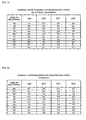
- FIG. 14 is a chart denoting the calculation of three indexes of patent application productivity (PPFI), examination request productivity (PPEX), and patent acquisition productivity (PPPD) in a specified period (specified year) of ten companies in the electrical equipment industry.
- FIG. 15 is a chart similarly denoting the calculation of three indexes relating to the patent productivity of ten companies in the chemical industry.
- the number of claims filed (PACL) per JPY1,000,000,000 of unit of R&D cost (RDE) was calculated.
- the number of inventions per unit of R&D cost is not limited to the number of claims filed (PACL), and the number of patent applications, number of claims of utility model applications, or number of utility model applications may be used as the number of inventions. Further, the number of inventors may be used in place of the unit of R&D cost.
- Company MS in the electrical equipment industry has a value of 761.1 as its patent application productivity (PPFI), which means that 761 claims or more are being filed per JPY1,000,000,000 of R&D cost.
- PPFI patent application productivity
- FIG. 16 is a diagram showing the relationship of the patent application productivity (PPFI) and patent acquisition productivity (PPPD) in the electrical equipment industry.
- PPFI patent application productivity
- PPPD patent acquisition productivity
- FIG. 16 the positions of the respective companies are plotted with the horizontal axis (x axis) as the patent application productivity (PPFI), and the vertical axis (y axis) as the patent acquisition productivity (PPPD).
- PPFI patent application productivity
- PPPD patent acquisition productivity
- MS, PI and other abbreviations are provided in order to identify the plotted companies.
- the straight line shown in FIG. 16 is the regression line showing the average value of the positions of the plotted companies, and the linear expression of this regression line is shown above FIG. 16.
- Company MS and Company PI shown in FIG. 16 have high values for both patent application productivity (PPFI) and patent acquisition productivity (PPPD). Meanwhile, Company FJ has a low patent application productivity (PPFI) value, and also has a low patent acquisition productivity (PPPD) value.
- PPFI patent application productivity
- PPPD patent acquisition productivity
- Company NC and Company SH are showing extremely high patent acquisition productivity (PPPD) values in comparison to other companies showing similar patent application productivity (PPFI) values.
- PPPD patent acquisition productivity
- PPFI patent application productivity
- Company FJ has low patent application productivity (PPFI), and low patent acquisition productivity (PPPD). From this, it is possible to judge that this is a company facing problems such as being unable to obtain novel technology from its injection of R&D cost (RDE).
- PPFI patent application productivity
- PPPD patent acquisition productivity
- FIG. 17 is a diagram showing the relationship of the patent application productivity (PPFI) and patent acquisition productivity (PPPD) in the chemical industry.
- Company DN has extremely high patent application productivity (PPFI) and also has high patent acquisition productivity (PPPD) in the chemical industry. Therefore, it is possible to deduce that Company DN has an extremely high patent application productivity (PPFI) in comparison to other companies, has high patent acquisition productivity (PPPD), is creating inventions by efficiently investing in R&D cost (RDE), and further has a high patent registration percentage. Therefore, it is possible to judge that Company DN is a company that can be highly evaluated regarding patent strategy.
- PPFI patent application productivity
- PPPD patent acquisition productivity
- Company SK is showing extremely high patent acquisition productivity (PPPD) in comparison to other companies with the same level of patent application productivity (PPFI). This means that patent applications filed by Company SK are being registered as patents at an extremely high percentage from the past.
- PPPD patent acquisition productivity
- PPFI patent application productivity
- Company AK has low patent application productivity (PPFI), and low patent acquisition productivity (PPPD). From this, it can be said that this company has problems in the effective use of R&D cost.
- FIG. 18 is a diagram showing the relationship of the patent application productivity (PPFI) and examination request productivity (PPEX) in the chemical industry.
- PPFI patent application productivity
- PPEX examination request productivity
- Company DN has high patent application productivity (PPFI) and high examination request productivity (PPEX). From this, it is possible to deduce that Company DN is efficiently filing patent applications in relation to its injection of R&D cost, the examination request ratio is high, and the filed inventions are not put to waste.
- PPFI patent application productivity
- PPEX high examination request productivity
- Company AK and Company KO have low patent application productivity (PPFI) values, and low examination request productivity (PPEX) values.
- PPFI patent application productivity
- PPEX examination request productivity
- FIG. 19 is a diagram showing the relationship of the patent application productivity (PPFI) and examination request productivity (PPEX) in the electrical equipment industry. As shown in FIG. 19, in the electrical equipment industry, Company MS and Company PI have high patent application productivity (PPFI) values and high examination,request productivity (PPEX) values. The other companies are positioned at the lower left of the regression line.
- PPFI patent application productivity
- PPEX examination request productivity
- Company FJ has low patent application productivity (PPFI), and low examination request productivity (PPEX).
- PPFI patent application productivity
- PPEX low examination request productivity
- FIG. 20 is a diagram showing the relationship of the patent acquisition productivity (PPPD) and examination request productivity (PPEX) in the chemical industry.
- PPPD patent acquisition productivity
- PPEX examination request productivity
- PPPD patent acquisition productivity
- Company DN has exponential values as the examination request productivity (PPEX) and patent acquisition productivity (PPPD).
- PPEX examination request productivity
- PPPD patent acquisition productivity
- Company DN has a high examination request productivity (PPEX) value and a high patent acquisition productivity (PPPD) value, it is evident that the filed inventions are requested for examination at a high ratio and granted patents at a high ratio.
- PPEX examination request productivity
- PPPD patent acquisition productivity
- FIG. 21 is a diagram showing the relationship of the patent acquisition productivity (PPPD) and examination request productivity (PPEX) in the electrical equipment industry. As shown in FIG. 21, in the electrical equipment industry, Company PI and Company MS show high examination request productivity (PPEX) values and high patent acquisition productivity (PPPD) values. The other companies are located at the lower left far apart from these two companies.
- PPPD patent acquisition productivity
- PPEX examination request productivity
- PPPD patent acquisition productivity
- Company PI and Company MS have a high ratio of requesting examination for their patent applications, and it is possible to judge that these companies have a statistically high percentage of being granted patents.
- FIG. 22 is a chart showing the results of calculating the logarithm with the cumulative patent registration ratio (PTSR) as the antilogarithm upon calculating the estimated registration ratio.
- the cumulative patent registration ratio (PTSR) is calculated for each year based on the ratio of the number of patent applications (cumulative number of patent applications (PTSA)) filed by an enterprise to be researched within a specified period (for instance, 1994, 1995 and 1996), and the cumulative number of patent registrations (PTSP) patented by a predetermined time (each year) among the patent applications filed during the same period, and the natural logarithm thereof is calculated for each year.
- PTSA cumulative number of patent applications
- PTSP cumulative number of patent registrations
- FIG. 22 an example is shown where a certain company filed 3,500 patent applications in 1994, 3,000 in 1995 and 3,500 in 1996. With respect to the applications of each year, the number of registrations subjected to registration from the following year is accumulated for each elapsed year.
- the numbers in the column of elapsed years (years) show the years elapsed from the filing. For instance, in the 0 year of applications filed in 1994 (cumulative), there were 0 registrations among the 3,500 applications, there was 1 registration in the first year, there were 16 registrations in total for the second year, and there were 666 registrations for the ninth year.
- the row of cumulative number of registrations shows the total number of registrations for three years (within fifth specified period) of patent applications subjected to registration per elapsed year among the patent applications filed between 1994 and 1996. Therefore, the cumulative number of patent registrations (PTSP) of 0 year (each specified period) had 0 registrations, first year had 1 registration, second year had a total of 46 registrations, and the seventh year had a total of 1,182 registrations among the total of 10,000 cumulative number of patent applications (PTSA) filed between 1994 and 1996.
- the cumulative registration ratio is a percentage obtained through dividing the cumulative number of registrations (PTSP) (cumulative) by the 10,000 patent applications. Therefore, in the column of cumulative registration ratio (%) (PTSR), 0 year had 0 registrations among the 10,000 applications at 0.00%, first year had 1 registration at 0.01%, second year had 46 registrations at 0.46%, and seventh year had 1,182 registrations at 11.82%.
- FIG. 23 is a diagram plotting the natural logarithm of the cumulative patent registration ratio (PTSR) for each year elapsed and representing the regression curve thereof.
- the regression curve is calculated by taking the elapsed years as the explanatory variable in the horizontal axis (x axis), and taking the natural logarithm of the cumulative patent registration ratio (PTSR) calculated each year in the vertical axis (y axis), and based on the respective points thereof.
- the estimated registration ratio is calculated as the future registration ratio by substituting the average years required for registration (PTMY) (index showing the performance value of the average number of years required from filing to registration regarding patents filed by a specified enterprise subjected to registration within a specified period).
- PTMY average years required for registration
- FIG. 24 is a diagram plotting the natural logarithm of the cumulative patent registration ratio (PTSR) for each year elapsed and representing the regression line thereof.
- PTSR cumulative patent registration ratio
- the regression curve such as the logarithm approximate curve of the present invention is not limited thereto, and, as shown in FIG. 24, the estimated registration ratio (PPPR) may be calculated by calculating the regression line of the respective dispersed points.
- In(3.76) 42.8.
- the estimated registration ratio (PPPR) of this enterprise is estimated to be 42.8%.
- the differences in the calculated results of the two may be compared with the recent performance of the enterprise, and the curve to be used may be decided thereby.
- the estimated registration ratio (PPPR) calculated using the logarithm approximate curve was closer to the actual circumstances.
- the estimated value was calculated using a natural logarithm of the cumulative patent registration ratio (PTSR) in order to make the graphs of FIG. 23 and FIG. 24 easy to view
- PTSR cumulative patent registration ratio
- the present invention is not limited to using the natural logarithm, and other curves such as an index function may be used to calculate the estimated value.
- FIG. 25 shows a flowchart of calculating and outputting the respective indexes of average period required for registration, average period before examination request, patent application productivity, examination request productivity or patent acquisition productivity.
- the information processing means 380 receives the input of a display command of a screen for selecting an enterprise from a user via the input means 370 such as a keyboard and the bus 399.
- the information processing means 380 reads the display data upon selecting the enterprise from the recording means 384 based on such command, converts this into a display image signal, and outputs such signal to the display interface 373.
- the display interface 373 that acquired the display data from the information processing means 380 converts and outputs the display data corresponding to the display means 372.
- the display means 372 displays a screen based on the display data input from the display interface 373 and notifies the user.
- the user while viewing the company selection screen displayed on the display means 372, inputs the information for specifying one or more enterprises to be researched via the input means 370.
- the information to be input may be the enterprise name, enterprise code, or an enterprise may be selected from the enterprise selection screen.
- Information for specifying the enterprise input by the user via the input means 370 is read by the information processing means 380 via the bus 399.
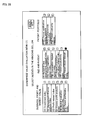
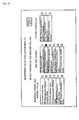
- the information processing means 380 When the information processing means 380 receives the input of appropriate enterprise specifying information, the information processing means 380 reads the display data of.the display menu for selecting the type of index to evaluate the enterprise value from the recording means 384, converts this into a display image signal, outputs such signal to the display interface 373, and, for example, displays the enterprise value evaluation menu shown in FIG. 26 on the display means 372.
- the user selects a desired index from the selection menu of "business, profit, market value” or "R&D, patent", or "patent portfolio".
- the user is selecting the item of "(PT) patent acquisition (registration) related index” belonging to the field of "R&D, patent”.
- the information processing means 380 When the user inputs information for selecting the index of "R&D, patent", such input information is conveyed to the information processing means 380, the command for displaying a selection mark at the portion of the index selected by the user is output to the display interface 373, and information for displaying the respective indexes existing at a lower level in the form of a pulldown menu is output to the display interface 373.
- the mark of the selected item is changed from a white square to a black square.
- FIG. 27 shows a display example displaying the respective indexes existing in a lower level of "R&D, patent” in the form a pulldown menu.
- the user a desired index to be calculated from the respective indexes displayed on the display means 372.
- the user is selecting the index of "number of patent registrations (PTRD)" representing the number of patents of a specified enterprise subjected to the registration within a specified period.
- PTRD number of patent registrations
- the information processing means 380 When the user inputs information for selecting the "(PS) patent stock related index", the information processing means 380 that acquired such input information outputs a command for displaying a selection mark at the portion of the index selected by the user to the display interface 373, and, outputs information for displaying the respective indexes belonging to a lower level of the "(PS) patent stock related index” as shown in FIG. 29 to the display interface 373 in the form of a pulldown menu.
- the user inputs information for selecting the index of "patent stock index” from the pulldown menu displayed as shown in FIG. 29. Then, this input information is conveyed to the information processing means 380.
- the information processing means 380 sets a flag for deciding the parameter of the index to be calculated, displays a selection mark at the portion of the index selected by the user, and notifies the user of the set information.
- the user When the user wishes to conduct a research upon mutually associating the indexes of inventions and the business, profit or market value information of a predetermined enterprise, the user selects "(C) profit related index” from the selection menu of "business, profit, market value”. Then, the information processing means 380 outputs a command for displaying on the display means 372 the pulldown menu indicating the items relating to the "(C) profit related index” shown in FIG. 31. The user selects a desired profit index from the pulldown menu displayed on the display means 372. In the example shown in FIG. 31, a case where the "sales volume" is selected is shown.
- the information processing means 380 sets a flag for deciding the operation formula for calculating the index, displays a selection mark at the portion of the index selected by the user, and notifies the user of the set information.
- the information processing means 380 reads the display data of the display screen for setting the input conditions upon evaluating the enterprise value from the recording means 384, converts this into a display image signal, and outputs such signal to the display interface 373, and, for example, displays on the display means 372 the enterprise value evaluation input condition setting screen shown in FIG. 32.
- the user while viewing the enterprise value evaluation input condition setting screen displayed on the display means 372, selects and inputs the desired conditions for evaluating the enterprise value.
- the user selects the conditions of "target document” and "reading of data” upon calculating the index for judging the enterprise value.
- the user is selecting “unexamined patent applications” and “registered patents” as the conditions of the "target document”.
- the user is selecting "Internal DB1" as the condition of "reading of data”.
- the information processing means 380 sets a flag of the items input by the user regarding the conditions of the "target document” and “reading of data”, displays a selection mark at the portion of the index selected by the user, and notifies the user of the set information.
- the information processing means 380 When the user selects the "set” button and the input regarding the conditions of the "target document” and “reading of data” is completed, the information processing means 380 subsequently reads the display data of the enterprise value evaluation input condition setting screen shown in FIG. 33 from the recording means 384, and outputs a command for displaying this on the display means 372 via the display interface 373.
- the user while viewing the enterprise value evaluation input condition setting screen displayed on the display means 372, selects a desired enterprise to be evaluated. In the example shown in FIG. 33, the user is selecting "electrical equipment industry” among the “industries” to become the large classification among the target of enterprise evaluation.
- the user may also select “enterprise” as the detailed classification of individual enterprises among the target of enterprise value evaluation, and designate input conditions such as the "enterprise name”, “enterprise code”, “applicant code” and so on.
- entity name the detailed classification of individual enterprises among the target of enterprise value evaluation
- appliance code the basic classification of individual enterprises among the target of enterprise value evaluation
- the user while viewing this screen, selects the "target” on the right side and further selects the enterprise, such user will input the enterprise name or enterprise code and applicant code.
- the information processing means 380 sets a flag of the enterprise to become the "target" input by the user, displays a selection mark at the portion of the index selected by the user, displays information such as the set enterprise name, enterprise code and application code on the display means 372, and notifies the user of the set information.
- the information processing means 380 subsequently reads the display data of the enterprise value evaluation output condition setting screen shown in FIG. 34 from the recording means 384, and outputs a command for displaying this on the display means 372 via the display interface 373.
- the user while viewing the enterprise value evaluation output condition setting screen displayed on the display means 372, selects a desired display mode.
- “single map” is selected as the information relating to the "map position”
- the "patent application productivity” is selected as the "output data”
- “upper 20" is selected as the volume of information to be output and displayed.
- the user When the user wishes to conduct a research upon mutually associating "business, profit, market value” and "R&D, patent", the user selects "(A) investment index” from the selection menu of "business, profit, market value” shown in FIG. 35. Then, the information processing means 380 outputs a command for displaying on the display means 372 the pulldown menu indicating the items relating to the "(A) investment index” shown in FIG. 36. The user selects a desired profit related index from the pulldown menu displayed on the display means 372. In the example shown in FIG. 36, a case where the "investment trend index" is selected is shown.
- the information processing means 380 sets a flag for deciding the operation formula for calculating the index, displays a selection mark at the portion of the index selected by the user, and notifies the user of the set information.
- processing to the performed by the information processing means 380 proceeds to the processing of S503 "select combination" shown in Fig. 25.
- the information processing means 380 does not select the combination processing and implements only the processing of S504 onward.
- the information processing means 380 acquires the patent publications of the respective enterprises and information relating thereto from the database 20 based on the operation processing of the patent portfolio and information relating to the designated enterprise, and performs processing for extracting the IPC sub-classes, number of patent applications, number of claims in a patent application and other information required for the operation.
- the processing to be performed by the information processing means 380 proceeds to the processing of subsequent S505 "calculate patent information".
- the information processing means 380 performs processing for calculating the desired index of the user based on the patent information acquired at S504, the operation formula related to "R&D, patent” input by the user, and the calculating formula to which a flag has been set based on the enterprise name or the like.
- the information processing means 380 classifies the specified enterprise into a predetermined category based on the operation result of the index relating to patents, and further performs operation processing for predetermined ranking or discrimination, and then organizes the various operation results.
- the information processing means 380 acquires various types of information from the database 20 such as the information showing the size of the enterprise, finance information of the enterprise, and combined information of the enterprise, and operates the management-finance information at the subsequent S605 "calculate management-finance information".
- the information processing means 380 creates a chart or graph by applying the operation result of the patent information calculated at S505, various operation results organized at S506, operation result of the management-finance information operated at S605, or operation result of the various types of management-finance information organized at S606 into a display format according to the index or the operation result thereof, and coverts this into display data.
- the information processing means 380 outputs the display data of the chart or graph created at S507 to the display interface 373, and displays this on the display means 372.
- the user perusing the chart or graph display at S508, the user will be able to easily and accurately judge, with a unique index, the enterprise value based on the diversification of inventions in the respective enterprises, competitive position relating to inventions, validity of the enterprise value, or the relationship between such unique information concerning inventions and the management-finance information.
- the information processing means 380 may perform a more detailed ranking in order to judge the enterprise value.
- the information processing means 380 will read the predetermined threshold or the like at S509 "determine enterprise value" to judge the enterprise value, thereafter output the numerical value or graph thereof, and then end the calculation processing of the various indexes.
- official gazette acquisition means acquire, from a database, publications of patent registrations subjected to registration from among the patent applications filed by a specified enterprise within a specified period; average period required for registration calculation means calculate a required registration period for individual applications by subtracting the filing date from the registration date indicated in the acquired publications of registrations, calculate an accumulated required registration period by counting the calculated required registration period for all patents subjected to the registration, and calculate an average period required for registration through dividing the accumulated required registration period by the total number of patents subjected to the registration and average number of days of one year or one month.
- the average years required for registration can be calculated and displayed upon classification per technical area such as based on enterprises, based on workplaces, based on inventors, based on IPC and the like, and the user will be able to know which technical field the enterprise to be researched is laying emphasis, or which technical field the enterprise to be researched is defensively positioning the inventions. Further, a user will be able to judge that a business department having a short average period required for registration is a department that is advancing development with strategic emphasis, and, contrarily, a user will be able to judge that a technical field having a long average period required for registration is a relatively defensive department. Like this, by perusing the average period required for registration, a user will be able to judge the attitude of an enterprise to patents.
- the average period required for registration calculation means calculates the average period required for registration through dividing the accumulated required registration period by the total number of patents subjected to registration and average number of days of one year or one month, the results can be displayed to the user in a easy-to-view manner, and the user will be able to instantaneously understand the average period required for registration in units of years or months. For instance, if the average period required for registration per patent application is 365.25 days, this can be notified as 1 year or 12 months.
- the average period required for registration is calculated based on patent applications per predetermined technical field in a specified enterprise, it will be possible to compare the average period required for registration with competitors per technical field, and use this as information for deciding on whether one's company should enter into a new technical field.
- the present invention comprises:
- the present invention comprises:
- the present invention comprises:
- the present invention comprises:
- the present invention comprises:
- the present invention comprises:
- the present invention comprises:
- the patent registration ratio per R&D cost can be estimated to be high, and it will be possible to easily search for an enterprise that is highly likely to enter into a monopolistic state regarding its future technology.
- the present invention comprises:
- the user will be able to easily discover the characteristics of the respective industries and the existence of characteristic enterprises in such industries. It will also be possible to utilize this in judging the value or status of the displayed enterprise.
Landscapes
- Engineering & Computer Science (AREA)
- Business, Economics & Management (AREA)
- Entrepreneurship & Innovation (AREA)
- Human Resources & Organizations (AREA)
- Strategic Management (AREA)
- Economics (AREA)
- Tourism & Hospitality (AREA)
- Theoretical Computer Science (AREA)
- Operations Research (AREA)
- Quality & Reliability (AREA)
- Marketing (AREA)
- Physics & Mathematics (AREA)
- General Business, Economics & Management (AREA)
- General Physics & Mathematics (AREA)
- Data Mining & Analysis (AREA)
- Development Economics (AREA)
- Educational Administration (AREA)
- Game Theory and Decision Science (AREA)
- Management, Administration, Business Operations System, And Electronic Commerce (AREA)
- Financial Or Insurance-Related Operations Such As Payment And Settlement (AREA)
Applications Claiming Priority (3)
| Application Number | Priority Date | Filing Date | Title |
|---|---|---|---|
| JP2003396346 | 2003-10-23 | ||
| JP2004023635 | 2004-01-30 | ||
| PCT/JP2004/004293 WO2005041096A1 (ja) | 2003-10-23 | 2004-03-26 | 企業評価装置並びに企業評価プログラム |
Publications (2)
| Publication Number | Publication Date |
|---|---|
| EP1686516A1 true EP1686516A1 (de) | 2006-08-02 |
| EP1686516A4 EP1686516A4 (de) | 2006-11-22 |
Family
ID=34525481
Family Applications (1)
| Application Number | Title | Priority Date | Filing Date |
|---|---|---|---|
| EP04723751A Withdrawn EP1686516A4 (de) | 2003-10-23 | 2004-03-26 | System zum bewerten eines unternehemns und programm zum bewerten eines unternehmens |
Country Status (10)
| Country | Link |
|---|---|
| US (1) | US20070150510A1 (de) |
| EP (1) | EP1686516A4 (de) |
| JP (1) | JP4018721B2 (de) |
| KR (1) | KR20060096481A (de) |
| AU (1) | AU2004284621A1 (de) |
| CA (1) | CA2543616A1 (de) |
| IL (1) | IL175115A0 (de) |
| IS (1) | IS8454A (de) |
| NO (1) | NO20062328L (de) |
| WO (1) | WO2005041096A1 (de) |
Families Citing this family (9)
| Publication number | Priority date | Publication date | Assignee | Title |
|---|---|---|---|---|
| WO2006126409A1 (ja) * | 2005-05-26 | 2006-11-30 | Sharp Kabushiki Kaisha | 特許情報分析装置、特許情報分析方法、特許情報分析プログラム、およびコンピュータ読み取り可能な記録媒体 |
| WO2008119083A1 (en) * | 2007-03-28 | 2008-10-02 | Cheryl Milone | Requesting prior art from the public in exchange for a reward |
| US20090144226A1 (en) * | 2007-12-03 | 2009-06-04 | Kei Tateno | Information processing device and method, and program |
| US10579651B1 (en) * | 2014-06-10 | 2020-03-03 | Astamuse Company, Ltd. | Method, system, and program for evaluating intellectual property right |
| TWI578242B (zh) * | 2015-11-13 | 2017-04-11 | 財團法人資訊工業策進會 | 技術趨勢預測方法及系統及非暫態電腦可讀取記錄媒體 |
| CN110502706A (zh) * | 2019-08-06 | 2019-11-26 | 苏州星宇测绘科技有限公司 | 基于北斗的企业信息巡查系统与录入终端 |
| JP7465646B2 (ja) * | 2019-10-21 | 2024-04-11 | 亮 開本 | 予測装置、予測方法、およびプログラム |
| CN110956326B (zh) * | 2019-11-29 | 2023-08-29 | 广西壮族自治区科学技术情报研究所 | 一种高新技术企业中期审查信息管理系统 |
| JP2022176388A (ja) * | 2021-05-15 | 2022-11-28 | IPDefine株式会社 | 企業評価装置及び企業評価方法 |
Family Cites Families (3)
| Publication number | Priority date | Publication date | Assignee | Title |
|---|---|---|---|---|
| CA2370021A1 (en) * | 1999-04-08 | 2000-10-12 | Aurigin Systems, Inc. | Patent-related tools and methodology for use in research and development projects |
| JP2002032543A (ja) * | 2000-07-18 | 2002-01-31 | Nippon Shokubai Co Ltd | 知的財産検討会議支援システムおよび知的財産検討会議支援のためのプログラムを記録したコンピュータ読み取り可能な記録媒体 |
| JP2002092228A (ja) * | 2000-09-13 | 2002-03-29 | Patolis Corp | 特許技術力評価方法及び同システム |
-
2004
- 2004-03-26 JP JP2005514906A patent/JP4018721B2/ja not_active Expired - Fee Related
- 2004-03-26 WO PCT/JP2004/004293 patent/WO2005041096A1/ja not_active Ceased
- 2004-03-26 KR KR1020067007435A patent/KR20060096481A/ko not_active Ceased
- 2004-03-26 US US10/576,585 patent/US20070150510A1/en not_active Abandoned
- 2004-03-26 AU AU2004284621A patent/AU2004284621A1/en not_active Abandoned
- 2004-03-26 CA CA002543616A patent/CA2543616A1/en not_active Abandoned
- 2004-03-26 EP EP04723751A patent/EP1686516A4/de not_active Withdrawn
-
2006
- 2006-04-23 IL IL175115A patent/IL175115A0/en unknown
- 2006-05-11 IS IS8454A patent/IS8454A/is unknown
- 2006-05-22 NO NO20062328A patent/NO20062328L/no not_active Application Discontinuation
Non-Patent Citations (2)
| Title |
|---|
| No Search * |
| See also references of WO2005041096A1 * |
Also Published As
| Publication number | Publication date |
|---|---|
| IS8454A (is) | 2006-05-11 |
| EP1686516A4 (de) | 2006-11-22 |
| AU2004284621A1 (en) | 2005-05-06 |
| JP4018721B2 (ja) | 2007-12-05 |
| CA2543616A1 (en) | 2005-05-06 |
| WO2005041096A1 (ja) | 2005-05-06 |
| NO20062328L (no) | 2006-07-13 |
| US20070150510A1 (en) | 2007-06-28 |
| JPWO2005041096A1 (ja) | 2007-04-26 |
| IL175115A0 (en) | 2006-10-05 |
| KR20060096481A (ko) | 2006-09-11 |
Similar Documents
| Publication | Publication Date | Title |
|---|---|---|
| JP4018722B2 (ja) | 企業評価装置並びに企業評価プログラム | |
| JP4018718B2 (ja) | 企業価値評価装置並びに企業価値評価プログラム | |
| EP1288813A1 (de) | System zur Berechnung von Geschäftsleistungskennwert | |
| EP1686515A1 (de) | Unternehmens-bewertungseinrichtung und unternehmens-bewertungsprogramm | |
| Travers | Investment manager analysis: A comprehensive guide to portfolio selection, monitoring and optimization | |
| EP1688874A1 (de) | Unternehmensbewertungseinrichtung und unternehmensbewertungsprogramm | |
| EP1686516A1 (de) | System zum bewerten eines unternehemns und programm zum bewerten eines unternehmens | |
| Knagenhielm-Karlsson et al. | Intuition to Insight: Developing Risk Analysis Tools for Special Situations Investing | |
| Abdallah | Loss reserving: an inflation-adjusted model for claims provision in general insurance | |
| Pereira | Consulting Firm-Company Valuation | |
| Cataldo | Managerial Accounting | |
| Nicely Sr | A study of the relationship between organizational performance and executive compensation | |
| Moretto | Financial Reporting and Management Accounting: can Management Accounting provide support and value for a high quality Financial Reporting? | |
| Hsu | The franchise decision and financial performance: an examination of restaurant firms | |
| Draft | Disclosure Framework | |
| Fiolleau | A Director's Guide to Corporate Financial Reporting | |
| Ndagire | The relationship between accounting knowledge and the performance of small scale businesses in Wakiso Town Council, Wakiso District |
Legal Events
| Date | Code | Title | Description |
|---|---|---|---|
| PUAI | Public reference made under article 153(3) epc to a published international application that has entered the european phase |
Free format text: ORIGINAL CODE: 0009012 |
|
| 17P | Request for examination filed |
Effective date: 20060517 |
|
| AK | Designated contracting states |
Kind code of ref document: A1 Designated state(s): AT BE BG CH CY CZ DE DK EE ES FI FR GB GR HU IE IT LI LU MC NL PL PT RO SE SI SK TR |
|
| A4 | Supplementary search report drawn up and despatched |
Effective date: 20061019 |
|
| DAX | Request for extension of the european patent (deleted) | ||
| RAP1 | Party data changed (applicant data changed or rights of an application transferred) |
Owner name: MASUYAMA, HIROAKI Owner name: INTELLECTUAL PROPERTY BANK CORP. |
|
| STAA | Information on the status of an ep patent application or granted ep patent |
Free format text: STATUS: THE APPLICATION IS DEEMED TO BE WITHDRAWN |
|
| 18D | Application deemed to be withdrawn |
Effective date: 20091001 |