EP1599697B1 - Four industriel de grosse capacite avec murs refractaires. - Google Patents
Four industriel de grosse capacite avec murs refractaires. Download PDFInfo
- Publication number
- EP1599697B1 EP1599697B1 EP03714777A EP03714777A EP1599697B1 EP 1599697 B1 EP1599697 B1 EP 1599697B1 EP 03714777 A EP03714777 A EP 03714777A EP 03714777 A EP03714777 A EP 03714777A EP 1599697 B1 EP1599697 B1 EP 1599697B1
- Authority
- EP
- European Patent Office
- Prior art keywords
- weight
- bricks
- industrial furnace
- furnace according
- masonry
- Prior art date
- Legal status (The legal status is an assumption and is not a legal conclusion. Google has not performed a legal analysis and makes no representation as to the accuracy of the status listed.)
- Expired - Lifetime
Links
- OKTJSMMVPCPJKN-UHFFFAOYSA-N Carbon Chemical compound [C] OKTJSMMVPCPJKN-UHFFFAOYSA-N 0.000 claims abstract description 82
- 239000011449 brick Substances 0.000 claims abstract description 57
- 229910052799 carbon Inorganic materials 0.000 claims abstract description 29
- 239000004568 cement Substances 0.000 claims abstract description 19
- 229910052500 inorganic mineral Inorganic materials 0.000 claims abstract description 12
- 235000010755 mineral Nutrition 0.000 claims abstract description 12
- 239000011707 mineral Substances 0.000 claims abstract description 12
- 235000008733 Citrus aurantifolia Nutrition 0.000 claims abstract description 9
- 235000011941 Tilia x europaea Nutrition 0.000 claims abstract description 9
- 239000004571 lime Substances 0.000 claims abstract description 9
- 230000001590 oxidative effect Effects 0.000 claims abstract description 8
- 239000010459 dolomite Substances 0.000 claims abstract description 7
- 229910000514 dolomite Inorganic materials 0.000 claims abstract description 7
- 239000001095 magnesium carbonate Substances 0.000 claims abstract description 5
- ZLNQQNXFFQJAID-UHFFFAOYSA-L magnesium carbonate Chemical compound [Mg+2].[O-]C([O-])=O ZLNQQNXFFQJAID-UHFFFAOYSA-L 0.000 claims abstract description 5
- 235000014380 magnesium carbonate Nutrition 0.000 claims abstract description 5
- 229910000021 magnesium carbonate Inorganic materials 0.000 claims abstract description 5
- 239000011819 refractory material Substances 0.000 claims abstract description 4
- CPLXHLVBOLITMK-UHFFFAOYSA-N Magnesium oxide Chemical compound [Mg]=O CPLXHLVBOLITMK-UHFFFAOYSA-N 0.000 claims description 81
- 229910002804 graphite Inorganic materials 0.000 claims description 54
- 239000010439 graphite Substances 0.000 claims description 54
- 239000000395 magnesium oxide Substances 0.000 claims description 40
- HBMJWWWQQXIZIP-UHFFFAOYSA-N silicon carbide Chemical compound [Si+]#[C-] HBMJWWWQQXIZIP-UHFFFAOYSA-N 0.000 claims description 24
- 239000011230 binding agent Substances 0.000 claims description 22
- XUIMIQQOPSSXEZ-UHFFFAOYSA-N Silicon Chemical compound [Si] XUIMIQQOPSSXEZ-UHFFFAOYSA-N 0.000 claims description 21
- XAGFODPZIPBFFR-UHFFFAOYSA-N aluminium Chemical compound [Al] XAGFODPZIPBFFR-UHFFFAOYSA-N 0.000 claims description 21
- 239000011863 silicon-based powder Substances 0.000 claims description 21
- 239000003963 antioxidant agent Substances 0.000 claims description 17
- 239000000203 mixture Substances 0.000 claims description 16
- 230000007704 transition Effects 0.000 claims description 14
- 229910052596 spinel Inorganic materials 0.000 claims description 13
- 239000011029 spinel Substances 0.000 claims description 13
- ISWSIDIOOBJBQZ-UHFFFAOYSA-N phenol group Chemical group C1(=CC=CC=C1)O ISWSIDIOOBJBQZ-UHFFFAOYSA-N 0.000 claims description 12
- 238000005245 sintering Methods 0.000 claims description 11
- 229910001570 bauxite Inorganic materials 0.000 claims description 9
- 239000000463 material Substances 0.000 claims description 9
- 229920003002 synthetic resin Polymers 0.000 claims description 8
- 239000000057 synthetic resin Substances 0.000 claims description 8
- PNEYBMLMFCGWSK-UHFFFAOYSA-N Alumina Chemical compound [O-2].[O-2].[O-2].[Al+3].[Al+3] PNEYBMLMFCGWSK-UHFFFAOYSA-N 0.000 claims description 7
- 239000004927 clay Substances 0.000 claims description 7
- 229910010271 silicon carbide Inorganic materials 0.000 claims description 6
- 229910052849 andalusite Inorganic materials 0.000 claims description 5
- 229920003986 novolac Polymers 0.000 claims description 4
- 239000005011 phenolic resin Substances 0.000 claims description 4
- 239000011810 insulating material Substances 0.000 claims description 3
- 229920001568 phenolic resin Polymers 0.000 claims description 3
- KXGFMDJXCMQABM-UHFFFAOYSA-N 2-methoxy-6-methylphenol Chemical compound [CH]OC1=CC=CC([CH])=C1O KXGFMDJXCMQABM-UHFFFAOYSA-N 0.000 claims description 2
- 229910021383 artificial graphite Inorganic materials 0.000 claims description 2
- 239000011822 basic refractory Substances 0.000 claims description 2
- KZHJGOXRZJKJNY-UHFFFAOYSA-N dioxosilane;oxo(oxoalumanyloxy)alumane Chemical compound O=[Si]=O.O=[Si]=O.O=[Al]O[Al]=O.O=[Al]O[Al]=O.O=[Al]O[Al]=O KZHJGOXRZJKJNY-UHFFFAOYSA-N 0.000 claims description 2
- 229910052863 mullite Inorganic materials 0.000 claims description 2
- 229910052851 sillimanite Inorganic materials 0.000 claims description 2
- 239000000843 powder Substances 0.000 claims 3
- 229910021382 natural graphite Inorganic materials 0.000 claims 1
- RVTZCBVAJQQJTK-UHFFFAOYSA-N oxygen(2-);zirconium(4+) Chemical compound [O-2].[O-2].[Zr+4] RVTZCBVAJQQJTK-UHFFFAOYSA-N 0.000 claims 1
- 239000011452 unfired brick Substances 0.000 claims 1
- 229910001928 zirconium oxide Inorganic materials 0.000 claims 1
- 239000004575 stone Substances 0.000 description 84
- 238000007789 sealing Methods 0.000 description 13
- 238000009434 installation Methods 0.000 description 11
- 229920003987 resole Polymers 0.000 description 10
- 235000013312 flour Nutrition 0.000 description 7
- 238000000034 method Methods 0.000 description 7
- 239000011233 carbonaceous binding agent Substances 0.000 description 6
- 238000007906 compression Methods 0.000 description 6
- 230000006835 compression Effects 0.000 description 6
- 230000002787 reinforcement Effects 0.000 description 6
- 239000003513 alkali Substances 0.000 description 5
- 239000010431 corundum Substances 0.000 description 5
- 229910052593 corundum Inorganic materials 0.000 description 5
- 239000011295 pitch Substances 0.000 description 5
- 239000011269 tar Substances 0.000 description 5
- 235000013339 cereals Nutrition 0.000 description 4
- 230000000694 effects Effects 0.000 description 4
- 238000005299 abrasion Methods 0.000 description 3
- 238000013459 approach Methods 0.000 description 3
- 238000005056 compaction Methods 0.000 description 3
- 210000003298 dental enamel Anatomy 0.000 description 3
- 239000007789 gas Substances 0.000 description 3
- 230000008595 infiltration Effects 0.000 description 3
- 238000001764 infiltration Methods 0.000 description 3
- 238000003825 pressing Methods 0.000 description 3
- 229910052710 silicon Inorganic materials 0.000 description 3
- MCMNRKCIXSYSNV-UHFFFAOYSA-N Zirconium dioxide Chemical compound O=[Zr]=O MCMNRKCIXSYSNV-UHFFFAOYSA-N 0.000 description 2
- 229910052782 aluminium Inorganic materials 0.000 description 2
- 238000002485 combustion reaction Methods 0.000 description 2
- 150000001875 compounds Chemical class 0.000 description 2
- 239000000470 constituent Substances 0.000 description 2
- 238000001816 cooling Methods 0.000 description 2
- 230000007797 corrosion Effects 0.000 description 2
- 238000005260 corrosion Methods 0.000 description 2
- 238000011161 development Methods 0.000 description 2
- 230000018109 developmental process Effects 0.000 description 2
- 238000005516 engineering process Methods 0.000 description 2
- 238000010304 firing Methods 0.000 description 2
- 229910052749 magnesium Inorganic materials 0.000 description 2
- 229910052751 metal Inorganic materials 0.000 description 2
- 239000002184 metal Substances 0.000 description 2
- 229910003465 moissanite Inorganic materials 0.000 description 2
- 238000013021 overheating Methods 0.000 description 2
- 238000009628 steelmaking Methods 0.000 description 2
- 239000000126 substance Substances 0.000 description 2
- 238000005382 thermal cycling Methods 0.000 description 2
- 230000000930 thermomechanical effect Effects 0.000 description 2
- 238000013316 zoning Methods 0.000 description 2
- 229910001339 C alloy Inorganic materials 0.000 description 1
- 235000019738 Limestone Nutrition 0.000 description 1
- 229910019142 PO4 Chemical group 0.000 description 1
- 239000011398 Portland cement Substances 0.000 description 1
- 229910003564 SiAlON Inorganic materials 0.000 description 1
- 229920006328 Styrofoam Polymers 0.000 description 1
- 230000009471 action Effects 0.000 description 1
- 239000000853 adhesive Substances 0.000 description 1
- 230000001070 adhesive effect Effects 0.000 description 1
- 238000004380 ashing Methods 0.000 description 1
- 230000015572 biosynthetic process Effects 0.000 description 1
- 239000000378 calcium silicate Substances 0.000 description 1
- 229910052918 calcium silicate Inorganic materials 0.000 description 1
- OYACROKNLOSFPA-UHFFFAOYSA-N calcium;dioxido(oxo)silane Chemical compound [Ca+2].[O-][Si]([O-])=O OYACROKNLOSFPA-UHFFFAOYSA-N 0.000 description 1
- 230000008859 change Effects 0.000 description 1
- 150000001805 chlorine compounds Chemical class 0.000 description 1
- 230000002950 deficient Effects 0.000 description 1
- 238000010891 electric arc Methods 0.000 description 1
- 239000011451 fired brick Substances 0.000 description 1
- 239000000446 fuel Substances 0.000 description 1
- 238000005469 granulation Methods 0.000 description 1
- 230000003179 granulation Effects 0.000 description 1
- BHEPBYXIRTUNPN-UHFFFAOYSA-N hydridophosphorus(.) (triplet) Chemical group [PH] BHEPBYXIRTUNPN-UHFFFAOYSA-N 0.000 description 1
- 230000006872 improvement Effects 0.000 description 1
- 238000009413 insulation Methods 0.000 description 1
- 239000006028 limestone Substances 0.000 description 1
- 238000004519 manufacturing process Methods 0.000 description 1
- 150000001247 metal acetylides Chemical class 0.000 description 1
- 229910001092 metal group alloy Inorganic materials 0.000 description 1
- 150000002739 metals Chemical class 0.000 description 1
- 150000004767 nitrides Chemical class 0.000 description 1
- 238000005457 optimization Methods 0.000 description 1
- 230000003647 oxidation Effects 0.000 description 1
- 238000007254 oxidation reaction Methods 0.000 description 1
- 230000035515 penetration Effects 0.000 description 1
- 239000010452 phosphate Chemical group 0.000 description 1
- 125000002467 phosphate group Chemical group [H]OP(=O)(O[H])O[*] 0.000 description 1
- 239000011148 porous material Substances 0.000 description 1
- 230000002028 premature Effects 0.000 description 1
- 230000008569 process Effects 0.000 description 1
- 239000002994 raw material Substances 0.000 description 1
- 238000005067 remediation Methods 0.000 description 1
- 230000010076 replication Effects 0.000 description 1
- 239000002893 slag Substances 0.000 description 1
- 238000004901 spalling Methods 0.000 description 1
- 229910052566 spinel group Inorganic materials 0.000 description 1
- 239000008261 styrofoam Substances 0.000 description 1
- 150000003464 sulfur compounds Chemical class 0.000 description 1
- 238000006557 surface reaction Methods 0.000 description 1
- 239000011318 synthetic pitch Substances 0.000 description 1
Images
Classifications
-
- C—CHEMISTRY; METALLURGY
- C04—CEMENTS; CONCRETE; ARTIFICIAL STONE; CERAMICS; REFRACTORIES
- C04B—LIME, MAGNESIA; SLAG; CEMENTS; COMPOSITIONS THEREOF, e.g. MORTARS, CONCRETE OR LIKE BUILDING MATERIALS; ARTIFICIAL STONE; CERAMICS; REFRACTORIES; TREATMENT OF NATURAL STONE
- C04B35/00—Shaped ceramic products characterised by their composition; Ceramics compositions; Processing powders of inorganic compounds preparatory to the manufacturing of ceramic products
- C04B35/01—Shaped ceramic products characterised by their composition; Ceramics compositions; Processing powders of inorganic compounds preparatory to the manufacturing of ceramic products based on oxide ceramics
- C04B35/03—Shaped ceramic products characterised by their composition; Ceramics compositions; Processing powders of inorganic compounds preparatory to the manufacturing of ceramic products based on oxide ceramics based on magnesium oxide, calcium oxide or oxide mixtures derived from dolomite
- C04B35/04—Shaped ceramic products characterised by their composition; Ceramics compositions; Processing powders of inorganic compounds preparatory to the manufacturing of ceramic products based on oxide ceramics based on magnesium oxide, calcium oxide or oxide mixtures derived from dolomite based on magnesium oxide
-
- C—CHEMISTRY; METALLURGY
- C04—CEMENTS; CONCRETE; ARTIFICIAL STONE; CERAMICS; REFRACTORIES
- C04B—LIME, MAGNESIA; SLAG; CEMENTS; COMPOSITIONS THEREOF, e.g. MORTARS, CONCRETE OR LIKE BUILDING MATERIALS; ARTIFICIAL STONE; CERAMICS; REFRACTORIES; TREATMENT OF NATURAL STONE
- C04B35/00—Shaped ceramic products characterised by their composition; Ceramics compositions; Processing powders of inorganic compounds preparatory to the manufacturing of ceramic products
- C04B35/01—Shaped ceramic products characterised by their composition; Ceramics compositions; Processing powders of inorganic compounds preparatory to the manufacturing of ceramic products based on oxide ceramics
- C04B35/013—Shaped ceramic products characterised by their composition; Ceramics compositions; Processing powders of inorganic compounds preparatory to the manufacturing of ceramic products based on oxide ceramics containing carbon
-
- C—CHEMISTRY; METALLURGY
- C04—CEMENTS; CONCRETE; ARTIFICIAL STONE; CERAMICS; REFRACTORIES
- C04B—LIME, MAGNESIA; SLAG; CEMENTS; COMPOSITIONS THEREOF, e.g. MORTARS, CONCRETE OR LIKE BUILDING MATERIALS; ARTIFICIAL STONE; CERAMICS; REFRACTORIES; TREATMENT OF NATURAL STONE
- C04B35/00—Shaped ceramic products characterised by their composition; Ceramics compositions; Processing powders of inorganic compounds preparatory to the manufacturing of ceramic products
- C04B35/01—Shaped ceramic products characterised by their composition; Ceramics compositions; Processing powders of inorganic compounds preparatory to the manufacturing of ceramic products based on oxide ceramics
- C04B35/03—Shaped ceramic products characterised by their composition; Ceramics compositions; Processing powders of inorganic compounds preparatory to the manufacturing of ceramic products based on oxide ceramics based on magnesium oxide, calcium oxide or oxide mixtures derived from dolomite
- C04B35/04—Shaped ceramic products characterised by their composition; Ceramics compositions; Processing powders of inorganic compounds preparatory to the manufacturing of ceramic products based on oxide ceramics based on magnesium oxide, calcium oxide or oxide mixtures derived from dolomite based on magnesium oxide
- C04B35/043—Refractories from grain sized mixtures
-
- C—CHEMISTRY; METALLURGY
- C04—CEMENTS; CONCRETE; ARTIFICIAL STONE; CERAMICS; REFRACTORIES
- C04B—LIME, MAGNESIA; SLAG; CEMENTS; COMPOSITIONS THEREOF, e.g. MORTARS, CONCRETE OR LIKE BUILDING MATERIALS; ARTIFICIAL STONE; CERAMICS; REFRACTORIES; TREATMENT OF NATURAL STONE
- C04B35/00—Shaped ceramic products characterised by their composition; Ceramics compositions; Processing powders of inorganic compounds preparatory to the manufacturing of ceramic products
- C04B35/622—Forming processes; Processing powders of inorganic compounds preparatory to the manufacturing of ceramic products
- C04B35/626—Preparing or treating the powders individually or as batches ; preparing or treating macroscopic reinforcing agents for ceramic products, e.g. fibres; mechanical aspects section B
- C04B35/62605—Treating the starting powders individually or as mixtures
- C04B35/62645—Thermal treatment of powders or mixtures thereof other than sintering
- C04B35/62665—Flame, plasma or melting treatment
-
- C—CHEMISTRY; METALLURGY
- C04—CEMENTS; CONCRETE; ARTIFICIAL STONE; CERAMICS; REFRACTORIES
- C04B—LIME, MAGNESIA; SLAG; CEMENTS; COMPOSITIONS THEREOF, e.g. MORTARS, CONCRETE OR LIKE BUILDING MATERIALS; ARTIFICIAL STONE; CERAMICS; REFRACTORIES; TREATMENT OF NATURAL STONE
- C04B35/00—Shaped ceramic products characterised by their composition; Ceramics compositions; Processing powders of inorganic compounds preparatory to the manufacturing of ceramic products
- C04B35/66—Monolithic refractories or refractory mortars, including those whether or not containing clay
-
- C—CHEMISTRY; METALLURGY
- C04—CEMENTS; CONCRETE; ARTIFICIAL STONE; CERAMICS; REFRACTORIES
- C04B—LIME, MAGNESIA; SLAG; CEMENTS; COMPOSITIONS THEREOF, e.g. MORTARS, CONCRETE OR LIKE BUILDING MATERIALS; ARTIFICIAL STONE; CERAMICS; REFRACTORIES; TREATMENT OF NATURAL STONE
- C04B38/00—Porous mortars, concrete, artificial stone or ceramic ware; Preparation thereof
- C04B38/06—Porous mortars, concrete, artificial stone or ceramic ware; Preparation thereof by burning-out added substances by burning natural expanding materials or by sublimating or melting out added substances
- C04B38/063—Preparing or treating the raw materials individually or as batches
- C04B38/0635—Compounding ingredients
- C04B38/0645—Burnable, meltable, sublimable materials
- C04B38/068—Carbonaceous materials, e.g. coal, carbon, graphite, hydrocarbons
-
- C—CHEMISTRY; METALLURGY
- C04—CEMENTS; CONCRETE; ARTIFICIAL STONE; CERAMICS; REFRACTORIES
- C04B—LIME, MAGNESIA; SLAG; CEMENTS; COMPOSITIONS THEREOF, e.g. MORTARS, CONCRETE OR LIKE BUILDING MATERIALS; ARTIFICIAL STONE; CERAMICS; REFRACTORIES; TREATMENT OF NATURAL STONE
- C04B41/00—After-treatment of mortars, concrete, artificial stone or ceramics; Treatment of natural stone
- C04B41/009—After-treatment of mortars, concrete, artificial stone or ceramics; Treatment of natural stone characterised by the material treated
-
- C—CHEMISTRY; METALLURGY
- C04—CEMENTS; CONCRETE; ARTIFICIAL STONE; CERAMICS; REFRACTORIES
- C04B—LIME, MAGNESIA; SLAG; CEMENTS; COMPOSITIONS THEREOF, e.g. MORTARS, CONCRETE OR LIKE BUILDING MATERIALS; ARTIFICIAL STONE; CERAMICS; REFRACTORIES; TREATMENT OF NATURAL STONE
- C04B41/00—After-treatment of mortars, concrete, artificial stone or ceramics; Treatment of natural stone
- C04B41/45—Coating or impregnating, e.g. injection in masonry, partial coating of green or fired ceramics, organic coating compositions for adhering together two concrete elements
- C04B41/4578—Coating or impregnating of green ceramics or unset concrete
-
- C—CHEMISTRY; METALLURGY
- C04—CEMENTS; CONCRETE; ARTIFICIAL STONE; CERAMICS; REFRACTORIES
- C04B—LIME, MAGNESIA; SLAG; CEMENTS; COMPOSITIONS THEREOF, e.g. MORTARS, CONCRETE OR LIKE BUILDING MATERIALS; ARTIFICIAL STONE; CERAMICS; REFRACTORIES; TREATMENT OF NATURAL STONE
- C04B41/00—After-treatment of mortars, concrete, artificial stone or ceramics; Treatment of natural stone
- C04B41/80—After-treatment of mortars, concrete, artificial stone or ceramics; Treatment of natural stone of only ceramics
- C04B41/81—Coating or impregnation
-
- F—MECHANICAL ENGINEERING; LIGHTING; HEATING; WEAPONS; BLASTING
- F27—FURNACES; KILNS; OVENS; RETORTS
- F27D—DETAILS OR ACCESSORIES OF FURNACES, KILNS, OVENS OR RETORTS, IN SO FAR AS THEY ARE OF KINDS OCCURRING IN MORE THAN ONE KIND OF FURNACE
- F27D1/00—Casings; Linings; Walls; Roofs
- F27D1/0003—Linings or walls
- F27D1/0006—Linings or walls formed from bricks or layers with a particular composition or specific characteristics
-
- C—CHEMISTRY; METALLURGY
- C04—CEMENTS; CONCRETE; ARTIFICIAL STONE; CERAMICS; REFRACTORIES
- C04B—LIME, MAGNESIA; SLAG; CEMENTS; COMPOSITIONS THEREOF, e.g. MORTARS, CONCRETE OR LIKE BUILDING MATERIALS; ARTIFICIAL STONE; CERAMICS; REFRACTORIES; TREATMENT OF NATURAL STONE
- C04B2235/00—Aspects relating to ceramic starting mixtures or sintered ceramic products
- C04B2235/02—Composition of constituents of the starting material or of secondary phases of the final product
- C04B2235/30—Constituents and secondary phases not being of a fibrous nature
- C04B2235/32—Metal oxides, mixed metal oxides, or oxide-forming salts thereof, e.g. carbonates, nitrates, (oxy)hydroxides, chlorides
- C04B2235/3205—Alkaline earth oxides or oxide forming salts thereof, e.g. beryllium oxide
- C04B2235/3206—Magnesium oxides or oxide-forming salts thereof
-
- C—CHEMISTRY; METALLURGY
- C04—CEMENTS; CONCRETE; ARTIFICIAL STONE; CERAMICS; REFRACTORIES
- C04B—LIME, MAGNESIA; SLAG; CEMENTS; COMPOSITIONS THEREOF, e.g. MORTARS, CONCRETE OR LIKE BUILDING MATERIALS; ARTIFICIAL STONE; CERAMICS; REFRACTORIES; TREATMENT OF NATURAL STONE
- C04B2235/00—Aspects relating to ceramic starting mixtures or sintered ceramic products
- C04B2235/02—Composition of constituents of the starting material or of secondary phases of the final product
- C04B2235/30—Constituents and secondary phases not being of a fibrous nature
- C04B2235/32—Metal oxides, mixed metal oxides, or oxide-forming salts thereof, e.g. carbonates, nitrates, (oxy)hydroxides, chlorides
- C04B2235/3217—Aluminum oxide or oxide forming salts thereof, e.g. bauxite, alpha-alumina
-
- C—CHEMISTRY; METALLURGY
- C04—CEMENTS; CONCRETE; ARTIFICIAL STONE; CERAMICS; REFRACTORIES
- C04B—LIME, MAGNESIA; SLAG; CEMENTS; COMPOSITIONS THEREOF, e.g. MORTARS, CONCRETE OR LIKE BUILDING MATERIALS; ARTIFICIAL STONE; CERAMICS; REFRACTORIES; TREATMENT OF NATURAL STONE
- C04B2235/00—Aspects relating to ceramic starting mixtures or sintered ceramic products
- C04B2235/02—Composition of constituents of the starting material or of secondary phases of the final product
- C04B2235/30—Constituents and secondary phases not being of a fibrous nature
- C04B2235/32—Metal oxides, mixed metal oxides, or oxide-forming salts thereof, e.g. carbonates, nitrates, (oxy)hydroxides, chlorides
- C04B2235/3217—Aluminum oxide or oxide forming salts thereof, e.g. bauxite, alpha-alumina
- C04B2235/3222—Aluminates other than alumino-silicates, e.g. spinel (MgAl2O4)
-
- C—CHEMISTRY; METALLURGY
- C04—CEMENTS; CONCRETE; ARTIFICIAL STONE; CERAMICS; REFRACTORIES
- C04B—LIME, MAGNESIA; SLAG; CEMENTS; COMPOSITIONS THEREOF, e.g. MORTARS, CONCRETE OR LIKE BUILDING MATERIALS; ARTIFICIAL STONE; CERAMICS; REFRACTORIES; TREATMENT OF NATURAL STONE
- C04B2235/00—Aspects relating to ceramic starting mixtures or sintered ceramic products
- C04B2235/02—Composition of constituents of the starting material or of secondary phases of the final product
- C04B2235/30—Constituents and secondary phases not being of a fibrous nature
- C04B2235/34—Non-metal oxides, non-metal mixed oxides, or salts thereof that form the non-metal oxides upon heating, e.g. carbonates, nitrates, (oxy)hydroxides, chlorides
- C04B2235/349—Clays, e.g. bentonites, smectites such as montmorillonite, vermiculites or kaolines, e.g. illite, talc or sepiolite
-
- C—CHEMISTRY; METALLURGY
- C04—CEMENTS; CONCRETE; ARTIFICIAL STONE; CERAMICS; REFRACTORIES
- C04B—LIME, MAGNESIA; SLAG; CEMENTS; COMPOSITIONS THEREOF, e.g. MORTARS, CONCRETE OR LIKE BUILDING MATERIALS; ARTIFICIAL STONE; CERAMICS; REFRACTORIES; TREATMENT OF NATURAL STONE
- C04B2235/00—Aspects relating to ceramic starting mixtures or sintered ceramic products
- C04B2235/02—Composition of constituents of the starting material or of secondary phases of the final product
- C04B2235/30—Constituents and secondary phases not being of a fibrous nature
- C04B2235/38—Non-oxide ceramic constituents or additives
- C04B2235/3817—Carbides
- C04B2235/3826—Silicon carbides
-
- C—CHEMISTRY; METALLURGY
- C04—CEMENTS; CONCRETE; ARTIFICIAL STONE; CERAMICS; REFRACTORIES
- C04B—LIME, MAGNESIA; SLAG; CEMENTS; COMPOSITIONS THEREOF, e.g. MORTARS, CONCRETE OR LIKE BUILDING MATERIALS; ARTIFICIAL STONE; CERAMICS; REFRACTORIES; TREATMENT OF NATURAL STONE
- C04B2235/00—Aspects relating to ceramic starting mixtures or sintered ceramic products
- C04B2235/02—Composition of constituents of the starting material or of secondary phases of the final product
- C04B2235/30—Constituents and secondary phases not being of a fibrous nature
- C04B2235/40—Metallic constituents or additives not added as binding phase
- C04B2235/402—Aluminium
-
- C—CHEMISTRY; METALLURGY
- C04—CEMENTS; CONCRETE; ARTIFICIAL STONE; CERAMICS; REFRACTORIES
- C04B—LIME, MAGNESIA; SLAG; CEMENTS; COMPOSITIONS THEREOF, e.g. MORTARS, CONCRETE OR LIKE BUILDING MATERIALS; ARTIFICIAL STONE; CERAMICS; REFRACTORIES; TREATMENT OF NATURAL STONE
- C04B2235/00—Aspects relating to ceramic starting mixtures or sintered ceramic products
- C04B2235/02—Composition of constituents of the starting material or of secondary phases of the final product
- C04B2235/30—Constituents and secondary phases not being of a fibrous nature
- C04B2235/42—Non metallic elements added as constituents or additives, e.g. sulfur, phosphor, selenium or tellurium
- C04B2235/422—Carbon
-
- C—CHEMISTRY; METALLURGY
- C04—CEMENTS; CONCRETE; ARTIFICIAL STONE; CERAMICS; REFRACTORIES
- C04B—LIME, MAGNESIA; SLAG; CEMENTS; COMPOSITIONS THEREOF, e.g. MORTARS, CONCRETE OR LIKE BUILDING MATERIALS; ARTIFICIAL STONE; CERAMICS; REFRACTORIES; TREATMENT OF NATURAL STONE
- C04B2235/00—Aspects relating to ceramic starting mixtures or sintered ceramic products
- C04B2235/02—Composition of constituents of the starting material or of secondary phases of the final product
- C04B2235/30—Constituents and secondary phases not being of a fibrous nature
- C04B2235/42—Non metallic elements added as constituents or additives, e.g. sulfur, phosphor, selenium or tellurium
- C04B2235/422—Carbon
- C04B2235/425—Graphite
-
- C—CHEMISTRY; METALLURGY
- C04—CEMENTS; CONCRETE; ARTIFICIAL STONE; CERAMICS; REFRACTORIES
- C04B—LIME, MAGNESIA; SLAG; CEMENTS; COMPOSITIONS THEREOF, e.g. MORTARS, CONCRETE OR LIKE BUILDING MATERIALS; ARTIFICIAL STONE; CERAMICS; REFRACTORIES; TREATMENT OF NATURAL STONE
- C04B2235/00—Aspects relating to ceramic starting mixtures or sintered ceramic products
- C04B2235/02—Composition of constituents of the starting material or of secondary phases of the final product
- C04B2235/30—Constituents and secondary phases not being of a fibrous nature
- C04B2235/42—Non metallic elements added as constituents or additives, e.g. sulfur, phosphor, selenium or tellurium
- C04B2235/428—Silicon
-
- C—CHEMISTRY; METALLURGY
- C04—CEMENTS; CONCRETE; ARTIFICIAL STONE; CERAMICS; REFRACTORIES
- C04B—LIME, MAGNESIA; SLAG; CEMENTS; COMPOSITIONS THEREOF, e.g. MORTARS, CONCRETE OR LIKE BUILDING MATERIALS; ARTIFICIAL STONE; CERAMICS; REFRACTORIES; TREATMENT OF NATURAL STONE
- C04B2235/00—Aspects relating to ceramic starting mixtures or sintered ceramic products
- C04B2235/70—Aspects relating to sintered or melt-casted ceramic products
- C04B2235/74—Physical characteristics
- C04B2235/77—Density
-
- F—MECHANICAL ENGINEERING; LIGHTING; HEATING; WEAPONS; BLASTING
- F23—COMBUSTION APPARATUS; COMBUSTION PROCESSES
- F23M—CASINGS, LININGS, WALLS OR DOORS SPECIALLY ADAPTED FOR COMBUSTION CHAMBERS, e.g. FIREBRIDGES; DEVICES FOR DEFLECTING AIR, FLAMES OR COMBUSTION PRODUCTS IN COMBUSTION CHAMBERS; SAFETY ARRANGEMENTS SPECIALLY ADAPTED FOR COMBUSTION APPARATUS; DETAILS OF COMBUSTION CHAMBERS, NOT OTHERWISE PROVIDED FOR
- F23M2900/00—Special features of, or arrangements for combustion chambers
- F23M2900/05004—Special materials for walls or lining
Definitions
- the invention relates to a large-volume industrial furnace with a refractory masonry refractory bricks as a delivery of large-volume industrial furnace, in the mineral products such as cement, lime, magnesite, dolomite or the like. Under substantially oxidizing atmosphere at temperatures above 700 ° C, especially over 900 ° C, to be burned.
- Cement, lime, magnesite and dolomite are mainly fired on a large scale in rotary kilns or shaft kilns.
- the burning process is carried out essentially oxidizing.
- the so-called. Duration of the ovens hangs u.a. also on the type of refractory lining, on the one hand protects the metal jacket of the furnace from the action of high Brenngut-, flame and atmospheric temperatures and on the other reduces heat loss.
- the refractory lining can act as a heat exchanger that absorbs heat energy from the hot furnace gases and releases it to the kiln.
- the Ofenausmautation is usually exposed to high thermal cycling, high mechanical and chemical stresses.
- the thermal cycling results from the higher temperature of the furnace gases compared to the temperature of the combustible.
- Mechanical stresses are caused by rotational movements of the furnace and by Brenngutièreen.
- Chemically, the masonry is claimed by constituents of the combustible and by volatile compounds of the furnace atmosphere, which are deposited due to temperature gradients in the refractory lining.
- refractory bricks in the basic range essentially of refractory bricks based on MgO, e.g. with magnesia spinel stones, magnesia bromoite bricks, magnesiahercynite bricks as magnesia spinel mineral stones, magnesia zirconia bricks, dolomite bricks or the like, and in the non-basic range with firebricks, andalusite bricks, bauxite bricks or the like.
- the furnaces are divided into different zones, because the zones are loaded differently during operation.
- a distinction is made e.g. from the Brennguteinlaufseite to the Brenngutauslaufseite a preheating zone, safety zone, upper transition zone, sintering zone, lower transition zone and outlet zone.
- a stable kiln approach usually forms, which can protect this zone. Spalling of the batch can cause damage, as can cement clinker phase infiltrations in overheating.
- the transition zones are subject to alkali infiltration, temperature and redox influences, and temperature changes.
- thermomechanical stresses occur, e.g. by ovality stresses and furnace axis warping.
- so-called secondary fuels e.g. Car tires, additional uncontrollable loads.
- the preheat, safety zone and run-off zone are usually lined with chamotte- and clay-rich stones, the remaining zones usually with stones based on magnesia (MgO) or doloma (MgO / CaO).
- MgO magnesia
- CaO doloma
- Shaft furnaces are usually similarly divided.
- the known furnace linings provide the specified properties and protect against premature wear. Uniform operating conditions are often not guaranteed. Frequently, changes in furnace operating or material parameters, e.g. with regard to the clinker moduli during cement firing or a necessary remediation of damage already occurred is not carried out in a timely manner. Changing chemical attacks as well as changing thermal and thermomechanical. Loads lead to accelerated wear and damage.
- This application-relevant optimization essentially involves a change of the chemical-mineralogical composition of the stones with the goal e.g. the increase of their elastic properties and corrosion resistance.
- An example is magnesia spinel stones, which usually ensure a higher elasticity than magnesia-chromite stones.
- the Magnesiachromitsteine subject to higher corrosion by the attack of cement clinker phases. This was encountered with Magnesiazirkoniasteinen, which in turn are susceptible to voltage. Accordingly, these stones were further developed and manufactured special stones, which are designed for the particular case of stress. But since the load cases are diverse, this development is dead-end and very complex.
- the object of the invention is to provide a large-volume industrial furnace with a refractory masonry for oxidizing furnace atmospheres, which survives much better alternating loads and the refractory stone material is optimally adapted to the normal stresses and not to the alternating stresses.
- the industrial furnace comprises unfired refractory bricks of commonly used material, e.g. of an above-mentioned refractory material of commonly used spatial forms which are phosphate-bonded or whose binder is a synthetic resin, tar or pitch, or which are bonded by another suitable binder.
- the graphite may be a natural or an artificial graphite, e.g. Be flaked graphite. It has been found that the graphite with the firing material and / or the oxidizing atmosphere in all zones evidently produces a kind of sealing of the surface of the green bricks which not only does not disturb the desired optimized properties with respect to the different stresses in these zones, but also ensures the specified properties for alternating loads. Particularly effective is the effect of the graphite in combination with a carbonaceous binder such as synthetic resin, tar or pitch, the effect being particularly good when synthetic resin is present. Phenolic resins (phenolic resole) or phenolic resin novolak solutions are used in particular as synthetic resins.
- a graphite-containing zone of about 1 to 18 cm, preferably 2 to 15 cm, provided that provides the graphite for oxidizing surface reaction with the kiln and / or the furnace atmosphere available and possibly also in the interior of the stone reserve amounts of graphite and, if necessary . holds on carbonaceous binders.
- the sealing zone evidently protects the furnace interior (hot side) surface area of the stones such that not all of the graphite from the graphite-containing zone is consumed and is available for further damage to the surface for further sealing.
- the porosity in the graphite-containing zone is expediently less than 30% by volume, preferably less than 14% by volume, in particular the porosity is between 1 and 8.Vol .-%.
- the graphite content of the graphite-containing zone is preferably 2 to 30 wt .-%, in particular 5 to 20 wt .-%.
- the carbon content of binder plus graphite should be within the stated limits of from 2 to 30% by weight, in particular from 5 to 20% by weight.
- the carbonaceous binder is used in amounts of 2 to 5 wt .-%, in particular from 2.5 to 4 wt .-%.
- the graphite-containing zone additionally contains antioxidants, such as Al, Si, Mg, SiC, Si 3 N 4 , B 4 C or metallic alloys.
- antioxidants such as Al, Si, Mg, SiC, Si 3 N 4 , B 4 C or metallic alloys.
- the antioxidants surprisingly do not affect the formation of the sealing zone on the surface, but protect against penetration of the oxidation into the graphite-containing zone so that carbon reserves remain for later replication of defective sealing areas.
- the invention provides, known to use basic, carbon-containing refractory bricks for the masonry oxidatively operated ovens, which have been designed for use in a reducing atmosphere, eg for use in steelmaking.
- Such basic refractory bricks are used for example for lining metallurgical vessels such as converters, Stählg devispfannen or electric arc furnaces.
- These likewise unfired carbonaceous stones ensure compatibility with most basic slags and the stability of carbon, especially graphite, in the reducing atmosphere prevailing in steelmaking.
- the stones are bound with synthetic resin, pitch or tar and formed in the cold state (phenol resin-bound or phenol-resin-novolak-bound stones) or in the hot state (phenol resin-novolak-bound or tar or pitch-bound stones).
- the stones usually have antioxidants that reduce carbon burnup due to their higher carbon affinity for carbon. The effect of the antioxidants is mainly due to an aggravation of gas access and to an increase in strength.
- metals, carbides or nitrides for example Al, Mg, Si, SiC, B 4 C, Si 3 N 4 , AIN, BN or else SiAlON be used.
- the sealing zone prevents infiltration of volatile components from the furnace atmosphere, e.g. Alkaline compounds, chlorine compounds and sulfur compounds that can damage or destroy the masonry.
- thermochemical resistance to the attack of e.g. Cement clinker phases guaranteed to a high degree.
- the content of graphite especially in combination with carbonaceous binders, causes a desirably low modulus of elasticity E and, correspondingly, a desirably low shear modulus G.
- the graphite-containing zones or the stones are very thermally stable. Partial or complete replacement of MgO with other refractory minerals such as spinels, corundum, bauxite, andalusite, mullite, flint clay, chamotte does not interfere with the sealing effect.
- the hot furnace zones such as the sintering and transition zones, e.g. of rotary kilns or shaft furnaces
- stones used to resist the attack of hot cement clinker phases e.g. Stones based on MgO and graphite.
- These contain expediently the antioxidants mentioned, which control the combustion of the carbon.
- the antioxidants also increase the strength of the stone on the insert side.
- magnesia sintered magnesia or enamel magnesia
- the stones can also contain spinel, bauxite or corundum, or magnesia can be completely replaced by these minerals, especially if the thermal conductivity is to be reduced.
- the stones are not only used for the hot zones of the rotary kiln and shaft furnaces, but also expediently for all other zones.
- the safety zone is delivered with carbonaceous stones which contain, as the alumina-containing constituent, andalusite or another mineral of the sillimanite group, bauxite or a special toned clay chamotte.
- the carbon content of the stones should be also in this case between 2 and 30 wt .-% are.
- These stones may contain antioxidants for the specified purpose.
- fireclay bricks For the preheating zone of the furnaces, which has hitherto usually been delivered with fireclay bricks, an application of carbonaceous fireclay bricks is provided according to the invention, which, like the other bricks, are likewise synthetic resin, tar or pitch bonded.
- these stones may also be otherwise bound organically or inorganically and contain antioxidants for the purpose stated above.
- the furnace outlet which was previously delivered with burned Bauxitsteinen, according to the invention preferably delivered with carbonaceous clay-rich stones, such as Bauxitsteinen, or with carbonaceous Magnesiasteinen containing antioxidants, in particular to ensure a higher strength due to the abrasion occurring in the oven outlet.
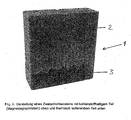
- This masonry consists on the hot side of the described carbonaceous stones, characterized by their content of refractory minerals, graphite and possibly antioxidants and on the furnace shell side side of an insulating masonry, consisting for example of a commercial firebrick or other thermally insulating material, such as a easy fireclay.
- the stones contain zonal graphite on the hot side.
- the cold side of the stone can z. B. consist of the same material without graphite or a heat insulating material.
- FIG. 1 shows such a structure, wherein the two-layer brick 1 consists of the graphite-containing hot-side zone 2 and the cold-side insulating zone 3. These stones can be made in one operation and have a permanent bond between them the two zones. Of course, but also the insulating part and the carbonaceous part after each separate production to facilitate installation with an adhesive to the carbonaceous part are adhered.
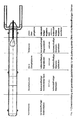
- Fig. 2 shows schematically a Zustellbeispiel for a cement rotary kiln. Accordingly, the preheating zone with carbonaceous firebricks, the safety zone with carbonaceous clayey stones and / or carbonaceous Bauxitsteinen, the upper transition zone with carbonaceous Magnesiasteinen and / or carbonaceous Magnesiaspinellsteinen, the sintering zone with carbonaceous Magnesiasteinen and / or carbonaceous Magnesiaspinellsteinen and the lower transition zone with carbonaceous Magnesiasteinen and / or containing carbonaceous magnesia spinel stones. 2 shows the rotary tube 4, the Feuerungsflamme 5 and the burner. 6
- a delivery according to the invention results as follows: run-off area operating room 0 - 5 m
- the delivery is made with a magnesia brick with a graphite content of 10 wt .-%; the composition of this stone is as follows: Sintermagnesia grain size 0-4 mm 71% by weight Sintered magnesia flour ⁇ 0.1 mm 13% by weight flake graphite 10% by weight aluminum powder 3% by weight silicon powder 3% by weight
- Binder is phenolic resol, which is added to the dry blend in an amount of 3.2% by weight.
- the stone is pressed in the usual formats for the cement industry (so-called VDZ formats) with a compression pressure of 160 MPa and then tempered at a temperature of 200 ° C.
- the stones are installed using the installation tools and procedures common in the cement industry.
- the delivery is made with a magnesia brick with a graphite content of 10 wt .-%; the composition of this stone is as follows: Melt magnesia granulation 0-4 mm 71% by weight Fused magnesia flour ⁇ 0.1 mm 13% by weight flake graphite 10% by weight aluminum powder 3% by weight silicon powder 3% by weight
- Binder is phenolic resol, which is added in an amount of 3.1 wt .-%.
- the stone is pressed in the usual formats for the cement industry (so-called VDZ formats) with a compression pressure of 160 MPa and then tempered at a temperature of 200 ° C.
- VDZ formats usual formats for the cement industry
- fused magnesia is used, since usually the stresses in the lower transition zone are highest. At lower loads, the use of sintered magnesia is possible.
- the delivery is made with a magnesia brick with a graphite content of 10 wt .-%; the composition of this stone is as follows: Sintermagnesia grain size 0-4 mm 48% by weight Sintered magnesia flour ⁇ 0.1 mm 13% by weight Sintered spinel 0-4 mm 20% by weight flake graphite 10% by weight aluminum powder 3% by weight silicon powder 3% by weight silicon carbide powder 3% by weight
- Binder is phenolic resol, which is added in an amount of 3.1 wt .-%.
- the stone is pressed in the usual formats for the cement industry (so-called VDZ formats) with a compression pressure of 160 MPa and then tempered at a temperature of 200 ° C.
- sintered spinel is additionally used to promote necking while lowering the thermal conductivity of the liner.
- enamel magnesia and enamel spinel is possible.
- Aluminum powder; Silicon powder and silicon carbide powder serve as antioxidants to control sealing and microstructural reinforcement.
- the delivery takes place in this embodiment with a Magnesiastein with a graphite content of 10 wt .-%; the composition of this stone is as follows: Sintermagnesia grain size 0-4 mm 48% by weight Sintered magnesia flour ⁇ 0.1 mm 13% by weight Fused corundum 0-4 mm 20% by weight flake graphite 10% by weight aluminum powder 3% by weight silicon powder 3% by weight silicon carbide powder 3% by weight
- Binder is phenolic resol, which is added in an amount of 3.2 wt .-%.
- the stone is pressed in VDZ formats with a compression pressure of 160 MPa and then tempered at a temperature of 200 ° C.
- fused alumina is also used to lower the thermal conductivity of the feed.
- sintered corundum is possible.
- Aluminum powder, silicon powder and silicon carbide powder serve as antioxidants to control the sealing and structural reinforcement.
- the stones are installed according to the other stones.
- the delivery takes place in this embodiment with a clay-rich stone with a graphite content of 10 wt .-%; the composition of this stone is as follows: Flintclay 0-4 mm 68% by weight Flintclay flour ⁇ 0.1 mm 13% by weight flake graphite 10% by weight aluminum powder 3% by weight silicon powder 3% by weight silicon carbide powder 3% by weight
- Binder is phenolic resol, which is added in an amount of 3.4 wt .-%.
- the stone is made in so-called A-formats (ISO-formats) pressed with a pressure of 160 MPa and then tempered at a temperature of 200 ° C.
- Aluminum powder, silicon powder and silicon carbide powder serve as antioxidants to control the sealing and structural reinforcement. Silicon carbide additionally increases the resistance to alkali attack.
- the stones are installed according to the other stones. preheating operating room 52 - 75 m
- the delivery takes place in this embodiment with a lightweight brick with a graphite content of 10 wt .-%; the composition of this stone is as follows: Light chamotte 0-4 mm 68% by weight Light flint flour ⁇ 0.1 mm 13% by weight flake graphite 10% by weight aluminum powder 3% by weight silicon powder 3% by weight silicon carbide powder 3% by weight
- Binder is phenolic resol, which is added in an amount of about 3.8 wt .-%.
- the stone is pressed in so-called A-formats (ISO-formats) with a pressure of 120 MPa and then tempered at a temperature of 200 ° C.
- A-formats ISO-formats
- Aluminum powder, silicon powder and silicon carbide powder serve as antioxidants to control the sealing and structural reinforcement.
- Silicon carbide powder additionally increases the resistance to alkali attack.
- the pressing pressure is chosen lower here, as a high compaction for stones in this area is not necessary. In individual cases, such as a high exposure to alkalis from the furnace atmosphere, of course, a higher-density stone is easily used.
- the installation of the stones is carried out according to the stones previously described.
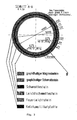
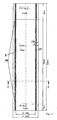
- a lime pit furnace which is shown in cross-section in Fig. 3 and in the typical operating conditions, a limestone is burned to produce CaO.
- the height of the furnace is 23 m, the inner diameter 4.00 m, the outer diameter 5.20 m.
- the zoning according to Fig. 4 is as follows (furnace points counted from below): Inlet (preheating) zone operating room 19.6 - 23 m sintering zone operating room 1.4 - 19.6 m Run-out (cooling) zone operating room 0 - 1.4 m
- the delivery takes place in this embodiment with a firebrick with a graphite content of 10%; the composition of this stone is as follows: Chamotte 0-4 mm 68% by weight Fireclay ⁇ 0.1 mm 13% by weight flake graphite 10% by weight aluminum powder 3% by weight silicon powder 3% by weight silicon carbide powder 3% by weight
- Binder is phenolic resol, which is added in an amount of about 3.5 wt .-%.
- the stone is in so-called A-formats (ISO formats) pressed with a pressure of 120 MPa and then tempered at a temperature of 200 ° C.
- Aluminum powder, silicon powder and silicon carbide powder serve as antioxidants and microstructural reinforcement.
- silicon carbide powder increases resistance to possible alkali attack.
- the pressing pressure is chosen lower here, as a high compaction for stones in this area is not necessary. In individual cases, such as a high exposure to alkalis from the furnace atmosphere, of course, a higher-density stone is easily used.
- the stones are installed using the installation tools and procedures common in the lime industry. sintering zone operating room 1.4 - 19.6 m
- the delivery takes place in this embodiment with a Magnesiastein 1 with a graphite content of 10%; the composition of this stone is as follows: Sintermagnesia grain size 0-4 mm 71% by weight Sintered magnesia flour ⁇ 0.1 mm 13% by weight flake graphite 10% by weight aluminum powder 3% by weight silicon powder 3% by weight
- Binder is phenolic resol, which is added in an amount of 3.2 wt .-%.
- the stone is pressed in so-called A-formats (ISO formats) with a compression pressure of 160 MPa and then tempered at a temperature of 200 ° C.
- the stones are installed using the installation tools and procedures common in the lime industry. Run-out (cooling) zone operating room 0 - 1.4 m
- the delivery takes place in this embodiment also with a firebrick (as in the inlet (preheating) zone) with a graphite content of 10 wt -.%; the composition of this stone is as follows: Chamotte 0-4 mm 68% by weight Fireclay ⁇ 0.1 mm 13% by weight flake graphite 10% by weight aluminum powder 3% by weight silicon powder 3% by weight silicon carbide powder 3% by weight
- Binder is phenolic resol, which is added in an amount of about 3.5 wt .-%.
- the stone is pressed in so-called A-formats (ISO formats) with a compression pressure of 120 MPa and then tempered at a temperature of 200 ° C.
- Aluminum powder, silicon powder and silicon carbide powder serve as antioxidants and microstructural reinforcement.
- silicon carbide powder increases resistance to possible alkali attack.
- the pressing pressure is chosen lower here, as a high compaction for stones in this area is not necessary. In individual cases, for example at a high load by abrasion, of course, a higher-density stone is easily used.
- the installation is carried out with the installation tools and procedures, as they are common in the lime industry.
Landscapes
- Chemical & Material Sciences (AREA)
- Engineering & Computer Science (AREA)
- Ceramic Engineering (AREA)
- Materials Engineering (AREA)
- Structural Engineering (AREA)
- Organic Chemistry (AREA)
- Manufacturing & Machinery (AREA)
- Physics & Mathematics (AREA)
- General Engineering & Computer Science (AREA)
- Mechanical Engineering (AREA)
- Plasma & Fusion (AREA)
- Thermal Sciences (AREA)
- Inorganic Chemistry (AREA)
- Furnace Housings, Linings, Walls, And Ceilings (AREA)
- Compositions Of Oxide Ceramics (AREA)
- Ceramic Products (AREA)
Abstract
Claims (25)
- Four industriel à grand volume, dans lequel l'on procède, dans une atmosphère de four pour l'essentiel oxydante, à la combustion de produits minéraux à des températures supérieures à 700°C, par exemple, du ciment, de la chaux, de la magnésite, de la dolomite ou similaires, le four industriel présentant une maçonnerie faite en pierres non brûlées en matériau réfractaire et les pierres dans l'intérieur dans la zone superficielle de la maçonnerie exposée aux flammes ou à la chaleur, contenant de 2 à 30 % en poids de carbone, le carbone étant contenu sous la forme de graphite et sous la forme de liant contenant du carbone, le liant contenant du carbone étant contenu dans des quantités de 2 à 5 % en poids.
- Four industriel selon la revendication 1, caractérisé par des pierres en matériau réfractaire utilisé habituellement pour des fours de ce genre, qui présentent, dans la zone de la surface prévue pour la face tournée vers le feu de la maçonnerie, du carbone zonal, en particulier dans une zone épaisse de 1 à 18 cm, de préférence de 2 à 15 cm.
- Four industriel selon la revendication 1 et/ou 2, caractérisé en ce que les pierres présentent des formats utilisés habituellement.
- Four industriel selon l'une quelconque des revendications 1 à 3, caractérisé en ce que les pierres contiennent le carbone sous la forme de graphite naturel ou synthétique.
- Four industriel selon la revendication 4, caractérisé en ce que les pierres contiennent du graphite en flocons.
- Four industriel selon la revendication 4 et/ou 5, caractérisé en ce que le liant est du goudron et/ou du brai.
- Four industriel selon la revendication 4 et/ou 5, caractérisé en ce que les pierres contiennent, en tant que liant, de la résine synthétique.
- Four industriel selon la revendication 7, caractérisé en ce que les pierres contiennent, en tant que liant, de la résine phénolique.
- Four industriel selon la revendication 7, caractérisé en ce que les pierres contiennent, en tant que liant, de la résine phénolique Novolak.
- Four industriel selon l'une ou plusieurs des revendications 1 à 9, caractérisé en ce que les pierres dans la zone contenant du carbone contiennent du graphite dans des quantités de 5 à 20% en poids.
- Four industriel selon l'une ou plusieurs des revendications 1 à 10, caractérisé en ce que les pierres contiennent le liant contenant du carbone dans des quantités de 2,5 à 4% en poids.
- Four industriel selon la revendication 1 ou selon l'une ou plusieurs des revendications 1 à 11, caractérisé en ce que le carbone est réparti d'une manière homogène dans la pierre tout entière.
- Four industriel selon la revendication 12, caractérisé en ce que la maçonnerie est formée à partir de pierres en matériau réfractaire, en particulier basique, en particulier à base de MgO.
- Four industriel selon la revendication 13, caractérisé en ce que la maçonnerie est formée de pierres, dans lesquelles le MgO est au moins partiellement remplacé par du spinelle et/ou du corindon et/ou de la bauxite et/ou de l'andalousite et/ou de la mullite et/ou de l'argile à silex et/ou de la chamotte.
- Four industriel selon l'une ou plusieurs des revendications 1 à 14, caractérisé en ce que les pierres présentent une porosité de moins de 30% en volume, en particulier de moins de 14% en volume, de préférence une porosité comprise entre 1 et 8% en volume.
- Four industriel selon l'une ou plusieurs des revendications 1 à 15, caractérisé en ce que les pierres présentent des agents anti-oxydants connus en soi, en particulier dans des quantités de 1 à 10% en poids, de préférence dans des quantités de 2 à 8 % en poids.
- Four industriel selon l'une ou plusieurs des revendications 1 à 16, avec une maçonnerie dans une zone de frittage et/ou dans une zone supérieure de transition d'un four tubulaire rotatif ou d'un four vertical, caractérisé en ce que la maçonnerie présente des pierres contenant du carbone à base de MgO ou de minéral de spinelle/MgO ou de MgO/bauxite ou de MgO/corindon ou de MgO/zircone.
- Four industriel selon la revendication 17, caractérisé en ce que les pierres présentent la composition suivante :
Magnésie 25-98, e.p. 27-83 % en poids Minéral de spinelle 0-40, e.p. 5-30 % en poids Graphite 2-30, e.p. 5-20 % en poids Poudre d'aluminium 0-10, e.p. 2-8 % en poids Poudre de silicium 0-10, e.p. 2-8 % en poids Poudre de carbure de silicium 0-10, e.p. 3-7 % en poids Liant 2-5, e.p. 2,5-4 % en poids e.p. = en particulier - Four industriel selon la revendication 17, caractérisé par des pierres contenant du carbone à base de spinelle ou de bauxite ou de corindon.
- Four industriel selon l'une ou plusieurs des revendications 1 à 19, avec une maçonnerie dans une zone de sécurité d'un four tubulaire rotatif ou d'un four vertical, caractérisé en ce que la maçonnerie présente des pierres contenant du carbone, à base d'andalousite ou d'un minéral du groupe de la sillimanite ou de bauxite ou de chamotte riche en alun, comme l'argile à silex.
- Four industriel selon la revendication 20, caractérisé par des pierres de la composition suivante :
Chamotte riche en alun 50-98, e.p. 57-88 % en poids Graphite 2-30, e.p. 5-20 % en poids Poudre d'aluminium 0-10, e.p. 2-8 % en poids Poudre de silicium 0-10, e.p. 2-8 % en poids Poudre de carbure de silicium 0-10, e.p. 3-7 % en poids Liant 2-5, e.p. 2,5-4 % en poids e.p. = en particulier - Four industriel selon l'une ou plusieurs des revendications 1 à 21, avec une maçonnerie dans une zone de chauffage préalable d'un four tubulaire rotatif ou d'un four vertical, caractérisé en ce que la maçonnerie présente des pierres contenant du carbone, à base de chamotte ou de chamotte légère.
- Four industriel selon la revendication 22, caractérisé par des pierres de la composition suivante :
Chamotte légère 50-98, e.p. 57-88 % en poids Graphite 2-30, e.p. 5-20 % en poids Poudre d'aluminium 0-10, e.p. 2-8 % en poids Poudre de silicium 0-10, e.p. 2-8 % en poids Poudre de carbure de silicium 0-10, e.p. 3-7 % en poids Liant 2-5, e.p. 2,5-4 % en poids e.p = en particulier - Four industriel selon l'une ou plusieurs des revendications 1 à 23, avec une maçonnerie dans une zone inférieure de transition ou dans une zone de sortie d'un four tubulaire rotatif ou d'un four vertical, caractérisé en ce que la maçonnerie présente des pierres contenant du carbone à base de bauxite ou de magnésie.
- Four industriel selon l'une ou plusieurs des revendications 1 à 24, caractérisé par une maçonnerie à plusieurs couches, dans laquelle les pierres contenant du carbone sont disposées sur la face exposée à la chaleur et dans laquelle les pierres en matériau isolant, par exemple, des briques légères réfractaires ou des briques de chamotte, sont disposées sur la face exposée au froid.
Applications Claiming Priority (1)
| Application Number | Priority Date | Filing Date | Title |
|---|---|---|---|
| PCT/EP2003/002248 WO2004079284A1 (fr) | 2003-03-05 | 2003-03-05 | Mur refractaire et pierres refractaires destinees a la fabrication d'un mur |
Publications (2)
| Publication Number | Publication Date |
|---|---|
| EP1599697A1 EP1599697A1 (fr) | 2005-11-30 |
| EP1599697B1 true EP1599697B1 (fr) | 2007-07-18 |
Family
ID=32946820
Family Applications (1)
| Application Number | Title | Priority Date | Filing Date |
|---|---|---|---|
| EP03714777A Expired - Lifetime EP1599697B1 (fr) | 2003-03-05 | 2003-03-05 | Four industriel de grosse capacite avec murs refractaires. |
Country Status (9)
| Country | Link |
|---|---|
| EP (1) | EP1599697B1 (fr) |
| KR (1) | KR100938727B1 (fr) |
| CN (1) | CN1748116A (fr) |
| AU (1) | AU2003219017A1 (fr) |
| BR (1) | BR0316710B1 (fr) |
| DE (1) | DE50307739D1 (fr) |
| ES (1) | ES2290441T3 (fr) |
| MX (1) | MXPA05005331A (fr) |
| WO (1) | WO2004079284A1 (fr) |
Cited By (1)
| Publication number | Priority date | Publication date | Assignee | Title |
|---|---|---|---|---|
| DE102012023318A1 (de) | 2012-11-29 | 2014-06-05 | Refratechnik Holding Gmbh | Verwendung von ungebrannten feuerfesten Erzeugnissen als Zustellung von großvolumigen Industrieöfen sowie Industrieofen ausgekleidet mit den ungebrannten feuerfesten Erzeugnissen |
Families Citing this family (17)
| Publication number | Priority date | Publication date | Assignee | Title |
|---|---|---|---|---|
| AU2003304251A1 (en) * | 2003-06-30 | 2005-01-13 | Refratechnik Holding Gmbh | Fire-resistant brickwork and fire-resistant bricks for producing the brickwork |
| EP1741980A1 (fr) * | 2005-07-04 | 2007-01-10 | Siemens Aktiengesellschaft | Elément en céramique avec surface résistante au gaz chauds et procédé de fabrication |
| DE102006007781B4 (de) | 2006-02-20 | 2008-09-25 | Refratechnik Holding Gmbh | Grobkeramischer feuerfester Versatz sowie feuerfestes Erzeugnis daraus |
| DE102007010365B4 (de) * | 2007-03-03 | 2009-01-15 | Refractory Intellectual Property Gmbh & Co. Kg | Verwendung eines keramischen Erzeugnisses für die Auskleidung eines Zement-Drehrohrofens |
| CN101747015B (zh) * | 2008-12-05 | 2012-04-18 | 沈阳有色冶金设计研究院 | 一种无机木建筑板材及其制备方法 |
| CN102141344A (zh) * | 2010-01-28 | 2011-08-03 | 上海盈锐机电设备有限公司 | 一种热风循环式白云石耐火砖焙烧回火炉 |
| CN102408241A (zh) * | 2010-09-23 | 2012-04-11 | 辽宁科技大学 | 热风炉用低蠕变方镁石-尖晶石蓄热材料及其生产方法 |
| CN102115337B (zh) * | 2011-01-12 | 2012-09-26 | 长兴煤山新型炉料有限公司 | 一种corex炉主沟快干浇注料及其生产工艺 |
| CN103601519B (zh) * | 2013-11-19 | 2015-05-20 | 河南海格尔高温材料有限公司 | 一种耐火砖用强力粘结剂 |
| CN104016690B (zh) * | 2014-05-30 | 2015-06-17 | 浙江自立股份有限公司 | 一种高强度低膨胀镁尖晶石砖的制备方法 |
| CN107793165A (zh) * | 2017-12-02 | 2018-03-13 | 芜湖乾凯材料科技有限公司 | 一种抗侵蚀水泥窑烧成带用耐火砖及其制备方法 |
| CN108314433B (zh) * | 2018-03-26 | 2020-07-31 | 宜兴瑞泰耐火材料有限公司 | 一种高铝质耐侵蚀微膨胀耐火胶泥及其制备方法 |
| DE102018206230A1 (de) | 2018-04-23 | 2019-10-24 | Refratechnik Holding Gmbh | Feuerfester zweischaliger Stein für die Zustellung eines großvolumigen Industrieofens, Verfahren zu dessen Herstellung, Zustellung mit derartigen Steinen und Industrieofen mit einer derartigen Zustellung |
| CN108558371B (zh) * | 2018-07-19 | 2021-01-01 | 武汉科技大学 | 一种磁复合耐火材料及其制备方法 |
| FR3101138B1 (fr) * | 2019-09-20 | 2021-09-24 | Commissariat Energie Atomique | Dispositif de traitement thermique présentant une résistance au vieillissement améliorée et procédé de traitement thermique le mettant en œuvre |
| CN115108842B (zh) * | 2021-03-18 | 2023-05-09 | 宝山钢铁股份有限公司 | 一种高氧钢连铸用长水口 |
| CN115745637A (zh) * | 2022-12-06 | 2023-03-07 | 泰州市旺鑫耐火材料有限公司 | 一种抗震耐压的隔热耐火砖及其制备方法 |
Family Cites Families (9)
| Publication number | Priority date | Publication date | Assignee | Title |
|---|---|---|---|---|
| GB696095A (en) * | 1951-04-06 | 1953-08-26 | John Baptiste Dube | Calcining kiln |
| JPS5684371A (en) * | 1979-12-08 | 1981-07-09 | Kyushu Refractories | Carbonnbonded magnesiaacarbon brick |
| JPS5874579A (ja) * | 1981-10-26 | 1983-05-06 | 品川白煉瓦株式会社 | 炭素含有耐火物 |
| JPH03263586A (ja) * | 1990-03-12 | 1991-11-25 | Showa Denko Kk | 間接加熱式回転炉の隔壁板 |
| JPH0415484A (ja) * | 1990-05-07 | 1992-01-20 | Shinagawa Refract Co Ltd | セメント焼成キルン用内張材 |
| KR930009349B1 (ko) * | 1990-12-27 | 1993-09-28 | 포항종합제철 주식회사 | 내구성이 우수한 MgO-C질 내화벽돌 |
| JPH05246787A (ja) * | 1992-03-03 | 1993-09-24 | Kawasaki Refract Co Ltd | 表面をコ−ティングした耐火れんが |
| DE19925591C2 (de) * | 1999-06-04 | 2002-01-17 | Refratechnik Holding Gmbh & Co | Feuerfester Versatz, Formkörper hieraus und Verfahren zur Herstellung des Formkörpers |
| DE19954893B4 (de) * | 1999-11-15 | 2006-06-08 | Refratechnik Holding Gmbh | Kohlenstoffhaltiger feuerfester Formkörper und kohlenstoffhaltige feuerfeste Masse mit verbessertem Oxidationsverhalten sowie Verfahren zu deren Herstellung und Verfahren zur Herstellung von graphitischem Kohlenstoff aus Kunstharz |
-
2003
- 2003-03-05 CN CNA038260719A patent/CN1748116A/zh active Pending
- 2003-03-05 KR KR1020057016397A patent/KR100938727B1/ko not_active Expired - Lifetime
- 2003-03-05 EP EP03714777A patent/EP1599697B1/fr not_active Expired - Lifetime
- 2003-03-05 ES ES03714777T patent/ES2290441T3/es not_active Expired - Lifetime
- 2003-03-05 DE DE50307739T patent/DE50307739D1/de not_active Expired - Lifetime
- 2003-03-05 WO PCT/EP2003/002248 patent/WO2004079284A1/fr not_active Ceased
- 2003-03-05 AU AU2003219017A patent/AU2003219017A1/en not_active Abandoned
- 2003-03-05 MX MXPA05005331A patent/MXPA05005331A/es active IP Right Grant
- 2003-03-05 BR BRPI0316710-0B1A patent/BR0316710B1/pt active IP Right Grant
Non-Patent Citations (1)
| Title |
|---|
| None * |
Cited By (2)
| Publication number | Priority date | Publication date | Assignee | Title |
|---|---|---|---|---|
| DE102012023318A1 (de) | 2012-11-29 | 2014-06-05 | Refratechnik Holding Gmbh | Verwendung von ungebrannten feuerfesten Erzeugnissen als Zustellung von großvolumigen Industrieöfen sowie Industrieofen ausgekleidet mit den ungebrannten feuerfesten Erzeugnissen |
| US9382161B2 (en) | 2012-11-29 | 2016-07-05 | Refratechnik Holding Gmbh | Process using non-fired refractory products as a lining of large-volume industrial furnaces and industrial furnaces lined with the non-fired refractory products |
Also Published As
| Publication number | Publication date |
|---|---|
| DE50307739D1 (de) | 2007-08-30 |
| KR20050104415A (ko) | 2005-11-02 |
| ES2290441T3 (es) | 2008-02-16 |
| MXPA05005331A (es) | 2005-07-25 |
| BR0316710B1 (pt) | 2013-11-19 |
| CN1748116A (zh) | 2006-03-15 |
| WO2004079284A1 (fr) | 2004-09-16 |
| AU2003219017A1 (en) | 2004-09-28 |
| EP1599697A1 (fr) | 2005-11-30 |
| KR100938727B1 (ko) | 2010-01-26 |
| BR0316710A (pt) | 2005-10-18 |
Similar Documents
| Publication | Publication Date | Title |
|---|---|---|
| EP1599697B1 (fr) | Four industriel de grosse capacite avec murs refractaires. | |
| EP1986978B1 (fr) | Composition réfractaire en céramique industrielle, et produit réfractaire obtenu à partir de cette composition | |
| EP2766322B1 (fr) | Utilisation des produits réfractaires non cuits, non faconnes pour revêter des grands fours industriels et fours industriels revêtes avec les produits réfractaires non cuits | |
| US8193110B2 (en) | Refractory carbon-bonded magnesia brick and process for producing it | |
| JPS63162566A (ja) | 塩基性耐火組成物 | |
| DE10394173B4 (de) | Verwendung von ungebrannten, feuerfesten Steinen in einem feuerfesten Mauerwerk | |
| US8138110B2 (en) | Fireproof ceramic mix, fireproof ceramic molded body formed of said mix and use thereof | |
| JP3204723B2 (ja) | クロム固溶スピネル及びコランダムよりなるクリンカー並びにそれを用いて得られる耐火物 | |
| Aksel et al. | Magnesia–spinel (MgAl2O4) refractory ceramic composites | |
| JP2743209B2 (ja) | 炭素含有耐火物 | |
| US20020119885A1 (en) | Refractory shaped body with increased alkali resistance | |
| JP4960541B2 (ja) | マグネシア−アルミナ−チタニア質れんが | |
| JP2009242122A (ja) | 高炉炉床用れんが及びこれをライニングした高炉炉床 | |
| EP3174838B1 (fr) | Procédé de préparation d'un matériau réfractaire à haute émissivité spectrale et procédé pour augmenter l'émissivité spectrale de materiaux réfractaires formés. | |
| JPH0777979B2 (ja) | 炭素含有耐火物 | |
| JP3257820B2 (ja) | クロム固溶スピネルよりなるクリンカー並びにそれを用いて得られる耐火物 | |
| JP3177200B2 (ja) | 低通気性マグネシア−クロム質耐火物の製造方法 | |
| KR20260007567A (ko) | 전기 아크로의 하스 바닥에 배치하기 위한 하스 혼합물, 전기 아크로의 하스 바닥에 배치하기 위한 하스 혼합물의 용도, 전기 아크로, 전기 아크로의 하스 바닥에 하스 혼합물을 배치하는 방법 및 시멘트 회전로 라이닝에 사용되는 마그네시아 스피넬의 용도 | |
| KR19990033470A (ko) | 공업용 로(爐)에 내장되는 내화재 및 그 제조방법 | |
| JP2020132459A (ja) | マグネシア・スピネル質耐火れんが | |
| JPH06263527A (ja) | アルミナ質耐火物 | |
| JPH0355427B2 (fr) | ||
| JPH0354162A (ja) | 耐火物 | |
| JPH08283064A (ja) | 塩基性耐火物の製造方法とその耐火物 | |
| JPH08319151A (ja) | 炭素含有耐火物 |
Legal Events
| Date | Code | Title | Description |
|---|---|---|---|
| PUAI | Public reference made under article 153(3) epc to a published international application that has entered the european phase |
Free format text: ORIGINAL CODE: 0009012 |
|
| 17P | Request for examination filed |
Effective date: 20050425 |
|
| AK | Designated contracting states |
Kind code of ref document: A1 Designated state(s): AT BE BG CH CY CZ DE DK EE ES FI FR GB GR HU IE IT LI LU MC NL PT RO SE SI SK TR |
|
| AX | Request for extension of the european patent |
Extension state: AL LT LV MK |
|
| DAX | Request for extension of the european patent (deleted) | ||
| RBV | Designated contracting states (corrected) |
Designated state(s): DE ES IT |
|
| 17Q | First examination report despatched |
Effective date: 20061207 |
|
| GRAP | Despatch of communication of intention to grant a patent |
Free format text: ORIGINAL CODE: EPIDOSNIGR1 |
|
| RTI1 | Title (correction) |
Free format text: LARGE CAPACITY INDUSTRIAL FURNACE WITH REFRACTORY WALL |
|
| GRAS | Grant fee paid |
Free format text: ORIGINAL CODE: EPIDOSNIGR3 |
|
| GRAA | (expected) grant |
Free format text: ORIGINAL CODE: 0009210 |
|
| AK | Designated contracting states |
Kind code of ref document: B1 Designated state(s): DE ES IT |
|
| REF | Corresponds to: |
Ref document number: 50307739 Country of ref document: DE Date of ref document: 20070830 Kind code of ref document: P |
|
| REG | Reference to a national code |
Ref country code: ES Ref legal event code: FG2A Ref document number: 2290441 Country of ref document: ES Kind code of ref document: T3 |
|
| PLBE | No opposition filed within time limit |
Free format text: ORIGINAL CODE: 0009261 |
|
| STAA | Information on the status of an ep patent application or granted ep patent |
Free format text: STATUS: NO OPPOSITION FILED WITHIN TIME LIMIT |
|
| 26N | No opposition filed |
Effective date: 20080421 |
|
| PGFP | Annual fee paid to national office [announced via postgrant information from national office to epo] |
Ref country code: IT Payment date: 20210203 Year of fee payment: 19 |
|
| REG | Reference to a national code |
Ref country code: DE Ref legal event code: R081 Ref document number: 50307739 Country of ref document: DE Owner name: REFRATECHNIK HOLDING GMBH, DE Free format text: FORMER OWNER: REFRATECHNIK HOLDING GMBH, 85737 ISMANING, DE |
|
| PGFP | Annual fee paid to national office [announced via postgrant information from national office to epo] |
Ref country code: ES Payment date: 20220405 Year of fee payment: 20 Ref country code: DE Payment date: 20220530 Year of fee payment: 20 |
|
| REG | Reference to a national code |
Ref country code: DE Ref legal event code: R071 Ref document number: 50307739 Country of ref document: DE |
|
| REG | Reference to a national code |
Ref country code: ES Ref legal event code: FD2A Effective date: 20230426 |
|
| PG25 | Lapsed in a contracting state [announced via postgrant information from national office to epo] |
Ref country code: IT Free format text: LAPSE BECAUSE OF NON-PAYMENT OF DUE FEES Effective date: 20220305 |
|
| PG25 | Lapsed in a contracting state [announced via postgrant information from national office to epo] |
Ref country code: ES Free format text: LAPSE BECAUSE OF EXPIRATION OF PROTECTION Effective date: 20230306 |