EP1597244B1 - Ethynylderivate als faktor xa-inhibitoren - Google Patents
Ethynylderivate als faktor xa-inhibitoren Download PDFInfo
- Publication number
- EP1597244B1 EP1597244B1 EP04706669A EP04706669A EP1597244B1 EP 1597244 B1 EP1597244 B1 EP 1597244B1 EP 04706669 A EP04706669 A EP 04706669A EP 04706669 A EP04706669 A EP 04706669A EP 1597244 B1 EP1597244 B1 EP 1597244B1
- Authority
- EP
- European Patent Office
- Prior art keywords
- formula
- oxo
- denotes
- compounds
- solvates
- Prior art date
- Legal status (The legal status is an assumption and is not a legal conclusion. Google has not performed a legal analysis and makes no representation as to the accuracy of the status listed.)
- Expired - Lifetime
Links
- 125000002534 ethynyl group Chemical group [H]C#C* 0.000 title claims description 7
- 229940123583 Factor Xa inhibitor Drugs 0.000 title description 4
- 150000001875 compounds Chemical class 0.000 claims abstract description 92
- 206010028980 Neoplasm Diseases 0.000 claims abstract description 19
- 108010074860 Factor Xa Proteins 0.000 claims abstract description 15
- 238000011282 treatment Methods 0.000 claims abstract description 10
- 239000003112 inhibitor Substances 0.000 claims abstract description 4
- -1 phenylene, pyridinediyl Chemical group 0.000 claims description 154
- 150000003839 salts Chemical class 0.000 claims description 30
- 239000000203 mixture Substances 0.000 claims description 25
- 239000012453 solvate Substances 0.000 claims description 25
- 239000003814 drug Substances 0.000 claims description 17
- 238000000034 method Methods 0.000 claims description 17
- 239000002253 acid Substances 0.000 claims description 13
- 125000000217 alkyl group Chemical group 0.000 claims description 13
- 238000002360 preparation method Methods 0.000 claims description 13
- 125000004432 carbon atom Chemical group C* 0.000 claims description 12
- 208000007536 Thrombosis Diseases 0.000 claims description 11
- 208000037265 diseases, disorders, signs and symptoms Diseases 0.000 claims description 11
- 108010054265 Factor VIIa Proteins 0.000 claims description 8
- 208000006011 Stroke Diseases 0.000 claims description 7
- 238000002399 angioplasty Methods 0.000 claims description 7
- 208000010125 myocardial infarction Diseases 0.000 claims description 7
- JXYITCJMBRETQX-UHFFFAOYSA-N 4-ethynylaniline Chemical compound NC1=CC=C(C#C)C=C1 JXYITCJMBRETQX-UHFFFAOYSA-N 0.000 claims description 6
- 206010002383 Angina Pectoris Diseases 0.000 claims description 6
- 206010003210 Arteriosclerosis Diseases 0.000 claims description 6
- 206010008190 Cerebrovascular accident Diseases 0.000 claims description 6
- 206010061218 Inflammation Diseases 0.000 claims description 6
- 206010022562 Intermittent claudication Diseases 0.000 claims description 6
- 206010027476 Metastases Diseases 0.000 claims description 6
- 208000011775 arteriosclerosis disease Diseases 0.000 claims description 6
- 230000004054 inflammatory process Effects 0.000 claims description 6
- 208000037803 restenosis Diseases 0.000 claims description 6
- 230000008569 process Effects 0.000 claims description 5
- 208000019695 Migraine disease Diseases 0.000 claims description 4
- HSFWRNGVRCDJHI-UHFFFAOYSA-N alpha-acetylene Natural products C#C HSFWRNGVRCDJHI-UHFFFAOYSA-N 0.000 claims description 4
- 125000002887 hydroxy group Chemical group [H]O* 0.000 claims description 4
- 206010027599 migraine Diseases 0.000 claims description 4
- 125000001997 phenyl group Chemical group [H]C1=C([H])C([H])=C(*)C([H])=C1[H] 0.000 claims description 4
- AOGYCOYQMAVAFD-UHFFFAOYSA-N chlorocarbonic acid Chemical class OC(Cl)=O AOGYCOYQMAVAFD-UHFFFAOYSA-N 0.000 claims description 3
- 239000000546 pharmaceutical excipient Substances 0.000 claims description 3
- FXZXBDMNZKSIHB-JOCHJYFZSA-N (2r)-2-[(4-ethynylphenyl)carbamoylamino]-4-methyl-n-[4-(3-oxomorpholin-4-yl)phenyl]pentanamide Chemical compound N([C@H](CC(C)C)C(=O)NC=1C=CC(=CC=1)N1C(COCC1)=O)C(=O)NC1=CC=C(C#C)C=C1 FXZXBDMNZKSIHB-JOCHJYFZSA-N 0.000 claims description 2
- WVYDMARIDUYIAR-OAQYLSRUSA-N (2r)-n-[4-(2-amino-4,5-dihydroimidazol-1-yl)phenyl]-2-[(4-ethynylphenyl)carbamoylamino]-4-methylpentanamide Chemical compound N([C@H](CC(C)C)C(=O)NC=1C=CC(=CC=1)N1C(NCC1)=N)C(=O)NC1=CC=C(C#C)C=C1 WVYDMARIDUYIAR-OAQYLSRUSA-N 0.000 claims description 2
- AKZWRTCWNXHHFR-PDIZUQLASA-N [(3S)-oxolan-3-yl] N-[(2S,3S)-4-[(5S)-5-benzyl-3-[(2R)-2-carbamoyloxy-2,3-dihydro-1H-inden-1-yl]-4-oxo-3H-pyrrol-5-yl]-3-hydroxy-1-phenylbutan-2-yl]carbamate Chemical compound NC(=O)O[C@@H]1Cc2ccccc2C1C1C=N[C@](C[C@H](O)[C@H](Cc2ccccc2)NC(=O)O[C@H]2CCOC2)(Cc2ccccc2)C1=O AKZWRTCWNXHHFR-PDIZUQLASA-N 0.000 claims description 2
- 239000002671 adjuvant Substances 0.000 claims description 2
- 125000004435 hydrogen atom Chemical group [H]* 0.000 claims description 2
- 229910052760 oxygen Inorganic materials 0.000 claims description 2
- CPYAIOCBLKCPSX-LJQANCHMSA-N (2r)-2-[(4-ethynylphenyl)carbamoylamino]-3-hydroxy-n-[3-methyl-4-(3-oxomorpholin-4-yl)phenyl]propanamide Chemical compound N([C@H](CO)C(=O)NC=1C=C(C(=CC=1)N1C(COCC1)=O)C)C(=O)NC1=CC=C(C#C)C=C1 CPYAIOCBLKCPSX-LJQANCHMSA-N 0.000 claims 1
- WWNFTMGACJYWFZ-LJQANCHMSA-N (2r)-2-[(4-ethynylphenyl)carbamoylamino]-3-hydroxy-n-[4-(3-oxomorpholin-4-yl)phenyl]propanamide Chemical compound N([C@H](CO)C(=O)NC=1C=CC(=CC=1)N1C(COCC1)=O)C(=O)NC1=CC=C(C#C)C=C1 WWNFTMGACJYWFZ-LJQANCHMSA-N 0.000 claims 1
- FNZMLHOPIPGMMA-HXUWFJFHSA-N (2r)-2-[(4-ethynylphenyl)carbamoylamino]-3-methoxy-n-[3-methyl-4-(3-oxomorpholin-4-yl)phenyl]propanamide Chemical compound N([C@H](COC)C(=O)NC=1C=C(C)C(N2C(COCC2)=O)=CC=1)C(=O)NC1=CC=C(C#C)C=C1 FNZMLHOPIPGMMA-HXUWFJFHSA-N 0.000 claims 1
- FYUKZUFNMFWWDQ-HXUWFJFHSA-N (2r)-2-[(4-ethynylphenyl)carbamoylamino]-3-methoxy-n-[4-(3-oxomorpholin-4-yl)phenyl]propanamide Chemical compound N([C@H](COC)C(=O)NC=1C=CC(=CC=1)N1C(COCC1)=O)C(=O)NC1=CC=C(C#C)C=C1 FYUKZUFNMFWWDQ-HXUWFJFHSA-N 0.000 claims 1
- MPQAJMGHFIVYKP-OAQYLSRUSA-N (2r)-2-[(4-ethynylphenyl)carbamoylamino]-n-[3-methyl-4-(3-oxomorpholin-4-yl)phenyl]pentanamide Chemical compound N([C@H](CCC)C(=O)NC=1C=C(C)C(N2C(COCC2)=O)=CC=1)C(=O)NC1=CC=C(C#C)C=C1 MPQAJMGHFIVYKP-OAQYLSRUSA-N 0.000 claims 1
- YOBAITROIDCYCI-OAQYLSRUSA-N (2r)-2-[(4-ethynylphenyl)carbamoylamino]-n-[4-(3-oxomorpholin-4-yl)phenyl]pentanamide Chemical compound N([C@H](CCC)C(=O)NC=1C=CC(=CC=1)N1C(COCC1)=O)C(=O)NC1=CC=C(C#C)C=C1 YOBAITROIDCYCI-OAQYLSRUSA-N 0.000 claims 1
- GTRXEXVNMOZCED-GOSISDBHSA-N (2r)-2-[(5-ethynylpyridin-2-yl)carbamoylamino]-3-methoxy-n-[3-methyl-4-(3-oxomorpholin-4-yl)phenyl]propanamide Chemical compound N([C@H](COC)C(=O)NC=1C=C(C)C(N2C(COCC2)=O)=CC=1)C(=O)NC1=CC=C(C#C)C=N1 GTRXEXVNMOZCED-GOSISDBHSA-N 0.000 claims 1
- 238000011321 prophylaxis Methods 0.000 abstract description 3
- 208000001435 Thromboembolism Diseases 0.000 abstract description 2
- 238000002560 therapeutic procedure Methods 0.000 abstract description 2
- ZMXDDKWLCZADIW-UHFFFAOYSA-N N,N-Dimethylformamide Chemical compound CN(C)C=O ZMXDDKWLCZADIW-UHFFFAOYSA-N 0.000 description 24
- YMWUJEATGCHHMB-UHFFFAOYSA-N Dichloromethane Chemical compound ClCCl YMWUJEATGCHHMB-UHFFFAOYSA-N 0.000 description 21
- QTBSBXVTEAMEQO-UHFFFAOYSA-N Acetic acid Chemical compound CC(O)=O QTBSBXVTEAMEQO-UHFFFAOYSA-N 0.000 description 15
- RTZKZFJDLAIYFH-UHFFFAOYSA-N Diethyl ether Chemical compound CCOCC RTZKZFJDLAIYFH-UHFFFAOYSA-N 0.000 description 12
- XEKOWRVHYACXOJ-UHFFFAOYSA-N Ethyl acetate Chemical compound CCOC(C)=O XEKOWRVHYACXOJ-UHFFFAOYSA-N 0.000 description 12
- 238000006243 chemical reaction Methods 0.000 description 11
- 230000005764 inhibitory process Effects 0.000 description 11
- WEVYAHXRMPXWCK-UHFFFAOYSA-N Acetonitrile Chemical compound CC#N WEVYAHXRMPXWCK-UHFFFAOYSA-N 0.000 description 9
- LFQSCWFLJHTTHZ-UHFFFAOYSA-N Ethanol Chemical compound CCO LFQSCWFLJHTTHZ-UHFFFAOYSA-N 0.000 description 9
- OKKJLVBELUTLKV-UHFFFAOYSA-N Methanol Chemical compound OC OKKJLVBELUTLKV-UHFFFAOYSA-N 0.000 description 9
- 108090000190 Thrombin Proteins 0.000 description 9
- 239000004480 active ingredient Substances 0.000 description 9
- VLKZOEOYAKHREP-UHFFFAOYSA-N n-Hexane Chemical compound CCCCCC VLKZOEOYAKHREP-UHFFFAOYSA-N 0.000 description 9
- 229960004072 thrombin Drugs 0.000 description 9
- XLYOFNOQVPJJNP-UHFFFAOYSA-N water Substances O XLYOFNOQVPJJNP-UHFFFAOYSA-N 0.000 description 9
- IAZDPXIOMUYVGZ-UHFFFAOYSA-N Dimethylsulphoxide Chemical compound CS(C)=O IAZDPXIOMUYVGZ-UHFFFAOYSA-N 0.000 description 8
- WYURNTSHIVDZCO-UHFFFAOYSA-N Tetrahydrofuran Chemical compound C1CCOC1 WYURNTSHIVDZCO-UHFFFAOYSA-N 0.000 description 8
- JUJWROOIHBZHMG-UHFFFAOYSA-N Pyridine Chemical compound C1=CC=NC=C1 JUJWROOIHBZHMG-UHFFFAOYSA-N 0.000 description 7
- 230000015572 biosynthetic process Effects 0.000 description 7
- CBOIHMRHGLHBPB-UHFFFAOYSA-N hydroxymethyl Chemical compound O[CH2] CBOIHMRHGLHBPB-UHFFFAOYSA-N 0.000 description 7
- 125000002496 methyl group Chemical group [H]C([H])([H])* 0.000 description 7
- 125000002914 sec-butyl group Chemical group [H]C([H])([H])C([H])([H])C([H])(*)C([H])([H])[H] 0.000 description 7
- DLFVBJFMPXGRIB-UHFFFAOYSA-N thioacetamide Natural products CC(N)=O DLFVBJFMPXGRIB-UHFFFAOYSA-N 0.000 description 7
- 125000001140 1,4-phenylene group Chemical group [H]C1=C([H])C([*:2])=C([H])C([H])=C1[*:1] 0.000 description 6
- CSCPPACGZOOCGX-UHFFFAOYSA-N Acetone Chemical compound CC(C)=O CSCPPACGZOOCGX-UHFFFAOYSA-N 0.000 description 6
- UHOVQNZJYSORNB-UHFFFAOYSA-N Benzene Chemical compound C1=CC=CC=C1 UHOVQNZJYSORNB-UHFFFAOYSA-N 0.000 description 6
- KFZMGEQAYNKOFK-UHFFFAOYSA-N Isopropanol Chemical compound CC(C)O KFZMGEQAYNKOFK-UHFFFAOYSA-N 0.000 description 6
- KWYUFKZDYYNOTN-UHFFFAOYSA-M Potassium hydroxide Chemical compound [OH-].[K+] KWYUFKZDYYNOTN-UHFFFAOYSA-M 0.000 description 6
- YXFVVABEGXRONW-UHFFFAOYSA-N Toluene Chemical compound CC1=CC=CC=C1 YXFVVABEGXRONW-UHFFFAOYSA-N 0.000 description 6
- ZMANZCXQSJIPKH-UHFFFAOYSA-N Triethylamine Chemical compound CCN(CC)CC ZMANZCXQSJIPKH-UHFFFAOYSA-N 0.000 description 6
- 239000003146 anticoagulant agent Substances 0.000 description 6
- 238000010265 fast atom bombardment Methods 0.000 description 6
- 239000012442 inert solvent Substances 0.000 description 6
- BDAGIHXWWSANSR-UHFFFAOYSA-N methanoic acid Natural products OC=O BDAGIHXWWSANSR-UHFFFAOYSA-N 0.000 description 6
- 150000003254 radicals Chemical class 0.000 description 6
- 239000000243 solution Substances 0.000 description 6
- 239000000126 substance Substances 0.000 description 6
- 108010048049 Factor IXa Proteins 0.000 description 5
- HEMHJVSKTPXQMS-UHFFFAOYSA-M Sodium hydroxide Chemical compound [OH-].[Na+] HEMHJVSKTPXQMS-UHFFFAOYSA-M 0.000 description 5
- 238000007792 addition Methods 0.000 description 5
- 229910052784 alkaline earth metal Inorganic materials 0.000 description 5
- 230000002785 anti-thrombosis Effects 0.000 description 5
- 229940127219 anticoagulant drug Drugs 0.000 description 5
- 239000002585 base Substances 0.000 description 5
- 201000010099 disease Diseases 0.000 description 5
- 150000002148 esters Chemical class 0.000 description 5
- 229940012414 factor viia Drugs 0.000 description 5
- 238000005259 measurement Methods 0.000 description 5
- 239000003826 tablet Substances 0.000 description 5
- ZWEHNKRNPOVVGH-UHFFFAOYSA-N 2-Butanone Chemical compound CCC(C)=O ZWEHNKRNPOVVGH-UHFFFAOYSA-N 0.000 description 4
- XNWFRZJHXBZDAG-UHFFFAOYSA-N 2-METHOXYETHANOL Chemical group COCCO XNWFRZJHXBZDAG-UHFFFAOYSA-N 0.000 description 4
- QGJOPFRUJISHPQ-UHFFFAOYSA-N Carbon disulfide Chemical compound S=C=S QGJOPFRUJISHPQ-UHFFFAOYSA-N 0.000 description 4
- HEDRZPFGACZZDS-UHFFFAOYSA-N Chloroform Chemical compound ClC(Cl)Cl HEDRZPFGACZZDS-UHFFFAOYSA-N 0.000 description 4
- XTHFKEDIFFGKHM-UHFFFAOYSA-N Dimethoxyethane Chemical compound COCCOC XTHFKEDIFFGKHM-UHFFFAOYSA-N 0.000 description 4
- VEXZGXHMUGYJMC-UHFFFAOYSA-N Hydrochloric acid Chemical compound Cl VEXZGXHMUGYJMC-UHFFFAOYSA-N 0.000 description 4
- LRHPLDYGYMQRHN-UHFFFAOYSA-N N-Butanol Chemical compound CCCCO LRHPLDYGYMQRHN-UHFFFAOYSA-N 0.000 description 4
- SMWDFEZZVXVKRB-UHFFFAOYSA-N Quinoline Chemical compound N1=CC=CC2=CC=CC=C21 SMWDFEZZVXVKRB-UHFFFAOYSA-N 0.000 description 4
- DKGAVHZHDRPRBM-UHFFFAOYSA-N Tert-Butanol Chemical compound CC(C)(C)O DKGAVHZHDRPRBM-UHFFFAOYSA-N 0.000 description 4
- 150000007513 acids Chemical class 0.000 description 4
- 239000003513 alkali Substances 0.000 description 4
- 230000023555 blood coagulation Effects 0.000 description 4
- 208000035475 disorder Diseases 0.000 description 4
- 229940079593 drug Drugs 0.000 description 4
- 125000001495 ethyl group Chemical group [H]C([H])([H])C([H])([H])* 0.000 description 4
- 238000000338 in vitro Methods 0.000 description 4
- 238000001727 in vivo Methods 0.000 description 4
- 230000002401 inhibitory effect Effects 0.000 description 4
- 239000007924 injection Substances 0.000 description 4
- 238000002347 injection Methods 0.000 description 4
- 239000000543 intermediate Substances 0.000 description 4
- 208000021156 intermittent vascular claudication Diseases 0.000 description 4
- 125000000959 isobutyl group Chemical group [H]C([H])([H])C([H])(C([H])([H])[H])C([H])([H])* 0.000 description 4
- JVTAAEKCZFNVCJ-UHFFFAOYSA-N lactic acid Chemical compound CC(O)C(O)=O JVTAAEKCZFNVCJ-UHFFFAOYSA-N 0.000 description 4
- HQKMJHAJHXVSDF-UHFFFAOYSA-L magnesium stearate Chemical compound [Mg+2].CCCCCCCCCCCCCCCCCC([O-])=O.CCCCCCCCCCCCCCCCCC([O-])=O HQKMJHAJHXVSDF-UHFFFAOYSA-L 0.000 description 4
- LQNUZADURLCDLV-UHFFFAOYSA-N nitrobenzene Chemical compound [O-][N+](=O)C1=CC=CC=C1 LQNUZADURLCDLV-UHFFFAOYSA-N 0.000 description 4
- 230000002265 prevention Effects 0.000 description 4
- BDERNNFJNOPAEC-UHFFFAOYSA-N propan-1-ol Chemical compound CCCO BDERNNFJNOPAEC-UHFFFAOYSA-N 0.000 description 4
- 125000001436 propyl group Chemical group [H]C([*])([H])C([H])([H])C([H])([H])[H] 0.000 description 4
- VZGDMQKNWNREIO-UHFFFAOYSA-N tetrachloromethane Chemical compound ClC(Cl)(Cl)Cl VZGDMQKNWNREIO-UHFFFAOYSA-N 0.000 description 4
- YLQBMQCUIZJEEH-UHFFFAOYSA-N tetrahydrofuran Natural products C=1C=COC=1 YLQBMQCUIZJEEH-UHFFFAOYSA-N 0.000 description 4
- 230000009424 thromboembolic effect Effects 0.000 description 4
- OSWFIVFLDKOXQC-UHFFFAOYSA-N 4-(3-methoxyphenyl)aniline Chemical compound COC1=CC=CC(C=2C=CC(N)=CC=2)=C1 OSWFIVFLDKOXQC-UHFFFAOYSA-N 0.000 description 3
- HBAQYPYDRFILMT-UHFFFAOYSA-N 8-[3-(1-cyclopropylpyrazol-4-yl)-1H-pyrazolo[4,3-d]pyrimidin-5-yl]-3-methyl-3,8-diazabicyclo[3.2.1]octan-2-one Chemical class C1(CC1)N1N=CC(=C1)C1=NNC2=C1N=C(N=C2)N1C2C(N(CC1CC2)C)=O HBAQYPYDRFILMT-UHFFFAOYSA-N 0.000 description 3
- KXDHJXZQYSOELW-UHFFFAOYSA-M Carbamate Chemical compound NC([O-])=O KXDHJXZQYSOELW-UHFFFAOYSA-M 0.000 description 3
- BVKZGUZCCUSVTD-UHFFFAOYSA-L Carbonate Chemical compound [O-]C([O-])=O BVKZGUZCCUSVTD-UHFFFAOYSA-L 0.000 description 3
- DGAQECJNVWCQMB-PUAWFVPOSA-M Ilexoside XXIX Chemical compound C[C@@H]1CC[C@@]2(CC[C@@]3(C(=CC[C@H]4[C@]3(CC[C@@H]5[C@@]4(CC[C@@H](C5(C)C)OS(=O)(=O)[O-])C)C)[C@@H]2[C@]1(C)O)C)C(=O)O[C@H]6[C@@H]([C@H]([C@@H]([C@H](O6)CO)O)O)O.[Na+] DGAQECJNVWCQMB-PUAWFVPOSA-M 0.000 description 3
- OFOBLEOULBTSOW-UHFFFAOYSA-N Malonic acid Chemical compound OC(=O)CC(O)=O OFOBLEOULBTSOW-UHFFFAOYSA-N 0.000 description 3
- SJRJJKPEHAURKC-UHFFFAOYSA-N N-Methylmorpholine Chemical compound CN1CCOCC1 SJRJJKPEHAURKC-UHFFFAOYSA-N 0.000 description 3
- NQRYJNQNLNOLGT-UHFFFAOYSA-N Piperidine Chemical compound C1CCNCC1 NQRYJNQNLNOLGT-UHFFFAOYSA-N 0.000 description 3
- VYPSYNLAJGMNEJ-UHFFFAOYSA-N Silicium dioxide Chemical compound O=[Si]=O VYPSYNLAJGMNEJ-UHFFFAOYSA-N 0.000 description 3
- QAOWNCQODCNURD-UHFFFAOYSA-N Sulfuric acid Chemical compound OS(O)(=O)=O QAOWNCQODCNURD-UHFFFAOYSA-N 0.000 description 3
- 230000004913 activation Effects 0.000 description 3
- 239000008186 active pharmaceutical agent Substances 0.000 description 3
- 229910001860 alkaline earth metal hydroxide Inorganic materials 0.000 description 3
- 239000002775 capsule Substances 0.000 description 3
- 239000003795 chemical substances by application Substances 0.000 description 3
- KRKNYBCHXYNGOX-UHFFFAOYSA-N citric acid Chemical compound OC(=O)CC(O)(C(O)=O)CC(O)=O KRKNYBCHXYNGOX-UHFFFAOYSA-N 0.000 description 3
- 230000015271 coagulation Effects 0.000 description 3
- 238000005345 coagulation Methods 0.000 description 3
- 235000019253 formic acid Nutrition 0.000 description 3
- 238000004519 manufacturing process Methods 0.000 description 3
- 230000014508 negative regulation of coagulation Effects 0.000 description 3
- 150000007530 organic bases Chemical class 0.000 description 3
- UMJSCPRVCHMLSP-UHFFFAOYSA-N pyridine Natural products COC1=CC=CN=C1 UMJSCPRVCHMLSP-UHFFFAOYSA-N 0.000 description 3
- 239000000741 silica gel Substances 0.000 description 3
- 229910002027 silica gel Inorganic materials 0.000 description 3
- 239000011734 sodium Substances 0.000 description 3
- 239000007858 starting material Substances 0.000 description 3
- 239000000829 suppository Substances 0.000 description 3
- 239000000725 suspension Substances 0.000 description 3
- 239000000454 talc Substances 0.000 description 3
- 229910052623 talc Inorganic materials 0.000 description 3
- NXLNNXIXOYSCMB-UHFFFAOYSA-N (4-nitrophenyl) carbonochloridate Chemical compound [O-][N+](=O)C1=CC=C(OC(Cl)=O)C=C1 NXLNNXIXOYSCMB-UHFFFAOYSA-N 0.000 description 2
- BJEPYKJPYRNKOW-REOHCLBHSA-N (S)-malic acid Chemical compound OC(=O)[C@@H](O)CC(O)=O BJEPYKJPYRNKOW-REOHCLBHSA-N 0.000 description 2
- WSLDOOZREJYCGB-UHFFFAOYSA-N 1,2-Dichloroethane Chemical compound ClCCCl WSLDOOZREJYCGB-UHFFFAOYSA-N 0.000 description 2
- RYHBNJHYFVUHQT-UHFFFAOYSA-N 1,4-Dioxane Chemical compound C1COCCO1 RYHBNJHYFVUHQT-UHFFFAOYSA-N 0.000 description 2
- ASOKPJOREAFHNY-UHFFFAOYSA-N 1-Hydroxybenzotriazole Chemical compound C1=CC=C2N(O)N=NC2=C1 ASOKPJOREAFHNY-UHFFFAOYSA-N 0.000 description 2
- HZAXFHJVJLSVMW-UHFFFAOYSA-N 2-Aminoethan-1-ol Chemical compound NCCO HZAXFHJVJLSVMW-UHFFFAOYSA-N 0.000 description 2
- ZNQVEEAIQZEUHB-UHFFFAOYSA-N 2-ethoxyethanol Chemical compound CCOCCO ZNQVEEAIQZEUHB-UHFFFAOYSA-N 0.000 description 2
- FPQQSJJWHUJYPU-UHFFFAOYSA-N 3-(dimethylamino)propyliminomethylidene-ethylazanium;chloride Chemical compound Cl.CCN=C=NCCCN(C)C FPQQSJJWHUJYPU-UHFFFAOYSA-N 0.000 description 2
- IJGRMHOSHXDMSA-UHFFFAOYSA-N Atomic nitrogen Chemical compound N#N IJGRMHOSHXDMSA-UHFFFAOYSA-N 0.000 description 2
- BVKZGUZCCUSVTD-UHFFFAOYSA-M Bicarbonate Chemical compound OC([O-])=O BVKZGUZCCUSVTD-UHFFFAOYSA-M 0.000 description 2
- OYPRJOBELJOOCE-UHFFFAOYSA-N Calcium Chemical compound [Ca] OYPRJOBELJOOCE-UHFFFAOYSA-N 0.000 description 2
- RGHNJXZEOKUKBD-SQOUGZDYSA-N D-gluconic acid Chemical compound OC[C@@H](O)[C@@H](O)[C@H](O)[C@@H](O)C(O)=O RGHNJXZEOKUKBD-SQOUGZDYSA-N 0.000 description 2
- FEWJPZIEWOKRBE-JCYAYHJZSA-N Dextrotartaric acid Chemical compound OC(=O)[C@H](O)[C@@H](O)C(O)=O FEWJPZIEWOKRBE-JCYAYHJZSA-N 0.000 description 2
- ZAFNJMIOTHYJRJ-UHFFFAOYSA-N Diisopropyl ether Chemical compound CC(C)OC(C)C ZAFNJMIOTHYJRJ-UHFFFAOYSA-N 0.000 description 2
- 108010014173 Factor X Proteins 0.000 description 2
- 102000009123 Fibrin Human genes 0.000 description 2
- 108010073385 Fibrin Proteins 0.000 description 2
- BWGVNKXGVNDBDI-UHFFFAOYSA-N Fibrin monomer Chemical compound CNC(=O)CNC(=O)CN BWGVNKXGVNDBDI-UHFFFAOYSA-N 0.000 description 2
- VZCYOOQTPOCHFL-OWOJBTEDSA-N Fumaric acid Chemical compound OC(=O)\C=C\C(O)=O VZCYOOQTPOCHFL-OWOJBTEDSA-N 0.000 description 2
- GUBGYTABKSRVRQ-QKKXKWKRSA-N Lactose Natural products OC[C@H]1O[C@@H](O[C@H]2[C@H](O)[C@@H](O)C(O)O[C@@H]2CO)[C@H](O)[C@@H](O)[C@H]1O GUBGYTABKSRVRQ-QKKXKWKRSA-N 0.000 description 2
- JGFZNNIVVJXRND-UHFFFAOYSA-N N,N-Diisopropylethylamine (DIPEA) Chemical compound CCN(C(C)C)C(C)C JGFZNNIVVJXRND-UHFFFAOYSA-N 0.000 description 2
- FXHOOIRPVKKKFG-UHFFFAOYSA-N N,N-Dimethylacetamide Chemical compound CN(C)C(C)=O FXHOOIRPVKKKFG-UHFFFAOYSA-N 0.000 description 2
- JLTDJTHDQAWBAV-UHFFFAOYSA-N N,N-dimethylaniline Chemical compound CN(C)C1=CC=CC=C1 JLTDJTHDQAWBAV-UHFFFAOYSA-N 0.000 description 2
- UFWIBTONFRDIAS-UHFFFAOYSA-N Naphthalene Chemical compound C1=CC=CC2=CC=CC=C21 UFWIBTONFRDIAS-UHFFFAOYSA-N 0.000 description 2
- PVNIIMVLHYAWGP-UHFFFAOYSA-N Niacin Chemical compound OC(=O)C1=CC=CN=C1 PVNIIMVLHYAWGP-UHFFFAOYSA-N 0.000 description 2
- CTQNGGLPUBDAKN-UHFFFAOYSA-N O-Xylene Chemical compound CC1=CC=CC=C1C CTQNGGLPUBDAKN-UHFFFAOYSA-N 0.000 description 2
- 108091005804 Peptidases Proteins 0.000 description 2
- NBIIXXVUZAFLBC-UHFFFAOYSA-N Phosphoric acid Chemical compound OP(O)(O)=O NBIIXXVUZAFLBC-UHFFFAOYSA-N 0.000 description 2
- ZLMJMSJWJFRBEC-UHFFFAOYSA-N Potassium Chemical compound [K] ZLMJMSJWJFRBEC-UHFFFAOYSA-N 0.000 description 2
- 239000004365 Protease Substances 0.000 description 2
- FEWJPZIEWOKRBE-UHFFFAOYSA-N Tartaric acid Natural products [H+].[H+].[O-]C(=O)C(O)C(O)C([O-])=O FEWJPZIEWOKRBE-UHFFFAOYSA-N 0.000 description 2
- 108010000499 Thromboplastin Proteins 0.000 description 2
- 102000002262 Thromboplastin Human genes 0.000 description 2
- XSTXAVWGXDQKEL-UHFFFAOYSA-N Trichloroethylene Chemical group ClC=C(Cl)Cl XSTXAVWGXDQKEL-UHFFFAOYSA-N 0.000 description 2
- DTQVDTLACAAQTR-UHFFFAOYSA-N Trifluoroacetic acid Chemical compound OC(=O)C(F)(F)F DTQVDTLACAAQTR-UHFFFAOYSA-N 0.000 description 2
- 150000001298 alcohols Chemical class 0.000 description 2
- 150000001342 alkaline earth metals Chemical class 0.000 description 2
- BJEPYKJPYRNKOW-UHFFFAOYSA-N alpha-hydroxysuccinic acid Natural products OC(=O)C(O)CC(O)=O BJEPYKJPYRNKOW-UHFFFAOYSA-N 0.000 description 2
- 150000001408 amides Chemical class 0.000 description 2
- 150000001412 amines Chemical class 0.000 description 2
- 230000009286 beneficial effect Effects 0.000 description 2
- 239000011230 binding agent Substances 0.000 description 2
- 230000037396 body weight Effects 0.000 description 2
- 125000000484 butyl group Chemical group [H]C([*])([H])C([H])([H])C([H])([H])C([H])([H])[H] 0.000 description 2
- 229910052792 caesium Inorganic materials 0.000 description 2
- TVFDJXOCXUVLDH-UHFFFAOYSA-N caesium atom Chemical compound [Cs] TVFDJXOCXUVLDH-UHFFFAOYSA-N 0.000 description 2
- 229910052791 calcium Inorganic materials 0.000 description 2
- 239000011575 calcium Substances 0.000 description 2
- 201000011510 cancer Diseases 0.000 description 2
- 125000001951 carbamoylamino group Chemical group C(N)(=O)N* 0.000 description 2
- 235000014633 carbohydrates Nutrition 0.000 description 2
- 150000001720 carbohydrates Chemical class 0.000 description 2
- 150000001735 carboxylic acids Chemical class 0.000 description 2
- 150000008280 chlorinated hydrocarbons Chemical class 0.000 description 2
- SBZXBUIDTXKZTM-UHFFFAOYSA-N diglyme Chemical compound COCCOCCOC SBZXBUIDTXKZTM-UHFFFAOYSA-N 0.000 description 2
- XBDQKXXYIPTUBI-UHFFFAOYSA-N dimethylselenoniopropionate Natural products CCC(O)=O XBDQKXXYIPTUBI-UHFFFAOYSA-N 0.000 description 2
- 239000008298 dragée Substances 0.000 description 2
- 230000000694 effects Effects 0.000 description 2
- 238000000132 electrospray ionisation Methods 0.000 description 2
- 150000002170 ethers Chemical class 0.000 description 2
- LYCAIKOWRPUZTN-UHFFFAOYSA-N ethylene glycol Natural products OCCO LYCAIKOWRPUZTN-UHFFFAOYSA-N 0.000 description 2
- 229950003499 fibrin Drugs 0.000 description 2
- 230000036541 health Effects 0.000 description 2
- 125000004051 hexyl group Chemical group [H]C([H])([H])C([H])([H])C([H])([H])C([H])([H])C([H])([H])C([H])([H])* 0.000 description 2
- 150000004677 hydrates Chemical class 0.000 description 2
- 229930195733 hydrocarbon Natural products 0.000 description 2
- 150000002430 hydrocarbons Chemical class 0.000 description 2
- WGCNASOHLSPBMP-UHFFFAOYSA-N hydroxyacetaldehyde Natural products OCC=O WGCNASOHLSPBMP-UHFFFAOYSA-N 0.000 description 2
- 238000011065 in-situ storage Methods 0.000 description 2
- SUMDYPCJJOFFON-UHFFFAOYSA-N isethionic acid Chemical compound OCCS(O)(=O)=O SUMDYPCJJOFFON-UHFFFAOYSA-N 0.000 description 2
- TWBYWOBDOCUKOW-UHFFFAOYSA-N isonicotinic acid Chemical compound OC(=O)C1=CC=NC=C1 TWBYWOBDOCUKOW-UHFFFAOYSA-N 0.000 description 2
- 125000001449 isopropyl group Chemical group [H]C([H])([H])C([H])(*)C([H])([H])[H] 0.000 description 2
- 150000002576 ketones Chemical class 0.000 description 2
- 239000004310 lactic acid Substances 0.000 description 2
- 235000014655 lactic acid Nutrition 0.000 description 2
- 239000008101 lactose Substances 0.000 description 2
- 239000007788 liquid Substances 0.000 description 2
- 235000019359 magnesium stearate Nutrition 0.000 description 2
- 239000001630 malic acid Substances 0.000 description 2
- 235000011090 malic acid Nutrition 0.000 description 2
- 150000002825 nitriles Chemical class 0.000 description 2
- 150000002828 nitro derivatives Chemical class 0.000 description 2
- LYGJENNIWJXYER-UHFFFAOYSA-N nitromethane Chemical compound C[N+]([O-])=O LYGJENNIWJXYER-UHFFFAOYSA-N 0.000 description 2
- 239000002674 ointment Substances 0.000 description 2
- 125000001147 pentyl group Chemical group C(CCCC)* 0.000 description 2
- 239000003208 petroleum Substances 0.000 description 2
- 230000000144 pharmacologic effect Effects 0.000 description 2
- 235000011007 phosphoric acid Nutrition 0.000 description 2
- WLJVNTCWHIRURA-UHFFFAOYSA-N pimelic acid Chemical compound OC(=O)CCCCCC(O)=O WLJVNTCWHIRURA-UHFFFAOYSA-N 0.000 description 2
- 229910052700 potassium Inorganic materials 0.000 description 2
- 239000011591 potassium Substances 0.000 description 2
- 229920001592 potato starch Polymers 0.000 description 2
- 239000000843 powder Substances 0.000 description 2
- 230000035484 reaction time Effects 0.000 description 2
- 229910052708 sodium Inorganic materials 0.000 description 2
- 239000002904 solvent Substances 0.000 description 2
- 238000003756 stirring Methods 0.000 description 2
- 150000003462 sulfoxides Chemical class 0.000 description 2
- 235000012222 talc Nutrition 0.000 description 2
- 239000011975 tartaric acid Substances 0.000 description 2
- 235000002906 tartaric acid Nutrition 0.000 description 2
- LMBFAGIMSUYTBN-MPZNNTNKSA-N teixobactin Chemical compound C([C@H](C(=O)N[C@@H]([C@@H](C)CC)C(=O)N[C@@H](CO)C(=O)N[C@H](CCC(N)=O)C(=O)N[C@H]([C@@H](C)CC)C(=O)N[C@@H]([C@@H](C)CC)C(=O)N[C@@H](CO)C(=O)N[C@H]1C(N[C@@H](C)C(=O)N[C@@H](C[C@@H]2NC(=N)NC2)C(=O)N[C@H](C(=O)O[C@H]1C)[C@@H](C)CC)=O)NC)C1=CC=CC=C1 LMBFAGIMSUYTBN-MPZNNTNKSA-N 0.000 description 2
- 125000000999 tert-butyl group Chemical group [H]C([H])([H])C(*)(C([H])([H])[H])C([H])([H])[H] 0.000 description 2
- JOXIMZWYDAKGHI-UHFFFAOYSA-N toluene-4-sulfonic acid Chemical compound CC1=CC=C(S(O)(=O)=O)C=C1 JOXIMZWYDAKGHI-UHFFFAOYSA-N 0.000 description 2
- VZCYOOQTPOCHFL-UHFFFAOYSA-N trans-butenedioic acid Natural products OC(=O)C=CC(O)=O VZCYOOQTPOCHFL-UHFFFAOYSA-N 0.000 description 2
- URAYPUMNDPQOKB-UHFFFAOYSA-N triacetin Chemical compound CC(=O)OCC(OC(C)=O)COC(C)=O URAYPUMNDPQOKB-UHFFFAOYSA-N 0.000 description 2
- 125000002023 trifluoromethyl group Chemical group FC(F)(F)* 0.000 description 2
- 125000002221 trityl group Chemical group [H]C1=C([H])C([H])=C([H])C([H])=C1C([*])(C1=C(C(=C(C(=C1[H])[H])[H])[H])[H])C1=C([H])C([H])=C([H])C([H])=C1[H] 0.000 description 2
- 229940099259 vaseline Drugs 0.000 description 2
- 239000008096 xylene Substances 0.000 description 2
- QBYIENPQHBMVBV-HFEGYEGKSA-N (2R)-2-hydroxy-2-phenylacetic acid Chemical compound O[C@@H](C(O)=O)c1ccccc1.O[C@@H](C(O)=O)c1ccccc1 QBYIENPQHBMVBV-HFEGYEGKSA-N 0.000 description 1
- DNISEZBAYYIQFB-PHDIDXHHSA-N (2r,3r)-2,3-diacetyloxybutanedioic acid Chemical compound CC(=O)O[C@@H](C(O)=O)[C@H](C(O)=O)OC(C)=O DNISEZBAYYIQFB-PHDIDXHHSA-N 0.000 description 1
- JUSWZYFYLXTMLJ-JTQLQIEISA-N (2s)-1-(benzenesulfonyl)pyrrolidine-2-carboxylic acid Chemical compound OC(=O)[C@@H]1CCCN1S(=O)(=O)C1=CC=CC=C1 JUSWZYFYLXTMLJ-JTQLQIEISA-N 0.000 description 1
- RQYKQWFHJOBBAO-JTQLQIEISA-N (2s)-1-benzoylpyrrolidine-2-carboxylic acid Chemical compound OC(=O)[C@@H]1CCCN1C(=O)C1=CC=CC=C1 RQYKQWFHJOBBAO-JTQLQIEISA-N 0.000 description 1
- 125000005919 1,2,2-trimethylpropyl group Chemical group 0.000 description 1
- RNHDAKUGFHSZEV-UHFFFAOYSA-N 1,4-dioxane;hydrate Chemical compound O.C1COCCO1 RNHDAKUGFHSZEV-UHFFFAOYSA-N 0.000 description 1
- 125000006218 1-ethylbutyl group Chemical group [H]C([H])([H])C([H])([H])C([H])([H])C([H])(*)C([H])([H])C([H])([H])[H] 0.000 description 1
- 125000006219 1-ethylpentyl group Chemical group [H]C([H])([H])C([H])([H])C([H])([H])C([H])([H])C([H])(*)C([H])([H])C([H])([H])[H] 0.000 description 1
- UZYQSNQJLWTICD-UHFFFAOYSA-N 2-(n-benzoylanilino)-2,2-dinitroacetic acid Chemical compound C=1C=CC=CC=1N(C(C(=O)O)([N+]([O-])=O)[N+]([O-])=O)C(=O)C1=CC=CC=C1 UZYQSNQJLWTICD-UHFFFAOYSA-N 0.000 description 1
- OXQGTIUCKGYOAA-UHFFFAOYSA-N 2-Ethylbutanoic acid Chemical compound CCC(CC)C(O)=O OXQGTIUCKGYOAA-UHFFFAOYSA-N 0.000 description 1
- XVHSLLNBBRQHFQ-UHFFFAOYSA-N 2-[(4-ethynylphenyl)carbamoylamino]-4-methylsulfonyl-n-[4-(2-oxopyridin-1-yl)phenyl]butanamide Chemical compound C=1C=C(N2C(C=CC=C2)=O)C=CC=1NC(=O)C(CCS(=O)(=O)C)NC(=O)NC1=CC=C(C#C)C=C1 XVHSLLNBBRQHFQ-UHFFFAOYSA-N 0.000 description 1
- KMGUEILFFWDGFV-UHFFFAOYSA-N 2-benzoyl-2-benzoyloxy-3-hydroxybutanedioic acid Chemical compound C=1C=CC=CC=1C(=O)C(C(C(O)=O)O)(C(O)=O)OC(=O)C1=CC=CC=C1 KMGUEILFFWDGFV-UHFFFAOYSA-N 0.000 description 1
- 125000006176 2-ethylbutyl group Chemical group [H]C([H])([H])C([H])([H])C([H])(C([H])([H])*)C([H])([H])C([H])([H])[H] 0.000 description 1
- 125000004493 2-methylbut-1-yl group Chemical group CC(C*)CC 0.000 description 1
- 125000005916 2-methylpentyl group Chemical group 0.000 description 1
- BMYNFMYTOJXKLE-UHFFFAOYSA-N 3-azaniumyl-2-hydroxypropanoate Chemical compound NCC(O)C(O)=O BMYNFMYTOJXKLE-UHFFFAOYSA-N 0.000 description 1
- UWXLRKUSUWHYON-UHFFFAOYSA-N 3-dimethoxyphosphoryl-2-[(4-ethynylphenyl)carbamoylamino]-n-[4-(2-oxopiperidin-1-yl)phenyl]propanamide Chemical compound C=1C=C(N2C(CCCC2)=O)C=CC=1NC(=O)C(CP(=O)(OC)OC)NC(=O)NC1=CC=C(C#C)C=C1 UWXLRKUSUWHYON-UHFFFAOYSA-N 0.000 description 1
- 125000005917 3-methylpentyl group Chemical group 0.000 description 1
- 206010002388 Angina unstable Diseases 0.000 description 1
- 200000000007 Arterial disease Diseases 0.000 description 1
- 206010003178 Arterial thrombosis Diseases 0.000 description 1
- CIWBSHSKHKDKBQ-JLAZNSOCSA-N Ascorbic acid Natural products OC[C@H](O)[C@H]1OC(=O)C(O)=C1O CIWBSHSKHKDKBQ-JLAZNSOCSA-N 0.000 description 1
- BSYNRYMUTXBXSQ-UHFFFAOYSA-N Aspirin Chemical compound CC(=O)OC1=CC=CC=C1C(O)=O BSYNRYMUTXBXSQ-UHFFFAOYSA-N 0.000 description 1
- 241000416162 Astragalus gummifer Species 0.000 description 1
- 229920002284 Cellulose triacetate Polymers 0.000 description 1
- 208000021910 Cerebral Arterial disease Diseases 0.000 description 1
- RGHNJXZEOKUKBD-UHFFFAOYSA-N D-gluconic acid Natural products OCC(O)C(O)C(O)C(O)C(O)=O RGHNJXZEOKUKBD-UHFFFAOYSA-N 0.000 description 1
- 108010049003 Fibrinogen Proteins 0.000 description 1
- 102000008946 Fibrinogen Human genes 0.000 description 1
- 108010010803 Gelatin Proteins 0.000 description 1
- 206010019233 Headaches Diseases 0.000 description 1
- CERQOIWHTDAKMF-UHFFFAOYSA-M Methacrylate Chemical compound CC(=C)C([O-])=O CERQOIWHTDAKMF-UHFFFAOYSA-M 0.000 description 1
- AFVFQIVMOAPDHO-UHFFFAOYSA-N Methanesulfonic acid Chemical compound CS(O)(=O)=O AFVFQIVMOAPDHO-UHFFFAOYSA-N 0.000 description 1
- NQTADLQHYWFPDB-UHFFFAOYSA-N N-Hydroxysuccinimide Chemical compound ON1C(=O)CCC1=O NQTADLQHYWFPDB-UHFFFAOYSA-N 0.000 description 1
- GRYLNZFGIOXLOG-UHFFFAOYSA-N Nitric acid Chemical compound O[N+]([O-])=O GRYLNZFGIOXLOG-UHFFFAOYSA-N 0.000 description 1
- 206010061902 Pancreatic neoplasm Diseases 0.000 description 1
- 102000035195 Peptidases Human genes 0.000 description 1
- 208000005764 Peripheral Arterial Disease Diseases 0.000 description 1
- 208000030831 Peripheral arterial occlusive disease Diseases 0.000 description 1
- 102000015795 Platelet Membrane Glycoproteins Human genes 0.000 description 1
- 108010010336 Platelet Membrane Glycoproteins Proteins 0.000 description 1
- 108010094028 Prothrombin Proteins 0.000 description 1
- 102100027378 Prothrombin Human genes 0.000 description 1
- 208000010378 Pulmonary Embolism Diseases 0.000 description 1
- IWYDHOAUDWTVEP-UHFFFAOYSA-N R-2-phenyl-2-hydroxyacetic acid Natural products OC(=O)C(O)C1=CC=CC=C1 IWYDHOAUDWTVEP-UHFFFAOYSA-N 0.000 description 1
- 206010038563 Reocclusion Diseases 0.000 description 1
- 102100037486 Reverse transcriptase/ribonuclease H Human genes 0.000 description 1
- 108010022999 Serine Proteases Proteins 0.000 description 1
- 102000012479 Serine Proteases Human genes 0.000 description 1
- PMZURENOXWZQFD-UHFFFAOYSA-L Sodium Sulfate Chemical compound [Na+].[Na+].[O-]S([O-])(=O)=O PMZURENOXWZQFD-UHFFFAOYSA-L 0.000 description 1
- 229920002472 Starch Polymers 0.000 description 1
- 108010023197 Streptokinase Proteins 0.000 description 1
- KDYFGRWQOYBRFD-UHFFFAOYSA-N Succinic acid Natural products OC(=O)CCC(O)=O KDYFGRWQOYBRFD-UHFFFAOYSA-N 0.000 description 1
- 229930006000 Sucrose Natural products 0.000 description 1
- CZMRCDWAGMRECN-UGDNZRGBSA-N Sucrose Chemical compound O[C@H]1[C@H](O)[C@@H](CO)O[C@@]1(CO)O[C@@H]1[C@H](O)[C@@H](O)[C@H](O)[C@@H](CO)O1 CZMRCDWAGMRECN-UGDNZRGBSA-N 0.000 description 1
- 108090000373 Tissue Plasminogen Activator Proteins 0.000 description 1
- 108050006955 Tissue-type plasminogen activator Proteins 0.000 description 1
- 229920001615 Tragacanth Polymers 0.000 description 1
- 208000007814 Unstable Angina Diseases 0.000 description 1
- 108090000435 Urokinase-type plasminogen activator Proteins 0.000 description 1
- 102000003990 Urokinase-type plasminogen activator Human genes 0.000 description 1
- 206010047249 Venous thrombosis Diseases 0.000 description 1
- NNLVGZFZQQXQNW-ADJNRHBOSA-N [(2r,3r,4s,5r,6s)-4,5-diacetyloxy-3-[(2s,3r,4s,5r,6r)-3,4,5-triacetyloxy-6-(acetyloxymethyl)oxan-2-yl]oxy-6-[(2r,3r,4s,5r,6s)-4,5,6-triacetyloxy-2-(acetyloxymethyl)oxan-3-yl]oxyoxan-2-yl]methyl acetate Chemical compound O([C@@H]1O[C@@H]([C@H]([C@H](OC(C)=O)[C@H]1OC(C)=O)O[C@H]1[C@@H]([C@@H](OC(C)=O)[C@H](OC(C)=O)[C@@H](COC(C)=O)O1)OC(C)=O)COC(=O)C)[C@@H]1[C@@H](COC(C)=O)O[C@@H](OC(C)=O)[C@H](OC(C)=O)[C@H]1OC(C)=O NNLVGZFZQQXQNW-ADJNRHBOSA-N 0.000 description 1
- WJNIYUSICIRCSV-HXUWFJFHSA-N [(2s)-3-methylsulfonyl-1-oxo-1-[4-(3-oxomorpholin-4-yl)anilino]propan-2-yl] n-(4-ethynylphenyl)carbamate Chemical compound O([C@H](CS(=O)(=O)C)C(=O)NC=1C=CC(=CC=1)N1C(COCC1)=O)C(=O)NC1=CC=C(C#C)C=C1 WJNIYUSICIRCSV-HXUWFJFHSA-N 0.000 description 1
- 229960001138 acetylsalicylic acid Drugs 0.000 description 1
- 230000003213 activating effect Effects 0.000 description 1
- 238000005917 acylation reaction Methods 0.000 description 1
- 230000001476 alcoholic effect Effects 0.000 description 1
- 125000002723 alicyclic group Chemical group 0.000 description 1
- 125000001931 aliphatic group Chemical group 0.000 description 1
- 229910001854 alkali hydroxide Inorganic materials 0.000 description 1
- 229910052783 alkali metal Inorganic materials 0.000 description 1
- 150000001340 alkali metals Chemical class 0.000 description 1
- 125000005278 alkyl sulfonyloxy group Chemical group 0.000 description 1
- 150000003863 ammonium salts Chemical class 0.000 description 1
- 239000005557 antagonist Substances 0.000 description 1
- 230000002429 anti-coagulating effect Effects 0.000 description 1
- 230000000259 anti-tumor effect Effects 0.000 description 1
- 239000007864 aqueous solution Substances 0.000 description 1
- 150000008430 aromatic amides Chemical class 0.000 description 1
- 206010003246 arthritis Diseases 0.000 description 1
- 125000003118 aryl group Chemical group 0.000 description 1
- 125000005279 aryl sulfonyloxy group Chemical group 0.000 description 1
- 235000010323 ascorbic acid Nutrition 0.000 description 1
- 239000011668 ascorbic acid Substances 0.000 description 1
- 229960005070 ascorbic acid Drugs 0.000 description 1
- 230000003143 atherosclerotic effect Effects 0.000 description 1
- 229960000686 benzalkonium chloride Drugs 0.000 description 1
- SRSXLGNVWSONIS-UHFFFAOYSA-N benzenesulfonic acid Chemical compound OS(=O)(=O)C1=CC=CC=C1 SRSXLGNVWSONIS-UHFFFAOYSA-N 0.000 description 1
- 229940092714 benzenesulfonic acid Drugs 0.000 description 1
- 235000019445 benzyl alcohol Nutrition 0.000 description 1
- 150000003938 benzyl alcohols Chemical class 0.000 description 1
- CADWTSSKOVRVJC-UHFFFAOYSA-N benzyl(dimethyl)azanium;chloride Chemical compound [Cl-].C[NH+](C)CC1=CC=CC=C1 CADWTSSKOVRVJC-UHFFFAOYSA-N 0.000 description 1
- 239000008280 blood Substances 0.000 description 1
- 210000004369 blood Anatomy 0.000 description 1
- KDYFGRWQOYBRFD-NUQCWPJISA-N butanedioic acid Chemical compound O[14C](=O)CC[14C](O)=O KDYFGRWQOYBRFD-NUQCWPJISA-N 0.000 description 1
- MIOPJNTWMNEORI-UHFFFAOYSA-N camphorsulfonic acid Chemical class C1CC2(CS(O)(=O)=O)C(=O)CC1C2(C)C MIOPJNTWMNEORI-UHFFFAOYSA-N 0.000 description 1
- 125000003178 carboxy group Chemical group [H]OC(*)=O 0.000 description 1
- 125000002843 carboxylic acid group Chemical group 0.000 description 1
- 239000000969 carrier Substances 0.000 description 1
- 239000007795 chemical reaction product Substances 0.000 description 1
- 238000013375 chromatographic separation Methods 0.000 description 1
- 238000004587 chromatography analysis Methods 0.000 description 1
- 235000015165 citric acid Nutrition 0.000 description 1
- 238000004140 cleaning Methods 0.000 description 1
- 239000011248 coating agent Substances 0.000 description 1
- 238000000576 coating method Methods 0.000 description 1
- 229940110456 cocoa butter Drugs 0.000 description 1
- 235000019868 cocoa butter Nutrition 0.000 description 1
- 239000003086 colorant Substances 0.000 description 1
- 210000004351 coronary vessel Anatomy 0.000 description 1
- 239000006071 cream Substances 0.000 description 1
- 238000004132 cross linking Methods 0.000 description 1
- 239000012043 crude product Substances 0.000 description 1
- 238000002425 crystallisation Methods 0.000 description 1
- 230000008025 crystallization Effects 0.000 description 1
- 206010012601 diabetes mellitus Diseases 0.000 description 1
- 235000005911 diet Nutrition 0.000 description 1
- 230000037213 diet Effects 0.000 description 1
- 150000004683 dihydrates Chemical class 0.000 description 1
- BNIILDVGGAEEIG-UHFFFAOYSA-L disodium hydrogen phosphate Chemical compound [Na+].[Na+].OP([O-])([O-])=O BNIILDVGGAEEIG-UHFFFAOYSA-L 0.000 description 1
- 239000012153 distilled water Substances 0.000 description 1
- MOTZDAYCYVMXPC-UHFFFAOYSA-N dodecyl hydrogen sulfate Chemical compound CCCCCCCCCCCCOS(O)(=O)=O MOTZDAYCYVMXPC-UHFFFAOYSA-N 0.000 description 1
- 239000002552 dosage form Substances 0.000 description 1
- 239000006196 drop Substances 0.000 description 1
- 239000000890 drug combination Substances 0.000 description 1
- 238000001035 drying Methods 0.000 description 1
- 239000000975 dye Substances 0.000 description 1
- 239000003480 eluent Substances 0.000 description 1
- 239000003995 emulsifying agent Substances 0.000 description 1
- 239000000839 emulsion Substances 0.000 description 1
- AFAXGSQYZLGZPG-UHFFFAOYSA-N ethanedisulfonic acid Chemical compound OS(=O)(=O)CCS(O)(=O)=O AFAXGSQYZLGZPG-UHFFFAOYSA-N 0.000 description 1
- CCIVGXIOQKPBKL-UHFFFAOYSA-M ethanesulfonate Chemical compound CCS([O-])(=O)=O CCIVGXIOQKPBKL-UHFFFAOYSA-M 0.000 description 1
- 238000001704 evaporation Methods 0.000 description 1
- 230000008020 evaporation Effects 0.000 description 1
- 230000029142 excretion Effects 0.000 description 1
- 239000003889 eye drop Substances 0.000 description 1
- 229940012356 eye drops Drugs 0.000 description 1
- 229940012952 fibrinogen Drugs 0.000 description 1
- 239000003527 fibrinolytic agent Substances 0.000 description 1
- 239000012467 final product Substances 0.000 description 1
- 235000011389 fruit/vegetable juice Nutrition 0.000 description 1
- 239000001530 fumaric acid Substances 0.000 description 1
- 239000008273 gelatin Substances 0.000 description 1
- 229920000159 gelatin Polymers 0.000 description 1
- 239000007903 gelatin capsule Substances 0.000 description 1
- 235000019322 gelatine Nutrition 0.000 description 1
- 235000011852 gelatine desserts Nutrition 0.000 description 1
- 239000011521 glass Substances 0.000 description 1
- 239000000174 gluconic acid Substances 0.000 description 1
- 235000012208 gluconic acid Nutrition 0.000 description 1
- 235000013773 glyceryl triacetate Nutrition 0.000 description 1
- 239000008187 granular material Substances 0.000 description 1
- 229940093915 gynecological organic acid Drugs 0.000 description 1
- 238000001631 haemodialysis Methods 0.000 description 1
- 231100000869 headache Toxicity 0.000 description 1
- 230000000322 hemodialysis Effects 0.000 description 1
- 230000023597 hemostasis Effects 0.000 description 1
- 125000000623 heterocyclic group Chemical group 0.000 description 1
- NPZTUJOABDZTLV-UHFFFAOYSA-N hydroxybenzotriazole Substances O=C1C=CC=C2NNN=C12 NPZTUJOABDZTLV-UHFFFAOYSA-N 0.000 description 1
- 239000005457 ice water Substances 0.000 description 1
- JBFYUZGYRGXSFL-UHFFFAOYSA-N imidazolide Chemical compound C1=C[N-]C=N1 JBFYUZGYRGXSFL-UHFFFAOYSA-N 0.000 description 1
- 239000007943 implant Substances 0.000 description 1
- 208000027866 inflammatory disease Diseases 0.000 description 1
- 239000004615 ingredient Substances 0.000 description 1
- 201000004332 intermediate coronary syndrome Diseases 0.000 description 1
- 125000004491 isohexyl group Chemical group C(CCC(C)C)* 0.000 description 1
- 125000001972 isopentyl group Chemical group [H]C([H])([H])C([H])(C([H])([H])[H])C([H])([H])C([H])([H])* 0.000 description 1
- TYQCGQRIZGCHNB-JLAZNSOCSA-N l-ascorbic acid Chemical compound OC[C@H](O)[C@H]1OC(O)=C(O)C1=O TYQCGQRIZGCHNB-JLAZNSOCSA-N 0.000 description 1
- 239000000314 lubricant Substances 0.000 description 1
- VZCYOOQTPOCHFL-UPHRSURJSA-N maleic acid Chemical compound OC(=O)\C=C/C(O)=O VZCYOOQTPOCHFL-UPHRSURJSA-N 0.000 description 1
- 239000011976 maleic acid Substances 0.000 description 1
- 208000015486 malignant pancreatic neoplasm Diseases 0.000 description 1
- 229960002510 mandelic acid Drugs 0.000 description 1
- 238000004949 mass spectrometry Methods 0.000 description 1
- 229910052751 metal Inorganic materials 0.000 description 1
- 239000002184 metal Substances 0.000 description 1
- 230000009401 metastasis Effects 0.000 description 1
- 238000002406 microsurgery Methods 0.000 description 1
- 150000007522 mineralic acids Chemical class 0.000 description 1
- 230000004784 molecular pathogenesis Effects 0.000 description 1
- 150000004682 monohydrates Chemical class 0.000 description 1
- 239000000178 monomer Substances 0.000 description 1
- 208000031225 myocardial ischemia Diseases 0.000 description 1
- LNOPIUAQISRISI-UHFFFAOYSA-N n'-hydroxy-2-propan-2-ylsulfonylethanimidamide Chemical compound CC(C)S(=O)(=O)CC(N)=NO LNOPIUAQISRISI-UHFFFAOYSA-N 0.000 description 1
- 239000007922 nasal spray Substances 0.000 description 1
- 229940097496 nasal spray Drugs 0.000 description 1
- 125000001971 neopentyl group Chemical group [H]C([*])([H])C(C([H])([H])[H])(C([H])([H])[H])C([H])([H])[H] 0.000 description 1
- 239000011664 nicotinic acid Substances 0.000 description 1
- 229960003512 nicotinic acid Drugs 0.000 description 1
- 235000001968 nicotinic acid Nutrition 0.000 description 1
- 229910017604 nitric acid Inorganic materials 0.000 description 1
- 229910052757 nitrogen Inorganic materials 0.000 description 1
- 210000000056 organ Anatomy 0.000 description 1
- 150000007524 organic acids Chemical class 0.000 description 1
- 235000005985 organic acids Nutrition 0.000 description 1
- 239000012074 organic phase Substances 0.000 description 1
- 230000003204 osmotic effect Effects 0.000 description 1
- 229940021317 other blood product in atc Drugs 0.000 description 1
- 230000001590 oxidative effect Effects 0.000 description 1
- BSCHIACBONPEOB-UHFFFAOYSA-N oxolane;hydrate Chemical compound O.C1CCOC1 BSCHIACBONPEOB-UHFFFAOYSA-N 0.000 description 1
- 201000002528 pancreatic cancer Diseases 0.000 description 1
- 208000008443 pancreatic carcinoma Diseases 0.000 description 1
- 238000007911 parenteral administration Methods 0.000 description 1
- 230000007170 pathology Effects 0.000 description 1
- 125000003538 pentan-3-yl group Chemical group [H]C([H])([H])C([H])([H])C([H])(*)C([H])([H])C([H])([H])[H] 0.000 description 1
- 239000000825 pharmaceutical preparation Substances 0.000 description 1
- 239000012071 phase Substances 0.000 description 1
- 125000003884 phenylalkyl group Chemical group 0.000 description 1
- 150000003016 phosphoric acids Chemical class 0.000 description 1
- OXNIZHLAWKMVMX-UHFFFAOYSA-N picric acid Chemical class OC1=C([N+]([O-])=O)C=C([N+]([O-])=O)C=C1[N+]([O-])=O OXNIZHLAWKMVMX-UHFFFAOYSA-N 0.000 description 1
- 239000006187 pill Substances 0.000 description 1
- IUGYQRQAERSCNH-UHFFFAOYSA-N pivalic acid Chemical compound CC(C)(C)C(O)=O IUGYQRQAERSCNH-UHFFFAOYSA-N 0.000 description 1
- 229920001223 polyethylene glycol Polymers 0.000 description 1
- 229920000642 polymer Polymers 0.000 description 1
- 239000002243 precursor Substances 0.000 description 1
- 238000004321 preservation Methods 0.000 description 1
- 239000003755 preservative agent Substances 0.000 description 1
- 235000019260 propionic acid Nutrition 0.000 description 1
- 229940039716 prothrombin Drugs 0.000 description 1
- IUVKMZGDUIUOCP-BTNSXGMBSA-N quinbolone Chemical compound O([C@H]1CC[C@H]2[C@H]3[C@@H]([C@]4(C=CC(=O)C=C4CC3)C)CC[C@@]21C)C1=CCCC1 IUVKMZGDUIUOCP-BTNSXGMBSA-N 0.000 description 1
- 239000011541 reaction mixture Substances 0.000 description 1
- 125000003548 sec-pentyl group Chemical group [H]C([H])([H])C([H])([H])C([H])([H])C([H])(*)C([H])([H])[H] 0.000 description 1
- 150000003354 serine derivatives Chemical class 0.000 description 1
- 229910052938 sodium sulfate Inorganic materials 0.000 description 1
- 235000011152 sodium sulphate Nutrition 0.000 description 1
- 239000007787 solid Substances 0.000 description 1
- 239000011877 solvent mixture Substances 0.000 description 1
- 239000008347 soybean phospholipid Substances 0.000 description 1
- 208000010110 spontaneous platelet aggregation Diseases 0.000 description 1
- 239000003381 stabilizer Substances 0.000 description 1
- 239000008107 starch Substances 0.000 description 1
- 235000019698 starch Nutrition 0.000 description 1
- 229960005202 streptokinase Drugs 0.000 description 1
- 239000005720 sucrose Substances 0.000 description 1
- 125000000542 sulfonic acid group Chemical group 0.000 description 1
- 229910052717 sulfur Inorganic materials 0.000 description 1
- 238000003786 synthesis reaction Methods 0.000 description 1
- 239000006188 syrup Substances 0.000 description 1
- 235000020357 syrup Nutrition 0.000 description 1
- 229960000103 thrombolytic agent Drugs 0.000 description 1
- 230000002537 thrombolytic effect Effects 0.000 description 1
- 238000011200 topical administration Methods 0.000 description 1
- 230000000699 topical effect Effects 0.000 description 1
- 239000000196 tragacanth Substances 0.000 description 1
- 235000010487 tragacanth Nutrition 0.000 description 1
- 229940116362 tragacanth Drugs 0.000 description 1
- 229960002622 triacetin Drugs 0.000 description 1
- WTVXIBRMWGUIMI-UHFFFAOYSA-N trifluoro($l^{1}-oxidanylsulfonyl)methane Chemical group [O]S(=O)(=O)C(F)(F)F WTVXIBRMWGUIMI-UHFFFAOYSA-N 0.000 description 1
- 229960005356 urokinase Drugs 0.000 description 1
- 235000015112 vegetable and seed oil Nutrition 0.000 description 1
- 239000008158 vegetable oil Substances 0.000 description 1
- 229940088594 vitamin Drugs 0.000 description 1
- 239000011782 vitamin Substances 0.000 description 1
- 235000013343 vitamin Nutrition 0.000 description 1
- 229930003231 vitamin Natural products 0.000 description 1
- 239000000080 wetting agent Substances 0.000 description 1
- 238000010626 work up procedure Methods 0.000 description 1
Classifications
-
- C—CHEMISTRY; METALLURGY
- C07—ORGANIC CHEMISTRY
- C07D—HETEROCYCLIC COMPOUNDS
- C07D213/00—Heterocyclic compounds containing six-membered rings, not condensed with other rings, with one nitrogen atom as the only ring hetero atom and three or more double bonds between ring members or between ring members and non-ring members
- C07D213/02—Heterocyclic compounds containing six-membered rings, not condensed with other rings, with one nitrogen atom as the only ring hetero atom and three or more double bonds between ring members or between ring members and non-ring members having three double bonds between ring members or between ring members and non-ring members
- C07D213/04—Heterocyclic compounds containing six-membered rings, not condensed with other rings, with one nitrogen atom as the only ring hetero atom and three or more double bonds between ring members or between ring members and non-ring members having three double bonds between ring members or between ring members and non-ring members having no bond between the ring nitrogen atom and a non-ring member or having only hydrogen or carbon atoms directly attached to the ring nitrogen atom
- C07D213/60—Heterocyclic compounds containing six-membered rings, not condensed with other rings, with one nitrogen atom as the only ring hetero atom and three or more double bonds between ring members or between ring members and non-ring members having three double bonds between ring members or between ring members and non-ring members having no bond between the ring nitrogen atom and a non-ring member or having only hydrogen or carbon atoms directly attached to the ring nitrogen atom with hetero atoms or with carbon atoms having three bonds to hetero atoms with at the most one bond to halogen, e.g. ester or nitrile radicals, directly attached to ring carbon atoms
- C07D213/62—Oxygen or sulfur atoms
- C07D213/63—One oxygen atom
- C07D213/64—One oxygen atom attached in position 2 or 6
-
- A—HUMAN NECESSITIES
- A61—MEDICAL OR VETERINARY SCIENCE; HYGIENE
- A61P—SPECIFIC THERAPEUTIC ACTIVITY OF CHEMICAL COMPOUNDS OR MEDICINAL PREPARATIONS
- A61P25/00—Drugs for disorders of the nervous system
- A61P25/06—Antimigraine agents
-
- A—HUMAN NECESSITIES
- A61—MEDICAL OR VETERINARY SCIENCE; HYGIENE
- A61P—SPECIFIC THERAPEUTIC ACTIVITY OF CHEMICAL COMPOUNDS OR MEDICINAL PREPARATIONS
- A61P29/00—Non-central analgesic, antipyretic or antiinflammatory agents, e.g. antirheumatic agents; Non-steroidal antiinflammatory drugs [NSAID]
-
- A—HUMAN NECESSITIES
- A61—MEDICAL OR VETERINARY SCIENCE; HYGIENE
- A61P—SPECIFIC THERAPEUTIC ACTIVITY OF CHEMICAL COMPOUNDS OR MEDICINAL PREPARATIONS
- A61P35/00—Antineoplastic agents
-
- A—HUMAN NECESSITIES
- A61—MEDICAL OR VETERINARY SCIENCE; HYGIENE
- A61P—SPECIFIC THERAPEUTIC ACTIVITY OF CHEMICAL COMPOUNDS OR MEDICINAL PREPARATIONS
- A61P35/00—Antineoplastic agents
- A61P35/04—Antineoplastic agents specific for metastasis
-
- A—HUMAN NECESSITIES
- A61—MEDICAL OR VETERINARY SCIENCE; HYGIENE
- A61P—SPECIFIC THERAPEUTIC ACTIVITY OF CHEMICAL COMPOUNDS OR MEDICINAL PREPARATIONS
- A61P43/00—Drugs for specific purposes, not provided for in groups A61P1/00-A61P41/00
-
- A—HUMAN NECESSITIES
- A61—MEDICAL OR VETERINARY SCIENCE; HYGIENE
- A61P—SPECIFIC THERAPEUTIC ACTIVITY OF CHEMICAL COMPOUNDS OR MEDICINAL PREPARATIONS
- A61P7/00—Drugs for disorders of the blood or the extracellular fluid
- A61P7/02—Antithrombotic agents; Anticoagulants; Platelet aggregation inhibitors
-
- A—HUMAN NECESSITIES
- A61—MEDICAL OR VETERINARY SCIENCE; HYGIENE
- A61P—SPECIFIC THERAPEUTIC ACTIVITY OF CHEMICAL COMPOUNDS OR MEDICINAL PREPARATIONS
- A61P9/00—Drugs for disorders of the cardiovascular system
- A61P9/10—Drugs for disorders of the cardiovascular system for treating ischaemic or atherosclerotic diseases, e.g. antianginal drugs, coronary vasodilators, drugs for myocardial infarction, retinopathy, cerebrovascula insufficiency, renal arteriosclerosis
-
- C—CHEMISTRY; METALLURGY
- C07—ORGANIC CHEMISTRY
- C07D—HETEROCYCLIC COMPOUNDS
- C07D233/00—Heterocyclic compounds containing 1,3-diazole or hydrogenated 1,3-diazole rings, not condensed with other rings
- C07D233/04—Heterocyclic compounds containing 1,3-diazole or hydrogenated 1,3-diazole rings, not condensed with other rings having one double bond between ring members or between a ring member and a non-ring member
- C07D233/28—Heterocyclic compounds containing 1,3-diazole or hydrogenated 1,3-diazole rings, not condensed with other rings having one double bond between ring members or between a ring member and a non-ring member with hetero atoms or with carbon atoms having three bonds to hetero atoms with at the most one bond to halogen, e.g. ester or nitrile radicals, directly attached to ring carbon atoms
- C07D233/44—Nitrogen atoms not forming part of a nitro radical
- C07D233/46—Nitrogen atoms not forming part of a nitro radical with only hydrogen atoms attached to said nitrogen atoms
-
- C—CHEMISTRY; METALLURGY
- C07—ORGANIC CHEMISTRY
- C07D—HETEROCYCLIC COMPOUNDS
- C07D265/00—Heterocyclic compounds containing six-membered rings having one nitrogen atom and one oxygen atom as the only ring hetero atoms
- C07D265/28—1,4-Oxazines; Hydrogenated 1,4-oxazines
- C07D265/30—1,4-Oxazines; Hydrogenated 1,4-oxazines not condensed with other rings
- C07D265/32—1,4-Oxazines; Hydrogenated 1,4-oxazines not condensed with other rings with oxygen atoms directly attached to ring carbon atoms
-
- C—CHEMISTRY; METALLURGY
- C07—ORGANIC CHEMISTRY
- C07D—HETEROCYCLIC COMPOUNDS
- C07D401/00—Heterocyclic compounds containing two or more hetero rings, having nitrogen atoms as the only ring hetero atoms, at least one ring being a six-membered ring with only one nitrogen atom
- C07D401/02—Heterocyclic compounds containing two or more hetero rings, having nitrogen atoms as the only ring hetero atoms, at least one ring being a six-membered ring with only one nitrogen atom containing two hetero rings
- C07D401/12—Heterocyclic compounds containing two or more hetero rings, having nitrogen atoms as the only ring hetero atoms, at least one ring being a six-membered ring with only one nitrogen atom containing two hetero rings linked by a chain containing hetero atoms as chain links
-
- C—CHEMISTRY; METALLURGY
- C07—ORGANIC CHEMISTRY
- C07D—HETEROCYCLIC COMPOUNDS
- C07D403/00—Heterocyclic compounds containing two or more hetero rings, having nitrogen atoms as the only ring hetero atoms, not provided for by group C07D401/00
- C07D403/02—Heterocyclic compounds containing two or more hetero rings, having nitrogen atoms as the only ring hetero atoms, not provided for by group C07D401/00 containing two hetero rings
- C07D403/12—Heterocyclic compounds containing two or more hetero rings, having nitrogen atoms as the only ring hetero atoms, not provided for by group C07D401/00 containing two hetero rings linked by a chain containing hetero atoms as chain links
-
- C—CHEMISTRY; METALLURGY
- C07—ORGANIC CHEMISTRY
- C07F—ACYCLIC, CARBOCYCLIC OR HETEROCYCLIC COMPOUNDS CONTAINING ELEMENTS OTHER THAN CARBON, HYDROGEN, HALOGEN, OXYGEN, NITROGEN, SULFUR, SELENIUM OR TELLURIUM
- C07F9/00—Compounds containing elements of Groups 5 or 15 of the Periodic Table
- C07F9/02—Phosphorus compounds
- C07F9/547—Heterocyclic compounds, e.g. containing phosphorus as a ring hetero atom
- C07F9/6527—Heterocyclic compounds, e.g. containing phosphorus as a ring hetero atom having nitrogen and oxygen atoms as the only ring hetero atoms
- C07F9/6533—Six-membered rings
Definitions
- the invention also relates to the optically active forms, the racemates, the diastereomers and the hydrates and solvates, e.g. Alcoholates, these compounds.
- the invention had the object of finding new compounds with valuable properties, in particular those that can be used for the production of medicaments.
- the compounds of the formula I and their salts possess very valuable pharmacological properties with good compatibility.
- they show factor Xa-inhibiting properties and can therefore be used for the control and prevention of thromboembolic disorders such as thrombosis, myocardial infarction, arteriosclerosis, inflammation, apoplexy, angina pectoris, restenosis after angioplasty and intermittent claudication.
- the compounds of the formula I according to the invention are furthermore inhibitors of the coagulation factors factor VIIa, factor IXa and thrombin of the blood coagulation cascade.
- ethynyl derivatives are as factor Xa inhibitors in the WO 02/079145 described.
- Other aromatic amides are in the WO 99/00121 and in the WO 00/39118 described.
- Aromatic amidine derivatives having an antithrombotic effect are known, for example, from EP 0 540 051 B1 known.
- Cyclic guanidines for the treatment of thromboembolic disorders are, for example, in WO 97/08165 described.
- Aromatic heterocycles with factor Xa inhibitory activity are for example from WO 96/10022 known.
- Substituted N - [(aminoiminomethyl) phenylalkyl] azaheterocyclylamides as factor Xa inhibitors are in WO 96/40679 described.
- the antithrombotic and anticoagulant effect of the compounds according to the invention is attributed to the inhibiting action against the activated coagulation protease, known by the name of factor Xa, or to the inhibition of other activated serine proteases, such as factor VIIa, factor IXa or thrombin.
- Factor Xa is one of the proteases involved in the complex process of blood clotting. Factor Xa catalyzes the conversion of prothrombin into thrombin. Thrombin splits fibrinogen into fibrin monomers, which contribute to thrombus formation after cross-linking. Activation of thrombin can lead to the occurrence of thromboembolic disorders. However, inhibition of thrombin may inhibit fibrin formation involved in thrombus formation. The measurement of the inhibition of thrombin can, for example, according to the method of GF Cousins et al. in Circulation 1996, 94, 1705-1712 respectively.
- Inhibition of factor Xa can thus prevent thrombin from being formed.
- the compounds of the formula I according to the invention and their salts intervene in the blood clotting process by inhibiting the factor Xa and thus inhibit the formation of thrombi.
- the inhibition of factor Xa by the compounds according to the invention and the measurement of the anticoagulant and antithrombotic activity can be determined by conventional in vitro or in vivo methods.
- a suitable method is eg of J. Hauptmann et al. in Thrombosis and Haemostasis 1990, 63, 220-223 described.
- the measurement of the inhibition of factor Xa can, for example, according to the method of T. Hara et al. in Thromb. Haemostas. 1994, 71, 314-319 respectively.
- Coagulation factor VIIa after binding to tissue factor, initiates the extrinsic part of the coagulation cascade and contributes to the activation of factor X to factor Xa. Inhibition of factor VIIa thus prevents the formation of factor Xa and thus subsequent thrombin formation.
- the inhibition of the factor VIIa by the compounds according to the invention and the measurement of the anticoagulant and antithrombotic activity can be determined by conventional in vitro or in vivo methods.
- a common method for measuring the inhibition of factor VIIa is, for example, from HF Ronning et al. in Thrombosis Research 1996, 84, 73-81 described.
- the coagulation factor IXa is generated in the intrinsic coagulation cascade and is also involved in the activation of factor X to factor Xa. Inhibition of factor IXa may thus otherwise prevent factor Xa from being formed.
- the inhibition of factor IXa by the compounds according to the invention and the measurement of the anticoagulant and antithrombotic activity can be determined by customary in vitro or in vivo methods. A suitable method is eg of J. Chang et al. in Journal of Biological Chemistry 1998, 273, 12089-12094 described.
- the compounds of the formula I can be used as active pharmaceutical ingredients in human and veterinary medicine, in particular for the treatment and prevention of thromboembolic disorders such as thrombosis, myocardial infarction, arteriosclerosis, inflammation, apoplexy, angina pectoris, restenosis after angioplasty, intermittent claudication, venous thrombosis, pulmonary embolism, arterial thrombosis, myocardial ischemia, unstable angina, and thrombosis-based stroke.
- the compounds according to the invention are also used for the treatment or prophylaxis of atherosclerotic diseases such as coronary arterial disease, cerebral arterial disease or peripheral arterial disease.
- the compounds are also used in combination with other thrombolytic agents in myocardial infarction, prophylaxis for reocclusion after thrombolysis, percutaneous transluminal angioplasty (PTCA), and coronary artery bypass grafting.
- the compounds according to the invention are also used for the prevention of rethrombosis in microsurgery, as anticoagulants in connection with artificial organs or in hemodialysis.
- the compounds also find use in the cleaning of catheters and medical devices in patients in vivo , or as anticoagulants for the preservation of blood, plasma and other blood products in vitro.
- the compounds of the present invention are also useful in those diseases in which blood coagulation contributes significantly to the disease process or is a source of secondary pathology, such as cancer including metastasis, inflammatory diseases including arthritis, as well as diabetes.
- the compounds according to the invention are furthermore used for the treatment of migraine ( F. Morales-Asin et al., Headache, 40, 2000, 45-47 ).
- the compounds of the invention are also used in combination with other thrombolytically active compounds, such as with the "tissue plasminogen activator" t-PA, modified t-PA, streptokinase or urokinase.
- the compounds according to the invention are added with the other substances mentioned either simultaneously or before or after. Concurrent administration with aspirin is particularly preferred to prevent reoccurrence of thrombogenesis.
- the compounds of the invention are also used in combination with platelet glycoprotein receptor (IIb / IIIa) antagonists that inhibit platelet aggregation.
- IIb / IIIa platelet glycoprotein receptor
- the invention also relates to the optically active forms (stereoisomers), the enantiomers, the racemates, the diastereomers and the hydrates and solvates of these compounds.
- Solvates of the compounds are understood to mean additions of inert solvent molecules to the compounds which form due to their mutual attraction. Solvates are, for example, mono- or dihydrate or alcoholates.
- the invention also provides mixtures of the compounds of the formula I according to the invention, for example mixtures of two diastereomers, for example in a ratio of 1: 1, 1: 2, 1: 3, 1: 4, 1: 5, 1:10, 1: 100 or 1: 1000th These are particularly preferably mixtures of stereoisomeric compounds.
- A is alkyl, is unbranched (linear) or branched, and has 1, 2, 3, 4, 5, 6, 7, 8, 9 or 10 C atoms.
- A is preferably methyl, furthermore ethyl, propyl, isopropyl, butyl, isobutyl, sec-butyl or tert-butyl, furthermore also pentyl, 1-, 2- or 3-methylbutyl, 1,1-, 1,2- or 2,2-dimethylpropyl, 1-ethylpropyl, hexyl, 1-, 2-, 3- or 4-methylpentyl, 1,1-, 1,2-, 1,3-, 2,2-, 2,3- or 3,3-dimethylbutyl, 1- or 2-ethylbutyl, 1-ethyl-1-methylpropyl, 1-ethyl-2-methylpropyl, 1,1,2- or 1,2,2-trimethylpropyl, more preferably, for example, trifluoromethyl.
- Hal is preferably F, Cl or Br, but also I.
- R 1 preferably denotes alkyl having 1, 2, 3, 4, 5 or 6 C atoms which is replaced by S (O) m A, eg SO 2 CH 3 , by NH 2 , NHA, eg NHCH 3 , by NA 2 ,
- S (O) m A eg SO 2 CH 3
- NHA eg NHCH 3
- NA 2 e.g NA 2
- N (CH 3 ) 2 by OH, OA, eg OCH 3
- PO (OA) 2 for example PO (OCH 3 ) 2
- ethynyl or O (CH 2 ) n Ph may be substituted.
- R 1 particularly preferably denotes alkyl having 1, 2, 3, 4, 5 or 6 C atoms, which may be substituted by OH or OA.
- R 3 is preferably 2-oxo-piperidin-1-yl, 2-oxo-pyrrolidin-1-yl, 2-oxo-1 H -pyridin-1-yl, 3-oxo-morpholin-4-yl, 4-oxo -1 H -pyridin-1-yl, 2-oxo-1 H -pyrazine-1-yl, 2-oxo-imidazolidin-1-yl, 2-imino-piperidin-1-yl, 2-iminopyrrolidine-1 yl, 3-imino-morpholin-4-yl, 2-imino-imidazolidin-1-yl, 2-imino-1 H-pyrazine 1-yl, 2-oxo-piperazin-1-yl or 3-oxo- 2 H -pyridazine-2-yl.
- the compounds of the formula I can possess one or more chiral centers and therefore occur in different stereoisomeric forms.
- Formula I encompasses all these forms.
- the starting materials may, if desired, also be formed in situ, so that they are not isolated from the reaction mixture, but immediately further reacted to the compounds of formula I.
- Compounds of the formula I can preferably be obtained by reacting compounds of the formula II with compounds of the formula III.
- the reaction is generally carried out in an inert solvent, in the presence of an acid-binding agent, preferably an alkali or Alkaline earth metal hydroxide, carbonate or bicarbonate or another salt of a weak acid of the alkali or alkaline earth metals, preferably of potassium, sodium, calcium or cesium.
- an organic base such as triethylamine, dimethylaniline, pyridine or quinoline may be beneficial.
- the reaction time is between a few minutes and 14 days, depending on the conditions used, and the reaction temperature is between about 0 ° and 150 °, normally between 20 ° and 130 °.
- Suitable inert solvents are e.g. Water; Hydrocarbons, such as hexane, petroleum ether, benzene, toluene or xylene; chlorinated hydrocarbons such as trichlorethylene, 1,2-dichloroethane, carbon tetrachloride, chloroform or dichloromethane; Alcohols such as methanol, ethanol, isopropanol, n-propanol, n-butanol or tert-butanol; Ethers, such as diethyl ether, diisopropyl ether, tetrahydrofuran (THF) or dioxane; Glycol ethers such as ethylene glycol monomethyl or monoethyl ether (methyl glycol or ethyl glycol), ethylene glycol dimethyl ether (diglyme); Ketones such as acetone or butanone; Amides such as acetamide, dimethylacetamide or dimethylformamide
- Compounds of the formula I can furthermore preferably be obtained by reacting 4-ethynylaniline with a chloroformate derivative, for example 4-nitrophenyl chloroformate, to give an intermediate carbamate, and then reacting this with a compound of the formula II. This is done under conditions as described above.
- a chloroformate derivative for example 4-nitrophenyl chloroformate
- L preferably denotes Cl, Br, I or a reactively modified OH group, for example an activated ester, an imidazolide or alkylsulfonyloxy having 1-6 C atoms (preferably methylsulfonyloxy or trifluoromethylsulfonyloxy) or arylsulfonyloxy with 6-10 C atoms (preferably phenyl or p-Tolylsulfonyloxy).
- the reaction is usually carried out in an inert solvent, in the presence of an acid-binding agent, preferably an alkali or alkaline earth metal hydroxide, carbonate or bicarbonate or another salt of a weak acid of the alkali or alkaline earth metals, preferably of potassium, sodium, calcium or cesium.
- an acid-binding agent preferably an alkali or alkaline earth metal hydroxide, carbonate or bicarbonate or another salt of a weak acid of the alkali or alkaline earth metals, preferably of potassium, sodium, calcium or cesium.
- an organic base such as triethylamine, dimethylaniline, pyridine or quinoline or an excess of the amine component of formula IV may be beneficial.
- the reaction time is between a few minutes and 14 days, depending on the conditions used, and the reaction temperature is between about 0 ° and 150 °, normally between 20 ° and 130 °.
- Suitable inert solvents are, for example, hydrocarbons such as hexane, petroleum ether, benzene, toluene or xylene; chlorinated hydrocarbons such as trichlorethylene, 1,2-dichloroethane, carbon tetrachloride, chloroform or dichloromethane; Alcohols such as methanol, ethanol, isopropanol, n-propanol, n-butanol or tert-butanol; Ethers, such as diethyl ether, diisopropyl ether, tetrahydrofuran (THF) or dioxane; Glycol ethers such as ethylene glycol monomethyl or monoethyl ether (methyl glycol or ethyl glycol), ethylene glycol dimethyl ether (diglyme); Ketones such as acetone or butanone; Amides such as acetamide, dimethylacetamide or dimethylformamide (DMF);
- Esters can e.g. be saponified with acetic acid or with NaOH or KOH in water, water-THF or water-dioxane at temperatures between 0 and 100 °.
- a base of the formula I can be converted with an acid into the associated acid addition salt, for example by reaction of equivalent amounts of the base and the acid in an inert solvent such as ethanol and subsequent evaporation.
- Particularly suitable acids for this reaction are those which yield physiologically acceptable salts.
- inorganic acids can be used, for example sulfuric acid, nitric acid, hydrohalic acids such as hydrochloric acid or hydrobromic acid, phosphoric acids such as orthophosphoric acid, sulfamic acid, and also organic acids, especially aliphatic, alicyclic, araliphatic, aromatic or heterocyclic mono- or polybasic carboxylic, sulfonic or sulfuric acids, eg formic acid, acetic acid, trifluoroacetic acid, propionic acid, pivalic acid, diethylacetic acid, malonic acid, succinic acid, pimelic acid, fumaric acid, maleic acid, lactic acid, tartaric acid, malic acid, citric acid, gluconic acid, ascorbic acid, nicotinic acid, isonicotinic acid, methane- or ethanesulfonic acid, ethanedisulfonic acid, 2-hydroxyethanesulfonic acid, Benzenesulfonic acid,
- compounds of the formula I can be converted with bases (for example sodium or potassium hydroxide or carbonate) into the corresponding metal salts, in particular alkali metal or alkaline earth metal salts, or into the corresponding ammonium salts.
- bases for example sodium or potassium hydroxide or carbonate
- physiologically acceptable organic bases such as ethanolamine can be used.
- Compounds of the formula I according to the invention may be chiral due to their molecular structure and may accordingly occur in different enantiomeric forms. They may therefore be in racemic or optically active form.
- the pharmaceutical activity of the racemates or stereoisomers of the compounds of the invention may differ, it may be desirable to use the enantiomers.
- the end product or else the intermediates may already be separated into enantiomeric compounds, chemical or physical measures known to those skilled in the art, or already be used as such in the synthesis.
- racemic amines diastereomers are formed from the mixture by reaction with an optically active release agent.
- Suitable release agents are, for example, optically active acids such as the R and S forms of tartaric acid, diacetyltartaric acid, dibenzoyltartaric acid, mandelic acid, malic acid, lactic acid, suitably N-protected amino acids (eg N-benzoylproline or N-benzenesulfonylproline) or the various optically active camphorsulfonic acids.
- a chromatographic separation of enantiomers with the aid of an optically active resolving agent (for example dinitrobenzoylphenylglycine, cellulose triacetate or other derivatives of carbohydrates or chirally derivatized methacrylate polymers fixed on silica gel).
- an optically active resolving agent for example dinitrobenzoylphenylglycine, cellulose triacetate or other derivatives of carbohydrates or chirally derivatized methacrylate polymers fixed on silica gel.
- Suitable mobile phase are aqueous or alcoholic Solvent mixtures such as hexane / isopropanol / acetonitrile, for example in the ratio 82: 15: 3.
- the invention further relates to the use of the compounds of the formula I and / or their physiologically acceptable salts for the preparation of pharmaceutical preparations, in particular by non-chemical means.
- they can be brought into a suitable dosage form together with at least one solid, liquid and / or semi-liquid carrier or excipient and optionally in combination with one or more further active ingredients.
- the invention furthermore relates to medicaments comprising at least one compound of the formula I and / or pharmaceutically usable solvates and stereoisomers thereof, including mixtures thereof in all ratios, and optionally excipients and / or adjuvants.
- Suitable carriers are organic or inorganic substances which are suitable for enteral (eg oral), parenteral or topical administration and which do not react with the new compounds, for example water, vegetable oils, benzyl alcohols, alkylene glycols, polyethylene glycols, glycerol triacetate, gelatin, carbohydrates such as lactose or starch, magnesium stearate, talc, Vaseline.
- the stated preparations may be sterilized and / or auxiliaries such as lubricants, preservatives, stabilizers and / or wetting agents, Emulsifiers, salts for influencing the osmotic pressure, buffer substances, colorants, flavorings and / or several other active ingredients, for example one or more vitamins.
- auxiliaries such as lubricants, preservatives, stabilizers and / or wetting agents, Emulsifiers, salts for influencing the osmotic pressure, buffer substances, colorants, flavorings and / or several other active ingredients, for example one or more vitamins.
- the compounds of the formula I and their physiologically acceptable salts can be used in the control and prevention of thromboembolic diseases such as thrombosis, myocardial infarction, arteriosclerosis, inflammation, apoplexy, angina pectoris, restenosis after angioplasty, intermittent claudication, tumors, tumor diseases and / or tumor metastases ,
- thromboembolic diseases such as thrombosis, myocardial infarction, arteriosclerosis, inflammation, apoplexy, angina pectoris, restenosis after angioplasty, intermittent claudication, tumors, tumor diseases and / or tumor metastases ,
- the substances according to the invention are preferably administered in dosages of between about 1 and 500 mg, in particular between 5 and 100 mg per dosage unit.
- the daily dosage is preferably between about 0.02 and 10 mg / kg body weight.
- the specific dose for each patient will depend on a variety of factors including, for example, the efficacy of the particular compound employed, age, body weight, general health, sex, diet, time and route of administration, rate of excretion, drug combination, and severity the particular disease to which the therapy applies. Oral administration is preferred.
- the invention furthermore relates to medicaments comprising at least one compound of the formula I and / or pharmaceutically usable solvates and stereoisomers thereof, including mixtures thereof in all ratios, and at least one further active pharmaceutical ingredient.
- the kit contains suitable containers, such as boxes or boxes, individual bottles, bags or ampoules.
- suitable containers such as boxes or boxes, individual bottles, bags or ampoules.
- the kit may contain separate ampoules each containing an effective amount of a compound of formula I and / or its pharmaceutically acceptable salts, solvates and stereoisomers, including mixtures thereof in all proportions, and an effective amount of another drug ingredient is dissolved or in lyophilized form.
- the invention furthermore relates to the use of compounds of the formula I and / or their pharmaceutically acceptable salts, solvates and stereoisomers, including mixtures thereof in all ratios, for the manufacture of a medicament for the treatment of thrombosis, myocardial infarction, arteriosclerosis, inflammation, apoplexy, angina pectoris, restenosis after angioplasty, intermittent claudication, migraine, tumors, tumor diseases and / or tumor metastases, in combination with at least one other active pharmaceutical ingredient.
- “usual workup” means adding water if necessary, adjusting to pH values between 2 and 10, if necessary, depending on the constitution of the final product, extracting with ethyl acetate or dichloromethane, separating, drying organic phase over sodium sulfate, evaporated and purified by chromatography on silica gel and / or by crystallization. Rf values on silica gel; Eluent: ethyl acetate / methanol 9: 1.
- MS Mass spectrometry
- the free OH groups of the precursors of compounds 5, 9 are in protected form, e.g. trityl protected, before.
- the trityl group is cleaved prior to reaction with the ethynyl derivative.
- Example A Injection glasses
- a solution of 100 g of an active compound of the formula I and 5 g of disodium hydrogen phosphate is adjusted to pH 6.5 in 2 l of bidistilled water with 2N hydrochloric acid, filtered sterile, filled into injection jars, lyophilized under sterile conditions and sealed sterile. Each injection jar contains 5 mg of active ingredient.
- a mixture of 20 g of an active compound of the formula I is melted with 100 g of soya lecithin and 1400 g of cocoa butter, poured into molds and allowed to cool. Each suppository contains 20 mg of active ingredient.
- a solution of 1 g of an active ingredient of the formula I, 9.38 g of NaH 2 PO 4 ⁇ 2 H 2 O, 28.48 g Na 2 HPO 4 ⁇ 12 H 2 O and 0.1 g of benzalkonium chloride in 940 ml of double-one prepares distilled water. Adjust to pH 6.8, make up to 1 liter and sterilize by irradiation. This solution can be used in the form of eye drops.
- 500 mg of an active compound of the formula I are mixed with 99.5 g of Vaseline under aseptic conditions.
- a mixture of 1 kg of active ingredient of the formula I, 4 kg of lactose, 1.2 kg of potato starch, 0.2 kg of talc and 0.1 kg of magnesium stearate is compressed in the usual way into tablets, such that each tablet contains 10 mg of active ingredient.
- Tablets are pressed analogously to Example E, which are then coated in the usual way with a coating of sucrose, potato starch, talc, tragacanth and dye.
- a solution of 1 kg of active compound of the formula I in 60 l of bidistilled water is sterile filtered, filled into ampoules, lyophilized under sterile conditions and sealed sterile. Each vial contains 10 mg of active ingredient.
Landscapes
- Chemical & Material Sciences (AREA)
- Organic Chemistry (AREA)
- Health & Medical Sciences (AREA)
- General Health & Medical Sciences (AREA)
- Life Sciences & Earth Sciences (AREA)
- Veterinary Medicine (AREA)
- Chemical Kinetics & Catalysis (AREA)
- General Chemical & Material Sciences (AREA)
- Medicinal Chemistry (AREA)
- Nuclear Medicine, Radiotherapy & Molecular Imaging (AREA)
- Pharmacology & Pharmacy (AREA)
- Animal Behavior & Ethology (AREA)
- Public Health (AREA)
- Bioinformatics & Cheminformatics (AREA)
- Engineering & Computer Science (AREA)
- Molecular Biology (AREA)
- Biochemistry (AREA)
- Pain & Pain Management (AREA)
- Urology & Nephrology (AREA)
- Neurosurgery (AREA)
- Cardiology (AREA)
- Heart & Thoracic Surgery (AREA)
- Oncology (AREA)
- Biomedical Technology (AREA)
- Neurology (AREA)
- Vascular Medicine (AREA)
- Diabetes (AREA)
- Hematology (AREA)
- Rheumatology (AREA)
- Pharmaceuticals Containing Other Organic And Inorganic Compounds (AREA)
- Pyridine Compounds (AREA)
- Heterocyclic Carbon Compounds Containing A Hetero Ring Having Nitrogen And Oxygen As The Only Ring Hetero Atoms (AREA)
- Plural Heterocyclic Compounds (AREA)
Abstract
Description
- Die Erfindung betrifft Verbindungen der Formel I

- X
- Phenylen, Pyridin-diyl, Pyrimidin-diyl oder Thiophen-diyl,
- R1
- A, das ein-, zwei- oder dreimal durch S(O)mA, NH2, NHA, NA2, OH, OA, PO(OA)2, Ethynyl oder O(CH2)nPh substituiert sein kann,
- R2
- H, Hal oder A,
- R3
- 2-Oxo-piperidin-1-yl, 2-Oxo-pyrrolidin-1-yl, 2-Oxo-1H-pyridin-1-yl, 3-Oxo-morpholin-4-yl, 4-Oxo-1H-pyridin-1-yl, 2-Oxo-1H-Pyrazin-1- yl, 2-Oxo-imidazolidin-1-yl, 2-Imino-piperidin-1-yl, 2-Imino- pyrrolidin-1-yl, 3-Imino-morpholin-4-yl, 2-Imino-imidazolidin-1-yl, 2- Imino-1H-Pyrazin-1-yl, 2,6-Dioxo-piperidin1-yl, 2-Oxo-piperazin-1- yl, 2,6-Dioxo-piperazin-1-yl, 2,5-Dioxo-pyrrolidin-1-yl, 2-Oxo-1,3- oxazolidin-3-yl, 3-Oxo-2H-pyridazin-2-yl, 2-Caprolactam-1-yl (= 2- Oxo-azepan-1-yl), 2-Aza-bicyclo[2.2.2]-octan-3-on-2-yl, 5,6- Dihydro-1H-pyrimidin-2-oxo-1-yl, 2-Oxo-[1,3]oxazinan-3-yl oder 4H-[1,4]Oxazin-4-yl,
- Ph
- Phenyl,
- Y
- NH oder O,
- A
- unverzweigtes oder verzweigtes Alkyl mit 1-10 C-Atomen, und auch 1-7 H-Atome durch F ersetzt sein können,
- Hal
- F, Cl, Br oder I,
- m
- 0, 1 oder 2,
- n
- 0, 1 oder 2, bedeuten,
- Gegenstand der Erfindung sind auch die optisch aktiven Formen, die Racemate, die Diastereomeren sowie die Hydrate und Solvate, z.B. Alkoholate, dieser Verbindungen.
- Der Erfindung lag die Aufgabe zugrunde, neue Verbindungen mit wertvollen Eigenschaften aufzufinden, insbesondere solche, die zur Herstellung von Arzneimitteln verwendet werden können.
- Es wurde gefunden, daß die Verbindungen der Formel I und ihre Salze bei guter Verträglichkeit sehr wertvolle pharmakologische Eigenschaften besitzen. Insbesondere zeigen sie Faktor Xa inhibierende Eigenschaften und können daher zur Bekämpfung und Verhütung von thromboembolischen Erkrankungen wie Thrombose, myocardialem Infarkt, Arteriosklerose, Entzündungen, Apoplexie, Angina pectoris, Restenose nach Angioplastie und Claudicatio intermittens eingesetzt werden.
- Die erfindungsgemäßen Verbindungen der Formel I sind weiterhin Inhibitoren der Gerinnungsfaktoren Faktor VIIa, Faktor IXa und Thrombin der Blutgerinnungskaskade sein.
- Andere Ethynylderivate sind als Faktor Xa-Inhibitoren in der
WO 02/079145
Andere aromatische Amide sind in derWO 99/00121 WO 00/39118 EP 0 540 051 B1 bekannt. Cyclische Guanidine zur Behandlung thromboembolischer Erkrankungen sind z.B. in derWO 97/08165 WO 96/10022 WO 96/40679 - Der antithrombotische und antikoagulierende Effekt der erfindungsgemäßen Verbindungen wird auf die inhibierende Wirkung gegenüber der aktivierten Gerinnungsprotease, bekannt unter dem Namen Faktor Xa, oder auf die Hemmung anderer aktivierter Serinproteasen wie Faktor VIIa, Faktor IXa oder Thrombin zurückgeführt.
- Faktor Xa ist eine der Proteasen, die in den komplexen Vorgang der Blutgerinnung involviert ist. Faktor Xa katalysiert die Umwandlung von Prothrombin in Thrombin. Thrombin spaltet Fibrinogen in Fibrinmonomere, die nach Quervernetzung elementar zur Thrombusbildung beitragen. Eine Aktivierung von Thrombin kann zum Auftreten von thromboembolischen Erkrankungen führen. Eine Hemmung von Thrombin kann jedoch die in die Thrombusbildung involvierte Fibrinbildung inhibieren.
Die Messung der Inhibierung von Thrombin kann z.B. nach der Methode von G. F. Cousins et al. in Circulation 1996, 94, 1705-1712 erfolgen. - Eine Inhibierung des Faktors Xa kann somit verhindern, daß Thrombin gebildet wird.
Die erfindungsgemäßen Verbindungen der Formel I sowie ihre Salze greifen durch Inhibierung des Faktors Xa in den Blutgerinnungsprozeß ein und hemmen so die Entstehung von Thromben. - Die Inhibierung des Faktors Xa durch die erfindungsgemäßen Verbindungen und die Messung der antikoagulierenden und antithrombotischen Aktivität kann nach üblichen in vitro- oder in vivo-Methoden ermittelt werden. Ein geeignetes Verfahren wird z.B. von J. Hauptmann et al. in Thrombosis and Haemostasis 1990, 63, 220-223 beschrieben.
- Die Messung der Inhibierung von Faktor Xa kann z.B. nach der Methode von T. Hara et al. in Thromb. Haemostas. 1994, 71, 314-319 erfolgen.
- Der Gerinnungsfaktor VIIa initiiert nach Bindung an Tissue Faktor den extrinsischen Teil der Gerinnungskaskade und trägt zur Aktivierung des Faktors X zu Faktor Xa bei. Eine Inhibierung von Faktor VIIa verhindert somit die Entstehung des Faktors Xa und damit eine nachfolgende Thrombinbildung.
Die Inhibierung des Faktors VIIa durch die erfindungsgemäßen Verbindungen und die Messung der antikoagulierenden und antithrombotischen Aktivität kann nach üblichen in vitro- oder in vivo-Methoden ermittelt werden. Ein übliches Verfahren zur Messung der Inhibierung von Faktor VIIa wird z.B. von H. F. Ronning et al. in Thrombosis Research 1996, 84, 73-81 beschrieben. - Der Gerinnungsfaktor IXa wird in der intrinsischen Gerinnungskaskade generiert und ist ebenfalls an der Aktivierung von Faktor X zu Faktor Xa beteiligt. Eine Inhibierung von Faktor IXa kann daher auf andere Weise verhindern, daß Faktor Xa gebildet wird.
Die Inhibierung von Faktor IXa durch die erfindungsgemäßen Verbindungen und die Messung der antikoagulierenden und antithrombotischen Aktivität kann nach üblichen in vitro- oder in vivo-Methoden ermittelt werden. Ein geeignetes Verfahren wird z.B. von J. Chang et al. in Journal of Biological Chemistry 1998, 273, 12089-12094 beschrieben. - Die erfindungsgemäßen Verbindungen können weiterhin zur Behandlung von Tumoren, Tumorerkrankungen und/oder Tumormetastasen verwendet werden.
Ein Zusammenhang zwischen dem Tissuefaktor TF / Faktor VIIa und der Entwicklung verschiedener Krebsarten wurde von T.Taniguchi und N.R.Lemoine in Biomed. Health Res. (2000), 41 (Molecular Pathogenesis of Pancreatic Cancer), 57-59, aufgezeigt.
Die im nachfolgenden aufgeführten Publikationen beschreiben eine antitumorale Wirkung von TF-VII und Faktor Xa Inhibitoren bei verschiedenen Tumorarten: - K.M. Donnelly et al. in Thromb. Haemost. 1998; 79: 1041-1047;
- E.G. Fischer et al. in J. Clin. Invest. 104: 1213-1221 (1999);
- B.M. Mueller et al. in J. Clin. Invest. 101: 1372-1378 (1998);
- M.E. Bromberg et al. in Thromb. Haemost. 1999; 82: 88-92
- Die Verbindungen der Formel I können als Arzneimittelwirkstoffe in der Human- und Veterinärmedizin eingesetzt werden, insbesondere zur Behandlung und Verhütung von thromboembolischen Erkrankungen wie Thrombose, myocardialem Infarkt, Arteriosklerose, Entzündungen, Apoplexie, Angina pectoris, Restenose nach Angioplastie, Claudicatio intermittens, venöse Thrombose, pulmonale Embolie, arterielle Thrombose, myocardiale Ischämie, instabile Angina und auf Thrombose basierender Schlaganfall.
Die erfindungsgemäßen Verbindungen werden auch zur Behandlung oder Prophylaxe von atherosklerotischen Erkrankungen wie koronarer arterieller Erkrankung, cerebraler arterieller Erkrankung oder peripherer arterieller Erkrankung eingesetzt.
Die Verbindungen werden auch in Kombination mit anderen Thrombolytika bei myocardialem Infarkt eingesetzt, ferner zur Prophylaxe zur Reocclusion nach Thrombolyse, percutaner transluminaler Angioplastie (PTCA) und koronaren Bypass-Operationen.
Die erfindungsgemäßen Verbindungen werden ferner verwendet zur Prävention von Rethrombose in der Mikrochirurgie, ferner als Antikoagulantien im Zusammenhang mit künstlichen Organen oder in der Hämodialyse.
Die Verbindungen finden ferner Verwendung bei der Reinigung von Kathetern und medizinische Hilfsmitteln bei Patienten in vivo, oder als Antikoagulantien zur Konservierung von Blut, Plasma und anderen Blutprodukten in vitro. Die erfindungsgemäßen Verbindungen finden weiterhin Verwendung bei solchen Erkrankungen, bei denen die Blutkoagulation entscheidend zum Erkrankungsverlauf beiträgt oder eine Quelle der sekundären Pathologie darstellt, wie z.B. bei Krebs einschließlich Metastasis, entzündlichen Erkrankungen einschließlich Arthritis, sowie Diabetes. - Die erfindungsgemäßen Verbindungen finden weiterhin Verwendung zur Behandlung von Migräne (F.Morales-Asin et al., Headache, 40, 2000, 45-47).
- Bei der Behandlung der beschriebenen Erkrankungen werden die erfindungsgemäßen Verbindungen auch in Kombination mit anderen thrombolytisch wirksamen Verbindungen eingesetzt, wie z.B. mit dem "tissue plasminogen activator" t-PA, modifiziertem t-PA, Streptokinase oder Urokinase. Die erfindungsgemäßen Verbindungen werden mit den anderen genannten Substanzen entweder gleichzeitig oder vorher oder nachher gegeben.
Besonders bevorzugt ist die gleichzeitige Gabe mit Aspirin, um ein Neuauftreten der Thrombenbildung zu verhindern.
Die erfindungsgemäßen Verbindungen werden auch verwendet in Kombination mit Blutplättchen-Glycoprotein-Rezeptor (IIb/IIIa)-Antagonisten, die die Blutplättchenaggregation inhibieren. - Gegenstand der Erfindung sind die Verbindungen der Formel I und ihre Salze sowie ein Verfahren zur Herstellung von Verbindungen der Formel I nach Anspruch 1 sowie ihrer Salze, dadurch gekennzeichnet, daß man
- a) 4-Ethynylanilin mit einem Chloroformiatderivat zu einem intermediären Carbamatderivat umsetzt,
das anschließend mit einer Verbindung der Formel II
R1, R2 und R3 die in Anspruch 1 angegebene Bedeutung haben,
umgesetzt wird,
oder - b) eine Verbindung der Formel II
mit einer Verbindung der Formel III
X die in Anspruch 1 angegebene Bedeutung hat,
umsetzt,
oder - c) eine Verbindung der Formel IV

mit einer Verbindung der Formel V
- L
- Cl, Br, I oder eine freie oder reaktionsfähig funktionell abgewandelte OH-Gruppe bedeutet und
- R1, X und Y
- die in Anspruch 1 angegebenen Bedeutungen haben,
oder - d) einen Rest R1 in einen anderen Rest R1 umwandelt, indem man den Rest R1 oxidiert
- Gegenstand der Erfindung sind auch die optisch aktiven Formen (Stereoisomeren), die Enantiomeren, die Racemate, die Diastereomeren sowie die Hydrate und Solvate dieser Verbindungen. Unter Solvate der Verbindungen werden Anlagerungen von inerten Lösungsmittelmolekülen an die Verbindungen verstanden, die sich aufgrund ihrer gegenseitigen Anziehungskraft ausbilden. Solvate sind z.B. Mono- oder Dihydrate oder Alkoholate.
- Gegenstand der Erfindung sind auch Mischungen der erfindungsgemäßen Verbindungen der Formel I, z.B. Gemische zweier Diastereomerer z.B. im Verhältnis 1:1, 1:2, 1:3, 1:4, 1:5, 1:10, 1:100 oder 1:1000.
Besonders bevorzugt handelt es sich dabei um Mischungen stereoisomerer Verbindungen. - Für alle Reste, die mehrfach auftreten, gilt, daß deren Bedeutungen unabhängig voneinander sind.
- Vor- und nachstehend haben die Reste bzw. Parameter R1, R2, R3, X und Y die bei der Formel I angegebenen Bedeutungen, falls nicht ausdrücklich etwas anderes angegeben ist.
- A bedeutet Alkyl, ist unverzweigt (linear) oder verzweigt, und hat 1, 2, 3, 4, 5, 6, 7, 8, 9 oder 10 C-Atome. A bedeutet vorzugsweise Methyl, weiterhin Ethyl, Propyl, Isopropyl, Butyl, Isobutyl, sek.-Butyl oder tert.-Butyl, ferner auch Pentyl, 1-, 2- oder 3-Methylbutyl, 1,1- , 1,2- oder 2,2-Dimethylpropyl, 1-Ethylpropyl, Hexyl, 1- , 2- , 3- oder 4-Methylpentyl, 1,1- , 1,2- , 1,3- , 2,2- , 2,3- oder 3,3-Dimethylbutyl, 1- oder 2-Ethylbutyl, 1-Ethyl-1-methylpropyl, 1-Ethyl-2-methylpropyl, 1,1,2- oder 1,2,2-Trimethylpropyl, weiter bevorzugt z.B. Trifluormethyl.
A bedeutet ganz besonders bevorzugt Alkyl mit 1, 2, 3, 4, 5 oder 6 C-Atomen, vorzugsweise Methyl, Ethyl, Propyl, Isopropyl, Butyl, Isobutyl, sek.-Butyl, tert.-Butyl, Pentyl, Hexyl oder Trifluormethyl. - Hal bedeutet vorzugsweise F, Cl oder Br, aber auch I.
- R1 bedeutet vorzugsweise Alkyl mit 1, 2, 3, 4, 5 oder 6 C-Atomen, das durch S(O)mA, z.B. SO2CH3, durch NH2, NHA, z.B. NHCH3, durch NA2, z.B. N(CH3)2, durch OH, OA, z.B. OCH3, durch PO(OA)2, z.B. PO(OCH3)2, durch Ethynyl oder O(CH2)nPh substituiert sein kann.
- R1 bedeutet besonders bevorzugt Alkyl mit 1, 2, 3, 4, 5 oder 6 C-Atomen, das durch OH oder OA substituiert sein kann.
- R3 bedeutet vorzugsweise 2-Oxo-piperidin-1-yl, 2-Oxo-pyrrolidin-1-yl, 2-Oxo-1H-pyridin-1-yl, 3-Oxo-morpholin-4-yl, 4-Oxo-1H-pyridin-1-yl, 2-Oxo-1H-Pyrazin-1-yl, 2-Oxo-imidazolidin-1-yl, 2-Imino-piperidin-1-yl, 2-Imino-pyrrolidin-1-yl, 3-Imino-morpholin-4-yl, 2-Imino-imidazolidin-1-yl, 2-Imino-1H-Pyrazin-1-yl, 2-Oxo-piperazin-1-yl oder 3-Oxo-2H-pyridazin-2-yl.
- Die Verbindungen der Formel I können ein oder mehrere chirale Zentren besitzen und daher in verschiedenen stereoisomeren Formen vorkommen. Die Formel I umschließt alle diese Formen.
- Dementsprechend sind Gegenstand der Erfindung insbesondere diejenigen Verbindungen der Formel I, in denen mindestens einer der genannten Reste eine der vorstehend angegebenen bevorzugten Bedeutungen hat. Einige bevorzugte Gruppen von Verbindungen können durch die folgenden Teilformeln Ia bis Ic ausgedrückt werden, die der Formel I entsprechen und worin die nicht näher bezeichneten Reste die bei der Formel I angegebene Bedeutung haben, worin jedoch
- in la R1
- Alkyl mit 1, 2, 3, 4, 5, oder 6 C-Atomen, das durch OH oder OA substituiert sein kann,
bedeutet; - in Ib
- R3 2-Oxo-piperidin-1-yl, 2-Oxo-pyrrolidin-1-yl, 2-Oxo-1H- pyridin-1-yl, 3-Oxo-morpholin-4-yl, 4-Oxo-1H-pyridin-1-yl, 2-Oxo-1H-Pyrazin-1-yl, 2-Oxo-imidazolidin-1-yl, 2-Imino- piperidin-1-yl, 2-Imino-pyrrolidin-1-yl, 3-Imino-morpholin-4- yl, 2-Imino-imidazolidin-1-yl, 2-Imino-1H-Pyrazin-1-yl, 2-Oxo-piperazin-1-yl oder 3-Oxo-2H-pyridazin-2-yl,
bedeutet; - in Ic
- A unverzweigtes oder verzweigtes Alkyl mit 1-6 C-Atomen
bedeutet; - Die Verbindungen der Formel I und auch die Ausgangsstoffe zu ihrer Herstellung werden im übrigen nach an sich bekannten Methoden hergestellt, wie sie in der Literatur (z.B. in den Standardwerken wie Houben-Weyl, Methoden der organischen Chemie, Georg-Thieme-Verlag, Stuttgart) beschrieben sind, und zwar unter Reaktionsbedingungen, die für die genannten Umsetzungen bekannt und geeignet sind. Dabei kann man auch von an sich bekannten, hier nicht näher erwähnten Varianten Gebrauch machen.
- Die Ausgangsstoffe können, falls erwünscht, auch in situ gebildet werden, so daß man sie aus dem Reaktionsgemisch nicht isoliert, sondern sofort weiter zu den Verbindungen der Formel I umsetzt.
- Verbindungen der Formel I können vorzugsweise erhalten werden, indem man Verbindungen der Formel II mit Verbindungen der Formel III umsetzt. Die Umsetzung erfolgt in der Regel in einem inerten Lösungsmittel, in Gegenwart eines säurebindenden Mittels vorzugsweise eines Alkali- oder Erdalkalimetall-hydroxids, -carbonats oder -bicarbonats oder eines anderen Salzes einer schwachen Säure der Alkali- oder Erdalkalimetalle, vorzugsweise des Kaliums, Natriums, Calciums oder Cäsiums. Auch der Zusatz einer organischen Base wie Triethylamin, Dimethylanilin, Pyridin oder Chinolin kann günstig sein. Die Reaktionszeit liegt je nach den angewendeten Bedingungen zwischen einigen Minuten und 14 Tagen, die Reaktionstemperatur zwischen etwa 0° und 150°, normalerweise zwischen 20° und 130°.
- Als inerte Lösungsmittel eignen sich z.B. Wasser; Kohlenwasserstoffe wie Hexan, Petrolether, Benzol, Toluol oder Xylol; chlorierte Kohlenwasserstoffe wie Trichlorethylen, 1,2-Dichlorethan,Tetrachlorkohlenstoff, Chloroform oder Dichlormethan; Alkohole wie Methanol, Ethanol, Isopropanol, n-Propanol, n-Butanol oder tert.-Butanol; Ether wie Diethylether, Diisopropylether, Tetrahydrofuran (THF) oder Dioxan; Glykolether wie Ethylenglykolmonomethyl- oder -monoethylether (Methylglykol oder Ethylglykol), Ethylenglykoldimethylether (Diglyme); Ketone wie Aceton oder Butanon; Amide wie Acetamid, Dimethylacetamid oder Dimethylformamid (DMF); Nitrile wie Acetonitril; Sulfoxide wie Dimethylsulfoxid (DMSO); Schwefelkohlenstoff; Carbonsäuren wie Ameisensäure oder Essigsäure; Nitroverbindungen wie Nitromethan oder Nitrobenzol; Ester wie Ethylacetat oder Gemische der genannten Lösungsmittel.
- Die Ausgangsverbindungen der Formeln II und III sind in der Regel bekannt. Sind sie neu, so können sie aber nach an sich bekannten Methoden hergestellt werden.
- Verbindungen der Formel I können weiterhin vorzugsweise erhalten werden, indem man 4-Ethynylanilin mit einem Chloroformiatderivat, z.B. 4-Nitrophenylchlorformiat zu einem intermediären Carbamat umsetzt, und dieses anschließend mit einer Verbindung der Formel II umsetzt.
Dies geschieht unter Bedingungen wie oben beschrieben. - Verbindungen der Formel I können auch erhalten werden, indem man Verbindungen der Formel IV mit Verbindungen der Formel V umsetzt.
In den Verbindungen der Formel V bedeutet L vorzugsweise Cl, Br, I oder eine reaktionsfähig abgewandelte OH-Gruppe wie z.B. ein aktivierter Ester, ein Imidazolid oder Alkylsulfonyloxy mit 1-6 C-Atomen (bevorzugt Methylsulfonyloxy oder Trifluormethylsulfonyloxy) oder Arylsulfonyloxy mit 6-10 C-Atomen (bevorzugt Phenyl- oder p-Tolylsulfonyloxy).
Derartige Reste zur Aktivierung der Carboxygruppe in typischen Acylierungsreaktionen sind in der Literatur (z.B. in den Standardwerken wie Houben-Weyl, Methoden der organischen Chemie, Georg-Thieme-Verlag, Stuttgart;) beschrieben.
Aktivierte Ester werden zweckmäßig in situ gebildet, z. B. durch Zusatz von HOBt oder N-Hydroxysuccinimid. - Die Umsetzung erfolgt in der Regel in einem inerten Lösungsmittel, in Gegenwart eines säurebindenden Mittels vorzugsweise eines Alkali- oder Erdalkalimetall-hydroxids, -carbonats oder -bicarbonats oder eines anderen Salzes einer schwachen Säure der Alkali- oder Erdalkalimetalle, vorzugsweise des Kaliums, Natriums, Calciums oder Cäsiums. Auch der Zusatz einer organischen Base wie Triethylamin, Dimethylanilin, Pyridin oder Chinolin oder eines Überschusses der Aminkomponente der Formel IV kann günstig sein. Die Reaktionszeit liegt je nach den angewendeten Bedingungen zwischen einigen Minuten und 14 Tagen, die Reaktionstemperatur zwischen etwa 0° und 150°, normalerweise zwischen 20° und 130°.
Als inerte Lösungsmittel eignen sich z.B. Kohlenwasserstoffe wie Hexan, Petrolether, Benzol, Toluol oder Xylol; chlorierte Kohlenwasserstoffe wie Trichlorethylen, 1,2-Dichlorethan,Tetrachlorkohlenstoff, Chloroform oder Dichlormethan; Alkohole wie Methanol, Ethanol, Isopropanol, n-Propanol, n-Butanol oder tert.-Butanol; Ether wie Diethylether, Diisopropylether, Tetrahydrofuran (THF) oder Dioxan; Glykolether wie Ethylenglykolmonomethyl- oder -monoethylether (Methylglykol oder Ethylglykol), Ethylenglykoldimethylether (Diglyme),; Ketone wie Aceton oder Butanon; Amide wie Acetamid, Dimethylacetamid oder Dimethylformamid (DMF); Nitrile wie Acetonitril; Sulfoxide wie Dimethylsulfoxid (DMSO); Schwefelkohlenstoff; Carbonsäuren wie Ameisensäure oder Essigsäure; Nitroverbindungen wie Nitromethan oder Nitrobenzol; Ester wie Ethylacetat oder Gemische der genannten Lösungsmittel. - Ester können z.B. mit Essigsäure oder mit NaOH oder KOH in Wasser, Wasser-THF oder Wasser-Dioxan bei Temperaturen zwischen 0 und 100° verseift werden.
- Eine Base der Formel I kann mit einer Säure in das zugehörige Säureadditionssalz übergeführt werden, beispielsweise durch Umsetzung äquivalenter Mengen der Base und der Säure in einem inerten Lösungsmittel wie Ethanol und anschließendes Eindampfen. Für diese Umsetzung kommen insbesondere Säuren in Frage, die physiologisch unbedenkliche Salze liefern. So können anorganische Säuren verwendet werden, z.B. Schwefelsäure, Salpetersäure, Halogenwasserstoffsäuren wie Chlorwasserstoffsäure oder Bromwasserstoffsäure, Phosphorsäuren wie Orthophosphorsäure, Sulfaminsäure, ferner organische Säuren, insbesondere aliphatische, alicyclische, araliphatische, aromatische oder heterocyclische ein- oder mehrbasige Carbon-, Sulfon- oder Schwefelsäuren, z.B. Ameisensäure, Essigsäure, Trifluoressigsäure, Propionsäure, Pivalinsäure, Diethylessigsäure, Malonsäure, Bernsteinsäure, Pimelinsäure, Fumarsäure, Maleinsäure, Milchsäure, Weinsäure, Äpfelsäure, Citronensäure, Gluconsäure, Ascorbinsäure, Nicotinsäure, Isonicotinsäure, Methan- oder Ethansulfonsäure, Ethandisulfonsäure, 2-Hydroxyethansulfonsäure, Benzolsulfonsäure, p-Toluolsulfonsäure, Naphthalin-mono- und -disulfonsäuren, Laurylschwefelsäure. Salze mit physiologisch nicht unbedenklichen Säuren, z.B. Pikrate, können zur Isolierung und /oder Aufreinigung der Verbindungen der Formel I verwendet werden.
- Andererseits können Verbindungen der Formel I mit Basen (z.B. Natrium- oder Kaliumhydroxid oder -carbonat) in die entsprechenden Metall-, insbesondere Alkalimetall- oder Erdalkalimetall-, oder in die entsprechenden Ammoniumsalze umgewandelt werden.
Auch physiologisch unbedenkliche organische Basen, wie z.B. Ethanolamin können verwendet werden. - Erfindungsgemäße Verbindungen der Formel I können aufgrund ihrer Molekülstruktur chiral sein und können dementsprechend in verschiedenen enantiomeren Formen auftreten. Sie können daher in racemischer oder in optisch aktiver Form vorliegen.
- Da sich die pharmazeutische Wirksamkeit der Racemate bzw. der Stereoisomeren der erfindungsgemäßen Verbindungen unterscheiden kann, kann es wünschenswert sein, die Enantiomere zu verwenden. In diesen Fällen kann das Endprodukt oder aber bereits die Zwischenprodukte in enantiomere Verbindungen, durch dem Fachmann bekannte chemische oder physikalische Maßnahmen, aufgetrennt oder bereits als solche bei der Synthese eingesetzt werden.
- Im Falle racemischer Amine werden aus dem Gemisch durch Umsetzung mit einem optisch aktiven Trennmittel Diastereomere gebildet. Als Trennmittel eignen sich z.B. optisch aktive Säuren, wie die R- und S-Formen von Weinsäure, Diacetylweinsäure, Dibenzoylweinsäure, Mandelsäure, Äpfelsäure, Milchsäure, geeignet N-geschützte Aminosäuren (z.B. N-Benzoylprolin oder N-Benzolsulfonylprolin) oder die verschiedenen optisch aktiven Camphersulfonsäuren. Vorteilhaft ist auch eine chromatographische Enantiomerentrennung mit Hilfe eines optisch aktiven Trennmittels (z.B. Dinitrobenzoylphenylglycin, Cellulosetriacetat oder andere Derivate von Kohlenhydraten oder auf Kieselgel fixierte chiral derivatisierte Methacrylatpolymere). Als Laufmittel eignen sich hierfür wäßrige oder alkoholische Lösungsmittelgemische wie z.B. Hexan/Isopropanol/ Acetonitril z.B. im Verhältnis 82:15:3.
- Gegenstand der Erfindung ist ferner die Verwendung der Verbindungen der Formel I und/oder ihrer physiologisch unbedenklichen Salze zur Herstellung pharmazeutischer Zubereitungen, insbesondere auf nicht-chemischem Wege. Hierbei können sie zusammen mit mindestens einem festen, flüssigen und/oder halbflüssigen Träger- oder Hilfsstoff und gegebenenfalls in Kombination mit einem oder mehreren weiteren Wirkstoffen in eine geeignete Dosierungsform gebracht werden.
- Gegenstand der Erfindung sind ferner Arzneimittel, enthaltend mindestens eine Verbindung der Formel I und/oder ihre pharmazeutisch verwendbaren Solvate und Stereoisomere, einschließlich deren Mischungen in allen Verhältnissen, sowie gegebenenfalls Träger- und/oder Hilfsstoffe.
- Diese Arzneimittel können in der Human- oder Veterinärmedizin verwendet werden. Als Trägerstoffe kommen organische oder anorganische Substanzen in Frage, die sich für die enterale (z.B. orale), parenterale oder topische Applikation eignen und mit den neuen Verbindungen nicht reagieren, beispielsweise Wasser, pflanzliche Öle, Benzylalkohole, Alkylenglykole, Polyethylenglykole, Glycerintriacetat, Gelatine, Kohlehydrate wie Lactose oder Stärke, Magnesiumstearat, Talk, Vaseline. Zur oralen Anwendung dienen insbesondere Tabletten, Pillen, Dragees, Kapseln, Pulver, Granulate, Sirupe, Säfte oder Tropfen, zur rektalen Anwendung Suppositorien, zur parenteralen Anwendung Lösungen, vorzugsweise ölige oder wässrige Lösungen, ferner Suspensionen, Emulsionen oder Implantate, für die topische Anwendung Salben, Cremes oder Puder oder auch als Nasenspray. Die neuen Verbindungen können auch lyophilisiert und die erhaltenen Lyophilisate z.B. zur Herstellung von Injektionspräparaten verwendet werden. Die angegebenen Zubereitungen können sterilisiert sein und/oder Hilfsstoffe wie Gleit-, Konservierungs-, Stabilisierungs- und/oder Netzmittel, Emulgatoren, Salze zur Beeinflussung des osmotischen Druckes, Puffersubstanzen, Farb-, Geschmacks- und /oder mehrere weitere Wirkstoffe enthalten, z.B. ein oder mehrere Vitamine.
- Die Verbindungen der Formel I und ihre physiologisch unbedenklichen Salze können bei der Bekämpfung und Verhütung von thromboembolischen Erkrankungen wie Thrombose, myocardialem Infarkt, Arteriosklerose, Entzündungen, Apoplexie, Angina pectoris, Restenose nach Angioplastie, Claudicatio intermittens, Tumoren, Tumorerkrankungen und/oder Tumormetastasen verwendet werden.
- Dabei werden die erfindungsgemäßen Substanzen in der Regel vorzugsweise in Dosierungen zwischen etwa 1 und 500 mg, insbesondere zwischen 5 und 100 mg pro Dosierungseinheit verabreicht. Die tägliche Dosierung liegt vorzugsweise zwischen etwa 0,02 und 10 mg/kg Körpergewicht. Die spezielle Dosis für jeden Patienten hängt jedoch von den verschiedensten Faktoren ab, beispielsweise von der Wirksamkeit der eingesetzten speziellen Verbindung, vom Alter, Körpergewicht, allgemeinen Gesundheitszustand, Geschlecht, von der Kost, vom Verabreichungszeitpunkt und -weg, von der Ausscheidungsgeschwindigkeit, Arzneistoffkombination und Schwere der jeweiligen Erkrankung, welcher die Therapie gilt. Die orale Applikation ist bevorzugt.
- Gegenstand der Erfindung sind ferner Arzneimittel enthaltend mindestens eine Verbindung der Formel I und/oder ihre pharmazeutisch verwendbaren Solvate und Stereoisomere, einschließlich deren Mischungen in allen Verhältnissen, und mindestens einen weiteren Arzneimittelwirkstoff.
- Gegenstand der Erfindung ist auch ein Set (Kit), bestehend aus getrennten Packungen von
- (a) einer wirksamen Menge an einer Verbindung der Formel I und/oder ihrer pharmazeutisch verwendbaren Solvate und Stereoisomere, einschließlich deren Mischungen in allen Verhältnissen, und
- (b) einer wirksamen Menge eines weiteren Arzneimittelwirkstoffs.
- Das Set enthält geeignete Behälter, wie Schachteln oder Kartons, individuelle Flaschen, Beutel oder Ampullen. Das Set kann z.B. separate Ampullen enthalten, in denen jeweils eine wirksame Menge an einer Verbindung der Formel I und/oder ihrer pharmazeutisch verwendbaren Salze, Solvate und Stereoisomere, einschließlich deren Mischungen in allen Verhältnissen,
und einer wirksamen Menge eines weiteren Arzneimittelwirkstoffs gelöst oder in lyophylisierter Form vorliegt. - Gegenstand der Erfindung ist ferner die Verwendung von Verbindungen der Formel I und/oder ihrer pharmazeutisch verwendbaren Salze, Solvate und Stereoisomere, einschließlich deren Mischungen in allen Verhältnissen,
zur Herstellung eines Arzneimittels zur Behandlung von Thrombosen, myocardialem Infarkt, Arteriosklerose, Entzündungen, Apoplexie, Angina pectoris, Restenose nach Angioplastie, Claudicatio intermittens, Migräne, Tumoren, Tumorerkrankungen und/oder Tumormetastasen,
in Kombination mit mindestens einem weiteren Arzneimittelwirkstoff. - Vor- und nachstehend sind alle Temperaturen in °C angegeben. In den nachfolgenden Beispielen bedeutet "übliche Aufarbeitung": Man gibt, falls erforderlich, Wasser hinzu, stellt, falls erforderlich, je nach Konstitution des Endprodukts auf pH-Werte zwischen 2 und 10 ein, extrahiert mit Ethylacetat oder Dichlormethan, trennt ab, trocknet die organische Phase über Natriumsulfat, dampft ein und reinigt durch Chromatographie an Kieselgel und /oder durch Kristallisation. Rf-Werte an Kieselgel; Laufmittel: Ethylacetat/Methanol 9:1.
Massenspektrometrie (MS): EI (Elektronenstoß-Ionisation) M+ ESI (Electrospray lonization) (M+H)+ FAB (Fast Atom Bombardment) (M+H)+ - Die Herstellung von 2-[3-(4-Ethynylphenyl)-ureido]-N-[4-(3-oxo-morpholin-4-yl)-phenyl]-valeriansäureamid erfolgt analog nachstehendem Schema:

- 1.1 2,7 g (7,955 mmol) Fmoc-(D)-norvalin 1 , 1,529 g (7,955 mmol) 2 , 1,54 g (7,955 mmol) N-(3-Dimethylaminopropyl)-N'-ethylcarbodiimidhydrochlorid und 0,842 g (7,955 mmol) 1-Hydroxybenzotriazol werden in 25 mL DMF gelöst und bei RT mit 0,883 mL (7,955 mmol) 4-Methylmorpholin versetzt. Nach 18 h Rühren bei RT wird auf 75 mL Eiswasser gegossen und wie üblich aufgearbeitet. So erhält man 2,65 g (64,9%) 3 (als Rohprodukt weiter verarbeitet).
- 1.2 2,6 g (5,062 mmol) 3 werden in 50 mL DMF gelöst und mit 20 mL Piperidin versetzt. Nach 5 h Rühren bei RT wird auf 100 mL Wasser gegossen und wie üblich aufgearbeitet. So erhält man 1,12 g (75,9%) 4 ; MS-FAB (M+H+) = 292.
- 1.3 40 mg (0,341 mmol) 4-Ethynylanilin, 68,735 mg (0,341 mmol) 4-Nitrophenylchloroformiat und 11,783 mg (0,341 mmol) Pyridin werden unter Stickstoffatmosphäre in 2,5 mL DCM suspendiert und 1 h bei RT gerührt. Das so gebildete intermediäre Carbamat wird direkt weiter verarbeitet. Zu dieser Suspension werden nacheinander 40 mg (0,341 mol) 3 , 57,992 uL N-Ethyldiisopropylamin und 2,5 mL DCM gegeben. Es wird 2 h bei RT gerührt und anschliesend das DCM am Rotationsverdampfer abgezogen und wie üblich aufgearbeitet. So erhält man 84 mg (56,7%) (R)-2-[3-(4-Ethynylphenyl)-ureido]-N-[4-(3-oxo-morpholin-4-yl)-phenyl]-valeriansäureamid ("AA"), F. 182°; MS-FAB (M+H+) = 435.
- Analog erhält man die nachstehenden Verbindungen
- (R)-2-[3-(4-Ethynylphenyl)-ureido]-N-[4-(3-oxo-morpholin-4-yl)-phenyl]-4-methyl-valeriansäureamid ("AB"),
- (R)-2-[3-(4-Ethynylphenyl)-ureido]-N-[4-(2-imino-imidazolidin-1-yl)-phenyl]-4-methyl-valeriansäureamid ("AC"),
- Die freien OH-Gruppen der Vorstufen der Verbindungen 5, 9, liegen bis zur 2. Stufe in geschützter Form, z.B. tritylgeschützt, vor. Die Tritylgruppe wird vor der Umsetzung mit dem Ethynylderivat abgespalten.
- Die Herstellung von 2-[3-(4-Ethynylphenyl)-ureido]-N-[4-(2-oxo-2H-pyridin-1-yl)-phenyl]-4-methansulfonyl-butyramid erfolgt analog nachstehendem Schema:

- Die Herstellung von (S)-4-[3-(4-Ethynylphenyl)-ureido]-N-[4-(2-Oxo-2H-pyridin-1-yl)-phenyl]-3-methansulfonyl-propionamid erfolgt analog nachstehendem Schema:

- Die Herstellung von (S)-2-[N-(4-Ethynylphenyl)-carbamoyloxy]-N-[4-(3-oxo-morpholin-4-yl)-phenyl]-3-methansulfonyl-propionamid erfolgt analog nachstehendem Schema:

- Die Herstellung von 2-[3-(4-Ethynylphenyl)-ureido]-N-[4-(2-oxo-piperidin-1-yl)-phenyl]-3-(dimethoxy-phosphoryl)-propionamid erfolgt analog nachstehendem Schema:

-
Verbindung Nr. FXa-IC50 [M] TF/FVIIa-IC50 [M] "AA" 2.5 x 10⁻⁸ 8.8 x 10⁻⁸ "AB" 3.6 x 10⁻⁸ 4.1 x 10⁻⁸ "AC" 4.6 x 10⁻⁸ 2.4 x 10⁻⁷ "6" 2.2 x 10⁻⁸ 3.7 x 10⁻⁸ "5" 4.2 x 10⁻⁸ 3.3 x 10⁻⁸ - Die nachfolgenden Beispiele betreffen Arzneimittel:
- Eine Lösung von 100 g eines Wirkstoffes der Formel I und 5 g Dinatriumhydrogenphosphat wird in 3 I zweifach destilliertem Wasser mit 2 n Salzsäure auf pH 6,5 eingestellt, steril filtriert, in Injektionsgläser abgefüllt, unter sterilen Bedingungen lyophilisiert und steril verschlossen. Jedes Injektionsglas enthält 5 mg Wirkstoff.
- Man schmilzt ein Gemisch von 20 g eines Wirkstoffes der Formel I mit 100 g Sojalecithin und 1400 g Kakaobutter, gießt in Formen und läßt erkalten. Jedes Suppositorium enthält 20 mg Wirkstoff.
- Man bereitet eine Lösung aus 1 g eines Wirkstoffes der Formel I, 9,38 g NaH2PO4 · 2 H2O, 28,48 g Na2HPO4 · 12 H2O und 0,1 g Benzalkoniumchlorid in 940 ml zweifach destilliertem Wasser. Man stellt auf pH 6,8 ein, füllt auf 1 I auf und sterilisiert durch Bestrahlung. Diese Lösung kann in Form von Augentropfen verwendet werden.
- Man mischt 500 mg eines Wirkstoffes der Formel I mit 99,5 g Vaseline unter aseptischen Bedingungen.
- Ein Gemisch von 1 kg Wirkstoff der Formel I, 4 kg Lactose, 1,2 kg Kartoffelstärke, 0,2 kg Talk und 0,1 kg Magnesiumstearat wird in üblicher Weise zu Tabletten verpreßt, derart, daß jede Tablette 10 mg Wirkstoff enthält.
- Analog Beispiel E werden Tabletten gepreßt, die anschließend in üblicher Weise mit einem Überzug aus Saccharose, Kartoffelstärke, Talk, Tragant und Farbstoff überzogen werden.
- 2 kg Wirkstoff der Formel I werden in üblicher Weise in Hartgelatinekapseln gefüllt, so daß jede Kapsel 20 mg des Wirkstoffs enthält.
- Eine Lösung von 1 kg Wirkstoff der Formel I in 60 I zweifach destilliertem Wasser wird steril filtriert, in Ampullen abgefüllt, unter sterilen Bedingungen lyophilisiert und steril verschlossen. Jede Ampulle enthält 10 mg Wirkstoff.

| Nr. | X | R1 | R2 | R3 | ||
| 4 | 1,4-Phenylen | pr | me | 3-Oxo-morpholin-4-yl | ||
| 5 | " | CH2OH | H | " | ||
| 6 | " | CH2OCH3 | H | " | ||
| 7 |  | pr | H | " | ||
| 8 | " | pr | me | " | ||
| 9 | " | CH2OH | H | " | ||
| 10 | " | " | me | " | ||
| 11 | " | CH2OCH3 | me | " | ||
| 12 |  | pr | me | " | ||
| 13 | " | CH2OH | H | " | ||
| 14 | " | CH2OCH3 | H | " | ||
| 15 | 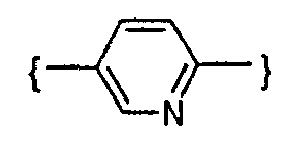 | CH2OCH3 | H | " | ||
| 16 | 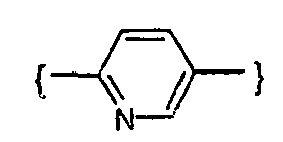 | pr | H | " | ||
| 17 | " | CH2OCH3 | me | " | ||
| 18 | 1,4-Phenylen | CH2CH(OH)CH3 | H | " | ||
| 19 | " | " | me | " | ||
| 20 |  | " | H | " | ||
| 21 | " | " | me | " | ||
| 22 |  | " | H | " | ||
| 23 | " | " | me | " | ||
| 24 |  | " | H | " | ||
| 25 | " | pr | H | " | ||
| 26 | " | CH2OCH3 | H | " | ||
| 27 | " | CH2OH | H | " | ||
| 28 | " | CH2CH(OH)CH3 | me | " | ||
| 29 | " | pr | me | " | ||
| 30 | " | CH2OCH3 | me | " | ||
| 31 | " | CH2OH | me | " | ||
| 32 | 1,4-Phenylen | pr | F | " | ||
| 33 |  | pr | F | " | ||
| 34 |  | pr | F | " | ||
| 35 |  | pr | F | " | ||
| 36 | 1,4-Phenylen | CH2OH | F | " | ||
| 37 | 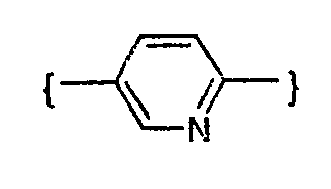 | " | F | " | ||
| 38 |  | " | F | " | ||
| 39 |  | " | F | " | ||
| 40 | 1,4-Phenylen | CH2OCH3 | F | " | ||
| 41 |  | " | F | " | ||
| 42 |  | " | F | " | ||
| 43 |  | " | F | " | ||
| 44 |  | CH2CH(OH)CH3 | F | " | ||
| 45 |  | " | F | " | ||
| 46 | 1,4-Phenylen | CH2OCH3 | me | " | ||
| 47 | " | CH2OH | me | " | ||
| me = Methyl et = Ethyl pr = Propyl |
Claims (13)
- Verbindungen der Formel I
 X Phenylen, Pyridin-diyl, Pyrimidin-diyl oder Thiophen-diyl,R1 A, das ein-, zwei- oder dreimal durch S(O)mA, Ar, NH2, NHA, NA2, OH, OA, PO(OA)2, Ethynyl oder O(CH2)nPh substituiert sein kann,R2 H, Hal oder A,R3 2-Oxo-piperidin-1-yl, 2-Oxo-pyrrolidin-1-yl, 2-Oxo-1H- pyridin-1-yl, 3-Oxo-morpholin-4-yl, 4-Oxo-1H-pyridin-1-yl, 2-Oxo-1H-Pyrazin-1-yl, 2-Oxo-imidazolidin-1-yl, 2-Imino- piperidin-1-yl, 2-Imino-pyrrolidin-1-yl, 3-Imino-morpholin-4- yl, 2-Imino-imidazolidin-1-yl, 2-Imino-1H-Pyrazin-1-yl, 2,6-Dioxo-piperidin1-yl, 2-Oxo-piperazin-1-yl, 2,6-Dioxo- piperazin-1-yl, 2,5-Dioxo-pyrrolidin-1-yl, 2-Oxo-1,3- oxazolidin-3-yl, 3-Oxo-2H-pyridazin-2-yl, 2-Caprolactam-1- yl (= 2-Oxo-azepan-1-yl), 2-Aza-bicyclo[2.2.2]-octan-3-on- 2-yl, 5,6-Dihydro-1H-pyrimidin-2-oxo-1-yl, 2-Oxo- [1,3]oxazinan-3-yl oder 4H-[1,4]Oxazin-4-yl,Ph Phenyl,ArY NH oder O,A unverzweigtes oder verzweigtes Alkyl mit 1-10 C-Atomen, und auch 1-7 H-Atome durch F ersetzt sein können,Hal F, Cl, Br oder I,m 0, 1 oder 2,n 0, 1 oder 2,bedeuten,
sowie ihre pharmazeutisch verwendbaren Salze, Solvate und
Stereoisomere, einschließlich deren Mischungen in allen Verhältnissen. - Verbindungen nach Anspruch 1, worinR1 Alkyl mit 1, 2, 3, 4, 5, oder 6 C-Atomen, das durch OH o- der OA substituiert sein kann,bedeutet,
sowie ihre pharmazeutisch verwendbaren Salze, Solvate und Stereoisomere, einschließlich deren Mischungen in allen Verhältnissen. - Verbindungen nach Anspruch 1 oder 2, worinR3 2-Oxo-piperidin-1-yl, 2-Oxo-pyrrolidin-1-yl, 2-Oxo-1H- pyridin-1-yl, 3-Oxo-morpholin-4-yl, 4-Oxo-1H-pyridin-1-yl, 2-Oxo-1H-Pyrazin-1-yl, 2-Oxo-imidazolidin-1-yl, 2-Imino- piperidin-1-yl, 2-Imino-pyrrolidin-1-yl, 3-Imino-morpholin-4- yl, 2-Imino-imidazolidin-1-yl, 2-Imino-1H-Pyrazin-1-yl, 2-Oxo-piperazin-1-yl oder 3-Oxo-2H-pyridazin-2-yl,bedeutet,
sowie ihre pharmazeutisch verwendbaren Salze, Solvate und Stereoisomere, einschließlich deren Mischungen in allen Verhältnissen. - Verbindungen gemäß einem oder mehreren der Ansprüche 1-3, worinA unverzweigtes oder verzweigtes Alkyl mit 1-6 C-Atomen be- deutet,sowie ihre pharmazeutisch verwendbaren Salze, Solvate und Stereoisomere, einschließlich deren Mischungen in allen Verhältnissen.
- Verbindungen gemäß Anspruch 1
(R)-2-[3-(4-Ethynylphenyl)-ureido]-N-[4-(3-oxo-morpholin-4-yl)-phenyl]-valeriansäureamid,
(R)-2-[3-(4-Ethynylphenyl)-ureido]-N-[3-methyl-4-(3-oxo-morpholin-4-yl)-phenyl]-valeriansäureamid,
(R)-2-[3-(4-Ethynylphenyl)-ureido]-N-[4-(3-oxo-morpholin-4-yl)-phenyl]-4-methyl-valeriansäureamid,
(R)-2-[3-(4-Ethynylphenyl)-ureido]-N-[4-(2-imino-imidazolidin-1-yl)-phenyl]-4-methyl-valeriansäureamid,
(R)-2-[3-(4-Ethynylphenyl)-ureido]-N-[4-(3-oxo-morpholin-4-yl)-phenyl]-3-methoxy-propionamid,
(R)-2-[3-(4-Ethynylphenyl)-ureido]-N-[3-methyl-4-(3-oxo-morpholin-4-yl)-phenyl]-3-methoxy-propionamid,
(R)-2-[3-(4-Ethynylphenyl)-ureido]-N-[4-(3-oxo-morpholin-4-yl)-phenyl]-3-hydroxy-propionamid,
(R)-2-[3-(4-Ethynylphenyl)-ureido]-N-[3-methyl-4-(3-oxo-morpholin-4-yl)-phenyl]-3-hydroxy-propionamid,
(R)-2-[3-(5-Ethynyl-pyridin-2-yl)-ureido]-N-[3-methyl-4-(3-oxo-morpholin-4-yl)-phenyl]-3-methoxy-propionamid,
sowie ihre pharmazeutisch verwendbaren Salze, Solvate und Stereoisomere, einschließlich deren Mischungen in allen Verhältnissen. - Verfahren zur Herstellung von Verbindungen der Formel I nach den Ansprüchen 1-5 sowie ihrer pharmazeutisch verwendbaren Salze, Solvate und Stereoisomere, dadurch gekennzeichnet, daß mana) 4-Ethynylanilin mit einem Chloroformiatderivat zu einem intermediären Carbamatderivat umsetzt,
das anschließend mit einer Verbindung der Formel II
R1, R2 und R3 die in Anspruch 1 angegebene Bedeutung haben,
umgesetzt wird,
oderb) eine Verbindung der Formel II
mit einer Verbindung der Formel III
X die in Anspruch 1 angegebene Bedeutung hat,
umsetzt,
oderc) eine Verbindung der Formel IV
mit einer Verbindung der Formel V
L Cl, Br, I oder eine freie oder reaktionsfähig funktionell abgewandelte OH-Gruppe bedeutet und
R1, X und Y die in Anspruch 1 angegebenen Bedeutungen haben,
umsetzt,
oderd) einen Rest R1 in einen anderen Rest R1 umwandelt, indem man den Rest R1 oxidiert
und/oder eine Base oder Säure der Formel I in eines ihrer Salze umwandelt. - Verbindungen der Formel I nach einem oder mehreren der Ansprüche 1 bis 5 als Inhibitoren des Koagulationsfaktors Xa.
- Verbindungen der Formel I nach einem oder mehreren der Ansprüche 1 bis 5 als Inhibitoren des Koagulationsfaktors VIIa.
- Arzneimittel, enthaltend mindestens eine Verbindung der Formel I nach einem oder mehreren der Ansprüche 1 bis 5 und/oder ihre pharmazeutisch verwendbaren Salze, Solvate und Stereoisomere, einschließlich deren Mischungen in allen Verhältnissen, sowie gegebenenfalls Träger- und/oder Hilfsstoffe.
- Arzneimittel enthaltend mindestens eine Verbindung der Formel I gemäß einem oder mehreren der Ansprüche 1 bis 5 und/oder ihre pharmazeutisch verwendbaren Salze, Solvate und Stereoisomere, einschließlich deren Mischungen in allen Verhältnissen, und mindestens einen weiteren Arzneimittelwirkstoff.
- Verwendung von Verbindungen gemäß einem oder mehreren der Ansprüche 1 bis 5 und/oder ihre physiologisch unbedenklichen Salze und Solvate zur Herstellung eines Arzneimittels zur Behandlung von Thrombosen, myocardialem Infarkt, Arteriosklerose, Entzündungen, Apoplexie, Angina pectoris, Restenose nach Angioplastie, Claudicatio intermittens, Migräne, Tumoren, Tumorerkrankungen und/oder Tumormetastasen.
- Set (Kit), bestehend aus getrennten Packungen von(a) einer wirksamen Menge an einer Verbindung der Formel I gemäß einem oder mehreren der Ansprüche 1 bis 5 und/oder ihrer pharmazeutisch verwendbaren Salze, Solvate und Stereoisomere, einschließlich deren Mischungen in allen Verhältnissen, und(b) einer wirksamen Menge eines weiteren Arzneimittelswirkstoffs.
- Verwendung von Verbindungen der Formel I gemäß einem oder mehreren der Ansprüche 1 bis 5 und/oder ihrer pharmazeutisch verwendbaren Salze, Solvate und Stereoisomere, einschließlich deren Mischungen in allen Verhältnissen,
zur Herstellung eines Arzneimittels zur Behandlung von Thrombosen, myocardialem Infarkt, Arteriosklerose, Entzündungen, Apoplexie, Angina pectoris, Restenose nach Angioplastie, Claudicatio intermittens, Migräne, Tumoren, Tumorerkrankungen und/oder Tumormetastasen, in Kombination mit mindestens einem weiteren Arzneimittelwirkstoff.
Applications Claiming Priority (3)
| Application Number | Priority Date | Filing Date | Title |
|---|---|---|---|
| DE10308907 | 2003-02-28 | ||
| DE10308907A DE10308907A1 (de) | 2003-02-28 | 2003-02-28 | Ethynylderivate |
| PCT/EP2004/000817 WO2004076429A1 (de) | 2003-02-28 | 2004-01-30 | Ethynylderivate als faktor xa-inhibitoren |
Publications (2)
| Publication Number | Publication Date |
|---|---|
| EP1597244A1 EP1597244A1 (de) | 2005-11-23 |
| EP1597244B1 true EP1597244B1 (de) | 2010-07-07 |
Family
ID=32842052
Family Applications (1)
| Application Number | Title | Priority Date | Filing Date |
|---|---|---|---|
| EP04706669A Expired - Lifetime EP1597244B1 (de) | 2003-02-28 | 2004-01-30 | Ethynylderivate als faktor xa-inhibitoren |
Country Status (15)
| Country | Link |
|---|---|
| US (1) | US7427618B2 (de) |
| EP (1) | EP1597244B1 (de) |
| JP (1) | JP2006519188A (de) |
| KR (1) | KR20050105493A (de) |
| CN (1) | CN1753882A (de) |
| AR (1) | AR043413A1 (de) |
| AT (1) | ATE473217T1 (de) |
| AU (1) | AU2004215708B2 (de) |
| BR (1) | BRPI0407865A (de) |
| CA (1) | CA2517391A1 (de) |
| DE (2) | DE10308907A1 (de) |
| MX (1) | MXPA05009002A (de) |
| PL (1) | PL377531A1 (de) |
| WO (1) | WO2004076429A1 (de) |
| ZA (1) | ZA200507818B (de) |
Families Citing this family (1)
| Publication number | Priority date | Publication date | Assignee | Title |
|---|---|---|---|---|
| CN105294669B (zh) * | 2014-10-24 | 2019-01-22 | 山东凯森制药有限公司 | 一种第十因子抑制剂及其制备方法和应用 |
Family Cites Families (10)
| Publication number | Priority date | Publication date | Assignee | Title |
|---|---|---|---|---|
| ZA928276B (en) | 1991-10-31 | 1993-05-06 | Daiichi Seiyaku Co | Aromatic amidine derivates and salts thereof. |
| IL115420A0 (en) | 1994-09-26 | 1995-12-31 | Zeneca Ltd | Aminoheterocyclic derivatives |
| DE19530996A1 (de) | 1995-08-23 | 1997-02-27 | Boehringer Mannheim Gmbh | Cyclische Guanidine, Verfahren zu ihrer Herstellung und Arzneimittel |
| EP1014962A4 (de) | 1997-06-26 | 2007-06-27 | Lilly Co Eli | Antitrombotische mitteln |
| US6956988B2 (en) * | 1998-08-21 | 2005-10-18 | Avanex Corporation | Optical interleaver |
| CA2361149A1 (en) | 1998-12-23 | 2000-07-06 | Eli Lilly And Company | Aromatic amides |
| DE10063008A1 (de) * | 2000-12-16 | 2002-06-20 | Merck Patent Gmbh | Carbonsäureamidderivate |
| DE10102322A1 (de) * | 2001-01-19 | 2002-07-25 | Merck Patent Gmbh | Phenylderivate |
| EP1373194B1 (de) * | 2001-03-30 | 2007-08-01 | Millennium Pharmaceuticals, Inc. | FAKTOR Xa BENZAMIDIN INHIBITOREN |
| US7312235B2 (en) * | 2001-03-30 | 2007-12-25 | Millennium Pharmaceuticals, Inc. | Benzamide inhibitors of factor Xa |
-
2003
- 2003-02-28 DE DE10308907A patent/DE10308907A1/de not_active Withdrawn
-
2004
- 2004-01-30 BR BRPI0407865-9A patent/BRPI0407865A/pt not_active Application Discontinuation
- 2004-01-30 KR KR1020057015881A patent/KR20050105493A/ko not_active Withdrawn
- 2004-01-30 AU AU2004215708A patent/AU2004215708B2/en not_active Ceased
- 2004-01-30 CA CA002517391A patent/CA2517391A1/en not_active Abandoned
- 2004-01-30 DE DE502004011365T patent/DE502004011365D1/de not_active Expired - Lifetime
- 2004-01-30 WO PCT/EP2004/000817 patent/WO2004076429A1/de not_active Ceased
- 2004-01-30 AT AT04706669T patent/ATE473217T1/de not_active IP Right Cessation
- 2004-01-30 EP EP04706669A patent/EP1597244B1/de not_active Expired - Lifetime
- 2004-01-30 CN CNA2004800054434A patent/CN1753882A/zh active Pending
- 2004-01-30 MX MXPA05009002A patent/MXPA05009002A/es not_active Application Discontinuation
- 2004-01-30 PL PL377531A patent/PL377531A1/pl unknown
- 2004-01-30 US US10/547,130 patent/US7427618B2/en not_active Expired - Fee Related
- 2004-01-30 JP JP2006501655A patent/JP2006519188A/ja active Pending
- 2004-02-27 AR ARP040100613A patent/AR043413A1/es not_active Application Discontinuation
-
2005
- 2005-09-27 ZA ZA200507818A patent/ZA200507818B/en unknown
Also Published As
| Publication number | Publication date |
|---|---|
| MXPA05009002A (es) | 2005-10-18 |
| CN1753882A (zh) | 2006-03-29 |
| WO2004076429A1 (de) | 2004-09-10 |
| ATE473217T1 (de) | 2010-07-15 |
| EP1597244A1 (de) | 2005-11-23 |
| CA2517391A1 (en) | 2004-09-10 |
| DE10308907A1 (de) | 2004-09-09 |
| DE502004011365D1 (de) | 2010-08-19 |
| JP2006519188A (ja) | 2006-08-24 |
| PL377531A1 (pl) | 2006-02-06 |
| AU2004215708B2 (en) | 2010-03-11 |
| US7427618B2 (en) | 2008-09-23 |
| AU2004215708A1 (en) | 2004-09-10 |
| KR20050105493A (ko) | 2005-11-04 |
| BRPI0407865A (pt) | 2006-03-01 |
| ZA200507818B (en) | 2007-02-28 |
| US20060084648A1 (en) | 2006-04-20 |
| AR043413A1 (es) | 2005-07-27 |
Similar Documents
| Publication | Publication Date | Title |
|---|---|---|
| EP1633346B1 (de) | Pyrrolidin-1,2-dicarbonsäure-1-¬(4-ethinyl-phenyl)-amid|-2-¬(phenyl)-amid| derivate als inhibitoren der koagulationsfaktoren xa und viia zur behandlung von thrombosen | |
| DE60127863T2 (de) | Phenylderivate | |
| EP1608645B1 (de) | Pyrazolidin-1,2-dicarbonsäure-1-((phenyl)-amid)-2-((phenyl)-amid) derivate als koagulationsfaktor xa inhibitoren zur behandlung von thrombosen | |
| EP1558247B1 (de) | Benzimidazolderivate | |
| EP1720844B1 (de) | Pyrrolidin-1,2-dicarbonsäure-1-(phenylamid)-2-(4-(3-oxo-morpholin-4-yl)-phenylamid) derivate und verwandte verbindungen als inhibitoren des koagulationsfaktors xa zur behandlung von thromboembolischen erkrankungen | |
| DE10329457A1 (de) | Ethinylprolinderivate | |
| EP1562939B1 (de) | Carbonsäureamide | |
| EP1490056B1 (de) | N-'4-(2-imino-pyrrolidin-1-yl)phenyl)-acetemid-und entsprechende piperidinderivate als faktor xa inhibitoren zur behandlung von thromboembolischen erkrankungen | |
| DE10315377A1 (de) | Carbonylverbindungen | |
| EP1441726B1 (de) | Derivate des phenoxy-n-'4-(isothiazolidin-1,1-dioxid-2yl)pheny]-valerian-säureamids und andere verbindungen als inhibitoren des koagulationsfaktors xa zur behandlung von thromboembolischen erkrankungen und tumoren | |
| EP1585730B1 (de) | Carbonsäureamidderivate und ihre verwendung als faktor xa inhibitoren | |
| EP1414456B1 (de) | Phenylderivate als faktor xa inhibitoren | |
| EP1633745B1 (de) | Aroylsemicarbazidderivate gegen thromboembolische erkrankungen | |
| DE10308907A1 (de) | Ethynylderivate | |
| DE10220048A1 (de) | Semicarbazidderivate | |
| WO2005073201A1 (de) | Harnstoffderivate | |
| EP1549304A1 (de) | Heterozyklische amide und ihre verwendung in der behandlung von thromboembolischen erkrankungen und tumoren | |
| DE10327428A1 (de) | Ethinylprolinderivate | |
| DE10336570A1 (de) | Azaprolinderivate | |
| EP1797079A1 (de) | Prolinderivate | |
| DE10329295A1 (de) | Carbonylverbindungen | |
| WO2005097783A1 (de) | Thiocarbamoylproline |
Legal Events
| Date | Code | Title | Description |
|---|---|---|---|
| PUAI | Public reference made under article 153(3) epc to a published international application that has entered the european phase |
Free format text: ORIGINAL CODE: 0009012 |
|
| 17P | Request for examination filed |
Effective date: 20050709 |
|
| AK | Designated contracting states |
Kind code of ref document: A1 Designated state(s): AT BE BG CH CY CZ DE DK EE ES FI FR GB GR HU IE IT LI LU MC NL PT RO SE SI SK TR |
|
| AX | Request for extension of the european patent |
Extension state: AL LT LV MK |
|
| DAX | Request for extension of the european patent (deleted) | ||
| 17Q | First examination report despatched |
Effective date: 20090908 |
|
| GRAP | Despatch of communication of intention to grant a patent |
Free format text: ORIGINAL CODE: EPIDOSNIGR1 |
|
| GRAS | Grant fee paid |
Free format text: ORIGINAL CODE: EPIDOSNIGR3 |
|
| GRAA | (expected) grant |
Free format text: ORIGINAL CODE: 0009210 |
|
| AK | Designated contracting states |
Kind code of ref document: B1 Designated state(s): AT BE BG CH CY CZ DE DK EE ES FI FR GB GR HU IE IT LI LU MC NL PT RO SE SI SK TR |
|
| REG | Reference to a national code |
Ref country code: GB Ref legal event code: FG4D Free format text: NOT ENGLISH |
|
| REG | Reference to a national code |
Ref country code: CH Ref legal event code: EP |
|
| REG | Reference to a national code |
Ref country code: IE Ref legal event code: FG4D |
|
| REF | Corresponds to: |
Ref document number: 502004011365 Country of ref document: DE Date of ref document: 20100819 Kind code of ref document: P |
|
| REG | Reference to a national code |
Ref country code: NL Ref legal event code: VDEP Effective date: 20100707 |
|
| PG25 | Lapsed in a contracting state [announced via postgrant information from national office to epo] |
Ref country code: SI Free format text: LAPSE BECAUSE OF FAILURE TO SUBMIT A TRANSLATION OF THE DESCRIPTION OR TO PAY THE FEE WITHIN THE PRESCRIBED TIME-LIMIT Effective date: 20100707 |
|
| PG25 | Lapsed in a contracting state [announced via postgrant information from national office to epo] |
Ref country code: NL Free format text: LAPSE BECAUSE OF FAILURE TO SUBMIT A TRANSLATION OF THE DESCRIPTION OR TO PAY THE FEE WITHIN THE PRESCRIBED TIME-LIMIT Effective date: 20100707 Ref country code: FI Free format text: LAPSE BECAUSE OF FAILURE TO SUBMIT A TRANSLATION OF THE DESCRIPTION OR TO PAY THE FEE WITHIN THE PRESCRIBED TIME-LIMIT Effective date: 20100707 |
|
| REG | Reference to a national code |
Ref country code: IE Ref legal event code: FD4D |
|
| PG25 | Lapsed in a contracting state [announced via postgrant information from national office to epo] |
Ref country code: CY Free format text: LAPSE BECAUSE OF FAILURE TO SUBMIT A TRANSLATION OF THE DESCRIPTION OR TO PAY THE FEE WITHIN THE PRESCRIBED TIME-LIMIT Effective date: 20100707 Ref country code: PT Free format text: LAPSE BECAUSE OF FAILURE TO SUBMIT A TRANSLATION OF THE DESCRIPTION OR TO PAY THE FEE WITHIN THE PRESCRIBED TIME-LIMIT Effective date: 20101108 Ref country code: BG Free format text: LAPSE BECAUSE OF FAILURE TO SUBMIT A TRANSLATION OF THE DESCRIPTION OR TO PAY THE FEE WITHIN THE PRESCRIBED TIME-LIMIT Effective date: 20101007 |
|
| PG25 | Lapsed in a contracting state [announced via postgrant information from national office to epo] |
Ref country code: GR Free format text: LAPSE BECAUSE OF FAILURE TO SUBMIT A TRANSLATION OF THE DESCRIPTION OR TO PAY THE FEE WITHIN THE PRESCRIBED TIME-LIMIT Effective date: 20101008 Ref country code: SE Free format text: LAPSE BECAUSE OF FAILURE TO SUBMIT A TRANSLATION OF THE DESCRIPTION OR TO PAY THE FEE WITHIN THE PRESCRIBED TIME-LIMIT Effective date: 20100707 |
|
| PG25 | Lapsed in a contracting state [announced via postgrant information from national office to epo] |
Ref country code: DK Free format text: LAPSE BECAUSE OF FAILURE TO SUBMIT A TRANSLATION OF THE DESCRIPTION OR TO PAY THE FEE WITHIN THE PRESCRIBED TIME-LIMIT Effective date: 20100707 Ref country code: IE Free format text: LAPSE BECAUSE OF FAILURE TO SUBMIT A TRANSLATION OF THE DESCRIPTION OR TO PAY THE FEE WITHIN THE PRESCRIBED TIME-LIMIT Effective date: 20100707 |
|
| PLBE | No opposition filed within time limit |
Free format text: ORIGINAL CODE: 0009261 |
|
| STAA | Information on the status of an ep patent application or granted ep patent |
Free format text: STATUS: NO OPPOSITION FILED WITHIN TIME LIMIT |
|
| PG25 | Lapsed in a contracting state [announced via postgrant information from national office to epo] |
Ref country code: IT Free format text: LAPSE BECAUSE OF FAILURE TO SUBMIT A TRANSLATION OF THE DESCRIPTION OR TO PAY THE FEE WITHIN THE PRESCRIBED TIME-LIMIT Effective date: 20100707 Ref country code: RO Free format text: LAPSE BECAUSE OF FAILURE TO SUBMIT A TRANSLATION OF THE DESCRIPTION OR TO PAY THE FEE WITHIN THE PRESCRIBED TIME-LIMIT Effective date: 20100707 Ref country code: SK Free format text: LAPSE BECAUSE OF FAILURE TO SUBMIT A TRANSLATION OF THE DESCRIPTION OR TO PAY THE FEE WITHIN THE PRESCRIBED TIME-LIMIT Effective date: 20100707 Ref country code: EE Free format text: LAPSE BECAUSE OF FAILURE TO SUBMIT A TRANSLATION OF THE DESCRIPTION OR TO PAY THE FEE WITHIN THE PRESCRIBED TIME-LIMIT Effective date: 20100707 Ref country code: CZ Free format text: LAPSE BECAUSE OF FAILURE TO SUBMIT A TRANSLATION OF THE DESCRIPTION OR TO PAY THE FEE WITHIN THE PRESCRIBED TIME-LIMIT Effective date: 20100707 |
|
| 26N | No opposition filed |
Effective date: 20110408 |
|
| PG25 | Lapsed in a contracting state [announced via postgrant information from national office to epo] |
Ref country code: ES Free format text: LAPSE BECAUSE OF FAILURE TO SUBMIT A TRANSLATION OF THE DESCRIPTION OR TO PAY THE FEE WITHIN THE PRESCRIBED TIME-LIMIT Effective date: 20101018 |
|
| REG | Reference to a national code |
Ref country code: DE Ref legal event code: R097 Ref document number: 502004011365 Country of ref document: DE Effective date: 20110408 |
|
| BERE | Be: lapsed |
Owner name: MERCK PATENT G.M.B.H. Effective date: 20110131 |
|
| PG25 | Lapsed in a contracting state [announced via postgrant information from national office to epo] |
Ref country code: MC Free format text: LAPSE BECAUSE OF NON-PAYMENT OF DUE FEES Effective date: 20110131 |
|
| REG | Reference to a national code |
Ref country code: CH Ref legal event code: PL |
|
| GBPC | Gb: european patent ceased through non-payment of renewal fee |
Effective date: 20110130 |
|
| REG | Reference to a national code |
Ref country code: FR Ref legal event code: ST Effective date: 20110930 |
|
| PG25 | Lapsed in a contracting state [announced via postgrant information from national office to epo] |
Ref country code: LI Free format text: LAPSE BECAUSE OF NON-PAYMENT OF DUE FEES Effective date: 20110131 Ref country code: CH Free format text: LAPSE BECAUSE OF NON-PAYMENT OF DUE FEES Effective date: 20110131 Ref country code: FR Free format text: LAPSE BECAUSE OF NON-PAYMENT OF DUE FEES Effective date: 20110131 |
|
| PG25 | Lapsed in a contracting state [announced via postgrant information from national office to epo] |
Ref country code: BE Free format text: LAPSE BECAUSE OF NON-PAYMENT OF DUE FEES Effective date: 20110131 Ref country code: GB Free format text: LAPSE BECAUSE OF NON-PAYMENT OF DUE FEES Effective date: 20110130 |
|
| REG | Reference to a national code |
Ref country code: DE Ref legal event code: R119 Ref document number: 502004011365 Country of ref document: DE Effective date: 20110802 |
|
| REG | Reference to a national code |
Ref country code: AT Ref legal event code: MM01 Ref document number: 473217 Country of ref document: AT Kind code of ref document: T Effective date: 20110130 |
|
| PG25 | Lapsed in a contracting state [announced via postgrant information from national office to epo] |
Ref country code: AT Free format text: LAPSE BECAUSE OF NON-PAYMENT OF DUE FEES Effective date: 20110130 |
|
| PG25 | Lapsed in a contracting state [announced via postgrant information from national office to epo] |
Ref country code: LU Free format text: LAPSE BECAUSE OF NON-PAYMENT OF DUE FEES Effective date: 20110130 |
|
| PG25 | Lapsed in a contracting state [announced via postgrant information from national office to epo] |
Ref country code: DE Free format text: LAPSE BECAUSE OF NON-PAYMENT OF DUE FEES Effective date: 20110802 |
|
| PG25 | Lapsed in a contracting state [announced via postgrant information from national office to epo] |
Ref country code: TR Free format text: LAPSE BECAUSE OF FAILURE TO SUBMIT A TRANSLATION OF THE DESCRIPTION OR TO PAY THE FEE WITHIN THE PRESCRIBED TIME-LIMIT Effective date: 20100707 |
|
| PG25 | Lapsed in a contracting state [announced via postgrant information from national office to epo] |
Ref country code: HU Free format text: LAPSE BECAUSE OF FAILURE TO SUBMIT A TRANSLATION OF THE DESCRIPTION OR TO PAY THE FEE WITHIN THE PRESCRIBED TIME-LIMIT Effective date: 20100707 |