EP1581223B2 - Inhibition of inflamation using alpha 7 receptor-binding cholinergic agonists - Google Patents
Inhibition of inflamation using alpha 7 receptor-binding cholinergic agonists Download PDFInfo
- Publication number
- EP1581223B2 EP1581223B2 EP03796701.5A EP03796701A EP1581223B2 EP 1581223 B2 EP1581223 B2 EP 1581223B2 EP 03796701 A EP03796701 A EP 03796701A EP 1581223 B2 EP1581223 B2 EP 1581223B2
- Authority
- EP
- European Patent Office
- Prior art keywords
- alkyl
- compound
- disease
- hydrogen
- cholinergic agonist
- Prior art date
- Legal status (The legal status is an assumption and is not a legal conclusion. Google has not performed a legal analysis and makes no representation as to the accuracy of the status listed.)
- Expired - Lifetime
Links
- 0 O=C(c1ccc(*c2ccccc2)cc1)NC1C(CC2)CCN2C1 Chemical compound O=C(c1ccc(*c2ccccc2)cc1)NC1C(CC2)CCN2C1 0.000 description 3
- MZMHDMCGCUWTDS-UHFFFAOYSA-N CCC1CN(CC)CCC1 Chemical compound CCC1CN(CC)CCC1 MZMHDMCGCUWTDS-UHFFFAOYSA-N 0.000 description 1
- DQRUQBXDSDEGTF-RVDMUPIBSA-N COc1cc(OC)c(/C=C2/C(c3cccnc3)=[N+2]CCC2)cc1 Chemical compound COc1cc(OC)c(/C=C2/C(c3cccnc3)=[N+2]CCC2)cc1 DQRUQBXDSDEGTF-RVDMUPIBSA-N 0.000 description 1
Images



Classifications
-
- G—PHYSICS
- G01—MEASURING; TESTING
- G01N—INVESTIGATING OR ANALYSING MATERIALS BY DETERMINING THEIR CHEMICAL OR PHYSICAL PROPERTIES
- G01N33/00—Investigating or analysing materials by specific methods not covered by groups G01N1/00 - G01N31/00
- G01N33/48—Biological material, e.g. blood, urine; Haemocytometers
- G01N33/50—Chemical analysis of biological material, e.g. blood, urine; Testing involving biospecific ligand binding methods; Immunological testing
- G01N33/68—Chemical analysis of biological material, e.g. blood, urine; Testing involving biospecific ligand binding methods; Immunological testing involving proteins, peptides or amino acids
- G01N33/6863—Cytokines, i.e. immune system proteins modifying a biological response such as cell growth proliferation or differentiation, e.g. TNF, CNF, GM-CSF, lymphotoxin, MIF or their receptors
-
- A—HUMAN NECESSITIES
- A61—MEDICAL OR VETERINARY SCIENCE; HYGIENE
- A61K—PREPARATIONS FOR MEDICAL, DENTAL OR TOILETRY PURPOSES
- A61K31/00—Medicinal preparations containing organic active ingredients
-
- A—HUMAN NECESSITIES
- A61—MEDICAL OR VETERINARY SCIENCE; HYGIENE
- A61K—PREPARATIONS FOR MEDICAL, DENTAL OR TOILETRY PURPOSES
- A61K31/00—Medicinal preparations containing organic active ingredients
- A61K31/33—Heterocyclic compounds
- A61K31/395—Heterocyclic compounds having nitrogen as a ring hetero atom, e.g. guanethidine or rifamycins
- A61K31/435—Heterocyclic compounds having nitrogen as a ring hetero atom, e.g. guanethidine or rifamycins having six-membered rings with one nitrogen as the only ring hetero atom
- A61K31/439—Heterocyclic compounds having nitrogen as a ring hetero atom, e.g. guanethidine or rifamycins having six-membered rings with one nitrogen as the only ring hetero atom the ring forming part of a bridged ring system, e.g. quinuclidine
-
- A—HUMAN NECESSITIES
- A61—MEDICAL OR VETERINARY SCIENCE; HYGIENE
- A61K—PREPARATIONS FOR MEDICAL, DENTAL OR TOILETRY PURPOSES
- A61K31/00—Medicinal preparations containing organic active ingredients
- A61K31/33—Heterocyclic compounds
- A61K31/395—Heterocyclic compounds having nitrogen as a ring hetero atom, e.g. guanethidine or rifamycins
- A61K31/435—Heterocyclic compounds having nitrogen as a ring hetero atom, e.g. guanethidine or rifamycins having six-membered rings with one nitrogen as the only ring hetero atom
- A61K31/44—Non condensed pyridines; Hydrogenated derivatives thereof
- A61K31/4427—Non condensed pyridines; Hydrogenated derivatives thereof containing further heterocyclic ring systems
- A61K31/444—Non condensed pyridines; Hydrogenated derivatives thereof containing further heterocyclic ring systems containing a six-membered ring with nitrogen as a ring heteroatom, e.g. amrinone
-
- A—HUMAN NECESSITIES
- A61—MEDICAL OR VETERINARY SCIENCE; HYGIENE
- A61K—PREPARATIONS FOR MEDICAL, DENTAL OR TOILETRY PURPOSES
- A61K31/00—Medicinal preparations containing organic active ingredients
- A61K31/33—Heterocyclic compounds
- A61K31/395—Heterocyclic compounds having nitrogen as a ring hetero atom, e.g. guanethidine or rifamycins
- A61K31/435—Heterocyclic compounds having nitrogen as a ring hetero atom, e.g. guanethidine or rifamycins having six-membered rings with one nitrogen as the only ring hetero atom
- A61K31/46—8-Azabicyclo [3.2.1] octane; Derivatives thereof, e.g. atropine, cocaine
-
- A—HUMAN NECESSITIES
- A61—MEDICAL OR VETERINARY SCIENCE; HYGIENE
- A61P—SPECIFIC THERAPEUTIC ACTIVITY OF CHEMICAL COMPOUNDS OR MEDICINAL PREPARATIONS
- A61P1/00—Drugs for disorders of the alimentary tract or the digestive system
-
- A—HUMAN NECESSITIES
- A61—MEDICAL OR VETERINARY SCIENCE; HYGIENE
- A61P—SPECIFIC THERAPEUTIC ACTIVITY OF CHEMICAL COMPOUNDS OR MEDICINAL PREPARATIONS
- A61P1/00—Drugs for disorders of the alimentary tract or the digestive system
- A61P1/02—Stomatological preparations, e.g. drugs for caries, aphtae, periodontitis
-
- A—HUMAN NECESSITIES
- A61—MEDICAL OR VETERINARY SCIENCE; HYGIENE
- A61P—SPECIFIC THERAPEUTIC ACTIVITY OF CHEMICAL COMPOUNDS OR MEDICINAL PREPARATIONS
- A61P1/00—Drugs for disorders of the alimentary tract or the digestive system
- A61P1/04—Drugs for disorders of the alimentary tract or the digestive system for ulcers, gastritis or reflux esophagitis, e.g. antacids, inhibitors of acid secretion, mucosal protectants
-
- A—HUMAN NECESSITIES
- A61—MEDICAL OR VETERINARY SCIENCE; HYGIENE
- A61P—SPECIFIC THERAPEUTIC ACTIVITY OF CHEMICAL COMPOUNDS OR MEDICINAL PREPARATIONS
- A61P1/00—Drugs for disorders of the alimentary tract or the digestive system
- A61P1/16—Drugs for disorders of the alimentary tract or the digestive system for liver or gallbladder disorders, e.g. hepatoprotective agents, cholagogues, litholytics
-
- A—HUMAN NECESSITIES
- A61—MEDICAL OR VETERINARY SCIENCE; HYGIENE
- A61P—SPECIFIC THERAPEUTIC ACTIVITY OF CHEMICAL COMPOUNDS OR MEDICINAL PREPARATIONS
- A61P1/00—Drugs for disorders of the alimentary tract or the digestive system
- A61P1/18—Drugs for disorders of the alimentary tract or the digestive system for pancreatic disorders, e.g. pancreatic enzymes
-
- A—HUMAN NECESSITIES
- A61—MEDICAL OR VETERINARY SCIENCE; HYGIENE
- A61P—SPECIFIC THERAPEUTIC ACTIVITY OF CHEMICAL COMPOUNDS OR MEDICINAL PREPARATIONS
- A61P11/00—Drugs for disorders of the respiratory system
-
- A—HUMAN NECESSITIES
- A61—MEDICAL OR VETERINARY SCIENCE; HYGIENE
- A61P—SPECIFIC THERAPEUTIC ACTIVITY OF CHEMICAL COMPOUNDS OR MEDICINAL PREPARATIONS
- A61P11/00—Drugs for disorders of the respiratory system
- A61P11/02—Nasal agents, e.g. decongestants
-
- A—HUMAN NECESSITIES
- A61—MEDICAL OR VETERINARY SCIENCE; HYGIENE
- A61P—SPECIFIC THERAPEUTIC ACTIVITY OF CHEMICAL COMPOUNDS OR MEDICINAL PREPARATIONS
- A61P11/00—Drugs for disorders of the respiratory system
- A61P11/04—Drugs for disorders of the respiratory system for throat disorders
-
- A—HUMAN NECESSITIES
- A61—MEDICAL OR VETERINARY SCIENCE; HYGIENE
- A61P—SPECIFIC THERAPEUTIC ACTIVITY OF CHEMICAL COMPOUNDS OR MEDICINAL PREPARATIONS
- A61P11/00—Drugs for disorders of the respiratory system
- A61P11/06—Antiasthmatics
-
- A—HUMAN NECESSITIES
- A61—MEDICAL OR VETERINARY SCIENCE; HYGIENE
- A61P—SPECIFIC THERAPEUTIC ACTIVITY OF CHEMICAL COMPOUNDS OR MEDICINAL PREPARATIONS
- A61P13/00—Drugs for disorders of the urinary system
- A61P13/02—Drugs for disorders of the urinary system of urine or of the urinary tract, e.g. urine acidifiers
-
- A—HUMAN NECESSITIES
- A61—MEDICAL OR VETERINARY SCIENCE; HYGIENE
- A61P—SPECIFIC THERAPEUTIC ACTIVITY OF CHEMICAL COMPOUNDS OR MEDICINAL PREPARATIONS
- A61P15/00—Drugs for genital or sexual disorders; Contraceptives
-
- A—HUMAN NECESSITIES
- A61—MEDICAL OR VETERINARY SCIENCE; HYGIENE
- A61P—SPECIFIC THERAPEUTIC ACTIVITY OF CHEMICAL COMPOUNDS OR MEDICINAL PREPARATIONS
- A61P15/00—Drugs for genital or sexual disorders; Contraceptives
- A61P15/06—Antiabortive agents; Labour repressants
-
- A—HUMAN NECESSITIES
- A61—MEDICAL OR VETERINARY SCIENCE; HYGIENE
- A61P—SPECIFIC THERAPEUTIC ACTIVITY OF CHEMICAL COMPOUNDS OR MEDICINAL PREPARATIONS
- A61P17/00—Drugs for dermatological disorders
-
- A—HUMAN NECESSITIES
- A61—MEDICAL OR VETERINARY SCIENCE; HYGIENE
- A61P—SPECIFIC THERAPEUTIC ACTIVITY OF CHEMICAL COMPOUNDS OR MEDICINAL PREPARATIONS
- A61P17/00—Drugs for dermatological disorders
- A61P17/02—Drugs for dermatological disorders for treating wounds, ulcers, burns, scars, keloids, or the like
-
- A—HUMAN NECESSITIES
- A61—MEDICAL OR VETERINARY SCIENCE; HYGIENE
- A61P—SPECIFIC THERAPEUTIC ACTIVITY OF CHEMICAL COMPOUNDS OR MEDICINAL PREPARATIONS
- A61P19/00—Drugs for skeletal disorders
-
- A—HUMAN NECESSITIES
- A61—MEDICAL OR VETERINARY SCIENCE; HYGIENE
- A61P—SPECIFIC THERAPEUTIC ACTIVITY OF CHEMICAL COMPOUNDS OR MEDICINAL PREPARATIONS
- A61P19/00—Drugs for skeletal disorders
- A61P19/02—Drugs for skeletal disorders for joint disorders, e.g. arthritis, arthrosis
-
- A—HUMAN NECESSITIES
- A61—MEDICAL OR VETERINARY SCIENCE; HYGIENE
- A61P—SPECIFIC THERAPEUTIC ACTIVITY OF CHEMICAL COMPOUNDS OR MEDICINAL PREPARATIONS
- A61P19/00—Drugs for skeletal disorders
- A61P19/06—Antigout agents, e.g. antihyperuricemic or uricosuric agents
-
- A—HUMAN NECESSITIES
- A61—MEDICAL OR VETERINARY SCIENCE; HYGIENE
- A61P—SPECIFIC THERAPEUTIC ACTIVITY OF CHEMICAL COMPOUNDS OR MEDICINAL PREPARATIONS
- A61P19/00—Drugs for skeletal disorders
- A61P19/08—Drugs for skeletal disorders for bone diseases, e.g. rachitism, Paget's disease
-
- A—HUMAN NECESSITIES
- A61—MEDICAL OR VETERINARY SCIENCE; HYGIENE
- A61P—SPECIFIC THERAPEUTIC ACTIVITY OF CHEMICAL COMPOUNDS OR MEDICINAL PREPARATIONS
- A61P21/00—Drugs for disorders of the muscular or neuromuscular system
- A61P21/04—Drugs for disorders of the muscular or neuromuscular system for myasthenia gravis
-
- A—HUMAN NECESSITIES
- A61—MEDICAL OR VETERINARY SCIENCE; HYGIENE
- A61P—SPECIFIC THERAPEUTIC ACTIVITY OF CHEMICAL COMPOUNDS OR MEDICINAL PREPARATIONS
- A61P25/00—Drugs for disorders of the nervous system
-
- A—HUMAN NECESSITIES
- A61—MEDICAL OR VETERINARY SCIENCE; HYGIENE
- A61P—SPECIFIC THERAPEUTIC ACTIVITY OF CHEMICAL COMPOUNDS OR MEDICINAL PREPARATIONS
- A61P25/00—Drugs for disorders of the nervous system
- A61P25/02—Drugs for disorders of the nervous system for peripheral neuropathies
-
- A—HUMAN NECESSITIES
- A61—MEDICAL OR VETERINARY SCIENCE; HYGIENE
- A61P—SPECIFIC THERAPEUTIC ACTIVITY OF CHEMICAL COMPOUNDS OR MEDICINAL PREPARATIONS
- A61P25/00—Drugs for disorders of the nervous system
- A61P25/28—Drugs for disorders of the nervous system for treating neurodegenerative disorders of the central nervous system, e.g. nootropic agents, cognition enhancers, drugs for treating Alzheimer's disease or other forms of dementia
-
- A—HUMAN NECESSITIES
- A61—MEDICAL OR VETERINARY SCIENCE; HYGIENE
- A61P—SPECIFIC THERAPEUTIC ACTIVITY OF CHEMICAL COMPOUNDS OR MEDICINAL PREPARATIONS
- A61P27/00—Drugs for disorders of the senses
- A61P27/02—Ophthalmic agents
-
- A—HUMAN NECESSITIES
- A61—MEDICAL OR VETERINARY SCIENCE; HYGIENE
- A61P—SPECIFIC THERAPEUTIC ACTIVITY OF CHEMICAL COMPOUNDS OR MEDICINAL PREPARATIONS
- A61P29/00—Non-central analgesic, antipyretic or antiinflammatory agents, e.g. antirheumatic agents; Non-steroidal antiinflammatory drugs [NSAID]
-
- A—HUMAN NECESSITIES
- A61—MEDICAL OR VETERINARY SCIENCE; HYGIENE
- A61P—SPECIFIC THERAPEUTIC ACTIVITY OF CHEMICAL COMPOUNDS OR MEDICINAL PREPARATIONS
- A61P29/00—Non-central analgesic, antipyretic or antiinflammatory agents, e.g. antirheumatic agents; Non-steroidal antiinflammatory drugs [NSAID]
- A61P29/02—Non-central analgesic, antipyretic or antiinflammatory agents, e.g. antirheumatic agents; Non-steroidal antiinflammatory drugs [NSAID] without antiinflammatory effect
-
- A—HUMAN NECESSITIES
- A61—MEDICAL OR VETERINARY SCIENCE; HYGIENE
- A61P—SPECIFIC THERAPEUTIC ACTIVITY OF CHEMICAL COMPOUNDS OR MEDICINAL PREPARATIONS
- A61P3/00—Drugs for disorders of the metabolism
-
- A—HUMAN NECESSITIES
- A61—MEDICAL OR VETERINARY SCIENCE; HYGIENE
- A61P—SPECIFIC THERAPEUTIC ACTIVITY OF CHEMICAL COMPOUNDS OR MEDICINAL PREPARATIONS
- A61P3/00—Drugs for disorders of the metabolism
- A61P3/08—Drugs for disorders of the metabolism for glucose homeostasis
- A61P3/10—Drugs for disorders of the metabolism for glucose homeostasis for hyperglycaemia, e.g. antidiabetics
-
- A—HUMAN NECESSITIES
- A61—MEDICAL OR VETERINARY SCIENCE; HYGIENE
- A61P—SPECIFIC THERAPEUTIC ACTIVITY OF CHEMICAL COMPOUNDS OR MEDICINAL PREPARATIONS
- A61P31/00—Antiinfectives, i.e. antibiotics, antiseptics, chemotherapeutics
-
- A—HUMAN NECESSITIES
- A61—MEDICAL OR VETERINARY SCIENCE; HYGIENE
- A61P—SPECIFIC THERAPEUTIC ACTIVITY OF CHEMICAL COMPOUNDS OR MEDICINAL PREPARATIONS
- A61P31/00—Antiinfectives, i.e. antibiotics, antiseptics, chemotherapeutics
- A61P31/04—Antibacterial agents
-
- A—HUMAN NECESSITIES
- A61—MEDICAL OR VETERINARY SCIENCE; HYGIENE
- A61P—SPECIFIC THERAPEUTIC ACTIVITY OF CHEMICAL COMPOUNDS OR MEDICINAL PREPARATIONS
- A61P31/00—Antiinfectives, i.e. antibiotics, antiseptics, chemotherapeutics
- A61P31/10—Antimycotics
-
- A—HUMAN NECESSITIES
- A61—MEDICAL OR VETERINARY SCIENCE; HYGIENE
- A61P—SPECIFIC THERAPEUTIC ACTIVITY OF CHEMICAL COMPOUNDS OR MEDICINAL PREPARATIONS
- A61P31/00—Antiinfectives, i.e. antibiotics, antiseptics, chemotherapeutics
- A61P31/12—Antivirals
- A61P31/14—Antivirals for RNA viruses
-
- A—HUMAN NECESSITIES
- A61—MEDICAL OR VETERINARY SCIENCE; HYGIENE
- A61P—SPECIFIC THERAPEUTIC ACTIVITY OF CHEMICAL COMPOUNDS OR MEDICINAL PREPARATIONS
- A61P31/00—Antiinfectives, i.e. antibiotics, antiseptics, chemotherapeutics
- A61P31/12—Antivirals
- A61P31/14—Antivirals for RNA viruses
- A61P31/16—Antivirals for RNA viruses for influenza or rhinoviruses
-
- A—HUMAN NECESSITIES
- A61—MEDICAL OR VETERINARY SCIENCE; HYGIENE
- A61P—SPECIFIC THERAPEUTIC ACTIVITY OF CHEMICAL COMPOUNDS OR MEDICINAL PREPARATIONS
- A61P31/00—Antiinfectives, i.e. antibiotics, antiseptics, chemotherapeutics
- A61P31/12—Antivirals
- A61P31/14—Antivirals for RNA viruses
- A61P31/18—Antivirals for RNA viruses for HIV
-
- A—HUMAN NECESSITIES
- A61—MEDICAL OR VETERINARY SCIENCE; HYGIENE
- A61P—SPECIFIC THERAPEUTIC ACTIVITY OF CHEMICAL COMPOUNDS OR MEDICINAL PREPARATIONS
- A61P31/00—Antiinfectives, i.e. antibiotics, antiseptics, chemotherapeutics
- A61P31/12—Antivirals
- A61P31/20—Antivirals for DNA viruses
- A61P31/22—Antivirals for DNA viruses for herpes viruses
-
- A—HUMAN NECESSITIES
- A61—MEDICAL OR VETERINARY SCIENCE; HYGIENE
- A61P—SPECIFIC THERAPEUTIC ACTIVITY OF CHEMICAL COMPOUNDS OR MEDICINAL PREPARATIONS
- A61P33/00—Antiparasitic agents
-
- A—HUMAN NECESSITIES
- A61—MEDICAL OR VETERINARY SCIENCE; HYGIENE
- A61P—SPECIFIC THERAPEUTIC ACTIVITY OF CHEMICAL COMPOUNDS OR MEDICINAL PREPARATIONS
- A61P33/00—Antiparasitic agents
- A61P33/02—Antiprotozoals, e.g. for leishmaniasis, trichomoniasis, toxoplasmosis
- A61P33/04—Amoebicides
-
- A—HUMAN NECESSITIES
- A61—MEDICAL OR VETERINARY SCIENCE; HYGIENE
- A61P—SPECIFIC THERAPEUTIC ACTIVITY OF CHEMICAL COMPOUNDS OR MEDICINAL PREPARATIONS
- A61P33/00—Antiparasitic agents
- A61P33/02—Antiprotozoals, e.g. for leishmaniasis, trichomoniasis, toxoplasmosis
- A61P33/06—Antimalarials
-
- A—HUMAN NECESSITIES
- A61—MEDICAL OR VETERINARY SCIENCE; HYGIENE
- A61P—SPECIFIC THERAPEUTIC ACTIVITY OF CHEMICAL COMPOUNDS OR MEDICINAL PREPARATIONS
- A61P35/00—Antineoplastic agents
-
- A—HUMAN NECESSITIES
- A61—MEDICAL OR VETERINARY SCIENCE; HYGIENE
- A61P—SPECIFIC THERAPEUTIC ACTIVITY OF CHEMICAL COMPOUNDS OR MEDICINAL PREPARATIONS
- A61P37/00—Drugs for immunological or allergic disorders
-
- A—HUMAN NECESSITIES
- A61—MEDICAL OR VETERINARY SCIENCE; HYGIENE
- A61P—SPECIFIC THERAPEUTIC ACTIVITY OF CHEMICAL COMPOUNDS OR MEDICINAL PREPARATIONS
- A61P37/00—Drugs for immunological or allergic disorders
- A61P37/02—Immunomodulators
-
- A—HUMAN NECESSITIES
- A61—MEDICAL OR VETERINARY SCIENCE; HYGIENE
- A61P—SPECIFIC THERAPEUTIC ACTIVITY OF CHEMICAL COMPOUNDS OR MEDICINAL PREPARATIONS
- A61P37/00—Drugs for immunological or allergic disorders
- A61P37/02—Immunomodulators
- A61P37/06—Immunosuppressants, e.g. drugs for graft rejection
-
- A—HUMAN NECESSITIES
- A61—MEDICAL OR VETERINARY SCIENCE; HYGIENE
- A61P—SPECIFIC THERAPEUTIC ACTIVITY OF CHEMICAL COMPOUNDS OR MEDICINAL PREPARATIONS
- A61P37/00—Drugs for immunological or allergic disorders
- A61P37/08—Antiallergic agents
-
- A—HUMAN NECESSITIES
- A61—MEDICAL OR VETERINARY SCIENCE; HYGIENE
- A61P—SPECIFIC THERAPEUTIC ACTIVITY OF CHEMICAL COMPOUNDS OR MEDICINAL PREPARATIONS
- A61P43/00—Drugs for specific purposes, not provided for in groups A61P1/00-A61P41/00
-
- A—HUMAN NECESSITIES
- A61—MEDICAL OR VETERINARY SCIENCE; HYGIENE
- A61P—SPECIFIC THERAPEUTIC ACTIVITY OF CHEMICAL COMPOUNDS OR MEDICINAL PREPARATIONS
- A61P5/00—Drugs for disorders of the endocrine system
- A61P5/14—Drugs for disorders of the endocrine system of the thyroid hormones, e.g. T3, T4
-
- A—HUMAN NECESSITIES
- A61—MEDICAL OR VETERINARY SCIENCE; HYGIENE
- A61P—SPECIFIC THERAPEUTIC ACTIVITY OF CHEMICAL COMPOUNDS OR MEDICINAL PREPARATIONS
- A61P7/00—Drugs for disorders of the blood or the extracellular fluid
-
- A—HUMAN NECESSITIES
- A61—MEDICAL OR VETERINARY SCIENCE; HYGIENE
- A61P—SPECIFIC THERAPEUTIC ACTIVITY OF CHEMICAL COMPOUNDS OR MEDICINAL PREPARATIONS
- A61P9/00—Drugs for disorders of the cardiovascular system
-
- A—HUMAN NECESSITIES
- A61—MEDICAL OR VETERINARY SCIENCE; HYGIENE
- A61P—SPECIFIC THERAPEUTIC ACTIVITY OF CHEMICAL COMPOUNDS OR MEDICINAL PREPARATIONS
- A61P9/00—Drugs for disorders of the cardiovascular system
- A61P9/04—Inotropic agents, i.e. stimulants of cardiac contraction; Drugs for heart failure
-
- A—HUMAN NECESSITIES
- A61—MEDICAL OR VETERINARY SCIENCE; HYGIENE
- A61P—SPECIFIC THERAPEUTIC ACTIVITY OF CHEMICAL COMPOUNDS OR MEDICINAL PREPARATIONS
- A61P9/00—Drugs for disorders of the cardiovascular system
- A61P9/10—Drugs for disorders of the cardiovascular system for treating ischaemic or atherosclerotic diseases, e.g. antianginal drugs, coronary vasodilators, drugs for myocardial infarction, retinopathy, cerebrovascula insufficiency, renal arteriosclerosis
-
- G—PHYSICS
- G01—MEASURING; TESTING
- G01N—INVESTIGATING OR ANALYSING MATERIALS BY DETERMINING THEIR CHEMICAL OR PHYSICAL PROPERTIES
- G01N33/00—Investigating or analysing materials by specific methods not covered by groups G01N1/00 - G01N31/00
- G01N33/48—Biological material, e.g. blood, urine; Haemocytometers
- G01N33/50—Chemical analysis of biological material, e.g. blood, urine; Testing involving biospecific ligand binding methods; Immunological testing
- G01N33/94—Chemical analysis of biological material, e.g. blood, urine; Testing involving biospecific ligand binding methods; Immunological testing involving narcotics or drugs or pharmaceuticals, neurotransmitters or associated receptors
- G01N33/9406—Neurotransmitters
-
- G—PHYSICS
- G01—MEASURING; TESTING
- G01N—INVESTIGATING OR ANALYSING MATERIALS BY DETERMINING THEIR CHEMICAL OR PHYSICAL PROPERTIES
- G01N2333/00—Assays involving biological materials from specific organisms or of a specific nature
- G01N2333/435—Assays involving biological materials from specific organisms or of a specific nature from animals; from humans
- G01N2333/52—Assays involving cytokines
- G01N2333/525—Tumor necrosis factor [TNF]
-
- G—PHYSICS
- G01—MEASURING; TESTING
- G01N—INVESTIGATING OR ANALYSING MATERIALS BY DETERMINING THEIR CHEMICAL OR PHYSICAL PROPERTIES
- G01N2333/00—Assays involving biological materials from specific organisms or of a specific nature
- G01N2333/435—Assays involving biological materials from specific organisms or of a specific nature from animals; from humans
- G01N2333/52—Assays involving cytokines
- G01N2333/54—Interleukins [IL]
-
- Y—GENERAL TAGGING OF NEW TECHNOLOGICAL DEVELOPMENTS; GENERAL TAGGING OF CROSS-SECTIONAL TECHNOLOGIES SPANNING OVER SEVERAL SECTIONS OF THE IPC; TECHNICAL SUBJECTS COVERED BY FORMER USPC CROSS-REFERENCE ART COLLECTIONS [XRACs] AND DIGESTS
- Y02—TECHNOLOGIES OR APPLICATIONS FOR MITIGATION OR ADAPTATION AGAINST CLIMATE CHANGE
- Y02A—TECHNOLOGIES FOR ADAPTATION TO CLIMATE CHANGE
- Y02A50/00—TECHNOLOGIES FOR ADAPTATION TO CLIMATE CHANGE in human health protection, e.g. against extreme weather
- Y02A50/30—Against vector-borne diseases, e.g. mosquito-borne, fly-borne, tick-borne or waterborne diseases whose impact is exacerbated by climate change
Definitions
- the present invention generally relates to medicaments for reducing inflammation. More specifically, the invention relates to medicaments for reducing inflammation using ⁇ 7 receptor-binding cholinergic agonists.
- Vertebrates achieve internal homeostasis during infection orinjuryby balancing the activities of proinflammatory and anti-inflammatory pathways.
- this internal homeostasis becomes out of balance.
- endotoxin lipopolysaccharide, LPS
- LPS lipopolysaccharide
- Inflammation and other deleterious conditions are often induced by proinflammatory cytokines, such as tumor necrosis factor (TNF; also known as TNF ⁇ or cachectin), interleukin (IL)-1 ⁇ , IL-1 ⁇ , IL-6, IL-8, IL-18, interferon ⁇ , platelet-activatingfactor(PAF), macrophage migration inhibitoryfactor(MIF), and other compounds (Thompson, 1998).
- TNF tumor necrosis factor
- IL-1 ⁇ interleukin-1 ⁇
- IL-1 ⁇ interleukin-1 ⁇
- IL-6 interleukin-1 ⁇
- IL-8 interleukin-8
- IL-18 interferon ⁇
- PAF platelet-activatingfactor
- MIF macrophage migration inhibitoryfactor
- HMG-1 high mobility group protein 1
- proinflammatory cytokines are produced by several different cell types, most importantly immune cells (for example monocytes, macrophages and neutrophils), but also non-immune cells such as fibroblasts, osteoblasts, smooth muscle cells, epithelial cells, and neurons (Zhang and Tracey, 1998).
- proinflammatory cytokines contribute to various disorders, notably sepsis, through their release during an inflammatory cytokine cascade.
- Inflammatory cytokine cascades contribute to deleterious characteristics, including inflammation and apoptosis (Pulkki, 1997), of numerous disorders. Included are disorders characterized by both localized and systemic reactions, including, without limitation, diseases involving the gastrointestinal tract and associated tissues (such as appendicitis, peptic, gastric and duodenal ulcers, peritonitis, pancreatitis, ulcerative colitis, pseudomembranous, acute and ischemic colitis, diverticulitis, epiglottitis, achalasia, cholangitis, coeliac disease, cholecystitis, hepatitis, Crohn's disease, enteritis, and Whipple's disease); systemic or local inflammatory diseases and conditions (such as asthma, allergy, anaphylactic shock, immune complex disease, organ ischemia, reperfusion injury, organ necrosis, hay fever, sepsis, septicemia, endotoxic shock, cachexia, hyperpyrexia, eo
- Mammals respond to inflammation caused by inflammatory cytokine cascades in part through central nervous system regulation. This response has been characterized in detail with respect to systemic humoral response mechanisms during inflammatory responses to endotoxin (Besedovsky et al., 1986; Woiciechowsky et al., 1998; Hu et al., 1991; Lipton and Catania, 1997).
- afferent vagus nerve fibers are activated by endotoxin or cytokines, stimulating the release of humoral anti-inflammatory responses through glucocorticoid hormone release (Watkins and Maier, 1999; Sternberg, 1997; Scheinman et al.,1995).
- vagus nerve signaling As a critical component in the afferent loop that modulates the adrenocorticotropin and fever responses to systemic endotoxemia and cytokinemia (Gaykema et al.,1995; Fleshneretal.,1998; Watkins etal.,1995; Romanovsky etal.,1997).
- efferent vagus nerve signaling termed the "cholinergic anti-inflammatory pathway" (Borovikova et al., 2000). Stimulation of the efferent vagus nerve attenuates systemic inflammatory responses and inhibits TNF release (Id.; Bernik et al., 2002; Tracey et al., 2001; U.S. Pat. App. No. 09/855,446 ).
- Acetylcholine the principle neurotransmitter of the vagus nerve, attenuates macrophage cytokine synthesis by signaling through ⁇ -bungarotoxin-sensitive nicotinic acetylcholine receptors, but the identity of the essential macrophage receptor is unknown.
- Nicotinic acetylcholine receptors are a family of ligand-gated, pentameric ion channels. In humans, 16 different subunits ( ⁇ 1-7, ⁇ 9-10, ⁇ 1-4, ⁇ , ⁇ , and ⁇ ) have been identified that form a large number of homo- and hetero-pentameric receptors with distinct structural and pharmacological properties (Lindstrom, 1995; Leonard and Bertrand, 2001; Le Novere and Changeux, 1995).
- the main known function of this receptor family is to transmit signals for the neurotransmitter acetylcholine at neuromuscular junctions and in the central and peripheral nervous systems (Lindstrom, 1995; Leonard and Bertrand, 2001; Le Novere and Changeux, 1995, Marubio and Changeux, 2000; Steinlein, 1998).
- Our previous work indicated the presence of ⁇ -bungarotoxin-sensitive nicotinic receptors on primary human macrophages (Borovikova et al., 2000), but the identity of the specific receptor subunit was unknown.
- the present invention is based on the discovery that the ⁇ 7 receptor is the ⁇ -bungarotoxin sensitive receptor that influences the release of proinflammatory cytokines from macrophages.
- various compositions would be understood to be useful for treatment of inflammatory conditions and identification of useful compounds for that treatment.
- Studies of macrophage responses to cholinergic agonsts and antagonists are also facilitated by this knowledge.
- the present invention is directed to the preparation of compositions for inhibiting release of a proinflammatory cytokine from a macrophage comprising a cholinergic agonist in an amount sufficient to decrease the amount of the proinflammatory cytokine that is released from the macrophage, wherein the cholinergic agonist is selective for an ⁇ 7 nicotinic receptor.
- the invention is directed to the preparation of composition for inhibiting an inflammatory cytokine cascade in a patient comprising a cholinergic agonist in an amount sufficient to inhibit the inflammatory cytokine cascade, wherein the cholinergic agonist is selective for an ⁇ 7 nicotinic receptor.
- the patient is preferably suffering from, or at risk for, a condition mediated by the inflammatory cytokine cascade.
- alkyl as used herein, unless otherwise indicated, includes saturated monovalent hydrocarbon radicals having straight or branched moieties, typically C 1 -C 10 , preferably C 1 -C 6 .
- alkyl groups include methyl, ethyl, propyl, isopropyl, and t-butyl.
- alkenyl as used herein, unless otherwise indicated, includes alkyl moieties having at least one carbon-carbon double bond wherein alkyl is as defined above. Examples of alkenyl include ethenyl and propenyl.
- alkynyl as used herein, unless otherwise indicated, includes alkyl moieties having at least one carbon-carbon triple bond wherein alkyl is as defined above.
- alkynyl groups include ethynyl and 2-propynyl.
- alkoxy means an “alkyl-O-" group, wherein alkyl is as defined above.
- cycloalkyl includes non-aromatic saturated cyclic alkyl moieties wherein alkyl is as defined above.
- examples of cycloalkyl include cyclopropyl, cyclobutyl, cyclopentyl, cyclohexyl, and cycloheptyl.
- Bicycloalkyl groups are non-aromatic saturated carbocyclic groups consisting of two rings. Examples of bicycloalkyl groups include bicyclo-[2.2.2]-octyl and norbornyl.
- cycloalkenyl and “bicycloalkenyl” refer to non-aromaticcarbocycliccycloalkyl and bicycloalkyl moieties as defined above, except comprising of one or more carbon-carbon double bonds connecting carbon ring members (an “endocyclic” double bond) and/or one or more carbon-carbon double bonds connecting a carbon ring member and an adjacent non-ring carbon (an “exocyclic” double bond).
- Examples of cycloalkenyl groups include cyclopentenyl and cyclohexenyl.
- a non-limiting example of a bicycloalkenyl group is norborenyl.
- Cycloalkyl, cycloalkenyl, bicycloalkyl, and bicycloalkenyl groups also include groups similar to those described above for each of these respective categories, but which are substituted with one or more oxo moieties: Examples of such groups with oxo moieties include oxocyclopentyl, oxocyclobutyl, oxocyclopentenyl, and norcamphoryl.
- cycloalkoxy as used herein, unless otherwise indicated, includes “cycloalkyl-O-" group, wherein cycloalkyl is defined above
- aryl refers to carbocyclic group. Examples of aryl groups include phenyl and naphthyl.
- heteroaryl refers to aromatic groups containing one or more heteroatoms (O, S, or N).
- a heteroaryl group can be monocyclic or polycyclic.
- the heteroaryl groups of this invention can also include ring systems substituted with one or more oxo moieties.
- heteroaryl groups include pyridinyl, pyridazinyl, imidazolyl, pyrimidinyl, pyrazolyl, triazolyl, pyrazinyl, quinolyl, isoquinolyl, tetrazolyl, furyl, thienyl, isoxazolyl, thiazolyl, oxazolyl, isothiazolyl, pyrrolyl, quinolinyl, isoquinolinyl, indolyl, benzimidazolyl, benzofuranyl, cinnolinyl, indazolyl, indolizinyl, phthalazinyl, pyridazinyl, triazinyl, isoindolyl, purinyl, oxadiazolyl, thiazolyl, thiadiazolyl, furazanyl, benzofurazanyl, benzothiophenyl, benzotriazolyl,
- heteroaryl groups may be C-attached or N-attached (where such is possible).
- a group derived from pyrrole may be pyrrol-1-yl (N-attached) or pyrrol-3-yl (C-attached).
- a bicyclic carbocyclic group is a bicyclic compound holding carbon only as a ring atom.
- the ring structure may in particular be aromatic, saturated, or partially saturated. Examples of such compounds include indanyl, naphthalenyl, azulenyl.
- an amino group may be a primary (-NH 2 ), secondary (-NHR a ), or tertiary (-NR a R b ), wherein R a and R b may be any of the alkyl, alkenyl, alkynyl, alkoxy, cycloalkyl, cycloalkoxy, aryl, heteroaryl, and a bicyclic carbocyclic group.
- a "pharmaceutically acceptable salt" of the disclosed compound is an ionic bond-containing product of reacting a compound of the invention with either an acid or a base, suitable for administering to a subject.
- an acid salt of a compound containing an amine or other basic group can be obtained by reacting the compound with a suitable organic or inorganic acid, such as hydrogen chloride, hydrogen bromide, acetic acid, perchloric acid and the like.
- salts include hydrochlorides, hydrobromides, sulfates, methanesulfonates, nitrates, maleates, acetates, citrates, fumarates, tartrates (e.g. (+)-tartrates, (-)-tartrates or mixtures thereof including racemic mixtures), succinates, benzoates and salts with amino acids such as glutamic acid.
- Salts can also be formed with suitable organic bases when the compound comprises an acid functional group such as -COOH or -SO 3 H.
- bases suitable for the formation of a pharmaceutically acceptable base addition salts with compounds of the present invention include organic bases that are nontoxic and strong enough to react with the acid functional group.
- Such organic bases are well known in the art and include amino acids such as arginine and lysine, mono-, di-, and triethanolamine, choline, mono-, di-, and trialkylamine, such as methylamine, dimethylamine, and trimethylamine, guanidine, N-benzylphenethylamine, N-methylglucosamine, N-methylpiperazine, morpholine, ethylendiamine, and tris(hydroxymethyl)aminomethane.
- amino acids such as arginine and lysine, mono-, di-, and triethanolamine, choline, mono-, di-, and trialkylamine, such as methylamine, dimethylamine, and trimethylamine, guanidine, N-benzylphenethylamine, N-methylglucosamine, N-methylpiperazine, morpholine, ethylendiamine, and tris(hydroxymethyl)aminomethane.
- a "pharmaceutical composition” is a formulation comprising the disclosed compounds and a pharmaceutically acceptable diluent or carrier, in a form suitable for administration to a subject.
- the pharmaceutical composition can be in bulk or in unit dosage form.
- the unit dosage form can be in any of a variety of forms, including, for example, a capsule, an IV bag, a tablet, a single pump on an aerosol inhaler, or a vial.
- the quantity of active ingredient (i.e., a formulation of the disclosed compound or salts thereof) in a unit dose of composition is an effective amount and may be varied according to the particular treatment involved. It may be appreciated that it may be necessary to make routine variations to the dosage depending on the age and condition of the patient.
- the dosage will also depend on the route of administration.
- routes of administration including topical, oral, pulmonary, rectal, vaginal, parenternal, including transdermal, subcutaneous, intravenous, intramuscular, intraperitoneal and intranasal.
- the compounds described herein, and the pharmaceutically acceptable salts thereof can be used in pharmaceutical preparations in combination with a pharmaceutically acceptable carrier or diluent.
- suitable pharmaceutically acceptable carriers include inert solid fillers or diluents and sterile aqueous or organic solutions.
- the compounds will be present in such pharmaceutical compositions in amounts sufficient to provide the desired dosage amount in the range described herein. Techniques for formulation and administration of the compounds of the instant invention can be found in Remington: the Science and Practice of Pharmacy, 19th edition, Mack Publishing Co., Easton, PA (1995 ).
- a "subject” includes mammals, e.g., humans, companion animals (e.g., dogs, cats, birds and the like), farm animals (e.g., cows, sheep, pigs, horses and fowl) and laboratory animals (e.g., rats, mice and guinea pigs).
- the subject is human.
- a "therapeutically effective amount" of a compound of the disclosed invention is the quantity which, when administered to a subject in need of treatment, improves the prognosis of the subject, e.g., delays the onset of and/or reduces the severity of one or more of the subject's symptoms associated with a fungal infection.
- the amount of the disclosed compound to be administered to a subject will depend on the particular disease, the mode of administration, and the characteristics of the subject, such as general health, other diseases, age, sex, genotype, body weight and tolerance to drugs. The skilled artisan will be able to determine appropriate dosages depending on these and other factors. Effective amounts of the disclosed compounds typically range between about 0.1 mg/kg body weight per day and about 1000 mg/kg body weight per day, and preferably between 1 mg/kg body weight per day and 100 mg/kg body weight per day.
- the present invention is based on the identification of the ⁇ -bungarotoxin sensitive receptor that, when exposed to an agonist of that receptor, inhibits the release of proinflammatorycytokinesfrom macrophages when the macrophages are otherwise stimulated to release inflammatory cytokines.
- the receptor responsible for this inhibition is the ⁇ 7 receptor.
- the present invention is directed to the preparation of compositions which inhibit the release of a proinflammatory cytokine from a mammalian cell which comprise a cholinergic agonist in an amount sufficient to decrease the amount of the proinflammatory cytokine released from the cell, wherein the cholinergic agonist is selective for an ⁇ 7 nicotinic receptor.
- a cytokine is a soluble protein or peptide which is naturally produced by mammalian cells and which act in vivo as humoral regulators at micro-to picomolar concentrations. Cytokines can, either under normal or pathological conditions, modulate the functional activities of individual cells and tissues.
- a proinflammatory cytokine is a cytokine that is capable of causing any of the following physiological reactions associated with inflammation: vasodialation, hyperemia, increased permeability of vessels with associated edema, accumulation of granulocytes and mononuclear phagocytes, or deposition of fibrin.
- the proinflammatory cytokine can also cause apoptosis, such as in chronic heart failure, where TNF has been shown to stimulate cardiomyocyte apoptosis (Pulkki, 1997; Tsutsui et al., 2000).
- proinflammatory cytokines are tumor necrosis factor (TNF), interleukin (IL)-1 ⁇ , IL-1 ⁇ , IL-6, IL-8, IL-18, interferon ⁇ , HMG-1, platelet-activating factor (PAF), and macrophage migration inhibitory factor (MIF).
- the proinflammatory cytokine that is inhibited by cholinergic agonist treatment is TNF, an IL-1, IL-6 or IL-18, because these cytokines are produced by macrophages and mediate deleterious conditions for many important disorders, for example endotoxic shock, asthma, rheumatoid arthritis, inflammatory bile disease, heart failure, and allograft rejection.
- the proinflammatory cytokine is TNF.
- Proinflammatory cytokines are to be distinguished from anti-inflammatory cytokines, such as IL-4, IL-10, and IL-13, which are not mediators of inflammation. In preferred embodiments, release of anti-inflammatory cytokines is not inhibited by cholinergic agonists.
- proinflammatory cytokines are produced in an inflammatory cytokine cascade, defined herein as an in vivo release of at least one proinflammatory cytokine in a mammal, wherein the cytokine release affects a physiological condition of the mammal.
- an inflammatory cytokine cascade is inhibited in embodiments of the invention where proinflammatory cytokine release causes a deleterious physiological condition.
- any mammalian cell that produces proinflammatory cytokines is intended.
- Examples are monocytes, macrophages, mast cells, neutrophils, epithelial cells, osteoblasts, fibroblasts, smooth muscle cells, and neurons.
- the cell is a macrophage.
- an " ⁇ 7 cholinergic receptor” is a receptor comprising an ⁇ 7 subunit.
- the receptor can comprise only ⁇ 7 subunits; alternatively the receptor comprises ⁇ 7 subunit(s) and subunit(s) from other cholinergic receptor subtypes.
- the receptor is a homopentamer. In another embodiment, the receptor is a heteropentamer.
- an " ⁇ 7 cholinergic receptor agonist” is a compound that binds to a receptor comprising an ⁇ 7 subunit, in vivo or in vitro, inducing the receptor to perform its physiological function.
- a cholinergic receptor agonist inhibits release of proinflammatory cytokines from cells expressing cholinergic receptors comprising ⁇ 7 subunits when the cell is otherwise stimulated to release those proinflammatory cytokines.
- the skilled artisan can determine whether any particular compound is an ⁇ 7 receptor agonist by any of several well known methods, for example those provided in the Example 1 below.
- the use of the terms "inhibit” or “decrease” encompasses at least a small but measurable reduction in proinflammatory cytokine release.
- the release of the proinflammatory cytokine is inhibited by at least 20% over non-treated controls; in more preferred embodiments, the inhibition is at least 50%; in still more preferred embodiments, the inhibition is at least 70%, and in the most preferred embodiments, the inhibition is at least 80%.
- Such reductions in proinflammatory cytokine release are capable of reducing the deleterious effects of an inflammatory cytokine cascade in in vivo embodiments.
- any ⁇ 7 agonist would be expected to inhibit the release of proinflammatory cytokines from mammalian cells.
- the cholinergic agonist is not otherwise toxic to the cell at useful concentrations.
- the cholinergic agonist has been used therapeutically in vivo or is naturally produced by mammalian cells. Examples include acetylcholine, muscarine, nicotine, 3-2,4-dimethoxybenzylidine anabaseine (DMXB-A, also known as GTS-21) (Kem et al., 1997; Simosky et al., 2001), choline, cocaine methiodide (Francis et al., 2001).
- the cholinergic agonist is an agonist that is selective or specific for ⁇ 7, since such an agonist would be expected to cause fewer side effects than a non-specific cholinergic agonist (e.g., nicotine), to a subject that is being treated for inflammation.
- a non-specific cholinergic agonist e.g., nicotine
- an agonist is selective for ⁇ 7 if that agonist is an agonist that activates ⁇ 7 to a greater extent than the agonist activates at least one other nicotinic receptor.
- Such an activation difference can be measured by comparing activation of the various receptors by any known method, for example using an in vitro receptor binding assay, such as those produced by NovaScreen Biosciences Corporation (Hanover, MD), or by the methods disclosed in WO 02/44176 ( ⁇ 4 ⁇ 2 tested), U.S. Patent No. 6,407,095 (peripheral nicotinic receptor of the ganglion type), U.S. Patent Application Publication No. 2002/0086871 (binding of labeled ligand to membranes prepared from GH 4 C1 cells transfected with the receptor if interest), U.S. Patent Application Publication No. 2002/0086871 ( ⁇ 1 and ⁇ 4), and WO 97/30998 .
- an in vitro receptor binding assay such as those produced by NovaScreen Biosciences Corporation (Hanover, MD)
- U.S. Patent No. 6,407,095 peripheral nicotinic receptor of the ganglion type
- references which describe methods of determining agonists that are selective for ⁇ 7 receptors include: U.S. Pat 5,977,144 (Table 1), WO 02/057275 (p 41-42) and Holladay et al. (1997). Assays for other nicotinic receptor subtypes are known to the skill artisan .
- Agonists that result in greater activation of the ⁇ 7 receptor subtype are determined to be ⁇ 7 selective agonists.
- the selective ⁇ 7 agonist is at least two-fold, more preferably at least five-fold, even more preferably at least 10-fold, and most preferably at least 50-fold more able to activate the ⁇ 7 receptor than at least one other nicotinic receptor.
- Examples of specific ⁇ 7 agonists are DMXB-A (Compound (V)) and cocaine methiodide.
- the nicotinic cholinergic agonist is a compound of formula II: wherein:
- the nicotinic cholinergic agonist is a compound of formula III: wherein R 1 , R 6 and R 7 are hydrogen or C 1 -C 4 alkyl; and R 2 is selected from a group of and wherein, R 3 , R 4 and R 5 are selected from hydrogen, C 1 -C 4 alkyl optionally substituted with N,N-dialkylamino having 1 to 4 carbons in each of the alkyls, C 1 -C 6 alkoxy optionally substituted with N,N-dialkylamino having 1 to 4 carbons in each of the alkyls, carboalkoxy having 1 to 4 carbons in the alkoxy, amino, amido having 1 to 4 carbons in the acyl, cyano, and N,N-dialkylamino having 1 to 4 carbons in each of the alkyls, halo, hydroxyl or nitro.
- an agonist is a compound of formula III, wherein R 2 is attached to the 3-position of the tetrahydropyridine ring, and further wherein R 3 , which is attached to the 4- or the 2-position of the phenyl ring, is selected from amino, hydroxyl, chloro, cyano, dimethylamino, methyl, methoxy, acetylamino, acetoxy, and nitro.
- the agonist is a compound of formula III, wherein R 3 is hydroxyl, and wherein R 1 , R 4 , and R 5 are hydrogen.
- the agonist is a compound of formula III, wherein R 3 is acetylamino and wherein R 1 , R 4 , and R 5 are hydrogen. In another particularly preferred embodiment, the agonist is a compound of formula III, wherein R 3 is acetoxy and wherein R 1 , R 4 , and R 5 are hydrogen. In another particularly preferred embodiment, the agonist is a compound of formula III, wherein R 3 is methoxy, and wherein R 1 , R 4 , and R 5 are hydrogen.
- the agonist is a compound of formula III, wherein R 3 is methoxy and wherein R 1 and R 4 are hydrogen, and further wherein R 3 is attached to the 2-position of the phenyl ring, and R 5 , which is attached to the 4-position of the phenyl ring, is methoxy or hydroxy.
- the nicotinic cholinergic agonist is selected from of 3-2,4-dimethoxybenzylidine anabaseine (DMXB-A; Compound (V)), 3-(4-hydroxybenzylidene)anabaseine, 3-(4-methoxybenrylidene)anabaseine, 3-(4-aminobenzylidene)anabaseine, 3-(4-hyrdoxy-2-methoxybenzylidene)anabaseine (Compound (VI)), 3-(4-methoxy-2-hydroxybenzylidene)anabaseine, trans-3-cinnamylidene anabaseine, trans-3-(2-methoxy-cinnamylidene)anabaseine and trans-3-(4-methoxycinnamylidene)anabaseine.
- Methods of preparation of compounds of formula III are described in U.S. Patent No. 5,977,144 .
- the agonist is (1-aza-bicyclo[2.2.2]oct-3-yl)-carbamic acid 1-(2-fluorophenyl)-ethyl ester. Methods of preparation of this compound have been described in U.S. Patent Application Publication 2002/0040035 .
- the ⁇ 7 agonist is an antibody which is a selective agonist (most preferably a specific agonist) of the ⁇ 7 nicotinic receptor.
- the antibodies can be polyclonal or monoclonal; may be from any of a number of human, non-human eukaryotic, cellular, fungal or bacterial sources; may be encoded by genomic or vector-borne coding sequences; and may be elicited against native or recombinant ⁇ 7 or fragments thereof with or without the use of adjuvants, all according to a variety of methods and procedures well-known in the art for generating and producing antibodies.
- Other examples of such useful antibodies include chimeric, single-chain, and various human or humanized types of antibodies, as well as various fragments thereof such as Fab fragments and fragments produced from specialized expression systems.
- An example of methods for generating antibodies for the ⁇ 7 nicotinic receptor is immunizing a suitable laboratory animal with the ⁇ 7 receptor or a fragment thereof and isolating the antibodies elicited by the immunization which bind ⁇ 7. Immunization and isolation procedures are well known to one of ordinary skill in the art. Antibodies which are agonists can be identified by the procedures disclosed herein, for example, by combining the isolated antibodies with a macrophage that has been stimulated to release proinflammatory cytokine, or any other suitable method for assessing ⁇ 7 receptor activity. Inhibition of cytokine release is indicative of the agonist activity.
- Selectivity for ⁇ 7 can be assessed by screening for activity against at least one other nicotinic or cholinergic receptor, as previously discussed.
- Antibodies that are found to be selective agonist for the ⁇ 7 receptor may be further evaluated for their efficacy in treating one or more of the inflammatory diseases described herein, e.g., additional in vitro tests or in vivo tests in animal models.
- the present invention also includes ⁇ 7 selective antibody agonists identified by this method.
- the present invention is useful for studying cells in culture, for example studying the effect of inflammatory cytokine release on the biology of macrophages, or for testing compounds for cholinergic agonist activity.
- the cell is in a patient suffering from, or at risk for, a condition mediated by an inflammatory cytokine cascade.
- a patient can be any mammal.
- the patient is a human.
- compositions can be employed in the treatment of any condition mediated by an inflammatory cytokine cascade.
- the condition is one where the inflammatory cytokine cascade is affected through release of proinflammatory cytokines from a macrophage.
- the condition can be one where the inflammatory cytokine cascade causes a systemic reaction, such as with septic shock.
- the condition can be mediated by a localized inflammatory cytokine cascade, as in rheumatoid arthritis.
- Conditions which can be usefully treated using the present invention are appendicitis, peptic, gastric or duodenal ulcers, peritonitis, pancreatitis or acute colitis, diverticulitis, epiglottitis, achalasia, cholangitis, cholecystitis, hepatitis, Crohn's disease, enteritis, Whipple's disease, asthma, allergy, anaphylactic shock, immune complex disease, organ necrosis, hay fever, sepsis, septicemia, endotoxic shock, cachexia, hyperpyrexia, eosinophilic granuloma, granulomatosis, sarcoidosis, septic abortion, epididymitis, vaginitis, prostatitis, urethritis, bronchitis, emphysema, rhinitis, cystic fibrosis, pneumonitis, pneumoultramicroscopic silicovolcanoconios
- the condition is any of the conditioned listed above, provided that the condition is not ulcerative colitis, stroke, Type II diabetes, Crohn's disease, Alzheimer's disease or an inflammatory skin condition.
- the condition is appendicitis, peptic, gastric or duodenal ulcers, peritonitis, pancreatitis, hepatitis, Crohn's disease, asthma, allergy, anaphylactic shock, organ ischemia, reperfusion injury, organ necrosis, hay fever, sepsis, septicemia, endotoxic shock, cachexia, septic abortion, disseminated bacteremia, burns, Alzheimer's disease, coeliac disease, congestive heart failure, adult respiratory distress syndrome, cerebral infarction, cerebral embolism, spinal cord injury, paralysis, allograft rejection or graft-versus-host disease.
- the condition is appendicitis, peptic, gastric or duodenal ulcers, peritonitis, pancreatitis, hepatitis, asthma, allergy, anaphylactic shock, organ ischemia, reperfusion injury, organ necrosis, hay fever, sepsis, septicemia, endotoxic shock, cachexia, septic abortion, disseminated bacteremia, burns, congestive heart failure, adult respiratory distress syndrome, cerebral infarction, cerebral embolism, spinal cord injury, paralysis, allograft rejection or graft-versus-host disease.
- the condition is sepsis.
- the condition is selected from the group consisting of peritonitis, pancreatitis, sepsis, endotoxic shock, cachexia, burns, adult respiratory distress syndrome, chronic obstructive pulmonary disease, psoriasis, rheumatoid arthritis, systemic lupus erythematosis, myocardial ischemia, and allograft rejection.
- the condition is selected from the group consisting of peritonitis, pancreatitis, sepsis, endotoxic shock, adult respiratory distress syndrome, chronic obstructive pulmonary disease, rheumatoid arthritis, systemic lupus erythematosis, myocardial ischemia, allograft rejection, asthma, graft-versus-host-disease, congestive heart failure and cystic fibrosis.
- the route of administration of the cholinergic agonist depends on the condition to be treated. For example, intravenous injection may be preferred for treatment of a systemic disorder such as septic shock, and oral administration may be preferred to treat a gastrointestinal disorder such as a gastric ulcer.
- the route of administration and the dosage of the cholinergic agonist to be administered can be determined by the skilled artisan without undue experimentation in conjunction with standard dose-response studies. Relevant circumstances to be considered in making those determinations include the condition or conditions to be treated, the choice of composition to be administered, the age, weight, and response of the individual patient, and the severity of the patient's symptoms.
- the cholinergic agonist can be administered orally, parenterally, intranasally, vaginally, rectally, lingually, sublingually, bucally, intrabuccaly and transdermally to the patient.
- compositions designed for oral, lingual, sublingual, buccal and intrabuccal administration can be made without undue experimentation by means well known in the art, for example with an inert diluent or with an edible carrier.
- the compositions may be enclosed in gelatin capsules or compressed into tablets.
- the pharmaceutical compositions of the present invention may be incorporated with excipients and used in the form of tablets, troches, capsules, elixirs, suspensions, syrups, wafers and chewing gums.
- Tablets, pills, capsules and troches may also contain binders, recipients, disintegrating agent, lubricants, sweetening agents, and flavoring agents.
- binders include microcrystalline cellulose, gum tragacanth or gelatin.
- excipients include starch or lactose.
- disintegrating agents include alginic acid and com starch.
- lubricants include magnesium stearate or potassium stearate.
- An example of a glidant is colloidal silicon dioxide.
- sweetening agents include sucrose and saccharin.
- flavoring agents include peppermint, methyl salicylate and orange flavoring. Materials used in preparing these various compositions should be pharmaceutically pure and nontoxic in the amounts used.
- Cholinergic agonist compositions of the present invention can easily be administered parenterally such as for example, by intravenous, intramuscular, intrathecal or subcutaneous injection.
- Parenteral administration can be accomplished by incorporating the cholinergic agonist compositions of the present invention into a solution or suspension.
- solutions or suspensions may also include sterile diluents such as water for injection, saline solution, fixed oils, polyethylene glycols, glycerine, propylene glycol or other synthetic solvents.
- Parenteral formulations may also include antibacterial agents such as for example, benzyl alcohol or methyl parabens, antioxidants such as for example, ascorbic acid or sodium bisulfite and chelating agents such as EDTA.
- Buffers such as acetates, citrates or phosphates and agents for the adjustment of tonicity such as sodium chloride or dextrose may also be added.
- the parenteral preparation can be enclosed in ampules, disposable syringes or multiple dose vials made of glass or plastic.
- Rectal administration includes administering the pharmaceutical compositions into the rectum or large intestine. This can be accomplished using suppositories or enemas.
- Suppository formulations can easily be made by methods known in the art. For example, suppository formulations can be prepared by heating glycerin to about 120°C., dissolving the cholinergic agonist in the glycerin, mixing the heated glycerin after which purified water may be added, and pouring the hot mixture into a suppository mold.
- Transdermal administration includes percutaneous absorption of the cholinergic agonist through the skin.
- Transdermal formulations include patches (such as the well-known nicotine patch), ointments, creams, gels and salves.
- the present invention includes nasally administering to the mammal a therapeutically effective amount of the cholinergic agonist.
- nasally administering or nasal administration includes administering the cholinergic agonist to the mucous membranes of the nasal passage or nasal cavity of the patient.
- pharmaceutical compositions for nasal administration of a cholinergic agonist include therapeutically effective amounts of the agonist prepared by well-known methods to be administered, for example, as a nasal spray, nasal drop, suspension, gel, ointment, cream or powder. Administration of the cholinergic agonist may also take, place using a nasal tampon or nasal sponge.
- the preferred cholinergic agonists for these methods are selective or specific for the ⁇ 7 receptor, including for example DMXB-A (Compound (V)), cocaine methiodide.
- nicotinic receptor ⁇ 7 subunit is required for acetylcholine inhibition of macrophage TNF release.
- Immunoblotting with ⁇ 7-specific antibodies confirmed identity of the ⁇ 7 subunit in proteins isolated by adherence to ⁇ -bungarotoxin-conjugated beads.
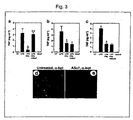
- Exposure of macrophages to ⁇ 7 antisense oligonucleotides decreased ⁇ -bungarotoxin binding and restored TNF release in the presence of nicotine.
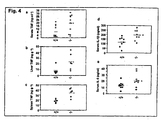
- mice deficient in the nicotinic receptor ⁇ 7 subunit produced significantly more TNF, IL-1 ⁇ and IL-6 during endotoxemia, as compared to wild type mice. Macrophages isolated from ⁇ 7 knockout mice failed to respond to cholinergic agonists, and continued to produce TNF. Finally, electrical stimulation of the vagus nerve using a protocol that inhibited TNF release in wild-type mice did not inhibitTNF release in ⁇ 7-deficient mice. Thus, the nicotinic acetylcholine receptor ⁇ 7 subunit is essential for cholinergic inhibition of proinflammatory cytokines.
- nicotinic receptors form receptor aggregates or clusters that facilitate fast signal transmission (Lin et al., 2001; Feng et al., 1998; Shoop et al., 2000).
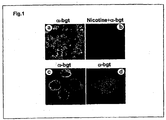
- Discrete clusters of ⁇ -bungarotoxin binding can be clearly observed under higher magnification on the surface of macrophages, especially concentrated on the surface of the cell body ( FIG. 1c, d ).
- ⁇ 1, ⁇ 7 and ⁇ 9 are the ⁇ -bungarotoxin-binding nicotinic receptor subunits known in human cells (Lindstrom, 1995; Leonard and Bertrand, 2001).
- ⁇ 1 together with ⁇ 1, ⁇ and either ⁇ (adult) or ⁇ (fetal) subunits, forms heteropentameric nicotinic receptors that regulate muscle contraction;
- ⁇ 7 and ⁇ 9 can each form homopentameric nicotinic receptors (Lindstrom, 1995; Leonard and Bertrand, 2001).
- PBMC peripheral blood mono-nuclear cells
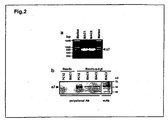
- RT-PCR analyses To increase the sensitivity and specificity of the experiments, we conducted two rounds of PCR after reverse transcription, using nested primers specific to each subunit. The identities of the PCR products were confirmed by sequencing. The expression of both ⁇ 1, ⁇ 10, (data not shown) and ⁇ 7 ( FIG. 2a ) mRNA was detected in human macrophages derived from unrelated blood donors. The same RT-PCR strategy did not detect the expression of ⁇ 9 subunit mRNA in macrophages (data not shown).
- the protein expression of ⁇ 1 and ⁇ 7 subunits was next examined by western blotting.
- the ⁇ 7 specific antibody recognized a clear band with an apparent molecular weight of about 55 kD (similar to the published molecular weight for ⁇ 7 protein [Peng et al., 1994; Drisdel and Green, 2000]) from both differentiated primary macrophages and from undifferentiated PBMCs (data not shown).
- ⁇ 1 protein expression was down-regulated to undetectable levels during in vitro differentiation of PBMC to macrophages (data not shown).
- the ⁇ subunit a necessary component of the ⁇ 1 heteropentameric nicotinic acetylcholine receptor, could not be detected by this nested RT-PCR strategy (data not shown).
- ⁇ -bungarotoxin-conjugated beads to pull-down proteins prepared from either human macrophages or PC12 cells (rat pheochromocytoma cells, which have been shown to express ⁇ 7 homopentamer [Drisdel and Green, 2000]).
- the full-length nicotinic acetylcholine ⁇ 7 subunit in macrophages contains exons 1 to 10, identical to the nicotinic acetylcholine ⁇ 7 subunit expressed in neurons (Gault et al., 1998). Together, these data identify the nicotinic acetylcholine ⁇ 7 subunit as the ⁇ -bungarotoxin-binding receptor expressed on the surface of human macrophages.
- Macrophages are the major source of TNF produced in response to bacterial endotoxin in vivo (Bianchi et al., 1995; Kumins et al., 1996).
- nicotinic acetylcholine receptor ⁇ 7 subunit is essential for the cholinergic anti-inflammatory pathway in vivo.
- TNF production in liver and spleen was also higher in knockout mice ( FIG. 4b, c ), indicating a critical function of the nicotinic acetylcholine receptor ⁇ 7 subunit in the regulation of inflammatory responses in vivo.
- Endotoxemic ⁇ 7 subunit-deficient mice also produced significantly higher levels of IL-1 ⁇ ( FIG. 4d ) and IL-6 ( FIG. 4e ) as compared to wild-type mice.
- Macrophages derived from ⁇ 7 subunit knockout mice were refractory to cholinergic agonists, and produced TNF normally in the presence of nicotine or acetylcholine (Table 1).
- nicotinic acetylcholine receptor ⁇ 7 subunit expression in macrophages is essential for cholinergic modulation of TNF.
- Table 1 TNF production by wild type and ⁇ 7-deficient peritoneal macrophages.
- vagus nerve stimulation (Borovikova et al., 2000) to the vagus nerves of endotoxemic wild-type or ⁇ 7 subunit-deficient mice. Electrical stimulation of the vagus nerve significantly attenuated endotoxin-induced serum TNF levels in wild-type mice ( Fig. 5 ). Vagus nerve stimulation using this protocol in nicotinic acetylcholine receptor ⁇ 7 subunit deficient mice, however, failed to reduce serum TNF levels during endotoxemia ( Fig. 5 ). Thus, a functional response to vagus nerve stimulation in vivo requires nicotinic acetylcholine receptor ⁇ 7 subunits to inhibit TNF release.
- TNF cholinergic agonists that target nicotinic acetylcholine receptor ⁇ 7 subunits on peripheral immune cells for use as anti-inflammatory agents to inhibit TNF release. It may also be possible to develop vagus nerve stimulators with anti-inflammatory activity; similar devices are clinically safe, and used in the treatment of some patients with seizure disorder.
- TNF is a clinically validated drug target for rheumatoid arthritis and Crohn's disease, so it seems reasonable to consider a TNF inhibiting strategy that targets the nicotinic acetylcholine receptor ⁇ 7 subunit.
- ⁇ -bungarotoxin staining and confocal microscopy Isolation and culture of human macrophages was performed as described previously (Borovikova et al., 2000). Cells were differentiated for seven days in the presence of MCSF (2 ng/ml) in complete culture medium (RPMI 1640 with 10% heat-inactivated human serum). Differentiated macrophages were incubated with FITC-labeled ⁇ -bungarotoxin at 1.5 ⁇ g ml -1 (SIGMA) in the cell culture medium at 4 C for 15 min. Where indicated, nicotine was added to a final concentration of 500 ⁇ M prior to the addition of ⁇ -bungarotoxin.
- SIGMA FITC-labeled ⁇ -bungarotoxin at 1.5 ⁇ g ml -1
- the primer sets for reverse transcription and first round of PCR were: ⁇ 1: sense primer5'-CCAGACCTGAGCAACTTCATGG-3', antisense primer 5'-AATGAGTC-GACCTGCAAACACG-3'; ⁇ : sense primer 5'-GACTGTTCGTTTCCCAGATGG-3', antisense primer 5'-ACGAAGTT-GGGAGCCGACATCA-3'; ⁇ 9: sense primer 5'-CGAGATCAGTACGATGGCCTAG-3', antisense primer 5'-TCTGT-GACTAATCCGCTCTTGC-3'.
- the primer sets for nested PCR were: ⁇ 1: sense primer 5'-ATCACCTACCACTTCGT-CATGC-3', antisense primer 5'-GTATGTGGTCCATCACCATTGC-3'; ⁇ 7: sense primer 5'-CCCGGCAAGAGGAGT-GAAAGGT-3'; antisense primer 5'-TGCAGATGATGGTGAAGACC-3'; ⁇ : sense primer 5'-AGAGCCTGTGAACAC-CAATGTGG-3', antisense primer 5'-ATGACTTTCGCCACCTTCTTCC-3'.
- ⁇ -bungarotoxin pull-down assay ⁇ -bungarotoxin pull-down assay
- SIGMA ⁇ -bungarotoxin
- CNBr-activated Sepharose beads Pharmacia
- the beads and bound proteins were washed four times with lysis buffer and the analyzed by western blotting with ⁇ 7 specific antibodies (polyclonal: Santa Cruz H-302, monoclonal: Sigma M-220).
- Antisense oligonucleotide experiments Phosphorothioate antisense oligonucleotides were synthesized and purified by Genosys. The sequences of the oligonucleotides are: AS ⁇ 7: 5'-gcagcgcatgttgagtcccg-3'; AS ⁇ 1: 5'-gggctc-catgggctaccgga-3'; AS ⁇ 10: 5'-ccccatggccctggcactgc-3'. These sequences cover the divergent translation initiation regions of ⁇ 7, ⁇ 1 and ⁇ 10 genes. Delivery of the antisense oligonucleotides was carried out as in Cohen et al.
- oligonucleotide-pretreated macrophage cultures were washed with fresh medium and stimulated with 100 ng ml -1 LPS with or without nicotine (1 ⁇ M, added 5-10 min before LPS).
- the amounts of TNF released were measured by L929 assay and then verified by TNF ELISA.
- pretreated cells were washed and processed for FITC- ⁇ bungarotoxin staining as described above. Nicotine and other nicotinic acetylcholine receptor ⁇ 7 subunit agonists also significantly inhibit LPS-induced TNF release in the murine macrophage-like cell line RAW264.7 (data not shown).
- mice ⁇ 7 nicotinic receptor deficient mice. ⁇ 7 nicotinic receptor-deficient mice (C57BL/6 background) and wild type littermates were purchased from The Jackson Laboratory (B6.1297-Chrna 7tmlBay , #003232). Breedings of homozygote knockout mice or wild type mice were established to obtain progenies. Male or female mice about 8 to 12 weeks old (together with age and sex matched wild type controls) were used for endotoxin experiments. Mice were weighed individually and 0.1 mg kg -1 LPS was given accordingly (i.p.). ForTNF experiments, blood, liver and spleen were collected one hour after LPS.
- Vagus nerve stimulation ⁇ 7 nicotinic receptor-deficient mice (C57BL/6 background, male and female) and age and sex-matched wild type C57BL/6 mice were anaesthetized with ketamine (100mg kg -1 , intramuscularly) and Xylazine (10mg kg -1 , intramuscularly). Mice were either subjected to sham operation or vagus nerve stimulation (left vagus, 1 volt, 2 ms, 1Hz) with an electrical stimulation module (STM100A, Harvard Apparatus). Stimulation was performed for 20 min (10 min before and 10 min after LPS administration). LPS was given at a lethal dose (75 mg kg -1 , intraperitoneally). Blood was collected two hours after LPS administration. TNF levels were measured by ELISA.
- Statistical analysis was performed using two-tailed t test where indicated; P ⁇ 0.05 is considered significant. Experiments were performed in duplicate or triplicate; for in vivo and ex vivo experiments, "n" refers to the number of animals under each condition.
- Example 2 Compounds (V) and (VI) are protective in murine Cecal Ligation and Puncture model of sepsis
- Cecal Ligation and Puncture was performed as described in Fink and Heard, J. of Surg. Res. 49:186-196 (1990 ), Wichman et al., Crit. Care Med. 26:2078-2086 (1998 ) and Remick et al., Shock 4:89-95 (1995 ). Briefly, Balb/c mice were anesthetized with 75 mg/kg Ketamine (Fort Dodge, Fort Dodge, Iowa) and 20 mg/kg of xylazine (Bohringer Ingelheim, St. Joseph, MO) intramuscularly. A midline incision was performed, and the cecum was isolated. A 6-0 prolene suture ligature was placed at a level 5.0 mm from the cecal tip away from the ileocecal valve.
- the ligated cecal stump was then punctured once with a 22-gauge needle, without direct extrusion of stool.
- the cecum was then placed back into its normal intra-abdominal position.
- the abdomen was then closed with a running suture of 6-0 prolene in two layers, peritoneum and fascia separately to prevent leakage of fluid.
- All animals were resuscitated with a normal saline solution administered subcutaneously at 20 ml/kg of body weight.
- Each mouse received a subcutaneous injection of imipenem (0.5 mg/mouse) (Primaxin, Merck & Co., Inc., West Point, PA) 30 minutes after the surgery. Animals were then allowed to recuperate.
- mice were treated with either 3-2,4-dimethoxybenzylidene anabaseine (Compound (V)) at 4 mg/kg or 3-(4-hydroxy-2-methoxybenzylidene anabaseine (Compound (VI)) at 4 mg/kg or with vehicle control.
- the compounds and vehicle control were administered intraperitoneally (i.p.) twice a day on day 1 and day 2 (24 and 48 hours post-surgery, respectively) and were administered once on day 3. Mortality was monitored daily for fourteen days after surgery.
- FIG. 6 shows the percentage of surviving animals following treatment with either Compound (V), Compound (VI) or vehicle control.
- Example 3 Compound (V) and Nicotine inhibit LPS induced TNF- ⁇ release from murine RAW 264.7 macrophage-like cells
- Murine RAW 264.7 macrophage-like cells (American Type Tissue Culture Collection, Rockville, Md., USA) were grown under DMEM supplemented with 10% fetal bovine serum, penicillin and streptomycin. The cells were seeded in 24-well tissue culture plates in Opti-MEM 1 medium and used at 90% confluence. The cells were treated with either Compound (V) or nicotine (Sigma) at 0.001, 0.01, 0.1, 1, 10 or 100 uM. Five minutes after the addition of Compound (V) or nicotine, the cells were treated with LPS (500 ng/ml). Supernatants were collected after 4 hours and TNF- ⁇ was measured by ELISA (mouse ELISA kit from R&D Systems Inc., Minneapolis, MN).
- FIG. 7 demonstrates that like nicotine, Compound (V), dose dependently inhibits TNF- ⁇ release from RAW 264.7 cells.
- Example 4 Compound (VI) inhibits LPS induced TNF- ⁇ release from murine RAW 264.7 macrophage-like cells
- Murine RAW 264.7 macrophage-like cells (American Type Tissue Culture Collection, Rockville, Md., USA) were grown under DMEM supplemented with 10% fetal bovine serum, penicillin and streptomycin. The cells were seeded in 24-well tissue culture plates in Opti-MEM 1 medium and used at 90% confluence.
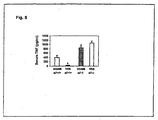
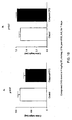
- Fig. 8A the cells were treated with Compound (VI) at 0.1,1 and 10 uM. At 0,1,4 or 24 hours after preincubation with Compound (VI), the cells were treated with LPS (500 ng/ml). Supernatants were collected after 4 hours and TNF- ⁇ was measured by ELISA (mouse ELISA kit from R&D Systems Inc., Minneapolis, MN). The results shown in Fig. 8A are presented as percent inhibition of TNF- ⁇ . Compound (VI) dose dependently inhibits TNF- ⁇ .
- Fig. 8B presents the results of the 0 hour preincubation condition of Fig. 8A and is presented as percent inhibition of TNF- ⁇ .
- the estimated IC 50 for Compound (VI) is 0.9 uM.
- Example 5 Compound (VI) treatment prior to LPS challenge inhibits circulating TNF in mice
- mice C57 B/6 mice were treated with 4 mg/kg Compound (VI) or vehicle control intraperitoneally (i.p.). Five minutes after treatment with Compound (VI) or vehicle control, the mice were injected with 100 ug LPS i.p. The mice were sacrificed 2 hours after LPS treatment and blood samples were collected for TNF- ⁇ measurement. TNF- ⁇ was measured by ELISA as described above.
- Example 6 Compound (VI) reduces colon inflammation in murine DSS colitis
- DSS Dextran sodium sulfate-induced colitis
- Example 7 Compound (VII) inhibits TNF- ⁇ release from LPS-Stimulated murine RAW 264.7 macrophage-like cells
- Compound (VII) showed significant effect in inhibiting release of TNF- ⁇
- Murine RAW 264.7 macrophage-like cells (American Type Tissue Culture Collection, Rockville, Md., USA) were grown as described above in Example 3. The cells were treated with (-)-spiro[1-azabicyclo[2.2.2]octane-3,5'-oxazolidin-2'-one] (Compound (VII)) at 0, 0.01, 0.1, 1, 10 and 100 uM. Five minutes after the addition of Compound (VII), the cells were treated with LPS (500 ng/ml). TNF- ⁇ was measured by ELISA as described above.
- FIG. 11 The results are shown in FIG. 11 , which demonstrate that the higher concentrations of Compound (VII) inhibit TNF- ⁇ release from RAW 264.7 cells. TNF- ⁇ release was decreased by more than four times in cells treated with 100 uM Compound (VII) compared to control cells.
Landscapes
- Health & Medical Sciences (AREA)
- Life Sciences & Earth Sciences (AREA)
- Chemical & Material Sciences (AREA)
- General Health & Medical Sciences (AREA)
- Medicinal Chemistry (AREA)
- Veterinary Medicine (AREA)
- Pharmacology & Pharmacy (AREA)
- Public Health (AREA)
- Animal Behavior & Ethology (AREA)
- Engineering & Computer Science (AREA)
- General Chemical & Material Sciences (AREA)
- Organic Chemistry (AREA)
- Nuclear Medicine, Radiotherapy & Molecular Imaging (AREA)
- Chemical Kinetics & Catalysis (AREA)
- Bioinformatics & Cheminformatics (AREA)
- Immunology (AREA)
- Molecular Biology (AREA)
- Biomedical Technology (AREA)
- Hematology (AREA)
- Virology (AREA)
- Urology & Nephrology (AREA)
- Epidemiology (AREA)
- Pulmonology (AREA)
- Communicable Diseases (AREA)
- Oncology (AREA)
- Cell Biology (AREA)
- Diabetes (AREA)
- Physical Education & Sports Medicine (AREA)
- Biotechnology (AREA)
- Rheumatology (AREA)
- Neurology (AREA)
- Tropical Medicine & Parasitology (AREA)
- Endocrinology (AREA)
- Cardiology (AREA)
- Neurosurgery (AREA)
- Food Science & Technology (AREA)
- Physics & Mathematics (AREA)
- General Physics & Mathematics (AREA)
- Analytical Chemistry (AREA)
- Microbiology (AREA)
Priority Applications (3)
| Application Number | Priority Date | Filing Date | Title |
|---|---|---|---|
| EP09001425A EP2062595A1 (en) | 2002-12-06 | 2003-12-05 | Inhibition of inflammation using alpha 7 receptor-binding cholinergic agonists |
| DK07020473.0T DK1949901T3 (da) | 2002-12-06 | 2003-12-05 | Fremgangsmåde til bestemmelse af en cholinerg agonist selektiv for en alfa-7-nikotinsk receptor |
| EP07020473.0A EP1949901B1 (en) | 2002-12-06 | 2003-12-05 | A method for determining a cholinergic agonist selective for an alpha 7 nicotinic receptor |
Applications Claiming Priority (3)
| Application Number | Priority Date | Filing Date | Title |
|---|---|---|---|
| US43165002P | 2002-12-06 | 2002-12-06 | |
| US431650P | 2002-12-06 | ||
| PCT/US2003/038708 WO2004052365A2 (en) | 2002-12-06 | 2003-12-05 | Inhibition of inflamation using alpha 7 receptor-binding cholinergic agonists |
Related Child Applications (3)
| Application Number | Title | Priority Date | Filing Date |
|---|---|---|---|
| EP07020473.0A Division EP1949901B1 (en) | 2002-12-06 | 2003-12-05 | A method for determining a cholinergic agonist selective for an alpha 7 nicotinic receptor |
| EP07020473.0A Division-Into EP1949901B1 (en) | 2002-12-06 | 2003-12-05 | A method for determining a cholinergic agonist selective for an alpha 7 nicotinic receptor |
| EP09001425A Division-Into EP2062595A1 (en) | 2002-12-06 | 2003-12-05 | Inhibition of inflammation using alpha 7 receptor-binding cholinergic agonists |
Publications (3)
| Publication Number | Publication Date |
|---|---|
| EP1581223A2 EP1581223A2 (en) | 2005-10-05 |
| EP1581223B1 EP1581223B1 (en) | 2007-11-14 |
| EP1581223B2 true EP1581223B2 (en) | 2016-05-25 |
Family
ID=32507772
Family Applications (3)
| Application Number | Title | Priority Date | Filing Date |
|---|---|---|---|
| EP03796701.5A Expired - Lifetime EP1581223B2 (en) | 2002-12-06 | 2003-12-05 | Inhibition of inflamation using alpha 7 receptor-binding cholinergic agonists |
| EP09001425A Withdrawn EP2062595A1 (en) | 2002-12-06 | 2003-12-05 | Inhibition of inflammation using alpha 7 receptor-binding cholinergic agonists |
| EP07020473.0A Expired - Lifetime EP1949901B1 (en) | 2002-12-06 | 2003-12-05 | A method for determining a cholinergic agonist selective for an alpha 7 nicotinic receptor |
Family Applications After (2)
| Application Number | Title | Priority Date | Filing Date |
|---|---|---|---|
| EP09001425A Withdrawn EP2062595A1 (en) | 2002-12-06 | 2003-12-05 | Inhibition of inflammation using alpha 7 receptor-binding cholinergic agonists |
| EP07020473.0A Expired - Lifetime EP1949901B1 (en) | 2002-12-06 | 2003-12-05 | A method for determining a cholinergic agonist selective for an alpha 7 nicotinic receptor |
Country Status (14)
| Country | Link |
|---|---|
| US (1) | US7273872B2 (enExample) |
| EP (3) | EP1581223B2 (enExample) |
| JP (4) | JP4750421B2 (enExample) |
| CN (2) | CN102657651A (enExample) |
| AT (1) | ATE378048T1 (enExample) |
| AU (1) | AU2003298939B2 (enExample) |
| CA (1) | CA2507502C (enExample) |
| DE (1) | DE60317564T2 (enExample) |
| DK (1) | DK1949901T3 (enExample) |
| ES (2) | ES2293086T3 (enExample) |
| IL (2) | IL168787A (enExample) |
| PT (1) | PT1949901E (enExample) |
| SI (1) | SI1949901T1 (enExample) |
| WO (1) | WO2004052365A2 (enExample) |
Families Citing this family (59)
| Publication number | Priority date | Publication date | Assignee | Title |
|---|---|---|---|---|
| US8188043B2 (en) * | 1999-07-28 | 2012-05-29 | The Board Of Trustees Of The Leland Stanford Jr. University | Nicotine in therapeutic angiogenesis and vasculogenesis |
| US8914114B2 (en) | 2000-05-23 | 2014-12-16 | The Feinstein Institute For Medical Research | Inhibition of inflammatory cytokine production by cholinergic agonists and vagus nerve stimulation |
| US7045534B2 (en) * | 2002-02-12 | 2006-05-16 | The Board Of Trustees Of The Leland Stanford Junior University | Methods of reducing angiogenesis |
| US7238715B2 (en) * | 2002-12-06 | 2007-07-03 | The Feinstein Institute For Medical Research | Treatment of pancreatitis using alpha 7 receptor-binding cholinergic agonists |
| EP1581223B2 (en) * | 2002-12-06 | 2016-05-25 | The Feinstein Institute for Medical Research | Inhibition of inflamation using alpha 7 receptor-binding cholinergic agonists |
| US7094572B2 (en) | 2003-03-14 | 2006-08-22 | Bristol-Myers Squibb | Polynucleotide encoding a novel human G-protein coupled receptor variant of HM74, HGPRBMY74 |
| US10912712B2 (en) | 2004-03-25 | 2021-02-09 | The Feinstein Institutes For Medical Research | Treatment of bleeding by non-invasive stimulation |
| AU2005225458B2 (en) | 2004-03-25 | 2008-12-04 | The Feinstein Institutes For Medical Research | Neural tourniquet |
| US11207518B2 (en) * | 2004-12-27 | 2021-12-28 | The Feinstein Institutes For Medical Research | Treating inflammatory disorders by stimulation of the cholinergic anti-inflammatory pathway |
| ATE489132T1 (de) * | 2004-12-27 | 2010-12-15 | The Feinstein Inst Medical Res | Behandlung von entzündlichen erkrankungen durch elektrische stimulation des vagus-nervs |
| US8316104B2 (en) * | 2005-11-15 | 2012-11-20 | California Institute Of Technology | Method and apparatus for collaborative system |
| EP1978926A2 (en) * | 2005-12-19 | 2008-10-15 | Comentis, Inc. | Topical mecamylamine formulations for ocular administration and uses thereof |
| SA08290475B1 (ar) | 2007-08-02 | 2013-06-22 | Targacept Inc | (2s، 3r)-n-(2-((3-بيردينيل)ميثيل)-1-آزا بيسيكلو[2، 2، 2]أوكت-3-يل)بنزو فيوران-2-كربوكساميد، وصور أملاحه الجديدة وطرق استخدامه |
| WO2009029614A1 (en) | 2007-08-27 | 2009-03-05 | The Feinstein Institute For Medical Research | Devices and methods for inhibiting granulocyte activation by neural stimulation |
| WO2009066107A1 (en) * | 2007-11-21 | 2009-05-28 | Astrazeneca Ab | Use of a nicotinic receptor agonist |
| US9211409B2 (en) | 2008-03-31 | 2015-12-15 | The Feinstein Institute For Medical Research | Methods and systems for reducing inflammation by neuromodulation of T-cell activity |
| US9662490B2 (en) | 2008-03-31 | 2017-05-30 | The Feinstein Institute For Medical Research | Methods and systems for reducing inflammation by neuromodulation and administration of an anti-inflammatory drug |
| US8722630B2 (en) * | 2008-06-13 | 2014-05-13 | The General Hospital Corporation | Use of apolipoproteins to decrease inflammation |
| US20120053117A1 (en) * | 2008-10-03 | 2012-03-01 | Fundacao De Amparo A Pesquisa Do Estado De Sao Paulo- Fapesp | Pharmaceutical composition, drug screening method and method for treating malaria |
| ES2452484T3 (es) | 2008-11-18 | 2014-04-01 | Setpoint Medical Corporation | Dispositivos para optimizar la colocación de electrodos para la estimulación antiinflamatoria |
| TW201031664A (en) | 2009-01-26 | 2010-09-01 | Targacept Inc | Preparation and therapeutic applications of (2S,3R)-N-2-((3-pyridinyl)methyl)-1-azabicyclo[2.2.2]oct-3-yl)-3,5-difluorobenzamide |
| US9211410B2 (en) | 2009-05-01 | 2015-12-15 | Setpoint Medical Corporation | Extremely low duty-cycle activation of the cholinergic anti-inflammatory pathway to treat chronic inflammation |
| US8996116B2 (en) | 2009-10-30 | 2015-03-31 | Setpoint Medical Corporation | Modulation of the cholinergic anti-inflammatory pathway to treat pain or addiction |
| US8788034B2 (en) | 2011-05-09 | 2014-07-22 | Setpoint Medical Corporation | Single-pulse activation of the cholinergic anti-inflammatory pathway to treat chronic inflammation |
| EP2440284B1 (en) | 2009-06-09 | 2018-09-12 | Setpoint Medical Corporation | Nerve cuff with pocket for leadless stimulator |
| US9833621B2 (en) | 2011-09-23 | 2017-12-05 | Setpoint Medical Corporation | Modulation of sirtuins by vagus nerve stimulation |
| US11051744B2 (en) | 2009-11-17 | 2021-07-06 | Setpoint Medical Corporation | Closed-loop vagus nerve stimulation |
| EP3636314B1 (en) | 2009-12-23 | 2021-09-08 | Setpoint Medical Corporation | Neural stimulation devices and systems for treatment of chronic inflammation |
| JP5767708B2 (ja) * | 2010-09-30 | 2015-08-19 | ツェンドゥー カンホン バイオテクノロジーズ カンパニー リミテッド | ヒト化抗ヒト腫瘍壊死因子α(TNF−α)抗体およびその抗原結合性フラグメント(Fab)およびその使用方法 |
| WO2012074799A1 (en) * | 2010-11-18 | 2012-06-07 | Envivo Pharmaceuticals, Inc. | Treatment of inflammation with certain alpha-7 nicotinic acid receptor agonists in combination with acetylcholinesterase inhibitors |
| TWI634119B (zh) * | 2011-03-18 | 2018-09-01 | 美商健臻公司 | 葡萄糖神經醯胺合成酶抑制劑 |
| RU2611627C2 (ru) * | 2011-04-29 | 2017-02-28 | КЬЕЗИ ФАРМАЧЕУТИЧИ С.п.А. | Алкалоидный эфир и карбаматные производные и их медицинские композиции |
| US12172017B2 (en) | 2011-05-09 | 2024-12-24 | Setpoint Medical Corporation | Vagus nerve stimulation to treat neurodegenerative disorders |
| US8865641B2 (en) | 2011-06-16 | 2014-10-21 | The Feinstein Institute For Medical Research | Methods of treatment of fatty liver disease by pharmacological activation of cholinergic pathways |
| US9572983B2 (en) | 2012-03-26 | 2017-02-21 | Setpoint Medical Corporation | Devices and methods for modulation of bone erosion |
| JOP20130273B1 (ar) * | 2012-09-11 | 2021-08-17 | Genzyme Corp | مثبطات انزيم (سينثاز) غلوكوسيل سيراميد |
| US11311725B2 (en) | 2014-10-24 | 2022-04-26 | Setpoint Medical Corporation | Systems and methods for stimulating and/or monitoring loci in the brain to treat inflammation and to enhance vagus nerve stimulation |
| WO2016126807A1 (en) | 2015-02-03 | 2016-08-11 | Setpoint Medical Corporation | Apparatus and method for reminding, prompting, or alerting a patient with an implanted stimulator |
| US10596367B2 (en) | 2016-01-13 | 2020-03-24 | Setpoint Medical Corporation | Systems and methods for establishing a nerve block |
| US11471681B2 (en) | 2016-01-20 | 2022-10-18 | Setpoint Medical Corporation | Batteryless implantable microstimulators |
| CN108882885A (zh) | 2016-01-20 | 2018-11-23 | 赛博恩特医疗器械公司 | 迷走神经刺激的控制 |
| WO2017127758A1 (en) | 2016-01-20 | 2017-07-27 | Setpoint Medical Corporation | Implantable microstimulators and inductive charging systems |
| US10583304B2 (en) | 2016-01-25 | 2020-03-10 | Setpoint Medical Corporation | Implantable neurostimulator having power control and thermal regulation and methods of use |
| HK1258883A1 (zh) | 2016-04-12 | 2019-11-22 | A‧索利斯‧赫雷拉 | 用烟硷乙酰胆硷受体激动剂治疗鼻和鼻旁粘膜病症的组合物和方法 |
| CA3031761A1 (en) | 2016-06-29 | 2018-01-04 | Tulavi Therapeutics, Inc. | Treatment of sepsis and related inflammatory conditions by local neuromodulation of the autonomic nervous system |
| WO2018064529A1 (en) * | 2016-09-29 | 2018-04-05 | The Uab Research Foundation | Methods and compositions for increasing mucus clearance |
| WO2018064633A1 (en) * | 2016-09-30 | 2018-04-05 | University Of Southern California | Nicotinic acetylcholine receptor agonist attenuates ilc2-dependent airway hyperreactivity |
| WO2019036470A1 (en) | 2017-08-14 | 2019-02-21 | Setpoint Medical Corporation | TESTING TEST FOR STIMULATION OF NERVE WAVE |
| US11660443B2 (en) | 2018-04-20 | 2023-05-30 | The Feinstein Institutes For Medical Research | Methods and apparatuses for reducing bleeding via electrical trigeminal nerve stimulation |
| US11260229B2 (en) | 2018-09-25 | 2022-03-01 | The Feinstein Institutes For Medical Research | Methods and apparatuses for reducing bleeding via coordinated trigeminal and vagal nerve stimulation |
| CN109652524A (zh) * | 2018-11-09 | 2019-04-19 | 山西中医药大学 | 类风湿关节炎大鼠模型中chrna7基因生物信息分析的试验方法 |
| EP3952982B1 (en) | 2019-04-12 | 2024-03-27 | Setpoint Medical Corporation | Vagus nerve stimulation system to treat neurodegenerative disorders |
| BR112022014553A2 (pt) | 2020-02-03 | 2022-09-20 | Genzyme Corp | Métodos para tratamento de sintomas neurológicos associados a doenças do armazenamento lisossômic |
| WO2021236977A1 (en) | 2020-05-21 | 2021-11-25 | The Feinstein Institutes For Medical Research | Systems and methods for vagus nerve stimulation |
| MX2023001014A (es) | 2020-07-24 | 2023-03-01 | Genzyme Corp | Composiciones farmaceuticas que comprenden venglustat. |
| CN112023050A (zh) * | 2020-09-10 | 2020-12-04 | 中国科学院深圳先进技术研究院 | 一种调节巨噬细胞极化状态的方法 |
| US12444497B2 (en) | 2021-05-17 | 2025-10-14 | Setpoint Medical Corporation | Neurostimulation parameter authentication and expiration system for neurostimulation |
| CN114028570A (zh) * | 2021-12-27 | 2022-02-11 | 中国药科大学 | α7烟碱型胆碱受体激动剂在制备肽酰基精氨酸脱亚氨酶4抑制剂中的用途 |
| CN119792529A (zh) * | 2025-01-16 | 2025-04-11 | 山东第一医科大学(山东省医学科学院) | 抑制Chrm3受体表达的试剂在制备治疗由脂多糖引起的相关疾病的药物中的应用 |
Citations (5)
| Publication number | Priority date | Publication date | Assignee | Title |
|---|---|---|---|---|
| WO1998054182A1 (en) † | 1997-05-30 | 1998-12-03 | Neurosearch A/S | 9-AZABICYCLO(3.3.1)NON-2-ENE AND NONANE DERIVATIVES AS CHOLINERGIC LIGANDS AT NICOTINIC ACh RECEPTORS |
| WO1999003859A1 (en) † | 1997-07-18 | 1999-01-28 | Astra Aktiebolag | Novel spiroazabicyclic heterocyclic compounds |
| WO2001089526A1 (en) † | 2000-05-23 | 2001-11-29 | North Shore-Long Island Jewish Research Institute | Inhibition of inflammatory cytokine production by cholinergic agonists and vagus nerve stimulation |
| WO2002030405A2 (en) † | 2000-10-13 | 2002-04-18 | Neurosearch A/S | Treatment of affective disorders by the combined action of a nicotinic receptor agonist and a monoaminergic substance |
| WO2002044176A1 (en) † | 2000-12-01 | 2002-06-06 | Neurosearch A/S | 3-substituted quinuclidines and their use as nicotinic agonists |
Family Cites Families (41)
| Publication number | Priority date | Publication date | Assignee | Title |
|---|---|---|---|---|
| US5977144A (en) * | 1992-08-31 | 1999-11-02 | University Of Florida | Methods of use and compositions for benzylidene- and cinnamylidene-anabaseines |
| EP0659078B1 (en) * | 1992-08-31 | 2003-01-15 | University Of Florida Research Foundation, Inc. | Anabaseine derivatives useful in the treatment of degenerative diseases of the nervous system |
| UA54375C2 (uk) * | 1994-08-24 | 2003-03-17 | Астра Актієболаг | Спіро-азабіциклічні сполуки, способи їх одержання та фармацевтична композиція |
| SE9600683D0 (sv) | 1996-02-23 | 1996-02-23 | Astra Ab | Azabicyclic esters of carbamic acids useful in therapy |
| FR2756826B1 (fr) * | 1996-12-05 | 1999-01-08 | Adir | Nouveaux derives tetrahydropyridiniques substitues, leur procede de preparation et les compositions pharmaceutiques qui les contiennent |
| US6323000B2 (en) * | 1996-12-20 | 2001-11-27 | Clark A. Briggs | Variant human α7 acetylcholine receptor subunit, and methods of production and uses thereof |
| JP2003512290A (ja) * | 1997-09-10 | 2003-04-02 | メルク エンド カムパニー インコーポレーテッド | 家畜抗菌剤としての8a−アザライド |
| PT1083889E (pt) * | 1998-06-01 | 2004-04-30 | Ortho Mcneil Pharm Inc | Compostos de tetra-hidronaftaleno e sua utilizacao no tratamento de doencas neurodegenerativas |
| FR2786769B1 (fr) * | 1998-12-04 | 2002-10-25 | Synthelabo | Derives de 2,5-diazabicyclo[2.2.1]heptane, leur preparation et leur application en therapeutique |
| FR2786770B1 (fr) | 1998-12-04 | 2001-01-19 | Synthelabo | Derives de 1,4-diazabicyclo[3.2.2.]nonane, leur preparation et leur application en therapeutique |
| US6432975B1 (en) * | 1998-12-11 | 2002-08-13 | Targacept, Inc. | Pharmaceutical compositions and methods for use |
| SE9900100D0 (sv) * | 1999-01-15 | 1999-01-15 | Astra Ab | New compounds |
| US6303321B1 (en) | 1999-02-11 | 2001-10-16 | North Shore-Long Island Jewish Research Institute | Methods for diagnosing sepsis |
| FR2790474B1 (fr) * | 1999-03-05 | 2001-04-06 | Synthelabo | Derives de pyridopyranoazepines, leur preparation et leur application en therapeutique |
| DE60008866T2 (de) * | 1999-05-04 | 2005-01-27 | Neurosearch A/S | Heteroaryl diazabicycloalkene, deren herstellung und verwendung |
| US6436909B1 (en) | 1999-09-17 | 2002-08-20 | Isis Pharmaceuticals, Inc. | Antisense inhibition of transforming growth factor-β expression |
| WO2001073446A1 (en) * | 2000-03-29 | 2001-10-04 | Synaptica Limited | Alpha 7 nicotinic receptor screening assays |
| GB0010955D0 (en) | 2000-05-05 | 2000-06-28 | Novartis Ag | Organic compounds |
| WO2002002564A1 (en) * | 2000-07-04 | 2002-01-10 | Neurosearch A/S | Aryl and heteroaryl diazabicycloalkanes, their preparation and use |
| JP4616971B2 (ja) | 2000-07-18 | 2011-01-19 | 田辺三菱製薬株式会社 | 1−アザビシクロアルカン化合物およびその医薬用途 |
| US6486172B2 (en) * | 2000-08-18 | 2002-11-26 | Pharmacia & Upjohn Company | Quinuclidine-substituted aryl compounds for treatment of disease |
| US6492385B2 (en) * | 2000-08-18 | 2002-12-10 | Pharmacia & Upjohn Company | Quinuclidine-substituted heteroaryl moieties for treatment of disease |
| US6492386B2 (en) * | 2000-08-18 | 2002-12-10 | Pharmacia & Upjohn Company | Quinuclidine-substituted aryl compounds for treatment of disease |
| US6479510B2 (en) * | 2000-08-18 | 2002-11-12 | Pharmacia & Upjohn Company | Quinuclidine-substituted aryl compounds for treatment of disease |
| WO2002017358A2 (en) * | 2000-08-21 | 2002-02-28 | Pharmacia & Upjohn Company | Quinuclidine-substituted heteroaryl moieties for treatment of disease (nicotinic acetylcholine receptor antagonists) |
| WO2002015662A2 (en) * | 2000-08-21 | 2002-02-28 | Pharmacia & Upjohn Company | Quinuclidine-substituted heteroaryl moieties for treatment of disease (nicotinic acetylcholine receptor antagonists |
| US20020086871A1 (en) * | 2000-12-29 | 2002-07-04 | O'neill Brian Thomas | Pharmaceutical composition for the treatment of CNS and other disorders |
| WO2002057275A1 (en) | 2001-01-17 | 2002-07-25 | University Of Kentucky Research Foundation | Boron-containing nicotine analogs for use in the treatment of cns pathologies |
| US6479172B2 (en) * | 2001-01-26 | 2002-11-12 | Xerox Corporation | Electroluminescent (EL) devices |
| AU2002255805B2 (en) * | 2001-03-15 | 2005-03-24 | North Shore Long Island Jewish Research Institute | Method of using pyruvate and/or its derivatives for the treatment of cytokine-mediated inflammatory conditions |
| CZ20033402A3 (cs) * | 2001-05-15 | 2004-10-13 | Northáshore@Longáislandájewisháresearcháinstitute | Použití fragmentů HMG jako protizánětlivých činidel |
| US6569865B2 (en) * | 2001-06-01 | 2003-05-27 | Astrazeneca Ab | Spiro 1-azabicyclo[2.2.2]octane-3,2′(3′h)-furo[2,3-b]pyridine |
| EP1419161A1 (en) * | 2001-08-24 | 2004-05-19 | PHARMACIA & UPJOHN COMPANY | Substituted-heteroaryl-7-aza 2.2.1]bicycloheptanes for the treatment of disease |
| JP2005527472A (ja) | 2001-09-12 | 2005-09-15 | ファルマシア・アンド・アップジョン・カンパニー・エルエルシー | 疾患治療のための置換された7−アザ[2.2.1]ビシクロヘプタン |
| NZ531786A (en) * | 2001-10-02 | 2006-10-27 | Upjohn Co | Azabicyclic-substituted fused-heteroaryl compounds for the treatment of disease |
| WO2003032897A2 (en) | 2001-10-16 | 2003-04-24 | Astrazeneca Ab | Azabicyclic compounds for the treatment of fibromyalgia syndrome |
| US6849620B2 (en) * | 2001-10-26 | 2005-02-01 | Pfizer Inc | N-(azabicyclo moieties)-substituted hetero-bicyclic aromatic compounds for the treatment of disease |
| BR0214016A (pt) | 2001-11-09 | 2004-10-13 | Upjohn Co | Compostos azabicìclico-fenil-fundido heterocìclicos e seu uso como ligandos alfa 7 nachr |
| JP3699392B2 (ja) * | 2001-12-04 | 2005-09-28 | 本田技研工業株式会社 | 艇体の接着剤硬化促進装置 |
| DE10211415A1 (de) | 2002-03-15 | 2003-09-25 | Bayer Ag | Bicyclische N-Biarylamide |
| EP1581223B2 (en) * | 2002-12-06 | 2016-05-25 | The Feinstein Institute for Medical Research | Inhibition of inflamation using alpha 7 receptor-binding cholinergic agonists |
-
2003
- 2003-12-05 EP EP03796701.5A patent/EP1581223B2/en not_active Expired - Lifetime
- 2003-12-05 DE DE60317564T patent/DE60317564T2/de not_active Expired - Lifetime
- 2003-12-05 WO PCT/US2003/038708 patent/WO2004052365A2/en not_active Ceased
- 2003-12-05 EP EP09001425A patent/EP2062595A1/en not_active Withdrawn
- 2003-12-05 ES ES03796701T patent/ES2293086T3/es not_active Expired - Lifetime
- 2003-12-05 SI SI200332349T patent/SI1949901T1/sl unknown
- 2003-12-05 EP EP07020473.0A patent/EP1949901B1/en not_active Expired - Lifetime
- 2003-12-05 US US10/729,427 patent/US7273872B2/en not_active Expired - Fee Related
- 2003-12-05 JP JP2004559325A patent/JP4750421B2/ja not_active Expired - Fee Related
- 2003-12-05 AT AT03796701T patent/ATE378048T1/de not_active IP Right Cessation
- 2003-12-05 DK DK07020473.0T patent/DK1949901T3/da active
- 2003-12-05 CN CN2012100243080A patent/CN102657651A/zh active Pending
- 2003-12-05 CN CNA2003801082615A patent/CN1735414A/zh active Pending
- 2003-12-05 ES ES07020473.0T patent/ES2462545T3/es not_active Expired - Lifetime
- 2003-12-05 CA CA2507502A patent/CA2507502C/en not_active Expired - Fee Related
- 2003-12-05 AU AU2003298939A patent/AU2003298939B2/en not_active Ceased
- 2003-12-05 PT PT70204730T patent/PT1949901E/pt unknown
-
2005
- 2005-05-25 IL IL168787A patent/IL168787A/en not_active IP Right Cessation
-
2010
- 2010-07-07 IL IL206855A patent/IL206855A/en not_active IP Right Cessation
-
2011
- 2011-01-26 JP JP2011014401A patent/JP2011105745A/ja not_active Withdrawn
-
2013
- 2013-12-12 JP JP2013257181A patent/JP5925178B2/ja not_active Expired - Fee Related
-
2016
- 2016-01-18 JP JP2016007291A patent/JP2016084355A/ja active Pending
Patent Citations (5)
| Publication number | Priority date | Publication date | Assignee | Title |
|---|---|---|---|---|
| WO1998054182A1 (en) † | 1997-05-30 | 1998-12-03 | Neurosearch A/S | 9-AZABICYCLO(3.3.1)NON-2-ENE AND NONANE DERIVATIVES AS CHOLINERGIC LIGANDS AT NICOTINIC ACh RECEPTORS |
| WO1999003859A1 (en) † | 1997-07-18 | 1999-01-28 | Astra Aktiebolag | Novel spiroazabicyclic heterocyclic compounds |
| WO2001089526A1 (en) † | 2000-05-23 | 2001-11-29 | North Shore-Long Island Jewish Research Institute | Inhibition of inflammatory cytokine production by cholinergic agonists and vagus nerve stimulation |
| WO2002030405A2 (en) † | 2000-10-13 | 2002-04-18 | Neurosearch A/S | Treatment of affective disorders by the combined action of a nicotinic receptor agonist and a monoaminergic substance |
| WO2002044176A1 (en) † | 2000-12-01 | 2002-06-06 | Neurosearch A/S | 3-substituted quinuclidines and their use as nicotinic agonists |
Non-Patent Citations (2)
| Title |
|---|
| HOLLADAY M.W. ET AL: "Neuronal Nicotinic Acetylcholine Receptors as Targets for Drug Discovery", JOURNAL OF MEDICINAL CHEMISTRY, vol. 40, no. 26, 19 December 1997 (1997-12-19), pages 4169 - 4194, XP002334103, DOI: doi:10.1021/jm970377o † |
| VAN MAANEN M.A. ET AL: "Stimulation of Nicotinic Acetylcholine Receptors Attenuates Collagen-Induced Arthritis in Mice", ARTHRITIS & RHEUMATISM, vol. 60, no. 1, January 2009 (2009-01-01), pages 114 - 122 † |
Also Published As
| Publication number | Publication date |
|---|---|
| WO2004052365A3 (en) | 2004-09-23 |
| JP2014055178A (ja) | 2014-03-27 |
| DE60317564T2 (de) | 2008-10-23 |
| AU2003298939C1 (en) | 2004-06-30 |
| JP4750421B2 (ja) | 2011-08-17 |
| ATE378048T1 (de) | 2007-11-15 |
| EP1581223B1 (en) | 2007-11-14 |
| US7273872B2 (en) | 2007-09-25 |
| ES2293086T3 (es) | 2008-03-16 |
| CN102657651A (zh) | 2012-09-12 |
| EP1949901A2 (en) | 2008-07-30 |
| JP5925178B2 (ja) | 2016-05-25 |
| WO2004052365A2 (en) | 2004-06-24 |
| CA2507502A1 (en) | 2004-06-24 |
| US20040204355A1 (en) | 2004-10-14 |
| AU2003298939A1 (en) | 2004-06-30 |
| AU2003298939B2 (en) | 2007-03-15 |
| DK1949901T3 (da) | 2014-05-19 |
| DE60317564D1 (de) | 2007-12-27 |
| JP2016084355A (ja) | 2016-05-19 |
| EP2062595A1 (en) | 2009-05-27 |
| JP2006514946A (ja) | 2006-05-18 |
| EP1581223A2 (en) | 2005-10-05 |
| SI1949901T1 (sl) | 2014-06-30 |
| EP1949901B1 (en) | 2014-02-12 |
| IL206855A (en) | 2015-11-30 |
| IL168787A (en) | 2010-11-30 |
| ES2462545T3 (es) | 2014-05-23 |
| PT1949901E (pt) | 2014-05-23 |
| JP2011105745A (ja) | 2011-06-02 |
| CN1735414A (zh) | 2006-02-15 |
| EP1949901A3 (en) | 2008-10-15 |
| CA2507502C (en) | 2011-11-29 |
Similar Documents
| Publication | Publication Date | Title |
|---|---|---|
| EP1581223B2 (en) | Inhibition of inflamation using alpha 7 receptor-binding cholinergic agonists | |
| US9592228B2 (en) | Treatment of inflammation using alpha 7 receptor-binding agonists | |
| US8729129B2 (en) | Neural tourniquet | |
| AU2001261629B2 (en) | Inhibition of inflammatory cytokine production by cholinergic agonists and vagus nerve stimulation | |
| US20040048795A1 (en) | Inhibition of inflammatory cytokine production by stimulation of brain muscarinic receptors | |
| JP2002531564A (ja) | ピリジル−橋頭誘導体およびそれらの類縁体、医用組成物およびニコチン性コリン作用性受容体の阻害物質としてのそれらの使用 | |
| US20120322719A1 (en) | Methods of treatment of fatty liver disease by pharmacological activation of cholinergic pathways | |
| JP2003525240A (ja) | 糖尿病性腎障害の処置のためのpdgf受容体チロシンキナーゼ阻害剤の使用 | |
| CN101534833B (zh) | 烟碱脱敏剂及选择、测试及使用它们的方法 | |
| HK1131060A (en) | Inhibition of inflammation using alpha 7 receptor-binding cholinergic agonists | |
| Balla et al. | Intracellular signaling pathways of muscarinic acetylcholine receptor-mediated detrusor muscle contractions | |
| HK1175708A (en) | Inhibition of inflamation using alpha 7 receptor-binding cholinergic agonists |
Legal Events
| Date | Code | Title | Description |
|---|---|---|---|
| PUAI | Public reference made under article 153(3) epc to a published international application that has entered the european phase |
Free format text: ORIGINAL CODE: 0009012 |
|
| 17P | Request for examination filed |
Effective date: 20050706 |
|
| AK | Designated contracting states |
Kind code of ref document: A2 Designated state(s): AT BE BG CH CY CZ DE DK EE ES FI FR GB GR HU IE IT LI LU MC NL PT RO SE SI SK TR |
|
| AX | Request for extension of the european patent |
Extension state: AL LT LV MK |
|
| DAX | Request for extension of the european patent (deleted) | ||
| GRAP | Despatch of communication of intention to grant a patent |
Free format text: ORIGINAL CODE: EPIDOSNIGR1 |
|
| GRAS | Grant fee paid |
Free format text: ORIGINAL CODE: EPIDOSNIGR3 |
|
| GRAJ | Information related to disapproval of communication of intention to grant by the applicant or resumption of examination proceedings by the epo deleted |
Free format text: ORIGINAL CODE: EPIDOSDIGR1 |
|
| GRAL | Information related to payment of fee for publishing/printing deleted |
Free format text: ORIGINAL CODE: EPIDOSDIGR3 |
|
| 17Q | First examination report despatched |
Effective date: 20060216 |
|
| 17Q | First examination report despatched |
Effective date: 20060216 |
|
| RAP1 | Party data changed (applicant data changed or rights of an application transferred) |
Owner name: THE FEINSTEIN INSTITUTE FOR MEDICAL RESEARCH |
|
| GRAP | Despatch of communication of intention to grant a patent |
Free format text: ORIGINAL CODE: EPIDOSNIGR1 |
|
| GRAS | Grant fee paid |
Free format text: ORIGINAL CODE: EPIDOSNIGR3 |
|
| GRAA | (expected) grant |
Free format text: ORIGINAL CODE: 0009210 |
|
| AK | Designated contracting states |
Kind code of ref document: B1 Designated state(s): AT BE BG CH CY CZ DE DK EE ES FI FR GB GR HU IE IT LI LU MC NL PT RO SE SI SK TR |
|
| REG | Reference to a national code |
Ref country code: GB Ref legal event code: FG4D |
|
| REG | Reference to a national code |
Ref country code: CH Ref legal event code: EP |
|
| REG | Reference to a national code |
Ref country code: IE Ref legal event code: FG4D |
|
| REF | Corresponds to: |
Ref document number: 60317564 Country of ref document: DE Date of ref document: 20071227 Kind code of ref document: P |
|
| REG | Reference to a national code |
Ref country code: CH Ref legal event code: NV Representative=s name: AMMANN PATENTANWAELTE AG BERN |
|
| REG | Reference to a national code |
Ref country code: ES Ref legal event code: FG2A Ref document number: 2293086 Country of ref document: ES Kind code of ref document: T3 |
|
| PG25 | Lapsed in a contracting state [announced via postgrant information from national office to epo] |
Ref country code: NL Free format text: LAPSE BECAUSE OF FAILURE TO SUBMIT A TRANSLATION OF THE DESCRIPTION OR TO PAY THE FEE WITHIN THE PRESCRIBED TIME-LIMIT Effective date: 20071114 Ref country code: SE Free format text: LAPSE BECAUSE OF FAILURE TO SUBMIT A TRANSLATION OF THE DESCRIPTION OR TO PAY THE FEE WITHIN THE PRESCRIBED TIME-LIMIT Effective date: 20080214 |
|
| NLV1 | Nl: lapsed or annulled due to failure to fulfill the requirements of art. 29p and 29m of the patents act | ||
| PG25 | Lapsed in a contracting state [announced via postgrant information from national office to epo] |
Ref country code: SI Free format text: LAPSE BECAUSE OF FAILURE TO SUBMIT A TRANSLATION OF THE DESCRIPTION OR TO PAY THE FEE WITHIN THE PRESCRIBED TIME-LIMIT Effective date: 20071114 Ref country code: FI Free format text: LAPSE BECAUSE OF FAILURE TO SUBMIT A TRANSLATION OF THE DESCRIPTION OR TO PAY THE FEE WITHIN THE PRESCRIBED TIME-LIMIT Effective date: 20071114 Ref country code: BG Free format text: LAPSE BECAUSE OF FAILURE TO SUBMIT A TRANSLATION OF THE DESCRIPTION OR TO PAY THE FEE WITHIN THE PRESCRIBED TIME-LIMIT Effective date: 20080214 |
|
| PG25 | Lapsed in a contracting state [announced via postgrant information from national office to epo] |
Ref country code: AT Free format text: LAPSE BECAUSE OF FAILURE TO SUBMIT A TRANSLATION OF THE DESCRIPTION OR TO PAY THE FEE WITHIN THE PRESCRIBED TIME-LIMIT Effective date: 20071114 |
|
| ET | Fr: translation filed | ||
| PLBI | Opposition filed |
Free format text: ORIGINAL CODE: 0009260 |
|
| PG25 | Lapsed in a contracting state [announced via postgrant information from national office to epo] |
Ref country code: CZ Free format text: LAPSE BECAUSE OF FAILURE TO SUBMIT A TRANSLATION OF THE DESCRIPTION OR TO PAY THE FEE WITHIN THE PRESCRIBED TIME-LIMIT Effective date: 20071114 Ref country code: MC Free format text: LAPSE BECAUSE OF NON-PAYMENT OF DUE FEES Effective date: 20071231 Ref country code: DK Free format text: LAPSE BECAUSE OF FAILURE TO SUBMIT A TRANSLATION OF THE DESCRIPTION OR TO PAY THE FEE WITHIN THE PRESCRIBED TIME-LIMIT Effective date: 20071114 |
|
| 26 | Opposition filed |
Opponent name: ASTRAZENECA AB Effective date: 20080721 |
|
| PG25 | Lapsed in a contracting state [announced via postgrant information from national office to epo] |
Ref country code: RO Free format text: LAPSE BECAUSE OF FAILURE TO SUBMIT A TRANSLATION OF THE DESCRIPTION OR TO PAY THE FEE WITHIN THE PRESCRIBED TIME-LIMIT Effective date: 20071114 Ref country code: SK Free format text: LAPSE BECAUSE OF FAILURE TO SUBMIT A TRANSLATION OF THE DESCRIPTION OR TO PAY THE FEE WITHIN THE PRESCRIBED TIME-LIMIT Effective date: 20071114 |
|
| PLAX | Notice of opposition and request to file observation + time limit sent |
Free format text: ORIGINAL CODE: EPIDOSNOBS2 |
|
| PG25 | Lapsed in a contracting state [announced via postgrant information from national office to epo] |
Ref country code: PT Free format text: LAPSE BECAUSE OF FAILURE TO SUBMIT A TRANSLATION OF THE DESCRIPTION OR TO PAY THE FEE WITHIN THE PRESCRIBED TIME-LIMIT Effective date: 20080414 |
|
| PG25 | Lapsed in a contracting state [announced via postgrant information from national office to epo] |
Ref country code: EE Free format text: LAPSE BECAUSE OF FAILURE TO SUBMIT A TRANSLATION OF THE DESCRIPTION OR TO PAY THE FEE WITHIN THE PRESCRIBED TIME-LIMIT Effective date: 20071114 Ref country code: GR Free format text: LAPSE BECAUSE OF FAILURE TO SUBMIT A TRANSLATION OF THE DESCRIPTION OR TO PAY THE FEE WITHIN THE PRESCRIBED TIME-LIMIT Effective date: 20080215 |
|
| PLAF | Information modified related to communication of a notice of opposition and request to file observations + time limit |
Free format text: ORIGINAL CODE: EPIDOSCOBS2 |
|
| PLAF | Information modified related to communication of a notice of opposition and request to file observations + time limit |
Free format text: ORIGINAL CODE: EPIDOSCOBS2 |
|
| PLAF | Information modified related to communication of a notice of opposition and request to file observations + time limit |
Free format text: ORIGINAL CODE: EPIDOSCOBS2 |
|
| PLBB | Reply of patent proprietor to notice(s) of opposition received |
Free format text: ORIGINAL CODE: EPIDOSNOBS3 |
|
| PG25 | Lapsed in a contracting state [announced via postgrant information from national office to epo] |
Ref country code: CY Free format text: LAPSE BECAUSE OF FAILURE TO SUBMIT A TRANSLATION OF THE DESCRIPTION OR TO PAY THE FEE WITHIN THE PRESCRIBED TIME-LIMIT Effective date: 20071114 |
|
| PG25 | Lapsed in a contracting state [announced via postgrant information from national office to epo] |
Ref country code: LU Free format text: LAPSE BECAUSE OF NON-PAYMENT OF DUE FEES Effective date: 20071205 |
|
| PG25 | Lapsed in a contracting state [announced via postgrant information from national office to epo] |
Ref country code: HU Free format text: LAPSE BECAUSE OF FAILURE TO SUBMIT A TRANSLATION OF THE DESCRIPTION OR TO PAY THE FEE WITHIN THE PRESCRIBED TIME-LIMIT Effective date: 20080515 Ref country code: TR Free format text: LAPSE BECAUSE OF FAILURE TO SUBMIT A TRANSLATION OF THE DESCRIPTION OR TO PAY THE FEE WITHIN THE PRESCRIBED TIME-LIMIT Effective date: 20071114 |
|
| PG25 | Lapsed in a contracting state [announced via postgrant information from national office to epo] |
Ref country code: FR Free format text: LAPSE BECAUSE OF NON-PAYMENT OF DUE FEES Effective date: 20091231 |
|
| APAH | Appeal reference modified |
Free format text: ORIGINAL CODE: EPIDOSCREFNO |
|
| APBM | Appeal reference recorded |
Free format text: ORIGINAL CODE: EPIDOSNREFNO |
|
| APBP | Date of receipt of notice of appeal recorded |
Free format text: ORIGINAL CODE: EPIDOSNNOA2O |
|
| APBM | Appeal reference recorded |
Free format text: ORIGINAL CODE: EPIDOSNREFNO |
|
| APBP | Date of receipt of notice of appeal recorded |
Free format text: ORIGINAL CODE: EPIDOSNNOA2O |
|
| APBQ | Date of receipt of statement of grounds of appeal recorded |
Free format text: ORIGINAL CODE: EPIDOSNNOA3O |
|
| REG | Reference to a national code |
Ref country code: DE Ref legal event code: R082 Ref document number: 60317564 Country of ref document: DE Representative=s name: MAI, OPPERMANN & PARTNER I. L., DE Ref country code: DE Ref legal event code: R082 Ref document number: 60317564 Country of ref document: DE Representative=s name: MAI DOERR BESIER PATENTANWAELTE, DE Ref country code: DE Ref legal event code: R082 Ref document number: 60317564 Country of ref document: DE Representative=s name: MAI DOERR BESIER EUROPEAN PATENT ATTORNEYS - E, DE |
|
| APBU | Appeal procedure closed |
Free format text: ORIGINAL CODE: EPIDOSNNOA9O |
|
| REG | Reference to a national code |
Ref country code: DE Ref legal event code: R082 Ref document number: 60317564 Country of ref document: DE Representative=s name: MAI, OPPERMANN & PARTNER I. L., DE Ref country code: DE Ref legal event code: R082 Ref document number: 60317564 Country of ref document: DE Representative=s name: MAI DOERR BESIER PATENTANWAELTE, DE Ref country code: DE Ref legal event code: R082 Ref document number: 60317564 Country of ref document: DE Representative=s name: MAI DOERR BESIER EUROPEAN PATENT ATTORNEYS - E, DE |
|
| REG | Reference to a national code |
Ref country code: DE Ref legal event code: R082 Ref document number: 60317564 Country of ref document: DE Representative=s name: MAI DOERR BESIER PATENTANWAELTE, DE Ref country code: DE Ref legal event code: R082 Ref document number: 60317564 Country of ref document: DE Representative=s name: MAI DOERR BESIER EUROPEAN PATENT ATTORNEYS - E, DE |
|
| REG | Reference to a national code |
Ref country code: FR Ref legal event code: PLFP Year of fee payment: 13 |
|
| PGFP | Annual fee paid to national office [announced via postgrant information from national office to epo] |
Ref country code: DE Payment date: 20151201 Year of fee payment: 13 Ref country code: IE Payment date: 20151209 Year of fee payment: 13 |
|
| PGFP | Annual fee paid to national office [announced via postgrant information from national office to epo] |
Ref country code: BE Payment date: 20151207 Year of fee payment: 13 Ref country code: ES Payment date: 20151111 Year of fee payment: 13 |
|
| PUAH | Patent maintained in amended form |
Free format text: ORIGINAL CODE: 0009272 |
|
| STAA | Information on the status of an ep patent application or granted ep patent |
Free format text: STATUS: PATENT MAINTAINED AS AMENDED |
|
| PGFP | Annual fee paid to national office [announced via postgrant information from national office to epo] |
Ref country code: IT Payment date: 20151221 Year of fee payment: 13 |
|
| 27A | Patent maintained in amended form |
Effective date: 20160525 |
|
| AK | Designated contracting states |
Kind code of ref document: B2 Designated state(s): AT BE BG CH CY CZ DE DK EE ES FI FR GB GR HU IE IT LI LU MC NL PT RO SE SI SK TR |
|
| REG | Reference to a national code |
Ref country code: DE Ref legal event code: R102 Ref document number: 60317564 Country of ref document: DE |
|
| REG | Reference to a national code |
Ref country code: CH Ref legal event code: AELC |
|
| REG | Reference to a national code |
Ref country code: DE Ref legal event code: R135 Ref document number: 60317564 Country of ref document: DE |
|
| PG25 | Lapsed in a contracting state [announced via postgrant information from national office to epo] |
Ref country code: DE Free format text: LAPSE BECAUSE OF FAILURE TO SUBMIT A TRANSLATION OF THE DESCRIPTION OR TO PAY THE FEE WITHIN THE PRESCRIBED TIME-LIMIT Effective date: 20160826 |
|
| PG25 | Lapsed in a contracting state [announced via postgrant information from national office to epo] |
Ref country code: ES Free format text: LAPSE BECAUSE OF FAILURE TO SUBMIT A TRANSLATION OF THE DESCRIPTION OR TO PAY THE FEE WITHIN THE PRESCRIBED TIME-LIMIT Effective date: 20160525 |
|
| REG | Reference to a national code |
Ref country code: FR Ref legal event code: PLFP Year of fee payment: 14 |
|
| PGFP | Annual fee paid to national office [announced via postgrant information from national office to epo] |
Ref country code: CH Payment date: 20161213 Year of fee payment: 14 Ref country code: GB Payment date: 20161130 Year of fee payment: 14 |
|
| PG25 | Lapsed in a contracting state [announced via postgrant information from national office to epo] |
Ref country code: BE Free format text: LAPSE BECAUSE OF FAILURE TO SUBMIT A TRANSLATION OF THE DESCRIPTION OR TO PAY THE FEE WITHIN THE PRESCRIBED TIME-LIMIT Effective date: 20071114 |
|
| PGFP | Annual fee paid to national office [announced via postgrant information from national office to epo] |
Ref country code: FR Payment date: 20161215 Year of fee payment: 14 |
|
| REG | Reference to a national code |
Ref country code: IE Ref legal event code: MM4A |
|
| PG25 | Lapsed in a contracting state [announced via postgrant information from national office to epo] |
Ref country code: IT Free format text: LAPSE BECAUSE OF NON-PAYMENT OF DUE FEES Effective date: 20161205 |
|
| PG25 | Lapsed in a contracting state [announced via postgrant information from national office to epo] |
Ref country code: IE Free format text: LAPSE BECAUSE OF NON-PAYMENT OF DUE FEES Effective date: 20161205 |
|
| REG | Reference to a national code |
Ref country code: CH Ref legal event code: PL |
|
| GBPC | Gb: european patent ceased through non-payment of renewal fee |
Effective date: 20171205 |
|
| REG | Reference to a national code |
Ref country code: FR Ref legal event code: ST Effective date: 20180831 |
|
| PG25 | Lapsed in a contracting state [announced via postgrant information from national office to epo] |
Ref country code: FR Free format text: LAPSE BECAUSE OF NON-PAYMENT OF DUE FEES Effective date: 20180102 |
|
| PG25 | Lapsed in a contracting state [announced via postgrant information from national office to epo] |
Ref country code: CH Free format text: LAPSE BECAUSE OF NON-PAYMENT OF DUE FEES Effective date: 20171231 Ref country code: GB Free format text: LAPSE BECAUSE OF NON-PAYMENT OF DUE FEES Effective date: 20171205 Ref country code: LI Free format text: LAPSE BECAUSE OF NON-PAYMENT OF DUE FEES Effective date: 20171231 |