EP1580276A1 - Verpackungszellsystem für den eb-virusvektor - Google Patents
Verpackungszellsystem für den eb-virusvektor Download PDFInfo
- Publication number
- EP1580276A1 EP1580276A1 EP03812371A EP03812371A EP1580276A1 EP 1580276 A1 EP1580276 A1 EP 1580276A1 EP 03812371 A EP03812371 A EP 03812371A EP 03812371 A EP03812371 A EP 03812371A EP 1580276 A1 EP1580276 A1 EP 1580276A1
- Authority
- EP
- European Patent Office
- Prior art keywords
- virus
- cell
- packaging
- akata
- producing
- Prior art date
- Legal status (The legal status is an assumption and is not a legal conclusion. Google has not performed a legal analysis and makes no representation as to the accuracy of the status listed.)
- Withdrawn
Links
Images





Classifications
-
- C—CHEMISTRY; METALLURGY
- C12—BIOCHEMISTRY; BEER; SPIRITS; WINE; VINEGAR; MICROBIOLOGY; ENZYMOLOGY; MUTATION OR GENETIC ENGINEERING
- C12N—MICROORGANISMS OR ENZYMES; COMPOSITIONS THEREOF; PROPAGATING, PRESERVING, OR MAINTAINING MICROORGANISMS; MUTATION OR GENETIC ENGINEERING; CULTURE MEDIA
- C12N15/00—Mutation or genetic engineering; DNA or RNA concerning genetic engineering, vectors, e.g. plasmids, or their isolation, preparation or purification; Use of hosts therefor
- C12N15/09—Recombinant DNA-technology
- C12N15/63—Introduction of foreign genetic material using vectors; Vectors; Use of hosts therefor; Regulation of expression
- C12N15/79—Vectors or expression systems specially adapted for eukaryotic hosts
- C12N15/85—Vectors or expression systems specially adapted for eukaryotic hosts for animal cells
- C12N15/86—Viral vectors
-
- C—CHEMISTRY; METALLURGY
- C07—ORGANIC CHEMISTRY
- C07K—PEPTIDES
- C07K14/00—Peptides having more than 20 amino acids; Gastrins; Somatostatins; Melanotropins; Derivatives thereof
- C07K14/005—Peptides having more than 20 amino acids; Gastrins; Somatostatins; Melanotropins; Derivatives thereof from viruses
-
- A—HUMAN NECESSITIES
- A61—MEDICAL OR VETERINARY SCIENCE; HYGIENE
- A61K—PREPARATIONS FOR MEDICAL, DENTAL OR TOILETRY PURPOSES
- A61K48/00—Medicinal preparations containing genetic material which is inserted into cells of the living body to treat genetic diseases; Gene therapy
-
- C—CHEMISTRY; METALLURGY
- C12—BIOCHEMISTRY; BEER; SPIRITS; WINE; VINEGAR; MICROBIOLOGY; ENZYMOLOGY; MUTATION OR GENETIC ENGINEERING
- C12N—MICROORGANISMS OR ENZYMES; COMPOSITIONS THEREOF; PROPAGATING, PRESERVING, OR MAINTAINING MICROORGANISMS; MUTATION OR GENETIC ENGINEERING; CULTURE MEDIA
- C12N2710/00—MICROORGANISMS OR ENZYMES; COMPOSITIONS THEREOF; PROPAGATING, PRESERVING, OR MAINTAINING MICROORGANISMS; MUTATION OR GENETIC ENGINEERING; CULTURE MEDIA dsDNA viruses
- C12N2710/00011—Details
- C12N2710/16011—Herpesviridae
- C12N2710/16211—Lymphocryptovirus, e.g. human herpesvirus 4, Epstein-Barr Virus
- C12N2710/16241—Use of virus, viral particle or viral elements as a vector
- C12N2710/16243—Use of virus, viral particle or viral elements as a vector viral genome or elements thereof as genetic vector
Definitions
- the present invention relates to a method for producing an EB virus vector, and a packaging cell system used for the method.
- EB virus Epstein-Barr virus
- the EB virus vector When compared with currently used vectors based on other viruses, the EB virus vector has many advantages of, for example, 1) being to be maintained stably in a transfected cell for a long period of time; 2) ability to incorporate large foreign genes of over 100 kb in size; 3) ability to introduce a gene efficiently into resting B lymphocytes, particularly, primary B lymphocytes; 4) ability to introduce and express a gene into B lymphocytes which are known to work as antigen presenting cells; 5) ability to propagate the B lymphocytes, into which a gene is introduced, in vitro; 6) ability to facilitate to prepare a vector efficiently, when a system of preparing a recombinant virus in E. coli is used; and the like.
- Akata cell As cell strains producing EB virus, there are known Akata cell, B95-8 cell, P3HR-1 cell and the like. Among them, Akata cell has about 20 copies of circular EB virus genomes in the nucleus, and can induce infectious EB virus production by adding an anti-human immunoglobulin antibody into a liquid culture medium. Therefore, Akata cell is a cell strain suitable to produce EB virus in large amount (Takada K, Int J Cancer 33, 27-32 (1984); Takada K and Ono Y, J Virol 63, 445-449 (1989)).
- a clone in which an EB virus genome was dropped off was obtained by subculture of Akata cell for a long period (hereinafter, referred to as "EB virus-negative Akata cell").
- the EB virus-negative Akata cell can be re-infected with EB virus and repeatedly express an ability to produce the virus by treatment with an anti-human immunoglobulin antibody (Japanese Patent Laid-Open No. Hei 7-115966).
- an Akata cell having only a recombinant EB virus genome can be produced, by generating a homologous recombinant EB virus having a drug marker gene in Akata cell, inducing EB virus production, and re-infecting an EB virus-negative Akata cell with the resulting virus and then selecting a cell with the drug.
- This cell has an ability to produce a recombinant EB virus in large amount by treatment with an anti-human immunoglobulin antibody (Japanese Patent Laid-Open No. Hei. 8-009971).
- EB virus vector production is induced by extraneously and simultaneously introducing an EB virus early gene BZLF1 and amplicon plasmid into the 293 cell and allowing to express them.
- means for EB virus vector production are complicated, and additionally, the titer of the produced EB virus vector is very low. Therefore, this system is not suitable for production of EB virus vectors in large quantity.
- An object of the present invention is to provide a system for efficient production of a large amount of EB virus vector lacking viral replication ability.
- a method for producing a packaging cell in order to construct a system for producing an EB virus vector lacking viral replication ability is provided.
- the method of the present invention comprises the steps of:
- the method of the present invention comprises the steps of:
- the method of the present invention comprises the steps of:
- the present invention provides a method for constructing an Akata packaging cell introduced with an amplicon plasmid, which is used for producing an EB virus vector lacking viral replication ability.
- the method comprises the step for introducing an amplicon plasmid having a packaging signal, but lacking viral replication ability, into a packaging cell obtained by any one of the above methods.
- the present invention provides a method for producing an EB virus vector lacking viral replication ability, comprising induction of lytic infection of an Akata packaging cell introduced with an amplicon plasmid, which is produced by the above method of the present invention, thereby allowing an EB virus vector covered with a virus envelope to be released.
- the present invention provides a method for producing an immortalized B lymphocyte, comprising inducing lytic infection of an Akata packaging cell introduced with an amplicon plasmid, which is produced by the above-mentioned method of the present invention, thereby allowing an EB virus vector covered with a virus envelope to be released, and infecting a B lymphocyte with the resulting EB virus vector.
- an EB virus vector lacking viral replication ability through induction of lytic infection of a packaging cell introduced with an amplicon plasmid, which is prepared by introducing an amplicon plasmid into the packaging cell.
- the present invention provides a method for producing a packaging cell used for preparing a system for producing an EB virus vector without viral replication ability.
- Packaging cell is a cell having an EB virus genome which lacks its packaging signal but is able to express viral proteins necessary for production of virus particles.
- the packaging signal is a cis -acting sequence necessary for each viral genome to be packaged in an EB virus particle, and it is also referred as TR (Terminal Repeat).
- TR Terminal Repeat
- lacking (or deletion) includes both a case where the packaging signal is totally deleted and a case where the packaging signal is partially deleted or mutated whereby a function as a packaging signal is lost.
- EB virus vector means a virus particle covered with an EB virus envelope, having an ability to infect human B lymphocytes.
- the EB virus vector may contain a foreign gene.
- EB virus vector without viral replication ability means a vector which is able to infect a host cell and replicate the genome in the cell, but unable to be released as an enveloped viral particle, when lytic infection is induced in the infected cell.
- the Akata cell used in the present invention is a known human lymphocyte, has about 20 circular EB virus genomes in the nucleus, and is capable of producing a recombinant EB virus generated by a homologous recombination method (Japanese Patent Laid Open No. Hei 8-009971).
- Japanese Patent Laid Open No. Hei 8-009971 Japanese Patent Laid Open No. Hei 8-009971
- Akata cell can be separated to a clone in which an EB virus genome has been dropped off by passaging the cell for a long period (Japanese Patent Laid Open No. Hei 7-115966). Therefore, a cell clone carrying only a recombinant EB virus genome, wherein a wild type EB virus genome has been dropped off, can be separated by the same method.
- Akata cell can produce a large amount of EB virus by treatment with an anti-human immunoglobulin antibody (Takada K, Int J Cancer 33 , 27-32 (1984); Takada K and Ono Y, J Virol 63 , 445-449 (1989)).
- the first embodiment of the method of the present invention is schematically shown in Figure 1.
- a packaging signal of an EB virus is deleted by homologous recombination in an EB virus-positive Akata cell.
- This step is performed by introducing a gene fragment for homologous recombination, which has regions sandwiching the packaging signal therebetween and lacks the packaging signal itself, into an EB virus-positive Akata cell.
- the gene fragment for homologous recombination has a length of preferably 30 kb or less, more preferably 20 kb or less.
- Such a gene fragment can be constructed with the use of the E. coli system based on the known EB virus genomic sequence.
- Introduction of a gene can be carried out by electroporation method, calcium phosphate method, lipofection method, gene gun method and the like.
- an Akata cell clone having both wild type Akata EB virus genomes and an Akata EB virus genome lacking a packaging signal is separated by utilizing drug resistance.
- a neomycin resistant gene is used for selecting the recombinant virus (es). Any selection markers having function in Akata cell may also be utilized.
- the separated cell clones are treated with hydroxyurea and separated again into cell clones, thereby isolating a packaging cell in which a wild type virus has been dropped off and carrying only a virus lacking the packaging signal.
- Cloning can also be carried out by limiting dilution after the passage culture without using hydroxyurea.
- the step of deleting a packaging signal of an EB virus by homologous recombination is carried out as follows: by incorporating an EB virus DNA into an E. coli artificial chromosome and introduce the DNA into E. coli, by preparing an EB virus genome having no packaging signal utilizing gene recombination in E. coli cell, and by introducing the resulting EB virus genome into an EB virus-positive Akata cell. It is because an EB virus-positive Akata cell exhibits higher efficiency of foreign gene introduction as compared with an EB virus-negative Akata cell, and can proliferate more stably.
- an E. coli artificial chromosome (BAC) vector fragment from pBeloBAC11 (manufactured by Genome Systems Inc.) is inserted into a gene fragment from an EB virus genome. Then, the resulting gene fragment is introduced into an Akata cell having a wild type circular EB virus genome, and thereafter an Akata cell having a homologously recombined EB virus is selected. Next, a plasmid containing both a BAC and an Akata EB virus genome is obtained by transforming E. coli with a genomic DNA prepared from the above clone. If an E .
- deletion and mutation can be introduced at any sites in EB virus genome on this plasmid. Homologous recombination can be taken place in Akata cell by introducing BAC-EB virus DNA thus prepared into Akata cell, wherein the BAC-EB virus DNA lacks a packaging signal.
- the step of deleting a packaging signal of EB virus by homologous recombination is carried out : by incorporating EB viral DNA into an E . coli artificial chromosome and introduce the DNA into E . coli, by preparing an EB virus genome lacking a packaging signal utilizing the gene recombination system in E . coli cell, and by introducing the resulting EB virus genome into an EB virus-negative Akata cell expressing EBNA1.
- the Akata cell expressing EBNA1 can be cloned from an EB virus-negative Akata cell transfected with a linear DNA in which an EBNA1 gene is ligated with a suitable antibiotic-resistant gene, followed by the selection using the antibiotic. It is thought that efficiency of episome formation is high in an Akata cell expressing EBNA1, since the EBNA1 protein is an essential protein for replication and maintenance of EB virus as an episome in the nucleus.
- the present invention also provides a packaging cell produced by the above method.
- lytic infection is induced in the Akata packaging cell introduced with an amplicon plasmid, which is prepared by introducing a foreign gene containing a packaging signal (amplicon) into the packaging cell of the present invention
- only the amplicon DNA is produced as an EB virus vector coated with a virus envelope by the help of EB virus gene products provided from a TR(-)EB virus genome. That is, the packaging cell of the present invention has a helper function for producing an EB virus vector containing foreign gene(s) and having no viral replication ability.
- the present invention provides a method for producing the Akata packaging cell introduced with an amplicon plasmid for producing an EB virus vector without viral replication ability.
- An outline of this method is shown in Figure 2.
- An Akata packaging cell containing an amplicon plasmid is cloned by introducing an amplicon plasmid into the packaging cell carrying only an EB virus genome lacking a packaging signal but not carrying a wild type EB virus genome with packaging signal(s), and by selecting the cell with an appropriate drug.
- Introduction of an amplicon plasmid can be carried out by electroporation, calcium phosphate method, lipofection method, gene gun method and the like.
- Amplicon plasmid means a plasmid (circular DNA) containing virus-derived genes, however the plasmid lacks the ability to produce a virus.
- An amplicon plasmid is a circular DNA containing a packaging signal and a virus replication origin, and lacking one or more genes encoding a protein essential for virus replication.
- an amplicon plasmid has selection marker genes.
- An amplicon plasmid is particularly preferred to have a packaging signal, a replication origin oriP during EB virus latent infection, a replication origin oriLyt during EB virus lytic infection, and EBNA1.
- an amplicon plasmid has the additional foreign genes to be introduced.
- an amplicon plasmid since an amplicon plasmid has a puromycin resistant gene as a selection marker, puromycin was used for selection of the Akata packaging cell introduced with an amplicon. In this case, any selection markers which function in this cell may be utilized. It is preferred to use selection markers different from selection markers for generating the packaging cell.
- a method based on infection with a virus of which genome is inreplicable may also be used.
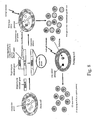
- An outline of this method is shown in Figure 8.
- a gene important for replication of an EB virus genome is deleted by homologous recombination in an EB virus-positive Akata cell.
- a hygromycin resistant gene is used to select a homologous recombinant virus.
- a packaging cell is infected with the virus liquid solution produced and then cloned with a selection marker (neomycin) used for generating the packaging cell as well as a selection marker (hygromycin) used for generating replication incompetent virus, thereby isolating the Akata packaging cell containing only a TR(-) EB virus gene lacking a packaging signal and an EB virus gene lacking genes important for replication of the viral genome.
- a selection marker neomycin
- hygromycin a selection marker used for generating replication incompetent virus
- the present invention also provides an Akata packaging cell having an amplicon plasmid produced by the above method.
- the Akata packaging cell having an amplicon plasmid of the present invention has an ability to produce an amplicon plasmid DNA coated with an EB virus envelope as an EB virus vector by the treatment of the cell with an anti-human immunoglobulin antibody.
- An EB virus genome is elongated and replicated in a rolling circle-manner. When the packaging signal is deleted, the EB virus genome cannot be excised. Thus, the EB virus genome is not incorporated into a virus particle.
- a gene of an amplicon plasmid is also elongated in a rolling circle-manner.
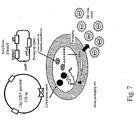
- an amplicon forms a concatemer and is cut at a portion of a packaging signal, followed by packaging at a size of about 170 kb corresponding to the size of an EB virus genome (see, Figure 7).
- a size of about 170 kb corresponding to the size of an EB virus genome see, Figure 7.
- the Akata packaging cell containing an amplicon plasmid generated by the method of the present invention produces an EB virus vector without viral replication ability at an efficiency of at most 1,000 times or more than that by the conventional method does. And the Akata packaging cell does not produce wild type EB virus.
- the present invention provides a method for producing an EB virus vector without viral replication ability, comprising inducing lytic infection of an Akata packaging cell introduced with an amplicon plasmid, which is produced by the above-mentioned method of the present invention, thereby releasing an EB virus vector covered with a virus envelope.
- Induction of lytic infection of an Akata packaging cell introduced with an amplicon plasmid can be carried out easily by treatment of the cell with an anti-human immunoglobulin antibody.
- the present invention also provides an EB virus vector produced by the above-mentioned method.
- This EB virus vector contains an amplicon plasmid within an EB virus particle.
- This EB virus vector is able to infect B-lymphocytes and immortalize them.
- the EB virus vector does not have an ability to replicate itself as a virus particle. Therefore, a human antibody can be produced easily, by infecting a B lymphocyte producing a desired antibody with an EB virus vector of the present invention, by immortalizing the B lymphocyte, and by proliferating the B lymphocyte in vitro.
- the present invention also provides a method for generating an immortalized B lymphocyte using an EB virus vector of the present invention as well as an immortalized B lymphocyte produced by the method of the present invention.
- a packaging signal of Akata EB virus was disrupted based on the method shown in Figure 1.
- the cloned Bam-Nhet region harboured only one packaging signal (TR).
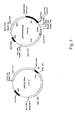
- plasmid pUCNhetneoRed for disruption of the gene in which TR had been disrupted was constructed by inserting a neomycin resistant gene (neo r ) and a red dye gene (DsRed) to a region between Bsp HI and EcoR I restriction enzyme site of pUC119Nhet ( Figure 3b).
- This plasmid DNA was introduced into an EB virus-positive Akata cell by the electroporation method.
- Akata cell was selected with neomycin and about 500 resistant Akata cell clones were obtained. Then, Akata cell clones having a DNA band of a size which appears in the case of homologous recombination were screened by a DNA hybridization method. A DNA fragment digested with a restriction enzyme Bam HI was reacted with a neomycin resistant gene as a probe, to thereby detect a predicted 11.6 kb-band.
- ANC F1 and ANC R2 are primers designed at the external regions of the 5' end and 3' end of the recombination site, respectively.
- ANC R1 and ANC F2 are primers designed at the internal region of neo r . Approximate positions and directions of respective primers are shown in Figure 4.
- a 5.3 kb DNA fragment is amplified by primer pairs of ANC F1 and ANC R1
- a 10.3 kb DNA fragment is amplified by primer pairs of ANC F2 and ANC R2.
- no fragment is amplified. With using this method, it was confirmed by this method that 12 clones were carrying a homologous recombinant EB virus.
- Akata cell having only a TR(-) virus genome in which a packaging signal had been disrupted by homologous recombination was isolated.
- a 119 cell which was a clone carrying a TR(-) EB virus genome was cultured in a selection medium (50% EB virus-negative Akata cell culture supernatant, 0.35 mg/ml G418, 50 ⁇ M hydroxyurea) for 10 days. Then, hydroxyurea was removed from the culture and cells were further cultivated for 10 days. The resulting culture was diluted so as to place 0.5 cell per well of a 96-well plate and then cultured.
- gene amplification was carried out using primer pairs designed at the external regions of TR, to isolate an Akata cell clone in which a band of wild type (2.0 kb) had been dropped off and only a band (5.7 kb) of recombinant type was observed. Further, based on change in a DNA restriction enzyme digestion pattern by a southern blot method, it was confirmed that a packaging cell having only an EB virus lacking a packaging signal was isolated.
- an amplicon plasmid was prepared.
- an amplicon plasmid it is necessary to have a construction having a packaging signal (TR). Further, it is important for maintenance of the plasmid in the cell to be introduced that the amplicon plasmid should have constructions such as, replication origin oriP during an EB virus latent infection period and an EBNA1 gene which trans-activates oriP.
- the amplicon plasmid in order to produce an EB virus vector from the packaging cell introduced with an amplicon plasmid, by stimulation with an anti-human immunoglobulin antibody, it is necessary for the amplicon plasmid to have a replication origin oriLyt during the induced EB virus lytic infection period.
- Figure 6b shows the construct of the generated amplicon plasmid.
- the amplicon plasmid (pPsi) is a 21 kb and contains EBNA-1, oriP, TR, and oriLyt, as EBV genes, wherein a green fluorescent protein (GFP) gene used as a reporter and a puromycin resistant gene used for selection, by which an amplicon plasmid is maintained in a cell, are additionally incorporated.
- GFP green fluorescent protein
- a gene of an amplicon plasmid is also elongated in a rolling circle-manner. Thereafter, an amplicon forms a concatamer.
- the concatamer is cleaved at the TR portion at a size of about 170 kb corresponding to the size of an EB virus genome, followed by packaging ( Figure 7). That is, an EB virus containing an amplicon plasmid for its gene is released.
- the constructed amplicon plasmid pPsi was transfected into a packaging cell by electroporation. Thereafter, selective culture was carried out in the medium containing 0.35 ⁇ g/ml puromycin, 50% EB virus-negative Akata cell culture supernatant, and 0.35 mg/ml G418. The resulting 72 puromycin resistant clones were all GFP-positive. One of the clones was treated with an anti-human immunoglobulin antibody. Thereafter, it was confirmed that a capsid antigen (VCA), which is a constituent protein of an EB virus, was expressed and that a wild type virus was not present in its supernatant.
- VCA capsid antigen
- a recombinant EB virus in the supernatant was infected to an EB virus-negative Daudi cell. As the result, it was confirmed that less than 20% of the Daudi cells were infected with a recombinant EB virus and expressed GFP.
- BALF2 gene encoding EB virus single-stranded DNA binding protein was disrupted by deleting the gene from the Akata EB virus genome through substitution with a hygromycin resistant gene based on the method in Figure 8.
- a plasmid pUC119 EcoD-JHyg for the disruption of the BALF2 gene was prepared by cloning an 11,429 bp Eco RI -Sal I fragment encompassing the Eco-Dhet and Eco-J regions of Akata EB virus genome into pUC119. From pUC119 EcoD-JHyg, a 2,500 bp Cla I -Eco RV region was eliminated and substituted with hygromycin resistant gene of 1,853 bp ( Figure 9a). A 7,807 bp Sac I -Bgl II fragment was excised from this plasmid DNA and transfected into an EB virus-positive Akata cell by electroporation.
- an Akata cell clone having a DNA band of a size appearing in the case of occurrence of homologous recombination was screened by carrying out hygromycin selection of Akata cell, and then carrying out a DNA hybridization method for about 1,000 resistant clones.
- a DNA fragment digested with a restriction enzyme Nco I was reacted with the hygromycin resistant gene shown in Figure 9b as a probe, to thereby detect a predicted 4.8 kb band on DNA separated from 5 Akata cell clones.
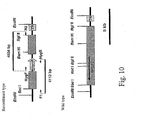
- F1 and R2 are primers designed at the each external region of 5' end or 3' end of the recombination site, respectively.
- HygF and HygR are primers designed at the internal region of the hygromycin resistant gene, respectively. Approximate positions and directions of respective primers are shown in Figure 10.
- a 4,112 bp DNA fragment is amplified by a primer pair of F1 and HygR, and a 4,534 bp DNA fragment is amplified by a primer pair of HygF and R2.
- no DNA fragment is amplified. It was confirmed that 2 clones carried a homologous recombinant EB virus by this method.
- a clone carrying a homologous recombinant EB virus was treated with an anti-human immunoglobulin antibody, to produce a mixture of virus containing both recombinant type and wild type.
- the produced virus in the liquid solution was infected to the packaging cell prepared in Example 1, and the cell was subjected to cloning in the presence of neomycin and hygromycin.
- an Akata packaging cell containing only an EB virus genome lacking BALF2 gene and a TR(-) EB virus genome as a helper, and having no wild type virus genome was separated.
- This Akata packaging cell was treated with an anti-human immunoglobulin antibody, to recover an EB virus vector containing only a BALF2 gene-deficient EB virus.
- a half million umbilical cord blood-derived lymphocytes were infected with 10-fold serially diluted BALF2 gene-deficient EB virus liquid solution, each in the volume of 100 ⁇ l, and then cultured for 4 weeks. As a result, it was confirmed that an EB virus vector having about 10 5 TD 50 /ml transforming activity but having no proliferation ability was produced.
Landscapes
- Life Sciences & Earth Sciences (AREA)
- Health & Medical Sciences (AREA)
- Genetics & Genomics (AREA)
- Chemical & Material Sciences (AREA)
- Organic Chemistry (AREA)
- Engineering & Computer Science (AREA)
- Bioinformatics & Cheminformatics (AREA)
- Virology (AREA)
- Biotechnology (AREA)
- General Engineering & Computer Science (AREA)
- Molecular Biology (AREA)
- Biophysics (AREA)
- Biomedical Technology (AREA)
- General Health & Medical Sciences (AREA)
- Wood Science & Technology (AREA)
- Zoology (AREA)
- Biochemistry (AREA)
- Physics & Mathematics (AREA)
- Microbiology (AREA)
- Plant Pathology (AREA)
- Gastroenterology & Hepatology (AREA)
- Medicinal Chemistry (AREA)
- Proteomics, Peptides & Aminoacids (AREA)
- Micro-Organisms Or Cultivation Processes Thereof (AREA)
Applications Claiming Priority (3)
| Application Number | Priority Date | Filing Date | Title |
|---|---|---|---|
| JP2002349467 | 2002-12-02 | ||
| JP2002349467 | 2002-12-02 | ||
| PCT/JP2003/015419 WO2004050886A1 (ja) | 2002-12-02 | 2003-12-02 | Ebウイルスベクターのためのパッケージング細胞システム |
Publications (1)
| Publication Number | Publication Date |
|---|---|
| EP1580276A1 true EP1580276A1 (de) | 2005-09-28 |
Family
ID=32463041
Family Applications (1)
| Application Number | Title | Priority Date | Filing Date |
|---|---|---|---|
| EP03812371A Withdrawn EP1580276A1 (de) | 2002-12-02 | 2003-12-02 | Verpackungszellsystem für den eb-virusvektor |
Country Status (5)
| Country | Link |
|---|---|
| US (1) | US20060194203A1 (de) |
| EP (1) | EP1580276A1 (de) |
| JP (1) | JPWO2004050886A1 (de) |
| AU (1) | AU2003302709A1 (de) |
| WO (1) | WO2004050886A1 (de) |
Families Citing this family (2)
| Publication number | Priority date | Publication date | Assignee | Title |
|---|---|---|---|---|
| EP2065462A1 (de) * | 2007-11-27 | 2009-06-03 | Helmholtz Zentrum München Deutsches Forschungszentrum für Gesundheit und Umwelt (GmbH) | Ex-vivo-Verfahren zur Herstellung eines Präparats mit für strukturale EBV-Antigene spezifischen CD4+-T-Zellen |
| CN104604799B (zh) * | 2015-02-05 | 2017-11-21 | 南华大学 | 一种鉴定eb病毒对淋巴瘤的诱发性的方法 |
Family Cites Families (3)
| Publication number | Priority date | Publication date | Assignee | Title |
|---|---|---|---|---|
| JPH089971A (ja) * | 1994-07-05 | 1996-01-16 | Kenzo Takada | 組換えebウイルスの分離増殖法 |
| EP0915166B1 (de) * | 1997-11-05 | 2004-02-11 | GSF-Forschungszentrum für Umwelt und Gesundheit GmbH | DNA-Virus-Vektoren und Verfahren zu ihrer Herstellung |
| EP0915165B1 (de) * | 1997-11-05 | 2003-02-19 | GSF-Forschungszentrum für Umwelt und Gesundheit GmbH | Verfahren zur helfervirusfreien Verpackung einer Genvektor-DNA |
-
2003
- 2003-12-02 US US10/537,263 patent/US20060194203A1/en not_active Abandoned
- 2003-12-02 WO PCT/JP2003/015419 patent/WO2004050886A1/ja not_active Ceased
- 2003-12-02 AU AU2003302709A patent/AU2003302709A1/en not_active Abandoned
- 2003-12-02 EP EP03812371A patent/EP1580276A1/de not_active Withdrawn
- 2003-12-02 JP JP2004556890A patent/JPWO2004050886A1/ja active Pending
Non-Patent Citations (1)
| Title |
|---|
| See references of WO2004050886A1 * |
Also Published As
| Publication number | Publication date |
|---|---|
| AU2003302709A1 (en) | 2004-06-23 |
| US20060194203A1 (en) | 2006-08-31 |
| WO2004050886A1 (ja) | 2004-06-17 |
| JPWO2004050886A1 (ja) | 2006-03-30 |
Similar Documents
| Publication | Publication Date | Title |
|---|---|---|
| US5686280A (en) | Efficient gene transfer into primary lymphocytes obviating the need for drug selection | |
| RU2714259C2 (ru) | Нетоксичные векторы на основе впг для применений в эффективной доставке генов и комплементирующие клетки для их продуцирования | |
| US5124263A (en) | Recombination resistant retroviral helper cell and products produced thereby | |
| Redwood et al. | Use of a murine cytomegalovirus K181-derived bacterial artificial chromosome as a vaccine vector for immunocontraception | |
| Persons et al. | An improved method for generating retroviral producer clones for vectors lacking a selectable marker gene | |
| Bennett et al. | Gamma-herpesvirus latency requires T cell evasion during episome maintenance | |
| Niikura et al. | Direct evidence of host genome acquisition by the alphaherpesvirus Marek’s disease virus | |
| CA3113595A1 (en) | Human cytomegalovirus comprising exogenous antigens | |
| JP3923505B2 (ja) | Hhv−6由来の組換ウイルスベクター、その製造方法、それを用いた宿主細胞の形質転換方法、それにより形質転換された宿主細胞およびそれを用いた遺伝子治療方法 | |
| CN108048483B (zh) | 复制型重组腺病毒HAdV-5载体系统及其应用 | |
| EP1580276A1 (de) | Verpackungszellsystem für den eb-virusvektor | |
| IL301482A (en) | Attb cell line, transgenic cell lines derived therefrom, and methods of making the same | |
| CN113637705A (zh) | 猴1型腺病毒(SAdV-1)载体系统及其应用 | |
| Marshall et al. | Selection of Marek's disease virus recombinants expressing the Escherichia coli gpt gene | |
| AU747831B2 (en) | DNA virus vectors and methods for their preparation | |
| CZ296600B6 (cs) | Virový vektor obsahující replikující se DNA, zpusob prípravy této DNA a farmaceutická kompozice obsahující virový vektor | |
| Kasai et al. | DNA-based methods to prepare helper virus-free herpes amplicon vectors and versatile design of amplicon vector plasmids | |
| JPWO2003056023A1 (ja) | 大腸菌人工染色体として増殖可能な二本鎖環状dna | |
| JP2005536226A (ja) | ベクターとしての非ヒトヘルペスウイルス | |
| Kuo et al. | Efficient gene transfer into primary murine lymphocytes obviating the need for drug selection | |
| CN114369621B (zh) | 一种基因生物制剂及其制备方法和应用 | |
| CA2154854C (en) | Immortalized lymphocytes for production of viral-free proteins | |
| Staliunaite et al. | Molecular cloning and host range analysis of three cytomegaloviruses from Mastomys natalensis | |
| JP6761946B2 (ja) | 巨大環状ウイルスゲノムdnaの単離方法 | |
| Full | Cytomegalovirus Specific Activation of Cytotoxic T Lymphocytes by Chimeric Immunoreceptors |
Legal Events
| Date | Code | Title | Description |
|---|---|---|---|
| PUAI | Public reference made under article 153(3) epc to a published international application that has entered the european phase |
Free format text: ORIGINAL CODE: 0009012 |
|
| 17P | Request for examination filed |
Effective date: 20050630 |
|
| AK | Designated contracting states |
Kind code of ref document: A1 Designated state(s): AT BE BG CH CY CZ DE DK EE ES FI FR GB GR HU IE IT LI LU MC NL PT RO SE SI SK TR |
|
| AX | Request for extension of the european patent |
Extension state: AL LT LV MK |
|
| STAA | Information on the status of an ep patent application or granted ep patent |
Free format text: STATUS: THE APPLICATION HAS BEEN WITHDRAWN |
|
| 18W | Application withdrawn |
Effective date: 20051005 |