EP1577314A1 - Katalysator auf Basis einer Übergangsmetallverbindung für die Olefinpolymerisation und Verwendung des Katalysators für die Olefinpolymerisation - Google Patents
Katalysator auf Basis einer Übergangsmetallverbindung für die Olefinpolymerisation und Verwendung des Katalysators für die Olefinpolymerisation Download PDFInfo
- Publication number
- EP1577314A1 EP1577314A1 EP05012110A EP05012110A EP1577314A1 EP 1577314 A1 EP1577314 A1 EP 1577314A1 EP 05012110 A EP05012110 A EP 05012110A EP 05012110 A EP05012110 A EP 05012110A EP 1577314 A1 EP1577314 A1 EP 1577314A1
- Authority
- EP
- European Patent Office
- Prior art keywords
- group
- substituted
- atom
- formula
- periodic table
- Prior art date
- Legal status (The legal status is an assumption and is not a legal conclusion. Google has not performed a legal analysis and makes no representation as to the accuracy of the status listed.)
- Granted
Links
- 0 CCCC12c3c(*)c(*)c(C)c(*)c3*C1(CC)*2C Chemical compound CCCC12c3c(*)c(*)c(C)c(*)c3*C1(CC)*2C 0.000 description 21
- UFFBMTHBGFGIHF-UHFFFAOYSA-N Cc(cccc1C)c1N Chemical compound Cc(cccc1C)c1N UFFBMTHBGFGIHF-UHFFFAOYSA-N 0.000 description 7
- PKBUQVFZHIBYAG-XNJYKOPJSA-N C/C=N/c1c(C(F)(F)F)cccc1 Chemical compound C/C=N/c1c(C(F)(F)F)cccc1 PKBUQVFZHIBYAG-XNJYKOPJSA-N 0.000 description 1
- ZYASLTYCYTYKFC-UHFFFAOYSA-N C=C1c(cccc2)c2-c2ccccc12 Chemical compound C=C1c(cccc2)c2-c2ccccc12 ZYASLTYCYTYKFC-UHFFFAOYSA-N 0.000 description 1
- AEIOZWYBDBVCGW-UHFFFAOYSA-N CC(C)(C)c(cccc1)c1N Chemical compound CC(C)(C)c(cccc1)c1N AEIOZWYBDBVCGW-UHFFFAOYSA-N 0.000 description 1
- RZSUJIUTUGMZPG-UHFFFAOYSA-N CC(C)(C)c1cccc(C(C)(C)C)c1N Chemical compound CC(C)(C)c1cccc(C(C)(C)C)c1N RZSUJIUTUGMZPG-UHFFFAOYSA-N 0.000 description 1
- DDTKYVBFPULMGN-UHFFFAOYSA-N CC(C)c(cccc1C)c1N Chemical compound CC(C)c(cccc1C)c1N DDTKYVBFPULMGN-UHFFFAOYSA-N 0.000 description 1
- ZEZOIRFVLXEXBC-UHFFFAOYSA-N CCN1CCC1 Chemical compound CCN1CCC1 ZEZOIRFVLXEXBC-UHFFFAOYSA-N 0.000 description 1
- KWVPRPSXBZNOHS-UHFFFAOYSA-N Cc(cc1C)cc(C)c1N Chemical compound Cc(cc1C)cc(C)c1N KWVPRPSXBZNOHS-UHFFFAOYSA-N 0.000 description 1
- TWBPWBPGNQWFSJ-UHFFFAOYSA-N Nc(cccc1)c1-c1ccccc1 Chemical compound Nc(cccc1)c1-c1ccccc1 TWBPWBPGNQWFSJ-UHFFFAOYSA-N 0.000 description 1
Images
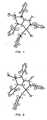

Classifications
-
- C—CHEMISTRY; METALLURGY
- C08—ORGANIC MACROMOLECULAR COMPOUNDS; THEIR PREPARATION OR CHEMICAL WORKING-UP; COMPOSITIONS BASED THEREON
- C08F—MACROMOLECULAR COMPOUNDS OBTAINED BY REACTIONS ONLY INVOLVING CARBON-TO-CARBON UNSATURATED BONDS
- C08F10/00—Homopolymers and copolymers of unsaturated aliphatic hydrocarbons having only one carbon-to-carbon double bond
-
- C—CHEMISTRY; METALLURGY
- C07—ORGANIC CHEMISTRY
- C07F—ACYCLIC, CARBOCYCLIC OR HETEROCYCLIC COMPOUNDS CONTAINING ELEMENTS OTHER THAN CARBON, HYDROGEN, HALOGEN, OXYGEN, NITROGEN, SULFUR, SELENIUM OR TELLURIUM
- C07F15/00—Compounds containing elements of Groups 8, 9, 10 or 18 of the Periodic Table
- C07F15/0006—Compounds containing elements of Groups 8, 9, 10 or 18 of the Periodic Table compounds of the platinum group
- C07F15/006—Palladium compounds
-
- C—CHEMISTRY; METALLURGY
- C07—ORGANIC CHEMISTRY
- C07F—ACYCLIC, CARBOCYCLIC OR HETEROCYCLIC COMPOUNDS CONTAINING ELEMENTS OTHER THAN CARBON, HYDROGEN, HALOGEN, OXYGEN, NITROGEN, SULFUR, SELENIUM OR TELLURIUM
- C07F15/00—Compounds containing elements of Groups 8, 9, 10 or 18 of the Periodic Table
- C07F15/02—Iron compounds
-
- C—CHEMISTRY; METALLURGY
- C07—ORGANIC CHEMISTRY
- C07F—ACYCLIC, CARBOCYCLIC OR HETEROCYCLIC COMPOUNDS CONTAINING ELEMENTS OTHER THAN CARBON, HYDROGEN, HALOGEN, OXYGEN, NITROGEN, SULFUR, SELENIUM OR TELLURIUM
- C07F15/00—Compounds containing elements of Groups 8, 9, 10 or 18 of the Periodic Table
- C07F15/04—Nickel compounds
-
- C—CHEMISTRY; METALLURGY
- C07—ORGANIC CHEMISTRY
- C07F—ACYCLIC, CARBOCYCLIC OR HETEROCYCLIC COMPOUNDS CONTAINING ELEMENTS OTHER THAN CARBON, HYDROGEN, HALOGEN, OXYGEN, NITROGEN, SULFUR, SELENIUM OR TELLURIUM
- C07F15/00—Compounds containing elements of Groups 8, 9, 10 or 18 of the Periodic Table
- C07F15/06—Cobalt compounds
-
- C—CHEMISTRY; METALLURGY
- C07—ORGANIC CHEMISTRY
- C07F—ACYCLIC, CARBOCYCLIC OR HETEROCYCLIC COMPOUNDS CONTAINING ELEMENTS OTHER THAN CARBON, HYDROGEN, HALOGEN, OXYGEN, NITROGEN, SULFUR, SELENIUM OR TELLURIUM
- C07F7/00—Compounds containing elements of Groups 4 or 14 of the Periodic Table
-
- C—CHEMISTRY; METALLURGY
- C07—ORGANIC CHEMISTRY
- C07F—ACYCLIC, CARBOCYCLIC OR HETEROCYCLIC COMPOUNDS CONTAINING ELEMENTS OTHER THAN CARBON, HYDROGEN, HALOGEN, OXYGEN, NITROGEN, SULFUR, SELENIUM OR TELLURIUM
- C07F7/00—Compounds containing elements of Groups 4 or 14 of the Periodic Table
- C07F7/28—Titanium compounds
-
- C—CHEMISTRY; METALLURGY
- C08—ORGANIC MACROMOLECULAR COMPOUNDS; THEIR PREPARATION OR CHEMICAL WORKING-UP; COMPOSITIONS BASED THEREON
- C08F—MACROMOLECULAR COMPOUNDS OBTAINED BY REACTIONS ONLY INVOLVING CARBON-TO-CARBON UNSATURATED BONDS
- C08F110/00—Homopolymers of unsaturated aliphatic hydrocarbons having only one carbon-to-carbon double bond
- C08F110/02—Ethene
-
- C—CHEMISTRY; METALLURGY
- C08—ORGANIC MACROMOLECULAR COMPOUNDS; THEIR PREPARATION OR CHEMICAL WORKING-UP; COMPOSITIONS BASED THEREON
- C08F—MACROMOLECULAR COMPOUNDS OBTAINED BY REACTIONS ONLY INVOLVING CARBON-TO-CARBON UNSATURATED BONDS
- C08F2410/00—Features related to the catalyst preparation, the catalyst use or to the deactivation of the catalyst
- C08F2410/03—Multinuclear procatalyst, i.e. containing two or more metals, being different or not
-
- C—CHEMISTRY; METALLURGY
- C08—ORGANIC MACROMOLECULAR COMPOUNDS; THEIR PREPARATION OR CHEMICAL WORKING-UP; COMPOSITIONS BASED THEREON
- C08F—MACROMOLECULAR COMPOUNDS OBTAINED BY REACTIONS ONLY INVOLVING CARBON-TO-CARBON UNSATURATED BONDS
- C08F4/00—Polymerisation catalysts
- C08F4/42—Metals; Metal hydrides; Metallo-organic compounds; Use thereof as catalyst precursors
- C08F4/44—Metals; Metal hydrides; Metallo-organic compounds; Use thereof as catalyst precursors selected from light metals, zinc, cadmium, mercury, copper, silver, gold, boron, gallium, indium, thallium, rare earths or actinides
- C08F4/60—Metals; Metal hydrides; Metallo-organic compounds; Use thereof as catalyst precursors selected from light metals, zinc, cadmium, mercury, copper, silver, gold, boron, gallium, indium, thallium, rare earths or actinides together with refractory metals, iron group metals, platinum group metals, manganese, rhenium technetium or compounds thereof
- C08F4/62—Refractory metals or compounds thereof
- C08F4/64—Titanium, zirconium, hafnium or compounds thereof
- C08F4/659—Component covered by group C08F4/64 containing a transition metal-carbon bond
- C08F4/65912—Component covered by group C08F4/64 containing a transition metal-carbon bond in combination with an organoaluminium compound
Definitions
- This invention relates a transition metal compound, a catalyst for polymerization of an olefin comprising the transition metal compound, and a process for polymerizing an olefin using the catalyst.
- a metallocene catalyst comprising a combination of a complex having a cyclopentadienyl ring as a ligand with an aluminoxane attracts attention because the catalyst has a high catalytic activity, gives a polymer having a narrow molecular weight distribution and is capable of controlling the microstructure of the polymer.
- Such metallocene catalyst is proposed in, for example, Japanese Unexamined Patent Publication No. S58-19309.
- a catalyst comprising a late transition metal complex gives a polyolefin having a structure with many branches, which structure is distinguishable from that of a polymer produced with the conventional metallocene catalyst.
- Such complex includes, for example, a diimine complex disclosed in J. Am. Chem. Soc., 117, 6414 (1995) and WO96/23010; a salicylaldimine complex disclosed in Science, 287, 460 (2000) and WO00/56781; andananilinotropone complex disclosed in Organometallics, 20, 3217 (2001) and WO01/30865.
- a primary object of the present invention is to provide a novel transition metal compound, which is useful as an ingredient of a catalyst for polymerization of an olefin.
- Another object of the present invention is to provide a catalyst for polymerization of an olefin, which enables the production of polyolefin with enhanced efficiency.
- Still another object of the present invention is to provide a process for polymerizing an olefin with enhanced efficiency.
- transition metal compounds represented by the following formulae (1), and (4) through (9).
- R' represents a hydrogen atom, a hydrocarbon group having 1 to 30 carbon atoms, a substituted silyl group, a substituted amide group, a substituted alkoxy group, a substituted aryloxy group, or a hydrocarbon group containing a substituted silyl group, an atom of group 15 or group 16 of the periodic table or a halogen atom;
- Z represents a substituent selected from the group consisting of substituents represented by the following formulae (2): wherein R 1 , R 2 and R 3 independently represents a hydrogen atom, a hydrocarbon group having 1 to 20 carbon atoms, a substituted silyl group, a substituted amide group, a substituted alkoxy group, a substituted aryloxy group, or a hydrocarbon group containing a substituted silyl group, an atom of group 15 or group 16 of the periodic table or a halogen atom, R', R 2 and R 3 may be the same or different and two members selected from R', R 2 and R 3 may be bonded together to form a ring, provided that at least two rings can be formed; E 1 and E 2 represent an atom of group 16 of the periodic table, G', G 1 and G 2 represent an atom of group 15 of the periodic table, n is an integer of 0 to 2 provided that a case when n is 0 means that Y and the iminoacyl group in formula (1)
- Y represents a substituent selected from the group consisting of substituents represented by the following formulae (3): wherein R 4 , R 7 and R 8 independently represents a hydrogen atom, a hydrocarbon group having 1 to 20 carbon atoms, a substituted silyl group, a substituted amide group, a substituted alkoxy group, a substituted aryloxy group, or a hydrocarbon group containing a substituted silyl group, an atom of group 15 or group 16 of the periodic table or a halogen atom, R 5 represents a hydrogen atom, a hydrocarbon group having 1 to 30 carbon atoms, a substituted silyl group, a substituted amide group, a substituted alkoxy group, a substituted aryloxy group, or a hydrocarbon group containing a substituted silyl group, an atom of group 15 or group 16 of the periodic table or a halogen atom, R 6 represents a hydrocarbon group having 1 to 20 carbon atoms, a substituted sily
- A represents a transition metal atom of groups 3 to 11 of the periodic table or a typical element of groups 1, 2 and 11 to 16 of the periodic table;
- X' represents a hydrogen atom, a hydrocarbon group having 1 to 20 carbon atoms, a substituted silyl group, a substituted amide group, a substituted alkoxy group, a substituted aryloxy group, a hydrocarbon group containing a substituted silyl group, or a hydrocarbon group containing an atom of group 15 or group 16 of the periodic table or a halogen atom, or X' is a halogen atom; and d is an integer of 0 to 6 and, when n is at least 2, X's may be the same or different;
- L' is a coordinate bond-forming compound having a coordinating member selected from the group consisting of ⁇ electron, atoms of groups 14, 15 and 16 of the periodic table and halogen atoms, and e is an integer of 0 to 6 and, when e is at least 2, L's may be the same or different;
- d is an oxidation number of the central metal A, and f is an integer of 0 or 1;
- M represents a transition metal atom of groups 3 to 11 of the periodic table
- X represents a hydrogen atom, a hydrocarbon group having 1 to 20 carbon atoms, a substituted silyl group, a substituted amide group, a substituted alkoxy group, a substituted aryloxy group, a hydrocarbon group containing a silyl group, or a hydrocarbon group containing an atom of group 15 or group 16 of the periodic table or a halogen atom, or X' is a halogen atom; and a is an integer of 1 to 5 and, when n is at least 2, Xs may be the same or different;
- L is a coordinate bond-forming compound having a coordinating member selected from the group consisting of ⁇ electron, atoms of groups 14, 15 and 16 of the periodic table and halogen atoms, and b is an integer of 0 to 6 and, when b is at least 2, Ls may be the same or different; and X and L may be bonded to each other, L and R 1 may be bonded to each other, and L and Y may be bonded to each other; and
- R 9 and R 11 represent a hydrogen atom, a hydrocarbon group having 1 to 30 carbon atoms, a substituted silyl group, a substituted amide group, a substituted alkoxy group, a substituted aryloxy group, or a hydrocarbon group containing a substituted silyl group, an atom of group 15 or group 16 of the periodic table or a halogen atom;
- R 10 represents a hydrogen atom, a hydrocarbon group having 1 to 20 carbon atoms, a substituted silyl group, a substituted amide group, a substituted alkoxy group, a substituted aryloxy group, or a hydrocarbon group containing a substituted silyl group, an atom of group 15 or group 16 of the periodic table or a halogen atom;
- Z M, X, L, A, X', L', a, b,
- R 12 represents a hydrogen atom, a hydrocarbon group having 1 to 30 carbon atoms, a substituted silyl group, a substituted amide group, a substituted alkoxy group, a substituted aryloxy group, or a hydrocarbon group containing a substituted silyl group, an atom of group 15 or group 16 of the periodic table or a halogen atom
- R 13 represents a hydrogen atom, a hydrocarbon group having 1 to 20 carbon atoms, a substituted silyl group, a substituted amide group, a substituted alkoxy group, a substituted aryloxy group, or a hydrocarbon group containing a substituted silyl group, an atom of group 15 or group 16 of the periodic table or a halogen atom
- E 5 represents an atom of group 16 of the periodic table
- Z, M, X, L, a, b and c are the same as Z, M, X, L, a, b and c, respectively,
- R 14 and R 15 represent a hydrogen atom, a hydrocarbon group having 1 to 20 carbon atoms, a substituted silyl group, a substituted amide group, a substituted alkoxy group, a substituted aryloxy group, or a hydrocarbon group containing a substituted silyl group, an atom of group 15 or group 16 of the periodic table or a halogen atom, R 14 and R 15 may be the same or different, and R 14 and R 15 may be bonded together to form a ring;
- R 16 represents a hydrogen atom, a hydrocarbon group having 1 to 30 carbon atoms, a substituted silyl group, a substituted amide group, a substituted alkoxy group, a substituted aryloxy group, or a hydrocarbon group containing a substituted silyl group, an atom of group 15 or group 16 of the periodic table or a halogen atom;
- G 5 represents an atom of group 15 of the periodic table;
- R 17 and R 18 represent a hydrogen atom, a hydrocarbon group having 1 to 30 carbon atoms, a substituted silyl group, a substituted amide group, a substituted alkoxy group, a substituted aryloxy group, or a hydrocarbon group containing a substituted silyl group, an atom of group 15 or group 16 of the periodic table or a halogen atom, and R 17 and R 18 may be the same different;
- R 19 through R 23 represent a hydrogen atom, a halogen atom, a hydrocarbon group having 1 to 20 carbon atoms, a substituted silyl group, a substituted amide group, a substituted alkoxy group, a substituted aryloxy group, or a hydrocarbon group containing a substituted silyl group, an atom of group 15 or group 16 of the periodic table or a halogen atom,
- R 19 through R 23 may be the same or different, and two members selected from R 17 through R 23 may be bonded together to
- R 24 through R 27 represent a hydrogen atom, a hydrocarbon group having 1 to 30 carbon atoms, a substituted silyl group, a substituted amide group, a substituted alkoxy group, a substituted aryloxy group, or a hydrocarbon group containing a substituted silyl group, an atom of group 15 or group 16 of the periodic table or a halogen atom; and M, X, L, A, X', L', a, b, c, d and e are the same as M, X, L, A, X', L', a, b, c, d and e, respectively, which are defined for formula (1).
- R 28 , R 29 and R 31 through R 34 represent a hydrogen atom, a hydrocarbon group having 1 to 20 carbon atoms, a substituted silyl group, a substituted amide group, a substituted alkoxy group, a substituted aryloxy group, or a hydrocarbon group containing a substituted silyl group, an atom of group 15 or group 16 of the periodic table or a halogen atom;
- R 30 represents a hydrogen atom, a hydrocarbon group having 1 to 30 carbon atoms, a substituted silyl group, a substituted amide group, a substituted alkoxy group, a substituted aryloxy group, or a hydrocarbon group containing a substituted silyl group, an atom of group 15 or group 16 of the periodic table or a halogen atom
- M, X, L, a, b and c are the same as M, X, L, a, b and c, respectively, which are defined for formula (1); and
- a catalyst for polymerization of an olefin which comprises (A) a transition metal compound as represented by any one of formulae (1), and (4) through (9), and (B) an activating cocatalyst.
- a catalyst for polymerization of an olefin which comprises (A) a transition metal compound as represented by any one of the following genral formulae (10) to (14), and (B) an activating cocatalyst.
- R 35 through R 38 represent a hydrogen atom, a hydrocarbon group having 1 to 30 carbon atoms, a substituted silyl group, a substituted amide group, a substituted alkoxy group, a substituted aryloxy group, or a hydrocarbon group containing a substituted silyl group, an atom of group 15 or group 16 of the periodic table or a halogen atom; and M, X, L, a, b and c are the same as M, X, L, a, b and c, respectively, which are defined for formula (1).
- Q represents an element of group 16 of the periodic table or C(R 39 )(R 40 ) wherein R 39 and R 40 represent a hydrogen atom, a hydrocarbon group having 1 to 20 carbon atoms, a substituted silyl group, a substituted amide group, a substituted alkoxy group, a substituted aryloxy group, or a hydrocarbon group containing a substituted silyl group, an atom of group 15 or group 16 of the periodic table or a halogen atom;
- Z, Y, M, X, L, a, b and c are the same as Z, Y, M, X, L, a, b and c, respectively, which are defined for formula (1); and two members selected from Q, Z and Y may be bonded together to form a ring, provided that at least two rings can be formed; X and L may be bonded to each other, and L and Y may be bonded to each other.
- R 41 and R 42 represent a hydrogen atom, a hydrocarbon group having 1 to 20 carbon atoms, a substituted silyl group, a substituted amide group, a substituted alkoxy group, a substituted aryloxy group, or a hydrocarbon group containing a substituted silyl group, an atom of group 15 or group 16 of the periodic table or a halogen atom, and R 41 and R 42 may be the same or different;
- Z, Y, M, X, L, a, b and c are the same as Z, Y, M, X, L, a, b and c, respectively, which are defined for formula (1); and two members selected from R 41 , R 42 , Z and Y may be bonded together to form a ring, X and L may be bonded to each other, L and R 41 may be bonded to each other, L and R 42 may be bonded to each other, and L and Y may be bonded together.
- R 43 through R 46 represent a hydrogen atom, a hydrocarbon group having 1 to 20 carbon atoms, a substituted silyl group, a substituted amide group, a substituted alkoxy group, a substituted aryloxy group, a halogen atom, or a substituent containing an atom of group 15 or group 16 of the periodic table, and R 43 through R 46 may be the same or different;
- Y, M, X, L, a, b and c are the same as Y, M, X, L, a, b and c, respectively, which are defined for formula (1); and two members selected from Y and R 43 through R 46 may be bonded together to form a ring, provided that at least two rings can be formed; X and L may be bonded to each other, L and R 46 may be bonded to each other, and L and Y may be bonded to each other.
- R 47 through R 52 represent a hydrogen atom, a hydrocarbon group having 1 to 20 carbon atoms, a substituted silyl group, a substituted amide group, a substituted alkoxy group, a substituted aryloxy group, a halogen atom, or a substituent containing an atom of group 15 or group 16 of the periodic table, and R 47 through R 52 may be the same or different;
- M, X, L, a, b and c are the same as M, X, L, a, b and c, respectively, which are defined for formula (1); and two members selected from R 47 through R 52 may be bonded together to form a ring, X and L may be bonded to each other, L and R 47 may be bonded to each other, L and R 48 may be bonded to each other, and L and R 52 may be bonded together.
- a catalyst for polymerization of an olefin which comprises (A) a transition metal compound as represented by any one of formulae (1), and (4) through (14), (B) an activating cocatalyst, and (C) an organometallic compound.
- a process for polymerizing an olefin which comprises polymerizing an olefin in the presence of a catalyst comprising (A) a transition metal compound as represented by any one of formulae (1) and (4) through (14), and (B) an activating cocatalyst.
- a process for polymerizing an olefin which comprises polymerizing an olefin in the presence of a catalyst comprising (A) a transition metal compound as represented by any one of formulae (1) and (4) through (14), (B) an activating cocatalyst, and (C) an organometallic compound.
- Novel transition metal compounds are represented by the above-recited formulae (1) and (4) through (9).
- R 1 represents a hydrogen atom, a hydrocarbon group having 1 to 30 carbon atoms, a substituted silyl group, a substituted amide group, a substituted alkoxy group, a substituted aryloxy group, or a hydrocarbon group containing a substituted silyl group, an atom of group 15 or group 16 of the periodic table or a halogen atom.
- hydrocarbon group having 1 to 30 carbon atoms there can be mentioned methyl, ethyl, vinyl, n-propyl, isopropyl, allyl, n-butyl, isobutyl, tert-butyl, pentyl, neopentyl, cyclopentyl, hexyl, cyclohexyl, phenyl, heptyl, benzyl, 2-methylphenyl, 4-methylphenyl, octyl, 2,6-dimethylphenyl, 2-ethylphenyl, nonyl, cumyl, 2-isopropylphenyl, 2,4,6-trimethylphenyl, 2-ethyl-6-methylphenyl, decyl, naphthyl, adamantyl, 2-tert-butylphenyl, 2,6-diethylphenyl, 2-methyl-6-isopropylphenyl, undecyl
- 2,6-dimethylphenyl, 2,6-diisopropylphenyl, 2-isopropylphenyl and 2-biphenyl groups are preferable.
- the substituted silyl group there ca be mentioned trimethylsilyl, dimethylphenylsilyl, triisopropylsilyl, dimethylmethoxysilyl, dimethyl-tertbutylsilyl, diphenylmethylsilyl and triphenylsilyl groups.
- the substituted amide group there can be mentioned dimethylamide, diethylamide, diisopropylamide, diphenylamide and methylphenylamide groups.
- substituted alkoxy groups there can be mentioned methoxy, ethoxy, isopropoxy and tert-butoxy groups.
- substituted aryloxy groups there can be mentioned phenoxy, 4-methylphenoxy, 2,6-dimethylphenoxy and 1-naphthoxy groups.
- hydrocarbon group containing a substituted silyl group an atom of group 15 or group 16 of the periodic table or a halogen atom
- trimethylsilylmethyl dimethylphenyl-silylmethyl, 2-dimethylaminophenyl, 2-diethylaminophenyl, 2-diisopropylaminophenyl, 2-pyridyl, 6-methyl-2-pyridyl, 2-pyridylphenyl, 2-imidazolyl, 2-cyanophenyl, 2-dimethylphosphinophenyl, 2-diphenylphosphinophenyl, triphenylphosphoranylidenemethyl, 2-methoxyphenyl, 2-ethoxyphenyl, 2-isopropoxyphenyl, 2-phenoxyphenyl, 2-thiomethylphenyl, methylsulfonylmethyl, p-toluenesulfonyl-methyl, trifluoromethyl, 2,2,2-trifluoromethyl, 2,2,2-triflu
- Z represents a substituent selected from the group consisting of substituents represented by the following formulae (2): wherein R', R 2 and R 3 independently represents a hydrogen atom, a hydrocarbon group having 1 to 20 carbon atoms, a substituted silyl group, a substituted amide group, a substituted alkoxy group, a substituted aryloxy group, or a hydrocarbon group containing a substituted silyl group, an atom of group 15 or group 16 of the periodic table or a halogen atom.
- hydrocarbon group having 1 to 20 carbon atoms there can be mentioned methyl, ethyl, vinyl, n-propyl, isopropyl, allyl, n-butyl, isobutyl, tert-butyl, pentyl, neopentyl, cyclopentyl, hexyl, cyclohexyl, phenyl, heptyl, benzyl, 2-methylphenyl, 4-methylphenyl, octyl, 2,6-dimethylphenyl, 2-ethylphenyl, nonyl, cumyl, 2-isopropylphenyl, 2,4,6-trimethylphenyl, 2-ethyl-6-methylphenyl, decyl, naphthyl, adamantyl, 2-tert-butylphenyl, 2,6-diethylphenyl, 2-methyl-6-isopropylphenyl, undecyl
- R 1 in formula (1) R' , R 2 and R 3 may be the same or different. Two members selected from R', R 2 and R 3 may be bonded together to form a ring, provided that at least two rings can be formed.
- E 1 and E 2 represent an atom of group 16 of the periodic table.
- G', G 1 and G 2 represent an atom of group 15 of the periodic table.
- n is an integer of 0 to 2 provided that a case when n is 0 means that Y and the iminoacyl group in formula (1) are directly bonded to each other.
- Y represents a substituent selected from substituents represented by the following formulae (3): wherein R 4 , R 7 and R 8 independently represents a hydrogen atom, a hydrocarbon group having 1 to 20 carbon atoms, a substituted silyl group, a substituted amide group, a substituted alkoxy group, a substituted aryloxy group, or a hydrocarbon group containing a substituted silyl group, an atom of group 15 or group 16 of the periodic table or a halogen atom.
- hydrocarbon group having 1 to 20 carbon atoms As specific examples of the hydrocarbon group having 1 to 20 carbon atoms, the substituted silyl group, the substituted amide group, the substituted alkoxy group, the substituted aryloxy group, and the hydrocarbon group containing a substituted silyl group, an atom of group 15 or group 16 of the periodic table or a halogen atom, there can be mentioned those which are hereinbefore recited for R', R 2 and R 3 in formula (2).
- R 5 represents a hydrogen atom, a hydrocarbon group having 1 to 30 carbon atoms, a substituted silyl group, a substituted amide group, a substituted alkoxy group, a substituted aryloxy group, or a hydrocarbon group containing a substituted silyl group, an atom of group 15 or group 16 of the periodic table or a halogen atom.
- hydrocarbon group having 1 to 30 carbon atoms As specific examples of the hydrocarbon group having 1 to 30 carbon atoms, the substituted silyl group, the substituted amide group, the substituted alkoxy group, the substituted aryloxy group, and the hydrocarbon group containing a substituted silyl group, an atom of group 15 or group 16 of the periodic table or a halogen atom, there can be mentioned those which are hereinbefore recited for R 1 in formula (1).
- R represents a hydrocarbon group having 1 to 20 carbon atoms, a substituted silyl group, a substituted amide group, a substituted alkoxy group, a substituted aryloxy group, or a hydrocarbon group containing a substituted silyl group, an atom of group 15 or group 16 of the periodic table or a halogen atom.
- hydrocarbon group having 1 to 20 carbon atoms As specific examples of the hydrocarbon group having 1 to 20 carbon atoms, the substituted silyl group, the substituted amide group, the substituted alkoxy group, the substituted aryloxy group, and the hydrocarbon group containing a substituted silyl group, an atom of group 15 or group 16 of the periodic table or a halogen atom, there can be mentioned those which are hereinbefore recited for R', R 2 and R 3 in formula (2).
- E 3 and E 4 represent an atom of group 16 of the periodic table.
- G 3 and G 4 represent an atom of group 15 of the periodic table.
- R 4 and R 5 may be bonded together to form a ring
- R 6 and R 7 may be bonded together to form a ring.
- Two members selected from R 1 , Z and Y in formula (1) may be bonded together to form a ring.
- A represents a transition metal atom of groups 3 to 11 of the periodic table or a typical element of groups 1, 2 and 11 to 16 of the periodic table.
- the transition metal atom of groups 3 to 11 of the periodic table there can be mentioned yttrium, samarium, neodymium, titanium, zirconium, hafnium, vanadium, niobium, tantalum, chromium, molybdenum, tungsten, manganese, rhenium, iron, ruthenium, osmium, cobalt, rhodium, iridium, nickel, palladium, platinum, copper, silver and gold.
- Nickel and palladium are especially preferable.
- lithium, sodium, potassium, magnesium, calcium, boron, aluminum, gallium, indium, tin, lead, antimony, bismuth, selenium and tellurium there can be mentioned lithium, sodium, potassium, magnesium, calcium, boron, aluminum, gallium, indium, tin, lead, antimony, bismuth, selenium and tellurium.
- X' represents a hydrogen atom, a hydrocarbon group having 1 to 20 carbon atoms, a substituted silyl group, a substituted amide group, a substituted alkoxy group, a substituted aryloxy group, a hydrocarbon group containing a substituted silyl group, or a hydrocarbon group containing an atom of group 15 or group 16 of the periodic table or a halogen atom, or X' is a halogen atom.
- the hydrocarbon group having 1 to 20 carbon atoms the substituted silyl group, the substituted amide group, the substituted alkoxy group, the substituted aryloxy group, and the hydrocarbon group containing a substituted silyl group, an atom of group 15 or group 16 of the periodic table or a halogen atom
- the halogen atom there can be mentioned fluorine, chlorine, bromine and iodine.
- d is an integer of 0 to 6 and, when n is at least 2, X's may be the same or different.
- L' is a coordinate bond-forming compound having a coordinating member selected from the group consisting of ⁇ electron, atoms of groups 14, 15 and 16 of the periodic table and halogen atoms.
- the coordinate bond-forming compound having a coordinating member selected from the group consisting of ⁇ electron, and atoms of groups 14, 15 and 16 of the periodic table there can be mentioned ethylene, propylene, butadiene, 1,5-cyclooctadiene, ⁇ -allyl, 2,6-dimethylphenylisocyanide, 2,6-diethylphenylisocyanide, 2,6-diisopropylphenylisocyanide, 2-isopropylphenylisocyanide, 2-biphenylisocyanide, trimethylamine, triethylamine, N,N-dimethylaniline, pyridine, acetonitrile, benzonitrile, trimethylphosphine, dimethylphenylphosphine, methyldipheny
- d is an oxidation number of the central metal A.
- f is an integer of 0 or 1.
- M represents a transition metal atom of groups 3 to 11 of the periodic table.
- the transition metal atom of groups 3 to 11 of the periodic table there can be mentioned yttrium, samarium, neodymium, titanium, zirconium, hafnium, vanadium, niobium, tantalum, chromium, molybdenum, tungsten, manganese, rhenium, iron, ruthenium, osmium, cobalt, rhodium, iridium, nickel, palladium, platinum, copper, silver and gold.
- X represents a hydrogen atom, a hydrocarbon group having 1 to 20 carbon atoms, a substituted silyl group, a substituted amide group, a substituted alkoxy group, a substituted aryloxy group, a hydrocarbon group containing a silyl group, or a hydrocarbon group containing an atom of group 15 or group 16 of the periodic table or a halogen atom, or X is a halogen atom.
- the hydrocarbon group having 1 to 20 carbon atoms the substituted silyl group, the substituted amide group, the substituted alkoxy group, the substituted aryloxy group, and the hydrocarbon group containing a substituted silyl group, an atom of group 15 or group 16 of the periodic table or a halogen atom
- the halogen atom there can be mentioned fluorine, chlorine, bromine and iodine.
- a is an integer of 1 to 5 and, when n is at least 2, Xs may be the same or different.
- L is a coordinate bond-forming compound having a coordinating atom selected from the group consisting of ⁇ electron, atoms of groups 14, 15 and 16 of the periodic table and halogen atoms.
- the coordinate bond-forming compound having a coordinating member selected from the group consisting of ⁇ electron, and atoms of groups 14, 15 and 16 of the periodic table there can be mentioned those which are hereinbefore recited for L' in formula (1).
- b is an integer of 0 to 6 and, when b is at least 2, Ls may be the same or different.
- X and L may be bonded to each other, L and R 1 may be bonded to each other, and L and Y may be bonded to each other.
- c is an integer of 1 to 5 and the sum of "a + c" is an oxidation number of the central metal M.
- transition metal compound represented by formula (1) there can be mentioned compounds represented by the following formulae.
- the process for preparing the transition metal compound of formula (1) is not particularly limited, but the transition metal compound of formula (1) can be prepared by the following process.
- X" in the ligand precursor of formula (1-A) is metallized by an organometal reagent at a low temperature, and the thus-obtained compound is allowed to react with the transition metal-containing raw material complex to give a transition metal compound of formula (1-B).
- X" in the ligand precursor of formula (1-A) is not metallized, and the ligand precursor of formula (1-A) is allowed to react with a raw material complex which is a transition metal compound having a low valence, whereby oxidative addition of C-X" bond proceeds to give a transition metal compound of formula (1-B).
- the transition metal compound of formula (1-B) is allowed to react with an isocyanide represented by the general formula: C ⁇ N - R 1 wherein R 1 is the same as defined for formula (1), to give a transition metal compound represented by the following general formula (1-C): wherein Y, Z, R 1 , M, X, L, a, b and c are the same as Y, Z, R 1 , M, X, L, a, b and c, respectively, which are defined for formula (1).
- the transition metal compound of formula (1-C) is the same as a transition metal compound of formula (1) wherein f is 0.
- the transition metal compound of formula (1-C) is allowed to react with a compound represented by the general formula: A(X')d(L')e wherein A, X', L', d and e are the same as A, X', L', d and e, respectively, which are defined for formula (1), to give the transition metal compound of formula (1).
- a reaction product of the compound of formula (1-B) with the isocyanide of C ⁇ N - R 1 can be used as a catalyst ingredient for polymerization of an olefin instead of the transition metal compound of formula (1) without separation of the reaction product.
- a reaction product of the transition metal compound of formula (1-C) with the compound of formula: A(X')d(L')e can be used as a catalyst ingredient for polymerization of an olefin instead of the transition metal compound of formula (1) without separation of the reaction product.
- R 9 and R 11 represent a hydrogen atom, a hydrocarbon group having 1 to 30 carbon atoms, a substituted silyl group, a substituted amide group, a substituted alkoxy group, a substituted aryloxy group, or a hydrocarbon group containing a substituted silyl group, an atom of group 15 or group 16 of the periodic table or a halogen atom.
- hydrocarbon group having 1 to 30 carbon atoms As specific examples of the hydrocarbon group having 1 to 30 carbon atoms, the substituted silyl group, the substituted amide group, the substituted alkoxy group, the substituted aryloxy group, and the hydrocarbon group containing a substituted silyl group, an atom of group 15 or group 16 of the periodic table or a halogen atom, there can be mentioned those groups which are hereinbefore recited for R 1 in formula (1).
- R 10 represents a hydrogen atom, a hydrocarbon group having 1 to 20 carbon atoms, a substituted silyl group, a substituted amide group, a substituted alkoxy group, a substituted aryloxy group, or a hydrocarbon group containing a substituted silyl group, an atom of group 15 or group 16 of the periodic table or a halogen atom.
- hydrocarbon group having 1 to 20 carbon atoms As specific examples of the hydrocarbon group having 1 to 20 carbon atoms, the substituted silyl group, the substituted amide group, the substituted alkoxy group, the substituted aryloxy group, and the hydrocarbon group containing a substituted silyl group, an atom of group 15 or group 16 of the periodic table or a halogen atom, there can be mentioned those groups which are hereinbefore recited for R', R 2 and R 3 in formula (2).
- Z, M, X, L, A, X', L', a, b, c, d, e and f are the same as Z, M, X, L, A, X', L', a, b, c, d, e and f, which are defined for formula (1).
- Two members selected from R 9 , R 10 , R 11 and Z may be bonded to each other to form a ring, provided that at least two rings can be formed.
- X and L may be bonded to each other
- L and R 9 may be bonded to each other
- L and R 11 may be bonded to each other.
- transition metal compound represented by formula (4) there can be mentioned compounds represented by the following formulae.
- the process for preparing the transition metal compound of formula (4) is not particularly limited, but the transition metal compound of formula (4) can be prepared by the following process.
- X" in the ligand precursor of formula (4-A) is metallized by an organometal reagent at a low temperature, and the thus-obtained compound is allowed to react with the transition metal-containing raw material complex to give a transition metal compound of formula (4-B).
- X" in the ligand precursor of formula (4-A) is not metallized, and the ligand precursor of formula (4-A) is allowed to react with a raw material complex which is a transition metal compound having a low valence, whereby oxidative addition of Z-X" bond proceeds to give a transition metal compound of formula (4-B).
- the transition metal compound of formula (4-B) is allowed to react with an isocyanide represented by the general formula: C ⁇ N - R 11 wherein R 11 is the same as R 11 defined for formula (4), to give a transition metal compound represented by the following general formula (4-C): wherein R 9 , R 10 , R 11 , Z, M, X, L, a, b and c are the same as R 9 , R 10 , R 11 , Z, M, X, L, a, b and c, respectively, which are defined for formula (4).
- the transition metal compound of formula (4-C) is the same as a transition metal compound of formula (4) wherein f is 0.
- the transition metal compound of formula (4-C) is allowed to react with a compound represented by the general formula: A(X')d(L')e wherein A, X', L', d and e are the same as A, X', L', d and e, respectively, which are defined for formula (4), to give the transition metal compound of formula (4).
- a reaction product of the compound of formula (4-B) with the isocyanide of C ⁇ N - R 11 can be used as a catalyst ingredient for polymerization of an olefin instead of the transition metal compound of formula (4) without separation of the reaction product.
- a reaction product of the transition metal compound of formula (4-C) with the compound of formula: A(X')d(L')e can be used as a catalyst ingredient for polymerization of an olefin instead of the transition metal compound of formula (4) without separation of the reaction product.
- R 12 represents a hydrogen atom, a hydrocarbon group having 1 to 30 carbon atoms, a substituted silyl group, a substituted amide group, a substituted alkoxy group, a substituted aryloxy group, or a hydrocarbon group containing a substituted silyl group, an atom of group 15 or group 16 of the periodic table or a halogen atom.
- hydrocarbon group having 1 to 30 carbon atoms As specific examples of the hydrocarbon group having 1 to 30 carbon atoms, the substituted silyl group, the substituted amide group, the substituted alkoxy group, the substituted aryloxy group, and the hydrocarbon group containing a substituted silyl group, an atom of group 15 or group 16 of the periodic table or a halogen atom, there can be mentioned those groups which are hereinbefore recited for R 1 in formula (1).
- R 13 represents a hydrogen atom, a hydrocarbon group having 1 to 20 carbon atoms, a substituted silyl group, a substituted amide group, a substituted alkoxy group, a substituted aryloxy group, or a hydrocarbon group containing a substituted silyl group, an atom of group 15 or group 16 of the periodic table or a halogen atom.
- hydrocarbon group having 1 to 20 carbon atoms As specific examples of the hydrocarbon group having 1 to 20 carbon atoms, the substituted silyl group, the substituted amide group, the substituted alkoxy group, the substituted aryloxy group, and the hydrocarbon group containing a substituted silyl group, an atom of group 15 or group 16 of the periodic table or a halogen atom, there can be mentioned those groups which are hereinbefore recited for R', R 2 and R 3 in formula (2).
- E 5 represents an atom of group 16 of the periodic table.
- Z, M, X, L, a, b and c are the same as Z, M, X, L, a, b and c, respectively, which are defined for formula (1).
- Two members selected from R 12 , R 13 and Z may be bonded to each other to form a ring, provided that at least two rings can be formed.
- X and L may be bonded to each other, and L and R 12 may be bonded to each other.
- transition metal compound represented by formula (5) there can be mentioned compounds represented by the following formulae.
- the process for preparing the transition metal compound of formula (5) is not particularly limited, but the transition metal compound of formula (5) can be prepared by the following process.
- X" in the ligand precursor of formula (5-A) is metallized by an organometal reagent at a low temperature, and the thus-obtained compound is allowed to react with the transition metal-containing raw material complex to give a transition metal compound of formula (5-B).
- X" in the ligand precursor of formula (5-A) is not metallized, and the ligand precursor of formula (5-A) is allowed to react with a raw material complex which is a transition metal compound having a low valence, whereby oxidative addition of Z-X" bond proceeds to give a transition metal compound of formula (5-B).
- the transition metal compound of formula (5-B) is allowed to react with an isocyanide represented by the general formula: C ⁇ N - R 12 wherein R 12 is the same as R 12 defined for formula (5), to give a transition metal compound represented by the general formula (5).
- a reaction product of the compound of formula (5-B) with the isocyanide of C ⁇ N - R 12 can be used as a catalyst ingredient for polymerization of an olefin instead of the transition metal compound of formula (5) without separation of the reaction product.
- R 14 and R 15 represent a hydrogen atom, a hydrocarbon group having 1 to 20 carbon atoms, a substituted silyl group, a substituted amide group, a substituted alkoxy group, a substituted aryloxy group, or a hydrocarbon group containing a substituted silyl group, an atom of group 15 or group 16 of the periodic table or a halogen atom.
- the hydrocarbon group having 1 to 20 carbon atoms the substituted silyl group, the substituted amide group, the substituted alkoxy group, the substituted aryloxy group, and the hydrocarbon group containing a substituted silyl group, an atom of group 15 or group 16 of the periodic table or a halogen atom
- R 14 and R 15 may be the same or different.
- R 14 and R 15 may be bonded together to form a ring.
- R 16 represents a hydrogen atom, a hydrocarbon group having 1 to 30 carbon atoms, a substituted silyl group, a substituted amide group, a substituted alkoxy group, a substituted aryloxy group, or a hydrocarbon group containing a substituted silyl group, an atom of group 15 or group 16 of the periodic table or a halogen atom.
- hydrocarbon group having 1 to 30 carbon atoms As specific examples of the hydrocarbon group having 1 to 30 carbon atoms, the substituted silyl group, the substituted amide group, the substituted alkoxy group, the substituted aryloxy group, and the hydrocarbon group containing a substituted silyl group, an atom of group 15 or group 16 of the periodic table or a halogen atom, there can be mentioned those groups which are hereinbefore recited for R 1 in formula (1).
- G 5 represents an atom of group 15 of the periodic table; Z, M, X, L, a, b and c are the same as Z, M, X, L, a, b and c, respectively, which are defined for formula (1).
- Two members selected from R 14 , R 15 , R 16 and Z may be bonded together to form a ring, provided that at least two rings can be formed.
- X and L may be bonded to each other
- L and R 14 may be bonded to each other
- L and R 15 may be bonded to each other
- L and R 16 may be bonded to each other.
- transition metal compound represented by formula (6) there can be mentioned compounds represented by the following formulae.
- the process for preparing the transition metal compound of formula (6) is not particularly limited, but the transition metal compound of formula (6) can be prepared by the following process.
- X" in the ligand precursor of formula (6-A) is metallized by an organometal reagent at a low temperature, and the thus-obtained compound is allowed to react with the transition metal-containing raw material complex to give a transition metal compound of formula (6-B).
- X" in the ligand precursor of formula (6-A) is not metallized, and the ligand precursor of formula (6-A) is allowed to react with a raw material complex which is a transition metal compound having a low valence, whereby oxidative addition of Z-X" bond proceeds to give a transition metal compound of formula (6-B).
- the transition metal compound of formula (6-B) is allowed to react with an isocyanide represented by the general formula: C ⁇ N - R 16 wherein R 16 is the same as R 16 defined for formula (6), to give a transition metal compound represented by the general formula (6).
- a reaction product of the compound of formula (6-B) with the isocyanide of C ⁇ N - R 16 can be used as a catalyst ingredient for polymerization of an olefin instead of the transition metal compound of formula (6) without separation of the reaction product.
- R 17 and R 18 represent a hydrogen atom, a hydrocarbon group having 1 to 30 carbon atoms, a substituted silyl group, a substituted amide group, a substituted alkoxy group, a substituted aryloxy group, or a hydrocarbon group containing a substituted silyl group, an atom of group 15 or group 16 of the periodic table or a halogen atom.
- the hydrocarbon group having 1 to 30 carbon atoms As specific examples of the hydrocarbon group having 1 to 30 carbon atoms, the substituted silyl group, the substituted amide group, the substituted alkoxy group, the substituted aryloxy group, and the hydrocarbon group containing a substituted silyl group, an atom of group 15 or group 16 of the periodic table or a halogen atom, there can be mentioned those groups which are hereinbefore recited for R 1 in formula (1).
- R 17 and R 18 may be the same or different.
- R 19 through R 23 represent a hydrogen atom, a halogen atom, a hydrocarbon group having 1 to 20 carbon atoms, a substituted silyl group, a substituted amide group, a substituted alkoxy group, a substituted aryloxy group, or a hydrocarbon group containing a substituted silyl group, an atom of group 15 or group 16 of the periodic table or a halogen atom.
- the hydrocarbon group having 1 to 20 carbon atoms the substituted silyl group, the substituted amide group, the substituted alkoxy group, the substituted aryloxy group, and the hydrocarbon group containing a substituted silyl group, an atom of group 15 or group 16 of the periodic table or a halogen atom
- the hydrocarbon group having 1 to 20 carbon atoms there can be mentioned those groups which are hereinbefore recited for R', R 2 and R 3 in formula (2).
- the halogen atom there can be mentioned fluorine, chlorine, bromine and iodine.
- R 19 through R 23 may be the same or different. Two members selected from R 17 through R 23 may be bonded together to form a ring, provided that at least two rings can be formed.
- M, X, L, a, b and c are the same as M, X, L, a, b and c, respectively, which are defined for formula (1).
- X and L may be bonded to each other, L and R 17 may be bonded to each other, and L and R 18 may be bonded to each other.
- transition metal compound represented by formula (7) there can be mentioned compounds represented by the following formulae.
- the process for preparing the transition metal compound of formula (7) is not particularly limited, but the transition metal compound of formula (7) can be prepared by the following process.
- X" in the ligand precursor of formula (7-A) is metallized by an organometal reagent at a low temperature, and the thus-obtained compound is allowed to react with the transition metal-containing raw material complex to give a transition metal compound of formula (7-B).
- X" in the ligand precursor of formula (7-A) is not metallized, and the ligand precursor of formula (7-A) is allowed to react with a raw material complex which is a transition metal compound having a low valence, whereby oxidative addition of C-X" bond proceeds to give a transition metal compound of formula (7-B).
- the transition metal compound of formula (7-B) is allowed to react with an isocyanide represented by the general formula: C ⁇ N - R 18 wherein R 18 is the same as R 18 defined for formula (7), to give a transition metal compound represented by the general formula (7).
- a reaction product of the compound of formula (7-B) with the isocyanide of C ⁇ N - R 18 can be used as a catalyst ingredient for polymerization of an olefin instead of the transition metal compound of formula (7) without separation of the reaction product.
- R 24 through R 27 represent a hydrogen atom, a hydrocarbon group having 1 to 30 carbon atoms, a substituted silyl group, a substituted amide group, a substituted alkoxy group, a substituted aryloxy group, or a hydrocarbon group containing a substituted silyl group, an atom of group 15 or group 16 of the periodic table or a halogen atom.
- the hydrocarbon group having 1 to 30 carbon atoms As specific examples of the hydrocarbon group having 1 to 30 carbon atoms, the substituted silyl group, the substituted amide group, the substituted alkoxy group, the substituted aryloxy group, and the hydrocarbon group containing a substituted silyl group, an atom of group 15 or group 16 of the periodic table or a halogen atom, there can be mentioned those groups which are hereinbefore recited for R 1 in formula (1).
- M, X, L, A, X' , L', a, b, c, d and e are the same as M, X, L, A, X', L', a, b, c, d and e, respectively, which are defined for formula (1).
- transition metal compound represented by formula (8) there can be mentioned compounds represented by the following formulae.
- the process for preparing the transition metal compound of formula (8) is not particularly limited, but the transition metal compound of formula (8) can be prepared by the following process.
- the transition metal compound of formula (8-A) can be synthesized by a conventional complex synthesizing process as described in, for example, Organometallic Chemistry, vol. 11, 21-86, and J. Am. Chem. Soc. , 91, 7196(1969).
- a reaction product of the compound of formula (8-A) with the compound of formula A(X')d(L')e can be used as a catalyst ingredient for polymerization of an olefin instead of the transition metal compound of formula (8) without separation of the reaction product.
- R 28 , R 29 and R 31 through R 34 represent a hydrogen atom, a hydrocarbon group having 1 to 20 carbon atoms, a substituted silyl group, a substituted amide group, a substituted alkoxy group, a substituted aryloxy group, or a hydrocarbon group containing a substituted silyl group, an atom of group 15 or group 16 of the periodic table or a halogen atom.
- hydrocarbon group having 1 to 20 carbon atoms As specific examples of the hydrocarbon group having 1 to 20 carbon atoms, the substituted silyl group, the substituted amide group, the substituted alkoxy group, the substituted aryloxy group, and the hydrocarbon group containing a substituted silyl group, an atom of group 15 or group 16 of the periodic table or a halogen atom, there can be mentioned those groups which are hereinbefore recited for R', R 2 and R 3 in formula (2).
- R 30 represents a hydrogen atom, a hydrocarbon group having 1 to 30 carbon atoms, a substituted silyl group, a substituted amide group, a substituted alkoxy group, a substituted aryloxy group, or a hydrocarbon group containing a substituted silyl group, an atom of group 15 or group 16 of the periodic table or a halogen atom.
- hydrocarbon group having 1 to 30 carbon atoms As specific examples of the hydrocarbon group having 1 to 30 carbon atoms, the substituted silyl group, the substituted amide group, the substituted alkoxy group, the substituted aryloxy group, and the hydrocarbon group containing a substituted silyl group, an atom of group 15 or group 16 of the periodic table or a halogen atom, there can be mentioned those groups which are hereinbefore recited for R 1 in formula (1).
- M, X, L, a, b and c are the same as M, X, L, a, b and c, respectively, which are defined for formula (1).
- X and L may be bonded to each other
- L and R 28 may be bonded to each other
- L and R 29 may be bonded to each other
- L and R 30 may be bonded to each other.
- transition metal compound represented by formula (9) there can be mentioned compounds represented by the following formulae.
- the process for preparing the transition metal compound of formula (9) is hot particularly limited, but the transition metal compound of formula (9) can be prepared by the following process.
- X" in the ligand precursor of formula (9-A) is metallized by an organometal reagent at a low temperature, and the thus-obtained compound is allowed to react with the transition metal-containing raw material complex to give a transition metal compound of formula (9-B).
- X" in the ligand precursor of formula (9-A) is not metallized, and the ligand precursor of formula (9-A) is allowed to react with a raw material complex which is a transition metal compound having a low valence, whereby oxidative addition of C-X" bond proceeds to give a transition metal compound of formula (9-B).
- the transition metal compound of formula (9-B) is allowed to react with an isocyanide represented by the general formula: C ⁇ N - R 30 wherein R 30 is the same as R 30 defined for formula (9), to give a transition metal compound represented by the general formula (9).
- a reaction product of the compound of formula (9-B) with the isocyanide of C ⁇ N - R 30 can be used as a catalyst ingredient for polymerization of an olefin instead of the transition metal compound of formula (9) without separation of the reaction product.
- the transition metal compound used as an ingredient of a catalyst for polymerization of an olefin in the present invention includes transition metal compounds represented by the following formulae (10), (11), (12), (13) and (14).
- R 35 through R 38 represent a hydrogen atom, a hydrocarbon group having 1 to 30 carbon atoms, a substituted silyl group, a substituted amide group, a substituted alkoxy, group, a substituted aryloxy group, or a hydrocarbon group containing a substituted silyl group, an atom of group 15 or group 16 of the periodic table or a halogen atom.
- the hydrocarbon group having 1 to 30 carbon atoms As specific examples of the hydrocarbon group having 1 to 30 carbon atoms, the substituted silyl group, the substituted amide group, the substituted alkoxy group, the substituted aryloxy group, and the hydrocarbon group containing a substituted silyl group, an atom of group 15 or group 16 of the periodic table or a halogen atom, there can be mentioned those groups which are hereinbefore recited for R 1 in formula (1).
- M, X, L, a, b and c are the same as M, X, L, a, b and c, respectively, which are defined for formula (1).
- transition metal compound represented by formula (10) there can be mentioned compounds represented by the following formulae.
- the process for preparing the transition metal compound of formula (10) is not particularly limited.
- the transition metal compound of formula (10) can be prepared by a process as described in, for example, Organometallic Chemistry, vol. 11, 21-86, and J. Am. Chem. Soc., 91, 7196(1969).
- the transition metal compound as-produced by the above process can be used without separation as a catalyst ingredient for in-situ polymerization of an olefin.
- Q represents an element of group 16 of the periodic table or C(R 39 )(R 40 ) wherein R 39 and R 40 represent a hydrogen atom, a hydrocarbon group having 1 to 20 carbon atoms, a substituted silyl group, a substituted amide group, a substituted alkoxy group, a substituted aryloxy group, or a hydrocarbon group containing a substituted silyl group, an atom of group 15 or group 16 of the periodic table or a halogen atom.
- the hydrocarbon group having 1 to 20 carbon atoms the substituted silyl group, the substituted amide group, the substituted alkoxy group, the substituted aryloxy group, and the hydrocarbon group containing a substituted silyl group, an atom of group 15 or group 16 of the periodic table or a halogen atom; there can be mentioned those groups which are hereinbefore recited for R', R 2 and R 3 in formula (2).
- Z, Y, M, X, L, a, b and c are the same as Z, Y, M, X, L, a, b and c, respectively, which are defined for formula (1).
- Two members selected from Q, Z and Y may be bonded together to form a ring.
- X and L may be bonded to each other, and L and Y may be bonded to each other.
- transition metal compound represented by formula (11) there can be mentioned compounds represented by the following formulae.
- the process for preparing the transition metal compound of formula (11) is not particularly limited, but the transition metal compound of formula (11) can be prepared by the following process.
- X" in the ligand precursor of formula (11-A) is metallized by an organometal reagent at a low temperature, and the thus-obtained compound is allowed to react with the transition metal-containing raw material complex to give a transition metal compound of formula (11-B).
- X" in the ligand precursor of formula (11-A) is not metallized, and the ligand precursor of formula (11-A) is allowed to react with a raw material complex which is a transition metal compound having a low valence, whereby oxidative addition of C-X" bond proceeds to give a transition metal compound of formula (11-B).
- a reaction product of the ligand precursor of formula (11-A) with the raw material complex can be used without separation as a catalyst ingredient for polymerization of an olefin instead of the transition metal compound of formula (11).
- R 41 and R 42 represent a hydrogen atom, a hydrocarbon group having 1 to 20 carbon atoms, a substituted silyl group, a substituted amide group, a substituted alkoxy group, a substituted aryloxy group, or a hydrocarbon group containing a substituted silyl group, an atom of group 15 or group 16 of the periodic table or a halogen atom.
- the hydrocarbon group having 1 to 20 carbon atoms the substituted silyl group, the substituted amide group, the substituted alkoxy group, the substituted aryloxy group, and the hydrocarbon group containing a substituted silyl group, an atom of group 15 or group 16 of the periodic table or a halogen atom
- R 41 and R 42 may be the same or different.
- Z, Y, M, X, L, a, b and c are the same as Z, Y, M, X, L, a, b and c, respectively, which are defined for formula (1).
- Two members selected from R 41 , R 42 , Z and Y may be bonded together to form a ring, provided that at least two rings can be formed.
- X and L may be bonded to each other, L and R 41 may be bonded to each other, L and R 42 may be bonded to each other, and L and Y may be bonded to each other.
- transition metal compound represented by formula (12) there can be mentioned compounds represented by the following formulae.
- the process for preparing the transition metal compound of formula (12) is not particularly limited, but the transition metal compound of formula (12) can be prepared by the following process.
- X" in the ligand precursor of formula (12-A) is metallized by an organometal reagent at a low temperature, and the thus-obtained compound is allowed to react with the transition metal-containing raw material complex to give a transition metal compound of formula (12-B).
- X" in the ligand precursor of formula (12-A) is not metallized, and the ligand precursor of formula (12-A) is allowed to react with a raw material complex which is a transition metal compound having a low valence, whereby oxidative addition of C-X" bond proceeds to give a transition metal compound of formula (12-B).
- a reaction product of the ligand precursor of formula (12-A) with the raw material complex can be used without separation as a catalyst ingredient for polymerization of an olefin instead of the transition metal compound of formula (12).
- R 43 through R 46 represent a hydrogen atom, a hydrocarbon group having 1 to 20 carbon atoms, a substituted silyl group, a substituted amide group, a substituted alkoxy group, a substituted aryloxy group, a halogen atom, or a substituent containing an atom of group 15 or group 16 of the periodic table.
- the hydrocarbon group having 1 to 20 carbon atoms the substituted silyl group, the substituted amide group, the substituted alkoxy group, the substituted aryloxy group, and the substituent containing an atom of group 15 or group 16 of the periodic table
- those groups which are hereinbefore recited for R' , R 2 and R 3 in formula (2) there can be mentioned those groups which are hereinbefore recited for R' , R 2 and R 3 in formula (2).
- the halogen atom there can be mentioned fluorine, chlorine, bromine and iodine.
- R 43 through R 46 may be the same or different.
- Y, M, X, L, a, b and c are the same as Y, M, X, L, a, b and c, respectively, which are defined for formula (1).
- Two members selected from Y and R 43 through R 46 may be bonded together to form a ring, provided that at least two rings can be formed.
- X and L may be bonded to each other, L and R 46 may be bonded to each other, and L and Y may be bonded together.
- transition metal compound represented by formula (13) there can be mentioned compounds represented by the following formulae.
- the process for preparing the transition metal compound of formula (13) is not particularly limited, but the transition metal compound of formula (13) can be prepared by the following process.
- X" in the ligand precursor of formula (13-A) is metallized by an organometal reagent at a low temperature, and the thus-obtained compound is allowed to react with the transition metal-containing raw material complex to give a transition metal compound of formula (13-B).
- X" in the ligand precursor of formula (13-A) is not metallized, and the ligand precursor of formula (13-A) is allowed to react with a raw material complex which is a transition metal compound having a low valence, whereby oxidative addition of C-X" bond proceeds to give a transition compound of formula (13-B).
- a reaction product of the ligand precursor of formula (13-A) with the raw material complex can be used without separation as a catalyst ingredient for polymerization of an olefin instead of the transition metal compound of formula (13).
- R 47 through R 52 represent a hydrogen atom, a hydrocarbon group having 1 to 20 carbon atoms, a substituted silyl group, a substituted amide group, a substituted alkoxy group, a substituted aryloxy group, a halogen atom, or a substituent containing an atom of group 15 or group 16 of the periodic table.
- the hydrocarbon group having 1 to 20 carbon atoms, the substituted silyl group, the substituted amide group, the substituted alkoxy group, the substituted aryloxy group, and the substituent containing an atom of group 15 or group 16 of the periodic table there can be mentioned those groups which are hereinbefore recited for R', R 2 and R 3 in formula (2).
- R 47 through R 52 may be the same or different.
- M, X, L, a, b and c are the same as M, X, L, a, b and c, respectively, which are defined for formula (1).
- Two members selected from R 47 through R 52 may be bonded together to form a ring.
- X and L may be bonded to each other, L and R 47 may be bonded to each other, L and R 48 may be bonded to each other, and L and R 52 may be bonded to each other.
- transition metal compound represented by formula (14) there can be mentioned compounds represented by the following formulae.
- the process for preparing the transition metal compound of formula (14) is not particularly limited, but the transition metal compound of formula (14) can be prepared by the following process.
- X" in the ligand precursor of formula (14-A) is metallized by an organometal reagent at a low temperature, and the thus-obtained compound is allowed to react with the transition metal-containing raw material complex to give a transition metal compound of formula (14-B).
- X" in the ligand precursor of formula (14-A) is not metallized, and the ligand precursor of formula (14-A) is allowed to react with a raw material complex which is a transition metal compound having a low valence, whereby oxidative addition of C-X" bond proceeds to give a transition compound of formula (14-B).
- a reaction product of the ligand precursor of formula (14-A) with the raw material complex can be used without separation as a catalyst ingredient for polymerization of an olefin instead of the transition metal compound of formula (14).
- activating cocatalyst (B) used in the present invention, we mean a compound having a function of forming an polymerization activation species capable of polymerizing an olefin by a cooperative action or reaction with the transition metal compound (A) containing a transition metal of groups 3 through 11 of the periodic table, which compound (A) is selected from those which are represented by formulae (1) and (4) through (14).
- the activating cocatalyst provides a compound which weakly coordinates or exhibits interaction for the thus-formed polymerization activation species, but does not directly react with the polymerization activation species.
- the activating cocatalyst used in the present invention is classified into a first type which is used as a solution in a hydrocarbon solvent and a second type which is used as a suspension in a hydrocarbon solvent.
- the first type activating cocatalyst (B) which is used as a solution in a hydrocarbon solvent includes, for example, alkylaluminoxanes which have been recently widely used as a cocatalyst for a homogeneous polymerization catalyst system for olefins, ionized ionic compounds having a non-coordinative anion, and compounds which are capable of forming a complex with L and dissociating L from M in each of formulae (1) and (4) through (14).
- alkylaluminoxane as the activating cocatalyst (B), there can be mentioned compounds represented by the following formulae (15) and (16): wherein R 53 s may be the same or different and represent a hydrogen atom, or a hydrocarbon group having 1 to 20 carbon atoms such as methyl, ethyl, propyl and tert-butyl groups, and q is an integer in the range of 2 to 60.
- the alkylaluminoxanes may be used either alone or in combination.
- the alkylaluminoxanes may contain a minor amount of an organometallic comound.
- ionized ionic compounds having a non-coordinative anion as the activating cocatalyst (B) there can be mentioned protonic acids represented by the following general formula (17), ionized ionic compounds represented by the following general formula (18), Lewis acids represented by the following general formula (19), and Lewis acidic compounds represented by the following general formula (20).
- H is a propton
- B is a boron atom or an aluminum atom
- L 1 is a Lewis base
- L 2 is a Lewis base or a cyclopentadienyl group
- A is a cation of metal selected from lithium, sodium, iron and silver
- D is a carbonium cation or a tropylium cation
- Ar is a halogen-substituted aryl group having 6 to 20 carbon atoms
- m is an integer in the range of 0 to 2.
- diethyloxonium tetrakis[3,5-bis(trifluoromethyl)phenyl]borate diethyloxonium tetrakis-(pentafluorophenyl)borate, dimethyloxonium tetrakis-(pentafluorophenyl)borate, tetramethyleneoxonium tetrakis-(pentafluorophenyl)borate, hydronium tetrakis-(pentafluorophenyl)borate, N,N-dimethylanilinium tetrakis-(pentafluorophenyl)borate, tri-N-butylammonium tetrakis-(pentafluorophenyl)borate, diethyloxonium tetrakis-(pentafluorophenyl)aluminate, dimethyloxonium t
- sodium salts such as sodium tetrakis[3,5-bis(trifluoromethyl)phenyl]borate
- lithium salts such as lithium tetrakis(pentafluorophenyl)borate and lithium tetrakis(pentafluorophenyl)aluminate, and ether complexes thereof
- ferrocenium salts such as ferrocenium tetrakis(pentafluorophenyl)borate and ferrocenium tetrakis(pentafluorophenyl)aluminate
- silver salts such as silver tetrakis(pentafluorophenyl)borate and silver tetrakis(pentafluorophenyl)aluminate.
- the ionized ionic compounds of formula (18) are not limited to these compounds.
- Lewis acids of formula (19) there can be mentioned trityl tetrakis[3,5-bis-(trifluoromethyl)phenyl]borate, trityl tetrakis-(pentafluorophenyl)borate, trityl tetrakis-(pentafluorophenyl)aluminate, tropyliyum tetrakis-(pentafluorophenyl)borate and tropylium tetrakis-(pentafluorophenyl)aluminate.
- the Lewis acids of formula (19) are not limited to these compounds.
- Lewis acidic compounds of formula (20) there can be mentioned tris[3,5-bis(trifluoromethyl)phenyl]borane, tris(pentafluorophenyl)-borane, tris(2,3,5,6-tetrafluorophenyl)borane, tris(2,3,4,5-tetrafluorophenyl)borane, tris(3,4,5-trifluorophenyl)borane, phenyl-bis(perfluorophenyl)borane and tris(3,4,5-trifluorophenyl)aluminium.
- the Lewis acidic compounds of formula (20) are not limited to these compounds.
- the second type activating cocatalyst (B) which is used as a suspension in a hydrocarbon solvent includes, for example, clay compounds as described in, for example, Japanese Unexamined Patent Publication (hereinafter abbreviated to "JP-A") H5-301917, JP-A H7-224106, JP-A H10-139807, JP-A H10-204114, JP-A H10-231312, JP-A H10-231313, JP-A H10-182715 and JP-A H11-1509; topotactic reduction products accompanied by transfer of electrons as described in JP-A H10-56585; sulfonic acid salt compounds as described in JP-A H8-48713; alumina compounds as described in JP-A H8-157518; and solid ingredients comprised of the above-mentioned compound of formula (17), (18) or (19) chemically fixed to, for example, an inorganic oxide or an ion exchange resin as described in JP-A H
- modified clay compound as the activating cocatalyst (B) are modified clay compounds having a cation exchangeability.
- the modification of the clay compounds for the activating cocatalyst is preferably effected by subjecting the clay compound to treatments such as a chemical treatment with an acid, an alkali or a salt, or a treatment with an organic compound or an inorganic compound to form a composite.
- the clay compound there can be mentioned natural clays including kaoline group such as kaolinite, dickite and halloysite; smectite group such as montmorillonite, hectrite, beidellite, saponite, taeniolite and sauconite; mica group such as muscovite, paragonite and illite; vermiculite group; brittle mica group such as margarite and clintonite; chlorite group such as donbassite, cookeite and clinochlore; sepiolite and palygorskite; and synthetic clay compounds.
- the modified clay compounds are not limited to these compounds.
- the treating agents used for a chemical treatment of the clay compounds include, for example, acids including br ⁇ nsted acids such as hydrochloric acid, sulfuric acid, nitric acid and acetic acid; alkalis such as sodium hydroxide, potassium hydroxide and calcium hydroxide; and salts including inorganic salts which include ionic halides such as sodium chloride, potassium chloride, lithium chloride, magnesium chloride, aluminum chloride, iron chloride and ammonium chloride, sulfates such as sodium sulfate, potassium sulfate, aluminum sulfate and ammonium sulfate, carbonates such as potassium carbonate, sodium carbonate and calcium carbonate, and phosphates such as sodium phosphate, potassium phosphate, aluminum phosphate and ammonium phosphate, and organic acid salts such as sodium acetate, potassium acetate, potassium oxalate, sodium citrate and sodium tartrate.
- acids including br ⁇ nsted acids such as hydrochloric acid, sulfuric acid, n
- the organic compound used for treating the clay compound to form an organic composite includes, for example, onium salts, carbon cation-forming compounds such as trityl chloride and tropylium bromide, metal complex cation-forming complex compounds such as ferrocenium salts.
- the inorganic compound used for treating the clay compound to form an inorganic composite includes, for example, hydroxide cation-forming metal hydroxides such as aluminum hydroxide, zirconium hydroxide and chromium hydroxide.
- an especially preferable modified clay compound is a clay compound/organic ion composite which is produced by a metal ion, i.e., an exchangeable cation, present within the clay compound is exchanged with a specific organic cation.
- ammonium ions including aliphatic ammonium cations such as methylammonium, ethylammonium, butylammonium, hexylammonium, decylammonium, dodecylammonium, diamylammonium, tributylammonium, N,N-dimethyldodecylammonium, N,N-dimethyloctadecyl, N,N-dioctadecylmethylammonium and N,N-dioleylmethylammonium; and aromatic ammonium cations such as anilinium, N-methylanilinium, N,N-dimethylanilinium, N-ethylanilinium, N,N-diethylanilinium, benzylammonium, toluidinium, dibenzylammonium, tribenzylammonium and N,N,2,4,6-p
- topotactic reduction product accompanied by transfer of electrons
- compounds represented by the following general formula (21) E r+ (k/r)(L 3 ) h [J] k- wherein [J] is a host compound, k is a quantity of reduction, E r+ is a guest cation with a valency of r, L 3 is a Lewis base, and h is a quantity of Lewis base.
- the host compound [J] includes, for example, host compounds having a three-dimensional structure, host compounds having a two-dimensional structure, host compounds having a one-dimensional structure, and host compounds which are molecular solid.
- the host compounds having a three-dimensional structure there can be mentioned hexamolybdenum octasulfide, divanadium pentaoxide, tungsten trioxide, titanium dioxide, vanadium dioxide, chromium dioxide, manganese dioxide, tungsten dioxide, ruthenium dioxide, osmium dioxide and iridium dioxide.
- the host compounds having a two-dimensional structure there can be mentioned titanium disulfide, zirconium disulfide, hafnium disulfide, vanadium disulfide, niobium disulfide, tantalum disulfide, chromium disulfide, molybdenum disulfide, tungsten disulfide, rhenium disulfide, platinum disulfide, tin disulfide, lead disulfide, phosphomanganese trisulfide, tantalum sulfide carbide, molybdenum trioxide, vanadium pentaoxide gel, graphite and polyacene.
- the host compounds having a one-dimensional structure there can be mentioned titanium trisulfide and niobium triselenide.
- molecular solid host compounds there can be mentioned tetracyanoquinodimethane and tetrathiofulvalene.
- k is not particularly limited, but, in view of enhanced catalytic activity for polymerization of olefins, k is preferably in the range of 0 ⁇ k ⁇ 3, and more preferably 0 ⁇ k ⁇ 2.
- the L 3 includes Lewis bases capable of coordinating to E r+ , and a cyclopentadienyl group.
- Lewis bases there can be mentioned water, amine compounds, nitrogen-containing heterocyclic compounds, ethers such as ethyl ether and n-butyl ether, amides such as formamide, N-methylformamide and N-methylacetamide, alcohols such as methyl alcohol and ethyl alcohol, and diols such as 1, 2-butanediol and 1,3-butanediol.
- These bases may be used either alone or as a mixture of at least two thereof.
- the value h can be in the range of 0 ⁇ h ⁇ 10.
- the guest cation E r+ includes cations containing at least one atom selected from atoms of group 1 through group 14 of the periodic table, and r is in the range of 0 ⁇ r ⁇ 10.
- aliphatic amines such as methylamine, ethylamine, n-propylamine, isopropylamine, n-butylamine, isobutylamine, tert-butylamine, allylamine, cyclopentylamine, N-methylcyclohexylamine, N,N-dimethyloctylamine, N,N-dimethylundecylamine, N,N-dimethyldodecylamine, N,N-dioctadecylmethylamine, trihexylamine, triisooctylamine, trioctylamine, tridodecylamine, N,N-dimethylcyclohexylamine and N,N-diethylcyclohexylamine; and aromatic amines such as aniline, N-methylaniline, N-ethylaniline, N
- the catalyst of the present invention comprising the above-mentioned transition metal compound (A) and the above-mentioned activating cocatalyst (B) can be used in combination with an organometallic compound (C).
- organometallic compound (C) there can be mentioned alkyllithium compounds such as methyllithium and n-butyllithium; Grignard reagents such as methylmagnesium chloride, ethylmagnesium chloride, isopropylmagnesium chloride, benzylmagnesium chloride, methylmagnesium bromide, ethylmagnesium bromide, isopropylmagnesium bromide and benzylmagnesium bromide; dialkylmagnesiums such as dimethylmagnesium; dialkylzincs such as dimethylzinc and diethylzinc; alkylboranes such as trimethylborane and triethylborane; alkylaluminums such as tri
- organo metallic compounds are alkyllithiums, Grignard reagents, alkylaluminoxanes, and organoaluminum compounds represented by the following formula (24).
- (R 57 ) 3 Al wherein R 57 s may be the same or different, and represent a hydrogen atom, an amide group, an alkoxy group or a hydrocarbon group, and at least one of R 57 s is a hydrocarbon group.
- Trialkylaluminum such as triethylaluminum and triisobutylaluminum are especially preferable.
- the proportion of transition metal compound (A), activating cocatalyst (B) and organometallic compound (C) is not particularly limited, but preferably the following conditions are satisfied.
- activating cocatalyst (B) is aluminoxane of formula (15) and/or (16)
- the ratio (A)/(B) is in the range of 100/1 to 1/1,000,000 by mole, more preferably 1/1 to 1/10,000 by mole based on the metal atom
- (A)/(C) is in the range of 100/1 to 1/100,000 by mole, more preferably 1/1 to 1/10,000 by mole based on the metal atom.
- the ratio (A)/(B) is in the range of 10/1 to 1/1,000 by mole, more preferably 3/1 to 1/100 by mole based on the metal atom, and (A)/(C) is in the range of 100/1 to 1/100,000 by mole, more preferably 1/1 to 1/10,000 by mole based on the metal atom.
- the ratio (A)/(B) is in the range of 10/1 to 1/10,000 by weight, more preferably 3/1 to 1/10,000 by weight, and (A)/(C) is in the range of 100/1 to 1/100,000 by mole, more preferably 1/1 to 1/10,000 by mole based on the metal atom.
- the method for preparing the catalyst for polymerization of an olefin comprising transition metal compound (A), activating cocatalyst (B) and organometallic compound (C) is not particularly limited, and includes, for example, a method wherein the three ingredients are placed in contact to be thereby reacted with each other in a liquid medium inactive to the three ingredients or in a monomer used for polymerization.
- the order in which the three ingredients are reacted with each other is not particularly limited.
- the conditions such as temperature and time for treating these ingredients are also not particularly limited.
- Each of the three ingredients (A), (B) and (C) may be used either alone or as a combination of at least two kinds of species.
- a catalyst for polymerization of an olefin comprising transition metal compound (A) and activating cocatalyst (B) can be used in a form of being supported on finely divided solid particles.
- the solid particles used as carrier include inorganic solid particles and organic particles.
- the carrier there can be mentioned inorganic particles of SiO 2 , Al 2 O 3 , ZrO, B 2 O 3 , CaO, ZnO, MgCl 2 and CaCl 2 , and combination of at least two thereof; and oraganic particles of polyolefins such as polyethylene, polypropylene, poly-1-butene and polystyrene, mixtures of these polyolefins with a polar polymer such as polyethyl methacryalte, polyester or polyimide, and copolymers of an olefin for these polyolefins with a monomer giving the polar polymer.
- the shape of the finely divided solid particles is not particularly limited, but, the solid particles preferably have an average particle diameter in the range of 5 to 200 ⁇ m and micro-pores with an average diameter in the range of 20 to 100 angstrom.
- polymerization of an olefin using the catalyst of the present invention can be carried out by ordinary polymerization procedures such as slurry polymerization, vapor phase polymerization, high-pressure polymerization, solution polymerization and bulk polymerization.
- polymerization we mean not only homopolymerization for producing a homopolymer but also copolymerization for producing a copolymer.
- the polymerization of an olefin can be carried out in the vapor phase or the liquid phase.
- a liquid medium used is not particularly limited and may be selected from organic mediums which are generally used.
- the organic medium includes, for example, benzene, toluene, xylene, pentane, hexane and heptane. Olefins themselves such as propylene, 1-butene, 1-octene and 1-hexene may be used as the liquid medium.
- olefins may be copolymerized by using at least two thereof, such as ethylene plus propylene, ethylene plus 1-butene, ethylene plus 1-hexene, ethylene plus 1-octene, ethylene plus vinyl acetate, ethylene plus methyl methacrylate, ethylene plus propylene plus styrene, ethylene plus 1-hexene plus styrene, and ethylene plus propylene plus ethylidene norbornene.
- ethylene plus propylene ethylene plus 1-butene
- ethylene plus 1-hexene ethylene plus 1-octene
- vinyl acetate ethylene plus methyl methacrylate
- propylene plus styrene ethylene plus 1-hexene plus styrene
- ethylene plus propylene plus ethylidene norbornene ethylene plus propylene plus ethylidene norbornene.
- the polymerization conditions employed for polymerization of olefins are not particularly limited, but preferably, the polymerization temperature is in the range of -100°C to 300°C, the polymerization time is in the range of 10 seconds to 48 hours, and the polymerization pressure is in the range of normal pressure to 300 MPa.
- the molecular weight can be controlled by using hydrogen.
- the polymerization procedure can be any of batchwise, semi-continuous and continuous manners. The polymerization can be carried out in two or more stages under different polymerization conditions. Olefin polymers are separated for recovery from a polymerization mixture and dried by a conventional procedure.
- Polymerization was carried out by using 100 ml pressure-resistant glass or stainless steel vessel with stirring by a stirrer tip, or 2 liter stainless steel vessel with stirring by a mechanical stirrer.
- Melting point (Tm) of a polymer was measured by a differential scanning calorimeter (DSC).
- Mn Number average molecular weight
- Mw weight average molecular weight
- Mw/Mn molecular weight distribution
- a catalyst was prepared by the same procedure as that employed in Example 1 except that complex 3a-Co was used instead of complex 3a-Fe. Thus a catalyst solution having a concentration of 0.2 mmol/liter was obtained.
- Ethylene was polymerized by the same procedure as that employed in Example 1 except that the catalyst solution containing complex 3a-Co was used instead of the catalyst solution containing complex 3a-Fe.
- polyethylene was obtained in a yield of 234 mg (activity: 234 g/mmol) (Tm: 130. 2°C, Mw: 280,000, Mw/Mn: 2.9).
- a catalyst was prepared by the same procedure as that employed in Example 1 except that complex A-Fe was used instead of complex 3a-Fe, the amount of catalyst was changed from 10 ⁇ mol to 100 ⁇ mol, and the ratio of PMAO/complex was changed from 200 by mol to 100 by mol. Thus a catalyst solution having a concentration of 2.0 mmol/liter was obtained.
- Ethylene was polymerized by the same procedure as that employed in Example 1 except that the catalyst solution containing complex A-Fe at a concentration of 2.0 mmol/liter was used instead of the catalyst solution containing complex 3a-Fe at a concentration of 0.2 mmol/liter, and the polymerization time was changed to 60 minutes.
- polyethylene was obtained in a yield of 254 mg (activity: 2.54 g/mmol) (Tm: 131.1°C, Mw: 300,000, Mw/Mn: 2.3).
- a catalyst was prepared by the same procedure as that employed in Comparative Example 1 except that complex A-Co was used instead of complex A-Fe. Thus a catalyst solution having a concentration of 2.0 mmol/liter was obtained.
- Ethylene was polymerized by the same procedure as that employed in Comparative Example 1 except that the catalyst solution containing complex A-Co was used instead of the catalyst solution containing complex A-Fe, and the polymerization time was changed to 40 minutes.
- polyethylene was obtained in a yield of 135mg (activity: 1.35 g/mmol) (Tm: 130.2°C, Mw: 360,000, Mw/Mn: 2.3).
- a catalyst was prepared by the same procedure as that employed in Example 1 except that complex 3b-Fe was used instead of complex 3a-Fe. Thus a catalyst solution having a concentration of 0.2 mmol/liter was obtained.
- Ethylene was polymerized by the same procedure as that employed in Example 1 except that 50 ml of the catalyst solution containing complex 3b-Fe at a concentration of 0.2 mmol/liter was used instead of 5 ml (1 ⁇ mol) of the catalyst solution containing complex 3a-Fe at a concentration of 0.2 mmol/liter and 45 ml of toluene.
- Polyethylene was obtained in a yield of 284 mg (activity: 28.4 g/mmol) (Tm: 115.9°C, Mw: 690,000, Mw/Mn: 2.5).
- a catalyst was prepared by the same procedure as that employed in Example 1 except that complex 3c-Fe was used instead of complex 3a-Fe. Thus a catalyst solution having a concentration of 0.2 mmol/liter was obtained.
- Ethylene was polymerized by the same procedure as that employed in Example 3 except that the catalyst solution containing complex 3c-Fe was used instead of the catalyst solution containing complex 3b-Fe. Polyethylene was obtained in a yield of 66 mg (activity: 6.6 g/mmol) (Tm: 90.5°C, Mw: 550,000, Mw/Mn: 5.0).
- a catalyst was prepared by the same procedure as that employed in Example 1 except that the above black crystal was used instead of complex 3a-Fe. Thus a catalyst solution having a concentration of 0.2 mmol/liter was obtained.
- Ethylene was polymerized by the same procedure as that employed in Example 1 except that the above catalyst solution was used instead of the catalyst solution containing complex 3a-Fe. Polyethylene was obtained in a yield of 343 mg (activity: 343 g/mmol) (Tm: 125.8°C, Mw: 41,000, Mw/Mn: 14).
- a catalyst was prepared by the same procedure as that employed in Example 1 except that the above black crystal (complex 3e-Fe) was used instead of complex 3a-Fe. Thus a catalyst solution having a concentration of 0.2 mmol/liter was obtained.
- Ethylene was polymerized by the same procedure as that employed in Example 3 except that the above catalyst solution containing complex 3e-Fe was used instead of the catalyst solution containing complex 3b-Fe. Polyethylene was obtained in a yield of 991 mg (activity: 99.6 g/mmol) (Tm: 115.9°C, Mw: 1,140,000, Mw/Mn: 6.3).
- Ethylene was polymerized by the same procedure as that employed in Example 1 except that the catalyst containing the reaction product of complex 2a with dibromo(1,2-dimethoxyethane)nickel(II) was used instead of the catalyst containing complex 3a-Fe.
- Polyethylene was obtained in a yield of 709 mg (activity: 709 g/mmol) (Tm: 132.0°C, Mw: 240,000, Mw/Mn: 3.6).
- a catalyst solution having a concentration of 0.2 mmol/liter was prepared by the same procedure as employed in Example 7 except that dichloro(1,5-cyclooctadiene)platinum(II) was used instead of dibromo(1,2-dimethoxyethane)nickel(II).
- Ethylene was polymerized by the same procedure as that employed in Example 1 except that the catalyst containing the reaction product of complex 2a with dichloro(1,5-cyclooctadiene)platinum(II) was used instead of the catalyst containing complex 3a-Fe.
- Polyethylene was obtained in a yield of 559 mg (activity: 559 g/mmol) (Tm: 131.6°C, Mw: 330,000, Mw/Mn: 2.4).
- a catalyst solution having a concentration of 0.2 mmol/liter was prepared by the same procedure as employed in Example 7 except that chloromethyl(1,5-cyclooctadiene)-palladium(II) was used instead of dibromo(1,2-dimethoxyethane)nickel(II).
- Ethylene was polymerized by the same procedure as that employed in Example 1 except that the catalyst containing the reaction product of complex 2a with chloromethyl(1,5-cyclooctadiene)palladium(II) was used instead of the catalyst containing complex 3a-Fe.
- Polyethylene was obtained in a yield of 935 mg (activity: 935 g/mmol) (Tm: 129.4°C, Mw: 260,000, Mw/Mn: 2.3).
- complex 3a-Zn was synthesized wherein zinc(II) dibromide was used instead of iron(II) dibromide.
- zinc(II) dibromide was used instead of iron(II) dibromide.
- a catalyst was prepared by the same procedure as that employed in Example 10 wherein complex 3a-Fe was used instead of complex 3a-Zn. Thus a catalyst solution having a concentration of 10 mol/liter was obtained.
- a Schlenk flask (100 ml) was charged with bis(1,5-cyclooctadiene)nickel(0)(0.55 g, 1.99 mmol), and dry benzene (20 ml) was added to prepare a suspension of bis(1,5-cyclooctadiene)nickel(0).
- Dimethylphenylphosphine (0.30 ml, 2.13 mmol) was added, and reaction was carried out at room temperature for 1 hour.
- a solution of ligand precursor 4a (0.60 g, 2.00 mmol) in dry benzene (10 ml) was prepared.
- the suspension of ligand precursor 4a was added to the solution of bis(1,5-cyclooctadiene)nickel(0). The mixture was allowed to react at room temperature for 12 hours. After completion of the reaction, the reaction mixture was filtered, and the solvent was removed under vacuum from the filtrate to obtain reddish brown oil. The oil was reprecipitated from diethyl ether/pentane to give a reddish brown powder (complex 5a; yield 0.44 g, 35%).
- a 100 ml pressure-resistant glass vessel was charged with dry toluene (36.5 ml) and then the above-mentioned catalyst solution (10 ml, 100 ⁇ mol) was added. Then a solution of tris(pentafluorophenyl)borane in hydrocarbon ((C 6 F 5 ) 3 B/Isopar-E, available from TOSOH-FINECHEM Corp., 0.079 mol/liter, 2.52 ml, 200 ⁇ mol) was added to the catalyst solution. The mixture was stirred for 30 minutes. Then a solution of methylaluminoxane in toluene ("PMAO-S" available from TOSOH-FINECHEM Corp.; conc.
- PMAO-S methylaluminoxane in toluene
- the polymer-containing liquid was filtered and the solid was dried under vacuum to give polyethylene in a yield of 0.11 g (activity: 1.1 g/mmol) (Tm: 127.5°C, Mw: 420,000, Mw/Mn: 100(multimodal)).
- a 100 ml pressure-resistant glass vessel was charged with dry toluene (23.0 ml) and then the above-mentioned catalyst solution (10 ml, 75. 5 ⁇ mol) was added. Then a solution (1 ml, 100 ⁇ mol) of 2,6-diisopropylphenylisocyanide (0.1 mol/liter) in diethyl ether was added, and the mixture was stirred for 30 minutes.
- ethylene was blown into the pressure-resistant vessel in an amount such that the partial pressure of ethylene reached 1.0 MPa, to initiate polymerization. Polymerization was carried out for 180 minutes. Unreacted ethylene was removed, and methanol (5 ml) was added to stop the polymerization. The polymerization liquid was poured in 10% hydrochloric acid-added methanol (300 ml) to precipitate a polymer. The polymer-containing liquid was filtered and the solid was dried under vacuum to give polyethylene in a yield of 0.59 g (activity: 7.8 g/mmol) (Tm: 129.3°C, Mw: 14,000, Mw/Mn: 2.7).
- a 100 ml pressure-resistant glass vessel was charged with dry toluene (23.0 ml) and a solution (10 ml, 100 ⁇ mol) of complex 5a (10 mol/liter) in benzene. Then a solution (1 ml, 100 ⁇ mol) of 2,6-diisopropylphenylisocyanide (0.1 mol/liter) in diethyl ether was added, and the mixture was stirred for 30 minutes.
- ethylene was blown into the pressure-resistant vessel in an amount such that the partial pressure of ethylene reached 0.8 MPa, to initiate polymerization. Polymerization was carried out for 60 minutes. Unreacted ethylene was removed under vacuum, and methanol (5 ml) was added to stop the polymerization. The polymerization liquid was poured in 10% hydrochloric acid-added methanol (300 ml) to precipitate a polymer. The polymer-containing liquid was filtered and the solid was dried under vacuum to give a trace amount of polyethylene.
- a Schlenk flask (100 ml) was charged with bis(1,5-cyclooctadiene)nickel(0)(0.58 g, 2.12 mmol), and dry benzene (15 ml) was added to prepare a suspension of bis(1,5-cyclooctadiene)nickel(0).
- Dimethylphenylphosphine (0.78 ml, 4.20 mmol) was added, and reaction was carried out at room temperature for 1 hour.
- a solution of ligand precursor 4b (0.76 g, 2.12 mmol) in dry benzene (10 ml) was prepared.
- the solution of ligand precursor 4b was added to the suspension of bis(1,5-cyclooctadiene)nickel(0). The mixture was allowed to react at room temperature for 12 hours. After completion of the reaction, the reaction mixture was filtered, and the solvent was removed under vacuum from the filtrate to obtain reddish brown oil. The oil was reprecipitated from pentane to give a reddish brown powder (complex 5b; yield 1.44 g, 83%).
- a 100 ml pressure-resistant glass vessel was charged with dry toluene (23.0 ml) and then the above-mentioned catalyst solution (10 ml, 100 ⁇ mol) was added. Then a solution (1 ml, 100 ⁇ mol) of 2,6-dimethylphenylisocyanide (0.1 mol/liter) in benzene was added, and the mixture was stirred for 30 minutes.
- ethylene was blown into the pressure-resistant vessel in an amount such that the partial pressure of ethylene reached 0.8 MPa, to initiate polymerization. Polymerization was carried out for 30 minutes. Unreacted ethylene was removed, and methanol (5 ml) was added to stop the polymerization. The polymerization liquid was poured in 10% hydrochloric acid-added methanol (300 ml) to precipitate a polymer. The polymer-containing liquid was filtered and the solid was dried under vacuum to give polyethylene in a yield of 0.099 g (activity: 1.0 g/mmol) (Tm: 113.2°C, 119.9°C, Mw: 51,000, Mw/Mn: 6.6).
- a 100 ml pressure-resistant glass vessel was charged with dry toluene (23.0 ml) and then the above-mentioned catalyst solution (10 ml, 100 ⁇ mol) was added. Then a solution (1 ml, 100 ⁇ mol) of 2,6-diisopropylphenylisocyanide (0.1 mol/liter) in benzene was added, and the mixture was stirred for 30 minutes.
- the blackish brown powder (41.2 mg) was dissolved in dry toluene (495 ml).
- a solution of methylaluminoxane in toluene (“PMAO-S" available from TOSOH-FINECHEM Corp.; conc. 2.85 mol/liter, 4.39 ml, 12.5 mmol) was added, and the mixture was stirred for 30 minutes to prepare a catalyst solution.
- the above-mentioned catalyst solution was placed in a 2,000 ml pressure-resistant stainless steel vessel, and maintained at 30°C. Then ethylene was blown into the pressure-resistant vessel in an amount such that the partial pressure of ethylene reached 1.0 MPa, to initiate polymerization. Polymerization was carried out for 60 minutes. Unreacted ethylene was removed, and methanol (5 ml) was added to stop the polymerization. The solvent was removed from the polymerization liquid, and the polymerization liquid was poured in 10% hydrochloric acid-added methanol (300 ml) to precipitate a polymer. The polymer-containing liquid was filtered and the solid was dried under vacuum to give polyethylene in a yield of 9 . 7 g (Tm: 138.8°C).
- a 100 ml Schlenk flask was charged with zirconium(IV) chloride (0.35 g, 1.5 mmol), and then dry tetrahydrofuran (20 ml) was added to prepare a suspension of zirconium(IV) chloride. Then the suspension was cooled to -78°C.
- the blackish brown powder (43 mg) was dissolved in dry toluene (495 ml).
- a solution of methylaluminoxane in toluene (“PMAO-S" available from TOSOH-FINECHEM Corp.; conc. 2.85 mol/liter, 4.39 ml, 12.5 mmol) was added, and the mixture was stirred for 30 minutes to prepare a catalyst solution.
- the above-mentioned catalyst solution (10 ml, 10 ⁇ mol) was placed in a 2,000 ml pressure-resistant stainless steel vessel, and maintained at 30°C. Then ethylene was blown into the pressure-resistant vessel in an amount such that the partial pressure of ethylene reached 1.0 MPa, to initiate polymerization. Polymerization was carried out for 60 minutes. Unreacted ethylene was removed, and methanol (5 ml) was added to stop the polymerization. The solvent was removed from the polymerization liquid, and the polymerization liquid was poured in 10% hydrochloric acid-added methanol (300 ml) to precipitate a polymer. The polymer-containing liquid was filtered and the solid was dried under vacuum to give polyethylene in a yield of 14.01 g (Tm: 139.7°C).
- a Schlenk flask (100 ml) was charged with bis(1,5-cyclooctadiene)nickel(0)(0.37 g, 1.35 mmol), and dry benzene (10 ml) was added to prepare a suspension of bis(1,5-cyclooctadiene)nickel(0).
- Methyldiphenylphosphine (0.50 ml, 2.70 mmol) was added, and reaction was carried out at room temperature for 1 hour.
- a solution of ligand precursor 7 (0.39 g, 1.35 mmol) in dry benzene (10 ml) was prepared.
- the solution of ligand precursor 7 was added to the suspension of bis(1,5-cyclooctadiene)nickel(0). The mixture was allowed to react at room temperature for 12 hours. After completion of the reaction, the reaction mixture was filtered, and the solvent was removed under vacuum from the filtrate to obtain reddish brown oil. The oil was reprecipitated from pentane to give a reddish brown powder (complex 10; yield 0.39 g, 53%).
- a 100 ml pressure-resistant glass vessel was charged with dry toluene (36.5 ml) and then the above-mentioned catalyst solution (10 ml, 100 ⁇ mol) was added. Then a solution of tris(pentafluorophenyl)borane in hydrocarbon ((C 6 F 5 ) 3 B/Isopar-E, available from TOSOH-FINECHEM Corp. , 0.079 mol/liter, 5.1 ml, 400 ⁇ mol) was added to the catalyst solution. The mixture was stirred for 30 minutes. Then a solution of methylaluminoxane in toluene ("PMAO-S" available from TOSOH-FINECHEM Corp.
- PMAO-S methylaluminoxane in toluene
- the polymer-containing liquid was filtered and the solid was dried under vacuum to give polyethylene in a yield of 0.95 g (activity: 9.5 g/mmol) (Tm: 86.0°C, 115°C, Mw: 64,000, Mw/Mn: 2.6).
- a 100 ml pressure-resistant glass vessel was charged with dry toluene (23.0 ml) and then the above-mentioned catalyst solution (10 ml, 100 ⁇ mol) was added. Then a solution (1 ml, 100 ⁇ mol) of 2,6-dimethylphenylisocyanide (0.1 mol/liter) in benzene was added, and the mixture was stirred for 30 minutes.
- ethylene was blown into the pressure-resistant vessel in an amount such that the partial pressure of ethylene reached 0.8 MPa, to initiate polymerization. Polymerization was carried out for 30 minutes. Unreacted ethylene was removed, and methanol (5 ml) was added to stop the polymerization. The polymerization liquid was poured in water (300 ml) to precipitate a polymer. The organic phase was separated, and dried over sodium sulfate. Then the solvent was removed by distillation to give viscous oily material in a yield of 0.61 g.
- a 100 ml pressure-resistant glass vessel was charged with dry toluene (23.0 ml) and then the above-mentioned solution of complex 10 (10 ml, 100 ⁇ mol) in toluene was added. Then a solution (1 ml, 100 ⁇ mol) of 2-methyl-6-isopropylphenylisocyanide (0.1 mol/ liter) in benzene was added, and the mixture was stirred for 30 minutes.
- a 100 ml pressure-resistant stainless steel vessel was charged with dry toluene (36.5 ml), and then a solution (10 ml, 100 ⁇ mol) of complex 2c (10 mmol/liter) in toluene was added.
- a solution of methylaluminoxane in toluene (“PMAO-S" available from TOSOH-FINECHEM Corp.; conc. 2.85 mol/liter, 3. 5 ml, 10 mmol) was added, and the mixture was stirred for 30 minutes.
- ethylene was blown into the pressure-resistant vessel in an amount such that the partial pressure of ethylene reached 0.8 MPa, to initiate polymerization. Polymerization was carried out for 30 minutes.
- a 100 ml pressure-resistant stainless steel vessel was charged with dry toluene (36.5 ml), and then the above-mentioned black solid complex solution (1 ml, 10 ⁇ mol) was added. Then a solution of methylaluminoxane in toluene ("PMAO-S" available from TOSOH-FINECHEM Corp.; conc. 2.85 mol/liter, 0.35 ml, 1 mmol) was added, and the mixture was stirred for 30 minutes. Then ethylene was blown into the pressure-resistant vessel in an amount such that the partial pressure of ethylene reached 0.8 MPa, to initiate polymerization. Polymerization was carried out for 20 minutes.
- PMAO-S methylaluminoxane in toluene
- a 100 ml pressure-resistant stainless steel vessel was charged with dry toluene (36.5 ml), and then the above-mentioned black solid complex solution (1 ml, 10 ⁇ mol) was added. Then a solution of methylaluminoxane in toluene ("PMAO-S" available from TOSOH-FINECHEM Corp.; conc. 2.85 mol/liter, 0.35 ml, 1 mmol) was added, and the mixture was stirred for 30 minutes. Then ethylene was blown into the pressure-resistant vessel in an amount such that the partial pressure of ethylene reached 0. 8 MPa, to initiate polymerization. Polymerization was carried out for 20 minutes.
- PMAO-S methylaluminoxane in toluene
- a 100 ml pressure-resistant stainless steel vessel was charged with dry toluene (36.5 ml) and a solution (10 ml, 100 ⁇ mol) of complex 5a (10 mmol/liter) in toluene. Then a solution of tris(pentafluorophenyl)borane in hydrocarbon ((C 6 F 5 ) 3 B/Isopar-E, available from TOSOH-FINECHEM Corp., 0.079 mol/liter, 2.52 ml, 200 ⁇ mol) was added to the complex 5a solution. The mixture was stirred for 30 minutes.
- the polymer-containing liquid was filtered and the solid was dried under vacuum to give waxy polyethylene in a yield of 0.18 g (activity: 1.8 g/mmol) (Tm: 47.0°C, Mw: 665, Mw/Mn: 1.9).
- the above-mentioned catalyst solution was placed in a 2,000 ml pressure-resistant stainless steel vessel, and the temperature was maintained at 30°C. Then ethylene was blown into the pressure-resistant vessel in an amount such that the partial pressure of ethylene reached 1.0 MPa, to initiate polymerization. Polymerization was carried out for 60 minutes. Unreacted ethylene was removed, and methanol (5 ml) was added to stop the polymerization. The solvent was removed under vacuum from the polymerization liquid, and the polymerization liquid was poured in 10% hydrochloric acid-added methanol (300 ml) to precipitate a polymer. The polymer-containing liquid was filtered and the solid was dried under vacuum to give polyethylene in a yield of 10.5 g (Tm: 138.7°C).
- complex 8 (30.3 mg, 50 ⁇ mol) was dissolved in dry toluene (495 ml), and then, a solution of methylaluminoxane in toluene ("PMAO-S" available from TOSOH-FINECHEM Corp.; conc. 2.85 mol/liter, 4.39 ml, 12.5 mmol) was added, and the mixture was stirred for 30 minutes to prepare a catalyst solution.
- PMAO-S methylaluminoxane in toluene
- the above-mentioned catalyst solution was placed in a 2,000 ml pressure-resistant stainless steel vessel, and the temperature was maintained at 30°C. Then ethylene was blown into the pressure-resistant vessel in an amount such that the partial pressure of ethylene reached 1.0 MPa, to initiate polymerization. Polymerization was carried out for 60 minutes. Unreacted ethylene was removed, and methanol (5 ml) was added to stop the polymerization. The solvent was removed under vacuum from the polymerization liquid, and the polymerization liquid was poured in 10% hydrochloric acid-added methanol (300 ml) to precipitate a polymer. The polymer-containing liquid was filtered and the solid was dried under vacuum to give polyethylene in a yield of 19.34 g (Tm: 139.2°C).
- a 100 ml pressure-resistant stainless steel vessel was charged with dry toluene (21.4 ml) and a solution (10 ml, 100 ⁇ mol) of complex 10 (10 mmol/liter) in toluene. Then a solution of tris(pentafluorophenyl)borane in hydrocarbon ((C 6 F 5 ) 3 B/Isopar-E, available from TOSOH-FINECHEM Corp. , 0.079 mol/liter, 5.1 ml, 400 ⁇ mol) was added to the complex 10 solution. The mixture was stirred for 30 minutes.
- a catalyst for polymerization of an olefin which comprises the transition metal compound of the present invention, exhibits an improved activity for polymerization of an olefin.
- industrially useful polyolefin can be efficiently produced by using the catalyst.
Landscapes
- Chemical & Material Sciences (AREA)
- Organic Chemistry (AREA)
- Health & Medical Sciences (AREA)
- Chemical Kinetics & Catalysis (AREA)
- Medicinal Chemistry (AREA)
- Polymers & Plastics (AREA)
- Transition And Organic Metals Composition Catalysts For Addition Polymerization (AREA)
Applications Claiming Priority (7)
| Application Number | Priority Date | Filing Date | Title |
|---|---|---|---|
| JP2001068371A JP4857475B2 (ja) | 2001-03-12 | 2001-03-12 | 遷移金属化合物、オレフィン重合用触媒およびオレフィンの重合方法 |
| JP2001068371 | 2001-03-12 | ||
| JP2001394290 | 2001-12-26 | ||
| JP2001394289 | 2001-12-26 | ||
| JP2001394289 | 2001-12-26 | ||
| JP2001394290A JP3900926B2 (ja) | 2001-12-26 | 2001-12-26 | オレフィン重合用触媒およびオレフィンの重合方法 |
| EP02005565A EP1241175B1 (de) | 2001-03-12 | 2002-03-12 | Übergangsmetallverbindung, Katalysator für die Olefinpolymerisation und Verwendung des Katalysators für die Olefinpolymerisation |
Related Parent Applications (2)
| Application Number | Title | Priority Date | Filing Date |
|---|---|---|---|
| EP02005565A Division EP1241175B1 (de) | 2001-03-12 | 2002-03-12 | Übergangsmetallverbindung, Katalysator für die Olefinpolymerisation und Verwendung des Katalysators für die Olefinpolymerisation |
| EP02005565.3 Division | 2002-03-12 |
Publications (2)
| Publication Number | Publication Date |
|---|---|
| EP1577314A1 true EP1577314A1 (de) | 2005-09-21 |
| EP1577314B1 EP1577314B1 (de) | 2008-08-27 |
Family
ID=27346212
Family Applications (2)
| Application Number | Title | Priority Date | Filing Date |
|---|---|---|---|
| EP05012110A Expired - Lifetime EP1577314B1 (de) | 2001-03-12 | 2002-03-12 | Katalysator auf Basis einer Übergangsmetallverbindung für die Olefinpolymerisation und Verwendung des Katalysators für die Olefinpolymerisation |
| EP02005565A Expired - Lifetime EP1241175B1 (de) | 2001-03-12 | 2002-03-12 | Übergangsmetallverbindung, Katalysator für die Olefinpolymerisation und Verwendung des Katalysators für die Olefinpolymerisation |
Family Applications After (1)
| Application Number | Title | Priority Date | Filing Date |
|---|---|---|---|
| EP02005565A Expired - Lifetime EP1241175B1 (de) | 2001-03-12 | 2002-03-12 | Übergangsmetallverbindung, Katalysator für die Olefinpolymerisation und Verwendung des Katalysators für die Olefinpolymerisation |
Country Status (3)
| Country | Link |
|---|---|
| US (1) | US7153916B2 (de) |
| EP (2) | EP1577314B1 (de) |
| DE (2) | DE60228632D1 (de) |
Families Citing this family (4)
| Publication number | Priority date | Publication date | Assignee | Title |
|---|---|---|---|---|
| BRPI0620567B1 (pt) * | 2005-12-09 | 2018-05-29 | Dow Global Technologies Inc. | Processo para produzir uma composição de interpolímero de etileno/(alfa)-olefina |
| US8153243B2 (en) | 2005-12-09 | 2012-04-10 | Dow Global Technologies Llc | Interpolymers suitable for multilayer films |
| KR102359117B1 (ko) * | 2016-03-29 | 2022-02-08 | 유니베이션 테크놀로지즈, 엘엘씨 | 금속 착물 |
| US12043688B2 (en) | 2022-07-27 | 2024-07-23 | University Of Houston System | Nickel catalysts with two alkali ions for homopolymerization and copolymerization |
Citations (1)
| Publication number | Priority date | Publication date | Assignee | Title |
|---|---|---|---|---|
| WO2000043771A1 (en) * | 1999-01-22 | 2000-07-27 | Thales Technologies, Ag | Mass spectrometric screening of catalysts |
Family Cites Families (8)
| Publication number | Priority date | Publication date | Assignee | Title |
|---|---|---|---|---|
| JP2775825B2 (ja) | 1989-04-03 | 1998-07-16 | 東ソー株式会社 | ポリエチレンの製造方法 |
| US5292729A (en) * | 1992-08-14 | 1994-03-08 | Albion International, Inc. | II-bond aromatic vitamin chelates |
| EP0805826B1 (de) | 1995-01-24 | 2003-04-23 | E.I. Du Pont De Nemours And Company | Polyolefine |
| TW420693B (en) * | 1997-04-25 | 2001-02-01 | Mitsui Chemicals Inc | Olefin polymerization catalysts, transition metal compounds, and <alpha>-olefin/conjugated diene copolymers |
| AU3490400A (en) | 1999-03-23 | 2000-10-09 | Cryovac, Inc. | Linear functionalized copolymer and articles formed thereof |
| JP2001106719A (ja) | 1999-10-07 | 2001-04-17 | Tosoh Corp | オレフィン重合用触媒およびそれを用いたポリオレフィンの製造方法 |
| US6451940B1 (en) | 1999-10-22 | 2002-09-17 | E. I. Du Pont De Nemours And Company | Catalysts for olefin polymerizations |
| JP2001240610A (ja) | 1999-12-20 | 2001-09-04 | Tosoh Corp | オレフィン重合用触媒およびそれを用いたポリオレフィンの製造方法 |
-
2002
- 2002-03-12 DE DE60228632T patent/DE60228632D1/de not_active Expired - Lifetime
- 2002-03-12 US US10/094,799 patent/US7153916B2/en not_active Expired - Fee Related
- 2002-03-12 EP EP05012110A patent/EP1577314B1/de not_active Expired - Lifetime
- 2002-03-12 DE DE60205795T patent/DE60205795T2/de not_active Expired - Lifetime
- 2002-03-12 EP EP02005565A patent/EP1241175B1/de not_active Expired - Lifetime
Patent Citations (1)
| Publication number | Priority date | Publication date | Assignee | Title |
|---|---|---|---|---|
| WO2000043771A1 (en) * | 1999-01-22 | 2000-07-27 | Thales Technologies, Ag | Mass spectrometric screening of catalysts |
Non-Patent Citations (5)
| Title |
|---|
| DATABASE CROSSFIRE BEILSTEIN [online] Beilstein Institut zur Förderung der Chemischen Wissenschaften, Frankfurt am Main, DE; 26 February 2000 (2000-02-26), XP002198469, Database accession no. 8186527 (BRN) * |
| DATABASE CROSSFIRE BEILSTEIN [online] Beilstein Institut zur Förderung der Chemischen Wissenschaften, Frankfurt am Main, DE; Database accession no. 8525925 (reaction ID) * |
| ITO, Y.; KOJIMA,Y.; MURAKAMI,M.;SUGINOME, M., BULL.CHEM.SOC.JAPAN, vol. 70, no. 1, 1997, pages 2801 - 2806 * |
| JOHNSON L K ET AL: "NEW PD(II)- AND NI(II)-BASED CATALYSTS FOR POLYMERIZATION OF ETHYLENE AND ALPHA-OLEFINS", JOURNAL OF THE AMERICAN CHEMICAL SOCIETY, AMERICAN CHEMICAL SOCIETY, WASHINGTON, DC, US, vol. 117, no. 23, 14 June 1995 (1995-06-14), pages 6414 - 6415, XP002025459, ISSN: 0002-7863 * |
| YAMAMOTO, YASUHIRO ET AL: "Studies on the interaction of isocyanide with transition-metal complexes. 15. New type of insertion reactions of isocyanide into alkyliron complexes", INORGANIC CHEMISTRY , 16(12), 3182-6 CODEN: INOCAJ; ISSN: 0020-1669, 1977, XP002335323 * |
Also Published As
| Publication number | Publication date |
|---|---|
| DE60228632D1 (de) | 2008-10-09 |
| US7153916B2 (en) | 2006-12-26 |
| US20030018145A1 (en) | 2003-01-23 |
| DE60205795T2 (de) | 2006-08-10 |
| EP1577314B1 (de) | 2008-08-27 |
| DE60205795D1 (de) | 2005-10-06 |
| EP1241175A3 (de) | 2002-11-06 |
| EP1241175B1 (de) | 2005-08-31 |
| EP1241175A2 (de) | 2002-09-18 |
Similar Documents
| Publication | Publication Date | Title |
|---|---|---|
| CN110582518B (zh) | 用于形成多嵌段共聚物的催化剂体系 | |
| KR100368185B1 (ko) | 올레핀 중합용 촉매 및 올레핀 중합 방법 | |
| KR20160029718A (ko) | 혼성 담지 촉매 및 이를 이용하는 올레핀계 중합체의 제조방법 | |
| CN106715450B (zh) | 用于烯烃聚合的硼桥连的2-茚基茂金属复合物 | |
| KR20010100967A (ko) | 전이금속 화합물, 알파-올레핀 제조용 촉매 및알파-올레핀의 제조방법 | |
| JP4249619B2 (ja) | 縮合ヘテロ環を含むモノシクロペンタジエニル錯体 | |
| US7268095B2 (en) | Transition metal catalysts for (co) polymerizing of olefinic monomers | |
| EP1241175B1 (de) | Übergangsmetallverbindung, Katalysator für die Olefinpolymerisation und Verwendung des Katalysators für die Olefinpolymerisation | |
| JP3945559B2 (ja) | オレフィン重合用触媒およびオレフィンの重合方法 | |
| JP2001278909A (ja) | オレフィンの重合方法およびオレフィン重合体 | |
| KR100914423B1 (ko) | 올레핀의 중합 방법 | |
| JP3975085B2 (ja) | オレフィン重合触媒 | |
| JP4857475B2 (ja) | 遷移金属化合物、オレフィン重合用触媒およびオレフィンの重合方法 | |
| JP3900926B2 (ja) | オレフィン重合用触媒およびオレフィンの重合方法 | |
| JP4380157B2 (ja) | 遷移金属化合物、オレフィン重合用触媒およびオレフィンの重合方法 | |
| JP4677671B2 (ja) | 遷移金属化合物、オレフィン重合用触媒およびオレフィンの重合方法 | |
| JP3983184B2 (ja) | オレフィン重合用触媒および該オレフィン重合用触媒を用いたオレフィンの重合方法 | |
| JP2004018644A (ja) | オレフィン重合用触媒およびオレフィンの重合方法 | |
| US7034093B2 (en) | Catalysts for olefin polymerization | |
| JP4099986B2 (ja) | 遷移金属化合物、配位性化合物、オレフィン重合用触媒及びそれを用いたポリオレフィンの製造方法 | |
| JP4009765B2 (ja) | オレフィン重合用触媒およびそれを用いたポリオレフィンの製造方法 | |
| EP1134235B1 (de) | Gruppe 8, 9 oder 10 Olefinpolymerisationskatalysatoren | |
| JPH10298225A (ja) | オレフィン重合用触媒およびオレフィンの重合方法 | |
| JP2005154362A (ja) | 遷移金属化合物、配位性化合物、オレフィン重合用触媒及びそれを用いたポリオレフィンの製造方法 | |
| JP2004091381A (ja) | 遷移金属化合物、オレフィン重合用触媒およびそれを用いたポリオレフィンの製造方法 |
Legal Events
| Date | Code | Title | Description |
|---|---|---|---|
| PUAI | Public reference made under article 153(3) epc to a published international application that has entered the european phase |
Free format text: ORIGINAL CODE: 0009012 |
|
| 17P | Request for examination filed |
Effective date: 20050615 |
|
| AC | Divisional application: reference to earlier application |
Ref document number: 1241175 Country of ref document: EP Kind code of ref document: P |
|
| AK | Designated contracting states |
Kind code of ref document: A1 Designated state(s): DE GB NL |
|
| RTI1 | Title (correction) |
Free format text: CATALYST BASED ON A TRANSITION METAL COMPLEX FOR POLYMERIZATION OF OLEFIN, AND PROCESS FOR POLYMERIZATION OF OLEFIN USING |
|
| AKX | Designation fees paid |
Designated state(s): DE GB NL |
|
| 17Q | First examination report despatched |
Effective date: 20070522 |
|
| RIC1 | Information provided on ipc code assigned before grant |
Ipc: C08F 10/00 20060101ALI20080110BHEP Ipc: C08F 4/70 20060101ALI20080110BHEP Ipc: C08F 4/659 20060101AFI20080110BHEP |
|
| RTI1 | Title (correction) |
Free format text: CATALYST BASED ON A TRANSITION METAL COMPLEX FOR POLYMERIZATION OF OLEFINS, AND PROCESS FOR POLYMERIZATION OF OLEFINS USING THE CATALYST |
|
| GRAP | Despatch of communication of intention to grant a patent |
Free format text: ORIGINAL CODE: EPIDOSNIGR1 |
|
| RAP1 | Party data changed (applicant data changed or rights of an application transferred) |
Owner name: TOSOH CORPORATION |
|
| GRAS | Grant fee paid |
Free format text: ORIGINAL CODE: EPIDOSNIGR3 |
|
| GRAA | (expected) grant |
Free format text: ORIGINAL CODE: 0009210 |
|
| AC | Divisional application: reference to earlier application |
Ref document number: 1241175 Country of ref document: EP Kind code of ref document: P |
|
| AK | Designated contracting states |
Kind code of ref document: B1 Designated state(s): DE GB NL |
|
| REG | Reference to a national code |
Ref country code: GB Ref legal event code: FG4D |
|
| REF | Corresponds to: |
Ref document number: 60228632 Country of ref document: DE Date of ref document: 20081009 Kind code of ref document: P |
|
| PLBE | No opposition filed within time limit |
Free format text: ORIGINAL CODE: 0009261 |
|
| STAA | Information on the status of an ep patent application or granted ep patent |
Free format text: STATUS: NO OPPOSITION FILED WITHIN TIME LIMIT |
|
| 26N | No opposition filed |
Effective date: 20090528 |
|
| PGFP | Annual fee paid to national office [announced via postgrant information from national office to epo] |
Ref country code: NL Payment date: 20150210 Year of fee payment: 14 |
|
| PGFP | Annual fee paid to national office [announced via postgrant information from national office to epo] |
Ref country code: DE Payment date: 20150305 Year of fee payment: 14 |
|
| PGFP | Annual fee paid to national office [announced via postgrant information from national office to epo] |
Ref country code: GB Payment date: 20150311 Year of fee payment: 14 |
|
| REG | Reference to a national code |
Ref country code: DE Ref legal event code: R119 Ref document number: 60228632 Country of ref document: DE |
|
| REG | Reference to a national code |
Ref country code: NL Ref legal event code: MM Effective date: 20160401 |
|
| GBPC | Gb: european patent ceased through non-payment of renewal fee |
Effective date: 20160312 |
|
| PG25 | Lapsed in a contracting state [announced via postgrant information from national office to epo] |
Ref country code: GB Free format text: LAPSE BECAUSE OF NON-PAYMENT OF DUE FEES Effective date: 20160312 Ref country code: NL Free format text: LAPSE BECAUSE OF NON-PAYMENT OF DUE FEES Effective date: 20160401 Ref country code: DE Free format text: LAPSE BECAUSE OF NON-PAYMENT OF DUE FEES Effective date: 20161001 |
|
| P01 | Opt-out of the competence of the unified patent court (upc) registered |
Effective date: 20230523 |