EP1557467B1 - Expressionssystem, abgeleitet von der Lipase-Regulationskaskade von Pseudomonas alcaligenes. - Google Patents
Expressionssystem, abgeleitet von der Lipase-Regulationskaskade von Pseudomonas alcaligenes. Download PDFInfo
- Publication number
- EP1557467B1 EP1557467B1 EP04015305A EP04015305A EP1557467B1 EP 1557467 B1 EP1557467 B1 EP 1557467B1 EP 04015305 A EP04015305 A EP 04015305A EP 04015305 A EP04015305 A EP 04015305A EP 1557467 B1 EP1557467 B1 EP 1557467B1
- Authority
- EP
- European Patent Office
- Prior art keywords
- lipase
- expression
- cosmid
- alcaligenes
- pseudomonas
- Prior art date
- Legal status (The legal status is an assumption and is not a legal conclusion. Google has not performed a legal analysis and makes no representation as to the accuracy of the status listed.)
- Expired - Lifetime
Links
- 108090001060 Lipase Proteins 0.000 title claims abstract description 77
- 102000004882 Lipase Human genes 0.000 title claims abstract description 74
- 239000004367 Lipase Substances 0.000 title claims abstract description 74
- 235000019421 lipase Nutrition 0.000 title claims abstract description 74
- 241000168225 Pseudomonas alcaligenes Species 0.000 title claims abstract description 57
- 108090000623 proteins and genes Proteins 0.000 claims abstract description 73
- 102000004169 proteins and genes Human genes 0.000 claims abstract description 57
- 108091000080 Phosphotransferase Proteins 0.000 claims abstract description 26
- 102000020233 phosphotransferase Human genes 0.000 claims abstract description 26
- 102000001253 Protein Kinase Human genes 0.000 claims abstract description 5
- 108060006633 protein kinase Proteins 0.000 claims abstract description 5
- 150000007523 nucleic acids Chemical class 0.000 claims description 27
- 108020004707 nucleic acids Proteins 0.000 claims description 26
- 102000039446 nucleic acids Human genes 0.000 claims description 26
- 230000027455 binding Effects 0.000 claims description 10
- 241000894006 Bacteria Species 0.000 claims description 9
- 102000004190 Enzymes Human genes 0.000 claims description 5
- 108090000790 Enzymes Proteins 0.000 claims description 5
- FWMNVWWHGCHHJJ-SKKKGAJSSA-N 4-amino-1-[(2r)-6-amino-2-[[(2r)-2-[[(2r)-2-[[(2r)-2-amino-3-phenylpropanoyl]amino]-3-phenylpropanoyl]amino]-4-methylpentanoyl]amino]hexanoyl]piperidine-4-carboxylic acid Chemical compound C([C@H](C(=O)N[C@H](CC(C)C)C(=O)N[C@H](CCCCN)C(=O)N1CCC(N)(CC1)C(O)=O)NC(=O)[C@H](N)CC=1C=CC=CC=1)C1=CC=CC=C1 FWMNVWWHGCHHJJ-SKKKGAJSSA-N 0.000 claims description 3
- 239000013604 expression vector Substances 0.000 claims description 3
- 238000012546 transfer Methods 0.000 claims description 3
- 108090000371 Esterases Proteins 0.000 claims description 2
- 102000004157 Hydrolases Human genes 0.000 claims description 2
- 108090000604 Hydrolases Proteins 0.000 claims description 2
- 102000005385 Intramolecular Transferases Human genes 0.000 claims description 2
- 108010031311 Intramolecular Transferases Proteins 0.000 claims description 2
- 102000004195 Isomerases Human genes 0.000 claims description 2
- 108090000769 Isomerases Proteins 0.000 claims description 2
- 229910019142 PO4 Inorganic materials 0.000 claims description 2
- 102000004357 Transferases Human genes 0.000 claims description 2
- 108090000992 Transferases Proteins 0.000 claims description 2
- NBIIXXVUZAFLBC-UHFFFAOYSA-K phosphate Chemical compound [O-]P([O-])([O-])=O NBIIXXVUZAFLBC-UHFFFAOYSA-K 0.000 claims description 2
- 239000010452 phosphate Substances 0.000 claims description 2
- 102000004160 Phosphoric Monoester Hydrolases Human genes 0.000 claims 1
- 108090000608 Phosphoric Monoester Hydrolases Proteins 0.000 claims 1
- 239000013612 plasmid Substances 0.000 abstract description 46
- 230000004568 DNA-binding Effects 0.000 abstract description 21
- 238000011144 upstream manufacturing Methods 0.000 abstract description 21
- 230000003213 activating effect Effects 0.000 abstract description 17
- 238000000034 method Methods 0.000 abstract description 10
- 230000028327 secretion Effects 0.000 abstract description 9
- 101000773513 Methanopyrus kandleri (strain AV19 / DSM 6324 / JCM 9639 / NBRC 100938) Uncharacterized protein MK0525 Proteins 0.000 abstract description 2
- 241000588986 Alcaligenes Species 0.000 abstract 1
- 230000001131 transforming effect Effects 0.000 abstract 1
- 210000004027 cell Anatomy 0.000 description 27
- 108020004414 DNA Proteins 0.000 description 26
- 238000004519 manufacturing process Methods 0.000 description 22
- 210000000349 chromosome Anatomy 0.000 description 15
- 239000012634 fragment Substances 0.000 description 13
- 125000003275 alpha amino acid group Chemical group 0.000 description 12
- 108091028043 Nucleic acid sequence Proteins 0.000 description 11
- 230000001105 regulatory effect Effects 0.000 description 11
- 241000588724 Escherichia coli Species 0.000 description 10
- 239000002609 medium Substances 0.000 description 10
- 229930193140 Neomycin Natural products 0.000 description 9
- 229960004927 neomycin Drugs 0.000 description 9
- 230000009466 transformation Effects 0.000 description 8
- 241000589516 Pseudomonas Species 0.000 description 7
- 239000004098 Tetracycline Substances 0.000 description 6
- 150000001413 amino acids Chemical class 0.000 description 6
- 238000004520 electroporation Methods 0.000 description 6
- 229960002180 tetracycline Drugs 0.000 description 6
- 229930101283 tetracycline Natural products 0.000 description 6
- 235000019364 tetracycline Nutrition 0.000 description 6
- 150000003522 tetracyclines Chemical class 0.000 description 6
- 101100511303 Mycobacterium tuberculosis (strain ATCC 25618 / H37Rv) lipQ gene Proteins 0.000 description 5
- 101100505855 Pseudomonas aeruginosa (strain ATCC 15692 / DSM 22644 / CIP 104116 / JCM 14847 / LMG 12228 / 1C / PRS 101 / PAO1) xcpR gene Proteins 0.000 description 5
- 230000001580 bacterial effect Effects 0.000 description 5
- 238000002474 experimental method Methods 0.000 description 5
- 238000000855 fermentation Methods 0.000 description 5
- 230000004151 fermentation Effects 0.000 description 5
- 238000002955 isolation Methods 0.000 description 5
- 239000000203 mixture Substances 0.000 description 5
- 108700026244 Open Reading Frames Proteins 0.000 description 4
- UYXTWWCETRIEDR-UHFFFAOYSA-N Tributyrin Chemical compound CCCC(=O)OCC(OC(=O)CCC)COC(=O)CCC UYXTWWCETRIEDR-UHFFFAOYSA-N 0.000 description 4
- 230000000694 effects Effects 0.000 description 4
- 238000009396 hybridization Methods 0.000 description 4
- 101150077374 lipR gene Proteins 0.000 description 4
- 230000004936 stimulating effect Effects 0.000 description 4
- 229920001817 Agar Polymers 0.000 description 3
- 102000053602 DNA Human genes 0.000 description 3
- 241000589517 Pseudomonas aeruginosa Species 0.000 description 3
- 239000008272 agar Substances 0.000 description 3
- 229960000723 ampicillin Drugs 0.000 description 3
- AVKUERGKIZMTKX-NJBDSQKTSA-N ampicillin Chemical compound C1([C@@H](N)C(=O)N[C@H]2[C@H]3SC([C@@H](N3C2=O)C(O)=O)(C)C)=CC=CC=C1 AVKUERGKIZMTKX-NJBDSQKTSA-N 0.000 description 3
- 238000012512 characterization method Methods 0.000 description 3
- 238000010276 construction Methods 0.000 description 3
- 230000003247 decreasing effect Effects 0.000 description 3
- 229940088598 enzyme Drugs 0.000 description 3
- 239000013613 expression plasmid Substances 0.000 description 3
- 239000007788 liquid Substances 0.000 description 3
- 238000012216 screening Methods 0.000 description 3
- 238000012163 sequencing technique Methods 0.000 description 3
- 238000012360 testing method Methods 0.000 description 3
- 108091032973 (ribonucleotides)n+m Proteins 0.000 description 2
- 241000589291 Acinetobacter Species 0.000 description 2
- 108010065511 Amylases Proteins 0.000 description 2
- 102000013142 Amylases Human genes 0.000 description 2
- 241000589513 Burkholderia cepacia Species 0.000 description 2
- 241000589638 Burkholderia glumae Species 0.000 description 2
- 102000005575 Cellulases Human genes 0.000 description 2
- 108010084185 Cellulases Proteins 0.000 description 2
- 108700039691 Genetic Promoter Regions Proteins 0.000 description 2
- 108700007698 Genetic Terminator Regions Proteins 0.000 description 2
- JVTAAEKCZFNVCJ-UHFFFAOYSA-M Lactate Chemical compound CC(O)C([O-])=O JVTAAEKCZFNVCJ-UHFFFAOYSA-M 0.000 description 2
- 101710108531 Lipase chaperone Proteins 0.000 description 2
- TWRXJAOTZQYOKJ-UHFFFAOYSA-L Magnesium chloride Chemical compound [Mg+2].[Cl-].[Cl-] TWRXJAOTZQYOKJ-UHFFFAOYSA-L 0.000 description 2
- 108091005804 Peptidases Proteins 0.000 description 2
- 102000035195 Peptidases Human genes 0.000 description 2
- 239000004365 Protease Substances 0.000 description 2
- 241000589538 Pseudomonas fragi Species 0.000 description 2
- 241000589755 Pseudomonas mendocina Species 0.000 description 2
- 241000589614 Pseudomonas stutzeri Species 0.000 description 2
- 102000004879 Racemases and epimerases Human genes 0.000 description 2
- 108090001066 Racemases and epimerases Proteins 0.000 description 2
- 238000012300 Sequence Analysis Methods 0.000 description 2
- 241000607720 Serratia Species 0.000 description 2
- 235000019418 amylase Nutrition 0.000 description 2
- 229940025131 amylases Drugs 0.000 description 2
- 108010089934 carbohydrase Proteins 0.000 description 2
- 229960005091 chloramphenicol Drugs 0.000 description 2
- WIIZWVCIJKGZOK-RKDXNWHRSA-N chloramphenicol Chemical compound ClC(Cl)C(=O)N[C@H](CO)[C@H](O)C1=CC=C([N+]([O-])=O)C=C1 WIIZWVCIJKGZOK-RKDXNWHRSA-N 0.000 description 2
- 125000001475 halogen functional group Chemical group 0.000 description 2
- DCAYPVUWAIABOU-UHFFFAOYSA-N hexadecane Chemical compound CCCCCCCCCCCCCCCC DCAYPVUWAIABOU-UHFFFAOYSA-N 0.000 description 2
- 230000002779 inactivation Effects 0.000 description 2
- 101150028736 lipQ gene Proteins 0.000 description 2
- 239000000463 material Substances 0.000 description 2
- 244000005700 microbiome Species 0.000 description 2
- 238000002703 mutagenesis Methods 0.000 description 2
- 231100000350 mutagenesis Toxicity 0.000 description 2
- 239000002773 nucleotide Substances 0.000 description 2
- 125000003729 nucleotide group Chemical group 0.000 description 2
- -1 tautomerases Proteins 0.000 description 2
- 101150101300 xcpR gene Proteins 0.000 description 2
- OPIFSICVWOWJMJ-AEOCFKNESA-N 5-bromo-4-chloro-3-indolyl beta-D-galactoside Chemical compound O[C@@H]1[C@@H](O)[C@@H](O)[C@@H](CO)O[C@H]1OC1=CNC2=CC=C(Br)C(Cl)=C12 OPIFSICVWOWJMJ-AEOCFKNESA-N 0.000 description 1
- 241000193830 Bacillus <bacterium> Species 0.000 description 1
- 101100238763 Bacillus subtilis hsdRM gene Proteins 0.000 description 1
- 108020004638 Circular DNA Proteins 0.000 description 1
- 241000193403 Clostridium Species 0.000 description 1
- 102000004127 Cytokines Human genes 0.000 description 1
- 108090000695 Cytokines Proteins 0.000 description 1
- 102000016928 DNA-directed DNA polymerase Human genes 0.000 description 1
- 108010014303 DNA-directed DNA polymerase Proteins 0.000 description 1
- 241000588722 Escherichia Species 0.000 description 1
- 241001646716 Escherichia coli K-12 Species 0.000 description 1
- 108091092566 Extrachromosomal DNA Proteins 0.000 description 1
- 241000192125 Firmicutes Species 0.000 description 1
- 102100022624 Glucoamylase Human genes 0.000 description 1
- 108050008938 Glucoamylases Proteins 0.000 description 1
- 241000588748 Klebsiella Species 0.000 description 1
- 101150048797 LIPH gene Proteins 0.000 description 1
- 241000186660 Lactobacillus Species 0.000 description 1
- 241000194036 Lactococcus Species 0.000 description 1
- 101000743006 Lactococcus lactis subsp. cremoris UPF0177 protein in abiGi 5'region Proteins 0.000 description 1
- 101150107363 Lif gene Proteins 0.000 description 1
- 239000006137 Luria-Bertani broth Substances 0.000 description 1
- 108010014251 Muramidase Proteins 0.000 description 1
- 102000016943 Muramidase Human genes 0.000 description 1
- 108010062010 N-Acetylmuramoyl-L-alanine Amidase Proteins 0.000 description 1
- 108091061960 Naked DNA Proteins 0.000 description 1
- 101000746457 Neisseria gonorrhoeae UPF0213 protein in glnA 3'region Proteins 0.000 description 1
- 102000004316 Oxidoreductases Human genes 0.000 description 1
- 108090000854 Oxidoreductases Proteins 0.000 description 1
- 108010021757 Polynucleotide 5'-Hydroxyl-Kinase Proteins 0.000 description 1
- 102000008422 Polynucleotide 5'-hydroxyl-kinase Human genes 0.000 description 1
- 241000588769 Proteus <enterobacteria> Species 0.000 description 1
- 101100283967 Pseudomonas aeruginosa (strain ATCC 15692 / DSM 22644 / CIP 104116 / JCM 14847 / LMG 12228 / 1C / PRS 101 / PAO1) xcpP gene Proteins 0.000 description 1
- 101100123085 Pseudomonas aeruginosa (strain ATCC 15692 / DSM 22644 / CIP 104116 / JCM 14847 / LMG 12228 / 1C / PRS 101 / PAO1) xcpQ gene Proteins 0.000 description 1
- 101100505863 Pseudomonas aeruginosa (strain ATCC 15692 / DSM 22644 / CIP 104116 / JCM 14847 / LMG 12228 / 1C / PRS 101 / PAO1) xcpS gene Proteins 0.000 description 1
- 101100505872 Pseudomonas aeruginosa (strain ATCC 15692 / DSM 22644 / CIP 104116 / JCM 14847 / LMG 12228 / 1C / PRS 101 / PAO1) xcpT gene Proteins 0.000 description 1
- 101100016013 Pseudomonas aeruginosa (strain ATCC 15692 / DSM 22644 / CIP 104116 / JCM 14847 / LMG 12228 / 1C / PRS 101 / PAO1) xcpU gene Proteins 0.000 description 1
- 101100016023 Pseudomonas aeruginosa (strain ATCC 15692 / DSM 22644 / CIP 104116 / JCM 14847 / LMG 12228 / 1C / PRS 101 / PAO1) xcpV gene Proteins 0.000 description 1
- 101100069643 Pseudomonas aeruginosa (strain ATCC 15692 / DSM 22644 / CIP 104116 / JCM 14847 / LMG 12228 / 1C / PRS 101 / PAO1) xcpW gene Proteins 0.000 description 1
- 101100069651 Pseudomonas aeruginosa (strain ATCC 15692 / DSM 22644 / CIP 104116 / JCM 14847 / LMG 12228 / 1C / PRS 101 / PAO1) xcpX gene Proteins 0.000 description 1
- 101100283953 Pseudomonas aeruginosa (strain ATCC 15692 / DSM 22644 / CIP 104116 / JCM 14847 / LMG 12228 / 1C / PRS 101 / PAO1) xcpY gene Proteins 0.000 description 1
- 101100283961 Pseudomonas aeruginosa (strain ATCC 15692 / DSM 22644 / CIP 104116 / JCM 14847 / LMG 12228 / 1C / PRS 101 / PAO1) xcpZ gene Proteins 0.000 description 1
- 241000589630 Pseudomonas pseudoalcaligenes Species 0.000 description 1
- 241000589776 Pseudomonas putida Species 0.000 description 1
- 108091036333 Rapid DNA Proteins 0.000 description 1
- 241000607142 Salmonella Species 0.000 description 1
- 241000607768 Shigella Species 0.000 description 1
- 241000191940 Staphylococcus Species 0.000 description 1
- 108091081024 Start codon Proteins 0.000 description 1
- 241000187747 Streptomyces Species 0.000 description 1
- CZMRCDWAGMRECN-UGDNZRGBSA-N Sucrose Chemical compound O[C@H]1[C@H](O)[C@@H](CO)O[C@@]1(CO)O[C@@H]1[C@H](O)[C@@H](O)[C@H](O)[C@@H](CO)O1 CZMRCDWAGMRECN-UGDNZRGBSA-N 0.000 description 1
- 229930006000 Sucrose Natural products 0.000 description 1
- 108700005078 Synthetic Genes Proteins 0.000 description 1
- 108700009124 Transcription Initiation Site Proteins 0.000 description 1
- 241000607598 Vibrio Species 0.000 description 1
- 230000009471 action Effects 0.000 description 1
- 125000000539 amino acid group Chemical group 0.000 description 1
- 230000003321 amplification Effects 0.000 description 1
- 239000003242 anti bacterial agent Substances 0.000 description 1
- 229940088710 antibiotic agent Drugs 0.000 description 1
- 230000035578 autophosphorylation Effects 0.000 description 1
- 230000006037 cell lysis Effects 0.000 description 1
- 238000005119 centrifugation Methods 0.000 description 1
- 239000003795 chemical substances by application Substances 0.000 description 1
- 239000013611 chromosomal DNA Substances 0.000 description 1
- 230000002759 chromosomal effect Effects 0.000 description 1
- 239000013601 cosmid vector Substances 0.000 description 1
- 238000011143 downstream manufacturing Methods 0.000 description 1
- 239000012149 elution buffer Substances 0.000 description 1
- 239000003623 enhancer Substances 0.000 description 1
- 238000000605 extraction Methods 0.000 description 1
- 102000034356 gene-regulatory proteins Human genes 0.000 description 1
- 108091006104 gene-regulatory proteins Proteins 0.000 description 1
- 230000002068 genetic effect Effects 0.000 description 1
- 238000010353 genetic engineering Methods 0.000 description 1
- 239000003102 growth factor Substances 0.000 description 1
- 101150102883 hsdM gene Proteins 0.000 description 1
- 101150085823 hsdR gene Proteins 0.000 description 1
- 230000001771 impaired effect Effects 0.000 description 1
- 230000006872 improvement Effects 0.000 description 1
- 238000011534 incubation Methods 0.000 description 1
- 239000000411 inducer Substances 0.000 description 1
- 238000009776 industrial production Methods 0.000 description 1
- 208000015181 infectious disease Diseases 0.000 description 1
- 239000003112 inhibitor Substances 0.000 description 1
- 238000003780 insertion Methods 0.000 description 1
- 230000037431 insertion Effects 0.000 description 1
- 230000003993 interaction Effects 0.000 description 1
- BPHPUYQFMNQIOC-NXRLNHOXSA-N isopropyl beta-D-thiogalactopyranoside Chemical compound CC(C)S[C@@H]1O[C@H](CO)[C@H](O)[C@H](O)[C@H]1O BPHPUYQFMNQIOC-NXRLNHOXSA-N 0.000 description 1
- 101150066555 lacZ gene Proteins 0.000 description 1
- 229940039696 lactobacillus Drugs 0.000 description 1
- 239000003446 ligand Substances 0.000 description 1
- 101150016512 luxR gene Proteins 0.000 description 1
- 229960000274 lysozyme Drugs 0.000 description 1
- 239000004325 lysozyme Substances 0.000 description 1
- 235000010335 lysozyme Nutrition 0.000 description 1
- 229910001629 magnesium chloride Inorganic materials 0.000 description 1
- 239000003550 marker Substances 0.000 description 1
- 230000013011 mating Effects 0.000 description 1
- 230000007246 mechanism Effects 0.000 description 1
- 230000000813 microbial effect Effects 0.000 description 1
- 238000010369 molecular cloning Methods 0.000 description 1
- 238000003199 nucleic acid amplification method Methods 0.000 description 1
- 239000008188 pellet Substances 0.000 description 1
- 238000002360 preparation method Methods 0.000 description 1
- 230000008569 process Effects 0.000 description 1
- 102000004196 processed proteins & peptides Human genes 0.000 description 1
- 108090000765 processed proteins & peptides Proteins 0.000 description 1
- 230000000644 propagated effect Effects 0.000 description 1
- 230000010076 replication Effects 0.000 description 1
- 230000003362 replicative effect Effects 0.000 description 1
- 238000011160 research Methods 0.000 description 1
- 238000012552 review Methods 0.000 description 1
- 230000003248 secreting effect Effects 0.000 description 1
- 239000007787 solid Substances 0.000 description 1
- 241000894007 species Species 0.000 description 1
- 230000000638 stimulation Effects 0.000 description 1
- 239000000126 substance Substances 0.000 description 1
- 239000000758 substrate Substances 0.000 description 1
- 239000005720 sucrose Substances 0.000 description 1
- 238000013518 transcription Methods 0.000 description 1
- 230000035897 transcription Effects 0.000 description 1
- 229960005486 vaccine Drugs 0.000 description 1
- 108700026220 vif Genes Proteins 0.000 description 1
- 238000005406 washing Methods 0.000 description 1
- XLYOFNOQVPJJNP-UHFFFAOYSA-N water Substances O XLYOFNOQVPJJNP-UHFFFAOYSA-N 0.000 description 1
Images

































Classifications
-
- C—CHEMISTRY; METALLURGY
- C07—ORGANIC CHEMISTRY
- C07K—PEPTIDES
- C07K14/00—Peptides having more than 20 amino acids; Gastrins; Somatostatins; Melanotropins; Derivatives thereof
- C07K14/195—Peptides having more than 20 amino acids; Gastrins; Somatostatins; Melanotropins; Derivatives thereof from bacteria
- C07K14/21—Peptides having more than 20 amino acids; Gastrins; Somatostatins; Melanotropins; Derivatives thereof from bacteria from Pseudomonadaceae (F)
-
- C—CHEMISTRY; METALLURGY
- C12—BIOCHEMISTRY; BEER; SPIRITS; WINE; VINEGAR; MICROBIOLOGY; ENZYMOLOGY; MUTATION OR GENETIC ENGINEERING
- C12N—MICROORGANISMS OR ENZYMES; COMPOSITIONS THEREOF; PROPAGATING, PRESERVING, OR MAINTAINING MICROORGANISMS; MUTATION OR GENETIC ENGINEERING; CULTURE MEDIA
- C12N15/00—Mutation or genetic engineering; DNA or RNA concerning genetic engineering, vectors, e.g. plasmids, or their isolation, preparation or purification; Use of hosts therefor
- C12N15/09—Recombinant DNA-technology
- C12N15/63—Introduction of foreign genetic material using vectors; Vectors; Use of hosts therefor; Regulation of expression
- C12N15/74—Vectors or expression systems specially adapted for prokaryotic hosts other than E. coli, e.g. Lactobacillus, Micromonospora
- C12N15/78—Vectors or expression systems specially adapted for prokaryotic hosts other than E. coli, e.g. Lactobacillus, Micromonospora for Pseudomonas
-
- C—CHEMISTRY; METALLURGY
- C12—BIOCHEMISTRY; BEER; SPIRITS; WINE; VINEGAR; MICROBIOLOGY; ENZYMOLOGY; MUTATION OR GENETIC ENGINEERING
- C12N—MICROORGANISMS OR ENZYMES; COMPOSITIONS THEREOF; PROPAGATING, PRESERVING, OR MAINTAINING MICROORGANISMS; MUTATION OR GENETIC ENGINEERING; CULTURE MEDIA
- C12N9/00—Enzymes; Proenzymes; Compositions thereof; Processes for preparing, activating, inhibiting, separating or purifying enzymes
- C12N9/14—Hydrolases (3)
- C12N9/16—Hydrolases (3) acting on ester bonds (3.1)
- C12N9/18—Carboxylic ester hydrolases (3.1.1)
- C12N9/20—Triglyceride splitting, e.g. by means of lipase
Definitions
- the present invention relates to the discovery of the lipase regulation cascade of Pseudomonas alcaligenes. Specifically, the present invention provides the nucleic acid and amino acid sequences of various components of the lipase regulation cascade which may be used in expression methods and systems designed for the production of heterologous proteins.
- the isolation and identification of a microorganism that can naturally secrete a product of potential industrial production is one of, if not the most, vital steps in the process of fermentation biotechnology.
- the ability to secrete the protein of interest usually leads to easier downstream processing.
- the next critical stage is the mutagenesis of a naturally occurring strain to a hyper-producing strain.
- scientists have developed screening strategies from which a number of exo-protein producing bacteria have been isolated.
- a large number of rounds of mutagenesis can be used to continuously select higher producing strains.
- classical strain improvement cannot be used indefinitely to further increase production levels. Therefore, a more direct method of characterization and molecular genetic manipulation is needed to achieve higher production levels.
- the present invention solves the problem of low levels of expression of proteins in Pseudomonas as well as other microbial hosts.
- the present invention relates to the discovery of a Pseudomonas lipase regulation cascade and provides individual components of the regulation cascade that can be used in expression systems for the production and secretion of proteins in host cells.
- the regulation cascade comprises, surprisingly, a two-component part that includes a kinase and a DNA binding regulator. The two components work in concert with a promoter and an upstream binding sequence to efficiently express a protein.
- the regulation cascade also comprises secretion factors that can be used in host cells to enhance the secretion of produced proteins.
- the present invention provides nucleic acid and amino acid sequences for the various components of the Pseudomonas alcaligenes lipase regulation cascade.
- the present invention also provides new, efficient expression systems, i.e., expression vectors, and host cells that can be used to express proteins at increased levels.
- the new expression systems allow for increased expression of a protein whose gene is functionally linked to components of the expression system, i.e., components of the lipase regulation cascade. A hyper-producing strain can thus be developed and used in a commercial setting.
- an isolated nucleic acid encoding a kinase that can regulate the expression of a protein, preferably a lipase is provided.
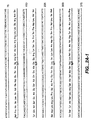
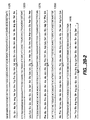
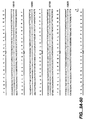
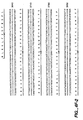
- the nucleic acid encoding a kinase is derived from a Gram-negative bacteria which is a pseudomonad, preferably from Pseudomonas alcaligenes and is most preferably lip Q. Further, nucleic acid encoding the kinase has the sequence as shown in Figures 1A-1B (SEQ ID NO: 1) and/or has at least 90% homology with that sequence.
- the kinase protein is also provided which is derived from a Gram-negative bacteria which is a pseudomonad, most preferably, the kinase is from Pseudomonas alcaligenes . In a preferred embodiment, the kinase is LipQ.
- a cosmid library from the wild-type P.alcaligenes genome was used as a donor of DNA fragments to be introduced into a multicopy P. alcaligenes lipase production strain.
- 485 cosmids were transformed, followed by screening of cosmids containing P.alcaligenes strains with respect to their lipase production activity. Twenty cosmid strains were selected, each of which showed a significant enhancement of lipase expression as judged from various liquid and plate tests.
- the corresponding cosmids were also tested in a single copy lipase strain and some of them were found to give a threefold increase of lipase expression. The four best cosmids were found to share an overlapping fragment of 5.6 kb. The lipase stimulating activity was localized on a 4.5kb fragment.
- the present invention relates to the identification of a pseudomonas alcaligenes lipase regulation cascade, which contain multiple components associated with the expression of lipase.
- the term "regulation cascade” relates to the entire complex of individual components identified herein, such as kinase, dna binding regulator, polymerase, uas, lux-box, orfv-boxes, secretions factors and their regulatory regions. Components of the regulation cascade can be used alone or in combination with other components to modulate the expression of proteins in host cells.
- the host cell is a gram-negative host.
- the host cell is a pseudomonad.
- the host cell is pseudomonas alcaligenes.
- Preferred desired proteins for expression include enzymes such as esterases; hydrolases including proteases, cellulases, amylases, carbohydrases, and lipases; isomerases such as racemases, epimerases, tautomerases, or mutases; transferases, kinases and phophatases.
- the proteins may be therapeutically significant, such as growth factors, cytokines, ligands, receptors and inhibitors, as well as vaccines and antibodies.
- the proteins may be commercially important, such as proteases, carbohydrases such as amylases and glucoamylases, cellulases, oxidases and lipases.
- the gene encoding the protein of interest may be a naturally occurring gene, a mutated gene or a synthetic gene.
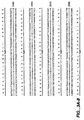
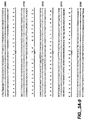
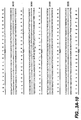
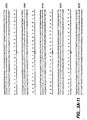
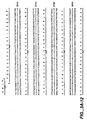
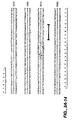
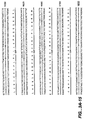
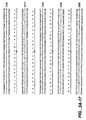
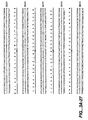
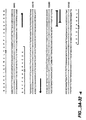
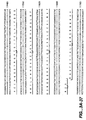
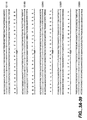
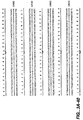
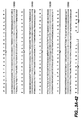
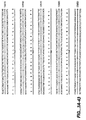
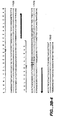
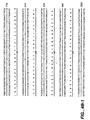
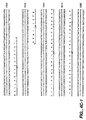
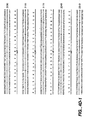
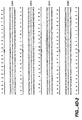
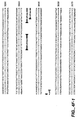
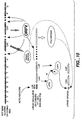
- the 4.5 kb fragment was sequenced and found to encode the LipQ, LipR and polymerase proteins ( Figures 4A-4G ). While not intending to be bound by theory, it is believed that these proteins are involved in the regulation of the sigma 54 promoter in front of the lipase (LipA) and lipase modulator (LipB) gene region (see Figure 7 ). These sigma 54 promoters characteristically have an upstream enhancer region, herein the upstream activating sequence or UAS, which is regulated by proteins.
- Regulation can be achieved by either a two-component system, such as NtrB-NtrC, or by a one-component system, for example NifA, in which the protein is in close association with the substrate (reviewed by Morett and Segovia, supra).
- expression of a protein can be regulated when a kinase and a DNA binding regulator, which are provided in trans, interact with a promoter and/or an upstream activating sequence which are functionally linked to a gene encoding the protein of interest.
- the expression of the protein is increased.
- a “kinase” is an enzyme that can catalyze the transfer of phosphate to either itself or another protein.
- the kinase of the present invention is preferably LipQ, a kinase that can regulate the expression of a lipase.
- a LipQ has been isolated from Pseudomonas alcaligenes.
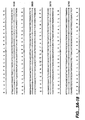
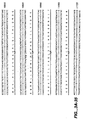
- the kinase preferably is encoded by a nucleic acid having the DNA sequence shown in Figures 1A-1B (SEQ ID NO: 1) and has the amino acid sequence shown in Figures 1A-1B (SEQ ID NO: 2).
- a kinase can act alone or as part of an expression system to regulate the expression of the protein. In some cases, the absence of this kinase will cause the expression of the protein to be decreased or eliminated.
- a "DNA binding regulator” is a proteinaceous substance which physically interacts with DNA and, in doing so, influences the expression of genes close to the binding position.
- the DNA binding regulator is preferably LipR, a DNA binding regulator that can regulate the expression of a lipase.
- a LipR has been isolated from Pseudomonas alcaligenes.
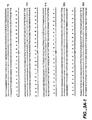
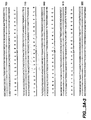
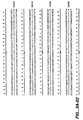
- the DNA binding regulator preferably is encoded by a nucleic acid having the DNA sequence shown in Figures 2A-2B (SEQ ID NO: 3) and has the amino acid sequence shown in Figures 2A-2B (SEQ ID NO: 4).
- a DNA binding regulator can act alone or as part of an expression system to regulate the expression of the protein.
- a DNA binding regulator of the present invention can be used alone or in combination with a kinase.
- the present invention encompasses variants of the DNA binding regulator disclosed herein that are capable of autophosphorylation. Such variants can lead to a constitutively higher expression of the target protein. In some cases, the absence of this DNA binding regulator will cause the expression of the protein to be decreased or eliminated.
- polymerase refers to an enzyme that elongates DNA or RNA to obtain larger strands of either DNA or RNA, respectively. It is one of the most crucial factors in the production of proteins, such as lipase.
- the polymerase is OrfZ.
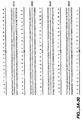
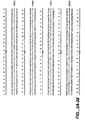
- the polymerase preferably is encoded by a nucleic acid having the DNA sequence shown in Figure 9A-9B (SEQ ID NO: 36) and has the amino acid sequence shown in Figure 9A-9B (SEQ ID NO: 37). The polymerase may play a role in modifying the expression of the desired protein.
- Promoters are DNA elements that can promote the expression of a protein.
- a "sigma 54 promoter” is a bacterial promoter and is a member of a class of sigma factors with a size of approximately 54 Kda. These sigma factors are also known as RpoN proteins. Sigma 54 promoters and their functions are discussed in Morrett and Segovia (1993) J. Bacter. 175:6067-6074 .
- the promoter is a Pseudomonas alcaligenes sigma 54 promoter.
- the sigma 54 promoter is the lipase promoter of P. alcaligenes ( WO 94/02617 ).
- the sigma 54 promoter has an upstream activating sequence.
- an "upstream activating sequence” is a binding position for a positively-acting DNA binding regulator. As indicated by its name, the upstream activating sequence is upstream of the transcription start site and is a nucleic acid.
- the upstream activating sequence is preferably UAS, an upstream activating sequence that can regulate the expression of a lipase, and is preferably derived from Pseudomonas alcaligenes.
- An upstream activating sequence can act alone or as part of an expression system to regulate the expression of the protein. In some cases, the absence of this upstream activating sequence will cause the expression of the protein to be decreased or eliminated.
- the upstream activating sequence is the consensus: TGT(N) 11 ACA.
- a secretion factor is a protein that aids in secreting another protein from a cell.
- a promoter region Upstream of the lip Q gene, a promoter region has been identified. Within this promoter region, a lux -box can be recognized. This lux- box shows significant homology to the binding site for luxR type regulator elements, which are known to be under control of autoinducer ( Latifi et al. (1995) Molec. Microb. 17(2):333-323 ). This lux -box probably represents a linkage between the autoinducer system, LipR and lipase regulation. As such, another embodiment of the invention includes a nucleic acid encoding a lux -box element.
- the term for the gene is not capitalized and is in italics, i.e., lip Q.
- the term for the protein is generally in normal letters and the first letter is capitalized, i.e., LipQ.
- the kinase, DNA binding regulator, promoter and upstream activating sequence will sometimes be referred to as "the regulating elements" for ease of discussion.
- the preferred regulating elements are LipQ, LipR, the Pseudomonas alcaligenes polymerase, the Pseudomonas alcaligenes sigma 54 promoter and Pseudomonas alcaligenes UAS, and can regulate the expression of a lipase in Pseudomonas alcaligenes as defined herein.
- the kinase, the DNA binding regulator and polymerase are proteins, and the promoter and the upstream activating sequence are nucleic acids.
- DNA encoding the kinase and DNA binding regulator were multiplied using a plasmid which led in turn to a higher production of the kinase and DNA binding regulator.
- the increased production of the kinase and DNA binding regulator resulted in higher transcription from the sigma 54 promoter which provides higher expression of the protein of interest.
- the kinase and DNA binding regulator of the present invention represent a two-component regulatory system.
- the two components are LipQ and LipR and can regulate the expression of a lipase in Pseudomonas alcaligenes as defined herein.
- other two-component regulatory systems are known, a low degree of homology exists between individual pieces of those systems and the amino acid sequence shown in SEQ ID NOS: 2 and 4.
- Embodiments of the invention include a kinase encoded by a nucleic acid having at least 90% homology with the DNA sequences shown in SEQ ID NO: 1 Preferably, the homology is at least 95%.
- Homology can be determined by lining up the claimed amino acid or DNA sequence with another sequence and determining how many of the amino acids or nucleotides match up as a percentage of the total. Homology can also be determined using one of the sequence analysis software programs that are commercially available, for example, the TFastA Data Searching Program available in the Sequence Analysis Software Package Version 6.0 (Genetic Computer Group, University of Wisconsin Biotechnology Center, Madison, Wisconsin 53705).
- nucleic acids that can hybridize with the DNA shown in Figures 1A-1B , under stringent conditions.
- Stringent hybridization conditions include stringent hybridization and washing conditions as is known to one of ordinary skill in the art. Hybridization and appropriate stringent conditions are described in Sambrook et al. 1989 Molecular Cloning 2d ed., Cold Spring Harbor Laboratory Press, New York .
- Bacteria include microorganisms of the class Schizomycetes. Bacteria can be either Gram-negative or Gram-positive. Gram-negative bacteria include members of the genera Escherichia, Hemophilus, Klebsiella. Proteus, Pseudomonas, Salmonella, Shigella, Vibrio, Acinetobacter, and Serratia. Gram-positive bacteria include members of the genera Bacillus, Clostridium, Staphylococcus, Streptomyces, Lactobacillus and Lactococcus.
- Gram-negative bacteria can be pseudomonads which are strains that are members of the genus Pseudomonas . Examples include Pseudomonas aeruginosa, Pseudomonas cepacia, Pseudomonas glumae, Pseudomonas stutzeri, Pseudomonas fragi, Pseudomonas alcaligenes and Pseudomonas mendocina .
- a preferred pseudomonad is Pseudomonas alcaligenes.
- Pseudomonas alcaligenes is also sometimes referred to as Pseudomonas pseudoalcaligenes.
- Lipases the expression of which may be regulated by a kinase within the scope of the present invention include those encoded by LipA, which is generally found in close association with a modulating gene known as LipB, LipH, LipX or Lif. Lif from Pseudomonas alcaligenes is the subject of patent application WO 93/02617 as discussed above.
- LipA genes can be found in a variety of species of bacteria such as Pseudomonas aeruginosa, Pseudomonas stutzeri, Pseudomonas alcaligenes, Pseudomonas cepacia, Pseudomonas glumae, Pseudomonas fragi, Pseudomonas mendocina, Acinetobacter calcaoceticus and Serratia marcescans .
- the expression system can regulate the expression of a protein, preferably a lipase.
- the expression system includes a kinase, a DNA binding regulator, a polymerase, a sigma 54 promoter and an upstream activating sequence.
- the expression system can also include secretion factors..
- An expression system includes one or more proteins and/or nucleic acids which, when acting together, can increase the expression of a protein in a host cell.
- the expression system can be encoded on one or more plasmids and may or may not be on the same plasmid as the gene encoding the protein of interest.
- the phrase "functionally linked” or “functionally coupled” means that the regulating elements (DNA or protein) interact physically in order to exert their function.
- This can be a protein/protein, DNA/protein or a DNA/DNA interaction.
- the DNA binding regulator interacts with the promoter but genes encoding them may be at different sites on the chromosome.
- the genes encoding the elements can be on different plasmids from each other and from the gene encoding the protein of interest and still work together to regulate expression of the protein.
- a plasmid is a nucleic acid molecule which is smaller than the chromosome and can replicate independently of the mechanisms used for chromosomal replication.
- a plasmid is a circular DNA molecule. Plasmids can be inserted into host cells where they can replicate and make more copies of the plasmid; hence, replicating plasmid. Some plasmids, called integrating plasmids, can insert the plasmid DNA into the chromosome of the host cell. The plasmid DNA is thus integrated into the chromosome of the host cell. When this happens, the plasmid no longer replicates autonomously but instead replicates in synchrony with the chromosome into which it has been inserted.
- plasmid may be present at several dozen copies per chromosome and replicate independently of the chromosome
- the integrated plasmid is present at one copy per chromosome and can replicate only when the chromosome does so.
- a transformed host cell is a host cell into which one or more plasmids have been inserted. Transformation can take place by first making the host cell competent to receive the plasmid. The naked DNA is then added directly to the cells and some of the cells take it up and replicate or integrate it. One way of making the cells competent to receive the plasmid is by electroporation as described in the Examples below. Another method that is useful for construction and transferring of cosmid libraries is triparental mating. Kelly-Wintenberg and Montie (1989) J. Bacteriol. 171(11):6357-62 .
- Strain Relevant Characteristics Strain Relevant Characteristics P. alcaligenes: P.
- Cosmid and plasmid isolations were performed using the QIAprep Spin Plasmid kit, for 1 ml overnight culture, and the QIAfilter Plasmid Midi Kit, for 100 ml culture isolations (both Qiagen), according to the manufacturers instructions.
- lysozyme (10 ⁇ l/ml) was added to the resuspension mix and incubated for 5 minutes at 37°C to aid cell lysis.
- Cosmid DNA was eluted from the QIAprep columns with 70°C milliQ water, as recommended by the manufacturer.
- cosmid isolations from 100 ml cultures strains were grown overnight in Luria Bertani (LB) broth and the elution buffer was heated to 50°C.
- the cells were electroporated with 1.4 kV, 25 ⁇ F, 200 ⁇ , in the Gene Pulser.
- the electroporation cuvette was washed out with 1 ml 2xTY medium and the cell mixture transferred to a clean 1.5 ml eppendorf.
- the transformation mixture was then incubated for 45 minutes at 37°C. After incubation, 100 ⁇ l was plated onto 2xTY agar supplemented with tetracycline (5 mg/l) or neomycin (10 mg/l) or both (depending on which P. alcaligenes strain is used for electroporation).
- the transformation of P. alcaligenes cells was carried out at room temperature.
- Transformation of E.coli Wk6 cells were performed using electroporation. Transfer of the cosmids to E.coli K802 cells was performed by infection according to the suppliers instructions (Promega Corporation).
- Chromosomal DNA extracted from P. alcaligenes was fractionated and ligated into cosmid pLAFR3 as described in the Materials and Methods section, above. After ligation, the mixture was transferred into E. coli as described. Tetracycline resistant colonies were isolated and cosmid DNA was prepared from each of them.
- cosmid-containing P. alcaligenes strains were transformed, followed by screening of cosmid-containing P. alcaligenes strains with respect to their lipase production activity. Twenty cosmid strains were selected which showed a significant enhancement of lipase expression as judged from various liquid and plate tests (see Table 3). The corresponding cosmids were also tested in a single copy lipase strain and some of them were found to give a threefold increase in lipase expression. The four best cosmids were found to share an overlapping fragment of 5.6 kb. The lipase stimulating activity was localized on a 4.5 kb fragment of cosmid #71, #201, #505, #726.
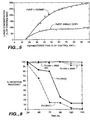
- Figure 6 is a graphical representation of production plasmid stability in the transformed and untransformed Ps1084 (in duplicate). After 3-4 days, plasmid instability was detected in Ps1084, observed as the 80% drop in neomycin resistant colonies. Through out the week long experiment, cosmid #600 transformed Ps1084 maintained a high degree of neomycin resistance, suggesting that cosmid #600 stabilized the production plasmid.
- Cosmid #600 gave a positive signal when PCR was carried out using xcpR primers based on peptides from xcpR derived from Pseudomonas aeruginosa .
- the DNA sequence from cosmid #600 was digested with EcoRV and the resulting fragment mixture and purified fragments were ligated with Sma I-digested-pUC19 (Appligene) using the Rapid DNA Ligation kit (Boehringer Mannheim). E. coli cells were then electroporated. Transformants were selected on 2xTY plates containing ampicillin (100 mg/l), X-Gal (Boehringer Mannheim; 40 mg/l) and IPTG (Gibco BRL; 1 mM). Transformants containing the recombinant plasmid were identified as white colonies and single colonies were streaked on to fresh 2xTY agar plates (with ampicillin) for purity.
- Figures 8 show the map of cosmid #600.
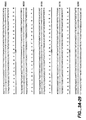
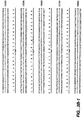
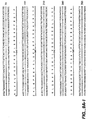
- nucleotides encompassing xcpP, xcpQ, orfV, orfX, xcpR, xcpS, xcpT, xcpU, xcpV, xcpW, xcpX, xcpY, xcpZ and part of protein OrfY have been sequenced ( Figures 3A-3B ).
Landscapes
- Health & Medical Sciences (AREA)
- Chemical & Material Sciences (AREA)
- Genetics & Genomics (AREA)
- Life Sciences & Earth Sciences (AREA)
- Organic Chemistry (AREA)
- Engineering & Computer Science (AREA)
- Zoology (AREA)
- Bioinformatics & Cheminformatics (AREA)
- Wood Science & Technology (AREA)
- General Health & Medical Sciences (AREA)
- Biomedical Technology (AREA)
- Biotechnology (AREA)
- Molecular Biology (AREA)
- Biochemistry (AREA)
- General Engineering & Computer Science (AREA)
- Biophysics (AREA)
- Medicinal Chemistry (AREA)
- Microbiology (AREA)
- Physics & Mathematics (AREA)
- Plant Pathology (AREA)
- Gastroenterology & Hepatology (AREA)
- Proteomics, Peptides & Aminoacids (AREA)
- Enzymes And Modification Thereof (AREA)
- Micro-Organisms Or Cultivation Processes Thereof (AREA)
- Measuring Or Testing Involving Enzymes Or Micro-Organisms (AREA)
- Preparation Of Compounds By Using Micro-Organisms (AREA)
Claims (12)
- Isolierte Nukleinsäure, die eine Kinase von einer Pseudomonade codiert, welche die Expression einer Lipase reguliert, wobei die Nukleinsäure zu mindestens 90% identisch mit der Sequenz ist, wie sie in der SEQ. ID. NR.: 1 gezeigt ist.
- Isolierte Nukleinsäure von Anspruch 1, wobei die Kinase in der Lage ist, den Transfer von Phosphat zu dem Bindungsregulator, der durch die SEQ. ID. NR.: 3 codiert wird, zu katalysieren.
- Isolierte Nukleinsäure von Anspruch 1, wobei die Kinase die in der SEQ. ID. NR.: 2 gezeigte Sequenz besitzt.
- Isolierte Nukleinsäure von Anspruch 3, welche die wie in der SEQ. ID. NR.: 1 gezeigte Sequenz besitzt.
- Expressionsvektor, umfassend die isolierte Nukleinsäure von mindestens einem der Ansprüche 1 bis 4, und eine Nukleinsäure, die einen Bindungsregulator codiert.
- Wirtszelle, die den Expressionsvektor von Anspruch 5 umfasst.
- Wirtszelle von Anspruch 6, das ein Bakterium ist.
- Wirtszelle von Anspruch 7, das eine Pseudomonade ist.
- Wirtszelle von Anspruch 8, wobei die Pseudomonade Pseudomonas alcaligenes ist.
- Wirtszelle von Anspruch 6, welche ferner Nukleinsäure umfasst, die ein gewünschtes Protein codiert.
- Wirtszelle von Anspruch 10, wobei das gewünschte Protein ein Enzym ist.
- Wirtszelle von Anspruch 11, wobei das Enzym aus Esterasen, Hydrolasen, Lipasen, Isomerasen, Mutasen, Transferasen, Kinasen und Phosphatasen ausgewählt wird.
Applications Claiming Priority (3)
| Application Number | Priority Date | Filing Date | Title |
|---|---|---|---|
| US69909296A | 1996-08-16 | 1996-08-16 | |
| US699092 | 1996-08-16 | ||
| EP97938360A EP0918851B1 (de) | 1996-08-16 | 1997-08-15 | Expressionssystem abgeleitet von der lipase-regulationskaskade von pseudonomas alcaligenes |
Related Parent Applications (1)
| Application Number | Title | Priority Date | Filing Date |
|---|---|---|---|
| EP97938360A Division EP0918851B1 (de) | 1996-08-16 | 1997-08-15 | Expressionssystem abgeleitet von der lipase-regulationskaskade von pseudonomas alcaligenes |
Publications (2)
| Publication Number | Publication Date |
|---|---|
| EP1557467A1 EP1557467A1 (de) | 2005-07-27 |
| EP1557467B1 true EP1557467B1 (de) | 2008-05-21 |
Family
ID=24807894
Family Applications (3)
| Application Number | Title | Priority Date | Filing Date |
|---|---|---|---|
| EP04015305A Expired - Lifetime EP1557467B1 (de) | 1996-08-16 | 1997-08-15 | Expressionssystem, abgeleitet von der Lipase-Regulationskaskade von Pseudomonas alcaligenes. |
| EP97938360A Expired - Lifetime EP0918851B1 (de) | 1996-08-16 | 1997-08-15 | Expressionssystem abgeleitet von der lipase-regulationskaskade von pseudonomas alcaligenes |
| EP04015824A Expired - Lifetime EP1555320B1 (de) | 1996-08-16 | 1997-08-15 | Expressionssystem, abgeleitet von der Lipase-Regulationskaskade von Pseudomonas alcaligenes. |
Family Applications After (2)
| Application Number | Title | Priority Date | Filing Date |
|---|---|---|---|
| EP97938360A Expired - Lifetime EP0918851B1 (de) | 1996-08-16 | 1997-08-15 | Expressionssystem abgeleitet von der lipase-regulationskaskade von pseudonomas alcaligenes |
| EP04015824A Expired - Lifetime EP1555320B1 (de) | 1996-08-16 | 1997-08-15 | Expressionssystem, abgeleitet von der Lipase-Regulationskaskade von Pseudomonas alcaligenes. |
Country Status (8)
| Country | Link |
|---|---|
| US (3) | US6048710A (de) |
| EP (3) | EP1557467B1 (de) |
| AT (3) | ATE396268T1 (de) |
| AU (1) | AU4070997A (de) |
| CA (1) | CA2262510C (de) |
| DE (3) | DE69731210T2 (de) |
| DK (3) | DK1557467T3 (de) |
| WO (1) | WO1998006836A2 (de) |
Families Citing this family (3)
| Publication number | Priority date | Publication date | Assignee | Title |
|---|---|---|---|---|
| DE19848016A1 (de) * | 1998-10-17 | 2000-04-20 | Roche Diagnostics Gmbh | Verfahren zur Herstellung extrazellulärer Protein durch Expression in heterologen Wirtsbakterien |
| CA2546157C (en) * | 2003-11-21 | 2014-07-22 | Dow Global Technolgies Inc. | Improved expression systems with sec-system secretion |
| CN111019904A (zh) * | 2018-10-10 | 2020-04-17 | 安徽东方帝维生物制品股份有限公司 | 适应羊口疮病毒增殖的永生化羊睾丸细胞系的构建方法 |
Family Cites Families (8)
| Publication number | Priority date | Publication date | Assignee | Title |
|---|---|---|---|---|
| US5278066A (en) * | 1985-08-09 | 1994-01-11 | Gist-Brocades Nv | Molecular cloning and expression of gene encoding lipolytic enzyme |
| JP3079276B2 (ja) * | 1988-02-28 | 2000-08-21 | 天野製薬株式会社 | 組換え体dna、それを含むシュードモナス属菌及びそれを用いたリパーゼの製造法 |
| US5756315A (en) * | 1989-12-05 | 1998-05-26 | Kyowa Hakko Kogyo Co., Ltd. | Inosine-guanosine kinase |
| IE911869A1 (en) * | 1990-06-01 | 1991-12-04 | Regeneron Pharma | A family of map2 protein kinases |
| WO1994002617A2 (en) * | 1992-07-23 | 1994-02-03 | Gist-Brocades N.V. | Cloning and expression of a lipase modulator gene from pseudomonas pseudoalcaligenes |
| US6514745B1 (en) * | 1993-07-19 | 2003-02-04 | The Regents Of The University Of California | Oncoprotein protein kinase |
| WO1995030744A2 (en) * | 1994-05-04 | 1995-11-16 | Genencor International Inc. | Lipases with improved surfactant resistance |
| BE1009650A5 (fr) * | 1995-10-12 | 1997-06-03 | Genencor Int | Systeme d'expression, vecteur et cellule transformee par ce vecteur. |
-
1997
- 1997-08-15 EP EP04015305A patent/EP1557467B1/de not_active Expired - Lifetime
- 1997-08-15 DE DE69731210T patent/DE69731210T2/de not_active Expired - Lifetime
- 1997-08-15 US US08/911,853 patent/US6048710A/en not_active Expired - Lifetime
- 1997-08-15 EP EP97938360A patent/EP0918851B1/de not_active Expired - Lifetime
- 1997-08-15 AT AT04015305T patent/ATE396268T1/de not_active IP Right Cessation
- 1997-08-15 DK DK04015305T patent/DK1557467T3/da active
- 1997-08-15 CA CA2262510A patent/CA2262510C/en not_active Expired - Fee Related
- 1997-08-15 WO PCT/US1997/014450 patent/WO1998006836A2/en not_active Ceased
- 1997-08-15 AT AT97938360T patent/ATE279513T1/de not_active IP Right Cessation
- 1997-08-15 AU AU40709/97A patent/AU4070997A/en not_active Abandoned
- 1997-08-15 DE DE69738724T patent/DE69738724D1/de not_active Expired - Lifetime
- 1997-08-15 DE DE69738723T patent/DE69738723D1/de not_active Expired - Lifetime
- 1997-08-15 DK DK97938360T patent/DK0918851T3/da active
- 1997-08-15 AT AT04015824T patent/ATE396267T1/de not_active IP Right Cessation
- 1997-08-15 DK DK04015824T patent/DK1555320T3/da active
- 1997-08-15 EP EP04015824A patent/EP1555320B1/de not_active Expired - Lifetime
-
2000
- 2000-01-06 US US09/479,409 patent/US6225106B1/en not_active Expired - Lifetime
- 2000-01-06 US US09/479,453 patent/US6313283B1/en not_active Expired - Lifetime
Also Published As
| Publication number | Publication date |
|---|---|
| DK1555320T3 (da) | 2008-09-29 |
| DE69738723D1 (de) | 2008-07-03 |
| DK0918851T3 (da) | 2005-01-24 |
| CA2262510A1 (en) | 1998-02-19 |
| ATE396267T1 (de) | 2008-06-15 |
| US6225106B1 (en) | 2001-05-01 |
| ATE279513T1 (de) | 2004-10-15 |
| US6313283B1 (en) | 2001-11-06 |
| WO1998006836A2 (en) | 1998-02-19 |
| EP1555320A3 (de) | 2005-07-27 |
| ATE396268T1 (de) | 2008-06-15 |
| WO1998006836A3 (en) | 1998-04-30 |
| EP1557467A1 (de) | 2005-07-27 |
| EP0918851B1 (de) | 2004-10-13 |
| DE69731210D1 (de) | 2004-11-18 |
| CA2262510C (en) | 2012-10-23 |
| DE69738724D1 (de) | 2008-07-03 |
| EP1555320A2 (de) | 2005-07-20 |
| EP1555320B1 (de) | 2008-05-21 |
| AU4070997A (en) | 1998-03-06 |
| DK1557467T3 (da) | 2008-09-15 |
| DE69731210T2 (de) | 2005-10-20 |
| US6048710A (en) | 2000-04-11 |
| EP0918851A2 (de) | 1999-06-02 |
Similar Documents
| Publication | Publication Date | Title |
|---|---|---|
| US6808896B2 (en) | Method for stable chromosomal multi-copy integration of genes | |
| JP4469005B2 (ja) | 選択された生物のための人工プロモーターライブラリー及び該ライブラリー由来のプロモーター | |
| US5955310A (en) | Methods for producing a polypeptide in a bacillus cell | |
| US20040005695A1 (en) | Method for producing recombinant proteins by gram-negative bacteria | |
| US5958728A (en) | Methods for producing polypeptides in mutants of bacillus cells | |
| EP0941349B1 (de) | Verfahren zur herstellung von polypeptiden in surfaktinmutanten von bacillus zellen | |
| CN102471774B (zh) | 包含甘露糖启动子的载体和甘露糖启动子 | |
| EP0646177A1 (de) | Heterologe genexprimierung in bacillus subtilis: die fusions-annaherung | |
| EP0925364A1 (de) | Milchsäurebakterielles regulierbares expressionssystem | |
| US5804409A (en) | Production of active Pseudomonas glumae lipase in homologous or heterologous hosts | |
| EP1557467B1 (de) | Expressionssystem, abgeleitet von der Lipase-Regulationskaskade von Pseudomonas alcaligenes. | |
| EP0464922A1 (de) | Herstellung von aktiver Pseudomonas glumae Lipase in homologen oder heterologen Wirten | |
| US5606022A (en) | Cloning and identification of a two component signal transducing regulatory system from Bacteroides fragilis | |
| JP7061018B2 (ja) | 新規プロモーター、および同プロモーターを用いたタンパク質の製造方法 | |
| Letouvet-Pawlak et al. | Comparison of β-galactosidase production by two inducible promoters in Myxococcus xanthus | |
| IE863080L (en) | Expression in lactic acid bacteria | |
| SK5742001A3 (en) | Construction of production strains for producing substituted phenols by specifically inactivating genes of the eugenol and ferulic acid catabolism | |
| EP1003872A1 (de) | Erhöhung der proteinproduktion in gram-positiven mikroorganismen | |
| Keith et al. | dnaK and the heat stress response of Pseudomonas syringae pv. glycinea | |
| CN1322138C (zh) | 用于基因的稳定的染色体多拷贝整合的方法 | |
| JPH0156756B2 (de) | ||
| US20030157642A1 (en) | Increasing production of proteins in gram-positive microorganisms | |
| US20050042756A1 (en) | Intergenic and intragenic integration sites for foreign gene expression in recombinant S. gordonii strains | |
| WO1998006836A9 (en) | Expression system derived from the lipase regulation cascade of pseudomonas alcaligenes | |
| Murooka | Genetic designs for product formation in recombinant microbes |
Legal Events
| Date | Code | Title | Description |
|---|---|---|---|
| PUAI | Public reference made under article 153(3) epc to a published international application that has entered the european phase |
Free format text: ORIGINAL CODE: 0009012 |
|
| 17P | Request for examination filed |
Effective date: 20040719 |
|
| AC | Divisional application: reference to earlier application |
Ref document number: 0918851 Country of ref document: EP Kind code of ref document: P |
|
| AK | Designated contracting states |
Kind code of ref document: A1 Designated state(s): AT BE CH DE DK ES FI FR GB GR IE IT LI NL PT SE |
|
| AKX | Designation fees paid |
Designated state(s): AT BE CH DE DK ES FI FR GB GR IE IT LI NL PT SE |
|
| 17Q | First examination report despatched |
Effective date: 20060216 |
|
| 17Q | First examination report despatched |
Effective date: 20060216 |
|
| GRAP | Despatch of communication of intention to grant a patent |
Free format text: ORIGINAL CODE: EPIDOSNIGR1 |
|
| RIC1 | Information provided on ipc code assigned before grant |
Ipc: C12N 9/12 20060101ALI20071119BHEP Ipc: C07K 14/21 20060101ALI20071119BHEP Ipc: C12N 15/31 20060101AFI20071119BHEP Ipc: C12N 1/21 20060101ALI20071119BHEP Ipc: C12N 15/78 20060101ALI20071119BHEP |
|
| GRAS | Grant fee paid |
Free format text: ORIGINAL CODE: EPIDOSNIGR3 |
|
| GRAA | (expected) grant |
Free format text: ORIGINAL CODE: 0009210 |
|
| AC | Divisional application: reference to earlier application |
Ref document number: 0918851 Country of ref document: EP Kind code of ref document: P |
|
| AK | Designated contracting states |
Kind code of ref document: B1 Designated state(s): AT BE CH DE DK ES FI FR GB GR IE IT LI NL PT SE |
|
| REG | Reference to a national code |
Ref country code: GB Ref legal event code: FG4D |
|
| REG | Reference to a national code |
Ref country code: CH Ref legal event code: EP |
|
| REF | Corresponds to: |
Ref document number: 69738724 Country of ref document: DE Date of ref document: 20080703 Kind code of ref document: P |
|
| REG | Reference to a national code |
Ref country code: IE Ref legal event code: FG4D |
|
| REG | Reference to a national code |
Ref country code: DK Ref legal event code: T3 |
|
| PG25 | Lapsed in a contracting state [announced via postgrant information from national office to epo] |
Ref country code: ES Free format text: LAPSE BECAUSE OF FAILURE TO SUBMIT A TRANSLATION OF THE DESCRIPTION OR TO PAY THE FEE WITHIN THE PRESCRIBED TIME-LIMIT Effective date: 20080901 |
|
| PG25 | Lapsed in a contracting state [announced via postgrant information from national office to epo] |
Ref country code: AT Free format text: LAPSE BECAUSE OF FAILURE TO SUBMIT A TRANSLATION OF THE DESCRIPTION OR TO PAY THE FEE WITHIN THE PRESCRIBED TIME-LIMIT Effective date: 20080521 |
|
| PG25 | Lapsed in a contracting state [announced via postgrant information from national office to epo] |
Ref country code: SE Free format text: LAPSE BECAUSE OF FAILURE TO SUBMIT A TRANSLATION OF THE DESCRIPTION OR TO PAY THE FEE WITHIN THE PRESCRIBED TIME-LIMIT Effective date: 20080821 Ref country code: PT Free format text: LAPSE BECAUSE OF FAILURE TO SUBMIT A TRANSLATION OF THE DESCRIPTION OR TO PAY THE FEE WITHIN THE PRESCRIBED TIME-LIMIT Effective date: 20081021 |
|
| PLBE | No opposition filed within time limit |
Free format text: ORIGINAL CODE: 0009261 |
|
| STAA | Information on the status of an ep patent application or granted ep patent |
Free format text: STATUS: NO OPPOSITION FILED WITHIN TIME LIMIT |
|
| REG | Reference to a national code |
Ref country code: CH Ref legal event code: PL |
|
| 26N | No opposition filed |
Effective date: 20090224 |
|
| REG | Reference to a national code |
Ref country code: IE Ref legal event code: MM4A |
|
| PG25 | Lapsed in a contracting state [announced via postgrant information from national office to epo] |
Ref country code: LI Free format text: LAPSE BECAUSE OF NON-PAYMENT OF DUE FEES Effective date: 20080831 Ref country code: CH Free format text: LAPSE BECAUSE OF NON-PAYMENT OF DUE FEES Effective date: 20080831 |
|
| PG25 | Lapsed in a contracting state [announced via postgrant information from national office to epo] |
Ref country code: IE Free format text: LAPSE BECAUSE OF NON-PAYMENT OF DUE FEES Effective date: 20080815 |
|
| PG25 | Lapsed in a contracting state [announced via postgrant information from national office to epo] |
Ref country code: IT Free format text: LAPSE BECAUSE OF FAILURE TO SUBMIT A TRANSLATION OF THE DESCRIPTION OR TO PAY THE FEE WITHIN THE PRESCRIBED TIME-LIMIT Effective date: 20080521 |
|
| PG25 | Lapsed in a contracting state [announced via postgrant information from national office to epo] |
Ref country code: GR Free format text: LAPSE BECAUSE OF FAILURE TO SUBMIT A TRANSLATION OF THE DESCRIPTION OR TO PAY THE FEE WITHIN THE PRESCRIBED TIME-LIMIT Effective date: 20080822 |
|
| PGFP | Annual fee paid to national office [announced via postgrant information from national office to epo] |
Ref country code: DK Payment date: 20140812 Year of fee payment: 18 Ref country code: FI Payment date: 20140812 Year of fee payment: 18 Ref country code: DE Payment date: 20140813 Year of fee payment: 18 Ref country code: NL Payment date: 20140809 Year of fee payment: 18 |
|
| PGFP | Annual fee paid to national office [announced via postgrant information from national office to epo] |
Ref country code: FR Payment date: 20140808 Year of fee payment: 18 Ref country code: GB Payment date: 20140813 Year of fee payment: 18 |
|
| PGFP | Annual fee paid to national office [announced via postgrant information from national office to epo] |
Ref country code: BE Payment date: 20140812 Year of fee payment: 18 |
|
| REG | Reference to a national code |
Ref country code: DE Ref legal event code: R119 Ref document number: 69738724 Country of ref document: DE |
|
| REG | Reference to a national code |
Ref country code: DK Ref legal event code: EBP Effective date: 20150831 |
|
| GBPC | Gb: european patent ceased through non-payment of renewal fee |
Effective date: 20150815 |
|
| REG | Reference to a national code |
Ref country code: NL Ref legal event code: MM Effective date: 20150901 |
|
| PG25 | Lapsed in a contracting state [announced via postgrant information from national office to epo] |
Ref country code: FI Free format text: LAPSE BECAUSE OF NON-PAYMENT OF DUE FEES Effective date: 20150815 |
|
| REG | Reference to a national code |
Ref country code: FR Ref legal event code: ST Effective date: 20160429 |
|
| PG25 | Lapsed in a contracting state [announced via postgrant information from national office to epo] |
Ref country code: NL Free format text: LAPSE BECAUSE OF NON-PAYMENT OF DUE FEES Effective date: 20150901 |
|
| PG25 | Lapsed in a contracting state [announced via postgrant information from national office to epo] |
Ref country code: GB Free format text: LAPSE BECAUSE OF NON-PAYMENT OF DUE FEES Effective date: 20150815 Ref country code: DE Free format text: LAPSE BECAUSE OF NON-PAYMENT OF DUE FEES Effective date: 20160301 |
|
| PG25 | Lapsed in a contracting state [announced via postgrant information from national office to epo] |
Ref country code: DK Free format text: LAPSE BECAUSE OF NON-PAYMENT OF DUE FEES Effective date: 20150831 Ref country code: FR Free format text: LAPSE BECAUSE OF NON-PAYMENT OF DUE FEES Effective date: 20150831 |
|
| PG25 | Lapsed in a contracting state [announced via postgrant information from national office to epo] |
Ref country code: BE Free format text: LAPSE BECAUSE OF NON-PAYMENT OF DUE FEES Effective date: 20150831 |