Technical Field
The present invention relates to an adsorbent for
removing sulfur compounds, to a process for producing
hydrogen, and to a fuel cell system. More particularly, the
invention relates to an adsorbent for removing sulfur
compounds, which adsorbent can effectively remove a variety
of sulfur compounds contained in a hydrocarbon fuel to a low
concentration even at room temperature; to a process for
effectively producing hydrogen that can be used in a fuel
cell, from the hydrocarbon fuel which has been desulfurized
by use of the adsorbent; and to a fuel cell system employing
hydrogen produced through the process.
Background Art
In recent years, new energy-production techniques have
attracted attention from the standpoint of environmental
issues, and among these techniques a fuel cell has attracted
particular interest. The fuel cell converts chemical energy
to electric energy through electrochemical reaction of
hydrogen and oxygen, attaining high energy utilization
efficiency. Therefore, extensive studies have been carried
out on realization of fuel cells for civil use, industrial
use, automobile use, etc.
Fuel cells are categorized in accordance with the type
of employed electrolyte, and a phosphate type, a fused
carbonate salt type, a solid oxide type, and a solid polymer
type have been known. With regard to hydrogen sources,
studies have been conducted on methanol; liquefied natural
gas predominantly containing methane; town gas predominantly
containing natural gas; a synthetic liquid fuel produced from
natural gas serving as a feedstock; and petroleum-derived
hydrocarbons such as LPG, naphtha, and kerosene.
When hydrogen is produced from these gas or liquid
hydrocarbons, the hydrocarbons are generally partial-oxidation-reformed,
autothermal-reformed, or steam-reformed,
in the presence of a reforming catalyst.
When a hydrocarbon fuel such as LPG, town gas, or
kerosene is reformed so as to produce hydrogen serving as a
fuel, the sulfur content of the hydrocarbon fuel must be
reduced to 0.1 ppm or lower in order to prevent poisoning of
the reforming catalyst. When a hydrocarbon such as propylene
or butene is employed as a feedstock for petrochemical
products, the sulfur content of the hydrocarbon must be
reduced to 0.1 ppm or lower in order to prevent poisoning of
the reforming catalyst.
The aforementioned LPG generally contains sulfur
compounds such as methylmercaptan and carbonyl sulfide (COS),
and an odorant such as dimethylsulfide (DMS), t-butylmercaptan
(TBM), or methyl ethyl sulfide is
intentionally added thereto. Recently, research efforts have
been devoted to utilization of oxygen-containing hydrocarbon
compounds, such as dimethyl ether, as a fuel. Although no
sulfur compound is included in the oxygen-containing
hydrocarbon compounds, studies have been conducted on
intentional addition of the aforementioned odorant to the
hydrocarbon compounds, because the odorant would effectively
warn gas leakage.
There have been known a variety of adsorbents which
adsorb sulfur compounds contained in a hydrocarbon fuel such
as LPG or town gas so as to remove the compounds from the
fuel. Although some of these known adsorbents exhibit
excellent desulfurization performance at about 150 to about
300°C, currently attained desulfurization performance at
ambient temperature is not satisfactory.
There have been disclosed desulfurizing agents; for
example, desulfurizing agents containing hydrophobic zeolite
and a metallic element such as Ag, Cu, Zn, Fe, Co, or Ni
carried thereon through ion-exchange (see, for example,
Japanese Patent Application Laid-Open (kokai) No. 2001-286753)
and desulfurizing agents containing Y-, β-, or X-type
zeolite and Ag or Cu carried thereon (see, for example,
Japanese Patent Application Laid-Open (kokai) No. 2001-305123).
These desulfurizing agents effectively adsorb, at
room temperature, mercaptans and sulfides contained in a fuel
so as to remove the sulfur compounds from the fuel, but
adsorb virtually no carbonyl sulfide.
Copper-zinc desulfurizing agents are also disclosed
(see, for example, Japanese Patent Application Laid-Open
(kokai) No. 2-302496). Although the desulfurizing agents
adsorb a variety of sulfur compounds at 150°C or higher so as
to remove the compounds, sulfur compound adsorption
performance at 100°C or lower is unsatisfactory. Also
disclosed is a desulfurizing agent containing a porous
carrier (e.g., alumina) and copper carried thereon (see, for
example, Japanese Patent Application Laid-Open (kokai) No.
2001-123188). The desulfurizing agent can also be employed
at 100°C or lower, but its adsorption performance is not
sufficient.
Disclosure of the Invention
Under such circumstances, an object of the present
invention is to provide an adsorbent for removing sulfur
compounds, which adsorbent can effectively remove a variety
of sulfur compounds contained in a hydrocarbon fuel to a low
concentration even at room temperature. Another object of
the invention is to provide a process for effectively
producing hydrogen that can be used in a fuel cell, from the
hydrocarbon fuel which has been desulfurized by use of the
adsorbent. Still another object of the invention is to
provide a fuel cell system employing hydrogen produced
through the process.
The present inventors have carried out extensive
studies in order to attain the aforementioned objects, and
have found that cerium oxide, particularly cerium oxide
having a mean crystallite size of 10 nm or less, exhibits
excellent performance of adsorbing a variety of sulfur
compounds even at ambient temperature, and that hydrogen that
can be used in a fuel cell can be effectively produced
through reforming of the hydrocarbon fuel which has been
desulfurized by use of the adsorbent. The present invention
has been accomplished on the basis of these findings.
Accordingly, the present invention provides the
following.
Brief Description of the Drawings
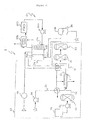
Fig. 1 shows a schematic diagram of an exemplary fuel
cell system according to the present invention.
Best Modes for Carrying Out the Invention
The adsorbent for removing a sulfur compound of the
present invention contains cerium oxide and is employed for
removing a variety of sulfur compounds contained in a
hydrocarbon fuel.
Examples of the sulfur compound include carbonyl
sulfide, carbon disulfide, hydrogen sulfide, sulfur as simple
substance, sulfur dioxide, mercaptans, sulfides, and
thiophenes.
No particular limitation is imposed on the type of
cerium oxide contained in the adsorbent of the present
invention, and examples of the adsorbent include the
followings:
The element other than cerium for forming the
aforementioned Ce-M complex oxide is at least one metallic
element selected from among those belonging to Groups 2 to 16
in the periodic table. Specific examples of the Ce-M complex
oxide include a Ce-Si complex oxide, a Ce-Zr complex oxide,
and a Ce-Si-Zr complex oxide.
In the aforementioned (b) or (d), examples of metal
oxides preferably used in combination with cerium oxide or a
Ce-M complex oxide include oxides of a metal selected from
among La, Sc, Y, Nd, Pr, Sm, Gd, and Yb. These metal oxides
may be used singly or in combination of two or more species.
The active metallic species to be carried on a carrier
in the (c) or (d) above may be selected from the elements
belonging to Groups 1 to 15 in the periodic table. Specific
examples include Cs, Ba, Yb, Ti, Zr, Hf, Nb, Mo, W, Mn, Re,
Fe, Ru, Co, Rh, Ir, Ni, Pd, Pt, Cu, Ag, Au, Zn, Ga, In, Sn,
and Bi. These elements may be used singly or in combination
of two or more species. No particular limitation is imposed
on the form of these elements, and oxides, metals, and other
species may be used. Among these elements, Ag, Cu, Ni, Fe,
Mn, etc. are preferred for a certain type and amount of
sulfur compound contained in the hydrocarbon fuel.
Through incorporation of the aforementioned active
species into a carrier formed of cerium oxide or a Ce-M
complex oxide or a carrier formed of cerium oxide or a Ce-M
complex oxide and another metal oxide, desulfurization
performance of the produced adsorbent can be enhanced.
No particular limitation is imposed on the amount (as
reduced to metallic element) of the aforementioned carried
active metallic species, and the amount is generally 1 to 90
mass%, preferably 3 to 80 mass%, based on the sum of the
active species amount and the carrier amount.
Examples of the refractory porous carrier employable in
(e) or (f) above include silica, alumina, silica-alumina,
titania, zirconia, zeolite, magnesia, diatomaceous earth,
terra alba, and clay. These species may be used singly or in
combination.
An adsorbent formed of any of the above refractory
porous carrier and cerium oxide or a Ce-M complex oxide
carried thereon is also preferably employed in the invention.
The adsorbent of the present invention preferably
contains cerium oxide in an amount of 3 mass% or more, more
preferably 10 mass% or more, from the viewpoint of
desulfurization performance.
The cerium oxide contained in the adsorbent preferably
has a mean crystallite size of 10 nm or less, more preferably
1 to 10 nm, from the viewpoint of desulfurization performance.
The mean crystallite size of cerium oxide may be controlled
during preparation of the adsorbent.
As used herein, the term "mean crystallite size" of the
cerium oxide contained in the adsorbent refers to a particle
size as determined under a transmission electron microscope.
The particle is not necessarily crystalline, and the particle
size refers to a primary particle size, regardless of whether
the particle is crystalline or amorphous. The term "primary
particles" refers to particles which are not aggregated or
particles serving as unit fragments of an aggregate. Even
when primary particles aggregate to form secondary particles,
tertiary particles, or higher aggregated particles, the mean
crystallite size of cerium oxide should be understood to
refer to a primary particle size of cerium oxide. In the
case where the observed particles are not uniform in size, 10
or more arbitrary primary particles are selected, and the
particle sizes are averaged, thereby providing the mean
crystallite size. In the case where rod-like or needle-like
particles are included, each particle size is obtained from
the width (shorter size) of the particle rather than from the
length (longer size). When cerium oxide is carried on a
carrier such as alumina, the mean crystallite size of CeO2
refers to the primary particle size of the carried cerium
oxide. When cerium oxide forms a solid solution with another
oxide, the mean crystallite size refers to the primary
particle size of the cerium-containing solid solution
particles. In the aforementioned particle size determination
through observation under a transmission electron microscope,
when the particles are clearly distinct from one another, the
particle size may be determined by use of an automated
counter.
From the viewpoint of desulfurization performance, the
aforementioned cerium oxide preferably exhibits a cumulative
hydrogen consumption, as calculated up to 600°C in a
temperature-programmed reduction test (TPR), of 200 µmol/g or
more, more preferably 300 µmol/g or more. In the
temperature-programmed reduction test of cerium oxide, a
sample (100 mg) was heated to 827°C at a temperature
elevation rate of 10°C/min while hydrogen (10% by volume in
argon) is introduced at 20 mL/min, and the cumulative
hydrogen consumption up to 600°C was calculated.
During TPR of cerium oxide, two peaks attributed to
reduction (H2 consumption) are observed in a low temperature
region (about 300 to 550°C) and a high temperature region
(827°C or higher), respectively. When cerium oxide is
reduced by hydrogen, CeO2 converts to Ce2O3 in accordance with
the following reaction scheme.
2CeO2 + H2 → Ce2O3 + H2O
Among two TPR peaks, the peak observed in a low
temperature region is possibly attributed to reduction of
surface oxygen of the CeO2 particles, whereas the peak
observed in a high temperature region is possibly attributed
to reduction of bulk CeO2. The study by the inventors
revealed that the larger the peak in a low temperature region
(i.e., hydrogen consumption), the more excellent
desulfurization performance of cerium oxide at ambient
temperature. Although the reason has not been completely
elucidated, one possible reason is that oxygen atoms of
cerium oxide which are reacted with H2 at about 300 to 550°C
(i.e., reduced) react with a sulfur compound at ambient
temperature, thereby chemically adsorbing the sulfur compound.
The adsorbent of the present invention preferably has a
specific surface area of 20 m2/g or more, more preferably 50
m2/g or more, from the viewpoint of desulfurization
performance. The specific surface area of the adsorbent may
be determined by use of, for example, a specific surface area
measurement apparatus (Product of Yuasa Ionics Inc.) through
the following procedure.
Specifically, a sample (about 100 mg) is charged into a
sample tube and, as a preliminary treatment, dehydrated by
heating at 200°C for 20 minutes under nitrogen flow.
Subsequently, the dehydrated sample is brought into contact
with flow of a mixture gas (nitrogen (30%)/helium (70%)) at
liquid nitrogen temperature, so as to cause the sample to
adsorb nitrogen. Then the adsorbed nitrogen is desorbed, and
the amount of nitrogen desorbed is determined by means of a
TCD detector, thereby determining the specific surface area
of the sample.
The adsorbent of the present invention may be produced
through the following procedure. In the case where the
adsorbent is exclusively formed from cerium oxide, an aqueous
solution containing a cerium sources (e.g., cerium nitrate)
is brought into contact with an aqueous alkaline solution,
thereby forming precipitations. The precipitated solid is
separated through filtration, washed with water, and dried at
about 50 to 200°C. The dried product is calcined at about
250 to 500°C, followed by molding (e.g., pelletization or
extrusion) and pulverization to a particle size of interest.
Cerium oxide may be carried on a refractory porous
carrier through a conventionally known method such as pore-filling,
immersion, or vaporization to dryness. In this case,
drying temperature is generally about 50 to 200°C, and
calcination temperature is generally about 250 to 500°C.
Similarly, the aforementioned active metallic species
may be carried on a carrier formed of cerium oxide or a
similar compound, also through the aforementioned
conventionally known method such as pore-filling, immersion,
or vaporization to dryness. In this case, drying temperature
is generally about 50 to 200°C, and calcination temperature
is preferably 400°C or lower, more preferably 100 to 400°C.
The thus-produced adsorbent of the present invention
for removing a sulfur compound is employed for
desulfurization of a hydrocarbon fuel. Examples of the
hydrocarbon fuel include LPG; town gas; natural gas; naphtha;
kerosene; gas oil; hydrocarbon compounds selected from among
ethane, ethylene, propane, propylene, butane, and butene, and
oxygen-containing hydrocarbon compounds. The oxygen-containing
hydrocarbon compound may be at least one species
selected from among alcohols such as methanol, ethanol, and
isopropanol; and ethers such as dimethyl ether and methyl
ethyl ether. Of these, dimethyl ether is particularly
preferred.
The sulfur compound concentration of the hydrocarbon-fuel-containing
gas to be treated with the adsorbent of the
present invention is preferably 0.001 to 10,000 ppm by volume,
particularly preferably 0.1 to 100 ppm by volume.
Desulfurization is generally performed at a temperature of -
50 to 200°C and a GHSV (gas hourly space velocity) of 100 to
1,000,000 h-1.
When the desulfurization temperature is higher than
200°C, sulfur compounds are not easily adsorbed. Thus, the
desulfurization temperature is preferably -50 to 120°C, more
preferably -20 to 100°C, and the GHSV is preferably 100 to
100,000 h-1, more preferably 100 to 50,000 h-1.
When the desulfurization is performed in the presence
of hydrogen, some loaded metallic species may enhance
desulfurization performance. However, addition of hydrogen
is not essential during desulfurization in the presence of
the catalyst of the present invention. Addition of oxygen
should be avoided so as to prevent possible combustion
(oxidation) of a hydrocarbon fuel.
According to the process of the present invention for
producing hydrogen that can be used in a fuel cell, a
hydrocarbon fuel is desulfurized by use of the aforementioned
adsorbent of the invention so as to remove sulfur compounds,
and the desulfurized fuel is reformed, thereby producing
hydrogen.
The reforming may be performed by partial-oxidation
reforming, autothermal reforming, or steam reforming. Upon
the reforming, the desulfurized hydrocarbon fuel preferably
has a sulfur compound concentration of 0.1 ppm by volume or
less, particularly preferably 0.05 ppm by volume or less,
from the viewpoint of the service life of each reforming
catalyst.
The partial-oxidation reforming is a process for
producing hydrogen through partial oxidation of hydrocarbon
in the presence of a partial-oxidation reforming catalyst.
The conditions generally employed are as follows: reaction
pressure of ambient pressure to 5 MPa, reaction temperature
of 400 to 1,100°C, GHSV of 1,000 to 100,000 h-1, and oxygen
(O2)/carbon ratio of 0.2 to 0.8.
The autothermal reforming is a combination process of
partial-oxidation reforming and steam reforming in the
presence of an autothermal reforming catalyst. The
conditions generally employed are as follows: reaction
pressure of ambient pressure to 5 MPa, reaction temperature
of 400 to 1,100°C, oxygen (O2)/carbon ratio of 0.1 to 1,
steam/carbon ratio of 0.1 to 10, and GHSV of 1,000 to 100,000
h-1.
The steam reforming is a process for producing hydrogen
through causing hydrocarbon into contact with steam in the
presence of a steam reforming catalyst. The conditions
generally employed are as follows: reaction pressure of
ambient pressure to 3 MPa, reaction temperature of 200 to
900°C, steam/carbon ratio of 1.5 to 10, and GHSV of 1,000 to
100,000 h-1.
In the present invention, the aforementioned partial-oxidation
reforming catalyst, autothermal reforming catalyst,
and steam reforming catalyst may be appropriately selected
from conventionally known catalysts. Among them, a
ruthenium-containing catalyst and a nickel-containing
catalyst are particularly preferred. Examples of preferred
carrier for the catalysts include at lease one species
selected from among manganese oxide, cerium oxide, and
zirconia. The carrier may be exclusively formed of a metal
oxide. Thus, any of the aforementioned metal oxides may be
incorporated into a refractory porous inorganic oxide such as
alumina, thereby serving as a carrier.
The present invention also provides a fuel cell system
employing hydrogen produced through the aforementioned
process. The fuel cell system of the present invention will
next be described with reference to the attached Fig. 1.
Fig. 1 shows a schematic diagram of an exemplary fuel
cell system according to the present invention. As shown in
Fig. 1, a fuel contained in a fuel tank 21 is fed to a
desulfurizer 23 through a fuel pump 22. The adsorbent of the
present invention may be put into the desulfurizer. The fuel
which has been desulfrized by the desulfurizer 23 is mingled
with water fed from a water tank through a water pump 24, and
the fuel mixture is fed to a gasifier 1 so as to gasify the
mixture. The fuel mixture gas is mixed with air fed by means
of an air blower 35, and the gas is transferred to a
reforming apparatus 31.
The aforementioned reforming catalyst has been charged
into the reforming apparatus 31. Through any of the
aforementioned reforming reactions, hydrogen or synthesis gas
is produced from a fuel mixture (gas mixture containing steam,
oxygen, and a hydrocarbon fuel or an oxygen-containing
hydrocarbon fuel) fed into the reforming apparatus 31.
The thus-produced hydrogen or synthesis gas is
transferred to a CO converter 32 and/or a CO-selective
oxidizer 33 for reducing the CO concentration so as not to
affect the characteristics of the produced fuel cell.
Examples of the catalyst used in the CO converter 32 include
iron-chromium catalysts, copper-zinc catalysts, and noble
metal catalysts. Examples of the catalyst used in the CO-selective
oxidizer 33 include ruthenium catalysts, platinum
catalysts, and mixtures thereof.
A fuel cell 34 is a polymer electrolyte fuel cell
including a negative electrode 34A, a positive electrode 34B,
and a polymer electrolyte 34C provided therebetween. The
hydrogen-rich gas produced through the above method is fed to
the negative electrode, while air is fed to the positive
electrode through the air blower 35. If required, these
gases undergo appropriate humidification (by means of a
humidifier not illustrated) before introduction to the
electrodes.
In the negative electrode, dissociation of hydrogen to
proton and electron occurs, while in the positive electrode
reaction of oxygen with electron and proton to form water
occurs, whereby direct current is provided between the
electrodes 34A and 34B. The negative electrode is formed of
platinum black, a Pt-on-activated carbon catalyst, a Pt-Ru
alloy catalyst, etc. The positive electrode is formed of
platinum black, a Pt-on-activated carbon catalyst, etc.
When a burner 31A of the reforming apparatus 31 is
connected with the negative electrode 34A, excess hydrogen
may be used as a fuel. In a liquid/gas separator 36
connected with the positive electrode 34B, a discharge gas is
separated from water which has been formed from oxygen and
hydrogen contained in air fed to the positive electrode 34B.
The separated water may be use for forming steam.
Notably, since the fuel cell 34 generates heat during
electric power generation, the heat is recovered through
provision of an exhausted heat recovering apparatus 37 so as
to effectively use the recovered heat. The exhausted heat
recovering apparatus 37 includes a heat-exchanger 37A for
absorbing heat generated during reaction; a heat-exchanger
37B for transferring the heat absorbed in the heat exchanger
37A to water; a cooler 37C, and a pump 37D for circulating a
cooling medium to the heat- exchangers 37A and 37B and the
cooler 37C. Hot water obtained in the heat exchanger 37B may
be effectively used in other facilities.
Examples
The present invention will next be described in more
detail by way of examples, which should not be construed as
limiting the invention thereto.
Average crystallite size of cerium oxide, cumulative H2
consumption determined by the TRP test (≤600°C), and specific
surface area of the desulfurizing agents produced in the
Examples were determined in accordance with the methods
described in the present specification.
Example 1
To a solution of cerium nitrate hexahydrate (special
reagent grade, product of Wako Pure Chemical Industries,
Ltd.) (470 g) dissolved in ion-exchanged water (water which
is purified with ion-exchange membrane, 1 L) heated at 50°C,
an aqueous solution of NaOH (3 mol/L) was added dropwise
under stirring so as to adjust the pH of the mixed solution
to 13. The mixed solution was further stirred for one hour
at a constant temperature of 50°C.
Subsequently, the formed solid was separated through
filtration, washed with ion-exchanged water (20 L), and the
washed product was dried at 110°C for 12 hours in an oven
having blower. The dried product was calcined at 350°C for
three hours. The calcined product was pelletized and
pulverized, thereby producing an adsorbent for removing
sulfur compounds (hereinafter referred to simply as
desulfurizing agent) formed of CeO2 (A) having a particle
size of 0.5 to 1.0 mm. The properties of the desulfurizing
agent are shown in Table 1.
Example 2
To a solution of cerium nitrate hexahydrate (special
reagent grade, product of Wako Pure Chemical Industries,
Ltd.) (470 g) dissolved in ion-exchanged water (1 L) heated
at 50°C, ammonia solution (30 mass%) was added dropwise under
stirring so as to adjust the pH of the mixed solution to 12.
The mixed solution was further stirred for one hour at a
constant temperature of 50°C.
Subsequently, the formed solid was separated through
filtration, washed with ion-exchanged water (20 L), and the
washed product was dried at 110°C for 12 hours in an oven
having blower. The dried product was calcined at 350°C for
three hours. The calcined product was pelletized and
pulverized, thereby producing a desulfurizing agent formed of
CeO2 (B) having a particle size of 0.5 to 1.0 mm. The
properties of the desulfurizing agent are shown in Table 1.
Example 3
Cerium nitrate hexahydrate (special reagent grade,
product of Wako Pure Chemical Industries, Ltd.) (605 g) and
zirconyl nitrate dihydrate (special reagent grade, product of
Wako Pure Chemical Industries, Ltd.) (52.0 g) were dissolved
in ion-exchanged water (1 L) heated at 50°C, thereby
producing a preparation liquid A. A 3N NaOH solution was
separately prepared to serve as a preparation liquid B. The
preparation liquid B was added dropwise to the preparation
liquid A under stirring so as to adjust the pH of the mixed
solution to 13.9. The mixed solution was further stirred for
one hour at a constant temperature of 50°C.
Subsequently, the formed solid was washed with ion-exchanged
water, separated through filtration, and the
separated product was dried at 110°C for 12 hours in an oven
having blower. The dried product was calcined at 400°C for
three hours. The calcined product was pelletized and
pulverized, thereby producing a desulfurizing agent formed of
a mixture of CeO2 and ZrO2 (50:50 by mass, CeO2 (50)-ZrO2
(50)) having a mean particle size of 0.8 mm. The properties
of the desulfurizing agent are shown in Table 1.
Example 4
Cerium nitrate hexahydrate (special reagent grade,
product of Wako Pure Chemical Industries, Ltd.) (310 g) was
dissolved in ion-exchanged water (60 mL) heated at 50°C. To
the solution, alumina (KHD-24) (400 g)was added so as to
impregnate alumina with the solution. The solution-impregnated
alumina was dried at 110°C for 12 hours in an
oven having blower. The dried product was calcined at 400°C
for three hours. The calcined product was pelletized and
pulverized, thereby producing a desulfurizing agent formed of
CeO2 (20)/Al2O3 (80) (CeO2 (20 parts by mass) is carried by
Al2O3 carrier (80 parts by mass)) having a particle size of
0.5 to 1.0 mm. The properties of the desulfurizing agent are
shown in Table 1.
Comparative Example 1
The CeO2 (B) produced in Example 2 was placed in a
muffle furnace, and calcined at 800°C for six hours, thereby
producing a desulfurizing agent formed of CeO2 (C). The
properties of the desulfurizing agent are shown in Table 1.
Comparative Examples 2 to 6
Commercial products of MnO2, ZnO, alumina, β-type
zeolite, and activated carbon were employed as desulfurizing
agents of Comparative Examples 2 to 6, respectively.
Specific surface area of these desulfurizing agents are shown
in Table 1.
Test Example 1
Each of the desulfurizing agents produced in Examples 1
to 4 and Comparative Examples 1 to 6 was molded and
pelletized to a particle size of 0.5 to 1 mm. The
desulfurizing agent (1 cm3) was packed into a desulfurization
tube (inner diameter: 9 mm). COS, dimethyl sulfide (DMS), t-butylmercaptan
(TBM), and dimethyl disulfide (DMDS) (each 10
ppm by volume, total 40 ppm by volume) were incorporated into
propane gas, and the sulfur-compounds-containing gas was
caused to flow through the tube under the conditions: a
desulfuruzing agent temperature of 20°C, ambient pressure,
and a GHSV (gas hourly space velocity) of 30,000 h-1.
Each sulfur compound concentration at the outlet of the
desulfurization tube was determined hourly by means of a gas
chromatograph equipped with an SCD (sulfur chemiluminescence
detector). The time at which the sulfur compound
concentration exceeded 0.1 ppm by volume and the total amount
of adsorbed sulfur are shown in Table 2.
| | Component of Desulfurizing agent | Specific surface area of desulfurizing agent (m2/g) | CeO2 |
| | | | Mean crystallite size (nm) | H2 consumption [≤600°C] (µmol/g-CeO2) |
| Ex. 1 | CeO2(A) | 147 | 5 | 466 |
| Ex. 2 | CeO(B) | 121 | 3 | 326 |
| Comp. Ex. 1 | CeO2(C) | 21 | 20-100 | 102 |
| Ex. 3 | CeO2(50)-ZrO2(50) | 125 | 10 | 2,540 |
| Ex. 4 | CeO2(20)/Al2O3(80) | 204 | 10 | 1, 665 |
| Comp. Ex. 2 | MnO2 | 301 |
| Comp. Ex. 3 | ZnO | 18 |
| Comp. Ex. 4 | Alumina | 271 | | (6) |
| Comp. Ex. 5 | β-Type zeolite | 638 |
| Comp. 6 Ex. 6 | Activated carbon | 1,080 |
| | Time at which concentration exceeded 0.1 ppm (h) | Total amount of adsorbed sulfur (S g/mL) |
| Ex. 1 | 5 | 1.42 |
| Ex. 2 | 5 | 1.03 |
| Comp. Ex. 1 | 2 | 0.70 |
| Ex. 3 | 3 | 0.95 |
| Ex. 4 | 2 | 0.62 |
| Comp. Ex. 2 | 0 | 0.11 |
| Comp. Ex. 3 | 0 | 0.19 |
| Comp. Ex. 4 | 0 | 0.38 |
| Comp. Ex. 5 | 0 | 0.53 |
As is clear from Tables 1 and 2, the desulfurizing
agents of Comparative Examples formed of porous material are
difficult to lower the sulfur compound concentration to less
than 0.1 ppm. However, the desulfurizing agents of Examples
containing a specific cerium oxide exhibit remarkable
desulfurization performance.
Examples 5 to 10
Cerium oxide (A) was impregnated with a salt of each of
the metals shown in Table 3, followed by drying at 120°C and
calcining at 400°C, thereby producing a desulfurizing agent
containing a carried metal element (shown in Table 3) in an
amount of 10 mass% with respect to the entire amount of the
desulfurizing agent.
Comparative Example 7
A desulfurizing agent was produced from β-type zeolite
and Ag carried thereon in an amount of 10 mass% with respect
to the entire amount of the desulfurizing agent.
Test Example 2
Each of the desulfurizing agents produced in Examples 5
to 10 and Comparative Example 7 was molded and pelletized to
a particle size of 0.5 to 1 mm. The desulfurizing agent (1
cm3) was packed into a desulfurization tube (inner diameter:
9 mm). Propane gas containing COS (40 vol. ppm) was caused
to flow through the tube under the conditions: a
desulfuruzing agent temperature of 20°C, ambient pressure,
and a GHSV of 30,000 h-1.
COS concentration at the outlet of the desulfurization
tube was determined hourly by means of a gas chromatograph
equipped with an SCD (sulfur chemiluminescence detector).
The time at which the COS concentration exceeded 0.1 ppm by
volume is shown in Table 3.
| | Type of carrier | Metal loaded | Time at which COS concentration exceed 0.1 vol ppm (h) |
| | | Metal | Amount (mass%) |
| Ex. 5 | CeO2(A) | - | - | 9 |
| Ex. 6 | CeO2(A) | Ag | 10 | 15 |
| Ex. 7 | CeO2(A) | Cu | 10 | 11 |
| Ex. 8 | CeO2 (A) | Ni | 10 | 15< |
| Ex. 9 | CeO2(A) | Fe | 10 | 15 |
| Ex. 10 | CeO2(A) | Mn | 10 | 15< |
| Comp. Ex. 7 | β-zeolite | Ag | 10 | 0 |
As is clear from Table 3, carbonyl sulfide is
effectively removed by Ni/CeO2 and Mn/CeO2.
Examples 11 to 15
Cerium oxide (A) was impregnated with a silver nitride
solution so as to cause Ag to be loaded on cerium oxide in an
amount of 10 mass% with respect to the entire amount. The
Ag-containing cerium oxide was dried (calcined) at 120°C and
further calcined at each temperature shown in Table 4,
thereby producing a desulfurizing agent.
Test Example 3
Each of the desulfurizing agents produced in Examples
11 to 15 was molded and pelletized to a particle size of 0.5
to 1 mm. The desulfurizing agent (1 cm3) was packed into a
desulfurization tube (inner diameter: 9 mm). Propane gas
containing dimethyl sulfide (DMS) (40 vol. ppm) was caused to
flow through the tube under the conditions: a desulfuruzing
agent temperature of 20°C, ambient pressure, and a GHSV of
30,000 h-1.
Dimethyl sulfide concentration at the outlet of the
desulfurization tube was determined hourly by means of a gas
chromatograph equipped with an SCD (sulfur chemiluminescence
detector). The time at which the dimethyl sulfide
concentration exceeded 0.1 ppm by volume is shown in Table 4.
| | Type of carrier | Metal loaded | Calcination temp. (°C) | Time at which DMS concentration exceed 0.1 vol ppm (h) |
| | | Metal | Amount (mass%) |
| Ex. 11 | CeO2(A) | Ag | 10 | 500 | 6 |
| Ex. 12 | CeO2(A) | Ag | 10 | 400 | 10 |
| Ex. 13 | CeO2(A) | Ag | 10 | 300 | 12 |
| Ex. 14 | CeO2(A) | Ag | 10 | 200 | 13 |
| Ex. 15 | CeO2(A) | Ag | 10 | 120 | 14 |
As is clear from Table 4, within a calcination
temperature range of 120 to 500°C, the lower the calcination
temperature, the longer the time for causing the dimethyl
sulfide concentration to exceed 0.1 vol. ppm. The tendency
indicates that the amount of adsorbed sulfur increases as the
calcination temperature is lowered.
Industrial Applicability
The present invention can provide an adsorbent for
removal of sulfur compounds, which adsorbent can effectively
remove sulfur compounds contained in a hydrocarbon fuel to a
low concentration even at room temperature; a process for
effectively producing hydrogen that can be used in a fuel
cell from the hydrocarbon fuel which has been desulfurized by
use of the adsorbent; and a fuel cell system employing
hydrogen produced through the process.