EP1548634B1 - Systemen und Verfahren zur schnellen Verarbeitung von rasterisierten mehrfarbigen Dokumenten - Google Patents
Systemen und Verfahren zur schnellen Verarbeitung von rasterisierten mehrfarbigen Dokumenten Download PDFInfo
- Publication number
- EP1548634B1 EP1548634B1 EP04257909A EP04257909A EP1548634B1 EP 1548634 B1 EP1548634 B1 EP 1548634B1 EP 04257909 A EP04257909 A EP 04257909A EP 04257909 A EP04257909 A EP 04257909A EP 1548634 B1 EP1548634 B1 EP 1548634B1
- Authority
- EP
- European Patent Office
- Prior art keywords
- file
- description language
- raster image
- image
- page
- Prior art date
- Legal status (The legal status is an assumption and is not a legal conclusion. Google has not performed a legal analysis and makes no representation as to the accuracy of the status listed.)
- Expired - Lifetime
Links
Images




Classifications
-
- G—PHYSICS
- G06—COMPUTING OR CALCULATING; COUNTING
- G06K—GRAPHICAL DATA READING; PRESENTATION OF DATA; RECORD CARRIERS; HANDLING RECORD CARRIERS
- G06K15/00—Arrangements for producing a permanent visual presentation of the output data, e.g. computer output printers
- G06K15/02—Arrangements for producing a permanent visual presentation of the output data, e.g. computer output printers using printers
-
- G—PHYSICS
- G06—COMPUTING OR CALCULATING; COUNTING
- G06F—ELECTRIC DIGITAL DATA PROCESSING
- G06F3/00—Input arrangements for transferring data to be processed into a form capable of being handled by the computer; Output arrangements for transferring data from processing unit to output unit, e.g. interface arrangements
- G06F3/12—Digital output to print unit, e.g. line printer, chain printer
- G06F3/1201—Dedicated interfaces to print systems
- G06F3/1202—Dedicated interfaces to print systems specifically adapted to achieve a particular effect
- G06F3/1211—Improving printing performance
- G06F3/1212—Improving printing performance achieving reduced delay between job submission and print start
- G06F3/1214—Improving printing performance achieving reduced delay between job submission and print start at the submitting node
-
- G—PHYSICS
- G06—COMPUTING OR CALCULATING; COUNTING
- G06F—ELECTRIC DIGITAL DATA PROCESSING
- G06F3/00—Input arrangements for transferring data to be processed into a form capable of being handled by the computer; Output arrangements for transferring data from processing unit to output unit, e.g. interface arrangements
- G06F3/12—Digital output to print unit, e.g. line printer, chain printer
- G06F3/1201—Dedicated interfaces to print systems
- G06F3/1223—Dedicated interfaces to print systems specifically adapted to use a particular technique
- G06F3/1237—Print job management
- G06F3/1244—Job translation or job parsing, e.g. page banding
-
- G—PHYSICS
- G06—COMPUTING OR CALCULATING; COUNTING
- G06F—ELECTRIC DIGITAL DATA PROCESSING
- G06F3/00—Input arrangements for transferring data to be processed into a form capable of being handled by the computer; Output arrangements for transferring data from processing unit to output unit, e.g. interface arrangements
- G06F3/12—Digital output to print unit, e.g. line printer, chain printer
- G06F3/1201—Dedicated interfaces to print systems
- G06F3/1223—Dedicated interfaces to print systems specifically adapted to use a particular technique
- G06F3/1237—Print job management
- G06F3/1244—Job translation or job parsing, e.g. page banding
- G06F3/1245—Job translation or job parsing, e.g. page banding by conversion to intermediate or common format
-
- G—PHYSICS
- G06—COMPUTING OR CALCULATING; COUNTING
- G06F—ELECTRIC DIGITAL DATA PROCESSING
- G06F3/00—Input arrangements for transferring data to be processed into a form capable of being handled by the computer; Output arrangements for transferring data from processing unit to output unit, e.g. interface arrangements
- G06F3/12—Digital output to print unit, e.g. line printer, chain printer
- G06F3/1201—Dedicated interfaces to print systems
- G06F3/1223—Dedicated interfaces to print systems specifically adapted to use a particular technique
- G06F3/1237—Print job management
- G06F3/1244—Job translation or job parsing, e.g. page banding
- G06F3/1247—Job translation or job parsing, e.g. page banding by conversion to printer ready format
-
- G—PHYSICS
- G06—COMPUTING OR CALCULATING; COUNTING
- G06F—ELECTRIC DIGITAL DATA PROCESSING
- G06F3/00—Input arrangements for transferring data to be processed into a form capable of being handled by the computer; Output arrangements for transferring data from processing unit to output unit, e.g. interface arrangements
- G06F3/12—Digital output to print unit, e.g. line printer, chain printer
- G06F3/1201—Dedicated interfaces to print systems
- G06F3/1223—Dedicated interfaces to print systems specifically adapted to use a particular technique
- G06F3/1237—Print job management
- G06F3/1244—Job translation or job parsing, e.g. page banding
- G06F3/1248—Job translation or job parsing, e.g. page banding by printer language recognition, e.g. PDL, PCL, PDF
-
- G—PHYSICS
- G06—COMPUTING OR CALCULATING; COUNTING
- G06F—ELECTRIC DIGITAL DATA PROCESSING
- G06F3/00—Input arrangements for transferring data to be processed into a form capable of being handled by the computer; Output arrangements for transferring data from processing unit to output unit, e.g. interface arrangements
- G06F3/12—Digital output to print unit, e.g. line printer, chain printer
- G06F3/1201—Dedicated interfaces to print systems
- G06F3/1278—Dedicated interfaces to print systems specifically adapted to adopt a particular infrastructure
- G06F3/1285—Remote printer device, e.g. being remote from client or server
-
- G—PHYSICS
- G06—COMPUTING OR CALCULATING; COUNTING
- G06K—GRAPHICAL DATA READING; PRESENTATION OF DATA; RECORD CARRIERS; HANDLING RECORD CARRIERS
- G06K15/00—Arrangements for producing a permanent visual presentation of the output data, e.g. computer output printers
- G06K15/02—Arrangements for producing a permanent visual presentation of the output data, e.g. computer output printers using printers
- G06K15/18—Conditioning data for presenting it to the physical printing elements
- G06K15/1801—Input data handling means
- G06K15/181—Receiving print data characterized by its formatting, e.g. particular page description languages
- G06K15/1814—Receiving print data characterized by its formatting, e.g. particular page description languages including print-ready data, i.e. data already matched to the printing process
-
- G—PHYSICS
- G06—COMPUTING OR CALCULATING; COUNTING
- G06K—GRAPHICAL DATA READING; PRESENTATION OF DATA; RECORD CARRIERS; HANDLING RECORD CARRIERS
- G06K15/00—Arrangements for producing a permanent visual presentation of the output data, e.g. computer output printers
- G06K15/02—Arrangements for producing a permanent visual presentation of the output data, e.g. computer output printers using printers
- G06K15/18—Conditioning data for presenting it to the physical printing elements
- G06K15/1801—Input data handling means
- G06K15/181—Receiving print data characterized by its formatting, e.g. particular page description languages
- G06K15/1815—Receiving print data in mixed format
-
- G—PHYSICS
- G06—COMPUTING OR CALCULATING; COUNTING
- G06K—GRAPHICAL DATA READING; PRESENTATION OF DATA; RECORD CARRIERS; HANDLING RECORD CARRIERS
- G06K15/00—Arrangements for producing a permanent visual presentation of the output data, e.g. computer output printers
- G06K15/02—Arrangements for producing a permanent visual presentation of the output data, e.g. computer output printers using printers
- G06K15/18—Conditioning data for presenting it to the physical printing elements
- G06K15/1848—Generation of the printable image
- G06K15/1849—Generation of the printable image using an intermediate representation, e.g. a list of graphical primitives
- G06K15/1851—Generation of the printable image using an intermediate representation, e.g. a list of graphical primitives parted in a plurality of segments per page
-
- G—PHYSICS
- G06—COMPUTING OR CALCULATING; COUNTING
- G06K—GRAPHICAL DATA READING; PRESENTATION OF DATA; RECORD CARRIERS; HANDLING RECORD CARRIERS
- G06K15/00—Arrangements for producing a permanent visual presentation of the output data, e.g. computer output printers
- G06K15/02—Arrangements for producing a permanent visual presentation of the output data, e.g. computer output printers using printers
- G06K15/18—Conditioning data for presenting it to the physical printing elements
- G06K15/1848—Generation of the printable image
- G06K15/1852—Generation of the printable image involving combining data of different types
- G06K15/1855—Combining raster data and graphic primitives
-
- G—PHYSICS
- G06—COMPUTING OR CALCULATING; COUNTING
- G06K—GRAPHICAL DATA READING; PRESENTATION OF DATA; RECORD CARRIERS; HANDLING RECORD CARRIERS
- G06K15/00—Arrangements for producing a permanent visual presentation of the output data, e.g. computer output printers
- G06K15/02—Arrangements for producing a permanent visual presentation of the output data, e.g. computer output printers using printers
- G06K15/18—Conditioning data for presenting it to the physical printing elements
- G06K15/1848—Generation of the printable image
- G06K15/1856—Generation of the printable image characterized by its workflow
Definitions
- This invention relates to systems and methods for high performance printing of raster intensive documents.
- Raster images are a sampled representation of a view, they are typically created using scanners or digital cameras. Raster images that are in a digital electronic format are comprised of picture elements. To view or print a digital document page the digital image data, whether in bitmap or vector format, must be rendered into pixels for display on a monitor or for printing on a print device. While printing capabilities are no longer limited by print engine speed, converting a page image from an application program format to a page map is a time consuming process.
- the high performance requirements of a "print-on-demand" environment may require the transfer of approximately 30 megabytes of data per second to the printer.
- a page may contain text, photographs, constant color areas or graphs, such as pie charts and the like. The processing time required to generate a pagemap of such an image is significant.
- Raster images captured using sampling devices are typically stored and transmitted in the capture resolution and the capture device colorspace.
- Scanners and digital cameras typically utilize image capture technology that operate in RGB colorspace, printing generally uses CMYK colorspaces, hence a color transformation is often required to print raster images.
- Raster images are often incorrectly sized or oriented for their intended use on a page, hence spatial transformations are often part of the process for rendering the images on a printed page.
- Spatial transformations typically employed in printing of color images include scaling, rotation, and mirroring.
- a page description language is a method of describing printed page in a printer independent format.
- a page description language establishes an interface between a print driver, or client, and a print server, or printer. No single standard page description language presently exists, and, as a result, a number of industry standards have emerged.
- Existing page description languages include, for example, PostScript TM .RTM., Hewlett Packard TM Printer Control Language, Interpress TM page description language, and the like.
- the application program generates the page specification in the form of a datastream of page description code which contains information regarding each of the objects on the page, the page address for each of the objects, and the format in which the objects appear on the page, such as the applicable font, shading, size, angle, and the like.
- the datastream is transferred from the workstation to a printer, where the datastream is converted into a pagemap.
- a pagemap is a collection of bits which each represent one point or dot on the page.
- a pagemap may also be called a bitmap or raster image. To render, or translate, the digital data of a pagemap into physical output, raster image processing is used.
- Raster image processing translates digital image data into a representation that can be consumed by the display device.
- Some raster image processing systems and methods translate digital image data on a line-by-line basis for output to a display or printer.
- printing systems have utilized a single processor which interacts with printer software to interpret a datastream and render a pagemap.
- the printer software interprets the objects, page addresses and print attributes in the datastream, generates bit maps of the objects, and merges the bit maps into the pagemap at the appropriate page address.
- An application program arranges the objects in the datastream in the order in which they were created by the application program, thus enabling the datastream to be rendered sequentially while maintaining the proper relative relationship of the objects on the page.
- Known raster image processing systems and methods translate an entire image before outputting the image to a display or printer and require a large amount of memory to accommodate the entire pagemap.
- the processing time needed to generate multiple pages is great because an entire page must be rendered, or transformed to an optimal print image, prior to output. Further, the system must wait for the output operation to be completed before beginning to render the next page.
- known systems may be beneficial in terms of maintaining the correct placement and relationship of the objects on the page, they are not practical in a high-speed printing system.
- the rendering or transforming software may not allow the first band to be output until the last object is examined. This is because the last object may possibly effect the first band.
- Portable Document Format As the page description language format. Because of page independence, Portable Document Format processing can be distributed across multiple processors. The strategy has been to improve page processing time not by processing individual pages faster, but rather by dividing the print job into separate pages thereby assigning the raster image processing of each page to a different processor. Though the processing time for each page will not change, with more pages being processed at the same time, the overall processing time required may be reduced significantly.
- Raster image processing of color digital front end (DFE) documents further slows the processing of images in a digital electronic format to a format suitable for display on a monitor or for printing by a print device.
- Typical performance for raster image processing of color digital front end documents is in the range of one page per minute for a standard letter size 600 dpi by 600 dpi image. Since print engine performance can be at least two orders of magnitude faster, color decomposition is clearly a major color printing performance bottleneck. Thus, printing documents composed of color rasters via known print paths is slow and there is limited opportunity to enhance image quality by utilizing the image information available from capture stations.
- the present invention recognizes a need for rapidly processing raster intensive documents.
- EP0887994 discloses image transmission apparatus to make it possible to transmit and receive image data for facsimile communication on a computer network, especially on the Internet.
- Image processing section converts the image data for facsimile into the image file that can be transmitted and received on the Internet, and further format converting section generates an electric mail, a registration file so on using the image file, a destination address and so on.
- US5,041,918 discloses an adapter unit for use with a host apparatus for sending and receiving document information to and from a remote terminal via a communications network.
- the host apparatus creates document information which may be facsimile data, teletex data or mixed mode data.
- the adapter unit comprises an interface unit connected to the host apparatus, a bit map conversion unit for converting teletex and mixed code data into bitmap data, a facsimile encoding unit, a facsimile decoding unit, a print interface unit connected to the host apparatus, a communication control unit, and a system control unit which controls transmission of the document information from the host apparatus to a remote terminal and reception of the document information from the communication network such that the document information from the host apparatus is transmitted in a form which the remote terminal is capable of processing.
- the received document information is supplied to the host apparatus for printing via the print interface unit after a conversion by the bitmap conversion unit into bitmap data when the received document information is teletex or mixed mode data.
- This invention provides sustained print performance, increased image quality and/or interoperability.
- a raster image processor is enabled to route the page content attributes to one of several available rendering paths.
- the systems and methods of this invention may generate a page description language (PDL) compliant data stream, such as PostScript TM , that has been pre-designed and preprocessed to create unique and predictable page element ordering, overlay and layout, and for splitting large page elements into multiple independent elements.
- PDL page description language
- PostScript TM page description language
- print speed may be increased because complicated conflict checking and/or layering verification need not be performed.
- the invention represents raster image data, and associated rendering hints, to be conveyed to a print controller separately from a print submission.
- a single page TIFF-FX MRC (tagged information file format-fax extended multi-raster content) image file with pixel rendering hints is associated with a single-layer color image.
- This image file may have additional characteristics, such as sequence of elements, structure, colorspace, compression, and/or the like.
- the raster image data may be conveyed to a print controller by pushing the data using the file transfer protocol (FTP).
- FTP file transfer protocol
- the raster files are referenced by local file references, i.e., pathways in the page description language.
- the raster files are referenced locally separate from, rather than embedded in, the page description language.
- Postscript 3 TM Document structure and any annotations may be described using, for example, Adobe TM Postscript 3 TM with coding that will cause the raster image file to print correctly if presented to a Postscript TM decomposer.
- Postscript 3 TM provides native support for file references, deflate decompression, ICC profiles, and compatibility with Variable-data Intelligent Postscript Printware.
- page content attributes are described, for example, using Postscript 3 TM comments, such as, "%%XRX (parm1, parm2, . . .)", that convey information about the page.
- the information conveyed may include, for example, colorspaces, such as CIEL*a*b*, Sfida CMYK, SWOP CMYK, the number of rasters on a page, raster resolution, and/or the like.
- Print submission and print instructions may be provided, for example, using the internet print protocol (IPP) with custom extensions for production printing.
- IPP internet print protocol
- Internet print protocol is compliant with enterprise coherence strategies and standards.
- the plurality of input devices 110, 120, 130 and 140 may be personal computers, or workstations. Further, the input devices may be any other known or hereafter developed input device, such as scanners and the like.
- the user input devices 110, 120, 130 and 140 are coupled via one or more networks 150 to a server 160.
- the server 160 may be any suitable interface for receiving print jobs from a input device 110, 120, 130 and 140 via one or more networks 180.
- the server 160 may include a memory 170 having suitable capacity for temporarily storing files pending processing by the printing system 190.
- the memory 170 may be large enough to support long term storage of such files or parts of such files.
- One or more of the user input devices 110, 120, 130 and 140 may be used, for example, to create page description language documents including text, image data, and/or the like.
- the page description language documents may be sent by the server 160, through one or more links 150 to one or more printing systems 190.
- the printing arrangement 100 may include one or more high speed printers 190 for processing jobs in accordance with the instructions input through a job ticket 220 accompanying each print job.
- a single printer 190 is shown, in various exemplary embodiments of the systems and methods according to this invention, a plurality of printers, either at a single central location or at several remote locations, is contemplated.
- the networks 150 are described as being separate or independent of each other, it should be appreciated that in various exemplary embodiments a single network may also be used.
- the network 150 can be a local area network, a wide area network, an intranet, the Internet, or any other distributed processing and storage network. '
- An image is captured and a segmented or "fast path” raster image file is created using one or more of the user input devices 110, 120, 130 and 140 or an associated input device, such as scanners and the like.
- "Fast path” processing is a process of segmenting a file or files for independently routing a page to multiple rendering paths, as in US-A-2004/0150840 .
- the created raster image file does not include vector data, but rather includes rendering hints or "metadata” for describing edge boundaries, resolution, and/or the like.
- a target printer 190 is selected either directly or indirectly by a user and the images are transferred from the user input device 110, 120, 130 and 140 to printer memory.
- the images may be transferred, for example, by file transfer protocol, or the like.
- the printer memory may include a disk drive or other known or later developed memory devices and can be implemented using any appropriate combination of alterable, volatile or non-volatile memory or non-alterable, or fixed, memory.
- the alterable memory whether volatile or non-volatile, can be implemented using any one or more of static or dynamic RAM, a floppy disk and disk drive, a writable or re-rewriteable optical disk and disk drive, a hard drive, flash memory or the like.
- the non-alterable or fixed memory can be implemented using any one or more of ROM, PROM, EPROM, EEPROM, an optical ROM disk, such as a CD-ROM or DVD-ROM disk, and disk drive or the like.
- One or more page description language files referencing the fast path raster image file is then created on one or more of the user input devices 110, 120, 130 and 140 to provide page content attributes.
- the page description language may be Adobe's PostScript TM or other known or later developed page description language languages suitable for purposes described herein.
- the page description language file may be used to describe pointers for headers, footers, page numbers, other non-raster image data, and/or the like.
- the page description language file may also be used to express image placement on a sheet by offering a page transform matrix and coordinate system.
- a page description language file may not be necessary in the execution of various exemplary embodiments of the systems and methods according to this invention. For example, if the printed pages consist of only captured images, use of a page description language may not be necessary or desired.
- FIG. 2 shows a schematic view of an exemplary job ticket 220.
- the job ticket 220 is created as a stand alone file at one or more of the user input devices 110, 120, 130 and 140.
- the job ticket 220 may be in the form of an XML (extensible Markup Language), or other SGML (Standard Generalized Markup Language) format, for transfer to the memory of the printer 190.
- the job ticket 220, and the page description language files referencing the fast path raster image files, are transferred to the memory of the printer 190 as two distinct objects that together may be referred to as a "print job".
- the print job may consist of, for example, processing instructions sent to the selected printer 190 via Internet Print Protocol, or the like.
- the print job including the job ticket 220 and the page description language files, is transferred to the printer 190 and is received and spooled in the memory of the printer 190.
- the print job may be received and spooled in its entirety prior to processing, the print job may also be streamed with processing beginning prior to receipt of the entire print job.
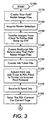
- Figs. 3-5 show a flowchart outlining an exemplary embodiment of a method according to this invention for improving print performance and image quality using a color capable print path for raster intensive documents. Operation begins at step S100. In step S110 an image is captured and a fast path raster image file is created.
- a fast path raster image file is a file that is segmented, according to this invention, for independent routing.
- the image may be captured using one or more of a digital camera, a scanner, a locally or remotely located computer, or any other known or later developed device that is capable of generating electronic image data.
- the image may be captured by any suitable device that stores and/or transmits electronic image data, such as a client or a server of a network.
- the created image file does not include vector data, but includes rendering hints or "metadata" for describing edge boundaries, resolution and/or the like. Operation continues at step S120.
- a target printer is selected.
- the target printer may be selected either directly by a user or indirectly through processing instructions or programming.
- Printer memory can be implemented using any appropriate combination of alterable, volatile or non-volatile memory or non-alterable, or fixed, memory.
- the alterable memory whether volatile or non-volatile, can be implemented using any one or more of static or dynamic RAM, a floppy disk and disk drive, a writable or re-writeable optical disk and disk drive, a hard drive, flash memory or the like.
- the non-alterable or fixed memory can be implemented using any one or more of ROM, PROM, EPROM, EEPROM, an optical ROM disk, such as a CD-ROM or DVD-ROM disk, and disk drive or the like. Operation continues to step S140.
- a page description language file referencing the fast path raster image file is created.
- the page description language may be Adobe's PostScript TM or other known or later developed page description language.
- the page description language file is used to describe pointers for headers, footers, page numbers, other non-image data, and/or the like.
- the page description language file may also be used to express image placement on a sheet by offering a page transform matrix and coordinate system, and the like.
- various exemplary embodiments include use of a page description language, it is to be understood that no page description language file may be necessary in the execution of other various exemplary embodiments of the systems and methods according to this invention. Operation continues to step S150.
- step S150 a job ticket is created for a print job.
- step S160 the job ticket and page description language files are transferred to a printer via, for example, internet print protocol. It is to be understood that other file transfer protocols may be used in the execution of other various exemplary embodiments of the systems and methods according to this invention.
- step S170 the print job is received and spooled in a memory. It is contemplated that the print job may be received and spooled in its entirety prior to processing, or in the alternative, may also be streamed with processing beginning prior to receipt of the entire print job.
- step S180 processing of the print job begins and the page description language content for the current page being processed is parsed.
- step S190 a determination is made if a page content identifier is detected in the page description language. If no page content identifier is detected then operation continues to step 5200.
- step S200 the page description language file and, the fast path images are decomposed.
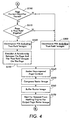
- a page content identifier is detected in step S190, then a determination is made if the page is fast path eligible in step S210.
- a page may not be fast path eligible, for instance, if placement of the page components will not fit on to the sheet because of overlapping image coordinates.
- Figs. 6a and 6b show an exemplary embodiment of a set of page content attributes usable by the systems and methods according to this invention to determine if a page is fast path eligible. If the page is not fast path eligible, then operation continues to step S200 where the page description language and Fast Path images are decomposed.
- step S220 the page description language file, excluding fast path images, is decomposed in step S220 to determine the arrangement of the page and page information.
- page arrangement and page information may include, for example, the location of a header, footer and/or page number, and the like. Operation continues to step S230.
- step S230 a relationship is established between the decomposed page and the fast path images on the page.
- the established relationship is logical and includes placement coordinates and sufficient information to retrieve fast path raster image files from the printer memory. Operation continues to step S240.
- step S240 the decomposed page content, i.e., page description language files and the fast path images are rasterized to construct a pixel map of the page using primitive imaging operators and glyphs. Both vector graphics and/or text are converted into bitmapped images.
- step S250 the rasterized image is compressed using compression techniques.
- step S260 the compressed raster image is buffered to allow decomposition to run asynchronously to a print marking engine.
- step S270 operation is paused until a request from the printer for output of the page rasterized image is received.
- step S280 operation resumes upon request for the printer.
- the compressed page rasterized image, and any associated fast path images, are decompressed. Such decompression may be performed by digital signal processor chips.
- Equator TM digital signal processor chips are used as hardware accelerators. For example, each Equator TM channel has 32 megabytes of dedicated RAM. Because of overhead and processing, only a part of this memory is actually available to accommodate image data. Even if compressed 10:1, a single standard letter size 600 dpi by 600 dpi 32 bit color image is 13 megabytes, expanding just one page of this size will require 128 megabytes.
- step S290 spatial and color transformations are performed on any associated fast path raster images is performed as desired.
- Such spatial transforms may include, for example, scaling, rotation, shifting, and/or the like.
- Examples of color transform include, for example, color space conversions, application of tone reproduction curves, black overprint, and/or the like.
- step S300 the raster image, and any associated fast path images, are merged and placed into a single output page raster image. Such placement includes positioning with respect to the output page coordinate system.
- the raster image is an overlay image and the fast path image is an underlay with an opaque imaging model.
- step S310 the resultant single output page raster image is packaged and transmitted to the printer.
- the single output raster image will typically consist of four planes, one per color separation. Operation ends at step S320.
- conveying supplementary information about the page content to a raster image processing, such that the raster image processing can determine whether to "hand-off" the page to one of several available rendering paths, without fully decomposing the page is novel.
- Advantages of this method include, for example, sustained print performance such as enabling sustained raster generation and decomposition of 15-20 US Letter size color pages per minute.
- superior image quality is achieved by conveying rendering hints that are used by the print controller to provide enhanced image quality.
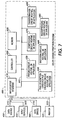
- FIG. 7 is a block diagram of an exemplary embodiment of a system 600 according to this invention for rapidly processing a raster intensive color documents.
- one or more user input devices 602 are connected over one or more links 603 to an input/output interface 610.
- a data source 400 is connected over a link 410 to the input/output interface 610.
- a data sink 500 is also connected to the input/output interface 610 through a link 510.
- Each of the links 410, 603, 510 can be implemented using any known or later developed device or system for connecting the one or more user input devices 602, the data source 400 and the data sink 500, respectively, to the input/output interface 610, including a direct cable connection, a connection over a wide area network or a local area network, a connection over an intranet, a connection over the Internet, or a connection over any other distributed processing network or system.
- each of the links 410, 603, 510 can be any known or later developed connection system or structure usable to connect the one or more user input devices 602, the data source 400 and the data sink 500, respectively, to the input/output interface 610.
- the input/output interface 610 inputs data from the data source 400 and/or the one or more user input devices 602 and outputs data to the data sink 500 via the link 510.
- the input/output interface 610 also provides the received data to one or more of a controller 620, a memory 630, a page description language file creating circuit, routine or application 640, a parsing circuit, routine or application 650, a rasterizing circuit, routine or application 660, a compressing circuit, routine or application 680, a transformation circuit, routine or application 690 and/or a printer 520.
- the input/output interface 610 receives data from one or more of the controller 620, the memory 630, the page description language file creating circuit, routine or application 640, the parsing circuit, routine or application 650, the rasterizing circuit, routine or application 660, the compressing circuit, routine or application 680, transformation circuit, routine or application 690 and/or the printer 520.
- the memory 430 stores data received from the page description language file creating circuit, routine or application 640, the parsing circuit, routine or application 650, the rasterizing circuit, routine or application 660, the compressing circuit, routine or application 670, the decompressing circuit, routine or application 680, the transformation circuit, routine or application 690 and/or the printer 520.
- the original data, the page description language file, the parsed page description language content, the rasterized image and page content, the compressed raster image and/or the transformed images may be stored in the memory 630.
- the memory 630 can also store one or more control routines used by the controller 620 to operate the color capable print path system 600.
- the memory 630 can be implemented using any appropriate combination of alterable, volatile or non-volatile memory or non-alterable, or fixed, memory.
- the alterable memory whether volatile or non-volatile, can be implemented using any one or more of static or dynamic RAM, a floppy disk and disk drive, a writable or re-writeable optical disk and disk drive, a hard drive, flash memory or the like.
- the non-alterable or fixed memory can be implemented using any one or more of ROM, PROM, EPROM, EEPROM, an optical ROM disk, such as a CD-ROM or DVD-ROM disk, and disk drive or the like.
- each of the circuits, routines or applications shown in Fig. 7 can be implemented as portions of a suitably programmed general purpose computer.
- each of the circuits or routines shown in Fig. 7 can be implemented as physically distinct hardware circuits within an ASIC, or using a FPGA, a page description language, a PLA or a PAL, or using discrete logic elements or discrete circuit elements.
- the particular form each of the circuits or routines shown in Fig. 7 will take is a design choice and will be obvious and predicable to those skilled in the art.
- the data source 400 or user input device 602 creates fast path image files.
- the fast path image files are output over the link 410, or 603, respectively, to the color capable print path system 600.
- the image files could have been previously input into the color capable print path system 600.
- the image is routed through the input/output device 610 via the controller 620 to the page description language file creating circuit, routine or application 640 where page description files referencing the fast path raster image files are created.
- a job ticket is also created at the data source 400, or user input device 602, and output separately from the fast path raster image file over the link 410, or 603, respectively, to the color capable print path system 600.
- the job ticket and the fast path image files are sent under the control of the controller 620 to the memory 430 to be spooled prior to further processing. It should be understood that the job ticket and fast path image files may also be streamed with processing beginning prior to receipt and spooling of the job ticket and fast path image files.
- the job ticket and fast path image files are routed under the control of the controller 620 to the parsing circuit, routine or application 650 where the page description language content for the current page is parsed and decomposed.
- the decomposed page content is then sent, under the control of the controller 620 to the rasterizing circuit, routine or application 660 where a pixel map of the page content is constructed using primitive operators and glyphs.
- the rasterized page is routed to the compressing circuit, routine or application 680 under the control of the controller 620. Compression techniques are used to compress the decomposed page content prior to being buffered in the memory 430 to await for a request from a printer 520 for output of the page raster image.
- the compressed decomposed page content is routed to the decompressing circuit, routine or application 680 where the compressed files are decompressed for further processing.
- the decompressed files are routed to the transformation circuit, routine or application 690 under the control of the controller 620 where the decompressed files and any associated fast path image files are positioned with respect to the output page coordinate system.
- the transformation circuit, routine or application 690 then packages and transmits the resultant single page raster image to the printer 520 via link 522.
Landscapes
- Engineering & Computer Science (AREA)
- Theoretical Computer Science (AREA)
- Physics & Mathematics (AREA)
- General Engineering & Computer Science (AREA)
- General Physics & Mathematics (AREA)
- Human Computer Interaction (AREA)
- Computational Linguistics (AREA)
- Record Information Processing For Printing (AREA)
- Editing Of Facsimile Originals (AREA)
- Image Processing (AREA)
- Image Generation (AREA)
Claims (7)
- Verfahren zum Drucken von Rasterbild-Dateien, das umfasst:Erfassen digitaler Bilddaten;Segmentieren der digitalen Bilddaten, das Erzeugen einer segmentierten Rasterbild-Datei (fast path raster image file) aus den digitalen Bilddaten einschließt;Generieren einer Seitenbeschreibungssprache-Datei, die auf die segmentierte Rasterbild-Datei verweist;Parsen der Seitenbeschreibungssprache-Datei, die auf die segmentierte Rasterbild-Datei verweist;Zerlegen und Zusammenführen der Seitenbeschreibungssprache-Datei mit der segmentierten Rasterbild-Datei, auf die verwiesen wird, um ein gerastertes Bild zu erzeugen; undRasterbild-Verarbeiten des gerasterten Bildes.
- Verfahren nach Anspruch 1, wobei Segmentieren des digitalen Bildes Erzeugen von Zeichenkontexten (rendering hints) des erfassten digitalen Bildes einschließt.
- Verfahren nach Anspruch 1 oder Anspruch 2, das des Weiteren Komprimieren und Puffern des gerasterten Bildes nach dem Erzeugen des gerasterten Bildes umfasst.
- Verfahren nach Anspruch 3, das des Weiteren Dekomprimieren des komprimierten und gepufferten gerasterten Bildes vor Verarbeitung umfasst.
- Verfahren nach einem der vorangehenden Ansprüche, wobei die Rasterbild-Verarbeitung Verarbeitung des gerasterten Bildes über eine Vielzahl von Rasterbild-Verarbeitungseinrichtungen umfasst und die Rasterbild-Verarbeitungseinrichtungen parallele Verarbeitung entsprechend einem FIFO-Format durchführen.
- System zum Drucken einer Rasterbild-Datei, das umfasst:eine Eingabe-/Ausgabevorrichtung;eine Steuereinrichtung;eine Schaltung, Routine oder Anwendung zum Erzeugen einer Seitenbeschreibungssprache-Datei, die in Funktion eine Seitenbeschreibungssprache-Datei erzeugen kann, die auf eine von der Eingabe-/Ausgabevorrichtung empfangene segmentierte Rasterbild-Datei verweist;eine Parsing-Schaltung, -Routine oder -Anwendung, die in Funktion Parsing einer Seitenbeschreibungssprache-Datei durchführen kann, die auf eine segmentierte Rasterbild-Datei verweist;eine Rasterungs-Schaltung, -Routine oder -Anwendung, die in Funktion eine Parsing unterzogene Seitenbeschreibungssprache-Datei und eine segmentierte Rasterbild-Datei, auf die verwiesen wird, rastern kann;eine Kompressions-Schaltung, -Routine oder -Anwendung, die die gerasterte Seitenbeschreibungssprache-Datei sowie die gerasterte segmentierte Rasterbild-Datei, auf die verwiesen wird, komprimieren kann;eine Dekomprimierungs-Schaltung, -Routine oder -Anwendung, die in Funktion die gerasterte Seitenbeschreibungssprache-Datei sowie die gerasterte segmentierte Rasterbild-Datei, auf die verwiesen wird, dekomprimieren kann;eine Transformations-Schaltung, -Routine oder -Anwendung, die in Funktion die dekomprimierte gerasterte Seitenbeschreibungssprache-Datei sowie die dekomprimierte gerasterte segmentierte Rasterbild-Datei, auf die verwiesen wird, in eine Form transformieren kann, die von einem Ausgabegerät-Drucker genutzt werden kann; undeinen Speicher.
- System nach Anspruch 6, das zum Ausführen eines Verfahrens nach einem der Ansprüche 1 bis 5 eingerichtet ist.
Applications Claiming Priority (2)
| Application Number | Priority Date | Filing Date | Title |
|---|---|---|---|
| US740478 | 1996-10-30 | ||
| US10/740,478 US7420699B2 (en) | 2003-12-22 | 2003-12-22 | Systems and methods for rapid processing of raster intensive color documents |
Publications (3)
| Publication Number | Publication Date |
|---|---|
| EP1548634A2 EP1548634A2 (de) | 2005-06-29 |
| EP1548634A3 EP1548634A3 (de) | 2006-06-07 |
| EP1548634B1 true EP1548634B1 (de) | 2011-10-19 |
Family
ID=34552793
Family Applications (1)
| Application Number | Title | Priority Date | Filing Date |
|---|---|---|---|
| EP04257909A Expired - Lifetime EP1548634B1 (de) | 2003-12-22 | 2004-12-17 | Systemen und Verfahren zur schnellen Verarbeitung von rasterisierten mehrfarbigen Dokumenten |
Country Status (5)
| Country | Link |
|---|---|
| US (1) | US7420699B2 (de) |
| EP (1) | EP1548634B1 (de) |
| JP (1) | JP4502798B2 (de) |
| BR (1) | BRPI0405943A (de) |
| CA (1) | CA2490192C (de) |
Cited By (1)
| Publication number | Priority date | Publication date | Assignee | Title |
|---|---|---|---|---|
| US9659387B2 (en) | 2014-09-12 | 2017-05-23 | Microsoft Technology Licensing, Llc | Graphics primitive and color channels |
Families Citing this family (35)
| Publication number | Priority date | Publication date | Assignee | Title |
|---|---|---|---|---|
| US5129771A (en) | 1991-03-22 | 1992-07-14 | Briles Rivet Corporation | Precision ring dome-headed rivet |
| US20060132837A1 (en) * | 2004-12-20 | 2006-06-22 | Michael Barth | Platform independent remote printing system |
| US7542161B2 (en) * | 2005-10-20 | 2009-06-02 | Xerox Corporation | System and method for determining an optimal batch size for a print job |
| US7649649B2 (en) * | 2005-11-17 | 2010-01-19 | Xerox Corporation | Determining the color match between image data and graphics objects |
| US8073728B2 (en) | 2007-03-16 | 2011-12-06 | Xerox Corporation | Multi-color billing process |
| US8144364B2 (en) | 2007-07-18 | 2012-03-27 | Xerox Corporation | Methods and systems for processing heavy-tailed job distributions in a document production environment |
| US8134743B2 (en) | 2007-07-18 | 2012-03-13 | Xerox Corporation | Methods and systems for routing and processing jobs in a production environment |
| US8725546B2 (en) | 2007-07-18 | 2014-05-13 | Xerox Corporation | Workflow scheduling method and system |
| US8127012B2 (en) * | 2007-07-18 | 2012-02-28 | Xerox Corporation | System and methods for efficient and adequate data collection in document production environments |
| US8145517B2 (en) * | 2007-07-18 | 2012-03-27 | Xerox Corporation | Methods and systems for scheduling job sets in a production environment |
| US20090025002A1 (en) * | 2007-07-18 | 2009-01-22 | Xerox Corporation | Methods and systems for routing large, high-volume, high-variability print jobs in a document production environment |
| US20090327033A1 (en) * | 2008-06-26 | 2009-12-31 | Xerox Corporation | Methods and systems for forecasting inventory levels in a production environment |
| JP5132459B2 (ja) * | 2008-07-18 | 2013-01-30 | キヤノン株式会社 | データ処理装置、データ処理装置の制御方法、記憶媒体及びプログラム |
| US20100245385A1 (en) * | 2009-03-26 | 2010-09-30 | Xerox Corporation | Page region image offset methods and systems |
| US8339672B2 (en) * | 2009-03-30 | 2012-12-25 | Sharp Laboratories Of America, Inc. | Methods and systems for rendering data using graphic-list partitions and associated rendering processors |
| US8339670B2 (en) * | 2009-03-30 | 2012-12-25 | Sharp Laboratories Of America, Inc. | Methods and systems for rendering data based on graphic-list partitioning |
| US8339671B2 (en) * | 2009-03-30 | 2012-12-25 | Sharp Laboratories Of America, Inc. | Methods and systems for rendering data by partitioning a graphics list |
| US20100245918A1 (en) * | 2009-03-30 | 2010-09-30 | Nguyen Uoc H | Methods and Systems for Rendering Data |
| US20100245889A1 (en) * | 2009-03-30 | 2010-09-30 | Nguyen Uoc H | Methods and Systems for Rendering Data |
| US8339653B2 (en) * | 2009-03-30 | 2012-12-25 | Sharp Laboratories Of America, Inc. | Methods and systems for rendering data based on overlap characteristics |
| US8411319B2 (en) * | 2009-03-30 | 2013-04-02 | Sharp Laboratories Of America, Inc. | Methods and systems for concurrent rendering of graphic-list elements |
| JP5675082B2 (ja) * | 2009-11-26 | 2015-02-25 | キヤノン株式会社 | 印刷装置及びその処理方法 |
| US8477364B2 (en) * | 2010-12-30 | 2013-07-02 | Konica Minolta Laboratory U.S.A., Inc. | Printing using a skeleton electronic document and multiple connections |
| US9179016B2 (en) * | 2011-10-25 | 2015-11-03 | Hewlett-Packard Development Company, L.P. | Communication architectures for direct printing and scanning |
| US8749836B2 (en) | 2012-08-06 | 2014-06-10 | Hewlett-Packard Development Company, L.P. | Page image treatment |
| US9070076B1 (en) | 2014-05-07 | 2015-06-30 | Xerox Corporation | Spot color preflight for extended gamut printing |
| JP6706060B2 (ja) * | 2015-12-22 | 2020-06-03 | キヤノン株式会社 | 画像処理装置、制御方法およびプログラム |
| JP6977661B2 (ja) * | 2018-05-14 | 2021-12-08 | コニカミノルタ株式会社 | 印刷制御装置、印刷制御プログラム及び印刷制御方法 |
| JP2020162025A (ja) * | 2019-03-27 | 2020-10-01 | キヤノン株式会社 | 画像処理システム、画像処理方法、および画像処理装置 |
| CN112650456A (zh) * | 2020-12-21 | 2021-04-13 | 北京字跳网络技术有限公司 | 打印方法、装置和电子设备 |
| US11556294B1 (en) | 2022-01-10 | 2023-01-17 | Kyocera Document Solutions Inc. | Methods and printing system for peer-to-peer output management |
| US11954390B2 (en) | 2022-01-10 | 2024-04-09 | Kyocera Document Solutions Inc. | Printing system for peer-to-peer output management |
| US11954391B2 (en) | 2022-01-10 | 2024-04-09 | Kyocera Document Solutions Inc. | Methods and printing system for peer-to-peer output management |
| US12106119B2 (en) | 2022-07-27 | 2024-10-01 | Hewlett Packard Enterprise Development Lp | Client update of data modification tracking structure |
| US12450130B2 (en) | 2023-08-11 | 2025-10-21 | Hewlett Packard Enterprise Development Lp | Incremental data backup using a combined tracking data structure |
Family Cites Families (18)
| Publication number | Priority date | Publication date | Assignee | Title |
|---|---|---|---|---|
| JP2781227B2 (ja) * | 1989-06-30 | 1998-07-30 | 株式会社リコー | グループ4ファクシミリ通信アダプタ装置 |
| US5216754A (en) * | 1991-08-27 | 1993-06-01 | Xerox Corporation | Determining the complexity of a page prior to a print attempt |
| JP3298965B2 (ja) * | 1993-02-19 | 2002-07-08 | キヤノン株式会社 | 画像処理装置及び方法 |
| JP3169815B2 (ja) | 1995-12-14 | 2001-05-28 | 松下電送システム株式会社 | 画像通信装置、および画像通信方法 |
| JPH09167222A (ja) * | 1995-12-14 | 1997-06-24 | Fuji Xerox Co Ltd | 画像処理装置 |
| US5841900A (en) * | 1996-01-11 | 1998-11-24 | Xerox Corporation | Method for graph-based table recognition |
| JPH09265363A (ja) * | 1996-03-28 | 1997-10-07 | Fuji Xerox Co Ltd | 印刷処理装置および方法 |
| JPH10191066A (ja) * | 1996-12-20 | 1998-07-21 | Fuji Xerox Co Ltd | 画像処理装置 |
| JP2002067399A (ja) * | 2000-08-28 | 2002-03-05 | Matsushita Electric Ind Co Ltd | 印刷制御装置 |
| US7095529B2 (en) * | 2000-12-22 | 2006-08-22 | Xerox Corporation | Color management system |
| US20020097419A1 (en) * | 2001-01-19 | 2002-07-25 | Chang William Ho | Information apparatus for universal data output |
| JP3432809B2 (ja) | 2001-06-28 | 2003-08-04 | パナソニック コミュニケーションズ株式会社 | 通信制御装置及び通信制御方法 |
| JP2003036445A (ja) * | 2002-06-07 | 2003-02-07 | Fuji Xerox Co Ltd | 画像処理装置 |
| US7202964B2 (en) * | 2002-07-10 | 2007-04-10 | Hewlett-Packard Development Company, L.P. | Determining raster image processor cycle count to fully utilize a printer |
| US6672212B1 (en) * | 2002-09-03 | 2004-01-06 | Sharp Laboratories Of America, Inc. | Single print job emulation of multiple TIFF files |
| US20040150840A1 (en) | 2003-01-30 | 2004-08-05 | Farrell Michael E. | Methods and systems for structuring a raster image file for parallel streaming rendering by multiple processors |
| US7339691B2 (en) * | 2003-04-21 | 2008-03-04 | Sharp Laboratories Of America, Inc. | Systems and methods for providing content filtering of a print job |
| US7391535B2 (en) * | 2003-08-18 | 2008-06-24 | Hewlett-Packard Development Company, L.P. | Raster image processing |
-
2003
- 2003-12-22 US US10/740,478 patent/US7420699B2/en not_active Expired - Lifetime
-
2004
- 2004-12-15 CA CA002490192A patent/CA2490192C/en not_active Expired - Fee Related
- 2004-12-17 EP EP04257909A patent/EP1548634B1/de not_active Expired - Lifetime
- 2004-12-21 JP JP2004368682A patent/JP4502798B2/ja not_active Expired - Fee Related
- 2004-12-22 BR BR0405943-3A patent/BRPI0405943A/pt not_active IP Right Cessation
Cited By (1)
| Publication number | Priority date | Publication date | Assignee | Title |
|---|---|---|---|---|
| US9659387B2 (en) | 2014-09-12 | 2017-05-23 | Microsoft Technology Licensing, Llc | Graphics primitive and color channels |
Also Published As
| Publication number | Publication date |
|---|---|
| JP2005184848A (ja) | 2005-07-07 |
| EP1548634A2 (de) | 2005-06-29 |
| US20050134886A1 (en) | 2005-06-23 |
| CA2490192A1 (en) | 2005-06-22 |
| JP4502798B2 (ja) | 2010-07-14 |
| CA2490192C (en) | 2009-08-11 |
| EP1548634A3 (de) | 2006-06-07 |
| BRPI0405943A (pt) | 2005-09-06 |
| US7420699B2 (en) | 2008-09-02 |
Similar Documents
| Publication | Publication Date | Title |
|---|---|---|
| CA2490192C (en) | Systems and methods for rapid processing of raster intensive color documents | |
| EP0809192B1 (de) | Verfahren und Vorrichtung zur Wiedergabe von schriftartfreien, strukturierten Dokumenten | |
| US6275301B1 (en) | Relabeling of tokenized symbols in fontless structured document image representations | |
| US8233164B2 (en) | Rendering apparatus, rendering method, and computer-readable storage medium | |
| US7551299B2 (en) | Method and apparatus for handling different print data formats | |
| US8422041B2 (en) | Image processing apparatus, method, and program for converting postscript data with variable print data into a PDF format considering an attribute of plural drawing objects | |
| EP0733965A1 (de) | Parallele Verarbeitung des Datenstroms der Seitenbeschreibungssprache | |
| US6809833B1 (en) | Late binding of device settings in a host raster image processor | |
| US20040150840A1 (en) | Methods and systems for structuring a raster image file for parallel streaming rendering by multiple processors | |
| US5784062A (en) | Image output device and processing method converting an image formation command into raster format | |
| AU6456296A (en) | Image rendering for page printers | |
| US6981069B2 (en) | Compressed data transmission over a plurality of transmission paths | |
| US20100053665A1 (en) | Print optimization mechanism | |
| US5966504A (en) | Apparatus and method for printing | |
| US7230729B1 (en) | Printer pipeline bypass in hardware-ready format | |
| JP2002067399A (ja) | 印刷制御装置 | |
| US20090284766A1 (en) | Image Synthesis Method, Print System and Image Synthesis Program | |
| US20130135629A1 (en) | Method of pre-processing data on a host machine for a host-based print system | |
| US6961134B1 (en) | Method, system, and logic using multiplexers to select data for pixels from multiple objects | |
| JP2000137587A (ja) | 印刷制御装置及び方法 | |
| US6804411B1 (en) | Method, system, and program for decompressing and aligning line work data from multiple objects | |
| KR100277734B1 (ko) | 디스플레이 비트맵을 빠르게 출력하는 프린터 시스템 및 방법 | |
| US7394568B1 (en) | Method, system, and logic for selecting pixel data from multiple objects | |
| US6894796B1 (en) | Method, system, and logic for selecting line work and control data for a pixel from multiple objects of line work data provided for the pixel | |
| JP3692615B2 (ja) | 多機能印刷装置 |
Legal Events
| Date | Code | Title | Description |
|---|---|---|---|
| PUAI | Public reference made under article 153(3) epc to a published international application that has entered the european phase |
Free format text: ORIGINAL CODE: 0009012 |
|
| AK | Designated contracting states |
Kind code of ref document: A2 Designated state(s): AT BE BG CH CY CZ DE DK EE ES FI FR GB GR HU IE IS IT LI LT LU MC NL PL PT RO SE SI SK TR |
|
| AX | Request for extension of the european patent |
Extension state: AL BA HR LV MK YU |
|
| PUAL | Search report despatched |
Free format text: ORIGINAL CODE: 0009013 |
|
| AK | Designated contracting states |
Kind code of ref document: A3 Designated state(s): AT BE BG CH CY CZ DE DK EE ES FI FR GB GR HU IE IS IT LI LT LU MC NL PL PT RO SE SI SK TR |
|
| AX | Request for extension of the european patent |
Extension state: AL BA HR LV MK YU |
|
| 17P | Request for examination filed |
Effective date: 20061207 |
|
| AKX | Designation fees paid |
Designated state(s): DE FR GB |
|
| 17Q | First examination report despatched |
Effective date: 20090819 |
|
| GRAP | Despatch of communication of intention to grant a patent |
Free format text: ORIGINAL CODE: EPIDOSNIGR1 |
|
| GRAS | Grant fee paid |
Free format text: ORIGINAL CODE: EPIDOSNIGR3 |
|
| GRAA | (expected) grant |
Free format text: ORIGINAL CODE: 0009210 |
|
| AK | Designated contracting states |
Kind code of ref document: B1 Designated state(s): DE FR GB |
|
| REG | Reference to a national code |
Ref country code: GB Ref legal event code: FG4D |
|
| REG | Reference to a national code |
Ref country code: DE Ref legal event code: R096 Ref document number: 602004034894 Country of ref document: DE Effective date: 20111222 |
|
| PLBE | No opposition filed within time limit |
Free format text: ORIGINAL CODE: 0009261 |
|
| STAA | Information on the status of an ep patent application or granted ep patent |
Free format text: STATUS: NO OPPOSITION FILED WITHIN TIME LIMIT |
|
| 26N | No opposition filed |
Effective date: 20120720 |
|
| REG | Reference to a national code |
Ref country code: DE Ref legal event code: R097 Ref document number: 602004034894 Country of ref document: DE Effective date: 20120720 |
|
| PGFP | Annual fee paid to national office [announced via postgrant information from national office to epo] |
Ref country code: DE Payment date: 20131121 Year of fee payment: 10 Ref country code: GB Payment date: 20131125 Year of fee payment: 10 |
|
| PGFP | Annual fee paid to national office [announced via postgrant information from national office to epo] |
Ref country code: FR Payment date: 20131219 Year of fee payment: 10 |
|
| REG | Reference to a national code |
Ref country code: DE Ref legal event code: R119 Ref document number: 602004034894 Country of ref document: DE |
|
| GBPC | Gb: european patent ceased through non-payment of renewal fee |
Effective date: 20141217 |
|
| REG | Reference to a national code |
Ref country code: FR Ref legal event code: ST Effective date: 20150831 |
|
| PG25 | Lapsed in a contracting state [announced via postgrant information from national office to epo] |
Ref country code: GB Free format text: LAPSE BECAUSE OF NON-PAYMENT OF DUE FEES Effective date: 20141217 Ref country code: DE Free format text: LAPSE BECAUSE OF NON-PAYMENT OF DUE FEES Effective date: 20150701 |
|
| PG25 | Lapsed in a contracting state [announced via postgrant information from national office to epo] |
Ref country code: FR Free format text: LAPSE BECAUSE OF NON-PAYMENT OF DUE FEES Effective date: 20141231 |