EP1548115A1 - Fructosylamin-oxidase - Google Patents
Fructosylamin-oxidase Download PDFInfo
- Publication number
- EP1548115A1 EP1548115A1 EP03798406A EP03798406A EP1548115A1 EP 1548115 A1 EP1548115 A1 EP 1548115A1 EP 03798406 A EP03798406 A EP 03798406A EP 03798406 A EP03798406 A EP 03798406A EP 1548115 A1 EP1548115 A1 EP 1548115A1
- Authority
- EP
- European Patent Office
- Prior art keywords
- fao
- enzyme
- fructosylamine oxidase
- kda
- activity
- Prior art date
- Legal status (The legal status is an assumption and is not a legal conclusion. Google has not performed a legal analysis and makes no representation as to the accuracy of the status listed.)
- Granted
Links
Images



Classifications
-
- C—CHEMISTRY; METALLURGY
- C12—BIOCHEMISTRY; BEER; SPIRITS; WINE; VINEGAR; MICROBIOLOGY; ENZYMOLOGY; MUTATION OR GENETIC ENGINEERING
- C12N—MICROORGANISMS OR ENZYMES; COMPOSITIONS THEREOF; PROPAGATING, PRESERVING, OR MAINTAINING MICROORGANISMS; MUTATION OR GENETIC ENGINEERING; CULTURE MEDIA
- C12N9/00—Enzymes; Proenzymes; Compositions thereof; Processes for preparing, activating, inhibiting, separating or purifying enzymes
- C12N9/0004—Oxidoreductases (1.)
- C12N9/0012—Oxidoreductases (1.) acting on nitrogen containing compounds as donors (1.4, 1.5, 1.6, 1.7)
- C12N9/0014—Oxidoreductases (1.) acting on nitrogen containing compounds as donors (1.4, 1.5, 1.6, 1.7) acting on the CH-NH2 group of donors (1.4)
- C12N9/0022—Oxidoreductases (1.) acting on nitrogen containing compounds as donors (1.4, 1.5, 1.6, 1.7) acting on the CH-NH2 group of donors (1.4) with oxygen as acceptor (1.4.3)
-
- C—CHEMISTRY; METALLURGY
- C12—BIOCHEMISTRY; BEER; SPIRITS; WINE; VINEGAR; MICROBIOLOGY; ENZYMOLOGY; MUTATION OR GENETIC ENGINEERING
- C12Q—MEASURING OR TESTING PROCESSES INVOLVING ENZYMES, NUCLEIC ACIDS OR MICROORGANISMS; COMPOSITIONS OR TEST PAPERS THEREFOR; PROCESSES OF PREPARING SUCH COMPOSITIONS; CONDITION-RESPONSIVE CONTROL IN MICROBIOLOGICAL OR ENZYMOLOGICAL PROCESSES
- C12Q1/00—Measuring or testing processes involving enzymes, nucleic acids or microorganisms; Compositions therefor; Processes of preparing such compositions
- C12Q1/26—Measuring or testing processes involving enzymes, nucleic acids or microorganisms; Compositions therefor; Processes of preparing such compositions involving oxidoreductase
Definitions
- the present invention relates to a novel fructosylamine oxidase, more particularly, to a fructosylamine oxidase derived from Fusarium proliferatum, a process for preparing the same, and use thereof in the measurement of amadori compounds.
- Amadori compounds are formed when a reactive substance having an amino group(s) such as protein, peptide or amino acid coexists with a reducing sugar such as glucose in blood and food product. Thus, they combine together non-enzymatically and irreversibly through the amino group and aldehyde group, which is followed by amadori rearrangement to form an amadori compound. Since the production rate of an amadori compound is a function of concentration of reactive substances, contacting period, temperature, and the like, various information about a sample containing such reactive substances can be obtained from the amount of amadori compound. Therefore, analysis of amadori compounds is useful in the fields related to medicine, food, and the like.
- Diabetes causes various systemic symptoms (complications) such as diabetic retinopathy, diabetic nephropathy, diabetic neuropathy, and the like, and is the leading cause of blindness and introduction of dialysis. These complications are linked not only to the restriction of daily life and social activity of patients but also to the swelling medical expenses and raise a serious social problem. The importance of early detection and the following adequate control of blood glucose level has been indicated.
- glycohemoglobin reflecting the mean glucose level for the past about 1 to 2 months
- glycoalbumin reflecting the mean glucose level for the past about 2 weeks
- fructosamine corresponding to glycated protein having reducing ability in serum is measured.
- Glycohemoglobin (HbA1c) is a glycated hemoglobin wherein ⁇ -amino group of valine at N-terminus of hemoglobin ⁇ chain is glycated. The measurement of HbA1c plays an important role in control of blood glucose level of diabetic patients.
- amadori compound in enzymatic assay is carried out by contacting an amadori compound with an oxidoreductase, and measuring the amount of hydrogen peroxide produced or that of oxygen consumed.
- Fructosylamino acid oxidase one of oxidoreductases, has generally been purified from microorganisms. See, for example, JP-H06-65300B, JP-H03-155780A, JP-H07-289253A ([00319, [0037]), JP-H08-154672A (Claim 2 and [0027]), JP-H11-243950A ([0037]) and JP-H05-192193A.
- Enzymes described in these publications are explained in brief below. Enzymes from Corynebacterium include those specific for an amino acid glycated at ⁇ -amino group but not active on fructosyl lysine (hereinafter, it may be referred to as "FL"), which are poorly heat stable (90% or more activity is decreased by treatment at 45°C for 10 minutes) and hence lack in sufficient practical usefulness (JP-H06-65300B). Enzymes from Aspergillus include those less active on FL compared to fructosyl valine (hereinafter, it may be referred to as "FV”); however, it is unknown whether or not the enzyme is active on glycated protein or hydrolysates thereof (JP-H03-155780A).
- Enzymes from Gibberella include those showing high specificity to fructosyl N ⁇ -Z-lysine (hereinafter, it may be referred to as "FZL"), of which ⁇ -amino group is protected, and being active on fructosylpolylysine but not active on fructosyl valine (JP-H07-289253A, [0031] and [0037]).
- Enzymes from Fusarium include those having the same or higher activity for fructosyl lysine compared to fructosyl valine (JP-H08-154672A, Claim 2 and [0027]).
- Other enzymes from Fusarium or Gibberella include those inactive on fructosyl valine but specific for fructosyl lysine (JP-H11-243950A, [0037]).
- these existing enzymes are not satisfactory in terms of, for example, activity in the determination of glycohemoglobin, and therefore there has been a demand for an enzyme with high activity and excellent specificity.
- these existing enzymes are active on glycated amino acids or poly-lysines produced by fragmentation with protease treatment or the like, they are almost inactive on glycated peptides in which the ⁇ -position is glycated. Accordingly, in the case of glycohemoglobin, wherein ⁇ -amino group of N-terminal amino acid is glycated, it is necessarily to release the N-terminal fructosyl valine certainly beforehand.
- HbA1c hemoglobin A1c
- the present invention provides a novel fructosylamine oxidase (hereinafter, it may be referred to as "FAO") useful in the accurate and efficient measurement of amadori compounds, specifically, glycated proteins.
- FEO novel fructosylamine oxidase
- the present inventors have intensively studied and found that a strain of Fusarium produces FAO with excellent substrate specificity and established the present invention.
- the present invention provides s fructosylamine oxidase derived from Fusarium proliferatum.
- the fructosylamine oxidase of the present invention has a catalytic activity in a reaction shown by the scheme (I).
- R 1 is -[CH(OH)] n -CH 2 OH (wherein, n is 5 or 6)
- R 2 is an amino acid residue or a peptide residue consisting of 2 to 10 amino acids.
- R 2 is an amino acid residue or a peptide residue consisting of 2 to 10 amino acids, preferably an amino acid residue or a peptide residue consisting of 2 to 6 amino acids, and more preferably an amino acid residue or a peptide residue consisting of 2 to 3 amino acids.
- Amino acid(s) constituting R 2 varies depending on the amadori compound to be determined; however examples include valine, lysine, histidine, leucine, serine and the like.
- R 2 is a peptide residue, it may consist of 2 to 10 amino acids with valine or leucine at the N-terminus. More preferred peptide may consist of 2 or 3 amino acids with valine at the N-terminus, and examples include valine-histidine and valine-histidine-leucine.
- the FAO of the present invention is used in the measurement of HbA1c, it is preferred that said FAO is active on valine glycated at ⁇ -amino group, i.e., fructosyl valine (FV) or a peptide having FV at the N terminus, as described above.
- ⁇ -amino group i.e., fructosyl valine (FV) or a peptide having FV at the N terminus
- FV fructosyl valine
- a peptide having FV at the N terminus as described above.
- the FAO is used in the measurement of glycated albumin wherein ⁇ -amino group of lysine is glycated
- said FAO is active on lysine glycated at ⁇ -amino group, such as fructosyl lysine ( ⁇ FL) or a peptide comprising ⁇ FL.
- the FAO of the present invention is not limited to the one derived from a particular origin as far as it has an enzyme activity.
- an FAO which is produced by a microorganism growing in a medium containing a given glycated amino acid or glycated peptide as the sole carbon and nitrogen sources and showing enzyme activity on glycated amino acid and glycated peptide as a substrate is useful for the present invention.
- glycated peptide used in the screening of such a microorganism include a product of fragmentation of an objective glycated protein.
- An objective FAO can be obtained by culturing microorganisms in a medium containing such a glycated peptide as the sole carbon and nitrogen sources, purifying the resulting enzyme and confirming the activity.
- the inventors have screened microorganisms in soil using fructosyl valine-histidine-leucine (FVHL) and found out a microorganism of Fusarium having an FVHL assimilating ability.
- FVHL fructosyl valine-histidine-leucine
- FVHL Since the FVHL above is the same as the N-terminal sequence of hemoglobin ⁇ -chain, it is suitable for screening of FAO useful in the measurement of HbA1c.
- a glycated peptide can be prepared according to a method known in the art.
- the FAO of the present invention can be prepared microbiologically using a Fusarium strain.
- Preferred microorganisms include Fusarium proliferatum or variants thereof.
- Fusarium proliferatum is a strain which the present inventors have isolated from soil for the first time according to the method described in Example 1. It had been deposited with the "International Patent Organism Depositary, National Institute of Bioscience and Human-Technology", Central 6, 1-1-1 Higashi, Tsukuba-shi, Ibaraki-ken, Japan ( Fusarium sp. GL2-1 strain; received date: September 9, 2002; accession number: FERM P-19005), and has been transferred to international deposit (transfer date: August 11, 2003; accession number: FERM BP-8451).
- Fusarium proliferatum of the present invention may be referred to as "GL2-1" or "GL2-1 strain”.
- strains having an improved activity on FVHL or other substrates from GL2-1, the original strain, by means of mutagenesis or gene recombination techniques.
- Such a variant can also serve as the source of FAO of the present invention.
- the derivative strains include those obtained artificially by mutagenesis or those obtained by screening.
- the FAO of the present invention can be prepared by culturing a microorganism capable of producing FAO in a glucose-valine browning medium (hereinafter, referred to as "GV browning medium").
- the GV browning medium can be obtained by autoclaving glucose and valine at 120°C for 30 minutes.
- Examples of preferred GV browning medium includes a medium containing 1.5% glucose, 0.5% L-valine, 0.1% K 2 HPO 4 , 0.1% NaH 2 PO 4 , 0.05% MgSO 4 ⁇ 7H 2 O, 0.01% CaCl 2 ⁇ 2H 2 O and 0.2% yeast extract.
- cultivation is performed at 25 - 37°C, preferably at 28°C.
- the pH of medium is between 4.0 and 8.0, preferably between 5.5 and 6.0.
- the conditions are not critical and should be adjusted appropriately depending on the conditions of respective microorganisms and are not limited to the conditions described above.
- a cell-free extract can be obtained in a conventional manner by collecting fungal cells by filtration followed by centrifugation.
- the grinding of cells can be carried out in a conventional manner, for example, by means of mechanical grinding, autodigestion using a solvent, freezing, ultrasonic treatment, pressurization, or the like.
- the method of isolation and purification of an enzyme is also known in the art. It can be conducted by combining appropriately known methods including salting-out with ammonium sulfate, precipitation with an organic solvent such as ethanol, ion-exchange chromatography, gel filtration, affinity chromatography, and the like.
- mycelia can be harvested from resultant culture by centrifugation or suction filtration, washed, suspended in 0.1 M Tris-HCl buffer (pH 8.0) containing 1mM DTT, ground (broken) with Mini-BeadBeaterTM (0.5 mm glass beads), and centrifuged. The supernatant as a cell-free extract is then purified by ammonium sulfate fractionation, dialysis and column chromatography using Resource Q column (Amersham Biosciences).
- the enzyme when an FAO is secreted or accumulated in medium, the enzyme can be separated and purified according to a method known per se, for example, by an appropriate combination of methods including ion-exchange resin treatment, activated carbon absorption treatment, precipitation from organic solvent, vacuum concentration, freeze-drying, crystallization, and the like.
- FAO-Q 1 fructosyl valine
- FZL N- ⁇ fructosyl lysine
- the present invention is not limited to an enzyme of particular origin and includes any FAOs which are useful for the purpose of the present invention and have the physicochemical characteristics shown below.
- FVHL inducible enzymes that could be induced by FVHL, and are induced in a medium containing FVHL as the sole carbon and nitrogen sources.
- Enzyme reaction was conducted under different pH conditions between 3.5 and 10.0 according to the method for determination of activity as described above.
- the buffers used were 100 mM acetate buffer at pH range of 3.5-6.0, 100 mM potassium phosphate buffer at pH range of 6.0-8.0, 100 mM Tris-HCl buffer (pH range of 7.0-9.0) and 100 mM glycin-NaOH buffer at pH range of 9.0-10.0.
- the enzyme FAO-Q1 of the present invention has a pH optimum of about 7.5 at 30°C
- FAO-Q2 of the present invention a pH optimum of about 7.0 at 30°C.
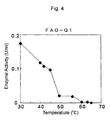
- Temperature conditions for the enzyme were determined by incubating FAO-Q1 or FAO-Q2 in 0.1 M Tris-HCl buffer (pH 8.0) at a temperature between 30 and 65°C for 10 minutes, and measuring the activity under normal conditions. The results of measurement are shown in Figs. 4 and 5. These figures show that the optimum temperature for enzymatic stability is between 30°C and 40°C.
- Titration of enzyme can be performed by a method known in the art (e.g., kinetic method), for example, that described in Example 1 (3).
- kinetic method hydrogen peroxide generated by the reaction of an FAO with a glycated amino acid or peptide is measured on the basis of absorbance (505 nm) of quinone pigment produced in the presence of hydrogen peroxide.
- the amount ( ⁇ mole) of hydrogen peroxide generated per minute is calculated on the basis of molar absorptivity (5.16 x 10 3 M -1 cm -1 ) of quinone pigment and the resultant numerical value is taken as a unit (U) of enzyme activity.
- the method of measuring activity is not limited to the above-described method, and the enzyme activity of the present FAO can be determined by other methods including an end point method, a method based on measurement of oxygen absorption, etc.
- Michaelis constant for respective substrates can be determined by measuring the initial reaction rate in the process for determination of titer as described above while keeping the conditions regarding enzyme concentration, pH, temperature, and the like constant and changing only the concentration of substrate.
- FAO-Q1 shows almost the same activity on FV and FZL and therefore is widely useful for assay of amadori compounds.
- FAO-Q2 shows activity on FV but not on FZL, and therefore is useful for a selective assay of glycohemoglobin.
- FAO-Q2 is active on FVH and FVHL which are N-terminal sequence of glycohemoglobin. Accordingly, it becomes possible to determine only the glycosylation at N-terminus without measuring the internal glycosylation ( ⁇ -position) of glycohemoglobin molecule, whereby one can assay HbA1c more accurately.
- a sample containing an amadori compound(s) is contacted with an FAO of the present invention, and the amount of oxygen consumed or that of hydrogen peroxide generated is measured according to a known method.
- Any samples are available, and examples include those derived from a living body such as blood (e.g. whole blood, plasma or serum) and urine, and food products such as soy sauce, and the like. Blood is an especially preferred sample.
- the suitable reaction conditions such as pH and temperature are selected for respective enzymes. That is, when FAO-Q1 is used, the reaction could be carried out at pH range of about 6.5-12, preferably about 7-8, more preferably about 7.5; and at temperature range of 30-40°C.
- the reaction could be carried out at pH range of about 6-10, preferably about 6.5-8, more preferably about 7; and at temperature range of 30-40°C.
- the conditions may be changed in accordance with the substrates or other reaction conditions etc., and are not limited thereto.
- the amount of FAO used in an assay may be selected appropriately in accordance with the method used in the assay; however, it is generally 0.1 unit/ml or more, preferably 1-100 units/ml.
- As a buffer Tris-HCl or the like can be used.
- the protein When analyzing a glycated protein using an FAO of the present invention, the protein is preferably subjected to fragmentation beforehand so that it releases an amino acid or peptide residue.
- fragmentation Such methods including chemical and enzymic methods are known in the art.
- the FAO of the present invention especially FAO-Q2
- the FAO of the present invention is active on not only glycated amino acid but also glycated peptide as the degradation products of glycated protein, measurement can be carried out with good accuracy even if fragmentation treatment is not perfect.
- the present invention also provides a method of measuring amadori compounds in a sample using the above-described FAO (FAO-Q1 or FAO-Q2).
- An FAO used in the measuring method of present invention can be prepared by culturing Fusarium proliferatum (FERM BP-8451) producing FAO in a nutrient medium, and isolating and purifying resulting FAO of the present invention from the medium.
- the so obtained FAO namely a naturally occurring FAO, may have naturally occurring modifications and mutations as far as it meets the purpose of the present invention. Furthermore, it may be accompanied by contaminants, other than the enzyme, resulting from the isolation and purification steps subject that they do not affect the accuracy and reliability of the measurement.
- the FAO of the present invention can also be prepared according to the recombinant DNA techniques. Namely, recombinant proteins corresponding to FAO-Q1 or FAO-Q2 can be prepared in a conventional manner using a DNA encoding the amino acid sequence shown in SEQ ID NO: 4 or 6.
- the present invention provides an FAO comprising the amino acid sequence shown in SEQ ID NO: 4 or 6.
- FAO including FAO-Q1 and FAO Q2
- FAO refers to, if not otherwise specified, both of an enzyme isolated from naturally occurring microorganisms and that obtained recombinantly.
- the present invention also provides a DNA encoding FAO of the present invention.
- the DNA of the present invention preferably encodes a protein comprising the amino acid sequence shown in SEQ ID NO: 4 or 6, and more preferably comprises the nucleotide sequence shown in SEQ ID NO: 3 or 5.
- a recombinant protein having a desired activity can be prepared by introducing the DNA of the present invention into a suitable host, culturing the resultant transformant, and separating and purifying the FAO of the present invention from the culture.
- the recombinant FAOs of the present invention obtainable in this manner are not limited to those having the amino acid sequences shown in SEQ ID Nos. 4 and 6, and rather encompass proteins having an amino acid sequence derived from the said sequences according to a conventional manner and fragments of the amino acid sequences shown in SEQ ID Nos.4 and 6, as far as they fall within the definition above.
- an expression vector for allowing expression of FAO in various hosts can be constructed by inserting a DNA encoding FAO into downstream from a promoter of suitable expression vector.
- the expression vector is then used to transform a suitable host cell.
- host cell include microorganisms [prokaryotes (bacteria, such as E. coli and Bacillus subtilis ) and eukaryotes (such as yeast)], animal cells or cultured plant cells.
- Transformation of host cells with an expression vector can also be performed by a method described in literatures (e.g., Molecular Cloning, supra ), or by a method known in the art.
- the cultivation of resultant transformants can be carried out in a suitable medium selected from known media or a medium freshly prepared.
- the medium usually contains a carbon source (e.g., glucose, methanol, galactose, fructose, etc.) and an inorganic or organic nitrogen source (e.g., ammonium sulfate, ammonium chloride, sodium nitrate, peptone, casamino acid, etc.).
- a carbon source e.g., glucose, methanol, galactose, fructose, etc.
- an inorganic or organic nitrogen source e.g., ammonium sulfate, ammonium chloride, sodium nitrate, peptone, casamino acid, etc.
- Other nutrients such as inorganic salts (e.g., sodium chloride, potassium chloride), vitamins (e.g., vitamin B1), and antibiotics (e.g., ampicillin, tetracycline, kanamycin) can be optionally
- the cultivation of transformants is normally conducted at pH 6.0-8.0, preferably at pH 7.0, and at a temperature of 25-40°C, preferably at 30-37°C for 8 to 48 hours.
- the cultured medium is filtered or centrifuged for separation.
- FAO can be purified from the filtrate/ supernatant by a conventional method that is commonly used in the isolation and purification of a naturally occurring or a synthetic protein, which method includes dialysis, gel-filtration, affinity column chromatography using anti-FAO monoclonal antibody, column chromatography using an appropriate adsorbent, high performance liquid chromatography, and the like.
- FAO can be purified from the solution in accordance with the aforementioned method. If a fragment(s) having enzyme activity is needed, it can be obtained by treating the FAO with an enzyme such as restriction enzyme or exonuclease.
- an enzyme such as restriction enzyme or exonuclease.
- Fructosyl valine-histidine-leucine which is the same as the N-terminal sequence of glycohemoglobin ⁇ chain was prepared by glycosylation of VHL.
- a method therefor is known to those skilled in the art.
- FVHL-assimilating microorganism was isolated from soil using a medium (FVHL medium) containing FVHL as the sole carbon and nitrogen sources. Collected soil was added into 5 ml of FVHL medium in a test tube (16.5 mm in diameter), and cultured with shaking (300 rpm) at 30°C for 48 hours.
- FVHL medium a medium containing FVHL as the sole carbon and nitrogen sources.
- Each of 13 strains obtained in (1) above was cultured in glucose-valine (GV) browning medium and the crude extract solution was prepared therefrom.
- GV glucose-valine
- Cultivation was conducted by incubating in 5 ml of GV browning medium in a test tube (16.5 mm in diameter) with shaking (300 rpm) at 30°C for 24 hours.
- a cell-free extract was prepared by filtering the culture solution through a filter, grinding the resultant mycelia with Mini-BeadBeaterTM (0.5 mm glass beads), and centrifuging (4°C, 10,000 x g, 10 minutes) the mixture, which was then used as a crude enzyme solution.
- FAO activity of the crude enzyme solution was determined by the aforementioned rate method. The time-course of generation of hydrogen peroxide in the reaction mixture below was measured by a colorimetric method, and FAO activity was evaluated.
- Tris-HCl buffer (pH 8.0) 100 ⁇ mol 4-Aminoantipyrine 4.5 ⁇ mol Phenol 6 ⁇ mol FV 5 ⁇ mol Peroxidase 6 units
- Crude extract solution (cell-free extract) 1 ml Total amount 3 ml
- a mixture (total 3 ml) except for the enzyme solution was equilibrated at 30°C. After adding the enzyme solution, the time-course of absorbance at 505 nm was measured. The amount ( ⁇ mole) of hydrogen peroxide generated per minute was calculated on the basis of molar absorptivity (5.16 x 10 3 M -1 cm -1 ) of quinone pigment produced, and the resultant numerical value was taken as a unit(U) of enzyme activity. As a result, a strain having FAO was obtained.
- the microorganism was seeded on a plate of potato dextrose agar (PDA), oatmeal agar (OA) or 2 % malt agar medium (MEA), and cultured at 25°C up to 8 weeks while observing the mycological properties. Description of color of colony is in conformity with the teaching of Komerup & Wanscher (1978).
- the microorganism was assigned to Fusarium on the basis of the classification scheme described in Arx (1974), Domish (1993) and Malloch (1981).
- There are genera having a similar morphology such as Cylindrocarpon , Candelabrella , Monacrosporium , Trichophoron and the like; however, the microorganism of the present invention differs from these genera in, for example, that the macroconidium is in luniform shape, the aerial mycelium does not form a ring and there exists microconidium, and meets the definition of Fusarium described in "Gene of Hyphomycetes" (Carmichael et al., 1980).
- the GL2-1 strain was cultured in GV medium according to the method described in (2) above and DNA was prepared in a conventional manner from the resultant mycelia.
- the internal transcribed spacer sequence of rDNA was then amplified by PCR using the resultant DNA as a template, and the base sequence was analyzed (Mycopathologia Vol. 140 P35-49 1997). As a result, the base sequence shown in SEQ ID NO: 1 was determined. The homology search with said base sequence revealed that it was 100 % homologous to Fusarium proliferatum.
- Example 1 A GL-2 strain identified in Example 1 was cultured in 100 ml of GV browning medium as described in Example 1 (2) under the same medium composition and culture condition.
- mycelia were collected by filtering the culture medium through a filter.
- the resultant mycelia (0.6 g) were suspended in 0.1 M Tris-HCl buffer (pH 8.0) containing 1 mM DTT, ground with Mini-BeadBeaterTM (glass beads 0.5 mm), and centrifuged (4°C, 10,000 x g, 10 minutes) to obtain the supernatant as a cell-free extract.
- Cell-free extract obtained in 1) was subjected to ammonium sulfate (30-80 % saturation) fractionation by dissolving in 50 mM Tris-HCl buffer (pH 8.0) containing 1mM DTT and dialyzing against the same buffer.
- ammonium sulfate fraction after dialysis was subjected to chromatography under the following conditions.
- the FAO activity was measured using the respective two fractions as an enzyme solution according to the method described in Example 1(3).
- FV, FVH, FVHL, FVL, FVLS and FZL were used as a substrate.
- the results are shown in Table 2.
- FV fructosyl valine
- FVH fructosyl valine-histidine
- FVHL fructosyl valine-histidine-leucine
- FVL fructosyl valine-leucine
- FVLS fructosyl valine-leucine-serine
- FZL fructosyl N- ⁇ -lysine n.d.: not detected
- Km value (Michaelis constant) of FAO-Q 1 or FAO-Q2 for FV or FZL were determined by measuring the activity according to the method described in Example 1(3) using as a substrate FV or FZL. The results are shown in Table 3. Km Values of FAO-Q1 and FAO-Q2 for FV or FZL FAO-Q1 FAO-Q2 FV 0.62 0.64 FZL 0.56 n.d. n.d. not detected
- FAO-Q1 and FAO-Q2 were comparable in Km value for FV.
- FAO-Q1 had smaller Km value for FZL than that for FV, indicating that said enzyme have a greater affinity for FV.
- the molecular weight was determined by SDS electrophoresis using a gradient gel (gel concentration: 10-15 w/v %).
- the molecular weight of FAO-Q1 was about 39 kDa and that of FAO-Q2 was about 49 kDa, when measured using molecular weight markers (phosphorylase b: 97 kDa; bovine serum albumin: 68 kDa, ovalbumin: 45kDa, carbonic anhydrase: 32 kDa, trypsin inhibitor: 20.1 kDa, and ⁇ -lactoalbumin: 14.4 kDa; Amersham Biosciences K.K.) as standard proteins of known molecular weight.
- molecular weight markers phosphorylase b: 97 kDa; bovine serum albumin: 68 kDa, ovalbumin: 45kDa, carbonic anhydrase: 32 kDa, trypsin inhibitor: 20.1 kDa, and ⁇ -lactoalbumin
- the molecular weight was determined by gel filtration in a conventional manner using Superdex 200 (column size: 1 x 30 cm; Amersham Biosciences K.K.).
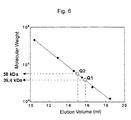
- the molecular weight of the enzymes of the present invention was calculated using a standard curve obtained from molecular weight markers (aldolase: 150 kDa, bovine serum albumin: 68 kDa, ovalbumin: 45 kDa, chymotrypsinogen A: 25 kDa, and cytochrome C: 12.5 kDa; Roche Diagnostics K.K.).
- the results are shown in Fig. 2. It was revealed that the molecular weight of FAO-Q1 is about 39.4 kDa and that of FAO-Q2 about 58 kDa.
- the purified FAO-Q2 enzyme was dialyzed against distilled water and 40 ng of the same was used as the sample for N-terminal amino acid sequencing. N-terminal 10 residues were analyzed using Protein Sequencer model 476A (Applied Biosystems, USA). The N-terminal sequence of FAO-Q2 was revealed to be the same as the amino acid sequence shown in SEQ ID NO: 2. On the other hand, it was impossible to determine the sequence of FAO-Q1 in this way because the N-terminus was blocked.
- Genomic DNA of GL2-1 was prepared.
- FAO cDNA was then obtained by PCR using as a template the genomic DNA.
- the genomic DNA was prepared from GL2-1 strain according to a process comprising the following steps.
- a search for a region with high homology was carried out using an already-known total amino acid sequence of an FAOD from filamentous fungus.
- the following primers were designed on the basis of resulting information.
- PCR was performed using the above genome DNA as a template in a reaction solution of standard composition using Taq polymerase (TaKaRa Ex Taq, TAKARA BIO INC.).
- DNA sequences of upstream and downstream regions were determined from the two 200 bp fragments obtained in 1) above using TaKaRa LA PCR in vitro Cloning Kit.
- the resultant base sequences of FAO-Q1 and FAO-Q2 are shown in SEQ ID NO: 3 and SEQ ID NO: 5, respectively.
- the deduced amino acid sequences encoded thereby are shown in SEQ ID NO: 4 and SEQ ID NO: 6, respectively.
- the present invention provides novel FAOs, which are expected to contribute to development of analysis of amadori compounds.
- an enzyme having activity on glycated peptide as well as glycated amino acid makes it possible to measure a glycated protein more accurately even if fragmentation of glycated protein is not perfect.
- HbA1c which is important for control of glucose level in blood in diabetic patients can be determined accurately, and thereby contributing to the treatment of diabetes and the prevention of complications in diabetic patients.
- the DNA encoding the novel fructosylamine oxidase of the present invention is expected to enable the efficient large-scale production of the enzyme by means of gene recombinant techniques, and thereby accelerating the development of analysis of amadori compounds.
Landscapes
- Chemical & Material Sciences (AREA)
- Life Sciences & Earth Sciences (AREA)
- Organic Chemistry (AREA)
- Health & Medical Sciences (AREA)
- Zoology (AREA)
- Engineering & Computer Science (AREA)
- Wood Science & Technology (AREA)
- Genetics & Genomics (AREA)
- Bioinformatics & Cheminformatics (AREA)
- Molecular Biology (AREA)
- Microbiology (AREA)
- Biotechnology (AREA)
- Proteomics, Peptides & Aminoacids (AREA)
- Biochemistry (AREA)
- General Engineering & Computer Science (AREA)
- General Health & Medical Sciences (AREA)
- Biomedical Technology (AREA)
- Physics & Mathematics (AREA)
- Analytical Chemistry (AREA)
- Biophysics (AREA)
- Medicinal Chemistry (AREA)
- Immunology (AREA)
- Enzymes And Modification Thereof (AREA)
- Measuring Or Testing Involving Enzymes Or Micro-Organisms (AREA)
- Pharmaceuticals Containing Other Organic And Inorganic Compounds (AREA)
- Preparation Of Compounds By Using Micro-Organisms (AREA)
- Micro-Organisms Or Cultivation Processes Thereof (AREA)
- Investigating Or Analysing Biological Materials (AREA)
Applications Claiming Priority (5)
| Application Number | Priority Date | Filing Date | Title |
|---|---|---|---|
| JP2002277214 | 2002-09-24 | ||
| JP2002277214 | 2002-09-24 | ||
| JP2002309734 | 2002-10-24 | ||
| JP2002309734 | 2002-10-24 | ||
| PCT/JP2003/011766 WO2004029251A1 (ja) | 2002-09-24 | 2003-09-16 | フルクトシルアミンオキシダーゼ |
Publications (3)
| Publication Number | Publication Date |
|---|---|
| EP1548115A1 true EP1548115A1 (de) | 2005-06-29 |
| EP1548115A4 EP1548115A4 (de) | 2006-01-11 |
| EP1548115B1 EP1548115B1 (de) | 2009-11-11 |
Family
ID=32044599
Family Applications (1)
| Application Number | Title | Priority Date | Filing Date |
|---|---|---|---|
| EP03798406A Expired - Lifetime EP1548115B1 (de) | 2002-09-24 | 2003-09-16 | Fructosylamin-oxidase |
Country Status (7)
| Country | Link |
|---|---|
| US (1) | US7407783B2 (de) |
| EP (1) | EP1548115B1 (de) |
| JP (1) | JP4308768B2 (de) |
| AT (1) | ATE448308T1 (de) |
| AU (1) | AU2003264442A1 (de) |
| DE (1) | DE60330033D1 (de) |
| WO (1) | WO2004029251A1 (de) |
Families Citing this family (7)
| Publication number | Priority date | Publication date | Assignee | Title |
|---|---|---|---|---|
| US7329520B2 (en) * | 2002-10-23 | 2008-02-12 | Daiichi Pure Chemicals Co., Ltd. | Fructosyl peptide oxidase and utilization thereof |
| CN101171342B (zh) | 2005-05-06 | 2011-11-16 | 爱科来株式会社 | 蛋白质的切断方法及其用途 |
| JP5261180B2 (ja) | 2006-08-11 | 2013-08-14 | アークレイ株式会社 | 食後高血糖マーカー、その測定方法およびその用途 |
| WO2008093722A1 (ja) | 2007-01-30 | 2008-08-07 | Arkray, Inc. | フェノチアジン誘導体色素の検出方法およびそれに用いる発色剤試薬 |
| CN101595230B (zh) | 2007-01-30 | 2013-01-16 | 爱科来株式会社 | HbA1c测定方法 |
| US8758648B2 (en) | 2008-03-19 | 2014-06-24 | Arkray, Inc. | Stabilizer of color former and use thereof |
| JP7043161B2 (ja) * | 2013-10-25 | 2022-03-29 | キッコーマン株式会社 | 糖化ペプチドに作用するアマドリアーゼを用いたHbA1c測定法 |
Family Cites Families (5)
| Publication number | Priority date | Publication date | Assignee | Title |
|---|---|---|---|---|
| US5712138A (en) | 1994-10-05 | 1998-01-27 | Kyoto Daiichi Kagaku Co., Ltd. | Fructosyl amino acid oxidase |
| JP3775873B2 (ja) | 1997-01-20 | 2006-05-17 | 旭化成ファーマ株式会社 | フルクトシルアミンオキシダーゼを生産する実質上純粋な微生物 |
| JPH10201743A (ja) * | 1997-01-20 | 1998-08-04 | Advanced Medical Kk | オキシメータ |
| JP2002218982A (ja) * | 2001-01-25 | 2002-08-06 | National Research Inst Of Brewing | フラクトシルアミノ酸オキシダーゼ遺伝子 |
| ES2502481T3 (es) * | 2001-01-31 | 2014-10-03 | Asahi Kasei Pharma Corporation | Composición para el análisis de proteínas glicosiladas |
-
2003
- 2003-09-16 AT AT03798406T patent/ATE448308T1/de not_active IP Right Cessation
- 2003-09-16 EP EP03798406A patent/EP1548115B1/de not_active Expired - Lifetime
- 2003-09-16 WO PCT/JP2003/011766 patent/WO2004029251A1/ja not_active Ceased
- 2003-09-16 US US10/528,992 patent/US7407783B2/en not_active Expired - Lifetime
- 2003-09-16 JP JP2004539462A patent/JP4308768B2/ja not_active Expired - Lifetime
- 2003-09-16 DE DE60330033T patent/DE60330033D1/de not_active Expired - Lifetime
- 2003-09-16 AU AU2003264442A patent/AU2003264442A1/en not_active Abandoned
Also Published As
| Publication number | Publication date |
|---|---|
| EP1548115A4 (de) | 2006-01-11 |
| JPWO2004029251A1 (ja) | 2006-01-26 |
| EP1548115B1 (de) | 2009-11-11 |
| US20060172367A1 (en) | 2006-08-03 |
| US7407783B2 (en) | 2008-08-05 |
| DE60330033D1 (de) | 2009-12-24 |
| AU2003264442A1 (en) | 2004-04-19 |
| ATE448308T1 (de) | 2009-11-15 |
| JP4308768B2 (ja) | 2009-08-05 |
| WO2004029251A1 (ja) | 2004-04-08 |
Similar Documents
| Publication | Publication Date | Title |
|---|---|---|
| EP1626088B1 (de) | Verfahren zur messung von glykoliertem hämoglobin a1c, dafür zu verwendendes enzym und verfahren zur herstellung davon | |
| US7419813B2 (en) | Fructosyl peptide oxidase | |
| US5712138A (en) | Fructosyl amino acid oxidase | |
| CN101535476A (zh) | 修饰型黄素腺嘌呤二核苷酸依赖性葡萄糖脱氢酶 | |
| EP0864647B1 (de) | Fructosylaminosäuren oxidase, verfahren zu ihrer herstellung und zum testen von amadori-verbindungen unter zuhilfenahme des enzyms | |
| EP0678576A2 (de) | Fructosyl-Aminosäureoxidase und Verfahren zu deren Herstellung | |
| EP0821064B1 (de) | Recombinante Fructosyl-Aminosäure-Oxidase | |
| EP0737744B1 (de) | Fructosyl-Aminosäureoxidase und Verfahren zu deren Herstellung | |
| JP3668801B2 (ja) | 新規酵素 | |
| US7407783B2 (en) | Fructosylamine oxidase | |
| US6825016B1 (en) | α-glycated amino acid releasing enzyme | |
| US7091017B2 (en) | Fructosyl amino acid oxidase | |
| JP2000135079A (ja) | 1,5―アンヒドログルシト―ル脱水素酵素 | |
| EP0911411A1 (de) | Neues enzym zur deblockierung des aminoterminalen endes | |
| HK1136007A (en) | Method of measuring glycolated hemoglobin a1c, enzyme to be used therefor and process for producing the same | |
| HK1080116B (en) | Method of measuring glycolated hemoglobin a1c, enzyme to be used therefor and process for producing the same |
Legal Events
| Date | Code | Title | Description |
|---|---|---|---|
| PUAI | Public reference made under article 153(3) epc to a published international application that has entered the european phase |
Free format text: ORIGINAL CODE: 0009012 |
|
| 17P | Request for examination filed |
Effective date: 20050401 |
|
| AK | Designated contracting states |
Kind code of ref document: A1 Designated state(s): AT BE BG CH CY CZ DE DK EE ES FI FR GB GR HU IE IT LI LU MC NL PT RO SE SI SK TR |
|
| AX | Request for extension of the european patent |
Extension state: AL LT LV MK |
|
| A4 | Supplementary search report drawn up and despatched |
Effective date: 20051128 |
|
| DAX | Request for extension of the european patent (deleted) | ||
| GRAP | Despatch of communication of intention to grant a patent |
Free format text: ORIGINAL CODE: EPIDOSNIGR1 |
|
| GRAS | Grant fee paid |
Free format text: ORIGINAL CODE: EPIDOSNIGR3 |
|
| GRAA | (expected) grant |
Free format text: ORIGINAL CODE: 0009210 |
|
| AK | Designated contracting states |
Kind code of ref document: B1 Designated state(s): AT BE BG CH CY CZ DE DK EE ES FI FR GB GR HU IE IT LI LU MC NL PT RO SE SI SK TR |
|
| REG | Reference to a national code |
Ref country code: GB Ref legal event code: FG4D |
|
| REG | Reference to a national code |
Ref country code: CH Ref legal event code: EP |
|
| REG | Reference to a national code |
Ref country code: IE Ref legal event code: FG4D |
|
| REF | Corresponds to: |
Ref document number: 60330033 Country of ref document: DE Date of ref document: 20091224 Kind code of ref document: P |
|
| NLV1 | Nl: lapsed or annulled due to failure to fulfill the requirements of art. 29p and 29m of the patents act | ||
| PG25 | Lapsed in a contracting state [announced via postgrant information from national office to epo] |
Ref country code: FI Free format text: LAPSE BECAUSE OF FAILURE TO SUBMIT A TRANSLATION OF THE DESCRIPTION OR TO PAY THE FEE WITHIN THE PRESCRIBED TIME-LIMIT Effective date: 20091111 Ref country code: PT Free format text: LAPSE BECAUSE OF FAILURE TO SUBMIT A TRANSLATION OF THE DESCRIPTION OR TO PAY THE FEE WITHIN THE PRESCRIBED TIME-LIMIT Effective date: 20100311 Ref country code: SE Free format text: LAPSE BECAUSE OF FAILURE TO SUBMIT A TRANSLATION OF THE DESCRIPTION OR TO PAY THE FEE WITHIN THE PRESCRIBED TIME-LIMIT Effective date: 20091111 Ref country code: ES Free format text: LAPSE BECAUSE OF FAILURE TO SUBMIT A TRANSLATION OF THE DESCRIPTION OR TO PAY THE FEE WITHIN THE PRESCRIBED TIME-LIMIT Effective date: 20100222 |
|
| PG25 | Lapsed in a contracting state [announced via postgrant information from national office to epo] |
Ref country code: SI Free format text: LAPSE BECAUSE OF FAILURE TO SUBMIT A TRANSLATION OF THE DESCRIPTION OR TO PAY THE FEE WITHIN THE PRESCRIBED TIME-LIMIT Effective date: 20091111 Ref country code: CY Free format text: LAPSE BECAUSE OF FAILURE TO SUBMIT A TRANSLATION OF THE DESCRIPTION OR TO PAY THE FEE WITHIN THE PRESCRIBED TIME-LIMIT Effective date: 20091111 |
|
| PG25 | Lapsed in a contracting state [announced via postgrant information from national office to epo] |
Ref country code: AT Free format text: LAPSE BECAUSE OF FAILURE TO SUBMIT A TRANSLATION OF THE DESCRIPTION OR TO PAY THE FEE WITHIN THE PRESCRIBED TIME-LIMIT Effective date: 20091111 Ref country code: BE Free format text: LAPSE BECAUSE OF FAILURE TO SUBMIT A TRANSLATION OF THE DESCRIPTION OR TO PAY THE FEE WITHIN THE PRESCRIBED TIME-LIMIT Effective date: 20091111 |
|
| PG25 | Lapsed in a contracting state [announced via postgrant information from national office to epo] |
Ref country code: BG Free format text: LAPSE BECAUSE OF FAILURE TO SUBMIT A TRANSLATION OF THE DESCRIPTION OR TO PAY THE FEE WITHIN THE PRESCRIBED TIME-LIMIT Effective date: 20100211 Ref country code: DK Free format text: LAPSE BECAUSE OF FAILURE TO SUBMIT A TRANSLATION OF THE DESCRIPTION OR TO PAY THE FEE WITHIN THE PRESCRIBED TIME-LIMIT Effective date: 20091111 Ref country code: RO Free format text: LAPSE BECAUSE OF FAILURE TO SUBMIT A TRANSLATION OF THE DESCRIPTION OR TO PAY THE FEE WITHIN THE PRESCRIBED TIME-LIMIT Effective date: 20091111 Ref country code: EE Free format text: LAPSE BECAUSE OF FAILURE TO SUBMIT A TRANSLATION OF THE DESCRIPTION OR TO PAY THE FEE WITHIN THE PRESCRIBED TIME-LIMIT Effective date: 20091111 |
|
| PG25 | Lapsed in a contracting state [announced via postgrant information from national office to epo] |
Ref country code: SK Free format text: LAPSE BECAUSE OF FAILURE TO SUBMIT A TRANSLATION OF THE DESCRIPTION OR TO PAY THE FEE WITHIN THE PRESCRIBED TIME-LIMIT Effective date: 20091111 Ref country code: CZ Free format text: LAPSE BECAUSE OF FAILURE TO SUBMIT A TRANSLATION OF THE DESCRIPTION OR TO PAY THE FEE WITHIN THE PRESCRIBED TIME-LIMIT Effective date: 20091111 |
|
| PLBE | No opposition filed within time limit |
Free format text: ORIGINAL CODE: 0009261 |
|
| STAA | Information on the status of an ep patent application or granted ep patent |
Free format text: STATUS: NO OPPOSITION FILED WITHIN TIME LIMIT |
|
| 26N | No opposition filed |
Effective date: 20100812 |
|
| PG25 | Lapsed in a contracting state [announced via postgrant information from national office to epo] |
Ref country code: GR Free format text: LAPSE BECAUSE OF FAILURE TO SUBMIT A TRANSLATION OF THE DESCRIPTION OR TO PAY THE FEE WITHIN THE PRESCRIBED TIME-LIMIT Effective date: 20100212 |
|
| PG25 | Lapsed in a contracting state [announced via postgrant information from national office to epo] |
Ref country code: MC Free format text: LAPSE BECAUSE OF NON-PAYMENT OF DUE FEES Effective date: 20100930 |
|
| REG | Reference to a national code |
Ref country code: CH Ref legal event code: PL |
|
| PG25 | Lapsed in a contracting state [announced via postgrant information from national office to epo] |
Ref country code: LI Free format text: LAPSE BECAUSE OF NON-PAYMENT OF DUE FEES Effective date: 20100930 Ref country code: CH Free format text: LAPSE BECAUSE OF NON-PAYMENT OF DUE FEES Effective date: 20100930 Ref country code: IE Free format text: LAPSE BECAUSE OF NON-PAYMENT OF DUE FEES Effective date: 20100916 |
|
| PG25 | Lapsed in a contracting state [announced via postgrant information from national office to epo] |
Ref country code: NL Free format text: LAPSE BECAUSE OF FAILURE TO SUBMIT A TRANSLATION OF THE DESCRIPTION OR TO PAY THE FEE WITHIN THE PRESCRIBED TIME-LIMIT Effective date: 20091111 Ref country code: LU Free format text: LAPSE BECAUSE OF NON-PAYMENT OF DUE FEES Effective date: 20100916 Ref country code: HU Free format text: LAPSE BECAUSE OF FAILURE TO SUBMIT A TRANSLATION OF THE DESCRIPTION OR TO PAY THE FEE WITHIN THE PRESCRIBED TIME-LIMIT Effective date: 20100512 |
|
| PG25 | Lapsed in a contracting state [announced via postgrant information from national office to epo] |
Ref country code: TR Free format text: LAPSE BECAUSE OF FAILURE TO SUBMIT A TRANSLATION OF THE DESCRIPTION OR TO PAY THE FEE WITHIN THE PRESCRIBED TIME-LIMIT Effective date: 20091111 |
|
| REG | Reference to a national code |
Ref country code: FR Ref legal event code: PLFP Year of fee payment: 14 |
|
| REG | Reference to a national code |
Ref country code: FR Ref legal event code: PLFP Year of fee payment: 15 |
|
| REG | Reference to a national code |
Ref country code: FR Ref legal event code: PLFP Year of fee payment: 16 |
|
| PGFP | Annual fee paid to national office [announced via postgrant information from national office to epo] |
Ref country code: GB Payment date: 20220920 Year of fee payment: 20 Ref country code: DE Payment date: 20220620 Year of fee payment: 20 |
|
| PGFP | Annual fee paid to national office [announced via postgrant information from national office to epo] |
Ref country code: FR Payment date: 20220922 Year of fee payment: 20 |
|
| PGFP | Annual fee paid to national office [announced via postgrant information from national office to epo] |
Ref country code: IT Payment date: 20220926 Year of fee payment: 20 |
|
| REG | Reference to a national code |
Ref country code: DE Ref legal event code: R071 Ref document number: 60330033 Country of ref document: DE |
|
| REG | Reference to a national code |
Ref country code: GB Ref legal event code: PE20 Expiry date: 20230915 |
|
| PG25 | Lapsed in a contracting state [announced via postgrant information from national office to epo] |
Ref country code: GB Free format text: LAPSE BECAUSE OF EXPIRATION OF PROTECTION Effective date: 20230915 |