EP1540970B1 - Verfahren zur messung der strassenverkehrslast auf der basis einer analyse der zellularen kommunikation - Google Patents
Verfahren zur messung der strassenverkehrslast auf der basis einer analyse der zellularen kommunikation Download PDFInfo
- Publication number
- EP1540970B1 EP1540970B1 EP03735960A EP03735960A EP1540970B1 EP 1540970 B1 EP1540970 B1 EP 1540970B1 EP 03735960 A EP03735960 A EP 03735960A EP 03735960 A EP03735960 A EP 03735960A EP 1540970 B1 EP1540970 B1 EP 1540970B1
- Authority
- EP
- European Patent Office
- Prior art keywords
- sequences
- handover
- location
- sequence
- route
- Prior art date
- Legal status (The legal status is an assumption and is not a legal conclusion. Google has not performed a legal analysis and makes no representation as to the accuracy of the status listed.)
- Expired - Lifetime
Links
- 238000000034 method Methods 0.000 title claims description 62
- 230000010267 cellular communication Effects 0.000 title claims description 4
- 230000001413 cellular effect Effects 0.000 claims abstract description 37
- 238000012545 processing Methods 0.000 claims abstract description 14
- 238000004891 communication Methods 0.000 claims abstract description 6
- 230000008569 process Effects 0.000 claims description 10
- 238000012544 monitoring process Methods 0.000 claims description 7
- 238000001914 filtration Methods 0.000 claims description 6
- 230000007423 decrease Effects 0.000 claims description 4
- 238000000605 extraction Methods 0.000 claims description 4
- 238000005259 measurement Methods 0.000 claims description 3
- 230000002596 correlated effect Effects 0.000 claims description 2
- 238000001514 detection method Methods 0.000 abstract description 13
- 238000007405 data analysis Methods 0.000 abstract 1
- 210000004027 cell Anatomy 0.000 description 47
- 238000004422 calculation algorithm Methods 0.000 description 5
- 230000008859 change Effects 0.000 description 4
- 230000007246 mechanism Effects 0.000 description 4
- 230000000903 blocking effect Effects 0.000 description 2
- 238000004364 calculation method Methods 0.000 description 2
- 210000004457 myocytus nodalis Anatomy 0.000 description 2
- 238000012876 topography Methods 0.000 description 2
- 238000012935 Averaging Methods 0.000 description 1
- 241000283074 Equus asinus Species 0.000 description 1
- 230000001934 delay Effects 0.000 description 1
- 230000001419 dependent effect Effects 0.000 description 1
- 230000004069 differentiation Effects 0.000 description 1
- 230000000694 effects Effects 0.000 description 1
- 230000002708 enhancing effect Effects 0.000 description 1
- 230000006870 function Effects 0.000 description 1
- 238000009434 installation Methods 0.000 description 1
- 238000013507 mapping Methods 0.000 description 1
- 229910052757 nitrogen Inorganic materials 0.000 description 1
- 229910052698 phosphorus Inorganic materials 0.000 description 1
- 230000004044 response Effects 0.000 description 1
- 238000005096 rolling process Methods 0.000 description 1
- 238000012216 screening Methods 0.000 description 1
- 238000007619 statistical method Methods 0.000 description 1
- 230000001360 synchronised effect Effects 0.000 description 1
- 210000000689 upper leg Anatomy 0.000 description 1
Images


Classifications
-
- G—PHYSICS
- G08—SIGNALLING
- G08G—TRAFFIC CONTROL SYSTEMS
- G08G1/00—Traffic control systems for road vehicles
- G08G1/01—Detecting movement of traffic to be counted or controlled
- G08G1/0104—Measuring and analyzing of parameters relative to traffic conditions
-
- G—PHYSICS
- G08—SIGNALLING
- G08G—TRAFFIC CONTROL SYSTEMS
- G08G1/00—Traffic control systems for road vehicles
- G08G1/01—Detecting movement of traffic to be counted or controlled
- G08G1/0104—Measuring and analyzing of parameters relative to traffic conditions
- G08G1/0108—Measuring and analyzing of parameters relative to traffic conditions based on the source of data
- G08G1/0112—Measuring and analyzing of parameters relative to traffic conditions based on the source of data from the vehicle, e.g. floating car data [FCD]
-
- H—ELECTRICITY
- H04—ELECTRIC COMMUNICATION TECHNIQUE
- H04W—WIRELESS COMMUNICATION NETWORKS
- H04W4/00—Services specially adapted for wireless communication networks; Facilities therefor
- H04W4/02—Services making use of location information
-
- H—ELECTRICITY
- H04—ELECTRIC COMMUNICATION TECHNIQUE
- H04W—WIRELESS COMMUNICATION NETWORKS
- H04W4/00—Services specially adapted for wireless communication networks; Facilities therefor
- H04W4/02—Services making use of location information
- H04W4/025—Services making use of location information using location based information parameters
- H04W4/027—Services making use of location information using location based information parameters using movement velocity, acceleration information
-
- H—ELECTRICITY
- H04—ELECTRIC COMMUNICATION TECHNIQUE
- H04W—WIRELESS COMMUNICATION NETWORKS
- H04W4/00—Services specially adapted for wireless communication networks; Facilities therefor
- H04W4/02—Services making use of location information
- H04W4/029—Location-based management or tracking services
-
- H—ELECTRICITY
- H04—ELECTRIC COMMUNICATION TECHNIQUE
- H04W—WIRELESS COMMUNICATION NETWORKS
- H04W64/00—Locating users or terminals or network equipment for network management purposes, e.g. mobility management
- H04W64/006—Locating users or terminals or network equipment for network management purposes, e.g. mobility management with additional information processing, e.g. for direction or speed determination
Definitions
- This invention relates generally to traffic load monitoring, and in particular to extracting speed and incident data out of the cellular phone system.
- Kennedy (U.S. patent 5.657.487 ) teaches the use of handovers to determine vehicles speed and the number of vehicles driving on a certain route. Kennedy does not supply a solution to the very common problem in metropolitan areas of the same handovers relating to several different routes. This invention also discloses an extremely expensive implementation requiring RF receivers spread over the covered area.
- Kaplan et al discloses a low cost, totally passive method (monitoring the cellular network without sending any messages) to extract traffic information from any cellular network in every load stage possible, with minimal hardware elements and hence minimal system cost.
- Aaltonen et al. discloses a cellular network in which an analyzer is able to monitor traffic on routes in a transport infrastructure such as a road network.
- the analyzer utilises data derived from the subscriber database of the network in conjunction with information on network coverage in relation to those routes in order to determine parameters such as the average speed of vehicles travelling along the road network.
- the current invention extends the work done by Kaplan et al and teaches detailed methods that efficienlty and accurately correlate handover chains to a specific route, and avoid ambiguous correlations. Furthermore the current invention teaches a method to determine the handover location accuracy for handovers within these chains.
- the current invention discloses a method to correlate cellular calls by vehicles in the operational stage with the reference database and extract speed data and incident reports in real time.
- the current invention describes a method for measuring traffic speed and travel time, as well as providing incident alerts, based on monitoring and analyzing cellular communications.
- Accurate mobile unit location is derived from the cellular communications data in specific positions and timings. This data is analyzed to derive the route on which the vehicle drives and it's speed. Data is collected and analyzed for all routes continuously thus yielding real time traffic load and speed information as well as real time incident alerts.
- the 1 st stage in the method is the learning stage, which is done prior to or in parallel with system installation as off line processing.
- a database is created, containing handover (cell switch) sequences per route and can also contain location reference for each handover. This can be collected by actual drives on each route, and extracting the information from mobile units in the vehicles driving in any road and in any direction within a designated area.
- the learning process through drives can be carried out in several ways, one of these ways is: vehicles with location determination system, such as synchronized GPS system, yielding continuously an accurate location and with operating cellular mobile unit travel across the designated area covering each road, in any driving direction and all possible turns.
- location determination system such as synchronized GPS system
- the handover information and the signal strength information for these mobile units are gathered and matched with the accurate location to yield the accurate location for each handover report or signal strength report.
- This process may be repeated by driving several times throughout this area and by using several mobile units for each drive.
- Each such drive creates for each mobile a sequence of handover reports accompanied with the accurate location of the vehicle per handover report.
- each drive creates for each mobile a sequence of signal strength reports.
- Each such report includes the signal strength for several cells (up to 10) in addition to the accurate vehicle location.
- the accuracy level per handover can be kept within the cluster database.
- the learning stage can be done without driving mapping procedure at all.
- the system records the sequences over the relevant area for a significant time period to enable statistical analysis. Traffic volume information is fed into the system from external sources such as government reports and burro of statistics. The volume of correlated sequences and the volume of traffic is then analyzed to correlate between clusters of sequences and the highways route sections, and to filter sequences of small roads around it.
- the system can collect virtually all possible chains for every highway and insert them to the learnt database.
- the monitoring can be performed from the base stations (BS), base station controllers (BSC), main switching systems (MSC) or communication links between them.
- BS base stations
- BSC base station controllers
- MSC main switching systems
- One of the preferred embodiments of the current invention is by connecting to the links between the BSC and the MSC near the MSC.
- This type of connection is highly efficient in the sense that it involves connection to a minimal number of links and all of them are on the same physical location. Since the relevant information that can be extracted from these links is limited to handovers and their timing, it is one of the major breakthroughs of this invention, that enables extracting traffic data from such limited information.
- Another preferred embodiment of the current invention is by extracting the handover and call processing related messages only thus minimizing the scope of information to be handled.
- the traffic extraction system can extract only part of the calls when the cellular system or parts of it (a certain location area or BSC) is loaded to minimize the processing, where as these parts of the calls are enough in these parts of the cellular system for accurate and full location, speed and traffic load detection.
- the learnt database is used to match the operational calls. This data may reside on a hard disk or in the computer's memory for faster response times.
- the monitored events include, among others, the following events:
- a call number and mobile ID (that can't identify the mobile phone participating in the call in order to avoid privacy violation) can be attached to each call to enable following the call and the mobile as they proceed across the covered area.
- the location related events are used to pinpoint the route section which the vehicle is driving on and to determine the vehicle location (and location accuracy) in certain locations during the call.
- the initial rough location of a vehicle can be done using the location area data or the actual link that supplies the data.
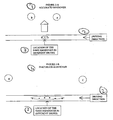
- Figure 3 demonstrates the initial detection stage.
- Figure 3-A details the raw data and figure 3-B shown the relevant cell clusters.
- Figure 3-C shows the operational drive data and figure 3-D shows the initial matching of 3 (Q) out of 4 (P).
- This match may not be found for each chain in the operational data. If this match is not found even for a single sub chain of a call than this call is not matched, and will not be used, unless new cells for this call will generate at least one sub chain that can be matched.
- an optional stage can be conducted, in which the raw database is scanned to find a matching chain (Q out of P cells) to the operational drive chain at another route section. If such a chain is found then the current operational chain is discarded.
- this part of the call is declared ambiguous and will not be used to extract speed, unless another part of it will be uniquely matched at a later stage, and this information will enable going backwards and re-matching the previous part of the call.
- the matching can also be measured in similarity score, such as between 1 to 100, and the analysis for matching or filtering due to ambiguity can be conducted according to a matching threshold, that takes into consideration similarity of a sequence to several routes.
- This threshold can very in different sub-areas and according to the amount of data available for each route or sub-area in any given moment.
- the next step can be to extract from the learnt database the locations of the handovers along the matched route sections, along with their actual timing and location accuracy. This stage is demonstrated in figure 3-F .
- the matching procedure between the learnt database and the new chain can be done without building clusters, but rather by comparing the new chain directly with the raw chains in the learnt database. This way the processing required during the operational stage is larger, and may cause some time delays in providing the traffic information
- the system can thus be divided into 2 parts: the 1 st part that performs all processing that requires cellular operator confidential data such as handovers and the 2 nd part that handles only location and timing data,
- the 2 nd part can use other sources of information, such as Information from vehicle monitoring systems, to monitor traffic status.
- Real time incident detection is crucial for incident management, as well as for traffic routing.
- One of the preferred embodiments of the current invention enables to detect incidents in real time.
- One of the ways to it can be as follows:
- next possible cells for each call are extracted from the database, and their distance and excepted timing (according to the vehicle speed) from the preceding cell is calculated. Once N seconds have passed since the last handover for a call and the next handover did not occur (and the call still continues) this means the vehicle have slowed down or stopped. For this vehicle we can easily calculate the maximal possible speed for this route section.
- the calibration phase can also be conducted without traffic speed measurements, by recording traffic density over a period of time on a route section, filtering extreme measurement samples, and then normalizing it according to the max average speed that is customary on this route section.
- This method is a little less accurate for detecting speed, but is accurate enough to detect speed changes in a case of an incident.
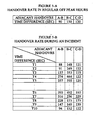
- This method can be used for incident detection where incident on a specific route section is detected when the handover rate over this route section decreases rapidly and an incident clearance is detected when the handover flow increases rapidly.
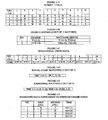
- Figure 5 demonstrates incident occurrence and clearance detection.
- the incident occurs at T2 on section B-C and causes significant slow down on this section while A-B slows down in a delay (T3-T5) and C-D is not effected
- T6 B-C is cleared first (until T9) and A-B afterwards (until T10), while a temporary traffic slow down is created on C-D (at T6-T9) as the vehicles from A-B and B-C start moving forward but is cleared quickly.
- the location data and incident occurrence and clearance reports per each route section can be analyzed in order to extract speed and travel time, alarm on incidents along this route section and notify on incidents clearance.
- Notification on incident clearance can be done whenever the speed over a route section increases significantly or whenever an incident clearance report is received. Incident clearance may be notified independently or may be notified only when an incident alarm was made for the same route section.
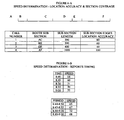
- Figure 6-A demonstrates the issue of location accuracy as discussed above. It involves a simple method of summing the location accuracy figures. Additional methods such as RMS summation can be applied. It also demonstrates partial coverage: If the only information includes calls 1 and 3 then sub section C-D is not covered and when we calculate the speed on the section A-F as a weighed average of the existing sub sections (A-C and D-F) then this is less accurate then an average covering the full section.
- Figure 6-B demonstrates the importance of differentiating between old and new reports- If all reports between 8:40 and 9:00 are averaged the result is 68 Km/Hour, where as if we apply the simple method of rolling 10 minutes average are calculated then the relative speed for 8:40-8:50, 8:45-8:55 and 8:50-9:00 are 65, 67 and 72 Km/Hour, and we can see the speed change over time. Additional methods such as weighed averaging may be used.
- the speed along each route section can be calculated every T seconds (T may change as a function of time, number of reports etc. In figure 6-B T is 300 seconds or 5 minutes)
- One of the implementations of the current invention is in traffic control systems. These systems traditionally consist of road sensors that are connected to a control center. This kind of system is inferior to the method taught in the current invention because it has a much higher cost, measures only the momentary speed at the sensor location and is late at incident detection. Nevertheless, it will be required to implement the methods taught in the current invention as an addition to existing system based on traditional sensors.
- the database can be enhanced to supply better coverage in the following manner:
- the system takes new chains that were matched to a certain route section and assigns each of the matched handovers in the new chain the location of the handover from the learnt database that was matched to it.
- This new matched chain is than added to the learnt database and the handovers that were not matched are marked as potentially inaccurate.
- One of the preferred embodiments of the current invention is a method that minimizes the need for re-conducting the learning procedure by detecting changes in the cellular system and updating the learnt database by using data gathered during the operational stage.
- the system can identify a chain cluster or chains in the learnt database, that statistically were matched X times per day, are matched only Y times per day, and Y ⁇ X, or even does not appear at all.
- This cluster or chains appear at a certain location across a certain route and has chains preceding or following it.
- the system can trace new sequences located after the preceding or before following chains, looking for a new cluster of chains, that were not common before, or did not exist at all before, and their current appearance rate is very similar to X.
- This new cluster of sequences is then assigned the route of the cluster that appears significantly less or does not appear at all.
- the system can then try several similarity criteria to match handovers from the old cluster to handovers in the new cluster, in order to assign handovers in the new cluster with accurate location. Examples for such similarity algorithms are described previously in this invention.
- the system may use the method from the previous section in order to assign location to the rest of the handovers.
Landscapes
- Engineering & Computer Science (AREA)
- Computer Networks & Wireless Communication (AREA)
- Signal Processing (AREA)
- Chemical & Material Sciences (AREA)
- Analytical Chemistry (AREA)
- Physics & Mathematics (AREA)
- General Physics & Mathematics (AREA)
- Mobile Radio Communication Systems (AREA)
- Traffic Control Systems (AREA)
- Navigation (AREA)
Claims (23)
- Verfahren zum Korrelieren eines Fahrzeugs mit der Straße, auf der es fährt, durch Bestimmen des Orts von Zellularnetzereignissen auf der Basis einer Zellularkommunikation innerhalb eines Zellularnetzes, wobei das Verfahren die Schritte aufweist:Erfassen von Sequenzen von Zellularnetzereignissen in Bezug auf mindestens eine mobile Einheit wie z.B. Anrufverarbeitungsereignisse oder ortsbezogene Ereignisse, zusammen mit dem Ort der mobilen Einheit, wenn jedes der Zellularnetzereignisse auftritt, wobei die Sequenz von Zellularnetzereignissen zusammen mit den Orten oder verarbeitete Daten auf der Basis derer in einer angelernten Datenbank als Ortsreferenzen gespeichert werden; undDurchführen einer Analyse einer neuen Sequenz von Zellularnetzereignissen, die aus einer Kommunikation mit einer anderen mobilen Einheit erzeugt werden, die keine Ortsreferenzen enthält, in Verbindung mit der angelernten Datenbank, um die neue Sequenz von Zellularnetzereignissen mit einem spezifischen Streckenabschnitt zu korrelieren;gekennzeichnet durchBestimmen eines Orts eines Zellularnetzereignisses in der neuen Sequenz von Zellularnetzereignissen unter Verwendung der Ortsreferenzen der Sequenzen von Zellularnetzereignissen in der angelernten Datenbank, die demselben spezifischen Streckenabschnitt wie die neue Sequenz von Zellularnetzereignissen entsprechen.
- Verfahren nach Anspruch 1, wobei die Sequenz von Zellularnetzereignissen Handover-Ereignisse umfasst und wobei der Schritt des Bestimmens eines Orts aufweist:Gruppieren von Handover-Sequenzen in der angelernten Datenbank gemäß einer Ähnlichkeitsregel, so dass jede Gruppe zumindest ähnliche N Sequenzen enthält, wobei N<=M, N=>1, wobei M die Anzahl von Malen ist, die eine Strecke im Lernprozess abgedeckt wurde, und wobei N und M für verschiedene Streckenabschnitte variieren können; und wobei die Ähnlichkeitsregel den Schritt aufweist:Gruppieren von Handover-Sequenzen, wobei jede der Sequenzen in einer Gruppe von L Zellen mindestens K Zellen aufweist, wobei K<=L, die in derselben Reihenfolge wie in einer spezifischen Sequenz erscheinen, die als Gruppenkopf bezeichnet wird, wobei K und L für verschiedene Streckenabschnitte variieren können.
- Verfahren nach Anspruch 2, wobei zweideutige Gruppen, die Gruppen sind, in denen mindestens eine der Sequenzen eine Ähnlichkeit zu Sequenzen in Bezug auf einen anderen Streckenabschnitt aufweist, gefiltert werden.
- Verfahren nach Anspruch 3, wobei, wenn mindestens für eine der Sequenzen innerhalb einer ersten Gruppe eine andere Sequenz in einer zweiten Gruppe gefunden wird, die mindestens J Zellen umfasst, wobei J<=L, die in derselben Reihenfolge erscheinen, und die Sequenz in der zweiten Gruppe sich auf einen anderen Streckenabschnitt bezieht als die erste Gruppe, wobei J und L für verschiedene Streckenabschnitte variieren können, beide Gruppen gefiltert werden.
- Verfahren nach Anspruch 3, wobei, wenn mindestens für eine der Sequenzen innerhalb einer Gruppe eine andere Sequenz in den Rohdaten gefunden wird, die mindestens J Zellen umfasst, wobei J<=L, die in derselben Reihenfolg erscheinen, und diese Sequenz sich auf einen anderen Streckenabschnitt als die Gruppe bezieht, wobei J und L für verschiedene Streckenabschnitte variieren können, die Gruppe gefiltert wird.
- Verfahren nach Anspruch 1, wobei der Schritt des Erfassens einer Sequenz von Zellularnetzereignissen ferner das Berechnen eines Genauigkeitsniveaus eines Handover auf eine oder eine Kombination der folgenden Weisen aufweist:Verwenden von Signalstärkemessungen, um starke Abfälle der Signalstärke zu erfassen, die zu einem Handover führen, und folglich das Handover-Genauigkeitsniveau zu bestimmen;Messen der Ortsverteilung von Handovers zwischen denselben Zellen für verschiedene Fahrten über dieselbe Strecke, um das Handover-Genauigkeitsniveau und den mittleren Ort zu bestimmen.
- Verfahren nach Anspruch 1, wobei der Schritt des Durchführens der Analyse ferner aufweist:Vergleichen von Sequenzen von neuen Fahrten mit der angelernten Datenbank durch Suchen nach einer Sequenz von J Zellen, die mindestens K Zellen aufweist, wobei K<=J, die in derselben Reihenfolge sowohl in einer Sequenz von der neuen Fahrt als auch in einer Sequenz von der angelernten Datenbank erscheinen, wobei J und K für verschiedene Streckenabschnitte variieren können; undZuweisen der Strecke der Sequenz von der angelernten Datenbank zu der neuen Sequenz, die verglichen wurde.
- Verfahren nach Anspruch 7, wobei der Schritt des Durchführens der Analyse ferner eine sekundäre Vergleichsprozedur umfasst, wobei die sekundäre Vergleichsprozedur aufweist:Vergleichen von Zellen vor und nach der erfassten Übereinstimmung durch Folgen von Rohdatensequenzen in der angelernten Datenbank rückwärts und vorwärts relativ zur übereinstimmenden Sequenz und Suchen nach einer Übereinstimmung von L von M Zellen, wobei L<=M, wobei M kleiner ist als J, wobei L und M für verschiedene Streckenabschnitte variieren können.
- Verfahren nach Anspruch 1, wobei der Schritt des Durchführens der Analyse den Fahrzeugort an spezifischen Punkten entlang der Strecke erfasst durch:Entnehmen von Handover-Informationen einer neuen Sequenz (Ort, Zeitpunkt, Genauigkeit) aus Handover-Sequenzen in der angelernten Datenbank, die mit der neuen Sequenz von Handovers übereinstimmen; undBerechnen des Orts und der Genauigkeit von Handovers in der neuen Sequenz von Handovers gemäß den Handover-Informationen, die aus der angelernten Datenbank entnommen werden, die sich auf denselben Streckenabschnitt beziehen und dieselben Zellenpaare enthalten.
- Verfahren nach Anspruch 1, wobei während des Schritts des Durchführens der Analyse, nachdem ein in ein Gespräch verwickeltes Fahrzeug mit der Straße, auf der es fährt, korreliert wird, eine weitere Analyse durchgeführt wird, um Verkehrsvorfälle zu erfassen, durch:Berechnen der maximalen möglichen Geschwindigkeit Max Speed <= D/T auf dem aktuellen Streckenabschnitt, wenn der Anruf noch nicht geendet hat und kein neuer Handover für ein Zeitintervall T empfangen wurde, wobei D der Abstand zum weitestmöglichen Handoverort zu einer möglichen nächsten Zelle ist; undAusgeben eines möglichen Vorfallberichts für den Streckenabschnitt, wenn die maximale mögliche Geschwindigkeit unter einer Geschwindigkeitsschwelle S liegt.
- Verfahren nach Anspruch 1, wobei der Schritt des Durchführens der Analyse nur auf Zellen-ID-Daten basiert.
- Verfahren nach Anspruch 1, wobei der Schritt des Durchführens der Analyse auf dem Gewinnen von auf den Handover bezogenen Meldungen nur von den Kommunikationsverbindungen zwischen einer Vermittlungsstelle und einer Basisstationssteuereinheit des Zellularnetzes basiert.
- Verfahren nach Anspruch 1, wobei der Schritt des Durchführens der Analyse auf dem Gewinnen von nur einem unterschiedlichen Prozentsatz der Anrufe aus verschiedenen Teilen des Zellularsystems basiert.
- Verfahren nach Anspruch 1, wobei der Schritt des Durchführens der Analyse ferner aufweist:Vergleichen von Handover-Sequenzen von neuen Fahrten mit Handover-Sequenzen in der angelernten Datenbank; undAusfiltern von neuen Sequenzen, die mit Sequenzen in der angelernten Datenbank verglichen wurden, die mehr als einen Streckenabschnitt darstellen.
- Verfahren nach Anspruch 9, wobei die Orts-, Zeitpunkt- und Genauigkeitsniveauinformationen verwendet werden, um die Verkehrsgeschwindigkeit pro jeden Streckenabschnitt weiter zu berechnen.
- Verfahren nach Anspruch 9, wobei die Orts-, Zeitpunkt- und Genauigkeitsniveauinformationen verwendet werden, um Verkehrsvorfälle weiter zu erfassen.
- Verfahren nach Anspruch 1, wobei der Schritt des Durchführens der Analyse Verkehrsvorfälle erfasst durch:Sammeln von Handover-Zeitdichteinformationen für jeden Streckenabschnitt; undAlarmieren über einen wahrscheinlichen Vorfall, sobald die Dichte von neuen Sequenzen schnell abnimmt.
- Verfahren nach Anspruch 1, wobei der Schritt des Durchführens der Analyse einen Vorfallabstand erfasst durch:Sammeln von Handover-Zeitdichteinformationen für jeden Streckenabschnitt; undBenachrichtigen über den Vorfallabstand, sobald nach einem Vorfall die Dichte von neuen Sequenzen signifikant zunimmt.
- Verfahren nach Anspruch 1, wobei der Schritt des Durchführens der Analyse die Verkehrsgeschwindigkeit erfasst durch:Korrelieren der Verkehrsgeschwindigkeit eines Streckenabschnitts mit der Rate von Handovers für diesen Streckenabschnitt zur gleichen Zeit in einer Kalibrierungsstufe; undkontinuierliches Messen der Handoverrate und Gewinnen der Geschwindigkeit für den Streckenabschnitt durch Vergleichen mit der Rate von Handovers in der Kalibrierungsstufe.
- Verfahren nach Anspruch 1, wobei der Schritt des Durchführens der Analyse für Bereiche durchgeführt wird, in denen mindestens zwei Straßen zumindest teilweise durch dieselben zwei oder mehr Zellen abgedeckt sind.
- Verfahren nach Anspruch 1, wobei virtuelle Sensoren die Geschwindigkeit an bestimmten spezifischen Orten über Strecken innerhalb eines abgedeckten Bereichs erfassen und das Kommunikationsprotokoll zwischen herkömmlichen Straßensensoren und einem Steuerzentrum in einem Hybridverkehrssteuersystem emulieren.
- Verfahren nach Anspruch 1, wobei der Schritt des Durchführens der Analyse ferner das kontinuierliche Aktualisieren der angelernten Datenbank umfasst durch:Abschätzen des Orts von Handovers innerhalb abgeglichener Sequenzen, die nicht in der Datenbank erscheinen; undHinzufügen von neuen abgeglichenen Sequenzen zur angelernten Datenbank.
- Verfahren nach Anspruch 1, wobei der Schritt des Durchführens der Analyse ferner das Erfassen von Änderungen im Zellularsystem und das Abgleichen der angelernten Datenbank umfasst durch:Überwachen der Rate der Übereinstimmung von Sequenzen oder Gruppen während einer Betriebsstufe, um Verringerungen der Übereinstimmungsraten zu erfassen;Finden von neuen Gruppen, die selten übereinstimmten oder überhaupt nicht übereinstimmten, die an denselben Orten erscheinen, gemäß vorangehenden oder folgenden Sequenzen; undVergleichen von Statistiken der Anzahl von Übereinstimmungen pro Gruppe und Finden von neuen Gruppen, um Gruppen zu ersetzen, die selten übereinstimmen oder überhaupt nicht übereinstimmen.
Applications Claiming Priority (3)
| Application Number | Priority Date | Filing Date | Title |
|---|---|---|---|
| IL15089402A IL150894A0 (en) | 2002-07-24 | 2002-07-24 | A method for measuring road traffic load based on analyzing cellular communications |
| IL15089402 | 2002-07-24 | ||
| PCT/IL2003/000565 WO2004010401A2 (en) | 2002-07-24 | 2003-07-09 | A method for measuring road traffic load based on analyzing cellular communications |
Publications (3)
| Publication Number | Publication Date |
|---|---|
| EP1540970A2 EP1540970A2 (de) | 2005-06-15 |
| EP1540970A4 EP1540970A4 (de) | 2008-04-02 |
| EP1540970B1 true EP1540970B1 (de) | 2011-10-05 |
Family
ID=29596363
Family Applications (1)
| Application Number | Title | Priority Date | Filing Date |
|---|---|---|---|
| EP03735960A Expired - Lifetime EP1540970B1 (de) | 2002-07-24 | 2003-07-09 | Verfahren zur messung der strassenverkehrslast auf der basis einer analyse der zellularen kommunikation |
Country Status (10)
| Country | Link |
|---|---|
| US (1) | US7783296B2 (de) |
| EP (1) | EP1540970B1 (de) |
| JP (1) | JP2005534100A (de) |
| KR (1) | KR101060808B1 (de) |
| CN (1) | CN1672437A (de) |
| AT (1) | ATE527642T1 (de) |
| AU (1) | AU2003237589A1 (de) |
| ES (1) | ES2375052T3 (de) |
| IL (1) | IL150894A0 (de) |
| WO (1) | WO2004010401A2 (de) |
Families Citing this family (46)
| Publication number | Priority date | Publication date | Assignee | Title |
|---|---|---|---|---|
| KR100535634B1 (ko) * | 2003-12-03 | 2005-12-08 | 주식회사 팬택앤큐리텔 | 다중 통화 관리 방법 |
| KR100577714B1 (ko) * | 2004-05-21 | 2006-05-10 | 에스케이 텔레콤주식회사 | 단말기를 이용한 교통정보 생성 방법 및 장치 |
| WO2006072070A2 (en) | 2004-12-29 | 2006-07-06 | Emisphere Technologies, Inc. | Pharmaceutical formulations of gallium salts |
| US20060246887A1 (en) * | 2005-05-02 | 2006-11-02 | Barclay Deborah L | Mapping of weak RF signal areas in a wireless telecommunication system using customers' mobile units |
| DE102007014633A1 (de) * | 2007-03-23 | 2008-09-25 | Deutsche Telekom Ag | Verfahren und System zur Erkennung von Verkehrsstörungen in einer sich dynamisch ändernden Verkehrslage |
| US9852624B2 (en) | 2007-09-07 | 2017-12-26 | Connected Signals, Inc. | Network security system with application for driver safety system |
| US10083607B2 (en) | 2007-09-07 | 2018-09-25 | Green Driver, Inc. | Driver safety enhancement using intelligent traffic signals and GPS |
| US20110040621A1 (en) * | 2009-08-11 | 2011-02-17 | Ginsberg Matthew L | Traffic Routing Display System |
| US9043138B2 (en) | 2007-09-07 | 2015-05-26 | Green Driver, Inc. | System and method for automated updating of map information |
| CN101925939A (zh) * | 2007-12-20 | 2010-12-22 | 意大利电信股份公司 | 估计道路交通的方法和系统 |
| WO2010090558A1 (en) * | 2009-02-04 | 2010-08-12 | Telefonaktiebolaget Lm Ericsson (Publ) | Method and arrangement for tracking mobile terminals |
| EP2224421A1 (de) * | 2009-02-27 | 2010-09-01 | Research In Motion Limited | Anpassbares Strassenrand-Tafelsystem und zugehörige Verfahren |
| US10198942B2 (en) | 2009-08-11 | 2019-02-05 | Connected Signals, Inc. | Traffic routing display system with multiple signal lookahead |
| CN102262819B (zh) * | 2009-10-30 | 2014-10-15 | 国际商业机器公司 | 基于移动通信网络确定道路的实时通行时间的方法和装置 |
| KR101310901B1 (ko) * | 2009-12-15 | 2013-09-25 | 한국전자통신연구원 | 셀룰러 시스템에서 전송전력 제어방법 |
| WO2011120193A1 (en) * | 2010-03-31 | 2011-10-06 | Siemens Aktiengesellschaft | Method, system and device for providing traffic information |
| CN102158530B (zh) * | 2011-01-27 | 2014-10-22 | 深圳市美赛达科技股份有限公司 | 与指定区域内gps终端进行通讯方法及服务器 |
| EP2552133B1 (de) * | 2011-07-29 | 2018-02-28 | Deutsche Telekom AG | Datenschutz-gerechte Aufbereitung von Mobilfunkdaten für die Erzeugung von Verkehrsprognosen |
| TWI441104B (zh) * | 2011-11-23 | 2014-06-11 | Chunghwa Telecom Co Ltd | Real-time vehicle speed information based on mobile communication network |
| CN102708676A (zh) * | 2012-05-29 | 2012-10-03 | 中国联合网络通信集团有限公司 | 交通信息处理方法、设备及系统 |
| EP2883371A1 (de) * | 2012-08-07 | 2015-06-17 | Nokia Solutions and Networks Oy | Bestimmung von reiseinformationen |
| KR101406031B1 (ko) | 2012-08-20 | 2014-06-13 | 록앤올 주식회사 | 2차 충돌사고 방지를 위한 사고알림 시스템 |
| US9374773B2 (en) | 2012-12-06 | 2016-06-21 | At&T Intellectual Property I, L.P. | Traffic steering across cell-types |
| US9544841B2 (en) | 2012-12-06 | 2017-01-10 | At&T Intellectual Property I, L.P. | Hybrid network-based and device-based intelligent radio access control |
| US9549343B2 (en) | 2012-12-06 | 2017-01-17 | At&T Intellectual Property I, L.P. | Traffic steering across radio access technologies and radio frequencies utilizing cell broadcast messages |
| US9998983B2 (en) | 2012-12-06 | 2018-06-12 | At&T Intellectual Property I, L.P. | Network-assisted device-based intelligent radio access control |
| US10129822B2 (en) | 2012-12-06 | 2018-11-13 | At&T Intellectual Property I, L.P. | Device-based idle mode load balancing |
| US9544842B2 (en) | 2012-12-06 | 2017-01-10 | At&T Intellectual Property I, L.P. | Network-based intelligent radio access control |
| CN103093630B (zh) * | 2013-01-06 | 2015-01-07 | 北京拓明科技有限公司 | 高速道路车辆的测速方法 |
| US9113306B2 (en) * | 2013-08-02 | 2015-08-18 | Google Inc. | Predictive assistance information |
| US9380646B2 (en) | 2013-09-24 | 2016-06-28 | At&T Intellectual Property I, L.P. | Network selection architecture |
| US9226197B2 (en) * | 2013-10-21 | 2015-12-29 | At&T Intellectual Property I, L.P. | Network based speed dependent load balancing |
| US9241305B2 (en) | 2013-10-28 | 2016-01-19 | At&T Intellectual Property I, L.P. | Access network discovery and selection function enhancement with cell-type management object |
| WO2015128855A1 (en) * | 2014-02-26 | 2015-09-03 | Decell Technologies Ltd | Method and system for road traffic data collection |
| US9743296B2 (en) | 2014-05-12 | 2017-08-22 | Motorola Solutions, Inc. | Methods and systems for emulating testing-plan channel conditions in wireless networks |
| US9389089B2 (en) | 2014-09-04 | 2016-07-12 | Visteon Global Technologies, Inc. | Determining a route based on a preference |
| US9398518B2 (en) | 2014-10-21 | 2016-07-19 | At&T Intellectual Property I, L.P. | Cell broadcast for signaling resource load from radio access networks |
| US9585056B2 (en) * | 2014-11-07 | 2017-02-28 | Motorola Solutions, Inc. | Method and apparatus for routing traffic within a communication system |
| WO2016156142A1 (en) | 2015-03-31 | 2016-10-06 | British Telecommunications Public Limited Company | Wireless network configuration |
| US10001379B2 (en) * | 2015-09-01 | 2018-06-19 | Inrix Inc. | Itinerary generation and adjustment system |
| US20170215121A1 (en) * | 2016-01-21 | 2017-07-27 | Veniam, Inc. | Systems and methods for managing and triggering handovers of mobile access points in a network of moving things, for example including a network of autonomous vehicles |
| CN108260142B (zh) * | 2016-12-29 | 2020-12-22 | 中国移动通信集团浙江有限公司 | 一种高铁模拟路测数据获取方法和装置 |
| WO2019034391A1 (en) | 2017-08-15 | 2019-02-21 | British Telecommunications Public Limited Company | COORDINATION OF MOBILE CELL CONNECTION |
| US10993160B2 (en) | 2017-09-05 | 2021-04-27 | British Telecommunications Public Limited Company | Cellular telecommunications network |
| EP3695373B1 (de) * | 2017-10-10 | 2024-05-15 | Telefonaktiebolaget LM Ericsson (publ) | Fahrpläne für öffentliche verkehrslinien aus mobilnetzübergaben |
| CN113838292B (zh) * | 2021-09-02 | 2022-12-30 | 苏州鱼得水电气科技有限公司 | 蜂窝式区块链交通数据存储系统 |
Family Cites Families (16)
| Publication number | Priority date | Publication date | Assignee | Title |
|---|---|---|---|---|
| US6381463B1 (en) * | 1995-05-04 | 2002-04-30 | Interwave Communications International, Ltd. | Method and apparatus for providing intelligent cellular handoff |
| US6552682B1 (en) * | 1997-08-28 | 2003-04-22 | At Road, Inc. | Method for distributing location-relevant information using a network |
| US6052598A (en) * | 1997-09-30 | 2000-04-18 | At&T Corp | Method for predicting the location of a mobile station in a mobile communications network |
| US6799046B1 (en) * | 1998-06-10 | 2004-09-28 | Nortel Networks Limited | Method and system for locating a mobile telephone within a mobile telephone communication network |
| US6385454B1 (en) * | 1998-10-09 | 2002-05-07 | Microsoft Corporation | Apparatus and method for management of resources in cellular networks |
| US6522888B1 (en) * | 1999-08-31 | 2003-02-18 | Lucent Technologies Inc. | System for determining wireless coverage using location information for a wireless unit |
| JP2001093080A (ja) * | 1999-09-17 | 2001-04-06 | Chishiki Joho Kenkyusho:Kk | 渋滞情報集配信方法および渋滞情報集配信システム |
| JP3276945B2 (ja) * | 1999-10-01 | 2002-04-22 | 株式会社都市交通計画研究所 | データ処理装置およびデータ処理プログラムを記録した記録媒体 |
| JP2001177864A (ja) * | 1999-12-15 | 2001-06-29 | Toshiba Corp | 無線通信システム、無線通信方法、および無線制御局 |
| US6711408B1 (en) * | 2000-02-05 | 2004-03-23 | Ericsson Inc. | Position assisted handoff within a wireless communications network |
| IL137123A (en) * | 2000-07-02 | 2009-07-20 | Ofer Avni | Method for monitoring cellular communications and system therefor |
| DE10054375A1 (de) * | 2000-10-30 | 2002-05-16 | Mannesmann Ag | Verfahren zur Erfassung von Verkehrslagedaten in einem Verkehrswegenetz und Endeinrichtung |
| JP2002150471A (ja) * | 2000-11-06 | 2002-05-24 | Nippon Telegr & Teleph Corp <Ntt> | 道路監視システム及びその方法 |
| EP1480478A3 (de) | 2000-11-24 | 2005-03-23 | Nokia Corporation | Verkehrsüberwachung |
| US20020102976A1 (en) * | 2001-01-31 | 2002-08-01 | Newbury Mark E. | System and method for performing inter-layer handoff in a hierarchical cellular system |
| US7002489B1 (en) * | 2001-07-11 | 2006-02-21 | At&T Corp. | Method and system to calculate an approximate location of a mobile station in a recurrent route |
-
2002
- 2002-07-24 IL IL15089402A patent/IL150894A0/xx unknown
-
2003
- 2003-07-09 CN CNA038175630A patent/CN1672437A/zh active Pending
- 2003-07-09 KR KR1020057001249A patent/KR101060808B1/ko not_active Expired - Fee Related
- 2003-07-09 ES ES03735960T patent/ES2375052T3/es not_active Expired - Lifetime
- 2003-07-09 WO PCT/IL2003/000565 patent/WO2004010401A2/en not_active Ceased
- 2003-07-09 US US10/523,149 patent/US7783296B2/en not_active Expired - Fee Related
- 2003-07-09 AT AT03735960T patent/ATE527642T1/de not_active IP Right Cessation
- 2003-07-09 AU AU2003237589A patent/AU2003237589A1/en not_active Abandoned
- 2003-07-09 EP EP03735960A patent/EP1540970B1/de not_active Expired - Lifetime
- 2003-07-09 JP JP2004522658A patent/JP2005534100A/ja active Pending
Also Published As
| Publication number | Publication date |
|---|---|
| IL150894A0 (en) | 2003-04-10 |
| AU2003237589A8 (en) | 2004-02-09 |
| WO2004010401A2 (en) | 2004-01-29 |
| WO2004010401A3 (en) | 2004-04-08 |
| ATE527642T1 (de) | 2011-10-15 |
| JP2005534100A (ja) | 2005-11-10 |
| US7783296B2 (en) | 2010-08-24 |
| EP1540970A2 (de) | 2005-06-15 |
| KR20050025979A (ko) | 2005-03-14 |
| US20050227696A1 (en) | 2005-10-13 |
| EP1540970A4 (de) | 2008-04-02 |
| AU2003237589A1 (en) | 2004-02-09 |
| CN1672437A (zh) | 2005-09-21 |
| ES2375052T3 (es) | 2012-02-24 |
| KR101060808B1 (ko) | 2011-08-30 |
Similar Documents
| Publication | Publication Date | Title |
|---|---|---|
| EP1540970B1 (de) | Verfahren zur messung der strassenverkehrslast auf der basis einer analyse der zellularen kommunikation | |
| CN106530716B (zh) | 基于手机信令数据计算高速公路路段平均速度的方法 | |
| US6947835B2 (en) | Method for monitoring cellular communication, and system therefor | |
| Janecek et al. | Cellular data meet vehicular traffic theory: location area updates and cell transitions for travel time estimation | |
| JP5752141B2 (ja) | 交通管理のための方法、装置、およびコンピュータ・プログラム | |
| US8340718B2 (en) | Method and system for estimating road traffic | |
| CN103544837B (zh) | 结合跨区域位置更新与通话的交通信息估计方法与系统 | |
| US5465289A (en) | Cellular based traffic sensor system | |
| EP0631453B1 (de) | Verfahren zur Aufenthaltsortbestimmung von mobilen Stationen in einem digitalen Telefonnetzwerk mit der Hilfe von einem trainiert neuralen Netzwerk | |
| US20130211706A1 (en) | Systems, methods, and processor readable media for traffic flow measurement | |
| CN104778836A (zh) | 基于手机信令数据质量感知的高速公路交通状态识别方法 | |
| KR20080099519A (ko) | 이동통신망을 이용한 도로 교통 속도 분석 방법 및 장치 | |
| WO2010090558A1 (en) | Method and arrangement for tracking mobile terminals | |
| Wu et al. | Traffic information estimation methods from handover events | |
| EP2883371A1 (de) | Bestimmung von reiseinformationen | |
| TWI569225B (zh) | A Method of Estimating Traffic Information Based on Multiple Regression Model of Mobile Network Signaling | |
| Chen | Traffic Information Estimation Methods Based on Cellular Network Data | |
| WO2022219457A1 (en) | Method for characterization of paths travelled by mobile user terminals | |
| CN105788262B (zh) | 估计道路交通的方法和系统 | |
| EP4095814A1 (de) | Erkennungssystem und verfahren zur erkennung von benutzern in einem skigebiet | |
| Gao et al. | A Study of Mobile Network User Trajectory Fitting | |
| WO2015128855A1 (en) | Method and system for road traffic data collection | |
| Luckana et al. | ROAD SEGMENT IDENTIFICATION USING HIDDEN MARKOV MODEL AND TRAVEL TIME ESTIMATION USING LINEAR REGRESSION TECHNIQUE |
Legal Events
| Date | Code | Title | Description |
|---|---|---|---|
| PUAI | Public reference made under article 153(3) epc to a published international application that has entered the european phase |
Free format text: ORIGINAL CODE: 0009012 |
|
| 17P | Request for examination filed |
Effective date: 20050218 |
|
| AK | Designated contracting states |
Kind code of ref document: A2 Designated state(s): AT BE BG CH CY CZ DE DK EE ES FI FR GB GR HU IE IT LI LU MC NL PT RO SE SI SK TR |
|
| AX | Request for extension of the european patent |
Extension state: AL LT LV MK |
|
| DAX | Request for extension of the european patent (deleted) | ||
| A4 | Supplementary search report drawn up and despatched |
Effective date: 20080304 |
|
| 17Q | First examination report despatched |
Effective date: 20080630 |
|
| REG | Reference to a national code |
Ref country code: DE Ref legal event code: R079 Ref document number: 60338634 Country of ref document: DE Free format text: PREVIOUS MAIN CLASS: H04Q0007200000 Ipc: G08G0001010000 |
|
| GRAP | Despatch of communication of intention to grant a patent |
Free format text: ORIGINAL CODE: EPIDOSNIGR1 |
|
| RIC1 | Information provided on ipc code assigned before grant |
Ipc: G08G 1/01 20060101AFI20110222BHEP |
|
| GRAS | Grant fee paid |
Free format text: ORIGINAL CODE: EPIDOSNIGR3 |
|
| GRAA | (expected) grant |
Free format text: ORIGINAL CODE: 0009210 |
|
| AK | Designated contracting states |
Kind code of ref document: B1 Designated state(s): AT BE BG CH CY CZ DE DK EE ES FI FR GB GR HU IE IT LI LU MC NL PT RO SE SI SK TR |
|
| REG | Reference to a national code |
Ref country code: GB Ref legal event code: FG4D |
|
| REG | Reference to a national code |
Ref country code: CH Ref legal event code: EP |
|
| REG | Reference to a national code |
Ref country code: IE Ref legal event code: FG4D |
|
| REG | Reference to a national code |
Ref country code: DE Ref legal event code: R096 Ref document number: 60338634 Country of ref document: DE Effective date: 20111201 |
|
| REG | Reference to a national code |
Ref country code: CH Ref legal event code: NV Representative=s name: KELLER & PARTNER PATENTANWAELTE AG WINTERTHUR |
|
| REG | Reference to a national code |
Ref country code: NL Ref legal event code: T3 |
|
| REG | Reference to a national code |
Ref country code: SE Ref legal event code: TRGR |
|
| REG | Reference to a national code |
Ref country code: ES Ref legal event code: FG2A Ref document number: 2375052 Country of ref document: ES Kind code of ref document: T3 Effective date: 20120224 |
|
| PG25 | Lapsed in a contracting state [announced via postgrant information from national office to epo] |
Ref country code: SI Free format text: LAPSE BECAUSE OF FAILURE TO SUBMIT A TRANSLATION OF THE DESCRIPTION OR TO PAY THE FEE WITHIN THE PRESCRIBED TIME-LIMIT Effective date: 20111005 |
|
| REG | Reference to a national code |
Ref country code: AT Ref legal event code: MK05 Ref document number: 527642 Country of ref document: AT Kind code of ref document: T Effective date: 20111005 |
|
| PG25 | Lapsed in a contracting state [announced via postgrant information from national office to epo] |
Ref country code: BE Free format text: LAPSE BECAUSE OF FAILURE TO SUBMIT A TRANSLATION OF THE DESCRIPTION OR TO PAY THE FEE WITHIN THE PRESCRIBED TIME-LIMIT Effective date: 20111005 |
|
| PG25 | Lapsed in a contracting state [announced via postgrant information from national office to epo] |
Ref country code: GR Free format text: LAPSE BECAUSE OF FAILURE TO SUBMIT A TRANSLATION OF THE DESCRIPTION OR TO PAY THE FEE WITHIN THE PRESCRIBED TIME-LIMIT Effective date: 20120106 Ref country code: PT Free format text: LAPSE BECAUSE OF FAILURE TO SUBMIT A TRANSLATION OF THE DESCRIPTION OR TO PAY THE FEE WITHIN THE PRESCRIBED TIME-LIMIT Effective date: 20120206 |
|
| PG25 | Lapsed in a contracting state [announced via postgrant information from national office to epo] |
Ref country code: CY Free format text: LAPSE BECAUSE OF FAILURE TO SUBMIT A TRANSLATION OF THE DESCRIPTION OR TO PAY THE FEE WITHIN THE PRESCRIBED TIME-LIMIT Effective date: 20111005 |
|
| PG25 | Lapsed in a contracting state [announced via postgrant information from national office to epo] |
Ref country code: BG Free format text: LAPSE BECAUSE OF FAILURE TO SUBMIT A TRANSLATION OF THE DESCRIPTION OR TO PAY THE FEE WITHIN THE PRESCRIBED TIME-LIMIT Effective date: 20120105 Ref country code: SK Free format text: LAPSE BECAUSE OF FAILURE TO SUBMIT A TRANSLATION OF THE DESCRIPTION OR TO PAY THE FEE WITHIN THE PRESCRIBED TIME-LIMIT Effective date: 20111005 Ref country code: EE Free format text: LAPSE BECAUSE OF FAILURE TO SUBMIT A TRANSLATION OF THE DESCRIPTION OR TO PAY THE FEE WITHIN THE PRESCRIBED TIME-LIMIT Effective date: 20111005 Ref country code: DK Free format text: LAPSE BECAUSE OF FAILURE TO SUBMIT A TRANSLATION OF THE DESCRIPTION OR TO PAY THE FEE WITHIN THE PRESCRIBED TIME-LIMIT Effective date: 20111005 Ref country code: CZ Free format text: LAPSE BECAUSE OF FAILURE TO SUBMIT A TRANSLATION OF THE DESCRIPTION OR TO PAY THE FEE WITHIN THE PRESCRIBED TIME-LIMIT Effective date: 20111005 |
|
| PLBE | No opposition filed within time limit |
Free format text: ORIGINAL CODE: 0009261 |
|
| STAA | Information on the status of an ep patent application or granted ep patent |
Free format text: STATUS: NO OPPOSITION FILED WITHIN TIME LIMIT |
|
| PG25 | Lapsed in a contracting state [announced via postgrant information from national office to epo] |
Ref country code: RO Free format text: LAPSE BECAUSE OF FAILURE TO SUBMIT A TRANSLATION OF THE DESCRIPTION OR TO PAY THE FEE WITHIN THE PRESCRIBED TIME-LIMIT Effective date: 20111005 |
|
| 26N | No opposition filed |
Effective date: 20120706 |
|
| REG | Reference to a national code |
Ref country code: DE Ref legal event code: R097 Ref document number: 60338634 Country of ref document: DE Effective date: 20120706 |
|
| PG25 | Lapsed in a contracting state [announced via postgrant information from national office to epo] |
Ref country code: AT Free format text: LAPSE BECAUSE OF FAILURE TO SUBMIT A TRANSLATION OF THE DESCRIPTION OR TO PAY THE FEE WITHIN THE PRESCRIBED TIME-LIMIT Effective date: 20111005 |
|
| PG25 | Lapsed in a contracting state [announced via postgrant information from national office to epo] |
Ref country code: MC Free format text: LAPSE BECAUSE OF NON-PAYMENT OF DUE FEES Effective date: 20120731 |
|
| PG25 | Lapsed in a contracting state [announced via postgrant information from national office to epo] |
Ref country code: FI Free format text: LAPSE BECAUSE OF FAILURE TO SUBMIT A TRANSLATION OF THE DESCRIPTION OR TO PAY THE FEE WITHIN THE PRESCRIBED TIME-LIMIT Effective date: 20111005 |
|
| PG25 | Lapsed in a contracting state [announced via postgrant information from national office to epo] |
Ref country code: TR Free format text: LAPSE BECAUSE OF FAILURE TO SUBMIT A TRANSLATION OF THE DESCRIPTION OR TO PAY THE FEE WITHIN THE PRESCRIBED TIME-LIMIT Effective date: 20111005 |
|
| PG25 | Lapsed in a contracting state [announced via postgrant information from national office to epo] |
Ref country code: LU Free format text: LAPSE BECAUSE OF NON-PAYMENT OF DUE FEES Effective date: 20120709 |
|
| PG25 | Lapsed in a contracting state [announced via postgrant information from national office to epo] |
Ref country code: HU Free format text: LAPSE BECAUSE OF FAILURE TO SUBMIT A TRANSLATION OF THE DESCRIPTION OR TO PAY THE FEE WITHIN THE PRESCRIBED TIME-LIMIT Effective date: 20030709 |
|
| REG | Reference to a national code |
Ref country code: ES Ref legal event code: FD2A Effective date: 20140807 |
|
| PG25 | Lapsed in a contracting state [announced via postgrant information from national office to epo] |
Ref country code: ES Free format text: LAPSE BECAUSE OF NON-PAYMENT OF DUE FEES Effective date: 20130710 |
|
| REG | Reference to a national code |
Ref country code: CH Ref legal event code: PCAR Free format text: NEW ADDRESS: EIGERSTRASSE 2 POSTFACH, 3000 BERN 14 (CH) |
|
| REG | Reference to a national code |
Ref country code: FR Ref legal event code: PLFP Year of fee payment: 14 |
|
| REG | Reference to a national code |
Ref country code: FR Ref legal event code: PLFP Year of fee payment: 15 |
|
| REG | Reference to a national code |
Ref country code: FR Ref legal event code: PLFP Year of fee payment: 16 |
|
| REG | Reference to a national code |
Ref country code: CH Ref legal event code: PFA Owner name: AVNI, OFER, IL Free format text: FORMER OWNER: AVNI, OFER, IL |
|
| PGFP | Annual fee paid to national office [announced via postgrant information from national office to epo] |
Ref country code: NL Payment date: 20210726 Year of fee payment: 19 |
|
| PGFP | Annual fee paid to national office [announced via postgrant information from national office to epo] |
Ref country code: IE Payment date: 20210727 Year of fee payment: 19 Ref country code: IT Payment date: 20210721 Year of fee payment: 19 Ref country code: FR Payment date: 20210726 Year of fee payment: 19 |
|
| PGFP | Annual fee paid to national office [announced via postgrant information from national office to epo] |
Ref country code: SE Payment date: 20210728 Year of fee payment: 19 Ref country code: DE Payment date: 20210728 Year of fee payment: 19 Ref country code: CH Payment date: 20210804 Year of fee payment: 19 Ref country code: GB Payment date: 20210727 Year of fee payment: 19 Ref country code: ES Payment date: 20210802 Year of fee payment: 19 |
|
| REG | Reference to a national code |
Ref country code: DE Ref legal event code: R119 Ref document number: 60338634 Country of ref document: DE |
|
| REG | Reference to a national code |
Ref country code: CH Ref legal event code: PL Ref country code: SE Ref legal event code: EUG |
|
| REG | Reference to a national code |
Ref country code: NL Ref legal event code: MM Effective date: 20220801 |
|
| GBPC | Gb: european patent ceased through non-payment of renewal fee |
Effective date: 20220709 |
|
| PG25 | Lapsed in a contracting state [announced via postgrant information from national office to epo] |
Ref country code: SE Free format text: LAPSE BECAUSE OF NON-PAYMENT OF DUE FEES Effective date: 20220710 Ref country code: LI Free format text: LAPSE BECAUSE OF NON-PAYMENT OF DUE FEES Effective date: 20220731 Ref country code: FR Free format text: LAPSE BECAUSE OF NON-PAYMENT OF DUE FEES Effective date: 20220731 Ref country code: CH Free format text: LAPSE BECAUSE OF NON-PAYMENT OF DUE FEES Effective date: 20220731 |
|
| PG25 | Lapsed in a contracting state [announced via postgrant information from national office to epo] |
Ref country code: GB Free format text: LAPSE BECAUSE OF NON-PAYMENT OF DUE FEES Effective date: 20220709 Ref country code: DE Free format text: LAPSE BECAUSE OF NON-PAYMENT OF DUE FEES Effective date: 20230201 |
|
| PG25 | Lapsed in a contracting state [announced via postgrant information from national office to epo] |
Ref country code: NL Free format text: LAPSE BECAUSE OF NON-PAYMENT OF DUE FEES Effective date: 20220801 |
|
| PG25 | Lapsed in a contracting state [announced via postgrant information from national office to epo] |
Ref country code: IT Free format text: LAPSE BECAUSE OF NON-PAYMENT OF DUE FEES Effective date: 20220709 Ref country code: IE Free format text: LAPSE BECAUSE OF NON-PAYMENT OF DUE FEES Effective date: 20220709 |
|
| REG | Reference to a national code |
Ref country code: ES Ref legal event code: FD2A Effective date: 20230828 |
|
| PG25 | Lapsed in a contracting state [announced via postgrant information from national office to epo] |
Ref country code: ES Free format text: LAPSE BECAUSE OF NON-PAYMENT OF DUE FEES Effective date: 20220710 |