EP1540486B1 - System and method for controlling access to an electronic message recipient - Google Patents
System and method for controlling access to an electronic message recipient Download PDFInfo
- Publication number
- EP1540486B1 EP1540486B1 EP03785164.9A EP03785164A EP1540486B1 EP 1540486 B1 EP1540486 B1 EP 1540486B1 EP 03785164 A EP03785164 A EP 03785164A EP 1540486 B1 EP1540486 B1 EP 1540486B1
- Authority
- EP
- European Patent Office
- Prior art keywords
- user
- proxy
- recipient
- message
- sender
- Prior art date
- Legal status (The legal status is an assumption and is not a legal conclusion. Google has not performed a legal analysis and makes no representation as to the accuracy of the status listed.)
- Expired - Lifetime
Links
Images





Classifications
-
- H—ELECTRICITY
- H04—ELECTRIC COMMUNICATION TECHNIQUE
- H04L—TRANSMISSION OF DIGITAL INFORMATION, e.g. TELEGRAPHIC COMMUNICATION
- H04L61/00—Network arrangements, protocols or services for addressing or naming
- H04L61/59—Network arrangements, protocols or services for addressing or naming using proxies for addressing
-
- H—ELECTRICITY
- H04—ELECTRIC COMMUNICATION TECHNIQUE
- H04L—TRANSMISSION OF DIGITAL INFORMATION, e.g. TELEGRAPHIC COMMUNICATION
- H04L51/00—User-to-user messaging in packet-switching networks, transmitted according to store-and-forward or real-time protocols, e.g. e-mail
- H04L51/21—Monitoring or handling of messages
- H04L51/212—Monitoring or handling of messages using filtering or selective blocking
-
- H—ELECTRICITY
- H04—ELECTRIC COMMUNICATION TECHNIQUE
- H04L—TRANSMISSION OF DIGITAL INFORMATION, e.g. TELEGRAPHIC COMMUNICATION
- H04L61/00—Network arrangements, protocols or services for addressing or naming
- H04L61/50—Address allocation
- H04L61/5069—Address allocation for group communication, multicast communication or broadcast communication
-
- H—ELECTRICITY
- H04—ELECTRIC COMMUNICATION TECHNIQUE
- H04L—TRANSMISSION OF DIGITAL INFORMATION, e.g. TELEGRAPHIC COMMUNICATION
- H04L63/00—Network architectures or network communication protocols for network security
- H04L63/10—Network architectures or network communication protocols for network security for controlling access to devices or network resources
-
- H—ELECTRICITY
- H04—ELECTRIC COMMUNICATION TECHNIQUE
- H04L—TRANSMISSION OF DIGITAL INFORMATION, e.g. TELEGRAPHIC COMMUNICATION
- H04L65/00—Network arrangements, protocols or services for supporting real-time applications in data packet communication
- H04L65/60—Network streaming of media packets
- H04L65/61—Network streaming of media packets for supporting one-way streaming services, e.g. Internet radio
- H04L65/611—Network streaming of media packets for supporting one-way streaming services, e.g. Internet radio for multicast or broadcast
-
- G—PHYSICS
- G06—COMPUTING OR CALCULATING; COUNTING
- G06Q—INFORMATION AND COMMUNICATION TECHNOLOGY [ICT] SPECIALLY ADAPTED FOR ADMINISTRATIVE, COMMERCIAL, FINANCIAL, MANAGERIAL OR SUPERVISORY PURPOSES; SYSTEMS OR METHODS SPECIALLY ADAPTED FOR ADMINISTRATIVE, COMMERCIAL, FINANCIAL, MANAGERIAL OR SUPERVISORY PURPOSES, NOT OTHERWISE PROVIDED FOR
- G06Q10/00—Administration; Management
- G06Q10/10—Office automation; Time management
- G06Q10/107—Computer-aided management of electronic mailing [e-mailing]
-
- H—ELECTRICITY
- H04—ELECTRIC COMMUNICATION TECHNIQUE
- H04L—TRANSMISSION OF DIGITAL INFORMATION, e.g. TELEGRAPHIC COMMUNICATION
- H04L2101/00—Indexing scheme associated with group H04L61/00
- H04L2101/30—Types of network names
- H04L2101/37—E-mail addresses
-
- H—ELECTRICITY
- H04—ELECTRIC COMMUNICATION TECHNIQUE
- H04L—TRANSMISSION OF DIGITAL INFORMATION, e.g. TELEGRAPHIC COMMUNICATION
- H04L51/00—User-to-user messaging in packet-switching networks, transmitted according to store-and-forward or real-time protocols, e.g. e-mail
- H04L51/21—Monitoring or handling of messages
- H04L51/214—Monitoring or handling of messages using selective forwarding
-
- H—ELECTRICITY
- H04—ELECTRIC COMMUNICATION TECHNIQUE
- H04L—TRANSMISSION OF DIGITAL INFORMATION, e.g. TELEGRAPHIC COMMUNICATION
- H04L51/00—User-to-user messaging in packet-switching networks, transmitted according to store-and-forward or real-time protocols, e.g. e-mail
- H04L51/48—Message addressing, e.g. address format or anonymous messages, aliases
-
- H—ELECTRICITY
- H04—ELECTRIC COMMUNICATION TECHNIQUE
- H04L—TRANSMISSION OF DIGITAL INFORMATION, e.g. TELEGRAPHIC COMMUNICATION
- H04L61/00—Network arrangements, protocols or services for addressing or naming
- H04L61/30—Managing network names, e.g. use of aliases or nicknames
-
- H—ELECTRICITY
- H04—ELECTRIC COMMUNICATION TECHNIQUE
- H04L—TRANSMISSION OF DIGITAL INFORMATION, e.g. TELEGRAPHIC COMMUNICATION
- H04L61/00—Network arrangements, protocols or services for addressing or naming
- H04L61/30—Managing network names, e.g. use of aliases or nicknames
- H04L61/301—Name conversion
-
- H—ELECTRICITY
- H04—ELECTRIC COMMUNICATION TECHNIQUE
- H04L—TRANSMISSION OF DIGITAL INFORMATION, e.g. TELEGRAPHIC COMMUNICATION
- H04L63/00—Network architectures or network communication protocols for network security
- H04L63/02—Network architectures or network communication protocols for network security for separating internal from external traffic, e.g. firewalls
- H04L63/0227—Filtering policies
- H04L63/0254—Stateful filtering
-
- H—ELECTRICITY
- H04—ELECTRIC COMMUNICATION TECHNIQUE
- H04L—TRANSMISSION OF DIGITAL INFORMATION, e.g. TELEGRAPHIC COMMUNICATION
- H04L63/00—Network architectures or network communication protocols for network security
- H04L63/10—Network architectures or network communication protocols for network security for controlling access to devices or network resources
- H04L63/102—Entity profiles
Definitions
- the present invention is directed, in general, to computer networks and, more specifically, to a system and method for controlling access control over forms of electronic communications (e. g. "electronic mail", “instant messaging”) where messages are directed between participants using sender and recipient identifiers.
- electronic communications e. g. "electronic mail", “instant messaging”
- e-mail electronic mail
- standard protocols that define the content and delivery of e-mail messages.
- these standard protocols do not authenticate sender identities, making access control over e-mail a difficult proposition.
- the lack of access control over e-mail has led to dramatic increases in the volume of commercial and other undesired messages (“spam").
- Spam filters attempt to determine whether or not a message is desired based on an assessment of its content, the identity of the sender, or some other characteristic of the message.
- Filters tend to suffer from one or several common deficiencies. Filters frequently miss spam messages and allow their delivery and also incorrectly identify legitimate messages as spam ("false positive"). It's problem enough to miss significant numbers of spam, but blocking legitimate messages is simply intolerable for most users, especially in business where the filtered message could be of critical importance.
- Filters are easily bypassed since the properties on which filters depend to identify spam are frequently under the control of the sender (e. g. sender's identity, subject, message content).
- Rules-based filters require ongoing maintenance of the rules by users and administrators. Filters can be computationally expensive, as each message much be processed through all of the rules leading to latency in message delivery.
- a second approach to limiting access over electronic communications is to deny all access other than from authenticated sources, a technique typically known as "white listing". It's a system that allows messages to arrive "by invitation only”. When a message is sent to a white list-protected e-mail address, the message is delivered only if the sender's identity is found on the white list. Messages from senders not on the white list are rejected, quarantined as suspect spam, or most-commonly, challenged. Each rejection behavior introduces it's own aggravation and disruption to legitimate communications.
- the key insight that led to the present invention was accepting that it is very difficult, if not impossible, to design a system that separates all desired from undesired messages when mixed in a single collection.
- the numerous attempts that attempted to do so have not delivered complete protection against spam without blocking legitimate messages.
- the solution resides in a system or method that can be adopted unilaterally by a user or enterprise that prevents desired and undesired messages from being mixed in the same collection.
- WO98/18249 discloses a system for sending and receiving e-mails at a user, where a channel code is added to the user name in his e-mail address in order to allow the recipient of the e-mail to send responses on the given channel. Each channel is given a channel class indicator for the user to recognize if a sender matches the channel on which the message is received.
- the present invention provides systems and methods for controlling access in forms of electronic communications (e.g. "electronic mail”, “instant messaging”) according to the appended claims.
- proxy identifiers e. g. e-mail addresses
- proxy identifiers e. g. e-mail addresses
- the system supports multiple (i. e. more than three) security settings that collectively interact with each other, resulting in a matrix of discrete security states and corresponding behaviors.
- the diversity of security states in this embodiment provides system behavior that is more precise than, for example, a binary state system where access is either allowed or disallowed.
- certain communities of users can be permitted access where others cannot, even in messages sent to the same destination identifier.
- messages can be denied, challenged, quarantined or accepted, and each with variations.
- proxy e-mail addresses may be defined in a variety of manners, including automatic creation and assignment by the product as messages are processed through the system, explicit creation and assignment by the enterprise or individual user, and implicit creation following a naming convention that predetermines the source e-mail address and initial security state.
- references to proxy e-mail addresses can be either translated or not translated to the corresponding source address, depending on the security state. For example, references to proxy identifiers that were created automatically by the product are replaced by the source identifier throughout the message. Explicitly created proxy addresses or defined via a naming convention (and are thus known to the user) are not replaced by the source identifier.
- the product is comprised of three systems:
- the three systems can reside on a single server or be clustered in a variety of configurations on multiple servers.
- the Reflexion Mail Server employs two storage queues, one in which in-bound traffic messages reside until the Security Module processes them (the "pre-processed queue”), and a second wherein processed messages and bounce messages are placed for final delivery (the “delivery queue”).
- the sender and recipient e-mail addresses specified in the transport envelope of the SMTP delivery are the keys for the Security Module.
- the Security Module determines, based on a combination of interacting security states as defined hereinafter, whether or not the message should be delivered to the intended recipient. A variety of error messages and warnings can be sent back to the sender if warranted.
- Messages that are delivered typically have a footer attached to the bottom of the message by the RMS with a link to the Reflexion Wizard, a polymorphic browser interface that serves as the user's primary interface to the product.
- the Reflexion Mail Server also manages the creation and use of the arrays of proxy identifiers that is the core security apparatus of the invention.
- proxy addresses each of which is a RFC-compliant e-mail addresses (i. e. addresses compatible with the naming conventions of the most common e-mail protocols, see http://www.ietf.org/rfx.html for more information on e-mail protocols).
- proxy addresses i. e. addresses compatible with the naming conventions of the most common e-mail protocols, see http://www.ietf.org/rfx.html for more information on e-mail protocols.
- proxy identifier is synonymous with "proxy address”.
- Each contact is assigned its own proxy address on first reference as either the sender or recipient in a message passing through the RMS.
- the product controls access to the infrastructure based on enterprise and user preferences and defaults, stored as properties on each security code.
- proxy addresses on inbound messages are not exposed in the final delivery, making the mechanics of the access control protocol transparent to the user.
- Access control is difficult to circumvent because the security settings reside on the e-mail address itself, so it doesn't matter who the sender says that they are, or what they place in the message, the address itself will no longer work once disabled.
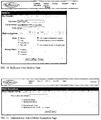
- the Administration Web Site provides a full-control, full-disclosure interface to the proxy arrays, security settings and traffic history.
- the AWS is built on a three-tier architecture:
- the server pages define the application interface, update and request data from the Database Server, and construct result pages and forms that are served to the user's browser by the Application Server.
- Access to the overall AWS requires success authentication of the user's credentials.
- the AWS requires a successful login using a user ID and corresponding password.
- Authentication and credential requirements are enforced on every page within the AWS.
- Standard Footer - Contains single link that connects to the Reflexion Wizard.
- Advanced Footer - Contains a great deal of additional information and links not found in the Standard Footer.
- Message Store Option to keep copies of messages that denied or challenged.
- Auto-exempt Option to automatically exempt contacts when the user replies to a flagged message from the contact.
- the Server object contains properties and methods that are specific to the entire installation of the product.
- the server object is available only to users with "super administrator” privileges.
- Each Reflexion installation can support any number of enterprises. Enterprises are managed as a Domain Group on the product.
- a Domain Group can have any number of domains under management, any number of users with addresses at these domains, and any number of Domain Group Administrators (DGAs) managing the Domain Group.
- DGAs Domain Group Administrators
- a contact is both a proxy address with security settings and a security profile of the contact to which it is registered.
- Property Description Contact Name Name of the contact to which this contact's proxy address is registered. The Contact Name is parsed from inbound messages from the contact. True Address The contact's e-mail address (not to be confused with the proxy address assigned to the user).
- Proxy Address The Reflexion proxy address assigned to the contact by the RMS. Security Status Each proxy address has one of the following security status: 1. Public - This proxy can be used and shared by anyone and messages to it will be delivered. 2.
- proxy@company.com and NOTF are on
- the user can invent any new proxy address of the form: proxy. new @company.com where " new " is anything that the user wants.
- the NOTF proxy will be assigned to the first contact that uses it.
- Life Span Proxy addresses can be assigned a limited life span. When a proxy "expires", the security state is set to disabled.
- the system supports exemptions.
- the product records descriptive information about each message that is sent in or out of the enterprise.
- the individual message history items are consolidated into totals for historical summary reporting and dropped after remaining online for a configurable length of time.
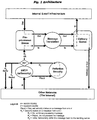
- the Reflexion Mail Server employs 2 e-mail queues, one queue for in-bound traffic wherein messages reside until the Security Module processes them (the "pre-processed queue") 102, and a second queue wherein processed messages and bounce messages are placed for final delivery (the "delivery queue”) 106.
- Inbound messages (from either the mail server of the enterprise 100 or the mail server of the external contact 114) are received and stored in the inbound queue 102. Inbound messages from external sources 114 are subject to the product's security.
- Security enforcement takes place during receipt of the inbound messages using the SMTP protocol 112. As soon as the transport envelope sender and recipient addresses are received, the SMTP protocol handler sends a request to the Reflexion Security Module 110 to obtain the security disposition for this message 116. Subsequent processing of the remainder of the incoming message is predicated on the security response 118 returned from the Reflexion Security module 108.
- the message If the message can be delivered, it is deposited into the pre-processing queue 102. If the message cannot be delivered, either a deferral or denial 120 will be sent back to the sending server 114.
- Messages that are subject to deferral are only deferred for some amount of time (typically 30 to 60 minutes). This is a test that the sending server 114 is "well-behaved". Many servers that send spam do not process deferred messages, thus deferred messages will not be resent from such sources.
- each inbound message is processed by the product's Message Translation module 104, which deposits into the delivery queue 106 either:
- the delivery queue 106 will deliver inbound messages to the internal e-mail infrastructure 100 of the enterprise or to an external destination 114.
- the delivery queue can use standard destination lookup mechanisms to resolve delivery locations (such as Domain Name Service DNS) or a routing table that sends mail to known internal domains to the internal e-mail infrastructure 100 and everything else to the Internet 114.
- DNS Domain Name Service
- FIG. 2 Inbound Message Preparation
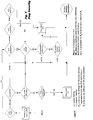
- Figure 2 details the database preparations that are made during the receipt of an inbound message in the preferred embodiment.
- Inbound message preparation takes place before the security disposition is returned on a given message.
- the first thing that is examined on an incoming message is whether or not the recipient address is at a domain that is being protected by Reflexion 200.
- the product searches the database to see if the recipient address is an issued proxy address 206.
- the alias does not exist, it is still possible that the address was created through the naming convention known as, "Name-on-the-Fly" (NOTF) 210, in which case the proxy address should be created and registered to the protected user based on information drawn from the naming convention 212. If NOTF is not permitted for the unknown proxy address, the message is rejected 208.
- NOTF Name-on-the-Fly
- proxy addresses can be explicitly created prior to being used, in which case it is un-owned until the first use, and wherein it becomes registered to the first user 222 just as with NOTF proxies.
- the sender's exemption status is then checked 224 to provide information to the Reflexion Security Module and also the Address Translation Module. Exempt senders are not subject to access control and all mail to and from exempt contacts are conducted under the original internal address of the protected user.
- FIG. 3 Enforced Security
- Reflexion will determine the security disposition for this message.
- Figure 3 details the logic followed by the preferred embodiment security model for messages sent to a user that employs Enforced Mode.
- the security state of the recipient address is interrogated first.
- the recipient proxy address has a security status of "public" 300, then check for the sender's exempt status 302. If the sender is exempt, security is bypassed and the message is passed on to subsequent message translation stages and delivered 338.
- the product will examine the security set on the proxy of the sender before permitting delivery.
- the message is allowed through security 338.
- the sender is sent a reminder message to use their own proxy address in the future 322 if the proxy that is registered to them is protected.
- the sender's proxy is "no share" 328, the message is not allowed to be delivered. Instead, the sender is sent back a request that the sender resend the message using the proxy address registered to the sender (as opposed to proxy used as the recipient in this message).
- the recipient proxy address has a security status of "protected" 304, then check to see if the sender is permitted to send mail to this proxy address.
- a sender can be authorized to use a protected proxy.
- Senders that are not authorized to use a protected proxy are sent a request that the message be resent to the proxy address that is permitted for use by the sender 316.
- This message essentially states that "proxy address x has been changed to the sender's proxy address y. Please resend your message to y".
- Protected addresses are used to protect against spam that has no valid return address, but to afford legitimate contacts a resend mechanism that will let messages be delivered.
- the recipient proxy address has a security status of "no share" 306, then check to see if the sender is permitted to send mail to this proxy address.
- a sender can be authorized to use a protected proxy.
- Senders that are not authorized to use a protected proxy are sent a denial of delivery message that gives no recourse for resending the message.
- 316 The difference between unauthorized use of a protected address versus unauthorized use of a no share address is that protected proxy denials provide a means for successfully resending the message while no share denials do not.
- the recipient proxy address has a security status of "disabled” 308, then check to see if the sender is exempt, for that is the only way that a message to a disabled proxy can be delivered if the user employs Enforce Mode security.
- Figure 4 details the logic followed by the preferred embodiment security model for messages sent to a user that employs Flag Mode.
- Flag Mode guarantees that all inbound messages will be delivered to the user's inbox.
- Flag Mode serves three important product requirements:
- FIG. 5 Address Translations
- proxy addresses are translated to the corresponding original, internal addresses.
- security states in the preferred embodiment that inhibit the translation of proxy addresses, specifically Name-on-the-Fly proxies.
- NOTF proxy addresses were defined by the user and, as such, reside in the name space of the user. Many times, NOTF proxy addresses are used in a login sequence or other process keyed by the NOTF proxy address. By inhibiting the translation of the NOTF within the body of an e-mail message (as opposed to the header of the message, which must be translated to ensure delivery of the message within the existing e-mail infrastructure), confirmation messages that specify the use of the NOTF proxy will be accurate (i. e. translation would make the information inaccurate).
- Proxy addresses are found by seeking the proxy address itself as a key (e. g. proxy.123@company.com) or by seeking a proxy that is assigned to an outside contact for use a substitute to an internal, original address 502.
- the corresponding proxy can be retrieved on outbound messages and substituted within the message for any and all references to the original, internal address.
- the corresponding internal, original address can be retrieved on inbound messages and substituted within the message for any and all references to the proxy address.
- Exemption status adds another level of complexity, as e-mail to and from exempt contacts result in address translations being inhibited.
- Read 504 as. "a translation method that takes some address 'a' and returns the correct translation for it".
- Read 506 as, "a method that returns the proxy address that the outside contact expects to see", which is not always the same as the proxy addressed assigned to the contact.
- the primary benefit of the invention is that undesired messages can be prevented, with great precision, from being delivered to identifiers that are protected by Reflexion.
- Reflexion does not filter e-mail, physical bandwidth can be saved (and the associated costs) when Reflexion rejects messages during SMTP receipt of inbound traffic.
- Reflexion also saves money on the archiving of e-mail, since there is less spam to store.
- Reflexion can reveal things that occur in electronic communications but which are difficult to see. For example, in e-mail, Reflexion detects the sharing of an e-mail address between parties, and can also detect when someone is authoring mail using a corporate e-mail address without sending the message out through the corporation's infrastructure (thus bypassing whatever security and controls are in place).
Landscapes
- Engineering & Computer Science (AREA)
- Computer Networks & Wireless Communication (AREA)
- Signal Processing (AREA)
- Multimedia (AREA)
- Computer Hardware Design (AREA)
- Computer Security & Cryptography (AREA)
- Computing Systems (AREA)
- General Engineering & Computer Science (AREA)
- Information Transfer Between Computers (AREA)
- Data Exchanges In Wide-Area Networks (AREA)
Applications Claiming Priority (3)
| Application Number | Priority Date | Filing Date | Title |
|---|---|---|---|
| US40257402P | 2002-08-09 | 2002-08-09 | |
| US402574P | 2002-08-09 | ||
| PCT/US2003/025067 WO2004015583A1 (en) | 2002-08-09 | 2003-08-11 | System and method for controlling access to an electronic message recipient |
Publications (3)
| Publication Number | Publication Date |
|---|---|
| EP1540486A1 EP1540486A1 (en) | 2005-06-15 |
| EP1540486A4 EP1540486A4 (en) | 2010-06-09 |
| EP1540486B1 true EP1540486B1 (en) | 2018-05-16 |
Family
ID=31715876
Family Applications (1)
| Application Number | Title | Priority Date | Filing Date |
|---|---|---|---|
| EP03785164.9A Expired - Lifetime EP1540486B1 (en) | 2002-08-09 | 2003-08-11 | System and method for controlling access to an electronic message recipient |
Country Status (6)
| Country | Link |
|---|---|
| US (6) | US7870260B2 (enExample) |
| EP (1) | EP1540486B1 (enExample) |
| JP (3) | JP2005535967A (enExample) |
| AU (1) | AU2003259742B2 (enExample) |
| CA (1) | CA2534856C (enExample) |
| WO (1) | WO2004015583A1 (enExample) |
Families Citing this family (40)
| Publication number | Priority date | Publication date | Assignee | Title |
|---|---|---|---|---|
| FI954565A0 (fi) | 1995-09-27 | 1995-09-27 | Biocon Oy | Biolgiskt upploeslig av ett polymerbaserat material tillverkad implant och foerfarande foer dess tillverkning |
| US7870260B2 (en) | 2002-08-09 | 2011-01-11 | Reflexion Networks, Inc. | System and method for controlling access to an electronic message recipient |
| US20050021652A1 (en) * | 2003-07-25 | 2005-01-27 | Sun Microsystems, Inc. | Synchronous collaborative shell integrated instant messaging |
| US7917961B2 (en) | 2004-05-25 | 2011-03-29 | Reflexion Networks, Inc. | System and method for controlling access to an electronic message recipient |
| JP4701670B2 (ja) * | 2004-10-12 | 2011-06-15 | 株式会社日立製作所 | アクセス制御システム、認証サーバ、アプリケーションサーバ、およびパケット転送装置 |
| US20060235930A1 (en) * | 2005-04-19 | 2006-10-19 | Xerox Corporation | Method to counter junk e-mail by limiting validity of e-mail addresses |
| US20070296545A1 (en) * | 2005-12-14 | 2007-12-27 | Checkpoint Systems, Inc. | System for management of ubiquitously deployed intelligent locks |
| US8095967B2 (en) | 2006-07-27 | 2012-01-10 | White Sky, Inc. | Secure web site authentication using web site characteristics, secure user credentials and private browser |
| US20080052508A1 (en) * | 2006-08-25 | 2008-02-28 | Huotari Allen J | Network security status indicators |
| US8060569B2 (en) * | 2007-09-27 | 2011-11-15 | Microsoft Corporation | Dynamic email directory harvest attack detection and mitigation |
| US20090138560A1 (en) * | 2007-11-28 | 2009-05-28 | James Joseph Stahl Jr | Method and Apparatus for Automated Record Creation Using Information Objects, Such as Images, Transmitted Over a Communications Network to Inventory Databases and Other Data-Collection Programs |
| US9083667B2 (en) * | 2008-01-16 | 2015-07-14 | International Business Machines Corporation | System and method for follow-on message processing |
| US9240978B2 (en) * | 2008-12-31 | 2016-01-19 | Verizon Patent And Licensing Inc. | Communication system having message encryption |
| EP2462553A4 (en) * | 2009-08-03 | 2014-09-10 | Kim Kwee Ng | METHOD AND SYSTEM FOR MANAGING E-MAILS |
| US11611526B2 (en) * | 2010-05-28 | 2023-03-21 | Privowny, Inc. | Managing data on computer and telecommunications networks |
| US8918467B2 (en) * | 2010-10-01 | 2014-12-23 | Clover Leaf Environmental Solutions, Inc. | Generation and retrieval of report information |
| US8516062B2 (en) | 2010-10-01 | 2013-08-20 | @Pay Ip Holdings Llc | Storage, communication, and display of task-related data |
| US8667074B1 (en) | 2012-09-11 | 2014-03-04 | Bradford L. Farkas | Systems and methods for email tracking and email spam reduction using dynamic email addressing schemes |
| US8954546B2 (en) | 2013-01-25 | 2015-02-10 | Concurix Corporation | Tracing with a workload distributor |
| US9021447B2 (en) * | 2013-02-12 | 2015-04-28 | Concurix Corporation | Application tracing by distributed objectives |
| US8997063B2 (en) | 2013-02-12 | 2015-03-31 | Concurix Corporation | Periodicity optimization in an automated tracing system |
| US20130283281A1 (en) | 2013-02-12 | 2013-10-24 | Concurix Corporation | Deploying Trace Objectives using Cost Analyses |
| US8924941B2 (en) | 2013-02-12 | 2014-12-30 | Concurix Corporation | Optimization analysis using similar frequencies |
| US9665474B2 (en) | 2013-03-15 | 2017-05-30 | Microsoft Technology Licensing, Llc | Relationships derived from trace data |
| US9575874B2 (en) | 2013-04-20 | 2017-02-21 | Microsoft Technology Licensing, Llc | Error list and bug report analysis for configuring an application tracer |
| US9419930B2 (en) * | 2013-06-28 | 2016-08-16 | International Business Machines Corporation | Management of connections in a messaging environment |
| US9292415B2 (en) | 2013-09-04 | 2016-03-22 | Microsoft Technology Licensing, Llc | Module specific tracing in a shared module environment |
| WO2015071778A1 (en) | 2013-11-13 | 2015-05-21 | Concurix Corporation | Application execution path tracing with configurable origin definition |
| US10079791B2 (en) * | 2014-03-14 | 2018-09-18 | Xpedite Systems, Llc | Systems and methods for domain- and auto-registration |
| US20160255040A1 (en) * | 2015-02-26 | 2016-09-01 | Mastercard International Incorporated | Method and System for Automatic E-mail Aliasing for User Anonymization |
| US10375163B2 (en) * | 2016-01-29 | 2019-08-06 | Microsoft Technology Licensing, Llc | Cross device messaging |
| WO2017176934A1 (en) | 2016-04-05 | 2017-10-12 | Joinesty, Inc. | Apparatus and method for automated email and password creation and curation across multiple websites |
| US10496808B2 (en) | 2016-10-25 | 2019-12-03 | Apple Inc. | User interface for managing access to credentials for use in an operation |
| US10698701B1 (en) | 2019-06-01 | 2020-06-30 | Apple Inc. | User interface for accessing an account |
| US10764434B1 (en) * | 2019-09-26 | 2020-09-01 | Joinesty, Inc. | Phone alert for unauthorized call |
| US11316806B1 (en) * | 2020-01-28 | 2022-04-26 | Snap Inc. | Bulk message deletion |
| US11924169B1 (en) | 2021-01-29 | 2024-03-05 | Joinesty, Inc. | Configuring a system for selectively obfuscating data transmitted between servers and end-user devices |
| US12111962B2 (en) | 2021-02-19 | 2024-10-08 | Apple Inc. | User interfaces and device settings based on user identification |
| CN114553461A (zh) * | 2021-12-22 | 2022-05-27 | 中国电子科技集团公司第三十研究所 | 一种网络数据小包高速IPsec处理方法及系统 |
| US12659287B1 (en) | 2023-04-26 | 2026-06-16 | Zoom Communications, Inc. | Replacing email addresses with project-specific email addresses |
Family Cites Families (65)
| Publication number | Priority date | Publication date | Assignee | Title |
|---|---|---|---|---|
| ES2198407T3 (es) * | 1992-09-30 | 2004-02-01 | Motorola, Inc. | Sistema de distribucion de mensajes de correo electronico. |
| US5970122A (en) * | 1996-07-24 | 1999-10-19 | Lucent Technologies Inc. | Two-way wireless messaging system having user agent |
| US6301608B1 (en) * | 1996-08-14 | 2001-10-09 | At&T Corp. | Method and apparatus providing personalized mailbox filters |
| US5930479A (en) * | 1996-10-21 | 1999-07-27 | At&T Corp | Communications addressing system |
| US6385655B1 (en) * | 1996-10-24 | 2002-05-07 | Tumbleweed Communications Corp. | Method and apparatus for delivering documents over an electronic network |
| US6473406B1 (en) * | 1997-07-31 | 2002-10-29 | Cisco Technology, Inc. | Method and apparatus for transparently proxying a connection |
| US5987508A (en) * | 1997-08-13 | 1999-11-16 | At&T Corp | Method of providing seamless cross-service connectivity in telecommunications network |
| US6199102B1 (en) * | 1997-08-26 | 2001-03-06 | Christopher Alan Cobb | Method and system for filtering electronic messages |
| US6591291B1 (en) | 1997-08-28 | 2003-07-08 | Lucent Technologies Inc. | System and method for providing anonymous remailing and filtering of electronic mail |
| US6606708B1 (en) | 1997-09-26 | 2003-08-12 | Worldcom, Inc. | Secure server architecture for Web based data management |
| US6161129A (en) * | 1997-09-30 | 2000-12-12 | At&T Corp. | Unlisted address messaging system |
| US5999932A (en) | 1998-01-13 | 1999-12-07 | Bright Light Technologies, Inc. | System and method for filtering unsolicited electronic mail messages using data matching and heuristic processing |
| US6112227A (en) * | 1998-08-06 | 2000-08-29 | Heiner; Jeffrey Nelson | Filter-in method for reducing junk e-mail |
| US6192114B1 (en) * | 1998-09-02 | 2001-02-20 | Cbt Flint Partners | Method and apparatus for billing a fee to a party initiating an electronic mail communication when the party is not on an authorization list associated with the party to whom the communication is directed |
| US20020002615A1 (en) * | 1998-09-18 | 2002-01-03 | Vijay K. Bhagavath | Method and apparatus for switching between internet service provider gateways |
| US6167459A (en) * | 1998-10-07 | 2000-12-26 | International Business Machines Corporation | System for reassigning alias addresses to an input/output device |
| JP3589881B2 (ja) * | 1998-12-10 | 2004-11-17 | シャープ株式会社 | 電子メールサーバシステム |
| US6665304B2 (en) * | 1998-12-31 | 2003-12-16 | Hewlett-Packard Development Company, L.P. | Method and apparatus for providing an integrated cluster alias address |
| US6574658B1 (en) * | 1999-01-29 | 2003-06-03 | Lucent Technologies Inc. | System and method for secure classification of electronic mail |
| JP2000339236A (ja) | 1999-05-27 | 2000-12-08 | Fujitsu Ltd | 悪戯メール防止装置、その方法及び記録媒体 |
| WO2001016695A1 (en) * | 1999-09-01 | 2001-03-08 | Katsikas Peter L | System for eliminating unauthorized electronic mail |
| US6614800B1 (en) * | 1999-09-02 | 2003-09-02 | International Business Machines Corporation | Method and system for virtual private network administration channels |
| US6321267B1 (en) * | 1999-11-23 | 2001-11-20 | Escom Corporation | Method and apparatus for filtering junk email |
| DE69924386T2 (de) * | 1999-12-02 | 2005-08-11 | Sony International (Europe) Gmbh | Sofortige Nachrichtenübermittlung |
| US7376629B1 (en) * | 2000-04-03 | 2008-05-20 | Incogno Corporation | Method of and system for effecting anonymous credit card purchases over the internet |
| US6643687B1 (en) * | 2000-04-07 | 2003-11-04 | Avid Technology, Inc. | Email system delivers email message to a proxy email address that corresponds to a sender and recipient pairing |
| US20020032853A1 (en) * | 2000-04-17 | 2002-03-14 | Preston Dan A. | Secure dynamic link allocation system for mobile data communication |
| JP2001306455A (ja) * | 2000-04-20 | 2001-11-02 | Cybird Co Ltd | 電子メール仲介サーバー |
| US6697806B1 (en) * | 2000-04-24 | 2004-02-24 | Sprint Communications Company, L.P. | Access network authorization |
| JP2004521522A (ja) * | 2000-05-03 | 2004-07-15 | シェフラー、ダニエル | 送信者が受信者の現在の宛先を知らない場合でも通信の送受信が可能な通信方法 |
| US20030158960A1 (en) | 2000-05-22 | 2003-08-21 | Engberg Stephan J. | System and method for establishing a privacy communication path |
| GB2363297B (en) * | 2000-06-09 | 2004-04-07 | Hewlett Packard Co | Secure network communications |
| JP2002026961A (ja) * | 2000-07-10 | 2002-01-25 | Global Media Online Inc | 電子メール処理装置及び電子メール処理方法 |
| US6801931B1 (en) * | 2000-07-20 | 2004-10-05 | Ericsson Inc. | System and method for personalizing electronic mail messages by rendering the messages in the voice of a predetermined speaker |
| JP3400979B2 (ja) * | 2000-08-22 | 2003-04-28 | 株式会社アイサイト | 電子メール転送システム |
| JP2002073475A (ja) | 2000-08-24 | 2002-03-12 | Sanyo Electric Co Ltd | アドレス変換方法とアドレス変換装置、およびそれらを利用可能なメールサーバとメールクライアント |
| KR20020017265A (ko) * | 2000-08-29 | 2002-03-07 | 구자홍 | 동일 아이피 서브넷상에 구성된 서로 다른 가상랜 사이의통신방법 |
| US7020688B2 (en) * | 2000-09-05 | 2006-03-28 | Financial Network, Inc. | Methods and systems for archiving and verification of electronic communications |
| JP2002108774A (ja) * | 2000-09-26 | 2002-04-12 | Casio Comput Co Ltd | メール転送システム及び記憶媒体 |
| US20030009385A1 (en) * | 2000-12-26 | 2003-01-09 | Tucciarone Joel D. | Electronic messaging system and method thereof |
| US7054906B2 (en) * | 2000-12-29 | 2006-05-30 | Levosky Michael P | System and method for controlling and organizing Email |
| US7092992B1 (en) * | 2001-02-01 | 2006-08-15 | Mailshell.Com, Inc. | Web page filtering including substitution of user-entered email address |
| EP1241847A1 (de) * | 2001-03-13 | 2002-09-18 | Siemens Aktiengesellschaft | Übermittlung von Informationen mit einer verifizierten QoS in einem Kommunikationsnetz |
| US7698433B2 (en) * | 2001-03-20 | 2010-04-13 | Verizon Business Global Llc | User aliases in communication system |
| US6973481B2 (en) * | 2001-03-23 | 2005-12-06 | Emailias Llc | System and method for creating and managing forwarding email address |
| US20020152272A1 (en) * | 2001-04-12 | 2002-10-17 | Rahav Yairi | Method for managing multiple dynamic e-mail aliases |
| US7555519B2 (en) * | 2001-06-13 | 2009-06-30 | Intel Corporation | Encoded electronic mail |
| US20030033463A1 (en) * | 2001-08-10 | 2003-02-13 | Garnett Paul J. | Computer system storage |
| JP2003134166A (ja) * | 2001-10-24 | 2003-05-09 | Nec Nexsolutions Ltd | 電子メールシステム |
| US7617328B2 (en) * | 2001-11-16 | 2009-11-10 | At&T Mobility Ii Llc | System for translation and communication of messaging protocols into a common protocol |
| CN1332333C (zh) * | 2002-02-19 | 2007-08-15 | 波斯蒂尼公司 | 电子邮件管理服务 |
| US6985479B2 (en) * | 2002-03-04 | 2006-01-10 | Qualcomm Incorporated | Method and apparatus for processing internet protocol transmissions |
| US7668306B2 (en) * | 2002-03-08 | 2010-02-23 | Intel Corporation | Method and apparatus for connecting packet telephony calls between secure and non-secure networks |
| ATE475244T1 (de) | 2002-04-02 | 2010-08-15 | Verizon Business Global Llc | Kommunikations-gateway mit nachrichtenkommunikationsschnittstelle |
| US7216227B2 (en) * | 2002-04-23 | 2007-05-08 | Amiram Grynberg | Method and system for controlling the use of addresses using address computation techniques |
| US6957077B2 (en) * | 2002-05-06 | 2005-10-18 | Microsoft Corporation | System and method for enabling instant messaging on a mobile device |
| JP2003338849A (ja) * | 2002-05-22 | 2003-11-28 | Nec Corp | 電子メール転送システム及び転送方法 |
| US7092942B2 (en) * | 2002-05-31 | 2006-08-15 | Bea Systems, Inc. | Managing secure resources in web resources that are accessed by multiple portals |
| US7870260B2 (en) | 2002-08-09 | 2011-01-11 | Reflexion Networks, Inc. | System and method for controlling access to an electronic message recipient |
| US7353533B2 (en) | 2002-12-18 | 2008-04-01 | Novell, Inc. | Administration of protection of data accessible by a mobile device |
| CA2552838A1 (en) | 2003-01-09 | 2004-07-29 | Innovative Information Inc. | Distributed system enabling integration and automation of marketing, sales and service |
| US7305445B2 (en) * | 2003-01-28 | 2007-12-04 | Microsoft Corporation | Indirect disposable email addressing |
| US8458033B2 (en) | 2003-08-11 | 2013-06-04 | Dropbox, Inc. | Determining the relevance of offers |
| US7472422B1 (en) | 2003-09-10 | 2008-12-30 | Symantec Corporation | Security management system including feedback and control |
| US7783741B2 (en) * | 2003-11-17 | 2010-08-24 | Hardt Dick C | Pseudonymous email address manager |
-
2003
- 2003-08-11 US US10/523,760 patent/US7870260B2/en not_active Expired - Lifetime
- 2003-08-11 JP JP2004528000A patent/JP2005535967A/ja active Pending
- 2003-08-11 WO PCT/US2003/025067 patent/WO2004015583A1/en not_active Ceased
- 2003-08-11 CA CA2534856A patent/CA2534856C/en not_active Expired - Lifetime
- 2003-08-11 EP EP03785164.9A patent/EP1540486B1/en not_active Expired - Lifetime
- 2003-08-11 AU AU2003259742A patent/AU2003259742B2/en not_active Expired
-
2010
- 2010-09-24 JP JP2010214068A patent/JP2011050065A/ja active Pending
- 2010-10-21 US US12/909,351 patent/US8239471B2/en not_active Expired - Fee Related
-
2012
- 2012-07-03 US US13/540,703 patent/US8850555B2/en not_active Expired - Lifetime
-
2013
- 2013-12-06 JP JP2013253351A patent/JP2014075833A/ja active Pending
-
2014
- 2014-08-21 US US14/465,506 patent/US20150082383A1/en not_active Abandoned
-
2015
- 2015-09-27 US US14/866,968 patent/US10686757B2/en not_active Expired - Fee Related
-
2019
- 2019-06-06 US US16/433,588 patent/US10972429B2/en not_active Expired - Fee Related
Non-Patent Citations (1)
| Title |
|---|
| None * |
Also Published As
| Publication number | Publication date |
|---|---|
| US20150082383A1 (en) | 2015-03-19 |
| US10972429B2 (en) | 2021-04-06 |
| WO2004015583A1 (en) | 2004-02-19 |
| US10686757B2 (en) | 2020-06-16 |
| JP2005535967A (ja) | 2005-11-24 |
| US20060156017A1 (en) | 2006-07-13 |
| US8239471B2 (en) | 2012-08-07 |
| AU2003259742A1 (en) | 2004-02-25 |
| EP1540486A4 (en) | 2010-06-09 |
| US20190312837A1 (en) | 2019-10-10 |
| US8850555B2 (en) | 2014-09-30 |
| JP2011050065A (ja) | 2011-03-10 |
| US7870260B2 (en) | 2011-01-11 |
| US20110145892A1 (en) | 2011-06-16 |
| CA2534856A1 (en) | 2004-02-19 |
| JP2014075833A (ja) | 2014-04-24 |
| US20160028686A1 (en) | 2016-01-28 |
| US20130007896A1 (en) | 2013-01-03 |
| CA2534856C (en) | 2012-04-17 |
| AU2003259742B2 (en) | 2010-07-15 |
| EP1540486A1 (en) | 2005-06-15 |
Similar Documents
| Publication | Publication Date | Title |
|---|---|---|
| US10972429B2 (en) | Electronic message identifier aliasing | |
| US8484749B2 (en) | System and method for controlling access to an electronic message recipient | |
| US7249175B1 (en) | Method and system for blocking e-mail having a nonexistent sender address | |
| US20040024823A1 (en) | Email authentication system | |
| US20040236838A1 (en) | Method and code for authenticating electronic messages | |
| US10284504B2 (en) | Address couplet communication filtering | |
| WO2001038999A1 (en) | Electronic message filter having a whitelist database and a quarantining mechanism | |
| HK1102709B (en) | Controlling access to an electronic message recipient | |
| JP5131494B2 (ja) | 電子メールシステムおよび電子メール通信方法 |
Legal Events
| Date | Code | Title | Description |
|---|---|---|---|
| PUAI | Public reference made under article 153(3) epc to a published international application that has entered the european phase |
Free format text: ORIGINAL CODE: 0009012 |
|
| 17P | Request for examination filed |
Effective date: 20050309 |
|
| AK | Designated contracting states |
Kind code of ref document: A1 Designated state(s): AT BE BG CH CY CZ DE DK EE ES FI FR GB GR HU IE IT LI LU MC NL PT RO SE SI SK TR |
|
| AX | Request for extension of the european patent |
Extension state: AL LT LV MK |
|
| RAP1 | Party data changed (applicant data changed or rights of an application transferred) |
Owner name: REFLEXION NETWORK SOLUTIONS, INC. |
|
| DAX | Request for extension of the european patent (deleted) | ||
| REG | Reference to a national code |
Ref country code: HK Ref legal event code: DE Ref document number: 1079586 Country of ref document: HK |
|
| A4 | Supplementary search report drawn up and despatched |
Effective date: 20100510 |
|
| RIC1 | Information provided on ipc code assigned before grant |
Ipc: H04M 11/00 20060101ALI20100503BHEP Ipc: G06F 17/00 20060101ALI20100503BHEP Ipc: H04L 29/06 20060101ALI20100503BHEP Ipc: G06F 13/38 20060101AFI20040303BHEP |
|
| 17Q | First examination report despatched |
Effective date: 20110701 |
|
| RAP1 | Party data changed (applicant data changed or rights of an application transferred) |
Owner name: REFLEXION NETWORK SOLUTIONS, INC. |
|
| GRAP | Despatch of communication of intention to grant a patent |
Free format text: ORIGINAL CODE: EPIDOSNIGR1 |
|
| RIC1 | Information provided on ipc code assigned before grant |
Ipc: G06F 17/00 20060101ALI20171107BHEP Ipc: H04L 29/06 20060101ALI20171107BHEP Ipc: H04L 29/12 20060101ALI20171107BHEP Ipc: H04L 12/58 20060101ALI20171107BHEP Ipc: G06F 13/38 20060101AFI20171107BHEP Ipc: H04M 11/00 20060101ALI20171107BHEP |
|
| INTG | Intention to grant announced |
Effective date: 20171130 |
|
| GRAS | Grant fee paid |
Free format text: ORIGINAL CODE: EPIDOSNIGR3 |
|
| GRAA | (expected) grant |
Free format text: ORIGINAL CODE: 0009210 |
|
| AK | Designated contracting states |
Kind code of ref document: B1 Designated state(s): AT BE BG CH CY CZ DE DK EE ES FI FR GB GR HU IE IT LI LU MC NL PT RO SE SI SK TR |
|
| REG | Reference to a national code |
Ref country code: GB Ref legal event code: FG4D |
|
| REG | Reference to a national code |
Ref country code: CH Ref legal event code: EP |
|
| REG | Reference to a national code |
Ref country code: IE Ref legal event code: FG4D |
|
| REG | Reference to a national code |
Ref country code: AT Ref legal event code: REF Ref document number: 1000181 Country of ref document: AT Kind code of ref document: T Effective date: 20180615 |
|
| REG | Reference to a national code |
Ref country code: DE Ref legal event code: R096 Ref document number: 60351198 Country of ref document: DE |
|
| REG | Reference to a national code |
Ref country code: FR Ref legal event code: PLFP Year of fee payment: 16 |
|
| REG | Reference to a national code |
Ref country code: NL Ref legal event code: MP Effective date: 20180516 |
|
| PG25 | Lapsed in a contracting state [announced via postgrant information from national office to epo] |
Ref country code: FI Free format text: LAPSE BECAUSE OF FAILURE TO SUBMIT A TRANSLATION OF THE DESCRIPTION OR TO PAY THE FEE WITHIN THE PRESCRIBED TIME-LIMIT Effective date: 20180516 Ref country code: ES Free format text: LAPSE BECAUSE OF FAILURE TO SUBMIT A TRANSLATION OF THE DESCRIPTION OR TO PAY THE FEE WITHIN THE PRESCRIBED TIME-LIMIT Effective date: 20180516 Ref country code: SE Free format text: LAPSE BECAUSE OF FAILURE TO SUBMIT A TRANSLATION OF THE DESCRIPTION OR TO PAY THE FEE WITHIN THE PRESCRIBED TIME-LIMIT Effective date: 20180516 Ref country code: BG Free format text: LAPSE BECAUSE OF FAILURE TO SUBMIT A TRANSLATION OF THE DESCRIPTION OR TO PAY THE FEE WITHIN THE PRESCRIBED TIME-LIMIT Effective date: 20180816 |
|
| PG25 | Lapsed in a contracting state [announced via postgrant information from national office to epo] |
Ref country code: NL Free format text: LAPSE BECAUSE OF FAILURE TO SUBMIT A TRANSLATION OF THE DESCRIPTION OR TO PAY THE FEE WITHIN THE PRESCRIBED TIME-LIMIT Effective date: 20180516 Ref country code: GR Free format text: LAPSE BECAUSE OF FAILURE TO SUBMIT A TRANSLATION OF THE DESCRIPTION OR TO PAY THE FEE WITHIN THE PRESCRIBED TIME-LIMIT Effective date: 20180817 |
|
| REG | Reference to a national code |
Ref country code: AT Ref legal event code: MK05 Ref document number: 1000181 Country of ref document: AT Kind code of ref document: T Effective date: 20180516 |
|
| PG25 | Lapsed in a contracting state [announced via postgrant information from national office to epo] |
Ref country code: PT Free format text: LAPSE BECAUSE OF FAILURE TO SUBMIT A TRANSLATION OF THE DESCRIPTION OR TO PAY THE FEE WITHIN THE PRESCRIBED TIME-LIMIT Effective date: 20180917 |
|
| PG25 | Lapsed in a contracting state [announced via postgrant information from national office to epo] |
Ref country code: AT Free format text: LAPSE BECAUSE OF FAILURE TO SUBMIT A TRANSLATION OF THE DESCRIPTION OR TO PAY THE FEE WITHIN THE PRESCRIBED TIME-LIMIT Effective date: 20180516 Ref country code: EE Free format text: LAPSE BECAUSE OF FAILURE TO SUBMIT A TRANSLATION OF THE DESCRIPTION OR TO PAY THE FEE WITHIN THE PRESCRIBED TIME-LIMIT Effective date: 20180516 Ref country code: DK Free format text: LAPSE BECAUSE OF FAILURE TO SUBMIT A TRANSLATION OF THE DESCRIPTION OR TO PAY THE FEE WITHIN THE PRESCRIBED TIME-LIMIT Effective date: 20180516 Ref country code: RO Free format text: LAPSE BECAUSE OF FAILURE TO SUBMIT A TRANSLATION OF THE DESCRIPTION OR TO PAY THE FEE WITHIN THE PRESCRIBED TIME-LIMIT Effective date: 20180516 Ref country code: SK Free format text: LAPSE BECAUSE OF FAILURE TO SUBMIT A TRANSLATION OF THE DESCRIPTION OR TO PAY THE FEE WITHIN THE PRESCRIBED TIME-LIMIT Effective date: 20180516 Ref country code: CZ Free format text: LAPSE BECAUSE OF FAILURE TO SUBMIT A TRANSLATION OF THE DESCRIPTION OR TO PAY THE FEE WITHIN THE PRESCRIBED TIME-LIMIT Effective date: 20180516 |
|
| REG | Reference to a national code |
Ref country code: DE Ref legal event code: R097 Ref document number: 60351198 Country of ref document: DE |
|
| PG25 | Lapsed in a contracting state [announced via postgrant information from national office to epo] |
Ref country code: IT Free format text: LAPSE BECAUSE OF FAILURE TO SUBMIT A TRANSLATION OF THE DESCRIPTION OR TO PAY THE FEE WITHIN THE PRESCRIBED TIME-LIMIT Effective date: 20180516 |
|
| PLBE | No opposition filed within time limit |
Free format text: ORIGINAL CODE: 0009261 |
|
| STAA | Information on the status of an ep patent application or granted ep patent |
Free format text: STATUS: NO OPPOSITION FILED WITHIN TIME LIMIT |
|
| PG25 | Lapsed in a contracting state [announced via postgrant information from national office to epo] |
Ref country code: MC Free format text: LAPSE BECAUSE OF FAILURE TO SUBMIT A TRANSLATION OF THE DESCRIPTION OR TO PAY THE FEE WITHIN THE PRESCRIBED TIME-LIMIT Effective date: 20180516 |
|
| REG | Reference to a national code |
Ref country code: CH Ref legal event code: PL |
|
| 26N | No opposition filed |
Effective date: 20190219 |
|
| PG25 | Lapsed in a contracting state [announced via postgrant information from national office to epo] |
Ref country code: CH Free format text: LAPSE BECAUSE OF NON-PAYMENT OF DUE FEES Effective date: 20180831 Ref country code: LU Free format text: LAPSE BECAUSE OF NON-PAYMENT OF DUE FEES Effective date: 20180811 Ref country code: LI Free format text: LAPSE BECAUSE OF NON-PAYMENT OF DUE FEES Effective date: 20180831 |
|
| REG | Reference to a national code |
Ref country code: BE Ref legal event code: MM Effective date: 20180831 |
|
| REG | Reference to a national code |
Ref country code: IE Ref legal event code: MM4A |
|
| PG25 | Lapsed in a contracting state [announced via postgrant information from national office to epo] |
Ref country code: SI Free format text: LAPSE BECAUSE OF FAILURE TO SUBMIT A TRANSLATION OF THE DESCRIPTION OR TO PAY THE FEE WITHIN THE PRESCRIBED TIME-LIMIT Effective date: 20180516 |
|
| PG25 | Lapsed in a contracting state [announced via postgrant information from national office to epo] |
Ref country code: IE Free format text: LAPSE BECAUSE OF NON-PAYMENT OF DUE FEES Effective date: 20180811 |
|
| PG25 | Lapsed in a contracting state [announced via postgrant information from national office to epo] |
Ref country code: BE Free format text: LAPSE BECAUSE OF NON-PAYMENT OF DUE FEES Effective date: 20180831 |
|
| REG | Reference to a national code |
Ref country code: HK Ref legal event code: WD Ref document number: 1079586 Country of ref document: HK |
|
| PG25 | Lapsed in a contracting state [announced via postgrant information from national office to epo] |
Ref country code: TR Free format text: LAPSE BECAUSE OF FAILURE TO SUBMIT A TRANSLATION OF THE DESCRIPTION OR TO PAY THE FEE WITHIN THE PRESCRIBED TIME-LIMIT Effective date: 20180516 |
|
| PG25 | Lapsed in a contracting state [announced via postgrant information from national office to epo] |
Ref country code: HU Free format text: LAPSE BECAUSE OF FAILURE TO SUBMIT A TRANSLATION OF THE DESCRIPTION OR TO PAY THE FEE WITHIN THE PRESCRIBED TIME-LIMIT; INVALID AB INITIO Effective date: 20030811 |
|
| PG25 | Lapsed in a contracting state [announced via postgrant information from national office to epo] |
Ref country code: CY Free format text: LAPSE BECAUSE OF FAILURE TO SUBMIT A TRANSLATION OF THE DESCRIPTION OR TO PAY THE FEE WITHIN THE PRESCRIBED TIME-LIMIT Effective date: 20180516 |
|
| REG | Reference to a national code |
Ref country code: FR Ref legal event code: PLFP Year of fee payment: 20 |
|
| PGFP | Annual fee paid to national office [announced via postgrant information from national office to epo] |
Ref country code: GB Payment date: 20220623 Year of fee payment: 20 |
|
| PGFP | Annual fee paid to national office [announced via postgrant information from national office to epo] |
Ref country code: FR Payment date: 20220609 Year of fee payment: 20 |
|
| PGFP | Annual fee paid to national office [announced via postgrant information from national office to epo] |
Ref country code: DE Payment date: 20220608 Year of fee payment: 20 |
|
| REG | Reference to a national code |
Ref country code: DE Ref legal event code: R071 Ref document number: 60351198 Country of ref document: DE |
|
| REG | Reference to a national code |
Ref country code: GB Ref legal event code: PE20 Expiry date: 20230810 |
|
| PG25 | Lapsed in a contracting state [announced via postgrant information from national office to epo] |
Ref country code: GB Free format text: LAPSE BECAUSE OF EXPIRATION OF PROTECTION Effective date: 20230810 |