EP1539817B1 - Immunassays zur spezifischen bestimmung von scca-isoformen - Google Patents
Immunassays zur spezifischen bestimmung von scca-isoformen Download PDFInfo
- Publication number
- EP1539817B1 EP1539817B1 EP03795518A EP03795518A EP1539817B1 EP 1539817 B1 EP1539817 B1 EP 1539817B1 EP 03795518 A EP03795518 A EP 03795518A EP 03795518 A EP03795518 A EP 03795518A EP 1539817 B1 EP1539817 B1 EP 1539817B1
- Authority
- EP
- European Patent Office
- Prior art keywords
- squamous cell
- cancer
- scca2
- sample
- scca1
- Prior art date
- Legal status (The legal status is an assumption and is not a legal conclusion. Google has not performed a legal analysis and makes no representation as to the accuracy of the status listed.)
- Expired - Lifetime
Links
Images




Classifications
-
- C—CHEMISTRY; METALLURGY
- C07—ORGANIC CHEMISTRY
- C07K—PEPTIDES
- C07K16/00—Immunoglobulins [IG], e.g. monoclonal or polyclonal antibodies
- C07K16/18—Immunoglobulins [IG], e.g. monoclonal or polyclonal antibodies against material from animals or humans
- C07K16/28—Immunoglobulins [IG], e.g. monoclonal or polyclonal antibodies against material from animals or humans against receptors, cell surface antigens or cell surface determinants
- C07K16/30—Immunoglobulins [IG], e.g. monoclonal or polyclonal antibodies against material from animals or humans against receptors, cell surface antigens or cell surface determinants from tumour cells
-
- C—CHEMISTRY; METALLURGY
- C07—ORGANIC CHEMISTRY
- C07K—PEPTIDES
- C07K16/00—Immunoglobulins [IG], e.g. monoclonal or polyclonal antibodies
- C07K16/18—Immunoglobulins [IG], e.g. monoclonal or polyclonal antibodies against material from animals or humans
- C07K16/28—Immunoglobulins [IG], e.g. monoclonal or polyclonal antibodies against material from animals or humans against receptors, cell surface antigens or cell surface determinants
- C07K16/30—Immunoglobulins [IG], e.g. monoclonal or polyclonal antibodies against material from animals or humans against receptors, cell surface antigens or cell surface determinants from tumour cells
- C07K16/3007—Carcino-embryonic Antigens
-
- A—HUMAN NECESSITIES
- A61—MEDICAL OR VETERINARY SCIENCE; HYGIENE
- A61K—PREPARATIONS FOR MEDICAL, DENTAL OR TOILETRY PURPOSES
- A61K39/00—Medicinal preparations containing antigens or antibodies
- A61K39/395—Antibodies; Immunoglobulins; Immune serum, e.g. antilymphocytic serum
-
- G—PHYSICS
- G01—MEASURING; TESTING
- G01N—INVESTIGATING OR ANALYSING MATERIALS BY DETERMINING THEIR CHEMICAL OR PHYSICAL PROPERTIES
- G01N33/00—Investigating or analysing materials by specific methods not covered by groups G01N1/00 - G01N31/00
- G01N33/48—Biological material, e.g. blood, urine; Haemocytometers
- G01N33/50—Chemical analysis of biological material, e.g. blood, urine; Testing involving biospecific ligand binding methods; Immunological testing
- G01N33/53—Immunoassay; Biospecific binding assay; Materials therefor
- G01N33/575—Immunoassay; Biospecific binding assay; Materials therefor for cancer
-
- G—PHYSICS
- G01—MEASURING; TESTING
- G01N—INVESTIGATING OR ANALYSING MATERIALS BY DETERMINING THEIR CHEMICAL OR PHYSICAL PROPERTIES
- G01N33/00—Investigating or analysing materials by specific methods not covered by groups G01N1/00 - G01N31/00
- G01N33/48—Biological material, e.g. blood, urine; Haemocytometers
- G01N33/50—Chemical analysis of biological material, e.g. blood, urine; Testing involving biospecific ligand binding methods; Immunological testing
- G01N33/53—Immunoassay; Biospecific binding assay; Materials therefor
- G01N33/575—Immunoassay; Biospecific binding assay; Materials therefor for cancer
- G01N33/5758—Immunoassay; Biospecific binding assay; Materials therefor for cancer involving compounds serving as markers for tumours, cancers or neoplasias, e.g. cellular determinants, receptors, heat shock/stress proteins, A-protein, oligosaccharides or metabolites
Definitions
- the present invention relates to the specific determination of different isoforms of SCCA and the use of the serological concentration of the different isoforms and ratio between them as a means of diagnosis of cancer.
- Squamous cell carcinoma antigen is a serological marker for squamous cell carcinomas (SCC) of the uterine, cervix, lung, head and neck, vulva, and esophagus (1, 2). It was originally purified in the end 70-ties by Kato and coworkers from the TA-4 complex from human cervical squamous cell carcinoma, with a molecular weight of 42-48 kDa (1, 3). Electrophoresis of the TA-4 complex revealed more than 10 fractions and iso-electric focusing of the antigen suggested two subfractions, an acidic (pI ⁇ 6.25) and a neutral (pI ⁇ 6.25) isoform (4).
- serpins map to one of two chromosomal clusters.
- PI6, PI9 and ELNAH2 map to 6p25
- These clusters are supposed to have arisen via two independent interchromosomal duplications and several rounds of intrachromosomal duplications (9).
- the chromosome region 18q has often been reported as a region with high frequency of rearrangements (9, 13-16).
- the targets and functions of serpins are not fully understood. For most, the primary functions are regulation of proteolytic events associated with coagulation, fibrinolysis, apoptosis and inflammation, but alternative functions such as hormone transport and blood pressure regulation have been reported (17-24).
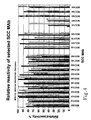
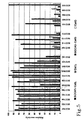
- SCCA1 and SCCA2 are nearly identical they differ in their reactive site loops ( Figure 2 and 3 ).
- SCCA1 inhibits the papain-like cystein proteinases cathepsin S, K, and L (25, 26) while SCCA2 inhibits the chymotrypsin-like serine proteinases cathepsin G and mast cell chymase (27).
- RSL reactive site loop
- the variable portion of the RSL dictates the specificity of the target proteinases shown by RSL swap mutants of SCCA1 and SCCA2 and single mutants (28, 29). It is likely that serpins utilize a common RSL-dependent mechanism to inhibit both serine and cystein proteinases.
- SCCA1 and SCCA2 are not fully understood. They are considered to be inhibitory serpins. Data suggest that SCCA are involved in apoptosis and expression makes cancer cells resistant to several killing mechanisms by inhibition of apoptosis (30).
- SCCA1 and SCCA2 are detected in the cytoplasm of normal squamous epithelial cells (31, 33).
- the antigen which appears in the serum of patients, may be a function of SCCA-overproduction by tumor cells and their normal turn over (34). It has been reported that the SCCA detected in serum by using antibody radioimmunology-assay or real-time-PCR, RT-PCR, is mainly SCCA2 (1, 35, 36) but other studies using PCR indicate that both antigens can be amplified and detected in patient samples (37).
- Serum concentrations in patients with SCC are correlated to the clinical stage and to the degree of histological differentiation of the tumor (1).
- cervical cancer several studies show a correlation between the pretreatment values and the clinical outcome (1, 38-43).
- Similar results are seen for squamous cell carcinomas of the lung, vulva, head and neck and esophagus (1, 2, 44, 45). In all these studies, they have measured the total SCCA level.
- Cataltepe et al. (33) discloses the development of specific monoclonal antibodies and a sensitive discriminatory assay for the circulating tumor markers SCCA1 and SCCA2.
- the antibodies according to Cataltepe et al. (33) can only be used for the determination of "total" SCCA1 or SCCA2. They are only useful for the determination of highly elevated levels of these molecules and are thus neither suitable for distinguishing between cancer and healthy subjects, nor for the monitoring of therapy response and detection of recurrent disease.
- SCCA's belong to the serpin family and it is likely that different forms of the serpins may be detected in tissue and in circulation.
- the general function of serpins is to regulate the activity of different proteolytic enzymes, and it may be speculated that also the SCCA1 and SCCA2 in tissues and serum may occur as the "free" serpin and as a complex with their target proteases. This would be similar to the serine protease PSA that in serum mainly is found as a complex with the serpin alfa1-antichymotrypsin.
- the specific determination of SCCA1 and SCCA2 as well as the respective "free" and complex form of the respective serpin may also provide additional clinical information as compared to "total" SCCA.
- the present invention discloses the establishment of monoclonal antibodies capable of distinguishing between SCCA1 and SCCA2 as well as between the "free” and “total” amount of the respective serpin.
- the invention describes the use of the established discriminatory antibodies for the design of immunoassays for determination of the total and “free” form of the SCCA1 and SCCA2 serpins, as well as the use of the immunoassays for diagnosis of cancer and detection of recurrent disease.
- mRNAs from the cell-lines Caski (cervix), C-41 (cervix), A549 (lung), and RPMI2650 (pharynx) were prepared using QuickPrep Micro mRNA Purification kit (Pharmacia) and cDNA was prepared using First-Strand cDNA Synthesis kit (Pharmacia).
- a 1218bp DNA fragment covering the coding sequence of SCCA was amplified by PCR in a 100 ⁇ l reaction containing 10 mM Tris-HCl pH 8.85, 25 mM KCI, 5 mM (NH 4 ) 2 SO 4 , 2 mM MgSO 4 (Boehringer), 0.2mM dNTP (Pharmacia), 10 ⁇ M SCCA 1-7F (DNA sequences for all primers are shown in Table 1), 10 ⁇ M SCCA 391-3978, 2 ⁇ l cDNA and 2.5 U Pwo-polymerase (Boehringer).
- Presence of SCCA1 in PCR products were detected by cleavage with restriction enzyme SacII, resulting in two fragments, 245 and 973 bp, respectively, or by SCCA1 -specific PCR using the primers SCCA1-7F and SCCA1 323-329B in a standard PCR reaction (75 mM Tris-HCl pH 8.8, 20 mM (NH 4 ) 2 SO 4 , 0.01% Tween 20, 2 mM MgCl 2 , 0.2 mM dNTP, 10 ⁇ M of each primer, template, and 0.025 U/ ⁇ l reaction Taq Polymerase; after denaturing samples for 5 min at 96°C a total of 30 cycles were performed, each consisting of denaturation for 15 sec at 96°C, annealing for 15 sec at optimal annealing temperature, and extension for 30 sec at 72°C.
- SacII restriction enzyme
- PCR-products were cloned using PCR-Script Amp cloning kit (Stratagene). Colony screenings were performed by PCR as described in 1. 2. Plasmid-DNAs were prepared from selected clones containing SCCA1 or SCCA2 using Wizard Plus Minipreps DNA Purification System (Promega).
- Plasmid-DNA (pGEX-6P-3 containing the SCCA1/A2 fusion gene) in a 10 mM Tris-HCl (pH 8.0) buffer solution is stored in -80°C.
- plasmid-DNA is transformed into competent E.coli BL21 according to Sambrook et al. (p 1.82-1.84 in ref. 46).
- transformation into E . coli JM109 is preferred.
- Cells were harvested by centrifugation for 10 min at 2000 g, washed with 50 ml TE pH 8.0, and dissolved in 3 ml TE/g bacterial pellet. Lysozyme was added to a final concentration of 800 ⁇ g/g pellet and the mixtures were incubated on ice for 30-60 min and then frozen over night at -70°C. Magnesium chloride and DNase were added to a final concentration of 12 mM and 20 ⁇ g/g pellet, respectively. After incubation on ice for 30 min, samples were centrifuged for 30 min at 40000 g.
- cleavage buffer 50 mM Tris-HCI pH 7.0, 150 mM NaCl, 1 mM EDTA, 1 mM DTT
- PreScission protease 20 ⁇ l
- Polyclonal antisera reactive with SCC antigen were obtained by subcutaneous immunization of rabbits with recombinant SCC antigen and collection of immune sera according to standard procedures.
- the titer of the polyclonal antisera was tested by determination of the reactivity of the antisera with biotinylated SCCA2 and SCCA1 immobilized in streptavidin plates (Labsystems Oy, Helsinki, Finland).
- the recombinant SCCA2 and SCCA1 were biotinylated with Biotin-N-succinimide caproate ester according to standard procedures.
- Monoclonal antibodies reactive with SCCA1 and SCCA2 were obtained by immunization of Balb/c mice intraperitoneally with 10 - 50 ⁇ g of recombinant SCCA in Ribi adjuvant. After the immunization and 2 - 4 booster doses during 60 - 90 days spleen cells from the immunized mice were fused with P3 x 63Ag 8 myeloma cells as described.
- Hybridomas producing antibodies reacting with SCCA1 and/or SCCA2 were selected by ELISA screening of hybridoma supernatants in microtitre wells coated with affinity purified polyclonal antiserum against mouse IgG + M, (Jackson Immuno Res Lab, US). The wells were then incubated with SCCA antigen, and after washing, the bound antigen was detected by incubation with polyclonal Rabbit Anti SCC and HRP labeled Swine Anti Rabbit Ig (Dako AS, Copenhagen, Denmark).
- the reactivity of the established hybridomas was tested in an ELISA similar to the screening procedure. Briefly the monoclonal antibodies produced by the hybridomas were immobilized in microtitre plates coated with polyclonal antiserum against mouse IgG+M (Jackson Immuno Res Lab, US). The wells were then incubated with 50 ⁇ L of the different recombinant SCC antigens (SCCA1, SCCA2, SCCA1/A2 and SCCA2/A1 fusion protein) in PBS 1% BSA for 1 h, after washing the plates were incubated with 100 ⁇ L rabbit anti-SCC diluted 1/5000 in PBS-1%BSA and incubated for additional 1h. The bound rabbit Anti-SCC was then detected by incubation with HRP - Swine anti Rabbit Ig and visualized with OPD substrate and determination of OD at 450 nm.
- SCC antigens SCCA1, SCCA2, SCCA1/A2 and SCCA2/A1 fusion protein
- MAb reacting with epitopes exposed in SCCA-protease complexes as well as Mab reacting with epitopes "hidden" in the serpin-protease complex were selected by determination of binding to SCCA-protease complex and to "free" SCCA.
- Monoclonal antibodies were produced by in vitro cultivation of the hybridoma clones by inoculation of 10 4 cells/mL in DMEM, 5 % Fetal Calf Serum in roller bottles and allowed to grow for 10 - 14 days. The monoclonal antibodies were then purified from the culture medium by Protein A (Bioprocessing Ltd, Durham, UK) affinity chromatography according to the manufacturers recommendation.
- Protein A Bioprocessing Ltd, Durham, UK
- Assays specific for SCCA i.e the total of "free” SCCA1, "free” SCCA2, complexed SCCA1 and complexed SCCA2 were designed by using antibodies among A1a (Table 1) in combination with antibodies from Groups A2 or A3a.
- SCC113 MAb was biotinylated with BiotinNHRS caproate ester, Sigma Chemical Co, US, using standard procedures, and used as catching antibody.
- SCC107 MAb were conjugated with HRP according to a modification of the Nakone procedure.
- biotinylated SCC113 MAb and HRP conjugated SCC107 MAb were used in one-step EIA according to the following protocol.
- Assays specific for total SCCA1, i.e. Free and Complex SCCA1, without significant reactivity with SCCA2 were designed by using antibodies of Group B1 in combination with antibodies from Group A1a, A2 or A3a.
- SCC110 MAb was used as catching antibody and the SCC107 was used as detecting antibody.
- SCC111 MAb was biotinylated with BiotinNHRS caproate ester (Sigma Chemical Co, US) using standard procedures, and used as catching antibody.
- SCC107 MAb was conjugated with HRP, Type V (Sigma Chemical Co, US), according to a modification of the Nakone procedure.
- biotinylated SCC111 MAb and HRP conjugated SCC107MAb were used in two-site EIA according to the following protocol.
- Assays specific for "free" SCCA1, i.e. specific for uncomplexed SCCA1without significant reactivity with complex SCCA1 or SCCA2 were designed by using antibodies of Group B2 in combination with antibodies of Group A1a.
- SCCK134 MAb was used as catching antibody and the SCC107 was used as detecting antibody.
- SCCK134 MAb was biotinylated with BiotinNHRS caproate ester (Sigma Chemical Co, US) using standard procedures, and used as catching antibody.
- SCC107 MAb was conjugated with HRP, Type V (Sigma Chemical Co, US), according to a modification of the Nakone procedure.
- biotinylated SCCK134 MAb and HRP conjugated SCC107 MAb were used in two-site EIA according to the following protocol.
- Assays specific for total SCCA2, i.e. free and complex SCCA2, without significant reactivity with SCCA1 were designed by using antibodies of Groups C1a or C2a in combination with antibodies of Group A1a.
- SCC103 MAb was used as catching antibody and the SCC107 was used as detecting antibody.
- SCC103 MAb was biotinylated with BiotinNHRS caproate ester (Sigma Chemical Co, US) using standard procedures, and used as catching antibody.
- SCC107 MAb was conjugated with HRP, Type V (Sigma Chemical Co, US), according to a modification of the Nakone procedure.
- biotinylated SCC103 MAb and HRP conjugated SCC107 MAb were used in two-site EIA according to the following protocol.
- Assays specific for "free" SCCA2, i.e. non-complexed SCCA2, without significant reactivity with SCCA2-protease complex or SCCA1 were designed by using antibodies from Group C2b in combination with antibodies of Group A1a In the preferred configuration SCC104 MAb was used as catching antibody and the SCC107 was used as detecting antibody.
- SCC104 MAb was biotinylated with BiotinNHRS caproate ester (Sigma Chemical Co, US) using standard procedures, and used as catching antibody.
- SCC107 MAb was conjugated with HRP, Type V (Sigma Chemical Co, US), according to a modification of the Nakone procedure.
- biotinylated SCC104 MAb and HRP conjugated SCC107 MAb were used in two-site EIA according to the following protocol.
- the immunoassays according to Example 3 were used to determine different forms of SCCA in healthy individuals and in patients with squamous cell carcinoma. All assays showed discrimination between healthy individuals and cancer patients as expected. However, the discriminatory ratio between healthy and cancer subjects were higher for assays determining SCCA2, which was further improved by determination of the ratio between free and complex SCCA2 and between SCCA2 and SCCA1.
- SCCA isoforms were determined in 50 blood donors and in 50 healthy subjects aged 50 - 65 Years in order to determined upper normal level. SCCA isoforms were also determined in the assays according to Example 3 in 94 samples for females diagnosed with cervical cancer and in 20 individuals with squamous cell lung cancer.
- SCCA1 was above upper normal level in 14 patients while SCCA2 was elevated in 18 patients.
- the level of SCCA2 was also relatively higher as compared to SCCA1 and thus improving the discrimination between healthy subjects and individuals with malignant disease
- Example 4.2 SCCA in cervical cancer.
- SCCA1 and SCCA2 The levels of SCCA1 and SCCA2 in pretherapy samples from females with cervical cancer are shown in Figures 7-10 .
- SCCA2 was in most cases relatively higher elevated as compared to SCCA1. Thus increasing the discrimination between healthy subjects and individuals with cervical cancer.
- SCCA1 and SCCA2 were determined using assays according to Example 3 in 6 patients during therapy monitoring. Both SCCA1 and SCCA2 followed the clinical course of the disease, and detected recurrent disease prior to clinical manifestation of disease in 4/4 patient. However in the patients the relative increases of SCCA2 was higher compared to SCCA1 thus providing an early signal of recurrent disease. In the patient with NED both SCCA1 and SCCA2 were normalized after the therapy.
- Recurrent disease was detected in patient 53 18 months post therapy.
- the recurrence was indicated by elevated SCCA1 and SCCA2, but SCCA2 responded earlier and showed a higher level as indication of the recurrence as compared to SCCA1.
- SCCA2 was never normalized, while SCCA1 normalized 3 months after initial therapy and then maws marginally elevated at the time of clinical diagnosis of progressive disease.
- SCCA2 levels never normalized in patient 48 suggesting recurrence and progressive disease already 2 months post therapy. SCCA1 was on the upper normal level until 5 months post therapy before increasing.
- Patient 45 responded to the treatment and no evidence of disease was noticed after the therapy. This was indicated by both SCCA1 and SCCA2 as the levels were normalized and stayed in the normal range.
- SCCA2 provided earlier and more distinct response of recurrent disease as compared to SCCA1.
Landscapes
- Health & Medical Sciences (AREA)
- Life Sciences & Earth Sciences (AREA)
- Immunology (AREA)
- Chemical & Material Sciences (AREA)
- Engineering & Computer Science (AREA)
- Molecular Biology (AREA)
- Medicinal Chemistry (AREA)
- General Health & Medical Sciences (AREA)
- Biochemistry (AREA)
- Hematology (AREA)
- Biomedical Technology (AREA)
- Cell Biology (AREA)
- Organic Chemistry (AREA)
- Urology & Nephrology (AREA)
- Microbiology (AREA)
- Biotechnology (AREA)
- Pathology (AREA)
- Genetics & Genomics (AREA)
- Biophysics (AREA)
- Proteomics, Peptides & Aminoacids (AREA)
- Food Science & Technology (AREA)
- Physics & Mathematics (AREA)
- Analytical Chemistry (AREA)
- General Physics & Mathematics (AREA)
- Oncology (AREA)
- Bioinformatics & Cheminformatics (AREA)
- Mycology (AREA)
- Pharmacology & Pharmacy (AREA)
- Epidemiology (AREA)
- Animal Behavior & Ethology (AREA)
- Public Health (AREA)
- Veterinary Medicine (AREA)
- Peptides Or Proteins (AREA)
- Preparation Of Compounds By Using Micro-Organisms (AREA)
Claims (17)
- Monoklonaler Antikörper, dadurch gekennzeichnet, dass er selektiv nur freie Plattenepithelkarzinom-Antigen-2- (SCCA2) -Moleküle unter Ausschluss von komplexierten SCCA2-Molekülen bindet, mit einer Kreuzreaktivität von 5% für komplexierte SCCA2- oder Plattenepithelkarzinom-Antigen-1- (SCCA1) -Moleküle, zur Verwendung bei der Erkennung von Plattenepithelkarzinom oder rezidivierender Plattenepithelkarzinomkrankheit.
- Monoklonaler Antikörper gemäß Anspruch 1, wobei der Antikörper durch Hybridomzellen produziert wurde, wobei die Hybridomzellen von Milzzellen von einem Säugetier stammen, die mit Myelomzellen verschmolzen wurden.
- In-vitro-Verfahren zum Erfassen von SCCA2-Molekülen in einer Probe, dadurch gekennzeichnet, dass- monoklonale Antikörper gemäß den Ansprüchen 1 und/oder 2, die selektiv nur freie SCCA2-Moleküle binden, in einer Probe kontaktiert werden und- das Bindungsniveau der monoklonalen Antikörper in der Probe mit dem Bindungsniveau derselben monoklonalen Antikörper in einer Normalprobe verglichen wird und- ein erhöhtes Bindungsniveau monoklonaler Antikörper in der Probe, verglichen mit dem Bindungsniveau derselben monoklonalen Antikörper in der Normalprobe, ein Vorhandensein von Plattenepithelkrebs oder rezidivierendem Plattenepithelkrebs in der Probe anzeigt.
- Verfahren gemäß Anspruch 3, wobei der Plattenepithelkrebs Plattenepithel-Zervixkrebs ist.
- Verfahren gemäß Anspruch 3, wobei der Plattenepithelkrebs Plattenepithel-Lungenkreb ist.
- Verfahren gemäß Anspruch 3, wobei der Plattenepithelkrebs Plattenepithel-Uteruskrebs ist.
- Verfahren gemäß Anspruch 3, wobei der Plattenepithelkrebs Plattenepithel-Ösophaguskrebs ist.
- Verfahren gemäß Anspruch 3, wobei der Plattenepithelkrebs Plattenepithel-Kopfund-Hals-Krebs ist.
- Verfahren gemäß Anspruch 3, wobei der Plattenepithelkrebs Plattenepithel-Vulvakrebs ist.
- Verwendung des monoklonalen Antikörpers gemäß den Ansprüchen 1 und/oder 2 für die In-vitro-Erkennung von SCCA2-Molekülen in einer Probe.
- Verwendung gemäß Anspruch 10, wobei die Probe Plattenepithel-Zervixkrebs ist.
- Verwendung gemäß Anspruch 10, wobei die Probe Plattenepithel-Lungenkrebs ist.
- Verwendung gemäß Anspruch 10, wobei die Probe Plattenepithel-Uteruskrebs ist.
- Verwendung gemäß Anspruch 10, wobei die Probe Plattenepithel-Ösophaguskrebs ist.
- Verwendung gemäß Anspruch 10, wobei die Probe Plattenepithel-Kopf-und-Hals-Krebs ist.
- Verwendung gemäß Anspruch 10, wobei die Probe Plattenepithel-Vulvakrebs ist.
- Verwendung des monoklonalen Antikörpers gemäß den Ansprüchen 1 - 2 für die Zubereitung eines diagnostischen Mittels für die In-vitro-Erkennung von SCCA2-Molekülen in einer Probe.
Applications Claiming Priority (3)
| Application Number | Priority Date | Filing Date | Title |
|---|---|---|---|
| SE0202702 | 2002-09-10 | ||
| SE0202702A SE0202702L (sv) | 2002-09-10 | 2002-09-10 | Immunotest för specifik bestämning av SCCA isoformer |
| PCT/SE2003/001332 WO2004024767A1 (en) | 2002-09-10 | 2003-08-27 | Immunoassays for specific determination of scca isoforms |
Publications (2)
| Publication Number | Publication Date |
|---|---|
| EP1539817A1 EP1539817A1 (de) | 2005-06-15 |
| EP1539817B1 true EP1539817B1 (de) | 2011-11-09 |
Family
ID=20288971
Family Applications (1)
| Application Number | Title | Priority Date | Filing Date |
|---|---|---|---|
| EP03795518A Expired - Lifetime EP1539817B1 (de) | 2002-09-10 | 2003-08-27 | Immunassays zur spezifischen bestimmung von scca-isoformen |
Country Status (14)
| Country | Link |
|---|---|
| EP (1) | EP1539817B1 (de) |
| JP (1) | JP2006516114A (de) |
| KR (1) | KR20050071493A (de) |
| CN (1) | CN1684981A (de) |
| AT (1) | ATE532796T1 (de) |
| AU (1) | AU2003256194B9 (de) |
| BR (1) | BR0314207A (de) |
| CA (1) | CA2498524C (de) |
| DK (1) | DK1539817T3 (de) |
| ES (1) | ES2376167T3 (de) |
| HK (1) | HK1080091A1 (de) |
| RU (1) | RU2005110410A (de) |
| SE (1) | SE0202702L (de) |
| WO (1) | WO2004024767A1 (de) |
Families Citing this family (8)
| Publication number | Priority date | Publication date | Assignee | Title |
|---|---|---|---|---|
| JP5750645B2 (ja) * | 2009-12-07 | 2015-07-22 | 株式会社シノテスト | アレルギー疾患の検査方法 |
| JP5750646B2 (ja) * | 2009-12-07 | 2015-07-22 | 株式会社シノテスト | Scca2濃度測定によるアレルギー疾患の検査方法 |
| CN102435740A (zh) * | 2011-08-31 | 2012-05-02 | 内蒙古科慧生物科技有限责任公司 | 鳞状细胞癌抗原(scc)定量测定试剂盒及其检测方法 |
| WO2013118073A1 (en) * | 2012-02-07 | 2013-08-15 | Bioalternatives Sas | Serpinb4, as a marker for an early evaluation of the response to anti-egfr therapies by a non-invasive method |
| CN106318912B (zh) * | 2016-08-23 | 2019-01-25 | 广州瑞博奥生物科技有限公司 | 杂交瘤细胞株scca1及其分泌的单克隆抗体和应用 |
| CN109212190A (zh) * | 2018-09-26 | 2019-01-15 | 郑州安图生物工程股份有限公司 | 一种检测鳞状细胞癌抗原的试剂盒 |
| CN113125723A (zh) * | 2019-12-31 | 2021-07-16 | 瑞博奥(广州)生物科技股份有限公司 | 一种检测男性恶性肿瘤标志物的检测芯片及其制备方法和应用 |
| CN112280746A (zh) * | 2020-10-29 | 2021-01-29 | 杭州华葵金配生物科技有限公司 | 一种细胞癌抗原杂交瘤细胞株及其单克隆抗体的应用方法 |
Family Cites Families (3)
| Publication number | Priority date | Publication date | Assignee | Title |
|---|---|---|---|---|
| WO1990005540A1 (en) * | 1988-11-23 | 1990-05-31 | Administrators Of The Tulane Educational Fund | Monoclonal antibodies specific for tumor antigens |
| WO2001002603A1 (en) * | 1999-06-30 | 2001-01-11 | Jakob Stenman | Diagnostic method for squamous cell carcinoma |
| SE521652C2 (sv) * | 2001-03-15 | 2003-11-25 | Canag Diagnostics Ab | En skivepitelcellcancerrelaterad fusionsgen och motsvarande fusionsprotein |
-
2002
- 2002-09-10 SE SE0202702A patent/SE0202702L/xx unknown
-
2003
- 2003-08-27 HK HK06100144.9A patent/HK1080091A1/zh unknown
- 2003-08-27 JP JP2004535315A patent/JP2006516114A/ja active Pending
- 2003-08-27 EP EP03795518A patent/EP1539817B1/de not_active Expired - Lifetime
- 2003-08-27 ES ES03795518T patent/ES2376167T3/es not_active Expired - Lifetime
- 2003-08-27 AU AU2003256194A patent/AU2003256194B9/en not_active Expired
- 2003-08-27 CN CNA038235161A patent/CN1684981A/zh active Pending
- 2003-08-27 CA CA2498524A patent/CA2498524C/en not_active Expired - Lifetime
- 2003-08-27 DK DK03795518.4T patent/DK1539817T3/da active
- 2003-08-27 KR KR1020057004488A patent/KR20050071493A/ko not_active Ceased
- 2003-08-27 AT AT03795518T patent/ATE532796T1/de active
- 2003-08-27 RU RU2005110410/13A patent/RU2005110410A/ru not_active Application Discontinuation
- 2003-08-27 BR BR0314207-8A patent/BR0314207A/pt not_active Application Discontinuation
- 2003-08-27 WO PCT/SE2003/001332 patent/WO2004024767A1/en not_active Ceased
Also Published As
| Publication number | Publication date |
|---|---|
| HK1080091A1 (zh) | 2006-04-21 |
| SE0202702L (sv) | 2004-05-10 |
| ATE532796T1 (de) | 2011-11-15 |
| AU2003256194B9 (en) | 2010-10-21 |
| WO2004024767A1 (en) | 2004-03-25 |
| CA2498524C (en) | 2013-08-13 |
| RU2005110410A (ru) | 2005-11-20 |
| DK1539817T3 (da) | 2012-02-06 |
| BR0314207A (pt) | 2005-07-26 |
| ES2376167T3 (es) | 2012-03-09 |
| KR20050071493A (ko) | 2005-07-07 |
| CA2498524A1 (en) | 2004-03-25 |
| EP1539817A1 (de) | 2005-06-15 |
| CN1684981A (zh) | 2005-10-19 |
| AU2003256194A1 (en) | 2004-04-30 |
| AU2003256194B2 (en) | 2010-10-07 |
| JP2006516114A (ja) | 2006-06-22 |
| SE0202702D0 (sv) | 2002-09-10 |
Similar Documents
| Publication | Publication Date | Title |
|---|---|---|
| CA2538763C (en) | Monoclonal antibodies against hmgb1 | |
| US8288518B2 (en) | Rearranged squamous cell carcinoma antigen genes | |
| EP2425850A2 (de) | Bispezifische einkettige FV-Antikörpermoleküle und Verfahren zu deren Verwendung | |
| WO2004081047A1 (ja) | モノクローナル抗体及びこれを産生するハイブリドーマ | |
| JP2003034700A (ja) | CD44v6に対する抗体分子 | |
| AU2003256194B9 (en) | Immunoassays for specific determination of SCCA isoforms | |
| US20080057520A1 (en) | Immunoassays for specific determination of scca isoforms | |
| CN103694332B (zh) | 一种新的肿瘤标志物 | |
| KR20210010411A (ko) | Wrs 단백질에 특이적으로 결합하는 항체 및 이의 용도 | |
| AU2002243139A1 (en) | Rearranged squamous cell carcinoma antigen genes II | |
| CN112812179B (zh) | 高亲和力高特异性抗cmtm6单克隆抗体及其用途 | |
| EP0691350A2 (de) | uPA-Bindungstelle über 2+3 Domäne von uPAR und damit reagierende Antikörper | |
| CN101302254A (zh) | 抗肝癌源性生长因子单克隆抗体及其应用 | |
| CN107356766A (zh) | 一种基于时间分辨荧光免疫分析技术和异源性抗体的罗非鱼生长激素定量检测试剂盒 | |
| AU725332B2 (en) | Monoclonal antibodies against a human ACT and serine protease complex | |
| Röijer et al. | Squamous cell carcinoma antigen isoforms in serum from cervical cancer patients | |
| Röijer et al. | Rearrangement of squamous cell carcinoma antigen genes–detection of SCCA fusion transcripts | |
| WO2018182284A1 (ko) | 세포 외막에 노출되는 라이실-tRNA 합성효소 N-말단 영역에 특이적으로 결합하는 항체 | |
| CN111787946B (zh) | 抗-类egf结构域多重6(egfl6)抗体及其于癌症诊断及治疗中的应用 | |
| EP0428518A1 (de) | Für harvey-, kirsten- und n ras-proteine spezifische monoklonale antikörper und ihre verwendung als diagnostische reagentien | |
| WO2006057623A1 (en) | Runx3 antibodies and method of obtaining the antibodies | |
| KR20120058678A (ko) | 인간 tesc 단백질에 특이적으로 결합하는 단일클론항체 및 이의 용도 |
Legal Events
| Date | Code | Title | Description |
|---|---|---|---|
| PUAI | Public reference made under article 153(3) epc to a published international application that has entered the european phase |
Free format text: ORIGINAL CODE: 0009012 |
|
| 17P | Request for examination filed |
Effective date: 20050323 |
|
| AK | Designated contracting states |
Kind code of ref document: A1 Designated state(s): AT BE BG CH CY CZ DE DK EE ES FI FR GB GR HU IE IT LI LU MC NL PT RO SE SI SK TR |
|
| AX | Request for extension of the european patent |
Extension state: AL LT LV MK |
|
| DAX | Request for extension of the european patent (deleted) | ||
| 17Q | First examination report despatched |
Effective date: 20070126 |
|
| 17Q | First examination report despatched |
Effective date: 20070126 |
|
| GRAP | Despatch of communication of intention to grant a patent |
Free format text: ORIGINAL CODE: EPIDOSNIGR1 |
|
| GRAS | Grant fee paid |
Free format text: ORIGINAL CODE: EPIDOSNIGR3 |
|
| GRAA | (expected) grant |
Free format text: ORIGINAL CODE: 0009210 |
|
| AK | Designated contracting states |
Kind code of ref document: B1 Designated state(s): AT BE BG CH CY CZ DE DK EE ES FI FR GB GR HU IE IT LI LU MC NL PT RO SE SI SK TR |
|
| RAP1 | Party data changed (applicant data changed or rights of an application transferred) |
Owner name: FUJIREBIO DIAGNOSTICS AB |
|
| REG | Reference to a national code |
Ref country code: GB Ref legal event code: FG4D |
|
| REG | Reference to a national code |
Ref country code: CH Ref legal event code: EP |
|
| REG | Reference to a national code |
Ref country code: IE Ref legal event code: FG4D |
|
| REG | Reference to a national code |
Ref country code: DE Ref legal event code: R096 Ref document number: 60339097 Country of ref document: DE Effective date: 20120119 |
|
| REG | Reference to a national code |
Ref country code: CH Ref legal event code: NV Representative=s name: E. BLUM & CO. AG PATENT- UND MARKENANWAELTE VSP |
|
| REG | Reference to a national code |
Ref country code: DK Ref legal event code: T3 |
|
| REG | Reference to a national code |
Ref country code: NL Ref legal event code: T3 |
|
| REG | Reference to a national code |
Ref country code: SE Ref legal event code: TRGR |
|
| REG | Reference to a national code |
Ref country code: ES Ref legal event code: FG2A Ref document number: 2376167 Country of ref document: ES Kind code of ref document: T3 Effective date: 20120309 |
|
| REG | Reference to a national code |
Ref country code: GR Ref legal event code: EP Ref document number: 20120400350 Country of ref document: GR Effective date: 20120322 |
|
| PG25 | Lapsed in a contracting state [announced via postgrant information from national office to epo] |
Ref country code: PT Free format text: LAPSE BECAUSE OF FAILURE TO SUBMIT A TRANSLATION OF THE DESCRIPTION OR TO PAY THE FEE WITHIN THE PRESCRIBED TIME-LIMIT Effective date: 20120309 Ref country code: SI Free format text: LAPSE BECAUSE OF FAILURE TO SUBMIT A TRANSLATION OF THE DESCRIPTION OR TO PAY THE FEE WITHIN THE PRESCRIBED TIME-LIMIT Effective date: 20111109 |
|
| PG25 | Lapsed in a contracting state [announced via postgrant information from national office to epo] |
Ref country code: CY Free format text: LAPSE BECAUSE OF FAILURE TO SUBMIT A TRANSLATION OF THE DESCRIPTION OR TO PAY THE FEE WITHIN THE PRESCRIBED TIME-LIMIT Effective date: 20111109 |
|
| PG25 | Lapsed in a contracting state [announced via postgrant information from national office to epo] |
Ref country code: CZ Free format text: LAPSE BECAUSE OF FAILURE TO SUBMIT A TRANSLATION OF THE DESCRIPTION OR TO PAY THE FEE WITHIN THE PRESCRIBED TIME-LIMIT Effective date: 20111109 Ref country code: EE Free format text: LAPSE BECAUSE OF FAILURE TO SUBMIT A TRANSLATION OF THE DESCRIPTION OR TO PAY THE FEE WITHIN THE PRESCRIBED TIME-LIMIT Effective date: 20111109 Ref country code: SK Free format text: LAPSE BECAUSE OF FAILURE TO SUBMIT A TRANSLATION OF THE DESCRIPTION OR TO PAY THE FEE WITHIN THE PRESCRIBED TIME-LIMIT Effective date: 20111109 Ref country code: BG Free format text: LAPSE BECAUSE OF FAILURE TO SUBMIT A TRANSLATION OF THE DESCRIPTION OR TO PAY THE FEE WITHIN THE PRESCRIBED TIME-LIMIT Effective date: 20120209 |
|
| PG25 | Lapsed in a contracting state [announced via postgrant information from national office to epo] |
Ref country code: RO Free format text: LAPSE BECAUSE OF FAILURE TO SUBMIT A TRANSLATION OF THE DESCRIPTION OR TO PAY THE FEE WITHIN THE PRESCRIBED TIME-LIMIT Effective date: 20111109 |
|
| PLBE | No opposition filed within time limit |
Free format text: ORIGINAL CODE: 0009261 |
|
| STAA | Information on the status of an ep patent application or granted ep patent |
Free format text: STATUS: NO OPPOSITION FILED WITHIN TIME LIMIT |
|
| REG | Reference to a national code |
Ref country code: AT Ref legal event code: MK05 Ref document number: 532796 Country of ref document: AT Kind code of ref document: T Effective date: 20111109 |
|
| 26N | No opposition filed |
Effective date: 20120810 |
|
| REG | Reference to a national code |
Ref country code: DE Ref legal event code: R097 Ref document number: 60339097 Country of ref document: DE Effective date: 20120810 |
|
| PG25 | Lapsed in a contracting state [announced via postgrant information from national office to epo] |
Ref country code: AT Free format text: LAPSE BECAUSE OF FAILURE TO SUBMIT A TRANSLATION OF THE DESCRIPTION OR TO PAY THE FEE WITHIN THE PRESCRIBED TIME-LIMIT Effective date: 20111109 |
|
| PG25 | Lapsed in a contracting state [announced via postgrant information from national office to epo] |
Ref country code: MC Free format text: LAPSE BECAUSE OF NON-PAYMENT OF DUE FEES Effective date: 20120831 |
|
| PG25 | Lapsed in a contracting state [announced via postgrant information from national office to epo] |
Ref country code: TR Free format text: LAPSE BECAUSE OF FAILURE TO SUBMIT A TRANSLATION OF THE DESCRIPTION OR TO PAY THE FEE WITHIN THE PRESCRIBED TIME-LIMIT Effective date: 20111109 |
|
| PG25 | Lapsed in a contracting state [announced via postgrant information from national office to epo] |
Ref country code: LU Free format text: LAPSE BECAUSE OF NON-PAYMENT OF DUE FEES Effective date: 20120827 |
|
| PG25 | Lapsed in a contracting state [announced via postgrant information from national office to epo] |
Ref country code: HU Free format text: LAPSE BECAUSE OF FAILURE TO SUBMIT A TRANSLATION OF THE DESCRIPTION OR TO PAY THE FEE WITHIN THE PRESCRIBED TIME-LIMIT Effective date: 20030827 |
|
| REG | Reference to a national code |
Ref country code: FR Ref legal event code: PLFP Year of fee payment: 13 |
|
| REG | Reference to a national code |
Ref country code: FR Ref legal event code: PLFP Year of fee payment: 14 |
|
| REG | Reference to a national code |
Ref country code: FR Ref legal event code: PLFP Year of fee payment: 15 |
|
| REG | Reference to a national code |
Ref country code: FR Ref legal event code: PLFP Year of fee payment: 16 |
|
| PGFP | Annual fee paid to national office [announced via postgrant information from national office to epo] |
Ref country code: NL Payment date: 20220803 Year of fee payment: 20 |
|
| PGFP | Annual fee paid to national office [announced via postgrant information from national office to epo] |
Ref country code: SE Payment date: 20220811 Year of fee payment: 20 Ref country code: IT Payment date: 20220725 Year of fee payment: 20 Ref country code: IE Payment date: 20220803 Year of fee payment: 20 Ref country code: GB Payment date: 20220804 Year of fee payment: 20 Ref country code: FI Payment date: 20220811 Year of fee payment: 20 Ref country code: DK Payment date: 20220804 Year of fee payment: 20 Ref country code: DE Payment date: 20220803 Year of fee payment: 20 |
|
| PGFP | Annual fee paid to national office [announced via postgrant information from national office to epo] |
Ref country code: GR Payment date: 20220729 Year of fee payment: 20 Ref country code: FR Payment date: 20220823 Year of fee payment: 20 Ref country code: BE Payment date: 20220803 Year of fee payment: 20 |
|
| PGFP | Annual fee paid to national office [announced via postgrant information from national office to epo] |
Ref country code: CH Payment date: 20220808 Year of fee payment: 20 |
|
| PGFP | Annual fee paid to national office [announced via postgrant information from national office to epo] |
Ref country code: ES Payment date: 20221121 Year of fee payment: 20 |
|
| REG | Reference to a national code |
Ref country code: DE Ref legal event code: R071 Ref document number: 60339097 Country of ref document: DE |
|
| REG | Reference to a national code |
Ref country code: DK Ref legal event code: EUP Expiry date: 20230827 |
|
| REG | Reference to a national code |
Ref country code: NL Ref legal event code: MK Effective date: 20230826 |
|
| REG | Reference to a national code |
Ref country code: CH Ref legal event code: PL |
|
| REG | Reference to a national code |
Ref country code: ES Ref legal event code: FD2A Effective date: 20230901 |
|
| REG | Reference to a national code |
Ref country code: GB Ref legal event code: PE20 Expiry date: 20230826 |
|
| REG | Reference to a national code |
Ref country code: IE Ref legal event code: MK9A |
|
| REG | Reference to a national code |
Ref country code: BE Ref legal event code: MK Effective date: 20230827 |
|
| REG | Reference to a national code |
Ref country code: SE Ref legal event code: EUG |
|
| PG25 | Lapsed in a contracting state [announced via postgrant information from national office to epo] |
Ref country code: IE Free format text: LAPSE BECAUSE OF EXPIRATION OF PROTECTION Effective date: 20230827 Ref country code: GB Free format text: LAPSE BECAUSE OF EXPIRATION OF PROTECTION Effective date: 20230826 Ref country code: ES Free format text: LAPSE BECAUSE OF EXPIRATION OF PROTECTION Effective date: 20230828 |