EP1537904B1 - Verfahren zur Regelung der Dosierung eines Sorbens - Google Patents
Verfahren zur Regelung der Dosierung eines Sorbens Download PDFInfo
- Publication number
- EP1537904B1 EP1537904B1 EP04024360A EP04024360A EP1537904B1 EP 1537904 B1 EP1537904 B1 EP 1537904B1 EP 04024360 A EP04024360 A EP 04024360A EP 04024360 A EP04024360 A EP 04024360A EP 1537904 B1 EP1537904 B1 EP 1537904B1
- Authority
- EP
- European Patent Office
- Prior art keywords
- sorbent
- emission concentration
- harmful substance
- time period
- reference value
- Prior art date
- Legal status (The legal status is an assumption and is not a legal conclusion. Google has not performed a legal analysis and makes no representation as to the accuracy of the status listed.)
- Expired - Lifetime
Links
Images

Classifications
-
- B—PERFORMING OPERATIONS; TRANSPORTING
- B01—PHYSICAL OR CHEMICAL PROCESSES OR APPARATUS IN GENERAL
- B01D—SEPARATION
- B01D53/00—Separation of gases or vapours; Recovering vapours of volatile solvents from gases; Chemical or biological purification of waste gases, e.g. engine exhaust gases, smoke, fumes, flue gases, aerosols
- B01D53/30—Controlling by gas-analysis apparatus
-
- B—PERFORMING OPERATIONS; TRANSPORTING
- B01—PHYSICAL OR CHEMICAL PROCESSES OR APPARATUS IN GENERAL
- B01D—SEPARATION
- B01D53/00—Separation of gases or vapours; Recovering vapours of volatile solvents from gases; Chemical or biological purification of waste gases, e.g. engine exhaust gases, smoke, fumes, flue gases, aerosols
- B01D53/34—Chemical or biological purification of waste gases
- B01D53/46—Removing components of defined structure
- B01D53/48—Sulfur compounds
- B01D53/50—Sulfur oxides
- B01D53/508—Sulfur oxides by treating the gases with solids
-
- B—PERFORMING OPERATIONS; TRANSPORTING
- B01—PHYSICAL OR CHEMICAL PROCESSES OR APPARATUS IN GENERAL
- B01D—SEPARATION
- B01D53/00—Separation of gases or vapours; Recovering vapours of volatile solvents from gases; Chemical or biological purification of waste gases, e.g. engine exhaust gases, smoke, fumes, flue gases, aerosols
- B01D53/34—Chemical or biological purification of waste gases
- B01D53/46—Removing components of defined structure
- B01D53/54—Nitrogen compounds
- B01D53/56—Nitrogen oxides
- B01D53/565—Nitrogen oxides by treating the gases with solids
-
- B—PERFORMING OPERATIONS; TRANSPORTING
- B01—PHYSICAL OR CHEMICAL PROCESSES OR APPARATUS IN GENERAL
- B01D—SEPARATION
- B01D53/00—Separation of gases or vapours; Recovering vapours of volatile solvents from gases; Chemical or biological purification of waste gases, e.g. engine exhaust gases, smoke, fumes, flue gases, aerosols
- B01D53/34—Chemical or biological purification of waste gases
- B01D53/46—Removing components of defined structure
- B01D53/68—Halogens or halogen compounds
- B01D53/685—Halogens or halogen compounds by treating the gases with solids
Definitions
- the invention relates to a method for controlling the metering of a sorbent in non-stoichiometric methods for gas purification
- alkaline neutralizing agents are usually used in gas purification processes.
- calcium hydroxide is used, which is introduced dry or in the form of milk of lime into corresponding processes.
- the said pollutants are converted by means of calcium hydroxide to the corresponding reaction salts and thus separated from the gas phase, the reaction salts are then discharged as solids from the process or from the plant. Since there are few other uses for the reaction products formed during neutralization, their disposal is costly, i. they usually have to be landfilled. There is therefore an urgent desire to keep the amount of reaction products formed during neutralization as small as possible.
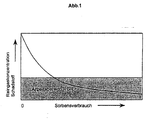
- Fig. 1 shows the sorbent consumption as a function of pollutant clean gas emission. The curve shows that at high pollutant concentrations even small amounts of sorbent achieve a high cleaning effect. The further purification progresses, the higher the amount of sorbent needed to achieve further cleaning effects. The last traces of pollutants can be removed only with a disproportionate amount of sorbent.
- the specification for the pollutant concentrations to be maintained is carried out manually in the form of specification of a "clean gas concentration setpoint", wherein the difference between the quasi-continuously measured at the gas clean gas concentration and the setpoints of clean gas concentrations of the pollutants to be limited sorbent dosing is added directly as a reference variable.
- setpoint values are usually specified which have a clear "safety margin" to the daily mean value to be legally observed.
- the control thus follows the principle that an emission mean value is maintained if each instantaneous value is below the setpoint.
- the process is thus constantly operated in a range of high resource stoichiometry and thus uneconomical. As a result, the sorbent consumption increases disproportionately.
- the present invention is therefore a method for controlling the dosage of a sorbent used for the removal of pollutants from exhaust gases, in which the emission concentrations of the pollutant (s) measured in short, regular, time intervals (quasi-continuous) and the difference between the above from these values the mean value (eg the daily, hourly or half-hourly mean) and the respectively corresponding setpoint for the emission concentration is used as a reference variable for the sorbent dosing to reduce the emission concentration of the pollutant (s).
- This procedure is hereafter cited as "according to the above procedure"
- the difference between the mean value of the pollutant concentration determined according to the above procedure, which is determined for the shortest, legally stipulated period (eg half-hour mean value) and the corresponding target value of the emission concentra- tion, is to be used as the reference variable, if this mean exceeds a certain percentage of the corresponding setpoint ,
- the situation is different if, at the beginning of a new period of time to be considered, no mean values are available. Then, according to the invention, the difference between the currently measured emission concentration of the pollutant (s) and the corresponding target value in periods specific to the plant in question can be set as a reference for the sorbent dosage to reduce the emission concentration of the pollutant (s) so that the target value is already at the beginning of the period is adhered to.
- Such a method makes use of the already existing continuously operating emission measurements and emissions calculator and uses a control concept which continuously calculates the mean value for the pollutant emissions effectively achieved up to that point during a period to be considered, and the deviation of this mean value from the assigned target value of the emission concentration over the given observation period as a reference variable of sorbent dosing.
- the target value for the clean gas emission is dynamically changed so that the deviation between the calculated - and thus achieved - averages and the legal requirement at the end of the observation period is almost zero.
- the mean pollutant emission actually achieved can be driven to the permitted upper limit over the given period of observation.
- a reaction of the sorbent dosing on short-term pollutant spikes, which would be associated with disproportionately high instantaneous consumption, is thereby safely avoided.
- the emission calculator can also use the hourly or half-hourly mean values determined by continuous measurement as further reference variables for the sorbent dosing.
- the regulation of the sorbent dosage by the process according to the invention results in a significant minimization of the consumption of the sorbent used. Accordingly, the resulting in the flue gas cleaning amount of neutralization reduced.
- a particular advantage of the method according to the invention is the fact that no investment in additional hardware is required because according to the invention is a pure software solution. Existing flue gas purification systems can be retrofitted according to the invention and thus their sorbent consumption can be reduced.
- FIGS. 2 and 3 The process according to the invention is illustrated by FIGS. 2 and 3.
- Fig. 2 shows the usual control of sorbent consumption, in which the sorbent consumption is controlled so that a guaranteed average daily value can not be exceeded with certainty.
- This daily mean value has a considerable safety margin compared to the actually occurring emissions, with the result that a significant proportion of the sorbent is not used at all for neutralization.
- FIG. 3 shows the method according to the invention.
- the decisive reference variable for the sorbent consumption is, for example, the difference between the daily mean value of the pollutant concentration and the desired value determined with the aid of an emission computer over the elapsed observation period.
Landscapes
- Chemical & Material Sciences (AREA)
- Engineering & Computer Science (AREA)
- Analytical Chemistry (AREA)
- General Chemical & Material Sciences (AREA)
- Chemical Kinetics & Catalysis (AREA)
- Oil, Petroleum & Natural Gas (AREA)
- Environmental & Geological Engineering (AREA)
- Health & Medical Sciences (AREA)
- Biomedical Technology (AREA)
- Treating Waste Gases (AREA)
- Pharmaceuticals Containing Other Organic And Inorganic Compounds (AREA)
- Separation Of Gases By Adsorption (AREA)
- Solid-Sorbent Or Filter-Aiding Compositions (AREA)
Description
- Gegenstand der Erfindung ist ein Verfahren zur Regelung der Dosierung eines Sorbens in nicht stöchiometrisch arbeitenden Verfahren zur Gasreinigung
- Es sind bereits zahlreiche Verfahren zur Rauchgasreinigung bekannt, bei denen die Rauchgase mit einem Sorbens in Kontakt gebracht werden, mit dem die als Schadstoffe bekannten sauren Gasbestandteile, insbesondere Chlorwasserstoff, Schwefeltrioxid, Schwefeldioxid und Fluorwasserstoff entfernt werden.
- Es ist aus zahlreichen Patentschriften bekannt, dass üblicherweise alkalische Neutralisationsmittel in Gasreinigungsverfahren eingesetzt werden. In der Regel wird dabei Kalziumhydroxid verwendet, welches trocken oder in Form von Kalkmilch in entsprechende Prozesse eingebracht wird. Die genannten Schadstoffe werden mittels Kalziumhydroxid zu den entsprechenden Reaktionssalzen umgesetzt und somit aus der Gasphase abgeschieden, wobei die Reaktionssalze anschließend als Feststoffe aus dem Prozess oder aus der Anlage ausgeschleust werden. Da für die bei der Neutralisation entstehenden Reaktionsprodukte kaum weitere Verwendungsmöglichkeiten bestehen, ist ihre Entsorgung kostspielig, d.h. sie müssen in der Regel deponiert werden. Es besteht deshalb der dringende Wunsch, die Menge der bei der Neutralisation entstehenden Reaktionsprodukte so klein wie nur irgend möglich zu halten.
- Die bei der Gasreinigung, insbesondere der Rauchgasreinigung nach thermischer Reststoffverwertung einzuhaltenden Emissionen sind gesetzlich festgelegt. Maßgebend sind hierfür derzeit z.B. die 17. BImSchV, die europäische Richtlinie 2000/76/EG und andere vergleichbare nationale Bestimmungen, in denen für einige Schadstoffe wie z.B. HCl Reingasemissionen gefordert werden, deren Einhaltung in der Regel Abscheidegrade von > 99 % erfordern. Um derartig hohe Reinigungseffekte zu erreichen, sind extrem hohe Sorbensverbräuche notwendig. Denn für alle bekannten Verfahren zur Rauchgasreinigung der vorstehend genannten Typen ist kennzeichnend, dass sie mit Sorbensverbräuchen arbeiten, die bei zunehmend größeren Abscheidegraden mit exponentiell ansteigenden Sorbensverbräuchen verbunden sind, wie es die Abb.1 zeigt.
- In Abb.1 ist der Sorbensverbrauch als Funktion der Schadstoff-ReingasEmission schematisch dargestellt. Die Kurve zeigt, dass bei hohen Schadstoff-Konzentrationen schon kleine Sorbensmengen einen hohen Reinigungseffekt erreichen. Je weiter die Reinigung fortschreitet, desto höhere Mengen an Sorbens werden benötigt, um dann noch weitere Reinigungseffekte zu erreichen. Die letzten Spuren der Schadstoffe lassen sich nur noch mit einem unverhältnismäßig hohen Aufwand von Sorbens entfernen.
- Es stellte sich deshalb die Aufgabe, ein Verfahren zur Regelung der Sorbensdosierung zu entwickeln, bei dem das zugesetzte Sorbens in optimaler Weise genutzt wird, also möglichst hohe Reinigungseffekte bei Zugabe möglichst geringer Mengen des Sorbens erreicht oder eine vorgegebene Reingaskonzentration mit einem minimalen Einsatz an Sorbens realisiert werden.
- In den derzeit kommerziell betriebenen Rauchgasreinigungsanlagen werden üblicherweise so hohe Mengen an Sorbens zugegeben, dass die Tages- und Halbstundenmittelwerte für die jeweiligen Schadstoffkonzentrationen sicher eingehalten werden.
- Die Vorgabe für die einzuhaltenden Schadstoffkonzentrationen erfolgt hierbei manuell in Form der Vorgabe eines "Reingaskonzentration- Sollwertes", wobei die Differenz zwischen der quasikontinuierlich am Kamin gemessenen Reingaskonzentration und den Sollwerten der Reingaskonzentrationen der zu begrenzenden Schadstoffe der Sorbensdosierung unmittelbar als Führungsgröße aufgeschaltet wird. Zur gesicherten Einhaltung der jeweiligen z.B. Tagesmittelwerte werden daher zumeist Sollwerte vorgegeben, die einen deutlichen "Sicherheitsabstand" zum gesetzlich einzuhaltenden Tagesmittelwert aufweisen.
- Die Regelung folgt damit dem Prinzip, dass ein Emissionsmittelwert dann eingehalten wird, wenn jeder Momentanwert unter dem Sollwert liegt. Der Prozess wird damit ständig in einem Bereich hoher Betriebsmittelstöchiometrie und damit unwirtschaftlich betrieben. Als Folge steigt der Sorbensverbrauch überproportional an.
- Gegenstand der vorliegenden Erfindung ist deshalb ein Verfahren zur Regelung der Dosierung eines zur Entfernung von Schadstoffen aus Abgasen verwendeten Sorbens, bei dem die Emissionskonzentrationen des oder der Schadstoffe in kurzen, regelmäßigen, zeitlichen Abständen (quasikontinuierlich) gemessen und die Differenz zwischen dem aus diesen Werten über den bisher abgelaufenen Betrachtungszeitraum gebildeten Mittelwert (z.B. dem Tages-, Stunden- oder Halbstundenmittelwert) und dem jeweils entsprechenden Sollwert für die Emissionskonzentration als Führungsgröße für die Sorbensdosierung zur Reduzierung der Emissionskonzentration des oder der Schadstoffe eingesetzt wird. Diese Vorgehensweise wird nachfolgend als "nach obiger Vorgehensweise" zitiert,
- Enthält das Abgas nur einen abzuscheidenden Schadstoff, dann wird erfindungsgemäß die Differenz zwischen dem über den längsten zu betrachtenden Zeitraum für diesen Schadstoff nach obiger Vorgehensweise bestimmten Mittelwert über den bisher abgelaufenen Betrachtungszeitraum und dem entsprechenden Sollwert der Emissionskonzentration als Führungsgröße für die Sorbensdosierung zur Reduzierung der Emissionskonzentration dieses Schadstoffes eingesetzt.
- Enthält das Abgas mehrere abzuscheidende Schadstoffe, dann wird erfindungsgemäß für den längsten zu betrachtenden Zeitraum, die größte auftretende Differenz eines nach obiger Vorgehensweise über den bisher abgelaufenen Betrachtungszeitraum bestimmten Mittelwertes eines Schadstoffes gegenüber dem für diesen Schadstoff festgelegten Sollwert der Emissionskonzentration als Führungsgröße für die Sorbensdosierung zur Reduzierung der Emissionskonzentrationen der Schadstoffe eingesetzt.
- Hingegen ist die Differenz zwischen dem nach obiger Vorgehensweise bestimmten Mittelwert der Schadstoffkonzentration, der für den kürzesten, gesetzlich festgelegten Zeitraum (z.B. Halbstundenmittelwert) bestimmt wird, und dem entsprechenden Sollwert der Emissionskonzentration erfindungsgemäß als Führungsgröße heranzuziehen, wenn dieser Mittelwert einen bestimmten Prozentsatz des entsprechenden Sollwertes überschreitet.
- Anders ist vorzugehen, wenn zu Beginn eines neuen zu betrachtenden Zeitraumes noch keine gebildeten Mittelwerte zur Verfügung stehen. Dann kann erfindungsgemäß die Differenz zwischen der aktuell gemessenen Emissionskonzentration des oder der Schadstoffe und dem entsprechenden Sollwert in für die betreffende Anlage spezifischen Zeiträumen als Führungsgröße für die Sorbensdosierung zur Reduzierung der Emissionskonzentration des oder der Schadstoffe so eingestellt werden, dass damit der Sollwert auch schon zu Beginn des Zeitraumes eingehalten wird.
- Ein derartiges Verfahren greift auf die ohnehin vorhandenen, kontinuierlich arbeitenden Emissionsmessungen und Emissionsrechner zurück und benutzt ein Regelkonzept, das fortlaufend während eines zu betrachtenden Zeitraumes den nach obiger Vorgehensweise bis dahin effektiv erzielten Mittelwert für die Schadstoffemissionen errechnet und die Abweichung dieses Mittelwertes vom zugeordneten Sollwert der Emissionskonzentration über den vorgegebenen Betrachtungszeitraum als Führungsgröße der Sorbensdosierung heranzieht. Dabei wird der Sollwert für die Reingasemission dynamisch so verändert, dass die Abweichung zwischen den errechneten - und damit erreichten - Mittelwerten und der gesetzlichen Vorgabe am Ende des Betrachtungszeitraumes nahezu Null beträgt. Durch die so erzielte dynamische Anpassung des Sollwertes für die Schadstoffemission kann die tatsächlich erzielte mittlere Schadstoffemission über den vorgegebenen Betrachtungszeitraum an die erlaubte Obergrenze gefahren werden. Eine Reaktion der Sorbensdosierung auf kurzzeitige Schadstoffspitzen, die mit überproportional hohen Momentanverbräuchen verbunden wäre, wird dabei sicher vermieden.
- Zusätzlich kann der Emissionsrechner als weitere Führungsgrößen für die Sorbensdosierung auch noch die durch kontinuierliche Messung ermittelten Stunden- oder Halbstundenmittelwerte einsetzen.
- Die Regelung der Sorbensdosierung nach dem erfindungsgemäßen Verfahren hat eine deutliche Minimierung des Verbrauchs des eingesetzten Sorbens zur Folge. Dementsprechend vermindert sich auch die bei der Rauchgasreinigung anfallende Menge der Neutralisationsprodukte.
- Ein besonderer Vorteil des erfindungsgemäßen Verfahrens ist darin zu sehen, dass keine Investitionen in zusätzliche Hardware erforderlich sind, da es sich erfindungsgemäß um eine reine Softwarelösung handelt. Bereits vorhandene Rauchgasreinigungsanlagen können erfindungsgemäß nachgerüstet werden und dadurch deren Sorbensverbrauch gesenkt werden.
- Es liegt auf der Hand, dass die das erfindungsgemäße Verfahren einsetzenden Anlagen erheblich wirtschaftlicher arbeiten, als alle anderen Typen von Rauchgasreinigungsanlagen mit konventioneller Regelung.
- Das erfindungsgemäße Verfahren wird durch die Abb. 2 und 3 veranschaulicht.
- Die Abb. 2 zeigt die bisher übliche Regelung des Sorbensverbrauches, bei dem der Sorbensverbrauch so gesteuert wird, dass ein garantierter Tagesmittelwert mit Sicherheit nicht überschritten werden kann. Dieser Tagesmittelwert weist einen erheblichen Sicherheitsabstand gegenüber den tatsächlich auftretenden Emissionen auf mit der Folge, dass ein erheblicher Anteil des Sorbens zur Neutralisation überhaupt nicht genutzt wird.
- Abb. 3 zeigt demgegenüber das erfindungsgemäße Verfahren. Die entscheidende Führungsgröße für den Sorbensverbrauch ist dabei z.B. die Differenz zwischen dem mit Hilfe eines Emissionsrechners ermittelten, über den verstrichenen Betrachtungszeitraum erzielten Tagesmittelwert der Schadstoffkonzentration und derem Sollwert. Wird die zu begrenzende Emissionskonzentration eines Schadstoffes kurzfristig erheblich derart überschritten, dass die Einhaltung z.B. vorgegebener Halbstunden- oder Stundenmittelwerte gefährdet ist, wird momentan als übergeordnete Führungsgröße bei ansonsten analoger Vorgehensweise der einzuhaltende Stunden- oder Halbstundenmittelwert für die Sorbensdosierung eingesetzt. Dies gilt auch dann, wenn der gleichzeitig zu betrachtende Tagesmittelwert nicht gefährdet ist.
- Die Vorteile des erfindungsgemäßen Verfahrens bei der Ersparnis an Betriebsmittel- und Entsorgungskosten zeigen sich durch die nachfolgende Beispielsrechnung:
Anlage Modellrechnung Typ RGR Sprühabsorber Anzahl Linien 1 Rohgasseite (Daten je Linie) VNf. 100.000,00 Nm3/h VN,tr. 85.000,00 Nm3/h Schadstoff-Konzentrationen (11 Vol.-% O2,trf) HCl 1.250,00 mg/Nm3 SO2 400,00 mg/Nm3 O2 9,00 Vol.-%,tr Reingasseite (11 Vol.-%O2,tr) HCl 10,00 mg/Nm3 SO2 50,00 mg/Nm3 Sorbensbedarf Regelung "alt" = 450 kg/h Regelung "neu" = 420 kg/h Reststoffproduktion Reststoffproduktion Regelung "alt" = 920 kg/h Reststoffproduktion Regelung "neu" = 880 kg/h
Claims (5)
- Verfahren zur Regelung der Dosierung eines zur Entfernung von Schadstoffen aus Abgasen verwendeten Sorbens, dadurch gekennzeichnet, dass die Emissionskonzentrationen im Reingas des oder der Schadstoffe in kurzen, regelmäßigen, zeitlichen Abständen (quasikontinuierlich) gemessen und die Differenz zwischen dem aus diesen Messwerten gebildeten Mittelwert über den Betrachtungszeitraum und dem Sollwert der Emissionskonzentration als Führungsgröße für die Sorbensdosierung zur Reduzierung der Emissionskonzentration des oder der Schadstoffe eingesetzt wird.
- Verfahren nach Anspruch 1, dadurch gekennzeichnet, dass bei nur einem aus dem Abgas abzuscheidenden Schadstoff die Differenz zwischen dem über den längsten betrachteten Zeitraum nach obiger Vorgehensweise für diesen Schadstoff bestimmten Mittelwert für die Emissionskonzentration und dem Sollwert für die Emissionskonzentration als Führungsgröße für die Sorbensdosierung zur Reduzierung der Gaskonzentration dieses Schadstoffes eingesetzt wird.
- Verfahren nach Anspruch 1, dadurch gekennzeichnet, dass bei mehreren aus dem Abgas abzuscheidenden Schadstoffen die Differenz zwischen dem über den längsten betrachteten Zeitraum nach obiger Vorgehensweise bestimmten Mittelwert desjenigen Schadstoffes und seinem zugeordneten Sollwert für die Emissionskonzentration, der die größte Abweichung gegenüber dem für diesen Schadstoff festgelegten Sollwert aufweist, als Führungsgröße für die Sorbensdosierung zur Reduzierung der Gaskonzentration der Schadstoffe eingesetzt wird
- Verfahren nach Anspruch 1, dadurch gekennzeichnet, dass für den kürzesten, gesetzlich festgelegten, zu betrachtenden Zeitraum der Mittelwert der Emissionskonzentration eines Schadstoffes nach obiger Vorgehensweise über den jeweils vorangegangenen Zeitraum bestimmt wird und die Differenz zwischen dem so gebildeten Mittelwert und dem zugeordneten Sollwert für die Emissionskonzentration dann als Führungsgröße für die Sorbensdosierung herangezogen wird, wenn dieser Mittelwert einen bestimmten Prozentsatz des Sollwertes für diesen zu betrachtenden Zeitraum überschreitet.
- Verfahren nach Anspruch 1, dadurch gekennzeichnet, dass zum Beginn eines neuen Regelzeitraumes, in dem noch keine Mittelwerte zur Verfügung stehen, die Differenz zwischen der aktuell gemessenen Emissionskonzentration des oder der Schadstoffe und dem entsprechenden Sollwert für die jeweilige Emissionskonzentration in für die jeweilige Anlage notwendigen spezifischen Zeiträumen vorübergehend als Führungsgröße für die Sorbensdosierung zur Reduzierung der Emissionskonzentration des oder der Schadstoffe so eingestellt wird, dass damit der Sollwert der Emissionskonzentration auch schon zu Beginn des Zeitraumes eingehalten wird.
Priority Applications (1)
| Application Number | Priority Date | Filing Date | Title |
|---|---|---|---|
| PL04024360T PL1537904T3 (pl) | 2003-12-04 | 2004-10-13 | Sposób regulacji dozowania sorbentu |
Applications Claiming Priority (2)
| Application Number | Priority Date | Filing Date | Title |
|---|---|---|---|
| DE10356590 | 2003-12-04 | ||
| DE10356590A DE10356590B3 (de) | 2003-12-04 | 2003-12-04 | Verfahren zur Regelung der Dosierung eines Sorbens |
Publications (2)
| Publication Number | Publication Date |
|---|---|
| EP1537904A1 EP1537904A1 (de) | 2005-06-08 |
| EP1537904B1 true EP1537904B1 (de) | 2007-03-28 |
Family
ID=34072124
Family Applications (1)
| Application Number | Title | Priority Date | Filing Date |
|---|---|---|---|
| EP04024360A Expired - Lifetime EP1537904B1 (de) | 2003-12-04 | 2004-10-13 | Verfahren zur Regelung der Dosierung eines Sorbens |
Country Status (9)
| Country | Link |
|---|---|
| EP (1) | EP1537904B1 (de) |
| CN (1) | CN100528290C (de) |
| AT (1) | ATE357964T1 (de) |
| CY (1) | CY1106512T1 (de) |
| DE (2) | DE10356590B3 (de) |
| DK (1) | DK1537904T3 (de) |
| ES (1) | ES2285331T3 (de) |
| PL (1) | PL1537904T3 (de) |
| PT (1) | PT1537904E (de) |
Families Citing this family (2)
| Publication number | Priority date | Publication date | Assignee | Title |
|---|---|---|---|---|
| DE102008016519B4 (de) * | 2008-03-31 | 2014-09-18 | Technische Werke Ludwigshafen Ag | Verfahren zur Reinigung von Rauchgas in einer Müllverbrennungsanlage sowie eine Vorrichtung zur Durchführung des Verfahrens |
| ES2446291T3 (es) * | 2008-10-20 | 2014-03-07 | Alstom Technology Ltd | Método y dispositivo para eliminar mercurio de un gas de proceso |
Family Cites Families (6)
| Publication number | Priority date | Publication date | Assignee | Title |
|---|---|---|---|---|
| DE3234796C2 (de) * | 1982-09-20 | 1986-11-13 | Dr. Goldberg & Partner Umwelttechnik GmbH, 8000 München | Verfahren und Vorrichtung zum Abscheiden von gasförmigen Schadstoffen aus Rauchgasen mittels staubförmiger Additive |
| DE3340892A1 (de) * | 1983-11-11 | 1985-05-23 | L. & C. Steinmüller GmbH, 5270 Gummersbach | Mehrstufiges verfahren zur einbindung von in rauchgasen enthaltener gasfoermiger schadstoffe |
| DE4333481C1 (de) * | 1993-10-01 | 1995-02-23 | Abb Patent Gmbh | Verfahren zur trockenen oder quasitrockenen Reinigung von Rauchgasen aus der Abfallverbrennung |
| SE505674C2 (sv) * | 1995-12-15 | 1997-09-29 | Flaekt Ab | Förfarande för rening av processgaser |
| DE19624619C1 (de) * | 1996-06-20 | 1997-07-10 | Metallgesellschaft Ag | Verfahren zur Regelung oder Steuerung des Gehaltes an NO¶x¶ in Abgasen, die beim Betrieb von Glasschmelzöfen mit mehreren Brennern, die im Wechsel betrieben werden, anfallen |
| DE19752470C2 (de) * | 1997-11-27 | 2002-04-11 | Lurgi Lentjes Bischoff Gmbh | Verfahren und Anlage zum Abtennen von SO¶2¶ aus Abgas |
-
2003
- 2003-12-04 DE DE10356590A patent/DE10356590B3/de not_active Expired - Fee Related
-
2004
- 2004-10-13 ES ES04024360T patent/ES2285331T3/es not_active Expired - Lifetime
- 2004-10-13 PT PT04024360T patent/PT1537904E/pt unknown
- 2004-10-13 EP EP04024360A patent/EP1537904B1/de not_active Expired - Lifetime
- 2004-10-13 DK DK04024360T patent/DK1537904T3/da active
- 2004-10-13 PL PL04024360T patent/PL1537904T3/pl unknown
- 2004-10-13 DE DE502004003337T patent/DE502004003337D1/de not_active Expired - Lifetime
- 2004-10-13 AT AT04024360T patent/ATE357964T1/de active
- 2004-12-03 CN CNB200410098028XA patent/CN100528290C/zh not_active Expired - Fee Related
-
2007
- 2007-04-13 CY CY20071100516T patent/CY1106512T1/el unknown
Also Published As
| Publication number | Publication date |
|---|---|
| ATE357964T1 (de) | 2007-04-15 |
| PT1537904E (pt) | 2007-04-30 |
| DE10356590B3 (de) | 2005-02-17 |
| DK1537904T3 (da) | 2007-07-30 |
| ES2285331T3 (es) | 2007-11-16 |
| PL1537904T3 (pl) | 2007-08-31 |
| CN1651126A (zh) | 2005-08-10 |
| CY1106512T1 (el) | 2012-01-25 |
| CN100528290C (zh) | 2009-08-19 |
| DE502004003337D1 (de) | 2007-05-10 |
| EP1537904A1 (de) | 2005-06-08 |
Similar Documents
| Publication | Publication Date | Title |
|---|---|---|
| DE60111070T2 (de) | Abwasserreinigungsverfahren zur beseitigung von stickstoff-und-phosphathaltiger verschmutzung | |
| DE69900559T2 (de) | Verfahren zur regulierung der belüftung bei der biologischen abwasserbehandlung | |
| AT519109A4 (de) | Verfahren zur Durchführung von Gaswäsche mittels einer Elektrolytlösung | |
| DE2520742A1 (de) | Verfahren zur anaeroben biologischen reinigung von abwasser | |
| DE3306664C2 (de) | ||
| DE2249874C3 (de) | Verfahren zum Entfernen von Schwefeldioxid aus Verbrennungsabgasen | |
| EP0453005B1 (de) | Abgas-Reinigungsverfahren | |
| DE102004044291B4 (de) | Verfahren zum Reinigen von Rauchgas aus einer Verbrennungsanlage, das HCI, SO2 und Hg enthält und Rauchgasreinigungsanlage | |
| DE10356590B3 (de) | Verfahren zur Regelung der Dosierung eines Sorbens | |
| EP0411162B1 (de) | Verfahren zur Entfernung von Chlor aus Abgasen | |
| DE2823972A1 (de) | Verfahren und vorrichtung zur abtrennung von stickstofftrichlorid aus chlor | |
| EP0596229B1 (de) | Verfahren zur Reinigung von Rauchgas aus Abfallverbrennungsanlagen | |
| EP0487834A1 (de) | Oxidierendes Waschverfahren zur Reinigung von Abgasen | |
| EP0646404A1 (de) | Verfahren zur trockenen oder quasitrockenen Reinigung von Rauchgasen aus der Abfallverbrennung | |
| DE2627705A1 (de) | Verfahren zur entfernung von schwefeldioxid aus abgasen | |
| DE2123218A1 (de) | Verfahren zur Behandlung von Abwässern von Raffinerien, Kokereien und dgl | |
| DE2400345B2 (de) | Verfahren zum entfernen von schwefeldioxid aus einem gas | |
| DE2914004A1 (de) | Verfahren zur entfernung von ammoniak und ammoniumsalzen aus industriellem abwasser | |
| DE19540780C2 (de) | Verfahren zum Kokslöschen | |
| DE4436612C2 (de) | Verfahren zur Abscheidung von Quecksilber aus Verbrennungsabgasen von Klärschlammverbrennungsanlagen | |
| DE3525770A1 (de) | Verfahren zur kontinuierlichen entfernung und rueckgewinnung von ammoniak aus abwaessern von rauchgasreinigungsanlagen | |
| EP0000515A1 (de) | Verfahren zum Abtrennen von Schwefeldioxyd, aus einem Gasstrom und Anlage zur Durchführung des Verfahrens | |
| EP0411454A1 (de) | Verfahren zur Verringerung der Oxidationsgeschwindigkeit von Sulfitlösungen | |
| DE3004058C2 (de) | Verfahren zur Reinigung von Industrieabwässern | |
| WO2009074434A2 (de) | Verfahren zur reinigung der bei der cyanurchlorid-herstellung anfallenden abgase |
Legal Events
| Date | Code | Title | Description |
|---|---|---|---|
| PUAI | Public reference made under article 153(3) epc to a published international application that has entered the european phase |
Free format text: ORIGINAL CODE: 0009012 |
|
| AK | Designated contracting states |
Kind code of ref document: A1 Designated state(s): AT BE BG CH CY CZ DE DK EE ES FI FR GB GR HU IE IT LI LU MC NL PL PT RO SE SI SK TR |
|
| AX | Request for extension of the european patent |
Extension state: AL HR LT LV MK |
|
| 17P | Request for examination filed |
Effective date: 20051208 |
|
| AKX | Designation fees paid |
Designated state(s): AT BE BG CH CY CZ DE DK EE ES FI FR GB GR HU IE IT LI LU MC NL PL PT RO SE SI SK TR |
|
| D17P | Request for examination filed (deleted) | ||
| REG | Reference to a national code |
Ref country code: DE Ref legal event code: 8566 |
|
| R17P | Request for examination filed (corrected) |
Effective date: 20060508 |
|
| RBV | Designated contracting states (corrected) |
Designated state(s): AT BE BG CH CY CZ DE DK EE ES FI FR GB GR HU IE IT LI LU MC NL PL PT RO SE SI SK TR |
|
| GRAP | Despatch of communication of intention to grant a patent |
Free format text: ORIGINAL CODE: EPIDOSNIGR1 |
|
| RAP1 | Party data changed (applicant data changed or rights of an application transferred) |
Owner name: LURGI LENTJES AG |
|
| GRAS | Grant fee paid |
Free format text: ORIGINAL CODE: EPIDOSNIGR3 |
|
| RAP1 | Party data changed (applicant data changed or rights of an application transferred) |
Owner name: LENTJES GMBH |
|
| GRAA | (expected) grant |
Free format text: ORIGINAL CODE: 0009210 |
|
| AK | Designated contracting states |
Kind code of ref document: B1 Designated state(s): AT BE BG CH CY CZ DE DK EE ES FI FR GB GR HU IE IT LI LU MC NL PL PT RO SE SI SK TR |
|
| PG25 | Lapsed in a contracting state [announced via postgrant information from national office to epo] |
Ref country code: SI Free format text: LAPSE BECAUSE OF FAILURE TO SUBMIT A TRANSLATION OF THE DESCRIPTION OR TO PAY THE FEE WITHIN THE PRESCRIBED TIME-LIMIT Effective date: 20070328 |
|
| REG | Reference to a national code |
Ref country code: GB Ref legal event code: FG4D Free format text: NOT ENGLISH |
|
| GBT | Gb: translation of ep patent filed (gb section 77(6)(a)/1977) |
Effective date: 20070330 |
|
| REG | Reference to a national code |
Ref country code: CH Ref legal event code: EP Ref country code: PT Ref legal event code: SC4A Free format text: AVAILABILITY OF NATIONAL TRANSLATION Effective date: 20070416 |
|
| REF | Corresponds to: |
Ref document number: 502004003337 Country of ref document: DE Date of ref document: 20070510 Kind code of ref document: P |
|
| REG | Reference to a national code |
Ref country code: IE Ref legal event code: FG4D Free format text: LANGUAGE OF EP DOCUMENT: GERMAN |
|
| REG | Reference to a national code |
Ref country code: SE Ref legal event code: TRGR |
|
| REG | Reference to a national code |
Ref country code: GR Ref legal event code: EP Ref document number: 20070401706 Country of ref document: GR |
|
| REG | Reference to a national code |
Ref country code: HU Ref legal event code: AG4A Ref document number: E001633 Country of ref document: HU Ref country code: DK Ref legal event code: T3 |
|
| ET | Fr: translation filed | ||
| REG | Reference to a national code |
Ref country code: PL Ref legal event code: T3 |
|
| REG | Reference to a national code |
Ref country code: ES Ref legal event code: FG2A Ref document number: 2285331 Country of ref document: ES Kind code of ref document: T3 |
|
| PG25 | Lapsed in a contracting state [announced via postgrant information from national office to epo] |
Ref country code: SK Free format text: LAPSE BECAUSE OF FAILURE TO SUBMIT A TRANSLATION OF THE DESCRIPTION OR TO PAY THE FEE WITHIN THE PRESCRIBED TIME-LIMIT Effective date: 20070328 |
|
| REG | Reference to a national code |
Ref country code: IE Ref legal event code: FD4D |
|
| PG25 | Lapsed in a contracting state [announced via postgrant information from national office to epo] |
Ref country code: RO Free format text: LAPSE BECAUSE OF FAILURE TO SUBMIT A TRANSLATION OF THE DESCRIPTION OR TO PAY THE FEE WITHIN THE PRESCRIBED TIME-LIMIT Effective date: 20070328 |
|
| PG25 | Lapsed in a contracting state [announced via postgrant information from national office to epo] |
Ref country code: IE Free format text: LAPSE BECAUSE OF FAILURE TO SUBMIT A TRANSLATION OF THE DESCRIPTION OR TO PAY THE FEE WITHIN THE PRESCRIBED TIME-LIMIT Effective date: 20070328 |
|
| PLBE | No opposition filed within time limit |
Free format text: ORIGINAL CODE: 0009261 |
|
| STAA | Information on the status of an ep patent application or granted ep patent |
Free format text: STATUS: NO OPPOSITION FILED WITHIN TIME LIMIT |
|
| 26N | No opposition filed |
Effective date: 20080102 |
|
| PG25 | Lapsed in a contracting state [announced via postgrant information from national office to epo] |
Ref country code: MC Free format text: LAPSE BECAUSE OF NON-PAYMENT OF DUE FEES Effective date: 20071031 |
|
| PG25 | Lapsed in a contracting state [announced via postgrant information from national office to epo] |
Ref country code: EE Free format text: LAPSE BECAUSE OF FAILURE TO SUBMIT A TRANSLATION OF THE DESCRIPTION OR TO PAY THE FEE WITHIN THE PRESCRIBED TIME-LIMIT Effective date: 20070328 |
|
| REG | Reference to a national code |
Ref country code: CH Ref legal event code: PL |
|
| PG25 | Lapsed in a contracting state [announced via postgrant information from national office to epo] |
Ref country code: BG Free format text: LAPSE BECAUSE OF FAILURE TO SUBMIT A TRANSLATION OF THE DESCRIPTION OR TO PAY THE FEE WITHIN THE PRESCRIBED TIME-LIMIT Effective date: 20070628 Ref country code: LU Free format text: LAPSE BECAUSE OF NON-PAYMENT OF DUE FEES Effective date: 20071013 |
|
| PG25 | Lapsed in a contracting state [announced via postgrant information from national office to epo] |
Ref country code: TR Free format text: LAPSE BECAUSE OF FAILURE TO SUBMIT A TRANSLATION OF THE DESCRIPTION OR TO PAY THE FEE WITHIN THE PRESCRIBED TIME-LIMIT Effective date: 20070328 |
|
| PG25 | Lapsed in a contracting state [announced via postgrant information from national office to epo] |
Ref country code: CH Free format text: LAPSE BECAUSE OF NON-PAYMENT OF DUE FEES Effective date: 20081031 Ref country code: LI Free format text: LAPSE BECAUSE OF NON-PAYMENT OF DUE FEES Effective date: 20081031 |
|
| REG | Reference to a national code |
Ref country code: HU Ref legal event code: HC9C Owner name: AE & E LENTJES GMBH, DE Free format text: FORMER OWNER(S): LENTJES GMBH, DE |
|
| REG | Reference to a national code |
Ref country code: FR Ref legal event code: CD |
|
| REG | Reference to a national code |
Ref country code: ES Ref legal event code: PC2A Owner name: "AE & Effective date: 20110629 Ref country code: ES Ref legal event code: PC2A Owner name: AE & E LENTJES GMBH Effective date: 20110629 |
|
| REG | Reference to a national code |
Ref country code: NL Ref legal event code: TD Effective date: 20110701 |
|
| REG | Reference to a national code |
Ref country code: DE Ref legal event code: R082 Ref document number: 502004003337 Country of ref document: DE Representative=s name: BECKER UND KOLLEGEN, DE |
|
| REG | Reference to a national code |
Ref country code: DE Ref legal event code: R082 Ref document number: 502004003337 Country of ref document: DE Representative=s name: BECKER UND KOLLEGEN, DE Effective date: 20110819 Ref country code: DE Ref legal event code: R081 Ref document number: 502004003337 Country of ref document: DE Owner name: DOOSAN LENTJES GMBH, DE Free format text: FORMER OWNER: LENTJES GMBH, 40880 RATINGEN, DE Effective date: 20110819 Ref country code: DE Ref legal event code: R082 Ref document number: 502004003337 Country of ref document: DE Representative=s name: PATENTANWAELTE BECKER & MUELLER, DE Effective date: 20110819 |
|
| REG | Reference to a national code |
Ref country code: DE Ref legal event code: R082 Ref document number: 502004003337 Country of ref document: DE Representative=s name: BECKER UND KOLLEGEN, DE |
|
| REG | Reference to a national code |
Ref country code: NL Ref legal event code: TD Effective date: 20120717 |
|
| REG | Reference to a national code |
Ref country code: DE Ref legal event code: R081 Ref document number: 502004003337 Country of ref document: DE Owner name: DOOSAN LENTJES GMBH, DE Free format text: FORMER OWNER: AE & E LENTJES GMBH, 40880 RATINGEN, DE Effective date: 20120626 Ref country code: DE Ref legal event code: R082 Ref document number: 502004003337 Country of ref document: DE Representative=s name: PATENTANWAELTE BECKER & MUELLER, DE Effective date: 20120626 |
|
| REG | Reference to a national code |
Ref country code: AT Ref legal event code: HC Ref document number: 357964 Country of ref document: AT Kind code of ref document: T Owner name: DOOSAN LENTJES GMBH., DE Effective date: 20120717 |
|
| REG | Reference to a national code |
Ref country code: FR Ref legal event code: CD Owner name: DOOSAN LENTJES GMBH, DE Effective date: 20121210 |
|
| REG | Reference to a national code |
Ref country code: ES Ref legal event code: PC2A Owner name: DOOSAN LENTJES GMBH Effective date: 20130313 |
|
| REG | Reference to a national code |
Ref country code: HU Ref legal event code: HC9C Owner name: DOOSAN LENTJES GMBH, DE Free format text: FORMER OWNER(S): LENTJES GMBH, DE; AE & E LENTJES GMBH, DE |
|
| REG | Reference to a national code |
Ref country code: FR Ref legal event code: PLFP Year of fee payment: 12 |
|
| REG | Reference to a national code |
Ref country code: FR Ref legal event code: PLFP Year of fee payment: 13 |
|
| REG | Reference to a national code |
Ref country code: FR Ref legal event code: PLFP Year of fee payment: 14 |
|
| REG | Reference to a national code |
Ref country code: FR Ref legal event code: PLFP Year of fee payment: 15 |
|
| PGFP | Annual fee paid to national office [announced via postgrant information from national office to epo] |
Ref country code: PL Payment date: 20180927 Year of fee payment: 15 |
|
| PGFP | Annual fee paid to national office [announced via postgrant information from national office to epo] |
Ref country code: NL Payment date: 20181022 Year of fee payment: 15 |
|
| PGFP | Annual fee paid to national office [announced via postgrant information from national office to epo] |
Ref country code: DE Payment date: 20181026 Year of fee payment: 15 Ref country code: GR Payment date: 20181019 Year of fee payment: 15 Ref country code: DK Payment date: 20181025 Year of fee payment: 15 Ref country code: HU Payment date: 20181001 Year of fee payment: 15 Ref country code: SE Payment date: 20181025 Year of fee payment: 15 Ref country code: CZ Payment date: 20181001 Year of fee payment: 15 Ref country code: FI Payment date: 20181019 Year of fee payment: 15 Ref country code: PT Payment date: 20181003 Year of fee payment: 15 Ref country code: AT Payment date: 20181019 Year of fee payment: 15 |
|
| PGFP | Annual fee paid to national office [announced via postgrant information from national office to epo] |
Ref country code: GB Payment date: 20181025 Year of fee payment: 15 Ref country code: ES Payment date: 20181122 Year of fee payment: 15 Ref country code: IT Payment date: 20181022 Year of fee payment: 15 Ref country code: BE Payment date: 20181022 Year of fee payment: 15 Ref country code: FR Payment date: 20181023 Year of fee payment: 15 |
|
| PGFP | Annual fee paid to national office [announced via postgrant information from national office to epo] |
Ref country code: CY Payment date: 20181005 Year of fee payment: 15 |
|
| REG | Reference to a national code |
Ref country code: DE Ref legal event code: R119 Ref document number: 502004003337 Country of ref document: DE |
|
| REG | Reference to a national code |
Ref country code: FI Ref legal event code: MAE |
|
| REG | Reference to a national code |
Ref country code: DK Ref legal event code: EBP Effective date: 20191031 |
|
| REG | Reference to a national code |
Ref country code: NL Ref legal event code: MM Effective date: 20191101 |
|
| PG25 | Lapsed in a contracting state [announced via postgrant information from national office to epo] |
Ref country code: FI Free format text: LAPSE BECAUSE OF NON-PAYMENT OF DUE FEES Effective date: 20191013 Ref country code: CZ Free format text: LAPSE BECAUSE OF NON-PAYMENT OF DUE FEES Effective date: 20191013 Ref country code: DE Free format text: LAPSE BECAUSE OF NON-PAYMENT OF DUE FEES Effective date: 20200501 Ref country code: GR Free format text: LAPSE BECAUSE OF NON-PAYMENT OF DUE FEES Effective date: 20200506 Ref country code: CY Free format text: LAPSE BECAUSE OF NON-PAYMENT OF DUE FEES Effective date: 20191013 Ref country code: PT Free format text: LAPSE BECAUSE OF NON-PAYMENT OF DUE FEES Effective date: 20200515 |
|
| REG | Reference to a national code |
Ref country code: BE Ref legal event code: MM Effective date: 20191031 |
|
| REG | Reference to a national code |
Ref country code: AT Ref legal event code: MM01 Ref document number: 357964 Country of ref document: AT Kind code of ref document: T Effective date: 20191013 |
|
| PG25 | Lapsed in a contracting state [announced via postgrant information from national office to epo] |
Ref country code: HU Free format text: LAPSE BECAUSE OF NON-PAYMENT OF DUE FEES Effective date: 20191014 Ref country code: NL Free format text: LAPSE BECAUSE OF NON-PAYMENT OF DUE FEES Effective date: 20191101 Ref country code: BE Free format text: LAPSE BECAUSE OF NON-PAYMENT OF DUE FEES Effective date: 20191031 Ref country code: SE Free format text: LAPSE BECAUSE OF NON-PAYMENT OF DUE FEES Effective date: 20191014 |
|
| GBPC | Gb: european patent ceased through non-payment of renewal fee |
Effective date: 20191013 |
|
| PG25 | Lapsed in a contracting state [announced via postgrant information from national office to epo] |
Ref country code: IT Free format text: LAPSE BECAUSE OF NON-PAYMENT OF DUE FEES Effective date: 20191013 Ref country code: DK Free format text: LAPSE BECAUSE OF NON-PAYMENT OF DUE FEES Effective date: 20191031 Ref country code: FR Free format text: LAPSE BECAUSE OF NON-PAYMENT OF DUE FEES Effective date: 20191031 Ref country code: GB Free format text: LAPSE BECAUSE OF NON-PAYMENT OF DUE FEES Effective date: 20191013 |
|
| PG25 | Lapsed in a contracting state [announced via postgrant information from national office to epo] |
Ref country code: AT Free format text: LAPSE BECAUSE OF NON-PAYMENT OF DUE FEES Effective date: 20191013 |
|
| REG | Reference to a national code |
Ref country code: ES Ref legal event code: FD2A Effective date: 20210301 |
|
| PG25 | Lapsed in a contracting state [announced via postgrant information from national office to epo] |
Ref country code: ES Free format text: LAPSE BECAUSE OF NON-PAYMENT OF DUE FEES Effective date: 20191014 |
|
| PG25 | Lapsed in a contracting state [announced via postgrant information from national office to epo] |
Ref country code: PL Free format text: LAPSE BECAUSE OF NON-PAYMENT OF DUE FEES Effective date: 20191013 |