EP1536339A2 - Support logiciel multi niveaux et multi sources utilisant des transfers de données de diagnostique automatiques - Google Patents
Support logiciel multi niveaux et multi sources utilisant des transfers de données de diagnostique automatiques Download PDFInfo
- Publication number
- EP1536339A2 EP1536339A2 EP04253577A EP04253577A EP1536339A2 EP 1536339 A2 EP1536339 A2 EP 1536339A2 EP 04253577 A EP04253577 A EP 04253577A EP 04253577 A EP04253577 A EP 04253577A EP 1536339 A2 EP1536339 A2 EP 1536339A2
- Authority
- EP
- European Patent Office
- Prior art keywords
- customer
- vendor
- computer system
- support
- proposed solution
- Prior art date
- Legal status (The legal status is an assumption and is not a legal conclusion. Google has not performed a legal analysis and makes no representation as to the accuracy of the status listed.)
- Withdrawn
Links
Images


Classifications
-
- G—PHYSICS
- G06—COMPUTING OR CALCULATING; COUNTING
- G06F—ELECTRIC DIGITAL DATA PROCESSING
- G06F11/00—Error detection; Error correction; Monitoring
- G06F11/07—Responding to the occurrence of a fault, e.g. fault tolerance
- G06F11/0703—Error or fault processing not based on redundancy, i.e. by taking additional measures to deal with the error or fault not making use of redundancy in operation, in hardware, or in data representation
- G06F11/0706—Error or fault processing not based on redundancy, i.e. by taking additional measures to deal with the error or fault not making use of redundancy in operation, in hardware, or in data representation the processing taking place on a specific hardware platform or in a specific software environment
- G06F11/0748—Error or fault processing not based on redundancy, i.e. by taking additional measures to deal with the error or fault not making use of redundancy in operation, in hardware, or in data representation the processing taking place on a specific hardware platform or in a specific software environment in a remote unit communicating with a single-box computer node experiencing an error/fault
-
- G—PHYSICS
- G06—COMPUTING OR CALCULATING; COUNTING
- G06F—ELECTRIC DIGITAL DATA PROCESSING
- G06F11/00—Error detection; Error correction; Monitoring
- G06F11/07—Responding to the occurrence of a fault, e.g. fault tolerance
- G06F11/0703—Error or fault processing not based on redundancy, i.e. by taking additional measures to deal with the error or fault not making use of redundancy in operation, in hardware, or in data representation
- G06F11/0706—Error or fault processing not based on redundancy, i.e. by taking additional measures to deal with the error or fault not making use of redundancy in operation, in hardware, or in data representation the processing taking place on a specific hardware platform or in a specific software environment
- G06F11/0709—Error or fault processing not based on redundancy, i.e. by taking additional measures to deal with the error or fault not making use of redundancy in operation, in hardware, or in data representation the processing taking place on a specific hardware platform or in a specific software environment in a distributed system consisting of a plurality of standalone computer nodes, e.g. clusters, client-server systems
-
- G—PHYSICS
- G06—COMPUTING OR CALCULATING; COUNTING
- G06F—ELECTRIC DIGITAL DATA PROCESSING
- G06F11/00—Error detection; Error correction; Monitoring
- G06F11/07—Responding to the occurrence of a fault, e.g. fault tolerance
- G06F11/0703—Error or fault processing not based on redundancy, i.e. by taking additional measures to deal with the error or fault not making use of redundancy in operation, in hardware, or in data representation
- G06F11/079—Root cause analysis, i.e. error or fault diagnosis
-
- G—PHYSICS
- G06—COMPUTING OR CALCULATING; COUNTING
- G06F—ELECTRIC DIGITAL DATA PROCESSING
- G06F11/00—Error detection; Error correction; Monitoring
- G06F11/22—Detection or location of defective computer hardware by testing during standby operation or during idle time, e.g. start-up testing
- G06F11/2294—Detection or location of defective computer hardware by testing during standby operation or during idle time, e.g. start-up testing by remote test
Definitions
- the present invention relates to computers and, more particularly, to computer support services.
- the present invention facilitates cooperative support services when the services of more than one vendor are required.
- the third party vendor In the case of a base product issue, the third party vendor must in turn contact the software vendor that supplies the base software product. The original software vendor must then determine the cause of the issue and a solution for the issue. This information is conveyed back to the third party support provider, which in turn must convey the information to the end customer or provide the appropriate fix for the customer. In this scenario, the third-party and original vendor support personnel must spend time by both manually examining the customer issues and relaying information back and forth between the third party organization and base software vendor company. These multiple exchanges result in considerable delays for the waiting customer.
- a first vendor provides software that integrates with that of a second vendor. If the vendors do not cooperate, customers might find themselves without a solution when each vendor attributes a problem to the other's software. If they do cooperate, inter-vendor interactions are costly to the vendors and result in frustrating delays to customers. What is needed is a system, preferably highly automated, for providing coordinated support from different vendors to a user.
- the present invention provides for automated tiered software support using automated diagnostic data transfers on at least two levels.
- the present invention is most applicable where software from one vendor integrates tightly with software from another vendor.
- the invention is applicable to almost any combination of hardware and software associated with a common computer system.
- data gathering software on the user's computer can gather diagnostic data for a first vendor's application on an ongoing basis.
- the collected diagnostic data can be transferred to the vendor's support system.
- the vendor's support system analyzes the diagnostic data and attempts to solve a support issue.
- the first vendor's system can contact a second vendor's system for support.
- diagnostic data is transferred from the first vendor's system to the second vendor's system.
- the original diagnostic data from the user system may be modified (e.g., to preserve privacy) and supplemented (e.g., with information from the first-vendor's knowledge base) prior to transfer to the second vendor.
- the second vendor analyzes the diagnostic data it receives to provide a solution or at least information helpful in arriving at a solution to the first vendor.
- the first vendor uses the information from the second vendor to provide a solution to the user.
- the second vendor can provide direct support to users, and each vendor may serve as a second tier to the other.
- the invention can involve more than two tiers of support.
- FIGURE 1 is a schematic illustration of a multi-tier software support system in accordance with the present invention.
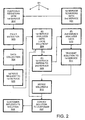
- FIGURE 2 is a flow chart of a method of the invention practiced in the context of the system of FIG. 1. Steps including an "(E)" are subject to an entitlement check.
- the present invention governs interactions among a customer 10, a primary support vendor 20, and a secondary support vendor 30. Much of the interaction is automated among their respective computer systems 11,21, and 31.
- Customer 10 provides for human and automated system management 13 of customer computer system 11, which runs an application 15 and diagnostic software 17.
- Primary support vendor 20 includes a support interface 23, which manages the primary support vendor's interactions with customer 10 and secondary support vendor 30. In addition, interface 23 provides for management of first vendor computer system 21, which runs entitlement software 25 and data-handling-and-analysis software 2 7.
- Secondary support vendor 30 is analogous to primary support vendor 20, having a support interface 33 that manages interactions with customer 10 and first support vendor 20, and manages second-support computer system 31, which runs entitlement software 35 and data-handling-and-analysis software 37.
- application software 15, a network management program is developed and marketed by secondary support vendor 30.
- the instance of application software on customer computer system 11 has been customized by primary support vendor 20, a value-added reseller, for customer 10.
- the primary support vendor can be a third-party support provider that has not added value to application 15, but has been engaged by a manufacturer to assist with the support function.
- Analysis software 27 is developed from a pre-packaged programmable framework with application programming interfaces (APIs) so that it can be interfaced with the primary vendor's pre-existing hardware and software. Data-handling-and-analysis software 27 and diagnostic software 17 cooperate as server and client, respectively, to provide distributed automated support for application 15 running on customer computer 2 1.
- APIs application programming interfaces
- Diagnostic software 17 monitors application 15 on customer computer system 11, gathering configuration and usage data. When it detects failures in software application 15, diagnostic program 17 gathers diagnostic data about the fault and the customer hardware/software environment. Diagnostic software 17 forwards the diagnostic data to data-handling-and-analysis software 27 running on primary vendor computer system 21. Data-handling-and-analysis software 27 automatically receives the diagnostic data, and has entitlement software 25 to authenticate the customer using identification information embedded in the diagnostic data.
- Data-handling-and-analysis software 27 then analyzes the diagnostic data to determine if a solution can be provided by primary vendor 20 or whether support from secondary support vendor 30 is required. Help from vendor 30 may be required, for example, when the diagnostic data indicates a problem unrelated to customization and not addressed by any solution published by primary vendor 20. If secondary support is required, data-handling-and-analysis software 27 transmits diagnostic data to analysis software 37, and then integrates the response into a "solution" it makes available to customer 10. This method is described in greater detail below.
- Primary support computer system 21 runs entitlement software 25 and data-handling-and-analysis software 27.
- Data-handling-and-analysis software 27 is used to analyze diagnostic data gathered by diagnostic software program 17 and transmitted to primary support computer system 21.
- Entitlement software 25 is used to check, at various stages in a support procedure, whether a customer is entitled to any services, and, if so, to what level.
- Secondary support computer system 31 similarly runs entitlement software 35 and data-handling-and-analysis software 37.
- data-handling-and-analysis software 37 analyzes diagnostic data provided by primary-support computer system 2 1.
- the diagnostic data provided by primary-support computer system in general includes at least some of the diagnostic data received from customer computer system 11. However, some information may be removed, especially customer ID information, and some may be added, e.g., information about similar situations in a knowledge base included in data-handling-and-analysis software 27.
- Entitlement software 35 checks on the level of services primary-support vendor 20 is entitled to from second-support vendor 30.
- a method M1 practiced in the context of system AP1 is flowcharted in FIG. 2.
- Primary support vendor 20 registers with secondary support vendor 30 at step S01 so that secondary-vendor entitlement software 35 "knows"primary support vendor and what level of support primary support vendor is entitled to. For example, the support level and procedures can be different for a value-added reseller than for an end-user.
- Primary support vendor 20 thus can register with secondary support vendor 30 as a value-added reseller.
- primary support vendor 20 may also register as a user, if an instance of application 15 is running on primary-vendor computer system 2 1.
- Step S02 Customer 10 registers, at step S02, with primary support vendor 20 so that primary-support entitlement software is informed of the existence and support level for customer 10.
- Step S02 occurred after step S01, as primary support vendor 20 desired developer support from secondary vendor 30 prior to the time the customized version of application 15 was provided to customer 10.
- the invention provides for these steps to occur in either order.
- a fault in application 15 or another triggering condition is detected at step S03 .
- a fault can be the failure of a message to be delivered as addressed; another triggering event can be a time-based warning that a license for application 15 or other software is due to expire.
- the event triggers data collection at step S04.
- Data collection step S04 can be on-going, even in the absence of a fault. For example, usage, configuration, and context data can be collected continuously. However, additional a system "snapshot" can be collected at the time of fault detection, depending on the nature of the fault or other triggering event.
- Customer system 11 requests support from primary support vendor 20 at step S05.
- diagnostic software can report the fault to a human user of computer system 11, who can then make the request, e.g., by accessing a website of primary-support vendor 20.
- the request involves transferring diagnostic data gathered by diagnostic software 27 to primary support computer system 21.
- Primary-support data-handling-and-analysis software 27 analyzes the diagnostic data at step S06. As indicated by the "E" in the figure-text description of step S04, the analysis is conditioned on an entitlement check.
- the diagnostic data includes customer identification data including, for example, a license or contract number.
- Data-handling-and-analysis software 2 7 extracts the identification data and forwards it to entitlement software 25.
- Entitlement software 25 checks the contract ID against an included entitlement database. If customer 10 is entitled to the requested service, the analysis proceeds immediately. If the entitlement check indicates customer 10 is not entitled to the requested support, a procedure is initiated that will allow customer 10 to become entitled (or, to have entitlement recognize, if customer 10 is truly entitled to the service). Once customer 10 is entitled to the requested support, the analysis continues.
- Data-handling-and-analysis software 27 analyzes the usage, configuration, and context information along with any circumstances relating to the fault that instigated the request.
- the analysis can refer to an included expert system or other such system that correlates this problem with other problems and other knowledge.
- Method M1 then branches at step S05 depending on whether a local solution is determined at step S04.
- step S06 If the analysis at step S06 yields a solution, it is made available to customer 10 at step S06. This can involve notifying customer 10 that a solution has been identified.
- computer system 21 can generate an e-mail to a contact person at customer 10 and include within the e-mail a link specifying a URL (Uniform Resource Locator) for a World-Wide-Web address. By clicking on the link, the contact person can access a website controlled by primary support vendor 20 that presents a solution.
- the "solution" can include, for examples, a procedure to correct a problem, a file to be downloaded to patch application 15, a determination that the problem does not require corrective action, or a recommendation to escalate the fault into a formal support case to involve support personnel of primary vendor 20.
- Customer 10 can implement the proposed solution at step S06.
- step S09 for referring the problem to secondary support computer system 31.
- step SO9 can be subject to an entitlement procedure. Specifically, the customer ID information is sent to entitlement software 25 to determine if customer 10 is entitled to have support assisted by secondary support vendor 30. For example, local support may be free or available for a low fee, but a premium support contract may be required for services involving secondary support vendor 30 , e.g., because secondary support vendor 30 charges primary support vendor for the service. If entitlement check fails at step S08, customer 10 can be given a chance to upgrade the support level so the analysis can continue.
- primary support computer system 21 transmits diagnostic data to secondary support computer system 31 at step S09.
- the diagnostic data transmitted to computer system 31 need not be the same as the diagnostic data received by system 21 from customer computer system 11.
- customer ID information may be replaced by ID information for primary-support vendor 20.
- Information determined to be irrelevant to the problem can be removed.
- Other information may be added, for example, data collected by primary support vendor 20 from similar incidents.
- Secondary support computer system 31 analyzes the diagnostic data it receives at step S10. This step S10 is subject to an entitlement check by secondary-support entitlement software 35 and is based on the registration at step SO1 and updates thereto. Entitlement software 35 recognizes the identifier as belonging to a value-added reseller so that the appropriate level of support is applied.
- a solution (or other result) generated by the secondary analysis is returned to primary support computer system 21 at step S11.
- data-handling-and-analysis software 27 can merge the remote results with its own local findings (including those generated in step S06 as well as any generated later in step S12) in generating its proposed solution. It can also update its knowledge base.
- the proposed solution is made available at step S07, who can implement the solution at step S08. For example, system manager 13 can download and install a patch to application 15.
- Customer 10 is not necessarily restricted to indirect access to support from secondary vendor 30.
- the solution generated at step S12 can be for customer 10 to contact secondary support vendor either at a website or over the phone. Also, a solution may be to download an update from a website of secondary vendor 30.
- customer 10 can have an independent direct support relationship with secondary support vendor 30 as indicated by line L1 in FIG. 1.
- customer 10 may have a support relationslup as a result of registering application 15 with secondary vendor 30.
- diagnostic software can be set up to support either multiple applications or multiple vendors or both.
- secondary support vendor 30 can be registered with primary support vendor 20 as indicated by line L2 of FIG. 1. This would allow a problem initially referred to vendor 30 to be referred to vendor 20.
- Diagnostic software includes a fault-detection component 17A, a data-collection component 17B, and a connectivity component 17C.
- Fault detection component 17A monitors network management application 15 continuously, and, when a fault is detected at step S03, notifies data-collection component 17B.
- Data-collection component 17B continuously gathers data regarding usage, configuration, and context. When it receives notice of a fault from fault-detection component 17A, it gathers data appropriate to the detected fault to provide a snapshot of network management application 15 and its hardware/software environment at step S04. Once collection is complete, data collection component packages the diagnostic data, including contract identifiers, and notifies connectivity component that the diagnostic data is ready for transmission. Connectivity component 17C then transmits a support service request via Internet 40 to primary vendor 20, at step S05.
- the functions performed by data-handling-and-analysis software 27 of FIG. 1 are distributed among a web services module 27A, a coordination engine 27B, an analysis agent 27C, a support knowledge base 2 7D, a publishing agent 2 7E, a notification agent 27F, and a workflow agent 27G.
- Coordination engine 27B manages interactions for agents 27C, 27E, 27F, and 27G, and entitlement agent 25 with each other and with web services module 27A.
- the service request from customer 10 is received by web services module 27A, which performs a superficial analysis at step S06 on the diagnostic data to determine whether the request should be handled locally by primary vendor 20 or remotely by secondary vendor 30. For example, certain licensing issues are forwarded directly to secondary vendor 30 without detailed analysis by primary vendor 20. However, web services can modify the diagnostic data indicate it is being forwarded by primary vendor 20, rather than coming directly from customer 10.
- coordination engine 27B which is configured to recognize which agents are to act on data and in what order.
- coordination engine 27B routes the diagnostic data to entitlement agent 25 for entitlement verification (and, if necessary, entitlement reconciliation).
- entitlement agent 25 Once entitlement is verified, the data is routed to analysis agent 27.
- Analysis agent can access support knowledge base 27D, which can include several databases and other sources of information.
- Analysis agent 27C can analyze the diagnostic using the knowledge obtained from knowledge base 27D to determine a solution. However, one possible outcome of the analysis is that further analysis by secondary vendor 30 is required.
- Such a determination is directed to coordination engine 27B , which transfers the diagnostic data back to web services module 27A .
- Web services module 27A then repackages the diagnostic data for transmission to secondary vendor 30 at step S09.
- the referred request is analyzed by data-handling-and-analysis software 37 (FIG. 1) , the functions of which are distributed in a manner analogous to those of data-handling-and-analysis software 27 , into a web service module 37A , a coordination engine 37B , an analysis agent 37C , a support knowledge base 37D, a publishing agent 37E, a notification agent 37F , and a workflow agent 37G.
- data-handling-and-analysis software 37 FIG. 1
- the functions of which are distributed in a manner analogous to those of data-handling-and-analysis software 27 , into a web service module 37A , a coordination engine 37B , an analysis agent 37C , a support knowledge base 37D, a publishing agent 37E, a notification agent 37F , and a workflow agent 37G.
- the referred request is received by web services module 37A , which determines that it is a request referred from a value-added reseller rather than an original request from a customer.
- the request is passed to coordination engine 37B , which submits it to entitlement agent 35 .
- coordination engine transfers the request to analysis agent 37C .
- Analysis agent analyzes the diagnostic data at step S10, making use of knowledge base 37D . Since the request is a referral from a value-added reseller, coordination engine sends the solution to web services module 37A , which forwards the solution to primary support vendor 20 at step S11.
- the "solution” is received at web services module 27A , passed to coordination engine 27B , and then to analysis agent 27C .
- Analysis agent examines the solution, contributes any further analysis as appropriate, merges any local finding with the received solution, and updates knowledgebase 27D as appropriate at step S12.
- the merged solution is then transferred by coordination engine 27B to publishing agent 27E, which publishes the merged solution on website 29A at step S07.
- the merged solution may be packaged in another manner, e.g., conveyed by e-mail or saved to removable media and mailed to customer.
- coordination engine 27B transfers (also at step S07) the request to notification agent 27F , which sends an e-mail or other notification to customer 10 than a solution is available.
- Customer 10 implements the solution at step S08 .
- This can involve reading the e-mail notification, accessing website 29A by projectlung on a link in the e-mail, following procedures presented on website 29A . These can involve, for example, downloading a patch for network management application 15 and then installing it.
- customer 10 can activate a link that escalates the request into a formal support case.
- website 29A sends a message to coordination engine 27B , which submits the request to workflow agent 27G , which makes the request available to a support engineer.
- the support relationships can be extended to additional vendors, either by adding levels of support or more vendors at a given level, or both.
- the software server described above can be abstracted such that it provides a framework that can be adopted by other technology vendors and third party partners of the software vendor. This can be achieved by creating a framework with public interfaces that allow different data receiving and dispatching components, entitlement or authentication components, analysis components, publication components, notification components, and support case workflow components to be integrated with the framework.
- the framework itself would provide a fault-tolerant automation mechanism for transferring the received data in workflow fashion between the integrated components listed above.
- the data receiving and dispatching interfaces of the framework can be configured so that a first framework instance can receive data, detect that the data type that should be processed by a second framework instance (which has been registered with the first framework instance for that data type), and dispatch the data to the registered second framework instead of processing it further.
- Data types can include sub-type directives that specify the component that should be used to initiate processing for that data type.
- These configurable interfaces in combination with the ability to configure registered data types allow for framework connectivity.
- the framework can be installed at a number of different technology vendors (including software vendors).
- the frameworks can be customized for each particular vendor environment and can be configured to link together in order to form a more powerful super-system.
- a customer 10 has purchased a software product (an order processing system) from vendor 20 and a different software product (an inventory management system) from vendor 30. Since the inventory management system is used as a sub-system that integrates into the order processing system, and since primary vendor 20 has some knowledge of the secondary vendor software, customer 10 wants to simplify their support model and use only primary vendor 20 as their support contact. If primary vendor 20 needs specialized help with a complex problem that occurs in the inventory management system, then primary vendor 20 must involve secondary vendor 30 to obtain the solution before primary vendor 20 engages the customer 10.
- an order processing system an order processing system
- an inventory management system software product from vendor 30. Since the inventory management system is used as a sub-system that integrates into the order processing system, and since primary vendor 20 has some knowledge of the secondary vendor software, customer 10 wants to simplify their support model and use only primary vendor 20 as their support contact. If primary vendor 20 needs specialized help with a complex problem that occurs in the inventory management system, then primary vendor 20 must involve secondary vendor 30 to obtain the solution before primary vendor 20 engages the customer 10.
- primary vendor 20 installs their software diagnostics client in the customer environment.
- the software diagnostics client is configured to detect failures in both software packages. If a failure occurs in the order processing system, the software diagnostics client collects the fault data and sends it to the framework implemented in the primary vendor environment.
- the primary vendor framework detects the fault data type as primary vendor data. It is then authenticated as vendor data by the primary vendor authentication system, analyzed by the primary vendor analysis systems, and the analysis results are published to the support website for primary vendor 20.
- the primary vendor data finishes the processing by sending an e-mail notification to the customer, which directs the customer to the analysis report on the primary vendor website.
- the diagnostics client gathers the fault data, and sends the data to its associated primary vendor framework.
- the primary vendor framework detects that the fault data type is secondary vendor data. It then forwards the fault data to the secondary vendor framework.
- the secondary vendor framework detects that the fault data is coming from primary vendor 20 and not a customer, so the secondary vendor authentication system checks to see if primary vendor 20 is a valid and registered vendor.
- the secondary vendor framework analyzes the fault data with the secondary vendor analysis systems and forwards the analysis results to the primary vendor framework (since it is primary-vendor-type data and that is the registered behavior).
- the primary vendor framework receives the secondary vendor analysis data, authenticates secondary vendor 20, and then uses the secondary vendor analysis data as input to the primary vendor analysis systems to determine if the secondary vendor solution will cause any negative side effects in the primary vendor software. The two analysis results are then merged together and published to the primary vendor website.
- the email notification is sent to customer 10.
- customer 10 Upon clicking on a link in the email, customer 10 is directed to the primary vendors support website to accesses the analysis report. If additional assistance is needed with the solution, customer 10 can select a hyperlink on the analysis report web page to cause the primary vendor framework to open a primary-vendor support case. If the primary vendor support engineering team is unable to assist the customer, they can further escalate the issue by requesting secondary vendor 20 to open a secondary-vendor support case.
Landscapes
- Engineering & Computer Science (AREA)
- Theoretical Computer Science (AREA)
- General Engineering & Computer Science (AREA)
- Quality & Reliability (AREA)
- Physics & Mathematics (AREA)
- General Physics & Mathematics (AREA)
- Computer Hardware Design (AREA)
- Health & Medical Sciences (AREA)
- Biomedical Technology (AREA)
- Management, Administration, Business Operations System, And Electronic Commerce (AREA)
- Test And Diagnosis Of Digital Computers (AREA)
Applications Claiming Priority (2)
| Application Number | Priority Date | Filing Date | Title |
|---|---|---|---|
| US722337 | 1991-07-01 | ||
| US10/722,337 US7334028B2 (en) | 2003-05-21 | 2003-11-25 | Tiered multi-source software support using automated diagnostic-data transfers |
Publications (2)
| Publication Number | Publication Date |
|---|---|
| EP1536339A2 true EP1536339A2 (fr) | 2005-06-01 |
| EP1536339A3 EP1536339A3 (fr) | 2006-11-29 |
Family
ID=34465684
Family Applications (1)
| Application Number | Title | Priority Date | Filing Date |
|---|---|---|---|
| EP04253577A Withdrawn EP1536339A3 (fr) | 2003-11-25 | 2004-06-15 | Support logiciel multi niveaux et multi sources utilisant des transfers de données de diagnostique automatiques |
Country Status (3)
| Country | Link |
|---|---|
| US (1) | US7334028B2 (fr) |
| EP (1) | EP1536339A3 (fr) |
| JP (1) | JP2005158067A (fr) |
Cited By (1)
| Publication number | Priority date | Publication date | Assignee | Title |
|---|---|---|---|---|
| EP1746508A3 (fr) * | 2005-07-19 | 2009-05-20 | Hewlett-Packard Development Company, L.P. | Automatisation du support |
Families Citing this family (40)
| Publication number | Priority date | Publication date | Assignee | Title |
|---|---|---|---|---|
| CA2504222C (fr) | 2002-10-22 | 2012-05-22 | Jason A. Sullivan | Ordinateur robuste et personnalisable |
| EP1557075A4 (fr) | 2002-10-22 | 2010-01-13 | Sullivan Jason | Module de controle non associe aux peripheriques possedant des proprietes ameliorees de dissipation de chaleur |
| KR100974361B1 (ko) | 2002-10-22 | 2010-08-05 | 제이슨 에이. 설리반 | 동적 모듈식 처리 유닛을 제공하기 위한 시스템 및 방법 |
| US7681181B2 (en) * | 2004-09-30 | 2010-03-16 | Microsoft Corporation | Method, system, and apparatus for providing custom product support for a software program based upon states of program execution instability |
| US7418635B2 (en) * | 2005-01-25 | 2008-08-26 | Tandberg Storage Asa | Automatically triggered snapshot data dump for storage unit with embedded system |
| US7548969B2 (en) * | 2005-07-27 | 2009-06-16 | Hewlett-Packard Development Company, L.P. | Computer system polling with adjustable intervals based on rules and server states |
| US20070028149A1 (en) * | 2005-08-01 | 2007-02-01 | Dell Products L.P. | System, method, and computer program product for reducing error causing conditions in an information handling system |
| US20070116241A1 (en) * | 2005-11-10 | 2007-05-24 | Flocken Phil A | Support case management system |
| DE102006024232A1 (de) * | 2006-05-23 | 2007-11-29 | Siemens Ag | Verfahren und Vorrichtung zur Störungsbehebung einer Datenverarbeitungseinrichtung |
| JP2008090504A (ja) * | 2006-09-29 | 2008-04-17 | Oki Electric Ind Co Ltd | コンピュータ保守支援システム及び解析サーバ |
| US20080098109A1 (en) * | 2006-10-20 | 2008-04-24 | Yassine Faihe | Incident resolution |
| US20080168167A1 (en) * | 2007-01-04 | 2008-07-10 | Calrson Michael P | Service provided by a single entity for all applications |
| CA2622908A1 (fr) * | 2007-02-28 | 2008-08-28 | Embotics Corporation | Methode et systeme d'entretien et d'appui a l'informatique |
| US8006121B1 (en) * | 2007-06-28 | 2011-08-23 | Apple Inc. | Systems and methods for diagnosing and fixing electronic devices |
| US8804941B2 (en) * | 2007-07-13 | 2014-08-12 | Plumchoice, Inc. | Systems and methods for hybrid delivery of remote and local technical support via a centralized service |
| US7676035B2 (en) * | 2007-07-13 | 2010-03-09 | Plumchoice, Inc. | Systems and methods for distributing remote technical support via a centralized service |
| TW200907669A (en) * | 2007-08-10 | 2009-02-16 | Asustek Comp Inc | Method and system for servicing hardware of computer and guiding solving errors thereof |
| US8726323B2 (en) | 2008-03-25 | 2014-05-13 | At&T Intellectual Property I, Lp | System and method for presenting support services |
| US20120079473A1 (en) * | 2009-06-08 | 2012-03-29 | Haruhito Watanabe | Software updating system, displaying unit and software updating method |
| US10268522B2 (en) * | 2009-11-30 | 2019-04-23 | Red Hat, Inc. | Service aggregation using graduated service levels in a cloud network |
| US9436459B2 (en) * | 2010-05-28 | 2016-09-06 | Red Hat, Inc. | Generating cross-mapping of vendor software in a cloud computing environment |
| US20110307746A1 (en) * | 2010-06-07 | 2011-12-15 | Sullivan Jason A | Systems and Methods for Intelligent and Flexible Management and Monitoring of Computer Systems |
| US8862938B2 (en) * | 2011-04-18 | 2014-10-14 | General Electric Company | System, method, and apparatus for resolving errors in a system |
| US8782472B2 (en) * | 2011-10-28 | 2014-07-15 | Dell Products L.P. | Troubleshooting system using device snapshots |
| WO2014209362A1 (fr) * | 2013-06-28 | 2014-12-31 | Hewlett-Packard Development Company, L.P. | Capteurs de simulation |
| EP3059676B1 (fr) * | 2015-02-20 | 2019-09-11 | Siemens Aktiengesellschaft | Procédé et appareil permettant d'analyser la disponibilité d'un système, en particulier d'un système de sécurité critique |
| US20160342453A1 (en) * | 2015-05-20 | 2016-11-24 | Wanclouds, Inc. | System and methods for anomaly detection |
| US10540225B2 (en) * | 2015-05-27 | 2020-01-21 | Hewlett Packard Enterprise Development Lp | Data validation |
| US10353762B2 (en) * | 2015-06-11 | 2019-07-16 | Instana, Inc. | Hierarchical fault determination in an application performance management system |
| US10877988B2 (en) | 2015-12-01 | 2020-12-29 | Microsoft Technology Licensing, Llc | Real-time change data from disparate sources |
| US10073753B2 (en) * | 2016-02-14 | 2018-09-11 | Dell Products, Lp | System and method to assess information handling system health and resource utilization |
| US10176034B2 (en) | 2016-02-16 | 2019-01-08 | International Business Machines Corporation | Event relationship analysis in fault management |
| US9983988B1 (en) * | 2016-06-23 | 2018-05-29 | Amazon Technologies, Inc. | Resuming testing after a destructive event |
| US10908983B2 (en) * | 2017-03-31 | 2021-02-02 | Cae Inc. | Method and system for preventing an anomaly in a simulator |
| US10908981B2 (en) * | 2017-03-31 | 2021-02-02 | Cae Inc. | Method and system for diagnosis of a simulator |
| JP2018205816A (ja) * | 2017-05-30 | 2018-12-27 | 富士通株式会社 | 情報処理システム、情報処理装置、および管理プログラム |
| US10467083B2 (en) * | 2017-06-08 | 2019-11-05 | International Business Machines Corporation | Event relationship analysis in fault management |
| US10769009B2 (en) * | 2018-03-21 | 2020-09-08 | International Business Machines Corporation | Root cause analysis for correlated development and operations data |
| US10783060B2 (en) | 2018-05-02 | 2020-09-22 | Servicenow, Inc. | Post-upgrade debugging in a remote network management platform |
| US11163630B2 (en) * | 2019-10-18 | 2021-11-02 | Dell Products L.P. | Using real-time analytics to manage application features |
Family Cites Families (15)
| Publication number | Priority date | Publication date | Assignee | Title |
|---|---|---|---|---|
| US4649538A (en) * | 1984-09-28 | 1987-03-10 | Motorola, Inc. | Radio paging device with improved test modes |
| US5678002A (en) * | 1995-07-18 | 1997-10-14 | Microsoft Corporation | System and method for providing automated customer support |
| WO1997015009A1 (fr) | 1995-10-18 | 1997-04-24 | Systemsoft Corporation | Systeme et procede de diagnostic pour processeurs de donnees numeriques |
| US6128555A (en) * | 1997-05-29 | 2000-10-03 | Trw Inc. | In situ method and system for autonomous fault detection, isolation and recovery |
| US6631402B1 (en) * | 1997-09-26 | 2003-10-07 | Worldcom, Inc. | Integrated proxy interface for web based report requester tool set |
| US6460070B1 (en) * | 1998-06-03 | 2002-10-01 | International Business Machines Corporation | Mobile agents for fault diagnosis and correction in a distributed computer environment |
| US6356909B1 (en) * | 1999-08-23 | 2002-03-12 | Proposal Technologies Network, Inc. | Web based system for managing request for proposal and responses |
| US6516427B1 (en) * | 1999-11-05 | 2003-02-04 | Hewlett-Packard Company | Network-based remote diagnostic facility |
| US6892317B1 (en) | 1999-12-16 | 2005-05-10 | Xerox Corporation | Systems and methods for failure prediction, diagnosis and remediation using data acquisition and feedback for a distributed electronic system |
| US7076400B2 (en) * | 2000-02-14 | 2006-07-11 | Nextnine Ltd. | Support network |
| US7260597B1 (en) * | 2000-11-02 | 2007-08-21 | Sony Corporation | Remote manual, maintenance, and diagnostic services for networked electronic devices |
| US20020194320A1 (en) * | 2001-06-15 | 2002-12-19 | Kevin Collins | Remote support system |
| US7100054B2 (en) * | 2001-08-09 | 2006-08-29 | American Power Conversion | Computer network security system |
| US7225245B2 (en) * | 2001-08-09 | 2007-05-29 | Intel Corporation | Remote diagnostics system |
| AU2002330673A1 (en) | 2001-08-21 | 2003-03-10 | Idtect | System and method for scalable multi-level remote diagnosis and predictive maintenance |
-
2003
- 2003-11-25 US US10/722,337 patent/US7334028B2/en not_active Expired - Fee Related
-
2004
- 2004-06-15 EP EP04253577A patent/EP1536339A3/fr not_active Withdrawn
- 2004-11-18 JP JP2004334069A patent/JP2005158067A/ja not_active Withdrawn
Cited By (1)
| Publication number | Priority date | Publication date | Assignee | Title |
|---|---|---|---|---|
| EP1746508A3 (fr) * | 2005-07-19 | 2009-05-20 | Hewlett-Packard Development Company, L.P. | Automatisation du support |
Also Published As
| Publication number | Publication date |
|---|---|
| US7334028B2 (en) | 2008-02-19 |
| US20040236820A1 (en) | 2004-11-25 |
| JP2005158067A (ja) | 2005-06-16 |
| EP1536339A3 (fr) | 2006-11-29 |
Similar Documents
| Publication | Publication Date | Title |
|---|---|---|
| US7334028B2 (en) | Tiered multi-source software support using automated diagnostic-data transfers | |
| US6266774B1 (en) | Method and system for securing, managing or optimizing a personal computer | |
| US7069271B1 (en) | Methods and apparatus for implementing internet storefronts to provide integrated functions | |
| US10636084B2 (en) | Methods and systems for implementing on-line financial institution services via a single platform | |
| US8726267B2 (en) | Sharing software certification and process metadata | |
| US6049671A (en) | Method for identifying and obtaining computer software from a network computer | |
| US7509651B2 (en) | System and method for providing event notifications to information technology resource managers | |
| CA2498048C (fr) | Procede et appareil destines a publier et a controler des entites offrants des services dans un systeme a traitement reparti de donnees | |
| US20050027846A1 (en) | Automated electronic software distribution and management method and system | |
| US20020138786A1 (en) | Method and system for automating product support | |
| US20080244047A1 (en) | Method for implementing management software, hardware with pre-configured software and implementing method thereof | |
| JP2003186696A (ja) | システムのリスク診断方法及びプログラム並びに装置 | |
| JP2002521764A (ja) | コンピュータシステムの変化監視システム | |
| US20160321068A1 (en) | Populating a Software Catalogue with Related Product Information | |
| US7716137B2 (en) | System and method for automatically tracking and enabling the operation of a product | |
| CN101390105A (zh) | 许可证管理程序、软件利用控制方法以及许可证管理装置 | |
| US20070022320A1 (en) | Support automation | |
| US20050076325A1 (en) | Automatic software update of nodes in a network data processing system | |
| JP2003202988A (ja) | ソフトウェア管理サービス方法、ソフトウェア管理サービスシステム及びプログラム | |
| CN107623735A (zh) | 一种征信机系统中基于openssl的精准更新升级系统及方法 | |
| EP2131279B1 (fr) | Système et procédé pour une intégration générique d'une base de données dans un groupe à forte disponibilité | |
| JPH10301996A (ja) | コンピュータ関連製品の利用者管理・サービスシステム | |
| EP1296269A1 (fr) | Méthode et appareil pour configurer un système | |
| WO2006039706A2 (fr) | Procedes et systemes de mise en oeuvre de services d'institutions financieres en ligne via une plate-forme unique | |
| KR20080030909A (ko) | 소프트웨어 모듈 모니터링 방법 및 소프트웨어 모듈 실행후 시스템을 복원하는 방법 |
Legal Events
| Date | Code | Title | Description |
|---|---|---|---|
| PUAI | Public reference made under article 153(3) epc to a published international application that has entered the european phase |
Free format text: ORIGINAL CODE: 0009012 |
|
| AK | Designated contracting states |
Kind code of ref document: A2 Designated state(s): AT BE BG CH CY CZ DE DK EE ES FI FR GB GR HU IE IT LI LU MC NL PL PT RO SE SI SK TR |
|
| AX | Request for extension of the european patent |
Extension state: AL HR LT LV MK |
|
| PUAL | Search report despatched |
Free format text: ORIGINAL CODE: 0009013 |
|
| AK | Designated contracting states |
Kind code of ref document: A3 Designated state(s): AT BE BG CH CY CZ DE DK EE ES FI FR GB GR HU IE IT LI LU MC NL PL PT RO SE SI SK TR |
|
| AX | Request for extension of the european patent |
Extension state: AL HR LT LV MK |
|
| 17P | Request for examination filed |
Effective date: 20070115 |
|
| AKX | Designation fees paid |
Designated state(s): DE FR GB |
|
| STAA | Information on the status of an ep patent application or granted ep patent |
Free format text: STATUS: THE APPLICATION IS DEEMED TO BE WITHDRAWN |
|
| 18D | Application deemed to be withdrawn |
Effective date: 20090106 |