EP1533710A1 - Mehrsprachiges adaptives system - Google Patents
Mehrsprachiges adaptives system Download PDFInfo
- Publication number
- EP1533710A1 EP1533710A1 EP03766740A EP03766740A EP1533710A1 EP 1533710 A1 EP1533710 A1 EP 1533710A1 EP 03766740 A EP03766740 A EP 03766740A EP 03766740 A EP03766740 A EP 03766740A EP 1533710 A1 EP1533710 A1 EP 1533710A1
- Authority
- EP
- European Patent Office
- Prior art keywords
- text
- information
- display area
- linguistic
- displayed
- Prior art date
- Legal status (The legal status is an assumption and is not a legal conclusion. Google has not performed a legal analysis and makes no representation as to the accuracy of the status listed.)
- Withdrawn
Links
Images





Classifications
-
- G—PHYSICS
- G06—COMPUTING OR CALCULATING; COUNTING
- G06F—ELECTRIC DIGITAL DATA PROCESSING
- G06F16/00—Information retrieval; Database structures therefor; File system structures therefor
- G06F16/90—Details of database functions independent of the retrieved data types
- G06F16/95—Retrieval from the web
Definitions
- the present invention relates to a multilingual support system for opening information to public over the Internet in a requested language.
- the present invention is made in consideration of the above circumstances. It is an object of the present invention to provide a multilingual support system capable of providing real-time and on-demand data in web pages supporting various language types.
- a multilingual support system includes: a display information storage means for storing display information having a text display area to display a text; an attribute information storage means for storing attribute information of the text displayed in the text display area; a first linguistic information storage means for storing text information in a first language type corresponding to the attribute information of the text displayed in the text display area; a second linguistic information storage means for storing text information in a second language type corresponding to the attribute information of the text displayed in the text display area; a linguistic-information request receiving unit for receiving a signal to request a display in a predetermined language type; a text information output means for outputting text information to be displayed in the text display area from the text information stored in the first and second linguistic information storage units in response to the request signal received by the linguistic-information request receiving unit; and a combination means for combining the text information, which is outputted through the text information output unit, into the text display area corresponding to the attribute information.
- a multilingual support system includes: a display means for displaying predetermined linguistic information; a selection means for selecting a language type; an output means for outputting a request signal to request a display in a predetermined language type selected by the selection means; a display information storage means for storing display information having a text display area to display a text; an attribute information storage means for storing attribute information of the text displayed in the text display area; a first linguistic information storage means for storing text information in a first language type corresponding to the attribute information of the text displayed in the text display area; a second linguistic information storage means for storing text information in a second language type corresponding to the attribute information of the text displayed in the text display area; a linguistic-information request receiving means for receiving the signal to request a display in the predetermined language type; a text information output means for outputting text information to be displayed in the text display area from the text information stored in the first and second linguistic information storage units in response to the request signal received by the linguistic-information request receiving means;
- Figs. 1 to 13 relate to the embodiment of the present invention.
- Fig. 1 a block diagram showing the configuration of a global system.
- Fig. 2 is a first flowchart of an information service processing of the global system in Fig. 1.
- Fig. 3 is a second flowchart of the information service processing of the global system in Fig. 1.
- Fig. 4 is a first diagram explaining the processings shown in Figs. 2 and 3.
- Fig. 5 is a second diagram explaining the processings in Figs. 2 and 3.
- Fig. 6 is a third diagram explaining the processings in Figs. 2 and 3.
- Fig. 7 is a fourth diagram explaining the processings in Figs. 2 and 3.
- Fig. 8 is a fifth diagram explaining the processings in Figs. 2 and 3.
- Fig. 1 a block diagram showing the configuration of a global system.
- Fig. 2 is a first flowchart of an information service processing of the global system in Fig. 1.
- Fig. 9 is a sixth diagram explaining the processings in Figs. 2 and 3.
- Fig. 10 is a seventh diagram explaining the processings in Figs. 2 and 3.
- Fig. 11 is a flowchart of a processing of adding a language type in a language-type label-name definition table used in the processings in Figs. 2 and 3.
- Fig. 12 is a first diagram explaining the processing in Fig. 11.
- Fig. 13 is a first diagram explaining the processing in Fig. 11.
- a global system 1 realizing a multilingual support system is connected to the Internet (or WAN) 2.
- the global system 1 opens web pages to a plurality of clients 4 connected to the Internet 2.
- the clients 4 include, for example, a user terminal 4a in the Japan area as a Japanese-speaking area, a user terminal 4b in the U.S. area as an English-speaking area, a user terminal 4c in the France area as a French-speaking area, a user terminal 4d in the U.K. area as an English-speaking area, and the like.
- the clients 4 are spread in various linguistic areas and countries on a worldwide scale.
- the global system 1 comprises a Web service server 11 which connects with the Internet 2 and opens the web pages to public and a Web database server 12 which manages data in the present system.
- the Web service server 11 connects with the Web database server 12 through a firewall 13 in order to retain security.
- the Web service server 11 connects with a data storage device 14 comprising a large-capacity HDD and the like to store various data items used to create and develop the web pages for various linguistic areas.
- the Web database server 12 connects with a data storage device 15 comprising a large-capacity HDD and the like to store data items necessary to maintain the system, the data items corresponding to the various linguistic areas.
- step S2 when the client 4 accesses the Web service server 11 via the Internet 2, the system is started in the Web service server 11 in step S1.
- step S2 a default login page 31 serving as a homepage of the web pages is displayed in a monitor of the client 4.
- the web pages, opened to public through the Web service server 11, includes the default login page 31 as the homepage and other pages. Each page is linked to predetermined pages, thus realizing a jump to another page.
- a service language is, for example, Japanese.
- a plurality of labels L1, L2, ... are pasted as shown in Fig. 5.
- a Japanese character string indicating a desired content is defined as a label name.
- the respective label names are arranged and displayed as the labels L1, L2, ... as shown in Fig. 6.
- step S3 whether any language type other than Japanese is requested by the client 4 is determined in the default login page 31.
- the client 4 clicks on an arbitrary language-type selection button 35 in the default login page 31 of Fig. 4 to request a language type.
- step S4 the Web service server 11 recognizes which language type has been selected from among the language-type selection buttons 35.
- step S5 label names each comprising a character string according to the recognized language type are assigned to the labels L1, L2, ... to create the login page 31.
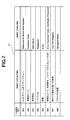
- a language-type label-name definition table 41 as shown in Fig. 7 is stored.
- the language-type label-name definition table 41 character strings according to registered languages are defined as label names every label number (label No.) given to each of the labels constituting each page.
- the language-type label-name definition table 41 is formed by the Web service server 11 and is transmitted to the Web database server 12 through the firewall 13 and is then stored in the data storage device 15.
- the label name conversion module converts labels in accordance with a language type to be pasted as the labels L1, L2, ... in creating each page constituting the web pages.
- the label name conversion module uses a page number of each page constituting the web pages, a language type, and a label number (label No.) as parameters.
- the Web service server 11 transmits the page number of a page which the client 4 is viewing, a language type requested by the client 4, and label numbers (label Nos.) arranged in this page to the Web database server 12, thus obtaining label names (character strings according to a desired language type) corresponding to the label numbers (label Nos.) from the Web database server 12.
- the obtained label names are then assigned to the respective labels L1, L2, ...
- step S6 the login page 31, in which the label names have been assigned to the respective labels in accordance with the requested language type, is displayed on the monitor of the client 4.
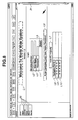
- Fig. 8 shows the login page 31 in English requested as the language type.
- step S7 it is in standby mode until the client 4 enters a user ID and a password in the login page. If there is no language type request in step S3, the login page is in Japanese (refer to Fig. 4). If there is a language type request in step S3, the login page is in a requested language (for example, if English is requested, refer to Fig. 8). In step S8, a security check regarding access is performed on the basis of the user ID and the password. If the user ID and the password are verified by the security check, the process proceeds to step S9 in Fig. 3.
- step S9 a menu page (not shown) is displayed in the login language type on the monitor of the client 4.
- step S10 it is in standby mode until the client 4 selects a processing item on the menu page.
- the language type in step S10 will be referred to as a set language type hereinbelow.
- step S11 a processing page linked with the selected processing item is created in the set language type and the resultant page is displayed on the monitor of the client 4.
- step S12 whether the client 4 requests any language type other than the set language type is determined in step S12 in the same way as the login page 31.
- step S13 the Web service server 11 recognizes which language type is selected.
- step S14 the recognized language type is set to a new set language type, label names each comprising a character string in that language type are assigned to the labels L1, L2, ... to create a processing page.
- step S15 the processing page, in which the label names in the requested language type have been assigned to the labels, is displayed on the monitor of the client 4. The process proceeds to step S16.
- step S11 If the client 4 does not request any language type other than the set language type in step S11, the process proceeds to step S16.
- step S16 in response to a request from the client, for example, an update processing and a search processing are executed on the processing page displayed. After that, whether the client logs off is determined in step S17. If he or she logs off, the process is terminated. If the client does not log off, the process is returned to step S10.
- Fig. 9 illustrates an example of a processing page in which the language type is Japanese.
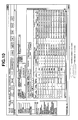
- Fig. 10 illustrates an example of a processing page in which the language type is English.
- each dashed line indicates a label to which a fixed character string is assigned and each one-dotted chain line indicates a label to which a variable character string is assigned.
- a fixed character string is defined in the language-type label-name definition table 41.
- a variable character string is defined in a variable-label-name definition table (not shown) stored in the data storage device 15 of the Web database server 12.
- variable-label-name definition table for example, "Aizu” and “Aomori” in English in Fig. 10 are defined so as to be related to "Aizu” and “Aomori” in Japanese in Fig. 9, "Aizu” and “Aomori” meaning factory names.
- the label name conversion module transmits to the Web database server 12 attribute information indicating whether a label name corresponding to the label number (label No.) is variable or fixed, and a code (for example, a Japanese character string in default mode) indicating a content, which is assigned to the label when the label name is variable, thus obtaining a character string from the variable-label-name definition table.
- a code for example, a Japanese character string in default mode
- variable label name can be displayed as a label, to which a variable character string is assigned, in accordance with the language type.
- a fixed character string based on the language-type label-name definition table 41 is assigned to each fixed label and a variable character string based on the variable-label-name definition table is assigned to each variable label.
- the resultant labels are displayed.
- Japanese and English label names are defined in the language-type label-name definition table 41 in default mode as shown in Fig. 7.
- Label names of a desired language type can be added and stored.
- a case where a language type to be added is French will now be described hereinbelow as an example.
- a language type to be added is determined in step S21.
- a page number is set to 1.
- the contents of label names corresponding to the label Nos. on the nth page in the language-type label-name definition table 41 are extracted from the Web database server 12.
- the extracted contents of the label names corresponding to the label Nos. are converted into character strings of the determined and added language type (if the contents of the label names are expressed using, for example, Japanese character strings, the Japanese character strings are automatically translated into character strings of the added language type).
- the character strings of the added language type converted (translated) in step S25 are stored in the language-type label-name definition table 41 of the Web database server 12.
- the converted character strings can be felicitously changed using a keyboard or the like.
- step S26 a page is created and displayed using the label names of the added language type stored in the language-type label-name definition table 41 of the Web database server 12 to check the stored contents. If NG, the process is returned to step S25. If OK, whether n exceeds (N - 1) (N: the number of pages constituting the web pages) is determined in step S27. If n is lower than (N - 1), n is incremented in step S28 and the process is then returned to step S23. If n exceeds (N - 1), the process is terminated.
- N - 1 N: the number of pages constituting the web pages
- the label names of the added language type are defined and stored in the language-type label-name definition table 41 corresponding to all pages constituting the web pages.
- Fig. 12 illustrates the language-type label-name definition table 41 in which label names are defined and stored using French as the added language type. If another language such as German is added in the same way, the language-type label-name definition table 41 capable of supporting many more language types can be obtained as shown in Fig. 13 (in Figs. 12 and 13, "*****" denotes an abbreviation of each character string of the corresponding language).
- the language-type label-name definition table 41 is formed in the Web database server 12 and the Web service server 11 allocates each label name as a kind of variable in the web pages according to a language type requested by the client 4.
- the Web service server 11 only requests the label names to the Web database server 12, the web pages according to the language requested by the client 4 can be created and opened to public on demand in real time.
- the label names of the pages constituting the web pages can be easily altered into label names in a desired language.
- real-time and on-demand data can be provided in web pages supporting a plurality of language types.
Landscapes
- Engineering & Computer Science (AREA)
- Databases & Information Systems (AREA)
- Theoretical Computer Science (AREA)
- Data Mining & Analysis (AREA)
- Physics & Mathematics (AREA)
- General Engineering & Computer Science (AREA)
- General Physics & Mathematics (AREA)
- Information Transfer Between Computers (AREA)
- Machine Translation (AREA)
- User Interface Of Digital Computer (AREA)
Applications Claiming Priority (3)
| Application Number | Priority Date | Filing Date | Title |
|---|---|---|---|
| JP2002227870 | 2002-08-05 | ||
| JP2002227870A JP2004070604A (ja) | 2002-08-05 | 2002-08-05 | 多言語対応システム |
| PCT/JP2003/009917 WO2004013761A1 (ja) | 2002-08-05 | 2003-08-05 | 多言語対応システム |
Publications (1)
| Publication Number | Publication Date |
|---|---|
| EP1533710A1 true EP1533710A1 (de) | 2005-05-25 |
Family
ID=31492231
Family Applications (1)
| Application Number | Title | Priority Date | Filing Date |
|---|---|---|---|
| EP03766740A Withdrawn EP1533710A1 (de) | 2002-08-05 | 2003-08-05 | Mehrsprachiges adaptives system |
Country Status (4)
| Country | Link |
|---|---|
| US (1) | US20050171784A1 (de) |
| EP (1) | EP1533710A1 (de) |
| JP (1) | JP2004070604A (de) |
| WO (1) | WO2004013761A1 (de) |
Families Citing this family (7)
| Publication number | Priority date | Publication date | Assignee | Title |
|---|---|---|---|---|
| EP1710715A1 (de) * | 2005-04-06 | 2006-10-11 | Amadeus s.a.s | Dynamisches Verfahren zur Visualisierung von Fenstern zur Datenanzeige und -eingabe auf einem Computerbildschirm |
| JP5066329B2 (ja) * | 2005-07-26 | 2012-11-07 | 富士通フロンテック株式会社 | せりシステムとせりシステムの制御方法、及びせりシステムのプログラム |
| KR20090049004A (ko) * | 2007-11-12 | 2009-05-15 | 삼성전자주식회사 | 문자 입력 처리 방법 및 장치와 제어 방법 및 장치 |
| US8266514B2 (en) * | 2008-06-26 | 2012-09-11 | Microsoft Corporation | Map service |
| US9304786B2 (en) * | 2010-07-07 | 2016-04-05 | Canon Kabushiki Kaisha | Information processing apparatus, method of controlling the same, and program |
| JP5908213B2 (ja) * | 2011-02-28 | 2016-04-26 | ブラザー工業株式会社 | 通信装置 |
| US10199864B2 (en) | 2015-01-20 | 2019-02-05 | Schweitzer Engineering Laboratories, Inc. | Multilingual power system protection device |
Family Cites Families (7)
| Publication number | Priority date | Publication date | Assignee | Title |
|---|---|---|---|---|
| JP3522644B2 (ja) * | 2000-04-28 | 2004-04-26 | 株式会社講談社 | 表示言語変換システム及び記憶媒体 |
| JP2002073552A (ja) * | 2000-09-04 | 2002-03-12 | Tokyo Soft Kk | 多言語による情報提供手段を備えた通信方法 |
| JP2002133186A (ja) * | 2000-10-20 | 2002-05-10 | Halfway International:Kk | インターネットを介した複数言語でのオークション情報を一元管理する方法とそのシステム |
| JP2002149922A (ja) * | 2000-11-09 | 2002-05-24 | Cross Vision International:Kk | 人事情報管理プログラム及びシステム |
| GB0027811D0 (en) * | 2000-11-15 | 2000-12-27 | Pace Micro Tech Plc | Method for producing a user interface translation tool |
| US7113904B2 (en) * | 2001-03-30 | 2006-09-26 | Park City Group | System and method for providing dynamic multiple language support for application programs |
| US20020143523A1 (en) * | 2001-03-30 | 2002-10-03 | Lakshmi Balaji | System and method for providing a file in multiple languages |
-
2002
- 2002-08-05 JP JP2002227870A patent/JP2004070604A/ja active Pending
-
2003
- 2003-08-05 WO PCT/JP2003/009917 patent/WO2004013761A1/ja not_active Ceased
- 2003-08-05 EP EP03766740A patent/EP1533710A1/de not_active Withdrawn
- 2003-08-05 US US10/512,912 patent/US20050171784A1/en not_active Abandoned
Non-Patent Citations (1)
| Title |
|---|
| See references of WO2004013761A1 * |
Also Published As
| Publication number | Publication date |
|---|---|
| US20050171784A1 (en) | 2005-08-04 |
| JP2004070604A (ja) | 2004-03-04 |
| WO2004013761A1 (ja) | 2004-02-12 |
Similar Documents
| Publication | Publication Date | Title |
|---|---|---|
| JP4398098B2 (ja) | グラマーテンプレートクエリシステム | |
| US7406659B2 (en) | Smart links | |
| US9338813B2 (en) | Overloaded communication session | |
| US6300947B1 (en) | Display screen and window size related web page adaptation system | |
| US7228495B2 (en) | Method and system for providing an index to linked sites on a web page for individuals with visual disabilities | |
| EP1320043A2 (de) | Multimodales Bild | |
| US20020029243A1 (en) | Evolving interactive dialog box for an internet web page | |
| EP1641211A2 (de) | Web Server und Verfahren für Dynamischesinhalt | |
| US20030020751A1 (en) | Observation display method for dynamically changing on monitor screen object information observed on computer network and observation display system using computer network | |
| US6567801B1 (en) | Automatically initiating a knowledge portal query from within a displayed document | |
| JP2009140170A (ja) | 情報提供方法および情報提供サーバ | |
| US20040183839A1 (en) | Apparatus and method for simple wide-area network navigation | |
| US20010054035A1 (en) | System and method for searching target web site by employing internet portal site having icons arranged according to frequency number of use | |
| EP1533710A1 (de) | Mehrsprachiges adaptives system | |
| US8595241B2 (en) | System and method for augmenting digital media with custom content | |
| KR20150062541A (ko) | 인스턴트 메신저 상의 메시지 바로 검색 지원 방법 | |
| US20070244858A1 (en) | Method and system for enhanced web searching | |
| JPH10301944A (ja) | Wwwブラウザ装置 | |
| JP3474803B2 (ja) | 検索システム、検索サーバ、検索方法及び記録媒体 | |
| JP5122795B2 (ja) | 検索システムおよび検索方法 | |
| KR20080096187A (ko) | 검색 서비스 시스템 및 그 방법 | |
| JP2003345806A (ja) | スケジュール関連情報の取得システム、方法及びプログラム | |
| JP4885678B2 (ja) | コンテンツ作成装置及びコンテンツ作成方法 | |
| JP2006189980A (ja) | 情報検索システム、情報検索サーバ、情報検索方法、及び情報検索プログラム | |
| KR20100091924A (ko) | 사용자의 검색의도 파악에 따른 통합 출력 시스템 및 그 방법 |
Legal Events
| Date | Code | Title | Description |
|---|---|---|---|
| PUAI | Public reference made under article 153(3) epc to a published international application that has entered the european phase |
Free format text: ORIGINAL CODE: 0009012 |
|
| 17P | Request for examination filed |
Effective date: 20041104 |
|
| AK | Designated contracting states |
Kind code of ref document: A1 Designated state(s): AT BE BG CH CY CZ DE DK EE ES FI FR GB GR HU IE IT LI LU MC NL PT RO SE SI SK TR |
|
| RBV | Designated contracting states (corrected) |
Designated state(s): DE FR GB |
|
| STAA | Information on the status of an ep patent application or granted ep patent |
Free format text: STATUS: THE APPLICATION HAS BEEN WITHDRAWN |
|
| 18W | Application withdrawn |
Effective date: 20091022 |