EP1530216A1 - Gerät und Verfahren zum Editieren von Bildern - Google Patents
Gerät und Verfahren zum Editieren von Bildern Download PDFInfo
- Publication number
- EP1530216A1 EP1530216A1 EP04022841A EP04022841A EP1530216A1 EP 1530216 A1 EP1530216 A1 EP 1530216A1 EP 04022841 A EP04022841 A EP 04022841A EP 04022841 A EP04022841 A EP 04022841A EP 1530216 A1 EP1530216 A1 EP 1530216A1
- Authority
- EP
- European Patent Office
- Prior art keywords
- chapters
- chapter
- information
- unit
- title
- Prior art date
- Legal status (The legal status is an assumption and is not a legal conclusion. Google has not performed a legal analysis and makes no representation as to the accuracy of the status listed.)
- Withdrawn
Links
Images






Classifications
-
- H—ELECTRICITY
- H04—ELECTRIC COMMUNICATION TECHNIQUE
- H04N—PICTORIAL COMMUNICATION, e.g. TELEVISION
- H04N9/00—Details of colour television systems
- H04N9/79—Processing of colour television signals in connection with recording
- H04N9/80—Transformation of the television signal for recording, e.g. modulation, frequency changing; Inverse transformation for playback
- H04N9/804—Transformation of the television signal for recording, e.g. modulation, frequency changing; Inverse transformation for playback involving pulse code modulation of the colour picture signal components
- H04N9/8042—Transformation of the television signal for recording, e.g. modulation, frequency changing; Inverse transformation for playback involving pulse code modulation of the colour picture signal components involving data reduction
-
- G—PHYSICS
- G11—INFORMATION STORAGE
- G11B—INFORMATION STORAGE BASED ON RELATIVE MOVEMENT BETWEEN RECORD CARRIER AND TRANSDUCER
- G11B27/00—Editing; Indexing; Addressing; Timing or synchronising; Monitoring; Measuring tape travel
- G11B27/02—Editing, e.g. varying the order of information signals recorded on, or reproduced from, record carriers
- G11B27/031—Electronic editing of digitised analogue information signals, e.g. audio or video signals
- G11B27/034—Electronic editing of digitised analogue information signals, e.g. audio or video signals on discs
-
- G—PHYSICS
- G11—INFORMATION STORAGE
- G11B—INFORMATION STORAGE BASED ON RELATIVE MOVEMENT BETWEEN RECORD CARRIER AND TRANSDUCER
- G11B27/00—Editing; Indexing; Addressing; Timing or synchronising; Monitoring; Measuring tape travel
- G11B27/10—Indexing; Addressing; Timing or synchronising; Measuring tape travel
- G11B27/19—Indexing; Addressing; Timing or synchronising; Measuring tape travel by using information detectable on the record carrier
- G11B27/28—Indexing; Addressing; Timing or synchronising; Measuring tape travel by using information detectable on the record carrier by using information signals recorded by the same method as the main recording
- G11B27/32—Indexing; Addressing; Timing or synchronising; Measuring tape travel by using information detectable on the record carrier by using information signals recorded by the same method as the main recording on separate auxiliary tracks of the same or an auxiliary record carrier
- G11B27/327—Table of contents
- G11B27/329—Table of contents on a disc [VTOC]
-
- G—PHYSICS
- G11—INFORMATION STORAGE
- G11B—INFORMATION STORAGE BASED ON RELATIVE MOVEMENT BETWEEN RECORD CARRIER AND TRANSDUCER
- G11B27/00—Editing; Indexing; Addressing; Timing or synchronising; Monitoring; Measuring tape travel
- G11B27/10—Indexing; Addressing; Timing or synchronising; Measuring tape travel
- G11B27/34—Indicating arrangements
-
- G—PHYSICS
- G11—INFORMATION STORAGE
- G11B—INFORMATION STORAGE BASED ON RELATIVE MOVEMENT BETWEEN RECORD CARRIER AND TRANSDUCER
- G11B2220/00—Record carriers by type
- G11B2220/20—Disc-shaped record carriers
- G11B2220/21—Disc-shaped record carriers characterised in that the disc is of read-only, rewritable, or recordable type
- G11B2220/215—Recordable discs
- G11B2220/216—Rewritable discs
-
- G—PHYSICS
- G11—INFORMATION STORAGE
- G11B—INFORMATION STORAGE BASED ON RELATIVE MOVEMENT BETWEEN RECORD CARRIER AND TRANSDUCER
- G11B2220/00—Record carriers by type
- G11B2220/20—Disc-shaped record carriers
- G11B2220/21—Disc-shaped record carriers characterised in that the disc is of read-only, rewritable, or recordable type
- G11B2220/215—Recordable discs
- G11B2220/218—Write-once discs
-
- G—PHYSICS
- G11—INFORMATION STORAGE
- G11B—INFORMATION STORAGE BASED ON RELATIVE MOVEMENT BETWEEN RECORD CARRIER AND TRANSDUCER
- G11B2220/00—Record carriers by type
- G11B2220/20—Disc-shaped record carriers
- G11B2220/25—Disc-shaped record carriers characterised in that the disc is based on a specific recording technology
- G11B2220/2508—Magnetic discs
- G11B2220/2516—Hard disks
-
- G—PHYSICS
- G11—INFORMATION STORAGE
- G11B—INFORMATION STORAGE BASED ON RELATIVE MOVEMENT BETWEEN RECORD CARRIER AND TRANSDUCER
- G11B2220/00—Record carriers by type
- G11B2220/20—Disc-shaped record carriers
- G11B2220/25—Disc-shaped record carriers characterised in that the disc is based on a specific recording technology
- G11B2220/2537—Optical discs
- G11B2220/2562—DVDs [digital versatile discs]; Digital video discs; MMCDs; HDCDs
-
- G—PHYSICS
- G11—INFORMATION STORAGE
- G11B—INFORMATION STORAGE BASED ON RELATIVE MOVEMENT BETWEEN RECORD CARRIER AND TRANSDUCER
- G11B2220/00—Record carriers by type
- G11B2220/20—Disc-shaped record carriers
- G11B2220/25—Disc-shaped record carriers characterised in that the disc is based on a specific recording technology
- G11B2220/2537—Optical discs
- G11B2220/2562—DVDs [digital versatile discs]; Digital video discs; MMCDs; HDCDs
- G11B2220/2575—DVD-RAMs
-
- G—PHYSICS
- G11—INFORMATION STORAGE
- G11B—INFORMATION STORAGE BASED ON RELATIVE MOVEMENT BETWEEN RECORD CARRIER AND TRANSDUCER
- G11B2220/00—Record carriers by type
- G11B2220/40—Combinations of multiple record carriers
- G11B2220/45—Hierarchical combination of record carriers, e.g. HDD for fast access, optical discs for long term storage or tapes for backup
- G11B2220/455—Hierarchical combination of record carriers, e.g. HDD for fast access, optical discs for long term storage or tapes for backup said record carriers being in one device and being used as primary and secondary/backup media, e.g. HDD-DVD combo device, or as source and target media, e.g. PC and portable player
-
- H—ELECTRICITY
- H04—ELECTRIC COMMUNICATION TECHNIQUE
- H04N—PICTORIAL COMMUNICATION, e.g. TELEVISION
- H04N5/00—Details of television systems
- H04N5/76—Television signal recording
- H04N5/78—Television signal recording using magnetic recording
- H04N5/781—Television signal recording using magnetic recording on disks or drums
-
- H—ELECTRICITY
- H04—ELECTRIC COMMUNICATION TECHNIQUE
- H04N—PICTORIAL COMMUNICATION, e.g. TELEVISION
- H04N5/00—Details of television systems
- H04N5/76—Television signal recording
- H04N5/84—Television signal recording using optical recording
- H04N5/85—Television signal recording using optical recording on discs or drums
-
- H—ELECTRICITY
- H04—ELECTRIC COMMUNICATION TECHNIQUE
- H04N—PICTORIAL COMMUNICATION, e.g. TELEVISION
- H04N5/00—Details of television systems
- H04N5/76—Television signal recording
- H04N5/907—Television signal recording using static stores, e.g. storage tubes or semiconductor memories
-
- H—ELECTRICITY
- H04—ELECTRIC COMMUNICATION TECHNIQUE
- H04N—PICTORIAL COMMUNICATION, e.g. TELEVISION
- H04N9/00—Details of colour television systems
- H04N9/79—Processing of colour television signals in connection with recording
- H04N9/80—Transformation of the television signal for recording, e.g. modulation, frequency changing; Inverse transformation for playback
- H04N9/804—Transformation of the television signal for recording, e.g. modulation, frequency changing; Inverse transformation for playback involving pulse code modulation of the colour picture signal components
- H04N9/806—Transformation of the television signal for recording, e.g. modulation, frequency changing; Inverse transformation for playback involving pulse code modulation of the colour picture signal components with processing of the sound signal
- H04N9/8063—Transformation of the television signal for recording, e.g. modulation, frequency changing; Inverse transformation for playback involving pulse code modulation of the colour picture signal components with processing of the sound signal using time division multiplex of the PCM audio and PCM video signals
-
- H—ELECTRICITY
- H04—ELECTRIC COMMUNICATION TECHNIQUE
- H04N—PICTORIAL COMMUNICATION, e.g. TELEVISION
- H04N9/00—Details of colour television systems
- H04N9/79—Processing of colour television signals in connection with recording
- H04N9/80—Transformation of the television signal for recording, e.g. modulation, frequency changing; Inverse transformation for playback
- H04N9/82—Transformation of the television signal for recording, e.g. modulation, frequency changing; Inverse transformation for playback the individual colour picture signal components being recorded simultaneously only
- H04N9/8205—Transformation of the television signal for recording, e.g. modulation, frequency changing; Inverse transformation for playback the individual colour picture signal components being recorded simultaneously only involving the multiplexing of an additional signal and the colour video signal
-
- H—ELECTRICITY
- H04—ELECTRIC COMMUNICATION TECHNIQUE
- H04N—PICTORIAL COMMUNICATION, e.g. TELEVISION
- H04N9/00—Details of colour television systems
- H04N9/79—Processing of colour television signals in connection with recording
- H04N9/80—Transformation of the television signal for recording, e.g. modulation, frequency changing; Inverse transformation for playback
- H04N9/82—Transformation of the television signal for recording, e.g. modulation, frequency changing; Inverse transformation for playback the individual colour picture signal components being recorded simultaneously only
- H04N9/8205—Transformation of the television signal for recording, e.g. modulation, frequency changing; Inverse transformation for playback the individual colour picture signal components being recorded simultaneously only involving the multiplexing of an additional signal and the colour video signal
- H04N9/8227—Transformation of the television signal for recording, e.g. modulation, frequency changing; Inverse transformation for playback the individual colour picture signal components being recorded simultaneously only involving the multiplexing of an additional signal and the colour video signal the additional signal being at least another television signal
Definitions
- the present invention relates to an image editing apparatus and an image editing method suitable for editing image information recorded on a recording medium such as, for example, an optical disk or the like.
- DVD-ROMs Digital Versatile Disk-Read Only Memory
- DVD-RAMs Random Access Memory
- DVD-RWs Real-Rewritable
- DVD-Rs Recordable
- editing processing such as changing the order of. playback or the like can be applied to the image information recorded on the optical disk by arbitrarily carrying out moving or combining in units of titles or units of chapters which are partial regions of a title.
- Jpn. Pat. Appln. KOKAI Publication No. 2003-30675 there is disclosed a configuration in which a plurality of thumbnails corresponding to titles or chapters which are the partial regions of the titles are displayed on an operation screen, and on the screen, editing processing for a play list is carried out by selecting specific thumbnails or a space between adjacent thumbnails.
- editing processing is frequently carried out in which the inside of a title is divided into a necessary portion and an unnecessary portion for a user so as to be respectively separate chapters, and a play list is prepared by gathering the chapters in the necessary portion, or the chapters in the unnecessary portion are deleted.
- An object of the present invention is to provide an image editing apparatus and an image editing method in which contents and characteristics of chapters which are partial regions of a title can be easily grasped, and an attempt can be made to improve the convenience for a user in editing operations.
- an image editing apparatus comprising: a recording unit configured to record a title including image information onto a recording medium; a dividing unit configured to divide the title into a plurality of chapters by setting information showing boundaries at arbitrary positions of a title recorded on the recording medium at the recording unit; a setting unit configured to set information showing attributes of chapters including the information, in the information showing boundaries included in the respective chapters divided at the dividing unit; and a control unit configured to sort the chapters on the basis of the information showing attributes set at the setting unit, and to apply predetermined editing processing with respect to the plural sorted chapters.
- an image editing method comprising: recording a title including image information onto a recording medium; dividing the title into a plurality of chapters by setting information showing boundaries at arbitrary positions of a recorded title; setting information showing attributes of chapters including the information, in the information showing boundaries included in the respective divided chapters; and sorting the chapters on the basis of the set information showing attributes, and applying predetermined editing processing with respect to the plural sorted chapters.
- FIG. 1 shows a recording and playback apparatus which will be described in this embodiment.
- a DVD-RAM and a hard disk can be used as a recording medium.
- the hard disk or the DVD-RAM may be replaced with a recording medium such as, for example, a semiconductor memory or the like.
- main blocks as a recording unit exist at the left side
- main blocks as a playback unit exist at the right side.
- the recording and playback apparatus has two types of disk drive units.
- a disk drive unit 12 that rotationally drives an optical disk 11 serving as a first medium which is an information recording medium on which a video file can be constructed, and that executes reading and writing of information.
- an HDD (Hard Disk Drive) unit 13 for driving a hard disk 13a serving as a second medium.
- a D-PRO (Data-Processor) unit 14 can provide recording data to the disk drive unit 12 and the HDD unit 13, and further can receive played-back signals.
- the disk drive unit 12 has a rotation control system, a laser driving system, an optical system, and the like with respect to the optical disk 11.
- the D-PRO unit 14 handles data in units of recording or playback, and includes a buffer circuit, a modulation/demodulator circuit, an error correction unit, and the like.
- the recording and playback apparatus has an encoder unit 15 configuring the recording side, a decoder unit 16 configuring the playback side, and a microcomputer block 17 for controlling the operations of the apparatus body as main constituent components.
- the encoder unit 15 has analog to digital converters for video and for audio which digitize inputted analog video signals and analog audio signals, a video encoder, and an audio encoder. Moreover, the encoder unit 15 includes a sub picture encoder.
- the output of the encoder unit 15 is converted into a predetermined DVD-RAM format at a formatter 19 including a buffer memory 18, and is supplied to the above D-PRO unit 14.
- An external analog video signal and an external analog audio signal from an A/V (Audio/Video) input unit 20, or an analog video'signal and an analog audio signal from a TV (Television) tuner unit 21 are inputted to the encoder unit 15.
- the encoder unit 15 can supply the compressed digital video signal or digital audio signal directly to the formatter 19.
- the encoder unit 15 can supply analog-to-digital converted digital video signals or digital audio signals directly to the a V (Video) mixing unit 22 or an audio selector 23.
- the digital video signal is converted into a digital video signal compressed at a variable bit rate in accordance with the MPEG (Moving Picture Experts Group) 2 or MPEG 1 standard.
- MPEG Motion Picture Experts Group
- the digital audio signal is converted into a digital audio signal compressed at a fixed bit rate in accordance with the MPEG or the AC (Audio Compression)-3 standard, or into a digital audio signal of a linear PCM (Pulse Code Modulation).
- a sub picture signal is inputted from the A/V input unit 20 (for example, a signal from a DVD video player with an independent output terminal for sub picture signals, or the like), or when a DVD video signal having such a data structure is broadcast, and is received on the TV tuner unit 21, a sub picture signal in the DVD video signal is encoded (run length encoding) at the sub picture encoder, and made to a bit map of the sub picture.
- the encoded digital video signal, digital audio signal, and sub picture signal are packed into a video pack, an audio pack, and a sub picture pack at the formatter 19. Moreover, those packs are collected and are converted into a format established by the DVD-VR (Video Recording) standard (for example, a standard for recording onto a DVD-RAM, a DVD-R, a DVD-RW, or the like).
- DVD-VR Video Recording
- the recording and playback apparatus of FIG. 1 can provide the information formatted (the video, audio, sub picture data, or the like packs) and management information prepared at the formatter 19 to the HDD unit 13 or the disk drive unit 12 via the D-PRO unit 14, and can record those on the hard disk 13a or the optical disk 11.
- the information recorded on the hard disk 13a or the optical disk 11 can be recorded on the optical disk 11 or the hard disk 13a via the D-PRO unit 14 and the disk drive unit 12.
- the video objects of a plurality of programs recorded on the hard disk 13a or the optical disk 11 can be processed to edit so as to delete some of those or to join an object of a different program thereto.
- the reason for this is that editing is made easy due to the data unit which the format according to the embodiment handles being defined.
- the microcomputer block 17 includes an MPU (Micro Processing Unit) or a CPU (Central Processing Unit), a ROM on which a control program and the like are written, and a RAM for providing a work area needed for executing the program.
- MPU Micro Processing Unit
- CPU Central Processing Unit
- ROM Read Only Memory
- RAM Random Access Memory
- the MPU of the microcomputer block 17 executes defective place detection, unrecorded region detection, recorded information recording position setting, UDF (Universal Disk Format) recording, AV address setting, or the like by using the RAM as a work area in accordance with the control program stored in the ROM.
- UDF Universal Disk Format
- the microcomputer block 17 has an information processing unit needed for controlling the entire system, and has a work RAM 24, a directory detecting unit 25, a VMG (entire video management information) information preparing unit, a copy related information detecting unit, a copy and scrambling information processing unit (RDI processing unit), a packet header processing unit, a sequence header processing unit, an aspect ratio information processing unit, and the like.
- the microcomputer block 17 also has a management information control unit 26 for the time of executing recording and a management information control unit 27 for the time of executing editing.
- the contents which must be reported to a user are displayed on a display unit 28 of the recording and playback apparatus or are OSD (On Screen Display)-displayed on a monitor display 29.
- OSD On Screen Display
- the microcomputer block 17 has a key input unit 30 for providing a control signal for operating the recording and playback apparatus.
- the key input unit 30 corresponds to, for example, control switches provided on the body of the recording and playback apparatus or a remote controller, or the like.
- the key input unit 30 may be a PC (Personal Computer) or the like connected to the recording and playback apparatus by using means such as wire communication, wireless communication, optical communication, infrared communication, or the like.
- recording processing for inputted image audio signals, playback processing for recorded contents, or editing processing with respect to the recorded contents, or the like can be applied.
- timings when the microcomputer block 17 controls the disk drive unit 12, the HDD unit 13, the D-PRO unit 14, the encoder unit 15, the decoder unit 16, and the like can be executed on the basis of time data from an STC (System Time Clock) 31.
- STC System Time Clock
- the operations of recording and playback are usually executed in synchronous with time clocks from the STC 31. However, processings other than those may be executed in timings independent of the STC 31.
- the decoder unit 16 has a separator for separating and fetching the respective packs from a DVD formatted signal having a pack_structure, a memory used at the time of executing pack separating or other signal processings, a V decoder for decoding main picture data (the contents of the video pack) separated by the separator, an SP (Sub Picture) decoder for decoding sub picture data (the contents of the sub picture pack) separated by the separator, and an A decoder for decoding audio data (the contents of the audio pack) separated by the separator.
- a video processor which appropriately synthesizes a decoded sub picture with a decoded main picture, and which superposes a menu, a highlight button, a caption, or other sub pictures onto the main picture, and outputs it.
- Output video signals of the decoder unit 16 are inputted to the V mixing unit 22.
- the V mixing unit 22 synthesis of text data is carried out. Further, lines for directly fetching signals from the TV tuner unit 21 or the A/V input unit 20 are connected to the V mixing unit 22.
- a frame memory 32 used as a buffer is connected to the V mixing unit 22.
- the output of the V mixing unit 22 is an analog output
- the output is outputted to the exterior via an I/F (Interface) 33
- the output is outputted to the monitor display 29 at the exterior via a D/A (Digital to Analog) converter 34.
- I/F Interface
- D/A Digital to Analog
- Output audio signals of the decoder unit 16 are converted into analog signals at a D/A converter 35 via the selector 23 and are outputted to an external speaker 36.
- the selector 23 is controlled by a select signal from the microcomputer block 17. In accordance therewith, the selector 23 can directly select signals passing through the encoder unit 15 at the time of directly monitoring the digital signals from the TV tuner unit 21 or the A/V input unit 20.
- bracketed information are prepared, and those are periodically transmitted to the MPU of the microcomputer block 17 [information such as a time of interrupting the top of a GOP (Group Of Picture), or the like].
- bracketed information there are the number of packs of a VOBU (Video Object Unit), and an end address of an I (Intra) picture from the top of the VOBU, a playback time of the VOBU, or the like.
- the information from the aspect ratio information processing unit is transmitted to the MPU at the time of starting the recording, and the MPU prepares VOB (Video Object) stream information (STI).
- VOB Video Object
- STI Video Object
- resolution data, aspect ratio data, and the like are stored, and at the time of playback, initial settings are carried out on the basis of the information the respective decoder units.
- a video file is to be one file per one disk. Further, in order to continue playing-back without being interrupted during the time of accessing (seeking) data, an information unit (size) which is at least continued to be played back has been determined. This unit is called a CDA (Contiguous Data Area).
- a CDA size is the multiple of an ECC (error correction code) block (16 sectors), and in the file system, recording is carried out in CDA units.
- the D-PRO unit 14 receives data in VOBU units from the formatter 19 of the encoder unit 15, and supplies data in CDA units to the disk drive unit 12 or the HDD unit 13.
- the MPU of the microcomputer block 17 prepares management information needed for playing-back the recorded data, and recognizes a command to terminate data recording, and thereafter, the MPU transmits the prepared management information to the D-PRO unit 14. In accordance therewith, the management information is recorded on the optical disk 11 or the hard disk 13a.
- the MPU of the microcomputer block 17 receives information in data units (bracketed information or the like) from the encoder unit 15. Further, the MPU of the microcomputer block 17 recognizes the management information (file system) read from the optical disk 11 or the hard disk 13a at the time of starting the recording, recognizes unrecorded areas of the respective disks, and sets the recorded areas on the data to the disks via the D-PRO unit 14.
- the management information file system
- FIG. 2 first, the real picture data will be described. Here, suppose that the real picture data are collected into one file on the recording medium.
- the one file is configured by one or a plurality of real picture data streams.
- Individual real picture data stream may be a unit to be recorded in, for example, one time recording processing. This corresponds to a VOB (Video Object) in the DVD-VR standard, or the like.
- VOB Video Object
- One real picture data stream is configured by one or a plurality of stream partial regions. This corresponds to, for example, a VOBU (Video Object Unit) in the DVD-VR standard, a GOP (Group Of Picture) in the MPEG2 standard, or the like.
- One stream partial region is configured by a plurality of packs. As the plurality of packs, there are information packs, picture packs, audio packs, and the like. Sub picture packs may exist.
- the information pack corresponds to, for example, an RDI pack in the DVD-VR standard, or the like.
- information showing a start time of playing-back the first field of a VOBU in which the information pack is included information showing a recording time of the VOBU, manufacturer information (MNFI), and the like are included in the information pack.
- the information pack includes display control information (DCI) and copy control information (CCI).
- the display control information shows aspect ratio information, subtitle mode information, and film camera mode information.
- the copy control information includes copy authorizing information or copy protecting (unauthorizing) information.
- the picture pack is one into which video data is compressed in accordance with the system of MPEG2, and is configured by pack header, packet header, and video data portions.
- the audio pack is one in which audio data is processed in accordance with a system of the linear PCM, the MPEG, the AC-3, or the like, and is configured by pack header, packet header, and audio data portions.
- Original title (program) information which is information for managing the order of playing-back the real picture data (playback order information) is defined in the management information. This corresponds to, for example, a program in the DVD-VR standard, or the like.
- Reference information is defined in individual original title information (or program information), and this links with real picture data information which is information relating to the real picture data which will be objects to be played-back. Those correspond to, for example, cell and video object information (VOBU) in the DVD-VR standard.
- VOBU cell and video object information
- an original title has the information for managing the order of playback (playback order information) and the real picture data thereof itself, and usually, at the time of recording, this title is prepared.
- a title. is configured by only information for managing the order of playback (playback order information).
- This is the play list information, and for example, a play list in the DVD-VR standard, or the like corresponds thereto.
- the play list information has no real picture data thereof, and as shown in FIG. 2, the play list information is prepared as a play list by editing (deleting, adding) the reference information linking with the real picture data information of the original title.
- Time map information is described in the real picture data information. This time map information designates partial regions configuring an real picture data stream corresponding to the real picture data information.
- a link from the original title information in the management information or the reference information in the play list information to the real picture data information is specified in accordance with a logical address. Further, a link from the time map information to the real picture data stream and the partial regions thereof is established on the basis of a number of the real data stream, the number of the partial regions in the stream, an entry number with respect to each partial region, and a logical address with respect to individual partial region.
- the recording and playback apparatus is an optical disk recording and playback apparatus in accordance with the DVD-recording standard (DVD-VR standard). Further, suppose that the recording and playback apparatus is a hybrid recording playback device having two recording media of the optical disk 11 and the hard disk 13a, and dubbing of image information between the optical disk 11 and the hard disk 13a can be carried out.
- DVD-VR standard DVD-recording standard
- recording onto the optical disk 11 has, not only a function of recording on DVD-RAMs or the like in accordance with the DVD-VR standard, but also a function of recording on DVD-Rs, DVD-RWs, or the like in accordance with the DVD-video video standard.
- the chapter uses an entry point (EP) defined by the DVD-VR standard set in the title as a marker of the boundary thereof.
- EP entry point
- a zone between an EP and an EP which are set in the title is made to be a chapter, and suppose that the attribute information of the chapter is stored in accordance with the EP standing at the start point of the chapter.
- recording onto the hard disk 13a is not based on the DVD-VR standard.
- the attribute information of the chapter in the present embodiment is stored so as to correspond to particular chapter boundary information which will be a marker of the chapter boundary.
- an object to which the attribute. information of the chapter in the present embodiment is applied is not limited to only the DVD-VR standard, but also with respect to the partial regions defined in the recorded title, the attribute information of the chapter can be applied so as to correspond to the boundary information of the partial region or information defining a range of the partial region or the like.
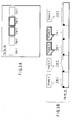
- FIGS. 3A and 3B are diagrams showing a concept of the present embodiment.
- FIG. 3B a concept of a title and chapters which are partial regions of the title is shown.
- FIG. 3A shows an example of a screen on which a list of the chapters included in the title is displayed.
- the list of the chapters is displayed by indicating thumbnails of representative screens of the respective chapters.
- attribute information showing the characteristics of the respective chapters are provided to the chapters in the title, and various processings are carried out by sorting the attribute information set to the respective chapters.
- FIGS. 3A and 3B as an example, in order for a user to easily distinguish chapters with specific attribute information, the thumbnails of the chapters with specific attribute information are framed and displayed.
- FIG. 4 shows an example of attribute information.
- the attribute information is provided so as to correspond to an entry point (EP) in accordance with the DVD-VR standard standing at the start point of individual chapter in the title recorded in the recording and playback apparatus.
- This drawing shows a data structure which an EP has.
- EP_Type shows whether or not the EP has text information.
- EP_PTM shows positional information in the title to which the EP is set. Here, it is shown in a form of time information with the start point of the title being a base point.
- PRM_TXTI is provided in a case where it is shown by the above-described EP_Type that the EP has text information, and the text information is accommodated therein. In some cases, this is used for storing a name applied to a chapter when an EP is used as a marker of the chapter boundary. These three data are established by the DVD_VR standard.
- Property_Flag is data particularly defined in the recording and playback apparatus of the present embodiment. This is flag information used when attribute information is set to a chapter, and has a sufficient number of bits so as to be able to be sorted into at least two or more types.
- particular information can be made to correspond to an EP for the purpose other than the contents described in the present embodiment.
- the particular information below the DVD-VR standard are stored on a recording medium, the particular information must be stored in a form different from that of the data defined in accordance with the DVD-VR standard.
- recording onto the hard disk 13a is not based on the DVD-VR standard.
- the Property_Flag is defined so as to correspond to the particular chapter boundary information which will be a marker of the chapter boundary.
- all the information used as the markers of chapter boundaries are called entry points (EP).
- the aforementioned Property_Flag is used as one technique of setting attribute information to the chapters. Namely, the attribute information are set to the chapters which are the partial regions in the title by setting values to the Property_Flags, and by sorting the chapters in accordance with the values set to the Property_Flags, the chapters which are the partial regions in the title are sorted on the basis of the attribute information.
- the text information in the EP can be utilized in a form independently of sorting chapters.
- attribute information are set to the chapters which are the partial'regions in the.title by setting text information to the EPs standing at the start points.of the chapters, and by sorting the chapters in accordance with the presence/absence of text information by the values set to the EP_Types, the chapters which are the partial regions in the title are sorted on the basis of the attribute information.
- attribute information are set to the chapters which are the partial regions in the title by setting text information of specific character string to the EPs standing at the start points of the chapters, and by sorting the chapters in accordance with the presence/absence of the specific character string described in the PRM_TXTIs, the chapters which are the partial regions in the title are sorted on the basis of the attribute information.
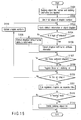
- FIG. 5 shows processing operations of setting the attribute information to the chapters by using the Property_Flags.
- step S501 parameters needed for carrying'out the processing are inputted.
- a title number for specifying a title of a processing object, a chapter number for specifying a chapter of a processing object in the title, and a value of attribute information provided to the chapter, i.e., a value provided to the Property_Flag shown in FIG. 4 are inputted.
- step S502 an entry point (EP) standing at the start point of the chapter specified by the inputted chapter number is specified.
- step S503 the value of the attribute information inputted above to the Property Flag corresponding to the EP is set to the EP specified in step S502, and the processing is completed.
- step S501 in the recording and playback apparatus, suppose that the inputting of the parameters in the above-described step S501 is carried out as shown hereinafter. For example, suppose that those parameters are inputted by operating the key input unit 30 shown in FIG. 1 by a user.
- the above-described parameters may be inputted on the basis of the information fed-back to the microcomputer block 17 via a route (not shown) on the basis of the signal detected by the A/V input unit 20 or the TV tuner unit 21 shown in FIG. 1.
- a route (not shown) on the basis of the signal detected by the A/V input unit 20 or the TV tuner unit 21 shown in FIG. 1.
- switching of a main program and a CM is detected on the basis of switching of audio signals to be mono/stereo of, and a chapter boundary is set at the portion of the switching, and moreover, separate attribute information are respectively set to the main program and the CM with respect to the chapter boundary.
- FIG. 6 shows processing operations of registering a specific character string which will be a key when the chapters are sorted in accordance with the presence/absence of the specific character string described in PRM TXTI.
- step S601 a specific character string which will be a key at the time of sorting the chapters is inputted.
- step S602 the inputted specific character string is stored on the recording and playback apparatus, and the processing is completed.
- the input of a specific character string which will be a key in the step S601 is carried out, for example, by operating the key input unit 30 shown in FIG. 1 by the user. Further, suppose that the registration of the inputted specific character string is recorded, for example, on the HDD unit 13 shown in FIG. 1, and moreover, the registration of the inputted specific character string is usually stored on the work RAM 24 in order to make an access easy.
- the specific character string registered by the user is used as a key at the time of sorting the chapters.
- the specific character string which is the sort key may be registered in advance in the recording and playback apparatus body.
- FIG. 7 shows processing operations of interpreting the attribute information set to the chapters by using Property_Flags.
- step S701 a chapter number for specifying a chapter which will be processing object is inputted.
- step S702 an entry point (EP) standing at the start point of the objective chapter is specified.
- step S703 a value of the attribute information set to the Property_Flag corresponding to the EP is interpreted with respect to the EP specified in step S702.
- step S704 the attribute of the chapter to be processed is determined on the basis of the value set to the Property_Flag, and the processing is completed.
- FIG. 8 shows processing operations of interpreting the attribute information set to the chapters by using EP_Types.
- step S801 a chapter number for specifying a chapter to be processing object is inputted.
- step S802 an entry point standing at the start point of the objective chapter is specified.
- step S803 a value set to EP_Type of the EP specified in step S802 is interpreted.
- step S804 the attribute of the chapter to be processed is determined on the basis of the value set to the EP_Type,i.e., in accordance with the presence/absence, of text information, and the processing is completed.
- FIG. 9 shows processing operations of interpreting the attribute information.set to the chapters by the technique of registering a specific character string which will be a key at the time of sorting the chapters with PRM_TXTI.
- step S901 a chapter number for specifying a chapter which will be a processing object is inputted.
- step S902 an entry point (EP) standing at the start point of the objective chapter is specified.
- step S903 a value set to an EP_Type of the EP specified in step S902 is interpreted.
- step S904 the processing is diverged in accordance with whether or not the aforementioned EP has text information with respect to the value of the EP_Type interrupted in step S903.
- the processing proceeds to step S907, and an attribute of the chapter is determined as "without text information", and the processing is completed.
- step S905 a specific character string described in a PRM_TXTI of the EP is interpreted.
- the specific character string registered in the recording and playback apparatus by the processing operations described above in FIG. 6, or the specific character string registered in advance in the recording and playback apparatus is used as a sort key.
- step S906 an attribute of the chapter to be processed is determined on the basis of a compared result of the character string described in the aforementioned PRM TXTI and the specific character string which is a sort key, and the processing is completed.
- FIGS. 10A and 10B to 12 describe means for displaying such that the user can recognize differences in the attribute information by using the attribute information of the chapters.
- FIGS. 10A and 10B show one example in which the chapters are displayed such that differences in the attribute of each chapter can be recognized on the basis of the attribute information set to each chapter in the title by the three types (Property_Flag, EP_Type, PRM_TXTI) of means described above.
- FIGS. 10A and 10B in order to easily distinguish the chapters with specific attribute information among the attribute information set to the respective chapters, when a list of the chapters in the title is displayed on the screen, marks M are appended on the thumbnails of the chapters with specific attribute information, and are displayed.
- FIG. 11 shows processing operations of displaying a difference in the attribute of each chapter so as to be recognizable on the basis of the attribute information set to each chapter in the title by the three types (Property_Flag, EP_Type, PRM_TXTI) of means described above.
- step S1101 a number of a title which is an object in which a list-display of chapters is carried out is inputted.
- step S1102 initial values of chapter numbers to be displayed are set.
- the initial values of the chapter numbers in step S1102 are to be a number of the first chapter in the chapter group in units of several chapters which are displayed at a time.
- step S1103 the attribute information of the chapters which will be objects are verified. This is realized by the processing operations described above in FIGS. 7 to 9.
- step S1104 marks are indicated on the thumbnails of the chapters on the basis of the interpreted attribute information of the chapters.
- marks M may be indicated on the thumbnails of the chapters with specific attribute information. Or, separate marks may be indicated with respect to the thumbnails of all the chapters on the basis of a difference in the attribute information. Further, marks may be indicated on the basis of, not only the logic of "selection” that some specific information is provided, but also the logic of "rejection” that some specific information is not provided.
- step S1105 the processing is diverged in accordance with whether or not the chapter to be processed is the last chapter.
- the last chapter described here shows the last chapter in the chapter group in units of several chapters which are displayed at a time.
- step S1105 When it is determined that the chapter to be processed is not the last chapter yet in the step S1105, the processing proceeds to step S1106, the chapter number is updated, and the processing operations described above in step S1103 to step S1105 are applied to the new chapter. Further, when it is determined that the chapter is the last chapter, a series of the processing operations are entirely completed.
- FIG. 12 shows other processing operations of displaying a difference in the attribute of each chapter so as to be recognizable on the basis of the attribute information set to each chapter in the title by the three types (Property_Flag, EP_Type, PRM_TXTI) of means described above.
- step S1201 a number of the title which is an object in which a list-display of chapters is carried out is inputted.
- step S1202 initial values of the chapter numbers to be displayed are set. The initial values of the chapter numbers are as described above in step S1102 of FIG. 11.
- step S1203 the attribute information of the chapters which will be objects are verified. This is realized by the processing operations described above in FIGS. 7 to 9.
- step S1204 frames are indicated on the thumbnails of the chapters on the basis of'the interpreted attribute information of the chapters.
- frames may be indicated on the thumbnails of the chapters with specific attribute information.
- frames whose colors, patterns, or the like are made different from each other on the basis of a difference in the attribute information may be indicated on the thumbnails of all the chapters.
- frames may be indicated on the basis of, not only the logic of "selection” that some specific information is provided, but also the logic of "rejection” that some specific information is not provided.
- step S1205 the processing is diverged in accordance with whether or not the chapter to be processed is the last chapter. This last chapter is as described above in step S1105 of FIG. 11.
- step S1205 When it is determined that the chapter is not the last chapter yet in the step S1205, the processing proceeds to step S1206, the chapter number is updated, and the processing operations in step S1203 to step S1205 described above are applied to the new chapter. Further, when it is determined that the chapter is the last chapter, a series of the processing operations are entirely completed.
- a list-display of the chapters is carried out by indicating the thumbnails of the chapters.
- this is not limited to the thumbnail display, and can be applied to a chapter list-display without using the thumbnails.
- a list-display of the chapters in accordance with the examples described by using FIGS. 3A, 3B, 10A, and 10B to 12 can be realized, for example, in a mode in which the recorded contents are list-displayed, or may be a list-display of the chapters as a display of a parts list which can be registered with the play list at the time of editing the play list.
- FIGS. 13 to 23 describe means for carrying out processings which are the same level as even more complicated editing operations by simple operations carried out by the user by utilizing attribute information of the chapters.
- FIGS. 13 to 20 show examples of a case where editing processings are collectively applied with respect to a plurality of chapters in one title which exist and which have the same attribute.
- FIG. 13 shows processing operations of sorting the chapters in the title in accordance with differences in the attribute information, and of automatically carrying out parts registration with a play list, on the basis of the attribute information set to each chapter in the title by the three types (Property_Flag, EP_Type, PRM_TXTI) of means described above.
- step S1301 a play list which is an editing object is ensured.
- a new play list is ensured, and the title numbers thereof are made to be editing objects.
- an existing prepared play list is reedited, the title numbers in the play list to be reedited are made to be editing objects.
- step S1302 a number of the title selected as a part is inputted.
- This editing function is configured such that only necessary chapters are automatically extracted and registered with the play list due to the processings from step 51303 on which will be described hereinafter. Therefore, in the step S1302, it is sufficient that the user designates only the title number as a part, and there is no need to designate the chapters to be registered as a part included in the title one by one.
- step S1303 a number of the first chapter which will be a processing object among the chapters included in the title inputted at the above-described step S1302 is set.
- the first chapter be an initial value. Attribute information of the chapter to be an object is verified. Further, provided that some chapters in the title are made to be objects, a number of the first chapter among the chapters included within the objective range can be made to be the initial value.
- step S1304 the attribute information of the chapters which will be objects are verified. This is realized by the processing operations described above in FIGS. 7 to 9.
- step S1305 the processing is diverged in accordance with how the attribute information of the chapters verified in the step S1304 are handled.
- the processing is diverged in accordance with whether it is based on the logic of "selection” that the chapters with some attribute information are made to be objects, or it is based on the logic of "rejection” that the chapters without some attribute information are made to be objects.
- step S1306 If it is based on the logic of "selection", the processing proceeds to step S1306, and the chapters with some attribute information are extracted. Concretely, for example, there is an example of processing in which the chapters having chapter names set thereto are extracted.
- step S1307 the processing proceeds to step S1307, and the chapters without some attribute information are extracted.
- the chapters having the specific character string that is "CM" described therein as text information are not extracted.
- step S1308 the processing is diverged in accordance with whether or not the chapter which is a current processing object is a chapter extracted in step S1306 or step S1307.
- step S1309 When the chapter which is a current processing object is a chapter extracted in step S1306 or step S1307, the processing proceeds to step S1309, and the chapter is registered as a part with the play list which is an editing object.
- step S1309 is skipped, and the chapter is not registered as a part with the play list.
- step S1310 the processing is diverged in accordance with whether or not the chapter to be processed is the last chapter. Usually, if all of the chapters in the title are made to be objects; it is determined whether or not the chapter is the last chapter among the chapters included in the title. Further, if some of the chapters in the title are made to be objects, it is determined whether or not the chapter is the last chapter among the chapters included within the objective range.
- step S1310 When it is determined that the chapter is not the last chapter yet in the step S1310, the processing proceeds to step S1311, the chapter number is updated, and the processing operations in step S1304 to step S1310 are applied to the new chapter. Further, when it is determined that the chapter is the last chapter, a series of the processing operations are entirely completed.
- FIG. 14 shows processing operations of sorting the chapters in the title in accordance with differences in the attribute information on the basis of the attribute information set to each chapter in the title by the three types (Property_Flag, EP_Type, PRM_TXTI) of means described above, and of dubbing those as one title.
- step S1401 a number of the title which is a dubbing object is inputted. Further, in addition thereto, media which are dubbing destinations are designated.
- This editing function is configured such that only necessary chapters are automatically extracted and dubbed by the processings from step S1402 on.
- step S1401 it is sufficient that the user merely designates only a number of the title which is a dubbing object, and there is no need to designate the chapters which are dubbing objects included in the title one by one.
- dubbing destinations separate media are designated as the dubbing destinations such that the contents on the hard disk 13a are dubbed onto the optical disk 11 or the contents on the optical disk 11 are dubbed onto the hard disk 13a by using the two types of disk drive units shown in FIG. 1 which the recording and playback apparatus has.
- the contents on the hard disk 13a and the optical disk 11 can be respectively dubbed onto the same media.
- a play list is made to be an original title on the same media by appropriating a mechanism of dubbing.
- the disk drive unit on which the contents to be dubbed have been recorded is designated as a dubbing destination.
- step S1402 a number of the first chapter which will be a processing object among the chapters included in the title inputted in the step S1401 is set.
- the fist chapter be made to be an initial value.
- a number of the first chapter among the chapters included within the objective range can be made to be an initial value.
- step S1403 the attribute information of the chapters which will be objects are verified. This is realized by the processing operations described above in FIGS. 7 to 9.
- step S1404 the processing is diverged in accordance with how the attribute information of the chapters verified in the step S1403 are handled.
- the processing is diverged in accordance with whether it is based on the logic of "selection” that the chapters with some attribute information are made to be objects, or it is based on the logic of "rejection” that the chapters without some attribute information are made to be objects.
- step S1405 If it is based on the logic of "selection", the processing proceeds to step S1405, and the chapters with some attribute information are extracted. Concretely, for example, there is an example of processing in which the chapters having chapter names set thereto are extracted.
- step S1406 the processing proceeds to step S1406, and the chapters without some attribute information are extracted.
- the chapters having the specific character string that is "CM" described therein as text information are not extracted.
- step S1407 the processing is diverged in accordance with whether or not the chapter which is a current processing object is a chapter extracted in the step S1405 or step S1406.
- step S1406 If the chapter which is a current processing object is a chapter extracted in the step S1405 or step S1406, the processing proceeds to step S1408, and the chapter is registered with the dubbing list in which dubbing objects are described.
- step S1408 is skipped, and the chapter is not registered with the dubbing list.
- step S1409 the processing is diverged in accordance with whether or not the chapter to be processed is the last chapter. Usually, if all of the chapters in the title are made to be objects, it is determined whether or not the chapter is the last chapter among the chapters included in the title. Further, if some of the chapters in the title are made to be objects, it is determined whether or not the chapter is the last chapter among the chapters included within the objective range.
- step S1410 When it is determined that the chapter is not the last chapter yet in the step S1409, the processing proceeds to step S1410, the chapter number is updated, and the processing operations in step S1403 to step S1409 are applied to the new chapter. Further, when it is determined that the chapter is the last chapter, the processing proceeds to step S1411.
- step S1411 the chapters registered with the dubbing list in the step S1408 are collected into one title, and are dubbed.
- step S1412 the processing is diverged in accordance with whether the dubbing processing is a "moving" system in which the title which is a dubbing object is deleted or a "copy” system in which the title which is a dubbing object is stored as is.
- step S1413 If it is the dubbing by the "moving" system, the processing proceeds to step S1413, and the title which is a dubbing object is deleted. At that time, the title which is a dubbing object may be deleted so as to include the aforementioned chapters which have not been registered with the dubbing list, or, the aforementioned chapters which have not been registered with the dubbing list may be not deleted and left. Further, when it is not the dubbing by the "moving" system, step S1413 is skipped, and a series of the processing operations are entirely completed.
- FIG. 15 shows processing operations of sorting the chapters in the title in accordance with differences in the attribute information, and of automatically dubbing those as respectively separate titles, on the basis of the attribute information set to each chapter in the title by the three types (Property_Flag, EP_Type, PRM_TXTI) of means described above.
- step S1501 a number of the title which is a dubbing object is inputted. Further, in addition thereto, media which are dubbing destinations are designated.
- This editing function is configured such that only necessary chapters are automatically extracted and dubbed by the processings from step S1502 which will be described hereinafter on.
- step S1501 it is sufficient that the user merely designates only a number of the title which is a dubbing object, and there is no need to designate the chapters which are dubbing objects included in the title one by one.
- dubbing destinations separate media are designated as the dubbing destinations such that the contents on the hard disk 13a are dubbed onto the optical disk 11 or the contents on the optical disk 11 are dubbed onto the hard disk 13a by using the two types of disk drive units which the recording and playback apparatus shown in FIG. 1 has.
- the contents on the hard disk 13a and the optical disk 11 can be respectively dubbed onto the same media.
- the play list is made to be an original title on the same media by appropriating the mechanism of dubbing.
- the disk drive unit on which the contents to be dubbed are recorded are designated as the dubbing destinations.
- step S1502 a number of the first chapter which will be a processing object among the chapters included in the title inputted in the step S1501 is set.
- the fist chapter be made to be an initial value.
- a number of the first chapter among the chapters included within the objective range can be made to be an initial value.
- step S1503 the attribute information of the chapters which will be objects are verified. This is realized by the processing operations described above in FIGS. 7 to 9.
- step S1504 the processing is diverged in accordance with how the attribute information of the chapters verified in the step S1503 are handled.
- the processing is diverged in accordance with whether it is based on the logic of "selection” that the chapters with some attribute information are made to be objects, or it is based on the logic of "rejection” that the chapters without some attribute information are made to be objects.
- step S1505 If it is based on the logic of "selection", the processing proceeds to step S1505, and the chapters with some attribute information are extracted. Concretely, there is an example of processing in which the chapters having chapter names set thereto are extracted.
- step S1506 the processing proceeds to step S1506, and the chapters without some attribute information are extracted.
- the chapters having the specific character string that is "CM" described therein as text information are not extracted.
- step S1507 the processing is diverged in accordance with whether or not the chapter which is a current processing object is the chapter extracted in the step S1505 or step S1506.
- step S1508 When the chapter which is a current processing object is the chapter extracted in the step S1505 or step S1506, the processing proceeds to step S1508, and the chapter is registered with the dubbing list in which dubbing objects are described.
- step S1508 is skipped, and the chapter is not registered with the dubbing list.
- step S1509 the processing is diverged in accordance with whether or not the chapter to be processed is the last chapter. Usually, if all of the chapters in the title are made to be objects, it is determined whether or not the chapter is the last chapter among the chapters included in the title. Further, if some of the chapters in the title are made to be objects, it is determined whether or not the chapter is the last chapter among the chapters included within the objective range.
- step S1510 When it is determined that the chapter is not the last chapter yet in the step S1509, the processing proceeds to step S1510, the chapter number is updated, and the processing operations described above in step S1503 to step S1509 are applied to the new chapter. Further, when it is determined that the chapter is the last chapter, the processing proceeds to step S1511.
- step S1511 the chapters registered with the dubbing list in the step S1508 are dubbed as respectively separate titles.
- step S1512 the processing is diverged in accordance with whether the dubbing processing is a "moving" system in which the title which is a dubbing object is deleted or a "copy” system in which the title which is a dubbing object is stored as is.
- step S1513 the title which is a dubbing object is deleted.
- the title which is a dubbing object may be deleted so as to include the aforementioned chapters which have not been registered with the dubbing list, or the aforementioned chapters which have not been registered with the dubbing list may be not deleted and left.
- step S1513 is skipped, and a series of the processing operations are entirely completed.
- FIG. 16 shows processing operations of sorting the chapters in the title in accordance with differences in the attribute information, and of automatically deleting only chapters with some attribute, on the basis of the attribute information set to each chapter in the title by the three types (Property_Flag, EP_Type, PRM_TXTI) of means described above.
- step S1601 a number of the title which is a deleting object is inputted.
- This editing function is configured such that only specific chapters are automatically extracted and deleted by the processings from step S1602 which will be described hereinafter on. Therefore, in the step S1601, it is sufficient that the user merely designates only a number of the title which will be a deleting object, and there is no need to designate the chapters which are deleting objects included in the title one by one.
- step S1602 a number of the first chapter which will be a processing object among the chapters included in the title inputted in the step S1601 is set.
- the fist chapter be made to be an initial value.
- a number of the first chapter among the chapters included within the objective range can be made to be an initial value.
- step S1603 the attribute information of the chapters which will be objects are verified. This is realized by the processing operations described above in FIGS. 7 to 9.
- step S1604 the processing is diverged in accordance with how the attribute information of the chapters verified in the step S1603 are handled.
- the processing is diverged in accordance with whether it is based on the logic of "selection” that the chapters with some attribute information are made to be objects, or it is based on the logic of "rejection” that the chapters without some attribute information are made to be objects.
- step S1605 If it is based on the logic of "selection", the processing proceeds to step S1605, and the chapters with some attribute information are extracted. Concretely, for example, there is an example of processing in which the chapters having chapter names set thereto are extracted.
- step S1606 the processing proceeds to step S1606, and the chapters without some attribute information are extracted.
- the chapters having the specific character string that is "CM" described therein as text information are not extracted.
- step S1607 the processing is diverged in accordance with whether or not the chapter which is a current processing object is the chapter extracted in the step S1605 or step S1606.
- step S1605 When the chapter which is a current processing object is the chapter extracted in the step S1605 or step S1606, the processing proceeds to step S1608, and the chapter is deleted.
- step S1608 is skipped, and the chapter is not deleted.
- step S1609 the processing is diverged in accordance with whether or not the chapter to be processed is the last chapter. Usually, if all of the chapters in the title are made to be objects, it is determined whether or not the chapter is the last chapter among the chapters included in the title. Further, if some of the chapters in the title are made to be objects, it is determined whether or not the chapter is' the last chapter among the chapters included within the objective range.
- step S1610 When it is determined that the chapter is not the last chapter yet in the step S1609, the processing proceeds to step S1610, the chapter number is updated, and the processing operations described above in step S1603 to step S1609 are applied to the new chapter. Further, when it is determined that the chapter is the last chapter, the processing proceeds to step S1611.
- step S1611 the processing is diverged in accordance with whether or not the title to be processed is made to be empty by deleting the chapters.
- the processing is diverged in accordance with whether or not the title to be processed is made to be empty by deleting the chapters.
- the chapters included in the title to be processed have the same attribute, and are extracted in step S1605 or step S1606, and as a result thereof, all the chapters in the title are deleted.
- step S1612 the empty title to be processed is deleted. Further, when the title to be processed is not made to be empty, step S1612 is skipped, and a series of the processing operations are entirely completed.
- FIG. 17 shows processing operations of sorting the chapters in the title in accordance with differences in the attribute information, and of automatically deleting only chapters with some attribute, on the basis of the attribute information set to each chapter in the title by the three types (Property_Flag, EP_Type, PRM_TXTI) of means described above.
- step S1701 a number of the title to be played-back is inputted.
- This editing function is configured such that only specific chapters are automatically extracted and playback-displayed or preview-displayed by the processings from step S1702 which will be described hereinafter on. Therefore, in the step S1701, it is sufficient that the user merely designates only a number of the title to be played-back, and there is no need to designate the chapters to be played-back included in the title one by one.
- step S1702 a number of the first chapter which will be a processing object among the chapters included in the title inputted in the step S1701 is set.
- the fist chapter it is recommended that the fist chapter be made to be an initial value.
- a number of the first chapter among the chapters included within the objective range can be made to be an initial value.
- step S1703 the attribute information of the chapters which will be objects are verified. This is realized by the processing operations described above in FIGS. 7 to 9.
- step S1704 the processing is diverged in accordance with how the attribute information of the chapters verified in the step S1703 are handled.
- the processing is diverged in accordance with whether it is based on the logic of "selection” that the chapters with some attribute information are made to be objects, or it is based on the logic of "rejection” that the chapters without some attribute information are made to be objects.
- step S1705 If it is based on the logic of "selection", the processing proceeds to step S1705, and the chapters with some attribute information are extracted. Concretely, for example, there is an example of processing in which the chapters having chapter names set thereto are extracted.
- step S1706 the processing proceeds to step S1706, and the chapters without some attribute information are extracted.
- the chapters having the specific character string that is "CM" described therein as text information are not extracted.
- step S1707 the processing is diverged in accordance with whether or not the chapter which is a current processing object is the chapter extracted in the step S1705 or step S1706.
- step S1708 the processing is diverged in accordance with whether or not the chapter to be processed is played back in a "preview mode".
- step S1709 In a case of a "preview mode", the processing proceeds to step S1709, and only one part of the chapter is playback-displayed. Further, in a case of not a "preview mode”, the processing proceeds to step S1710, and the entire chapter is playback-displayed.
- step S1707 the chapter which is a current processing object is not the chapter which was extracted in the step S1705 or step S1706, the processings in the step S1708 to step S1710 are skipped, and a playback-display of the chapter is not carried out.
- step S1711 the processing is diverged in accordance with whether or not the chapter to be processed is the last chapter. Usually, if all of the chapters in the title are made to be objects, it is determined whether or not the chapter is the last chapter among the chapters included in the title. Further, if some of the chapters in the title are made to be objects, it is determined whether or not the chapter is the last chapter among the chapters included within the objective range.
- step S1711 When it is determined that the chapter is not the last chapter yet in the step S1711, the processing proceeds to step S1712, the chapter number is updated, and the processing operations in step S1703 to step S1711 are applied to the new chapter. Further, when it is determined that the chapter is the last chapter, a series of the processing operations are entirely completed.
- FIG. 18 shows processing operations of sorting the chapters in the title in accordance with differences in the attribute information, and of combining adjacent chapters with some attribute into one chapter, on the basis of the attribute information set to each chapter in the title by the three types (Property_Flag, EP_Type, PRM_TXTI) of means described above.
- step S1801 a number of the title to be processed is inputted.
- This editing function is configured such that only adjacent specific chapters are automatically extracted and combined by the processings from step S1802 which will be described hereinafter on. Therefore, in the step S1801, it is sufficient that the user merely designates only a number of the title to be processed, and there is no need to designate the chapters to be processed included in the title one by one.
- step S1802 a number of the first chapter which will be a processing object among the chapters included in the title inputted in the step S1801 is set.
- the fist chapter be made to be an initial value.
- a number of the first chapter among the chapters included within the objective range can be made to be an initial value.
- step S1803 the attribute information of the chapters which will be objects are verified. This is realized by the processing operations described above in FIGS. 7 to 9.
- step S1804 the processing is diverged in accordance with how the attribute information of the chapters verified in the step S1803 are handled.
- the processing is diverged in accordance with whether it is based on the logic of "selection” that the chapters with some attribute information are made to be objects, or it is based on the logic of "rejection” that the chapters without some attribute information are made to be objects.
- step S1805 If it is based on the logic of "selection", the processing proceeds to step S1805, and the chapters with some attribute information are extracted. Concretely, for example, there is an example of processing in which the chapters having chapter names set thereto are extracted.
- step S1806 the processing proceeds to step S1806, and the chapters without some attribute information are extracted.
- the chapters having the specific character string that is "CM"' described therein as text information are not extracted.
- step S1807 the processing is diverged in accordance with whether or not the chapter which is a current processing object is the chapter extracted in the step S1805 or step S1806.
- step S1805 If the chapter which is a current processing object is the chapter extracted in the step S1805 or step S1806, the processing proceeds to step S1808, and the attribute information of the next chapter adjacent to the chapter which is a current processing object is verified. This is realized by the processing operations described above in FIGS. 7 to 9.
- step S1809 it is determined whether or not the aforementioned chapter which is a current processing object and the next chapter adjacent thereto have the same attribute.
- the processing proceeds to step S1810, and the chapter which is a current processing object and the next chapter adjacent thereto are determined as a pair which can be combined together, and registered with the list. Further, in contrast thereto, when these two chapters have respectively separate attributes, step S1810 is skipped, and those are not registered with the list for combination object chapters.
- step S1807 the chapter which is a current processing object is not the chapter extracted in the step S1805 or step S1806; a series of the processings in the step S1808 to step S1810 are skipped.
- step S1811 the processing is diverged in accordance with whether or not the chapter to be processed is the last chapter.
- the chapter is the last chapter among the chapters included in the title.
- it is determined whether or not the chapter is the last chapter among the chapters included within the objective range.
- step S1812 When it is determined that the chapter is not the last chapter yet in the step S1811, the processing proceeds to step S1812, the chapter number is updated, and the processing operations in step S1803 to step S1811 are applied to the new chapter. Further, when it is determined that the chapter is the last chapter, the processing proceeds to step S1813.
- step S1813 chapters which have been registered with the list for combination object chapters in the step S1810, the chapters having the same attribute and being adjacent to one another are combined into one, and a series of the processing operations are completed.
- an editing result which is the same as in a case where the chapters with the same attribute are collected into one play list and all of the chapters are combined can be realized with simple operations, and the ease of operation of the user is improved.
- FIGS. 19 and 20 show processing operations of sorting the chapters in the title in accordance with differences in the attribute information, and of carrying out regular interval chapter division with only the chapters with some attribute being as the objects, on the basis of the attribute information set to each chapter in the title by the three types (Property_Flag, EP_Type, PRM_TXTI) of means described above.
- step S1901 a number of the title to be processed and a time interval for chapter division are inputted.
- This editing function is configured such that only necessary chapters are automatically extracted and regular interval chapter division is carried out thereto by the processings from step S1902 which will be described hereinafter on. Therefore, in the step S1901, it is sufficient that the user merely designates only a number of the title to be processed, and there is no need to designate the chapters which are processing objects included in the title one by one.
- step S1902 an initial value of a time interval up to a dividing position at which chapter division is carried out is set.
- the time interval inputted in the step S1901 is set as is.
- a number of the first chapter which will be a processing object among the chapters included in the title inputted in the step S1901 is set.
- the fist chapter be made to be an initial value.
- a number of the first chapter among the chapters included within the objective range can be made to be an initial value.
- step S1904 the attribute information of the chapters which will be objects are verified. This is realized by the processing operations described above in FIGS. 7 to 9.
- step S1905 the processing is diverged in accordance with how the attribute information of the chapters verified in the step S1904 are handled.
- the processing is diverged in accordance with whether it is based on the logic of "selection” that the chapters with some attribute information are made to be objects, or it is based on the logic of "rejection” that the chapters without some attribute information are made to be objects.
- step S1906 If it is based on the logic of "selection", the processing proceeds to step S1906, and the chapters with some attribute information are extracted. Concretely, for example, there is an example of processing in which the chapters having chapter names are set are extracted.
- step S1907 the processing proceeds to step S1907, and the chapters without some attribute information are extracted.
- the chapters having the specific character string that is "CM" described therein as text information are not extracted.
- step S1908 the processing is diverged in accordance with whether or not the chapter which is a current processing object is the chapter extracted in the step S1906 or step S1907.
- step S1909 If the chapter which is a current processing object is the chapter extracted in the step S1906 or step S1907, the processing proceeds to step S1909, and it is determined whether or not the chapter dividing position goes over the chapter.
- step S1910 When the chapter dividing position does not go over the chapter, the processing proceeds to step S1910, and the chapter division is executed in the step. Next, the processing proceeds to step S1911, a time interval up to the next dividing position is set, and the processing returns to the aforementioned step S1909.
- step S1909 to step S1911 are repeated, and regular interval chapter division is carried out.
- step S1912 a value obtained by subtracting a time of the remaining portion of the chapter from the set time interval is set as a time interval up to the next chapter dividing position.
- the time interval for the regular interval chapter division inputted in the step S1901 is at intervals of 5 minutes, and when the remaining portion of the chapter is three minutes, two minutes obtained by subtracting three minutes from five minutes is made to be the time interval up to the first chapter dividing position in the next chapter.
- step S1908 when the chapter which is a current processing object is not the chapter extracted in the step S1906 or step S1907, a series of the processings in step S1909 to step S1912 are skipped.
- step S1913 the processing is diverged in accordance with whether or not the chapter to be processed is the last chapter.
- the chapter is the last chapter among the chapters included in the'title.
- it is determined whether or not the chapter is the last chapter among the chapters included within the objective range.
- step S1913 When it is determined that the chapter is not the last chapter yet in the step S1913, the processing proceeds to step S1914, the chapter number is updated, and the processing operations in step S1904 to step S1913 are applied to the new chapter. Further, when it is determined that the chapter is the last chapter, a series of the processings are entirely completed.
- an editing result which is the same as in a case where the chapters with the same attribute are collected into one play list and regular interval chapter division is carried out can be carried out with simple operations, and the ease of operation of the user is improved.
- FIG. 21 shows processing operations of sorting the chapters in the title in accordance with differences in the attribute information, and of automatically changing chapters with some attribute collectively so as to have another attribute, on the basis of the attribute information set to each chapter in the title by the three types (Property_Flag, EP_Type, PRM_TXTI) of means described above.
- step S2101 a number of the title to be processed is inputted.
- This editing function is configured such that only specific chapters are automatically extracted and the attribute thereof are changed by the processings from step S2102 which will be described hereinafter on. Therefore, in the step S2101, it is sufficient that the user merely designates only a number of the title to be processed, and there is no need to designate the chapters which are changing objects included in the title one by one.
- step S2101 in addition thereto, values of the attribute information after changing attribute are inputted.
- a value newly set to the Property_Flag of an entry point (EP) is inputted.
- an operation such as setting of an appropriate name, or erasing of a chapter name corresponds thereto.
- an operation of setting an appropriate character string as text information of a chapter corresponds thereto.
- step S2102 a number of the first chapter which will be a processing object among the chapters included in the title inputted in the step S2101 is set.
- the fist chapter it is recommended that the fist chapter be made to be an initial value.
- a number of the first chapter among the chapters included within the objective range can be made to be an initial value.
- step S2103 the attribute information of the chapters which will be objects are verified. This is realized by the processing operations described above in FIGS. 7 to 9.
- step S2104 the processing is diverged in accordance with how the attribute information of the chapters verified in the step S2103 are handled.
- the processing is diverged in accordance with whether it is based on the logic of "selection” that the chapters with some attribute information are made to be objects, or it is based on the logic of "rejection” that the chapters without some attribute information are made to be objects.
- step S2105 If it is based on the logic of "selection", the processing proceeds to step S2105, and the chapters with some attribute information are extracted. Concretely, for example, there is an example of processing in which the chapters having chapter names set thereto are'extracted.
- step S2106 the processing proceeds to step S2106, and the chapters without some attribute information are extracted.
- the chapters having the specific character string that is "CM" described therein as text information are not extracted.
- step S2107 the processing is diverged in accordance with whether or not the chapter which is a current processing object is the chapter extracted in the step S2105 or step S2106.
- step S2106 If the chapter which is a current processing object is the chapter extracted in the step S2105 or step S2106, the processing proceeds to step S2108, and the attribute information of the chapter is changed.
- step S2108 is skipped, and the attribute information of the chapter is not changed.
- step S2109 the processing is diverged in accordance with whether or not the chapter to be processed is the last chapter.
- the chapter is the last chapter among the chapters included in the title.
- it is determined whether or not the chapter is the last chapter among the chapters included within the objective range.
- step S2109 When it is determined that the chapter is not the last chapter yet in the step S2109, the processing proceeds to step S2110, the chapter number is updated, and the processing operations in step S2103 to step S2109 are applied to the new chapter. Further, when it is determined that the chapter is the last chapter, a series of the processing operations are entirely completed.
- FIGS. 21 to 24 show processing operations in which a plurality of chapters which exist in one title and which have the same attribute are made to be objects for editing processing while being sequentially switched. Namely, originally, the editing operation is to be applied to one chapter. However, chapters with the same attribute are extracted, those are made to be a processing object one by one for the editing operation, and the user collectively applies the editing processing onto those.
- FIG. 22 shows processing operations of sorting the chapters in the title in accordance with differences in the attribute information, and of applying "chapter thumbnail setting" while sequentially switching chapters with the same attribute, on the basis of the attribute information set to each chapter in the title by the three types (Property_Flag, EP_Type, PRM_TXTI) of means described above.
- step S2201 a number of the title to be processed is inputted.
- This editing function is configured such that only specific chapters are extracted and those are one by one made to be a processing object for "chapter thumbnail setting" by the processings from step S2202 which will'be described hereinafter on. Therefore, in the step S2201, it is sufficient that the user merely designates only a number of the title to be processed, and there is no need to designate the chapters which are processing objects included in the title one by one.
- step S2202 a number of the first chapter which will be a processing object for "chapter thumbnail setting" among the chapters included in the title inputted in the step S2201 is set.
- the fist chapter it is recommended that the fist chapter be made to be an initial value.
- a number of the first chapter among the chapters included within the objective range can be made to be an initial value.
- step S2203 the attribute information of the chapters which will be objects are verified. This is realized by the processing operations described above in FIGS. 7 to 9.
- step S2204 the processing is diverged in accordance with how the attribute information of the chapters verified in the step S2203 are handled.
- the processing is diverged in accordance with whether it is based on the logic of "selection” that the chapters with some attribute information are made to be objects, or it is based on the logic of "rejection” that the chapters without some attribute information are made to be objects.
- step S2205 If it is based on the logic of "selection", the processing proceeds to step S2205, and the chapters with some attribute information are extracted. Concretely, for example, there is an example of processing in which the chapters having chapter names set thereto are extracted.
- step S2206 the processing proceeds to step S2206, and the chapters without some attribute information are extracted.
- the chapters having the specific character string that is "CM" described therein as text information are not extracted.
- step S2207 the processing is diverged in accordance with whether or not the chapter which is a current processing object is the chapter extracted in the step S2205 or step S2206.
- step S2208 the aforementioned current processing object chapter is made to be a processing object for "chapter thumbnail setting".
- step S2209 the processing is diverged in accordance with whether or not "chapter thumbnail setting" processing with respect to the aforementioned current processing object chapter is carried out.
- the processing proceeds to step S2210, and the user executes "chapter thumbnail setting" on the operation screen.
- step S2210 is skipped, and the user does not execute "chapter thumbnail setting".
- step S2207 when the aforementioned current processing object chapter is not the chapter extracted in the step S2205 or step S2206, a series of the processing operations in step S2208 to step S2210 is skipped.
- step S2211 the processing is diverged in accordance with whether or not the chapter to be processed is the last chapter. Usually, if all of the chapters in the title are made to be objects, it is determined whether or not the chapter is the last chapter among the chapters included in the title. Further, if some of the chapters in the title are made to be objects, it is determined whether or not the chapter is the last chapter among the chapters included within the objective range.
- step S2211 When it is determined that the chapter is not the last chapter yet in the step S2211, the processing proceeds to step S2212, the chapter number is updated, and the processing operations in step S2203 to step S2211 are applied to the new chapter. Further, when it is determined that the chapter is the last chapter, a series of the processing operations are entirely completed.
- FIG. 23 shows processing operations of sorting the chapters in the title in accordance with differences in the attribute information, and of applying "chapter name setting" while sequentially switching chapters with the same attribute, on the basis of the attribute information set to each chapter in the title by the three types (Property_Flag, EP_Type, PRM_TXTI) of means described above.
- step S2301 a number of the title to be processed is inputted.
- This editing function is configured such that only specific chapters are extracted and those are one by one made to be a processing object for "chapter name setting" by the processings from step S2302 which will be described hereinafter on. Therefore, in the step S2301, it is sufficient that the user merely designates only a number of the title to be processed, and there is no need to designate the chapters which are processing objects included in the title one by one.
- step S2302 a number of the first chapter which will be a processing object for "chapter name setting" among the chapters included in the title inputted in the step S2301 is set.
- the fist chapter it is recommended that the fist chapter be made to be an initial value.
- a number of the first chapter among the chapters included within the objective range can be made to be an initial value.
- step S2303 the attribute information of the chapters which will be objects are verified. This is realized by the processing operations described above in FIGS. 7 to 9.
- step S2304 the processing is diverged in accordance with how the attribute information of the chapters verified in the step S2303 are handled.
- the processing is diverged in accordance with whether it is based on the logic of "selection” that the chapters with some attribute information are made to be objects, or it is based on the logic of "rejection” that the chapters without some attribute information are made to be objects.
- step S2305 If it is based on the logic of "selection”, the processing proceeds to step S2305, and the chapters with some attribute information are extracted. Further, if it is based on the logic of "rejection”, the processing proceeds to step S2306, and the chapters without some attribute information are extracted.
- step S2307 the processing is diverged in accordance with whether or not the chapter which is a current processing object is the chapter extracted in the step S2305 or step S2306.
- step S2308 the aforementioned current processing object chapter is made to be a processing object for "chapter name setting".
- step S2309 the processing is diverged in accordance with whether or not "chapter name setting" processing with respect to the aforementioned current processing object chapter is carried out.
- the processing proceeds to step S2310, and the user executes "chapter name setting" on the operation screen.
- step S2310 is skipped, and the user does not execute "chapter name setting".
- step S2307 when the current processing object chapter is not the chapter extracted in the step S2305 or step S2306, a series of the processing operations in step S2308 to step S2310 are skipped.
- step S2311 the processing is diverged in accordance with whether or not the chapter to be processed is the last chapter. Usually, if all of the chapters in the title are made to be objects, it is determined whether or not the chapter is the last chapter among the chapters included in the title. Further, if some of the chapters in the title are made to be objects, it is determined whether or not the chapter is the last chapter among the chapters included within the objective range.
- step S2311 When it is determined that the chapter is not the last chapter yet in the step S2311, the processing proceeds to step S2312, the chapter number is updated, and the processing operations in step S2303 to step S2311 described above are applied to the new chapter. Further, when it is determined that the chapter is the last chapter, a series of the processing operations are entirely completed.
- FIG. 24 shows processing operations of sorting the chapters in the title in accordance with differences in the attribute information, and of applying "chapter deletion" while sequentially switching chapters with the same attribute, on the basis of the attribute information set to each chapter in the title by the three types (Property_Flag, EP_Type, PRM_TXTI) of means described above.
- step S2401 a number of the title to be processed is inputted.
- This editing function is configured such that only specific chapters are extracted and those are one by one made to be a processing object for "chapter deletion" by the processings from step S2402 which will be described hereinafter on. Therefore, in the step S2401, it is sufficient that the user merely designates only a number of the title to be processed, and there is no need to designate the chapters which are processing objects included in the title one by one.
- step S2402 a number of the first chapter which will be a processing object for "chapter deletion" among the chapters included in the title inputted in the step S2401 is set.
- the fist chapter it is recommended that the fist chapter be made to be an initial value.
- a number of the first chapter among the chapters included within the objective range can be made to be an initial value.
- step S2403 the attribute information of the chapters which will be objects are verified. This is realized by the processing operations described above in FIGS. 7 to 9.
- step S2404 the processing is diverged in accordance with how the attribute information of the chapters verified in the step S2403 are handled.
- the processing is diverged in accordance with whether it is based on the logic of "selection” that the chapters with some attribute information are made to be objects, or it is based on the logic of "rejection” that the chapters without some attribute information are made to be objects.
- step S2405 If it is based on the logic of "selection”, the processing proceeds to step S2405, and the chapters with some attribute information are extracted. Further, if it is based on the logic of "rejection”, the processing proceeds to step S2406, and the chapters without some attribute information are extracted.
- step S2407 the processing is diverged in accordance with whether or not the chapter which is a current processing object is the chapter extracted in the step S2405 or step S2406.
- step S2408 the aforementioned current processing object chapter is made to be a processing object for "chapter deletion".
- step S2409 the processing is diverged in accordance with whether or not the user consents to the deletion of the aforementioned current processing object chapter.
- a warning screen such as "This chapter will be deleted. Are you sure you want to delete this chapter? YES/NO" is indicated on the operation screen, and due to the user being made to select YES/NO, the processing is diverged in accordance with whether or not the user consents to the deletion of the aforementioned current processing object chapter.
- step S2410 If the user consents to the deletion of the chapter, the processing proceeds to step S2410, and the chapter is deleted. In contrast thereto, in a case where the user does not consent to the deletion, step S2410 is skipped, and "chapter deletion" is not carried out.
- step S2407 when the chapter which is a current processing object is not the chapter extracted in the step S2405 or step S2406, a series of the processing operations in step S2408 to step S2410 are skipped.
- step S2411 the processing is diverged in accordance with whether or not the chapter to be processed is the last chapter. Usually, if all of the chapters in the title are made to be objects, it is determined whether or not the chapter is the last chapter among the chapters included in the title. Further, if some of the chapters in the title are made to be objects, it is determined whether or not the chapter is the last chapter among the chapters included within the objective range.
- step S2411 When it is determined that the chapter is not the last chapter yet in the step S2411, the processing proceeds to'step S2412, the chapter number is updated, and the processing operations in step S2403 to step S2411 described above are applied to the new chapter. Further, when it is determined that the chapter is the last chapter, the processing proceeds to step S2413.
- step S2413 the processing is diverged in accordance with whether or not the title to be processed is made to be empty by deleting the chapters.
- the processing is diverged in accordance with whether or not the title to be processed is made to be empty by deleting the chapters.
- the chapters included in the title to be processed have the same attribute, and are extracted in step S2405 or step S2406, and as a result thereof, all the chapters in the title are deleted.
- step S2414 the empty title to be processed is deleted. Further, if the title to be processed is not empty, step S2414 is skipped, and a series of the processing operations are entirely completed.
- the means for displaying such that differences in the attribute information of the chapters can be recognized in accordance with a mode in which marks M are indicated on the thumbnails of the chapters with specific attribute information, or the thumbnails of the chapters with specific attribute information are framed and displayed, when a list of the chapters in a title is displayed on the screen.
- any means for displaying differences in the attribute of each chapter so as to be recognizable may be further in a different mode.
- it may be a mode in which the thumbnails of all the chapters in the title are not displayed, but the chapters are divided into groups for each attribute information, and only thumbnails of a group of chapters with the same attribute information are list-displayed, and moreover, thumbnails of a group of chapters with another attribute information are list-displayed by a switching function.
- various inventions can be formed by appropriately combining a plurality of disclosed components which have been disclosed in the embodiment described above. For example, some of disclosed components may be eliminated from all the disclosed components shown in the embodiment. Moreover, disclosed components according to different embodiments may be appropriately combined.
Landscapes
- Engineering & Computer Science (AREA)
- Multimedia (AREA)
- Signal Processing (AREA)
- Television Signal Processing For Recording (AREA)
- Management Or Editing Of Information On Record Carriers (AREA)
Applications Claiming Priority (2)
| Application Number | Priority Date | Filing Date | Title |
|---|---|---|---|
| JP2003377314A JP2005142853A (ja) | 2003-11-06 | 2003-11-06 | 映像編集装置及び映像編集方法 |
| JP2003377314 | 2003-11-06 |
Publications (1)
| Publication Number | Publication Date |
|---|---|
| EP1530216A1 true EP1530216A1 (de) | 2005-05-11 |
Family
ID=34431323
Family Applications (1)
| Application Number | Title | Priority Date | Filing Date |
|---|---|---|---|
| EP04022841A Withdrawn EP1530216A1 (de) | 2003-11-06 | 2004-09-24 | Gerät und Verfahren zum Editieren von Bildern |
Country Status (3)
| Country | Link |
|---|---|
| US (1) | US20050100308A1 (de) |
| EP (1) | EP1530216A1 (de) |
| JP (1) | JP2005142853A (de) |
Cited By (2)
| Publication number | Priority date | Publication date | Assignee | Title |
|---|---|---|---|---|
| WO2007065818A1 (fr) * | 2005-12-08 | 2007-06-14 | Thomson Licensing | Procede d'identification d'un document enregistre par affichage et selection d'images clefs, et recepteur associe |
| EP2538411A1 (de) * | 2011-06-24 | 2012-12-26 | Thomson Licensing | Wiedergabevorrichtung und Verfahren zu deren Betrieb |
Families Citing this family (11)
| Publication number | Priority date | Publication date | Assignee | Title |
|---|---|---|---|---|
| GB2421135A (en) * | 2004-12-09 | 2006-06-14 | Sony Uk Ltd | User resizable video display of catalogue entries |
| KR100632584B1 (ko) * | 2004-12-20 | 2006-10-09 | 엘지전자 주식회사 | 자동 챕터 설정 장치 및 방법 |
| JP2007042195A (ja) | 2005-08-02 | 2007-02-15 | Funai Electric Co Ltd | 録画装置 |
| JP2007081835A (ja) * | 2005-09-14 | 2007-03-29 | Toshiba Corp | 映像編集装置、及び映像編集方法 |
| JP4779797B2 (ja) * | 2006-05-10 | 2011-09-28 | ソニー株式会社 | 情報処理装置、および情報処理方法、並びにコンピュータ・プログラム |
| US8214412B2 (en) | 2007-03-22 | 2012-07-03 | Panasonic Corporation | Playlist editing apparatus and playlist editing method |
| JP4856105B2 (ja) * | 2008-01-31 | 2012-01-18 | 株式会社東芝 | 電子機器および表示処理方法 |
| JP2010097665A (ja) * | 2008-10-17 | 2010-04-30 | Toshiba Corp | チャプタ分割方法および映像装置 |
| JP4924633B2 (ja) * | 2009-02-27 | 2012-04-25 | ソニー株式会社 | 情報処理装置、情報処理方法およびプログラム |
| JP5423199B2 (ja) * | 2009-07-17 | 2014-02-19 | 三菱電機株式会社 | 映像記録再生装置および映像記録再生方法 |
| JP2012004901A (ja) * | 2010-06-17 | 2012-01-05 | Toshiba Corp | 再生リストの作成/管理方法及びそれを実行する映像装置 |
Citations (1)
| Publication number | Priority date | Publication date | Assignee | Title |
|---|---|---|---|---|
| US20020076202A1 (en) * | 1999-05-12 | 2002-06-20 | Yasufumi Tsumagari | Digital video recording/playback system with entry point processing function |
Family Cites Families (10)
| Publication number | Priority date | Publication date | Assignee | Title |
|---|---|---|---|---|
| US5760767A (en) * | 1995-10-26 | 1998-06-02 | Sony Corporation | Method and apparatus for displaying in and out points during video editing |
| US5706097A (en) * | 1995-11-13 | 1998-01-06 | Eastman Kodak Company | Index print with a digital recording medium containing still images, motion sequences, and sound sequences |
| JP3432348B2 (ja) * | 1996-01-30 | 2003-08-04 | 三菱電機株式会社 | 代表画像表示方法、代表画像表示装置およびこの装置を用いた動画検索装置 |
| US5963204A (en) * | 1996-09-20 | 1999-10-05 | Nikon Corporation | Electronic camera with reproduction and display of images at the same timing |
| JPH10145722A (ja) * | 1996-11-07 | 1998-05-29 | Sony Corp | 再生制御データ生成装置およびその方法 |
| JP4348821B2 (ja) * | 2000-03-27 | 2009-10-21 | ソニー株式会社 | 編集装置、編集方法 |
| US7188319B2 (en) * | 2000-04-21 | 2007-03-06 | Microsoft Corporation | Displaying graphical information and user selected properties on a computer interface |
| US7032177B2 (en) * | 2001-12-27 | 2006-04-18 | Digeo, Inc. | Method and system for distributing personalized editions of media programs using bookmarks |
| JP2003216621A (ja) * | 2002-01-23 | 2003-07-31 | Fuji Photo Film Co Ltd | プログラム、画像管理装置、及び画像管理方法 |
| US20040210896A1 (en) * | 2003-04-21 | 2004-10-21 | Chou Charles C.L. | Distributed interactive media authoring and recording |
-
2003
- 2003-11-06 JP JP2003377314A patent/JP2005142853A/ja not_active Withdrawn
-
2004
- 2004-09-23 US US10/947,609 patent/US20050100308A1/en not_active Abandoned
- 2004-09-24 EP EP04022841A patent/EP1530216A1/de not_active Withdrawn
Patent Citations (1)
| Publication number | Priority date | Publication date | Assignee | Title |
|---|---|---|---|---|
| US20020076202A1 (en) * | 1999-05-12 | 2002-06-20 | Yasufumi Tsumagari | Digital video recording/playback system with entry point processing function |
Cited By (6)
| Publication number | Priority date | Publication date | Assignee | Title |
|---|---|---|---|---|
| WO2007065818A1 (fr) * | 2005-12-08 | 2007-06-14 | Thomson Licensing | Procede d'identification d'un document enregistre par affichage et selection d'images clefs, et recepteur associe |
| FR2894692A1 (fr) * | 2005-12-08 | 2007-06-15 | Thomson Licensing Sas | Procede d'identification d'un document enregistre par affichage et selection d'images clefs, et recepteur associe. |
| US8195028B2 (en) | 2005-12-08 | 2012-06-05 | Thomson Licensing | Method for identifying a document recorded by a display, selection of key images and an associated receptor |
| EP2538411A1 (de) * | 2011-06-24 | 2012-12-26 | Thomson Licensing | Wiedergabevorrichtung und Verfahren zu deren Betrieb |
| US8565585B2 (en) | 2011-06-24 | 2013-10-22 | Thomson Licensing | Reproduction device and method for operating the same |
| EP2538412A3 (de) * | 2011-06-24 | 2015-12-09 | Thomson Licensing | Wiedergabevorrichtung und Verfahren zu deren Betrieb |
Also Published As
| Publication number | Publication date |
|---|---|
| JP2005142853A (ja) | 2005-06-02 |
| US20050100308A1 (en) | 2005-05-12 |
Similar Documents
| Publication | Publication Date | Title |
|---|---|---|
| KR100658867B1 (ko) | 광 디스크, 기록 장치 및 재생 장치 | |
| KR100583497B1 (ko) | 광 디스크, 기록 장치 및 재생 장치 | |
| JP3631430B2 (ja) | 自動チャプタ作成機能付き記録再生装置 | |
| JP3906021B2 (ja) | マルチコントローラ | |
| JP3593015B2 (ja) | 異種規格情報混在記録管理システム | |
| EP1530216A1 (de) | Gerät und Verfahren zum Editieren von Bildern | |
| US20020127001A1 (en) | Recording/reproducing apparatus | |
| JP2002152657A (ja) | 録画レート自動設定録画装置及び録画レート自動設定録画方法 | |
| JP2004295947A (ja) | 情報記録媒体、情報記録/再生方法、および情報記録/再生装置 | |
| JP2002109831A (ja) | 記録再生装置 | |
| JP4102264B2 (ja) | デジタルav情報記録媒体とこの媒体を用いる記録/再生方法および記録/再生装置 | |
| JP3688573B2 (ja) | 記録再生装置 | |
| CN1856075B (zh) | 信息记录装置和方法及重放装置和方法 | |
| JP3612274B2 (ja) | プレイリスト作成ガイド機能付き記録再生装置 | |
| EP1256949A2 (de) | Digitales Aufzeichnungs/Wiedergabegerät | |
| JP3631422B2 (ja) | Dvd記録再生装置 | |
| US7263038B2 (en) | Data reproduction apparatus and data reproduction method | |
| JP3860537B2 (ja) | 映像情報処理装置及び映像情報処理方法 | |
| JP2005317076A (ja) | コンテンツ結合管理装置、コンテンツ結合管理方法、コンテンツ結合管理プログラム、及びコンピュータ読み取り可能な記録媒体 | |
| CN1838299B (zh) | 数字多用盘记录装置和使用该装置的逐单元编辑方法 | |
| JP3607596B2 (ja) | チャプタ作成ガイド機能付き記録再生装置 | |
| JP4071750B2 (ja) | プレイリスト作成ガイド機能付き記録再生装置 | |
| JP3917610B2 (ja) | チャプタ作成ガイド機能付き記録再生装置 | |
| JP2006323896A (ja) | 記録済み情報の自動削除機能を備えた記録再生装置、及びこの自動削除機能を実現する削除方法 | |
| JP2004364325A (ja) | 自動チャプタサムネイル作成方法 |
Legal Events
| Date | Code | Title | Description |
|---|---|---|---|
| PUAI | Public reference made under article 153(3) epc to a published international application that has entered the european phase |
Free format text: ORIGINAL CODE: 0009012 |
|
| 17P | Request for examination filed |
Effective date: 20040924 |
|
| AK | Designated contracting states |
Kind code of ref document: A1 Designated state(s): AT BE BG CH CY CZ DE DK EE ES FI FR GB GR HU IE IT LI LU MC NL PL PT RO SE SI SK TR |
|
| AX | Request for extension of the european patent |
Extension state: AL HR LT LV MK |
|
| AKX | Designation fees paid |
Designated state(s): DE GB |
|
| STAA | Information on the status of an ep patent application or granted ep patent |
Free format text: STATUS: THE APPLICATION IS DEEMED TO BE WITHDRAWN |
|
| 18D | Application deemed to be withdrawn |
Effective date: 20090106 |