EP1527199B1 - Procedes de detection d'acide nucleique anormalement methyle dans des echantillons biologiques heterogenes - Google Patents
Procedes de detection d'acide nucleique anormalement methyle dans des echantillons biologiques heterogenes Download PDFInfo
- Publication number
- EP1527199B1 EP1527199B1 EP03746704A EP03746704A EP1527199B1 EP 1527199 B1 EP1527199 B1 EP 1527199B1 EP 03746704 A EP03746704 A EP 03746704A EP 03746704 A EP03746704 A EP 03746704A EP 1527199 B1 EP1527199 B1 EP 1527199B1
- Authority
- EP
- European Patent Office
- Prior art keywords
- nucleic acid
- specific
- target nucleic
- sample
- primer
- Prior art date
- Legal status (The legal status is an assumption and is not a legal conclusion. Google has not performed a legal analysis and makes no representation as to the accuracy of the status listed.)
- Expired - Lifetime
Links
- 108020004707 nucleic acids Proteins 0.000 title claims abstract description 79
- 102000039446 nucleic acids Human genes 0.000 title claims abstract description 79
- 150000007523 nucleic acids Chemical class 0.000 title claims abstract description 79
- 238000000034 method Methods 0.000 title claims abstract description 62
- 239000012472 biological sample Substances 0.000 title claims abstract description 18
- 239000000523 sample Substances 0.000 claims abstract description 69
- 238000003199 nucleic acid amplification method Methods 0.000 claims abstract description 33
- 230000003321 amplification Effects 0.000 claims abstract description 32
- 108090000623 proteins and genes Proteins 0.000 claims abstract description 28
- 230000006607 hypermethylation Effects 0.000 claims abstract description 27
- 206010009944 Colon cancer Diseases 0.000 claims abstract description 17
- 208000001333 Colorectal Neoplasms Diseases 0.000 claims abstract description 16
- 238000012216 screening Methods 0.000 claims abstract description 5
- 108020004414 DNA Proteins 0.000 claims description 46
- 238000006243 chemical reaction Methods 0.000 claims description 18
- 102100025825 Methylated-DNA-protein-cysteine methyltransferase Human genes 0.000 claims description 15
- 108040008770 methylated-DNA-[protein]-cysteine S-methyltransferase activity proteins Proteins 0.000 claims description 15
- 102100027489 Helicase-like transcription factor Human genes 0.000 claims description 12
- OPTASPLRGRRNAP-UHFFFAOYSA-N cytosine Chemical class NC=1C=CNC(=O)N=1 OPTASPLRGRRNAP-UHFFFAOYSA-N 0.000 claims description 11
- 239000002773 nucleotide Substances 0.000 claims description 9
- 125000003729 nucleotide group Chemical group 0.000 claims description 9
- 239000003795 chemical substances by application Substances 0.000 claims description 8
- 208000029664 classic familial adenomatous polyposis Diseases 0.000 claims description 5
- 101000924577 Homo sapiens Adenomatous polyposis coli protein Proteins 0.000 claims description 3
- 101150098112 HLTF gene Proteins 0.000 claims description 2
- 102000055691 human APC Human genes 0.000 claims description 2
- 101710111216 Activated RNA polymerase II transcriptional coactivator p15 Proteins 0.000 claims 1
- 102100036441 Amyloid-beta A4 precursor protein-binding family A member 2 Human genes 0.000 claims 1
- 101710202081 FAD-linked sulfhydryl oxidase Proteins 0.000 claims 1
- -1 H1C1 Proteins 0.000 claims 1
- 101000928677 Homo sapiens Amyloid-beta A4 precursor protein-binding family A member 2 Proteins 0.000 claims 1
- 101001081105 Homo sapiens Helicase-like transcription factor Proteins 0.000 claims 1
- 101710156990 Protein S100-A9 Proteins 0.000 claims 1
- 102100022154 Ragulator complex protein LAMTOR2 Human genes 0.000 claims 1
- 238000001514 detection method Methods 0.000 abstract description 21
- 201000010099 disease Diseases 0.000 abstract description 19
- 208000037265 diseases, disorders, signs and symptoms Diseases 0.000 abstract description 19
- 238000007069 methylation reaction Methods 0.000 description 62
- 230000011987 methylation Effects 0.000 description 51
- 206010028980 Neoplasm Diseases 0.000 description 28
- 201000011510 cancer Diseases 0.000 description 23
- 230000000295 complement effect Effects 0.000 description 18
- 108091029430 CpG site Proteins 0.000 description 17
- 238000003556 assay Methods 0.000 description 15
- 239000000047 product Substances 0.000 description 15
- 238000002844 melting Methods 0.000 description 14
- 230000008018 melting Effects 0.000 description 14
- LSNNMFCWUKXFEE-UHFFFAOYSA-M Bisulfite Chemical compound OS([O-])=O LSNNMFCWUKXFEE-UHFFFAOYSA-M 0.000 description 13
- 210000001519 tissue Anatomy 0.000 description 12
- 101710180472 Helicase-like transcription factor Proteins 0.000 description 11
- 230000004048 modification Effects 0.000 description 11
- 238000012986 modification Methods 0.000 description 11
- 102000004169 proteins and genes Human genes 0.000 description 11
- 108091029523 CpG island Proteins 0.000 description 8
- ISAKRJDGNUQOIC-UHFFFAOYSA-N Uracil Chemical compound O=C1C=CNC(=O)N1 ISAKRJDGNUQOIC-UHFFFAOYSA-N 0.000 description 8
- 239000011324 bead Substances 0.000 description 8
- 239000003550 marker Substances 0.000 description 8
- 230000002159 abnormal effect Effects 0.000 description 7
- 238000000137 annealing Methods 0.000 description 7
- 102100031612 Hypermethylated in cancer 1 protein Human genes 0.000 description 6
- 101710133850 Hypermethylated in cancer 1 protein Proteins 0.000 description 6
- HEMHJVSKTPXQMS-UHFFFAOYSA-M Sodium hydroxide Chemical compound [OH-].[Na+] HEMHJVSKTPXQMS-UHFFFAOYSA-M 0.000 description 6
- 210000004027 cell Anatomy 0.000 description 6
- 230000001105 regulatory effect Effects 0.000 description 6
- 108091093088 Amplicon Proteins 0.000 description 5
- KCXVZYZYPLLWCC-UHFFFAOYSA-N EDTA Chemical compound OC(=O)CN(CC(O)=O)CCN(CC(O)=O)CC(O)=O KCXVZYZYPLLWCC-UHFFFAOYSA-N 0.000 description 4
- 108700039691 Genetic Promoter Regions Proteins 0.000 description 4
- QIGBRXMKCJKVMJ-UHFFFAOYSA-N Hydroquinone Chemical compound OC1=CC=C(O)C=C1 QIGBRXMKCJKVMJ-UHFFFAOYSA-N 0.000 description 4
- 102000048143 Insulin-Like Growth Factor II Human genes 0.000 description 4
- 108090001117 Insulin-Like Growth Factor II Proteins 0.000 description 4
- DWAQJAXMDSEUJJ-UHFFFAOYSA-M Sodium bisulfite Chemical compound [Na+].OS([O-])=O DWAQJAXMDSEUJJ-UHFFFAOYSA-M 0.000 description 4
- FAPWRFPIFSIZLT-UHFFFAOYSA-M Sodium chloride Chemical compound [Na+].[Cl-] FAPWRFPIFSIZLT-UHFFFAOYSA-M 0.000 description 4
- 102000007614 Thrombospondin 1 Human genes 0.000 description 4
- 108010046722 Thrombospondin 1 Proteins 0.000 description 4
- 239000007983 Tris buffer Substances 0.000 description 4
- 210000004877 mucosa Anatomy 0.000 description 4
- 235000010267 sodium hydrogen sulphite Nutrition 0.000 description 4
- 239000006228 supernatant Substances 0.000 description 4
- LENZDBCJOHFCAS-UHFFFAOYSA-N tris Chemical compound OCC(N)(CO)CO LENZDBCJOHFCAS-UHFFFAOYSA-N 0.000 description 4
- 229940035893 uracil Drugs 0.000 description 4
- 101150002416 Igf2 gene Proteins 0.000 description 3
- 108091034117 Oligonucleotide Proteins 0.000 description 3
- 230000001594 aberrant effect Effects 0.000 description 3
- 238000004458 analytical method Methods 0.000 description 3
- 230000027455 binding Effects 0.000 description 3
- 239000000872 buffer Substances 0.000 description 3
- 230000002068 genetic effect Effects 0.000 description 3
- 239000006148 magnetic separator Substances 0.000 description 3
- 239000000203 mixture Substances 0.000 description 3
- 239000013642 negative control Substances 0.000 description 3
- 239000013641 positive control Substances 0.000 description 3
- 238000011160 research Methods 0.000 description 3
- XLYOFNOQVPJJNP-UHFFFAOYSA-N water Chemical compound O XLYOFNOQVPJJNP-UHFFFAOYSA-N 0.000 description 3
- 241000972773 Aulopiformes Species 0.000 description 2
- 101000573882 Coccidioides posadasii (strain C735) Neutral protease 2 homolog MEP3 Proteins 0.000 description 2
- 102000053602 DNA Human genes 0.000 description 2
- NYHBQMYGNKIUIF-UUOKFMHZSA-N Guanosine Chemical compound C1=NC=2C(=O)NC(N)=NC=2N1[C@@H]1O[C@H](CO)[C@@H](O)[C@H]1O NYHBQMYGNKIUIF-UUOKFMHZSA-N 0.000 description 2
- KFZMGEQAYNKOFK-UHFFFAOYSA-N Isopropanol Chemical compound CC(C)O KFZMGEQAYNKOFK-UHFFFAOYSA-N 0.000 description 2
- 108010076693 O(6)-Methylguanine-DNA Methyltransferase Proteins 0.000 description 2
- 108010090804 Streptavidin Proteins 0.000 description 2
- IQFYYKKMVGJFEH-XLPZGREQSA-N Thymidine Chemical compound O=C1NC(=O)C(C)=CN1[C@@H]1O[C@H](CO)[C@@H](O)C1 IQFYYKKMVGJFEH-XLPZGREQSA-N 0.000 description 2
- 108700025716 Tumor Suppressor Genes Proteins 0.000 description 2
- 102000044209 Tumor Suppressor Genes Human genes 0.000 description 2
- 230000004075 alteration Effects 0.000 description 2
- 210000004369 blood Anatomy 0.000 description 2
- 239000008280 blood Substances 0.000 description 2
- 208000029742 colonic neoplasm Diseases 0.000 description 2
- 238000011109 contamination Methods 0.000 description 2
- ZMMJGEGLRURXTF-UHFFFAOYSA-N ethidium bromide Chemical compound [Br-].C12=CC(N)=CC=C2C2=CC=C(N)C=C2[N+](CC)=C1C1=CC=CC=C1 ZMMJGEGLRURXTF-UHFFFAOYSA-N 0.000 description 2
- 229960005542 ethidium bromide Drugs 0.000 description 2
- 239000012530 fluid Substances 0.000 description 2
- 230000014200 hypermethylation of CpG island Effects 0.000 description 2
- 238000011534 incubation Methods 0.000 description 2
- 239000000463 material Substances 0.000 description 2
- 239000002480 mineral oil Substances 0.000 description 2
- 235000010446 mineral oil Nutrition 0.000 description 2
- 238000002360 preparation method Methods 0.000 description 2
- 235000019515 salmon Nutrition 0.000 description 2
- 210000000582 semen Anatomy 0.000 description 2
- 239000011780 sodium chloride Substances 0.000 description 2
- 238000001356 surgical procedure Methods 0.000 description 2
- 238000012360 testing method Methods 0.000 description 2
- RWQNBRDOKXIBIV-UHFFFAOYSA-N thymine Chemical compound CC1=CNC(=O)NC1=O RWQNBRDOKXIBIV-UHFFFAOYSA-N 0.000 description 2
- 108091032973 (ribonucleotides)n+m Proteins 0.000 description 1
- 102100039217 3-ketoacyl-CoA thiolase, peroxisomal Human genes 0.000 description 1
- FWMNVWWHGCHHJJ-SKKKGAJSSA-N 4-amino-1-[(2r)-6-amino-2-[[(2r)-2-[[(2r)-2-[[(2r)-2-amino-3-phenylpropanoyl]amino]-3-phenylpropanoyl]amino]-4-methylpentanoyl]amino]hexanoyl]piperidine-4-carboxylic acid Chemical compound C([C@H](C(=O)N[C@H](CC(C)C)C(=O)N[C@H](CCCCN)C(=O)N1CCC(N)(CC1)C(O)=O)NC(=O)[C@H](N)CC=1C=CC=CC=1)C1=CC=CC=C1 FWMNVWWHGCHHJJ-SKKKGAJSSA-N 0.000 description 1
- 102100039164 Acetyl-CoA carboxylase 1 Human genes 0.000 description 1
- DWRXFEITVBNRMK-UHFFFAOYSA-N Beta-D-1-Arabinofuranosylthymine Natural products O=C1NC(=O)C(C)=CN1C1C(O)C(O)C(CO)O1 DWRXFEITVBNRMK-UHFFFAOYSA-N 0.000 description 1
- 208000035473 Communicable disease Diseases 0.000 description 1
- MIKUYHXYGGJMLM-GIMIYPNGSA-N Crotonoside Natural products C1=NC2=C(N)NC(=O)N=C2N1[C@H]1O[C@@H](CO)[C@H](O)[C@@H]1O MIKUYHXYGGJMLM-GIMIYPNGSA-N 0.000 description 1
- NYHBQMYGNKIUIF-UHFFFAOYSA-N D-guanosine Natural products C1=2NC(N)=NC(=O)C=2N=CN1C1OC(CO)C(O)C1O NYHBQMYGNKIUIF-UHFFFAOYSA-N 0.000 description 1
- 238000007399 DNA isolation Methods 0.000 description 1
- 230000007067 DNA methylation Effects 0.000 description 1
- 108010067770 Endopeptidase K Proteins 0.000 description 1
- 241000206602 Eukaryota Species 0.000 description 1
- 208000028782 Hereditary disease Diseases 0.000 description 1
- 101100153048 Homo sapiens ACAA1 gene Proteins 0.000 description 1
- 101000963424 Homo sapiens Acetyl-CoA carboxylase 1 Proteins 0.000 description 1
- 101000883798 Homo sapiens Probable ATP-dependent RNA helicase DDX53 Proteins 0.000 description 1
- 208000024556 Mendelian disease Diseases 0.000 description 1
- 108060004795 Methyltransferase Proteins 0.000 description 1
- 102000016397 Methyltransferase Human genes 0.000 description 1
- 208000032818 Microsatellite Instability Diseases 0.000 description 1
- 108091028043 Nucleic acid sequence Proteins 0.000 description 1
- 238000012408 PCR amplification Methods 0.000 description 1
- 239000004793 Polystyrene Substances 0.000 description 1
- 102100038236 Probable ATP-dependent RNA helicase DDX53 Human genes 0.000 description 1
- 206010036790 Productive cough Diseases 0.000 description 1
- 108020004682 Single-Stranded DNA Proteins 0.000 description 1
- VMHLLURERBWHNL-UHFFFAOYSA-M Sodium acetate Chemical compound [Na+].CC([O-])=O VMHLLURERBWHNL-UHFFFAOYSA-M 0.000 description 1
- 239000008049 TAE buffer Substances 0.000 description 1
- 108010006785 Taq Polymerase Proteins 0.000 description 1
- 239000007984 Tris EDTA buffer Substances 0.000 description 1
- 108020005202 Viral DNA Proteins 0.000 description 1
- JLCPHMBAVCMARE-UHFFFAOYSA-N [3-[[3-[[3-[[3-[[3-[[3-[[3-[[3-[[3-[[3-[[3-[[5-(2-amino-6-oxo-1H-purin-9-yl)-3-[[3-[[3-[[3-[[3-[[3-[[5-(2-amino-6-oxo-1H-purin-9-yl)-3-[[5-(2-amino-6-oxo-1H-purin-9-yl)-3-hydroxyoxolan-2-yl]methoxy-hydroxyphosphoryl]oxyoxolan-2-yl]methoxy-hydroxyphosphoryl]oxy-5-(5-methyl-2,4-dioxopyrimidin-1-yl)oxolan-2-yl]methoxy-hydroxyphosphoryl]oxy-5-(6-aminopurin-9-yl)oxolan-2-yl]methoxy-hydroxyphosphoryl]oxy-5-(6-aminopurin-9-yl)oxolan-2-yl]methoxy-hydroxyphosphoryl]oxy-5-(6-aminopurin-9-yl)oxolan-2-yl]methoxy-hydroxyphosphoryl]oxy-5-(6-aminopurin-9-yl)oxolan-2-yl]methoxy-hydroxyphosphoryl]oxyoxolan-2-yl]methoxy-hydroxyphosphoryl]oxy-5-(5-methyl-2,4-dioxopyrimidin-1-yl)oxolan-2-yl]methoxy-hydroxyphosphoryl]oxy-5-(4-amino-2-oxopyrimidin-1-yl)oxolan-2-yl]methoxy-hydroxyphosphoryl]oxy-5-(5-methyl-2,4-dioxopyrimidin-1-yl)oxolan-2-yl]methoxy-hydroxyphosphoryl]oxy-5-(5-methyl-2,4-dioxopyrimidin-1-yl)oxolan-2-yl]methoxy-hydroxyphosphoryl]oxy-5-(6-aminopurin-9-yl)oxolan-2-yl]methoxy-hydroxyphosphoryl]oxy-5-(6-aminopurin-9-yl)oxolan-2-yl]methoxy-hydroxyphosphoryl]oxy-5-(4-amino-2-oxopyrimidin-1-yl)oxolan-2-yl]methoxy-hydroxyphosphoryl]oxy-5-(4-amino-2-oxopyrimidin-1-yl)oxolan-2-yl]methoxy-hydroxyphosphoryl]oxy-5-(4-amino-2-oxopyrimidin-1-yl)oxolan-2-yl]methoxy-hydroxyphosphoryl]oxy-5-(6-aminopurin-9-yl)oxolan-2-yl]methoxy-hydroxyphosphoryl]oxy-5-(4-amino-2-oxopyrimidin-1-yl)oxolan-2-yl]methyl [5-(6-aminopurin-9-yl)-2-(hydroxymethyl)oxolan-3-yl] hydrogen phosphate Polymers Cc1cn(C2CC(OP(O)(=O)OCC3OC(CC3OP(O)(=O)OCC3OC(CC3O)n3cnc4c3nc(N)[nH]c4=O)n3cnc4c3nc(N)[nH]c4=O)C(COP(O)(=O)OC3CC(OC3COP(O)(=O)OC3CC(OC3COP(O)(=O)OC3CC(OC3COP(O)(=O)OC3CC(OC3COP(O)(=O)OC3CC(OC3COP(O)(=O)OC3CC(OC3COP(O)(=O)OC3CC(OC3COP(O)(=O)OC3CC(OC3COP(O)(=O)OC3CC(OC3COP(O)(=O)OC3CC(OC3COP(O)(=O)OC3CC(OC3COP(O)(=O)OC3CC(OC3COP(O)(=O)OC3CC(OC3COP(O)(=O)OC3CC(OC3COP(O)(=O)OC3CC(OC3COP(O)(=O)OC3CC(OC3COP(O)(=O)OC3CC(OC3CO)n3cnc4c(N)ncnc34)n3ccc(N)nc3=O)n3cnc4c(N)ncnc34)n3ccc(N)nc3=O)n3ccc(N)nc3=O)n3ccc(N)nc3=O)n3cnc4c(N)ncnc34)n3cnc4c(N)ncnc34)n3cc(C)c(=O)[nH]c3=O)n3cc(C)c(=O)[nH]c3=O)n3ccc(N)nc3=O)n3cc(C)c(=O)[nH]c3=O)n3cnc4c3nc(N)[nH]c4=O)n3cnc4c(N)ncnc34)n3cnc4c(N)ncnc34)n3cnc4c(N)ncnc34)n3cnc4c(N)ncnc34)O2)c(=O)[nH]c1=O JLCPHMBAVCMARE-UHFFFAOYSA-N 0.000 description 1
- 230000005856 abnormality Effects 0.000 description 1
- HGEVZDLYZYVYHD-UHFFFAOYSA-N acetic acid;2-amino-2-(hydroxymethyl)propane-1,3-diol;2-[2-[bis(carboxymethyl)amino]ethyl-(carboxymethyl)amino]acetic acid Chemical compound CC(O)=O.OCC(N)(CO)CO.OC(=O)CN(CC(O)=O)CCN(CC(O)=O)CC(O)=O HGEVZDLYZYVYHD-UHFFFAOYSA-N 0.000 description 1
- 208000009956 adenocarcinoma Diseases 0.000 description 1
- 239000011543 agarose gel Substances 0.000 description 1
- 238000000246 agarose gel electrophoresis Methods 0.000 description 1
- 239000012670 alkaline solution Substances 0.000 description 1
- 210000004381 amniotic fluid Anatomy 0.000 description 1
- 239000012491 analyte Substances 0.000 description 1
- IQFYYKKMVGJFEH-UHFFFAOYSA-N beta-L-thymidine Natural products O=C1NC(=O)C(C)=CN1C1OC(CO)C(O)C1 IQFYYKKMVGJFEH-UHFFFAOYSA-N 0.000 description 1
- 210000000941 bile Anatomy 0.000 description 1
- 239000012148 binding buffer Substances 0.000 description 1
- 239000012620 biological material Substances 0.000 description 1
- 238000001574 biopsy Methods 0.000 description 1
- 210000003103 bodily secretion Anatomy 0.000 description 1
- 210000001124 body fluid Anatomy 0.000 description 1
- 210000000481 breast Anatomy 0.000 description 1
- 210000001175 cerebrospinal fluid Anatomy 0.000 description 1
- 238000007385 chemical modification Methods 0.000 description 1
- 238000002052 colonoscopy Methods 0.000 description 1
- 201000010989 colorectal carcinoma Diseases 0.000 description 1
- 230000001010 compromised effect Effects 0.000 description 1
- 238000012790 confirmation Methods 0.000 description 1
- 239000013068 control sample Substances 0.000 description 1
- 238000007796 conventional method Methods 0.000 description 1
- 230000007812 deficiency Effects 0.000 description 1
- 238000004925 denaturation Methods 0.000 description 1
- 230000036425 denaturation Effects 0.000 description 1
- 238000013461 design Methods 0.000 description 1
- 238000003745 diagnosis Methods 0.000 description 1
- 238000010586 diagram Methods 0.000 description 1
- 230000000694 effects Effects 0.000 description 1
- 239000012149 elution buffer Substances 0.000 description 1
- 206010017758 gastric cancer Diseases 0.000 description 1
- 208000010749 gastric carcinoma Diseases 0.000 description 1
- 230000002496 gastric effect Effects 0.000 description 1
- 238000001502 gel electrophoresis Methods 0.000 description 1
- 230000014509 gene expression Effects 0.000 description 1
- 230000030279 gene silencing Effects 0.000 description 1
- 238000012226 gene silencing method Methods 0.000 description 1
- 230000011365 genetic imprinting Effects 0.000 description 1
- ZRALSGWEFCBTJO-UHFFFAOYSA-O guanidinium Chemical compound NC(N)=[NH2+] ZRALSGWEFCBTJO-UHFFFAOYSA-O 0.000 description 1
- 229940029575 guanosine Drugs 0.000 description 1
- 238000004128 high performance liquid chromatography Methods 0.000 description 1
- 238000000265 homogenisation Methods 0.000 description 1
- 239000012478 homogenous sample Substances 0.000 description 1
- 238000009396 hybridization Methods 0.000 description 1
- 238000003384 imaging method Methods 0.000 description 1
- 230000002779 inactivation Effects 0.000 description 1
- 208000015181 infectious disease Diseases 0.000 description 1
- 230000000977 initiatory effect Effects 0.000 description 1
- 210000004072 lung Anatomy 0.000 description 1
- 210000002751 lymph Anatomy 0.000 description 1
- 238000002493 microarray Methods 0.000 description 1
- 238000006011 modification reaction Methods 0.000 description 1
- 230000035772 mutation Effects 0.000 description 1
- 210000002445 nipple Anatomy 0.000 description 1
- 230000009871 nonspecific binding Effects 0.000 description 1
- 238000005457 optimization Methods 0.000 description 1
- 230000002611 ovarian Effects 0.000 description 1
- 230000005298 paramagnetic effect Effects 0.000 description 1
- 239000013618 particulate matter Substances 0.000 description 1
- 239000013610 patient sample Substances 0.000 description 1
- 210000002381 plasma Anatomy 0.000 description 1
- 238000003752 polymerase chain reaction Methods 0.000 description 1
- 229920000136 polysorbate Polymers 0.000 description 1
- 229920002223 polystyrene Polymers 0.000 description 1
- 210000002307 prostate Anatomy 0.000 description 1
- 238000000746 purification Methods 0.000 description 1
- 210000004915 pus Anatomy 0.000 description 1
- 239000011541 reaction mixture Substances 0.000 description 1
- 239000013074 reference sample Substances 0.000 description 1
- 210000003296 saliva Anatomy 0.000 description 1
- 230000028327 secretion Effects 0.000 description 1
- 230000035945 sensitivity Effects 0.000 description 1
- 210000002966 serum Anatomy 0.000 description 1
- 239000001632 sodium acetate Substances 0.000 description 1
- 235000017281 sodium acetate Nutrition 0.000 description 1
- WBHQBSYUUJJSRZ-UHFFFAOYSA-M sodium bisulfate Chemical compound [Na+].OS([O-])(=O)=O WBHQBSYUUJJSRZ-UHFFFAOYSA-M 0.000 description 1
- 229910000342 sodium bisulfate Inorganic materials 0.000 description 1
- 239000000243 solution Substances 0.000 description 1
- 238000002798 spectrophotometry method Methods 0.000 description 1
- 210000003802 sputum Anatomy 0.000 description 1
- 208000024794 sputum Diseases 0.000 description 1
- 239000008223 sterile water Substances 0.000 description 1
- 201000000498 stomach carcinoma Diseases 0.000 description 1
- 239000000725 suspension Substances 0.000 description 1
- 229940104230 thymidine Drugs 0.000 description 1
- 229940113082 thymine Drugs 0.000 description 1
- 210000001541 thymus gland Anatomy 0.000 description 1
- 230000002103 transcriptional effect Effects 0.000 description 1
- 230000005760 tumorsuppression Effects 0.000 description 1
- 210000002700 urine Anatomy 0.000 description 1
- 239000011534 wash buffer Substances 0.000 description 1
Images
Classifications
-
- C—CHEMISTRY; METALLURGY
- C12—BIOCHEMISTRY; BEER; SPIRITS; WINE; VINEGAR; MICROBIOLOGY; ENZYMOLOGY; MUTATION OR GENETIC ENGINEERING
- C12Q—MEASURING OR TESTING PROCESSES INVOLVING ENZYMES, NUCLEIC ACIDS OR MICROORGANISMS; COMPOSITIONS OR TEST PAPERS THEREFOR; PROCESSES OF PREPARING SUCH COMPOSITIONS; CONDITION-RESPONSIVE CONTROL IN MICROBIOLOGICAL OR ENZYMOLOGICAL PROCESSES
- C12Q1/00—Measuring or testing processes involving enzymes, nucleic acids or microorganisms; Compositions therefor; Processes of preparing such compositions
- C12Q1/68—Measuring or testing processes involving enzymes, nucleic acids or microorganisms; Compositions therefor; Processes of preparing such compositions involving nucleic acids
- C12Q1/6844—Nucleic acid amplification reactions
- C12Q1/686—Polymerase chain reaction [PCR]
-
- C—CHEMISTRY; METALLURGY
- C12—BIOCHEMISTRY; BEER; SPIRITS; WINE; VINEGAR; MICROBIOLOGY; ENZYMOLOGY; MUTATION OR GENETIC ENGINEERING
- C12Q—MEASURING OR TESTING PROCESSES INVOLVING ENZYMES, NUCLEIC ACIDS OR MICROORGANISMS; COMPOSITIONS OR TEST PAPERS THEREFOR; PROCESSES OF PREPARING SUCH COMPOSITIONS; CONDITION-RESPONSIVE CONTROL IN MICROBIOLOGICAL OR ENZYMOLOGICAL PROCESSES
- C12Q1/00—Measuring or testing processes involving enzymes, nucleic acids or microorganisms; Compositions therefor; Processes of preparing such compositions
- C12Q1/68—Measuring or testing processes involving enzymes, nucleic acids or microorganisms; Compositions therefor; Processes of preparing such compositions involving nucleic acids
- C12Q1/6809—Methods for determination or identification of nucleic acids involving differential detection
-
- C—CHEMISTRY; METALLURGY
- C12—BIOCHEMISTRY; BEER; SPIRITS; WINE; VINEGAR; MICROBIOLOGY; ENZYMOLOGY; MUTATION OR GENETIC ENGINEERING
- C12Q—MEASURING OR TESTING PROCESSES INVOLVING ENZYMES, NUCLEIC ACIDS OR MICROORGANISMS; COMPOSITIONS OR TEST PAPERS THEREFOR; PROCESSES OF PREPARING SUCH COMPOSITIONS; CONDITION-RESPONSIVE CONTROL IN MICROBIOLOGICAL OR ENZYMOLOGICAL PROCESSES
- C12Q1/00—Measuring or testing processes involving enzymes, nucleic acids or microorganisms; Compositions therefor; Processes of preparing such compositions
- C12Q1/68—Measuring or testing processes involving enzymes, nucleic acids or microorganisms; Compositions therefor; Processes of preparing such compositions involving nucleic acids
- C12Q1/6813—Hybridisation assays
- C12Q1/6827—Hybridisation assays for detection of mutation or polymorphism
-
- C—CHEMISTRY; METALLURGY
- C12—BIOCHEMISTRY; BEER; SPIRITS; WINE; VINEGAR; MICROBIOLOGY; ENZYMOLOGY; MUTATION OR GENETIC ENGINEERING
- C12Q—MEASURING OR TESTING PROCESSES INVOLVING ENZYMES, NUCLEIC ACIDS OR MICROORGANISMS; COMPOSITIONS OR TEST PAPERS THEREFOR; PROCESSES OF PREPARING SUCH COMPOSITIONS; CONDITION-RESPONSIVE CONTROL IN MICROBIOLOGICAL OR ENZYMOLOGICAL PROCESSES
- C12Q1/00—Measuring or testing processes involving enzymes, nucleic acids or microorganisms; Compositions therefor; Processes of preparing such compositions
- C12Q1/68—Measuring or testing processes involving enzymes, nucleic acids or microorganisms; Compositions therefor; Processes of preparing such compositions involving nucleic acids
- C12Q1/6844—Nucleic acid amplification reactions
- C12Q1/6848—Nucleic acid amplification reactions characterised by the means for preventing contamination or increasing the specificity or sensitivity of an amplification reaction
-
- C—CHEMISTRY; METALLURGY
- C12—BIOCHEMISTRY; BEER; SPIRITS; WINE; VINEGAR; MICROBIOLOGY; ENZYMOLOGY; MUTATION OR GENETIC ENGINEERING
- C12Q—MEASURING OR TESTING PROCESSES INVOLVING ENZYMES, NUCLEIC ACIDS OR MICROORGANISMS; COMPOSITIONS OR TEST PAPERS THEREFOR; PROCESSES OF PREPARING SUCH COMPOSITIONS; CONDITION-RESPONSIVE CONTROL IN MICROBIOLOGICAL OR ENZYMOLOGICAL PROCESSES
- C12Q1/00—Measuring or testing processes involving enzymes, nucleic acids or microorganisms; Compositions therefor; Processes of preparing such compositions
- C12Q1/68—Measuring or testing processes involving enzymes, nucleic acids or microorganisms; Compositions therefor; Processes of preparing such compositions involving nucleic acids
- C12Q1/6876—Nucleic acid products used in the analysis of nucleic acids, e.g. primers or probes
- C12Q1/6883—Nucleic acid products used in the analysis of nucleic acids, e.g. primers or probes for diseases caused by alterations of genetic material
-
- C—CHEMISTRY; METALLURGY
- C12—BIOCHEMISTRY; BEER; SPIRITS; WINE; VINEGAR; MICROBIOLOGY; ENZYMOLOGY; MUTATION OR GENETIC ENGINEERING
- C12Q—MEASURING OR TESTING PROCESSES INVOLVING ENZYMES, NUCLEIC ACIDS OR MICROORGANISMS; COMPOSITIONS OR TEST PAPERS THEREFOR; PROCESSES OF PREPARING SUCH COMPOSITIONS; CONDITION-RESPONSIVE CONTROL IN MICROBIOLOGICAL OR ENZYMOLOGICAL PROCESSES
- C12Q1/00—Measuring or testing processes involving enzymes, nucleic acids or microorganisms; Compositions therefor; Processes of preparing such compositions
- C12Q1/68—Measuring or testing processes involving enzymes, nucleic acids or microorganisms; Compositions therefor; Processes of preparing such compositions involving nucleic acids
- C12Q1/6876—Nucleic acid products used in the analysis of nucleic acids, e.g. primers or probes
- C12Q1/6883—Nucleic acid products used in the analysis of nucleic acids, e.g. primers or probes for diseases caused by alterations of genetic material
- C12Q1/6886—Nucleic acid products used in the analysis of nucleic acids, e.g. primers or probes for diseases caused by alterations of genetic material for cancer
-
- C—CHEMISTRY; METALLURGY
- C12—BIOCHEMISTRY; BEER; SPIRITS; WINE; VINEGAR; MICROBIOLOGY; ENZYMOLOGY; MUTATION OR GENETIC ENGINEERING
- C12Q—MEASURING OR TESTING PROCESSES INVOLVING ENZYMES, NUCLEIC ACIDS OR MICROORGANISMS; COMPOSITIONS OR TEST PAPERS THEREFOR; PROCESSES OF PREPARING SUCH COMPOSITIONS; CONDITION-RESPONSIVE CONTROL IN MICROBIOLOGICAL OR ENZYMOLOGICAL PROCESSES
- C12Q2600/00—Oligonucleotides characterized by their use
- C12Q2600/154—Methylation markers
Definitions
- the invention relates generally to methods for detecting indicia of cancer in biological samples.
- the invention relates to methods for detecting the presence of hypermethylated nucleic acids in biological samples.
- DNA may be methylated at cytosines located 5' to guanosine in CpG dinucleotides. This modification has important regulatory effects on gene expression, especially when involving CpG rich areas, known as CpG islands (typically at least 50% GC content in a 200 base pairs (bps) long nucleic acid sequence) and often found in the promoter regions of many genes. Aberrant methylation of normally unmethylated CpG islands has been associated with transcriptional inactivation of defined tumor suppressor genes in human cancers, e.g., colorectal cancer (CRC).
- CRC colorectal cancer
- methylation changes such as loss of imprinting in certain genes resulting from hypomethylation has also been linked to a higher risk of a variety of cancers including CRC. See , Cui et al. "Science,” vol. 299, 1753-55 (March 14, 2003 ). Therefore, detection of changes in nucleic acid methylation can indicate the onset of or a higher risk for various forms of cancers.
- WO 01/75172 discloses a diagnostic or prognostic assay for gastrointestinal adenocarcinoma.
- WO 02/18649 discloses a nested methylation specific polymerase chain reaction cancer detection method.
- Methods of the invention make it possible to detect a disease in a biological sample without using an invasive procedure.
- a heterogeneous nucleic acid sample such as a sample obtained from stool
- small amounts of nucleic acids with abnormal methylation can be detected that are indicative of the presence of a disease, e.g., cancer or precancer, in a patient.
- methods of the invention involve detecting the presence of small amounts of hypermethylated nucleic acid in a heterogeneous sample containing large amounts of unmethylated nucleic acid, using highly sensitive and specific nucleic acid amplification reactions.
- methods of the invention involve detecting the presence of small changes in the amount of hypomethylated nucleic acid in a heterogeneous sample containing both methylated and unmethylated nucleic acid, using highly sensitive and specific nucleic acid amplification reactions.
- methods of the invention can detect either hypermethylation or hypomethylation at a combination of two or more target CpG markers or loci to improve the reliability of disease detection.
- methods of the invention comprise the utilization of improved primers for detecting hypermethylation or hypomethylation in a target nucleic acid.
- methods of the invention comprise conducting a nucleic acid amplification using one ore more (preferably two) chimeric primers.
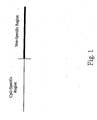
- a chimeric primer for purposes of the invention, is a primer having a 3' portion with substantial sequence specificity with the target template to be amplified (a temple-specific portion) and a 5' portion that is referred to herein as a "non-specific portion" that does not hybridize with the target template.
- the 5' non-specific sequence preferably includes at least 5, and preferably fewer than or equal to 30 nucleotides.
- the 5' non-specific portion preferably has a G-C content of at least 50%.
- the 5' non-specific portion of both the forward and the reverse primers are the same.
- the primers may include DNA, RNA or a nucleic acid analog such as PNA.
- the target nucleic acid is isolated from a stool sample.
- methods of the invention comprise the optimization of reaction conditions for PCR to detect abnormal methylation in a subpopulation of nucleic acids in a biological sample.
- methods of the invention comprise determining a first melting temperature for a primer in a PCR that amplifies a target nucleic acid, and conducting a PCR at a second melting temperature that is higher than the first melting temperature, using at least one chimeric primer.
- the melting temperature sometimes called the annealing temperature, as referred to herein, means the temperature at which the strands of a nucleic acid hybrid are about 50% dissociated.
- the second melting temperature is preferably more than about 3°C higher than the first melting temperature. In a highly preferred embodiment, the second melting temperature is about 65°C.
- the invention provides methods for screening a population to detect patients with indicia of cancer.
- a plurality of target CpG containing regions are interrogated for the presence ofhypermethylation or hypomethylation.
- one or more regions associated with the following genes are assayed in patient nucleic acid isolated from a heterogeneous biological sample such as stool: Adenomatous Polyposis Coli ( APC) , hypermethylated in cancer-1 ( HIC1 ), protein 14 ( p14 ), protein 16 ( p16 ), O(6)-methylguanine-DNA methyltransferase ( MGMT ), helicase-like transcription factor ( HLTF ), Msx2-interacting nuclear target protein 1 ( MINT1 ), Msx2-interacting nuclear target protein 2 ( MINT2 ), Msx2-interacting nuclear target protein 31 ( MINT31 ), human mut-L homologue 1 ( hMLH1 ), thrombospondin 1 ( THBS1 ), metalloproteinas
- the presence of abnormal methylation in at least one of these regions is indicative of the presence of an indicium of cancer in the patient.
- hypomethylation and loss of imprinting in IGF2 gene has been shown to indicate at least a higher risk for CRC.
- Hypermethylation of other, including the rest of the above-mentioned genes, have also been implicated in the onset of CRC.
- hypermethylation is an amount of methylation that is greater than that found in normal tissue or normal cells isolated from a healthy patient.
- hypomethylation is an amount of methylation less than that found in normal tissue or normal cells isolated from a healthy patient.
- preferred methods of the invention include a negative control assay using nucleic acid from normal cells.
- methods of the invention also include a positive control assay using either hypermethylated or hypomethylated nucleic acid.
- methods of the invention are also useful to detect abnormal methylation in a substantially homogeneous sample such as a biopsy sample.
- Figure 1 shows a schematic diagram of the chimeric primers used in the present invention.
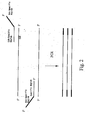
- Figure 2 shows a schematic representation of PCR amplification using chimeric primers.
- the invention provides methods for detecting abnormally methylated nucleic acid in a heterogeneous biological sample.
- Methods of the invention involve amplifying a subpopulation of abnormally methylated nucleic acid, preferably DNA, using PCR primers with high specificity.
- the target nucleic acid can be any nucleic acid of interest: human DNA, viral DNA, etc.
- the target nucleic acid can be a double-stranded DNA, single-stranded DNA, RNA, a nucleic acid analog, e.g., PNA, or a combination of any of the above.
- abnormally methylated target nucleic acid may be present in a small amount relative to normally methylated target nucleic acid. This represents a significant obstacle to detecting the abnormally methylated nucleic acid against the background of normally methylated nucleic acid, using typical nucleic acid amplification methods.
- small relative amounts of abnormally methylated nucleic acid can be detected using higher amplification efficiency.
- the sensitivity of the reaction is preserved or enhanced and the specificity of the reaction is increased.
- amplification efficiency remains around 50%-60% for each thermal cycle, even under optimal conditions.
- methods of the invention require a heightened specificity in amplification-based detection assays in order to detect a small amount of abnormally methylated target nucleic acid against a background of normally methylated nucleic acid in heterogeneous biological samples.
- methods of the invention may aim to detect an abnormally high percentage of nucleic acid in the sample that are hypomethylated in comparison to, for example, samples from a control population or samples obtained from the same patient at a reference time point.
- a chimeric primer that has a first portion that is not homologous or complementary to the target template ("non-specific portion” or “non-specific region”).
- the chimeric primer also contains a second, template-specific portion that is 3' to the first portion.
- the chimeric primer may consist of DNA, RNA, a nucleic acid analog, e.g., PNA, or a combination of any of the above.
- the non-specific portion of the chimeric primer may be of any sequence, regardless of length, that does not have substantial sequence specificity (i.e., does not hybridize under stringent hybridization conditions) for any template sequence in an analyte sample.
- the non-specific portion is the 5' end of the chimeric primer. But there may be additional sequence 5' to the non-specific portion.
- the non-specific portion of the chimeric primer includes a high G-C content of at least 50%.
- the template-specific portion is preferably complementary to or specific for a CpG-containing sequence on the target nucleic acid template.
- the differences between a mutant template that is abnormal in its methylation state and a wild type template are converted into sequence differences through chemical modifications of the templates as discussed in more detail in later parts of this application.
- at least one chimeric primer with at least one template-specific portion is used to assay if the chemically-treated sample comprises a mutant template.
- an amplification product will be produced and detected if the template in the sample comprises an unmodified cytosine at a predetermined position that matches with the template-specific portion of the primer.
- an amplification product will be produced and detected if the template in the sample comprises a modified cytosine at a predetermined position that matches with the template-specific portion of the primer.
- the template-specific portion of the primer is specific for a mutant sequence that is hypermethylated.
- the template-specific portion of the primer is specific for a mutant sequence that is hypomethylated.
- the template-specific portion may be specific for a plurality of CpG dinucleotides some or all of which may be in an abnormal methylation state, e.g., hypermethylated, while the rest of the CpG dinucleotides, whether methylated or not, are in their normal methylation state.
- the template-specific portion of the chimeric primer comprises a sequence that is complementary to a sequence (either unmodified or modified) on one strand of the target template.
- a template-specific portion of a chimeric primer that specifically hybridizes to an unmodified form of a sequence on the target template comprises a sequence that is complementary to an unmodified sequence on the target template.
- a template-specific portion of a chimeric primer that specifically hybridizes to a modified form of the same sequence comprises a sequence that is complementary to a modified form of that sequence on the target template.
- the complementary sequence is at least 5 nucleotides long, more preferably between 5 and 15 nucleotides long, and even more preferably between 15 and 30 nucleotides long. In further embodiments, the sequence may be longer that 30 nucleotides.
- the chimeric primer may also contain a portion with a sequence that is partially complementary to the template sequence of interest (for example between 80% and 100% complementary), provided that the partially complementary portion does not interfere with the specificity of the chimeric primer.
- a methylation specific chimeric primer includes one or more Gs (or analogues thereof) at predetermined positions complementary to one or more Cs (at predetermined CpG dinucleotides) that are suspected of being methylated (and consequently unmodified) on the target template strand that is being tested.
- the CpG-containing sequence useful as a target template is part of a promoter or regulatory region of a gene associated with cancer, such as a tumor suppressor gene.
- a preferred promoter region contains a plurality of CpG dinucleotides (CpG island(s)) that are abnormally methylated in cancerous cells, either hypermethylated or hypomethylated.
- CpG island(s) CpG dinucleotides
- the template-specific portion of the primer may be specific for a region in the genome that is not part of a regulatory CpG island of a cancer associated gene.
- an amplification reaction is performed using a forward and a reverse chimeric primer, each of which includes a portion that is complementary to a different CpG containing sequence within the target nucleic acid region.
- the target region is preferably, but not necessarily, part of a CpG island.
- abnormal methylation can be detected in an amplification reaction that uses only one chimeric primer that includes a portion complementary to a CpG containing sequence.
- amplification may be conducted using a second primer that includes a portion complementary to a non CpG containing sequence adjacent the target promoter or regulatory region.
- amplification may also be performed using one chimeric primer and one non-chimeric primer, provided that the chimeric primer includes a sequence that is complementary to a CpG containing sequence on the target nucleic acid.
- the target nucleic acid template may be chosen to be part of a CpG island associated with some marker genes useful for diagnosing a disease of interest.
- APC Adenomatous Polyposis Coli
- HIC1 hypermethylated in cancer-1
- HIC1 protein 14
- p14 protein 16
- MGMT O(6)-methylguanine-DNA methyltransferase
- HLTF helicase-like transcription factor
- MINT1 Msx2-interacting nuclear target protein 1
- Msx2-interacting nuclear target protein 2 MINT2
- Msx2-interacting nuclear target protein 31 MINT31
- human mut-L homologue 1 hMLH1
- thrombospondin 1 THBS1
- metalloproteinase-3 TIMP3
- IGF2 insulin-like growth factor II
- a chimeric primer as described above When a chimeric primer as described above is used in a PCR, non-specific binding to the template is reduced because matching between the template-specific portion tail and a target nucleic acid has to be more exact to offset the apparent non-matching by the non-specific portion.
- a template-specific sequence has a lower tolerance for mismatches when it is part of a chimeric primer than by itself. The specificity is even higher when the melting temperature is elevated in a preferred embodiment of the invention.
- PCR efficiency typically does not exceed 60% for each thermal extension cycle.
- the efficiency for the first round of extension in PCR may be further compromised (e.g., 20%).
- extension efficiency may reach as high as 100%. This makes methods of the present invention more efficient in amplifying a specific target template over multiple PCR cycles (e.g. 20 cycles). As a result, the number of PCR cycles needed to amplify a rare event target in a heterogeneous sample for detection or further analysis can be reduced by using a chimeric primer of the invention.
- the enhanced efficiency might be related to the fact that, following the first round of PCR involving a chimeric primer, the non-specific sequence becomes incorporated into the PCR products (amplicon) generated from the first round PCR, (See Fig. 2 ), and becomes part of a potential template for binding. Overall improvement in PCR efficiency is also observed when the melting temperature is elevated.
- methods of the invention provide heightened specificity and efficiency in an amplification-based screening method that looks for abnormally methylated nucleic acid in a heterogeneous sample.
- an agent that modifies unmethylated cytosine without modifying methylated cytosine is added to a nucleic acid sample isolated from a heterogeneous biological sample.
- An amplification reaction is then performed using at least one chimeric primer that distinguishes between a modified and an unmodified CpG dinucleotide.
- Detection of an amplification product of unmodified CpG dinucleotide indicates the presence of methylated CpG dinucleotide, which may be hypermethylated if the wild type sequence is not or less heavily methylated.
- detection of an amplification product of modified CpG dinucleotide indicates the presence of unmethylated CpG dinucleotide, which may be hypomethylated if the wild type sequence is or more heavily methylated. Both results could serve as indication of the presence of diseased cells in the sample.
- a heterogeneous nucleic acid sample is isolated from a heterogeneous biological sample, for example, stool.
- a stool sample contains a highly-heterogeneous population of nucleic acids. Not only does human nucleic acid represent a small portion of the nucleic acid found in stool, but nucleic acid from cancer cells, if present, represents only a small portion of the human nucleic acid.
- a stool sample may contain molecular indicia of cancer, specifically, colorectal cancer, that occurs as a small subpopulation (typically on the order of about 1% at early stages of cancer or precancer) of the total human nucleic acid in the stool.
- heterogeneous biological samples may include urine, semen or seminal fluid, plasma serum, cerebrospinal fluid, pus, aspirate (e.g. breast nipple aspirate), pancreatic fluid, bile, lymph, saliva, vaginal fluid, amniotic fluid, sputum, blood, and other bodily fluids, secretions, or tissues that may or may not be mingled with other biological materials.
- samples may contain nucleic acids that are indicative of a variety of diseases including cancers, e.g., prostate, breast, lung, thymus, ovarian, and so on.
- target nucleic acid may be isolated from a heterogeneous biological sample using a sequence-specific hybrid capture step.
- the target template can be captured using a capture probe specific for the template.
- this hybrid capture step is preferably performed prior to CpG modification, and may result in a heterogeneous sample of target nucleic acid that contains both methylated and unmethylated forms of the target nucleic acid.
- the nucleic acid sample is treated with an agent such as sodium bisulfate.
- the agent modifies unmethylated cytosine to uracil without modifying methylated cytosine.
- Bisulfite modification treatment is described in U.S. Patent No. 6,017,704 ,
- an amplification reaction is preformed with at least one chimeric primer.
- the chimeric primer contains a first portion that is not specific for the target template and a second portion that is 3' to the first portion.
- the second portion is specific for a sequence containing at least one, two, three, four, five, or more than five unmodified or modified CpG dinucleotides.
- the template-specific portion i.e., the second portion of the chimeric primer preferably is specific for more than one CpG dinucleotide
- the second portion of the primer may be specific for only one CpG dinucleotide as long as the assay result regarding that CpG dinucleotide is indicative of the disease.
- the amplification product may be any part of the genome, as genome-wide aberration in methylation state may be indicative of aberrant methylation in disease-causing genes.
- the amplification product is part of a CpG island.
- both forward and reverse primers are chimeric primers with respective template-specific portions that hybridize with unmodified CpG, hence, methylated sequences in the target template. These primers are termed "methylation specific primers" hereafter.
- the detection of an amplification product indicates methylation at the CpG sequence, preferably, hypermethylation at the CpG dinucleotide.
- the second portion of the chimeric primer is specific for at least one CpG dinucelotide sequence modified by the bisulfite treatment, hence, non-methylated sequence.
- These primers are termed "non-methylation specific primers" hereafter. Since unmethylated cytosine is modified to uracil, it will be recognized as a thymine in PCR, and the primer can be constructed accordingly to contain a template-specific portion that recognizes the modified sequences.
- such a chimeric primer can be used to amplify a hypomethylated dinucleotide, preferably in a sequence related to a disease-indicating gene.
- DNA carrying the IGF2 gene can be hybrid-captured and assayed using a non-methylation specific primer to detect the loss of imprinting and hypomethylation in the regulatory region of the IGF2 gene.
- the non-methylation specific primers primer may also be used as a positive control for the presence of DNA in the assay looking for indication of hypermethylation, since its amplification product indicates that there is at least one copy of target DNA that is not hypermethylated.
- a primer sequence that is specific for a methylated CpG dinucleotide includes a G at the position that is complementary to the C of the CpG dinucleotide.
- a primer sequence that is specific for an unmethylated CpG dinucleotide includes an A at the position that is complementary to the C of the CpG dinucleotide, because the C is modified to a U by the modification reaction.
- the other primer in the pair if it contains any CpG dinucleotide in its sequence, the C should be changed to T for a non-methylation specific primer.
- the non-methylation specific primers have a higher A/T content than their corresponding methylation specific primers that are partly specific for a template that is the same except for the hypermethylation.
- a few more nucleotides may be added to the sequence-specific portion of the non-methylation specific primers.
- additional, preferably template-specific, nucleotides can be added 5' to the existing template-specific portion of the non-methylation specific primer. Because of other constraints in primer design such as concern over secondary structures, the template-specific portions of the non-methylation specific primers and the methylation specific primers for the same genetic marker can be designed to be specific for different regions in the template.
- a heterogeneous DNA sample is first isolated from a biological sample (e.g., blood or stool) obtained from a patient.
- a biological sample e.g., blood or stool
- Three aliquots, A, B, and C, of the DNA sample are separately amplified by PCR.
- the PCR for aliquot A uses a conventional template-specific primer that will hybridize with a target sequence, and serves as a positive control (i.e., detection of amplicon from aliquot A indicates existence of target sequence in the sample).
- PCR for aliquot B uses a chimeric primer that has a 5' tail of non-specific sequence attached to the template-specific primer used in aliquot A.
- the melting temperature for the PCR for aliquot B may be elevated to 5°C higher than the melting temperature used for aliquots A and C.
- PCR for aliquot C uses a primer that includes the non-specific sequence itself as a negative control (i.e., detection of amplicon from aliquot C indicates that the results should be disregarded due to, e.g., contamination from previous PCR).
- the primer used for negative control may contain bases, preferably from one to nine, in addition to the non-specific sequence, as long as the added sequence does not hybridize to any target template in the sample.
- the methods of the present invention are especially suitable for applications such as: clinical assays involving sporadic cancer detection (e.g. testing DNA from stool for colorectal cancer) and related kits; and other "rare event" clinical assays and related kits. Methods of the invention may also be used for infectious disease diagnostics and related kits, and inherited disease diagnostics and related kits.
- An application of the invention is to screen a population of patients for a disease, e.g., CRC, with the following method: isolating a plurality of target nucleic acid templates from each patient, and then assay each of the template for presence of either hypermethylation or hypomethylation as described above.
- the presence of disease or risk of disease can be indicated if any one of the target templates shows a positive result of either hypermethylation or hypomethylation relative to the amount of hypermethylation or hypomethylation, respectively, observed in a control sample known to contain template only in its normal or reference state of methylation.
- the presence of a disease or a risk for a disease is indicated by the presence of altered methylation at a plurality of loci (e.g. two or more).
- a plurality of templates are exposed to similar amplification reactions conditions, e.g., similar PCR temperatures using chimeric primers with similar melting temperatures.
- RNA samples were centrifuged twice to remove particulate matter, and the supernatant was incubated with DNAse-free RNAse. DNA was then precipitated with 300 mM sodium acetate and isopropanol, centrifuged, and resuspended in a TE buffer (10 mM Tris, 1 mM EDTA, pH 7.4).
- DNA including a target region of interest was captured using a target-sequence specific capture probe.
- DNA molecules carrying one of the three human genetic markers described in Example 3 below were respectively captured using oligonucleotide capture probes specific for each target: p16, hMLH1, and MGMT.
- the specific capture probe for each of these target markers is listed in Table 1.
- other capture probes can be used for capturing other target regions of interest.
- 300 ⁇ l of each sample DNA preparation was combined with an equal volume of 6M guanidinium isothiocyantate and 20 nmol of each sequence specific biotinylated oligonucleotide capture probe.
- biotin-oligonucleotide-DNA complexes were then isolated with a magnetic separator and washed four times with binding and washing buffer (B&W buffer; 1 M NaCl, 10 mM Tris (pH 7.2), 1 mM EDTA, and 0.1 % Tween® 20). Captured sequences were then eluted from the bead complexes by the addition of 40 ⁇ l 0.1X TE (1 mM Tris, 100 nM EDTA (pH 7.4)) and heated to 85°C for 4 minutes. Table 1.
- Capture probe sequences P16 capture probe GGTGA CCAGC CAGCC CCTCC TCTTT CTTCC TCCGG TG SEQ ID NO: 1 MGMT capture probe CGAGG CTGCC ACCGT CCCGA GGGAG AGCTC CGCAC TC SEQ ID NO: 2 hMLH1 capture probe TCGTT TTTAG GAGCT CGGGG AATAC GAAAT ATCCA GCCAA SEQ ID NO: 3
- Methods of the invention were used for detecting hypermethylation of CpG islands in the promoter region of human APC gene. Hypermethylation is indicative of abnormality or deficiency in APC protein's tumor suppression activity. The methods were shown to be highly sensitive in detecting small amounts of hypermethylated DNA in a heterogeneous sample.
- DNA was first isolated and hybrid-captured from patients' stool samples as described in Example 1 except that the capture probe had the following sequence: CCCCG CCCAA CCGCA CAGCC TGCCT AGCCC TAGCC CC (SEQ ID NO: 4).
- the DNA sample then underwent bisulfite modification which converted unmethylated cytosines to uracil.
- Two aliquots of the bisulfite-treated samples were subjected to separate PCR.
- the primers used on the first aliquot were chimeric primers according to the invention, which included a 3' portion specific for a methylated target template; the primers used on the second aliquot were chimeric primers that included a 3' portion specific for an unmethylated-thus-modified target template.
- Amplification results from both aliquots were then subjected to gel electrophoresis, stained with ethidium bromide, and visualized.
- Amplicon detected from the first aliquot is further purified and sequenced to confirm the positive result of hypermethylation. A high degree of specificity was observed for using methods of the invention in the detection assays.
- DNA was modified by sodium bisulfite or other comparable agents as described in U.S. Patent 5,786,146 to Herman et al .
- the bisulfite treatment modified unmethylated cytosine to uracil, which would be amplified as thymidine in the amplification product.
- the bisulfite treatment did not affect methylated cytosine, allowing subsequent PCR to distinguish between methylated DNA from unmethylated DNA in a heterogeneous population.
- the chimeric primers used for amplifying the methylated target were 5'-GCGGT CCCAA AAGGG TCAGT TATTG CGGAG TGCGG GTC-3' for the forward primer (SEQ ID NO: 5) and 5'-GCGGT CCCAA AAGGG TCAGT TCGAC GAACT CCCGA CGA-3' for the reverse primer (SEQ ID NO: 6).
- the chimeric primers used for amplifying the unmethylated target, and therefore containing T (or its complement A) in place of C (or its complement G), were 5'-GCGGT CCCAA AAGGG TCAGT GTGTT TTATT GTGGA GTGTG GGTT-3' for the forward primer (SEQ ID NO: 7) and 5'-GCGGT CCCAA AAGGG TCAGT CCAAT CAACA AACTC CCAAC AA-3' for the reverse primer (SEQ ID NO: 8). All four primers have the same 5' end that is the non-specific portion: 5'-GCGGTCCCAAAAGGGTCAGT-3' (SEQ ID NO: 9). All the oligonucleotides used in the example were HPLC purified and quantified by spectrophotometry.
- PCR for each aliquot was performed in a 50 ⁇ l reaction sample with 10 ⁇ l bisulfite-treated DNA. After Hot Star polymerase (Qiagen) was added, each reaction mixture was hot-started at 95°C for 15 minutes. The reactions were carried out in a Perkin-Elmer 9600 Thermal Cycler (Perkin-Elmer, Norwalk, CT) with the following temperature settings: 39 cycles of 94°C for 30 seconds, 65°C for 60 seconds, and 72°C for 60 seconds.
- the melting/annealing temperature of 65°C was 10°C higher than the conventional annealing temperature used in Esterller M., et al., "Analysis of Adenomatous Polyposis Coli Promoter Hypermethylation in Human Cancer," 60 Cancer Research, 4366 (Aug. 15, 2000 ), incorporated herein by reference.
- PCR product analyses 8 ⁇ l of the amplification reactions was loaded directly onto a 4% ethidium bromide stained agarose gel and electrophoresed at 200 V for 90 min.
- the amplification products were visualized with a UV transilluminator (Fotodyne, New Berlin, WI) and photographed with an Alpha Innotech IS-500 Digital Imaging System version 1.97 (Sun Bioscience Inc., Branford, CT).
- Methods of the invention were used to screen for colorectal cancer by detecting hypermethylation of CpG islands at multiple genes or genetic loci using stool samples. Assaying for hypermethylation at multiple loci in a heterogeneous sample may provide a more reliable means of detection certain diseases.
- Hypermethylation markers on three human genes p16, hMLH1, and MGMT were studied using methods of the invention.
- Tissue samples colonal mucosa
- single stools were each collected from 12 patients clinically diagnosed with colorectal cancers.
- Single stools were each collected from 10 colonoscopically normal controls. All stools were collected prior to cathartic cleansing for colonoscopy or surgery, and were promptly stored at -70°C.
- DNA was isolated from collected tissues (colorectal mucosa) using conventional techniques (Qiagen DNA Mini Kit). DNA was isolated from collected stools and subjected to sequence-specific hybrid capture as described in Example 1 except that the hybrid-captured DNA was eluted from bead complexes directly into the alkaline solution for initiating the bisulfite modification. Bisulfite modification of DNA samples was carried out as described in Example 2. Afterwards, hypermethylated markers were assayed by PCR techniques of the invention using chimeric primers either partly specific for unmodified (hence methylated) CpG sequence, as listed in Table 2, or partly specific for modified (hence unmethylated) CpG sequence, as listed in Table 3. The DNA samples were analyzed in blinded fashion. Table 2.
- Non-methylation-specific primer sequences Primer Description Sequence Tm for PCR SEQ ID NO: P16 PCR forward primer GCGGT CCCAA AAGGG TCAGT GGGGT GGATT GAGTG TGTTT 58°C 16 P16 PCR reverse primer GCGGT CCCAA AAGGG TCAGT ATACT ACTCC CCACC ACCAA 58°C 17 hMLH1 PCR forward primer GCGGT CCCAA AAGGG TCAGT AATGA ATTAA TAGGA AGAGT GGATA GT 58°C 18 hMLH1 PCR reverse primer GCGGT CCCAA AAGGG TCAGT TCTCT TCATC CCTCC CTAAA ACA 58°C 19 MGMT PCR forward primer GCGGT CCCAA AAGGG TCAGT TTTTT AGAAT GTTTT GTGTT TTGAT 55°C 20 MGMT P CR reverse primer GCGGT CCCAA AAGGG TCAGT ACCCA AACAC TCACC AAATC A 55°C 21
- tissue/mucosa samples at least one of the three markers was found to be hypermethylated in samples from 9 out of the 12 (75%) cancer patients.
- the p16 marker was positive in 7 cancer patients, hMLH1 in 3 cancer patents, and MGMT in 6 cancer patients. None of the markers was found to be methylated in any tissue/mucosa samples from the 10 control patients.
- the three markers were found to be hypermethylated in samples from 7 out of the 12 (58%) cancer patients. Out of the 9 people identified positively through the tissue samples, 7 were identified positively using methods of the invention. Individually, the p 16 marker was positive in 4 cancer patients, MLH1 in 1 cancer patents, and MGMT in 4 cancer patients. The p16 marker was also positive in the stool sample of 1 control patient, and the MGMT marker in 2 of the control samples. These results may be an indicium of disease in patients considered to be healthy controls. The hMLH1 marker was not positive in any of the control patients.
- the invention provides non-invasive methods for detecting indicia of cancer in heterogeneous patient samples such as stool samples.
- Example 4 Alternative markers for detecting of hypermethylation
- markers and sequences that may be useful in screening for colorectal cancer are also provided herein. Similar to Example 3, detection of hypermethylation in any number of the following genes may indicate a higher risk of colorectal cancer: p14, HLTF, MINT31, MINT2, HIC1. Any of these markers can be used in combination with any of the markers described in earlier examples, including APC, p16, hMLH1, and MGMT.
- Examples of useful capture probes are provided in Table 4 below.
- Examples of chimeric primers partly specific for CpG sequences unmodified by the bisulfite treatment (hence methylated template) are provided in Table 5 below.
- Table 6 lists examples of chimeric primers partly specific for CpG sequences modified by the bisulfite treatment (hence unmethylated template). Table 4.
- Capture probe sequences P14 capture probe CCTTA ACTGC AGACT GGGAC CCACG CACCG CCGCC TG SEQ ID NO: 22 HLTF capture probe GGTGC CTGCG GTGCC GGTGT TTTGT TTGAT TCCCT GC SEQ ID NO: 23 MINT31 capture probe ATGGG GGGGA GGGGA TGGGG GAAGT GGCAG AGTGG CT SEQ ID NO: 24 MINT2 capture probe ACTTG GGTGC TAGAG TTCGG CGGGA AGAAA AGGTG AC SEQ ID NO: 25 Table 5.
- Methylation-specific primer sequences Primer Description Sequence SEQ ID NO.
- Non-methylation-specific primer sequences Primer Description Sequence SEQ ID NO. P14 PCR forward primer GCGGT CCCAA AAGGG TCAGT TTTTT GGTGT TAAAG GGTGG TGTAG T 34 P 14 PCR reverse primer GCGGT CCCAA AAGGG TCAGT CACAA AAACC CTCAC TCACA ACAA 35 HLTF PCR forward primer GCGGT CCCAA TAGGG TCAGT GGGGT TTTGT GGTTT TTTTG TGT 36 HLTF PCR reverse primer GCGGT CCCAA TAGGG TCAGT AAAAA AACAA CTCCA CCCCA CTA 37 MINT31 PCR forward primer GCGGT CCCAA TAGGG TCAGT TTTTT TTTTTAT TGGTT GGGGT 38 MINT31 PCR reverse primer GCGGT CCCAA TAGGG TCAGT CACCC ACACA ACCCC CACA 39 MINT2 PCR forward primer GCGGT CCCAA TAGGG TCAGT GTTGG TGGAT TTTGG ATTTT GTT 40 MINT2
- Exemplary materials and methods are as follows: tissue samples and stool samples were first collected. Then the stool sample was processed to extract a DNA sample as described in Example 1 up to the step of isolating bead bound biotin-oligonucleotide-DNA complexes with a magnetic separator. After the separated beads had been washed, bound DNA was eluted in 40 ⁇ L of an elution buffer (0.3 N NaOH and 0.5 ⁇ g Salmon Sperm DNA) and vortexed gently. After standing at room temperature for 5 minutes, the sample was briefly vortexed again. The beads were separated by the magnetic separator and the supernatant was transferred to a 1.5 ml microcentrifuge tube.
- an elution buffer 0.3 N NaOH and 0.5 ⁇ g Salmon Sperm DNA
- DNA molecules extracted from the collected tissue sample were processed as follows: 12 ⁇ l of 1N NaOH and 0.5 ⁇ l salmon sperm DNA (1.0 ⁇ g/ ⁇ l) were mixed with 1 to 300 ng of tissue DNA to bring the total volume to 40 ⁇ l for each sample. After the sample had been incubated at 37°C for 10 minutes, 30 ⁇ l of freshly prepared 10 mM hydroquinone and 500 ⁇ l of freshly prepared 3M sodium bisulfite (pH 5.0) were added to the sample and vortexed. After 200 ⁇ l of mineral oil was added to the combination, the sample was spun briefly and incubated at 50°C overnight.
- an exemplary sample included 10 ⁇ l bisulfite treated DNA and 40 ⁇ l of a master mix.
- the master mix consisted of 24.5 ⁇ l of sterile water, 5 ⁇ l of Hot Star 10X buffer, 5 ⁇ l of 2 mM dNTP, 5 ⁇ l of 5 ⁇ M of the primer and 0.5 ⁇ l of Hot Star Taq DNA polymerase.
- PCR reactions were carried out on a Tetrad® Cycler (MJ Research, Inc.) or other compatible equipment.
- a PCR sample was first denatured at 95°C for 14.5 minutes, and then subjected to 40 cycles of the following: 94°C denaturation for 30 seconds, and one minute of annealing at various temperatures depending on the primer used (see Table 7 for details), and one minute of elongation at 72°C. After the 40 cycles, the sample underwent another 5 minutes of elongation at 72°C.
- PCR products were visualized through agarose gel electrophoresis (4% NuSieve in 1X TAE buffer). The amount ofmethylation specific product relative to non-methylation specific product can be compared to that obtained for a known reference sample to determine whether the amount of methylation in the test sample is above normal.
Landscapes
- Chemical & Material Sciences (AREA)
- Life Sciences & Earth Sciences (AREA)
- Organic Chemistry (AREA)
- Health & Medical Sciences (AREA)
- Proteomics, Peptides & Aminoacids (AREA)
- Zoology (AREA)
- Wood Science & Technology (AREA)
- Engineering & Computer Science (AREA)
- Analytical Chemistry (AREA)
- Genetics & Genomics (AREA)
- Immunology (AREA)
- Microbiology (AREA)
- Bioinformatics & Cheminformatics (AREA)
- Molecular Biology (AREA)
- Biophysics (AREA)
- Physics & Mathematics (AREA)
- General Health & Medical Sciences (AREA)
- Biochemistry (AREA)
- Biotechnology (AREA)
- General Engineering & Computer Science (AREA)
- Chemical Kinetics & Catalysis (AREA)
- Pathology (AREA)
- Hospice & Palliative Care (AREA)
- Oncology (AREA)
- Measuring Or Testing Involving Enzymes Or Micro-Organisms (AREA)
Claims (13)
- Procédé pour déterminer la présence d'un CpG méthylé dans un acide nucléique, ledit procédé comprenant les étapes :d'isolement d'un échantillon d'acide nucléique hétérogène comprenant un acide nucléique cible contenant un CpG à partir d'un échantillon biologique hétérogène ;de mise en contact dudit échantillon d'acide nucléique avec un agent qui modifie la cytosine non méthylée ;de réaction d'amplification sur ledit acide nucléique cible en utilisant au moins une amorce chimère qui comprend une première partie qui n'est pas spécifique dudit acide nucléique cible et une deuxième partie en 3' de ladite première partie, ladite deuxième partie étant spécifique d'une cytosine méthylée dans ledit acide nucléique cible ; etde détection de la présence d'un produit de l'amplification pour déterminer la présence d'un CpG méthylé dans l'acide nucléique cible, etdans lequel la réaction d'amplification est une réaction PCR dans laquelle la séquence non spécifique d'une amorce chimère est incorporée dans un produit de PCR après un premier cycle de PCR.
- Procédé selon la revendication 1, dans lequel l'étape d'isolement comprend une capture d'hybride à spécificité de séquence.
- Procédé selon la revendication 1, dans lequel ladite première partie comprend au moins 5, mais moins de 30 ou environ 30 nucléotides.
- Procédé selon la revendication 1, dans lequel ladite deuxième partie comprend d'environ 10 à environ 30 nucléotides.
- Procédé selon la revendication 1, dans lequel au moins deux amorces chimères sont utilisées, et dans lequel chacune desdites au moins deux amorces a une première partie identique.
- Procédé selon la revendication 1, dans lequel ladite première partie a une teneur en G-C d'au moins 50 %.
- Procédé selon la revendication 1, dans lequel ledit acide nucléique cible est choisi dans l'ensemble constitué par un ADN, un ARN, et un analogue d'acide nucléique.
- Procédé selon la revendication 1, dans lequel ledit acide nucléique cible est bicaténaire.
- Procédé selon la revendication 1, dans lequel ledit acide nucléique cible est au moins une partie d'un gène choisi dans l'ensemble constitué par le gène de la polypose adénomateuse colique (APC), p16, hMLH1, MGMT, H1C1, p14, HLTF, MINT2 et MINT31.
- Utilisation du procédé de la revendication 1 pour dépister, chez une population de patients, un indice de cancer ou de pré-cancer colorectal, le procédé comprenant les étapes consistant à :se pourvoir d'une pluralité de matrices d'acides nucléiques cibles isolées à partir de chaque patient ; ettester chacune desdites matrices pour déterminer la présence d'une hyperméthylation conformément au procédé de la revendication 1.
- Procédé selon l'une quelconque des revendications précédentes, dans lequel l'échantillon biologique hétérogène est un échantillon de selles.
- Procédé selon l'une quelconque des revendications précédentes, dans lequel ledit acide nucléique cible est au moins une partie d'un gène de la polypose adénomateuse colique (APC).
- Procédé selon l'une quelconque des revendications précédentes, dans lequel ledit acide nucléique cible est au moins une partie d'un gène HLTF.
Priority Applications (1)
| Application Number | Priority Date | Filing Date | Title |
|---|---|---|---|
| EP10168634.3A EP2241638B1 (fr) | 2002-04-11 | 2003-04-11 | Procédés de détection d'acide nucléique anormalement methylé dans des échantillons biologiques hétérogènes |
Applications Claiming Priority (3)
| Application Number | Priority Date | Filing Date | Title |
|---|---|---|---|
| US123071 | 1998-07-27 | ||
| US10/123,071 US6818404B2 (en) | 1997-10-23 | 2002-04-11 | Methods for detecting hypermethylated nucleic acid in heterogeneous biological samples |
| PCT/US2003/011023 WO2003087390A2 (fr) | 2002-04-11 | 2003-04-11 | Procedes de detection d'acide nucleique anormalement methyle dans des echantillons biologiques heterogenes |
Publications (3)
| Publication Number | Publication Date |
|---|---|
| EP1527199A2 EP1527199A2 (fr) | 2005-05-04 |
| EP1527199A4 EP1527199A4 (fr) | 2006-02-15 |
| EP1527199B1 true EP1527199B1 (fr) | 2010-07-07 |
Family
ID=29248336
Family Applications (2)
| Application Number | Title | Priority Date | Filing Date |
|---|---|---|---|
| EP10168634.3A Expired - Lifetime EP2241638B1 (fr) | 2002-04-11 | 2003-04-11 | Procédés de détection d'acide nucléique anormalement methylé dans des échantillons biologiques hétérogènes |
| EP03746704A Expired - Lifetime EP1527199B1 (fr) | 2002-04-11 | 2003-04-11 | Procedes de detection d'acide nucleique anormalement methyle dans des echantillons biologiques heterogenes |
Family Applications Before (1)
| Application Number | Title | Priority Date | Filing Date |
|---|---|---|---|
| EP10168634.3A Expired - Lifetime EP2241638B1 (fr) | 2002-04-11 | 2003-04-11 | Procédés de détection d'acide nucléique anormalement methylé dans des échantillons biologiques hétérogènes |
Country Status (9)
| Country | Link |
|---|---|
| US (1) | US6818404B2 (fr) |
| EP (2) | EP2241638B1 (fr) |
| AT (1) | ATE473296T1 (fr) |
| AU (1) | AU2003226052A1 (fr) |
| CA (2) | CA2482192C (fr) |
| DE (1) | DE60333295D1 (fr) |
| ES (1) | ES2347990T3 (fr) |
| PT (1) | PT1527199E (fr) |
| WO (1) | WO2003087390A2 (fr) |
Families Citing this family (35)
| Publication number | Priority date | Publication date | Assignee | Title |
|---|---|---|---|---|
| DE60029092T2 (de) | 1999-04-09 | 2007-02-01 | Exact Sciences Corp., Marlborough | Verfahren zur detektion von nukleinsäuren, welche auf krebs hinweisen |
| US6586177B1 (en) * | 1999-09-08 | 2003-07-01 | Exact Sciences Corporation | Methods for disease detection |
| US6919174B1 (en) | 1999-12-07 | 2005-07-19 | Exact Sciences Corporation | Methods for disease detection |
| DE60043896D1 (de) * | 1999-12-07 | 2010-04-08 | Exact Sciences Corp | Verfahren zum nachweis von lungenneoplasmen in fäkalen proben |
| US7214485B2 (en) * | 2000-08-25 | 2007-05-08 | Lovelace Respiratory Research Institute | Nested methylation-specific polymerase chain reaction cancer detection method |
| US6428964B1 (en) | 2001-03-15 | 2002-08-06 | Exact Sciences Corporation | Method for alteration detection |
| US6960436B2 (en) * | 2002-02-06 | 2005-11-01 | Epigenomics Ag | Quantitative methylation detection in DNA samples |
| WO2003071252A2 (fr) | 2002-02-15 | 2003-08-28 | Exact Sciences Corporation | Procedes d'analyse d'evenements moleculaires |
| US20040259101A1 (en) * | 2003-06-20 | 2004-12-23 | Shuber Anthony P. | Methods for disease screening |
| US7879542B2 (en) * | 2003-06-24 | 2011-02-01 | The Johns Hopkins University | Methylated gene biomarkers for detecting cancer |
| US20050059035A1 (en) * | 2003-09-09 | 2005-03-17 | Quest Diagnostics Incorporated | Methods and compositions for the amplification of mutations in the diagnosis of cystic fibrosis |
| US7423164B2 (en) | 2003-12-31 | 2008-09-09 | Ut-Battelle, Llc | Synthesis of ionic liquids |
| US20080241827A1 (en) * | 2004-05-10 | 2008-10-02 | Exact Sciences Corporation | Methods For Detecting A Mutant Nucleic Acid |
| US7981607B2 (en) | 2004-08-27 | 2011-07-19 | Esoterix Genetic Laboratories LLC | Method for detecting recombinant event |
| US9109256B2 (en) | 2004-10-27 | 2015-08-18 | Esoterix Genetic Laboratories, Llc | Method for monitoring disease progression or recurrence |
| WO2006094149A2 (fr) * | 2005-03-01 | 2006-09-08 | Exact Sciences Corporation | Procedes et compositions pour detecter un adenome |
| US7449297B2 (en) | 2005-04-14 | 2008-11-11 | Euclid Diagnostics Llc | Methods of copying the methylation pattern of DNA during isothermal amplification and microarrays |
| WO2006113770A1 (fr) * | 2005-04-15 | 2006-10-26 | Epigenomics Ag | Procede destine a fournir des fragments d'adn derives d'un echantillon a distance |
| WO2007044071A2 (fr) | 2005-04-21 | 2007-04-19 | Exact Sciences Corporation | Analyse d'echantillons d'acide nucleique heterogenes |
| US20080003609A1 (en) * | 2006-05-10 | 2008-01-03 | The Cleveland Clinic Foundation | Method of detecting bladder urothelial carcinoma |
| WO2007149269A2 (fr) * | 2006-06-12 | 2007-12-27 | Oncomethylome Sciences S.A. | Marqueurs de méthylation destinés à une détection et un pronostic précoces de cancers du côlon |
| US20080213870A1 (en) * | 2007-03-01 | 2008-09-04 | Sean Wuxiong Cao | Methods for obtaining modified DNA from a biological specimen |
| WO2009100161A2 (fr) * | 2008-02-04 | 2009-08-13 | Fred Hutchinson Cancer Research Center | Inactivation épigénétique de mir-342 dans le cancer colorectal |
| EP2816122A1 (fr) | 2008-02-15 | 2014-12-24 | Mayo Foundation For Medical Education And Research | Détection de néoplasme d'un échantillon de selles |
| ES2346503B1 (es) | 2008-11-03 | 2011-08-03 | Fina Biotech, S.L.U. | Metodo de diagnostico de cancer colorectal. |
| US8399138B2 (en) * | 2009-10-14 | 2013-03-19 | GM Global Technology Operations LLC | Liquid rechargeable lithium ion battery |
| WO2012032510A1 (fr) * | 2010-09-07 | 2012-03-15 | Yeda Research And Development Co. Ltd. | Amorces pour l'amplification d'adn et procédés de sélection de ces dernières |
| ES2859645T3 (es) | 2013-03-14 | 2021-10-04 | Mayo Found Medical Education & Res | Detección de neoplasia |
| WO2015066695A1 (fr) | 2013-11-04 | 2015-05-07 | Exact Sciences Corporation | Calibreurs de commande multiple pour l'analyse quantitative d'adn |
| EP4209600A1 (fr) | 2013-12-19 | 2023-07-12 | Exact Sciences Corporation | Molécules de contrôle d'acides nucléiques synthétiques |
| US10184154B2 (en) | 2014-09-26 | 2019-01-22 | Mayo Foundation For Medical Education And Research | Detecting cholangiocarcinoma |
| WO2016160454A1 (fr) | 2015-03-27 | 2016-10-06 | Exact Sciences Corporation | Détection de troubles de l'œsophage |
| KR20250172724A (ko) | 2015-08-31 | 2025-12-09 | 메이오 파운데이션 포 메디칼 에쥬케이션 앤드 리써치 | 위 신생물 검출 방법 |
| AU2017300534B2 (en) | 2016-07-19 | 2023-11-23 | Exact Sciences Corporation | Nucleic acid control molecules from non-human organisms |
| ES3035263T3 (en) | 2016-07-19 | 2025-09-01 | Exact Sciences Corp | Methylated control dna |
Family Cites Families (49)
| Publication number | Priority date | Publication date | Assignee | Title |
|---|---|---|---|---|
| US4965188A (en) | 1986-08-22 | 1990-10-23 | Cetus Corporation | Process for amplifying, detecting, and/or cloning nucleic acid sequences using a thermostable enzyme |
| AU656514B2 (en) | 1989-02-13 | 1995-02-09 | Geneco Pty Ltd | Detection of a nucleic acid sequence or a change therein |
| EP0415755B1 (fr) | 1989-09-01 | 1995-12-20 | Life Technologies Inc. | Procédé pour contrÔler la contamination des réactions d'amplification des acides nucléiques dépendant des oligonucléotides |
| WO1991015601A1 (fr) | 1990-04-05 | 1991-10-17 | The United States Of America, As Represented By The Secretary, U.S. Department Of Commerce | Reaction en chaine de polymerase specifique de reproduction d'a.r.n. modifiee |
| HU218095B (hu) | 1990-05-01 | 2000-05-28 | Amgen Inc. | Eljárás átvitt szennyeződések csökkentésére, amplifikációs eljárásokban |
| AU1366992A (en) | 1991-01-16 | 1992-08-27 | Cancer Institute, The | Inherited and somatic mutations of apc gene in colorectal cancer of humans |
| US5633134A (en) | 1992-10-06 | 1997-05-27 | Ig Laboratories, Inc. | Method for simultaneously detecting multiple mutations in a DNA sample |
| US5882856A (en) * | 1995-06-07 | 1999-03-16 | Genzyme Corporation | Universal primer sequence for multiplex DNA amplification |
| US5670325A (en) | 1996-08-14 | 1997-09-23 | Exact Laboratories, Inc. | Method for the detection of clonal populations of transformed cells in a genomically heterogeneous cellular sample |
| US5741650A (en) | 1996-01-30 | 1998-04-21 | Exact Laboratories, Inc. | Methods for detecting colon cancer from stool samples |
| US6017704A (en) | 1996-06-03 | 2000-01-25 | The Johns Hopkins University School Of Medicine | Method of detection of methylated nucleic acid using agents which modify unmethylated cytosine and distinguishing modified methylated and non-methylated nucleic acids |
| US5786146A (en) | 1996-06-03 | 1998-07-28 | The Johns Hopkins University School Of Medicine | Method of detection of methylated nucleic acid using agents which modify unmethylated cytosine and distinguishing modified methylated and non-methylated nucleic acids |
| US5952178A (en) | 1996-08-14 | 1999-09-14 | Exact Laboratories | Methods for disease diagnosis from stool samples |
| US6300077B1 (en) | 1996-08-14 | 2001-10-09 | Exact Sciences Corporation | Methods for the detection of nucleic acids |
| US5928870A (en) | 1997-06-16 | 1999-07-27 | Exact Laboratories, Inc. | Methods for the detection of loss of heterozygosity |
| US6100029A (en) | 1996-08-14 | 2000-08-08 | Exact Laboratories, Inc. | Methods for the detection of chromosomal aberrations |
| US6203993B1 (en) | 1996-08-14 | 2001-03-20 | Exact Science Corp. | Methods for the detection of nucleic acids |
| US6143529A (en) | 1996-08-14 | 2000-11-07 | Exact Laboratories, Inc. | Methods for improving sensitivity and specificity of screening assays |
| US6020137A (en) | 1996-08-14 | 2000-02-01 | Exact Laboratories, Inc. | Methods for the detection of loss of heterozygosity |
| US6146828A (en) | 1996-08-14 | 2000-11-14 | Exact Laboratories, Inc. | Methods for detecting differences in RNA expression levels and uses therefor |
| US5830665A (en) | 1997-03-03 | 1998-11-03 | Exact Laboratories, Inc. | Contiguous genomic sequence scanning |
| US6268136B1 (en) | 1997-06-16 | 2001-07-31 | Exact Science Corporation | Methods for stool sample preparation |
| US6406857B1 (en) | 1997-06-16 | 2002-06-18 | Exact Sciences Corporation | Methods for stool sample preparation |
| US5888778A (en) | 1997-06-16 | 1999-03-30 | Exact Laboratories, Inc. | High-throughput screening method for identification of genetic mutations or disease-causing microorganisms using segmented primers |
| WO1999020798A1 (fr) | 1997-10-23 | 1999-04-29 | Exact Laboratories, Inc. | Procedes de detection de contamination dans le diagnostic moleculaire utilisant la reaction pcr |
| AUPP312998A0 (en) * | 1998-04-23 | 1998-05-14 | Commonwealth Scientific And Industrial Research Organisation | Diagnostic assay |
| US7700324B1 (en) * | 1998-11-03 | 2010-04-20 | The Johns Hopkins University School Of Medicine | Methylated CpG island amplification (MCA) |
| AU1526400A (en) | 1998-11-23 | 2000-06-19 | Exact Laboratories, Inc. | Method for detecting target sequences in small proportions in heterogeneous samples |
| WO2000070096A2 (fr) | 1999-01-10 | 2000-11-23 | Exact Laboratories, Inc. | Methodes de depistage de pathologies colo-rectales |
| US6503718B2 (en) | 1999-01-10 | 2003-01-07 | Exact Sciences Corporation | Methods for detecting mutations using primer extension for detecting disease |
| US6280947B1 (en) | 1999-08-11 | 2001-08-28 | Exact Sciences Corporation | Methods for detecting nucleotide insertion or deletion using primer extension |
| CA2362251C (fr) | 1999-02-25 | 2008-06-17 | Exact Sciences Corporation | Methodes de conservation de l'integrite de l'adn |
| DE60029092T2 (de) | 1999-04-09 | 2007-02-01 | Exact Sciences Corp., Marlborough | Verfahren zur detektion von nukleinsäuren, welche auf krebs hinweisen |
| US20020004206A1 (en) | 1999-04-09 | 2002-01-10 | Berger Barry M. | Methods of screening for disease |
| CA2372145A1 (fr) | 1999-05-03 | 2000-11-09 | Exact Sciences Corporation | Collecteur d'echantillon de selles |
| US6586177B1 (en) | 1999-09-08 | 2003-07-01 | Exact Sciences Corporation | Methods for disease detection |
| DE60043896D1 (de) | 1999-12-07 | 2010-04-08 | Exact Sciences Corp | Verfahren zum nachweis von lungenneoplasmen in fäkalen proben |
| JP2003516162A (ja) | 1999-12-07 | 2003-05-13 | エグザクト サイエンシーズ コーポレイション | 核酸分析に基づく薬物スクリーニングのための装置および方法 |
| AU2001239886A1 (en) | 2000-02-28 | 2001-09-12 | Exact Sciences Corporation | Device and method for preparing a sample for analysis |
| WO2001068912A2 (fr) * | 2000-03-15 | 2001-09-20 | Epigenomics Ag | Diagnostic d'affections associees a des genes suppresseurs de tumeurs et a des oncogenes |
| EP1283906A4 (fr) * | 2000-03-31 | 2005-04-27 | Univ Southern California | Sequences epigenetiques d'adenocarcinomes oesophagiens |
| WO2001077377A2 (fr) | 2000-04-06 | 2001-10-18 | Epigenomics Ag | Diagnostic de maladies associees a la replication de l'adn |
| AU2001276371A1 (en) | 2000-06-30 | 2002-01-14 | Epigenomics Ag | Method and nucleic acids for analysing the methylation of genes implicated pharmacogenomics |
| US7214485B2 (en) * | 2000-08-25 | 2007-05-08 | Lovelace Respiratory Research Institute | Nested methylation-specific polymerase chain reaction cancer detection method |
| US6911308B2 (en) | 2001-01-05 | 2005-06-28 | Exact Sciences Corporation | Methods for detecting, grading or monitoring an H. pylori infection |
| US6428964B1 (en) | 2001-03-15 | 2002-08-06 | Exact Sciences Corporation | Method for alteration detection |
| CA2441021C (fr) | 2001-03-15 | 2013-09-17 | Exact Sciences Corporation | Methode de detection d'une alteration |
| US20030049659A1 (en) | 2001-05-29 | 2003-03-13 | Lapidus Stanley N. | Devices and methods for isolating samples into subsamples for analysis |
| DE60232013D1 (de) | 2001-11-20 | 2009-05-28 | Exact Sciences Corp | Automatische probenvorbereitungsverfahren und -vorrichtungen |
-
2002
- 2002-04-11 US US10/123,071 patent/US6818404B2/en not_active Expired - Fee Related
-
2003
- 2003-04-11 WO PCT/US2003/011023 patent/WO2003087390A2/fr not_active Ceased
- 2003-04-11 AU AU2003226052A patent/AU2003226052A1/en not_active Abandoned
- 2003-04-11 ES ES03746704T patent/ES2347990T3/es not_active Expired - Lifetime
- 2003-04-11 EP EP10168634.3A patent/EP2241638B1/fr not_active Expired - Lifetime
- 2003-04-11 CA CA2482192A patent/CA2482192C/fr not_active Expired - Fee Related
- 2003-04-11 CA CA2726356A patent/CA2726356A1/fr not_active Abandoned
- 2003-04-11 AT AT03746704T patent/ATE473296T1/de not_active IP Right Cessation
- 2003-04-11 PT PT03746704T patent/PT1527199E/pt unknown
- 2003-04-11 DE DE60333295T patent/DE60333295D1/de not_active Expired - Lifetime
- 2003-04-11 EP EP03746704A patent/EP1527199B1/fr not_active Expired - Lifetime
Also Published As
| Publication number | Publication date |
|---|---|
| AU2003226052A8 (en) | 2003-10-27 |
| EP1527199A2 (fr) | 2005-05-04 |
| ES2347990T3 (es) | 2010-11-26 |
| ATE473296T1 (de) | 2010-07-15 |
| CA2482192A1 (fr) | 2003-10-23 |
| WO2003087390A2 (fr) | 2003-10-23 |
| EP1527199A4 (fr) | 2006-02-15 |
| CA2482192C (fr) | 2011-03-15 |
| CA2726356A1 (fr) | 2003-10-23 |
| AU2003226052A1 (en) | 2003-10-27 |
| WO2003087390A3 (fr) | 2005-03-10 |
| WO2003087390A9 (fr) | 2004-05-27 |
| EP2241638B1 (fr) | 2013-11-27 |
| PT1527199E (pt) | 2010-09-27 |
| EP2241638A1 (fr) | 2010-10-20 |
| DE60333295D1 (de) | 2010-08-19 |
| US20030087258A1 (en) | 2003-05-08 |
| US6818404B2 (en) | 2004-11-16 |
Similar Documents
| Publication | Publication Date | Title |
|---|---|---|
| CA2482192C (fr) | Procedes de detection d'acide nucleique anormalement methyle dans des echantillons biologiques heterogenes | |
| JP6810612B2 (ja) | メチル化分析のための方法 | |
| US9075063B2 (en) | Methylation analysis to determine the presence of cancer cells | |
| US20210292847A1 (en) | Gene composition for detecting cell proliferative abnormality or grading disease degree and use thereof | |
| US20080221056A1 (en) | Early Detection and Prognosis of Colon Cancers | |
| JP2010517582A5 (fr) | ||
| US9133521B2 (en) | Composition for diagnosing Alzheimer's disease using methylation status of HMOX1 gene and method for diagnosing Alzheimer's disease using the same | |
| JP2009539404A (ja) | 大腸癌の早期検出および予後のためのメチル化マーカー | |
| KR20230005927A (ko) | 종양 검출 시약 및 키트 | |
| AU2017433280A1 (en) | Risk determination for neoplasia and cancer | |
| KR20210013103A (ko) | 종양 마커, 메틸화 검출 시약, 키트 및 이의 용도 | |
| US9187786B2 (en) | Ovarian cancer methylome | |
| EP2309005B1 (fr) | Procédés pour la conservation de la complexité de la séquence d'ADN génomique | |
| KR20210010564A (ko) | 종양 마커, 메틸화 검출 시약, 키트 및 이의 용도 | |
| US20240229146A9 (en) | Diagnosis and risk determination for head and neck cancer | |
| EP1945806B1 (fr) | Marqueurs servant a predire le resultat d'un traitement a l'anthracycline | |
| US20140349875A1 (en) | Method for the in vitro diagnosis or prognosis of testicular cancer | |
| KR100470221B1 (ko) | 유전자 프로모터 CpG 아일랜드의 메틸화 여부를분석하는 염기서열분석형 올리고뉴클레오타이드칩, 이의제조방법 및 이를 이용한 암 검색방법 | |
| US20220170112A1 (en) | Methods and compositions for lung cancer detection | |
| US20200181709A1 (en) | Methods of detection and treatment of urothelial cancer | |
| EP1829978B1 (fr) | Procede consistant a detecter la methylation d'un gene et procede consistant a rechercher un neoplasme en detectant la methylation | |
| WO2025033530A1 (fr) | Marqueur de diagnostic pour le cancer du côlon | |
| HK40102258A (zh) | 头颈癌的诊断和风险确定 | |
| KR101597808B1 (ko) | 후성유전학적 변화에 의해 유전자 발현이 조절되는 항암제 내성 특이적 유전자 | |
| CN115961045A (zh) | 用于判断早期肝细胞癌的肿瘤标志物、试剂盒及其使用方法 |
Legal Events
| Date | Code | Title | Description |
|---|---|---|---|
| PUAI | Public reference made under article 153(3) epc to a published international application that has entered the european phase |
Free format text: ORIGINAL CODE: 0009012 |
|
| 17P | Request for examination filed |
Effective date: 20041102 |
|
| AK | Designated contracting states |
Kind code of ref document: A2 Designated state(s): AT BE BG CH CY CZ DE DK EE ES FI FR GB GR HU IE IT LI LU MC NL PT RO SE SI SK TR |
|
| AX | Request for extension of the european patent |
Extension state: AL LT LV MK |
|
| A4 | Supplementary search report drawn up and despatched |
Effective date: 20051230 |
|
| 17Q | First examination report despatched |
Effective date: 20060925 |
|
| RAP1 | Party data changed (applicant data changed or rights of an application transferred) |
Owner name: GENZYME CORPORATION |
|
| GRAP | Despatch of communication of intention to grant a patent |
Free format text: ORIGINAL CODE: EPIDOSNIGR1 |
|
| GRAS | Grant fee paid |
Free format text: ORIGINAL CODE: EPIDOSNIGR3 |
|
| GRAA | (expected) grant |
Free format text: ORIGINAL CODE: 0009210 |
|
| AK | Designated contracting states |
Kind code of ref document: B1 Designated state(s): AT BE BG CH CY CZ DE DK EE ES FI FR GB GR HU IE IT LI LU MC NL PT RO SE SI SK TR |
|
| REG | Reference to a national code |
Ref country code: GB Ref legal event code: FG4D |
|
| REG | Reference to a national code |
Ref country code: CH Ref legal event code: EP |
|
| REG | Reference to a national code |
Ref country code: IE Ref legal event code: FG4D |
|
| REF | Corresponds to: |
Ref document number: 60333295 Country of ref document: DE Date of ref document: 20100819 Kind code of ref document: P |
|
| REG | Reference to a national code |
Ref country code: NL Ref legal event code: T3 |
|
| REG | Reference to a national code |
Ref country code: PT Ref legal event code: SC4A Free format text: AVAILABILITY OF NATIONAL TRANSLATION Effective date: 20100920 |
|
| PG25 | Lapsed in a contracting state [announced via postgrant information from national office to epo] |
Ref country code: SI Free format text: LAPSE BECAUSE OF FAILURE TO SUBMIT A TRANSLATION OF THE DESCRIPTION OR TO PAY THE FEE WITHIN THE PRESCRIBED TIME-LIMIT Effective date: 20100707 |
|
| PG25 | Lapsed in a contracting state [announced via postgrant information from national office to epo] |
Ref country code: AT Free format text: LAPSE BECAUSE OF FAILURE TO SUBMIT A TRANSLATION OF THE DESCRIPTION OR TO PAY THE FEE WITHIN THE PRESCRIBED TIME-LIMIT Effective date: 20100707 Ref country code: FI Free format text: LAPSE BECAUSE OF FAILURE TO SUBMIT A TRANSLATION OF THE DESCRIPTION OR TO PAY THE FEE WITHIN THE PRESCRIBED TIME-LIMIT Effective date: 20100707 |
|
| PG25 | Lapsed in a contracting state [announced via postgrant information from national office to epo] |
Ref country code: CY Free format text: LAPSE BECAUSE OF FAILURE TO SUBMIT A TRANSLATION OF THE DESCRIPTION OR TO PAY THE FEE WITHIN THE PRESCRIBED TIME-LIMIT Effective date: 20100707 Ref country code: BG Free format text: LAPSE BECAUSE OF FAILURE TO SUBMIT A TRANSLATION OF THE DESCRIPTION OR TO PAY THE FEE WITHIN THE PRESCRIBED TIME-LIMIT Effective date: 20101007 |
|
| PG25 | Lapsed in a contracting state [announced via postgrant information from national office to epo] |
Ref country code: GR Free format text: LAPSE BECAUSE OF FAILURE TO SUBMIT A TRANSLATION OF THE DESCRIPTION OR TO PAY THE FEE WITHIN THE PRESCRIBED TIME-LIMIT Effective date: 20101008 Ref country code: SE Free format text: LAPSE BECAUSE OF FAILURE TO SUBMIT A TRANSLATION OF THE DESCRIPTION OR TO PAY THE FEE WITHIN THE PRESCRIBED TIME-LIMIT Effective date: 20100707 |
|
| PG25 | Lapsed in a contracting state [announced via postgrant information from national office to epo] |
Ref country code: DK Free format text: LAPSE BECAUSE OF FAILURE TO SUBMIT A TRANSLATION OF THE DESCRIPTION OR TO PAY THE FEE WITHIN THE PRESCRIBED TIME-LIMIT Effective date: 20100707 |
|
| PLBE | No opposition filed within time limit |
Free format text: ORIGINAL CODE: 0009261 |
|
| STAA | Information on the status of an ep patent application or granted ep patent |
Free format text: STATUS: NO OPPOSITION FILED WITHIN TIME LIMIT |
|
| PG25 | Lapsed in a contracting state [announced via postgrant information from national office to epo] |
Ref country code: IT Free format text: LAPSE BECAUSE OF FAILURE TO SUBMIT A TRANSLATION OF THE DESCRIPTION OR TO PAY THE FEE WITHIN THE PRESCRIBED TIME-LIMIT Effective date: 20100707 Ref country code: CZ Free format text: LAPSE BECAUSE OF FAILURE TO SUBMIT A TRANSLATION OF THE DESCRIPTION OR TO PAY THE FEE WITHIN THE PRESCRIBED TIME-LIMIT Effective date: 20100707 Ref country code: SK Free format text: LAPSE BECAUSE OF FAILURE TO SUBMIT A TRANSLATION OF THE DESCRIPTION OR TO PAY THE FEE WITHIN THE PRESCRIBED TIME-LIMIT Effective date: 20100707 Ref country code: RO Free format text: LAPSE BECAUSE OF FAILURE TO SUBMIT A TRANSLATION OF THE DESCRIPTION OR TO PAY THE FEE WITHIN THE PRESCRIBED TIME-LIMIT Effective date: 20100707 Ref country code: EE Free format text: LAPSE BECAUSE OF FAILURE TO SUBMIT A TRANSLATION OF THE DESCRIPTION OR TO PAY THE FEE WITHIN THE PRESCRIBED TIME-LIMIT Effective date: 20100707 |
|
| 26N | No opposition filed |
Effective date: 20110408 |
|
| REG | Reference to a national code |
Ref country code: DE Ref legal event code: R097 Ref document number: 60333295 Country of ref document: DE Effective date: 20110408 |
|
| REG | Reference to a national code |
Ref country code: GB Ref legal event code: 732E Free format text: REGISTERED BETWEEN 20110804 AND 20110810 |
|
| PG25 | Lapsed in a contracting state [announced via postgrant information from national office to epo] |
Ref country code: MC Free format text: LAPSE BECAUSE OF NON-PAYMENT OF DUE FEES Effective date: 20110430 |
|
| REG | Reference to a national code |
Ref country code: NL Ref legal event code: SD Effective date: 20111121 Ref country code: CH Ref legal event code: PL |
|
| REG | Reference to a national code |
Ref country code: PT Ref legal event code: PC4A Owner name: ESOTERIX GENETIC LABORATORIES, LLC, US Effective date: 20111116 |
|
| REG | Reference to a national code |
Ref country code: DE Ref legal event code: R082 Ref document number: 60333295 Country of ref document: DE Representative=s name: KLUNKER, SCHMITT-NILSON, HIRSCH, DE |
|
| PG25 | Lapsed in a contracting state [announced via postgrant information from national office to epo] |
Ref country code: CH Free format text: LAPSE BECAUSE OF NON-PAYMENT OF DUE FEES Effective date: 20110430 Ref country code: LI Free format text: LAPSE BECAUSE OF NON-PAYMENT OF DUE FEES Effective date: 20110430 |
|
| REG | Reference to a national code |
Ref country code: ES Ref legal event code: PC2A Owner name: ESOTERIX GENETIC LABORATORIES, LLC Effective date: 20120222 |
|
| REG | Reference to a national code |
Ref country code: DE Ref legal event code: R081 Ref document number: 60333295 Country of ref document: DE Owner name: ESOTERIX GENETIC LABORATORIES, LLC (N.D.GES.D., US Free format text: FORMER OWNER: GENZYME CORP., CAMBRIDGE, US Effective date: 20120123 Ref country code: DE Ref legal event code: R082 Ref document number: 60333295 Country of ref document: DE Representative=s name: KLUNKER, SCHMITT-NILSON, HIRSCH, DE Effective date: 20120123 Ref country code: DE Ref legal event code: R081 Ref document number: 60333295 Country of ref document: DE Owner name: ESOTERIX GENETIC LABORATORIES, LLC (N.D.GES.D., US Free format text: FORMER OWNER: GENZYME CORP., CAMBRIDGE, MASS. 02142, US Effective date: 20120123 |
|
| PGFP | Annual fee paid to national office [announced via postgrant information from national office to epo] |
Ref country code: TR Payment date: 20120411 Year of fee payment: 10 |
|
| PGFP | Annual fee paid to national office [announced via postgrant information from national office to epo] |
Ref country code: ES Payment date: 20120510 Year of fee payment: 10 |
|
| PG25 | Lapsed in a contracting state [announced via postgrant information from national office to epo] |
Ref country code: LU Free format text: LAPSE BECAUSE OF NON-PAYMENT OF DUE FEES Effective date: 20110411 |
|
| PGFP | Annual fee paid to national office [announced via postgrant information from national office to epo] |
Ref country code: IE Payment date: 20130410 Year of fee payment: 11 |
|
| PGFP | Annual fee paid to national office [announced via postgrant information from national office to epo] |
Ref country code: FR Payment date: 20130625 Year of fee payment: 11 Ref country code: PT Payment date: 20130405 Year of fee payment: 11 Ref country code: NL Payment date: 20130410 Year of fee payment: 11 |
|
| PG25 | Lapsed in a contracting state [announced via postgrant information from national office to epo] |
Ref country code: HU Free format text: LAPSE BECAUSE OF FAILURE TO SUBMIT A TRANSLATION OF THE DESCRIPTION OR TO PAY THE FEE WITHIN THE PRESCRIBED TIME-LIMIT Effective date: 20100707 |
|
| PGFP | Annual fee paid to national office [announced via postgrant information from national office to epo] |
Ref country code: GB Payment date: 20140416 Year of fee payment: 12 |
|
| PGFP | Annual fee paid to national office [announced via postgrant information from national office to epo] |
Ref country code: DE Payment date: 20140430 Year of fee payment: 12 |
|
| PGFP | Annual fee paid to national office [announced via postgrant information from national office to epo] |
Ref country code: BE Payment date: 20140424 Year of fee payment: 12 |
|
| REG | Reference to a national code |
Ref country code: PT Ref legal event code: MM4A Free format text: LAPSE DUE TO NON-PAYMENT OF FEES Effective date: 20141013 |
|
| REG | Reference to a national code |
Ref country code: NL Ref legal event code: V1 Effective date: 20141101 |
|
| REG | Reference to a national code |
Ref country code: FR Ref legal event code: ST Effective date: 20141231 |
|
| REG | Reference to a national code |
Ref country code: IE Ref legal event code: MM4A |
|
| PG25 | Lapsed in a contracting state [announced via postgrant information from national office to epo] |
Ref country code: PT Free format text: LAPSE BECAUSE OF NON-PAYMENT OF DUE FEES Effective date: 20141013 |
|
| PG25 | Lapsed in a contracting state [announced via postgrant information from national office to epo] |
Ref country code: FR Free format text: LAPSE BECAUSE OF NON-PAYMENT OF DUE FEES Effective date: 20140430 Ref country code: NL Free format text: LAPSE BECAUSE OF NON-PAYMENT OF DUE FEES Effective date: 20141101 |
|
| PG25 | Lapsed in a contracting state [announced via postgrant information from national office to epo] |
Ref country code: IE Free format text: LAPSE BECAUSE OF NON-PAYMENT OF DUE FEES Effective date: 20140411 |
|
| REG | Reference to a national code |
Ref country code: ES Ref legal event code: FD2A Effective date: 20150526 |
|
| PG25 | Lapsed in a contracting state [announced via postgrant information from national office to epo] |
Ref country code: ES Free format text: LAPSE BECAUSE OF NON-PAYMENT OF DUE FEES Effective date: 20140412 |
|
| REG | Reference to a national code |
Ref country code: DE Ref legal event code: R119 Ref document number: 60333295 Country of ref document: DE |
|
| GBPC | Gb: european patent ceased through non-payment of renewal fee |
Effective date: 20150411 |
|
| PG25 | Lapsed in a contracting state [announced via postgrant information from national office to epo] |
Ref country code: GB Free format text: LAPSE BECAUSE OF NON-PAYMENT OF DUE FEES Effective date: 20150411 Ref country code: DE Free format text: LAPSE BECAUSE OF NON-PAYMENT OF DUE FEES Effective date: 20151103 |
|
| PG25 | Lapsed in a contracting state [announced via postgrant information from national office to epo] |
Ref country code: BE Free format text: LAPSE BECAUSE OF NON-PAYMENT OF DUE FEES Effective date: 20150430 |
|
| PG25 | Lapsed in a contracting state [announced via postgrant information from national office to epo] |
Ref country code: TR Free format text: LAPSE BECAUSE OF NON-PAYMENT OF DUE FEES Effective date: 20140411 |