EP1524975B1 - Verbessertes transdermales abgabesystem für die verabreichung von rotigotin - Google Patents
Verbessertes transdermales abgabesystem für die verabreichung von rotigotin Download PDFInfo
- Publication number
- EP1524975B1 EP1524975B1 EP03766331A EP03766331A EP1524975B1 EP 1524975 B1 EP1524975 B1 EP 1524975B1 EP 03766331 A EP03766331 A EP 03766331A EP 03766331 A EP03766331 A EP 03766331A EP 1524975 B1 EP1524975 B1 EP 1524975B1
- Authority
- EP
- European Patent Office
- Prior art keywords
- rotigotine
- matrix
- tds
- adhesive
- microreservoirs
- Prior art date
- Legal status (The legal status is an assumption and is not a legal conclusion. Google has not performed a legal analysis and makes no representation as to the accuracy of the status listed.)
- Expired - Lifetime
Links
Images


Classifications
-
- A—HUMAN NECESSITIES
- A61—MEDICAL OR VETERINARY SCIENCE; HYGIENE
- A61K—PREPARATIONS FOR MEDICAL, DENTAL OR TOILETRY PURPOSES
- A61K9/00—Medicinal preparations characterised by special physical form
- A61K9/70—Web, sheet or filament bases ; Films; Fibres of the matrix type containing drug
-
- A—HUMAN NECESSITIES
- A61—MEDICAL OR VETERINARY SCIENCE; HYGIENE
- A61K—PREPARATIONS FOR MEDICAL, DENTAL OR TOILETRY PURPOSES
- A61K9/00—Medicinal preparations characterised by special physical form
- A61K9/70—Web, sheet or filament bases ; Films; Fibres of the matrix type containing drug
- A61K9/7023—Transdermal patches and similar drug-containing composite devices, e.g. cataplasms
- A61K9/703—Transdermal patches and similar drug-containing composite devices, e.g. cataplasms characterised by shape or structure; Details concerning release liner or backing; Refillable patches; User-activated patches
- A61K9/7038—Transdermal patches of the drug-in-adhesive type, i.e. comprising drug in the skin-adhesive layer
- A61K9/7046—Transdermal patches of the drug-in-adhesive type, i.e. comprising drug in the skin-adhesive layer the adhesive comprising macromolecular compounds
- A61K9/7053—Transdermal patches of the drug-in-adhesive type, i.e. comprising drug in the skin-adhesive layer the adhesive comprising macromolecular compounds obtained by reactions only involving carbon to carbon unsaturated bonds, e.g. polyvinyl, polyisobutylene, polystyrene
- A61K9/7061—Polyacrylates
-
- A—HUMAN NECESSITIES
- A61—MEDICAL OR VETERINARY SCIENCE; HYGIENE
- A61K—PREPARATIONS FOR MEDICAL, DENTAL OR TOILETRY PURPOSES
- A61K31/00—Medicinal preparations containing organic active ingredients
- A61K31/33—Heterocyclic compounds
- A61K31/38—Heterocyclic compounds having sulfur as a ring hetero atom
-
- A—HUMAN NECESSITIES
- A61—MEDICAL OR VETERINARY SCIENCE; HYGIENE
- A61K—PREPARATIONS FOR MEDICAL, DENTAL OR TOILETRY PURPOSES
- A61K9/00—Medicinal preparations characterised by special physical form
- A61K9/70—Web, sheet or filament bases ; Films; Fibres of the matrix type containing drug
- A61K9/7023—Transdermal patches and similar drug-containing composite devices, e.g. cataplasms
- A61K9/703—Transdermal patches and similar drug-containing composite devices, e.g. cataplasms characterised by shape or structure; Details concerning release liner or backing; Refillable patches; User-activated patches
- A61K9/7038—Transdermal patches of the drug-in-adhesive type, i.e. comprising drug in the skin-adhesive layer
- A61K9/7046—Transdermal patches of the drug-in-adhesive type, i.e. comprising drug in the skin-adhesive layer the adhesive comprising macromolecular compounds
- A61K9/7069—Transdermal patches of the drug-in-adhesive type, i.e. comprising drug in the skin-adhesive layer the adhesive comprising macromolecular compounds obtained otherwise than by reactions only involving carbon to carbon unsaturated bonds, e.g. polysiloxane, polyesters, polyurethane, polyethylene oxide
-
- A—HUMAN NECESSITIES
- A61—MEDICAL OR VETERINARY SCIENCE; HYGIENE
- A61P—SPECIFIC THERAPEUTIC ACTIVITY OF CHEMICAL COMPOUNDS OR MEDICINAL PREPARATIONS
- A61P25/00—Drugs for disorders of the nervous system
- A61P25/14—Drugs for disorders of the nervous system for treating abnormal movements, e.g. chorea, dyskinesia
- A61P25/16—Anti-Parkinson drugs
-
- A—HUMAN NECESSITIES
- A61—MEDICAL OR VETERINARY SCIENCE; HYGIENE
- A61P—SPECIFIC THERAPEUTIC ACTIVITY OF CHEMICAL COMPOUNDS OR MEDICINAL PREPARATIONS
- A61P43/00—Drugs for specific purposes, not provided for in groups A61P1/00-A61P41/00
Definitions
- the present invention relates to an improved transdermal delivery system for rotigotine. Moreover, the invention relates to a method of treatment using the transdermal delivery system.
- TDS transdermal delivery systems
- WO 94/07468 discloses a TDS containing rotigotine hydrochloride as active substance in a two-phase matrix, which is essentially formed by a hydrophobic polymer material as the continuous phase and a disperse hydrophilic phase contained therein and mainly containing the drug and hydrated silica.
- the silica is said to enhance the maximum possible loading of the TDS with the hydrophilic salt.
- the formulation of WO94/07468 usually contains additional hydrophobic solvents, permeation promoting substances dispersing agents and, in particular, an emulsifier which is required to emulsify the aqueous solution of the active component in the lipophilic polymer phase.
- a TDS prepared by using such a system has been tested in healthy subjects and Parkinson's patients. However, no satisfactory drug plasma levels were achieved.
- TDS Various further TDS have been described in WO99/49852.
- the TDS used in this patent application comprises a backing layer, inert with respect to the constituents of the matrix, a self-adhesive matrix layer containing an effective quantity of rotigotine hydrochloride or rotigotine, which contains a substantial amount of rotigotine hydrochloride (>5 % w/w), and a protective film, which is to be removed before use.
- the matrix system is composed of a non-aqueous polymer adhesive system, based on acrylate or silicone, with a solubility of rotigotine of at least 5% w/w.
- Said matrix has been described as being essentially free of inorganic silicate particles.
- TDS described in WO99/49852 leave something to be desired as regards the obtainable flux rates of drug across human skin.
- An object of the present invention is to control (i.e. to canalise/manoeuvre) the transport of rotigotine towards and across the skin from a drug reservoir, thereby enhancing the flux of rotigotine across the TDS/skin interface.
- a further object and aspect of the present invention is to provide a suitable composition and manufacturing methods of polymer matrices in TDS which lead to an enhanced delivery of rotigotine to and across the skin by
- a TDS comprising a backing layer inert to the components of the matrix, a self-adhesive matrix containing rotigotine and a protective foil or sheet to be removed prior to use, characterized in that the self-adhesive matrix consists of a solid or semi-solid semi-permeable polymer
- the present invention provides a TDS providing a high steady state flux rate of rotigotine over the TDS/skin interface.
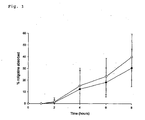
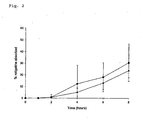
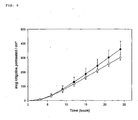
- Figs. 1, 2 and 3 The impact of above described measures on drug release characteristics of rotigotine in vivo is illustrated in Figs. 1, 2 and 3.
- the relative drug absorption in vivo was highest for the sample according to the invention; increase of the size of the microreservoirs and/or the amount of drug salt residues in the TDS led to slower initial drug release.
- the drug contained in the TDS according to the invention is 5,6,7,8-tetrahydro-6-[propyl-[2-(2-thienyl)ethyl]amino]-1-naphthalenol (INN: rotigotine).
- Rotigotine is a dopamine D2 receptor antagonist, which is useful for example in the treatment of Parkinson's disease.
- treatment in the context of this application is meant to designate a treatment or an alleviation of the symptoms.
- the treatment may be of a therapeutic or prophylactic nature.
- rotigotine exists in various isomeric forms. It has to be understood that any single isomer or a mixture of different isomers may be used in the TDS according to the invention. Hence, the S- or R-enantiomer or the racemate or any other enantiomer mixture of rotigotine may be used.
- At least a part of rotigotine is contained in a multitude of microreservoirs distributed within the self-adhesive matrix of the TDS according to the invention. This does not exclude and will normally even imply that a certain fraction of rotigotine is dissolved in the solid or semi-solid semi-permeable polymer of the matrix at its saturation concentration.
- microreservoirs are meant to be understood as particulate, spatially and functionally separate compartments consisting of pure drug or a mixture of drug and crystallization inhibitor, which are dispersed in the self-adhesive (polymer) matrix.
- the self-adhesive matrix contains 10 3 to 10 9 microreservoirs per cm 2 of its surface, particularly preferred are 10 6 to 10 9 microreservoirs per cm 2 .
- Rotigotine is incorporated in the self-adhesive matrix in its free base form. This does not totally exclude the presence of some residual salt form of rotigotine in the final TDS. However, the salt form of rotigotine should be contained in the self-adhesive matrix of the final TDS in an amount of preferably less than 5 %, more preferably less than 2 %, particularly less than 1 % (w/w).
- the amount of the salt form of rotigotine can be determined by performing a drug dissolution test according to the Paddle over Disk method as described in the United States Pharmacopeia (United States Pharmacopeia/New Formulary (USP25/NF20), Chapter 724 "Drug Release", United States Pharmacopeial Convention, Inc., Rockville, MD 20852, USA (2002)), using the following conditions: dissolution medium: 900 ml phosphate buffer pH 4.5; temperature adjusted to 32 ⁇ 0.5°C; paddle rotation speed: 50 rpm; sampling times: 0.5, 1, 2 and 3 h, respectively.
- the increase in the eluted rotigotine concentration can be used to calculate the amount of unprotonated rotigotine in the matrix.
- the amount of the salt form of rotigotine may be reduced e.g. by reducing the water content of the mass containing the drug and organic solvent(s).
- the water content is reduced during manufacture to preferably less than 0.4 % (w/w), more preferably less than 0.1 %, of the mass.
- a further step, which may be taken for reducing the amount of the salt form of rotigotine, is isolating the free base form of rotigotine in solid form prior to the preparation of the TDS. If the free base of rotigotine is produced in situ during the manufacture of the TDS by neutralizing an acid addition salt, a certain residue of the ionized drug form will remain in the polymer matrix (usually > 5 % (w/w) and up to approximately 10 %). Therefore, such in situ preparation of the free base form will generally not be suitable for practising the present invention.
- the maximum diameter of the microreservoirs is less than the thickness of the matrix, preferably up to 70 % of the thickness of the matrix, particularly preferably 5 to 60 % of the thickness of the matrix. For an exemplary thickness of the matrix of 50 ⁇ m this corresponds to a maximum diameter of the microreservoirs in the range of preferably up to 35 ⁇ m.
- maximum diameter is meant to be understood as the diameter of the microreservoirs in one dimension (x-, y-, or z-dimension), which is the largest. It is clear to the skilled person that in case of spherical diameters the maximum diameter corresponds to the microreservoir's diameter. However, in the case of microreservoirs, which are not shaped in the form of spheres - i.e. of different geometric forms -, the x-, y- and z-dimensions may vary greatly.
- the maximum diameter of the microreservoirs in the direction of the cross-section of the matrix i.e. between the release surface and the backing layer, is less than the thickness of the matrix, direct contact between the skin and the basic microreservoirs containing rotigotine is avoided, if not at all prevented. Owing to the slightly acidic pH of the skin, direct contact between the skin and the microreservoirs in the matrix leads to protonation of rotigotine, thereby deteriorating the semi-permeability of the matrix.
- the mean diameter of the microreservoirs containing rotigotine distributed in the matrix is in the range of 1 to 40 %, even more preferably 1 to 20 %, of the thickness of the drug-loaded self-adhesive matrix.
- the mean diameter of the microreservoirs containing rotigotine distributed in the matrix is in the range of 1 to 40 %, even more preferably 1 to 20 %, of the thickness of the drug-loaded self-adhesive matrix.
- the mean diameter of the microreservoirs containing rotigotine distributed in the matrix is in the range of 1 to 40 %, even more preferably 1 to 20 %, of the thickness of the drug-loaded self-adhesive matrix.
- the mean diameter of the microreservoirs containing rotigotine distributed in the matrix is in the range of 1 to 40 %, even more preferably 1 to 20 %, of the thickness of the drug-loaded self-adhesive matrix.
- the maximum and mean diameters of the microreservoirs as well as the number of microreservoirs per surface area of the self-adhesive matrix can be determined as follows:
- the release liner is removed from the TDS, and the free adhesive surface is examined with a light microscope (Leica microscope type DM/RBE equipped with a camera type Basler A 113C).
- the measurement is performed by incidental polarized light analysis using a microscope at 200x magnification.
- a picture analysis is performed using the software Nikon Lucia_Di, Version 4.21, resulting in mean and maximum diameters for each sample.
- the TDS of the present invention is of the "matrix" type.
- TDS the drug is dispersed in a polymer layer.
- the TDS of the matrix type in their simplest version comprise a one-phase (monolayer) matrix. They consist of a backing layer, a self-adhesive matrix containing the active agent and a protective foil or sheet, which is removed before use.
- Versions that are more complicated comprise multi-layer matrixes, wherein the drug may be contained in one or more non-adhesive polymer layers.
- the TDS of the present invention is preferably a one-phase (mono layer) matrix system.
- the solid or semi-solid semi-permeable polymer of the self-adhesive matrix has to satisfy the following requirements:
- the self-adhesive matrix is free of particles that can absorb salts of rotigotine on the TDS/skin interface.
- particles that can absorb salts of rotigotine on the TDS/Skin interface include silica.
- Such particles that can adsorb salts of rotigotine may represent diffusion barriers for the free base form of the drug and may result in the formation of channels inducing some permeability of the self-adhesive matrix for the protonated form of rotigotine. Such embodiments are therefore disadvantageous for practising the invention.
- the self-adhesive matrix of the TDS of the present invention consists of a solid or semi-solid semi-permeable polymer. Usually this polymer will be a pressure sensitive adhesive (PSA) or a mixture of such adhesives.
- PSA pressure sensitive adhesive
- the pressure sensitive adhesive(s) form a matrix in which the active ingredient and the other components of the TDS are incorporated.
- the adhesive used in the present invention should preferably be pharmaceutically acceptable in a sense that it is biocompatible, non-sensitising and non-irritating.to the skin.
- Particularly advantageous adhesives for use in the present invention should further meet the following requirements:
- a preferred pressure sensitive adhesive for use in the TDS of the present invention are silicone type pressure sensitive adhesives.
- Especially preferred pressure sensitive adhesives for use in the TDS of the invention are of the type forming a soluble polycondensed polydimethylsiloxane (PDMS) / resin network, wherein the hydroxy groups are capped with e.g. trimethylsilyl (TMS) groups.
- PDMS soluble polycondensed polydimethylsiloxane
- TMS trimethylsilyl
- Preferred adhesives of this kind are the BIO-PSA silicone pressure sensitive adhesives manufactured by Dow Corning, particularly the Q7-4201 and Q7-4301 qualities. However, other silicone adhesives may also be used.
- two or more silicone adhesives are used as the main adhesive components. It can be advantageous if such a mixture of silicone adhesives comprises a blend of high tack silicone pressure sensitive adhesive comprising polysiloxane with a resin and a medium tack silicone type pressure sensitive adhesive comprising polysiloxane with a resin.
- Tack has been defined as the property that enables an adhesive to form a bond with the surface of another material upon brief contact under light pressure (see e.g. "Pressure Sensitive Tack of Adhesives Using an Inverted Probe Machine", ASTM D2979-71 (1982); H.F. Hammond in D. Satas "Handbook of Pressure Sensitive Adhesive Technology” (1989), 2 nd ed., Chapter 4, Van Nostrand Reinhold, New York, page 38).
- Medium tack of a silicon pressure sensitive adhesive indicates that the immediate bond to the surface of another material is weaker compared to high tack silicon adhesive.
- the mean resin/polymer ratio is approx. 60/40 for medium tack adhesives, whereas it is approx. 55/45 for high tack adhesives. It is known to the skilled person that both tape and rheological properties are significantly influenced by the resin/polymer ratio (K.L. Ulman and R.P. Sweet "The Correlation of Tape Properties and Rheology” (1998), Information Brochure, Dow Corning Corp., USA).
- Such a blend comprising a high and a medium tack silicone type pressure sensitive adhesive comprising polysiloxane with a resin is advantageous in that it provides for the optimum balance between good adhesion and little cold flux. Excessive cold flux may result in a too soft patch which easily adheres to the package or to patient's garments. Moreover, such a mixture seems to be particularly useful for obtaining higher plasma levels.
- a mixture of the aforementioned Q7-4201 (medium tack) and Q7-4301 (high tack) proved to be especially useful as a matrix for the TDS according to the present invention.
- the TDS further includes a crystallization inhibitor.
- a crystallization inhibitor Several surfactants or amphiphilic substances may be used as crystallization inhibitors. They should be pharmaceutically acceptable and approved for use in medicaments.
- a particularly preferred example of such a crystallization inhibitor is soluble polyvinylpyrrolidone, which is commercially available, e.g. under the trademark Kollidon® (Bayer AG).
- Other suitable crystallization inhibitors include copolymers of polyvinylpyrrolidone and vinyl acetate, polyethyleneglycol, polypropyleneglycol, glycerol and fatty acid esters of glycerol or copolymers of ethylene and vinyl acetate.
- the device of the present invention further comprises a backing layer, which is inert to the components of the matrix.
- This backing layer is a film being impermeable to the active compounds.
- Such a film may consist of polyester, polyamide, polyethylene, polypropylene, polyurethane, polyvinyl chloride or a combination of the aforementioned materials. These films may or may not be coated with an aluminium film or with aluminium vapour.
- the thickness of the backing layer may be between 10 and 100 ⁇ m, preferably between 15 and 40 ⁇ m.
- the TDS of the present invention further comprises a protective foil or sheet, which will be removed immediately prior to use, i.e. immediately before the TDS will be brought into contact with the skin.
- the protective foil or sheet may consist of polyester, polyethylene or polypropylene which may or may not be coated with aluminium film or aluminium vapour or fluoropolymers. Typically the thickness of such a protective foil or sheet ranges from between 50 and 150 ⁇ m. So as to facilitate removal of the protective foil or sheet when wishing to apply the TDS, the protective foil or sheet may comprise separate protective foils or sheets having overlapping edges, similar to the kind used with the majority of conventional plasters.
- the TDS has a basal surface area of 5 to 50 cm 2 , particularly of 10 to 30 cm 2 . It goes without saying that a device having a surface area of, say, 20 cm 2 is pharmacologically equivalent to and may be exchanged by two 10 cm 2 devices or four 5 cm 2 devices having the same drug content per cm 2 . Thus, the surface areas as indicated herein should be understood to refer to the total surface of all devices simultaneously administered to a patient.
- TDS Providing and applying one or several TDS according to the invention has the pharmacological advantage over oral therapy that the attending physician can titrate the optimum dose for the individual patient relatively quickly and accurately, e.g. by simply increasing the number or size of devices given to the patient.
- the optimum individual dosage can often be determined after a time period of only about 3 weeks with low side effects.
- a preferred content of rotigotine in the TDS according to the invention is in the range of 0.1 to 2.0 mg/cm 2 . Still more preferred are 0.20 to 1.0 mg/cm 2 . If a 7 day patch is desired, higher drug contents will generally be required.
- the device used in the present invention is preferably a patch having a continuous adhesive matrix in at least its center portion containing the drug.
- transdermal equivalents to such patches are likewise comprised by the present invention, e.g. an embodiment where the drug is in an inert but non-adhesive matrix in the center portion of the device and is surrounded by an adhesive portion along the edges.
- the TDS according to the present invention is prepared by a manufacturing process, which comprises preparing a rotigotine loaded adhesive, coating, drying or cooling and lamination to get the bulk product, converting the laminate into patch units via cutting, and packaging.
- Rotigotine free base are dissolved in 587.8 g ethanol 100 % w/w and mixed with 222.2 g ethanolic solution containing 25 % w/w polyvinylpyrrolidone (Kollidon F 90), 0.11 % w/w aqueous sodium bisulfite solution (10 % w/w), 0.25 % ascorbyl palmitate and 0.62 % DL- ⁇ -tocopherol.
- BIO-PSA Q7 4301 73 % w/w
- BIO-PSA Q7 4201 1691.6 g BIO-PSA Q7 4201
- 416.3 g petrol ether 416.3 g
- the dispersion is coated onto a suitable release liner (for example Scotchpak 1022) and the solvents are continuously removed in a drying oven at temperatures up to 80°C to get a drug-containing adhesive matrix of 50 g/m 2 coating weight.
- the dried matrix film is laminated with a polyester-type backing foil which is siliconized on the inner side and aluminium vapor coated on the opposite side.
- the individual patches are punched out of the complete laminate and are sealed into pouches under a nitrogen flow.
- the rotigotine contained in the matrix was quantitatively released after 3 hours in the drug dissolution test according to the Paddle over Disk method as described in the USP using the conditions as described above. This result indicates that the obtained TDS was completely free of rotigotine hydrochloride.
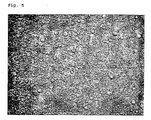
- the mean size of the microreservoirs in the TDS was approx. 10 ⁇ m with typical sizes in the range of 5 to 35 ⁇ m.
- a microscope image of the obtained TDS is shown in Fig. 5.
- the rotigotine solution (6150 g) in ethanol (30 % w/w) was mixed with 407 g ethanol (96 %).
- the resulting solution was mixed with 1738.8 g of an ethanolic solution containing 25 wt.% polyvinylpyrrolidone (Kollidon® 90F), 0.11 wt.% aqueous sodium bisulfite solution (10 wt.%), 0.25 wt. % ascorbyl palmitate, and 0.62 wt.% DL-alpha-tocopherol until homogeneity.
- an amine resistant high tack silicone adhesive (BIO-PSA® Q7-4301 mfd.
- the dispersion was coated onto a suitable polyester release liner (SCOTCHPAK® 1022) with a suitable doctor knife and the solvents were continuously removed in a drying oven at temperatures up to 80°C for about 30 minutes to obtain a drug containing adhesive matrix of 50 g/m 2 coating weight.
- the dried matrix film was laminated with a polyester-type backing foil (SCOTCHPAK® 1109).
- the individual patches were punched out of the complete laminate in the desired sizes (e.g. 10 cm 2 , 20 cm 2 , 30 cm 2 ) and sealed into pouches under the flow of nitrogen.
- the mean size of the microreservoirs in the TDS was approx. 15 ⁇ m with typical sizes in the range of 10 to 20 ⁇ m.
- Rotigotine hydrochloride were added to a solution of 17.05 g NaOH in 218 g ethanol (96%). The resulting mixture was stirred for approximately 10 minutes. Then 23.7 g of sodium phosphate buffer solution (8.35 g Na 2 HPO 4 x2H 2 O and 16.07 g NaH 2 PO 4 x2H 2 O in 90.3 g water) was added. Insoluble or precipitated solids were separated from the mixture by filtration. The filter was rinsed with 60.4 g ethanol (96 %) to obtain a particle-free ethanolic solution of rotigotine essentially in the form of the free base.
- the rotigotine solution (346.4 g) in ethanol (35 % w/w) was mixed with 36.2 g ethanol (96%).
- the resulting solution was mixed with 109 g of an ethanolic solution containing 25 wt% polyvinylpyrrolidone (KOLLIDON® 90F), 0.077 wt% aqueous sodium bisulfite solution (10 wt%), 0.25 wt% ascorbyl palmitate, and 0.63 wt% DL-alpha-tocopherol until homogenous.
- KLLIDON® 90F polyvinylpyrrolidone
- aqueous sodium bisulfite solution 10 wt%
- 0.25 wt% ascorbyl palmitate 0.63 wt% DL-alpha-tocopherol
- the dispersion was coated onto a suitable polyester release liner (SCOTCHPAK® 1022) with a suitable doctor knife and the solvents were continuously removed in a drying oven at temperatures up to 80°C for about 30 min to obtain a drug-containing adhesive matrix of 50 g/m 2 coating weight.
- the dried matrix film was laminated with a polyester-type backing foil (SCOTCHPAK® 1109).
- the individual patches were punched out of the complete laminate in the desired sizes (e.g. 10 cm 2 , 20 cm 2 , 30 cm 2 ) and sealed into pouches under the flow of nitrogen.
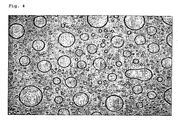
- the mean size of the microreservoirs in the TDS was approx. 50 ⁇ m with typical sizes in the range of 20 to 90 ⁇ m.
- a microscope image of the obtained TDS is shown in Fig. 4.
- the dispersion was coated onto a suitably siliconised process liner (Hostaphan® RN 100), and the solvents were evaporated at 50°C over 30 minutes, thereby obtaining a matrix weight of 60 g/m 2 .
- the dry film was laminated with a suitable polyester foil (Hostaphan® RN 15). Individual patches having a desired size of (e.g. 20 cm 2 ) were punched out of the resulting laminate and sealed into pouches under the flow of nitrogen.
- the plasma concentration time profile at different test times was determined in pharmacokinetic studies involving (A) 14 healthy male persons (TDS of Comparative Examples 2 and 3) or (B) 30 healthy male persons (TDS of Example 1 and Comparative Example 1), respectively.
- the studies were conducted following an open single-dose randomised (B) two-way or (A) three-way cross-over design.
- Fig. 1 the rotigotine absorption for the sample obtained in Example 1 containing no salt (O) is compared to the sample obtained in Comparative Example 1 containing approx. 5 % (w/w) of rotigotine hydrochloride ( ⁇ ).
- the comparison in Fig. 1 clearly shows that the drug absorption after patch application depends on the residual salt content in the semi-permeable matrix and is significantly improved by reducing the amount of the protonated form of rotigotine present in the matrix.
- Fig. 2 shows the impact of the size distribution of the microreservoirs distributed in the semi-permeable matrix by comparing the sample obtained in Comparative Example 1 having a mean microreservoir size of approx. 15 ⁇ m and typical sizes between 10 and 20 ⁇ m ( ⁇ ) with the sample obtained in Comparative Example 2 having a mean microreservoir size of approx. 50 ⁇ m and typical sizes between 20.and 90 ⁇ m ( ⁇ ). From this comparison it can be deduced that reducing the size of the matrix reservoirs significantly increases the flux across the human skin.
- the test was performed with a sandwich of consecutively a supportive separator membrane, skin and the TDS. Active substance that has diffused from the TDS through the skin and/or membrane dissolves in an acceptor liquid that continuously passes directly underneath the membrane; the acceptor liquid was collected in tubes in a fraction collector; and the fractions were analysed for their content of rotigotine. The flux of active substance through skin was calculated by correcting for the influence of the separator membrane.
- a flask containing the acceptor liquid and the assembled diffusion cells were placed in a temperature-controlled water-bath (32.0 ⁇ 0.5°C).
- the acceptor liquid was continuously pumped from the flask through PTFE tubing by a peristaltic pump, passed through the diffusion cells where the diffusion takes place and was then transported via PTFE tubing to test tubes that were placed in a fraction collector.
- the required number of disks was punched out from the TDS by using a circular knife.
- Human epidermis excised to a thickness of 200-300 ⁇ m from fresh donor skin (storage ⁇ 36 hours at 4°C) with a dermatome (to be referred to as skin) was spread out on laboratory film in petridishes.
- skin a dermatome
- the required number of disks was punched out.
- a disk of membrane was centred on each cell surface.
- the skin disks were spread out on the membrane disks on the cell surfaces with the aid of forceps.
- a disk of the TDS is applied to each cell, and the cells were assembled. The experiment was then conducted in a manner similar to the one described in Tanojo et al above.
- Fig. 6 shows the in vitro skin permeation profile for the TDS of Example 1 ( ⁇ ) compared to the TDS of Comparative Example 2 ( ⁇ ).
- Fig. 7 shows the in vitro skin permeation profile for the TDS of Example 1 ( ⁇ ) compared to the acrylate TDS of Comparative Example 3 ( ⁇ ).
Landscapes
- Health & Medical Sciences (AREA)
- Engineering & Computer Science (AREA)
- Bioinformatics & Cheminformatics (AREA)
- General Health & Medical Sciences (AREA)
- Veterinary Medicine (AREA)
- Public Health (AREA)
- Medicinal Chemistry (AREA)
- Chemical & Material Sciences (AREA)
- Animal Behavior & Ethology (AREA)
- Pharmacology & Pharmacy (AREA)
- Life Sciences & Earth Sciences (AREA)
- Epidemiology (AREA)
- Dermatology (AREA)
- Biomedical Technology (AREA)
- Chemical Kinetics & Catalysis (AREA)
- General Chemical & Material Sciences (AREA)
- Nuclear Medicine, Radiotherapy & Molecular Imaging (AREA)
- Organic Chemistry (AREA)
- Neurology (AREA)
- Neurosurgery (AREA)
- Psychology (AREA)
- Medicinal Preparation (AREA)
- Pharmaceuticals Containing Other Organic And Inorganic Compounds (AREA)
- Heterocyclic Compounds Containing Sulfur Atoms (AREA)
- Medicines That Contain Protein Lipid Enzymes And Other Medicines (AREA)
Claims (6)
- Ein transdermales Verabreichungssystem (TDS) umfassend eine Unterschicht, welche inert gegenüber den Komponenten der Matrix ist, eine selbstklebende Matrix enthaltend Rotigotin und eine/ein Schutzfolie oder - blatt, welche(s) vor der Verwendung entfernt wird,
dadurch gekennzeichnet, dass
die selbstklebende Matrix aus einem festen oder semifesten, semi-permeablen Polymer besteht,(1) worin Rotigotin in Form der freien Base inkorporiert wurde,(2) welche mit Rotigotin gesättigt ist und Rotigotin als eine Vielzahl von Mikroreservoirs innerhalb der Matrix enthält,(3) welche hochdurchlässig für die freie Base von Rotigotin ist,(4) welche undurchlässig für die protonierte Form von Rotigotin ist,(5) worin der maximale Durchmesser der Mikroreservoirs kleiner als die Dicke der Matrix ist. - Das TDS gemäß Anspruch 1, dadurch gekennzeichnet, dass der mittlere Durchmesser der Mikroreservoirs im Bereich von 0,5 bis 20 µm ist.
- Das TDS gemäß Anspruch 1 oder 2, dadurch gekennzeichnet, dass die selbstklebende Matrix frei von Partikeln ist, welche Salze von Rotigotin an der Grenzfläche von TDS/Haut absorbieren.
- Das TDS gemäß einem der Ansprüche 1-3, dadurch gekennzeichnet, dass die Polymermatrix ein auf Druck reagierendes Silikonhaftmittel enthält.
Priority Applications (2)
| Application Number | Priority Date | Filing Date | Title |
|---|---|---|---|
| SI200330224T SI1524975T1 (sl) | 2002-07-30 | 2003-07-28 | Izboljsani transdermalni dostavni sistem za dajanje rotigotina |
| EP03766331A EP1524975B9 (de) | 2002-07-30 | 2003-07-28 | Verbessertes transdermales abgabesystem für die verabreichung von rotigotin |
Applications Claiming Priority (4)
| Application Number | Priority Date | Filing Date | Title |
|---|---|---|---|
| EP02016860A EP1386605A1 (de) | 2002-07-30 | 2002-07-30 | Verbessertes transdermales System für die Verabreichung von Rotigotin |
| EP02016860 | 2002-07-30 | ||
| PCT/EP2003/008320 WO2004012730A1 (en) | 2002-07-30 | 2003-07-28 | Improved transdermal delivery system for the administration of rotigotine |
| EP03766331A EP1524975B9 (de) | 2002-07-30 | 2003-07-28 | Verbessertes transdermales abgabesystem für die verabreichung von rotigotin |
Publications (3)
| Publication Number | Publication Date |
|---|---|
| EP1524975A1 EP1524975A1 (de) | 2005-04-27 |
| EP1524975B1 true EP1524975B1 (de) | 2006-04-05 |
| EP1524975B9 EP1524975B9 (de) | 2012-02-22 |
Family
ID=30011090
Family Applications (2)
| Application Number | Title | Priority Date | Filing Date |
|---|---|---|---|
| EP02016860A Withdrawn EP1386605A1 (de) | 2002-07-30 | 2002-07-30 | Verbessertes transdermales System für die Verabreichung von Rotigotin |
| EP03766331A Expired - Lifetime EP1524975B9 (de) | 2002-07-30 | 2003-07-28 | Verbessertes transdermales abgabesystem für die verabreichung von rotigotin |
Family Applications Before (1)
| Application Number | Title | Priority Date | Filing Date |
|---|---|---|---|
| EP02016860A Withdrawn EP1386605A1 (de) | 2002-07-30 | 2002-07-30 | Verbessertes transdermales System für die Verabreichung von Rotigotin |
Country Status (19)
| Country | Link |
|---|---|
| EP (2) | EP1386605A1 (de) |
| JP (2) | JP4837916B2 (de) |
| KR (1) | KR101016838B1 (de) |
| CN (2) | CN1671375A (de) |
| AT (1) | ATE322263T1 (de) |
| AU (1) | AU2003258539B2 (de) |
| BR (1) | BR0313091A (de) |
| CA (1) | CA2491366A1 (de) |
| DE (1) | DE60304477T2 (de) |
| DK (1) | DK1524975T3 (de) |
| ES (1) | ES2256780T3 (de) |
| IL (1) | IL165918A0 (de) |
| MX (1) | MXPA05000350A (de) |
| NO (1) | NO333297B1 (de) |
| PL (1) | PL217079B1 (de) |
| PT (1) | PT1524975E (de) |
| SI (1) | SI1524975T1 (de) |
| WO (1) | WO2004012730A1 (de) |
| ZA (1) | ZA200500252B (de) |
Cited By (2)
| Publication number | Priority date | Publication date | Assignee | Title |
|---|---|---|---|---|
| WO2014198423A1 (de) | 2013-06-14 | 2014-12-18 | Tesa Labtec Gmbh | Dreischichtiges transdermales therapiesystem (tts) |
| WO2014198422A1 (de) | 2013-06-14 | 2014-12-18 | Tesa Labtec Gmbh | Transdermales therapiesystem (tts) mit rotigotin |
Families Citing this family (30)
| Publication number | Priority date | Publication date | Assignee | Title |
|---|---|---|---|---|
| DE10041478A1 (de) | 2000-08-24 | 2002-03-14 | Sanol Arznei Schwarz Gmbh | Neue pharmazeutische Zusammensetzung |
| EP1386605A1 (de) * | 2002-07-30 | 2004-02-04 | Schwarz Pharma Ag | Verbessertes transdermales System für die Verabreichung von Rotigotin |
| EP1386604A1 (de) * | 2002-07-30 | 2004-02-04 | Schwarz Pharma Ag | Verbessertes transdermales Verabreichungssystem |
| DE10361258A1 (de) | 2003-12-24 | 2005-07-28 | Schwarz Pharma Ag | Verwendung von substituierten 2-Aminotetralinen zur vorbeugenden Behandlung von Morbus Parkinson |
| DE10361259A1 (de) * | 2003-12-24 | 2005-07-28 | Schwarz Pharma Ag | Verwendung von Rotigotine in einem Frühstadium von Morbus Parkinson zur Prävention des weiteren Neuronenverlustes |
| DE102004014841B4 (de) | 2004-03-24 | 2006-07-06 | Schwarz Pharma Ag | Verwendung von Rotigotin zur Behandlung und Prävention des Parkinson-Plus-Syndroms |
| EP1796610A4 (de) * | 2004-09-29 | 2012-12-05 | Schwarz Pharma Inc | Transdermales therapeutisches system für parkinson-krankheit |
| US7353034B2 (en) | 2005-04-04 | 2008-04-01 | X One, Inc. | Location sharing and tracking using mobile phones or other wireless devices |
| CA2739380C (en) * | 2008-10-06 | 2014-12-09 | Mylan Technologies, Inc. | Amorphous rotigotine transdermal system |
| DE102008060203A1 (de) | 2008-12-07 | 2010-06-10 | Dietrich Wilhelm Schacht | Wirkstoffstabilisierende flächenförmige Vorrichtung |
| EP2201941A1 (de) | 2008-12-29 | 2010-06-30 | UCB Pharma GmbH | Pflaster-Herstellungstechnologie |
| WO2011076879A1 (en) * | 2009-12-22 | 2011-06-30 | Ucb Pharma Gmbh | Polyvinylpyrrolidone for the stabilization of a solid dispersion of the non-crystalline form of rotigotine |
| JP5820469B2 (ja) | 2010-04-30 | 2015-11-24 | テイコク ファーマ ユーエスエー インコーポレーテッド | プロピニルアミノインダンの経皮組成物 |
| EP2688561B1 (de) | 2011-03-24 | 2018-08-22 | Teikoku Pharma USA, Inc. | Transdermale zusammensetzungen mit einer wirkstoffschicht und einer wirkstoffumwandlungsschicht |
| EP2559435A1 (de) | 2011-08-19 | 2013-02-20 | UCB Pharma GmbH | Rotigotin in der Behandlung von Hemineglekt, Schlaganfall und Defiziten nach einem Schlaganfall |
| EP2776020B1 (de) | 2011-11-09 | 2019-09-11 | Teikoku Seiyaku Co., Ltd. | Verfahren zur behandlung von neoplasmen der haut |
| DE102011119043A1 (de) | 2011-11-22 | 2013-05-23 | Alfred E. Tiefenbacher (Gmbh & Co. Kg) | Transdermales therapeutisches System (TDS) mit Rotigotin |
| DE102011090178A1 (de) | 2011-12-30 | 2013-07-04 | Lts Lohmann Therapie-Systeme Ag | Transdermales therapeutisches System mit geringer Neigung zur Spontankristallisation |
| KR101558042B1 (ko) * | 2012-07-05 | 2015-10-07 | 에스케이케미칼주식회사 | 로티고틴을 함유한 경피흡수제제 |
| JP6050896B2 (ja) | 2012-11-02 | 2016-12-21 | テイコク ファーマ ユーエスエー インコーポレーテッド | プロピニルアミノインダン経皮組成物 |
| TW201431570A (zh) | 2012-11-22 | 2014-08-16 | Ucb Pharma Gmbh | 用於經皮投服羅替戈汀(Rotigotine)之多天式貼片 |
| JP2016135744A (ja) * | 2013-05-08 | 2016-07-28 | 株式会社 ケイ・エム トランスダーム | 貼付剤 |
| CN105358139B (zh) | 2013-07-03 | 2020-10-16 | Lts罗曼治疗方法有限公司 | 具有电子元件的经皮治疗系统 |
| ES2954087T3 (es) | 2014-05-20 | 2023-11-20 | Lts Lohmann Therapie Systeme Ag | Sistema de administración transdérmica que incluye un mediador de interfase |
| CN106456567A (zh) * | 2014-05-20 | 2017-02-22 | Lts勒曼治疗系统股份公司 | 在经皮递送系统中调节活性剂释放的方法 |
| JP6573913B2 (ja) * | 2014-05-20 | 2019-09-11 | エルテーエス ローマン テラピー−ジステーメ アーゲー | ロチゴチンを含む経皮送達システム |
| KR102364378B1 (ko) | 2014-05-21 | 2022-02-16 | 에스케이케미칼 주식회사 | 안정성을 향상시킨 로티고틴 함유 경피흡수제제 |
| CN104382850B (zh) * | 2014-10-17 | 2017-12-22 | 烟台大学 | 一种罗替戈汀微乳及微乳凝胶 |
| WO2019234662A1 (en) * | 2018-06-07 | 2019-12-12 | Nal Pharmaceutical Group Limited | Transdermal drug delivery system containing rotigotine |
| DK3854388T3 (da) | 2020-01-24 | 2023-11-27 | Luye Pharma Switzerland Ag | Transdermalt terapeutisk system omfattende rotigotin og mindst et ikke-aminresistent silikoneklæbestof |
Family Cites Families (8)
| Publication number | Priority date | Publication date | Assignee | Title |
|---|---|---|---|---|
| US5989586A (en) * | 1992-10-05 | 1999-11-23 | Cygnus, Inc. | Two-phase matrix for sustained release drug delivery device |
| AUPN814496A0 (en) * | 1996-02-19 | 1996-03-14 | Monash University | Dermal penetration enhancer |
| DE19814084B4 (de) * | 1998-03-30 | 2005-12-22 | Lts Lohmann Therapie-Systeme Ag | D2-Agonist enthaltendes transdermales therapeutisches System zur Behandlung des Parkinson-Syndroms und Verfahren zu seiner Herstellung |
| DE19814083C2 (de) * | 1998-03-30 | 2002-02-07 | Lohmann Therapie Syst Lts | Verfahren zur Herstellung von transdermalen therapeutischen Systemen unter Verwendung von basischen Alkalimetallsalzen zur Umwandlung von Wirkstoffsalzen in die freien Basen |
| DE19940238A1 (de) * | 1999-08-25 | 2001-03-01 | Lohmann Therapie Syst Lts | Wirkstoffhaltiges therapeutisches System zur Applikation auf der Haut mit mindestens zwei polymerhaltigen Schichten |
| PT1256340E (pt) * | 2001-05-08 | 2003-12-31 | Sanol Arznei Schwarz Gmbh | Sistema terapeutico transdermico aperfeicoado para o tratamento da doenca de parkinson |
| EP1386605A1 (de) * | 2002-07-30 | 2004-02-04 | Schwarz Pharma Ag | Verbessertes transdermales System für die Verabreichung von Rotigotin |
| EP1386604A1 (de) * | 2002-07-30 | 2004-02-04 | Schwarz Pharma Ag | Verbessertes transdermales Verabreichungssystem |
-
2002
- 2002-07-30 EP EP02016860A patent/EP1386605A1/de not_active Withdrawn
-
2003
- 2003-07-28 WO PCT/EP2003/008320 patent/WO2004012730A1/en not_active Ceased
- 2003-07-28 AT AT03766331T patent/ATE322263T1/de active
- 2003-07-28 EP EP03766331A patent/EP1524975B9/de not_active Expired - Lifetime
- 2003-07-28 PT PT03766331T patent/PT1524975E/pt unknown
- 2003-07-28 AU AU2003258539A patent/AU2003258539B2/en not_active Expired
- 2003-07-28 SI SI200330224T patent/SI1524975T1/sl unknown
- 2003-07-28 DK DK03766331T patent/DK1524975T3/da active
- 2003-07-28 ES ES03766331T patent/ES2256780T3/es not_active Expired - Lifetime
- 2003-07-28 CN CNA038184257A patent/CN1671375A/zh active Pending
- 2003-07-28 BR BR0313091-6A patent/BR0313091A/pt not_active Application Discontinuation
- 2003-07-28 DE DE60304477T patent/DE60304477T2/de not_active Expired - Lifetime
- 2003-07-28 KR KR1020057001233A patent/KR101016838B1/ko not_active Expired - Lifetime
- 2003-07-28 MX MXPA05000350A patent/MXPA05000350A/es active IP Right Grant
- 2003-07-28 CN CN2010102984651A patent/CN101953819A/zh active Pending
- 2003-07-28 PL PL374814A patent/PL217079B1/pl unknown
- 2003-07-28 CA CA002491366A patent/CA2491366A1/en not_active Abandoned
- 2003-07-28 JP JP2004525349A patent/JP4837916B2/ja not_active Expired - Lifetime
-
2004
- 2004-12-22 IL IL16591804A patent/IL165918A0/xx unknown
-
2005
- 2005-01-11 ZA ZA2005/00252A patent/ZA200500252B/en unknown
- 2005-01-27 NO NO20050472A patent/NO333297B1/no not_active IP Right Cessation
-
2011
- 2011-06-15 JP JP2011133638A patent/JP5564469B2/ja not_active Expired - Lifetime
Cited By (2)
| Publication number | Priority date | Publication date | Assignee | Title |
|---|---|---|---|---|
| WO2014198423A1 (de) | 2013-06-14 | 2014-12-18 | Tesa Labtec Gmbh | Dreischichtiges transdermales therapiesystem (tts) |
| WO2014198422A1 (de) | 2013-06-14 | 2014-12-18 | Tesa Labtec Gmbh | Transdermales therapiesystem (tts) mit rotigotin |
Also Published As
| Publication number | Publication date |
|---|---|
| CN1671375A (zh) | 2005-09-21 |
| EP1524975A1 (de) | 2005-04-27 |
| NO333297B1 (no) | 2013-04-29 |
| SI1524975T1 (sl) | 2006-06-30 |
| PL217079B1 (pl) | 2014-06-30 |
| AU2003258539B2 (en) | 2008-08-21 |
| EP1386605A1 (de) | 2004-02-04 |
| CN101953819A (zh) | 2011-01-26 |
| KR101016838B1 (ko) | 2011-02-22 |
| DE60304477D1 (de) | 2006-05-18 |
| EP1524975B9 (de) | 2012-02-22 |
| ZA200500252B (en) | 2006-01-25 |
| PL374814A1 (en) | 2005-10-31 |
| PT1524975E (pt) | 2006-07-31 |
| BR0313091A (pt) | 2005-06-21 |
| JP2005535687A (ja) | 2005-11-24 |
| KR20050056942A (ko) | 2005-06-16 |
| CA2491366A1 (en) | 2004-02-12 |
| NO20050472L (no) | 2005-01-27 |
| ATE322263T1 (de) | 2006-04-15 |
| DE60304477T2 (de) | 2006-12-14 |
| MXPA05000350A (es) | 2005-03-31 |
| ES2256780T3 (es) | 2006-07-16 |
| IL165918A0 (en) | 2006-01-15 |
| JP5564469B2 (ja) | 2014-07-30 |
| JP4837916B2 (ja) | 2011-12-14 |
| DK1524975T3 (da) | 2006-07-31 |
| JP2011219485A (ja) | 2011-11-04 |
| WO2004012730A1 (en) | 2004-02-12 |
| AU2003258539A1 (en) | 2004-02-23 |
Similar Documents
| Publication | Publication Date | Title |
|---|---|---|
| US8617591B2 (en) | Transdermal delivery system for the administration of rotigotine | |
| EP1524975B9 (de) | Verbessertes transdermales abgabesystem für die verabreichung von rotigotin | |
| US8246980B2 (en) | Transdermal delivery system | |
| EP1524971B1 (de) | Verbessertes transdermales abgabesystem | |
| HK1062650A (en) | Improved transdermal delivery system for the administration of rotigotine | |
| HK1062649A (en) | Improved transdermal delivery system | |
| HK1083458B (en) | Improved transdermal delivery system | |
| HK1083459A (en) | Improved transdermal delivery system for the administration of rotigotine |
Legal Events
| Date | Code | Title | Description |
|---|---|---|---|
| PUAI | Public reference made under article 153(3) epc to a published international application that has entered the european phase |
Free format text: ORIGINAL CODE: 0009012 |
|
| 17P | Request for examination filed |
Effective date: 20041223 |
|
| AK | Designated contracting states |
Kind code of ref document: A1 Designated state(s): AT BE BG CH CY CZ DE DK EE ES FI FR GB GR HU IE IT LI LU MC NL PT RO SE SI SK TR |
|
| AX | Request for extension of the european patent |
Extension state: AL LT LV MK |
|
| GRAP | Despatch of communication of intention to grant a patent |
Free format text: ORIGINAL CODE: EPIDOSNIGR1 |
|
| RAX | Requested extension states of the european patent have changed |
Extension state: LV Payment date: 20041223 Extension state: LT Payment date: 20041223 |
|
| GRAS | Grant fee paid |
Free format text: ORIGINAL CODE: EPIDOSNIGR3 |
|
| GRAA | (expected) grant |
Free format text: ORIGINAL CODE: 0009210 |
|
| AK | Designated contracting states |
Kind code of ref document: B1 Designated state(s): AT BE BG CH CY CZ DE DK EE ES FI FR GB GR HU IE IT LI LU MC NL PT RO SE SI SK TR |
|
| AX | Request for extension of the european patent |
Extension state: LT LV |
|
| REG | Reference to a national code |
Ref country code: GB Ref legal event code: FG4D |
|
| REG | Reference to a national code |
Ref country code: CH Ref legal event code: EP |
|
| REG | Reference to a national code |
Ref country code: IE Ref legal event code: FG4D |
|
| REF | Corresponds to: |
Ref document number: 60304477 Country of ref document: DE Date of ref document: 20060518 Kind code of ref document: P |
|
| REG | Reference to a national code |
Ref country code: RO Ref legal event code: EPE |
|
| REG | Reference to a national code |
Ref country code: GR Ref legal event code: EP Ref document number: 20060401683 Country of ref document: GR Ref country code: CH Ref legal event code: NV Representative=s name: E. BLUM & CO. PATENTANWAELTE |
|
| REG | Reference to a national code |
Ref country code: ES Ref legal event code: FG2A Ref document number: 2256780 Country of ref document: ES Kind code of ref document: T3 |
|
| REG | Reference to a national code |
Ref country code: SE Ref legal event code: TRGR |
|
| REG | Reference to a national code |
Ref country code: HU Ref legal event code: AG4A Ref document number: E000409 Country of ref document: HU |
|
| REG | Reference to a national code |
Ref country code: DK Ref legal event code: T3 Ref country code: PT Ref legal event code: SC4A Effective date: 20060518 |
|
| REG | Reference to a national code |
Ref country code: EE Ref legal event code: FG4A Ref document number: E000395 Country of ref document: EE Effective date: 20060605 |
|
| ET | Fr: translation filed | ||
| PLBE | No opposition filed within time limit |
Free format text: ORIGINAL CODE: 0009261 |
|
| STAA | Information on the status of an ep patent application or granted ep patent |
Free format text: STATUS: NO OPPOSITION FILED WITHIN TIME LIMIT |
|
| 26N | No opposition filed |
Effective date: 20070108 |
|
| REG | Reference to a national code |
Ref country code: CH Ref legal event code: PFA Owner name: SCHWARZ PHARMA AG Free format text: SCHWARZ PHARMA AG#ALFRED-NOBEL-STRASSE 10#40789 MONHEIM (DE) -TRANSFER TO- SCHWARZ PHARMA AG#ALFRED-NOBEL-STRASSE 10#40789 MONHEIM (DE) |
|
| REG | Reference to a national code |
Ref country code: CH Ref legal event code: PFA Owner name: UCB PHARMA GMBH Free format text: SCHWARZ PHARMA AG#ALFRED-NOBEL-STRASSE 10#40789 MONHEIM (DE) -TRANSFER TO- UCB PHARMA GMBH#ALFRED-NOBEL-STRASSE 10#40789 MONHEIM (DE) |
|
| REG | Reference to a national code |
Ref country code: FR Ref legal event code: CJ Ref country code: FR Ref legal event code: CD |
|
| REG | Reference to a national code |
Ref country code: NL Ref legal event code: TD Effective date: 20101112 |
|
| REG | Reference to a national code |
Ref country code: EE Ref legal event code: HC1A Ref document number: E000395 Country of ref document: EE |
|
| REG | Reference to a national code |
Ref country code: ES Ref legal event code: PC2A Owner name: UCB PHARMA GMBH Effective date: 20110315 |
|
| REG | Reference to a national code |
Ref country code: SI Ref legal event code: SP73 Owner name: UCB PHARMA GMBH; DE Effective date: 20110512 |
|
| REG | Reference to a national code |
Ref country code: SK Ref legal event code: TC4A Ref document number: E 989 Country of ref document: SK Owner name: UCB PHARMA GMBH, MONHEIM, DE Effective date: 20110804 |
|
| REG | Reference to a national code |
Ref country code: FR Ref legal event code: PLFP Year of fee payment: 14 |
|
| REG | Reference to a national code |
Ref country code: FR Ref legal event code: PLFP Year of fee payment: 15 |
|
| REG | Reference to a national code |
Ref country code: FR Ref legal event code: PLFP Year of fee payment: 16 |
|
| PGFP | Annual fee paid to national office [announced via postgrant information from national office to epo] |
Ref country code: SK Payment date: 20220614 Year of fee payment: 20 Ref country code: SE Payment date: 20220615 Year of fee payment: 20 Ref country code: RO Payment date: 20220614 Year of fee payment: 20 Ref country code: PT Payment date: 20220623 Year of fee payment: 20 Ref country code: NL Payment date: 20220615 Year of fee payment: 20 Ref country code: MC Payment date: 20220628 Year of fee payment: 20 Ref country code: IT Payment date: 20220613 Year of fee payment: 20 Ref country code: IE Payment date: 20220609 Year of fee payment: 20 Ref country code: GB Payment date: 20220609 Year of fee payment: 20 Ref country code: EE Payment date: 20220621 Year of fee payment: 20 Ref country code: BG Payment date: 20220615 Year of fee payment: 20 |
|
| PGFP | Annual fee paid to national office [announced via postgrant information from national office to epo] |
Ref country code: GR Payment date: 20220622 Year of fee payment: 20 Ref country code: BE Payment date: 20220615 Year of fee payment: 20 |
|
| PGFP | Annual fee paid to national office [announced via postgrant information from national office to epo] |
Ref country code: FR Payment date: 20220609 Year of fee payment: 20 |
|
| PGFP | Annual fee paid to national office [announced via postgrant information from national office to epo] |
Ref country code: TR Payment date: 20220721 Year of fee payment: 20 Ref country code: LU Payment date: 20220715 Year of fee payment: 20 Ref country code: FI Payment date: 20220712 Year of fee payment: 20 Ref country code: ES Payment date: 20220804 Year of fee payment: 20 Ref country code: DK Payment date: 20220714 Year of fee payment: 20 Ref country code: DE Payment date: 20220531 Year of fee payment: 20 Ref country code: CZ Payment date: 20220714 Year of fee payment: 20 Ref country code: CY Payment date: 20220712 Year of fee payment: 20 Ref country code: AT Payment date: 20220627 Year of fee payment: 20 |
|
| PGFP | Annual fee paid to national office [announced via postgrant information from national office to epo] |
Ref country code: SI Payment date: 20220617 Year of fee payment: 20 Ref country code: HU Payment date: 20220619 Year of fee payment: 20 |
|
| PGFP | Annual fee paid to national office [announced via postgrant information from national office to epo] |
Ref country code: CH Payment date: 20220801 Year of fee payment: 20 |
|
| P01 | Opt-out of the competence of the unified patent court (upc) registered |
Effective date: 20230421 |
|
| REG | Reference to a national code |
Ref country code: DE Ref legal event code: R071 Ref document number: 60304477 Country of ref document: DE |
|
| REG | Reference to a national code |
Ref country code: CH Ref legal event code: PL Ref country code: DK Ref legal event code: EUP Expiry date: 20230728 |
|
| REG | Reference to a national code |
Ref country code: NL Ref legal event code: MK Effective date: 20230727 |
|
| REG | Reference to a national code |
Ref country code: ES Ref legal event code: FD2A Effective date: 20230804 |
|
| REG | Reference to a national code |
Ref country code: LT Ref legal event code: MM9A Effective date: 20230728 |
|
| REG | Reference to a national code |
Ref country code: GB Ref legal event code: PE20 Expiry date: 20230727 |
|
| REG | Reference to a national code |
Ref country code: BE Ref legal event code: MK Effective date: 20230728 |
|
| REG | Reference to a national code |
Ref country code: SK Ref legal event code: MK4A Ref document number: E 989 Country of ref document: SK Expiry date: 20230728 |
|
| REG | Reference to a national code |
Ref country code: SE Ref legal event code: EUG |
|
| REG | Reference to a national code |
Ref country code: IE Ref legal event code: MK9A |
|
| REG | Reference to a national code |
Ref country code: AT Ref legal event code: MK07 Ref document number: 322263 Country of ref document: AT Kind code of ref document: T Effective date: 20230728 |
|
| PG25 | Lapsed in a contracting state [announced via postgrant information from national office to epo] |
Ref country code: PT Free format text: LAPSE BECAUSE OF EXPIRATION OF PROTECTION Effective date: 20230809 Ref country code: IE Free format text: LAPSE BECAUSE OF EXPIRATION OF PROTECTION Effective date: 20230728 Ref country code: GB Free format text: LAPSE BECAUSE OF EXPIRATION OF PROTECTION Effective date: 20230727 Ref country code: ES Free format text: LAPSE BECAUSE OF EXPIRATION OF PROTECTION Effective date: 20230729 Ref country code: CZ Free format text: LAPSE BECAUSE OF EXPIRATION OF PROTECTION Effective date: 20230728 |
|
| PG25 | Lapsed in a contracting state [announced via postgrant information from national office to epo] |
Ref country code: SK Free format text: LAPSE BECAUSE OF EXPIRATION OF PROTECTION Effective date: 20230728 Ref country code: SI Free format text: LAPSE BECAUSE OF EXPIRATION OF PROTECTION Effective date: 20230729 |