EP1524023B1 - Verfahren zur Entfernung von NOx, SOx und Verunreinigungen aus Gasströmen - Google Patents
Verfahren zur Entfernung von NOx, SOx und Verunreinigungen aus Gasströmen Download PDFInfo
- Publication number
- EP1524023B1 EP1524023B1 EP04256401A EP04256401A EP1524023B1 EP 1524023 B1 EP1524023 B1 EP 1524023B1 EP 04256401 A EP04256401 A EP 04256401A EP 04256401 A EP04256401 A EP 04256401A EP 1524023 B1 EP1524023 B1 EP 1524023B1
- Authority
- EP
- European Patent Office
- Prior art keywords
- scrubber
- ozone
- oxides
- prescrubber
- gas stream
- Prior art date
- Legal status (The legal status is an assumption and is not a legal conclusion. Google has not performed a legal analysis and makes no representation as to the accuracy of the status listed.)
- Expired - Lifetime
Links
- 238000000034 method Methods 0.000 title claims abstract description 40
- 230000008569 process Effects 0.000 title claims abstract description 33
- 239000000356 contaminant Substances 0.000 title claims description 29
- 239000007789 gas Substances 0.000 claims abstract description 82
- CBENFWSGALASAD-UHFFFAOYSA-N Ozone Chemical compound [O-][O+]=O CBENFWSGALASAD-UHFFFAOYSA-N 0.000 claims abstract description 66
- UGFAIRIUMAVXCW-UHFFFAOYSA-N Carbon monoxide Chemical compound [O+]#[C-] UGFAIRIUMAVXCW-UHFFFAOYSA-N 0.000 claims abstract description 50
- 239000003546 flue gas Substances 0.000 claims abstract description 50
- 239000007800 oxidant agent Substances 0.000 claims abstract description 39
- 238000007254 oxidation reaction Methods 0.000 claims abstract description 35
- 230000003647 oxidation Effects 0.000 claims abstract description 34
- IJGRMHOSHXDMSA-UHFFFAOYSA-N Atomic nitrogen Chemical compound N#N IJGRMHOSHXDMSA-UHFFFAOYSA-N 0.000 claims abstract description 24
- 229910052757 nitrogen Inorganic materials 0.000 claims abstract description 12
- NINIDFKCEFEMDL-UHFFFAOYSA-N Sulfur Chemical compound [S] NINIDFKCEFEMDL-UHFFFAOYSA-N 0.000 claims abstract description 6
- 229910001385 heavy metal Inorganic materials 0.000 claims abstract description 6
- 229910052717 sulfur Inorganic materials 0.000 claims abstract description 6
- 239000011593 sulfur Substances 0.000 claims abstract description 6
- MWUXSHHQAYIFBG-UHFFFAOYSA-N nitrogen oxide Inorganic materials O=[N] MWUXSHHQAYIFBG-UHFFFAOYSA-N 0.000 claims description 122
- LSNNMFCWUKXFEE-UHFFFAOYSA-N Sulfurous acid Chemical compound OS(O)=O LSNNMFCWUKXFEE-UHFFFAOYSA-N 0.000 claims description 32
- 230000001590 oxidative effect Effects 0.000 claims description 17
- 239000003513 alkali Substances 0.000 claims description 11
- LSNNMFCWUKXFEE-UHFFFAOYSA-L sulfite Chemical compound [O-]S([O-])=O LSNNMFCWUKXFEE-UHFFFAOYSA-L 0.000 claims description 9
- 150000004679 hydroxides Chemical class 0.000 claims description 5
- 150000004649 carbonic acid derivatives Chemical class 0.000 claims description 4
- 230000002000 scavenging effect Effects 0.000 claims description 3
- 239000002253 acid Substances 0.000 claims description 2
- 239000012736 aqueous medium Substances 0.000 claims description 2
- QSHDDOUJBYECFT-UHFFFAOYSA-N mercury Chemical compound [Hg] QSHDDOUJBYECFT-UHFFFAOYSA-N 0.000 abstract description 21
- 229910052753 mercury Inorganic materials 0.000 abstract description 17
- 238000004519 manufacturing process Methods 0.000 abstract description 3
- 239000007788 liquid Substances 0.000 description 34
- 238000010521 absorption reaction Methods 0.000 description 25
- 238000005201 scrubbing Methods 0.000 description 25
- XLYOFNOQVPJJNP-UHFFFAOYSA-N water Chemical compound O XLYOFNOQVPJJNP-UHFFFAOYSA-N 0.000 description 21
- 229910052815 sulfur oxide Inorganic materials 0.000 description 19
- QVGXLLKOCUKJST-UHFFFAOYSA-N atomic oxygen Chemical compound [O] QVGXLLKOCUKJST-UHFFFAOYSA-N 0.000 description 15
- ZWWCURLKEXEFQT-UHFFFAOYSA-N dinitrogen pentaoxide Chemical compound [O-][N+](=O)O[N+]([O-])=O ZWWCURLKEXEFQT-UHFFFAOYSA-N 0.000 description 15
- 239000001301 oxygen Substances 0.000 description 15
- 229910052760 oxygen Inorganic materials 0.000 description 15
- 239000000243 solution Substances 0.000 description 12
- 238000006243 chemical reaction Methods 0.000 description 11
- GRYLNZFGIOXLOG-UHFFFAOYSA-N Nitric acid Chemical compound O[N+]([O-])=O GRYLNZFGIOXLOG-UHFFFAOYSA-N 0.000 description 10
- IOVCWXUNBOPUCH-UHFFFAOYSA-N Nitrous acid Chemical compound ON=O IOVCWXUNBOPUCH-UHFFFAOYSA-N 0.000 description 10
- 229910017604 nitric acid Inorganic materials 0.000 description 10
- 239000012071 phase Substances 0.000 description 10
- CDBYLPFSWZWCQE-UHFFFAOYSA-L Sodium Carbonate Chemical compound [Na+].[Na+].[O-]C([O-])=O CDBYLPFSWZWCQE-UHFFFAOYSA-L 0.000 description 8
- 230000036961 partial effect Effects 0.000 description 7
- QGZKDVFQNNGYKY-UHFFFAOYSA-N Ammonia Chemical compound N QGZKDVFQNNGYKY-UHFFFAOYSA-N 0.000 description 6
- 229910002651 NO3 Inorganic materials 0.000 description 6
- NHNBFGGVMKEFGY-UHFFFAOYSA-N Nitrate Chemical compound [O-][N+]([O-])=O NHNBFGGVMKEFGY-UHFFFAOYSA-N 0.000 description 6
- 229910052784 alkaline earth metal Inorganic materials 0.000 description 6
- 239000007864 aqueous solution Substances 0.000 description 6
- 239000003153 chemical reaction reagent Substances 0.000 description 6
- 239000007791 liquid phase Substances 0.000 description 6
- 239000003595 mist Substances 0.000 description 6
- 239000007787 solid Substances 0.000 description 6
- 239000000126 substance Substances 0.000 description 6
- 238000002485 combustion reaction Methods 0.000 description 5
- UKWHYYKOEPRTIC-UHFFFAOYSA-N mercury(ii) oxide Chemical compound [Hg]=O UKWHYYKOEPRTIC-UHFFFAOYSA-N 0.000 description 5
- 238000007670 refining Methods 0.000 description 5
- XTQHKBHJIVJGKJ-UHFFFAOYSA-N sulfur monoxide Chemical class S=O XTQHKBHJIVJGKJ-UHFFFAOYSA-N 0.000 description 5
- 238000012546 transfer Methods 0.000 description 5
- 238000011144 upstream manufacturing Methods 0.000 description 5
- 238000009826 distribution Methods 0.000 description 4
- 239000002803 fossil fuel Substances 0.000 description 4
- 229910000041 hydrogen chloride Inorganic materials 0.000 description 4
- 239000003208 petroleum Substances 0.000 description 4
- 229910000029 sodium carbonate Inorganic materials 0.000 description 4
- VWDWKYIASSYTQR-UHFFFAOYSA-N sodium nitrate Chemical compound [Na+].[O-][N+]([O-])=O VWDWKYIASSYTQR-UHFFFAOYSA-N 0.000 description 4
- LPXPTNMVRIOKMN-UHFFFAOYSA-M sodium nitrite Chemical compound [Na+].[O-]N=O LPXPTNMVRIOKMN-UHFFFAOYSA-M 0.000 description 4
- GEHJYWRUCIMESM-UHFFFAOYSA-L sodium sulfite Chemical compound [Na+].[Na+].[O-]S([O-])=O GEHJYWRUCIMESM-UHFFFAOYSA-L 0.000 description 4
- 239000007921 spray Substances 0.000 description 4
- 230000002378 acidificating effect Effects 0.000 description 3
- -1 alkaline earth metal salts Chemical class 0.000 description 3
- 229910021529 ammonia Inorganic materials 0.000 description 3
- 239000008346 aqueous phase Substances 0.000 description 3
- 230000015572 biosynthetic process Effects 0.000 description 3
- 230000000694 effects Effects 0.000 description 3
- 238000005516 engineering process Methods 0.000 description 3
- 230000007613 environmental effect Effects 0.000 description 3
- 239000003344 environmental pollutant Substances 0.000 description 3
- 230000009467 reduction Effects 0.000 description 3
- 238000000926 separation method Methods 0.000 description 3
- DGAQECJNVWCQMB-PUAWFVPOSA-M Ilexoside XXIX Chemical compound C[C@@H]1CC[C@@]2(CC[C@@]3(C(=CC[C@H]4[C@]3(CC[C@@H]5[C@@]4(CC[C@@H](C5(C)C)OS(=O)(=O)[O-])C)C)[C@@H]2[C@]1(C)O)C)C(=O)O[C@H]6[C@@H]([C@H]([C@@H]([C@H](O6)CO)O)O)O.[Na+] DGAQECJNVWCQMB-PUAWFVPOSA-M 0.000 description 2
- 235000019738 Limestone Nutrition 0.000 description 2
- JCXJVPUVTGWSNB-UHFFFAOYSA-N Nitrogen dioxide Chemical compound O=[N]=O JCXJVPUVTGWSNB-UHFFFAOYSA-N 0.000 description 2
- 150000001340 alkali metals Chemical class 0.000 description 2
- 150000001342 alkaline earth metals Chemical class 0.000 description 2
- 150000007514 bases Chemical class 0.000 description 2
- 239000003245 coal Substances 0.000 description 2
- 238000001816 cooling Methods 0.000 description 2
- 238000013461 design Methods 0.000 description 2
- 238000010586 diagram Methods 0.000 description 2
- 238000004090 dissolution Methods 0.000 description 2
- 230000005484 gravity Effects 0.000 description 2
- 238000002347 injection Methods 0.000 description 2
- 239000007924 injection Substances 0.000 description 2
- 239000006028 limestone Substances 0.000 description 2
- 229940101209 mercuric oxide Drugs 0.000 description 2
- 239000000203 mixture Substances 0.000 description 2
- GQPLMRYTRLFLPF-UHFFFAOYSA-N nitrous oxide Inorganic materials [O-][N+]#N GQPLMRYTRLFLPF-UHFFFAOYSA-N 0.000 description 2
- 231100000719 pollutant Toxicity 0.000 description 2
- 238000010791 quenching Methods 0.000 description 2
- 230000000171 quenching effect Effects 0.000 description 2
- 230000003134 recirculating effect Effects 0.000 description 2
- 229920006395 saturated elastomer Polymers 0.000 description 2
- 239000011734 sodium Substances 0.000 description 2
- 229910052708 sodium Inorganic materials 0.000 description 2
- 239000002699 waste material Substances 0.000 description 2
- 238000004065 wastewater treatment Methods 0.000 description 2
- LSNNMFCWUKXFEE-UHFFFAOYSA-M Bisulfite Chemical compound OS([O-])=O LSNNMFCWUKXFEE-UHFFFAOYSA-M 0.000 description 1
- 235000008733 Citrus aurantifolia Nutrition 0.000 description 1
- 239000007832 Na2SO4 Substances 0.000 description 1
- ZLMJMSJWJFRBEC-UHFFFAOYSA-N Potassium Chemical compound [K] ZLMJMSJWJFRBEC-UHFFFAOYSA-N 0.000 description 1
- PMZURENOXWZQFD-UHFFFAOYSA-L Sodium Sulfate Chemical compound [Na+].[Na+].[O-]S([O-])(=O)=O PMZURENOXWZQFD-UHFFFAOYSA-L 0.000 description 1
- 229910000831 Steel Inorganic materials 0.000 description 1
- QAOWNCQODCNURD-UHFFFAOYSA-L Sulfate Chemical compound [O-]S([O-])(=O)=O QAOWNCQODCNURD-UHFFFAOYSA-L 0.000 description 1
- 235000011941 Tilia x europaea Nutrition 0.000 description 1
- 230000002411 adverse Effects 0.000 description 1
- 239000003570 air Substances 0.000 description 1
- 239000000809 air pollutant Substances 0.000 description 1
- 231100001243 air pollutant Toxicity 0.000 description 1
- 229910052783 alkali metal Inorganic materials 0.000 description 1
- 229910000272 alkali metal oxide Inorganic materials 0.000 description 1
- 229910000287 alkaline earth metal oxide Inorganic materials 0.000 description 1
- 238000013459 approach Methods 0.000 description 1
- 230000001174 ascending effect Effects 0.000 description 1
- 230000009286 beneficial effect Effects 0.000 description 1
- 230000008859 change Effects 0.000 description 1
- 238000012512 characterization method Methods 0.000 description 1
- 238000012993 chemical processing Methods 0.000 description 1
- 238000012824 chemical production Methods 0.000 description 1
- 239000003638 chemical reducing agent Substances 0.000 description 1
- 239000000567 combustion gas Substances 0.000 description 1
- 150000001875 compounds Chemical class 0.000 description 1
- 239000000498 cooling water Substances 0.000 description 1
- 230000001186 cumulative effect Effects 0.000 description 1
- 230000006378 damage Effects 0.000 description 1
- 230000003247 decreasing effect Effects 0.000 description 1
- 230000007812 deficiency Effects 0.000 description 1
- 230000009977 dual effect Effects 0.000 description 1
- 230000008030 elimination Effects 0.000 description 1
- 238000003379 elimination reaction Methods 0.000 description 1
- 239000012530 fluid Substances 0.000 description 1
- 239000011521 glass Substances 0.000 description 1
- 230000008821 health effect Effects 0.000 description 1
- 125000002887 hydroxy group Chemical group [H]O* 0.000 description 1
- 230000006872 improvement Effects 0.000 description 1
- 238000011065 in-situ storage Methods 0.000 description 1
- 239000004571 lime Substances 0.000 description 1
- 230000000670 limiting effect Effects 0.000 description 1
- 239000000463 material Substances 0.000 description 1
- 230000007246 mechanism Effects 0.000 description 1
- 239000002609 medium Substances 0.000 description 1
- 229910052751 metal Inorganic materials 0.000 description 1
- 239000002184 metal Substances 0.000 description 1
- 238000002156 mixing Methods 0.000 description 1
- 230000004048 modification Effects 0.000 description 1
- 238000012986 modification Methods 0.000 description 1
- 125000001820 oxy group Chemical group [*:1]O[*:2] 0.000 description 1
- 238000012856 packing Methods 0.000 description 1
- 238000005554 pickling Methods 0.000 description 1
- 238000005498 polishing Methods 0.000 description 1
- 229910052700 potassium Inorganic materials 0.000 description 1
- 239000011591 potassium Substances 0.000 description 1
- 238000010248 power generation Methods 0.000 description 1
- 238000012545 processing Methods 0.000 description 1
- 238000005086 pumping Methods 0.000 description 1
- 230000002829 reductive effect Effects 0.000 description 1
- 230000004044 response Effects 0.000 description 1
- 150000003839 salts Chemical class 0.000 description 1
- 229910052938 sodium sulfate Inorganic materials 0.000 description 1
- 235000010265 sodium sulphite Nutrition 0.000 description 1
- 230000006641 stabilisation Effects 0.000 description 1
- 238000011105 stabilization Methods 0.000 description 1
- 229910001220 stainless steel Inorganic materials 0.000 description 1
- 239000010935 stainless steel Substances 0.000 description 1
- 239000010959 steel Substances 0.000 description 1
- 150000003467 sulfuric acid derivatives Chemical class 0.000 description 1
- 239000002912 waste gas Substances 0.000 description 1
Images
Classifications
-
- B—PERFORMING OPERATIONS; TRANSPORTING
- B01—PHYSICAL OR CHEMICAL PROCESSES OR APPARATUS IN GENERAL
- B01D—SEPARATION
- B01D53/00—Separation of gases or vapours; Recovering vapours of volatile solvents from gases; Chemical or biological purification of waste gases, e.g. engine exhaust gases, smoke, fumes, flue gases, aerosols
- B01D53/34—Chemical or biological purification of waste gases
- B01D53/46—Removing components of defined structure
- B01D53/60—Simultaneously removing sulfur oxides and nitrogen oxides
-
- B—PERFORMING OPERATIONS; TRANSPORTING
- B01—PHYSICAL OR CHEMICAL PROCESSES OR APPARATUS IN GENERAL
- B01D—SEPARATION
- B01D53/00—Separation of gases or vapours; Recovering vapours of volatile solvents from gases; Chemical or biological purification of waste gases, e.g. engine exhaust gases, smoke, fumes, flue gases, aerosols
- B01D53/34—Chemical or biological purification of waste gases
- B01D53/46—Removing components of defined structure
- B01D53/48—Sulfur compounds
- B01D53/50—Sulfur oxides
-
- B—PERFORMING OPERATIONS; TRANSPORTING
- B01—PHYSICAL OR CHEMICAL PROCESSES OR APPARATUS IN GENERAL
- B01D—SEPARATION
- B01D53/00—Separation of gases or vapours; Recovering vapours of volatile solvents from gases; Chemical or biological purification of waste gases, e.g. engine exhaust gases, smoke, fumes, flue gases, aerosols
- B01D53/34—Chemical or biological purification of waste gases
- B01D53/46—Removing components of defined structure
- B01D53/48—Sulfur compounds
- B01D53/50—Sulfur oxides
- B01D53/501—Sulfur oxides by treating the gases with a solution or a suspension of an alkali or earth-alkali or ammonium compound
-
- B—PERFORMING OPERATIONS; TRANSPORTING
- B01—PHYSICAL OR CHEMICAL PROCESSES OR APPARATUS IN GENERAL
- B01D—SEPARATION
- B01D53/00—Separation of gases or vapours; Recovering vapours of volatile solvents from gases; Chemical or biological purification of waste gases, e.g. engine exhaust gases, smoke, fumes, flue gases, aerosols
- B01D53/34—Chemical or biological purification of waste gases
- B01D53/46—Removing components of defined structure
- B01D53/64—Heavy metals or compounds thereof, e.g. mercury
-
- B—PERFORMING OPERATIONS; TRANSPORTING
- B01—PHYSICAL OR CHEMICAL PROCESSES OR APPARATUS IN GENERAL
- B01D—SEPARATION
- B01D2251/00—Reactants
- B01D2251/10—Oxidants
- B01D2251/104—Ozone
-
- B—PERFORMING OPERATIONS; TRANSPORTING
- B01—PHYSICAL OR CHEMICAL PROCESSES OR APPARATUS IN GENERAL
- B01D—SEPARATION
- B01D2257/00—Components to be removed
- B01D2257/30—Sulfur compounds
- B01D2257/302—Sulfur oxides
-
- B—PERFORMING OPERATIONS; TRANSPORTING
- B01—PHYSICAL OR CHEMICAL PROCESSES OR APPARATUS IN GENERAL
- B01D—SEPARATION
- B01D2257/00—Components to be removed
- B01D2257/40—Nitrogen compounds
- B01D2257/404—Nitrogen oxides other than dinitrogen oxide
-
- B—PERFORMING OPERATIONS; TRANSPORTING
- B01—PHYSICAL OR CHEMICAL PROCESSES OR APPARATUS IN GENERAL
- B01D—SEPARATION
- B01D2257/00—Components to be removed
- B01D2257/60—Heavy metals or heavy metal compounds
-
- Y—GENERAL TAGGING OF NEW TECHNOLOGICAL DEVELOPMENTS; GENERAL TAGGING OF CROSS-SECTIONAL TECHNOLOGIES SPANNING OVER SEVERAL SECTIONS OF THE IPC; TECHNICAL SUBJECTS COVERED BY FORMER USPC CROSS-REFERENCE ART COLLECTIONS [XRACs] AND DIGESTS
- Y02—TECHNOLOGIES OR APPLICATIONS FOR MITIGATION OR ADAPTATION AGAINST CLIMATE CHANGE
- Y02A—TECHNOLOGIES FOR ADAPTATION TO CLIMATE CHANGE
- Y02A50/00—TECHNOLOGIES FOR ADAPTATION TO CLIMATE CHANGE in human health protection, e.g. against extreme weather
- Y02A50/20—Air quality improvement or preservation, e.g. vehicle emission control or emission reduction by using catalytic converters
Definitions
- the present invention provides for an improved process for separating and removing nitrogen oxides, sulfur oxides, heavy metals and other contaminants from exhaust gases.
- exhaust gases include those that originate from any full or partial combustion source, thermal processes, and process off gases from fossil fuel fired boilers, furnaces, incineration plants, refining, petroleum and petrochemical plants, inorganic, organic, fine and bulk chemical production plants.
- Another known method of removing NO x from gas streams involves contacting the NO x with ozone, thereby oxidizing them to higher nitrogen oxides, such as N 2 O 5 and removing the higher oxides from the gas stream by means of aqueous scrubbers.
- Coal-fired utility boilers are one of the largest sources of harmful anthropogenic mercury emissions but also include the NO x and SO x emissions sources.
- the present inventors have discovered a process whereby heavy metals as well as NO x and SO x can be removed from the emission from a variety of industrial processes.
- EP-A-1 332 786 discloses a process for removing nitrogen oxides, sulfur oxides and mercury from a gas stream.
- the gas stream is passed through an aqueous (pre)scrubber.
- the (pre)scrubbed gas stream is reacted with ozone to convert nitrogen oxides to dinitrogen pentoxide and mercury to mercuric oxide.
- the so oxidized gas stream is fed first to an acidic scrubber for removal of the dinitrgoen pentoxide and the mercuric oxide and second to an alkaline scrubber for removal of sulfur oxides.
- US-A-5 985 223 relates to the removal of oxides of sulfur and nitrogen from an effluent gas evolved from a metal pickling bath.
- the effluent gas is (pre)scrubbed in a first alkaline scrubber to remove high oxide forms of NO x and SO x , the (pre)scrubbed effluent is subjected to a second stage of alkaline scrubbing.
- JP-A-53 011164 discloses introducing a waste combustion gas employing a desulphursation column and a denitrofication shown. Gaseous effluent from the former passes to the latter via a reactor in which nitric oxide in the effluent gas is reacted with ozone. Liquor from the bottom of the desulpurisation column is fed to the top of the denitrification column,and from the bottom of the desulphurization column to the top of the dinitrofication column.
- the present invention provides a process that comprises the selective absorption of contaminants preceding and following ozone addition. According to the present invention there is provided a process as claimed in claim 1 below. Preferred features of the process according to the invention are set out in claims 2 to 6 below. This method results in a highly effective multi-pollutant removal system with improved performance at reduced operating and capital costs.
- the present invention is adaptable to treat exhaust or process gas streams generated from a variety of sources. More specifically but not limited to this ability is the ability of this invention to separate and remove NO x , SO x , HCl, Hg and other contaminants from the exhaust stream arising from full or partial combustion sources and thermal processes. These include and are not limited to fossil fuel fired boilers, furnaces, incineration plants, refining, petroleum and petrochemical plants, inorganic and organic, fine and bulk chemical plants. Furthermore, the apparatuses may also be used as a polishing system to remove NO x , SO x , HCl, Hg and other contaminants from exhaust streams treated by other methods which are unable to achieve very low removal levels that are attainable by this invention.
- the process according to the invention is able to remove NO x , SO x , HCl, Hg and other contaminants from the exhaust gas that not only meet present need but also comply with future environmental standards and to do it without causing any secondary emissions of oxidants.
- This contaminant laden exhaust stream can arise from full or partial combustion sources, thermal processes, process off gas, etc., including but not limited to fossil fuel fired boilers, furnaces, incineration plants, refining, petroleum and petrochemical plants, inorganic and organic, fine and bulk chemical plants.
- the process according to the invention is also able to provide an economical improvement both in terms of operating and capital expenditures for very low level removal of nitrogen oxides, sulfur oxides, acid gases, Hg and other contaminants from the untreated flue gas.
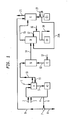
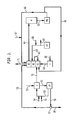
- the plants shown in Figures 1 to 3 are suitable for treatment and removal of NO x , SO x , HCl, Hg, and other contaminants from an exhaust gas stream.
- a flue gas containing SO 2 the flue gas is partially prescrubbed to remove the SO 2 along with other contaminants to render the flue gas conducive to treatment with ozone.
- Such a prescrubber may use an aqueous stream with controlled SO 2 absorption and is configured to minimize formation and carryover of fine droplets in the prescrubber exhaust.
- the droplets that are entrained in the prescrubber exhaust flue gas are physically separated or demisted by any one of a variety of means.
- the demisted prescrubber exhaust enters an oxidizer where it is brought in contact and mixed with oxidant such as ozone.
- the ozone at a preselected molar ratio and at the preselected residence time of the oxidizer transforms the NO x to higher orders of nitrogen oxides. Higher orders of nitrogen oxides are more reactive and readily soluble in most types of aqueous solutions. Oxidative conditions in the oxidizer also cause oxidation of other contaminants in the flue gas including but not limited to elemental Hg (mercury).
- the oxidized flue gas is then scrubbed selectively with aqueous stream in the main scrubber, which can be counter flow type, cross flow type or cocurrent type.
- the process according to the present invention preferably comprises the following steps:
- exhaust gas is brought in contact with an aqueous solution in such a fashion so as to cause preferential scrubbing of some or substantial parts of SO 2 , most of the highly soluble gases and other contaminants.
- Absorption of SO 2 results in the formation of sulfite, bisulfite, and or sulfurous acid into the aqueous phase.
- the design of the prescrubber minimizes the absorption of O 2 .
- Quenching raises the partial pressure of water vapor in the flue gas. All of these effects due to prescrubbing of the flue gas provide numerous advantages, including but not limited to generating sulfite solution needed for abating residual ozone; increasing water content of the flue gas entering the oxidizer to improve oxidative conditions; reducing SO 2 and HCl content of the flue gas entering the oxidizer to improve oxidative conditions while making it possible to construct most of the oxidizer out of non-exotic materials; reducing SO 2 content of prescrubbed gas stream; a highly oxidizing condition is created in the oxidizer improving oxidation of elemental mercury; providing the conditions to perform selective absorption of flue gas and other components in the scrubber; and avoiding absorption of NO in sulfite solution thereby forming the complex that has the potential to revert to NO.
- the prescrubbed gas is preferably demisted to remove droplets of aqueous solution entrained in the gas stream exiting the prescrubber.
- the demisting may take place simply by virtue of the geometrical arrangement of flow entering the demisting section. Droplets may be separated by either twisting and turning of flue gas induced by the liquid flow of the prescrubber or by demister or mist eliminator elements downstream of the prescrubber.
- Flue gas leaving the demisting section enters an oxidizer of preselected residence time to allow the ozone injected in the oxidizer to mix and react with NO x in the flue gas.
- the instantaneous and selective oxidation of NO x by ozone generates higher order oxides of nitrogen that are readily soluble in numerous aqueous solutions. A few other contaminants such as mercury (Hg) also oxidize in the oxidizer. Eliminating or reducing aqueous solution droplet carryover improves the efficiency with respect to ozone consumption and the consequent chemistry of absorption. It should be noted that to achieve low emissions of NO x , a stoichiometric excess of oxidant is used. This is made economically feasible by the method and apparatus of this invention which scrubs the excess ozone.
- the flue gas stream exiting the oxidizer is treated in the first scrubber where the oxidized form of NO x , remainder of SO 2 , oxidized form of mercury and other contaminants are scrubbed with an aqueous stream.
- the NO x and SO x in the oxidized flue gas on contacting the aqueous stream of the first step scrubber generate oxyacids. These oxyacids further continue the oxidative reactions, which are extremely conducive to the further oxidation of mercury and other contaminants.
- a reagent of predetermined quantity is added. This reagent can be ammonia or alkali metal or alkaline earth metal oxides, carbonates, oxides or hydroxides. Consequently, complex salts are generated in the first step scrubber.
- the flue gas flow can be as little as few hundreds of standard cubic feet per minute generated by industrial processes or as high as millions of cubic feet per minute generated by coal fired boilers engaged in large electric power generation.
- the flue gas stream 1 ducted to the prescrubber could be from more than one coal fired boilers with flow totaling in excess of 10 million lbs/hr (4.45 million kg/hr).
- This prescrubber in actual practice can be a vessel mounted separately on a structure or a section of duct modified to provide functionality described in detail.
- Ozone generation requires about 10 to 14 kW per kilogram of ozone.
- Oxidation of NOx with ozone and subsequent high removal of NO x to low levels in a scrubber has been demonstrated.
- the treated gas stream from such a unit has been reported to have less than two (2) ppmv of NOx. Due to its ability to reach very low levels of NO x and simultaneously oxidize other contaminants both organic and inorganic, there exists an applicability of this process as an end of the pipe treatment system. This process can be applied in combination with other NO x control measures or technologies, which may be used upstream in the treatment of exhaust or flue gas stream.
- ozone based oxidation processes will provide an effective solution.
- the ozone dosage will need to be in excess of the stoichiometry so that the oxidation and removal by scrubbing is possible in the new or retrofitted equipment.
- This excess ozone in the treated gas stream emitted to the atmosphere is not desirable.
- Skelley et al., US Patent No. 5, 316, 737 therefore, recommended use of sulfite solution formed in situ or adding the sulfite solution in the ultimate scrubbing step before exhausting to the atmosphere.
- the prescrubber used in this invention is a device where gas and liquid is put in contact to cause the selective transfer of components from the gas to the liquid phase.
- Prescrubbing inadvertently can cause cooling which may or may not be beneficial to the oxidation of NO x (Skelley et al.) depending on degree of cooling, temperature of the untreated flue gas, moisture content of flue gas, etc.
- the principal intent of prescrubbing is to selectively scrub part or most of the SO 2 to effectively generate sulfite solution, which not only reduces ozone consumption but also depletes the residual ozone concentration in the treated flue gas stream. Selective scrubbing also prevents absorption of NO in sulfite.
- the partial removal of SO 2 upstream of the main scrubber helps to alleviate the need for oxidation chemistry necessary to prevent re-emission of elemental mercury.
- Conventional scrubbers and quenchers used in the pollution control industry do not meet the expectations of a prescrubber required for the process claimed in this invention.
- the solubility of SO 2 in an aqueous solution is many order of magnitudes greater than that of O 2 .
- Absorption of SO 2 in aqueous medium containing alkali or alkaline carbonates or hydroxides, or oxides is enhanced due to chemical reaction, so too is the absorption of O 2 in presence of sulfite.
- the actual mechanism of absorption of SO 2 and O 2 is somewhat complex. Characterization of ease in absorption as a "solubility" oversimplifies the phenomenon, however, it is major factor affecting preferential absorption of SO 2 over O 2 .
- any of the following methods by itself or in combination may be used in no particular order of preference.
- it may be by contacting gas with swirling liquid over conical surface; flowing gas through a curtain of larger droplets aqueous stream; contacting gas to wetted walls or surfaces of contactors; contacting gas stream with a spray producing larger liquid droplets; dynamically controlling the gas - liquid contact area; contacting gas and liquid followed by effective separation of liquid droplets from the gas phase; and limiting gas liquid contact time.
- the fine droplets offer much larger surface area per unit volume of aqueous stream requiring extending treatment time to reduce the entrainment to the oxidizer section. This enables oxygen in the flue gas to be absorbed and thereby convert much needed sulfite of this invention to sulfate salt that plays no role in residual ozone destruction.
- the flue gas exiting such a prescrubber might be partially saturated or fully saturated with water vapor.
- the gas stream needs to be demisted.
- This demisting may consist of device such as Chevron or wire mesh pad placed in a flue gas path to twist and turn the flue gas stream.
- Other ways of demisting are to allow the higher momentum of liquid droplets to impact on extended surfaces for the droplets to coalesce and drain down under gravity.
- use of an in-line device may be limited.
- liquid droplets can also be removed by simply setting up motion of flue gas in such a way that majority of droplets fall out due to change in the velocity of the flue gas. Changing either direction or speed of gas flow can cause droplet separation, or in some cases, the combination of both may be gainfully used.
- Velocity can be changed by changing geometry of the downstream vessel such as tangential introduction into cylindrical vessel where droplets under centrifugal force contact the cylindrical vessel surface, coalesce and drain down under gravity while the gas travels up in spiral path.
- Prescrubber sprays introduced to scrub the gas can also cause swirl necessary in the exiting stream. Gases exiting the prescrubber open into large cross section vessel to cause reduction of velocity to allow fallout of larger droplets.
- flue gas 1 is selectively scrubbed in a prescrubber A by contacting with liquid stream 4.
- the prescrubber A has its own liquid recirculation loop by pumping liquid stream 5 back to form 4.
- This stream 4 is supplemented with alkali feed through line 2 and make up water through line 3 to maintain a desired pH and the solid contents.
- Some of the liquid from recirculation loop is withdrawn via 9 to feed the scrubber E.
- a solids rejection device 7 fed through line 6 is placed upstream of feeding the scrubber E.
- This solids rejection device may be a filter, a hydroclone, a settling tank, etc.
- the liquid stream from filter 7 can be fed to a filtered solids bed through line 8.
- Line 5 also feeds pump A1 which can deliver liquid through line 4 back to prescrubber A.
- Line 10 leaves the prescrubber A with a small recycle line 11 back to the prescrubber A.
- Line 10 brings the liquid to oxidizer B.
- Line 14 connects oxidizer B and first step scrubber D.
- Pump D1 feeds through line 17 to the first step scrubber D.
- Line 15 exits first step scrubber D to second step scrubber E which is fed from pump E1 through line 20.
- Line 21 exits the second step scrubber E and allows gases to be fed to the atmosphere.
- prescrubbing recirculation loop need not be used. Instead of the recirculation loop, a part of liquid stream through line 4 may be fed to prescrubber A and the resulting liquid through line 5 is then brought back to the sump of scrubber E.
- the ozone generator C receives gas feed stream 12, which is dried air, oxygen, or mixture of air and oxygen. In large applications, use of oxygen is generally found to be more cost effective. Oxygen is generally supplied in a liquid form or produced on site using a cryogenic or non-cryogenic air separation unit. Industrial gas companies worldwide have catered to and tailored the need for oxygen in refining, chemical processing, glass, steel and many other process industries.
- ozone generators include a single-pass, shell-and-tube heat exchanger, with cooling water on the shell-side and oxygen flowing through the tubes made of stainless steel.
- Each tube acts as a grounded electrode that houses a high voltage electrode in the center separated by a dielectric and concentric volume through which compressed air or oxygen flows. This high voltage current causes corona discharge, which energizes oxygen molecules and results in the formation of ozone.
- the gas stream 12 fed to ozone generator(s) C forms ozone at concentrations ranging from 2 to 18 percent or higher depending on the power fed to electrodes.
- the ozone containing gas stream 13 is mixed with prescrubbed and demisted gas in the oxidizer vessel B.
- the injection of ozone is generally upstream of the oxidation vessel.
- the distribution of the ozone in the flue gas stream is of key importance to ensure complete mixing. If the distribution of ozone is incomplete, NOx removal efficiency reduces followed by number of problems in the scrubbing that can result in not meeting the objectives of this invention. With advances in computers and computational techniques and tools based on computational fluid dynamics (CFD), ozone distribution design can be established with greater confidence.
- CFD computational fluid dynamics
- Ozone is introduced in the flue gas stream by an ozone injection grid that ensures adequate distribution of O 3 to mix with the flue gas in a relatively short time period.
- ozone is mixed upstream of oxidizer vessel itself.
- oxidation begins after ozone mixes with the flue gas.
- the oxidation section or oxidation chamber is also denoted as oxidizer B in Figures 1 to 3 . In this chamber B, NO x , SO x , CO and other contaminants are oxidized by the presence of the ozone.
- Solubility of oxygen and ozone is very limited in the aqueous phase. Due to the chemical reaction in the liquid phase, mass transport of oxygen and ozone from gas phase to liquid phase increases. In particular, absorption of ozone in these droplets is dramatically enhanced by sulfites or sulfurous acid already present and formed in the the oxidizer. This substantially increases consumption of ozone which is highly undesirable.
- reaction (1) The principal reactions of ozone in oxidation of NOx are NO oxidation to NO 2 as depicted by reaction (1) and NO 2 oxidation further to NO 3 as depicted by reaction (2). Since the former reaction is faster than latter, ozone deficiency will leave NO 2 partly unoxidized. This can be somewhat compensated by the addition of a stoichiometric excess of ozone. SOx removed as sulfite in the oxidizer by absorption on liquid droplet is now not available in the scrubber E for scavanging unreacted oxidant. For this reason, it is advantageous to have oxidizer flue gas substantially free of liquid droplets.
- the oxidized gas stream exiting the oxidizer is then introduced in the scrubber D where it is contacted with aqueous liquid stream.
- chemistry of scrubbing medium in the first step D is oxidative while the second step is rich in sulfite.
- the scrubbers can be packed column, spray column, plate column, tray column, cross flow, counter current or cocurrent. It is believed that each step of absorption can consist of more than one "Theoretical Stage of Mass Transfer".
- Highly oxidized forms of NOx such as N 2 O 5 , NO 3 and other extremely soluble gases that escape the prescrubber A, such as HCl and HF, are presenti n the gas entering the first scrubber. It is this gas which is the most acidic and the most reactive with ozone. With a prescrubber, some or a part of SOx has already been removed. In addition, SO 2 is far less soluble than oxidized form of NOx.
- an initial highly oxidative and acidic zone may be created which is critical in improving capture and stabilization of mercury.
- some oxidation within the gas phase continues while dissolution of contaminants occur in the liquid.
- less soluble SO 2 absorption proceeds.
- the chemistry of dissolution of all these gases is described in the reactions (13) through (24).
- the absorption of remainder of SO 2 produces sulfites. It is well reported in both technical papers (Jethani et al.) and the patent literature that in NOx lower oxides of nitrogen can be removed by scrubbing with sulfite solution.
- sulfite is effective in the removal of NO 2 .
- the less oxidized form of NOx at this step mainly comprises NO and NO 2 .
- NO is colorless while NO 2 is dark brown in color and in the treated gas stream contributes to opacity. Therefore, deferring SO 2 absorption to the latter zone brings three additional advantages as follows it helps to scavenge residual ozone; it further reduces level of NO x in the gas stream leaving this scrubber step and it reduces opacity of treated gas stream.
- the scrubbing section comprises two steps.
- the sulfite rich stream from prescrubber A is fed to the second scrubber E of the scrubbing system.
- line 9 may be fed to the sump of second scrubber E.
- the liquid stream bleed 20A from second step is conveyed to the first step of the scrubbing section.
- pH is continuosly monitored and adjusted by alkali feed 19.
- the alkali feed line 16 provides adjustment of pH to maintain desired chemistry in this scrubbing step.
- Bleed from this stage is conveyed by line 18 to a waste water treatment plant.
- COD chemical oxygen demand
- the oxidiser, first scrubber and second scrubber are all provided in different regions of the same liquid-vapour contact vessel which may contain trays or packing to effect intimate contact between an ascending gas phase and a descending liquid phase.
- flue gas is fed to the pre-scrubber J through line 51.
- Alkali and make up water are fed through lines 54 and 55 respectively to line 53 which feeds the pre-scrubber J. Scrubbed liquid passes through line 52 to pump J1 and can be recirculated back to the scrubber J through line 53 or delivered to a second scrubber K3 through line 59.
- Line 56 exits pump J1 through line 56 to a filter assembly 57 which has a filtered solids bleed line 58 and also the feed line 59 exiting from it.
- Line 55 delivers the make up water to oxidizer K1 which receives an ozone and oxygen mixture through line 71 from ozone generator L which receives oxygen feed through line 60.
- Line 62 connects oxidizer K1 with a first step scrubber K2.
- Scrubber K2 is adjacent second step scrubber K3 which will release the scrubbed gases to the atmosphere through line 71.
- Pump K4 feeds the first step scrubber K2 through line 63 which is fed alkali through line 68 and through which bleeds to a waste water treatment plant exits through line 69.
- Some scrubbed solution exits second stage scrubber K3 through line 64 which connects to a recycle tank M.
- Line 65 exits the recycle tank to pump M1 which will pump liquid through line 66 back to the second step scrubber K3.
- Alkali feed may also be inputted into this liquid through line 67. Alternatively this liquid feed from line 66 may be diverted through line 70 back to the oxidizer K1 for further treatment.
- lime or limestone based reagents are used in prescrubbing as well as scrubbing section.
- a limestone based reagent is used, recirculating solution from scrubber D is oxidized with air.
- Alkali scrubbing, i.e. sodium or potassium based reagent is more prevelant in industrial and petrochemical applications.
- combination of alkali and alkaline earth metal salts are used where alkali is recycled and alkaline earth metal salts of oxy acids of sulfur and nitrogen are separated with alkaline earth metal carbonates/hydroxides replenished.
- a flue gas stream with 2,420 scfm of flow with 24.2 ppm of NOx (almost all NO) was treated with ozone in an oxidizer.
- the gas exiting the oxidizer was scrubbed with a sodium carbonate solution.
- the scrubbing section D there was no sulfite present, there was 9.8 ppm of residual ozone with 7.5 ppm of NO 2 in the flue gas stream entering scrubbing section E.
- Sodium sulfite present in recirculating liquid of section E eliminated almost all residual ozone to less than 0.38 ppm and decreased NO 2 emissions to less than 2 ppm to atmosphere.
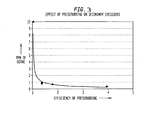
- Figure 4 with an increase in prescrubber efficiency, there is an increase in NOx removal efficiency and significant decrease in residual ozone emitted to the atmosphere.
Landscapes
- Engineering & Computer Science (AREA)
- Chemical & Material Sciences (AREA)
- Health & Medical Sciences (AREA)
- Biomedical Technology (AREA)
- Environmental & Geological Engineering (AREA)
- Analytical Chemistry (AREA)
- General Chemical & Material Sciences (AREA)
- Oil, Petroleum & Natural Gas (AREA)
- Chemical Kinetics & Catalysis (AREA)
- Treating Waste Gases (AREA)
Claims (6)
- Verfahren zur Entfernung von Schwefeloxide und Stickstoffoxide umfassenden Verunreinigungen aus einem Rauchgasstrom, bei dem man:a) den Rauchgasstrom einem Vorwäscher zuführt, in dem sich ein Alkali- oder Erdalkalicarbonate, -hydroxide oder -oxide enthaltendes Wäßriges Medium befindet und in dem Sulfit oder schweflige Säure, das bzw. die zum Abfangen von Ozon in nachstehendem Schritt (e) notwendig ist, erzeugt wird;b) den aus dem Vorwäscher austretenden Rauchgasstrom entnebelt;c) den entnebelten Gasstrom aus dem Vorwäscher und einen Ozonstrom einer Oxidationszone zuführt;d)den Gasstrom aus der Oxidationszone einem ersten Wäscher zuführt, in dem ein oxidativer Zustand aufrechterhalten wird, unde) den Gasstrom aus dem ersten Wäscher einem zweiten Wäscher zuführt, in dem Sulfit oder schweflige Säure aus dem Vorwäscher zum Abfangen von Ozon aus dem Gasstrom eingesetzt wird.
- Verfahren nach Anspruch 1, bei dem die Verunreinigungen ferner saure Gase und Schwermetalle umfassen.
- Verfahren nach Anspruch 2, bei dem in der Oxidationszone Stickstoffoxide und Schwermetalle oxidiert werden.
- Verfahren nach einem der vorhergehenden Ansprüche, bei dem die Oxidationszone, der erste Wäscher und der zweite Wäscher in einem einzigen Behälter enthalten sind.
- Verfahren nach Anspruch 4, bei dem es sich bei dem Behälter um einen Flüssigkeit-Dampf-Kontaktbehälter handelt und die Oxidationszone, der erste Wäscher und der zweite Wäscher darin vertikal angeordnet sind.
- Verfahren nach Anspruch 5, bei dem die Oxidationszone das unterste Niveau darstellt und der zweite Wäscher das oberste Niveau darstellt.
Applications Claiming Priority (4)
| Application Number | Priority Date | Filing Date | Title |
|---|---|---|---|
| US51246903P | 2003-10-17 | 2003-10-17 | |
| US512469P | 2003-10-17 | ||
| US948928 | 2004-09-24 | ||
| US10/948,928 US7303735B2 (en) | 2003-10-17 | 2004-09-24 | Process for the removal of contaminants from gas streams |
Publications (2)
| Publication Number | Publication Date |
|---|---|
| EP1524023A1 EP1524023A1 (de) | 2005-04-20 |
| EP1524023B1 true EP1524023B1 (de) | 2009-05-06 |
Family
ID=34381392
Family Applications (1)
| Application Number | Title | Priority Date | Filing Date |
|---|---|---|---|
| EP04256401A Expired - Lifetime EP1524023B1 (de) | 2003-10-17 | 2004-10-18 | Verfahren zur Entfernung von NOx, SOx und Verunreinigungen aus Gasströmen |
Country Status (6)
| Country | Link |
|---|---|
| US (1) | US7303735B2 (de) |
| EP (1) | EP1524023B1 (de) |
| CN (1) | CN100418611C (de) |
| AT (1) | ATE430617T1 (de) |
| AU (1) | AU2004220725B8 (de) |
| DE (1) | DE602004020956D1 (de) |
Families Citing this family (48)
| Publication number | Priority date | Publication date | Assignee | Title |
|---|---|---|---|---|
| US7628967B2 (en) * | 2002-10-01 | 2009-12-08 | Airborne Industrial Minerals, Inc. | Removal of Hg, NOx, and SOx with using oxidants and staged gas/liquid contact |
| US7766995B2 (en) * | 2006-05-01 | 2010-08-03 | Linde Llc | Ozone production processes and its use in industrial processes |
| CA2618778C (en) * | 2007-01-23 | 2016-04-05 | Linde, Inc. | Process for removing contaminants from gas streams |
| CN100496672C (zh) * | 2007-04-30 | 2009-06-10 | 武汉凯迪电力环保有限公司 | 基于两级氧化反应的湿法烟气脱硫脱汞工艺及其系统 |
| US7842114B2 (en) * | 2008-07-18 | 2010-11-30 | Uop Llc | Vessel for receiving a fluid including a demister |
| CN101347710B (zh) * | 2008-09-04 | 2012-10-03 | 北京博奇电力科技有限公司 | 烟气净化系统及方法 |
| US9199185B2 (en) | 2009-05-15 | 2015-12-01 | Cummins Filtration Ip, Inc. | Surface coalescers |
| CN101485957B (zh) * | 2009-01-08 | 2011-05-11 | 浙江大学 | 臭氧氧化结合双塔洗涤对烟气同时脱硫脱硝的装置及方法 |
| KR101094672B1 (ko) * | 2009-03-17 | 2011-12-20 | 한국과학기술연구원 | 오존과 촉매 하이브리드 시스템을 이용한 질소산화물의 처리방법 및 처리장치 |
| CN102210966A (zh) * | 2010-04-02 | 2011-10-12 | 航空工业矿石公司 | 烟道气净化方法 |
| CN101879404B (zh) * | 2010-07-12 | 2013-01-30 | 华东理工大学 | 一种资源化的烟气脱硫脱硝方法 |
| US9272908B2 (en) | 2010-09-29 | 2016-03-01 | Linde Aktiengesellschaft | Gas stream purification apparatus |
| US8574521B2 (en) | 2010-09-29 | 2013-11-05 | Linde Aktiengesellschaft | Gas stream purification apparatus and method |
| KR101266258B1 (ko) * | 2011-01-28 | 2013-05-22 | 한국에너지기술연구원 | 이산화탄소 포집공정용 연소배가스 처리장치 및 처리방법 |
| WO2012106279A1 (en) | 2011-02-01 | 2012-08-09 | Linde Aktiengesellschaft | Process for removing contaminants from gas streams |
| US20130183219A1 (en) | 2011-07-25 | 2013-07-18 | Gene H. Irrgang | Methods for reducing nitrogen oxides emissions |
| CN102335539A (zh) * | 2011-09-06 | 2012-02-01 | 江苏华正环保科技有限公司 | 烟草异味处理工艺 |
| CN102389698A (zh) * | 2011-09-16 | 2012-03-28 | 百力达太阳能股份有限公司 | 一种含工业氟离子废气处理的有效方法 |
| US8734741B1 (en) | 2012-04-30 | 2014-05-27 | Linde Aktiengesellschaft | Methods for removing contaminants from exhaust gases |
| EP2659947A1 (de) | 2012-04-30 | 2013-11-06 | Linde Aktiengesellschaft | Verfahren und Vorrichtung zum Entfernen von Verunreinigungen aus Abgasen |
| PL2719440T3 (pl) | 2012-10-15 | 2017-09-29 | Linde Aktiengesellschaft | Sposób usuwania zanieczyszczeń z gazów spalinowych przez dodanie ozonu |
| US10058808B2 (en) | 2012-10-22 | 2018-08-28 | Cummins Filtration Ip, Inc. | Composite filter media utilizing bicomponent fibers |
| US8871166B2 (en) * | 2013-01-16 | 2014-10-28 | Linde Aktiengesellschaft | Method for removing contaminants from exhaust gases |
| CN105579116A (zh) * | 2013-09-25 | 2016-05-11 | 琳德股份公司 | 通过添加臭氧处理来自焚化过程的废气流的方法 |
| KR20160060116A (ko) * | 2013-09-25 | 2016-05-27 | 린데 악티엔게젤샤프트 | 소각 공정으로부터의 폐기물 기체 스트림의 오존 첨가에 의한 처리 방법 |
| CN103566725B (zh) * | 2013-10-15 | 2016-03-02 | 中国科学院过程工程研究所 | 一种循环流化床半干法联合脱硫脱硝脱汞装置及方法 |
| WO2015092547A2 (en) | 2013-12-16 | 2015-06-25 | Linde Aktiengesellschaft | Methods for removing contaminants from exhaust gases |
| EP2883593A1 (de) * | 2013-12-16 | 2015-06-17 | Linde Aktiengesellschaft | Verfahren zum Entfernen von Verunreinigungen aus Abgasen |
| CN104107627A (zh) * | 2014-07-21 | 2014-10-22 | 中国科学院过程工程研究所 | 一种烧结烟气循环流化床半干法联合脱硫脱硝脱汞脱二恶英装置及方法 |
| US9895659B2 (en) | 2014-09-24 | 2018-02-20 | Linde Aktiengesellschaft | Methods for removing contaminants from exhaust gases |
| EP3012011A1 (de) | 2014-10-21 | 2016-04-27 | Linde Aktiengesellschaft | Verfahren und vorrichtung zum teilweisen entfernen von verunreinigungen aus prozessgasen durch ozonzugabe |
| WO2016180676A1 (en) * | 2015-05-08 | 2016-11-17 | Yara International Asa | Reduction of nox emissions by effluent gases from fertilizer production with ozone injection and wet scrubbing |
| CN104941412A (zh) * | 2015-06-05 | 2015-09-30 | 北京中晶佳镁环境科技股份有限公司 | 烟气脱硫脱硝一体化装置和方法 |
| CN105435611A (zh) * | 2015-12-16 | 2016-03-30 | 榆林学院 | 一种采用熄焦废水脱除烟气中so2的两级多孔吸收装置 |
| US9764281B2 (en) | 2015-12-18 | 2017-09-19 | Cannon Technology, Inc. | Process for the removal of contaminants from flue gas streams |
| US10065151B2 (en) | 2015-12-21 | 2018-09-04 | Linde Aktiengesellschaft | Methods for removing contaminants from gas streams |
| WO2018017701A1 (en) | 2016-07-19 | 2018-01-25 | Cummins Filtration Ip, Inc. | Perforated layer coalescer |
| US20180133647A1 (en) * | 2016-11-15 | 2018-05-17 | 8 Rivers Capital, Llc | Treatment of impurities in process streams |
| US10744456B2 (en) | 2017-01-13 | 2020-08-18 | EnviroEnergy Solutions, Inc. | Wet electrostatic gas cleaning system with non-thermal plasma for NOx reduction in exhaust |
| FI128556B (en) * | 2017-04-04 | 2020-08-14 | Valmet Technologies Oy | METHOD OF GAS FLOW TREATMENT AND EMISSIONS MANAGEMENT SYSTEM |
| CN107213769B (zh) * | 2017-05-25 | 2019-09-20 | 江苏新世纪江南环保股份有限公司 | 一种分室加氨的氨法脱硫方法及装置 |
| NL2018994B1 (en) * | 2017-05-30 | 2018-12-07 | Koninklijke De Vries Scheepsbouw B V | Process and apparatus for reducing NOx emissions |
| EP3549661A1 (de) | 2018-04-06 | 2019-10-09 | Yara International ASA | Nox-entfernung aus ableitungen gasförmiger stoffe |
| CN110479070A (zh) * | 2018-05-15 | 2019-11-22 | 三星工程株式会社 | 废气中氮氧化物的清除方法及装置 |
| SE543244C2 (en) | 2019-03-06 | 2020-10-27 | 3Nine Ab | Method and installation for reduction of sulphur dioxides in exhaust gases from a marine diesel engine |
| CN110354659A (zh) * | 2019-08-20 | 2019-10-22 | 王全龄 | 一种城市街道大气污染物清除车 |
| CN110813056A (zh) * | 2019-11-27 | 2020-02-21 | 福建省清流县东莹化工有限公司 | 一种新型尾气处理工艺 |
| EP3875167A1 (de) | 2020-03-06 | 2021-09-08 | Linde GmbH | Verbessertes nox-beseitigungsverfahren |
Family Cites Families (22)
| Publication number | Priority date | Publication date | Assignee | Title |
|---|---|---|---|---|
| JPS5215265B2 (de) | 1973-03-03 | 1977-04-27 | ||
| JPS49126566A (de) | 1973-04-10 | 1974-12-04 | ||
| JPS5643771B2 (de) | 1973-12-18 | 1981-10-15 | ||
| GB1505169A (en) | 1974-11-02 | 1978-03-30 | Fuji Kasui Eng Co Ltd | Process for removing nitrogen oxides from waste gas |
| JPS51143569A (en) | 1975-06-06 | 1976-12-09 | Mitsubishi Heavy Ind Ltd | A wet exhaust gas treatment process |
| JPS5311164A (en) * | 1976-07-17 | 1978-02-01 | Ishikawajima Harima Heavy Ind Co Ltd | Wet desulfurizing and denitrating apparatus for flue gas |
| JPS5314662A (en) | 1976-07-28 | 1978-02-09 | Hitachi Ltd | Method for decreasing nitrogen oxides concentration of combustion exhaust gas |
| US4247321A (en) | 1979-05-21 | 1981-01-27 | Persinger James G | Method and apparatus for obtaining fertilizing solution from fossil fueled stationary engines |
| DE3220403C1 (de) | 1982-05-29 | 1983-11-17 | Buckau-Walther AG, 4048 Grevenbroich | Verfahren zum Entfernen von sauren Komponenten und Stickoxyden aus Abgasen |
| DE3233316A1 (de) | 1982-09-08 | 1984-03-08 | Buckau-Walther AG, 4048 Grevenbroich | Verfahren zum entfernen von stickoxyden aus abgasen |
| DE3739162A1 (de) | 1987-11-19 | 1989-06-01 | Krupp Koppers Gmbh | Verfahren zum entfernen von sauren komponenten und stickoxiden aus den abgasen industrieller feuerungsanlagen |
| US5206002A (en) | 1991-08-29 | 1993-04-27 | Cannon Boiler Works, Inc. | Process for removing nox and sox from exhaust gas |
| FI96387C (fi) * | 1994-09-19 | 2001-12-03 | Kvaerner Pulping Oy | Menetelmä typen oksidien poistamiseksi sellutehtaan savukaasuista |
| CA2263233C (en) * | 1996-10-09 | 2002-01-15 | Zero Emissions Technology Inc. | Barrier discharge conversion of so2 and nox to acids |
| US5985223A (en) | 1998-06-02 | 1999-11-16 | The Boc Group, Inc. | Removal of NOx and SOx emissions form pickling lines for metal treatment |
| US6162409A (en) | 1999-03-15 | 2000-12-19 | Arthur P. Skelley | Process for removing Nox and Sox from exhaust gas |
| US6197268B1 (en) | 1999-07-02 | 2001-03-06 | The Boc Group, Inc. | Reduction of toxic substances in waste gas emissions |
| US6231824B1 (en) | 1999-08-10 | 2001-05-15 | The Boc Group, Inc. | Removal of nitric oxide from gas streams |
| US6136284A (en) | 1999-12-09 | 2000-10-24 | The Boc Group, Inc. | Process for the removal of nitrogen oxides from gas streams |
| US6936231B2 (en) | 2001-12-06 | 2005-08-30 | Powerspan Corp. | NOx, Hg, and SO2 removal using ammonia |
| US6761863B2 (en) * | 2002-01-29 | 2004-07-13 | The Boc Group, Inc. | Process for the removal of impurities from gas streams |
| US6649132B1 (en) * | 2002-07-23 | 2003-11-18 | The Boc Group, Inc. | Process for the removal of impurities from gas streams |
-
2004
- 2004-09-24 US US10/948,928 patent/US7303735B2/en not_active Expired - Lifetime
- 2004-10-14 AU AU2004220725A patent/AU2004220725B8/en not_active Ceased
- 2004-10-17 CN CNB2004100981403A patent/CN100418611C/zh not_active Expired - Fee Related
- 2004-10-18 AT AT04256401T patent/ATE430617T1/de not_active IP Right Cessation
- 2004-10-18 DE DE602004020956T patent/DE602004020956D1/de not_active Expired - Lifetime
- 2004-10-18 EP EP04256401A patent/EP1524023B1/de not_active Expired - Lifetime
Also Published As
| Publication number | Publication date |
|---|---|
| AU2004220725A1 (en) | 2005-05-05 |
| CN1660476A (zh) | 2005-08-31 |
| AU2004220725B2 (en) | 2010-04-22 |
| DE602004020956D1 (de) | 2009-06-18 |
| US20050084436A1 (en) | 2005-04-21 |
| AU2004220725B8 (en) | 2010-08-19 |
| ATE430617T1 (de) | 2009-05-15 |
| US7303735B2 (en) | 2007-12-04 |
| CN100418611C (zh) | 2008-09-17 |
| EP1524023A1 (de) | 2005-04-20 |
Similar Documents
| Publication | Publication Date | Title |
|---|---|---|
| EP1524023B1 (de) | Verfahren zur Entfernung von NOx, SOx und Verunreinigungen aus Gasströmen | |
| US7052662B2 (en) | NOx, Hg, and SO2 removal using alkali hydroxide | |
| EP2719440B1 (de) | Verfahren zum Entfernen von Verunreinigungen aus Abgasen durch Ozonzugabe | |
| AU2018328418B2 (en) | Method for controlling aerosol production during absorption in ammonia desulfurization | |
| US6991771B2 (en) | NOx, Hg, and SO2 removal using ammonia | |
| US4369167A (en) | Process for treating stack gases | |
| US5670122A (en) | Methods for removing air pollutants from combustion flue gas | |
| TWI432253B (zh) | 臭氧製造方法及其於工業製程上之用途 | |
| EP1950176A2 (de) | Verfahren zur Entfernung von Verunreinigungen aus Gasströmen | |
| CN102781824A (zh) | 从气流中去除污染物的处理 | |
| EP3012011A1 (de) | Verfahren und vorrichtung zum teilweisen entfernen von verunreinigungen aus prozessgasen durch ozonzugabe | |
| CA2484727C (en) | Improved process for the removal of contaminants from gas streams | |
| HK1078303B (en) | Nox, hg, and so2 removal using ammonia |
Legal Events
| Date | Code | Title | Description |
|---|---|---|---|
| PUAI | Public reference made under article 153(3) epc to a published international application that has entered the european phase |
Free format text: ORIGINAL CODE: 0009012 |
|
| AK | Designated contracting states |
Kind code of ref document: A1 Designated state(s): AT BE BG CH CY CZ DE DK EE ES FI FR GB GR HU IE IT LI LU MC NL PL PT RO SE SI SK TR |
|
| AX | Request for extension of the european patent |
Extension state: AL HR LT LV MK |
|
| 17P | Request for examination filed |
Effective date: 20050422 |
|
| AKX | Designation fees paid |
Designated state(s): AT BE BG CH CY CZ DE DK EE ES FI FR GB GR HU IE IT LI LU MC NL PL PT RO SE SI SK TR |
|
| RTI1 | Title (correction) |
Free format text: PROCESS FOR THE REMOVAL OF NOX, SOX AND CONTAMINANTS FROM GAS STREAMS |
|
| GRAP | Despatch of communication of intention to grant a patent |
Free format text: ORIGINAL CODE: EPIDOSNIGR1 |
|
| GRAS | Grant fee paid |
Free format text: ORIGINAL CODE: EPIDOSNIGR3 |
|
| GRAA | (expected) grant |
Free format text: ORIGINAL CODE: 0009210 |
|
| AK | Designated contracting states |
Kind code of ref document: B1 Designated state(s): AT BE BG CH CY CZ DE DK EE ES FI FR GB GR HU IE IT LI LU MC NL PL PT RO SE SI SK TR |
|
| REG | Reference to a national code |
Ref country code: GB Ref legal event code: FG4D |
|
| REG | Reference to a national code |
Ref country code: CH Ref legal event code: EP |
|
| REG | Reference to a national code |
Ref country code: IE Ref legal event code: FG4D |
|
| REF | Corresponds to: |
Ref document number: 602004020956 Country of ref document: DE Date of ref document: 20090618 Kind code of ref document: P |
|
| REG | Reference to a national code |
Ref country code: SE Ref legal event code: TRGR |
|
| PG25 | Lapsed in a contracting state [announced via postgrant information from national office to epo] |
Ref country code: PT Free format text: LAPSE BECAUSE OF FAILURE TO SUBMIT A TRANSLATION OF THE DESCRIPTION OR TO PAY THE FEE WITHIN THE PRESCRIBED TIME-LIMIT Effective date: 20090906 Ref country code: AT Free format text: LAPSE BECAUSE OF FAILURE TO SUBMIT A TRANSLATION OF THE DESCRIPTION OR TO PAY THE FEE WITHIN THE PRESCRIBED TIME-LIMIT Effective date: 20090506 Ref country code: ES Free format text: LAPSE BECAUSE OF FAILURE TO SUBMIT A TRANSLATION OF THE DESCRIPTION OR TO PAY THE FEE WITHIN THE PRESCRIBED TIME-LIMIT Effective date: 20090817 |
|
| PG25 | Lapsed in a contracting state [announced via postgrant information from national office to epo] |
Ref country code: SI Free format text: LAPSE BECAUSE OF FAILURE TO SUBMIT A TRANSLATION OF THE DESCRIPTION OR TO PAY THE FEE WITHIN THE PRESCRIBED TIME-LIMIT Effective date: 20090506 Ref country code: PL Free format text: LAPSE BECAUSE OF FAILURE TO SUBMIT A TRANSLATION OF THE DESCRIPTION OR TO PAY THE FEE WITHIN THE PRESCRIBED TIME-LIMIT Effective date: 20090506 |
|
| PG25 | Lapsed in a contracting state [announced via postgrant information from national office to epo] |
Ref country code: RO Free format text: LAPSE BECAUSE OF FAILURE TO SUBMIT A TRANSLATION OF THE DESCRIPTION OR TO PAY THE FEE WITHIN THE PRESCRIBED TIME-LIMIT Effective date: 20090506 Ref country code: CZ Free format text: LAPSE BECAUSE OF FAILURE TO SUBMIT A TRANSLATION OF THE DESCRIPTION OR TO PAY THE FEE WITHIN THE PRESCRIBED TIME-LIMIT Effective date: 20090506 Ref country code: DK Free format text: LAPSE BECAUSE OF FAILURE TO SUBMIT A TRANSLATION OF THE DESCRIPTION OR TO PAY THE FEE WITHIN THE PRESCRIBED TIME-LIMIT Effective date: 20090506 Ref country code: EE Free format text: LAPSE BECAUSE OF FAILURE TO SUBMIT A TRANSLATION OF THE DESCRIPTION OR TO PAY THE FEE WITHIN THE PRESCRIBED TIME-LIMIT Effective date: 20090506 |
|
| PG25 | Lapsed in a contracting state [announced via postgrant information from national office to epo] |
Ref country code: BE Free format text: LAPSE BECAUSE OF FAILURE TO SUBMIT A TRANSLATION OF THE DESCRIPTION OR TO PAY THE FEE WITHIN THE PRESCRIBED TIME-LIMIT Effective date: 20090506 Ref country code: SK Free format text: LAPSE BECAUSE OF FAILURE TO SUBMIT A TRANSLATION OF THE DESCRIPTION OR TO PAY THE FEE WITHIN THE PRESCRIBED TIME-LIMIT Effective date: 20090506 |
|
| PLBE | No opposition filed within time limit |
Free format text: ORIGINAL CODE: 0009261 |
|
| STAA | Information on the status of an ep patent application or granted ep patent |
Free format text: STATUS: NO OPPOSITION FILED WITHIN TIME LIMIT |
|
| PG25 | Lapsed in a contracting state [announced via postgrant information from national office to epo] |
Ref country code: BG Free format text: LAPSE BECAUSE OF FAILURE TO SUBMIT A TRANSLATION OF THE DESCRIPTION OR TO PAY THE FEE WITHIN THE PRESCRIBED TIME-LIMIT Effective date: 20090806 |
|
| 26N | No opposition filed |
Effective date: 20100209 |
|
| PG25 | Lapsed in a contracting state [announced via postgrant information from national office to epo] |
Ref country code: MC Free format text: LAPSE BECAUSE OF NON-PAYMENT OF DUE FEES Effective date: 20091031 |
|
| REG | Reference to a national code |
Ref country code: CH Ref legal event code: PL |
|
| REG | Reference to a national code |
Ref country code: IE Ref legal event code: MM4A |
|
| PG25 | Lapsed in a contracting state [announced via postgrant information from national office to epo] |
Ref country code: LI Free format text: LAPSE BECAUSE OF NON-PAYMENT OF DUE FEES Effective date: 20091031 Ref country code: GR Free format text: LAPSE BECAUSE OF FAILURE TO SUBMIT A TRANSLATION OF THE DESCRIPTION OR TO PAY THE FEE WITHIN THE PRESCRIBED TIME-LIMIT Effective date: 20090807 Ref country code: CH Free format text: LAPSE BECAUSE OF NON-PAYMENT OF DUE FEES Effective date: 20091031 Ref country code: IE Free format text: LAPSE BECAUSE OF NON-PAYMENT OF DUE FEES Effective date: 20091018 |
|
| PG25 | Lapsed in a contracting state [announced via postgrant information from national office to epo] |
Ref country code: IT Free format text: LAPSE BECAUSE OF FAILURE TO SUBMIT A TRANSLATION OF THE DESCRIPTION OR TO PAY THE FEE WITHIN THE PRESCRIBED TIME-LIMIT Effective date: 20090506 |
|
| PG25 | Lapsed in a contracting state [announced via postgrant information from national office to epo] |
Ref country code: LU Free format text: LAPSE BECAUSE OF NON-PAYMENT OF DUE FEES Effective date: 20091018 |
|
| PG25 | Lapsed in a contracting state [announced via postgrant information from national office to epo] |
Ref country code: HU Free format text: LAPSE BECAUSE OF FAILURE TO SUBMIT A TRANSLATION OF THE DESCRIPTION OR TO PAY THE FEE WITHIN THE PRESCRIBED TIME-LIMIT Effective date: 20091107 |
|
| PG25 | Lapsed in a contracting state [announced via postgrant information from national office to epo] |
Ref country code: TR Free format text: LAPSE BECAUSE OF FAILURE TO SUBMIT A TRANSLATION OF THE DESCRIPTION OR TO PAY THE FEE WITHIN THE PRESCRIBED TIME-LIMIT Effective date: 20090506 |
|
| PG25 | Lapsed in a contracting state [announced via postgrant information from national office to epo] |
Ref country code: CY Free format text: LAPSE BECAUSE OF FAILURE TO SUBMIT A TRANSLATION OF THE DESCRIPTION OR TO PAY THE FEE WITHIN THE PRESCRIBED TIME-LIMIT Effective date: 20090506 |
|
| REG | Reference to a national code |
Ref country code: FR Ref legal event code: PLFP Year of fee payment: 13 |
|
| REG | Reference to a national code |
Ref country code: FR Ref legal event code: PLFP Year of fee payment: 14 |
|
| REG | Reference to a national code |
Ref country code: FR Ref legal event code: PLFP Year of fee payment: 15 |
|
| REG | Reference to a national code |
Ref country code: NL Ref legal event code: HC Owner name: LINDE, INC.; US Free format text: DETAILS ASSIGNMENT: CHANGE OF OWNER(S), CHANGE OF OWNER(S) NAME; FORMER OWNER NAME: THE BOC GROUP, INC. Effective date: 20190916 Ref country code: NL Ref legal event code: PD Owner name: LINDE GAS NORTH AMERICA LLC; US Free format text: DETAILS ASSIGNMENT: CHANGE OF OWNER(S), MERGE; FORMER OWNER NAME: LINDE, INC. Effective date: 20190916 |
|
| REG | Reference to a national code |
Ref country code: GB Ref legal event code: 732E Free format text: REGISTERED BETWEEN 20200102 AND 20200108 |
|
| REG | Reference to a national code |
Ref country code: DE Ref legal event code: R081 Ref document number: 602004020956 Country of ref document: DE Owner name: LINDE GAS NORTH AMERICA LLC, BRIDGEWATER, US Free format text: FORMER OWNERS: THE BOC GROUP, INC., MURRAY HILL, N.J., US; CANNON TECHNOLOGY, INC., NEW KENSINGTON, PA., US Ref country code: DE Ref legal event code: R081 Ref document number: 602004020956 Country of ref document: DE Owner name: CANNON TECHNOLOGY, INC., NATRONA HEIGHTS, US Free format text: FORMER OWNERS: THE BOC GROUP, INC., MURRAY HILL, N.J., US; CANNON TECHNOLOGY, INC., NEW KENSINGTON, PA., US |
|
| REG | Reference to a national code |
Ref country code: FI Ref legal event code: MAE |
|
| PG25 | Lapsed in a contracting state [announced via postgrant information from national office to epo] |
Ref country code: FI Free format text: LAPSE BECAUSE OF NON-PAYMENT OF DUE FEES Effective date: 20191018 |
|
| PGFP | Annual fee paid to national office [announced via postgrant information from national office to epo] |
Ref country code: FR Payment date: 20201020 Year of fee payment: 17 Ref country code: SE Payment date: 20201022 Year of fee payment: 17 Ref country code: GB Payment date: 20201022 Year of fee payment: 17 |
|
| REG | Reference to a national code |
Ref country code: SE Ref legal event code: EUG |
|
| GBPC | Gb: european patent ceased through non-payment of renewal fee |
Effective date: 20211018 |
|
| PG25 | Lapsed in a contracting state [announced via postgrant information from national office to epo] |
Ref country code: SE Free format text: LAPSE BECAUSE OF NON-PAYMENT OF DUE FEES Effective date: 20211019 Ref country code: GB Free format text: LAPSE BECAUSE OF NON-PAYMENT OF DUE FEES Effective date: 20211018 |
|
| PG25 | Lapsed in a contracting state [announced via postgrant information from national office to epo] |
Ref country code: FR Free format text: LAPSE BECAUSE OF NON-PAYMENT OF DUE FEES Effective date: 20211031 |
|
| PGFP | Annual fee paid to national office [announced via postgrant information from national office to epo] |
Ref country code: NL Payment date: 20221021 Year of fee payment: 19 |
|
| PGFP | Annual fee paid to national office [announced via postgrant information from national office to epo] |
Ref country code: DE Payment date: 20221020 Year of fee payment: 19 |
|
| REG | Reference to a national code |
Ref country code: DE Ref legal event code: R119 Ref document number: 602004020956 Country of ref document: DE |
|
| REG | Reference to a national code |
Ref country code: NL Ref legal event code: MM Effective date: 20231101 |
|
| PG25 | Lapsed in a contracting state [announced via postgrant information from national office to epo] |
Ref country code: NL Free format text: LAPSE BECAUSE OF NON-PAYMENT OF DUE FEES Effective date: 20231101 |
|
| PG25 | Lapsed in a contracting state [announced via postgrant information from national office to epo] |
Ref country code: NL Free format text: LAPSE BECAUSE OF NON-PAYMENT OF DUE FEES Effective date: 20231101 Ref country code: DE Free format text: LAPSE BECAUSE OF NON-PAYMENT OF DUE FEES Effective date: 20240501 |