EP1521220A1 - Transaktionssystem und transaktionsendgerätevorrichtung - Google Patents
Transaktionssystem und transaktionsendgerätevorrichtung Download PDFInfo
- Publication number
- EP1521220A1 EP1521220A1 EP02743833A EP02743833A EP1521220A1 EP 1521220 A1 EP1521220 A1 EP 1521220A1 EP 02743833 A EP02743833 A EP 02743833A EP 02743833 A EP02743833 A EP 02743833A EP 1521220 A1 EP1521220 A1 EP 1521220A1
- Authority
- EP
- European Patent Office
- Prior art keywords
- transaction
- card
- data
- memory
- user
- Prior art date
- Legal status (The legal status is an assumption and is not a legal conclusion. Google has not performed a legal analysis and makes no representation as to the accuracy of the status listed.)
- Withdrawn
Links
Images








Classifications
-
- G—PHYSICS
- G07—CHECKING-DEVICES
- G07F—COIN-FREED OR LIKE APPARATUS
- G07F19/00—Complete banking systems; Coded card-freed arrangements adapted for dispensing or receiving monies or the like and posting such transactions to existing accounts, e.g. automatic teller machines
- G07F19/20—Automatic teller machines [ATMs]
-
- G—PHYSICS
- G06—COMPUTING OR CALCULATING; COUNTING
- G06Q—INFORMATION AND COMMUNICATION TECHNOLOGY [ICT] SPECIALLY ADAPTED FOR ADMINISTRATIVE, COMMERCIAL, FINANCIAL, MANAGERIAL OR SUPERVISORY PURPOSES; SYSTEMS OR METHODS SPECIALLY ADAPTED FOR ADMINISTRATIVE, COMMERCIAL, FINANCIAL, MANAGERIAL OR SUPERVISORY PURPOSES, NOT OTHERWISE PROVIDED FOR
- G06Q20/00—Payment architectures, schemes or protocols
- G06Q20/08—Payment architectures
- G06Q20/18—Payment architectures involving self-service terminals [SST], vending machines, kiosks or multimedia terminals
-
- G—PHYSICS
- G06—COMPUTING OR CALCULATING; COUNTING
- G06Q—INFORMATION AND COMMUNICATION TECHNOLOGY [ICT] SPECIALLY ADAPTED FOR ADMINISTRATIVE, COMMERCIAL, FINANCIAL, MANAGERIAL OR SUPERVISORY PURPOSES; SYSTEMS OR METHODS SPECIALLY ADAPTED FOR ADMINISTRATIVE, COMMERCIAL, FINANCIAL, MANAGERIAL OR SUPERVISORY PURPOSES, NOT OTHERWISE PROVIDED FOR
- G06Q20/00—Payment architectures, schemes or protocols
- G06Q20/30—Payment architectures, schemes or protocols characterised by the use of specific devices or networks
- G06Q20/34—Payment architectures, schemes or protocols characterised by the use of specific devices or networks using cards, e.g. integrated circuit [IC] cards or magnetic cards
- G06Q20/341—Active cards, i.e. cards including their own processing means, e.g. including an IC or chip
-
- G—PHYSICS
- G06—COMPUTING OR CALCULATING; COUNTING
- G06Q—INFORMATION AND COMMUNICATION TECHNOLOGY [ICT] SPECIALLY ADAPTED FOR ADMINISTRATIVE, COMMERCIAL, FINANCIAL, MANAGERIAL OR SUPERVISORY PURPOSES; SYSTEMS OR METHODS SPECIALLY ADAPTED FOR ADMINISTRATIVE, COMMERCIAL, FINANCIAL, MANAGERIAL OR SUPERVISORY PURPOSES, NOT OTHERWISE PROVIDED FOR
- G06Q20/00—Payment architectures, schemes or protocols
- G06Q20/30—Payment architectures, schemes or protocols characterised by the use of specific devices or networks
- G06Q20/34—Payment architectures, schemes or protocols characterised by the use of specific devices or networks using cards, e.g. integrated circuit [IC] cards or magnetic cards
- G06Q20/355—Personalisation of cards for use
- G06Q20/3558—Preliminary personalisation for transfer to user
-
- G—PHYSICS
- G06—COMPUTING OR CALCULATING; COUNTING
- G06Q—INFORMATION AND COMMUNICATION TECHNOLOGY [ICT] SPECIALLY ADAPTED FOR ADMINISTRATIVE, COMMERCIAL, FINANCIAL, MANAGERIAL OR SUPERVISORY PURPOSES; SYSTEMS OR METHODS SPECIALLY ADAPTED FOR ADMINISTRATIVE, COMMERCIAL, FINANCIAL, MANAGERIAL OR SUPERVISORY PURPOSES, NOT OTHERWISE PROVIDED FOR
- G06Q20/00—Payment architectures, schemes or protocols
- G06Q20/30—Payment architectures, schemes or protocols characterised by the use of specific devices or networks
- G06Q20/34—Payment architectures, schemes or protocols characterised by the use of specific devices or networks using cards, e.g. integrated circuit [IC] cards or magnetic cards
- G06Q20/357—Cards having a plurality of specified features
- G06Q20/3576—Multiple memory zones on card
-
- G—PHYSICS
- G06—COMPUTING OR CALCULATING; COUNTING
- G06Q—INFORMATION AND COMMUNICATION TECHNOLOGY [ICT] SPECIALLY ADAPTED FOR ADMINISTRATIVE, COMMERCIAL, FINANCIAL, MANAGERIAL OR SUPERVISORY PURPOSES; SYSTEMS OR METHODS SPECIALLY ADAPTED FOR ADMINISTRATIVE, COMMERCIAL, FINANCIAL, MANAGERIAL OR SUPERVISORY PURPOSES, NOT OTHERWISE PROVIDED FOR
- G06Q20/00—Payment architectures, schemes or protocols
- G06Q20/38—Payment protocols; Details thereof
- G06Q20/40—Authorisation, e.g. identification of payer or payee, verification of customer or shop credentials; Review and approval of payers, e.g. check credit lines or negative lists
- G06Q20/401—Transaction verification
- G06Q20/4014—Identity check for transactions
-
- G—PHYSICS
- G06—COMPUTING OR CALCULATING; COUNTING
- G06Q—INFORMATION AND COMMUNICATION TECHNOLOGY [ICT] SPECIALLY ADAPTED FOR ADMINISTRATIVE, COMMERCIAL, FINANCIAL, MANAGERIAL OR SUPERVISORY PURPOSES; SYSTEMS OR METHODS SPECIALLY ADAPTED FOR ADMINISTRATIVE, COMMERCIAL, FINANCIAL, MANAGERIAL OR SUPERVISORY PURPOSES, NOT OTHERWISE PROVIDED FOR
- G06Q20/00—Payment architectures, schemes or protocols
- G06Q20/38—Payment protocols; Details thereof
- G06Q20/40—Authorisation, e.g. identification of payer or payee, verification of customer or shop credentials; Review and approval of payers, e.g. check credit lines or negative lists
- G06Q20/409—Device specific authentication in transaction processing
- G06Q20/4093—Monitoring of device authentication
-
- G—PHYSICS
- G07—CHECKING-DEVICES
- G07F—COIN-FREED OR LIKE APPARATUS
- G07F19/00—Complete banking systems; Coded card-freed arrangements adapted for dispensing or receiving monies or the like and posting such transactions to existing accounts, e.g. automatic teller machines
- G07F19/20—Automatic teller machines [ATMs]
- G07F19/201—Accessories of ATMs
-
- G—PHYSICS
- G07—CHECKING-DEVICES
- G07F—COIN-FREED OR LIKE APPARATUS
- G07F7/00—Mechanisms actuated by objects other than coins to free or to actuate vending, hiring, coin or paper currency dispensing or refunding apparatus
- G07F7/08—Mechanisms actuated by objects other than coins to free or to actuate vending, hiring, coin or paper currency dispensing or refunding apparatus by coded identity card or credit card or other personal identification means
- G07F7/10—Mechanisms actuated by objects other than coins to free or to actuate vending, hiring, coin or paper currency dispensing or refunding apparatus by coded identity card or credit card or other personal identification means together with a coded signal, e.g. in the form of personal identification information, like personal identification number [PIN] or biometric data
- G07F7/1008—Active credit-cards provided with means to personalise their use, e.g. with PIN-introduction/comparison system
Definitions
- the present invention relates to a system for use in a transaction effected by way of an ATM (Automated Teller Machine) terminal using a cash card of a bank, a transaction conducted at a shop, through use of a debit card, and a transaction effected through use of a settlement card such as a credit card or a cash card; e.g. , shopping/cashing effected through use of a credit card of a credit loan company, as well as to transaction terminal equipment for use in the system.
- ATM Automate Machine
- a magnetic stripe is affixed to the surface of a cash card of a bank or a credit card of a credit loan company (hereinafter these cards will be generically called “settlement cards").
- Account data e.g., the number of a trading bank, and an account number
- An ATM terminal reads the account data recorded in the magnetic stripe by means of a magnetic stripe reader, and the account data are transmitted to a host along with a Personal Identification Number (usually consisting of four digits) entered by a user by way of the ATM terminal.
- the host extracts the user's PIN from a customer database and compares the thus-extracted PIN with the PIN transmitted from the ATM terminal, to thus authenticate the user.
- the host notifies the ATM terminal of verification of the identity, thereby initiating a transaction with the user.
- IC card with embedded IC Integrated Circui t
- FRAM Feroelectric Random Access Memory
- IC card has already been used as commuter rail passes for JR (Japan Railways) Companies.
- the IC card has features (1) to (3) such as those provided below.
- the currently, commonly utilized settlement card with a magnetic stripe usually employs a PIN consisting of four digits in order to authenticate the identity of the user.
- the terminal equipment of the ATM terminal transmits the PIN entered through operation and transaction data (e.g. , the account number of a trading bank, and a card number) written in the magnetic stripe to the host, where the identity of the user is authenticated.
- Such a settlement card has hitherto been used in the terminal equipment installed in the bank and used as far as a person (an employee of the bank) can see, whereby security of the settlement card is ensured.
- Areas where the settlement cards are used spread to common places around the user, such as a department store or a convenience store. Under such circumstances, authentication of the identity based on usage of a four-digit PIN is very vulnerable.
- the foregoing IC card has been put forward, and utilization of the IC card is initiated. Since the IC card holds memory within the settlement card in place of the magnetic stripe, the IC card has a characteristic of storing a larger volume of data as compared with the conventional type of settlement card using a magnetic stripe, and another characteristic of the ability to write data into memory as well as to read data from the memory. In future, the IC card is expected to replace the conventional type of settlement card using a magnetic stripe.
- the present invention has been conceived in view of these problems and aims at providing a transaction system and transaction terminal equipment, which enable installation of transaction terminal equipment that is compatible with a settlement card of IC card type having built-in memory without changing the configuration of a host and which can effectively function at the time of transition of a system adopting a conventional settlement card with a magnetic stripe to a settlement card of IC card type, thereby contributing to significant promotion of proliferation of the settlement card of IC card type.
- the present invention also provides a transaction system and transaction terminal equipment, which enable virtual writing or rewriting of desired data into memory of a settlement card of IC card type when a user so desires without the user having to possess a special card writer or to wait in a line in front of an ATM terminal or the window to rewrite contents of memory or the like.
- a transaction system of the present invention is characterized by comprising: a card having a magnetic stripe on which are recorded transaction data required for conducting a transaction, and memory which enables reading and writing of electronic data and on which are recorded transaction authentication data and user authentication data required to authenticate a user of the card; transaction terminal equipment having a magnetic stripe reader for reading the data from the magnetic stripe of the card, a memory reader for reading the data from the memory, a memory writer for writing the electronic data into the memory, and an input section for inputting authentication data to be used for authenticating the user of the card; a host server which is connected to the transaction terminal equipment in a communicable manner and which conducts the transaction on the basis of the data read from the magnetic stripe of the card or from the memory of the card; and an authentication section which authenticates a person who has input the authentication data as the user of the card by means of comparing the authentication data input by way of the input section with the user authentication data read from the memory by means of the memory reader, wherein the transaction data read by the magnetic
- a transaction system of the present invention is also characterized by comprising a card on which are recorded transaction data required for a transaction; transaction terminal equipment having a reader for reading the transaction data from the card; and a host server which is connected to the transaction terminal equipment in a communicable manner and which conducts the transaction on the basis of the transaction data read from the card, wherein an electronic mail address of the user of the card is registered in advance in the card or the host server, and the transaction terminal equipment or the host server transmits the details of transactions to the electronic mail address every time the transaction is conducted.
- a transaction system of the present invention is further characterized by comprising a card on which are recorded transaction data required for a transaction; transaction terminal equipment having a reader for reading the transaction data from the card; and a host server which is connected to the transaction terminal equipment in a communicable manner and which conducts the transaction on the basis of the transaction data read from the card, wherein a writer for registering in the card data pertaining to a transaction counterpart of the user of the card at the time of execution of the transaction is provided in the transaction terminal equipment.
- Transaction terminal equipment of the present invention is for making an access to a card having a magnetic stripe on which are recorded transaction data required to conduct a transaction, and memory which enables reading and writing of electronic data and on which are recorded transaction authentication data and user authentication data required to authenticate a user of the card prior to the transaction.
- the terminal equipment comprises a magnetic stripe reader for reading the data from the magnetic stripe of the card, and a memory reader for reading the data from the memory; a memory writer for writing the electronic data into the memory; and an input section for inputting authentication data to be used for authenticating the user of the card, wherein the terminal equipment is connected, in a communicable manner, to a host server which conducts the transaction; the data read from the magnetic stripe of the card or from the memory are transmitted to the host server when the person who has input the authentication data is authenticated as a user of the card as a result of the authentication data input by way of the input section being compared with the user authentication data read from the memory by mean of the memory reader; and the memory writer writes data into the memory of the card or rewrites data recorded in the memory when the transaction is conducted.
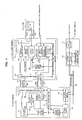
- Fig. 1 is a block diagram showing the configuration of a transaction system serving as a first embodiment of the present invention.
- the transaction system of the first embodiment comprises an IC card 10, an IC card authentication terminal 20, a host server 30, a user terminal 40, a network 51, and another network 52.
- the IC card (a settlement card of IC card type) 10 is used as, e.g., a cash card, a debit card, a credit card, or the like.
- a magnetic stripe 11 is affixed to an exterior surface of the IC card 10, and an IC memory 12 is embedded in the same.
- Transaction data (e.g., the account number of a trading bank and account data such as an account number) required for transaction are recorded in advance in the magnetic stripe 11.
- the IC memory 12 is memory which enables writing or reading of electronic data.
- data sets (1) to (4) such as those provided below are recorded in advance as electronic data in the IC memory 12.
- the IC card authentication terminal control section 21 manages and controls operations of individual sections (designated by reference numerals 22 to 29) constituting the IC card authentication terminal 20.
- the memory reader 22 When a transaction is conducted through use of the IC card 10, the memory reader 22 reads a PIN or password from the IC memory 12. When conducting a transaction through use of the IC card 10, the magnetic stripe reader 24 reads from the magnetic stripe 11 the number of a trading bank and an account number.
- the memory writer (writer) 23 When the user conducts a transaction through use of the IC card 10 by way of the IC card authentication terminal 20, the memory writer (writer) 23 newly writes electronic data into the IC memory 10 or rewrites the electronic data (contents) written in the IC memory 10, as will be described later, in accordance with a command from the host server 30 and the IC card authentication terminal control section 21.
- Contents to be newly written into the IC memory 10 by means of the memory writer 23 or contents to be rewritten are, e.g., previously-described authentication data for transaction (a PIN), user authentication data (a password or pass-phrase), transaction requirements, an electronic mail address, or the like.
- the input section 25 is for inputting various data sets (details of a transaction or the like) required by the user to conduct a transaction through use of the IC card 10.
- the input section is constituted as a keyboard or a touch panel doubling as the display section 26 to be described later.
- the input section 25 of the present embodiment is also used by the user to input authentication data (a password in the embodiment).
- the display status of the display section 26 is controlled by the IC card authentication terminal control section 21 and displays, to the user, a display on the touch panel or various data sets required to carry out a transaction.
- This display section 26 is embodied by, e.g., a CRT (Cathode Ray Tube) or an LCD (Liquid Crystal Display).
- the password authentication section (authentication section) 27 compares the password input by the user byway of the input section 25 with the password read from the IC memory 12 by the memory reader 22. When the passwords coincide with each other, the user who has input the password (the person who inputs a password) is authenticated as the true user (holder) of the IC card 10. Under a circumstance where a plurality of passwords have been read from the IC memory 12, when the password input by way of the input section 25 coincides with any one of the plurality of passwords , the password authentication section 27 authenticates the person who has input the password as the true user. After having authenticated the person who has input the password as the true user, the password authentication section 27 sends a notification to this effect to the IC card authentication terminal control section 21.
- the transaction control section 28 is for controlling a transaction in accordance with details of the transaction input by way of the input section 25 and delivers data complying with the details of the transaction, such as a command or a request, to the host server 30 by way of the network communications section 29 and the network 51.
- the transaction control section 28 of the embodiment has the function of determining whether or not details of the transaction input by way of the input section 25 fall within the range set by the transaction requirements.
- the transaction control section 28 causes the transaction processing to continue.
- the transaction control section commands the IC card authentication terminal control section 21 to send to a person who requests a transaction (the user of the IC card 10) a notification indicating that the details of the transaction are not acceptable. Notification is performed through use of, e. g., the display section 26.
- the network communications section 29 functions as a communications interface which exchanges data with the host server 30 by way of the network 51.
- the network communications section transmits to the host server 30 the account data read by the magnetic stripe reader 24, the PIN read by the memory reader 22, and the data pertaining to details of the transaction output from the transaction control section 28.
- the network communications section 29 also performs the function of receiving from the host server 30, e.g. , a request to write data into the IC memory 12 or a request to rewrite the data in the IC memory 12.
- the host server (bank server) 30 is installed in a bank or a credit loan company, or the like, and connected in a communicable manner to the previously-described IC card authentication terminal 20 by way of the network 51.
- the host server receives the account data, the PIN, and details of a transaction from the IC card authentication terminal 20, and conducts a transaction on the basis of the thus-received account data, the PIN, and details of the transaction.
- the host server 30 is connected in a communicable manner to the user terminal 40 by way of the network 52.
- the host server Upon receipt, from the user terminal 40, of a request to write data into the IC memory 12 or a request to rewrite data of the IC memory 12, the host server temporarily reserves the request or the data to be written/rewritten.
- the request or the data to be written/rewritten are transferred to the IC card authentication terminal 20.
- the host server 30 comprises a host server control section 31, a network communications section 32, a customer database 33, an account authentication section 34, a transaction control section 35, a network server 36, a network communications section 37, and a user request storage section 38.
- the host server control section 31 manages and controls operations of individual sections constituting the host server 30 [including sections designated by reference numerals 32 to 38, or a transaction statement generation section 39 (see Fig. 11) in a second embodiment].
- the network communications section 32 functions as a communications interface which exchanges data with the IC card authentication terminal 20 by way of the network 51.
- the network communications section transmits to the IC card authentication terminal 20 data (including various requests or the like) pertaining to a transaction, or receives from the IC card authentication terminal 20 data pertaining to details of a transaction, in conjunction with the account data and the PIN.
- the customer database 33 is for reserving various data sets pertaining to customers who have opened accounts. Stored as various data sets in the customer database 33 are a previously-registered authorized PIN and a status showing whether or not an account assigned to an account number can conduct a transaction. When the network communications section 32 has received the account data, the PIN and the status, both corresponding to the account number, in the account data are read from the customer database 33 to the account authentication section 34.
- the account authentication section 34 determines whether or not a transaction can be conducted with the account, which is an object of transaction, by reference to a status read from the customer database 33 and compares the PIN read from the customer database 33 with the PIN received by the network communications section 32, to thus authenticate the user.
- a notification to this effect (a transaction authorization) is sent to the host server control section 31, thereby initiating the transaction.
- processing is terminated without initiating a transaction after a notification to this effect (a transaction denial) has been sent to the IC card authentication terminal 20 by way of the host server control section 31, the network communications section 32, and the network 51.
- the transaction control section 35 Upon receipt of the transaction authorization notification from the account authentication section 34 by way of the host server control section 31, the transaction control section 35 performs transaction control complying with the details of the transaction received by the network communications section 32, by reference to the data pertaining to the account ⁇ which is an object of transaction ⁇ in the customer database 33. In the host server 30 of the embodiment, the transaction control section 35 performs transaction control operation such that the transaction authorized by the transaction control section 28 of the IC card authentication terminal 20 (i.e., a transaction falling within the range set by the transaction requirements) is carried out. Specifically, the transaction complying with the transaction requirements previously registered in the IC memory 12 is carried out.
- the network server 36, the network communications section 37, and the user request storage section 38 are those required when the user issues a request to the IC card 10 or the account from the user terminal 40 disposed in the user's home or office; that is, units to be added to an existing host server.
- the network server 36 and the network communications section 37 are installed to enable the user to exchange data with the host server 30.
- the network server 36 is preferably configured as a server to which access can be made by standard browser software, such as a WWW (World Wide Web) server, so that the user can make an access in a common Internet environment.
- standard browser software such as a WWW (World Wide Web) server
- the network communications section 37 functions as a communications interface which exchanges data with the user terminal 40 by way of the network 52.
- the user request storage section 38 Upon receipt, from the user terminal 40, of the request to write data into the IC memory 12 or the request to rewrite data in the IC memory 12, the user request storage section 38 temporarily stores the request or the data to be written/rewritten.
- the user request storage section is embodied by existing memory (RAM or a hard disk drive) constituting the host server 30.
- the transaction system of the embodiment can rewrite the data in the IC memory 12 of the IC card 10 or write new data into the IC memory 12 when the transaction using the IC card 10 is made, in connection with the IC card authentication terminal 20.
- the data to be written or the data to be rewritten, both being employed in the embodiment, are summarized as described in the following items (11) to (13).
- conceivable data to be written/rewritten include [1] a password (pass-phrase); [2] transaction requirements set for each password (pass-phrase) ; [3] an electronic mail address of the user of the IC card 10; and [4] data pertaining to a transaction counterpart (account data or the like) of the user of the IC card 10.
- the user terminal 40 is a piece of personal terminal equipment, such as a personal computer, which is connected to the host server 30 in a communicable manner by way of the network 52; which is installed in a home or office; and which is held by the user of the IC card 10.
- the user terminal 40 may be a portable cellular phone or a PDA (Personal Data Assistants) connected to a portable cellular phone, as well as a personal computer.
- the user terminal 40 is used when the user issues a request to write data into the IC memory 12, a request to rewrite the data in the IC memory 12, or a request for an account.
- the user terminal is constituted of a user terminal control section 41, a network communications section 42, and an input section 43.
- the user terminal control section 41 manages or controls operations of individual sections (reference numerals 42, 43) constituting the user terminal 40.
- the network communications section 42 functions as a communications interface which exchanges data with the host server 30 by way of the network 52.
- the network communications section transmits, to the host server, a request to write data into the IC memory 12, a request to rewrite data in the IC memory 12, and a request for the account.
- the input section 43 is for inputting various data (details of transactions or the like) and is constituted of a common keyboard or a mouse.
- the input section is used for inputting a request to write data into the IC memory 12, a request to rewrite the data in the IC memory 12, and a request for an account.
- the network 51 interposed between the IC card authentication terminal 20 and the host server 30 is made different from the network 52 interposed between the host server 30 and the user terminal 40.
- the networks 51, 52 may be embodied by the same network. In such a case, however, when an open network, such as the Internet, is used as a network, security must be ensured.
- a VPN Virtual Private Network
- IPSec Security Architecture for Internet Protocol
- SSL Secure Socket Layer
- IC card compatible terminal the IC card authentication terminal 20
- a terminal which is not compatible with the IC card 10 can receive service of a conventional magnetic stripe settlement card through use of only the magnetic stripe 11.
- the user can conduct a transaction by way of the IC card authentication terminal 20, through use of the IC card 10 (the magnetic stripe 11 and the IC memory 12) as will be described later.
- the user can also conduct a transaction by way of the conventional card authentication terminal 20A, as well, in the same manner as that employed conventionally, through use of the IC card 10 (only the magnetic stripe 11).
- the conventional card authentication terminal (the ATM terminal for use with the conventional card) 20A is analogous to that of the existing ATM terminal.
- the conventional card authentication terminal is provided with at least a magnetic stripe reader 24A, an input section 25A, and a network communications section 29A and connected to the host server 30 in a communicable manner by way of the network 51.
- the magnetic stripe reader 24A reads the account data recorded on the magnetic stripe 11 of the IC card 10.
- the PIN (four digits) is input by the user by way of the input section 25A.
- the account data and the PIN are transmitted to the host server 30 by way of the network communications section 29A and the network 51.
- the host server 30 extracts the PIN of the user in the customer database 33 (see Fig. 1), and compares the extracted PIN with the PIN transmitted from the terminal 20A, thereby authenticating the user.
- the host server 30 When the user is authenticated as a result of the PINs having coincided with each other, the host server 30 sends a notification to this effect to the terminal 20A, thereby commencing a transaction. Accordingly, a transaction can be conducted by using the IC card 10 of the embodiment without making any change in the existing system.
- the transaction system of the embodiment can also conduct a transaction involving usage of the conventional settlement card, as before.
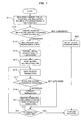
- FIG. 2 is a view for describing the first operation example of the transaction system
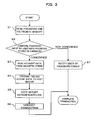
- Fig. 3 is a flowchart (steps S1 to S7) for describing the first operation example of the transaction system.
- the IC card authentication terminal control section 21 displays guidance on the display section 26, thereby prompting the user to input a password. As shown in Figs. 1 and 2, the user inputs a password PW1 for authentication from the input section 25 in accordance with the guidance.
- the IC card authentication terminal 20 reads a password PW2 and a PIN from the IC memory 12 of the IC card 10 by means of the memory reader 22 (step S1 in Fig. 3).
- the password authentication section 27 compares the two passwords PW1 and PW2 with each other, thereby determining whether or not a coincidence exists between them (step S2 shown in Fig. 3). A result of comparison is reported to the IC card authentication terminal control section 21.
- step S2 When a mismatch exists between the passwords PW1 and PW2 (a route designated by "NON-COINCIDENCE" of step S2), a notification to this effect (an error) is sent to the IC card authentication terminal control section 21 from the password authentication section 27 and is displayed on the display section 26 by means of the IC card authentication terminal control section 21, thereby prompting the user to again conduct the transaction and terminating processing (step S7 shown in Fig. 3).
- the person who has input the password is authenticated as the true user (holder) of the IC card 10.
- the magnetic stripe reader 24 reads the account data pertaining to the user from the magnetic stripe 11 on the IC card 10 (step S3 in Fig. 3), and the PIN and the account data are transmitted to the host server 30 from the network communications section 29 by way of the network 51 (step S4 in Fig. 3).
- the password authentication section 27 when the two passwords PW1 and PW2 coincide with each other, the password authentication section 27 outputs a transmission authorization signal to the network communication section 29 byway of the IC card authentication terminal control section 21. Upon receipt of the transmission authorization signal, the network communications section 29 transmits the PIN and the account data to the host server 30. Accordingly, the magnetic stripe reader 24 may read the account data (step S4 in Fig. 3) not after the password authentication section 27 has authenticated the user, but essentially concurrently with insertion of the IC card 10 (concurrently with step S1).
- the host server 30 performs authentication and a transaction essentially as before. Specifically, after the host server 30 has received the account data and the PIN from the IC card authentication terminal 20 by way of the network communications section 32, the account authentication section 34 refers to the customer database 33 on the basis of the received account data, thereby extracting a PIN and a status, both pertaining to the user, from the customer database 33. The account authentication section 34 determines whether or not the account of object is compatible with conducting a transaction, by reference to the status and compares the PIN read from the customer database 33 with the PIN received by the network communications section 32, thereby authenticating the user (step S5 in Fig. 3).
- a notification to this effect (a transaction authorization) is sent to the host server control section 31, whereupon the transaction is initiated/conducted (step S6 in Fig. 3).
- the transaction authorization notification is sent to the IC card authentication terminal 20, as well, and the notification to this effect is displayed as guidance on the display section 26.
- the user selects details of the transaction, or the like, by reference to the guidance on the display section 26, and inputs the details by way of the input section 25. As shown in Fig.
- existing authentication data for transaction i.e., a PIN of four digits
- the host server 30 performs authentication through use of the PIN, which has hitherto been performed.
- both the IC card authentication terminal 20 and the host server 30 authenticate (the user of) the IC card 10.
- the data transmitted from the IC card authentication terminal 20 to the host server 30 are made identical with those transmitted from the conventional card authentication terminal 20A to the host server 30.
- the conventional card authentication terminal 20A and the IC card authentication terminal 20 of the present embodiment can be mixedly connected to the existing host server 30. Namely, processing to be performed by the host server 30 remains unchanged regardless of whether the host server is compatible with the IC card authentication terminal 20 or the conventional card authentication terminal 20A.
- the PIN transmitted from the conventional card authentication terminal 20A is manually input by the user, whereas the PIN transmitted from the IC card authentication terminal 20 of the embodiment is previously stored in the IC memory 12 of the IC card 10. Accordingly, occurrence of a mismatch between the two PINs to be compared by the account authentication section 34 is impossible, thereby obviating a necessity to compare the PINs with each other.
- authentication of the PIN transmitted from the IC card authentication terminal 20 is carried out in the same manner as is authentication of the PIN transmitted from the conventional card authentication terminal 20A, whereby the present embodiment yields an effect of eliminating the need for the host server 30 to change existing software.
- the host server 30 sets a password (pass-phrase) different from an existing PIN without changing the software related to the PIN authentication processing, thereby effecting authentication through use of the password.
- a password pass-phrase
- a character string ⁇ which differs in format from the PIN and is formed from, e.g., alphanumeric characters, Japanese Hiragana, Japanese Katakana, Chinese characters, or symbols ⁇ can also be used as a password at the time of authentication of the user. If such a password of arbitrary characters is used, a security characteristic, which is more enhanced as compared with that achieved as a result of use of a conventional PIN of four digits, can be ensured.
- a password of arbitrary letters results in an increase in the volume of data the user must memorize (i.e. , the number of letters) as compared with a case where a PIN is used.
- a phrase easy for the user to memorize e.g., "this is the year of my college graduation”
- a simple substitution e.g., MURASHITA in Roman letters are replaced with ⁇ ITSDJOYS created by typing letters located on the right of the respective letters in a keyboard layout
- the third party encounters difficulty in inferring the password. Therefore, use of a password of arbitrary letters results in a significant increase in security level and the ability to set a password that is easy to memorize.
- Fig. 4 is a view showing an example password and example transaction requirements, both pertaining to the first embodiment
- Fig. 5 is a view for describing the second operation example of the transaction system
- Fig. 6 is a flowchart (steps S11 to S20) for describing the second operation example of the transaction system.
- One account usually corresponds to one settlement card, and a transaction using the settlement card is conducted in connection with the account.
- a transaction using the settlement card is conducted in connection with the account.
- transactions such as depositing money in one account, withdrawals up to a balance on the account, money transfer, and an inquiry about a balance on the account, can be conducted through use of one card.
- a conventional transaction system when a plurality of users (e.g., family members) use a single account, no limitations can be imposed on details of transactions on a per-user basis.
- a plurality of (four in Fig. 4) passwords and transaction requirements (user limitation data) corresponding to the respective passwords are stored in advance in the IC memory 12 of the IC card 10, as shown in Fig. 4.
- one account is shared among a plurality of users, so that limitations can be imposed on details of a transaction on a per-user basis.
- a settlement card (the IC card 10) is shared among four family members; e.g., a father, a mother, an elder brother, and an elder sister
- passwords 1 through 4 and transaction requirements corresponding to the respective passwords 1 to 4 are set in the IC memory 12, as shown in Fig. 4.
- the single account (the single IC card 10) can be shared among all of the family members, and limitations can be imposed on details of transactions for each family member.
- authorization and denial of various transactions are set as transaction requirements, and the amount of withdrawable money is set at the time of authorization of a withdrawal.
- the amount of money the father can withdraw is set to 100,000 yen
- the amount of money the elder brother an withdraw is set to 10,000 yen
- the amount of money the elder sister can withdraw is set to 5,000 yen.
- the amount of withdrawable money may be set as the amount of money per transaction or the amount of money which can be withdrawn during a certain period of time (e.g. , one month).
- a certain period of time e.g. , one month.
- the IC card authentication terminal control section 21 displays guidance on the display section 26, thereby prompting the user to input a password. As shown in Figs. 1 and 5, the user inputs a password for authentication from the input section 25 in accordance with the guidance.
- the IC card authentication terminal 20 reads all of the passwords and transaction requirements set for the respective passwords from the IC memory 12 of the IC card 10, along with the PINS, by means of the memory reader 22 (step S11 in Fig. 6).
- the password authentication section 27 compares the password input from the input section 25 with the plurality of passwords read from the IC memory 12, thereby determining whether or not the input password coincides with any one of the plurality of passwords (step S12 in Fig. 6). A result of determination is reported to the IC card authentication terminal control section 21.
- step S12 When the input password does not coincide with any of the plurality of passwords (a route designated by "NON-COINCIDENCE” of step S12), a notification to this effect (an error) is sent to the IC card authentication terminal control section 21 from the password authentication section 27 and is displayed on the display section 26 by means of the IC card authentication terminal control section 21, thereby prompting the user to again conduct the transaction and terminating processing (step S20).
- the magnetic stripe reader 24 reads the account data pertaining to the user from the magnetic stripe 11 on the IC card 10 in the same manner as in the procedures described by reference to Figs. 2 and 3 (step S13 in Fig. 6), and the PIN and the account data are transmitted to the host server 30 from the network communications section 29 to the network 51 (step S14 in Fig. 6).
- the host server 30 authenticates the PIN in the same manner as in step S5 shown in Fig. 3 (step S15 in Fig. 6).
- the account authentication section 34 has authenticated that the account ⁇ which is an object of transaction ⁇ is compatible with conducting a transaction and that the user is authenticated as a result of occurrence of a coincidence between the previously-described two PINs
- a notification to this effect is sent to the host server control section 31.
- the notification is sent to the IC card authentication terminal 20 from the host server control section 31 by way of the network communications section 32 and the network 51, thereby commencing a transaction.
- the user selects details of a transaction by reference to the guidance on the display section 26 and inputs the details by way of the input section 25 (step S16 in Fig. 6).
- the transaction control section 28 may make a determination as to whether or not details of the transaction input by the user satisfy the transaction requirements corresponding to the user, without displaying the authorization services such as those mentioned previously. Only when the transaction requirements are satisfied, the transaction may be authorized.
- the transaction control section 28 may determine whether or not the amount of withdrawal designated by the user is less than or equal to the amount of withdrawable money.
- display of the authorization services and a determination as to transaction requirements to be performed by the transaction control section 28 are carried out by the IC card authentication terminal 20, thereby limiting the details of the user's transaction within the range set by the transaction requirements.
- the four passwords 1 through 4 shown in Fig. 4 are stored in the IC memory 12.
- the password input by the user is a password 2
- a notification indicating authorization of the "inquiry about a balance on the account,” "a deposit,” “a withdrawal (a ceiling of 100,000 yen),” and “money transfer” is transmitted to the IC card authorization terminal control section 21.
- the IC card authorization terminal control section 21 causes the display section 26 to display a list of implementable services (i.e., "Inquiry about a balance on the account, " "Deposit, " “Withdrawal, " and “Money Transfer"), thereby prompting the user to select any one of these (step S16 in Fig. 6).
- all transactions may be displayed, and the transaction control section 28 may be caused to determine whether or not details of the transactions selected by the user are authorized.
- the transaction control section 28 determines whether or not the amount of withdrawal input by the user coincides with the transaction requirements (the amount of withdrawable money) (step S17 in Fig. 6).
- the transaction control section 28 does not accept the current transaction.
- the IC card authentication terminal control section 21 causes the display section 26 to display a notification to this effect, thereby notifying the user to re-enter details of a transaction.
- the transaction is continued in accordance with this notification (a route designated by selecting NO in step S19 in Fig. 6)
- the user again selects details of the transaction (step S16 in Fig. 6).
- processing is terminated.
- the transaction request (details of a transaction) of the user are transmitted in their present forms to the host server 30. Subsequently, the host server 30 operates in completely the same manner as in a case where the transaction request output from the conventional card authentication terminal 20A (see Fig. 2) is handled, whereupon the transaction complying with the transaction request from the IC card authentication terminal 20 is conducted (step S18 in Fig. 6).
- the user re-selects details of the transaction (step S16 in Fig. 6).
- processing is terminated.
- the plurality of passwords and the transaction requirements corresponding to the respective passwords are stored in the IC memory 12, whereby the plurality of users can share a single account, and an individual service can be provided on a per-user basis.
- a determination as to limitations on the user is made by the IC card authentication terminal 20.
- the host server 30 there is obviated a necessity for making a change in the host server 30 in order to make the determination.
- the functions described by reference to Figs. 4 to 6 can be fulfilled at low cost.
- the password 1 indicating authority to change settings is authenticated at the window of the bank, whereby the passwords and the transaction requirements, both being stored in the IC memory 12, can be changed.
- the IC card authentication terminal 20 is provided with the memory writer 23.
- the password or the transaction requirements can also be changed through use of the memory writer 23.
- Fig. 7 is a flowchart (steps S11 to S21) for describing the third example.
- steps S11 to S20 are the same as those described by reference to Fig. 6, and hence their repeated explanations are omitted.
- the flowchart shown in Fig. 7 differs from that shown in Fig. 6 only in that new step S21 is added between steps S18 and S19.
- the plurality of passwords and the transaction requirements corresponding to the respective passwords are stored in the IC memory 12 of the IC card 10.
- limitations corresponding to the past transaction can be added by means of rewriting the transaction requirements after completion of the transaction.
- the memory writer 23 rewrites, in step S21, the transaction requirements in the IC memory 12 of the IC card 10 on the basis of the result of transaction (details of the transaction) conducted by the host server 30.
- the memory writer 23 of the IC card authentication terminal 20 rewrites the "Amount of withdrawable money: 100,000 yen” to the "Amount of withdrawable money: 50,000 yen” at the time of completion of the transaction.
- the current transaction is a withdrawal of 100,000 yen
- the amount of withdrawable money becomes 0.
- “Withdrawal denial” and the "Amount of withdrawable money is 0 yen” are written as new transaction requirements.
- a transaction complying with the past transaction can be conducted by means of updating the transaction requirements in accordance with the details of the transaction. Even in this case, all of the transaction requirement rewriting processing operations are performed by the IC card authentication terminal 20, and hence the host server 30 does not need to make any special change for rewriting the transaction requirements.
- FIG. 7 is a flowchart (steps S11 to S20 and S22 to S25) for describing the fourth operation example.
- steps S11 to S20 are the same as those described by reference to Fig. 6, and their repeated explanations are omitted.
- the flowchart shown in Fig. 8 differs from that shown in Fig. 6 in that new steps S22 to S24 are added between steps S16 and S17 and in that a new step S25 is added between steps S18 and S19.
- the plurality of passwords and the transaction requirements corresponding to the respective passwords are stored in the IC memory 12 of the IC card 10.
- a period of time ⁇ during which utilization of the amount of withdrawable money and the number of times a transaction can be conducted are authorized (a reset timing: e.g., every month) ⁇ is set along with the amount of withdrawable money and the number of times a transaction can be conducted as in the case of the third operation example, and a limitation complying with the past transaction can be added by means of rewriting the transaction requirements after completion of the transaction, whereby the transaction requirements are reset every predetermined period in accordance with initial requirements.
- the memory writer 23 resets the transaction requirements in the IC memory 12 of the IC card 10 in accordance with the initial requirements.
- a date at which the transaction is conducted are written into the IC memory 12 of the IC card 10 at the time of completion of the transaction by means of the memory writer 23.
- Initial values (initial requirements) of the transaction requirements other than the transaction requirements are stored in advance in the IC memory 12.
- the memory reader 22 reads the date of the previous transaction from the IC memory 12 (step S22), and the IC card authentication terminal control section 21 or the transaction control section 28 determines whether the date of the current transaction falls within a new period of time or the date of the previous transaction is prior to the current period (step S23).
- step S23 When the date of the current transaction is in a new period (a route designated by selecting YES in step S23), the transaction requirements are reset (initialized) in accordance with the initial requirements (step S24), and processing proceeds to step S17.
- step S17 When the date of current transaction is not within the new period (a route designated by selecting NO in step S23), processing proceeds to step S17 without resetting the transaction requirements.
- the memory writer 23 rewrites the transaction requirements in the IC memory 12 of the IC card 10 in the same manner as in the third operation example, on the basis of the result of transaction (details of the transaction) conducted by the host server 30.
- the date at which the transaction is conducted is written into the IC memory 12 (step S25).
- the memory writer 23 of the IC card authentication terminal 20 rewrites the "Amount of withdrawable money: 100,000 yen” to the "Amount of withdrawable money: 50,000 yen” at the time of completion of the transaction.
- the date of the previous transaction is written in the IC memory 12, and the date of the previous transaction is compared with the date of the current transaction at the commencement of the transaction.
- the transaction requirements (the amount of withdrawable money in the present embodiment) stored in the IC memory 12 are reset (initialized) in accordance with the initial requirements (an initial value of 100,000 yen) stored in the IC memory 12. Subsequently, the transaction is conducted in accordance with the reset transaction requirements.
- a conceivable technique for resetting the amount of withdrawable money also includes a technique for setting, as the amount of withdrawable money, the amount of money determined by adding the balance to the initial value (100,000 yen).
- the amount of 130,000 yen derived from addition (accumulation) of a balance of 30,000 yen in the previous month to an initial value of 100,000 yen is set as the amount of withdrawable money for a new month rather than the amount of withdrawable money being reset to 100,000 yen.
- the memory writer 23 writes the "Amount of withdrawable money: 130,000 yen” and the Period: every month" are written as transaction requirements in the IC memory 12.
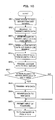
- Fig. 9 is a flowchart (steps S31 to S41) for describing the fifth operation example of the transaction system.
- steps S4 to S7 are the same as those described by reference to Fig. 3, and hence their explanations are omitted.
- Fig. 10 is a flowchart (steps S51 to S61) for describing a sixth operation example.
- the host server 30 is connected to the user terminal 40 disposed in a home or office in a communicable manner by way of a network (e.g. , the Internet) 52.
- the user has an environment in which the user can refer to the history of transactions conducted through use of the IC card 10, by means of making an access to the host server 30 from the user terminal 40 or conduct a transaction such as Internet banking.
- the password registered in the IC card 10 can preferably be changed whenever the user desires the change.
- a memory writing device a memory writer
- costs borne by the user will become large, and hence possession of the memory writer is not realistic.
- the company of settlement cards such as a bank or a credit loan company
- costs borne by the company become great, and hence such an arrangement is not preferable.
- the password can be changed, so long as the memory writer 23 in the IC card authentication terminal 20 is used. However, in this case, the user must go to the location where the IC card authentication terminal 20 is installed, and hence the user cannot change the password "when desired by the user".
- the fifth and sixth operation examples are cases where the password (the fifth operation example) and the transaction requirements, or the like, (the sixth operation example) are changed or rewritten substantially "when desired by the user" through use of the recently attained Internet environment and the memory writer 23 in the IC card authentication terminal 20.
- the host server 30 of the embodiment is configured to issue, to the IC card authentication terminal 20, a command for rewriting the data in the IC memory 12 of the IC card 10 and a command for writing new data into the IC memory 12 when a transaction is conducted through use of the IC card 10.
- the request is received by the network server 36 of the host server 30, and the request and the data to be written/rewritten are stored in the user request storage section 38.
- the host server 30 perceives that the writing/rewriting request pertaining to the IC card 10 is saved in the user request storage section 38.
- the memory writer 23 of the IC card authentication terminal 20 subjects the IC memory 12 of the IC card 10 to writing or rewriting operation corresponding to the request.
- the fifth operation example describes a case where only one password is stored in the IC memory 12 of the IC card 10 and an object to be written/rewritten is the password.
- the sixth operation example describes a case where a plurality of passwords and transaction requirements corresponding to the respective passwords are stored in the IC memory 12 of the IC card 10 and objects to be written/rewritten are a password and transaction requirements, or the like [may also be an electronic mail address of the user or data (account data or like) pertaining to a transaction counterpart of the user].
- the user accesses the host server 30 from the input section 43 of the user terminal 40 by way of the network 52 (step S31) to request the host server 30 to change the password (step S32).
- the request to change the password (a request to rewrite) and data to be rewritten (a new password) are stored in the user request storage section 38 in association with data (e.g., an account number) which enable specification of the IC card 10 of the user (step S33).
- data e.g., an account number
- the IC card authentication terminal 20 sends a notification indicating utilization of the IC card 10 to the host server 30 prior to authentication of the IC card 10.
- the magnetic stripe reader 24 reads the account data pertaining to the user from the magnetic stripe 11 on the IC card 10 (step S35) and transmits the account data to the host server 30 from the network communications section 29 by way of the network 51 (step S36).
- the host server 30 While taking as a cue the account number included in the account data, the host server 30 having received the account data determines whether or not the request corresponding to the account number is stored in the user request storage section 38; that is, whether or not the request to change the password of the IC card 10 which is about to be used for conducting a transaction is stored (step S37).
- the request to change the password of the IC card 10 is stored (a route designated by selecting YES in step S37)
- a new password is transmitted from the host server 30 to the IC card authentication terminal 20 along with the request (step S38), whereupon the password in the IC memory 12 of the IC card 10 is rewritten to the new password by means of the memory writer 23 (step S39).
- the IC card authentication terminal 20 prompts the user to input a password through the display section 26 (step S40).
- step S40 When the request to change the password of the IC card 10 is not stored (a route designated by selecting NO in step S37), a notification to this effect is sent from the host server 30 to the IC card authentication terminal 20, thereby prompting the user to input a password by way of the display section 26 (step S40).
- step S41 an authentication or a transaction is carried out through the same procedures as those of the flowchart shown in Fig. 3 (step S41) .
- processing pertaining to step S3 in Fig. 3 can be omitted.
- the password is changed prior to authentication of the password.
- the IC card authentication terminal 20 authenticates the card through use of the new password, whereby a transaction is commenced.
- the password in the IC memory 12 is changed when the transaction is conducted through use of the IC card 10.
- the password is viewed as if it were changed when the user has issued the changing request from the user terminal 40. Thereby, the user can change the password substantially "when desired by the user" without holding a memory writer, or the like, in hand.
- Steps S51 to S61 in Fig. 10 correspond to steps S31 to S41 in Fig. 9.
- the user accesses the host server 30 from the input section 43 of the user terminal 40 by way of the network 52 (step S51), thereby requesting the host server 30 to perform rewriting/writing operation (step S52).
- the host server 30 Upon receipt of the user's request by way of the network server 36, the host server 30 stores, in the user request storage section 38, the request to rewrite/write and data to be rewritten/written in association with the data (e.g., an account number) which enable specification of the IC card 10 of the user (step S53).
- the data e.g., an account number
- the IC card authentication terminal 20 sends a notification indicating utilization of the IC card 10 to the host server 30 before authenticating the IC card 10.
- the magnetic stripe reader 24 reads the account data pertaining to the user from the magnetic stripe 11 on the IC card 10 (step S55) and transmits the account data to the host server 30 from the network communications section 29 by way of the network 51 (step S56).
- the host server 30 While taking as a cue the account number included in the account data, the host server 30 having received the account data determines whether or not the request corresponding to the account number is stored in the user request storage section 38; that is, whether or not the request to change the IC card 10 which is about to be used for conducting a transaction is stored (step S57).
- step S57 When the request to change the IC card 10 is stored (a route designated by selecting YES in step S57), data to be rewritten/written are transmitted from the host server 30 to the IC card authentication terminal 20 along with the request (step S58), whereupon the data to be rewritten in the IC memory 12 of the IC card 10 are rewritten in accordance with the data for rewriting or new data are written into the IC memory 12 by means of the memory writer 23 (step S59). Subsequently, the IC card authentication terminal 20 prompts the user to input the password through the display section 26 (step S60).
- step S57 When the rewriting/writing request pertaining to the IC card 10 is not stored (a route designated by selecting NO in step S57), a notification to this effect is sent from the host server 30 to the IC card authentication terminal 20, thereby prompting the user to input a password by way of the display section 26 (step S60).
- step S61 When the user has input the password from the input section 25, an authentication or a transaction is carried out through the same procedures as those in any one of the flowcharts shown in Figs. 6 through 8 (step S61).
- processing pertaining to step S13 in Figs. 6 through 8 can be omitted.
- rewriting/writing operation corresponding to the request is performed prior to authentication of the password.
- the IC card authentication terminal 20 authenticates the card, thereby commencing a transaction.
- rewriting/writing of data in the IC memory 12 is performed when the transaction using the IC card 10 is conducted, rewriting/writing operation is viewed as if it were performed when the user has issued a rewriting/writing request from the user terminal 40.
- the user can change the data in the IC memory 12 substantially "when desired by the user" without holding a memory writer, or the like, in hand.
- the transaction system of the first embodiment yields the following working-effects.
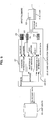
- Fig. 11 is a block diagram showing the configuration of a transaction system serving as a second embodiment of the present invention.
- a transaction system of the second embodiment is basically constituted of the IC card 10; the authentication terminal 20 for the IC card; the host server 30; the user terminal 40; the network 51; and the network 52, as is the transaction system of the first embodiment.
- reference numerals identical with the existing reference numerals designate identical or substantially-identical constituent elements, and their detailed descriptions are omitted.
- the electronic mail address of the user of the IC card 10 is recorded in advance in the IC memory 12 of the IC card 10 of the second embodiment. As described in connection with the first embodiment, the electronic mail address can be written or rewritten by means of making an access to the host server 30 by way of the user terminal 40. Instead of being recorded in the IC memory 12, the electronic mail address of the user may be stored in the customer database 33 of the host server 30 in association with the account number of the user.
- the IC card authentication terminal 20 of the second embodiment is constituted in substantially the same manner as in the first embodiment.
- the electronic mail address of the user is read from the IC memory 12 by means of the memory reader 22 in conjunction with a password and a PIN.
- the electronic mail address read by the memory reader 22 is transmitted from the IC card authentication terminal 20 to the host server 30.
- the host server 30 of the second embodiment is also constituted in substantially the same manner as in the first embodiment.
- the transaction statement generation section 39 is provided in lieu of the user request storage section 38 of the first embodiment.
- the transaction statement generation section 39 is managed and controlled by the host server control section 31 and generates a notification document (a statement of a transaction and details thereof) from details of the currently-conducted transaction after completion of the transaction (every time a transaction is conducted).
- the transaction statement generation section is realized by means of a predetermined program being executed by an existing CPU constituting the host server 30.
- the notification document generated by the transaction statement generation section 39 is transmitted, in the form of an electronic mail, to the electronic mail address of the user who has conducted the transaction, by means of the network server 36 through the network communications section 37 and the network 52.
- the host server 30 of the second embodiment may be provided with the function of the user request storage section 38 of the first embodiment.
- the user terminal 40 of the second embodiment is also constituted in substantially the same manner as in the first embodiment.
- the user terminal has the function for receiving an electronic mail and is provided with a display section 44 in place of the input section 43 of the first embodiment.
- a display state of the display section 44 is controlled by the user terminal control section 41, and the display section is for displaying the statement document (a statement of a transaction and details thereof) received in the form of the electronic mail.
- the display section is a display (a CRT, an LCD, or the like) generally provided on a terminal.
- the user terminal 40 of the second embodiment may also be provided with the function of the input section 43 of the first embodiment.
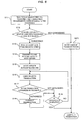
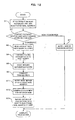
- Fig. 12 is a flowchart (step S1', steps S2 to S7, and steps S71 to S73) for describing the first operation example.
- steps S2 to S7 are the same as those described by reference to Fig. 3, and their repeated descriptions are omitted.
- the memory reader 22 reads the electronic mail address of the user from the IC memory 12 of the IC card 10 along with a password and a PIN (step S1').
- step S6 the electronic mail address of the user is reported to the host server 30 from the IC card authentication terminal 20 (step S71).
- step S4 the electronic mail address may be transmitted along with the PIN and the account data rather than being reported to the host server 30 after completion of the transaction.
- the notification document is generated from details of the currently-conducted transaction by means of the transaction statement generation section 39 of the host server 30 (step S72), and the notification document (details of the transaction) is transmitted, in the form of an electronic mail, to the electronic mail address of the user who has conducted the transaction by means of the network server 36 (step S73).
- the user can receive details of the transaction as electronic data by means of the electronic mail.
- the history of transactions can be stored as electronic data in the user terminal 40, and cashier records, such as an electronic bankbook or an electronic housekeeping book, can be readily built in the user terminal 40.
- details of a transaction are transmitted, in the form of an electronic mail, to the user's address every time the transaction using the IC card 10 is conducted. Even if a third party has fraudulently used the IC card 10, fraudulent usage of the card is immediately reported, whereupon the user can immediately become aware of fraudulent use of the card. At this time, if data pertaining to the location of a local office where the IC card 10 of the IC card authentication terminal 20 has been used are added to the notification document to be reported in the form of an electronic mail, there is yielded an advantage of the ability to immediately report actions of the unauthorized user to the police or an IC card management company (a credit loan company, a bank, or the like).
- Sending details of the transaction to the electronic mail address of the user is not limited to the transaction using the IC card 10, but may be carried out at the time of a transaction using a conventional card with a magnetic stripe.
- details of a transaction are sent to the electronic mail address of the user by means of an electronic mail in the same manner mentioned previously every time a transaction is conducted, so long as the electronic mail address of the user is registered in advance in the magnetic stripe of the conventional card or the customer database 33 of the host server 30.
- the host server 30 is notified of the electronic mail address from the IC card authentication terminal 20 and transmits the notification document to the electronic mail address.
- the electronic mail address of the user may be stored in the customer database 33 of the host server 30 in association with the account number of the user.
- the notification document may be transmitted to the electronic mail address which has been retrieved from the customer database 33 while the account number (account data) transmitted from the IC card authentication terminal 20 is taken as a cue.
- details of the transaction are transmitted to the electronic mail address of the user from the host server 30.
- the IC card authentication terminal 20 may generate the notification document from details of the transaction and transmit the notification document to the electronic mail address of the user from the IC card authentication terminal 20.
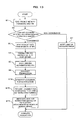
- Fig. 13 is a flowchart (steps S1 to S7 and S74 to S76) for describing a second operation example.
- steps S1 to S7 are the same as those described by reference to Fig. 3, and their repeated explanations are omitted.
- step S6 when the user inserts the IC card 10 into the IC card authentication terminal 20 on occasion of initiation of the transaction involving usage of the IC card 10 by means of the IC card authentication terminal 20, processing (steps S1 to S7) is performed in accordance with the procedures having been described by reference to Fig. 3.
- the transaction statement generation section 39 of the host server 30 When the transaction is completed in step S6, the transaction statement generation section 39 of the host server 30 generates the notification document (a transaction statement) from details of the currently-conducted transaction (step S74).
- the notification document is transmitted to the IC card authentication terminal 20 from the network communications section 32 by way of the network 51 (step S75).
- the notification document sent from the host server 30 is written into the IC memory 12 of the IC card 10 as the details of the transaction by means of the memory writer 23 every time the transaction is completed (step S76).
- the details of the transaction (the notification document) written in the IC memory 12 of the IC card 10 are transmitted to the host server 30 from the IC card authentication terminal 20, by means of reading the details of the transaction and the electronic mail address from the IC memory 12 with the memory reader 22 in accordance with the user's reading request.
- the read details of the transaction are transmitted in the form of an electronic mail to the read electronic mail address by means of the host server 30 (the network server 36).
- the details of the transaction may be transmitted to the electronic mail address by means of the IC card authentication terminal 20 rather than by means of the host server 30.
- a request to read the details of the transaction may be issued by way of the input section 25 of the IC card authentication terminal 20 when the user is conducting the transaction with the IC card 10 inserted in the IC card authentication terminal 20.
- the reading request may be issued by way of the user terminal 40 as in the case of the fifth and sixth operation examples of the first embodiment.
- the host server 30 When the reading request is issued from the user terminal 40 as in the latter case, the host server 30 must be provided with the function of the user request storage section 38 of the first embodiment. The reading request is temporarily stored in the user request storage section 38.
- the user inserts the IC card 10 into the IC card authentication terminal 20 to conduct a transaction using the IC card 10, details of the transaction and the electronic mail address are read and transmitted from the IC memory 12 by means of the memory reader 22.
- a transaction statement is currently issued every time a transaction is conducted bymeans of a common ATM terminal.
- issuance of the transaction statement can be omitted by means of storing details of the transaction (a transaction statement) in the IC memory 12 in the second operation example of the second embodiment, and hence paperless issuance of the statement can be realized.
- the user desires details of the transaction stored in the IC memory 12 as electronic data, the details are transmitted to the electronic mail address in the IC memory 12. As a result, the user can acquire the details of the transaction in the IC memory 12 without possessing the IC memory reader.
- an acquisition request (the reading request) may be issued by way of the IC card authentication terminal 20 or by way of the user terminal 40 installed in the home/office.
- details of a transaction are actually reported by means of an electronic mail when the user has conducted a transaction using the IC card 10 by way of the IC card authentication terminal 20 after issuance of the acquisition request.
- the electronic mail address of the user is recorded in the IC memory 12 of the IC card 10.
- the host server 30 immediately transmits the details of the transaction to the electronic mail address.
- the user can save the details of the transaction as an electronic mail (electronic data). In the event that a card has been fraudulently used, the user can immediately ascertain fraudulent use of the card.
- the details of the transaction are written and stored in the IC memory 12 of the IC card 10 by means of the memory writer 23 after completion of the transaction.
- the company e.g., a bank or a credit loan company
- the company to which the host server 30 belongs does not need to issue the transaction statement in paper, and the history of transactions does not need to be stored in the host server 30, thereby rendering effective utilization of memory.
- the electronic mail address of the user is recorded in the IC memory 12 of the IC card 10.
- details of the transaction are read from the memory reader 22 and sent to the electronic mail address.
- the user can acquire details of the transaction recorded in the IC memory 12 of the IC card 10 as an electronic mail (electronic data).
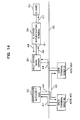
- Fig. 14 is a block diagram showing the configuration of a transaction system serving as a third embodiment of the present invention.
- the transaction system of the third embodiment comprises a certificate authority 60 as well as the IC card 10, the IC card authentication terminal 20, the host server 30, the user terminal 40 (40A, 40B), the network 51, and the network 52.
- the user A owns the user terminal 40A
- the user B owns the user terminal 40B.
- the user terminals are substantially identical in basic configuration to the user terminal 40 shown in Figs. 1 and 11.
- the user A is a person who sells a commodity product (a seller)
- the user B is a person who buys the commodity product (a buyer).
- the certificate authority (CA) 60 is connected to at least the user terminal 40B (40) in a communicable manner by way of the network 52.
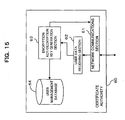
- the certificate authority comprises at least a network communications section 61, a user data receiving section 62, an encryption key/decryption key generation section 63, and a user management database 64.
- Fig. 15 is a block diagram showing the configuration of the certificate authority 60 of the third embodiment.
- the network communications section 61 acts as a communications interface for exchanging data with the user terminal 40B by way of the network 52.
- the network communications section receives a registration request from the user terminal 40B (the user B) and user data (see arrow A1 in Fig. 14) and transmits an encryption key/decryption key generated in accordance with the registration request and the user data (see arrow A2 in Fig. 14).
- the user data receiving section 62 receives the user data pertaining to the user B who has received the registration request, from among various data received by the network communications section 61.
- the encryption key/decryption key generation section 63 generates the encryption key/decryption key for the user B on the basis of the user data received by the user data receiving section 62. As mentioned previously, the generated encryption key/decryption key is returned from the network communications section 61 to the user terminal 40B (see arrow A2 in Fig. 14).
- the user management database 64 stores the encryption key/decryption key generated by the encryption key/decryption key generation section 63.
- the user terminal 40B (40) owned by the user B further comprises a key retaining section 45, a plaintext signature retaining section 46, a clock 47, and an electronic signature generation section 48.
- Fig. 16 is a block diagram showing the configuration of the user terminal 40B of the third embodiment.
- the network communications section 42 in the user terminal 40B acts as a communications interface for exchanging data with the certificate authority 60 and the user terminal 40A by way of the network 52.
- the network communications section transmits to the user terminal 40A electronically- signed data pertaining to an account from which money is to be transferred (account data pertaining to existence/absence of the account of the user B) before the user B purchases a commodity product from the user A (see arrow A3 in Fig. 14).
- the key retaining section 45 is for retaining the encryption key/decryption key received from the certificate authority 60.
- the plaintext signature retaining section 46 is for retaining a plaintext signature including the account data pertaining to the user B to be transmitted to the host server 30 by way of the user A.
- the clock 47 is for determining the current date and time.
- the electronic signature generation section 48 is for generating an electronic signature before the user B purchases a commodity product from the user A, by means of encrypting a plaintext signature retained in the plaintext signature retaining section 46 and the date data output from the clock 47 through use of an encryption key retained in the key retaining section 45 (the encryption key issued by the certificate authority 60).
- the electronic signature (the electronically-signed data pertaining to an account from which money is to be transferred) generated by the electronic signature generation section 48 is returned to the user terminal 40B from the network communications section 42, as mentioned previously (see arrow A3 in Fig. 14).
- the network communications section 42 in the user terminal 40A acts as a communications interface for exchanging data with the user terminal 40B and the host server 30 by way of the network 52.
- the network communications section transmits, to the host server 30, details of a transaction with the user B and the electronic signature output from the user B (see arrow A4 in Fig. 14).
- the host server (bank server) 30 of the third embodiment is configured to have an electronic signature decryption section 31a and a transaction data confirmation section 31b.
- Fig. 17 is a block diagram showing the configuration of the host server 30 in the third embodiment.
- the network communications section 37 in the host server 30 acts as a communications interface for exchanging data with the user terminal 40A by way of the network 52 and receives details of the transaction with the user B and an electronic signature of the user B from the user terminal 40A (see arrow A4 in Fig. 14).
- the electronic signature decryption section 31a ascertains that the user B is a transaction counterpart of the user A, by means of decrypting the electronic signature output from the user terminal 40A with the decryption key, as well as registering the details of the transaction in the account of the user B along with the account data pertaining to the user A by means of having ascertained that the account of the user B is in the bank to which the host server 30 belongs. Specifically, the details of the transaction and the account data pertaining to the user A are stored in the customer database 33 in association with the account number of the user B.
- the transaction data confirmation section 31b Upon receipt from the IC card authentication terminal 20 of the notification indicating that the user B has conducted the transaction using the IC card 10 by means of the IC card authentication terminal 20 (see arrow A5 in Fig. 14), the transaction data confirmation section 31b ascertains the transaction data (details of the transaction) pertaining to the user B registered in the customer database 33 and transmits the transaction data to the IC card authentication terminal 20 by way of the network communications section 32 and the network 51 (see arrow A6 in Fig. 14).
- the IC card authentication terminal 20 of the third embodiment Upon receipt of the transaction data pertaining to the user B from the host server 30, the IC card authentication terminal 20 of the third embodiment writes the transaction data (data pertaining to the transaction counterpart of the user B; that is, data pertaining to a partner necessary for the user B to conduct a transaction) into the IC card 10 (the IC memory 12) of the user B for which the transaction is being conducted, by means of the memory writer 23 (see arrow A7 in Fig. 14).
- Fig. 18A is for describing operation of the common transaction system using cash settlement.
- the user B upon receipt of the commodity product from the user A (seller) (see arrow A11), the user B (buyer) makes a payment for the commodity product to the user A (see arrow A12), thereby completing a transaction.
- Fig. 18B is for describing operation of the ordinary transaction system based on bank settlement.
- the user A has passed to the user B the commodity product and data pertaining to an account into which money is to be transferred (bank data pertaining to the user A) (see arrow A21)
- the user B makes a payment for the commodity product to the user A on the basis of the account data pertaining to the user A (see arrow A22), and the bank then deposits funds into the account of the user A, whereupon the transaction is completed (see arrow A23).
- Fig. 18C is for describing basic operation of the transaction system of the third embodiment.
- the user B first transmits data pertaining to the (electrically-signed) account from which money is to be transferred (arrow A31 corresponding to arrow A3 in Fig. 14) before purchasing the commodity product from the user A.
- the user A transmits to the bank and registers the data pertaining to the (electrically-signed) account from which money is to be transferred and details of the transaction (arrow A32 corresponding to arrow A4 in Fig. 14).
- the user A passes the commodity product to the user B (arrow A33).
- the user B when having conducted some transaction using the IC card 10 by means of the IC card authentication terminal 20, the user B is notified of presence of the data which pertain to the transaction with the user A and are registered in the bank (include details of the transaction and data pertaining to the bank of the user A).
- the transaction data are written into the IC memory 12 of the IC card 10.
- the user B transfers a payment for the commodity to the user A (see arrow A34), and the bank deposits money into the account of the user A, whereupon the transaction is completed (see arrow A35).
- the user B When commencing a transaction with the user A, the user B generates an encryption signature (an electronic signature) from the encryption key output from the certificate authority 60 by means of the user terminal 40B (step S81), and the encrypted signature is reported to the user A (step S82).
- an encryption signature an electronic signature
- the user A Upon receipt of the encrypted signature from the user B, the user A accesses the host server 30 from the user terminal 40A (step S83) and transmits to the host server 30 the encrypted signature from the user B and details of the transaction with the user B (the amount of money, a time limit, or the like) (step S84).
- the host server 30 decrypts the encrypted signature of the user B received from the user terminal 40A, thereby ascertaining presence/absence of the account of the user B (step S85).
- the host server 30 sends a notification to this effect to the user terminal 40A, thereby completing processing.
- the host server 30 sends a notification to this effect to the user terminal 40A, and registers and stores the details of the transaction and the account data pertaining to the user A into the customer database 33 in association with the account data pertaining to the user B (step S86).
- the user A notified of the notification indicating presence of the account of the user B dispatches the commodity product to the user B.
- the user B having conducted some transaction using the IC card 10 by way of the IC card authentication terminal 20 (a route designated by selecting YES in step S87), is notified of presence of data pertaining to the transaction (including details of the transaction and the account data pertaining to the user A) with the user A registered in the host server 30 (the customer database 33).
- the transaction data are written into the IC memory 12 of the IC card 10 (step S89).
- the user B transfers a payment for the commodity product to the user A.
- an electronic signature (an encrypted signature) is made through use of the encryption key issued by the certificate authority 60, whereby the transaction is conducted while authenticating the user B.
- the user A and the user B can conduct a transaction without use of such an electronic signature (encrypted signature).
- the user B When commencing a transaction with the user A, the user B sends to the user terminal 40A data pertaining to itself (user data) from the user terminal 40B (step S91). Upon receipt of the notification from the user B, the user A accesses the host server 30 by way of the user terminal 40A (step S92), thereby making an inquiry about presence/absence of the account of the transaction counterpart (the user B) (step S93). The host server 30 having received the inquiry ascertains presence/absence of the account of the user (step S94). When the account of the user B is not present (a route designated by selecting NO in step S94), the host server 30 sends a notification to this effect to the user terminal 40A, thereby terminating processing.
- the host server 30 sends a notification to this effect to the user terminal 40A.
- the user A having received the notification sends details of the transaction (the amount of money and a time limit) to the host server 30 by way of the user terminal 40A (step S95).
- the host server 30 registers and stores the details of the transaction sent from the user terminal 40A and the account data pertaining to the user A into the customer database 33 in association with the account data of the user B.
- the user A notified of presence of the account of the user B dispatches the commodity product to the user B.
- the user B having conducted some transaction using the IC card 10 by way of the IC card authentication terminal 20 (a route designated by selecting YES in step 596), is notified of presence of data pertaining to the transaction (including details of the transaction and the account data pertaining to the user A) with the user A registered in the host server 30 (the customer database 33).
- the transaction data are written into the IC memory 12 of the IC card 10 (step S97).
- the user B transfers a payment for the commodity product to the user A.
- the account data pertaining to a seller (the user A) are transmitted to the host server 30 in connection with the transaction account of the customer (the user B) taught by the customer (the user B). Subsequently, when the customer (the user B) conducts a transaction using the IC card 10, data pertaining to the transaction account are reported by means of the display section 26 and written into the IC memory 12 of the IC card 10 of the customer (the user B).
- the magnetic stripe reader 24 reads the account data from the magnetic stripe 11.
- the memory reader 22 may read the PIN and the password from the IC memory 12.
- the password is authenticated by means of the password authentication section 27 in the IC card authentication terminal 20.
- the function of the password authentication section 27 may be embodied by means of a CPU or the like incorporated in the IC card 10.
- Fig. 21 is a block diagram showing a modification of the password authentication function of the present invention.
- the password authentication section (see reference numeral 27 in Figs. 1 and 11) in the IC card authentication terminal 20 can be omitted.
- the IC card authentication terminal 20 transmits, to the IC card 10, the password PW1 input from the input section 25 by the user.
- the IC card 10 compares the password PW1 transmitted from the IC card authentication terminal 20 with the password PW2 in the IC memory 12.
- the memory data output section 14 of the IC card 10 outputs data (such as a PIN) in the IC memory 12 to the memory reader 22 of the IC card authentication terminal 20.
- the memory reader 22 Upon receipt of the data from the IC card 10, the memory reader 22 transmits the data to the host server 30 along with the account data read from the magnetic stripe 11. In contrast, when the passwords PW1 and PW2 fail to coincide with each other, the memory data output section 14 of the IC card 10 does not output the data in the IC memory 12. Transaction operations subsequent to this are the same as those described in connection with the first and second embodiments, and hence their repeated explanations are omitted.
- the password of the IC card 10 can be authenticated by the IC card 10.
- the password of the IC card 10 can be authenticated by either the IC card authentication terminal 20 or the IC card 10.
- the IC card authentication terminal control section 21 monitors whether or not the data are input by the IC card 10 within a predetermined period of time. If no data are input within the predetermined period of time, a timeout error will arise. A notification indicating that the password input by the user has failed to coincide with the stored password is sent to the user.
- a configuration such as that shown in Fig. 21 can be applied to any of the previously-described first through third embodiments.
- transaction data read from a magnetic stripe of the card and transaction authentication data read from memory of the card are transmitted to a host server, where a transaction based on the data is conducted.
- transaction terminal equipment compatible with a settlement card of IC card type can be installed without changing the configuration of the host server.
- the host server still remains as ever, and hence the system to which the present invention is applied enables mixing of the transaction terminal equipment of the present invention and transaction terminal equipment for a conventional settlement card with a magnetic stripe.
- the entire system does not need to be changed collectively. A system shift can be effected at low cost.
- data are written into the memory of the card or the data recorded in the memory are rewritten at the time of conduction of a transaction, by means of a memory writer in the transaction terminal equipment.
- the user can write data into the memory of the card or rewrite the data in the memory simultaneously with conducting a desired transaction by means of the transaction terminal equipment.
- the present invention is suitable for use in a transaction by way of the ATM terminal using a bank cash card, a transaction using a debit card in a shop, and a transaction using a settlement card, e.g., as shopping/cashing involving usage of a credit card or a cash card, through use of a credit card of a credit loan company.
- the invention effectively functions at the time of the previously-described system shift and contributes to significant proliferation of the settlement card of IC card type Hence, the invention is considered to have extremely high usefulness.
Landscapes
- Business, Economics & Management (AREA)
- Engineering & Computer Science (AREA)
- Accounting & Taxation (AREA)
- Physics & Mathematics (AREA)
- General Physics & Mathematics (AREA)
- Strategic Management (AREA)
- General Business, Economics & Management (AREA)
- Theoretical Computer Science (AREA)
- Finance (AREA)
- Computer Networks & Wireless Communication (AREA)
- Microelectronics & Electronic Packaging (AREA)
- Computer Security & Cryptography (AREA)
- Financial Or Insurance-Related Operations Such As Payment And Settlement (AREA)
Applications Claiming Priority (1)
| Application Number | Priority Date | Filing Date | Title |
|---|---|---|---|
| PCT/JP2002/006794 WO2004006194A1 (ja) | 2002-07-04 | 2002-07-04 | 取引システムおよび取引端末装置 |
Publications (2)
| Publication Number | Publication Date |
|---|---|
| EP1521220A1 true EP1521220A1 (de) | 2005-04-06 |
| EP1521220A4 EP1521220A4 (de) | 2006-05-31 |
Family
ID=30022618
Family Applications (1)
| Application Number | Title | Priority Date | Filing Date |
|---|---|---|---|
| EP02743833A Withdrawn EP1521220A4 (de) | 2002-07-04 | 2002-07-04 | Transaktionssystem und transaktionsendgerätevorrichtung |
Country Status (3)
| Country | Link |
|---|---|
| EP (1) | EP1521220A4 (de) |
| JP (1) | JPWO2004006194A1 (de) |
| WO (1) | WO2004006194A1 (de) |
Families Citing this family (13)
| Publication number | Priority date | Publication date | Assignee | Title |
|---|---|---|---|---|
| KR100382963B1 (ko) | 1996-05-29 | 2003-08-14 | 에이비비 에이비 | 회전형 전기 머신 플랜트 |
| WO2005079050A1 (fr) * | 2004-01-20 | 2005-08-25 | Kamfu Wong | Systeme comptable informatique dote d'un verrou, conçu pour etre utilise dans une banque, et procede correspondant mis en oeuvre pour un paiement securise par telephone |
| JP2005338909A (ja) * | 2004-05-24 | 2005-12-08 | Dainippon Printing Co Ltd | 情報登録端末、サービス端末、プログラム及び情報登録システム |
| JP2006330992A (ja) * | 2005-05-25 | 2006-12-07 | Nippon Telegr & Teleph Corp <Ntt> | 預金管理システム、預金管理方法、セキュアデバイス装置、および情報処理装置 |
| JP2007264777A (ja) * | 2006-03-27 | 2007-10-11 | Mizuho Bank Ltd | 決済管理方法及び決済管理システム |
| US10019708B2 (en) | 2006-08-25 | 2018-07-10 | Amazon Technologies, Inc. | Utilizing phrase tokens in transactions |
| US9569770B1 (en) | 2009-01-13 | 2017-02-14 | Amazon Technologies, Inc. | Generating constructed phrases |
| US9298700B1 (en) | 2009-07-28 | 2016-03-29 | Amazon Technologies, Inc. | Determining similar phrases |
| US10007712B1 (en) | 2009-08-20 | 2018-06-26 | Amazon Technologies, Inc. | Enforcing user-specified rules |
| US8799658B1 (en) | 2010-03-02 | 2014-08-05 | Amazon Technologies, Inc. | Sharing media items with pass phrases |
| CN102769846A (zh) | 2011-05-04 | 2012-11-07 | 中国银联股份有限公司 | 一种用户终端及支付系统 |
| JP6125441B2 (ja) * | 2014-01-16 | 2017-05-10 | Kddi株式会社 | 管理装置、管理システム、管理方法及び管理プログラム |
| JP7351982B1 (ja) | 2022-07-26 | 2023-09-27 | 株式会社ジャックス | 情報処理装置及びコンピュータプログラム |
Family Cites Families (13)
| Publication number | Priority date | Publication date | Assignee | Title |
|---|---|---|---|---|
| US4837422A (en) * | 1987-09-08 | 1989-06-06 | Juergen Dethloff | Multi-user card system |
| JPH0775033B2 (ja) * | 1991-12-13 | 1995-08-09 | 松下電器産業株式会社 | 暗証番号照合方法及びその装置 |
| US5530232A (en) * | 1993-12-22 | 1996-06-25 | Datamark Services, Inc. | Multi-application data card |
| JPH09326001A (ja) * | 1996-06-07 | 1997-12-16 | Oki Electric Ind Co Ltd | 多機能カードシステム |
| JP4030027B2 (ja) * | 1997-08-22 | 2008-01-09 | 沖電気工業株式会社 | 取引情報通知システム |
| JPH11203374A (ja) * | 1998-01-13 | 1999-07-30 | Hitachi Ltd | 電子マネー取扱装置およびそれに用いられる電子マネー記録媒体 |
| JP2000011081A (ja) * | 1998-03-26 | 2000-01-14 | Citicorp Dev Center Inc | マルチメモリ技術スマ―トカ―ドによるリモ―トバンキングの方法およびシステム |
| US6315195B1 (en) * | 1998-04-17 | 2001-11-13 | Diebold, Incorporated | Transaction apparatus and method |
| JP2000200386A (ja) * | 1999-01-07 | 2000-07-18 | Sanyo Electric Co Ltd | 自動販売機精算システム |
| US7588180B1 (en) * | 2000-01-28 | 2009-09-15 | International Apparel Group, Llc | Multi-application smart card with currency exchange, location tracking, and personal identification capabilities |
| JP2001291034A (ja) * | 2000-04-07 | 2001-10-19 | Nec Mobile Commun Ltd | クレジットカード不正利用防止システム |
| US20020052843A1 (en) * | 2000-08-04 | 2002-05-02 | Canon Eduardo Gomez | Smart card for and method of executing transactions |
| JP2002150366A (ja) * | 2000-11-13 | 2002-05-24 | Fuji Denki Reiki Co Ltd | 自動販売機のカード入金システム |
-
2002
- 2002-07-04 EP EP02743833A patent/EP1521220A4/de not_active Withdrawn
- 2002-07-04 WO PCT/JP2002/006794 patent/WO2004006194A1/ja not_active Ceased
- 2002-07-04 JP JP2004519180A patent/JPWO2004006194A1/ja active Pending
Also Published As
| Publication number | Publication date |
|---|---|
| JPWO2004006194A1 (ja) | 2005-11-04 |
| EP1521220A4 (de) | 2006-05-31 |
| WO2004006194A1 (ja) | 2004-01-15 |
Similar Documents
| Publication | Publication Date | Title |
|---|---|---|
| US7475045B2 (en) | Transaction system and transaction terminal equipment | |
| JP5512637B2 (ja) | 安全な支払いシステム | |
| AU2007323917B2 (en) | Adaptive authentication options | |
| US20050085931A1 (en) | Online ATM transaction with digital certificate | |
| US9646174B2 (en) | Learning a new peripheral using a security provisioning manifest | |
| US20120330846A1 (en) | Dynamic electronic money | |
| US20160217437A1 (en) | Method for generating intangible bit money managed as data and system for providing services relevant to same | |
| CN110462663A (zh) | 用于表示动态真实凭证的静态令牌系统和方法 | |
| KR20190028517A (ko) | 트랜잭션 장치에 의한 디지털 자산 분산 | |
| Blaze et al. | Offline micropayments without trusted hardware | |
| EP1521220A1 (de) | Transaktionssystem und transaktionsendgerätevorrichtung | |
| US20020095580A1 (en) | Secure transactions using cryptographic processes | |
| US12542034B1 (en) | System and method of authentication using a re-writable security value of a transaction card | |
| EP2854087A1 (de) | Verfahren zur Abwicklung einer Zahlung | |
| KR100618128B1 (ko) | 가승인용 신용카드 단말기 및 이를 이용한 신용카드 결제시스템 및 결제 방법 | |
| US20180308076A1 (en) | Electronic financial processing system using personal atm terminal and method for processing thereof | |
| JP7556520B2 (ja) | 資金移動管理システム及び該システムによる資金移動管理方法並びに該方法を実行するためのプログラム | |
| JP3725650B2 (ja) | 電子マネーシステム | |
| KR100893125B1 (ko) | 자체 암호화 과정을 수행하는 개인용 atm을 이용한 금융서비스 제공 방법 및 시스템 | |
| JP4030027B2 (ja) | 取引情報通知システム | |
| JP5981507B2 (ja) | 支払いを処理する方法 | |
| JP2002024747A (ja) | 電子領収書発行システム | |
| CN101430811B (zh) | 交易装置以及该交易装置中的密码处理方法 | |
| AU2015203621B2 (en) | Dynamic electronic money | |
| KR20000030170A (ko) | 통신망 및 하이브리드카드를 이용한 전자결제방법 |
Legal Events
| Date | Code | Title | Description |
|---|---|---|---|
| PUAI | Public reference made under article 153(3) epc to a published international application that has entered the european phase |
Free format text: ORIGINAL CODE: 0009012 |
|
| 17P | Request for examination filed |
Effective date: 20041222 |
|
| AK | Designated contracting states |
Kind code of ref document: A1 Designated state(s): AT BE CH CY DE DK ES FI FR GB GR IE IT LI LU MC NL PT SE TR |
|
| RBV | Designated contracting states (corrected) |
Designated state(s): DE FR GB |
|
| A4 | Supplementary search report drawn up and despatched |
Effective date: 20060421 |
|
| RIC1 | Information provided on ipc code assigned before grant |
Ipc: G07F 7/08 20060101ALI20060413BHEP Ipc: G07F 7/10 20060101AFI20060413BHEP Ipc: G07D 9/00 20060101ALI20060413BHEP Ipc: G07F 7/12 20060101ALI20060413BHEP |
|
| RIC1 | Information provided on ipc code assigned before grant |
Ipc: G07F 7/10 20060101AFI20060419BHEP Ipc: G07D 9/00 20060101ALI20060419BHEP Ipc: G06Q 10/00 20060101ALI20060419BHEP Ipc: G07F 7/08 20060101ALI20060419BHEP Ipc: G07F 7/12 20060101ALI20060419BHEP |
|
| 17Q | First examination report despatched |
Effective date: 20081023 |
|
| STAA | Information on the status of an ep patent application or granted ep patent |
Free format text: STATUS: THE APPLICATION IS DEEMED TO BE WITHDRAWN |
|
| 18D | Application deemed to be withdrawn |
Effective date: 20110824 |