EP1521084A2 - Reaktions-Verfahren mit Verwendung von einer biochemischen Analyse-Einheit - Google Patents
Reaktions-Verfahren mit Verwendung von einer biochemischen Analyse-Einheit Download PDFInfo
- Publication number
- EP1521084A2 EP1521084A2 EP04023048A EP04023048A EP1521084A2 EP 1521084 A2 EP1521084 A2 EP 1521084A2 EP 04023048 A EP04023048 A EP 04023048A EP 04023048 A EP04023048 A EP 04023048A EP 1521084 A2 EP1521084 A2 EP 1521084A2
- Authority
- EP
- European Patent Office
- Prior art keywords
- solution
- biochemical analysis
- analysis unit
- flow
- reaction
- Prior art date
- Legal status (The legal status is an assumption and is not a legal conclusion. Google has not performed a legal analysis and makes no representation as to the accuracy of the status listed.)
- Withdrawn
Links
Images



Classifications
-
- B—PERFORMING OPERATIONS; TRANSPORTING
- B01—PHYSICAL OR CHEMICAL PROCESSES OR APPARATUS IN GENERAL
- B01L—CHEMICAL OR PHYSICAL LABORATORY APPARATUS FOR GENERAL USE
- B01L3/00—Containers or dishes for laboratory use, e.g. laboratory glassware; Droppers
- B01L3/50—Containers for the purpose of retaining a material to be analysed, e.g. test tubes
- B01L3/502—Containers for the purpose of retaining a material to be analysed, e.g. test tubes with fluid transport, e.g. in multi-compartment structures
- B01L3/5025—Containers for the purpose of retaining a material to be analysed, e.g. test tubes with fluid transport, e.g. in multi-compartment structures for parallel transport of multiple samples
-
- B—PERFORMING OPERATIONS; TRANSPORTING
- B01—PHYSICAL OR CHEMICAL PROCESSES OR APPARATUS IN GENERAL
- B01J—CHEMICAL OR PHYSICAL PROCESSES, e.g. CATALYSIS OR COLLOID CHEMISTRY; THEIR RELEVANT APPARATUS
- B01J2219/00—Chemical, physical or physico-chemical processes in general; Their relevant apparatus
- B01J2219/00274—Sequential or parallel reactions; Apparatus and devices for combinatorial chemistry or for making arrays; Chemical library technology
- B01J2219/00277—Apparatus
- B01J2219/00279—Features relating to reactor vessels
- B01J2219/00281—Individual reactor vessels
- B01J2219/00286—Reactor vessels with top and bottom openings
-
- B—PERFORMING OPERATIONS; TRANSPORTING
- B01—PHYSICAL OR CHEMICAL PROCESSES OR APPARATUS IN GENERAL
- B01J—CHEMICAL OR PHYSICAL PROCESSES, e.g. CATALYSIS OR COLLOID CHEMISTRY; THEIR RELEVANT APPARATUS
- B01J2219/00—Chemical, physical or physico-chemical processes in general; Their relevant apparatus
- B01J2219/00274—Sequential or parallel reactions; Apparatus and devices for combinatorial chemistry or for making arrays; Chemical library technology
- B01J2219/00277—Apparatus
- B01J2219/00351—Means for dispensing and evacuation of reagents
- B01J2219/00387—Applications using probes
-
- B—PERFORMING OPERATIONS; TRANSPORTING
- B01—PHYSICAL OR CHEMICAL PROCESSES OR APPARATUS IN GENERAL
- B01J—CHEMICAL OR PHYSICAL PROCESSES, e.g. CATALYSIS OR COLLOID CHEMISTRY; THEIR RELEVANT APPARATUS
- B01J2219/00—Chemical, physical or physico-chemical processes in general; Their relevant apparatus
- B01J2219/00274—Sequential or parallel reactions; Apparatus and devices for combinatorial chemistry or for making arrays; Chemical library technology
- B01J2219/00277—Apparatus
- B01J2219/00351—Means for dispensing and evacuation of reagents
- B01J2219/00423—Means for dispensing and evacuation of reagents using filtration, e.g. through porous frits
-
- B—PERFORMING OPERATIONS; TRANSPORTING
- B01—PHYSICAL OR CHEMICAL PROCESSES OR APPARATUS IN GENERAL
- B01J—CHEMICAL OR PHYSICAL PROCESSES, e.g. CATALYSIS OR COLLOID CHEMISTRY; THEIR RELEVANT APPARATUS
- B01J2219/00—Chemical, physical or physico-chemical processes in general; Their relevant apparatus
- B01J2219/00274—Sequential or parallel reactions; Apparatus and devices for combinatorial chemistry or for making arrays; Chemical library technology
- B01J2219/00277—Apparatus
- B01J2219/00497—Features relating to the solid phase supports
- B01J2219/00527—Sheets
-
- B—PERFORMING OPERATIONS; TRANSPORTING
- B01—PHYSICAL OR CHEMICAL PROCESSES OR APPARATUS IN GENERAL
- B01J—CHEMICAL OR PHYSICAL PROCESSES, e.g. CATALYSIS OR COLLOID CHEMISTRY; THEIR RELEVANT APPARATUS
- B01J2219/00—Chemical, physical or physico-chemical processes in general; Their relevant apparatus
- B01J2219/00274—Sequential or parallel reactions; Apparatus and devices for combinatorial chemistry or for making arrays; Chemical library technology
- B01J2219/00277—Apparatus
- B01J2219/0054—Means for coding or tagging the apparatus or the reagents
- B01J2219/00572—Chemical means
- B01J2219/00576—Chemical means fluorophore
-
- B—PERFORMING OPERATIONS; TRANSPORTING
- B01—PHYSICAL OR CHEMICAL PROCESSES OR APPARATUS IN GENERAL
- B01J—CHEMICAL OR PHYSICAL PROCESSES, e.g. CATALYSIS OR COLLOID CHEMISTRY; THEIR RELEVANT APPARATUS
- B01J2219/00—Chemical, physical or physico-chemical processes in general; Their relevant apparatus
- B01J2219/00274—Sequential or parallel reactions; Apparatus and devices for combinatorial chemistry or for making arrays; Chemical library technology
- B01J2219/00583—Features relative to the processes being carried out
- B01J2219/00585—Parallel processes
-
- B—PERFORMING OPERATIONS; TRANSPORTING
- B01—PHYSICAL OR CHEMICAL PROCESSES OR APPARATUS IN GENERAL
- B01J—CHEMICAL OR PHYSICAL PROCESSES, e.g. CATALYSIS OR COLLOID CHEMISTRY; THEIR RELEVANT APPARATUS
- B01J2219/00—Chemical, physical or physico-chemical processes in general; Their relevant apparatus
- B01J2219/00274—Sequential or parallel reactions; Apparatus and devices for combinatorial chemistry or for making arrays; Chemical library technology
- B01J2219/00583—Features relative to the processes being carried out
- B01J2219/00596—Solid-phase processes
-
- B—PERFORMING OPERATIONS; TRANSPORTING
- B01—PHYSICAL OR CHEMICAL PROCESSES OR APPARATUS IN GENERAL
- B01J—CHEMICAL OR PHYSICAL PROCESSES, e.g. CATALYSIS OR COLLOID CHEMISTRY; THEIR RELEVANT APPARATUS
- B01J2219/00—Chemical, physical or physico-chemical processes in general; Their relevant apparatus
- B01J2219/00274—Sequential or parallel reactions; Apparatus and devices for combinatorial chemistry or for making arrays; Chemical library technology
- B01J2219/00583—Features relative to the processes being carried out
- B01J2219/00603—Making arrays on substantially continuous surfaces
- B01J2219/00605—Making arrays on substantially continuous surfaces the compounds being directly bound or immobilised to solid supports
-
- B—PERFORMING OPERATIONS; TRANSPORTING
- B01—PHYSICAL OR CHEMICAL PROCESSES OR APPARATUS IN GENERAL
- B01J—CHEMICAL OR PHYSICAL PROCESSES, e.g. CATALYSIS OR COLLOID CHEMISTRY; THEIR RELEVANT APPARATUS
- B01J2219/00—Chemical, physical or physico-chemical processes in general; Their relevant apparatus
- B01J2219/00274—Sequential or parallel reactions; Apparatus and devices for combinatorial chemistry or for making arrays; Chemical library technology
- B01J2219/00583—Features relative to the processes being carried out
- B01J2219/00603—Making arrays on substantially continuous surfaces
- B01J2219/00605—Making arrays on substantially continuous surfaces the compounds being directly bound or immobilised to solid supports
- B01J2219/0061—The surface being organic
-
- B—PERFORMING OPERATIONS; TRANSPORTING
- B01—PHYSICAL OR CHEMICAL PROCESSES OR APPARATUS IN GENERAL
- B01J—CHEMICAL OR PHYSICAL PROCESSES, e.g. CATALYSIS OR COLLOID CHEMISTRY; THEIR RELEVANT APPARATUS
- B01J2219/00—Chemical, physical or physico-chemical processes in general; Their relevant apparatus
- B01J2219/00274—Sequential or parallel reactions; Apparatus and devices for combinatorial chemistry or for making arrays; Chemical library technology
- B01J2219/00583—Features relative to the processes being carried out
- B01J2219/00603—Making arrays on substantially continuous surfaces
- B01J2219/00605—Making arrays on substantially continuous surfaces the compounds being directly bound or immobilised to solid supports
- B01J2219/00612—Making arrays on substantially continuous surfaces the compounds being directly bound or immobilised to solid supports the surface being inorganic
-
- B—PERFORMING OPERATIONS; TRANSPORTING
- B01—PHYSICAL OR CHEMICAL PROCESSES OR APPARATUS IN GENERAL
- B01J—CHEMICAL OR PHYSICAL PROCESSES, e.g. CATALYSIS OR COLLOID CHEMISTRY; THEIR RELEVANT APPARATUS
- B01J2219/00—Chemical, physical or physico-chemical processes in general; Their relevant apparatus
- B01J2219/00274—Sequential or parallel reactions; Apparatus and devices for combinatorial chemistry or for making arrays; Chemical library technology
- B01J2219/00583—Features relative to the processes being carried out
- B01J2219/00603—Making arrays on substantially continuous surfaces
- B01J2219/00605—Making arrays on substantially continuous surfaces the compounds being directly bound or immobilised to solid supports
- B01J2219/00632—Introduction of reactive groups to the surface
- B01J2219/00635—Introduction of reactive groups to the surface by reactive plasma treatment
-
- B—PERFORMING OPERATIONS; TRANSPORTING
- B01—PHYSICAL OR CHEMICAL PROCESSES OR APPARATUS IN GENERAL
- B01J—CHEMICAL OR PHYSICAL PROCESSES, e.g. CATALYSIS OR COLLOID CHEMISTRY; THEIR RELEVANT APPARATUS
- B01J2219/00—Chemical, physical or physico-chemical processes in general; Their relevant apparatus
- B01J2219/00274—Sequential or parallel reactions; Apparatus and devices for combinatorial chemistry or for making arrays; Chemical library technology
- B01J2219/00583—Features relative to the processes being carried out
- B01J2219/00603—Making arrays on substantially continuous surfaces
- B01J2219/00605—Making arrays on substantially continuous surfaces the compounds being directly bound or immobilised to solid supports
- B01J2219/00632—Introduction of reactive groups to the surface
- B01J2219/00637—Introduction of reactive groups to the surface by coating it with another layer
-
- B—PERFORMING OPERATIONS; TRANSPORTING
- B01—PHYSICAL OR CHEMICAL PROCESSES OR APPARATUS IN GENERAL
- B01J—CHEMICAL OR PHYSICAL PROCESSES, e.g. CATALYSIS OR COLLOID CHEMISTRY; THEIR RELEVANT APPARATUS
- B01J2219/00—Chemical, physical or physico-chemical processes in general; Their relevant apparatus
- B01J2219/00274—Sequential or parallel reactions; Apparatus and devices for combinatorial chemistry or for making arrays; Chemical library technology
- B01J2219/00583—Features relative to the processes being carried out
- B01J2219/00603—Making arrays on substantially continuous surfaces
- B01J2219/00639—Making arrays on substantially continuous surfaces the compounds being trapped in or bound to a porous medium
- B01J2219/00641—Making arrays on substantially continuous surfaces the compounds being trapped in or bound to a porous medium the porous medium being continuous, e.g. porous oxide substrates
-
- B—PERFORMING OPERATIONS; TRANSPORTING
- B01—PHYSICAL OR CHEMICAL PROCESSES OR APPARATUS IN GENERAL
- B01J—CHEMICAL OR PHYSICAL PROCESSES, e.g. CATALYSIS OR COLLOID CHEMISTRY; THEIR RELEVANT APPARATUS
- B01J2219/00—Chemical, physical or physico-chemical processes in general; Their relevant apparatus
- B01J2219/00274—Sequential or parallel reactions; Apparatus and devices for combinatorial chemistry or for making arrays; Chemical library technology
- B01J2219/00583—Features relative to the processes being carried out
- B01J2219/00603—Making arrays on substantially continuous surfaces
- B01J2219/00659—Two-dimensional arrays
-
- B—PERFORMING OPERATIONS; TRANSPORTING
- B01—PHYSICAL OR CHEMICAL PROCESSES OR APPARATUS IN GENERAL
- B01J—CHEMICAL OR PHYSICAL PROCESSES, e.g. CATALYSIS OR COLLOID CHEMISTRY; THEIR RELEVANT APPARATUS
- B01J2219/00—Chemical, physical or physico-chemical processes in general; Their relevant apparatus
- B01J2219/00274—Sequential or parallel reactions; Apparatus and devices for combinatorial chemistry or for making arrays; Chemical library technology
- B01J2219/0068—Means for controlling the apparatus of the process
- B01J2219/00702—Processes involving means for analysing and characterising the products
- B01J2219/00707—Processes involving means for analysing and characterising the products separated from the reactor apparatus
-
- B—PERFORMING OPERATIONS; TRANSPORTING
- B01—PHYSICAL OR CHEMICAL PROCESSES OR APPARATUS IN GENERAL
- B01J—CHEMICAL OR PHYSICAL PROCESSES, e.g. CATALYSIS OR COLLOID CHEMISTRY; THEIR RELEVANT APPARATUS
- B01J2219/00—Chemical, physical or physico-chemical processes in general; Their relevant apparatus
- B01J2219/00274—Sequential or parallel reactions; Apparatus and devices for combinatorial chemistry or for making arrays; Chemical library technology
- B01J2219/00718—Type of compounds synthesised
- B01J2219/0072—Organic compounds
- B01J2219/00722—Nucleotides
-
- B—PERFORMING OPERATIONS; TRANSPORTING
- B01—PHYSICAL OR CHEMICAL PROCESSES OR APPARATUS IN GENERAL
- B01J—CHEMICAL OR PHYSICAL PROCESSES, e.g. CATALYSIS OR COLLOID CHEMISTRY; THEIR RELEVANT APPARATUS
- B01J2219/00—Chemical, physical or physico-chemical processes in general; Their relevant apparatus
- B01J2219/00274—Sequential or parallel reactions; Apparatus and devices for combinatorial chemistry or for making arrays; Chemical library technology
- B01J2219/00718—Type of compounds synthesised
- B01J2219/0072—Organic compounds
- B01J2219/00725—Peptides
-
- B—PERFORMING OPERATIONS; TRANSPORTING
- B01—PHYSICAL OR CHEMICAL PROCESSES OR APPARATUS IN GENERAL
- B01L—CHEMICAL OR PHYSICAL LABORATORY APPARATUS FOR GENERAL USE
- B01L2300/00—Additional constructional details
- B01L2300/06—Auxiliary integrated devices, integrated components
- B01L2300/0627—Sensor or part of a sensor is integrated
- B01L2300/0636—Integrated biosensor, microarrays
-
- B—PERFORMING OPERATIONS; TRANSPORTING
- B01—PHYSICAL OR CHEMICAL PROCESSES OR APPARATUS IN GENERAL
- B01L—CHEMICAL OR PHYSICAL LABORATORY APPARATUS FOR GENERAL USE
- B01L2300/00—Additional constructional details
- B01L2300/06—Auxiliary integrated devices, integrated components
- B01L2300/069—Absorbents; Gels to retain a fluid
-
- B—PERFORMING OPERATIONS; TRANSPORTING
- B01—PHYSICAL OR CHEMICAL PROCESSES OR APPARATUS IN GENERAL
- B01L—CHEMICAL OR PHYSICAL LABORATORY APPARATUS FOR GENERAL USE
- B01L2300/00—Additional constructional details
- B01L2300/08—Geometry, shape and general structure
- B01L2300/0861—Configuration of multiple channels and/or chambers in a single devices
- B01L2300/0877—Flow chambers
-
- B—PERFORMING OPERATIONS; TRANSPORTING
- B01—PHYSICAL OR CHEMICAL PROCESSES OR APPARATUS IN GENERAL
- B01L—CHEMICAL OR PHYSICAL LABORATORY APPARATUS FOR GENERAL USE
- B01L3/00—Containers or dishes for laboratory use, e.g. laboratory glassware; Droppers
- B01L3/50—Containers for the purpose of retaining a material to be analysed, e.g. test tubes
- B01L3/508—Rigid containers without fluid transport within
- B01L3/5085—Rigid containers without fluid transport within for multiple samples, e.g. microtitration plates
- B01L3/50857—Rigid containers without fluid transport within for multiple samples, e.g. microtitration plates using arrays or bundles of open capillaries for holding samples
-
- C—CHEMISTRY; METALLURGY
- C40—COMBINATORIAL TECHNOLOGY
- C40B—COMBINATORIAL CHEMISTRY; LIBRARIES, e.g. CHEMICAL LIBRARIES
- C40B40/00—Libraries per se, e.g. arrays, mixtures
- C40B40/04—Libraries containing only organic compounds
- C40B40/06—Libraries containing nucleotides or polynucleotides, or derivatives thereof
-
- C—CHEMISTRY; METALLURGY
- C40—COMBINATORIAL TECHNOLOGY
- C40B—COMBINATORIAL CHEMISTRY; LIBRARIES, e.g. CHEMICAL LIBRARIES
- C40B40/00—Libraries per se, e.g. arrays, mixtures
- C40B40/04—Libraries containing only organic compounds
- C40B40/10—Libraries containing peptides or polypeptides, or derivatives thereof
-
- C—CHEMISTRY; METALLURGY
- C40—COMBINATORIAL TECHNOLOGY
- C40B—COMBINATORIAL CHEMISTRY; LIBRARIES, e.g. CHEMICAL LIBRARIES
- C40B60/00—Apparatus specially adapted for use in combinatorial chemistry or with libraries
- C40B60/14—Apparatus specially adapted for use in combinatorial chemistry or with libraries for creating libraries
-
- G—PHYSICS
- G01—MEASURING; TESTING
- G01N—INVESTIGATING OR ANALYSING MATERIALS BY DETERMINING THEIR CHEMICAL OR PHYSICAL PROPERTIES
- G01N35/00—Automatic analysis not limited to methods or materials provided for in any single one of groups G01N1/00 - G01N33/00; Handling materials therefor
- G01N35/00029—Automatic analysis not limited to methods or materials provided for in any single one of groups G01N1/00 - G01N33/00; Handling materials therefor provided with flat sample substrates, e.g. slides
- G01N2035/00099—Characterised by type of test elements
- G01N2035/00158—Elements containing microarrays, i.e. "biochip"
-
- G—PHYSICS
- G01—MEASURING; TESTING
- G01N—INVESTIGATING OR ANALYSING MATERIALS BY DETERMINING THEIR CHEMICAL OR PHYSICAL PROPERTIES
- G01N35/00—Automatic analysis not limited to methods or materials provided for in any single one of groups G01N1/00 - G01N33/00; Handling materials therefor
- G01N2035/00465—Separating and mixing arrangements
- G01N2035/00534—Mixing by a special element, e.g. stirrer
- G01N2035/00544—Mixing by a special element, e.g. stirrer using fluid flow
-
- G—PHYSICS
- G01—MEASURING; TESTING
- G01N—INVESTIGATING OR ANALYSING MATERIALS BY DETERMINING THEIR CHEMICAL OR PHYSICAL PROPERTIES
- G01N35/00—Automatic analysis not limited to methods or materials provided for in any single one of groups G01N1/00 - G01N33/00; Handling materials therefor
- G01N35/10—Devices for transferring samples or any liquids to, in, or from, the analysis apparatus, e.g. suction devices, injection devices
- G01N2035/1027—General features of the devices
- G01N2035/1034—Transferring microquantities of liquid
- G01N2035/1037—Using surface tension, e.g. pins or wires
-
- G—PHYSICS
- G01—MEASURING; TESTING
- G01N—INVESTIGATING OR ANALYSING MATERIALS BY DETERMINING THEIR CHEMICAL OR PHYSICAL PROPERTIES
- G01N21/00—Investigating or analysing materials by the use of optical means, i.e. using sub-millimetre waves, infrared, visible or ultraviolet light
- G01N21/75—Systems in which material is subjected to a chemical reaction, the progress or the result of the reaction being investigated
- G01N21/76—Chemiluminescence; Bioluminescence
Definitions
- the present invention relates to a reaction method with use of a biochemical analysis unit which is used for base sequence analysis of DNA and the like.
- a biochemical analysis unit In order to make a biochemical analysis for base sequence of substances derived from living organism (for example DNA), a biochemical analysis unit is used. In order to obtain the biochemical analysis unit, minute through holes are formed in the substrate, and porous materials and the like are pressed into each through hole to form a spot area. Thus, the spot areas are arranged on the substrate, and therefore the biochemical analysis unit is called also microarray.
- a method of biochemical analysis, in which the biochemical analysis unit is used includes a spotting process, a reaction process, a data reading process, and a data analysis process. In the spotting process, a specific binding substance as a reagent (hereinafter probe) is spotted and fixed in the spot areas on the biochemical analysis unit.
- a specific binding substance as a test body (hereinafter target) is penetrated into the spot areas, and the specific binding (the biding between the probe and the target) is made.
- target a specific binding substance as a test body
- the specific binding the biding between the probe and the target
- a biochemical analysis data is read out from the biochemical analysis unit as a result of the specific binding reaction in each spot area.
- the read out analysis data is analyzed in the personal computer and the like.
- the probe is a reagent for searching the information of expression, the molecular structure (for example base sequence, composition and the like) of the used probe is already known.
- the probe there are substances derived from living organism (such as hormones, tumor markers, enzymes, antibodies, antigens, abzymes, receptors, other proteins, ligand, nucleic acids, cDNA, DNA, mRNA, and the like, which are extracted and isolated from the living organism), and products obtained by performing the chemical treatments or the chemical modifications of the substances derived from living organism.
- the reaction solution contains for example labeling substances.
- the labeling substances to be used there are radioactive substances which generate a radial ray.
- the labeling substances remain.
- the specific binding is detected based on the radial ray from the labeling substance in the data reading process.
- a scanner is used.
- the radial image cannot be directly picked up.
- a stimulable phosphor sheet is used. In the stimulable phosphor sheet, the radioactive energy in the spot area in which the specific binding is made is stimulated and generates a light as a converted optical information in accordance with the stimulated energy.
- stimulable phosphor areas areas containing stimulable phosphors
- the stimulable phosphor areas are overlapped with the reacted spot areas (the spot areas in which the specific binding reaction is made)
- the exposure of the some stumilable phosphor areas is made in radiation of the radial rays generated from the reacted spot areas.
- an exiting light is illuminated on the some stimulable phosphor areas after the exposure, lights are generated from the some stimulable phosphor areas to form an image as a biochemical analysis data which is to be read.
- the shaking is usually made in the prior art.
- a specific binding reaction solution hereinafter reaction solution
- a biochemical analysis unit in which the probes are fixed are set in a reaction vessel, and the reaction vessel is shaken on a shaking stage.
- the reaction solution containing the target is applied to and then penetrates into the spot areas.
- the shaking method as the examiner exchanges the reaction solution with his hands, there are following problems. Firstly, the equivalent penetration of the reaction solution is hard among the spot areas. Secondly, the penetration pressure into the spot areas is low, and the reaction is often made slowly, for example, at least for more than 10 hours, and for few days when it takes long time. Thirdly, not only for the different but also for the same examiner, it is hard to keep the supplied and the discharged reaction solution to the same temperature. Thus the experimental conditions change and the experiment cannot be replicated correctly.
- a flow through method is applied to the reaction method (See, WO 01/45843), in which a mechanical pressure of such as a piston, a pump and the like drives to flow the reaction solution from one side to another side in the spot area.
- the reaction vessel to be used in the flow through method has a reaction chamber (hereinafter a chamber) in which the biochemical analysis unit is contained and the reaction solution is supplied.
- the chamber is provided with an inlet through which the reaction solution is supplied, and an outlet through which the reaction solution after flowing through the spot areas is discharged.
- the inlet and outlet are positioned so as to confront to a middle portion of the flow-through area in which the plural spot areas are arranged.
- the pump and the piston are driven to mechanically increase the pressure for feeding the reaction solution into the chamber.
- the reaction solution flows into the chamber with increased feeding pressure, the pressure of the reaction solution for penetrating into the spot areas becomes more, and the reaction speed is increased. Further, with the mechanical drive of the piston, the pump and the like, the feed pressure is kept constant. Therefore the experimental condition does not become different.
- a taper which is curved towards the biochemical analysis unit such that the specific binding reaction solution supplied through the inlet can equivalently flow through all over the flow-through area.
- An object of the present invention is to provide a reaction method with use of a biochemical analysis unit in which a reaction solution and a cleaning solution equivalently flow through all over a flow-through area.
- Another object of the present invention is to provide a reaction method in which the flow speed distribution through the flow-through area of the biochemical analysis unit is always reduced when the specific binding is made in plural steps with used of the reaction solution.
- the biochemical analysis unit has a flow-through area in which plural spot area are arranged, and probed is spotted onto the plural spot areas.
- the biochemical analysis unit is set into a reaction chamber, which is supplied with a solution containing a target as a test substance such that the solution may flow through the flow-through area. Then the specific bindings of the probe and the target in the spot areas are selectively performed when the solution flows thorough the flow-through area.
- a pressure loss is controlled from 1kPa to 1MPa when the solution flows through the flow-through area.
- the probe as a reagent is fixed and the solution containing a target as a antibody is flowable in the spot area, and the biochemical analysis unit is set into a chamber in which the solution is supplied.
- the supplied solution flows the flow-through area.
- the target in the supplied solution penetrates into the spot areas, and the specific binding reaction of the target is selectively made with the probes in the spot areas.
- the pressure loss is from 1kPa to 1MPa when the solution flows through the flow-through area. Accordingly, the flow speed distribution of the solution all over the flow-through area is at most 5%.
- the reaction is equivalently made in each spot area, and therefore the good analysis data can be obtained.
- a biochemical analyzing method in which a biochemical analysis unit 10 is used includes a spotting process, a reaction process, a cleaning process, a data reading process and a data analysis process.
- minute through holes 12 are formed in matrix-arrangement in the substrate 11, and a membrane 13 of the absorptive material is pressed into the through holes 12.
- a spot area 14 is formed in each through hole 12, and the obtained biochemical analysis unit is a flow-through type.
- probe solutions solutions containing different probes (hereinafter probe solutions) are spotted in the respective spot area 14 of the biochemical analysis unit 10 with use of a spotter.
- the spotter has spot pins 16 for spotting the prove solution, and a groove is formed on a tip of the spot pin 16.
- Plural kinds of the probe solutions which are dispensed on a well plate are sucked up and spotted in the spot area 14 by the spot pins 16.
- an UV-ray is irradiated on the spot areas 14 to fix the probe therein.
- the biochemical analysis unit 10 in which the probes are fixed is placed in a biochemical analysis cartridge (hereinafter cartridge) 28 including a chamber 29.
- the specific binding reaction of the probe and a target as a test substance is made with use of a reactor 21.
- the reactor 21 is constructed of a reaction vessel 22, a circulating pipe 23 and a pump 24.
- the biochemical analysis unit 10 is contained and a reaction solution 25 for performing the specific binding reaction is supplied.
- This embodiment is explained with use of chemifluorescent substances as a labeling substance, which generates a fluorescence in a chemical reaction.
- the labeling substance is not restricted in it.
- the reaction solution 25 is prepared by a preparing device for the reaction solution 25.
- a target to which the labeling substance is bound is dissolved to a solvent to prepare the reaction solution 25.
- the prepared reaction solution 25 is contained in a tank (not shown) provided on the reactor 21.
- the reaction vessel 22 is provided with an inlet 26 for supplying the reaction solution 25 and an outlet 27 for discharging the reaction solution 25.
- the biochemical analysis unit 10 is set in the reaction vessel 22 such that one surface (a lower surface in this figure) may confront to the inlet 26 and another surface (upper surface in this figure) may confront to the outlet 27.
- the reaction solution 25 supplied into the reaction vessel 22 penetrates into the spot areas 14. In some of the spot areas 14, in which the complementary probes to the target are contained, the specific binding of the probe and the target is made. Then the reaction solution 25 flows through the spot areas 14 and is discharged through the outlet 27 from the reaction vessel 22.
- the inlet 26 and the outlet 27 are connected to the circulating pipe 23, and the reaction solution 25 discharged from the reaction vessel 22 is fed through the pump 24 and the circulating pipe 23 to the reaction vessel 22 again. Further, when the reaction solution or the cleaning solution is supplied into or discharged from the reaction vessel 22, a supply pipe (not shown) and a discharge pipe (not shown) are respectively connected to the inlet 26 and the outlet 27. The inlet 26 and the outlet 27 are exchangeably connected to the supply pipe, the discharge pipe and the circulating pipe 23.
- the biochemical analysis unit 10 is cleaned and the reaction solution is removed from other area than the spotting areas in which the specific binding is made.
- a cleaning solution is supplied instead of the reaction solution, and the cleaning is made in the flowage of the cleaning solution.
- the targets which have not made the specific binding reaction can be easily removed.
- the targets which have not made the specific binding reaction can be easily removed, and thus the effect of the cleaning becomes better.
- the reactor 21 in the same manner as for the cleaning solution. Since the cleaning solution and the blocking agent flows with a mechanical force in the same manner as the reaction solution, the cleaning effect becomes almost same between the different experiments. Accordingly, the analysis data is correctly obtained and excellent in replication property and quantification property.
- the biochemical analysis unit 10 is sent to the data reading process, in which the data for biochemical analysis is photoelectrically read from the biochemical analysis unit 10 by a scanner 31.
- the scanner 31 includes a CCD image sensor 32 which receives a light generated from the labeling substances and photoelectrically converts into the light.
- a light guide 33 In front of a receiving surface of the CCD image sensor 32, there is a light guide 33 for guiding the light to photosensitive elements of the CCD image sensor 32.
- the light guide 33 is constructed of optical fibers whose number is corresponding to that of the spot areas 14. One end of each optical fiber confronts to the receiving surface and another end to the corresponding spot area 14. Since the labeling substances remain in the some spot areas in which the specific binding reaction is made, the light is generated.
- An image data formed as the result of the specific binding reaction in each spot area 14 is received by the CCD image sensor 32.
- the image data is analyzed as the biochemical analysis data.
- FIGS. 2 to 4 are explanatory views of the biochemical analysis unit 10.
- the substrate 11 is formed of the materials which can decrease the light intensity so as to prevent the scattering of the light, for example metal, ceramics, plastics, and the like.
- the materials having high effect for decreasing the light intensity is used, the misunderstanding is prevented, and the analysis data having high reliability is obtained.
- the rate of decreasing the intensity of the light generated from the one spot area becomes preferably at most 1/5, and especially at most 1/10 in the neighboring spot area.
- the thickness T of the substrate 11 is preferably in the range of 50 to 1000 ⁇ m, and especially in the range of 100 to 500 ⁇ m.
- the metals there are copper, silver, gold, zinc, plumbum, aluminum, titanium, tin, chromium, iron, nickel, cobalt, tantalum and the like. Further, alloys, such as stainless, brass and the like, may be used. However, the metals are not restricted in them.
- the ceramics there are alumina, zirconia and the like. However, the materials to be used are not restricted in them.
- plastics there are olefins (for example, polyethylene, polypropylene, and the like), polystyrene, acryl resin (for example, polymethylmethacrylate, and the like), polymers containing chlorine (for example, polyvinyl chloride, polyvinylidene chloride and the like), polymers containing fluorine (for example, polychlorotrifluoroethylene, and the like), polycarbonates, polyesters, (for example, polyethylene naphthalate, polyethylene telephthalate and the like), polyamide (for example nylon-6, nylon-66 and the like), polyimide, polysulfonate, polyphenylen sulfide, silicon resins (for example, polydiphenyl cyclohexane and the like), phenol resins (for example, noborac and the like), epoxy resins, polyurethane, celluloses (for example, cellulose acetate, nitrocellulose and the like), and the like. Further, there are copolymers (for example,
- the plastics are used as the materials of the substrate, since the through holes are easily formed. However, in this case, the light intensity is hardly decreased.
- metal oxide particles or glass fiber particles are added to the plastics, and dispersed therein.
- the metal oxide particles there are silicon dioxide, alumina, titanium dioxide, iron oxide, cupper oxide and the like. However, the sorts of the metal oxide are not restricted in them.
- a method of forming the through holes 12 are a punching method, pulse discharging method, etching method, and methods in which a laser beam (exima laser and YAG laser) is applied to the substrate.
- a laser beam exima laser and YAG laser
- the method of forming the through holes is not restricted in them, and selected depending on the material of the substrate.
- the area of a opening of the each through hole is preferably less than 5mm 2 , particularly less than 1mm 2 , and especially less than 0.3mm 2 , more especially less than 0.01mm 2 , and most especially less than 0.001mm 2 .
- the diameter thereof is preferably 200 ⁇ m to 300 ⁇ m.
- a arrangement pitch P of the through holes 12 (a distance of centers between neighboring through holes 12) is preferably 50 ⁇ m to 3000 ⁇ m, and a length of the nearest edges between the neighboring through holes is preferably 10 ⁇ m to 1500 ⁇ m. Further, the number of the through holes 12 in a unit area is preferably at least 10/cm 2 , particularly at least 100/cm 2 , especially at least 500/cm 2 , most especially from 1000/cm 2 to 10000/cm 2 .
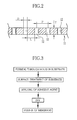
- FIG.3 is a producing process of a biochemical analysis unit 10.
- the through holes 12 are formed in the substrate 11.
- a surface treatment is made on the substrate 11.
- the surface treatment is made in at least one of corona discharging method, plasma discharging method and an anodic oxidization method.
- a surface treatment layer is formed on the substrate 11, and is a layer of metal oxide having hydrophilic property since containing carbonyl groups and carboxyl groups.
- an adhesive agent is applied to a surface of the substrate 11, on which the membrane 13 is pressed for the insertion into the through holes 12.
- the method of applying the adhesive agent is not restricted. However, it may be performed by a roller coating, a wire bar coating, a dip coating, a blade coating, an air knife coating or the like.
- the adhesive agents there are styrene-butadiene rubber and acrylonitril-butadiene rubber. However, it is not restricted in them. Note that the excessive adhesive agent is scratched and removed by the blade, or may be removed with use of a laser beam for preventing the generation of the impurities in the following process. Note that the processes of the surface treatment of the substrate and the application of the adhesive agent can be omitted, when the biochemical analysis unit used in the present invention is produced.
- the membrane 13 used in the present invention may be one of the porous materials (organic, inorganic porous materials or mixture thereof), the fiber materials (organic or inorganic fiber materials). Further these may be mixed.
- the thickness of the membrane 13 is not restricted especially. However, it may be in the range of 100 ⁇ m to 200 ⁇ m (0.10mm to 0. 20mm) .
- the void ratio in volume is preferably from 55% to 90%, and the average pore diameter of pores constructing a void is preferably in the range of 0.1 ⁇ m to 10 ⁇ m.
- a void ratio C in volume is a percentage of a total volume of the voids to the appearance volume of the absorptive materials.
- the sorts of the organic porous materials are not restricted especially. However, they are preferably polymers, for example, cellulose derivatives (for example, nitro cellulose, regenerated cellulose, cellulose acetate, cellulose acetate butyrate, and the like), aliphatic polyamides (for example, nylon-6, nylon-66, nylon 4,10, and the like), polyolefines (for example, polyethylene, polypropyrene), polymers containing chlorinate (for example, polyvinyl chloride, polyvinylidene chloride and the like), fluorine resins (for example, polyvinylidene floride, polytetrafluoride and the like), polycarbonate, polysulfone, alginic acid, and derivatives thereof (for example, calcium alginate, ion complex of alginic acid/polylysine, and the like) collagen, and the like. Further, the copolymer or the complexes (or mixture) of these polymers may be used. Note that porous nylon is preferably used
- the sorts of the inorganic porous materials are not restricted. However, they are preferably metal (for example, platinum, gold, iron, silver, nickel, aluminum, and the like), metal oxide (for example, alumina, silica, titania, zeolite, and the like), salts of metals (hydroxyapatite, calcium sulfate and the like) complexes of them, and the like. Further, porous carbon materials (activated carbon and the like) may be used.
- organic fiber materials and the inorganic fiber materials are not restricted in them.
- the organic fiber materials the cellulose derivatives, aliphatic polyamides and the like can be used, and as the inorganic fiber materials, glass fiber and metal fiber can be used.
- the fiber materials insoluble to the solvent can be used, while the porous materials can be dissolve to the solvent.
- the pressing of the membrane 13 is intermittently made from up and down sides by press plates 36,37 in the situation that the substrate 11 and the membrane 13 are superimposed.
- the press plate 36 in upper side in this figure
- the membrane 13 becomes softened, and easily pressed into the through holes 12 to form the spot area 14.
- a roller may be used instead of the press plates.
- FIG. 5A&5B are plan views of the biochemical analysis unit 10 used in the present invention.
- a flow-through area 41 in which the spot areas 14 are arranged has a generally rectangular shape, and is regularly sectioned into rectangular blocks in which a predetermined number of the spot areas 14 is formed.
- the size of the substrate 11 is, for example, 70mm in length and 90mm in width.
- Size of each block 42 is about a radius of 4mm.
- the blocks are matrix-likely arranged, and the number thereof in length is 12, and that in width is 16.
- the features of the flow-through areas are determined, corresponding to the feature of the CCD image sensor 32.
- Positioning holes 44 are used for an attachment of the biochemical analysis unit 10 to the cartridge 28.
- the substrate 11 is separated into the blocks having the predetermined number of the spot areas 14 in this embodiment. However this sectioning may not be made.
- the spot areas 14 may be arranged all over the flow-through area 41.
- FIG.6 is a sectional view of the reaction vessel 22 in which the biochemical analysis unit 10 is loaded.
- the reaction vessel 22 is constructed of an upper part 51 and a lower part 52. Recess 51a,52a are respectively formed on a bottom of the upper part 51 and a top of the lower part 52 in this figure.
- the recesses 51a, 52a are combined to construct the chamber 53.
- retainers 56a, 56b which nip the biochemical analysis unit 10 for retaining it.
- the biochemical analysis unit 10 is contained and the reaction solution 25 is supplied.
- a heater 54 for adjusting a temperature of the reaction solution 25 in the chamber 53. The adjustment of the temperature makes a regulation of the sharing viscosity and the reaction period possible.
- the inlet 26 and the outlet 27 are provided in central areas of the respective recesses 51a,52a, and disposed so as to confront to a middle portion of the flow-through area 41, when the biochemical analysis unit 10 is set therein. Further, a height H from the inlet 26 to the biochemical analysis unit 10 is preferably in the range of 0.02mm to 20mm, and particularly preferably 0.2mm to 2mm.
- reaction solution containing antigens is supplied into the chamber so as to make a specific binding reaction to the probe.
- the antigen remains.
- the cleaning is made with use of the cleaning solution to remove the reaction solution.
- an antigen solution containing an enzyme-labeled antibody which makes the specific binding to the antigen.
- the enzyme labeled antibody which binds to the antigen will remain.
- the cleaning is made with use of an antibody cleaning solution, and thus the other enzyme labeled antibody which does not bind to the antigen is removed.
- the enzyme labeling antibody and the chemiluminescent substrate as the labeling substance are put into a chemiluminescent reaction.
- the labeling substance for example, there are chemiluminescent substrates, such as CDP-star (trademark) and the like.
- the enzyme-labeling antibody decomposes the chemiluminescent substrate. In the decomposition, the chemiluminescent substrates generate a light.
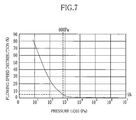
- FIG. 7 is a graph illustrating a relation betwen a pressure loss and a flow speed distribution all over the flow-through area.
- the pressure loss occurs when each solution passes through the flow-through area.
- the distribution of the signals in the data reading process is in ⁇ 20%.
- the allowable value of the flow speed distribution is preferably at most 5%.
- FIG.7 teaches that the pressure loss may be at least 800Pa, and preferably at least 1kPa.
- the pressure loss is preferably at most 1MPa in the present invention.
- the probe as the reagent selectively makes the specific binding to the target as the test substance
- the probe as the reagent selectively makes the specific binding to the target as the test substance
- the present invention is not restricted in the following.
- different probes were spotted onto and fixed to the spot areas 14 of the biochemical analysis unit 10.
- the average pore diameter of the membrane 13 which was filled in the spot area 14 was 0.45 ⁇ m, while it is preferably from 0.1 ⁇ m to 10 ⁇ m, as described above.
- the biochemical analysis unit 10 was set in the reaction vessel 22. Feed pipes were connected to the inlet 26 and the outlet 27, and the reaction solution 25 was supplied from a tank (not shown) into the chamber 53.
- the chamber 53 was filled with the reaction solution 25 to extract an air, and thereafter the feed switch of the feed pipes was set to feed the reaction solution to the circulating pipe 23, such that the circulating pipe 23 may be connected to the inlet 26 and the outlet 27.
- the height H of the biochemical analysis unit 10 from the inlet 26 was set to 2mm.
- a buffer solution which keeps the pH value almost constant for proceeding the specific binding.
- a phosphoric acid buffer solution was used as the reaction solution 25.
- the temperature of the reaction solution 25 was controlled to 68° C , and the reaction solution 25 was supplied into the chamber 53.
- the temperature of the chamber 53 was controlled to 68° C by the heater 54.
- the sharing viscosity of the reaction solution as the hybridization solution at 68°C was 0.73mPa ⁇ s, and the surface tension of it was 31.5mN/m.
- the flow speed of the reaction solution 25 flowing though the flow-through area 41 was 1.77mm/s, and the pressure loss was about 80kPa.
- the cleaning for removing the reaction solution 25 as the hybridization solution was made.
- the cleaning solution was supplied into the chamber 53 with use of the pump 24. Thereby the temperature of the chamber 53 was adjusted to 68°C. Thereafter the blocking process was made, and the blocking agent was supplied into the chamber 53 with use of the pump 24. Thereby the temperature of the chamber 53 was adjusted to 37°C.
- the antigen-antibody reaction was made.
- the antigen-antibody reaction solution was supplied into the chamber 53 with use of the pump 24.
- the temperature of the chamber 53 was adjusted to 37°C.
- the cleaning for removing the antigen-antibody reaction solution was made.
- the cleaning solution for the antigen-antibody solution was supplied into the chamber 53 with use of the pump 24. Thereby the temperature of the chamber 53 was adjusted to 37 ° C .
- the chemiluminescent reaction process was made.
- the chemiluminescent reaction solution was supplied into the chamber 53 with use of the pump 24. Thereby the temperature of the chamber 53 was adjusted to 37°C.
- the pressure loss of the solution flowing through all over the flow-through area 41 was from about 10kPa to 80kPa. Therefore, the reaction and the cleaning were equivalently made in all the spot areas to obtain the good analysis data.
Landscapes
- Health & Medical Sciences (AREA)
- Chemical & Material Sciences (AREA)
- Analytical Chemistry (AREA)
- General Health & Medical Sciences (AREA)
- Hematology (AREA)
- Clinical Laboratory Science (AREA)
- Chemical Kinetics & Catalysis (AREA)
- Apparatus Associated With Microorganisms And Enzymes (AREA)
- Automatic Analysis And Handling Materials Therefor (AREA)
Applications Claiming Priority (2)
| Application Number | Priority Date | Filing Date | Title |
|---|---|---|---|
| JP2003341202 | 2003-09-30 | ||
| JP2003341202A JP4144874B2 (ja) | 2003-09-30 | 2003-09-30 | 生化学解析用ユニットを用いた反応方法 |
Publications (2)
| Publication Number | Publication Date |
|---|---|
| EP1521084A2 true EP1521084A2 (de) | 2005-04-06 |
| EP1521084A3 EP1521084A3 (de) | 2005-11-30 |
Family
ID=34309063
Family Applications (1)
| Application Number | Title | Priority Date | Filing Date |
|---|---|---|---|
| EP04023048A Withdrawn EP1521084A3 (de) | 2003-09-30 | 2004-09-28 | Reaktions-Verfahren mit Verwendung von einer biochemischen Analyse-Einheit |
Country Status (3)
| Country | Link |
|---|---|
| US (1) | US7550288B2 (de) |
| EP (1) | EP1521084A3 (de) |
| JP (1) | JP4144874B2 (de) |
Cited By (3)
| Publication number | Priority date | Publication date | Assignee | Title |
|---|---|---|---|---|
| EP1939623A4 (de) * | 2005-09-30 | 2009-01-07 | Fuence Co Ltd | Verfahren zur messung einer biomolekularen reaktion bei ultrahoher geschwindigkeit |
| US12564834B2 (en) | 2020-11-06 | 2026-03-03 | Preciphos | Method for manufacturing an analysis chip and analysis chip |
| US12582983B2 (en) | 2020-11-06 | 2026-03-24 | Preciphos | Method for manufacturing a biological analysis chip and biological analysis chip |
Families Citing this family (2)
| Publication number | Priority date | Publication date | Assignee | Title |
|---|---|---|---|---|
| US20030045002A1 (en) * | 2001-08-28 | 2003-03-06 | Fuji Photo Film Co., Ltd. | Cartridge for biochemical analysis unit and method for recording biochemical analysis data in biochemical analysis unit |
| WO2017169717A1 (ja) * | 2016-03-30 | 2017-10-05 | 富士フイルム株式会社 | 検査デバイス、検査装置および検査方法 |
Family Cites Families (14)
| Publication number | Priority date | Publication date | Assignee | Title |
|---|---|---|---|---|
| US4427415A (en) * | 1979-01-05 | 1984-01-24 | Cleveland Patrick H | Manifold vacuum biochemical test method and device |
| US5726010A (en) * | 1991-07-31 | 1998-03-10 | Idexx Laboratories, Inc. | Reversible flow chromatographic binding assay |
| US5478751A (en) * | 1993-12-29 | 1995-12-26 | Abbott Laboratories | Self-venting immunodiagnositic devices and methods of performing assays |
| US5603900A (en) * | 1995-05-19 | 1997-02-18 | Millipore Investment Holdings Limited | Vacuum filter device |
| CA2364381C (en) | 1999-12-22 | 2009-03-10 | Gene Logic, Inc. | Flow-thru chip cartridge, chip holder, system and method thereof |
| JP4282251B2 (ja) | 2000-08-02 | 2009-06-17 | 富士フイルム株式会社 | 生化学解析用ユニットおよびそれを用いた生化学解析方法 |
| JP4361271B2 (ja) * | 2000-10-10 | 2009-11-11 | バイオトローブ・インコーポレイテツド | アッセイ、合成、および保存用の器具、ならびに、その作製、使用、および操作の方法 |
| DE60202240T2 (de) * | 2001-05-21 | 2005-12-15 | Fuji Photo Film Co., Ltd., Minami-Ashigara | Vorrichtung zur Durchführung biochemischer Analysen und Verfahren zu ihrer Herstellung |
| CA2468260A1 (en) * | 2001-07-02 | 2003-01-16 | Matthew Torres | Flow-thru chip cartridge, chip holder, system & method thereof |
| EP1281966A3 (de) * | 2001-07-30 | 2003-06-18 | Fuji Photo Film Co., Ltd. | Verfahren und Vorrichtung zur Durchführung einer Rezeptor-Ligand-Reaktion |
| US20030045002A1 (en) * | 2001-08-28 | 2003-03-06 | Fuji Photo Film Co., Ltd. | Cartridge for biochemical analysis unit and method for recording biochemical analysis data in biochemical analysis unit |
| JP3836379B2 (ja) * | 2002-02-01 | 2006-10-25 | 富士写真フイルム株式会社 | リセプター・リガンド会合反応方法 |
| JP3721334B2 (ja) * | 2002-02-01 | 2005-11-30 | 富士写真フイルム株式会社 | リセプター・リガンド会合反応方法およびそれに用いるリアクタ |
| JP3830882B2 (ja) * | 2002-09-17 | 2006-10-11 | 富士写真フイルム株式会社 | 生化学解析用ユニット |
-
2003
- 2003-09-30 JP JP2003341202A patent/JP4144874B2/ja not_active Expired - Fee Related
-
2004
- 2004-09-28 US US10/950,486 patent/US7550288B2/en not_active Expired - Fee Related
- 2004-09-28 EP EP04023048A patent/EP1521084A3/de not_active Withdrawn
Cited By (3)
| Publication number | Priority date | Publication date | Assignee | Title |
|---|---|---|---|---|
| EP1939623A4 (de) * | 2005-09-30 | 2009-01-07 | Fuence Co Ltd | Verfahren zur messung einer biomolekularen reaktion bei ultrahoher geschwindigkeit |
| US12564834B2 (en) | 2020-11-06 | 2026-03-03 | Preciphos | Method for manufacturing an analysis chip and analysis chip |
| US12582983B2 (en) | 2020-11-06 | 2026-03-24 | Preciphos | Method for manufacturing a biological analysis chip and biological analysis chip |
Also Published As
| Publication number | Publication date |
|---|---|
| US20050070029A1 (en) | 2005-03-31 |
| EP1521084A3 (de) | 2005-11-30 |
| JP4144874B2 (ja) | 2008-09-03 |
| US7550288B2 (en) | 2009-06-23 |
| JP2005106671A (ja) | 2005-04-21 |
Similar Documents
| Publication | Publication Date | Title |
|---|---|---|
| WO2004097415A1 (ja) | バイオチップおよびバイオチップキットならびにその製造方法および使用方法 | |
| US7550288B2 (en) | Reaction method with use of biochemical analysis unit | |
| KR100969209B1 (ko) | 생화학분석용 유니트의 제조방법 | |
| US20050070012A1 (en) | Cartridge for biochemical analysis unit | |
| EP1394547B1 (de) | Chemische Lumineszenzverfahren mit Biochemischeanalyse-Einheiten | |
| JP3830882B2 (ja) | 生化学解析用ユニット | |
| JP2003215125A (ja) | 生化学解析用ユニット | |
| CA2424806A1 (en) | Method and device for analysing chemical or biological samples | |
| EP1333283A2 (de) | Verfahren und Reaktor zur Durchführung von Rezeptor-Ligand Bindungsreaktionen | |
| JP3929020B2 (ja) | 生化学解析用ユニットの製造方法及び生化学解析用ユニット | |
| US20050009201A1 (en) | Method of spotting probe solution | |
| US20050069937A1 (en) | Spotting method onto and data reading method from biochemical analysis unit | |
| JP2003066042A (ja) | バイオチップ | |
| JP3878144B2 (ja) | 生化学解析用ユニット | |
| EP2012126A1 (de) | Poröses Substrat für biologische Untersuchung und Methode zu dessen Herstellung | |
| JP4076328B2 (ja) | 生体関連物質分析用複合材料シートの製造方法 | |
| JP2004361342A (ja) | 生化学解析用ユニットを用いたプローブとターゲットの反応方法及び生化学解析に用いられる反応容器 | |
| JP2004361340A (ja) | 生化学解析用ユニット及びこれを用いたプローブとターゲットの反応方法 | |
| JP2003194822A (ja) | ハイブリダイゼーション方法および装置ならびにそれに用いるハイブリダイゼーション反応チャンバ | |
| JP2004361341A (ja) | 生化学解析用ユニット及びこれを用いた生化学解析方法 | |
| US20050074903A1 (en) | Assay method using biochemical analysis units and assay apparatus | |
| JP2003088399A (ja) | ハイブリダイゼーション方法および装置ならびに生化学解析用ユニット | |
| JP2003079398A (ja) | ハイブリダイゼーション方法および装置ならびにそれに用いるハイブリダイゼーションバッグ | |
| US20030045002A1 (en) | Cartridge for biochemical analysis unit and method for recording biochemical analysis data in biochemical analysis unit | |
| JP2004108860A (ja) | 生化学解析用ユニットを利用したアッセイ法 |
Legal Events
| Date | Code | Title | Description |
|---|---|---|---|
| PUAI | Public reference made under article 153(3) epc to a published international application that has entered the european phase |
Free format text: ORIGINAL CODE: 0009012 |
|
| AK | Designated contracting states |
Kind code of ref document: A2 Designated state(s): AT BE BG CH CY CZ DE DK EE ES FI FR GB GR HU IE IT LI LU MC NL PL PT RO SE SI SK TR |
|
| AX | Request for extension of the european patent |
Extension state: AL HR LT LV MK |
|
| PUAL | Search report despatched |
Free format text: ORIGINAL CODE: 0009013 |
|
| AK | Designated contracting states |
Kind code of ref document: A3 Designated state(s): AT BE BG CH CY CZ DE DK EE ES FI FR GB GR HU IE IT LI LU MC NL PL PT RO SE SI SK TR |
|
| AX | Request for extension of the european patent |
Extension state: AL HR LT LV MK |
|
| 17P | Request for examination filed |
Effective date: 20060217 |
|
| AKX | Designation fees paid |
Designated state(s): DE FR GB SE |
|
| 17Q | First examination report despatched |
Effective date: 20060721 |
|
| RAP1 | Party data changed (applicant data changed or rights of an application transferred) |
Owner name: FUJIFILM CORPORATION |
|
| STAA | Information on the status of an ep patent application or granted ep patent |
Free format text: STATUS: THE APPLICATION IS DEEMED TO BE WITHDRAWN |
|
| 18D | Application deemed to be withdrawn |
Effective date: 20150313 |